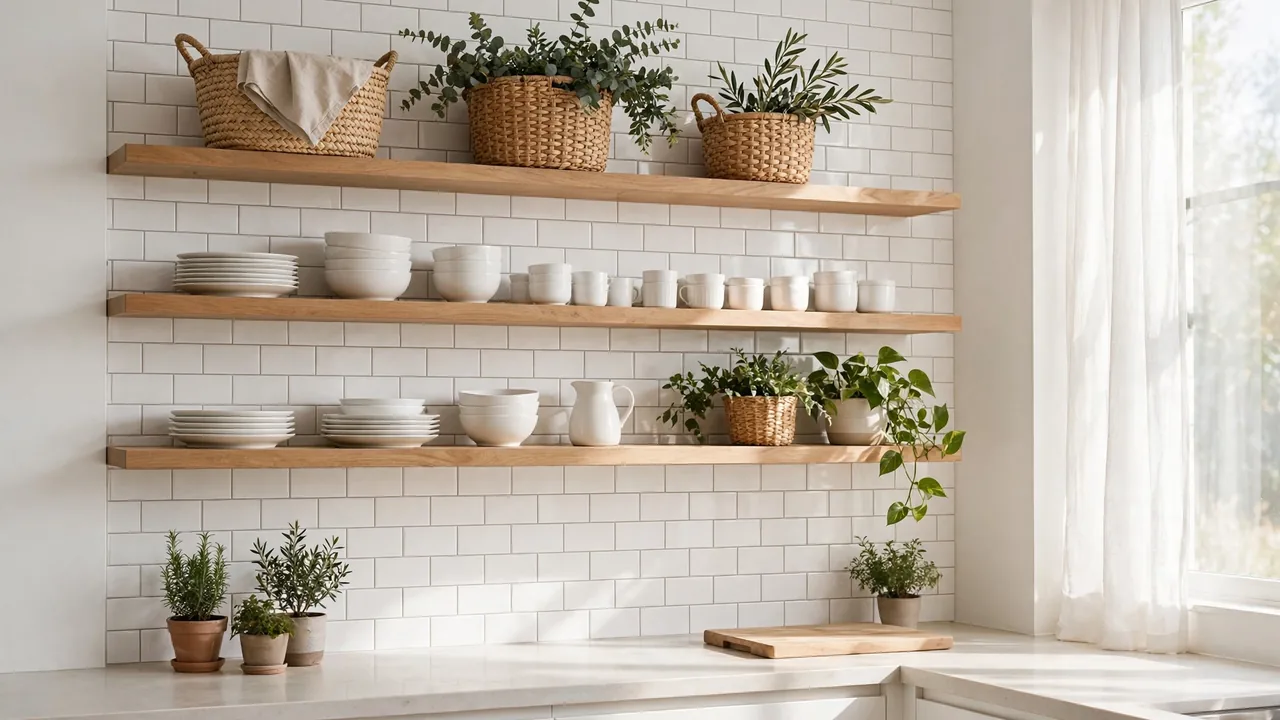
How to Hide Clutter in Open Shelving
Open shelves look beautiful in photos, but in real homes they collect random clutter fast. If your kitchen or living room shelves feel messy no matter how often you tidy them, learning how to hide clutter in open shelving will make the whole room feel calmer. In my experience, most people do not need more storage. They need a simple system.
This guide walks you through ten practical steps, from editing what you display to choosing bins that hide the rest. Each step takes minutes and uses things you probably own already. If your counters are overflowing too, see how to create more counter space for ideas that pair perfectly with tidy shelves.
Why Open Shelves Show Everything
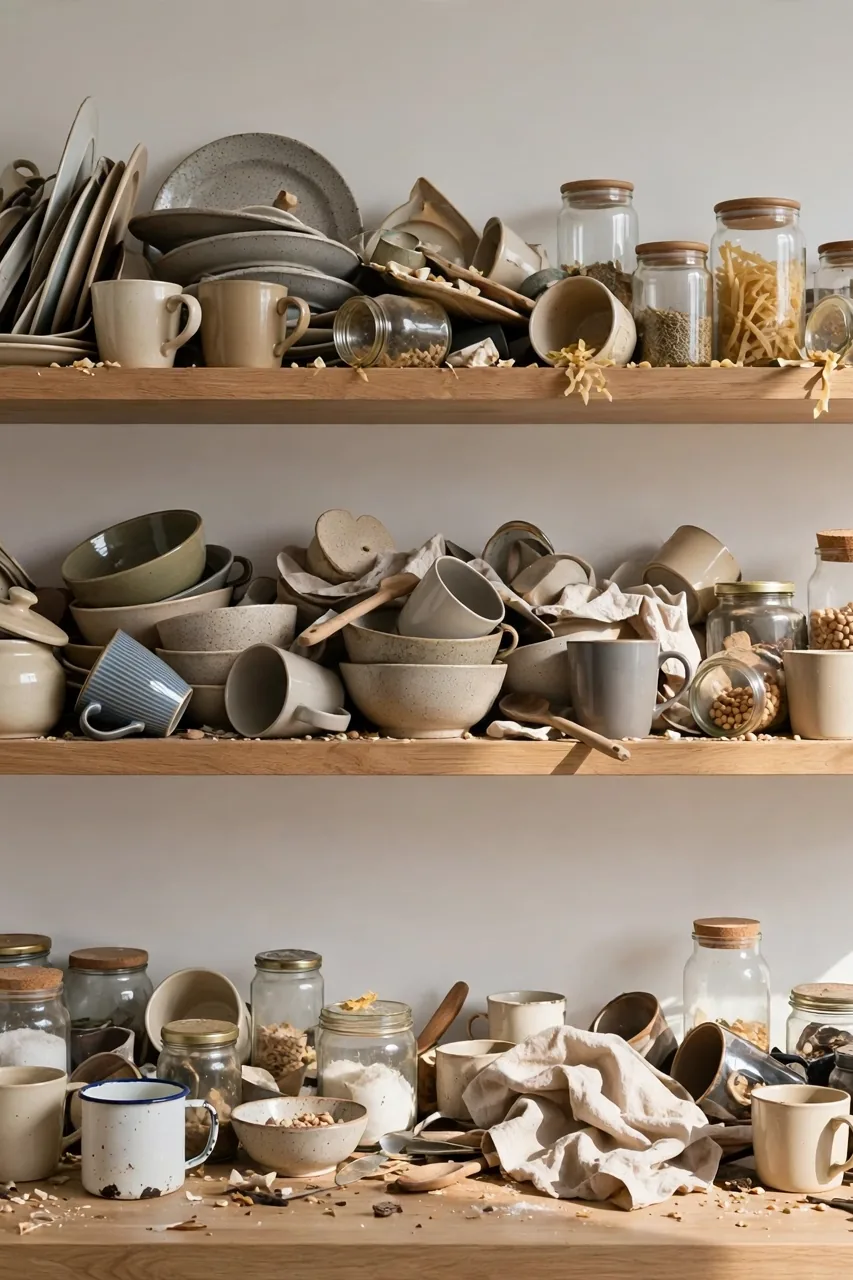
Open shelves have no doors to hide behind, so every item becomes part of your decor whether you planned it or not. A closed cabinet forgives a messy stack of bowls, but an open shelf broadcasts it to the whole room. This is why even small clutter looks overwhelming on display.
The upside is that this visibility works in your favor once you learn the trick. When you control what the eye sees first, shelves look styled instead of stuffed. That means showing a few pretty pieces and finding clever homes for everything else.
Edit What Lives on Shelves
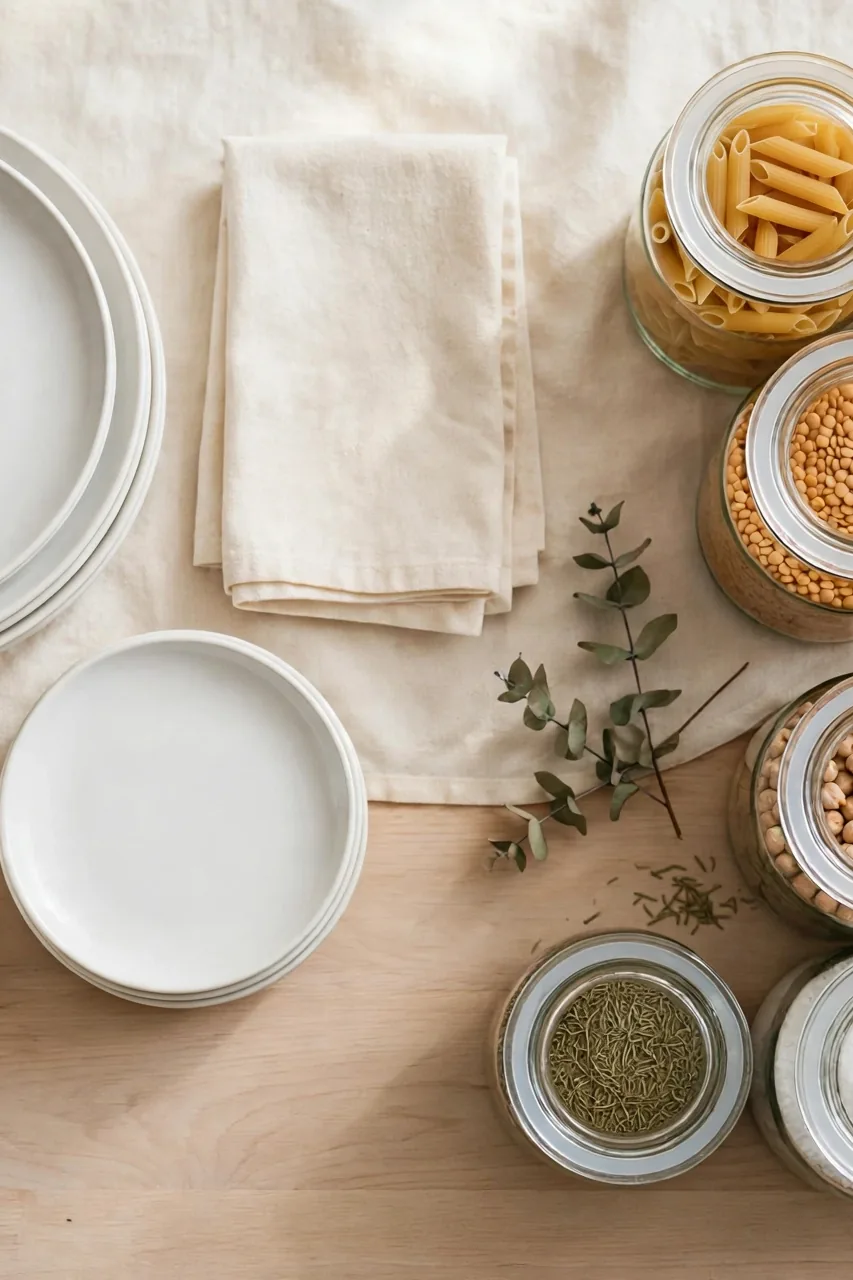
Before you buy a single basket, take everything off your shelves. Editing first means you only find homes for things you actually use and love. Most people discover a third of their shelf items can leave the room entirely. This one step makes every step after it easier.
- Pull every item off the shelves and group like things together on a table so you can see duplicates.
- Ask of each group: do I use this weekly, does it look good on display, or is it just living here by habit?
- Move the weekly-use and pretty items to a keep pile, and box up everything else for another room or donation.
- Wipe the empty shelves clean so you start fresh with a blank canvas.
Use Matching Baskets and Bins
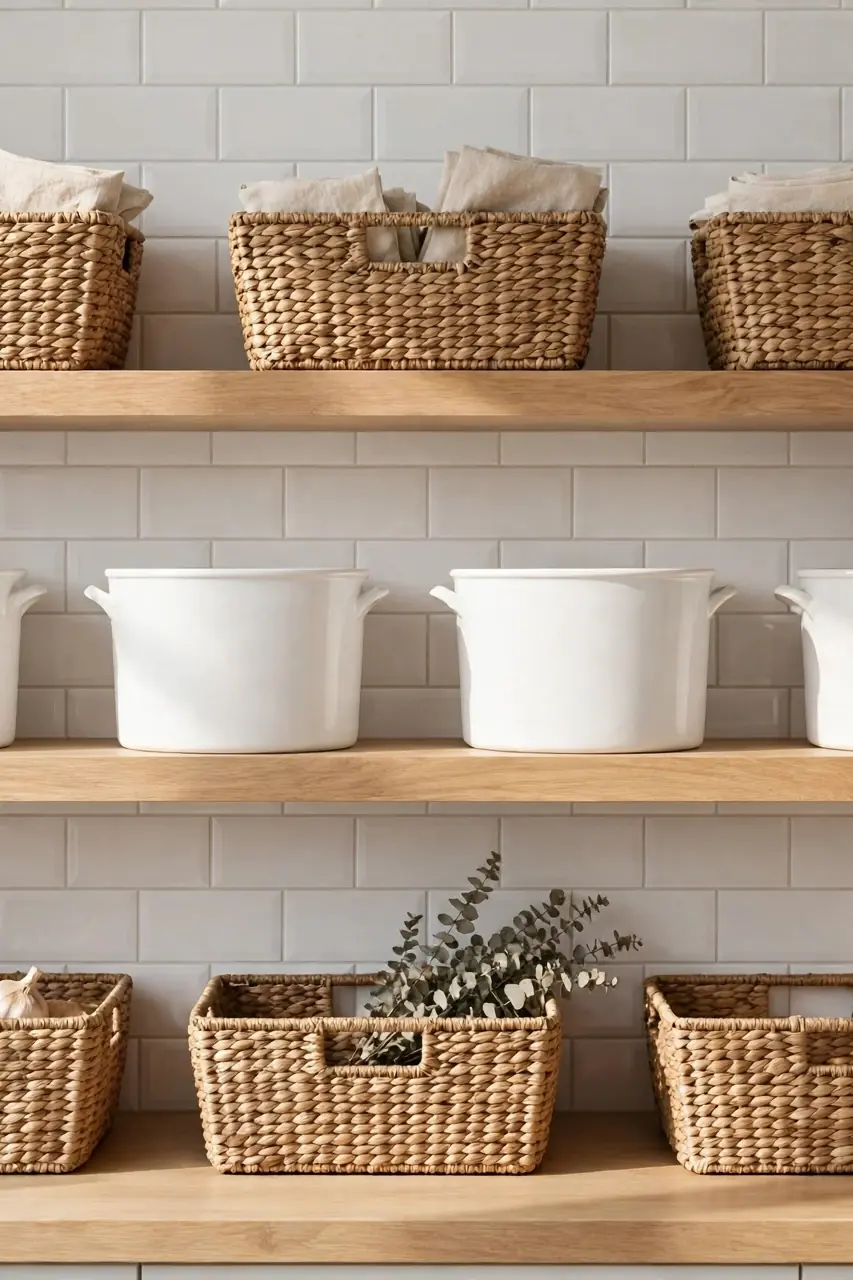
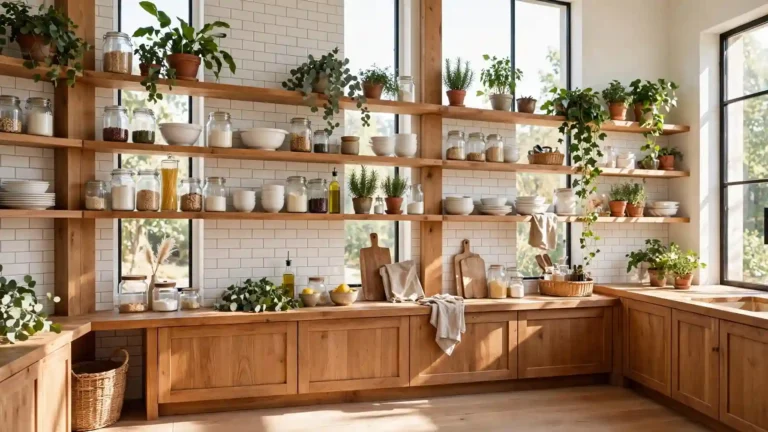
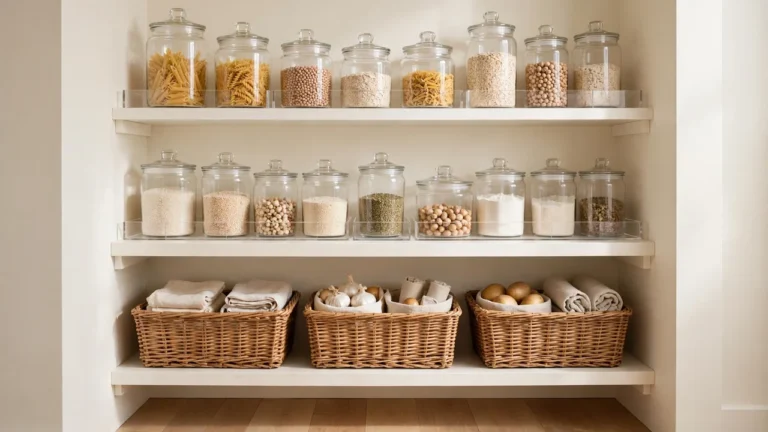
Quick Tip: Matching containers are the fastest way to hide clutter. When bins share a color and material, the eye reads them as one calm unit instead of ten messy objects. Stick to two materials at most, like woven seagrass and white ceramic, for a pulled-together look.
Place bins on lower shelves where clutter naturally collects, and reserve eye-level shelves for prettier pieces. Label the front of each bin so everyone in the house knows where things belong. I have noticed that labeled bins stay tidy twice as long as unmarked ones because putting things back becomes simple.
Group Items in Threes
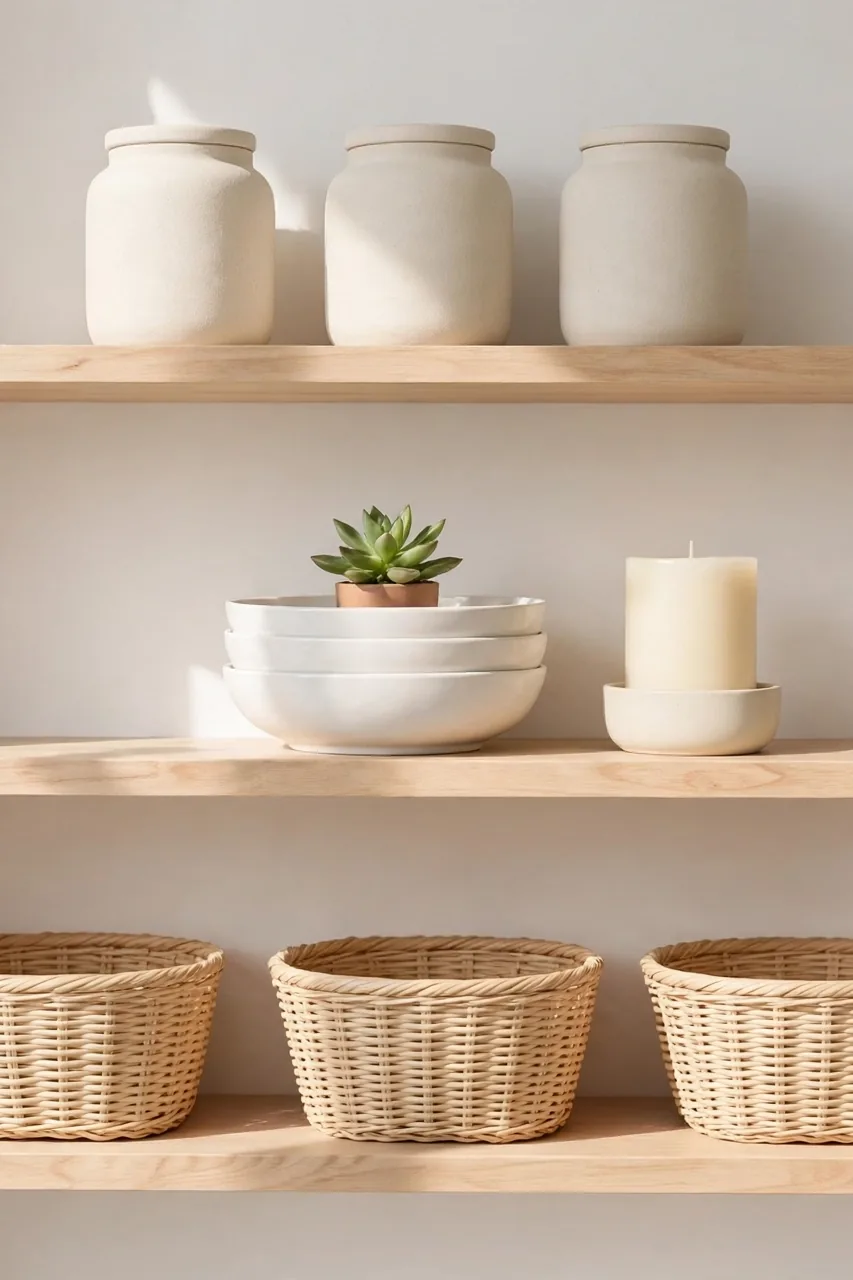
Common Mistake: Most people line up items in a straight row like soldiers, which makes shelves look like a store display. Others scatter single items across a long shelf, leaving awkward gaps that read as messy. Both approaches fight against how the eye naturally wants to see groups.
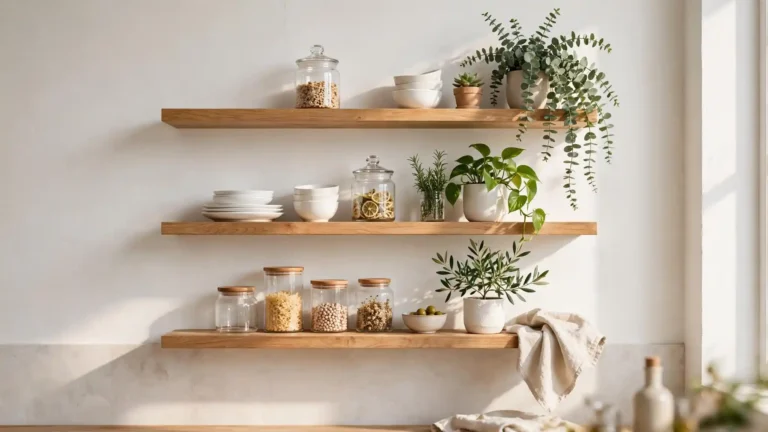
The Fix: Group items in odd numbers, mostly threes, with varied heights in each cluster. A stack of bowls, a small plant, and a candle form one visual unit that feels intentional. Leave breathing room between groups so each cluster gets its own moment.
This trick works on any shelf in any room, and it costs nothing to try. Start with your most visible shelf and practice the rule of three there first. Once you see how much calmer it looks, you will want to regroup every shelf in the house.
Hide Ugly Necessities
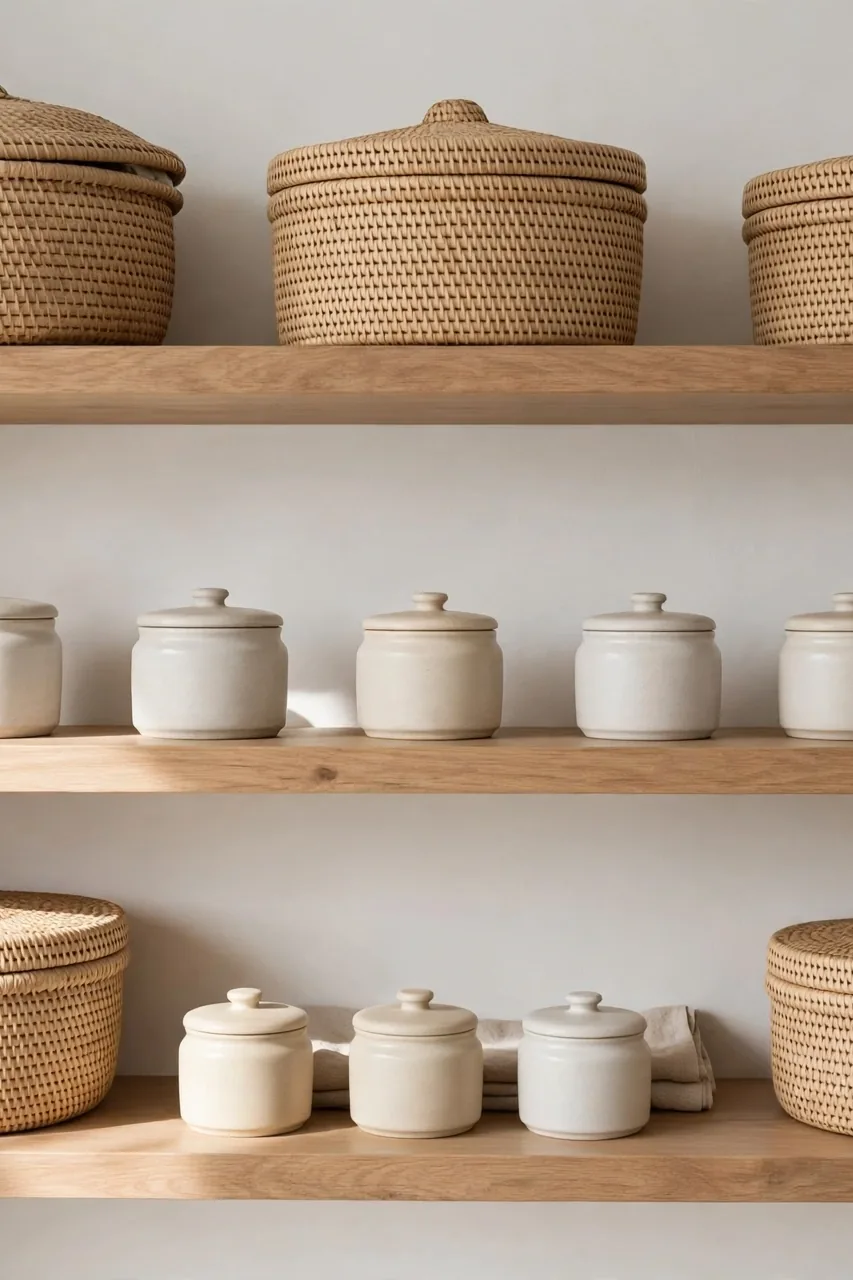
What You Need:
- Lidded baskets: swallow remote controls, chargers, and other daily clutter in one lift of the lid.
- Drawer inserts for open cubbies: turn a deep cube into a hidden drawer without any tools.
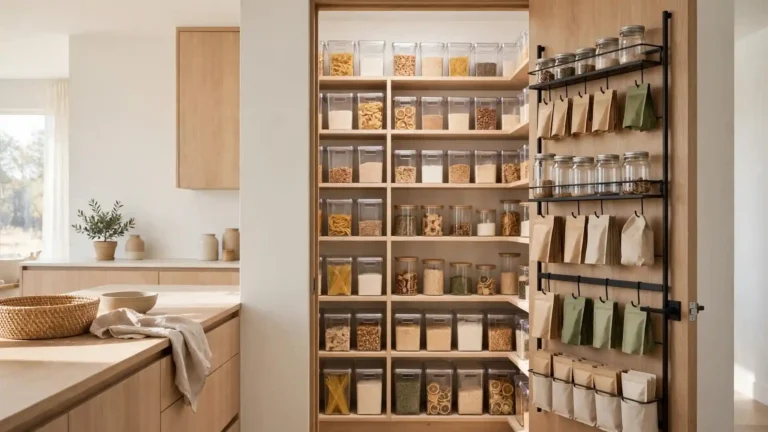
- Small lidded jars: corral cotton balls, tea bags, and spices so they look intentional instead of messy.
- A slim tray: gather the items you use daily so they read as one styled vignette, not scattered clutter.
- Adhesive hooks inside shelf sides: hang measuring cups or headphones out of sight on the shelf interior.
Every home has useful things that are simply not pretty, and that is normal. The real secret behind how to hide clutter in open shelving is giving those necessities a closed home while beautiful pieces stay visible. When ugly items disappear behind lids, your shelves finally look like the photos that inspired you.
Add Backing or Liners
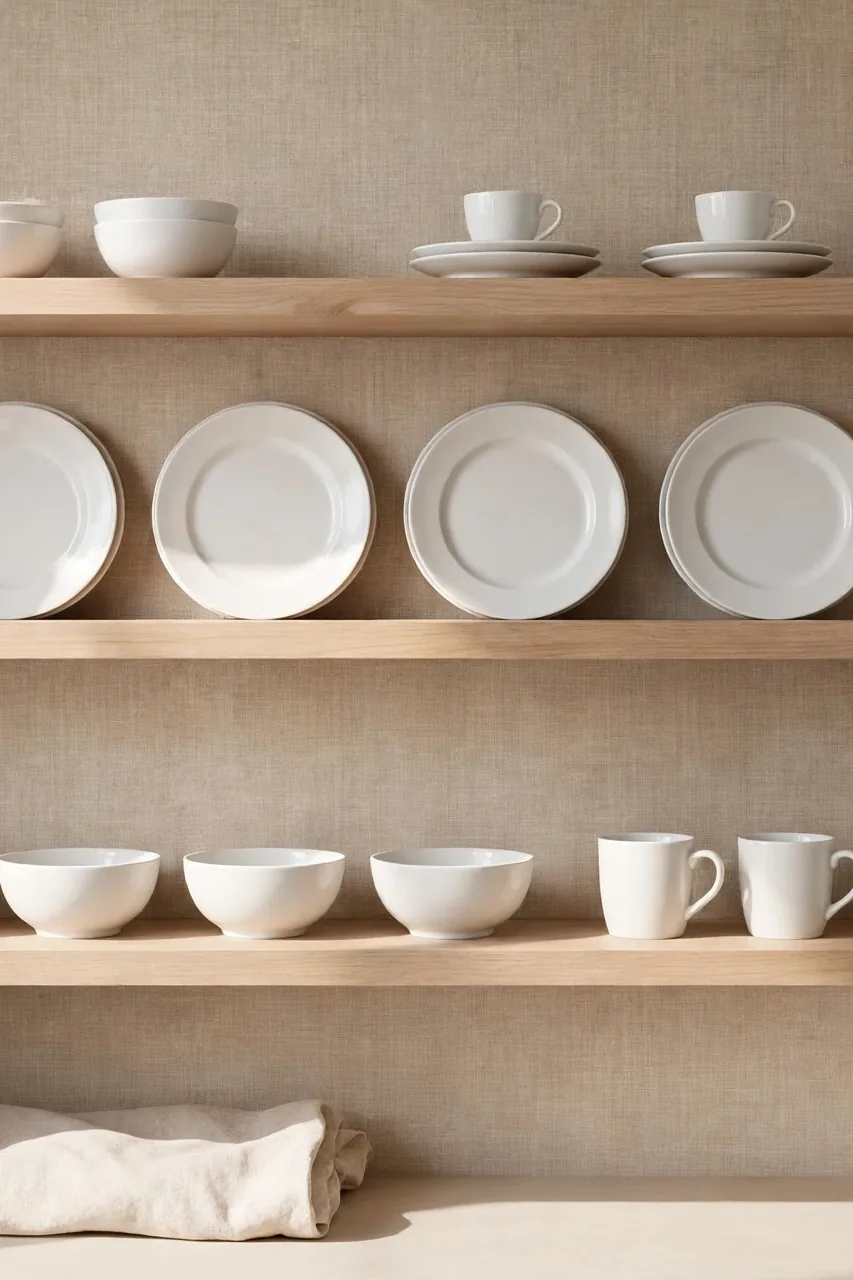
Before: Bare shelf backs show every shadow and make items look floaty and disconnected. Light walls behind dark dishes create harsh contrast that emphasizes clutter. The shelf feels unfinished, like a project you never got around to completing.
After: A simple peel-and-stick wallpaper or beadboard panel behind the shelves adds depth and polish in under an hour. Items suddenly look grounded against the finished background. The whole unit reads as custom built-in furniture instead of basic boards.
Choose a liner that complements your room instead of fighting it. Soft textures like grasscloth or linen work in almost any style and hide minor wall flaws too. If you rent, removable wallpaper peels off cleanly when you move, so there is no risk to your deposit.
Style the Top, Store Below
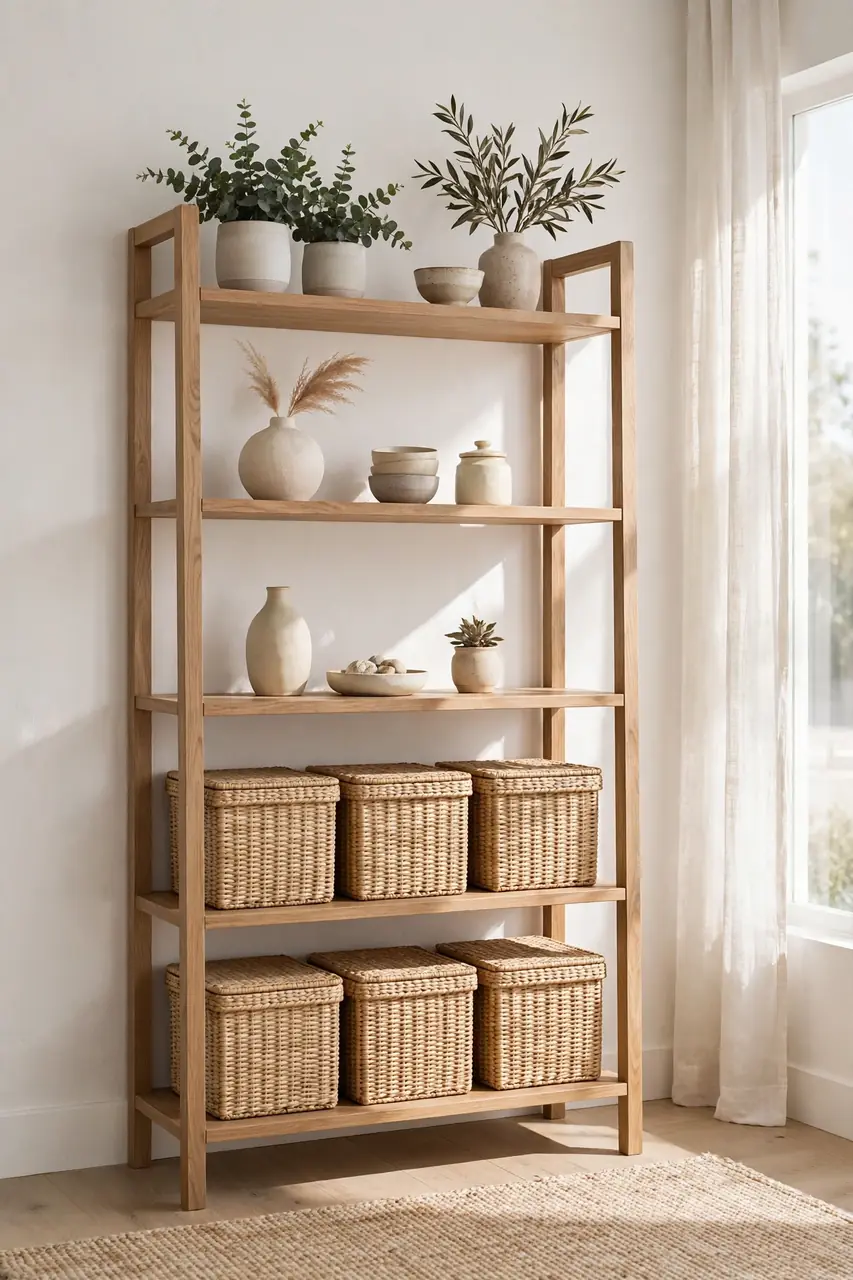
Do This:
- Keep everyday dishes and glasses on the lowest open shelf where hands reach them easily.
- Place pretty serving pieces and plants on the top shelf where they catch the eye.
- Use the middle shelves for a mix of closed bins below and styled items above.
- Leave one shelf partly empty so the whole unit can breathe.
Avoid This:
- Do not store heavy appliances up high where they look bulky and feel unsafe.
- Avoid putting rarely used gadgets at eye level; they deserve a closed cabinet.
- Do not cram every inch full; crowded shelves always read as clutter.
- Avoid mixing too many colors on one shelf; stick to a tight palette.
This top-pretty, bottom-practical split works because it matches how we actually live. Guests see the styled upper shelves while daily chaos stays tucked below. The same zoning idea helps in tight spaces, so also read how to decorate a long narrow hallway if your corridor shelves need the same treatment.
Keep a Weekly Tidy Routine
Time Needed: 10 minutes per week
Difficulty: Easy
Cost: Free
Best For: busy households where shelves drift back to messy
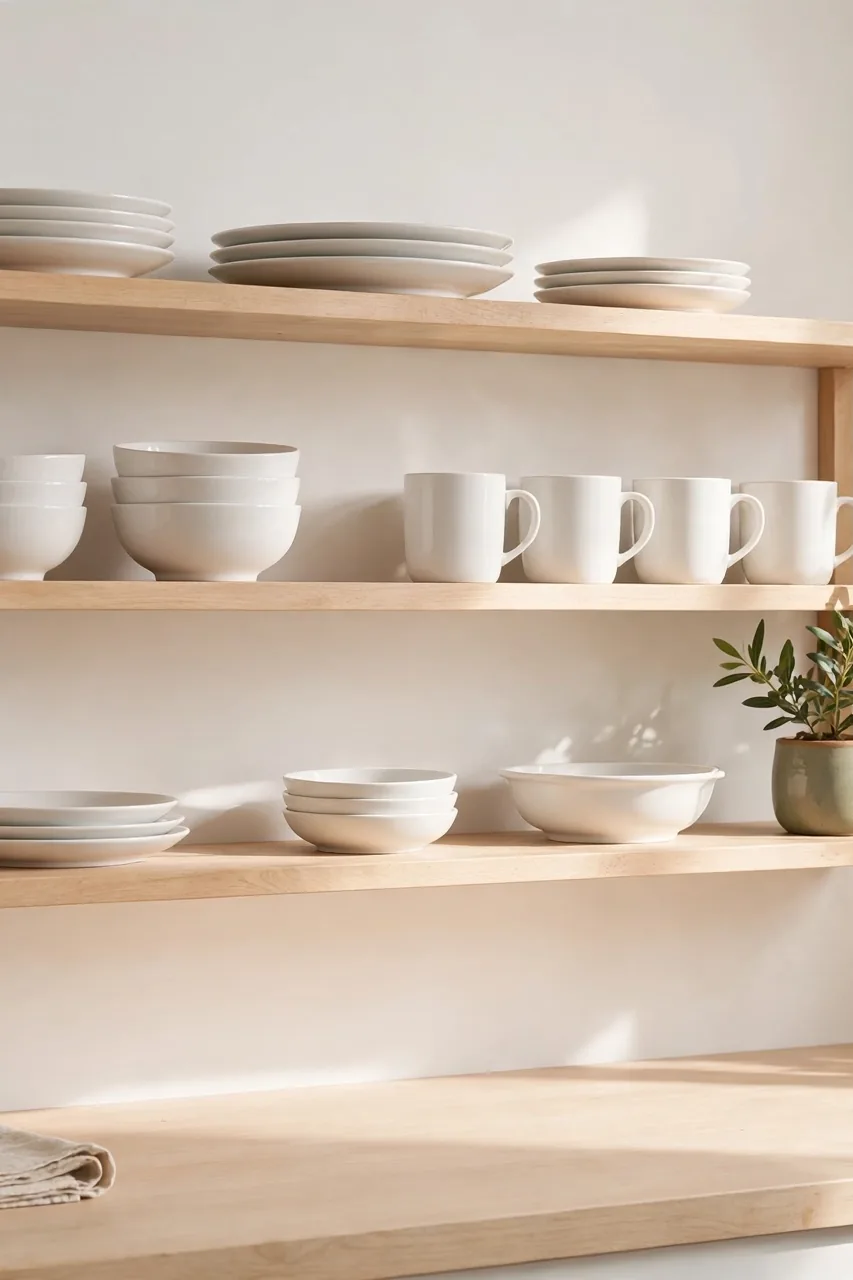
Set a timer for ten minutes each Sunday and reset every shelf. Toss expired items, return wanderers to their bins, and fluff the styled clusters. I have seen this make a real difference because small weekly resets prevent the overwhelming deep clean nobody wants to do.
Common Open Shelf Mistakes
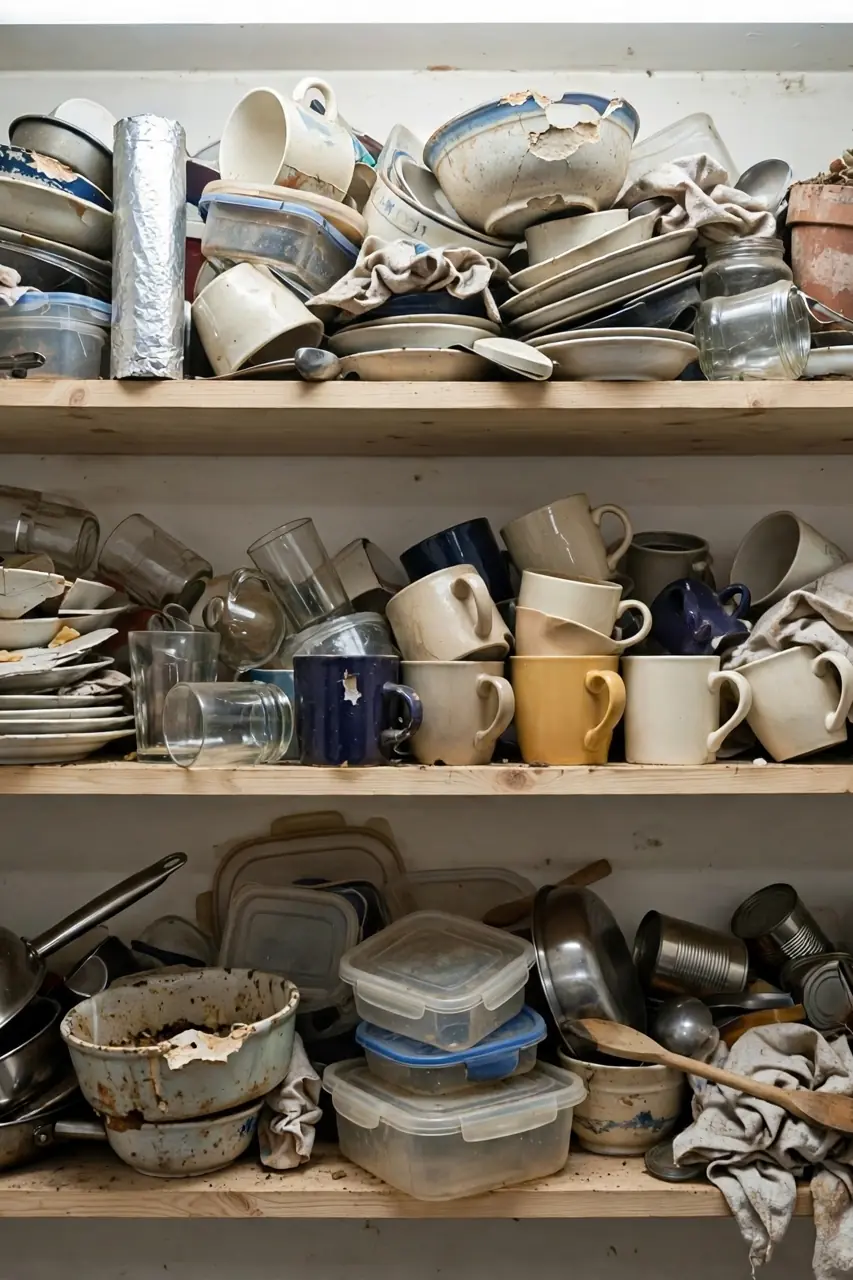
The biggest mistake is treating open shelves like extra cabinet space and cramming them full. When every inch holds something, nothing looks intentional. Another common error is displaying chipped, stained, or mismatched pieces that would look fine behind a door but sad on display.
People also forget that open shelves collect dust and grease, especially near stoves. Items you never touch become grimy within weeks. The fix is simple: display fewer things, choose pieces you actually use, and give the shelves a quick wipe during your weekly reset. Your shelves stay cleaner and prettier with less effort.
Pro Tips for Pretty Shelves
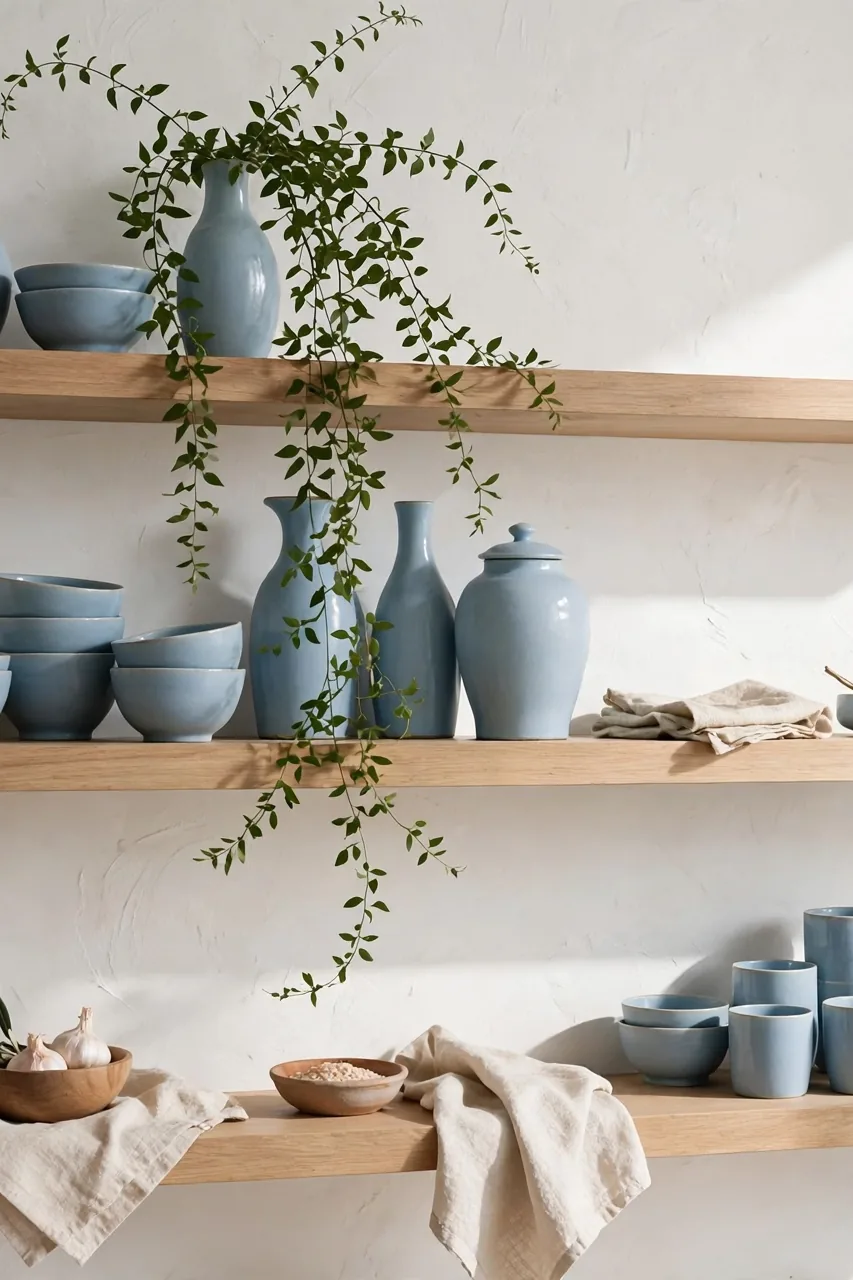
These finishing touches separate good shelves from great ones. Each tip takes almost no time but adds the polish that makes guests ask who styled your home. I have tried every one of these in my own kitchen. Start with the one that excites you most.
- Add one living thing to every shelf, even a tiny succulent, because greenery instantly makes shelves feel styled.
- Repeat one color across all shelves to create rhythm; three touches of the same blue tie everything together.
- Vary the heights in each cluster so the eye travels up and down instead of skating across a flat line.
- Step back and squint at your shelves; whatever still looks messy is telling you it needs a bin.
Conclusion
Styled open shelves are not about owning perfect things. They are about giving everything a thoughtful home and hiding what does not bring joy on display. Once you learn how to hide clutter in open shelving, the whole room feels lighter and more intentional. Save this guide to your home organization board on Pinterest so you can revisit each step as you style. I have seen how making this one change can completely shift how a kitchen feels, and I know your shelves can look just as beautiful. Start with one shelf today and enjoy the calm it brings.
One Comment