24 Wainscoting Bedroom Design Ideas for Timeless Elegance
Flat walls make even a pretty bed look unfinished. The right wainscoting bedroom design inspiration fixes that in one move, because paneled lower walls add shadow lines, structure, and a tailored calm that paint alone cannot copy. Boards, battens, and molding frames turn the bed wall into architecture. In my experience, paneling is the one upgrade guests always ask about.
Start by choosing a height and a profile, then let bedding stay simple so the joinery leads. Rooms built around modern biophilic living room decor teach the same lesson from another angle: natural texture on the walls makes pale fabrics and light wood feel intentional. Ahead, twenty four panel styles pair cream paint, oak, and linen for bedrooms that feel calm, finished, and quietly grand.
Classic White Panel Walls
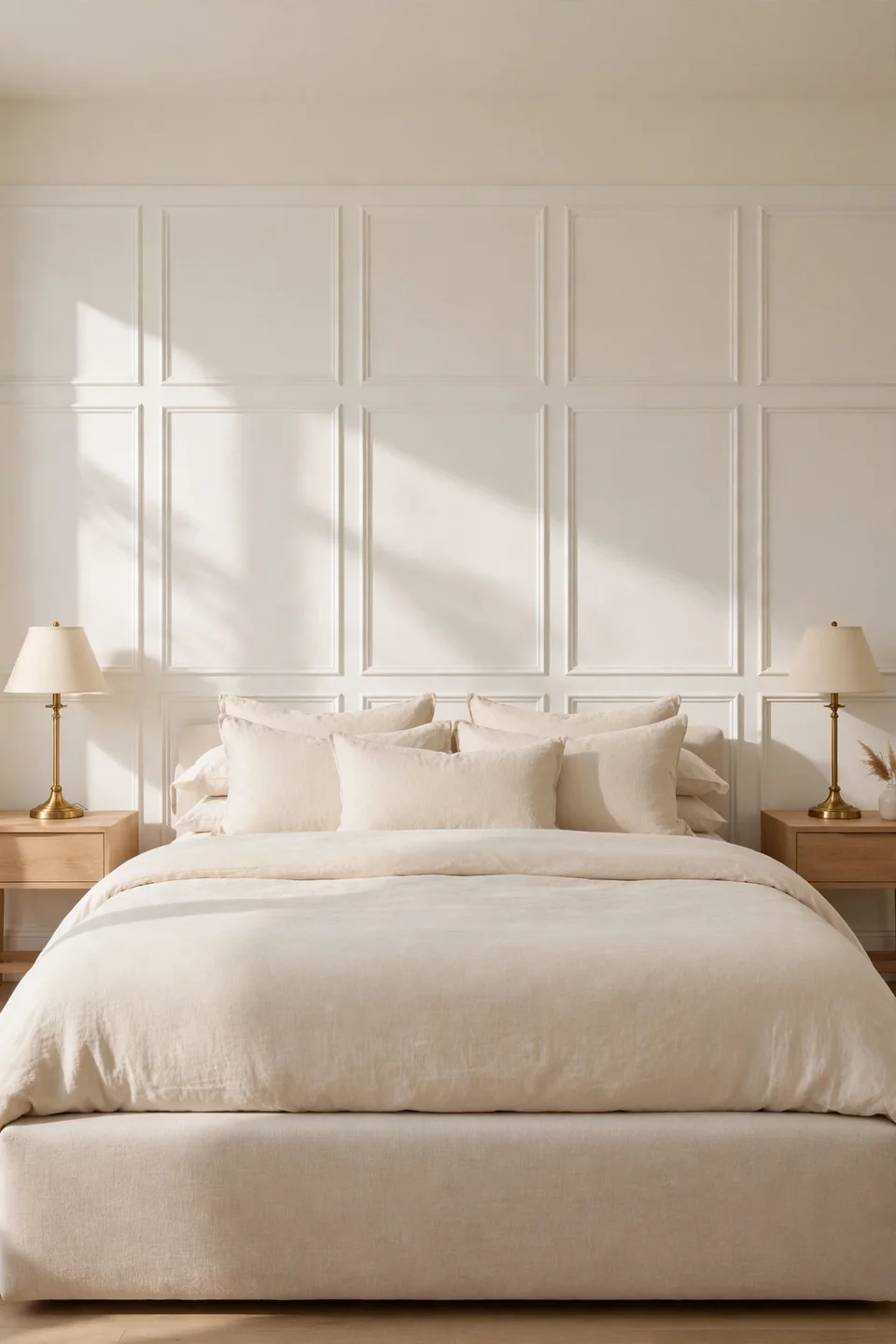
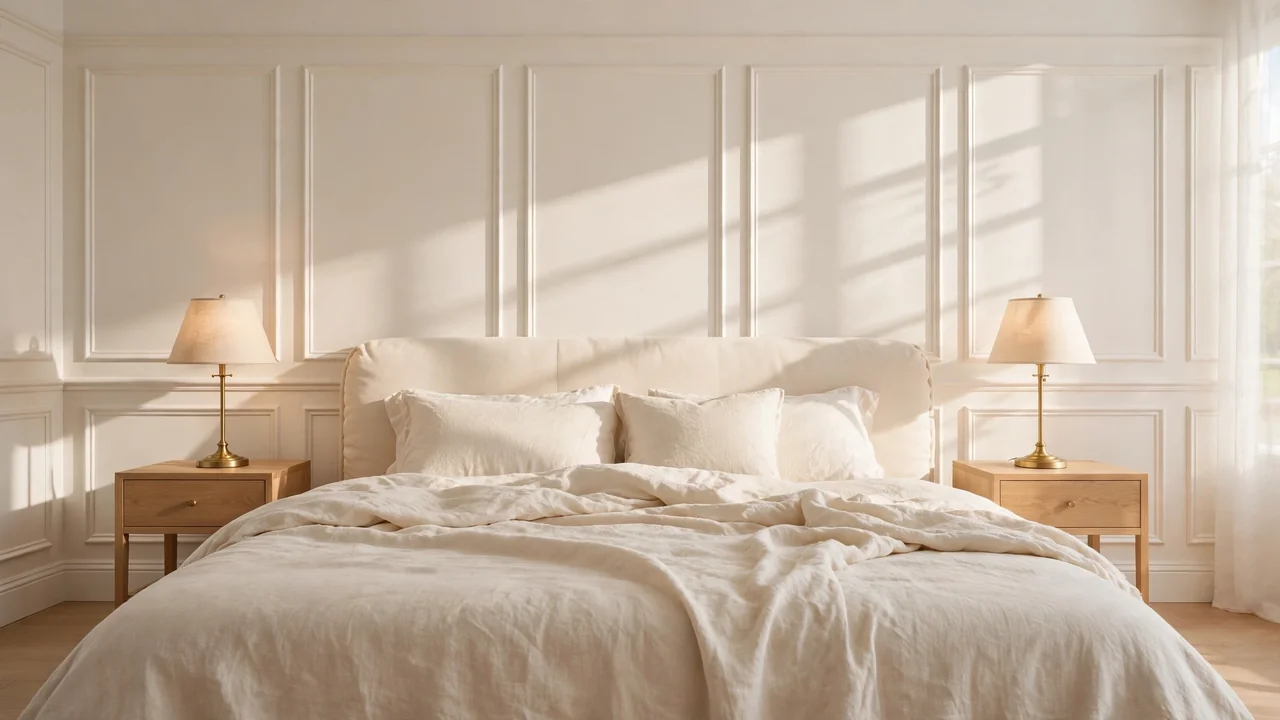
Crisp white panels behind a bed do quiet, confident work. The rectangles catch morning light, throw soft shadows, and give plain bedding a tailored backdrop that reads expensive at any budget. Keep the panel paint one shade warmer than the ceiling so the wall glows rather than glares under lamps.
Pair the panels with an upholstered headboard in oatmeal linen and light oak nightstands for a calm, layered base. I’ve noticed that white joinery makes small bedrooms feel wider, because the eye follows the panel lines across the wall. Finish with one brass lamp per side and keep artwork small, centered inside a single frame.
Tall Board and Batten
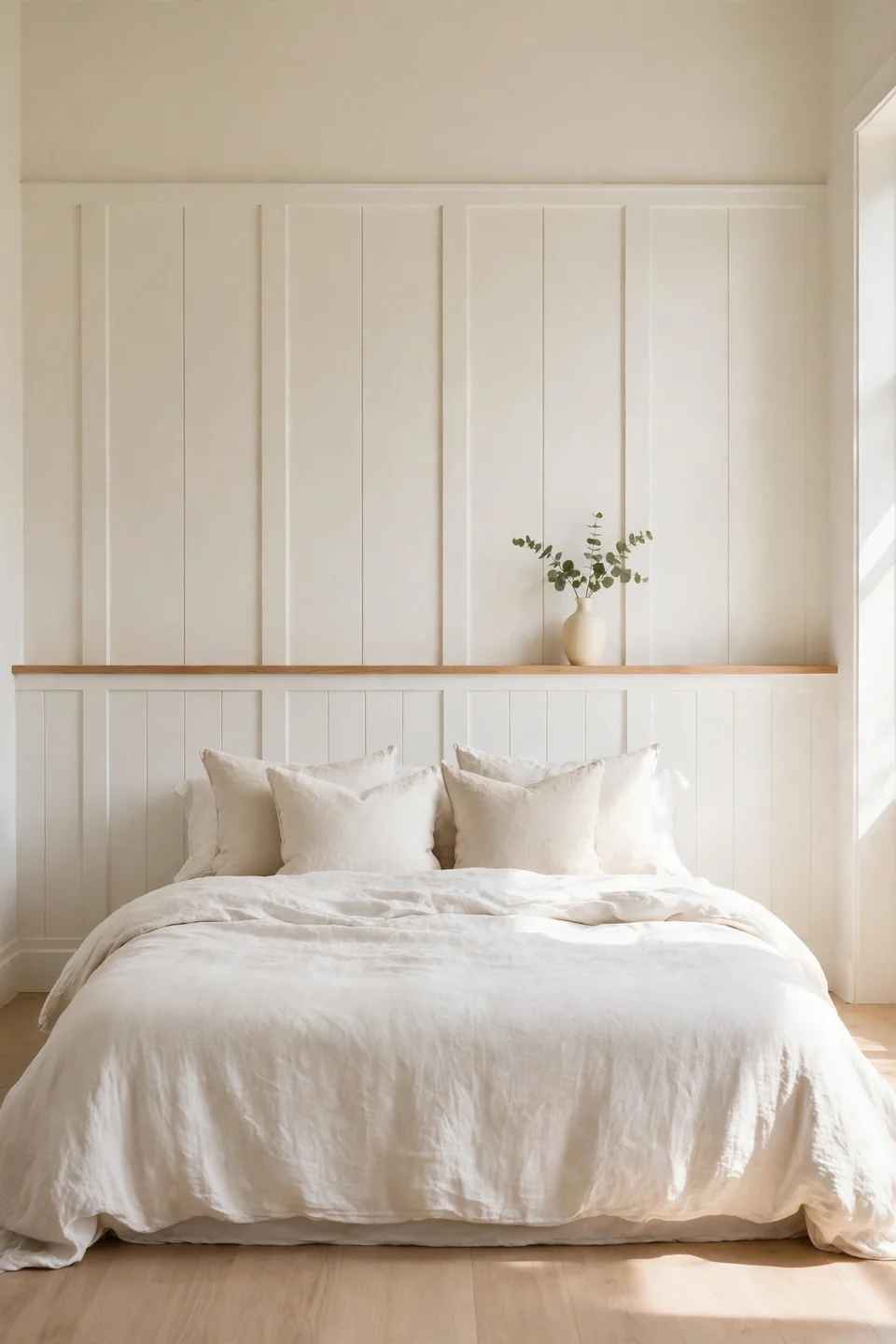
- Run battens from floor to picture rail height for a tall, tailored rhythm
- Space vertical boards evenly, usually every twelve to sixteen inches
- Cap the run with a slim ledge that doubles as a tiny display shelf
- Paint boards, wall, and trim one colour for a calm built in look
- Leave the wall above pale so the grid stays the quiet star
Height changes everything here. Battens that stop at chair rail height can look like a compromise, while a tall run reads deliberate and architectural. In my experience, taller paneling suits low beds and simple linen best, because the vertical lines supply all the drama the room needs.
Soft Sage Panel Accent
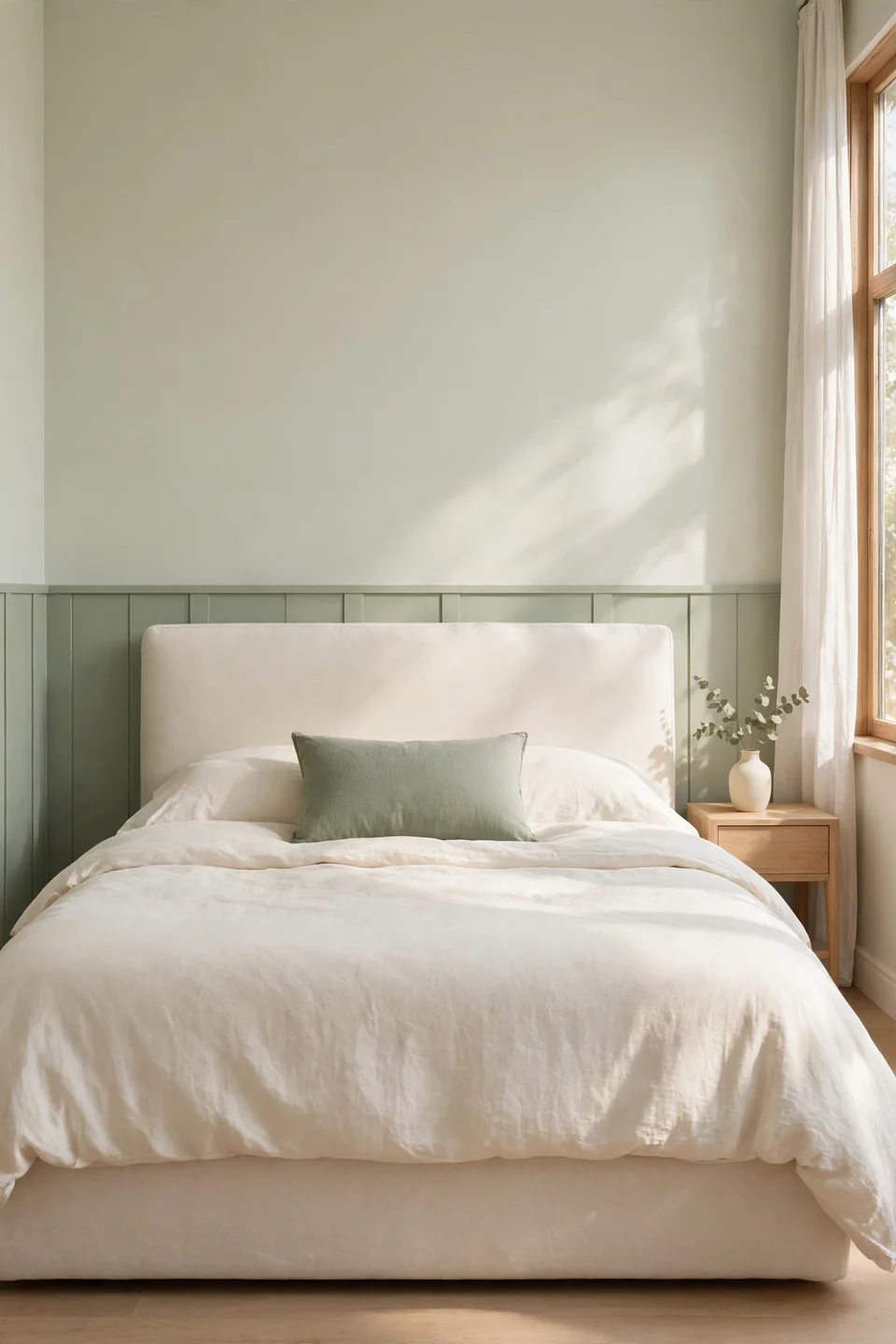
Quick Tip: Test sage on one panel section first and check it at night under warm lamp light. Sage shifts cooler in daylight and deeper after dark, so a shade that looks perfect at noon may feel grey by bedtime. Sample boards save a full repaint.
Sage green panels behind a cream bed create the softest colour story in this whole collection. The green stays quiet because the panels add texture, letting a muted tone read rich instead of flat. Echo the colour once more in a cushion or a throw, then stop and let warm white bedding and oak carry the rest of the room.
Plain Wall Panel Makeover
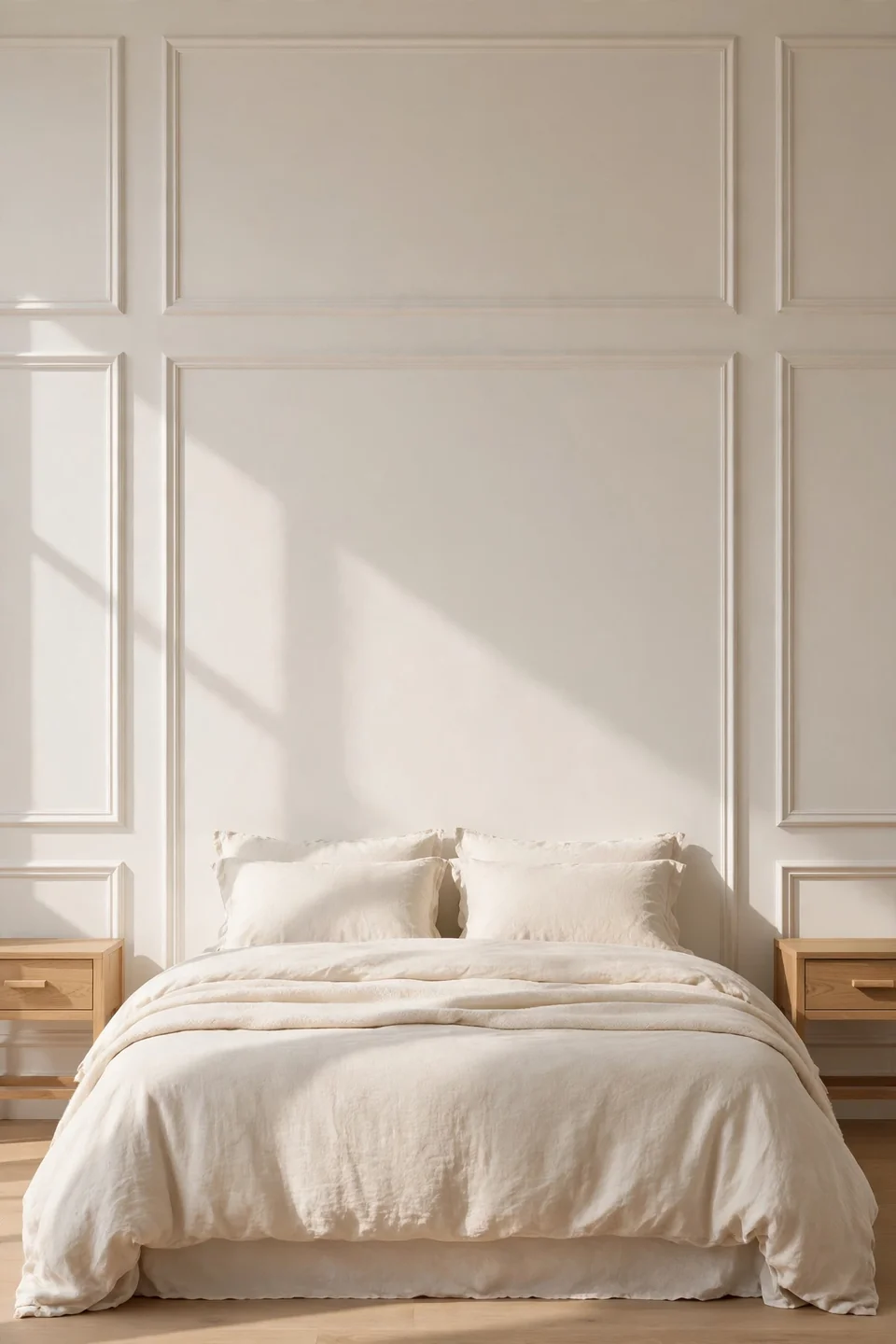
BEFORE: The bed wall was one flat sheet of pale paint. Bedding slid visually into the wall, the headboard looked lost, and the whole room felt rented and temporary despite good furniture and decent light.
AFTER: Picture frame molding now divides the wall into calm rectangles painted warm white. The bed sits inside the largest frame like artwork, shadows outline every edge, and the room feels built rather than decorated.
Molding costs little and asks only for a mitre saw, a level, and patience with measuring. Renters can fix thin trim with removable adhesive in many cases. Start with the bed wall only; one finished wall changes the room more than four half done ones ever will.
Picture Frame Molding Steps
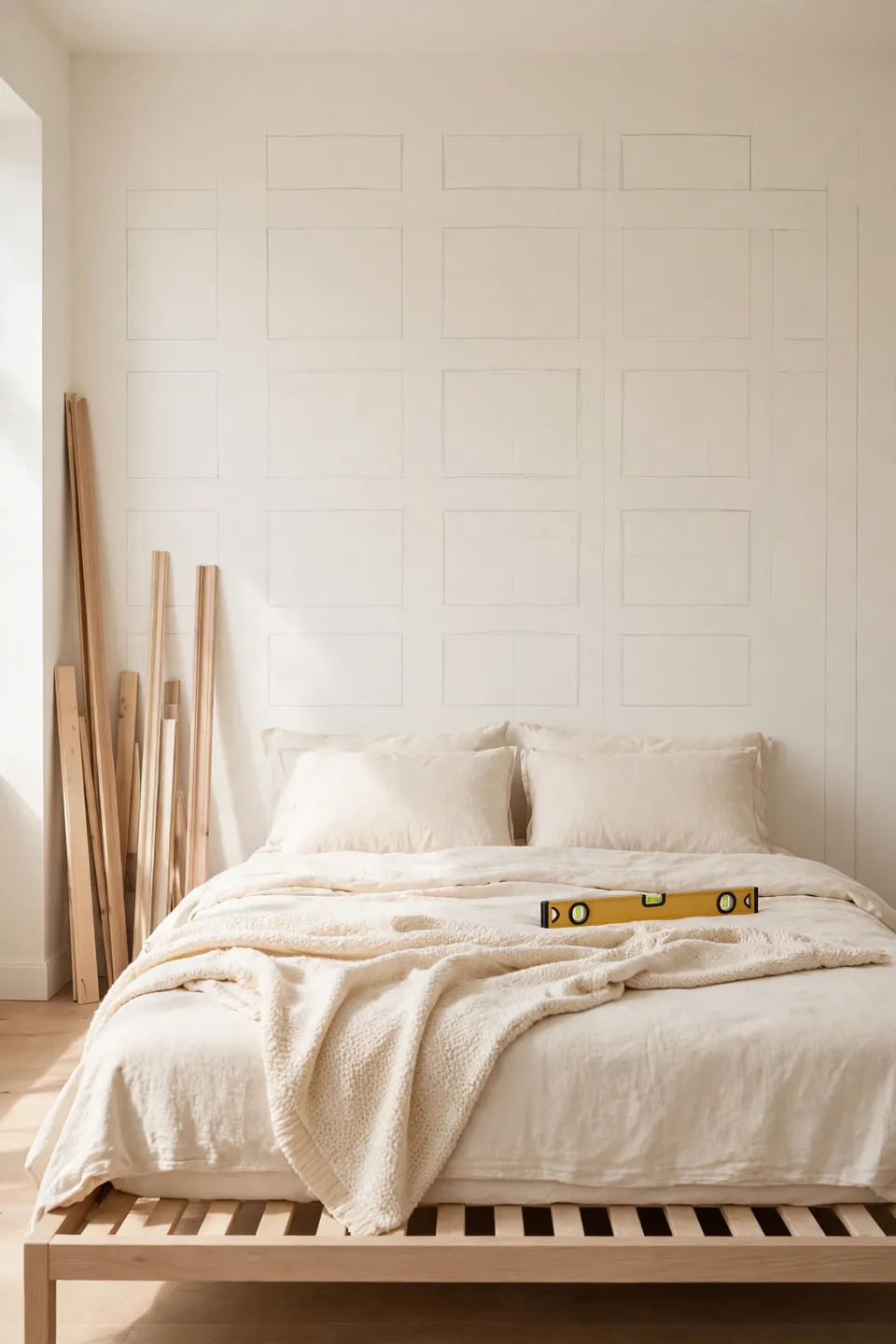
- Measure the bed wall and sketch equal rectangles with three inch gaps between frames
- Cut molding at forty five degree angles and dry fit each frame on the floor
- Glue and pin the frames to the wall, checking corners with a square
- Fill seams and nail holes, sand smooth, then caulk every inside edge
- Prime the frames and wall together, then roll on two coats of warm white
Equal spacing matters more than fancy profiles. Frames that share the same margins look intentional, while one wide and one narrow frame reads as a mistake. Leave the same gap beside the window as beside the door, even if it means shrinking every frame slightly.
Half Wall Versus Full
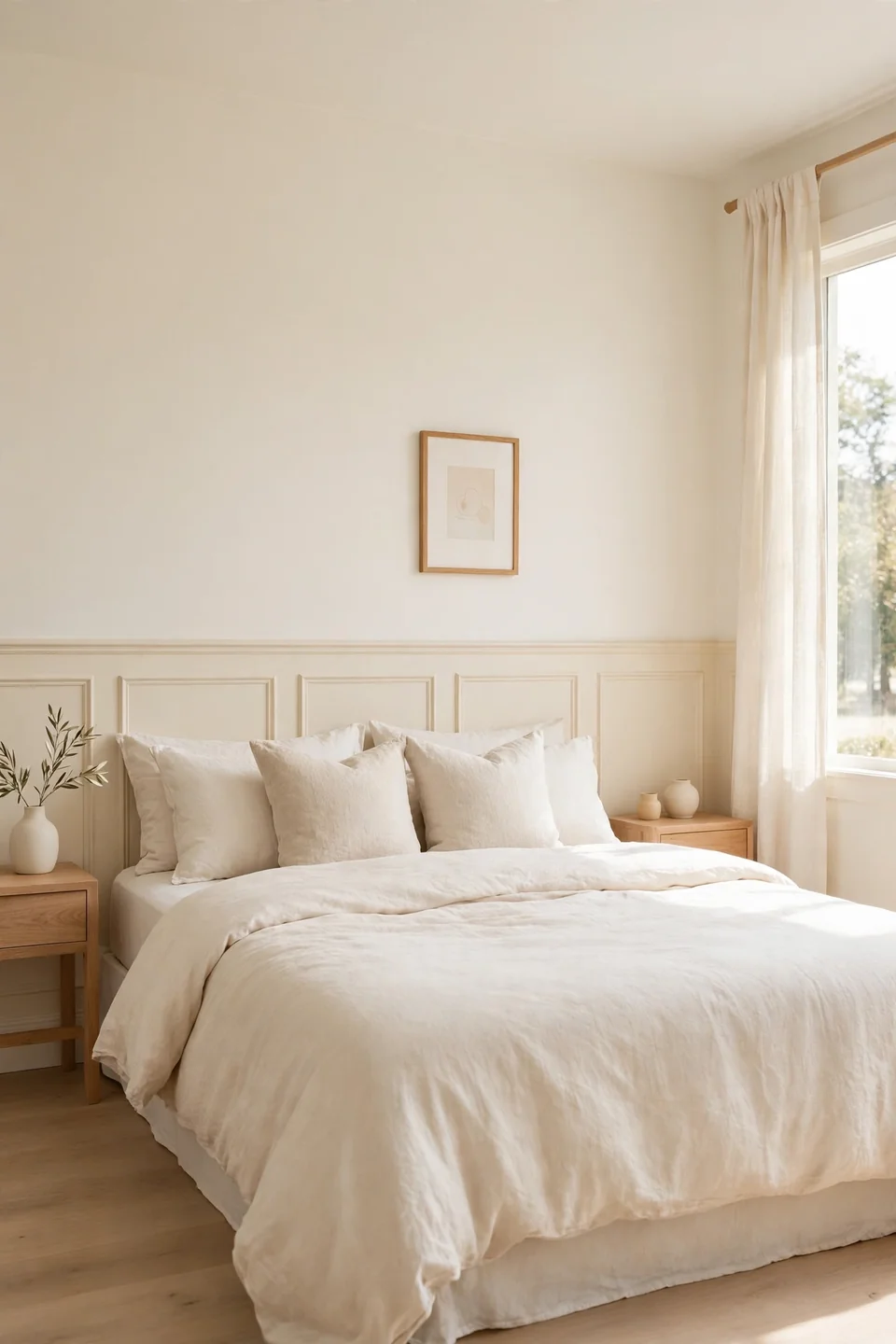
| Half Height Panels | Full Height Panels |
|---|---|
| Protects walls, leaves room for art above | Turns the bed wall into architecture |
| Lower cost, faster to install | Higher cost, more measuring and cutting |
| Best for low ceilings | Best for tall, plain walls |
| Cap rail doubles as a slim shelf | Needs art planned inside the frames |
Neither height wins for every room. Half panels protect walls and keep the upper half free for art and shelves, while full height panels turn the bed into part of the architecture. Choose by ceiling height first: low rooms often flatter half panels, tall rooms reward the full climb. Paint colour matters less than the proportion you pick. Measure once, tape the outline on the wall, and live with it for a day before cutting anything.
Smart Panel Painting Rules
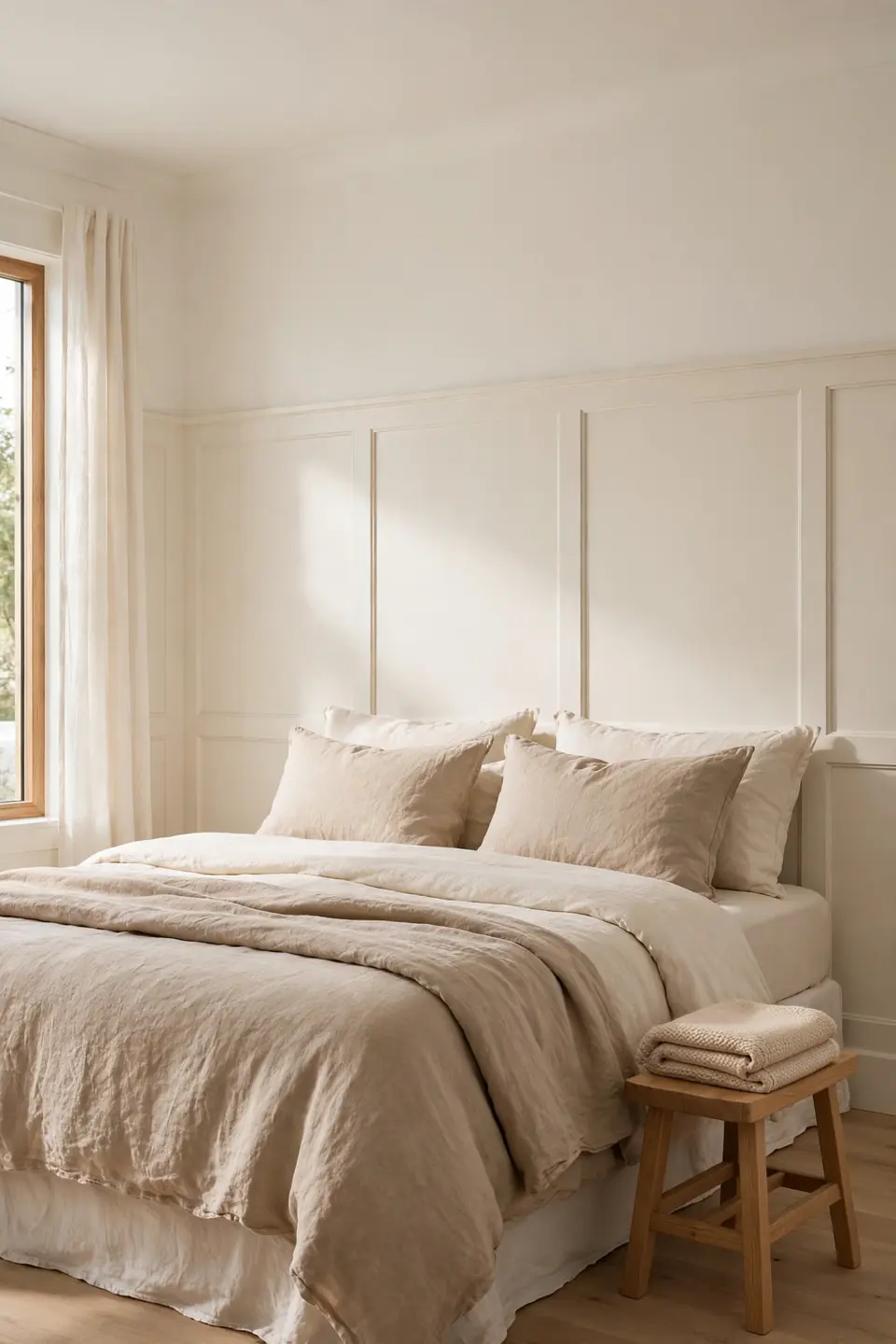
Do:
- Sand panels lightly between coats for a factory smooth finish
- Paint trim and wall the same colour for calm, modern depth
- Caulk every seam so light never catches gaps
- Roll the flat areas first, then brush the molding edges
Don’t:
- Skip gloss paint that turns panels into shiny plastic
- Rush the second coat before the first fully cures
- Mix warm white panels with a cool white ceiling
- Forget the wall behind the bed when testing colours
Paint decides whether paneling reads as joinery or as decoration stuck on a wall. Satin or eggshell finishes hide flaws and keep colour deep under lamps. I’ve seen this work well in many cases: one colour, one sheen, every surface, no exceptions. Test one panel fully and judge it after dark.
Budget Panel Project Facts
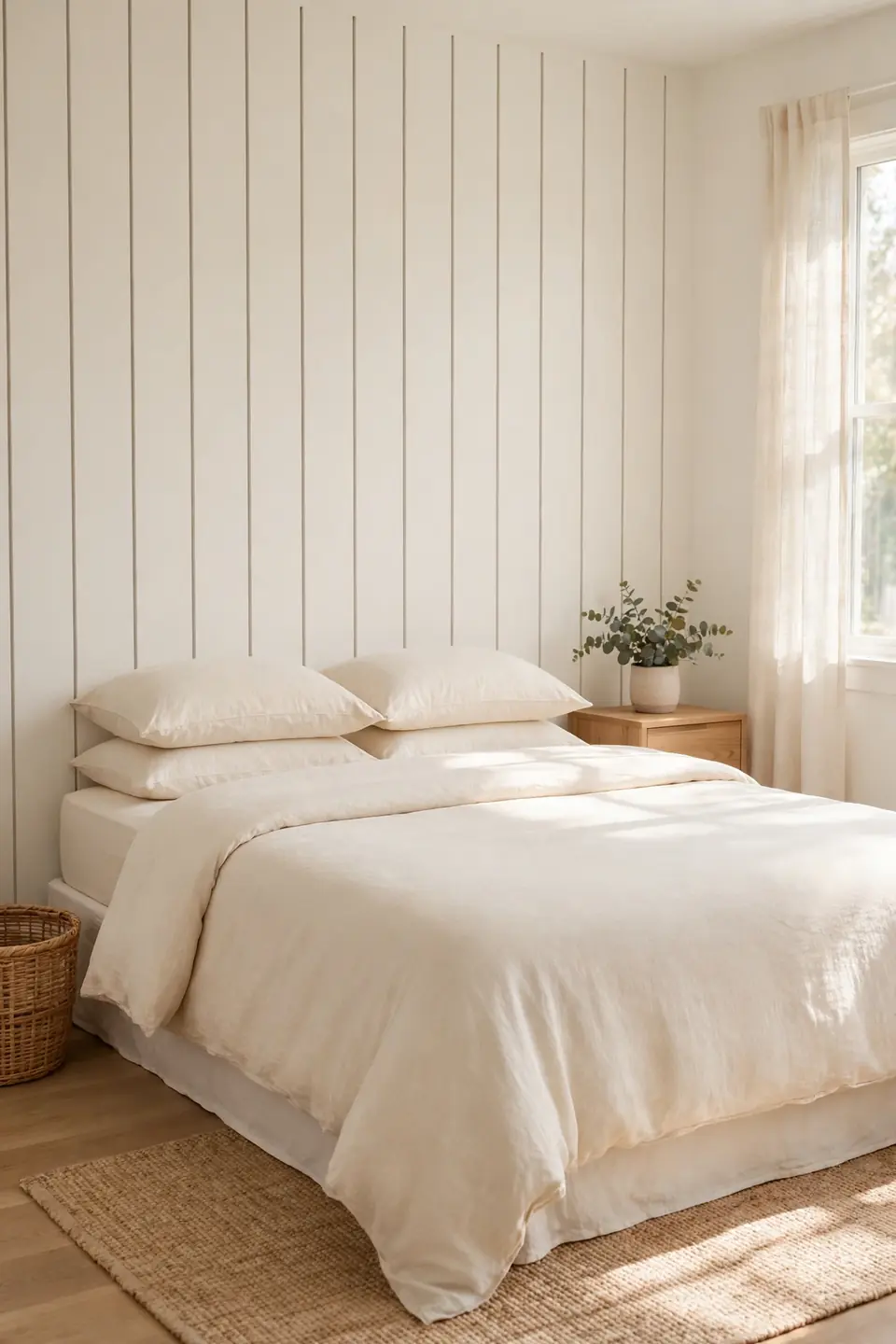
Cost: Low to moderate | Time: One weekend | Skill Level: Beginner friendly | Best For: One bed wall on a tight budget
MDF strips and pre primed molding keep a single bed wall affordable, often less than a new headboard costs. The money goes further when panels stay simple: flat boards, square corners, one paint colour. Renters can build panels as one large frame and lean it behind the bed instead of fixing anything to the wall. Small spend, large change in how finished the room feels at night and in photographs. Start behind the bed, where early mistakes hide and confidence grows quickly.
Cream and Oak Harmony
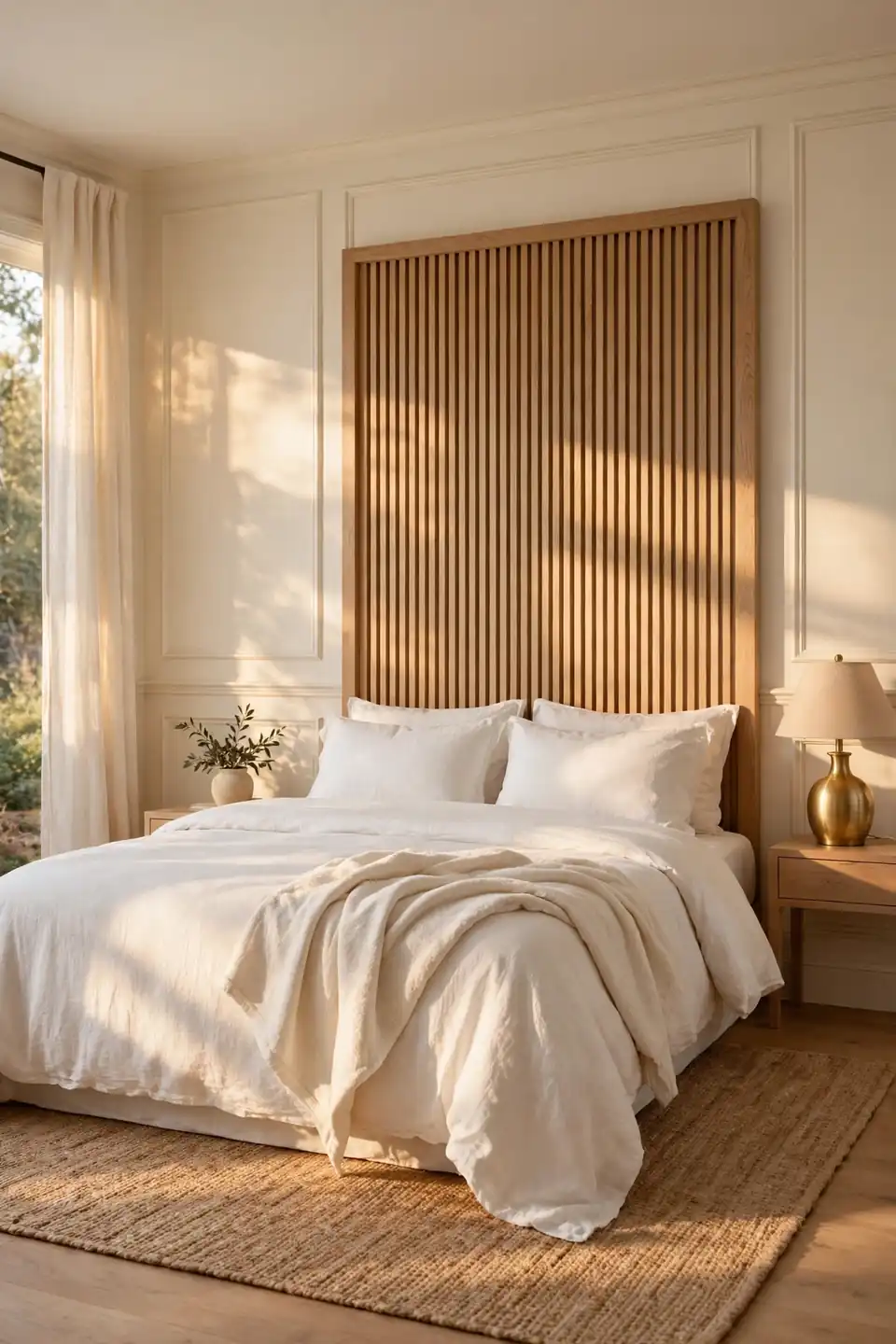
Cream panels and light oak furniture share the same warm undertone, so a room built on both never fights itself. The panels supply pattern through shadow, the oak supplies grain, and together they let white bedding stay the brightest note in the room. Add one woven basket or a jute rug for a third natural texture.
Keep metals quiet here: brushed brass or black, never both in large amounts. A tall oak headboard against cream picture frame molding feels calm in daylight and golden under lamps. That’s why many experts recommend testing paint beside the actual wood, since oak can pull cream toward yellow if the undertone runs too warm.
Two Tone Panel Contrast
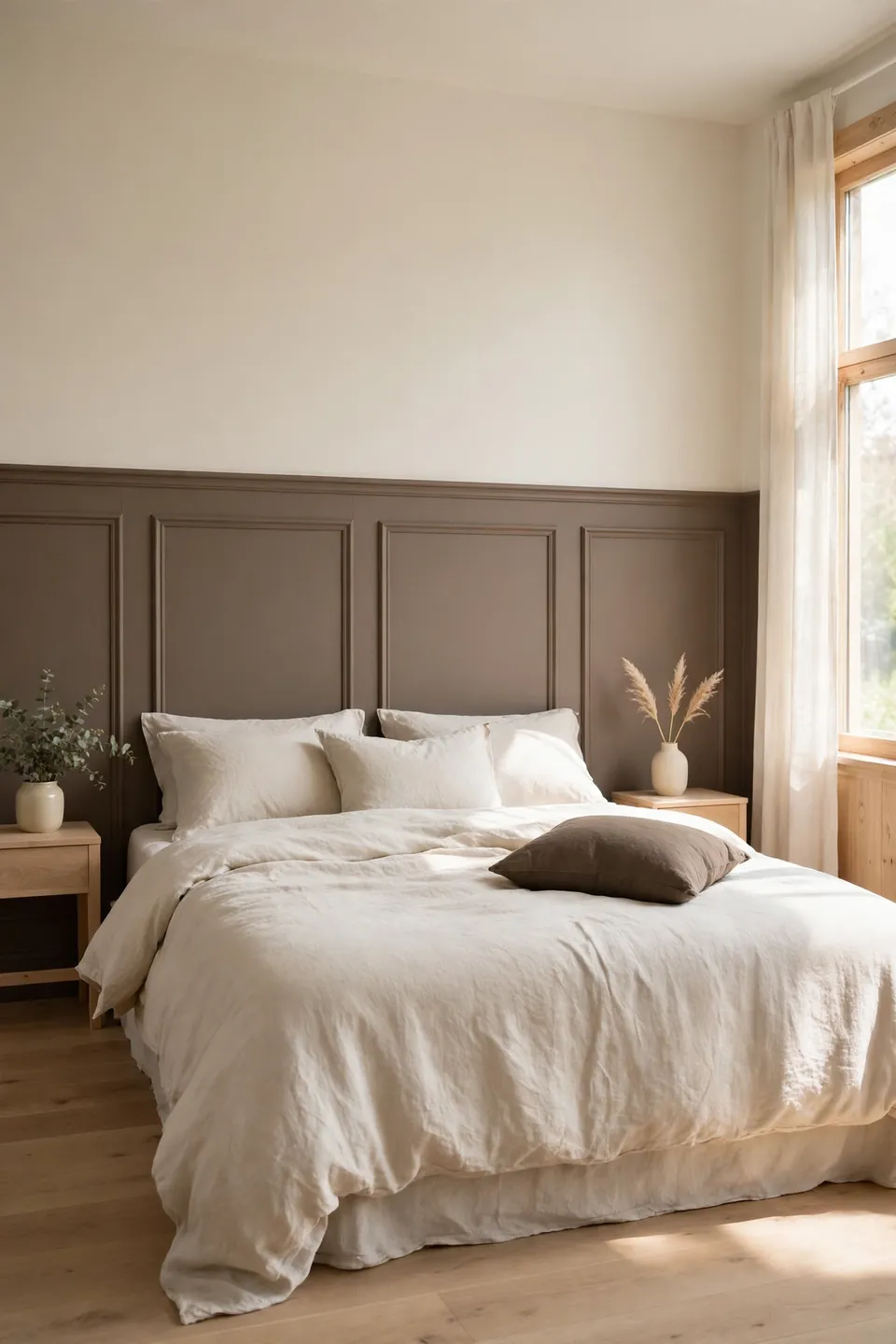
- Paint lower panels a deep warm taupe for grounded, steady weight
- Keep upper walls soft cream to hold the daylight
- Repeat the dark tone once in a cushion or a throw
- Choose a headboard fabric that sits between both tones
- Let the panel line run level with the headboard top edge
Contrast works because the wall does the decorating. Stone does similar heavy lifting in living spaces, and rooms planned around sandstone accent wall interior design prove texture plus two tones can carry a whole scheme. Keep bedding pale, art minimal, and the two paint colours within one warm family.
Headboard Height Panel Trick
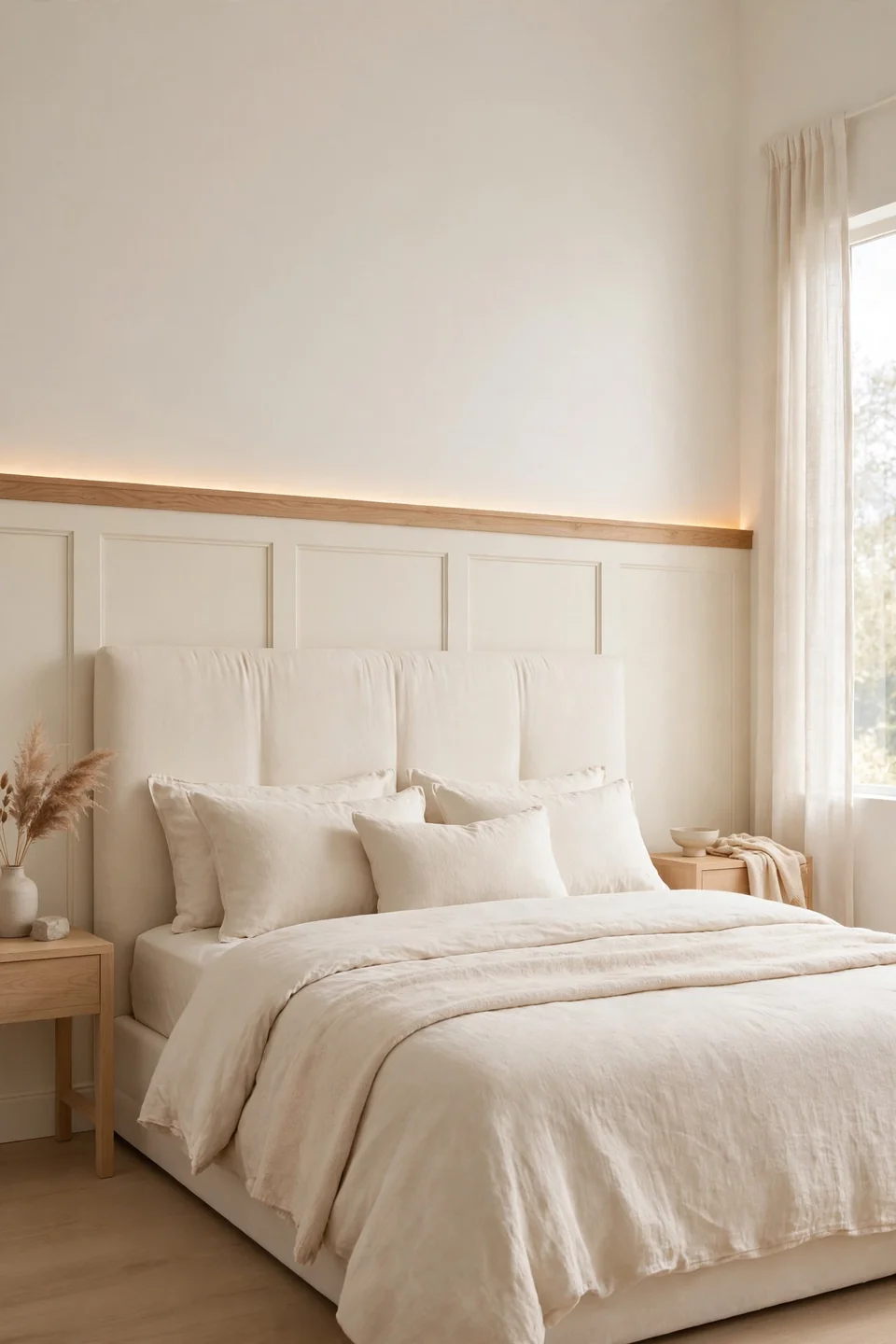
Quick Tip: Stop the panel line exactly at the top of the headboard. A rail that lands a few inches above or below the headboard edge looks accidental, while one clean shared line makes the bed and wall read as a single built piece of furniture.
This trick suits upholstered headboards best, because the soft edge meets the hard rail in one crisp shadow. Paint the panels the same colour as the wall above for calm, or one shade deeper for definition. Nightstands should stay slightly lower than the rail so lamps sit inside the paneled zone. Measure from the mattress, not the floor, before marking the line.
Dark Room Panel Refresh
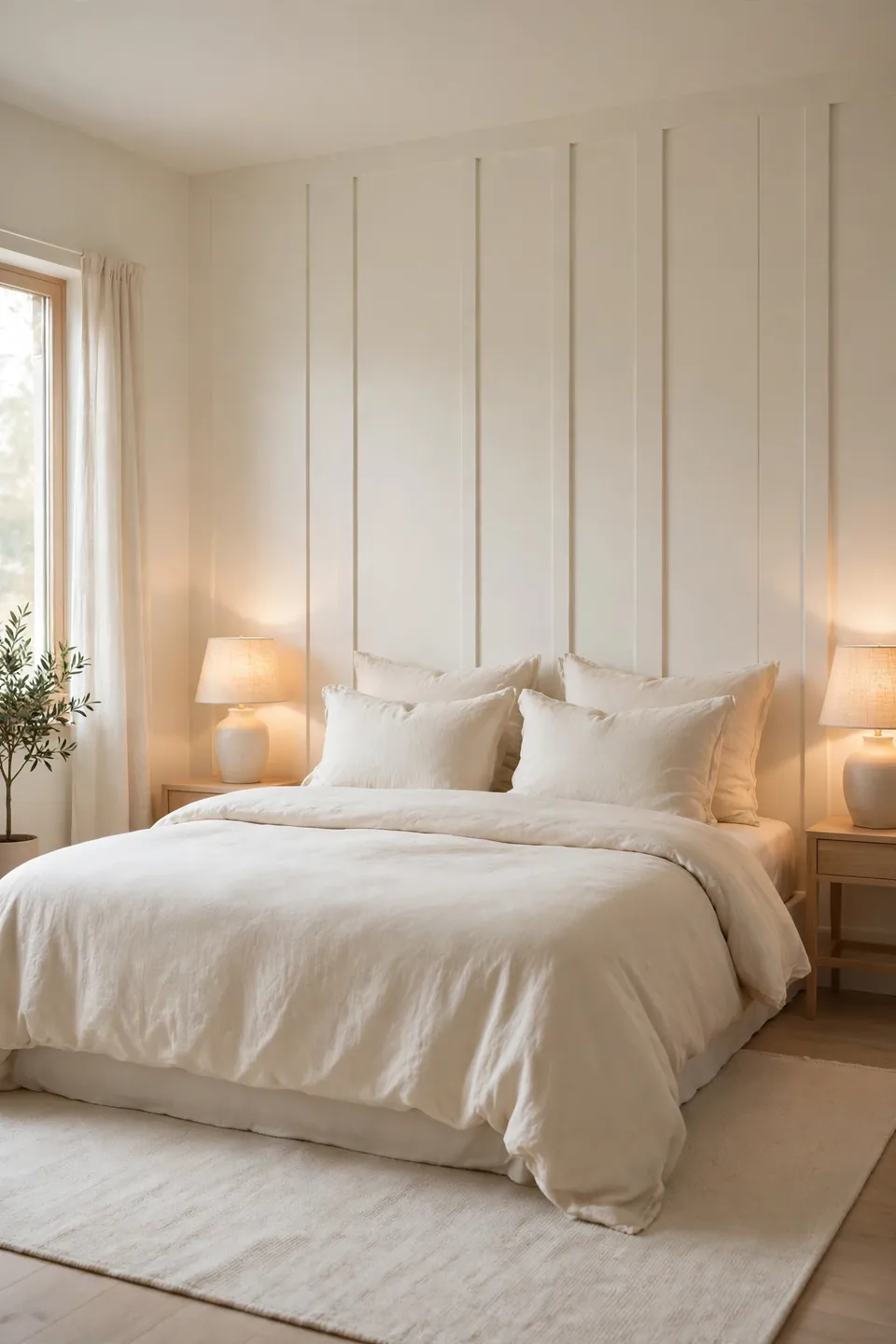
BEFORE: North facing light made the bedroom feel flat and chilly. Grey walls swallowed the bed, white bedding looked bluish, and the room felt smaller every winter afternoon when the light dropped early.
AFTER: Warm white board and batten now wraps the bed wall and catches what light exists. Shadow lines add depth the paint never had, cream bedding glows against the panels, and the room holds its warmth after sunset.
Panels help dark rooms because they work with shadow instead of against it. Every batten edge throws a thin line of shade that reads as depth, not gloom. Pair them with warm bulbs and one pale rug, and even a small north facing room feels settled rather than sad at dusk.
Installing Chair Rail Steps
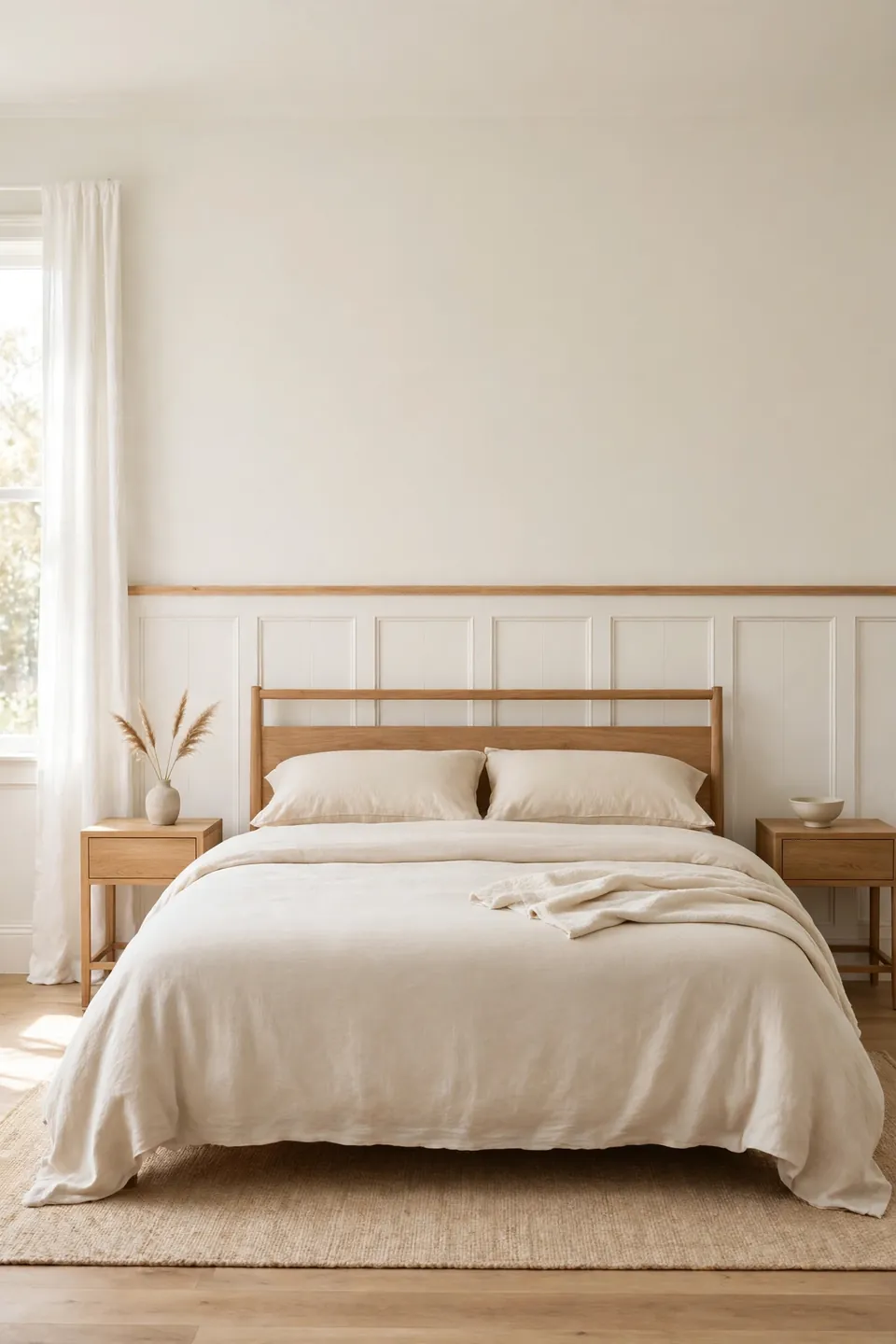
- Mark the rail height, usually one third of the wall, with a level line
- Cut the rail molding and test each length against the wall
- Fix the rail with adhesive and pins into the studs where possible
- Panel below the rail with boards or frames, keeping gaps equal
- Caulk, fill, and paint rail and panels as one piece
Good wainscoting bedroom design inspiration always respects proportion, and the chair rail is where proportion shows. A rail set too high makes the bed look short; too low and the panels feel like a skirting board. Trust the one third rule first, then adjust an inch for tall headboards.
Beadboard Versus Raised Panels
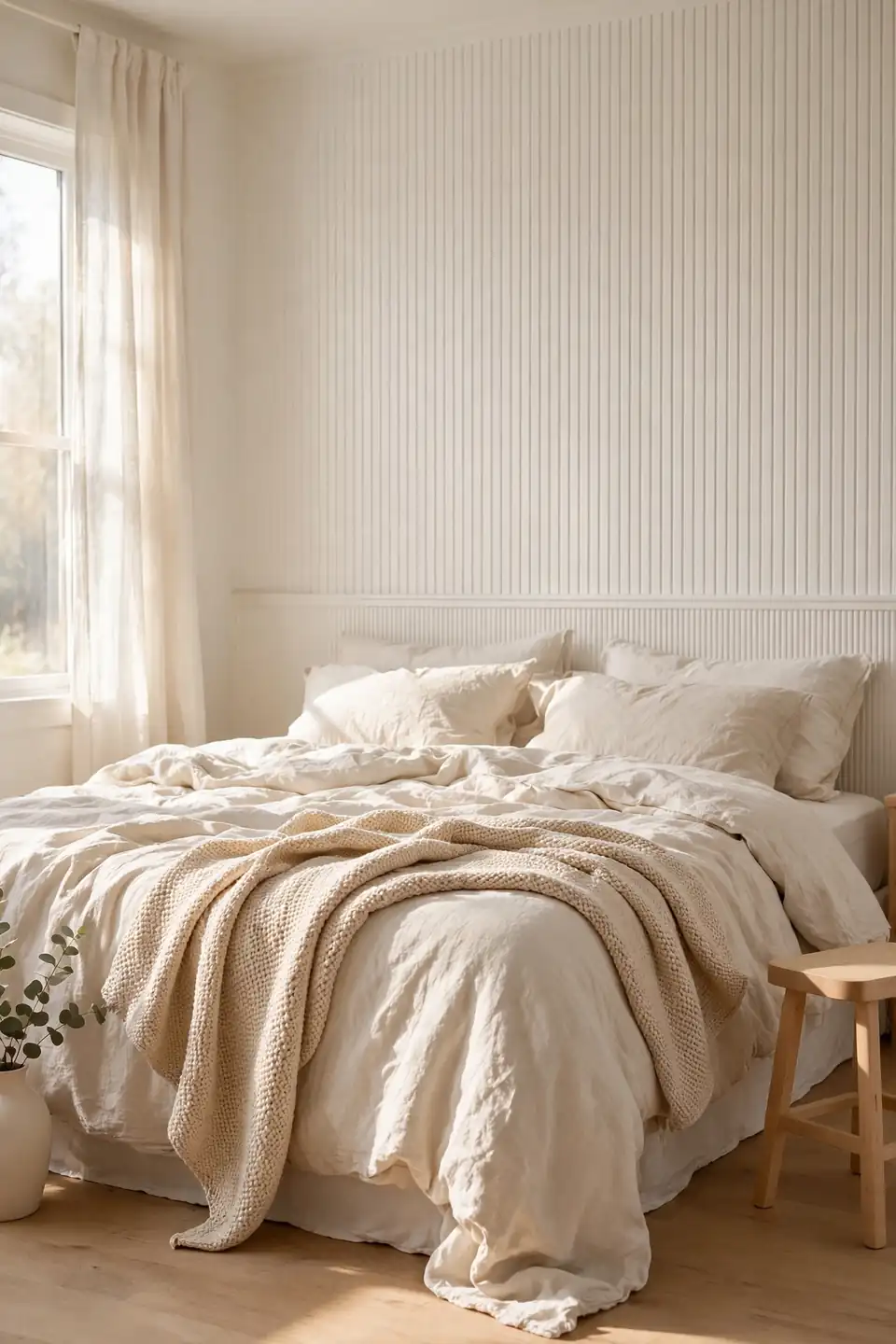
| Beadboard | Raised Panels |
|---|---|
| Fine grooves, soft cottage texture | Deep frames, tailored formal lines |
| Lower cost, sold in easy sheets | Higher cost, built frame by frame |
| Best with rumpled linen bedding | Best with crisp, smooth bedding |
| Hides small wall flaws well | Shows flaws, rewards smooth walls |
Beadboard leans cottage and casual, with fine grooves that soften big beds and busy bedding. Raised panels lean tailored and formal, framing the bed like furniture. Both paint beautifully in warm white. Choose by the mood of the whole house: grooves for relaxed rooms, frames for polished ones, and never mix both on one wall. Samples cost little; tape both to the wall for a week.
Guest Room Panel Checklist
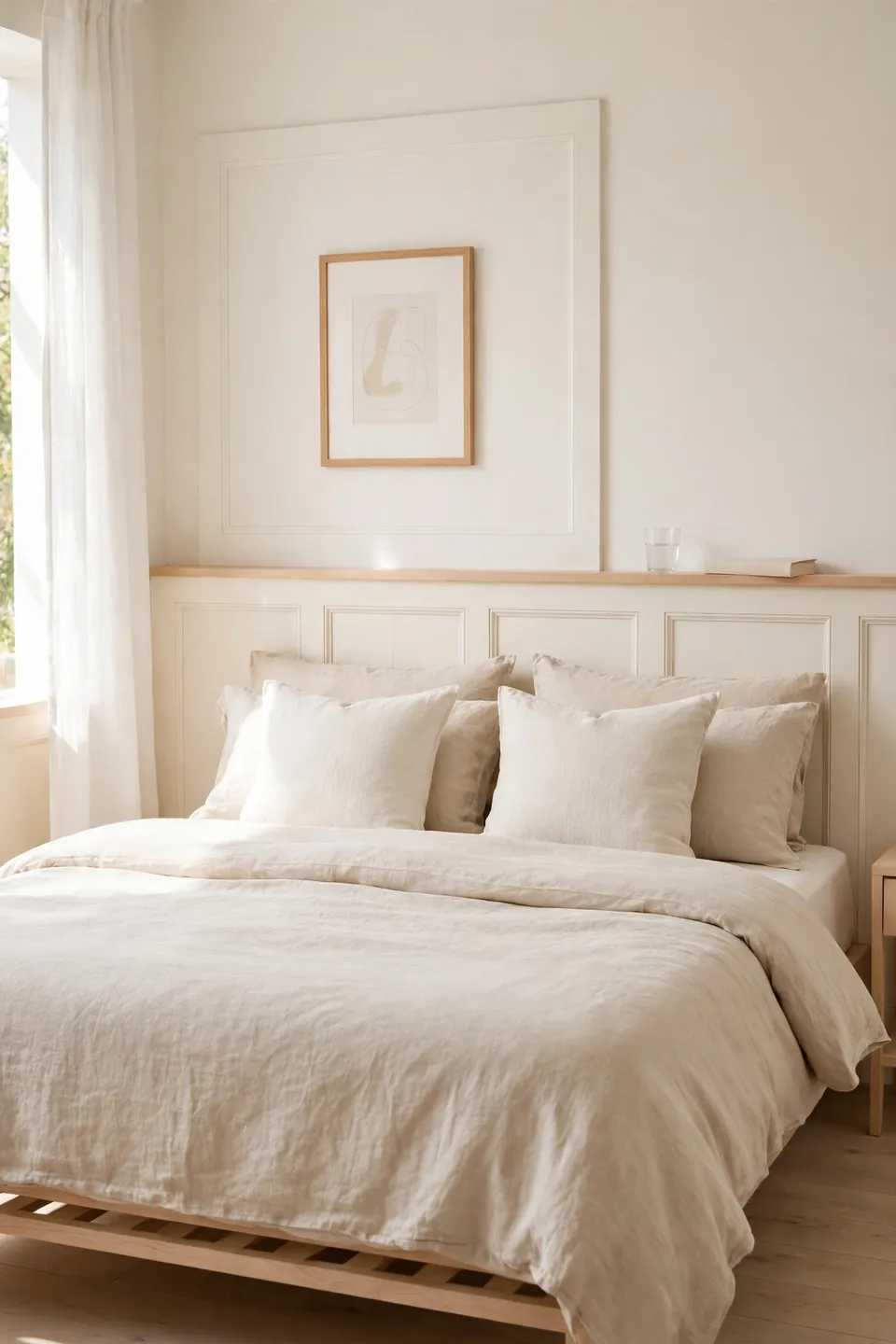
Do:
- Choose washable paint for walls guests brush against
- Leave one panel section plain for a luggage rack zone
- Add a cap rail ledge for a phone and glass
- Keep colours neutral so any bedding set works well
Don’t:
- Install deep ledges that collect dust overhead
- Pick busy profiles that fight patterned guest bedding
- Forget a hook or two on the panel wall
- Block the only wall where a mirror could hang
Guests judge a room by how finished it feels in the first minute. Panels give that finished feeling without furniture, and a cap rail ledge quietly replaces a cluttered nightstand surface. Keep one framed print inside a panel rectangle, leave spare bedding folded at the foot, and the calm, ready look is complete.
Panel Care Quick Facts
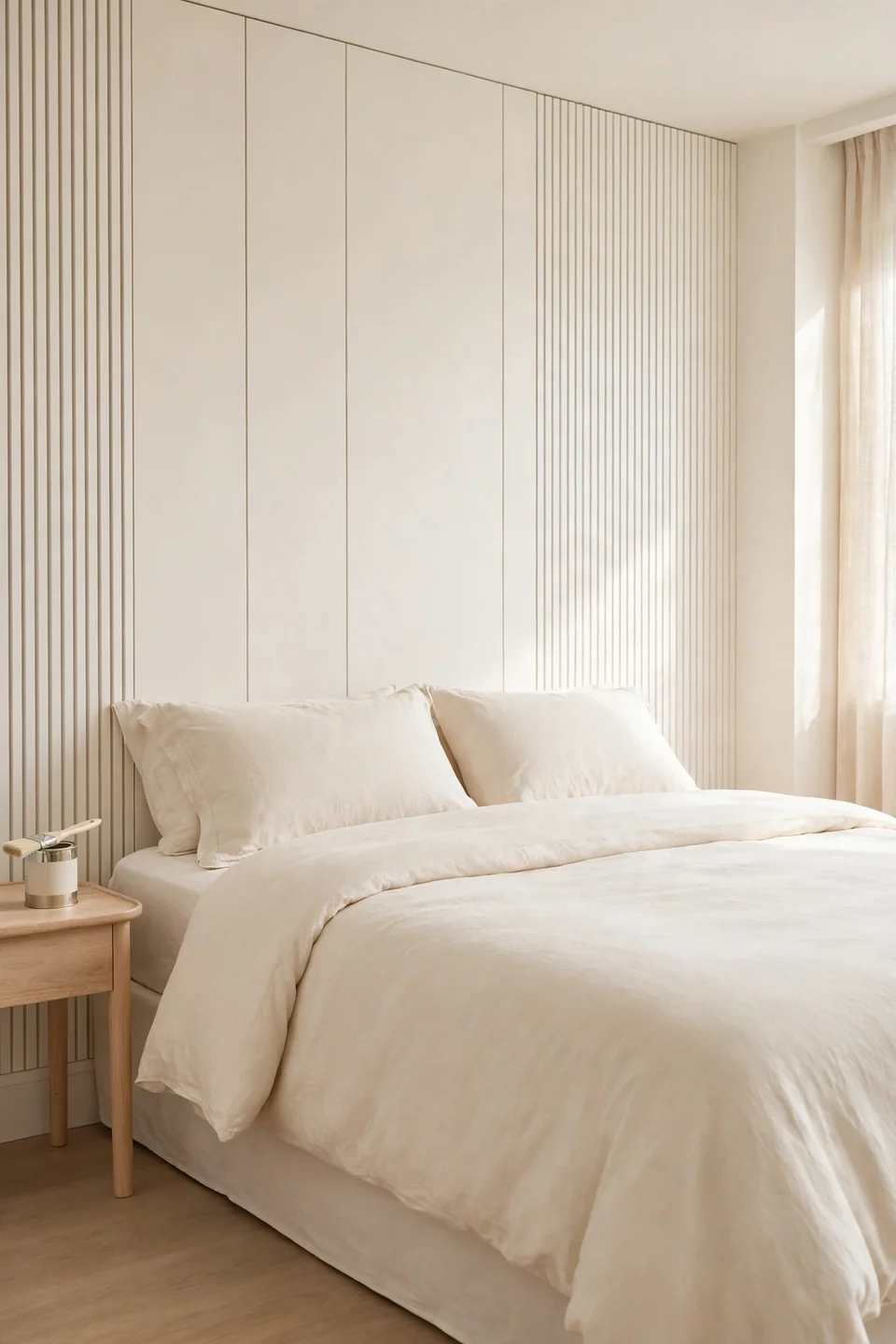
Cost: Very low | Time: One hour monthly | Skill Level: Anyone | Works In: Painted and stained panels
Panels collect dust along every ledge, so a soft brush attachment on the vacuum keeps them clean in minutes. Wipe scuffs with a damp cloth before they set into the paint, and touch up the cap rail once a year where bags and hands land most. In my experience, five quiet minutes monthly keeps joinery looking freshly installed for years. A small labeled pot of leftover paint stored in the closet makes every touch up painless, and a pencil list of the paint name inside a drawer saves guesswork later.
Reading Nook Panel Corner
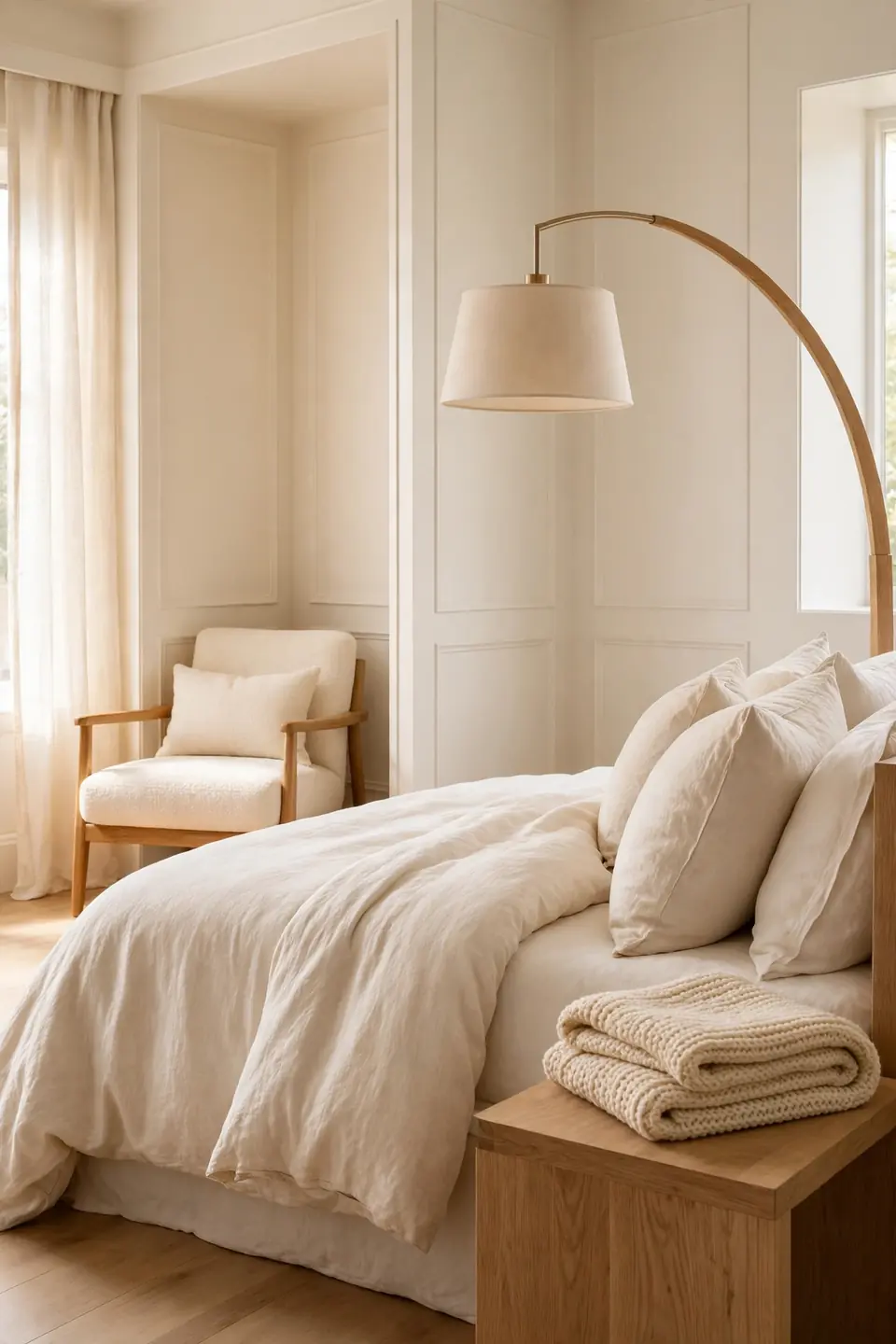
A corner wrapped in panels becomes a reading nook without any building work. The molding turns two plain walls into a defined alcove, and a chair placed inside the corner suddenly feels placed rather than parked. Add a floor lamp that arcs over the chair and the nook glows on its own.
Keep the nook palette inside the room’s family: same panel colour, one deeper cushion, a small side table in oak. A folded throw over the chair arm repeats the bedding’s texture in miniature. Readers claim corners like this fast, so expect the chair to become the most fought over seat in the house.
Layered Linen and Panels
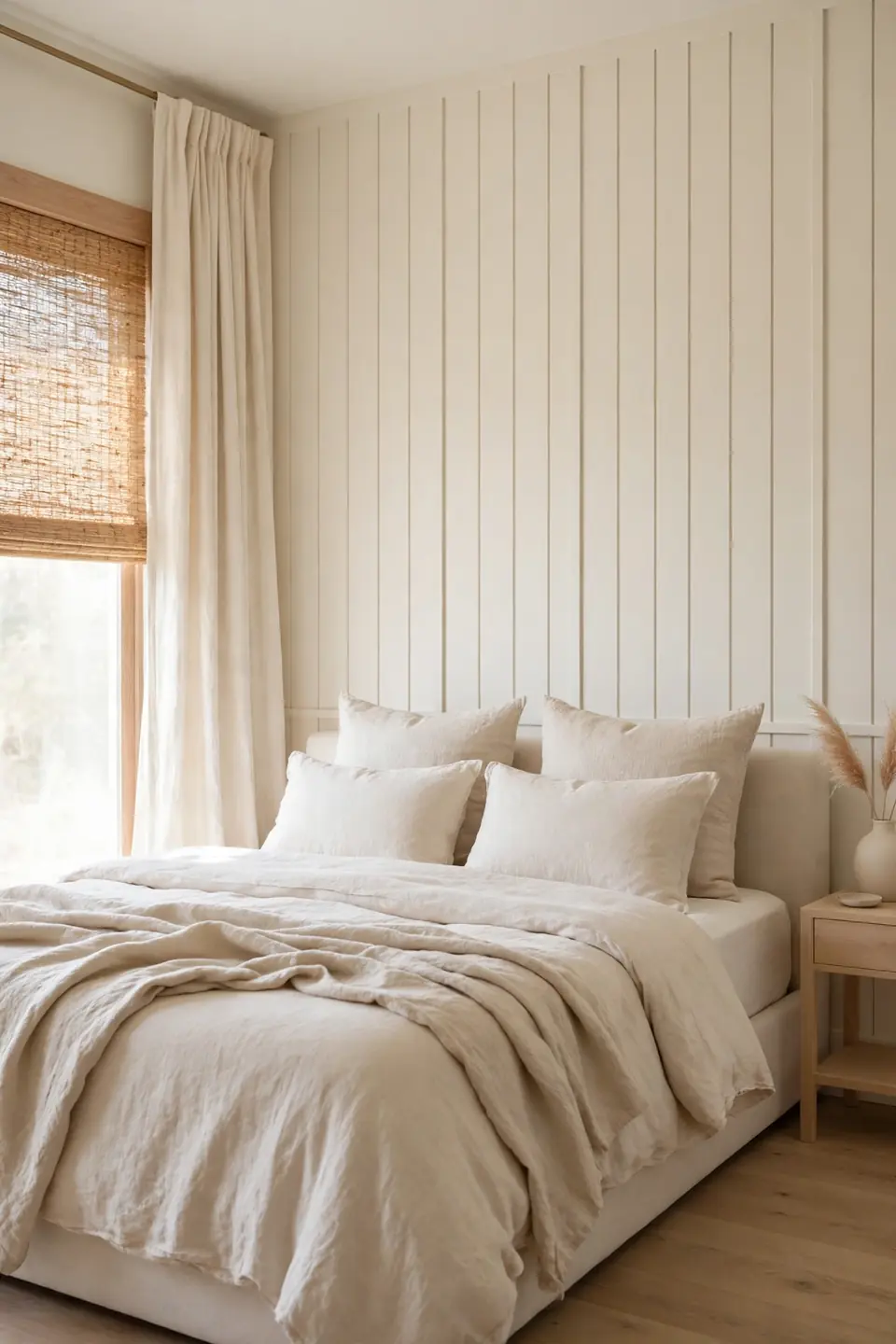
- Hang washed linen curtains from ceiling height beside the panels
- Fold a linen throw across the foot of the bed
- Mix two pillow sizes against the paneled headboard wall
- Keep curtain and panel colours within one warm step
- Add a woven shade for a third soft layer
Linen softens the geometry of paneling. Straight lines everywhere can feel strict, but one rumpled throw and loose curtains relax the grid instantly. The trick is restraint: three linen moments are plenty, and every other surface should stay smooth so the softness reads as a choice, not clutter. Choose natural linen tones: flax, oatmeal, and warm white.
Low Ceiling Height Illusion
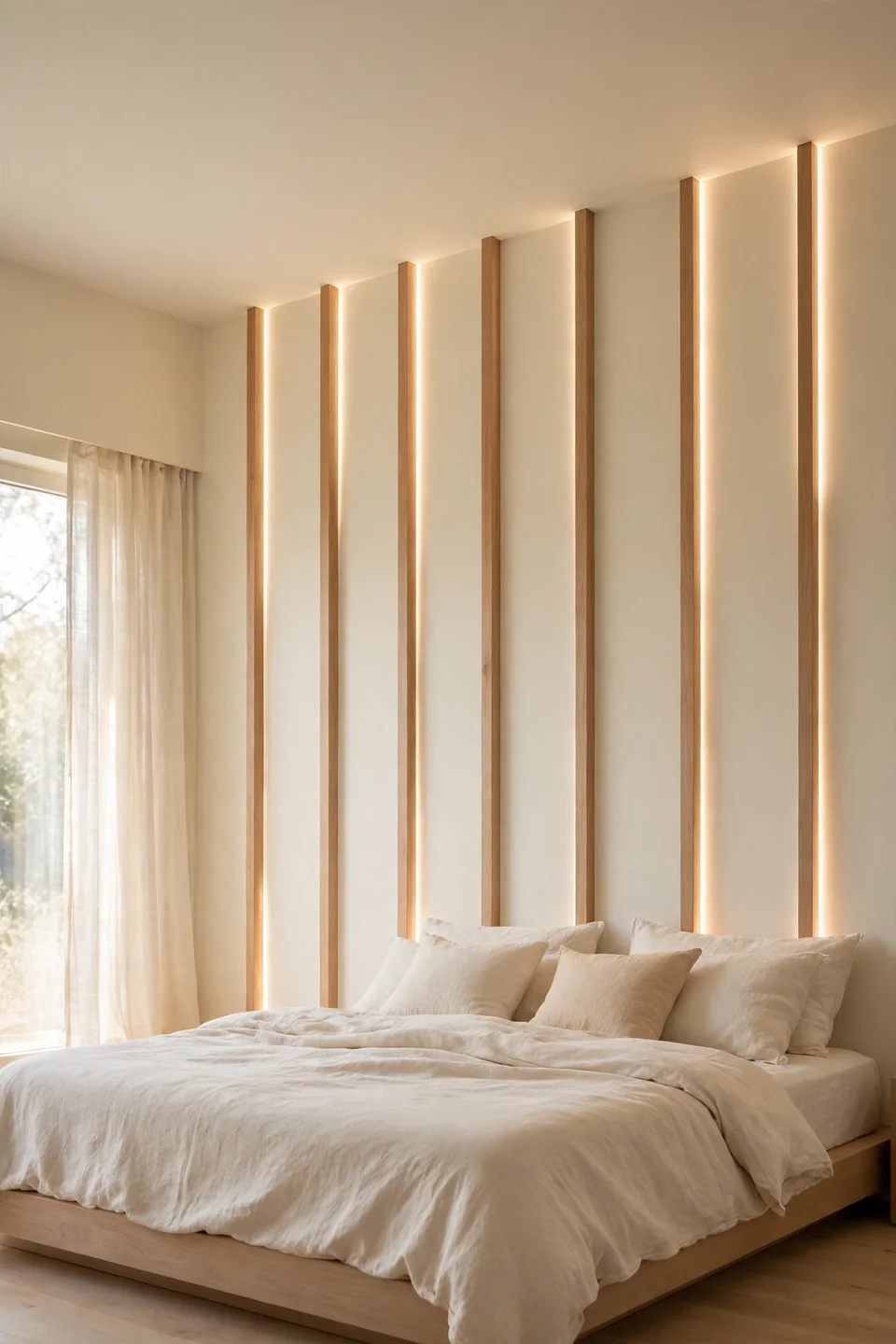
Quick Tip: Run panels higher than feels safe in a low room, up to two thirds of the wall. Tall panels pull the eye upward along their vertical lines, and the short band of wall above reads as a design choice rather than a low ceiling.
Keep the upper band and ceiling the same pale colour so nothing chops the wall visually. Slim battens beat wide boards here, since narrow lines repeat more often and stretch the room further. Low beds and a headboard that stays below the panel line complete the illusion. Avoid pendant lights that hang down into the panel zone and break the climb.
Builder Basic Panel Upgrade
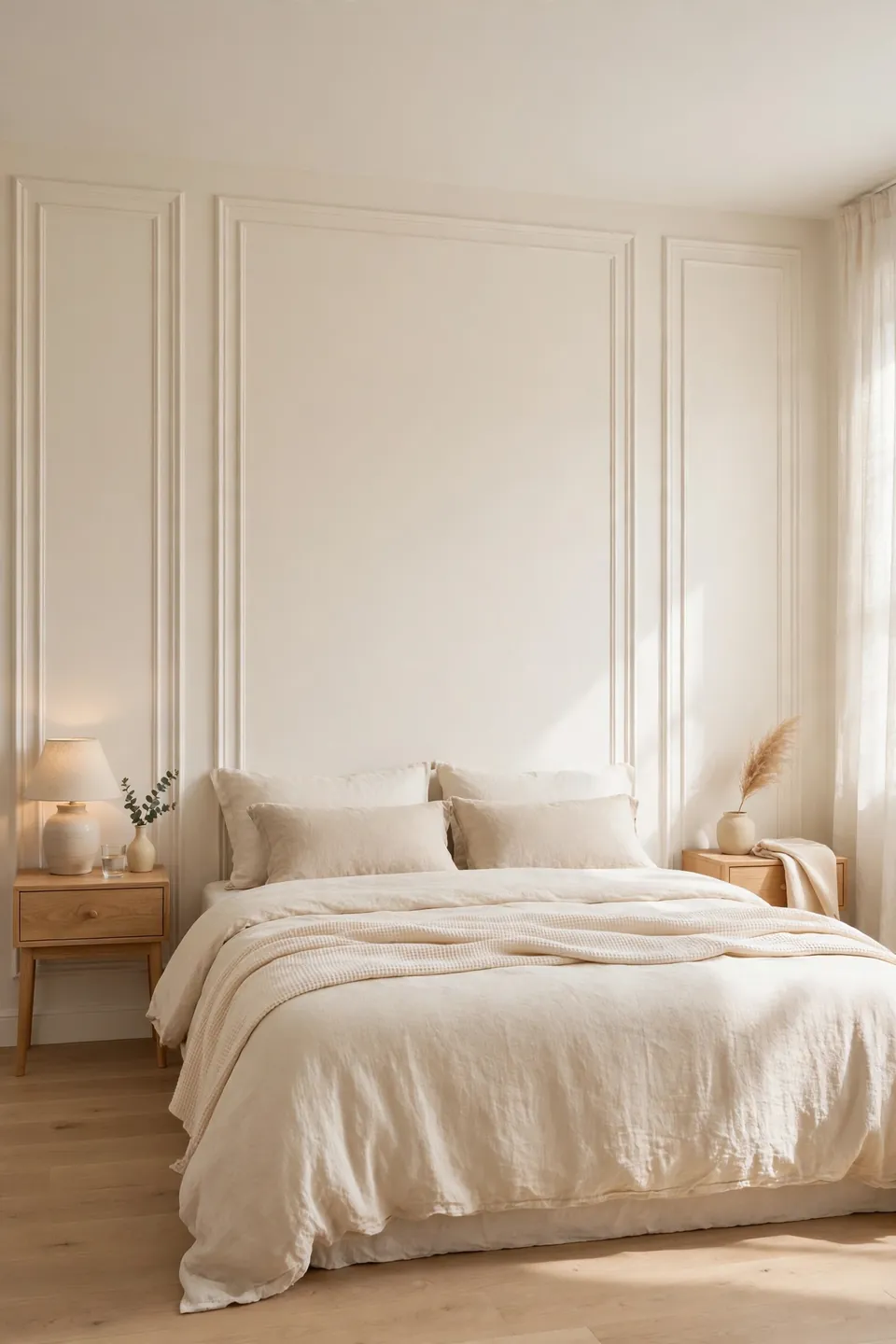
BEFORE: The spec home bedroom had four blank walls, one small window, and a bed floating in the middle of nothing. Every furnishing choice looked temporary, and the room photographed like a rental listing.
AFTER: Full height picture frame panels now wrap the bed wall in warm white. The bed anchors the largest frame, oak nightstands fill the side frames, and the standard box of a room feels designed and permanent.
Paneling is the fastest answer to builder basic sameness because it adds architecture without moving a single wall. One wall is enough in most bedrooms. Paint everything one warm white, and even budget bedding starts to look considered against the framed backdrop behind the bed.
Measuring Panel Layout Steps
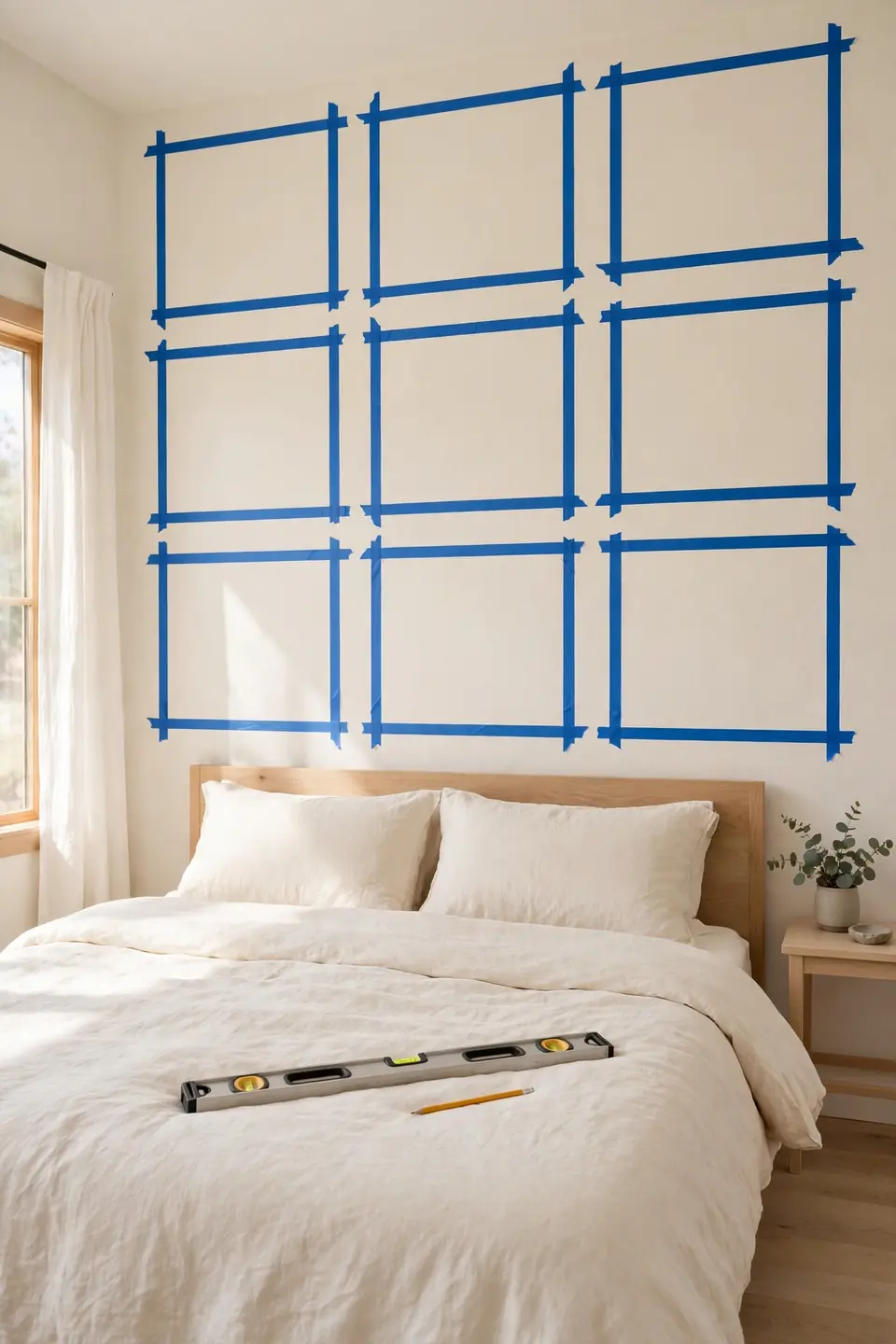
- Measure the full wall width and subtract the gaps wanted at each end
- Divide the remaining width by the target frame width for an even count
- Mark every frame corner in pencil and check with a long level
- Stand back and view the layout from the doorway before cutting
- Adjust any frame that lands awkwardly behind the headboard
Even frames are the whole secret. The eye forgives simple molding but never forgives one frame wider than its neighbour. I’ve noticed that taping the full layout in painter’s tape for a day prevents nearly every measuring regret, because bad spacing shows up honestly at real scale from the doorway.
Painted Versus Stained Wood
| Painted Panels | Stained Panels |
|---|---|
| Calm, quiet, colour led mood | Warm, grain led, natural mood |
| Hides mixed woods and budget boards | Needs matching timber and careful finishing |
| Touch ups take minutes with leftover paint | Scratches show and need stain matching |
| Best when bedding colours change often | Best beside oak floors and headboards |
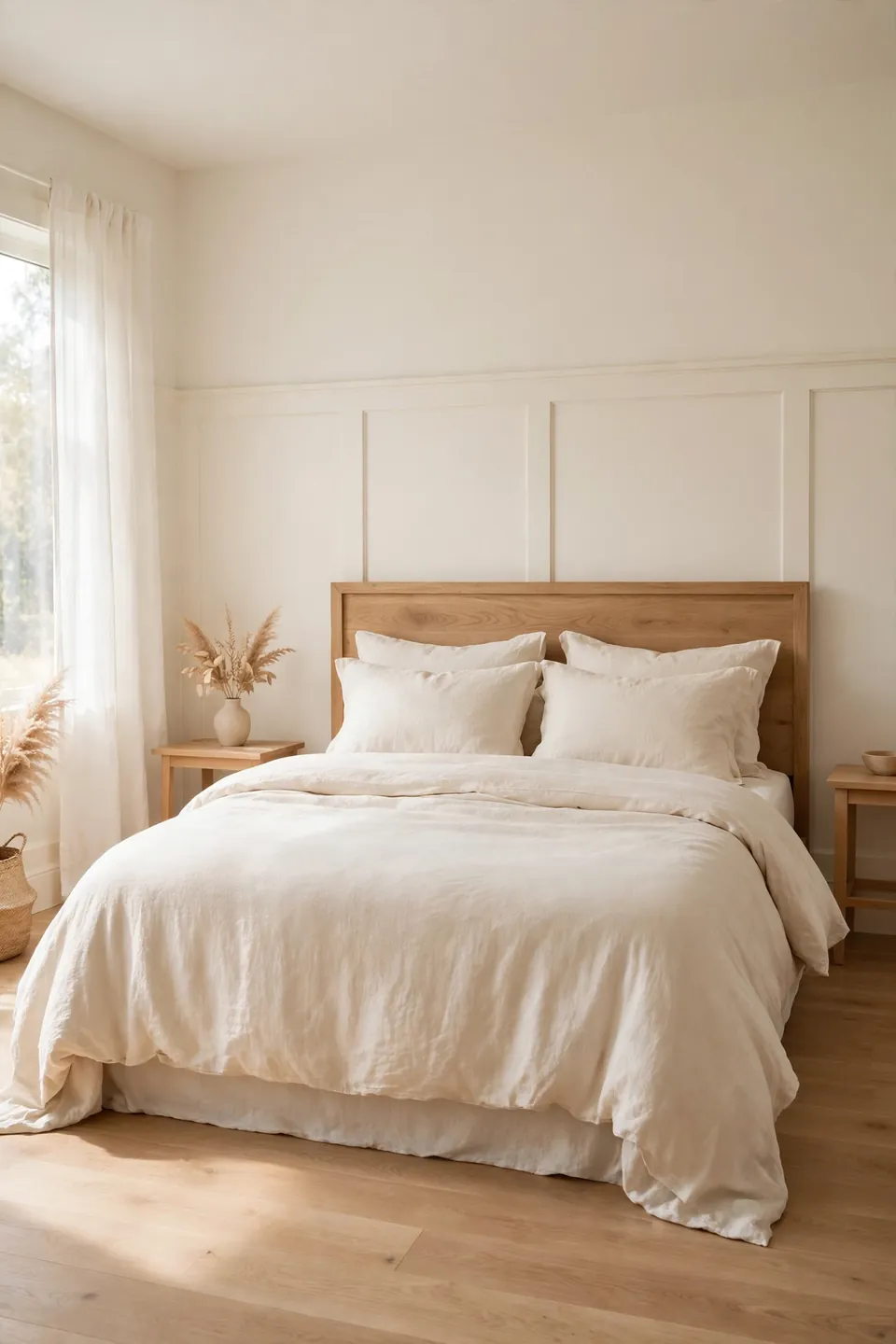
Paint hides mixed woods and budget boards, giving one calm colour across every joint. Stain celebrates real timber but demands matching species and careful finishing. Most bedrooms in this collection choose paint, because bedding changes often and a warm white panel wall welcomes every colour story without argument. Stain suits oak headboards and floors that already share one tone. When in doubt, paint the first wall and live with it through two bedding changes before committing the whole room.
Small Bedroom Panel Rules
Do:
- Pick slim profiles that sit close to the wall
- Paint panels and wall one colour to erase visual breaks
- Run one panel wall only, behind the bed
- Use the cap rail as a slim picture ledge
Don’t:
- Box all four walls and shrink the room further
- Choose chunky rails that crowd the bed on both sides
- Hang large art over already busy panel lines
- Mix panel heights on adjoining walls
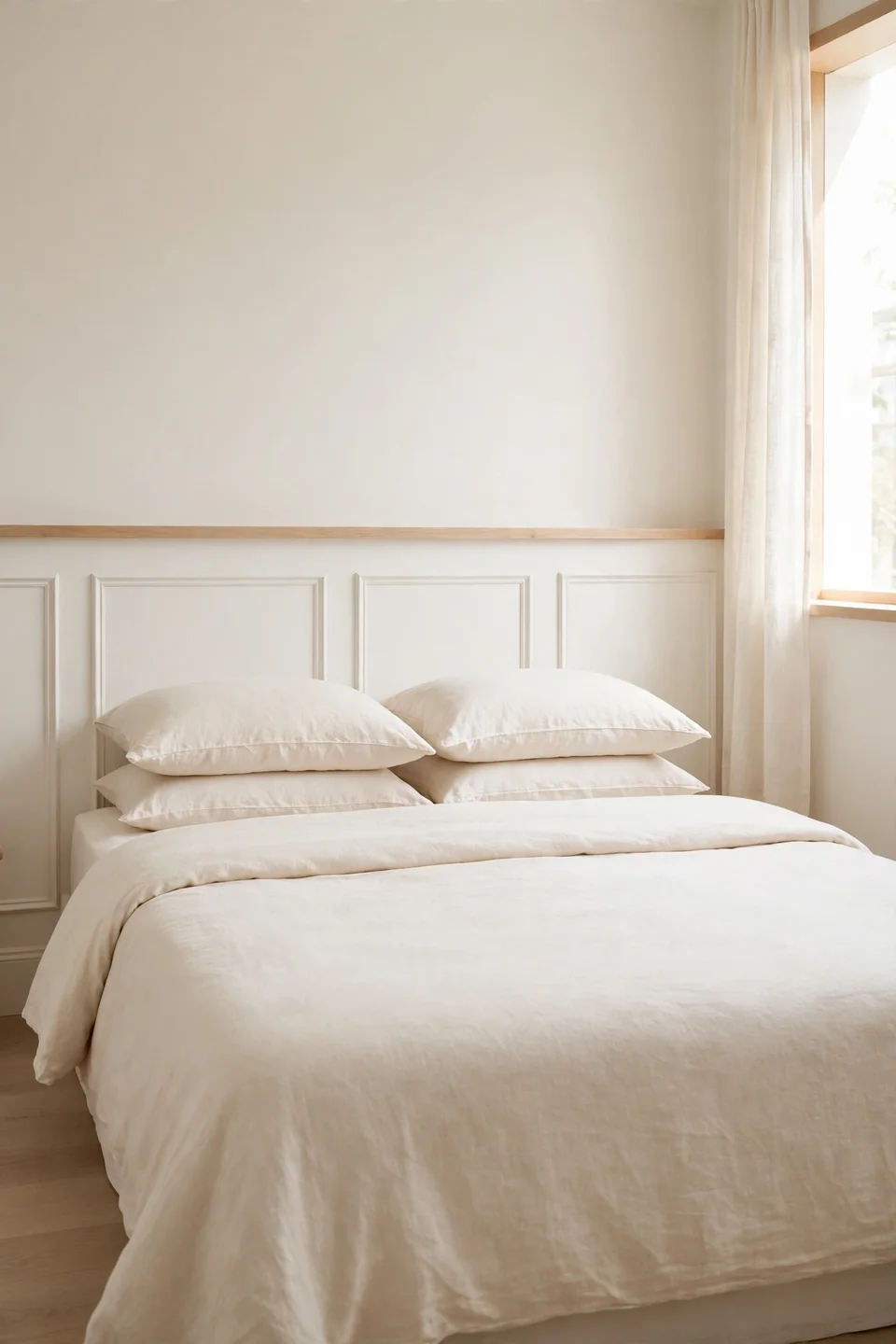
Small rooms gain the most from panels, because the bed wall becomes the whole design and no extra furniture is needed. Keep the profile slim, the colour single, and the bedding simple. The result feels tailored rather than tiny, and guests rarely guess the room’s true size. One wall, done well, carries the entire room.
Rental Friendly Panel Facts
Cost: Low | Time: One afternoon | Skill Level: Beginner | Best For: Renters who cannot fix trim to walls
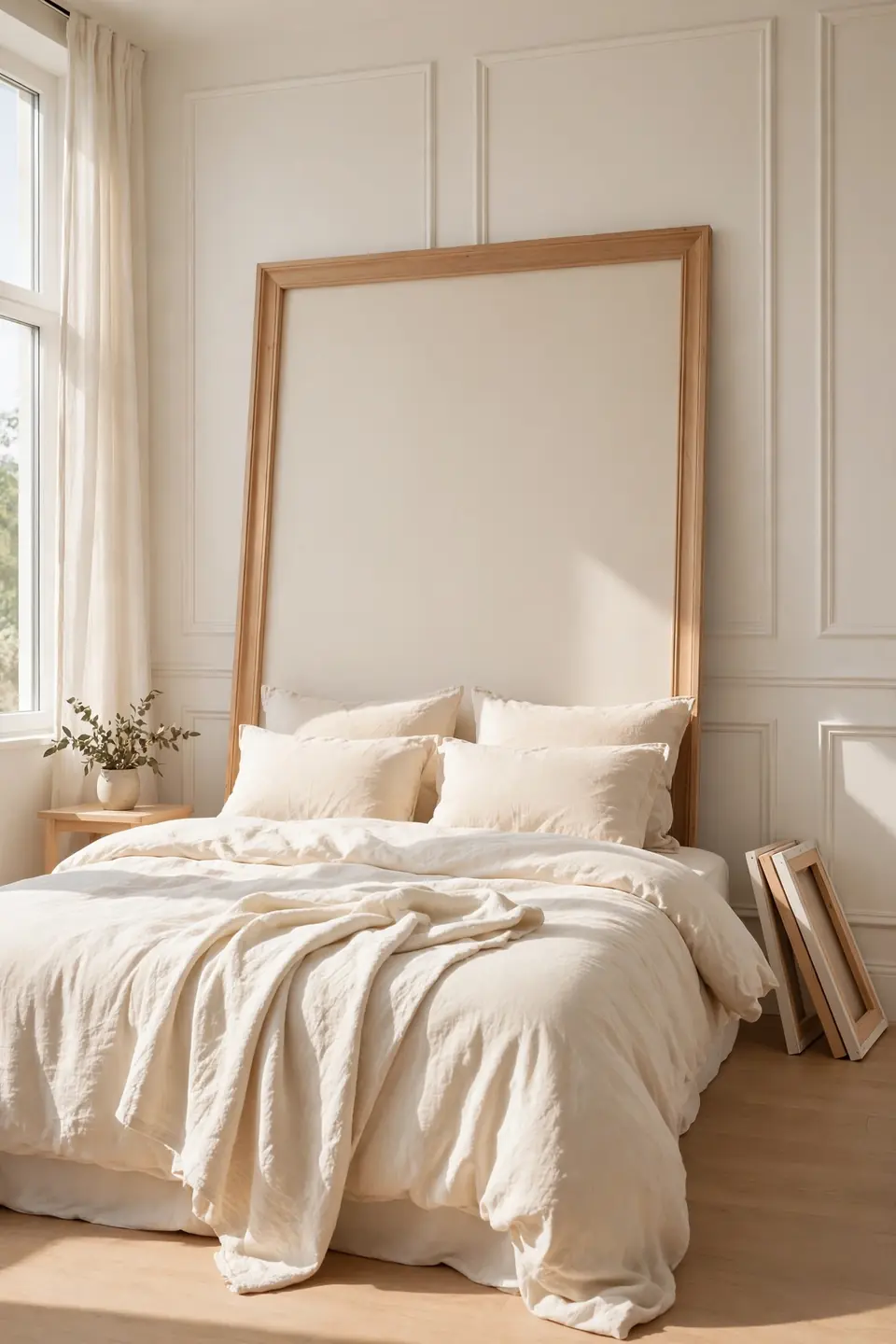
Removable panel looks exist for renters: large MDF frames leaned behind the bed, peel and stick molding, or a single paneled screen that folds away at moving time. Each gives the framed backdrop without one screw hole in the wall. Photograph the wall before and after, keep every piece safe, and the deposit stays protected while the bedroom feels owned, calm, and finished for as long as the lease runs. Landlords rarely object to pieces that simply lean and leave without marks.
Conclusion
Paneling asks for measuring, patience, and one honest weekend, and it pays back every single morning. These wainscoting bedroom design inspiration ideas share one promise: a bed wall with structure makes the whole room feel calm, tailored, and finished. Start with the style that matches your ceiling height, paint it warm white or soft sage, and let simple bedding shine against the frames. Save this list on Pinterest before your next paint run, try one wall first, and share the before and after with someone planning a bedroom refresh. Small boards, big calm: the wall behind your bed was always ready to work harder.