23 Mid Century Modern Bedroom Decor Ideas for Timeless Style
Clean lines, warm walnut, and a bed that anchors everything: few styles reward a bedroom like mid century design does. Fans of mid century modern bedroom decor ideas love how the look balances sculptural furniture with calm, uncluttered surfaces. Tapered legs lift the furniture, low profiles stretch the ceiling, and a restrained palette of mustard, olive, and teal keeps the mood playful without noise.
That same calm confidence works across the home, which is why readers who loved our sage green and cream bedroom ideas often land here next. The 23 ideas ahead cover beds, lighting, storage, and small accents, each one chosen to earn its place. Start with the frame, then layer color and texture slowly, and the room settles into that timeless, easy rhythm the era is famous for.
Walnut Platform Bed Frame

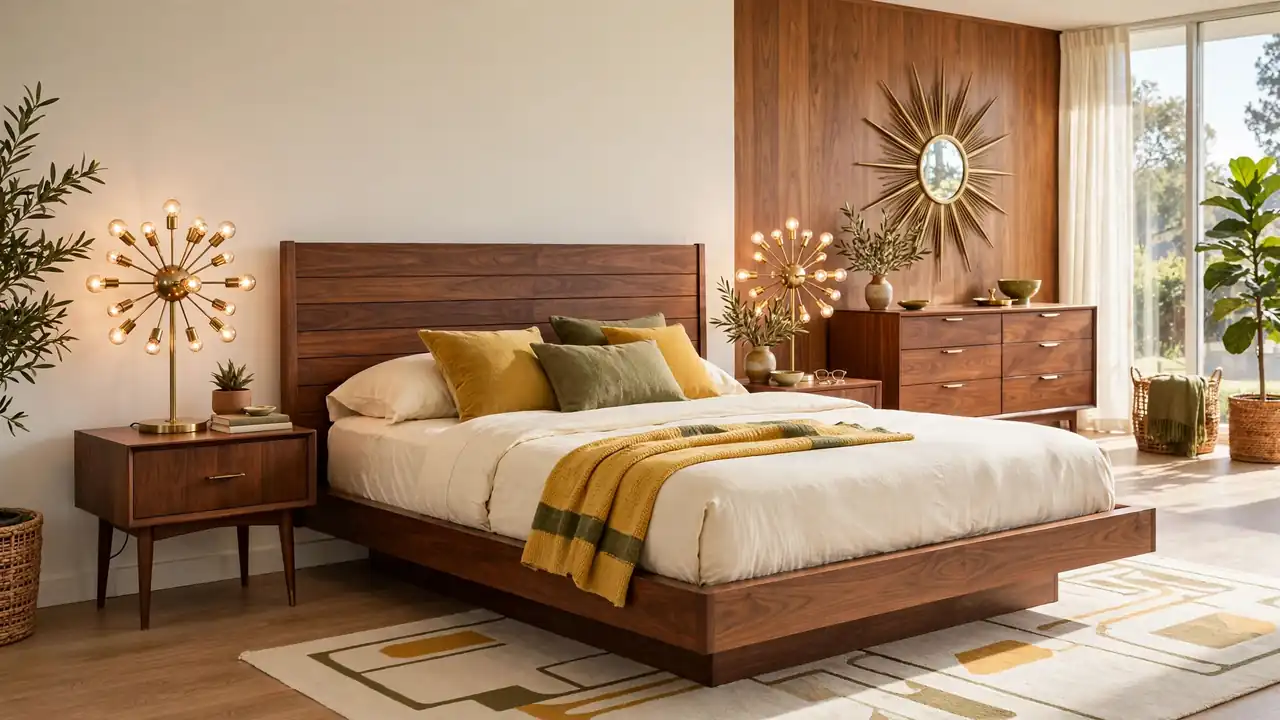
A low walnut platform frame sets the posture for the whole room. The wide headboard panel, clean rails, and splayed legs give the bed a floating calm that taller frames never manage, and the warm grain becomes the largest piece of art you own. Nothing else in the room has to work as hard.
Choose a frame six to ten inches wider than the mattress on each side so nightstands sit in line rather than crowding forward. Solid walnut costs more up front, yet its color deepens with age instead of fading. In my experience, the frame is the one piece worth buying once and buying right.
Starburst Mirror Above Dresser
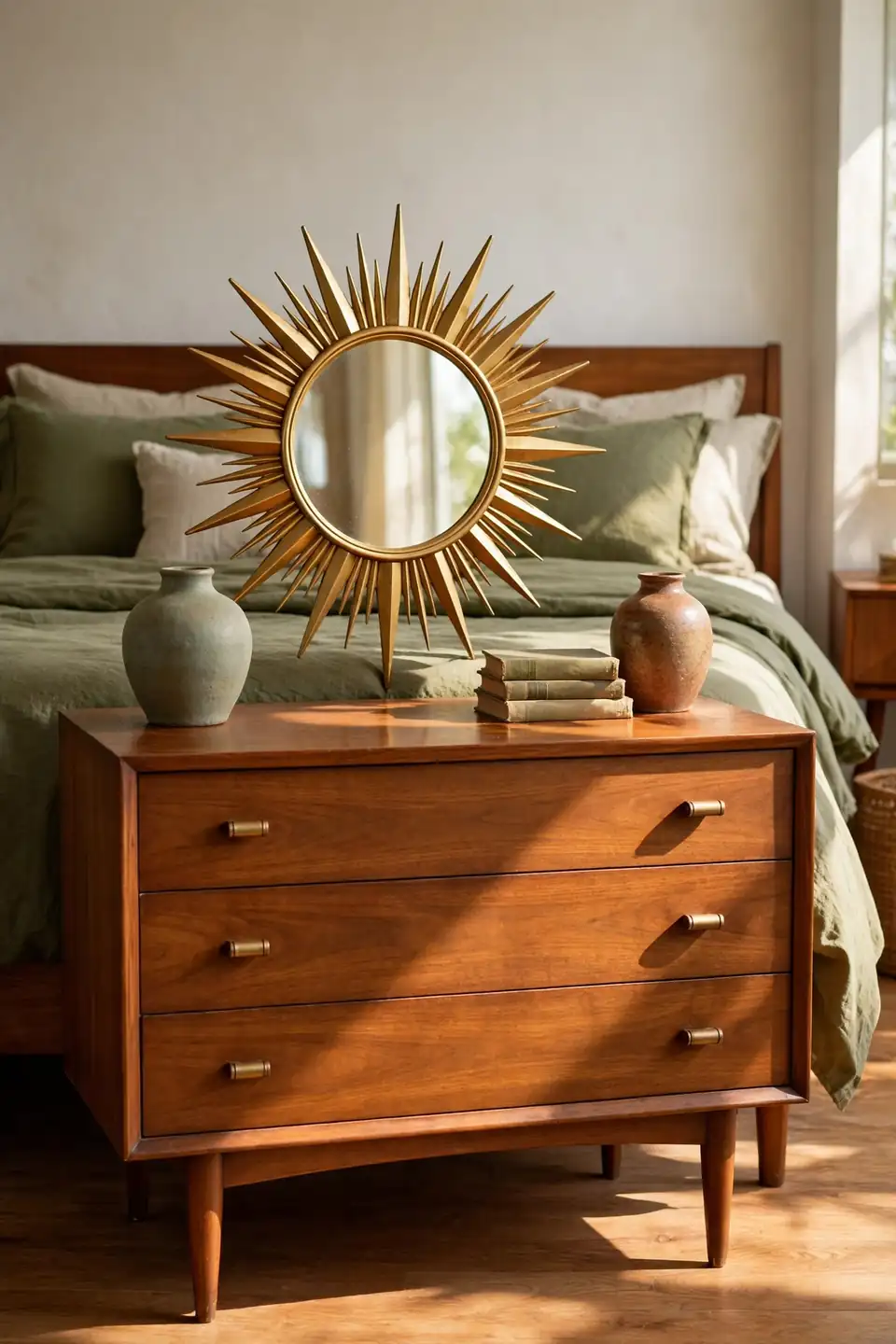
- Hang the mirror with its center about 60 inches from the floor, near eye level.
- Leave six inches of breathing room between the mirror rays and any shelf or art nearby.
- Angle one small lamp toward the dresser so the brass rays catch warm highlights at night.
- Keep the dresser surface below it nearly bare; the mirror is busy enough on its own.
- Size the diameter near two thirds the dresser width for balanced scale.
Starburst mirrors borrow the era’s optimism and throw it back as light. The radiating frame turns a plain wall into a focal point without paint, paper, or a single nail beyond the hanger. Brass, walnut, and black finishes all work; match the tone to your drawer pulls and the pairing looks planned.
Atomic Table Lamp Pair
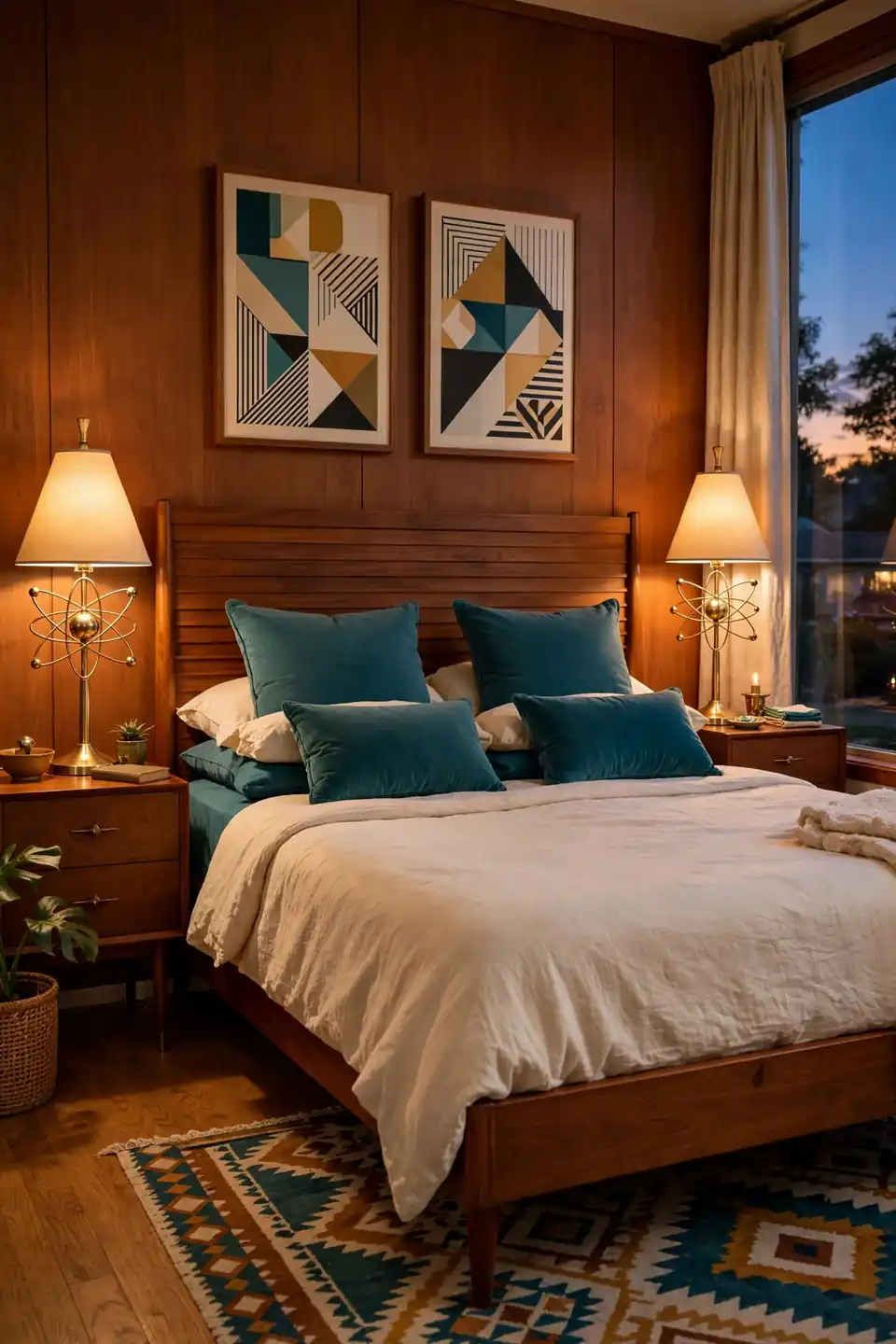
Quick Tip: Match lamp height to the headboard, not the nightstand. The shade bottom should land near shoulder height when you sit up reading, roughly 24 to 28 inches from mattress top to shade base. Matched pairs at that height frame the bed like punctuation. Swapping both lamps at once also keeps the light temperature even on both sides.
Atomic lamps carry the era in miniature: angled cones, starburst bases, and metal finishes that read as sculpture by day. Keep bulbs warm and dimmable so the pair shifts from task light to evening glow. One mismatched lamp looks like an accident; a true pair looks like a decision.
Tapered Leg Nightstands
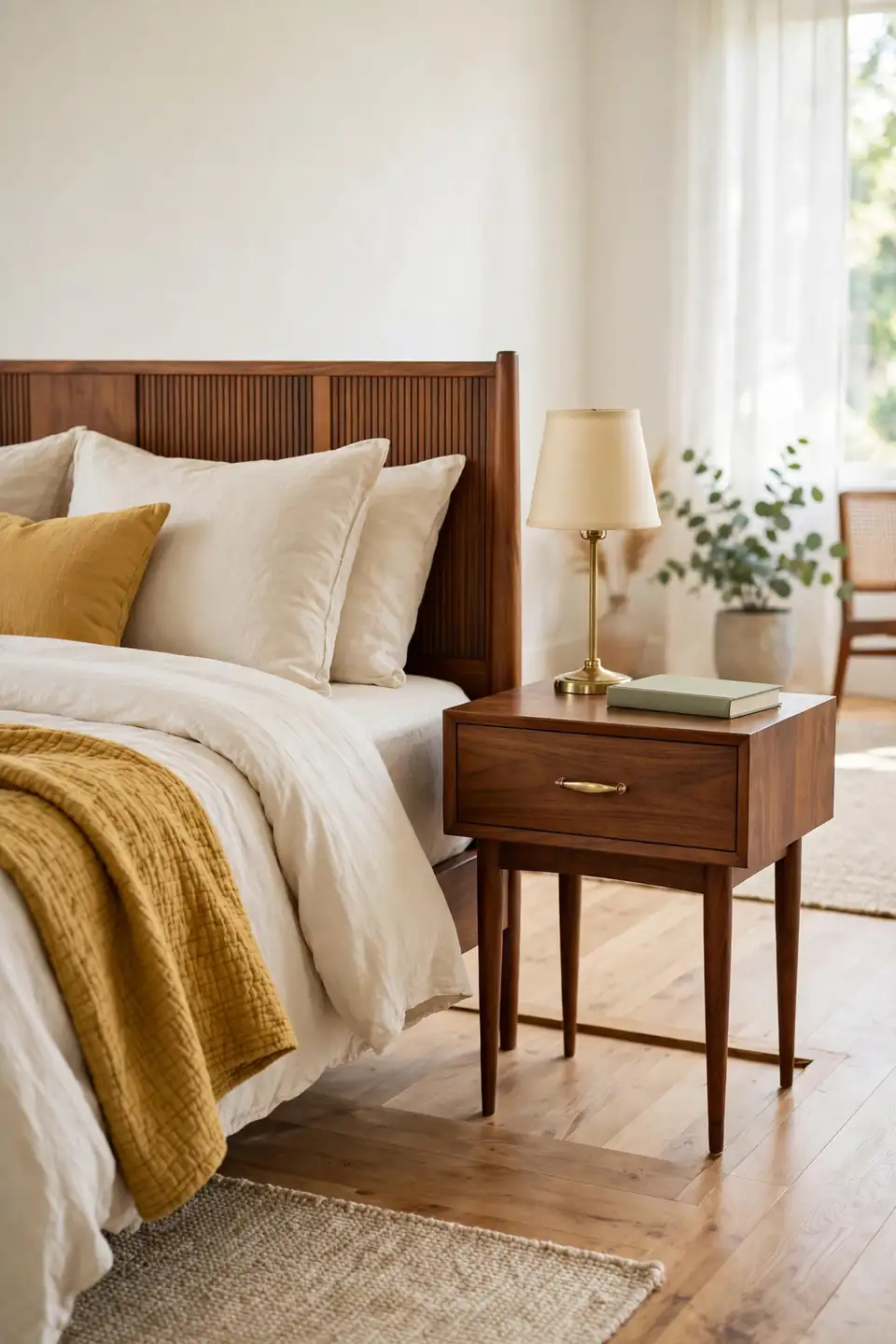
BEFORE: Blocky nightstands squatted to the floor on both sides, swallowing the outlets and trapping dust. Their bulk made the bed feel heavier, and the low tops forced lamps down where the light pooled uselessly on the floorboards.
AFTER: Tall tapered legs now lift slim walnut nightstands eight inches off the floor. The bed breathes, the robot vacuum passes underneath, and lamp light lands exactly at reading height beside the pillows.
Leg height is the quiet trick in mid century storage. Anything raised on visible legs reads lighter, even at the same width, so small bedrooms gain space they can feel. Keep drawers shallow and handles simple; the silhouette should stay sleek from across the room.
Low Profile Dresser Styling
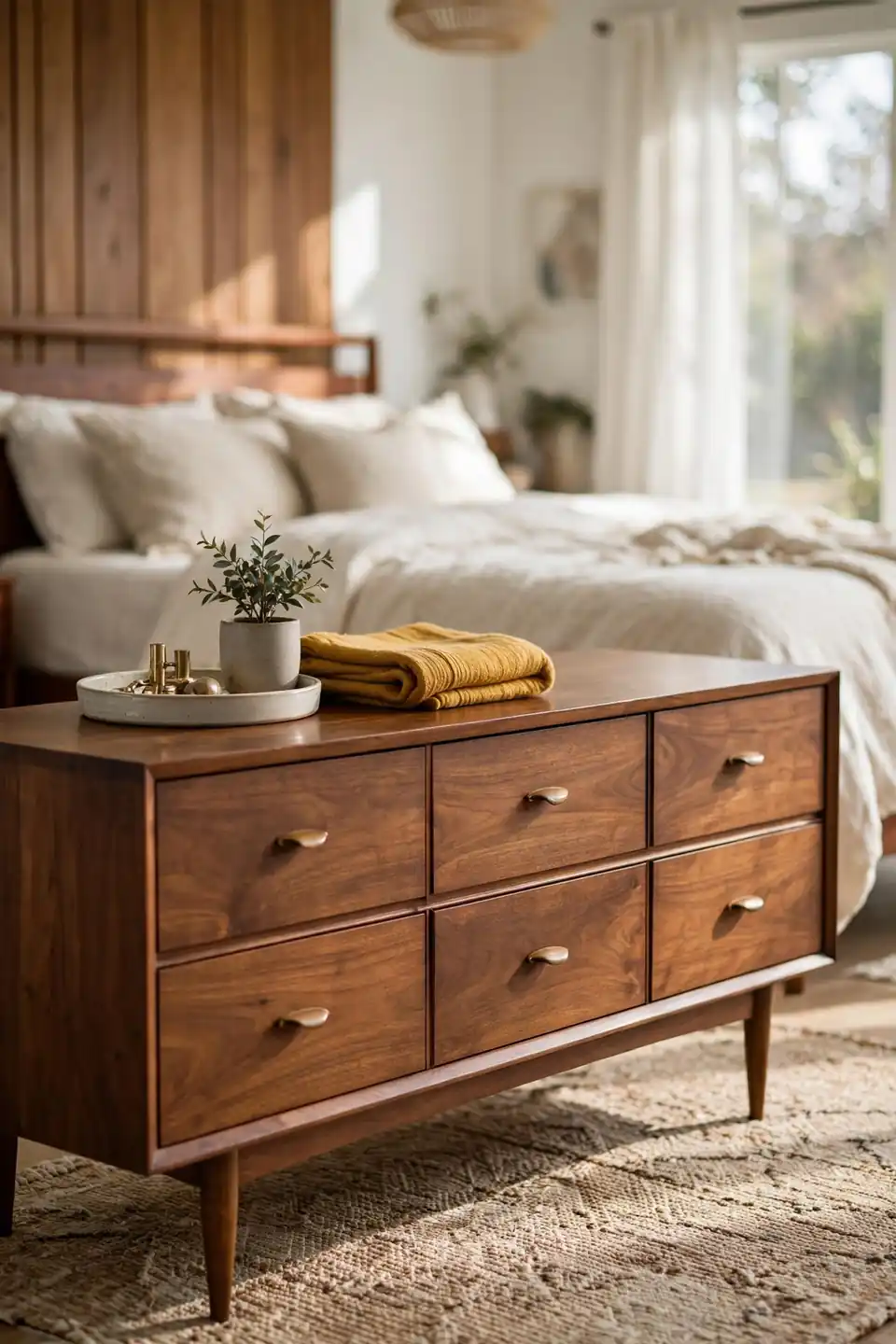
- Clear the whole surface, then dust the grain so the walnut color reads rich again.
- Anchor the left third with a low tray holding daily items: watch, glasses, and a small dish.
- Stand one tall piece, a vase or sculptural lamp, at the opposite end for height contrast.
- Lay two folded textiles in the middle zone to soften the long horizontal line.
- Stop there; empty space between groups is what makes the styling look expensive.
Long dressers fail when every inch gets a tenant. Grouping objects into two or three islands leaves the wood itself visible, and visible walnut is the whole point of the piece. I’ve noticed guests read a styled dresser as a sign the whole home is cared for.
Walnut Versus White Furniture
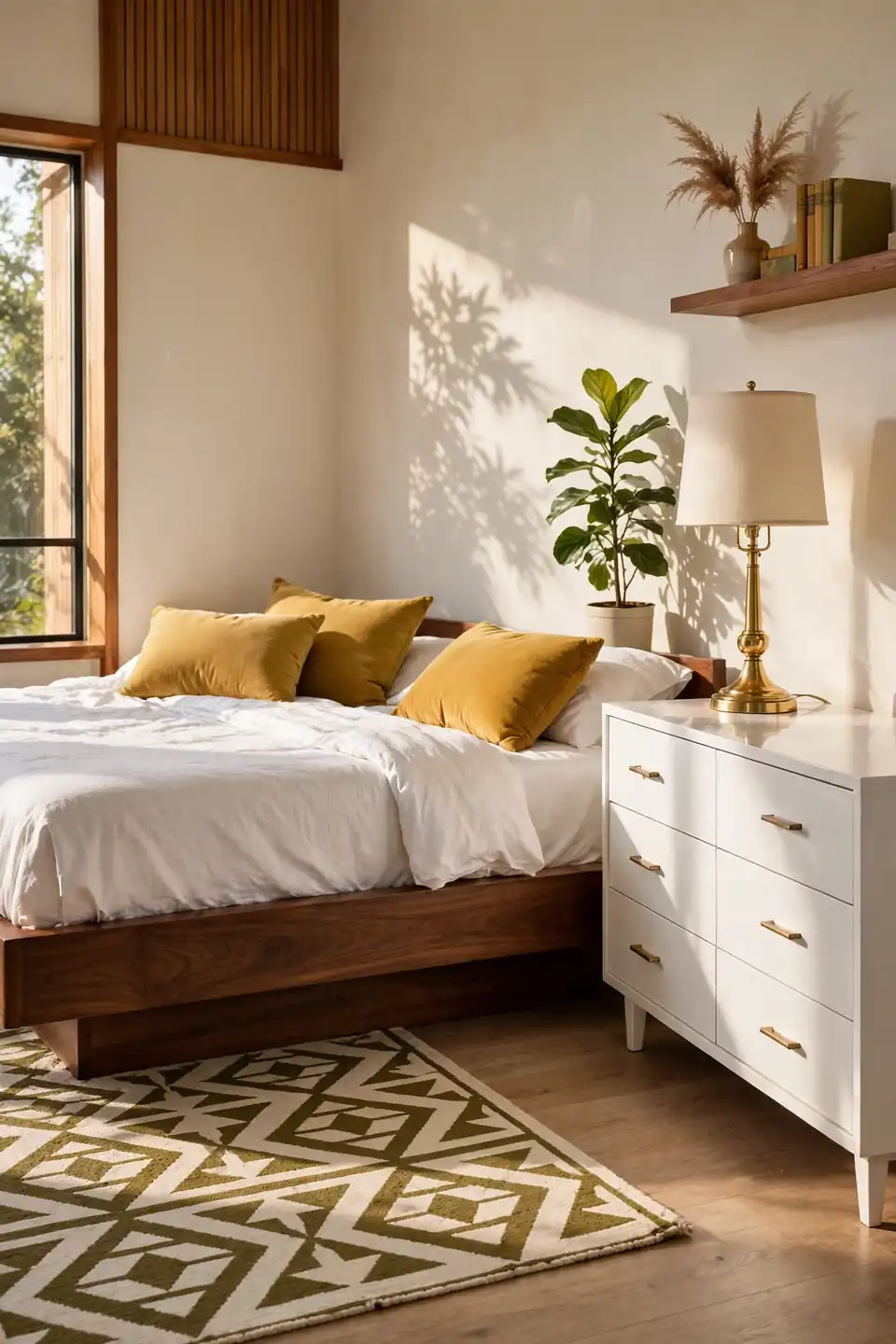
Two finishes carry most mid century bedrooms, and the split between them decides whether the room glows warm or stays crisp.
| Feature | Walnut | White Painted |
|---|---|---|
| Room Feel | Warm, grain rich, grounded | Bright, crisp, gallery clean |
| Best Light | North facing rooms needing warmth | Sun washed rooms that run hot |
| Upkeep | Oil yearly, hides dust well | Wipes clean, shows scuffs sooner |
| Pairs With | Mustard, olive, brass | Teal, walnut, chrome |
Most rooms settle on a ratio, walnut for the bed and dresser, white for smaller pieces that should disappear. That mix keeps the wood as the headline and lets paint handle the supporting roles. Match undertones, warm with warm, and the two finishes stop competing.
Mustard Accent Bedding Layers
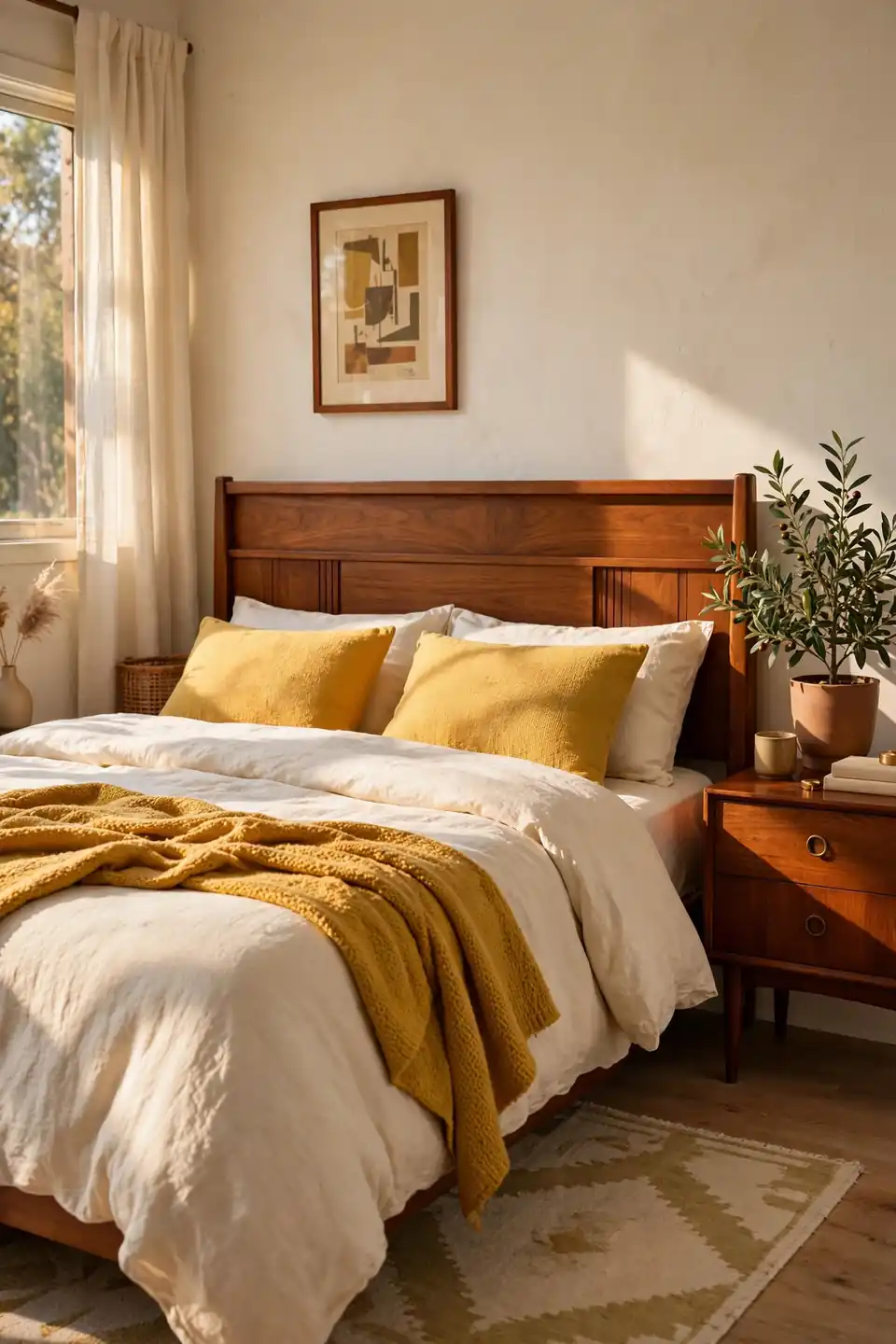
Do:
- Layer mustard three times: a throw, two cushions, one folded blanket.
- Keep base bedding cream; the yellow should read as accent, never flood.
- Repeat the tone once across the room, in art or a lamp glaze.
- Pick deep, slightly dirty mustard over bright lemon for era accuracy.
Don’t:
- Cover the whole bed in yellow; saturation kills the contrast.
- Mix mustard with orange, which drags the palette toward kitsch.
- Add a fourth accent color in the same sight line.
- Buy satin throws; the era loved matte wool and cotton.
Mustard is the era’s handshake color, warm enough to greet walnut and lively enough to wake cream. It changes the room’s temperature with laundry, not paint. Fold the brightest piece away in summer and the bed turns quiet again.
Sunburst Wall Clock Statement
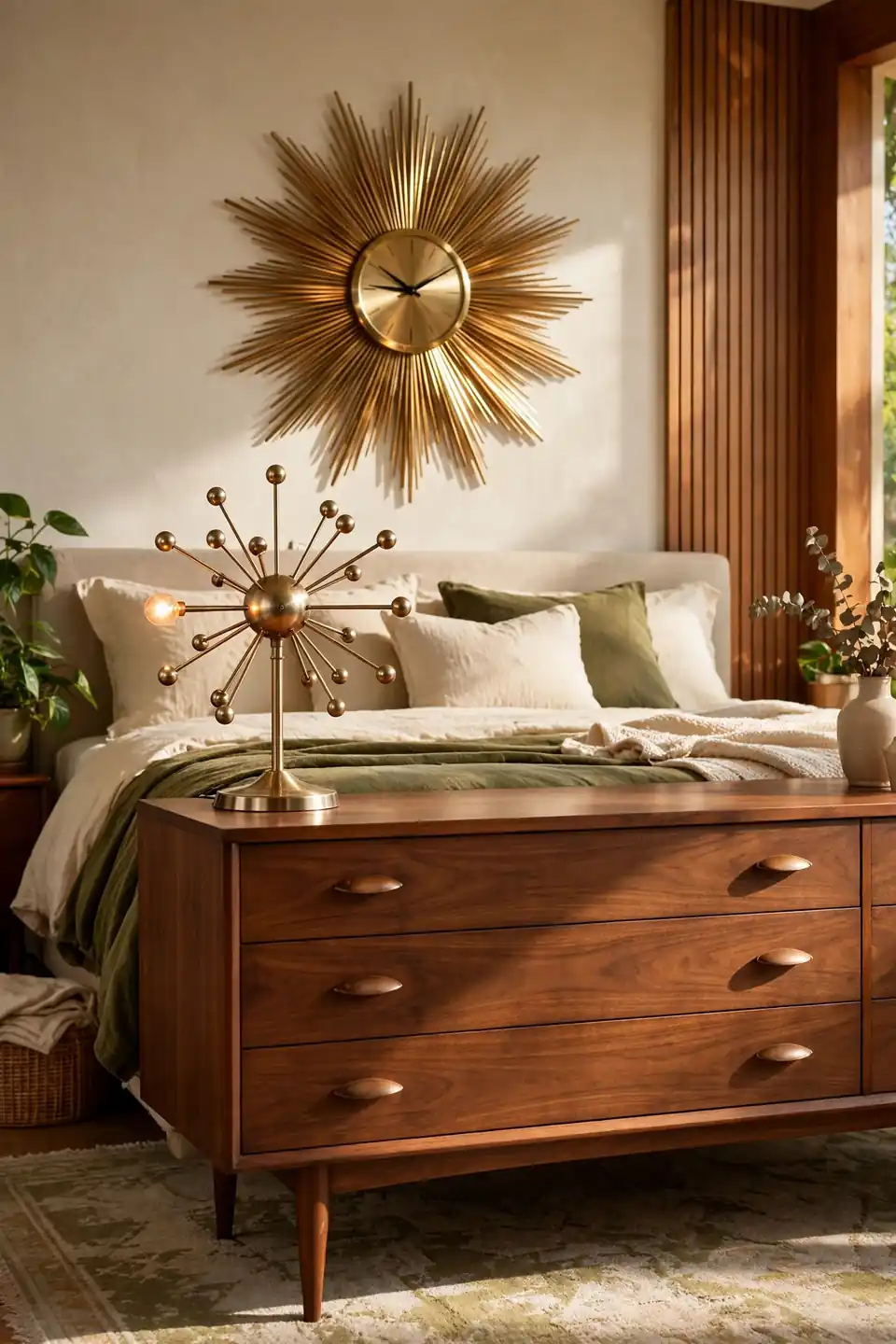
Cost: Moderate, though true vintage pieces climb higher at auction
Time: Ten minutes to hang, five more to level the spokes
Skill Level: Beginner, one stud or a rated wall anchor
Best For: Blank walls above low dressers and entry consoles
A sunburst clock is the era’s exclamation point, and the bedroom wall above a dresser is its natural home. The radiating spokes stretch a low ceiling’s sight line and echo the starburst mirror across the room. Choose silent sweep movement; a ticking clock near the bed is nostalgia nobody sleeps through. Brass and walnut versions both suit the palette. Hang it where morning light grazes the spokes.
Olive Green Accent Wall
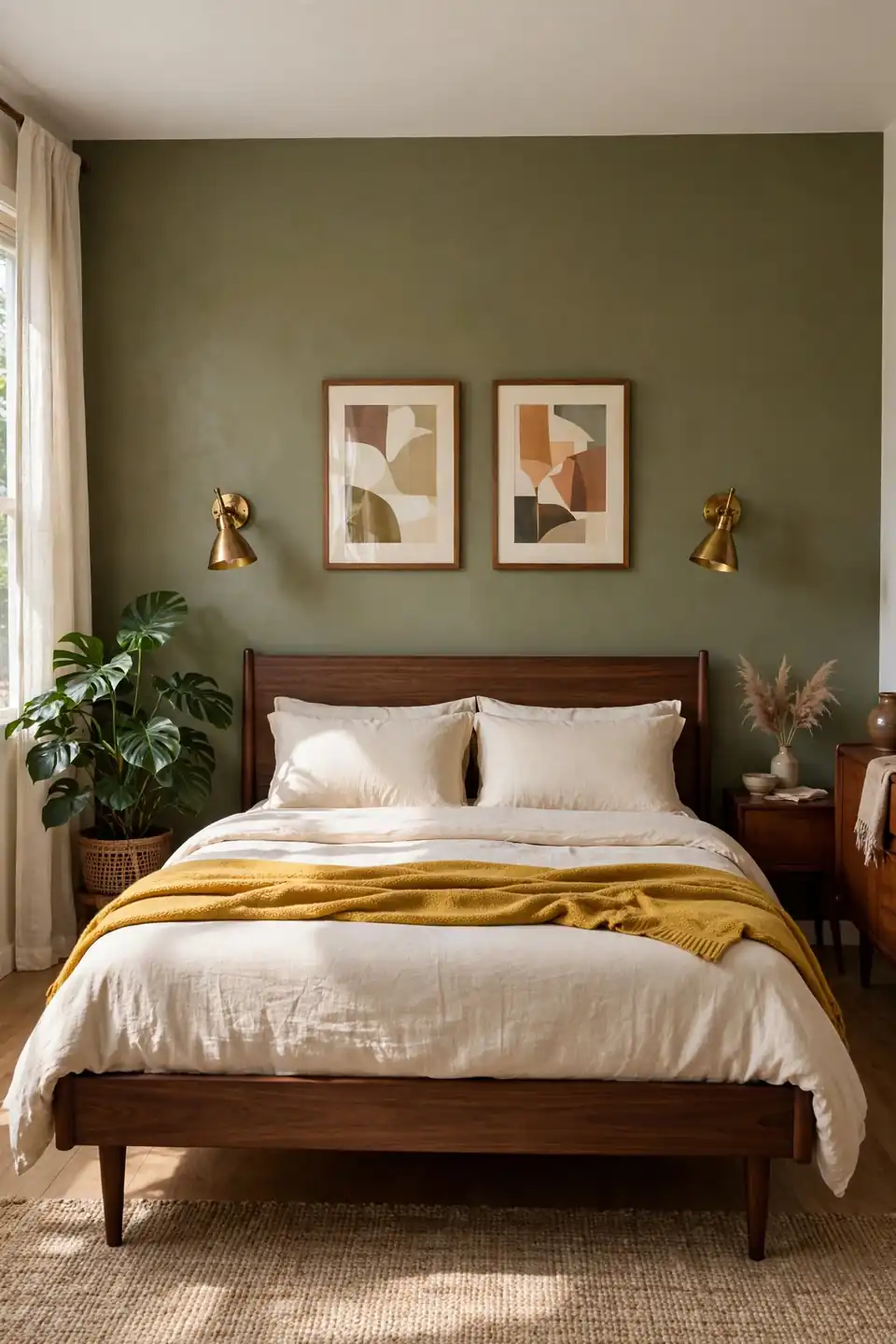
Olive is the wall color mid century rooms were born for. It sits between green and brown, so walnut furniture melts into it while cream bedding glows against it. Painted behind the bed only, it builds a headboard effect that costs one gallon and an afternoon. The mood stays calm, never cold.
Keep the finish matte or eggshell; gloss turns olive swampy under lamplight. Side walls can stay warm white, which keeps the room bright at the window side. A single framed print in cream and black holds the wall’s center without crowding the bed. Brass sconces on the green read like jewelry.
Geometric Pattern Throw Pillows
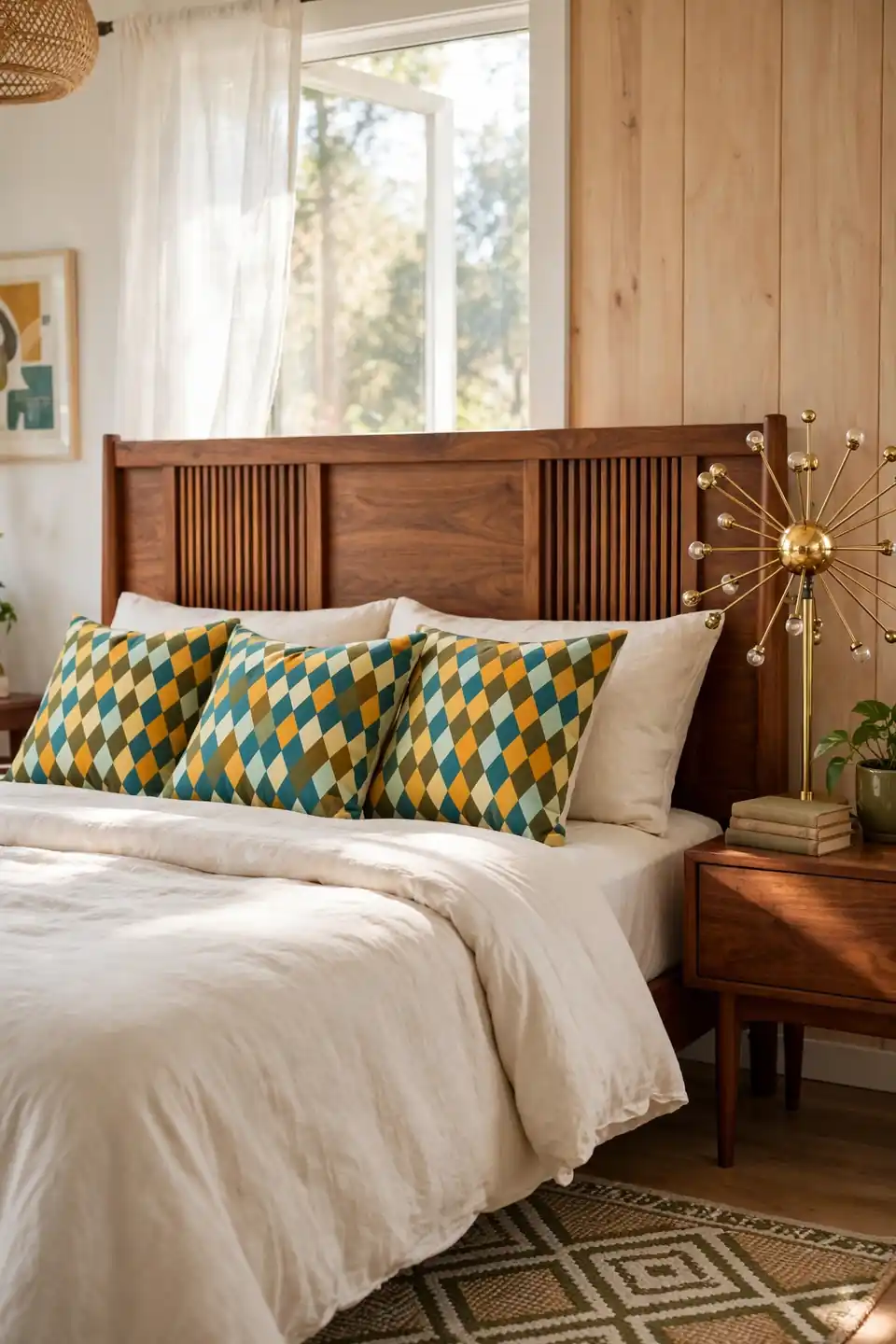
- Limit the palette to three era colors, mustard, teal, and olive, over a cream base.
- Mix two scales only: one large diamond print beside one small dot or stripe.
- Odd numbers group best on a bed, so style pillows in threes or fives.
- Choose woven or printed cotton covers; shiny fabrics fight the matte era mood.
- Keep one solid pillow in the stack to rest the eye between patterns.
Geometric prints do the talking in a room built on clean lines and solid wood. They bring the era’s optimism to the bed without a single renovation, and pillow covers swap in minutes when seasons change. Start with two patterns, live a week, then judge.
Sputnik Chandelier Statement Piece
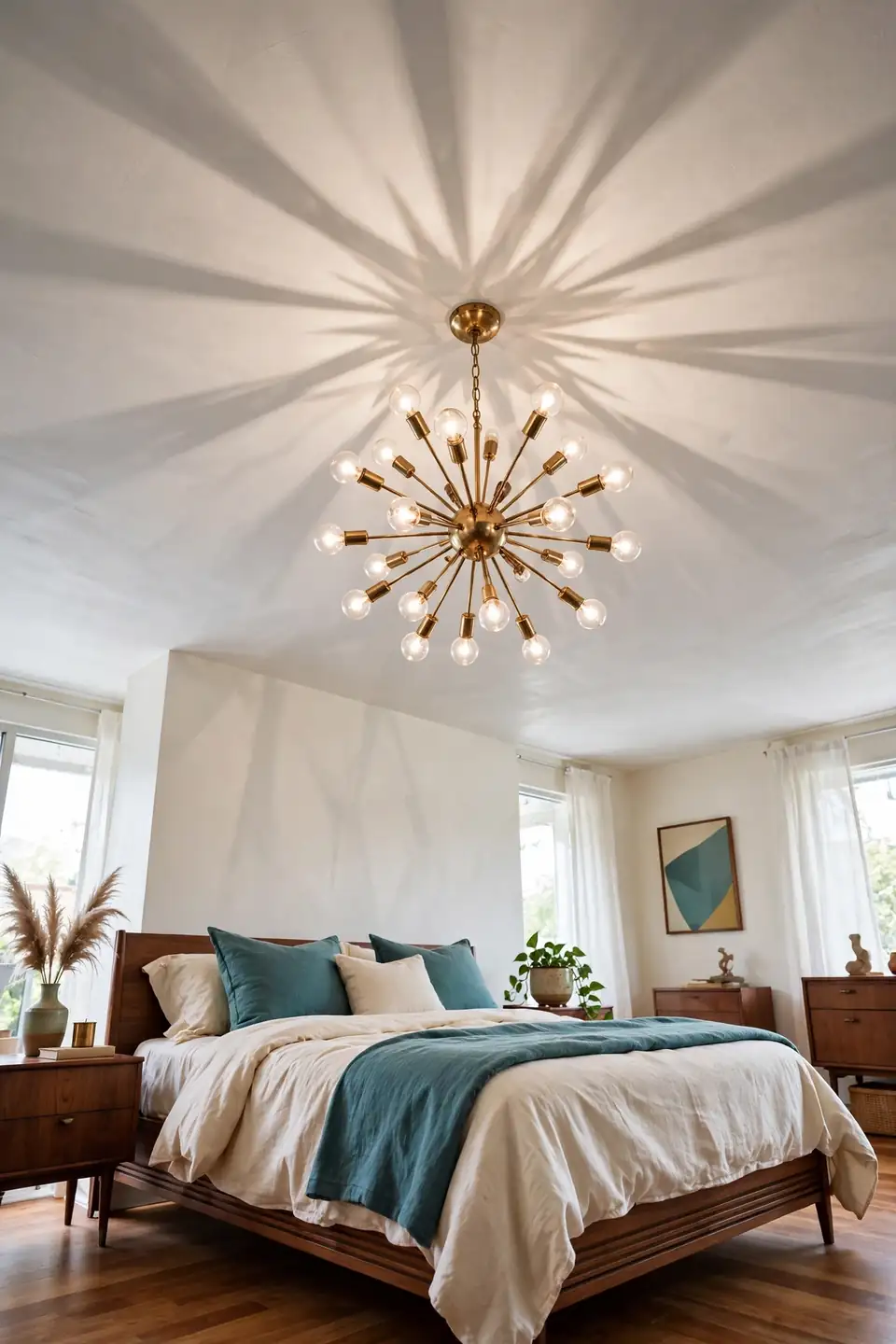
Quick Tip: Size the fixture to the bed, not the room. A sputnik spanning about half the bed’s width reads as a crown; smaller looks lost, larger crowds the sight line from the door. Warm dimmable bulbs on every arm keep the starburst glamorous instead of glaring. Count the arms; twelve to eighteen suits most bedrooms.
Ceiling fixtures are the forgotten fifth wall of most bedrooms. A sputnik pulls the eye up, stretches perceived height, and pays back every other low profile choice in the room. Center it over the bed rather than the room’s true center if the two disagree. The glow also flatters walnut grain after dark.
Teak Bench Footboard Styling
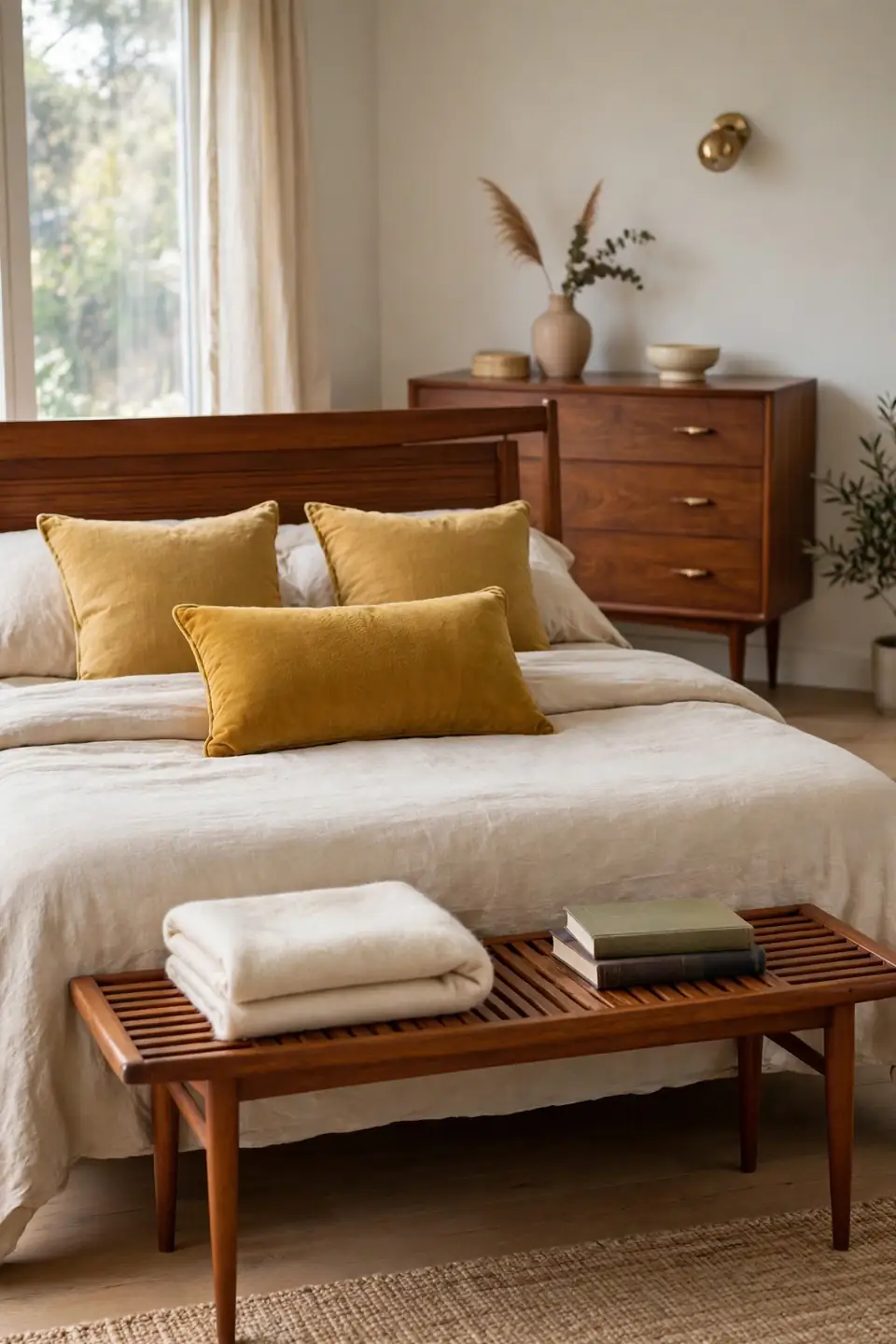
BEFORE: The foot of the bed collected everything: laundry baskets, a leaning stack of magazines, and shoes waiting for the closet. The room’s strongest sight line ended in clutter, and the bed looked unfinished from the doorway.
AFTER: A slim teak bench now closes the bed like a frame. One folded blanket and a short book stack live there on purpose, and everything else found a real home elsewhere in the room.
A bench gives the bed a finished edge and gives you a seat for shoes, a perch for the morning’s clothes, and a stage for one beautiful textile. Match its wood to the nightstands within a shade or two, and the set reads as planned.
Layered Wool Blanket Stack
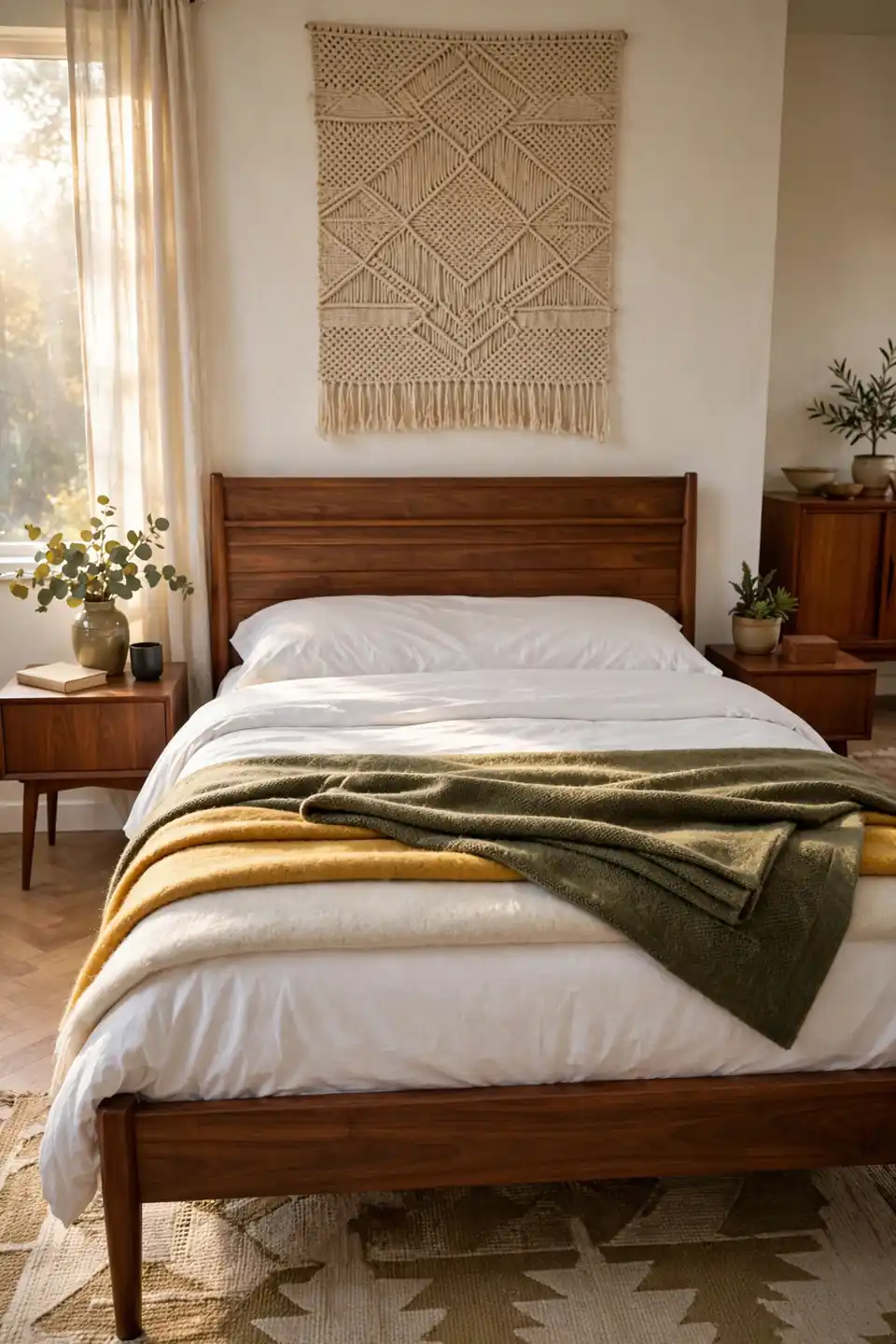
- Start with the heaviest blanket, a cream wool throw spread flat across the foot third.
- Fold the second blanket, mustard or olive, into a long band and lay it above the first.
- Roll the lightest layer loosely and rest it at an angle for a relaxed finish.
- Tuck any fringe neatly under the folds so lines stay clean from the doorway.
Layered wool brings the era’s warmth without a radiator’s worth of heat, since each layer traps a little air. Natural fibers also breathe better than synthetics, so the stack stays comfortable past midnight. Shake and refold weekly; wool rewards the attention by staying lofted and clean edged.
Brass Versus Chrome Accents
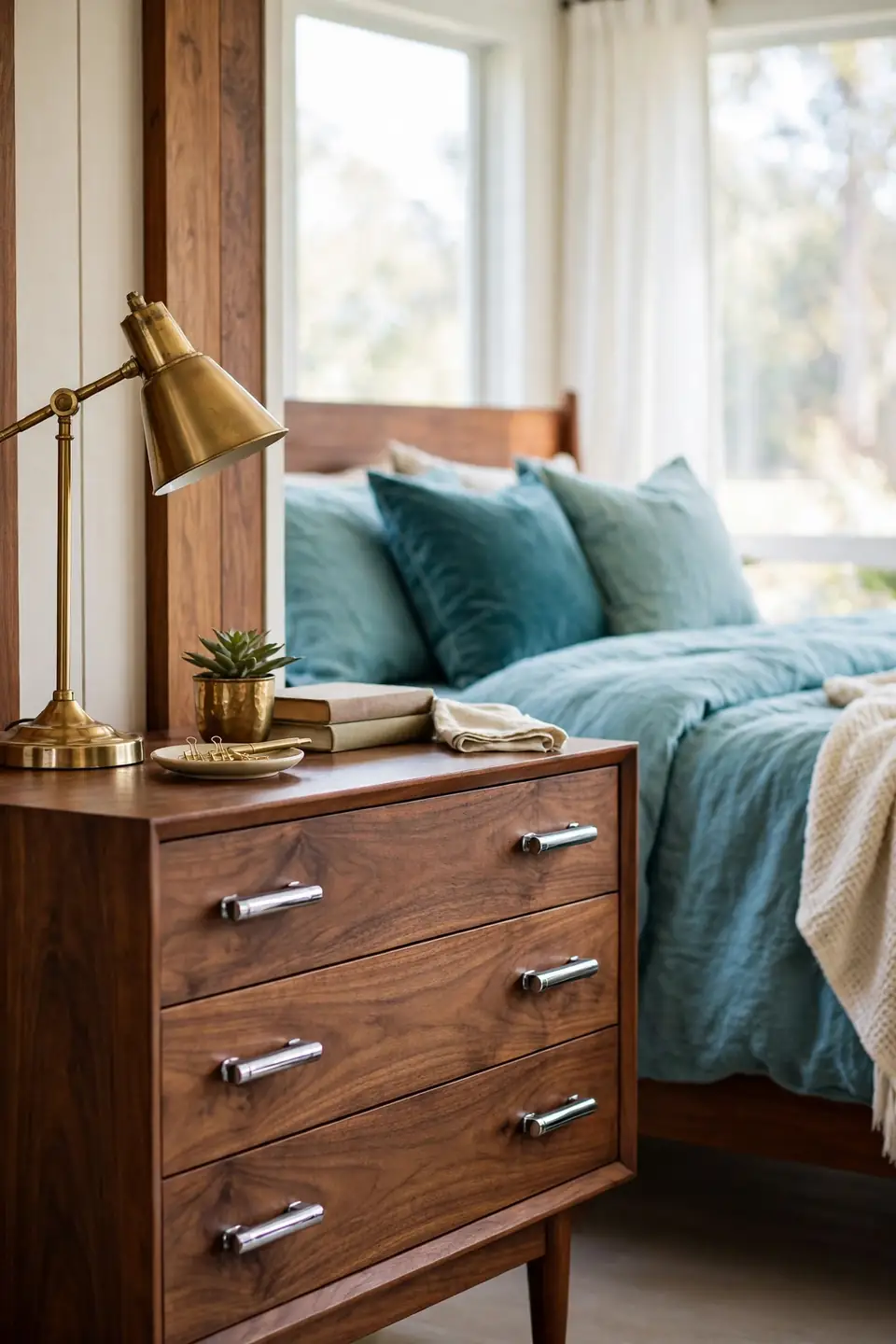
Metal choice quietly sets the temperature of a mid century room, and the two era favorites pull in opposite directions.
| Feature | Brass | Chrome |
|---|---|---|
| Room Feel | Warm, golden, candlelit friendly | Cool, crisp, gallery bright |
| Best With | Walnut, mustard, olive | Teak, teal, white lacquer |
| Upkeep | Patina deepens, polish optional | Fingerprints show, wipes fast |
| Era Signal | Early decade glamour | Later decade space age |
Most bedrooms can host both, brass near the bed for warmth and chrome on the dresser for sparkle, as long as each metal owns a zone. Trouble starts when finishes scatter randomly. Assign each finish a territory and repeat it twice, and the mix reads as design.
Retro Alarm Clock Details

Do:
- Choose a wind up model so the nightstand stays cord free.
- Pick a case that repeats a finish already in the room.
- Let it be the one playful note on a calm surface.
- Angle the dial toward the bed for a sleepy glance read.
Don’t:
- Charge your phone beside it; screen glow kills retro calm.
- Buy oversized novelty clocks that tip into theme park territory.
- Set two clocks in one room; one keeps the authority.
- Choose digital red digits, a glow the era never had.
Small details carry outsized charm, and a twin bell clock is pure era shorthand. It frees the nightstand from chargers and blue light, which quietly improves sleep. Details this size are where a room stops copying a decade and starts living in it.
Sculptural Ceramic Vase Grouping
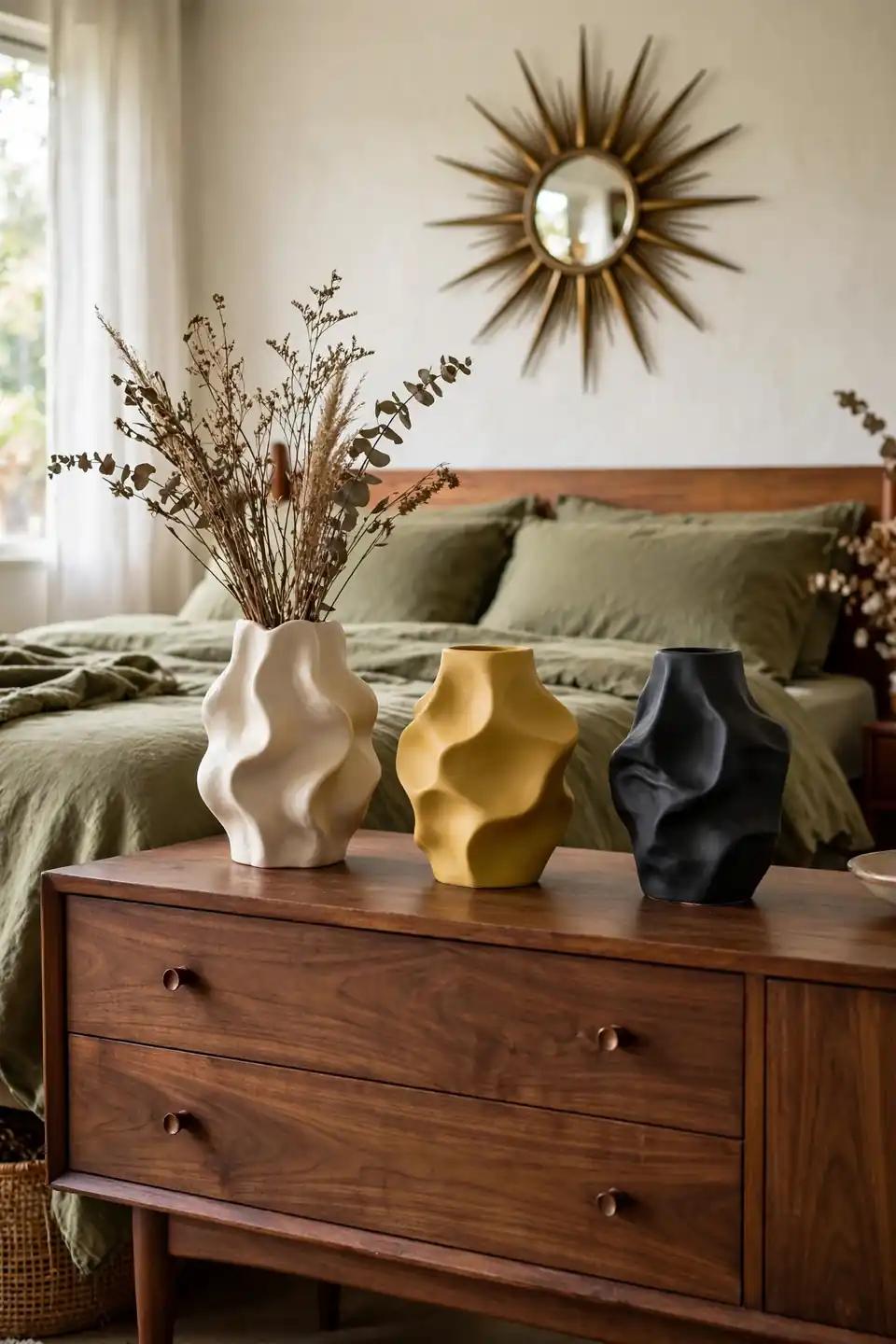
Cost: Low to moderate, thrift finds common
Time: Twenty minutes to arrange and adjust
Skill Level: Beginner, grouping rules do the work
Best For: Dressers, shelves, and deep window sills
Ceramic vases were the era’s quiet sculpture, matte glazes and odd silhouettes that hold a wall’s attention without hanging a thing. Group in odd numbers, vary the heights by thirds, and let one vase carry a single stem while the rest stay empty. Empty vessels are not unfinished; the negative space between shapes is exactly what makes the grouping read as art instead of storage. Matte finishes photograph beautifully in morning light.
Slatted Wood Headboard Wall
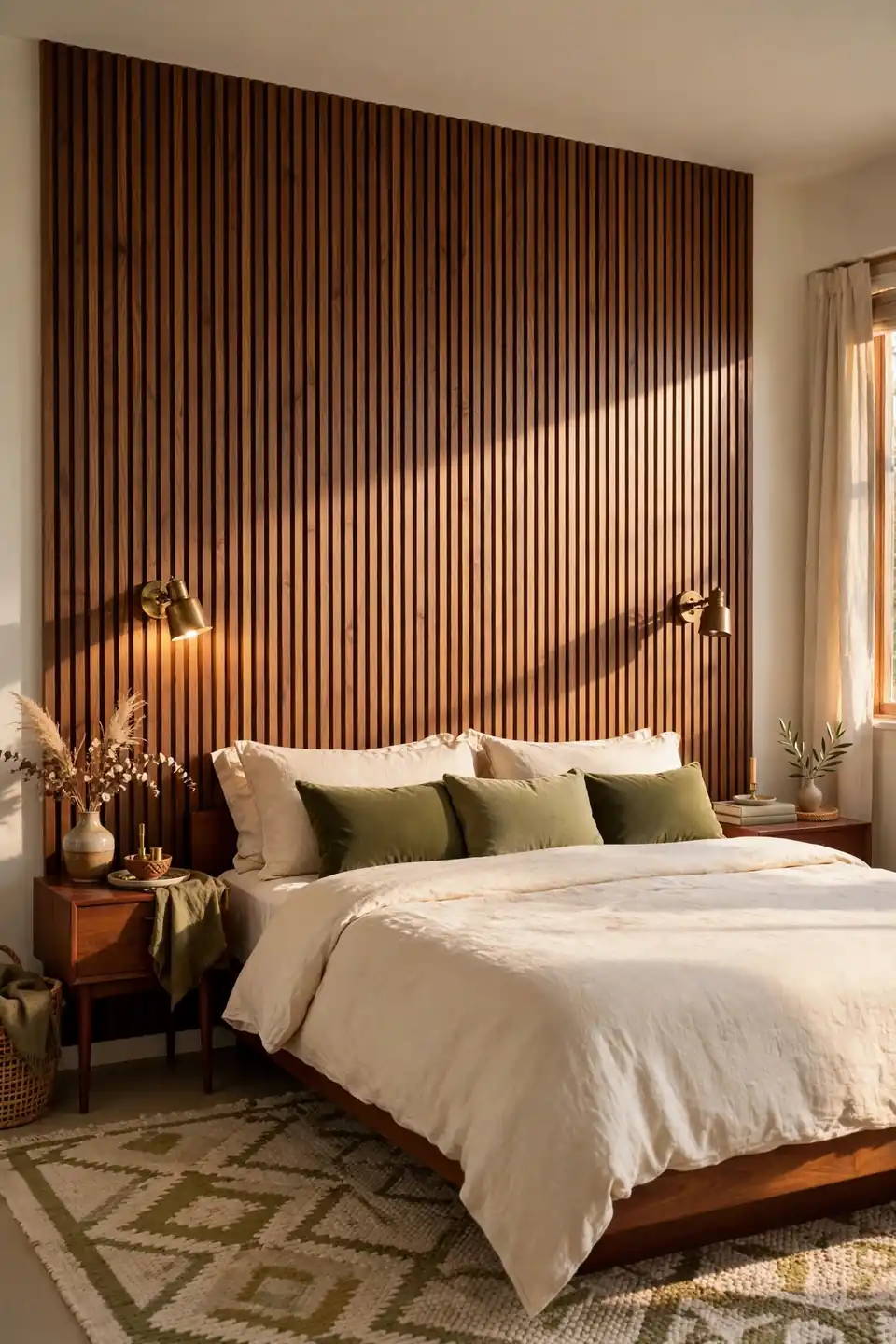
Vertical walnut slats behind the bed turn a plain wall into architecture. The grooves catch raking light all day, so the headboard wall shifts from striped shadow at breakfast to warm glow by evening. Few upgrades change a bedroom this completely with zero floor space lost. The effect feels custom, almost built in. It is the boldest move in most mid century modern bedroom decor ideas, and the most forgiven.
Run the slats from nightstand to nightstand rather than wall to wall if budget is tight; the framed panel effect still lands. Leave a finger’s width between slats and wall for shadow depth. Stain one shade deeper than the bed frame so the bed reads as its own shape against the paneling.
Teal Velvet Accent Chair
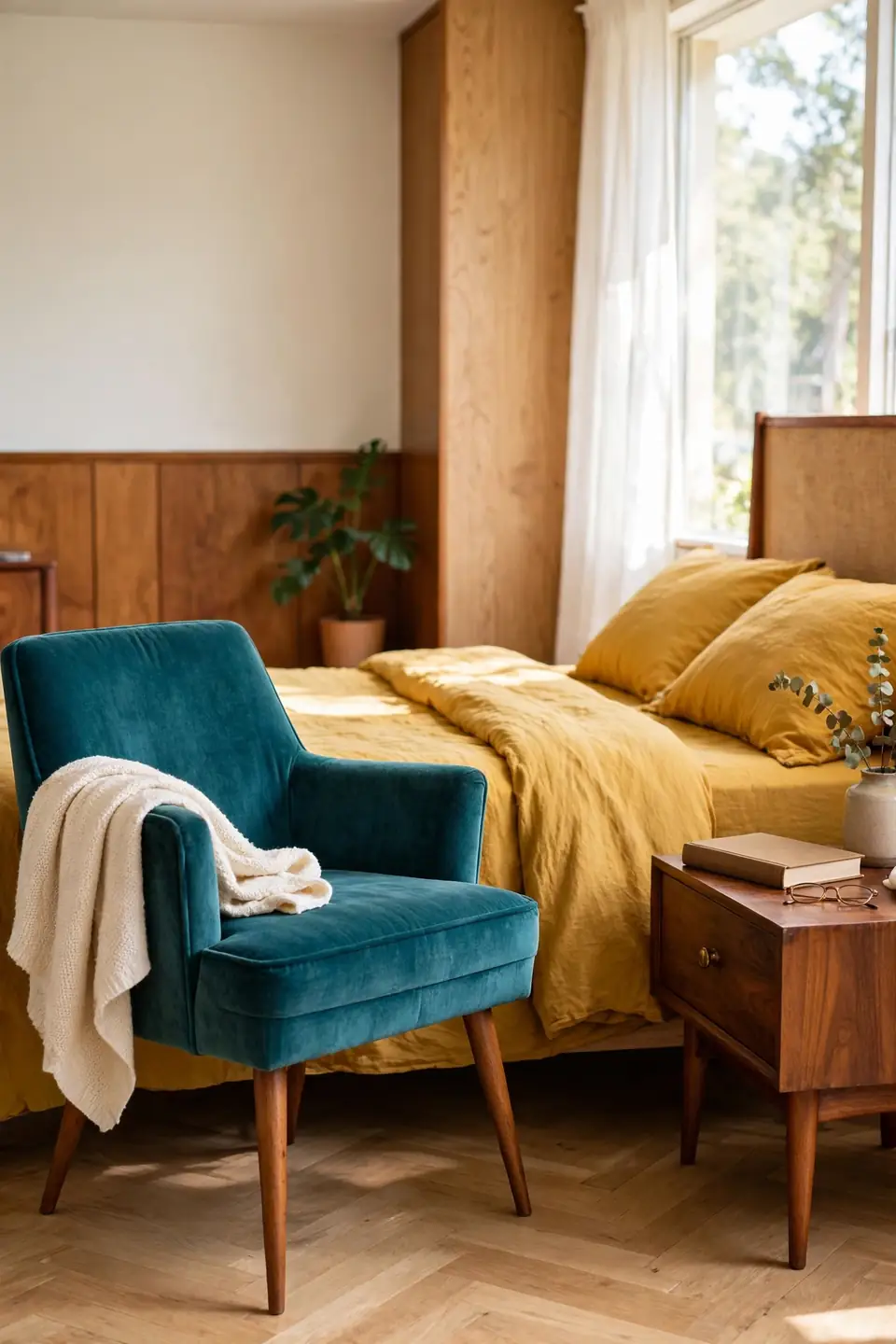
- Angle the chair toward the bed at about 45 degrees; straight rows read as waiting rooms.
- Ground it with a small round side table sized for a book and a cup.
- Drape one cream throw over an arm to tie the chair to the bedding palette.
- Keep the seat clear of folded laundry; a chair that holds clothes stops being decor.
- Choose velvet with a short pile; it catches light like the era’s original upholstery.
One saturated chair rescues a neutral bedroom from blandness and gives the room a second place to land. Teal is the era’s boldest gift to walnut, deep enough to stay elegant and bright enough to photograph like a magazine corner.
Geometric Wallpaper Accent Wall
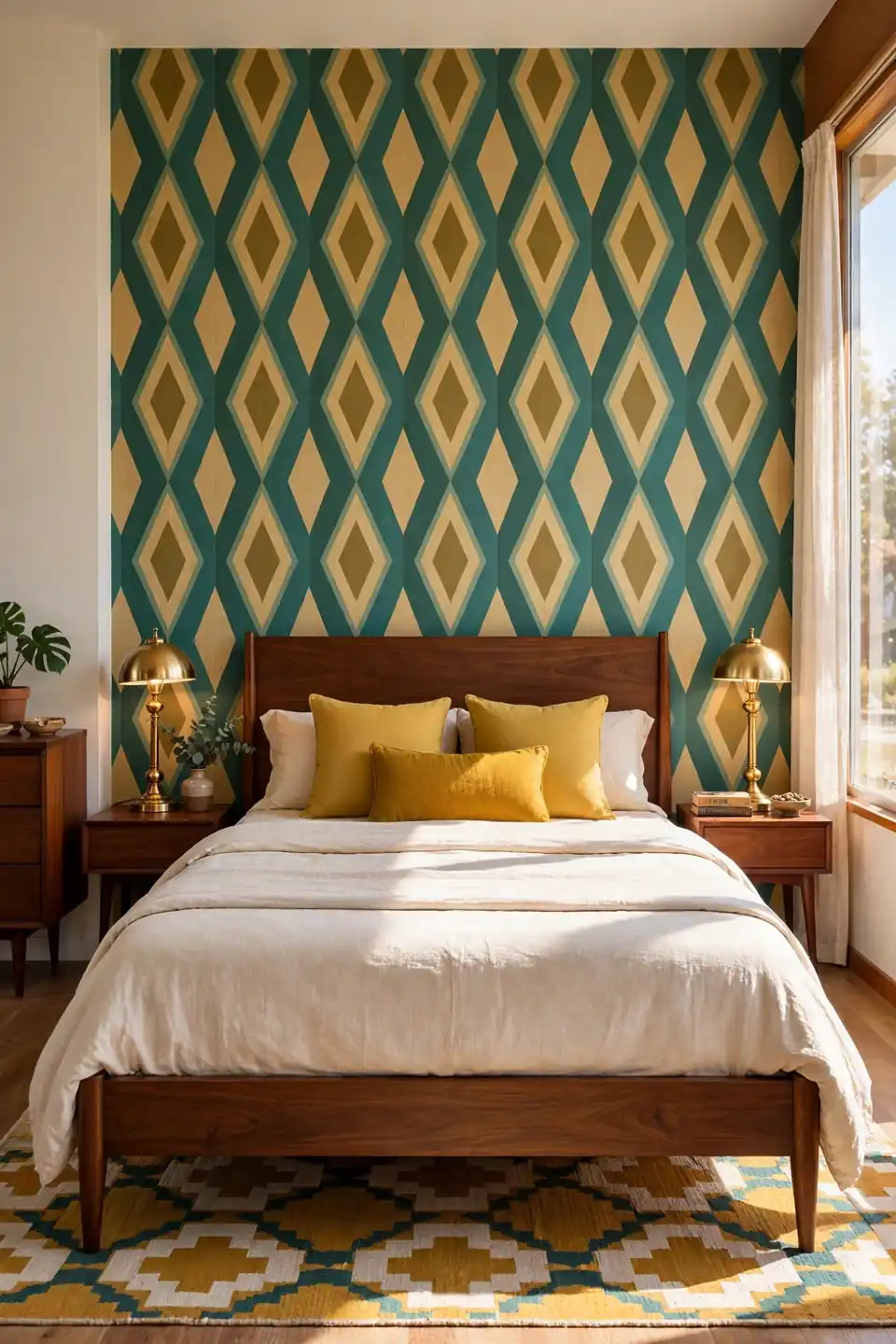
Quick Tip: Keep the pattern scale medium and the other three walls solid. Order one extra roll for pattern matching waste. Bold prints reward small doses elsewhere too, which is why small powder room wallpaper ideas work so well in tiny square footage. One patterned wall plus quiet bedding keeps the bed restful, never busy.
Geometric paper is the fastest route to era character in a rented or builder plain bedroom. Diamonds, arcs, and atomic stars all suit the furniture’s angles. Hang it behind the bed so the pattern frames sleep instead of facing it, and match one color in the print to your throw pillows.
Sliding Door Walnut Wardrobe

BEFORE: The closet doors swung into the room, clipping the nightstand and blocking half the walkway. Getting dressed meant a small daily negotiation with furniture, and the open doors broke the room’s clean lines every single morning.
AFTER: A walnut wardrobe with sliding doors now glides along its own track, silent and flush. Both panels read as one warm wood wall when closed, and the walkway beside the bed stays completely clear.
Sliding doors were the era’s answer to tight floor plans, and they still solve the swing problem elegantly. Long vertical handles in brass keep the wide panels from looking plain. Choose soft close tracks; the quiet glide alone makes mornings feel calmer and more ordered.
Woven Textile Wall Hanging
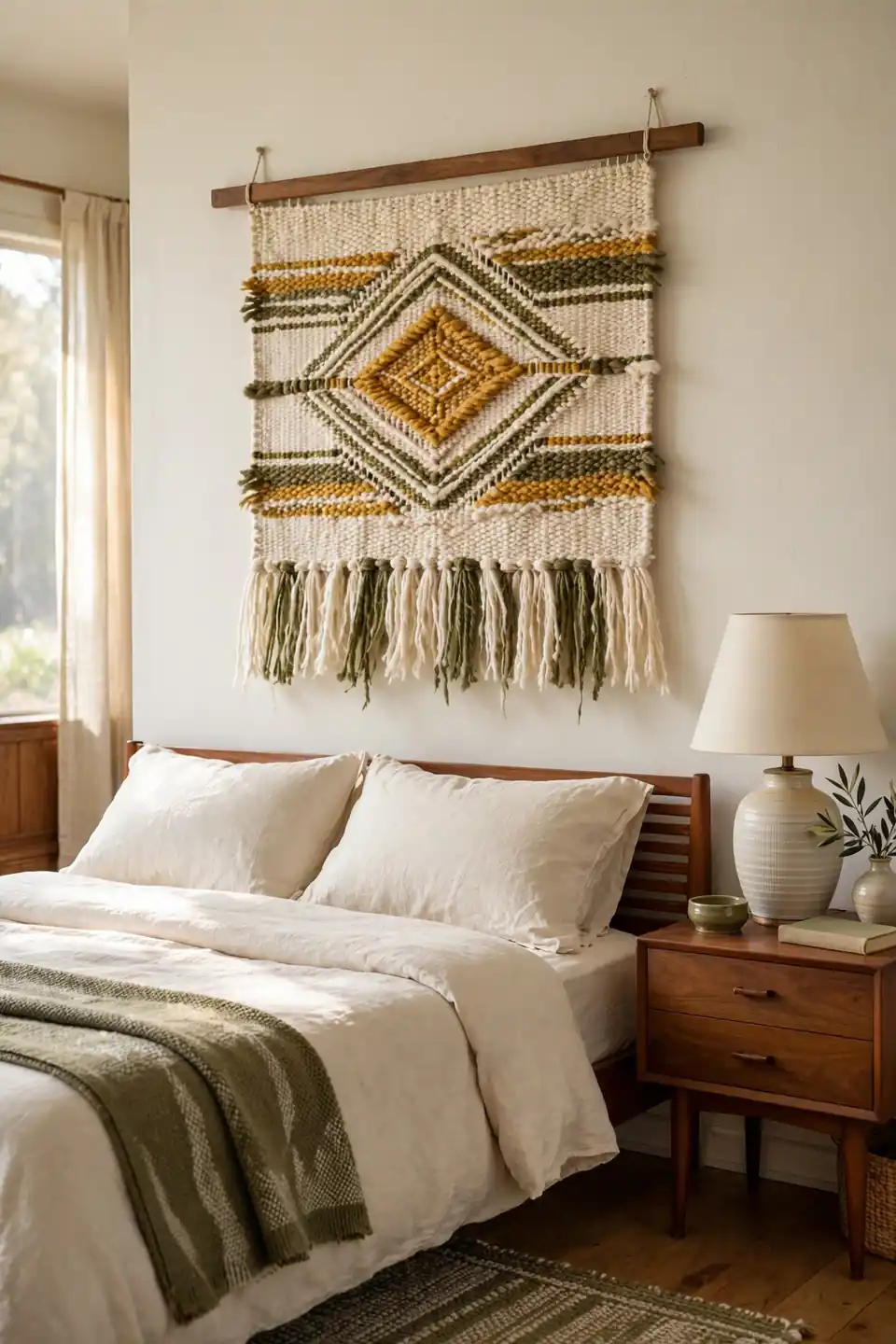
- Choose a hanging about two thirds the bed’s width so it crowns rather than floats.
- Mount the dowel brackets level, roughly eight inches above the headboard top edge.
- Steam the textile gently from behind so the weave hangs flat and true.
- Trim or comb the fringe into one even line for a finished lower edge.
Woven hangings soften the era’s hard edges, all that wood and metal, with fiber and fringe. They also hush a room, absorbing the small echoes that make bedrooms feel stark at night. Vintage pieces turn up often at estate sales, usually priced kindly for patient hunters.
Platform Versus Box Spring Beds
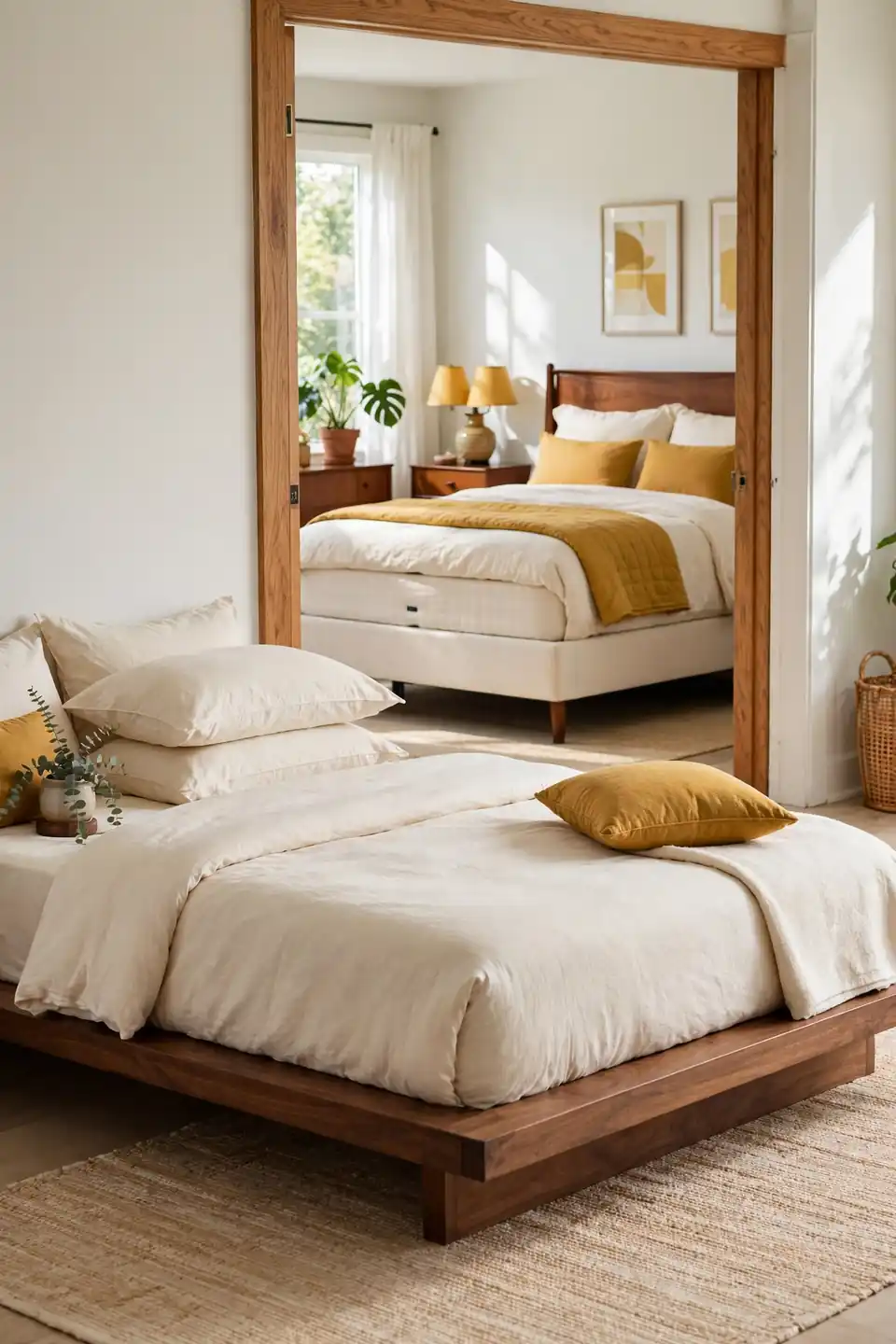
Bed height changes how every other piece in the room behaves, so the base choice deserves an honest side by side look.
| Feature | Platform | Box Spring |
|---|---|---|
| Finished Height | Low, 12 to 16 inches | Tall, 22 to 28 inches |
| Room Feel | Calm, stretched, gallery like | Cozy, traditional, hotel tall |
| Best For | Low ceilings, small rooms | High ceilings, storage drawers below |
| Bedding Style | Tucked, minimal, folded throws | Skirts, layers, deep hems |
Platform bases win in most mid century bedrooms because the era prized the low, long line. Taller sleepers or creaky knees sometimes vote the other way, and comfort should always outrank orthodoxy. Sit on the edge of both styles in the store, shoes off, before deciding.
Record Player Corner Nook
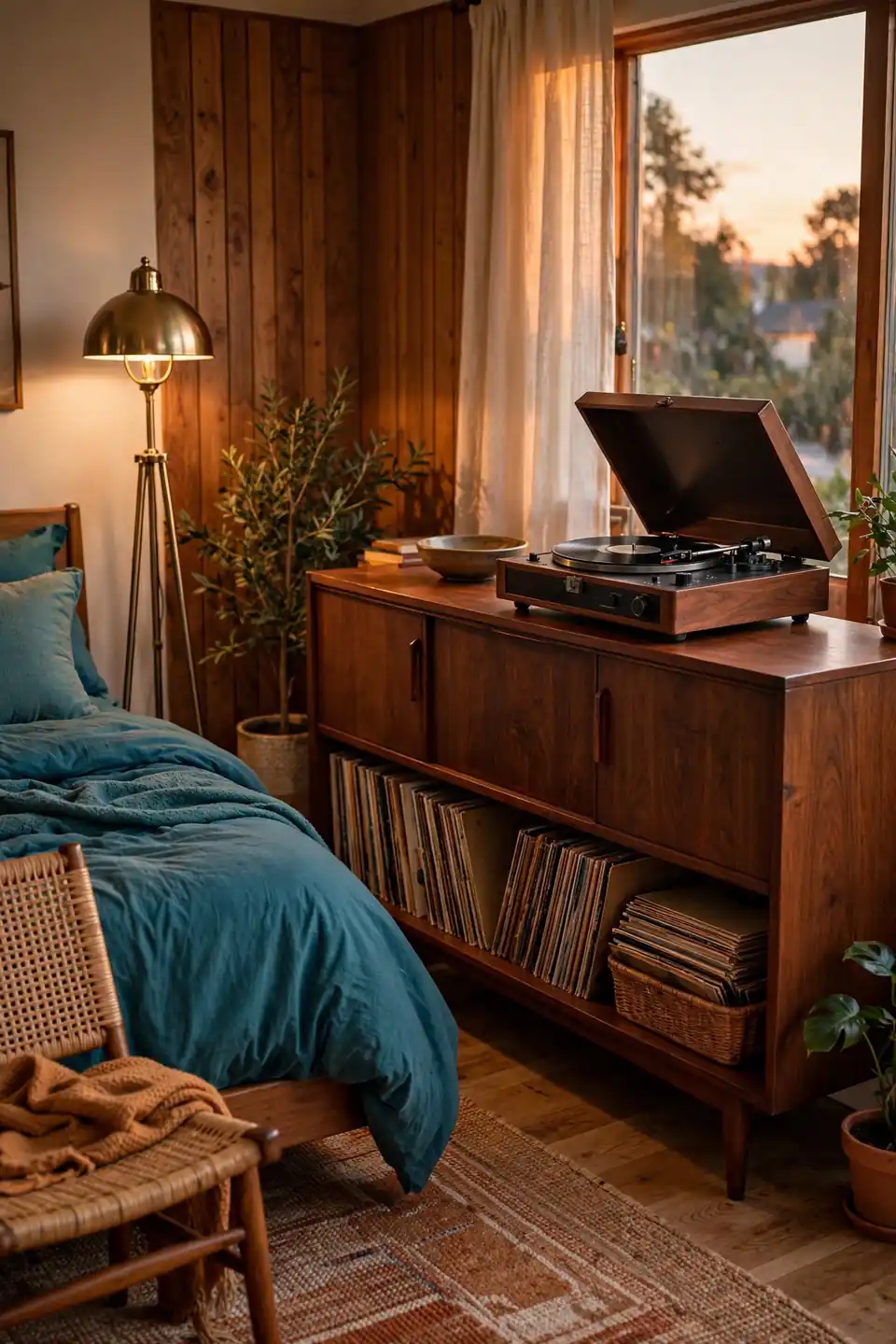
Do:
- Give the player a low credenza so sleeves store upright beneath it.
- Angle one chair toward the speakers for a true listening seat.
- Keep a small lamp nearby; sleeve art deserves good light.
- Frame one favorite sleeve and rotate the display monthly.
Don’t:
- Stack records flat; warping ruins both sound and value.
- Place the player on the dresser among daily clutter.
- Let cables drape across the walkway to the bed.
- Buy a novelty suitcase player with tinny built in sound.
A listening corner gives the bedroom an evening ritual beyond screens, and vinyl’s slow pace suits the room’s job. The credenza doubles as display, storage, and stage in one low footprint. Start with a dozen favorite records; a small, loved collection beats a crate of maybes.
Conclusion
Low lines, warm walnut, and color used with courage: that is the whole recipe. Start with the bed frame, then let lighting, textiles, and small metal notes fall into place around it. These mid century modern bedroom decor ideas reward patience, since one honest piece at a time builds a room that never dates. Save this list on Pinterest for your next free weekend, try the smallest idea first, and share it with a friend who loves the era. I’ve seen this work well in many cases: slow layers, chosen with love, always beat a rushed makeover.