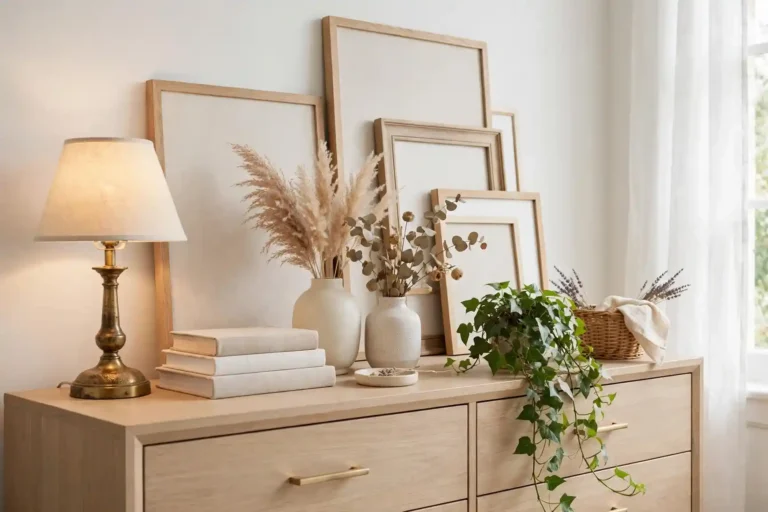
22 Japandi Bedroom Decor Ideas for a Calm, Serene Retreat
Bedrooms should feel like exhaling at the end of a long day. Japandi bedroom decor inspiration blends Japanese minimalism with Scandinavian warmth into spaces that calm the mind on sight. If your bedroom feels busy or restless, these 22 ideas will quiet it fast. Several borrow the relaxed material honesty of French country kitchen decor ideas, proving calm styling works in every room of the home.
You do not need a renovation to get this look. Most of these ideas use wood, linen, and light in smarter ways, and many cost less than a weekend takeout habit. In my experience, bedrooms calm down fastest when you remove before you add, so start by clearing surfaces. Then layer in the ideas that fit your space and your life.
Low Platform Bed
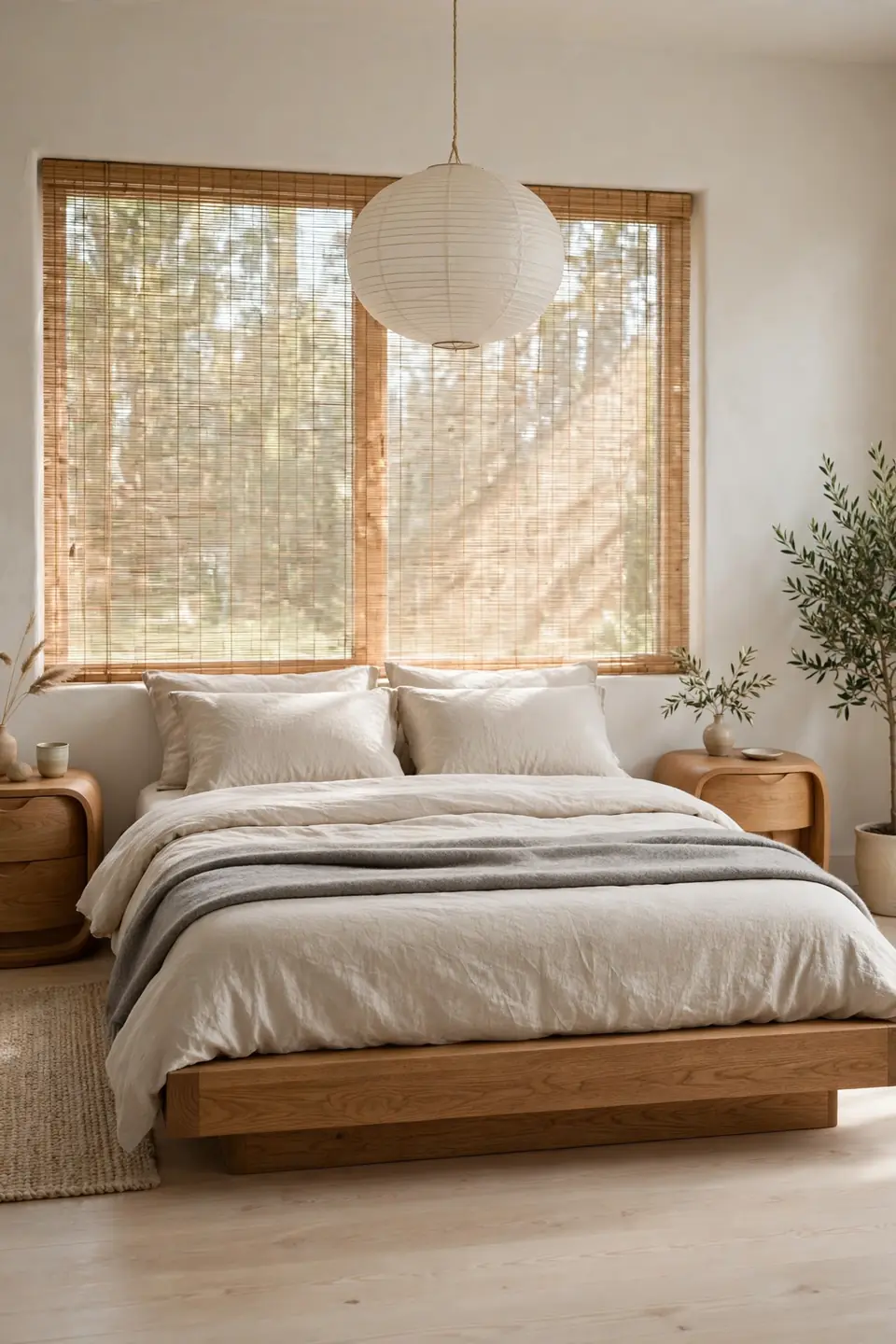
A low platform bed anchors the calm that Japandi rooms are known for, and it changes the whole posture of a bedroom. Sleeping closer to the ground feels grounding, almost like camping indoors, and it removes the visual bulk of tall bed frames. Low platforms also make ceilings feel higher, which suits small bedrooms beautifully.
Choose a simple wood platform in oak or ash with clean straight lines and no ornament. The frame should sit just high enough for airflow under the mattress, with slats instead of a box spring for a firmer, more supportive sleep. In my experience, this swap alone makes a bedroom feel twice as spacious.
Warm Wood Tones

- Build the room around warm woods like oak, ash, and walnut, mixing light and medium tones rather than matching everything.
- Repeat the same wood on at least three surfaces, such as the bed frame, a bench, and a picture ledge, for a calm rhythm.
- Keep finishes matte or lightly oiled so the grain stays visible and touchable.
- Avoid dark espresso stains; they read heavy and fight the airy Japandi mood.
Wood is the bridge between Japanese restraint and Scandinavian warmth. When tones stay in the same warm family, different pieces look collected instead of mismatched. That’s why many experts recommend sampling wood tones together in daylight before buying. This small step prevents the clash that makes neutral rooms look muddy.
Neutral Linen Bedding

Quick Tip: Wash new linen bedding once with a cup of white vinegar to soften it fast. Choose shades like oatmeal, sand, and warm gray that sit close together on the color wheel. Skip bright whites, which feel stark against warm wood, and let the wrinkles stay: they are part of the look. Layer two duvet weights instead of one thick comforter.
Linen is the fabric Japandi bedrooms were made for. It softens with every wash, regulates temperature through the seasons, and drapes with an easy calm that crisp cotton cannot copy. I’ve seen this work well in many cases where sleepers struggled with overheating at night.
Paper Lantern Lighting

BEFORE: The bedroom relied on a single harsh ceiling light that flattened everything into glare. Corners stayed dark while the bed looked washed out, and the room felt clinical instead of calm. Guests often described it as bright but somehow unwelcoming.
AFTER: Two paper lantern pendants now cast a soft amber glow across the room. Shadows fall gently, wood tones deepen, and the whole space feels like a quiet inn at dusk. Reading in bed finally feels like a ritual instead of a task.
Light temperature shapes mood more than any paint color. Paper lanterns diffuse light through rice paper, which flatters both skin and wood. Hang them low over nightstands or one large over the bed for maximum effect. Rooms lit this way photograph beautifully too.
Tatami Rug Layering
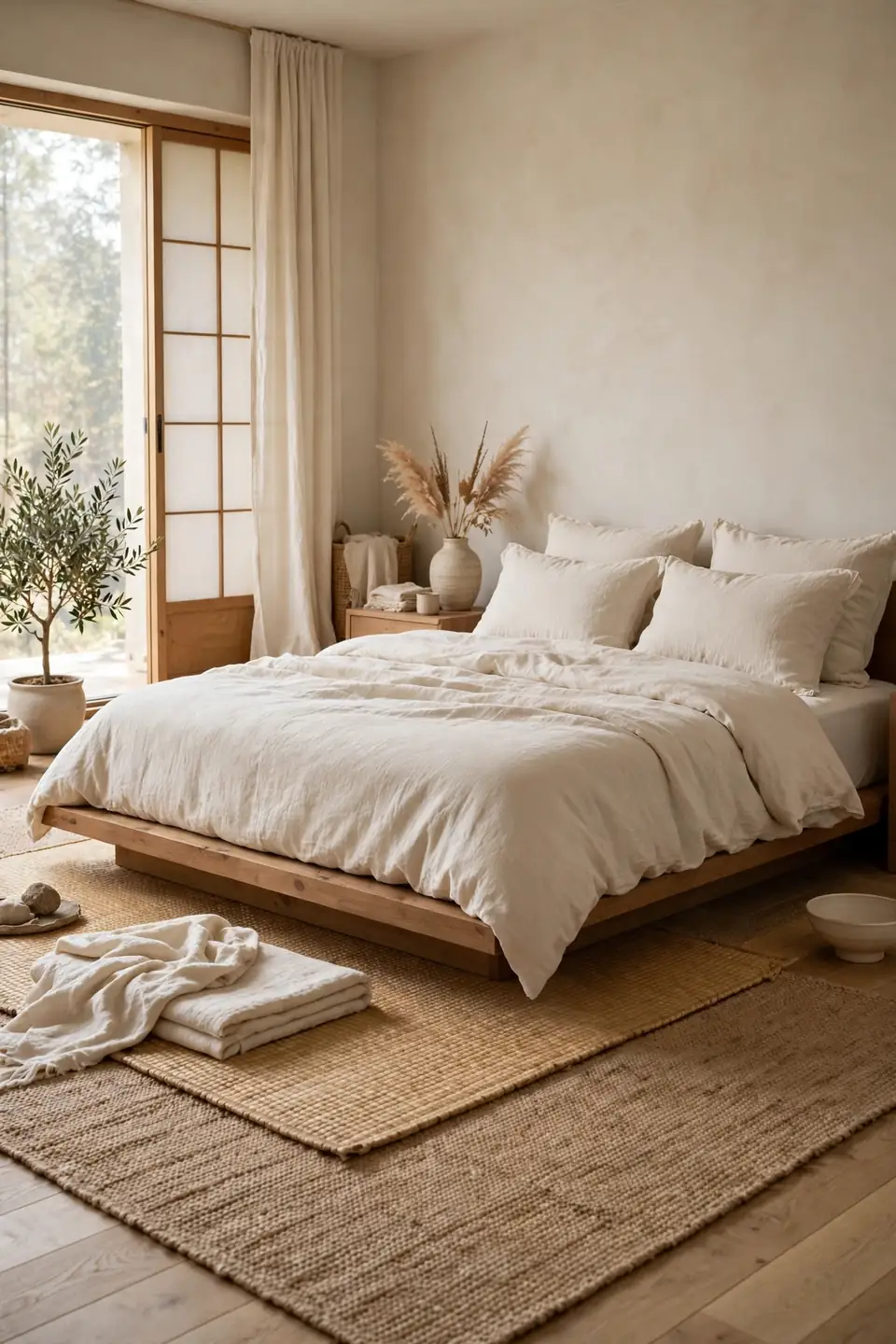
- Roll out a large low pile rug in a warm neutral as the base layer.
- Center a tatami style mat or woven straw rug on top, leaving a border of the base rug visible.
- Align the layers with the bed so bare feet land on soft texture every morning.
- Vacuum both layers weekly and rotate the top mat seasonally to even out wear.
Layered rugs ground the low bed and add the tactile warmth Japandi rooms need. The slight height difference between layers creates quiet visual interest without pattern or color. This trick works especially well in bedrooms with hard floors that feel cold underfoot. In my experience, two thin rugs beat one thick one for easy cleaning.
Minimal Floating Shelves
| Feature | One Long Shelf | Three Small Shelves |
|---|---|---|
| Visual Calm | One clean line across the wall | Soft rhythm of repeated shapes |
| Display Space | Room for larger art and books | Best for small objects and plants |
| Best Placement | Above the bed as a ledge | Beside a chair in a reading nook |
| Dust Factor | One surface to wipe weekly | More edges to clean often |
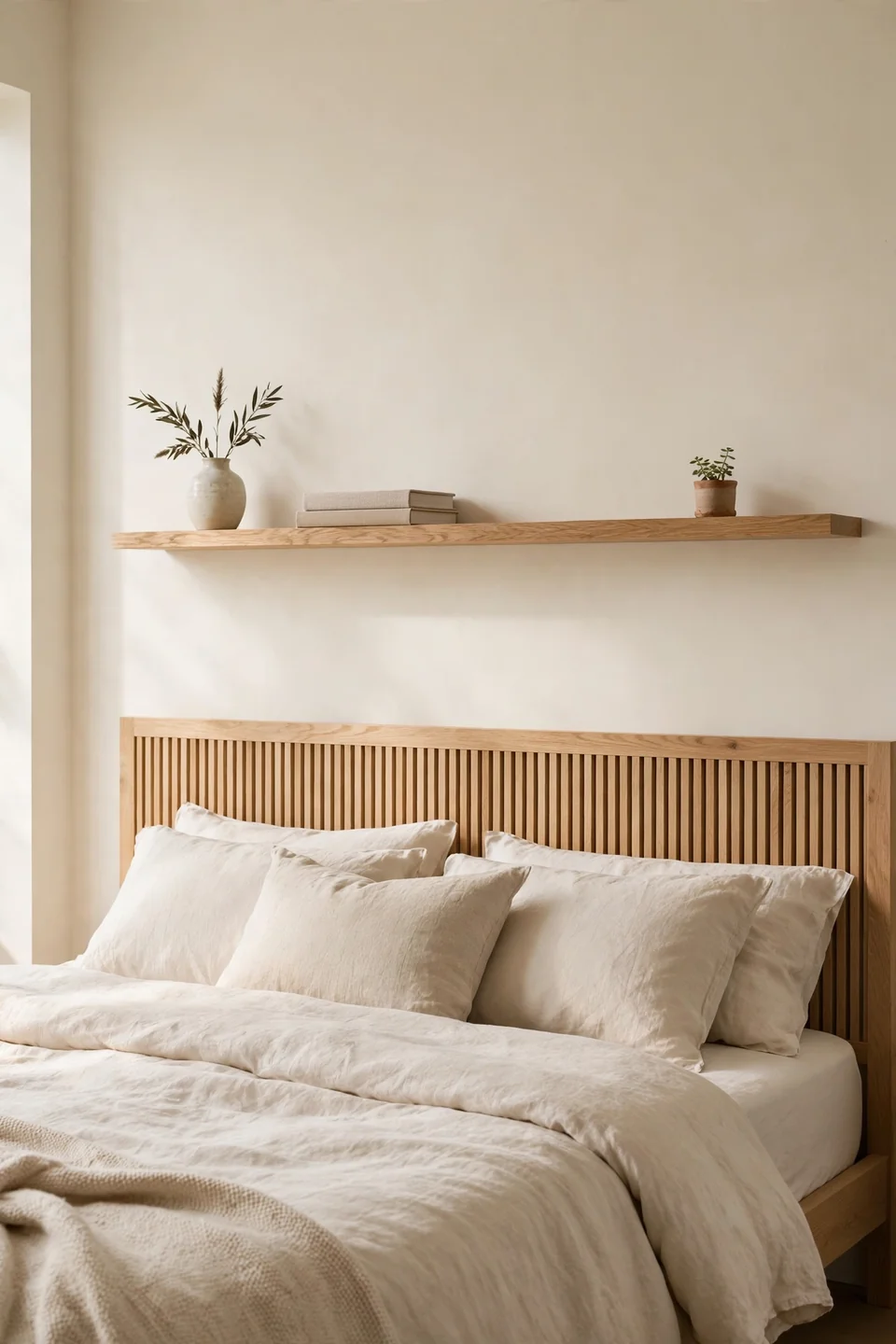
Floating shelves keep walls useful without the weight of bookcases. One long shelf above the bed acts like a headboard extension, while a cluster of small shelves suits a reading corner. Keep displays sparse: three objects per shelf is plenty. Empty space is part of the design, not a gap to fill.
Curved Oak Nightstands
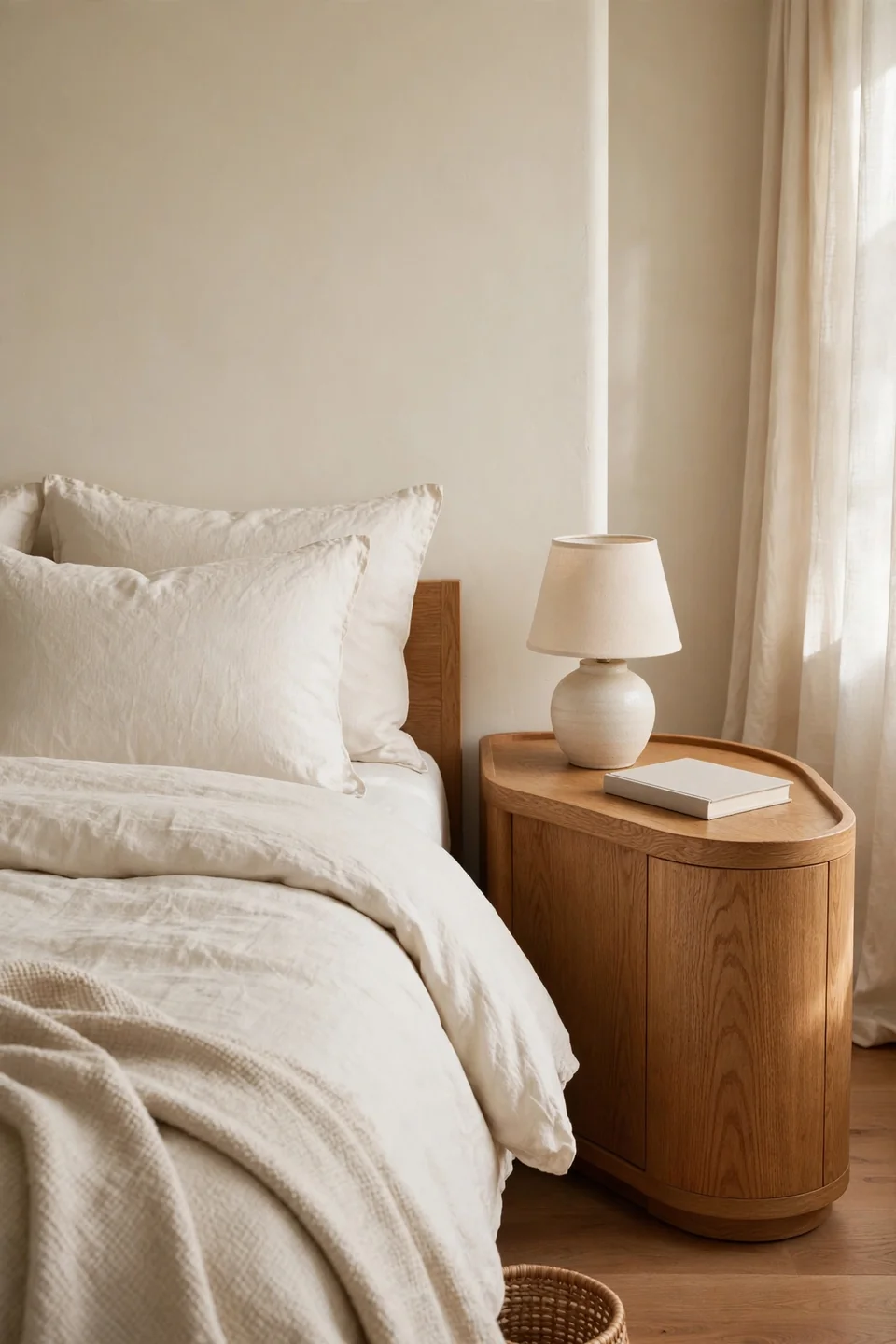
DO:
- Choose one nightstand with softly rounded corners to echo natural forms.
- Match the nightstand height to the top of your mattress.
- Keep the surface nearly clear with a lamp, a book, and one small object.
- Let wood grain show through a clear matte finish.
DON’T:
- Do not crowd nightstands with chargers, bottles, and clutter.
- Avoid glossy lacquer that reflects light harshly.
- Skip mismatched heights on either side of the bed.
- Never choose pieces taller than the headboard.
Nightstands are small but they sit in your sightline every morning. Curved edges soften the boxy geometry of beds and dressers, a hallmark of Japanese influenced design. I’ve noticed rounded nightstands make even plain walls feel considered. Choose one good pair and keep them for years.
Bonsai Bedroom Corner
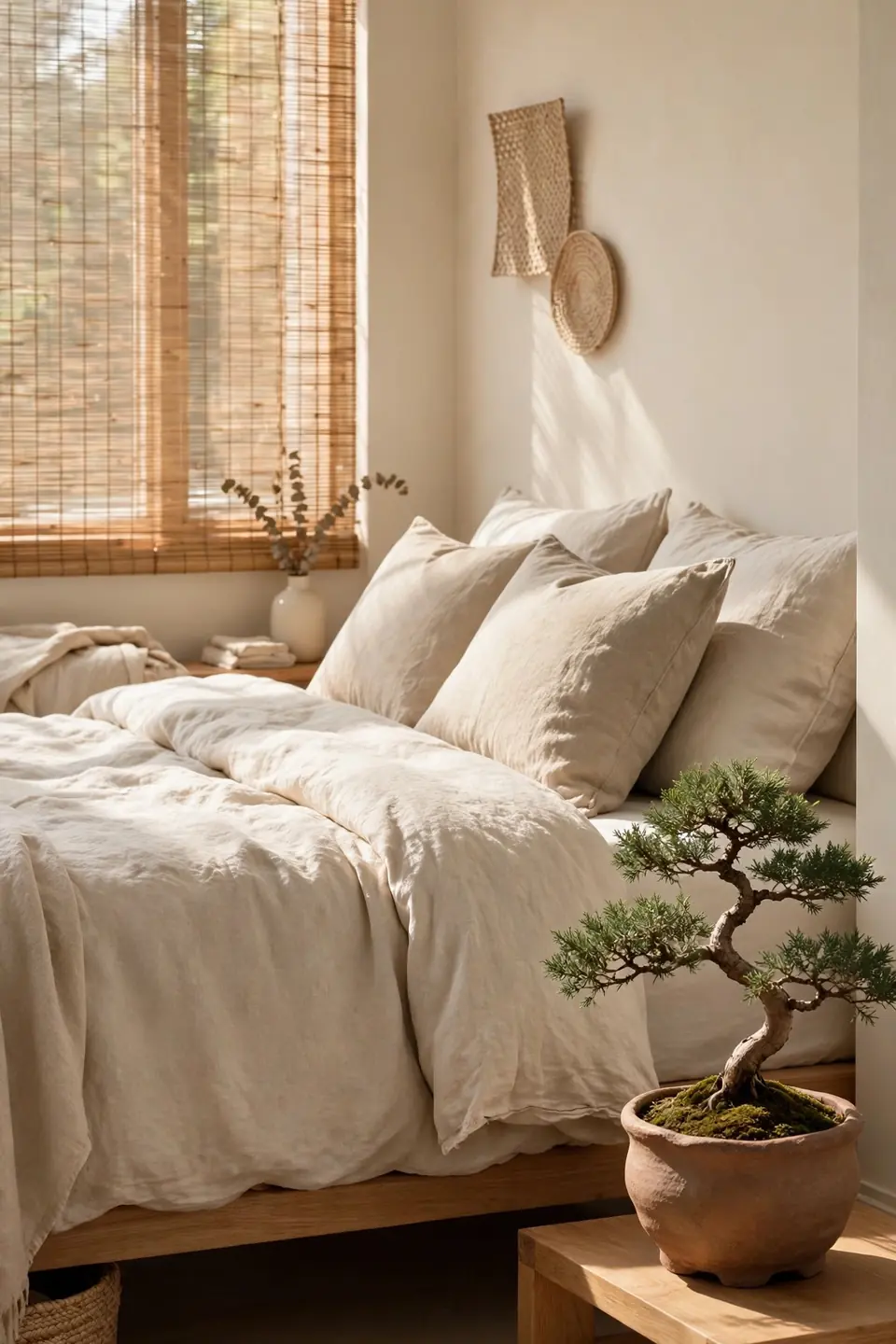
Cost: Low, a starter bonsai runs under thirty dollars.
Care Level: Moderate, needs weekly watering and bright indirect light.
Best For: Nightstand tops, window sills, and meditation corners.
Result: A living sculpture that brings the outside in.
Time: Ten minutes of care per week.
A bonsai turns an empty corner into a quiet focal point. The slow growth mirrors the patience Japandi design asks of a room: nothing rushed, nothing loud. Place it where morning light reaches it, water on a steady schedule, and prune lightly in spring. I’ve seen this work well in many cases where a bedroom felt finished but somehow soulless.
Woven Bamboo Blinds

Bamboo blinds filter daylight into the soft striped light that makes Japandi bedrooms glow. They replace heavy curtains that swallow light and collect dust, while still giving real privacy. The woven texture adds the handcrafted note this style depends on. Mount them inside the frame for a clean tailored fit.
Choose natural bamboo in honey or pale tones that match your wood furniture. Pair blinds with a simple linen drape on each side for softness on cold nights. That’s why many experts recommend layering window treatments: light control plus texture in one move. The combination looks custom without the custom price.
Stone Accent Wall

- Cover one wall, usually behind the bed, with stacked stone or large format stone tiles.
- Choose gray beige limestone or warm travertine to stay in the neutral family.
- Seal natural stone so it resists dust and stays easy to wipe clean.
- Balance the rough texture with soft linen bedding and a smooth wood floor.
- Skip busy patterned stone; solid calm surfaces suit Japandi best.
Stone brings the Japanese love of natural materials into the bedroom in a bold way. One wall is enough: more than that can feel like a cave. Keep the rest of the room light so the stone reads as texture rather than weight. In my experience, lighting the wall softly at night doubles its impact.
Floor Cushion Nook

Quick Tip: Stack two large floor cushions in a quiet corner with a small side table for tea. Use cushions in natural cotton or hemp with removable covers for easy washing. Keep the palette tight: cream, oatmeal, and one muted green for a garden calm feel. Add a folded throw nearby so the nook invites lingering.
A floor nook gives the bedroom a second purpose beyond sleep. It becomes the spot for morning tea, journaling, or quiet reading. Japanese homes treat floor sitting as natural, and the low posture keeps the room’s calm scale intact. I’ve noticed small rooms benefit most, since the nook needs no extra furniture.
Clay Pot Planters

BEFORE: The windowsill held a row of plastic pots in clashing colors. The plants survived but the display looked like an afterthought, and the glossy plastic fought every natural material in the room. It was greenery without any calm.
AFTER: Simple terracotta pots now line the same sill, each plant breathing in matching clay. The earthen color ties the greenery to the wood tones, and the whole corner feels intentional. Even watering them has become a small morning ritual.
Terracotta is the honest material Japandi styling loves: raw, matte, and made of earth. Group pots in odd numbers and vary the heights for a natural look. Choose plants with simple shapes, like snake plants or ferns, over fussy flowering types. The clay also wicks moisture, which keeps roots healthier.
Shoji Screen Divider
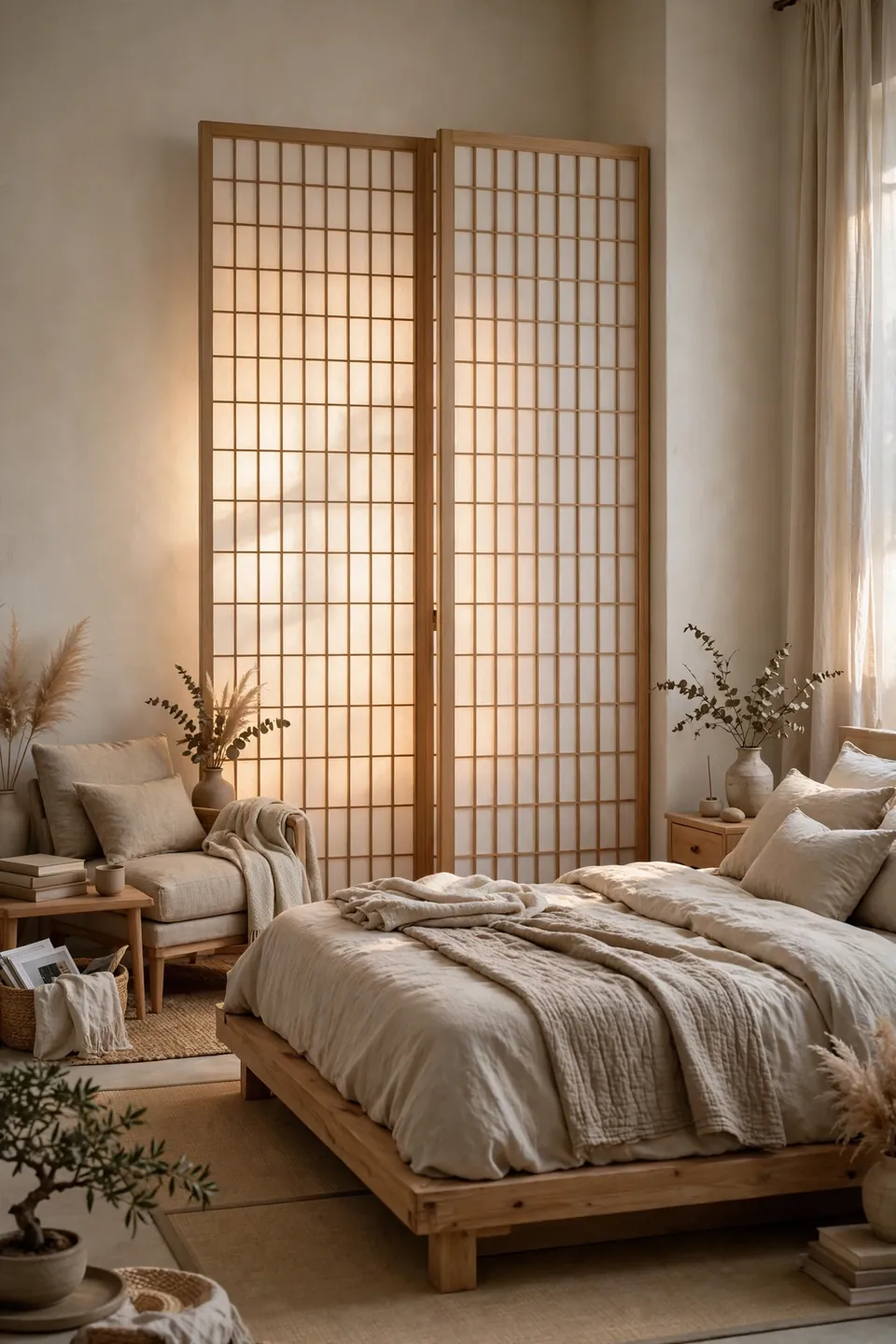
- Measure the area you want to screen, such as a reading corner or closet front.
- Choose a two or three panel shoji screen in a wood tone that matches your furniture.
- Position it to catch side light so the paper panels glow softly.
- Anchor the panels with small furniture pieces so they never tip.
Shoji screens add Japanese soul without any construction. They divide space while letting light pass through, which keeps small bedrooms open. Fold them away when guests arrive and unfold them for quiet evenings alone. That’s why many experts recommend them for renters who cannot add walls. They store flat in seconds.
Wool Throw Layers

| Feature | Chunky Knit Throw | Fine Woven Throw |
|---|---|---|
| Warmth | Coziest for cold nights | Light layer for naps |
| Texture | Bold loops catch the eye | Smooth weave stays quiet |
| Draping | Holds sculpted folds | Falls in soft lines |
| Best Season | Fall and winter | Spring and summer |
| Care | Hand wash cold, dry flat | Machine wash gentle, line dry |
Two throws beat one: a chunky knit at the foot for looks and a fine woven one within reach for naps. Wool regulates temperature better than synthetics, so it works year round. Fold, never bunch, to keep the bed looking tailored. In my experience, wool throws outlast cheaper blends by years.
Matte Black Fixtures
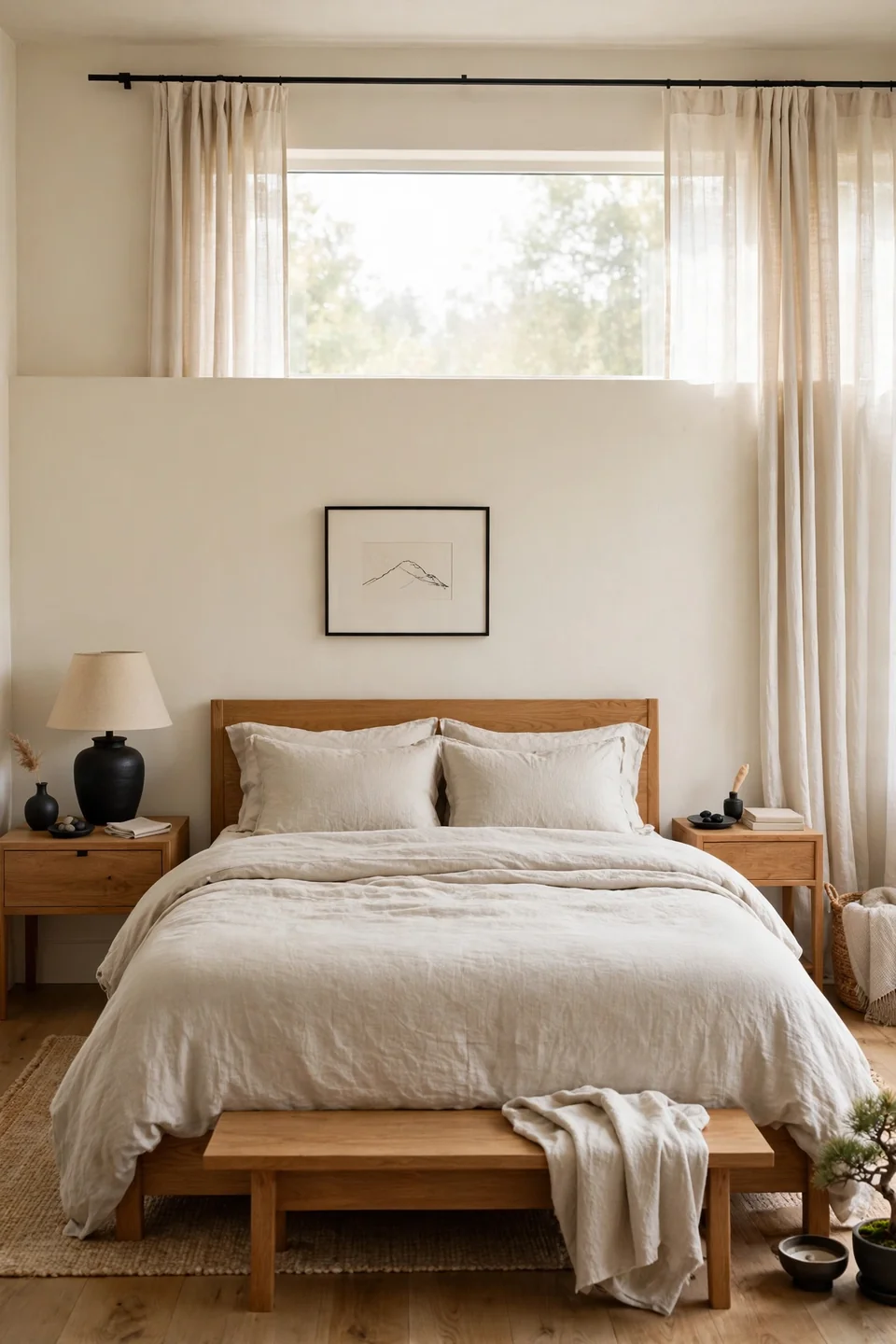
DO:
- Use matte black sparingly: one lamp base, one curtain rod, or drawer pulls.
- Repeat the black accent two or three times so it feels intentional.
- Pair black with warm wood to keep the contrast soft.
- Choose powder coated finishes that resist fingerprints.
DON’T:
- Do not let black dominate; Japandi stays light and airy.
- Avoid shiny black that reads modern industrial.
- Skip black bedding or large black furniture pieces.
- Never mix black with cool gray walls; warmth is key.
A touch of black grounds all the soft neutrals and gives the eye a resting point. Think of it as ink in a watercolor: a little defines everything. Keep the total black under five percent of what you see. I’ve noticed this trick makes neutral rooms feel designed, not bland.
Sandalwood Scent Diffuser
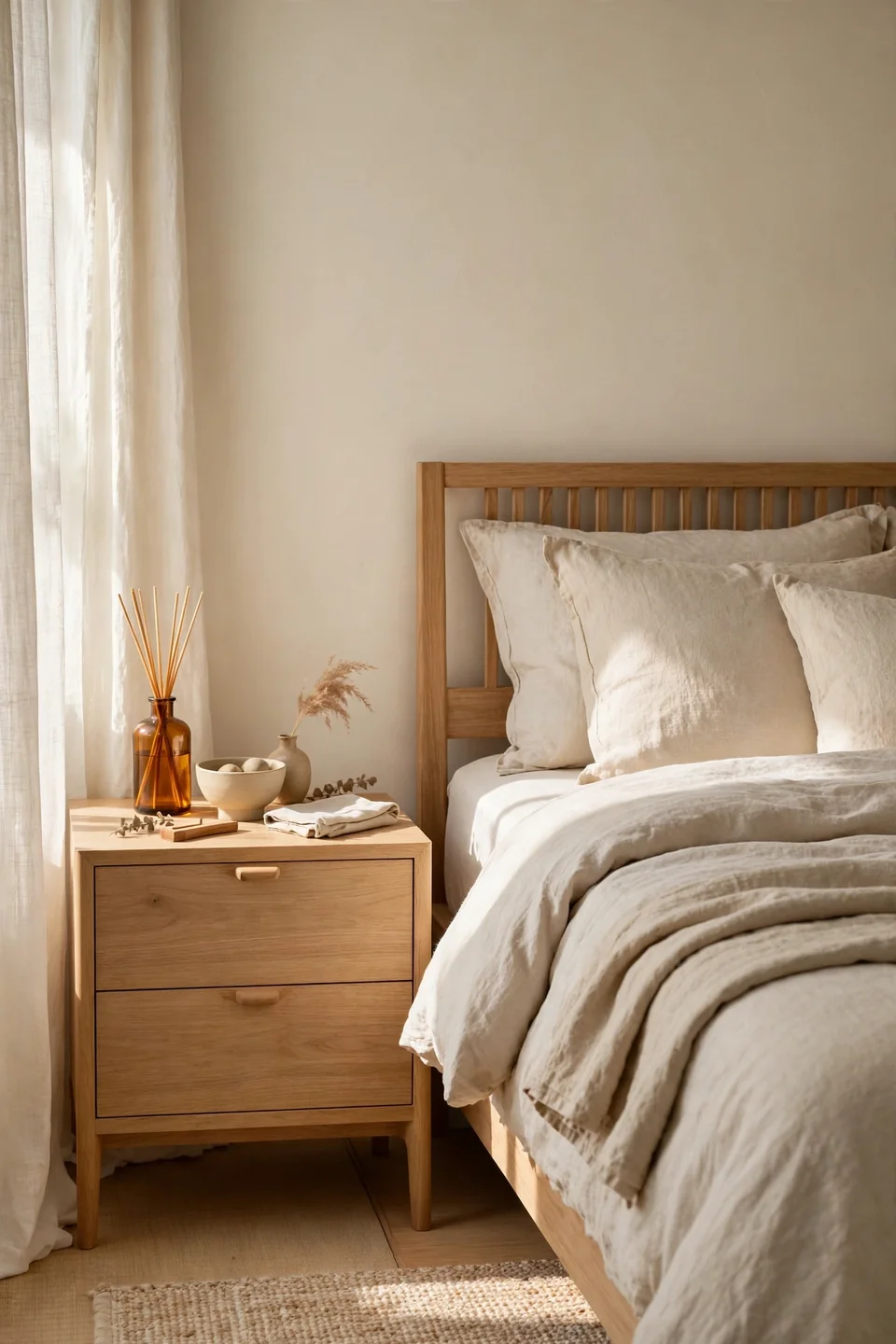
Cost: Low, a quality reed diffuser lasts months.
Best For: Nightstands and dresser tops near the bed.
Scent: Sandalwood, hinoki, or white tea for calm.
Result: A room that smells as serene as it looks.
Time: Refresh reeds monthly for steady scent.
Scent is the invisible layer most bedrooms miss. Sandalwood and hinoki recall Japanese temples and slow mornings, settling the mind before sleep. Place the diffuser where air moves gently, never right beside the pillow. I’ve seen this work well in many cases where a room looked perfect but still felt flat. Swap scents with the seasons: lighter in summer, deeper in winter.
Upholstered Headboard Panel
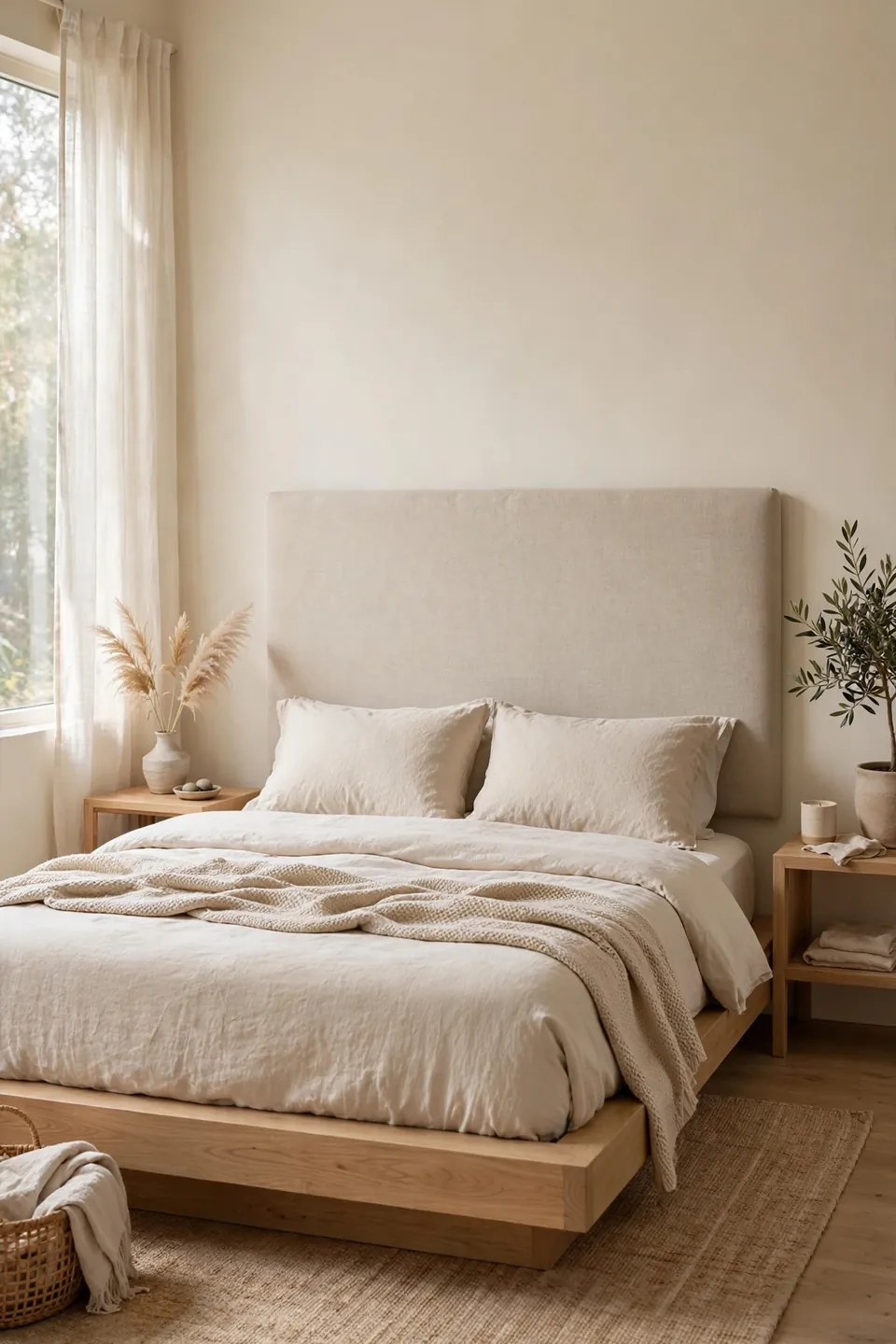
A single upholstered panel behind the bed adds softness without the bulk of a full headboard. Choose natural linen or bouclé in oatmeal and mount it flush to the wall. The low profile keeps the Japandi silhouette clean. It also protects the wall from scuffs and head marks. One panel, not two, keeps the look minimal.
This works beautifully behind low platform beds where tall headboards would overwhelm. The fabric absorbs sound too, which makes the room feel quieter. Keep the color one shade deeper than the bedding for gentle contrast. In my experience, guests always touch it first. Texture invites hands.
Rattan Pendant Lamp

- Hang one woven rattan pendant over the center of the bed or a reading chair.
- Choose open weaves that cast patterned shadows on the ceiling at night.
- Keep the scale generous: small pendants get lost in bedrooms.
- Pair with a warm bulb around 2700K for a golden glow.
- Skip pendant pairs over nightstands unless the room is very wide.
Rattan brings the handcrafted warmth that balances Japandi minimalism. The natural weave softens electric light into something that feels almost like candlelight. Hang it low enough to feel intimate but high enough to walk under. That’s why many experts recommend one statement pendant over several small ones. Simplicity wins here.
Hidden Storage Beds
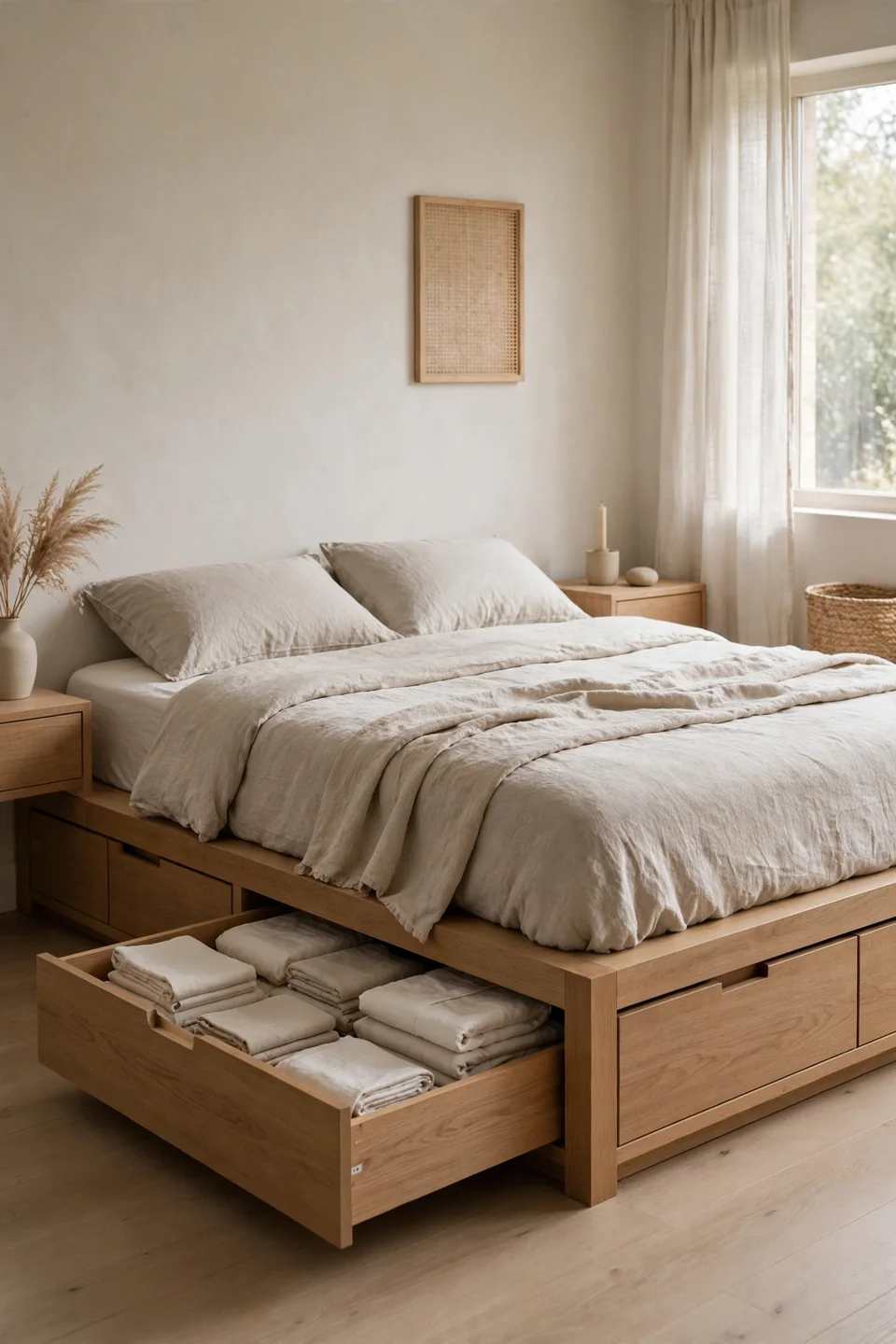
Quick Tip: Choose a platform bed with deep drawers built into the base. Store off season bedding and spare linens inside to keep closets calm. Look for soft close drawers that glide silently at night. Measure your storage needs before buying, not after. Two large drawers beat four shallow ones for bulky items.
Hidden storage is how Japandi rooms stay minimal without feeling empty. Everything has a home, so surfaces stay clear and the eye rests. This matters most in small bedrooms where every inch counts double. I’ve noticed clutter free bedrooms genuinely improve sleep quality. Start with the bed, the biggest storage opportunity.
Wabi Sabi Artwork
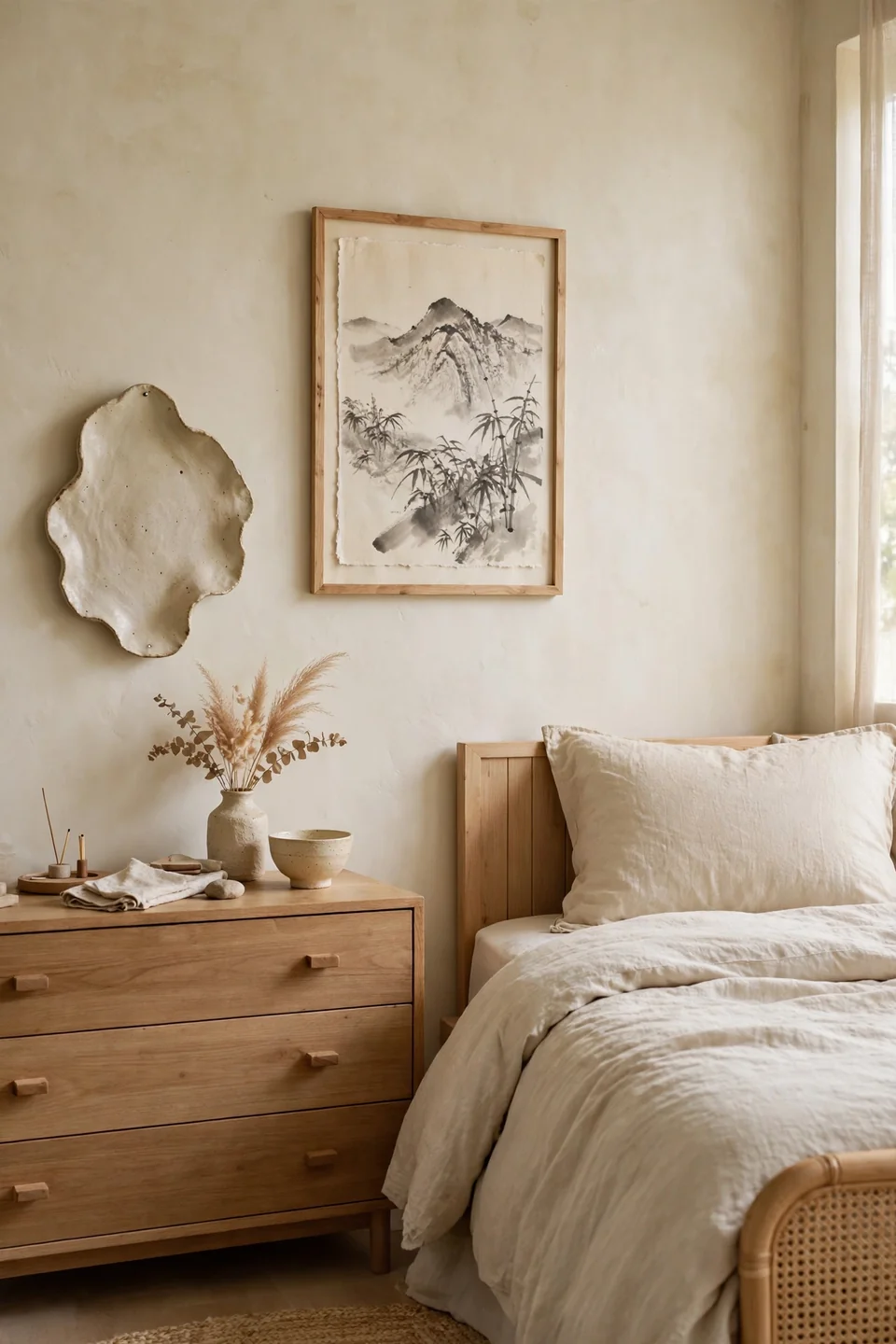
BEFORE: The walls held a gallery of matching prints in identical frames. Everything coordinated perfectly and felt lifeless, like a hotel room nobody lives in. The bedroom had decoration but no soul.
AFTER: One handmade ceramic piece and a single ink painting now hang above the dresser. Both show the maker’s hand: uneven edges, visible brushstrokes, quiet imperfection. The wall finally feels personal and alive.
Wabi sabi finds beauty in imperfection, the heart of Japanese aesthetics. Choose art that shows human hands rather than factory precision. One imperfect piece moves a room more than ten perfect ones. Let it hang slightly off center; perfection is the enemy here.
Oak Bench Footboard
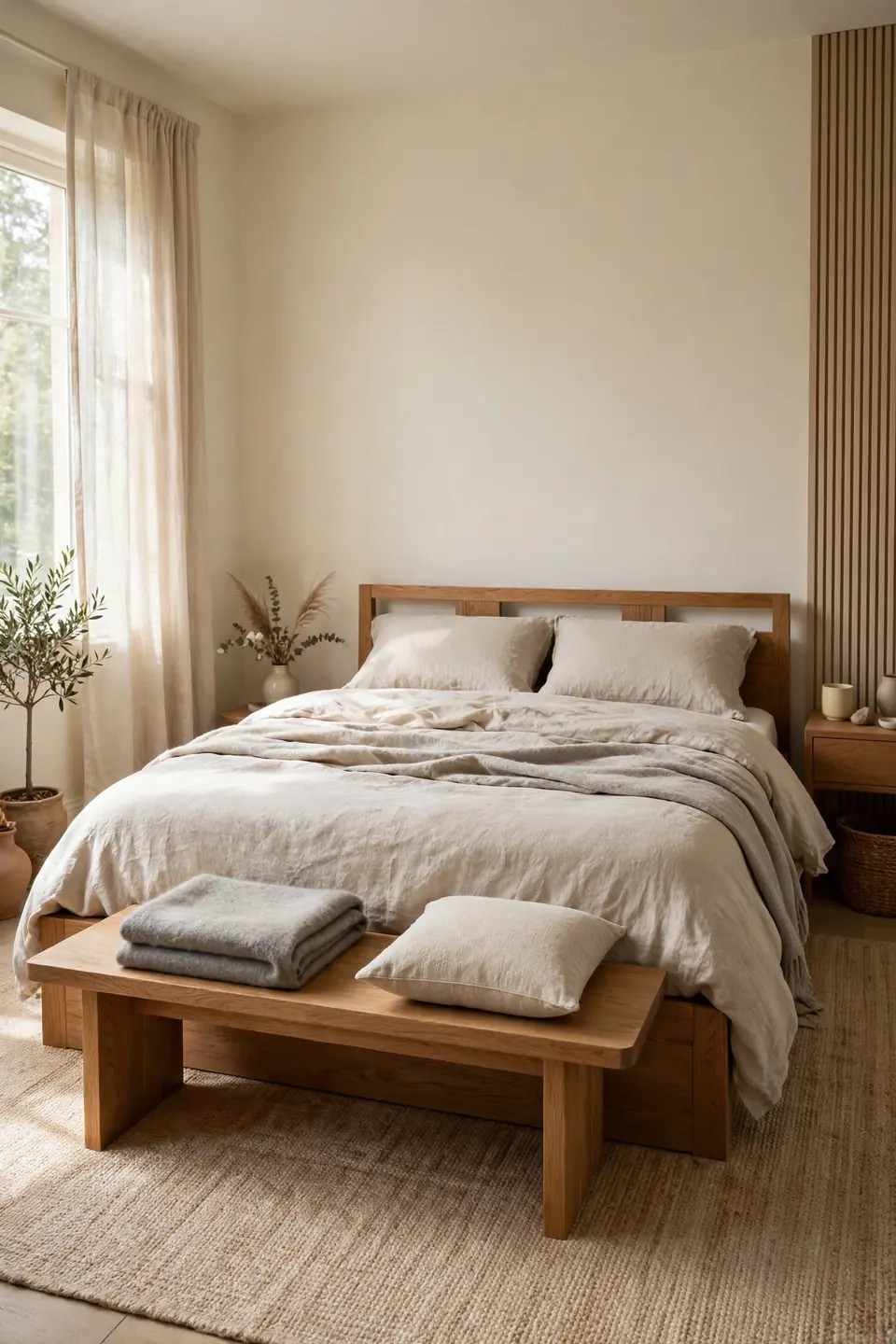
- Choose a low oak bench that matches your bed frame wood tone.
- Size it to two thirds of the bed width so it looks balanced.
- Top it with a folded throw and one firm cushion.
- Use the bench for dressing, then clear it nightly to keep the calm.
- Dust the bench weekly since low pieces collect more dust.
A bench at the foot of the bed adds function without adding furniture bulk. It holds tomorrow’s clothes, gives guests a seat, and completes the bed’s silhouette. In small rooms it can even replace a chair. The same calm palette scales beautifully in larger rooms, as modern Mediterranean interior design ideas proves. That’s why many experts recommend benches over bulky bedroom chairs. Simple, useful, beautiful.
Linen Curtain Panels

| Feature | Sheer Linen Panels | Heavy Blackout Curtains |
|---|---|---|
| Light Quality | Soft filtered daylight | Blocks nearly all light |
| Privacy | Enough for upper floors | Full privacy day and night |
| Mood | Airy and calm | Dark and cocooning |
| Care | Machine wash, quick dry | Dry clean or heavy wash |
| Best Room | Bright bedrooms facing gardens | Shift workers needing dark sleep |
Sheer linen panels soften windows without blocking the daylight Japandi rooms need. They move gently with air currents, which adds life to still rooms. Layer them over blinds when street facing windows need real privacy. I’ve noticed linen curtains make even plain windows feel designed. Wash them twice a year; they soften beautifully.
Conclusion
Start with the idea that calls to you first: the low platform bed, the linen bedding, or simply clearing every surface. Japandi bedroom decor inspiration works best when you layer it slowly and let each piece earn its place. Pin your favorite ideas to a bedroom board on Pinterest so you can plan and shop with a clear vision. In my experience, even three or four of these changes can completely shift how a bedroom feels at night. Try one change this weekend and notice how much lighter your mornings feel. Your calmest, most restful room is closer than you think.