
21 Small Entryway Drop Zone Ideas to Beat Daily Clutter
The entryway drop zone is where daily chaos either gets tamed or takes over the whole house. These small entryway drop zone ideas create smart landing spots for keys, bags, shoes, and mail in even the tiniest foyers. I have seen cluttered entryways become calm, functional spaces with just a few well-placed pieces. For stylish wall storage that complements any drop zone, see these floating shelf decor ideas for living room with beautiful display formulas.
Each idea below maximizes a small footprint, from wall-mounted systems to slim furniture that fits tight spaces. You will find solutions for families, pet owners, and anyone drowning in daily clutter. Start with the messiest category in your entryway and tackle that first.
Wall Hook Command Center

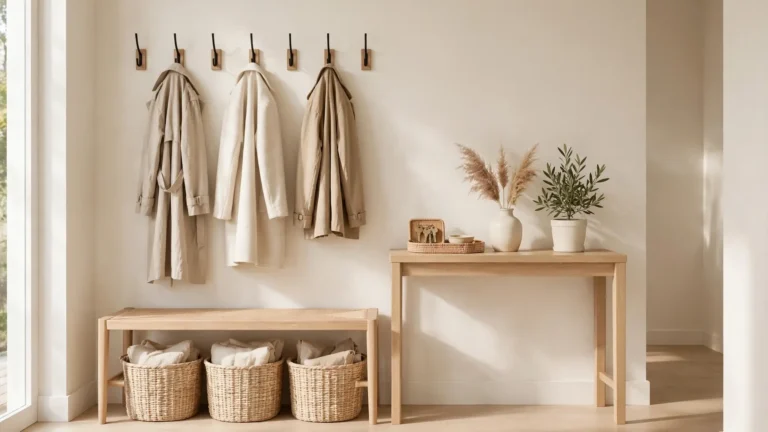
A wall-mounted hook rail is the backbone of any small drop zone, holding coats, bags, and hats without floor space. Mount it at a height everyone can reach, with lower hooks for kids. The vertical storage keeps the floor completely clear.
Choose a rail with at least five hooks for a family of four. Solid wood rails look warm while metal ones suit modern spaces. This single piece handles the bulk of entryway clutter. A shelf above the hooks adds storage for hats and sunglasses. Stagger two rails at different heights for adults and kids. A double rail doubles capacity in the same footprint. Offset the rails so coats never overlap. Heavy winter coats need the sturdiest hooks. Double hooks share the load better.
Slim Console Table

- Choose a console no deeper than twelve inches for tight spaces.
- Style the top with a key bowl, small plant, and one decor piece.
- Use the lower shelf for baskets that hide clutter.
- Anchor it to the wall for safety in busy households.
- Keep the surface mostly clear so it stays functional.
A slim console table gives the drop zone a proper landing surface. I have noticed that having a designated spot for keys ends the daily search. The table also anchors the entryway visually. A mirror above the console doubles the light in dark foyers. A round mirror softens the console’s hard lines. A sunburst mirror adds playful energy. A simple round mirror suits minimalist spaces. An oversized mirror doubles tiny foyers visually. Lean large mirrors for a relaxed look.
Basket Catch-Alls
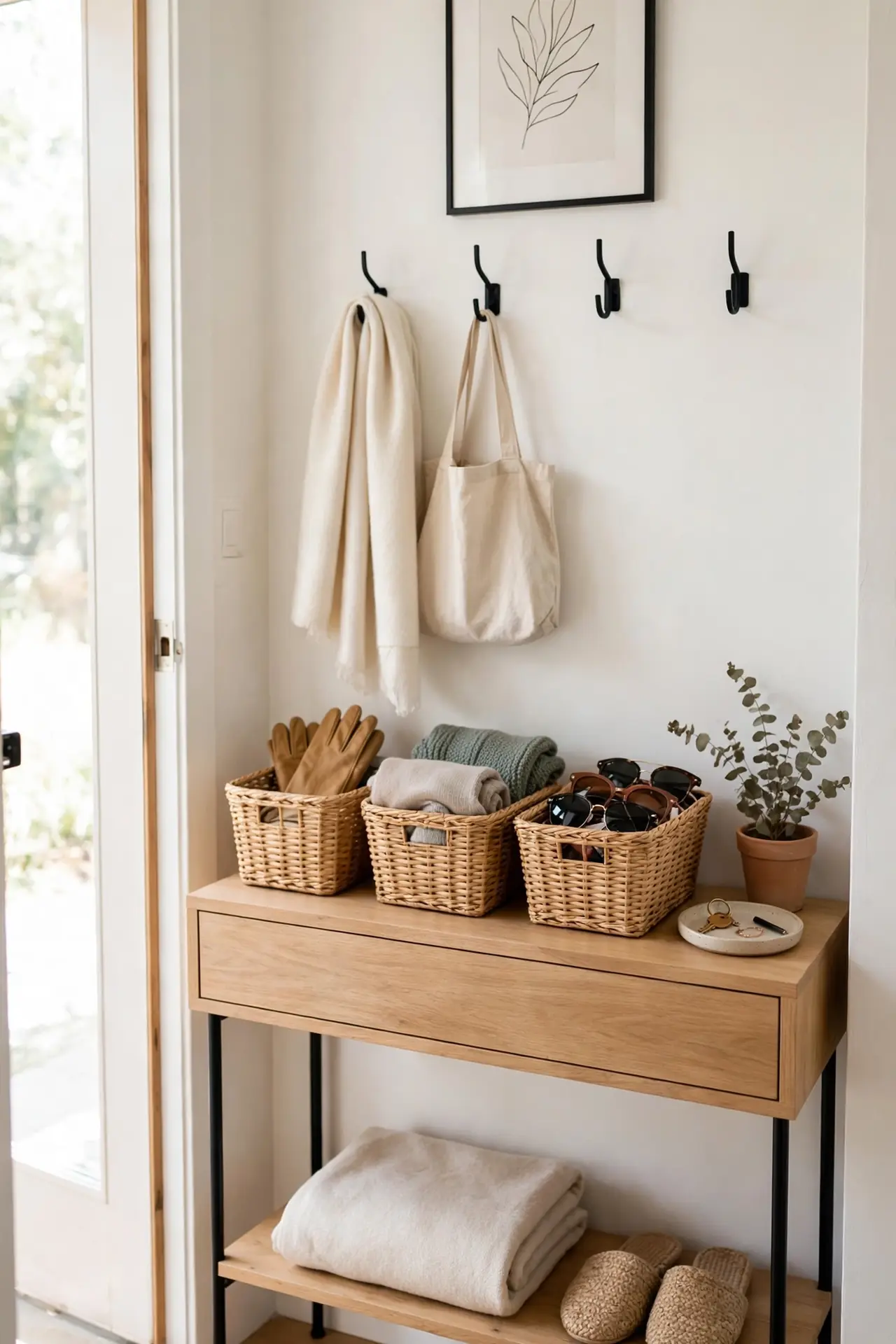
Quick Tip: Assign one basket per family member for personal drop zone items. Label each basket so everyone knows their spot. The baskets corral the small stuff that otherwise spreads everywhere. A quick nightly reset keeps the baskets from overflowing. A five-minute tidy before bed keeps mornings calm. Involve kids in the reset to build lifelong habits. A sticker chart rewards consistent tidying. Weekly rewards keep the habit fun. Praise works better than prizes long-term.
Woven baskets add warmth while hiding the mess. Choose baskets that fit your console shelf exactly. This simple system ends the “where are my gloves” panic.
Key Bowl Station
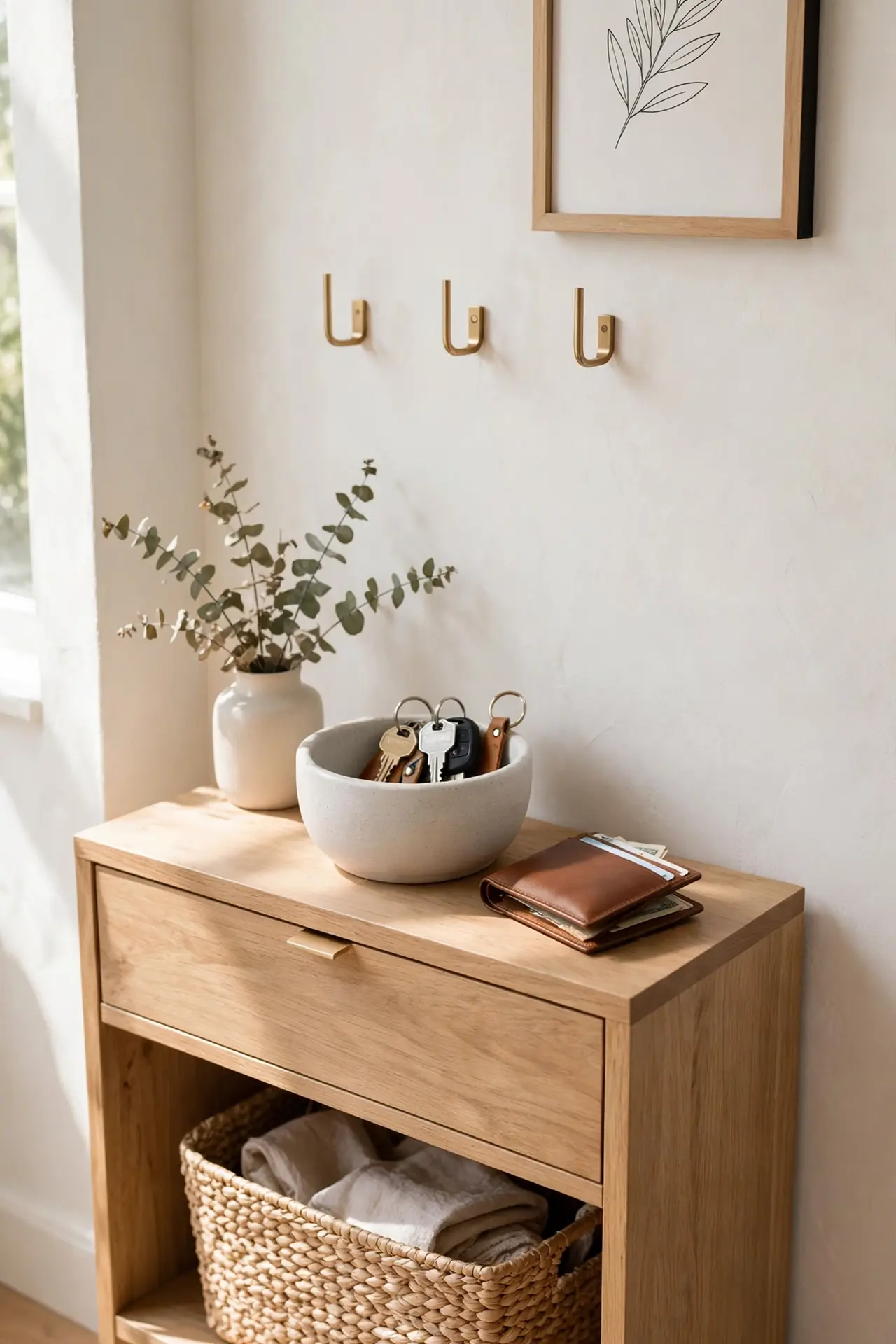
BEFORE: Keys migrated to random surfaces daily, and mornings started with a frantic search. The small entryway had no designated key spot.
AFTER: A beautiful bowl by the door gives keys a permanent home. The morning routine becomes calm instead of chaotic.
Place the key bowl within arm’s reach of the door for the best habit. A bowl with some weight will not tip when keys land. This tiny change saves hours of searching yearly. A small dish for loose change keeps pockets empty and organized. Empty the dish monthly into a savings jar. Coins add up faster than you expect. A clear jar makes saving visually motivating. Kids love watching coins accumulate. A savings goal chart motivates young savers.
Shoe Tray Zone
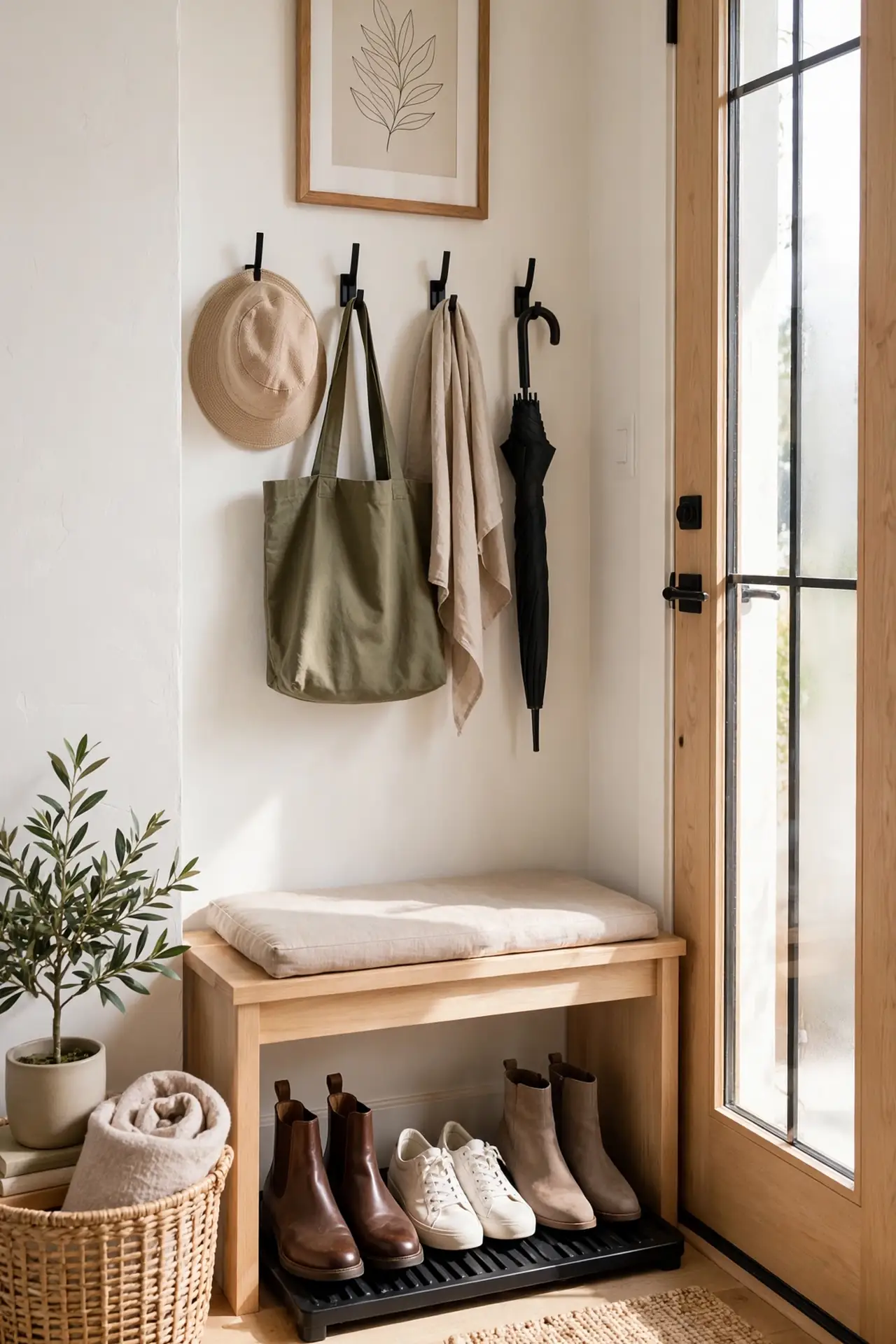
1. Place a boot tray just inside the door.
2. Limit it to daily shoes only, two pairs per person.
3. Store off-season shoes elsewhere.
4. Choose a tray with a lip to contain dirt.
5. Wipe the tray weekly to keep it fresh.
A shoe tray contains the dirt and clutter that shoes bring inside. The defined zone keeps footwear from migrating. I have seen this work well in many cases where floors stayed cleaner. A washable tray liner makes cleanup effortless. Replace the liner seasonally for a fresh look. A patterned liner adds personality to the practical tray. Cork liners absorb moisture naturally. Rubber liners grip the tray best. Wash rubber liners with soap and water.
Mail Sorter Wall
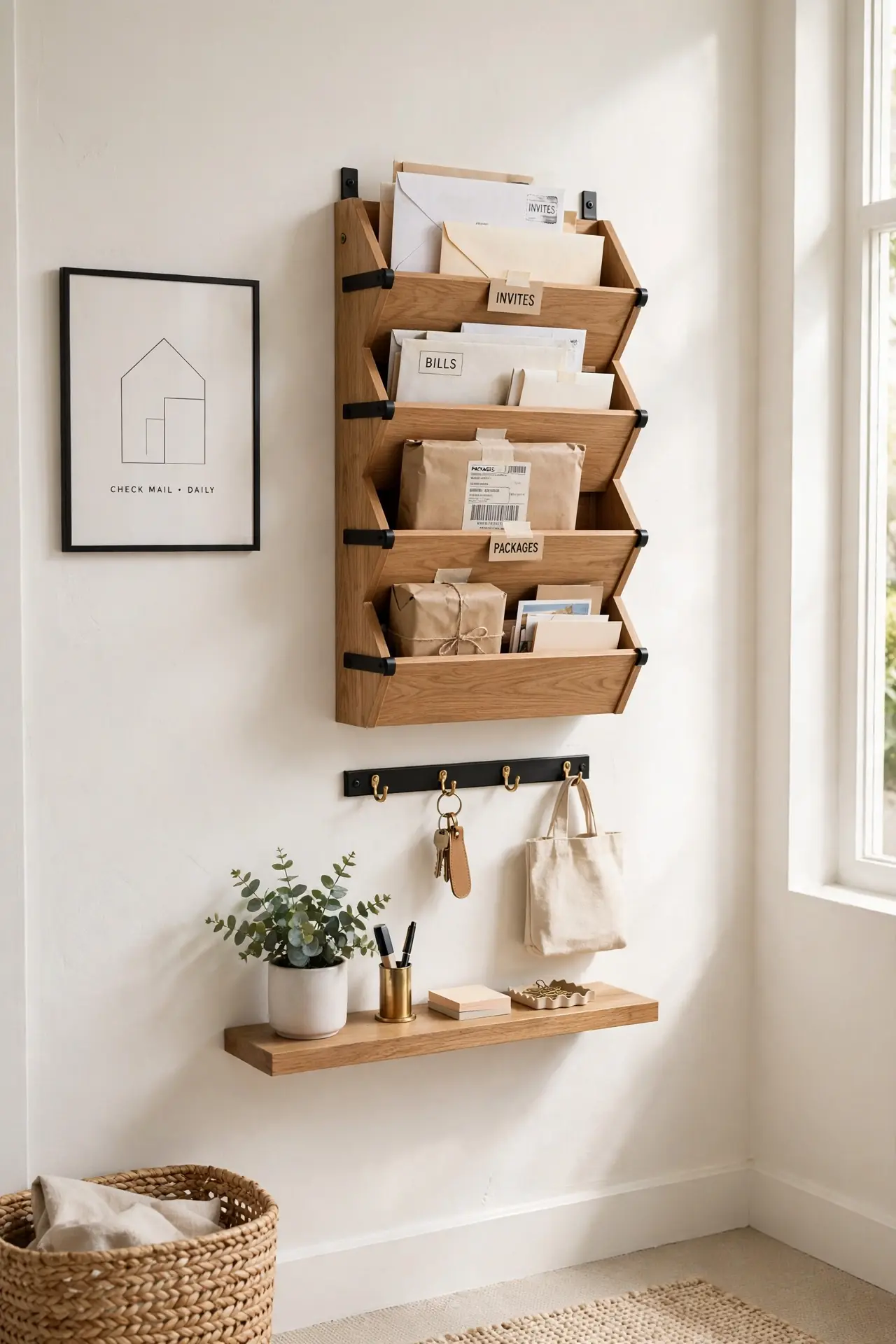
| Sorter Slot | Use For | Tip |
| Top slot | Action items | Review weekly |
| Middle slot | To file | File monthly |
| Bottom slot | Recycling | Empty often |
A wall-mounted mail sorter stops paper piles from colonizing the entryway. The table above organizes slots by action needed. Mount it near the door so mail gets sorted immediately. A shredder nearby handles junk mail instantly. A recycling bin beside the sorter keeps paper moving. Go paperless where possible to reduce the flow. Scan important papers to cloud storage. A scanning app on your phone works fast. Shred after scanning to stay paperless.
Bench with Storage
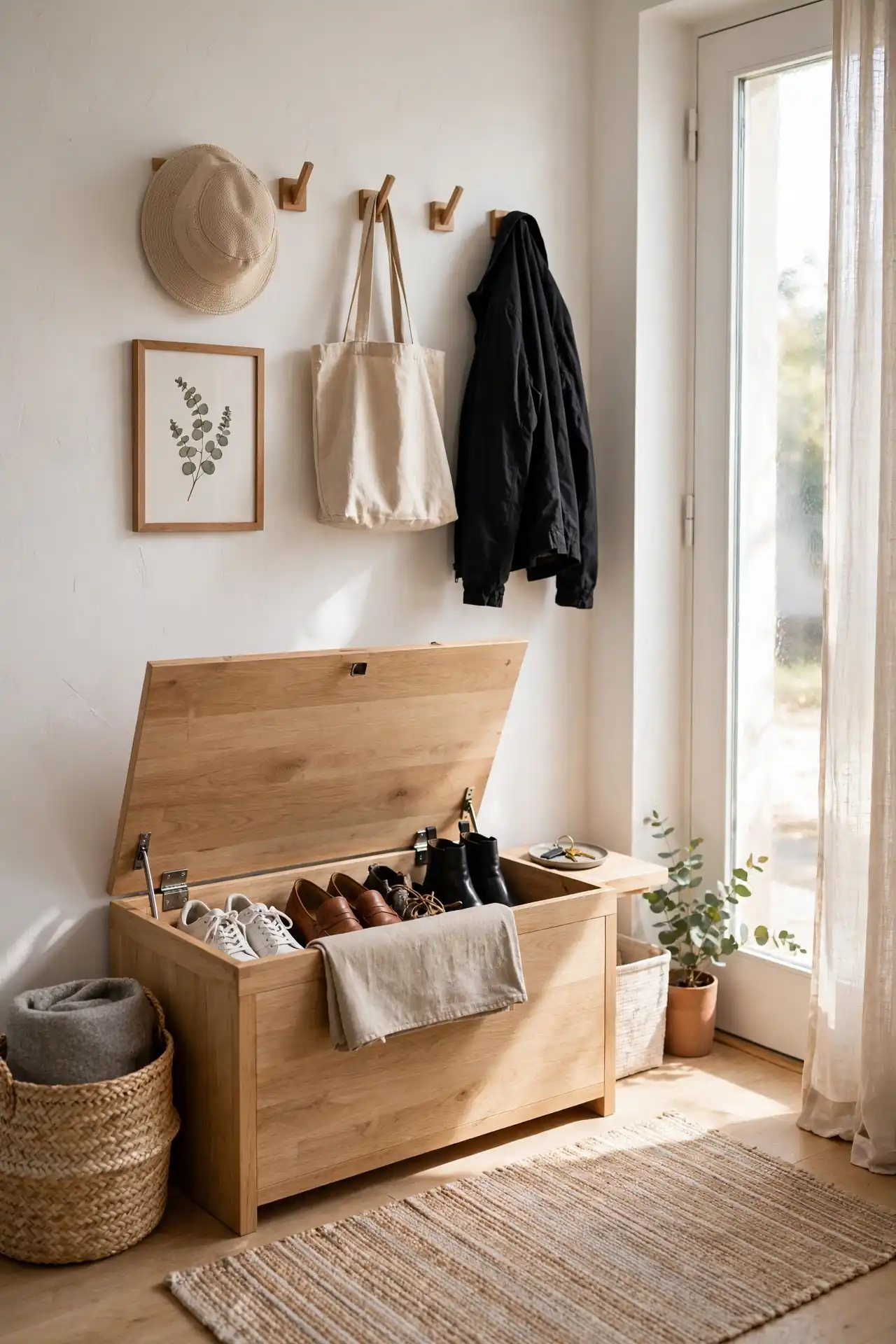
DO: Choose a bench with interior storage for shoes.
DO: Add a cushion on top for comfortable seating.
DO: Size it to fit your entryway without blocking the door.
DON’T: Pick a bench too tall for easy sitting.
DON’T: Overload the interior so the lid will not close.
DON’T: Forget to anchor it if kids climb on it.
A storage bench gives the drop zone seating and hidden shoe storage. The dual purpose is perfect for small entryways. I have seen this work well in many cases where the bench became the hardest-working piece. A washable cushion cover survives muddy shoes and pets. A dark fabric hides the wear that light ones show. A removable cover makes washing simple. A zippered cover stays put better than slip-ons. Outdoor fabric resists fading best. Sunbrella fabric survives years of use.
Mirror and Hooks Combo
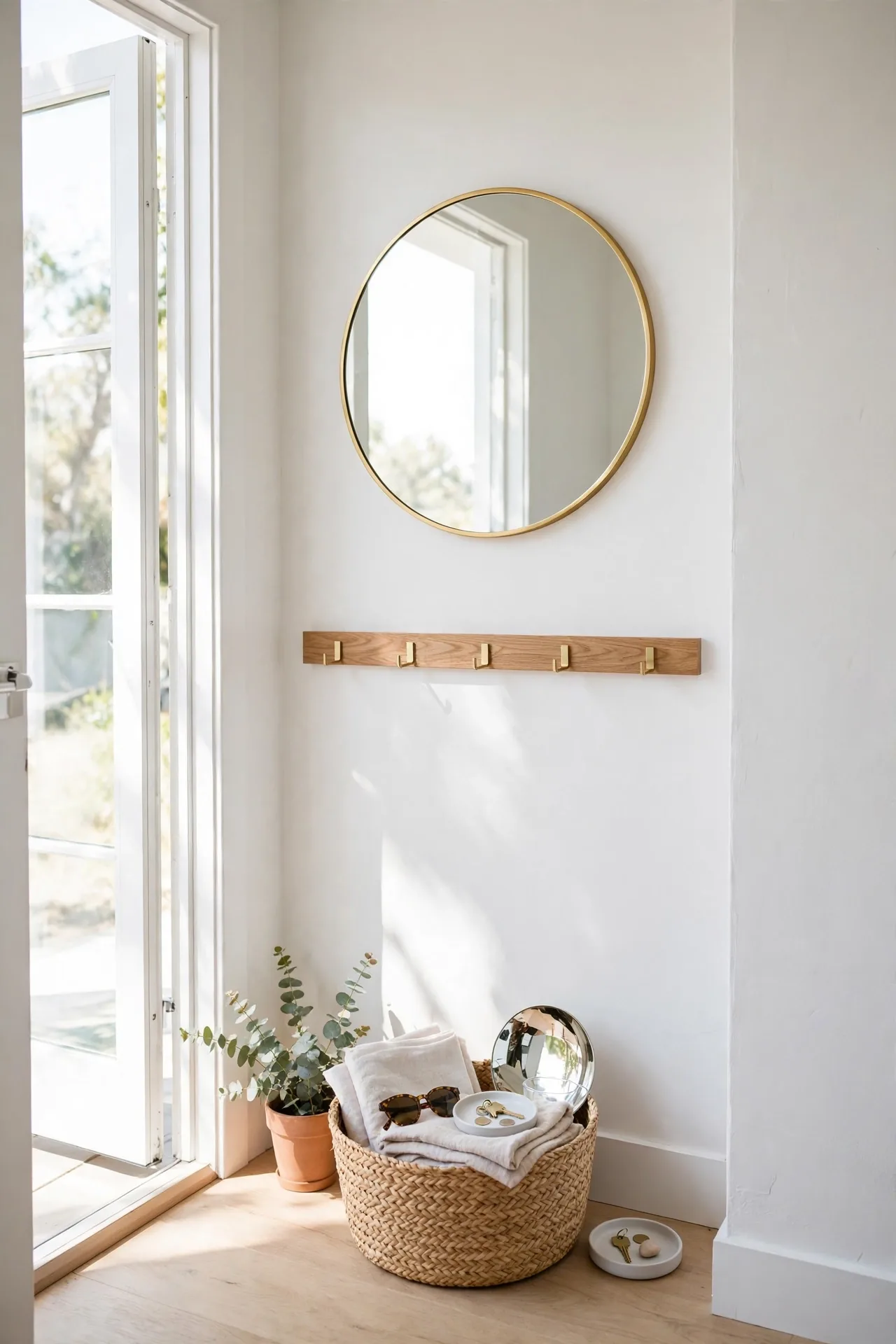
Cost: Low to medium | Time: One hour to mount | Skill Level: Beginner | Best For: Dark entryways needing light
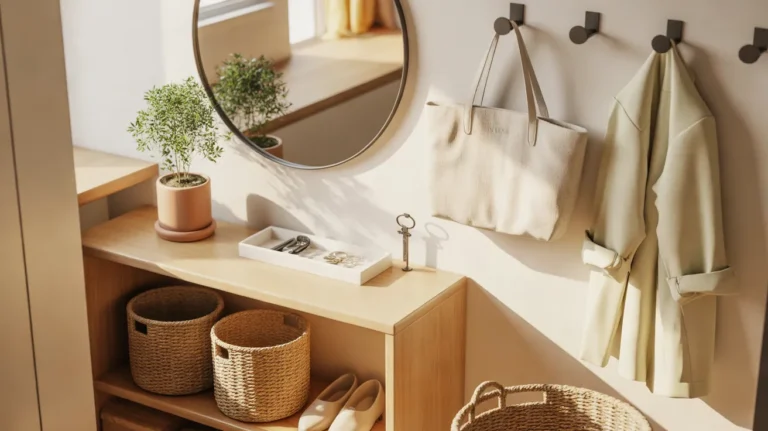
A mirror above the hook rail doubles the light while giving a last look before leaving. The combination is the classic entryway formula. Round mirrors soften the hard lines of hooks. An arched mirror adds elegance while reflecting more light. A beveled edge catches light beautifully. Antique mirrors add character to modern entryways. A thrifted mirror costs very little. A fresh frame updates any old mirror. Spray paint transforms dated frames cheaply.
Floating Shelf Drop

A floating shelf creates a drop zone with zero floor footprint. Mount it at a convenient height near the door. The shelf holds the daily essentials without any furniture.
Keep the styling minimal so the shelf stays functional. A small tray on the shelf corrals tiny items. This is the ultimate small-space drop zone solution. A second shelf below doubles the storage without more wall. Stagger the shelves for a modern asymmetric look. A plant on the lower shelf softens the arrangement. Trailing pothos needs almost no care. A small watering can with a narrow spout helps.
Umbrella Stand Corner
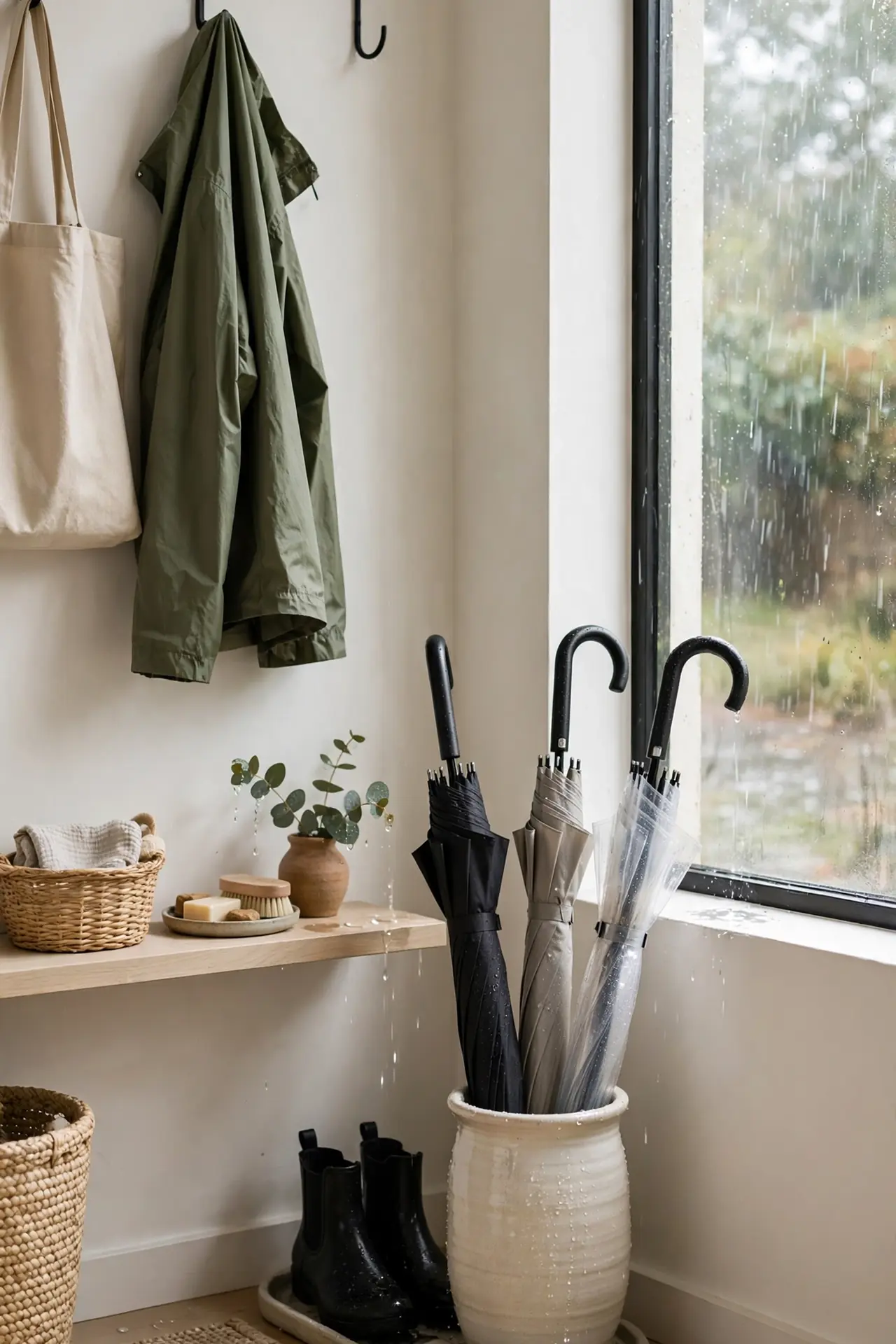
- Choose a stand with a drip tray for wet umbrellas.
- Place it in the corner nearest the door.
- Keep two umbrellas maximum to avoid clutter.
- Empty and dry the tray regularly.
- Pick a stand that suits your decor style.
An umbrella stand contains the wet mess that rainy days bring. I have noticed that having a designated spot prevents puddles everywhere. A microfiber mat under the stand absorbs drips. Shake the mat outside weekly to keep it fresh. A washable mat handles the dirtiest days. Two mats rotate for continuous coverage. A boot tray underneath catches the worst mud. A tray with high sides contains the mess. The stand also adds a decorative touch to the corner.
Charging Station Drawer
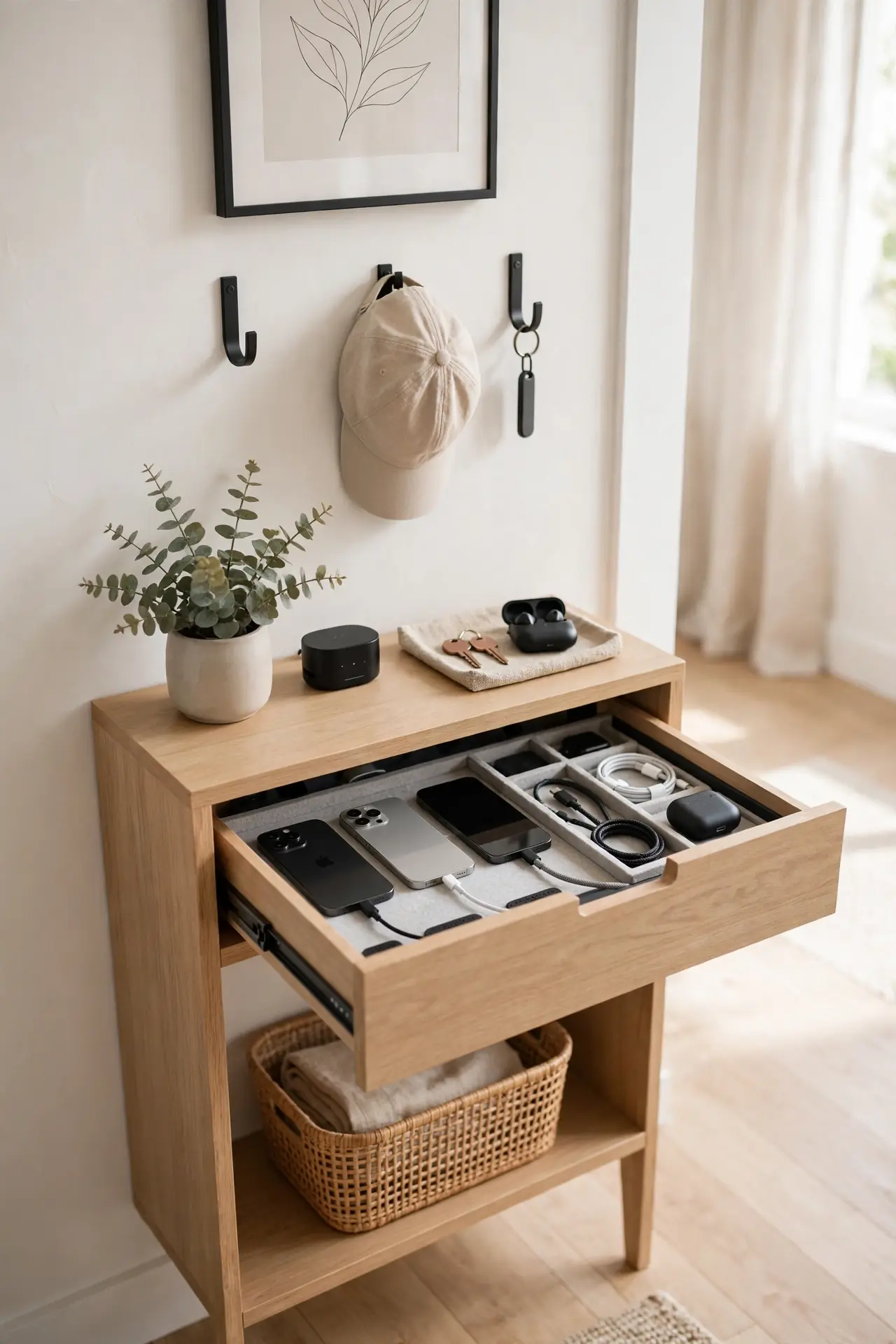
Quick Tip: Dedicate one drawer to device charging with a power strip inside. Drill a small hole in the back for the cord. The drawer hides cable clutter while keeping devices charged.
A charging drawer keeps phones out of sight but powered up. The entryway becomes the family’s device home base. This hidden tech keeps the drop zone looking clean. Label each charger so family members grab the right one. A short cable per device prevents tangling. Cable clips keep cords from sliding behind furniture. Velcro ties bundle excess cable neatly. A cable box hides the power strip completely. Ventilated boxes prevent overheating.
Coat Rack Statement

BEFORE: Coats piled on the bench and floor because wall hooks were full. The small entryway looked perpetually messy.
AFTER: A sculptural coat rack adds vertical storage with artistic flair. The coats become part of the decor rather than clutter.
Freestanding coat racks suit renters who cannot drill into walls. Choose a stable base that will not tip with heavy coats. A weighted base prevents tipping in busy households. Felt pads under the base protect wood floors. Replace pads yearly as they compress. Thick pads protect better than thin ones. Clear pads disappear on glass surfaces. Silicone pads grip better than felt on tile. For more ideas on renter-friendly storage, browse these pink and green dorm room ideas with clever no-drill solutions.
Labelled Family Bins
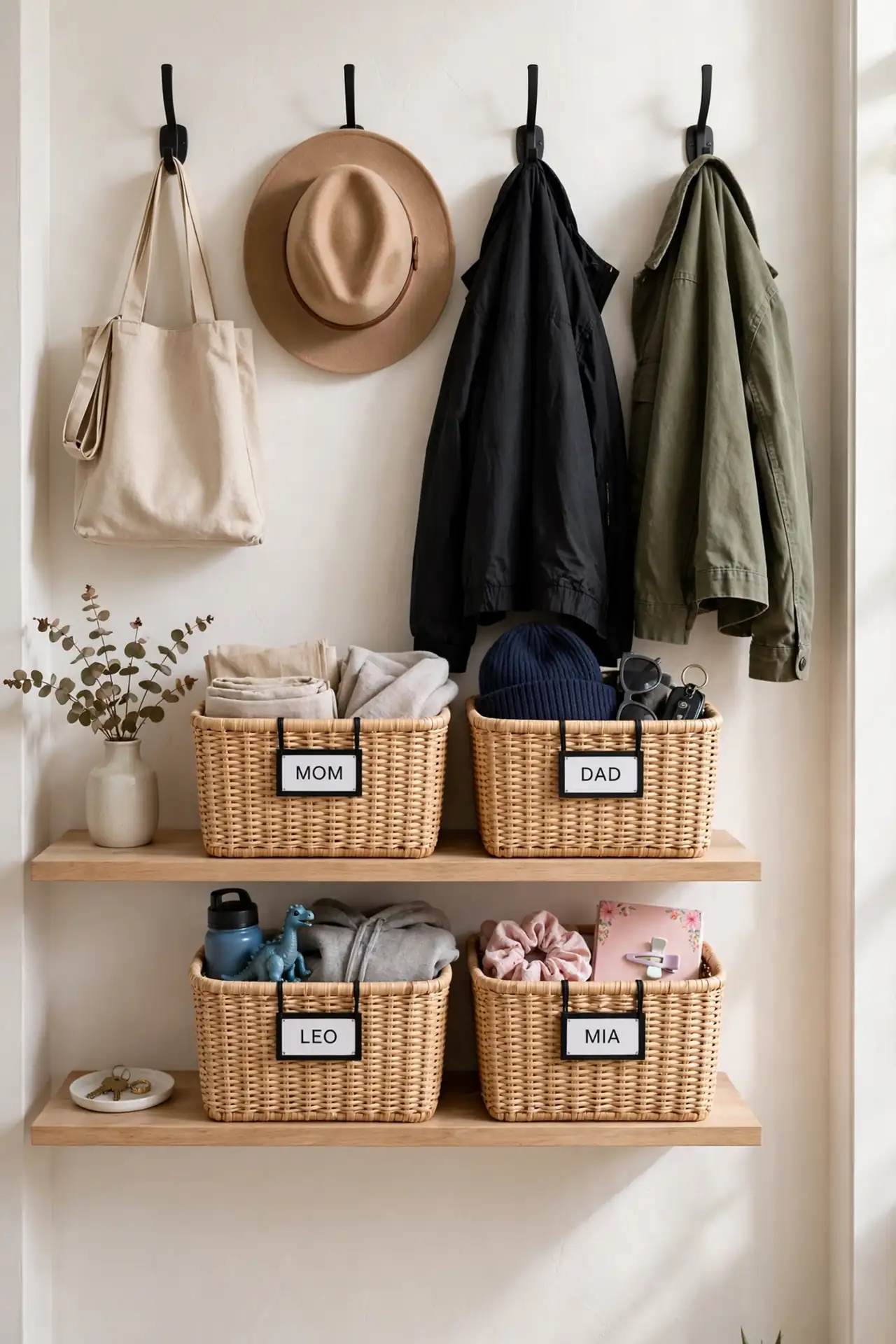
1. Assign one bin or cubby per family member.
2. Label each clearly with names.
3. Keep only daily essentials in the bins.
4. Purge the bins monthly to prevent overflow.
5. Place bins at reachable heights for kids.
Labelled bins give everyone ownership of their drop zone space. The system teaches kids to manage their own things. That is why many experts recommend personal bins for busy families. Clear bins let kids see their things instantly. A picture label helps pre-readers identify their bin. Let kids decorate their own labels for pride. Laminated labels survive daily handling. A label maker creates the neatest tags. Waterproof labels survive entryway humidity.
Over-Door Organizer
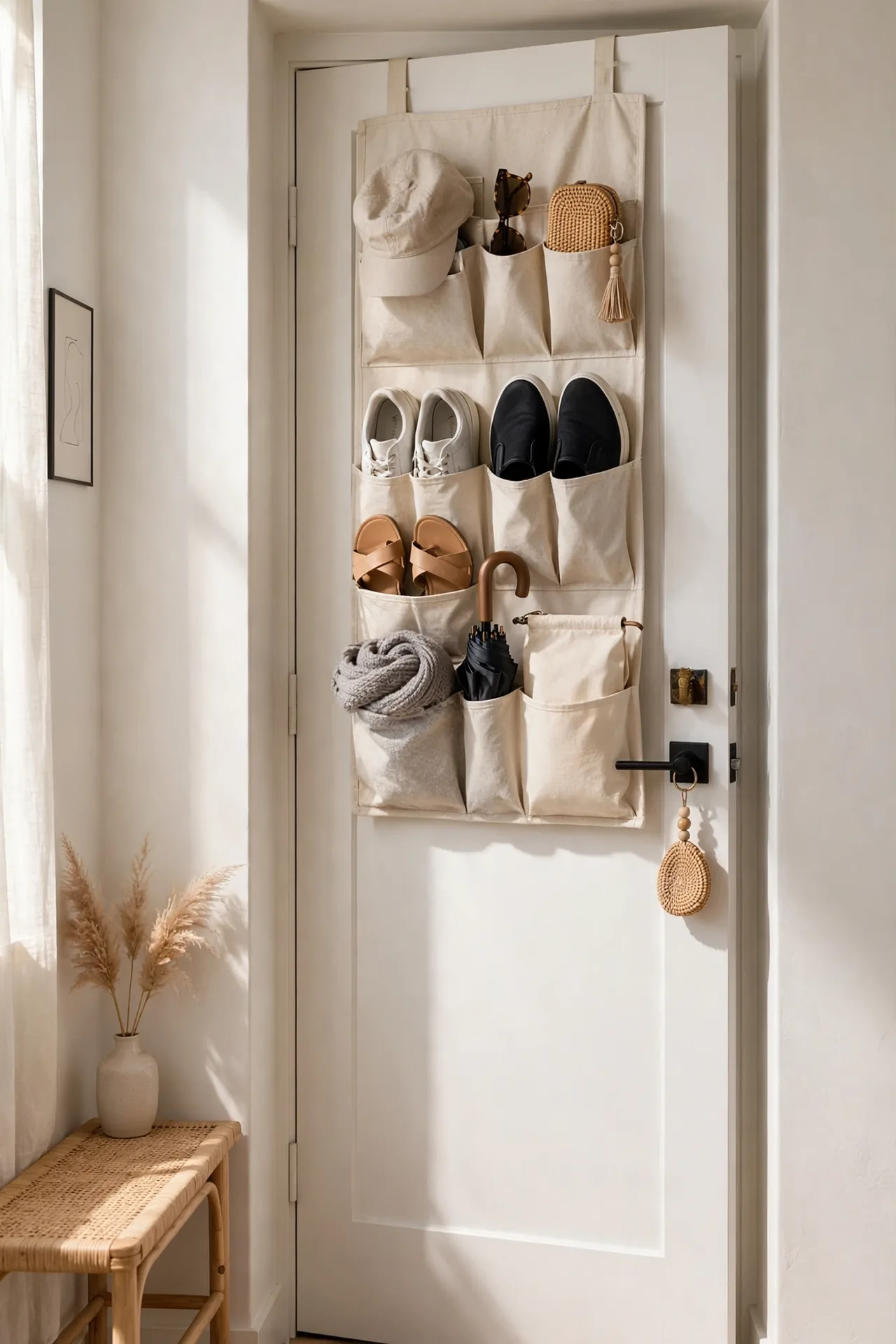
| Organizer Type | Best For | Capacity |
| Fabric pockets | Shoes and accessories | High |
| Wire rack | Mail and keys | Medium |
| Hook strip | Coats and bags | Low |
Over-door organizers claim storage from the door itself. The table above matches organizer types to their best uses. This is the renter’s secret weapon for instant drop zone storage. Adhesive hooks hold lighter items with zero damage. Wait a day after applying for the strongest bond. Clean the surface with alcohol first. Smooth surfaces hold adhesive best. Textured walls need screws for real holding power. Masonry walls need special anchors.
Entryway Rug Anchor
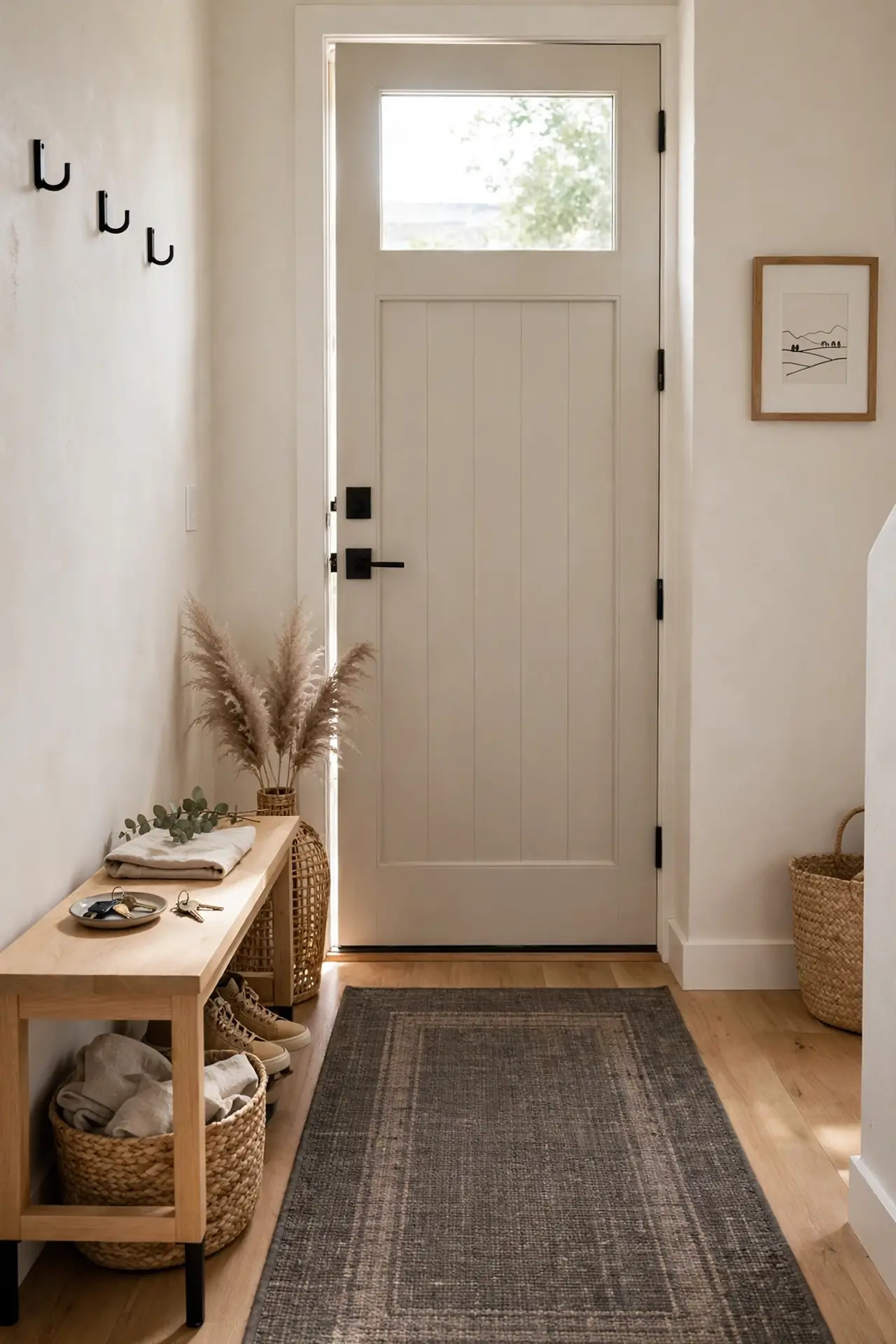
DO: Choose a low-pile rug that doors clear easily.
DO: Size it to define the drop zone area.
DO: Pick washable materials for high traffic.
DON’T: Use a rug so small it looks lost.
DON’T: Choose light colors that show every mark.
DON’T: Skip the rug pad, which prevents slipping.
A rug anchors the drop zone visually and catches dirt practically. The defined area signals where the zone begins and ends. I have seen this work well in many cases where the rug made small entries feel intentional. A dark pattern hides the dirt that light rugs show. A low pile lets the door swing freely above it. A non-slip pad keeps the rug from bunching. Trim the pad slightly smaller than the rug. A felt pad adds cushion under thin rugs. Double-sided tape keeps small rugs in place.
Dog Leash Station
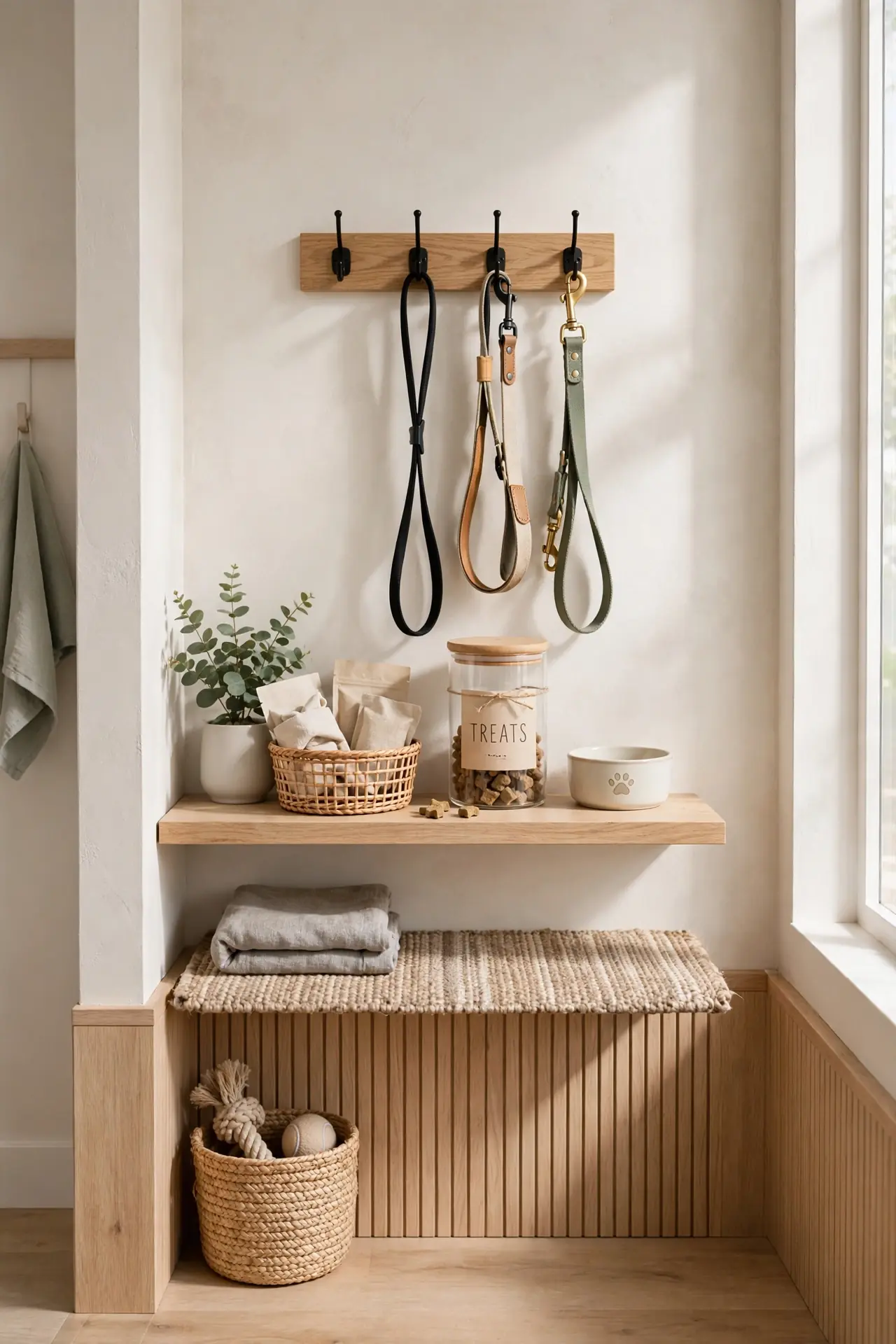
Cost: Low | Time: Thirty minutes to set up | Skill Level: Beginner | Best For: Dog owners
A dedicated leash hook with a treat jar streamlines dog walks. Mount it near the door at your height. The station keeps pet gear from cluttering the human drop zone. A small towel nearby handles muddy paws. A treat jar rewards good behavior at the door. A sealed jar keeps treats fresh longer. Small training treats suit the jar best. Rotate treats to keep dogs interested. Tiny treats prevent overfeeding. A poop bag dispenser on the hook completes the station.
Pegboard Drop Zone

A pegboard drop zone adapts as your needs change. Rearrange hooks for seasons, from winter coats to summer hats. The customizable system grows with your family.
Paint the pegboard to match your walls for a built-in look. Outline hook positions so everything returns home. This flexible system is perfect for evolving households. Extra hooks store easily for future needs. A small level ensures the pegboard hangs straight. French cleats hold pegboards most securely. Two cleats prevent any wobbling. A helper makes hanging large pegboards easier. Pre-drill holes for the cleanest install. Sand the pegboard edges for a finished look.
Small Cabinet Hideaway
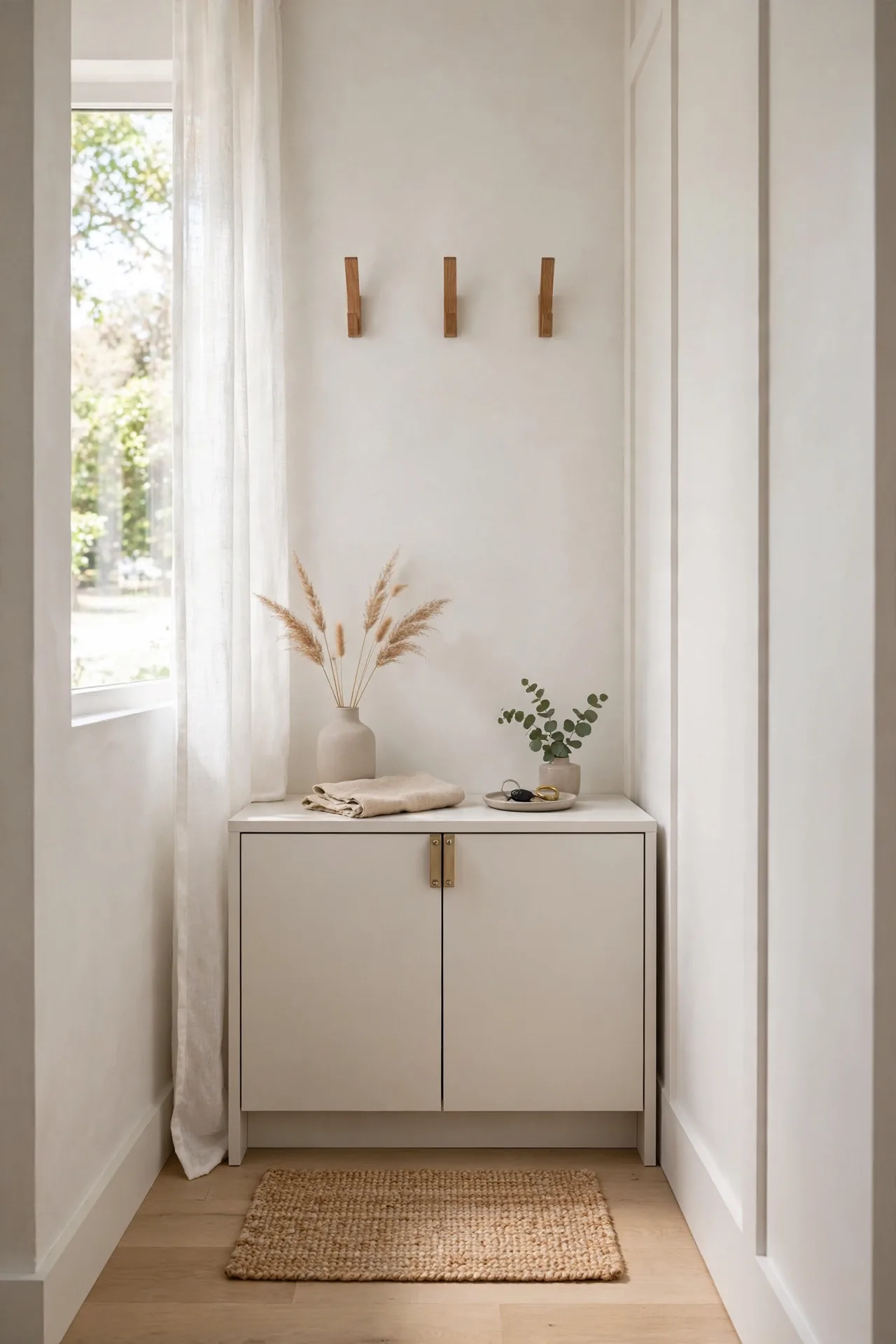
- Choose a narrow cabinet that fits the wall space.
- Use it to hide shoes and less-attractive items.
- Style the top with one decor piece.
- Keep the interior organized with small bins.
- Lock it if toddlers explore dangerously.
A small closed cabinet hides the clutter that open storage cannot. I have noticed that closed storage keeps entryways looking calmest. Soft-close hinges prevent slamming in quiet homes. A magnetic latch keeps curious toddlers out. Childproofing saves countless headaches. A simple hook-and-eye latch works well. Mount latches high enough that toddlers cannot reach. Test the latch before trusting it. The clean lines suit minimalist homes perfectly.
Daily Essentials Tray
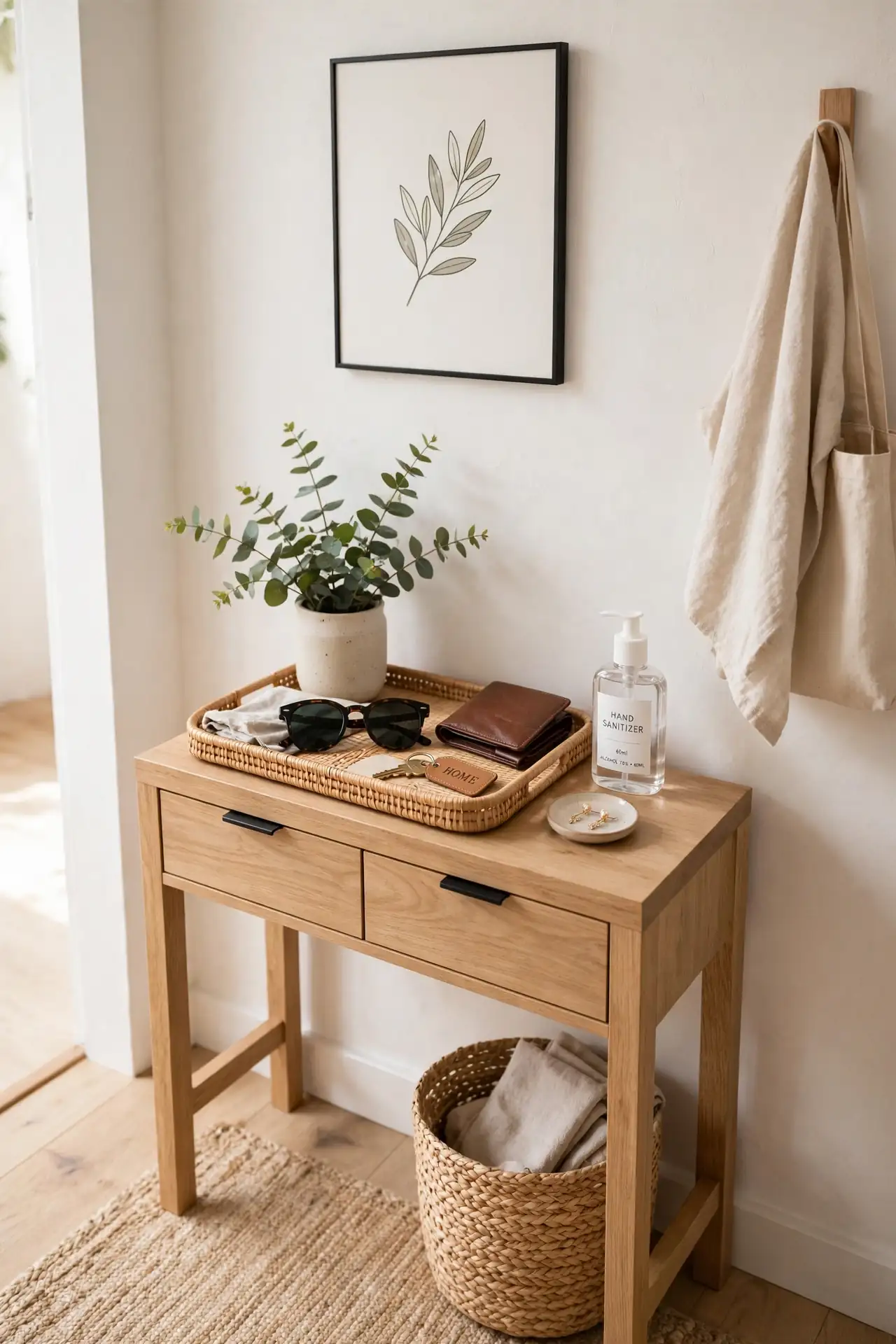
Quick Tip: A small tray on the console holds the daily grab-and-go items. Sunglasses, wallet, and sanitizer live here permanently. The tray keeps essentials visible and portable.
The essentials tray is the launch pad for busy mornings. Everything you need waits in one spot. This simple habit shaves minutes off every departure. A small notepad on the tray catches last-minute reminders. A pen attached with string never walks away. A small calendar tracks family schedules. A dry-erase board handles changing plans. Color-coded markers suit each family member. A weekly family meeting keeps everyone aligned.
Kids Backpack Hooks
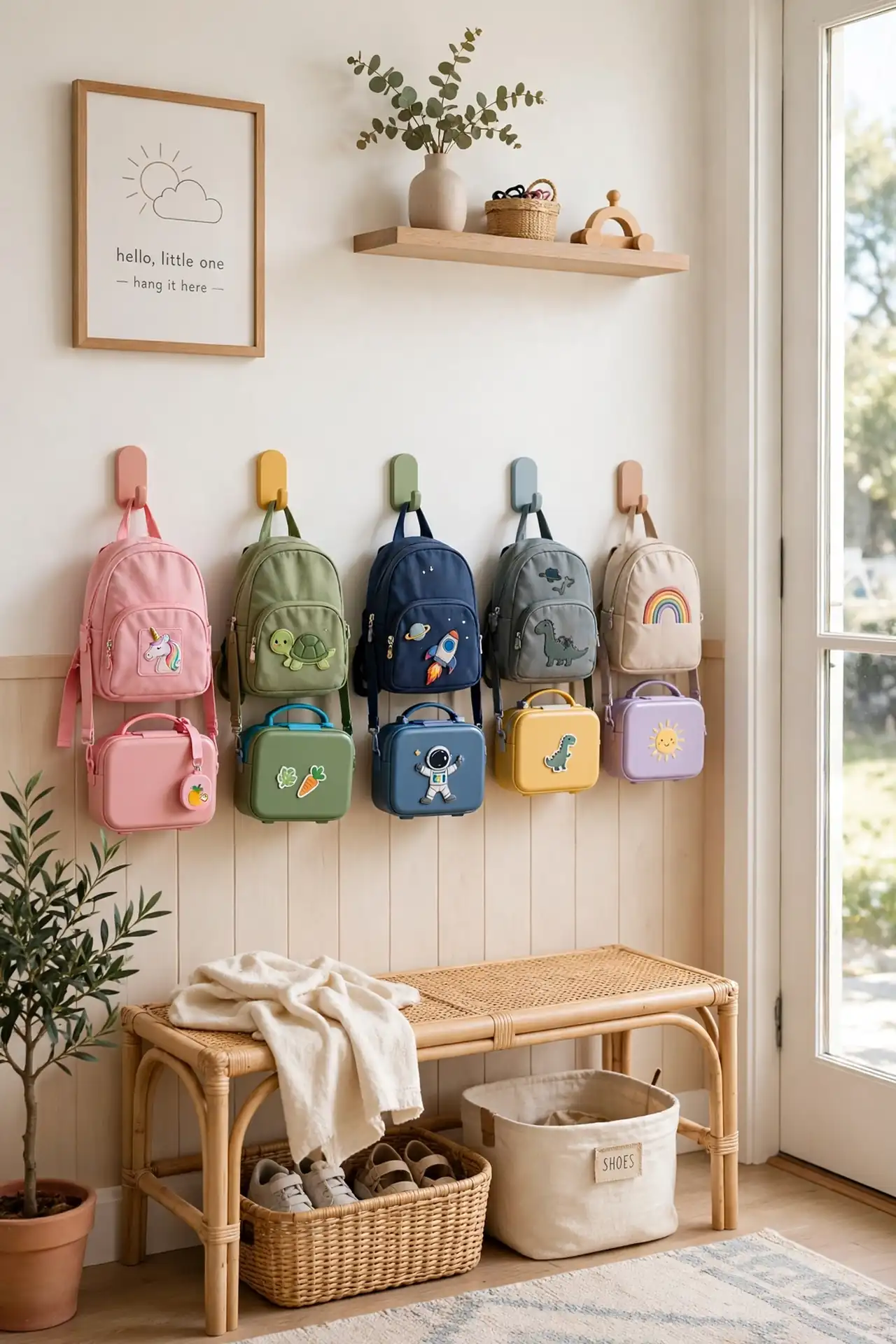
BEFORE: Backpacks landed on the floor in a tangled heap daily. The small entryway became an obstacle course every afternoon.
AFTER: Low hooks at kid height give backpacks a proper home. Children hang their own bags, building independence.
Kid-height hooks teach responsibility while taming the chaos. Color-code hooks per child for the clearest system. The afternoon pile-up disappears completely. A low bench nearby gives kids a spot to sit while changing shoes. A shoe horn on a hook speeds up departures. A long-handled horn suits tall boots. A wall-mounted horn never gets lost. A horn by the bench serves the whole family. Keep a spare horn for guests.
Purse and Tote Hooks
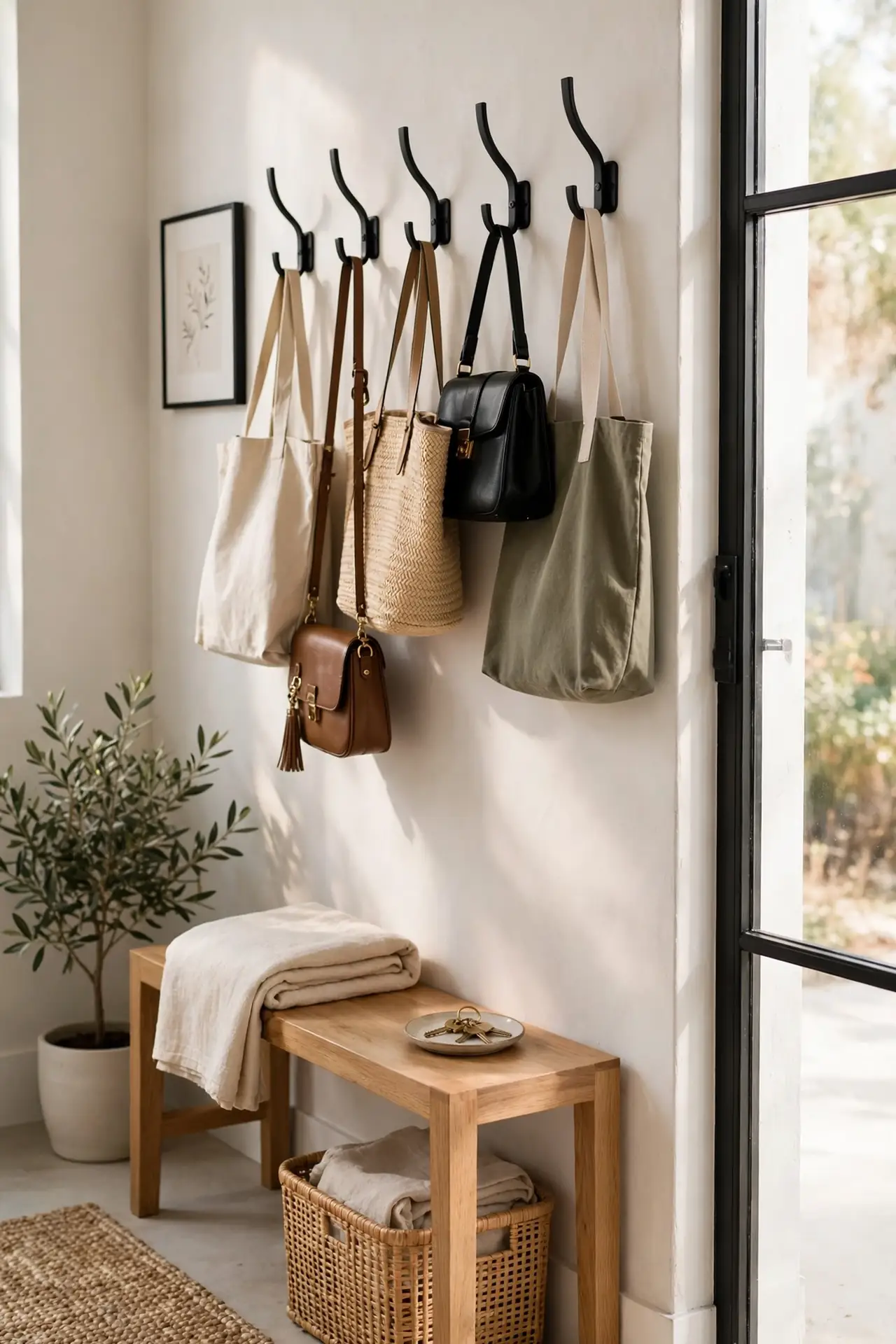
1. Install sturdy hooks rated for heavy bags.
2. Dedicate one hook per frequently used bag.
3. Hang bags by their straps to preserve shape.
4. Rotate seasonal bags to off-season storage.
Dedicated bag hooks prevent purses from landing on every surface. The bags stay accessible yet tidy. That is why many experts recommend giving bags a proper home. Stuff structured bags to keep their shape on hooks. Rotate bags seasonally to match the weather. A canvas tote handles groceries and library runs. A foldable tote stores flat when empty. A sturdy tote handles heavy grocery loads. Machine-washable totes stay fresh.
Conclusion
A small entryway can handle big daily chaos with the right drop zone system. These small entryway drop zone ideas prove that hooks, trays, and smart furniture can tame the busiest foyers. Start with the messiest category, give everything a home, and enjoy calm departures. I have seen how small changes like these can completely shift the way a space feels. Save your favorites on Pinterest, set up one drop zone station this weekend, and share your clutter-free transformation with someone drowning in entryway chaos.
One Comment