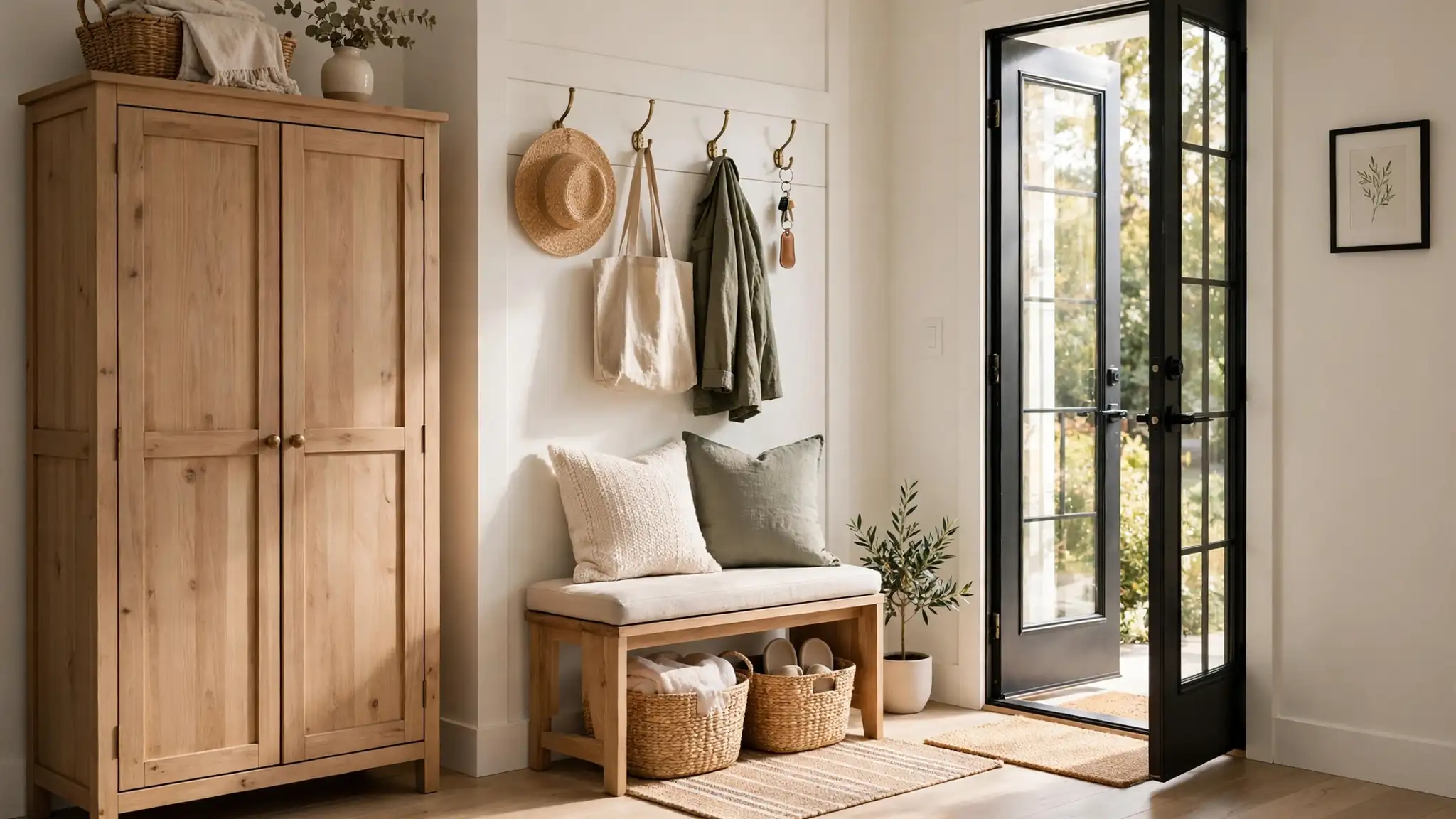
24 Small Entryway Ideas Without a Closet to Maximize Space
No coat closet does not mean no entryway storage. These small entryway ideas without a closet create functional foyers using freestanding furniture, wall systems, and clever storage that needs zero built-in closets. I have seen tiny entryways become incredibly organized without a single closet door. For a smart drop zone system to pair with these ideas, see these small entryway drop zone ideas that beat daily clutter.
Each idea below maximizes storage in closet-free entryways, from armoires to wall-mounted systems. You will find renter-friendly options and small-space solutions for every budget. Start with your biggest storage gap and build from there.
Freestanding Wardrobe Armoire

A freestanding armoire acts as the closet you never had, with hanging space and shelves behind closed doors. Place it against the longest entryway wall. The closed doors keep everything looking tidy.
Choose a slim armoire no deeper than twenty inches for tight foyers. Secondhand armoires offer incredible value with solid wood construction. A fresh coat of paint unifies mismatched secondhand finds. Remove the doors for open-shelf styling if you prefer. Open armoires display pretty dishes beautifully. A curtain inside hides messy shelves. Tension rods hold curtains with zero damage. A cafe curtain covers just the messy middle. A valance hides just the top clutter. A cafe clip set hangs curtains in minutes. This single piece replaces an entire closet.
Wall-Mounted Coat Hooks
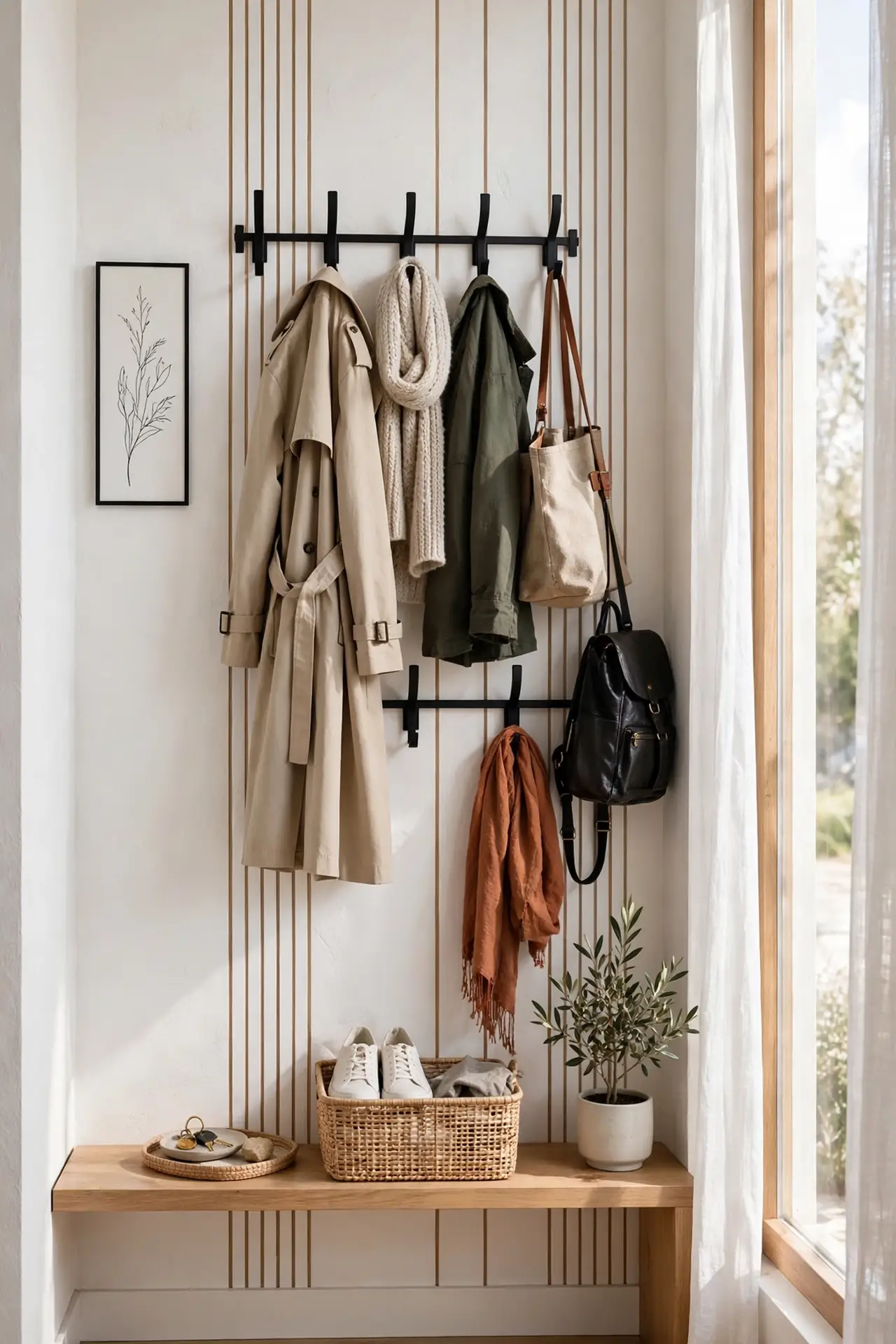
- Install a sturdy rail or individual hooks at reachable heights.
- Assign two hooks per family member minimum.
- Choose hooks rated for heavy winter coats.
- Mount into studs for the strongest hold.
- Leave breathing room between hooks for easy access.
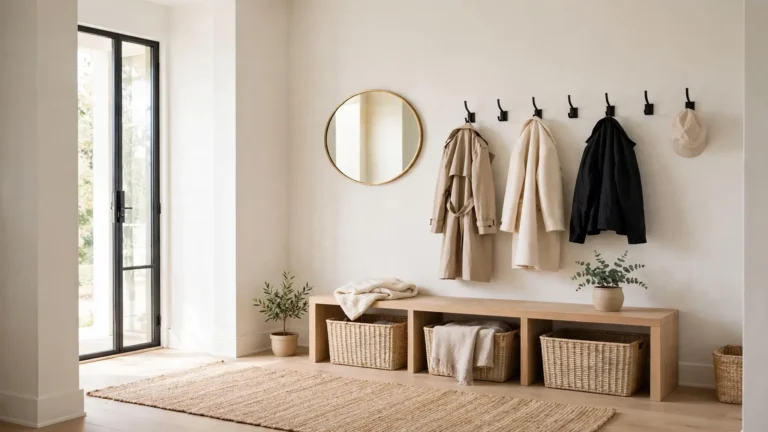
Wall hooks are the fastest closet replacement for any entryway. I have noticed that hooks handle daily coats better than closets ever did. The vertical storage costs almost nothing. A double row of hooks doubles capacity in the same footprint. Stagger the rows so coats never overlap. Heavy coats need the sturdiest hooks. Double hooks share heavy loads better. Cast iron hooks hold the most weight. Pre-drill holes for the cleanest install. A sharp bit prevents wood splitting. Tape over the spot prevents chipping.
Open Clothing Rack

Quick Tip: An open clothing rack gives hanging storage with boutique style. Keep only current-season coats on it for a tidy boutique look. The rack rolls away when you need the space.
Choose a rack with a lower shelf for shoes. Metal racks suit industrial spaces while wooden ones feel warmer. This airy option never makes small entryways feel cramped. A canvas garment bag protects special coats from dust. Breathable bags prevent musty smells. Cedar rings in the closet add fresh scent. A small sachet lasts for months. Replace sachets when the scent fades. A quarterly refresh keeps closets smelling great. Mark refresh dates on the calendar. A phone reminder works even better.
Slim Shoe Cabinet

BEFORE: Shoes piled by the door created a tripping hazard daily. The closet-free entryway had no hidden shoe storage.
AFTER: A slim tilt-out cabinet hides twelve pairs behind sleek doors. The narrow profile hugs the wall beautifully.
Tilt-out cabinets store shoes in a fraction of the depth. Place it near the door for the easiest habit. This is the shoe solution closet-free homes need. A second cabinet stacks for larger shoe collections. Wall-anchoring keeps stacked cabinets safe. Anti-tip straps are essential with kids. Furniture straps install in minutes. Two straps per tall piece is safest. Hide straps behind furniture for clean looks. White straps disappear on white walls. Clear straps suit any wall color.
Over-Door Storage
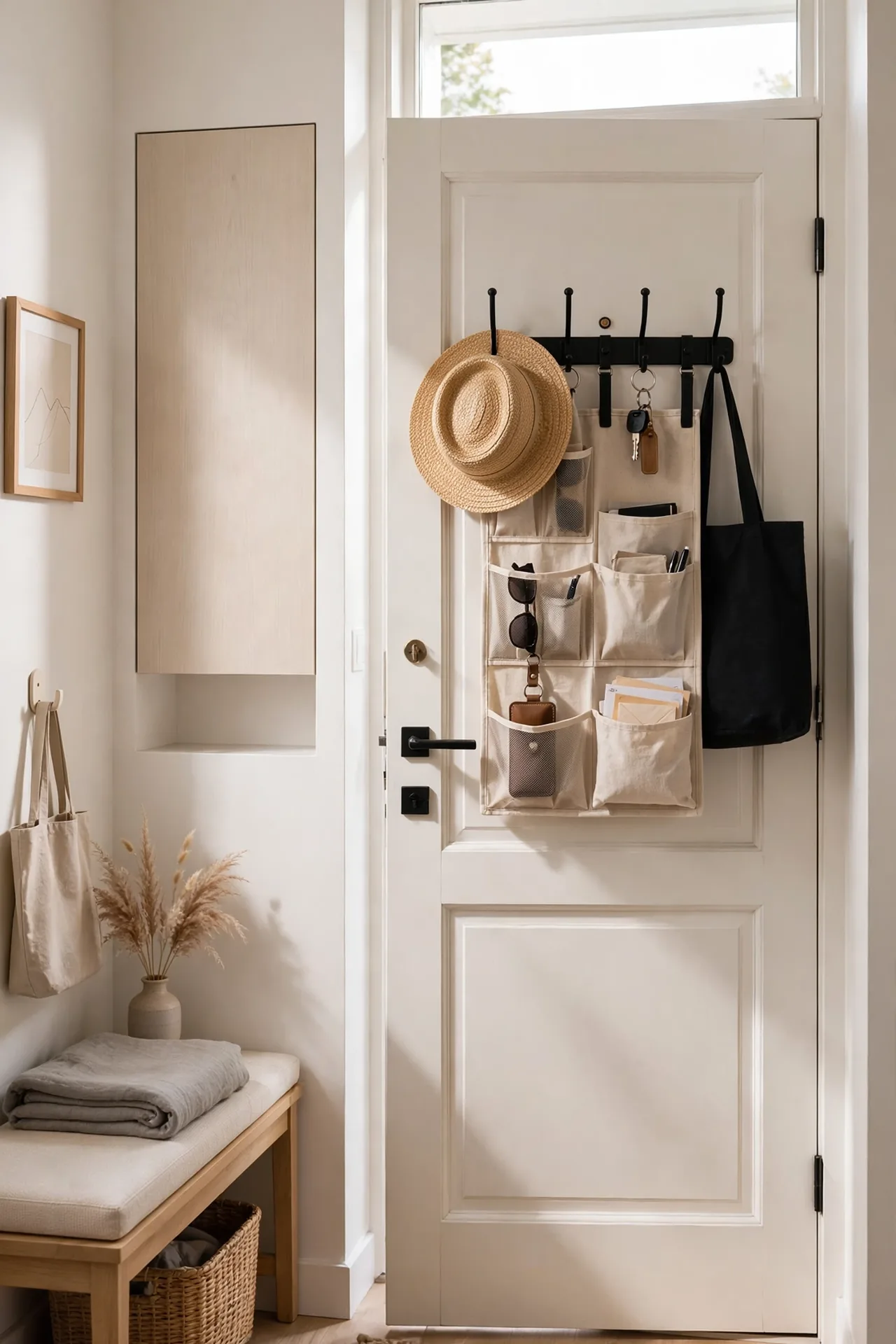
1. Hang an over-door hook rack for coats and bags.
2. Add a fabric organizer for small accessories.
3. Use adhesive hooks on the door’s interior.
4. Keep the door’s swing clear of furniture.
5. Choose damage-free options for rentals.
Over-door storage claims space from the door itself. The storage moves with you when you relocate. I have seen this work well in many cases where renters gained instant closets. Foam door protectors prevent scratches on rental doors. Felt pads silence rattling organizers. Tighten screws yearly as doors settle. A drop of wood glue fixes wobbly pegs. Clamp overnight for the strongest bond. Wipe excess glue before it dries. A damp rag cleans glue easily. Warm water softens dried glue.
Entryway Bench Cubbies
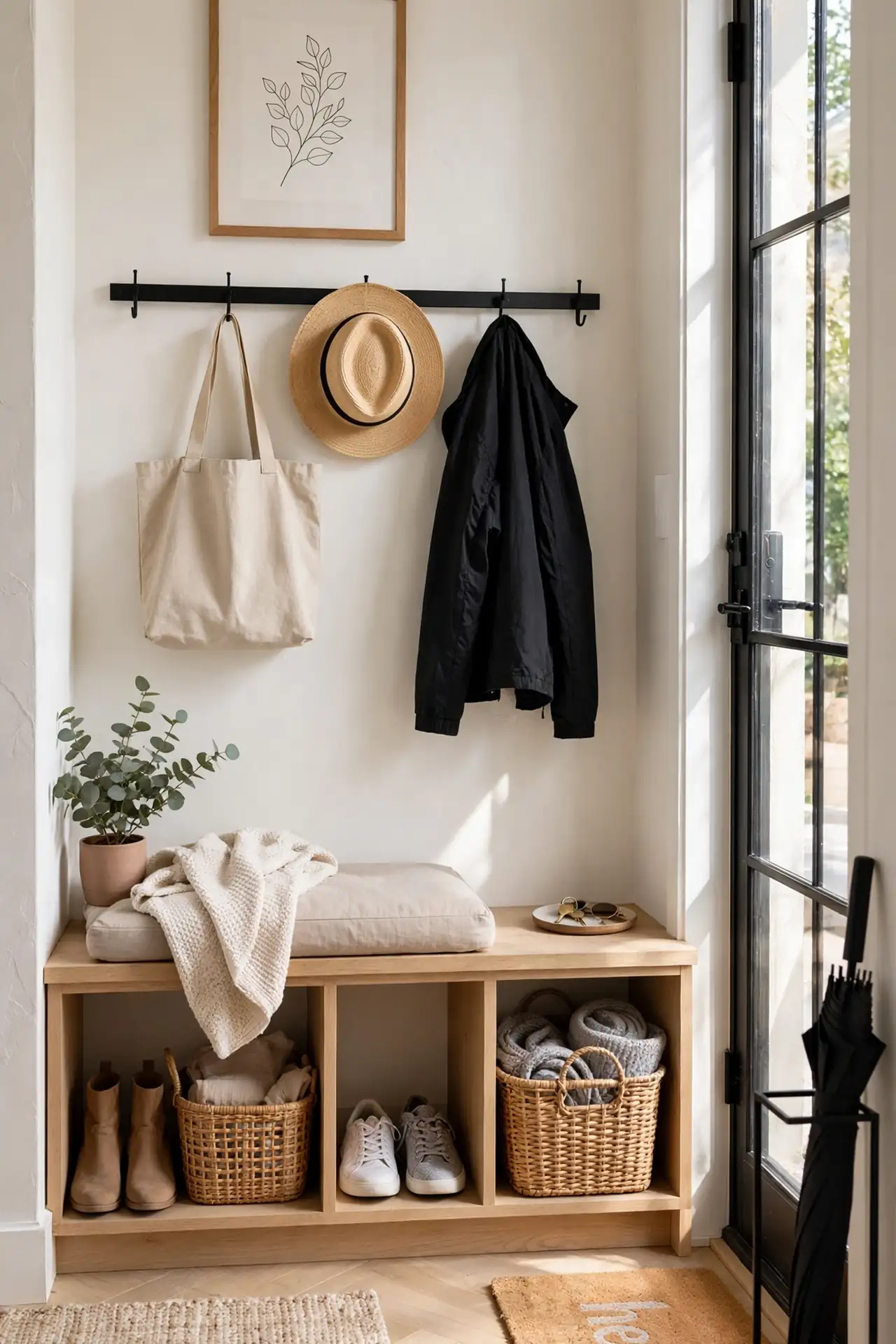
| Cubby Use | Best For | Tip |
| Open cubbies | Daily shoes | Limit two pairs |
| Basket cubbies | Accessories | Label each |
| Top surface | Keys and mail | Keep clear |
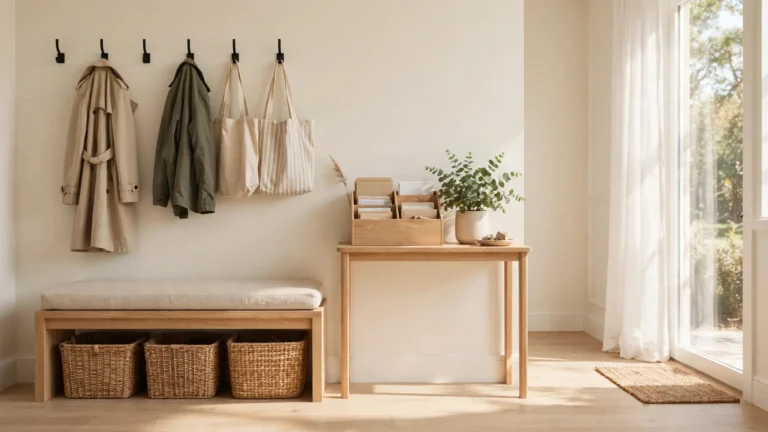
A bench with cubbies combines seating and storage in one footprint. The table above organizes cubby uses by category. This hardworking piece suits the busiest closet-free entryways. A cushion on top adds comfortable seating for shoe changes. A washable cover survives muddy shoes. Dark fabrics hide wear best. Outdoor fabric resists fading. Sunbrella fabric survives years. Machine-washable covers stay fresh. Two covers rotate for continuous use. A spare cover saves laundry day stress.
Floating Shelves Display

DO: Mount shelves at varied heights for visual interest.
DO: Use baskets on shelves to hide small items.
DO: Anchor shelves into studs for heavy loads.
DON’T: Overload shelves so they sag.
DON’T: Style shelves so full they lose function.
DON’T: Mount shelves where the door swings.
Floating shelves add storage with zero floor footprint. The open display keeps the entryway feeling airy. I have seen this work well in many cases where shelves replaced entire closets. A small picture light above makes shelves glow. Battery lights install with zero wiring. Warm 2700K bulbs flatter displays best. Dimmable lights shift moods easily. A remote control saves trips to the switch. Smart plugs schedule lights automatically. Voice control adds hands-free convenience. A smart speaker doubles as a clock.
Rolling Garment Rack
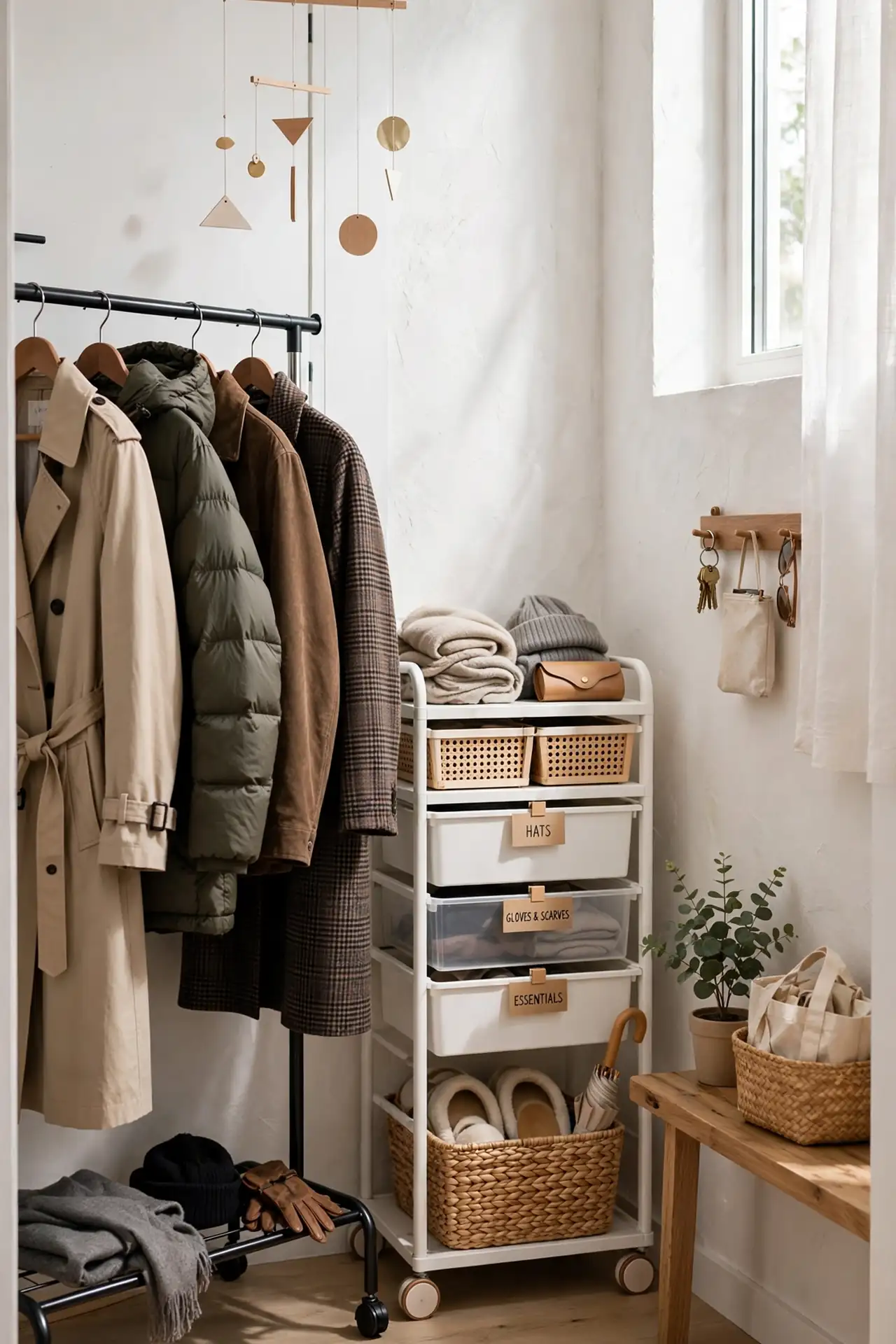
Cost: Low | Time: Fifteen minutes to assemble | Skill Level: Beginner | Best For: Renters and tiny spaces
A rolling rack provides hanging space that moves wherever needed. Roll it to a closet in another room when guests arrive. The portability is unmatched by any fixed storage. Locking casters keep the rack steady when parked. Rubber wheels protect wood floors. Large wheels roll over rugs easily. Two locking wheels keep it parked. A wheel stop works on sloped floors. Rubber stoppers grip best. Felt stoppers suit delicate floors. Check stoppers yearly for wear. A monthly check catches problems early. A quick wipe keeps stoppers gripping well.
Vintage Trunk Storage

A vintage trunk hides out-of-season gear with old-world charm. Place it against the wall as a decorative bench. The interior swallows bulky items beautifully.
Thrift stores hide trunks for very little money. Add a cushion on top for bonus seating. This piece stores while it decorates. Cedar lining keeps stored woolens moth-free. Cedar blocks refresh with a light sanding. Lavender sachets add pleasant scent too. Dried lavender lasts for years. A lavender bundle scents drawers naturally. Tie bundles with simple twine. Hang bundles upside down to dry. A dark closet preserves lavender color.
Peg Rail System
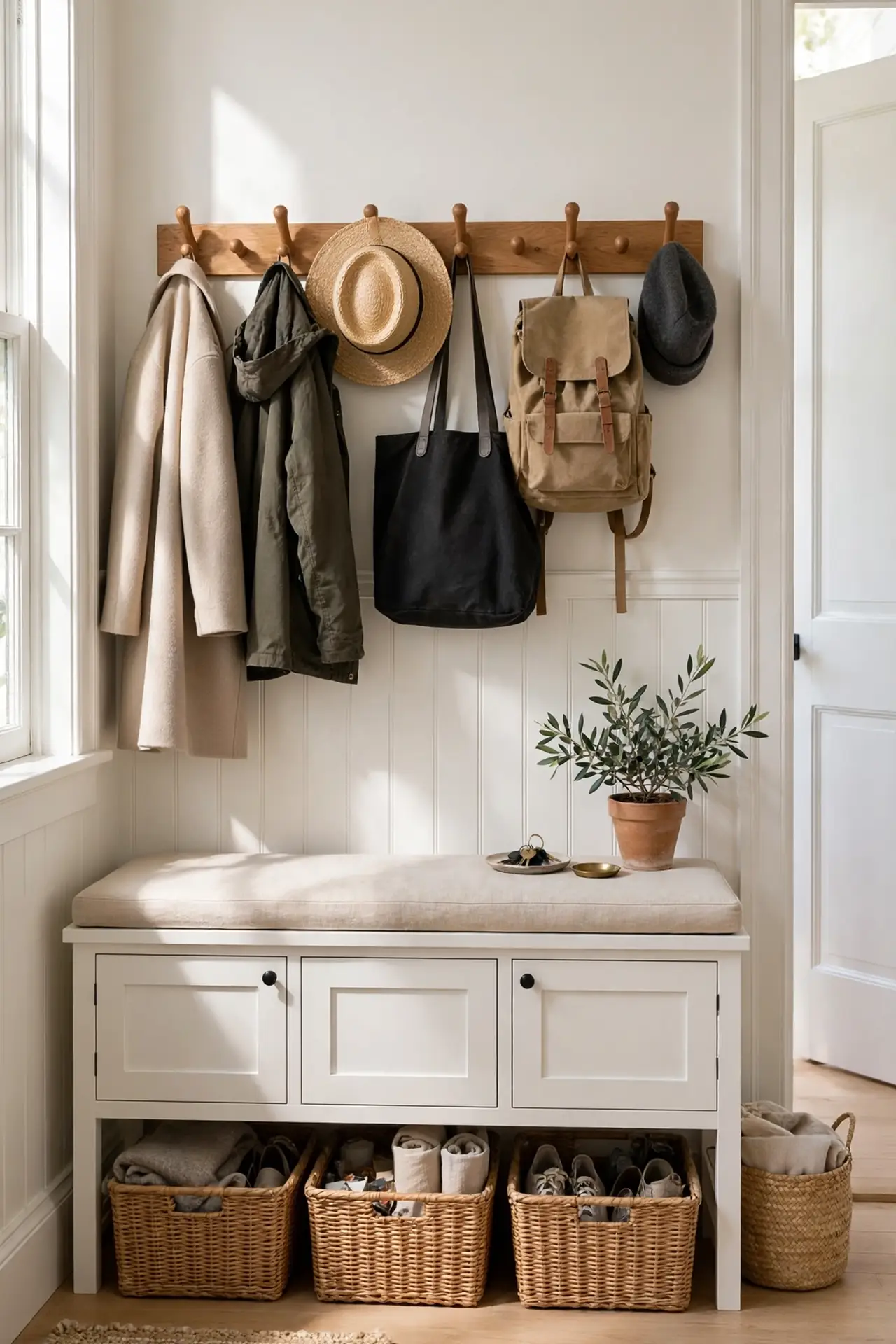
- Mount a Shaker-style peg rail along the wall.
- Space pegs generously for bulky winter coats.
- Hang bags on lower pegs for easy access.
- Paint the rail to match your trim.
- Add a shelf above for hats and extras.
A peg rail brings timeless Shaker simplicity to closet-free entryways. I have noticed that pegs hold more than hooks of the same size. The classic look suits any decor style. Brass pegs add warmth to white-painted rails. Wooden pegs suit farmhouse styles best. Metal pegs suit industrial spaces. Black pegs suit modern entryways. White pegs disappear on white walls. Contrasting pegs become decorative features. A peg rail doubles as wall art. Arrange pegs asymmetrically for modern style.
Narrow Bookcase Storage
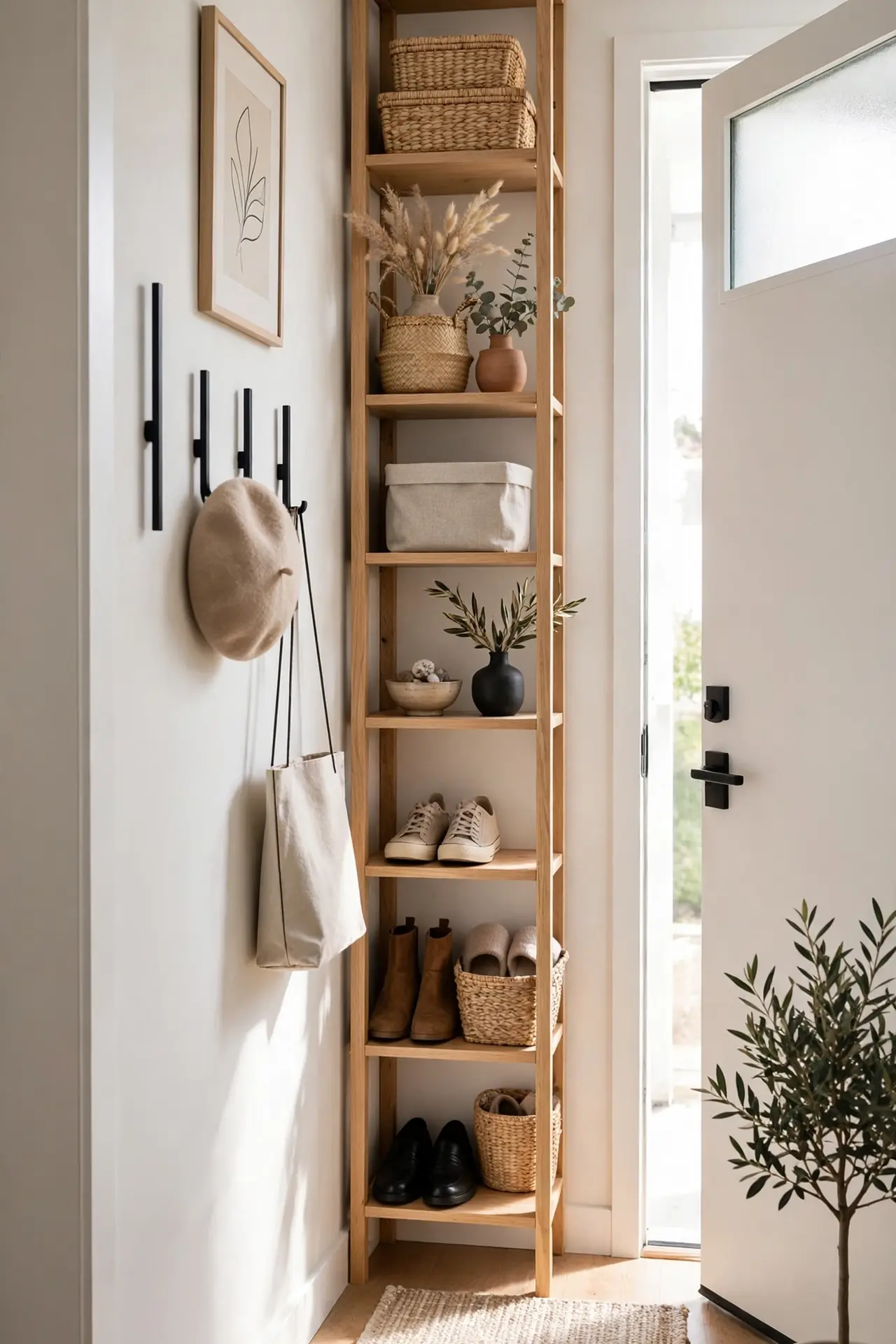
Quick Tip: A narrow bookcase becomes vertical closet storage. Fill shelves with labeled baskets for a tidy look. The tall profile uses wall height that hooks cannot.
Choose a bookcase no wider than eighteen inches for tight spaces. Anchor it firmly to prevent tipping. This is the most storage per square foot you can buy. A bookcase with doors hides the messiest shelves. Glass doors display pretty items while containing dust. Frosted glass hides clutter softly. Adhesive film creates frosted effects cheaply. Static-cling film removes cleanly. A squeegee prevents bubbles during application. Soapy water allows repositioning. A credit card smooths film effectively.
Coat Tree Corner
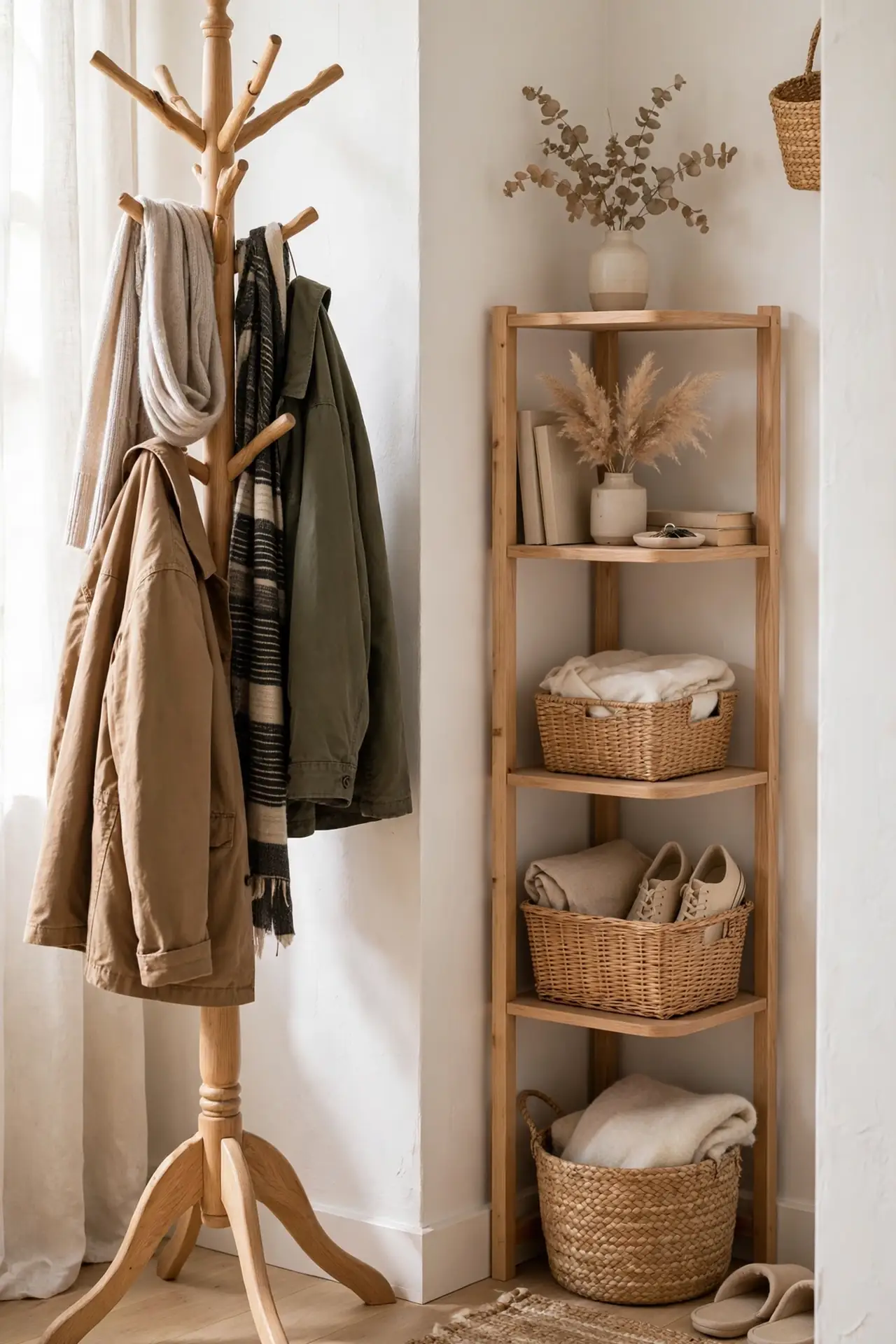
BEFORE: The corner sat empty while coats covered every chair. The closet-free entryway wasted its best storage spot.
AFTER: A coat tree claims the corner with vertical hanging space. The previously dead corner becomes the hardest-working spot.
Coat trees need zero installation and move easily. Choose a stable design with a wide base. A heavy base prevents tipping with winter coats. Felt pads under the base protect floors. Replace pads yearly as they compress. Thick pads protect better. Clear pads disappear on glass. Silicone pads grip tile best. Replace worn pads promptly. Worn pads scratch instead of protect. For more ideas on freestanding storage, browse these pink and green dorm room ideas with clever furniture solutions.
Basket Wall System
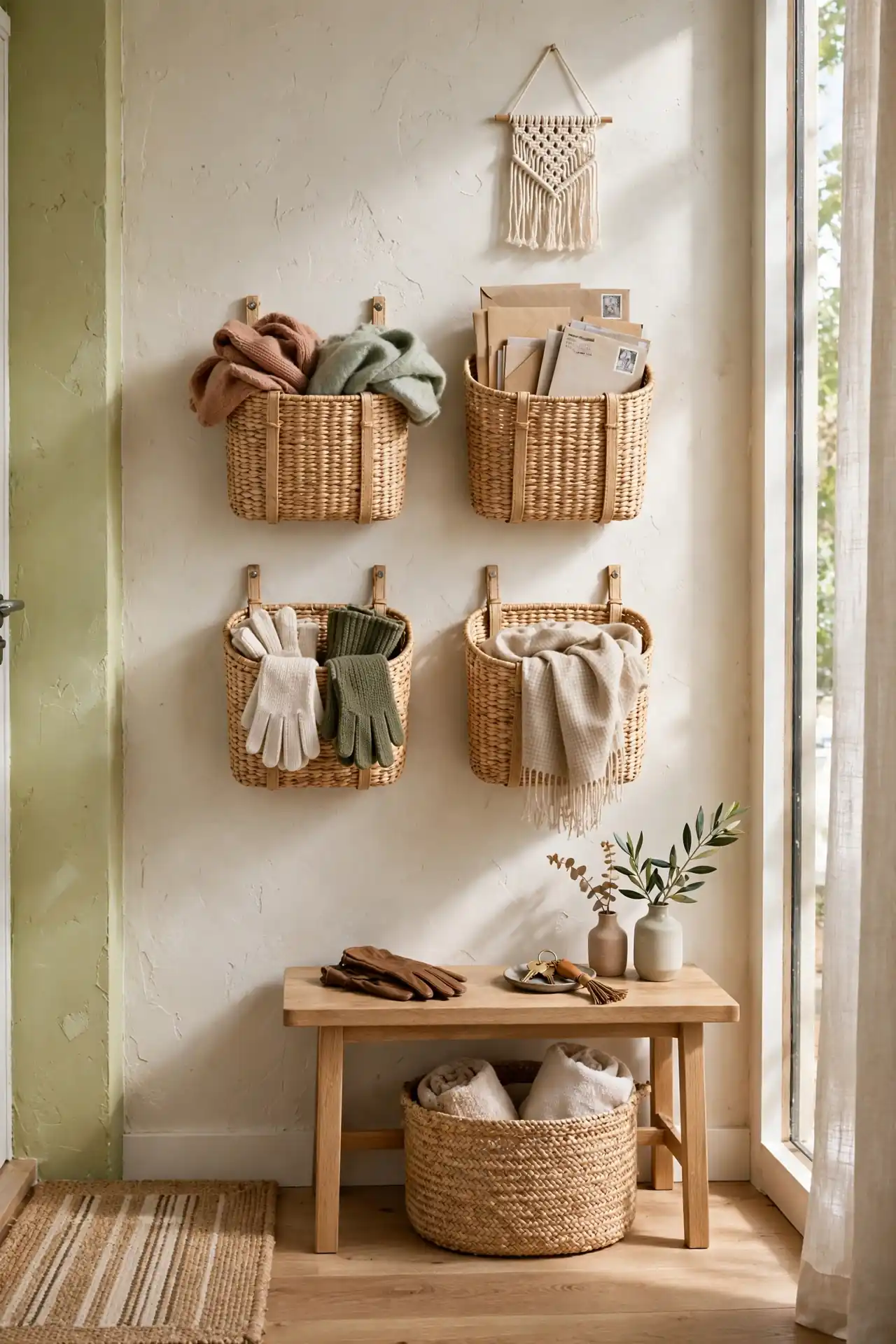
1. Mount sturdy hooks or a rail on the wall.
2. Hang handled baskets from each hook.
3. Assign one basket per category or person.
4. Label baskets for the clearest system.
5. Empty and reset baskets weekly.
Hanging baskets create flexible wall storage with natural texture. The baskets lift off for easy carrying. That is why many experts recommend baskets for entryway categories. Seagrass baskets hide clutter with natural texture. Lidded baskets conceal the messiest categories. Stack baskets no more than two high. Heavier baskets belong on the bottom. A basket liner protects contents. Washable liners handle muddy gear. Dark liners hide dirt best. A fitted liner stays in place.
Mirror Cabinet Combo

| Cabinet Zone | Stores | Tip |
| Top shelf | Sunglasses, sunscreen | Small tray |
| Middle | Keys, wallets | Daily items |
| Bottom | Dog gear, bags | Bulky items |
A mirrored cabinet hides storage behind a light-boosting mirror. The table above organizes the interior by zone. This dual-purpose piece is perfect for tiny closet-free foyers. A magnetic latch keeps the cabinet closed. Soft-close hinges prevent slamming. A touch latch opens doors with a push. Magnetic catches are inexpensive. Adjustable catches align doors perfectly. A small adjustment fixes most gaps. A screwdriver set handles most tweaks. A multi-bit driver covers every screw.
Ladder Shelf Lean
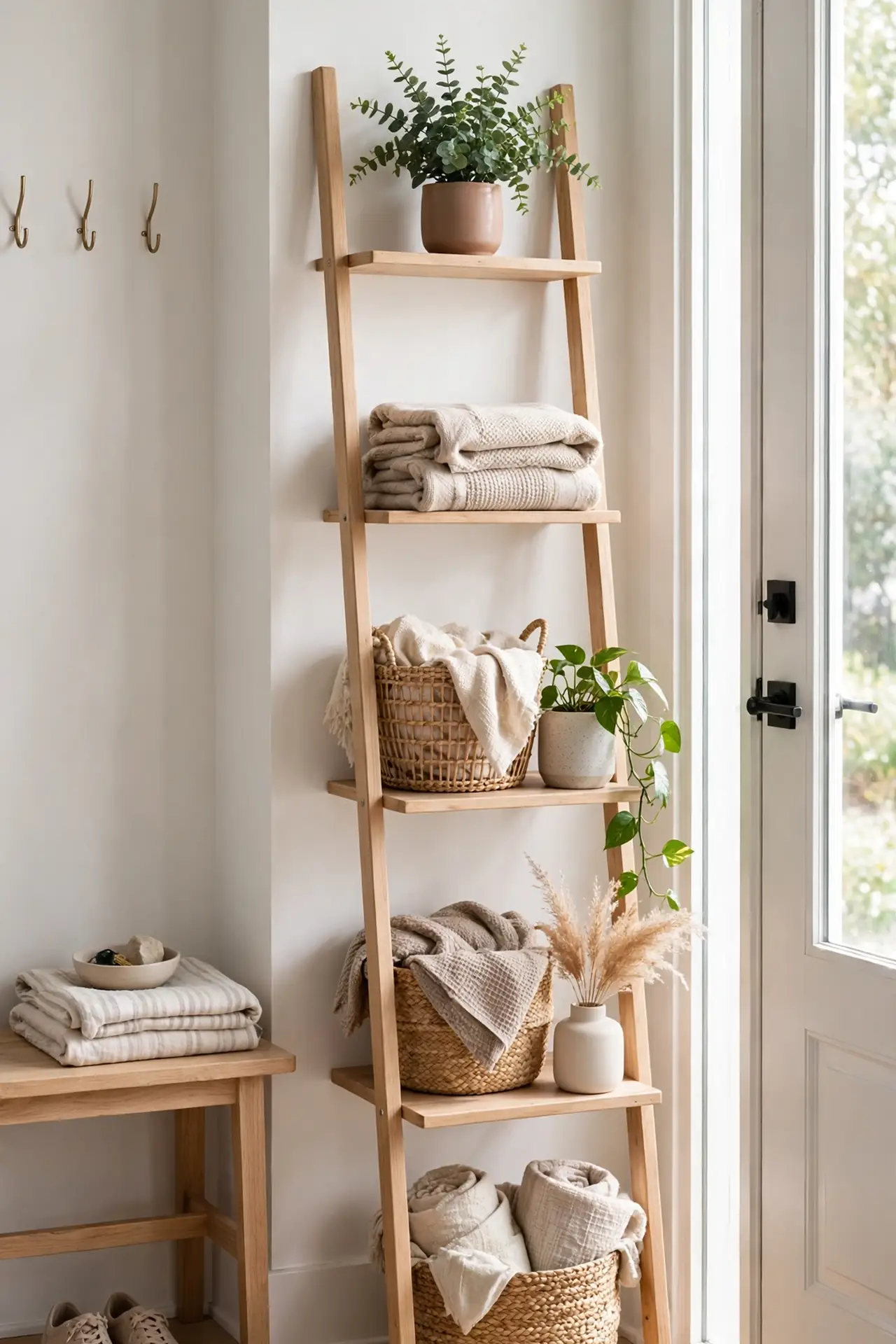
DO: Lean the ladder securely against the wall.
DO: Place heavier items on lower rungs.
DO: Secure the top to the wall for safety.
DON’T: Lean it where the door swings.
DON’T: Overload the top rungs.
DON’T: Use it for very heavy items.
A leaning ladder shelf adds casual storage with zero installation. The angled profile fits tight corners beautifully. I have seen this work well in many cases where renters needed instant storage. A small rug under the ladder anchors it visually. A non-slip pad keeps the ladder steady. Rubber feet grip smooth floors best. Adjustable feet level wobbly ladders. A level app on your phone works. Painter’s tape marks spots before drilling. A pencil mark guides the drill. A center punch prevents bit wandering.
Under-Bench Baskets
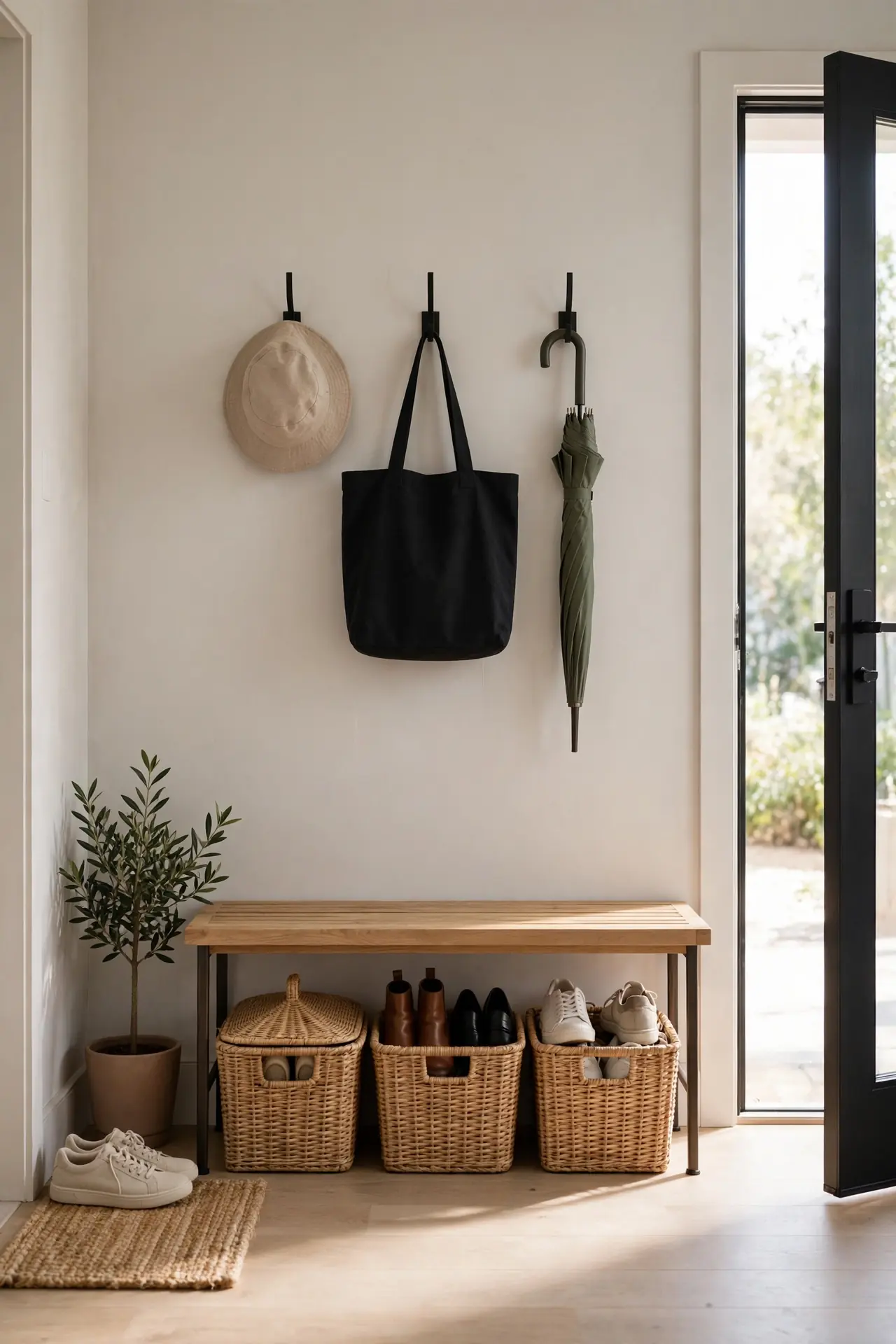
Cost: Low | Time: Twenty minutes to arrange | Skill Level: Beginner | Best For: Existing benches
Baskets under any bench create instant hidden storage. Slide them out like drawers for easy access. The woven texture warms up the entryway beautifully. Label each basket so family members find things fast. A label maker creates the neatest tags. Waterproof labels survive humidity. Chalk labels allow easy changes. A damp cloth wipes them clean. Re-season chalkboards with chalk rub. A chalkboard eraser cleans crisply. A microfiber cloth works too. Rotate baskets seasonally to match changing needs.
Command Center Wall
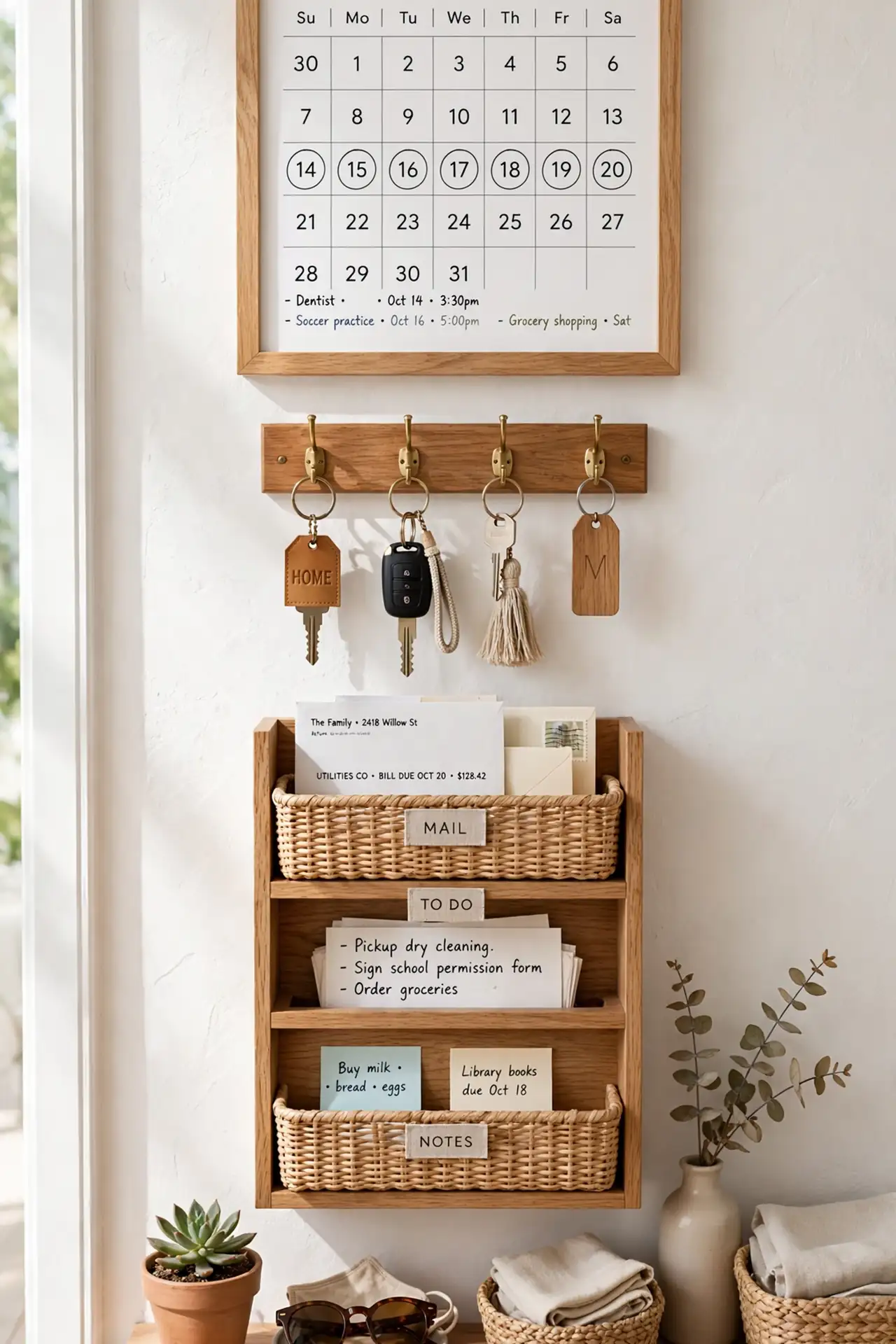
A command center wall organizes the whole family’s coming and going. Combine a calendar, key hooks, and mail slots in one zone. The centralized system ends entryway chaos.
Keep the command center near the door for the best habit. A chalkboard section handles changing schedules. This is the organizational heart of closet-free homes. A weekly review keeps the command center current. A family meeting syncs everyone’s schedules. A shared digital calendar helps too. Color-coding suits each family member. A weekly review keeps systems current. Purge expired items monthly. A donation box by the door encourages letting go. Monthly drop-offs keep it empty.
Stackable Crate Storage
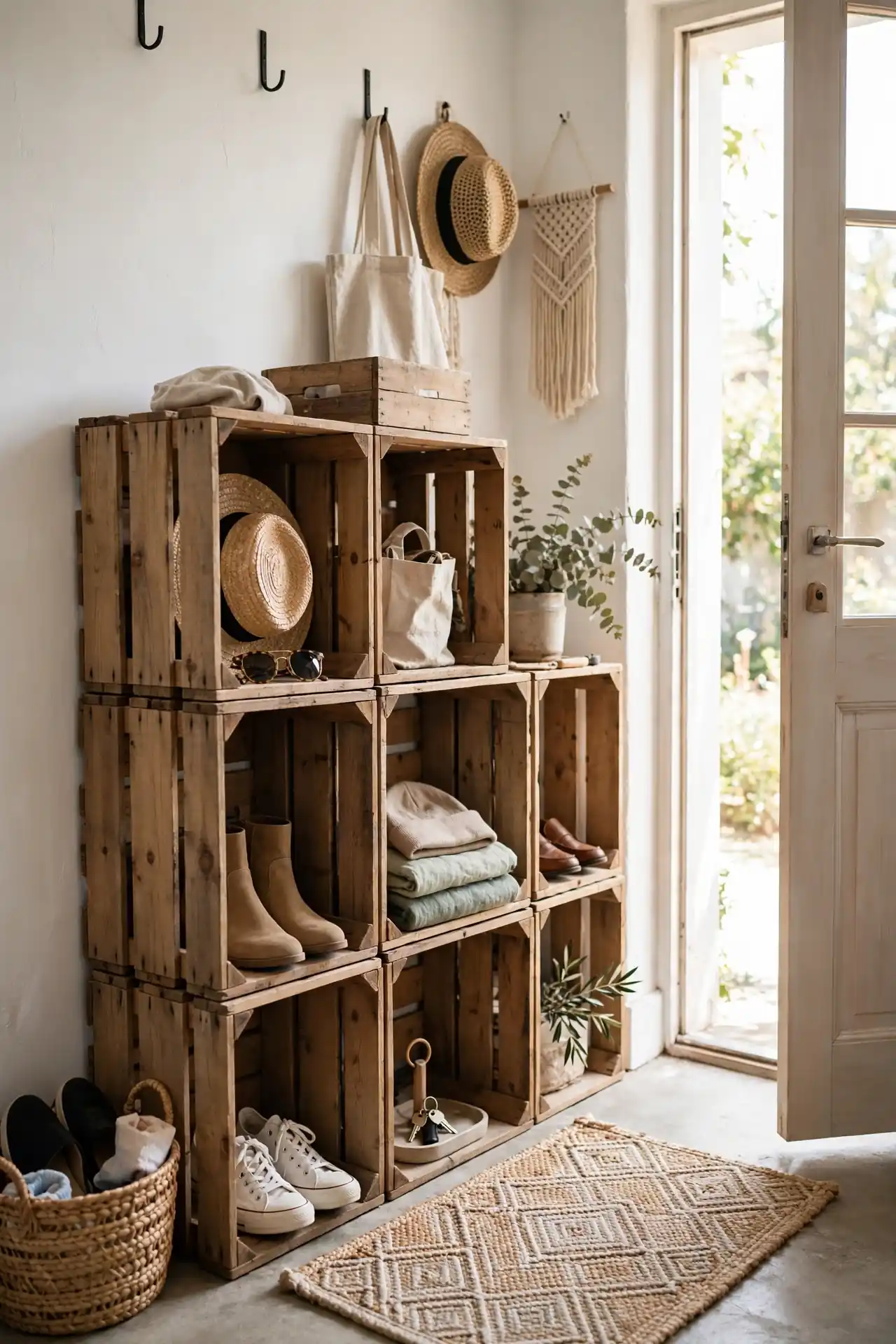
- Stack wooden crates in a stable tower.
- Secure crates together with screws.
- Stain or paint crates to match decor.
- Use upper crates for display items.
- Anchor tall stacks to the wall.
Stackable crates build custom storage for very little money. I have noticed that crates suit farmhouse and rustic entryways perfectly. The modular system grows as needs change. Sand rough crate edges for a splinter-free finish. Wood glue strengthens crate joints. Corner brackets add serious strength. Paint brackets to match crates. Spray paint covers fastest. Light coats prevent drips. Sand between coats for smoothness. Tack cloths remove dust before recoating.
Decorative Screen Divider
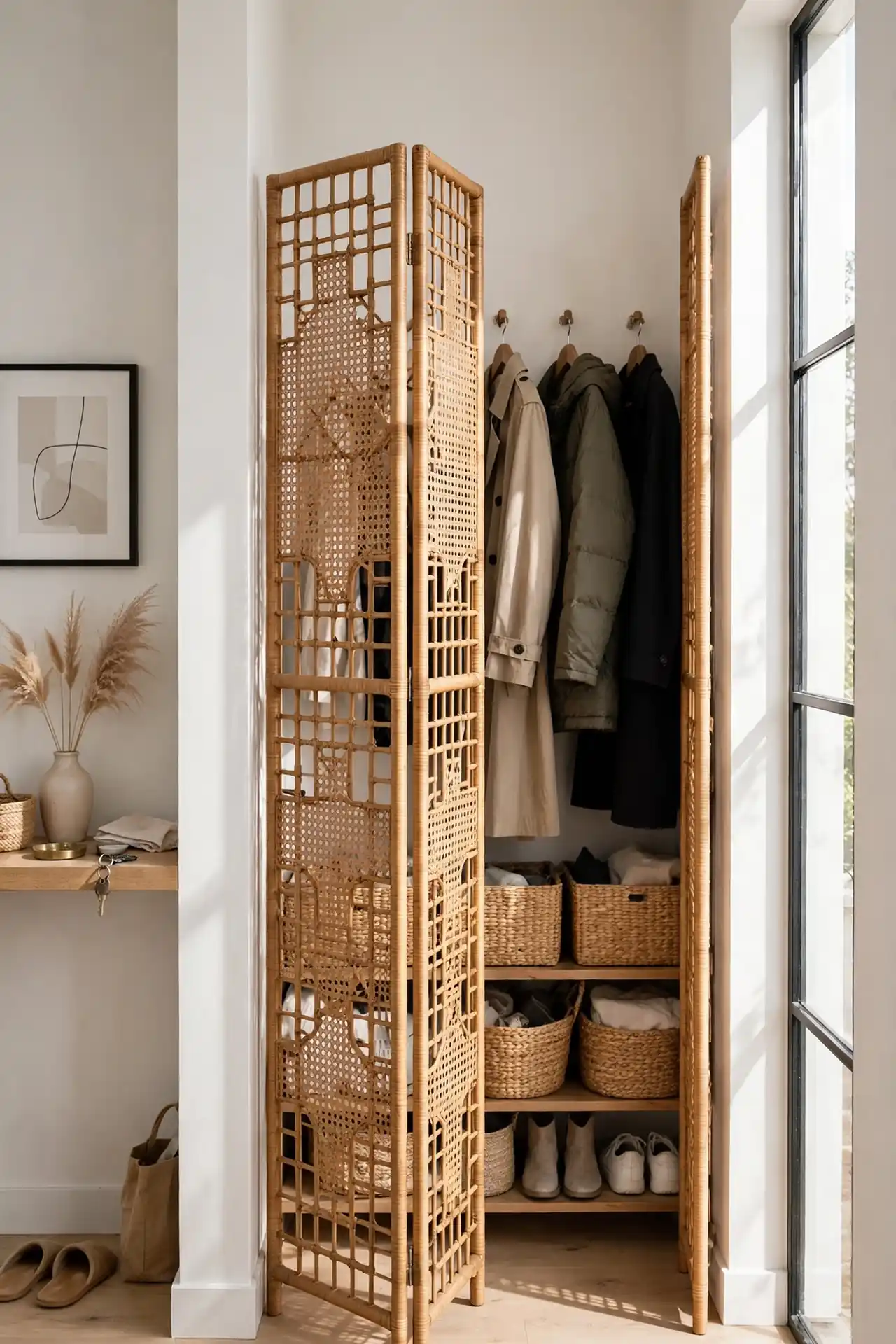
Quick Tip: A folding screen hides a storage zone beautifully. Place racks and bins behind the screen. The screen turns clutter into a decorated corner.
Screens work especially well in open-plan spaces. Choose a screen that complements your decor style. This is concealment disguised as decoration. A three-panel screen covers the widest storage zones. A mirrored screen doubles the light. A fabric screen softens hard spaces. A wooden screen adds architectural interest. A cane screen filters light beautifully. Rattan screens suit warm decor. A folding screen stores flat. A hinged screen adjusts to any angle.
Hallway Tree Bench
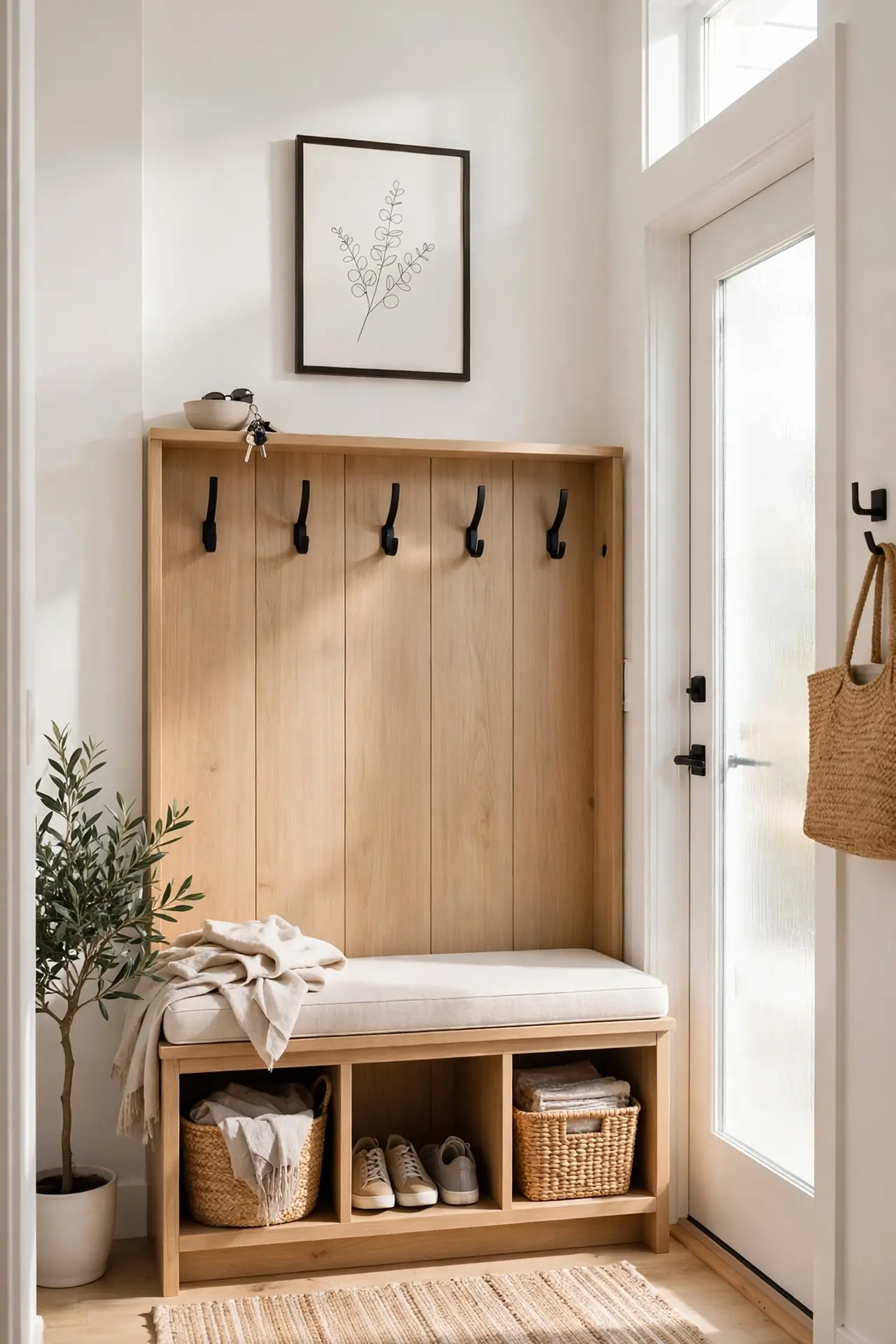
BEFORE: Separate pieces crowded the small entryway without a unified plan. The closet-free foyer felt chaotic and cramped.
AFTER: A hall tree combines hooks, bench, and storage in one furniture piece. The unified design looks intentional and tidy.
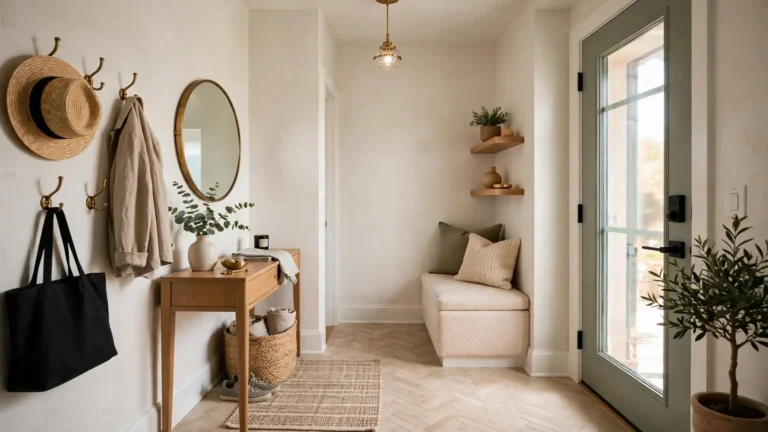
Hall trees are the ultimate closet replacement furniture. Measure your space carefully before buying. The all-in-one design suits the smallest entryways. A hall tree with a mirror adds light too. A secondhand hall tree costs very little. Sand and repaint for a custom look. Chalk paint needs no priming. Wax seals chalk paint best. Buff wax for a soft sheen. Two thin coats beat one thick. Patience yields the smoothest finish.
Tension Rod Curtain

1. Mount a tension rod in an alcove or corner.
2. Hang a curtain that reaches the floor.
3. Store bins and racks behind the curtain.
4. Choose washable curtain fabric.
5. Tie back the curtain for easy access.
A tension rod curtain creates an instant hidden closet. The fabric softens the entryway while hiding storage. That is why many experts recommend curtains for renter closets. A ceiling-mounted track holds heavier curtains. Blackout curtains hide storage completely. Linen curtains filter light beautifully. A double rod layers sheer and opaque. Clip rings make curtains easy to hang. Ring clips suit casual curtains. Wooden rings suit rustic spaces. Metal rings suit modern curtains.
Corner Shelving Unit
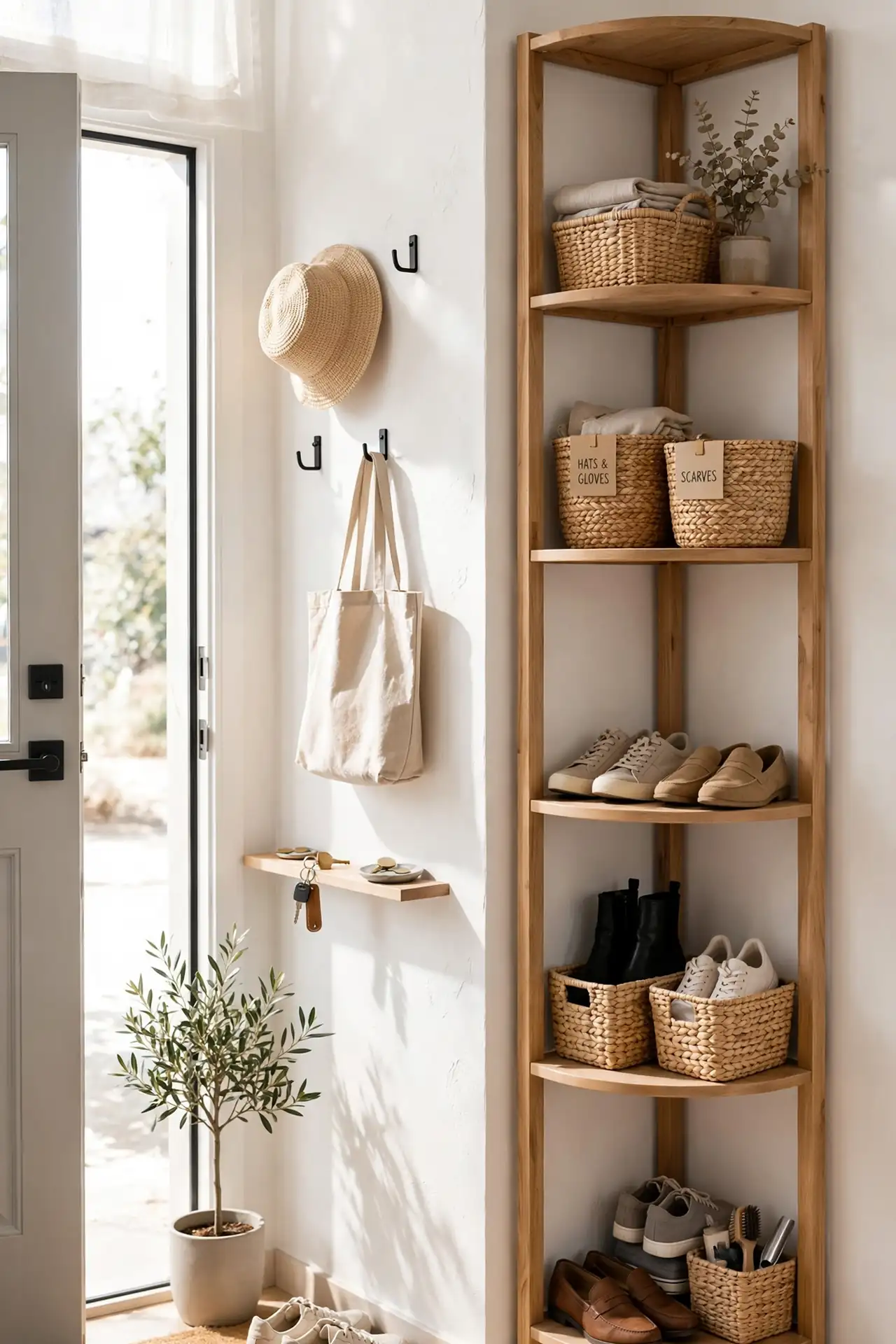
| Shelf Level | Best Use | Tip |
| Top | Decor and plants | Light items |
| Middle | Daily accessories | Baskets |
| Bottom | Shoes | Easy access |
A corner shelving unit claims the corner that furniture cannot. The table above organizes shelves by level. This smart unit turns dead corners into storage gold. A lazy Susan on one shelf improves access. Clear bins let you see contents instantly. A turntable on deep shelves helps. Shelf risers double usable space. Bamboo risers suit warm decor. Clear risers disappear visually. Acrylic risers suit modern kitchens too. A riser under plants improves drainage views.
Woven Hamper Hideaway

DO: Choose a hamper with a lid for a tidy look.
DO: Use it for out-of-season accessories.
DO: Place it where it doubles as a side table.
DON’T: Stuff it so full the lid will not close.
DON’T: Forget what is inside; label it.
DON’T: Use a hamper too large for the space.
A lidded hamper hides bulky seasonal gear with natural texture. The woven look suits boho and coastal entryways. I have seen this work well in many cases where the hamper doubled as a table. A glass top turns any hamper into a table. A round tray on top works just as well. A tray corrals remotes and keys. A small plant softens the tray. A succulent needs almost no water. A tiny cactus suits sunny spots. A small jade plant lives for decades. A jade cutting roots easily in soil.
Personal Locker Setup
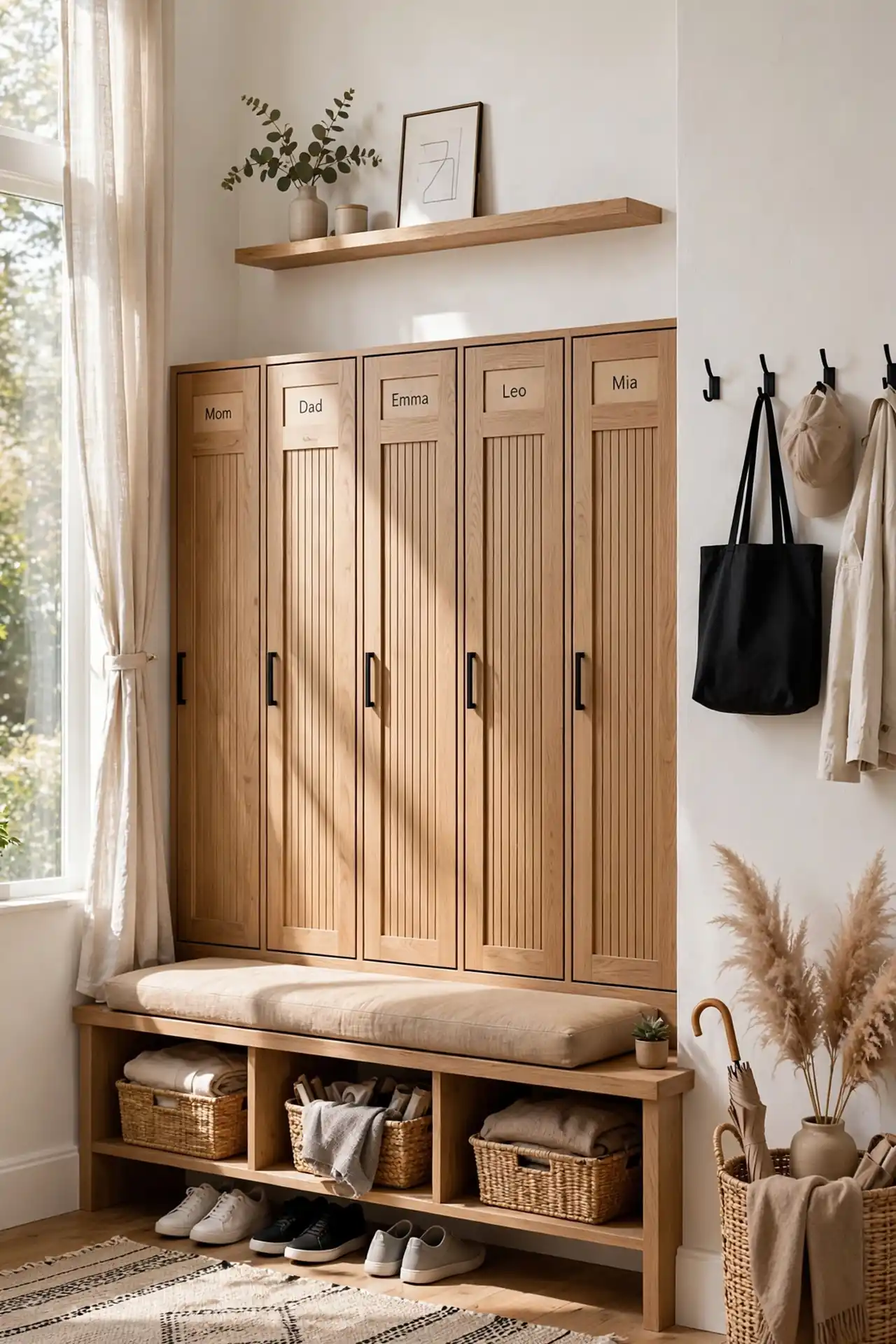
Cost: Medium | Time: One hour to assemble | Skill Level: Beginner | Best For: Families with kids
Small lockers give each family member a personal closet cubby. Kids love having their own locker space. The school-inspired system makes organization fun. Numbered lockers help young kids identify theirs. A small nameplate personalizes each locker. Chalkboard labels allow easy changes. Liquid chalk markers write cleanest. Shake markers before each use. Store markers horizontally for best flow. Cap markers immediately after use. Dried markers revive with a wet paper towel. Store spares in a cool drawer.
Conclusion
No closet is no problem with the right storage strategy. These small entryway ideas without a closet prove that armoires, hooks, and clever furniture can replace any built-in closet. Start with your biggest storage gap, give everything a home, and enjoy a functional foyer. I have seen how small changes like these can completely shift the way a space feels. Save your favorites on Pinterest, add one closet-free solution this weekend, and share your transformation with someone struggling without a coat closet.
One Comment