How to Decorate a Living Room With a Window Behind the TV
Dealing with how to decorate a living room with a window behind the tv can feel tricky at first, but a few smart moves turn the problem into a bright, cozy focal wall. This setup is one of the most common small-space headaches, and it shows up in living rooms of every size. The secret is treating the window as a design feature, not a flaw, and letting the screen blend into the scene.
The same light-loving tricks work elsewhere in the house too. If your kitchen feels dark after a cabinet refresh, read how to make a kitchen with dark cabinets feel brighter for ideas that echo what we will do here. Now grab your tape measure and let’s make that wall work.
Start by Reading the Light in the Room
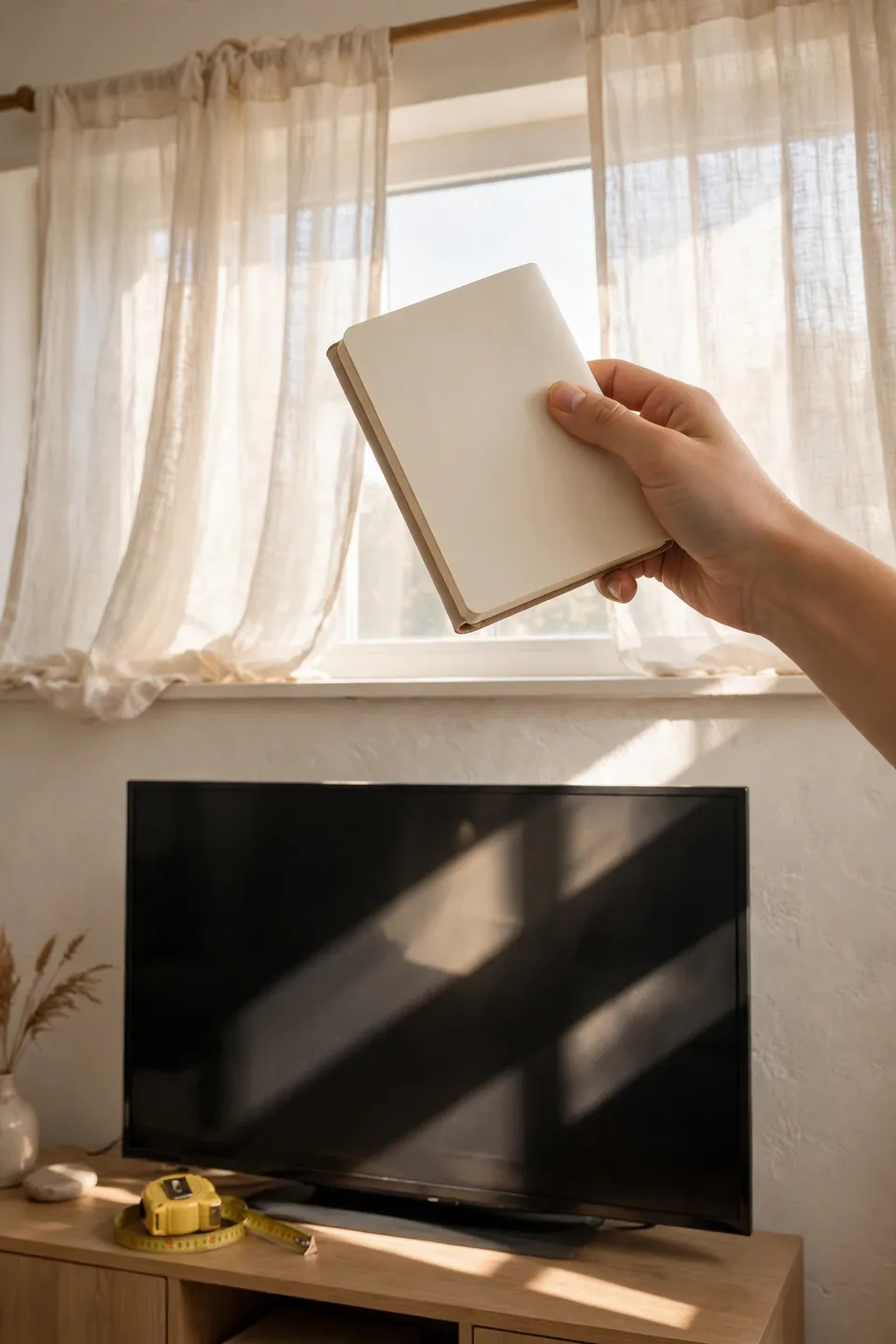
Stand in your usual viewing spot and watch the sunlight across the screen through the day. Morning glare behaves very differently from late afternoon wash, so note the worst hour. Mark which window corners throw reflections straight at your eyes, since that map guides every later choice.
Check the wall width beside the window too. A TV slightly smaller than the frame feels balanced, while an oversized screen can fight the view. If you already own the TV, center it under the window and flank it with matching weight on both sides. That single measurement prevents a lopsided wall.
Choose the Right Spot for the Screen
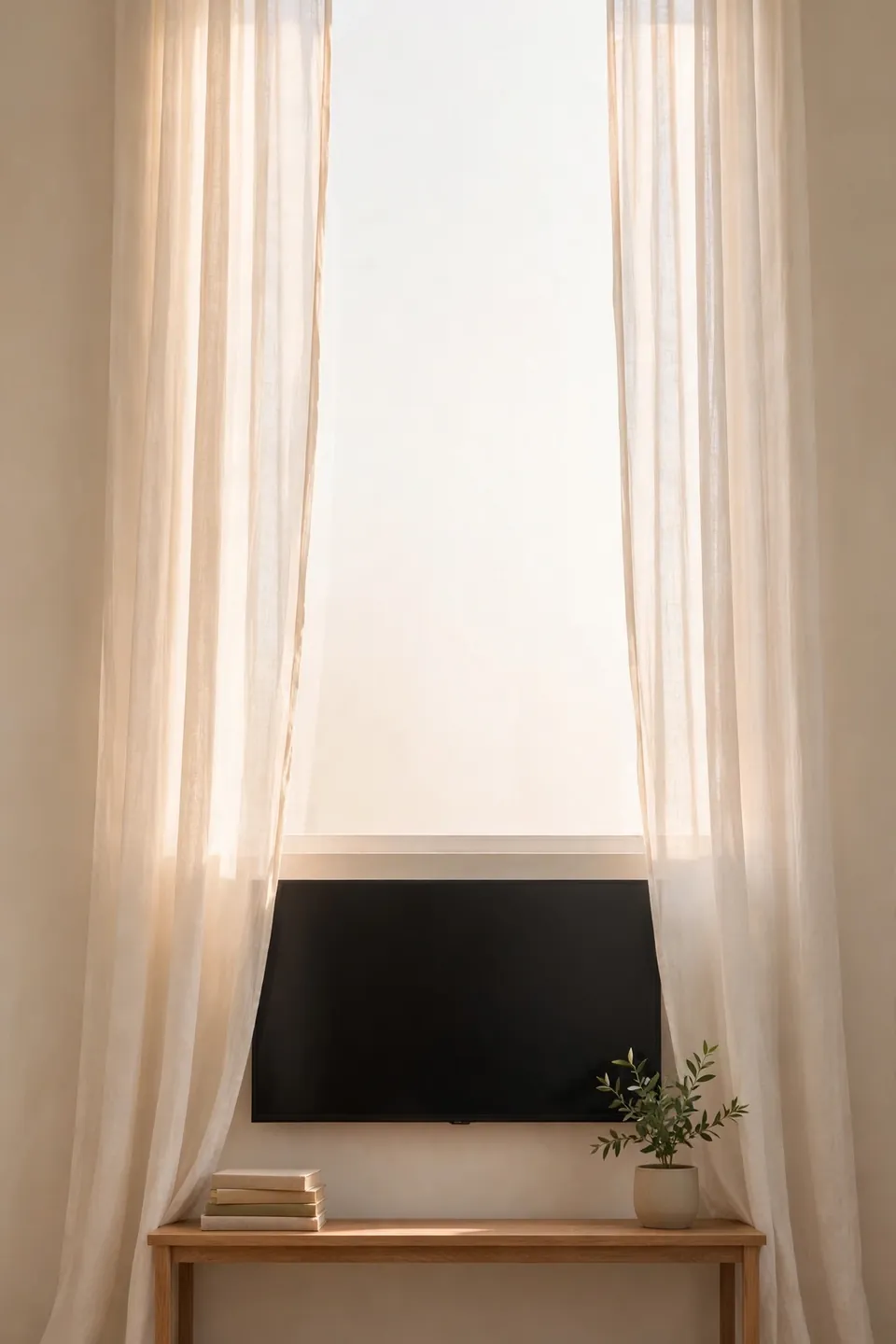
Placement decides half the battle. A screen parked exactly at eye level from the main seat, with a small offset from the brightest pane, stays comfortable even at noon. Measure the seat height, the window height, and the distance between them before you hang or set the unit.
- Center the screen under the window, or offset it to one side if the view deserves the middle.
- Keep the top of the screen a few inches below the window sill line for a calm, level look.
- Angle the TV slightly if afternoon sun crosses it, using a tilt mount for easy daily adjustment.
- Leave breathing room around the frame so the screen reads as decor, not just electronics.
Pick Sheer Layers Over Heavy Drapes

Quick Tip: Hang sheers first and live with them for a few days before adding anything heavier.
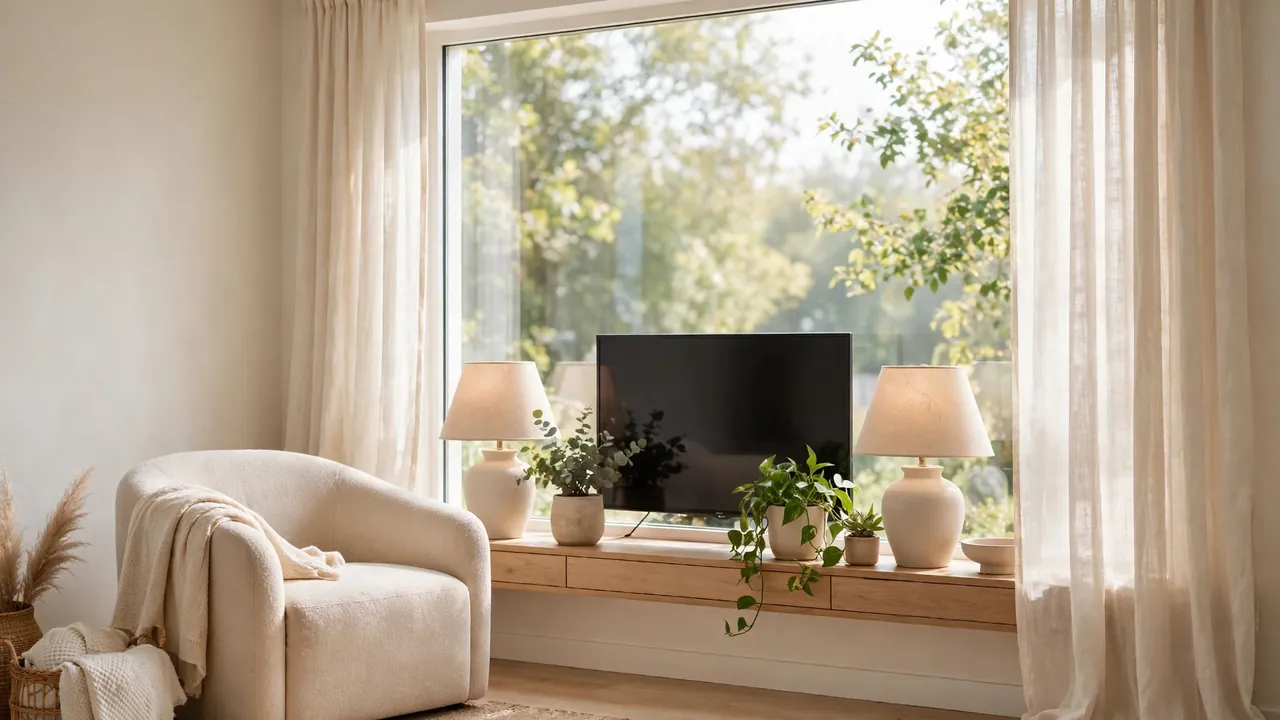
Sheer curtains soften the brightest pane without killing the daylight that keeps the room alive. They blur the window outline behind the TV, which calms the busy look of glass around a dark screen. Choose warm ivory linen, and mount the rod wider than the frame so sheers never crowd the screen.
Why the Screen Looks Washed Out
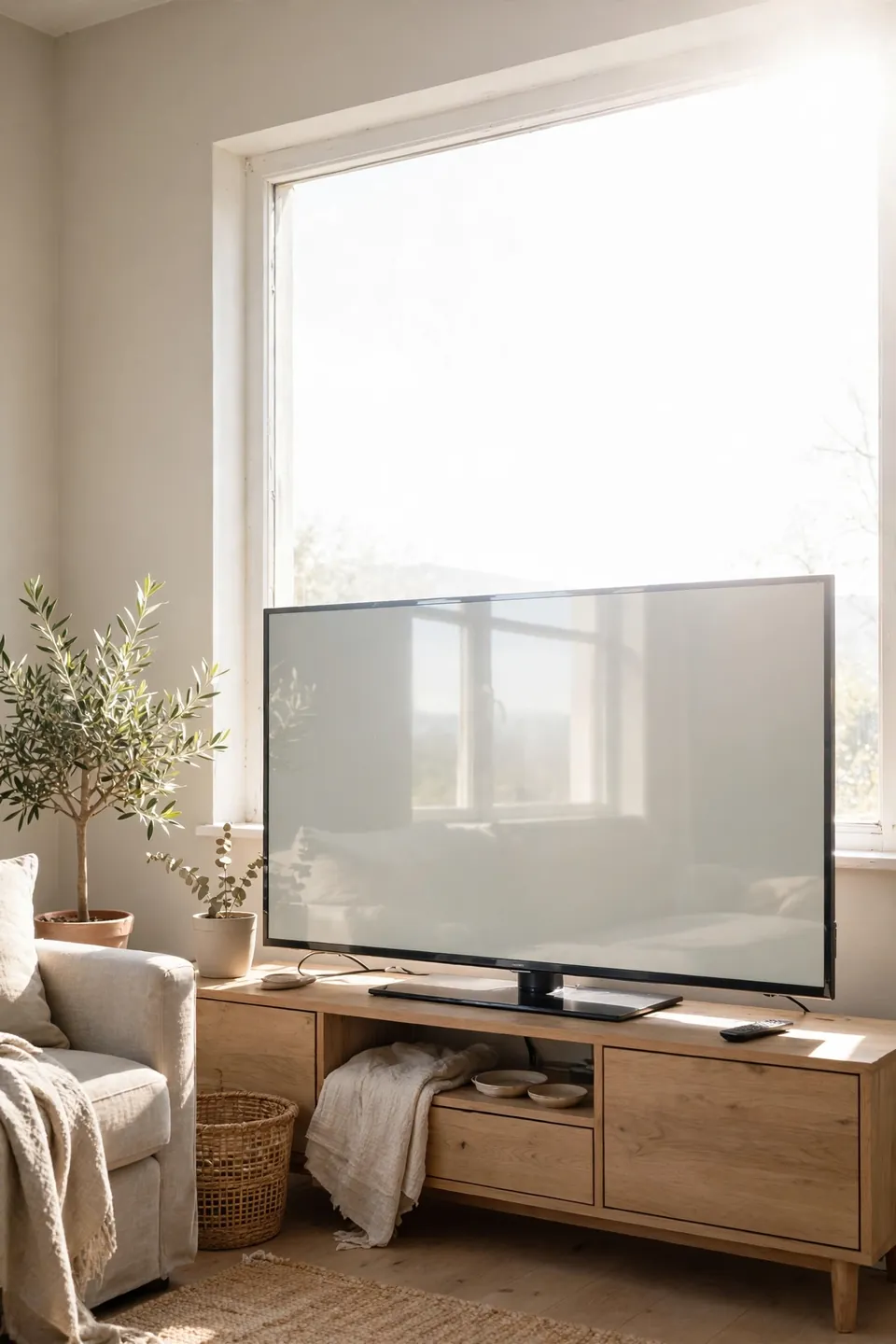
Common Mistake: A completely bare window lets midday sun hit the screen straight on.
The Fix: Add one soft filtering layer and angle the screen slightly away from the brightest pane.
A bare window creates the harshest contrast in the room, and the screen pays with washed-out faces and gray blacks. You do not need blackout curtains; a single sheer layer plus a tilt adjustment usually fixes it. Test the view at your worst glare hour, then fine-tune until the picture feels deep again.
Gather These Glare-Fighting Supplies

What You Need:
- Sheer linen curtain panels in warm ivory
- A slim tension rod or wall-mounted rod
- A tilting wall mount for the screen
- An anti-glare screen protector for sun-heavy rooms
- A small green plant to soften the corner
Keep the shopping list short. The sheers diffuse the brightest light, while a tilt mount lets you dodge daily glare in seconds. An anti-glare film helps in sun-heavy rooms, and a plant beside the console softens the hard edge where the window frame meets the screen.
From Harsh Glare to Soft Daylight
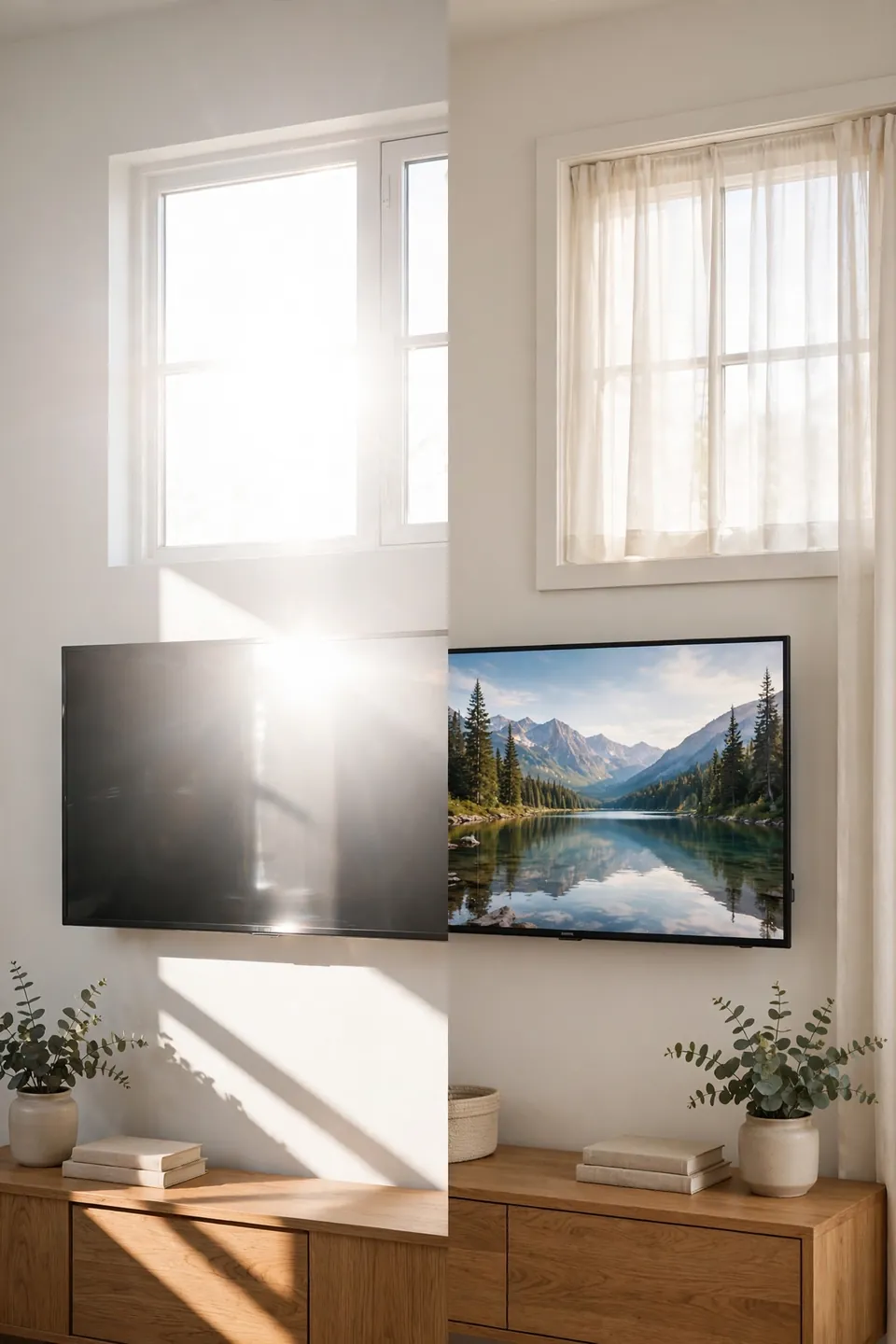
BEFORE: The screen sat naked under a bare window, and by midday every face on the news looked washed out. The room felt lopsided too, with all the brightness stacked on one side of the wall.
AFTER: Sheer ivory panels now soften the light, and the screen shows deep blacks all afternoon. Matching frames on both sides balance the wall, so the window and the TV finally look like they belong together.
The change took one weekend and cost less than a new rug. If you love clever corner solutions, see how to fit a reading corner into a small bedroom for more tight-space thinking. The biggest win here was simple: filter the light, balance the wall, and the screen stops fighting the window.
Styling Rules Around the Window
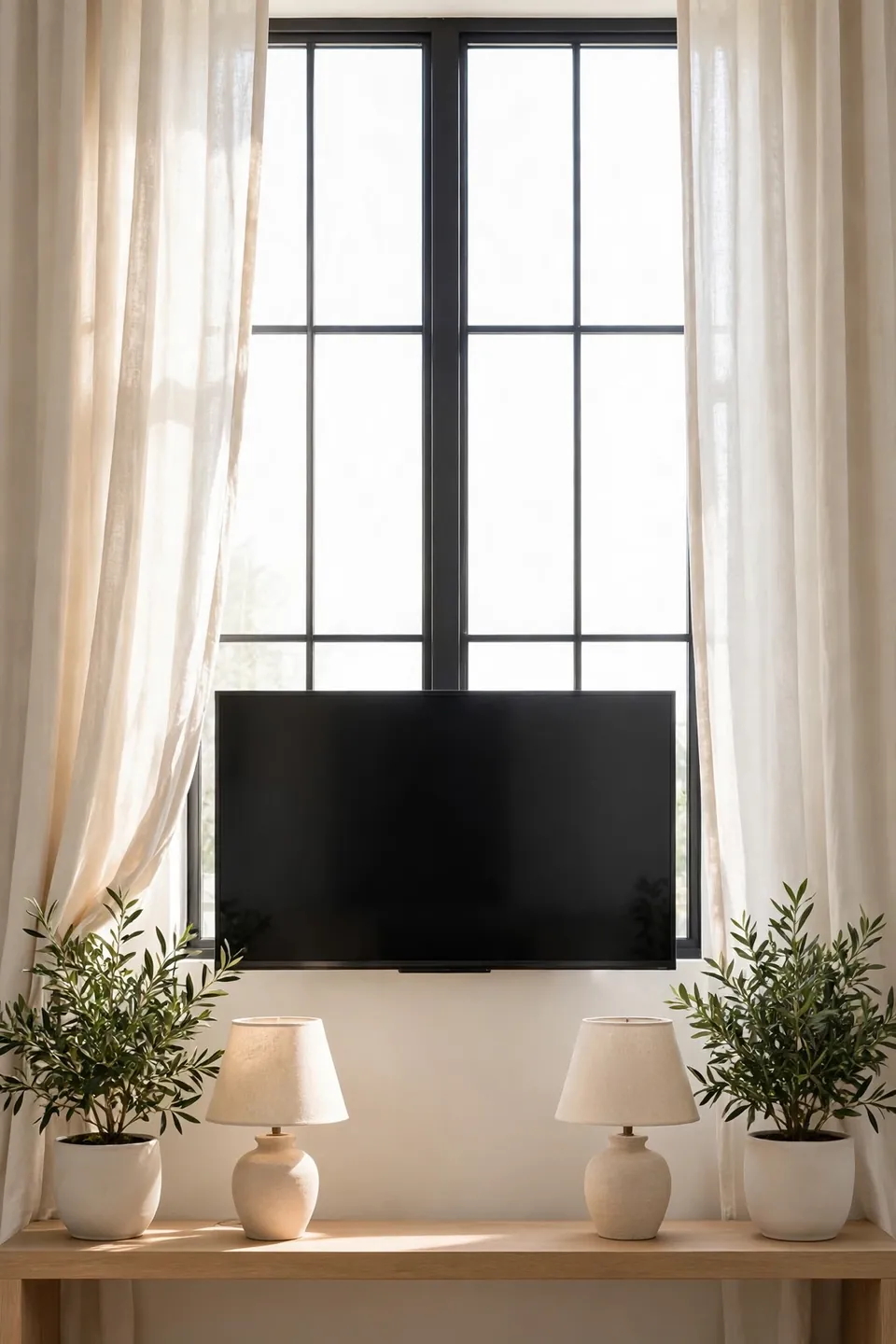
Do This:
- Frame the window with the curtain rod, and let the TV sit low under the sill line.
- Add a matching plant or lamp on both sides of the console for symmetry.
- Keep the screen frame slim and dark so it reads like a picture frame.
Avoid This:
- Piling tall decor on the console that blocks the lower window panes.
- Choosing heavy blackout drapes that make the room cave-dark all day.
- Centering the TV so high that it fights the window for the top spot.
The goal is a wall that looks styled even when the screen is off. Symmetry calms the eye, and keeping the lower window clear protects your daylight. Treat the TV like another framed piece on the wall rather than a separate gadget, and the whole arrangement starts to feel intentional.
Quick Facts About TV and Window Light
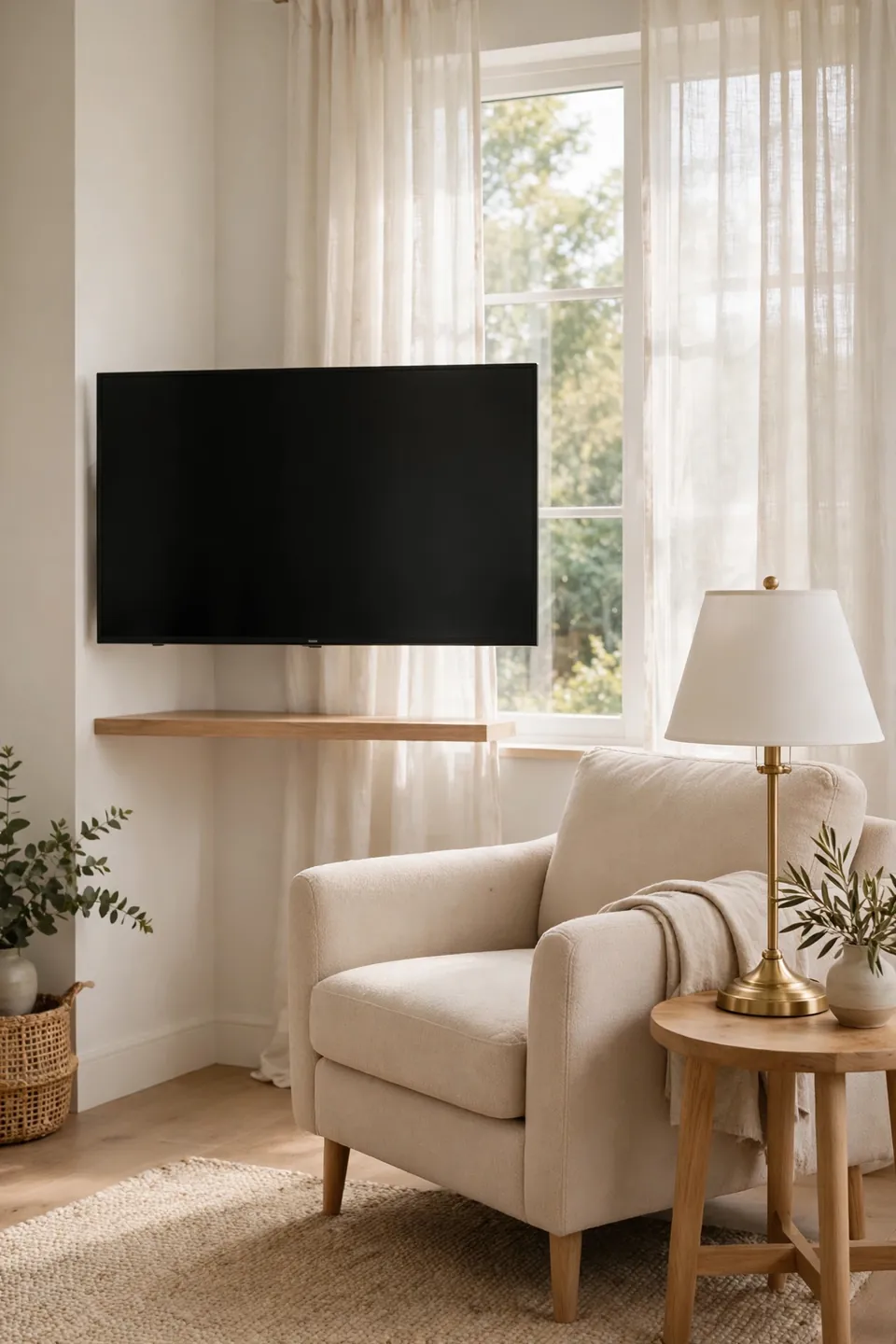
Best Curtain: Light-filtering linen sheers in warm ivory.
Screen Height: Center of screen at seated eye level, about 42 inches up.
Budget: Most fixes cost under $150 with sheers and a tilt mount.
Time Needed: One afternoon for hanging, plus one sunny-day test.
These numbers make the project feel easy instead of technical. You do not need special tools, and most of the work is just hanging one rod and testing the view. Once the light is filtered, the screen finally looks as good at noon as it does after dark.
Balance the Wall So the TV Blends In
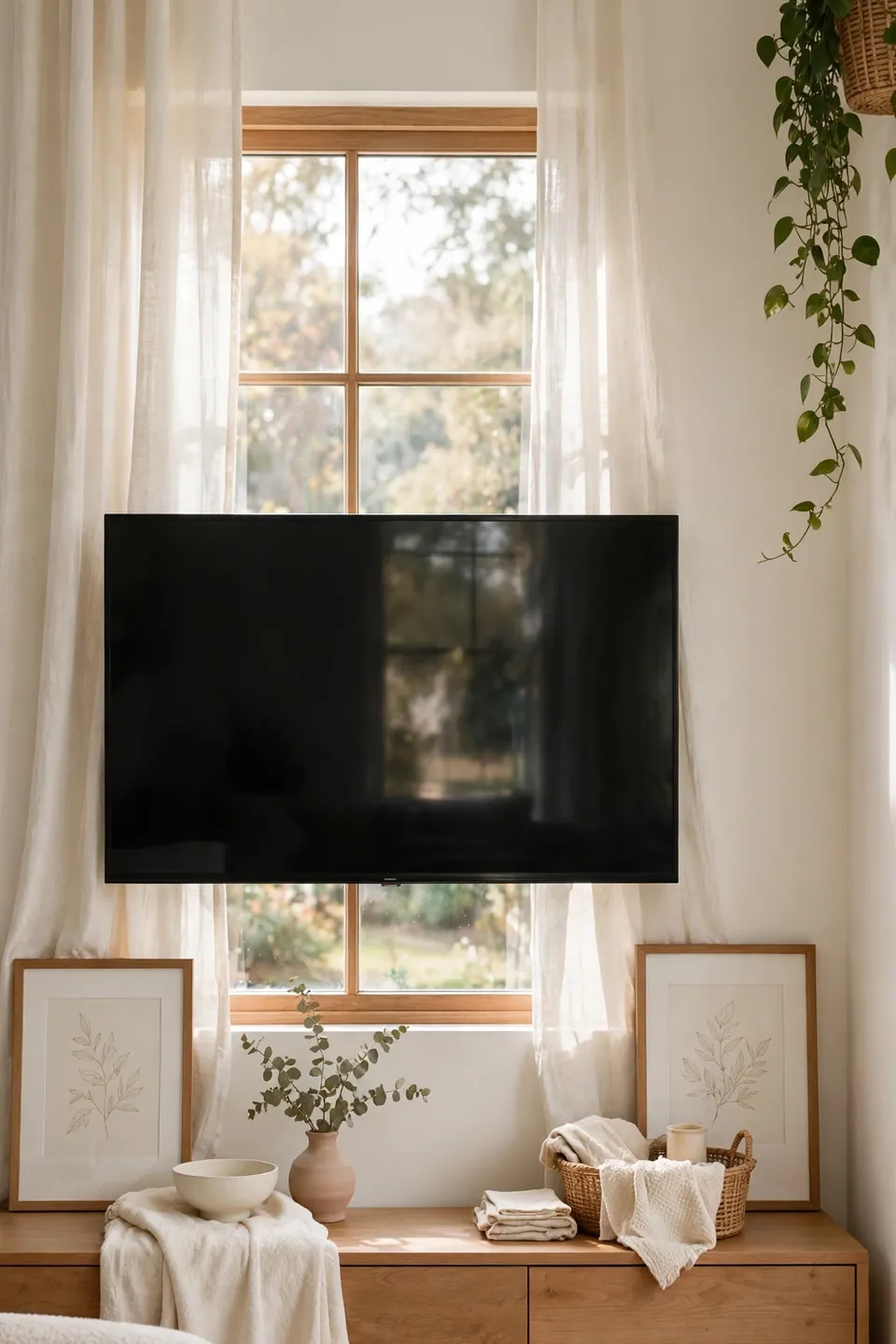
Give the window and the screen equal styling love. Match both sides of the console with small lamps, stacked books, or a pair of plants, and the wall reads as one calm picture. When both halves carry the same visual weight, neither the glass nor the gadget steals the show.
Keep the palette soft so the dark screen stays the only bold shape. Warm whites, light woods, and one green plant repeat around the window and make the screen look grounded. This quiet backdrop is what turns a tricky wall into the coziest seat in the house.
Do a Final Day-to-Evening Check
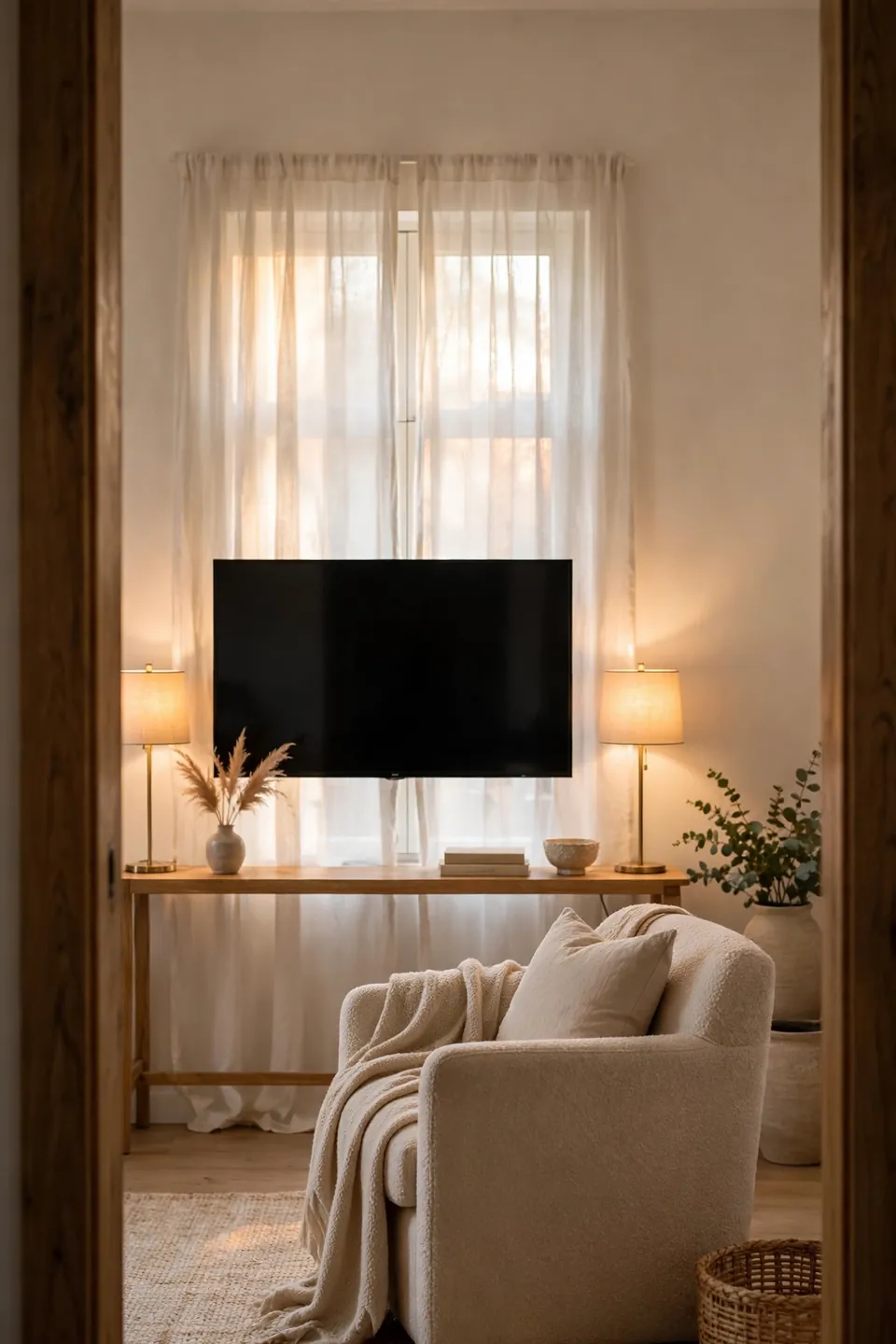
Walk through one full day before calling the project done. Sunlight shifts faster than you expect, so a setup that works at breakfast can struggle at dinner. This quick check catches the last glare moments and locks in a layout you will enjoy all day long.
- Sit in your main seat at your worst glare hour and confirm the picture stays clear.
- Check the evening view with lamps on to make sure reflections stay soft.
- Tilt the screen once more if needed, then mark the sweet spot on the mount.
- Snap a phone photo of the wall so you can repeat the look in other rooms.
Conclusion
Mastering how to decorate a living room with a window behind the tv comes down to three habits: filter the light, balance the wall, and keep the screen at a comfortable height. None of these steps needs a big budget or a contractor, just one focused weekend and a little patience with the sun’s schedule. Your living room keeps its bright, airy feel while the screen finally gets the clear, deep picture it deserves. Pin this guide to your home decor board on Pinterest so you can find these tricks the next time glare sneaks back in.