24 Modern Traditional Kitchen Design Ideas for Timeless Sophistication
A kitchen that feels both fresh and familiar starts with modern traditional kitchen design, a style that pairs clean contemporary lines with classic details like shaker doors, marble tops, and warm brass. Instead of chasing trends, this approach builds a room that still looks right ten years from now, which is why so many homeowners choose it for a full remodel or a slow refresh. The balance comes from restraint: one or two traditional touches per zone, never a room full of competing details.
In this guide you will find 24 ideas that move room by room, from cabinets and counters to lighting, hardware, and seating, with practical notes on cost, upkeep, and pairing. Each idea keeps the same goal in mind: a kitchen that cooks well, gathers well, and ages gracefully. For related storage thinking, see these living room built in cabinet ideas for how tailored cabinetry shapes a whole home. Take what fits your floor plan, skip what does not, and let the room evolve one considered choice at a time.
Shaker Cabinet Charm

Credit: Curtis Adams
Shaker doors earn their place with a flat center panel and a simple frame that reads calm in any light. The profile suits painted finishes best, from soft white to sage and greige, and it pairs cleanly with both marble and butcher block. In my experience, shaker fronts hide daily wear better than ornate raised panels, since there are fewer grooves to catch dust and grease.
Keep the rest of the palette quiet so the cabinets carry the room. Choose a simple backsplash, one metal finish, and open shelves only where you truly need them. The result feels tailored rather than busy, and repainting later stays simple because the door style never fights the new color.
Marble Countertop Elegance

Credit: Curtis Adams
- Choose honed marble for a soft matte finish that hides etching better than polished stone.
- Seal the surface twice a year to slow stains from coffee, wine, and citrus.
- Pair white marble with warm wood to keep the room from feeling cold.
- Use a simple edge profile so the stone, not the trim, draws the eye.
- Wipe spills fast, since marble rewards quick care more than harsh cleaners.
Marble suits this style because it brings natural movement without loud pattern. Keep the veining quiet across the whole run, match the backsplash stone to the counter, and let one slab feature carry the room. That restraint keeps the kitchen calm and lets brass, wood, and linen do the warming work.
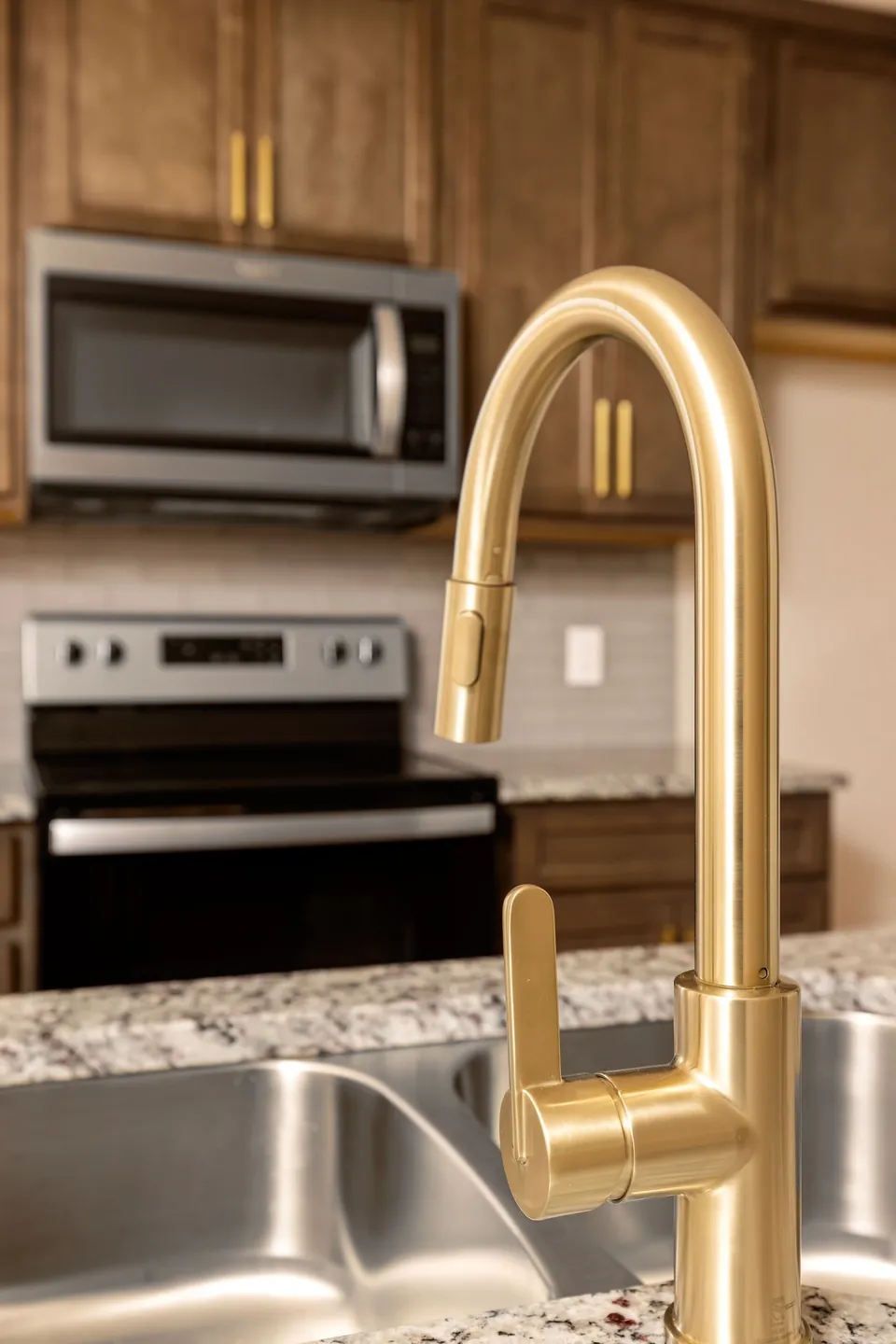
Brass Fixture Glow
Credit: Curtis Adams
Quick Tip: Unlacquered brass ages with a soft patina, while lacquered brass keeps its shine. Pick one finish for faucets, knobs, and lighting so the room reads as one considered scheme.
Brass warms the classic side of this style without shouting for attention. Use it on the faucet, a pair of pendants, and the cabinet pulls, then stop before it spreads to every surface. Mixed metals can work, but keep brass dominant and let a second metal appear only in small doses, like a stainless appliance or a black hinge. The glow reads best against soft white, sage, and warm wood tones.
Classic To Contemporary

Credit: Curtis Adams
BEFORE: Heavy cherry cabinets, ornate corbels, and a dark granite top made the room feel closed in, even with a wide window over the sink.
AFTER: The same layout now wears painted shaker doors, a lighter stone top, and slim brass pulls, so daylight travels further and the room feels open.
The lesson is simple: keep the bones, soften the surfaces. Paint or refinish before replacing, swap hardware first, and change the counter only when the old one fights the new palette. Small moves often deliver the modern traditional balance faster than a full gut renovation. Start with one wall and judge the effect before committing the whole room.
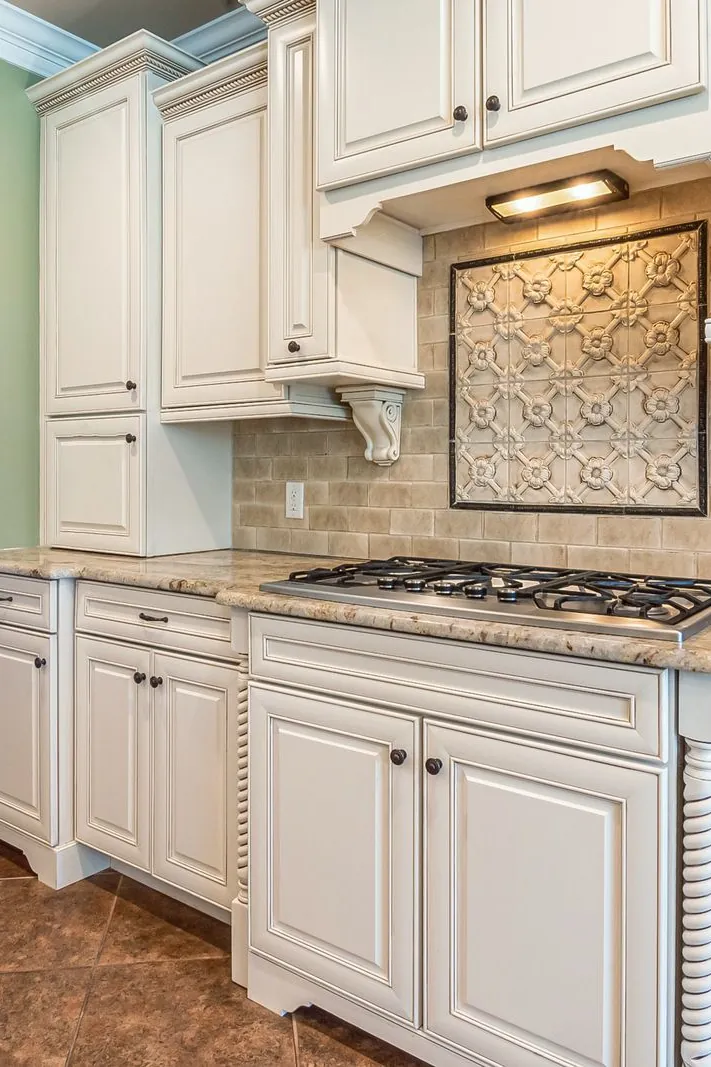
Crown Molding Steps
Credit: Curtis Adams
- Measure the ceiling line twice and cut crown pieces slightly long for a tight joint.
- Prime and paint the molding before fitting it to avoid brush marks on the wall.
- Cope inside corners rather than mitering them for a cleaner long-term fit.
- Caulk the top edge lightly, then touch up with matching paint once dry.
Crown molding gives a kitchen its tailored finish, bridging cabinets and ceiling with one quiet line. Keep the profile simple and the scale modest, since oversized molding can crowd a standard ceiling height. Painted to match the cabinets, it reads as part of the cabinetry rather than an added trim.
Wood Versus Painted

Credit: Max Vakhtbovych
| Finish | Look | Upkeep |
|---|---|---|
| Painted | Soft, bright | Wipe clean |
| Stained Wood | Warm, grained | Oil yearly |
| Two Tone | Balanced, custom | Mixed care |
| White Oak | Pale, modern | Seal often |
Painted cabinets brighten a dark kitchen and suit the traditional side of this style, while stained wood adds grain and warmth that paint cannot fake. Many rooms land in the middle, with painted uppers and a wood island grounding the space. Choose based on light first: dim rooms favor paint, sunny rooms handle wood beautifully.
Test large swatches in your own light before ordering, since showroom lighting flatters every finish. Live with the samples for a few days, morning and evening, and the right choice usually declares itself.
Timeless Styling Rules

Credit: Curtis Adams
Do:
- Do repeat one wood tone across island, shelves, and stools for calm.
- Do keep counters mostly clear, with one bowl or tray as a focal point.
- Do layer linen, wood, and stone so the room feels collected, not staged.
Don’t:
- Don’t mix more than two metal finishes in one sightline.
- Don’t crowd open shelves; leave breathing room between objects.
- Don’t pair loud tile with busy stone in the same zone.
Restraint is the quiet rule behind this style. Every surface earns its place by serving cooking, storage, or gathering, and decoration follows function rather than leading it. When a room feels fussy, remove one item before adding another, and the balance usually returns.
Modern Traditional Facts
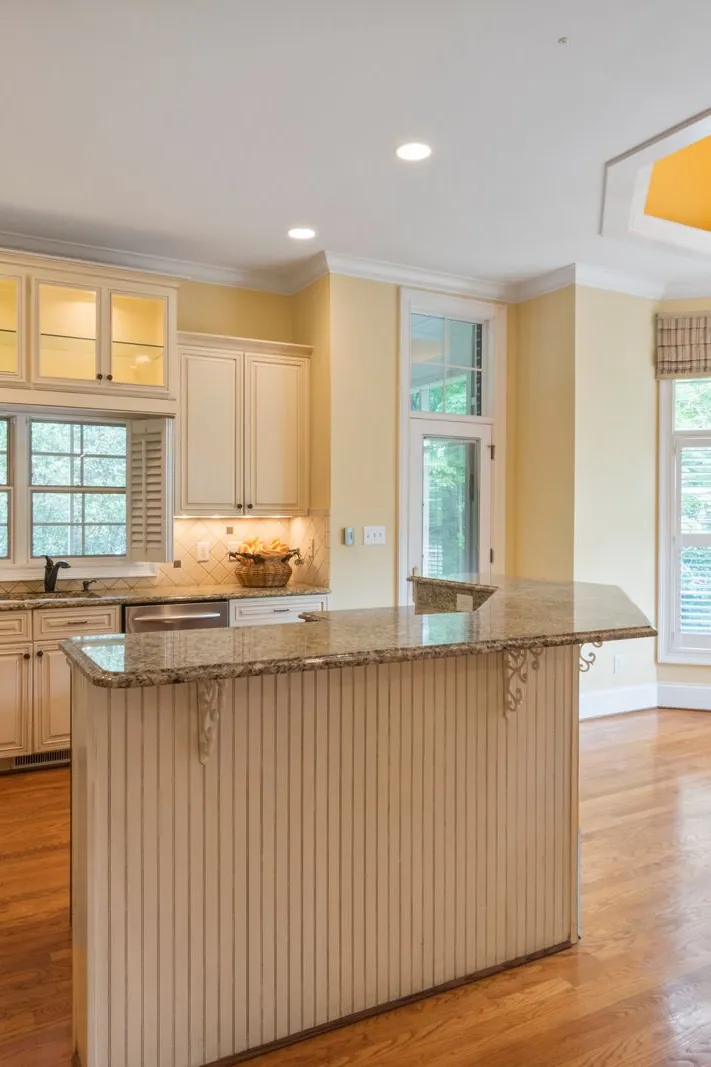
Credit: Curtis Adams
Cost: Cabinet painting runs far below full replacement in most kitchens.
Time: A hardware swap takes one weekend; a full refresh takes weeks.
Skill Level: Painting and hardware suit confident beginners with care.
Best For: Rooms that need warmth without losing clean lines.
Facts keep a remodel honest. Budgets stretch further when cabinets stay and surfaces change, and timelines shrink when the layout stays put. I’ve seen this work well in many cases where owners kept the footprint, upgraded the stone, and spent the savings on lighting and seating. The room still felt new, because the details changed, not the walls.
Soft Neutral Palettes

Credit: Tuğba Kobal Yılmaz
Soft neutrals give this style its breathing room. Warm white, greige, and pale sage sit quietly behind marble and brass, letting texture carry the interest instead of bold color. Paint large swatches and watch them across a full day, since morning light cools every shade and evening light warms it again.
Keep the darkest tone for the island or the floor, and let walls stay light. That single contrast anchors the room without chopping it into competing blocks. Add warmth through wood stools, linen runners, and a woven basket, and the palette stays soft even in a busy family kitchen. The result ages gracefully and repaints easily when tastes shift.
Farmhouse Sink Style
Credit: Mateusz Pielech
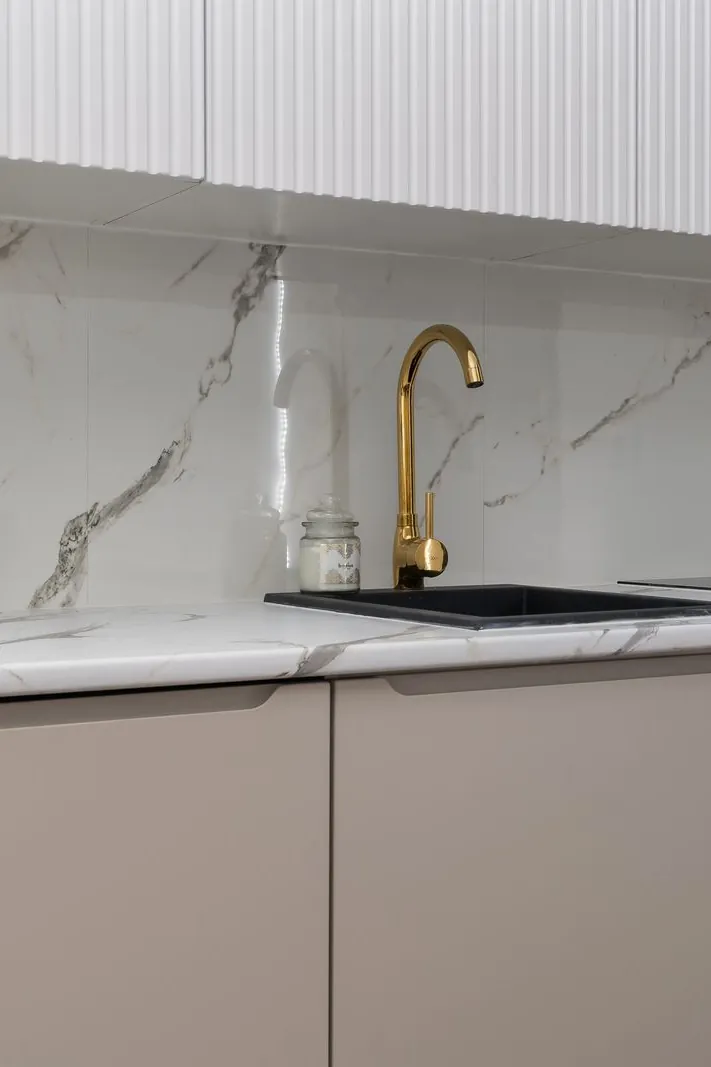
- Choose an apron front sink for a classic focal point that suits shaker cabinets.
- Pair it with a bridge faucet in brass for a period-correct pairing.
- Check cabinet width first, since apron sinks need a special base unit.
- Pick fireclay for durability and a soft matte glaze that resists stains.
A farmhouse sink anchors the cleanup zone and softens the hard lines of stone and steel. Keep the surrounding counter clear so the apron shows, and choose a simple grid to protect the basin from pots. The style reads traditional, yet the deep single bowl handles modern cooking without fuss.
Glass Front Cabinets
Credit: Eric Joseph
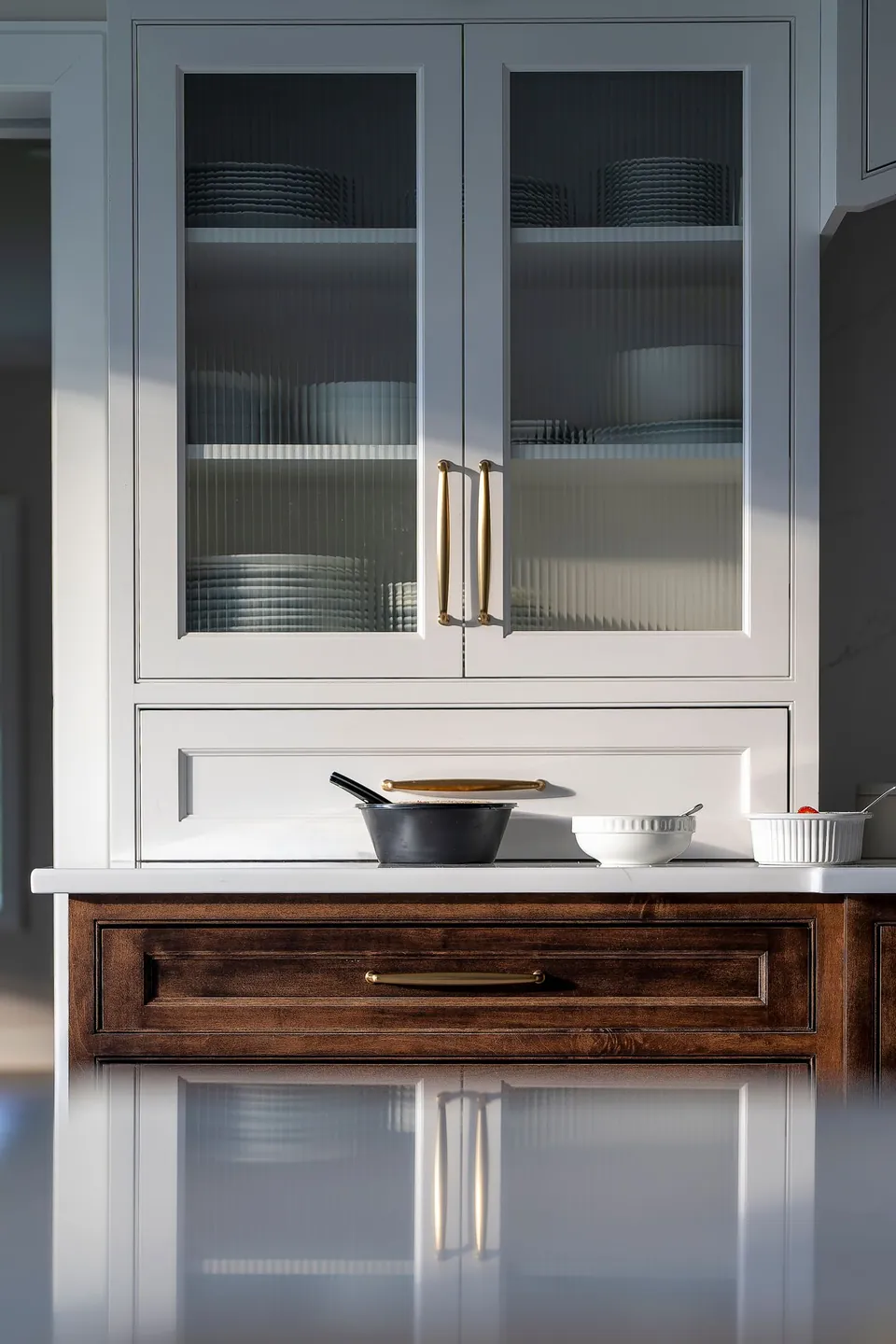
Quick Tip: Use glass fronts on one run only, and style the shelves with matching dishes in a single color family. Restraint keeps display cabinets calm instead of cluttered.
Glass doors break up long runs of solid cabinetry and give a kitchen a lighter, more collected feel. They suit the traditional side of this style, echoing old china cabinets while keeping the look current. Style them simply: everyday dishes below, a few bowls above, and nothing stacked to the brim. If open display feels risky, try reeded glass, which hints at contents without showing every fingerprint and chip. One lit run at night turns the whole kitchen warm.
Dated To Dreamy

Credit: Curtis Adams
BEFORE: Oak cabinets with heavy grain, a speckled laminate top, and dated brass hinges made the kitchen feel stuck in another decade.
AFTER: Painted cabinets, a calm stone top, and slim matte hardware gave the same room a fresh start without moving a single wall.
A dated kitchen rarely needs a full rebuild. In fact, modern traditional kitchen design often works best as a series of surface upgrades: paint, stone, hardware, and lighting, in that order. Each change lifts the room a little, and together they shift the whole mood from tired to timeless. Keep the layout, change the surfaces, and spend the savings on seating that invites people to stay.
Island Seating Steps
Credit: Samuel Peter
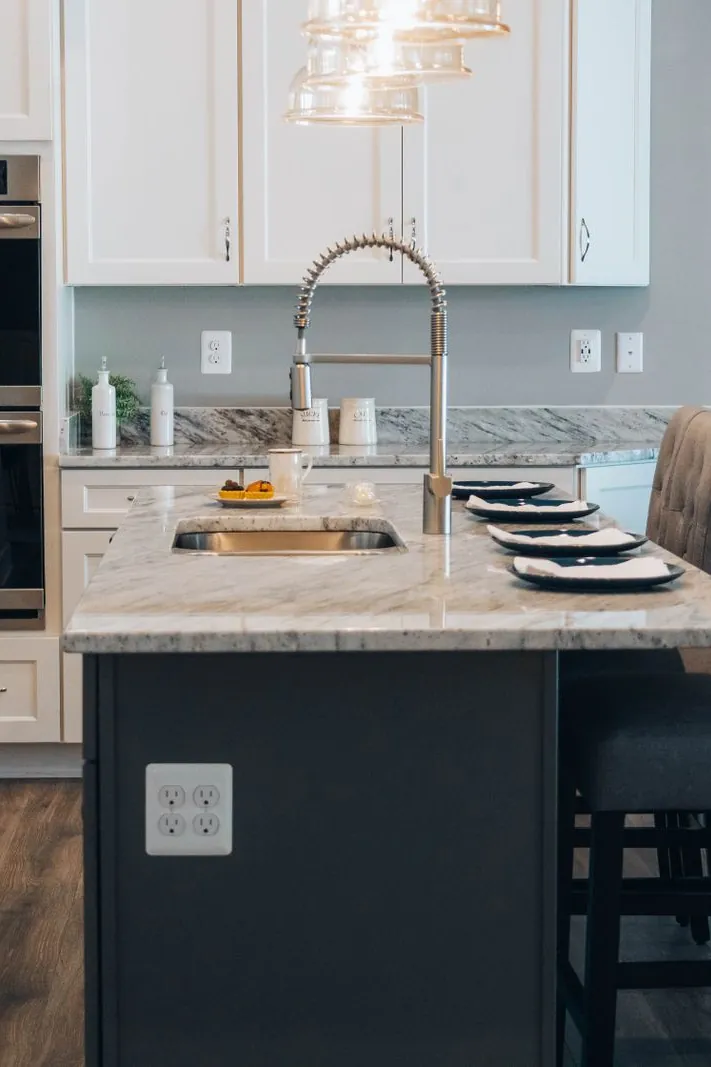
- Leave at least 36 inches of walkway behind stools so traffic flows freely.
- Pick counter height stools for a 36 inch counter and bar height for taller islands.
- Space stools 24 inches apart so elbows never bump during meals.
- Choose wipe clean seats in linen-look vinyl for busy family kitchens.
Island seating turns a work zone into a gathering place, which is the heart of this style. Keep the overhang deep enough for knees, add a foot rail for comfort, and choose stools that tuck away cleanly. When seating feels generous, guests linger, homework spreads out, and the kitchen earns its place as the home’s true center.
Quartz Versus Marble

Credit: Vidal Balielo Jr.
| Surface | Feel | Care |
|---|---|---|
| Quartz | Even, quiet | Simple wipe |
| Marble | Veined, classic | Seal often |
| Butcher Block | Warm, soft | Oil monthly |
| Soapstone | Dark, matte | Wax yearly |
Quartz suits busy cooks who want the marble look without the upkeep, while real marble rewards careful owners with depth no engineered stone fully copies. Many modern traditional kitchens mix the two, with marble on a baking zone and quartz everywhere else. Decide by habit: honest about spills, choose quartz; devoted to patina, choose marble.
Order full slabs to view before cutting, and check veining under your own kitchen light. A sample chip never tells the whole story, but a full slab viewed at home rarely disappoints.
Hardware Finish Rules

Credit: Golboo Maghooli
Do:
- Do test knobs and pulls on one door before buying the full set.
- Do match the faucet finish to the pulls for a unified scheme.
- Do choose larger pulls on wide drawers for comfortable grip.
Don’t:
- Don’t mix shiny and matte finishes on the same cabinet run.
- Don’t pick tiny knobs for heavy drawers that need real leverage.
- Don’t forget the hinge finish; it shows every time doors open.
Hardware is jewelry for cabinetry, small in size and large in effect. For table styling that echoes this restraint, see these dining room centerpiece decorating ideas and note how one finish repeated calmly beats many finishes competing loudly. Keep the count low, the quality high, and the room will feel considered rather than decorated.
Budget Traditional Facts
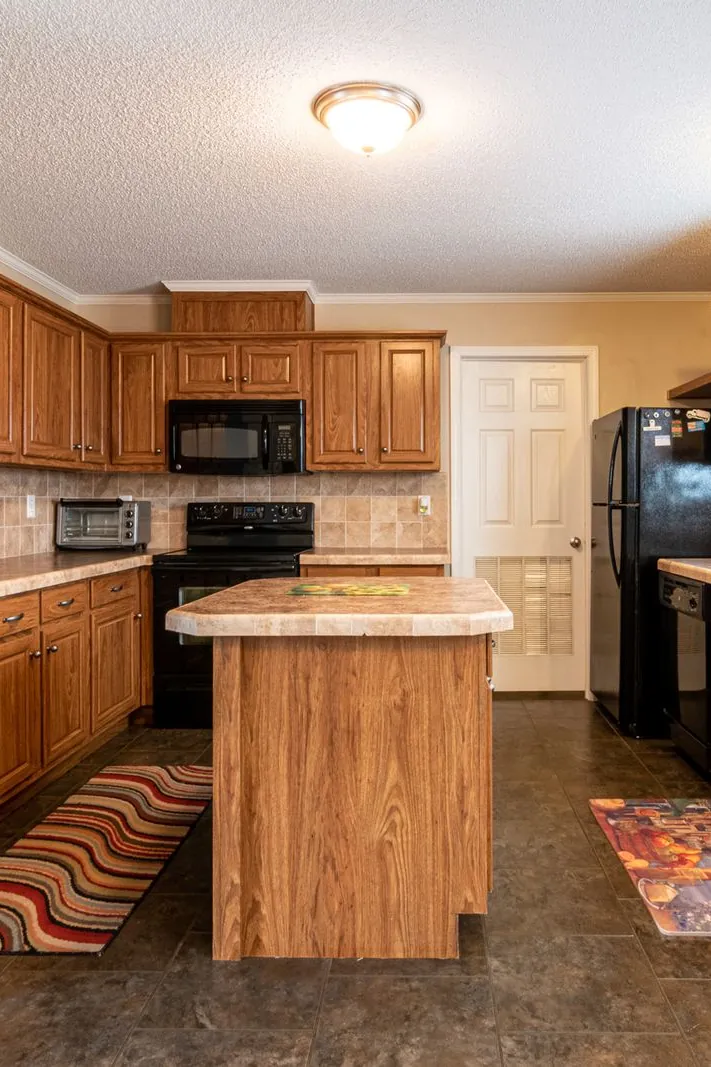
Credit: Curtis Adams
Cost: Painting cabinets costs a fraction of custom replacements.
Time: A weekend hardware swap refreshes a whole kitchen fast.
Skill Level: Most updates suit careful DIYers with basic tools.
Best For: Owners who want classic warmth on a modest budget.
Budgets reward patience in this style. Paint before replacing, swap hardware before stone, and phase the work across seasons so quality never suffers for speed. I’ve noticed that rooms refreshed in stages often feel more personal, since each choice gets time to prove itself before the next one arrives. Spend where hands touch daily: faucets, pulls, and seating. That order keeps costs calm and results high.
Open Shelving Balance
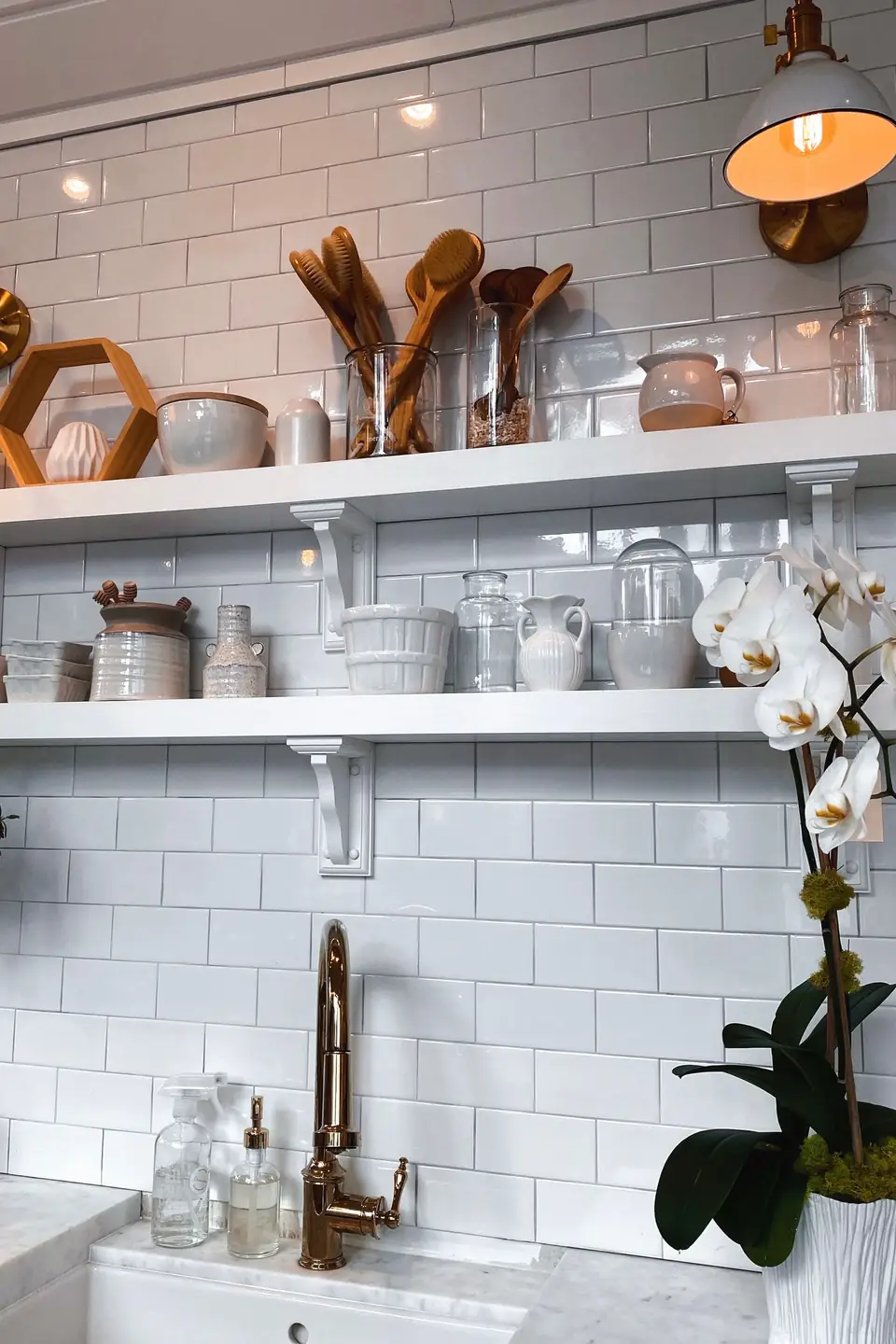
Credit: Lauren Cuddy
Open shelves suit this style only in small doses. One or two runs beside the range or sink give the eye a rest from solid doors, while the rest of the kitchen stays closed and calm. Style them with everyday dishes in one color family, and leave gaps so each piece breathes.
Keep the shelf count low and the styling simpler than you think it should be. Dust settles fast near cooking zones, so choose pieces you actually use and wash often. When shelves feel collected rather than crowded, the whole kitchen reads lighter and more intentional. Rotate pieces seasonally to keep the display fresh without buying anything new.
Range Hood Statements

Credit: Curtis Adams
- Choose a plaster or shiplap hood cover for a soft traditional focal point.
- Keep the hood width equal to the range for proper capture and balance.
- Hide the vent inside cabinetry when a statement cover feels too bold.
- Match the hood finish to the cabinets so it reads built in.
A range hood anchors the cooking wall and sets the tone for the whole kitchen. In this style it should feel architectural, not industrial, with clean lines and a quiet finish. Size it honestly for your cooking habits, vent it outside when possible, and let it stand as the room’s single bold gesture.
Seasonal Kitchen Refresh
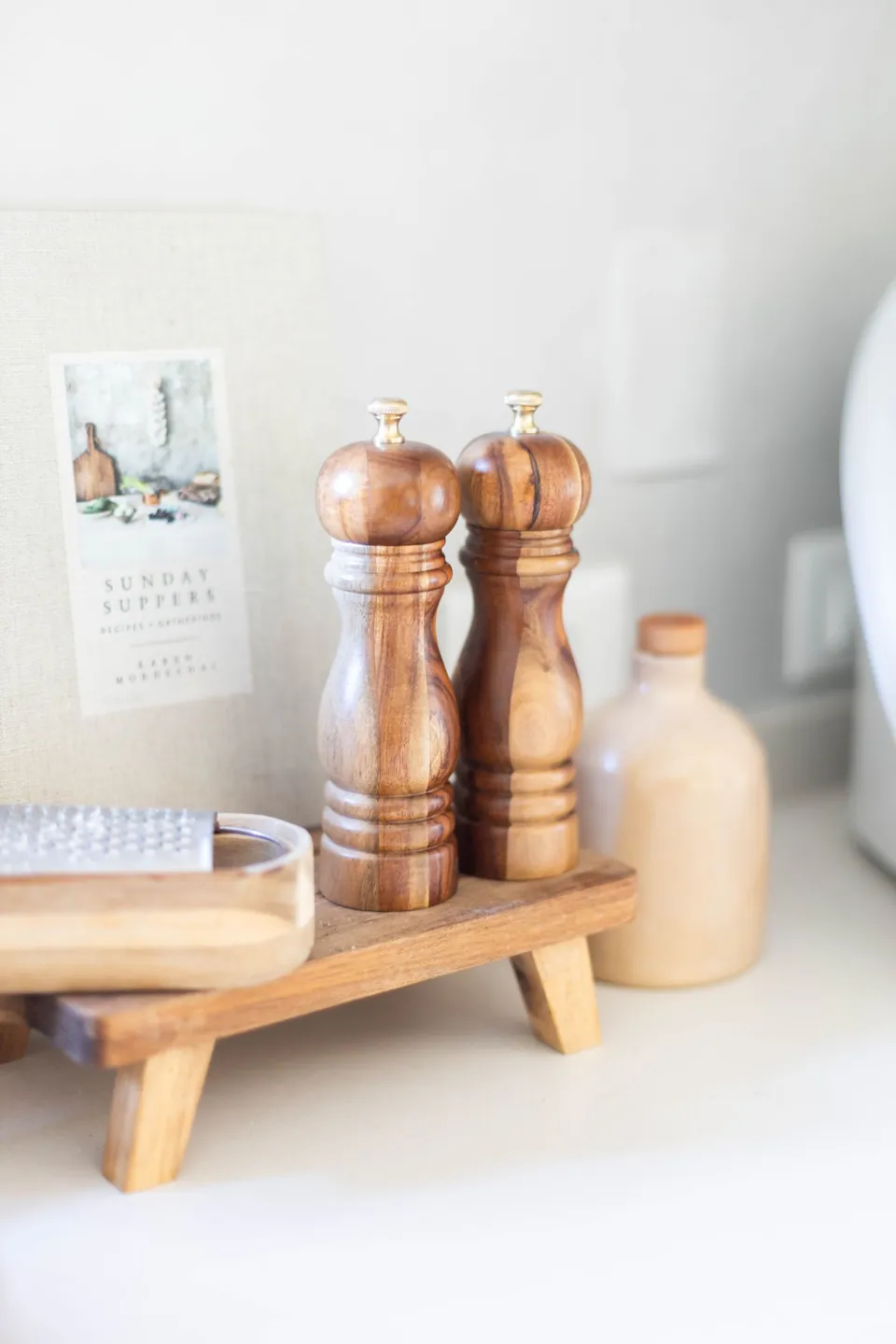
Credit: Vale Bocchi
Quick Tip: Swap textiles, not fixtures, with the seasons. Linen runners, a bowl of citrus, and fresh herbs refresh a kitchen for little money and no renovation.
Seasonal touches keep a classic kitchen feeling alive without disturbing its bones. Spring brings herbs and pale linens, summer adds citrus and glass, autumn leans on wood and warm metals, and winter favors candles and deep greens. Change only what sits on surfaces, never what is fixed to walls, and the room stays timeless while still marking the year. That rhythm suits busy homes, since a refresh takes an afternoon rather than a contractor.
Stark To Warm

Credit: Christa Grover
BEFORE: Flat white cabinets, cold steel, and bare counters made the kitchen feel like a showroom, bright but unwelcoming at dinner time.
AFTER: Wood stools, brass pulls, linen runners, and a warm rug turned the same room into a place where people linger after meals.
Warmth comes from natural materials layered in small amounts. Wood softens steel, linen softens stone, and brass softens white, so no single surface dominates. Add one warm element at a time and step back to judge, since the goal is a gentle glow rather than a themed room. When the balance lands, the kitchen welcomes cooks and guests alike.
Refresh Steps Guide

Credit: Max Vakhtbovych
- Clear counters completely, then return only items used every single day.
- Swap hardware to brass or matte black for an instant traditional lift.
- Add a runner and a plant to soften hard surfaces right away.
- Change pendant shades or bulbs to warm light for evening glow.
A refresh works best in order, from largest surface to smallest detail. Start with paint or hardware, move to textiles, and finish with plants and bowls that cost little but change mood fast. Resist buying everything at once; live with each step for a few days and let the room tell you what it still needs. Small patient moves beat one rushed overhaul.
Light Versus Dark

Credit: Derwin Edwards
| Scheme | Mood | Best Light |
|---|---|---|
| Light Cabinets | Airy, calm | Dim rooms |
| Dark Island | Grounded, rich | Sunny rooms |
| Mixed Tones | Balanced, custom | Any light |
| All White | Crisp, classic | Needs warmth |
Light schemes open small kitchens and suit north facing rooms, while dark islands ground large spaces and hide daily scuffs. Mixed schemes often win, pairing light uppers with a darker island for depth without gloom. Test both under your own bulbs, since store lighting lies about warmth every time.
Add warm bulbs and wood accents to keep light schemes cozy, and add mirrors or glass fronts to keep dark schemes open. Balance, not brightness alone, decides whether a kitchen feels welcoming.
Layering Texture Rules

Credit: Ioana Motoc
Do:
- Do combine smooth stone, grained wood, and soft linen in every zone.
- Do repeat the dominant texture twice so it reads intentional.
- Do use matte finishes to calm glossy appliances and stone.
Don’t:
- Don’t stack more than three textures in one small sightline.
- Don’t pair rough stone with shiny tile without a calm bridge.
- Don’t forget touch: textures should invite hands, not just eyes.
Texture does the quiet work in this style, giving neutrals their depth without new color. When a room feels flat, the fix is rarely paint; it is usually a missing layer of wood, linen, or woven fiber. Add one texture, step back, and repeat only if the room still asks for more.
Timeless Kitchen Facts
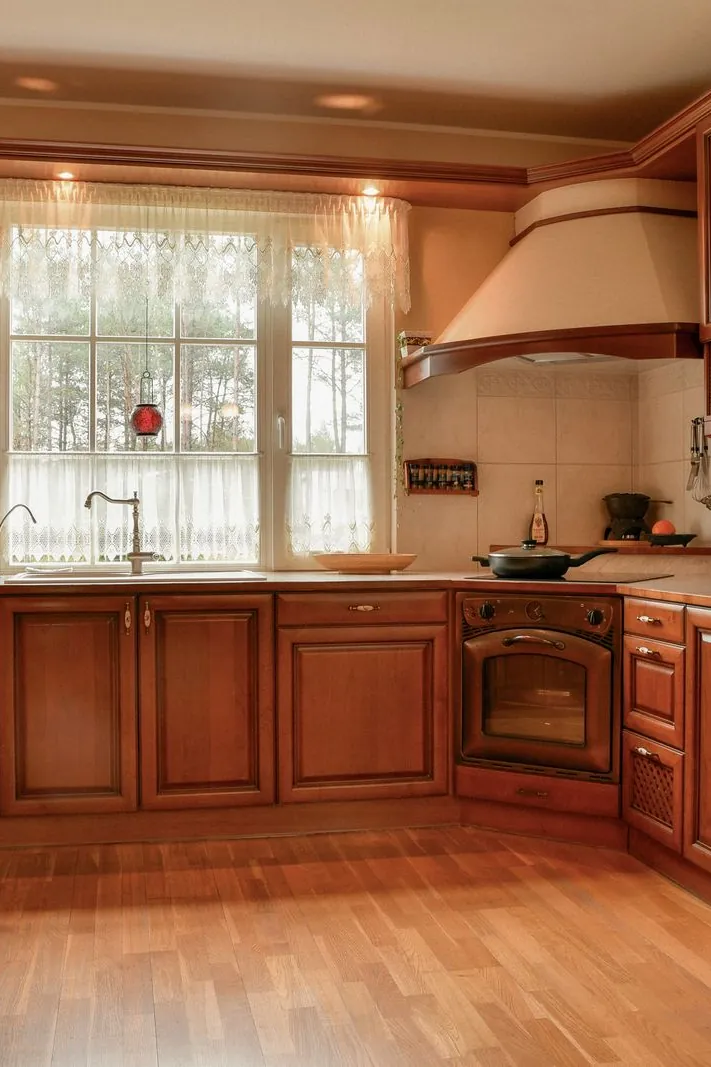
Credit: Margo Evardson
Cost: Shaker cabinets sit mid range among stock and custom options.
Time: A cabinet repaint takes one to two weeks with drying.
Skill Level: Hardware and paint suit patient beginners well.
Best For: Homes that value classic lines with modern ease.
Timelessness is a practical choice, not just a look. Classic profiles repaint well, standard sizes replace easily, and neutral stones pair with future hardware without fuss. That’s why many experts recommend starting with cabinets and counters that outlast trends, then letting smaller details change with taste. The kitchen stays current because its bones never shouted. Choose once, choose well, and enjoy the room for years.
Conclusion
Every idea here shares one promise: a kitchen that honors classic craft while living comfortably in the present. Start with cabinets and counters, add brass and texture in small doses, and let the room grow calmer with each choice. If this guide sparked a plan, save it to Pinterest so your favorite details stay close when shopping starts. With modern traditional kitchen design as your guide, the result will feel both current and classic, a room that welcomes cooking, gathering, and quiet mornings for years to come.