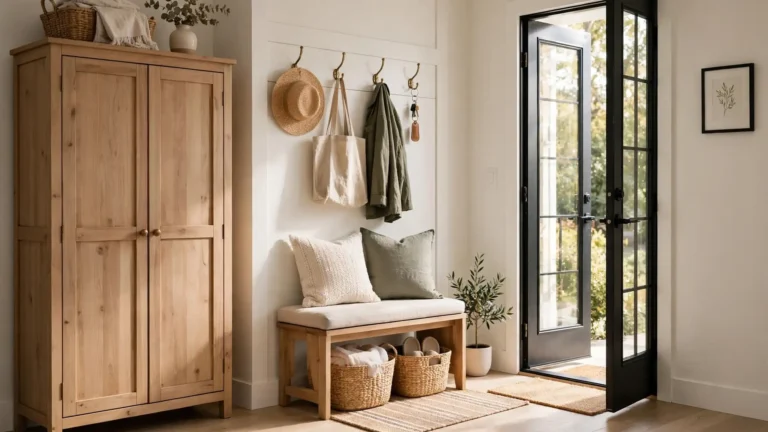
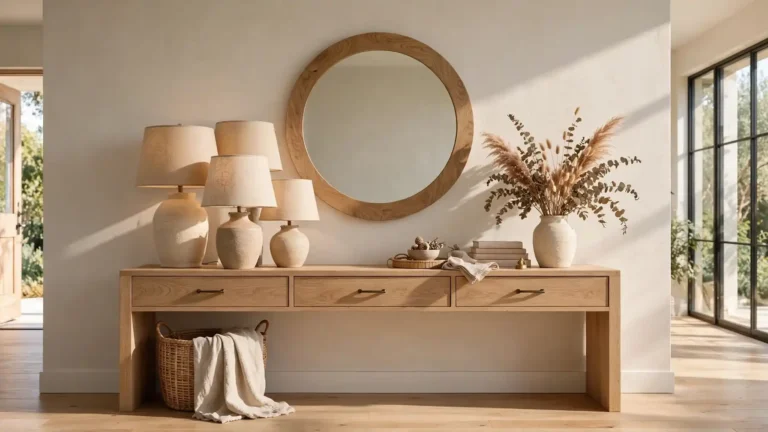
23 Entryway Table Decorating Ideas for a Stylish First Impression
The first ten seconds inside your front door decide how the house feels. A styled console, a mirror that catches the light, and one calm place for keys turn a pass-through into a welcome. These entryway table decorating ideas keep that moment simple: honest wood, warm light, and nothing on the surface that does not earn its spot.
No renovation hides in this list, and no single style owns it. A farmhouse table, a slim metal console, and a thrifted dresser all answer the same questions: where do keys land, where does light come from, and what does a guest see first? The same warm, lived-in thinking behind guest bedroom decor ideas works here too, just compressed into the four feet beside your door. Start with the mirror, end with one signature piece, and let the middle stay easy.
Round Mirror, Warm Welcome
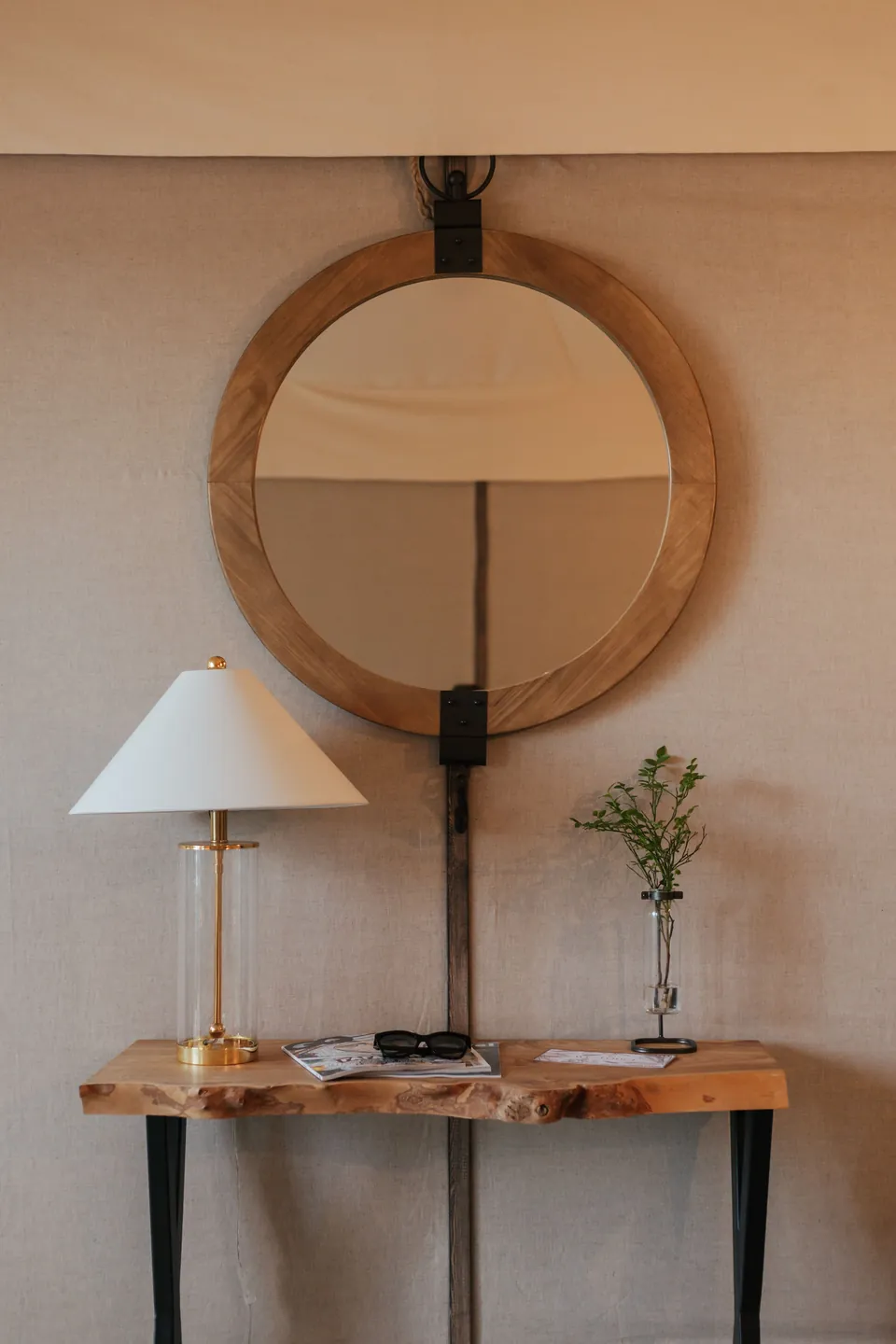
Credit : Ron Lach
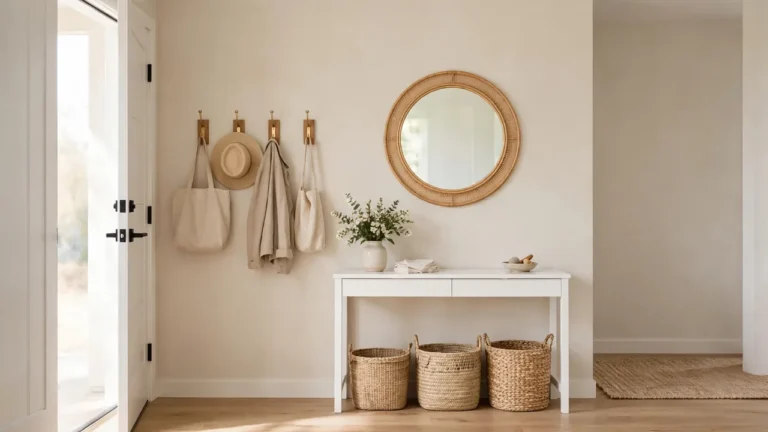
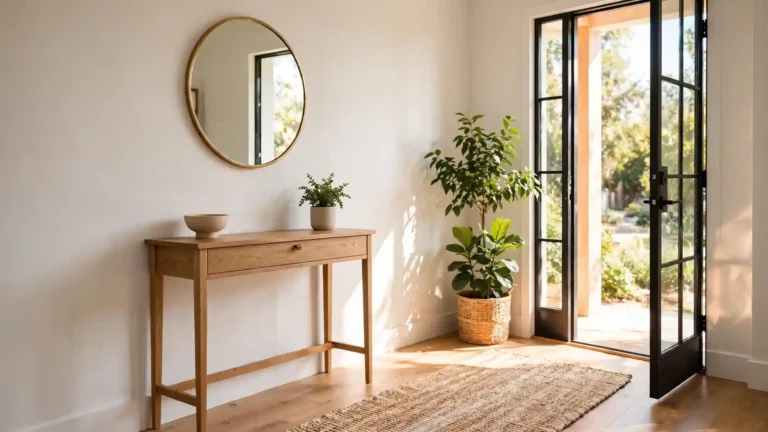
A round mirror softens every hard line an entry throws at you: door frames, stair rails, shoe corners. Hang one above the table and the room instantly feels wider, because the eye reads the reflection as extra space. It also throws window light back into corners that never see the sun.
Keep the mirror’s center near eye level, roughly fifty seven inches from the floor, and let its width land near two thirds of the table below. A wood frame warms modern rooms; a thin brass frame suits classic trim. One honest circle does more than three small decorations scattered beside it.
A Tray For Keys And Mail
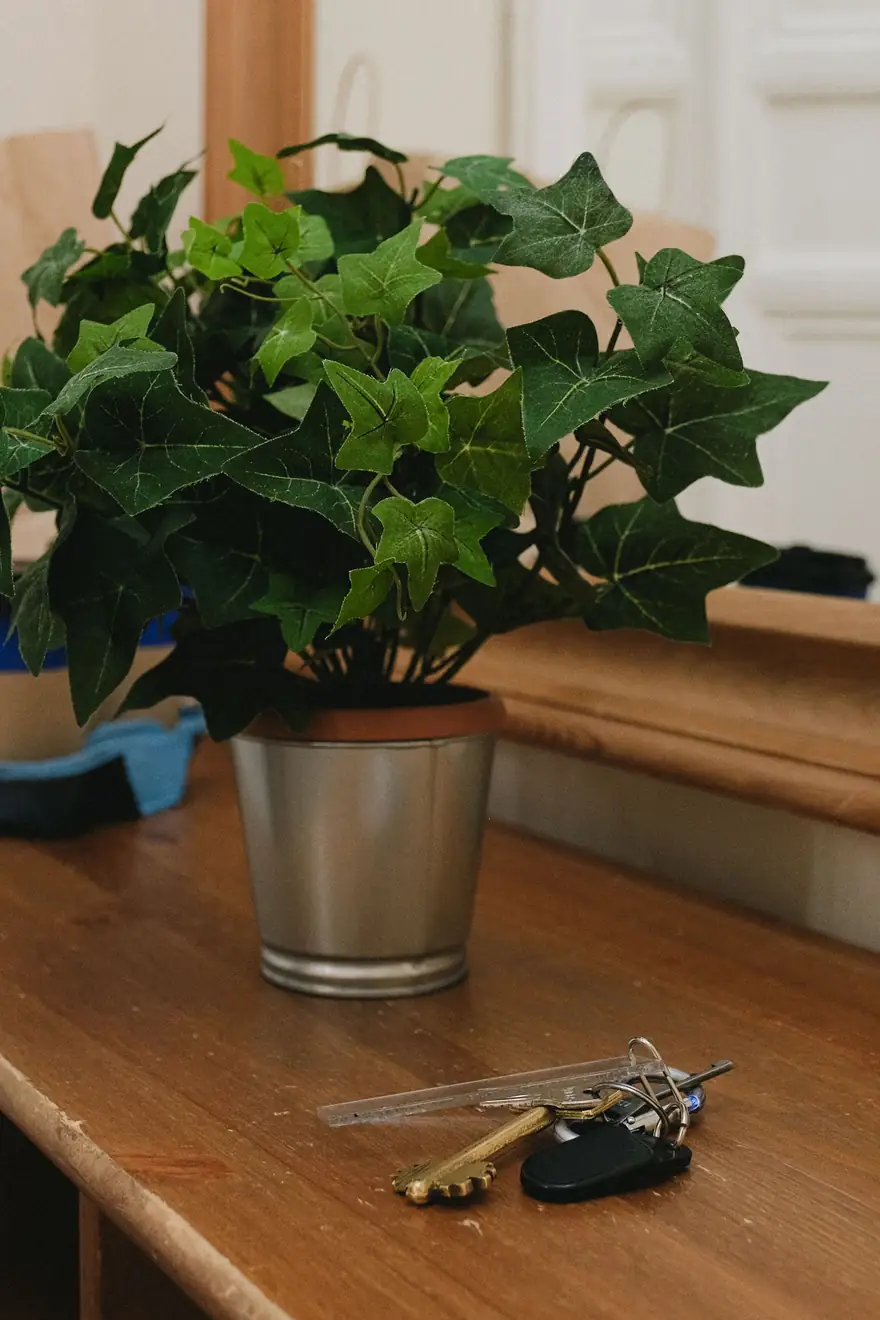
Credit : SHVETS production
- Pick a tray with raised edges, about fourteen inches long, so keys stay corralled instead of skating loose.
- Stand mail upright in a slot behind the tray; flat piles invite a week’s clutter.
- Set it on the side nearest the door handle, where hands reach first in the dark.
- Drop one small bowl inside for coins, spare buttons, and hair ties.
- Wipe it weekly; grit quietly scratches both the tray and the table.
Keys land where habit tells them to land, and a tray simply gives that habit a fence. Lost key arguments dropped to nearly zero in our house within a week of placing one. The table stops looking like a landing strip and starts looking deliberate.
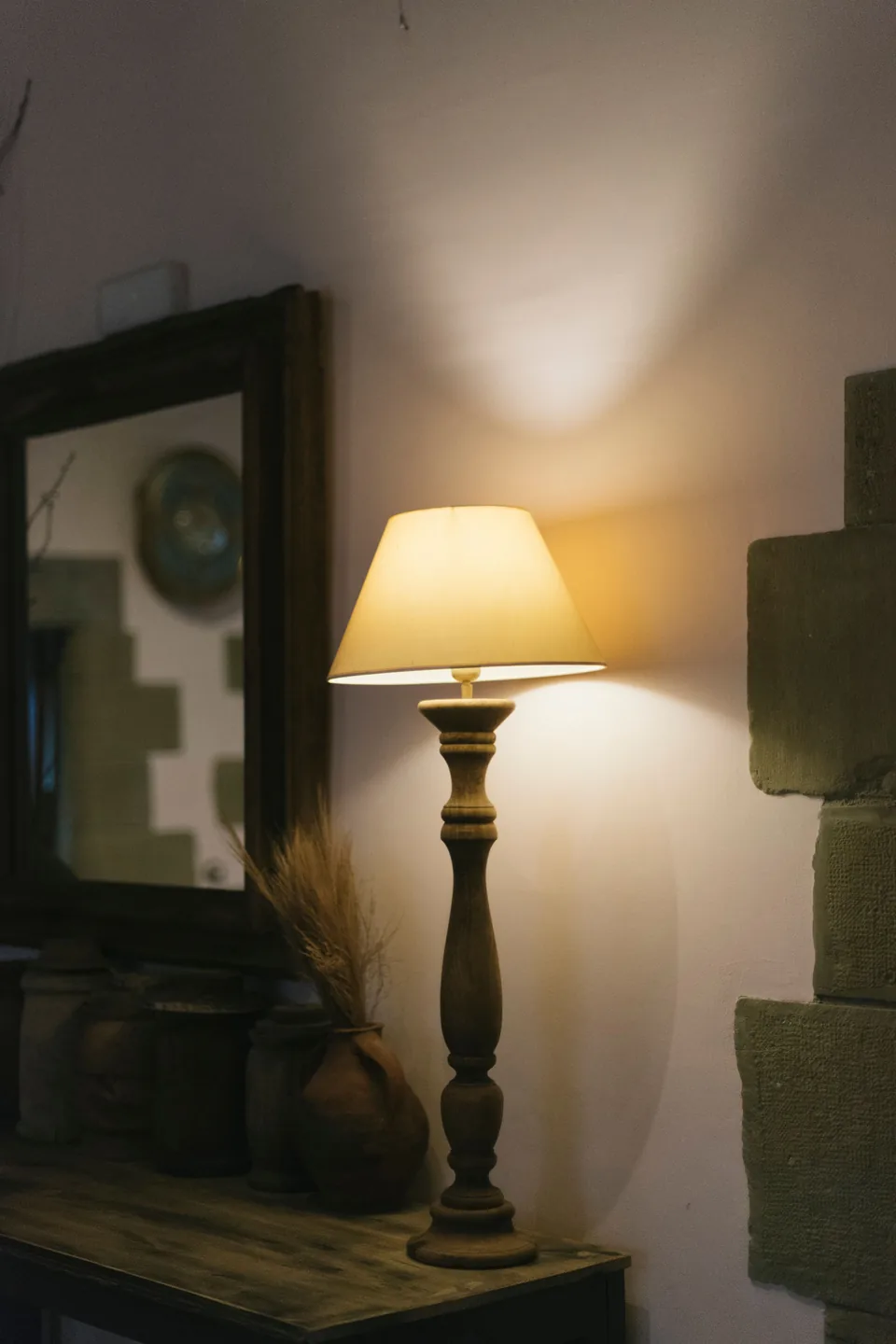
Lamp Glow After Dark
Credit : Alina Skazka
Quick Tip: Choose a warm bulb, 2700K or lower, and a shade that sends light down and out rather than up at the ceiling. Set the lamp on a timer so the entry glows at dusk even when nobody is home yet to switch it on.
Overhead entry lights glare off mirrors and make guests squint at the exact moment they should relax. A lamp pools light at table height instead, flattering faces and wood alike. It also keeps midnight arrivals from flooding the hall with harsh light. That low, golden pool is the difference between arriving at a house and arriving at a home.
Bare Wall To Finished Entry

Credit : Christopher Moon
BEFORE: The wall beside the door held nothing but a scuffed baseboard and a table that caught coats, catalogs, and yesterday’s coffee cup. Guests stepped in and saw a storage problem wearing a welcome mat.
AFTER: The same table now carries a lamp, one framed print leaning behind a plant, and a shallow bowl for keys. A round clock hangs above, the coats moved to hooks, and the cup lives in the kitchen again.
Nothing here cost more than an afternoon and a hardware store run. The change came from giving the wall one job, greeting people, and moving every other job somewhere else. Start with your own most ignored wall; the formula travels well.
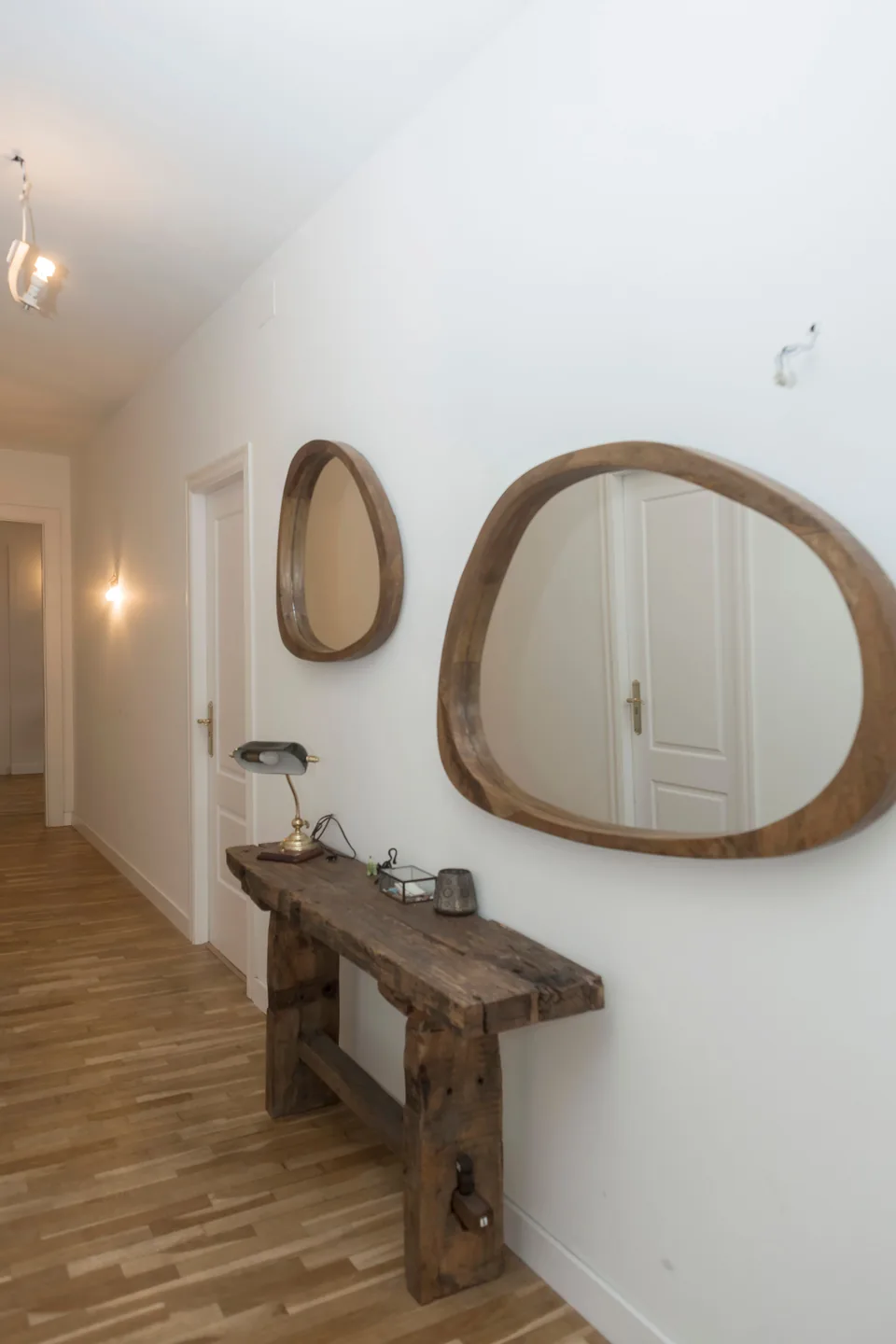
Layer Heights In Steps
Credit : Alina Skazka
- Start with the tallest piece first: a mirror, leaning art, or tall branches against the wall.
- Add the middle layer next, a lamp or a stack of two books, at roughly half that height.
- Fill the low layer last with a tray or bowl that stays under six inches tall.
- Step back to the doorway and check that your eye travels high, middle, low without snagging.
Flat tabletops look staged because everything sits at one altitude, like items in a lost and found. Three heights create a small skyline the eye enjoys crossing. Once the skyline works, resist adding a fourth layer; the empty space between heights is part of the design.
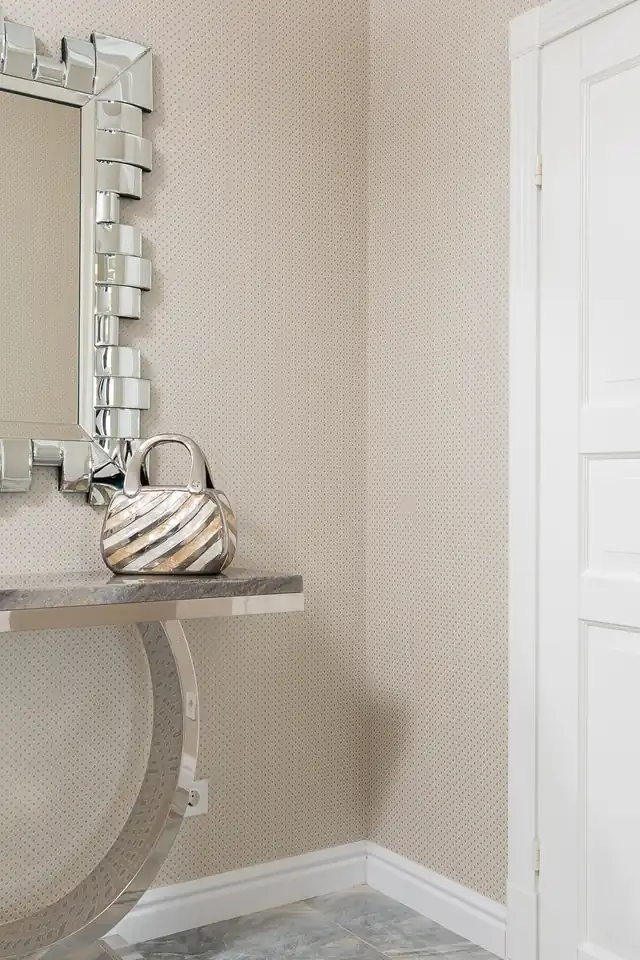
Wood Versus Metal Tables
Credit : Max Vakhtbovych
| Detail | Wood Console | Metal Console |
|---|---|---|
| Warmth | Warm, grain hides small scratches | Cool, sleek, shows every fingerprint |
| Weight | Heavy, stays planted against bumps | Light, slides aside for cleaning |
| Style fit | Farmhouse, classic, cottage entries | Modern, glam, small space entries |
| Upkeep | Oil or wax twice a year | Wipe weekly, watch for rust |
Neither material wins a whole house; the winner is the one that matches your traffic. Wood forgives the daily knock of bags and elbows, while metal keeps narrow halls feeling airy and open. Measure your wall, count your door swings, then decide with your tape instead of your mood. The right table disappears into daily life and only shows up when guests compliment it.
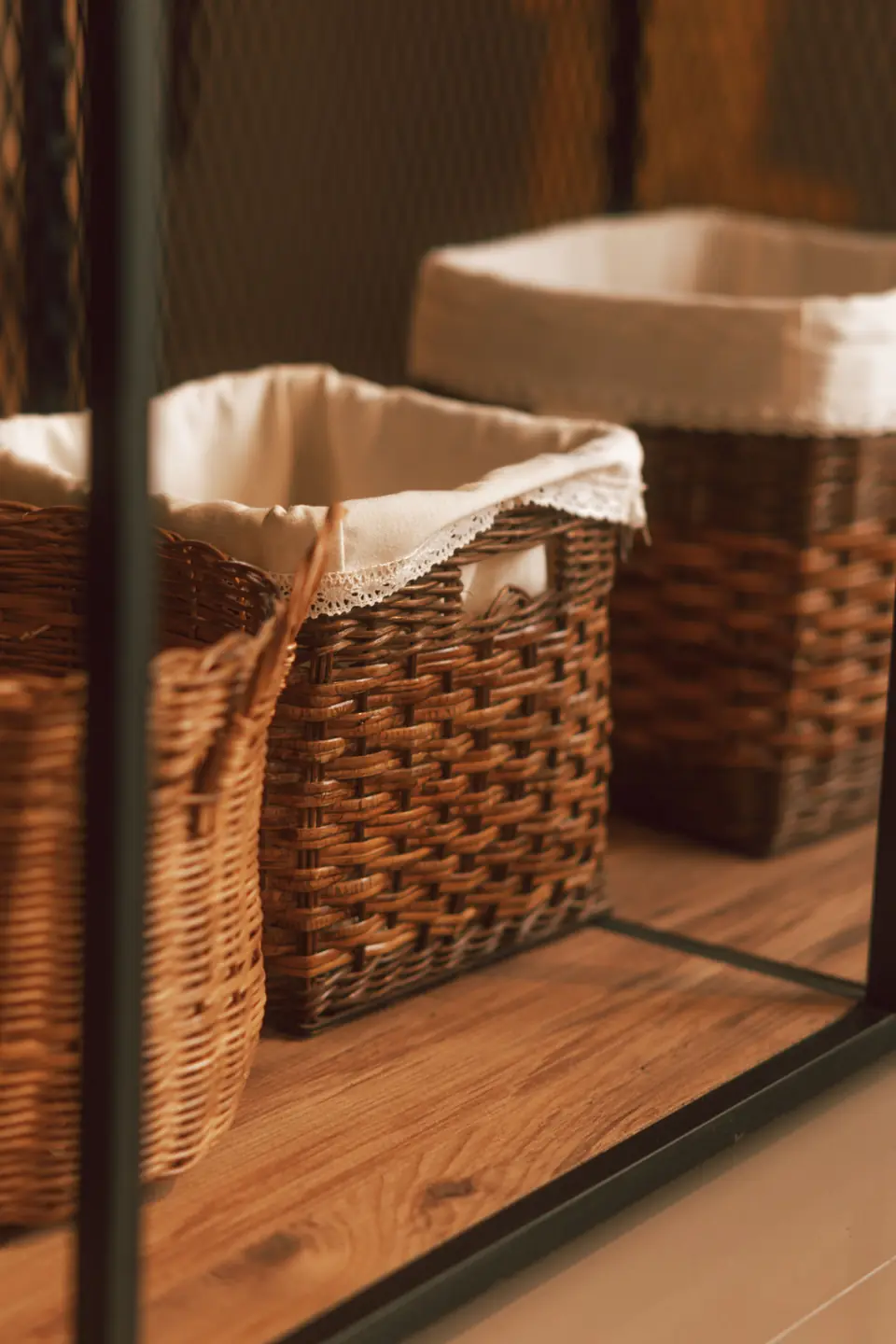
Baskets Beneath The Table
Credit : Orhan Pergel
Do:
- Measure under the table first; baskets should slide in with an inch to spare.
- Assign each basket one job: shoes, scarves, dog gear, or returns.
- Choose lids or cloth liners for anything messy at a glance.
- Label the inside rim where only your household sees it.
Don’t:
- Stuff baskets past the rim; overflow reads as clutter, not storage.
- Mix clean blankets with muddy boots in the same weave.
- Buy six matching baskets before testing one size.
The floor under a console is free storage most entries ignore. Baskets turn that shadow into a system guests never notice, which is exactly the point. Woven texture also softens the hard legs and edges an entry collects.
Small Entry, Smart Facts

Credit : Kim Delsame
Cost: Low; a floating shelf, a small mirror, and one hook strip cover most narrow halls.
Time: One hour to measure, mount, and style the surface.
Skill Level: Beginner; a level and a stud finder are the only special tools.
Best For: Apartments and split level entries with no room for a full table.
A small entry fails when it borrows ideas from a big foyer. Slim pieces at the right height make even a three foot landing feel considered. I’ve seen this work well in many cases: the narrower the space, the more every inch of styling shows, so keep the palette quiet and the surface nearly bare.
Tall Branches, Soft Height
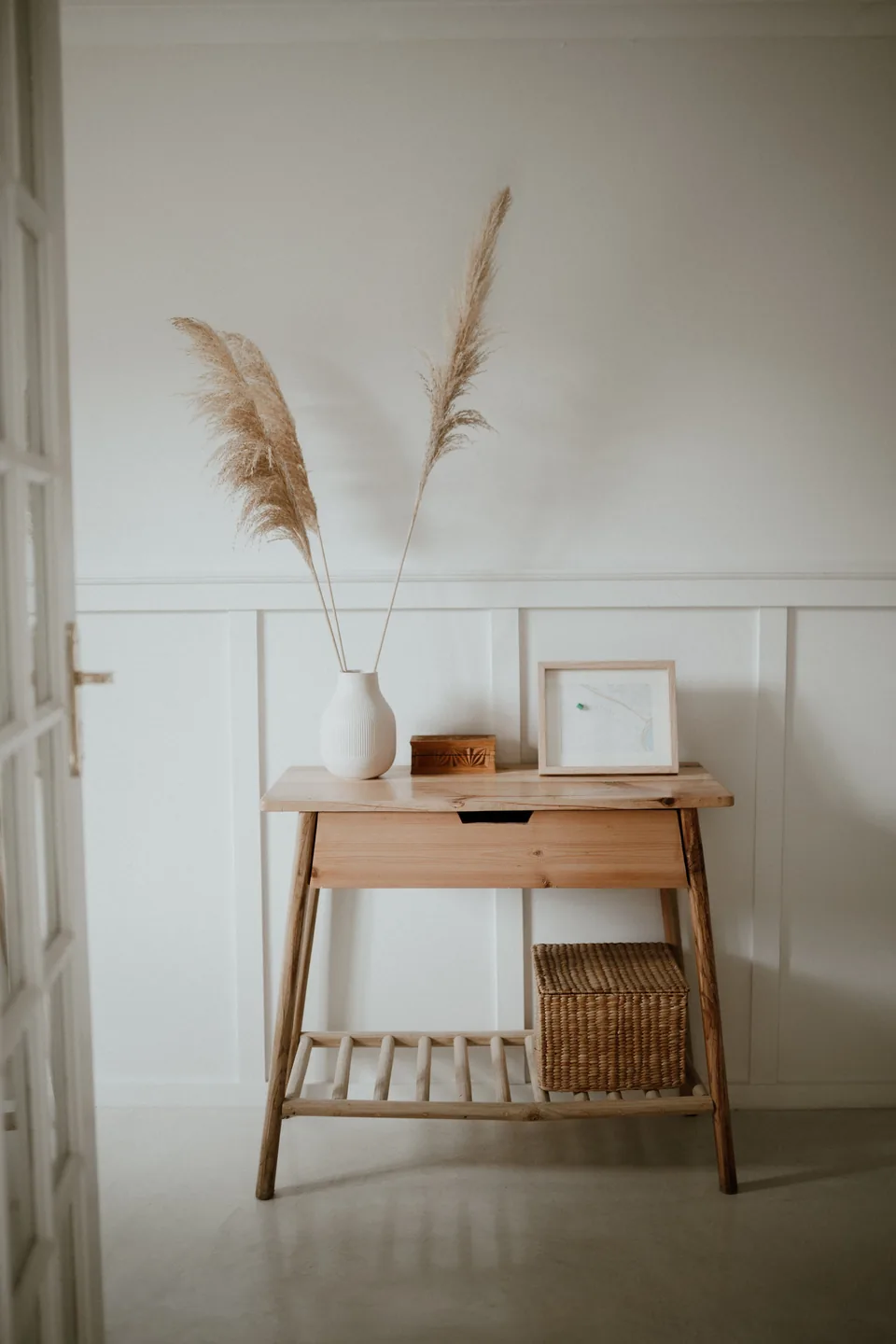
Credit : Taryn Elliott
Branches do the work of art without asking for a frame or a nail. A stoneware vase holding pampas, eucalyptus, or bare curly willow pulls the eye upward and makes low ceilings feel taller. The softness also balances all the straight lines of doors and trim. They ask for no water and no fuss in return.
Cut stems so the tallest reach about twice the vase height, and angle a few shorter ones forward for depth. Dried arrangements ask for nothing but a monthly dusting with a hair dryer on cool. Keep them clear of lamp heat, and the arrangement will outlast several seasons of fresh flowers.
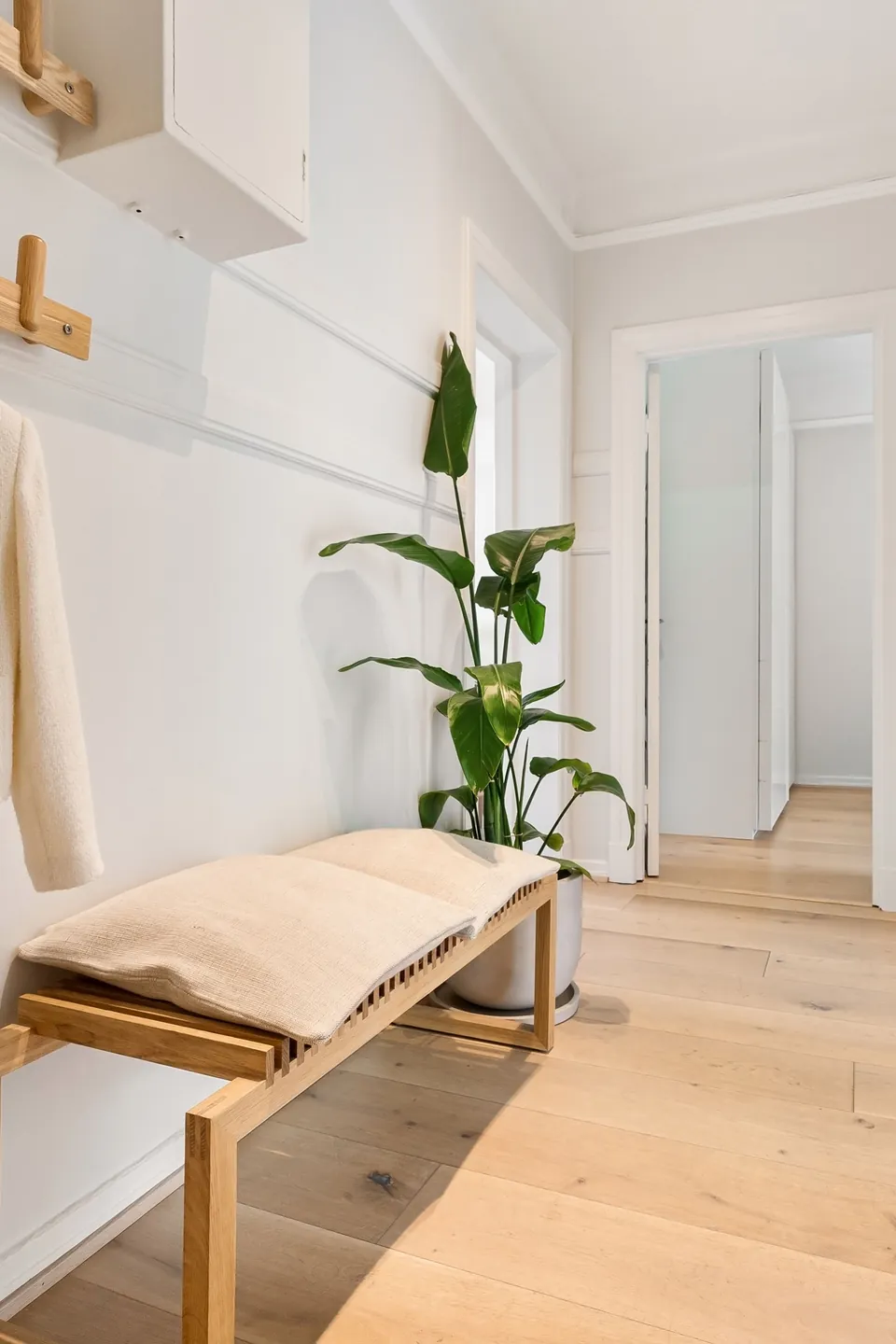
A Bench Beside The Table
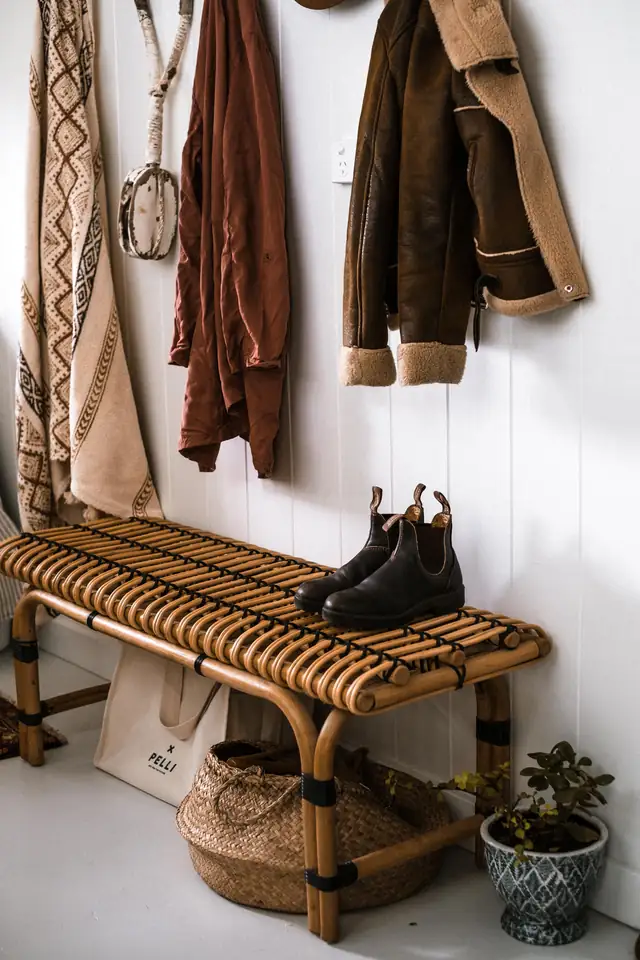
Credit : Rachel Claire
- Choose a bench near dining chair height, about eighteen inches, so sitting to lace shoes feels natural.
- Slide a low basket or two beneath it for the shoes that live by the door.
- Add one firm cushion; soft, slouchy pads slide off and look untidy within days.
- Hang two hooks above it at shoulder height for the coats in daily rotation.
A bench turns the entry into a room people use instead of a hallway they cross. Guests perch there with bags and boots, and the table beside it stays clear for beauty instead of baggage. That division of labor keeps the whole arrangement calm.
Fresh Flowers, Weekly Habit

Credit : Max Vakhtbovych
Quick Tip: Buy one grocery bouquet on the weekly shop and split it: tall stems for the entry vase, short offcuts for the bathroom. Fifteen minutes of trimming on Sunday keeps the welcome fresh all week without a florist bill.
Fresh flowers tell guests the house is awake and expecting them, a signal no candle or print fully replaces. In my experience even a plain jar of grocery roses changes how arriving home feels after a long day. When the budget pinches, one dramatic stem in a tall vase carries the same message. Rotate the vase a quarter turn every few days so every side gets its moment in the light.
Dated Corner To Warm Welcome

Credit : Leeloo The First
BEFORE: A dark corner by the door held a heavy console, a yellowed lampshade, and a mirror spotted at the edges. The space worked, technically, the way a waiting room works. Nobody lingered there.
AFTER: The console stayed, but paint lifted it two shades lighter, the shade became clean linen, and the mirror got a fresh frame in warm brass. A plant and one bright book finished the corner. Now it glows like it means it.
Most dated entries hide good bones under tired accessories. Before replacing furniture, swap the shade, frame, and surface clutter; the best entryway table decorating ideas usually rescue what you own instead of replacing it. Guests feel the warmth long before they spot what changed.
Seasonal Swaps In Steps
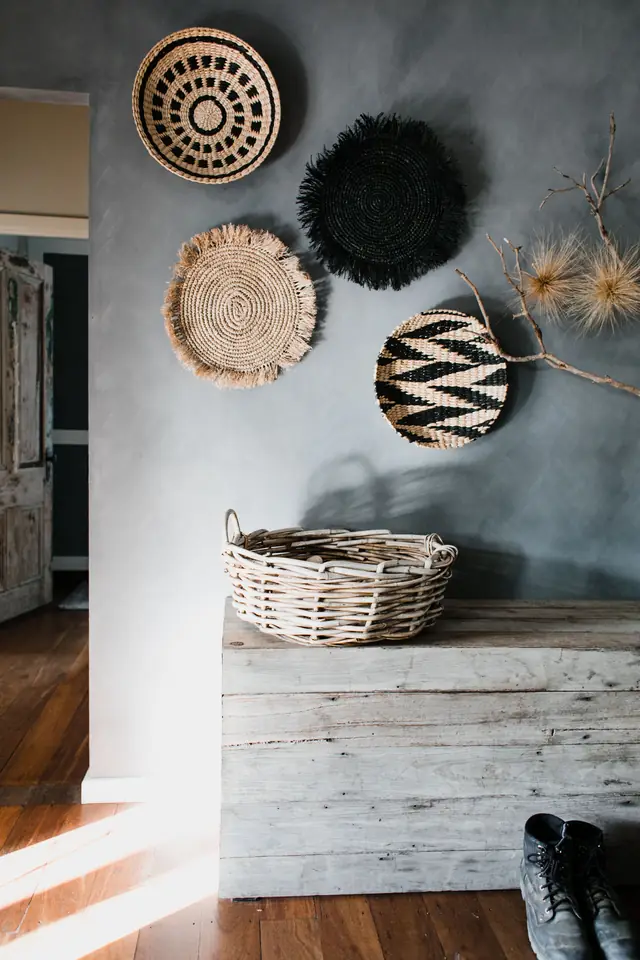
Credit : Rachel Claire
- Keep one storage bin labeled entry decor, holding the off season pieces in a closet.
- Swap the soft layer first: a runner, pillow cover, or throw in the new season’s color.
- Change the natural layer next: branches for spring, wheat for autumn, pine for winter.
- Finish with one small object: a ceramic pumpkin, a shell, a tiny wreath on the mirror.
A table that changes four times a year never goes stale, and the swap takes less time than a coffee break once the bin exists. Photograph each season’s version on your phone; next year you will restyle in minutes instead of guessing what worked. Restraint keeps it elegant: one swap per layer, never a theme park.
Round Versus Rectangular Mirrors
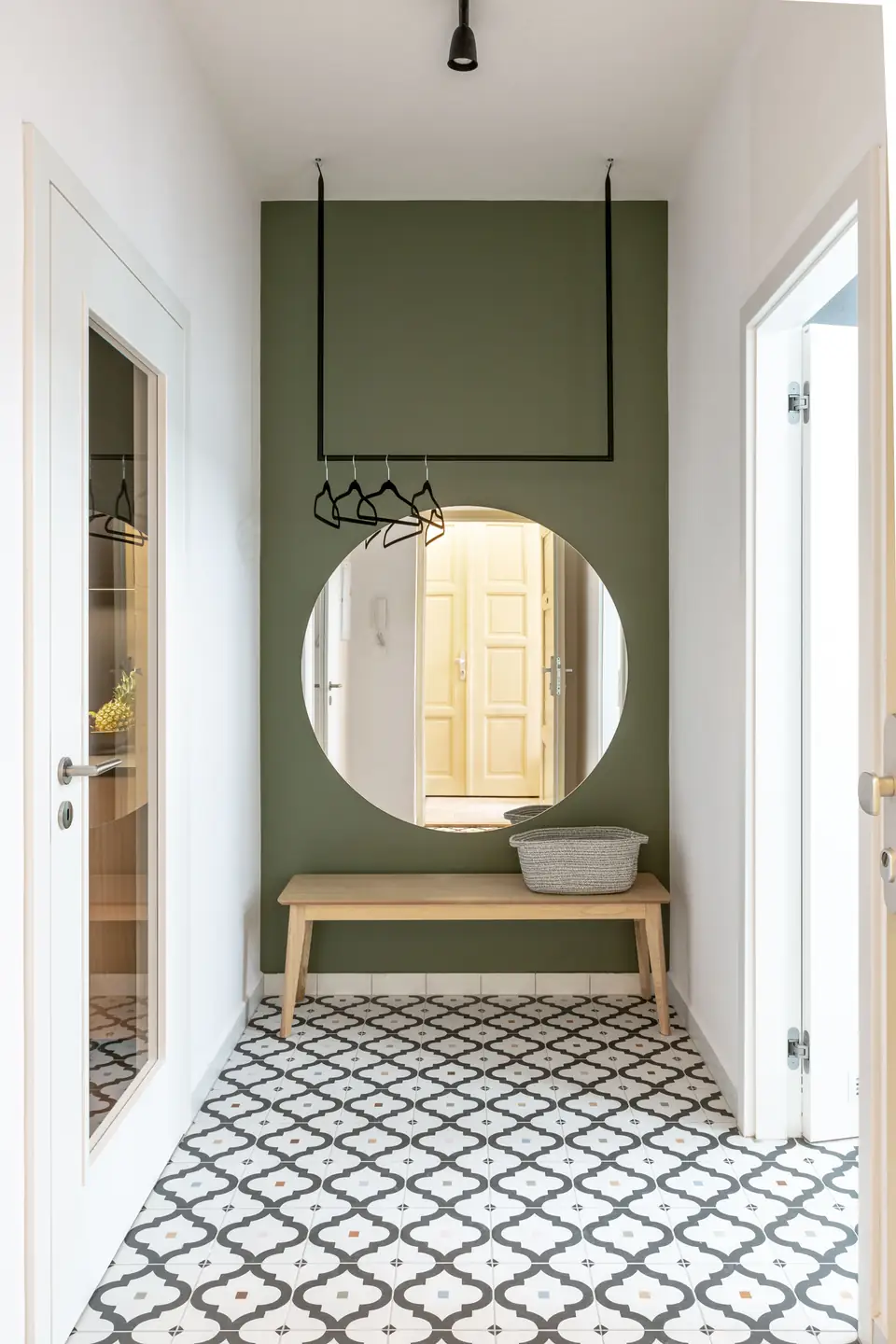
Credit : TurnKey Apartments
| Detail | Round Mirror | Rectangular Mirror |
|---|---|---|
| Feel | Soft, friendly, breaks up straight lines | Structured, formal, echoes the door |
| Light | Spreads light in every direction | Throws light along one plane |
| Pairs with | Curved lamps and organic decor | Long consoles and paneled walls |
| Final check | Full face at a glance | Head to waist outfit view |
Shape changes mood more than size does. Round mirrors relax an entry full of right angles, which describes nearly every foyer ever built, while rectangular frames add order where the architecture feels loose. Hold a large cardboard template of each shape above your table for a day before buying; the wall will tell you plainly which one it prefers, and returns are nobody’s favorite errand.
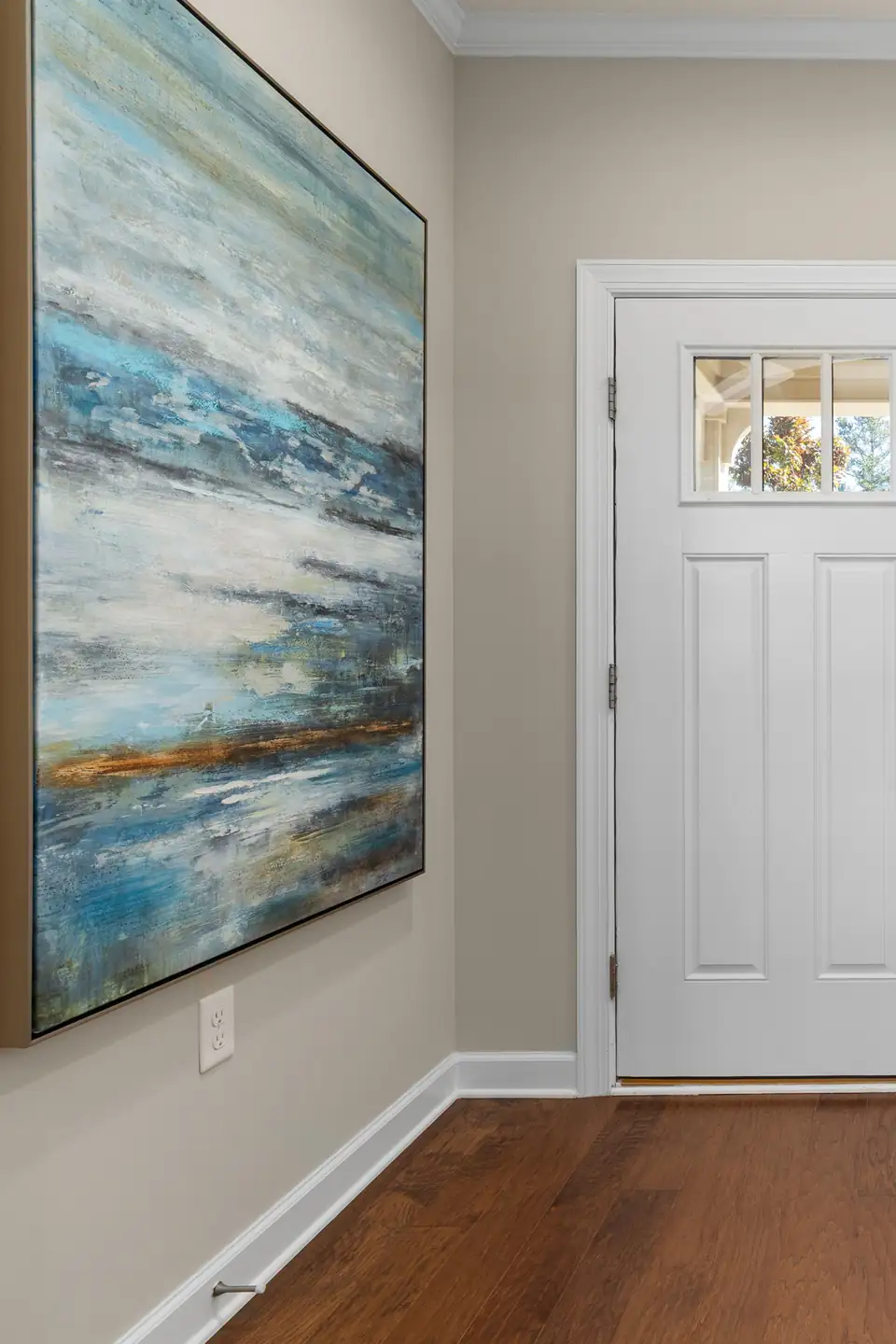
Art Above The Table
Credit : Curtis Adams
Do:
- Hang the art’s center near fifty seven inches, the same sight line as mirrors.
- Lean small pieces on the table against the wall before committing to nails.
- Repeat one color from the art in a book or bowl below it.
Don’t:
- Float a tiny frame high above a wide table; the gap looks accidental.
- Crowd the art with tall objects covering its lower corners.
- Match the art to the rug exactly; echoes beat copies.
Art gives the entry a point of view, the one thing storage furniture cannot fake. Choose a piece you love seeing twice a day, because you will. Guests read it as the house’s first sentence, so let it say something true instead of something merely safe.
Entry Facts That Matter
Credit : Lisa Anna
Cost: Low for most layers here: thrifted books, one plant, a secondhand tray.
Time: About thirty minutes for a full table restyle once pieces are gathered.
Skill Level: Beginner; if you can hang a picture, you can style a table.
Best For: Busy households that need the entry to reset in minutes, not hours.
Numbers keep decorating honest. A table you can restyle in half an hour actually gets restyled, while a fussy arrangement freezes in place for years. That’s why many experts recommend styling for the life you have: school runs, dog leads, grocery bags, and all. Beauty that survives Tuesday morning is the only kind an entry needs.
Greenery That Stays Fresh
Credit : Alex Tyson
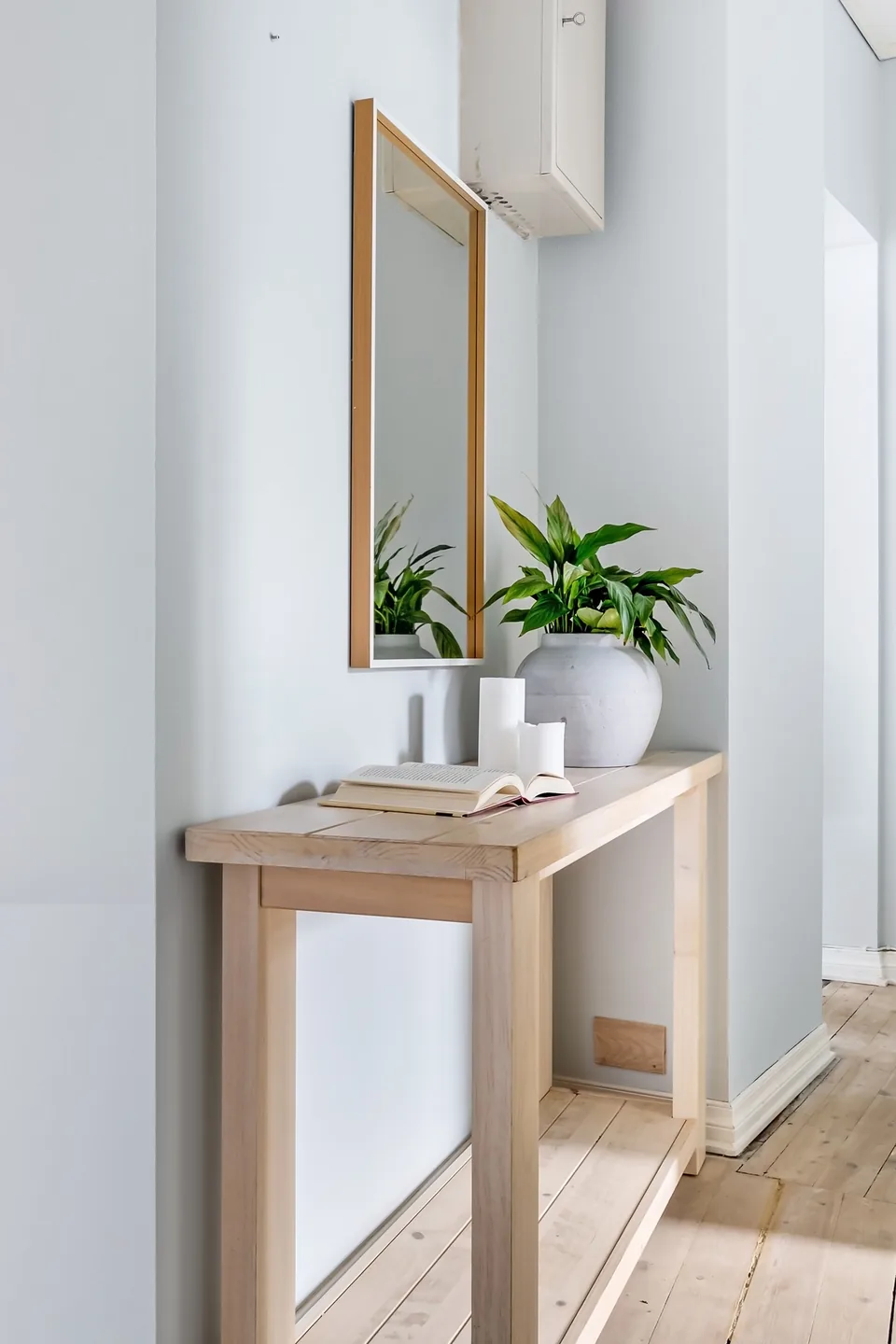
A living plant proves the entry gets light, air, and attention, which is why guests relax when they see one. Snake plants, pothos, and ZZ plants forgive dark corners and forgotten waterings better than most. Set the pot on the table’s end, away from the key tray’s traffic.
Terracotta suits farmhouse tables, matte ceramic suits modern ones, and a woven sleeve hides any nursery pot in seconds. Wipe leaves monthly; dusty foliage reads as neglect at exactly the moment you want the opposite. Rotate the pot a quarter turn weekly so growth stays even and the plant never leans toward the door.
A Scent At The Door
Credit : Alina Brashovski
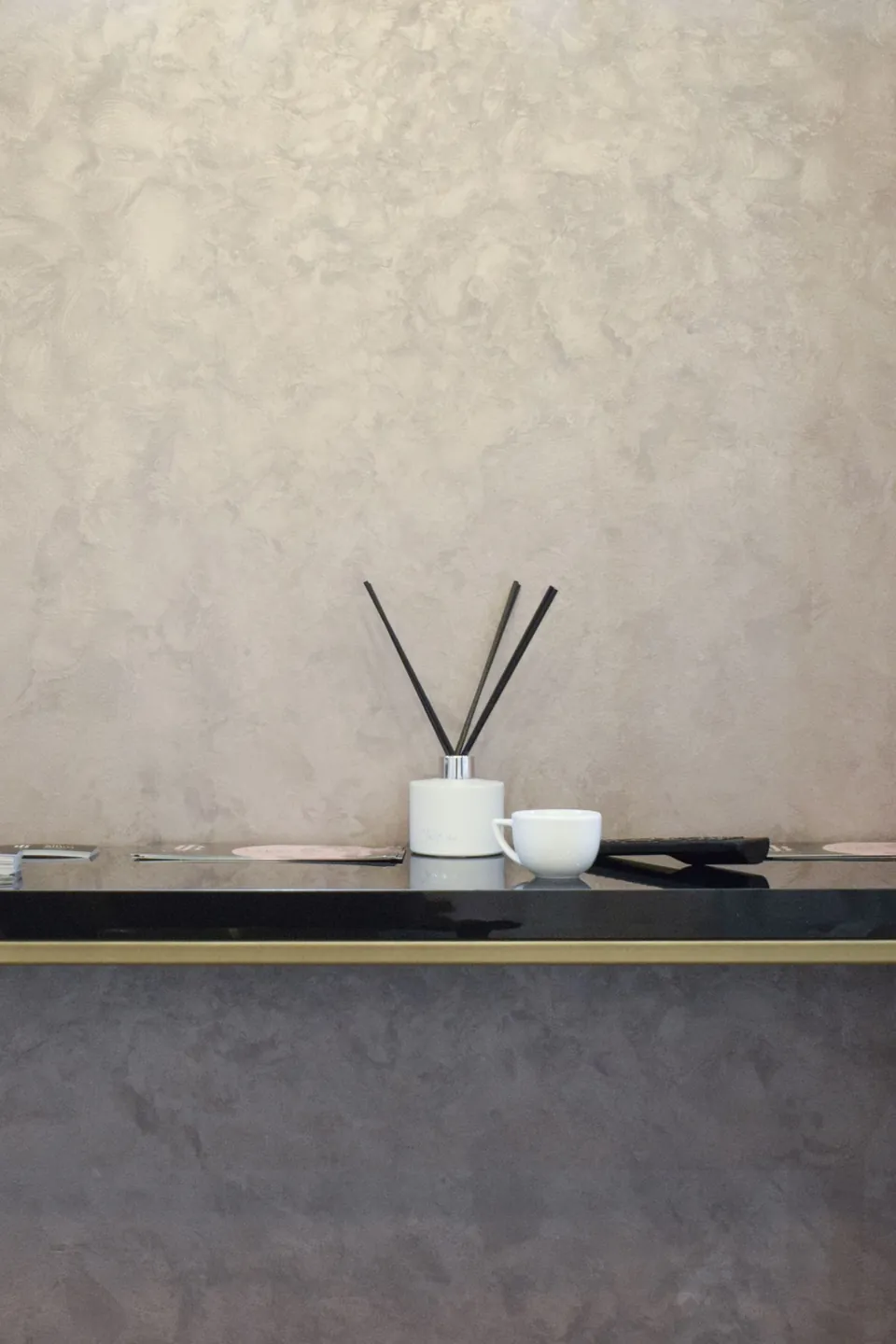
- Place scent where air moves gently, near the door’s swing, never beside a heat vent.
- Choose one note family, cedar, citrus, or linen, and let it own the entry alone.
- Reed diffusers work silently for weeks; flip the sticks every Sunday for a refresh.
- Keep a small candle for evenings, lit only while someone is home and nearby.
Smell registers before sight does, which makes the entry’s scent the true first impression. A calm, woody note tells arriving brains the house is settled and safe. Keep it subtle enough that guests notice the welcome, not the diffuser, and the whole home feels quietly confident.
Everything Has A Hook
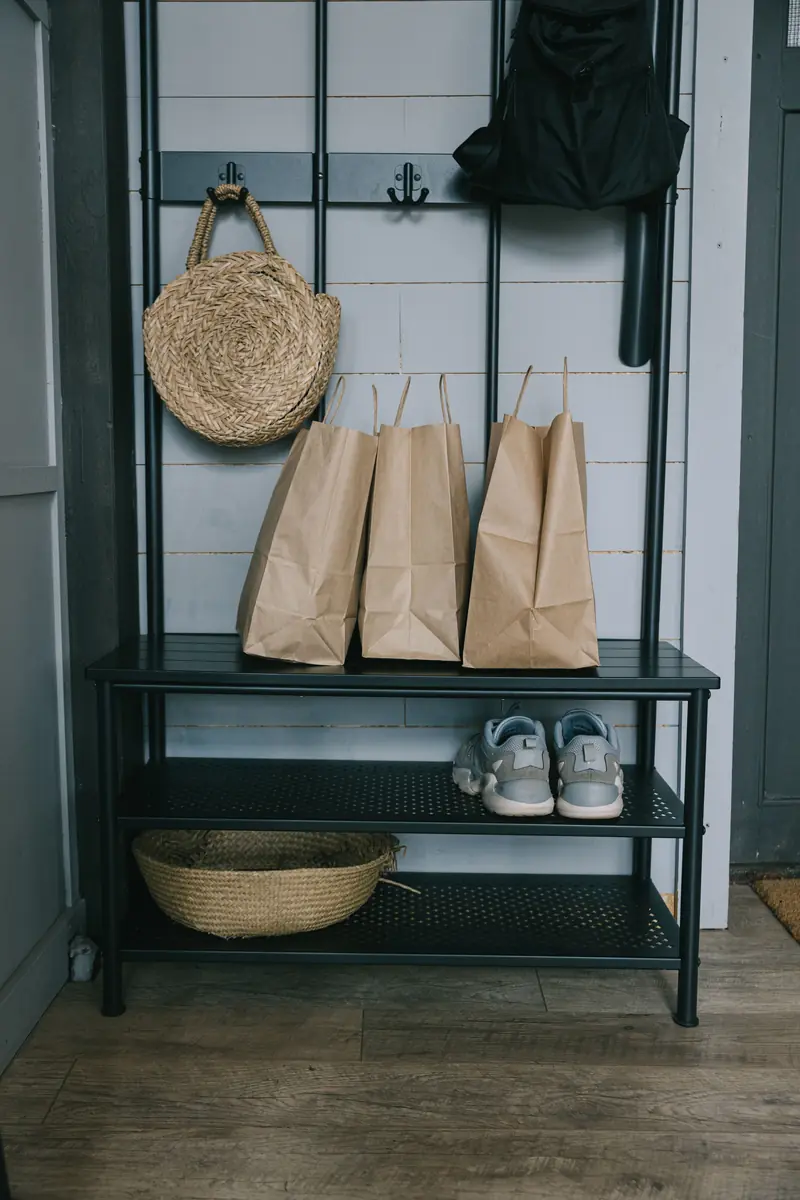
Credit : Ivan S
Quick Tip: Count what your household drops at the door for one week, then install exactly that many hooks, baskets, or slots, no more. Storage matched to the real pile ends the pile; storage matched to a fantasy just relocates it.
Every object in the entry needs an assigned landing, or it will choose the table. Hooks take coats and leads, a basket takes gloves, and the tray takes keys. The same rule runs through the calmest primary bedroom decorating ideas: a surface stays beautiful only when everything on it has a home. Review the landing spots each season as routines change.
Renter Friendly, No Drilling
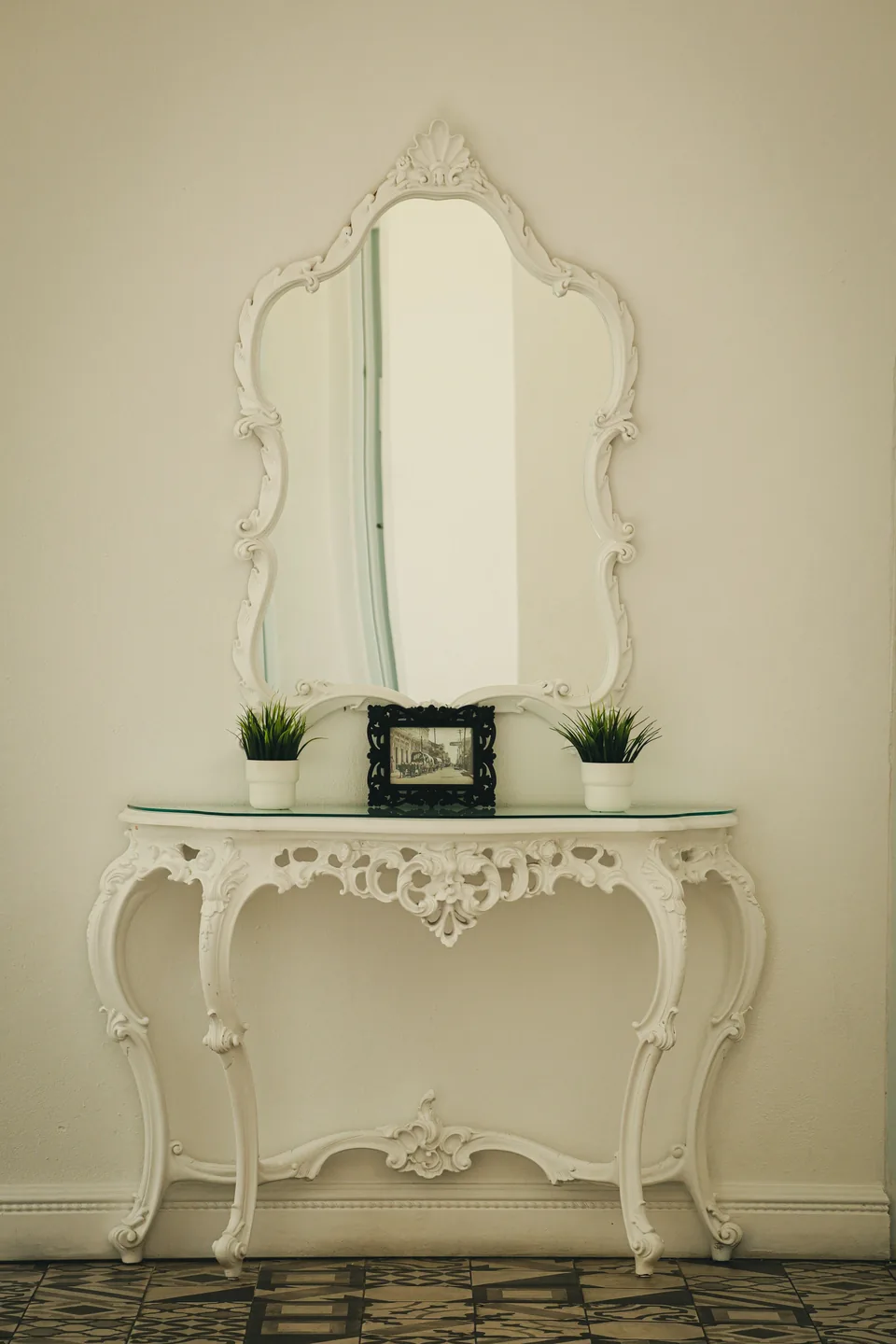
Credit : ✨Nasharet✨
BEFORE: Rental rules banned nails, so the entry stayed bare: a table floating under an empty wall, a mirror still boxed in the hall closet. The room felt temporary because, visually, it was.
AFTER: The mirror now leans on the table, tall and secure against the wall, flanked by a lamp and stacked art books. Adhesive hooks hold a light wreath, and a runner warms the floor. Nothing pierces the paint, yet the wall looks finished.
Leaning pieces read as intentional, not improvised, when they are tall enough to command the wall. Keep leaners above thirty inches and anchor the look with weight on the table. Your deposit stays safe, and the welcome is fully yours to take when you move.
Five Minute Morning Reset

Credit : Max Vakhtbovych
- Return every stray object to its landing spot: hooks, basket, tray, in that order.
- Shake the runner outside and straighten it along the table’s center line.
- Wipe the table surface with the cloth stored in its own drawer or basket.
- Check the mirror for fingerprints at standing height and polish what you find.
- Refill the scent, water the plant, and set the lamp timer for dusk.
Five honest minutes each morning keep the entry permanently guest ready, which quietly removes the panic clean before visitors. Attach the reset to an existing habit, coffee brewing or shoes going on, and it stops feeling like a chore. The house then greets you at night the way it greets everyone else.
Glass Versus Wood Trays

Credit : Javi Osorio Flores
| Detail | Glass Tray | Wood Tray |
|---|---|---|
| Look | Airy, barely there, suits glam entries | Warm, grounded, suits rustic entries |
| Care | Shows dust, wipes clean in seconds | Hides dust, needs occasional oiling |
| Sound | Keys slide and clink loudly | Keys land softly and stay put |
| Cost | Low to mid, widely available | Low; thrift stores are full of them |
Trays fail in opposite ways: glass announces every speck of dust the moment sunlight hits it, while wood forgives a week of neglect and then asks for oil. Match the tray to your cleaning rhythm, not your fantasy self. If guests arrive often and notice details, glass sparkles; if the entry works hard daily, wood carries the load with grace.
One Signature Piece Only
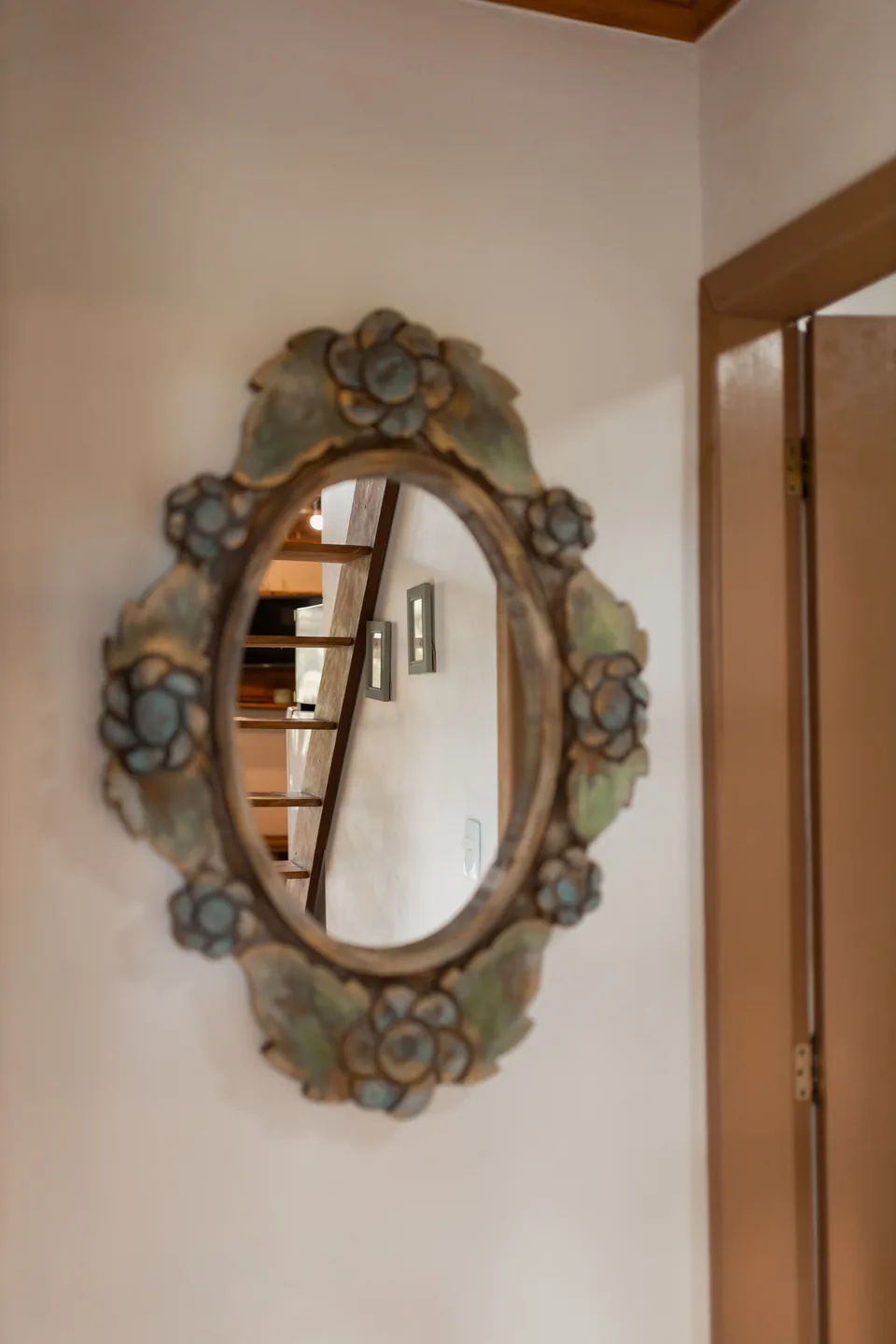
Credit : Alexander Mass
Every memorable entry has one piece people mention on the drive home: an ornate mirror, a sculptural lamp, a painting with real presence. Choose yours deliberately and let everything else on the table play a supporting role. Restraint is what makes the star visible. It becomes the anchor every other choice quietly answers to.
Test candidates by removing everything else for a day; the right piece holds the wall alone. Then rebuild around it with quieter shapes and one repeated color. When the table feels finished, stop. The last object added is usually the one that tips styling into clutter. Guests may never name the star, but they remember it.
Conclusion
An entry table works a small stage with a big job: it speaks first for the whole house. A mirror for light, a tray for keys, a lamp for the evening, and one piece with presence cover nearly all of these entryway table decorating ideas without a renovation or a splurge. Start small, finish warm, and let the doorway do the talking. Pick the two your entry needs most, style them this weekend, and live with the result before adding more. Save this list on Pinterest for your next refresh, and share it with the friend whose front door deserves a warmer hello.