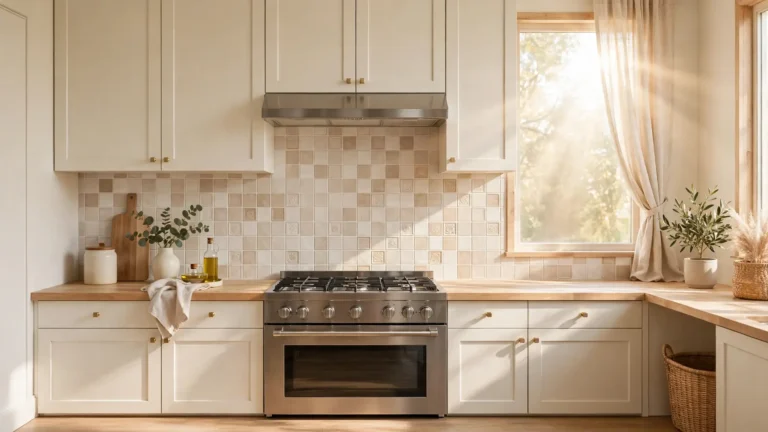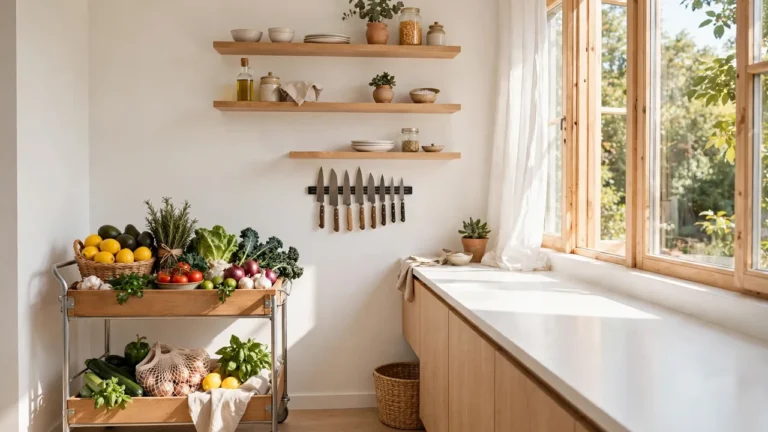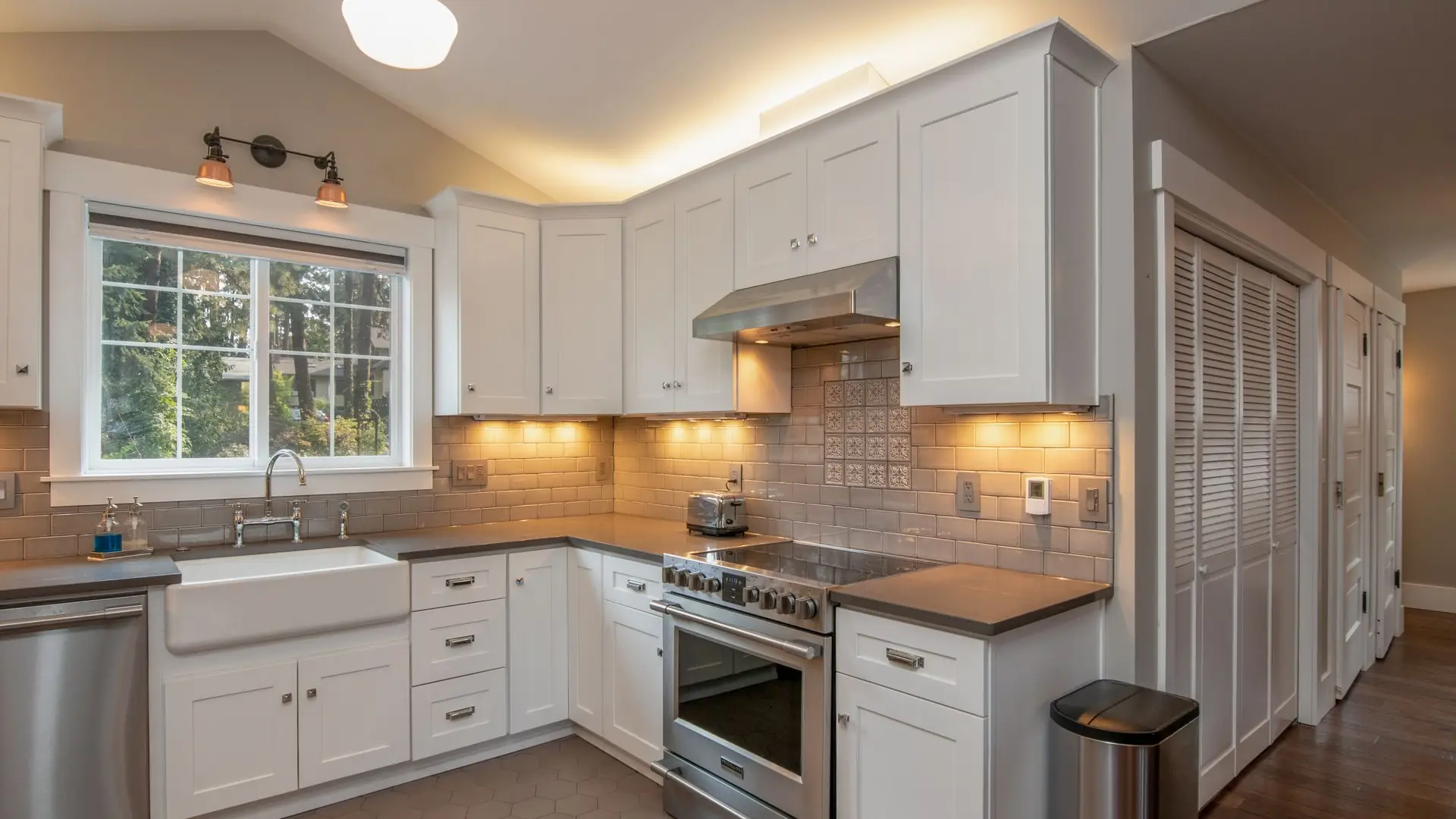
20 Terracotta Flooring Kitchen Ideas for Warm, Rustic Charm
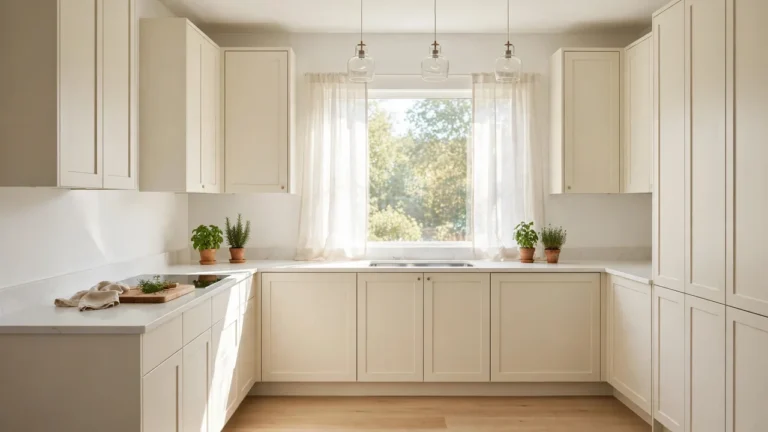
Cold tile and pale laminate can leave a kitchen feeling like a hallway people cook in. Clay underfoot changes that mood in one pass. terracotta flooring kitchen ideas start with baked earth itself: iron rich clay, fired until it holds shades of rust, apricot, and dusty rose. Every tile carries small shifts in tone, so the floor reads warm even on a grey morning.
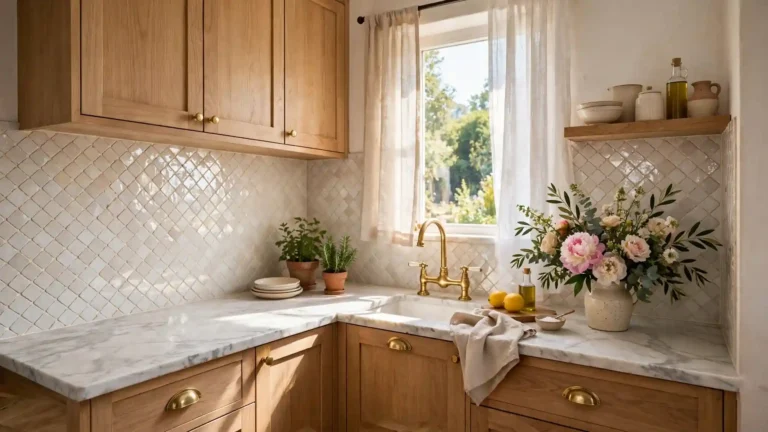
This guide gathers twenty ways to work that warmth into a real kitchen, from classic squares and hexagons to checkerboard layouts, honest costs, laying steps, and simple care. Some rooms pair clay floors with white cabinets, others with dark wood or plaster walls in matching earth tones. A sister finish worth knowing is limewash paint bedroom inspiration, where the same mineral palette softens walls instead of floors. In my experience, the floor sets the temperature of a kitchen long before the cabinets do.
Classic Square Clay Tiles
Credit : Arturo A
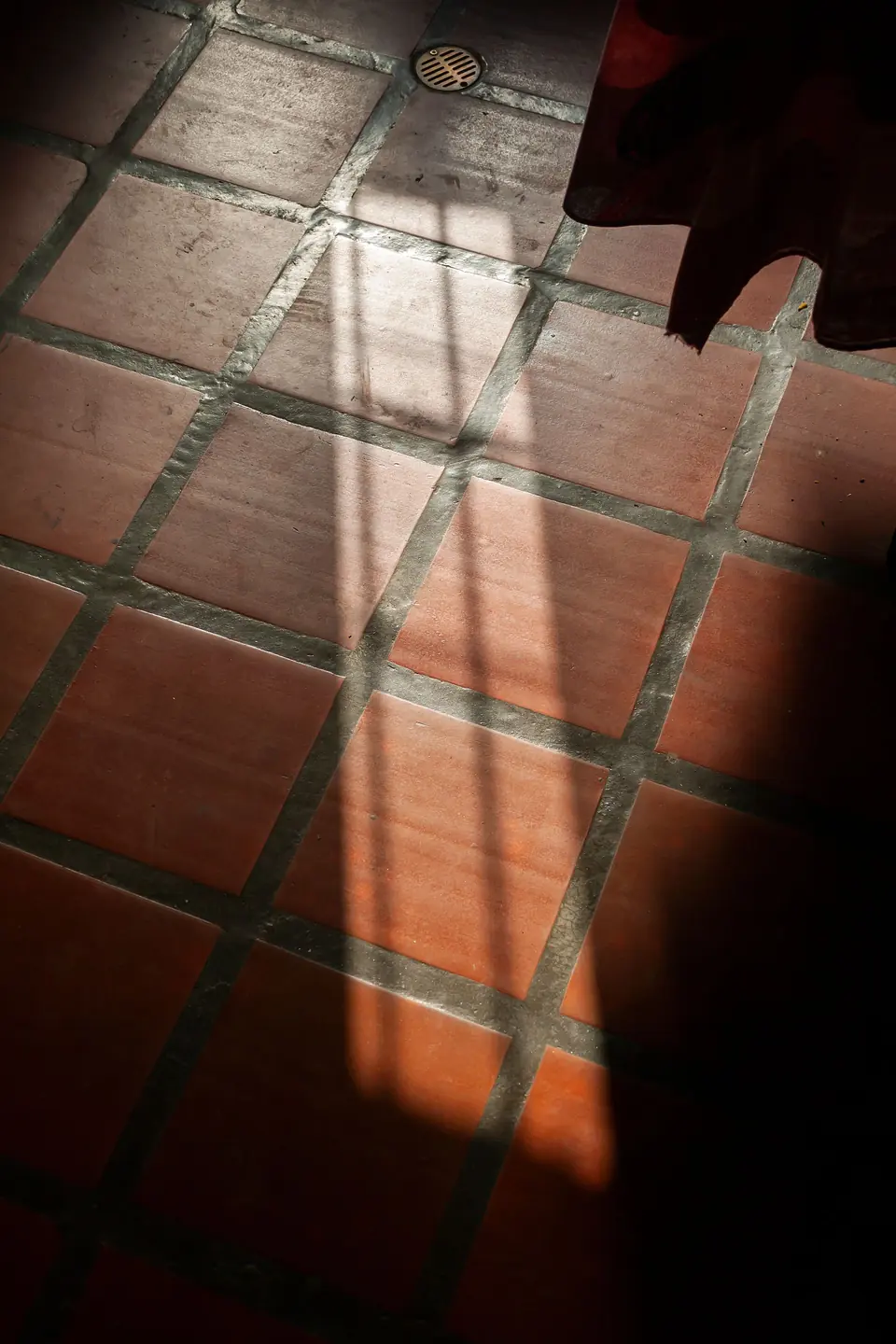
Square clay tiles are the oldest pattern in the book, and they still anchor a kitchen better than most trends. Twelve inch squares with wide grout lines give that farmhouse rhythm, each tile slightly uneven at the edges. The surface shows flour dust and paw prints less than a polished floor would, which busy cooks quietly appreciate.
Lay them straight for a calm grid or turn the whole field forty five degrees for quiet movement. Saltillo squares arrive with natural color swings from peach to deep rust, so order extra and blend boxes before laying. I’ve noticed the softest looking floors mix three shades across the room instead of sorting tiles into neat color groups.
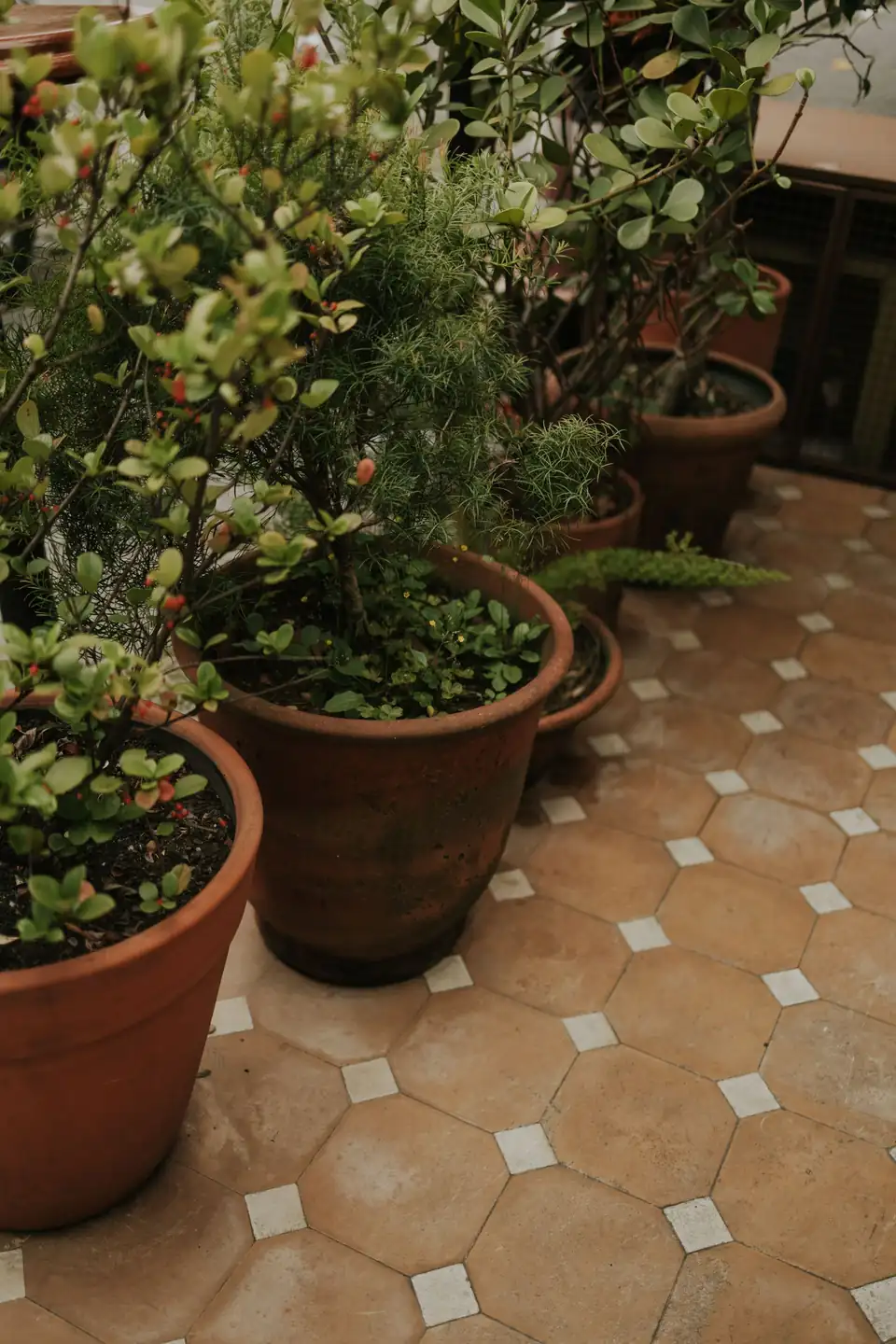
Hexagonal Terracotta Floor Charm
Credit : Letícia Alvares
- Six sided tiles break up the straight lines of cabinets and counters
- Small hexagons suit galley kitchens where big tiles would overwhelm the space
- Honey and rust tones mixed across the field keep the pattern lively
- Matte finishes hide crumbs and water spots between cleans
- A border row in square tiles frames the hex field neatly
Hexagons carry a bistro spirit that suits herb pots, enamel kettles, and open shelves. The many grout lines add grip underfoot on wet mornings, a practical bonus near sinks. Choose a grout one shade deeper than the palest tile so the honeycomb pattern reads clearly without shouting.
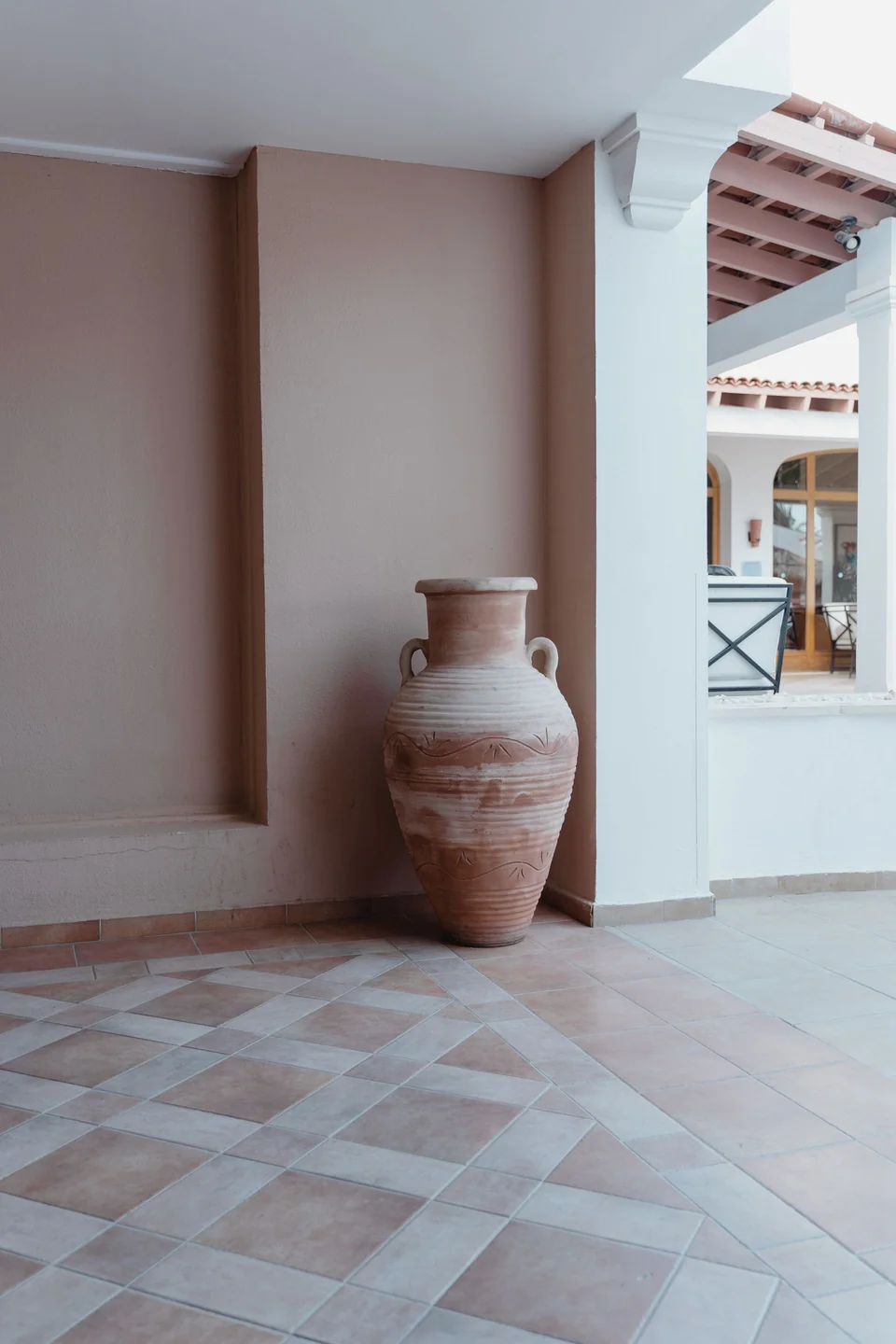
Checkerboard Clay And Cream
Credit : Tima Miroshnichenko
Quick Tip: Alternate full clay tiles with cream stone or pale ceramic squares, and keep the grout warm grey rather than bright white. Stark white grout turns the pattern cold and graphic, while a warm mid tone grout keeps the checks soft, aged, and forgiving of everyday kitchen splashes.
Checkerboard floors borrow their confidence from old European bistros and farmhouse dairies. The cream squares lift the clay, so even a small kitchen gains light without losing warmth. Big checks, twelve inches or more, feel calmer than small ones, and a diagonal set out makes a narrow room read wider than it is.
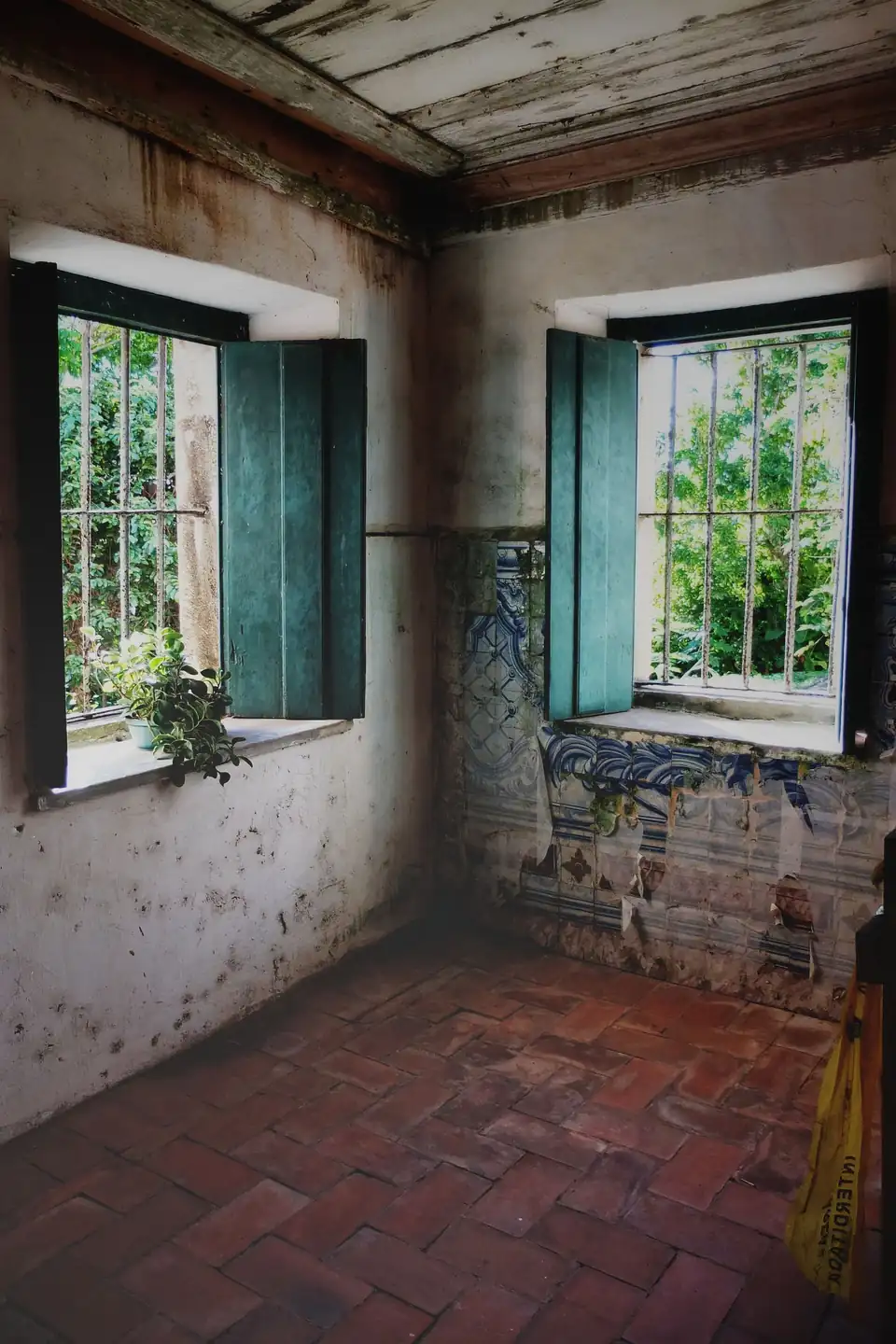
Cold Room To Cozy
Credit : Daniel Wander
BEFORE: The room stood empty for months, white paint scuffed, shutters stiff, and a floor nobody could identify under the dust. It felt borrowed, like a space waiting for someone else’s life, and every footstep echoed.
AFTER: Once the old terracotta tiles were scrubbed, sealed, and given back their deep brick glow, the whole room changed temperature. Green shutters opened, a pine table landed under the window, and suddenly the space held heat, color, and the promise of long lunches.
Old clay floors hide under paint and grime in more houses than people expect. Before replacing any tired floor, clean one corner properly and seal a test patch. The color sleeping under decades of dullness surprises almost everyone who tries it.
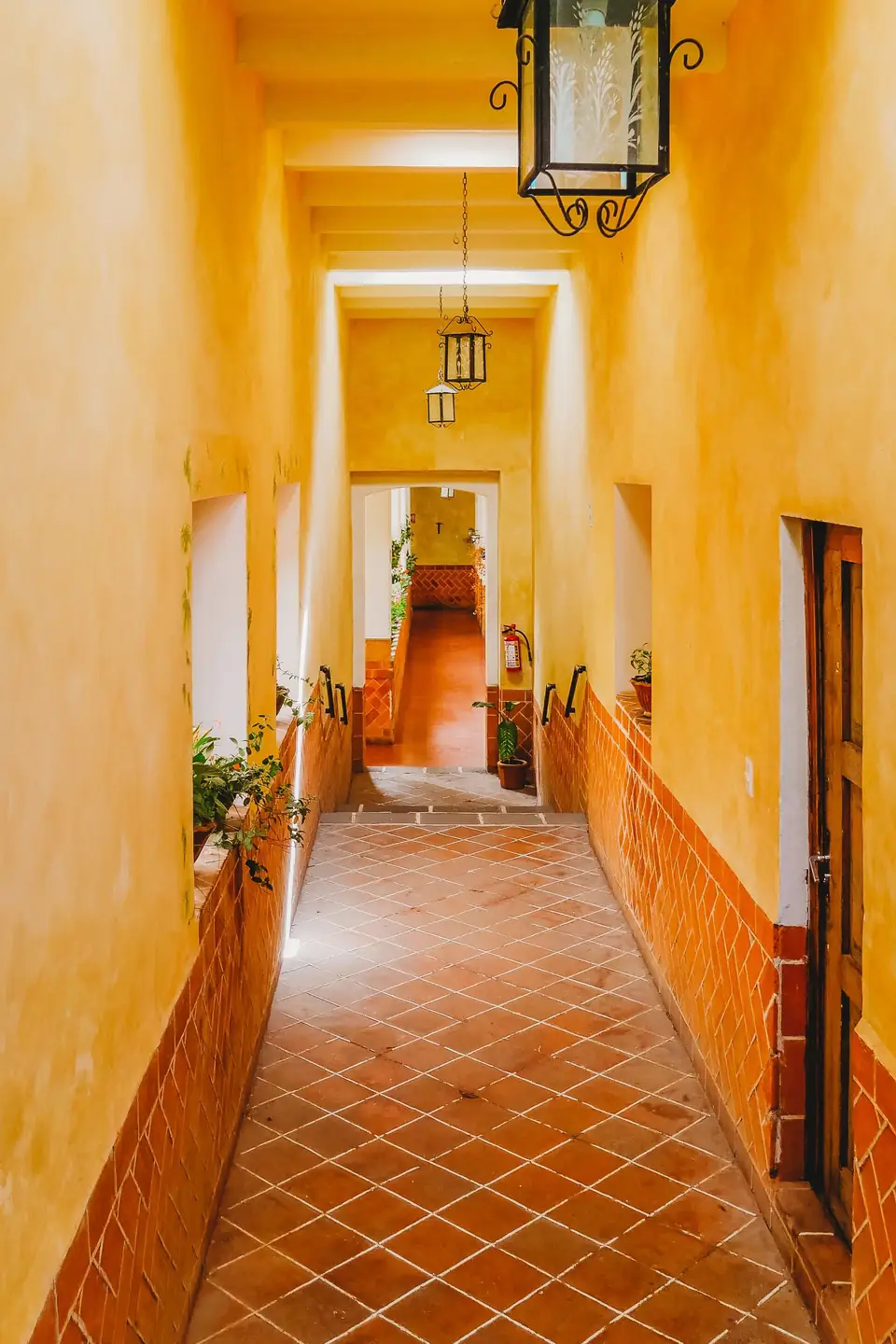
Laying Terracotta Tile Steps
Credit : Roberto Carlos Román Don
- Snap chalk lines from the room’s center so cuts land evenly at both walls
- Dry lay a full row first, blending tiles from several boxes for even color
- Spread mortar in small sections and press each tile down with a slight twist
- Set wide joints, about a finger’s width, to honor the handmade edges
- Seal the tiles before grouting, then again once the grout cures fully
Handmade clay tiles vary in thickness, so a patient installer checks lippage with a straight edge as the work moves. That unevenness is not a flaw to fight; it is the texture that makes the finished floor feel centuries old instead of showroom new.
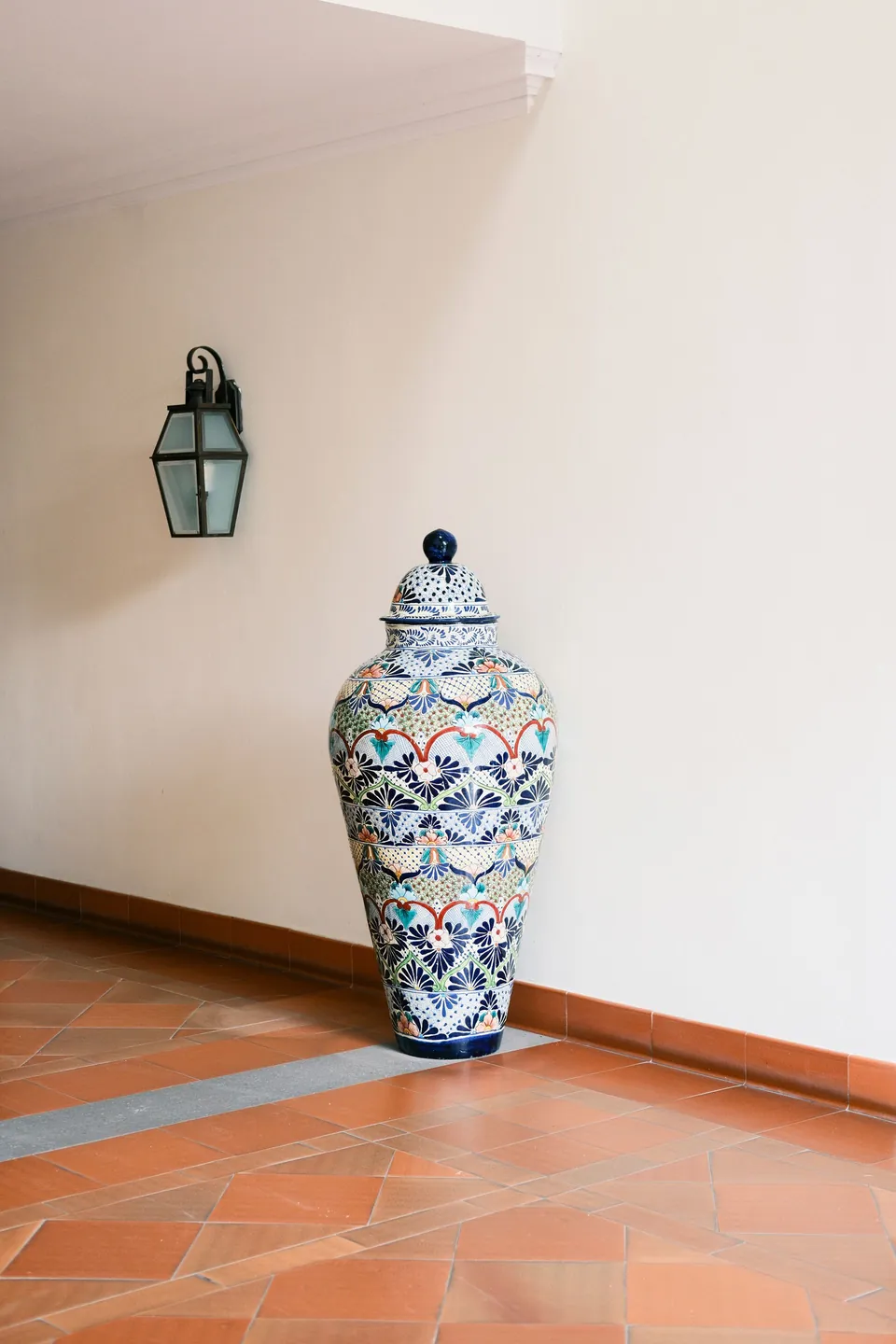
Saltillo Versus Porcelain Clay
Credit : Brunxs
| Feature | Saltillo Clay | Porcelain Clay Look |
|---|---|---|
| Material | Real fired clay, handmade | Dense porcelain, printed surface |
| Color | Natural swings, peach to rust | Controlled, repeats by design |
| Feel | Soft, cool, ages with wear | Hard, uniform, resists stains |
| Price | Lower tile cost, sealing extra | Higher tile cost, little upkeep |
Choose real Saltillo when character matters most and a sealing routine sounds manageable. Porcelain earns its place in mudroom heavy kitchens where dogs, boots, and dropped pans punish the floor daily. Both deliver the clay color story; the honest difference is how much patina, and how much maintenance, the household welcomes. Test both with a bare foot on a cold morning; the difference is honest and immediate.
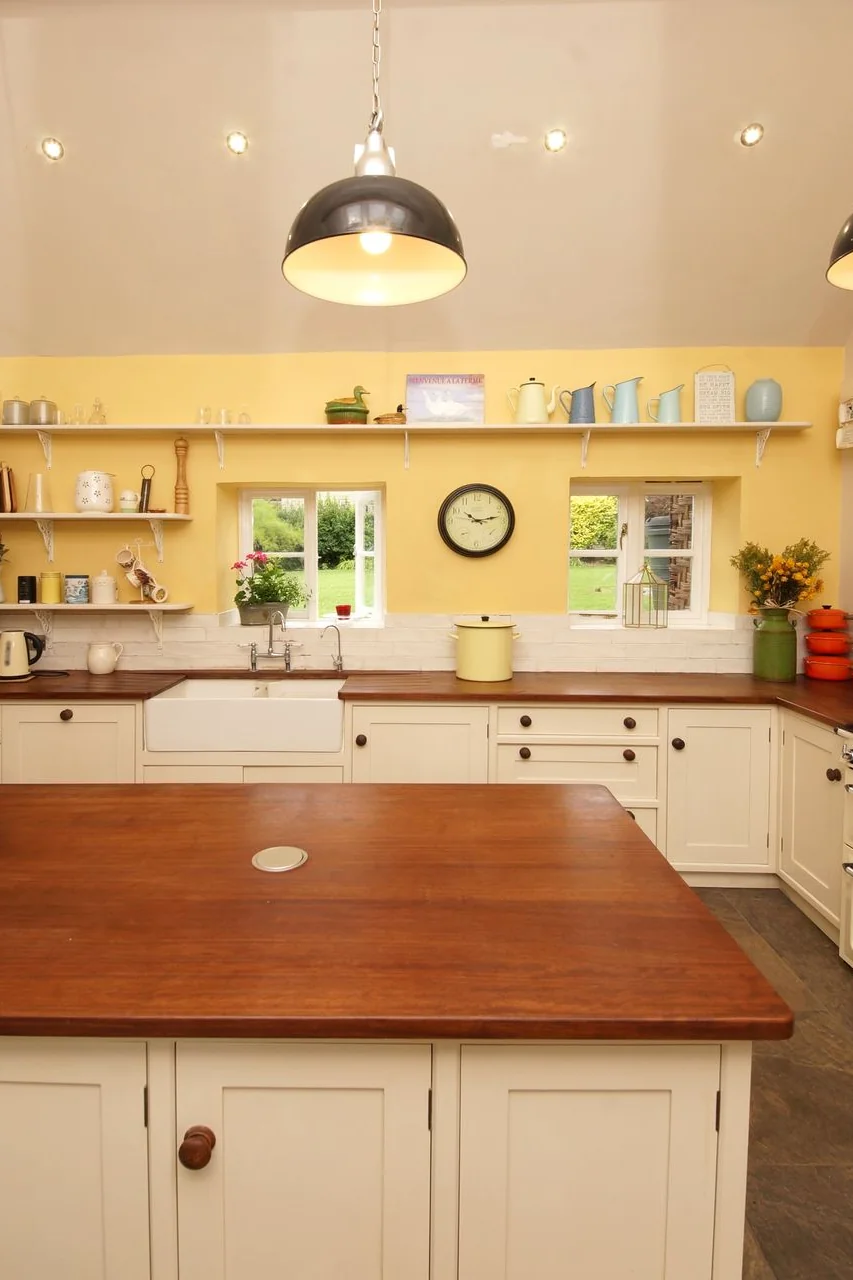
White Cabinets Warm Floor
Credit : Phil Ledwith
Do:
- Let the floor carry the color while cabinets stay quiet and pale
- Repeat the clay tone in one small accent, like a pitcher or stool
- Pick warm white paint, never blue white, beside terracotta
- Leave the floor matte so the cabinets keep their crisp look
Don’t:
- Add a busy patterned backsplash that fights the floor for attention
- Choose cool grey grout that turns the warm clay muddy
- Fill every counter with dark objects that weigh the room down
White cabinets above a clay floor create the contrast old farmhouses are loved for: clean up top, earthy below. The pairing forgives imperfect tiles because the eye reads the room as honest and handmade. Kitchens styled this way photograph beautifully in plain morning light.
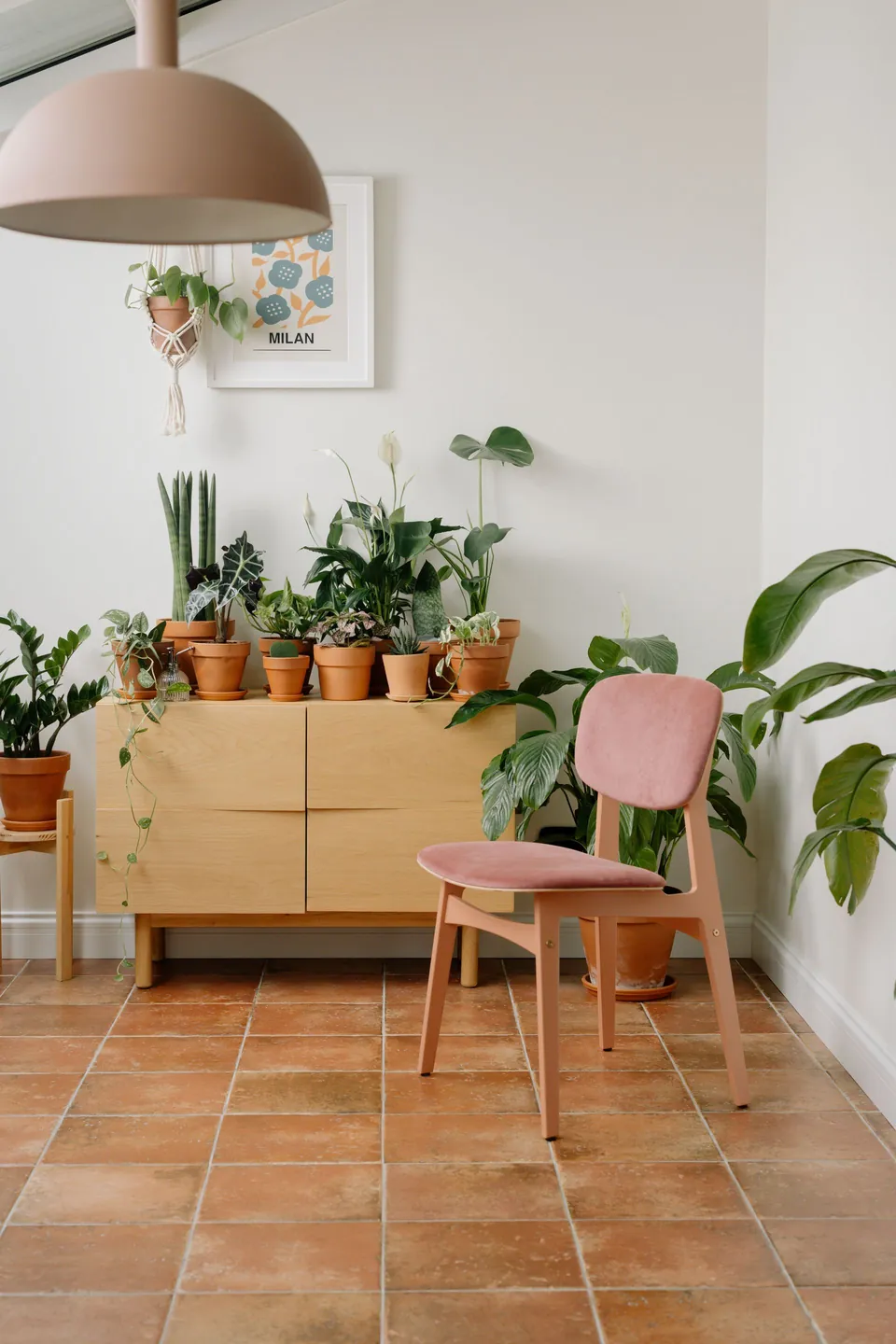
Terracotta Floor Cost Facts
Credit : cottonbro studio
Cost: Tiles run roughly two to eight dollars per square foot, with handmade Saltillo at the low end.
Time: A small kitchen floors in two to three days, plus sealing and curing time.
Skill Level: Confident DIY for simple grids; pros earn their fee on diagonals.
Best For: Sun filled kitchens in warm climates, and homes that love patina.
Budget for sealer and wide joint grout on top of the tile price, since clay drinks more of both than ceramic does. Ordering ten percent extra covers breakage and the color blending every good installer insists on. That small overage also leaves spare tiles in the attic for future repairs, matched to the batch already on the floor.
Rustic Earthen Kitchen Soul
Credit : Dasha Klimova
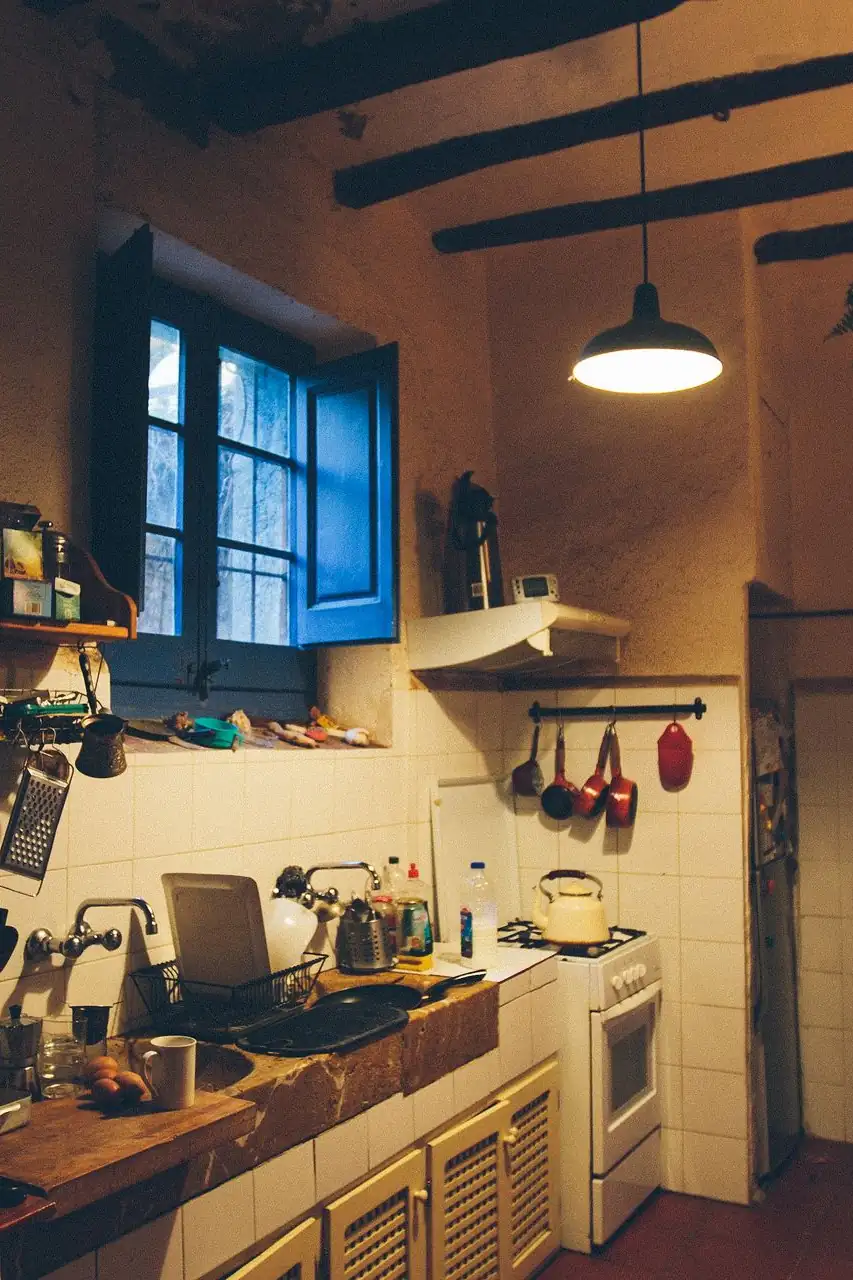
Earthen kitchens run on texture: plaster walls with soft lumps, beams darkened by decades of cooking, shelves instead of cupboards. A clay floor completes that palette because it shares the same ingredient as the walls, earth itself. Nothing matches perfectly, and that is exactly the point of the style.
Keep the styling loose here. A fern hung from a beam, red enamel pans on a rail, a worn stool by the stove, these small honest objects belong. Shiny appliances can stay, but brushed and black finishes settle in more quietly than chrome in rooms like this. The clay floor forgives the clutter because it never pretends to be new.
Clay Walls Clay Floor
Credit : Hồng Quang Official
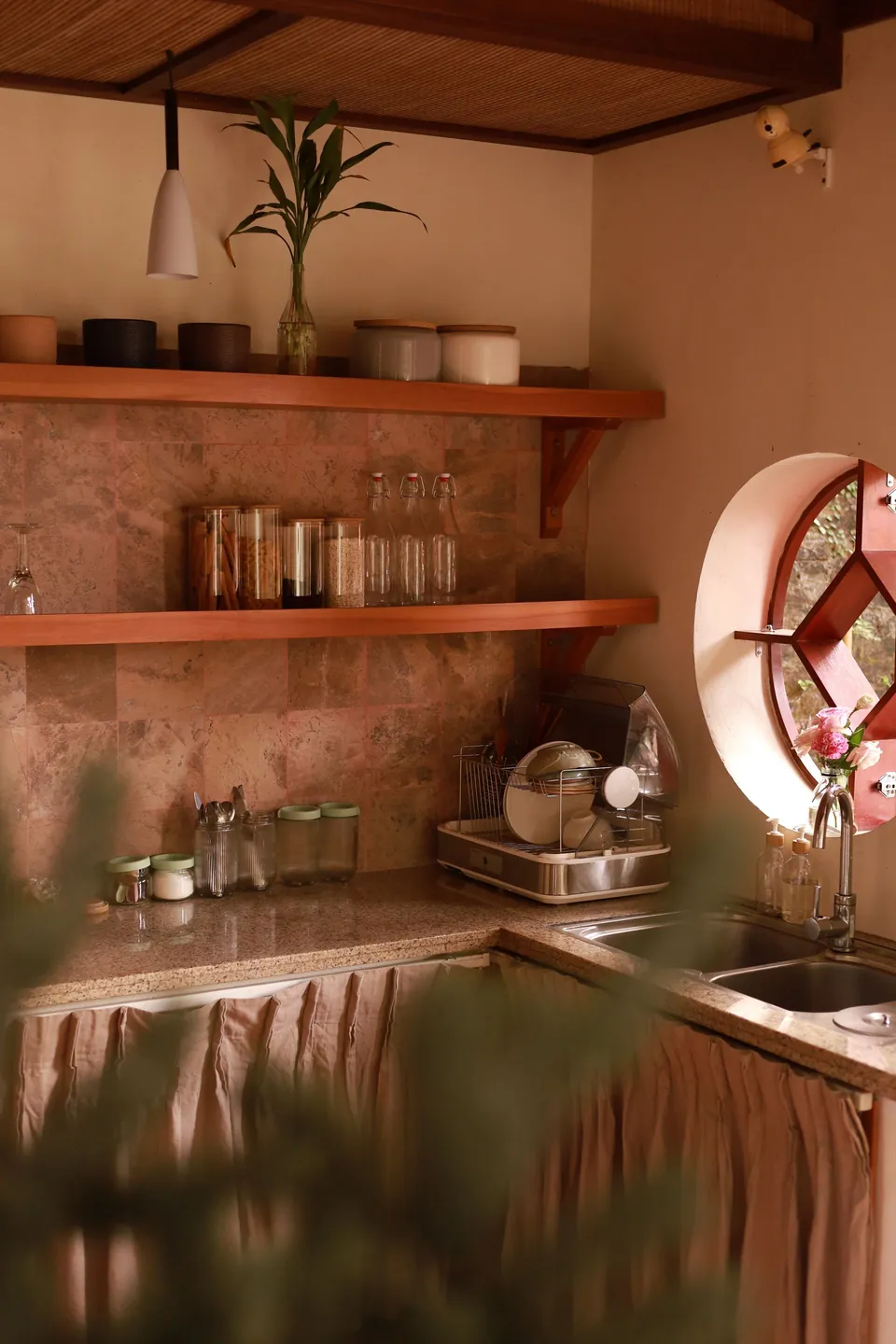
- Match wall clay a shade lighter than the floor for depth
- Leave one surface, usually the ceiling, clean and pale
- Wood shelves in mid tones bridge the two clay colors
- Black iron rails and handles sharpen the soft palette
Monochrome earth rooms feel calm because nothing argues. When terracotta flooring kitchen ideas pair floor and walls in one family, the kitchen wraps around the cook like a courtyard at dusk. Break the warmth only with green herbs and white linen, and the room stays restful instead of heavy. Small samples on both surfaces save the whole project from a mismatch.
Vintage Sink Corner Styling

Credit : Ali Alcántara
Quick Tip: Hang two or three well used pans where they catch window light, and let one farmhouse sink carry the vintage story. A single strong note reads as heritage; a dozen small antiques crowded together read as clutter and dust.
Sunlight does half the styling in an old corner like this. Keep the sill clear except for one herb pot, and let shadows from the pans draw patterns on the wall. A linen curtain on a wire softens the window without hiding its crooked, charming frame. Painted cabinets below the sink, worn at the handles, ground the whole scene in real use.
Dull Galley To Glow
Credit : Alexander Mass
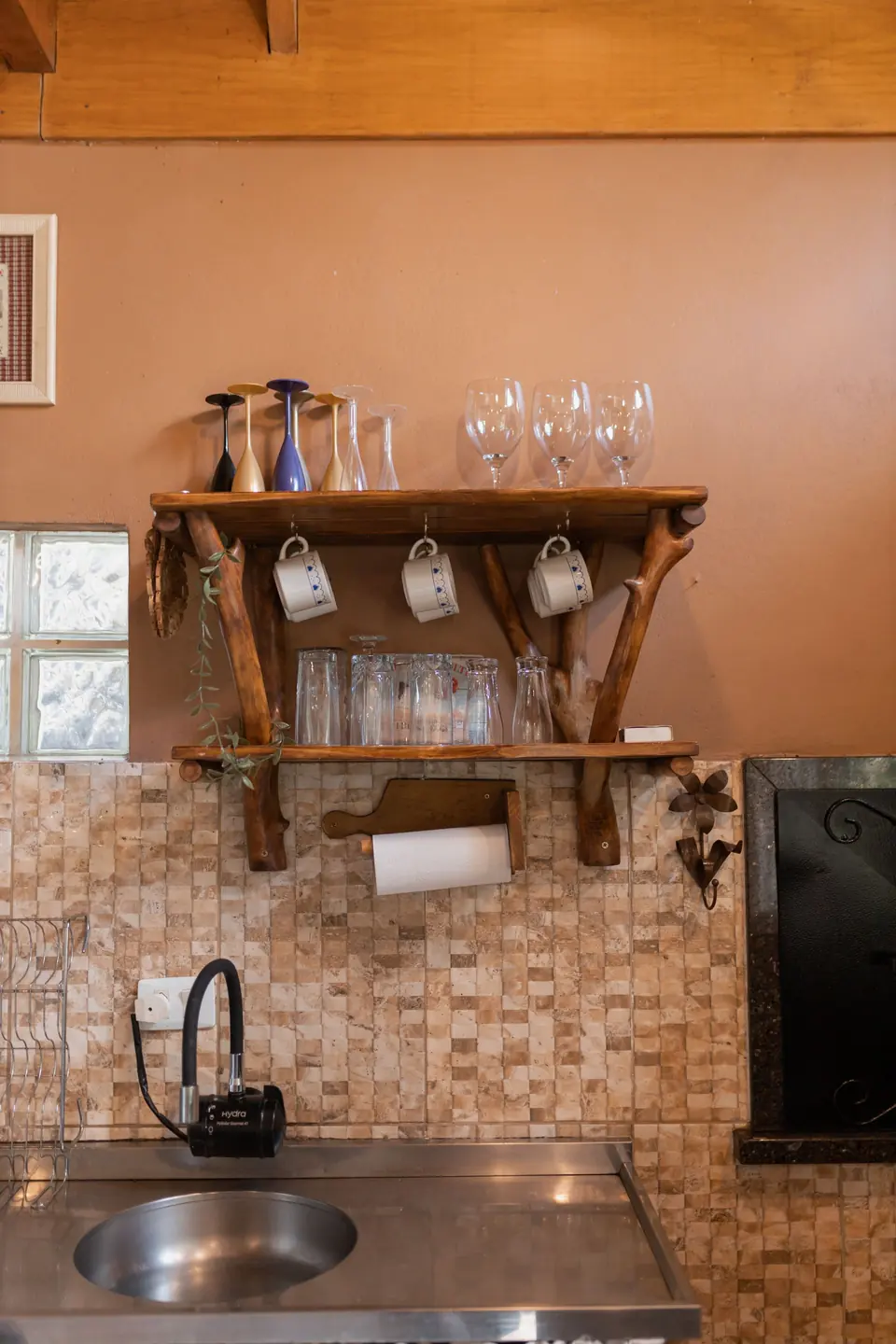
BEFORE: The little galley ran cold: grey light, a tired shelf, and a sink zone that felt purely functional. Cooking there was efficient and joyless, the sort of corner people hurry through with the kettle and leave quickly.
AFTER: Clay toned walls and a woven look backsplash warmed the whole run, while glassware on the shelf began catching afternoon sun. The same narrow footprint now feels like a pantry in a Tuscan farmhouse, small but generous, and people linger with their coffee.
Narrow kitchens gain the most from warm surfaces because there is nowhere for the eye to escape them. One clay shade repeated on wall, tile, and textiles pulls the galley together, and a clay floor below would complete the cocoon.
Open Shelf Styling Steps
Credit : Antoine Maurin
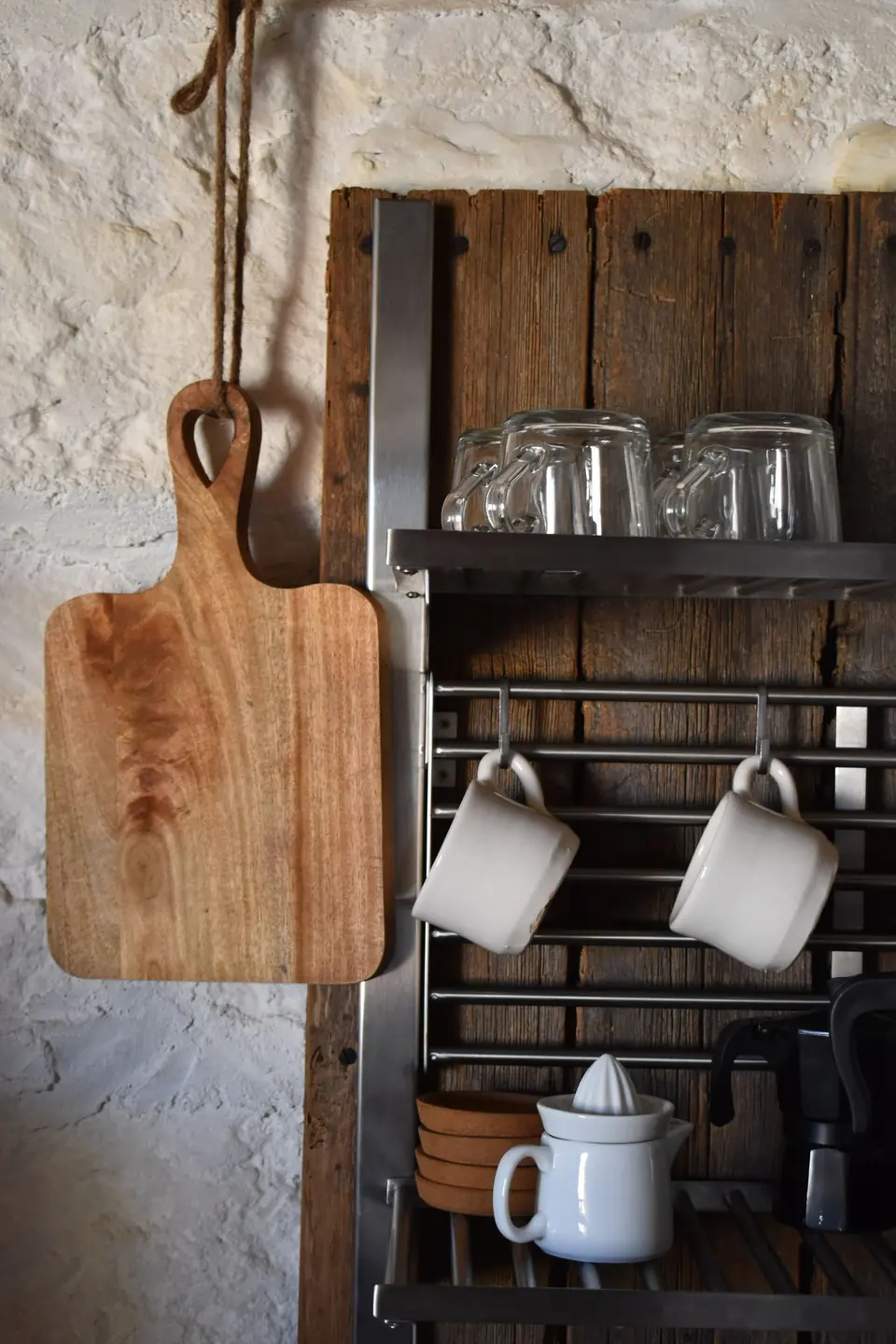
- Start with the workhorses: everyday glasses and mugs at hand height
- Stand one large cutting board behind them to anchor the group
- Add a pale ceramic piece, like a juicer or jug, for light contrast
- Leave breathing room at both ends so the shelf reads calm
- Swap one object with the seasons to keep the display awake
Open shelves above a clay floor earn their keep when they stay useful. Everything shown here gets touched weekly, which keeps dust honest and the styling grounded. Dark wood against a pale stone wall gives the grouping its rustic backbone. That discipline is what separates a styled shelf from mere storage.
Handmade Versus Machine Made
Credit : Enzo Renz
| Feature | Handmade Clay | Machine Made Clay |
|---|---|---|
| Edges | Soft, wavy, slightly irregular | Crisp, straight, uniform |
| Color | Fired swings, no two alike | Even tone across every box |
| Surface | Pits, marks, gentle undulation | Smooth, flat, predictable |
| Charm | Old world, one of a kind | Tidy, modern farmhouse neatness |
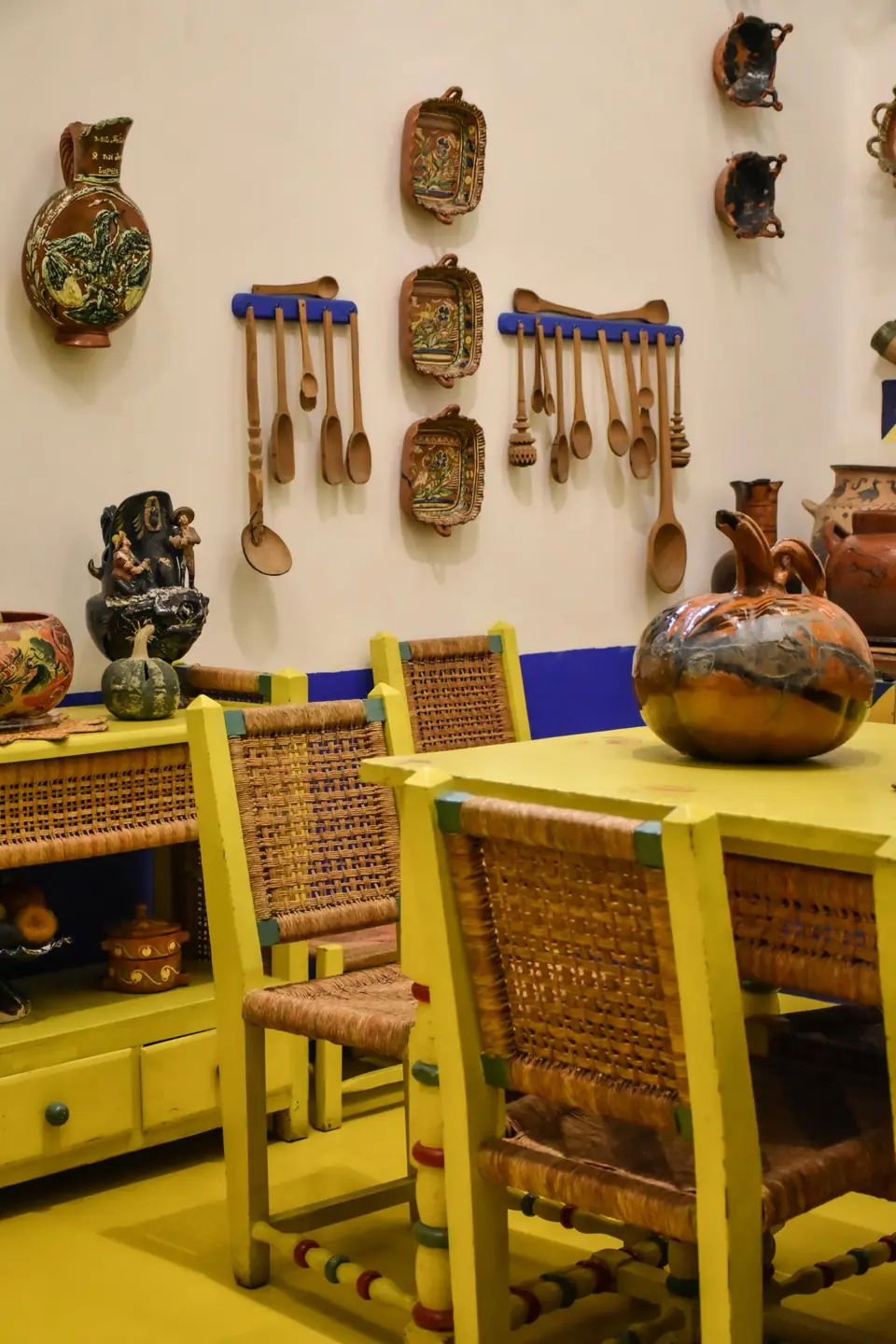
Handmade tiles ask for wider joints and a forgiving eye, and they repay that patience with a floor nobody else owns. The same love of mineral texture drives Venetian plaster wall finish ideas, where trowel marks play the role that kiln marks play here. Choose handmade for soul, machine made for precision, and never apologize for either. Price follows the labor, so handmade runs higher per box.
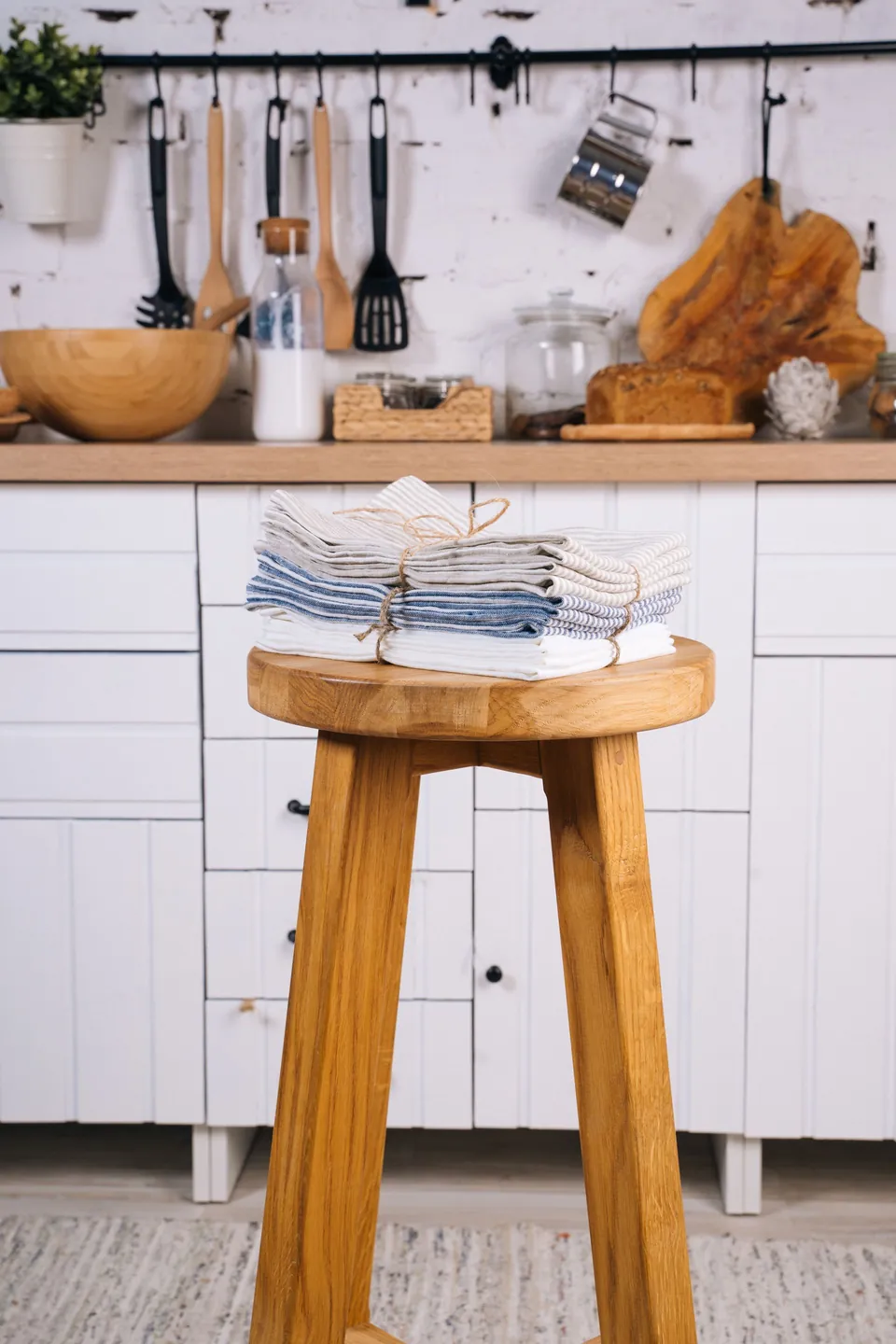
Natural Textiles Warm Accents
Credit : Tima Miroshnichenko
Do:
- Fold striped linen towels where hands actually reach for them
- Rest a wooden stool near the work zone for perching and produce
- Choose woven baskets to soften the geometry of tile
- Keep textiles in cream, flax, and faded blue beside clay
Don’t:
- Hang synthetic towels that shine against matte surfaces
- Match the terracotta exactly in fabric; near tones look richer
- Overload the scene with tassels, fringe, and fussy trims
Textiles are the cheapest warmth a kitchen can buy, and they let renters join in. A stack of washed linens on a stool changes the temperature of a tiled room faster than any gadget, and everything goes in the wash when guests arrive.
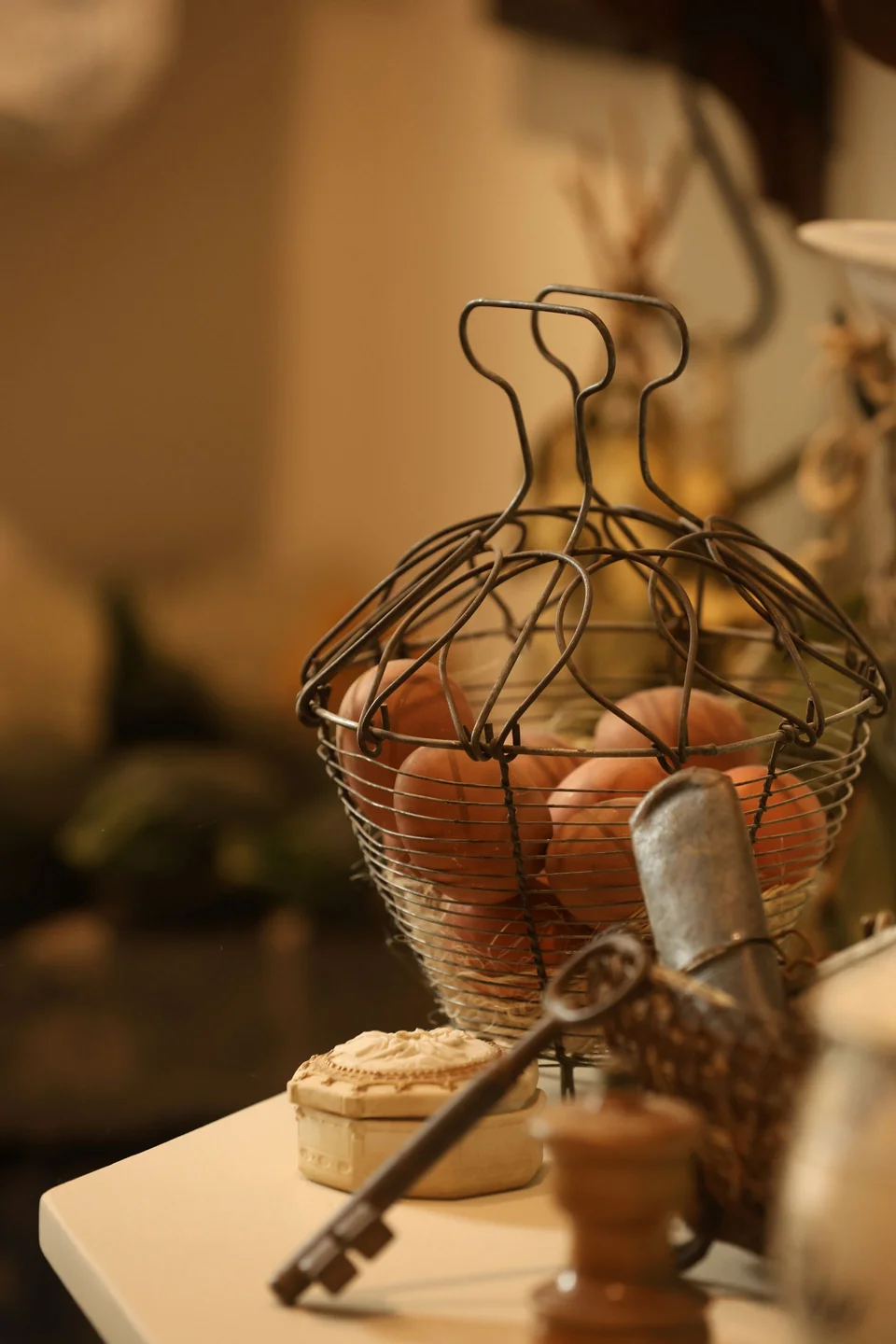
Everyday Care Quick Facts
Credit : Ann H
Cost: Daily care costs almost nothing: a dry mop, warm water, and a pH neutral cleaner.
Time: Ten minutes of sweeping beats an hour of scrubbing later in the week.
Skill Level: Beginner; the only real rule is resealing on schedule.
Best For: Busy family kitchens that need forgiving, low fuss floors.
Clay hides the evidence of daily life: crumbs, drips, and dog hair all disappear into its color swings. A woven rug at the sink catches the worst splashes, and felt pads under stool legs stop the one sound terracotta cannot forgive, a dragging scrape. Reseal high traffic lanes yearly and the whole floor every few years.
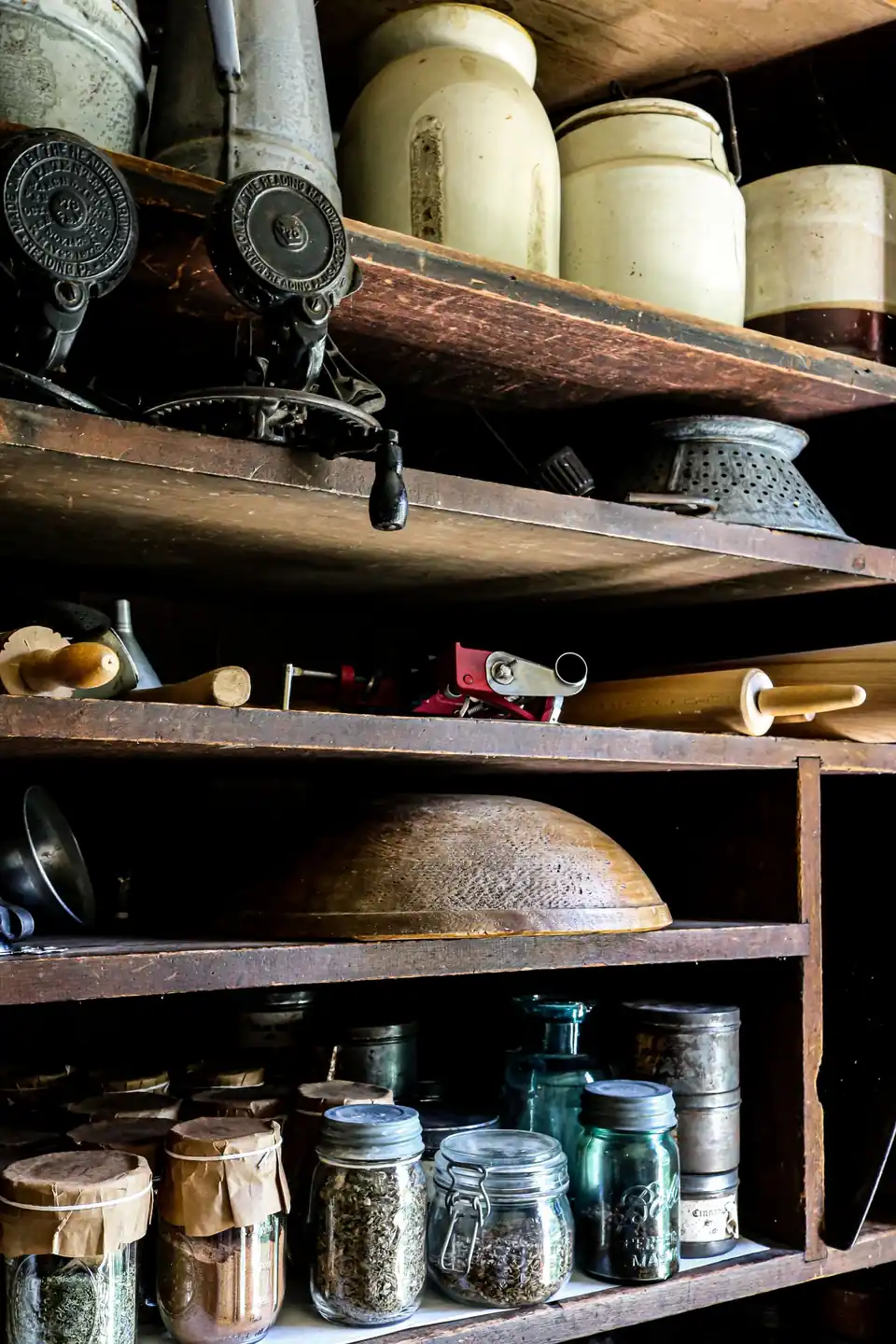
Pantry Jars Earthy Palette
Credit : Dale Jackson
Open pantry shelves and clay floors speak the same language: honest materials, nothing hidden, everything within reach. Glass jars of beans, lentils, and flour echo the floor’s palette, rust, cream, sage, and ochre lined up like a painter’s shelf. The colors were never planned; staples simply agree with clay.
Vintage scales, stoneware crocks, and a wooden bowl or two keep the display from feeling like a shop. Group jars by height, leave gaps for air, and let one beautiful old tool, a grinder or a brass scoop, stand as the shelf’s punctuation. Everything earns its place by being used, beautiful, or both, and the best pieces manage all three at once.
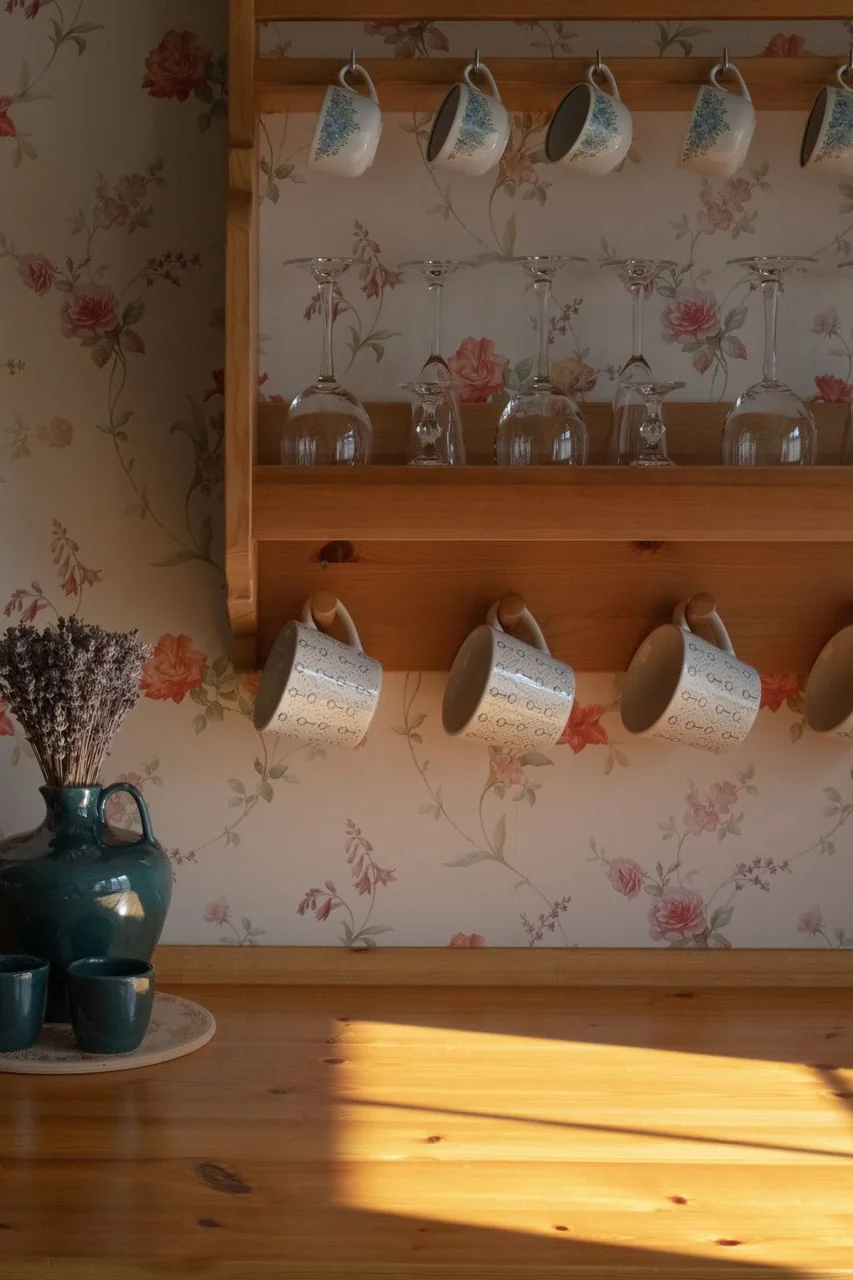
Morning Light Color Shifts
Credit : Ron Lach
- At dawn the tiles read pale apricot under soft window light falling across the counter
- By noon the same floor deepens toward brick and cinnamon tones
- Floral wallpaper and floral mugs pick up the floor’s rose notes
- Sun patches on the counter show where herbs will thrive
Photographers chase this floor for a reason: it never looks the same twice in one day. Planning cabinet colors around the noon shade, the deepest one, keeps the room balanced at every hour. Pale wood counters stay safe partners through every shift. That daily show is half the pleasure of living with clay.
Indoor Outdoor Flow Trick
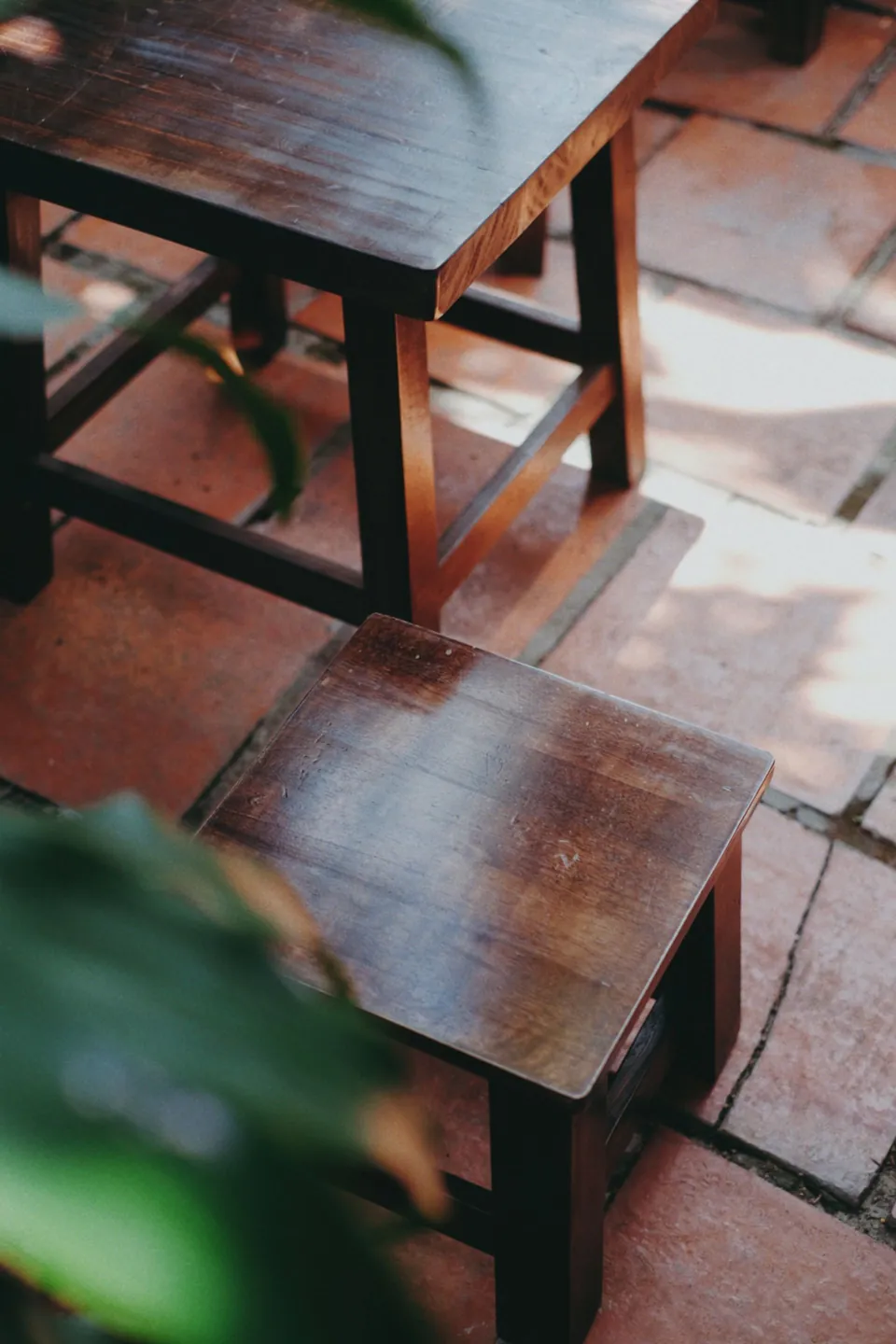
Credit : Pew Nguyen
Quick Tip: Run the same terracotta tiles from the kitchen straight onto the patio, keeping grout lines aligned through the doorway. The eye reads one long floor, the house feels twice its size, and muddy boots cross both zones without ceremony. Choose frost rated tiles outdoors so winter cannot crack the pattern.
Thresholds disappear when the material refuses to change. A dark wood stool and table on the patio tiles echo the kitchen furniture, tying the two rooms together. Herbs in clay pots along the sunny edge complete the trick, blurring where cooking ends and garden begins. Guests notice the trick long before they can name it.
Dark Cabinets To Sunlit
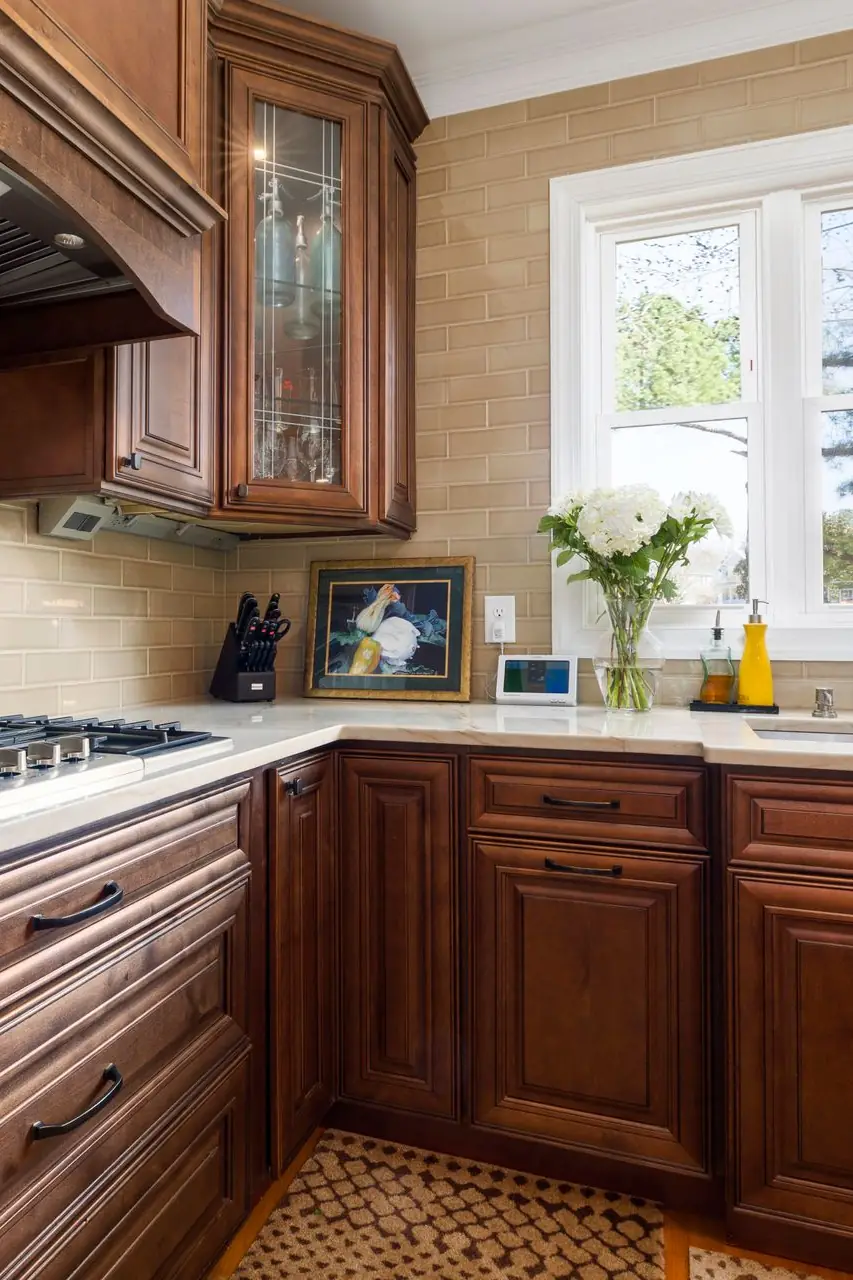
Credit : Curtis Adams
BEFORE: Heavy dark cabinets and a dim counter run made this kitchen feel smaller than its footprint, and the patterned floor mat fought the cabinetry for attention. Mornings felt grey even when the garden outside the window was bright.
AFTER: Sun through the window now lands on warm tile tones underfoot, and the same cabinets read as rich rather than heavy. Fresh flowers and pale counters lift the middle of the room, and the floor’s small pattern finally looks deliberate.
Dark wood and terracotta are old partners; one only needs light management to shine. Keep counters pale, windows unblocked, and the floor sealed with a soft sheen finish, and a once heavy kitchen turns into the warmest room in the house.
Conclusion
Twenty kitchens later, the pattern is simple: clay underfoot makes every other choice warmer. Squares, hexagons, or checks, real Saltillo or porcelain, the floor carries the mood while cabinets and shelves play supporting roles. Start with one honest sample, live with it through a full day of light, and trust what it tells you. Save these terracotta flooring kitchen ideas to your Pinterest boards, pick the layout that fits your room, and let baked earth do what it has done for centuries, make a house feel like home. Your future self, padding barefoot across a sun warm floor with morning coffee, will thank you.