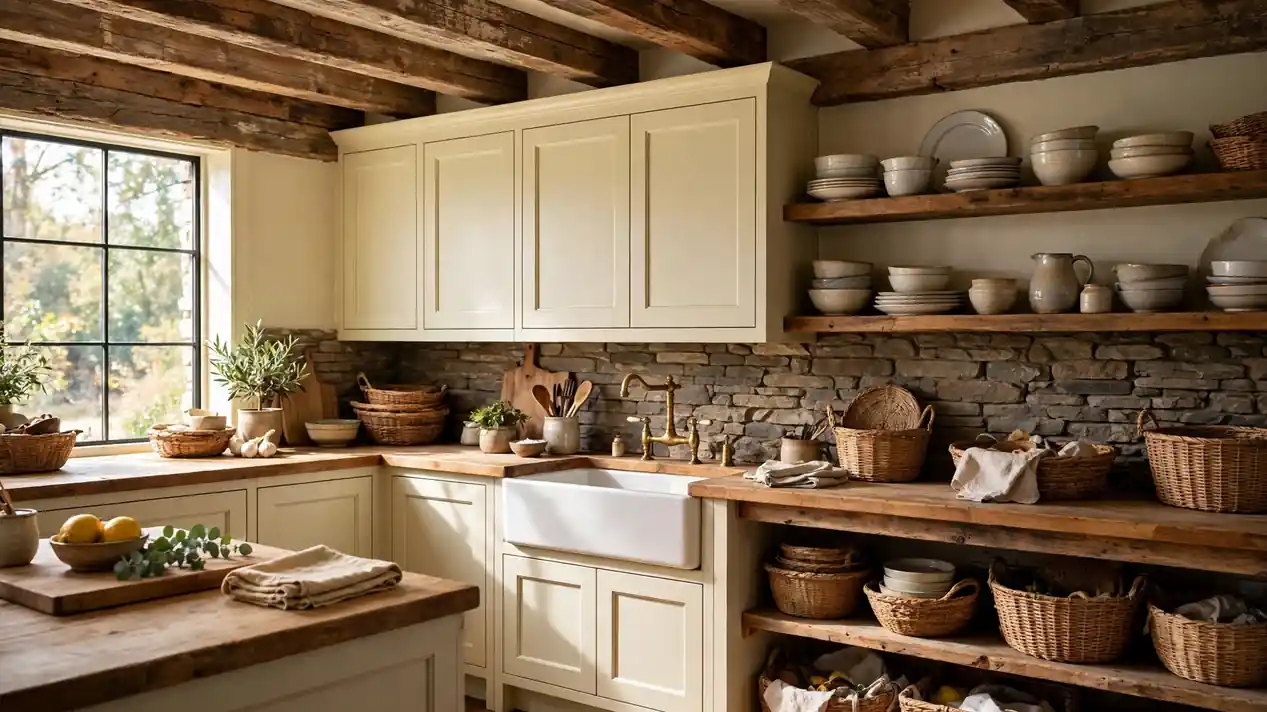
21 Rustic Kitchen Interior Design Ideas for Warm, Natural Style
Warm wood, worn stone, and pieces that look gathered over years give a kitchen its soul. The best rustic kitchen interior design ideas start with honest materials, then layer texture in small, deliberate doses so the room feels lived in rather than themed. Nothing needs to be expensive. One beam, one brick wall, or one old farm table can carry the whole mood.
The same love of texture that fills a room with woven layers, like the relaxed look in boho living room decorating ideas, works in a kitchen when every layer earns its place. Keep counters mostly clear, let wood grain and stone do the talking, and repeat two or three materials through the whole room. In my experience, restraint is what keeps rustic from sliding into clutter. Ahead are twenty one ideas, from beams and brick to crocks and copper, each one practical enough for a real working kitchen.
Reclaimed Wood Ceiling Beams
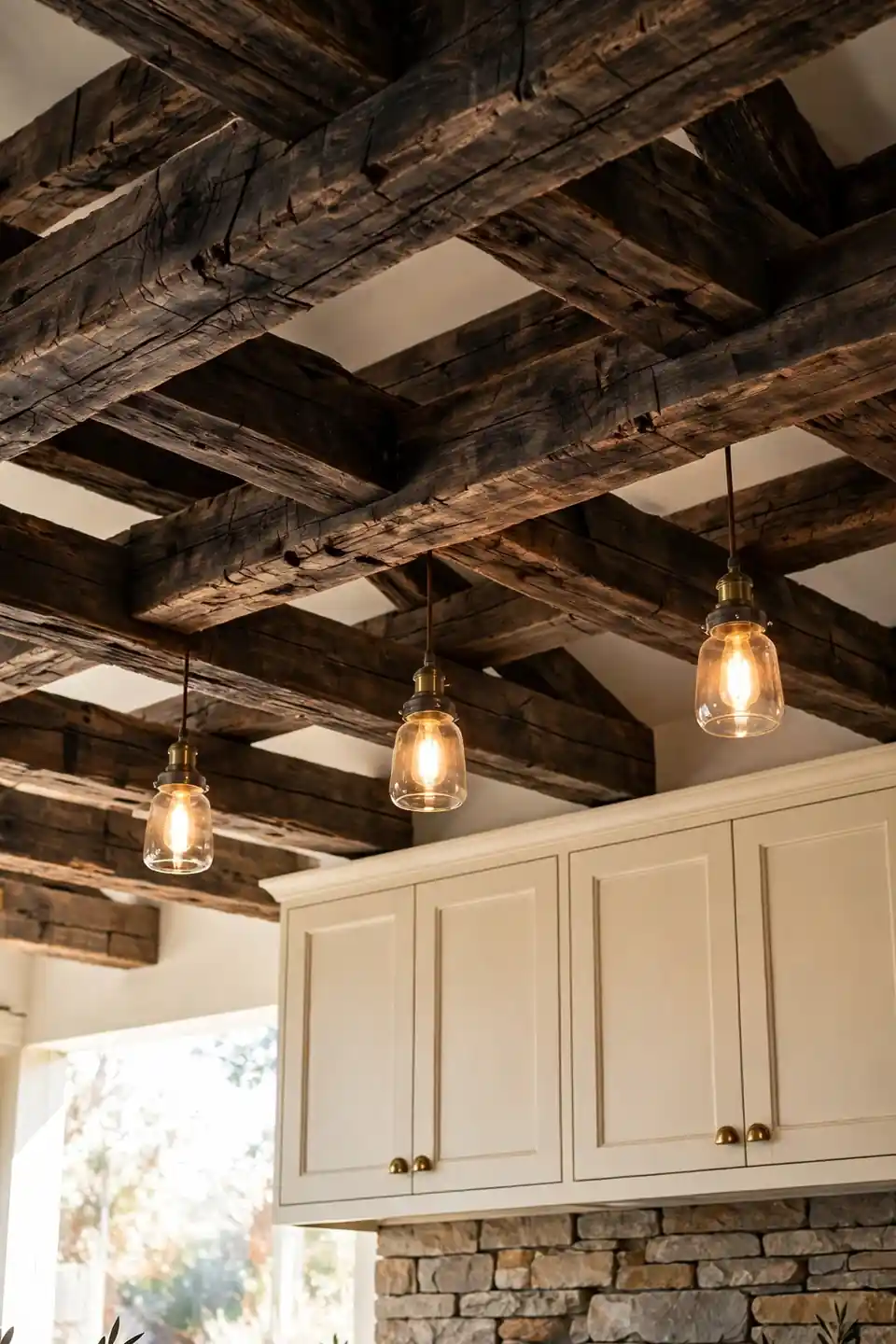
Salvaged beams change a plain ceiling into the room’s strongest feature. Their saw marks, nail holes, and weathered gray patches carry history that new lumber simply cannot fake. Box beams built from reclaimed boards give the same look for less money and far less weight on the ceiling joists.
Space beams evenly across the room and stop one short of the wall if the ceiling is low. Keep the finish matte and dry, no glossy varnish, so the wood reads old instead of orange. I’ve seen this work well in plain builder kitchens, where one weekend of beam work did more than a year of decor swaps.
Open Shelving Display Walls
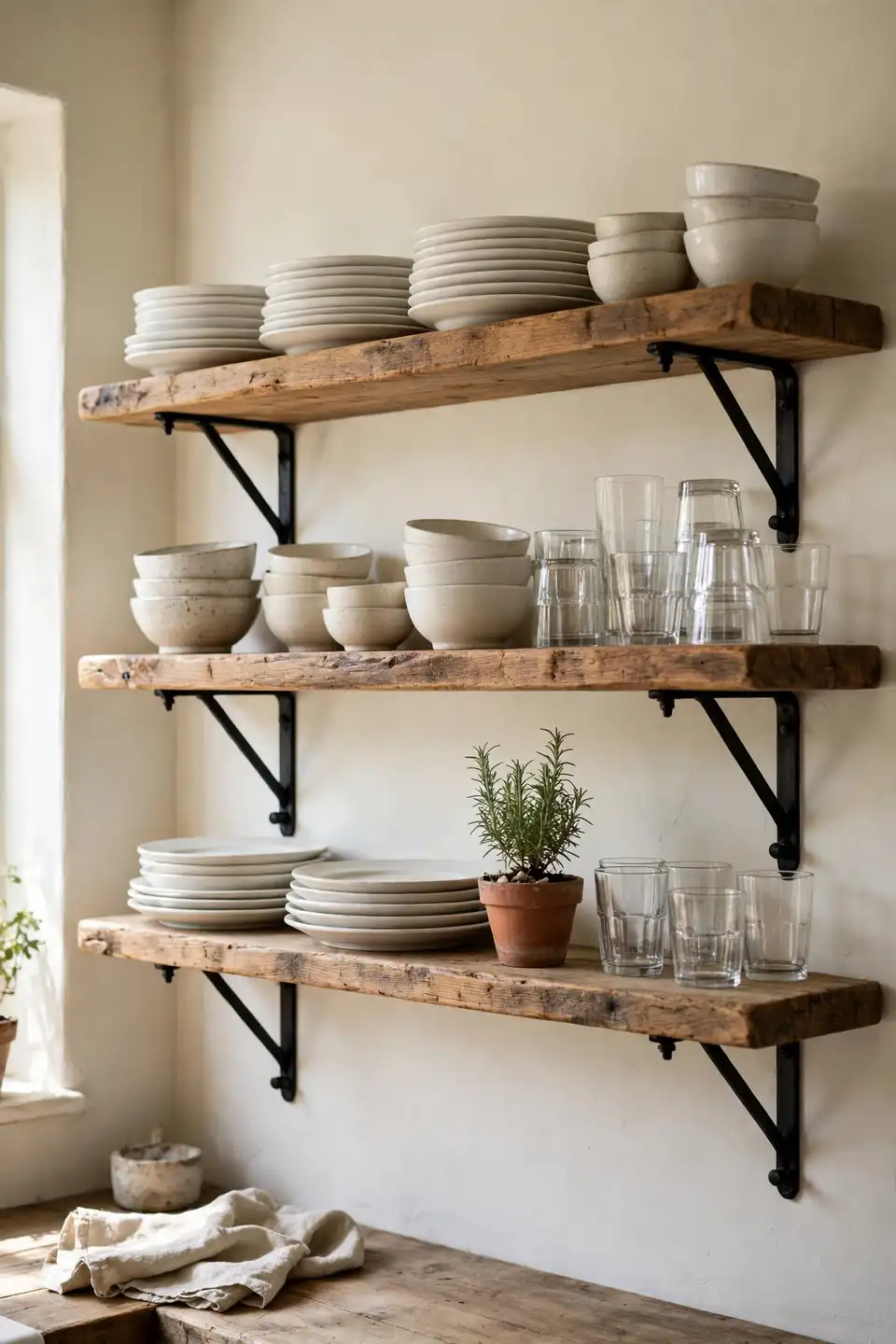
- Thick pine or oak boards on black iron brackets hold daily dishes within easy reach.
- Group plates, bowls, and glasses by color so the shelf reads calm, not cluttered.
- Leave one third of every shelf empty; breathing room is what sells the look.
- Stack heavy crocks and cast iron low, with light glasses and linens up high.
- A small potted herb or trailing plant softens the hard lines of stacked dishware.
Open shelves reward tidy habits and punish clutter faster than any cabinet door. Limit each shelf to things used weekly, and store the rest behind doors elsewhere. Dust lands weekly too, so choose a shelf count the household can wipe down in five minutes without complaint.
Farmhouse Apron Sink Charm

Quick Tip: A deep apron front sink in white fireclay hides a full day of dishes below the rim, which keeps a small kitchen looking tidy between washes. Pair it with a bridge faucet in aged brass for instant farmhouse character.
Apron sinks suit rustic rooms because they show honest material at the front of the run, where eyes land first. The exposed front panel also protects cabinet faces from drips better than a standard drop in rim. Choose fireclay for a soft sheen or hammered copper for a bolder, darker note. In my experience the extra depth also makes soaking large roasting pans far less awkward.
Exposed Brick Backsplash Warmth
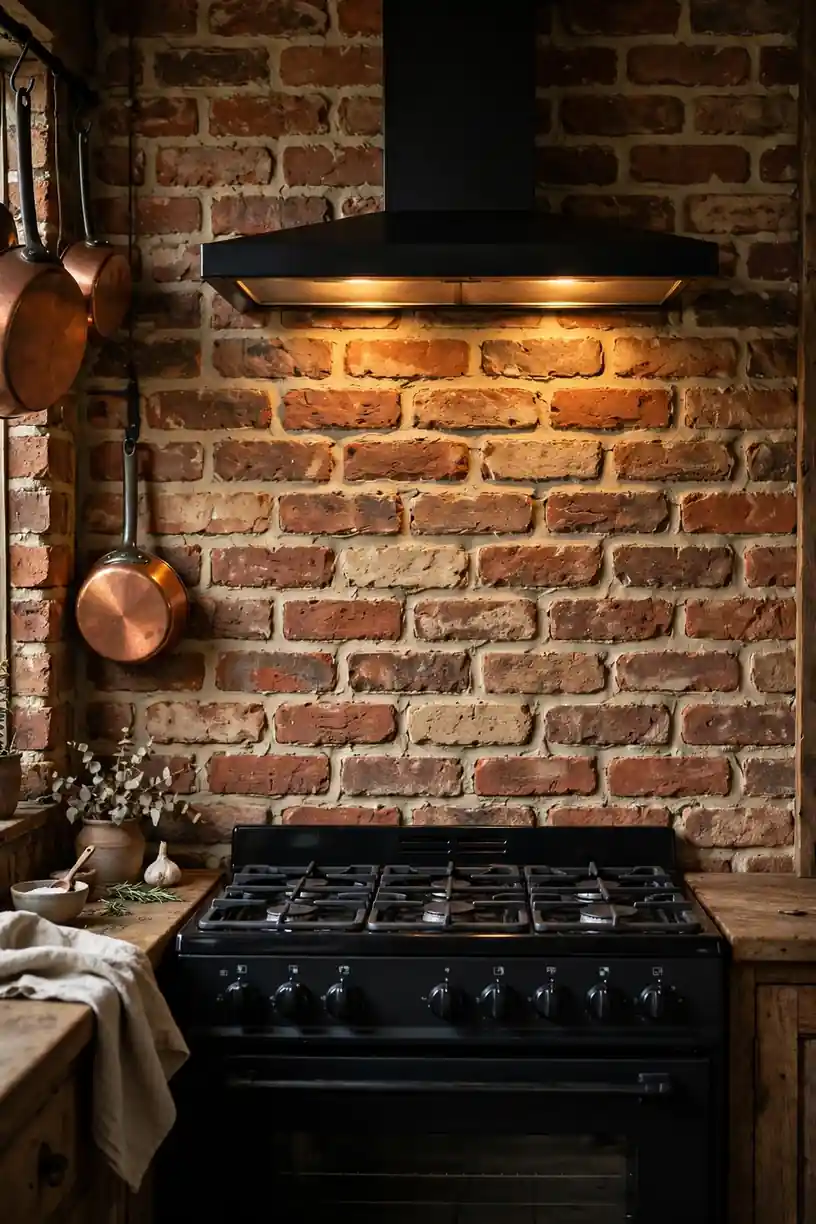
BEFORE: The wall behind the range was flat painted drywall that showed every splash of sauce. It felt cold next to the wood counters, and the whole cooking zone read as an afterthought.
AFTER: Real brick slips now run from counter to ceiling, their clay tones shifting from rust to sand. Cooking splashes disappear into the texture, and the wall glows warm under the hood lights each evening.
Brick veneer slips cost far less than full brick and install over existing drywall with mortar or adhesive panels. Seal the surface with a matte stone sealer so grease wipes off instead of soaking in. Keep grout lines wide and slightly uneven for the oldest look.
Butcher Block Counter Layers
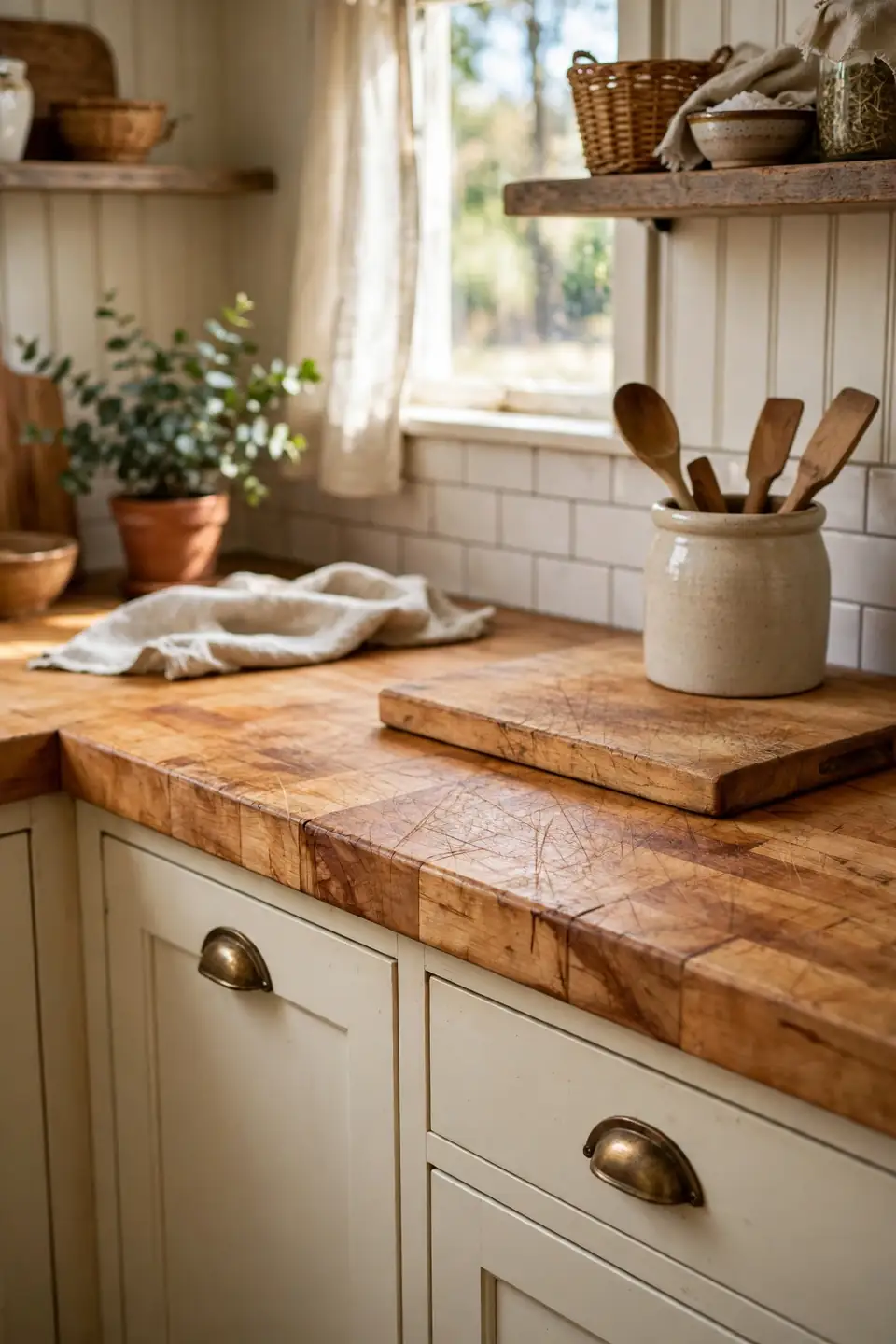
- Choose a dense hardwood like maple, walnut, or white oak at least one and a half inches thick.
- Sand the surface smooth, then seal every side with food safe oil or hardwax finish.
- Re-oil the counter every few months; dry patches near the sink show where water sits longest.
- Keep one section near the stove unsealed by boards, reserved as the everyday chopping zone.
Butcher block forgives daily cooking in a way stone never will. Knife marks, heat rings, and stains sand out in an afternoon, and the surface warms cold cabinet colors instantly. Pair it with painted cabinets below and the kitchen gains contrast without a single loud color.
Painted Versus Wood Cabinets

| Feature | Painted Cabinets | Wood Cabinets |
|---|---|---|
| Feel | Soft and cottage calm | Warm and grain rich |
| Cost | Lower, paint refreshes old doors | Higher for solid wood fronts |
| Upkeep | Touch ups hide in minutes | Needs oil or varnish yearly |
| Light Effect | Bounces light around the room | Absorbs light, feels cozier |
| Best For | Small or dark kitchens | Large rooms with strong light |
Many rustic kitchens land on a mix: painted uppers in a warm cream, wood lowers or a wood island grounding the room. The mix keeps the space bright while the grain still shows where hands and eyes spend time. Test both finishes on spare boards before committing the whole run.
Woven Basket Storage Zones

Do:
- Group onions, potatoes, and garlic in separate lidded baskets inside one cool cabinet.
- Hang a flat basket beside the stove for mail and daily clutter.
- Line produce baskets with washable linen to catch crumbs and soil.
- Give every basket one fixed job so tidying needs no thought.
Don’t:
- Mix cleaning chemicals into food baskets, even for one busy week.
- Stack baskets three high where lids warp and contents get forgotten.
- Buy a matching set before measuring the shelves they must fit.
- Store bread in a sealed basket, where trapped moisture speeds mold.
Baskets bring the softness that hard kitchen surfaces lack. Their weave hides visual noise and forgives odd shapes daily. Replace one tired basket each season and the whole system stays fresh.
Black Iron Hardware Accents

Cost: Full hardware swap, about $60 to $180
Time: One hour with a screwdriver and template
Skill Level: Beginner, no drilling on standard spacing
Best For: Cream, white, or wood cabinets needing contrast
Matte black pulls and hinges give pale cabinets their outline, the way ink defines a pencil sketch. The finish hides fingerprints better than polished chrome and pairs with nearly every rustic material: brick, stone, oak, and aged brass alike. Keep the shapes simple, cup pulls on drawers and plain knobs on doors, and repeat the same black on the faucet or light fixtures so the metal story reads as one decision rather than three accidents.
Stone Wall Texture Moment
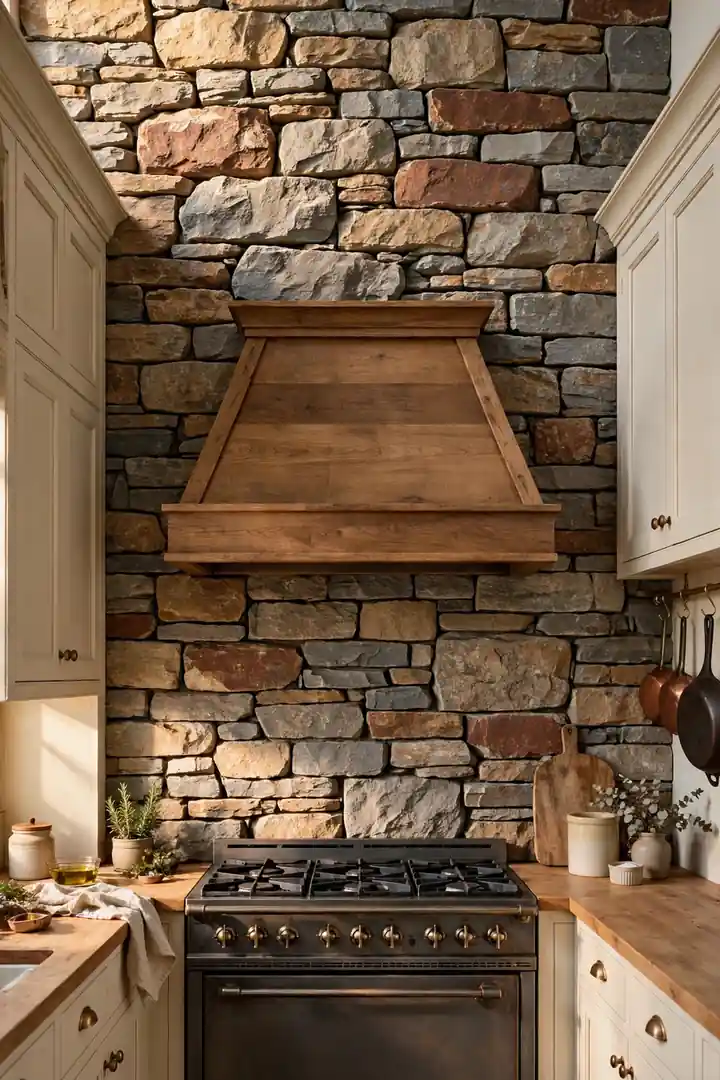
A short run of stacked stone behind the range or along a breakfast wall changes how the whole kitchen feels. The rough faces catch morning light in ridges and shadow, and the cool surface balances warm wood tones nearby. Real stone veneer panels keep the weight manageable on standard framing.
Choose stones in mixed sand, gray, and rust tones, then pull cabinet paint from the lightest stone in the stack. Where pale wash and driftwood keep a coastal room calm, as in modern coastal bedroom decor, stone earns calm through weight instead. Grout sparingly; tight, dry stacked joints look oldest and gather the least grease.
Vintage Runner Rug Warmth

- A faded wool runner softens long hours of standing at the sink and stove.
- Flat woven styles let cabinet doors and drawers swing clear without catching.
- Muddy reds, indigo, and sand tones hide crumbs and splashes between washings.
- A grippy rug pad underneath stops the creep that frustrates cooks daily.
- Vintage pieces forgive wear; small stains read as patina, not damage.
Measure the galley run before shopping, and leave two inches of floor showing on each side so the runner reads intentional. Washable flat weaves suit busy households best, while true vintage wool belongs in calmer kitchens. Rotate the runner end for end every season to even out the fading.
Copper Pot Rail Display
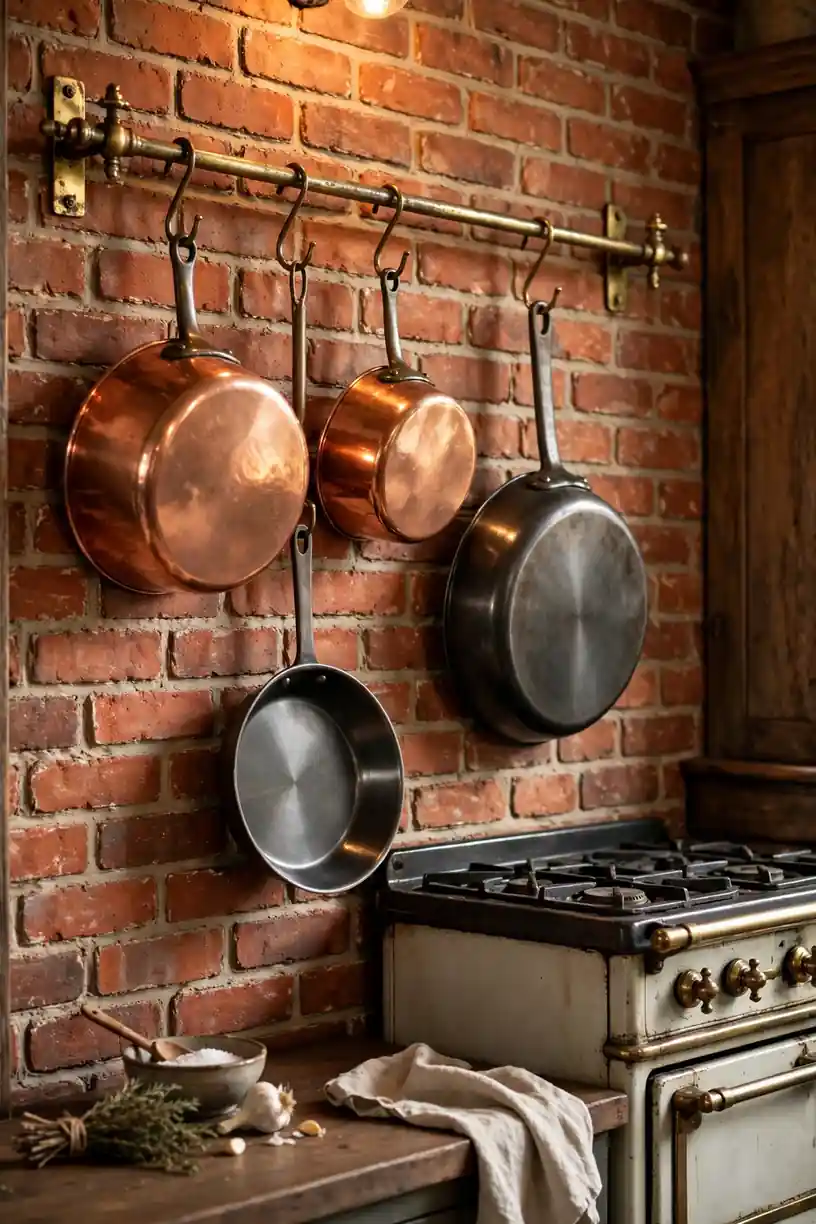
Quick Tip: Hang the rail where pots clear heads and cabinet doors, about eye level beside the range rather than above it. Steam and grease rise straight up, so offset rails keep copper bright with half the polishing.
Solid copper and carbon steel earn their shine through use, and a rail shows that working patina off proudly. Space the S hooks so pan rims never touch; clanging metal at midnight helps nobody. That honesty is why rails anchor so many rustic kitchen interior design ideas: the tools of daily cooking become the decoration, and nothing needs to hide behind a door. Start with the five pans used weekly and let the collection grow slowly.
Barn Door Pantry Entry
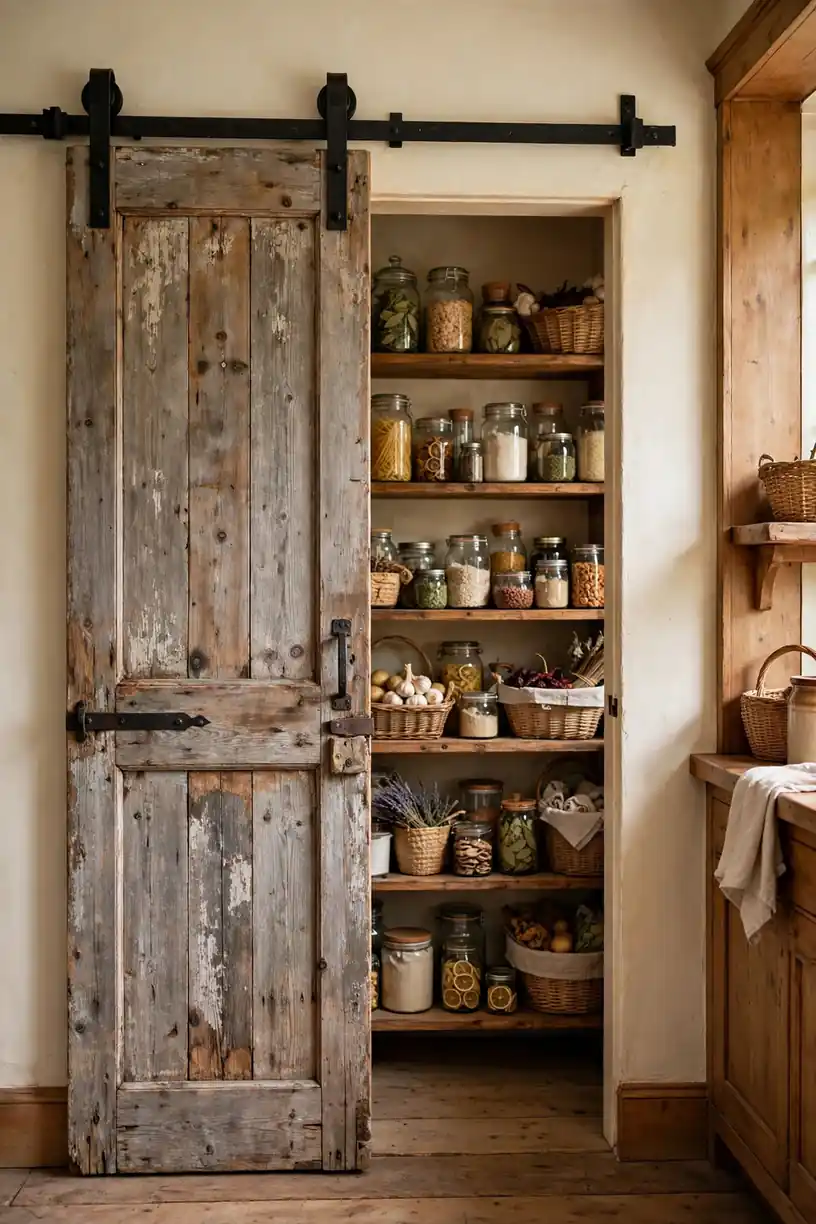
BEFORE: The pantry wore a standard hinged door that swung into the prep counter and blocked the walkway whenever someone grabbed flour mid recipe. Its plain white slab looked lost against the wood tones around it.
AFTER: A sliding barn door in weathered pine now glides along a black iron track, parking flat against the wall. The doorway stays open during cooking, and the door itself became the room’s favorite texture.
Sliding doors solve swing clearance problems that frustrate small kitchens daily. Choose solid wood over hollow core; the weight keeps the door tracking straight and closing with a satisfying settle. Add a recessed pull so the door parks fully behind shelving or trim.
Open Plate Rack Storage
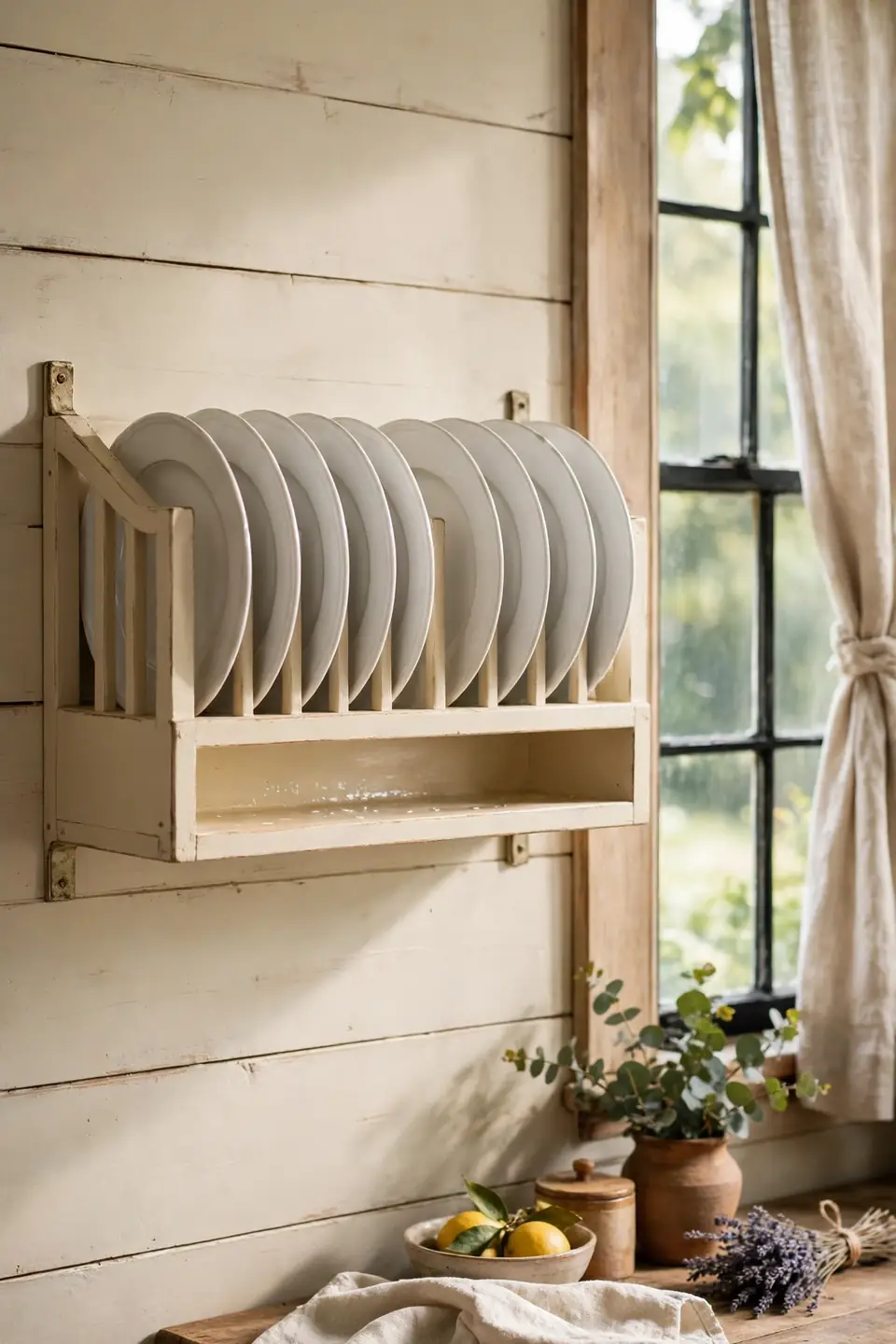
- Mount a wall plate rack near the dishwasher so unloading ends with plates already stored.
- Size the slots one inch wider than the largest plate the household owns.
- Add a shallow groove or rail along the bottom to catch drips after washing.
- Keep daily plates in the rack and park special occasion pieces in closed cabinets.
Plate racks were standard in farm kitchens long before cabinets took over, and their logic still holds. Plates dry in open air, chip less than stacked piles, and show their rims as quiet decoration. Paint the rack to match the trim and it disappears into the wall architecture.
Wood Range Hood Statement

| Feature | Wood Hood | Stainless Hood |
|---|---|---|
| Look | Warm, furniture like | Bright, professional |
| Cost | Mid range, often custom built | Wide range, ready made |
| Upkeep | Dust the ledges weekly | Wipes clean in seconds |
| Sound | Quieter, wood absorbs echo | Can ring and hum softly |
| Best For | Rustic and farmhouse rooms | Modern rustic blends |
A wood hood turns the range wall into furniture, especially in a boxed shape with a slight taper and a shelf ledge for small crocks. Match its stain to the beams or island so the room’s wood story repeats at two heights. Vent inserts hide inside standard liners, so performance never suffers for the look.
Ceramic Crock Utensil Holders
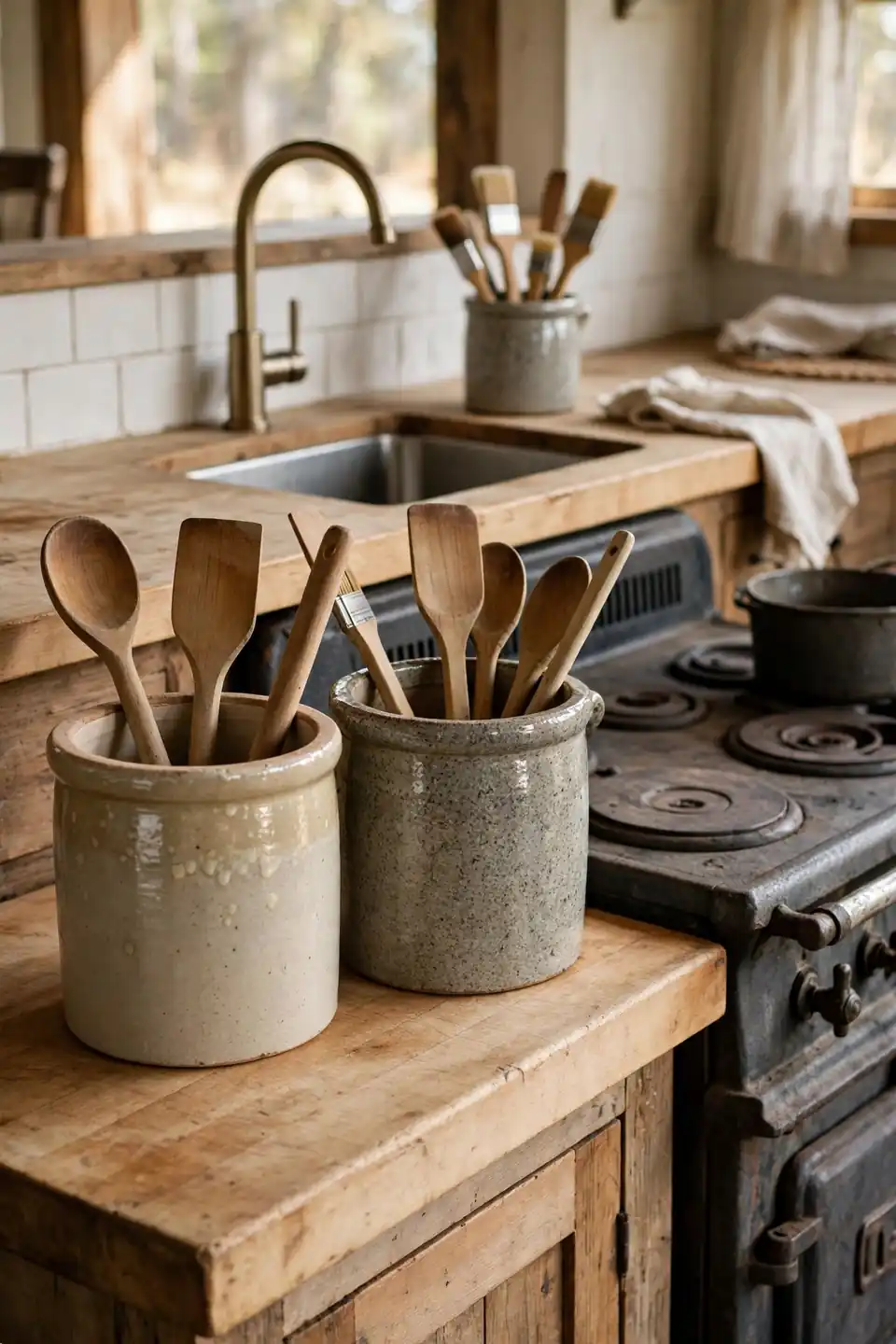
Do:
- Stand wooden spoons and spatulas in a heavy crock within one step of the stove.
- Choose crocks with a wide mouth so utensils fan out instead of jamming together.
- Rest a small crock by the sink for scrub brushes and dish tools.
- Pick glazed stoneware that rinses clean and shrugs off tomato stains.
Don’t:
- Crowd every gadget into one crock; drawers should hold the rarely used tools.
- Set a tall crock where elbows knock it during busy cooking.
- Buy thin ceramic that chips the first time a whisk handle drops in.
Crocks earn their counter space because they corral the tools cooks grab fifty times a day. Their weight keeps them planted, and their handmade glaze adds the small irregularity rustic rooms thrive on.
Aged Brass Faucet Glow
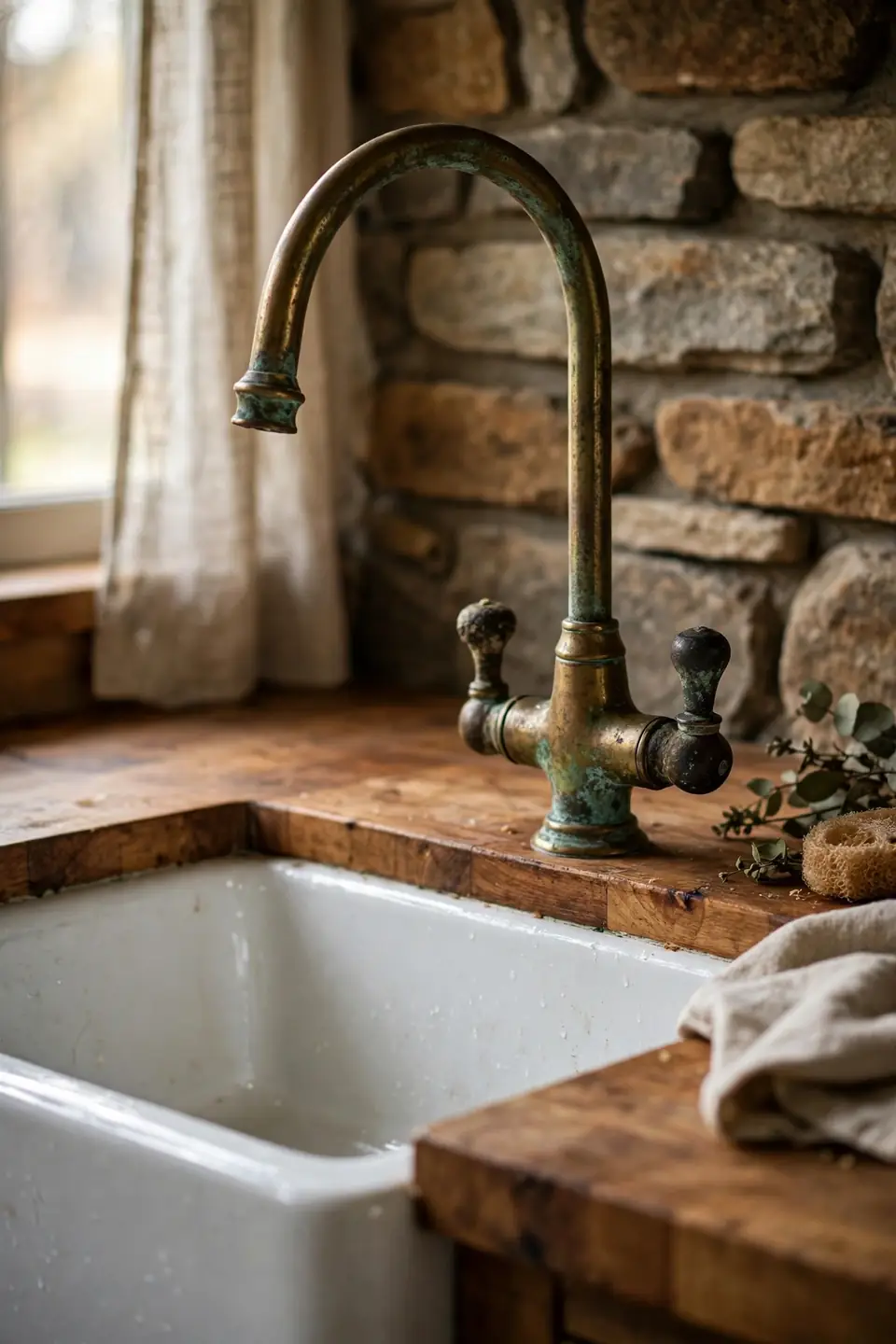
Cost: Quality brass faucets, about $180 to $450
Time: Swap in about one hour, plumbing basics
Skill Level: Confident beginner with a basin wrench
Best For: Farmhouse sinks and stone counters
Unlacquered brass changes with touch, darkening where hands land and staying bright where water runs. That living finish suits rustic rooms better than any coating that pretends to be old. Pair the faucet with brass cabinet knobs in the same aged tone, and let black iron take the supporting roles on hinges and rails. Over a year, the patina map of the faucet becomes a small record of every meal the kitchen has hosted, which is exactly the kind of honest wear this style celebrates.
Shiplap Wall Texture Backdrop

Horizontal shiplap behind open shelves or around a breakfast nook adds rhythm without pattern. The shadow lines between boards give white walls depth, and the surface takes paint or a light whitewash equally well. Run the boards only where they show; cabinet runs hide the rest and save material.
Real pine boards beat printed panels in both feel and sound; a mug set down against them lands with a soft knock, not a hollow tap. Keep gaps the width of a nickel for the classic look. A single shiplap wall is plenty, since repetition everywhere turns texture into noise in most kitchens.
Farm Table Island Swap
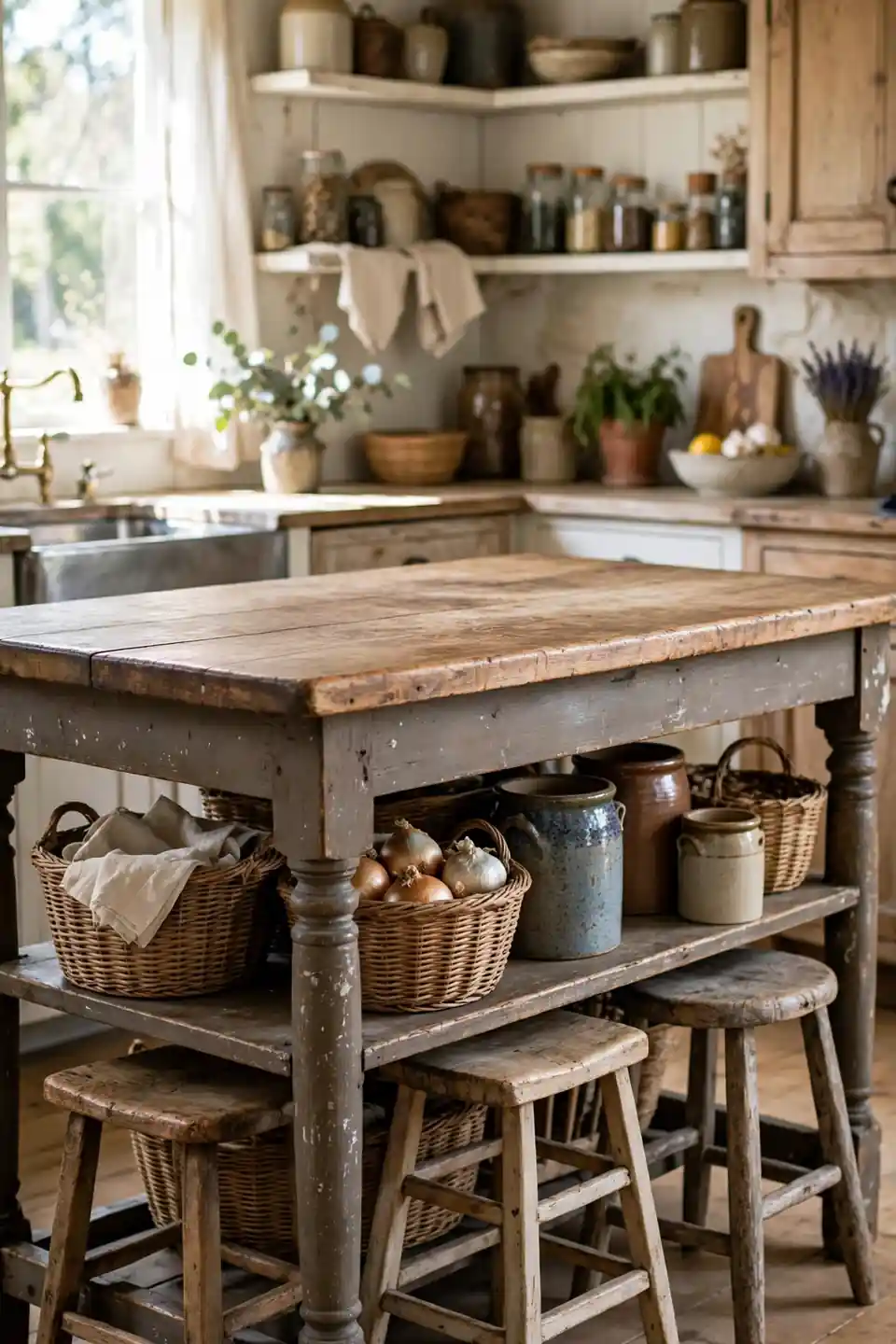
- A sturdy farm table gives prep space, seating, and storage in one open piece.
- The open base keeps small kitchens feeling airy where a cabinet island would crowd.
- A lower shelf holds baskets, crocks, and the roasting pans too big for cabinets.
- Mismatched stools tuck underneath and pull out only when guests arrive.
Table islands suit cooks who move around their workspace and households that gather while dinner cooks. The legs leave room for knees, dogs, and bins that a boxy island would block. Choose a top at counter height, seal it well, and the table works as hard as any built in.
Herb Window Garden Shelf

Quick Tip: A narrow shelf across the kitchen window puts basil, mint, and chives within snipping distance of the cutting board. Glass jars show the water level at a glance, so herbs get watered before they wilt, not after. South and east windows grow the bushiest plants.
Herbs are the one kitchen decoration that also seasons dinner, and a window shelf keeps them in the light they crave. Rotate pots a quarter turn weekly so stems grow straight instead of leaning toward the glass. Clay pots in mixed sizes look gathered and honest, and their weight keeps the shelf stable when cats inspect the mint.
Distressed Cabinet Finish Look
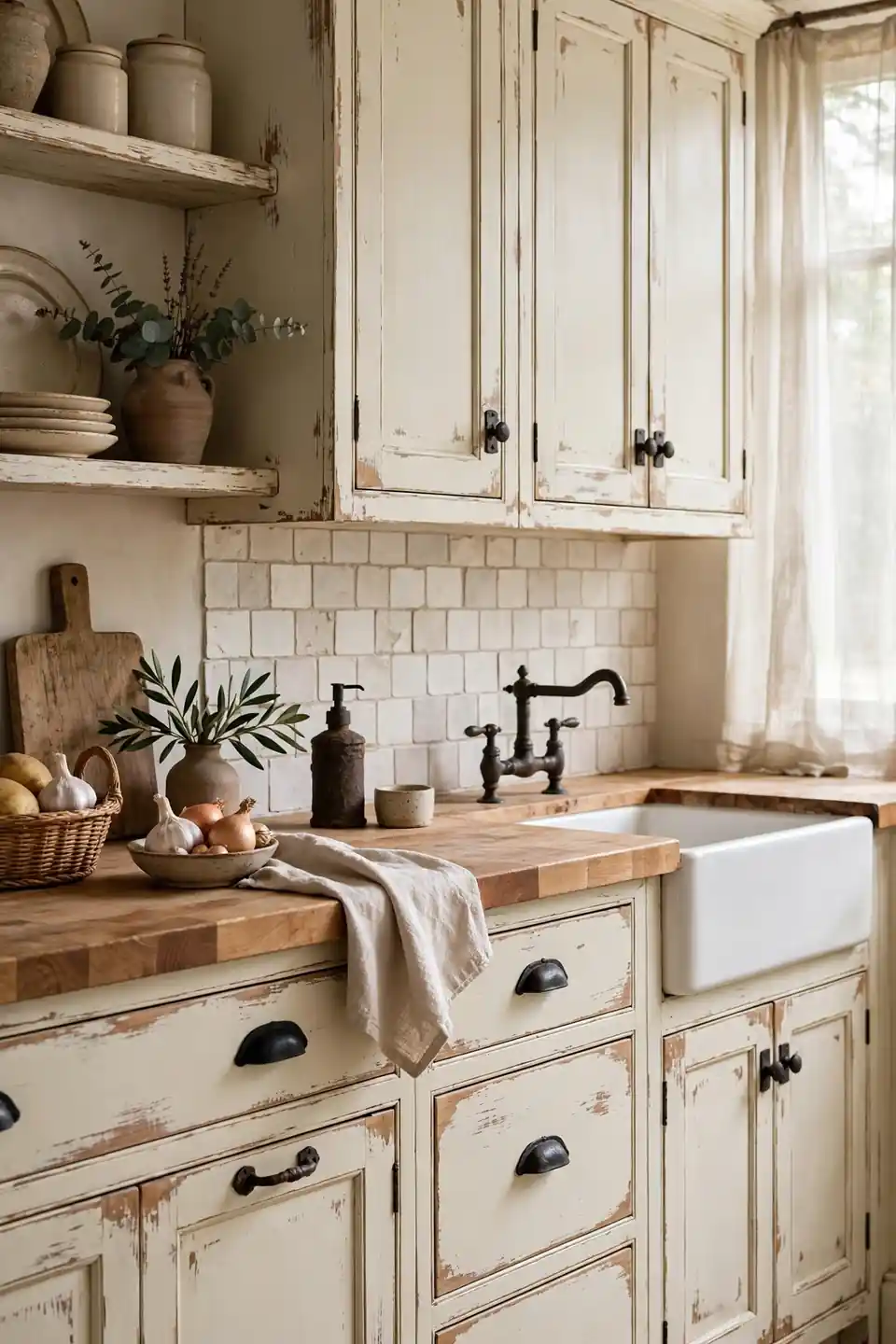
BEFORE: The cabinets were glossy orange oak, their finish shouting over every other material in the room. Each door reflected the ceiling light like a mirror, and the kitchen felt dated no matter what decor changed around it.
AFTER: A matte milk paint in warm cream now lets the wood grain ghost through, with edges rubbed back to bare wood at the handles. The room reads calm and old in the best way, and chips only add to the story.
Distressing works in stages: degrease, sand, paint, then rub high wear spots back with fine paper once the paint cures. Seal with clear wax rather than polyurethane so repairs stay invisible later. Practice on a drawer front first; the technique forgives beginners because perfection was never the goal.
Lantern Pendant Light Cluster
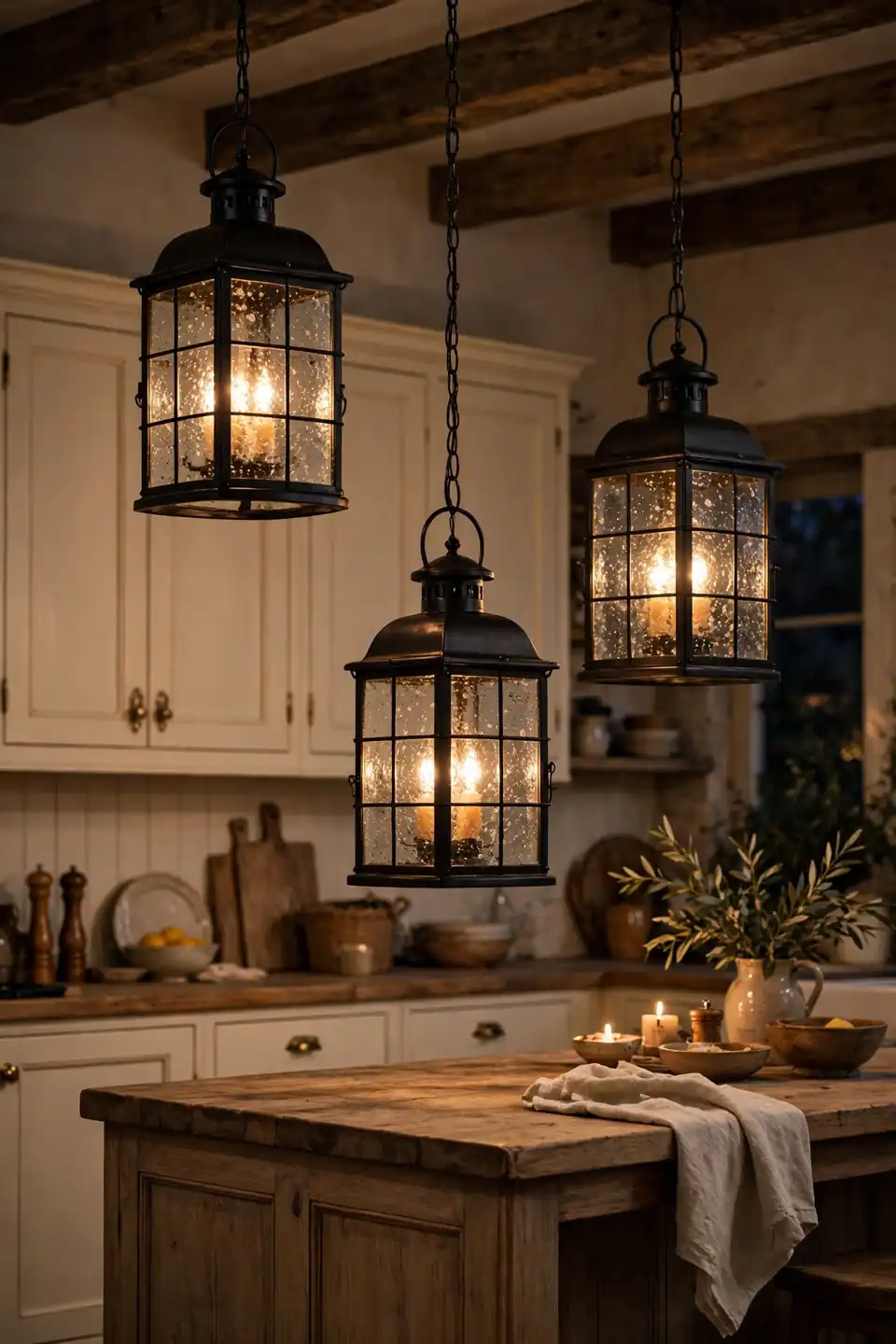
- Group three lantern pendants over the island at staggered heights for a gathered look.
- Hang the lowest lantern about thirty inches above the counter so sight lines stay open.
- Wire the cluster to a dimmer; lantern light should soften after dinner, not glare.
- Choose seeded or clear glass so bulbs glow like candle flames at night.
Lanterns borrow their shape from the farmyard, where they lit barns and porches long before recessed cans existed. In a kitchen they mark the island as the gathering spot and cast warm pools of light exactly where people stand. Black frames echo iron hardware, while aged brass versions lean softer and more collected.
Conclusion
Saving the ideas that fit your kitchen is the easy first step; the rooms that change are the ones where a single project actually gets done. Start with the surface your eyes touch most, a beam, a backsplash, a better faucet, and let that one win set the palette for the rest. These rustic kitchen interior design ideas reward patience and honest materials over big budgets every time. I’ve seen how small changes like these can completely shift the way a space feels. Save this pin for your next free weekend, try one idea, and share the before and after with someone planning their own kitchen.