21 Full Length Mirror Ideas to Make Your Home Feel Bigger
A tall mirror does quiet magic in a home: it borrows light, doubles a view, and gives a small room a second window that never needs curtains. Well chosen full length mirrors lean, hang, and stand in the spots where a room feels flat, turning blank walls into depth. The trick is placement, not price, because a mirror only reflects what it faces.
Inside are twenty one placements, frames, and styling moves for bedrooms, hallways, entryways, and dressing corners, each one sized for real homes and real budgets. The same borrow-the-light thinking behind one wall kitchen ideas works here too: one strong piece, placed with intent, changes how the whole space behaves. In my experience, the mirror that gets used daily is the one planned around light first and furniture second, so every idea below starts with what the glass will reflect.
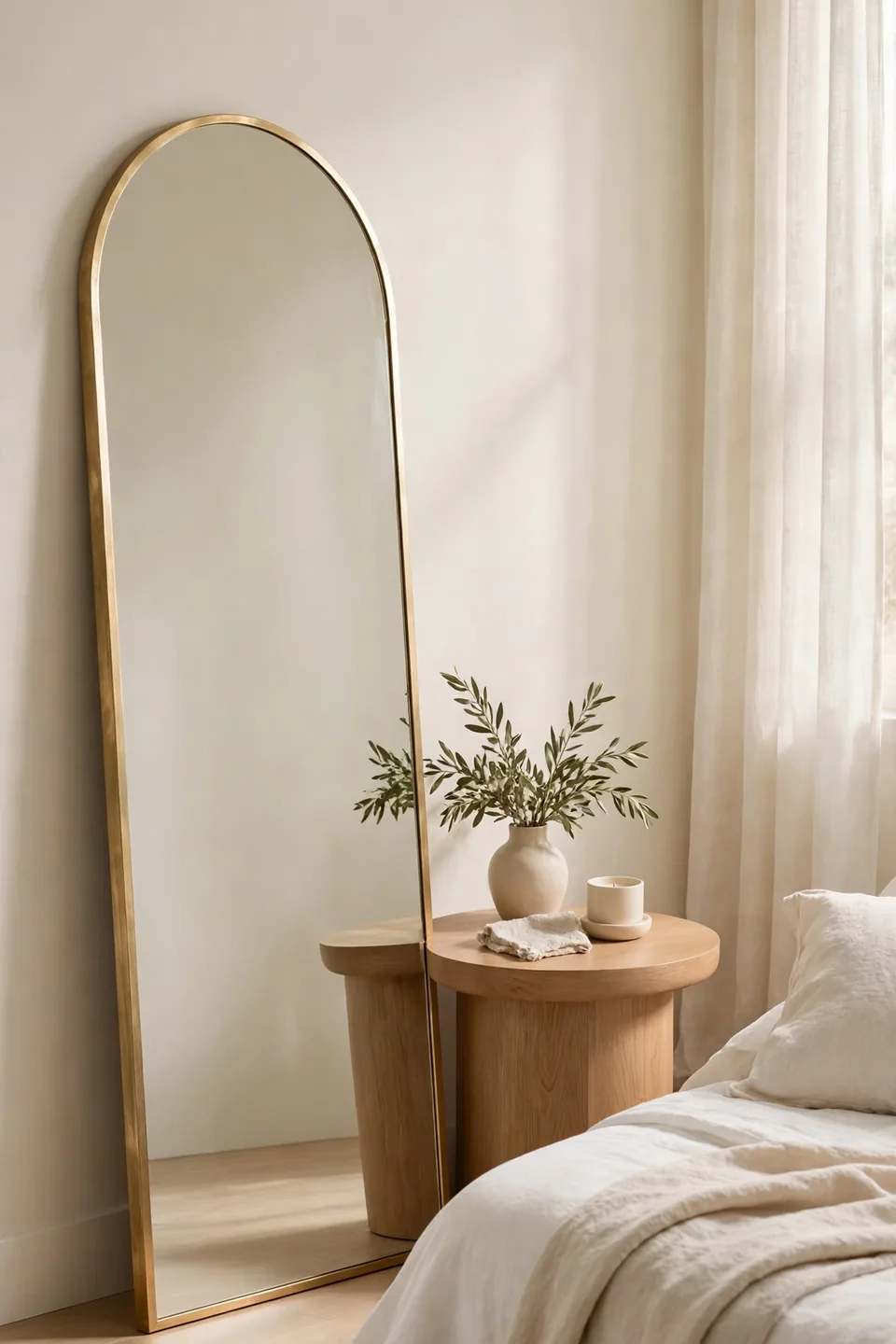
Arched Leaning Statement

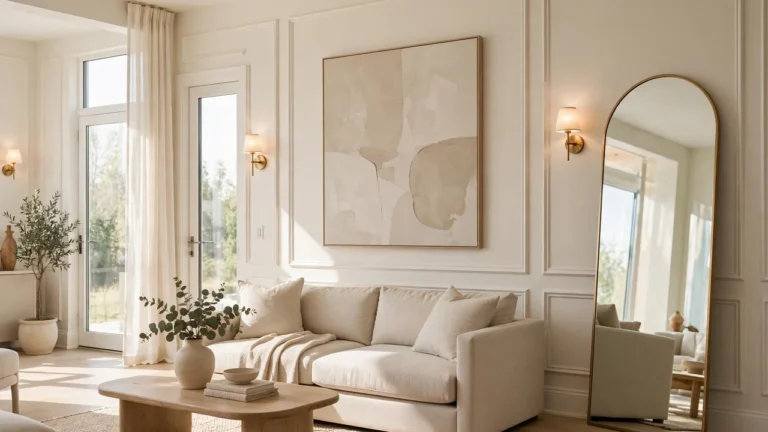
An arched top softens everything a straight frame cannot. Leaned against a bedroom wall, the curve breaks up the hard lines of wardrobes and doors, and the room instantly feels designed rather than assembled. Arches also pull the eye upward, which makes low ceilings read taller than they measure on paper.
Set the base about four inches out from the wall and let the top rest gently, then anchor it with a discreet anti-tip strap. A rug under the base stops sliding on wood floors. I’ve noticed the arch works hardest opposite a window, where the reflection carries garden or sky into the dimmest corner.
Opposite The Window
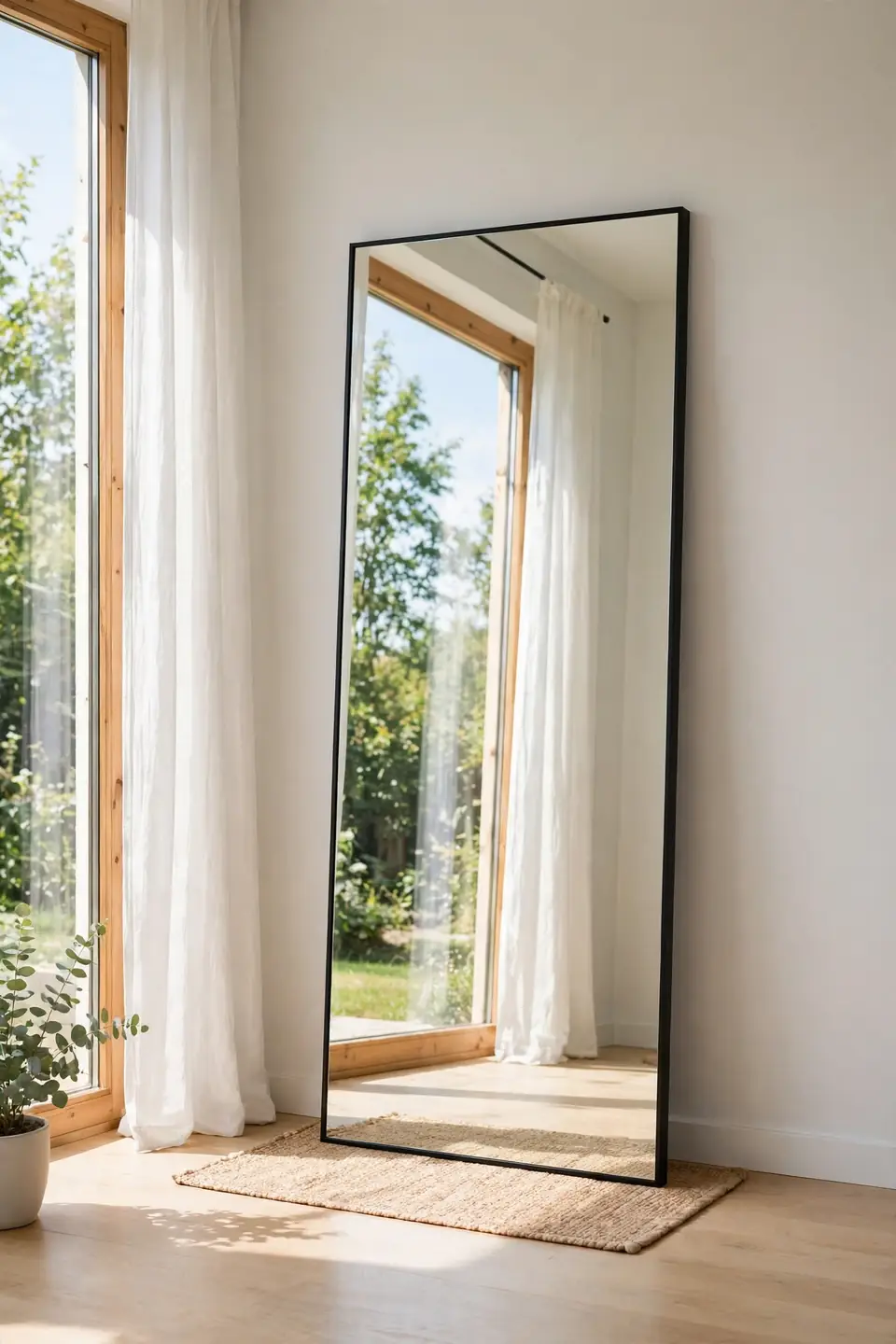
- Face the glass toward the brightest window and the room gains a second light source for free.
- Angle it slightly if the reflection shows a bare wall instead of the view.
- Keep the window dressing simple so the reflected light stays clean and bright.
- Check the reflection at noon and at dusk; both lights should flatter the room.
- Leave the floor in front clear so nothing blocks the borrowed brightness.
Placement opposite glass is the oldest decorator trick because it costs nothing beyond the mirror itself. The reflection doubles greenery, sky, and daylight, and even a north facing room feels less flat by midday. What the mirror faces matters more than its frame, so choose the prettiest view in the room and aim the glass straight at it.
Slim Hallway Brightener

Quick Tip: In a narrow hall, hang the mirror on the longer wall rather than the end wall. Side placement spreads light along the whole passage instead of pooling it in one bright patch, and shoulders pass without that startled glance a head-on mirror gives.
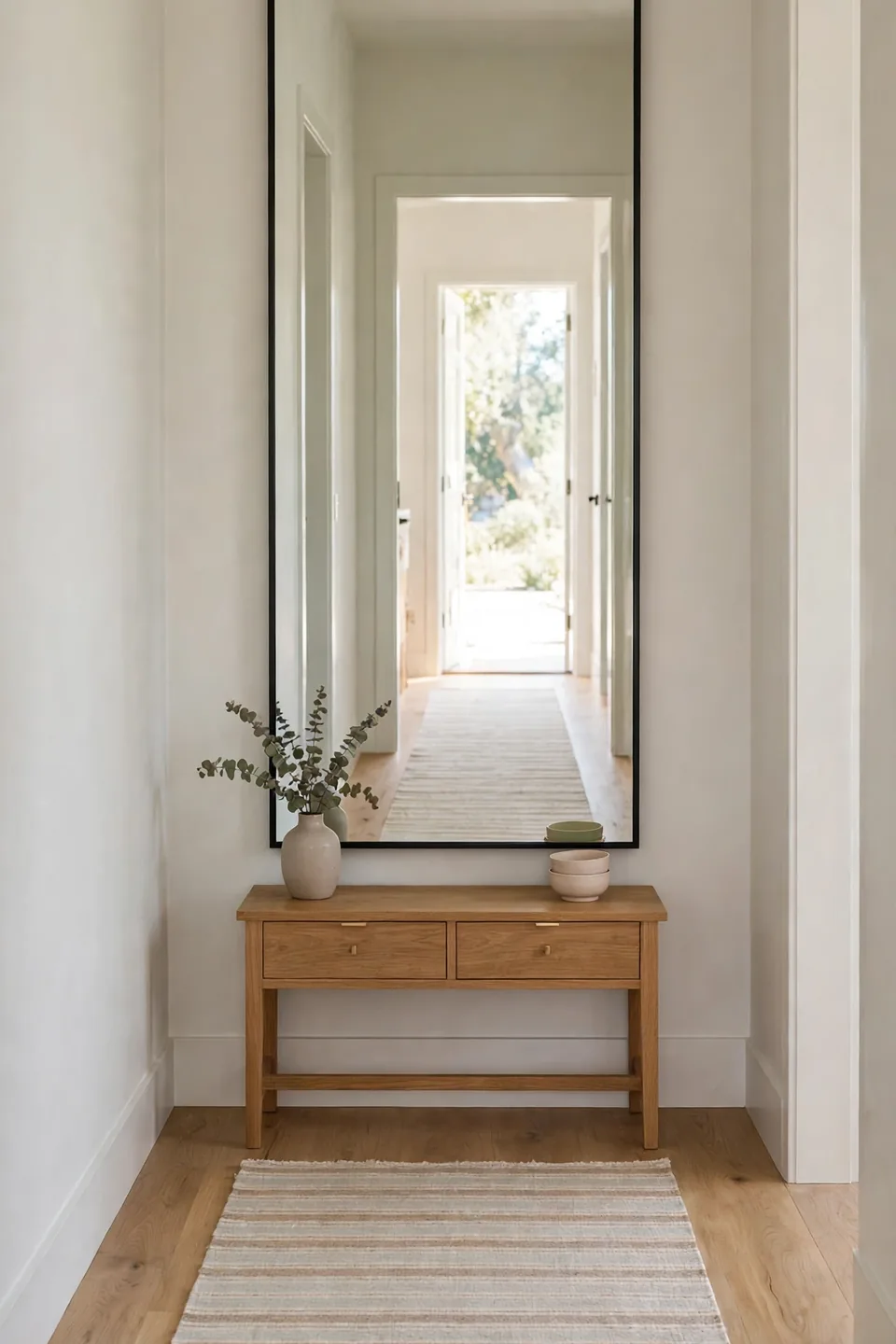
Slim frames, around fourteen to eighteen inches wide, fit the stretches of wall between doors where nothing else works. A hallway mirror catches light from open doorways and carries it into the middle of the passage, the stretch that usually stays gloomy. Choose a simple black or oak frame so the glass, not the border, does the talking.
Dark Corner Transformed

BEFORE: The corner beside the front door collected coats, shoes, and shopping bags in a heap that never fully cleared. One bare bulb lit the tangle from above, and the whole entry felt like a cupboard the house was embarrassed about.
AFTER: A tall arched mirror now leans in that corner, bouncing the bulb’s light sideways across the walls. Hooks moved up, shoes sit in one basket, and the corner reads as a deliberate dressing spot guests use without being asked.
Nothing moved structurally; only the order changed. Grouping by task instead of by habit turned a shadowed corner into a steady one. That’s why many experts recommend testing a corner with a cheap mirror first, because the reflection reveals whether the spot deserves a permanent, better framed piece.
Hang It Level

- Hold the mirror against the wall and mark the top corners lightly in pencil.
- Find the studs, or fit wall anchors rated well above the mirror’s weight.
- Fit two fixings level with each other, checked twice with a spirit level.
- Hang, step back three paces, and check the reflection line against the door frame.
A crooked tall mirror makes the whole room feel seasick, because every reflected line tilts with it. Level fixings matter more on long mirrors than on any picture, since the glass magnifies a small error across its full height. Two fixings share the load and stop the slow sideways creep that a single hook allows over time.
Leaning Versus Mounted

| Feature | Leaning | Wall Mounted |
|---|---|---|
| Floor space | Needs a few inches of floor | Uses none at all |
| Angle | Tilts up, flattering full view | Flat, true straight reflection |
| Safety | Needs an anti-tip strap | Fixed firmly to the wall |
| Best for | Renters and restless restylers | Busy halls and tight corners |
Neither style wins outright; the room decides. Leaning brings drama and flexibility, and the slight upward tilt gives the kindest full body view, which is why dressing corners favor it. Mounting wins where floor space is precious or small children climb everything in reach. Pick by traffic first and looks second, and the mirror will suit the room for years.
Dressing Corner Rules

Do:
- Place the mirror where natural light reaches it before noon.
- Leave two clear steps of space in front for full outfits.
- Add a small stool or basket beside it for daily pieces.
- Keep a lint roller in the drawer nearest the glass.
Don’t:
- Face it toward an unmade bed or a cluttered desk.
- Hang it where a door swings into the glass.
- Rely on a single harsh ceiling light above it.
- Crowd the frame with photos and sticky notes.
A dressing corner succeeds when the mirror shows the outfit and nothing else. Every reflected distraction competes with the outfit, so the view behind the viewer matters as much as the glass itself. Keep that view calm, lit, and tidy, and getting ready speeds up on busy mornings.
Mirror Size Facts

Cost: Slim framed styles start near forty dollars, large arched pieces run higher
Time: Leaning takes minutes, mounting about one focused hour
Skill Level: Beginner for leaning, confident DIY for wall fixings
Best For: Renters, small bedrooms, and dim hallways needing light
Size decides whether a mirror reads as decor or as furniture. As a guide, choose glass at least three quarters of your height if outfits are the job, and let the frame width suit the wall rather than the wardrobe. Tall and narrow stretches a small room upward; wide and tall belongs in generous spaces. When in doubt, tape the outline on the wall and live with the tape for a day before ordering.
Oak Frame Warmth

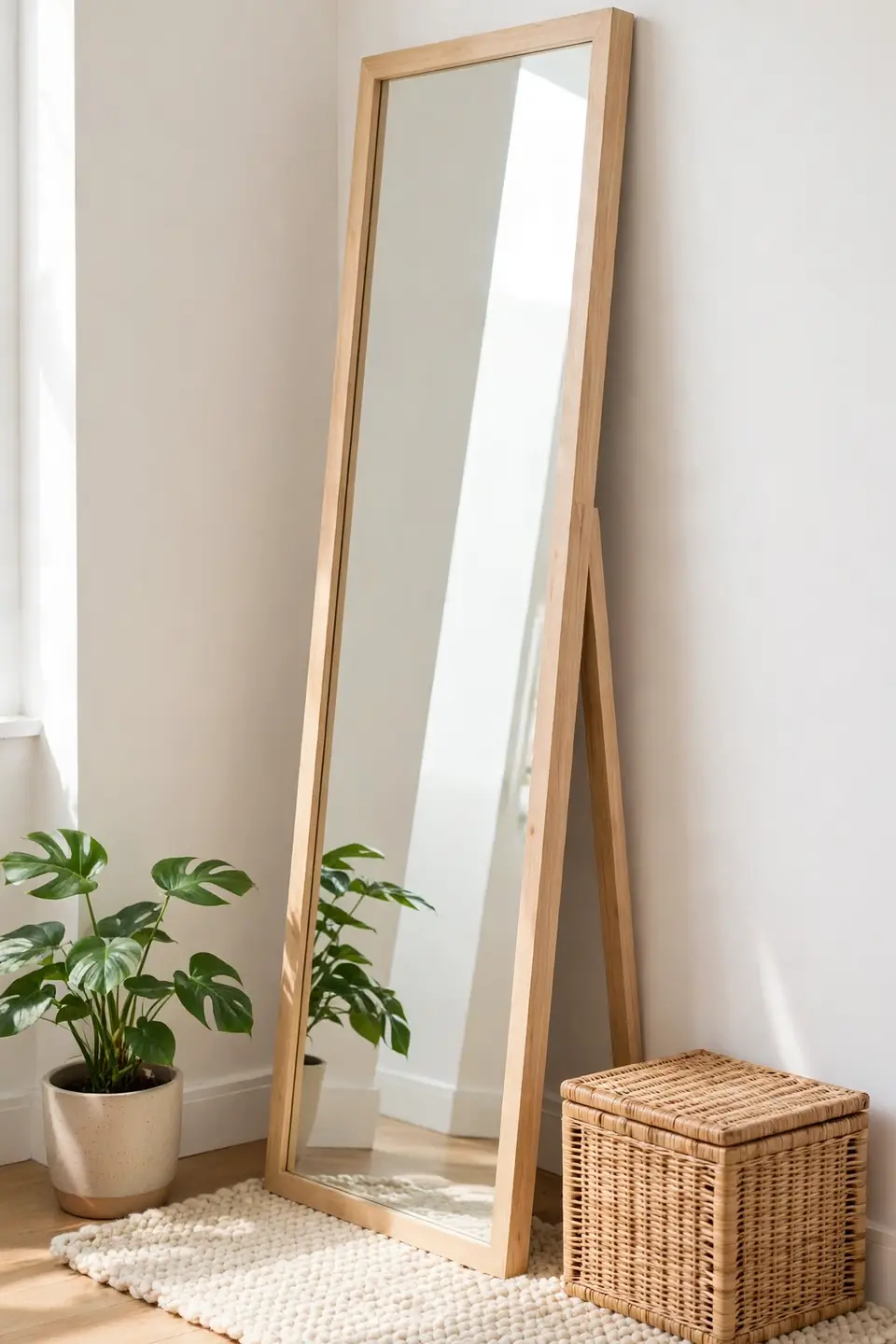
Pale oak frames bring the warmth that black and chrome cannot. Against white or cream walls, the wood grain softens the glass edge and ties the mirror to floors, beams, and furniture already in the room. The pairing reads calm rather than stark, and the mirror stops looking like a shop display piece.
Oak suits the relaxed leaning look in living rooms, where the mirror stands beside a reading chair and reflects the garden door. Keep other woods in the room within one tone family so the frame feels chosen, not matched by accident. A beeswax finish once a year keeps the grain rich in dry, heated homes.
Entryway Bench Pairing

- Set a low bench beneath or beside the mirror for bags and shoe changes.
- Hang the glass so its center sits at eye level for a last check.
- Add two hooks on the wall the mirror reflects, doubling their usefulness.
- Keep one woven basket under the bench for scarves and gloves.
- Leave the bench cushion pale so the reflection stays bright.
The bench and mirror pairing turns a pass-through strip into a proper arrival point. Shoes come off on the bench, coats get a final glance in the glass, and the doorway stays clear for the next person. In my experience, entryways with full length mirrors beside seating stop the shoe pile forming, because the spot finally has a system.
Brass Frame Glow
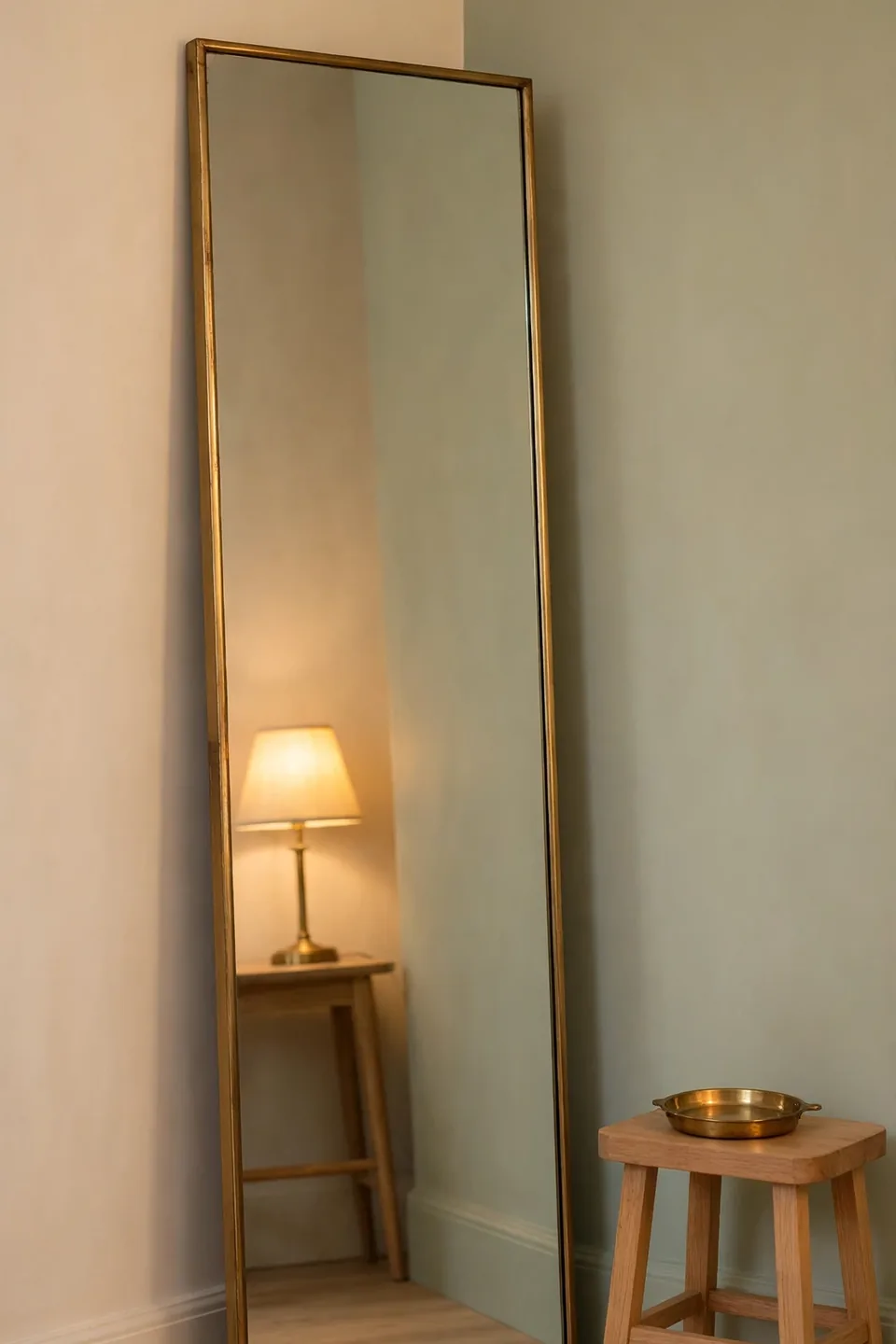
Quick Tip: Brass frames flatter warm light bulbs and candlelight, but they fight cool daylight bulbs. Match the bulb temperature to the frame: warm white near brass, neutral white near chrome, and the whole corner glows instead of glaring.
A slim brass frame adds jewelry level detail to a plain wall without shouting. It suits cream, sage, and the gentle palette of blush pink bedrooms, where gold toned lamps and handles already appear once or twice. Repeat the brass in one small object the mirror reflects, a tray or a lamp base, and the pairing looks planned from every angle in any light.
Small Room Doubled
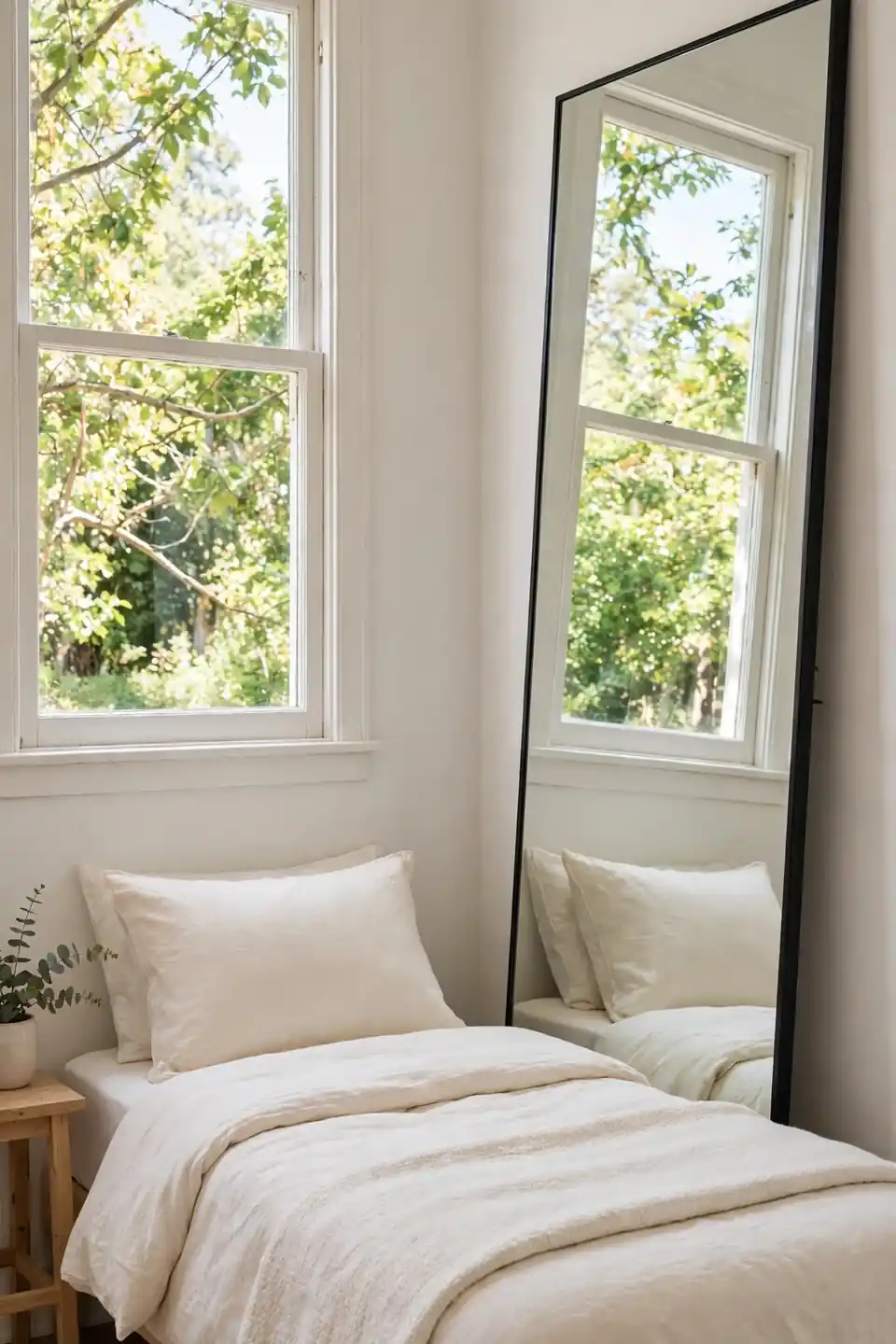
BEFORE: The spare bedroom measured barely nine feet across, with a bed pushed to one wall and a wardrobe looming opposite. Guests called it cozy, the polite word, and the single small window lit only the bed’s corner.
AFTER: A tall mirror now stands on the wardrobe wall, facing the window squarely. The reflection hands the room a second window, the bed appears to float in green daylight, and guests ask whether the room was always this size.
Nothing in the room grew except its reflection. Mirrors cannot add floor, but they remove the feeling of a wall rushing at you, which is most of what smallness is. I’ve seen this work well in many cases where the mirror faced the best view rather than the biggest wall.
Rug Anchored Lean
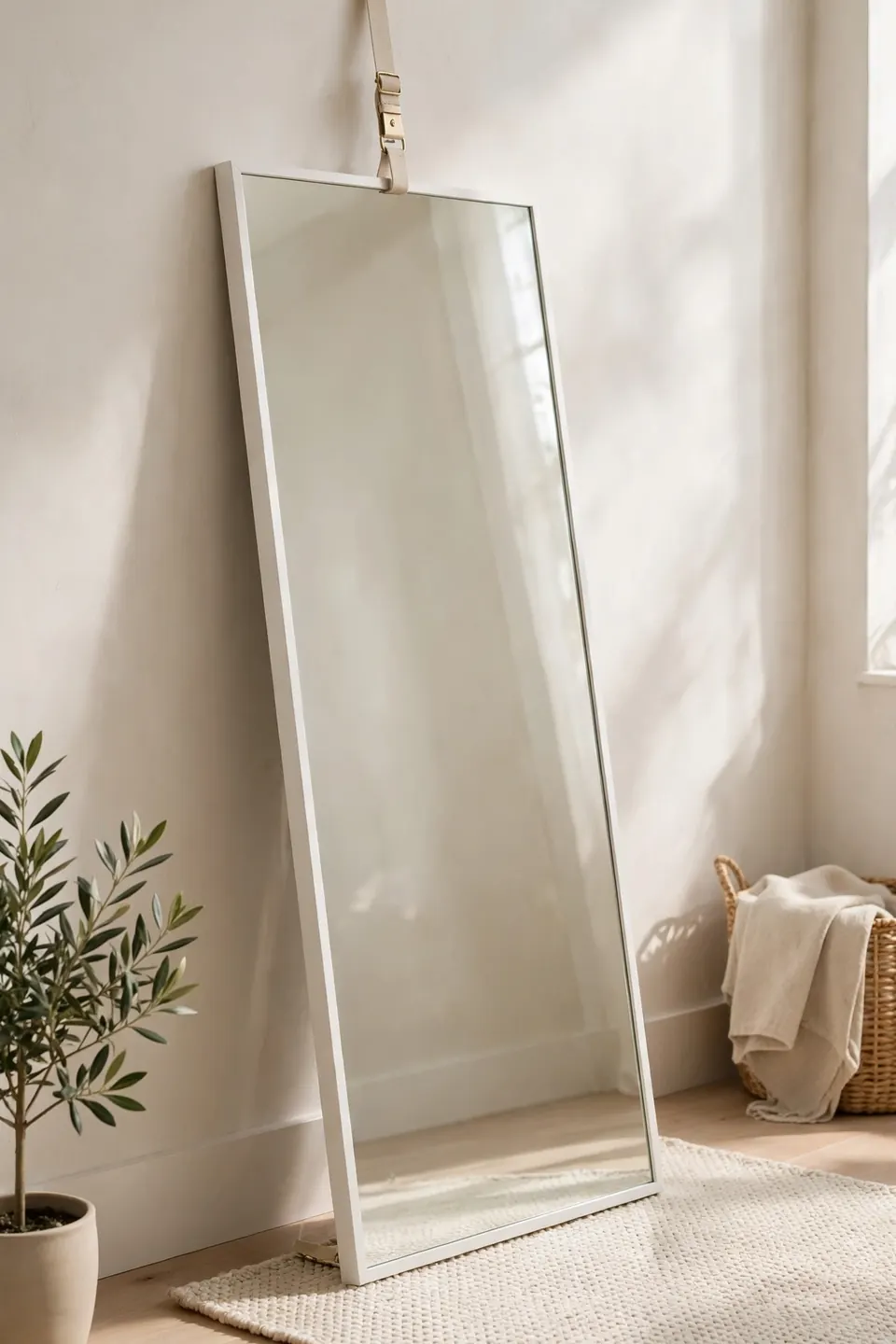
- Roll out a flat weave rug where the mirror will stand.
- Set the mirror’s base on the rug’s edge, two inches in.
- Tilt the top back to the wall and fit the safety strap.
- Stand back and check the reflection clears the ceiling light.
- Vacuum under the base weekly so grit cannot scratch the floor.
A rug under the base does three quiet jobs: it stops the frame sliding on smooth floors, it marks the mirror’s territory so feet give it room, and it softens the hard meeting of glass and floorboards. Flat weave matters, because thick pile lets a base wobble. Choose a rug long enough to step onto while dressing.
Arch Versus Rectangle
| Feature | Arch | Rectangle |
|---|---|---|
| Feel | Soft, romantic, classic | Clean, modern, structured |
| Wall fit | Loves blank tall walls | Suits low wide walls |
| Reflection | Curve crops the top corners | Shows the full outline |
| Best for | Bedrooms and dressing corners | Hallways and entryways |
Shape changes mood more than size does. The arch lends old house character even in a new build flat, while the rectangle keeps a contemporary room honest and crisp. Match the shape to the room’s other lines: curved headboards and round tables welcome an arch, while straight shelving and square frames ask for a rectangle. Mixed shapes in one small room usually read as indecision.
Renter Friendly Moves
Do:
- Lean the mirror and secure it with a removable strap.
- Choose lighter frames that one person can carry safely.
- Stand it on a rug to protect the landlord’s floor.
- Photograph the wall before and after for the deposit record.
Don’t:
- Drill into tiled or stone walls without written permission.
- Use adhesive strips beyond their stated weight limit.
- Lean glass where a door handle can strike it.
- Block a radiator or vent with a tall frame.
Renters get the same light doubling as owners when the mirror leans instead of hanging. The whole setup leaves with you on moving day, and no wall repair eats into the deposit. Keep the original packaging if storage allows; tall glass travels safest in the box it arrived in.
Placement Height Facts
Cost: Hanging hardware and anchors usually stay under ten dollars
Time: Measuring and mounting takes about forty minutes
Skill Level: Confident beginner with a level and drill
Best For: Hallway walls, closet doors, and bedroom corners
Height decides what the glass shows. Hang a mounted mirror so its center lands near five feet from the floor, and most adults get head to toe coverage when standing a few steps back. Leaning mirrors cheat height naturally through their tilt. Before fixing anything, stand where you will actually dress and check what the glass frames at that distance, not from up close.
Corner Lean Duo

Two tall mirrors leaned in a corner, angled gently toward each other, build a small bay of light where none existed. The pair reflects window light back and forth, softening shadows on both walls at once, and the corner stops being the place where furniture goes to be forgotten.
Match the frames so the pair reads as one idea, and keep the angle shallow; deep angles show the room’s ceiling more than its life. A low plant or basket between the two bases hides the meeting point and stops the corner feeling staged. This pairing suits living rooms with one strong window wall and seating that faces inward.
Greenery Framed Reflection
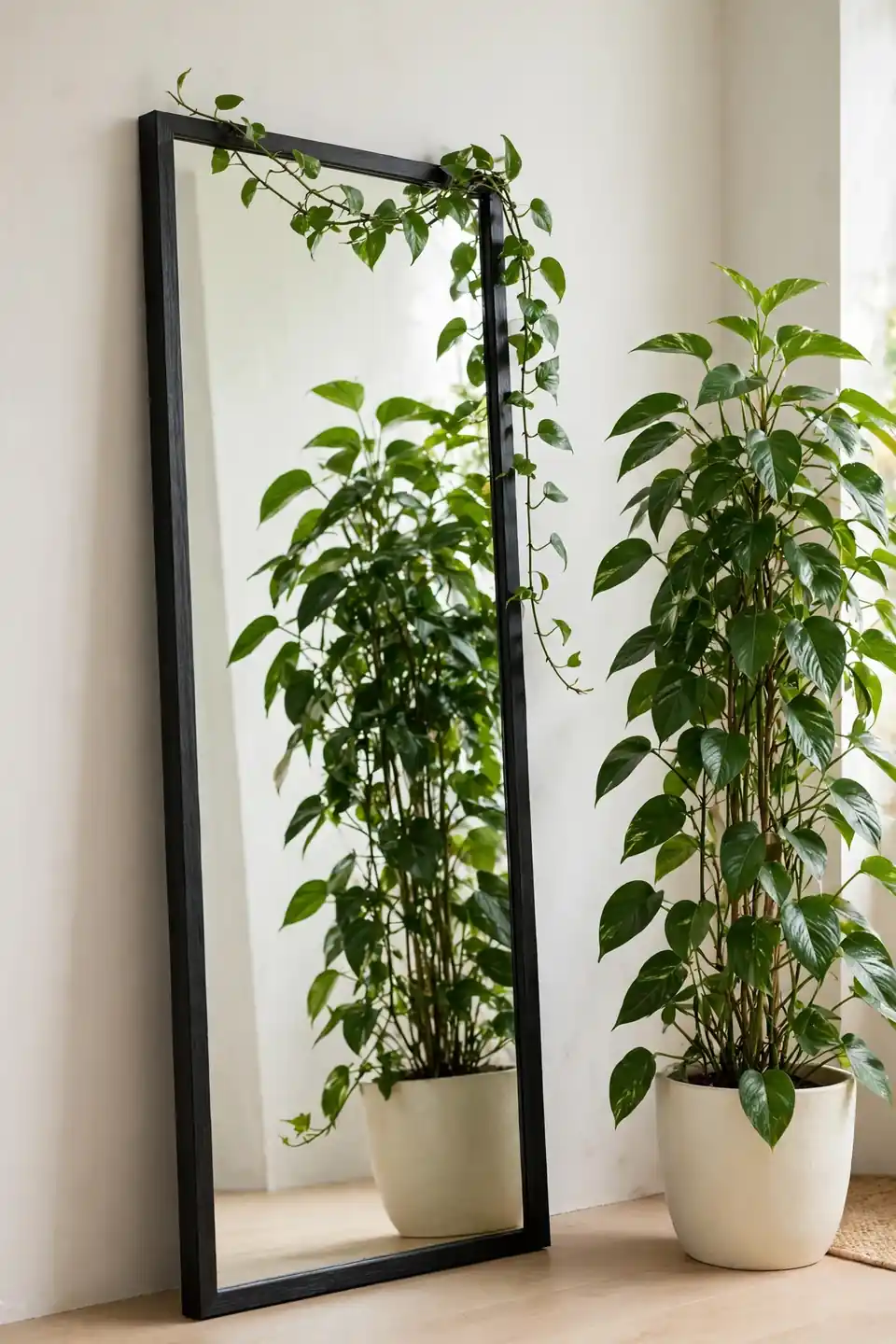
- Stand a tall plant to one side so leaves edge the glass.
- Let one trailing stem cross the frame’s top corner softly.
- Repeat the plant in the reflection for a doubled garden feel.
- Keep pots pale and simple so the green stays the color.
- Wipe leaves monthly; dusty plants reflect as dusty plants.
Greenery forgives a plain frame and a plain wall alike. The living edge changes with the seasons, so the mirror never shows the same picture twice, and rooms without a garden borrow one from a single pot. Choose plants that tolerate the light the spot actually gets, because a struggling plant reflects just as honestly as a thriving one.
Behind The Door
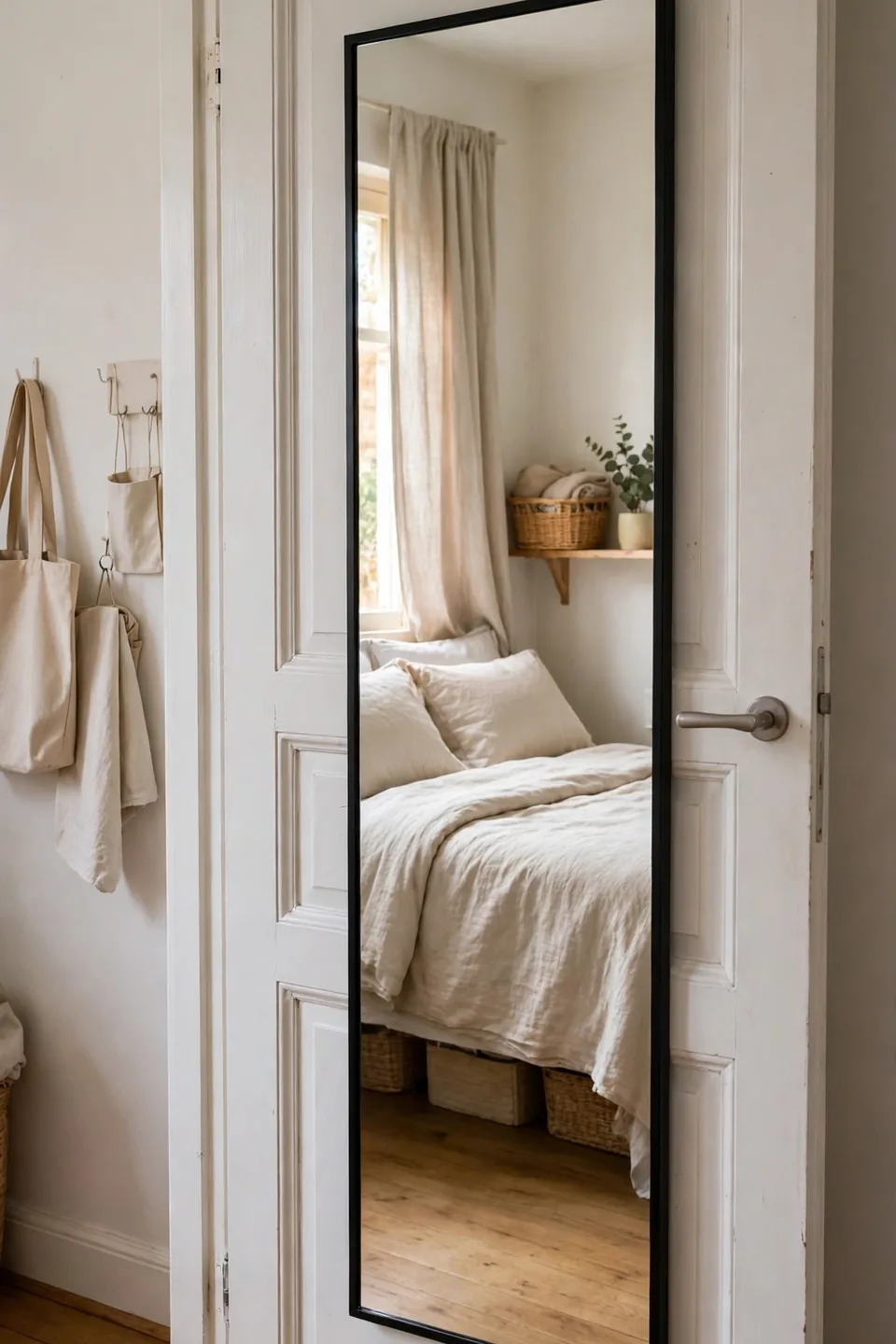
Quick Tip: The back of a bedroom or closet door holds a tall mirror where no wall space exists. Fit slim over-door hooks or shallow screws rated for the weight, and pad the frame’s edges so the glass never knocks the door as it swings.
Door mounting hides the mirror while the door stands open and reveals it when closed for dressing, a tidy trick in shared rooms. The glass also stays out of the room’s sightlines, so the space feels calmer with one less reflective surface competing for attention. Check the door still closes fully before the final tightening of any fixing.
Dim Hallway Brightened

BEFORE: The hallway between the bedrooms had no window and one tired ceiling light. Doors stayed shut against the gloom, laundry baskets migrated into the passage, and the whole stretch felt borrowed from a basement.
AFTER: A slim tall mirror now hangs opposite the bathroom doorway, catching every spill of light each time that door opens. The passage reads twice its width, and the laundry baskets went back to the rooms they belong in.
Hallways forgive almost any frame style, because the glass itself is the event. Borrowed light from doorways does the work here, so keep those door finishes pale if you can. A runner on the floor completes the trick by giving the reflection a long, deliberate line to double.
Weekly Shine Routine
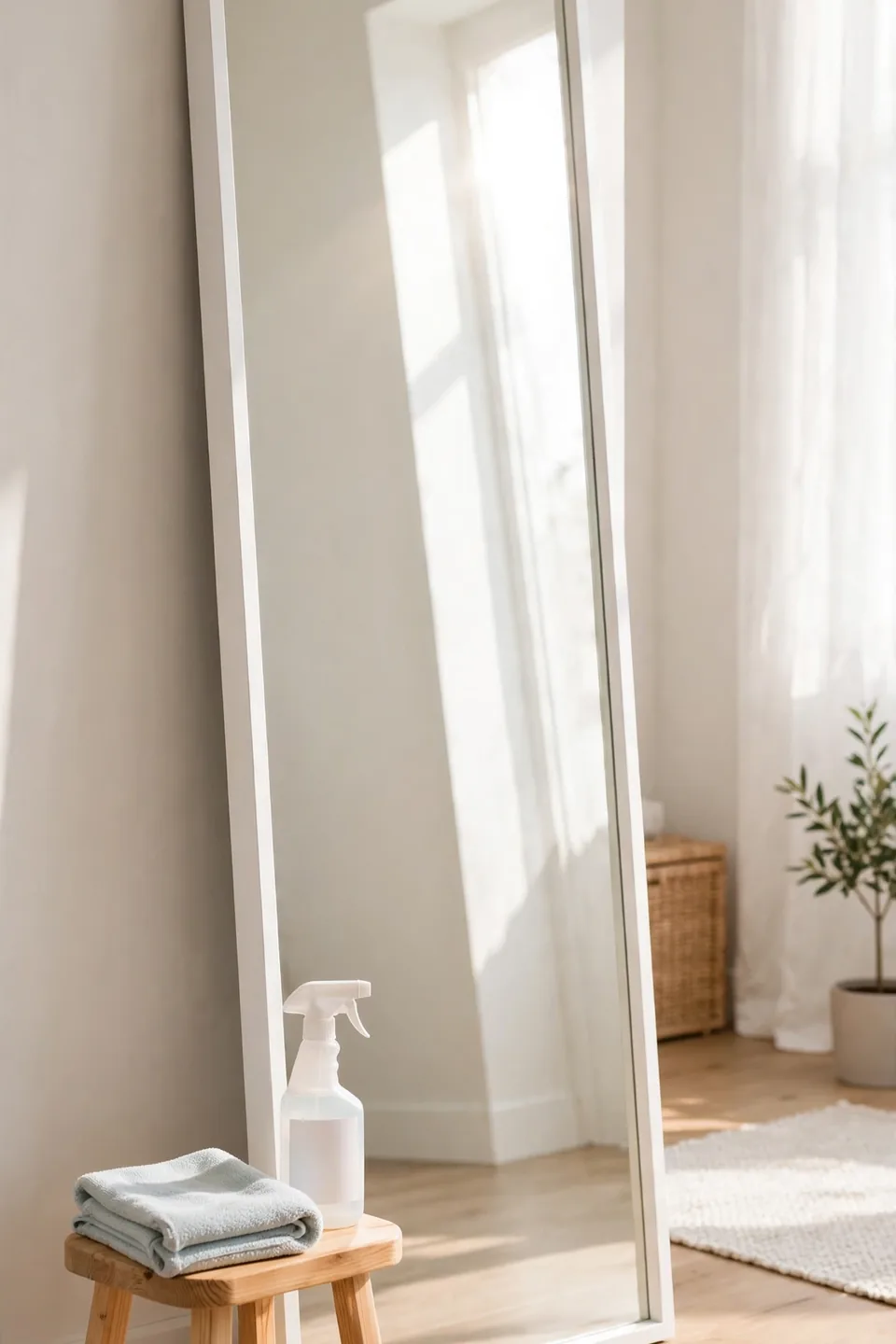
- Dust the frame first with a dry microfiber cloth.
- Mist the cloth, never the glass, with water and a drop of vinegar.
- Wipe in a slow S pattern from top to bottom.
- Buff the streaks with a second dry cloth under good light.
- Check the strap or fixings while the glass is clean.
Ten minutes a week keeps a tall mirror honest, because streaks and dust dim its light doubling more than a small frame ever could. Clean glass in the morning when daylight shows every smear, and the reflection stays bright through the darkest month. The routine also catches loose fixings early, long before they turn into a falling hazard.
Conclusion
A mirror earns its wall space every single day. Lean one tall frame where the morning light lands, hang another where the hallway feels dim, and even modest full length mirrors start paying rent in brightness and depth. Pick one placement from this list, live with it for a week, then adjust the angle before judging the result. Small shifts change everything a mirror shows. Save this pin for your next room refresh, share it with a friend in a small apartment, and let your walls work twice as hard.