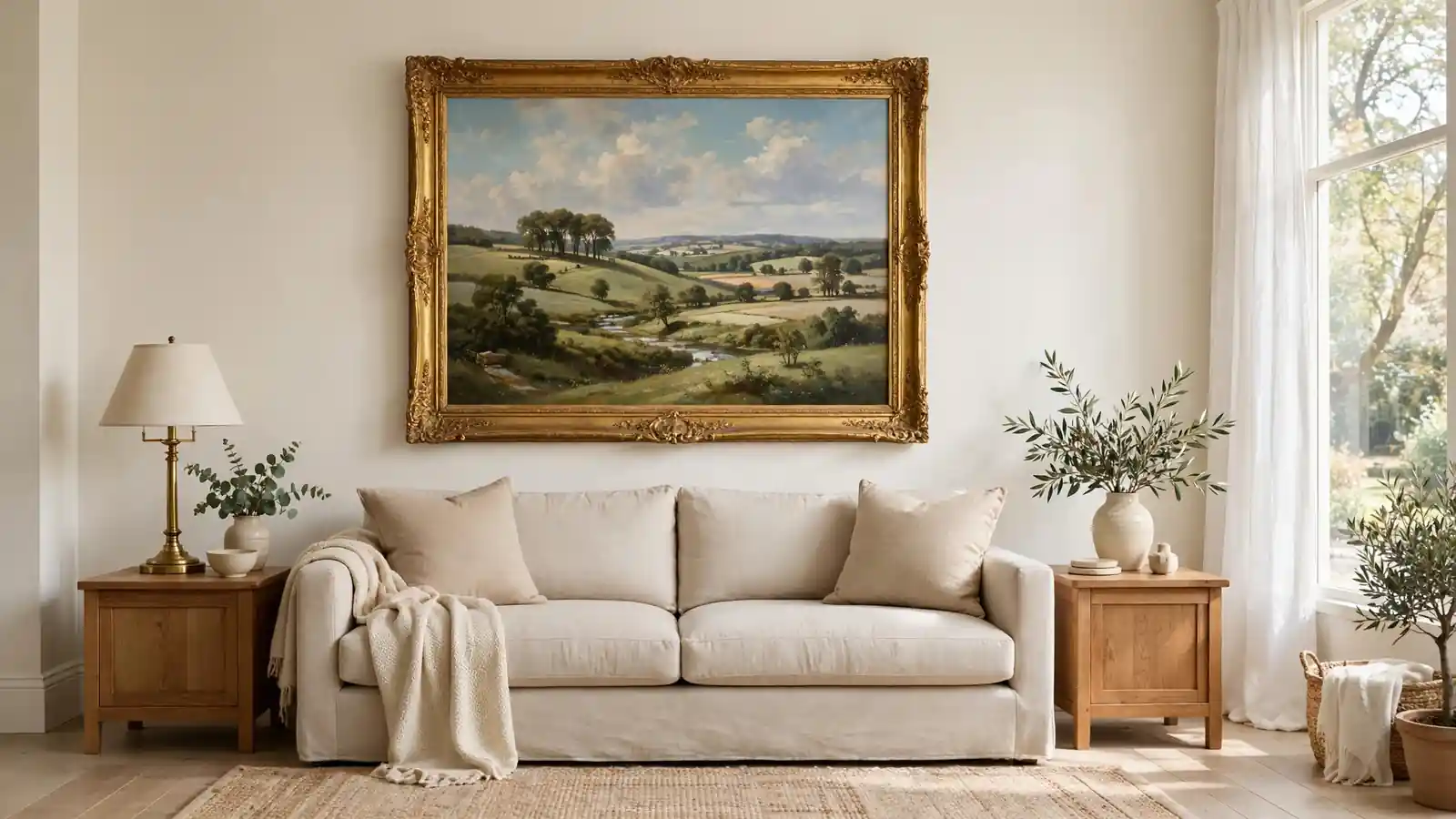
21 Vintage Landscape Art Living Room Decor Ideas for Classic Charm
Old paintings carry a calm that new prints rarely match. Rooms built around vintage landscape art living room decor feel settled and storied, because rolling hills, quiet rivers, and soft skies slow the eye down. This list gathers twenty one classic ways to hang, light, and style those pieces so your living room gains the charm of a collected home.
Each idea below covers scale, frames, and placement, plus the small mistakes that make good art look lost on a wall. Small rooms elsewhere in the house follow the same rules of proportion, and striped wallpaper powder room inspiration proves that classic pattern and soft color can make even the tiniest space feel deliberate. Start with one strong piece, hang it well, and let the rest of the room fall in quietly behind it.
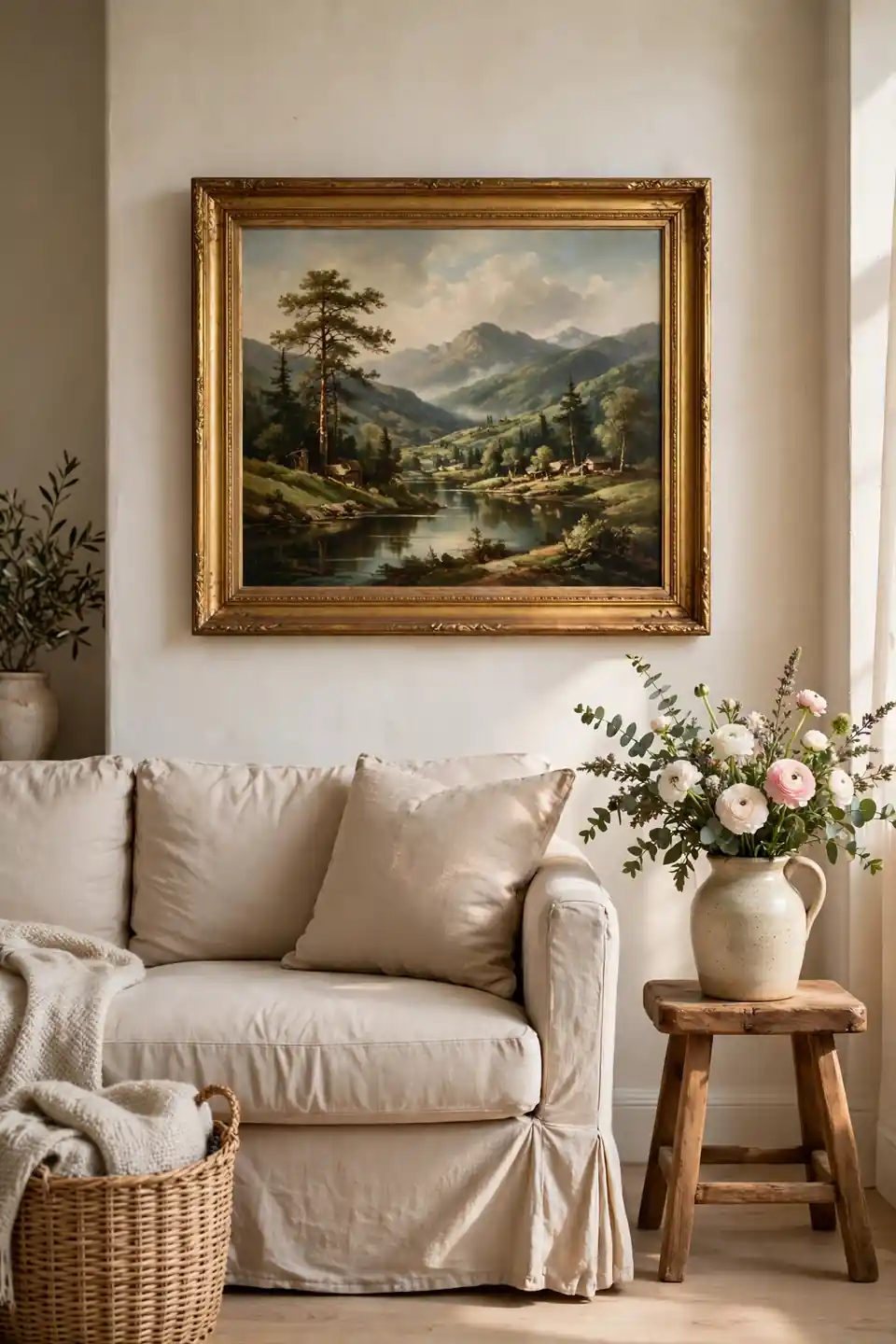
Gilt Frame Statement Piece
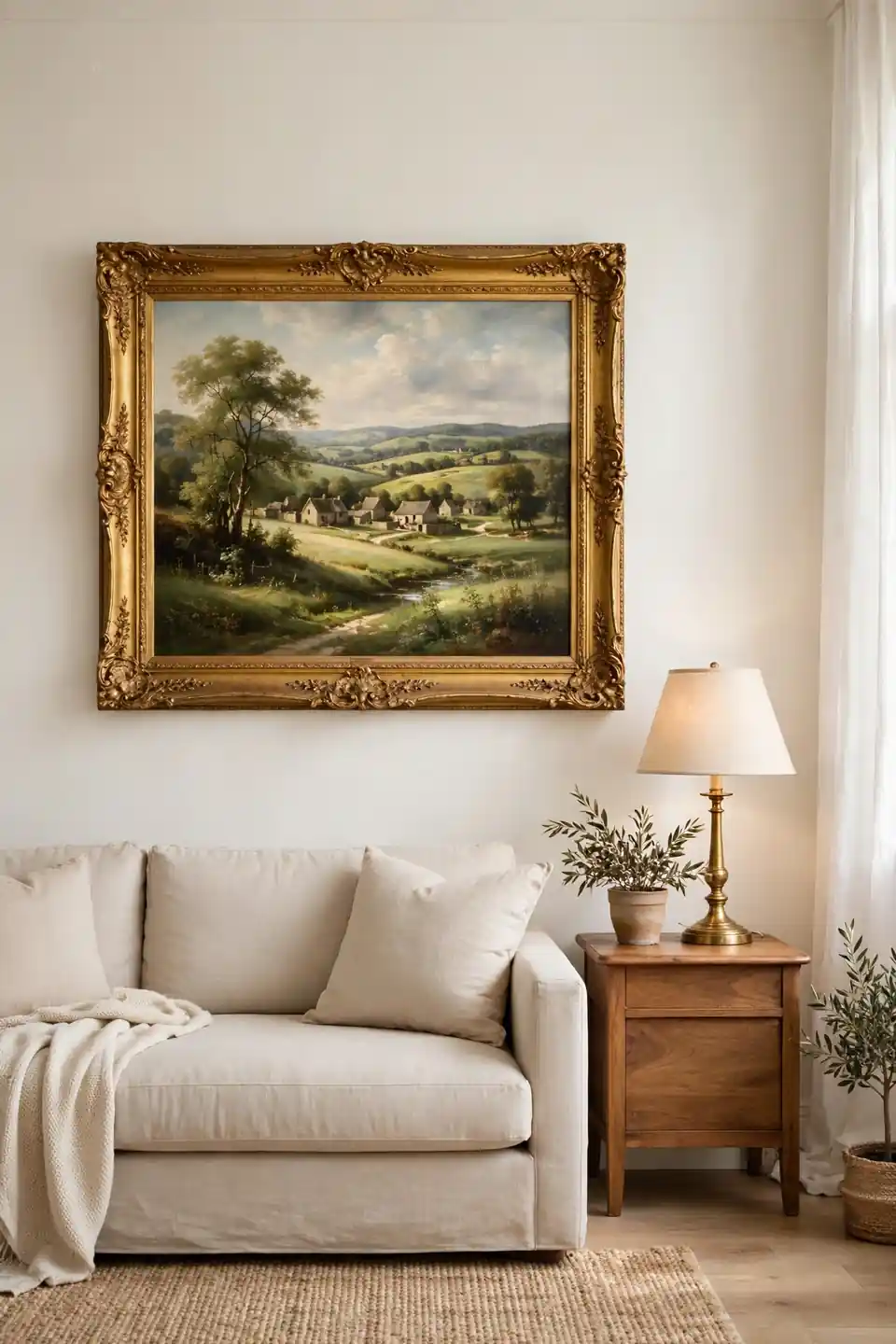
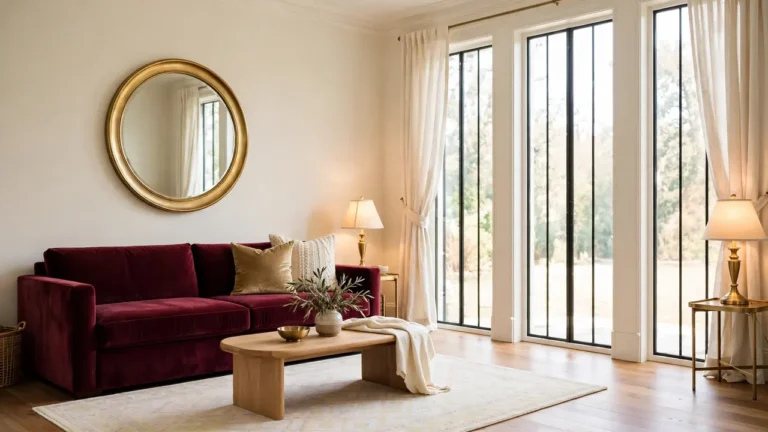
One large painting above the sofa changes the whole temperature of a room. Choose a landscape at least two thirds the width of the sofa, hang it in a gilt frame with real depth, and the seating area suddenly feels anchored and intentional rather than arranged around a television screen.
Keep the supporting pieces quiet so the artwork stays in charge. A beige sofa, one wood side table, and a single brass lamp give the eye a place to rest without competing for attention. I’ve noticed gilt reads warmest in north facing rooms, where its gold tones borrow soft light all day. The painting becomes the view everyone faces.
Gallery Wall Landscape Mix
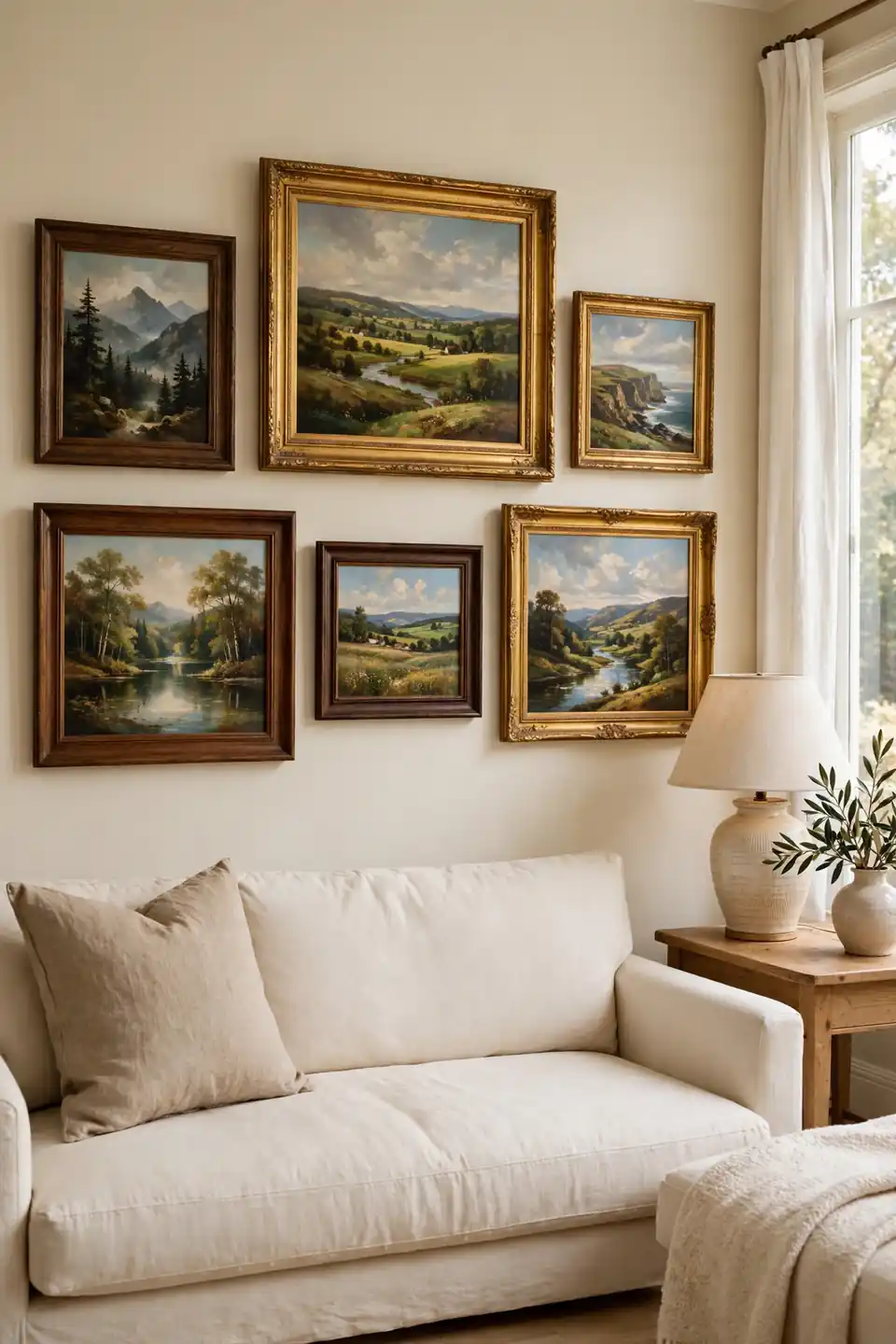
- Mix two or three frame finishes, gilt with dark wood, so the wall feels collected over time.
- Lay the whole arrangement on the floor first and live with the spacing for a day.
- Keep gaps close to five centimeters; wider gaps make small paintings drift apart.
- Repeat one color from the paintings in a cushion or throw below the wall.
A mixed gallery suits rooms where no single painting is big enough to stand alone. Grouped together, modest flea market finds gain the presence of one large piece. Start with your strongest landscape in the middle, then build outward with smaller scenes until the grouping feels balanced from the doorway.
Above the Mantel
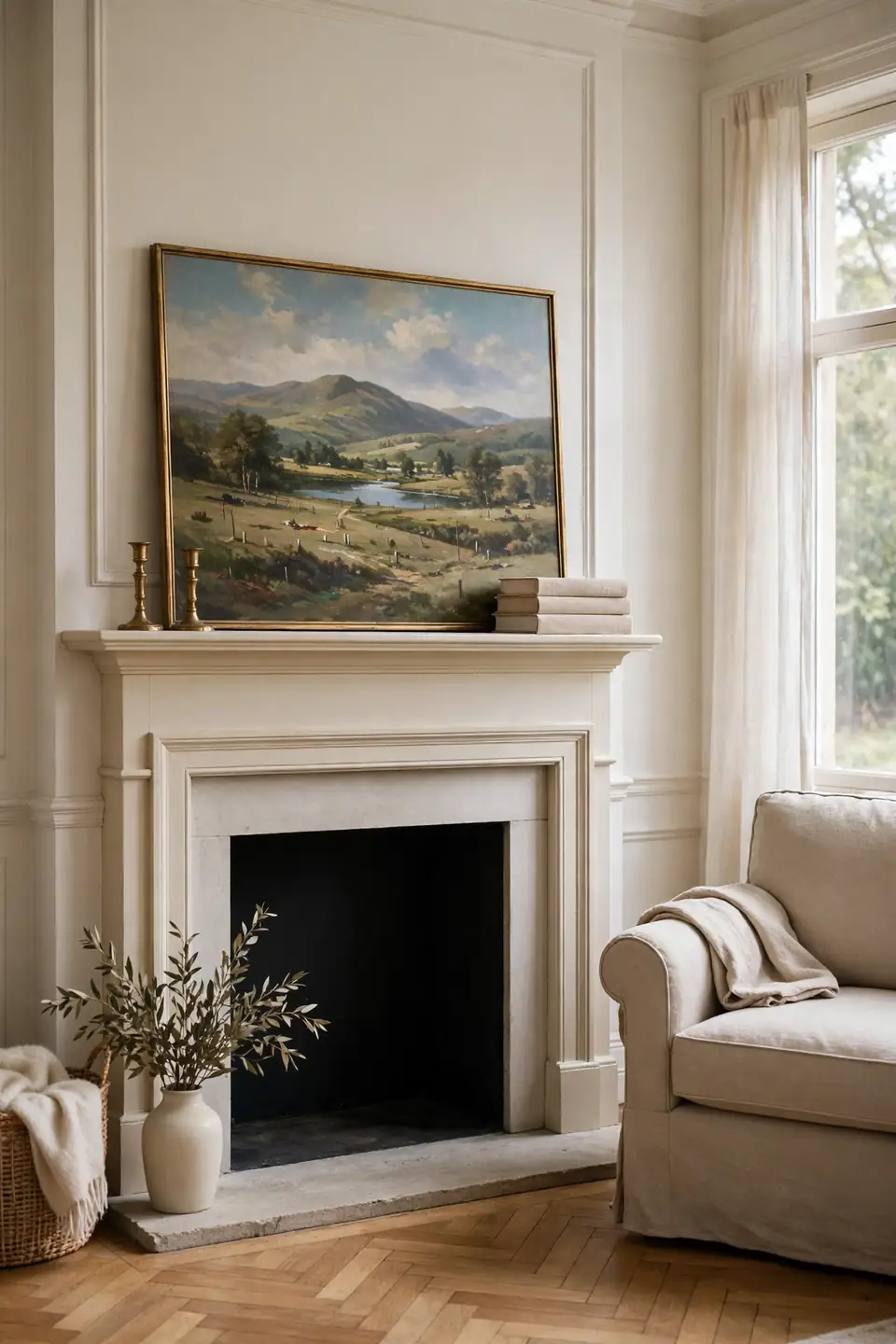
Quick Tip: Lean the painting against the wall on the mantel instead of hanging it. A slight lean feels relaxed, lets you swap art with the seasons, and spares old plaster from new holes every time you change your mind.
The mantel is the natural stage for a landscape, since the fireplace already anchors the room. Center one wide painting, keep the objects beside it low and few, and the scene reads like a window set into the chimney breast. In my experience, a landscape with a low horizon line works best here, because its sky echoes the open space above the fire and keeps the arrangement feeling light.
Thrifted Find Makeover
BEFORE: The painting hung in a scratched plastic frame, dark with old varnish and years of dust. Its colors looked muddy, the scene barely read from the sofa, and the whole corner felt like storage rather than a place to sit.
AFTER: A gentle clean, a real gilt frame, and a spot above the sofa changed everything. The greens woke up, the sky turned soft blue, and the painting now carries the corner like it was always meant to hang there.
Thrift stores price landscapes by size, rarely by quality, so patient hunters do well. Check the canvas for tears, smell for damp, and budget for one professional clean. That single service often doubles what the painting looks like it cost.
Perfect Hanging Height
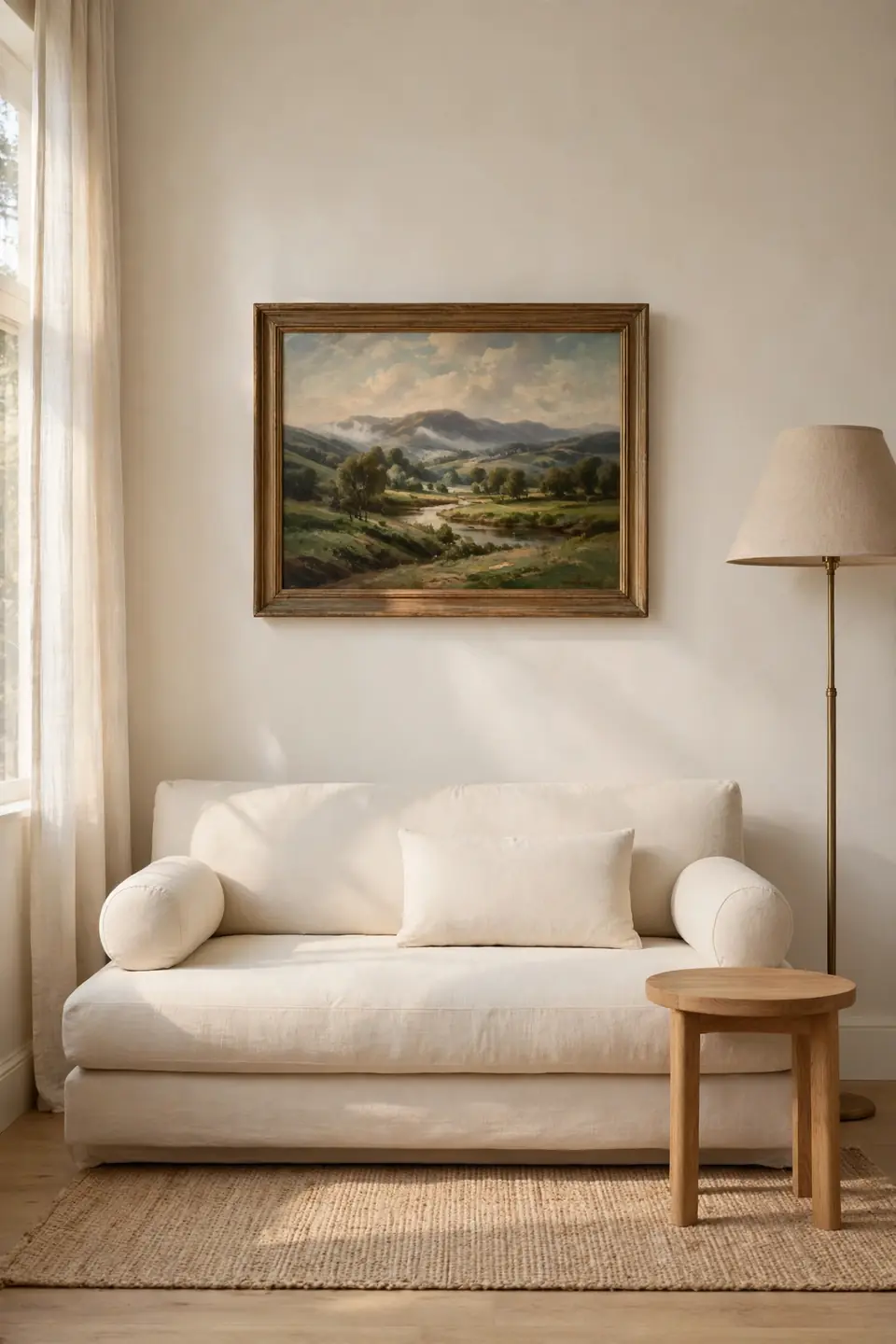
- Measure the painting and mark its center point on the back of the frame.
- Hold the piece so that center sits near 145 centimeters from the floor.
- Check the gap above the sofa back; eight to fifteen centimeters looks connected.
- Mark the hook position, drill once, and hang with a level across the top.
Most landscapes hang too high, floating near the ceiling where nobody truly sees them. Art at seated eye level joins the conversation instead of hovering above it. Stand back at the doorway and squint; if the painting still reads as part of the furniture group, the height is right.
Gilt Versus Wood Frames
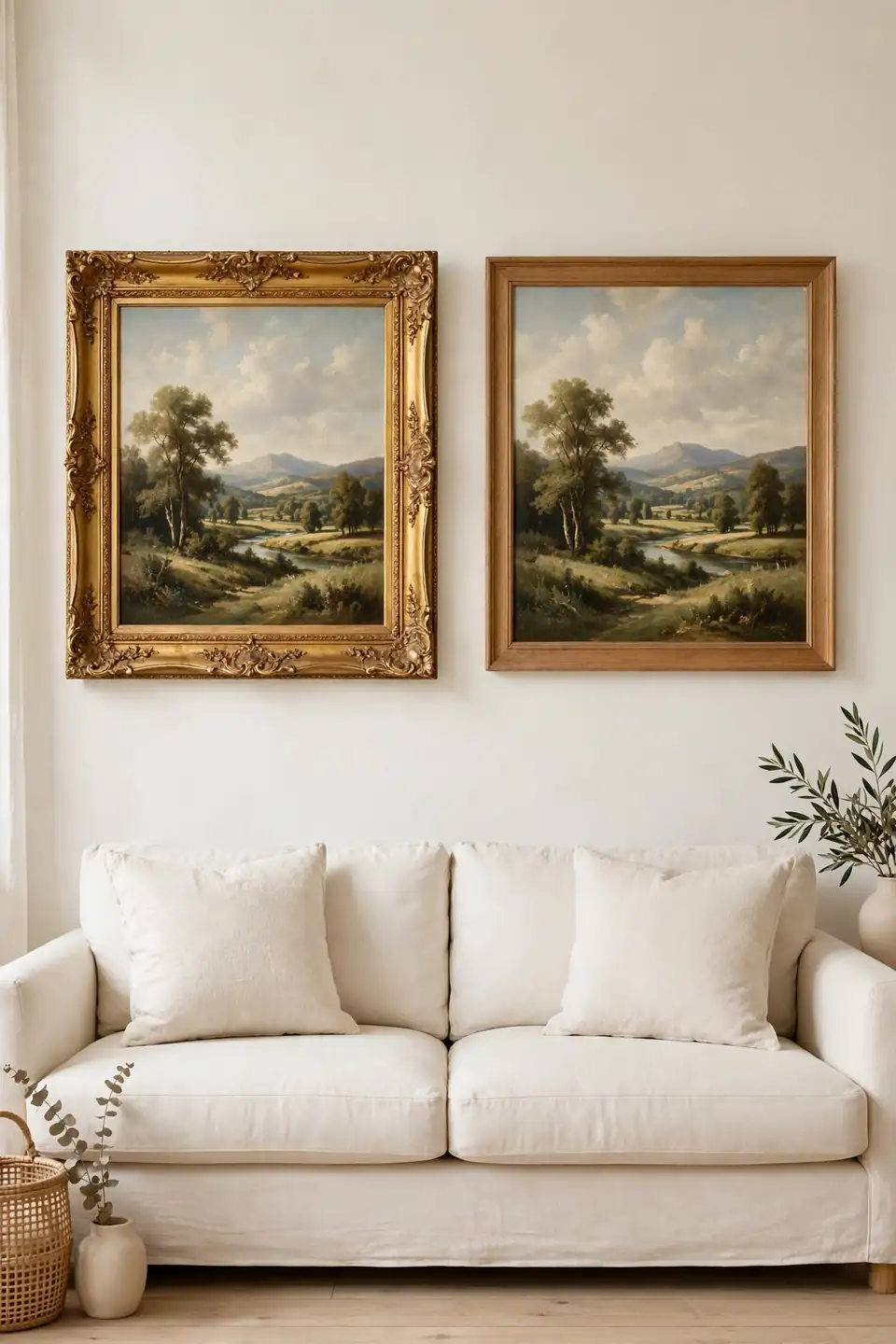
| Feature | Gilt Frames | Wood Frames |
|---|---|---|
| Overall mood | Formal and glowing | Relaxed and earthy |
| Best partners | Brass and marble | Linen and oak |
| Light behavior | Catches and reflects | Absorbs and softens |
| Room fit | Traditional schemes | Casual schemes |
| Upkeep | Dusts with care | Wipes clean fast |
Neither finish wins for every painting. Gilt loves detailed, moody scenes and formal rooms, while plain wood lets bright, simple landscapes breathe. Hold sample corners against the canvas in daylight before you commit, because the frame quietly decides how expensive the whole painting appears. When in doubt, choose the finish that already appears somewhere else in the room, and the painting settles in like it belongs there.
Pairing Art With Furniture
Do:
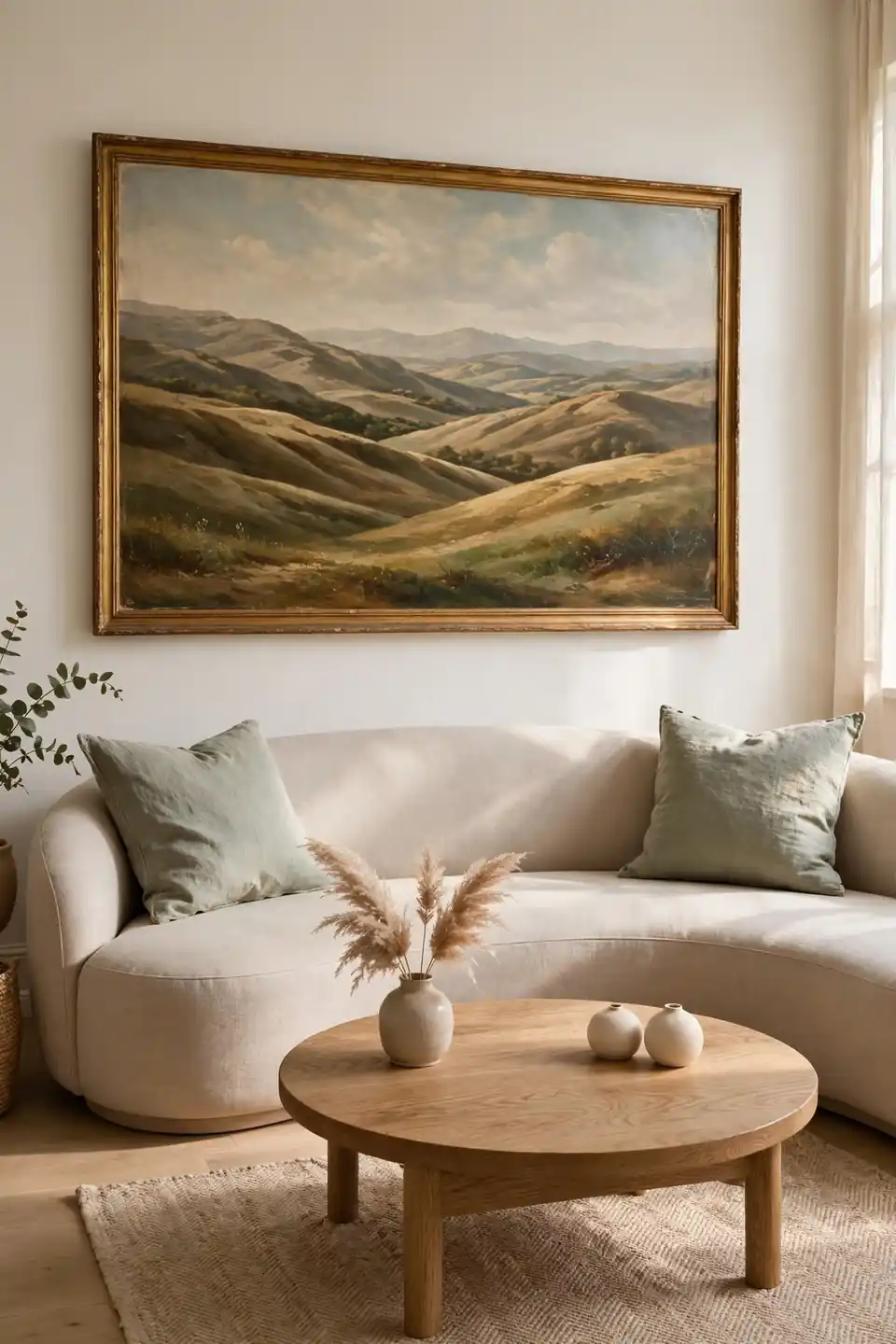
- Echo one shape from the painting, like curved hills above a curved sofa back.
- Pull two quiet colors from the scene into cushions and a throw.
- Leave breathing room; one painting per wall section is usually enough.
Don’t:
- Match every color exactly, or the room starts to feel staged.
- Hang busy art above busy patterns; one of them has to rest.
- Push furniture tight against the wall beneath a large piece.
Good pairing is mostly about rhythm. When the lines and colors below a painting answer the scene inside the frame, the wall and the furniture read as one composition. That’s why many experts recommend styling the sofa wall last, after the art is already up.
Budget Vintage Finds
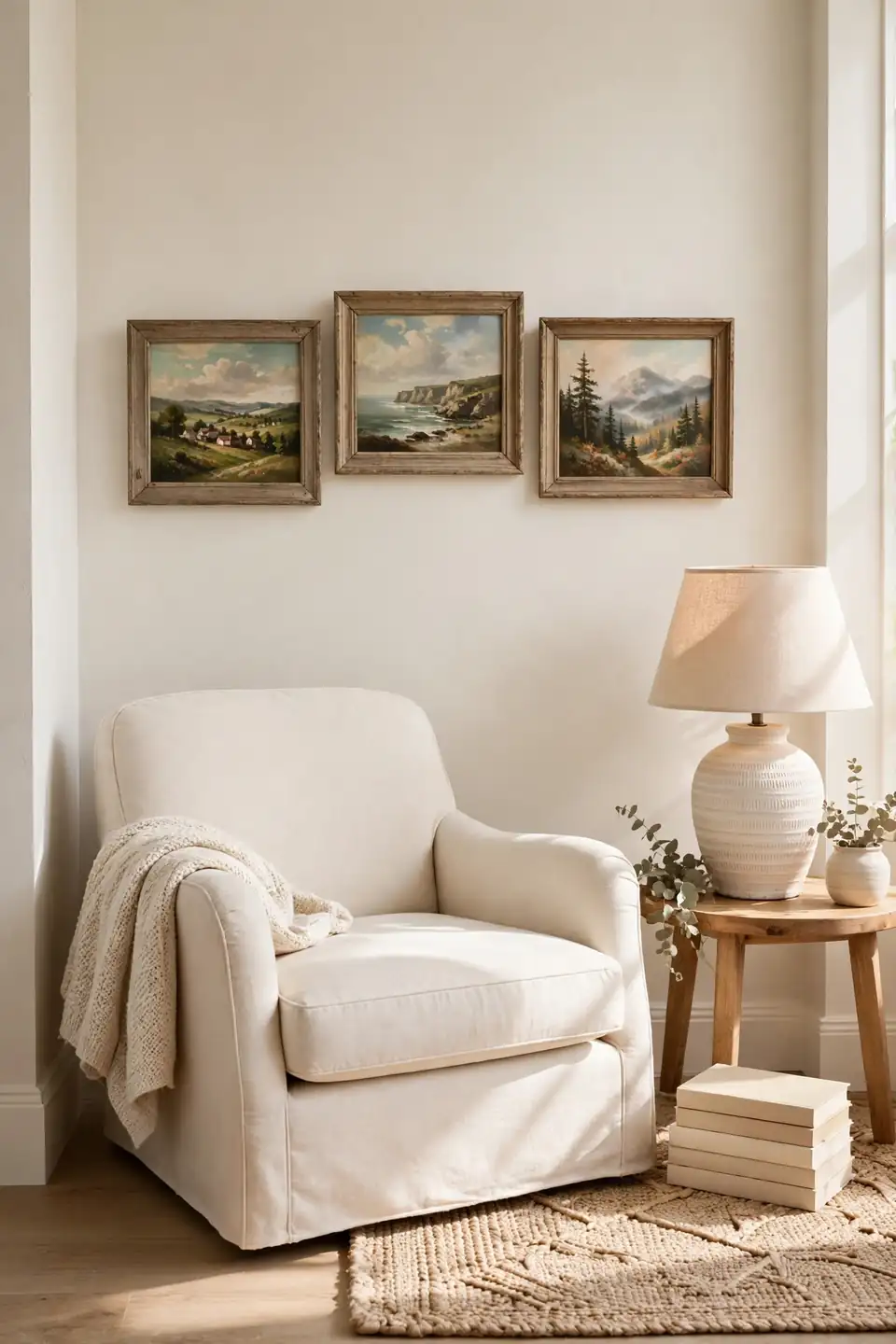
Cost: Small originals often sell for the price of a print
Time: One market morning per piece, roughly
Skill Level: Beginner, patience matters more
Best For: Slow, collected gallery walls
Serious collections rarely start in galleries. Estate sales, church fairs, and the dusty back wall of antique malls hide landscapes with real brushwork at small prices, especially pieces in damaged frames that scare off other buyers. Judge the painting, not the frame, and walk away from anything with a damp smell. A ten minute search each weekend builds a wall worth far more than its total cost within a year.
Reading Corner Landscape
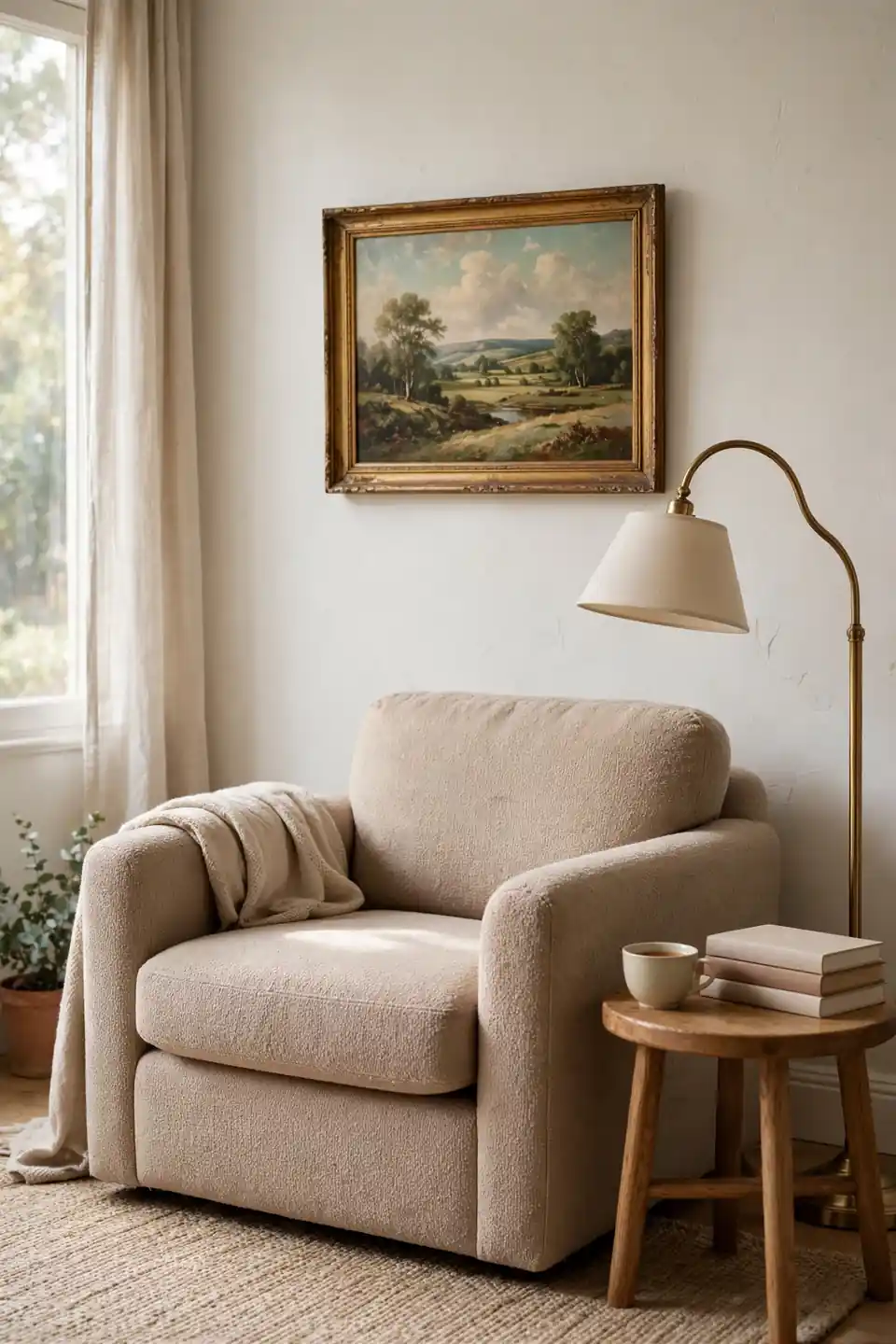
A spare chair, a lamp, and one good painting can claim an unused corner in an afternoon. Hang a mid sized landscape low beside the chair rather than above it, so the scene sits inside your eyeline while you read. The pairing works because both reading and landscape painting ask for the same thing: slowness.
Corners styled this way become the seat everyone chooses first. Keep a small table within reach, choose a scene with a path or river that pulls the eye inward, and the corner gains the depth the room was missing. This is where vintage landscape art living room decor earns its keep quietly, one chapter at a time.
Layered Frames on Shelves
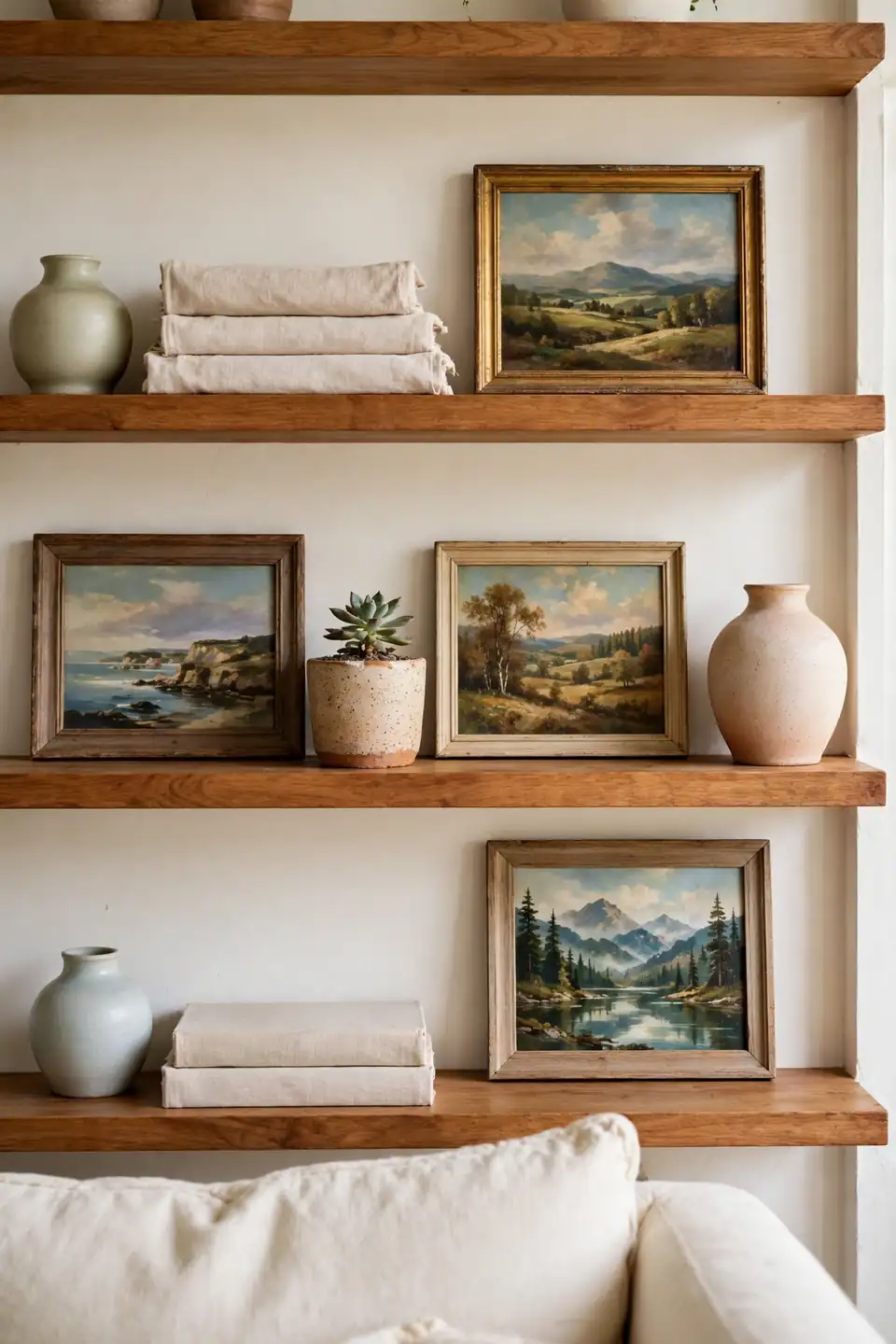
- Lean small landscapes against the wall instead of hanging them for easy swaps.
- Overlap frames slightly; a two centimeter overlap keeps the shelf casual.
- Balance each painting with one plain object, like a vase or a stack of books.
- Keep the tallest frame at the back so smaller scenes stay visible.
Shelves forgive experimentation, which makes them the safest place to learn your own taste. The same layered thinking shapes eating corners too, and the relaxed bench styling in modern farmhouse breakfast nook ideas shows how leaned, layered pieces keep a room feeling gathered rather than decorated. Rearrange monthly and the shelf never goes stale.
Picture Light Glow
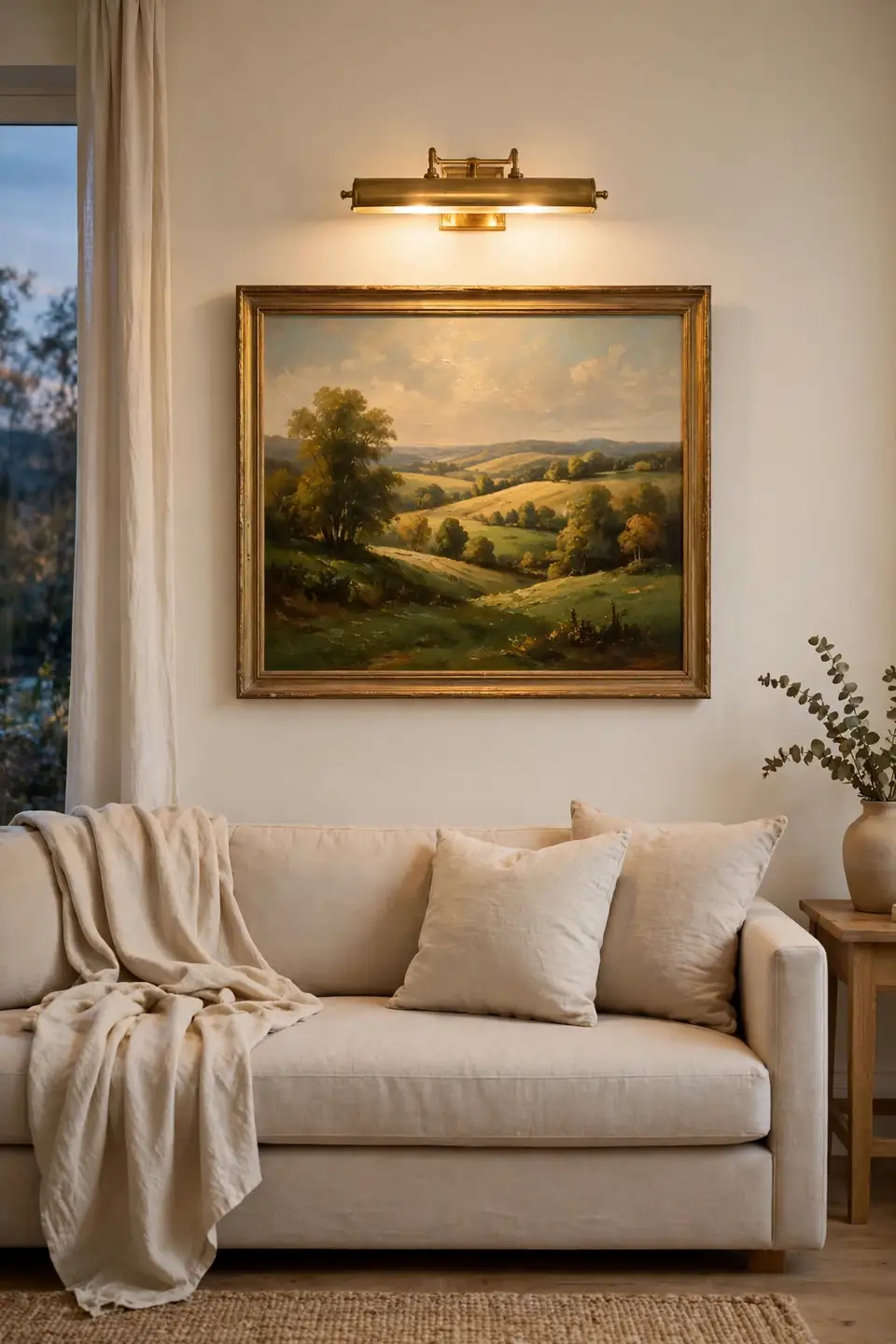
Quick Tip: Choose a picture light one half to two thirds the width of the frame, with a warm bulb near 2700 kelvin. That ratio spreads light across the canvas without hot spots or glare on the glass.
A picture light changes a painting from decoration into an evening event. The glow pulls guests toward the scene after dark, warms gilt frames beautifully, and gives the room a focal point once the windows go black. Battery models now skip the wiring entirely, so renters can join in. I’ve seen this work well in many cases where a single lamp upgrade made an ordinary landscape feel like the most valuable thing the family owns.
Blank Wall Transformation
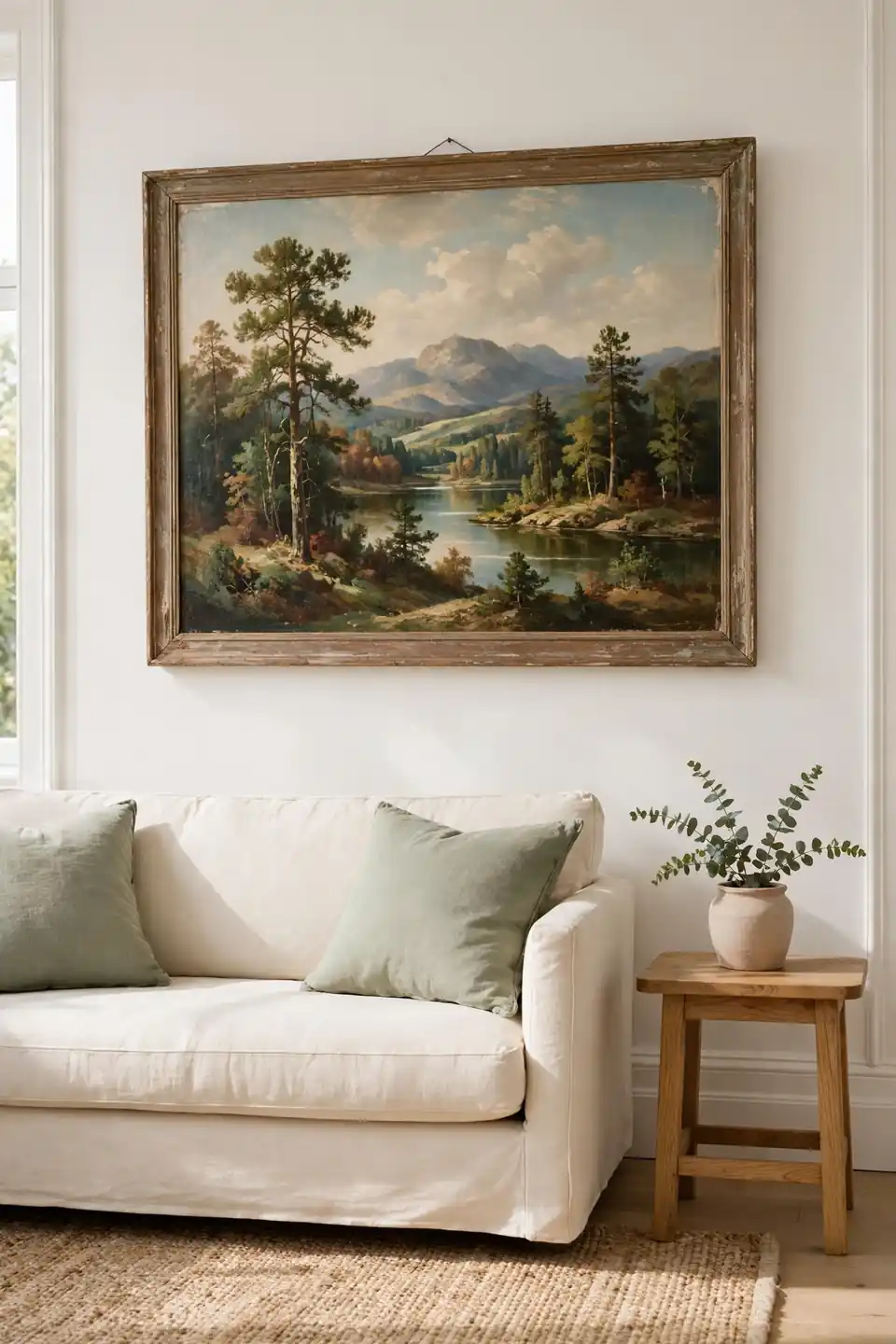
BEFORE: The long wall behind the sofa stood empty for two years. Paint samples came and went, the room felt unfinished from every angle, and the sofa seemed to float in a space that never quite became a living room.
AFTER: One large landscape in a weathered wood frame filled the wall in a single afternoon. The room gained a horizon, the sofa found its anchor, and guests now ask where the painting came from before they ask anything else.
Big empty walls intimidate because every small fix looks temporary. One honest painting at proper scale ends the debate at once. Measure generously, buy the largest scene your budget allows, and let it be the only thing on that wall.
Build a Collection Slowly
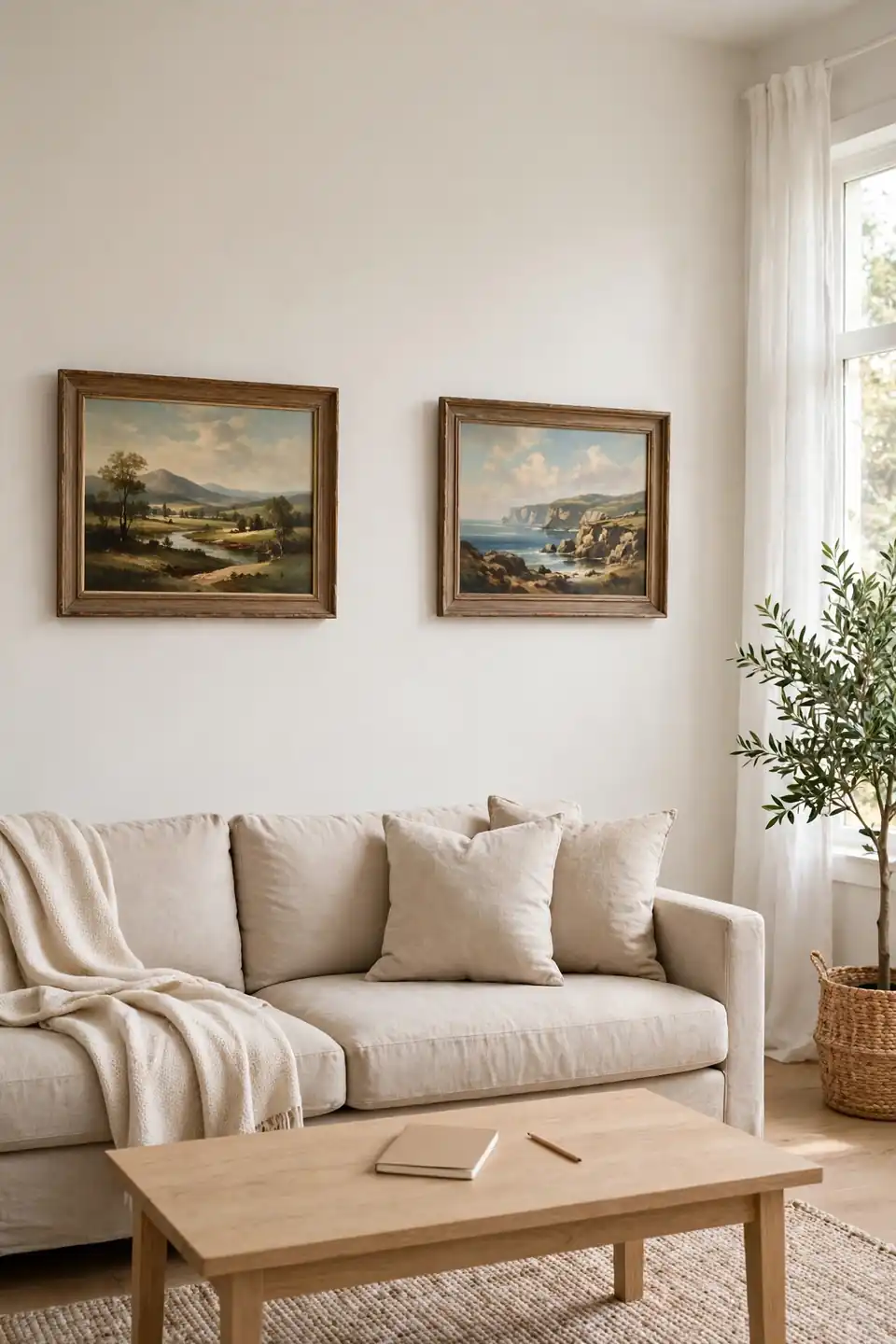
- Start with one landscape you genuinely love, not one that merely fits.
- Write down its frame size and dominant colors in a small notebook.
- Shop markets monthly, buying only pieces that answer those notes.
- Rehang the group each time a new painting earns its place.
Slow collecting beats a weekend shopping spree every time. Rooms filled in one trip look furnished; rooms filled over years look like a life. Leave honest gaps on the wall while you search, because an empty space with a plan feels calmer than a crowded wall with none. The collection will tell your story better than any matching set.
Large Versus Small Scale
| Feature | Large Scale | Small Scale |
|---|---|---|
| Visual effect | Calm and immersive | Detailed and intimate |
| Best walls | Long sofa walls | Nooks and hallways |
| Viewing distance | Across the room | Within arm’s reach |
| Budget shape | One bigger spend | Many small spends |
| Risk | Overpowers tiny rooms | Gets lost alone |
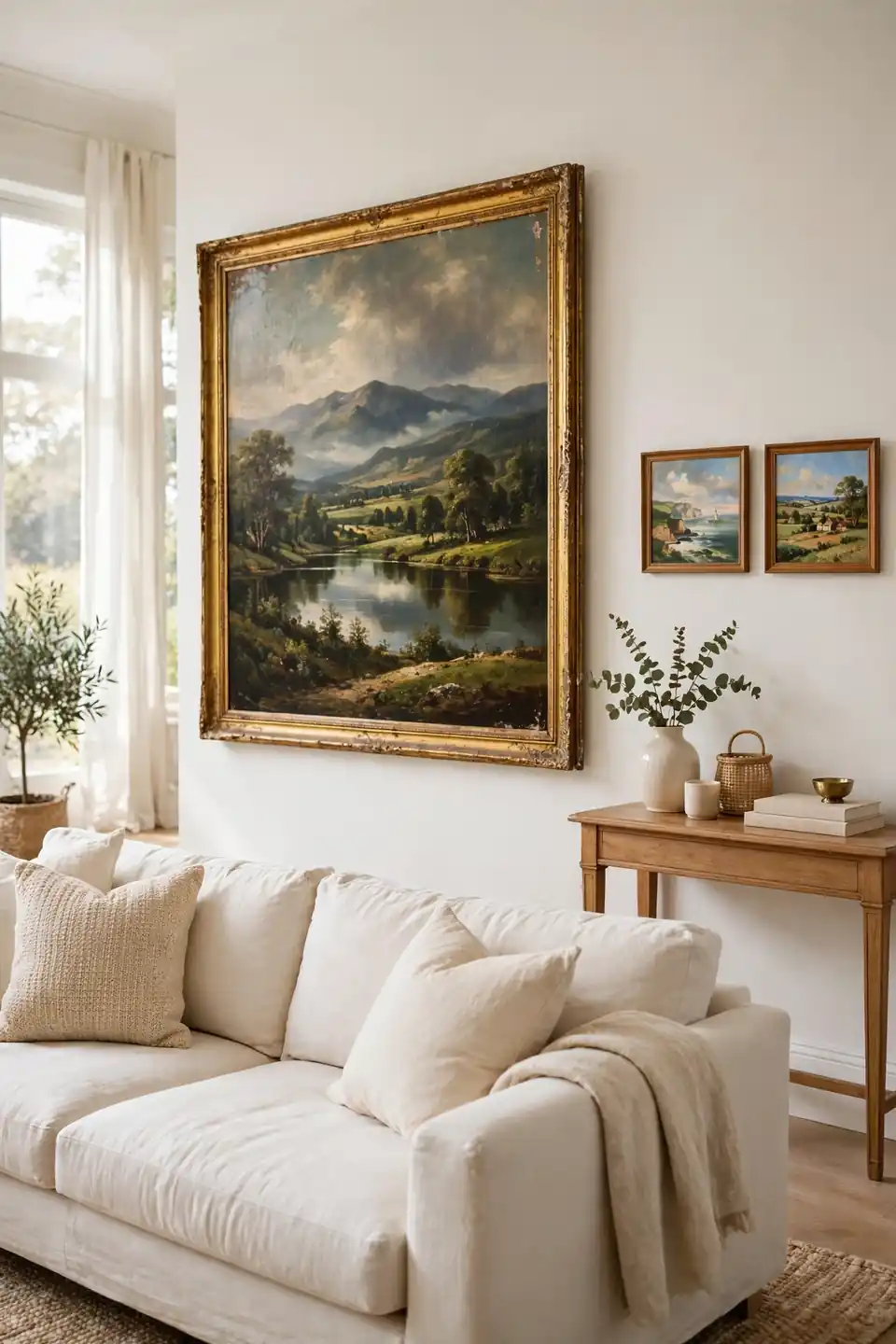
Scale decides whether a landscape feels like a window or a keepsake. Choose large for the main wall and save small scenes for the places people pass slowly. Mixing both across one room, each at the right distance, gives the collection its rhythm. Hold a tape measure against the wall before buying, because scale mistakes are the hardest to forgive later.
Matching Palette to Upholstery
Do:
- Repeat the painting’s softest color at least twice below the frame.
- Let one accent, like faded gold, appear in metal or ceramic only.
- Keep wall paint quieter than every color inside the scene.
Don’t:
- Match the strongest color in the painting at full strength.
- Use more than three scene colors across the furniture.
- Forget neutrals; the eye needs plain places to rest.
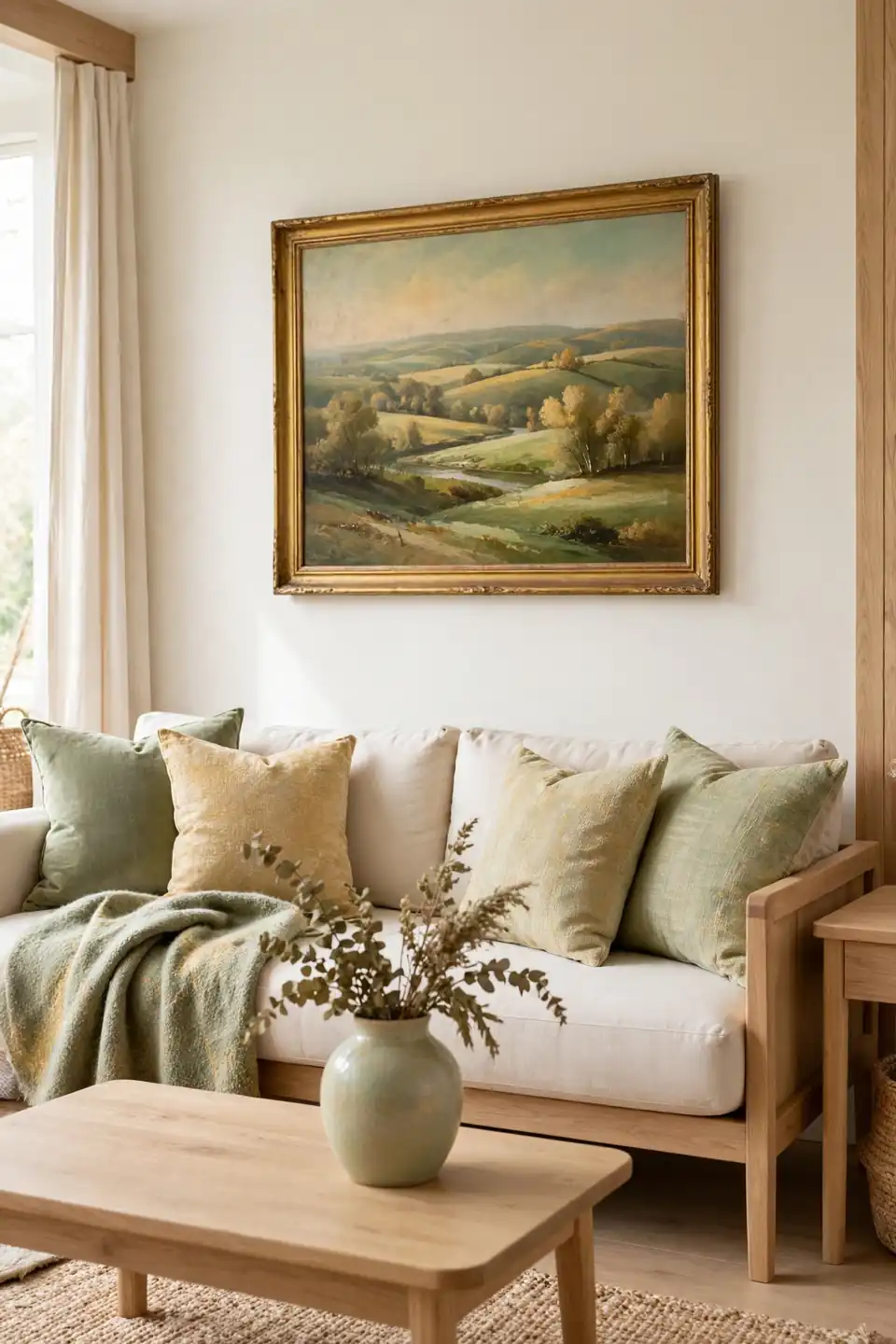
Palette matching works on echoes, not copies. When the greens in a landscape whisper back from a cushion and a throw, the room feels intentional without a single exact match. Pull your samples from the painting in daylight, and trust the quieter shades over the dramatic ones.
Inherited Art, Fresh Start

Cost: A new frame is the main expense
Time: One weekend including the framer visit
Skill Level: Beginner friendly
Best For: Family paintings in tired frames
Inherited landscapes often hide under yellowed varnish and heavy frames that suited a different house. A honest clean and a lighter frame let the painting join your rooms instead of guarding a hallway. Keep the old frame if it has family history, but store it rather than forcing it. In my experience, relatives rarely mind the update once they see the painting properly lit and loved again in daily view. That daily admiration is the whole point of keeping it.
Sunlit Landscape Focal Wall
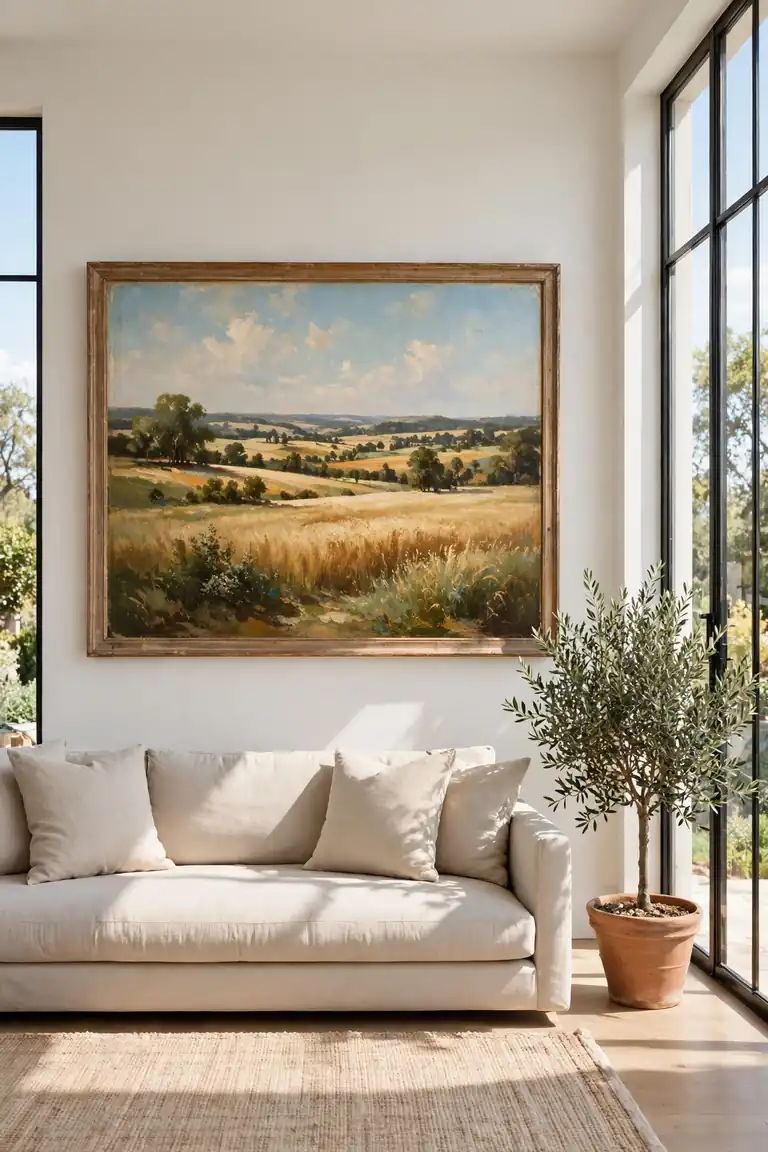
Morning light on a painted field does something no lamp can copy. Hang your widest landscape on the wall that receives daylight at an angle, never in direct sun, and the scene seems to continue the weather outside. The room borrows the painting’s seasons all year.
Protect the canvas while you enjoy the glow. Keep direct beams off the surface with a sheer curtain, rotate the painting a few centimeters each season to even out fading, and check the back yearly for dust. Sunlit walls reward this small care with the liveliest art in the house. A few degrees of shade are a fair trade for that living glow.
Symmetry With Twin Frames
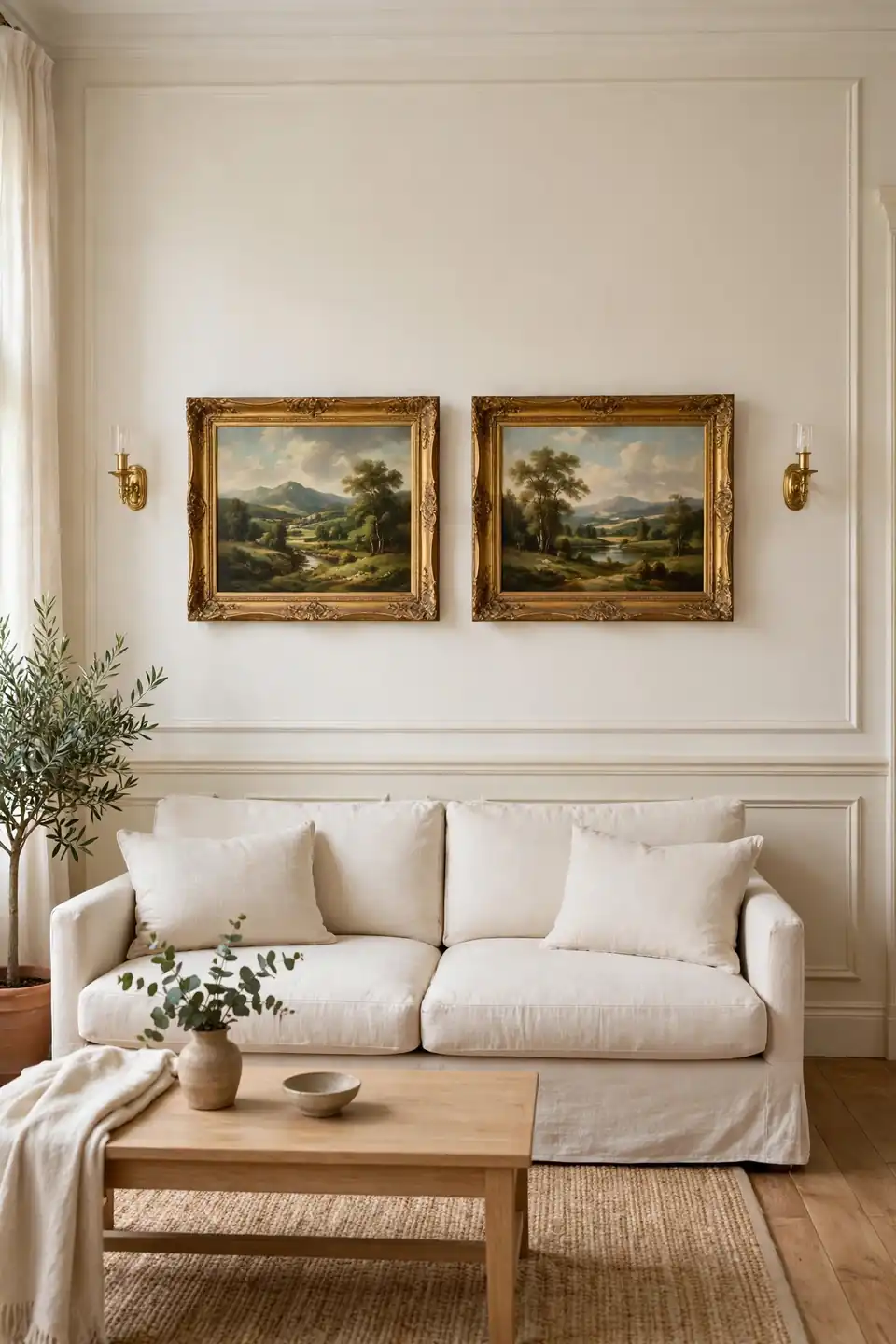
- Choose twin scenes of equal size, ideally by the same painter or hand.
- Hang the pair with a five centimeter gap so they read as one unit.
- Center the pair on the sofa, not on the wall, when the two differ.
- Match frames exactly; near matches look like mistakes at this distance.
Pairs bring order to rooms that feel scattered. Two calm landscapes above a long sofa settle the wall the way bookends settle a shelf. Thrift hunters should buy single frames patiently and wait; matched vintage pairs surface often, and the wait usually halves the price of buying a ready made set.
Seasonal Landscape Rotation
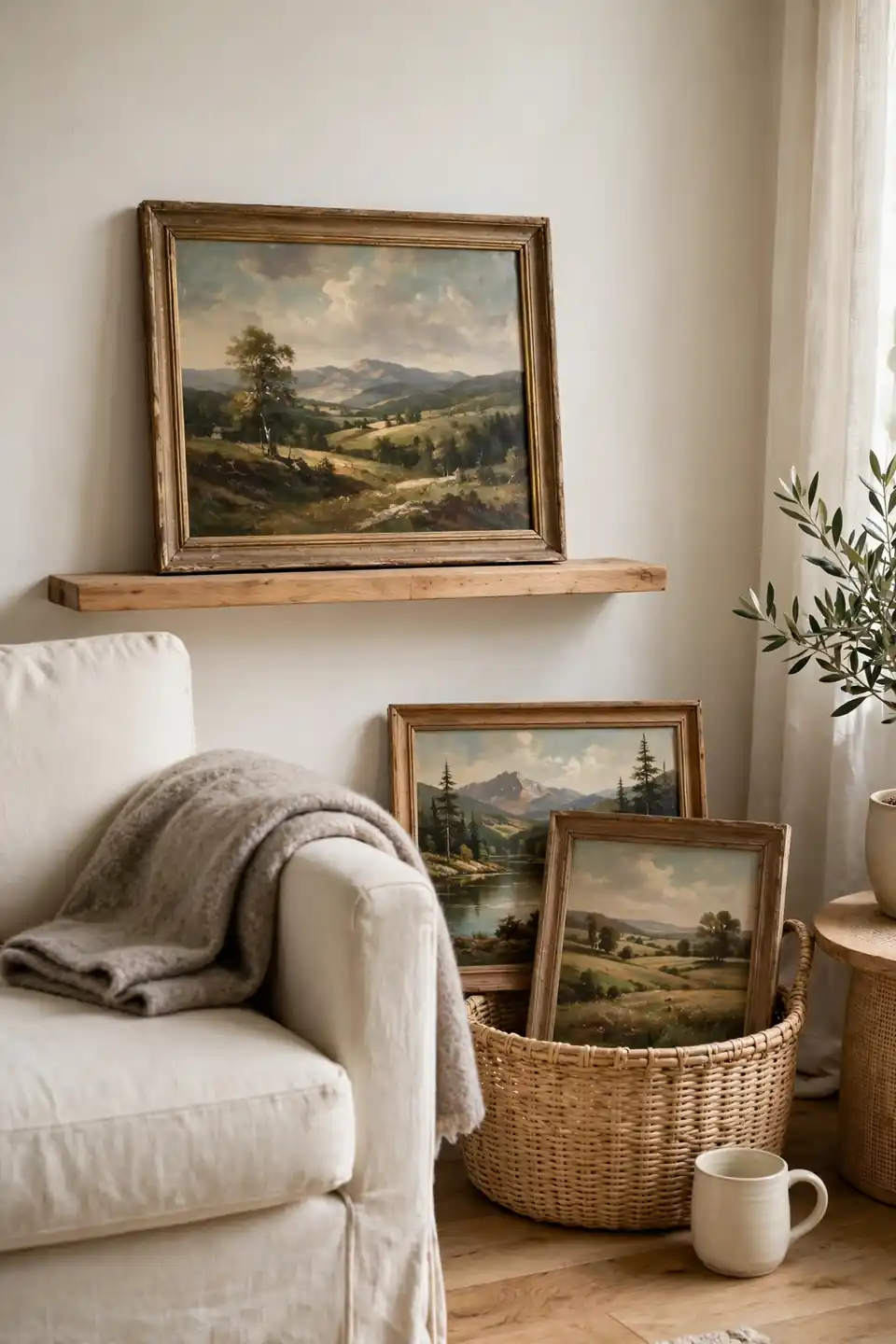
Quick Tip: Store off season paintings upright in a cool, dry closet, separated by soft cloth or cardboard. Never stack canvases face to face, because old paint can stick and lift when the pieces are pulled apart.
Rotation keeps a small collection feeling large. A snowy scene in January and a harvest field in October make the same wall feel new twice a year, and each painting rests half its life away from light. Keep a simple picture ledge on one wall so swaps take minutes, and note the dates on the back of each frame. The ritual becomes part of how the house marks the year.
Dark Room, Bright Art

BEFORE: The north facing room stayed dim through winter, with gray walls and a dark sofa drinking what little light arrived. Evenings felt heavy, and the family drifted to brighter rooms, leaving this one mostly unused.
AFTER: A pale, sunlit landscape above the sofa now works like a second window. The painted sky returns brightness all day, the gilt frame catches lamp light at night, and the room has become the evening favorite.
Choose scenes with high skies and light fields for dark rooms, and skip moody forests entirely. Pair the painting with one pale wall color and a light rug, and the effect multiplies. It is the cheapest window you will ever install.
Caring for Old Canvases

- Dust the surface monthly with a wide, soft, dry brush.
- Keep paintings away from fireplaces, radiators, and steamy doors.
- Check the back each spring for insects, damp spots, and loose canvas.
- Call a conservator for cracks, tears, or flaking paint, never glue them yourself.
Gentle habits keep old paintings alive for the next owner. Most damage comes from heat, damp, and one rough cleaning, not from age itself. A minute of dusting each month protects the surface better than any product. Treat the painting like borrowed property from the future, and it will outlast every sofa beneath it. Small habits, repeated quietly, protect more art than any expensive product ever will.
Conclusion
Classic rooms are rarely bought in a day; they are gathered, one honest piece at a time. These twenty one ideas show how vintage landscape art living room decor can anchor a sofa wall, brighten a dark corner, and give new furniture a sense of history it did not earn on its own. Start with the painting you keep thinking about, hang it at eye level, and let everything else arrange itself around the view. Save this list to Pinterest for your next market day, try one idea this weekend, and share a photo when your wall finally feels finished. I’ve seen how one well loved painting can shift the way a whole home feels.