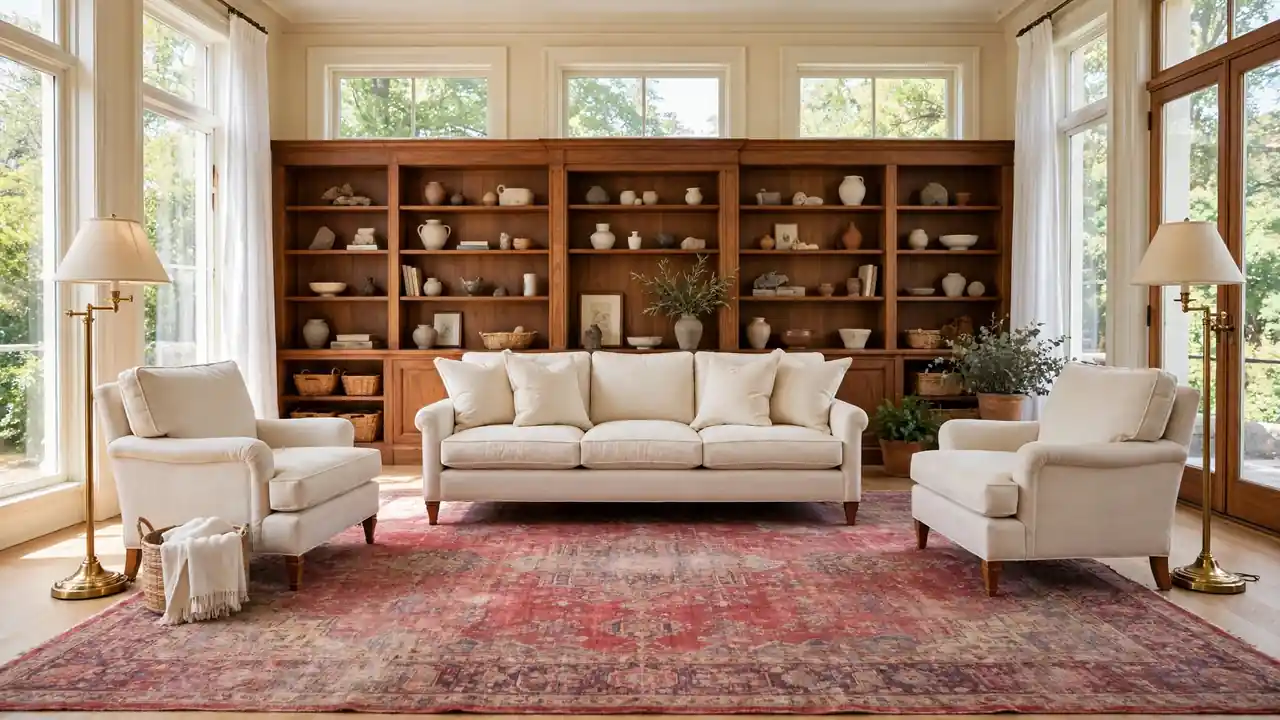
23 Vintage Oriental Rug Living Room Ideas for Classic Luxury
A worn oriental rug carries more history in its border than most furniture earns in a lifetime. Building a room on vintage oriental rug living room ideas means letting that faded pattern lead, then quieting everything else around it. Cream upholstery, warm wood, and a little brass give the rug room to glow without any shouting.
The twenty three rooms ahead pair antique rugs with sofas, shelves, fireplaces, and reading corners, each one tuned to a different mood. Readers who loved the calm of dusty blue bedroom decorating ideas will find the same softness here, translated into pattern instead of paint. Start underfoot, choose one hero rug, and let every other decision follow its colors.
Classic Red Rug Anchor
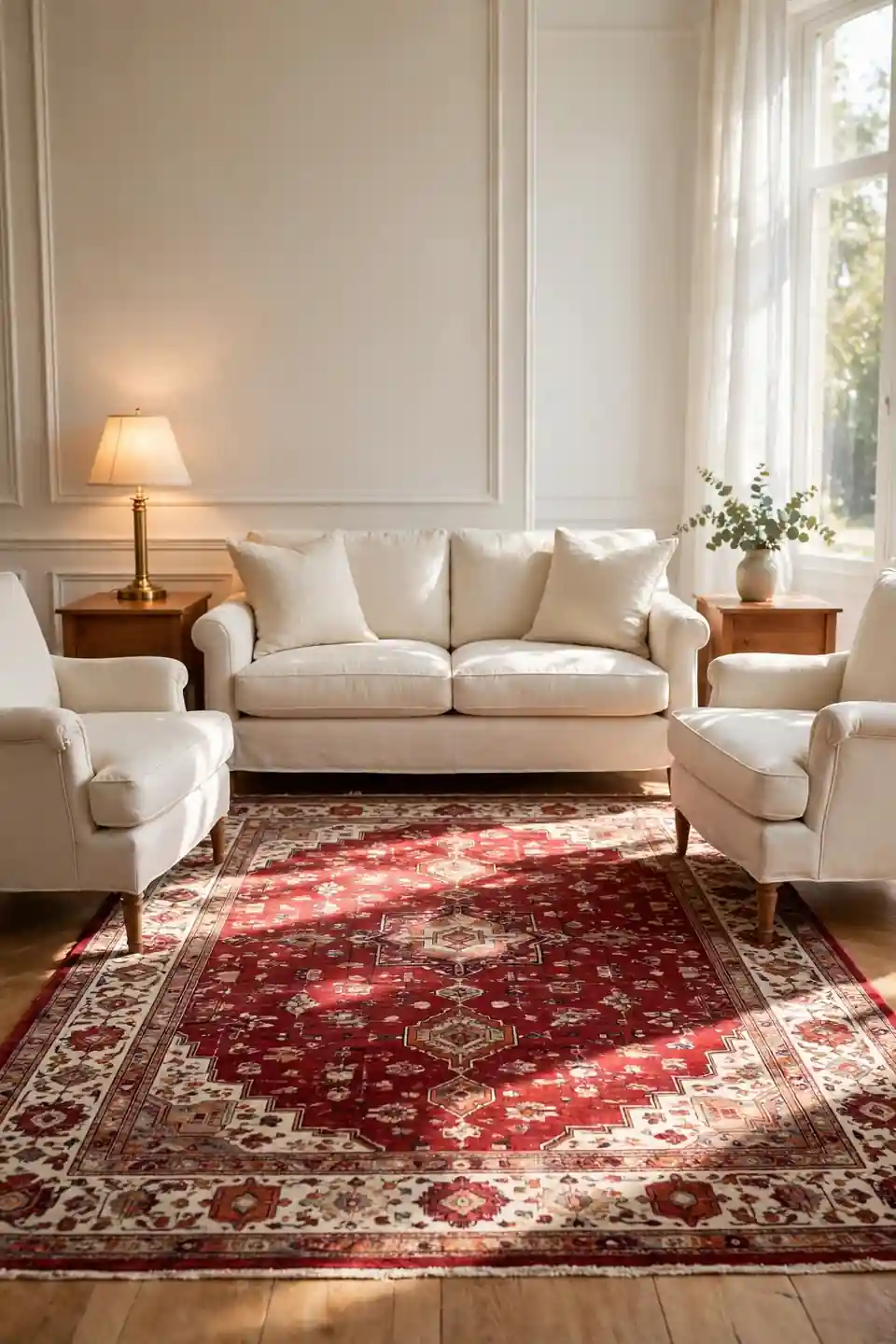
Deep madder red is the color most people picture first, and it earns that place honestly. A true antique red rug holds burgundy, rust, and a whisper of brown in one field, so it warms cream walls and pale floors without a single new paint decision.
Set the seating squarely on the rug so its border frames the conversation area like a picture rail. Pull one accent color from the border, maybe the indigo or ivory, and repeat it in two cushions only. The room feels collected rather than matched, which is the whole point of going vintage. Guests notice the confidence first, then the rug.
Layered Over Sisal
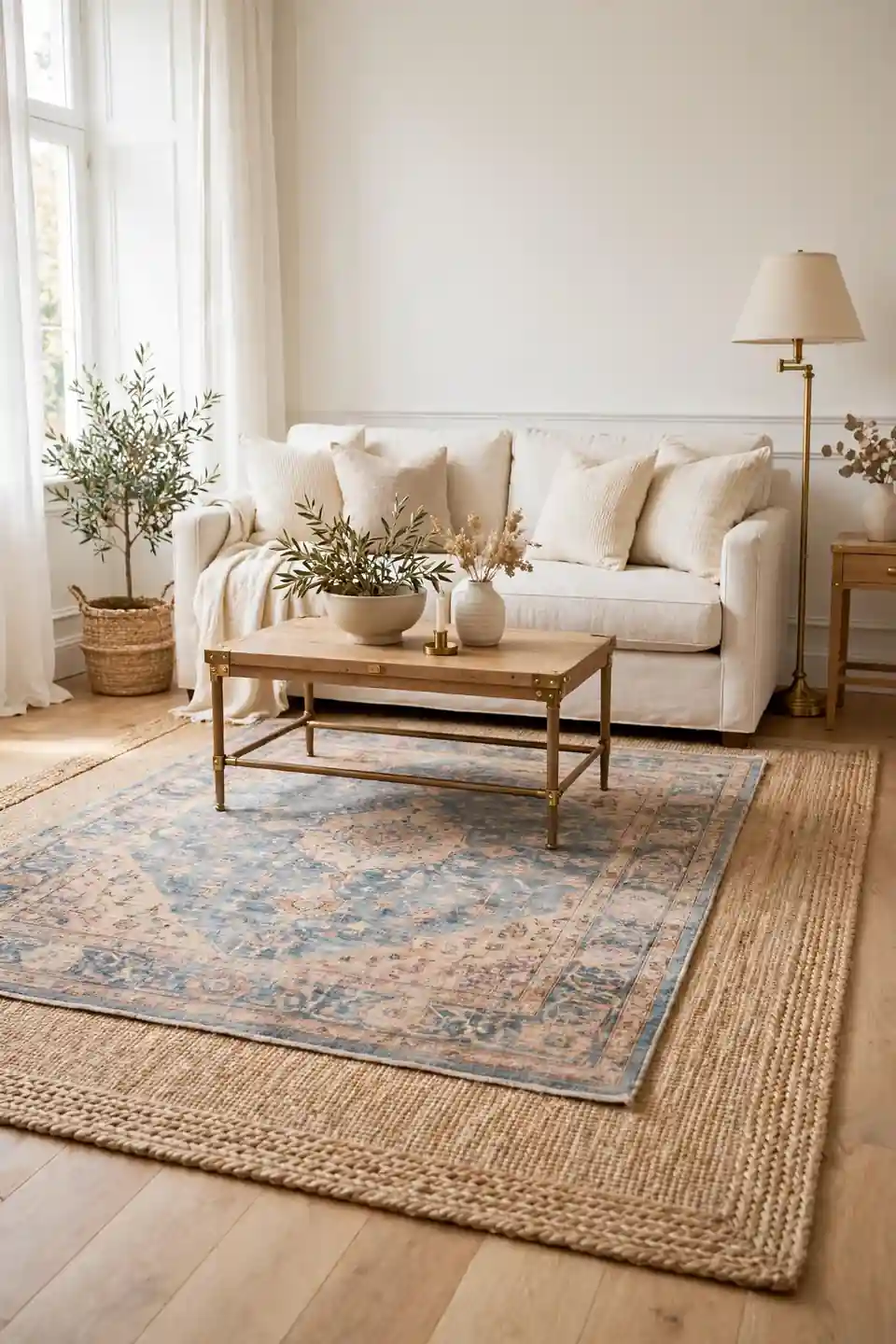
- Roll out a flat sisal or jute base two feet wider than the rug
- Center the oriental rug so a sisal border shows evenly
- Let the base peek out at doorways where feet land first
- Choose natural sisal tones, never dyed colors, underneath
- Vacuum both layers weekly, lifting corners every month
Layering solves the most common vintage problem, a beautiful rug that is slightly too small for the room it loves. The sisal apron extends the footprint, quiets the pattern at the edges, and protects worn pile from chair legs. In my experience, guests read the layered base as deliberate design, never as a compromise.
Faded Blue Rug Calm

Quick Tip: Shop for sun softened blues rather than freshly dyed ones. A rug faded by decades of light pairs gently with grey sofas, white linen, and pale oak, while a saturated new blue fights all three. Turn the rug over; even fading on both sides means honest wear and years of life left.
Blue based orientals suit north facing rooms especially well, because the cool field steadies yellowish light instead of clashing with it. Echo the palest blue in curtain fabric or one throw, and let the rest of the room stay warm and plain. That restraint is what keeps the calm.
Cream Sofa Contrast
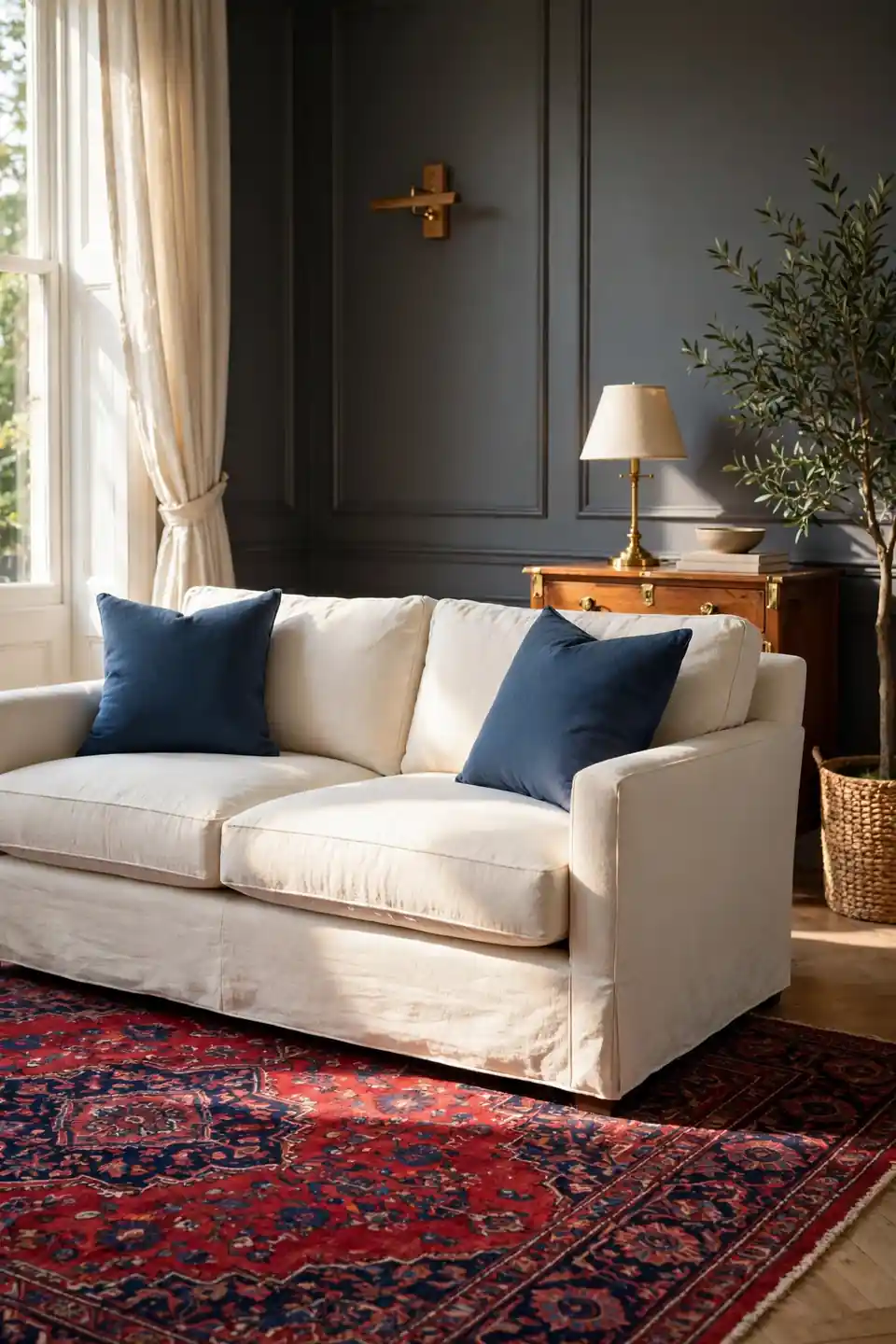
BEFORE: The rug landed first, rich and busy, but a dark brown sofa swallowed its colors and the room read heavy by day and gloomy by night. Pattern and upholstery wrestled, and neither one won.
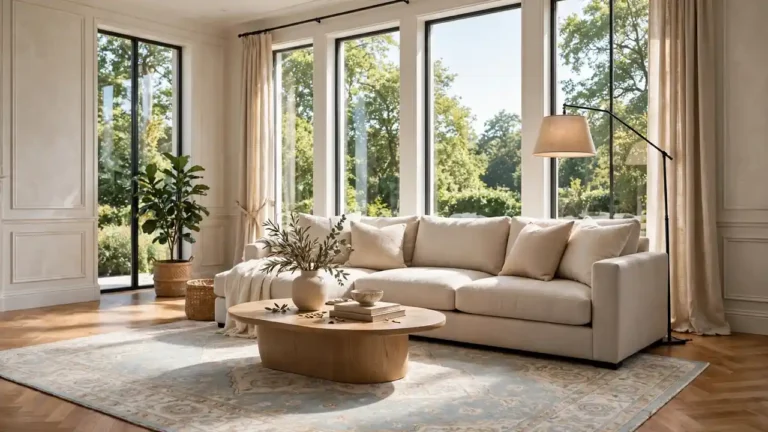
AFTER: A cream linen sofa changed the whole negotiation. Its pale field lifts the rug like a mat lifts a print, the pattern sharpens, and sunlight finally has somewhere to bounce. Two indigo cushions tie the seating back to the border.
Cream is the hardest working neutral beside a vintage rug because it refuses to compete. Choose washable slipcovers if the household includes dogs or toddlers, and keep the weave slightly nubby so the plain surface still offers texture against the rug’s detail.
Dark Wood Balance
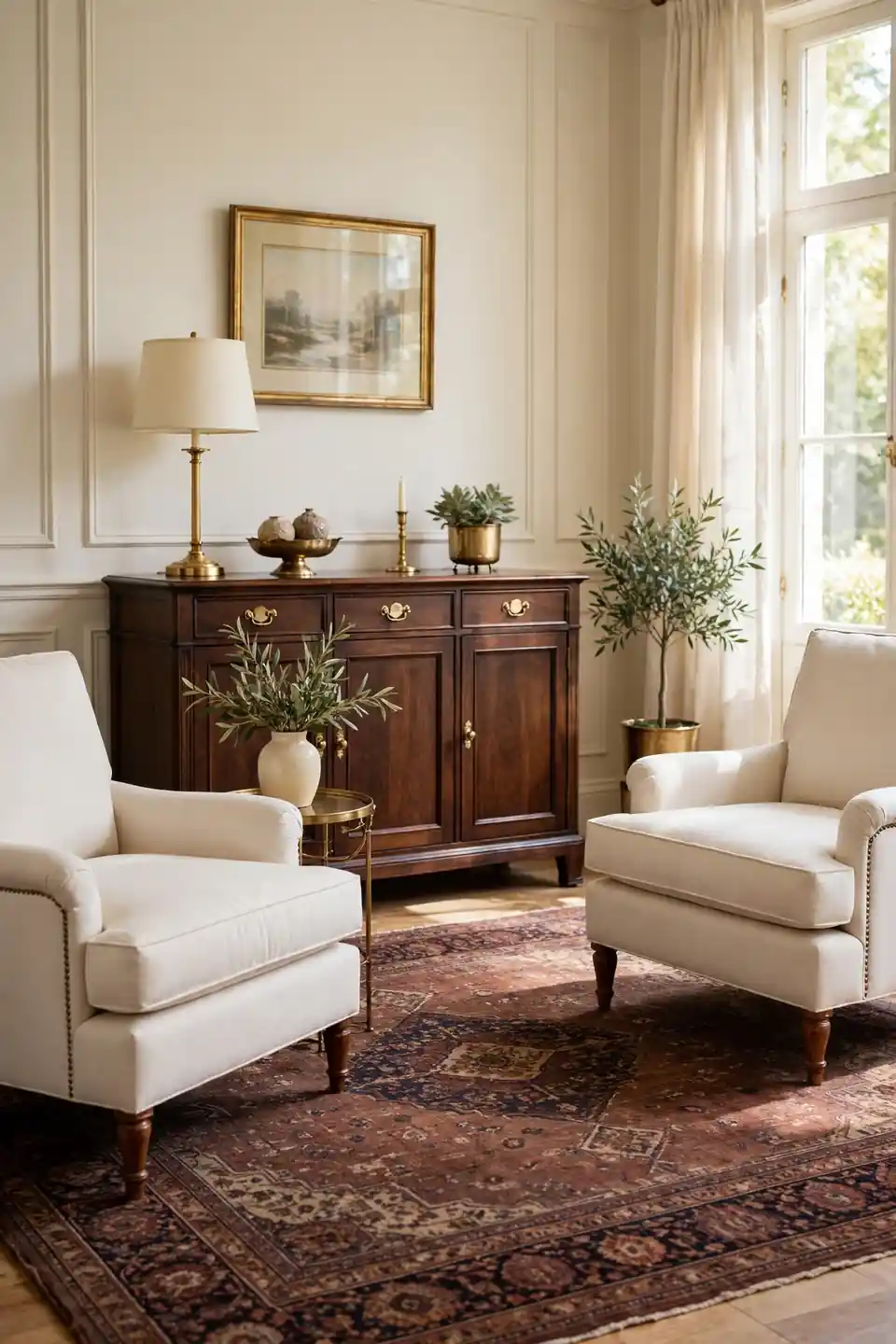
- Pick the darkest tone inside the rug’s border
- Match one anchor piece, like a sideboard, to that tone
- Keep remaining wood mid toned or painted cream
- Add brass or black metal to bridge the shades
- Stop at three wood tones across the whole room
Vintage rugs often hide near black outlines and deep walnut shadows inside their patterns. Furniture in the same family makes those details look intentional instead of accidental. Too much dark wood, though, turns stately into somber, so the cream and brass counterweights matter as much as the timber itself. Balance is a ratio, not a rule.
Brass Accent Pairing

| Aged Brass Accents | Polished Brass Accents |
|---|---|
| Muted glow sits quietly beside faded wool | Bright shine competes with worn pattern |
| Best on lamps, trays, and picture lights | Best in new builds and formal rooms |
| Hides fingerprints and daily dust well | Shows every mark, needs weekly polishing |
| Reads collected and lived in | Reads crisp, hotel like, and modern |
Brass is the metal vintage rugs ask for, because its warmth rhymes with madder reds and aged golds in the wool. Keep finishes unlacquered where hands touch often; the gentle darkening over months is patina, and patina is exactly the point. One tray, two lamps, enough.
Open Plan Rug Zoning

Do:
- Float all front sofa legs onto the rug field
- Leave a bare floor border of even width
- Align the rug edge with the room’s main axis
- Repeat one border color in the dining zone
Don’t:
- Let the rug drift diagonally across walkways
- Split a seating group half on, half off
- Push the rug flat against the longest wall
- Block the pattern with an oversized ottoman
In an open plan, the rug becomes the room divider that never blocks light. It tells guests where the living zone begins and where passing traffic should flow, all without a single wall or screen.
Oversized Rug Sizing
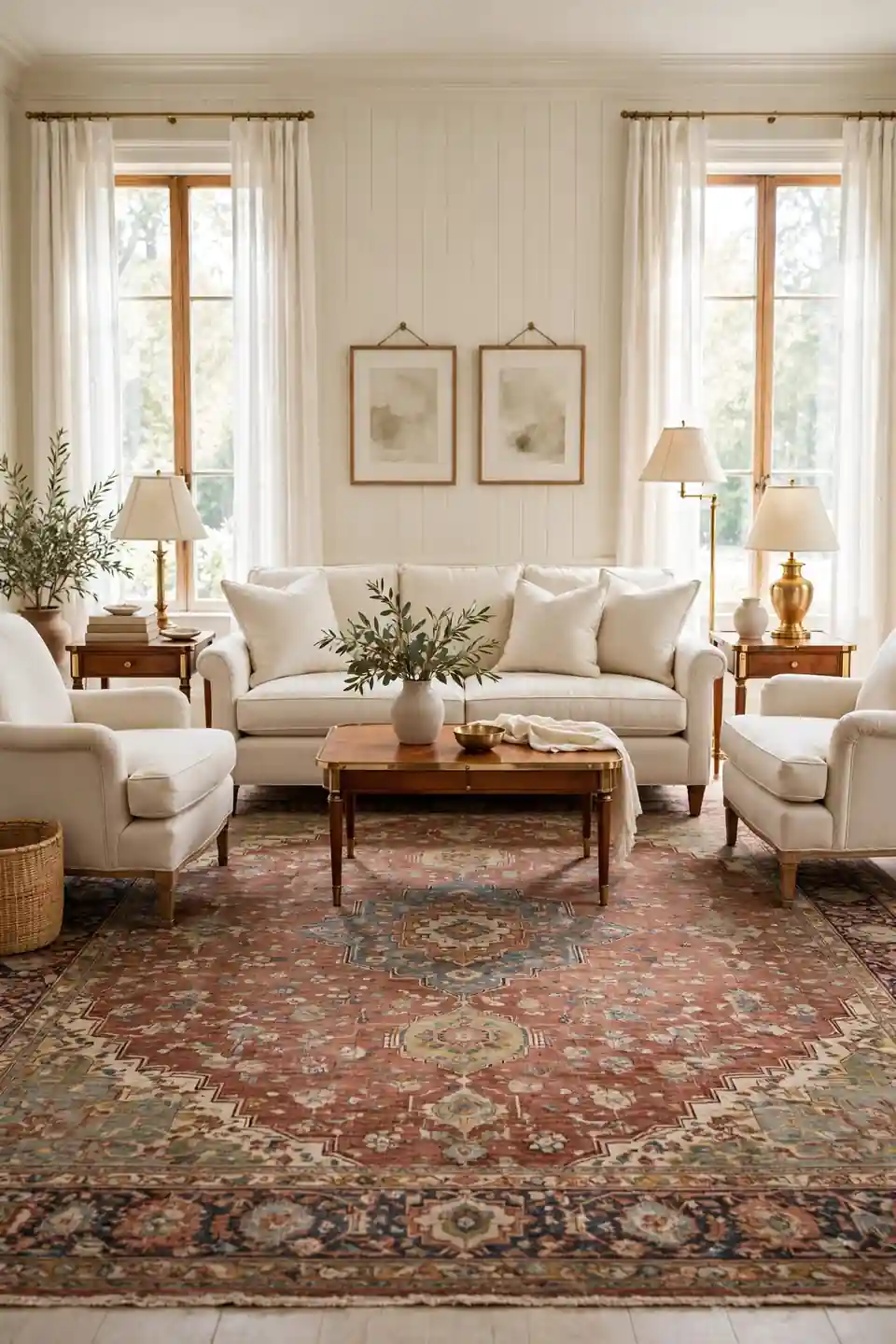
Cost: Higher upfront, since antique wool prices rise sharply past eight by ten feet
Time: One afternoon to measure, tape, and test the footprint
Skill Level: Beginner, because painter’s tape does the hard part
Best For: Large rooms where small rugs look lost and scattered
Tape the rug’s outline on the floor before buying, then live with the tape for two days. A generous rug swallows chair legs, side tables, and walking paths into one calm island, and vintage patterns honestly look richer at scale. Small rugs chop; big rugs gather. When in doubt, size up and let the border disappear under the sofa.
Pattern Mixing Confidence

Two patterns can share a room when they differ in scale and share at least one color. A small check cushion beside a large medallion rug reads as rhythm, not rivalry. Keep the third pattern, if one appears, tiny and far from the floor. Scale contrast does the quiet diplomacy between them.
Stripes are the safest bridge because they read as texture from across the room. I’ve seen this work well in many cases: one striped throw, one checked cushion, and the rug stays the undisputed headline. When a mix feels loud, remove one piece and wait a day before judging.
Reading Nook Corner

- Slide one corner of the rug beneath the reading chair only
- Angle the chair toward the window, not the television
- Set a narrow side table within easy arm’s reach
- Add a brass floor lamp behind the chair shoulder
- Keep a folded wool throw resting on the chair’s left arm
A corner of pattern underfoot tells the body that this seat runs on slower rules. The rug edge works like a threshold, separating reading time from the room’s traffic without walls or fuss. Choose the chair in a plain weave so the medallion beneath it stays legible. Comfort settles in fast.
Fireplace Focal Point

Quick Tip: Center the rug’s medallion on the fireplace opening, not on the room’s walls. Rooms are rarely perfect rectangles, and the eye forgives a rug that sits slightly off the wall line far sooner than one that ignores the hearth it serves. Measure from the mantel center line twice before moving any furniture.
A rug laid before a hearth gives the fire a stage and the seating a reason to gather close. Keep the front edge a hand’s width from the fender so sparks and ash land on stone, not wool. In winter the pattern glows; in summer it carries the room alone.
Bookshelf Flanked Seating

BEFORE: Two bookshelves stood against the long wall like sentries, handsome but distant, while the rug floated in the middle of the room attached to nothing. The seating faced the shelves yet never quite joined them.
AFTER: Pulling the shelves forward so their feet meet the rug’s long edges changed everything. Now the pattern runs like a carpet between two libraries, the armchairs sit inside the story, and the room finally reads as one long, deliberate gesture.
Shelves and rugs share a love of rhythm, spines above, motifs below. Match their widths roughly, keep walkways behind the chairs clear, and let one low stack of books rest on the rug itself as a bridge between the two.
Navy Rug Drama
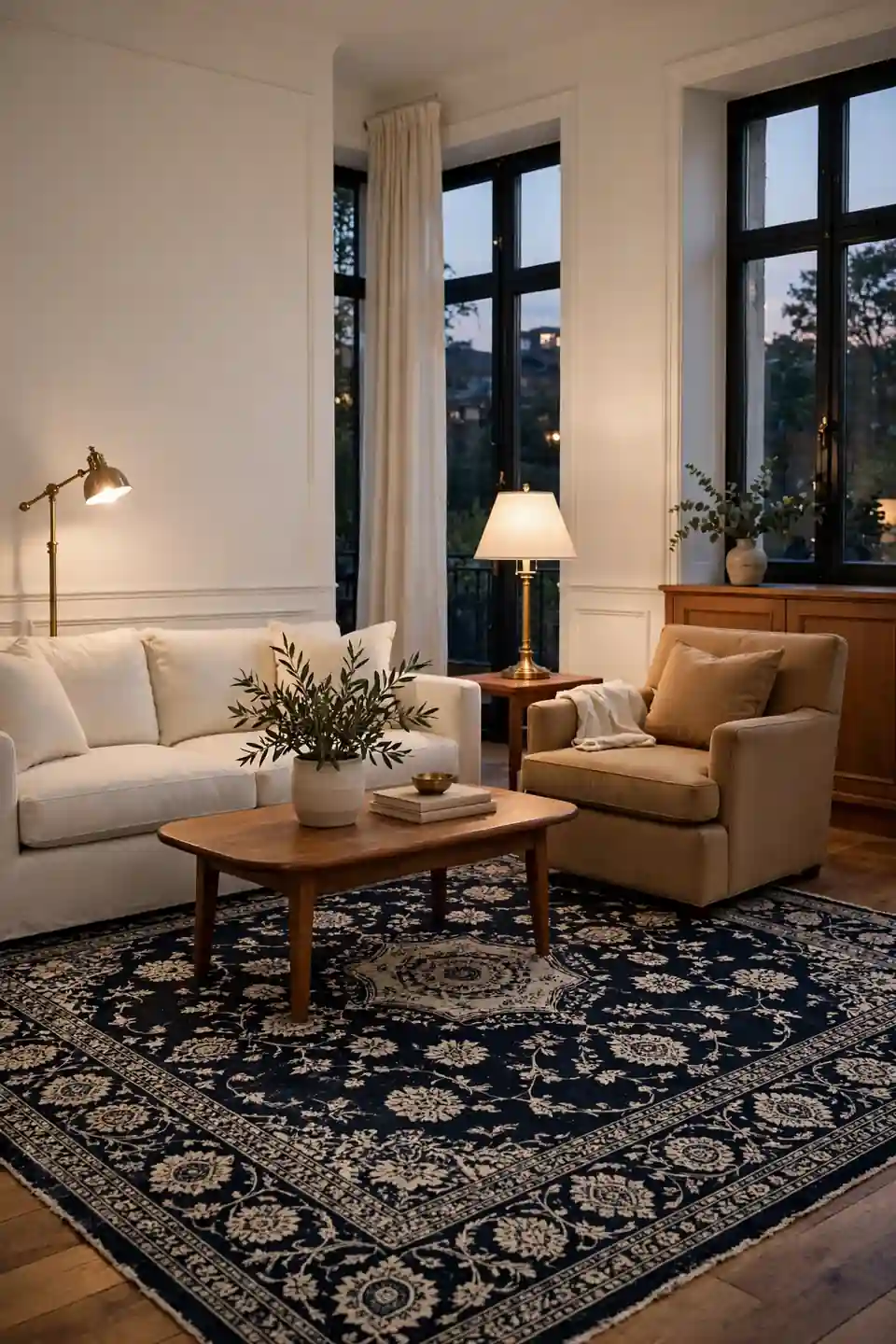
- Choose navy with ivory motifs for readable contrast
- Paint walls a warm white, never a blue white
- Upholster seating in cream, camel, or pale grey
- Repeat navy once, in cushions or a single vase
- Light the room warmly at night to keep navy plush, not black
Navy is where vintage oriental rug living room ideas turn theatrical, and the drama stays elegant when everything around it lightens. Camel leather and cream linen glow against the deep field, while brass reads like candlelight caught in metal. Keep ceilings bright white; navy rugs punish dim, grey ceilings. The effect is evening, bottled.
Sunroom Rug Warmth

| Wool Oriental Rug | Flatweave Vintage Rug |
|---|---|
| Insulates cold tile and stone floors well | Lies thin, better over heated floors |
| Fades gracefully in strong, direct sun | Colors stay truer behind glass |
| Needs rotation every season for even wear | Flips easily for a quick refresh |
| Feels plush under bare morning feet | Feels crisp, cool, and tailored |
Sunrooms beg for pattern because glass and greenery offer so little of it. An oriental under the daybed and chairs ties the garden colors together and gives winter mornings somewhere warm to land. Choose the most faded rug you own; sunlight will keep sanding it softer. The plants approve silently.
Leather Chair Pairing
Do:
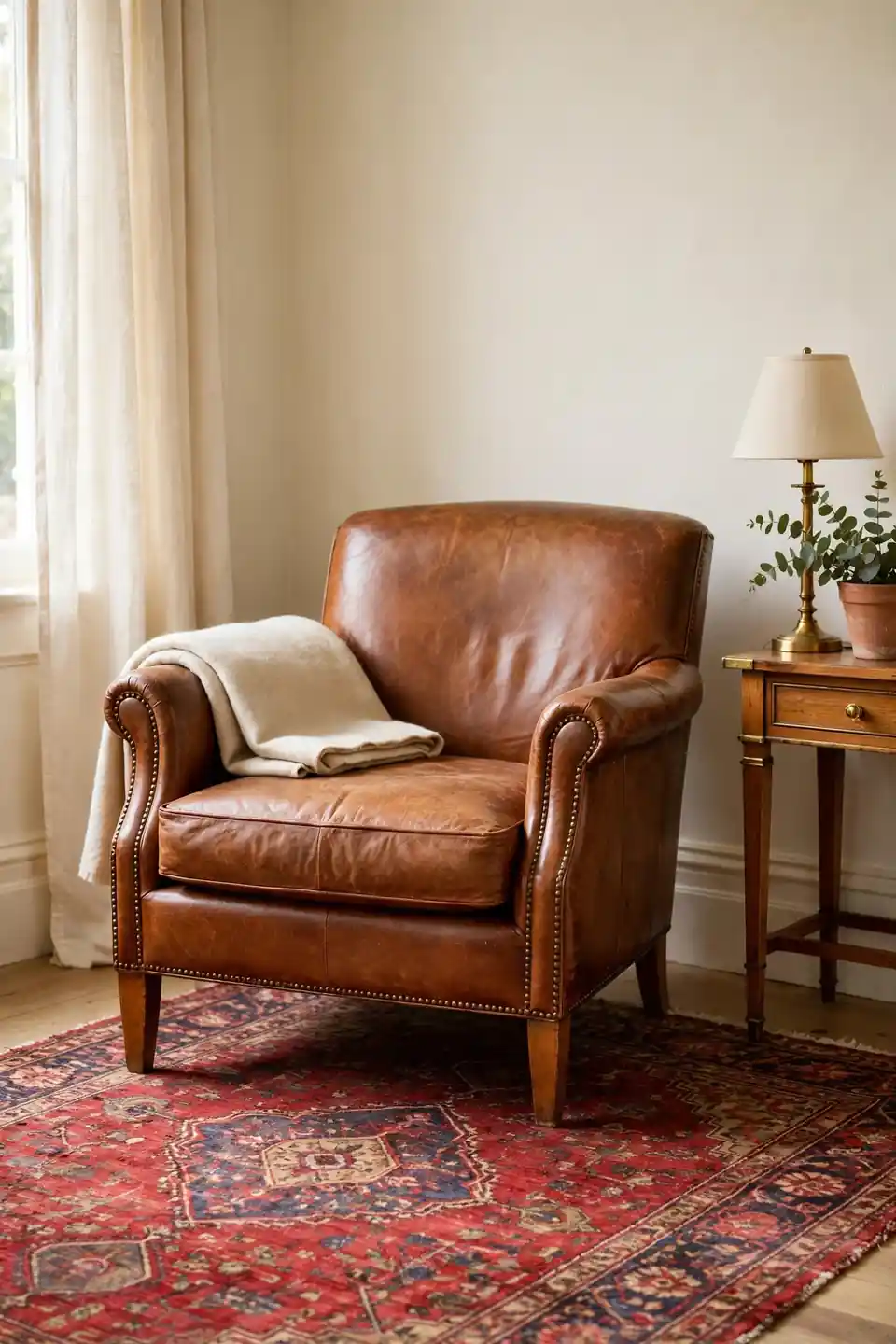
- Choose cognac or saddle leather beside red based rugs
- Let one leather chair anchor the rug’s quiet corner
- Condition leather twice yearly so it ages with the wool
- Pair with a plain wool throw, never a patterned one
Don’t:
- Match leather exactly to the rug’s darkest red
- Add a second leather piece in a small room
- Place leather where direct sun cracks it dry
- Polish leather to a showroom shine
Leather and old wool age at the same honest pace, picking up sheen and softness in the same places hands and feet land. That shared aging is why the pairing never looks staged for long.
Fringe Detail Finish
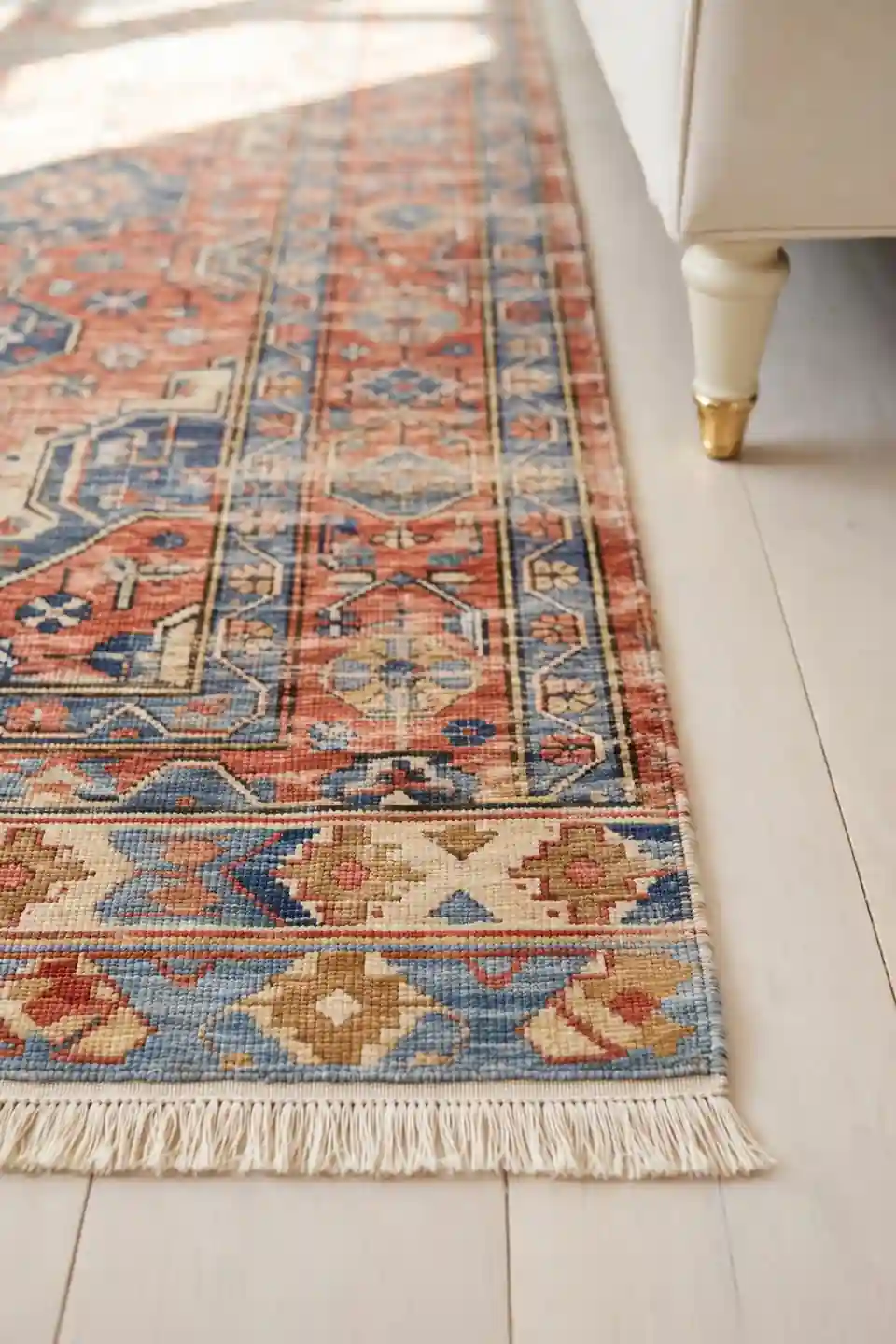
Cost: Low, since professional fringe repair runs far cheaper than reweaving the ends
Time: One hour to comb, straighten, and trim stray ends
Skill Level: Beginner, with sharp scissors and a steady hand
Best For: Rugs whose ends curl, tangle, or look tired
Fringe is the rug’s signature, the warp threads that prove it was woven, not printed. Kept straight and clean, it frames the pattern like matting frames a painting. Braiding or tucking fringe under the rug hides the very detail collectors pay for, so comb it flat and let it show. Ten quiet minutes, twice a year, is all it asks.
Gallery Wall Above
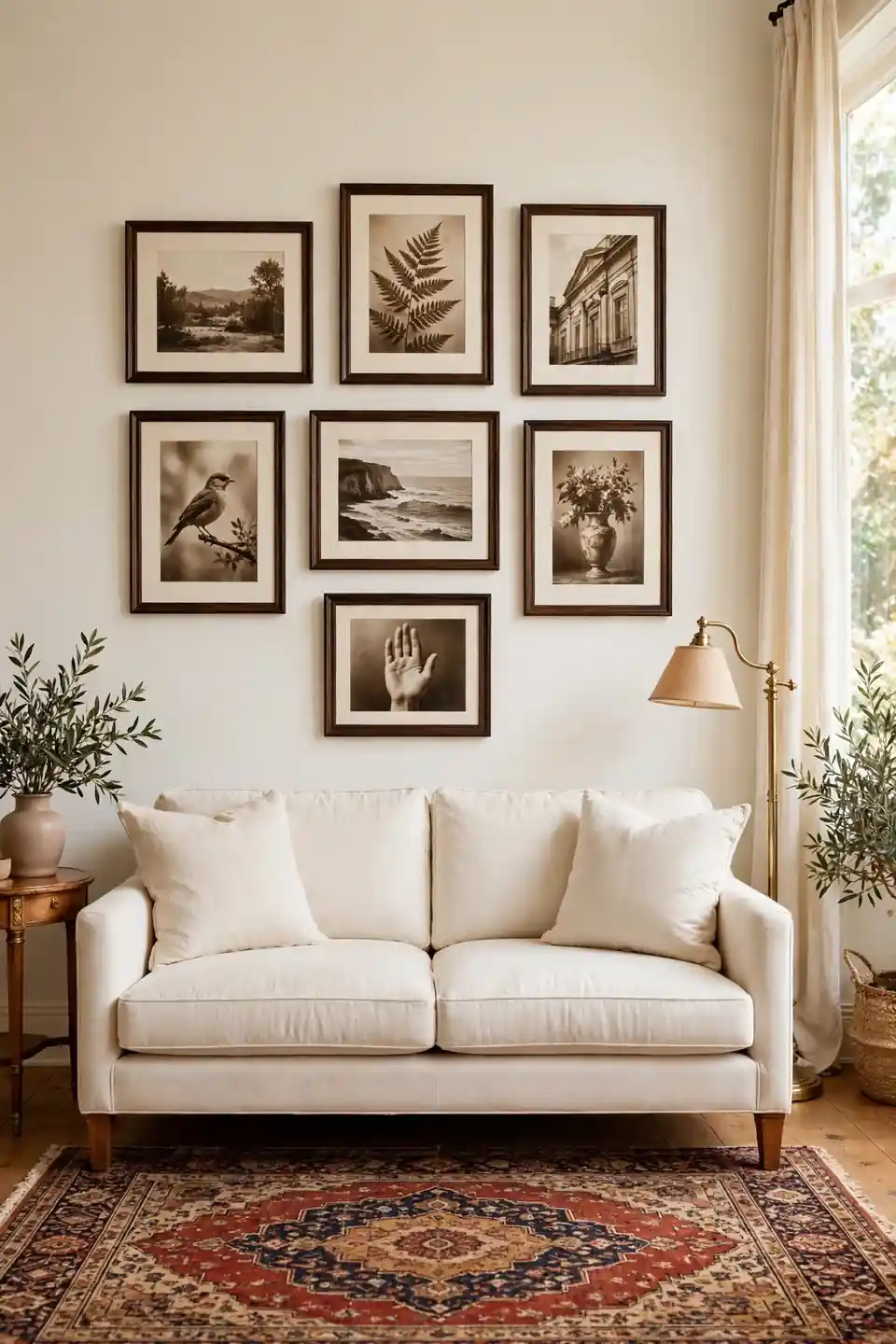
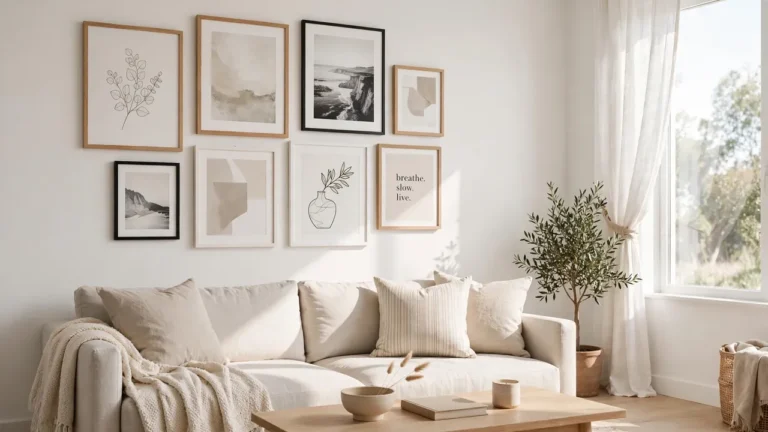
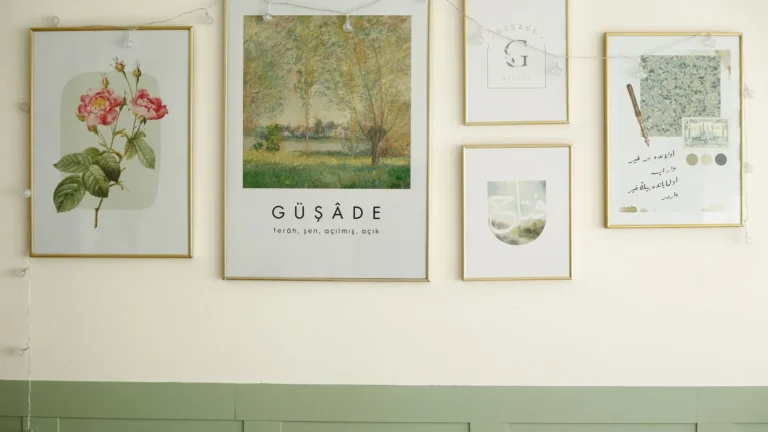
A rug with a strong medallion can hold a gallery wall without a fight, provided the frames keep their distance. Hang the lowest frame at least a hand above the sofa back, and let the rug’s border color choose the frame finish: dark border, dark frames; pale border, gilt or oak.
Keep the art itself quiet in palette, sepia photographs, ink drawings, and washed watercolors all sit politely over pattern. One larger piece at the center steadies the arrangement. Step back to the doorway before drilling anything; the view from the hall is the one guests actually get. Patience saves plaster.
Velvet Sofa Pairing
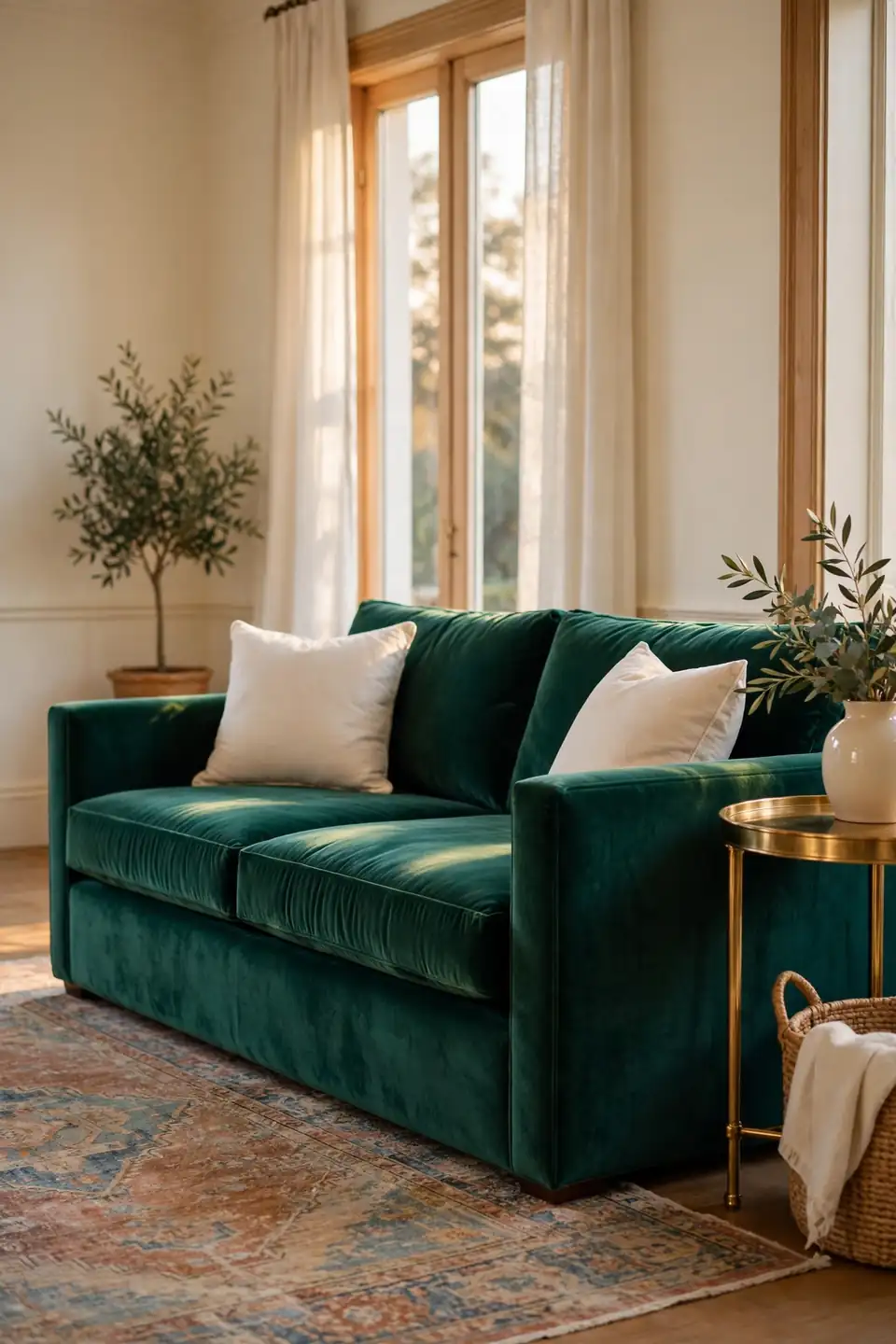
- Pick velvet in one solid shade pulled from the rug border
- Keep cushions plain or softly striped, never floral
- Let the velvet nap catch evening light the wool cannot
- Brush the pile weekly toward the room’s center
- Choose short pile velvet for a tailored finish
Velvet drinks light while old wool reflects it, and that contrast makes both look richer. Rooms planned around modern colonial home interior design use the same trick with dark timber; here the velvet carries the depth instead. One velvet sofa is plenty; a second turns luxury into theater. Emerald, garnet, and deep ruby shades behave best.
Antique Rug Entry Moment
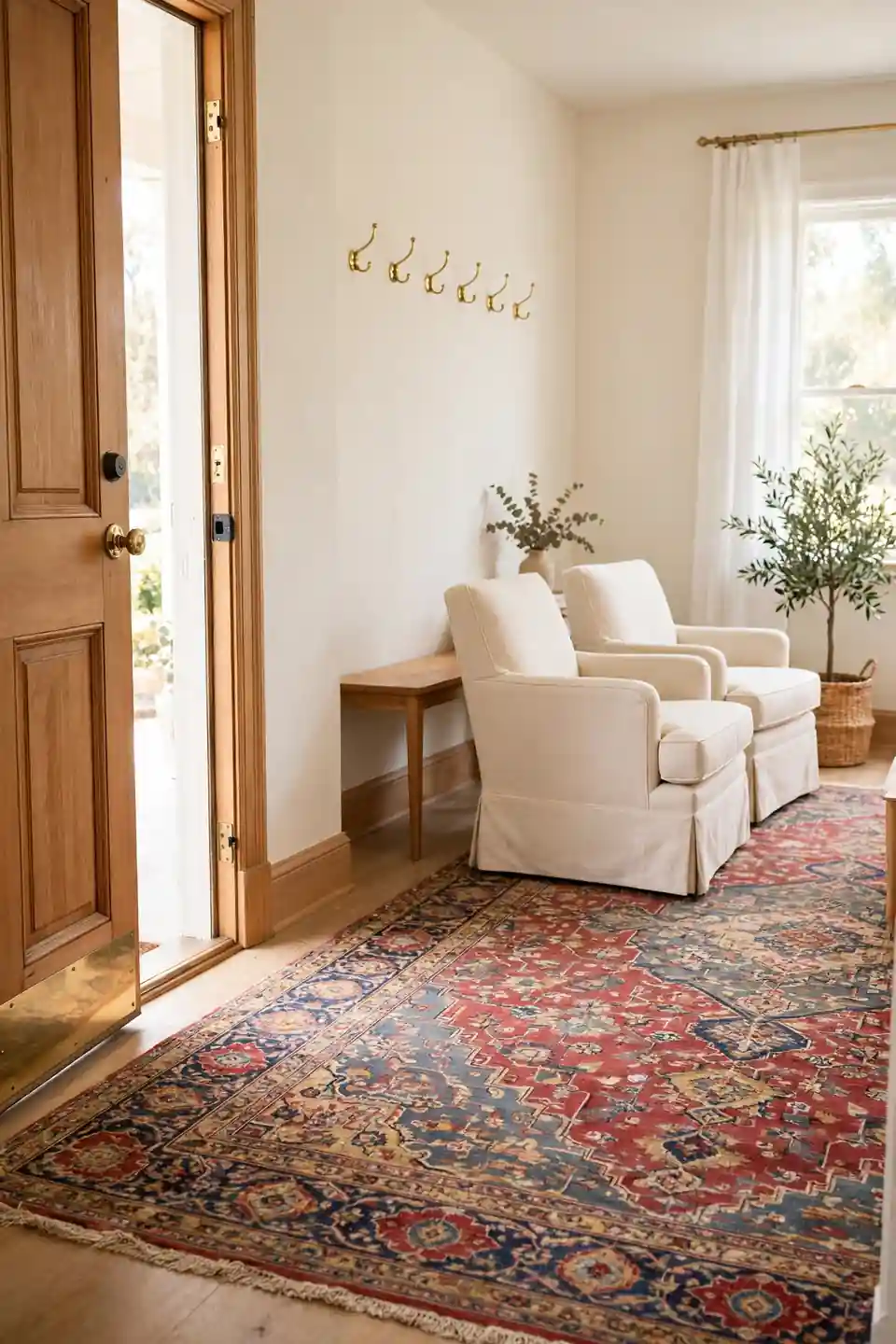
Quick Tip: Place the rug so its best corner greets the front door. Guests step onto the strongest pattern first, the worn center hides in the seating zone, and the whole room makes its finest impression in the first three seconds. Rotate the rug yearly so the greeting corner rests.
Entry facing placement also solves a traffic puzzle, since feet naturally follow pattern toward the chairs instead of cutting across bare floor. Add a slim bench or hooks nearby and the rug’s edge becomes the house’s quiet instruction to slow down, sit, and stay awhile. First impressions compound daily in a home you love.
Neutral Rug Restraint
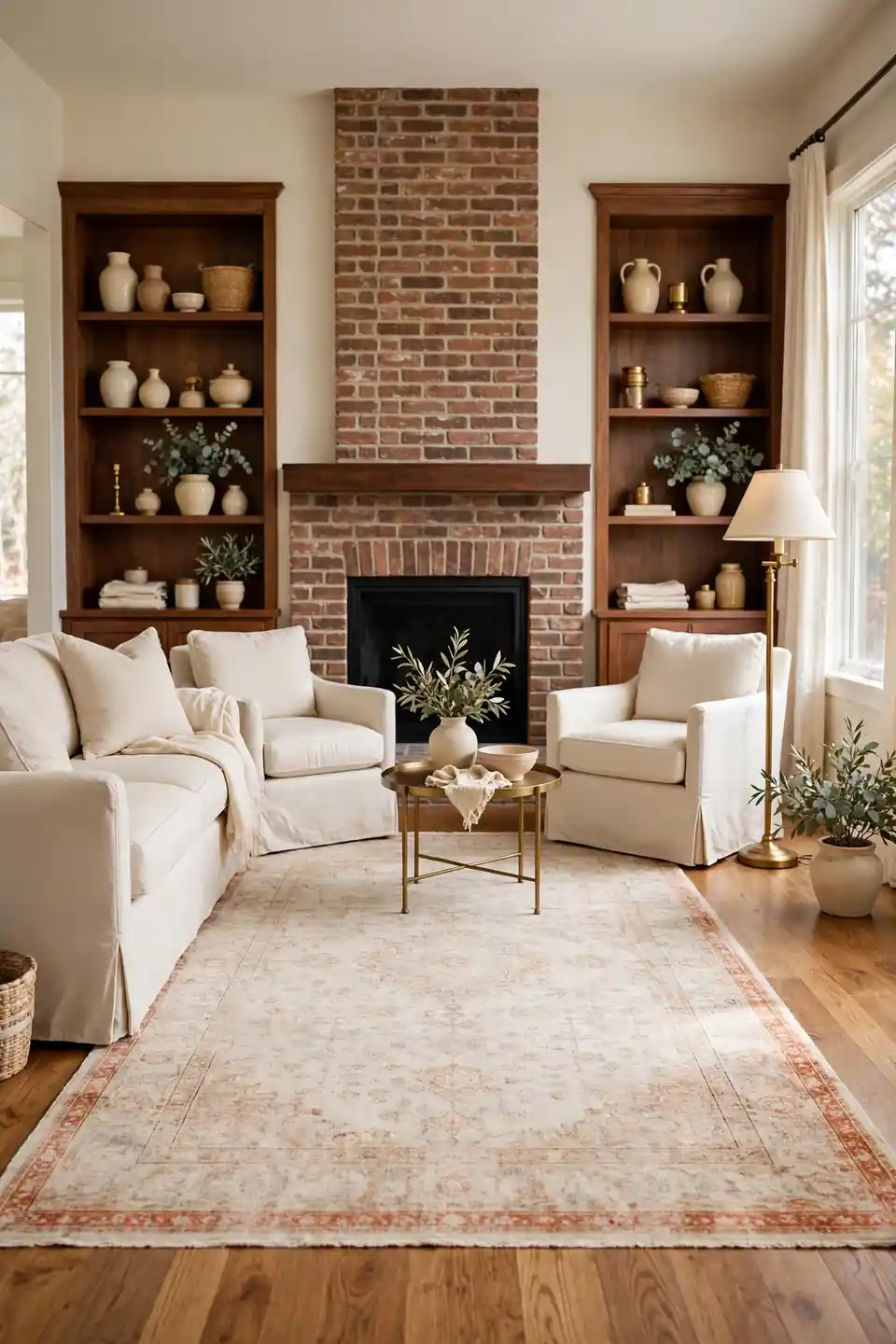
BEFORE: Every rug in the shop shouted for attention, and the brightest ones followed the buyer home in her imagination. Placed in the room, a loud new rug would have bullied the old brick fireplace and the walnut shelves into silence.
AFTER: The quiet vintage rug, all ivory field and softened rust border, did the opposite. It stepped back, let the brick and timber speak first, and lent the whole room its age without stealing a single line of the conversation.
Restraint is a skill vintage hunting teaches slowly. A rug at forty percent of its original saturation usually serves a real room better than a museum bright one, because daily life adds color all on its own.
Coffee Table Placement

- Set the table fully on the rug, never half off
- Center its length on the rug’s main medallion
- Leave a full eighteen inches between table edge and sofa
- Choose legs slim enough to show pattern beneath
- Style the top low so the rug stays visible
A coffee table parked on the border wastes the best weaving in the room. Glass tops and open leg frames let the medallion work as the table’s artwork, changing with the light through the day. I’ve noticed hosts gravitate to rooms where the table floats light and the pattern does the decorating. Nothing else needs to perform.
Rug Rotation Refresh

| Rotating Every Season | Rotating Once a Year |
|---|---|
| Spreads sun fading evenly across both ends | Lets one end fade noticeably faster |
| Moves wear away from the main walkway | Keeps traffic polished into one path |
| Freshens the room without buying anything | Room feels static between rare changes |
| Catches moth or moisture trouble early | Damage hides longer under furniture |
Rotation is the cheapest renovation in a vintage home. Turning the rug end for end evens the sun’s handwriting, moves the walkway off the medallion, and makes the room feel rearranged even when every chair stays exactly where it was. Mark the calendar with the seasons.
Heirloom Rug Story

Do:
- Ask the seller for the rug’s region and age
- Photograph the back to record knots and wear
- Tell guests the story when they admire it
- Insure documented pieces alongside other valuables
Don’t:
- Steam clean an antique without a specialist’s advice
- Trim loose knots flush with the pile
- Store it folded in a damp basement
- Hide its worn spots under heavy furniture
Every heirloom rug carries a household inside its pattern, weddings, winters, and feet that hurried less than ours do. Buying one continues that story rather than starting a new one, which is the deepest luxury vintage offers a room.
Conclusion
Twenty three rooms, one honest rug, and a palette that has already survived a century of fashion. That is the promise inside vintage oriental rug living room ideas: pattern with patience, color with a past. Start with the rug you cannot stop thinking about, keep its companions quiet, and let time keep softening the whole arrangement. I’ve seen how one rug can settle a whole house. Save these ideas to your Pinterest board before your next flea market morning, and send a photo to the friend whose living room is still waiting for its anchor.