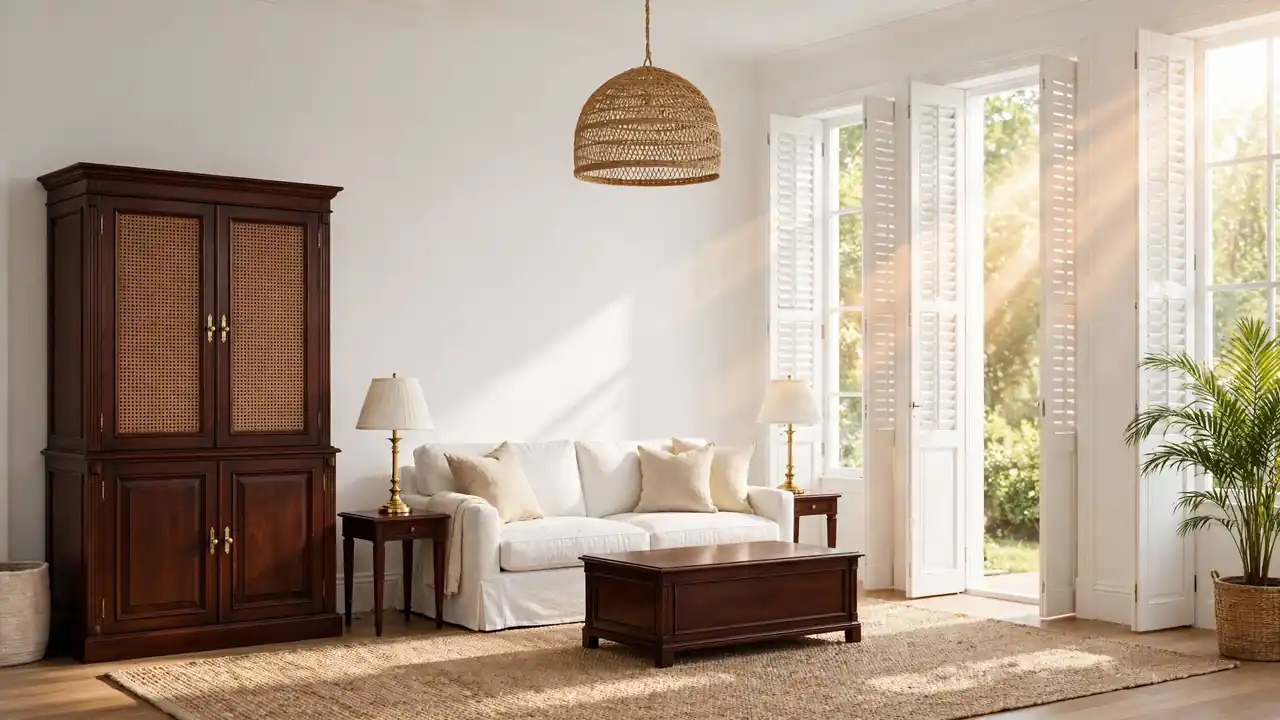
21 Modern Colonial Home Interior Design Ideas for Timeless Charm
Some rooms feel like a deep breath the moment the door opens, and that calm is no accident. Built on modern colonial home interior design, they pair dark timber furniture with crisp white walls, woven cane, and brass that glows softly by evening. Nothing shouts, yet everything feels considered, breezy, and quietly grand.
The twenty one ideas ahead borrow from plantation houses and coastal verandas, then trim them for modern life and smaller rooms. Homes chasing Scandinavian dining room decor ideas chase the same light with paler wood; here the wood runs deeper and the mood runs warmer. Pick one room, start with its biggest piece, and let the palette spread slowly.
Dark Wood Welcome
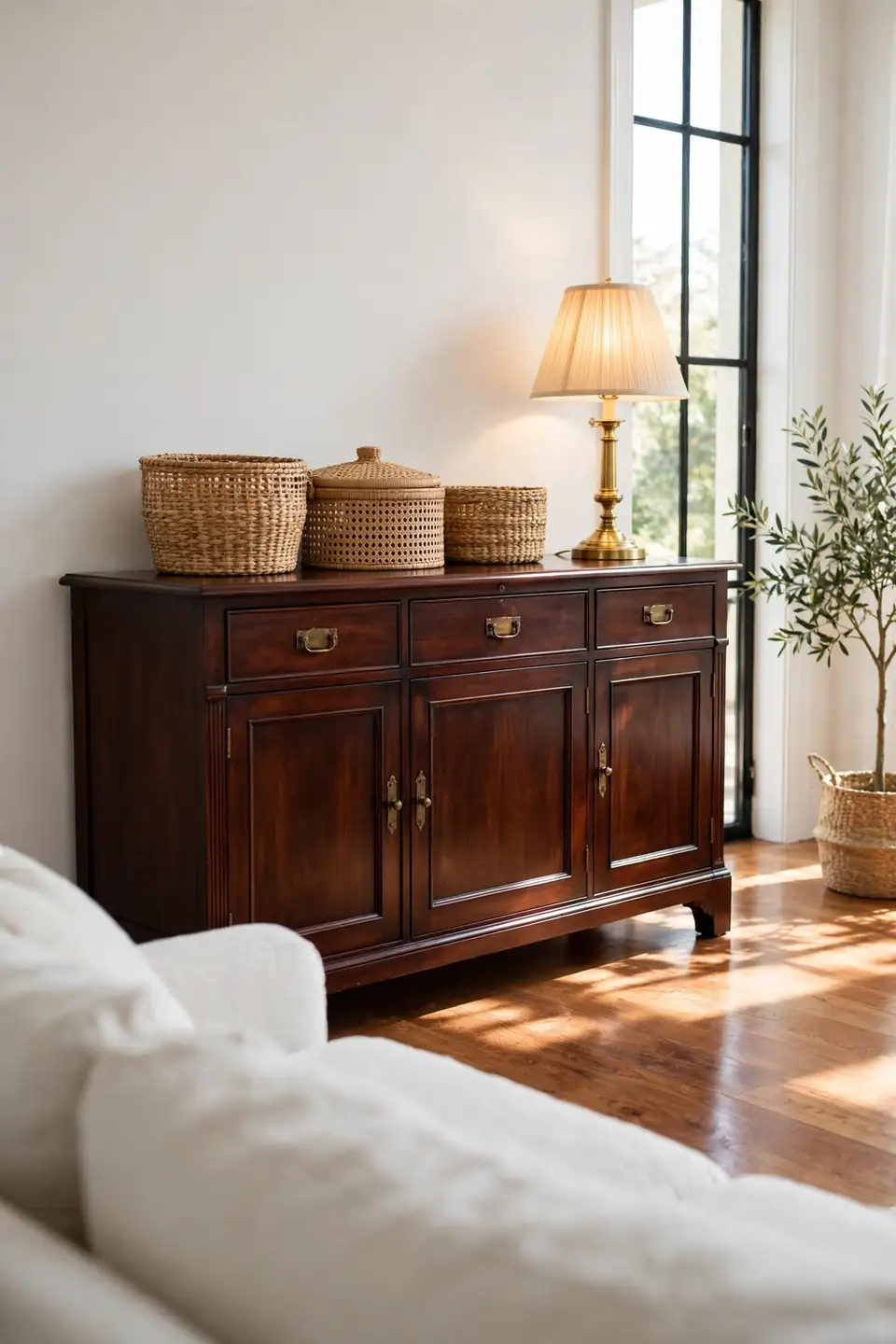
Dark wood furniture against white walls is the handshake of this style, warm, firm, and instantly reassuring. Mahogany sideboards, teak consoles, and walnut bed frames carry a weight that pale copycat pieces never quite earn, and their grain deepens beautifully with every year of honest use.
Start with one substantial piece per room rather than a matching suite. A single dark armoire anchors a bedroom; a heavy dining table steadies the eating space. In my experience, contrast does the decorating here: the darker the wood, the fresher the white around it looks, and the whole room settles into calm order. Guests feel it before they can name it.
Crisp White Walls
- Warm white paint keeps dark wood from feeling heavy
- Matte finishes hide scuffs better than glossy sheens do
- White backdrops let cane and rattan textures stand forward
- Tall baseboards in the same white add quiet architecture
- One soft cream ceiling keeps the contrast gentle overhead
Paint is the cheapest structural change in this whole style, and the one every other piece depends on. Bright whites with blue undertones can turn chilly beside mahogany, so lean warm: think fresh linen, not glacier. I’ve noticed rooms painted this way need less art, because the furniture silhouettes against the walls already read like a gallery.
Plantation Shutter Light
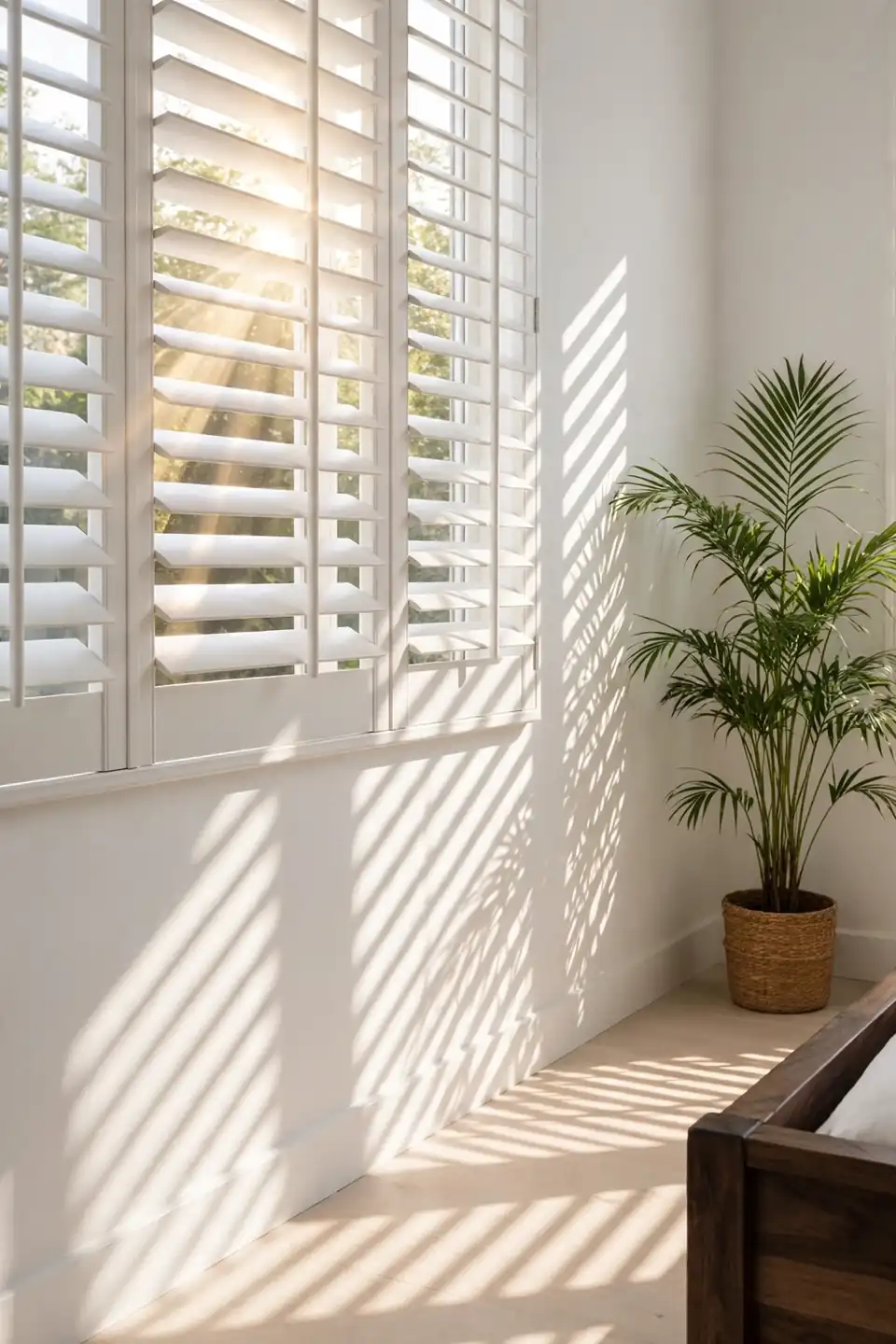
Quick Tip: Set shutter louvers at a slight upward angle in the morning. Light bounces toward the ceiling and spreads softly across the room instead of striping the floor. Bedrooms gain privacy without losing that bright, airy colonial glow everyone loves about these classic window coverings in every busy room.
Shutters suit this style because they were built for heat and glare long before air conditioning existed. Painted white, they read as architecture rather than decoration, framing windows with clean horizontal lines that echo ceiling beams and wainscot panels. Real timber shutters cost more than faux panels, yet they repaint well for decades and add genuine resale charm. Choose wide louvers for modern rooms and narrower blades where the house leans traditional.
Cane Webbing Comeback
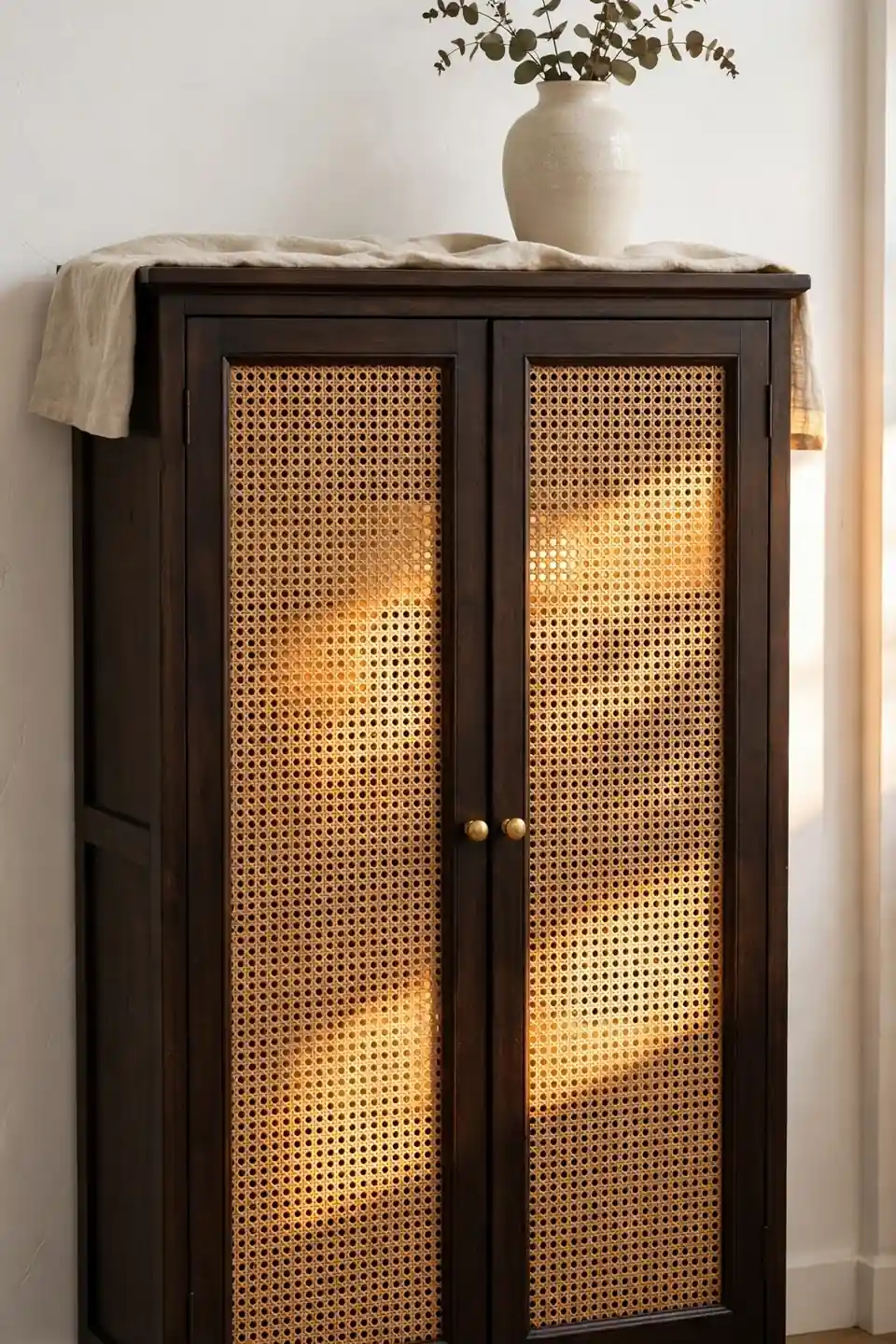
BEFORE: The cabinet doors stood solid and heavy, dark timber panels that swallowed the light and made the whole wall feel like a closed door. Storage hid everything, yet the room read flat, hot, and faintly old fashioned by midday.
AFTER: Woven cane panels now fill the same frames, and the difference is immediate. Air and light pass through the weave, shadows soften, and the dark wood suddenly looks crafted instead of bulky. The room breathes like a veranda at breakfast.
Cane webbing earns its comeback honestly, since it lightens heavy colonial furniture without sanding away its character. Replacement cane sheets are inexpensive and staple into routed frames over one weekend. Keep the weave natural rather than stained; the honey tone against dark timber is the whole point.
Woven Pendant Glow
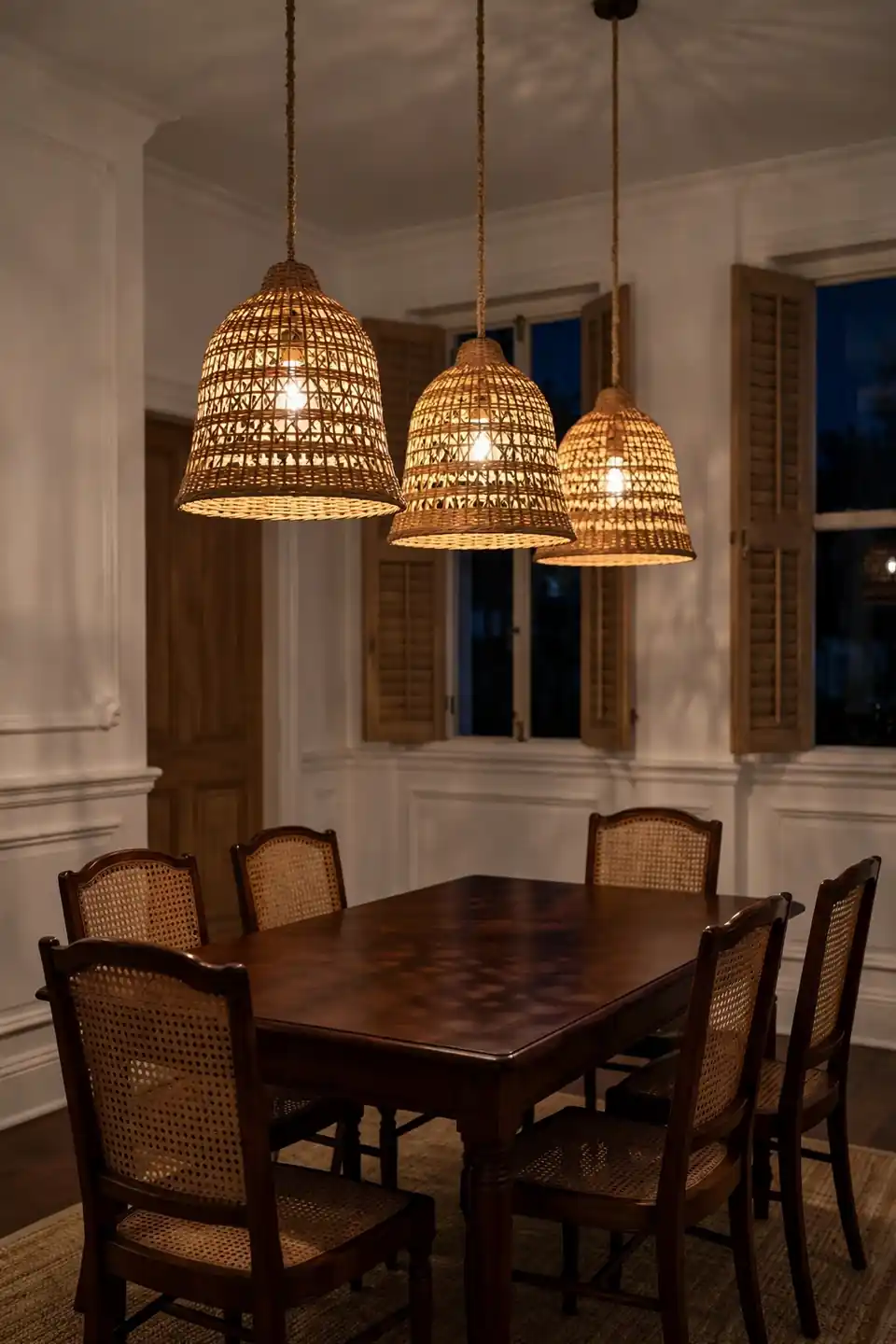
- Group pendants in odd numbers above the table or island
- Hang shades so the lowest edge sits above seated eye level
- Mix rattan, bamboo, and woven cane for varied texture overhead
- Fit warm bulbs and dimmers for evening softness daily
- Dust shades monthly with a soft brush or handheld vacuum
Woven shades do two jobs at once: they scatter harsh bulb glare into a warm pattern, and they pull the ceiling into the room’s story instead of leaving it blank. Oversized single pendants suit dining tables, while rows of smaller shades carry long hallways gracefully. It is texture you can see from the sofa.
Mahogany Or Teak

| Mahogany Furniture | Teak Furniture |
|---|---|
| Deep red brown tone that darkens with age | Golden honey tone that silvers outdoors slowly |
| Dense grain, formal polish, classic colonial weight | Oily grain, relaxed finish, breezy coastal feel |
| Best in dining rooms and formal studies | Best in sunrooms, porches, and bathrooms |
| Needs polish and coasters for daily protection | Shrugs off water rings and humidity easily |
Neither wood wins everywhere; the room’s light and workload decide. Mahogany brings ceremony to spaces used after dark, while teak keeps bright, plant filled rooms feeling easy. Many homes mix both, mahogany where guests gather formally and teak where daily life splashes.
Brass Accent Rules
Do:
- Repeat brass at three heights in every room
- Choose unlacquered brass that patinas with daily touch
- Pair brass with dark wood for instant warmth
- Keep one finish family per room for calm
Don’t:
- Mix chrome and brass on the same wall
- Polish every handle back to showroom shine weekly
- Scatter tiny brass objects across every surface available
- Hang brass lighting where steam dulls it fastest
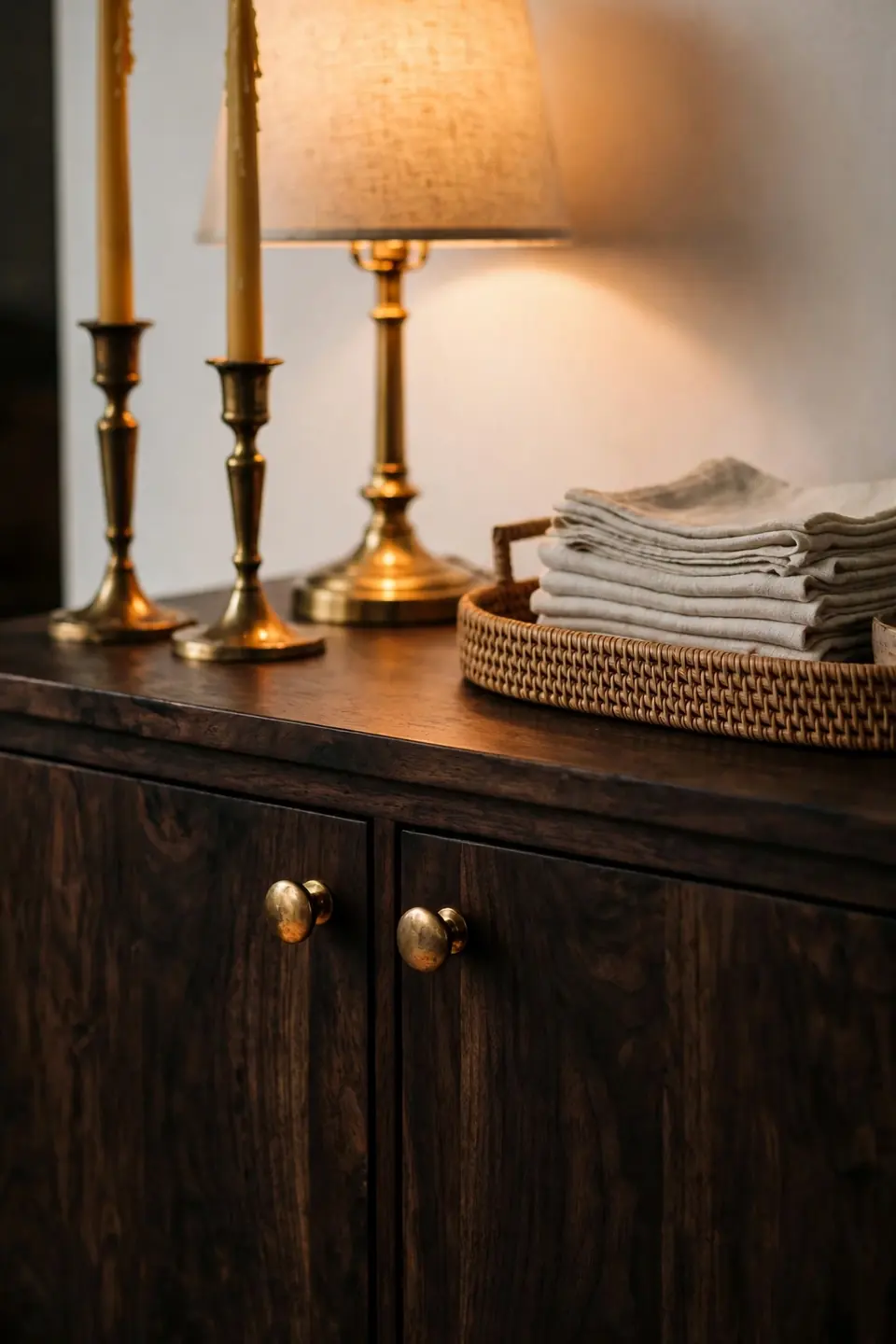
Brass is the jewelry of this style, and like jewelry it works best in a few confident pieces. A lamp base here, cabinet knobs there, and the hardware on a beloved sideboard give dark wood its glow without turning the room into a showroom of shiny sameness.
Linen Slipcover Facts

Cost: Moderate, since washable linen blends undercut custom upholstery
Time: One afternoon to fit, steam, and tuck
Skill Level: Beginner, because elastic corners forgive uneven measuring
Best For: Bright rooms where white sofas scare families
Slipcovers solve the colonial room’s oldest worry: pale seating beside dark wood looks stunning until real life arrives with coffee and muddy paws. A washable linen cover keeps the bright silhouette and skips the panic, going straight into the machine on Sunday night. Choose a slightly loose fit, since crisp tailoring fights the relaxed mood, and keep a spare cover folded in the sideboard for party days and puppy season alike.
Four Poster Drama

A four poster bed turns an ordinary bedroom into a small estate, its tall posts framing the mattress like architecture. Dark mahogany or teak posts against white walls give the height somewhere to land, and plain linen drapes keep the drama breezy instead of theatrical. It photographs like a boutique hotel suite.
Skip heavy canopy fabric in warm climates and let the bare frame do the talking. A woven throw across the foot and two generous pillows are dressing enough. I have seen guests walk straight to the posts and touch the wood, the way people greet a house they already trust.
Botanical Print Balance
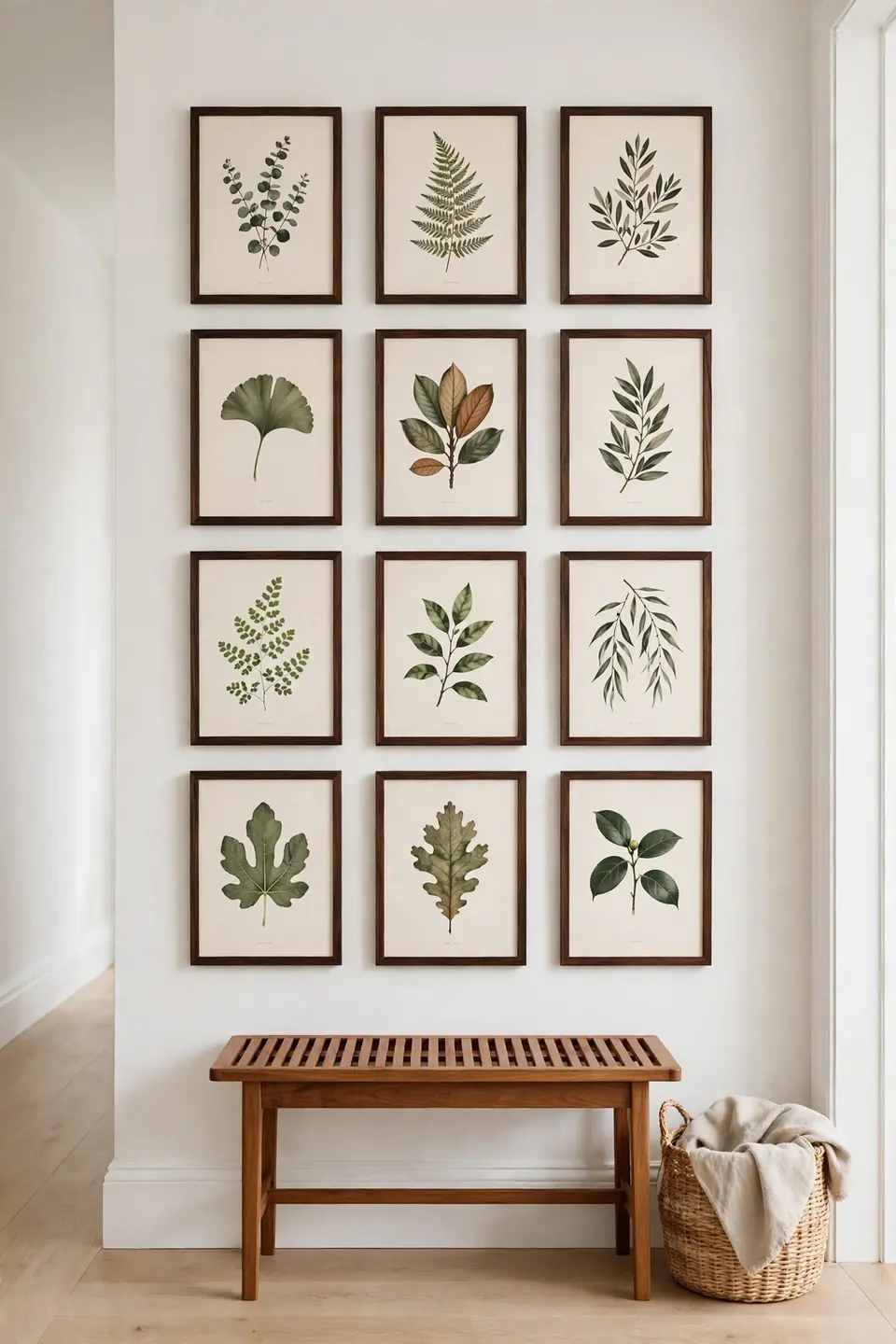
- Frame pressed leaf prints in dark wood for cohesion
- Hang botanical sets in pairs or calm grids
- Choose cream paper backgrounds over bright white mats
- Mix one oversize print with two smaller studies
- Keep glass glare free in bright plant rooms
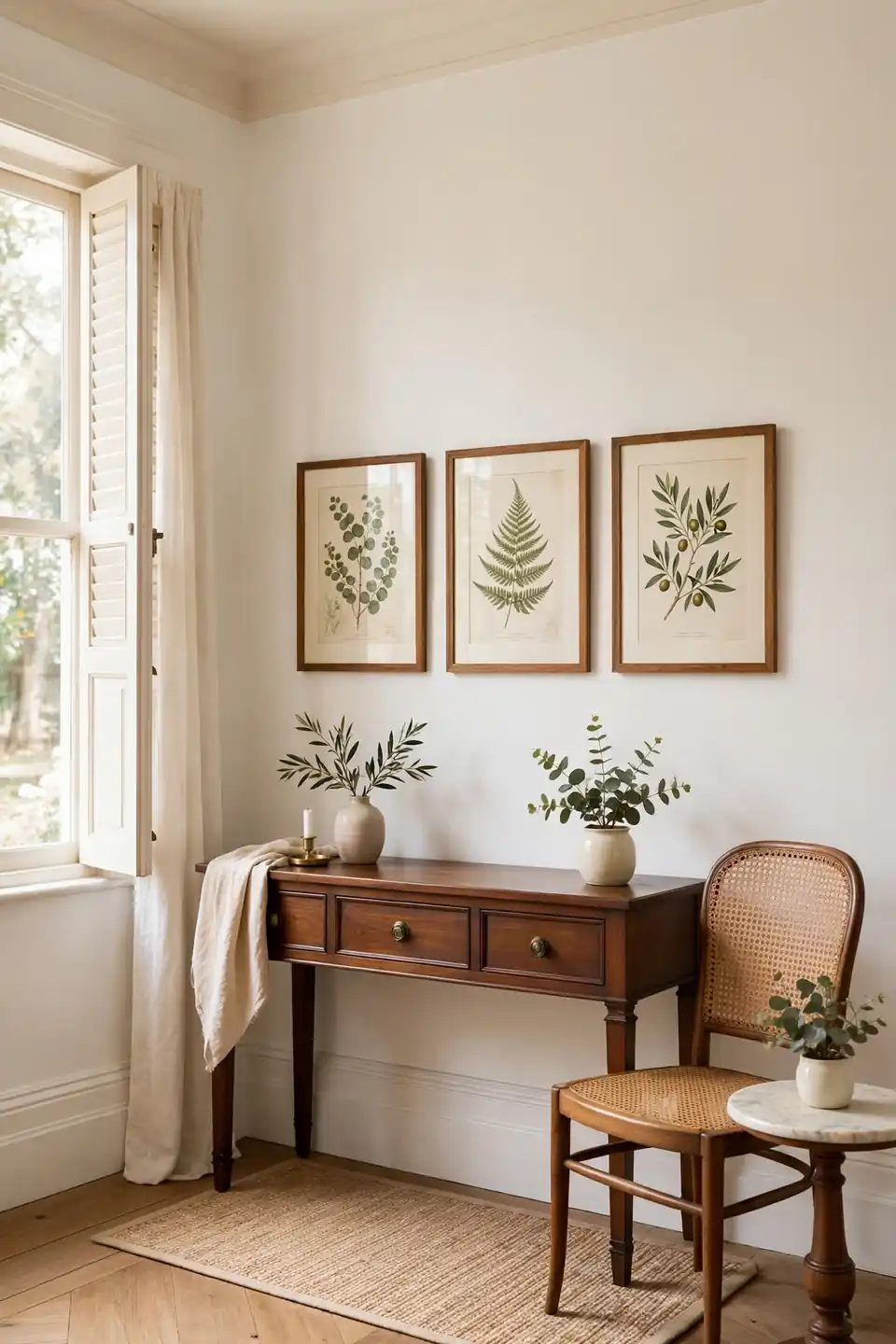
Botanical prints belong to this style’s history, carried home by travelers who pressed ferns and palms between book pages. Hung with restraint, they bring the garden indoors without a single pot to water. This is where modern colonial home interior design feels most personal, since a hallway of framed leaves tells visitors exactly which landscapes the household loves best and misses most.
Sisal Rug Layering

Quick Tip: Bind sisal edges with dark cotton tape before the rug goes down. The border frames pale fibers like a picture frame, stops fraying at doorways, and echoes the dark wood furniture standing on it all year round beautifully.
Sisal brings the porch indoors, a dry, grassy texture that cools tiled or timber floors underfoot. Layer a smaller flatweave cotton rug over the top in seating zones to soften the scratch for bare feet and crawling babies. Natural sisal darkens slowly in sunlight, so rotate the rug twice a year and the tone evens out across the whole floor.
Arched Opening Charm

BEFORE: The doorway between the living room and dining space was a plain rectangle, sharp cornered and forgettable. Rooms sat side by side like strangers, and the long wall offered nothing for the eye to rest on between meals and evenings.
AFTER: A soft arch now crowns the same opening, its curve echoing the rattan pendants and rounded chair backs nearby. Walking through feels ceremonial in the best way, and the two rooms finally read as one generous, connected home.
Arches carry colonial architecture in their bones, borrowed from cloisters and courtyard houses built for shade. A false arch kit or a skilled plasterer can shape one over a weekend. Paint it the wall’s white and let shadow, not color, draw the curve each afternoon.
Ceiling Fan Refresh
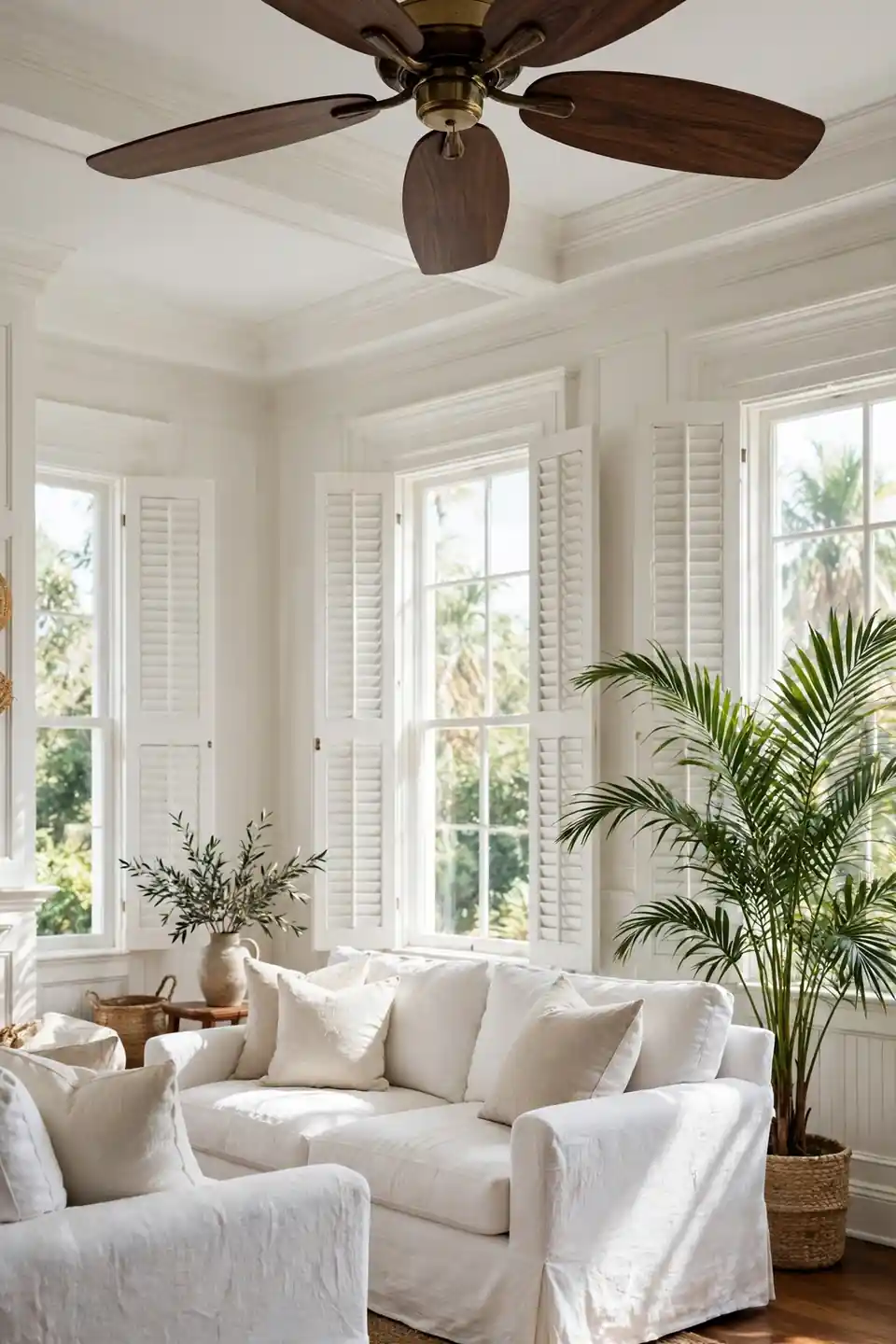
- Pick wide blades in dark wood or woven cane
- Size the fan to the room, never smaller than the rug below
- Mount blades at least seven feet above the floor
- Pair the fan with a brass downrod for cohesion
- Run blades counterclockwise through summer for downward breeze daily
A good fan is working decor, moving air over linen and skin so evenings on the veranda run long. Rooms styled around burgundy living room design inspiration chase richness through color, while colonial rooms chase comfort through breeze. Choose quiet motors; the best fan is the one nobody ever hears during dinner conversation.
Cane Or Rattan
| Cane Webbing Panels | Rattan Pole Frames |
|---|---|
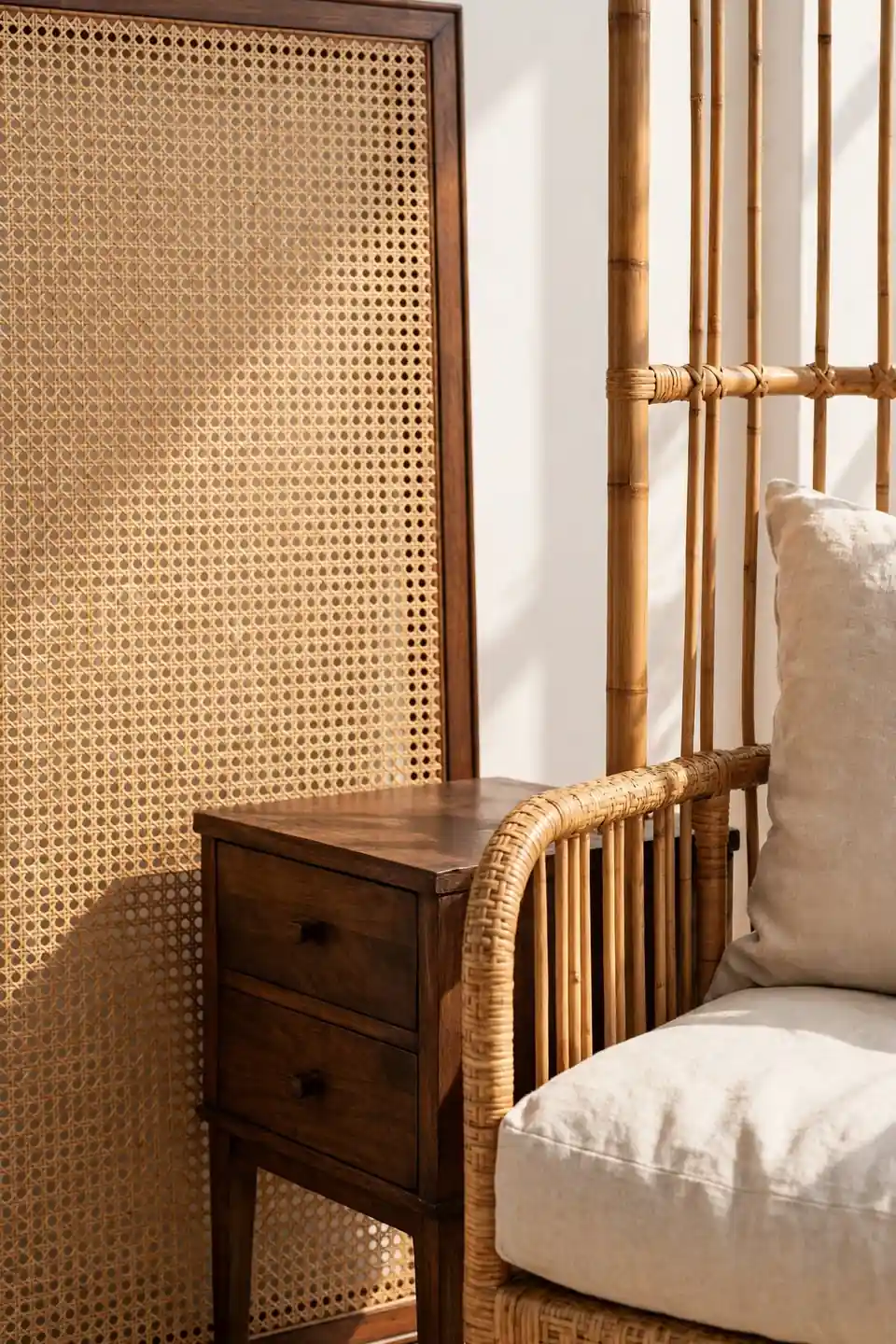
| Fine hexagonal weave, light and airy feel | Thick bent poles, sturdy and sculptural presence |
| Suits cabinet doors, headboards, and drawer fronts | Suits chair frames, mirrors, and bed ends |
| Tears if poked, patches easily with new sheet | Bends before breaking, lasts for decades outside |
| Reads delicate beside dark formal wood furniture | Reads relaxed beside linen and pale plaster |
The two materials are cousins, both born from the same climbing palm, and the happiest rooms use each where it shines. Cane where eyes linger close, rattan where bodies lean and hands grip. Together they keep heavy timber furniture feeling holiday light.
Indoor Palm Corners

Do:
- Give palms the brightest corner, never the darkest
- Choose pots in terracotta, brass, or woven seagrass
- Group three heights together for a grove effect
- Wipe broad leaves monthly so they photosynthesize well
Don’t:
- Squeeze palms behind sofas where fronds get crushed
- Water on a schedule instead of checking soil
- Mix plastic plants among the real greenery display
- Let palms touch cold glass in winter months
One honest palm does more for this style than a shelf of small pots ever will. The fronds repeat the lines of shutter louvers and fan blades, tying the room’s whole breezy system together. Start with a single kentia in the emptiest corner and watch the room exhale.
Marble Brass Pairing
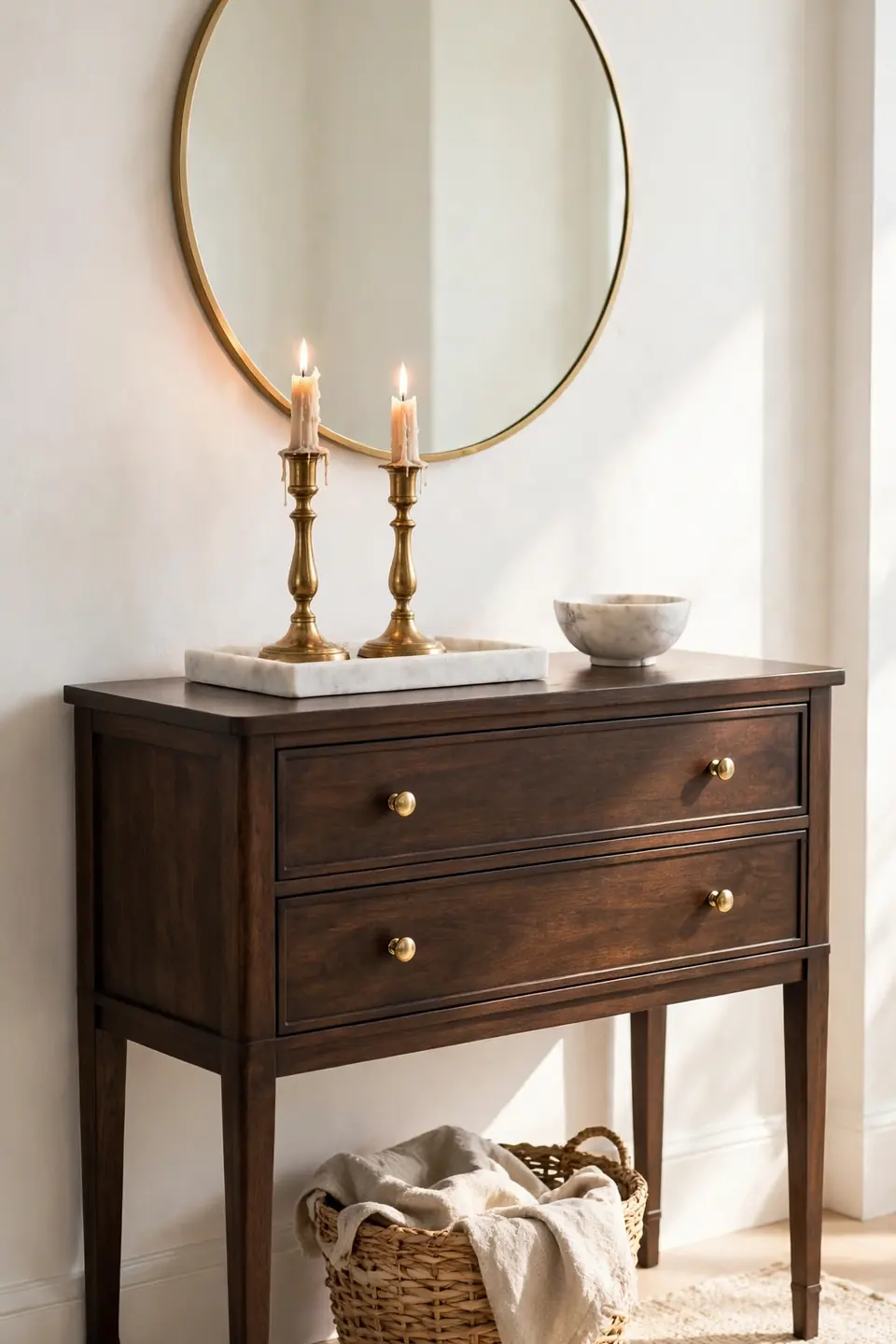
Cost: High for marble, so start with small trays
Time: One full weekend for trays, shelves, and side tables
Skill Level: Beginner for styling, pro for stone cutting
Best For: Bathrooms, bars, and bright entry consoles
Cool marble beside warm brass is the style’s quiet luxury, the same pairing found in grand hotel lobbies from Singapore to Charleston. A marble tray under brass candlesticks on a dark sideboard gives the effect for the price of a dinner out. Seal the stone yearly, wipe citrus spills quickly, and the surface keeps its soft glow through decades of daily use and slow gatherings.
Wainscot Wall Depth

Wainscot panels give white walls a lower half with manners, a run of painted timber that takes the knocks from chairs, baskets, and passing luggage. The upper wall stays serene and pale while the lower half carries the room’s daily traffic with grace. It is carpentry that behaves like furniture.
Match the panel height to the room’s furniture, roughly one third of the wall, and cap it with a slim ledge for leaning art and small plants. In my experience, wainscot makes even rental white boxes feel inherited, like the house has been loved through several generations of careful owners. Guests run a hand along it.
Gallery Map Walls
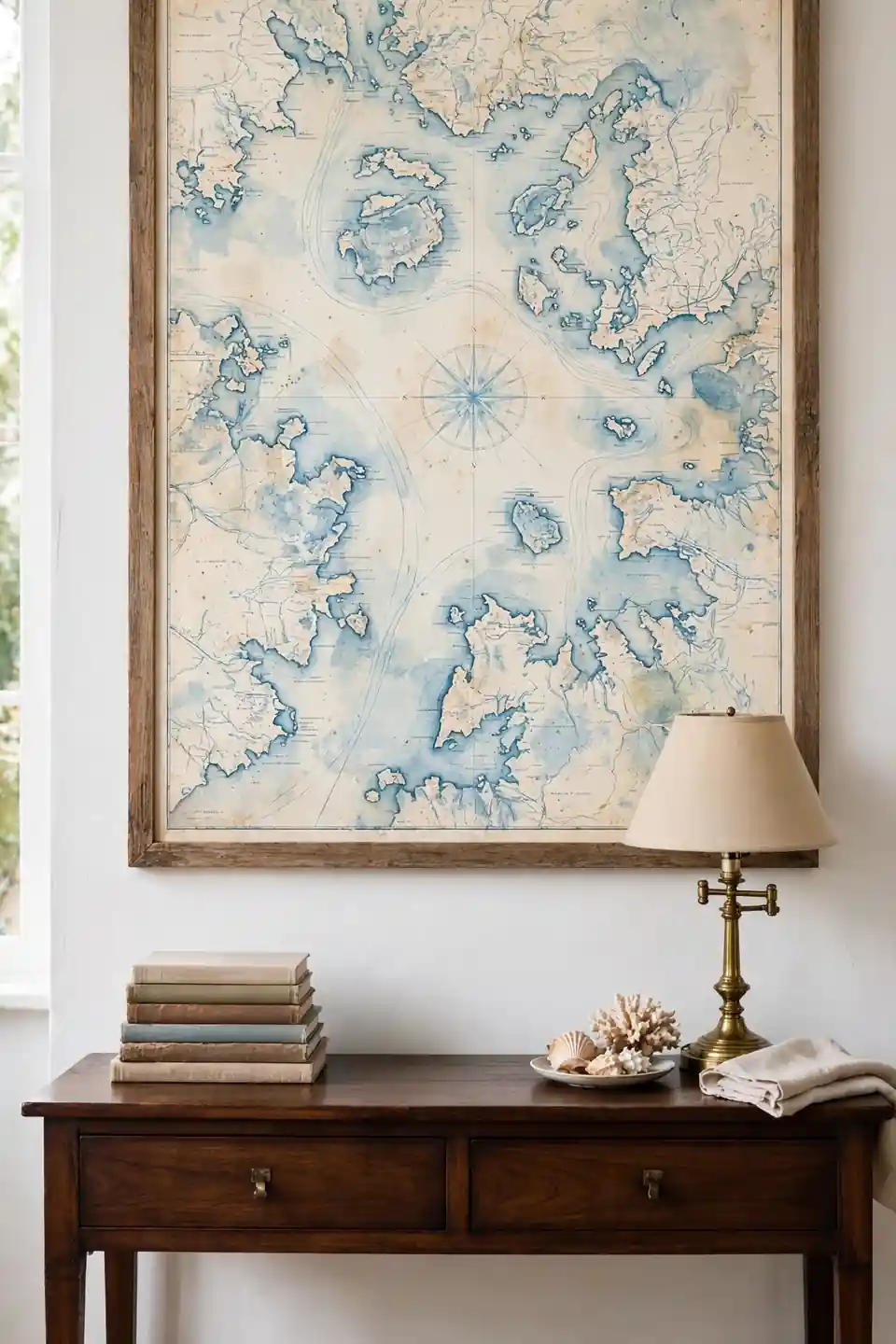
- Frame vintage maps under glass in dark stained timber frames
- Hang one large map instead of many small prints
- Choose sea charts and city plans with cream tones
- Leave wide white mats so details breathe on walls
- Lean a spare map on the mantel for rotation
Maps flatter this style because they carry its traveling spirit without a single souvenir. Old charts of coastlines and harbors bring cream, ink, and faded blue into rooms ruled by wood and white. Source prints from archive collections online, print them large, and let one wall tell the household’s favorite journey. It beats generic art every time.
Veranda Style Sunroom
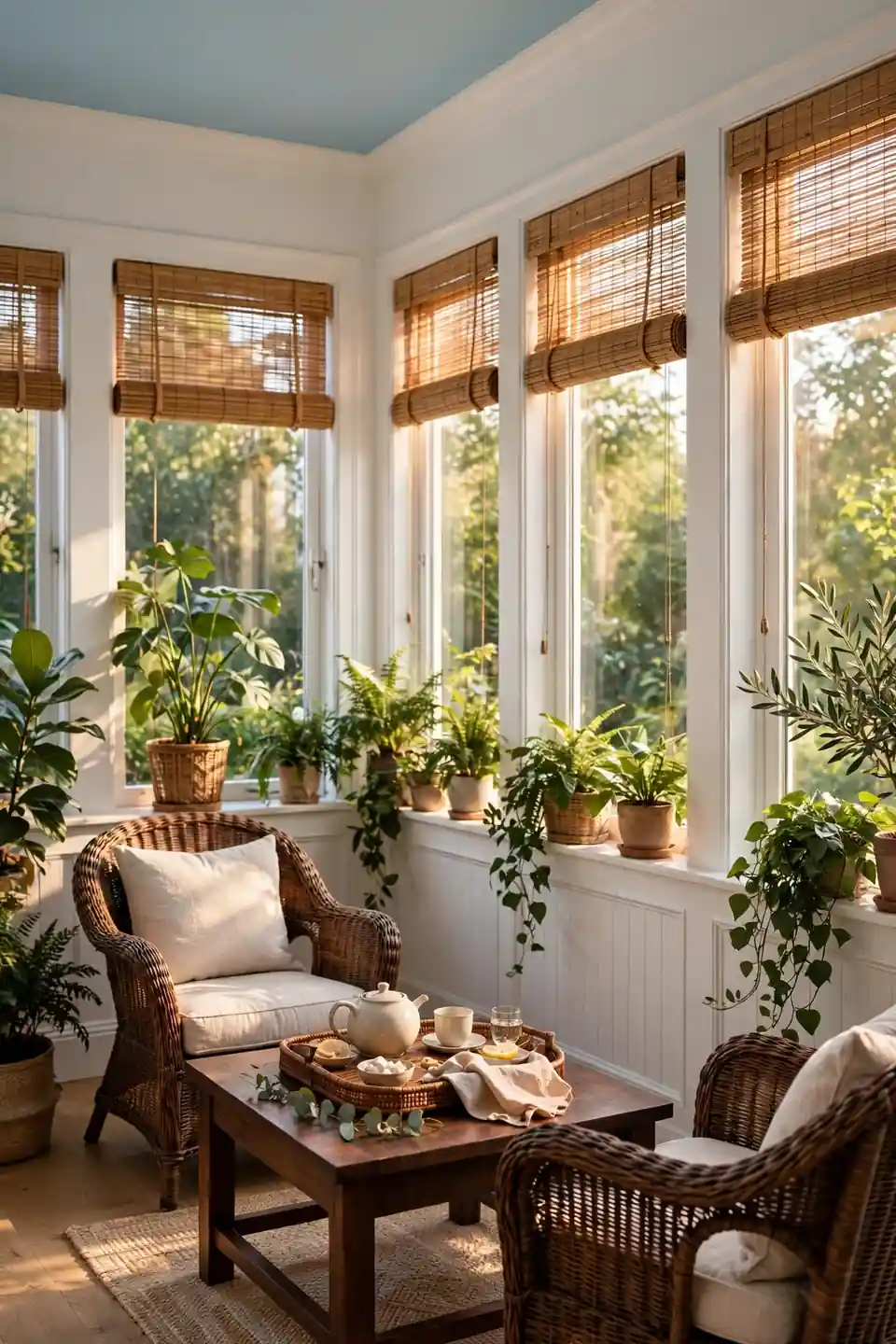
Quick Tip: Paint the sunroom ceiling a soft sky blue. The old porch trick fools the eye into reading open air overhead, and white walls plus dark wicker suddenly feel like a veranda on a bright plantation morning, even in deep winter months.
A sunroom is where this style relaxes its posture, swapping formal furniture for deep wicker chairs, rolled bamboo blinds, and a tea tray that never really leaves. Keep the palette strict, white, dark fiber, and green, and even a small glass box off the kitchen reads as a retreat. Add a ceiling fan and the room earns its keep from spring through the last warm autumn evening.
Entry Console Styling
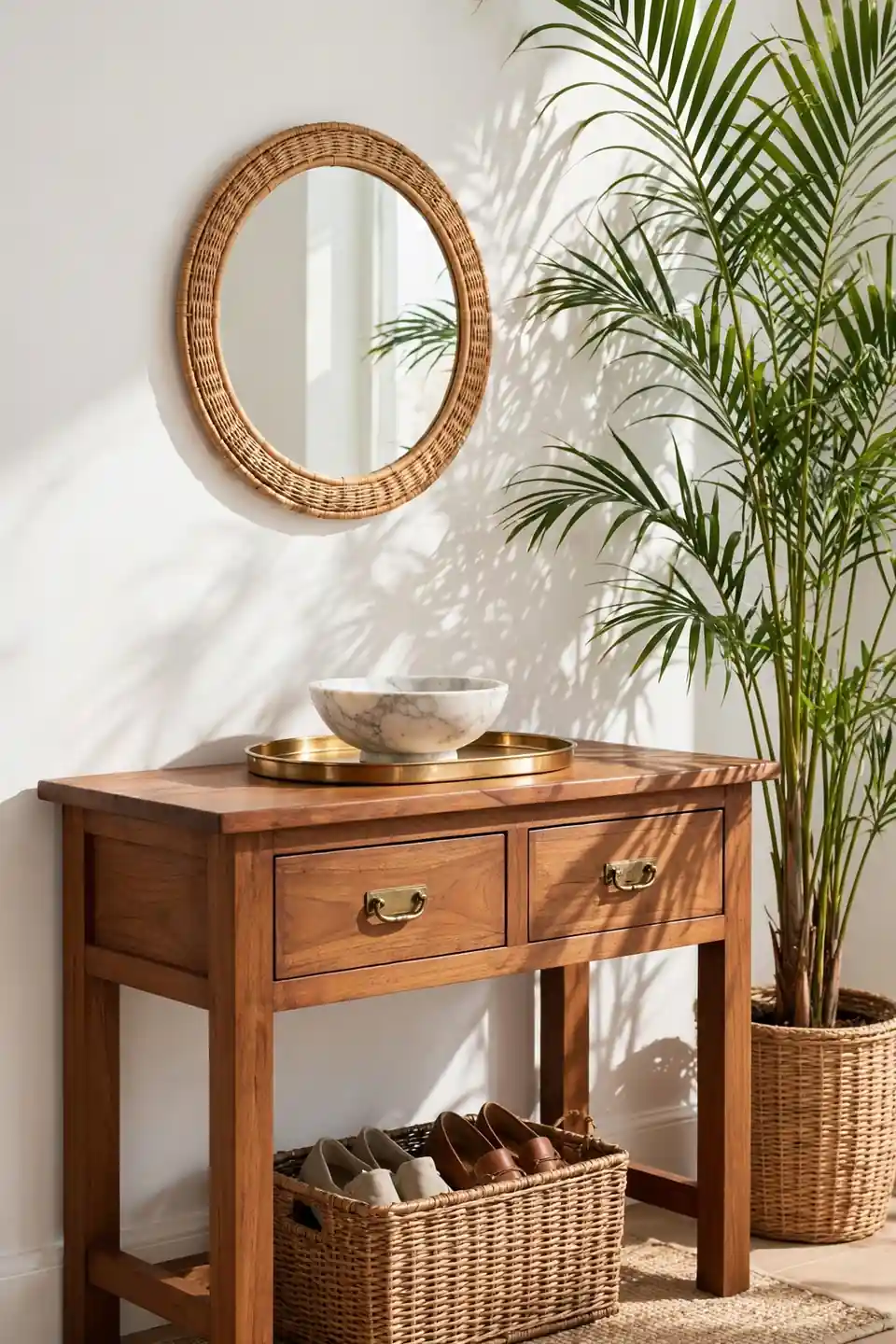
BEFORE: The entryway held a wobbling table, a tangle of keys and post, and shoes breeding quietly underneath. Guests stepped into the mess before they stepped into the house, and every arrival home felt faintly like an apology.
AFTER: A heavy teak console now stands guard, topped with a brass tray for keys, a marble bowl for post, and one tall palm casting shadows. Arrivals feel greeted, and the house makes its promise in the first three steps.
The entry sets the style’s contract: dark wood, useful beauty, nothing wasted. Keep the console surface two thirds empty, park a woven basket beneath for shoes, and hang one mirror to bounce hall light deep into the house.
Layered Bed Linens
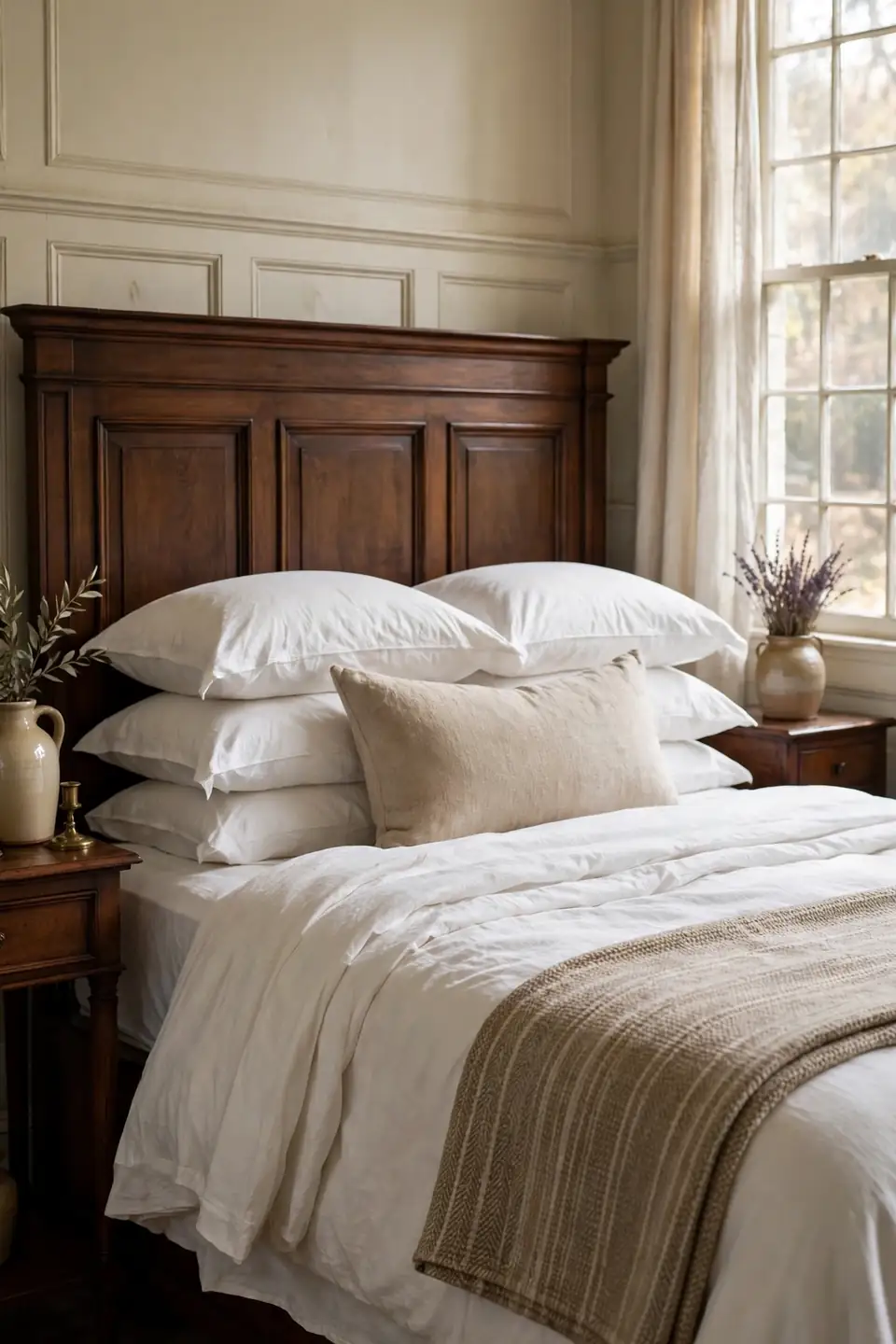
- Start with crisp white cotton sheets, always freshly pressed flat
- Fold a woven cotton throw across the foot
- Stack sleeping pillows upright against the tall dark headboard daily
- Add one long lumbar cushion in natural linen
- Drape a light quilt for cool nights within reach
Layered white bedding is the bedroom’s version of the white wall, a calm field that lets dark frames and woven textures speak. Wash everything hot and line dry when the weather allows; sun dried cotton carries a freshness no softener matches. Keep the layers few and generous rather than many and fussy. It is the easiest luxury in the house.
Conclusion
Start where the light lands first. One dark sideboard against a white wall, one cane panel breathing in a heavy cabinet, and modern colonial home interior design stops being a look you admire and becomes the way your home simply feels. Save these ideas to Pinterest, pin the rooms that match your light, and build slowly, piece by honest piece. I’ve seen how a single heavy teak table can calm a whole house. The breeze, the grain, the glow: they are waiting in rooms you already own.