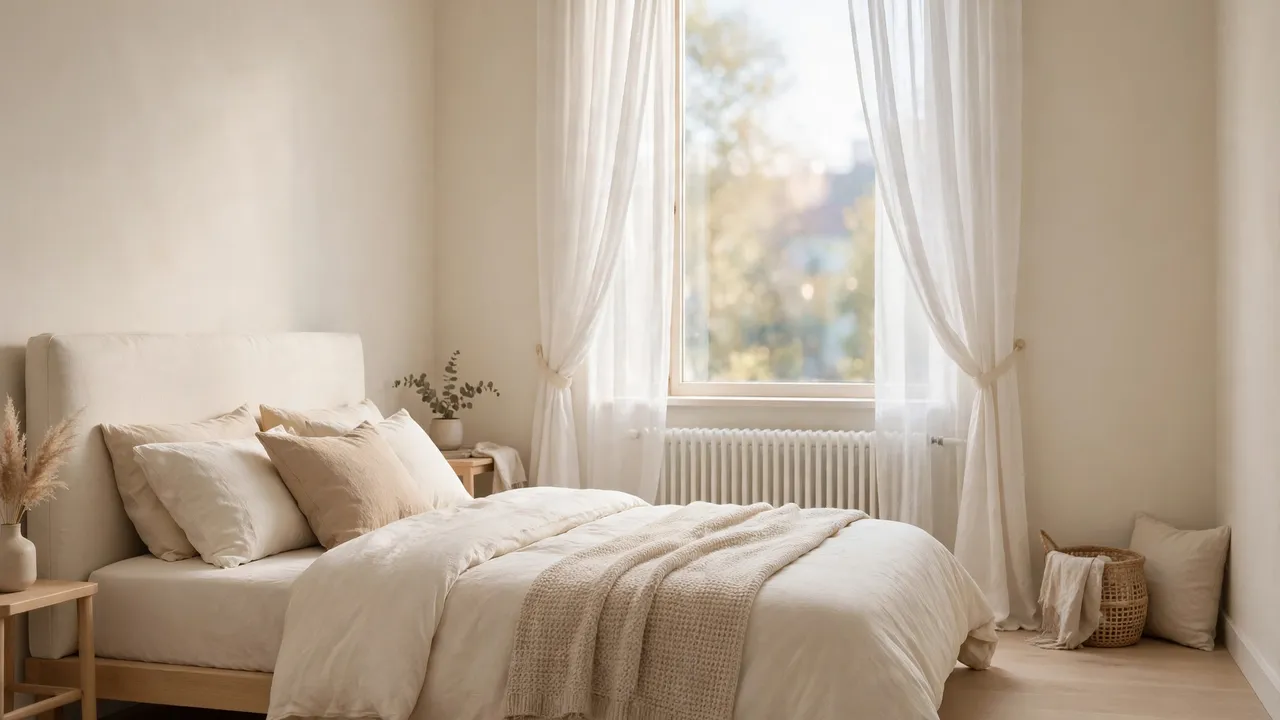
How to Arrange Bedroom Furniture Around Radiators
Learning how to arrange bedroom furniture around radiators can turn a tricky layout into a warm and comfortable bedroom. Many small bedrooms have a radiator stuck on the only usable wall, which makes placing the bed and dresser feel like a puzzle. A few smart moves fix both the comfort and the look.
Start by noting where the heat goes and which wall stays coolest. Then place larger pieces where they block nothing and absorb nothing. Fans of clever room tricks will enjoy our guide on how to make a dining room feel separate without walls, which shows how small changes create big impact. Keep reading for ten practical ideas.
Map the Radiator and Its Heat Zone First
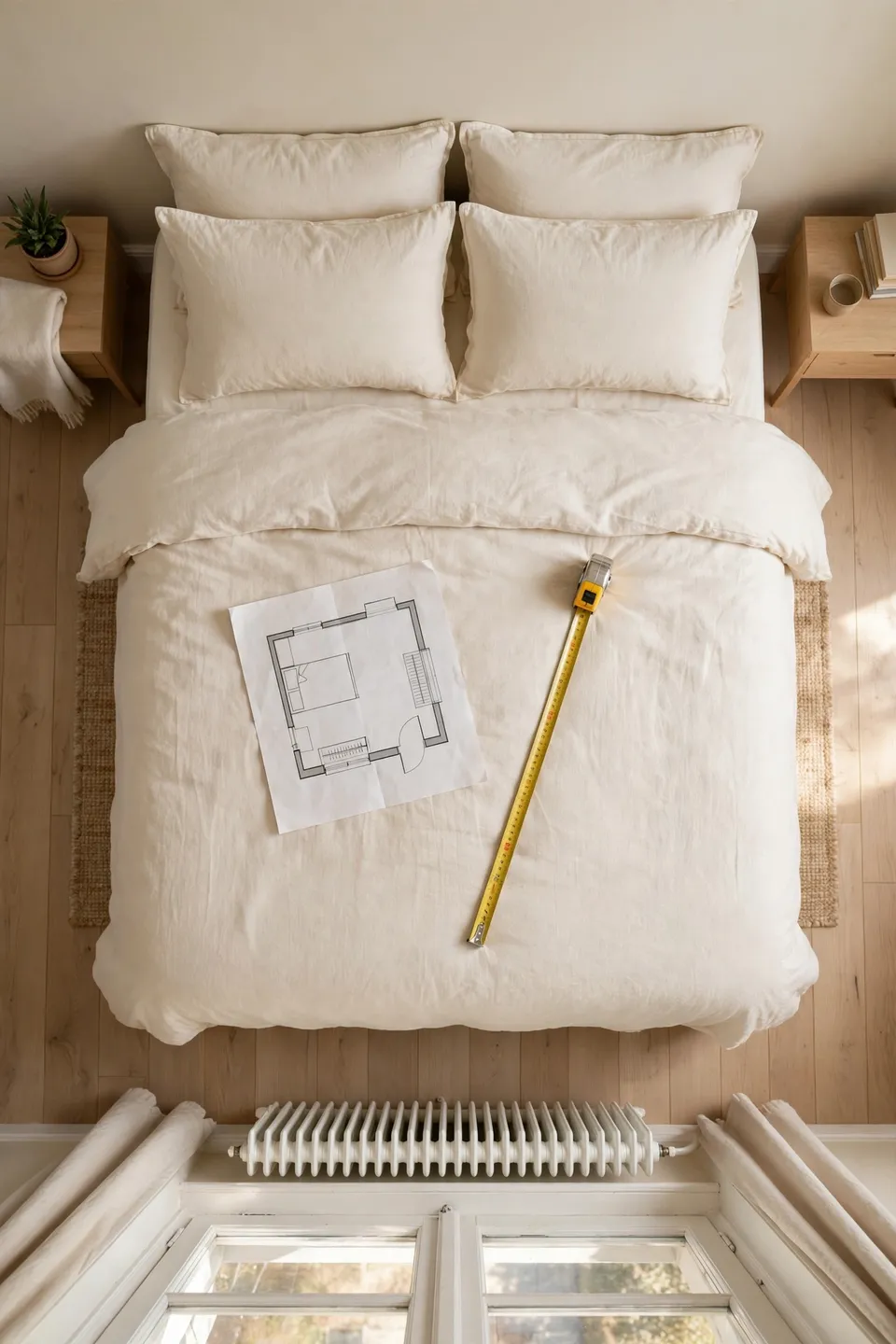
Stand in the doorway and look at the radiator with fresh eyes. Notice which way the heat rises and where the warmest patch of floor sits during a cold morning. Furniture placed inside that warm pocket dries out, warps, or simply wastes the heat your radiator worked hard to make.
Grab a tape measure and sketch the wall on paper, marking the radiator width plus a comfort margin on each side. Mark doors, windows, and the spot where the bed fits best without crossing the heat path. A simple map stops guesswork and gives every piece a logical home.
Give the Radiator a Safe Breathing Gap
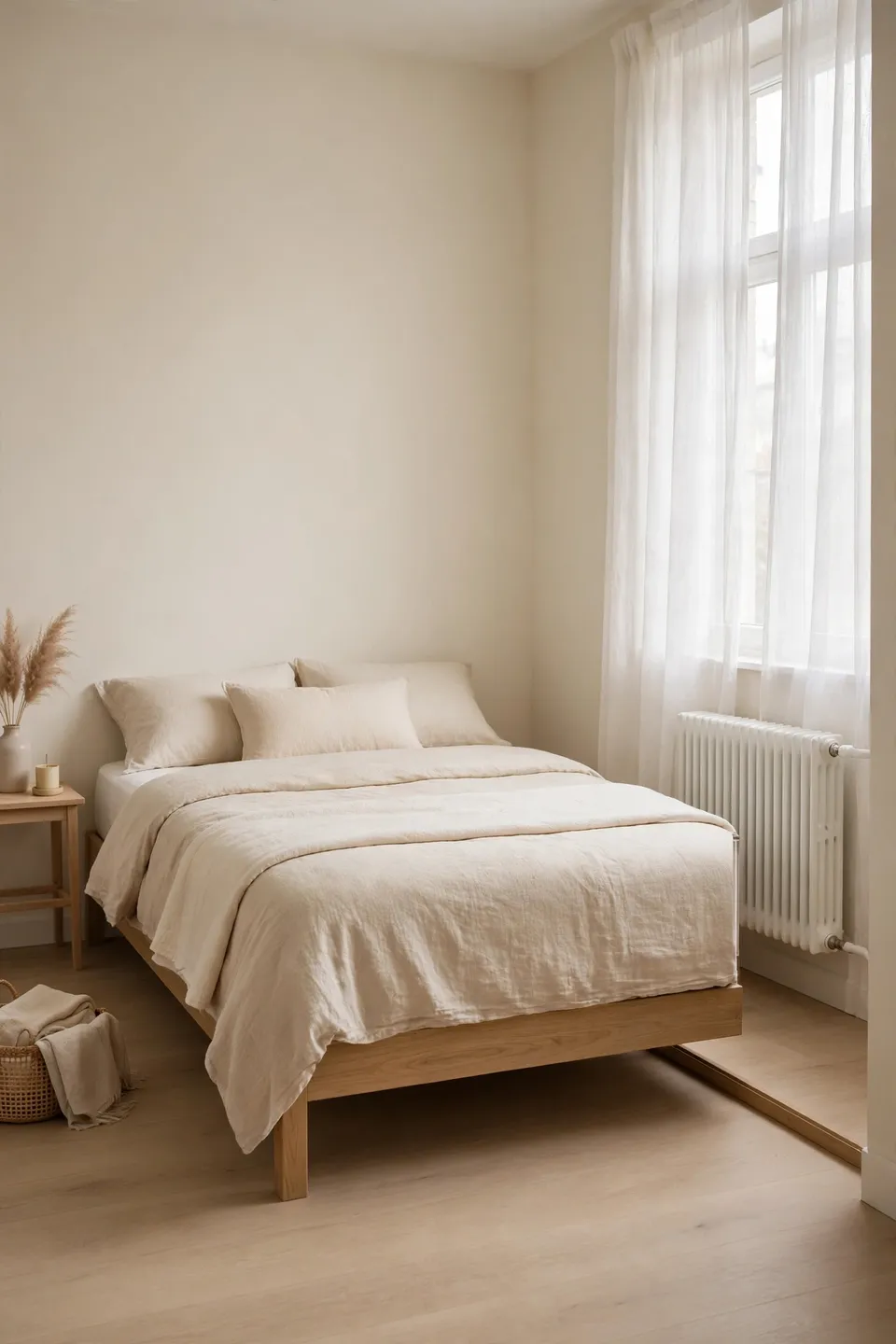
Radiators need open air to push warmth across the room. When furniture hugs the unit too closely, heat gets trapped behind wood and fabric instead of warming the space. Leave a gap and the whole bedroom feels cozier with less effort.
- Leave at least 30 cm (12 inches) of clear space in front of every radiator panel.
- Keep about 15 cm (6 inches) of space above the unit so warm air can rise freely.
- Pull the bed frame a full step away from the radiator before deciding it looks right.
- Slide a hand along the back of nearby furniture on a cold day; if it feels hot, move it further.
Angle the Bed Away From Direct Heat
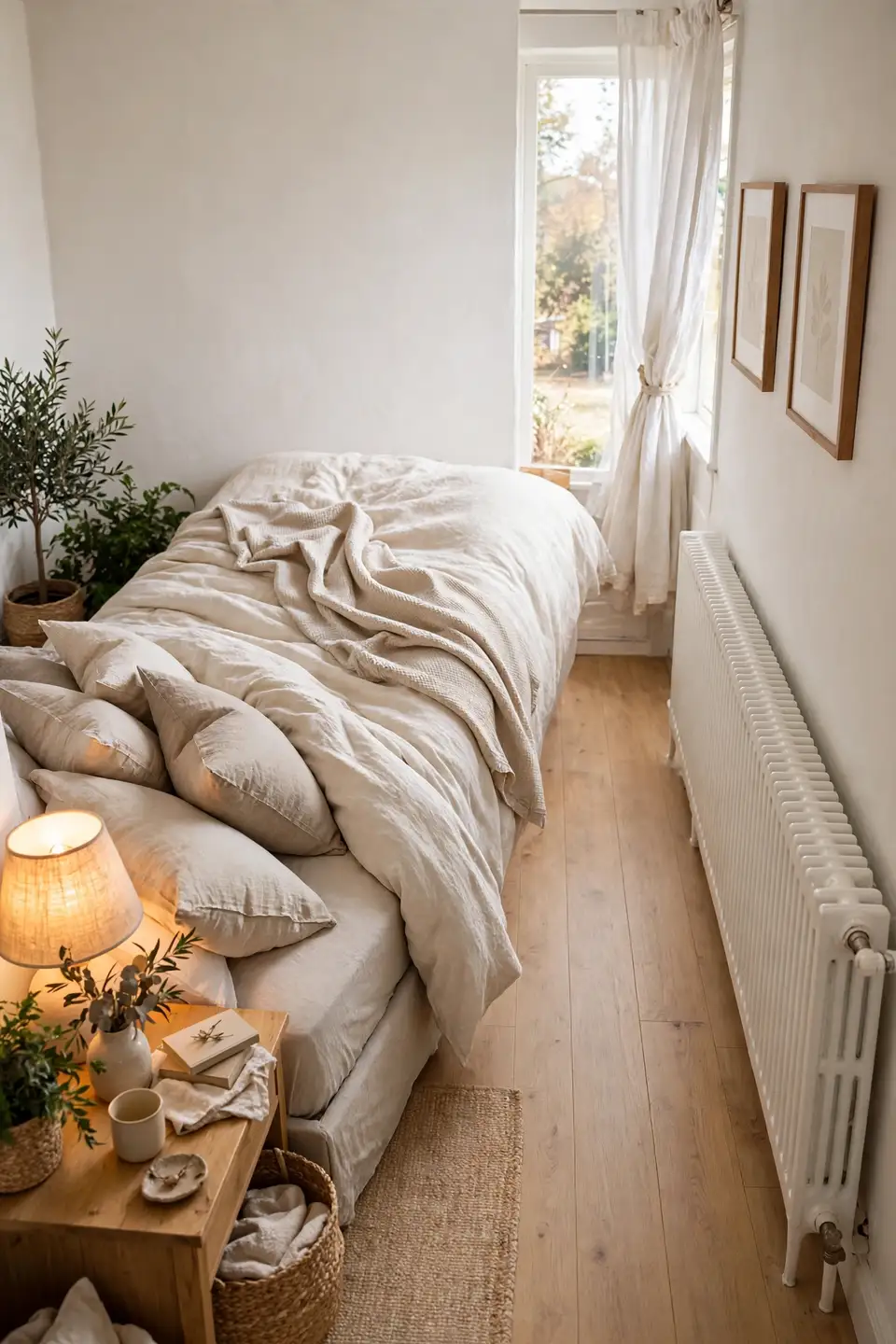
Quick Tip: Sleep with your head away from the radiator. Heat rising straight onto pillows dries the air around your face and makes the night feel restless, even in a cool room.
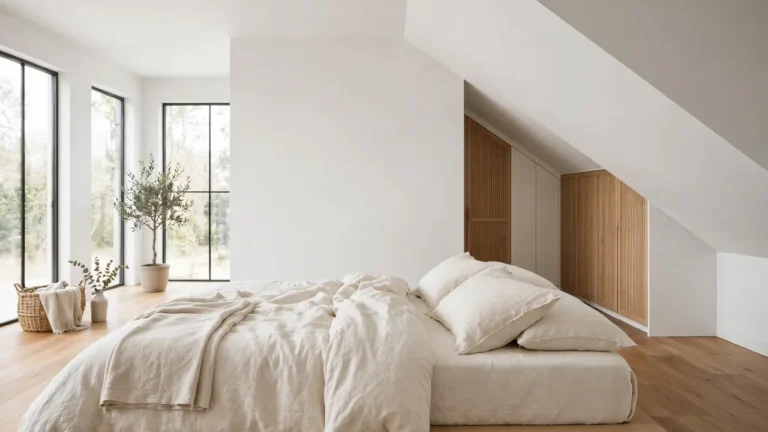
Turn the bed so its long side runs parallel to the radiator wall with a clear walkway between them. The bed stays the hero of the room while heat flows past it instead of into the mattress. This small shift also makes bedtime routines easier, with full access to both sides.
Stop Pushing Heavy Furniture Against the Radiator
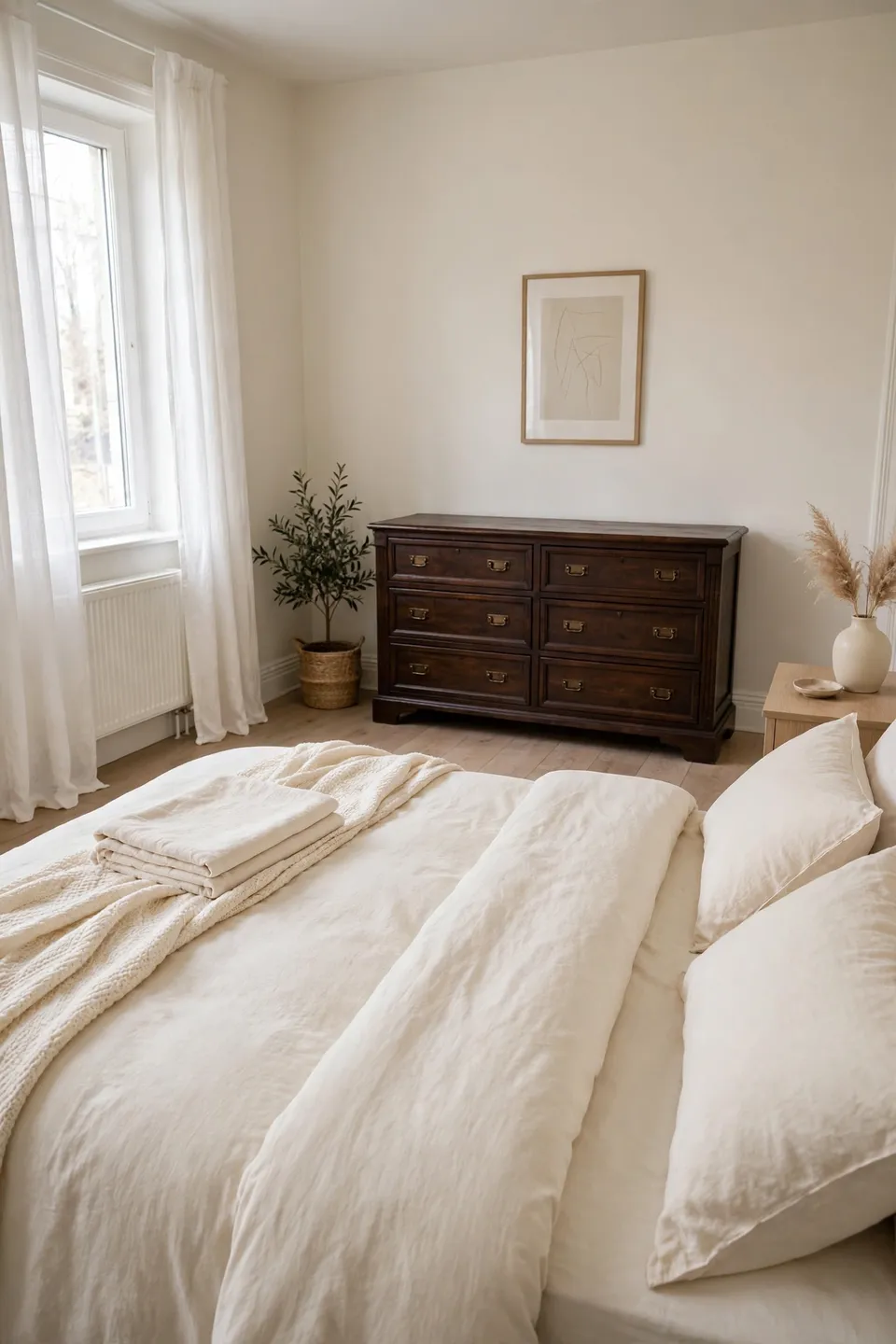
Common Mistake: Sliding a heavy wooden dresser or wardrobe tight against the radiator. The wood blocks warmth from entering the room, and over time the dry heat can crack joints and fade finishes.
The Fix: Move the heavy piece to the opposite wall and let a slim bench or open shelf take the spot near the radiator. Light, open furniture lets heat pass through while keeping the wall useful.
If the dresser must stay on that wall, center it between the radiator and the corner with equal gaps on both sides. Leave the front of the unit fully open and avoid draping clothes over it. Small spacing choices protect your furniture and keep the bedroom warm for less.
Tools and Supplies That Make Layout Planning Easier
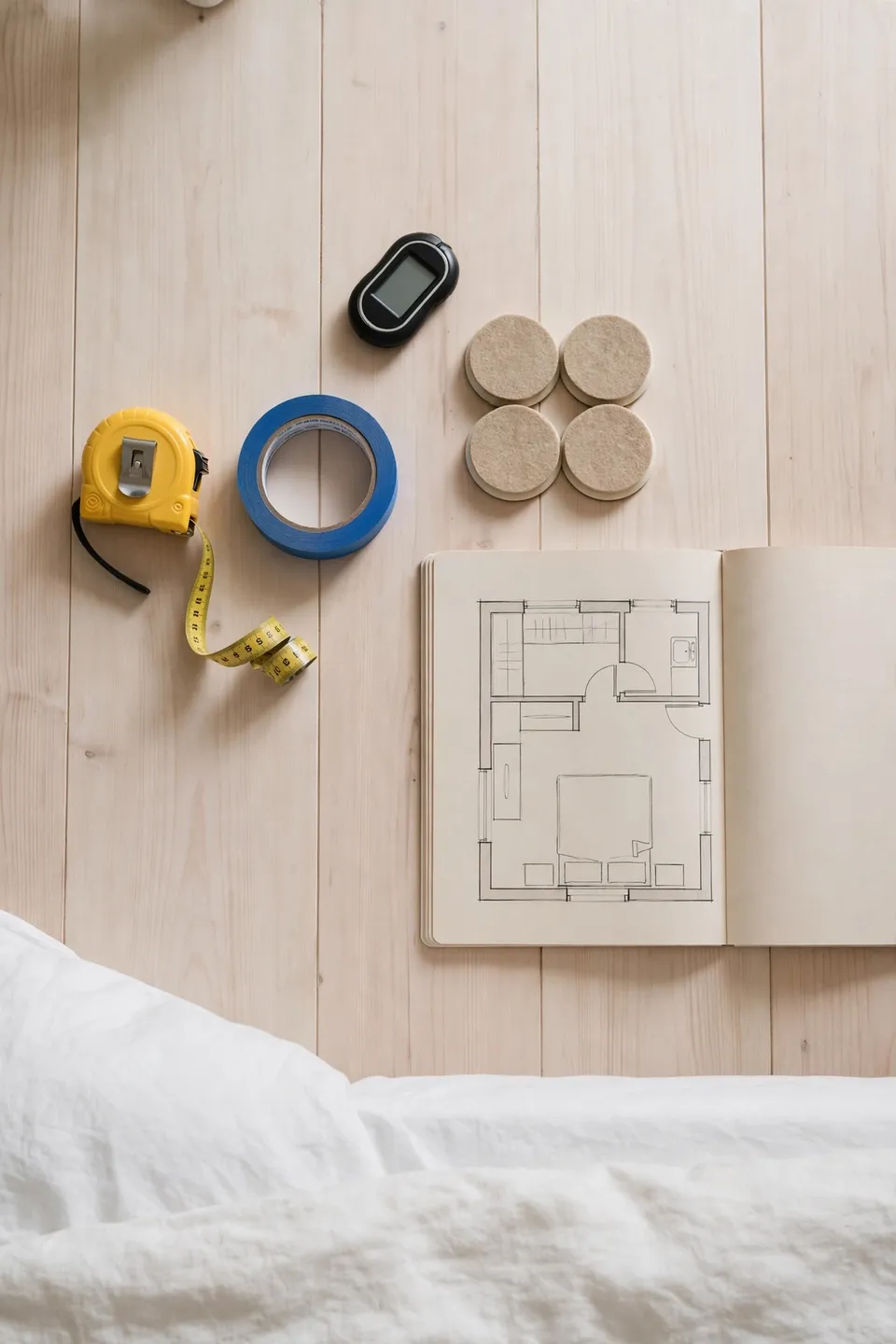
What You Need:
- Tape measure: measure the radiator, wall space, and furniture footprints so nothing overlaps the heat zone.
- Painter’s tape: mark furniture outlines on the floor to test layouts without lifting a thing.
- Heat-resistant radiator shelf: a slim top shelf that directs warmth outward instead of up the wall.
- Furniture sliders: glide heavy beds and dressers into place without scratching floors.
- Small thermometer: check that warm air reaches the far side of the room after rearranging.
Gather these before moving a single piece. Planning on paper first saves your back and your evening, since heavy bedroom furniture is no fun to shuffle twice. With measurements in hand, every placement becomes a calm decision instead of a hopeful shove across the rug.
Before and After: A Balanced Bedroom That Stays Warm

BEFORE: The bed was pushed hard against the radiator wall, pillows inches from the hot panel. A tall dresser blocked the other side, so warmth pooled behind furniture and the far corner stayed chilly all winter.
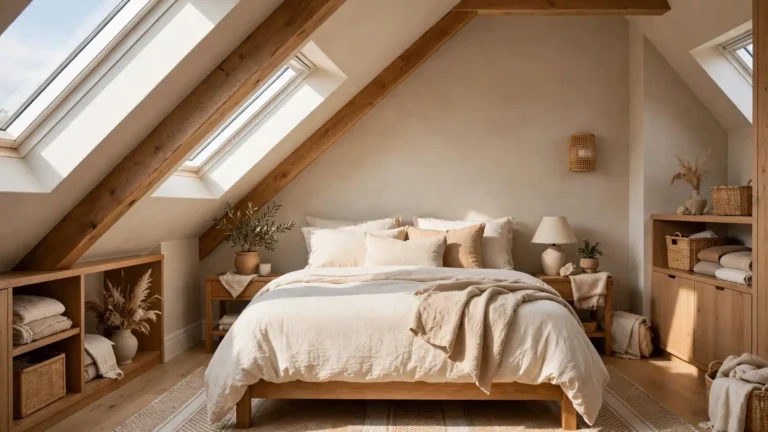
AFTER: The bed moved to the calm wall with a nightstand on each side, and the radiator breathes freely behind a slim bench. Warm air now rolls across the room, and every corner feels evenly cozy.
The difference is striking, and it costs nothing but an afternoon. Open space around the heat source works like good storage planning, where everything has a place. Our ideas for how to decorate a small home with limited storage use the same breathing room principle. Measure twice, move once, and enjoy the warmth.
Do This and Avoid This Around Radiators
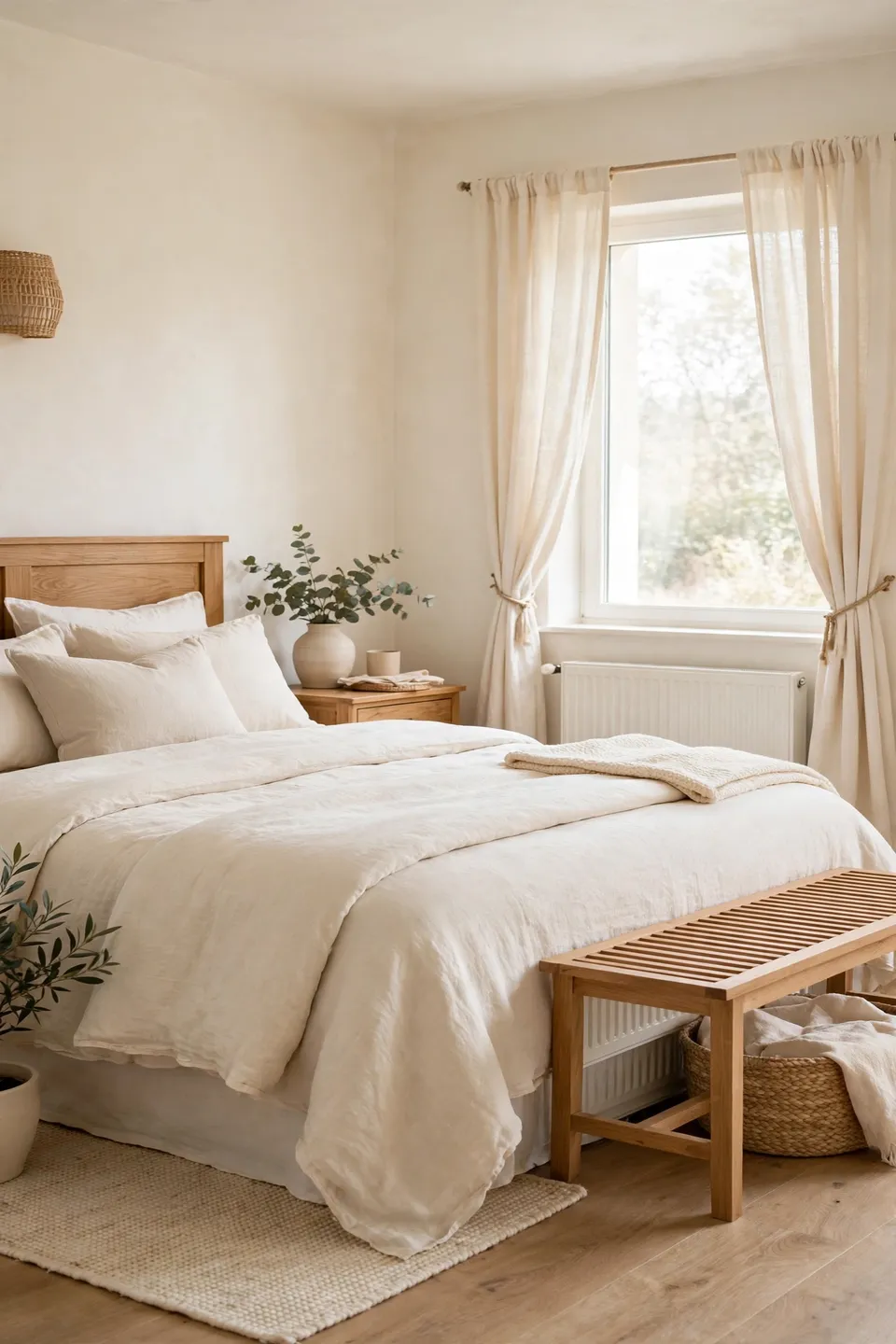
Do This:
- Keep curtains and bedding at least 15 cm away from the hot surface.
- Choose open or slatted furniture near the radiator so heat flows through.
- Place a mirror on the opposite wall to bounce light and a sense of space.
- Vacuum dust from the radiator fins each season for steady warmth.
Avoid This:
- Never drape wet laundry or blankets over the radiator to dry.
- Skip bulky upholstered headboards pressed against the unit.
- Do not seal the radiator inside a closed cabinet without ventilation gaps.
- Avoid placing the thermostat sensor right above the heat source.
These habits protect both comfort and furniture life. I’ve noticed that dusting the fins alone can make an old radiator feel new again. Treat the heat zone as a respected neighbor: close enough to enjoy, far enough to stay safe, and your bedroom will thank you every winter morning.
Quick Facts for Planning Furniture Around Heat
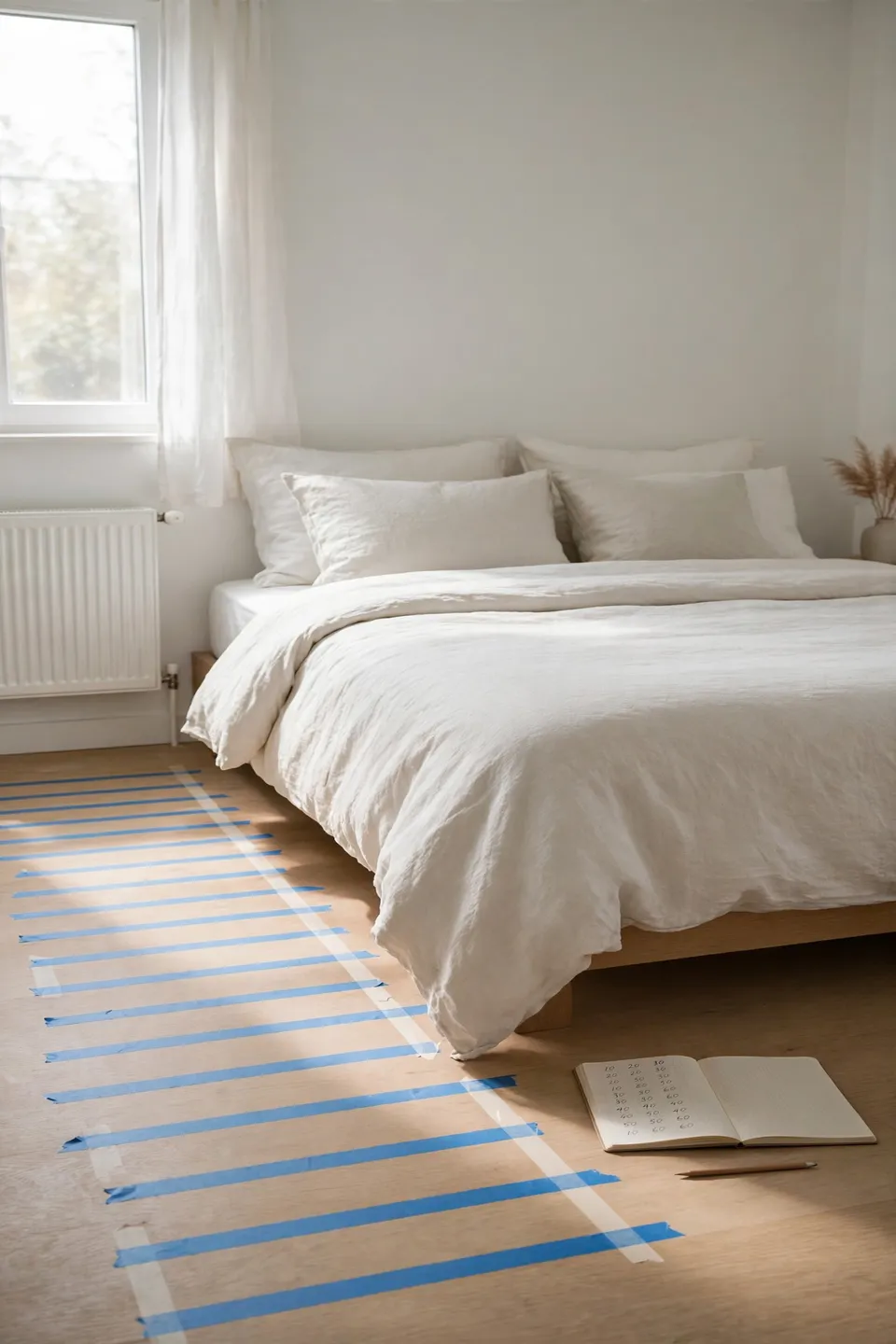
Safe Front Gap: 30 cm (12 inches)
Top Clearance: 15 cm (6 inches)
Best Furniture Style: open, leggy, or slatted
Difficulty: Easy, one afternoon
Write these numbers on your floor plan before you start. They turn vague worry into clear rules anyone can follow. Once the gaps are marked with painter’s tape, arranging the rest of the bedroom becomes a simple and even fun puzzle to solve together on a quiet weekend.
Make the Radiator Look Like Part of the Design

Instead of hiding the radiator, give it a role in the room. A slim wooden cover with a slatted front turns a plain panel into a display shelf for books and a small plant. Paint it the same soft white as the trim so it reads as built in rather than bolted on.
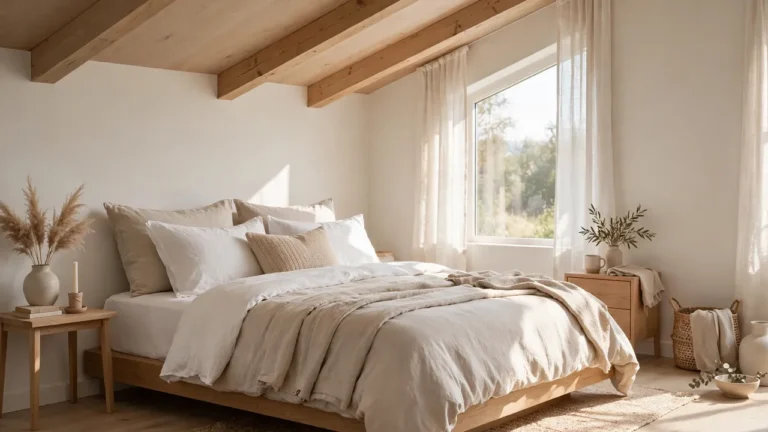
Coordinate nearby textiles with the cover color for a calm, finished look. A large bed with layered cream bedding, a woven rug, and pale curtains makes the whole wall feel intentional. The radiator stops being an obstacle and starts being a quiet design feature.
Do a Final Walk Through and Adjust

Once everything sits in place, test the layout like a guest would. Walk the room slowly and notice where you brush past furniture or feel a blast of heat. Small tweaks now prevent months of mild annoyance and keep the space feeling calm.
- Sit on the bed and check that no heat blasts directly onto your pillow or face.
- Open every drawer and door fully to confirm nothing hits the radiator.
- Walk the main path in the dark; you should never stumble over shifted furniture.
- Run the heating for an hour, then feel each furniture back for trapped warmth.
Conclusion
Your bedroom should feel like a restful retreat, not a game of dodge the heater. Now that you understand how to arrange bedroom furniture around radiators, every piece has breathing room and the warmth reaches where it should. I’ve seen how making this one change can completely shift the result from chilly corners to even comfort.
Test the layout this weekend and pin this guide on Pinterest so you can find it when winter returns. Share it with a friend wrestling with the same bulky radiator. A cozy, safe bedroom is closer than you think.