How to Make a Small Living Room Feel Balanced With Large Furniture
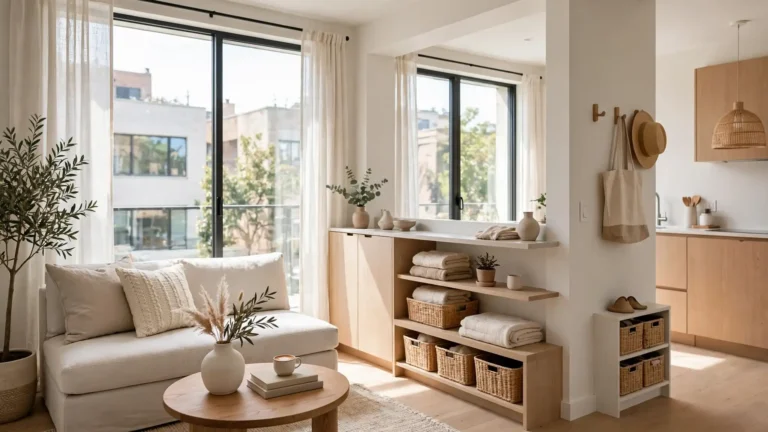
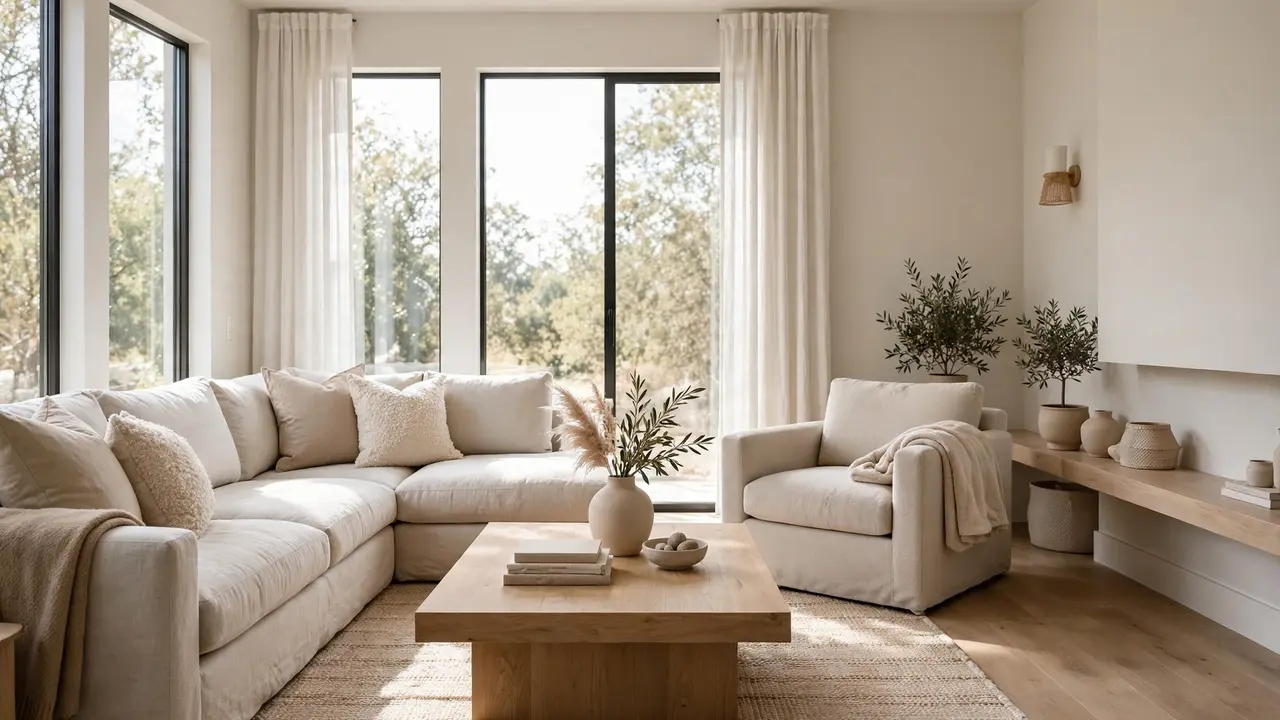
A small living room does not demand small furniture, and learning how to make a small living room feel balanced with large furniture can change the whole mood of the space. Big pieces bring comfort and presence, so the goal is balance, not banishment.
The secret lies in placement, proportion, and a few styling tricks that keep the room breathing. Most people assume a big sofa will swallow a small room, yet the right arrangement makes it look intentional and inviting.
The sections below walk through practical steps, common mistakes, and quick fixes that work with the pieces you already own. If you also need zoning ideas at the front door, read how to create a functional entryway in an open floor plan.
Start With a Floor Plan That Respects Breathing Room
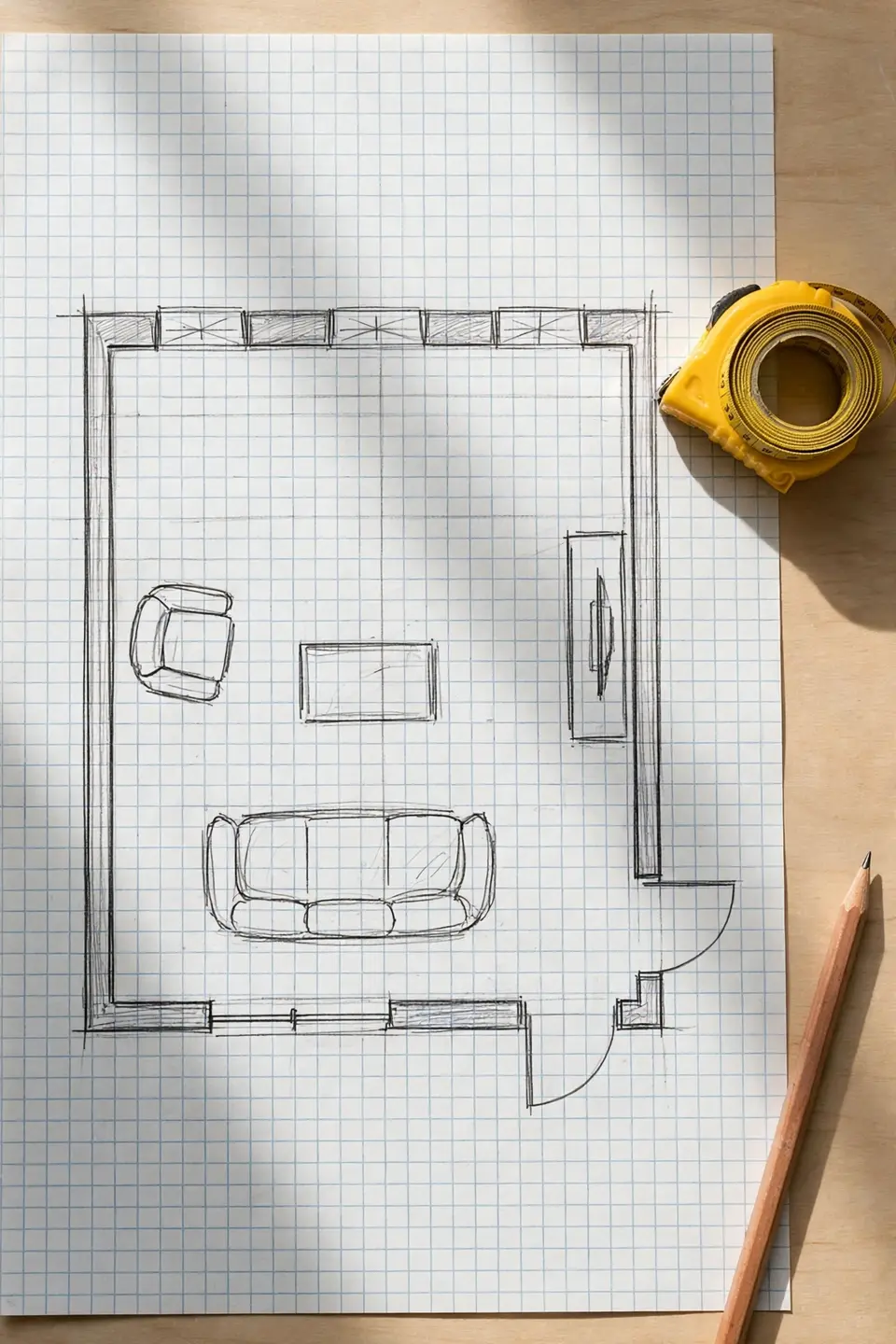
Before moving a single chair, sketch the room and mark every door swing, walkway, and window. Large furniture works best when traffic lanes stay clear, so keep about 30 inches of walkway along the main path. This one habit prevents the cluttered feeling that makes big pieces look like a mistake.
In my experience, rooms mapped on paper come together faster and calmer. Leave generous gaps between the sofa and side chairs, and resist filling every corner. Negative space is what lets a substantial sofa read as intentional instead of overwhelming.
Anchor the Room With One Confident Piece
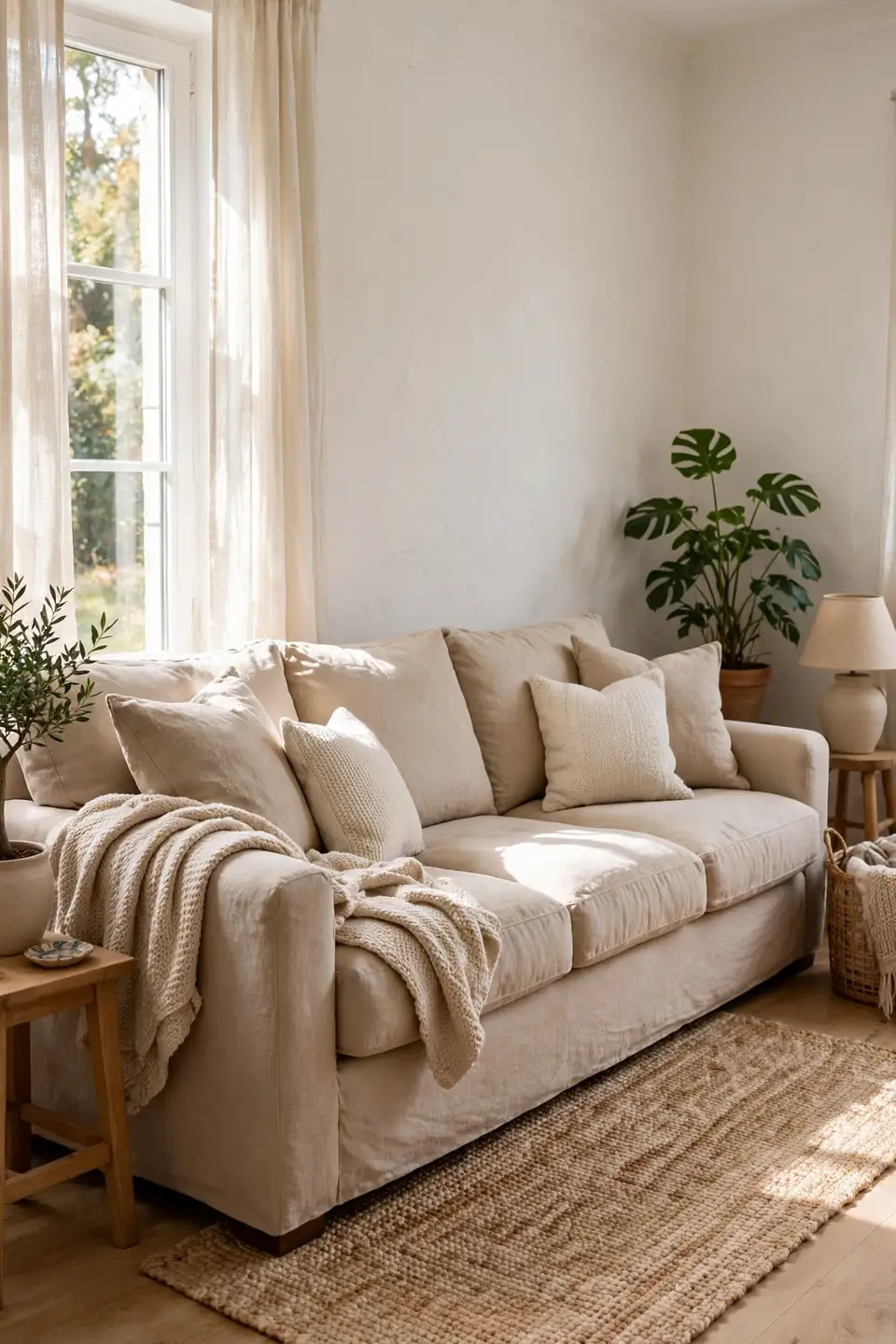
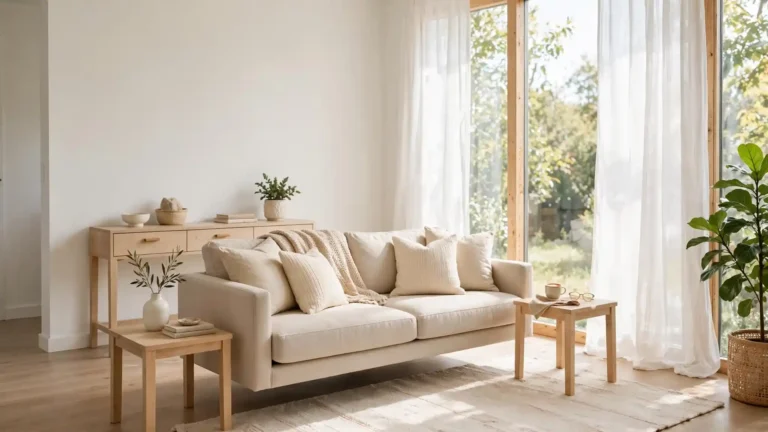
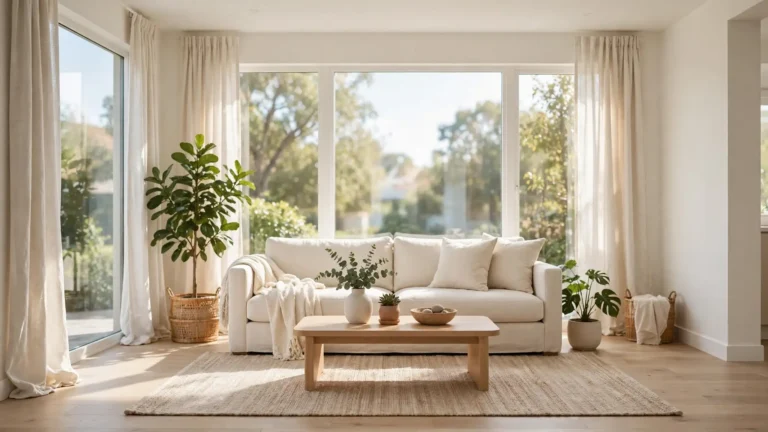
Every balanced room has a hero piece that sets the scale. Choose your largest item, often the sofa, and build the layout around it instead of apologizing for its size. Let it lead the arrangement, and let everything else play a supporting role.
- Place the sofa against the longest wall to give it a natural command of the room.
- Position a rug so the front legs of the sofa sit on it, which grounds the whole zone.
- Add one smaller chair at an angle rather than two bulky chairs competing for space.
- Finish with a floor lamp or tall plant on the opposite side to balance the height.
Balance Visual Weight From Left to Right
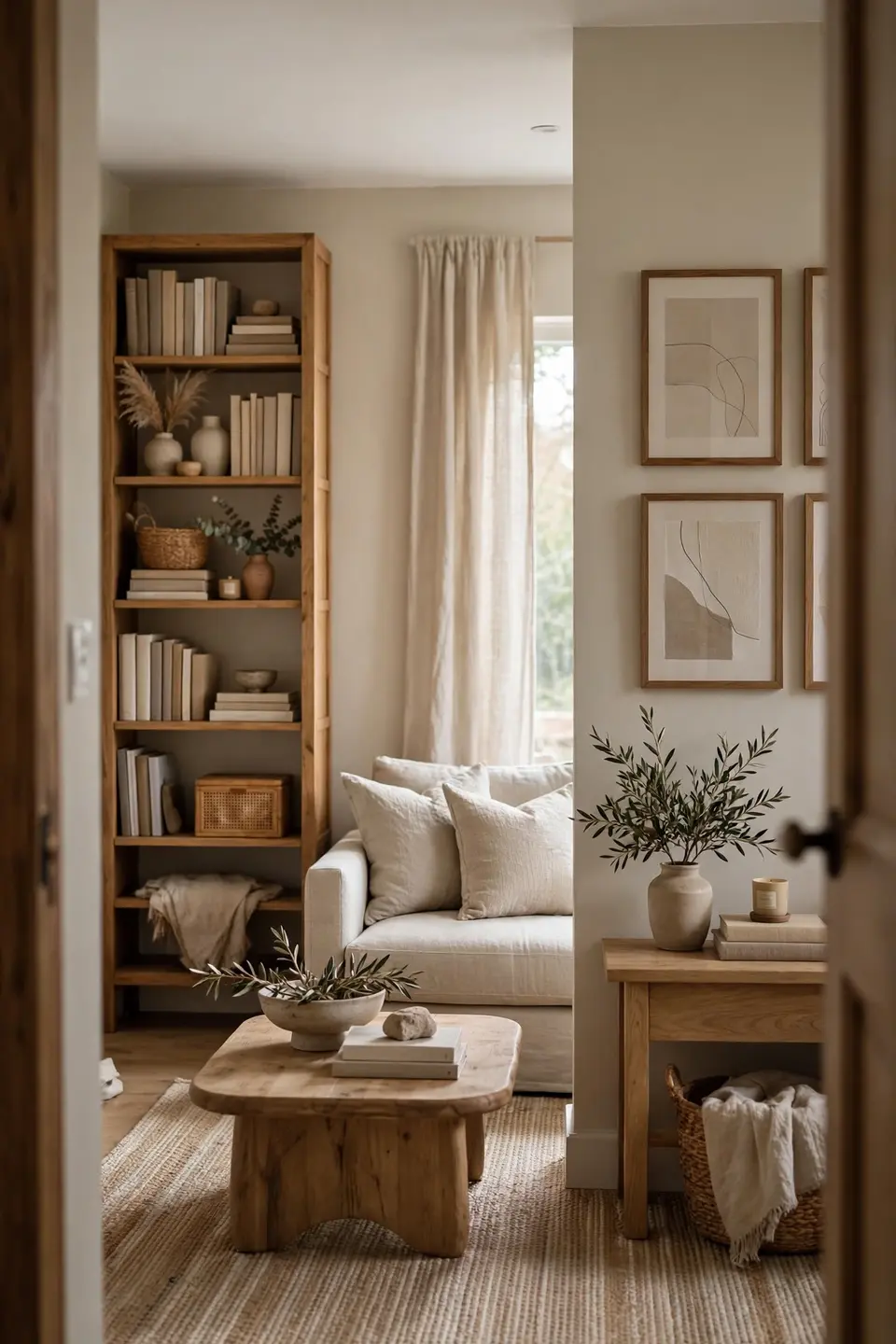
Quick Tip: Stand in the doorway and squint at the room; whichever side looks heavier needs a visual counterweight.
Visual weight comes from dark colors, bulky shapes, and busy patterns, not just physical size. If the sofa dominates the left side, add a tall bookcase, a bold art piece, or a bright throw on the right. This trick keeps the eye moving across the room instead of getting stuck on one heavy piece.
Stop Pushing Everything Against the Walls
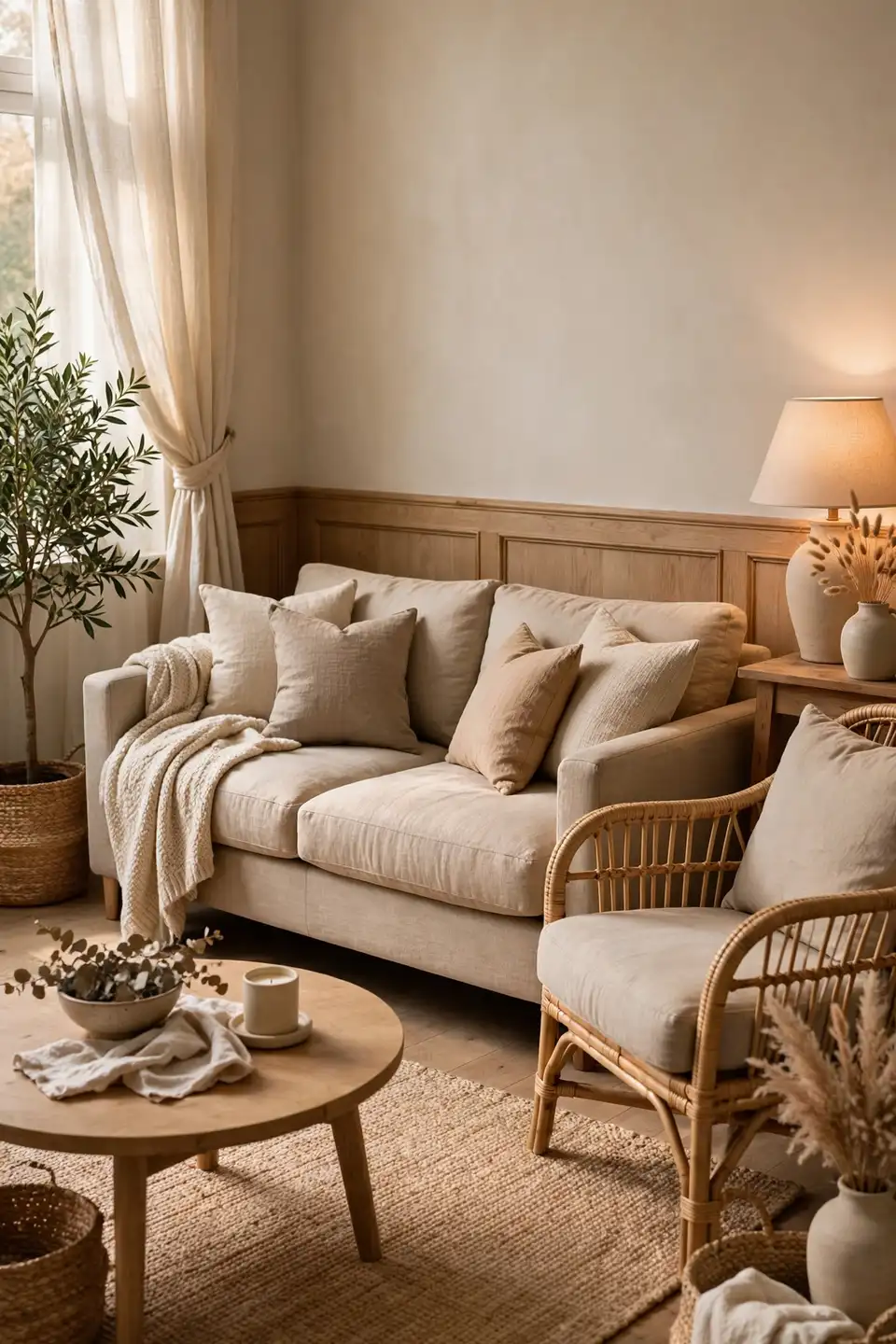
Common Mistake: Shoving every piece of furniture against the walls to create floor space, which actually makes the room feel smaller and the furniture look stranded.
The Fix: Pull the sofa a few inches forward and float at least one chair into the room, which creates a cozy conversation zone.
Floating furniture slightly away from walls adds depth and makes a room feel larger, not smaller. Even six inches of breathing room behind a sofa changes the shadows and sight lines. The arrangement reads as deliberate, and the walls stop feeling like the only thing holding the room together.
Gather Your Space Planning Essentials
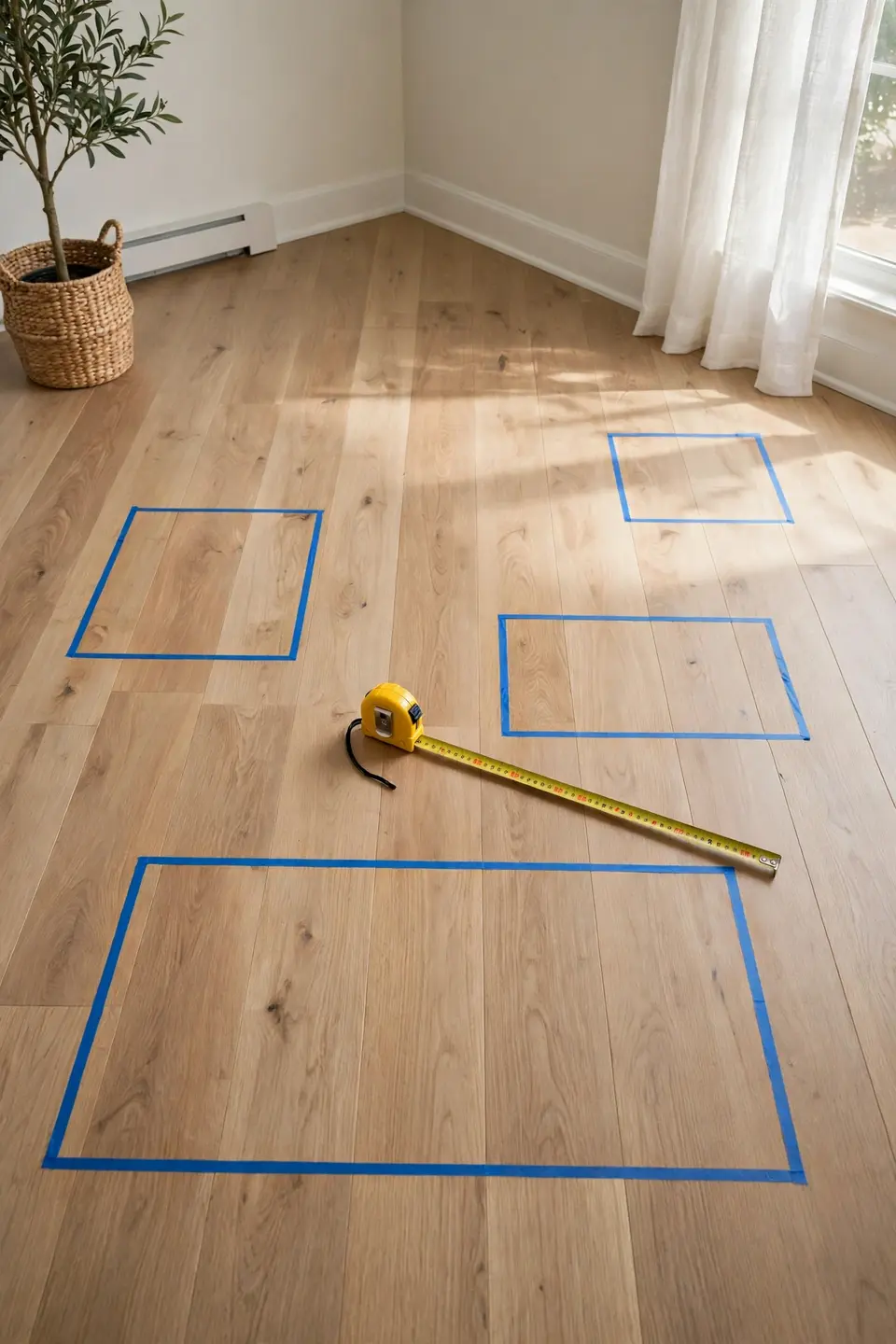
What You Need:
- A tape measure for checking clearances
- Painter’s tape to mark furniture footprints on the floor
- Graph paper or a free room planner app
- One light, airy accent piece to offset heavy items
- A large rug to anchor the seating zone
Painter’s tape is the fastest way to test a layout before lifting anything heavy. Mark each piece on the floor and live with the outlines for a day. This works for every room, and the same measuring logic applies when you read how to decorate a bedroom with an oversized window.
From Cramped to Calm: A Real Room Reset
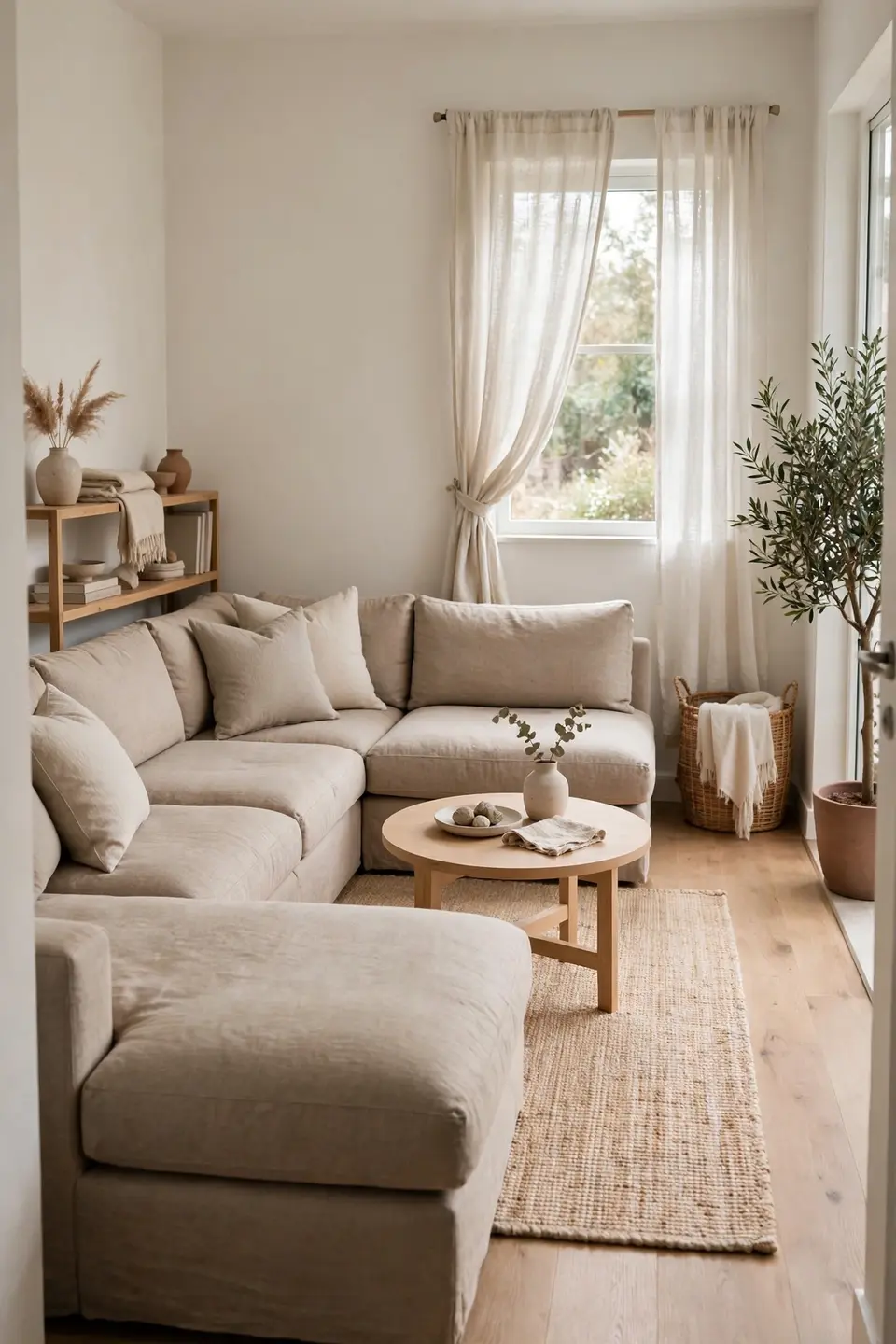
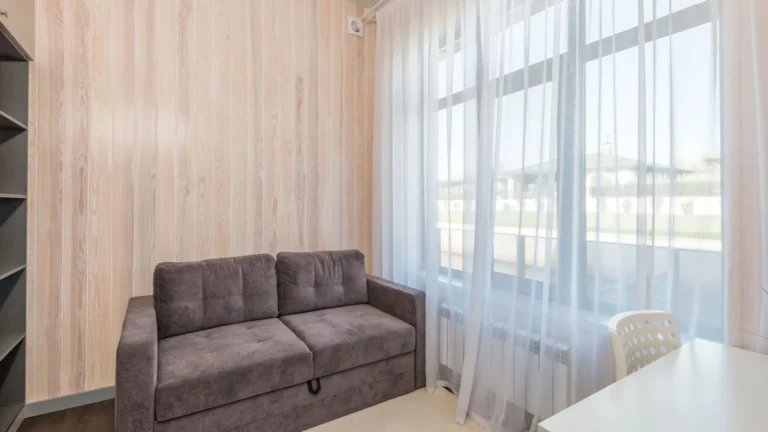
BEFORE: The oversized sectional blocked the walkway, the coffee table sat too close to the sofa, and every surface held clutter. The room felt like a storage unit with cushions.
AFTER: The sectional shifted to the long wall, the coffee table moved back six inches, and the clutter found homes in baskets. Suddenly the same furniture breathed, and the room felt twice as welcoming.
The transformation came from spacing, not shopping. Nothing new entered the room; the existing pieces simply got the breathing room they needed to shine. Small shifts in distance change how the eye reads scale. This proves that balance is a layout skill, not a budget line.
Smart Moves That Make It All Work
Do This:
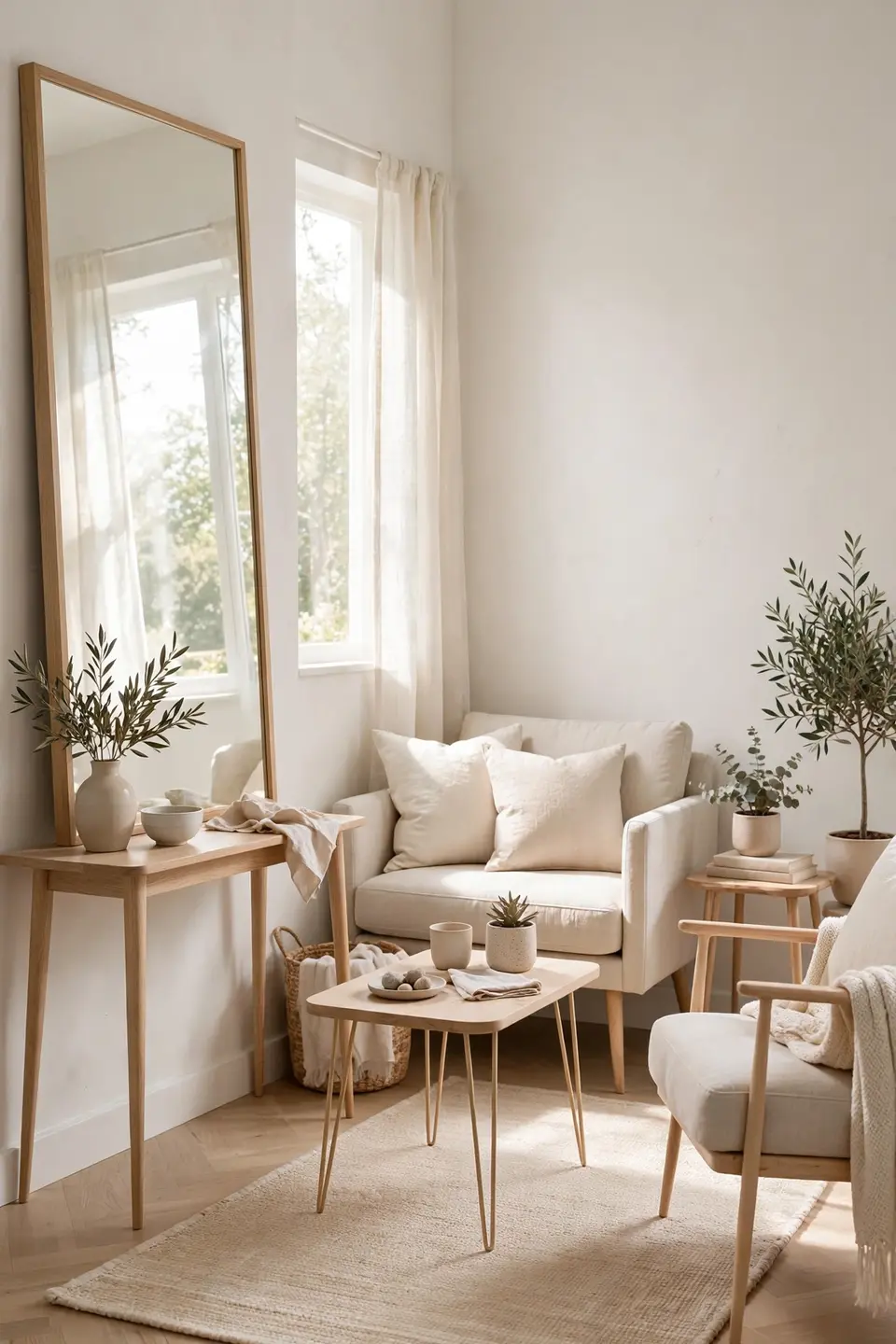
- Choose furniture with visible legs to let light pass underneath
- Keep the palette light and cohesive across big pieces
- Use mirrors to bounce light into darker corners
- Pick one statement piece and keep the rest simple
Avoid This:
- Adding lots of tiny accessories that create visual noise
- Blocking natural light with tall pieces near windows
- Matching every piece in the same heavy finish
Restraint matters more than rules here. A room with breathing space around large furniture feels collected rather than crowded. Step back after each change and notice where your eye naturally rests. When your gaze flows smoothly across the whole room, the balance is working. Trust that feeling.
Sizing Facts Worth Knowing
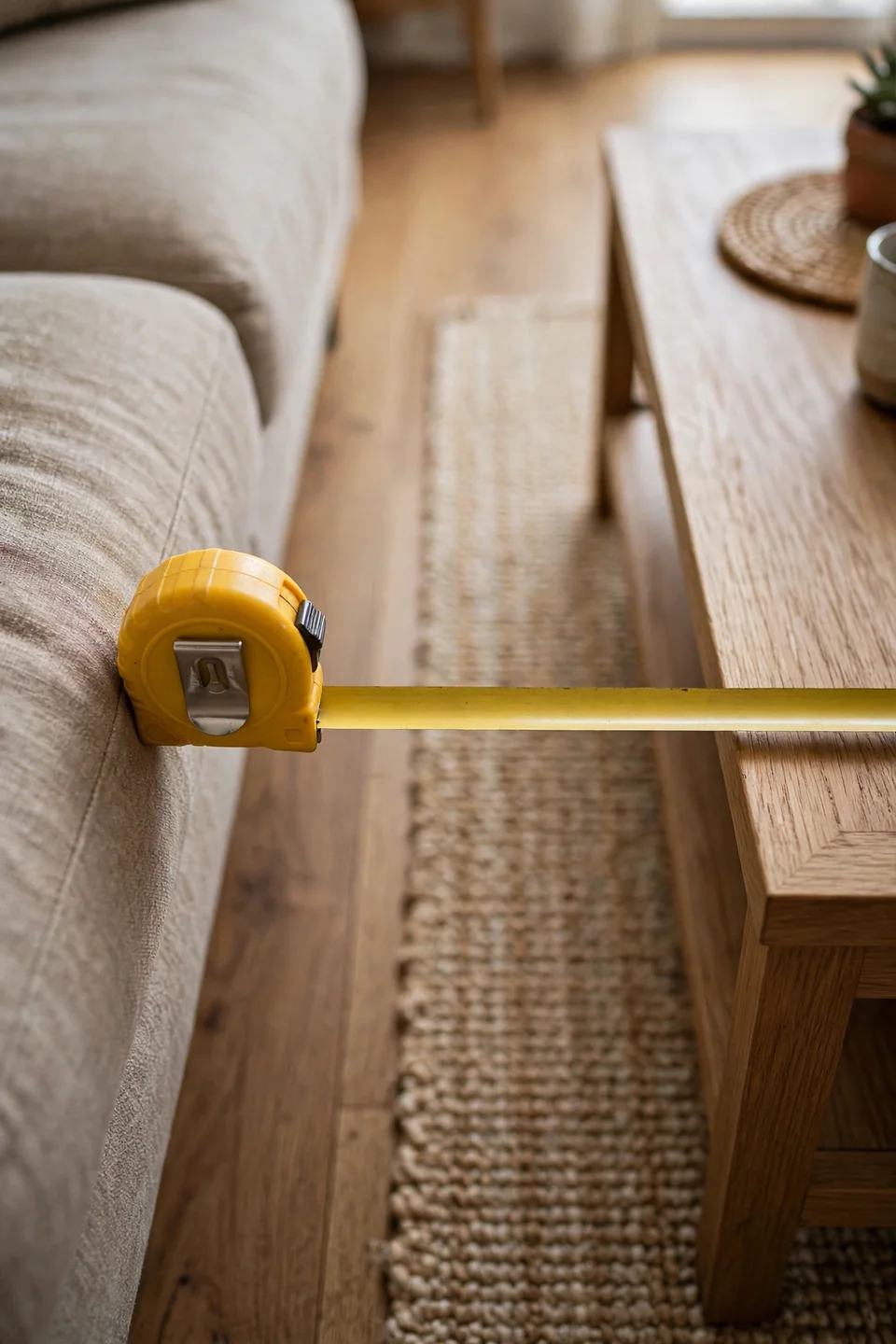
Ideal walkway width: 30 to 36 inches for main paths
Rug rule: Front legs of large furniture should sit on the rug
Coffee table gap: 14 to 18 inches from the sofa edge
Art height: Center of art 57 to 60 inches from the floor
These numbers are starting points, not laws. Every room has quirks, so treat the measurements as guardrails while you test different layouts. Small adjustments of an inch or two often solve the nagging feeling that something is slightly off. Tape the outlines first and trust the numbers.
Let the Walls Carry Their Share
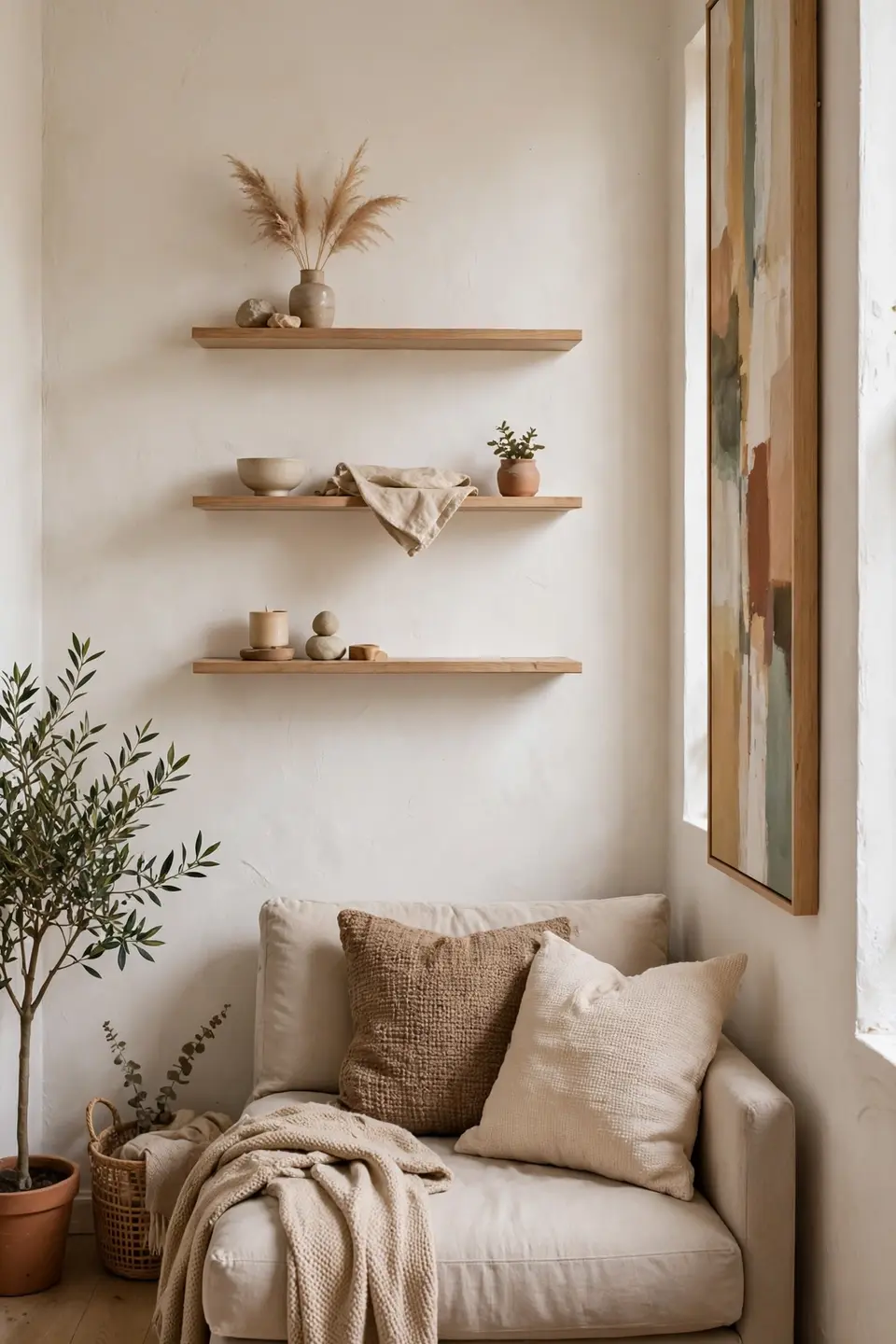
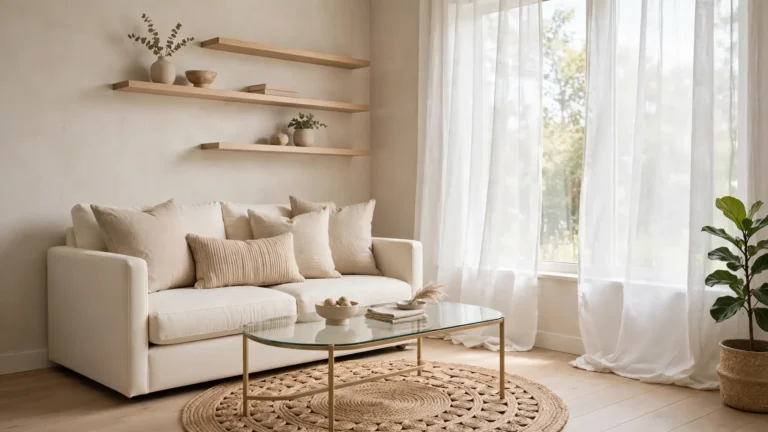
When floor space is tight, the walls can take over jobs that bulky furniture usually handles. Wall-mounted shelves replace a heavy bookcase, sconces replace a floor lamp, and a gallery wall draws the eye upward. These swaps free real square footage while keeping the room functional and layered.
Look at every wall as storage or styling waiting to happen. A slim floating shelf above the sofa holds books without eating floor space, and tall art makes ceilings feel higher. I have noticed that rooms using vertical space feel larger even when the furniture stays exactly the same.
Layer Light to Open the Room Up
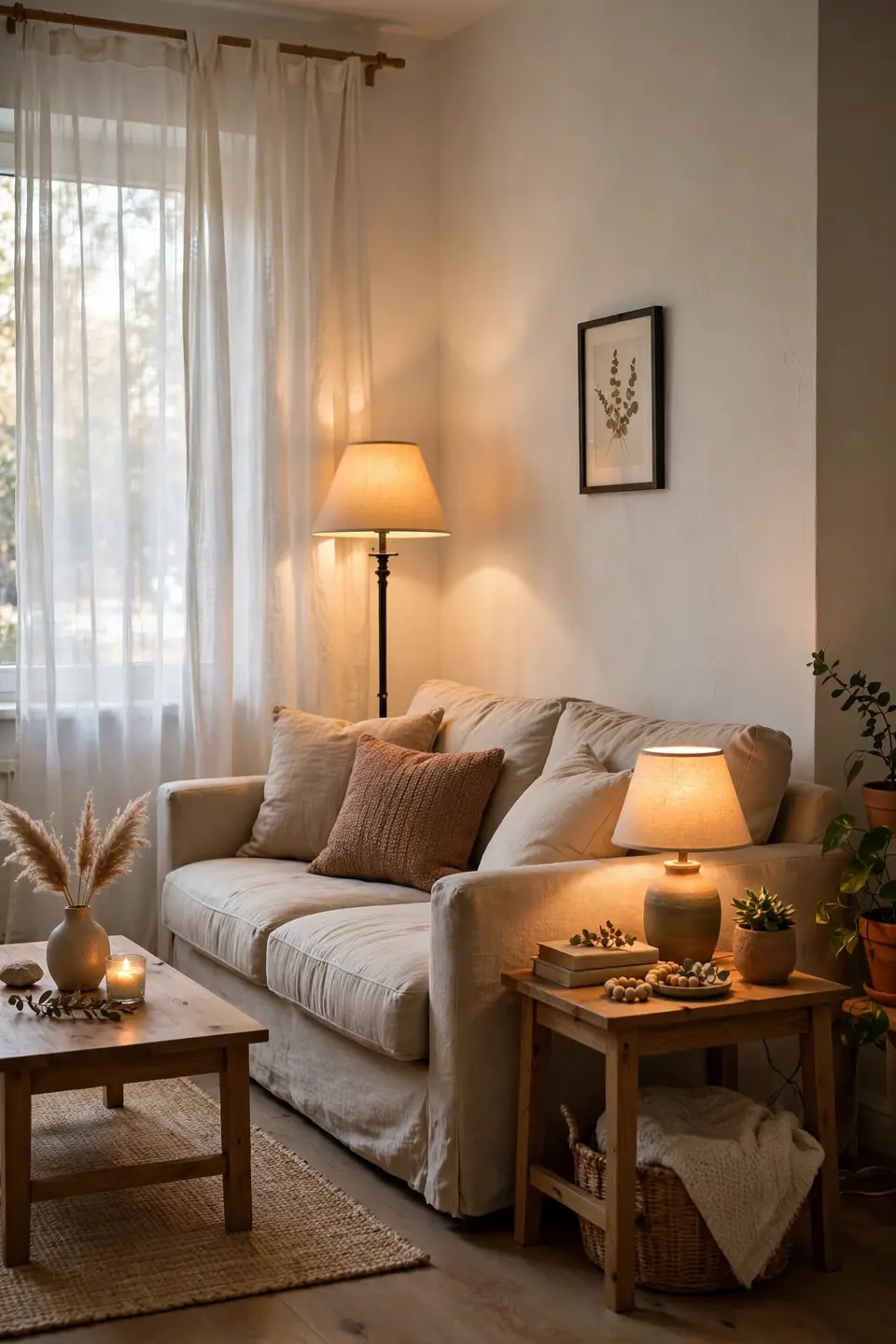
Good lighting makes large furniture look softer and rooms feel bigger. Aim for three light sources at different heights so no single corner stays dark and heavy. This simple layering trick visually expands the space without moving a thing. Start tonight and notice the difference.
- Add an overhead light or pendant for general brightness.
- Place a floor lamp beside the largest piece to soften its edges.
- Include a small table lamp for warm, low-level glow in the evening.
- Keep window treatments light so daylight reaches deep into the room.
Conclusion
A balanced small living room is absolutely within reach, even with the biggest and most comfortable furniture you own. The ideas above show that how to make a small living room feel balanced with large furniture is really about spacing, light, and a few confident choices rather than buying anything new. Try one section at a time and watch the room settle into harmony. Save this guide to Pinterest so you can revisit the checklist before your next furniture shuffle or seasonal refresh. Your large pieces deserve to shine, and now you know exactly how to give them the stage.