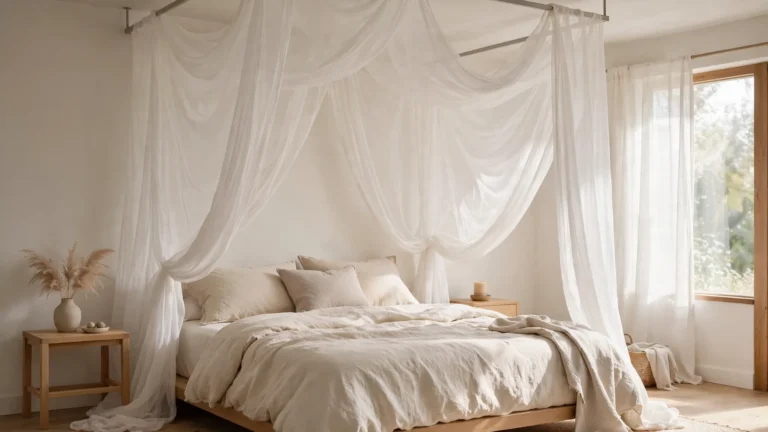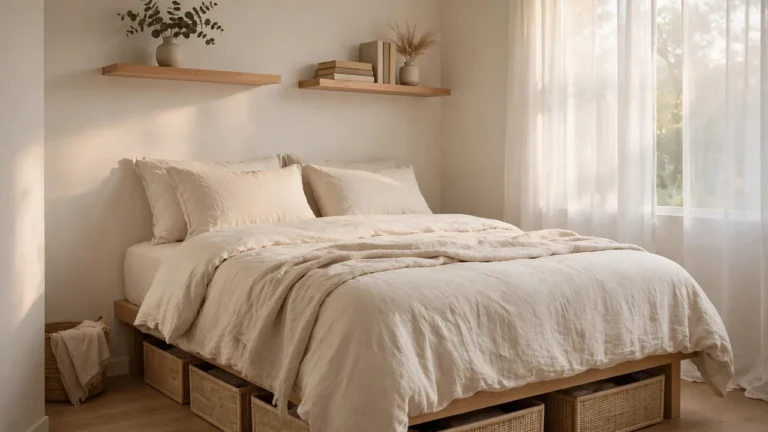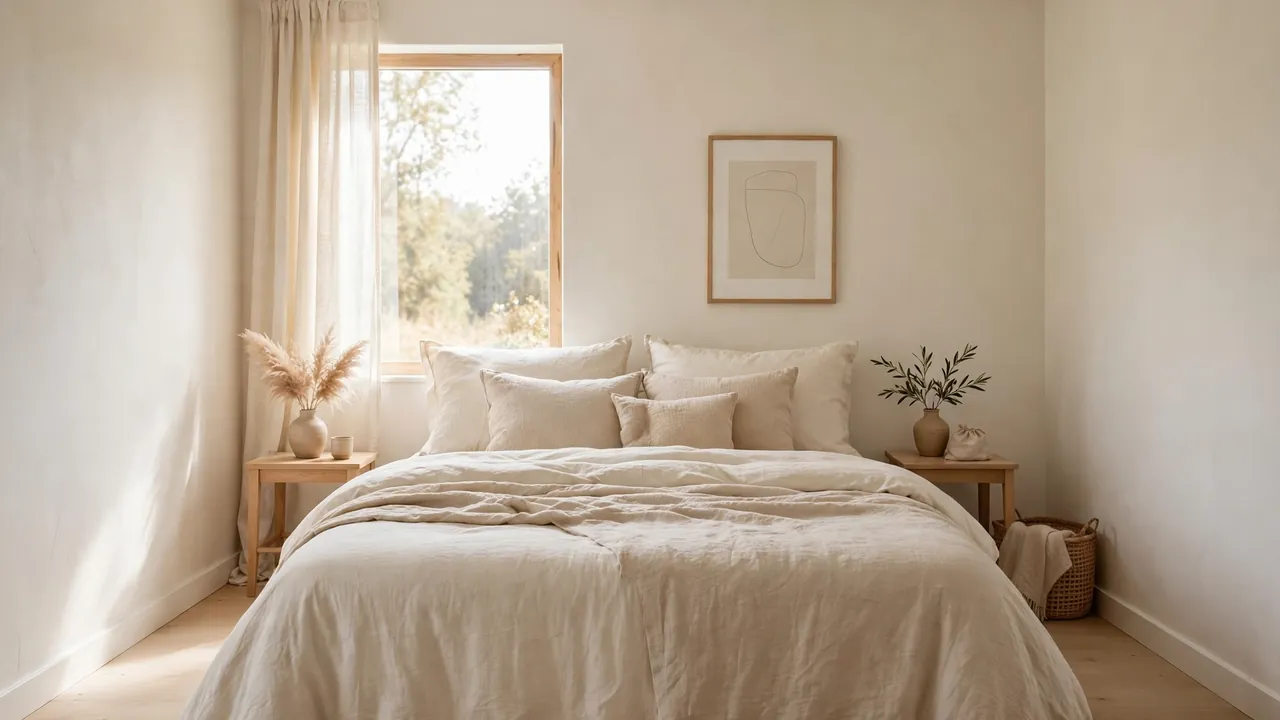
How to Make a Bedroom Look Bigger With Furniture Placement
A bedroom shrinks the moment furniture lands wherever it fits instead of where it works best. Once you understand how to make a bedroom look bigger with furniture placement, the same room starts to breathe: the bed anchors the layout, clear paths guide eyes, and light travels farther. Your room did not grow, but how you move through it changed.
Before you move a piece, walk the room and notice where your eyes stop. A dresser jammed against the first open wall, a nightstand blocking the window, or a bed floating in the middle all chop the space into smaller pieces. This guide walks you through ten placement moves, and the same comfort-first thinking behind how to create a cozy living room without a fireplace applies here too.
Start With the Bed Against the Longest Wall
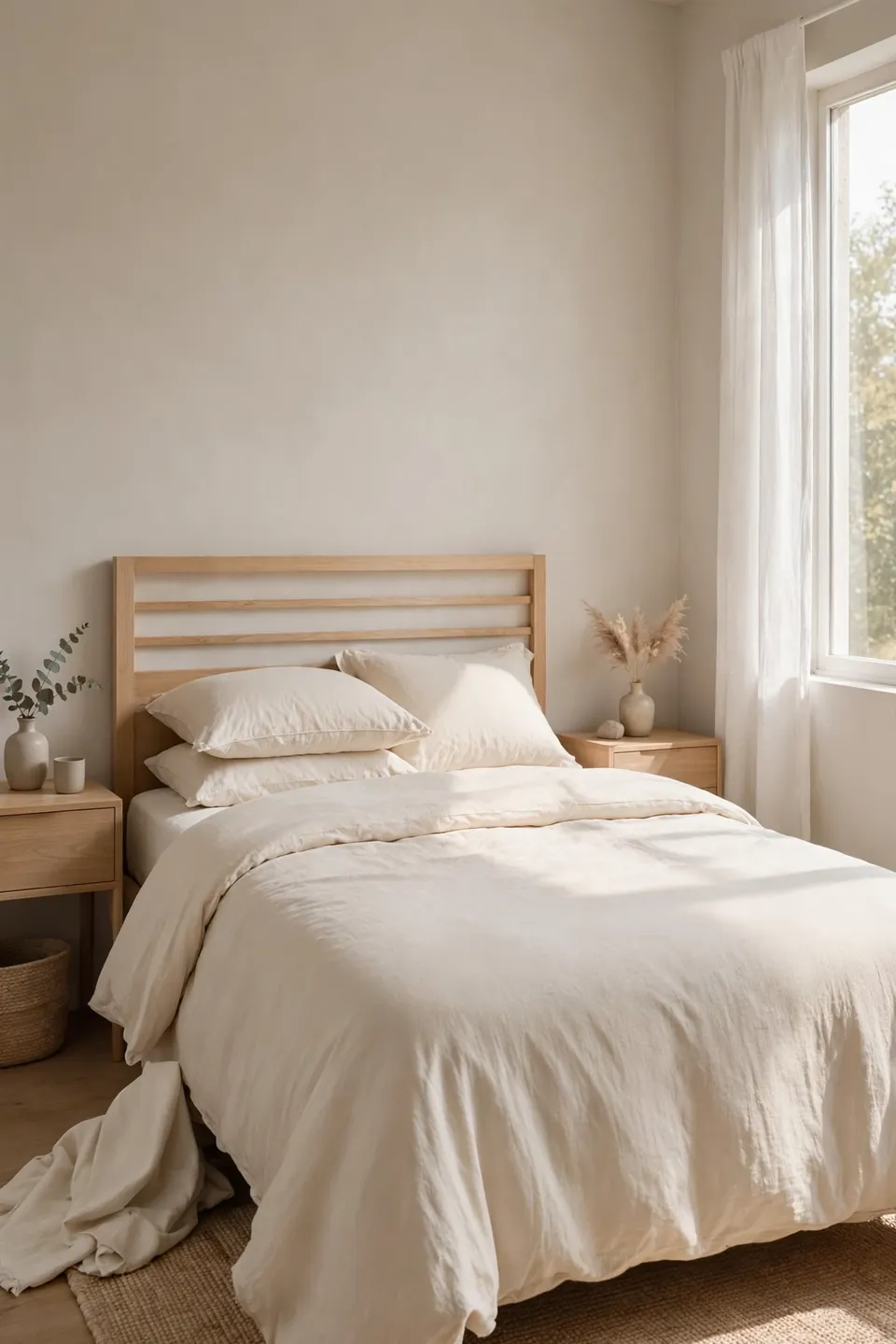
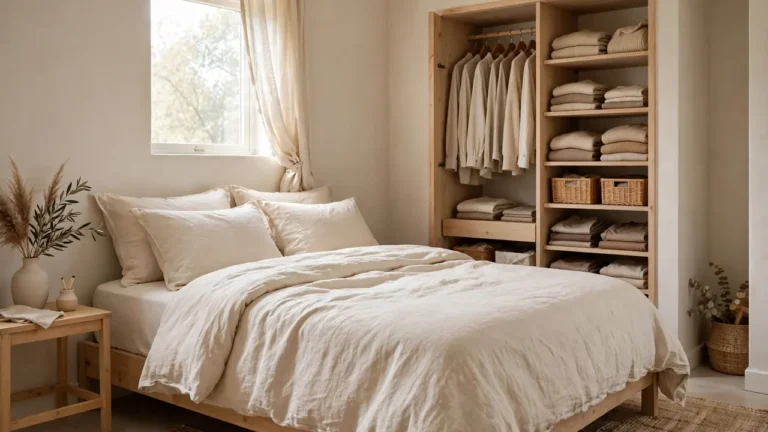
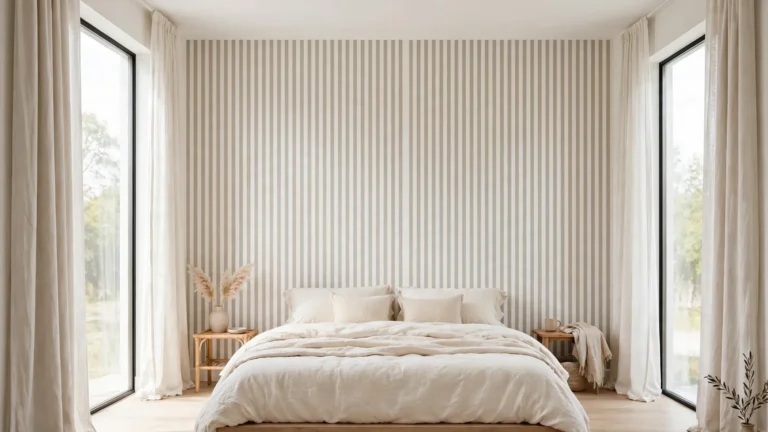
Your bed is the largest piece in the room, so it gets first say in the layout. Press it against the longest uninterrupted wall with the headboard centered, and the rest of the room finds its order. When the biggest object sits calmly along one edge, every other piece settles in without crowding the middle.
This single move opens the main walking path from the door to the window, the sight line your eyes follow all day. A clear path reads as space, even when the square footage never changes. Measure twice, shift once, and the room feels larger.
Leave Walking Space on Both Sides
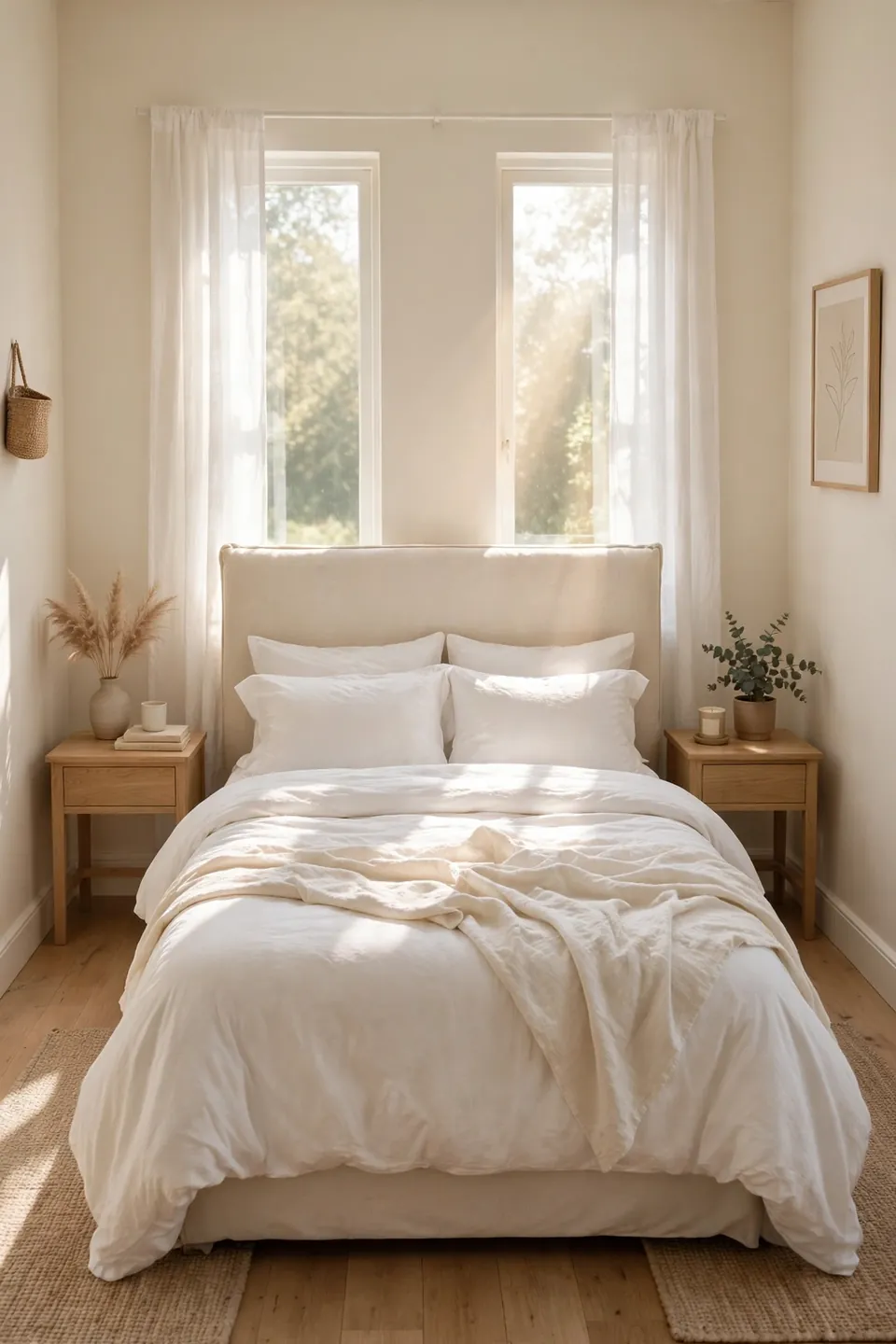
A bed pushed into a corner saves floor space on paper, but it makes the room feel stuck and dark on one side. Keeping a clear path along each side, even a narrow one, lets light and air move around the bed, which reads as openness.
- Slide the bed so at least 24 inches separate each side from the nearest wall or dresser.
- Stand in the doorway and check that you can see floor on both sides of the bed.
- If the room is too tight, trade a bulky nightstand for a slim floating shelf on one side.
- Leave the foot of the bed open too, so the path flows straight through the room.
What Size Rug Opens Up the Floor
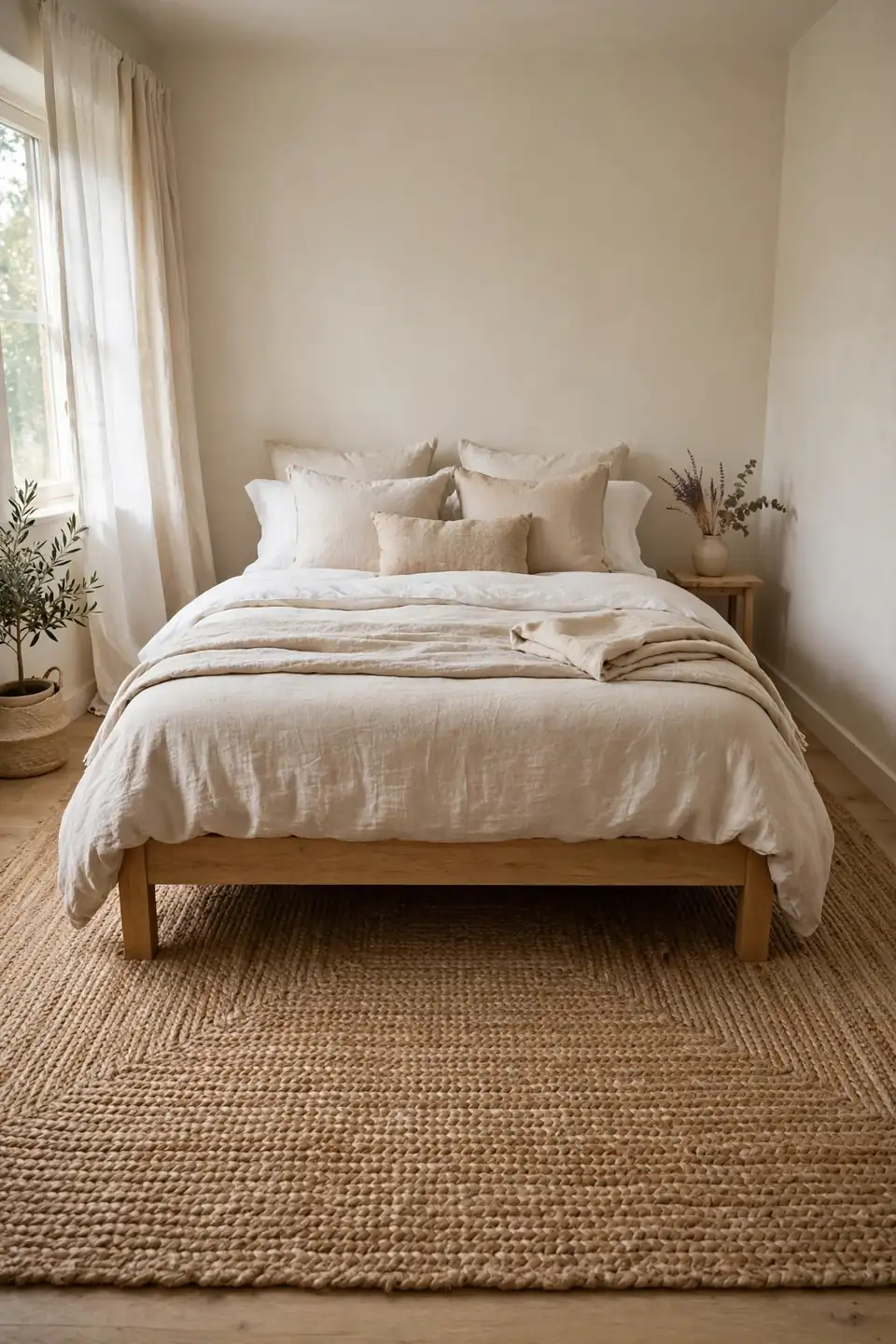
Quick Tip: Choose a rug large enough that the front legs of the bed rest on it, with at least 18 inches showing on each side.
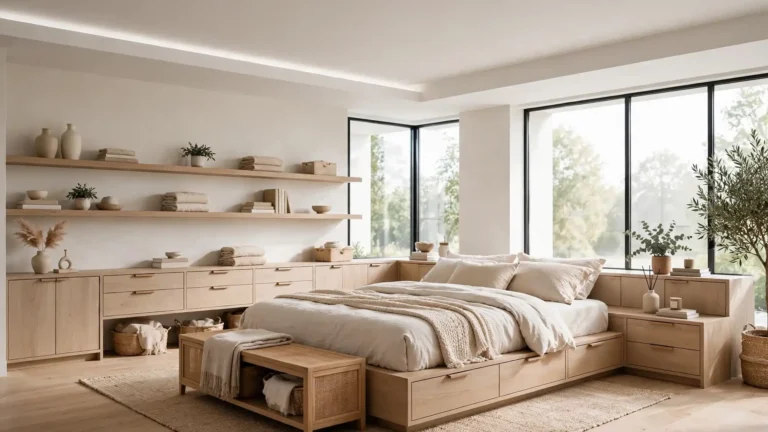
A rug that is too small chops the floor into islands and makes each one look tinier. One generous rug ties the bed and walking space into a single calm surface, and that unbroken plane tells your eyes the room stretches further. Measure first, and let the rug run two thirds under the bed.
The Dresser Against the Wrong Wall
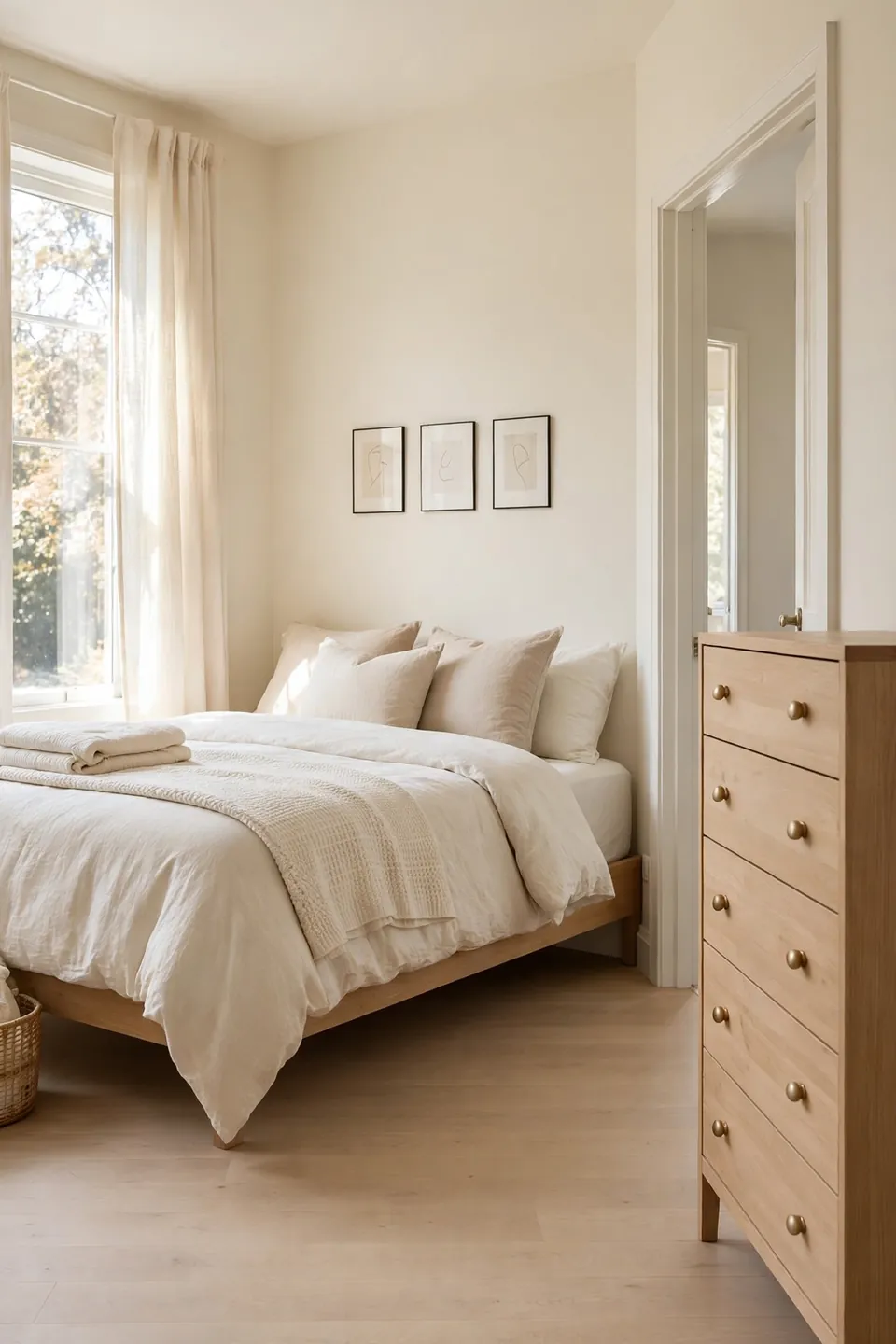
Common Mistake: Sliding the dresser onto the first free wall, which often sits right in the doorway sight line and blocks the view into the room.
The Fix: Place the dresser on the wall beside the door, flat against it, so it greets you sideways instead of head-on when you walk in.
When the dresser faces the door directly, it becomes a wall of drawers that stops your eyes at the threshold. Tucked beside the door, it reads as the room’s edge and leaves the center open. The same piece can either shrink the room or stretch it, depending on the wall it stands against.
Build a Reading Corner Without Crowding
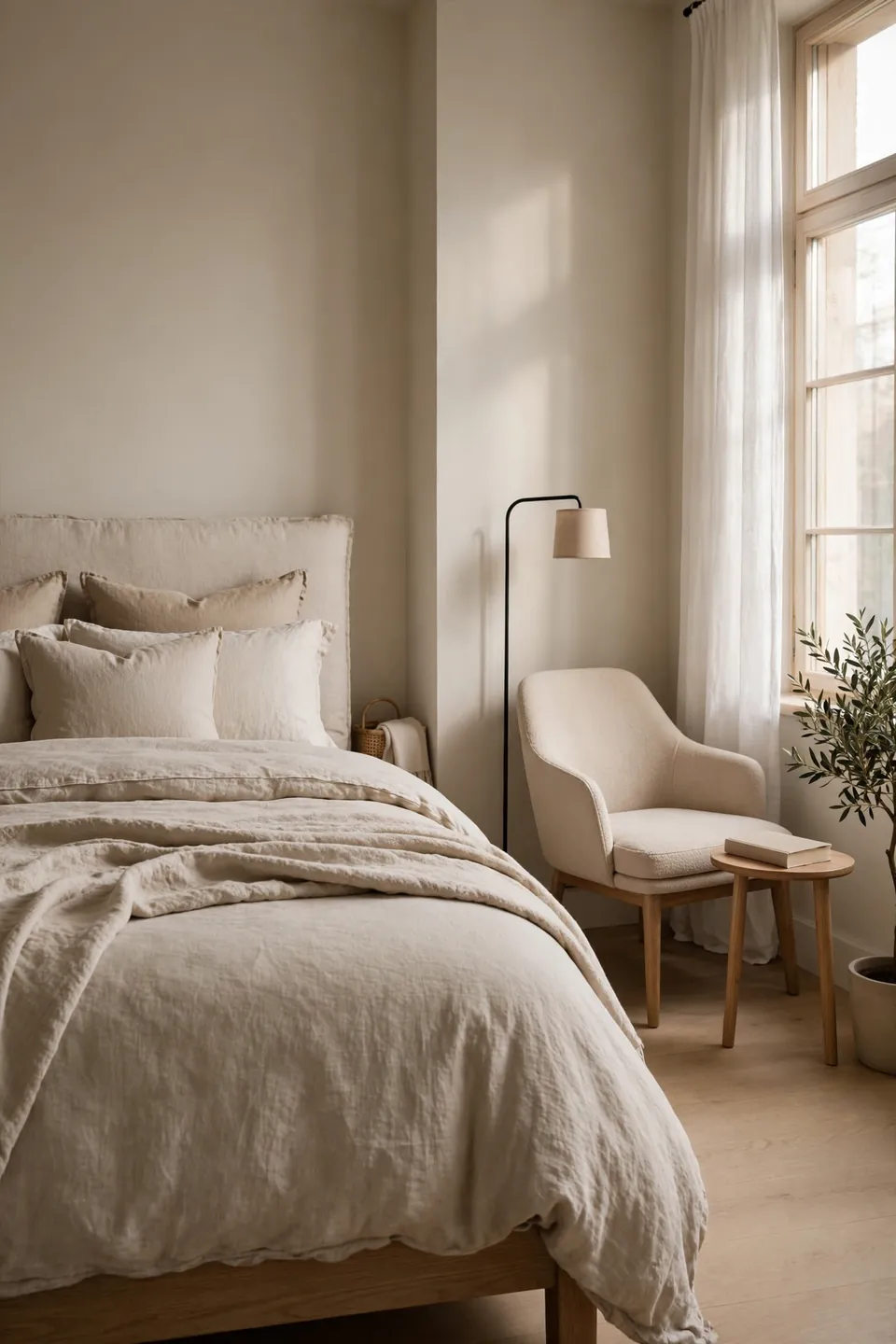
What You Need:
- A slim accent chair, no wider than 28 inches
- A small round side table or wall-mounted shelf
- A floor lamp with a slim base, or a clip-on wall light
- A throw pillow and a soft blanket for texture
A reading nook earns its corner only if it stays light and small. Tuck the chair near the window, keep the table close for a book and a cup, and let the lamp rise above the chair. Done right, the corner feels like a gift, not a squeeze, and the room still breathes.
Mirror Placement That Doubles the Light
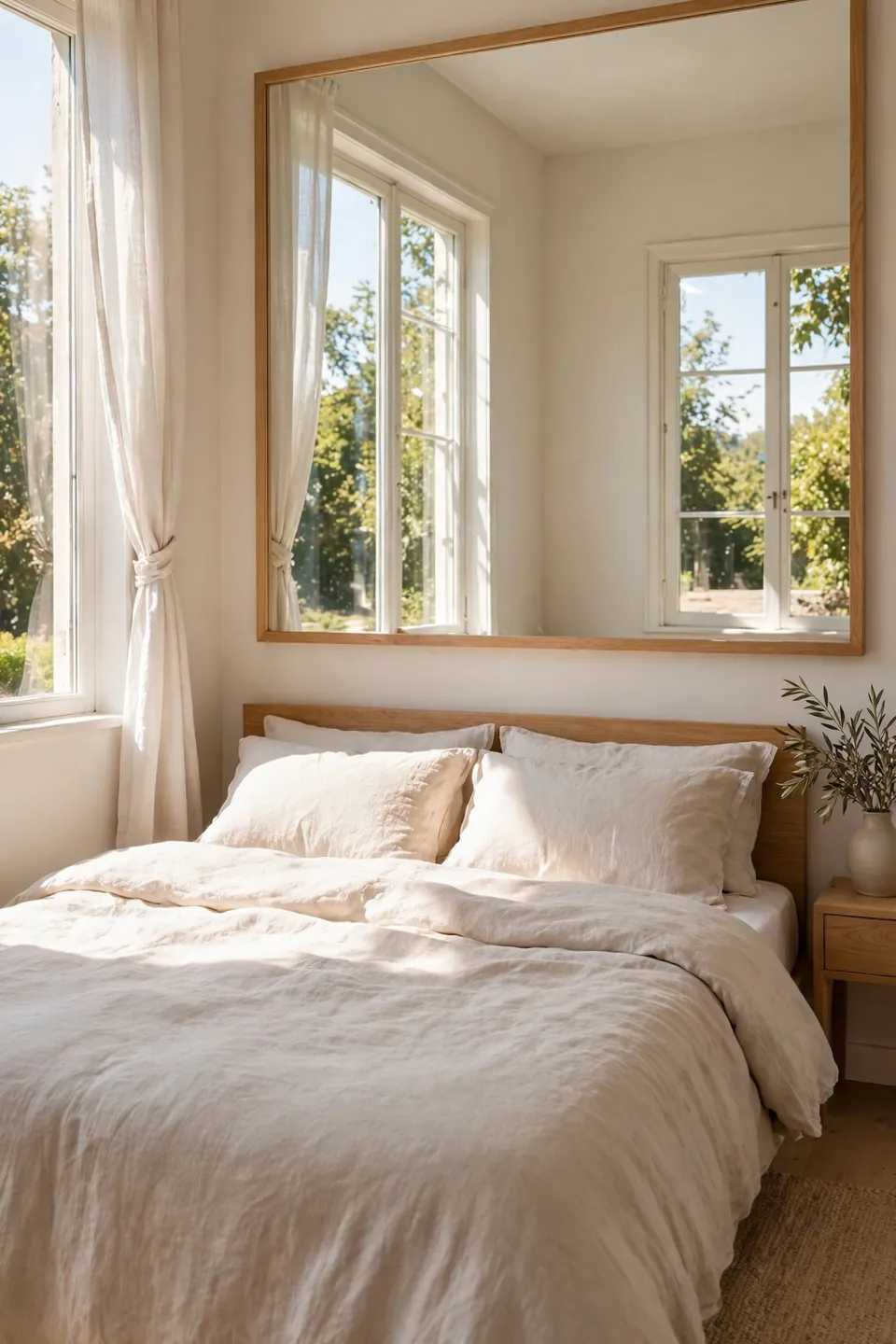
BEFORE: A small round mirror hangs on a dark hallway-facing wall, catching almost no daylight, so the room relies on one overhead bulb and every corner stays dim.
AFTER: The same mirror moves opposite the window, where it catches the full sky and throws soft daylight back across the bed and floor, making the room glow.
Mirrors work hardest facing a window or a lamp, bouncing light deeper into the room. Angle the mirror slightly so it reflects the brightest surface, not a blank wall. This shift suits rooms that play with natural light, like the ideas in how to decorate a room with exposed ceiling beams, and it costs nothing.
Small Nightstands That Keep Air Flowing
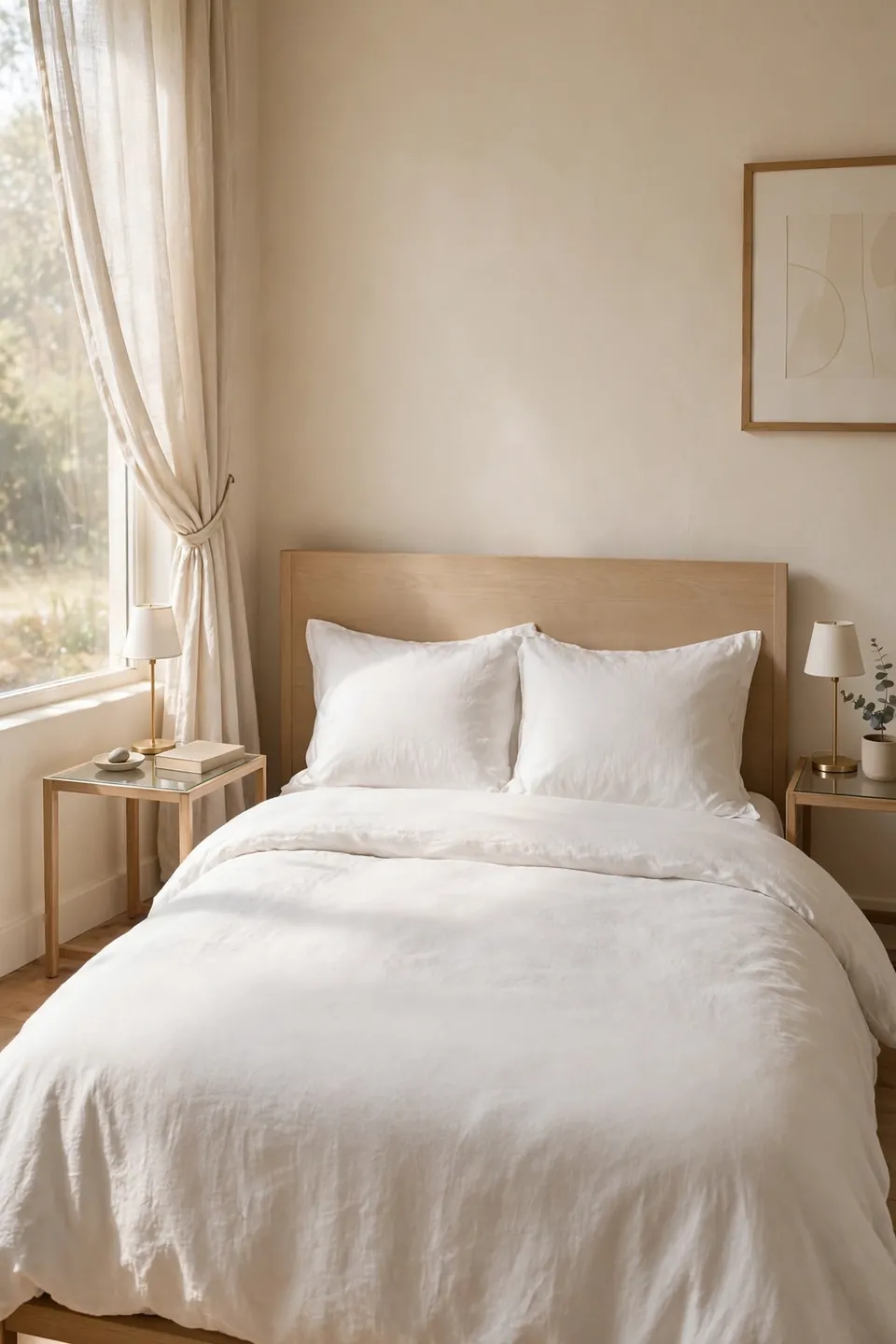
Do This:
- Pick nightstands with open legs so the floor shows beneath them
- Keep the tops clear except for a lamp and one book
- Match the nightstand height to the mattress top
Avoid This:
- Bulky box nightstands that sit flush on the floor
- Letting chargers, bottles, and clutter pile up on top
- A nightstand taller than the bed, which blocks the sight line
Nightstands sit at eye level when you lie in bed, so they shape how open the room feels. Slim pieces with visible legs let the floor run underneath, and that glimpse of floor adds up across the room. Keep the surface nearly clear, and the bedside reads as breathing space instead of a storage shelf.
Quick Facts: Layout Rules That Add Space
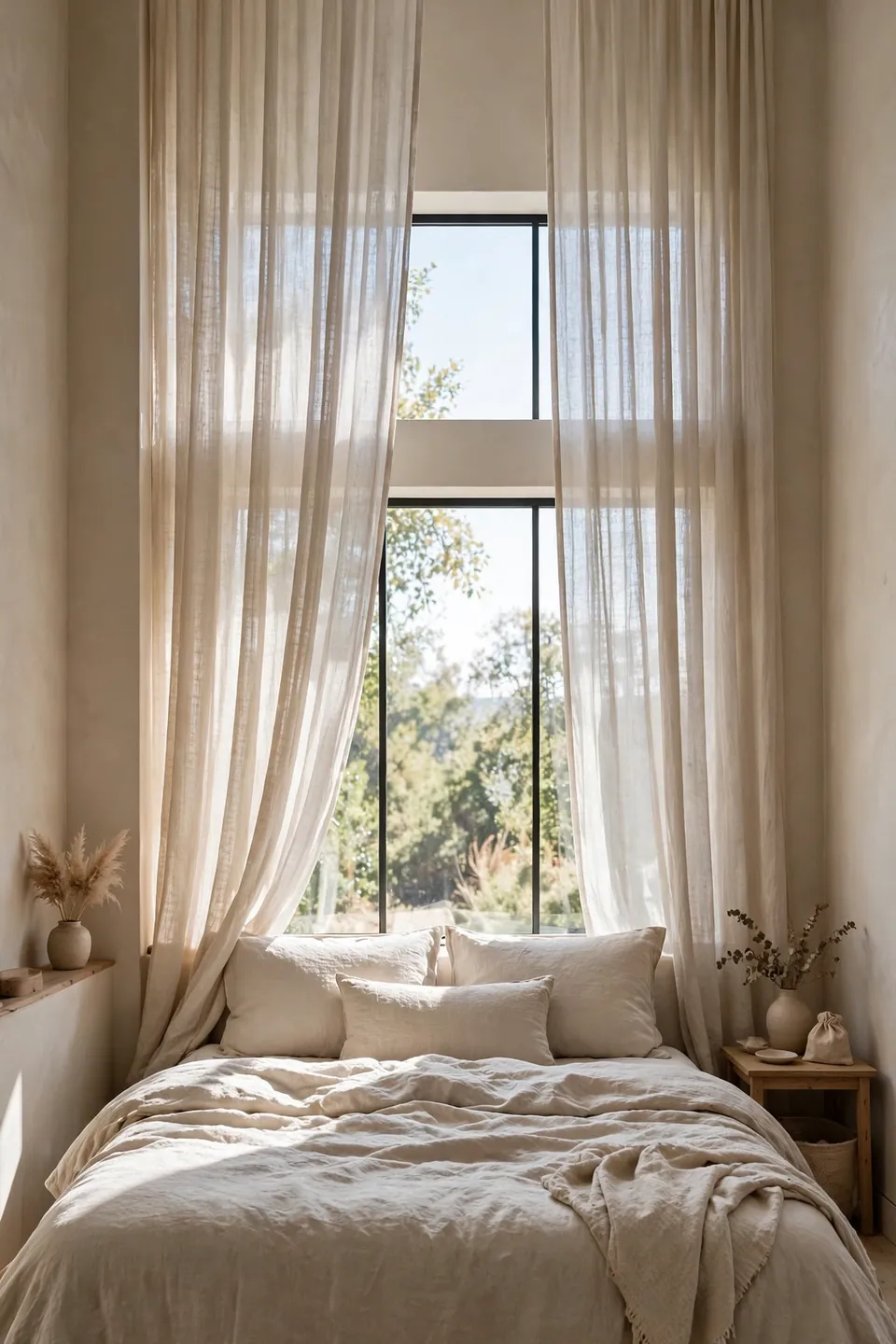
Best Bed Position: Headboard on the longest wall, centered.
Minimum Walkway: 24 inches on each side of the bed.
Ideal Rug Size: Large enough for front bed legs plus 18 inches each side.
Ceiling Trick: Tall curtains hung near the ceiling draw eyes upward.
These numbers are starting points, not laws. Every room has its quirks, so test a layout for a day before you commit. Walk the paths, sit on the bed, and notice where your eyes land. When the rules bend around your real habits, the bedroom feels bigger and works better at the same time.
Let the Window Wall Breathe
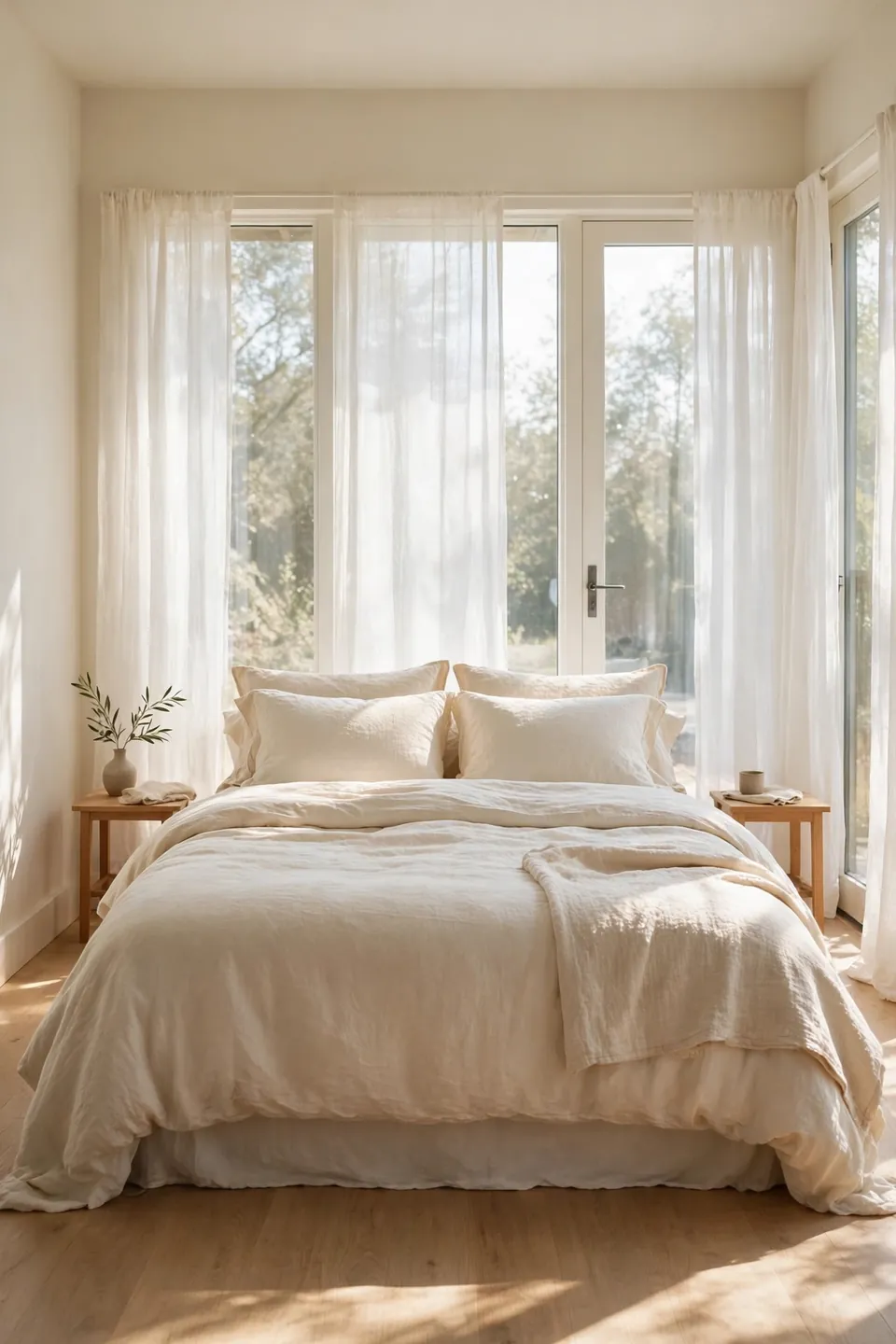
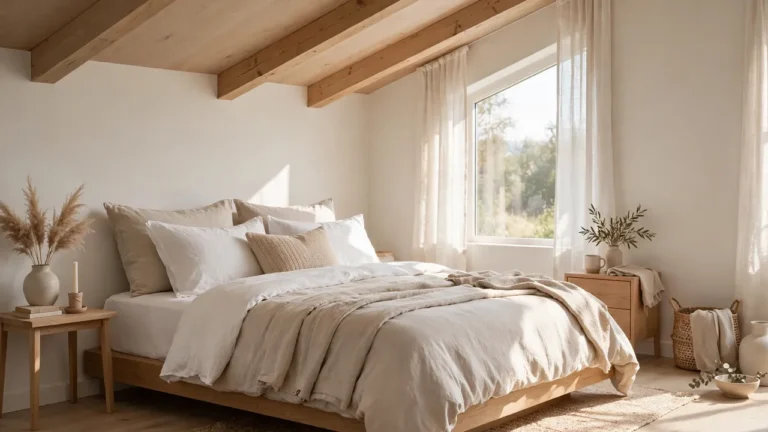
The wall with the window is your room’s light source, so treat it like a feature, not a storage zone. Keep tall dressers and bookshelves away from it, and let daylight pour straight across the floor. When nothing blocks the glass, the room borrows the view outside and feels twice as deep.
Hang the curtain rod close to the ceiling and let the panels fall to the floor. Tall curtains stretch the wall upward and frame the light beautifully. The window becomes the room’s best decoration, and it did not cost a thing.
Arrange Corners So Nothing Feels Stuck
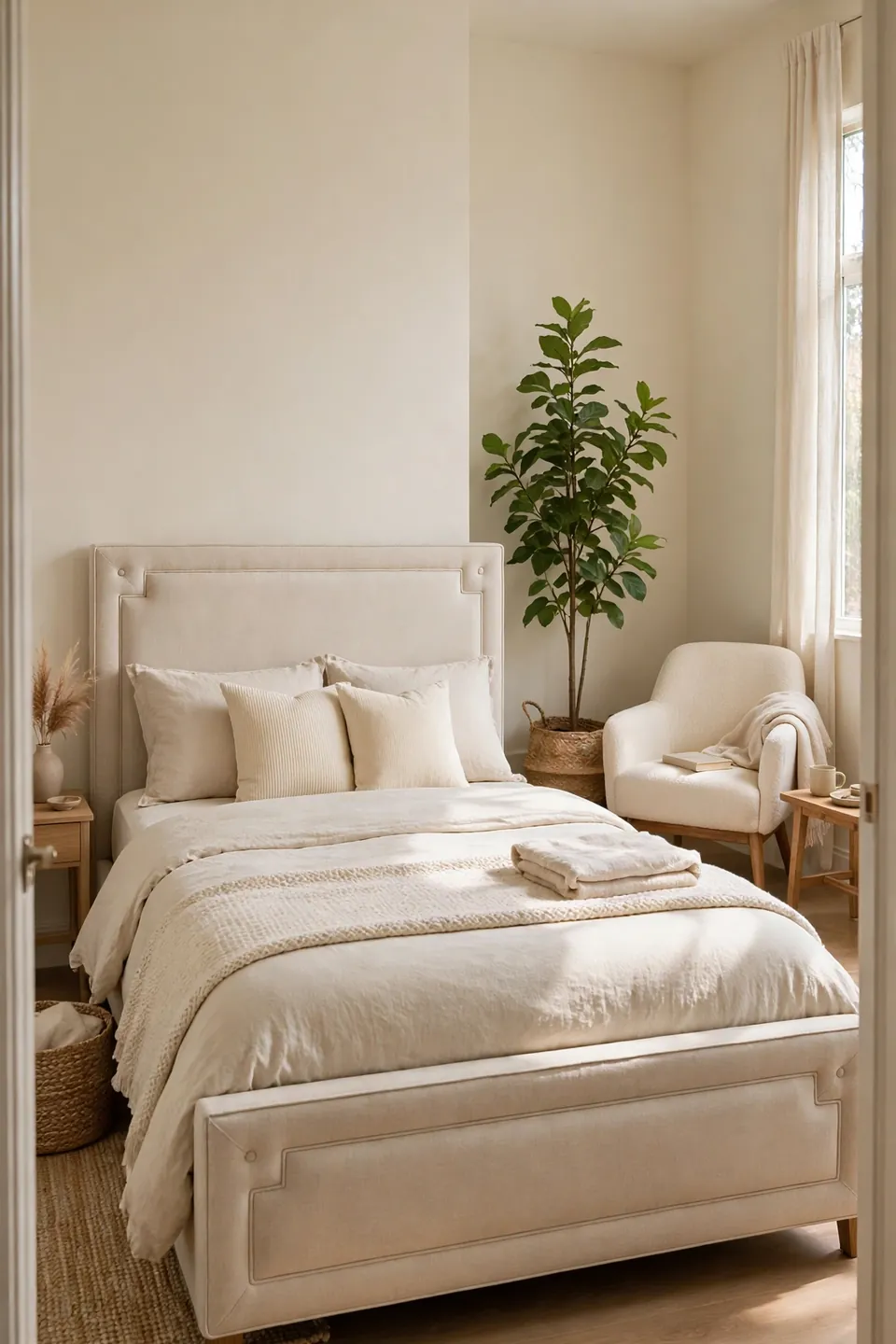
Corners collect clutter because they feel like dead space, but a styled corner actually pushes the room outward and anchors the layout. Give each corner one clear job, and the whole bedroom gains purpose without gaining bulk or blocking the light.
- Place a tall plant or a slim floor lamp in the darkest corner to draw the eye upward.
- Angle a small chair into the brightest corner for reading or dressing.
- Use the corner behind the door for hooks or a slim rack, never for piled boxes.
- Step back to the doorway and confirm every corner looks finished, not forgotten.
Conclusion
A bigger-feeling bedroom comes down to placement, not square footage. When the bed anchors the longest wall, the paths stay clear, and the light moves freely, the room opens up in ways no tape measure could show. You already own everything you need to make it happen. Start with one corner this weekend and feel the real difference that how to make a bedroom look bigger with furniture placement makes in your daily routine. Pin this guide on Pinterest so you can find these layout ideas again when you rearrange.