How to Choose the Right Rug Size for a Living Room
Learning how to choose the right rug size for a living room can completely change how your space feels, making it look pulled together instead of pieced apart. A rug that is too small makes even beautiful furniture look lost, while the right size anchors everything and defines the seating zone with quiet confidence.
Before you shop, take a few minutes to learn the simple sizing rules that designers rely on every single day. Once you know them, you will never have to guess again. If your room still feels unfinished after the rug is placed, our guide on how to make a room look finished without buying more furniture covers the next layer of polish.
Why Rug Size Changes Everything

A rug does far more than add softness underfoot. It sets the boundaries of your seating area, pulls scattered pieces into one visual group, and gives the eye a clear place to land. When the rug is generously sized, the whole room reads as intentional and calm, even if the furniture is simple.
Undersized rugs create the opposite effect. They chop the floor into awkward pieces, leave chair legs half on and half off, and make the layout feel restless. Sizing up is one of the fastest ways to make a living room feel larger, calmer, and more expensive.
Measure Your Seating Area First

Grab a tape measure and map your seating zone before you shop. Measure the full footprint of your sofa and chairs as one group, then add six inches on every side. For arranging help, see our guide on how to decorate around an oversized sofa in a small room.
- Push your sofa and chairs into their final positions first.
- Measure the total width and depth of the whole arrangement.
- Add 12 to 18 inches beyond the furniture on all sides.
- Mark the outline on the floor with painter’s tape and live with it for a day.
The Front Legs Rule Explained

Quick Tip: At minimum, the front legs of every seat in your arrangement should rest on the rug. This single rule prevents the floating furniture look that makes rooms feel disconnected.
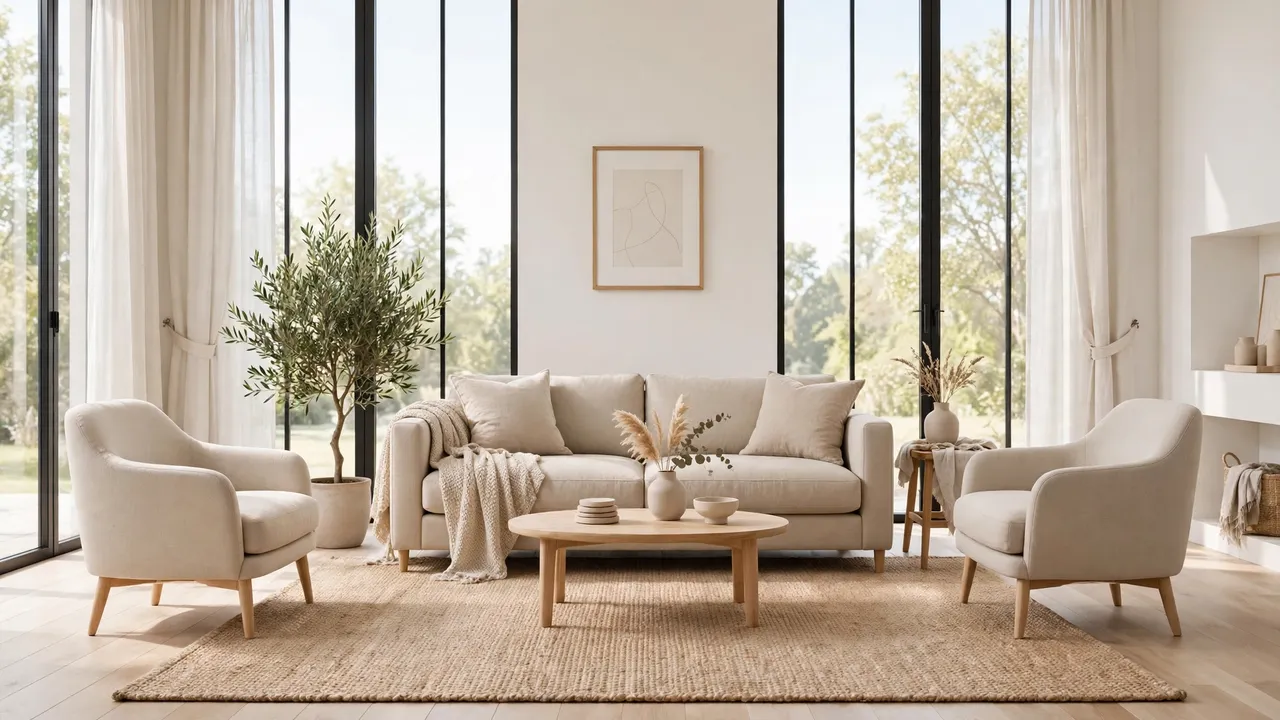
When front legs share the rug, the pieces read as one group instead of separate islands. Back legs can sit on the bare floor without any problem. If your budget allows, going bigger so all four legs fit on the rug creates an even more grounded and luxurious feel.
Skipping the Tape Measure Step
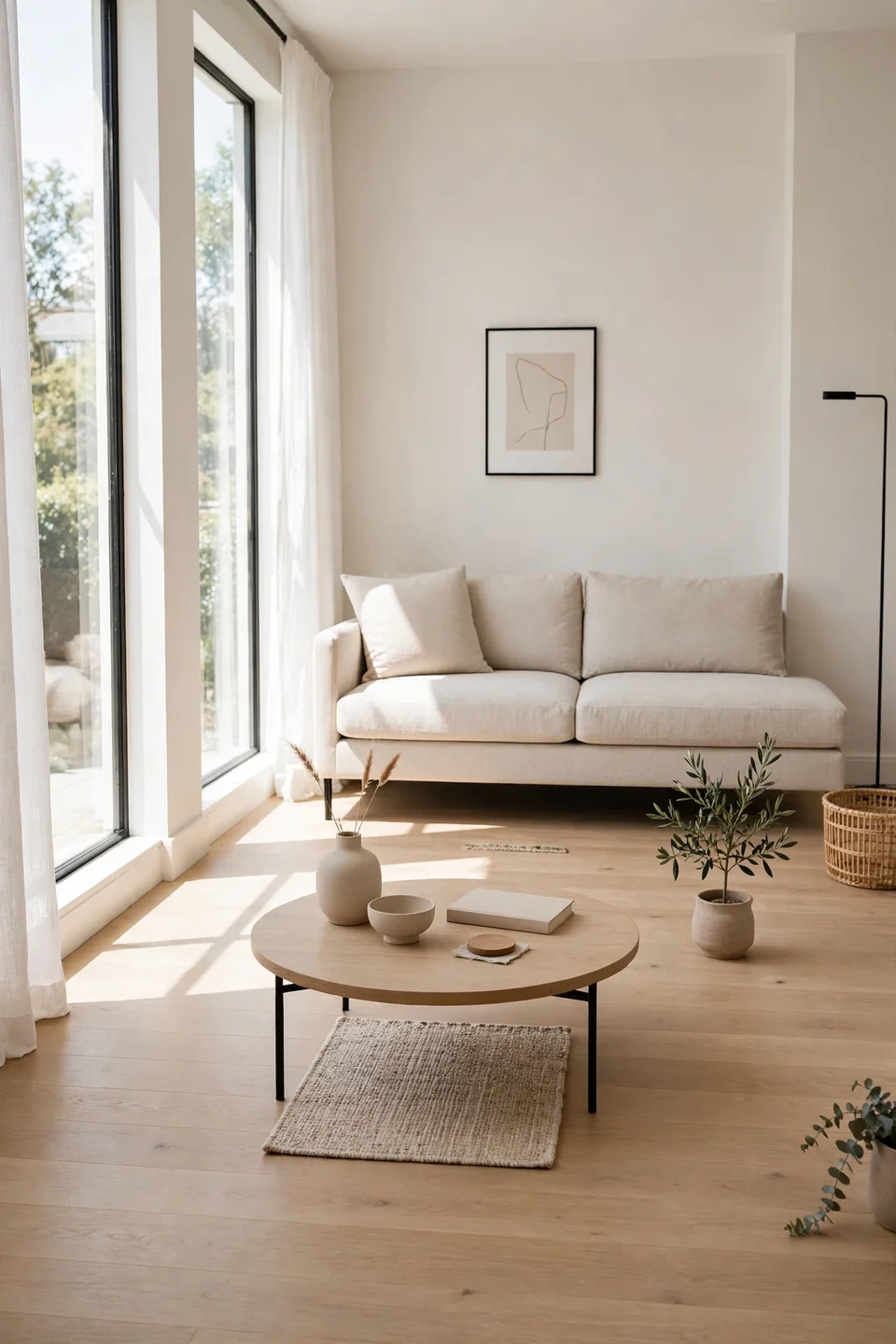
Common Mistake: Eyeballing the size and ordering online without measuring the actual seating area. The rug arrives, looks tiny against the sofa, and gets returned at your expense.
The Fix: Always tape out the rug footprint on your floor first. Painter’s tape costs almost nothing and shows you exactly how the size will feel in the room before you spend a dollar.
Photos and product listings can be misleading because rugs photograph larger than they are. Your taped outline never lies. Walk around it, sit in your usual spots, and check that chair legs land where you expect before placing any order. This simple habit saves you from costly returns and second guessing later.
What You Need to Size It Right
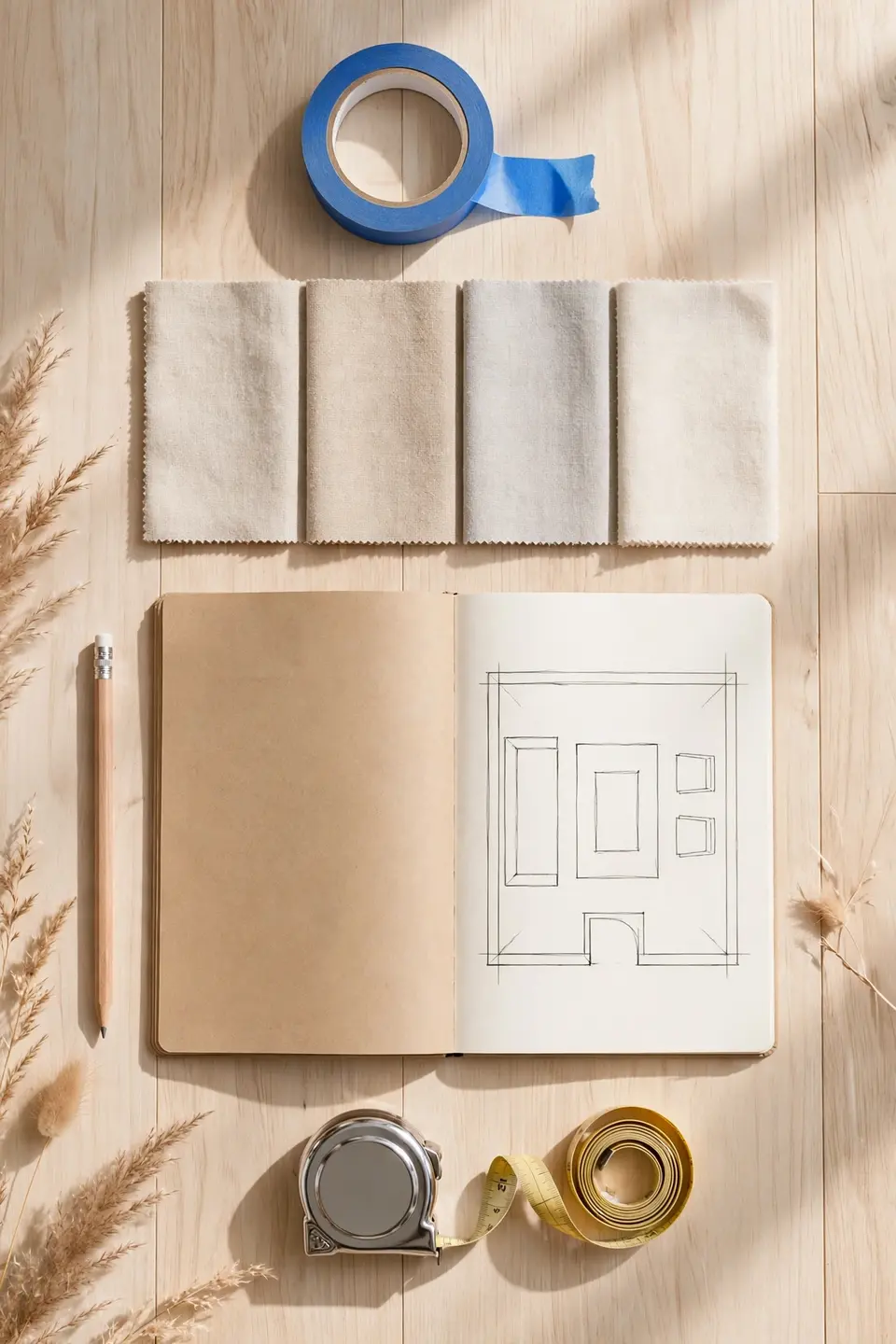
What You Need:
- A metal tape measure at least 16 feet long
- Blue painter’s tape for marking the floor
- A notebook or phone for recording dimensions
- Your room’s exact length and width
- The footprint of your seating arrangement
Gather these simple tools before you start shopping and the whole process becomes straightforward. Accurate numbers remove the guesswork, and the taped outline on your floor becomes a template you can compare against any rug size chart with total confidence. Keep them handy through every step for the best results.
From Floating Rug to Grounded Room

BEFORE: A 5 by 7 rug floats under the coffee table while the sofa and chairs sit entirely on bare floor. The seating area feels scattered, the rug looks like an afterthought, and the room seems smaller than it is.
AFTER: An 8 by 10 rug slides under the front legs of every seat. Suddenly the furniture reads as one welcoming group, the floor feels intentional, and the whole room looks noticeably larger and calmer.
The difference comes down to connection. A rug that touches your furniture ties the arrangement together visually. One that floats alone in the middle of the floor divides the space instead of uniting it, no matter how pretty the pattern is. Size with connection in mind every time.
Smart Sizing Moves and Costly Ones
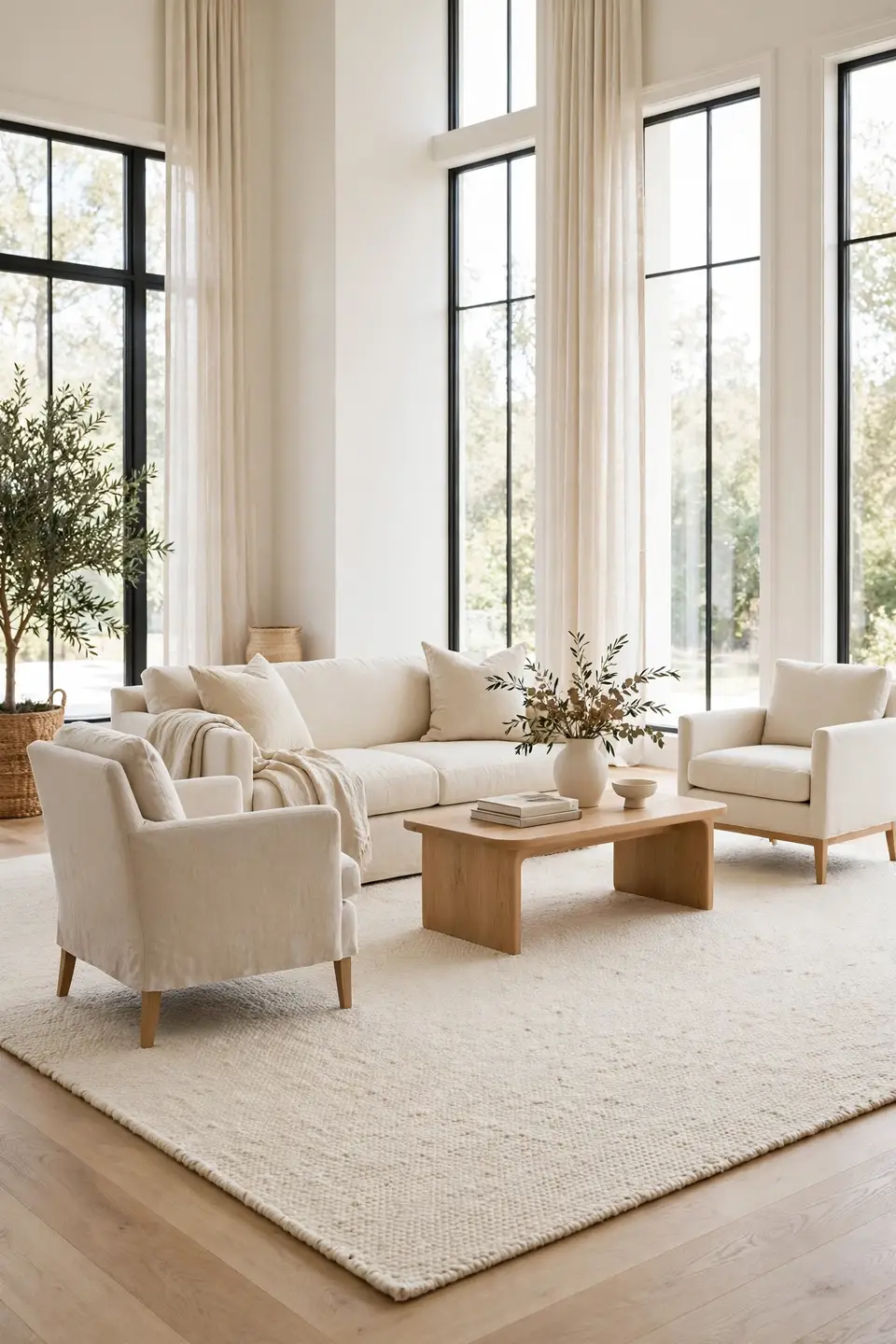
Do This:
- Size up when you are between two standard sizes
- Leave 12 to 18 inches of bare floor around the rug
- Center the rug on the room’s focal point, not the walls
- Choose low pile if doors need to swing over the edge
Avoid This:
- Buying a rug that only fits under the coffee table
- Pushing the rug against the wall under the sofa back
- Mixing a tiny rug with oversized furniture
- Ignoring door clearance and creating a trip hazard
These choices separate rooms that feel professionally styled from rooms that feel almost finished. When in doubt, the larger option almost always wins, because generous rugs make spaces feel open while small ones make them feel cramped. Keep this principle in mind and your rug will never feel like an afterthought.
Standard Rug Sizes at a Glance

Quick Facts:
5 x 8 feet: Works for apartment sized seating areas with a loveseat and one chair.
8 x 10 feet: The most popular living room size, fits a standard sofa plus two chairs.
9 x 12 feet: Ideal for large rooms and sectionals, anchors the whole zone.
Round 8 feet: Great for square rooms or under round coffee tables.
Use these standards as your starting point, then adjust to your taped outline. If your outline falls between two sizes, always round up. Manufacturers size rugs slightly differently, so check the exact listed dimensions rather than trusting the label alone. A few extra inches of rug never hurt anyone.
Layering Rugs Without the Bulk
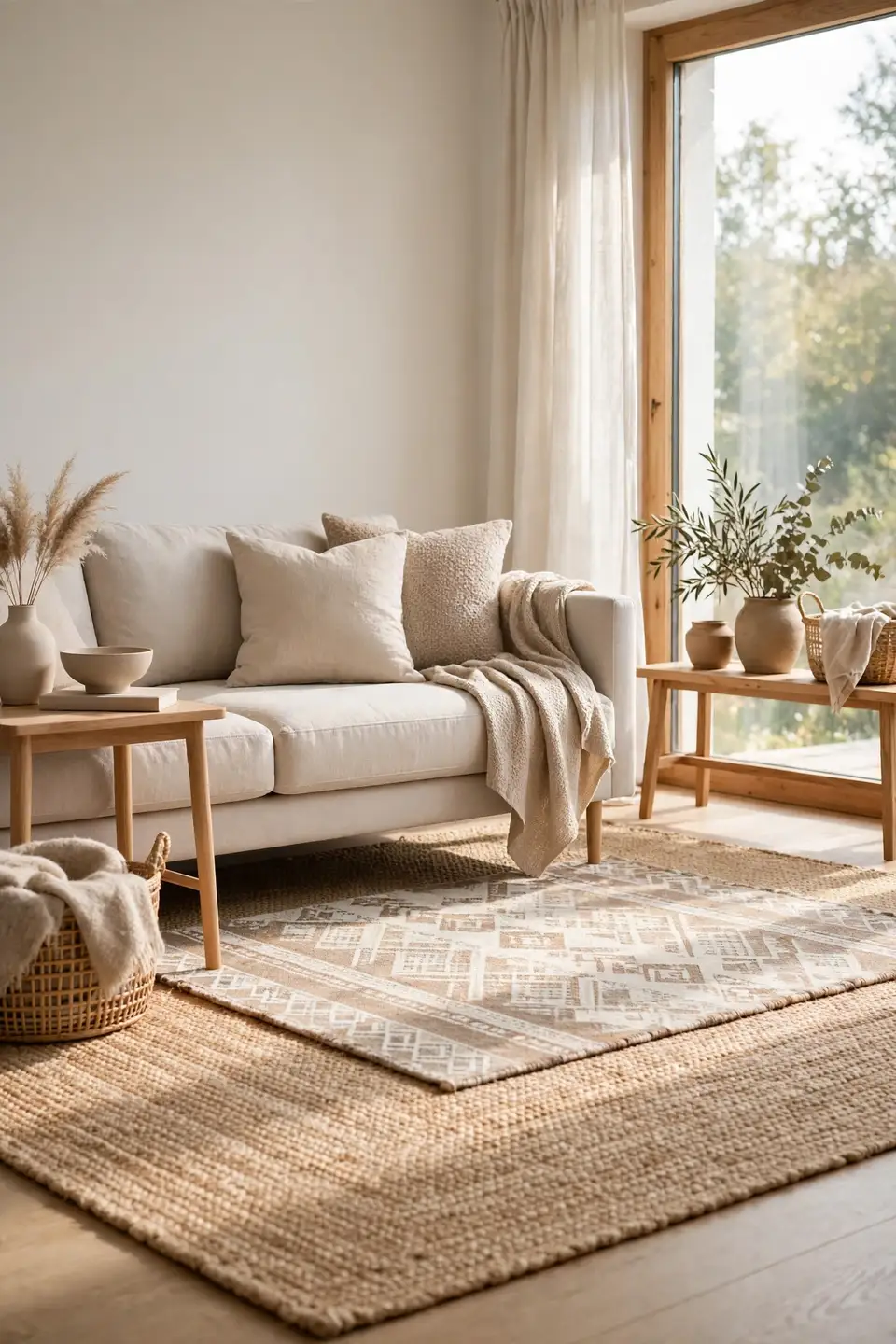
Layering a smaller patterned rug over a large natural fiber base gives you the generous footprint you need plus the personality you want. Start with a big jute or sisal rug that covers the full seating zone, then add a softer 5 by 8 on top for color and texture.
This trick also solves the budget problem, since large natural rugs cost far less than large patterned ones. Keep the top layer centered and let at least a foot of the base show on every side for a tailored look.
Final Checks Before You Buy
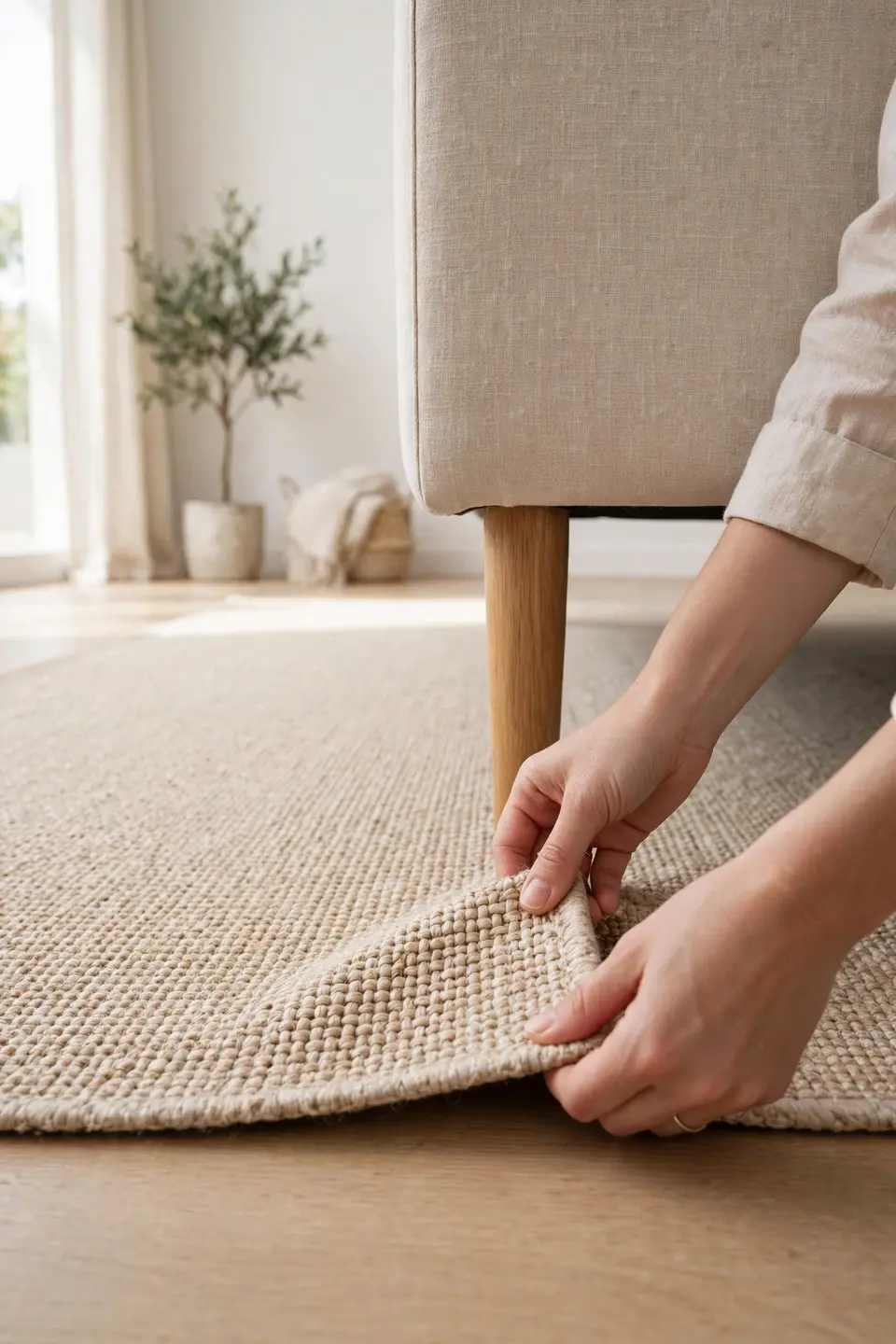
Run through this quick checklist with your taped outline still on the floor before you commit to any purchase. These final checks catch the sizing errors that lead to expensive returns and disappointment, so take five minutes now to save yourself real trouble later.
- Confirm every seat’s front legs land inside the taped outline.
- Check that 12 to 18 inches of bare floor shows around the rug.
- Open nearby doors fully to confirm they clear the rug pile.
- Compare the outline against the exact listed rug dimensions.
- Snap a photo of the taped outline to reference while shopping.
Conclusion
Now that you understand how to choose the right rug size for a living room, you can shop with total confidence instead of crossing your fingers. Measure first, tape it out, size up when torn, and let the front legs rule guide every decision.
The right rug will anchor your furniture, calm the whole room, and make the space feel finished in a way nothing else can. Save this guide to your living room board on Pinterest so the sizing rules are always one tap away when you find the perfect rug.