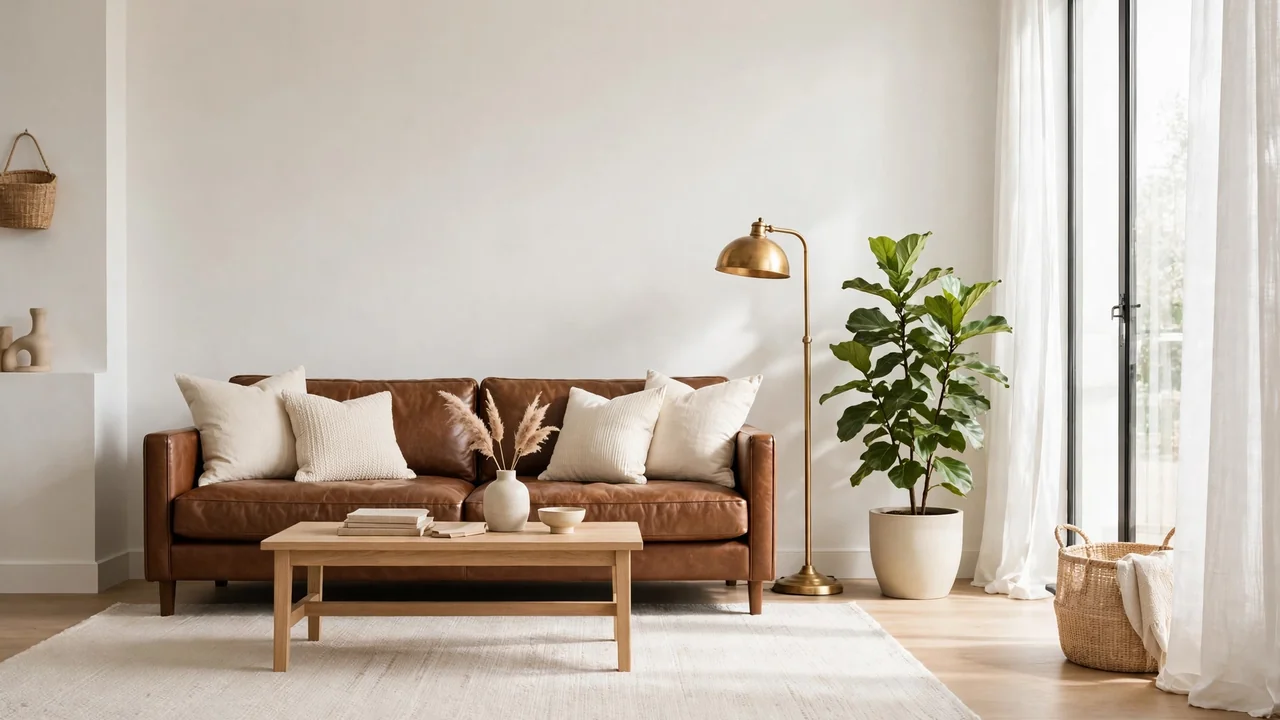
How to Decorate a Living Room With Brown Furniture
Brown furniture can make a living room feel heavy or dated, but learning how to decorate a living room with brown furniture is simpler than you think. In my experience, warm wood tones give you a rich starting point.
The trick is balance. Dark pieces ground a room, so you lift the space around them with light, texture, and contrast. You will learn which wall colors open things up, how textiles soften heavy pieces, and where to add shine so the room feels warm instead of dull.
If you have been tackling other rooms, the decluttering tips in how to organize a small bathroom countertop use the same mindset of keeping only what earns its place.
Why Brown Furniture Feels Tricky
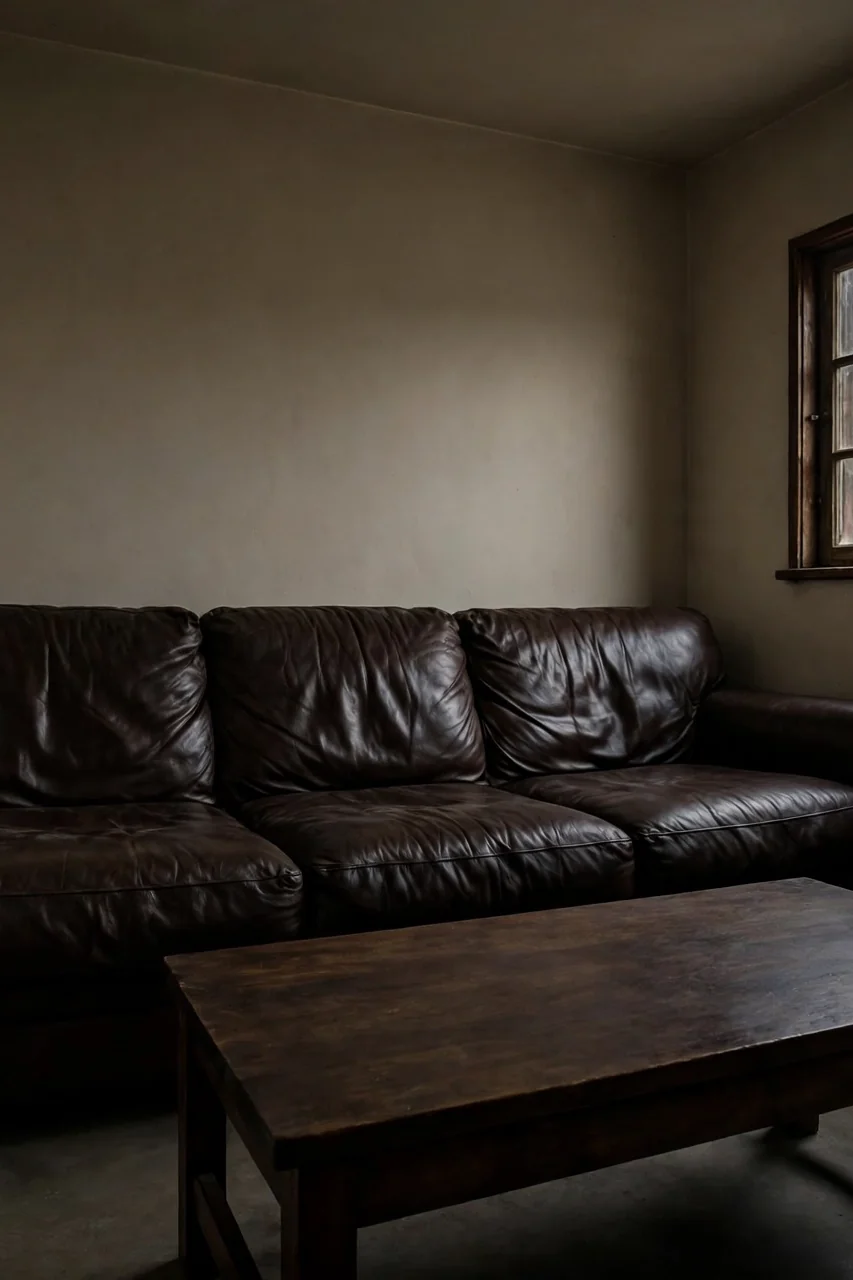
Brown furniture feels tricky because it absorbs light instead of reflecting it. A big brown sofa or dark wood cabinet can dominate a small living room and make it feel darker than it is. The real issue is usually everything around the piece, not the furniture itself.
When walls, floors, and textiles all run dark too, the eye has nowhere to rest. Once you understand that brown needs contrast to shine, the fix becomes clear. Light colors and soft textures give brown furniture the breathing room it needs to look rich instead of heavy.
Assess Your Brown Pieces
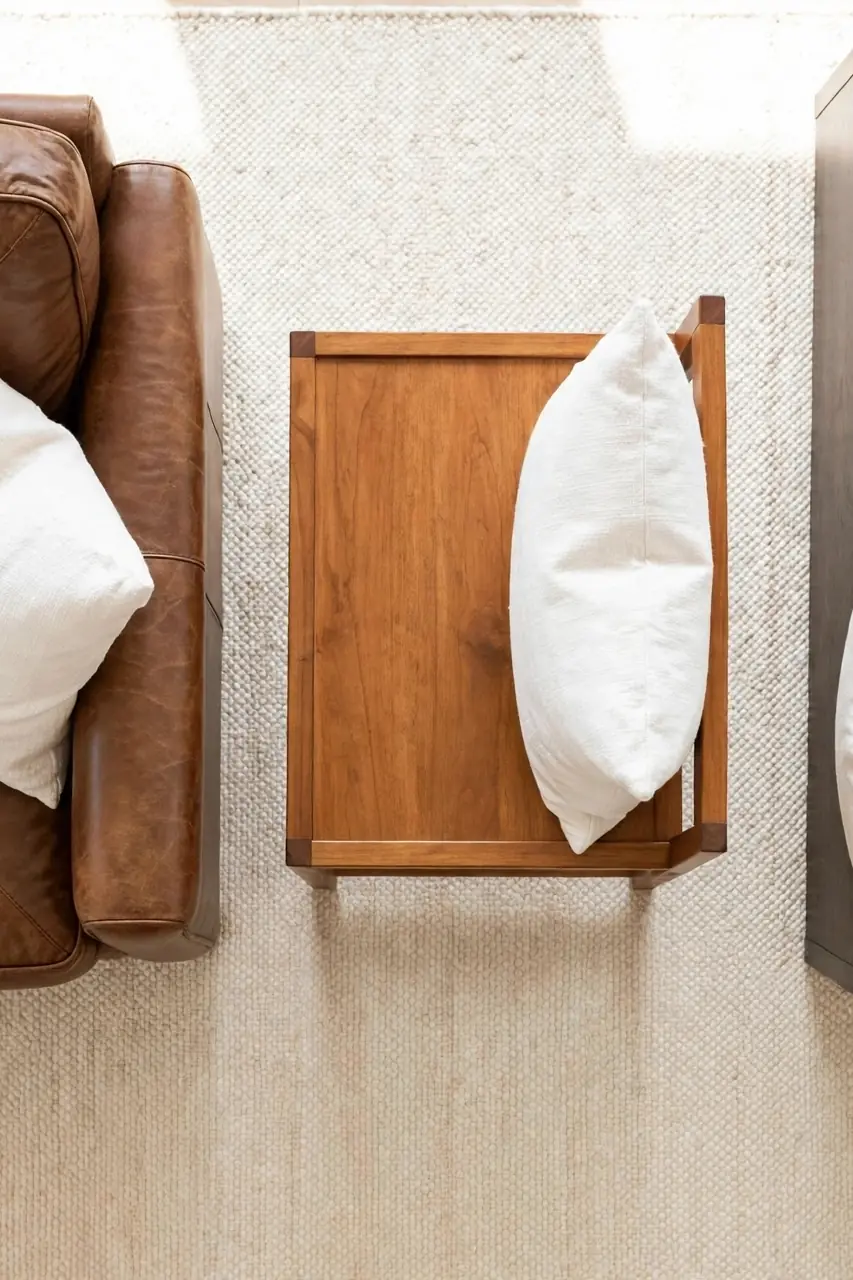
Before buying anything new, take stock of what you already own. Brown furniture comes in many shades and finishes, and each one asks for different support from the room. A quick assessment keeps you from decorating against your own pieces.
- List every brown piece in the room, from the sofa to the side tables, and note its shade. Warm cognac behaves very differently from cool espresso.
- Identify the dominant piece that draws the most attention. Decorate around it rather than fighting it.
- Check the undertones by holding a white pillow against each piece. Reddish, yellow, or gray undertones will guide your accent colors.
- Decide what stays and what goes. If a piece feels wrong after decades, no amount of styling will fix it.
Lighten the Walls
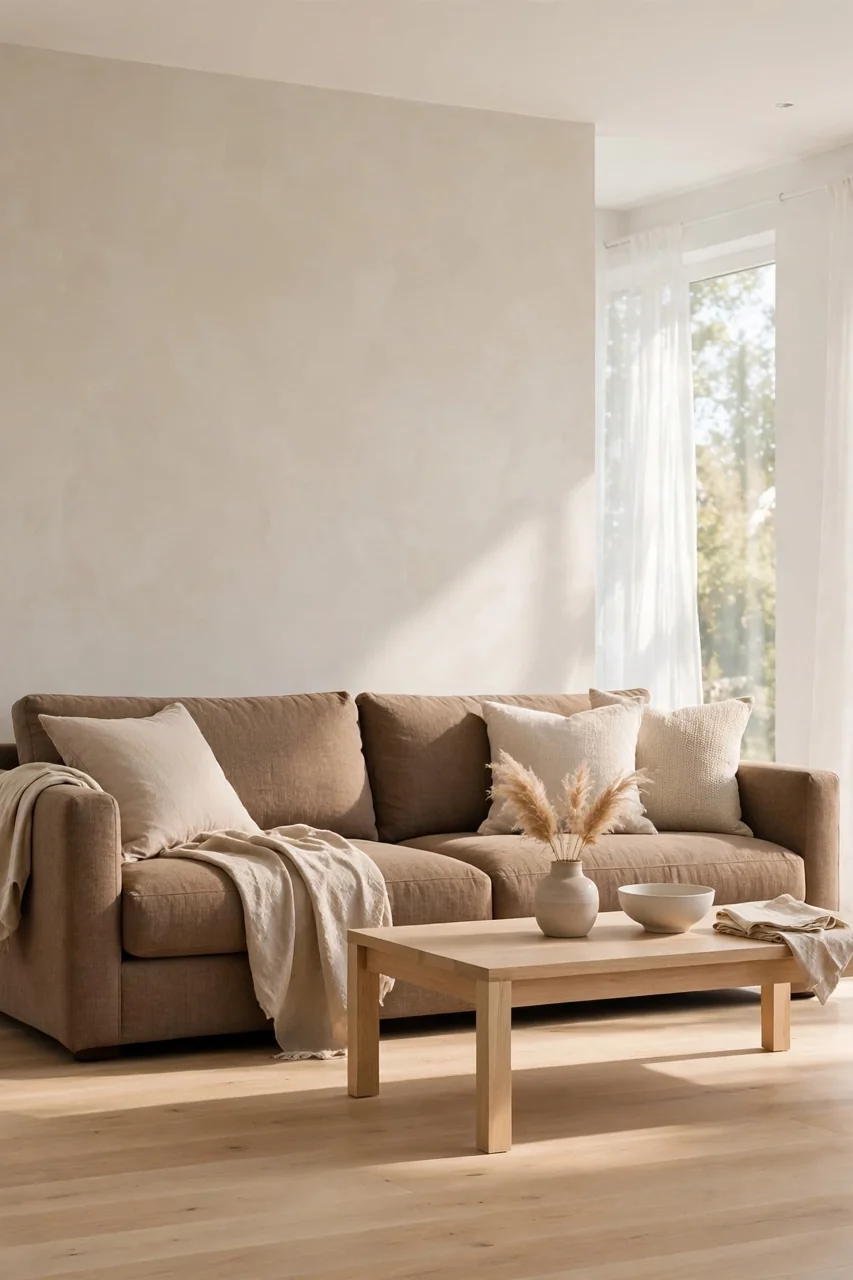
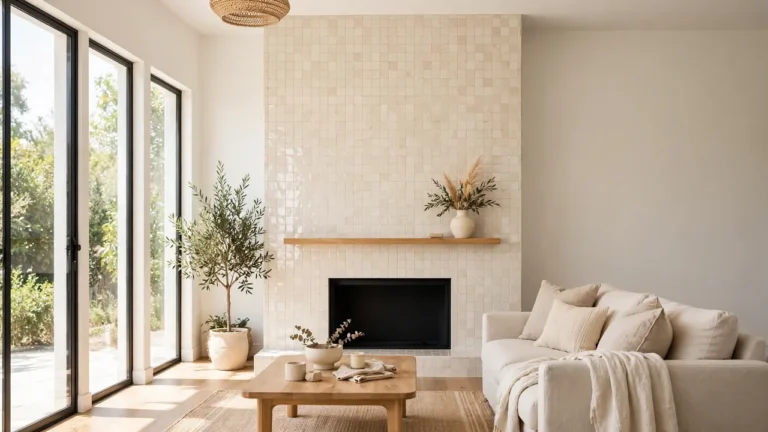
Quick Tip: Paint is the cheapest way to transform a room with brown furniture. Soft white, warm beige, or pale greige reflect light back onto dark pieces and instantly make them look intentional instead of heavy.
If painting feels like too much, try just one accent wall behind the sofa. Light walls create the contrast brown furniture needs to stand out as a feature. You will be surprised how much brighter the whole room feels with a single weekend of painting.
Add Contrast With Rugs
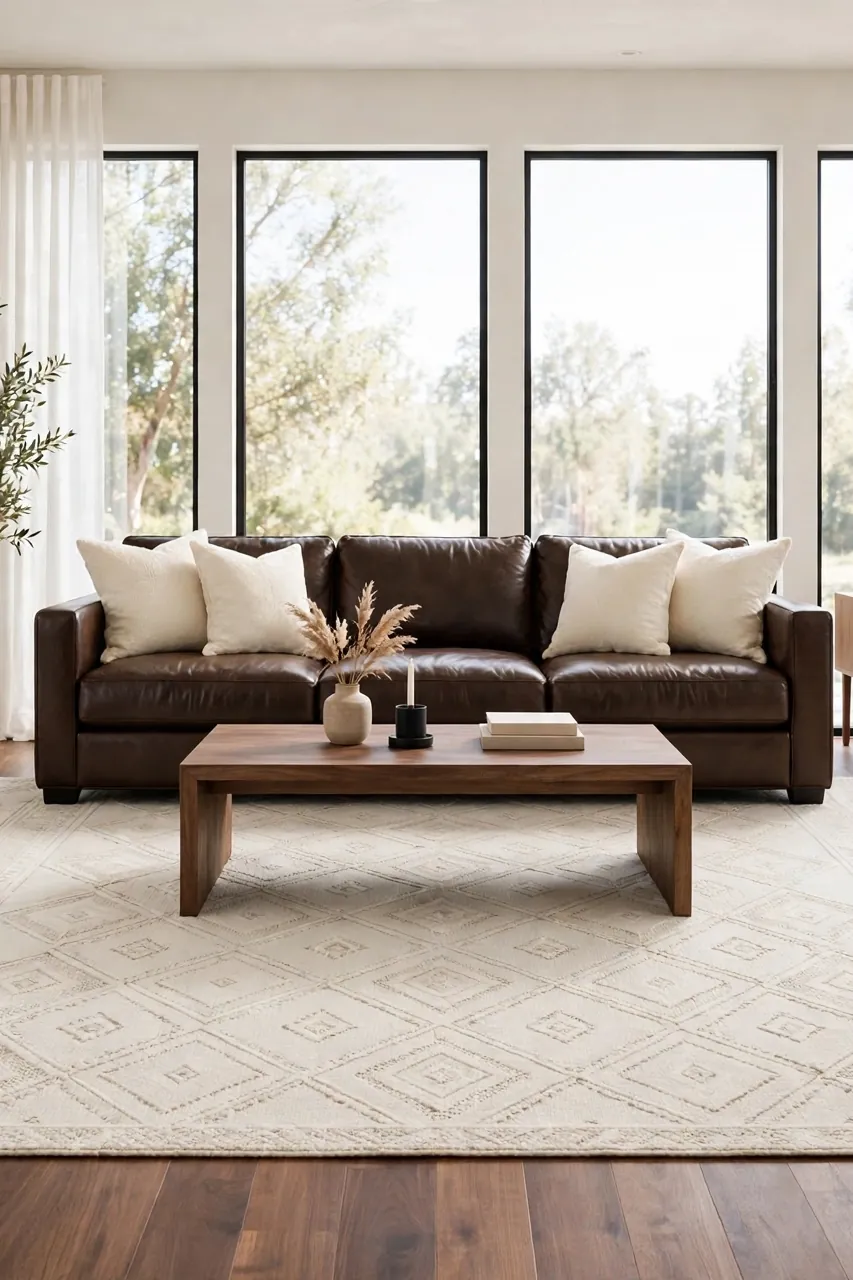
Common Mistake: Most people place a dark rug under brown furniture, thinking it ties the room together. Instead, the dark rug swallows the furniture and the floor becomes one big brown mass with no definition.
The Fix: Choose a rug at least two shades lighter than your furniture. Cream, ivory, or a light pattern gives the eye a clear boundary and lets the brown pieces sit proudly on top.
A light rug does more than brighten the floor. It anchors the seating area and creates a clear visual stage for your brown pieces. I’ve noticed that this single change often makes the biggest difference, and you can see the result the same afternoon you roll it out.
Layer With Light Textiles
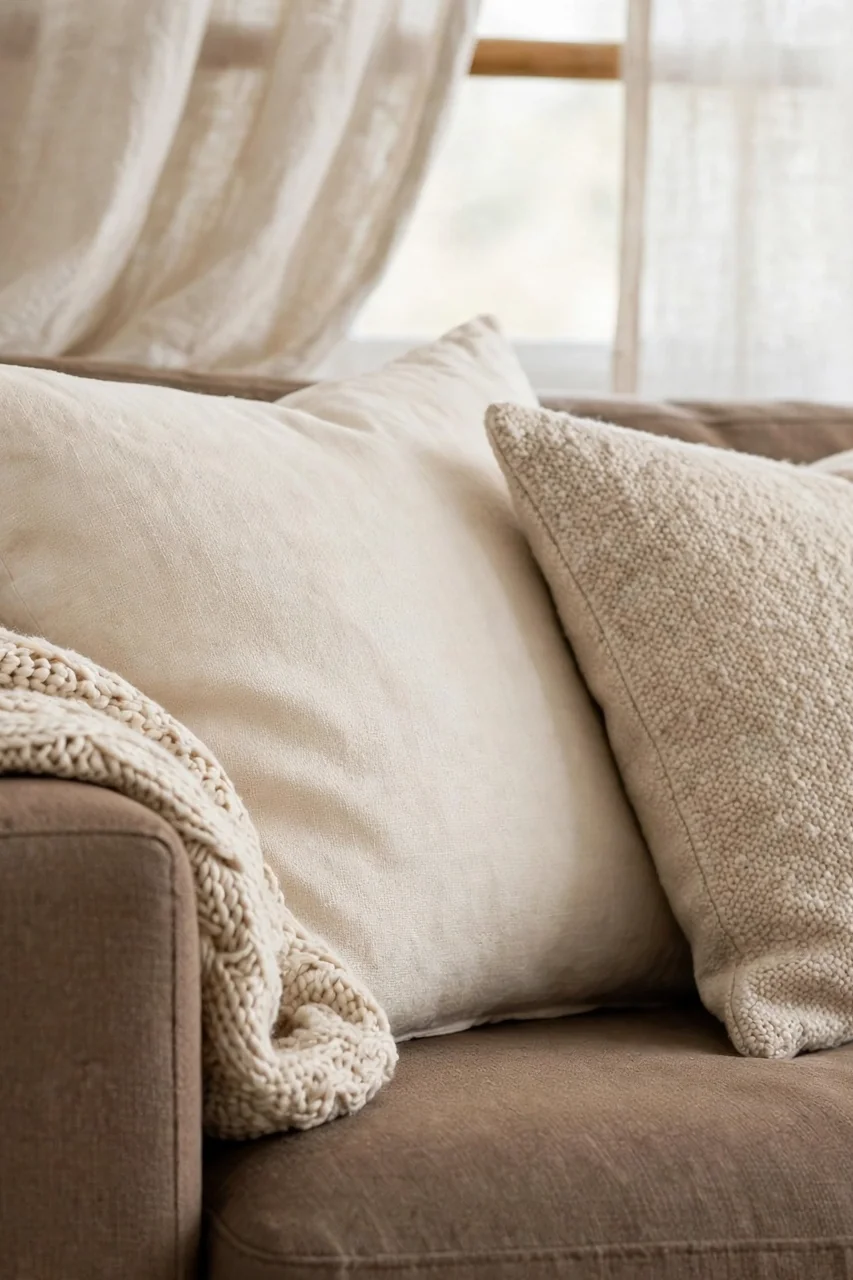
What You Need:
- Throw pillows in cream and oatmeal: they soften a brown sofa and add instant lightness.
- A chunky knit throw blanket: drape it over one arm to break up the dark surface.
- Light linen curtains: they let daylight flood in while keeping privacy.
- A cream area rug or runner: it belongs on this list too, since it grounds the whole look.
- Woven baskets in natural fibers: they add texture without adding visual weight.
Textiles are the fastest way to lighten a room without spending much. When you learn how to decorate a living room with brown furniture through fabric choices, you realize soft layers do the heavy lifting. Swap pillows and throws seasonally to keep the room feeling fresh all year.
Add Greenery
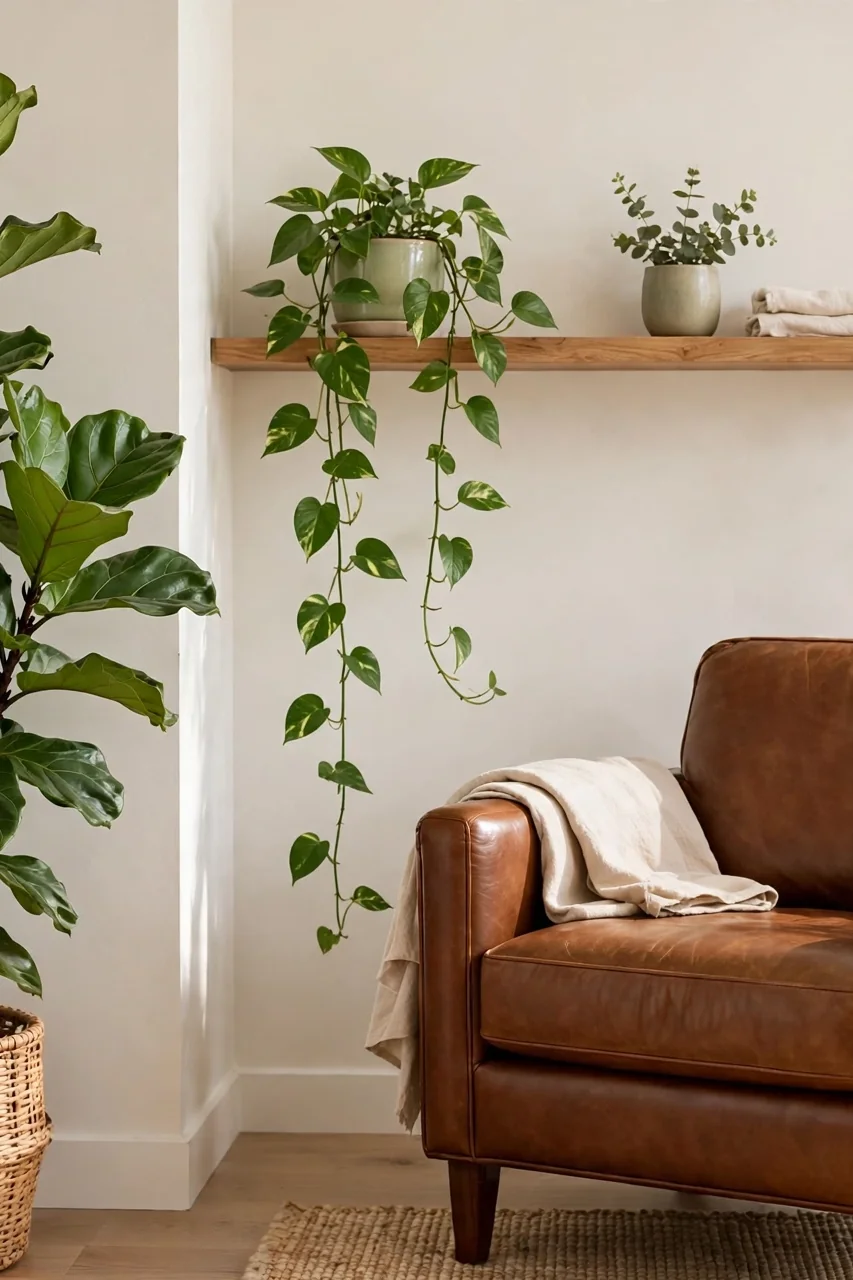
Before: The room felt flat and lifeless, all brown and beige with nothing alive in it. The corners sat empty and the whole space looked a little tired.
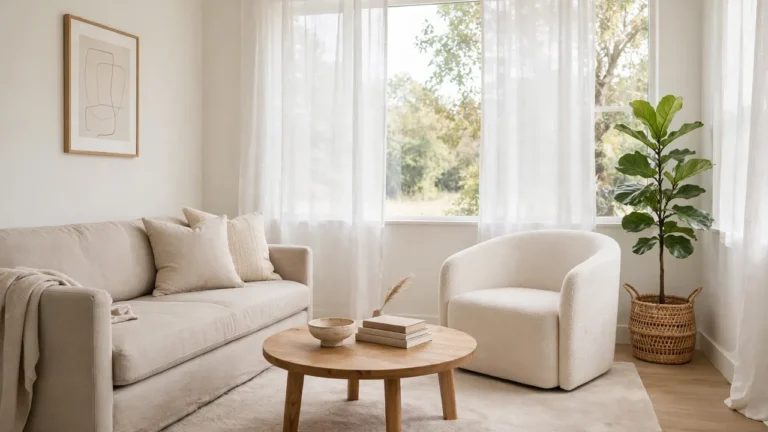
After: A tall fiddle leaf fig in one corner and a trailing pothos on the shelf changed everything. The green leaves pop against brown wood, and the room suddenly feels fresh and cared for.
Plants are the cheapest color you can add to a brown room. Green is brown’s natural partner, and even one large plant shifts the whole mood from flat to alive. Choose low-maintenance varieties like pothos or snake plants if you worry about keeping them alive.
Use Metallic Accents
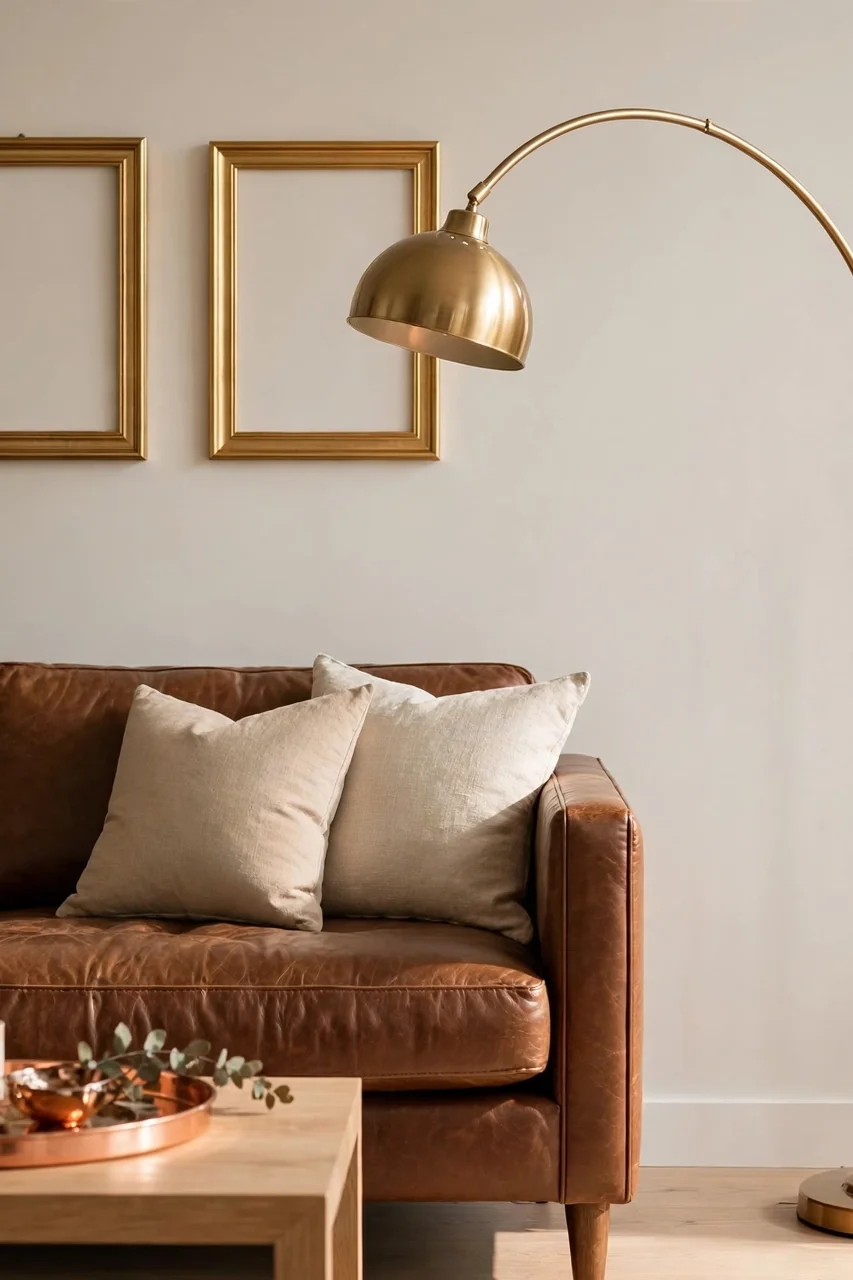
Do This:
- Add a brass floor lamp beside the sofa for warm reflected light.
- Use gold or copper picture frames to catch the eye.
- Place a metallic tray on the coffee table for a small shine.
Avoid This:
- Do not mix more than two metal finishes in one room.
- Avoid oversized shiny pieces that compete with the furniture.
- Skip cheap plastic gold that looks dull up close.
Metallics work because they bounce light around dark furniture. A little shine goes a long way, so treat these accents like jewelry for the room rather than the main outfit. Too much sparkle will fight the calm warmth you are building, so edit your choices ruthlessly.
Cozy storage matters in small living rooms too, so see how to store blankets in a small living room for ideas that keep throws handy without the clutter.
Balance With Art
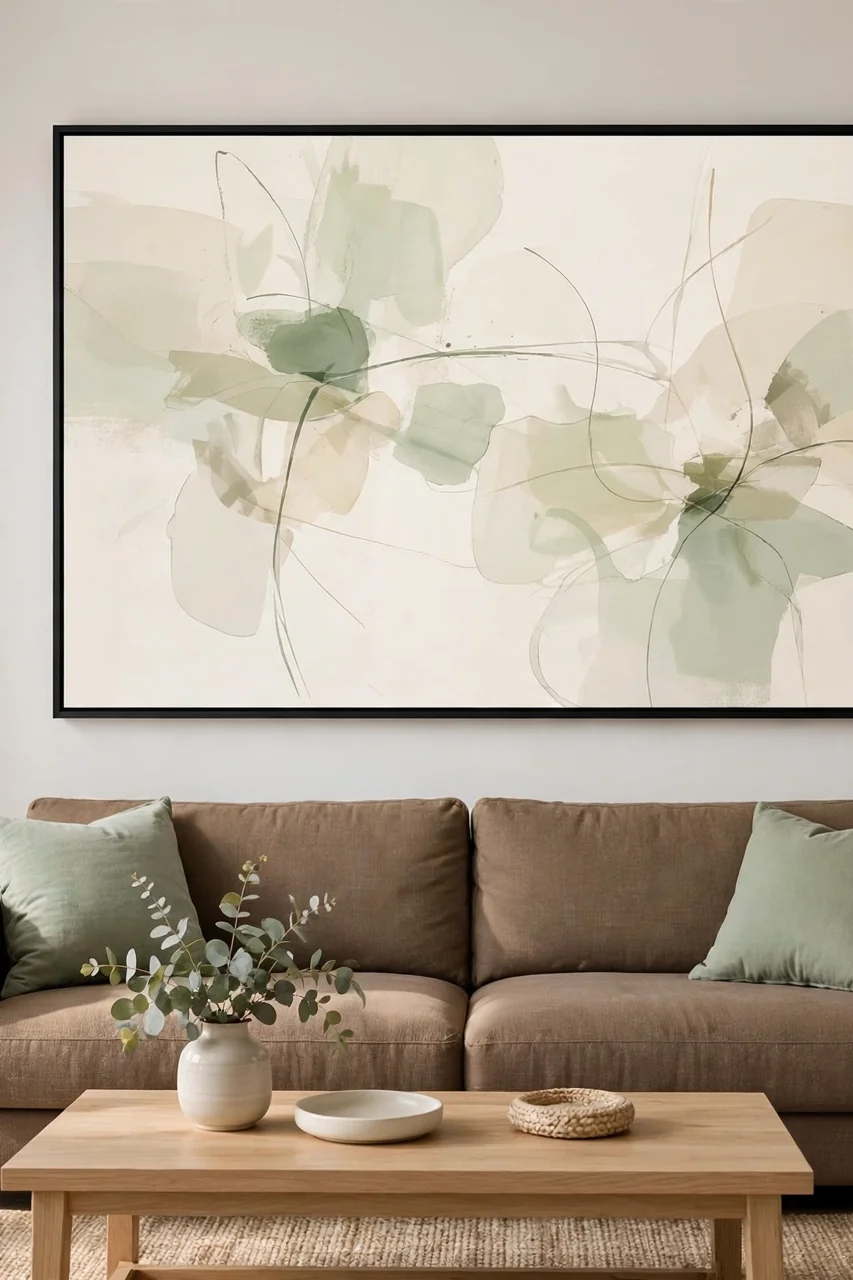
Best Art Size: at least two-thirds the width of the furniture below it
Hang Height: center at 57 inches from the floor
Best Colors: light backgrounds with warm accents
Frame Style: thin black or natural wood
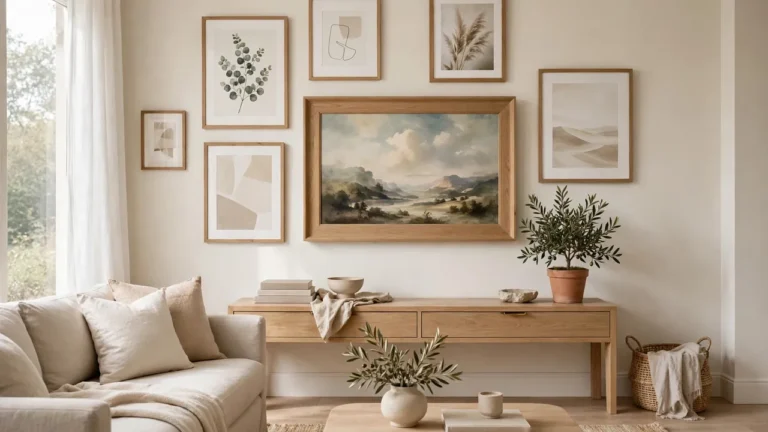
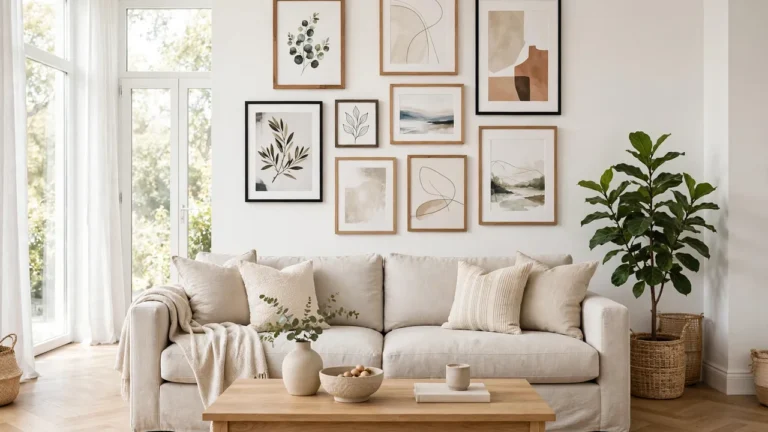
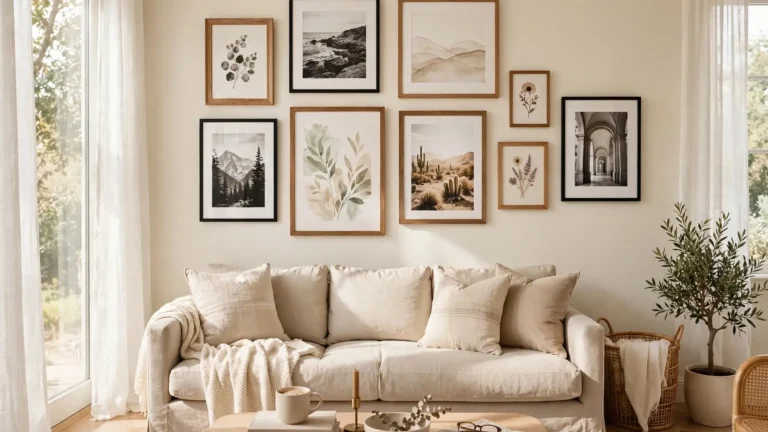
Art gives brown furniture a backdrop that feels intentional instead of accidental. A large light piece above the sofa pulls the eye upward and breaks the brown block into a balanced composition. Keep the palette airy with creams and soft greens, and let the furniture anchor everything below.
Common Brown Furniture Mistakes
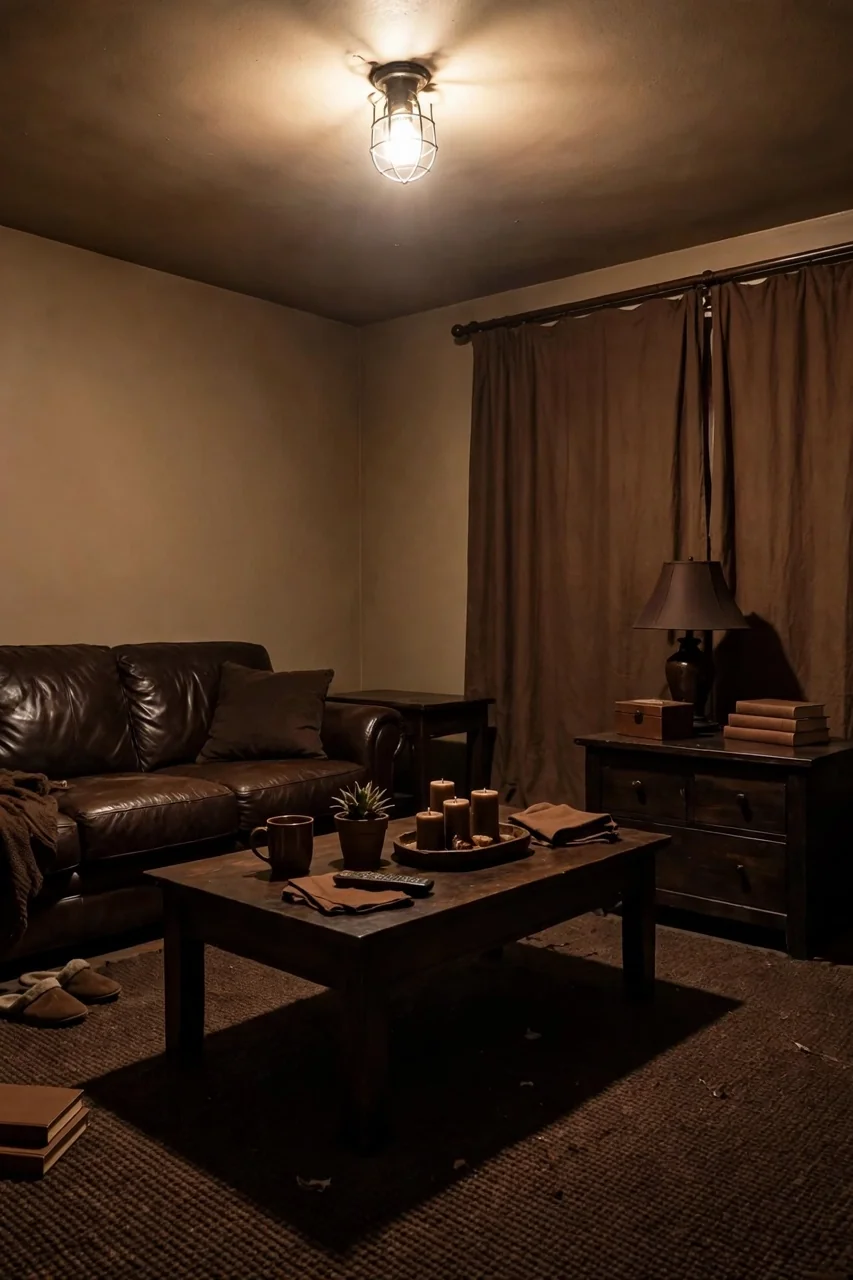
The biggest mistake is matching everything to the furniture. Brown sofa, brown rug, brown curtains, and dark wood tables turn the room into a cave. Another common error is using only overhead lighting, which casts harsh shadows on dark surfaces and makes them look even heavier.
People also forget scale and crowd small rooms with oversized brown pieces. A bulky recliner plus a deep sofa leaves no room to breathe. Choose one hero piece, keep the rest lighter in both color and size, and your room will feel twice as big.
Pro Tips for Warm Rooms
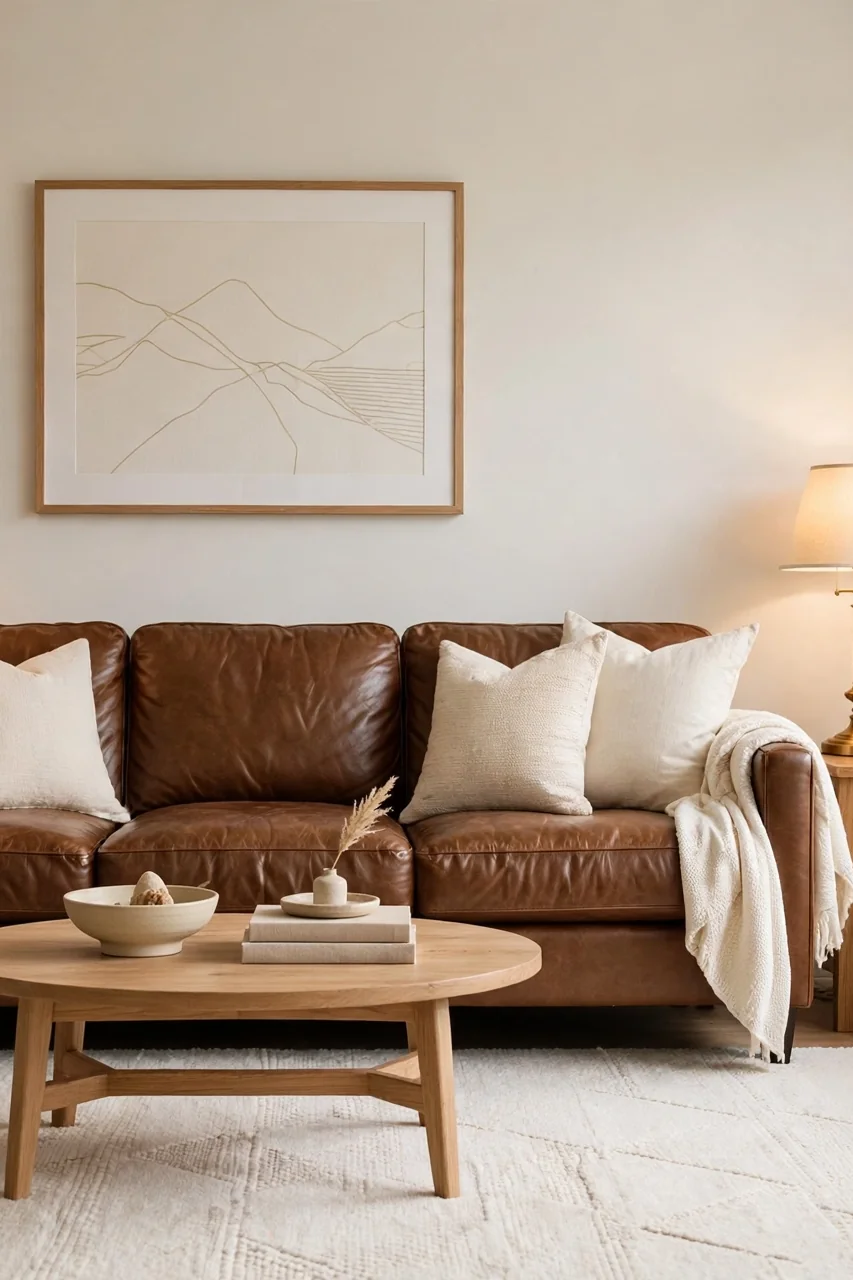
These finishing touches take a good room to a great one. None of them cost much, but together they make brown furniture look like a deliberate design choice instead of a leftover. Save this list for your next weekend refresh.
- Layer two light sources at different heights, like a floor lamp and a table lamp, to soften dark corners.
- Add one unexpected color, such as dusty blue or sage, to keep the palette from feeling predictable.
- Rotate your textiles each season so the room always feels intentional and cared for.
- Step back and photograph the room; the camera reveals imbalances your eyes miss.
Conclusion
Brown furniture does not have to feel heavy or outdated. With light walls, soft textiles, and a few thoughtful accents, you can see how to decorate a living room with brown furniture in a way that feels warm and welcoming. I’ve seen how making this one change in contrast can completely shift the result from dull to stunning. Save this guide on Pinterest so you have it handy for your next refresh, then start with just one section today. Your living room is closer to cozy than you think, so trust the process.
One Comment