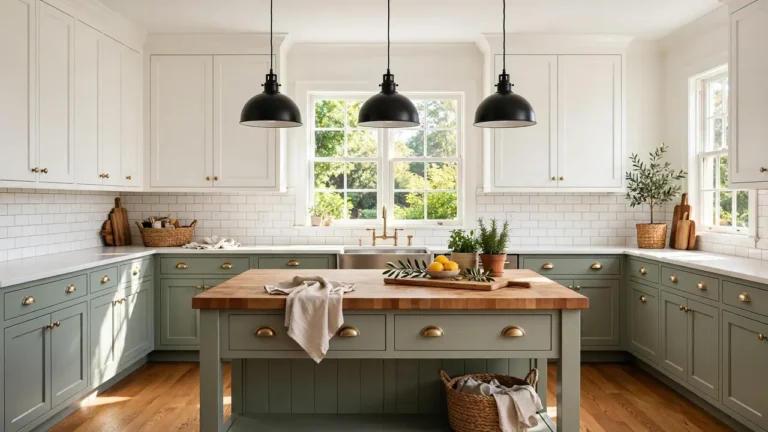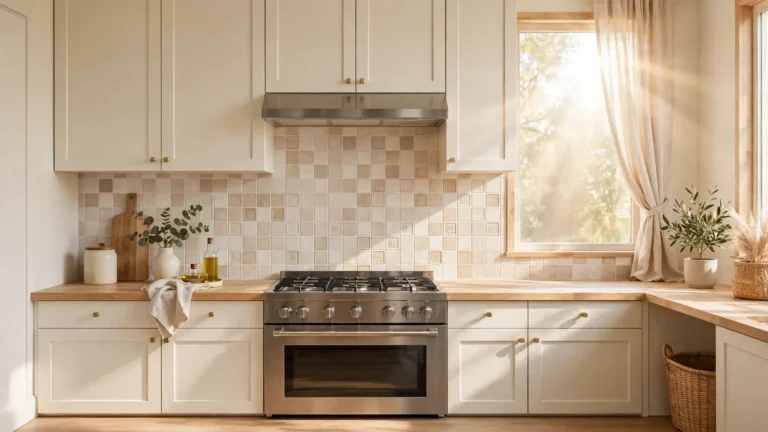
How to Maximize Space in Small Kitchens
A tiny kitchen can still work hard for you. To learn how to maximize space in small kitchens, you do not need a bigger room. You need smarter choices about what stays, what stacks, and what hangs.
Every square inch counts here. A crowded counter makes cooking feel like a chore, but small changes can open up real breathing room. If your cabinets are part of the problem, our guide on how to organize kitchen cabinets efficiently pairs well with this one.
In my experience, most tiny kitchens already have enough space. They just use it poorly. By the end of this guide, you will know what to keep, where to put it, and how to arrange your kitchen so it feels twice its size.
Why Small Kitchens Feel Cramped
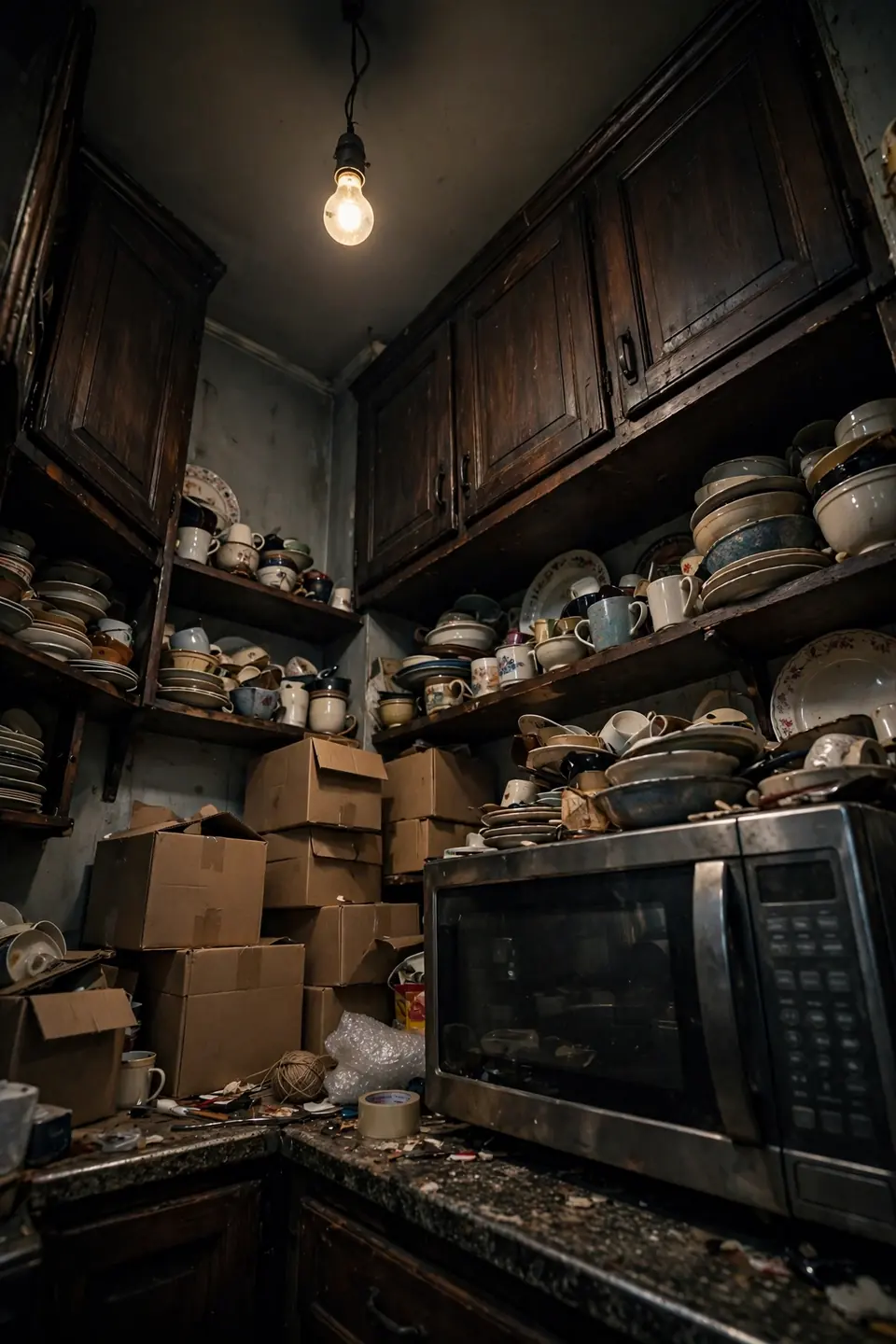
Most small kitchens feel cramped for the same few reasons. Counters disappear under appliances you rarely use. Cabinets hold duplicates of things you forgot you owned. Drawers become junk zones where tools go to vanish. When every surface is covered, your brain reads the room as smaller than it is.
The good news is that none of this is permanent. Clutter is a storage problem, not a space problem. Once you see which habits shrink your kitchen, you can fix them one by one. This guide walks you through each fix in order, starting with the fastest win of all.
Clear the Counters First
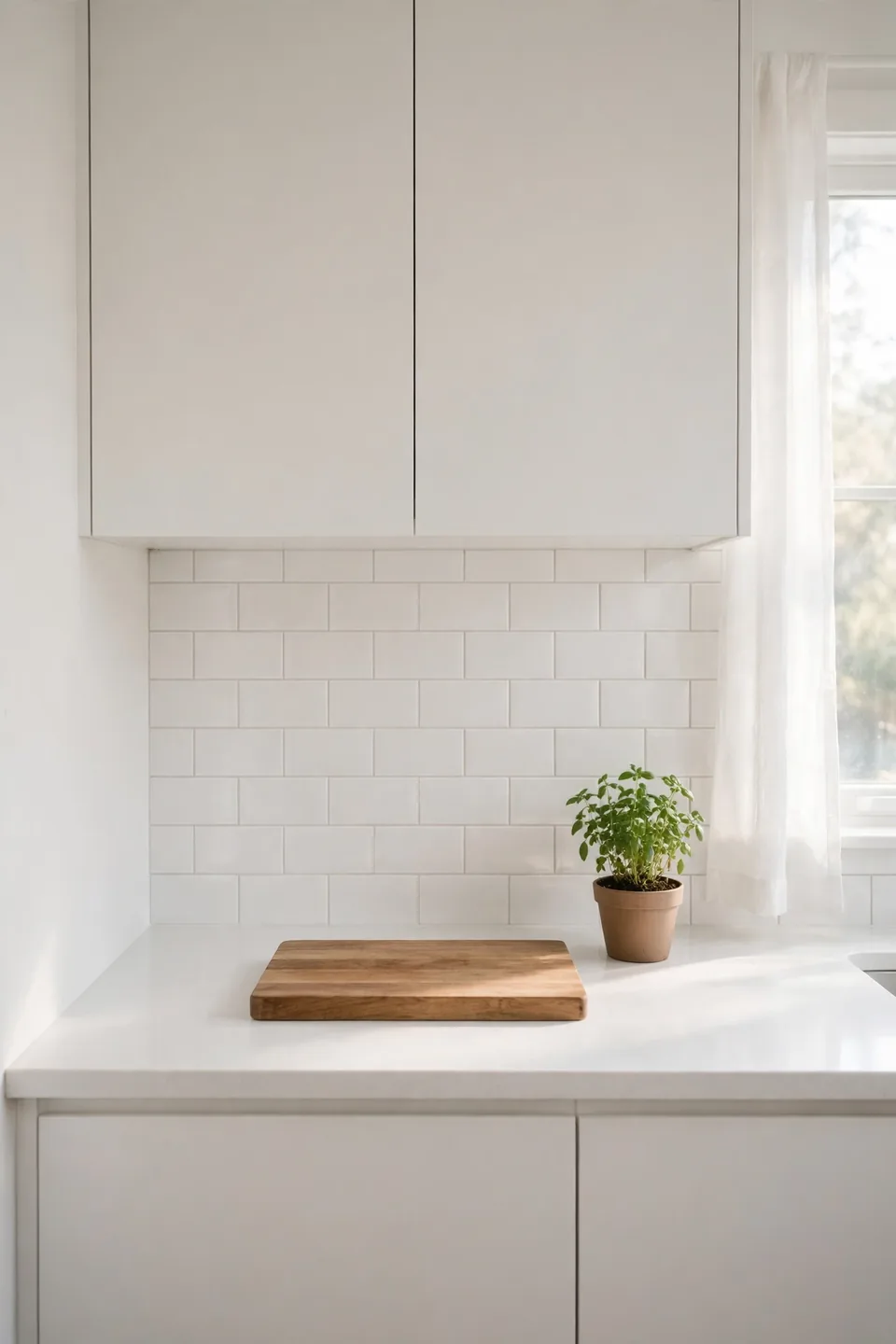
Your counters are the main workspace of the whole kitchen, so they deserve first priority. Everything sitting out should earn its spot daily. Clearing them first gives you an instant win and makes every later step easier. Here is how to decide what stays and what goes.
- Pull everything off the counters and group similar items together so you can see the full picture.
- Keep out only what you use every single day, like the coffee maker or knife block. Store the rest.
- Find a home inside a cabinet or drawer for each removed item before you finish. No homeless gadgets.
- Wipe the cleared counters clean. An empty, shining surface will motivate you to keep it that way.
Use Vertical Wall Space
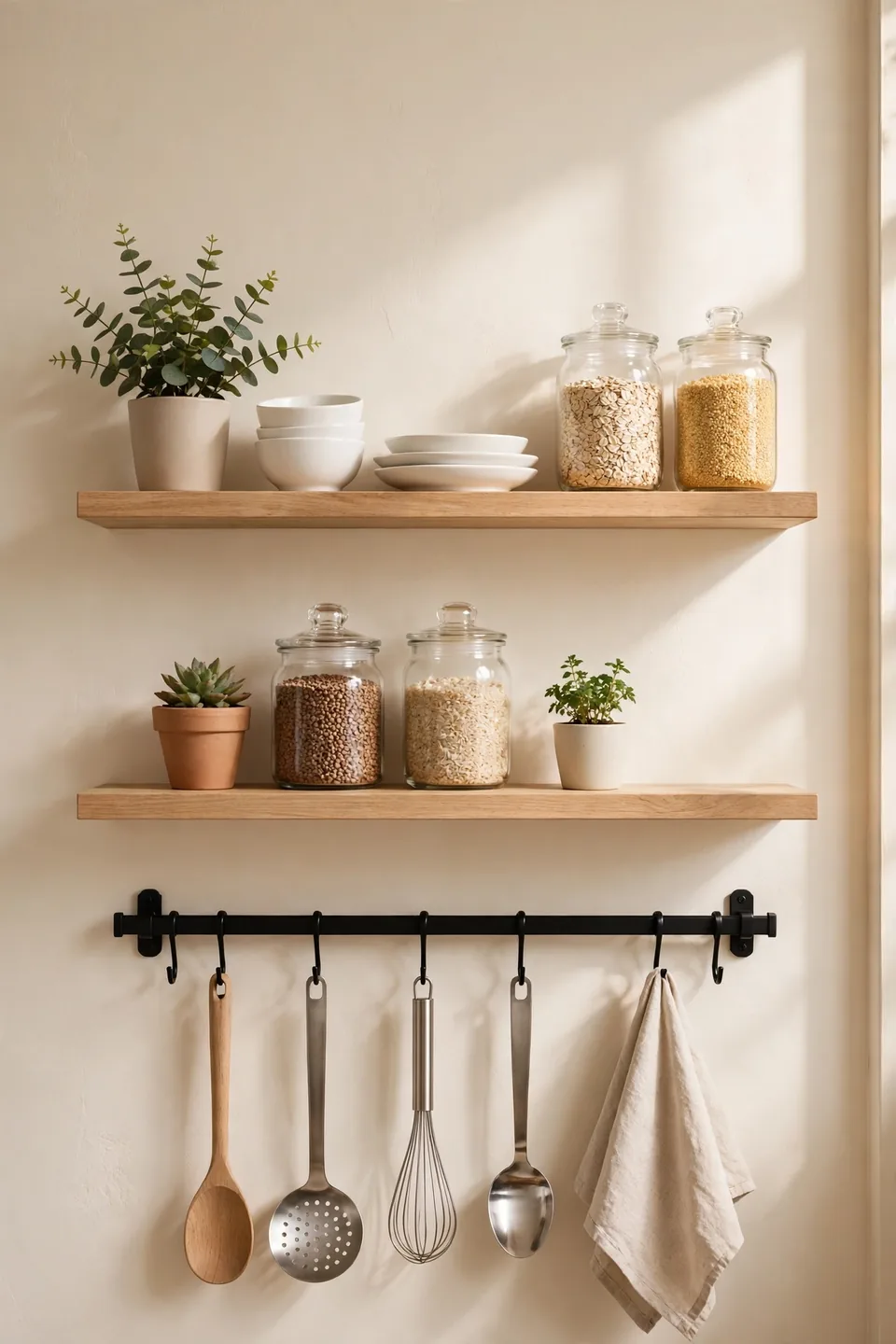
Quick Tip: The walls above your counters are free real estate. Most small kitchens waste this space completely. A single shelf or rail can hold what an entire cabinet shelf holds.
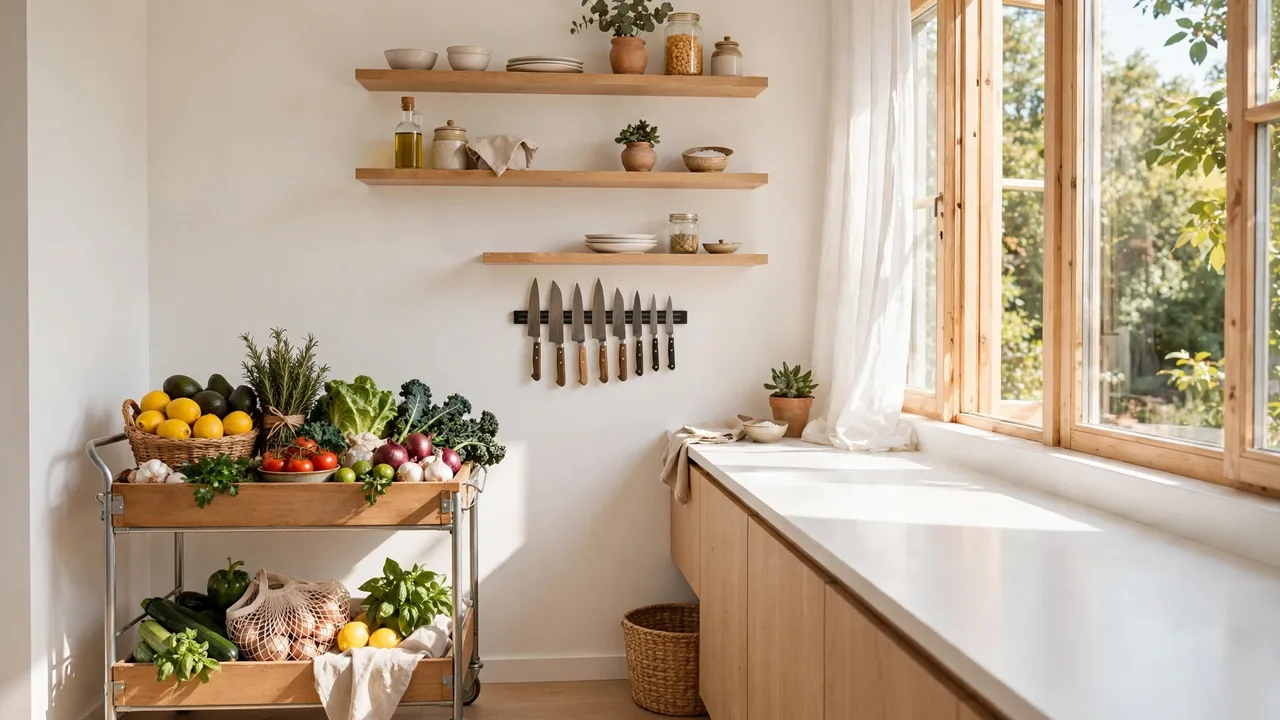
Look up and notice how much empty wall you have. Floating shelves hold dishes, spices, and glasses within easy reach. A mounted rail with hooks keeps utensils off the counter and right where you cook. Going vertical costs little and gives back a lot of room.
Choose Multi-Use Tools
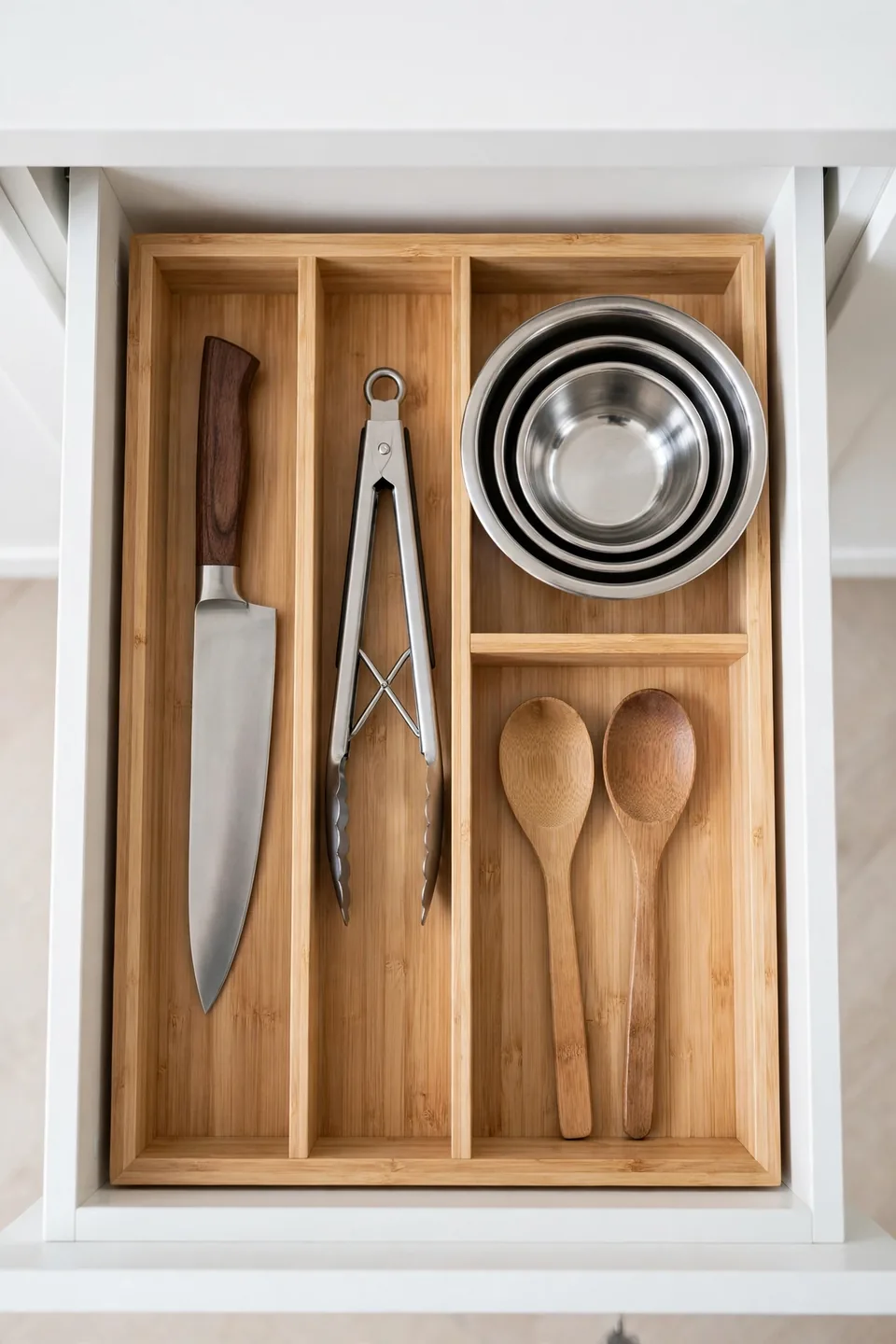
Common Mistake: Most people buy a separate gadget for every single task. A tiny kitchen ends up holding a garlic press, an avocado slicer, and three kinds of peelers. Each one eats drawer space you do not have.
The Fix: Choose tools that do more than one job well. A good chef knife replaces a drawer of specialty cutters. A colander that fits over the sink doubles as a strainer and a steamer basket.
Walk through your drawers and ask what each tool does. If the answer is only one thing you rarely do, let it go or donate it. Keep the flexible workers: sturdy tongs, a large cutting board, and nesting bowls. Fewer tools mean faster cooking and much calmer drawers.
Add a Rolling Island or Cart
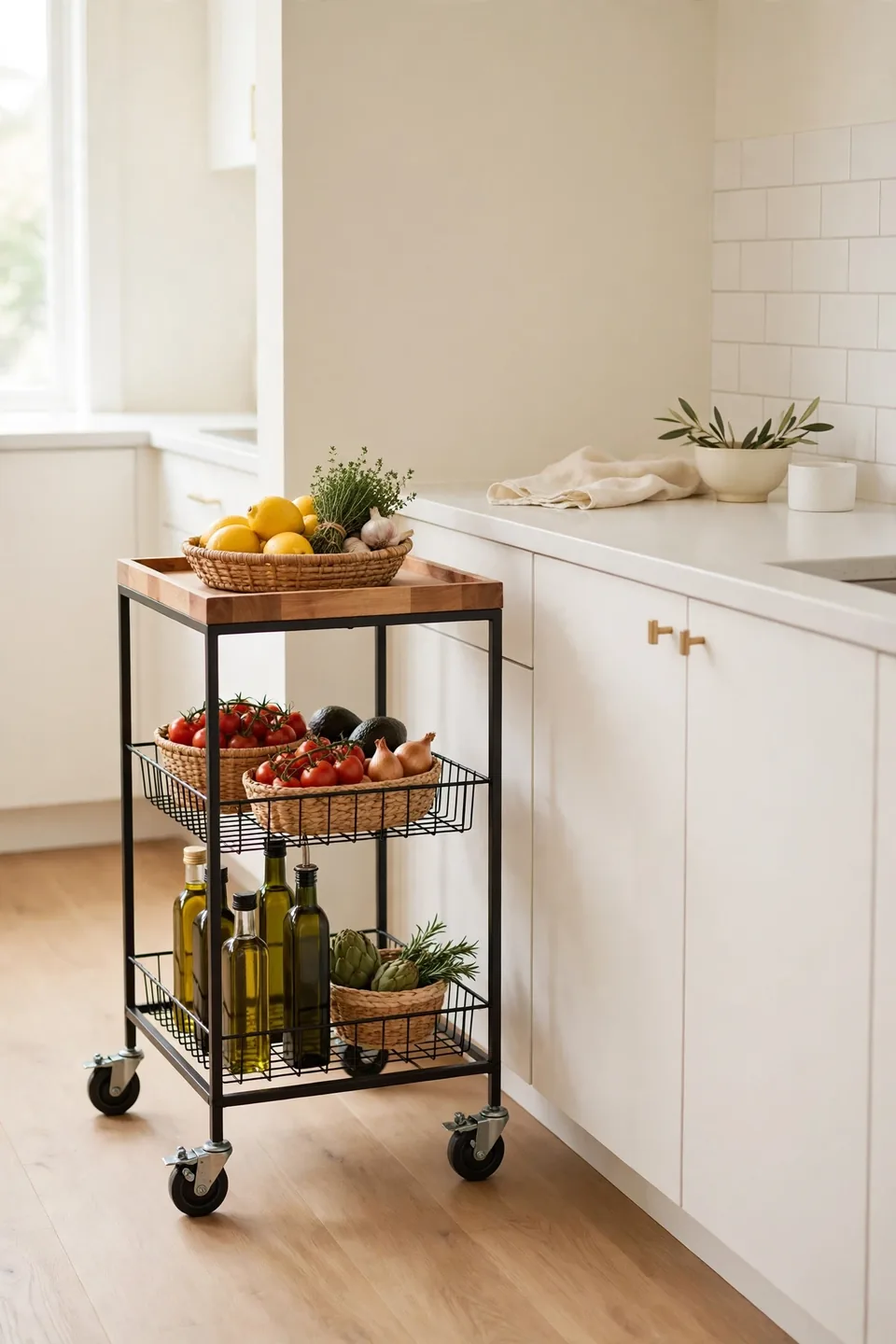
What You Need:
- A slim rolling cart: pick one under 18 inches wide so it slides into narrow gaps.
- Locking wheels: they keep the cart steady while you chop and roll away for cleaning.
- Two or three tiers: shelves hold produce, oils, and small appliances in one spot.
- A butcher-block top: it doubles as extra prep space when counters run out.
- A measuring tape: measure your gaps first so the cart truly fits your kitchen.
A rolling cart is the closest thing to adding square footage without construction. Park it beside the counter while you cook, then roll it into a corner when guests arrive. I have seen this make a real difference in galley kitchens where every inch matters.
Organize the Pantry Tight
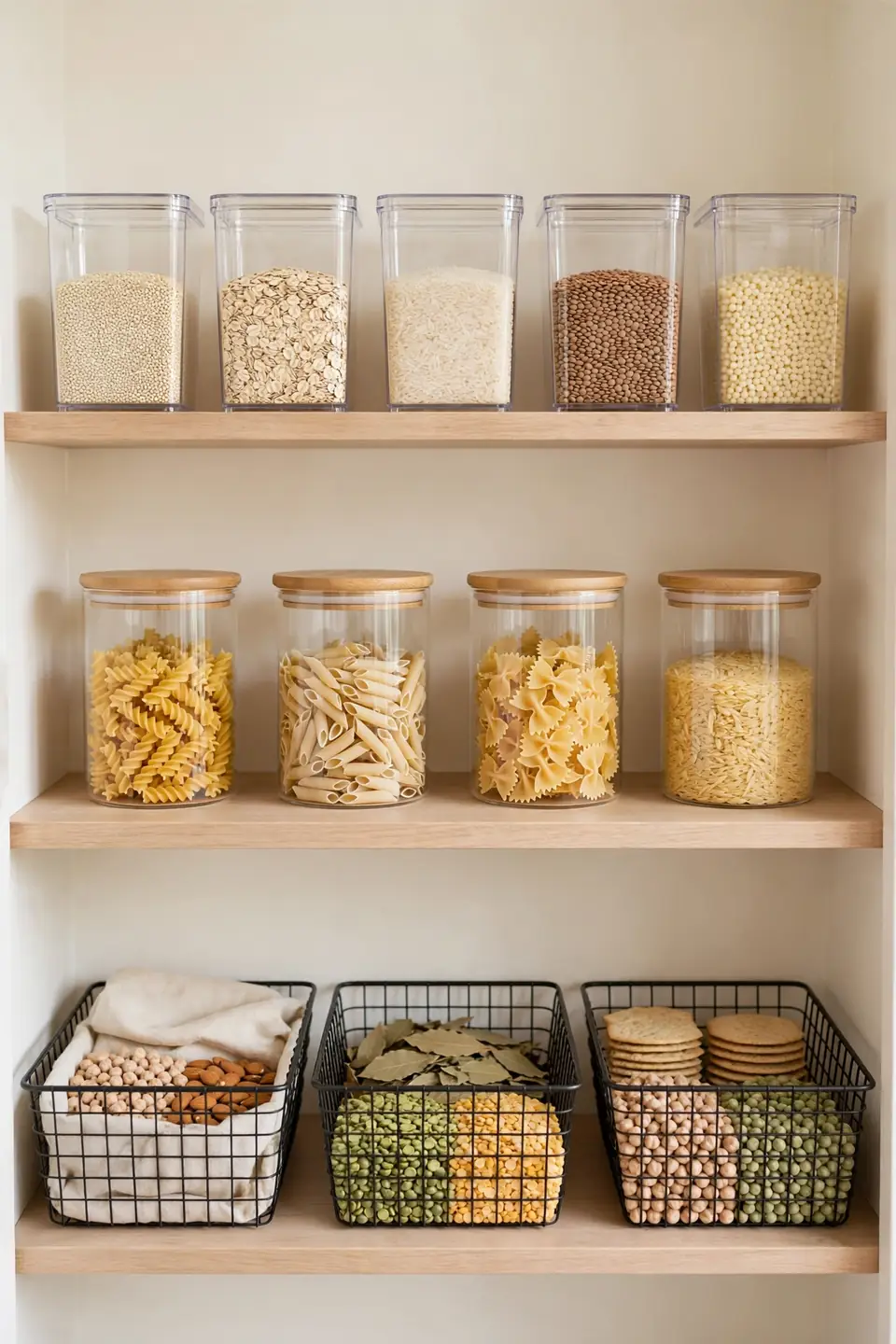
Before: Bags half-open, cans stacked sideways, and spices lost in the back. You buy duplicates because you cannot see what you have. Cooking starts with a frustrating search every time.
After: Clear bins show every category at a glance. Labels tell you where things live. You grab what you need in seconds and the shelves stay neat for weeks.
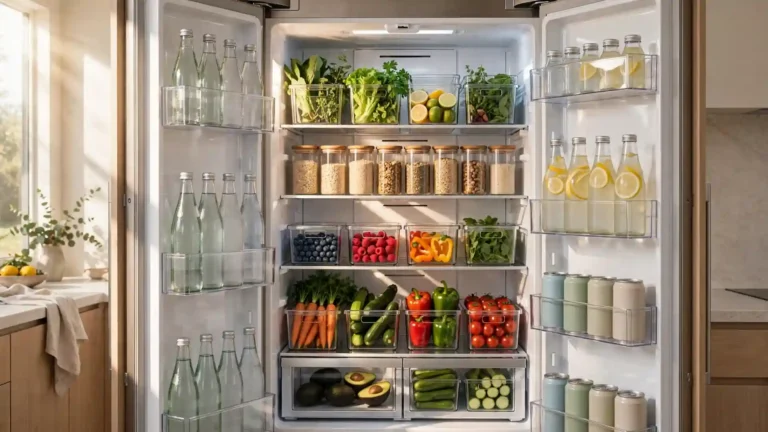
A tight pantry is one of the fastest ways to learn how to maximize space in small kitchens because food storage eats more room than people expect. Decant dry goods into square containers that stack without wasted gaps. Group by meal type so dinner comes together fast.
Use Magnetic and Hook Storage
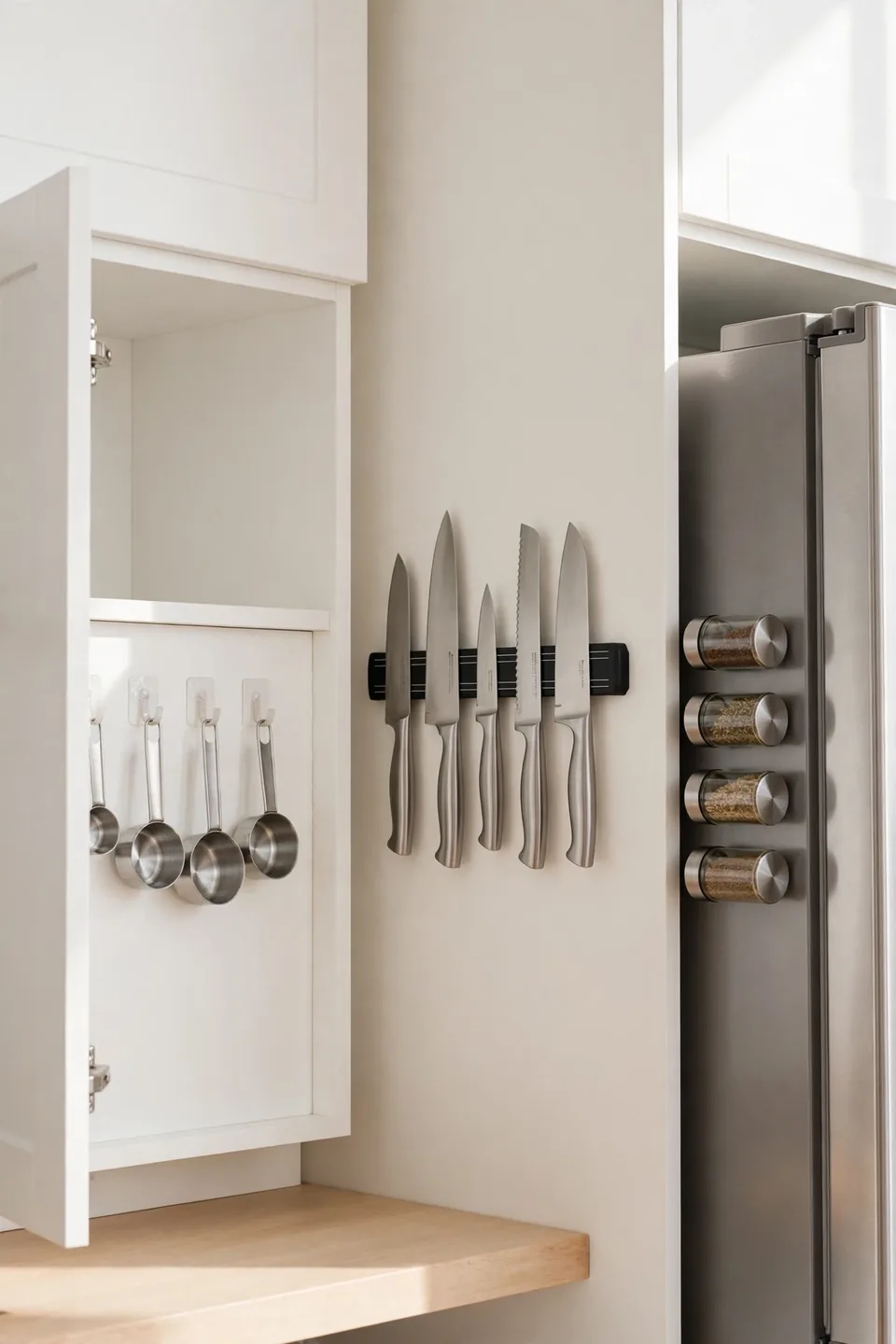
Do This:
- Mount a magnetic strip on the wall to hold knives safely off the counter.
- Hang measuring cups and utensils on adhesive hooks inside cabinet doors.
- Stick a magnetic spice rack on the fridge side to free a whole shelf.
- Use an over-sink shelf to keep soap and sponges off the counter edge.
Avoid This:
- Avoid overloading hooks beyond their weight limit or they will peel off.
- Avoid placing magnets near the stove where heat weakens their grip.
- Avoid hanging heavy pots on drywall without proper anchors.
Magnets and hooks turn dead surfaces into working storage in minutes. The fridge side, cabinet doors, and empty wall gaps all become useful spots for tools and spices. Start with one strip or a few hooks, then add more only where you still feel the pinch.
Light It Up Right
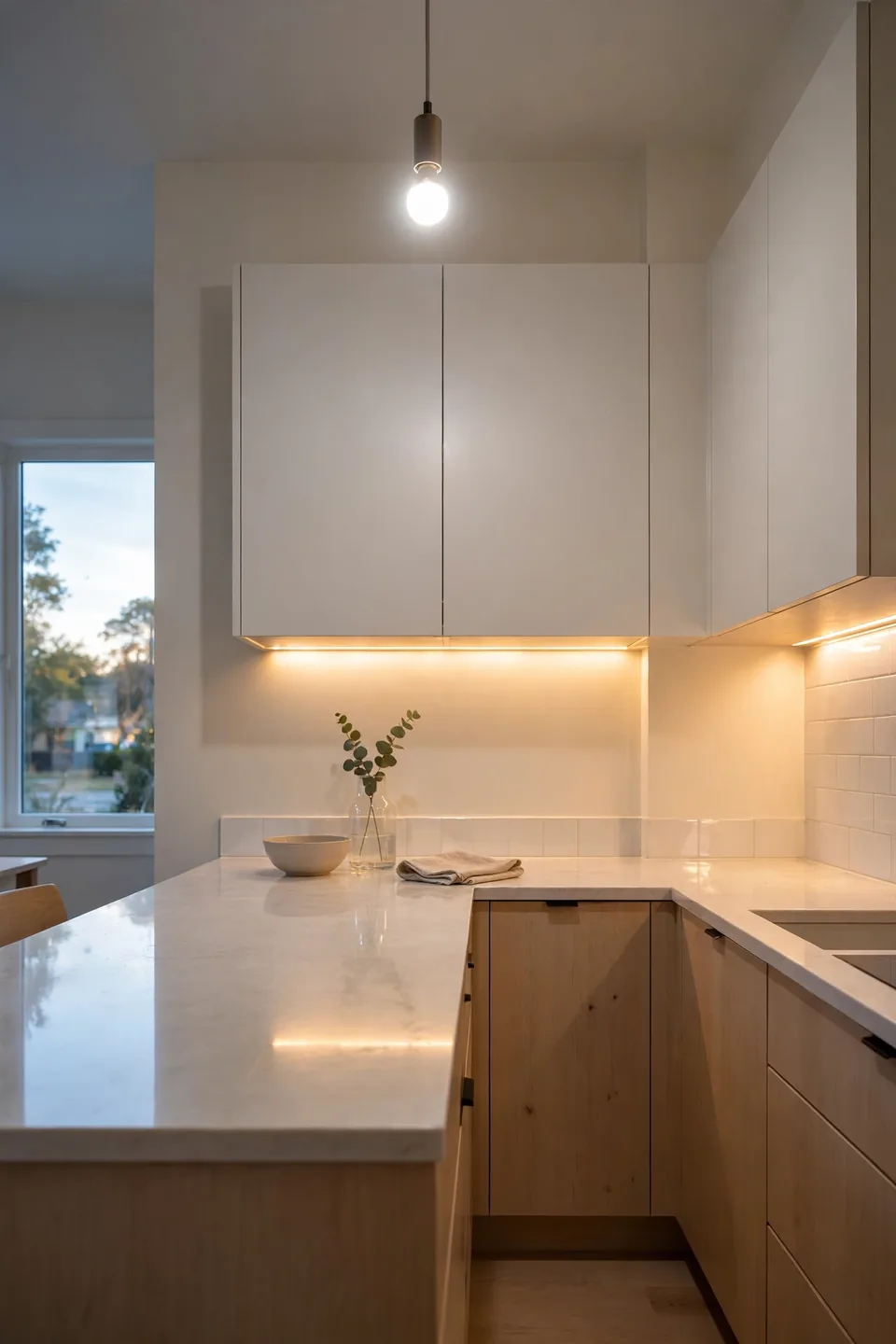
Time Needed: 1 hour | Difficulty: Easy | Cost: Low
Best For: windowless corners and dark galley kitchens
Pro Tip: daylight bulbs near prep zones cut eye strain
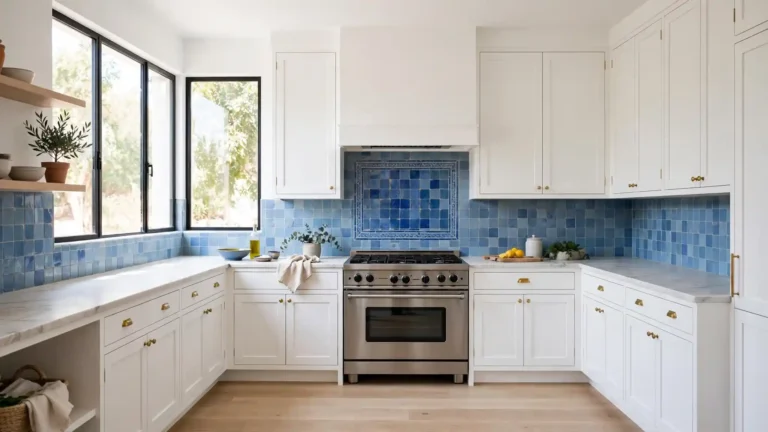
Dark corners make any kitchen feel smaller and harder to use. Bright light bounces off light surfaces and opens the room visually. Add LED strips under the cabinets and swap dim bulbs for daylight ones. Our guide on how to add storage to small bathrooms uses the same small-space thinking.
Common Space-Wasting Mistakes
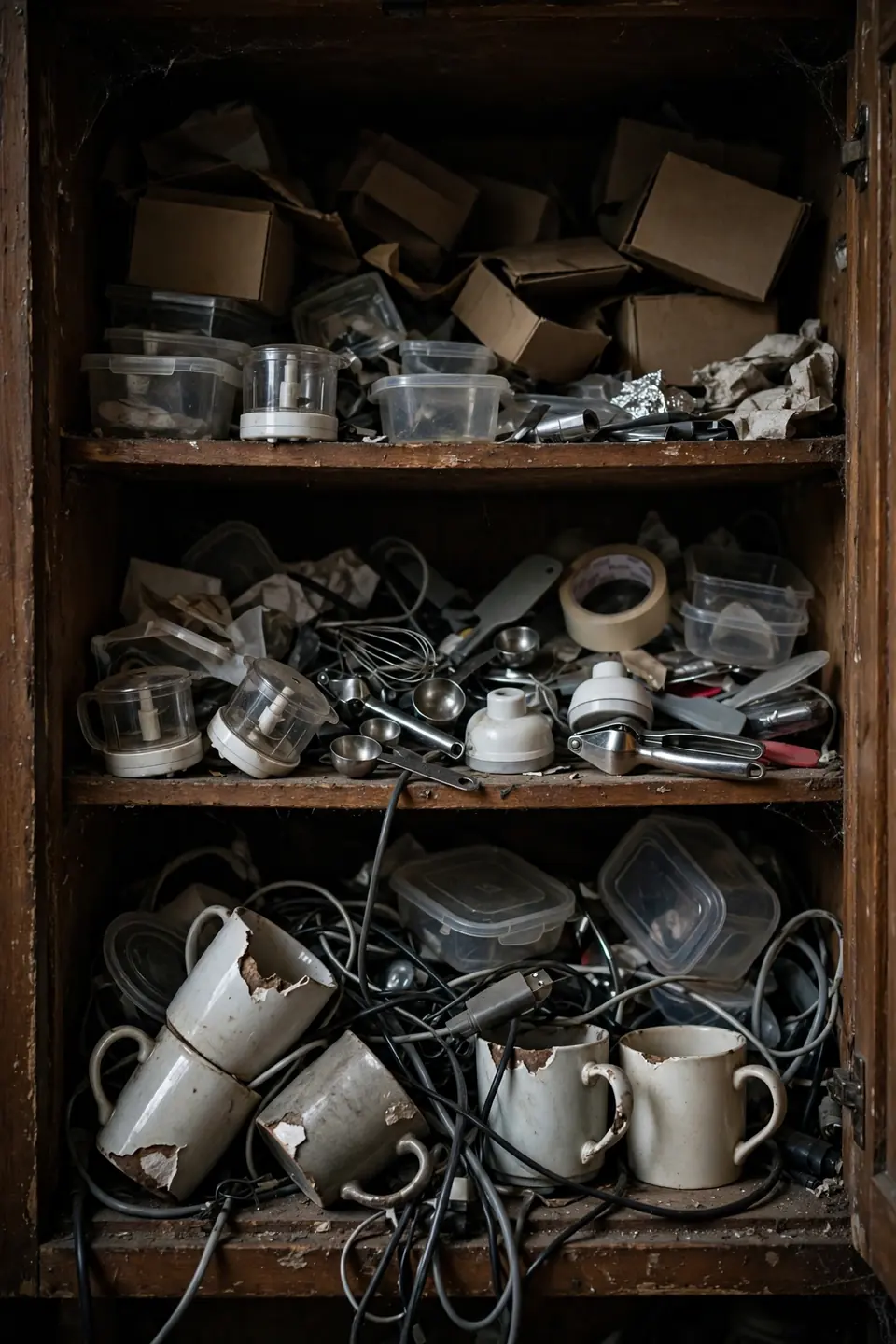
The biggest space waster is keeping things you never use. Broken gadgets, chipped mugs, and single-purpose tools fill cabinets fast and steal room from daily essentials. Another common error is storing items far from where you use them, which creates extra steps and extra clutter.
Deep cabinets without organizers are another trap. Items slide to the back and vanish, so you end up buying replacements you do not need. Fix this with pull-out bins or simple risers that bring everything forward. A kitchen you can see is a kitchen you can actually use.
Pro Tips for a Bigger-Feel Kitchen
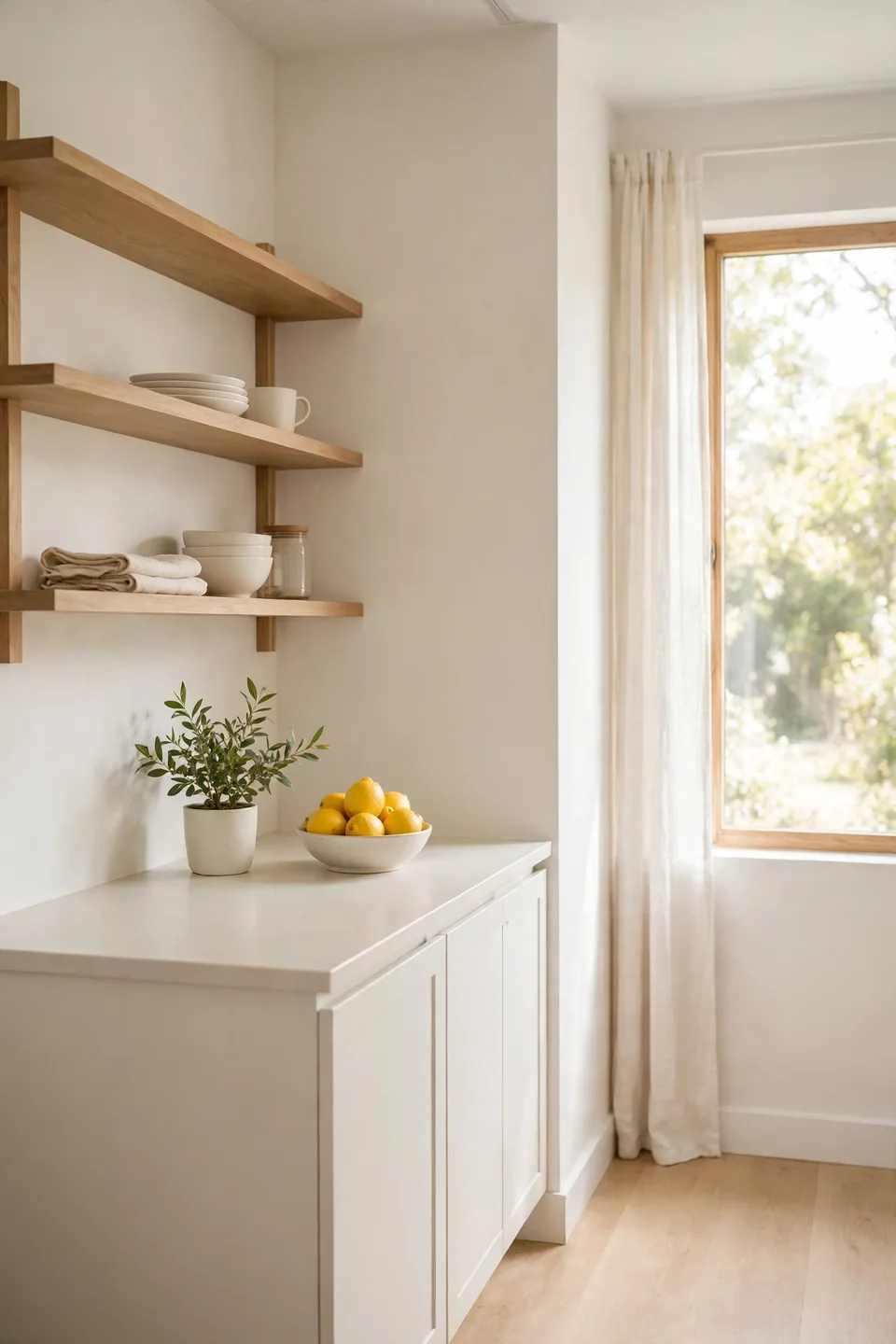
These final touches pull everything together into one calm, workable room. None of them cost much money, and each one makes the space feel noticeably larger. Pick the two ideas that fit your kitchen best and put them into action this week.
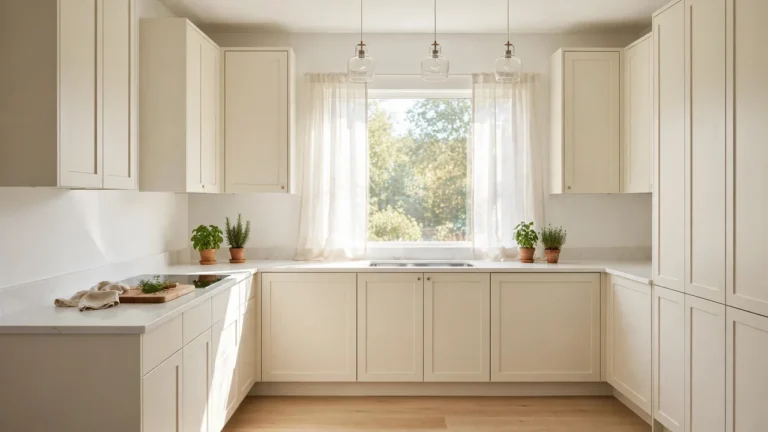
- Stick to a light color palette on walls, shelves, and small appliances so the room reads as one open space.
- Keep one stretch of counter completely clear as a landing zone for cooking and serving.
- Review your setup every season and remove anything that crept back in without a real job.
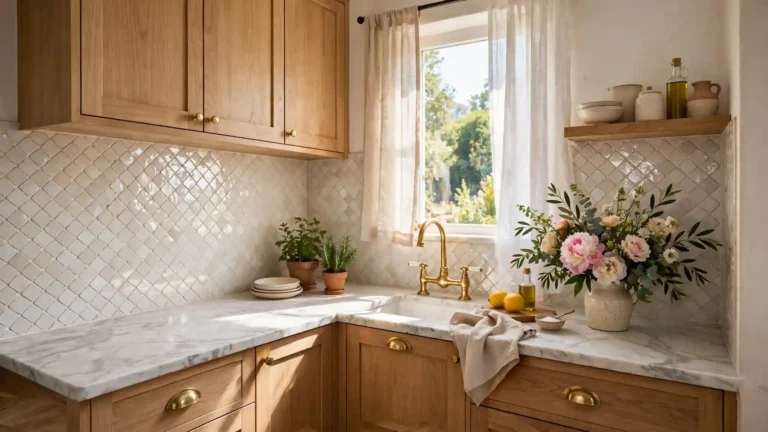
- Add a small plant or fresh fruit bowl for life and color without taking up work space.
Conclusion
Your small kitchen does not need more square feet. Learning how to maximize space in small kitchens is about smart systems, not big renovations. Clear counters, vertical storage, and multi-use tools will change how the whole room feels every single day.
Start with one section from this guide today. Small steps build real momentum, and you will notice the difference by dinner time. Save this article on Pinterest so you can come back to it during your next kitchen reset.
I have seen how making this one change, clearing the counters first, can completely shift how a kitchen feels. Try it this weekend and see for yourself.