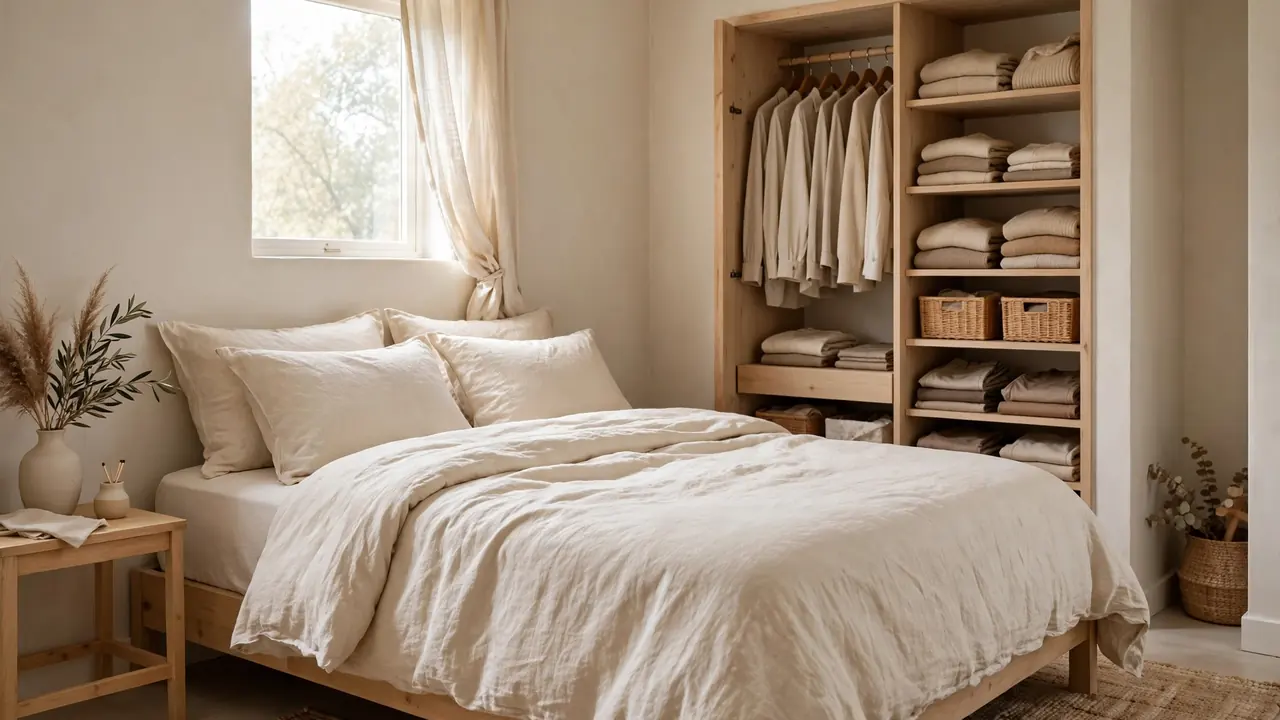
22 Small Bedroom Wardrobe Organization Ideas for Tidy Style
Finding small bedroom wardrobe organization ideas that actually work changed how my mornings feel. A cramped closet used to mean wrinkled shirts, missing shoes, and that daily scramble before coffee. With a few smart tweaks, even the tiniest wardrobe can hold more while looking calm and tidy. The trick is thinking vertically, swapping bulky gear for slim versions, and giving every category a clear home. Small bedrooms demand this kind of planning because there is no spare corner to hide clutter. Below, you will find 22 practical approaches that make the most of every inch.
I have tested these in real compact bedrooms, including rentals where drilling was not allowed. Many need only basic tools or no tools at all. One more resource worth a look is our guide to modern kitchen cabinet hardware ideas, which shares hardware tricks that transfer beautifully to wardrobe doors and drawers. When your closet finally works the way you live, the whole bedroom breathes easier. Let us walk through each upgrade and find the ones that fit your space, your budget, and your daily routine.
Velvet Slim Hangers

Swapping chunky plastic hangers for slim velvet ones instantly doubles usable rod space. Each hanger is only a few millimeters thick, so fifty shirts suddenly occupy the span that thirty used to need. The soft coating grips fabric, which means silk blouses and knit tops stop sliding onto the closet floor. In my experience, this single switch rescues more inches than almost any other change. It also doubles as a drying rack for delicates.
Stick to one color so the rod looks uniform and calm instead of chaotic. Matching hangers also make it easier to spot gaps, which shows exactly how much room you have left. Keep five spares at the rod’s end for laundry day. This small investment pays off every single morning.
Double Rod Layers
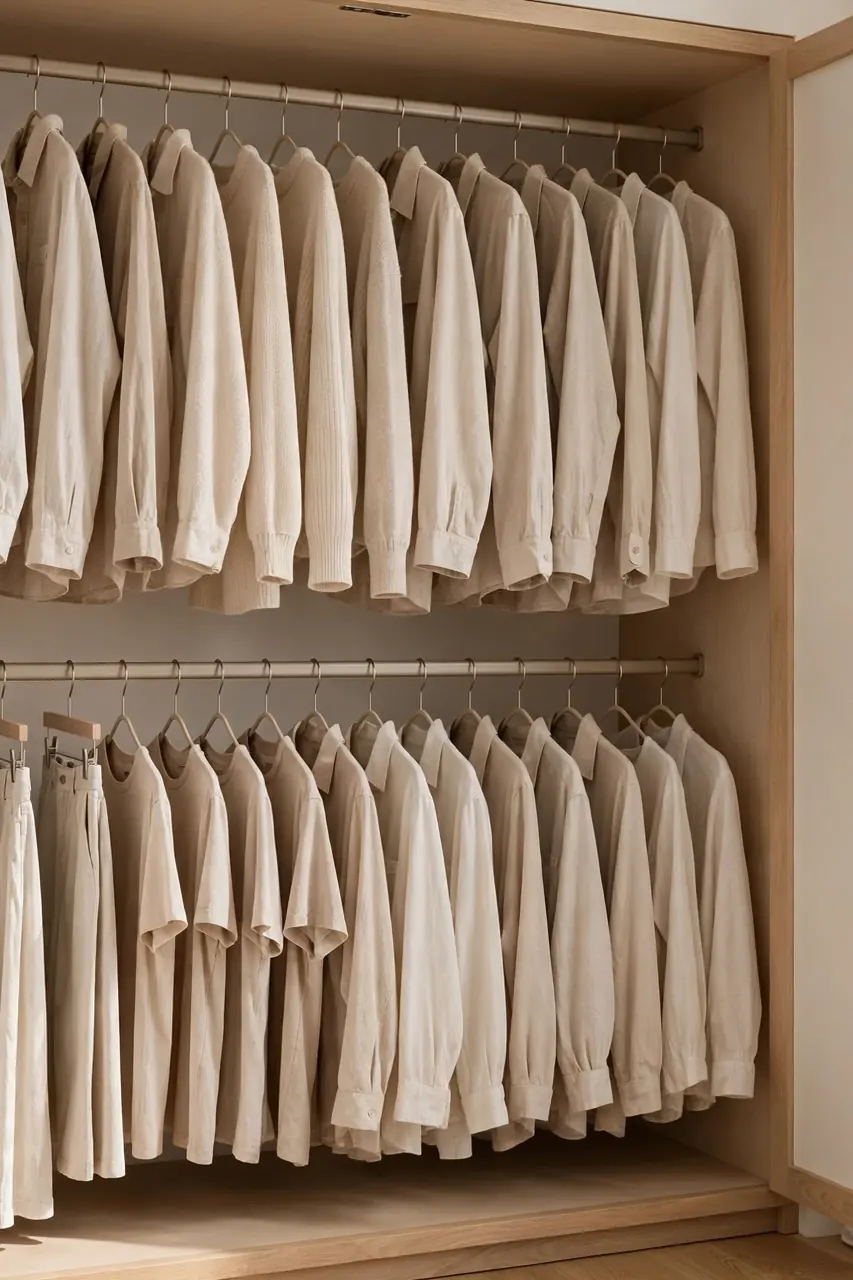
- Mount a tension rod midway down the wardrobe to create two hanging levels where one stood before.
- Hang tops and jackets on the upper rod, then place skirts, pants, and folded-over jeans below.
- Leave six inches between the rods so hangers slide freely without snagging the lower garments.
- Use the bottom strip of floor space for a low shoe rack or a flat storage box.
- Renters can remove tension rods in seconds, leaving zero holes behind.
This setup works best when the wardrobe is at least four feet wide. Measure twice before buying the rod so it fits snugly. I have seen this work well in many cases, especially in older apartments with shallow closets. The result feels like gaining a second closet overnight.
Door Back Hooks
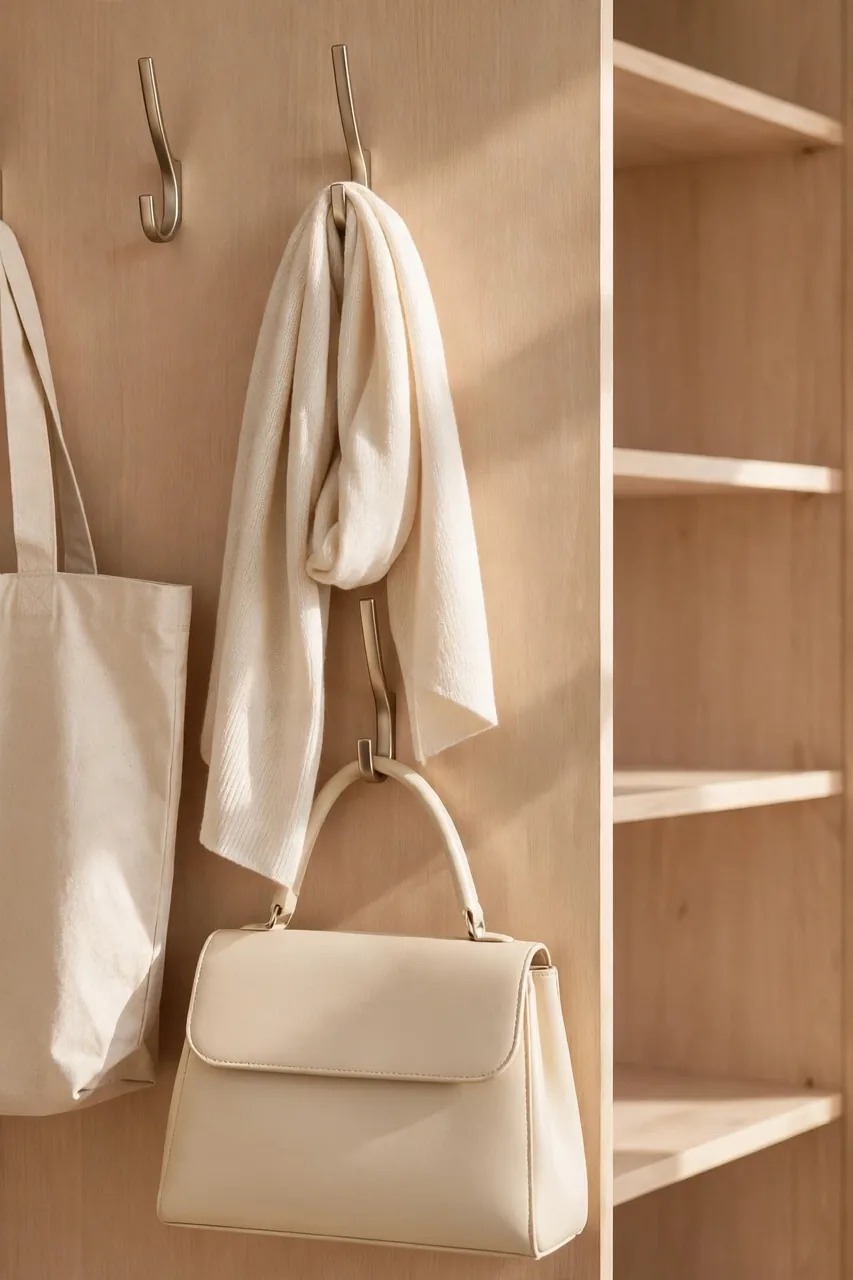
Quick Tip: Choose slim over-door hooks that need no screws or drilling. Hang tomorrow’s outfit, a robe, and your go-to bag there each evening. This keeps the main rod free for daily wear and speeds up busy mornings. Felt pads behind each hook stop scratches on the door.
Door space is the most overlooked storage in a small bedroom. Hooks turn a flat surface into a staging area for outfits, scarves, and pajamas. Place them at two heights so everyone in the house reaches comfortably. The best part is how this one change reduces morning chaos. I have noticed that laying out clothes the night before cuts decision fatigue in half.
Shoe Cubby Towers
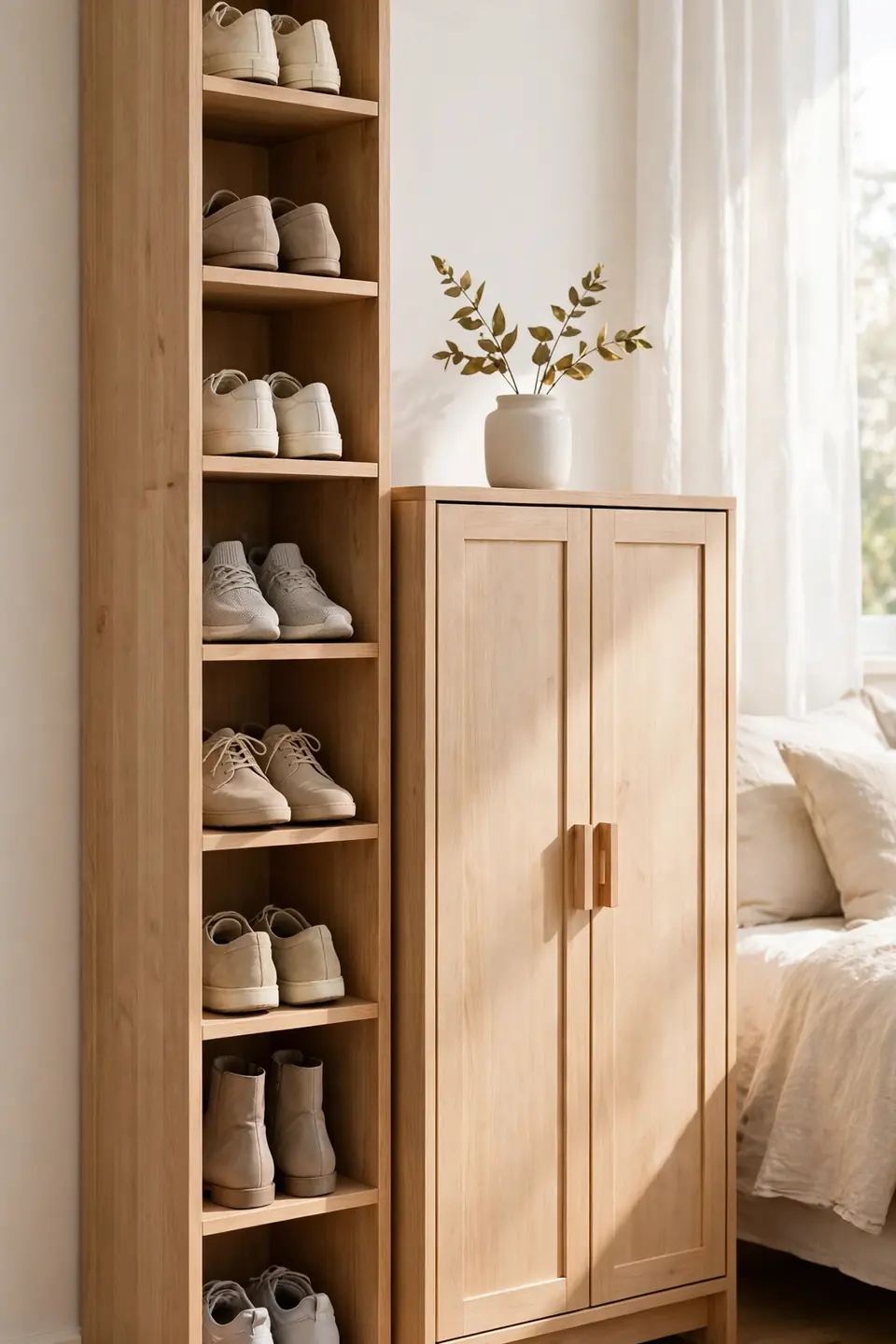
BEFORE: Shoes piled on the wardrobe floor turn into a tangled mess within days. Pairs separate, heels snag on fabric, and finding a match eats precious minutes. The floor space this wastes could hold so much more.
AFTER: A narrow cubby tower lines one wardrobe side, each square cradling a single pair. Every shoe stays visible, protected, and easy to grab. The floor stays clear, and the whole closet looks twice as large.
Measure your tallest boots before buying the tower so nothing gets crushed. Place daily pairs at eye level and occasion shoes higher up. This layout ends the one-shoe scavenger hunt for good.
Folded Shelf Stacks
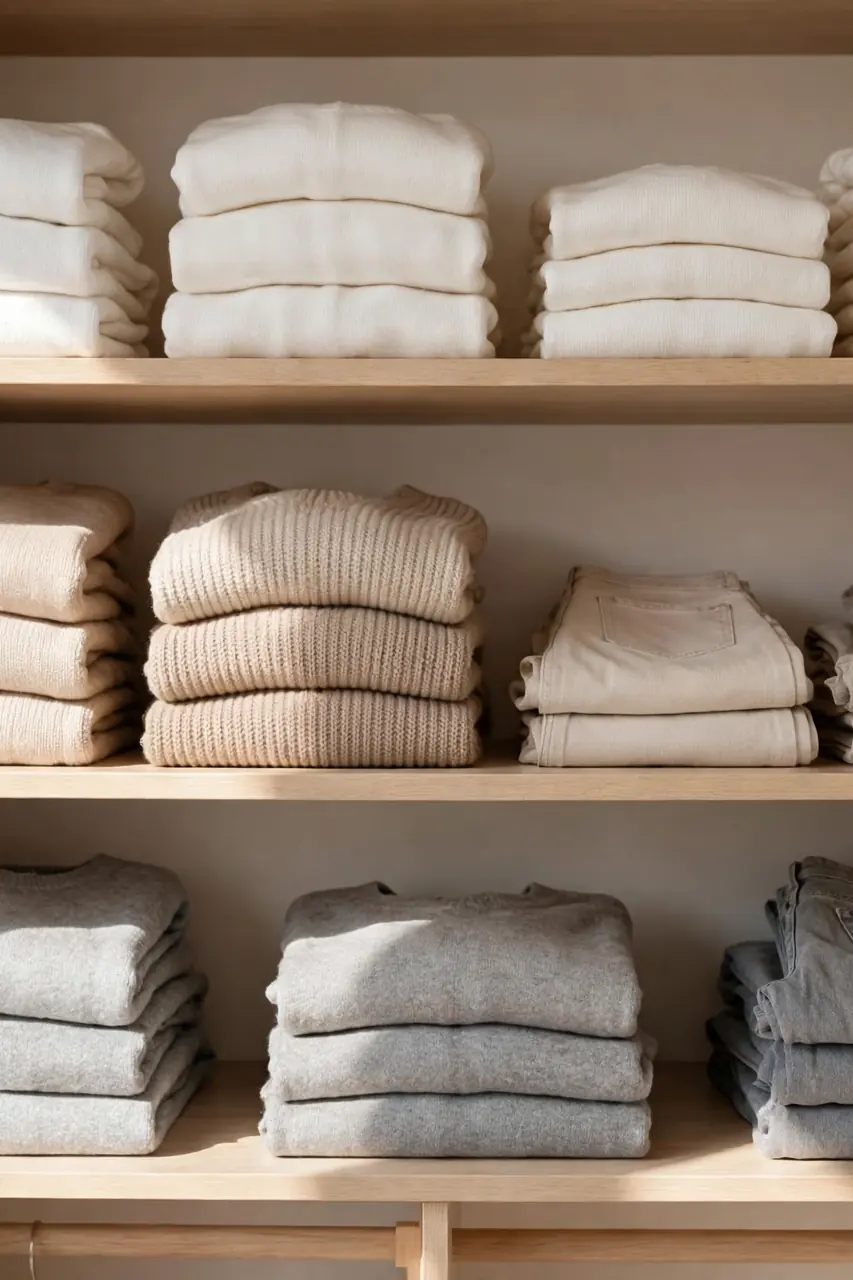
- Sort clothes by type, keeping knits, tees, and jeans in separate piles.
- Fold each item into a uniform rectangle so stacks stand straight and even.
- File stacks vertically like books so every piece stays visible from the front.
- Cap each stack at six items to stop towers from toppling over.
- Leave a finger-width gap between stacks for easy pulling.
Vertical filing is the secret behind those impossibly tidy closet photos. When every fold shows its edge, you grab what you need without disturbing the rest. I have tried rolling instead of folding, and both work well. Pick the method that feels natural and stick with it.
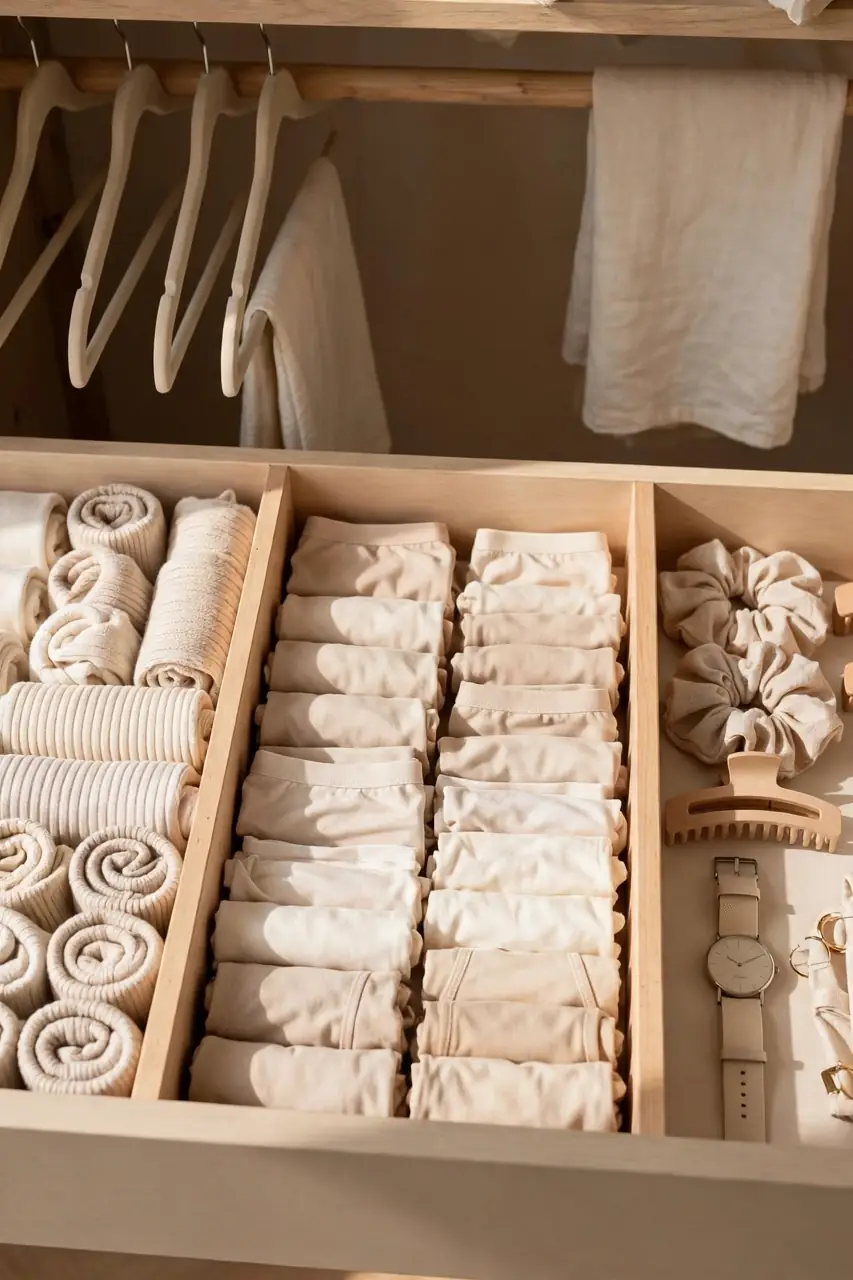
Drawer Dividers Grid
| Feature | Wooden Grid | Adjustable Plastic |
|---|---|---|
| Cost | Higher upfront | Budget friendly |
| Fit | Custom cut | One size flexes |
| Look | Warm, premium | Clean, simple |
| Durability | Lasts for years | May warp over time |
| Cleaning | Wipes clean | Dishwasher safe |
Dividers turn one deep drawer into a grid of small homes for socks, underwear, and accessories. Everything gets a boundary, so nothing migrates into a jumbled pile. Measure the drawer interior first, then choose a grid that fits without forcing. In my experience, the wooden grid feels more permanent and satisfying, while plastic works perfectly for renters who need flexibility. Either way, the drawer stops swallowing small items.
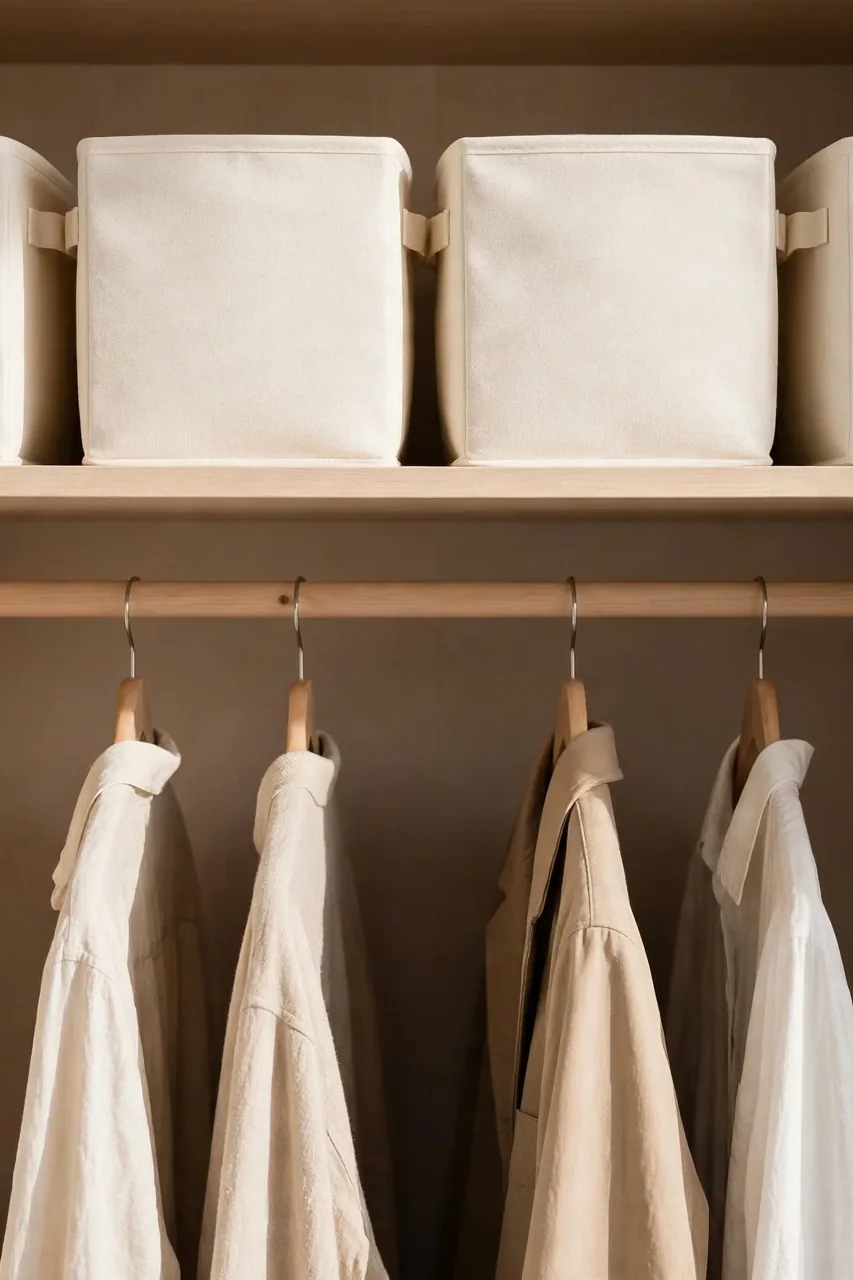
Top Shelf Bins
DO:
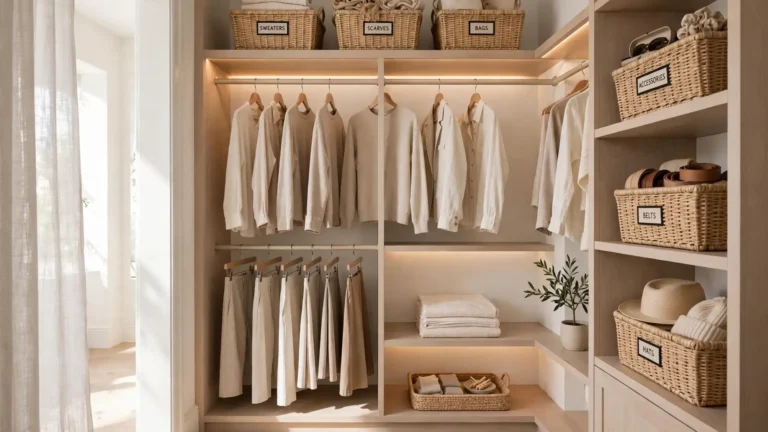
- Do choose bins that match your wardrobe color for a calm look.
- Do label each bin so guests and family find things fast.
- Do store off-season clothes and spare bedding up high.
- Do measure the shelf depth before buying bins.
DON’T:
- Don’t use open baskets that collect dust on the top shelf.
- Don’t overload bins until the lids stop closing properly.
- Don’t place daily items up high where they are hard to reach.
The top shelf is prime real estate for things you touch rarely. Matching bins hide visual clutter and protect contents from dust. Keep a small step stool nearby so nothing becomes a forgotten black hole.
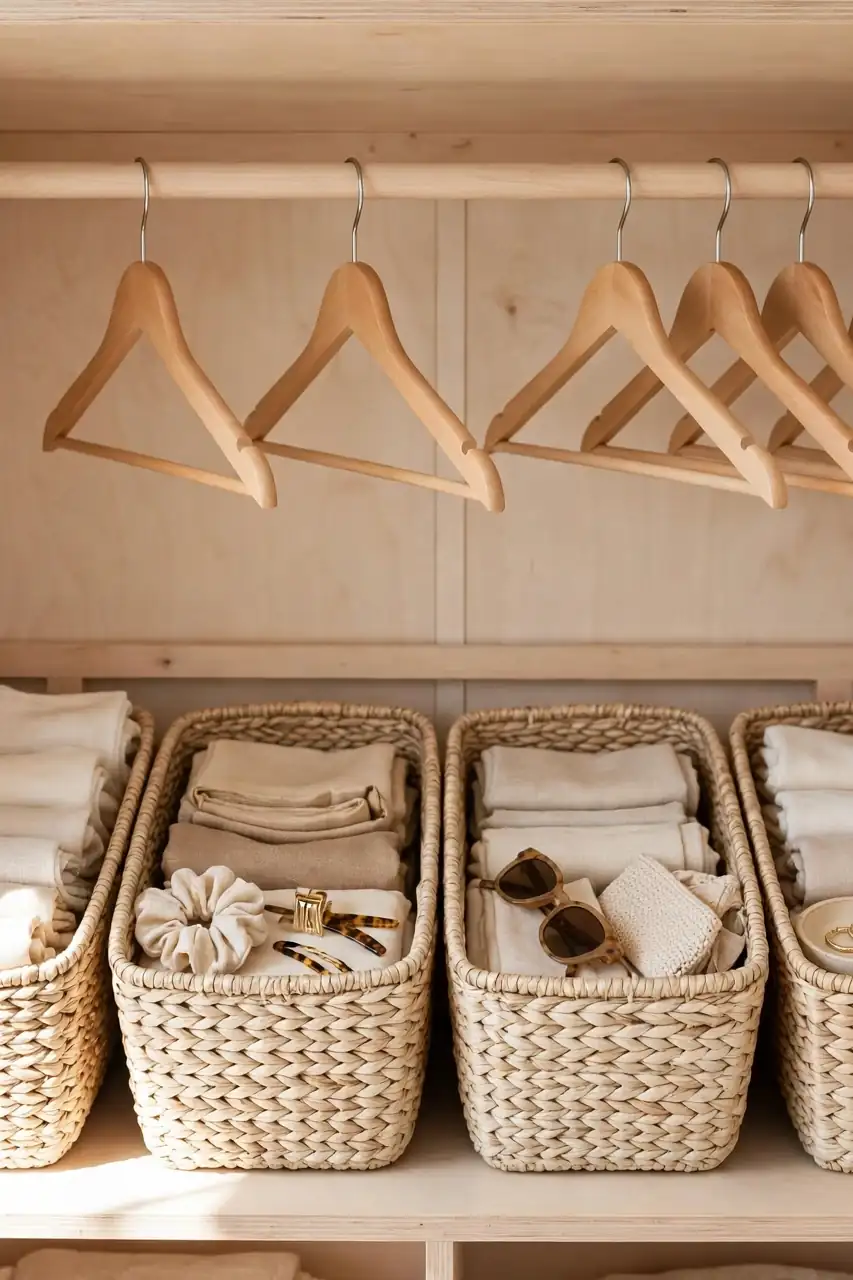
Under Rod Baskets
Cost: Low, most baskets run under twenty dollars.
Time: Under an hour to arrange.
Skill Level: Beginner, no tools needed.
Best For: Scarves, bags, and workout gear.
The dead space under hanging clothes is perfect for low baskets that slide in and out. Woven or canvas styles keep the look soft and natural. Assign one basket per category so scarves never tangle with gym gear. Pull-out access means you see everything at a glance instead of digging through piles. I have noticed that baskets work best when they are shallow enough to lift with one hand. Deep ones become caves where small items disappear.
Lightweight Ladder Rack
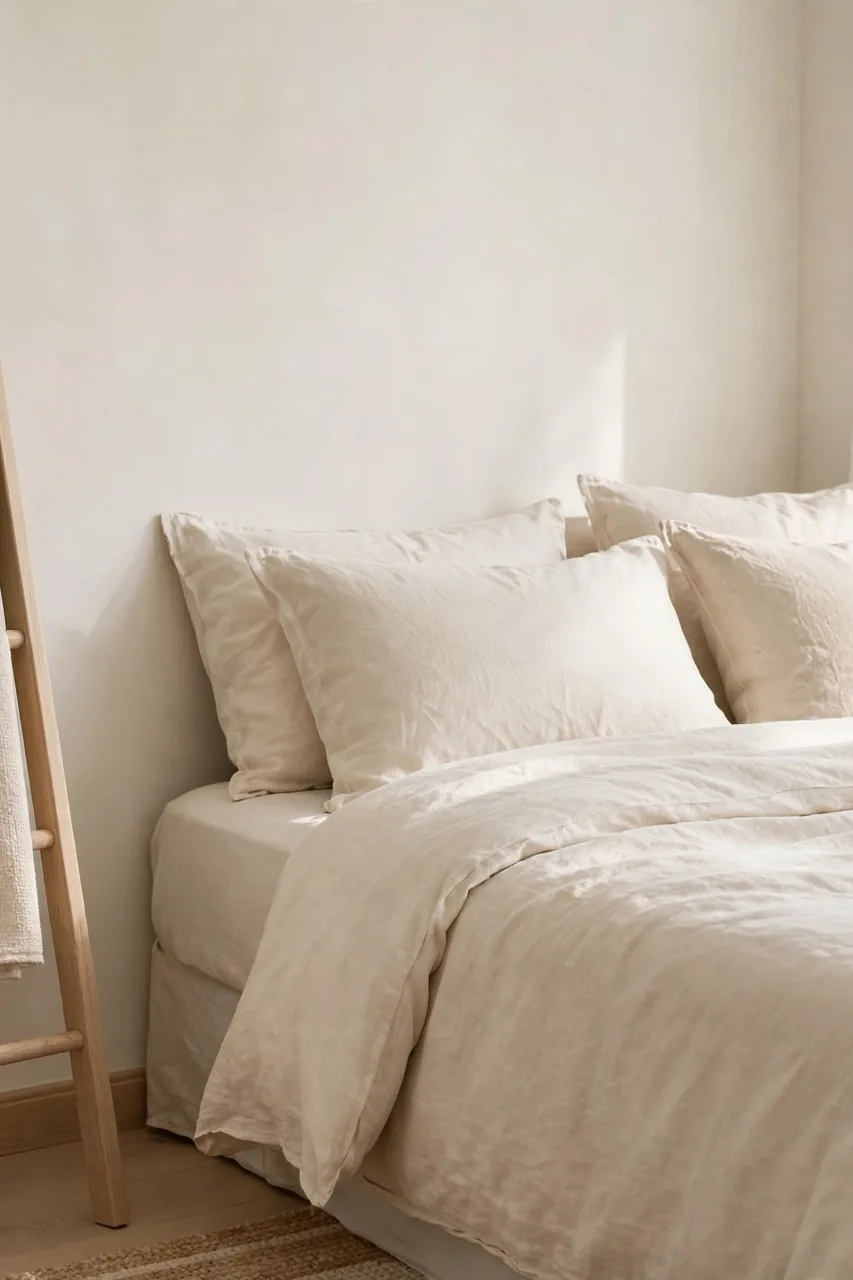
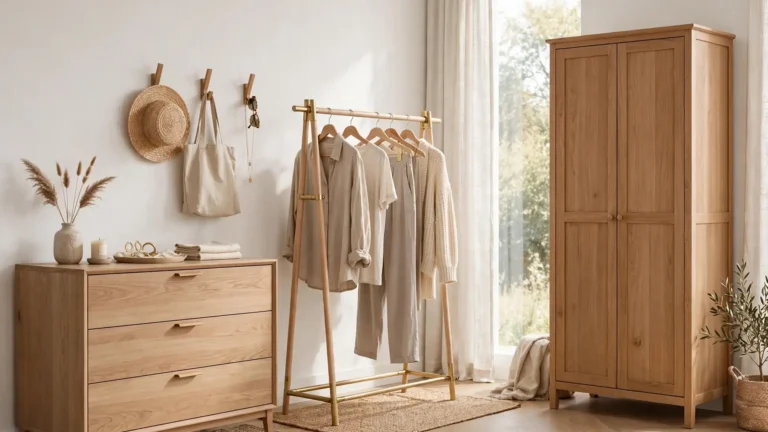
A leaning ladder rack adds hanging space without a single screw. Drape tomorrow’s outfit over the rungs, hang a tote from a hook, and let a trailing plant soften the corner. The open frame keeps the room feeling airy instead of boxed in. Lightweight wood models move easily when you rearrange. It also doubles as a drying rack for delicates.
Style the rungs with intention so it reads as decor, not overflow. Three to four items per rung is plenty. Tuck it beside the wardrobe or behind the bedroom door where it stays handy but out of the way. This trick shines in rentals with strict no-drill rules.
Corner Wardrobe Turn
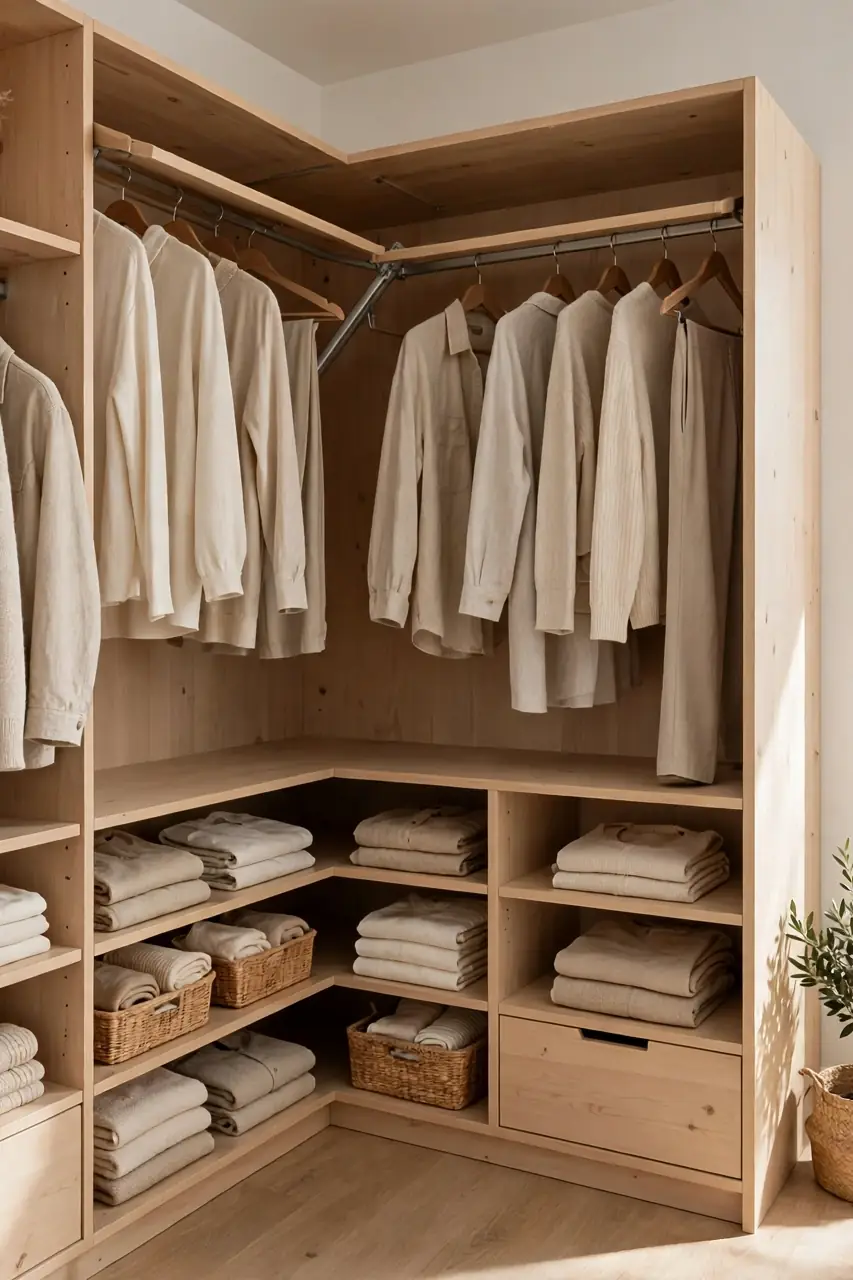
- Install an L-shaped rail in the wardrobe corner to reclaim dead space.
- Hang lesser-worn pieces there so prime rod space stays for daily favorites.
- Add a small battery puck light so the dark corner stays visible.
- Use slim hangers here too, since corners punish bulky ones.
- Rotate seasonal items through the corner to keep it useful year-round.
Corners inside wardrobes often become black holes where clothes go to be forgotten. An angled rail pulls that space back into service. You will be surprised how many extra garments fit once the corner works for you. Keep a small step or grabber nearby for high hooks.
Slim Tie Racks
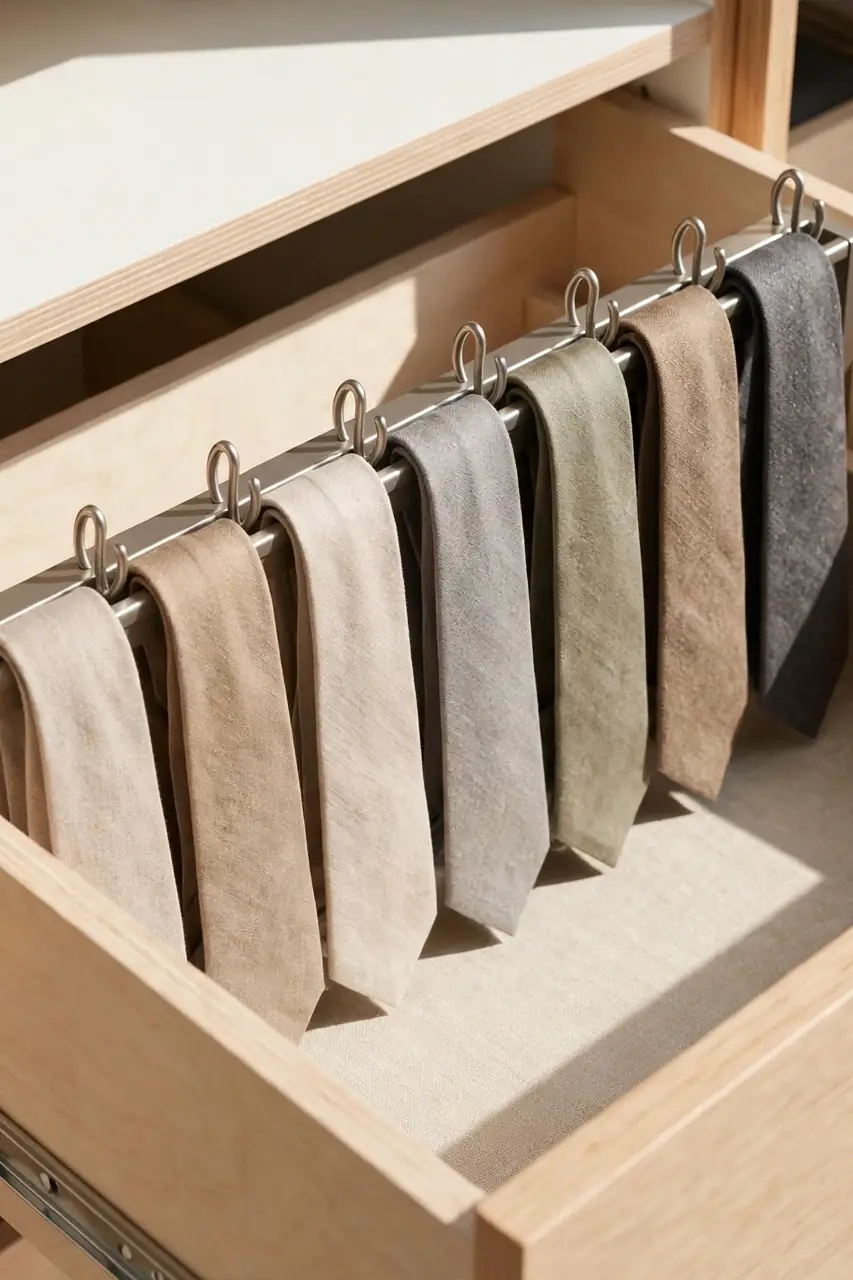
Quick Tip: Mount a pull-out tie rack inside a drawer or on the wardrobe side wall. Each tie gets its own slot, so patterns stay visible and nothing wrinkles. When refining your small bedroom wardrobe organization ideas, give small accessories the same planning as shirts and shoes.
Tie racks also work beautifully for scarves, belts, and lanyards. The pull-out motion brings everything into the light for quick choosing. Install it at chest height so you never bend or stretch. One rack typically holds twenty ties, which covers most collections with room to grow. Choose a rack with smooth ball-bearing slides so it glides silently every morning.
Seasonal Swap Bins
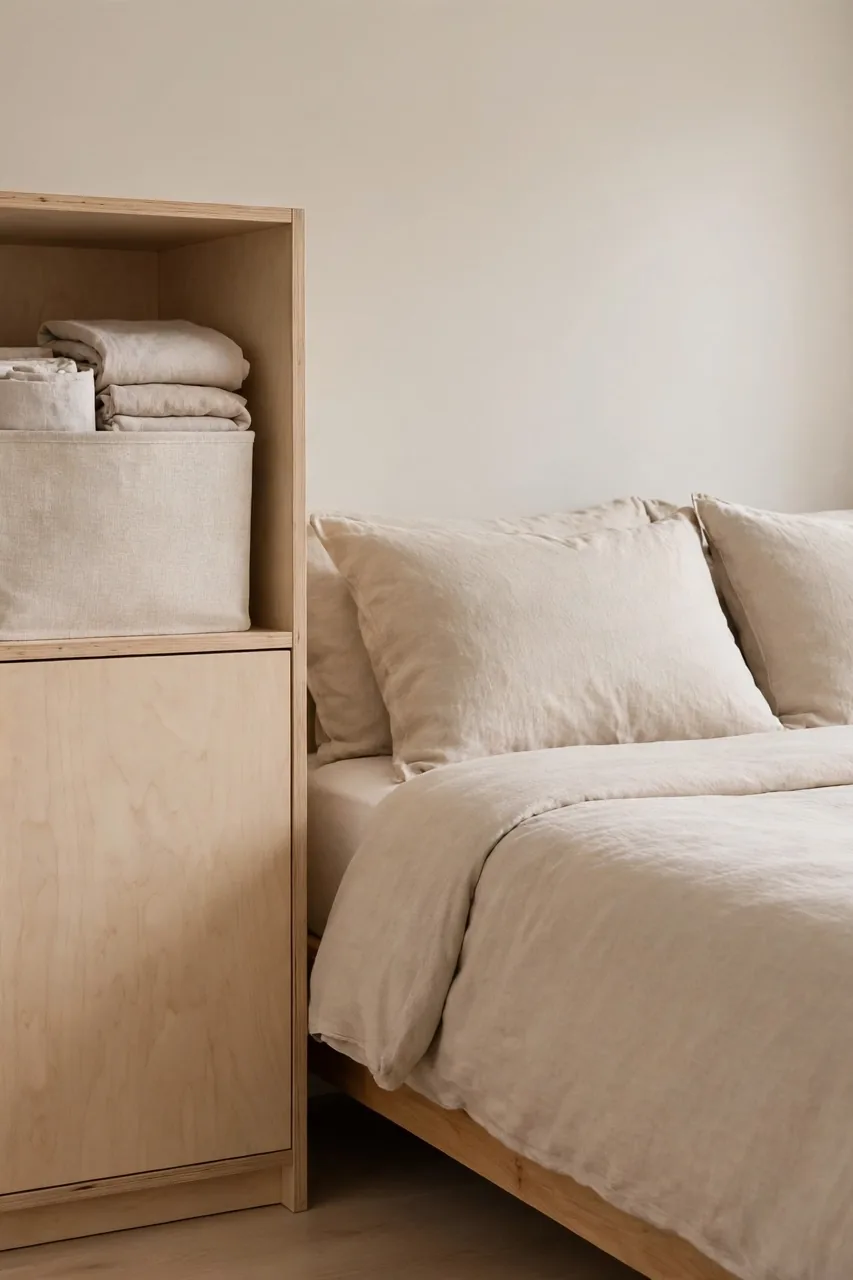
BEFORE: Winter coats crowd the rod all summer, and summer dresses hog space all winter. The wardrobe feels stuffed even though half the clothes are out of season. Finding anything requires shoving through garments you will not wear for months.
AFTER: Two labeled bins on the top shelf hold the off-season wardrobe. The rod breathes, outfits are all current, and mornings move faster. Swapping bins twice a year takes under an hour and feels like a fresh start.
Use breathable fabric bins so stored clothes stay fresh, and toss in a cedar block for good measure. Label each bin clearly with the season. This rhythm keeps the wardrobe right-sized all year.
Mirror Door Reflectors

- Clean the wardrobe doors so mirror panels or stick-on mirrors sit flat.
- Mount full-length mirrors centered on each door for a balanced look.
- Check that doors still open fully without mirrors hitting the frame.
- Add soft lighting nearby so the reflection brightens the whole corner.
Mirrored doors bounce light around a small bedroom and make the space feel twice as large. They also remove the need for a separate standing mirror, freeing valuable floor space. That is why many experts recommend them for compact rooms.
For styling the wall space around your refreshed wardrobe, see our living room gallery wall above sofa guide for art arrangement tricks that work in bedrooms too.
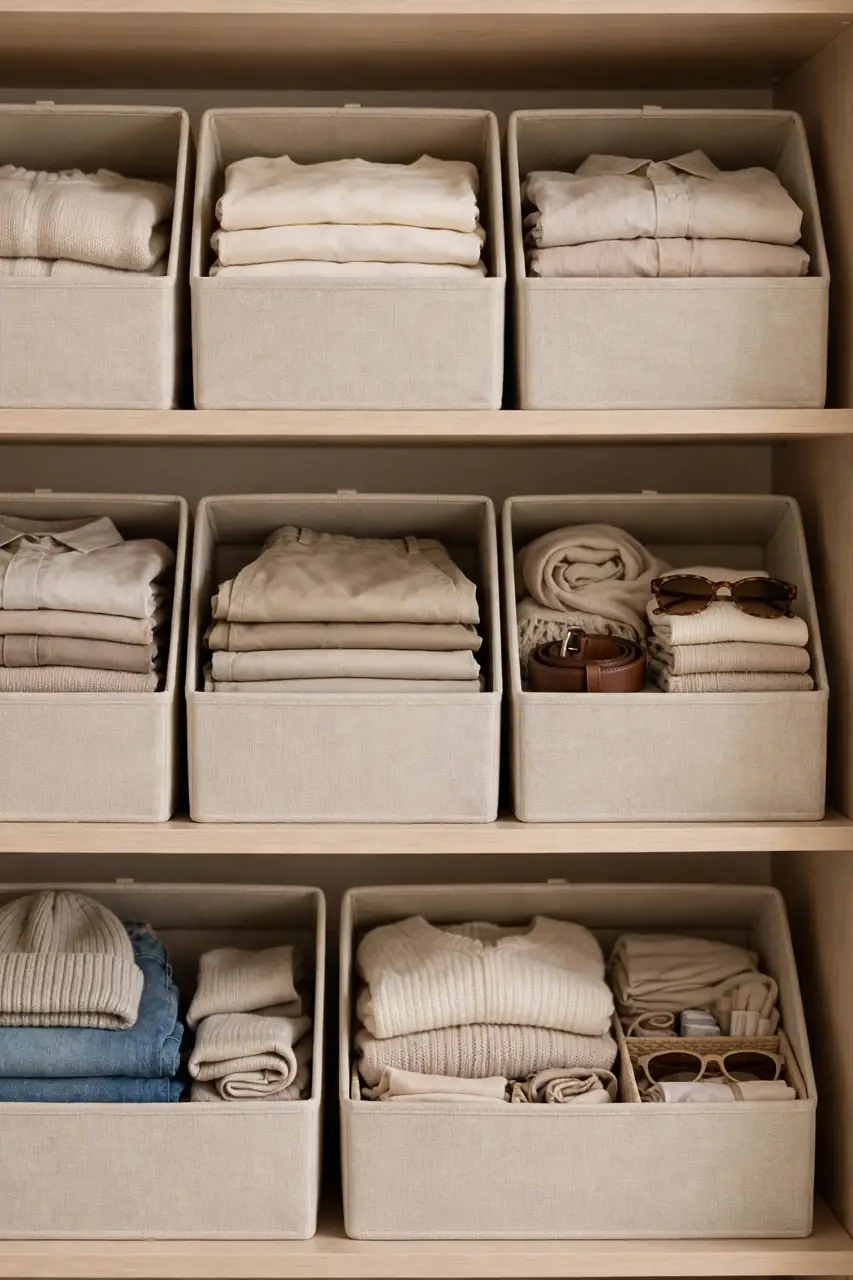
Fabric Storage Boxes
| Feature | Canvas Boxes | Linen Boxes |
|---|---|---|
| Texture | Sturdy, structured | Soft, relaxed |
| Price | Mid range | Slightly higher |
| Best Use | Heavy items | Light clothing |
| Care | Spot clean | Machine washable |
Matching fabric boxes turn open shelves into a calm, uniform display. They hide the visual noise of socks, chargers, and miscellaneous bits while keeping everything sorted. Choose boxes with reinforced sides so they hold their shape when half empty. Handles on the front make pulling them down easy and safe. I have seen this work well in many cases where open shelving felt chaotic before. The uniform look alone makes the wardrobe feel custom-built.
Vertical Belt Hooks
DO:
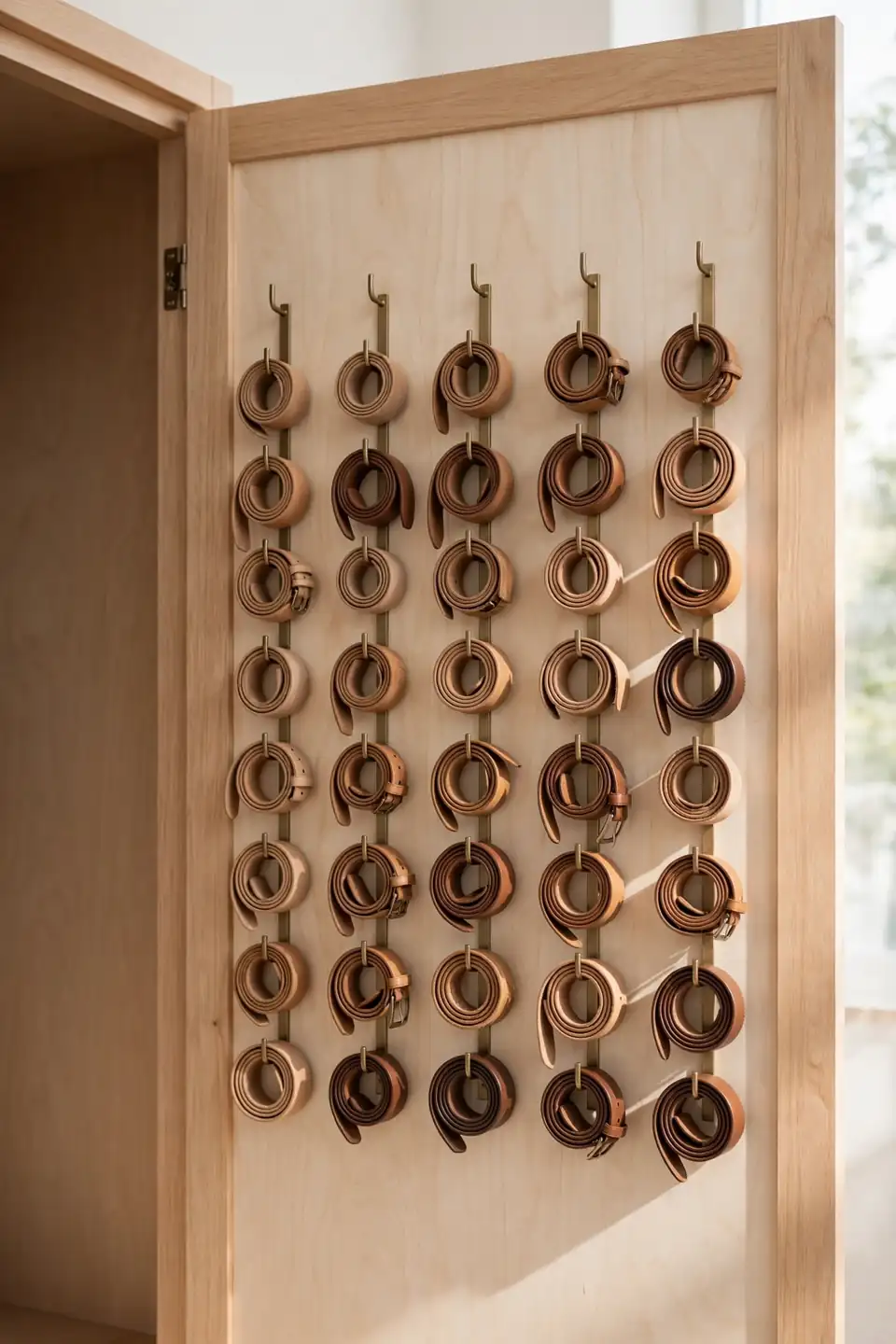
- Do hang belts rolled, not folded, to prevent permanent creases.
- Do group by color so the right belt is easy to spot.
- Do use padded hooks that will not scratch leather.
DON’T:
- Don’t pile belts in a drawer where they tangle into knots.
- Don’t hang heavy buckles on weak adhesive hooks.
- Don’t ignore the inside of the wardrobe door as prime hook space.
Belts are awkward to store until you go vertical. A simple row of hooks inside the door keeps every belt visible and crease-free. Rolling works better than folding for leather. This tiny zone saves surprising amounts of drawer space.
Rolling Cart Station
Cost: Low to mid, depending on materials.
Time: Twenty minutes to assemble.
Skill Level: Beginner, no tools beyond hands.
Best For: Overflow items and daily essentials.
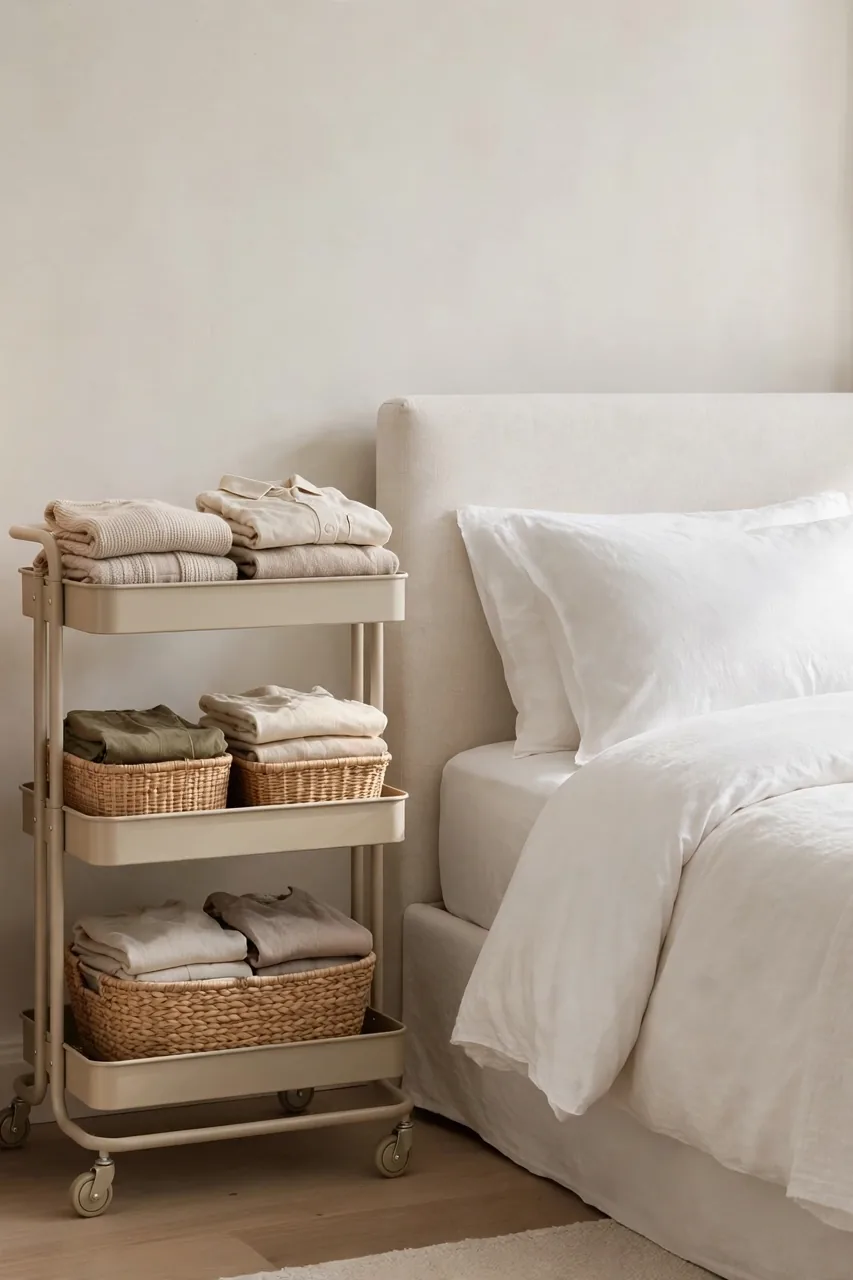
A slim rolling cart tucks beside the wardrobe and holds whatever does not fit inside. Use the top tier for daily essentials like watches and wallets, the middle for folded extras, and the bottom for shoes. The wheels let you pull it out for full access, then slide it back into its slim slot. I have tried this in a bedroom barely wider than the bed, and it worked beautifully. Choose a cart no wider than eight inches so it never blocks walkways.
Linen Shelf Liners
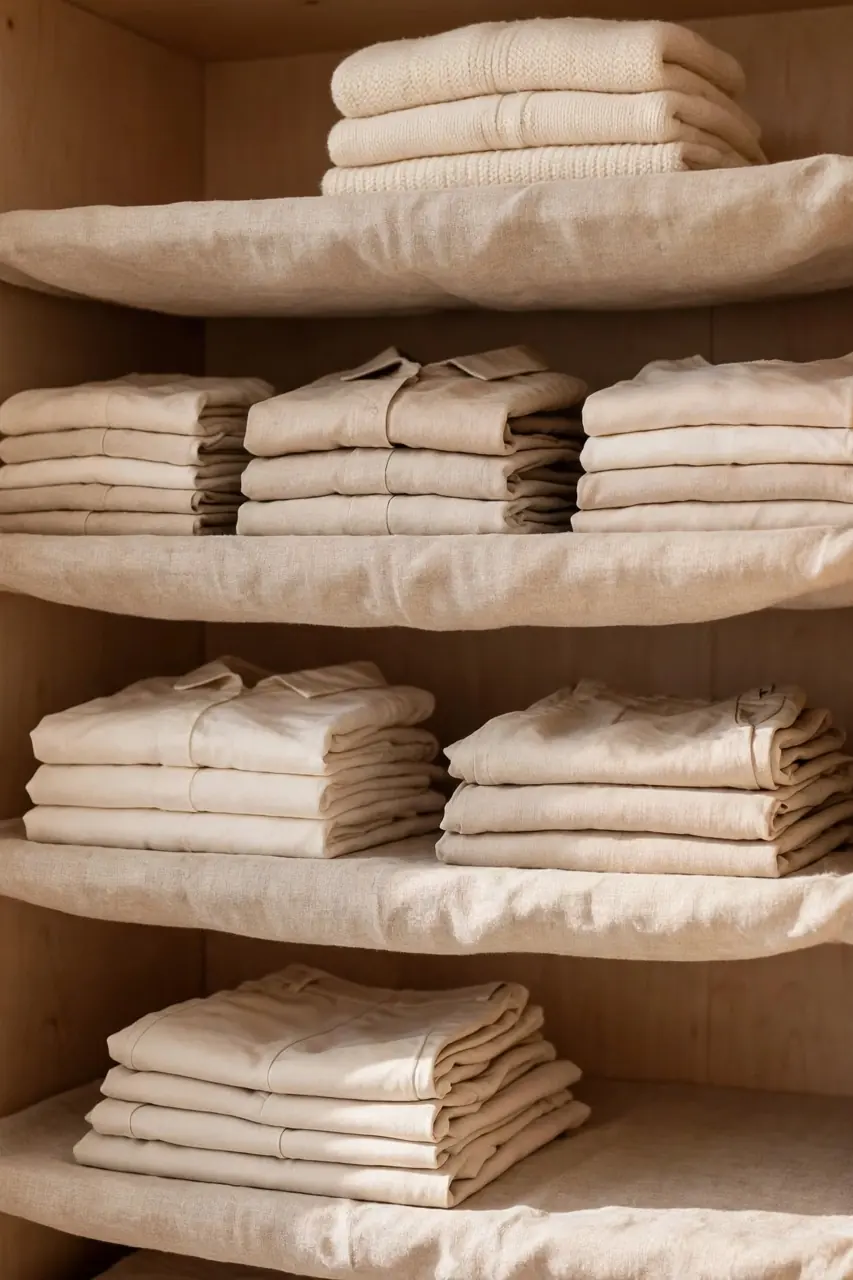
Linen shelf liners protect wood shelves and stop folded clothes from sliding around. The natural texture grips fabric gently while letting air circulate underneath each stack. Cut them to fit with simple scissors, since no adhesive or fasteners are needed. They add a soft, tailored look that makes even basic shelving feel intentional and calm.
Wash the liners twice a year to keep them fresh and dust-free. Choose a neutral tone that matches your bins and boxes for a pulled-together feel. This small detail makes budget shelving look far more expensive than it was. Guests will assume you hired a professional organizer to handle the space.
Hanging Cubby Shelves
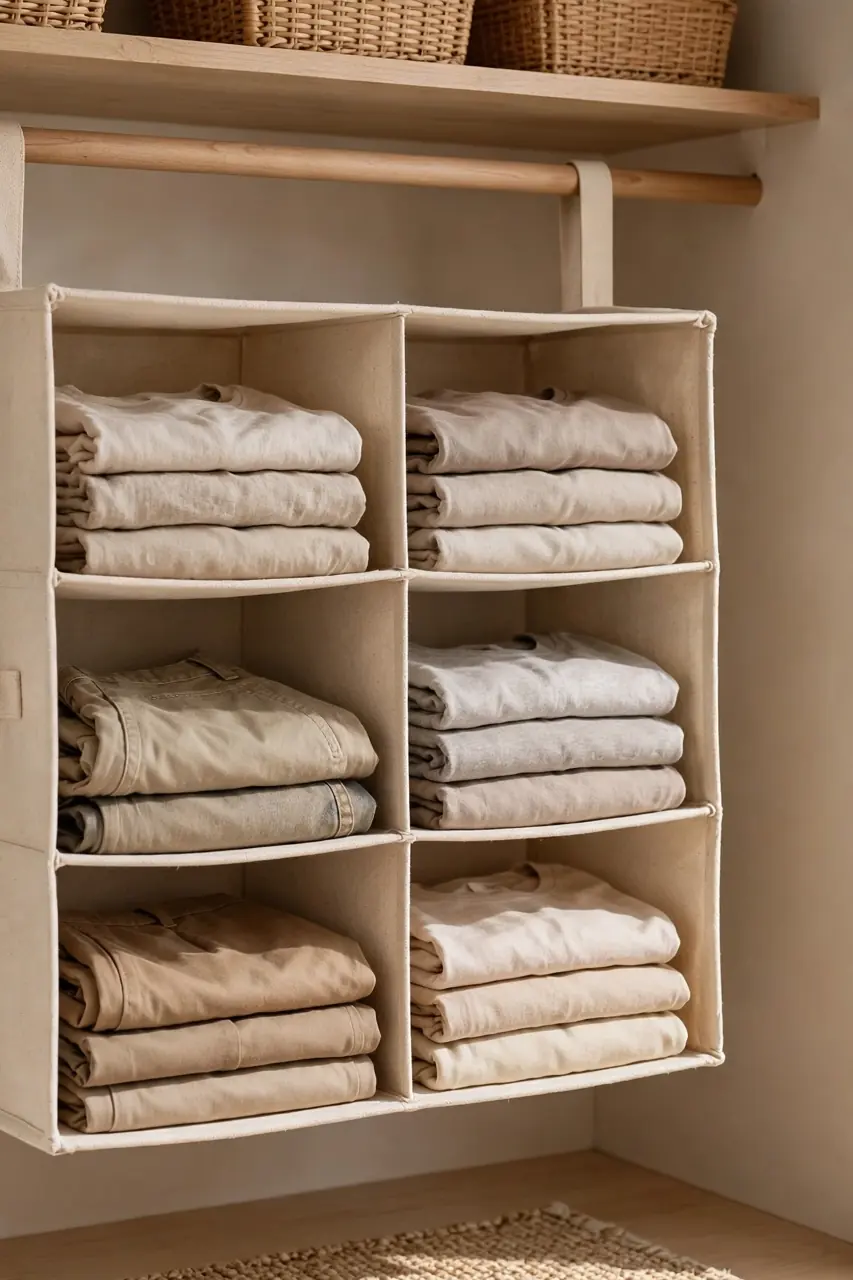
- Hang a fabric cubby organizer from the rod for instant extra shelves.
- Assign each cubby a category: tees, shorts, pajamas, and gym wear.
- Fold items file-style so every piece shows at the front.
- Pick a sturdy canvas version that holds its shape when loaded.
- Keep heavier items low so the organizer hangs straight.
Hanging cubbies are the fastest way to add shelf space without tools. They work in rentals, dorms, and any wardrobe with a rod. I have noticed they are especially good for kids’ clothes, since each cubby becomes one outfit. The whole setup costs less than a pizza night.
Mini Ironing Boards
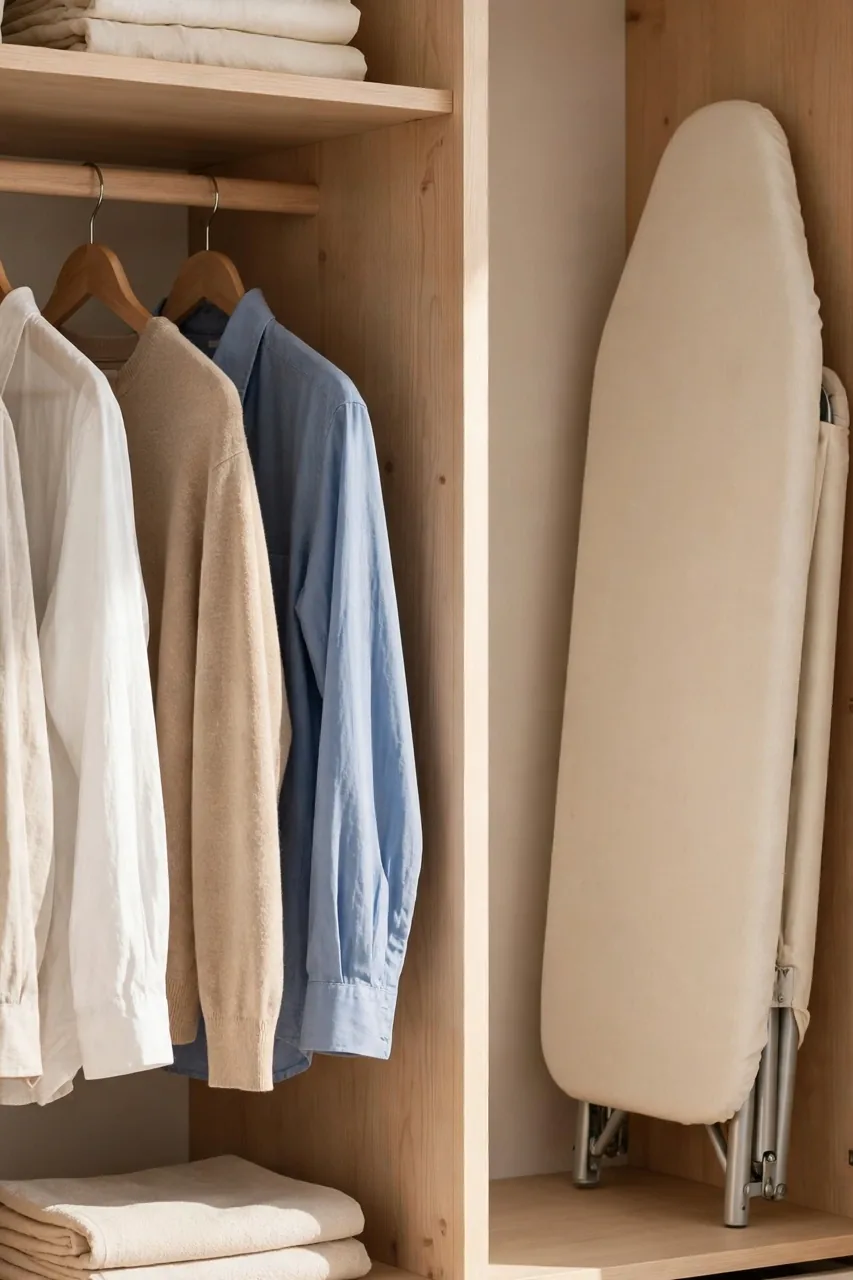
Quick Tip: Store a compact tabletop ironing board vertically inside the wardrobe. It slides into the narrow gap beside hanging clothes and stays out of sight. A quick press each morning keeps outfits looking sharp without a full ironing setup. Choose one with a heat-resistant cover for safety.
Wrinkled clothes undo all your organization efforts in seconds. A mini board removes the excuse to skip pressing, since setup takes under a minute. Pair it with a small spray bottle for stubborn creases. Hang the board on an inside hook when the wardrobe gap is too tight. Looking polished every day starts with this simple habit.
Clear Shoe Boxes
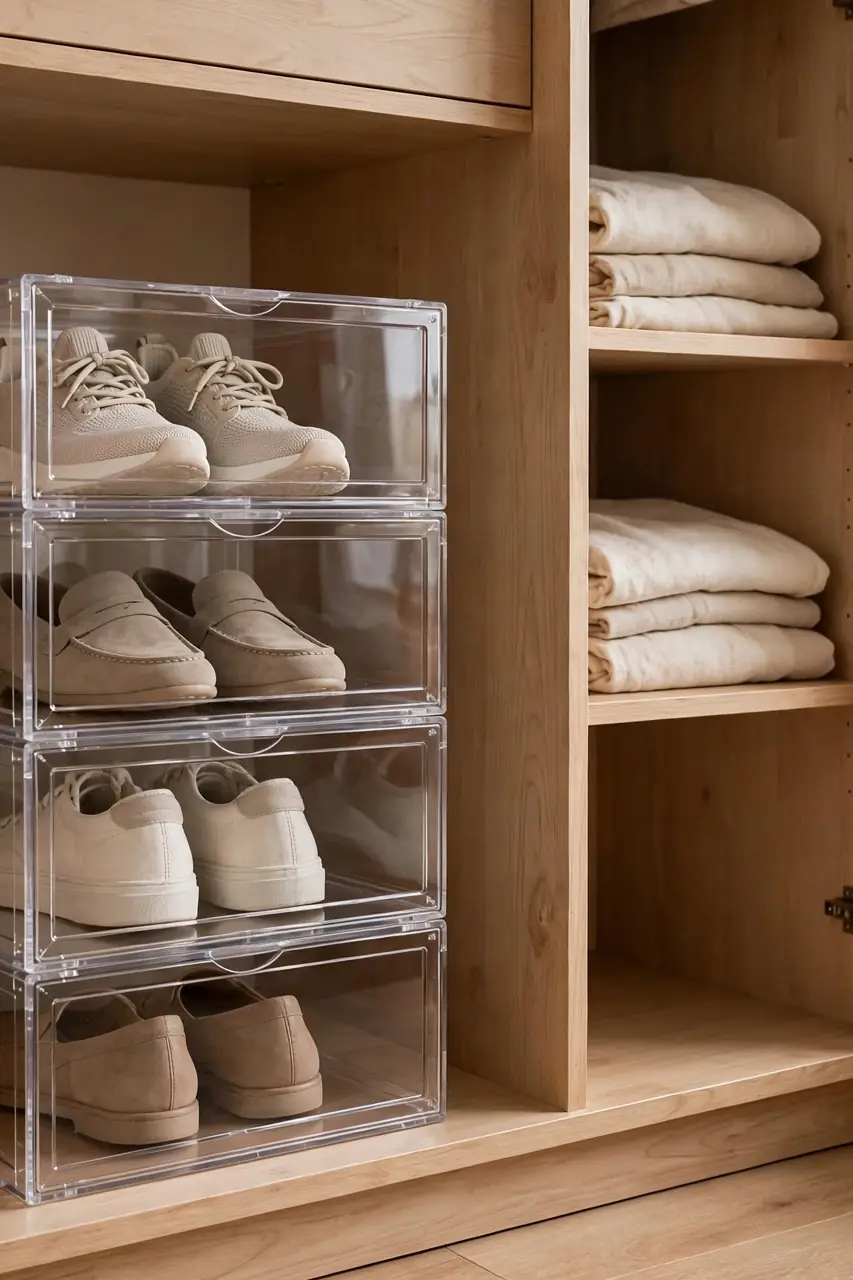
BEFORE: Shoe boxes stack into a cardboard tower where nothing is visible. You open three boxes before finding the right pair, and the pile wobbles dangerously. Mismatched boxes make the whole closet look messy.
AFTER: Clear boxes show every pair at a glance, and the uniform stack looks sleek. Shoes stay dust-free and protected from scuffs. Grabbing the right pair takes seconds, even in a dark closet corner.
Look for boxes with front drop-down doors so you never unstack to reach the bottom pair. Ventilation holes stop moisture buildup inside. Measure your largest shoes first so every pair actually fits comfortably.
Jewelry Tray Inserts

- Measure the drawer, then choose velvet trays that fit without gaps.
- Sort pieces by type: rings, necklaces, watches, and earrings.
- Use tall compartments for chunky pieces and shallow ones for studs.
- Line trays with anti-tarnish cloth to protect silver.
Tangled necklaces and missing earring backs waste time and test patience. Tray inserts give every piece a visible home, so getting dressed feels calmer. The velvet surface stops items from sliding when you open the drawer. I have seen this work well in many cases for people who own just a few special pieces. Even a single tray transforms a junk drawer into a jewelry box.
Label Maker Tags
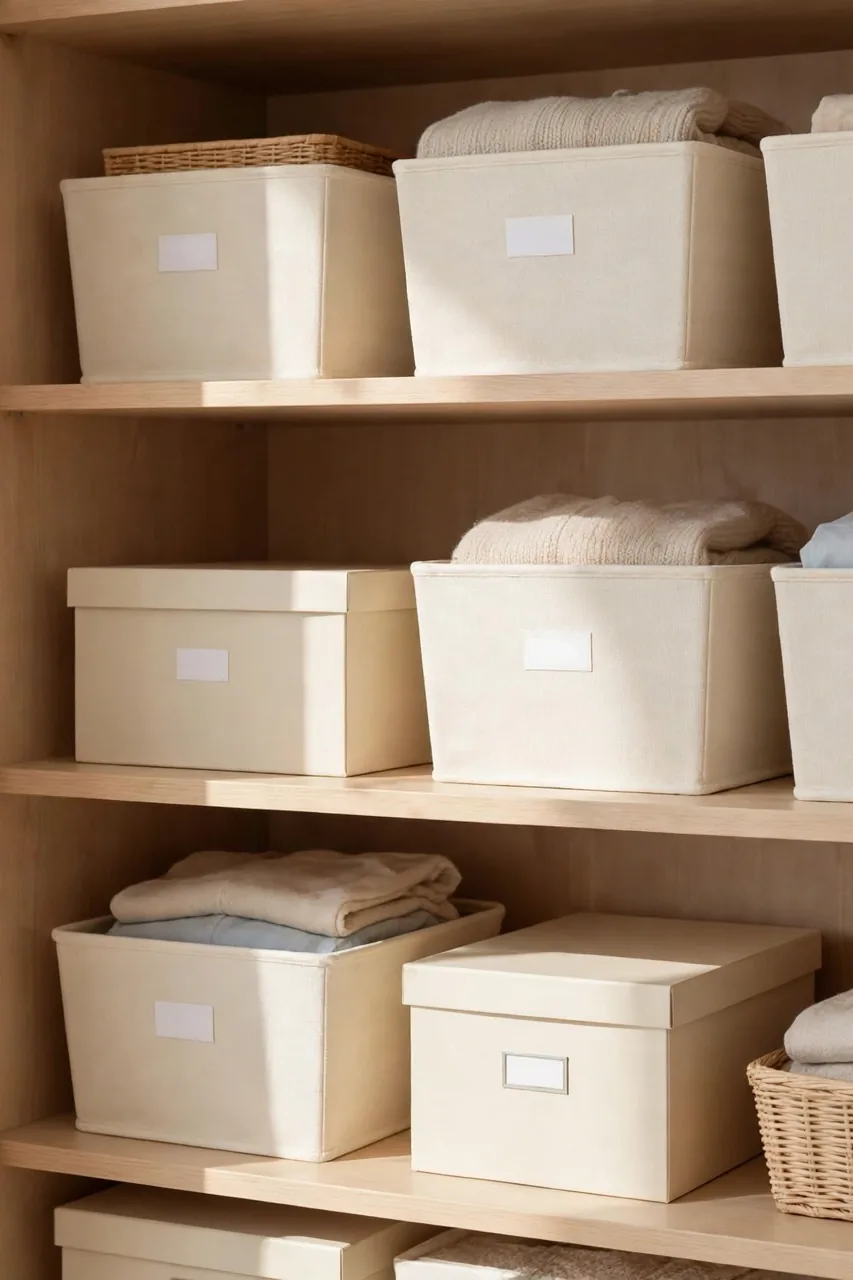
| Feature | Handwritten Tags | Label Maker |
|---|---|---|
| Speed | Quick for a few | Fast for many |
| Look | Casual, personal | Crisp, uniform |
| Durability | Smudges over time | Water resistant |
| Cost | Nearly free | Small investment |
| Best For | Small batches | Whole wardrobe |
Labels turn a tidy wardrobe into a system anyone can maintain. When every bin says what it holds, family members put things back correctly. Print labels in a simple font on white tape for a clean look. Stick them at the same height on every bin for visual rhythm. This final step takes twenty minutes and makes the whole project feel complete. Future you will be grateful every single morning.
Conclusion
A calm wardrobe changes how the whole bedroom feels. With these small bedroom wardrobe organization ideas, every shelf, rod, and drawer finally earns its keep. Start with one upgrade this weekend, like slim hangers or a few bins, and notice how much easier mornings become. Save your favorite ideas on Pinterest so they are handy when you shop. I have seen how small changes like these can completely shift the way a space feels. Your tidy, peaceful closet is closer than you think, so pick a starting point and enjoy the process. Small steps lead to big calm, so begin today.




2 Comments