22 Galley Kitchen Organization Ideas for Small Spaces That Work
Narrow kitchens can feel cramped fast, but smart galley kitchen organization ideas for small spaces turn that long hallway layout into a cooking advantage. Every inch of wall, door, and drawer deserves a job in a galley kitchen, since counter space is too precious to waste. The trick is thinking vertically and using the hidden spots most people overlook entirely.
If you are working with a little extra room, these small kitchen island decor ideas show how to style a compact island without crowding the walkway. In this guide you will find 22 practical organization ideas that fit real galley kitchens, from under-shelf baskets to ceiling pot hooks. Each one keeps daily essentials close while giving your counters room to breathe.
Vertical Rail Storage
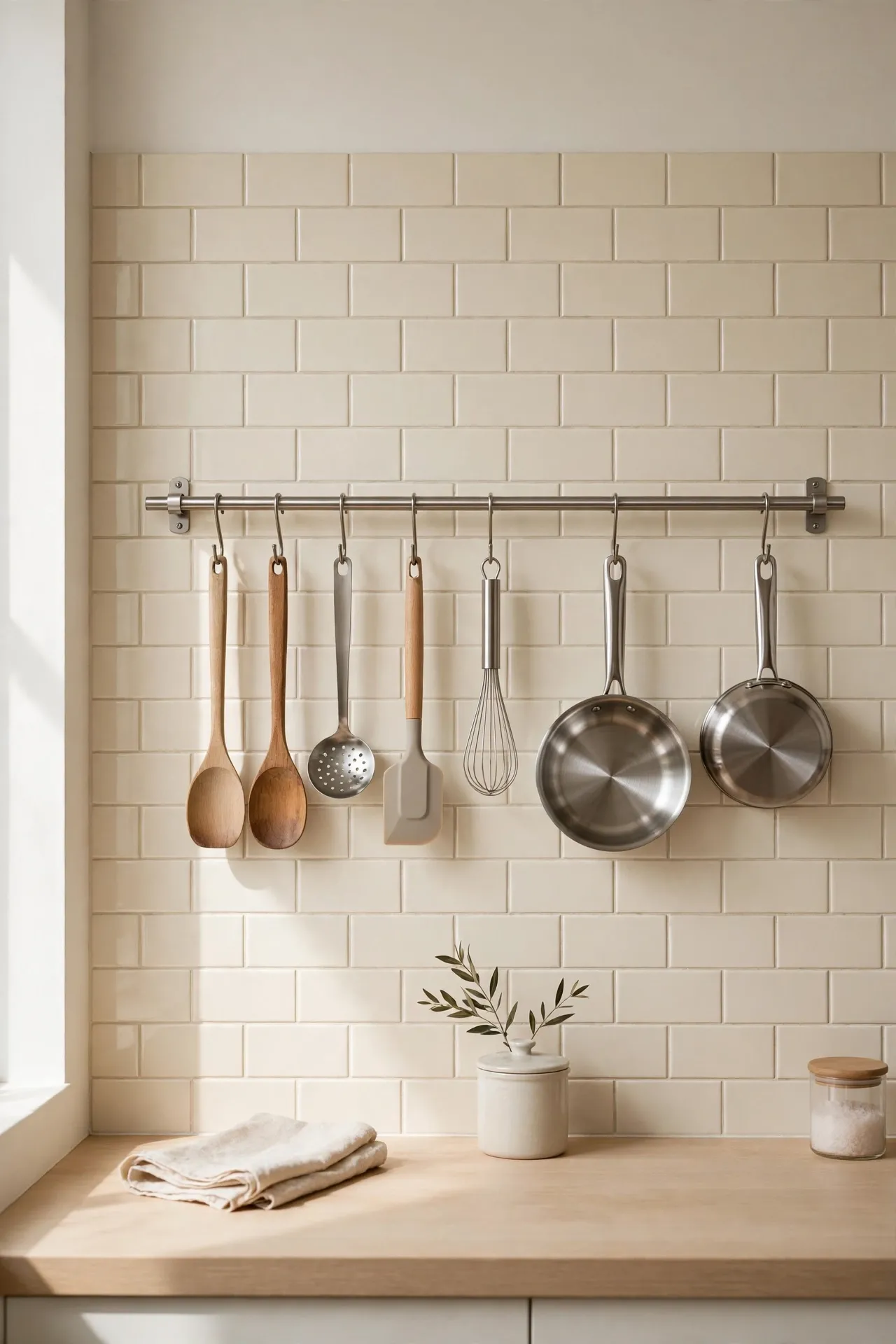
The wall strip between your counter and upper cabinets sits empty in most galley kitchens, and that is wasted real estate. A slim rail mounted there puts spatulas, ladles, and measuring cups within arm’s reach while you cook. The hooks slide along the rail, so the arrangement shifts easily whenever your routine changes.
In my experience, cooks who hang their daily tools waste far less time digging through drawers mid-recipe. Keep only the utensils you grab most often on the rail, and let seasonal gadgets stay stored away. A clean rail line also makes the whole kitchen read calmer and more deliberate.
Under-Shelf Baskets
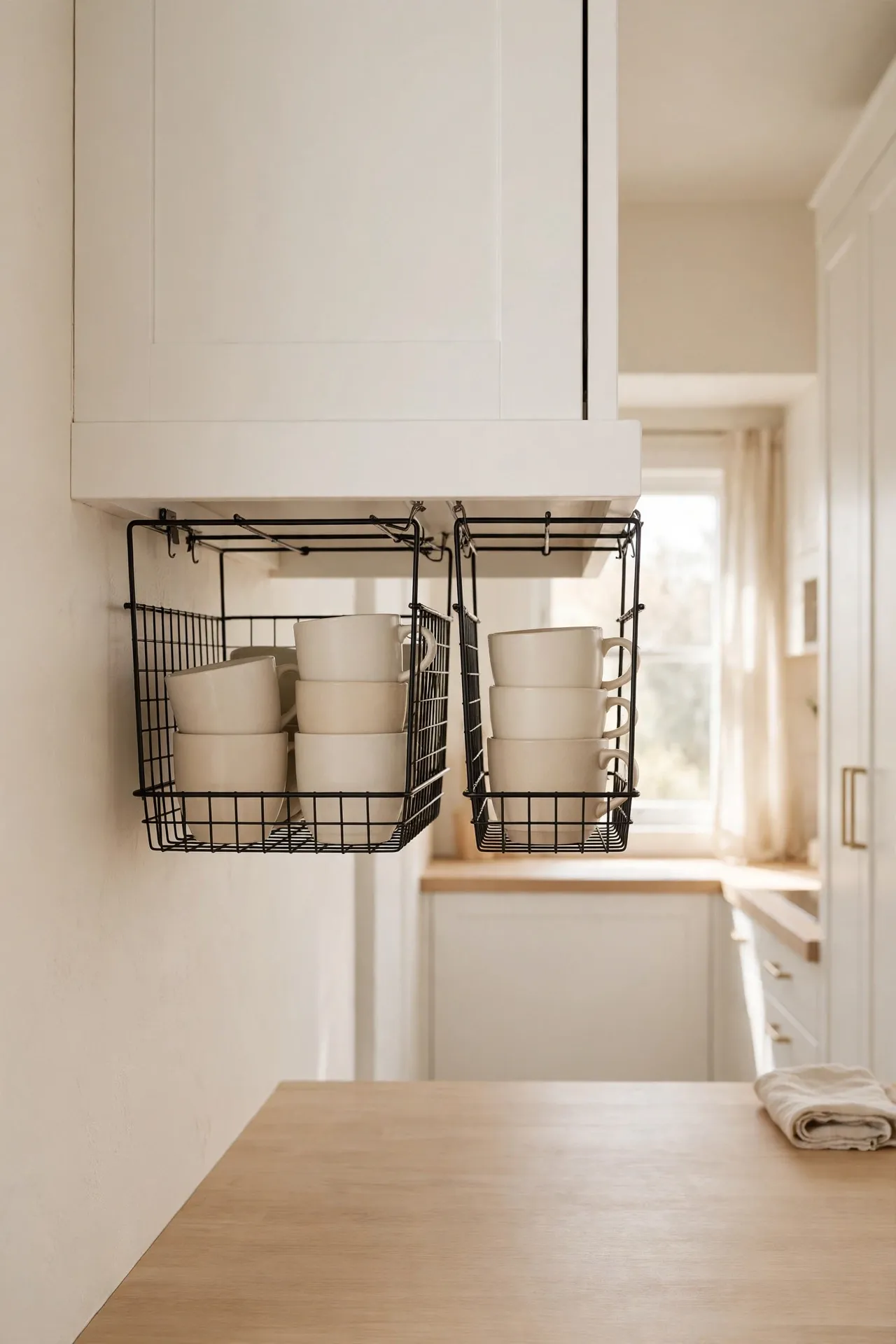
- Slide-on wire baskets clip beneath existing shelves with no tools or screws required.
- Use them for mugs, spice packets, or wrapped snacks that never seem to fit neatly anywhere.
- Inside tall cabinets, they create a second layer that can double your usable shelf space.
- Choose baskets with open fronts so items slide out without any lifting or reaching.
These small additions punch far above their weight in tight kitchens. I have watched renters turn one overstuffed cabinet into two tidy zones with three baskets and zero damage. Measure your shelf clearance first so tall jars still slide underneath without a fight.
Toe-Kick Drawers
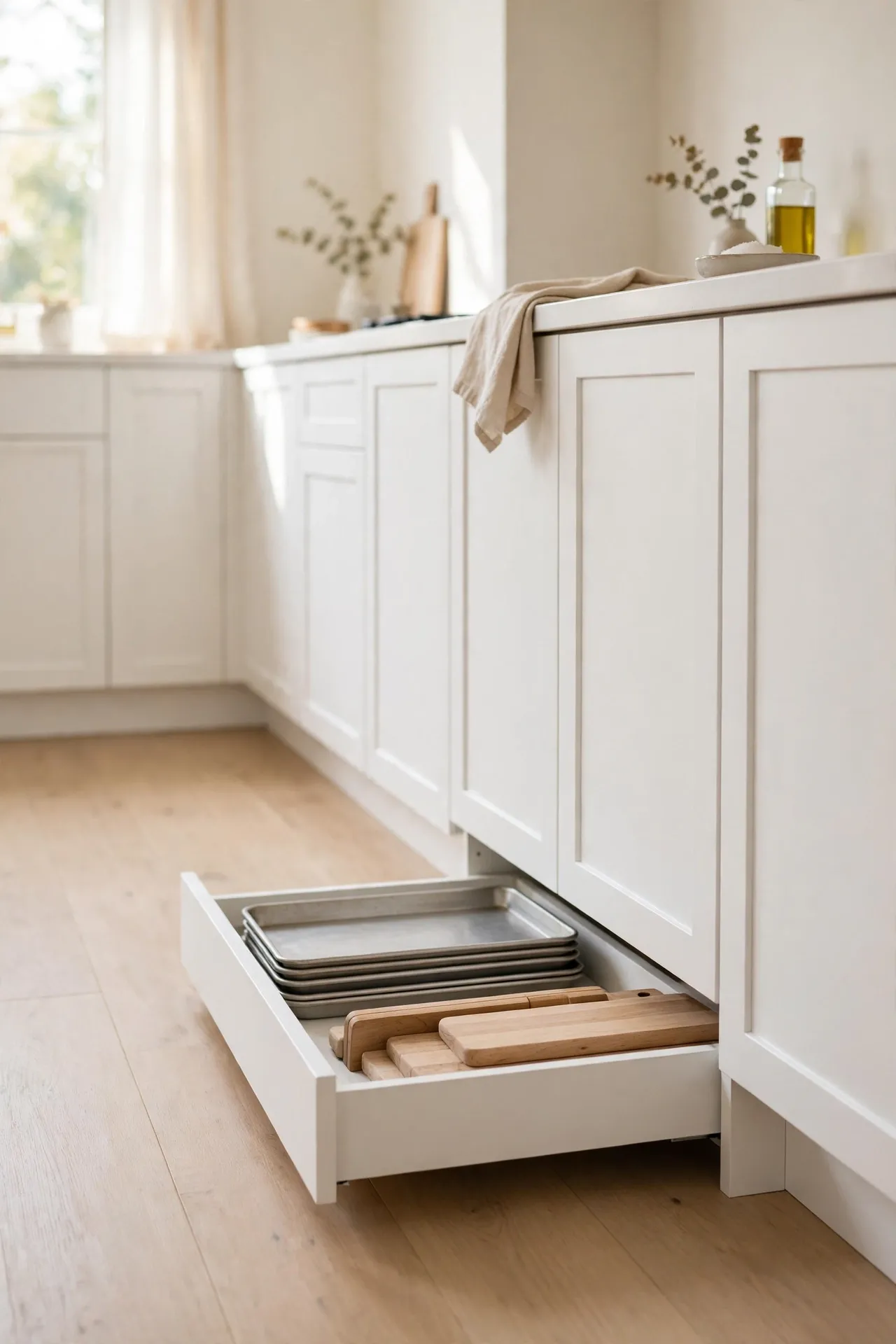
Quick Tip: Measure the height of your toe-kick cavity before ordering anything; most fit drawers 3-4 inches tall, roomy enough for baking sheets, platters, and serving trays. Push-to-open hardware keeps the look clean without visible handles, and soft-close slides stop little toes from getting pinched.
That dead space beneath your lower cabinets is prime storage you already paid for. Shallow drawers there swallow flat items that normally hog shelf space, like cutting boards, muffin tins, and pizza peels. In my experience, cooks forget what they stash here, so keep a simple list taped inside a cabinet door and check it before buying duplicates. A retrofit kit installs in an afternoon with basic tools, making this one of the highest-return upgrades for the money.
Narrow Rolling Cart
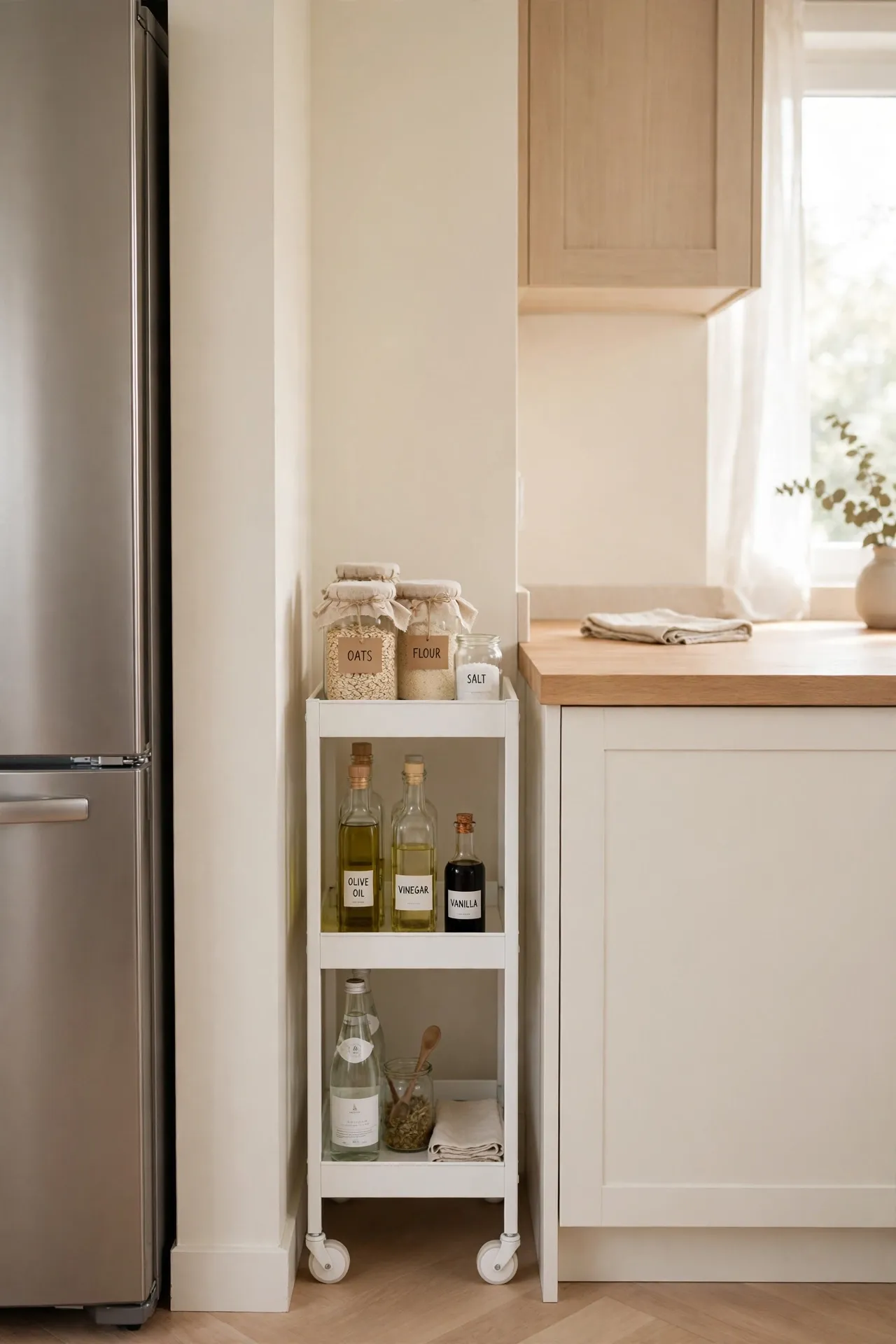
BEFORE: Your oils, vinegars, and canned goods crowd the counter next to the stove, leaving almost no room to chop. Everything lands back on the counter after every meal because no cabinet has a real home for it.
AFTER: A six-inch rolling cart slides into the gap beside the fridge and holds all the cooking staples in three tidy tiers. Pull it out while you cook, tuck it away when you finish, and the counter stays clear.
Look for a cart with raised edges on each shelf so bottles never slide off mid-roll. Locking casters matter too, since the cart should stay put on uneven floors. Many narrow models assemble in under twenty minutes with a single wrench.
Magnetic Knife Strip
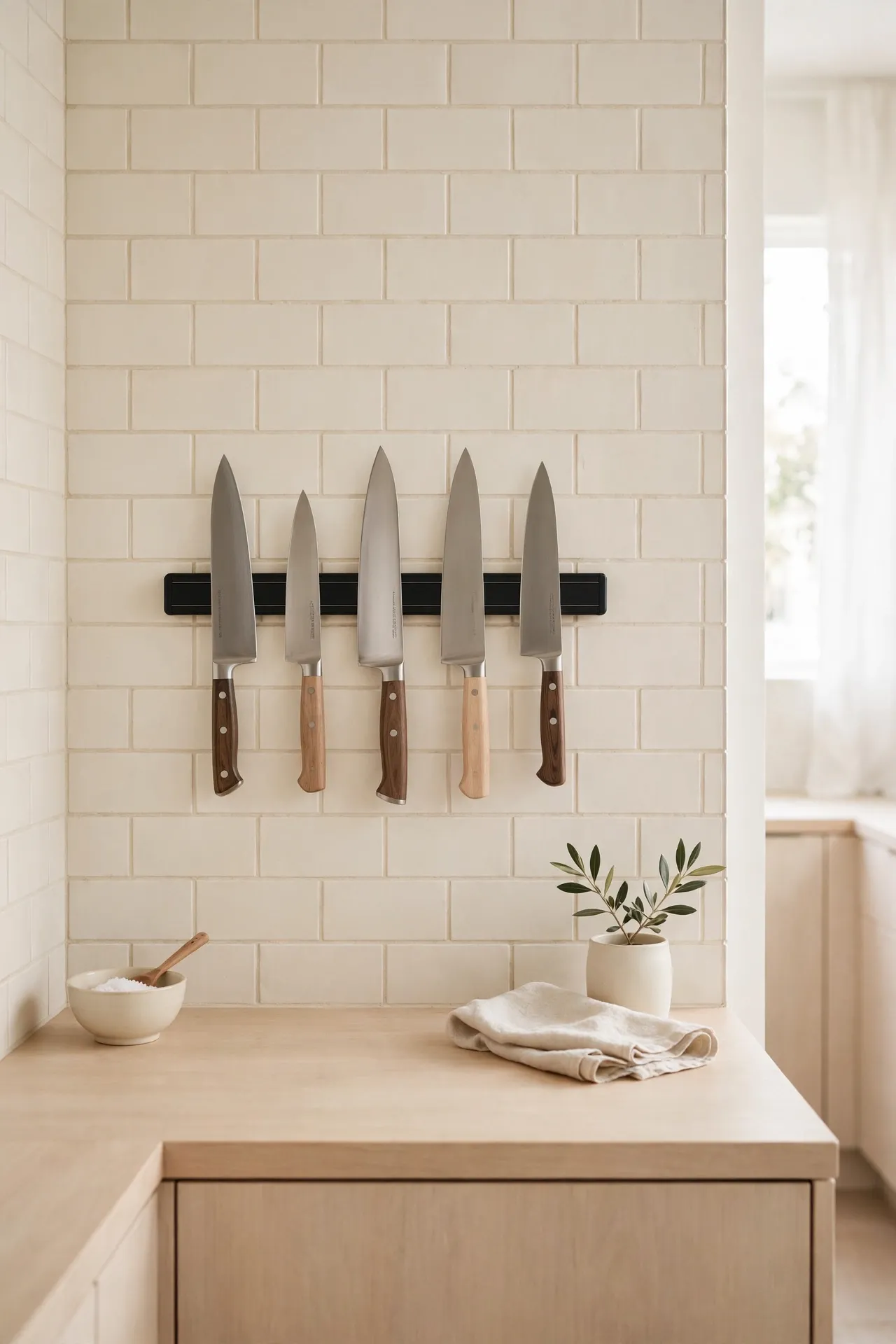
- Choose a spot on the wall or backsplash near your main prep zone.
- Mark the stud locations and level the strip before drilling pilot holes.
- Mount the strip with anchors rated for the wall material you have.
- Wipe knives dry before hanging so moisture never reaches the blade.
- Leave small gaps between blades so they never clink when you grab one.
Freeing the knife block off the counter buys back serious prep room in a galley layout. A wall strip also keeps blades visible and sharp longer, since they never rattle around in a drawer. Keep the strip above counter height and away from curious little hands. If you rent, strong adhesive-backed strips work well on smooth tile and remove cleanly when you move.
Over-Sink Shelf
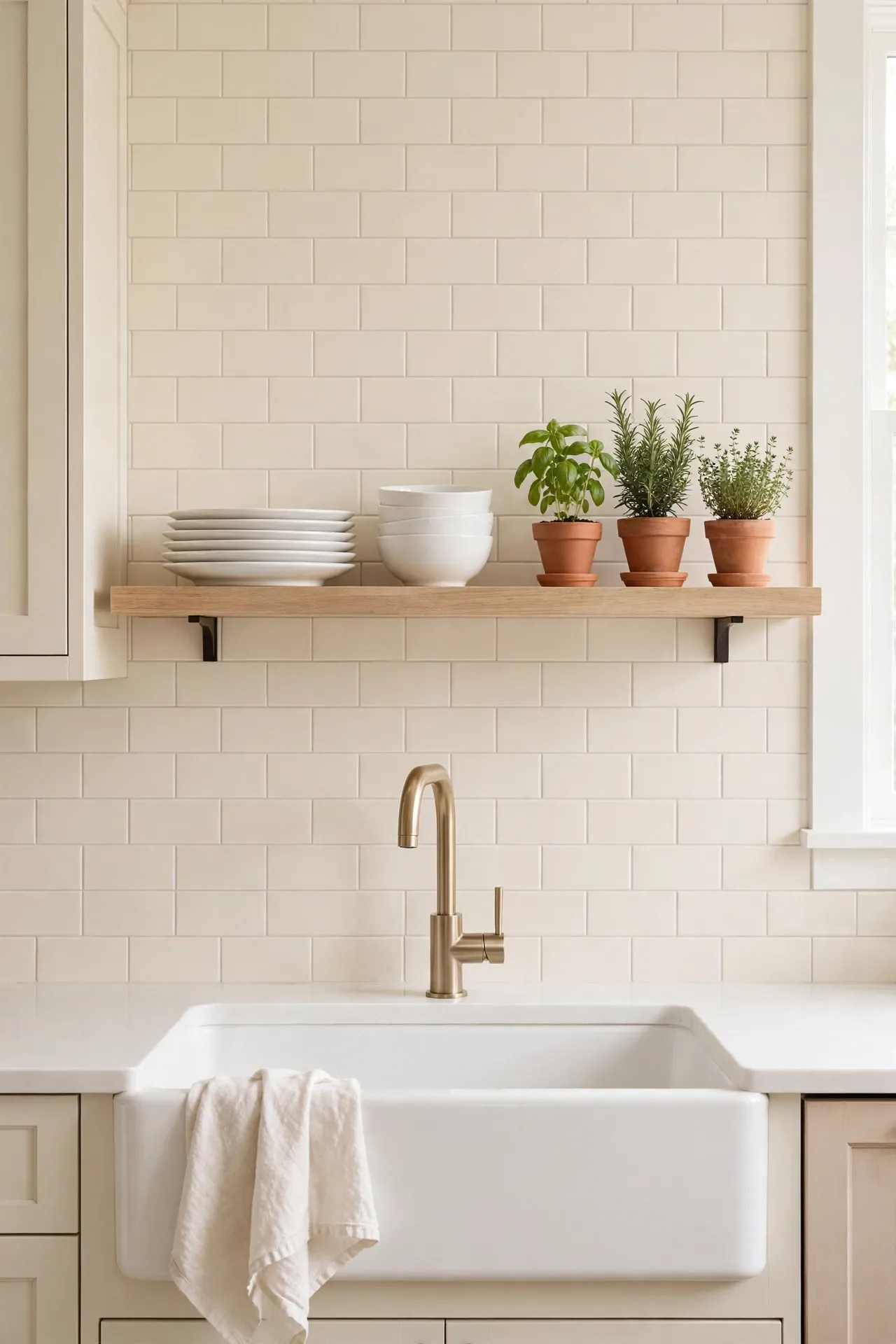
| Feature | Floating Wood Shelf | Adjustable Wire Rack |
|---|---|---|
| Installation | Screws into wall studs | Brackets rest on tile or sill |
| Weight capacity | Holds dishes and soap easily | Best for light items only |
| Look | Warm, furniture feel | Slim and utilitarian |
| Durability | Solid wood ages well | Coating can chip over time |
The air above your sink collects nothing but steam, yet it is prime storage territory. A slim shelf there holds dish soap, sponges, and a small plant without touching the counter. Just keep heavy items off it if the mounting ever feels uncertain. In my experience, renters love the wire-rack option because it moves in minutes and leaves no trace behind.
Door-Mounted Racks
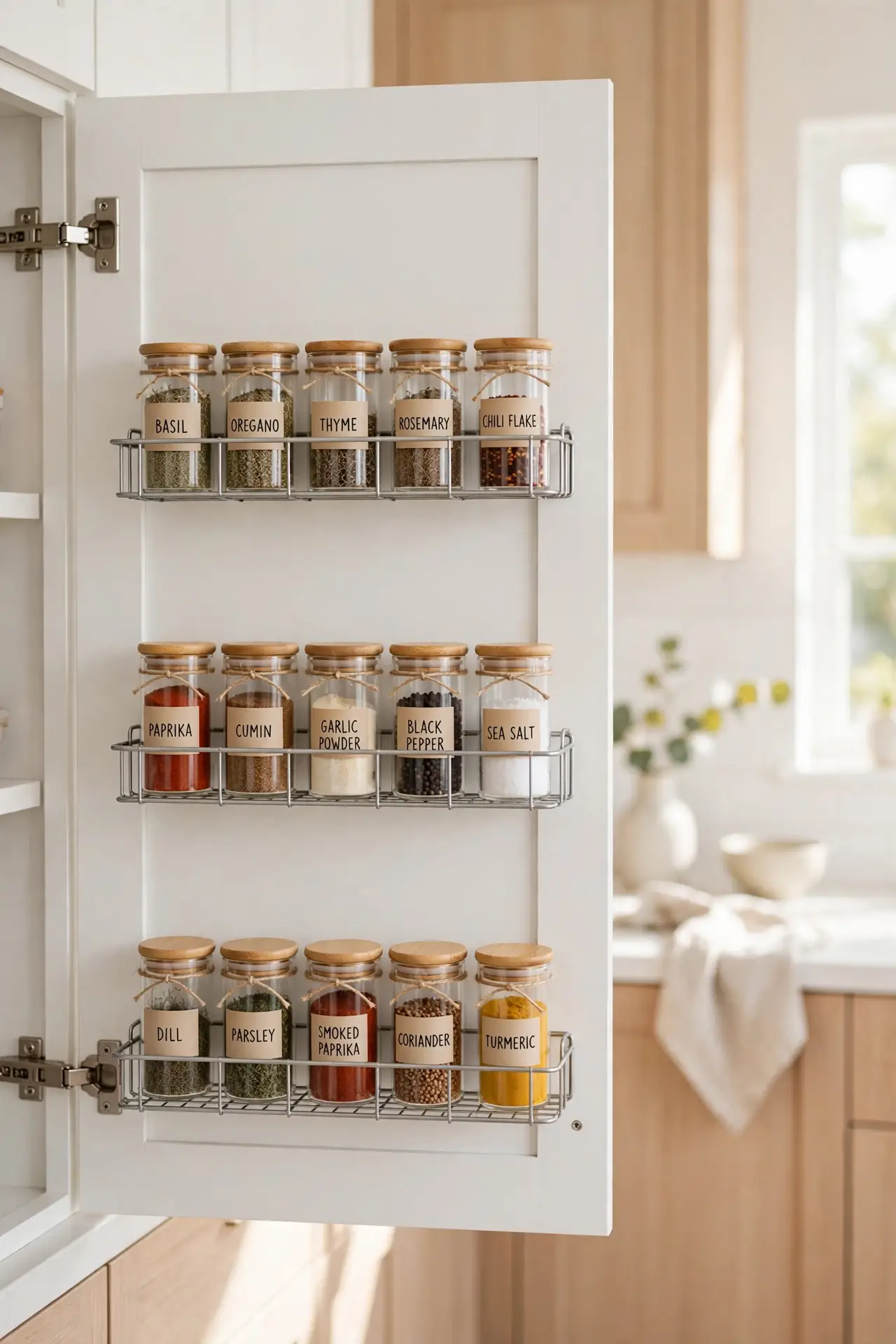
DO:
- Mount shallow racks inside cabinet doors for spices, lids, and wraps.
- Use foam tape plus screws so the rack survives daily door slamming.
- Group small items by category so each door has one clear job.
DON’T:
- Overload racks until the doors refuse to close fully.
- Hang tall bottles that swing and knock when the door opens.
- Skip measuring; a rack a half-inch too deep blocks the shelf inside.
Cabinet doors are the most underused surfaces in a galley kitchen. In my experience, a spice rack on the door beside the stove ends the frantic digging mid-recipe. Reserve door storage for light, flat items and let the shelves carry the heavy lifting.
Tiered Corner Shelves
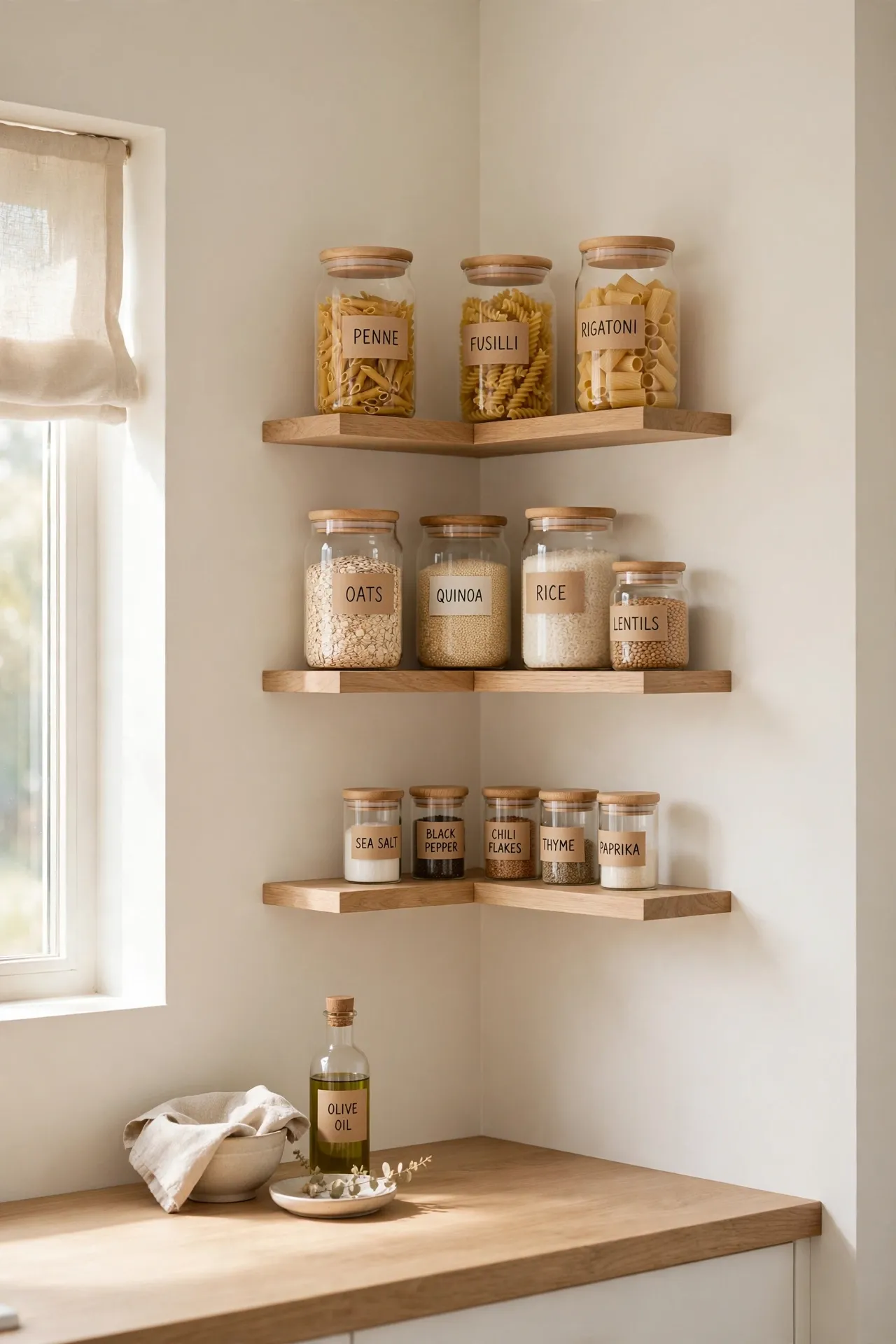
Cost: Under $20 | Time: One hour | Skill Level: Beginner | Best For: Dead corner counters
Corners in galley kitchens usually collect clutter or sit empty, and both waste space. A small tiered shelf stacks oils, salt, and everyday seasonings upward instead of outward, freeing the counter on either side for real prep work. Everything stays visible at a glance, which stops you from buying a third jar of paprika. Choose a shelf with a lip on each tier so bottles never slide off when you reach past them. Bamboo and acacia versions wipe clean in seconds and handle splashes near the stove without warping.
Pull-Out Pantry
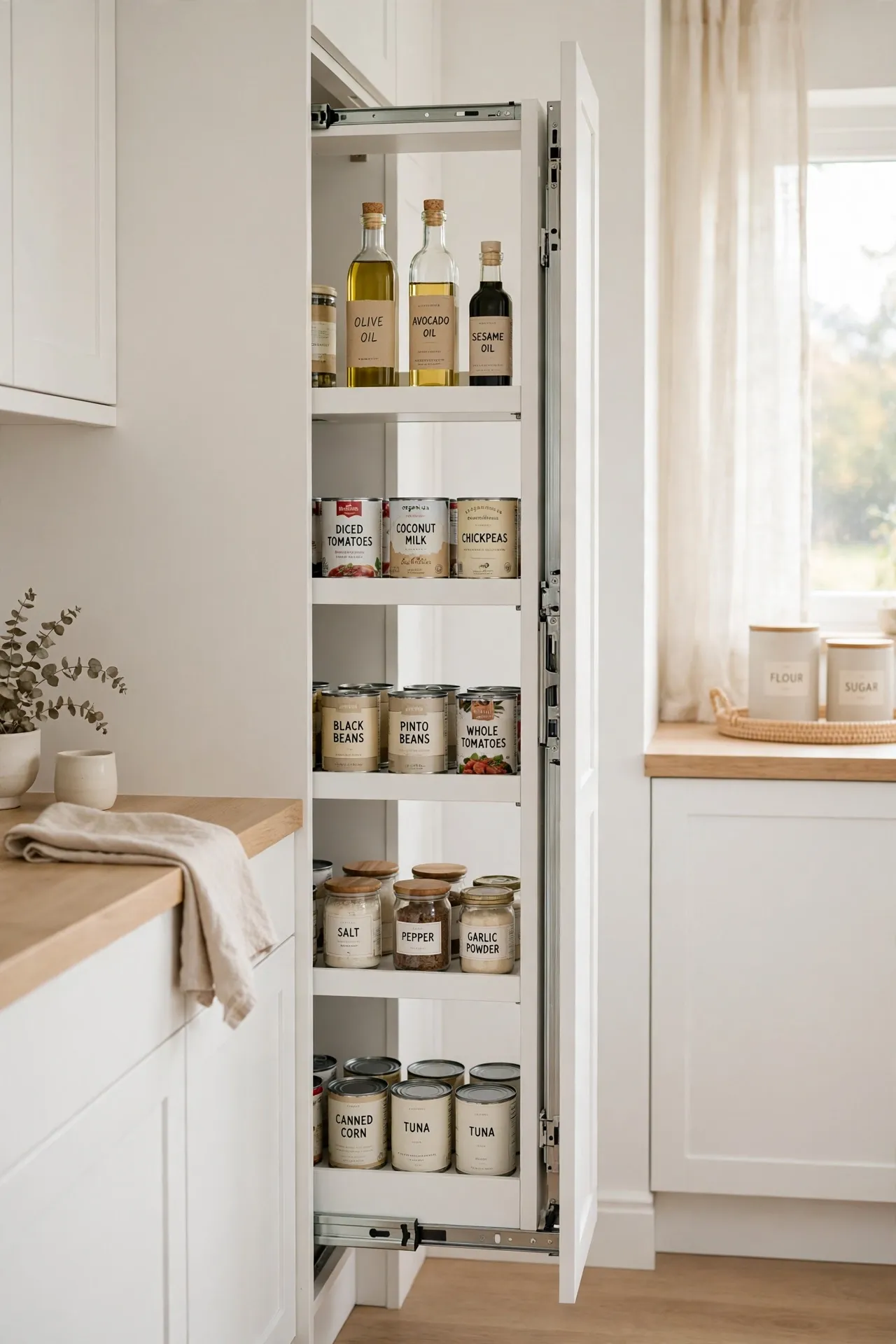
The narrow gap beside the refrigerator often sits empty while dry goods overflow the cabinets. A slim pull-out pantry unit turns that gap into tall, shallow shelves that glide out with a gentle tug. Cans, jars, and boxes stand in single rows, so nothing hides behind anything else.
I’ve seen this work well in many cases where floor space was nearly nonexistent. Because every item faces forward, you stop losing ingredients to the back of the pantry. Anchor tall units to the wall and keep heavier cans on the bottom shelves for stability, and your narrow gap becomes the hardest-working storage in the kitchen.
Hanging Pot Rail
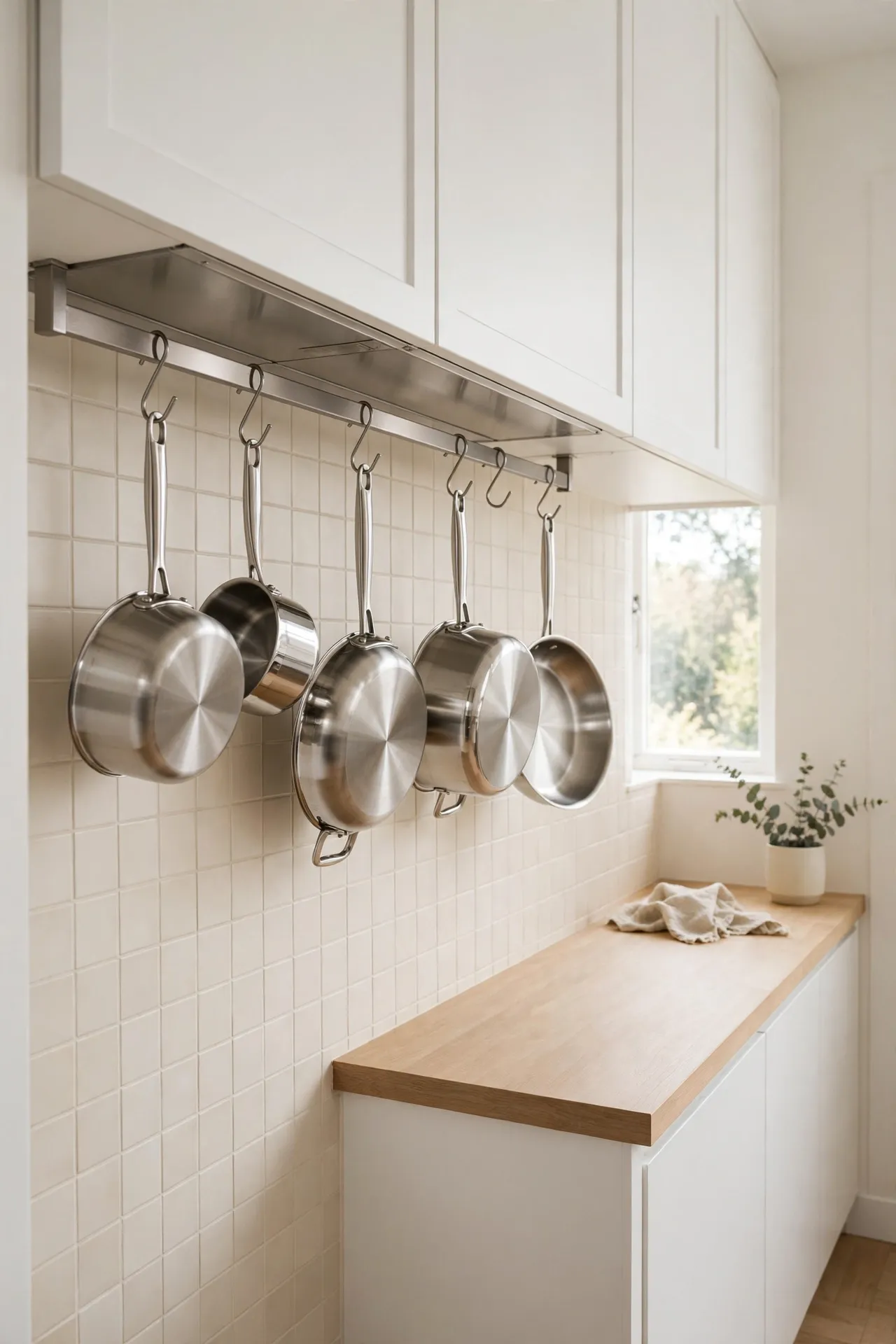
- A ceiling or wall-mounted rail lifts bulky pots off precious shelf space.
- S-hooks let you rearrange cookware in seconds as your seasons change.
- Heavy-duty rails with stud mounting handle cast iron safely.
- Keep daily pans at the front and specialty pots toward the back.
Among galley kitchen organization ideas for small spaces, this one delivers the biggest visible change. Counters suddenly look longer when the stockpot has a home overhead. Leave enough clearance below the rail so tall cooks never bump their heads. A quick wipe of the hanging pans each week keeps dust from settling, and grouping by size makes grabbing the right pot almost automatic.
Stackable Container System
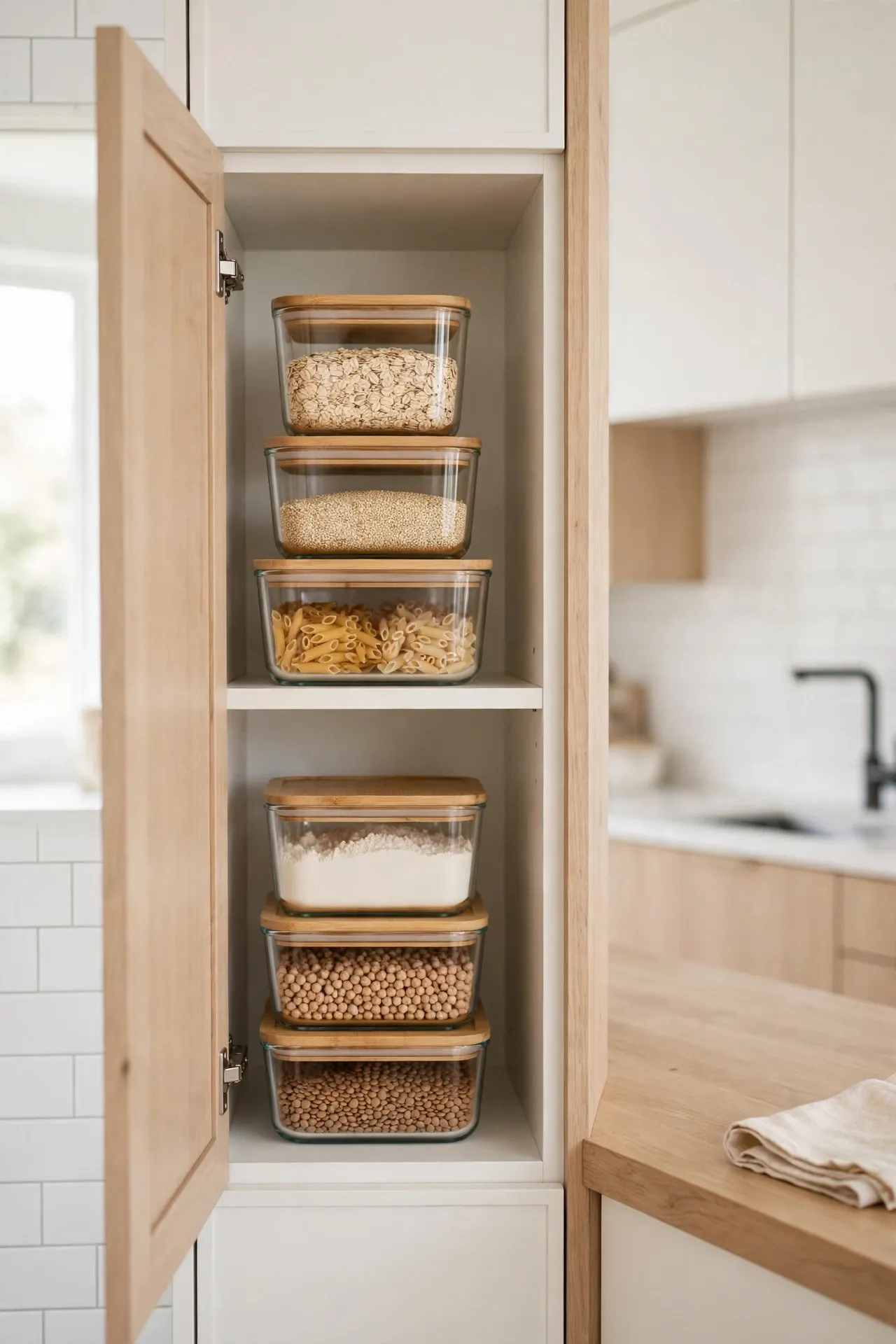
Quick Tip: Buy one brand in three sizes and ditch every mismatched lid. Uniform squares stack twice as tall as round containers in the same footprint. Label the lids with purchase dates so nothing expires unnoticed in the back, and keep one empty column open for containers currently in use.
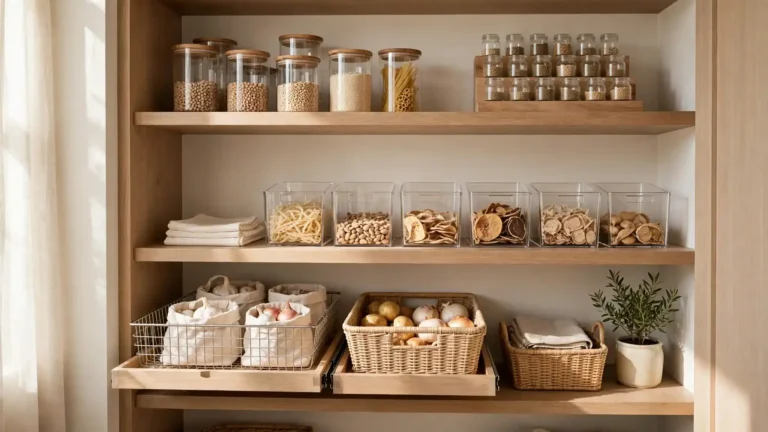
Piles of random food containers are the number one galley cabinet killer. One matched system turns a chaotic shelf into neat columns you can read at a glance. I’ve noticed families waste less food once everything sits in matching, see-through boxes. Stick with the same brand long-term so new pieces always nest with the old, and your shelves stay calm for years.
Sink Caddy Zones
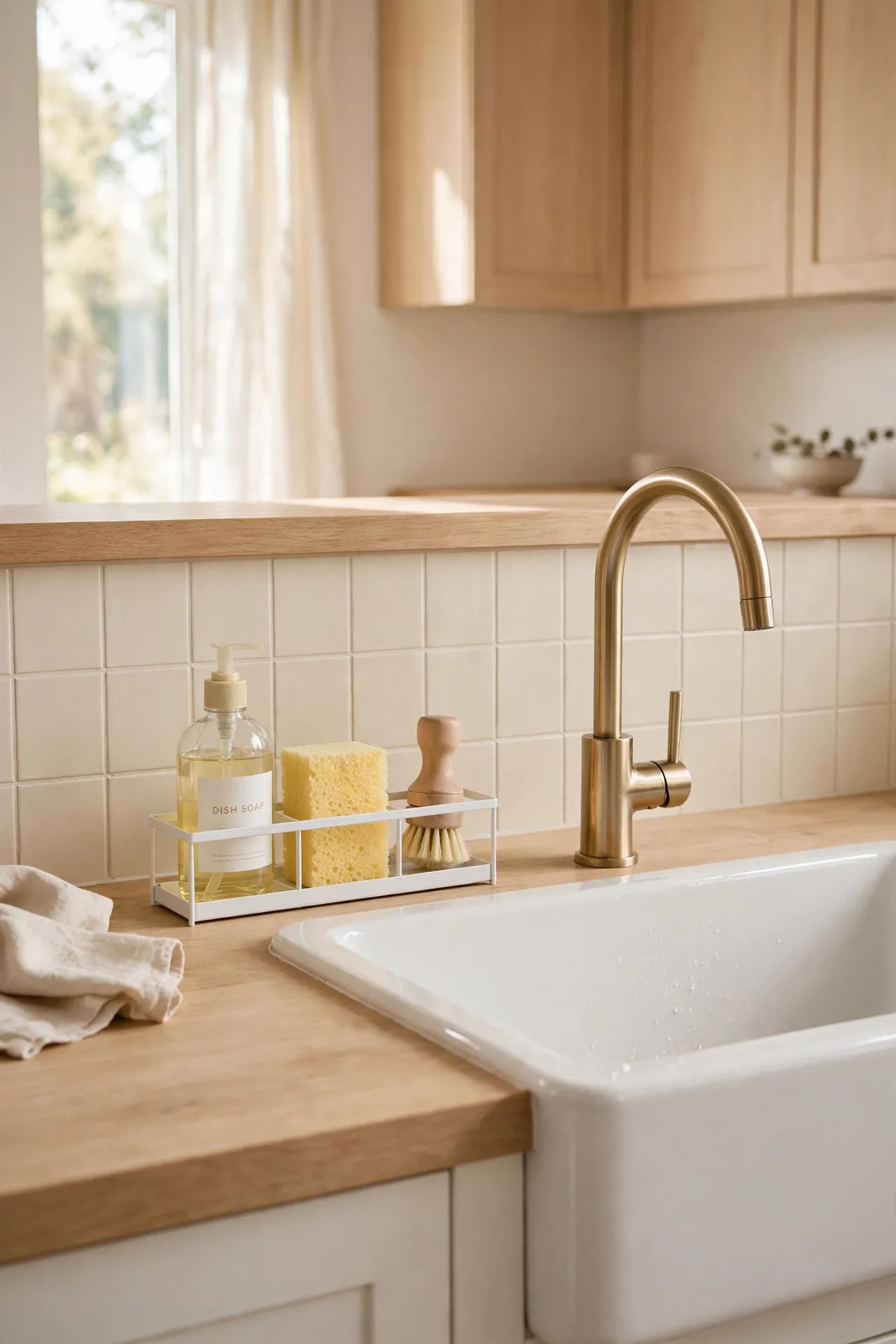
BEFORE: Soap, brush, and sponge pile up on the sink edge and stay damp between uses. The brush falls in, the soap bottle tips over, and the whole corner smells stale by Friday.
AFTER: A divided caddy keeps soap, brush, and sponge in separate zones that drain and dry. Each tool has its own slot, so the sink edge stays clear and nothing sits in a puddle.
Pick a caddy with drainage holes or a drip tray you can empty weekly. Suction-cup models work well on smooth tile and move in seconds when you need to scrub the sink. Drying tools between uses keeps mildew from getting a foothold.
Fold-Down Counter
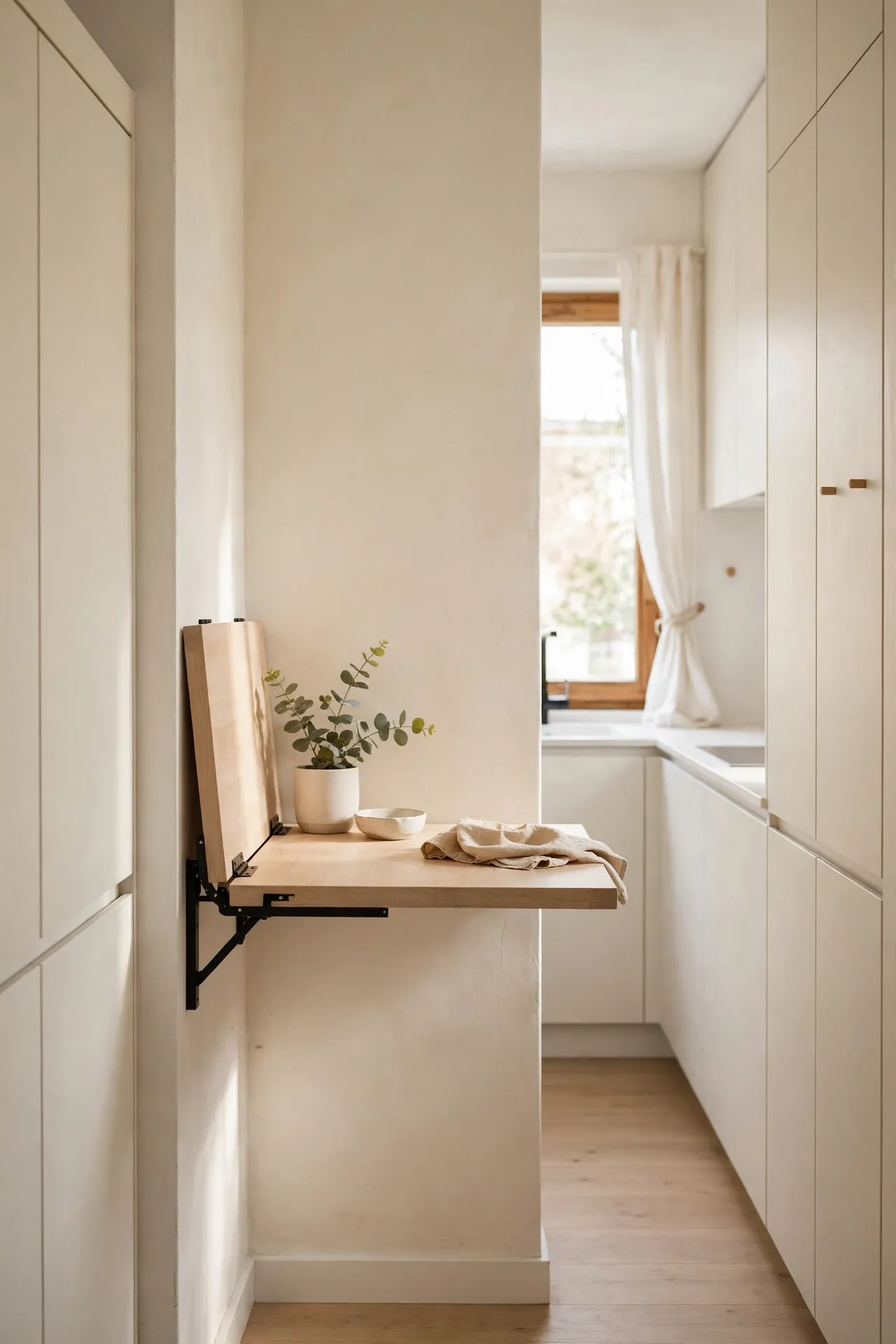
- Pick a wall section near the prep zone that stays clear of foot traffic.
- Mount a sturdy bracket rated for at least 50 pounds of daily use.
- Attach a butcher-block leaf sized to match your counter depth.
- Add a safety latch so the leaf locks flat when not in use.
- Test the setup with a full grocery bag before trusting it with heavy dishes.
Extra counter space appears exactly when you need it and vanishes after dinner. This works best for tasks like rolling dough or staging ingredients before a big cook. Fold it down when guests arrive too, since it doubles as a small serving station. I’ve seen this work well in rental kitchens where a permanent island was never an option.
Wall Pocket Organizers
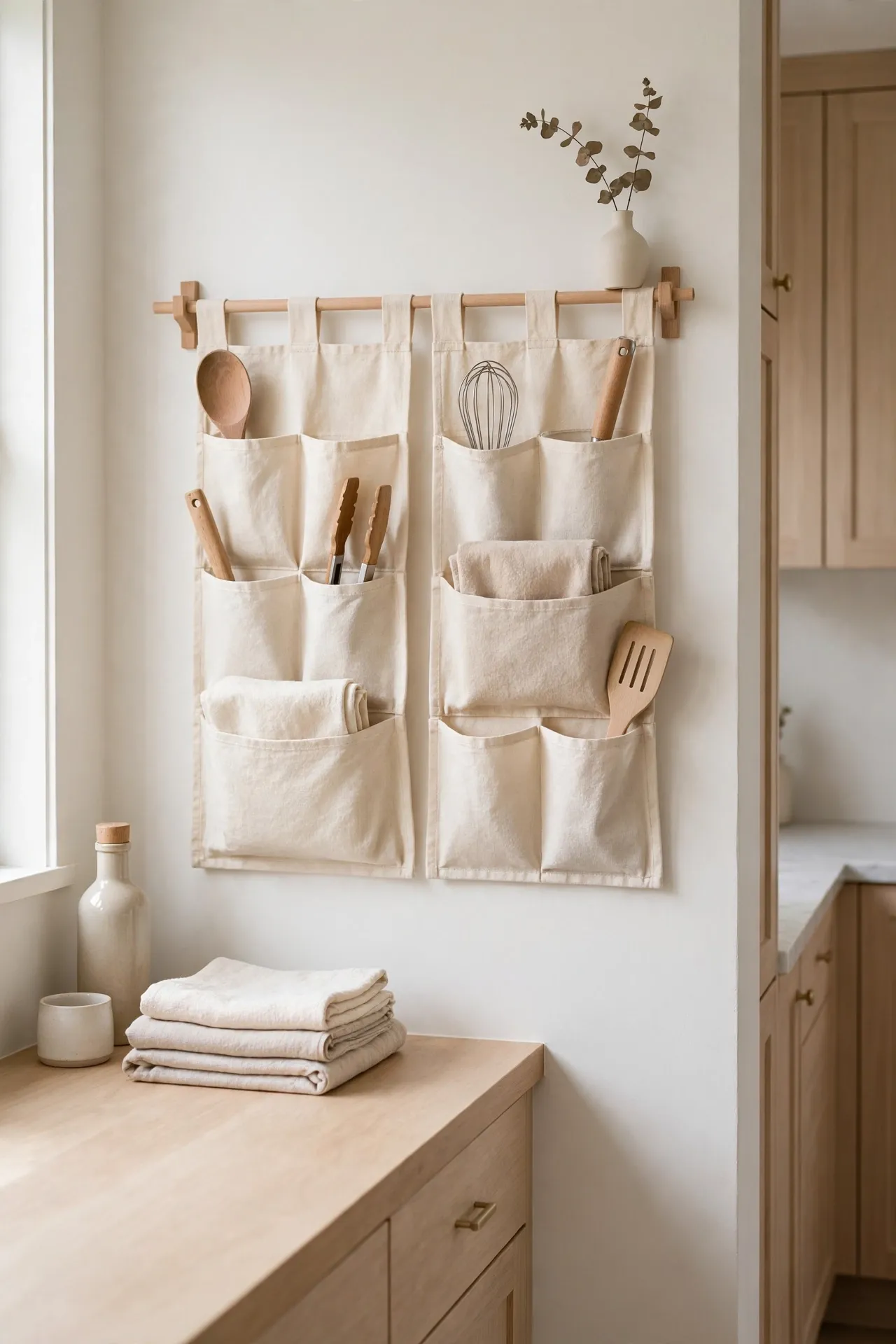
| Feature | Fabric Pockets | Clear Acrylic Pockets |
|---|---|---|
| Durability | Machine washable, flexes | Wipes clean, rigid |
| Visibility | Labels needed | Contents show through |
| Best for | Mail, towels, wraps | Spices, packets, tools |
| Renter friendly | Hangs with hooks, removable | Clips on, leaves no marks |
These organizers borrow a trick from closets, where hanging pockets rescue tiny spaces; the same thinking behind shared bedroom ideas for siblings applies here, with every inch doing double duty. Mount them inside pantry doors or on bare wall ends to catch wraps, scissors, and coupons that otherwise scatter across counters. The pockets keep small daily items visible and sorted, so nothing drifts back onto the counters.
Lazy Susan Corners
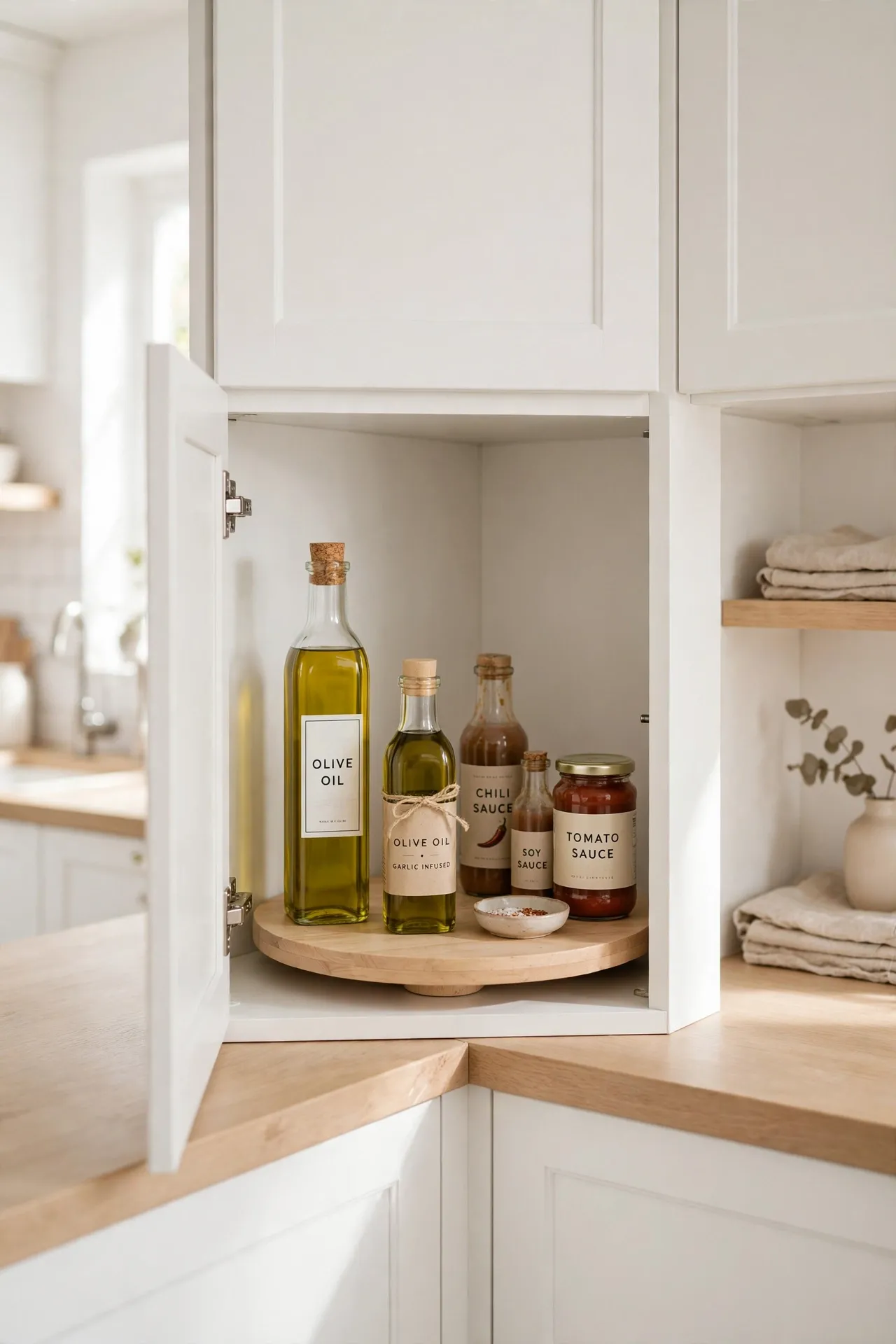
DO:
- Install a two-tier turntable in each deep corner cabinet.
- Group oils together and vinegars together for quick spins.
- Choose models with raised rims so bottles never topple.
- Wipe the surface monthly to stop sticky rings from forming.
DON’T:
- Fill every inch; an overcrowded turntable barely turns.
- Place fragile glass jars on the outer edge.
- Skip measuring the door clearance before buying.
Deep corners swallow bottles whole in a galley layout, and spinning access fixes that completely. A full rotation shows every label, so cooking stays in flow. Pick a diameter that clears the cabinet door swing with room to spare.
Appliance Garage
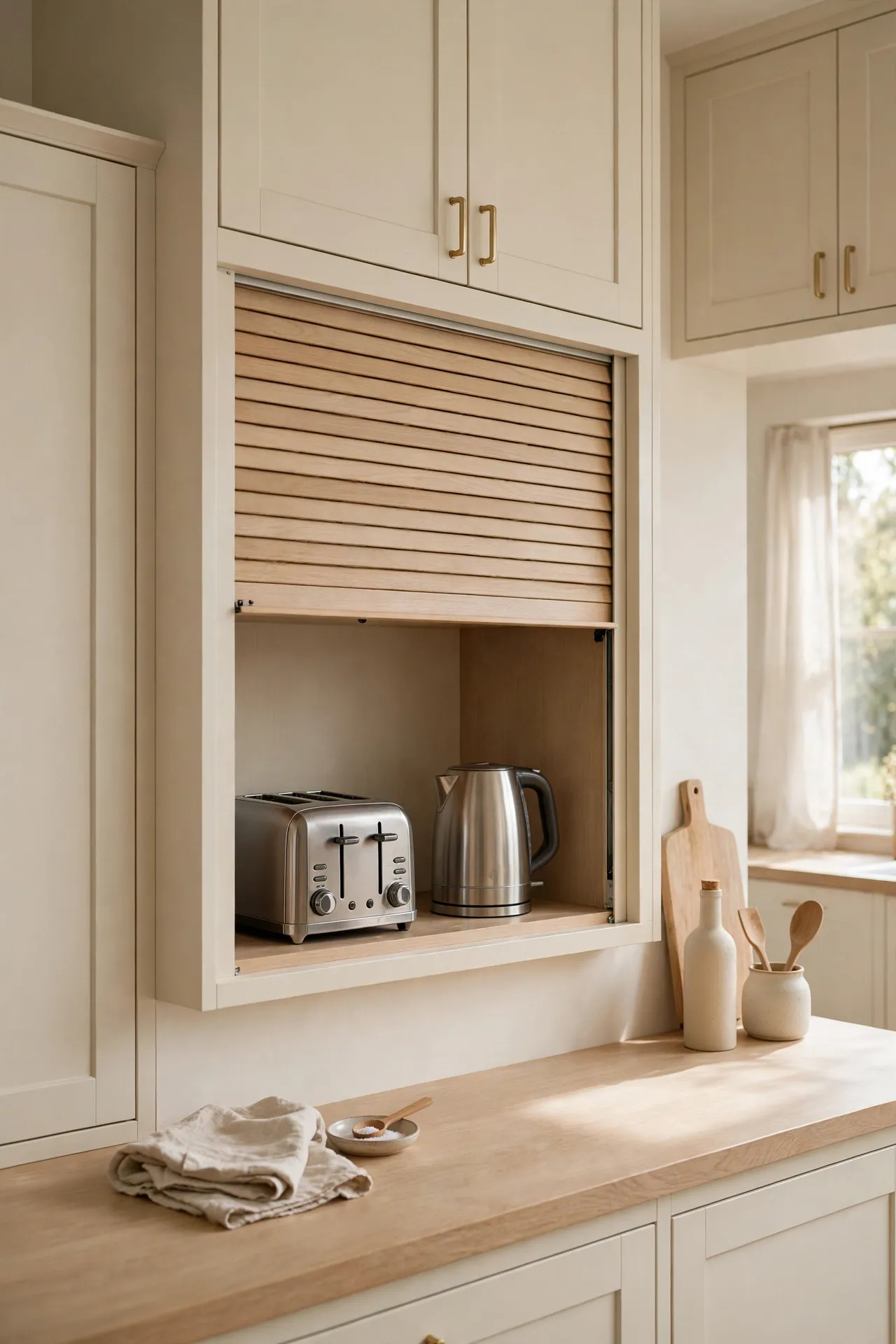
Cost: $60-150 | Time: One afternoon | Skill Level: Intermediate | Works In: Corner counters
Few galley kitchen organization ideas for small spaces earn their keep like a garage for the toaster and coffee maker. Appliances hide behind a roll-up door when idle and slide out for breakfast. The counter reads clean all day while everything stays plugged in and ready. Choose a garage deep enough for your tallest appliance plus cord slack, and vent the back if the toaster runs hot. A small power strip inside keeps every plug tidy and reachable. Wipe the door tracks monthly so the roll-up motion stays smooth.
Spice Drawer Inserts
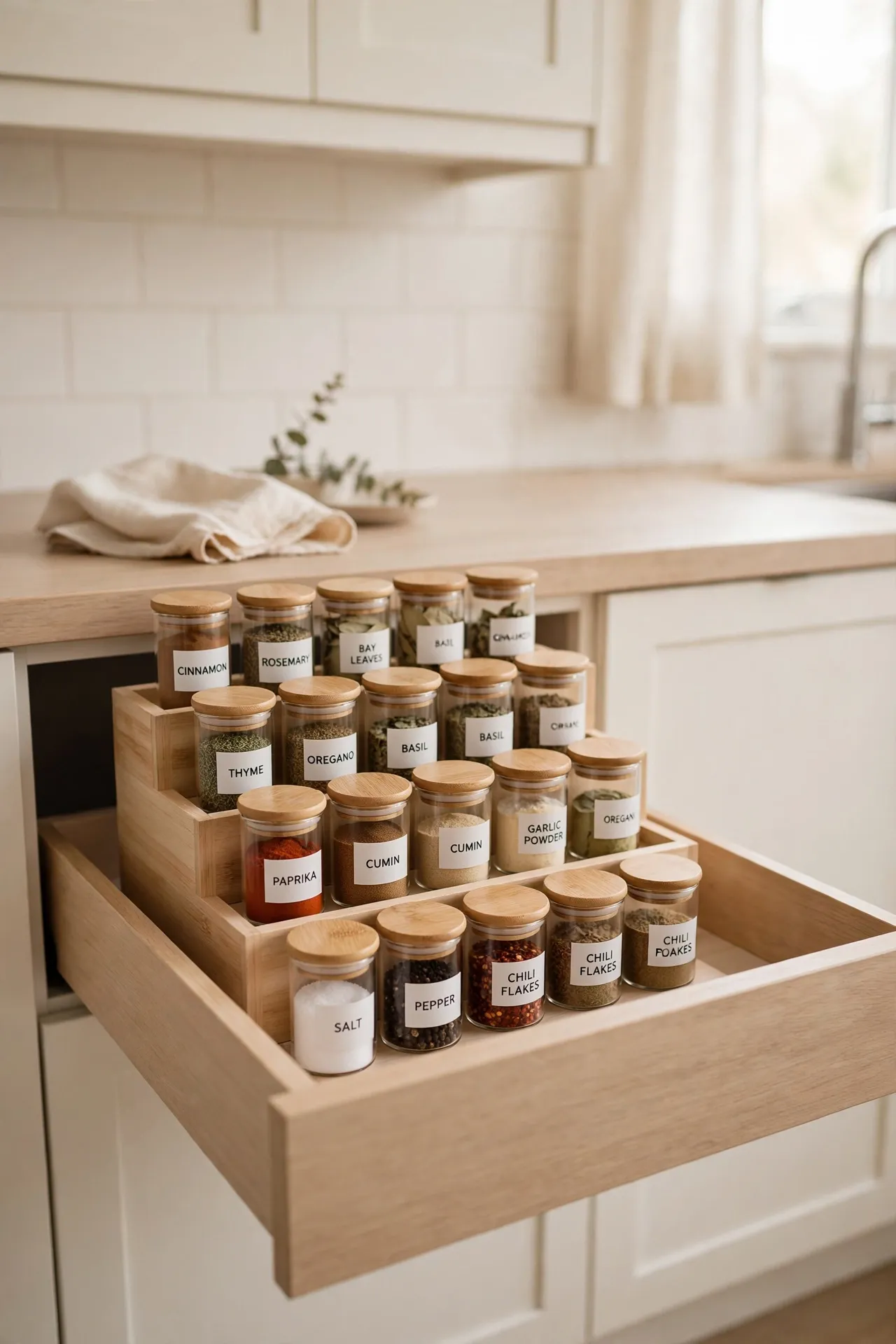
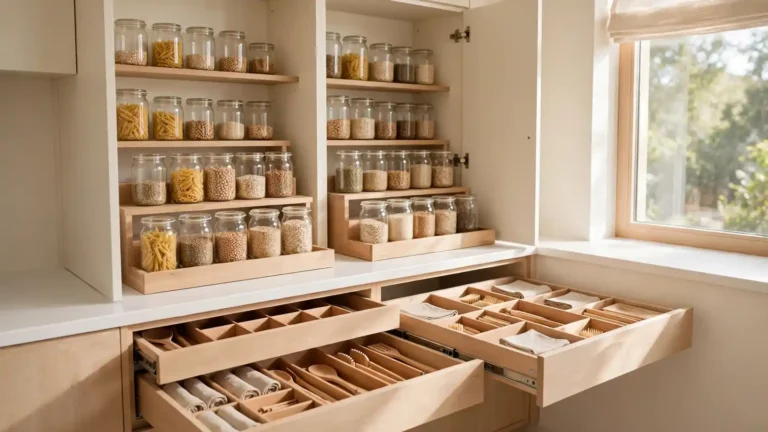
Spice jars scattered across cabinets make every recipe start with a treasure hunt. A shallow drawer fitted with angled inserts lays every jar label-up and readable at a glance. Alphabetical rows mean you grab the cumin without shifting twenty other jars, and refills take seconds instead of minutes.
In my experience, cooks use more variety once the full collection sits visible. Keep the inserts near the stove so seasoning happens mid-cook instead of as an afterthought. Refill from bulk bags and recycle the store jars to save money, and the drawer pays for itself within a season. Alphabetical rows also make grocery lists easier to write.
Backsplash Ledge
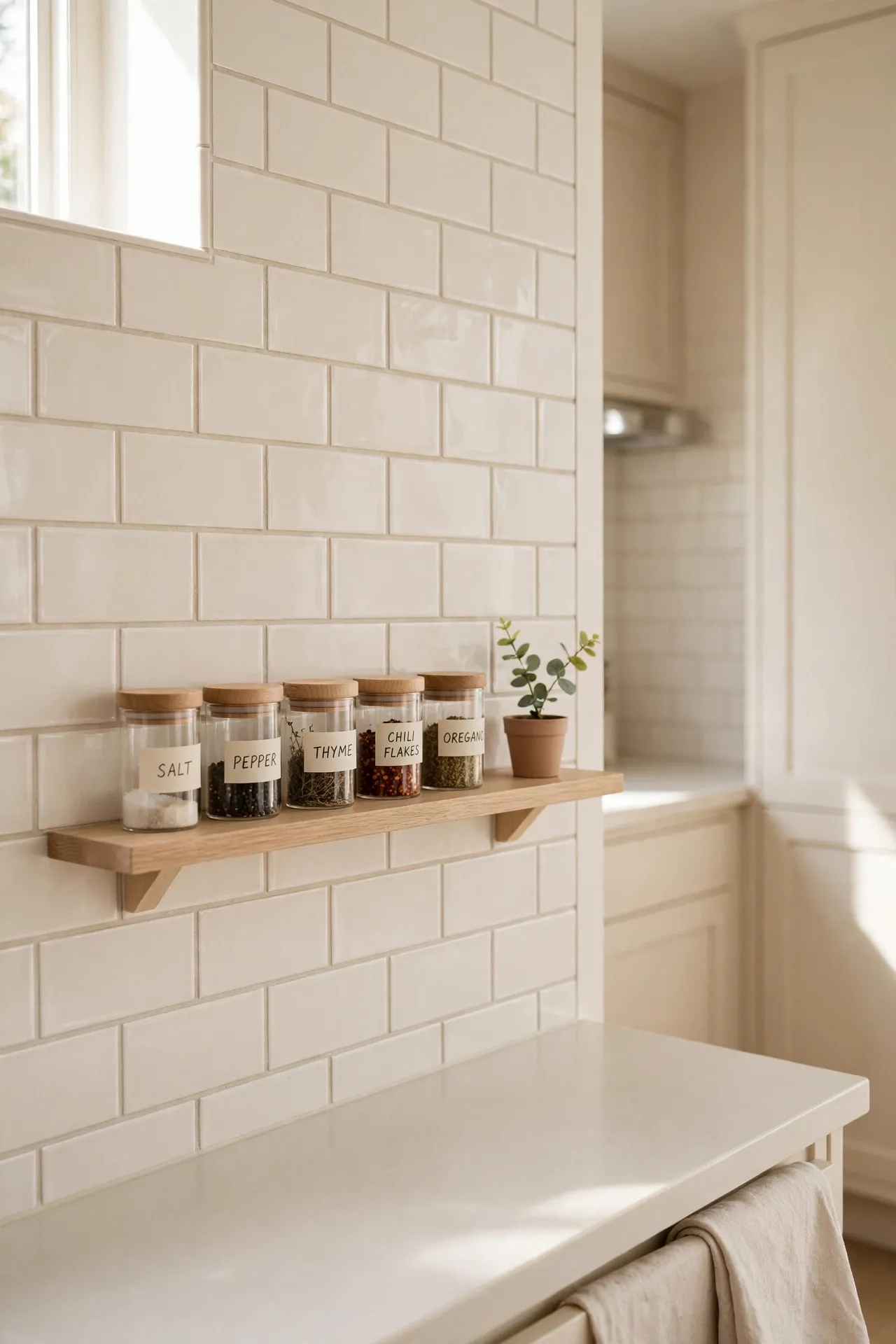
- A slim picture-ledge style rail holds spice jars along the backsplash.
- It keeps seasonings at eye level exactly where cooking happens.
- Most ledges mount with two screws and install in minutes.
- Paint it to match the wall for a built-in, tidy look.
- Leave one section empty for jars you buy mid-week.
This trick borrows display space from your walls instead of your counters. Daily salt, pepper, and olive oil earn the prime spots closest to the stove. The ledge doubles as a tiny shelf for a small plant or framed print. In my experience, keeping the most-used seasonings at eye level shaves real time off weeknight cooking.
Slim Trash Pullout
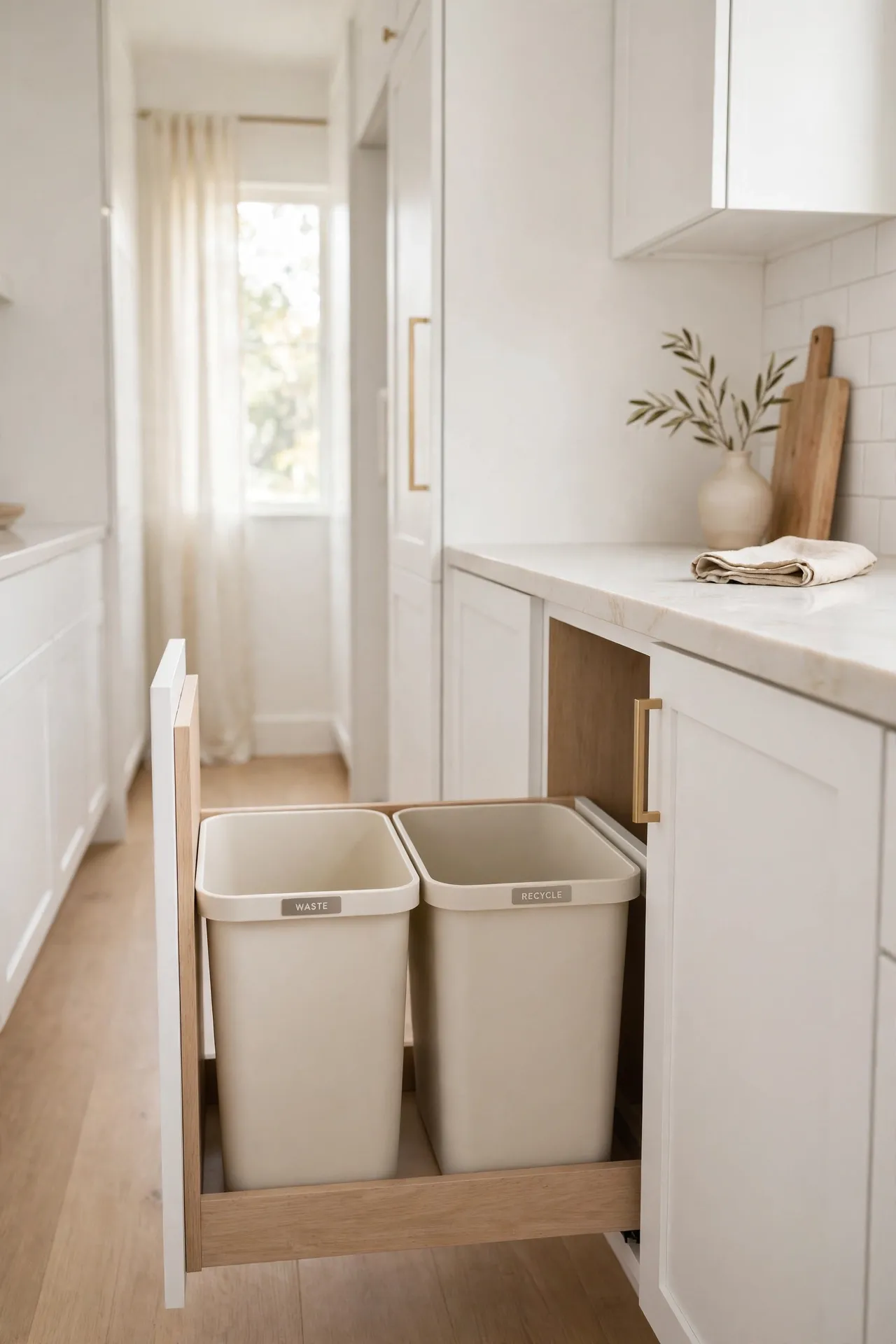
Quick Tip: Measure the cabinet opening and subtract a half inch on each side for the slide hardware. A 10-gallon slim can fits most galley cabinets. Line the can with compostable bags and keep spares clipped inside the cabinet door for fast changes.
Freestanding trash cans eat floor space and block the walkway in narrow kitchens. A pullout drawer hides the bin inside a cabinet and opens with a knee nudge while your hands stay messy. I’ve noticed this one upgrade makes daily cleanup feel noticeably faster. Add a second slim bin beside it if you recycle, and sorting happens without extra effort.
Ceiling Pot Hooks for galley kitchen organization ideas for small spaces
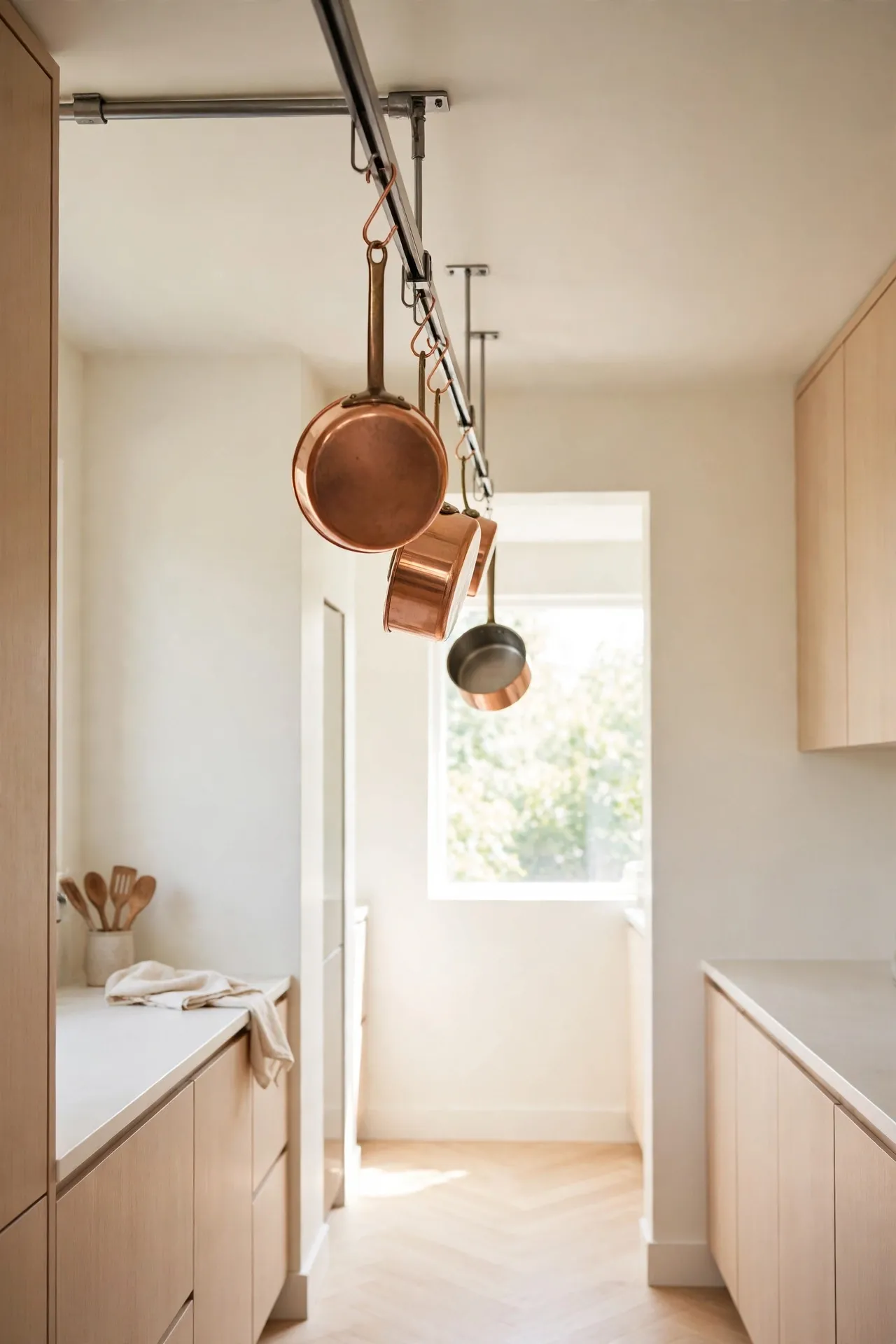
BEFORE: Bulky dutch ovens and skillets stack inside lower cabinets, and grabbing the bottom one means unloading everything above it. The cabinet door barely closes, and heavy lids chip against the frame.
AFTER: Sturdy hooks screwed into ceiling joists hang each pot separately above the aisle. Everything dries fully between uses and lifts down with one hand, with no restacking required.
Anchor every hook into a joist, never just drywall, since cast iron is unforgiving. Keep the hanging height above forehead level to protect taller cooks. A short length of chain lets you adjust the drop so pots hang clear of heads.
Cutlery Tray Dividers for galley kitchen organization ideas for small spaces
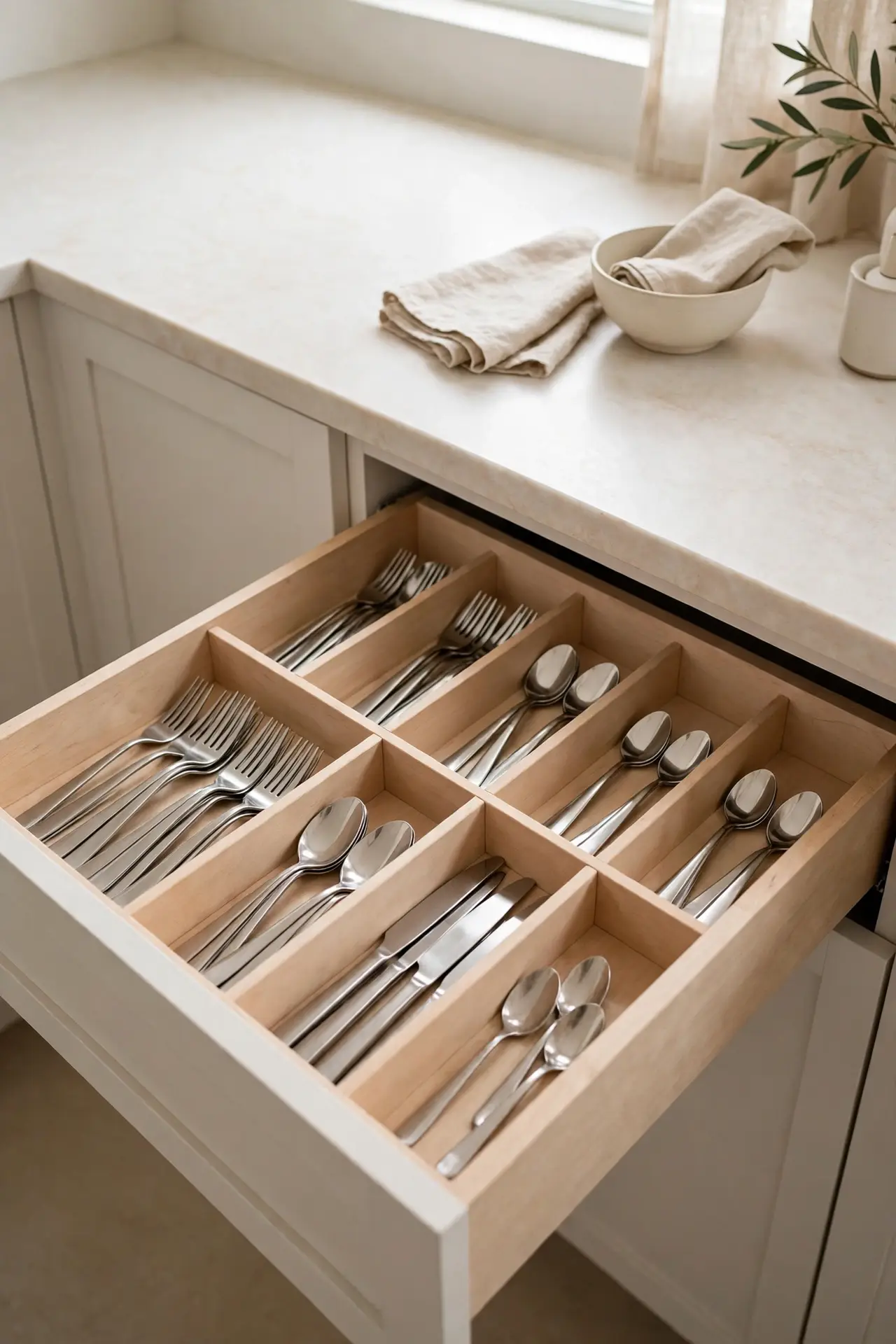
- Empty the drawer and measure its exact interior dimensions.
- Choose an adjustable divider set that expands to fit wall to wall.
- Assign each utensil category its own compartment, knives included.
- Cut non-slip liner to fit so dividers never slide during opening.
- Reassess the layout after a month and move daily tools to the front slots.
Drawers without dividers turn into junk piles within a week. Defined slots keep the whisk from tangling with the tongs every single time. Give rarely used gadgets their own far corner so daily tools stay front and center. A lined drawer also runs quieter, which matters in an open-plan home where the kitchen sits close to the living room.
Clear Bin Labels for galley kitchen organization ideas for small spaces
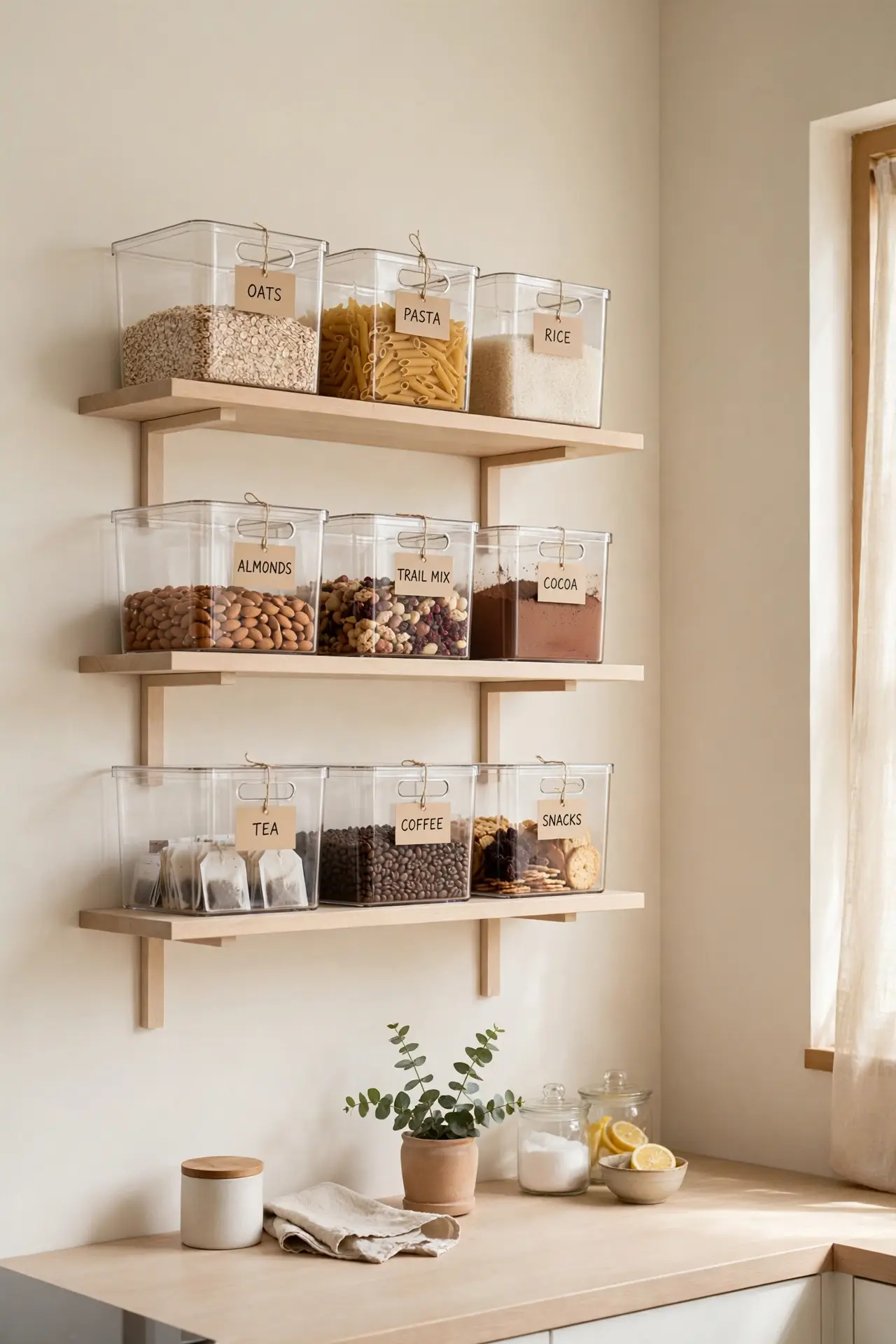
| Feature | Adhesive Labels | Clip-On Tag Holders |
|---|---|---|
| Cost | Pennies per label | Reusable, higher upfront |
| Flexibility | Permanent until peeled | Swap labels anytime |
| Best for | Stable categories | Rotating pantry stock |
| Style | Sleek and minimal | Visible tags, crafty look |
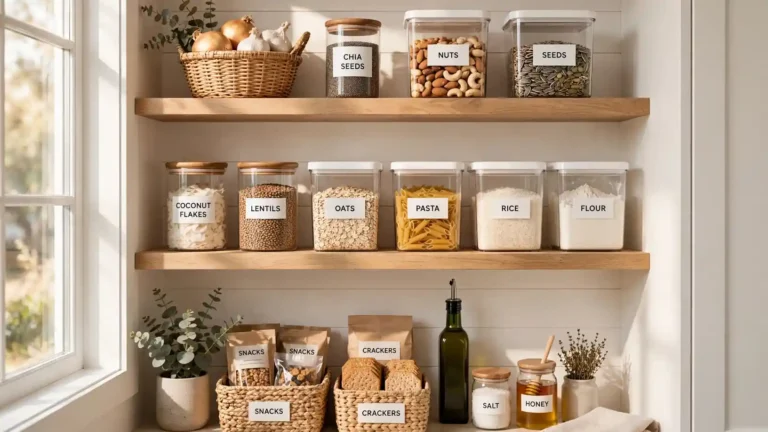
Matching clear bins look tidy but turn anonymous fast without labels. Big, high-contrast text on the front face lets everyone find the rice at a glance. Relabel the moment contents change, or the system quietly stops working. In my experience, households that label stick with their systems far longer than those that skip it. Use a label maker for crisp results, or neat handwritten tags for a softer look.
Conclusion
Small galley kitchens reward smart planning more than extra square footage, and you now have 22 practical ways to start. Pick the two or three ideas that solve your biggest daily frustrations, install them this weekend, and feel the difference on Monday morning. Remember that galley kitchen organization ideas for small spaces work best when every item earns its spot, so review your zones each season and release what you no longer use. Save your favorite ideas to Pinterest, share this guide with a friend fighting the same clutter, and tell us in the comments which upgrade changed your cooking routine most.