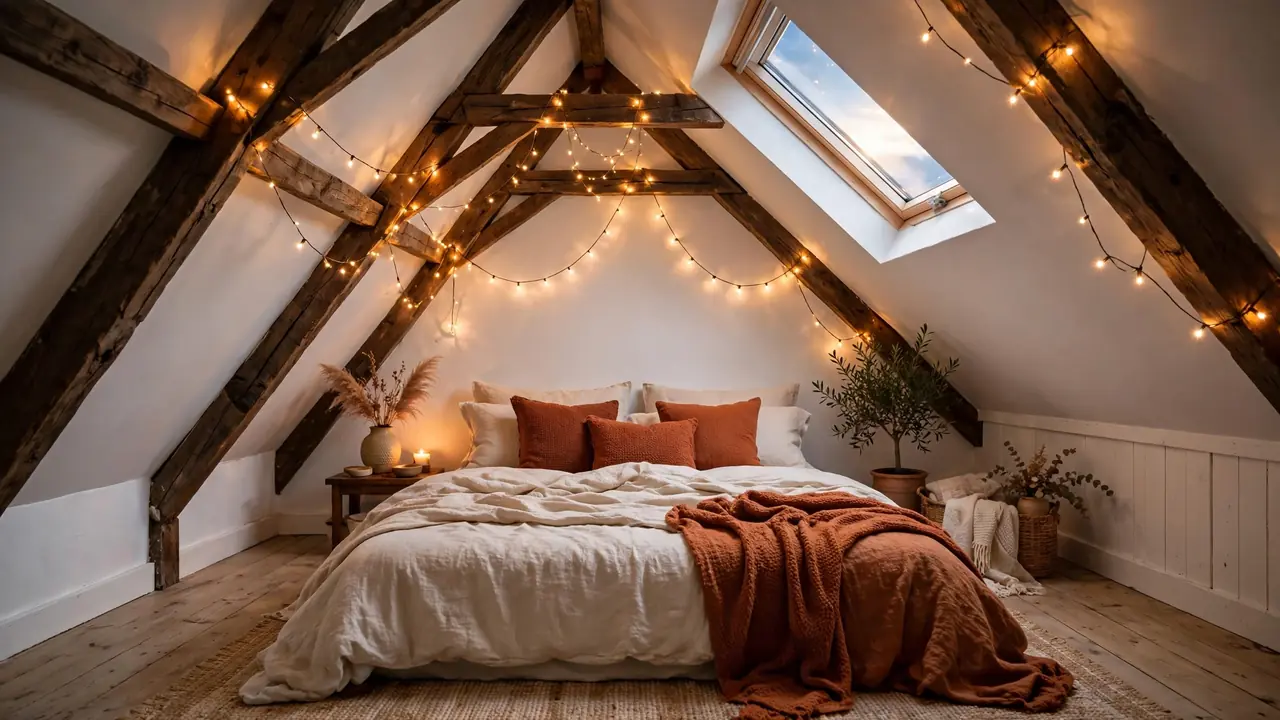
23 Attic Bedroom Makeover Ideas for Enchanting Comfort
There is something magical about attic bedroom makeover ideas that turn forgotten top floors into the coziest room in the house. Sloped ceilings, exposed beams, and quirky dormers give attics a character that flat-walled rooms simply cannot copy. I love how a few thoughtful changes can turn an awkward, dusty space into a retreat that feels personal and calm. Whether your attic is tiny or sprawling, the charm is already built in, you just need to bring it out.
In this guide you will find 23 ideas that work with low ceilings, angled walls, and unusual layouts. If storage is your biggest worry, my cozy bedroom storage ideas pair perfectly with these attic tricks. Pick the ideas that fit your space and budget, then enjoy watching your attic become the room everyone fights over.
Sloped Ceiling Beds
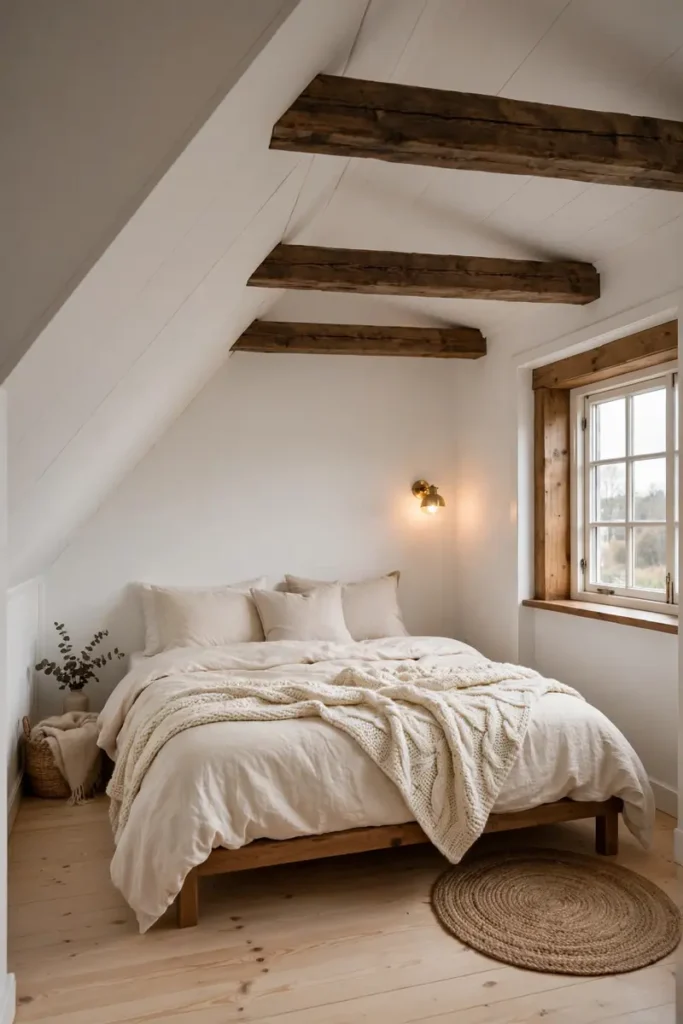
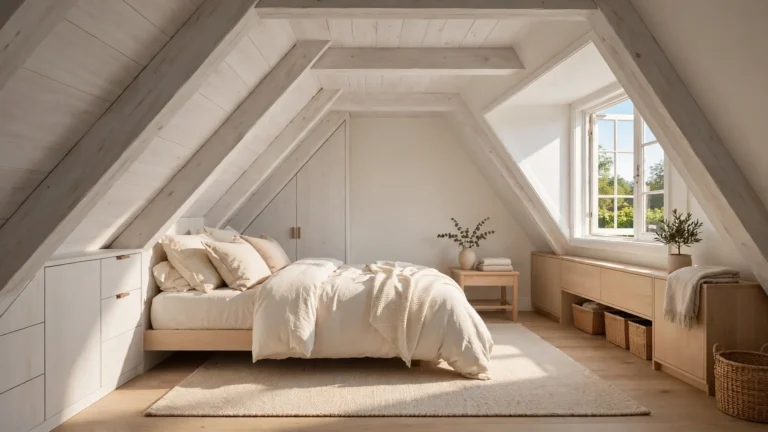
The lowest part of a sloped ceiling is the perfect home for your bed. Tucking the headboard under the eaves turns dead space into the coziest sleeping nook, and you only need standing height where you walk. I have seen tiny attics feel twice as big once the bed stops fighting the tall center of the room.
Choose a low platform frame so your head clears the slope when you sit up. Leave a few inches between the mattress and the angled wall for bedding to breathe, and add a slim wall sconce instead of a table lamp to save precious floor space.
Skylight Reading Corners
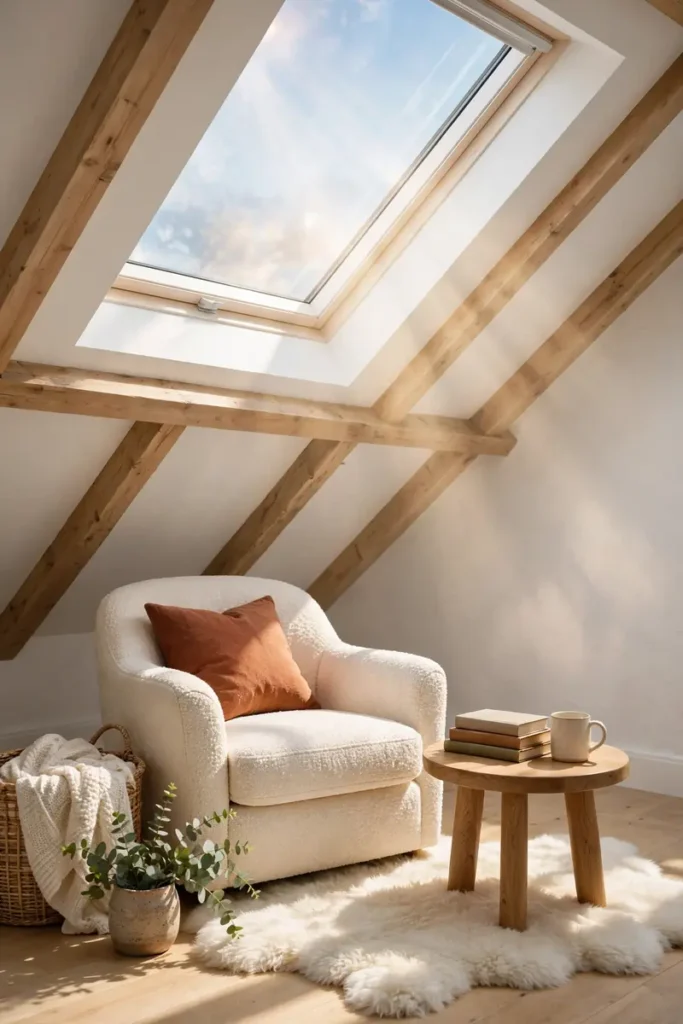
A skylight pours the best reading light straight down, so place your chair right under it. Morning sun makes this corner glow, and at night you can stargaze from your seat. It is the kind of spot that makes you actually finish books.
- Angle the chair: face it slightly toward the room so the corner feels open, not boxed in.
- Layer the seat: a sheepskin or folded quilt makes a simple armchair nap worthy.
- Add a small table: just big enough for a book stack, a drink, and a tiny lamp.
- Soften the floor: a round rug defines the corner and warms cold attic floors.
- Block glare: a simple skylight blind lets you read comfortably on bright afternoons.
Keep the palette light around a skylight so the daylight bounces instead of getting absorbed. White walls, pale wood, and one warm accent color will make the whole corner feel like a deep breath.
Cozy Dormer Nooks
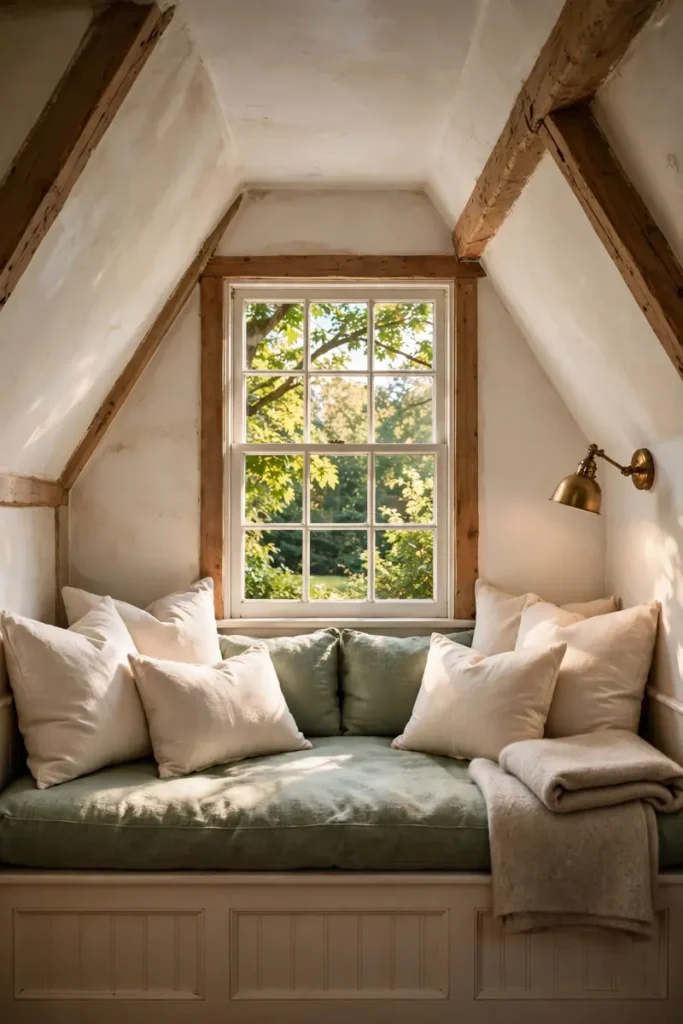
Dormers are gift-wrapped extra square footage, and a window seat turns one into the most loved spot in the house. The recessed shape feels like a hug, which is exactly why kids and cats claim these nooks first. If two kids share the room, these shared sibling bedroom ideas help everyone get their own cozy corner. Build the seat at standard chair height so it doubles as extra seating when friends visit.
Top the seat with a thick custom cushion in a washable fabric, then pile on pillows in different sizes. A small wall mounted light on the sloped side means no floor lamp eating into the narrow space. I like adding a lidded basket underneath for blankets, so the nook stays tidy.
If your dormer is deep enough, fit drawers into the base of the seat for hidden storage. Shallow drawers work best here since the knee wall behind them is usually short. This one move can swallow a whole dresser worth of clothes.
Exposed Beam Charm
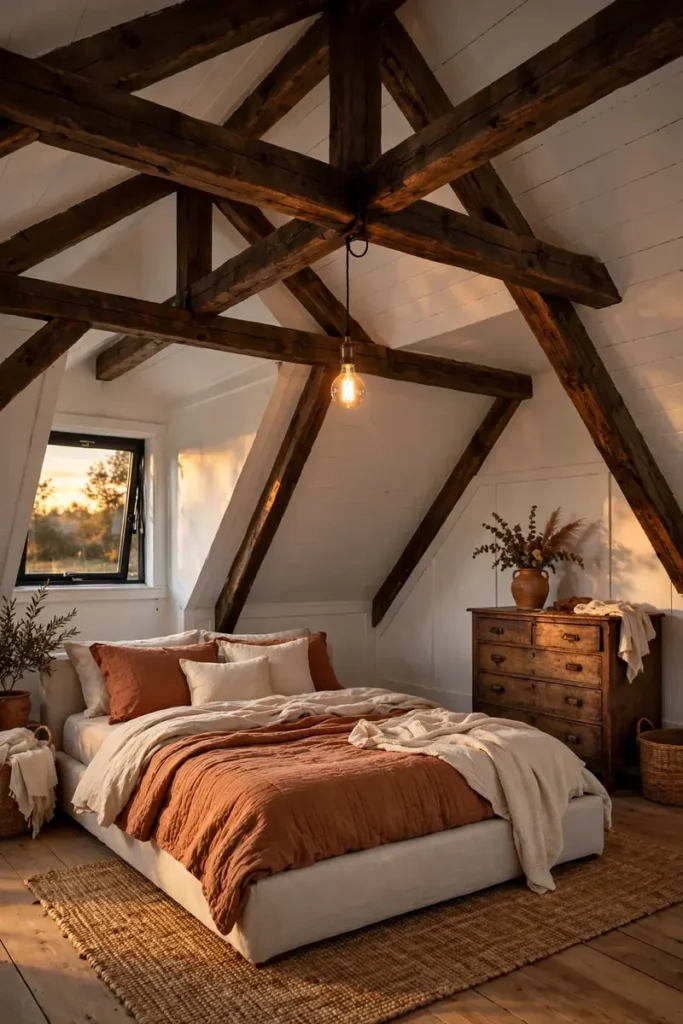
DO:
- Clean beams with a dry brush and seal them with clear matte finish to keep dust down.
- Paint the ceiling between beams white so the wood pattern stands out crisply.
- Hang a pendant or string lights from a beam to make it a feature, not just structure.
DON’T:
- Stain beams very dark in a low attic, it can press the ceiling down visually.
- Drill deep into beams without checking what they carry, some hide wiring or pipes.
- Cover beams with drywall if you love character; they are the soul of the room.
Low Profile Platforms
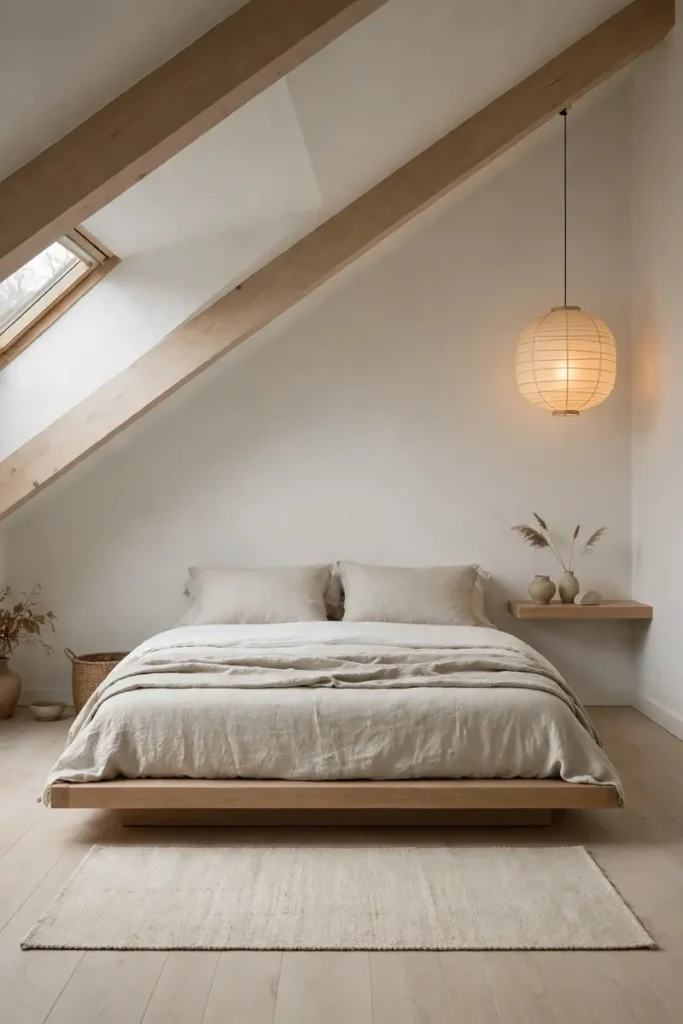
Step one, measure your sitting height. Step two, pick a platform bed that keeps your head clear of the slope. Step three, place it where the ceiling is lowest. Step four, style the bedding in light tones. Step five, step back and enjoy an attic that finally feels made for sleeping.
- Measure sitting height: sit on your mattress and measure from the floor to the top of your head, then add six inches.
- Pick the frame: platform beds under 12 inches high work best beneath slopes.
- Position smart: headboard against the lowest wall, feet toward the taller center.
- Keep bedding light: low visual weight makes low ceilings feel intentional.
- Skip the footboard: an open foot keeps sightlines long in tight attics.
A platform bed also gives you under-bed storage without a tall frame stealing headroom. Slide in flat bins for off-season clothes and the room stays calm and uncluttered.
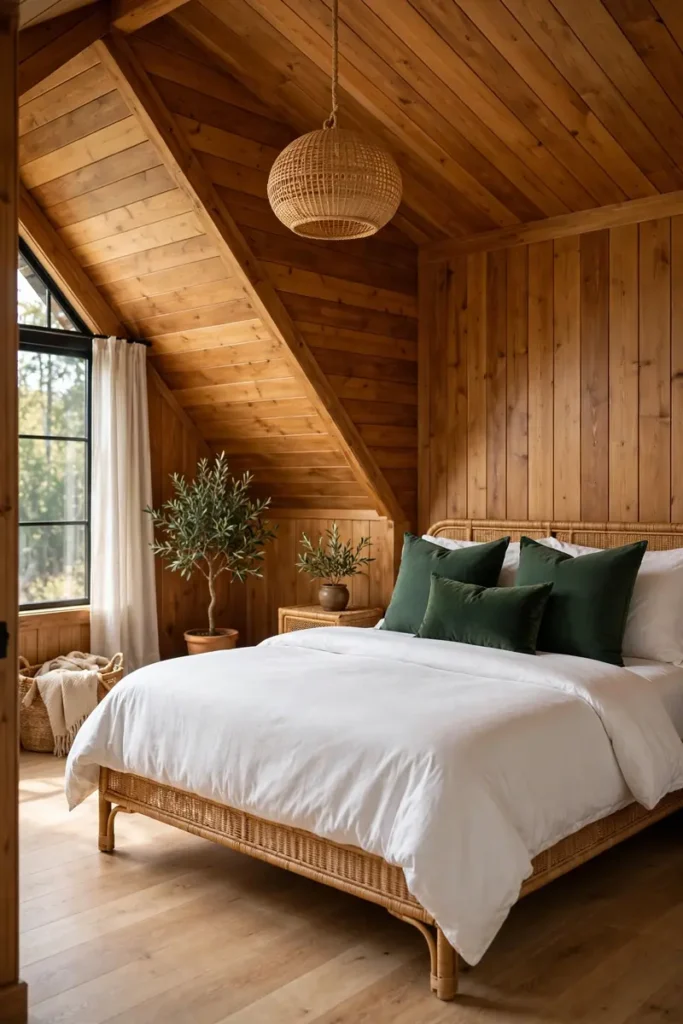
Warm Wood Paneling
| Panel Style | Best For | Mood |
|---|---|---|
| Shiplap | Bright, airy attics | Coastal cottage |
| Beadboard | Low, dark attics | Classic charm |
| Reclaimed planks | Rustic retreats | Warm lodge |
| Plywood sheets | Tight budgets | Modern minimal |
Wood paneling wraps a sloped room in warmth the way paint never can. I have watched cold, echoey attics turn instantly snug once the angles got a honey toned skin. Run the boards horizontally on knee walls to stretch the room visually, and keep the ceiling a shade lighter so it lifts.
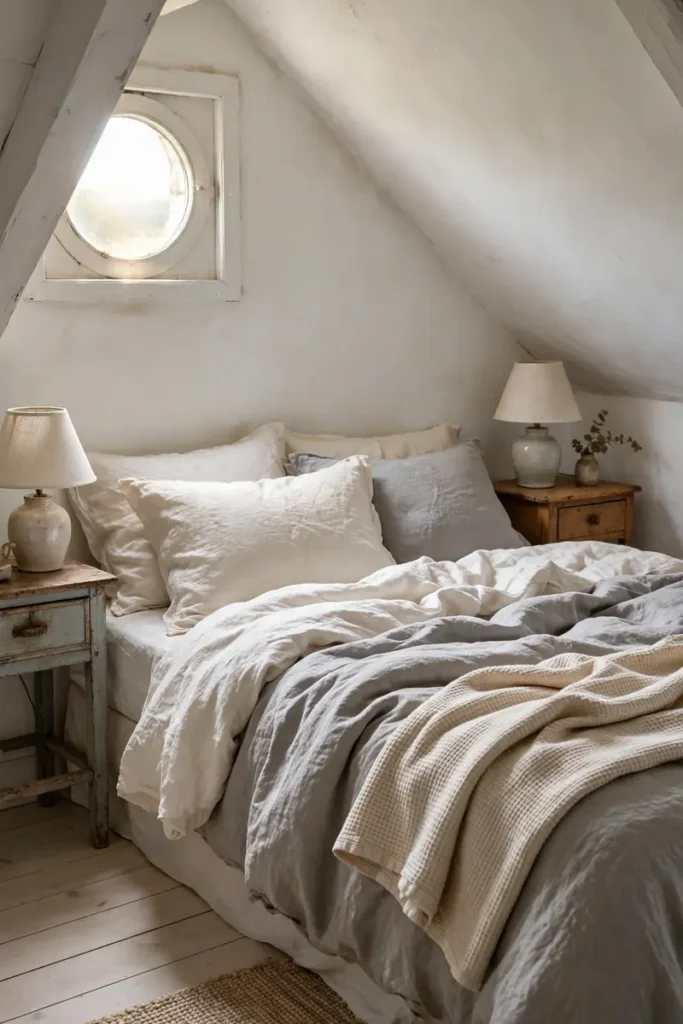
Soft Linen Bedding
Q: Does linen really work for everyday bedding, or is it just for photos?
It truly works for every day. Linen gets softer with every wash, breathes in summer, and layers beautifully in winter. The relaxed wrinkles are the whole point, so you can skip perfect hospital corners and still have a bed that looks styled.
Q: What colors suit a low attic best?
Stick with light, warm neutrals like ivory, oatmeal, and soft clay. Dark bedding can make a sloped ceiling feel closer, while pale linen reflects what little light attics get. Add one deeper accent, like a rust throw, for contrast without heaviness.
Built In Eaves Storage
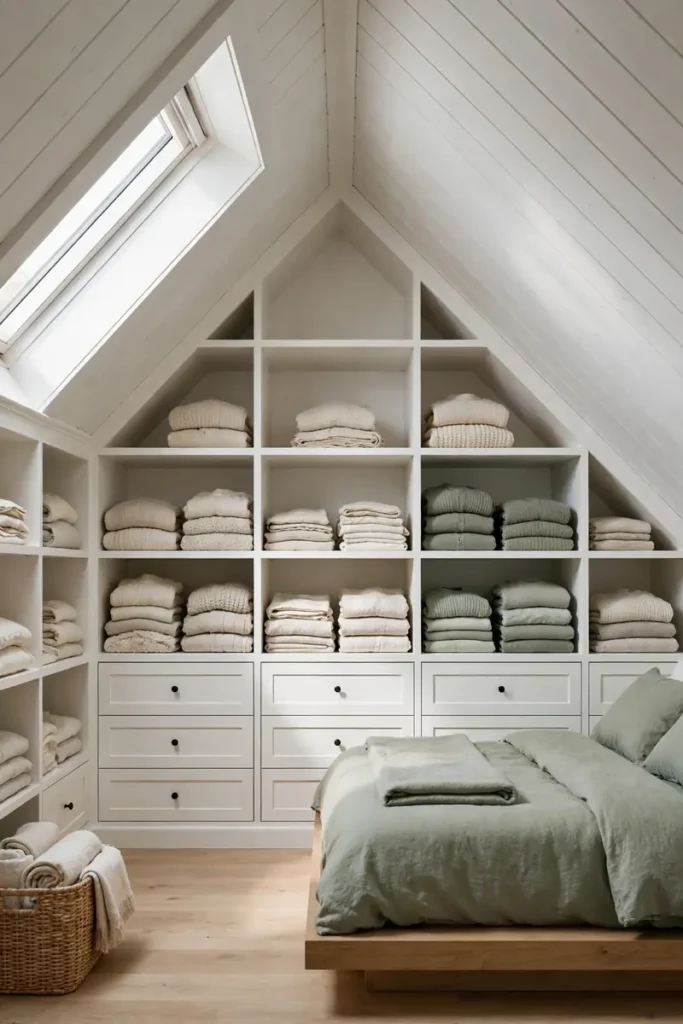
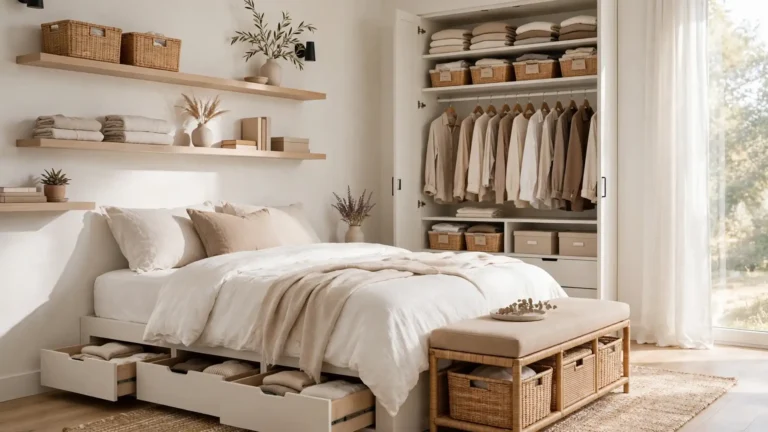
The triangle under your eaves is prime real estate, so build into it instead of around it. Custom drawers that follow the slope can hold an entire wardrobe where a freestanding dresser would never fit. Even simple ready made drawer units pushed into the low zone beat wasted space.
What you need:
- Low drawer units or cube shelves sized to your knee wall height
- Baskets or fabric bins to keep small items from vanishing into the deep back
- A tape measure, because eave depth changes every few inches
- Labels, so the back corners stay useful instead of mysterious
Pull out drawers beat fixed shelves here, since you can reach all the way into the dark triangle. I label every bin, because an unlabeled eave becomes a black hole within a month.
String Light Canopies
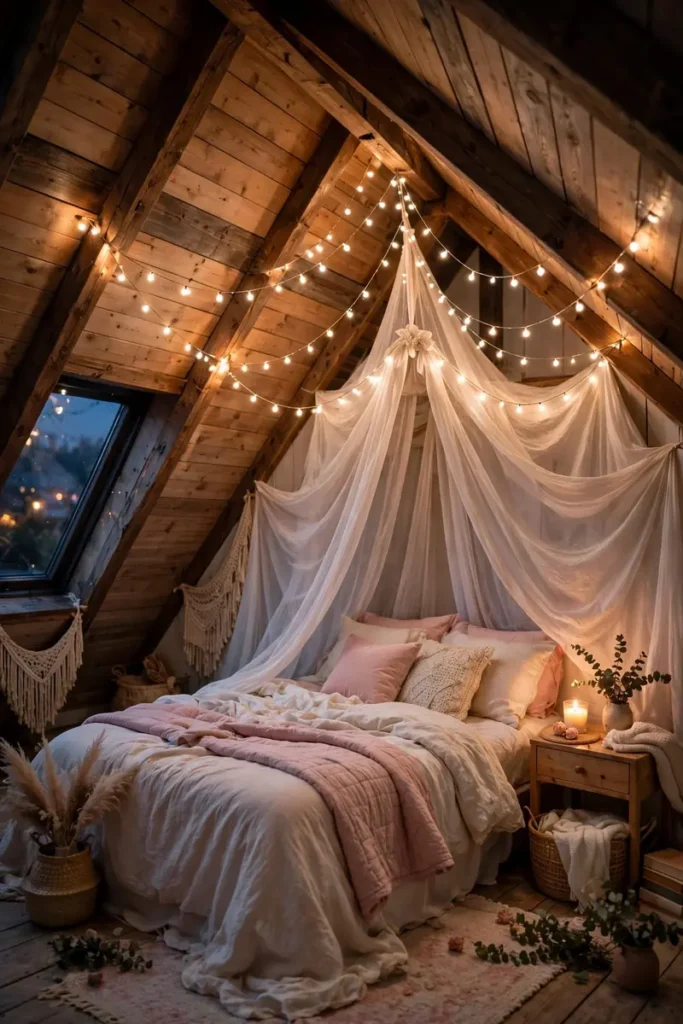
Few things flatter a sloped ceiling like a canopy of warm string lights. The tiny bulbs trace the angles of the roof and turn structural quirks into pure magic. Drape them in loose swags rather than tight lines so the glow feels soft and organic.
Choose warm white bulbs, never cool blue, or the room will feel like a freezer aisle. Battery operated strands with timers save you from climbing up to switch them off, and they sip power. Layer a sheer fabric beneath the lights for a canopy effect that diffuses the glow beautifully.
Rustic Whitewash Walls
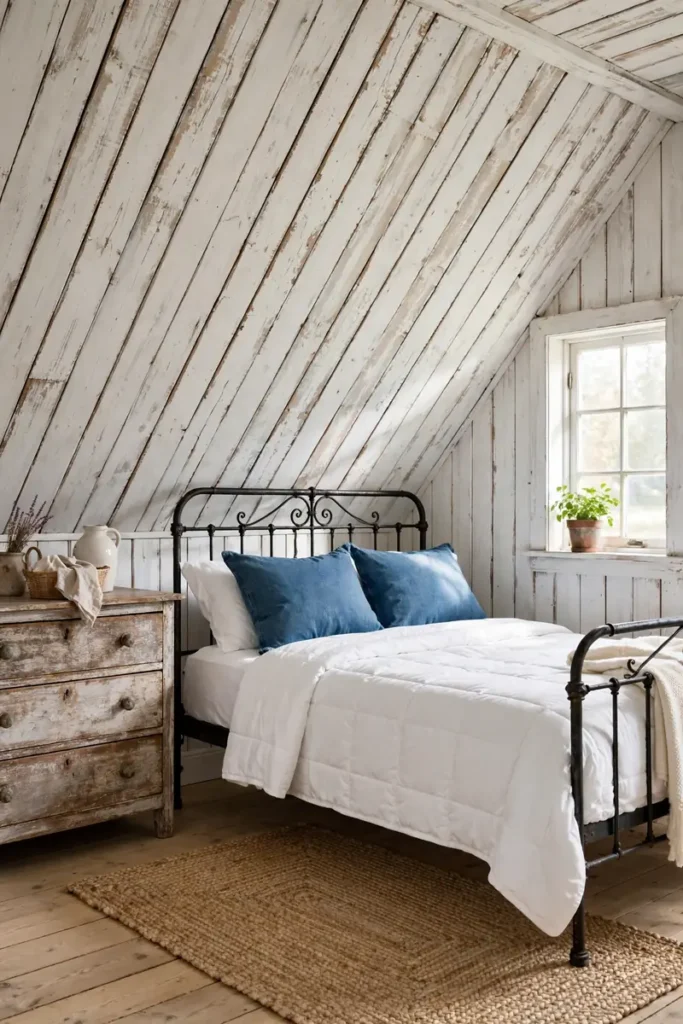
Whitewash lets wood grain show through while bouncing light around a dim attic. It is the sweet spot between bare rustic planks and flat white paint. The texture keeps the room from feeling sterile, which matters when every surface is angled.
- Mix thin: one part white paint to one part water keeps grain visible.
- Brush with the grain: long strokes prevent blotchy patches on planks.
- Wipe as you go: a rag dragged over wet wash evens the finish.
- Seal lightly: matte poly keeps the wash from yellowing over time.
- Test first: try a hidden plank, since every wood takes wash differently.
Pair whitewashed walls with one dark anchor, like a black iron bed or walnut dresser, so the room keeps its depth. All white everything can wash out under a skylight.
Window Seat Dreams
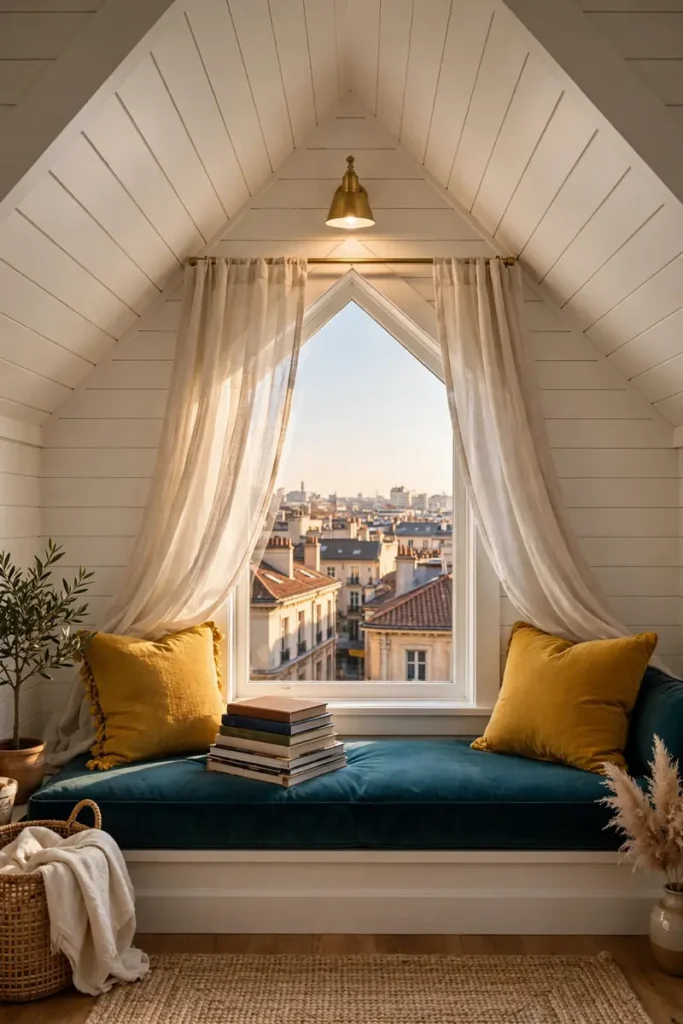
A gable end window is begging for a seat beneath it. The tall glass floods the attic with light, and a deep cushion turns that bright patch into prime real estate. I have seen guests choose the window seat over the actual bed. It is that inviting.
Build the seat 18 to 20 inches deep so adults can curl up sideways. Hinge the top for blanket storage, or fit drawers if you prefer easy access. A row of hooks on the side wall holds robes and tomorrow’s outfit within arm’s reach.
Style it like a daybed with a fitted cushion, sleeping pillows at one end, and a throw across the middle. Suddenly your attic has a reading spot, a guest bed, and a sunny perch in one footprint.
Vintage Trunk Nightstands
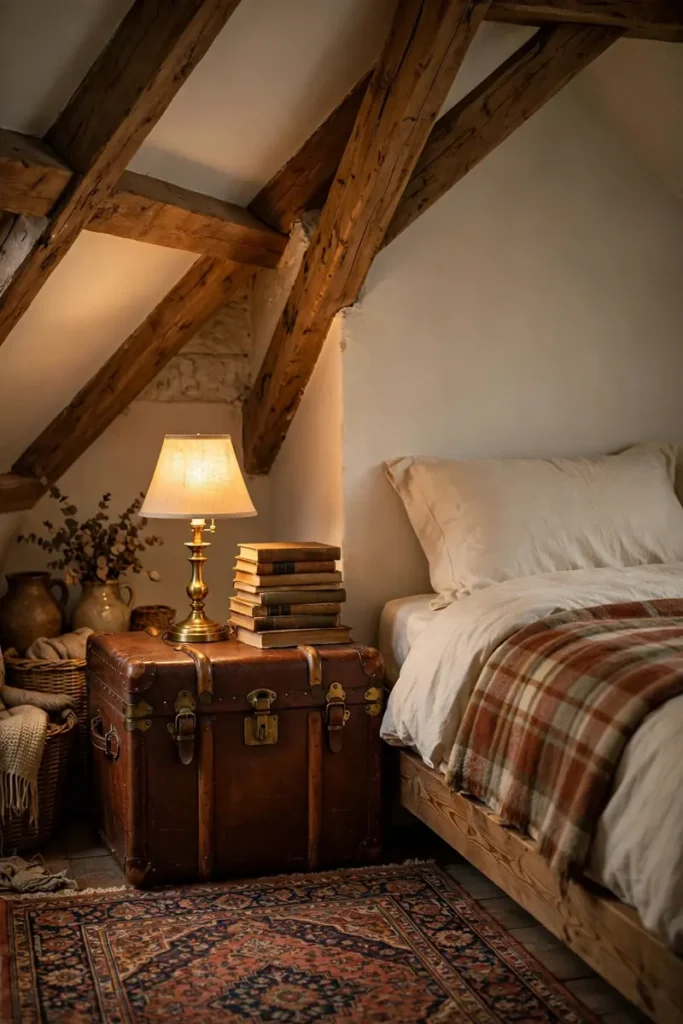
DO:
- Pick trunks 20 to 24 inches tall so they match standard nightstand height.
- Use the hollow inside for linens, books, or out-of-season clothes.
- Top with a tray to create a stable, flat surface for lamps and water.
DON’T:
- Choose trunks with strong musty smells, they will scent your pillows too.
- Place them where drawers cannot open, measure the swing before you commit.
- Pair two wildly different trunks, matching heights matter more than matching styles.
Plush Layered Rugs
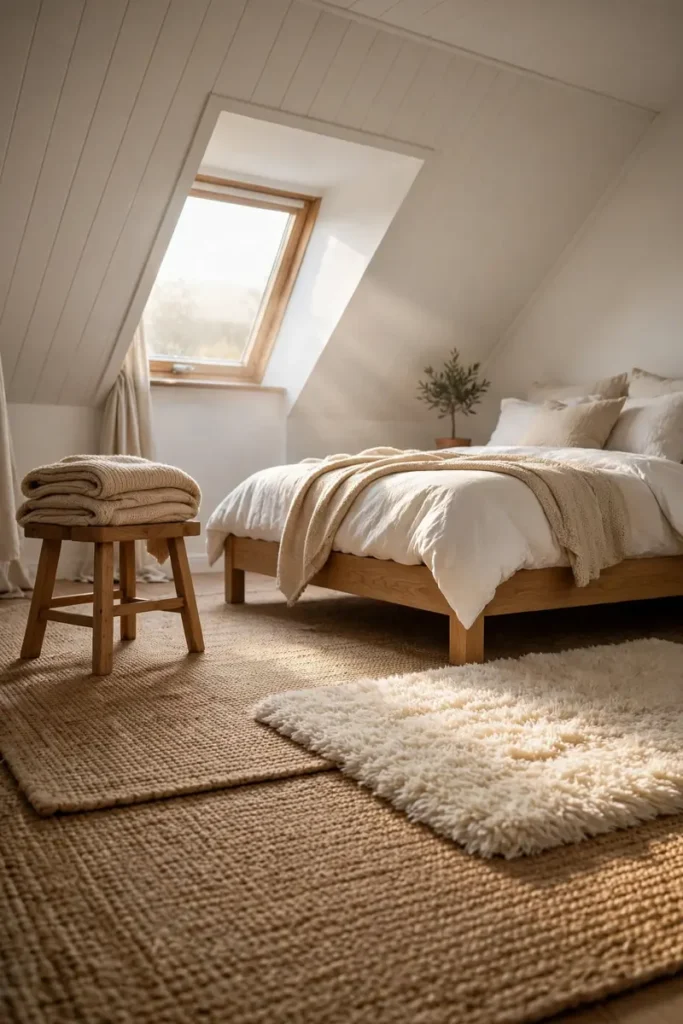
Step one, start with a large flat rug that covers most of the walking area. Step two, layer a smaller plush rug where your feet land each morning. Step three, keep both in the same color family. Step four, add a rug pad underneath. Step five, enjoy attic floors that feel warm even in January.
- Base layer: a flat weave jute or wool rug anchors the room and handles traffic.
- Soft top: a shag or high pile rug adds the barefoot luxury.
- Right size: the base should extend past the bed on both sides.
- Pad it: thick pads stop sliding on smooth attic floors.
- Vacuum smart: suction only on shag, beater bars can chew the fibers.
Attic floors run cold, especially over unheated space below, so rugs are comfort essentials here, not just decor. Layering also lets you wash the top rug more often while the base stays put.
Moody Charcoal Accents
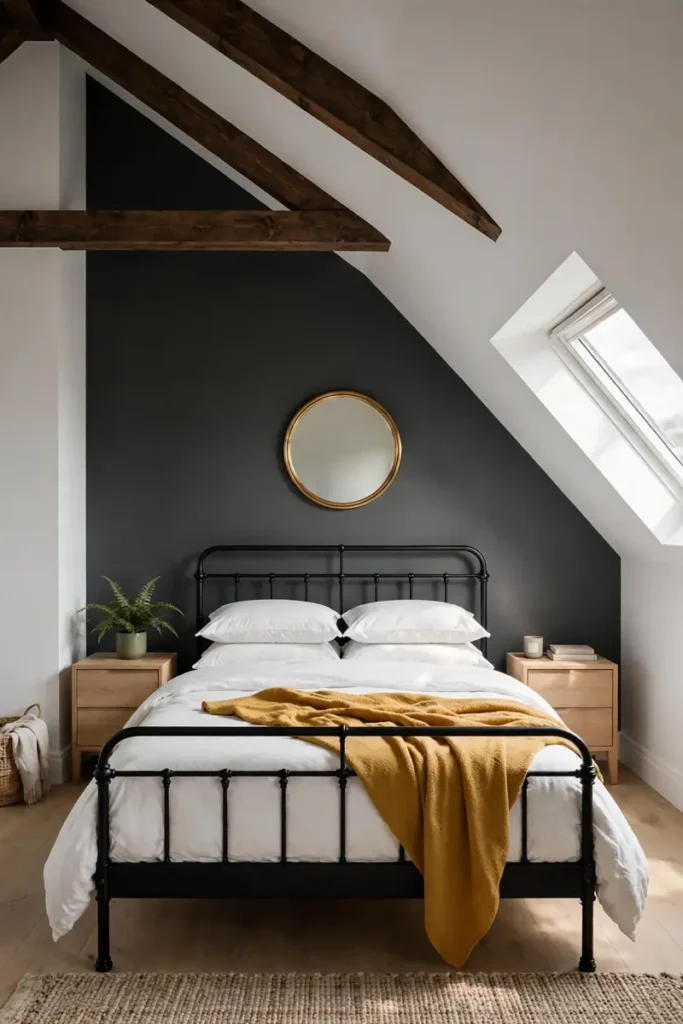
| Accent Choice | Where to Use | Effect |
|---|---|---|
| Charcoal wall | Behind the bed | Grounds the room |
| Black frame | Bed or mirror | Crisp contrast |
| Dark textiles | Throw, pillows | Cozy depth |
| Bronze fixtures | Sconces, handles | Warm edge |
One dark move keeps an all white attic from feeling washed out. I like charcoal behind the bed because it makes white bedding pop and gives the sloped wall a sense of intention. Keep the other surfaces light so the contrast reads as drama, not gloom.
Floating Shelf Displays
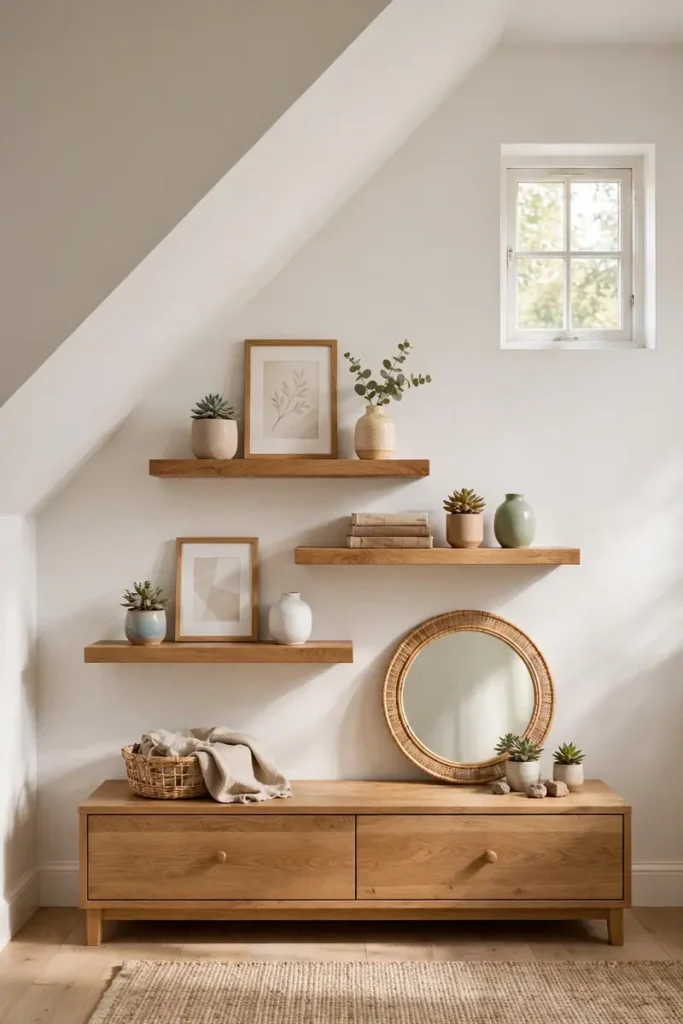
Q: Will shelves hold on a sloped or knee wall?
Yes, if you anchor into studs. Knee walls usually have framing you can find with a stud finder, and floating shelf brackets rated for 20 pounds per foot handle books and decor easily. For very short knee walls, keep shelves shallow, 8 inches deep is plenty.
Q: How do I style shelves under a slope without clutter?
Follow the slope with your arrangement, tallest items where the ceiling is highest. Leave breathing room between objects, and repeat one material, like oak or brass, across all shelves. Three shelves with five to seven items total looks curated, not crowded.
Sheer Curtain Drapes
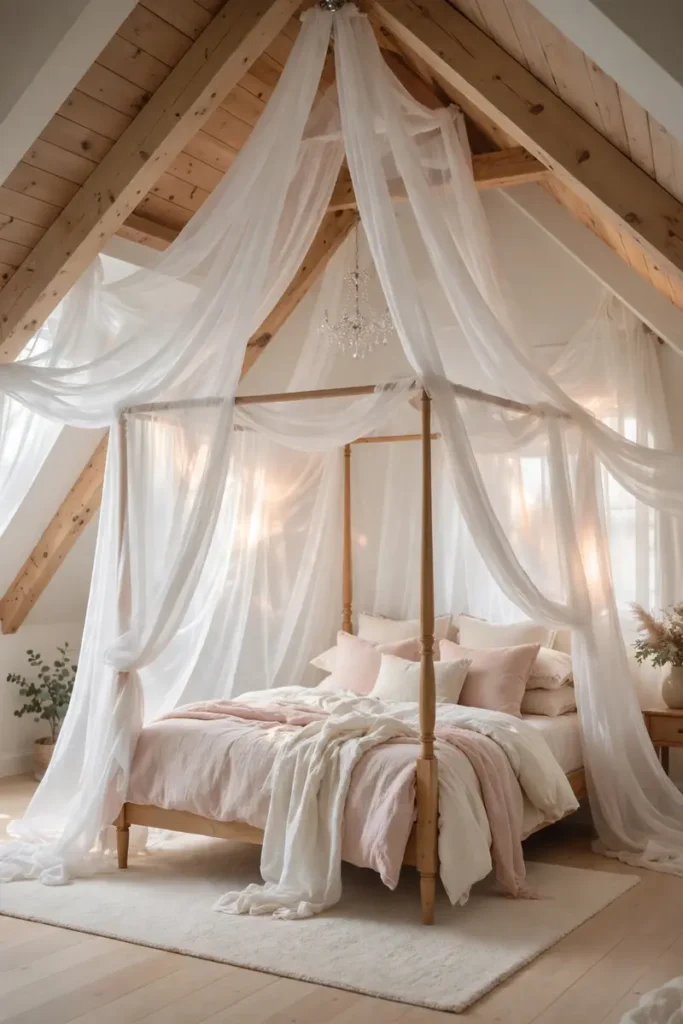
Hanging sheers from the ceiling peak softens every hard angle in an attic. The fabric catches light and movement, which makes the room feel alive. It is also the cheapest way to add drama, a few panels and some ceiling hooks do the job.
What you need:
- Sheer curtain panels, twice as many as you think for fullness
- Ceiling hooks or a thin wire track following the slope
- A steamer, sheers wrinkle in the package every time
- Tiebacks for daytime, so light still pours in
Drape the fabric in gentle swags rather than pulling it taut. The soft folds are what make this look romantic instead of severe, and they hide imperfect ceiling lines beautifully.
Antique Brass Lighting
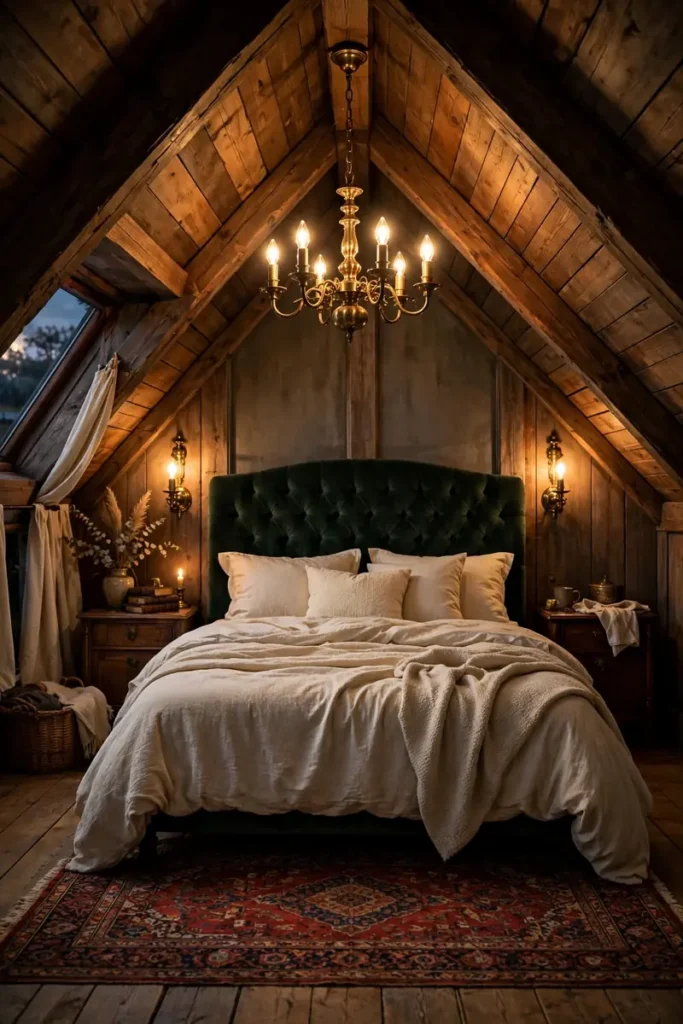
Brass warms up attic light in a way chrome never does. A vintage style chandelier at the peak draws the eye up and makes low ceilings feel intentional. I hunt flea markets for these, since new reproductions rarely get the patina right.
Flank the bed with matching brass sconces to free up nightstand space. Plug in versions with cord covers work when you cannot hardwire into old plaster. Keep bulbs at 2700K for that candlelit warmth that makes attics feel like hideaways.
Compact Writing Desks
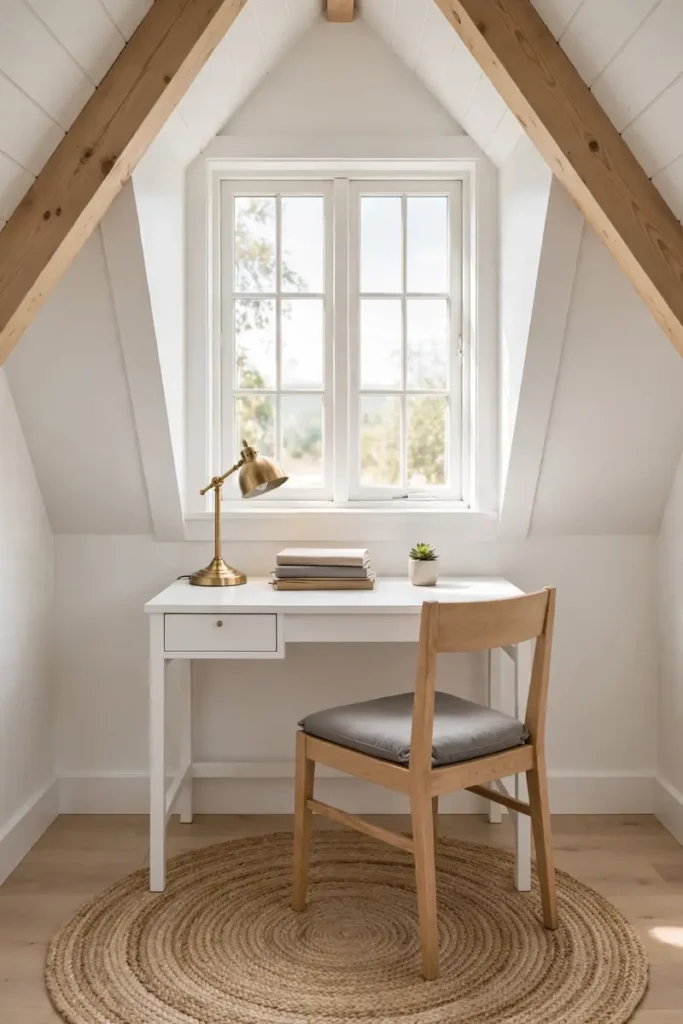
A dormer or gable window makes a natural desk spot with a view worth working for. Choose a desk no deeper than 20 inches so it fits the narrow zone. Wall mounted fold down desks are brilliant here, they vanish when the workday ends.
- Face the window: natural light beats any lamp for daytime focus.
- Go vertical: a pegboard above the desk holds supplies without footprint.
- Pick a light chair: something you can tuck fully under the desk.
- Hide cables: a cord channel along the wall keeps the nook tidy.
- Add a plant: one small green thing makes any desk feel alive.
Keep the desk styling minimal since attic corners get visually busy fast. A lamp, a notebook stack, and one personal object are plenty.
Botanical Corner Touches
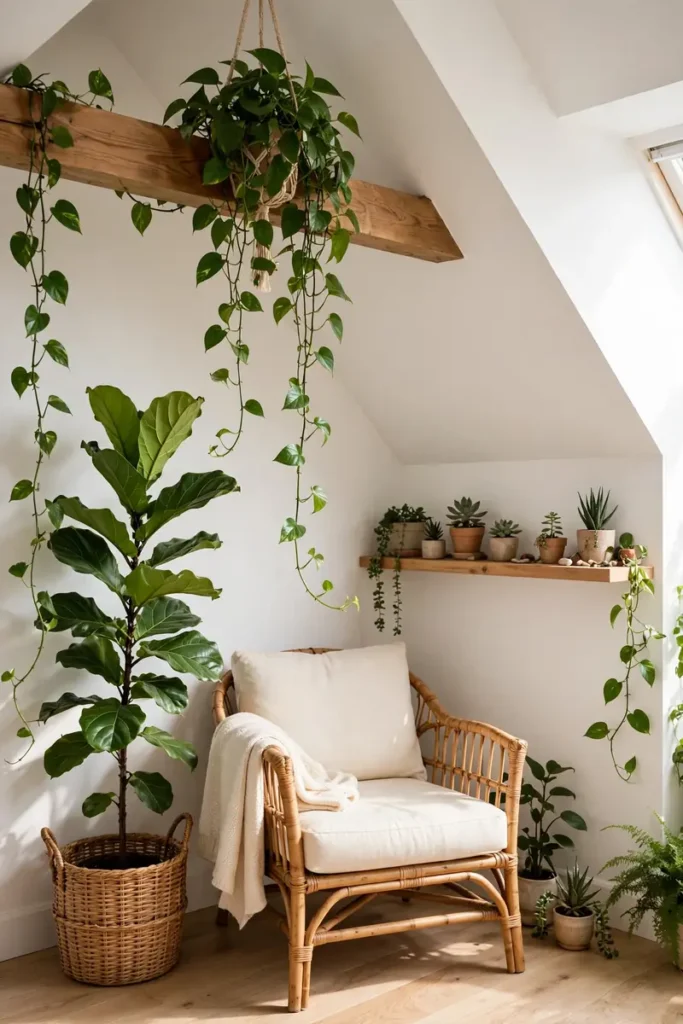
Plants thrive in attics because skylights and dormers deliver the bright, indirect light most houseplants crave. A tall fig in the brightest corner adds life and height where furniture cannot reach. Group plants in odd numbers for a look that feels collected rather than staged.
Hang trailing pothos from a beam to soften the hardest lines in the room. The vines draw the eye along the slope and make the ceiling feel lower in the coziest way. Just check the hook rating, wet soil gets heavy fast.
Stick with forgiving plants if your attic swings hot and cold. Snake plants, ZZ plants, and pothos shrug off temperature swings that would stress fussier varieties. A simple watering schedule on your phone keeps them happy.
Quilted Throw Layers
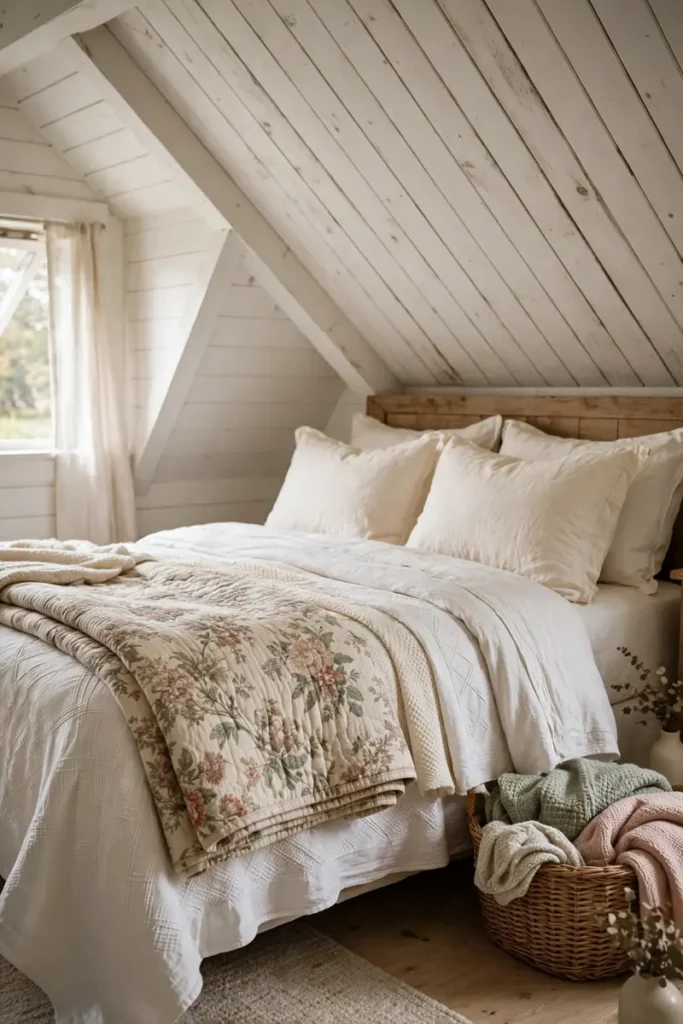
DO:
- Layer two quilts in coordinating colors for depth you can adjust nightly.
- Fold the top quilt into thirds at the foot so the bed looks styled, not messy.
- Mix one vintage quilt with solid bedding to keep patterns from fighting.
DON’T:
- Stack so many layers that getting into bed feels like a workout.
- Use heavy quilts in summer attics, they trap heat under the roof.
- Hide a beautiful quilt under a duvet, let the pretty one show.
Mirrored Light Tricks
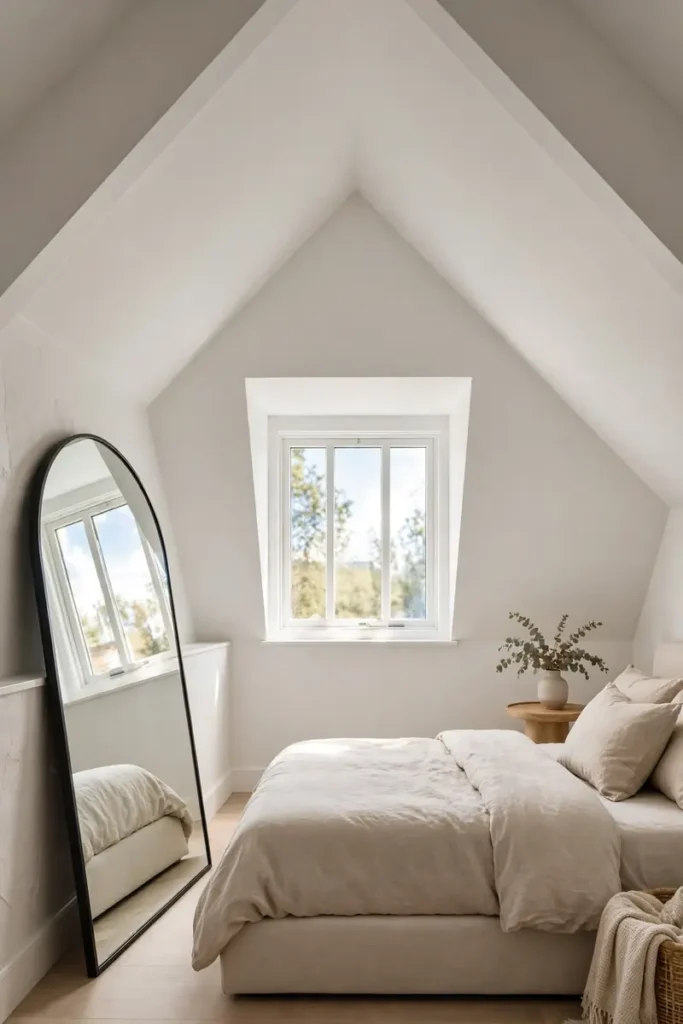
Step one, find the darkest corner of your attic. Step two, place a large mirror on the opposite wall or lean it against the knee wall. Step three, angle it to catch the brightest window. Step four, watch daylight bounce into places it never reached. Step five, enjoy a room that feels twice its size.
- Go big: one large mirror beats a gallery of small ones for light.
- Lean, don’t hang: leaning avoids drilling into tricky angled walls.
- Face windows: a mirror facing a wall just doubles the wall.
- Try mirrored furniture: a small mirrored nightstand adds sparkle.
- Secure the base: use anti tip straps, attics get warm and shifts happen.
An arched mirror echoes the angles of a roofline beautifully. The curve softens all those straight slopes and becomes a focal point on its own.
Cozy Fireplace Nooks
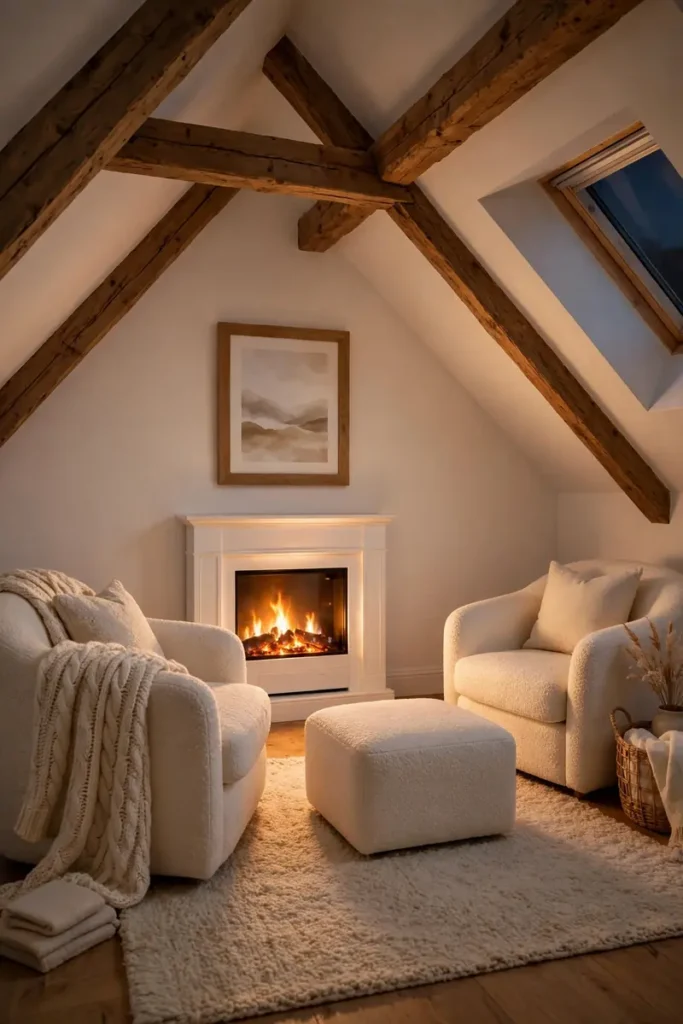
| Fireplace Type | Best For | Heat Output |
|---|---|---|
| Electric insert | Easy install | Cozy glow |
| Gel fuel | Real flame look | Gentle warmth |
| Faux mantel | Tight budgets | Visual only |
| Wall mounted | Tiny corners | Modern style |
Nothing says enchanting like firelight under the eaves. A small electric fireplace tucks into the lowest corner and gives you flame ambiance without a chimney. I have seen attics go from spare bedroom to honeymoon suite with this one addition, especially when the glow dances across a sloped ceiling.
Starry Night Murals
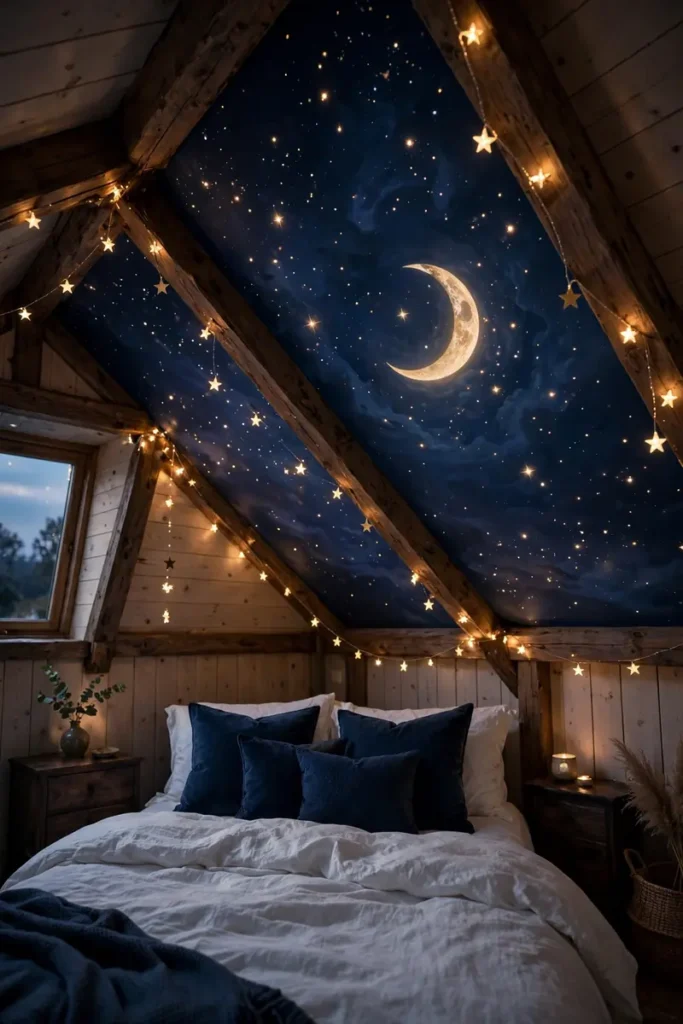
Q: Is a ceiling mural too much for a small attic?
Not when it is the night sky. Dark ceilings recede visually, so a navy mural can actually make a low slope feel farther away. Keep the walls light and let the ceiling be the dream, the contrast is what makes it work.
Q: What if I cannot paint a mural myself?
Glow in the dark star decals give you eighty percent of the magic for almost no effort. Place them in real constellations for a touch of wonder, or scatter them freely. They charge in daylight and glow softly all night, which kids absolutely love.
Conclusion
Your attic already has the hardest part done, the character. These attic bedroom makeover ideas simply help you work with the slopes, beams, and dormers instead of against them. Start with the change that solves your biggest frustration, whether that is storage, light, or just plain coziness. Small steps add up fast in a room this personal.
Save the ideas that made you smile and tackle them one weekend at a time. Before long, the room you used to avoid will become the one you show off first. Sweet dreams up there under the eaves.

One Comment