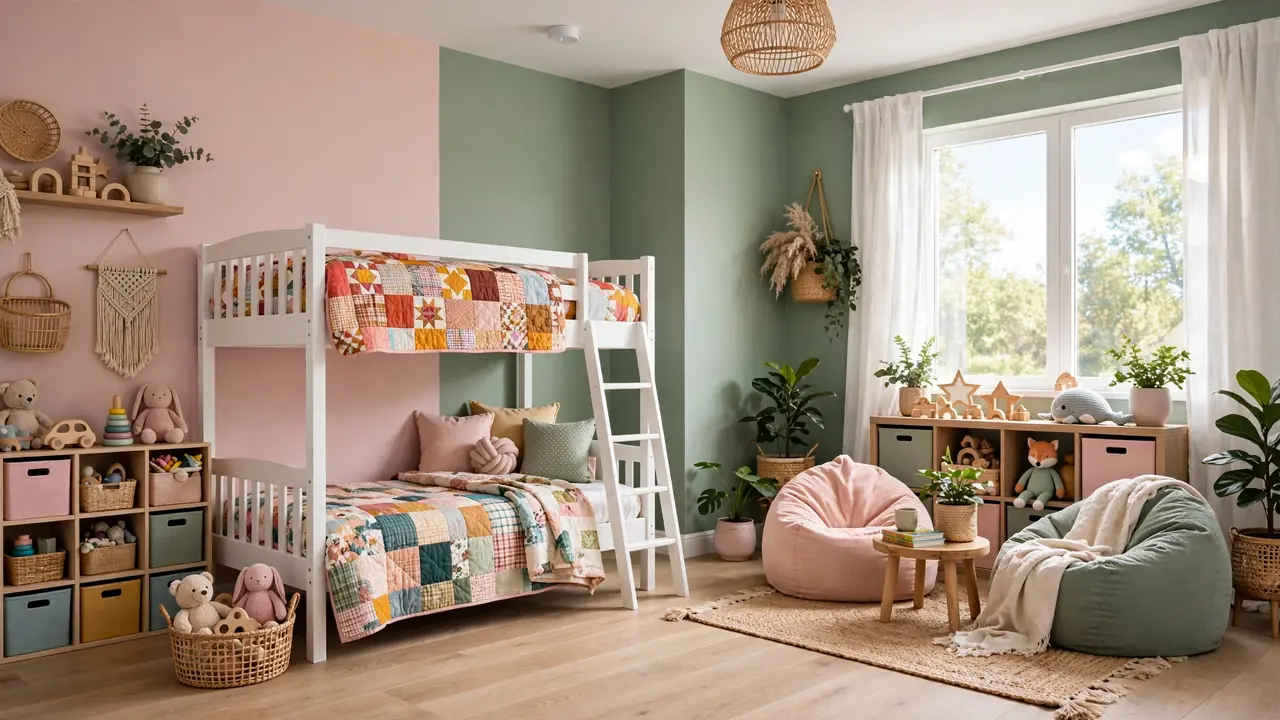
21 Shared Sibling Bedroom Ideas for Harmonious Spaces
Sharing a room can either build the sweetest memories or spark daily battles, and shared sibling bedroom ideas make all the difference. I have seen brothers and sisters go from constant bickering to best friends once their room gave each of them a real sense of ownership. The secret is designing for togetherness and privacy at the same time: shared zones for playing, personal corners for retreating. With a few smart furniture choices and clear boundaries, one room can happily hold two very different kids. It is one of the most rewarding design challenges a parent can take on.
This guide shares 21 practical ideas for harmonious shared spaces, from clever bunk setups to color zones that end the whose-side-is-this debate. If storage feels tight, my cozy bedroom storage ideas will help you fit twice the stuff in half the space. Pick what suits your kids’ ages and personalities, and watch the room bring them closer together.
Twin Bed Pairing
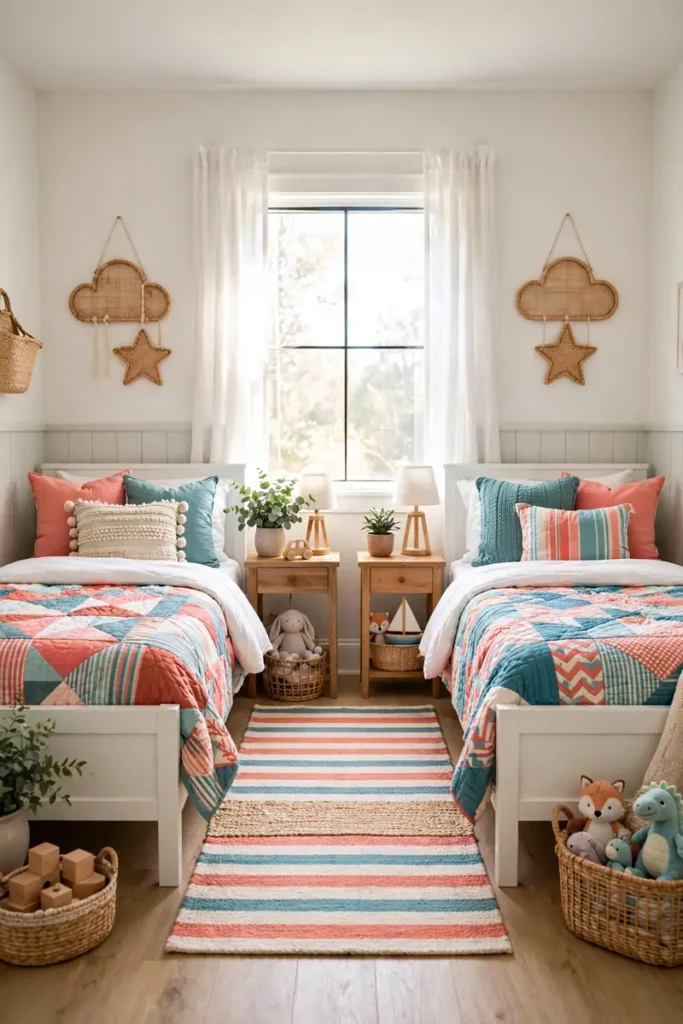
Two matching twin beds are the classic shared-room solution. Placed side by side or on opposite walls, they give each child an equal, defined territory. Matching frames keep the room feeling unified while bedding lets personalities shine.
I suggest leaving a clear path between the beds rather than pushing them together. That little lane of floor becomes neutral ground. Let each child pick their own quilt color and the equality feels real, not forced.
Bunk Bed Loft
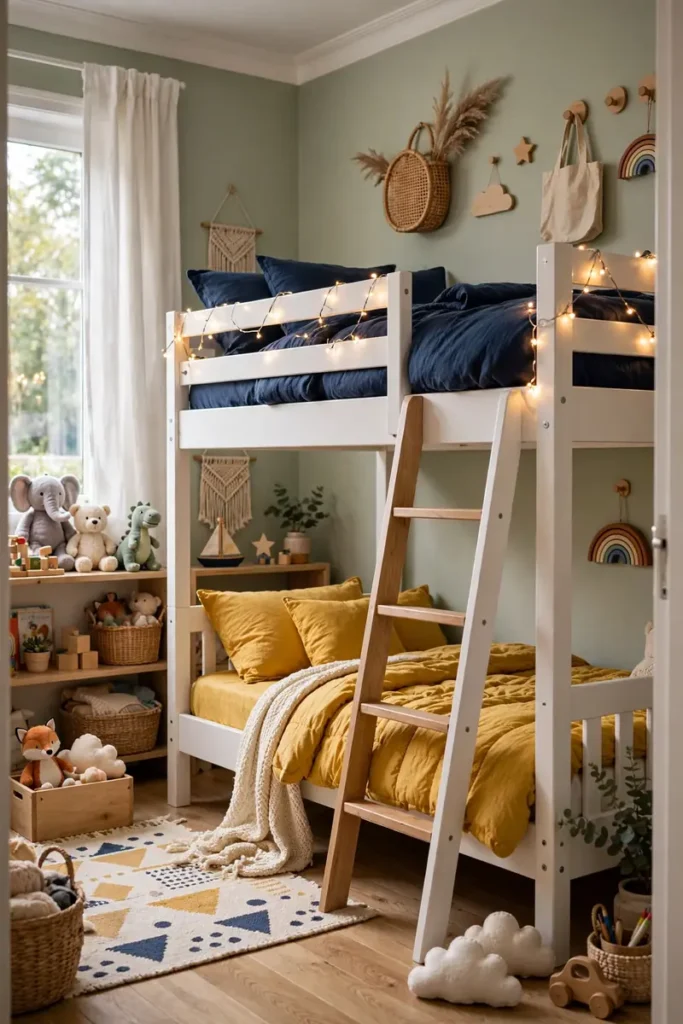
- Bunks free up half the floor for playing. In small rooms, going vertical is the single biggest space win.
- Let kids take turns choosing bunks every few months. A simple rotation ends the top-bunk wars permanently.
- Add clip-on reading lights to each bunk. Personal light makes each level feel like its own cozy cave.
- Choose a bunk with a weight rating well above your kids. Sturdy frames mean safe climbing for years.
- Hang a small curtain on the lower bunk. Instant privacy for the kid who needs a hideout.
Bunk beds turn sharing into an adventure instead of a compromise. I have seen kids who fought over everything happily negotiate bunk schedules. The vertical split gives each child a distinct domain to call their own.
Split Color Zones
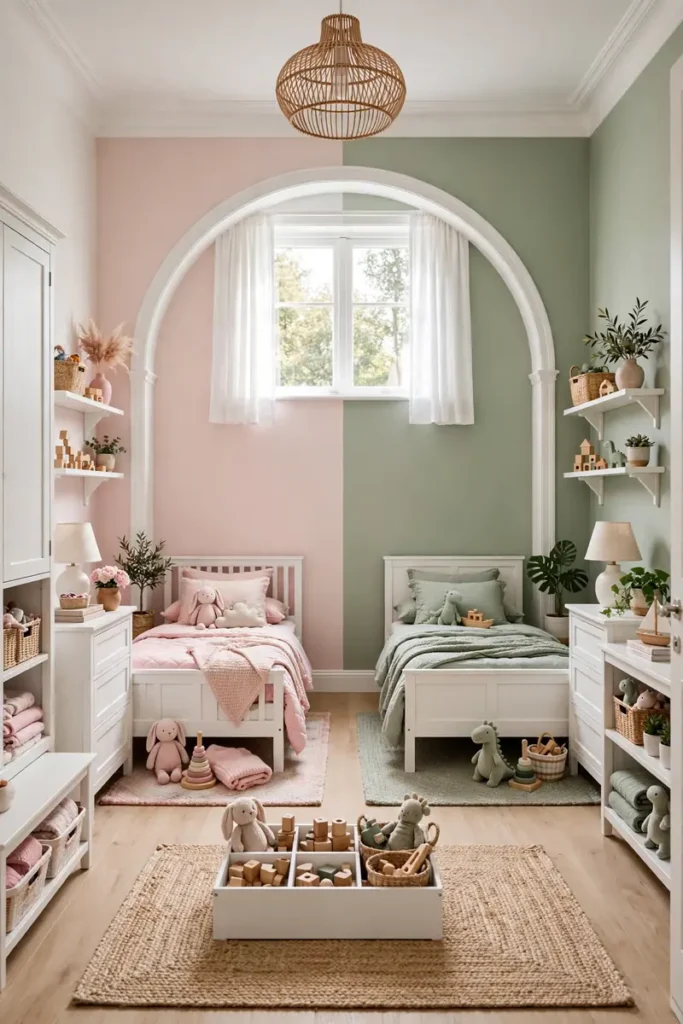
- Let each child pick one color they love. Write both down before shopping so nobody feels overruled.
- Paint a simple arch or half-wall in each color. You do not need to paint whole walls to make zones clear.
- Keep big furniture white or wood. Neutral anchors let the two colors coexist peacefully.
- Repeat each color twice per zone. Bedding plus one accessory makes a zone feel deliberate.
Color zones end the whose-side-is-this debate without building walls. Each child gets visual ownership of their half. I have seen this simple paint trick cut sibling arguments noticeably within a week.
Shared Nightstand
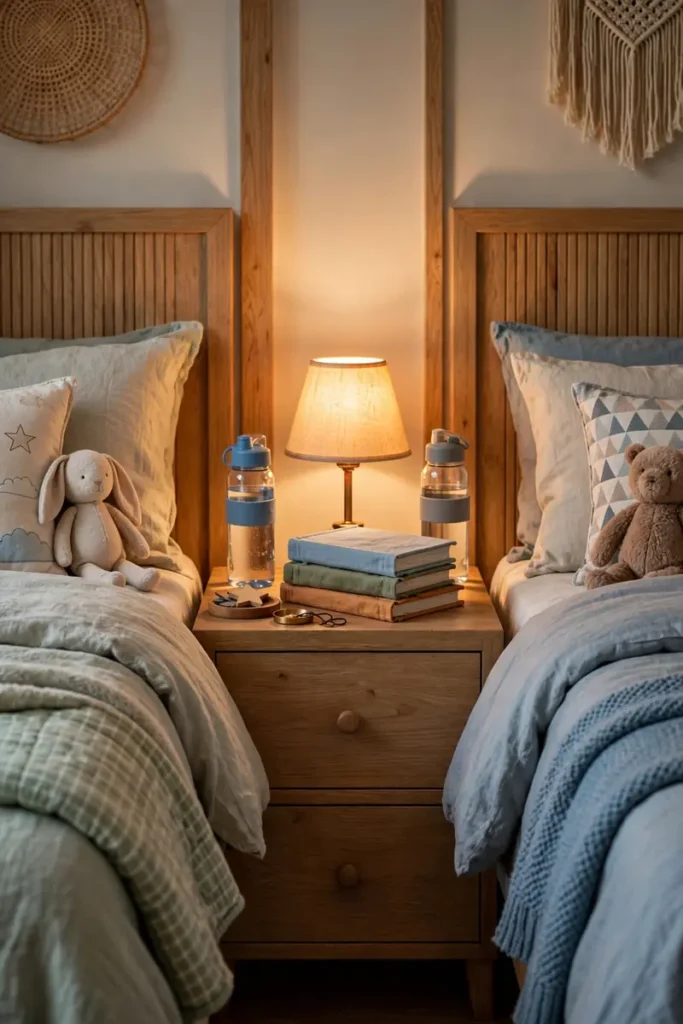
| One Shared | Two Small | |
| Space used | Less | More |
| Cost | Lower | Higher |
| Fairness | Needs rules | Automatic |
| Best for | Tight rooms | Rooms with space |
One wide nightstand between beds saves precious inches in tight rooms. Give each child a labeled tray or bin on their half. I have found that clear halves prevent far more fights than separate tables do.
Personal Reading Nooks
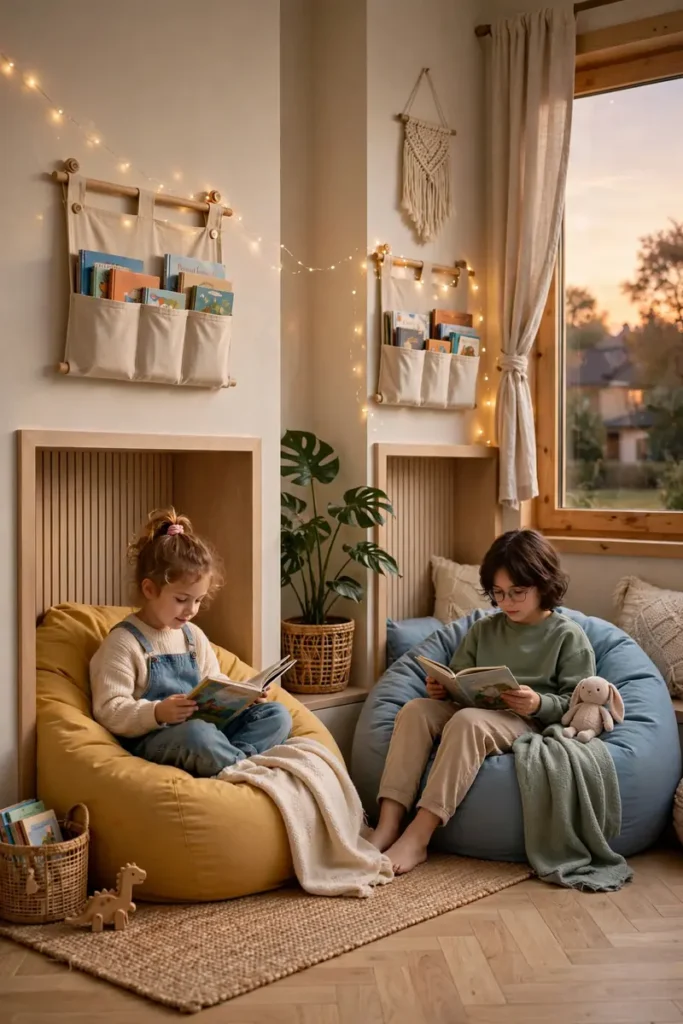
DO:
- Give each child their own nook, even in a small room. A bean bag and a book sling fit almost anywhere.
- Let them choose their nook colors independently. Personal choice builds attachment to the space.
- Add a small light each. A nook without light never gets used after dark.
DON’T:
- Do not make the nooks identical. Sameness breeds comparison, while differences feel personal.
- Do not place nooks facing each other. Side-by-side or back-to-back feels calmer.
- Do not skip the book storage. A nook without books is just a chair in a corner.
Matching Bedding Sets
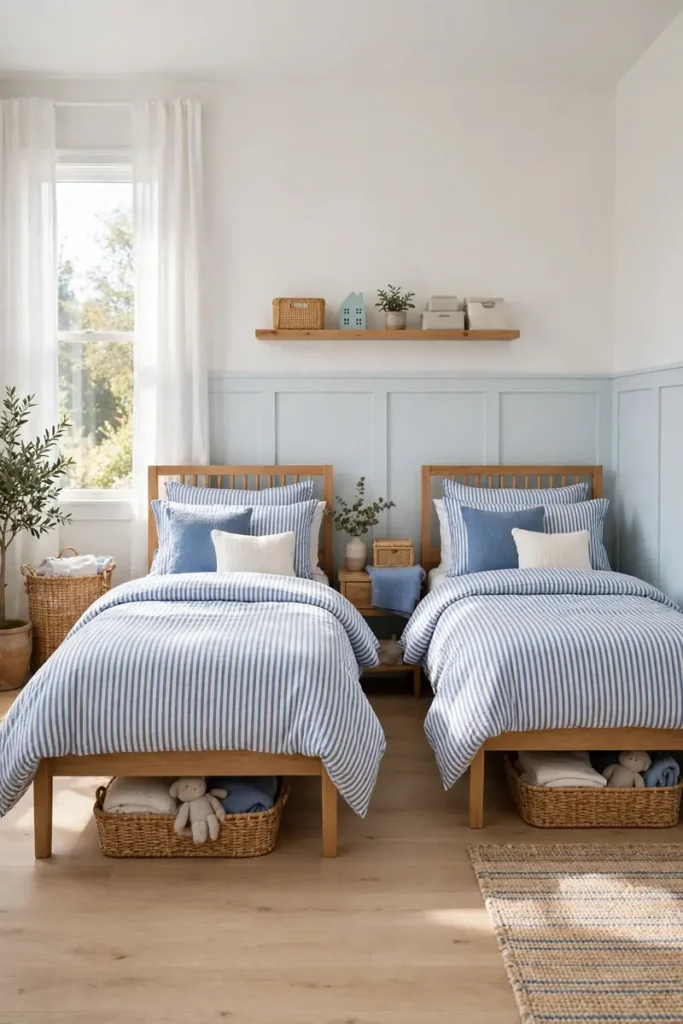
Cost: Low | Time: One shopping trip | Skill Level: Beginner | Best For: Instant harmony
Matching bedding is the fastest visual peace treaty. When both beds look the same, the room reads as one calm space instead of two competing ones. I let kids pick one accent pillow each so unity never feels like uniformity.
Divided Closet Space
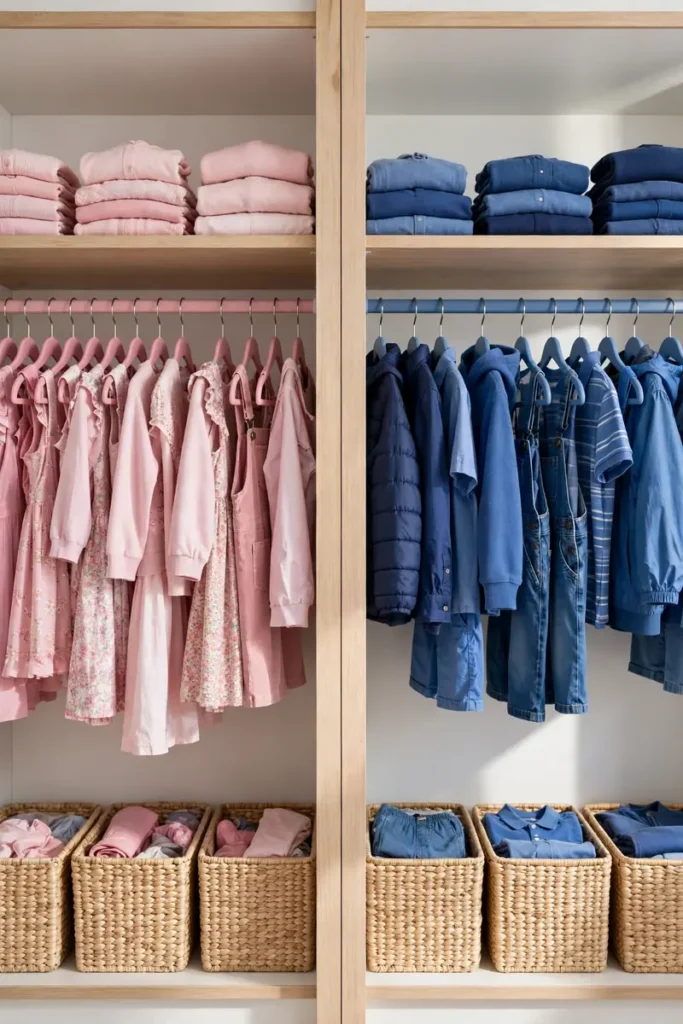
Closets cause more sibling fights than almost anything. A simple vertical divider, even just a tension rod down the middle, gives each child a clear half. Labeled bins on each side end the mystery of whose socks are whose.
- Split the closet exactly in half, even if one child owns less. Fairness matters more than efficiency here.
- Use different colored hangers per child. The visual cue settles ownership instantly.
- Put shared items like blankets on the top shelf. Neutral territory stays neutral.
Curtain Room Divider
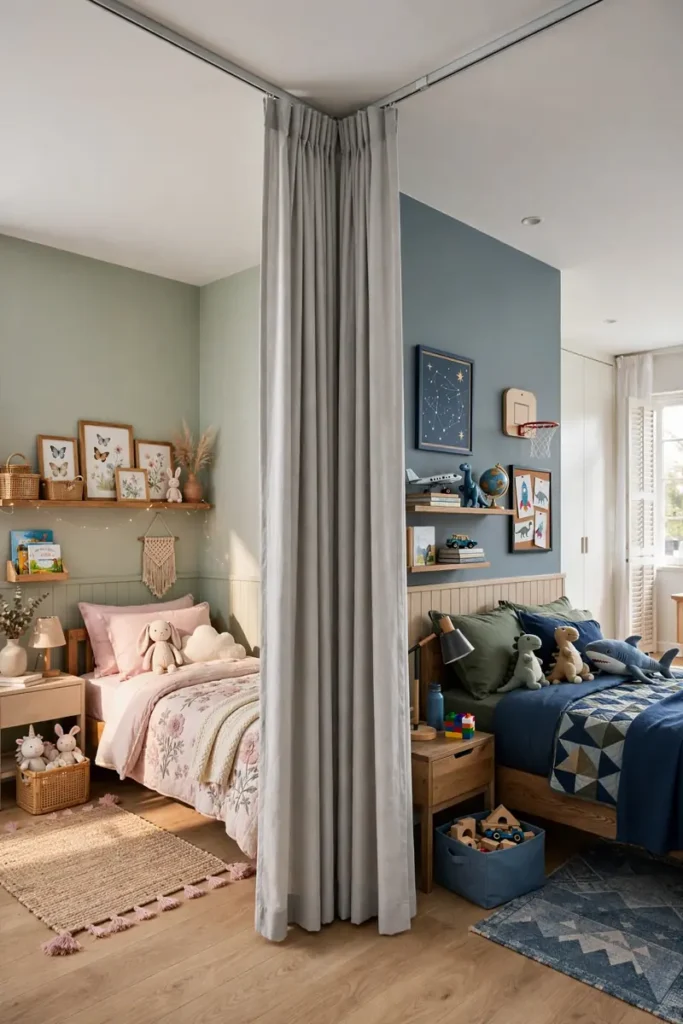
A ceiling curtain gives privacy on demand without permanent walls. I have seen it transform bedtime for light sleepers sharing with night owls. Pulled closed, each child gets a room of their own; open by day, the room feels big again.
Choose washable fabric in a neutral tone both kids accept. Mount the track into ceiling joists, not just drywall, since little hands will tug it daily. This is the closest thing to separate rooms without moving house.
Dual Desk Setup
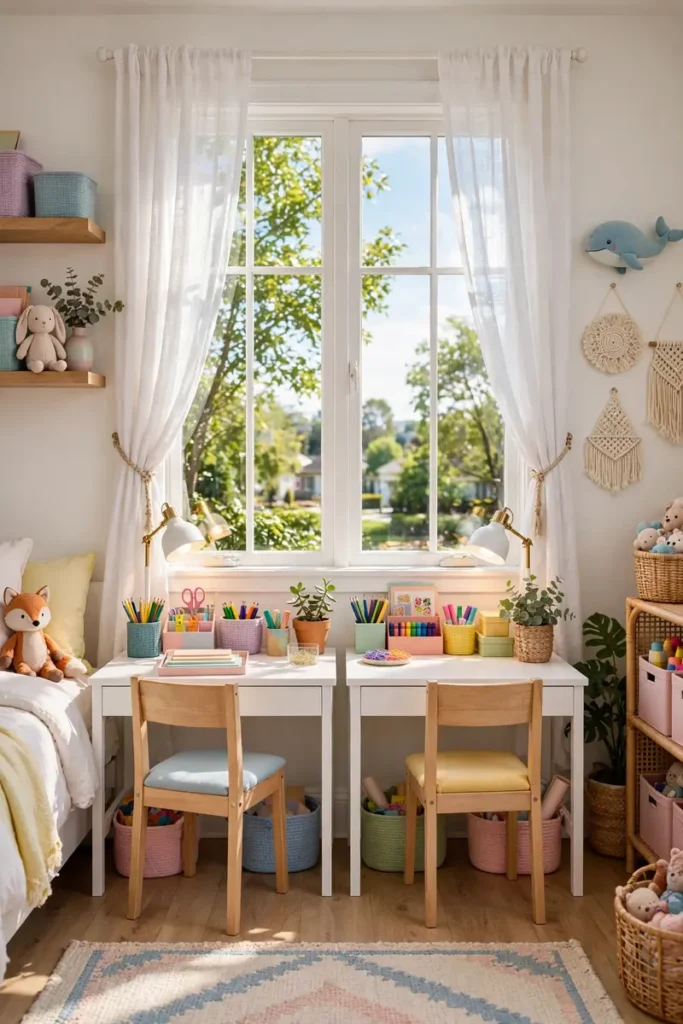
Homework needs personal space, even in a shared room. Two small desks beat one big shared desk every time. Side by side under a window works beautifully and keeps the footprint compact.
Give each desk its own lamp and supply caddy. When everything has a designated home, borrowing without asking drops dramatically. I have seen homework battles fade once each child owned their workstation.
Shared Toy Storage
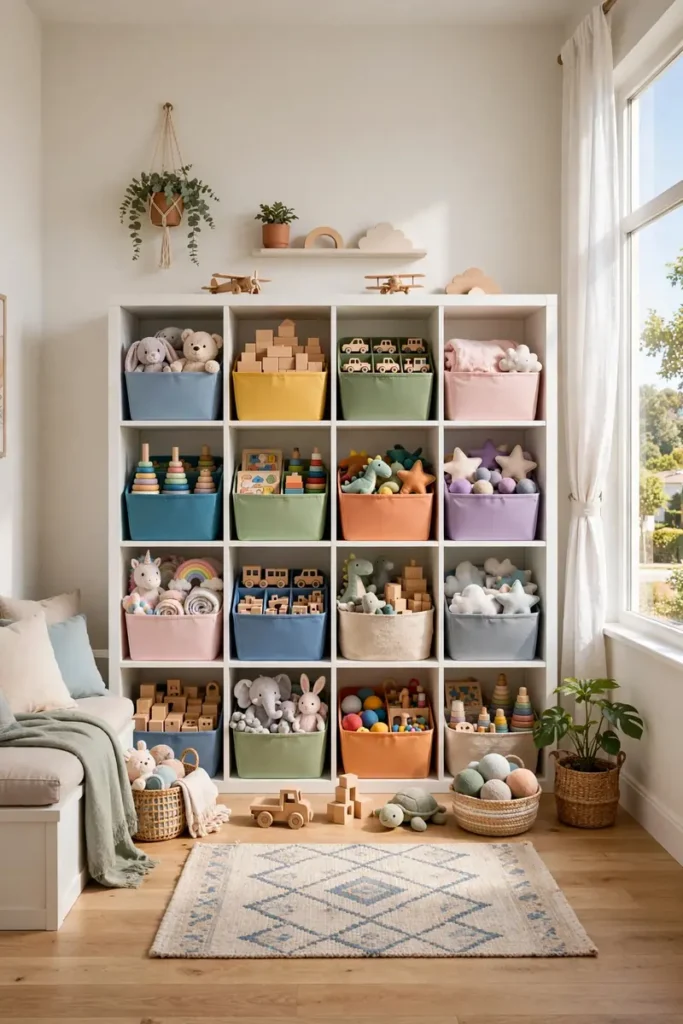
- Sort toys into shared versus personal bins. Shared toys live in neutral bins; precious ones stay in personal space.
- Label everything with pictures for young kids. Visual labels let even toddlers tidy up correctly.
- Keep the unit low and sturdy. Kids actually use storage they can reach without climbing.
- Do a monthly toy audit together. Donating outgrown toys keeps the volume manageable.
- Leave one empty bin. Breathing room prevents the avalanche every time a bin opens.
Toy storage is where shared rooms succeed or fail. A clear system beats constant nagging about mess. I have noticed kids keep tidy far better when the system is visual and every toy has one obvious home.
Name Wall Decals
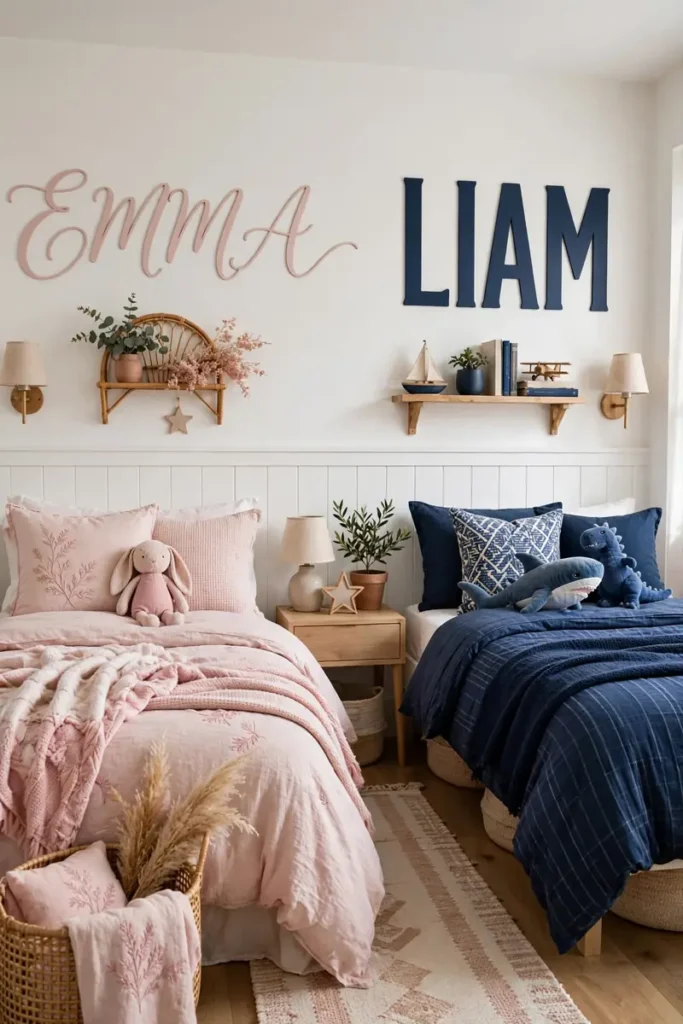
- Order decals in the same size for both kids. Equal sizing keeps the personalization fair.
- Let each child pick their own font and color. Choice is the whole point of this project.
- Center each name above its bed. Placement marks territory more clearly than any lecture.
- Apply slowly with a credit card to smooth bubbles. Patience here pays off in crisp letters.
Names on the wall say this space is truly yours. It is a small touch with outsized emotional impact. I have seen shy kids stand taller once their name went up in big letters.
Under Bed Drawers
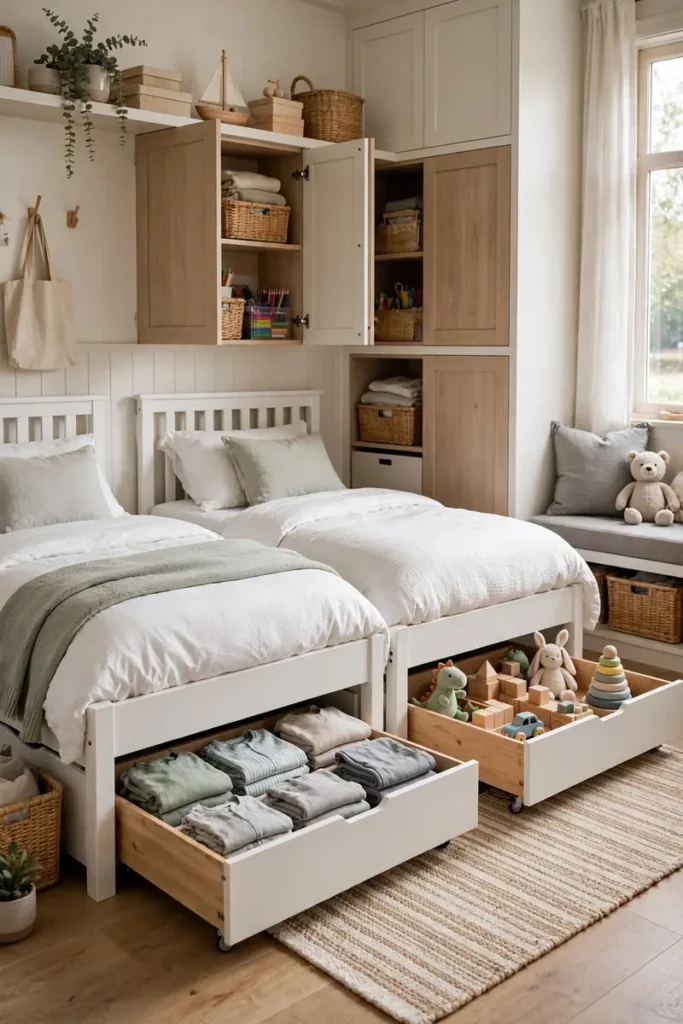
| Rolling Drawers | Storage Bags | |
| Access | Easy, smooth glide | Needs pulling out |
| Cost | Mid | Low |
| Durability | Very sturdy | Wears with use |
| Best for | Daily-use items | Seasonal storage |
Under-bed drawers double the storage without using an inch of floor. Assign one drawer per child for clothes and one for toys. I love how hidden storage keeps the room looking calm while swallowing the chaos.
Cozy Window Seat

DO:
- Build the seat wide enough for two. A shared window seat becomes the room’s favorite hangout.
- Add storage inside the bench. Blankets and board games disappear neatly underneath.
- Use washable cushion covers. Window seats attract snacks, crafts, and muddy knees.
DON’T:
- Do not block the window fully with tall items. Light is the whole point of a window seat.
- Do not skip the safety latch on storage lids. Little fingers need soft-close hinges.
- Do not make it too precious. A window seat should invite flopping, not just looking.
Matching Wall Art
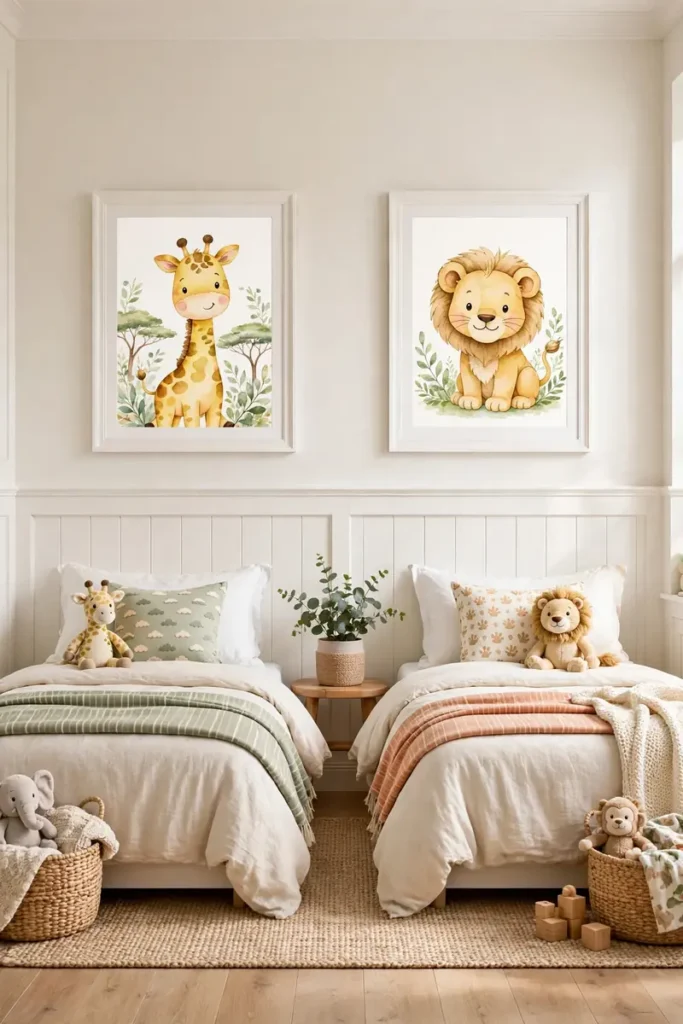
Cost: Low | Time: One hour | Skill Level: Beginner | Best For: Visual unity
Matching art above each bed ties the room together instantly. Same frames, same theme, different prints if the kids insist. I have seen this trick make even a divided room feel like one happy space.
Separate Toy Bins
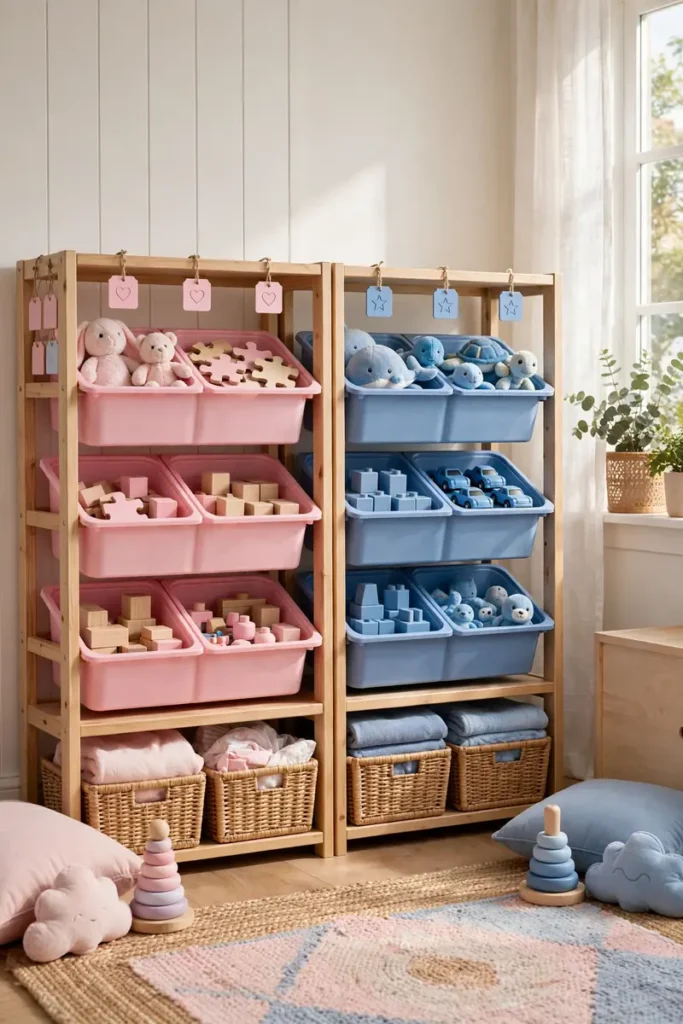
Shared toys need shared bins, but precious toys need personal ones. Color-code one set of bins per child and label them clearly. When everyone knows what is theirs, sharing the rest feels generous instead of forced.
- Pick one color per child and stick to it everywhere. Consistency makes the system obvious.
- Keep personal bins in personal zones. A bin that lives on your side stays yours.
- Review the split together every few months. Kids outgrow toys and the system should too.
Shared Bookshelf Wall
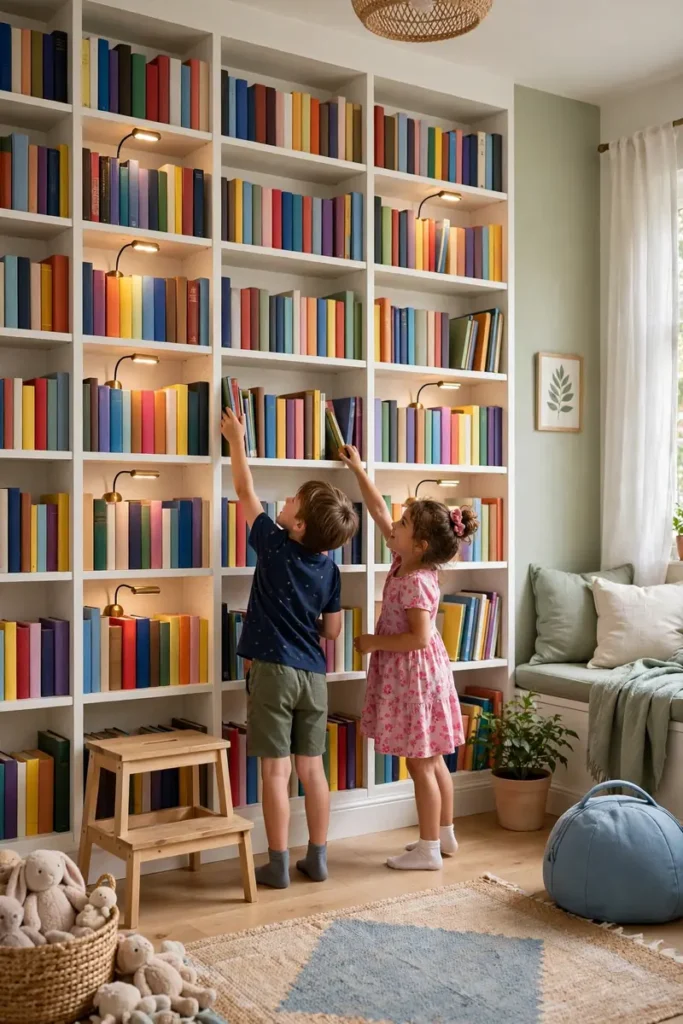
A wall of books belongs to everyone and no one. I have seen shared libraries become the heart of a sibling room, the place where both kids wind down together. Low shelves let even small children choose independently.
Organize by color for a rainbow effect kids love, or by age with each child’s books on their side. Either way, keep a few shared favorites in the middle. Books have a way of ending screen-time debates peacefully.
Personal Lamp Choice
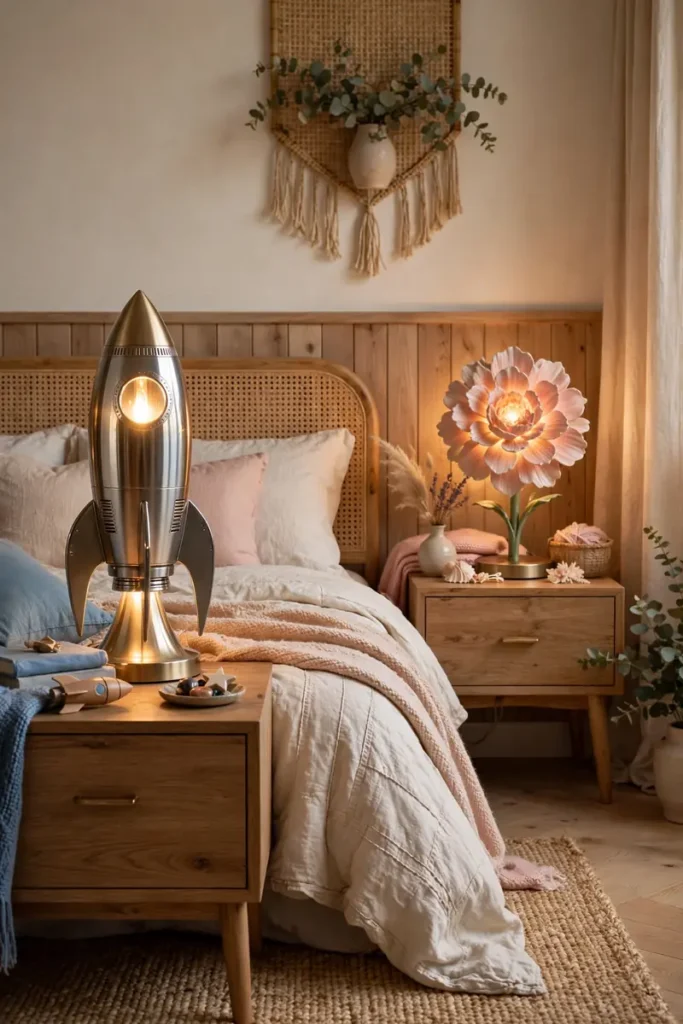
Letting each child pick their own lamp is a small freedom with big payoff. One chooses a rocket, the other a flower, and both feel seen. Personal light also solves the eternal one-wants-dark debate at bedtime.
Keep the bulb wattage the same so neither side feels dimmer. Individual switches matter more than matching styles here. I have seen bedtime go smoother the very first night each child controlled their own light.
Rug Zone Markers
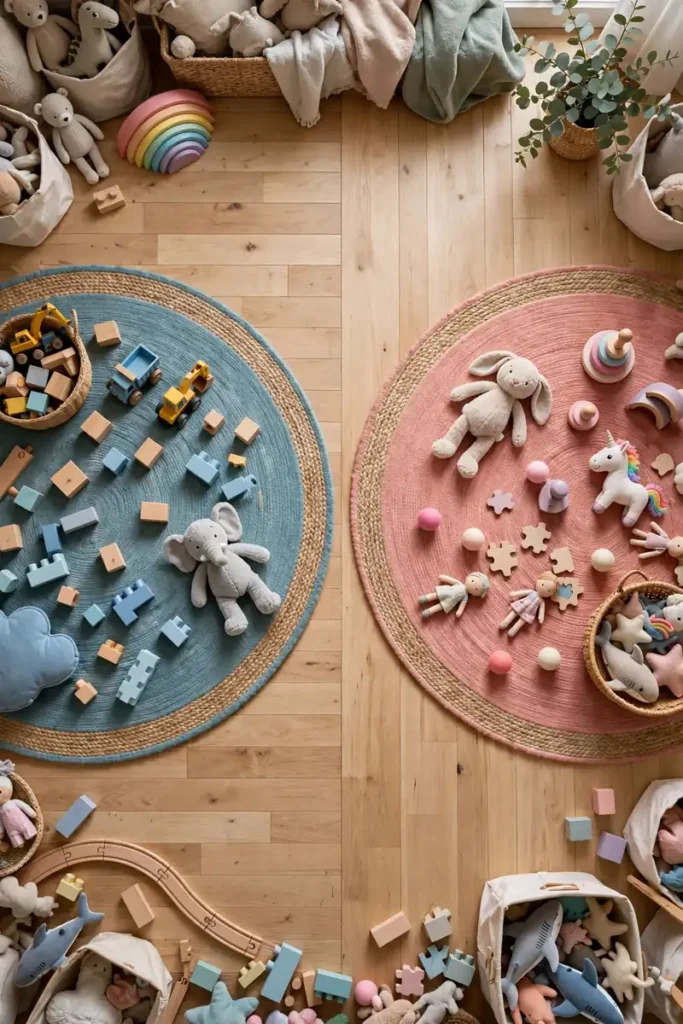
- Give each child their own rug in their color. Rugs mark territory softly, without any hard lines.
- Keep the rugs the same size. Equal zones keep the peace better than any lecture about sharing.
- Choose washable, low-pile rugs. Kids’ zones take a beating and need to survive it.
- Let toys live on their owner’s rug. Cleanup becomes obvious: your rug, your mess.
- Overlap a third neutral rug in the middle. Shared ground deserves its own soft spot.
Rugs are the gentlest boundary markers ever invented. No walls, no tape lines, just soft color underfoot. I have watched kids naturally respect rug zones in a way they never respected imaginary lines.
Bunk Bed Curtains
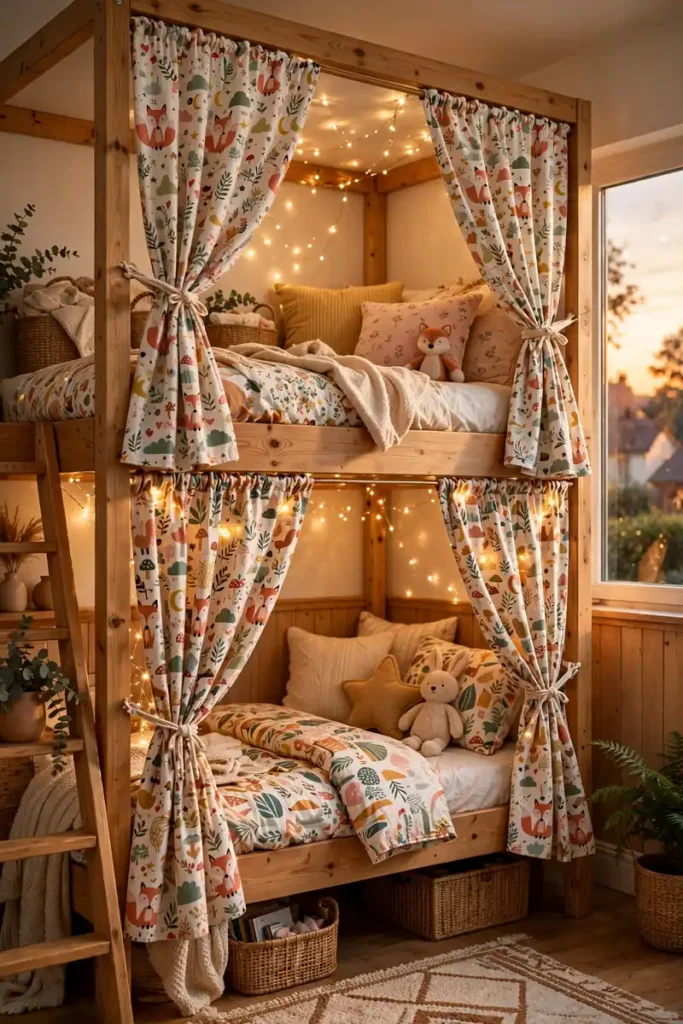
- Choose lightweight cotton that ties back easily. Heavy fabric feels cave-like instead of cozy.
- Mount a simple wire or tension rod inside the bunk frame. No drilling into the bed needed.
- Let each child pick their own curtain print. Personal fabric makes each bunk feel owned.
- Add battery fairy lights inside each bunk. The glow turns bedtime into something to look forward to.
Bunk curtains are privacy you can open and close. Shy readers, early sleepers, and fort-builders all love them. I have seen one set of curtains end more bedtime stalling than any rule ever did.
Shared Art Station
| Shared Station | Separate Desks | |
| Space needed | One table | Two desks |
| Supplies | Shared jars | Duplicated sets |
| Social feel | Collaborative | Independent |
| Best for | Younger kids | Older kids |
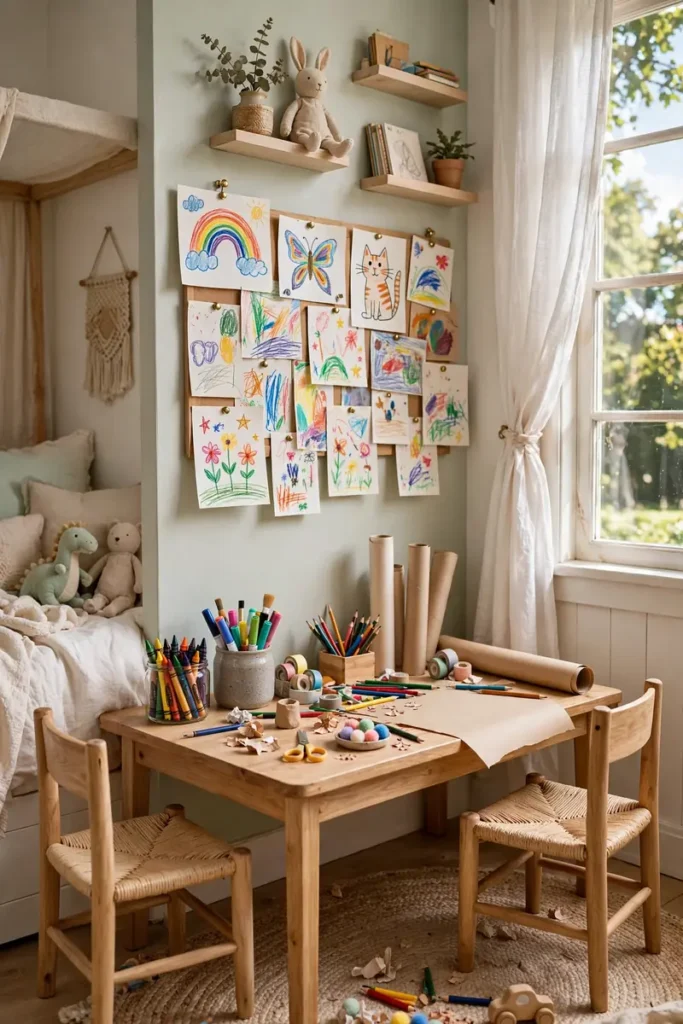
A shared art table invites making things together. Communal supplies in the middle and personal sketchbooks on each side strike the right balance. I have seen siblings who bickered all day sit peacefully side by side with crayons.
Bedtime Routine Chart
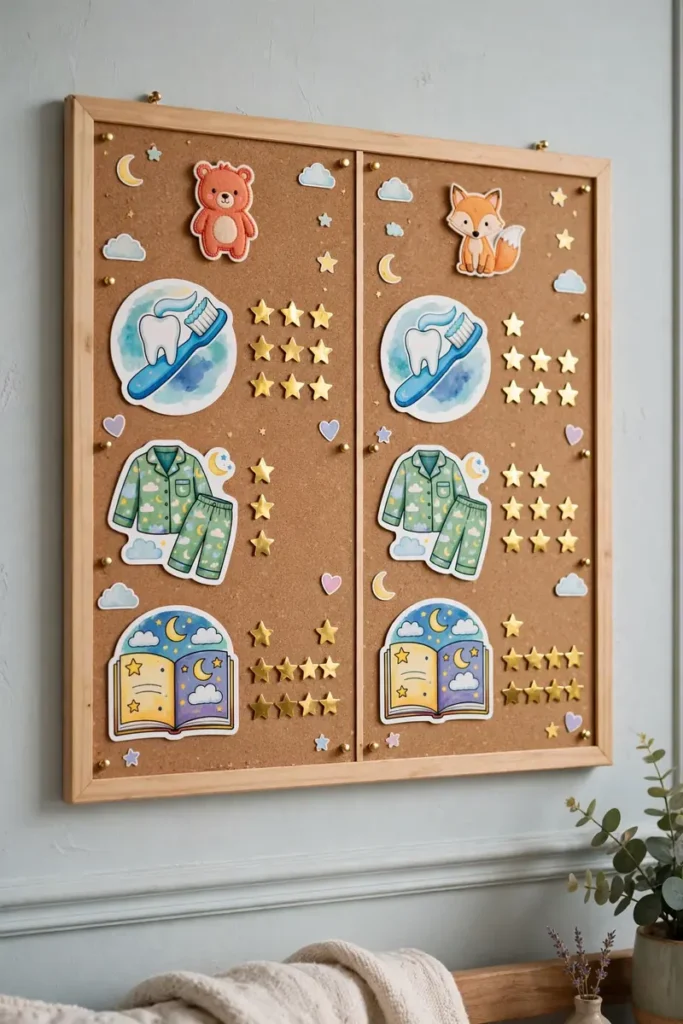
DO:
- Build the chart together with both kids. Ownership of the routine makes them follow it.
- Use pictures for each step so young readers can follow along independently.
- Give each child their own column and star stickers. A little friendly competition works wonders.
DON’T:
- Do not make the routine too long. Five steps is plenty; ten guarantees stalling.
- Do not change the order nightly. Predictability is what makes bedtime feel safe.
- Do not skip the wind-down warning. A ten-minute heads-up prevents most bedtime battles.
Conclusion
These 21 shared sibling bedroom ideas prove that one room can hold two happy kids. Whether you split the space with color, stack it with bunks, or simply give each child a lamp of their own, every thoughtful zone tells them they both belong.
Save this collection to your kids’ room board on Pinterest so it is ready when you are. Start with one zone this weekend and watch the bickering fade. I have seen shared rooms turn siblings into teammates, and yours can too. For a calmer palette that works for any age, explore these white bedroom decor ideas as well.
One Comment