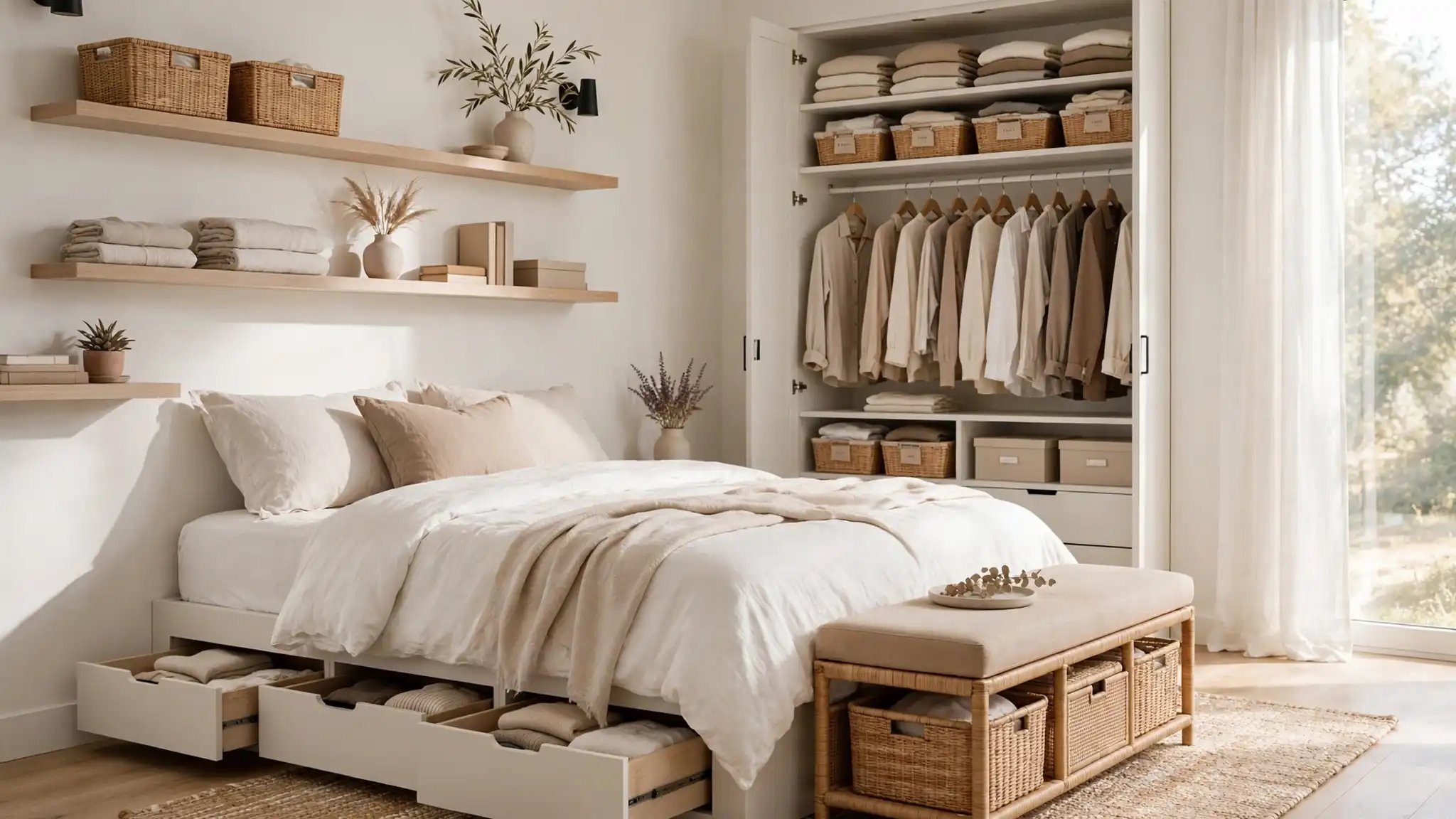
21 Primary Bedroom Storage Ideas for Serene Organization
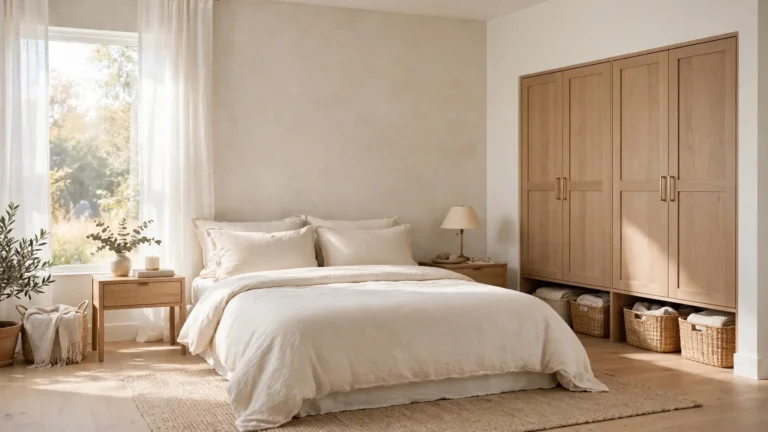
Your primary bedroom should feel like a calm retreat, not a cluttered storage unit. Yet between seasonal clothes, extra bedding, books, and everyday essentials, keeping it organized takes real strategy. These primary bedroom storage ideas help you reclaim every inch without sacrificing style. In my experience, the bedrooms that stay tidy longest are the ones where every item has a designated home. You will find smart solutions for small rooms and spacious suites alike, from hidden compartments to beautiful display storage that doubles as decor.
Before we explore the ideas, here is a quick starting point. Walk through your bedroom with fresh eyes and note the three spots that collect clutter fastest. Those zones deserve your attention first. For more small space inspiration, check out these small apartment living room layouts that use similar clever storage thinking. Now let us transform your primary bedroom into the serene, organized space you deserve.
Under Bed Drawers
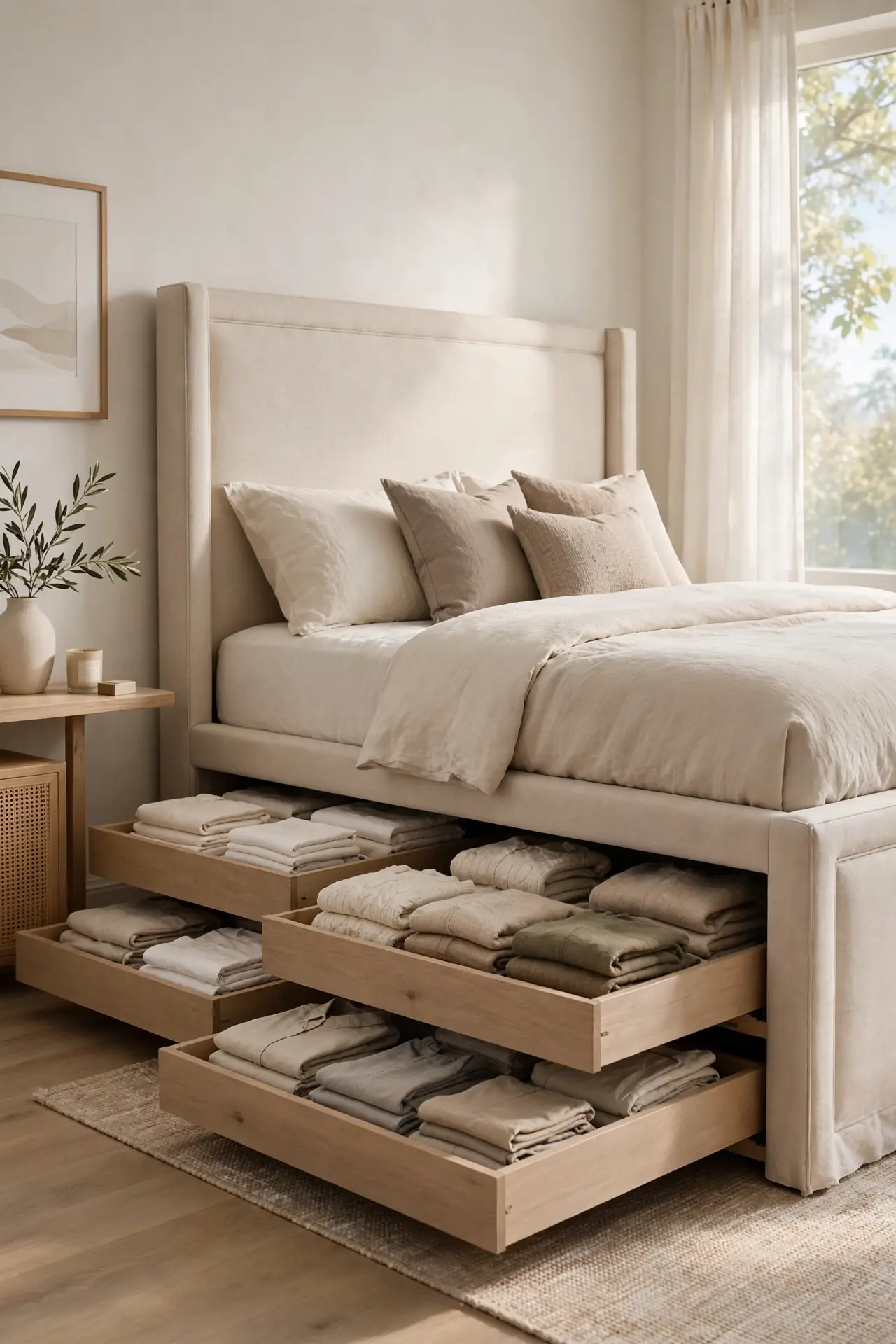
The space beneath your bed holds enormous untapped storage potential. Deep drawers on smooth glides slide out easily and swallow seasonal bedding, spare pillows, and off season clothing. Unlike open bins that collect dust, enclosed drawers keep everything clean and accessible. Measure your clearance first, since most frames offer eight to twelve inches of usable height.
Choose drawers with dividers so smaller items stay sorted instead of sliding into chaos. I’ve noticed that labeling each drawer by contents saves morning minutes and prevents the dreaded rummage. Cedar lined drawers add moth protection for woolens and linens. This single upgrade can replace an entire dresser in a tight primary bedroom.
Wall Mounted Shelves
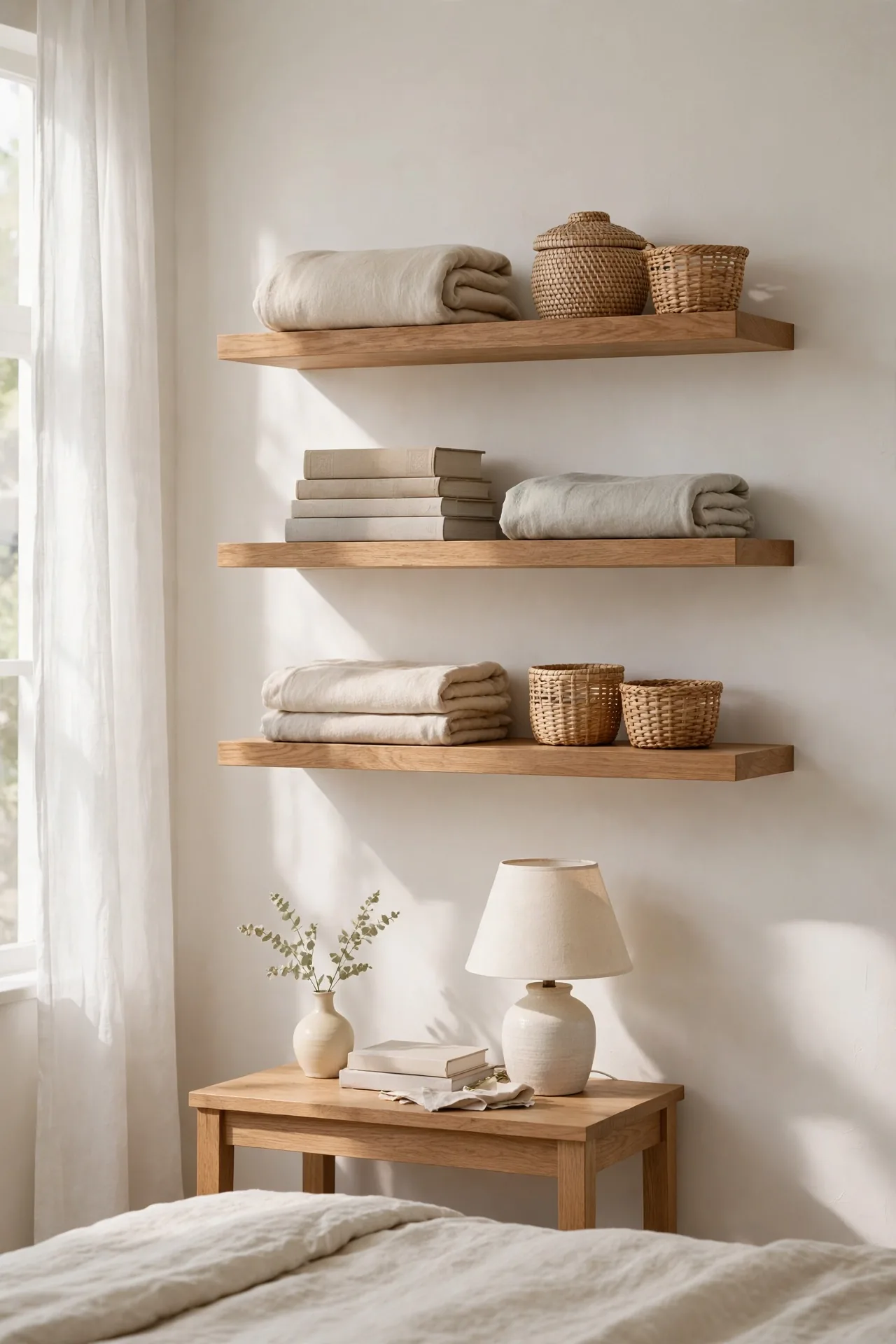
- Mount shelves at eye level beside the bed to replace bulky nightstands.
- Use a pair of matching shelves for symmetry and double the display space.
- Anchor shelves into wall studs so they hold books and baskets securely.
- Style with a mix of closed baskets and open books for balance.
- Keep the lowest shelf within easy arm’s reach from the mattress.
Floating shelves free up precious floor space while keeping essentials close. They work beautifully in narrow primary bedrooms where traditional nightstands would crowd the walkway. I recommend solid wood or thick MDF shelves at least ten inches deep so items sit securely. A quick dusting keeps them looking sharp, and the open display encourages you to edit belongings regularly.
Nightstand Storage Caddies
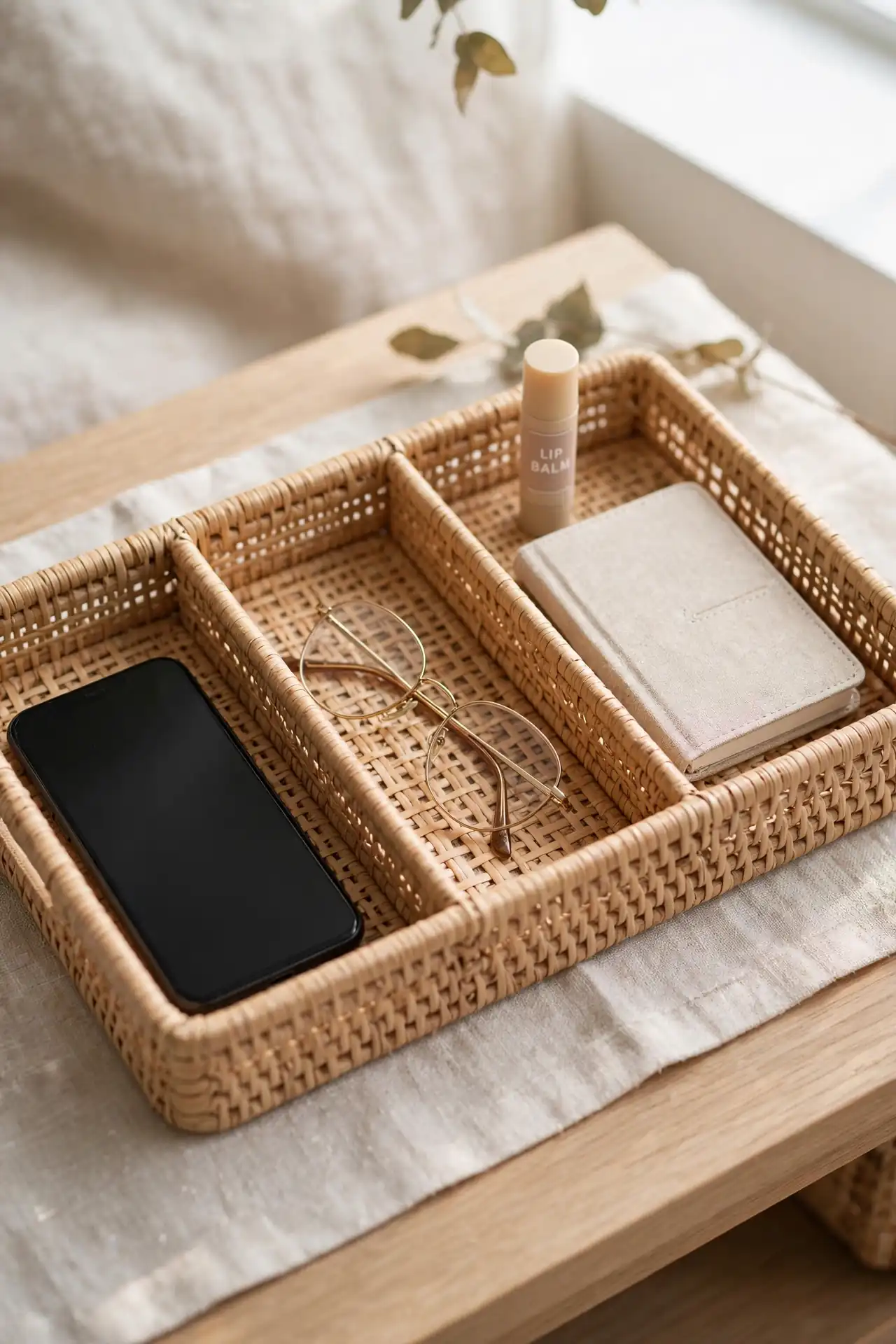
Quick Tip: Pick a caddy with a weighted base so it stays put when you grab your phone in the dark. Felt lined compartments protect screens and glasses from scratches. A caddy with a small lidded section hides medications or personal items from view when guests stop by.
Bedside clutter multiplies fast when every small item lands directly on the nightstand surface. A divided caddy corrals chargers, remotes, reading glasses, and hand cream into one tidy station. I’ve seen this work well in many cases where couples share one nightstand between them. Empty the caddy monthly and return stray items to their real homes.
Closet System Upgrade
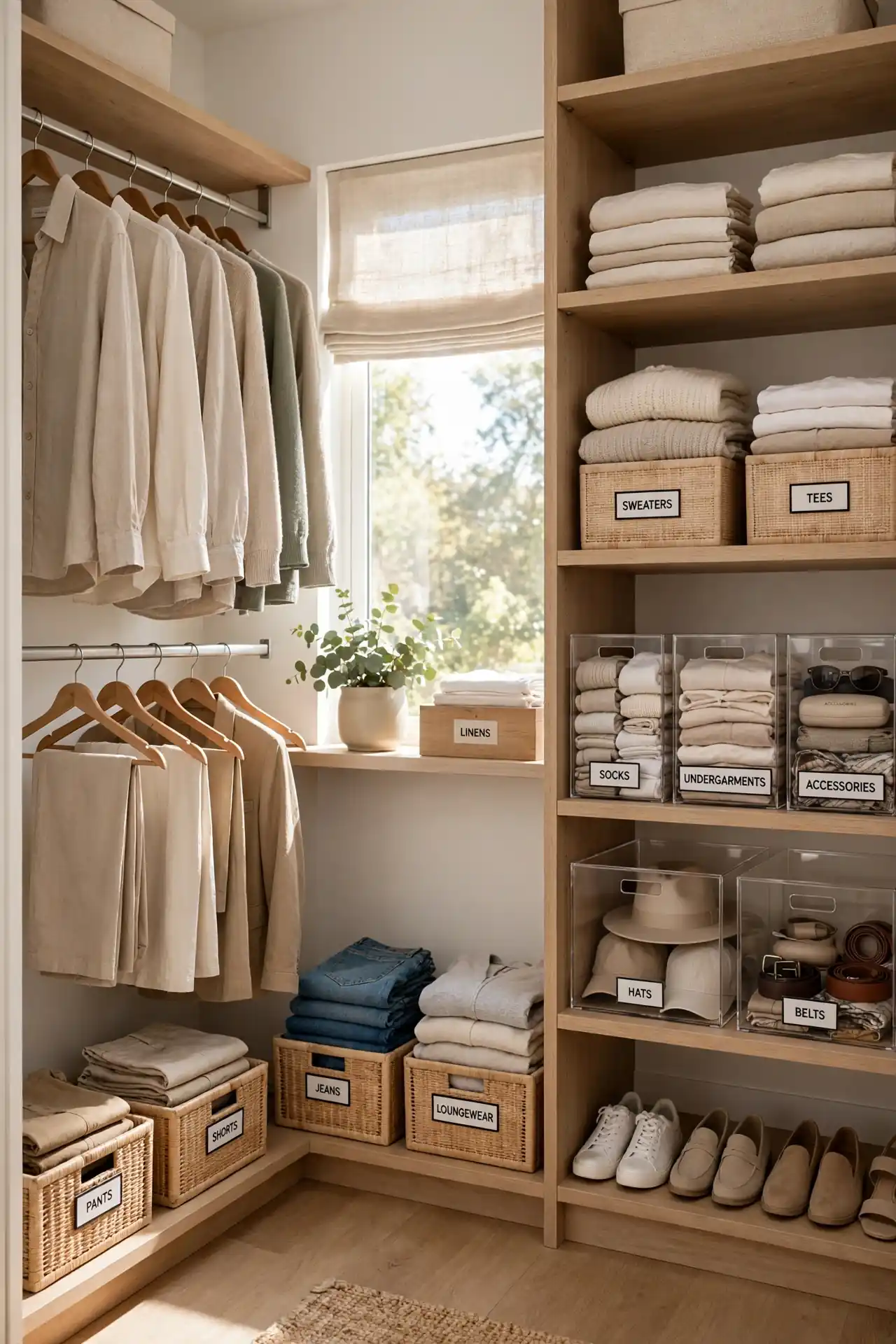
BEFORE: A single rod and one high shelf waste vertical space while clothes crush together and shoes pile on the floor. Finding anything takes forever, and half the wardrobe stays forgotten in dark corners.
AFTER: Double hanging rods, adjustable shelves, and dedicated shoe rows turn the same closet into a boutique style dressing zone. Every item stays visible and reachable, which means getting dressed takes minutes instead of a frustrating hunt.
A modular closet system costs far less than a custom build and installs in a weekend. Measure twice, then map zones for long hangs, folded knits, and accessories before you buy components. That’s why many experts recommend leaving twenty percent of the space empty for breathing room. Your mornings will feel dramatically calmer.
Dresser Drawer Dividers

- Empty the drawer completely and wipe it clean before you start.
- Measure the interior and choose adjustable dividers that fit snugly.
- Group similar items together, then assign each group its own compartment.
- Fold clothes vertically so every piece stays visible at a glance.
Dividers stop the slow slide into drawer chaos where everything mixes into one tangled layer. Adjustable bamboo or spring loaded versions fit any dresser without tools. I’ve noticed that vertical folding combined with dividers doubles usable drawer space. Group socks, underwear, and accessories in their own zones so mornings flow smoothly. Spend ten minutes resetting the system each season and it stays flawless for months.
Storage Bench Seating
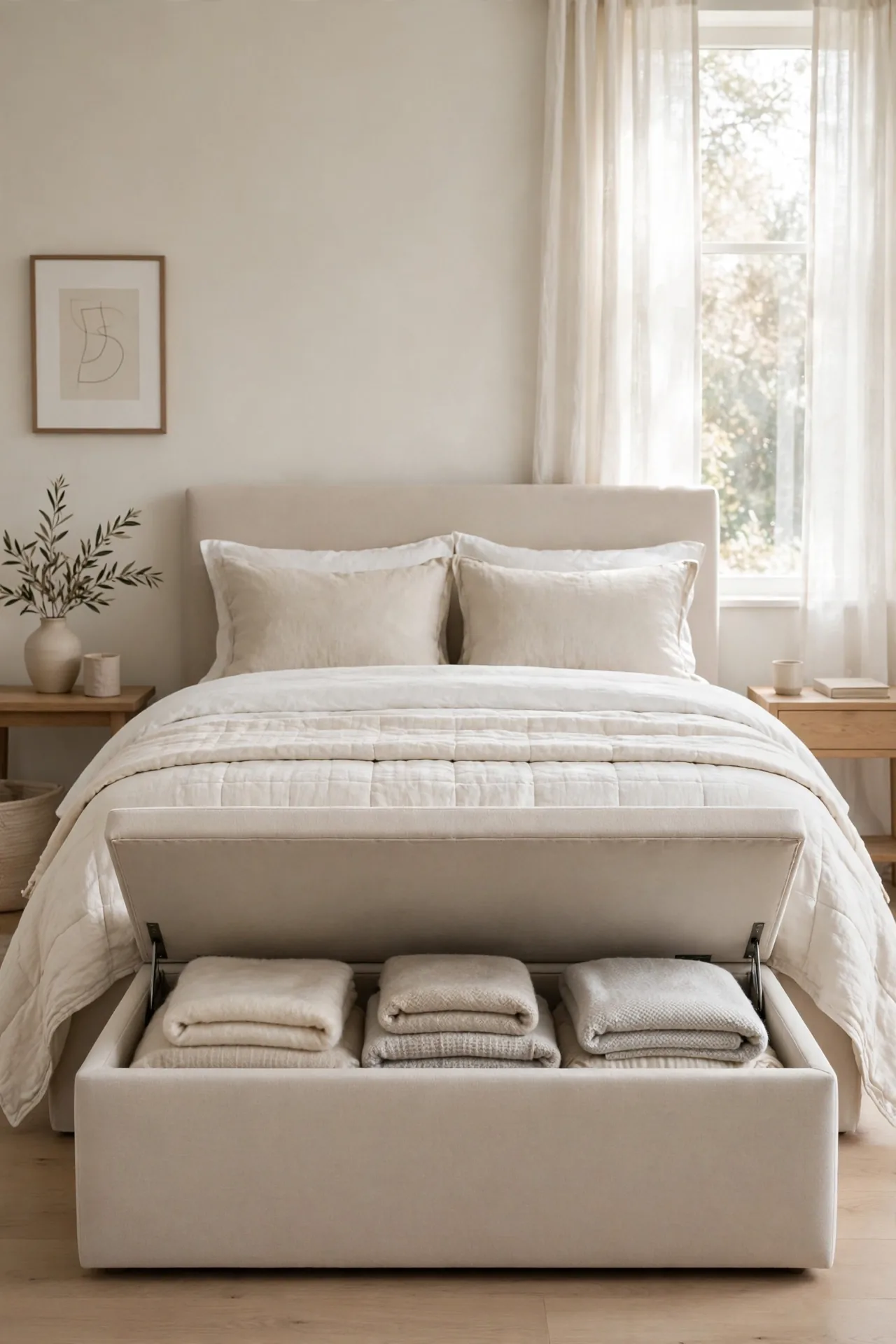
| Bench Type | Best For | Storage Depth |
| Upholstered lift top | Blankets and pillows | Deep, full width |
| Open cubby bench | Shoes and baskets | Divided compartments |
| Flip top settee | Books and throws | Medium, split lid |
A bench at the foot of the bed earns its footprint twice over. It gives you a perch for dressing while hiding bulky bedding inside. Pick a lift top style if you need maximum hidden volume, or open cubbies if you prefer grab and go access for shoes. Match the upholstery to your bedding for a pulled together look that feels intentional. This one piece can replace both a chair and a blanket chest.
Floating Corner Shelves
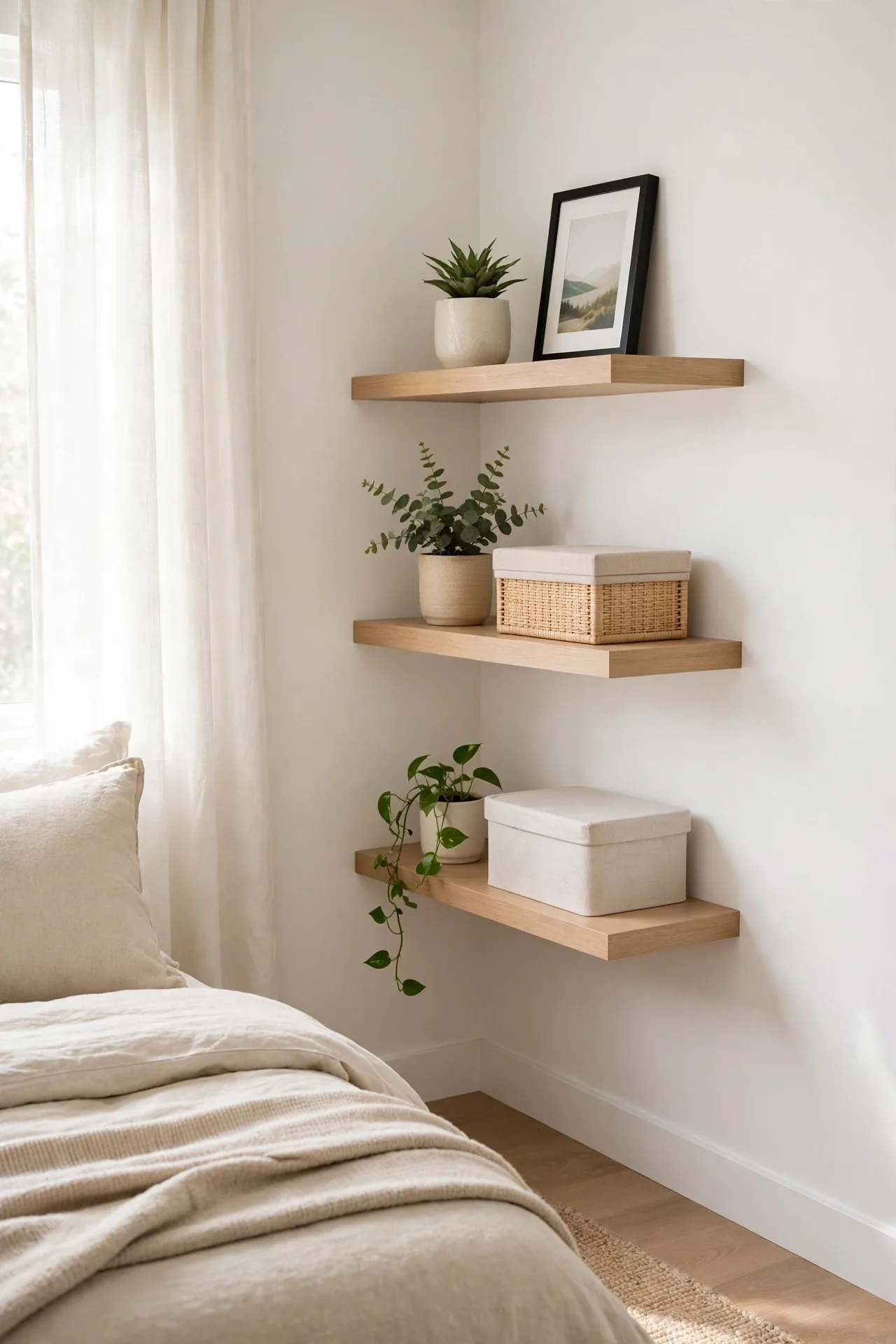
DO: Use corner shelves for lightweight decor and small lidded boxes.
DO: Stagger shelf heights to create visual rhythm up the wall.
DO: Anchor at least one bracket per shelf into a stud.
DON’T: Overload corners with heavy books that strain the brackets.
DON’T: Block natural light by stacking shelves across windows.
DON’T: Leave shelves bare, since empty ledges collect dust fast.
Corners often sit empty while clutter spreads everywhere else. A stack of floating corner shelves turns that dead zone into display and storage in one. Keep heavier items low and lighter decor up high for stability. Small lidded boxes on the shelves hide chargers, spare batteries, and other unglamorous necessities beautifully.
Over Door Organizers
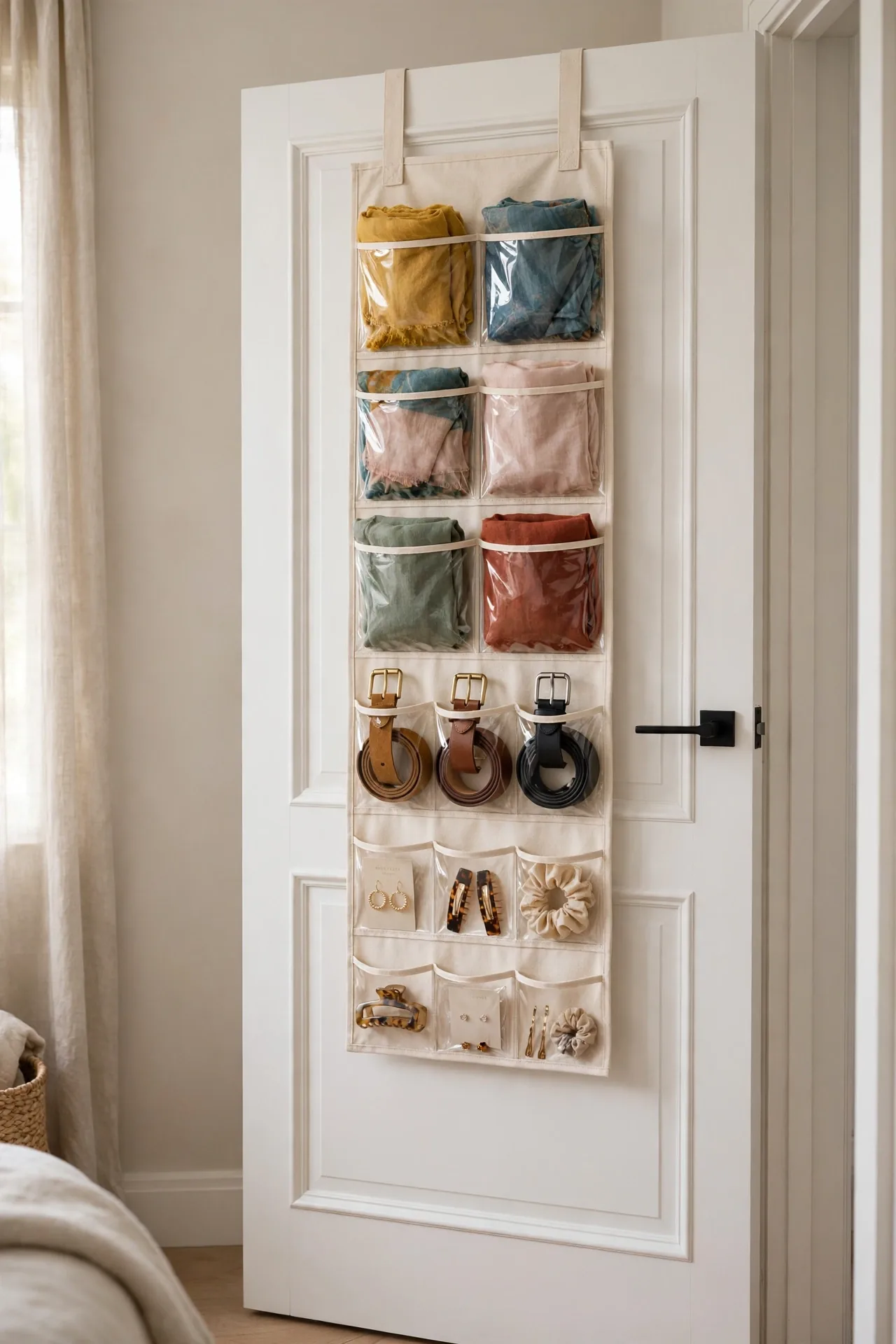
Cost: Low | Time: Ten minutes | Skill Level: Beginner | Best For: Accessories and small essentials
The back of your bedroom door hides prime storage real estate that most people completely ignore. A slim over door organizer with clear pockets holds scarves, belts, sunglasses, and travel minis without a single screw. Choose a version with padded hooks so the door finish stays scratch free. I’ve tried the fabric pocket style and the wire rack style, and pockets win for small accessories every time. Hang it on the closet door instead if your bedroom door swings against any nearby furniture.
Hidden Ottoman Storage

An ottoman that opens up is the hardest working accent in a primary bedroom. Tuck one beside a reading chair or at the foot of the bed and gain a hidden compartment for throws, magazines, or spare device chargers. The best versions lift with one hand and close softly, so daily use feels effortless rather than fussy.
Look for ottomans with removable lids that double as trays for tea or books. Velvet and boucle fabrics hide wear while adding texture to the room. I’ve noticed guests never guess these pretty pieces hold clutter inside. Wipe the interior quarterly and rotate stored items so nothing gets forgotten in the depths.
Headboard Shelf Nook
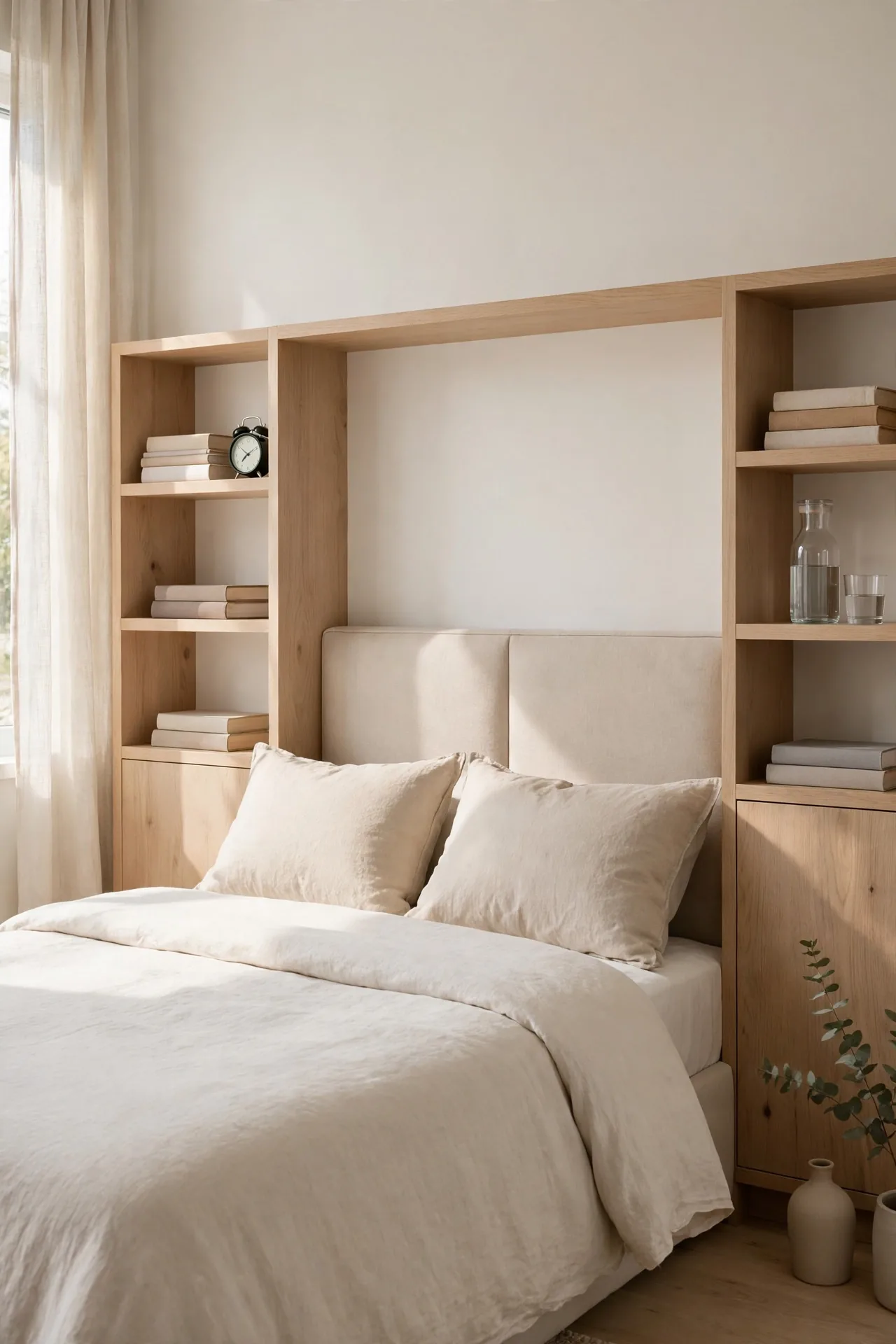
- Choose a headboard with cubbies at least six inches deep for real usability.
- Keep a carafe and glass on one side for nighttime water without spills.
- Store current reads upright so titles stay visible and inviting.
- Add a small clip light inside the nook for focused reading glow.
- Reserve one cubby as a charging station with a hidden power strip.
A headboard with built in shelving eliminates the need for nightstands entirely. Books, glasses, and a phone all live within arm’s reach, tucked into neat cubbies instead of sprawling across surfaces. This setup shines in compact primary bedrooms where every square foot counts. Dust the nooks weekly since open shelving shows buildup quickly.
Rolling Under Bed Bins
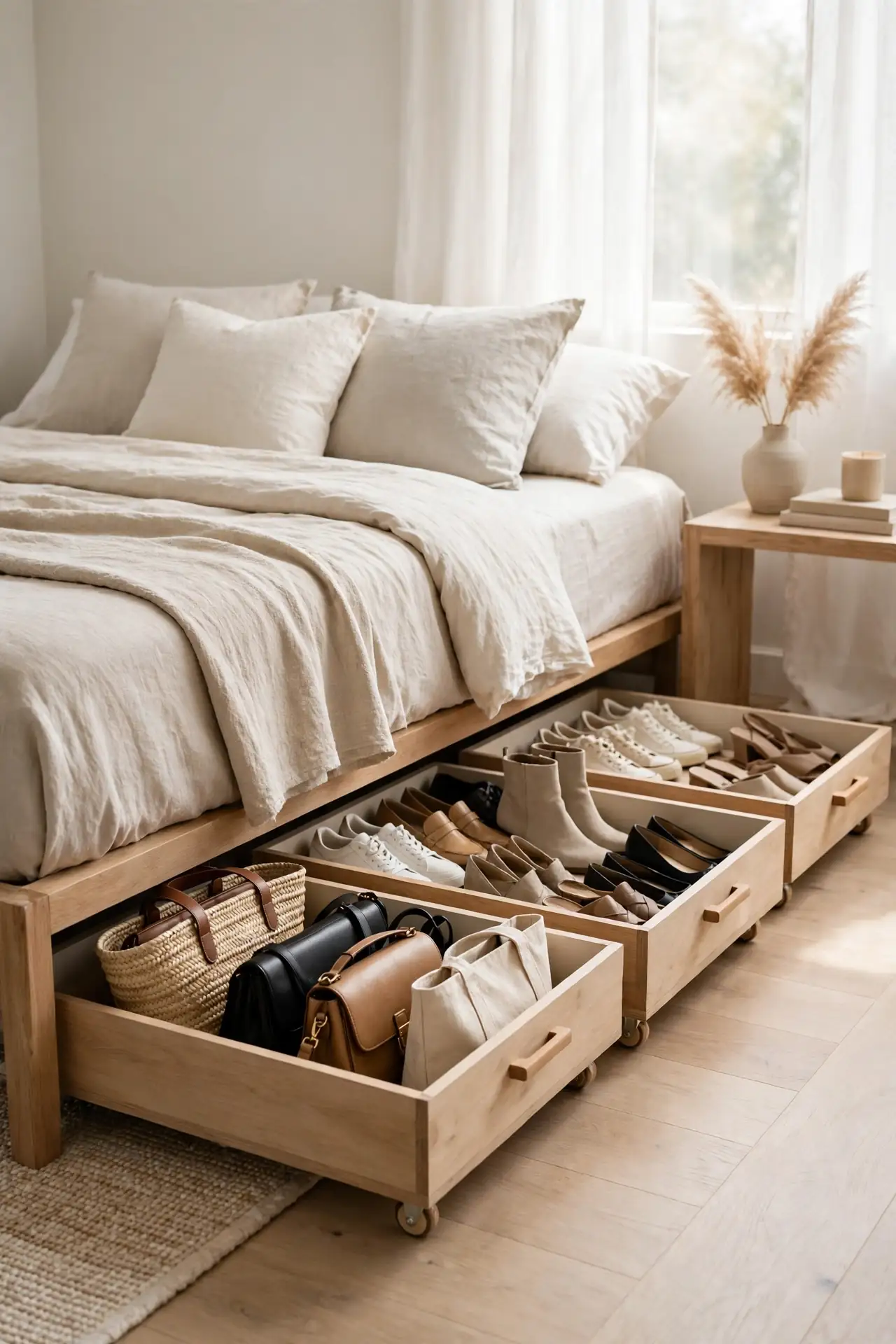
Quick Tip: Pick bins with smooth rolling casters and low profiles under seven inches tall. Clear bins let you spot contents instantly, while fabric bins with label windows look tidier. Always measure your bed frame clearance before buying, since even half an inch matters.
Rolling bins turn the dusty void under your bed into a proper storage zone. Shoes, handbags, and gift wrap all slide out smoothly when you need them and disappear when you don’t. I recommend assigning one bin per category so nothing migrates into a jumbled mess. A quick vacuum under the bed each month keeps dust from settling.
Slim Tall Dresser
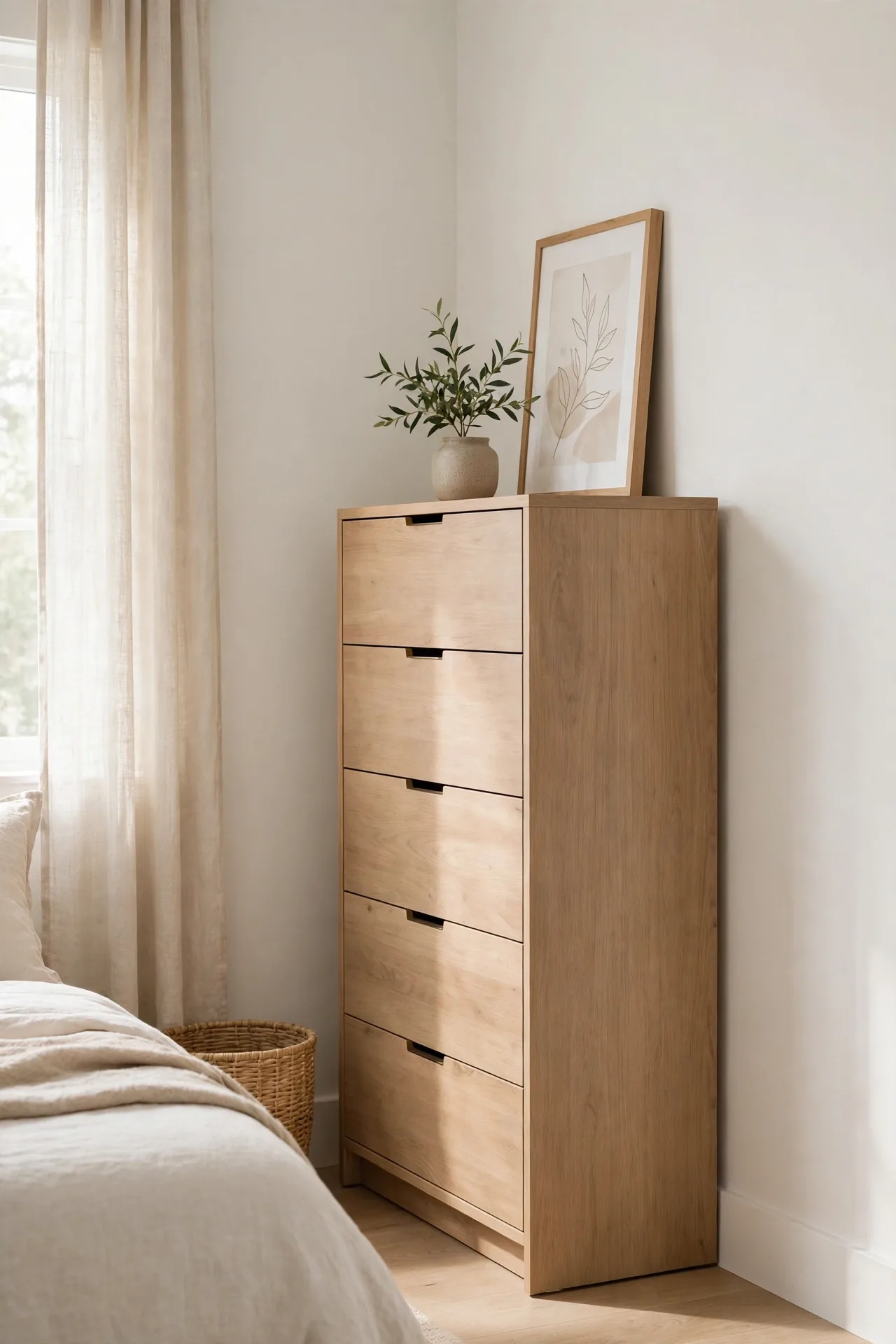
BEFORE: A wide low dresser eats an entire wall while its shallow drawers barely hold folded tees. The top becomes a clutter magnet for mail, keys, and random items with no real home.
AFTER: A slim tower dresser claims just two feet of wall while its deep drawers swallow sweaters, jeans, and linens. The narrow top stays styled with intention instead of buried under clutter.
Going vertical is the smartest move in a primary bedroom with limited wall space. Anchor tall dressers to the wall for safety, especially on carpet where tipping risk rises. Sort drawers by category from top to bottom in order of daily use. The footprint savings leave room for a reading chair or plant.
Woven Basket Wall
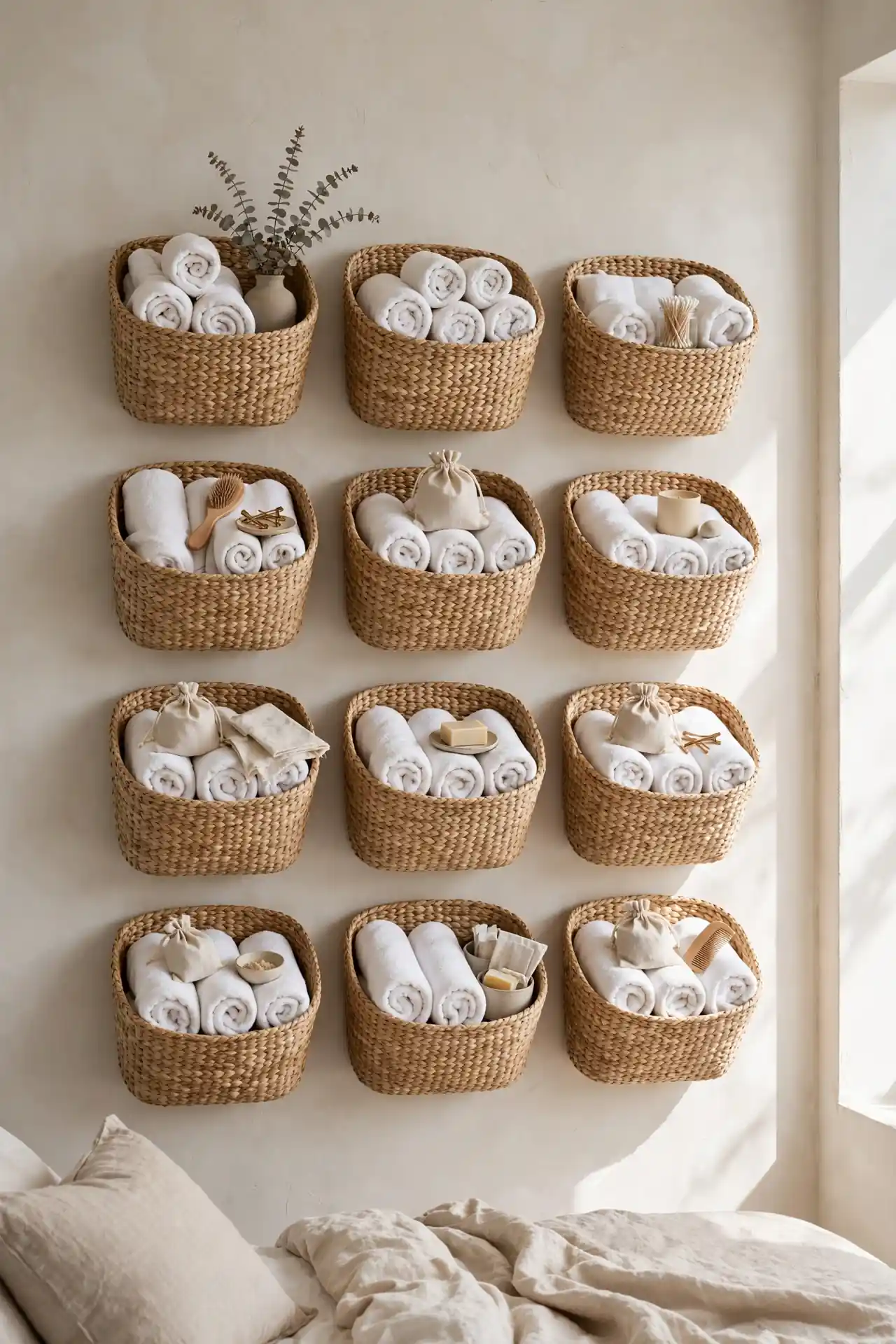
- Collect baskets in one material family for a cohesive gallery look.
- Mount sturdy L brackets into studs at your planned grid positions.
- Rest each basket on its bracket and secure with a discreet screw.
- Fill with rolled towels, scarves, or spare throws by color.
- Step back and adjust spacing until the grid feels balanced.
Baskets on the wall blur the line between storage and art. Rolled linens and accessories stay visible and grabbable while adding warm texture to the room. I love this trick above a dresser or beside the closet where dead wall space usually goes to waste. Dust the basket rims monthly with a microfiber cloth.
Mirror Cabinet Storage
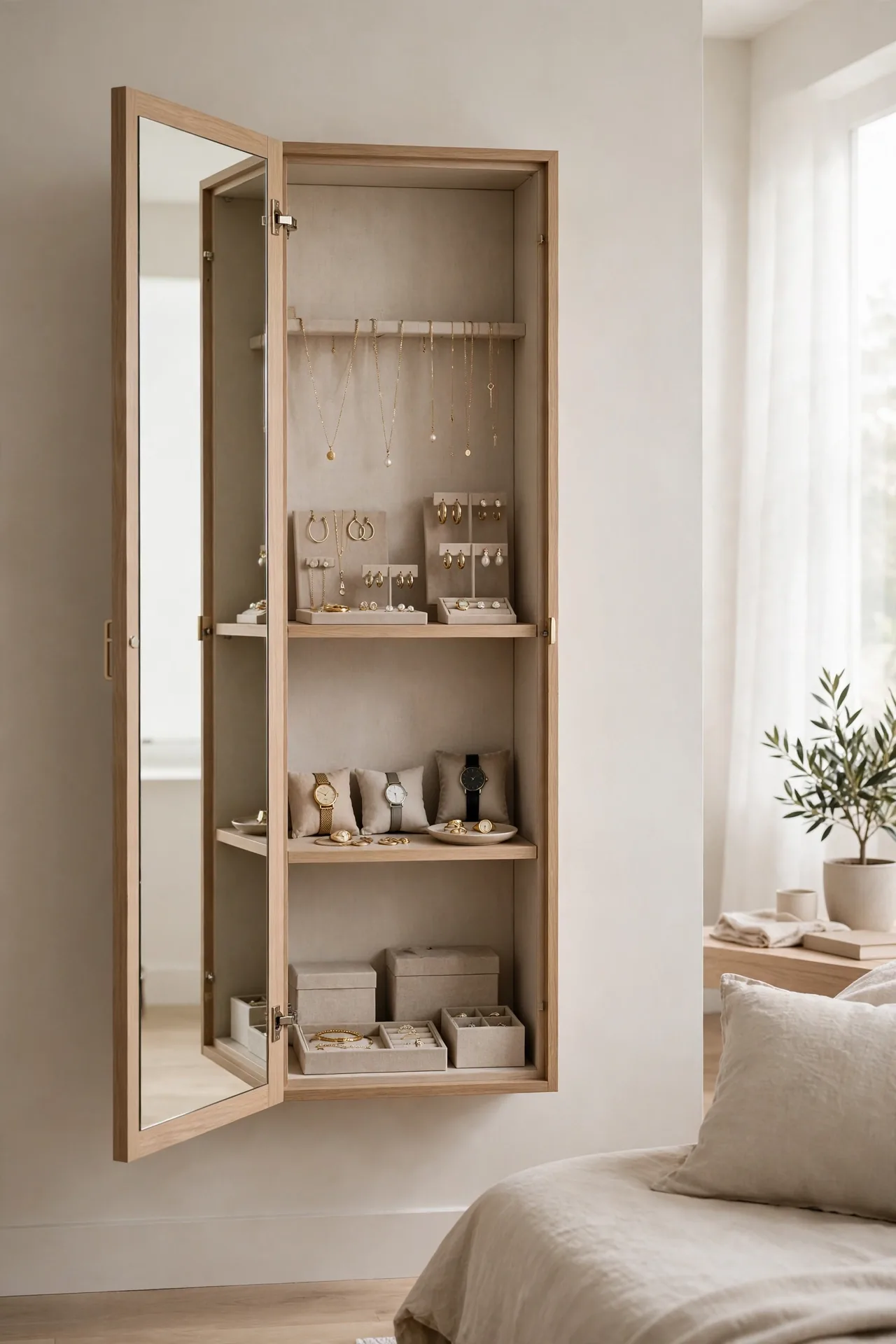
| Feature | Mirror Cabinet | Regular Mirror |
| Jewelry storage | Built in hooks and slots | None |
| Wall space used | Same footprint | Same footprint |
| Daily function | Check outfit plus grab accessories | Check outfit only |
| Installation | Two person hang | Two person hang |
A mirror that opens into a jewelry cabinet doubles your wall’s usefulness without adding bulk. Necklaces hang tangle free on hooks while rings and watches rest in lined slots. Lock the cabinet if little hands roam the house. Position it near natural light so getting ready feels bright and easy every morning. Wipe the mirror weekly and the interior monthly to keep everything sparkling.
Behind Door Hooks
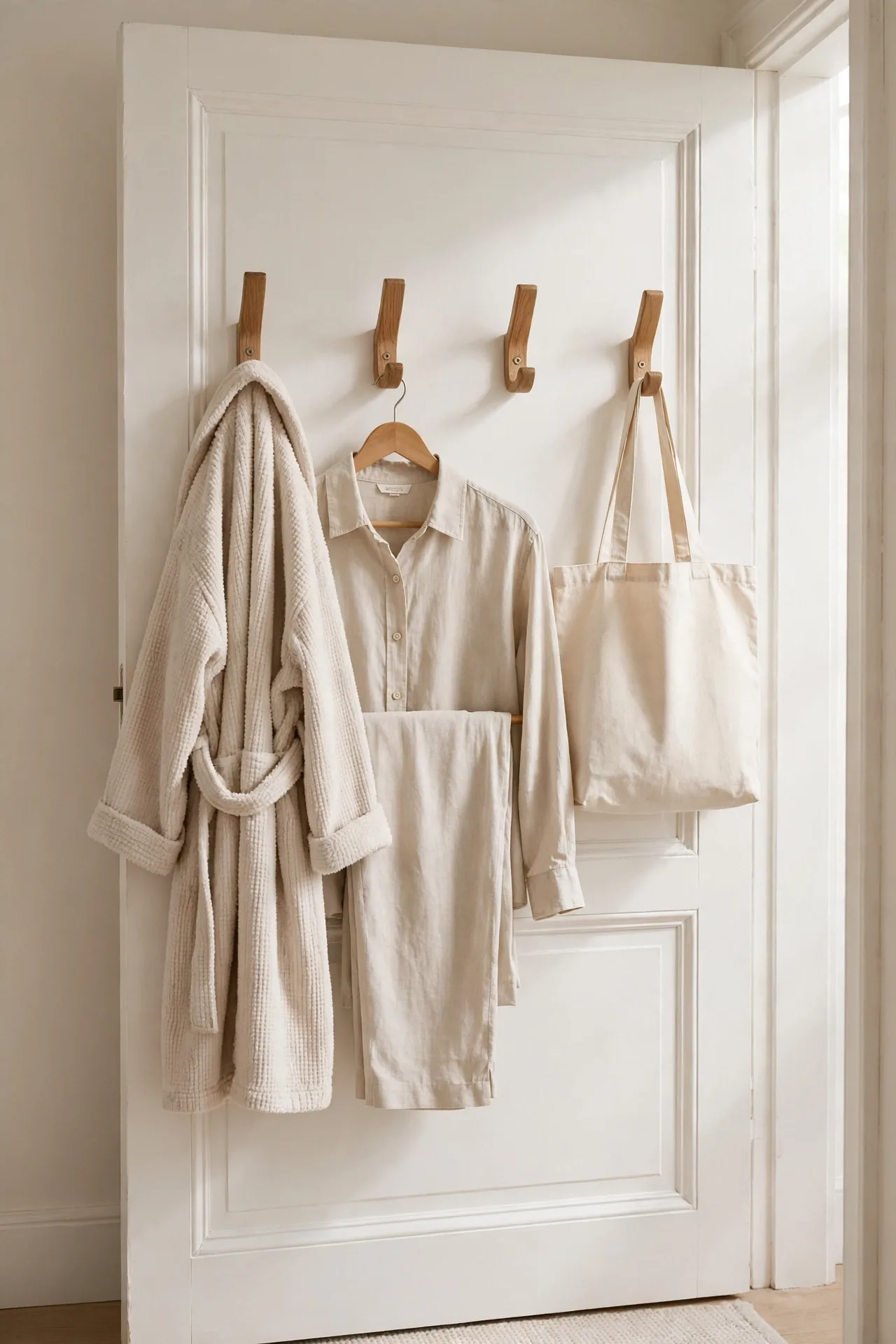
DO: Hang tomorrow’s outfit the night before to streamline mornings.
DO: Use one hook per category so robes never bury work clothes.
DO: Choose hooks rated for at least ten pounds each.
DON’T: Pile every jacket you own until the door won’t close.
DON’T: Use adhesive hooks on hollow doors, since they fail without warning.
DON’T: Hang damp towels here, because trapped moisture warps wood doors.
A simple row of hooks behind the door keeps daily essentials off the floor and off chairs. Robes, pajamas, and tomorrow’s outfit each get a dedicated spot. Screw mounted hooks beat adhesive ones for anything heavier than a scarf. This five minute install pays off every single morning with a calmer start.
Bedside Pocket Organizer
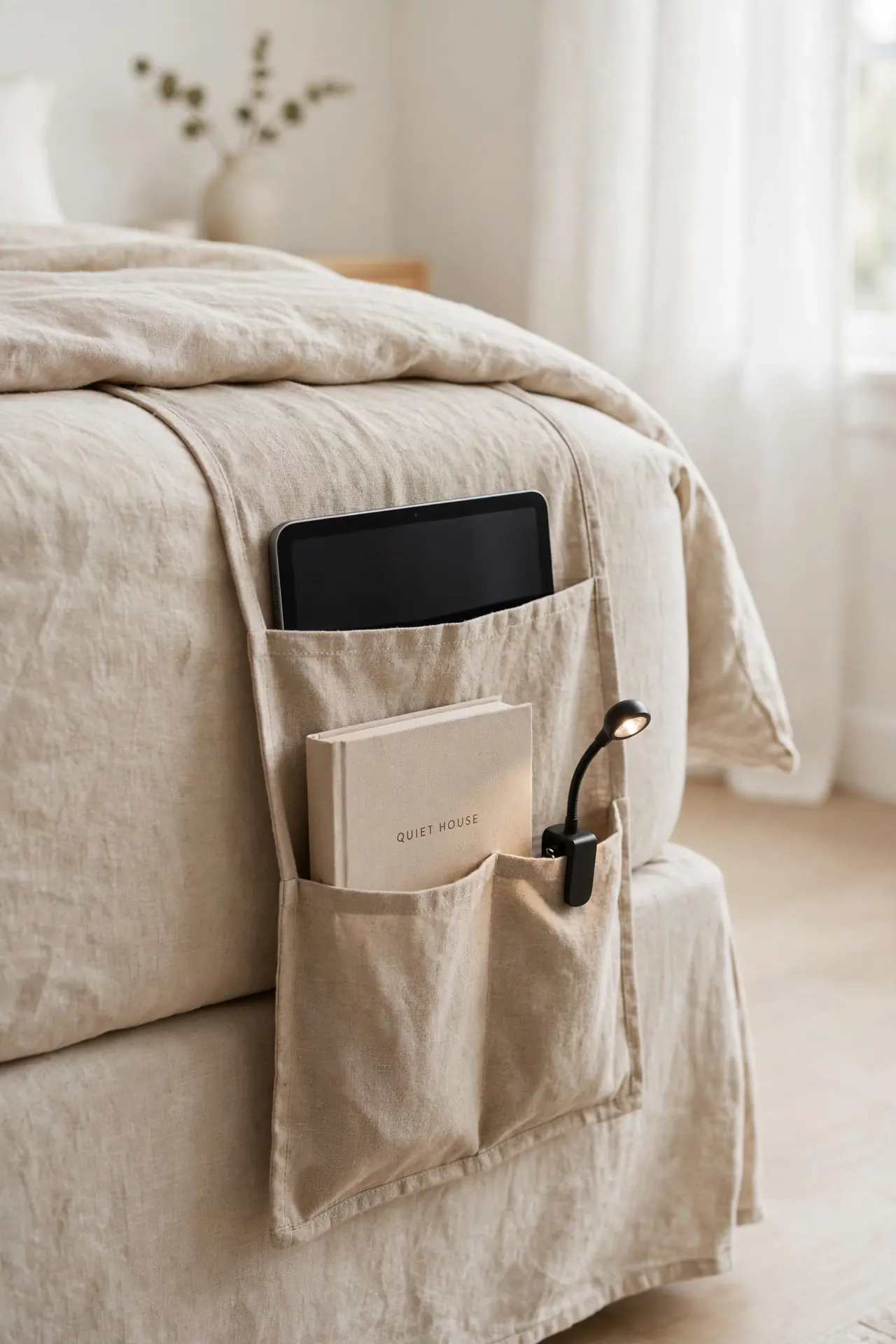
Cost: Low | Time: Two minutes | Skill Level: Beginner | Best For: Tiny bedrooms with no nightstand space
A pocket organizer that slides under the mattress gives you nightstand function with zero footprint in the tightest rooms. Tablets, books, glasses, and remotes slip into deep canvas pockets within easy reach. I’ve seen this work well in many cases where couples sleep in a room too narrow for two tables. Choose a version with at least four pockets so each sleeper gets dedicated space. Toss it in the wash quarterly to keep it fresh and looking brand new for years.
Stackable Storage Cubes
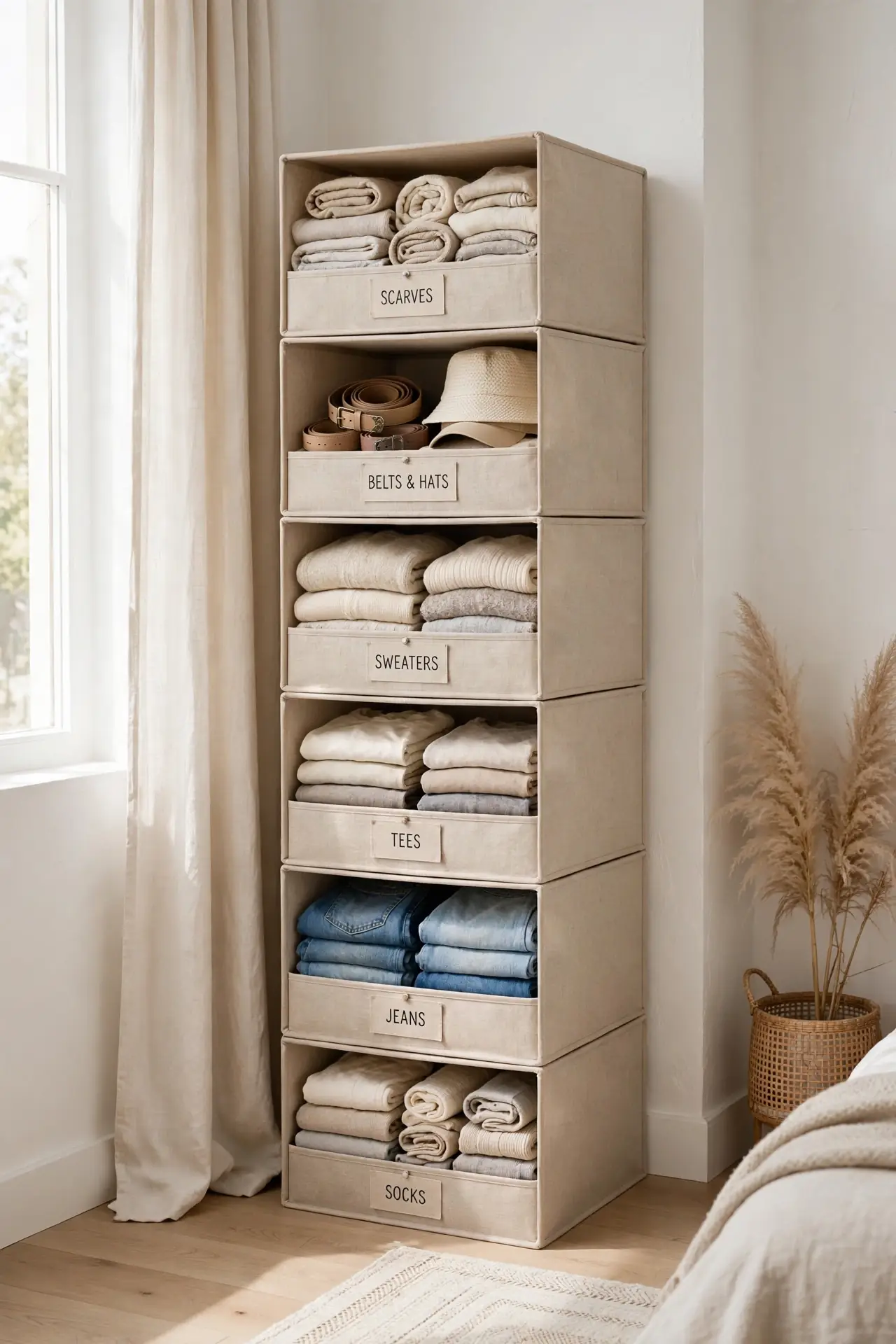
Modular cubes grow with your needs instead of locking you into one layout. Stack them into a tower beside the dresser, split them under windows, or line them inside the closet. Fabric cubes with reinforced frames hold folded clothes without sagging. Label each cube’s front so everyone in the household returns items correctly.
The real win is flexibility during seasonal swaps. Pull winter cubes down and push summer ones up without reorganizing everything. I’ve noticed cube systems survive moves better than bulky furniture too. Wipe fabric cubes with a damp cloth when dusty, and replace any that lose their shape to keep the tower crisp.
Freestanding Wardrobe Addition
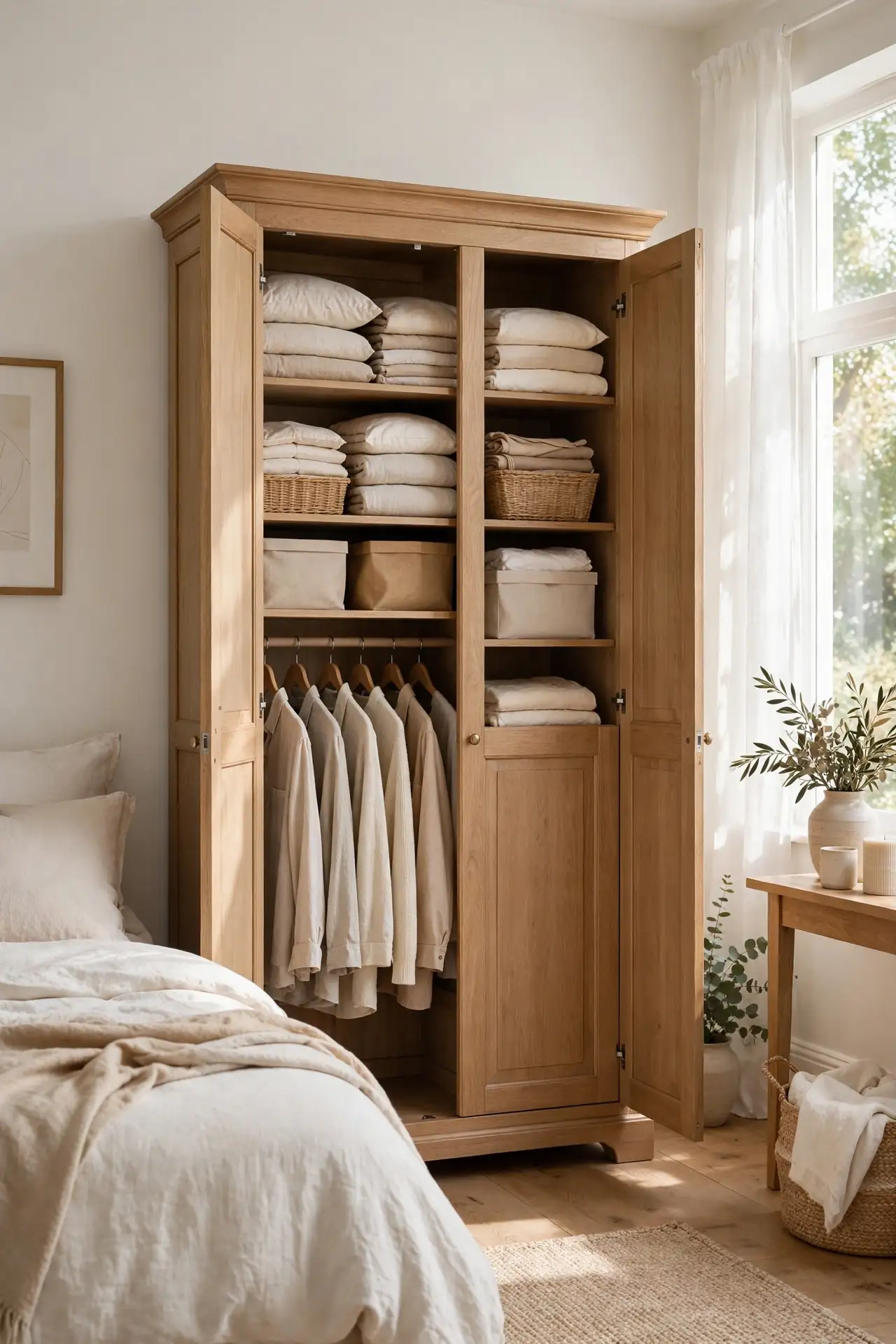
- Measure doorways and stairwells before ordering any large wardrobe.
- Pick a depth of at least twenty two inches for hangers to fit.
- Look for adjustable shelving so the interior adapts over time.
- Anchor tall wardrobes to wall studs to prevent tipping.
- Style the top with a plant or basket for a finished look.
When the built in closet can’t keep up, a freestanding wardrobe adds serious capacity without renovation. Armoires with mirrored doors bounce light while hiding a full rail of clothes. For more inspiration on styling bedroom furniture beautifully, explore these dresser styling ideas that pair perfectly with wardrobe storage. Choose a finish that echoes your bed frame for cohesion.
Under Window Bench
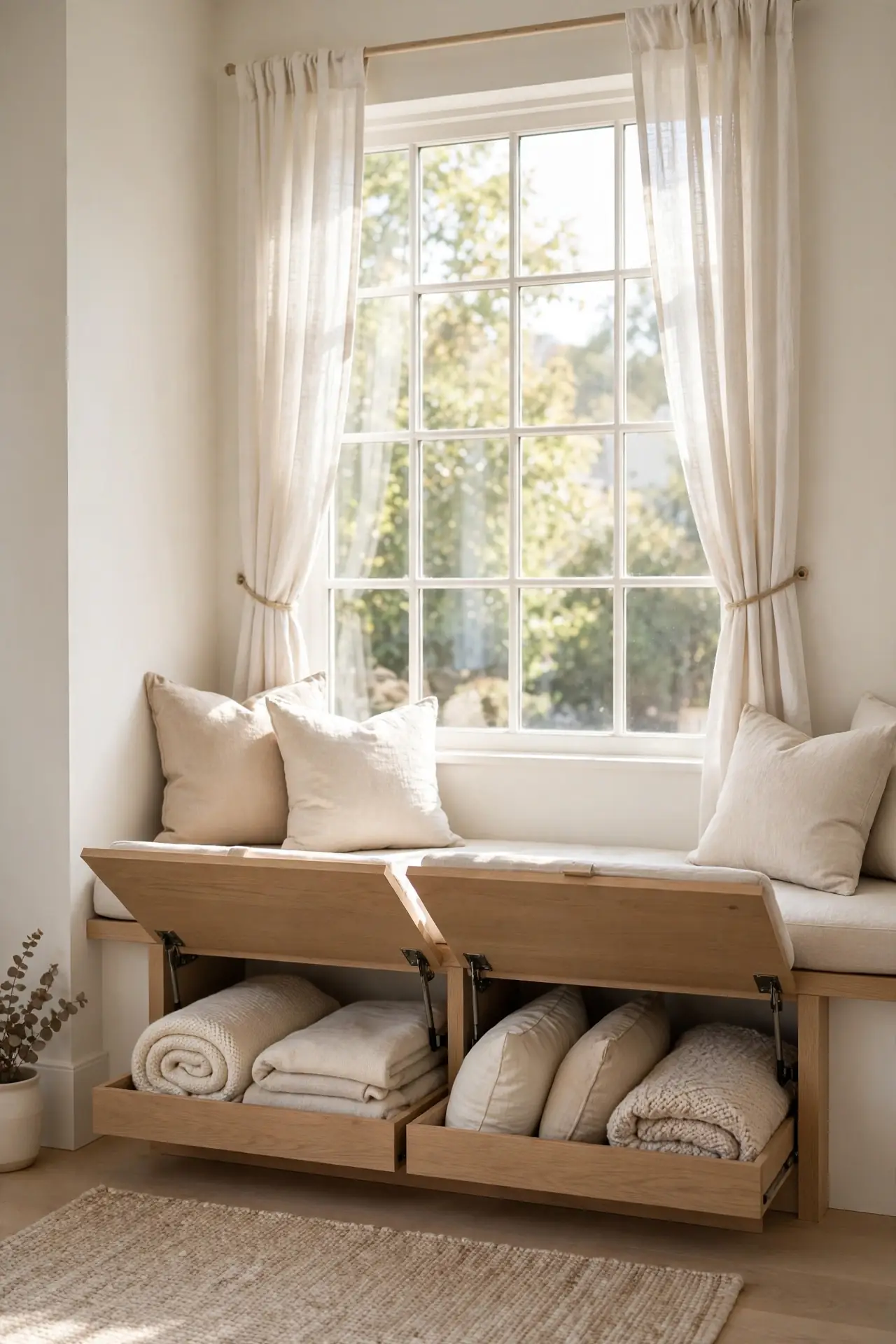
Quick Tip: Add a two inch foam cushion with washable covers to make the bench a favorite reading spot. Hinge the seat with soft close hardware so little fingers stay safe. Store lesser used items like guest bedding inside since daily access matters less here.
The stretch beneath your window often goes unused while storage needs grow. A low bench with lift up seats fills that gap with hidden volume for pillows and throws. Morning light makes it the coziest seat in the house. Keep the cushion cover washable because sunny spots attract dust and pet hair faster than you expect.
Pegboard Wall Command
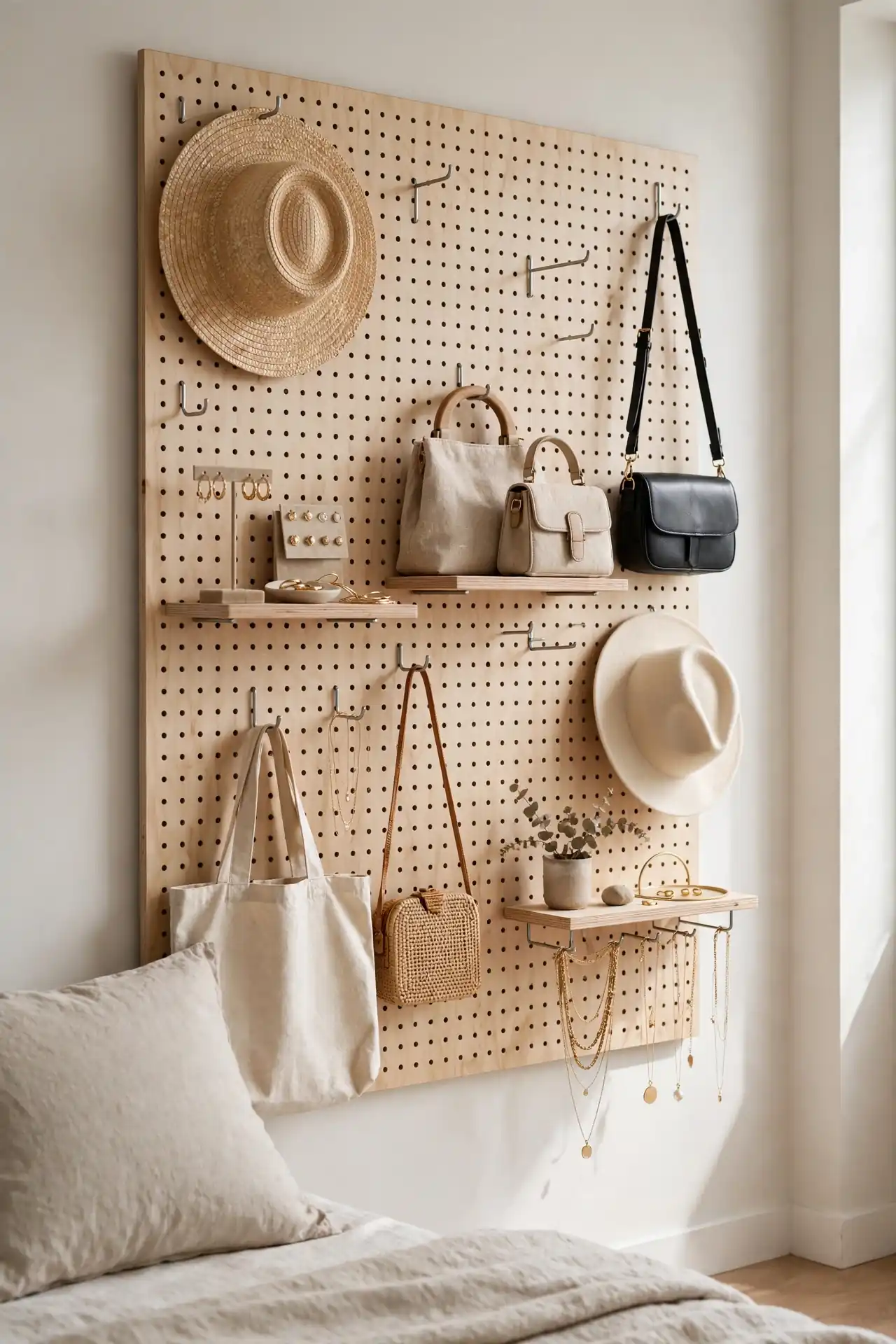
BEFORE: Accessories scatter across the dresser top in a jumbled pile. Belts tangle with necklaces, hats get crushed, and bags slide off onto the floor every day.
AFTER: A painted pegboard turns one wall into a customizable command center. Every hat, bag, and necklace hangs in its own spot, visible at a glance and easy to grab on busy mornings.
Paint the pegboard to match your walls for a built in feel, or choose a bold accent for art status. Standard hooks and small shelves rearrange in seconds as your collection changes. Mount into studs since loaded pegboards get heavy fast. This wall earns compliments while working hard behind the scenes.
Seasonal Rotation System
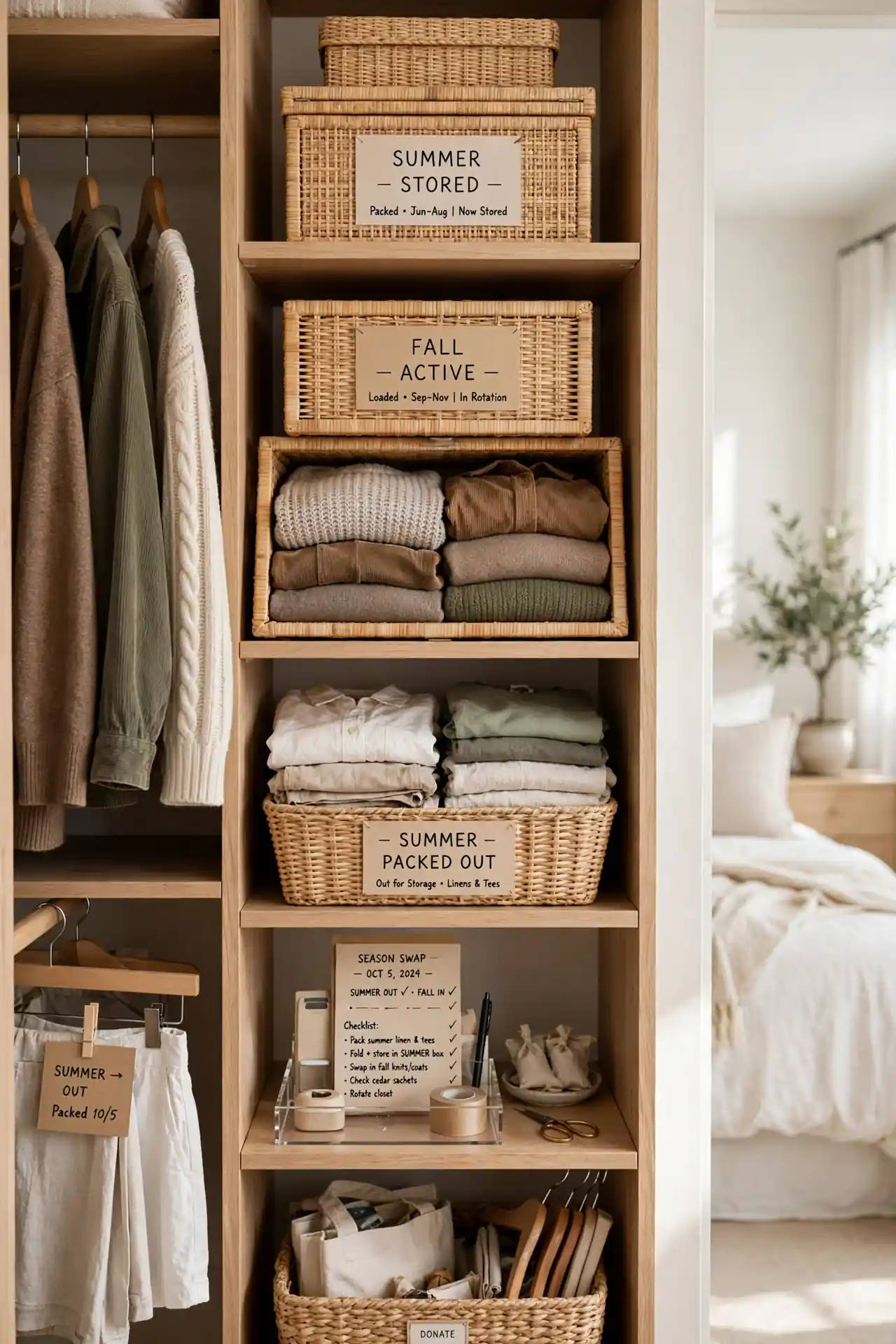
- Pull everything out of prime closet space twice a year.
- Sort into current season, next season storage, and donate piles.
- Pack off season items in labeled, sealed bins with cedar blocks.
- Return only current season pieces to the best closet real estate.
- Schedule the next swap on your calendar so it actually happens.
Rotating wardrobes by season instantly halves closet crowding. Off season clothes rest in labeled bins on high shelves or under the bed while current pieces breathe. This system works because it forces a mini declutter twice a year. Donate what you skipped all season and enjoy a closet that finally feels spacious.
Conclusion
A serene primary bedroom grows from smart storage choices, not from owning less of what you love. These primary bedroom storage ideas prove that organization and beauty strengthen each other beautifully. I’ve seen how small changes like these can completely shift the way a space feels each morning. Pick two or three ideas that fit your room and start this weekend. Save this guide on Pinterest for your next organizing session, and share it with someone whose bedroom needs the same calm. Your restful retreat is closer than you think.





3 Comments