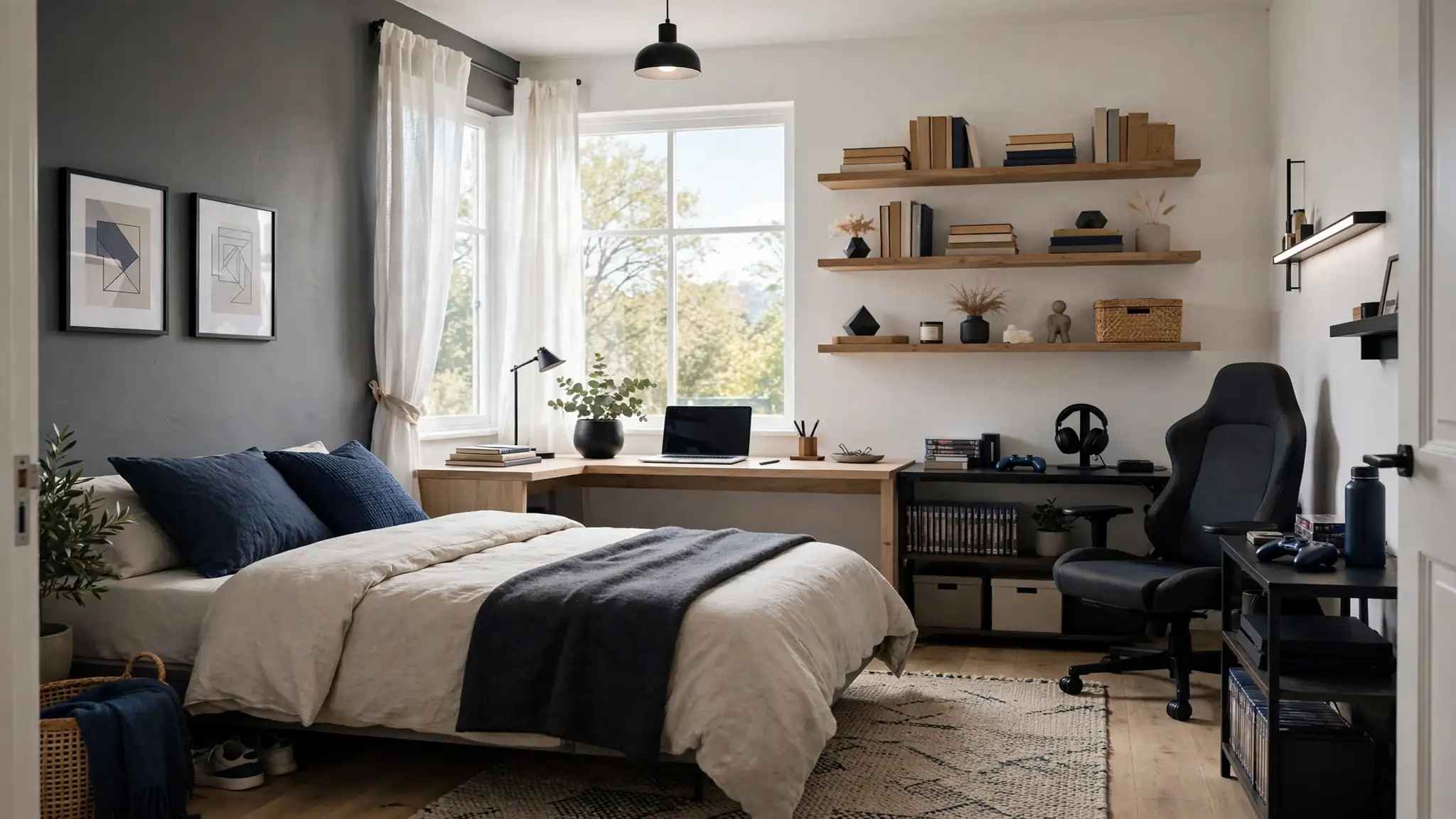
24 Teen Boy Bedroom Layouts for a Cool, Functional Space
teen boy bedroom layouts turn cramped, cluttered rooms into spaces where homework, gaming, and sleep all work. Teen boys need rooms that flex between focus and fun, and the right layout makes every square foot count. I’ve seen how a smart arrangement ends the floor-drobe phase and gives back desk space overnight. These 24 layouts cover bed placement, study zones, storage wins, and style upgrades that feel grown up without losing personality. Whether his room is tiny or generous, there is a setup below that fits. Pick one idea, try it this weekend, and watch the room change fast. A better layout is the gift that keeps working every single day.
Before buying anything, measure the room and sketch two or three options on paper. I’ve noticed that the best narrow bedroom ideas start the same way: plan around the bed, then fit the desk near the window for daylight. This quick step prevents furniture that blocks the door or eats the walkway. Share the sketch with your teen so he feels part of the plan.
Corner Desk Command
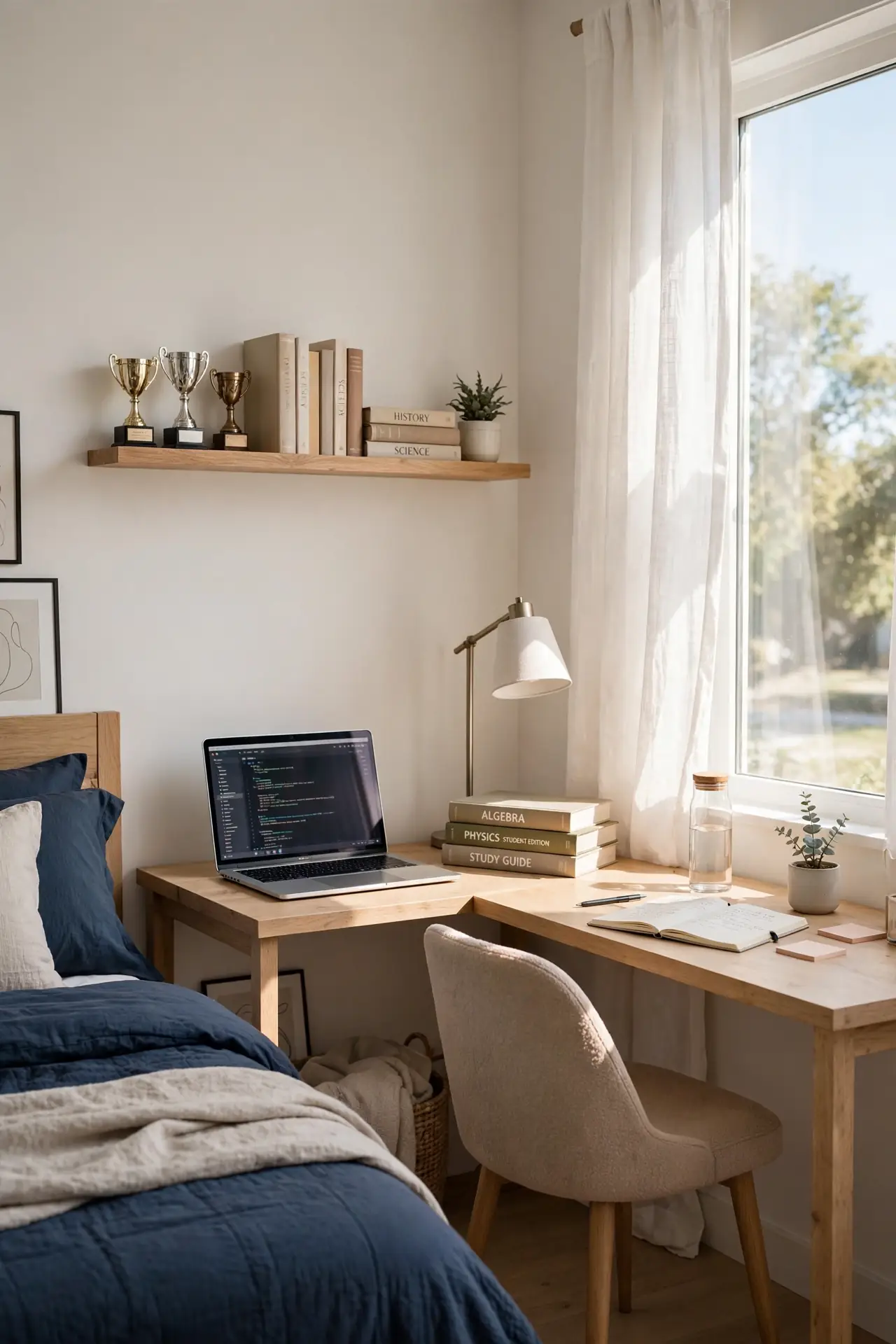
The corner is the most wasted spot in a teen bedroom, and a desk there changes everything. An L-shaped desk grabs two walls of surface while leaving the center open. Push it into the brightest corner, ideally near a window, so homework gets natural light. Keep only daily gear on top. Style the shelves simply to avoid visual noise.
In my experience, corners also keep screens from dominating the room since the setup faces the wall, not the bed. Add a small shelf above for books and a lamp with warm light for evening study. Cable clips along the desk edge hide chargers and stop the tangle. The result is a real workstation that fits even in small rooms.
Loft Bed Lift
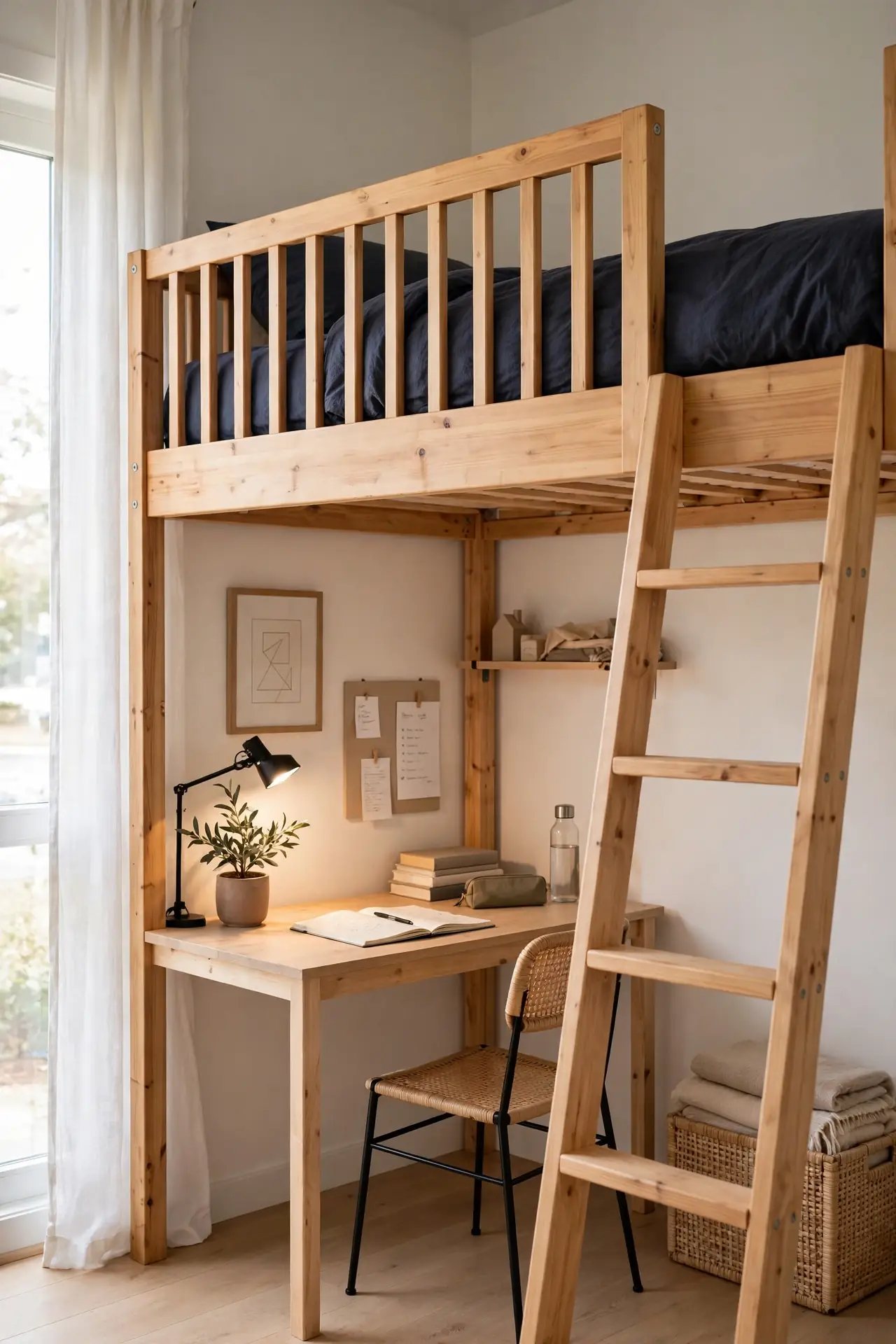
- A loft bed lifts the mattress up and frees the entire footprint below for a desk or lounge.
- Guard rails and a sturdy ladder keep the setup safe for nightly use.
- Slide a desk, dresser, or beanbag zone into the cleared space underneath.
- Teens love the den-like feel, which makes the room feel bigger and cooler.
- Check ceiling height first so he can sit up without hitting his head.
Lofts work best in rooms with at least eight-foot ceilings and a teen who climbs happily. I’ve seen this work well in many cases where floor space was the limiting factor. Keep the area below lit with a clip lamp so it never feels cave-like. Anchor the frame to wall studs for rock-solid stability.
Gaming Wall Zone
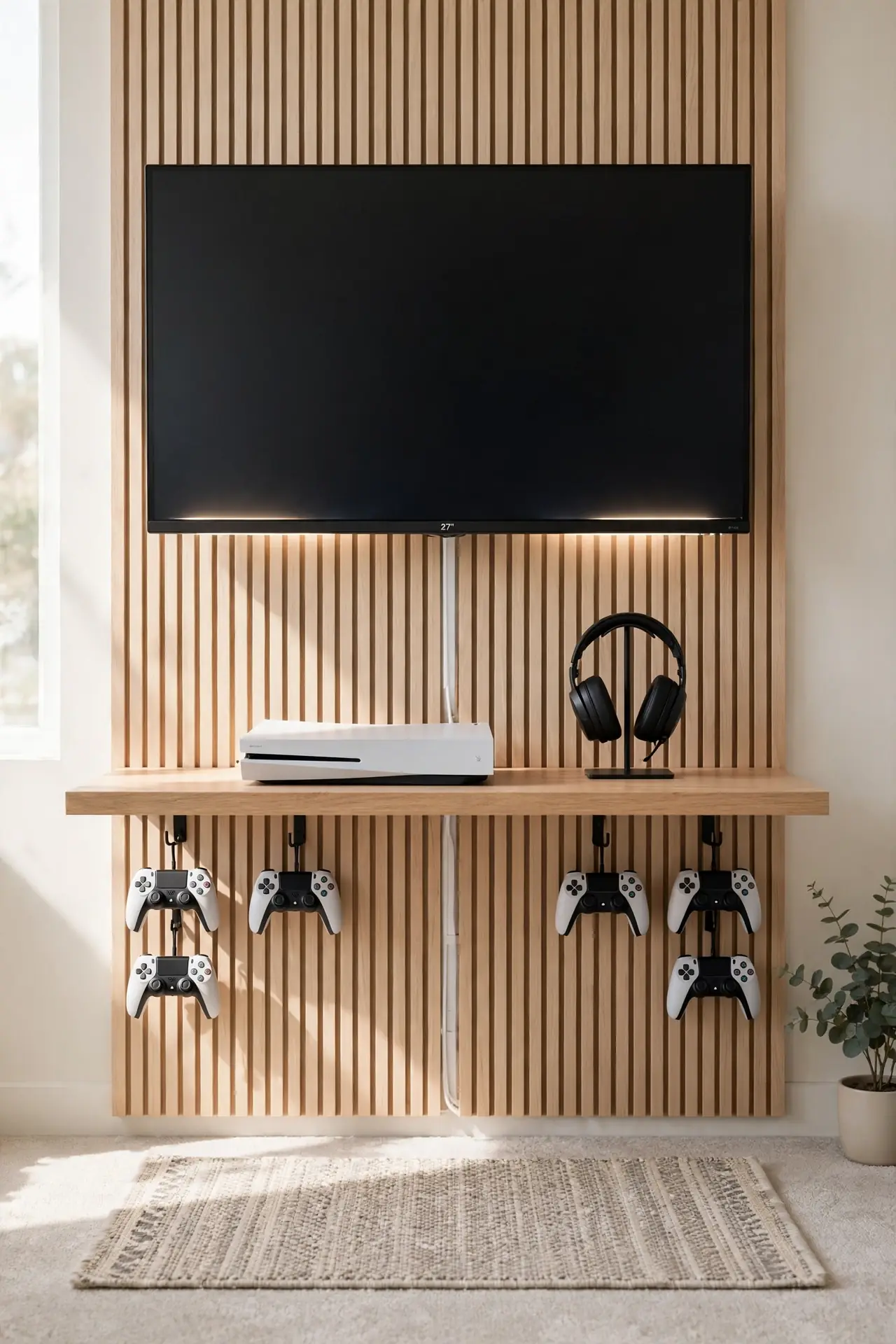
Quick Tip: Dedicate one wall to gaming with the console, screen, and controller storage all within arm’s reach. Mount the screen at eye level and run cables through a slim channel so the wall looks clean. A small rug marks the zone and protects the floor from chair wheels.
Gaming setups spread fast, so boundaries keep the hobby from eating the bedroom. A wall-mounted shelf holds headsets and games while a narrow console table hides the hardware. Set a simple rule that controllers live on their hooks after play. The zone stays fun without turning the room into a cable jungle.
Sports Gear Wall
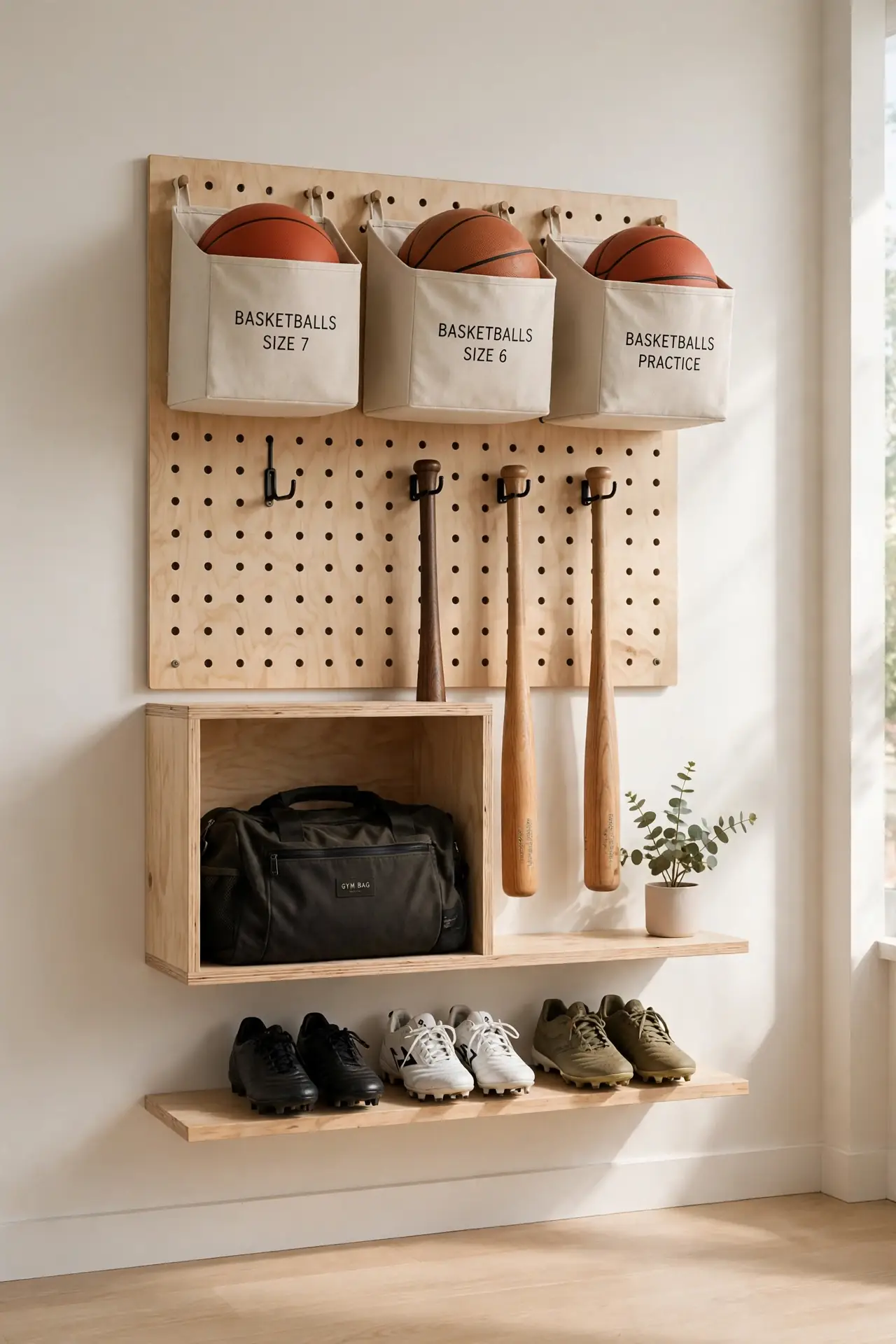
BEFORE: Balls roll under the bed, bats lean in corners, and gym bags pile by the door. Gear migrates across the floor and the room never looks finished. Finding anything before practice takes ten frantic minutes.
AFTER: Every ball sits in a wall bin, bats hang on labeled hooks, and the gym bag has a dedicated cubby. The floor stays clear and gear grabs take seconds. The wall doubles as decor that shows off his sports.
Vertical storage wins for sports gear because balls and bats need height, not floor space. Mount a pegboard or slat wall and add bins, hooks, and shelves as the collection grows. Label each spot so the system survives busy weeks. He will actually use it when putting things away takes five seconds.
Music Corner Setup
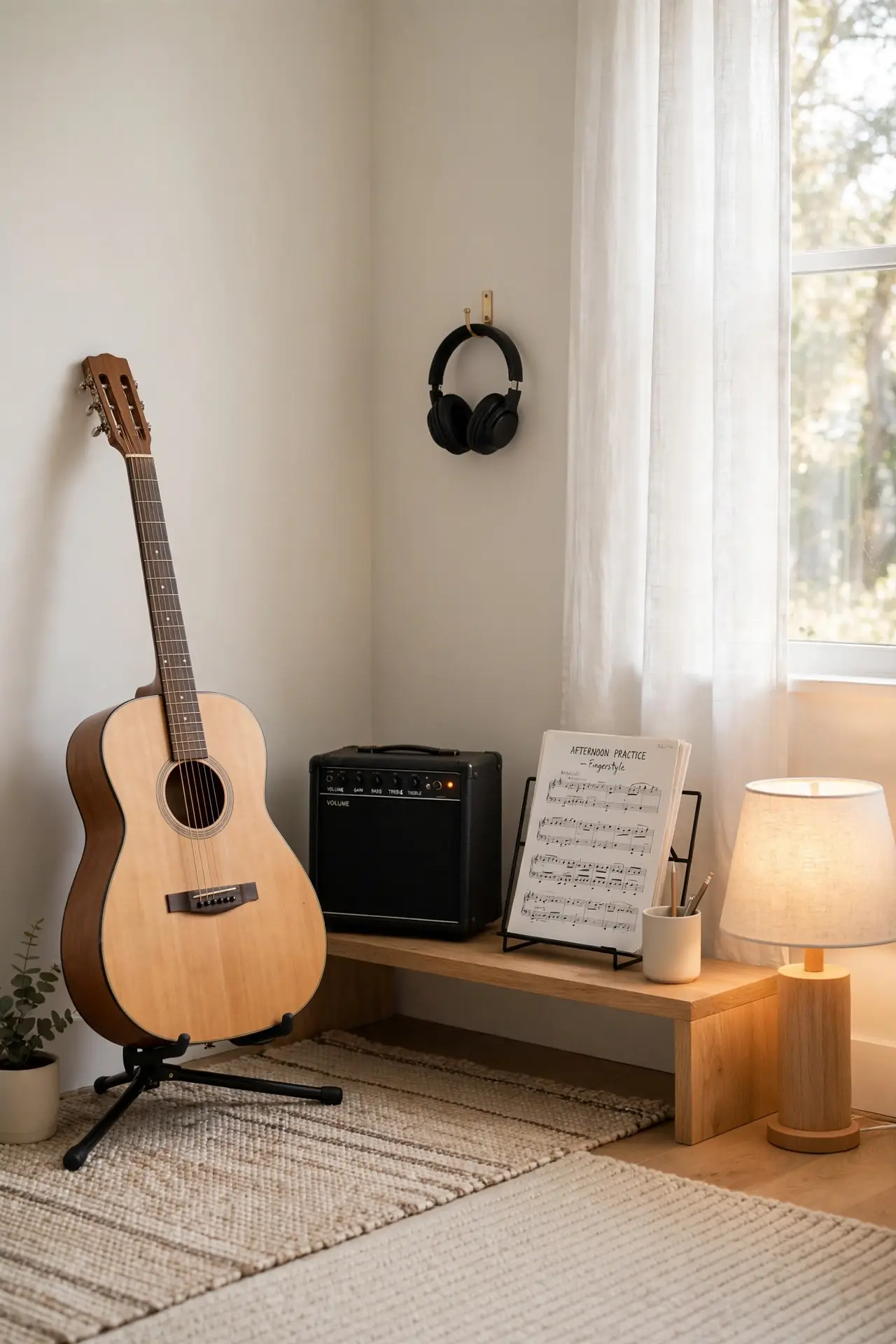
- Pick a quiet corner away from the study desk so practice and homework never clash.
- Add a sturdy stand for the instrument and a small amp on a low shelf.
- Hang headphones on a wall hook and store sheet music in a magazine holder.
- Lay a rug under the setup to soften sound and mark the music zone.
A music corner gives practice a permanent home instead of gear drifting around the room. Keep the setup compact so it never crowds the bed or desk. That’s why many experts recommend a dedicated practice spot for building consistent habits. Even ten focused minutes a day sounds better with everything in reach.
Bed Against Wall
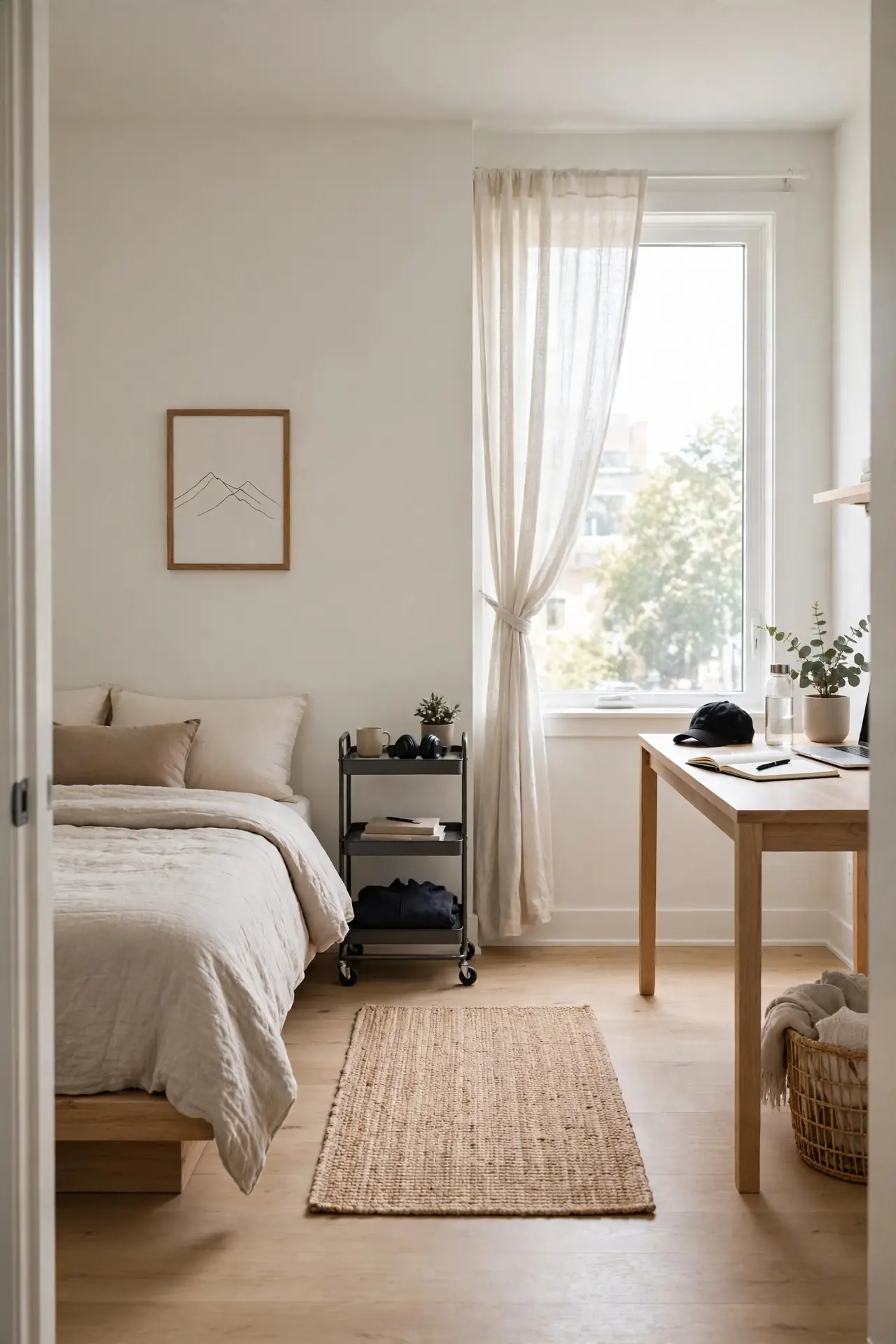
Pushing the bed flat against the longest wall is the fastest layout upgrade for most teen rooms.
| Position | Best For | Watch Out For |
| Bed on long wall | Small teen rooms | One side blocked |
| Bed in corner | Shared bedrooms | Harder to make bed |
| Bed under window | Bright rooms | Drafts in winter |
Corner and wall placements free the middle of the room for a desk, chair, or workout mat. Leave at least two feet of walkway on the open side so making the bed stays easy. If he hates climbing over, add a slim rolling cart as a nightstand. The extra floor space changes how the whole room feels.
Poster Wall Gallery
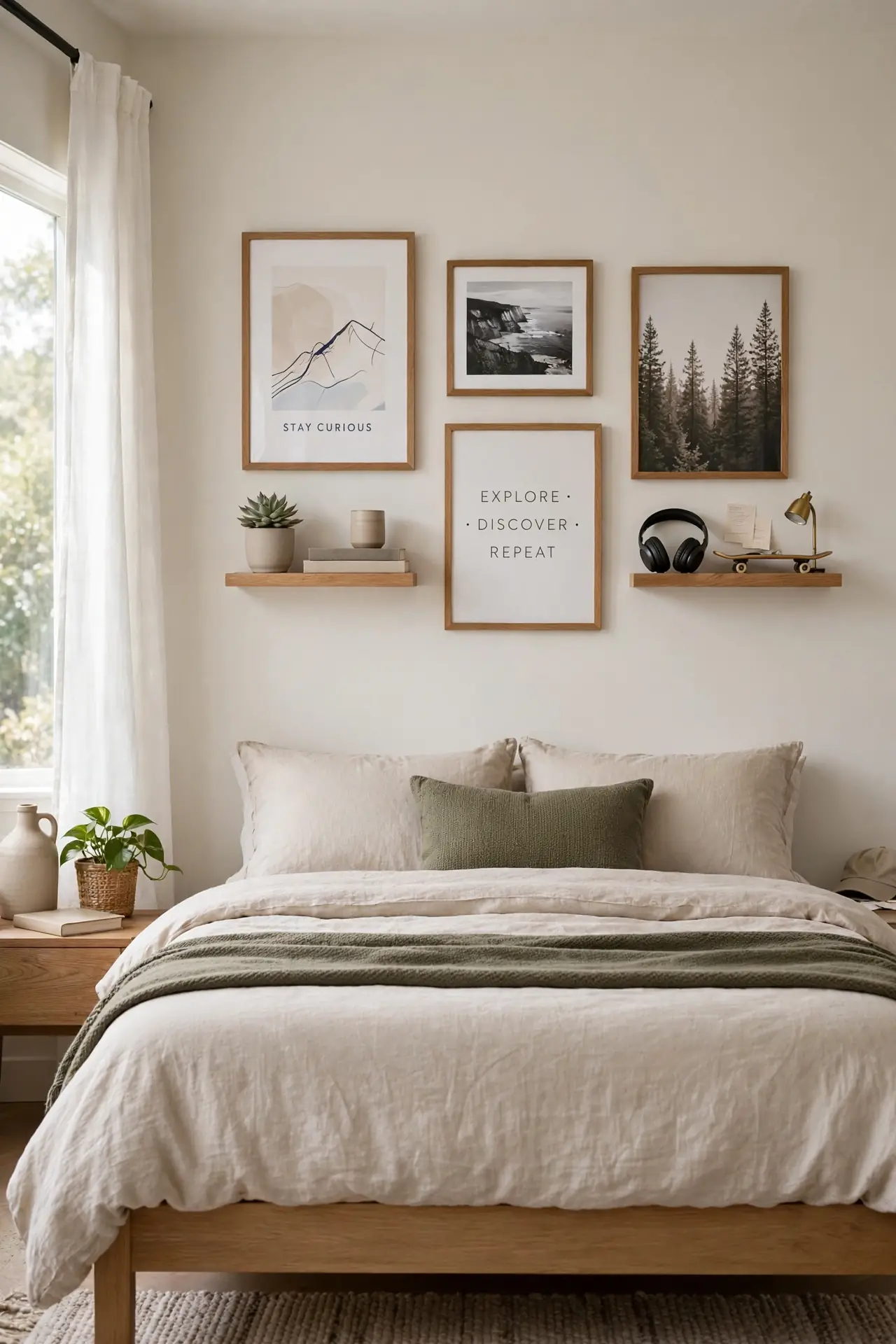
DO: Frame two or three favorite posters for a polished look.
DO: Use removable strips so walls stay damage-free.
DO: Mix posters with photos and small shelves.
DO: Keep one wall as the gallery and others calm.
DON’T: Tape posters directly to fresh paint.
DON’T: Cover every wall with clashing images.
DON’T: Hang heavy frames with weak hooks.
DON’T: Let edges curl; trim or reframe them.
A gallery wall lets his personality lead without the chaos of random tape jobs. Plan the arrangement on the floor first, then transfer it to the wall in one go. Leave breathing room between pieces so each one stands out. Swap prints each season to keep the room feeling fresh.
Bedside Charging Dock
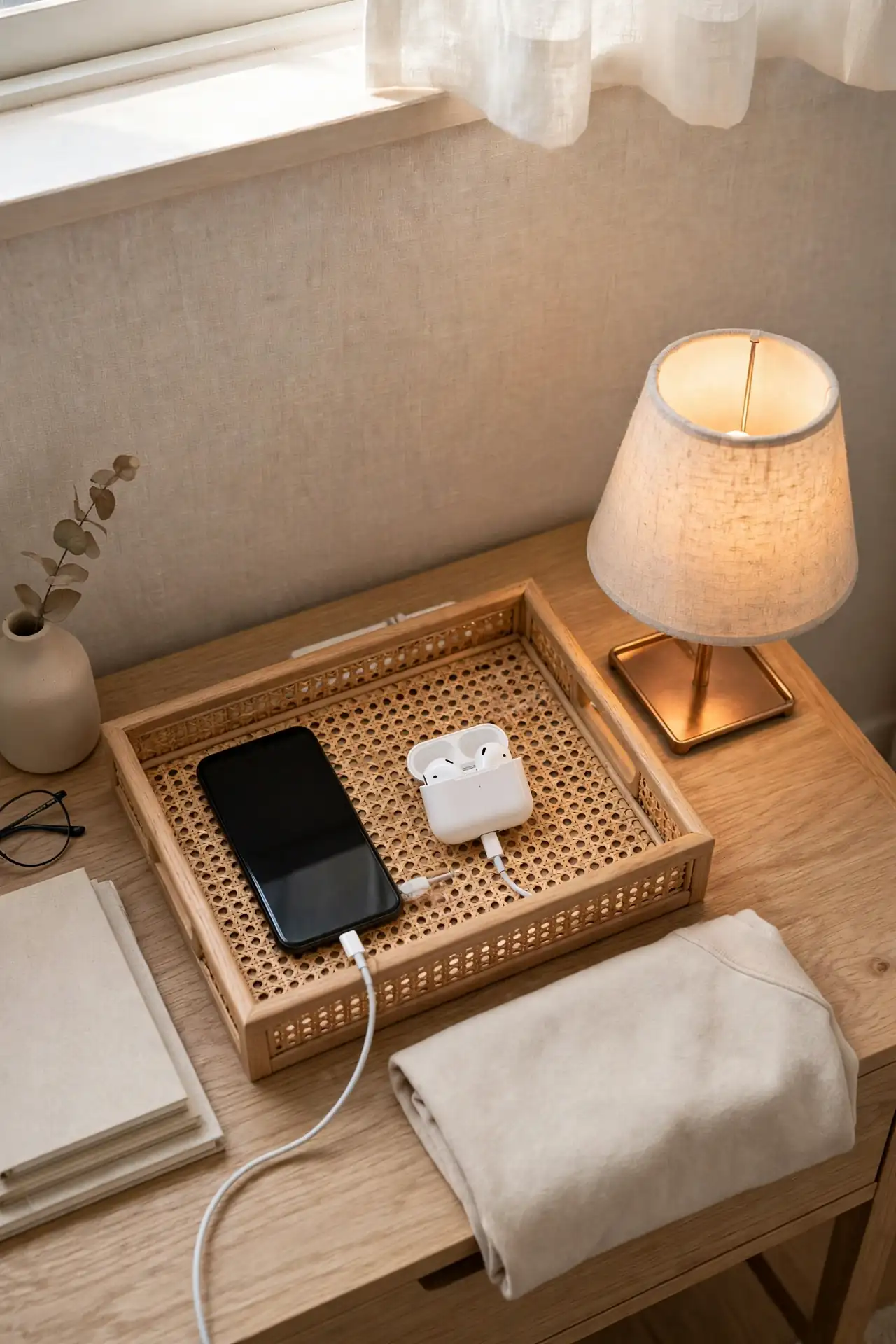
Cost: Under $30 for a power strip and cable organizer. Time: About 20 minutes to set up. Skill Level: Beginner, no tools needed. Best For: Teens who charge phones, earbuds, and controllers nightly. Difficulty: Easy enough for a teen to build solo. Result: Every device charged and the nightstand stays tidy.
Phones die at the worst moments, usually during morning alarms. A small power strip behind the nightstand plus short cables keeps everything charged in one spot. Add a tray or box so cords never spill onto the floor. He will stop hunting for chargers and the room instantly looks calmer.
Daybed Chill Spot
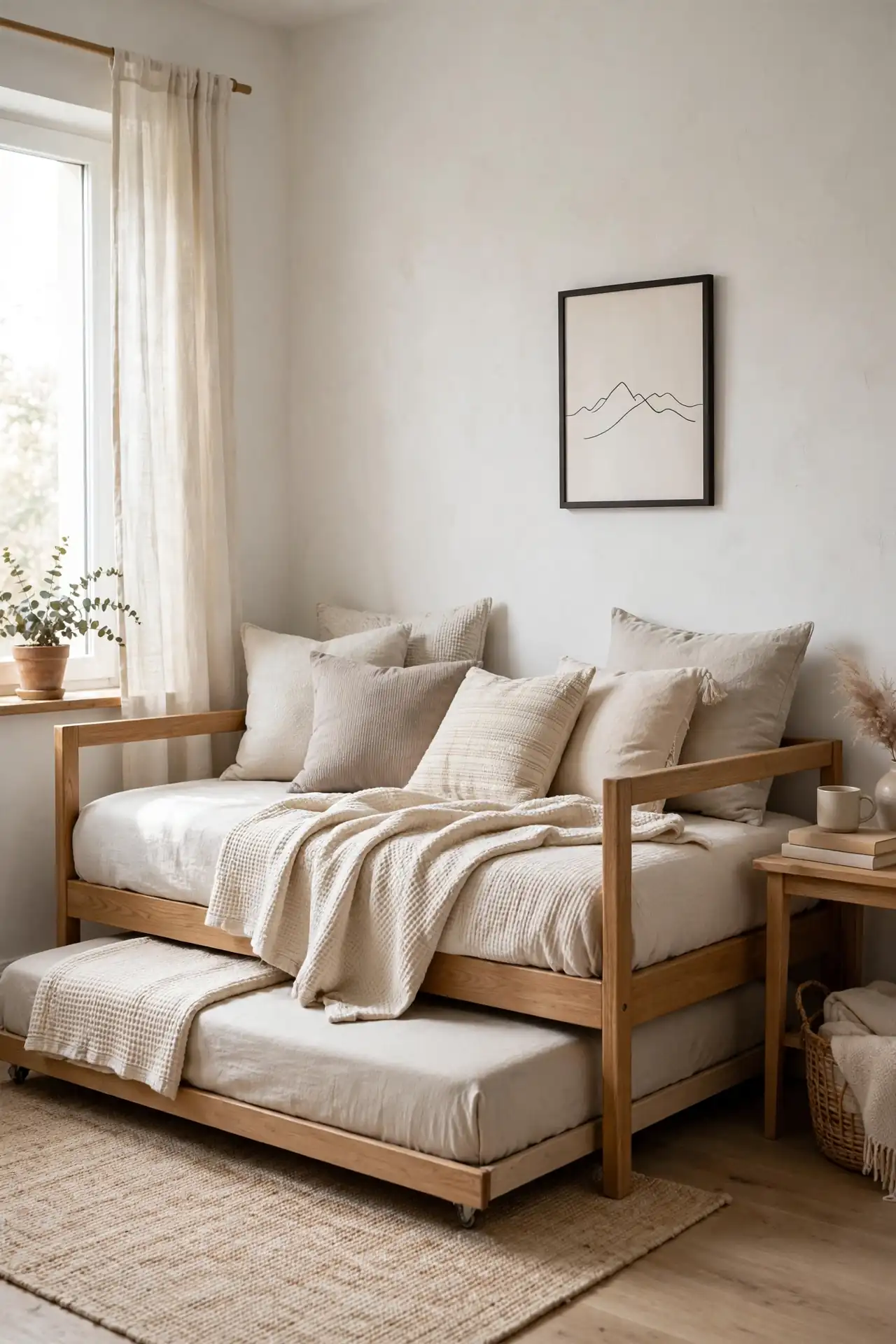
A daybed works as a sofa by day and a bed by night, which suits teen life perfectly. Line the back with throw pillows and it becomes the hangout spot for friends. Choose a twin size with a trundle for sleepovers. The room gains seating without losing a single inch of floor.
Daybeds also simplify the layout because one piece handles two jobs. Place it against the longest wall to open the center for a desk or gaming chair. I’ve noticed teens keep daybeds tidier since making them takes thirty seconds. Add a textured throw to keep it looking styled, not slept-in.
Closet Door Mirrors
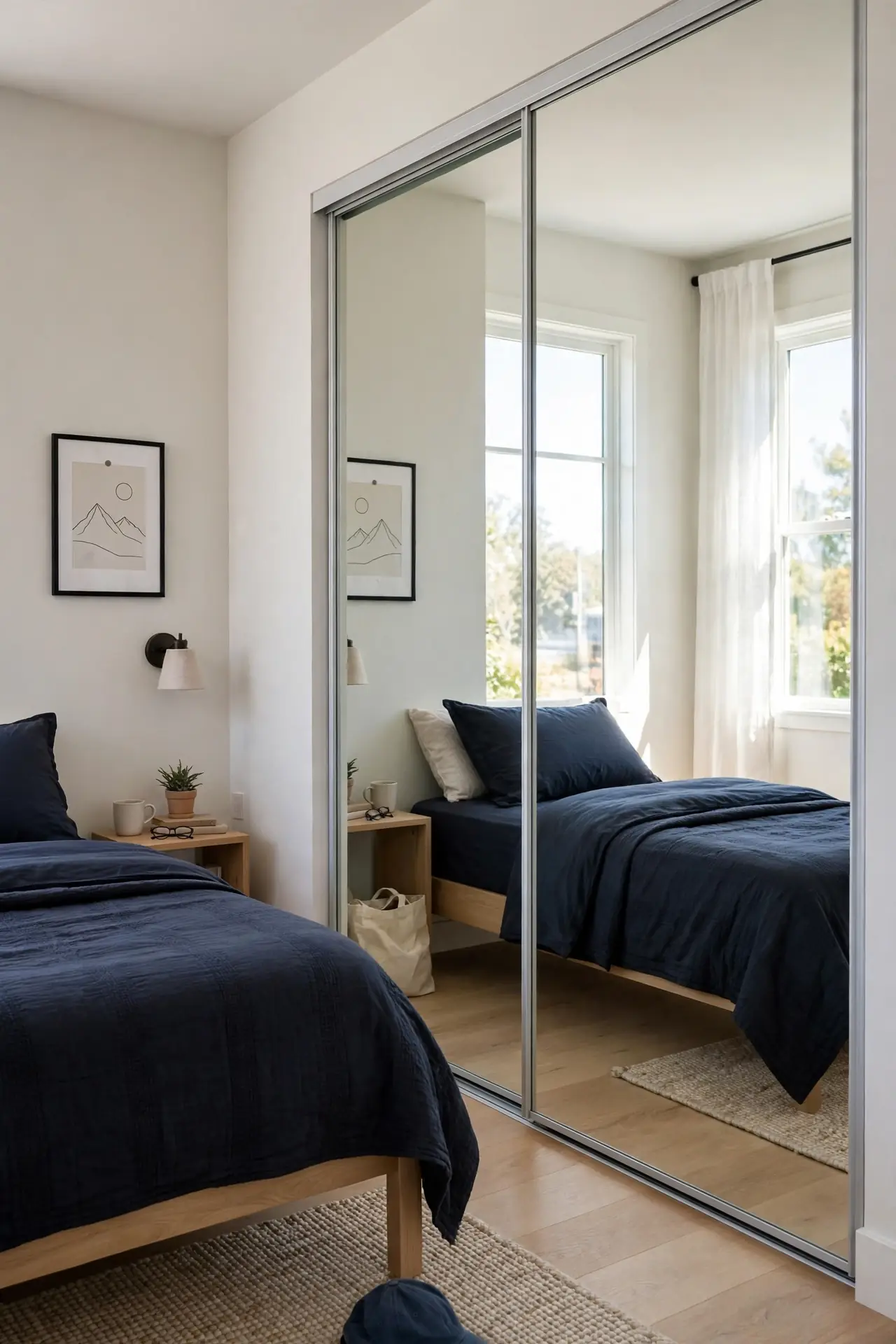
- Mirror panels on closet doors bounce daylight around and make small bedrooms feel twice as wide.
- Sliding mirrored doors eliminate swing clearance, freeing up to three feet of floor space.
- Full-length mirrors give quick outfit checks before school without a separate standing mirror.
- Pick shatter-resistant acrylic mirrors for safety in rooms where balls and roughhousing happen.
- Wipe mirrors weekly with glass cleaner so streaks never dull the brightening effect.
Mirrors are the cheapest square-footage trick in design. They work hardest opposite or beside a window where they catch the most light. Avoid placing them where they reflect clutter, since that doubles the mess visually. One mirrored closet front can transform a dark teen room. He gets function and the room gets light.
Under Bed Drawers
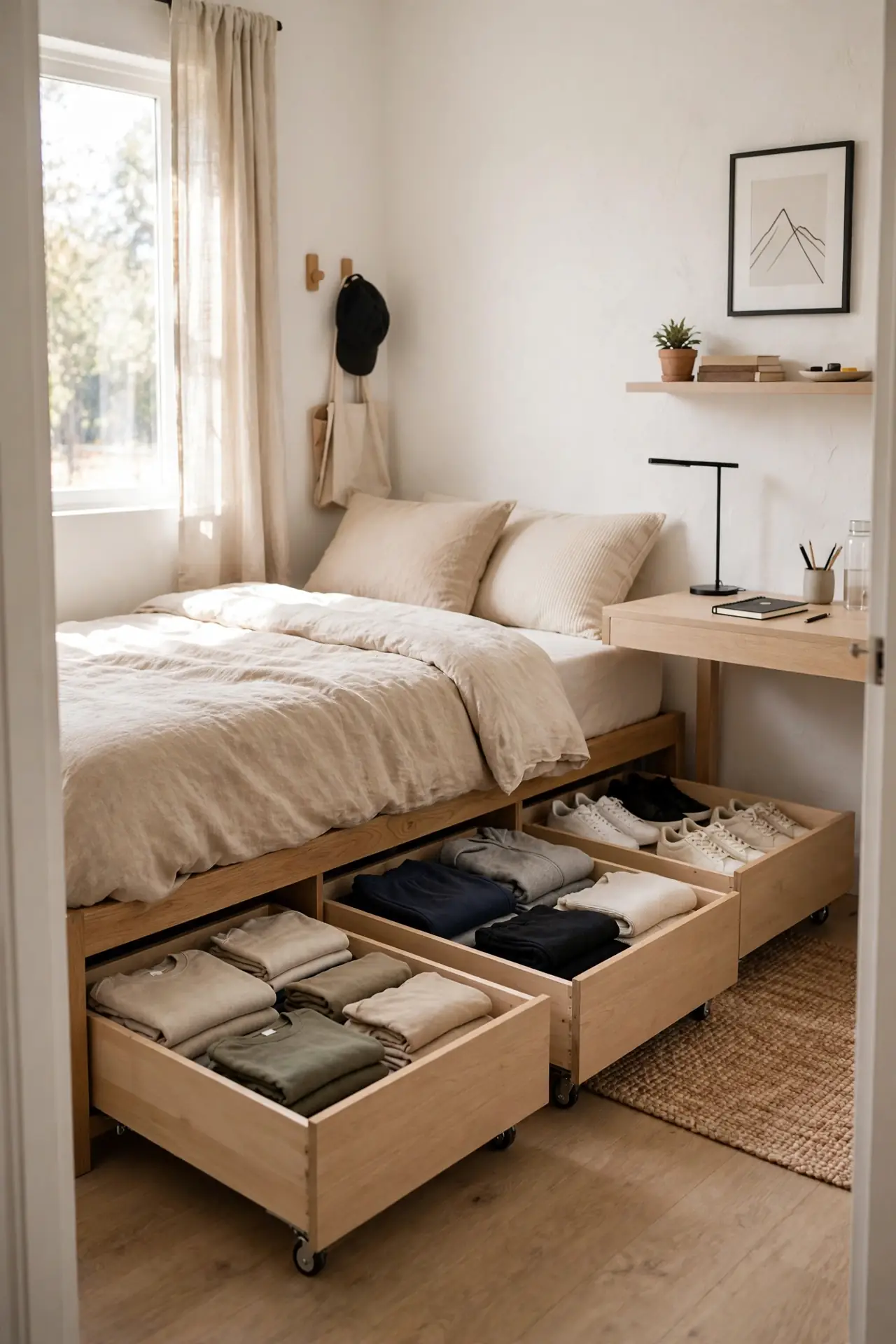
Quick Tip: Swap the dust zone under the bed for rolling drawers that hold clothes, shoes, or sports gear. Measure the clearance first so drawers glide without catching. Label each drawer so he can find things fast on busy mornings. Choose drawers with lids to keep dust out.
Under-bed storage rescues rooms where the closet is already full. Rolling drawers beat bins because they pull out like real drawers instead of requiring a full unload. Keep seasonal clothes here and daily items in the closet. The floor stays clear and the room feels twice as big. It’s the easiest win in any teen layout.
Study Lamp Focus
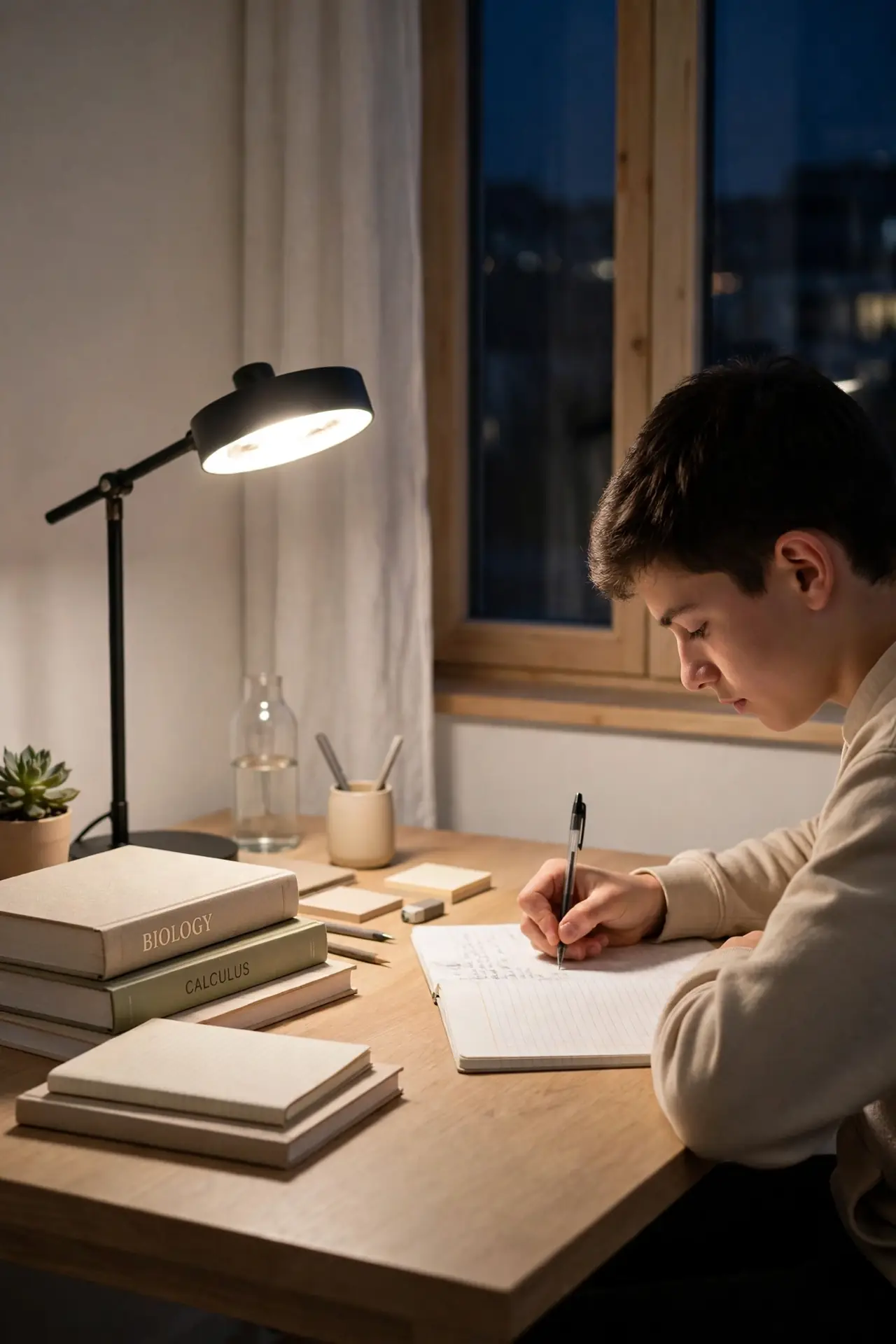
BEFORE: Homework happens under a dim ceiling light with shadows across the page. Eyes strain, focus fades, and evening study sessions end early. The desk area feels gloomy no matter the time of day.
AFTER: A focused desk lamp washes the work surface in bright, even light. Text looks crisp, eyes stay comfortable, and study sessions stretch longer. The corner glows with purpose after dark.
Good lighting is a layout decision, not just a purchase. Place the lamp on the opposite side of the writing hand to kill shadows. A clip-on lamp saves desk space in tight setups. Warm light works for reading while cool light suits detailed homework. The right glow makes the desk a place he wants to sit.
Sneaker Display Shelf
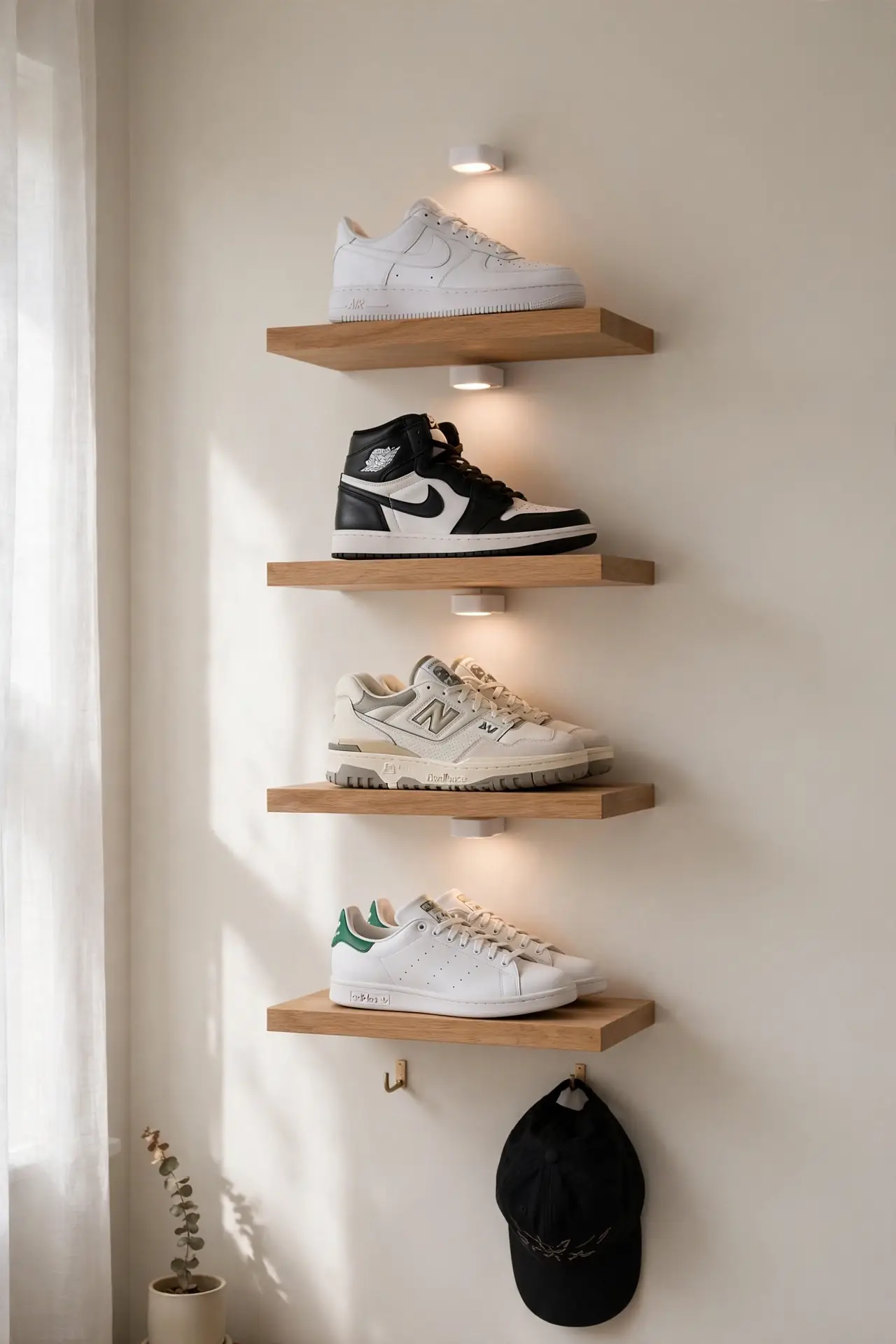
- Mount two or three floating shelves on one wall at eye level.
- Line up sneakers with space between pairs so each one shows.
- Add small LED pucks above the shelves for a display glow.
- Rotate the lineup monthly to keep the wall feeling fresh.
- Dust the shelves weekly so the collection always looks sharp.
Displaying sneakers turns storage into decor that reflects his interests. Wall shelves keep prized pairs off the floor and away from damage. That’s why many experts recommend vertical display for collections in small rooms. He gets a feature wall and the closet gets breathing room. Start with his top six pairs.
Bedside Rug Anchor
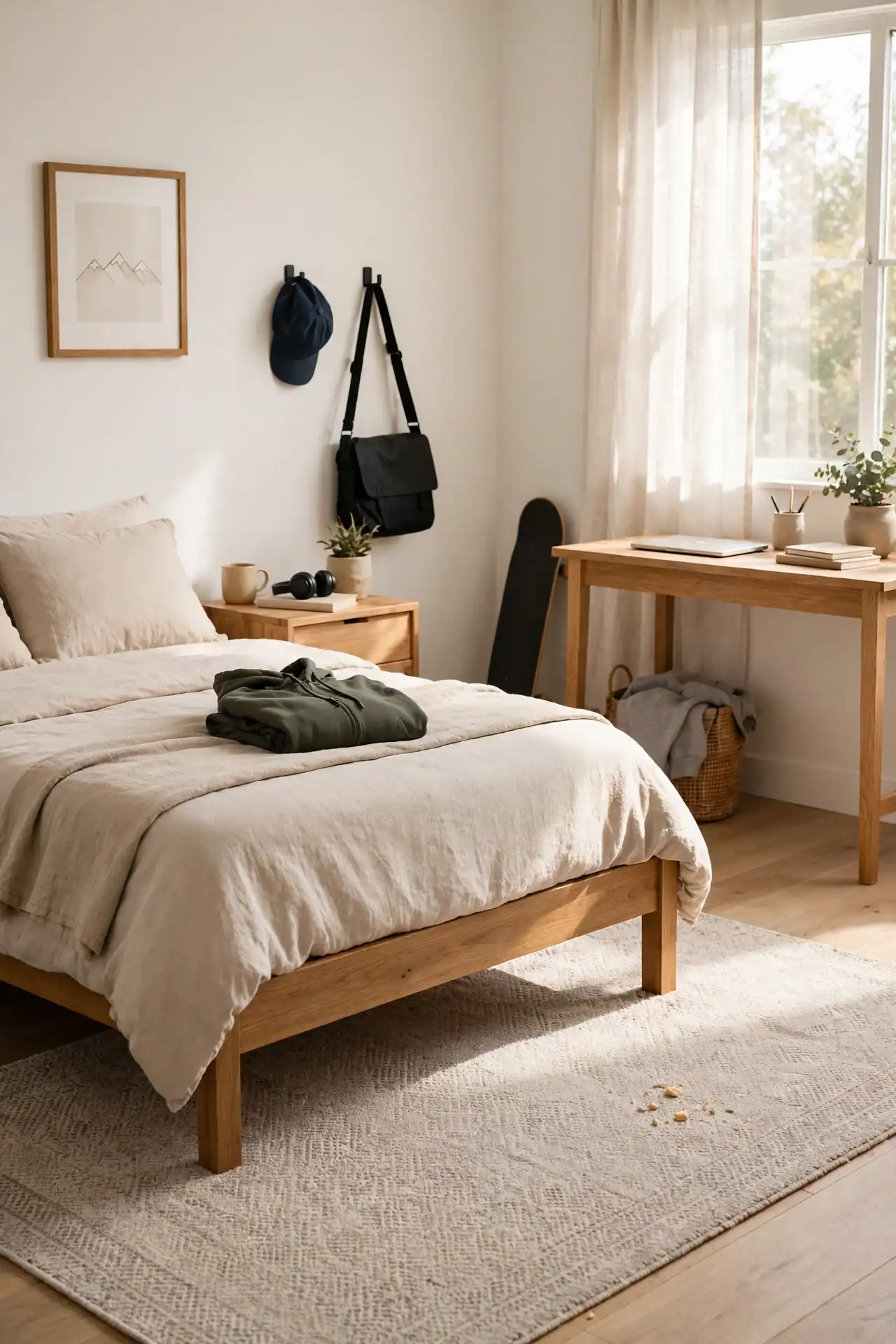
A rug beside the bed anchors the whole layout and adds warmth underfoot on cold mornings. It visually connects the bed to the rest of the room instead of letting furniture float. Choose one that fits the walking path.
| Rug Size | Room Fit | Feel |
| 3×5 runner | Tight teen rooms | Cozy path |
| 5×7 area rug | Medium rooms | Soft landing |
| 8×10 large rug | Big teen rooms | Full comfort |
Rugs define zones in teen rooms the way walls do in houses. Place it so the bed’s front legs sit on the rug and it extends two feet beyond. Low-pile rugs survive gaming chairs and are easy to vacuum. Pick a pattern that hides crumbs and stands up to daily life.
Bulletin Board Command
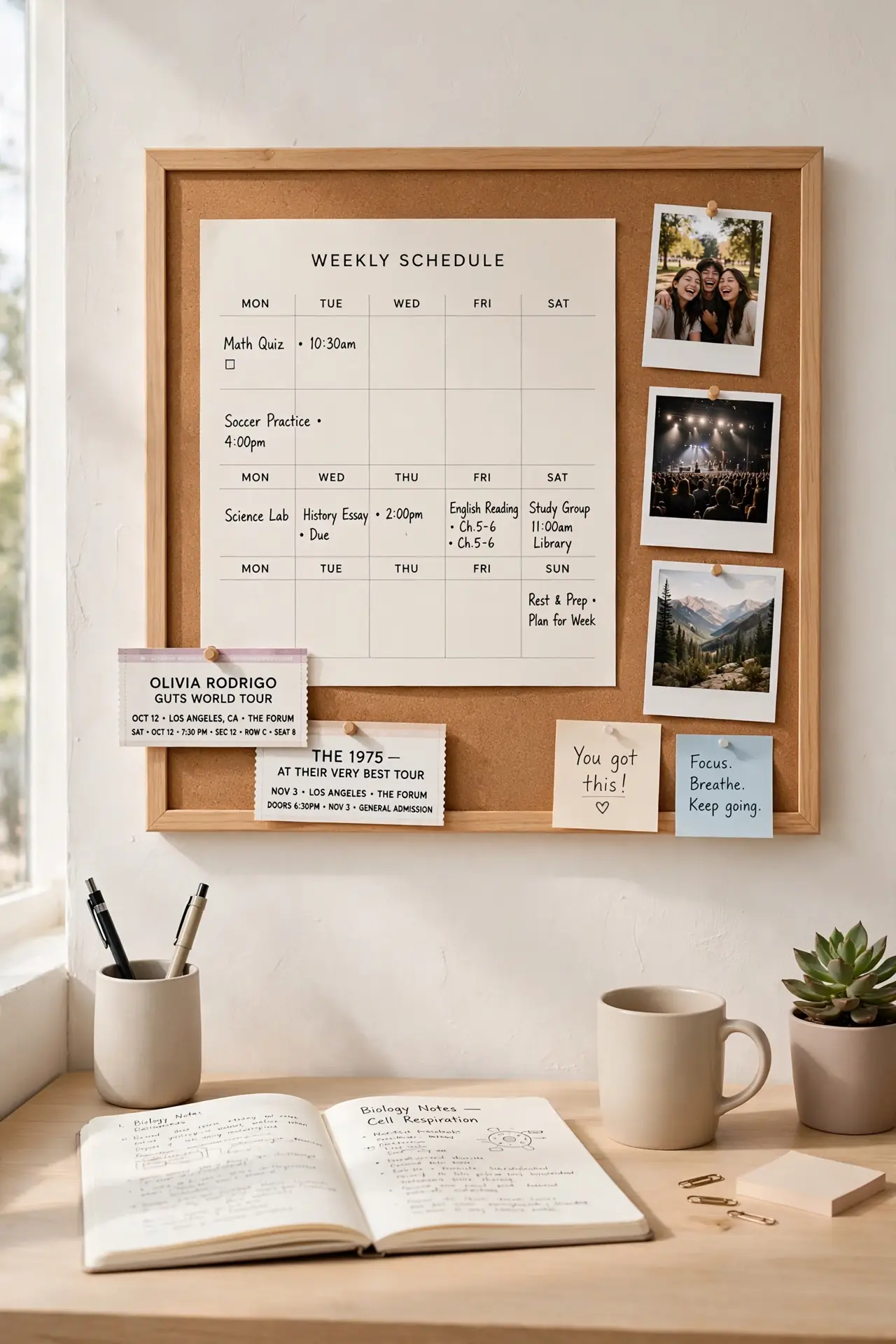
DO: Pin the weekly schedule where he sees it each morning.
DO: Use one board for school and one for fun.
DO: Add tickets, photos, and goals for motivation.
DO: Clear old papers every Sunday night.
DON’T: Let the board become a paper avalanche.
DON’T: Pin anything private facing the door.
DON’T: Cover it so fully nothing stands out.
DON’T: Nail boards into fresh drywall.
A command board keeps school life visible without phone reminders. Mount it near the desk at eye level where it catches morning light. I’ve seen how small bedroom ideas use the same trick to keep tiny rooms organized. When the week is visible, nothing slips through the cracks. He runs the week instead of chasing it.
Reading Corner Beanbag
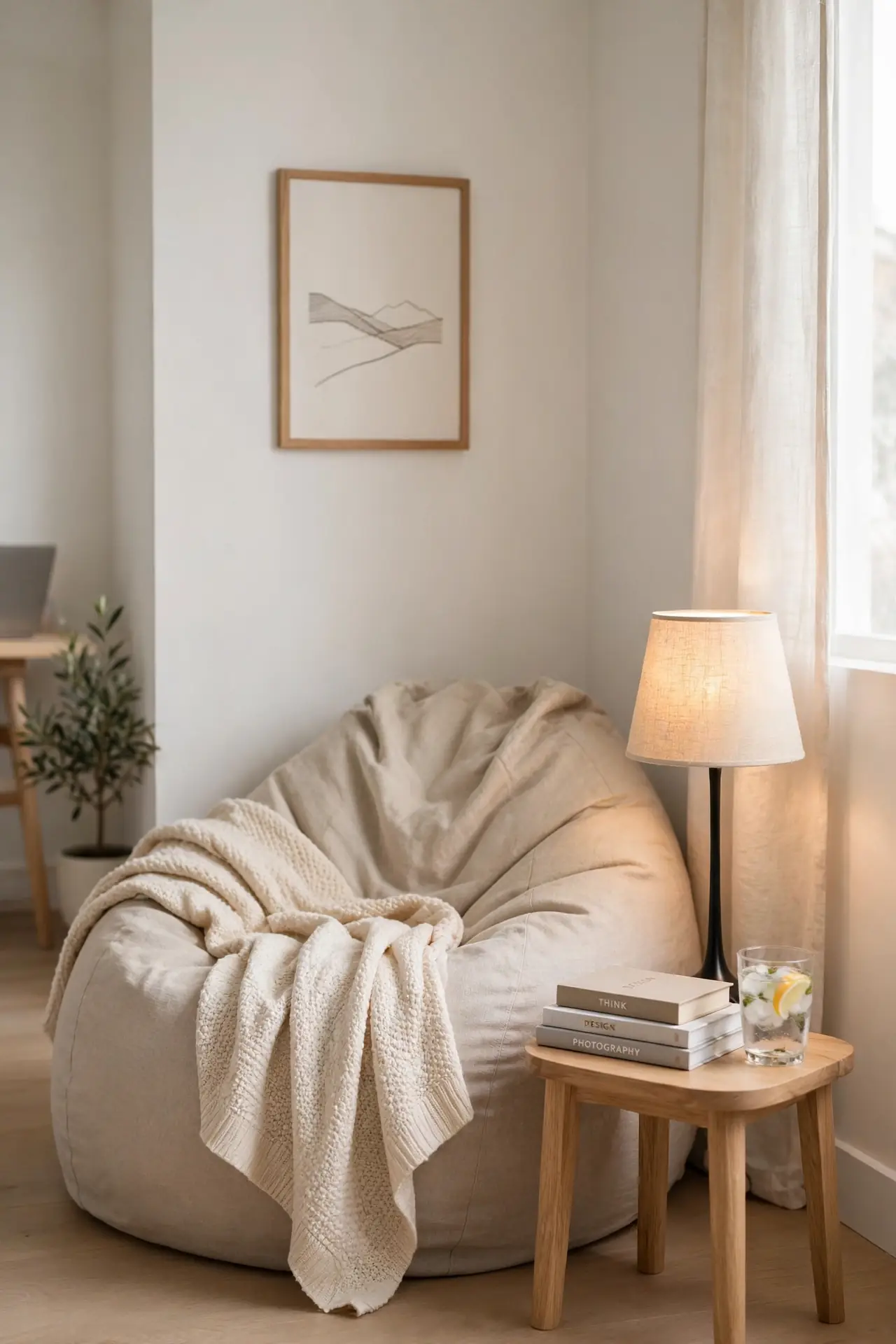
Cost: $40 to $80 for a quality beanbag. Time: 15 minutes to arrange. Skill Level: Beginner. Best For: Teens who read, sketch, or scroll. Works In: Any unused corner. Difficulty: Effortless once the habit sticks. Result: A cozy retreat separate from the bed.
Every teen room needs a spot that is not the bed and not the desk. A beanbag in a corner with a small floor lamp creates a reading nook in minutes. Add a tiny side table for books and drinks. The corner becomes his favorite thinking spot, and the bed stays reserved for sleep. Toss a throw blanket over it for extra comfort. He might even start doing his own laundry.
Floating Shelves Line

Floating shelves turn empty wall space into storage without touching the floor. Run a straight line of two or three above the desk for books and supplies. Keep heavy items low and light decor up high. The clean look suits teen rooms that need order fast. Style them simply to avoid visual noise.
Spacing matters more than the shelves themselves. Leave twelve inches between rows so books stand tall and trophies fit. Use a level during install because crooked shelves ruin the effect. I’ve noticed that one strong shelf line beats a cluttered bookcase in small teen bedrooms. Anchor every bracket into a stud for safety.
Dark Accent Wall
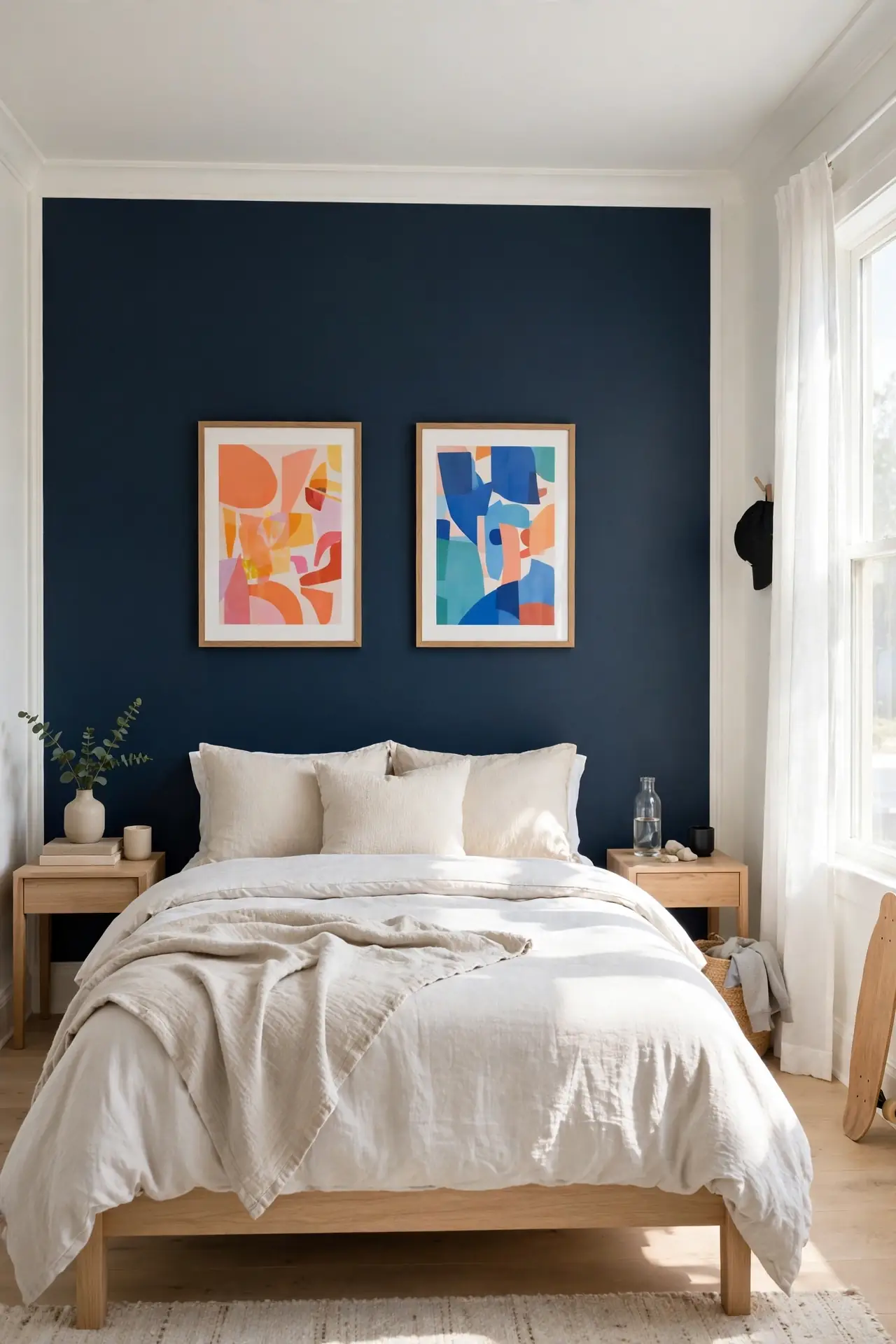
- One dark accent wall adds depth and tricks the eye into seeing more space.
- Navy, charcoal, or deep forest green feel grown-up without losing teen energy.
- Paint the wall behind the bed so it frames the headboard like art.
- Balance the darkness with light bedding, bright art, and a pale rug.
- Choose washable matte paint because teen walls take daily abuse.
Dark walls get a bad rap in small rooms, but one accent wall works differently. It recedes visually while light walls advance, creating dimension. Keep the ceiling white and trim bright for contrast. The room gains drama without losing its airy feel. Test the color on a poster board first.
Window Seat Study
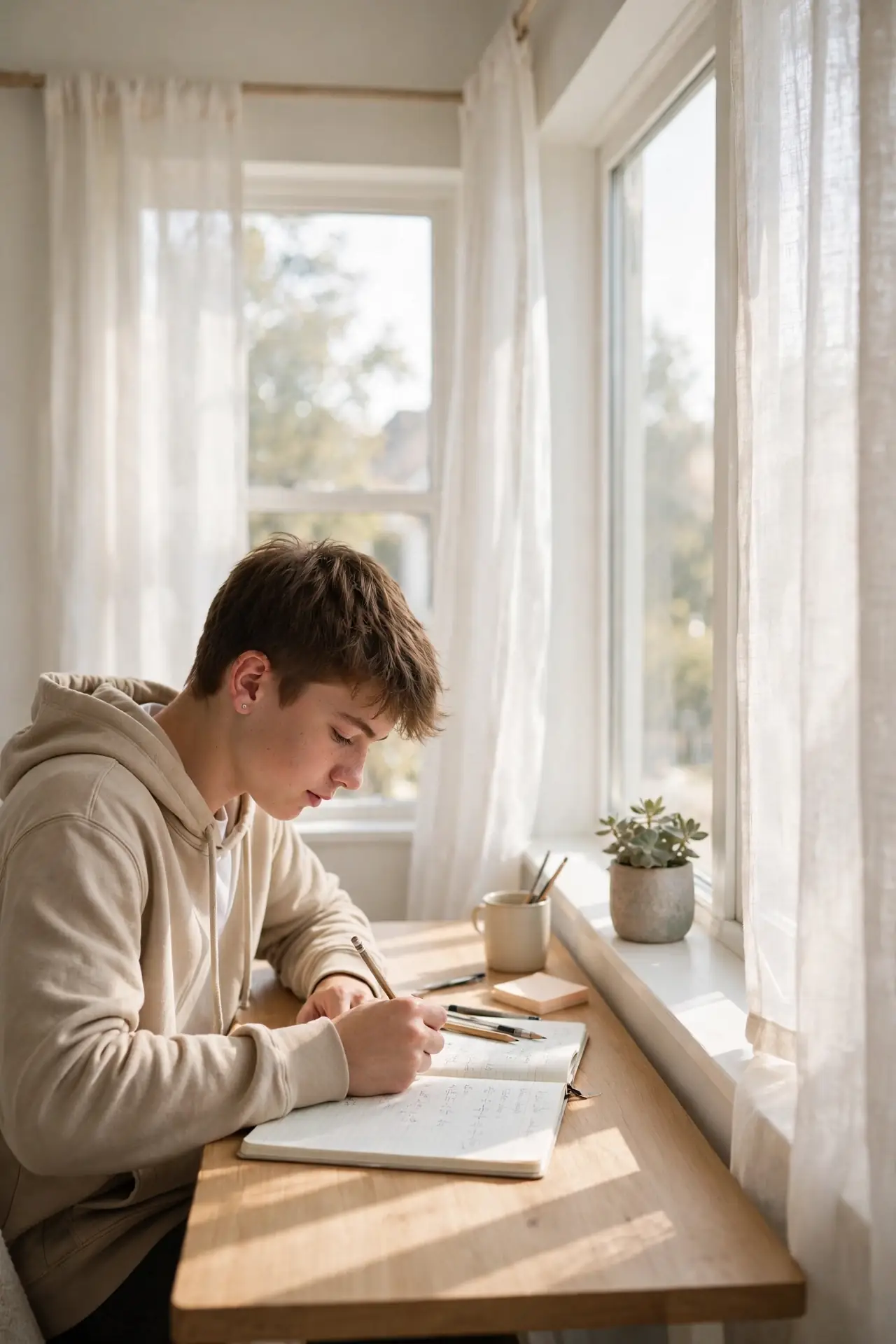
Quick Tip: Turn the window area into a study spot with a narrow desk or a cushion-topped bench. Daylight boosts focus better than any lamp, and the view gives eyes a rest. Keep the setup slim so the window stays the star. A sheer curtain softens glare without blocking light.
Window desks work because natural light keeps energy up through long homework sessions. Face the desk toward the glass for the view or sideways to cut glare. Add a small plant on the sill for life. He will choose this seat over the bed every time. It’s the brightest square foot in the room.
Bedside Table Swap
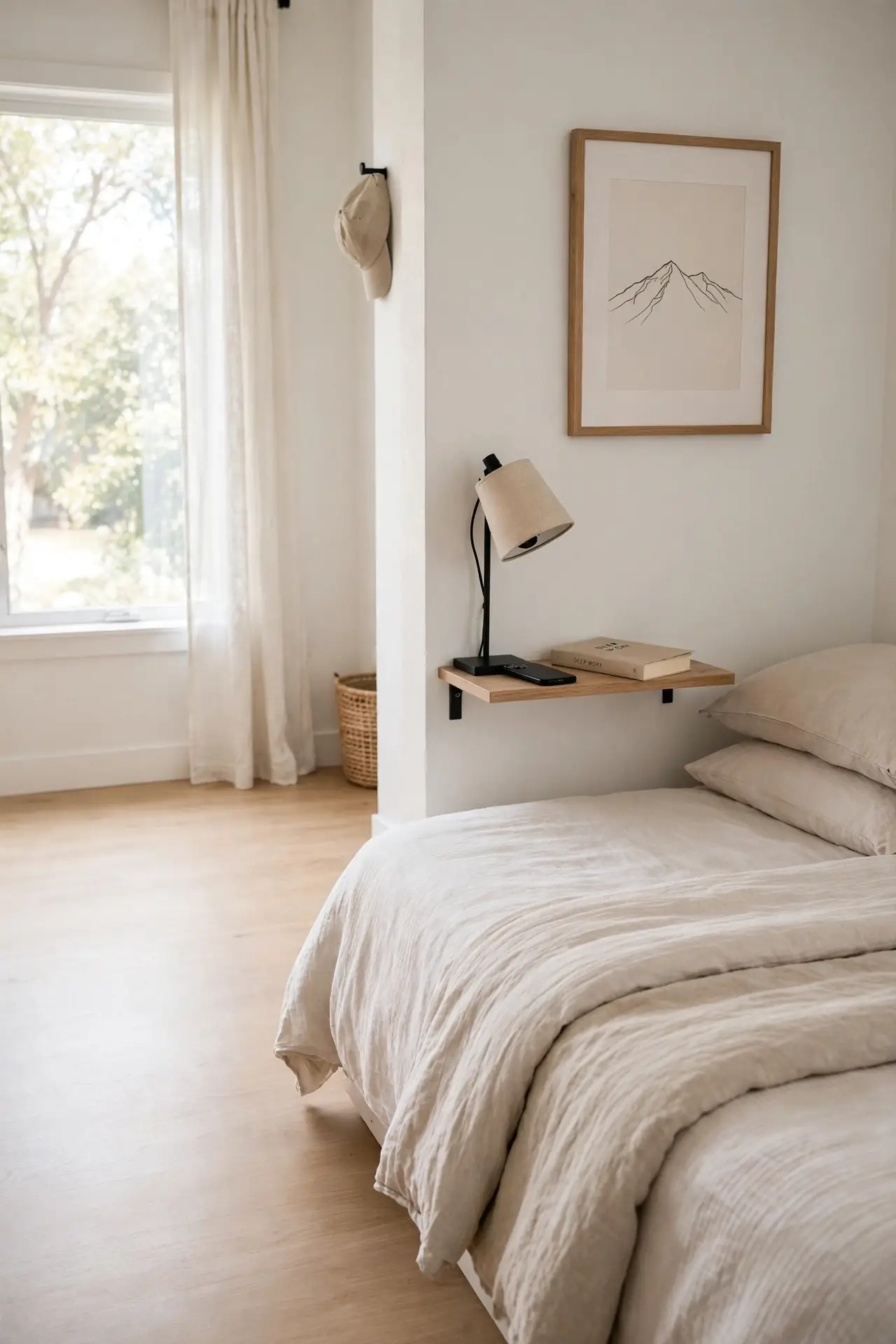
BEFORE: A bulky nightstand eats precious inches beside the bed. Its drawers hold junk, the surface collects clutter, and the room feels pinched. Walking past it means turning sideways.
AFTER: A slim wall shelf or rolling cart replaces the chunky table. The floor opens up, essentials stay within reach, and the walkway feels generous. The whole side of the room breathes again.
Nightstands are often oversized for what they actually hold. A floating shelf needs only enough room for a lamp, phone, and book. Rolling carts add storage that tucks away by day. Measure the gap first and pick the slimmest option that still works. Small swaps like this free surprising space.
Backpack Hook Station
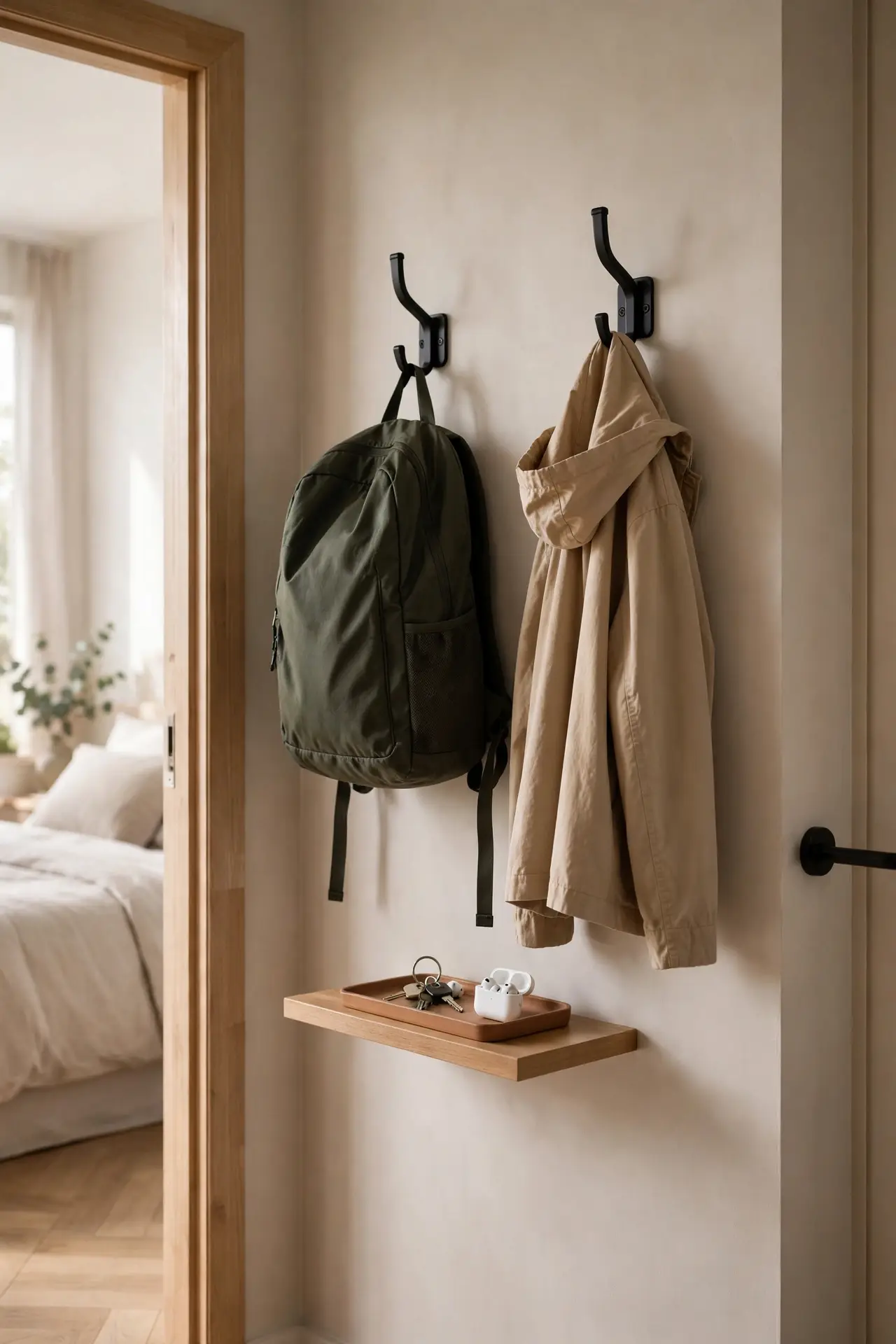
- Screw two heavy-duty hooks into a wall stud near the door.
- Hang the backpack on one hook and tomorrow’s jacket on the other.
- Place a small tray below for keys, wallet, and earbuds.
- Make it a habit: bag lands on the hook the second he walks in.
- Empty the bag every Friday so old papers never pile up.
Backpacks on the floor are trip hazards and clutter magnets. A hook station by the door ends the drop-anywhere habit in one move. Everything for the next morning waits in a single spot. School days start smoother when the launch pad is ready. It’s a five-minute install with daily payoff.
Shared Room Divide
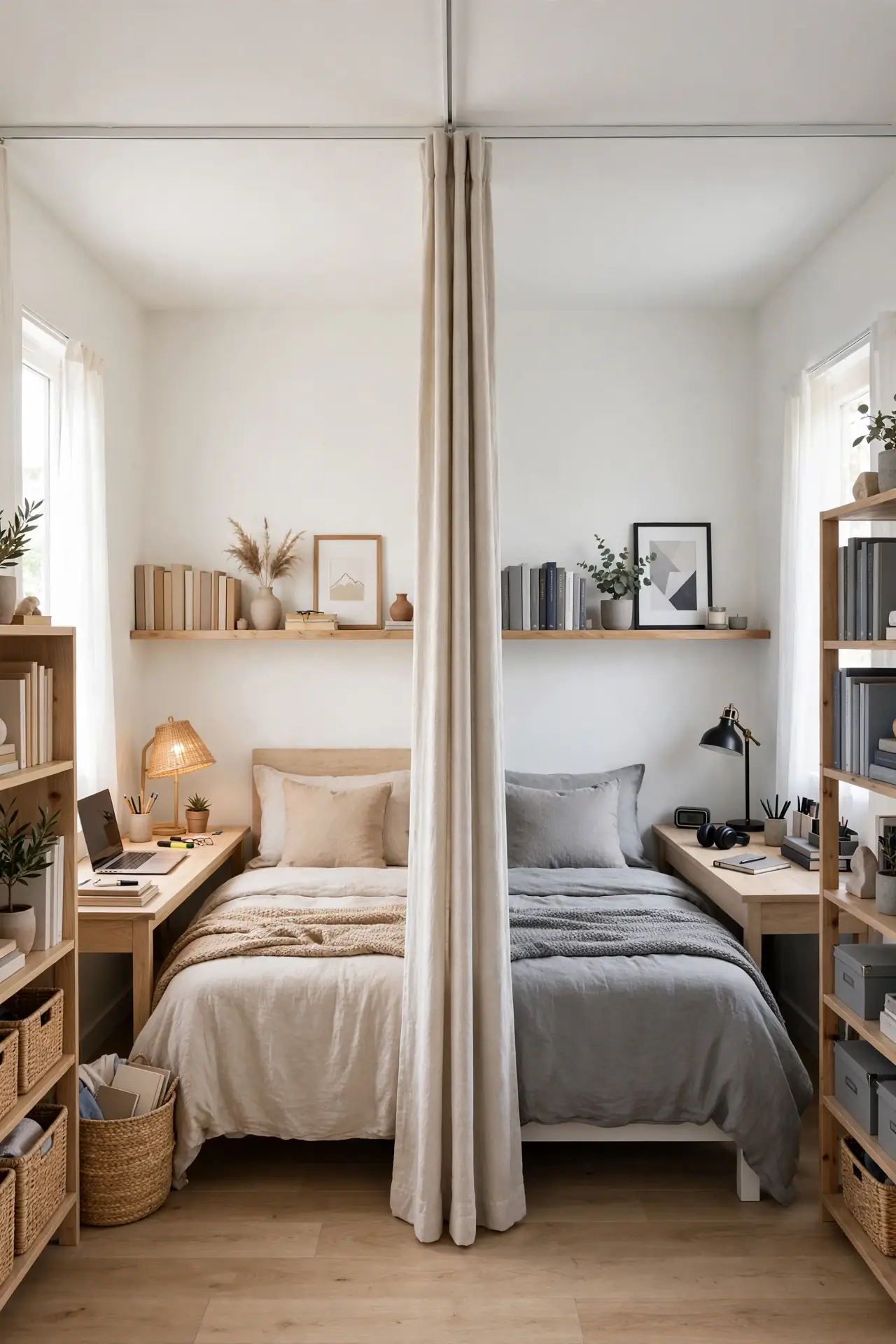
Two teens sharing one room need clear zones so both get privacy and personal space. Without boundaries, arguments over noise and mess never stop. A simple divider restores peace fast.
| Divider | Privacy Level | Cost |
| Curtain on track | Medium | Low |
| Bookshelf wall | High | Medium |
| Folding screen | Low | Low |
| Rug plus layout | Visual only | None |
Dividers work best when each teen helps choose the solution. A ceiling-track curtain gives real separation and pulls back by day. Bookshelves double as storage while marking territory. Agree on quiet hours and shared rules so the divide stays friendly, not hostile. Fair zones end most sibling arguments fast.
LED Strip Glow
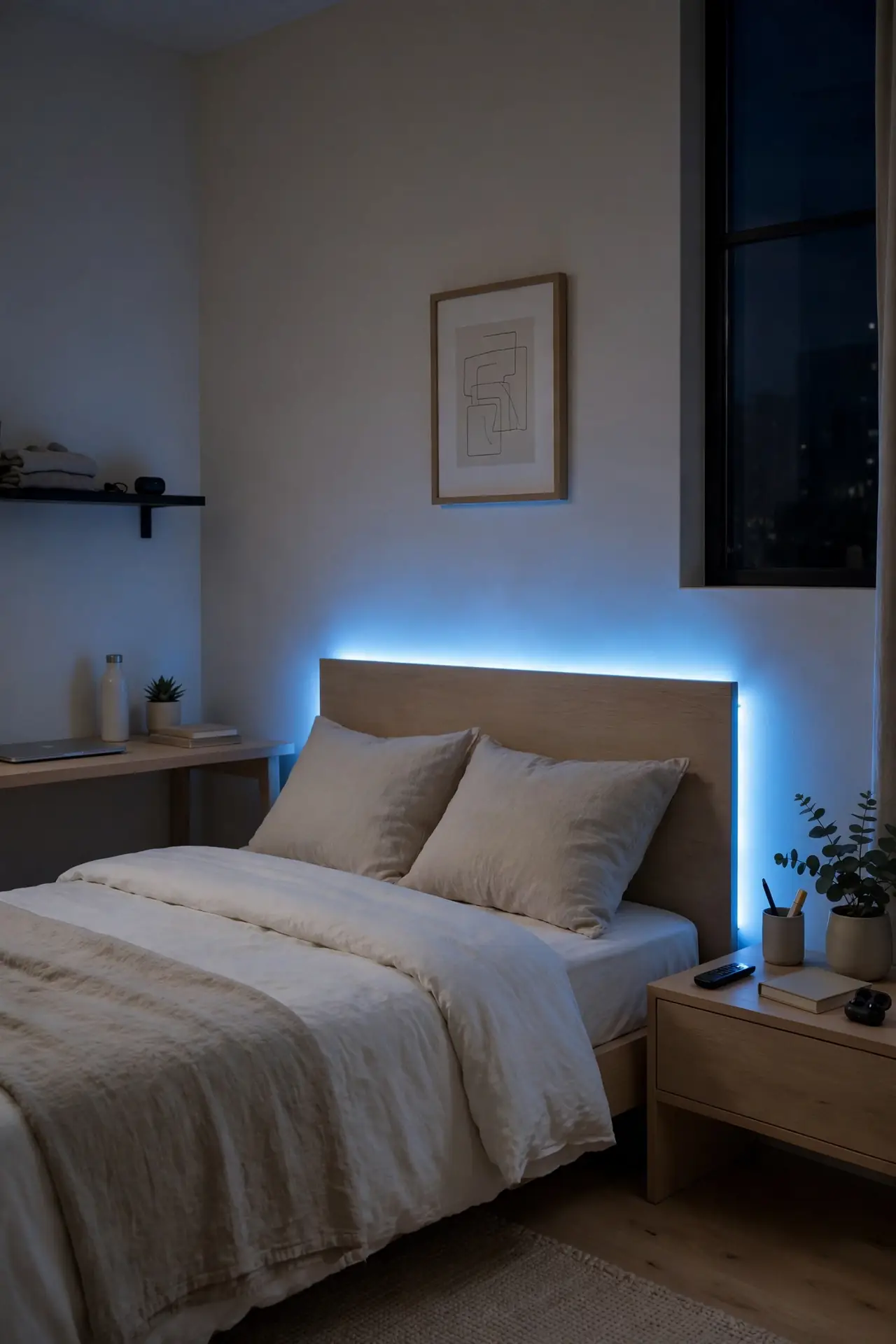
DO: Run strips behind the headboard for a soft halo effect.
DO: Use remote-controlled lights to change colors easily.
DO: Stick strips to clean, dry surfaces for best hold.
DO: Choose warm white for sleep-friendly evenings.
DON’T: Point bright strips directly at the bed.
DON’T: Leave visible wires dangling down the wall.
DON’T: Use harsh blue light right before sleep.
DON’T: Overload one outlet with too many strips.
LED strips give teen rooms that cool glow without expensive fixtures. They tuck behind furniture where the light washes the wall softly. Set a timer so they switch off at bedtime automatically. The vibe upgrades instantly for the cost of a pizza. He controls the mood with one remote.
Laundry Hamper Hideout
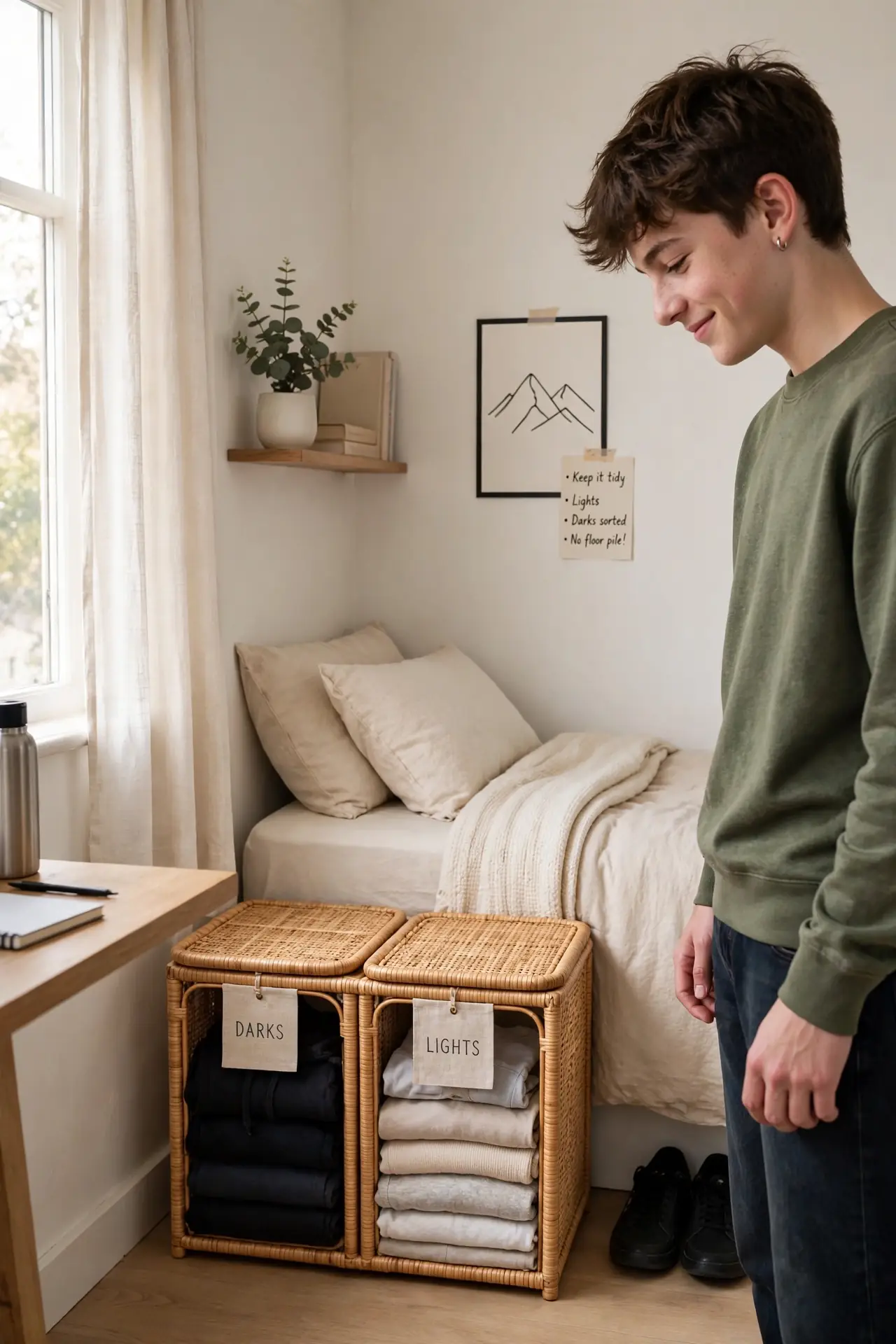
Cost: $15 to $35 for a lidded hamper. Time: 10 minutes to place. Skill Level: Beginner. Best For: Teens with floor-drobe habits. Works In: Closets, corners, or bathrooms. Difficulty: Effortless once the habit sticks. Result: Clothes off the floor for good.
The floor-drobe ends when the hamper is easier to reach than the floor. Put a lidded hamper where clothes usually land, often beside the bed or in the closet. A divided hamper sorts lights and darks automatically. Laundry day gets simpler and the room stays presentable between washes. No more sniff tests on mystery piles. He might even start doing his own laundry.
Conclusion
In the end, the best teen boy bedroom layouts are the ones he helps create and actually maintains. Start with the bed and desk placement, then layer in storage that matches his habits. Small changes like hooks, shelves, and better lighting add up fast. Save this guide on Pinterest for your next room refresh weekend. Try one idea at a time and let him own the process. Share your before and after photos to inspire other parents. A room that works this well makes the teen years at home so much smoother. You’ve got this. The payoff is a calmer household.


2 Comments