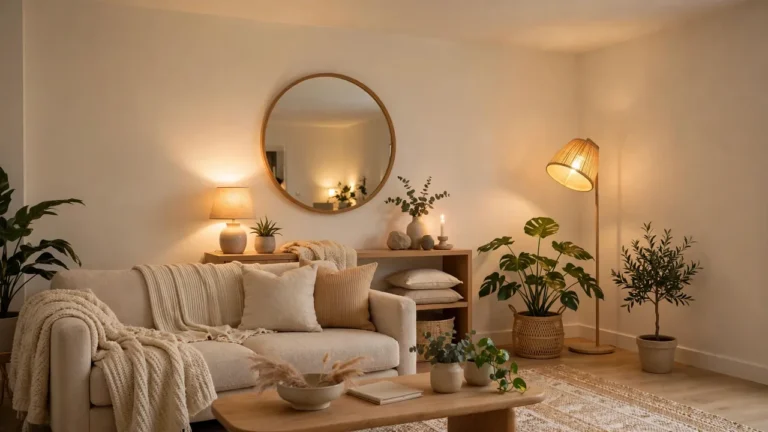
21 Vintage Needlepoint Pillow Living Room Ideas for Classic Style
Few thrift store finds change a room like a hand stitched cushion with a faded rose garden worked across its front. The best vintage needlepoint pillow living room ideas treat these small works of art as the pattern and personality of the whole seating area, not as clutter from another era. Roses, cottages, birds, and garden gates arrive already framed in wool, ready to anchor a cream sofa or a worn leather chair.
Start by deciding how much pattern the room can hold, then build around one or two favorite motifs. In my experience, a single detailed pillow reads richer than five busy ones fighting for attention. The twenty-one ideas below pair naturally with woven textures and warm lamplight, much like the glow found in woven pendant lights dining room inspiration, and they suit classic, cottage, and collected rooms of every size.
Floral Motif Sofa Pairing
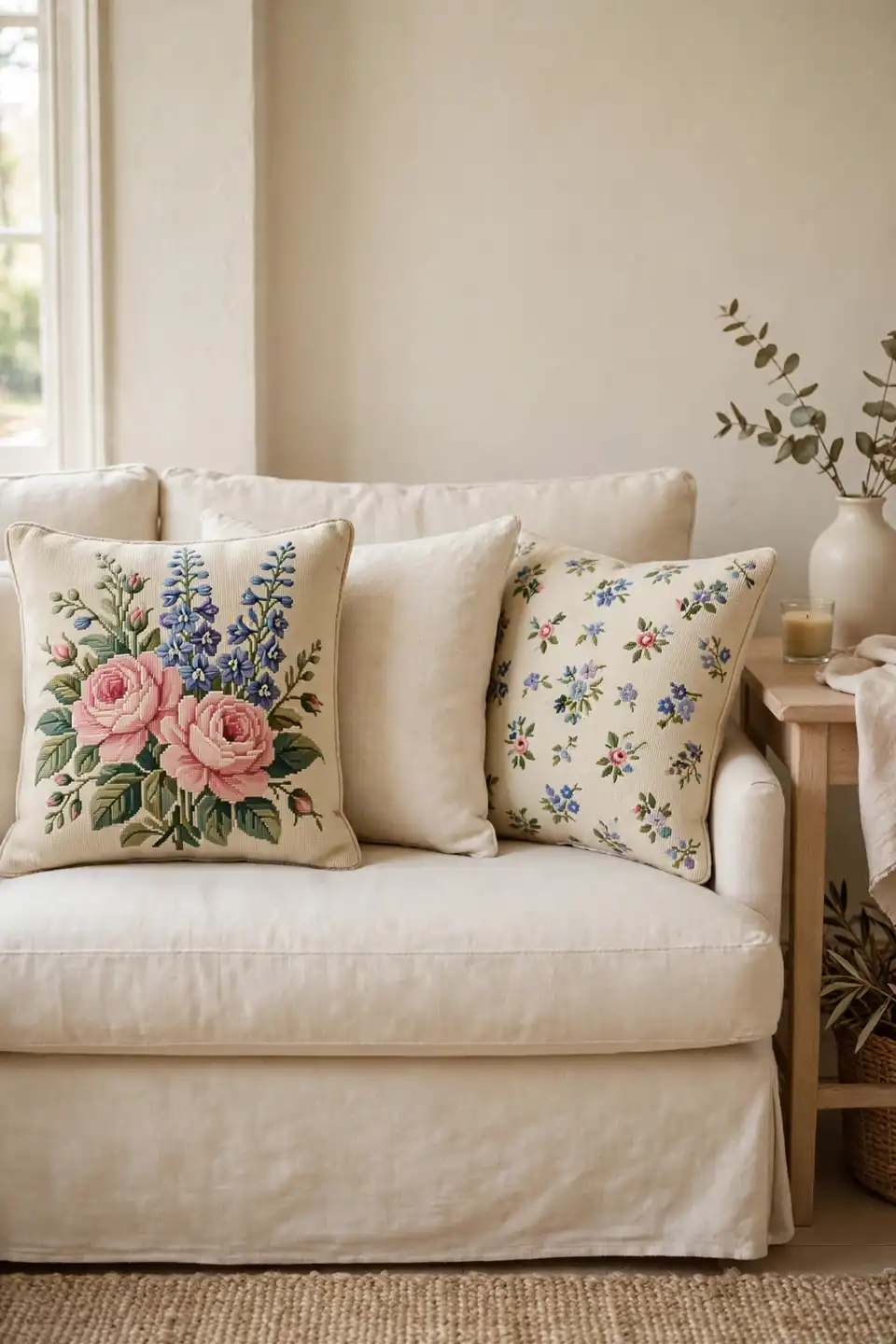
A cream linen sofa turns into a small gallery the moment two floral needlepoint cushions land on it. Pick pillows that share one garden palette, roses, delphiniums, and soft green leaves, but let one bloom large while the other stays small and scattered across its background.
Set the larger motif at the outer corners and the smaller print near the middle, then leave one plain cushion between them as breathing room. Back each needlepoint front with plain linen or velvet so the stitched flowers stay the stars. In my experience, matched palettes with mixed scales look collected rather than decorated, and guests always ask where the pair came from.
Layered Color Story Cushions
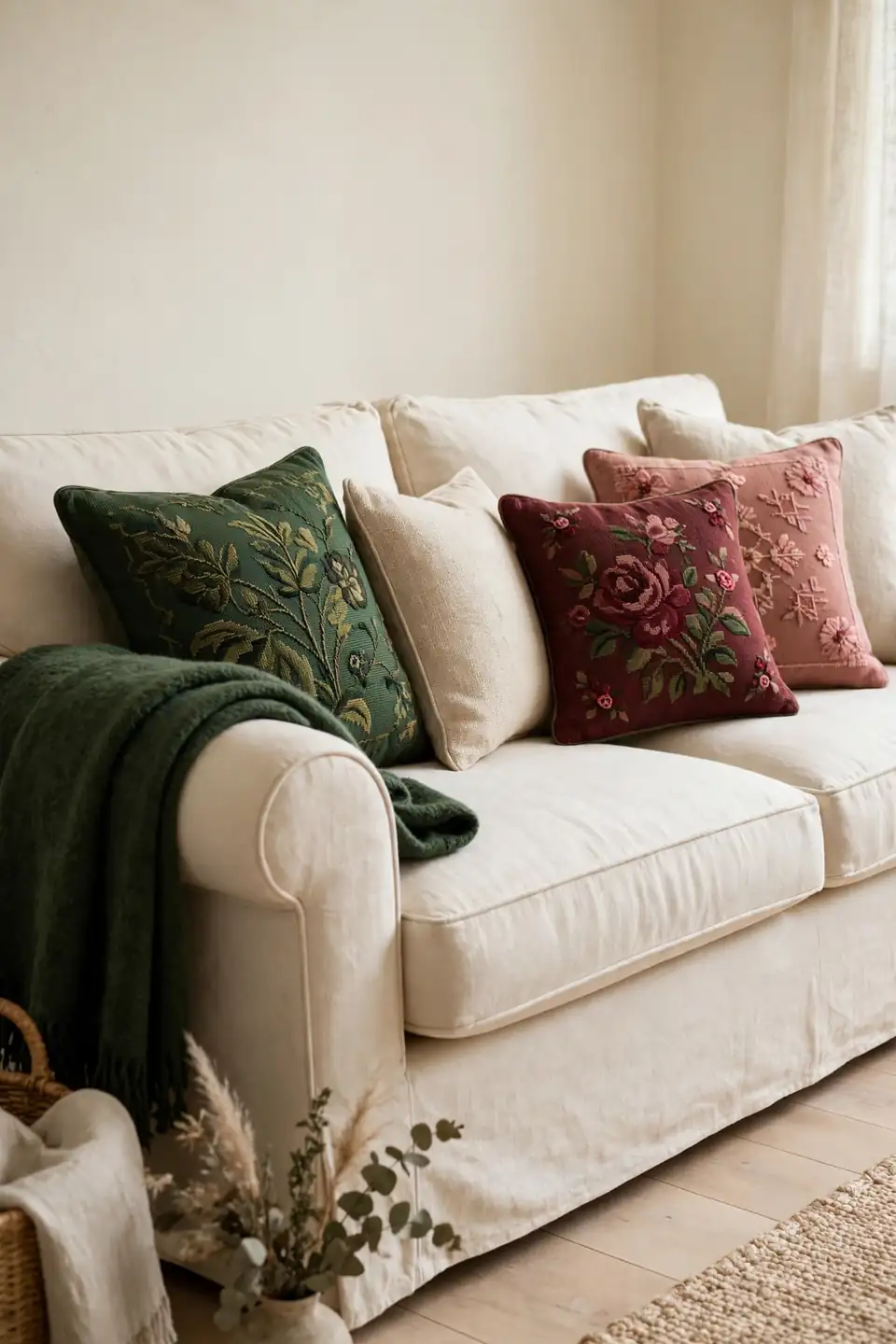
- Start with the darkest tone in the needlepoint, often a deep green or burgundy, and repeat it in a folded throw.
- Add one solid cushion in a mid tone pulled straight from the stitched flowers.
- Finish with a pale neutral linen cushion that matches the sofa fabric.
- Keep textures varied across the row: wool stitches, smooth linen, one nubby weave.
- Stop at three colors so the story stays readable from the doorway.
Layering by color works because the eye travels from deep to pale without snagging on random shades along the way. Pull your three tones directly from the pillow front and ignore everything else in the shop for that trip. The result feels planned and calm, even though every cushion arrived at a different time.
Statement Chair Cushion Solo
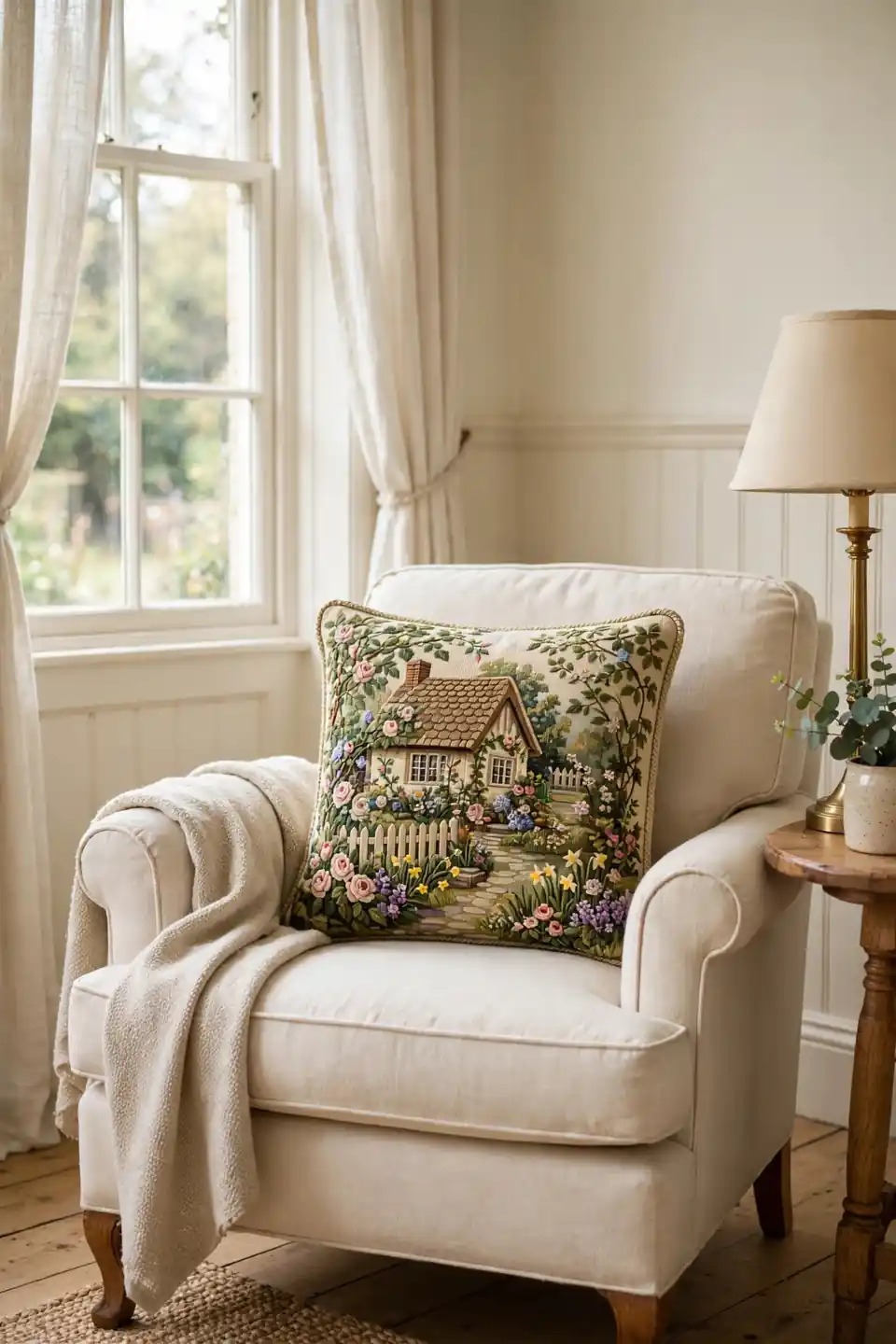
Quick Tip: Let one detailed cushion work alone on a reading chair instead of pairing it with a twin. A lone cottage scene or bird motif gets full attention there, and the chair becomes a small destination rather than background furniture.
Solo styling suits busy motifs that would compete in a pair, like dense gardens or detailed animal scenes. Place the chair near a window or lamp so the stitch detail stays visible into the evening. A plain throw over the chair arm can echo one color in the motif and keep the seat inviting. One strong piece, well lit, always beats a crowded arrangement.
Patterned Pillows, Plain Sofa
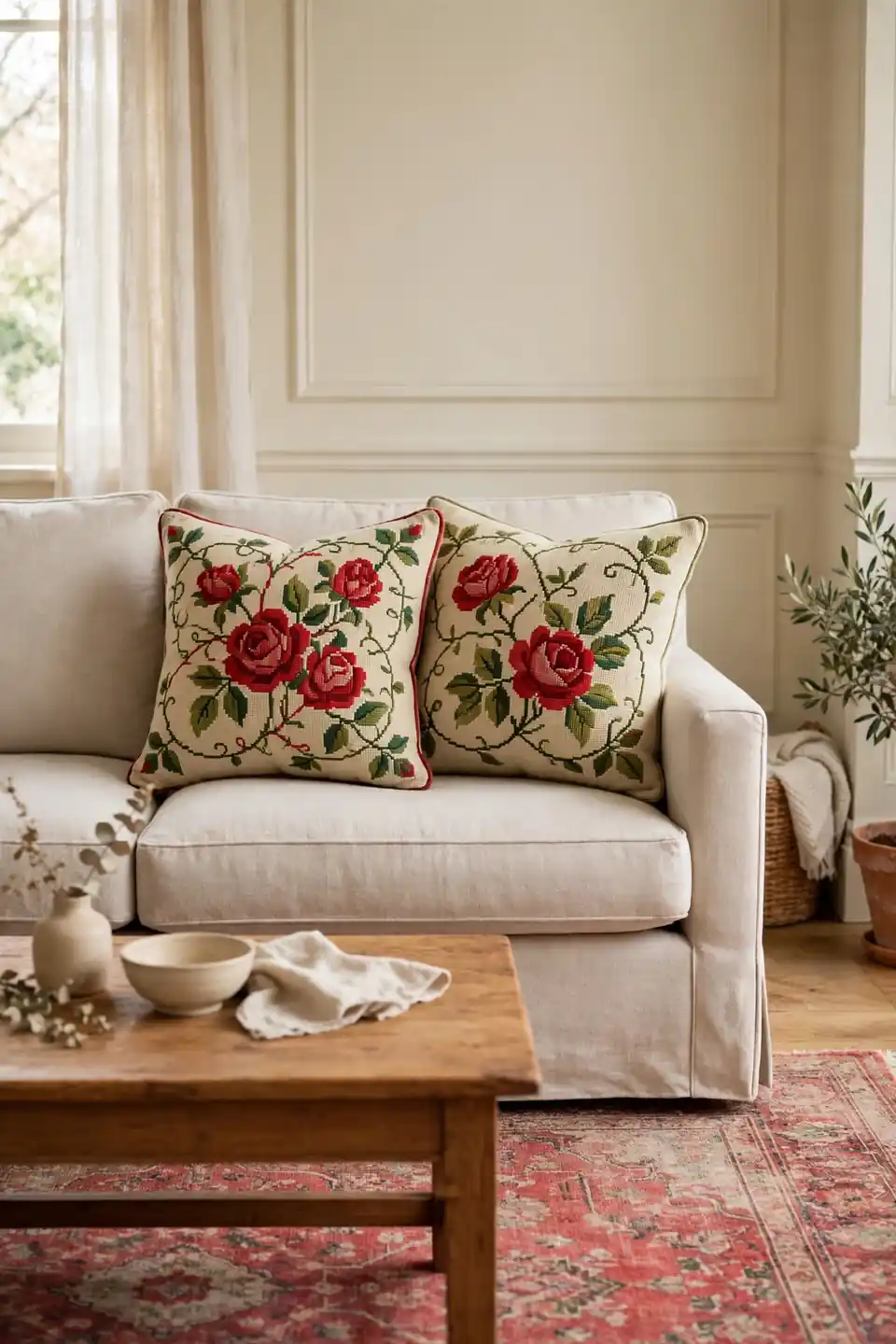
BEFORE: The oatmeal sofa blended into the wall, and the two plain grey cushions added nothing but more beige. Afternoons felt flat in that room, and guests drifted toward the kitchen instead of settling in for a chat.
AFTER: Two needlepoint cushions with red roses and green vines brought a whole palette with them. The sofa suddenly had a focal point, the rug’s faded reds made sense, and that corner became the seat everyone chose first.
Plain upholstery is the easiest backdrop for stitched pattern because nothing competes with the motif. Choose cushions whose background tone differs slightly from the sofa fabric, cream on oatmeal or ivory on white, so the edges stay defined. That small contrast keeps the look tailored instead of sleepy.
Mixing Motifs With Confidence
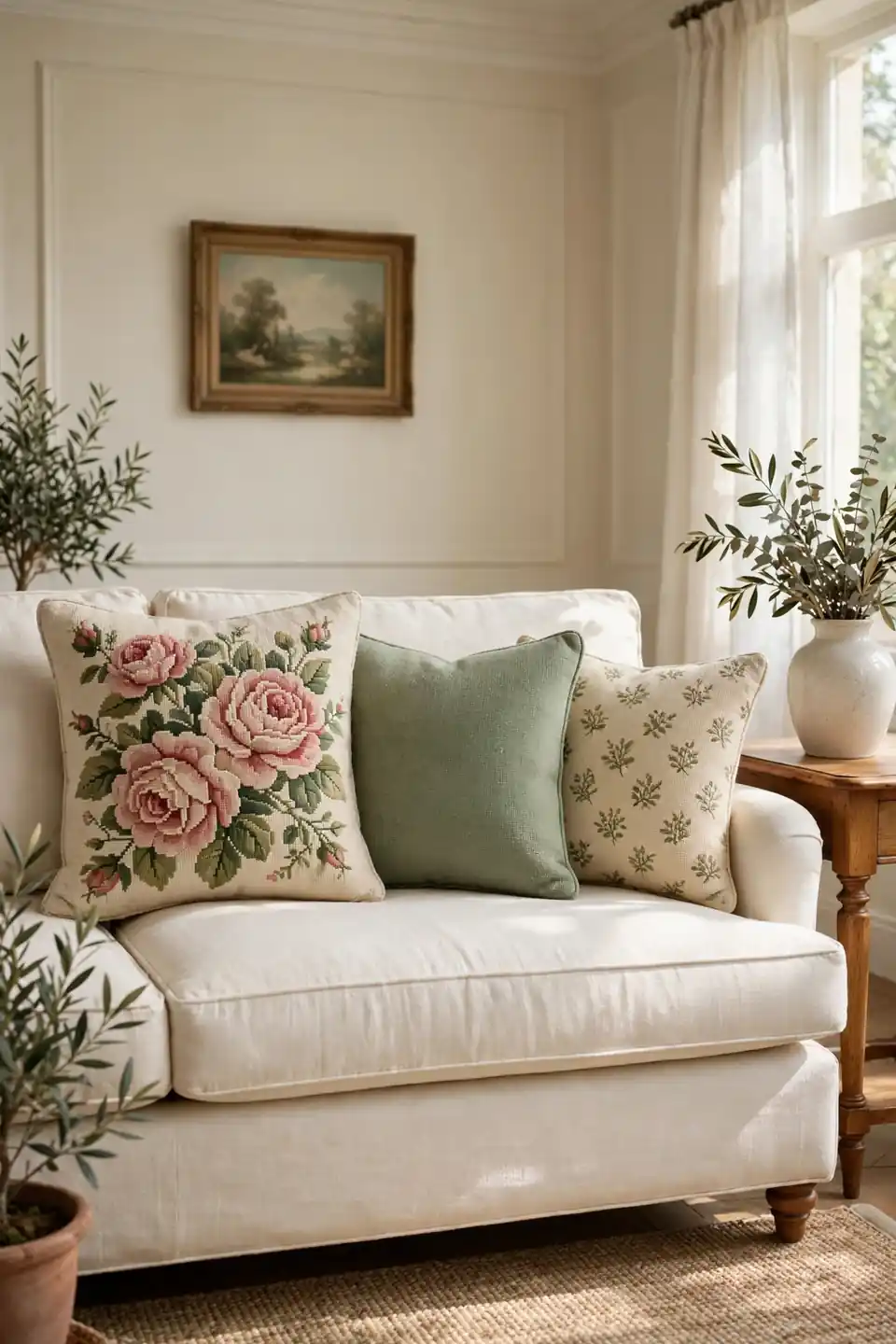
- Choose one hero motif, the largest or most colorful pillow, and place it on the sofa first.
- Add a second pattern at half the scale, like tiny sprigs sitting beside a big cabbage rose.
- Bridge the two patterns with one solid cushion in a color they share.
- Repeat the hero color somewhere else in the room, a book spine or a ceramic vase.
- Step back to the doorway and remove anything that shouts louder than the hero.
Mixed motifs fail when every pattern shouts at the same volume. Scale is the volume knob: big, medium, and small prints can share a sofa happily when their colors agree. Florals beside a simple geometric feel fresh, while two florals need clearly different scales to stay friends.
Thrifted Versus New Needlepoint

| Feature | Thrifted Vintage | New Reproduction |
|---|---|---|
| Character | One of a kind stitches | Even, uniform finish |
| Cost | Often five to twenty dollars | Thirty dollars and up |
| Condition | May need cleaning or repair | Ready to use today |
| Backing | Worn cotton or velvet | Fresh linen or canvas |
Thrifted pieces carry handwork and history that new cushions cannot fake, and their small flaws read as charm at sofa distance. New reproductions win when you need a matched pair or one specific size. Many collectors mix both happily, letting one true vintage hero anchor newer supporting cushions around the room, and the blend keeps the arrangement from feeling like a museum shelf.
Reading Nook Cushion Corner
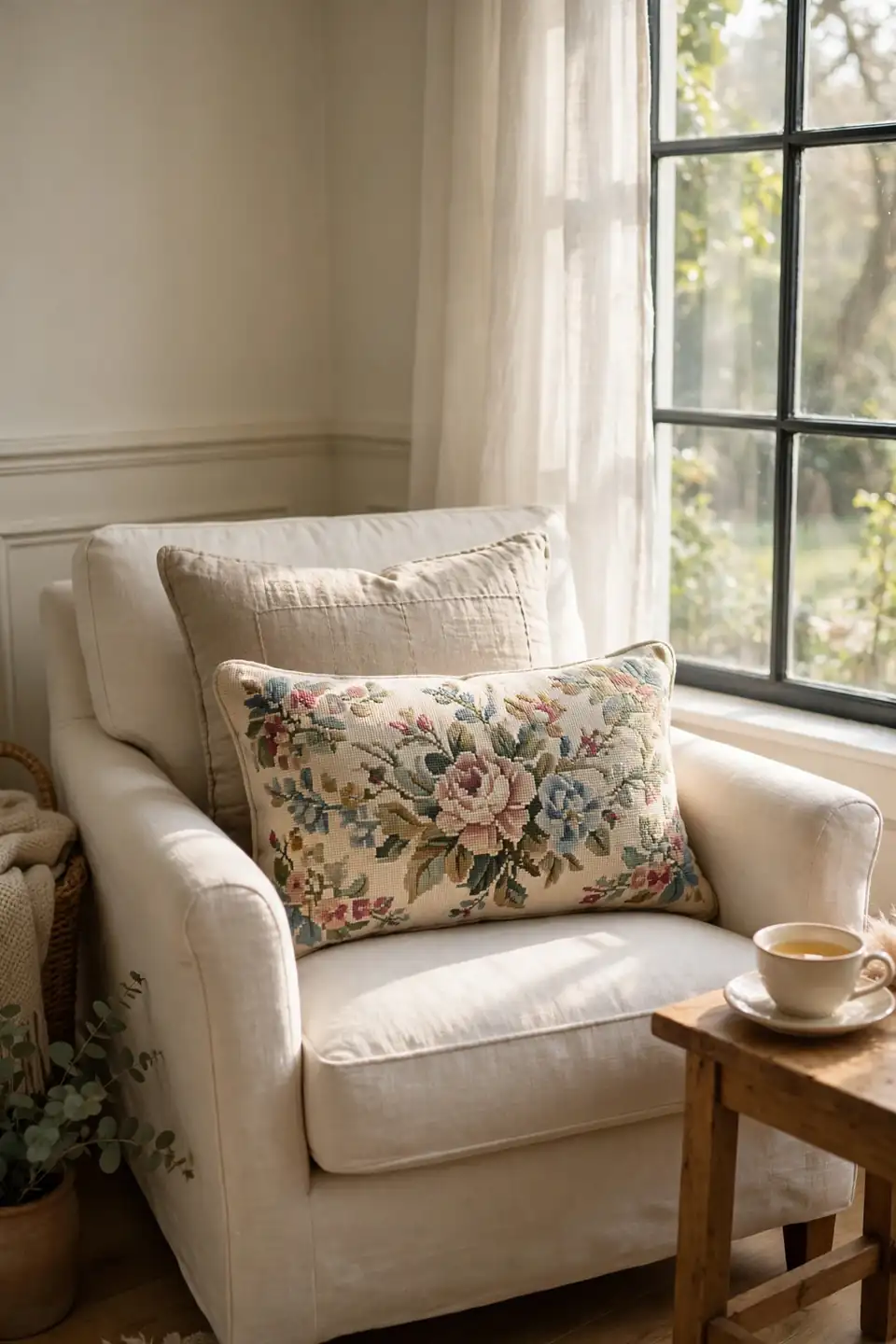
Do:
- Angle the chair toward the window so daylight falls across the stitches.
- Stack one lumbar needlepoint behind a square floral cushion for depth.
- Keep a small table close for tea, glasses, and a paperback.
Don’t:
- Bury the needlepoint behind plain cushions where nobody sees the motif.
- Choose a chair so deep that the cushions slide flat.
- Add a busy patterned throw that fights the stitched scene.
A nook works when the cushion is the decoration and everything else stays quiet. The stitched front catches the light, the plain layers give comfort, and the corner invites lingering. Readers in my house claim this seat within minutes of arriving, which tells me the formula works.
Heirloom Pillow Quick Facts
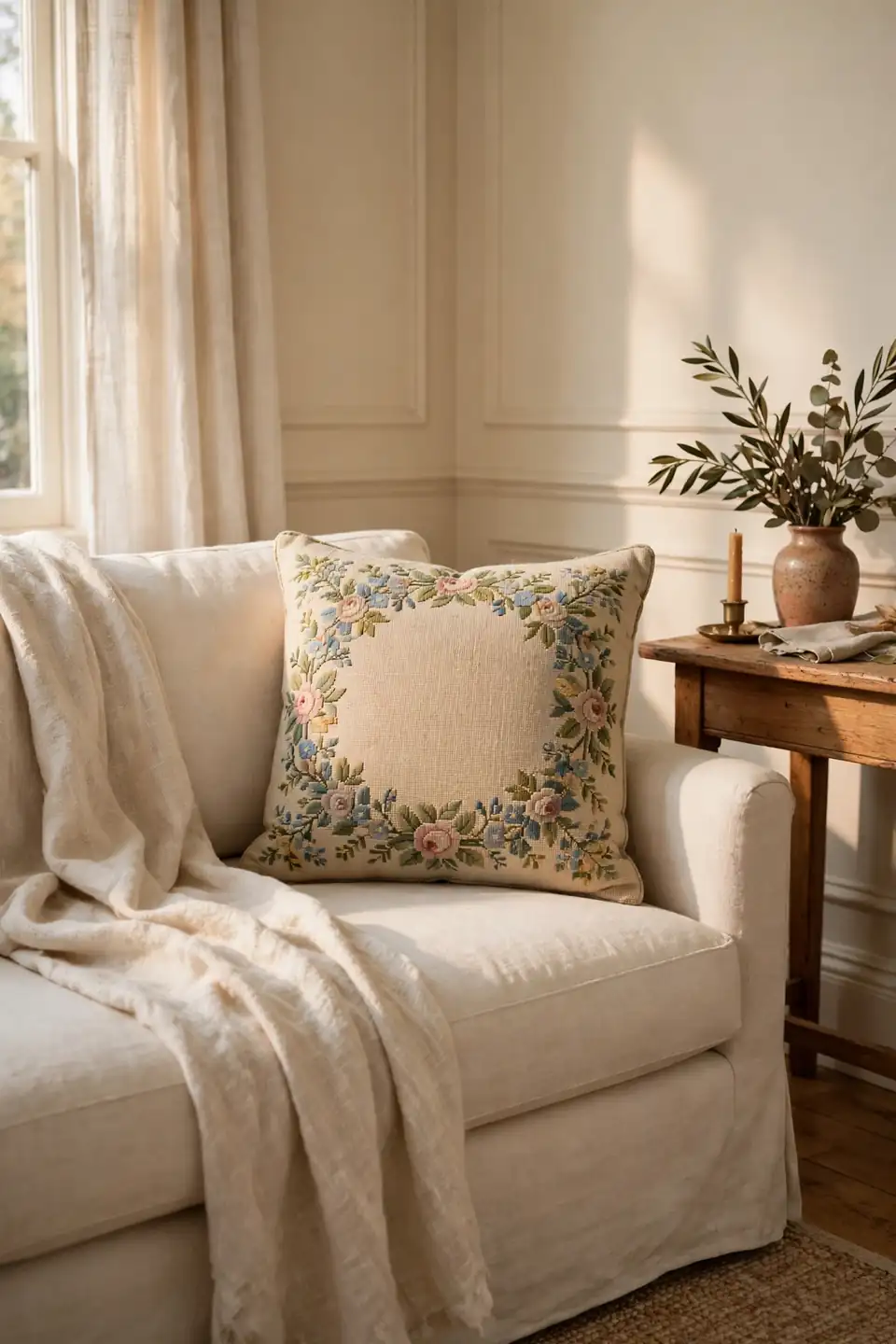
Cost: Free to forty dollars | Time: One afternoon of hunting | Skill Level: Beginner | Best For: Sentimental decorators | Result: Instant family history on the sofa
Needlepoint stitched by a grandmother carries more decorating power than anything bought new, because the wool holds a story guests can feel. Clean heirloom pieces gently with cool water and a drop of mild soap, then air dry them flat away from direct sun. If the backing has worn thin, a tailor can remount the front on fresh linen for a modest fee. Display the best side forward, and rotate cushions seasonally so sunlight fades them evenly over the years.
Garden Scene Cushion Grouping
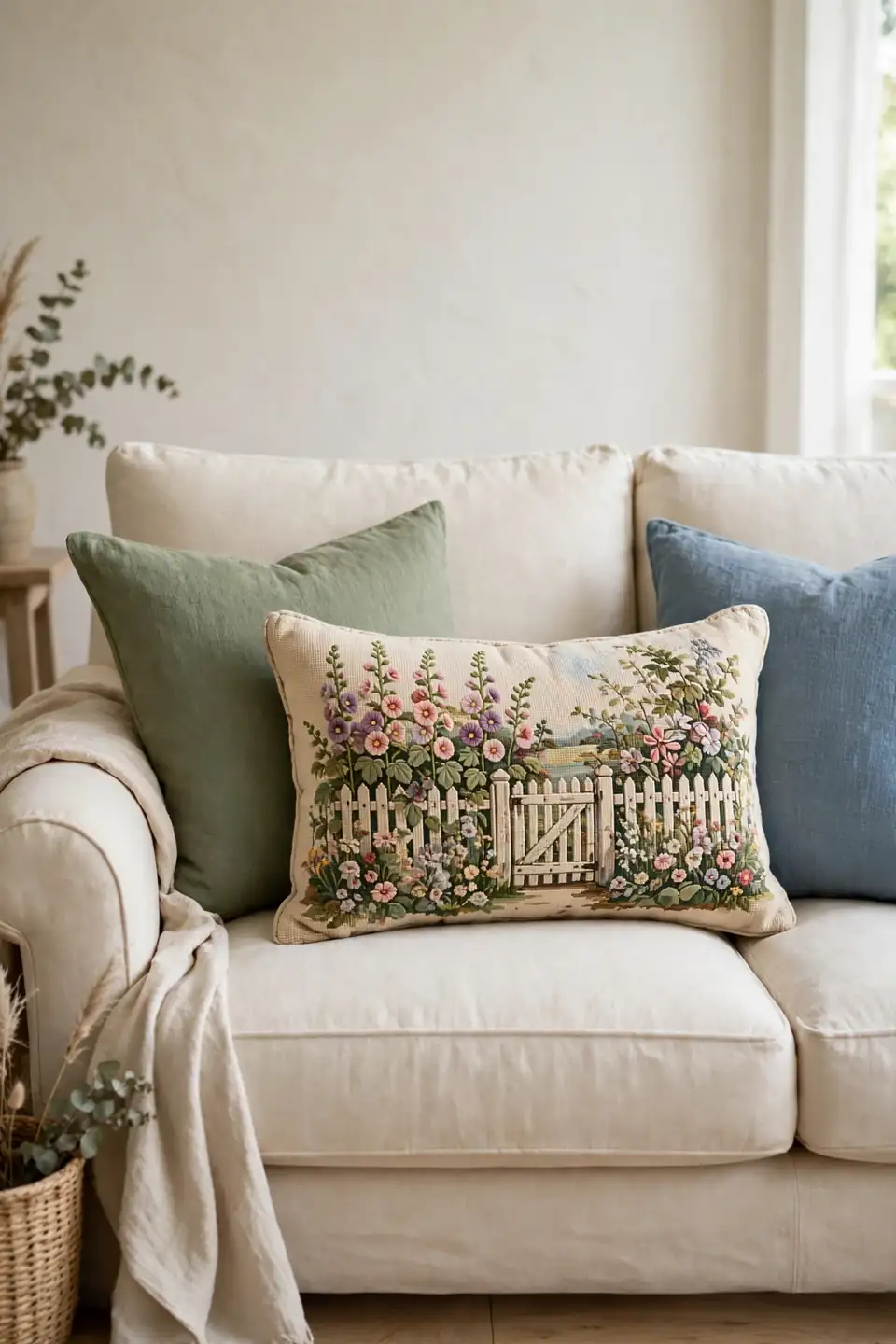
A cottage garden scene stitched across one wide lumbar cushion gives a sofa a landscape instead of a pattern. Fences, hollyhocks, and a tiny gate invite the eye to wander slowly, and the wide shape suits the center of a three seat sofa beautifully.
Flank the scene with two plain cushions in leaf green or dusty blue pulled from the stitching, and keep every other pattern out of the arrangement. Scenic pillows hold attention like artwork, so treat this grouping as the room’s painting and give it a clean wall behind. Move it to a bench or a bed in summer if the living room needs a quieter mood for a while.
Velvet Backed Pillow Pairings

- Pair a floral needlepoint front with a deep velvet back for a luxury flip side.
- Echo the velvet color in one other soft furnishing, curtains or a pouf.
- Rest the pillows at a casual angle so both fabrics show at once.
- Mix one velvet backed pair with plain linen singles for balance.
Velvet backs make vintage fronts feel intentional and rich, and they give you two looks in one cushion when guests arrive. The soft sheen also deepens nearby wood tones and warms cream upholstery on dull days. Choose moss, burgundy, or navy velvet pulled from a minor color inside the stitching rather than the dominant flower. Moss velvet, in particular, loves deep walls like those in heritage green dining room decor.
Seasonal Cover Swap Trick

Quick Tip: Keep two sets of needlepoint fronts, one for spring and one for autumn, and store the off season set flat inside a cotton bag. A ten minute swap refreshes the whole sofa without buying new furniture, repainting a wall, or moving a single picture frame.
Spring calls for pale gardens, birds, and soft green leaves, while autumn suits harvest scenes, pheasants, and deeper roses. Storing the fronts flat prevents creases through the wool, and a lavender sachet tucked in the bag keeps moths away between seasons. Keep the same inserts in use all year so the swap stays quick and the loft of each cushion never changes.
Faded Antique Pillow Refresh

BEFORE: The antique cushion looked tired, its roses washed down to pink shadows and the backing torn at one corner. It sat in a closet for years because it clashed with nothing and matched nothing at all.
AFTER: A gentle clean, a new linen back, and a fuller insert brought the little garden back to life. Placed on the cream sofa beside a deep green throw, the faded tones read as soft and romantic instead of worn out.
Faded wool is a feature, not a flaw, when the room stays calm and pale. This gentle palette is exactly where vintage needlepoint pillow living room ideas shine brightest, because the pattern whispers instead of shouting. Keep nearby colors muted and let soft texture carry the corner.
Styling a Needlepoint Bench
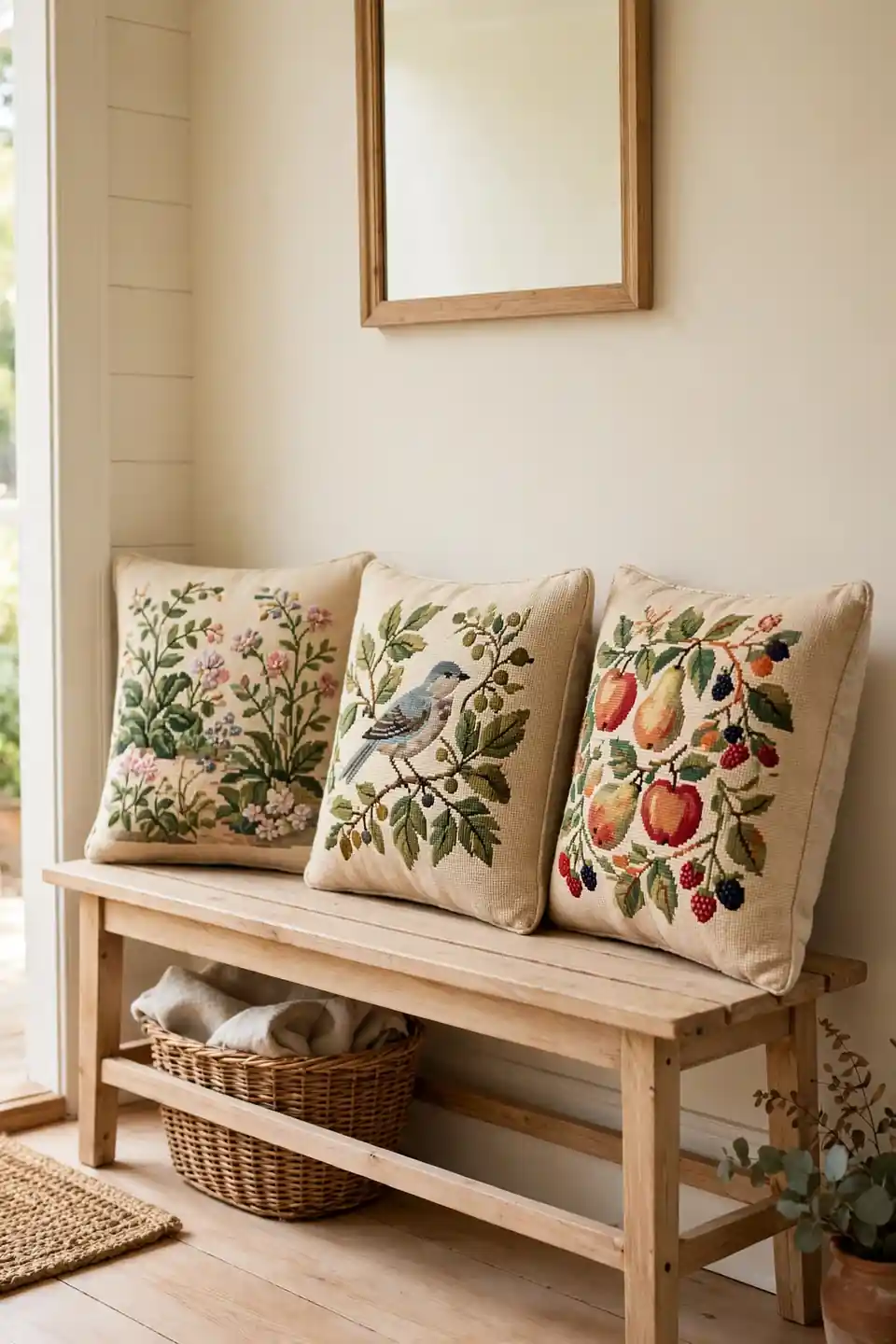
- Measure the bench seat and choose cushions that fill about two thirds of its length.
- Line up three needlepoint cushions with related motifs, gardens, birds, or fruit.
- Alternate the facing: center cushion forward, side cushions angled slightly inward.
- Slide a low basket or a stack of books beneath the bench for balance.
Entryway and foot of bed benches give needlepoint a stage away from the sofa, and a matched row reads like a stitched frieze along the wall. Keep the space above simple, one mirror or a single plain framed print, so the motifs stay the artwork. Benches also rescue cushions that feel too small to hold a sofa on their own.
Accent Versus Statement Cushions
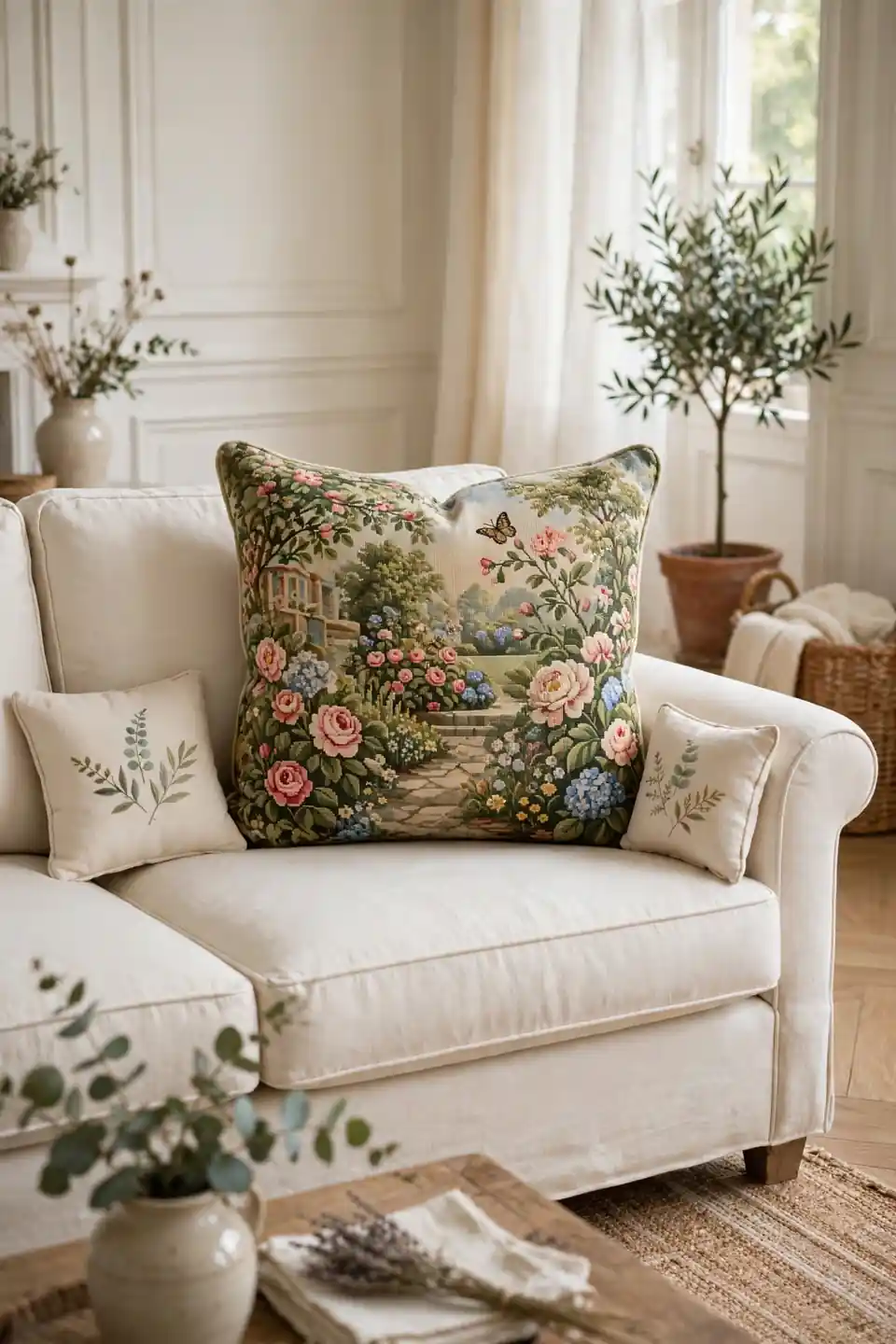
| Feature | Small Accent | Large Statement |
|---|---|---|
| Size | Twelve to sixteen inches | Twenty inches and up |
| Role | Fills gaps, adds a hint | Anchors the whole arrangement |
| Motif | Small sprigs, single blooms | Full scenes, bold gardens |
| Pairs Well With | Solids and stripes | Plain linen neighbors |
Small accents tuck into corners and chair seats where a big cushion would overwhelm, while large statements hold the center of a sofa with one confident scene. Most rooms need a single statement and let the accents support it quietly from the edges. Measure your seat depth before buying either size, because scale mistakes show immediately and no motif can rescue the wrong proportions.
Pet Friendly Pillow Habits

Do:
- Choose tightly stitched wool fronts that resist snags from claws.
- Keep a washable plain cushion in the pet’s favorite spot as a decoy.
- Brush needlepoint weekly with a soft clothes brush to lift hair.
Don’t:
- Leave loose threads untrimmed where a curious paw can pull them.
- Place your finest heirloom where muddy paws land every day.
- Spray scented fresheners directly onto old wool fibers.
Wool needlepoint survives pets better than most people expect, because the dense stitches hide hair and shrug off light wear gracefully. The real risks are pulled threads and mud, both solved by smart placement and a quick weekly brush. Save the museum pieces for the guest chair, and let sturdy thrifted finds handle the dog’s end of the sofa.
Small Room Pillow Facts

Cost: Ten to thirty dollars | Time: One shopping trip | Skill Level: Beginner | Best For: Apartments and snug cottages | Result: Pattern without visual clutter
Small rooms still deserve pattern, and a single needlepoint cushion delivers it inside one square foot. Choose a motif with a pale background so the pillow reads light against the sofa, and skip extra patterned textiles anywhere nearby. One stitched garden on a cream chair can carry a whole studio corner, especially beside plain walls and a simple rug. Restraint is the whole trick: one hero, quiet supporting pieces, and no competing prints within arm’s reach of the seat.
Botanical Armchair Cushion Pair
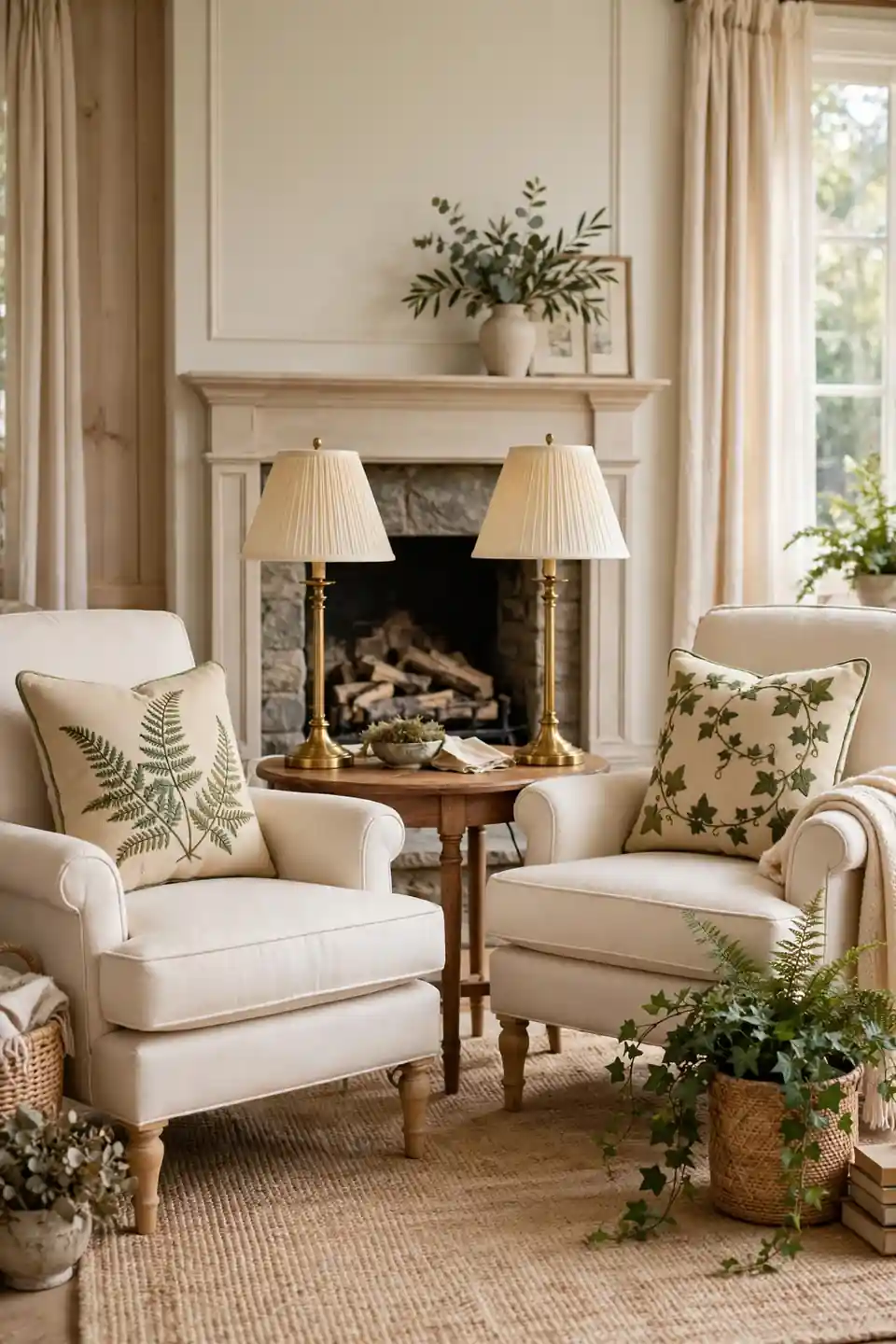
Two armchairs flanking a fireplace look finished when each carries a botanical needlepoint cushion, ferns worked on one and ivy trailing across the other. Related greenery keeps the pair harmonious, while the different leaves stop the symmetry from feeling stiff or hotel like.
Match the chair fabric to the cushion backgrounds, cream with cream or sage with sage, so the stitched leaves appear to grow straight out of the upholstery. One shared element, the same wooden side table or matching brass lamps, ties the two chairs into a single conversation area. Botanical motifs also flatter real plants placed nearby, blurring the line between the stitched garden and the living one.
Jewel Tones On Cream

- Let ruby, emerald, and sapphire stitches glow against pale upholstery.
- Repeat one jewel tone in a glass vase or a book cover nearby.
- Keep metals warm, brass or gold, to match the richness.
- Balance the color with plenty of bare cream around each cushion.
Deep stitched colors behave like jewelry on a plain dress, small in area but impossible to ignore. Cream sofas and chairs give those tones room to shine without darkening the whole room. If the effect feels strong at first, start with a single cushion and live with it for a week before adding a second one beside it.
Needlepoint Lumbar Pillow Focus
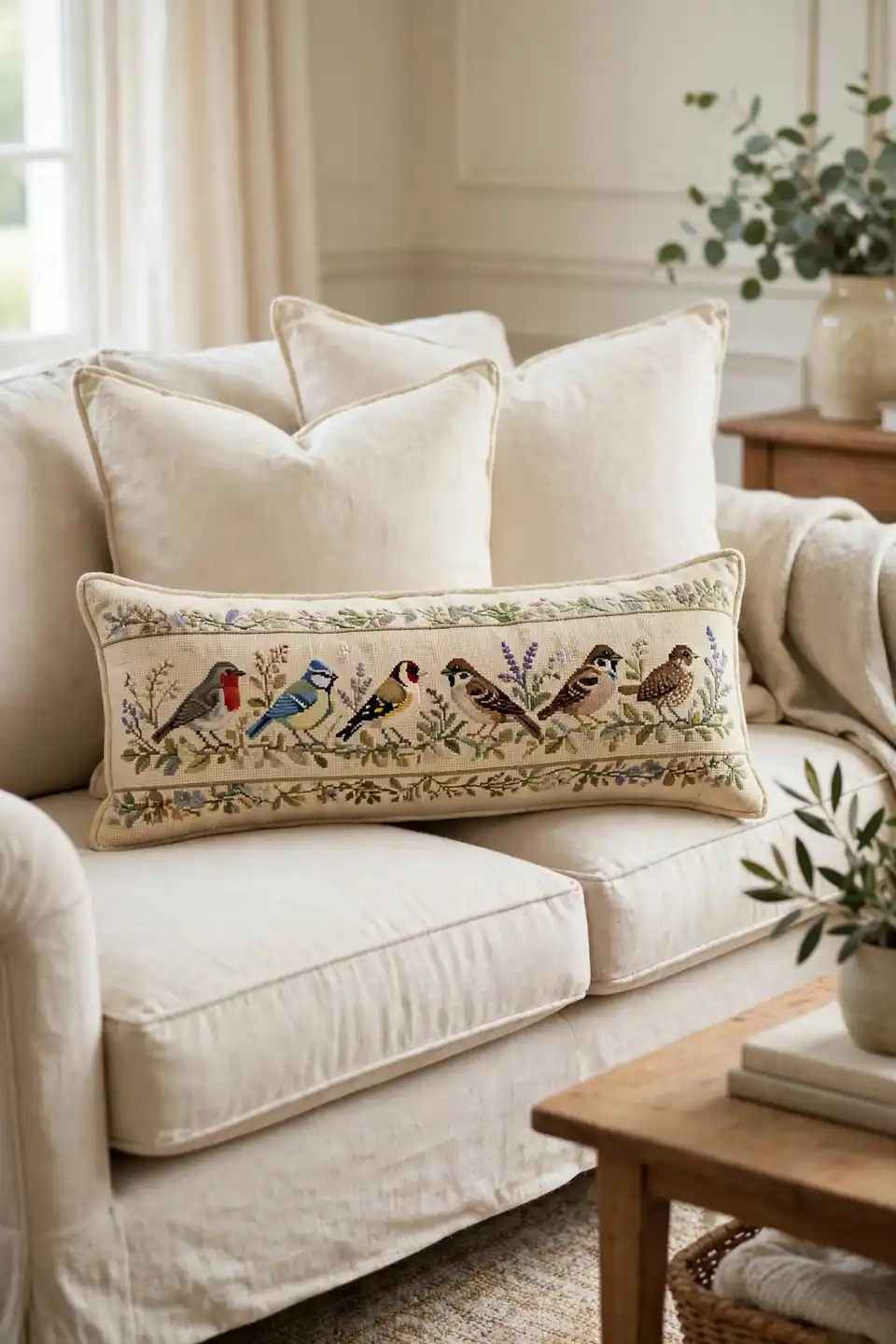
Quick Tip: Rest a long needlepoint lumbar across the front of square cushions to build a layered, tailored stack. The horizontal shape breaks up boxy arrangements, shows off a full scenic motif, and gives lower backs real support during long conversations.
Lumbar shapes suit scenic and repeating motifs, since the wide front shows a whole garden row or a line of birds without cropping the picture. Place the lumbar last, after the squares and solids are settled, so it reads as the finishing ribbon on the arrangement. On a single chair, one lumbar alone can be the entire styling, neat, supportive, and complete.
Window Seat Cushion Makeover
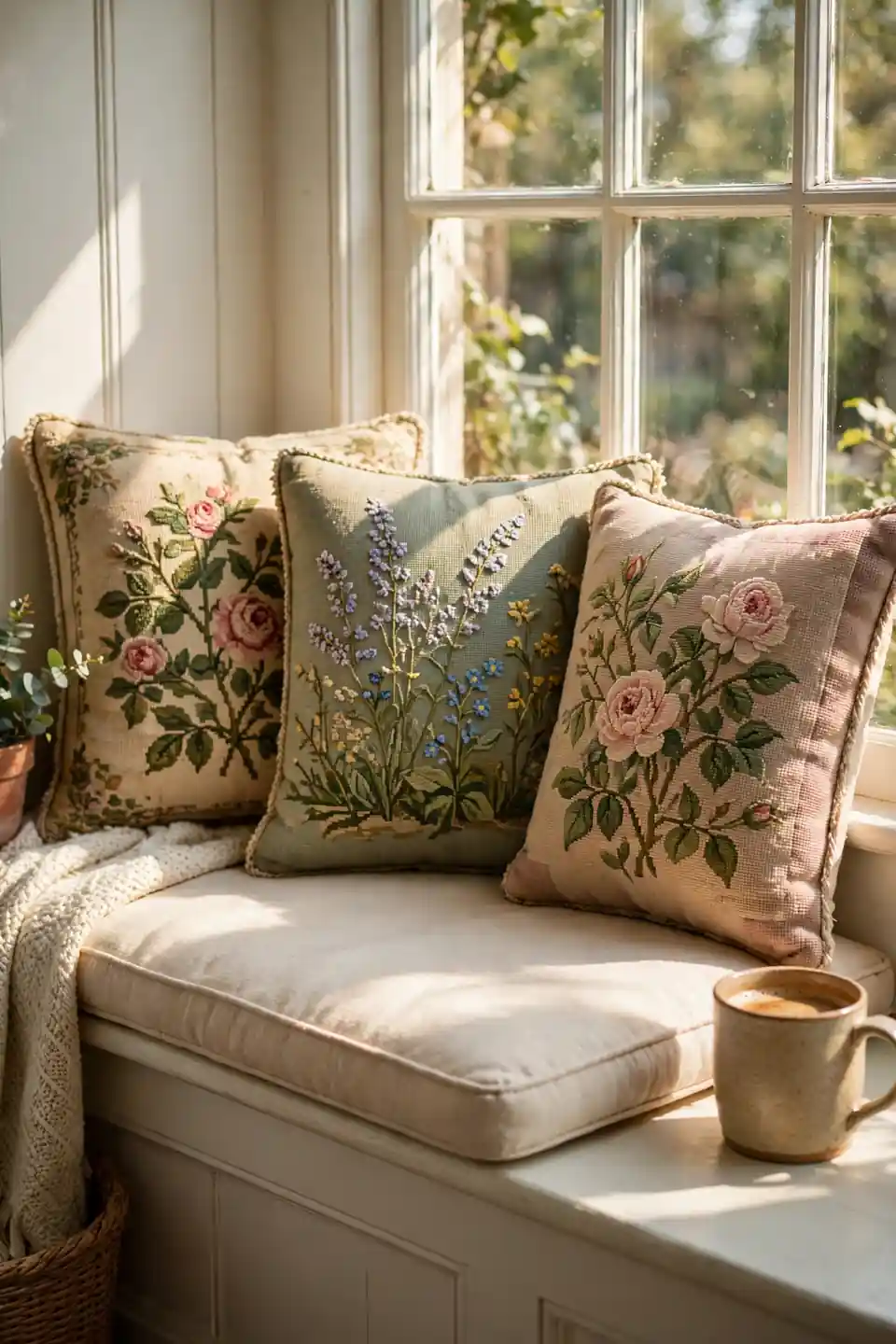
BEFORE: The window seat held a faded foam pad and two flat cushions that slid to the floor every single day. Nobody sat there, and the best light in the house went completely to waste.
AFTER: Three needlepoint cushions in garden motifs now line the seat back, firm and upright against the wall. The nook became the morning coffee spot, with early sunlight catching every stitch.
Window seats flatter needlepoint because honest daylight reveals the texture that lamplight flattens. Choose cushions with enough body to stand upright, or fit firm inserts so the row stays neat through the day. Keep the seat pad plain and washable, since window seats collect dust, crumbs, and the occasional muddy paw print.
Building a Vintage Collection
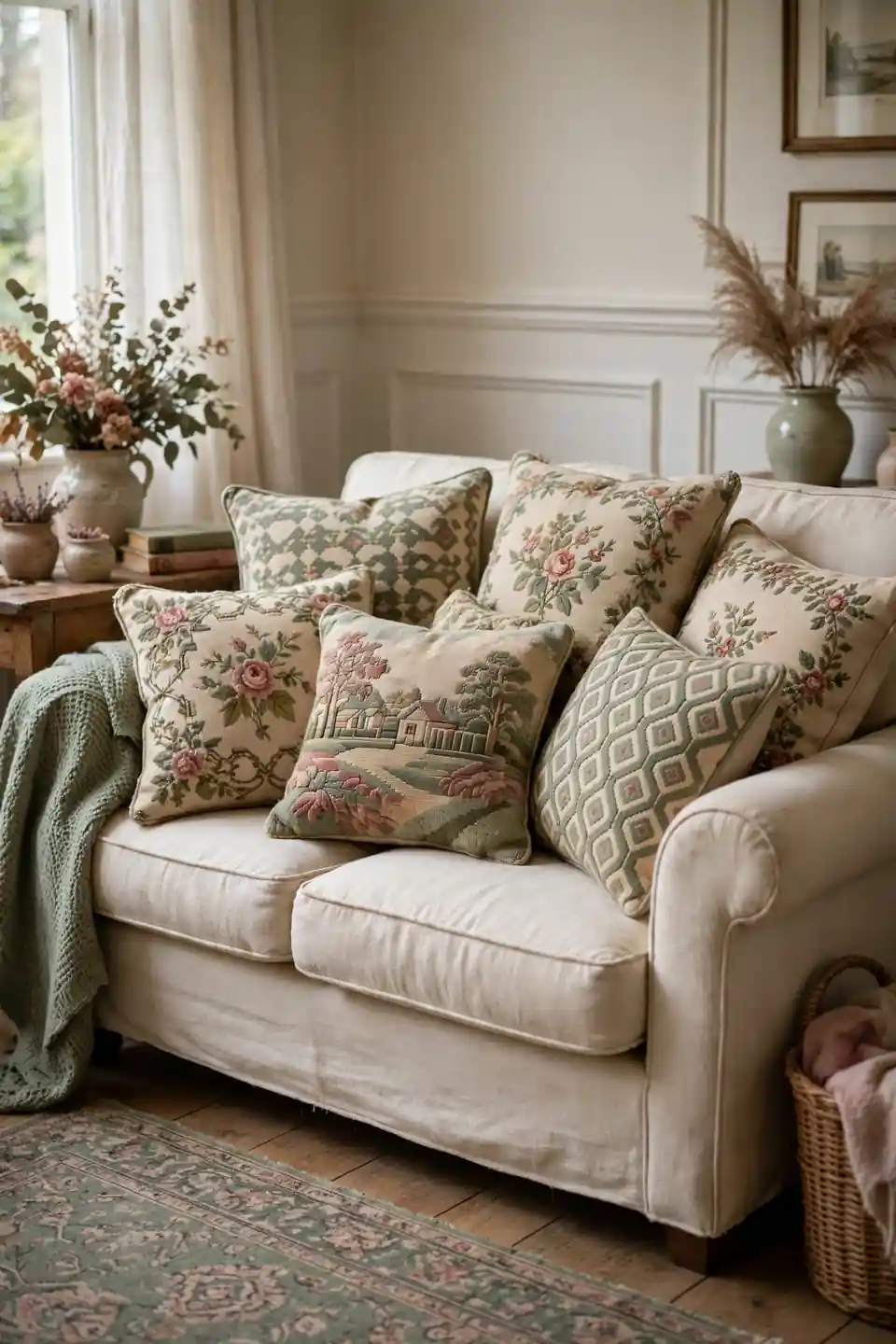
- Start with one cushion you truly love, whatever its motif, and style the sofa around it.
- Add pieces slowly, one per season, keeping a shared color thread running through them all.
- Photograph each new find on your sofa before buying, to test scale and palette.
- Record where each piece came from in a small notebook kept with the spares.
Collections built slowly look like taste, while sets bought in one afternoon look like a shop display. The shared color thread, maybe sage green or dusty rose, is the quiet rule that lets different decades and motifs sit together peacefully. Over a few years, your sofa becomes a stitched diary of markets, trips, and gifts.
Conclusion
A sofa dressed with stitched gardens and faded roses tells a story no showroom can copy. Start with one cushion you love, place it where the light finds it, and build slowly from there. That is the heart of vintage needlepoint pillow living room ideas: pattern with a past, placed with care. Save these ideas to Pinterest before your next market trip, try one arrangement this weekend, and share a photo of your favorite cushion with a friend who hunts vintage too. Small squares of wool, chosen with patience, can shift how a whole room feels every day.