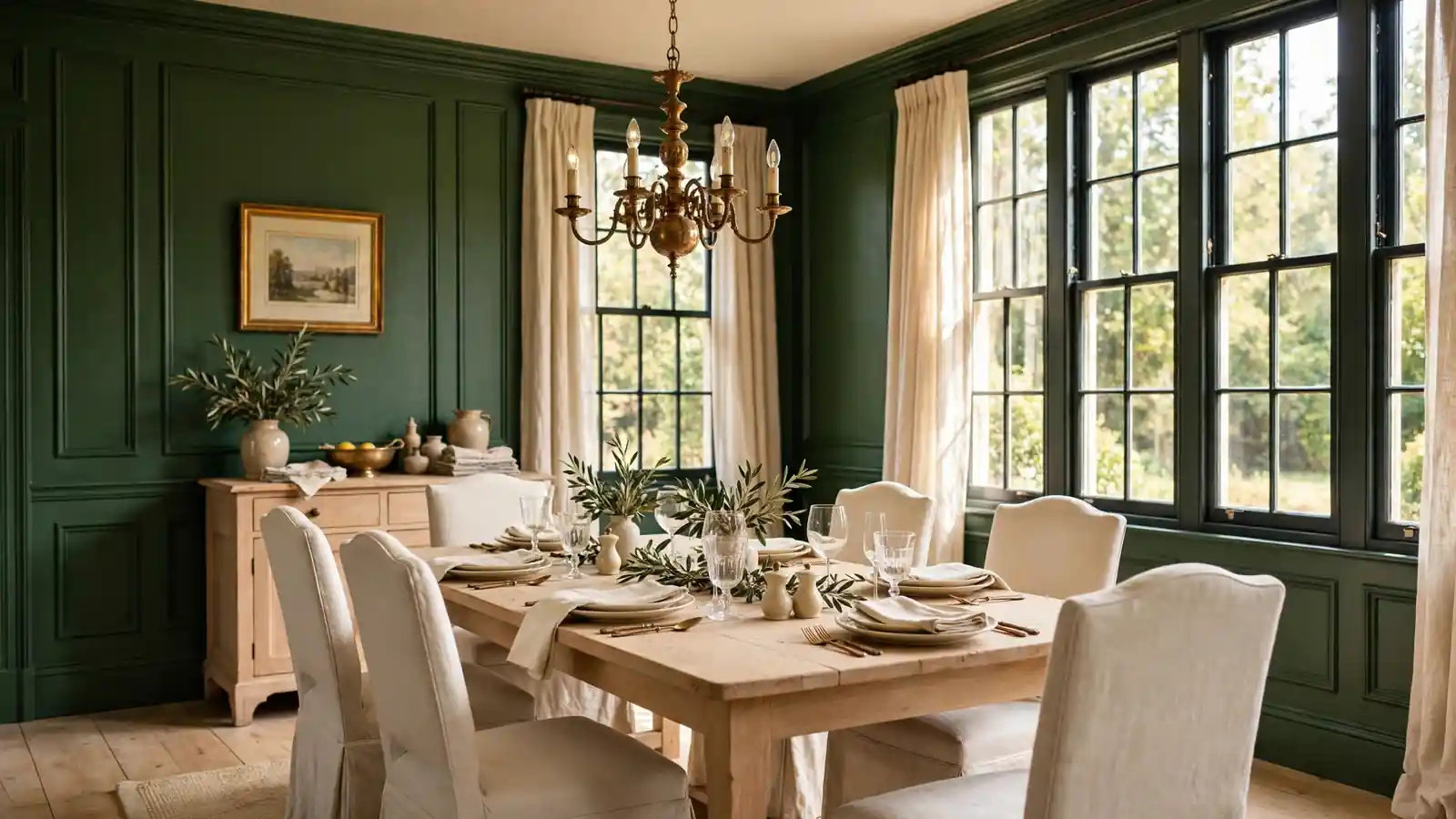
23 Heritage Green Dining Room Decor Ideas for Timeless Sophistication
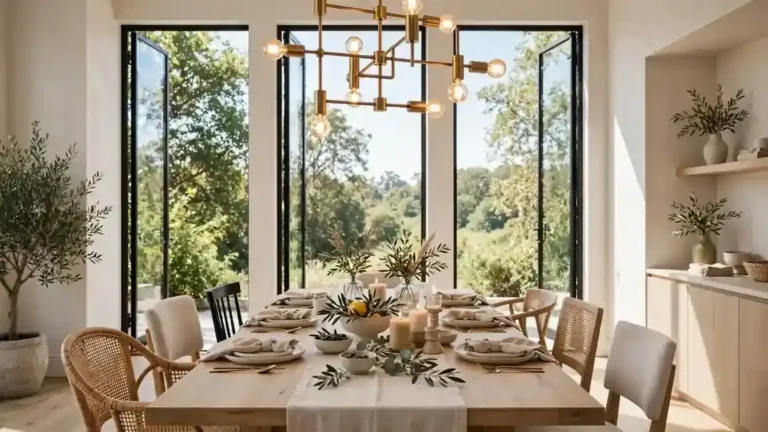
Green is the color dining rooms were made for, deep enough to flatter candlelight and calm enough for slow Sunday lunches. Strong heritage green dining room decor pairs that rich wall color with warm brass, cream upholstery, and honest oak, and the result feels collected rather than decorated. Nothing here needs a full renovation; most of these ideas are paint, fabric, and placement.
The trick is balance: green does the drama, neutrals do the breathing. Rooms that chase daylight, like the ones in modern conservatory interior design, prove how well deep color behaves beside glass and plants. In my experience, one green wall, one brass light source, and one natural wood surface will carry a whole dining room. The twenty-three ideas below build from that simple base.
Deep Green Paneled Walls
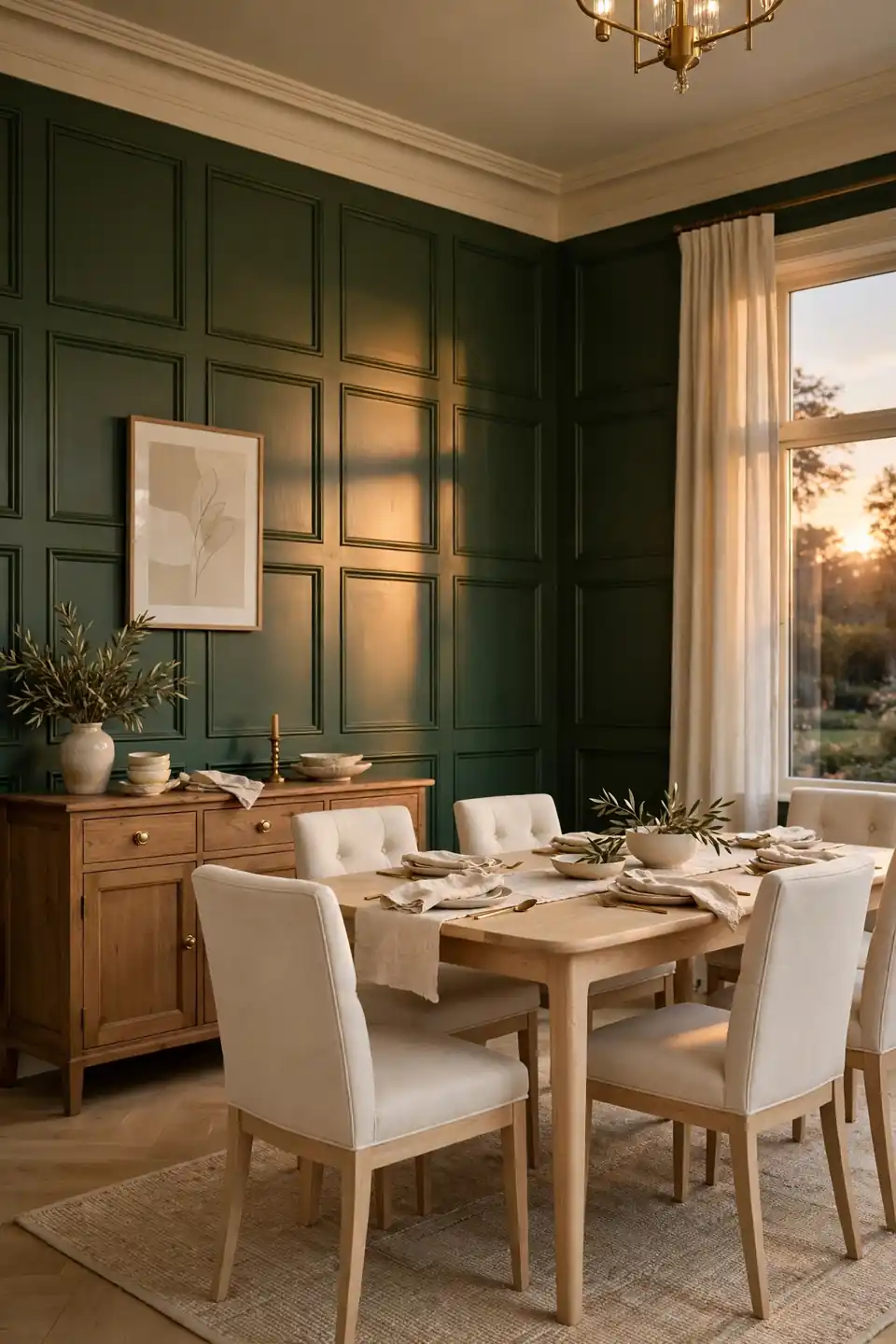
Wall paneling painted deep green gives a dining room instant age and manners. Slim battens or framed molding squares break the color into panels, so the green reads as architecture instead of a flat paint job. Keep the ceiling and trim warm cream, and the contrast keeps the room lifted rather than cave dark.
Evening light is where this treatment earns its keep, because candle flames and warm bulbs pool inside each panel and double the glow. Paint one wall first if the full room feels bold; a single paneled wall behind the sideboard already changes every dinner. Satinwood finish wipes clean after splashes.
Brass Sconce Warm Glow
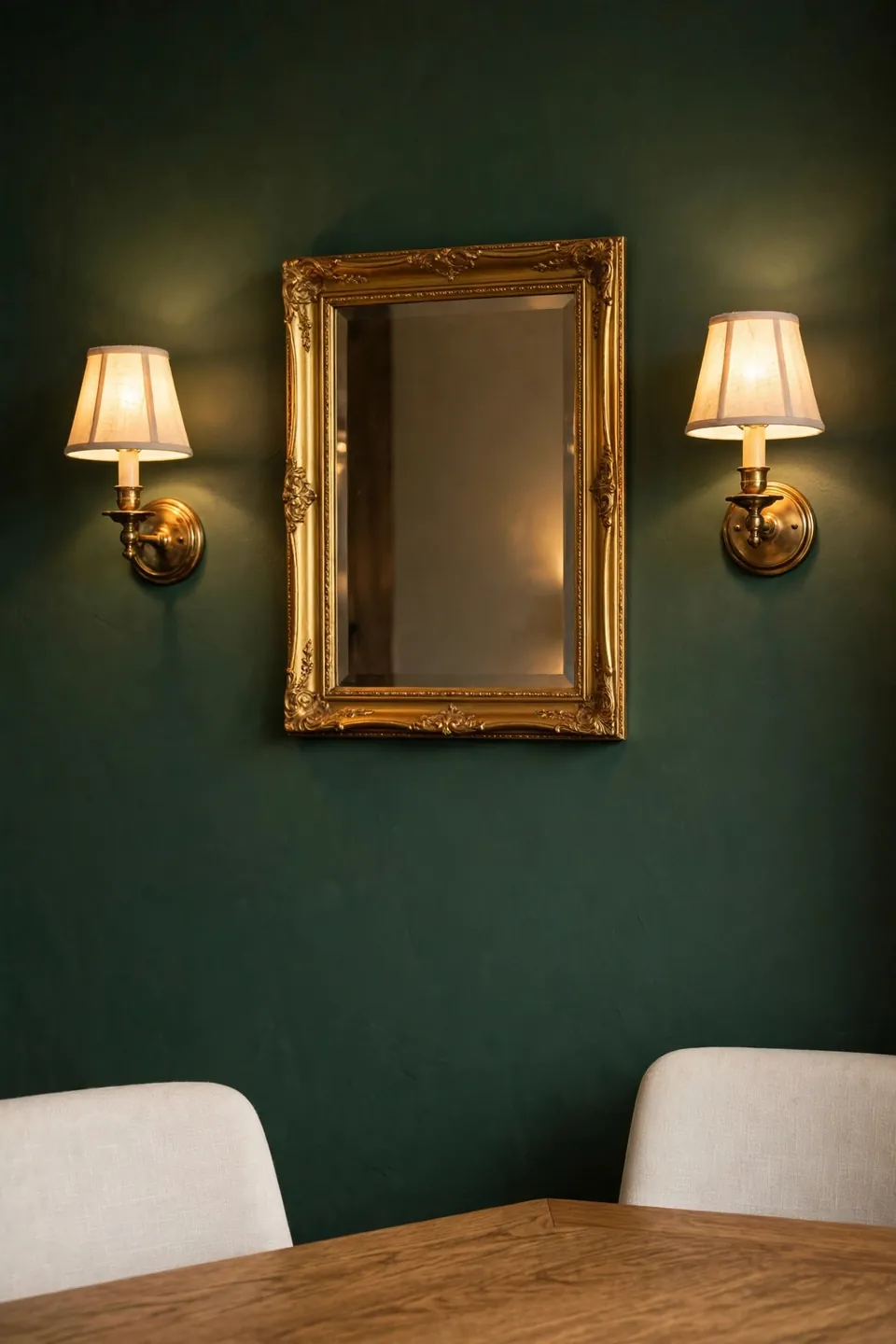
- Fit sconces in pairs either side of a mirror or artwork, at eye level when seated.
- Choose unlacquered brass that deepens with touch and time, not a shiny plated finish.
- Wire them to a dimmer so dinner light drops to a low, flattering warmth.
- Pick small fabric shades in cream linen to soften the bulb glare at table height.
- Space pairs evenly along the longest green wall to pull the eye down the room.
Wall lights free the table from a forest of candles and still give faces that soft, low glow everyone looks good in. Against deep green paint, brass reads almost golden, an effect I’ve noticed makes even plain plaster walls feel expensive after dark.
Cream Upholstered Dining Chairs
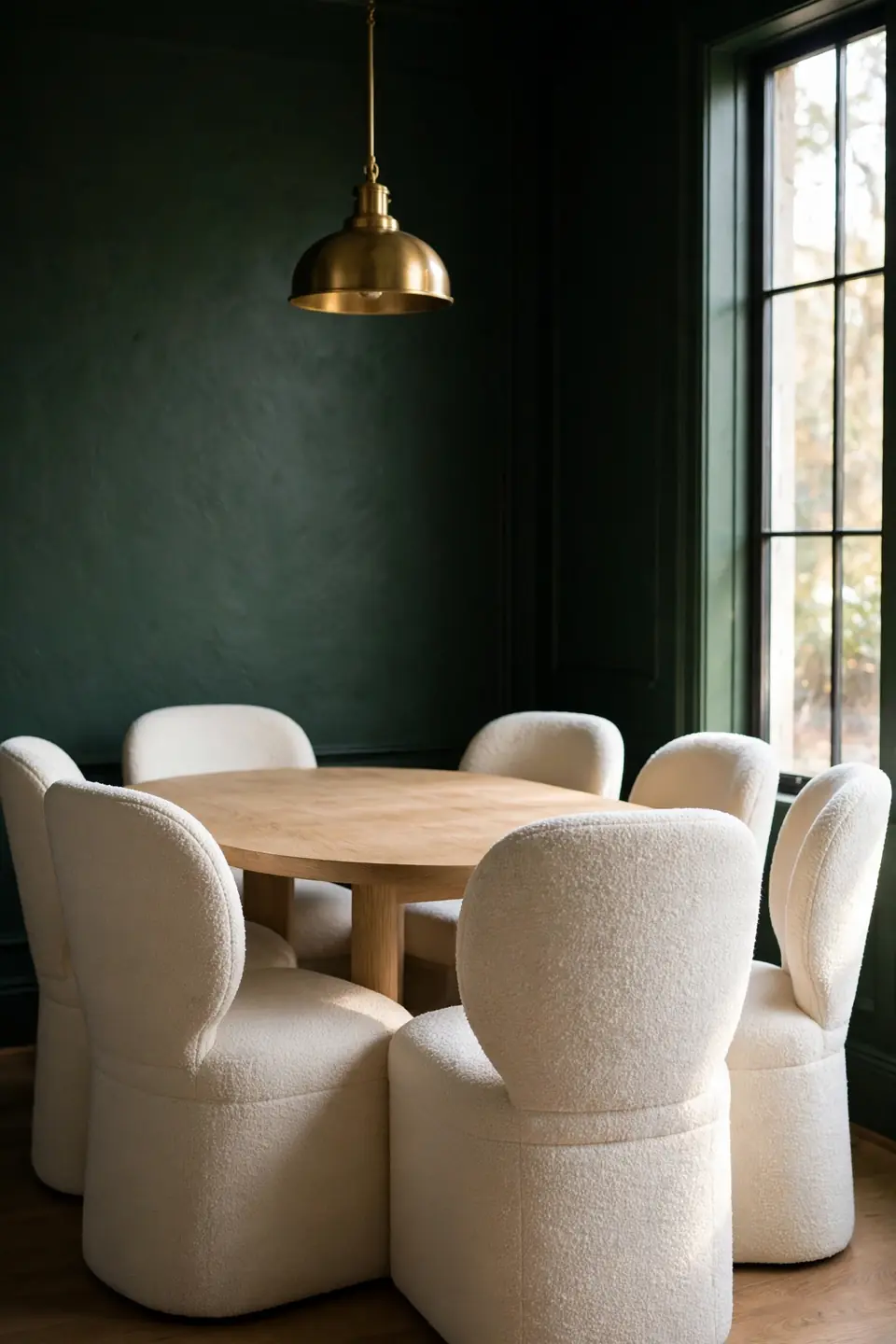
Quick Tip: Test fabric against the wall color at night, not in the shop. Cream that looks warm under showroom spots can turn grey beside deep green, so tape a swatch to a chair back and live with it through one candlelit dinner first.
Pale seats are the pressure valve of a dark dining room, lifting the scheme and showing guests exactly where to land. Fully upholstered chairs in cream boucle or washable linen keep long dinners comfortable, and their soft shapes round off a room full of straight table lines and hard wood edges. Stain guard spray earns its cost here.
Bare Wood Table Contrast
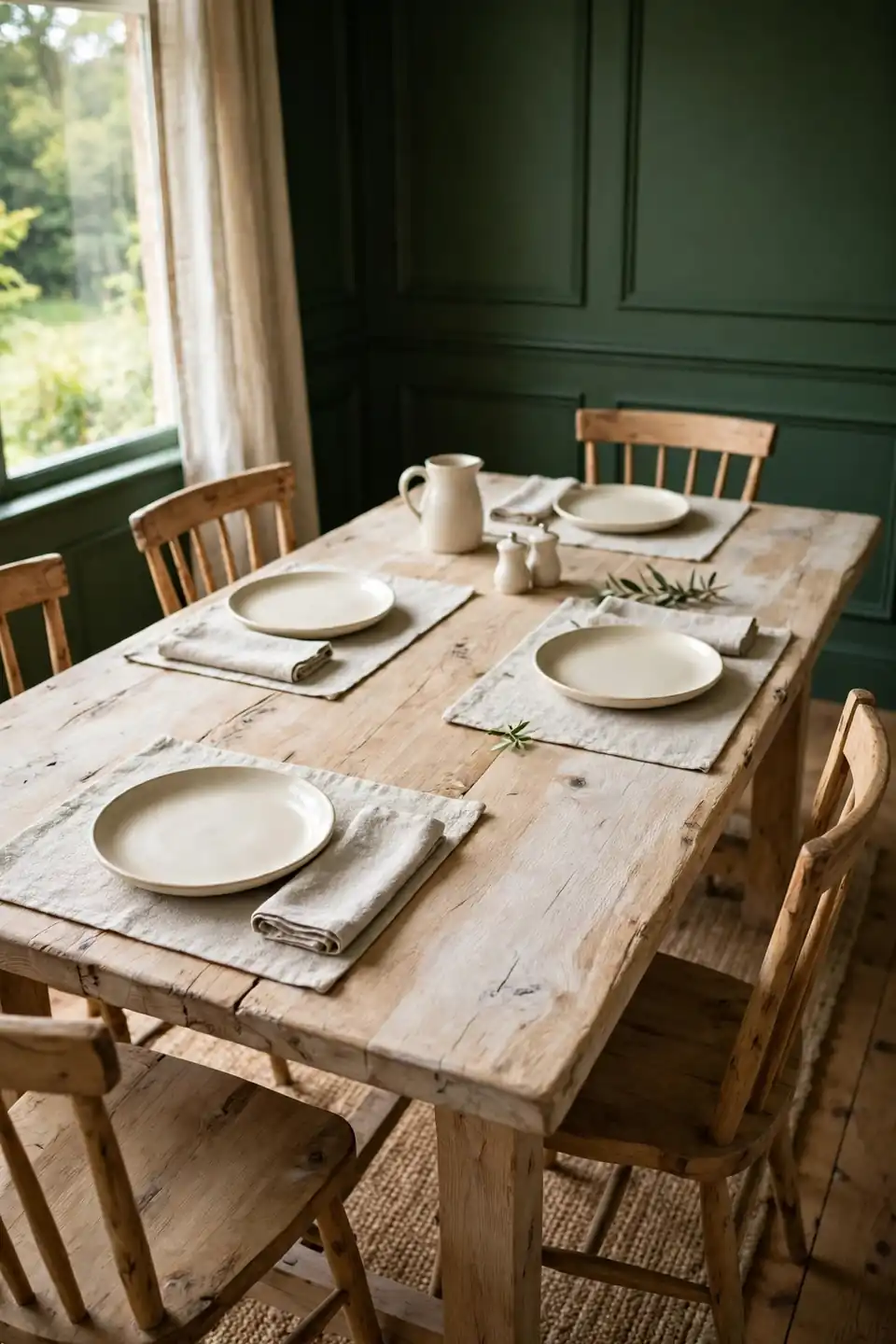
BEFORE: The table matched the painted furniture tone for tone, and the whole room sank into one flat green brown. Place settings disappeared against the dark top, and dinners felt heavier than the food.
AFTER: A bare oak table, scrubbed and oiled, now anchors the room with pale grain that bounces light back at the walls. Linen placemats and cream plates sit crisply on top, and the green finally has something to play against.
Contrast is the real decorator in this room, because dark walls need one honest, light, natural surface to prove their depth. Bare wood also forgives rings, crumbs, and hot dishes better than paint. Sand out stains yearly and re oil; the table improves with every meal it hosts.
Layered Rug Foundation
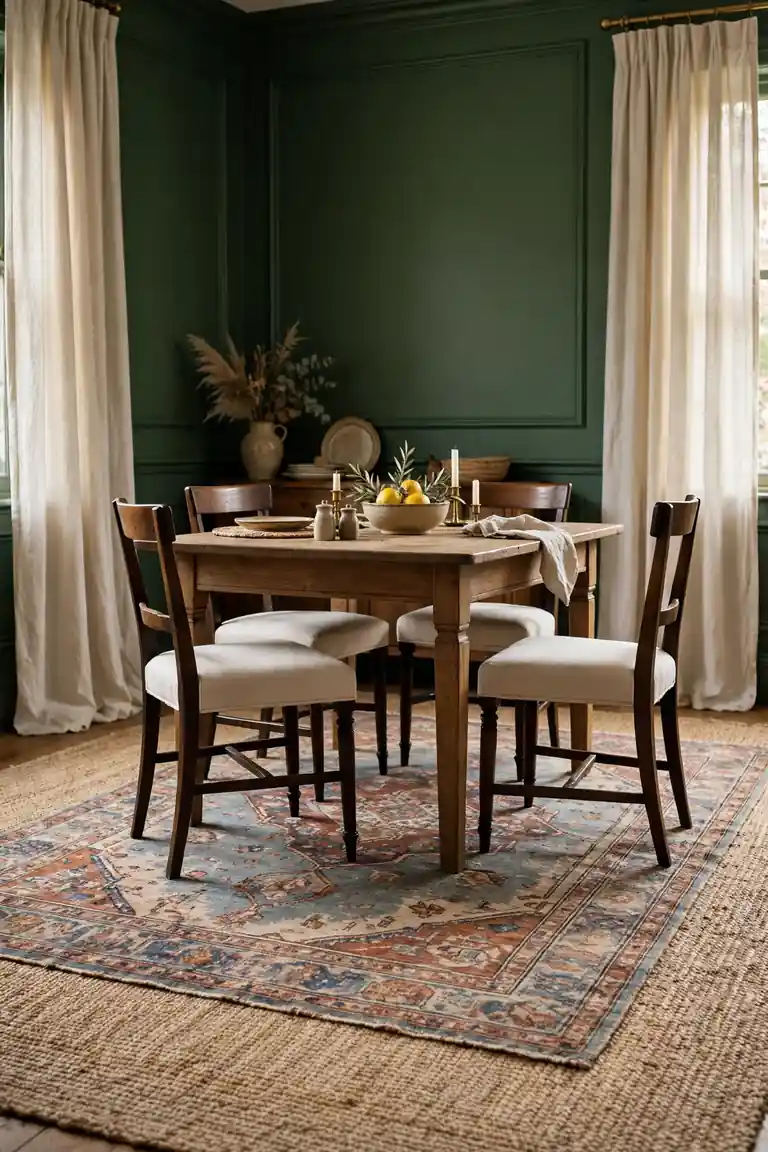
- Measure the table and add sixty centimeters on every side so chairs stay on the rug when pulled out.
- Lay a flat woven jute base first; it grips the floor and frames the pattern above.
- Center a vintage style patterned rug on top, leaving a border of jute showing all round.
- Check chair legs slide without catching the top rug’s edge from every seat.
- Vacuum both layers weekly and lift the top rug monthly to shake out trapped grit.
Two thin rugs beat one thick pile under a dining table, where chairs drag and crumbs fall daily. The layered edge also lets pattern enter a green room gently, a border at a time. Layering like this is the cheapest way to make rented floors feel owned.
Painted Ceiling Color Choice
| Feature | Color Drenched Green | Cream Ceiling Contrast |
|---|---|---|
| Mood | Cocooning and bold | Airy and classic |
| Light Effect | Absorbs glare softly | Bounces daylight down |
| Best For | Tall period ceilings | Low modern ceilings |
| Upkeep | Shows dust sooner | Hides marks longer |
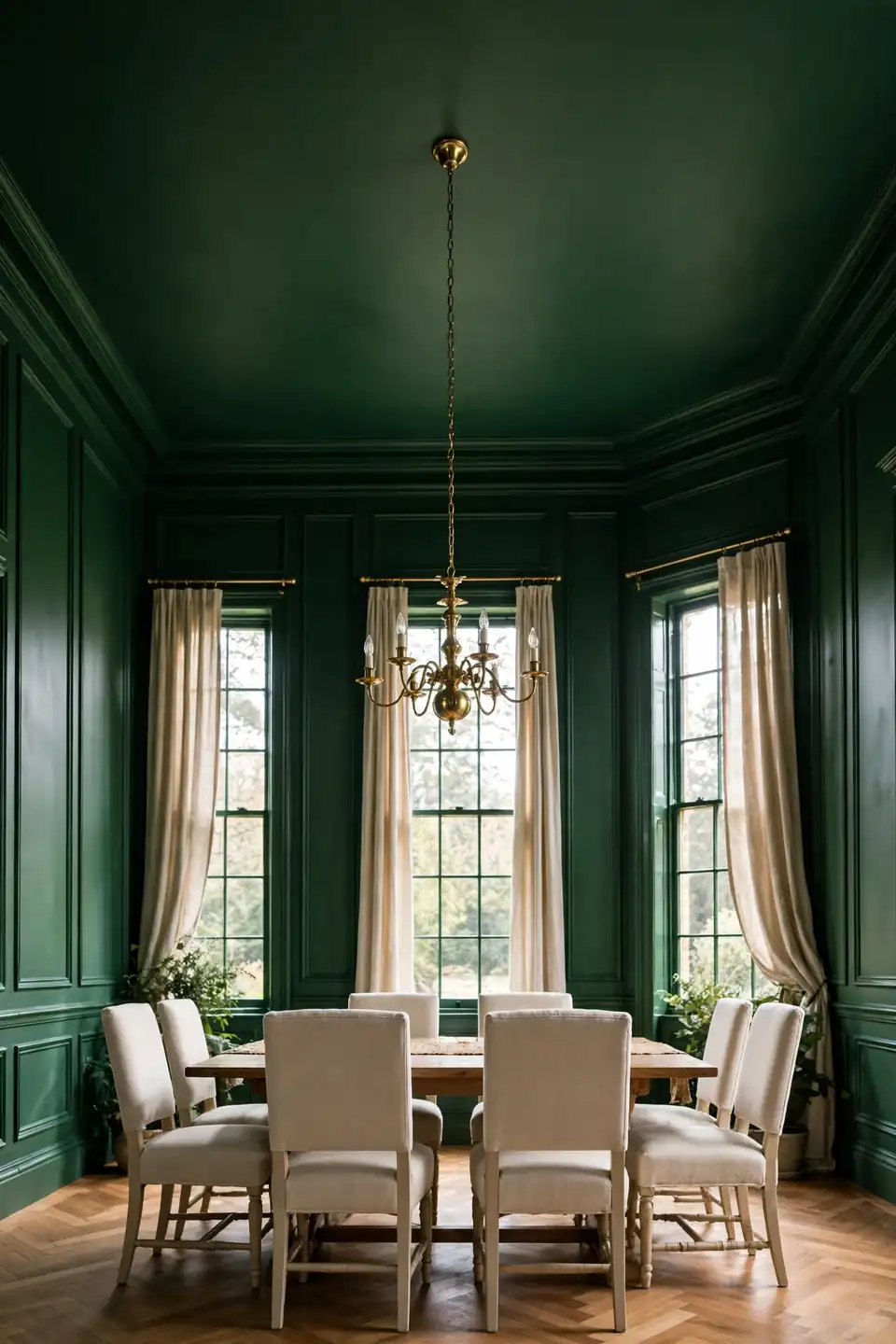
Ceilings decide whether green walls feel like a hug or a lid. Painting the fifth wall the same green wraps the room for evening drama, while a warm cream ceiling keeps daytime lunches bright and lifts low rooms. Match the choice to how the room is used most: candlelit dinners argue for drenching, family Sundays for cream. Test both on large boards and watch them at noon and at nine before committing the ladder work.
Velvet Curtain Window Dressing

Do:
- Hang panels high and wide so stacks clear the glass.
- Choose cotton velvet in moss to soften deeper wall tones.
- Line curtains so color stays rich, never faded in stripes.
- Let hems just kiss the floor for a tailored finish.
Don’t:
- Fit short curtains stopping at the sill and chopping height.
- Pick shiny satin that fights the matte paint finish.
- Hang one narrow panel; skimpy fabric reads as an accident.
- Match curtain green exactly to walls; near tones look richer.
Curtains are the soft edge a painted room needs, and velvet drinks in sound as well as light. Full, lined panels make winter dinners feel hushed and private, while the same room stays bright at noon with the fabric stacked clear of the glass.
Antique Brass Chandelier

Cost: Higher end
Time: One weekend
Skill Level: Confident DIY or electrician
Best For: High ceilings
A chandelier is the one piece guests remember, and aged brass against green is a pairing with centuries of proof behind it. Look for real weight, candle style bulbs, and arms spaced wide enough to light faces rather than dazzle them. Hang it lower than instinct suggests, roughly eighty centimeters above the table, so the glow pools on plates and glassware. Secondhand finds often carry better casting than new pieces at twice the price; have the wiring checked and the rest is soap, water, and patience.
Botanical Print Gallery Wall
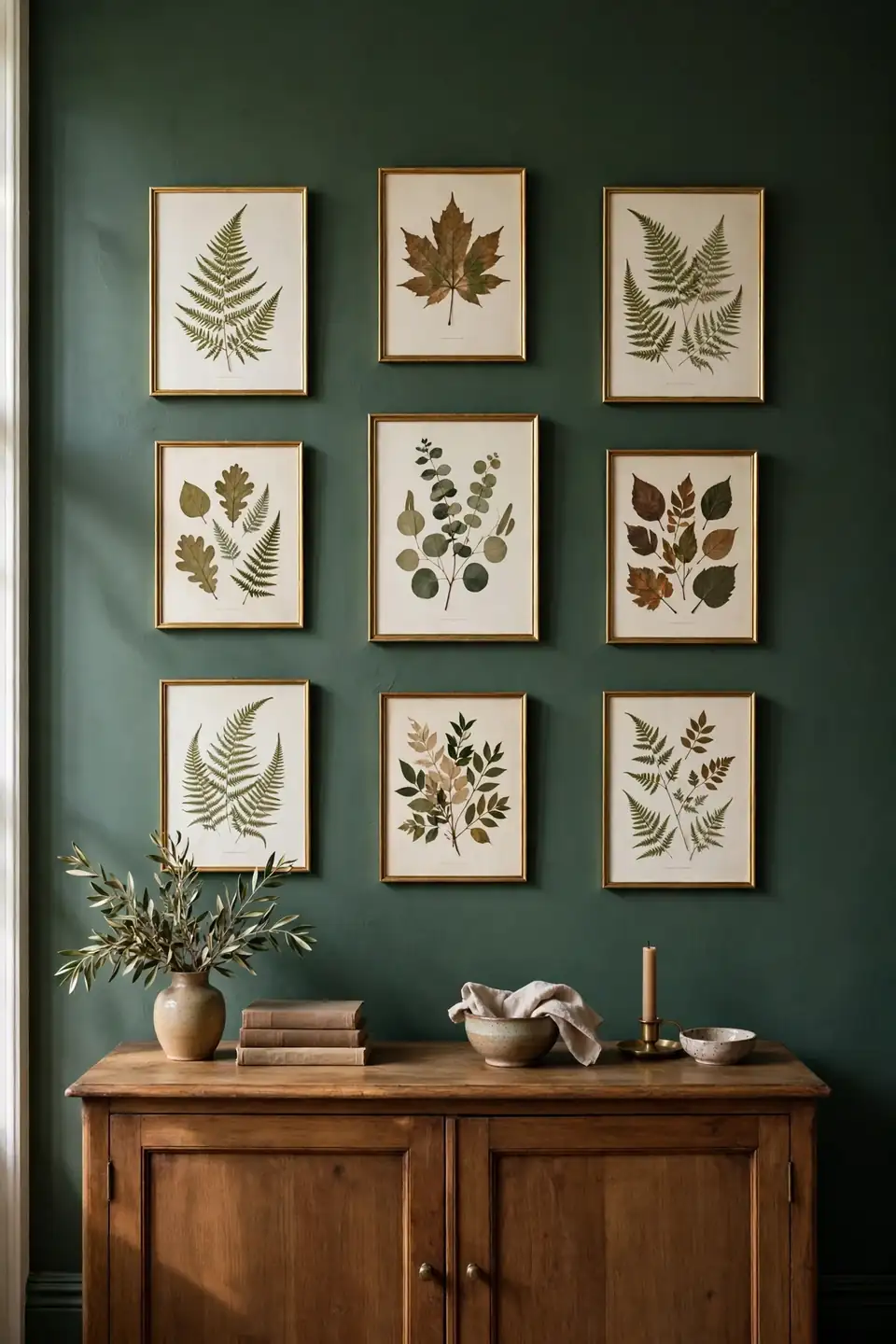
Botanical prints were born for green rooms, since fern and leaf studies echo the wall color without repeating it. Hunt down vintage book plates or print downloads in matching sizes, then frame them all in thin gilt or pale oak so the set reads as one calm collection.
Hang the grid low and close to the table line, where seated guests actually look, instead of floating it at standing eye level. Six to nine frames in a loose rectangle feels generous without crowding. Swap one print each season for a pressed leaf from the garden, and the wall stays alive all year.
Oak Sideboard Styling
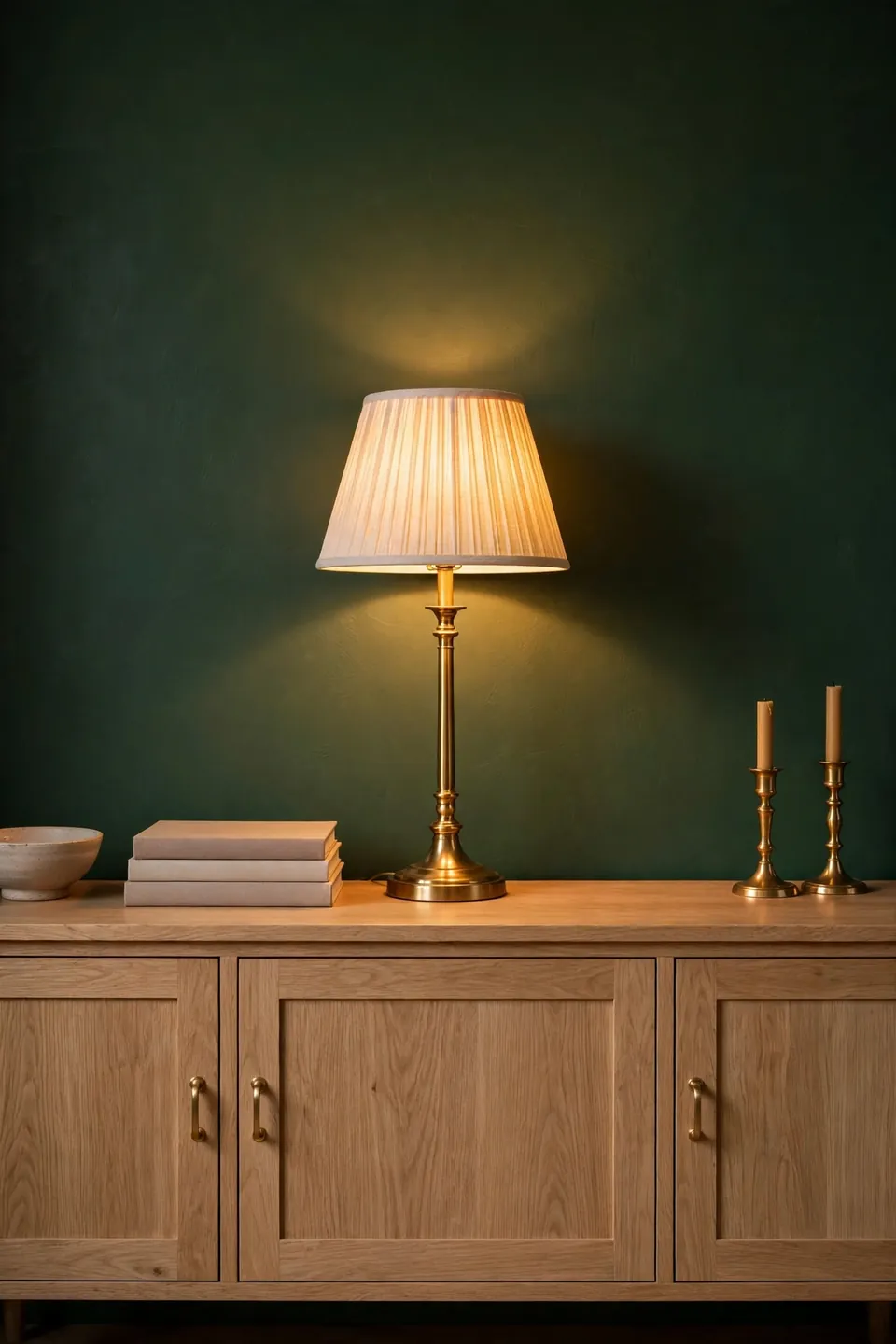
- Anchor the center with one tall piece: a brass lamp or a stacked pair of art books.
- Flank it with lower shapes, bowls and candlesticks, so the top line rises and falls gently.
- Leave a third of the surface empty; bare oak is part of the styling.
- Keep everyday clutter in the drawers, never in piles on top.
- Repeat one metal, brass, across lamp, bowl, and frame for quiet cohesion.
Sideboards in green rooms work hardest at parties, holding drinks, puddings, and spare plates within reach of the table. The same layering instinct behind terracotta and dusty pink bedroom ideas, warm tones against soft neutrals, translates neatly to oak against green. Style it once, photograph the result, and resetting after a party takes five honest minutes.
Candlelit Table Centerpiece

Quick Tip: Cluster candles in odd numbers and mixed heights, but keep every flame below seated eye level. Glow should cross faces and plates, never force guests to peer around a tall candelabra to hold a conversation across the table. Unscented pillars keep food flavors clean.
Candlelight is the cheapest renovation a green dining room can get, turning flat paint into depth and shadow play. Brass and glass holders multiply each flame, while deep green walls drink the light and hand it back warmer. Dinner feels slower, food looks richer, and nobody reaches for the overhead switch. Keep spare tapers in the sideboard drawer.
Green Wainscoting Half Wall

BEFORE: Plain plaster ran floor to ceiling, and the pale walls showed every chair scrape and wine splash at dado height. The room felt unfinished, like a corridor waiting for furniture.
AFTER: Tongue and groove wainscoting, painted the same heritage green up to chair rail height, now takes the knocks and hides them. Cream above keeps the room bright, and the ledge line gives artwork and sconces a natural place to sit.
Half height green is the renter friendly compromise and the family friendly one too, since scuffs land on the painted boards. Cap the rail with a slim oak ledge and the junction turns into a shelf for small frames and glasses during parties.
Linen Tablecloth Layering
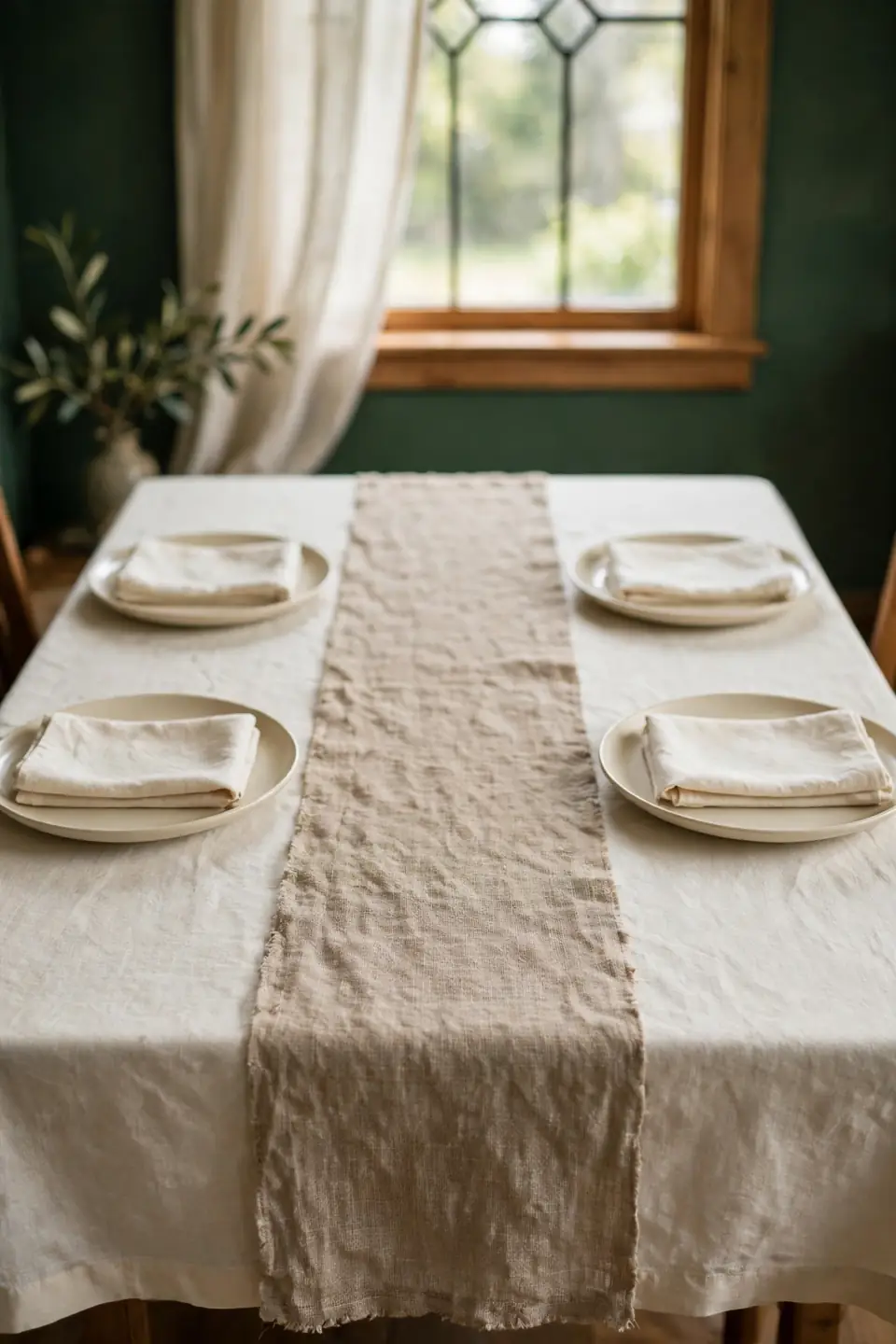
- Start with a plain cream linen cloth that drops thirty centimeters on every side.
- Smooth a narrower runner in soft sage or natural flax down the center line.
- Fold napkins simply and set one on each plate, never stuffed into glasses.
- Place settings on the runner’s edge so both cloth layers stay visible.
- Iron creases out the night before; linen relaxes overnight on the table.
Cloth softens every hard edge in the room and gives heritage green dining room decor its gentle, lived in finish. Layers also hide a less than perfect tabletop while looking deliberate. Keep two cloths in rotation and laundry never delays a dinner invitation.
Chair Fabric Face Off

| Feature | Velvet Seats | Linen Seats |
|---|---|---|
| Evening Look | Deep and plush | Soft and matte |
| Stain Care | Brush and blot | Machine washable covers |
| Cost | Higher per chair | Friendly per chair |
| Best For | Formal dinners | Daily family meals |
Fabric decides whether guests linger or perch, and green rooms flatter both camps. Velvet drinks the light and deepens beside dark walls, while linen keeps lunches casual and wipes clean after children and gravy. Mixed seating, velvet at the heads and linen along the sides, splits the difference gracefully and stretches a budget further than a matched set of eight. Test both fabrics under candlelight before ordering yardage.
China Cabinet Display Rules
Do:
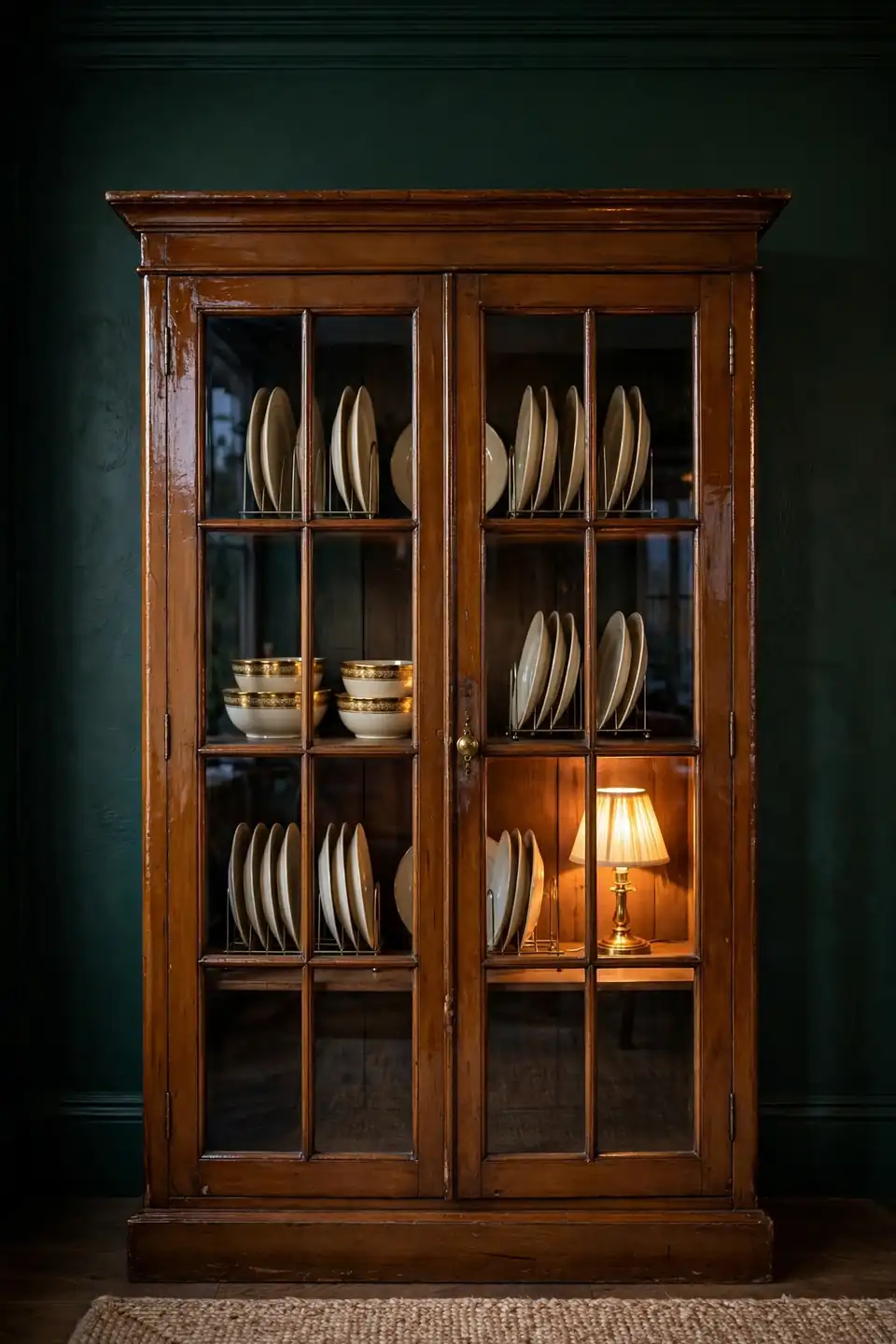
- Group china by color family, creams together, patterns together.
- Stand plates upright in racks so designs face the room.
- Leave gaps between stacks; air makes collections look valuable.
- Add one small brass lamp inside for evening glow.
Don’t:
- Cram every shelf full from edge to edge.
- Mix holiday pieces into the everyday display all year.
- Store cleaning bottles behind the glass doors.
- Hide your best plates away for someday guests.
A glazed cabinet is the room’s quiet museum, and editing is the whole skill. Green walls behind glass shelves deepen every cream plate and gilt rim on show. Rotate pieces with the seasons and the display keeps earning its wall space instead of gathering dust.
Moody Evening Lighting Layers
Cost: Moderate
Time: One evening
Skill Level: Beginner
Best For: Night hosts
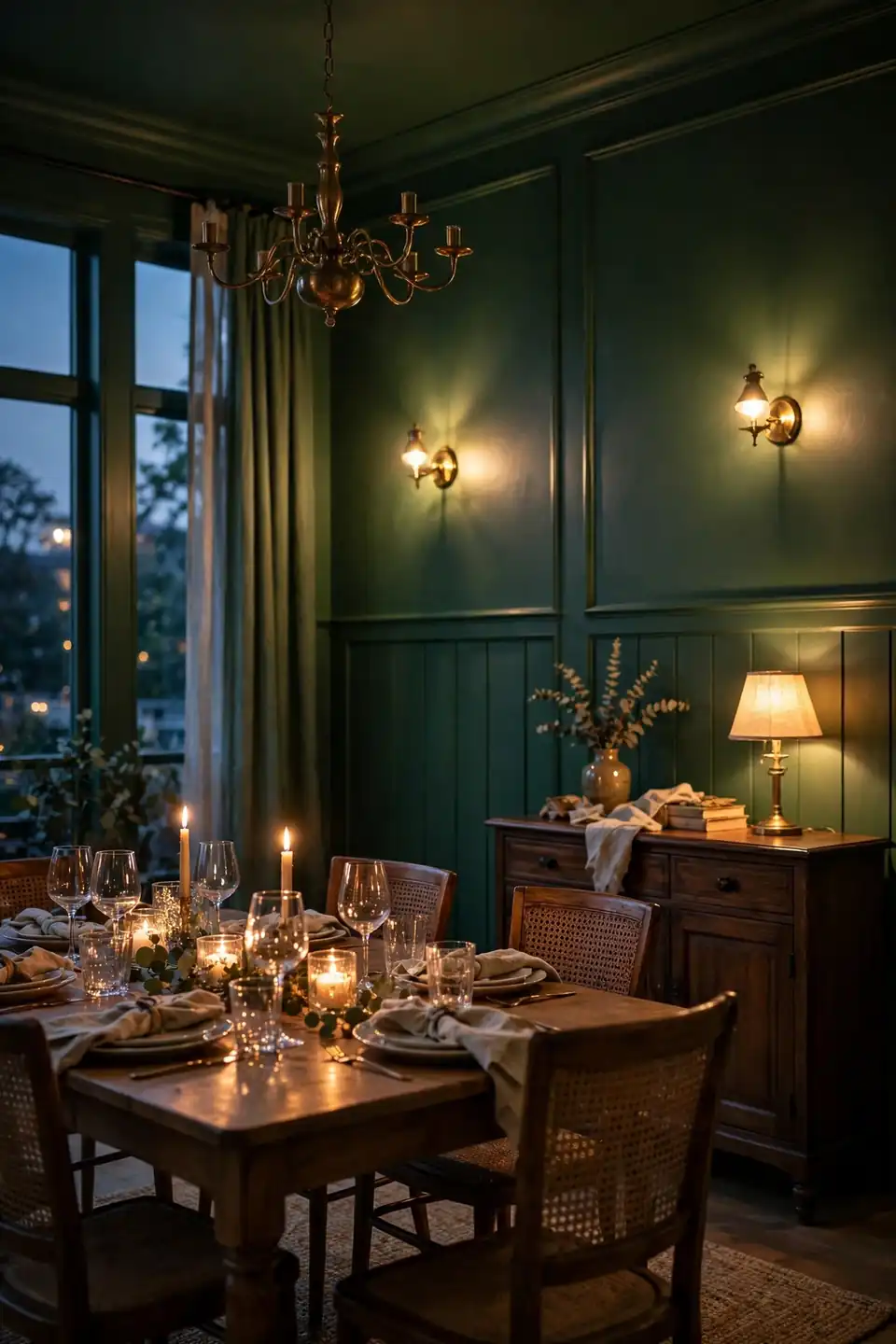
One ceiling light flattens a green room into a waiting room, so build light in layers instead. A dimmed chandelier gives the base, sconces wash the walls, and candles or a small table lamp on the sideboard add the sparkle that glassware catches. Each layer on its own dimmer lets the room shift from homework bright at six to dinner soft at eight. That’s why many experts recommend zones over single switches in dining spaces, and nowhere does the advice pay off faster than against deep green paint. Warm bulbs keep skin tones kind in photos too.
Gold Framed Mirror Accent
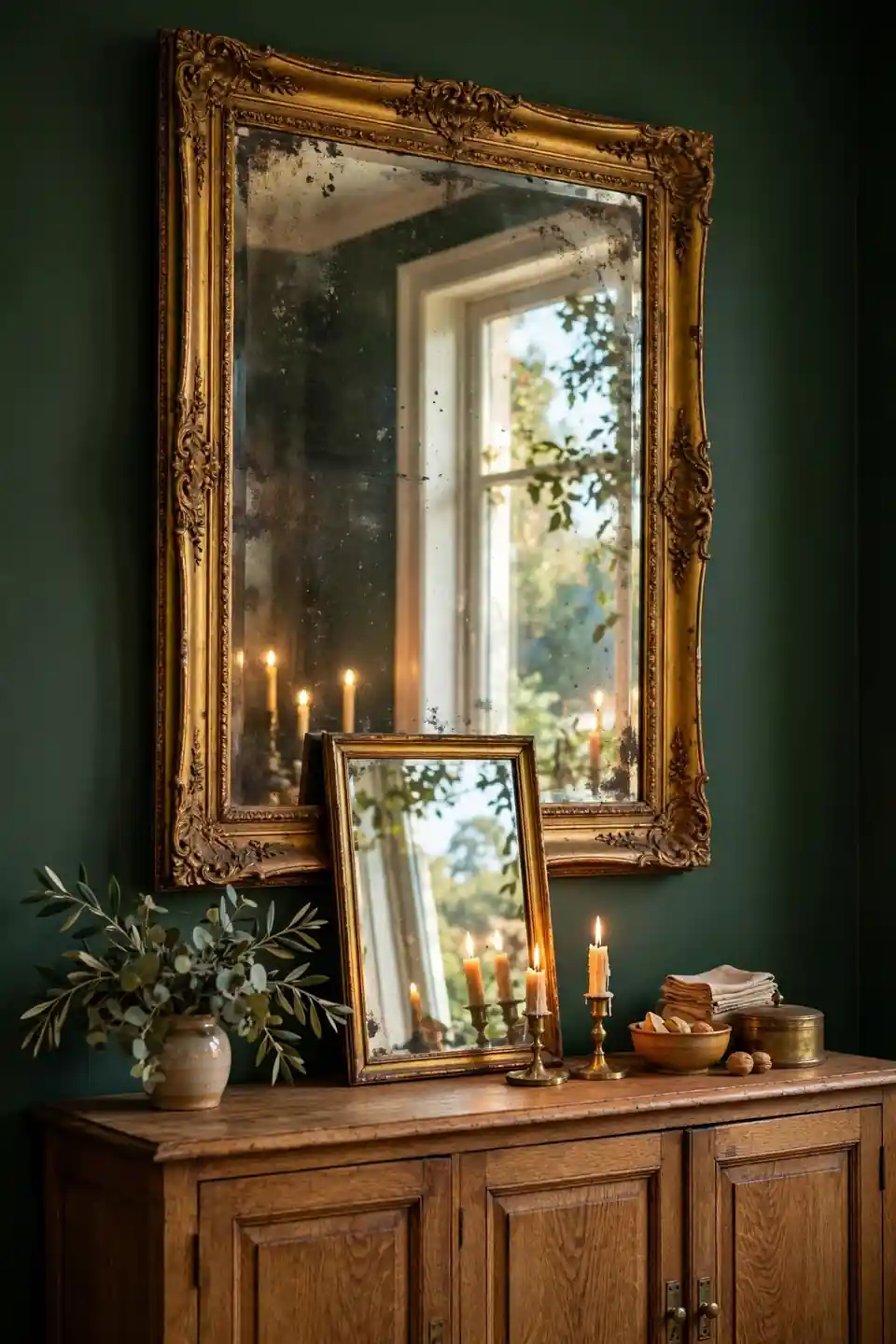
A large gilt mirror over the sideboard doubles every flame and window in the room without adding a single object. The worn gold frame warms green paint the way brass does, and its soft reflections blur the wall’s hard edges after dark. It also bounces morning light into the room’s darkest corner during breakfast.
Hang it slightly lower than gallery height so seated guests catch candlelight in the glass, not the ceiling. Antique mirror with gentle foxing flatters faces and hides smudges between cleanings. Lean a smaller second mirror on the sideboard below for a layered, collected feel that costs one hook and no commitment.
Woven Cane Back Chairs
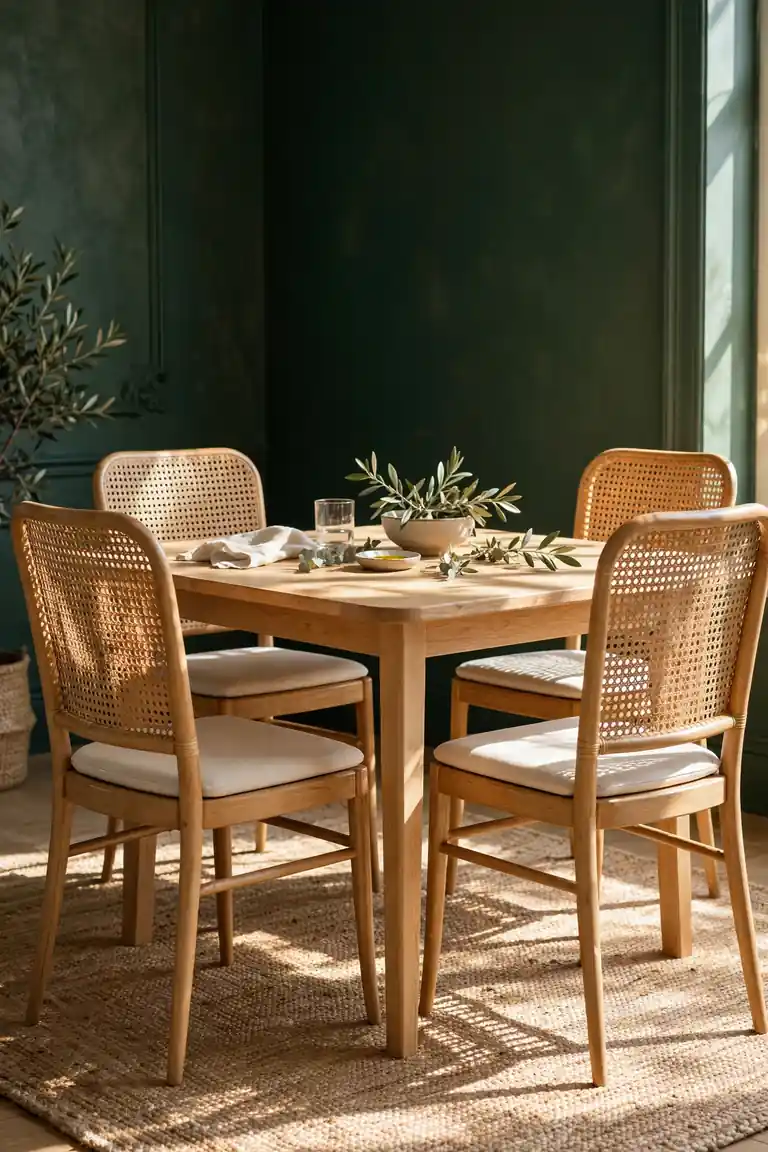
- Pair cane backs with upholstered seats for comfort across long dinners.
- Choose honey toned cane that echoes the oak table grain.
- Check webbing yearly and re cane any panel that sags or splits.
- Add a slim cream cushion when elderly guests join the table.
- Keep one spare chair in the hall for surprise extra guests.
Cane keeps a dark room breathing, because light passes through the weave and chairs never read as heavy blocks around the table. The pattern also repeats the room’s natural textures, jute, linen, oak, in one more voice. Vintage sets turn up constantly at estate sales, usually needing nothing but soap and patience.
Fresh Greenery Table Garland
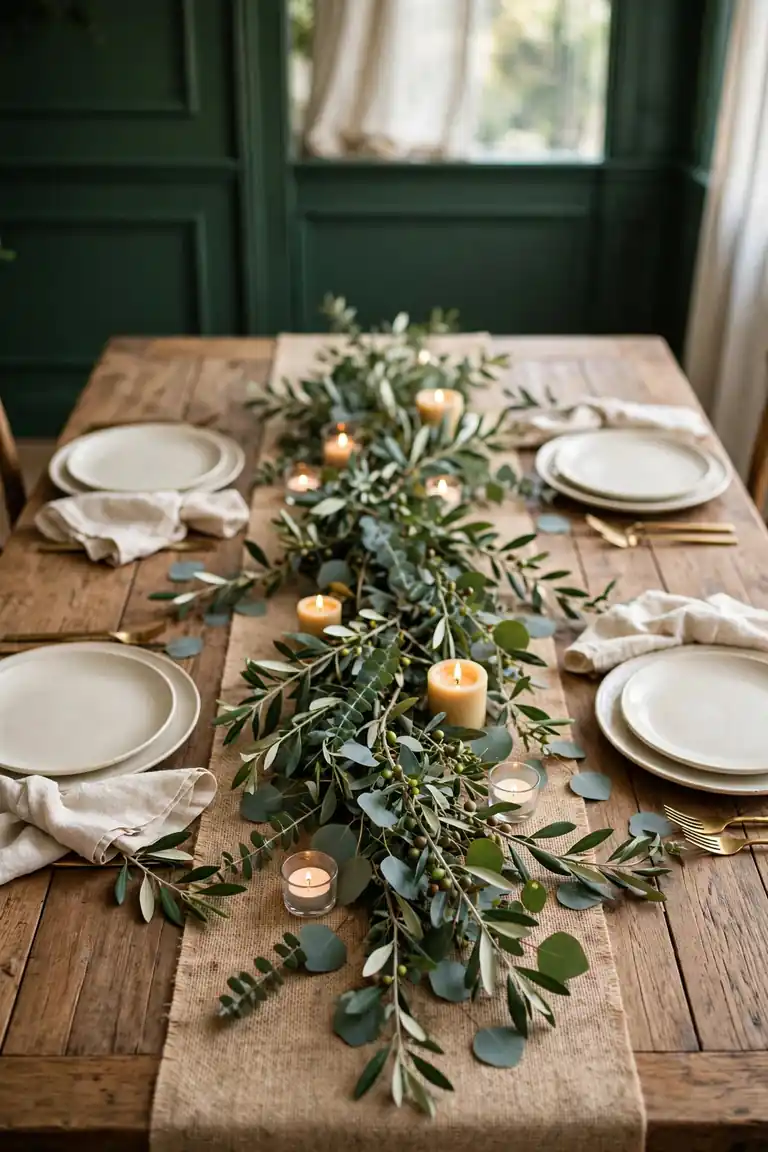
Quick Tip: Build garlands on a strip of burlap first, then lift the whole runner onto the table in one move. Greenery stays arranged, crumbs shake out outside, and the cloth underneath survives the evening unstained. Make it the morning of the dinner, never the night before.
Loose greenery down the table center brings the garden into a green room without another vase competing for space. Eucalyptus, olive branches, and herbs from the kitchen garden all hold up for hours without water. Tuck candles between the leaves, keep flames clear of dry edges, and the whole table smells faintly of the outdoors.
Vintage Rug Under Table
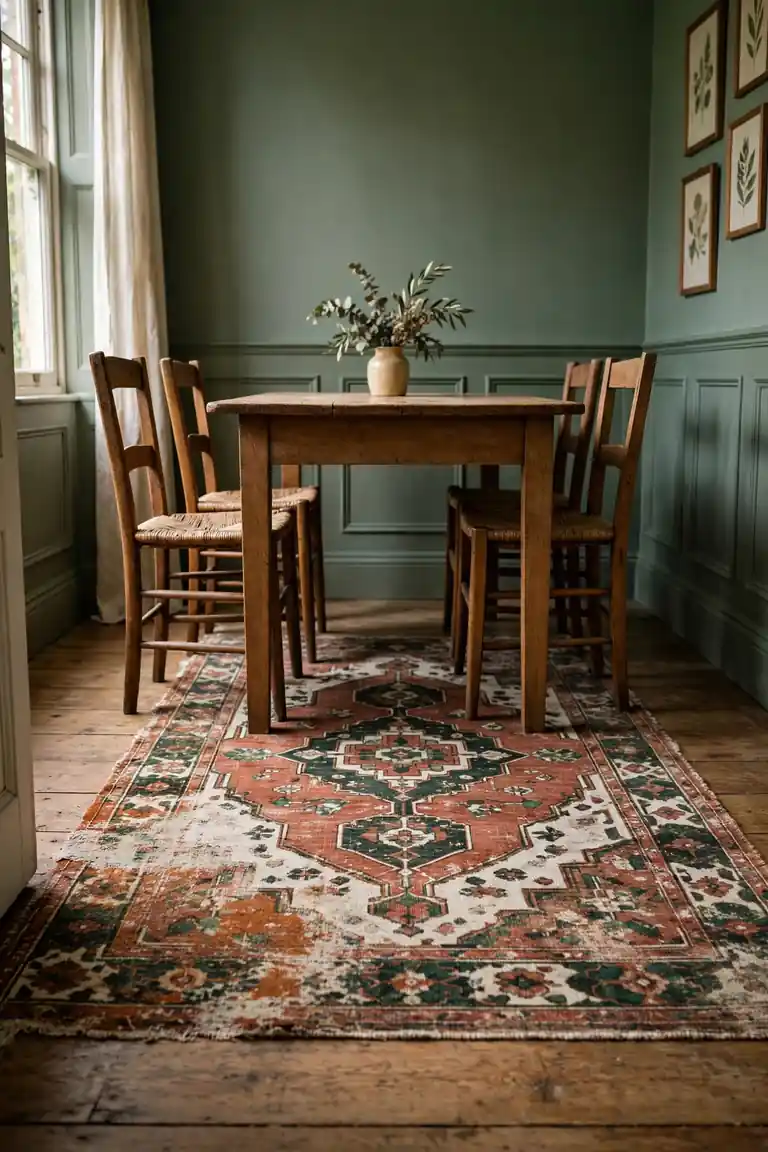
BEFORE: Bare boards echoed every chair scrape, and dropped cutlery rang through the whole house. The table seemed to float on the hard floor, disconnected from the green walls around it.
AFTER: A faded vintage rug in rust, cream, and deep green now grounds the setting, its worn pattern tying the walls to the floor. Chairs glide quietly, glasses stop chiming, and the room sounds as calm as it looks.
Old rugs forgive red wine in a way new pile never will, since the pattern hides a multitude of dinners. Keep the palette faded rather than bright, and the rug supports the walls instead of arguing with them. A flat weave slides chairs best.
Seasonal Table Setting Swaps
- Spring: swap in floral napkins and a small jug of garden stems.
- Summer: strip back to bare oak, cream linen, and one bowl of lemons.
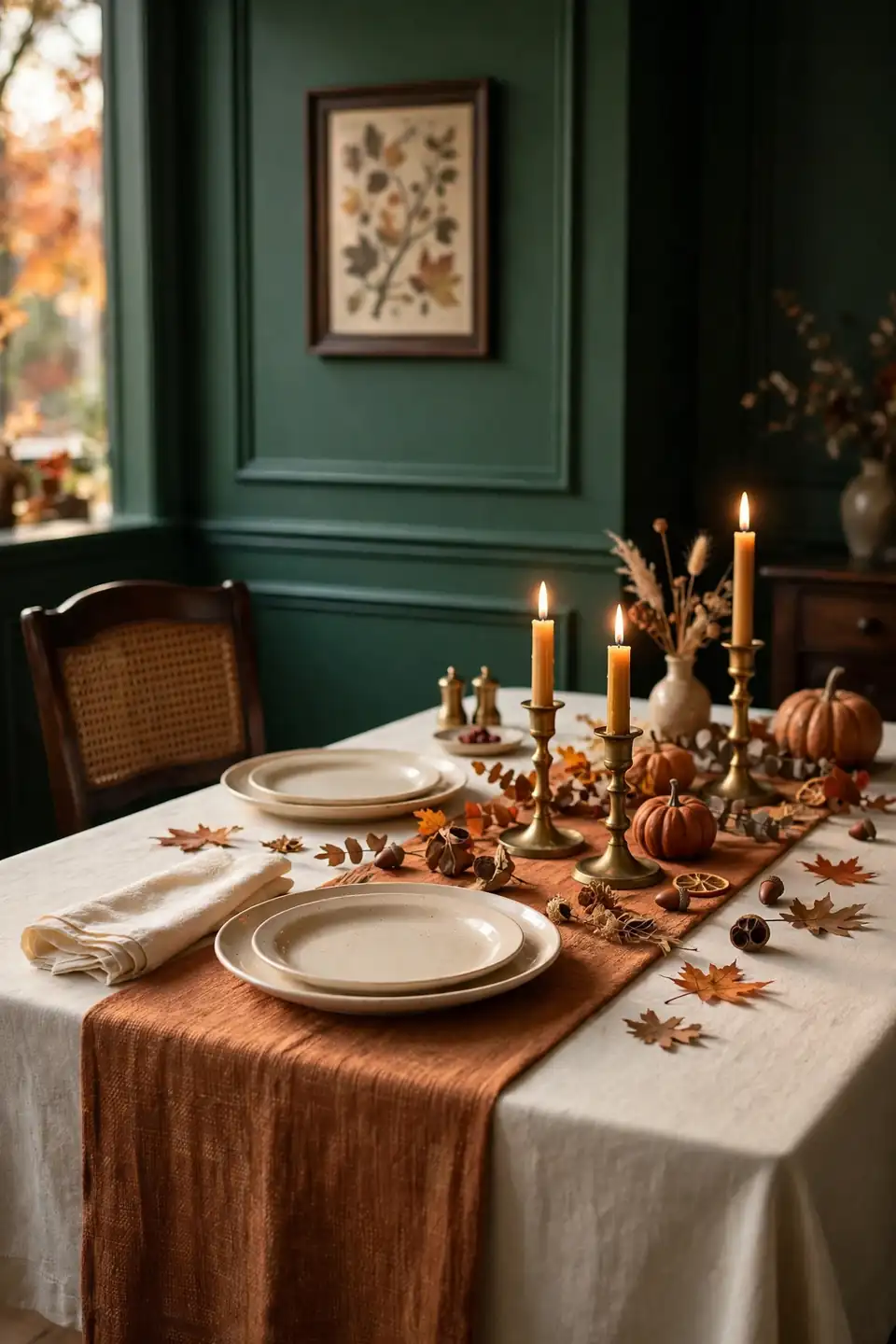
- Autumn: layer rust toned runners and brass candlesticks over the base setting.
- Winter: add velvet ribbon ties, pinecones, and the tallest candles of the year.
- Store each season’s pieces in one labeled box inside the sideboard.
One strong green room can host four different tables a year with nothing but textile and candle swaps. Guests read the changes as effort, yet each reset takes under an hour once the boxes exist. I’ve seen this work well in many cases where a full redecoration was never on the table.
Paint Finish Comparison
| Feature | Eggshell Finish | Satinwood Finish |
|---|---|---|
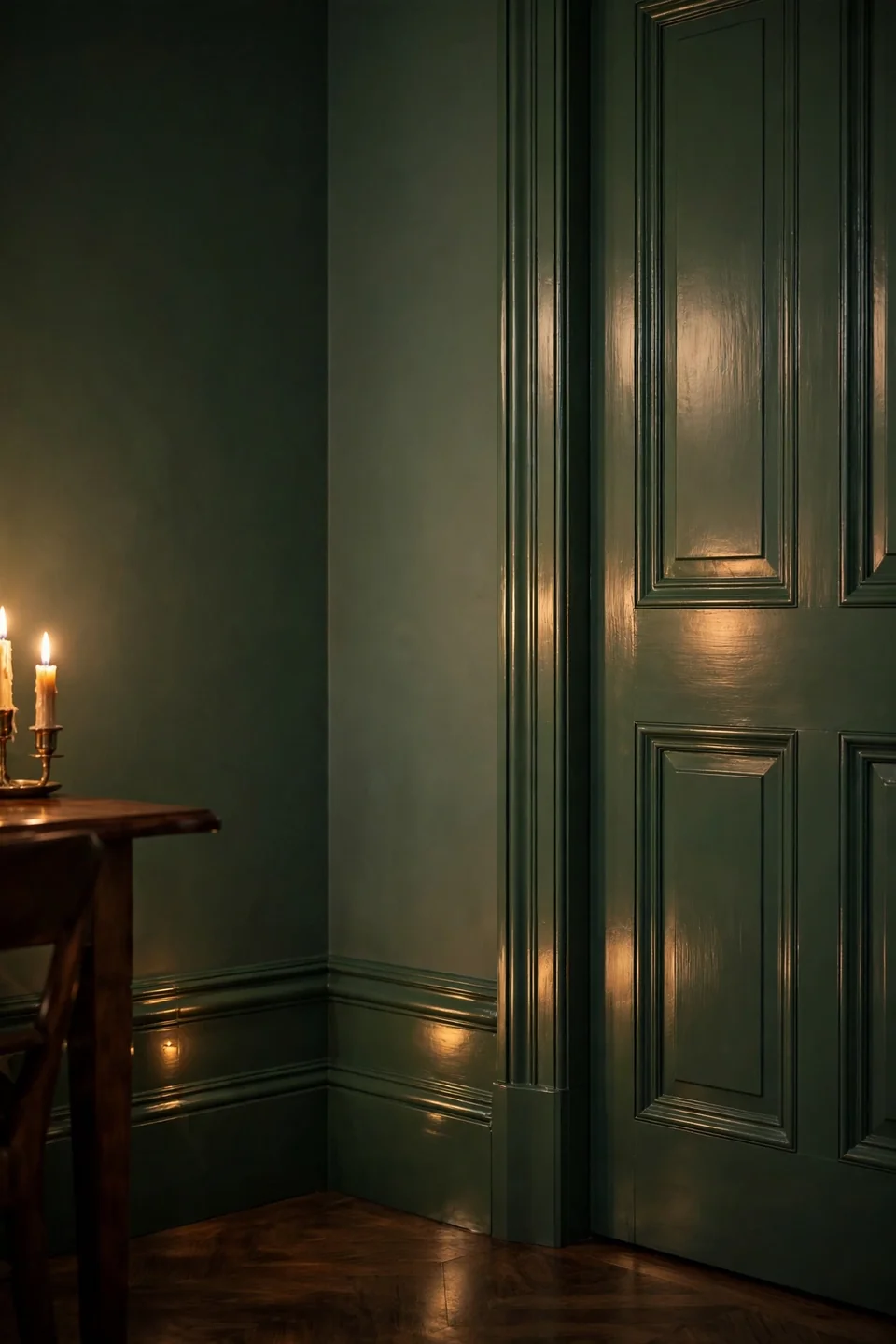
| Sheen | Soft, low glow | Gentle, polished shine |
| Scuff Care | Marks show sooner | Wipes clean easily |
| Best On | Walls and ceilings | Woodwork and doors |
| Light Play | Calm and flat | Reflects candlelight warmly |
Finish changes color as surely as the paint name does, because sheen decides how much light the green throws back. Eggshell keeps walls moody and hides tired plaster, while satinwood on the skirting, doors, and wainscoting draws a clean outline around the room. The classic pairing is both: matte depth above, wipeable shine below. Order tester pots in each finish, since the same green can read two shades apart once dry.
Small Dining Room Greens
Do:
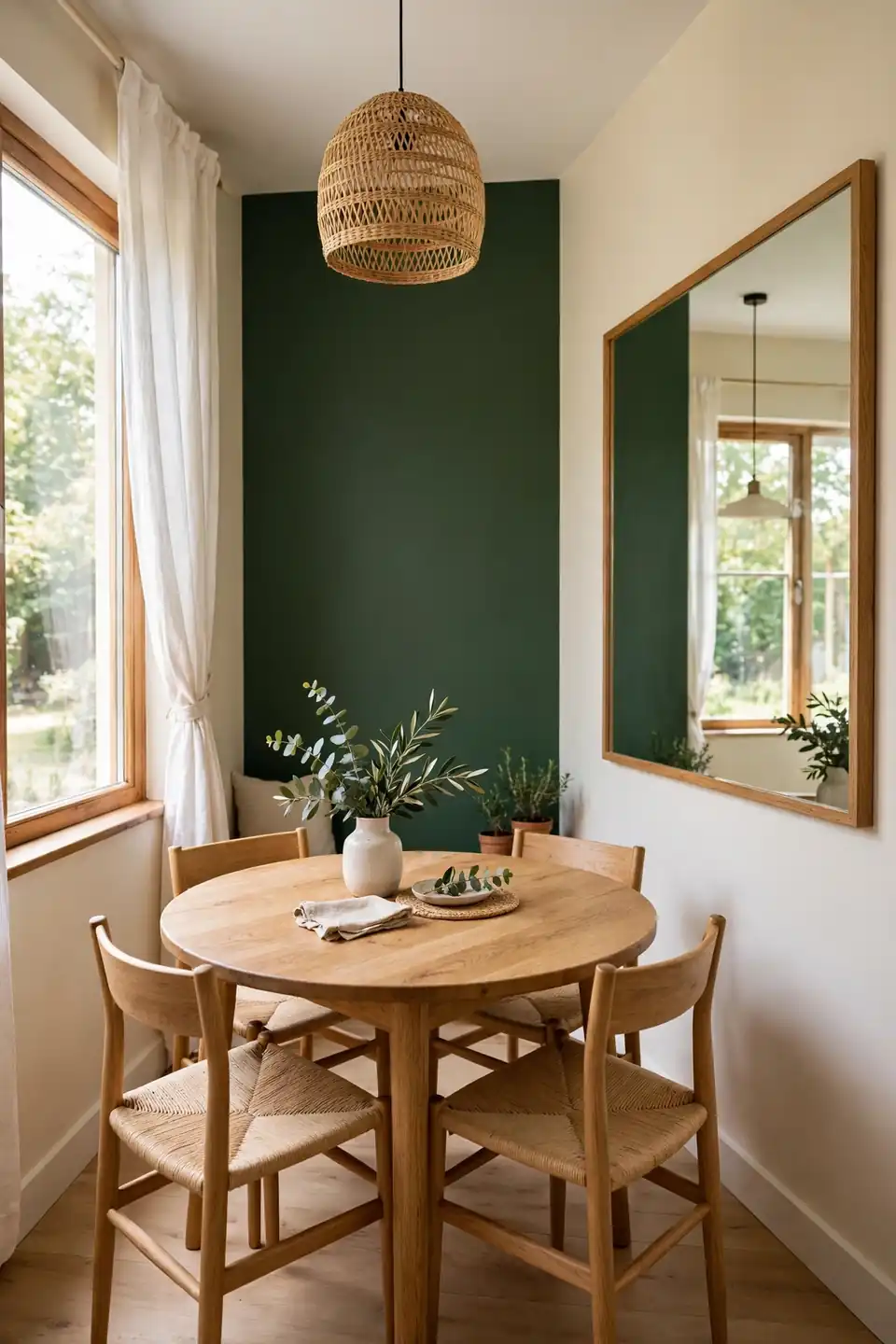
- Paint one short wall green and keep the rest cream.
- Choose a round table that hugs the small footprint kindly.
- Hang the largest mirror the blank wall can hold.
- Pick armless chairs that slide fully under the table.
Don’t:
- Paint every wall dark in a windowless box room.
- Buy a six seater that leaves no walking gap.
- Hang a wide chandelier that crowds the low ceiling.
- Add tall centerpieces that split the table in two.
Small rooms take green beautifully when the color works as an accent wall rather than a full wrap. Depth on one side makes the space feel intentional, while pale surroundings keep lunch bright. Scale, not shade, is where small dining rooms usually go wrong.
Conclusion
Deep green asks for little: warm metal, pale seats, honest wood, and light at more than one height. Start with a single wall or a pair of sconces, and heritage green dining room decor will repay you at every meal, from Tuesday pasta to the year’s biggest feast. Save these ideas on Pinterest before your next paint shop visit, try the smallest one this weekend, and share the results with the people who fill your table. Good food deserves a beautiful room. I’ve seen how small changes like these can completely shift the way a space feels.