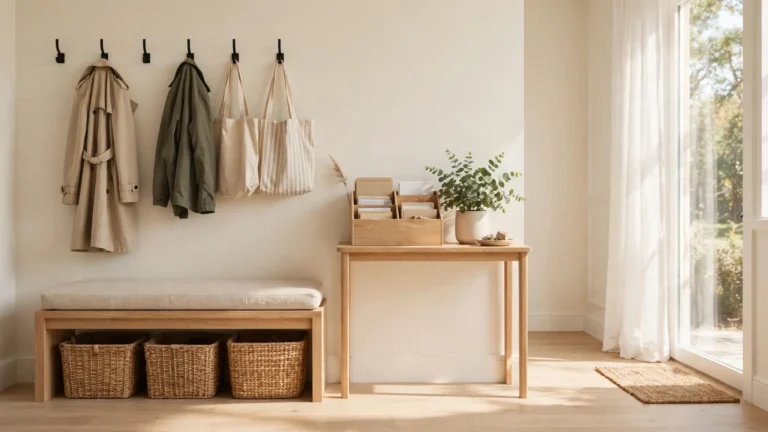
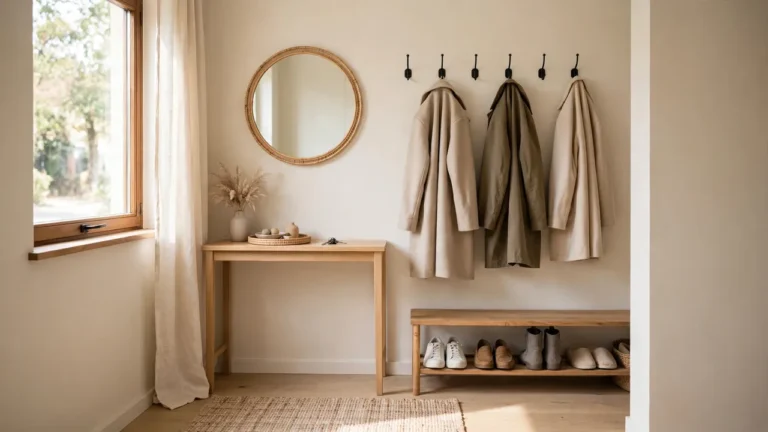
23 Very Small Entryway Ideas to Maximize Every Inch of Space
Some entryways are barely wider than the door that opens into them, yet they still have to catch coats, keys, shoes, and mail every single day. The good news is that very small entryway ideas do not ask for more square footage; they ask for smarter inches. A slim console, a row of hooks at the right height, and one mirror can turn a pass-through strip into a landing that actually works.
Start by treating the entry like the hardest-working corner of the home, the same way french country bedroom layouts treat the bed wall as the anchor everything else answers to. Measure the wall, note where the door swings, and give every daily item one assigned home. In my experience, a tiny entry fails from clutter, never from size.
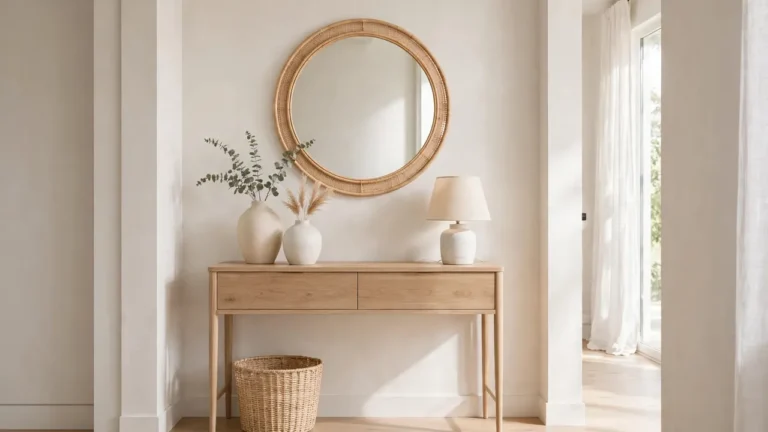
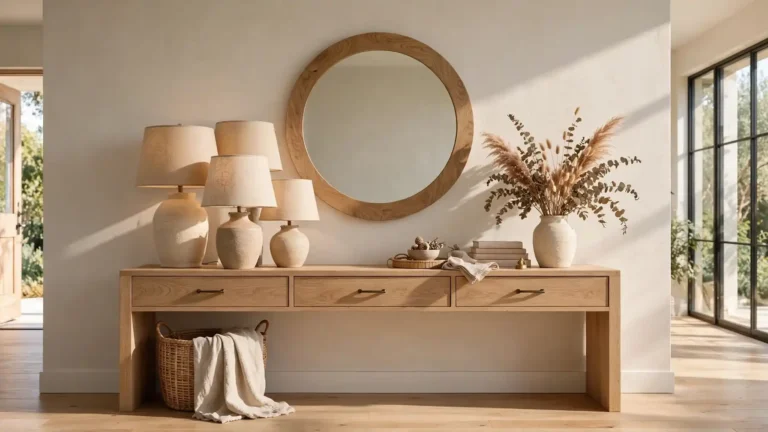
Slim Console Table Landing

A console barely deeper than a shoebox can still run a whole entry. Look for a table ten to twelve inches deep with a lower shelf, and push it flat against the wall beside the door. Keys land in a small bowl on top, mail slides underneath, and the surface stays clear enough to set down a coffee without a shuffle.
Height matters as much as depth here. A console around thirty two inches tall lets you drop bags at hip level instead of bending, and its legs keep the floor visible, which makes the strip feel wider. In my experience, one narrow table beats three scattered stools every time, because a single landing strip gives the eye one calm line to follow.
Peg Rail Hook Wall
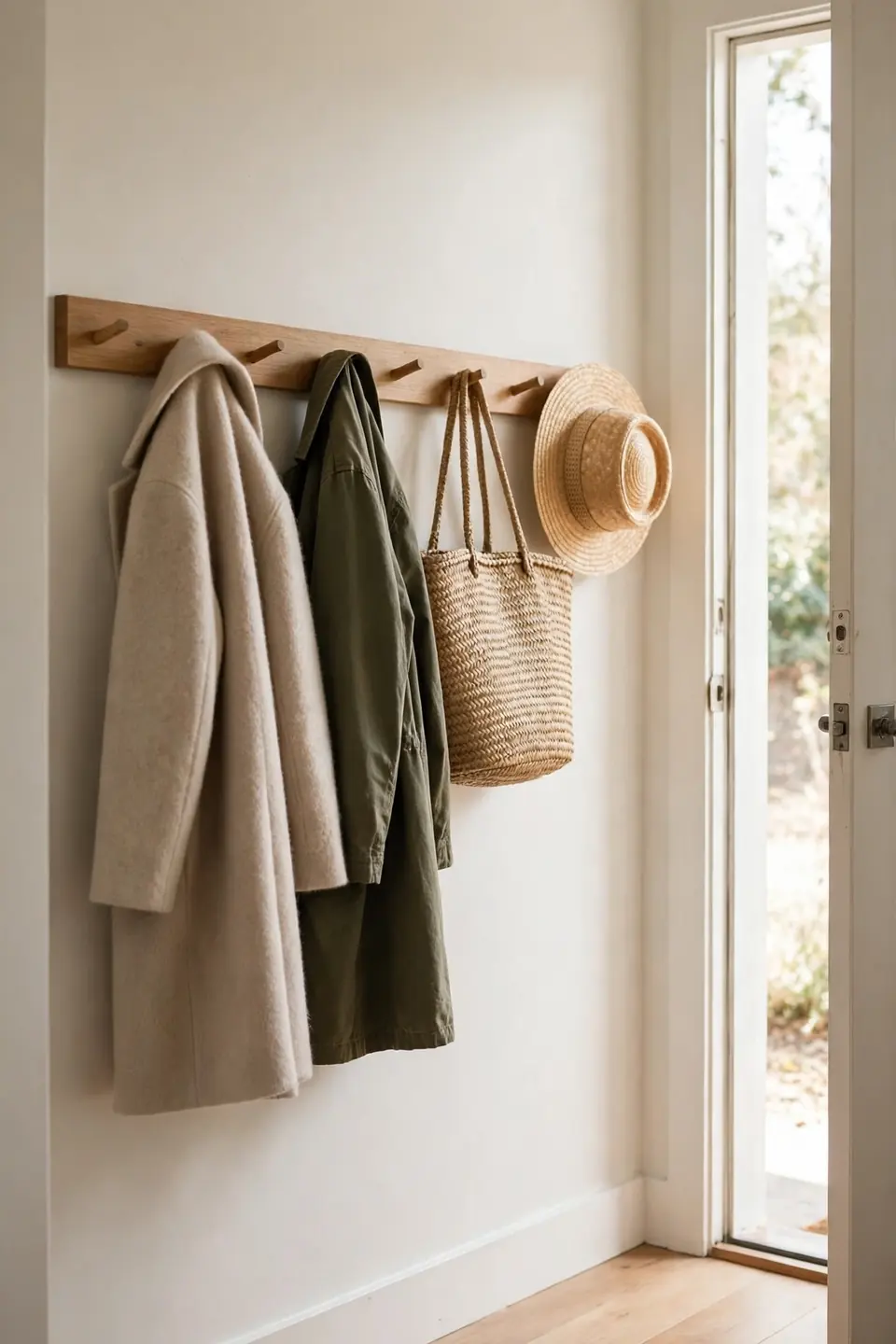
- Mount the rail at shoulder height so coats clear the floor.
- Space pegs six inches apart for bags, hats, and umbrellas.
- Give each person two pegs and no more.
- Hang a small basket from one peg for gloves and scarves.
- Paint the rail the wall color for a built in look.
A peg rail earns its keep because it grows sideways instead of outward, which is exactly what a narrow entry needs. Shaker style rails suit almost every decor, and the line of hanging items reads as texture rather than mess when the pegs stay evenly loaded. Keep the lowest peg free for guests.
Mirror Above The Console
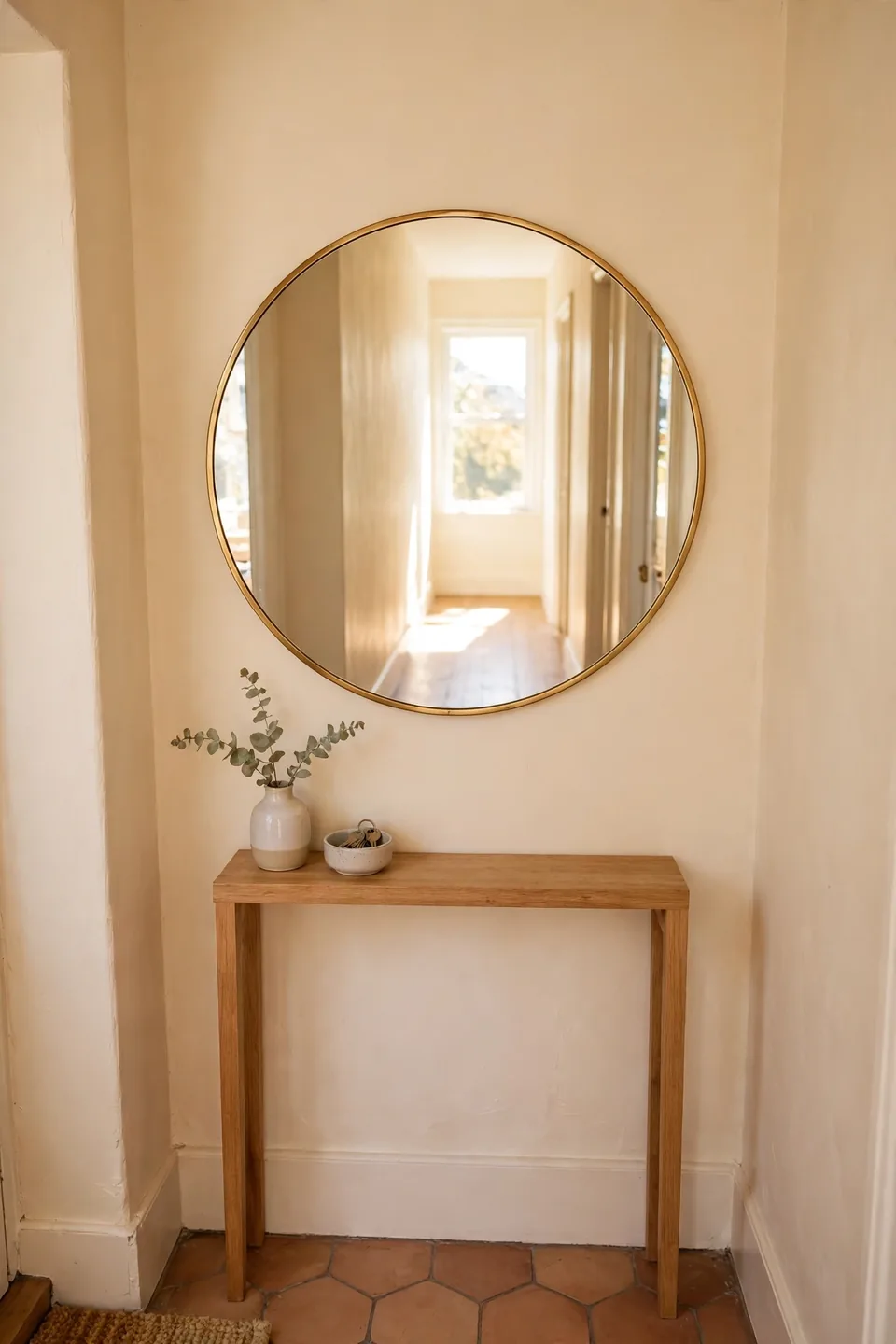
Quick Tip: Hang the mirror so its center sits at eye level, about fifty seven inches from the floor. A mirror even slightly too high turns into decoration; at the right height it becomes a final outfit check, a light bouncer, and the easiest way to double a tiny wall visually.
Round mirrors soften the hard angles of a narrow hall, while an arch shape echoes the doorway and feels intentional. Either way, keep the frame slim. A chunky frame eats the very inches the mirror is supposed to give back, and in a tight entry every half inch shows.
From Pileup To Calm
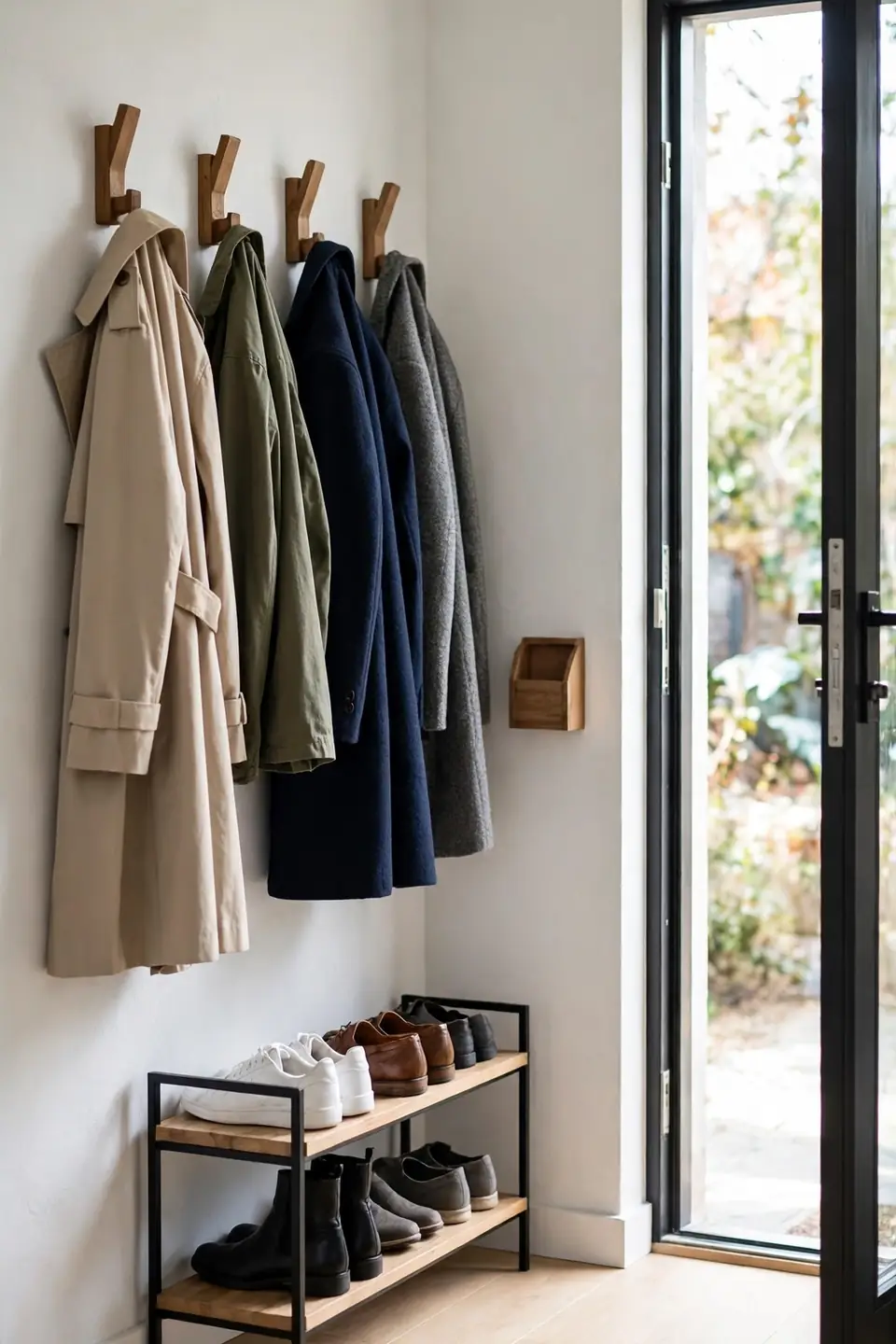
BEFORE: Coats landed on a chair parked in the corner, shoes formed a dam across the doorway, and keys vanished into whichever pocket or pile they met first. Guests squeezed sideways past the mess, and the front door felt like an obstacle course.
AFTER: Four hooks took over coat duty, a two tier rack corralled the shoes along one wall, and a wall mounted tray caught keys at hand height. The chair left, the floor reappeared, and the door now opens onto clear space.
Nothing here cost much or took long; the change came from assigning each category a single home. Pileups happen when items share vague territory. Give coats, shoes, and keys separate addresses on the same wall, and the entry starts behaving like a much bigger one.
Five Minute Entry Reset
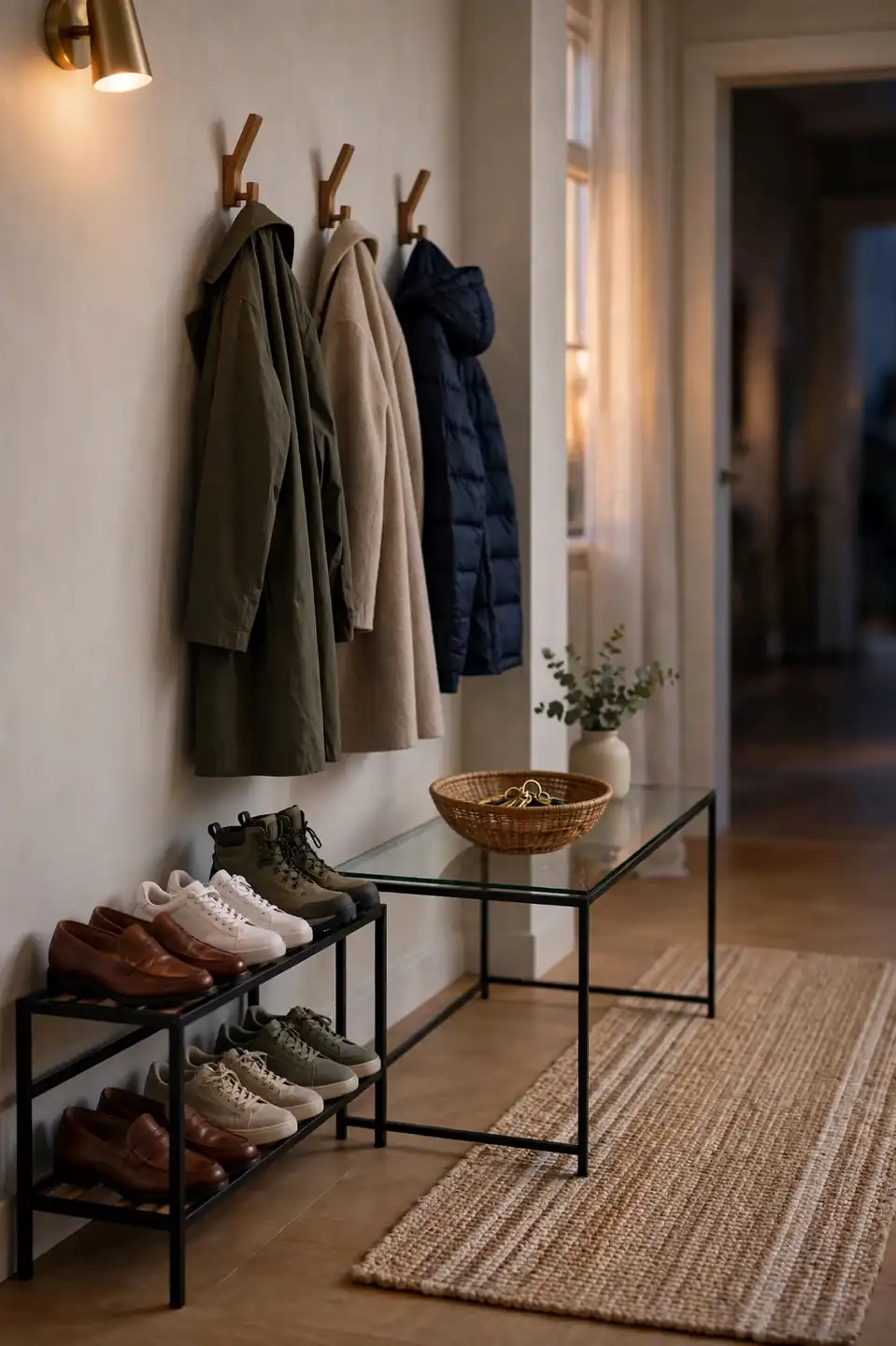
- Set a timer for five minutes and start at the door itself.
- Return every shoe to its rack, basket, or cabinet slot.
- Hang coats and bags on their assigned hooks, nothing draped.
- Empty the key bowl of receipts, coins, and stray clutter.
- Wipe the console surface and shake the runner outside.
A reset this short works because the entry never gets the chance to slide far. Five minutes each evening protects the system you built, and mornings stop starting with a hunt for shoes. I’ve noticed the habit sticks best when it pairs with an existing one, like locking up for the night.
Bench Versus Wall Shelf

| Feature | Bench | Wall Shelf |
|---|---|---|
| Floor space | Uses twelve inches of depth | Uses zero floor space |
| Seating | Seats one comfortably | No seating at all |
| Storage | Baskets fit beneath it | Holds small items only |
| Installation | None, just place it | Needs studs and a drill |
| Best for | Homes with kids | Renters and narrow halls |
Seating usually wins the argument in family homes, because lacing shoes on a bench beats hopping in a doorway. In the narrowest halls, though, the floating shelf keeps the floor completely clear and still catches keys and mail. Measure your width honestly before deciding; eighteen spare inches is the honest dividing line between the two.
Shoe Storage That Works
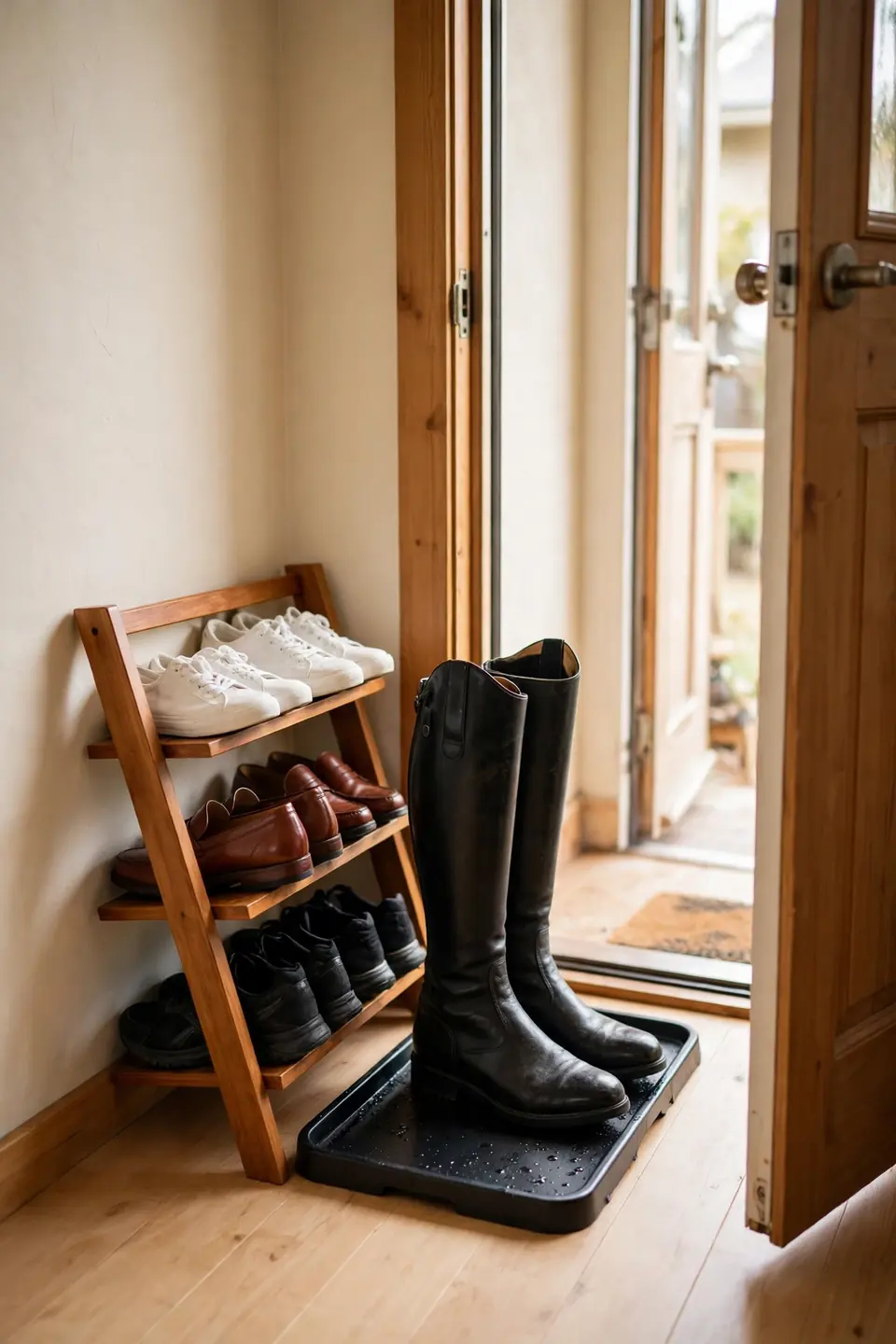
Do:
- Keep only two pairs per person by the door.
- Stand boots upright on a drip tray in winter.
- Angle a slim rack so heels clear the wall.
Don’t:
- Stack pairs in a heap by the door.
- Block the door swing with a wide rack.
- Store every pair the family owns in the entry.
Shoes multiply at doors because the doorway feels like a pause button on the way in. A strict two pair rule, backed by a closet elsewhere, keeps the entry rack honest. The pairs that stay should be the ones worn daily; everything else is just visiting and should not take up residence.
Tiny Entryway Numbers
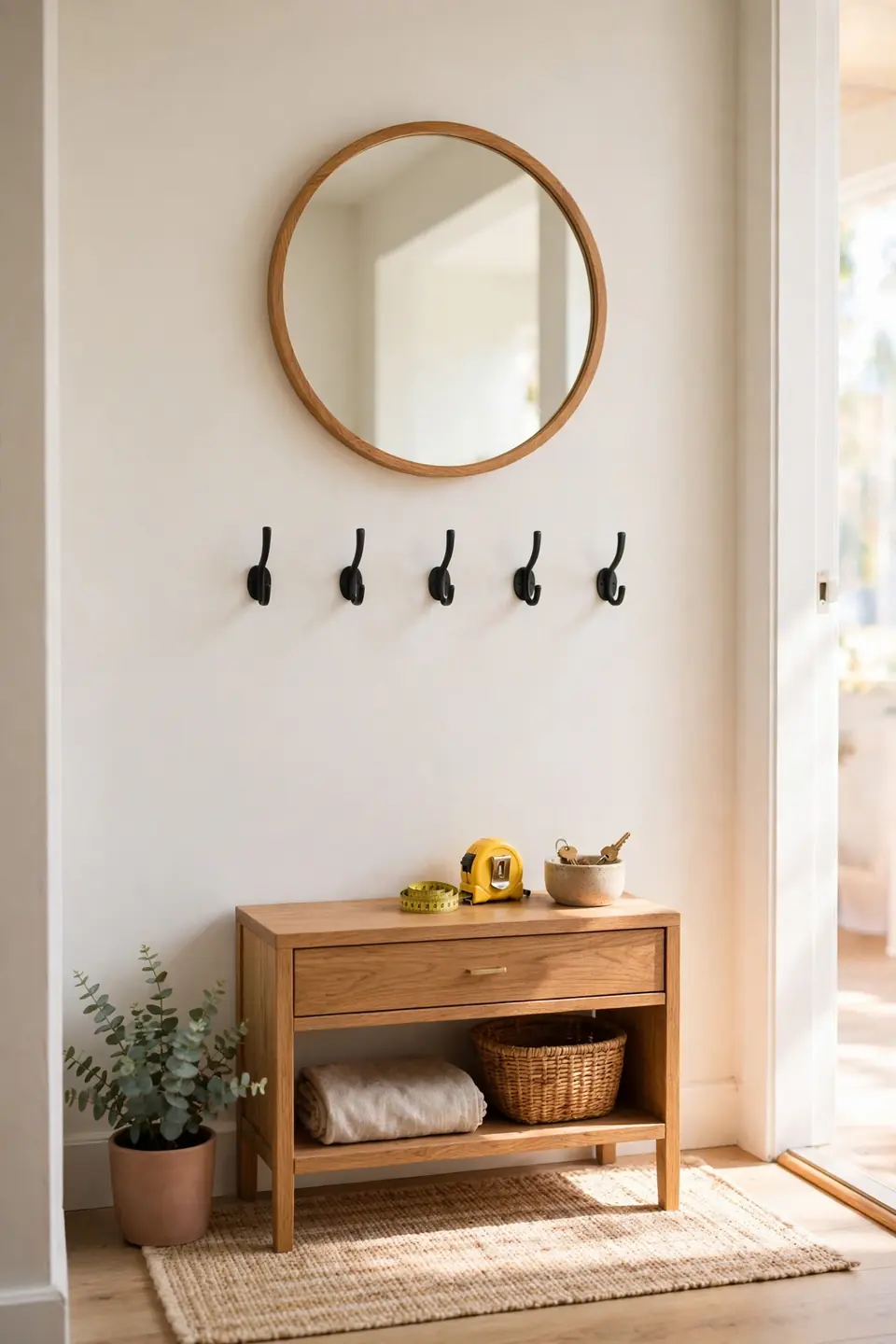
Console Depth: Ten to twelve inches keeps the walkway fully open for passing.
Hook Height: Fifty eight inches suits most adults and older kids well.
Mirror Size: Twenty four inches wide reflects light without crowding the wall.
Best For: Planning the whole layout before buying anything at all.
Numbers protect small spaces because guesses tend to run big. A console two inches too deep steals the walkway; hooks six inches too high leave coats on chairs. Write the measurements on painter’s tape stuck inside a cabinet door, and every future purchase gets checked against them before it crosses the threshold.
Floating Shelf Drop Zone
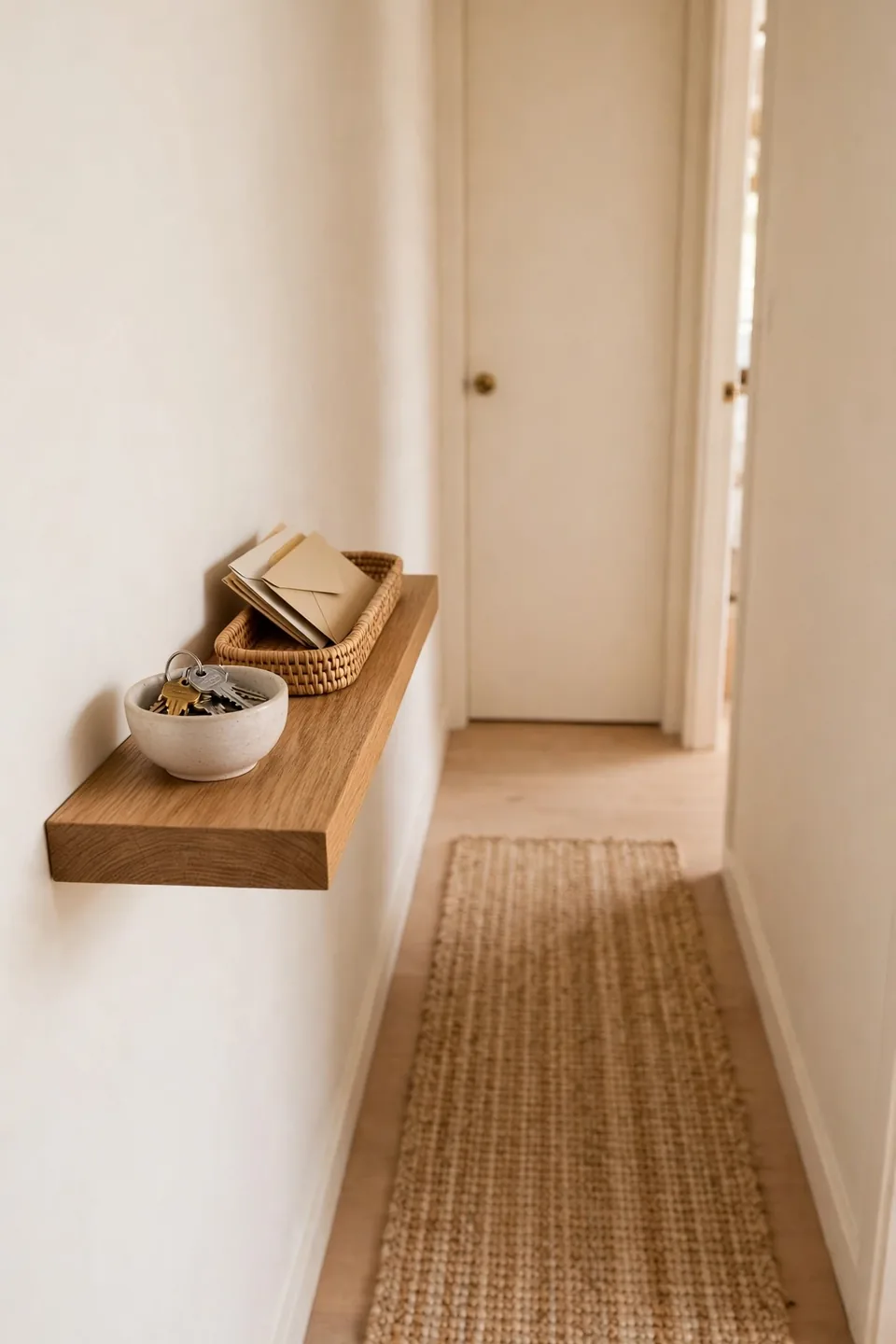
A floating shelf at hip height does the work of a console without touching the floor. Mount one sturdy shelf, add a small bowl for keys and a narrow tray for mail, and the daily drop has a border it cannot cross. Everything that lands outside the tray goes somewhere else, no exceptions.
Because the floor stays bare, the entry sweeps in seconds and reads as hallway rather than storage. Choose a shelf with a small lip or raised edge if your household drops items at speed. Painted to match the wall, it nearly disappears; in warm oak, it becomes the one deliberate accent the little space needs.
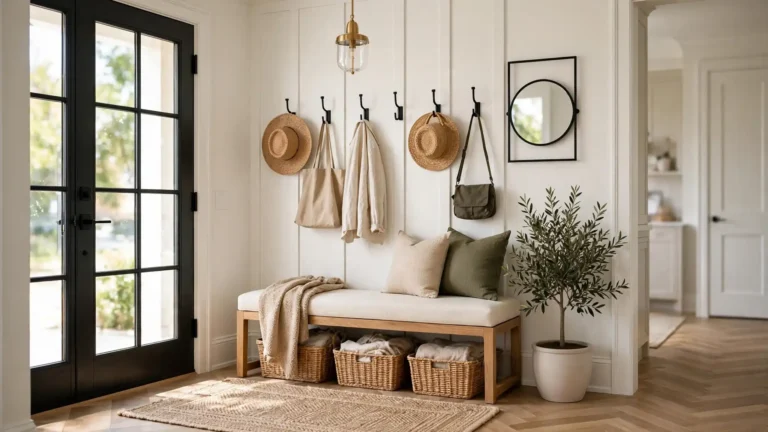
Narrow Bench With Baskets

- Pick a bench no deeper than twelve inches, so the walkway stays generous.
- Slide two woven baskets beneath it, one for shoes and one for scarves.
- Leave a third basket empty for guests and deliveries.
- Rest a slim cushion on top to make the seat genuinely inviting.
- Keep the surface clear between uses, or clutter moves in permanently.
A bench earns double pay in a small entry: seating above, storage below, and a hard limit on how much can pile up. That built in limit is the real feature. When the baskets fill, something leaves, and the entry keeps its calm instead of slowly becoming a closet with a door.
Arch Mirror Light Trick

Quick Tip: Place the arch mirror opposite or beside the nearest window, never on the same wall as the light source. Angled toward daylight, it throws brightness deep into the hall and makes the far wall read as more distance than the tape measure admits. It also gives tall households a full view without ducking.
The arch shape earns its popularity honestly: the curve softens a boxy hall and echoes the rounded lines of doorways. Keep the frame thin and the glass large. A wide frame on a small wall reads as decoration first, while a slim frame lets the reflection do the decorating instead.
Door Swing Space Saver
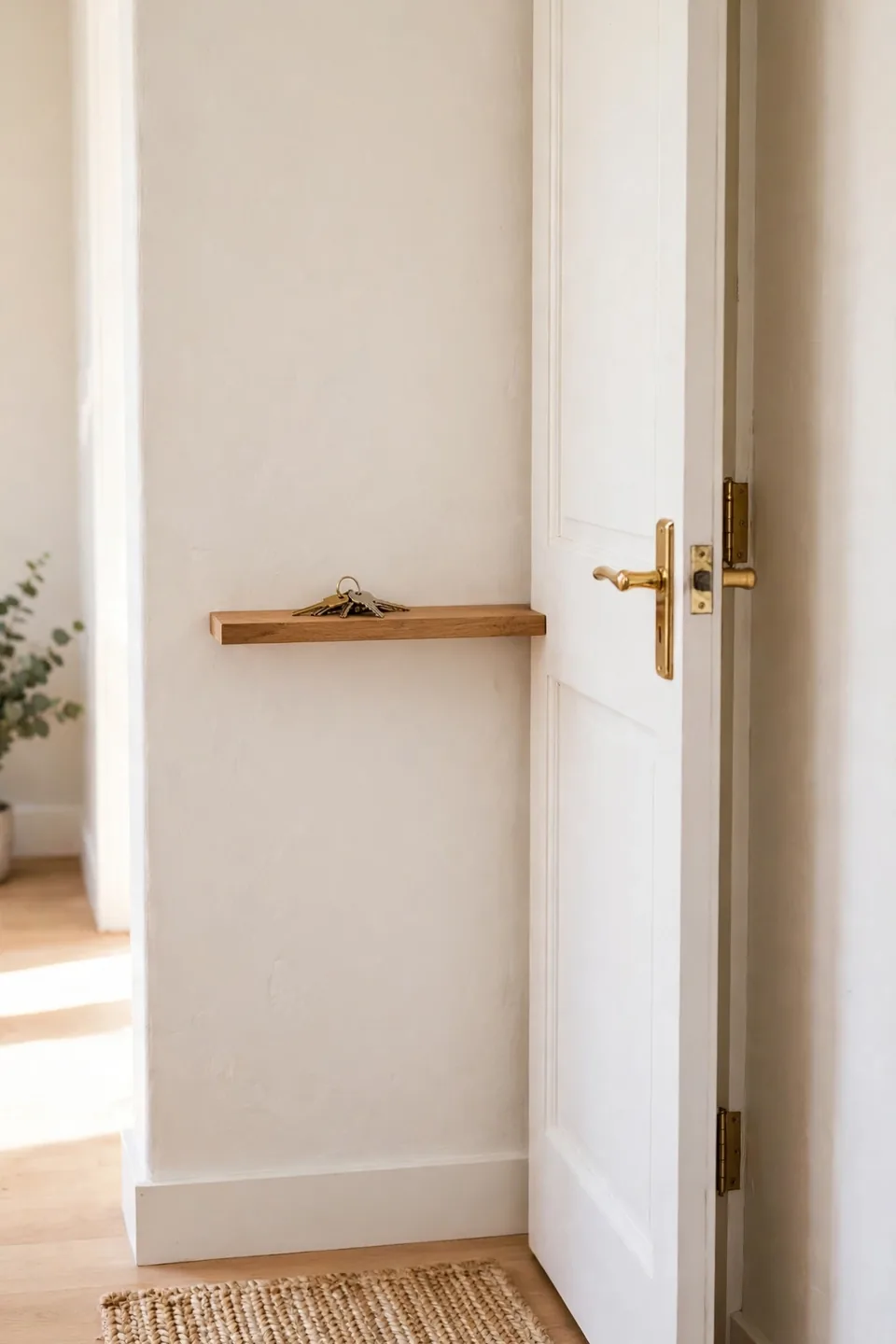
BEFORE: A chunky cabinet stood right where the front door swung open, so the door stopped at seventy degrees and every arrival began with a squeeze. Groceries bumped the corner daily, and the cabinet door could never open fully either.
AFTER: The cabinet moved to the flat wall past the swing, replaced by a shallow shelf inside the door’s arc. Now the door opens flat, the shelf holds keys at the exact point of arrival, and nobody performs the squeeze anymore.
Every entry has a swing zone, and it deserves protection like a walkway. Mark the arc on the floor with tape before placing anything tall. Pieces shallower than the arc’s edge may stay; anything deeper moves out. That single rule quietly solves half of all small entry arguments.
Hang It In Layers
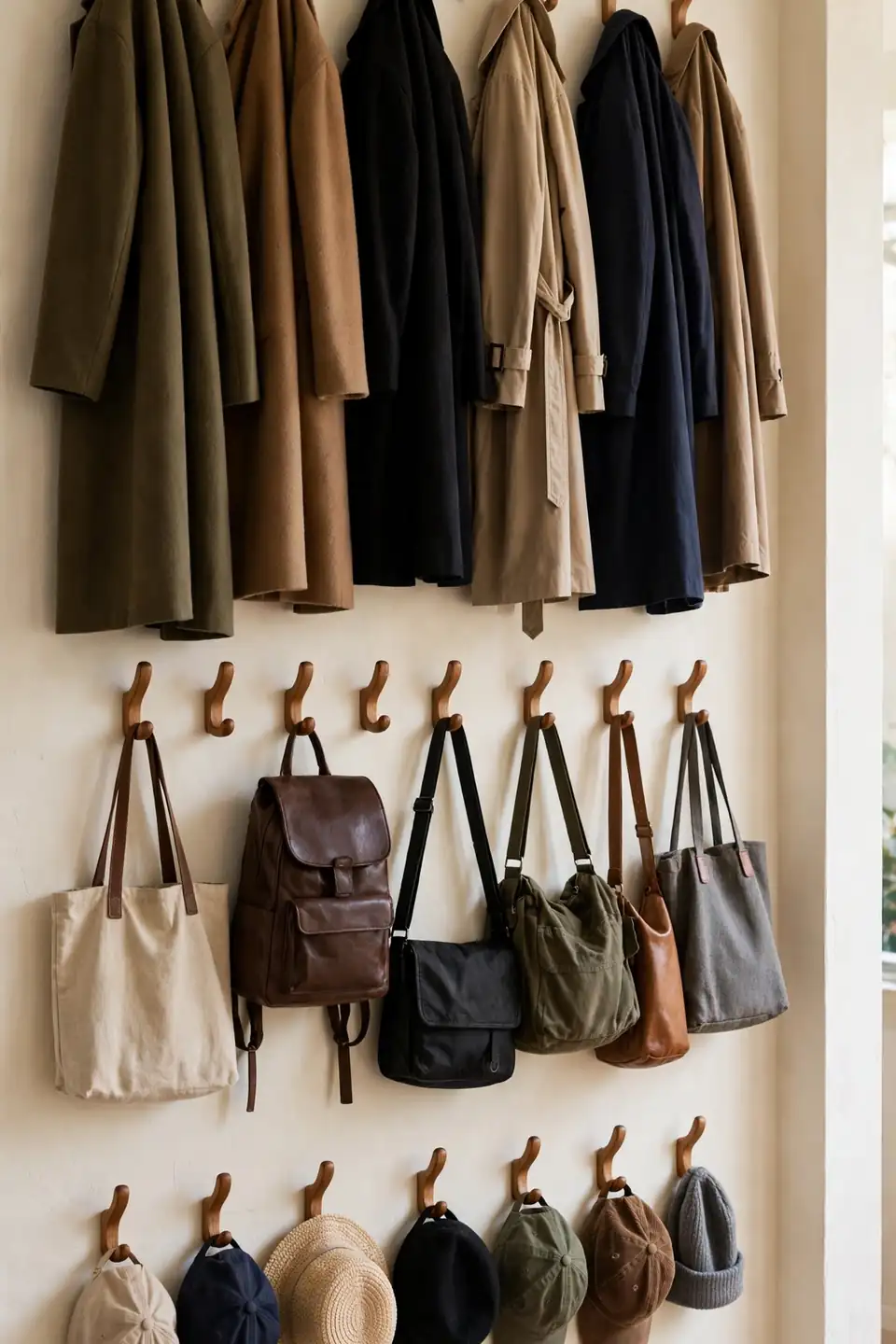
- Start with the longest items, coats and long scarves, on the highest hooks.
- Hang daily bags at the middle height, handles looped once.
- Give hats and caps the lowest row, where kids reach too.
- Leave gaps between groups so each layer stays visible.
- Step back and check the wall reads as stripes, not a pile.
Layering turns one flat wall into three shallow shelves of storage, and it is the quiet trick behind most very small entryway ideas that actually survive daily life. Nothing stacks, nothing hides, and a missing item announces itself at a glance because its hook stands empty. That visibility keeps the whole household honest.
Hooks Versus Cubbies
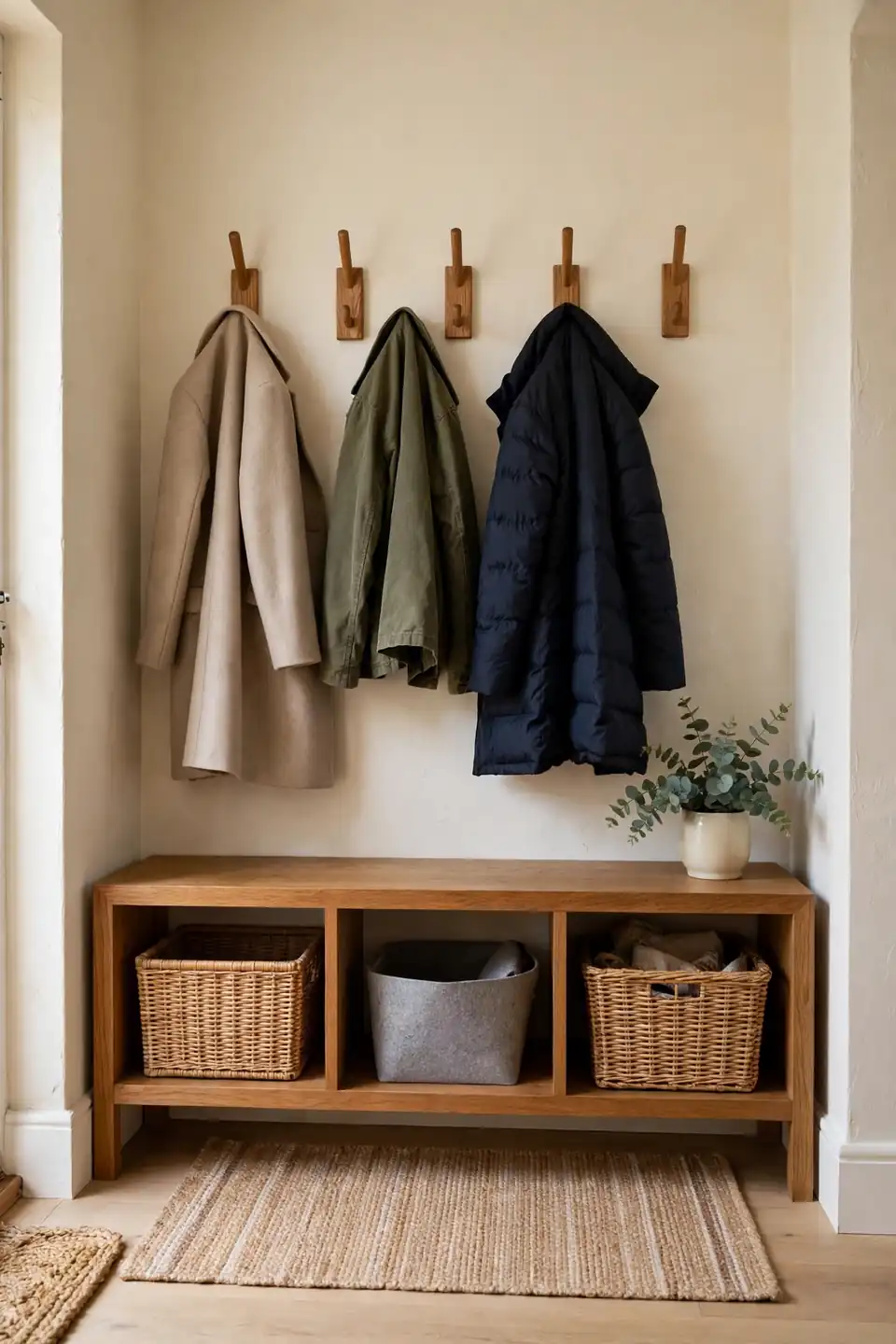
| Feature | Wall Hooks | Cubbies |
|---|---|---|
| Floor space | None used at all | Needs twelve inches depth |
| Visibility | Everything stays in sight | Items hide behind doors |
| Cost | Very low, hook by hook | Higher, one full unit |
| Flexibility | Move one hook anytime | Fixed grid, fixed sizes |
| Best for | Renters and changers | Families with set routines |
Hooks win on flexibility and price, cubbies win on hiding the evidence. For most tiny entries the honest answer is hooks above and one low cubby bench below, which pairs sight lines with concealment. Start with hooks only; add the cubby later if the wall still looks restless after a month of living with it.
Basket System By Person

Do:
- Assign one labeled basket to each household member.
- Keep baskets at knee height for easy tossing.
- Empty every basket fully once a week.
- Match basket sizes so the shelf line stays calm.
Don’t:
- Let one basket become the family junk drawer.
- Stack baskets so the bottom one stays buried.
- Store sharp or heavy items in kids’ baskets.
Personal baskets move the blame and the tidying to the right address. Each person owns their overflow, and the shared shelf stops absorbing everyone’s extras. When a basket overflows twice in one week, its owner edits it down; the entry itself never has to hold a family meeting about clutter.
Small Foyer Quick Facts
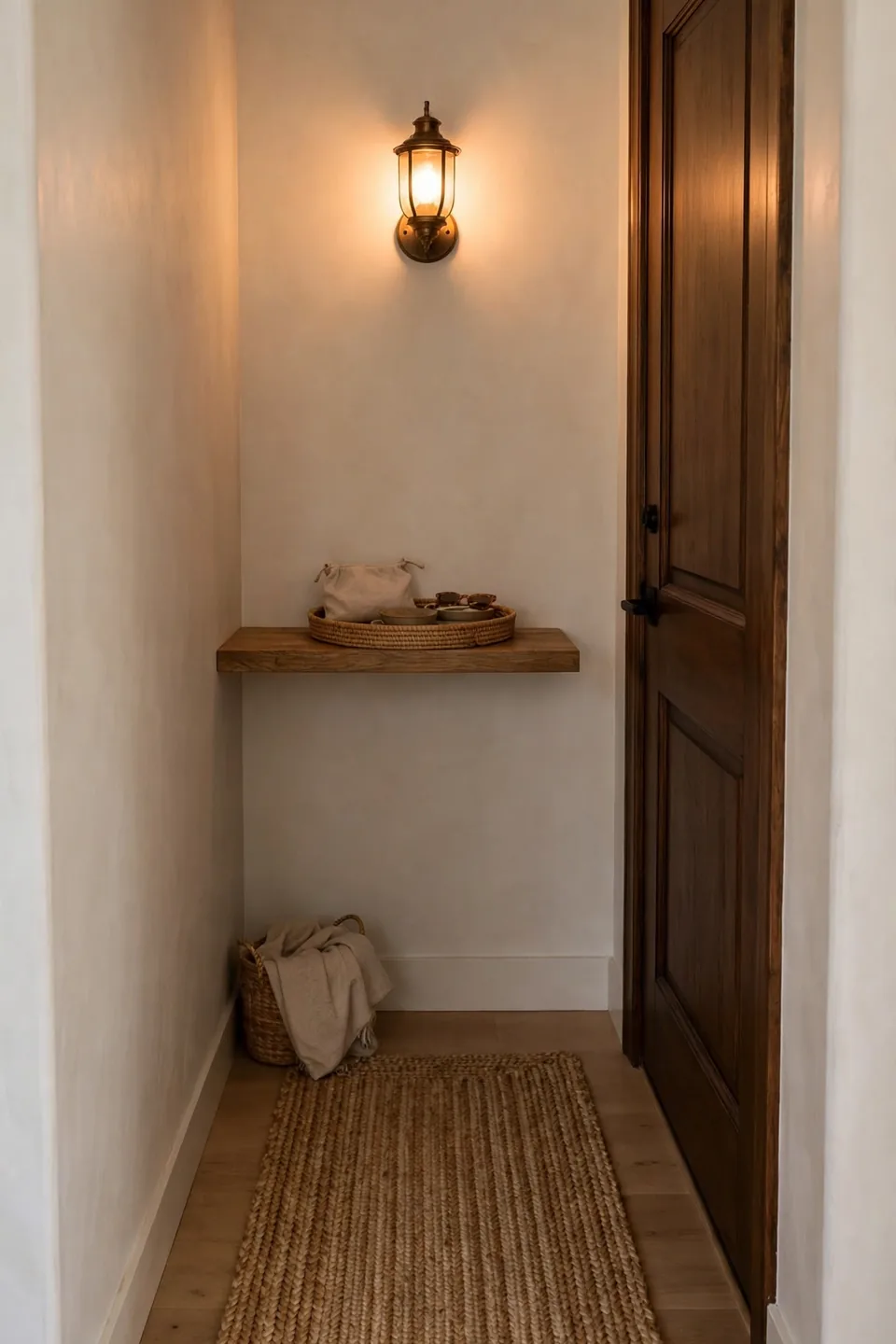
Runner Length: Leave six inches of bare floor showing at both ends.
Shelf Height: Forty two inches keeps dropped bags off the floor.
Lighting: One warm wall sconce beats a bare ceiling bulb every time.
Best For: Renters planning a no drill, one weekend entry refresh.
Small foyers respond to measurement faster than to shopping. A runner cut to the honest length of the hall, a shelf at true bag height, and warm light at face level change how the whole home greets you. That’s why many experts recommend living with tape marks for a week before drilling a single hole. The tape tells the truth your eyes skip.
Corner Shelf Landing Strip
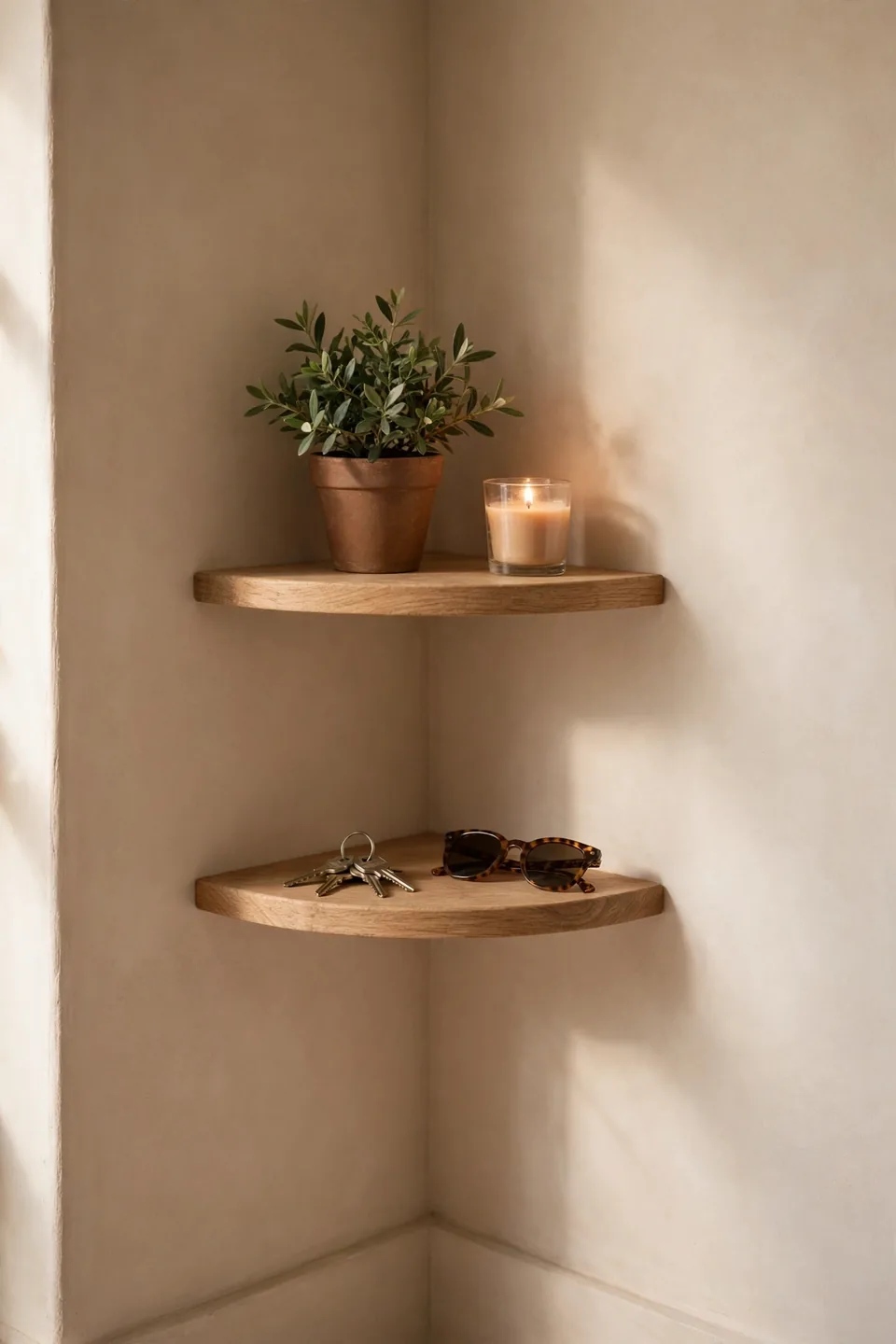
The corner where the door wall meets the hall is usually wasted, yet it fits a small triangle or quarter round shelf perfectly. One shelf at hip height catches keys and sunglasses; a second above it holds a plant or the dog lead. Corners ask for so little and give back a real station.
Round shelves keep hips safe in tight turns, which matters when arms are full of groceries. Keep the lower shelf’s front edge bare so bags swing past without catching. A tiny lamp or candle on the upper shelf turns the corner into a welcome instead of an afterthought, and guests notice it first.
Slim Shoe Cabinet Wall
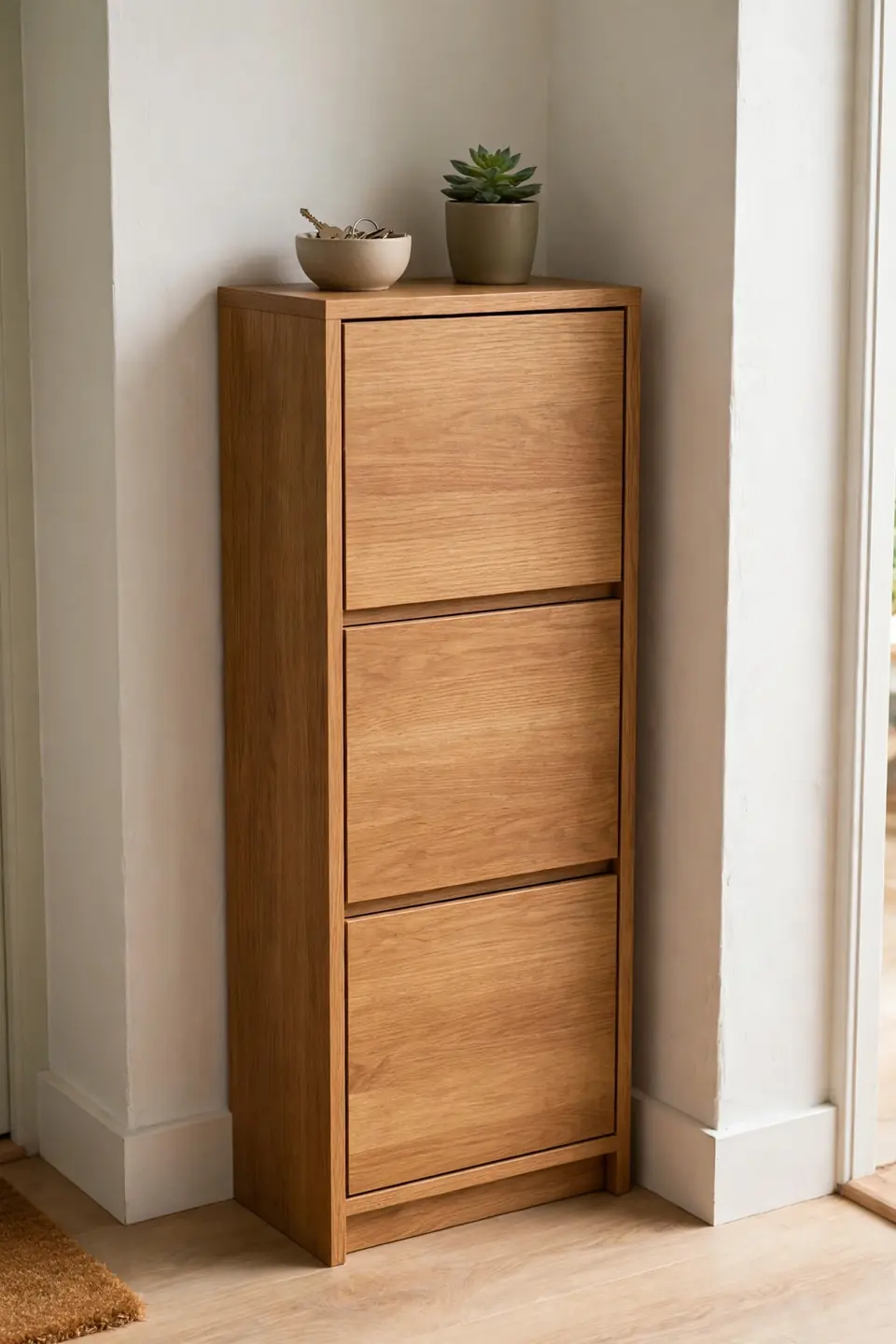
- Choose a tilt out cabinet only six inches deep, thinner than most shoes are long.
- Fit two hidden rows of shoes inside, sorted by person or by day.
- Rest the flat top as a slim landing shelf for keys and mail.
- Leave the doors closed and the wall reads clean, flat, and calm.
- Anchor the cabinet to wall studs, since tall narrow pieces can tip.
Closed shoe storage changes the smell, the look, and the mood of an entry at once. Tilt out cabinets hide the whole collection behind a flat front that reads as furniture, not storage. Measure your largest pair before ordering; the deepest drawer sets the cabinet’s honest working depth.
Rug Runner That Fits
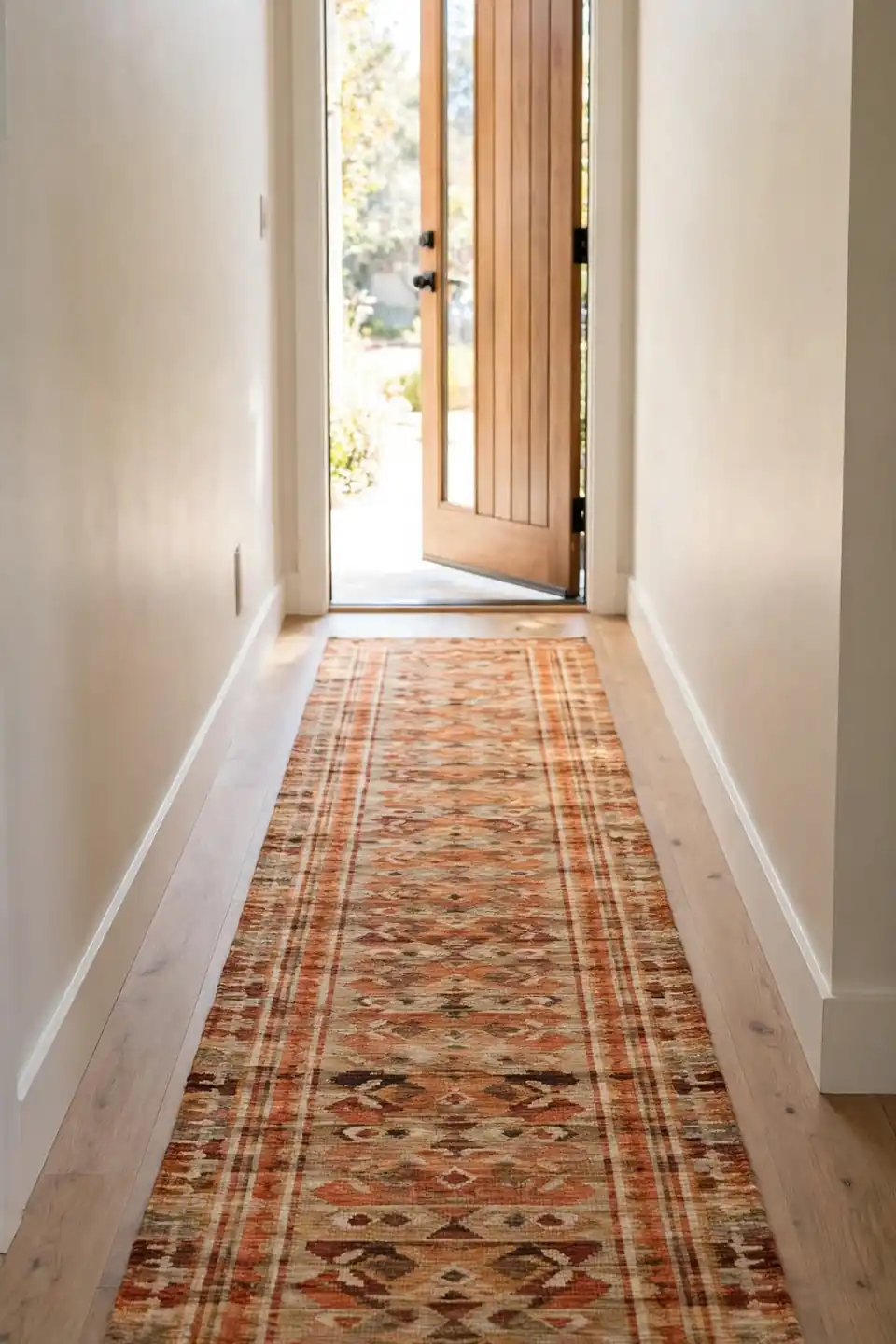
Quick Tip: Size the runner to the hall, not the door. Leave a border of bare floor on every side, and choose a low pile weave that the door glides over without catching. A runner that scrapes the door will be kicked aside within a week, guaranteed.
The right runner does three jobs quietly: it catches grit at the door, softens footsteps on hard floors, and gives the narrow strip a finished line. Washable weaves suit entry duty best. Darker patterns forgive the daily evidence of shoes, paws, and weather between washings. I’ve seen this work well in many cases where a pale rug failed within one muddy season.
Closet Door Drop Zone
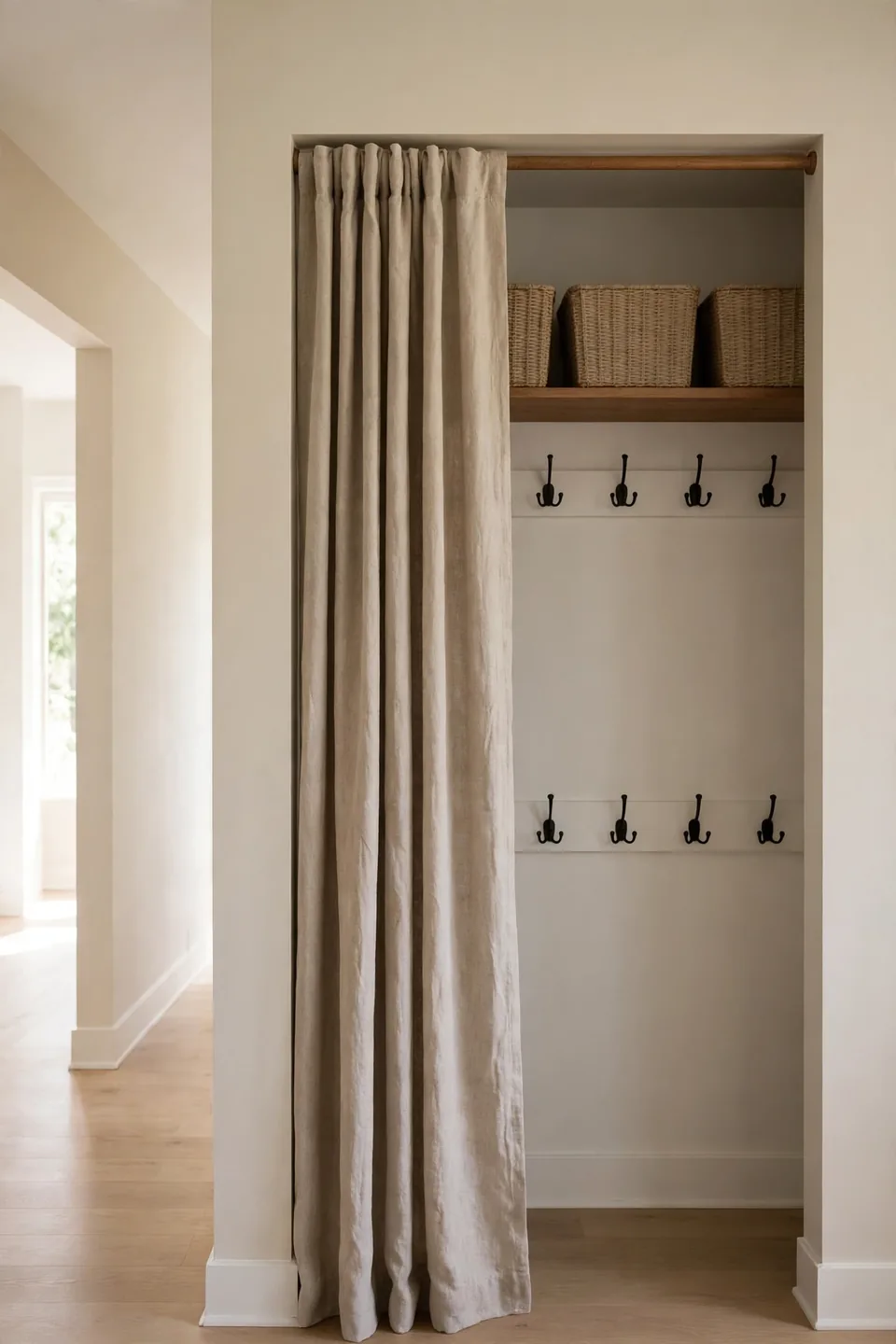
BEFORE: The coat closet stood open all day because its door blocked the hall when anyone reached inside. Coats draped the door itself, the handle wore a scarf permanently, and the closet’s shelves held everything except what the family needed daily.
AFTER: The door came off its hinges and a curtain panel took its place. Hooks lined the closet’s back wall at two heights, the shelf gained three labeled bins, and the whole closet became a walk in drop zone with nothing swinging into the hall.
Removing a door feels drastic until the hall breathes again. The curtain hides clutter while hands reach in freely, and the entry gains storage without new furniture. The same trade powers small green bathroom ideas: swings and doors exchanged for clear, usable inches.
Three Hook Landing Rule

- Mount three hooks in one row, right at the point of arrival.
- Assign them in order: keys and dog lead, daily bag, current coat.
- Hang nothing else on these three hooks, ever, for any reason at all.
- Place a small tray on the shelf beneath for the nightly pocket unload.
- Reset the three hooks each night so mornings start from zero.
Limits work when they are visible. Three hooks cannot quietly become thirteen, and an empty hook at night means something is missing before it becomes a morning emergency. Guests get the coat hook temporarily, which keeps the system kind as well as strict. Simplicity is the whole design.
Console Versus Floating Ledge
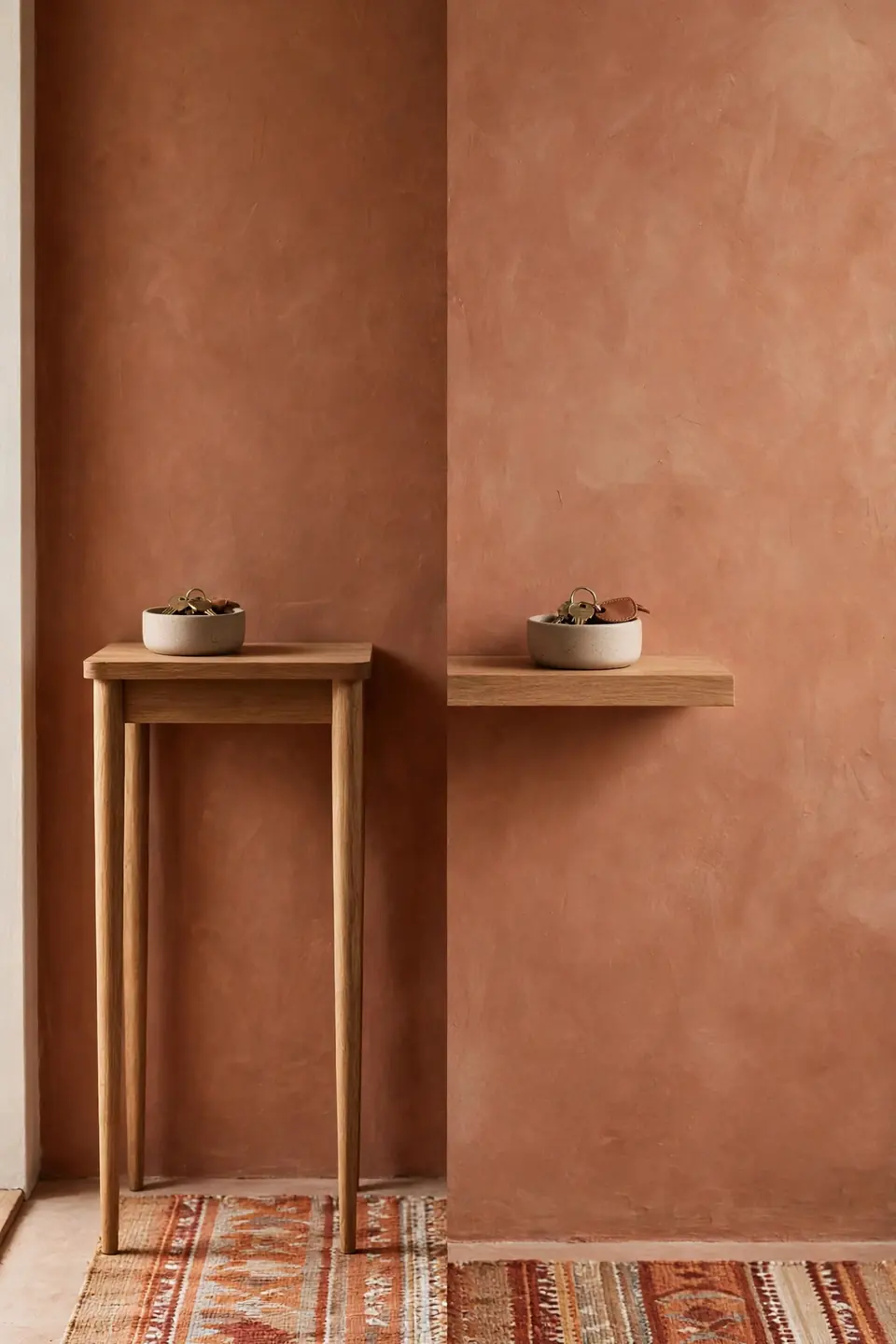
| Feature | Slim Console | Floating Ledge |
|---|---|---|
| Floor contact | Four legs, floor visible | None, floor fully clear |
| Surface depth | Ten to twelve inches | Six to eight inches |
| Lower storage | Shelf or baskets below | None at all |
| Stability | Freestanding, may wobble slightly | Fixed firmly to studs |
| Best for | Renters who move often | Owners with narrow halls |
The ledge wins wherever the floor must stay completely open, and the console wins wherever lower storage matters more than clearance. Both beat a bare wall, because both draw a border around the daily drop. If the choice stalls, start with the ledge; it costs less, drills less, and teaches the household the habit first.
Seasonal Swap Routine
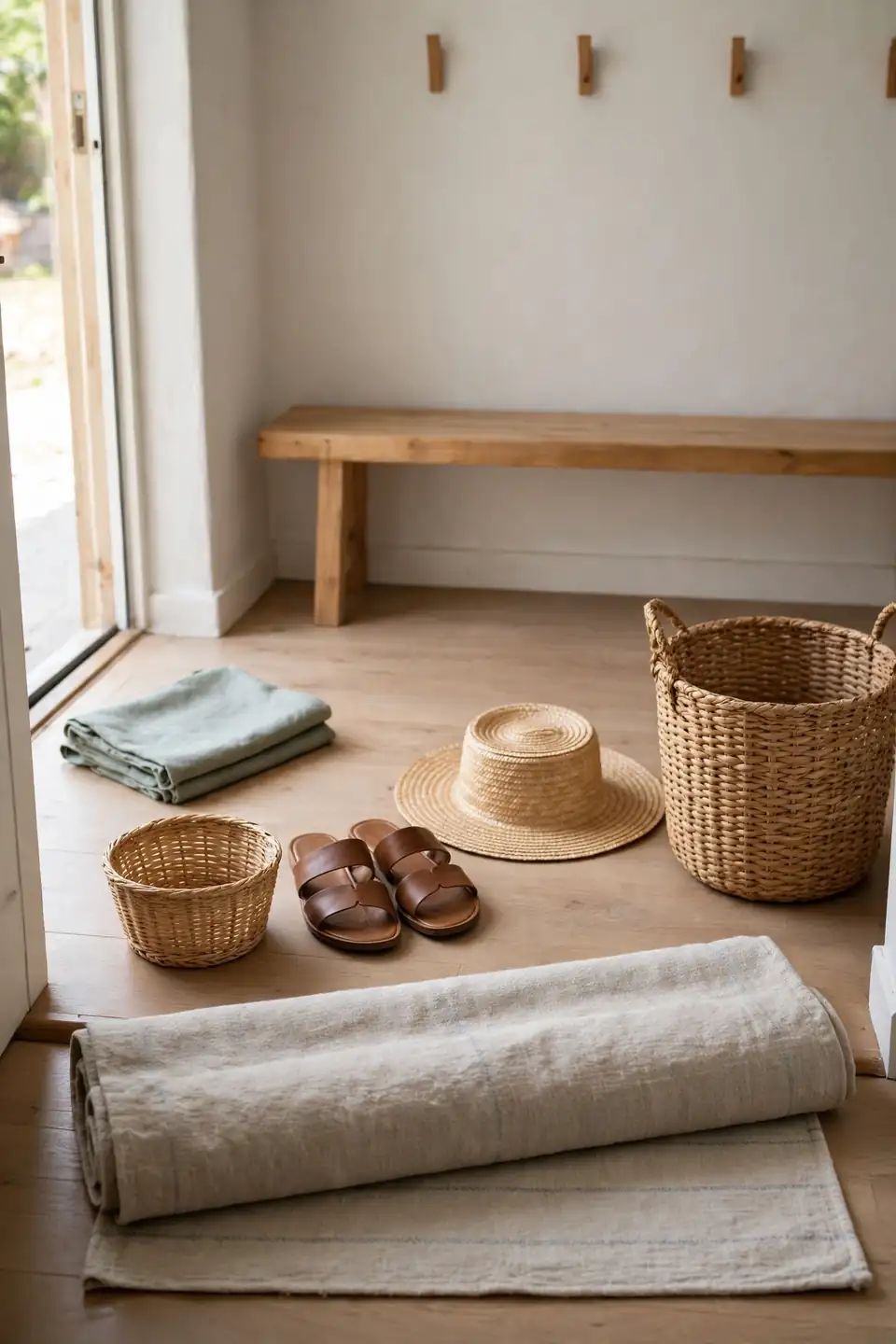
Do:
- Rotate the entry basket when the season turns.
- Store off season gear in labeled bins upstairs.
- Keep one warm layer ready during changeover weeks.
- Wash the runner and tray at every swap.
Don’t:
- Leave winter boots crowding the rack in July.
- Mix swim gear and scarves in one basket.
- Wait for clutter to force the seasonal change.
A tiny entry holds one season well and two seasons badly. The swap takes twenty minutes four times a year and returns the entry to its working size each time. Boxes stored elsewhere are not a failure of the system; they are the system, keeping the smallest space honest about what now means.
Conclusion
A small entry asks for honesty: every inch either works or it gets in the way. The very small entryway ideas above share one habit, giving daily clutter a fixed home so the floor stays clear and the door stays welcoming. Start with the wall you see first, add hooks before furniture, and let the mirror do the decorating. Save this pin before your next grocery run, try two or three changes this weekend, and watch the smallest corner of your home start pulling its weight. I’ve seen how small changes like these can completely shift the way a space feels.