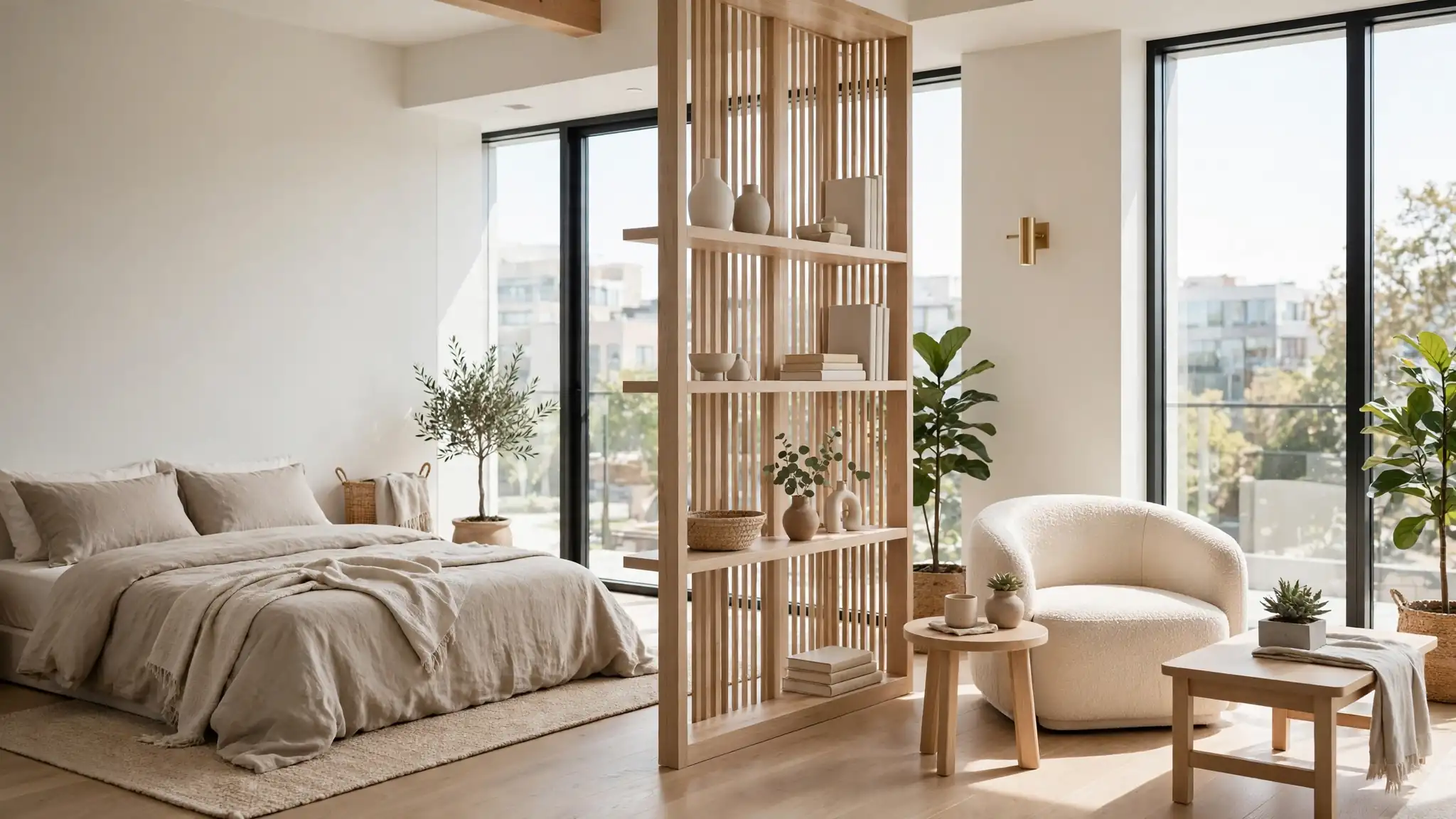
24 Studio Bedroom Ideas for a Chic, Spacious Feel
A studio apartment asks one room to do everything, yet your sleep space can still feel like a true retreat. These studio bedroom ideas show how smart zoning and the right furniture turn open square footage into a chic, restful home. In my experience, the studios that feel largest are the ones with clear visual boundaries between sleep, work, and relaxation. You do not need walls to create rooms, just intention and a few clever tricks.
Before we start, walk your space and notice where natural light falls strongest, since your bed deserves the brightest corner. For open plan inspiration beyond the bedroom, explore these small apartment living room layouts that pair beautifully with the concepts below. Then pick the ideas that fit your floor plan and start with just one zone.
Zoned Sleeping Corner
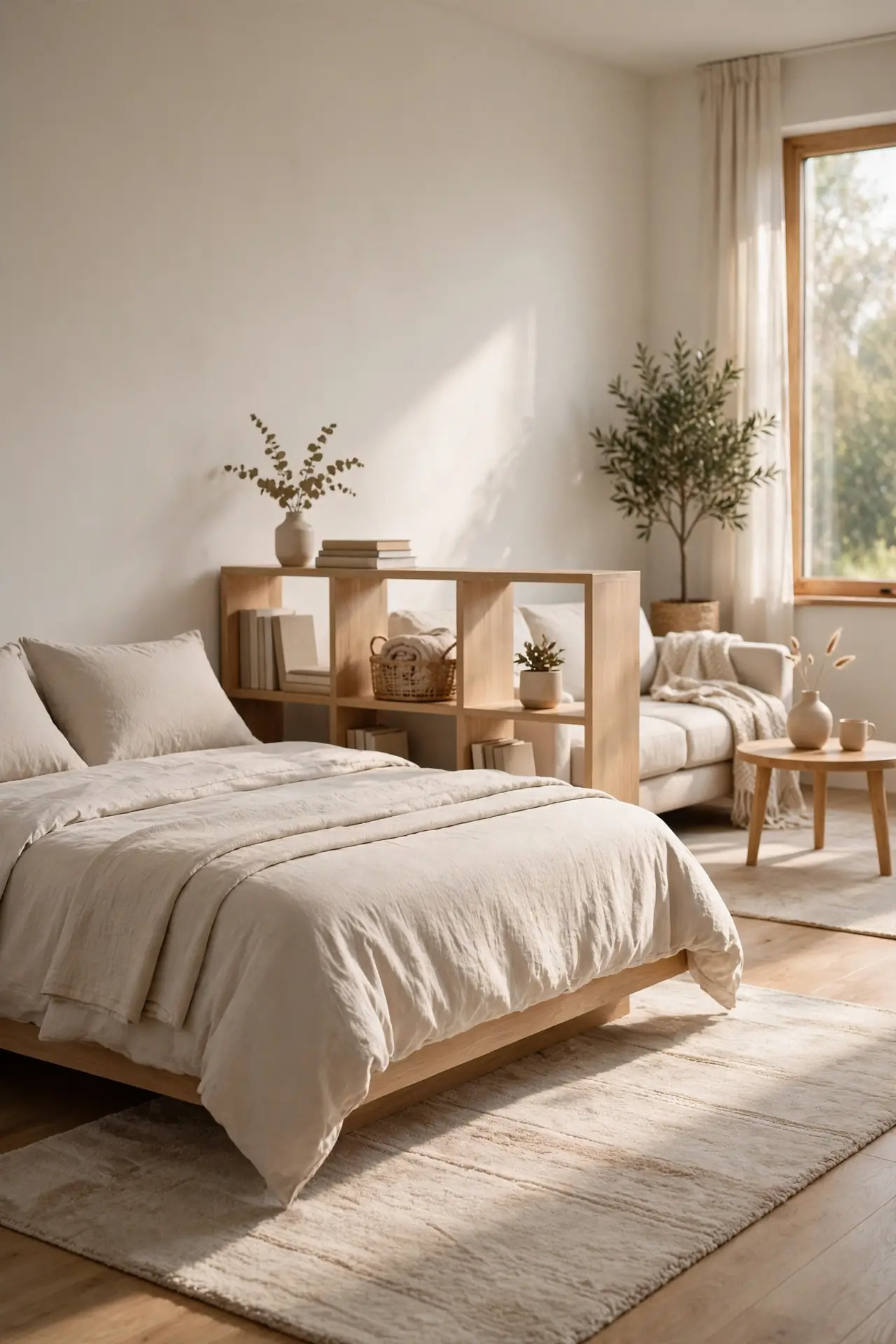
Every great studio starts with a sleeping zone that feels separate from the rest of the room. A rug, a low bookshelf, or a curtain can draw that line without blocking light. Your bed becomes a destination rather than just furniture in the middle of everything. This simple boundary changes how the whole space feels at night.
Position the bed in the farthest corner from the front door so sleep feels private and tucked away. Keep the pathway beside it clear for easy movement in the dark. In my experience, a dedicated sleep corner makes falling asleep easier even when the kitchen sits twenty feet away. Soft bedding and a warm lamp complete the retreat.
Murphy Bed Magic
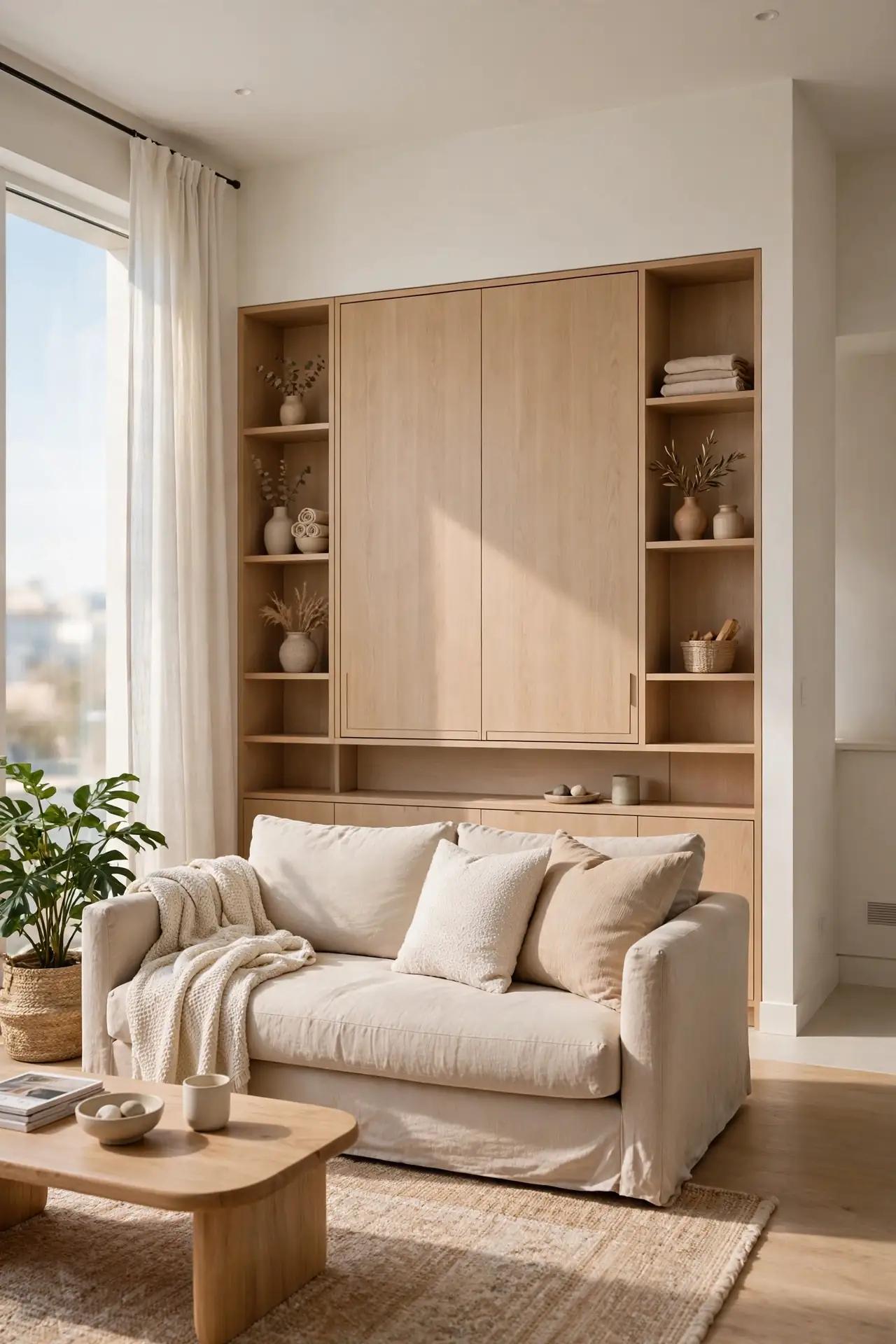
- A wall bed folds up by day, freeing ten or more square feet for living space.
- Modern mechanisms lift with one hand, so daily use feels smooth and simple.
- Choose a model with built in shelving so the closed bed still looks like furniture.
- Pair it with a rug you can roll aside quickly for smooth operation.
- Sofa wall bed combos seat guests by day and sleep two by night.
Wall beds rank among the smartest investments for studio living. Quality models cost more upfront but reclaim your main room every single morning. Measure ceiling height and wall clearance before ordering. I’ve seen this work well in many cases where renters needed a real bedroom feel without a second room.
Sliding Curtain Divider
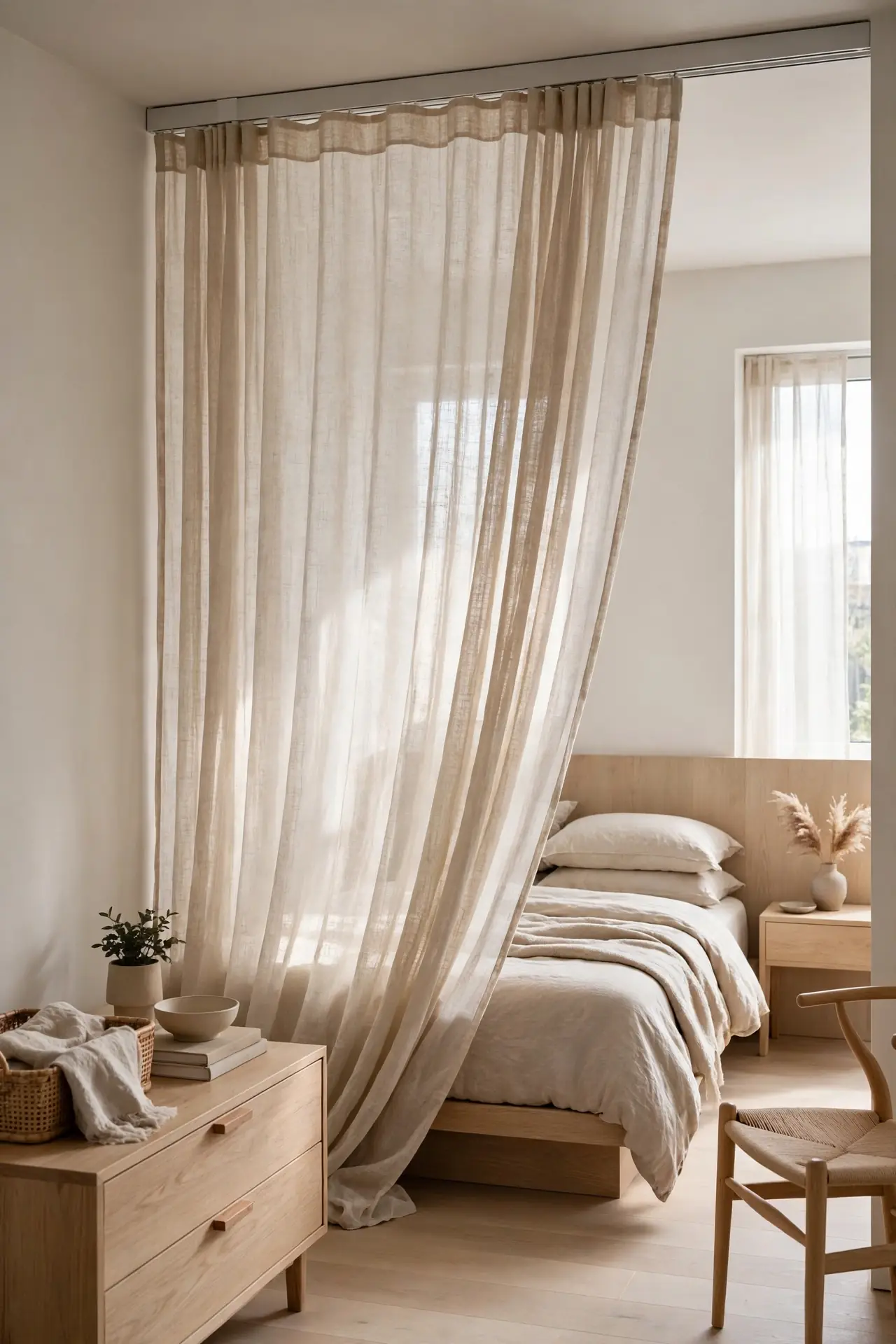
Quick Tip: Mount a ceiling track just inside your sleeping zone and hang washable linen curtains that filter daylight. Tracks cost little, install with basic tools, and glide far smoother than tension rods. Pull the curtains closed at night for privacy, then open them each morning to keep the studio feeling spacious.
Curtains beat solid dividers because they disappear when you want openness. Choose a color close to your walls so the divider reads as soft architecture rather than a barrier. I’ve noticed that floor length panels hung high make ceilings look taller too. Wash them seasonally to keep the fabric fresh and bright.
Floating Desk Ledge
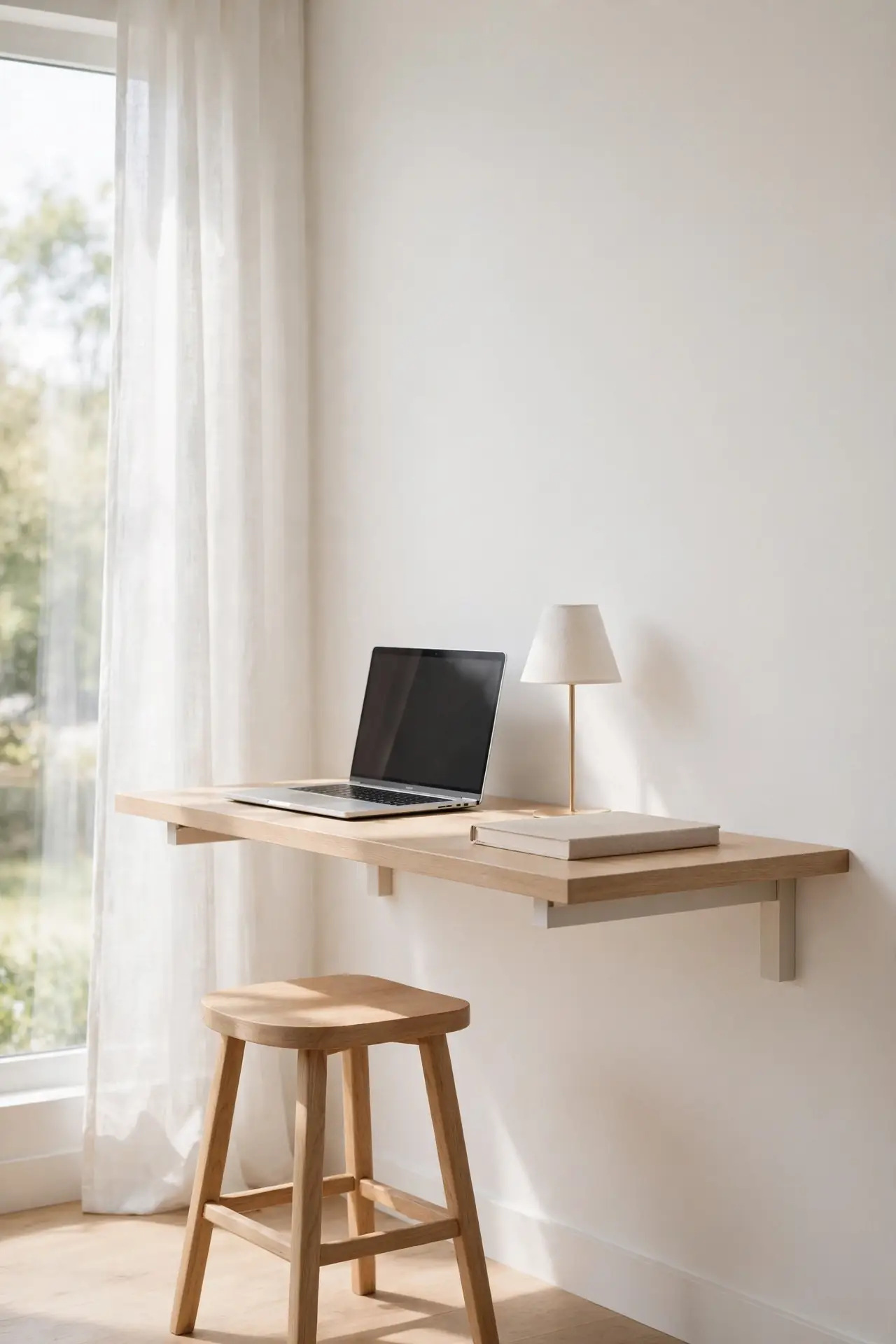
BEFORE: A bulky desk eats a quarter of the studio and faces a blank wall, making work feel cramped and joyless. Cables dangle everywhere and the chair blocks the walkway.
AFTER: A slim floating ledge mounts to the wall and holds a laptop, lamp, and notebook with room to spare. The floor stays clear, so the zone feels twice as large.
Wall mounted desks suit studio bedrooms because they vanish visually when not in use. Pick a ledge at least twenty inches deep for comfortable typing. Add a floating shelf above for supplies and keep cables clipped underneath. That’s why many experts recommend pairing it with a stool that tucks fully beneath the ledge after hours.
Loft Bed Lift
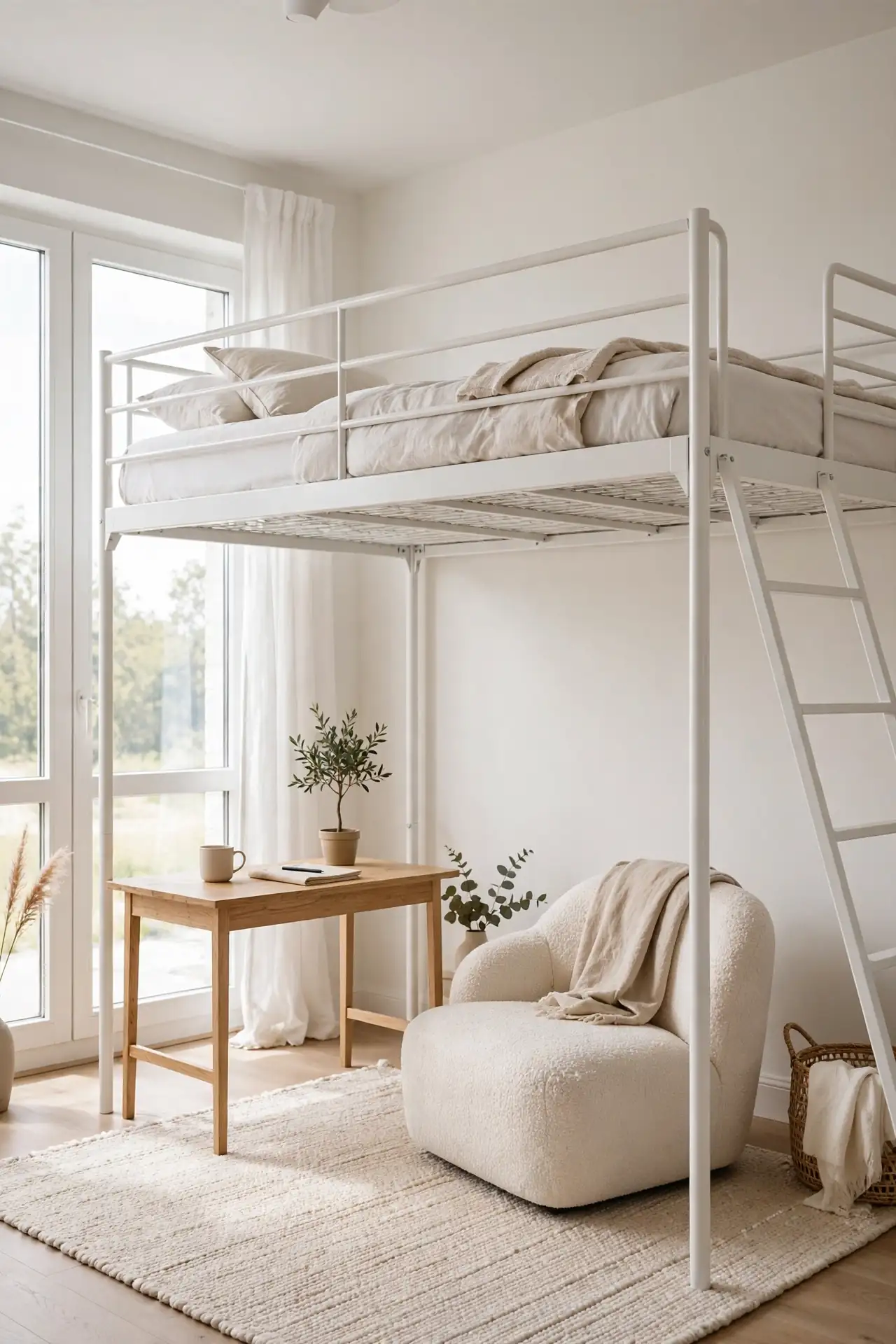
- Measure your ceiling height and confirm at least 33 inches of sitting clearance above the mattress.
- Choose a sturdy loft frame rated for your weight plus the mattress.
- Place a desk, dresser, or lounge chair in the freed footprint below.
- Add a clip on reading light and a small shelf at pillow height.
Lofting the bed doubles your usable floor area overnight. This layout suits studios with ceilings over eight feet and renters who can use freestanding frames. Keep a rug below to define the lower zone as its own room. Climb up each night knowing your whole studio still stretches out beneath you.
Rug Zone Anchors
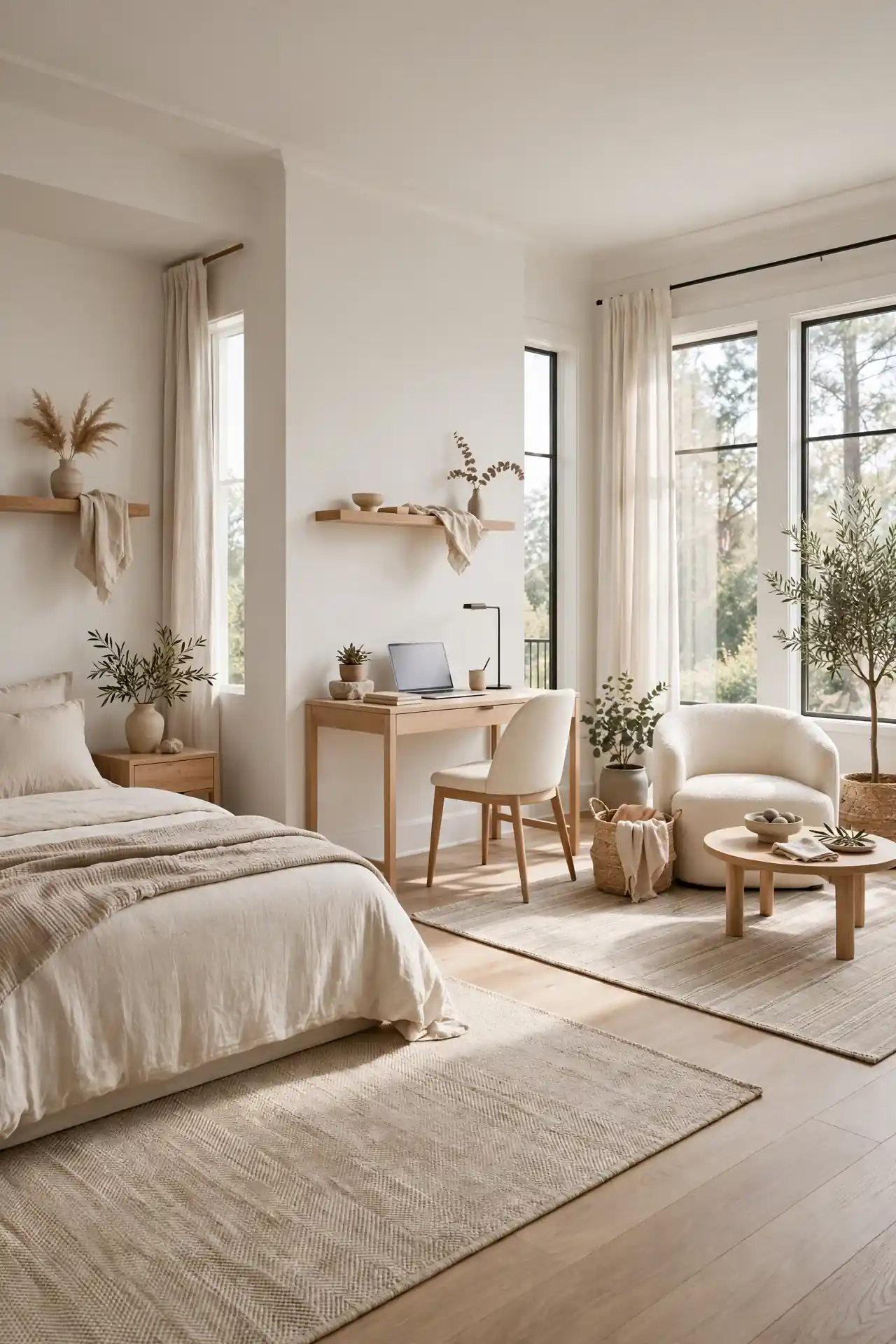
| Zone | Rug Choice | Why It Works |
| Sleep zone | Large soft rug under bed | Defines rest area, warm feet |
| Work zone | Flat weave runner | Durable under chair wheels |
| Lounge zone | Patterned area rug | Marks social space clearly |
| Entry zone | Washable doormat rug | Catches dirt at the door |
Rugs draw invisible walls across open floors without adding a single barrier. Overlap them slightly where zones meet so the transition feels intentional. Stick to one color family so the studio reads as unified rather than chopped up. In my experience, properly zoned rugs make a studio feel twice as organized instantly, and guests always compliment the layout.
Fold Down Table
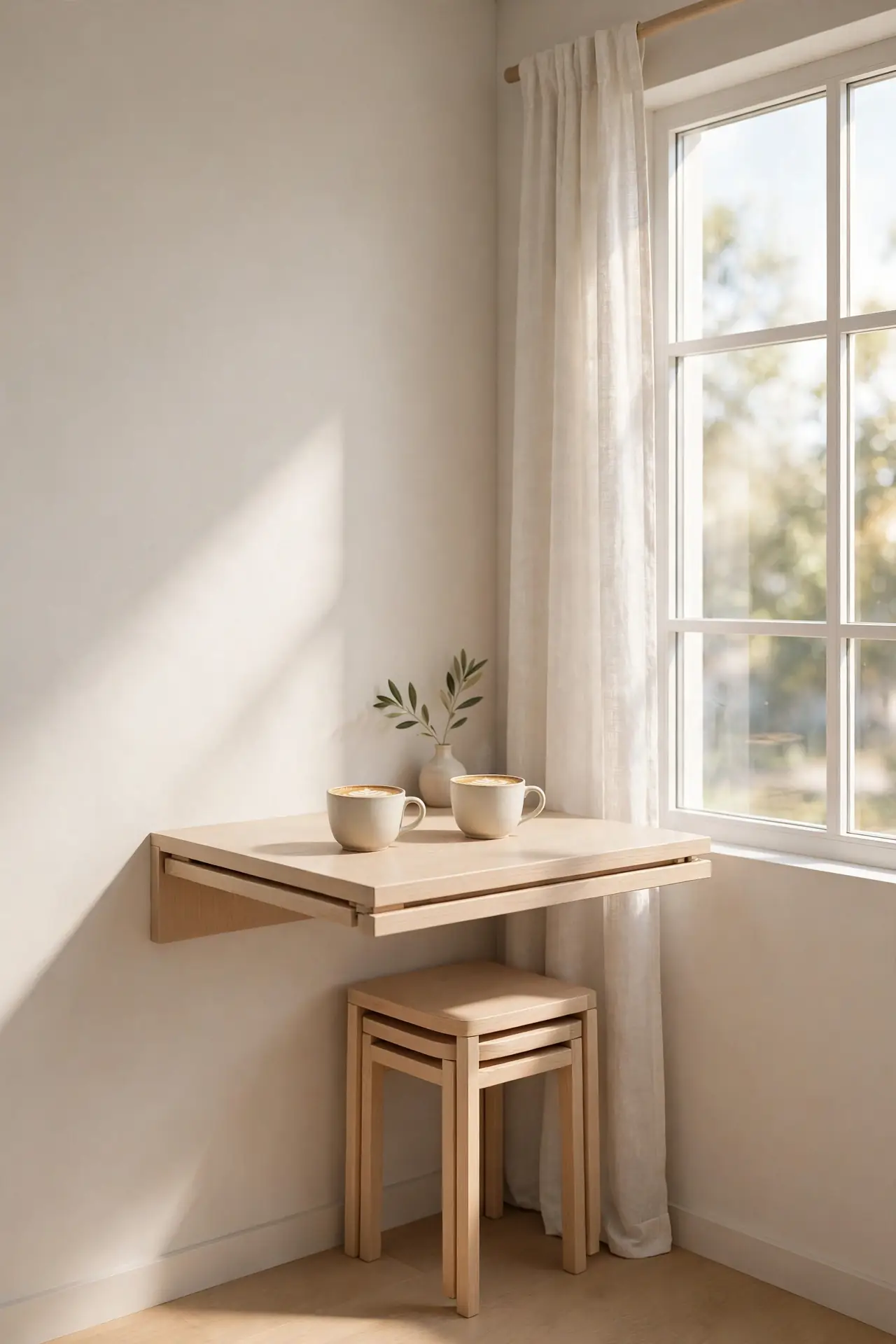
DO:
- Do choose a wall mounted drop leaf table that folds flat when not in use.
- Do anchor it near an outlet so lamps and laptops plug in easily.
- Do pair it with stackable stools that tuck beneath after meals.
DON’T:
- Don’t pick a table deeper than 24 inches or it will crowd the walkway.
- Don’t skip wall anchors, since a loaded table pulls hard on fasteners.
- Don’t place it where the open leaf blocks your main path.
Fold down tables give studios a dining spot without a permanent footprint. Use it for meals, laptop work, or puzzles, then fold it away in seconds. I’ve noticed guests never guess it was hiding on the wall. Choose a finish that matches your shelves so it blends into the decor when closed.
Open Wardrobe Rail
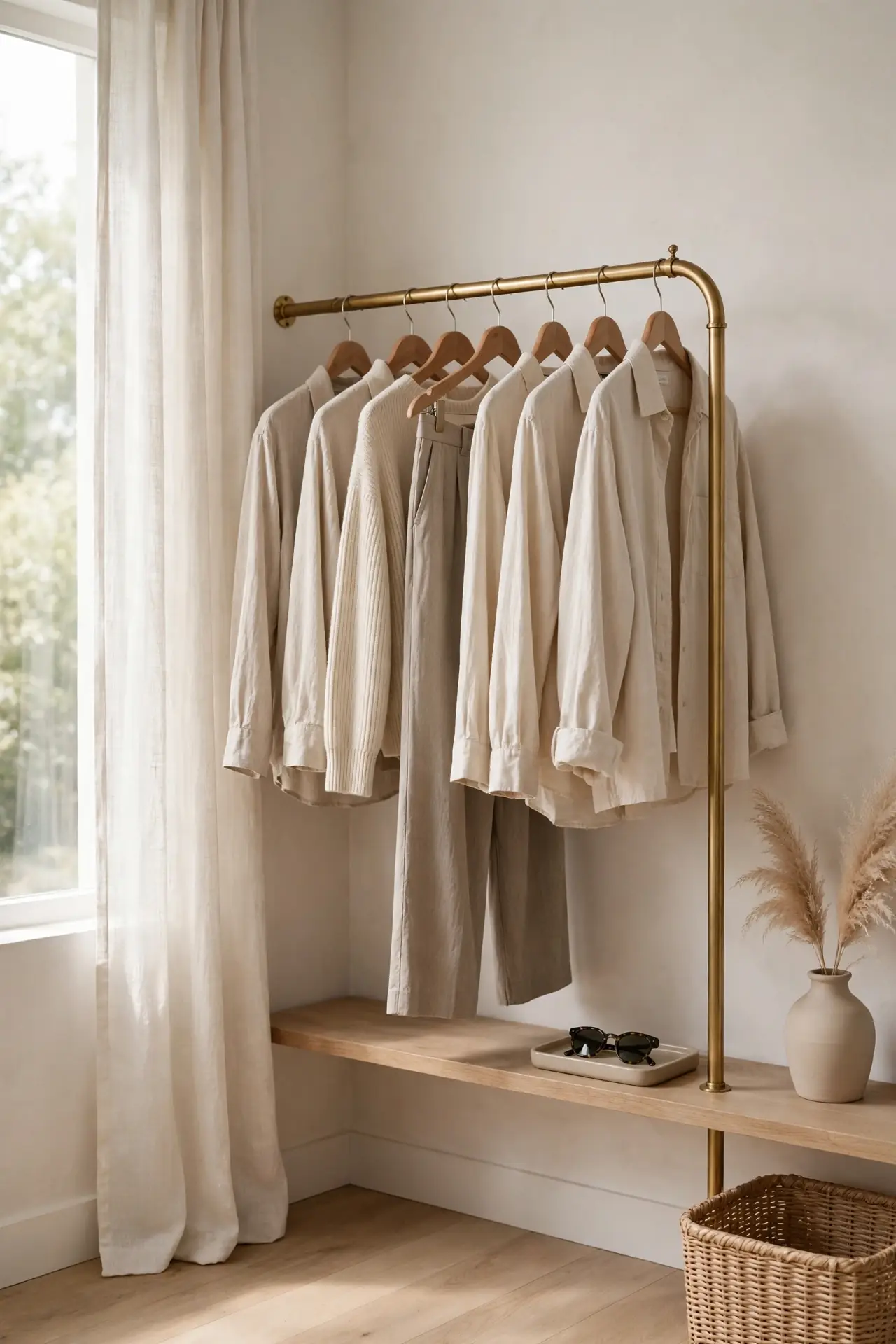
Cost: Low, a sturdy rail and hangers run under sixty dollars. Time: One afternoon to assemble and style. Skill Level: Beginner, no tools beyond a screwdriver. Best For: Minimalists with edited wardrobes.
An open rail replaces a bulky wardrobe and keeps outfits visible, which speeds up morning decisions. Style it with matching hangers and leave breathing room between pieces so it reads as a boutique display. Store off season clothes in under bed bins to keep the rail edited. This setup forces a tidy wardrobe habit that pays off daily. Add a small tray on top for sunglasses and watches to complete the station.
Daybed Double Duty
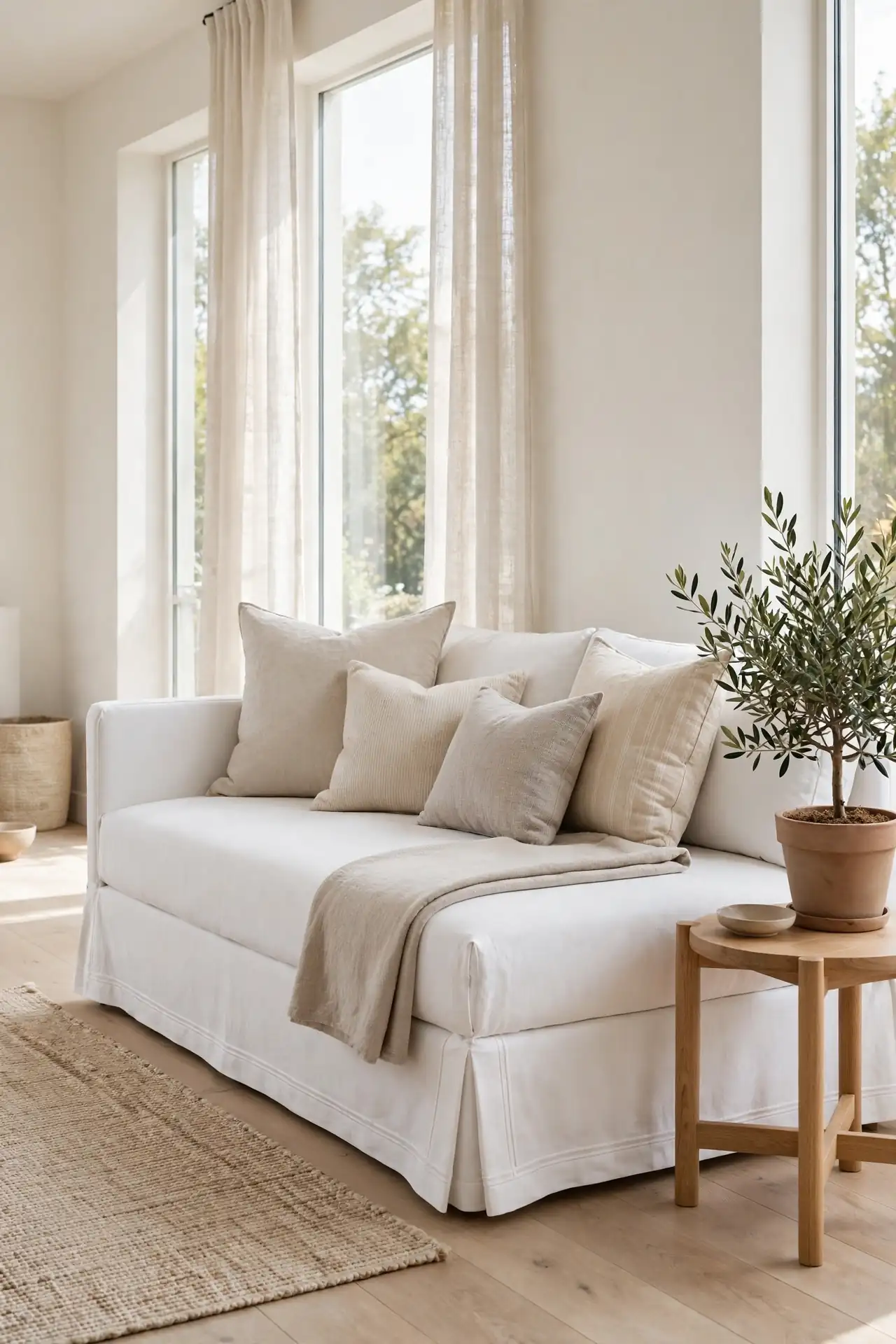
A daybed works as a sofa by day and a bed by night, which makes it a studio superstar. Dress it with throw pillows and a tailored cover so it reads as lounge seating. Guests will happily sit, chat, and relax without realizing it converts for sleep. Layer a soft throw across the back for extra polish.
Choose a pop up trundle version if you host overnight guests often. The second mattress slides out in seconds and tucks away just as fast. Keep bedding in a nearby ottoman so the transformation stays simple. This one piece can replace both your couch and your bed.
Pocket Door Privacy
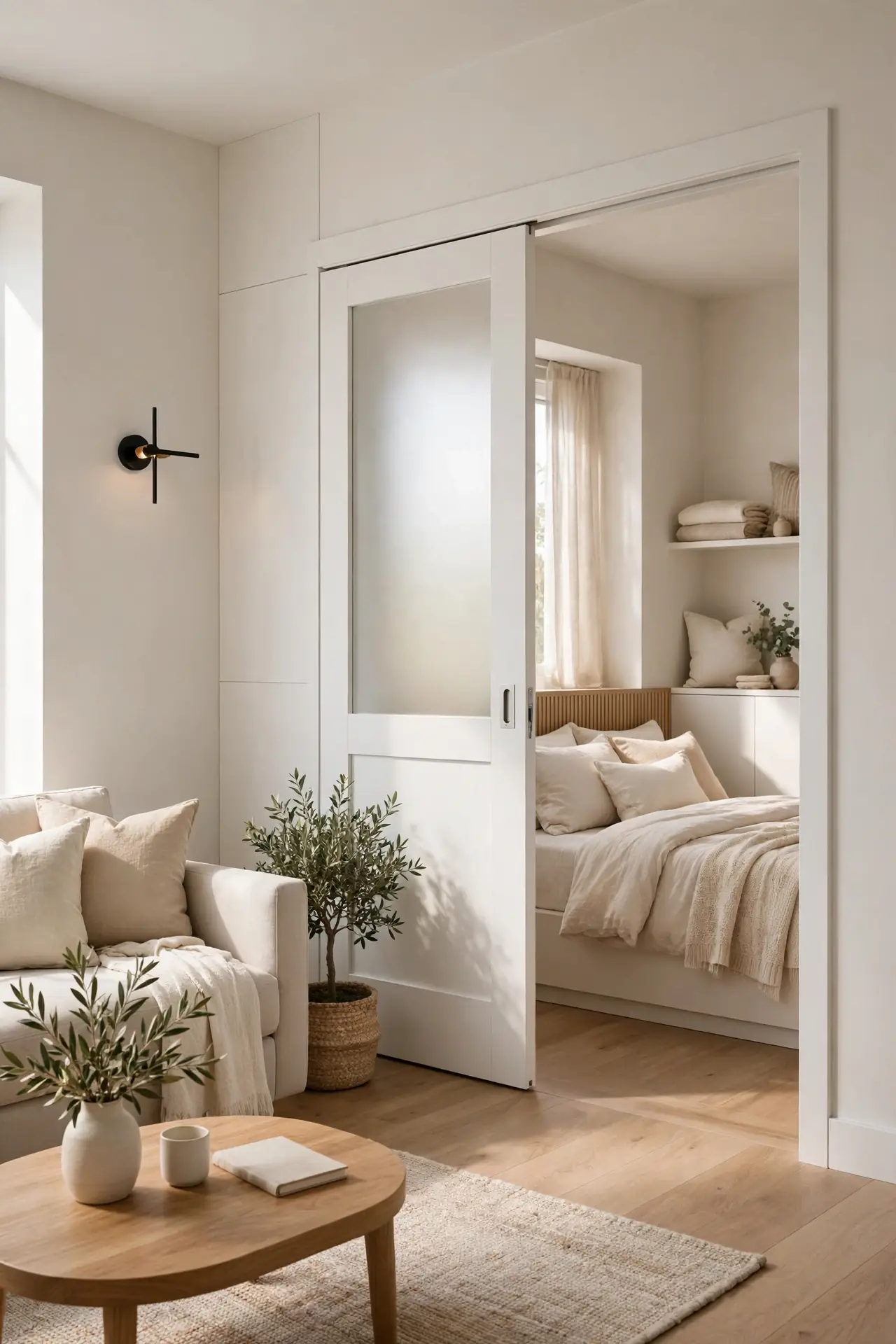
- Pocket doors slide into the wall, saving the swing space a hinged door wastes.
- Use one to close off the sleeping nook or bathroom without bulk.
- Frosted glass versions borrow light while still giving privacy.
- Retrofit kits fit standard openings with basic DIY skills.
Privacy ranks high on every studio dweller’s wish list. A pocket door delivers it completely without stealing precious floor area. That’s why many experts recommend them for separating sleep zones in open plans. Soft close hardware keeps every operation quiet for late nights and early mornings alike, which roommates appreciate. They also muffle sound better than curtains, which light sleepers welcome.
Mirror Wall Boost
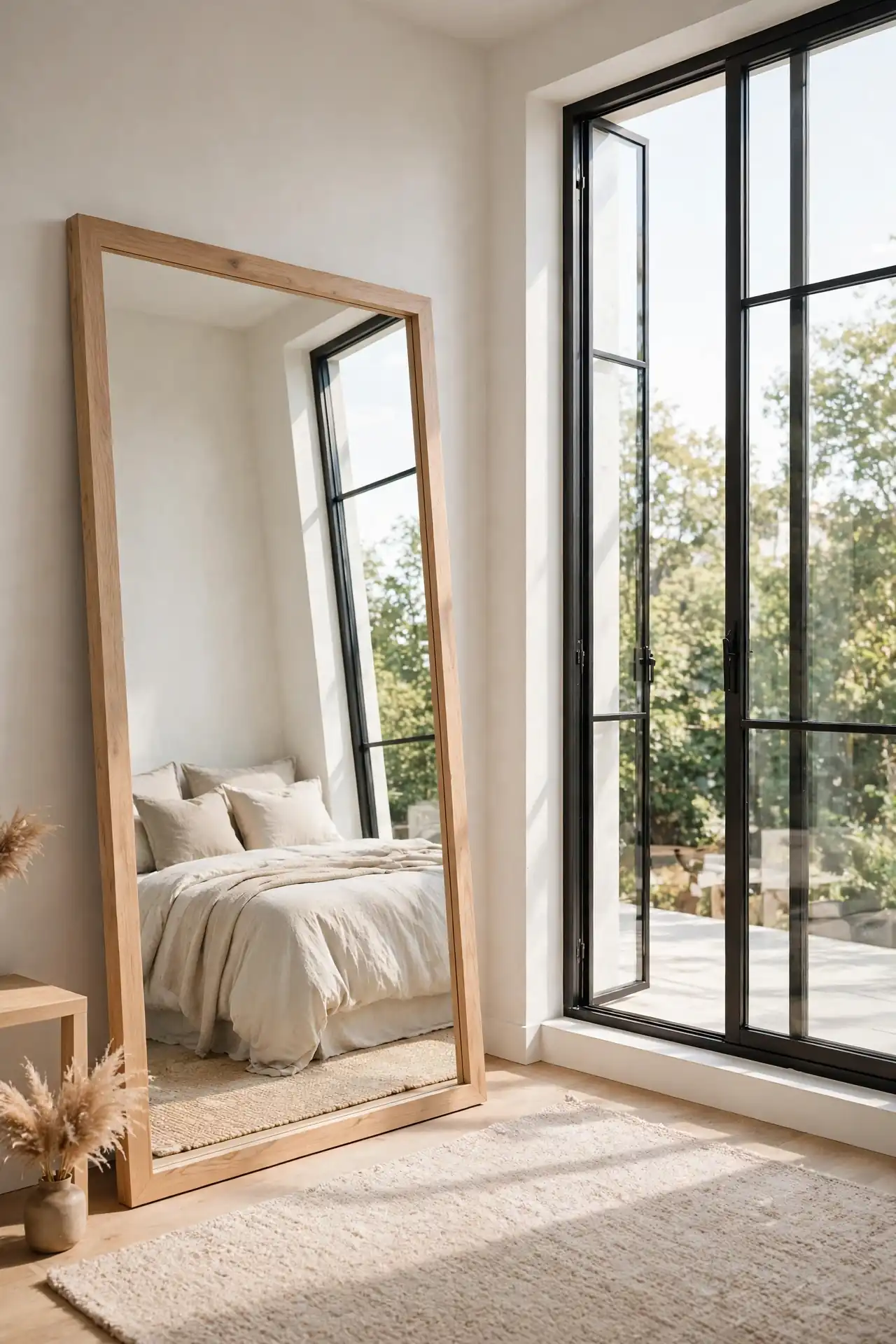
Quick Tip: Hang one oversized mirror opposite your largest window to double the daylight. Lean it on the floor for a relaxed look, or mount it securely if you have kids or pets. Clean it weekly since mirrors show every speck.
Mirrors remain the fastest way to make a studio feel bigger. A full wall of mirrored panels behind the bed creates depth that tricks the eye beautifully. If a whole wall feels like too much, group three tall mirrors together for a similar effect. I’ve noticed that mirrored closet doors pull double duty, bouncing light while hiding storage. Keep frames slim so the reflection stays the star.
Stacked Storage Cubes
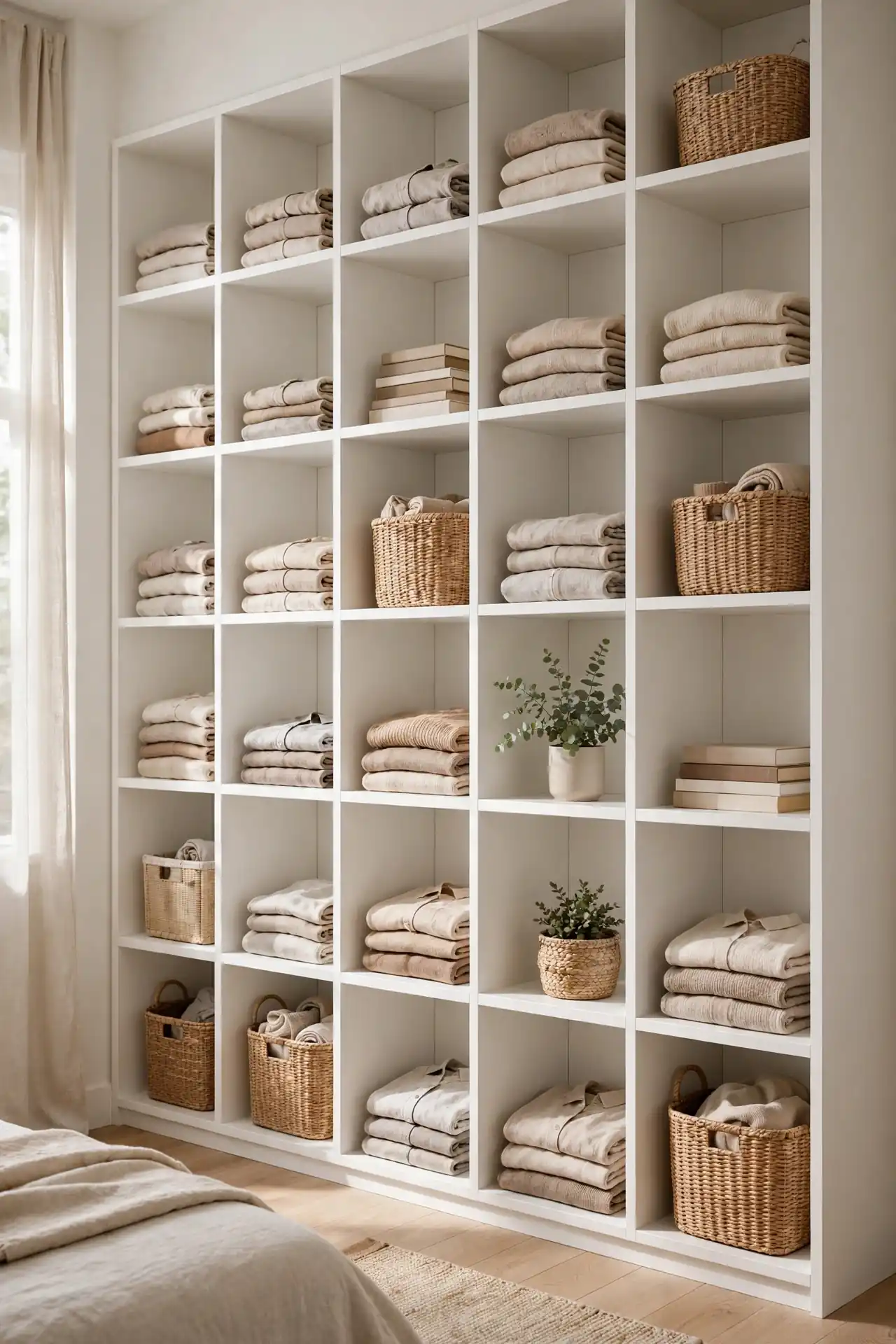
BEFORE: Random boxes and bags pile in corners, eating floor space and looking messy. Nothing has a real home, so tidying feels impossible and the studio always looks cluttered.
AFTER: A tower of matching cubes lines one wall, holding books, clothes, and supplies in neat compartments. Everything has a labeled spot, and the uniform look calms the whole room.
Cube shelving adapts as your needs change, which makes it ideal for evolving studio life. Stack units vertically to exploit height, and add fabric bins for a softer look. Leave a few cubes open to display books and plants. This affordable system grows with you from first apartment to forever home.
Under Bed Rolling
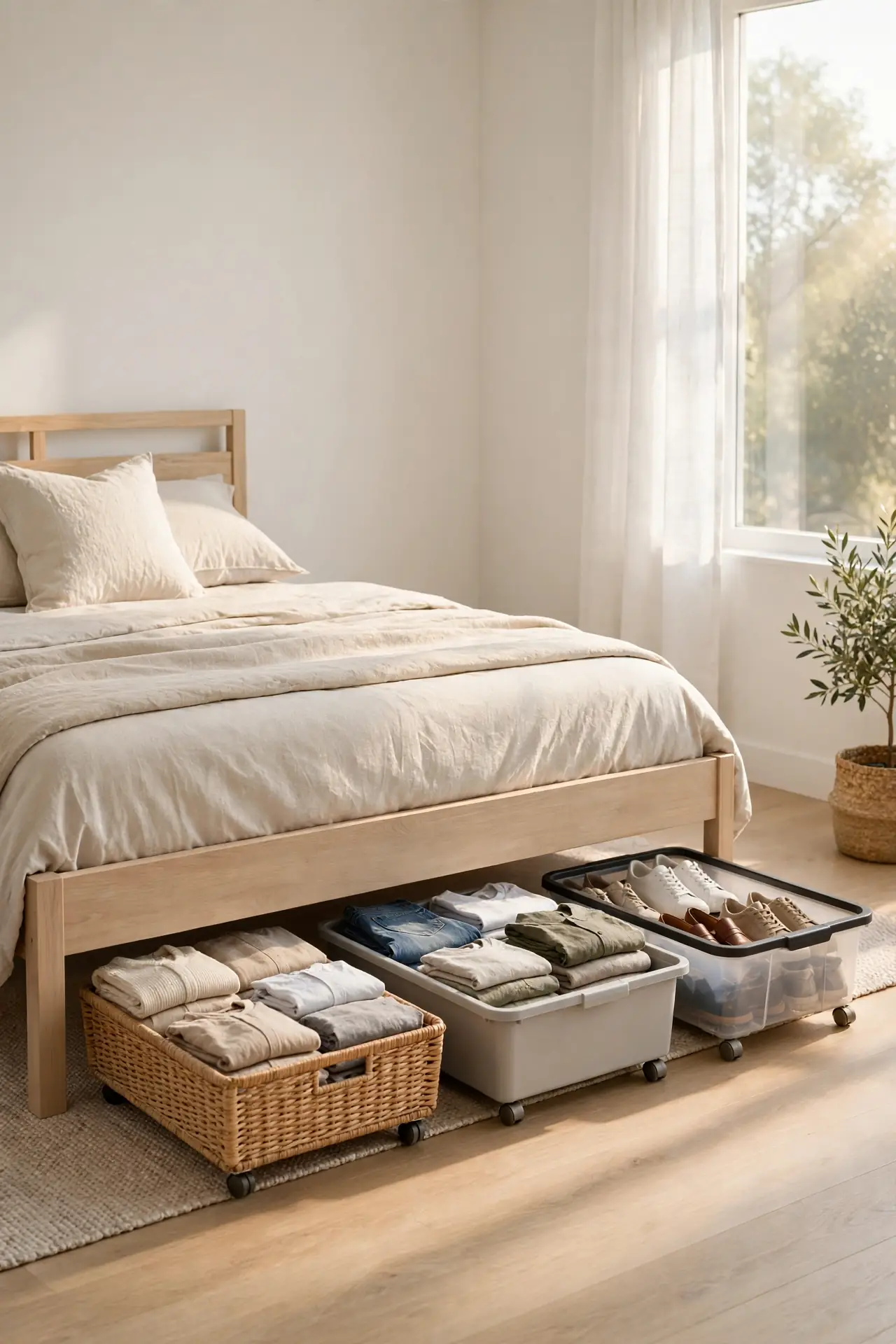
- Measure the clearance under your bed frame before buying anything.
- Choose low rolling bins or drawers that glide out with one pull.
- Sort items by category and label each bin clearly.
- Store off season clothes and spare linens closest to the wall for easy rotation.
The space under your bed hides a surprising amount of storage. Rolling bins turn that dead zone into an organized extension of your closet. I’ve seen this work well in many cases where studio dwellers needed homes for shoes and seasonal gear. Pull bins out monthly to keep contents fresh and remind yourself what lives there.
Bookshelf Room Split
| Zone | Rug Choice | Why It Works |
| Sleep zone | Large soft rug under bed | Defines rest area, warm feet |
| Work zone | Flat weave runner | Durable under chair wheels |
| Lounge zone | Patterned area rug | Marks social space clearly |
| Entry zone | Washable doormat rug | Catches dirt at the door |
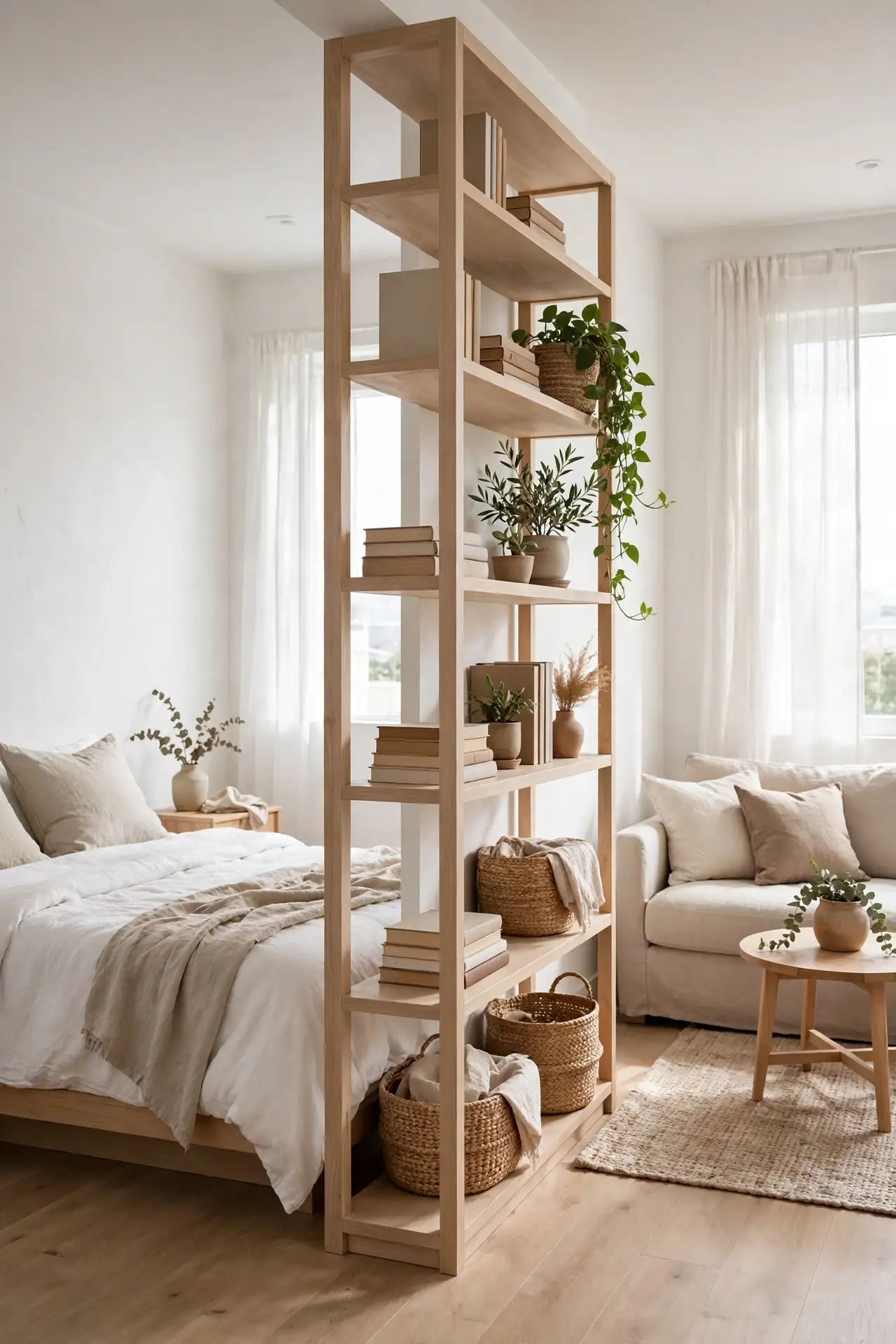
A bookshelf divider separates sleep from living while adding storage both sides can use. Style the bedroom facing side with books and a small lamp. Keep the living side styled with plants and art. This trick works because it divides without darkening, which solid walls always do. Anchor it with a rug on each side so both zones feel grounded and intentional.
Hanging Plant Screen
DO:
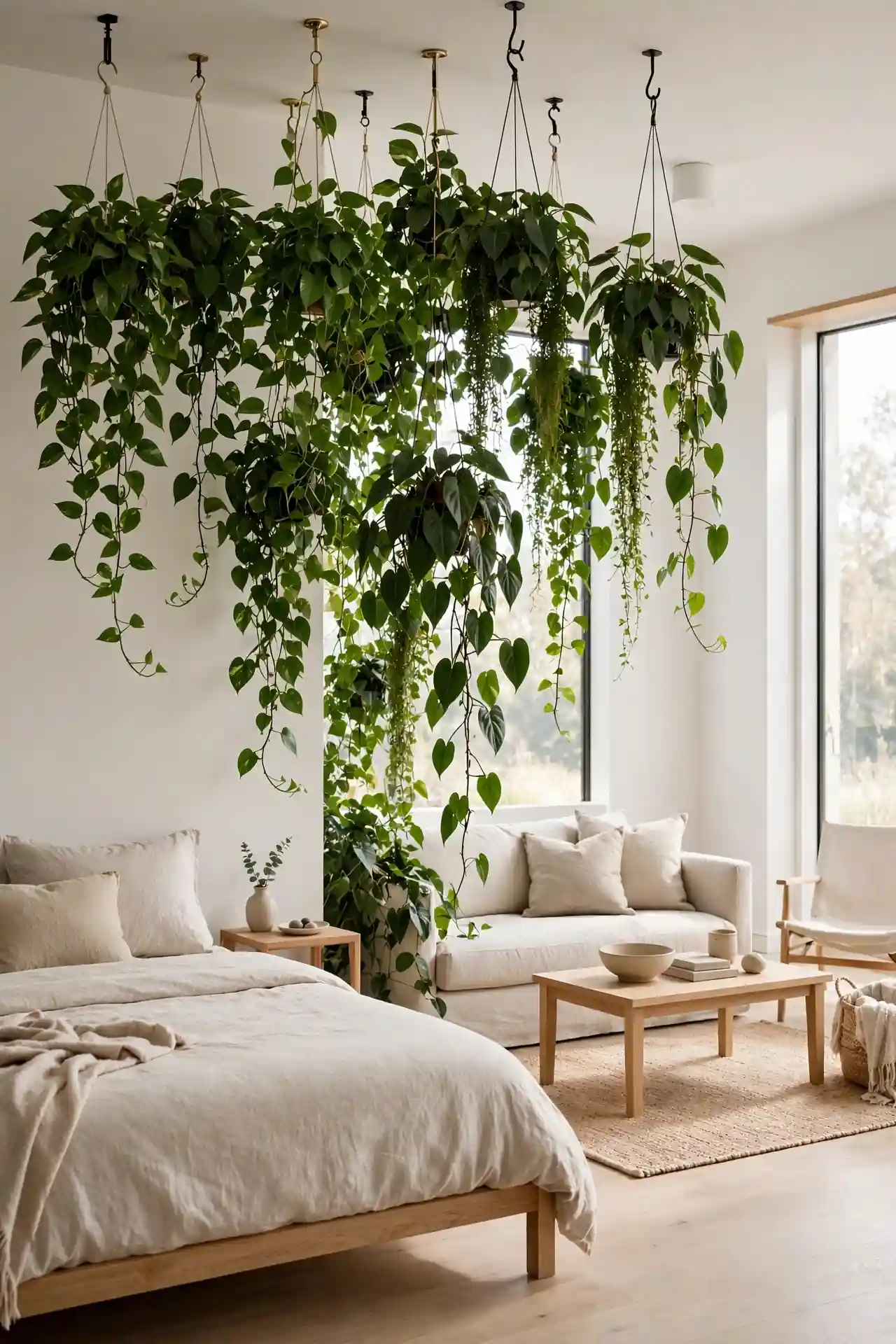
- Do hang plants at varied heights for a lush, layered screen effect.
- Do choose trailing pothos and philodendrons that thrive in indoor light.
- Do use ceiling hooks rated for the wet weight of watered plants.
DON’T:
- Don’t hang heavy ceramic pots from drywall without a stud anchor.
- Don’t block your only window completely, since light matters most.
- Don’t forget a drip tray under each planter to protect floors.
A curtain of greenery softens the line between zones while cleaning your air. Position the hanging row where you want the visual break, usually between bed and living area. To keep clutter out of sight alongside the airy look, these no closet bedroom storage ideas pair perfectly with trailing greens. Water on a schedule so the screen stays lush, not leggy.
Slim Console Desk
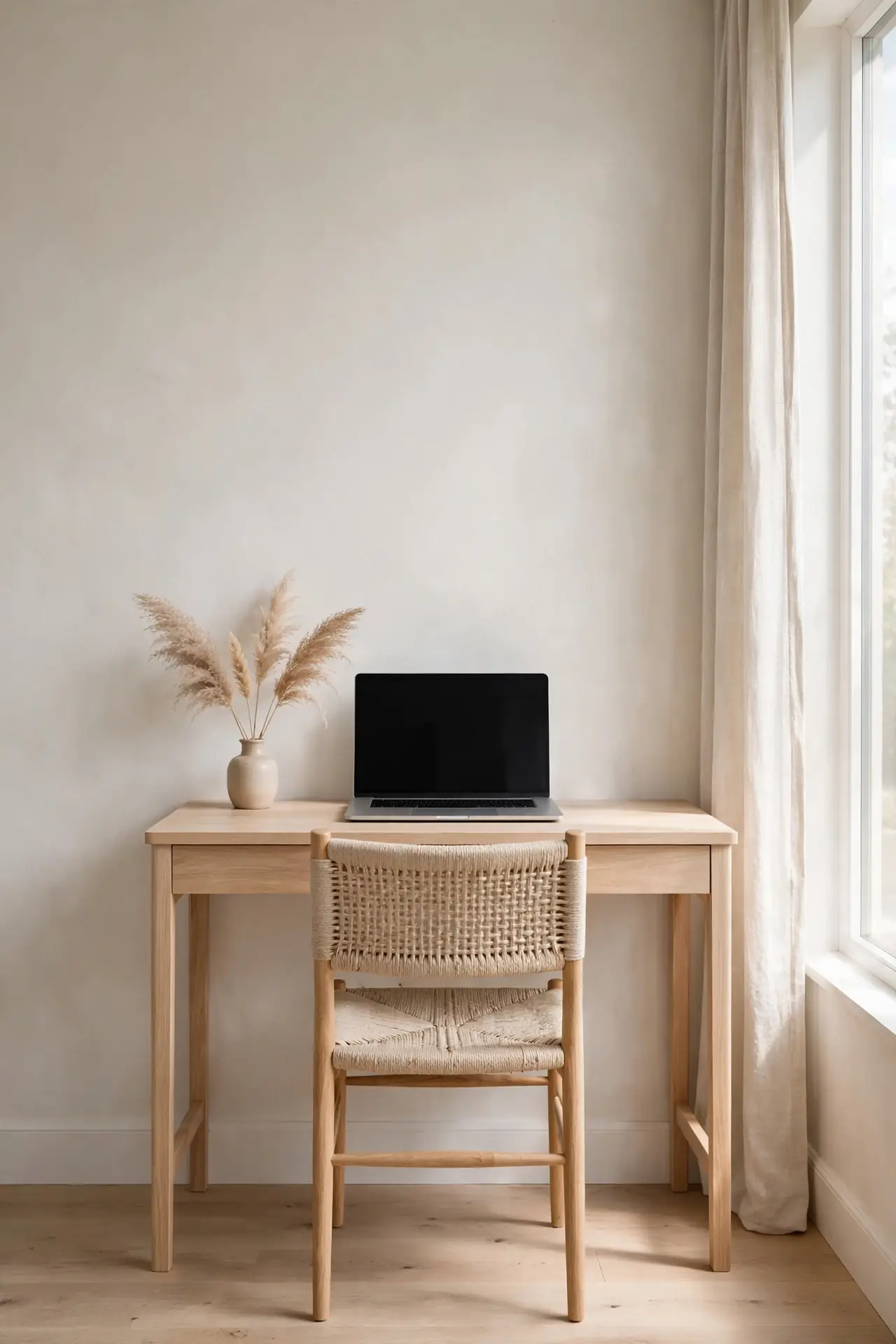
Cost: Medium, expect 80 to 150 dollars for a solid wood console that lasts. Time: Under an hour to assemble and position. Skill Level: Beginner friendly with basic tools. Best For: Laptop work and writing in tight studios.
A slim console doubles as a desk without shouting home office. Tuck it behind the sofa or along an empty wall for an instant workstation. When work ends, clear the surface and it melts back into the decor. I’ve noticed that defining work hours matters as much as defining the space, so close the laptop fully at day’s end. Add a comfortable chair that slides fully underneath to keep walkways clear.
Corner Reading Nook
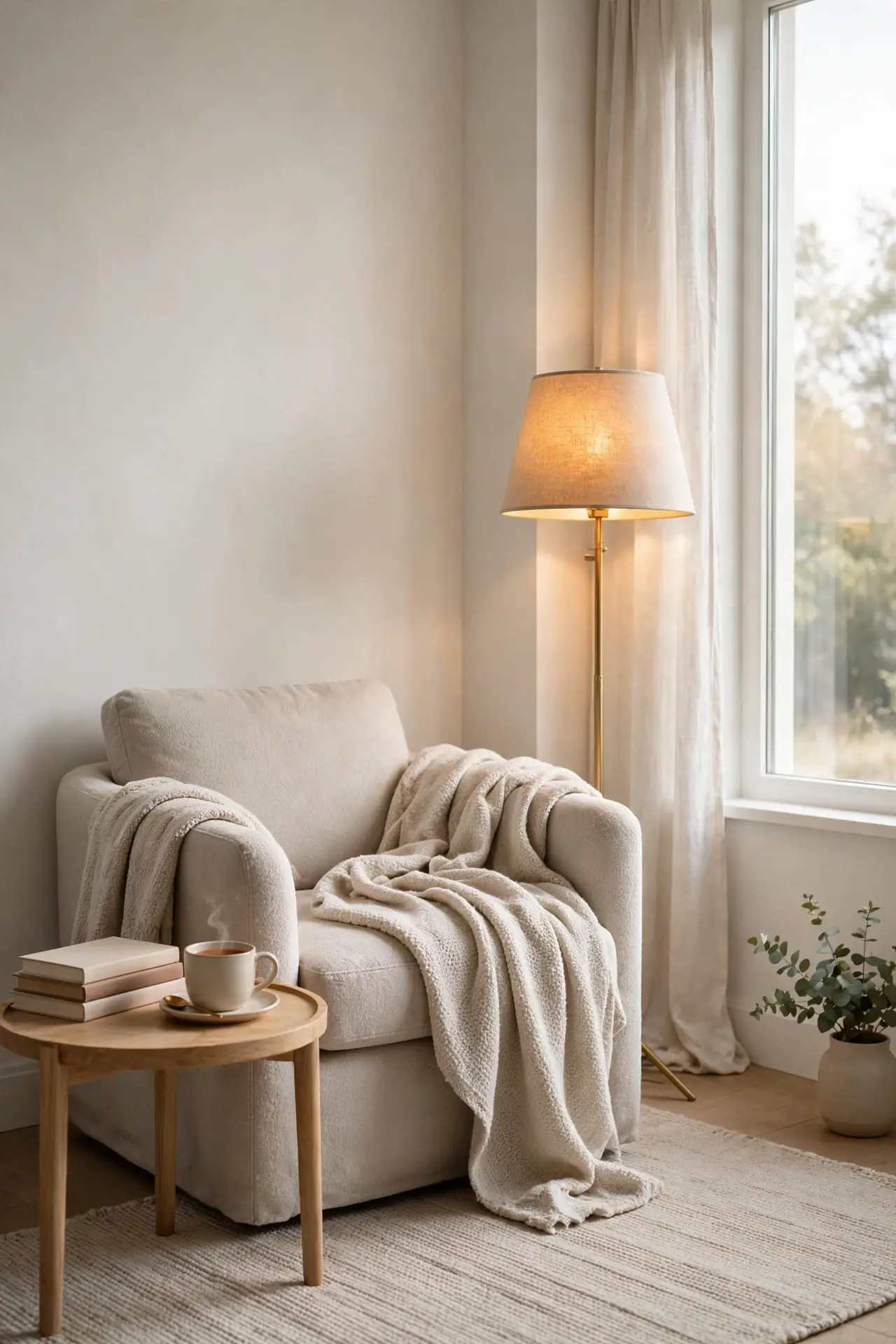
Every studio deserves one cozy corner made purely for relaxing. A comfortable chair, a soft throw, and a good lamp turn dead space into your favorite spot. Tuck it near a window so daylight does the heavy lifting during afternoon reading sessions. Choose a chair with a high back so it feels like a real escape.
Keep a small side table within reach for tea and books. A floor cushion nearby invites friends to join without extra furniture. This nook becomes the place you unwind each evening, separate from both bed and desk. Even the tiniest corner works when styled with intention.
Nesting Side Tables
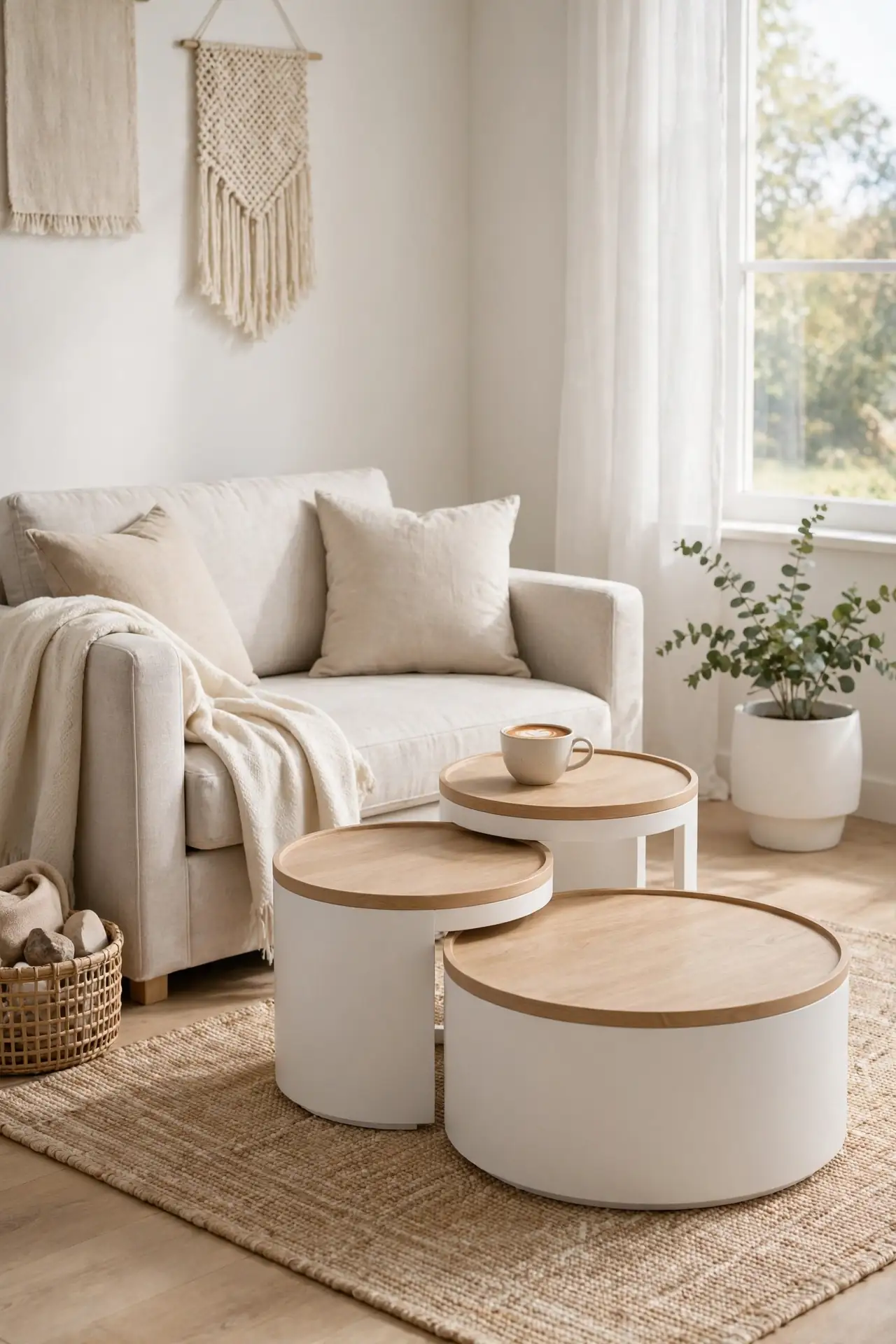
- Nesting tables pull apart when guests arrive and stack when they leave.
- Use the larger one beside the bed as a nightstand each night.
- Scatter the smaller ones around the seating area for drinks.
- Choose lightweight wood or metal so moving them stays easy.
- Wipe them down weekly since small surfaces show dust fast.
Flexibility wins in small spaces, and nesting tables deliver exactly that. One set serves as nightstand, coffee table, and guest surfaces across the day. Look for sets with a small footprint that slide together neatly. They cost little yet solve the eternal studio problem of never having a surface nearby.
Pegboard Entry Wall
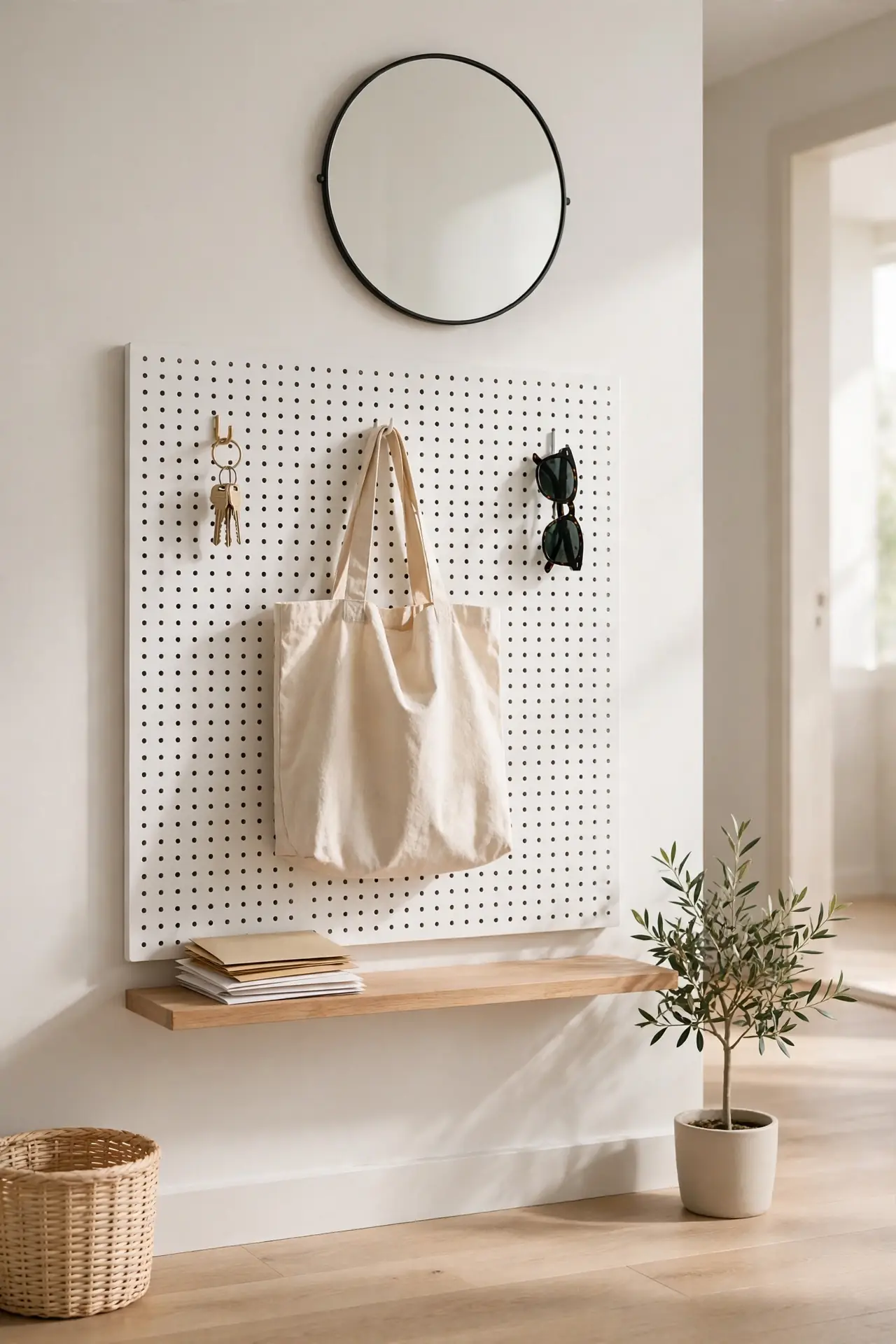
Quick Tip: Mount a pegboard just inside your front door for keys, bags, and sunglasses. Paint it the same color as the wall so it blends in beautifully. Rearrange hooks seasonally as your daily carry changes through the year.
Studios rarely include a real entryway, so you must invent one. A pegboard wall creates a landing zone that catches clutter before it spreads. Add a small shelf for mail and a mirror for last minute checks. I’ve seen this work well in many cases where entry chaos used to swallow the whole studio. Keep only daily items here so the system stays useful.
Folding Screen Charm
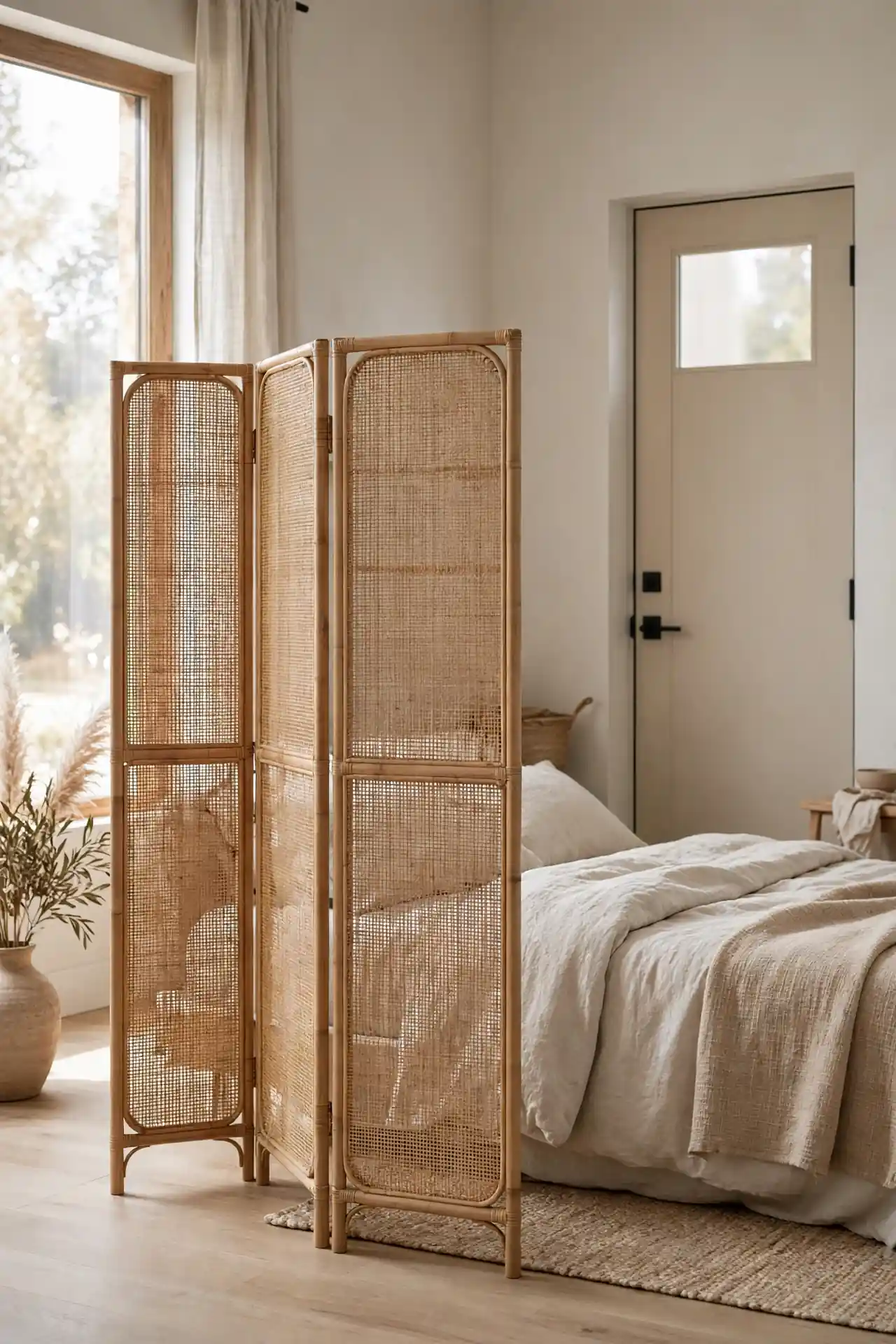
BEFORE: The bed sits fully exposed to the front door, so the whole studio feels like one big bedroom. Guests see your pillows the moment they walk in, which never feels quite right.
AFTER: A beautiful folding screen shields the sleeping zone while adding artful texture. It folds flat against the wall when you crave openness, then opens in seconds for privacy.
Folding screens rank among the oldest studio tricks because they simply work. Choose cane, fabric, or shoji styles to match your decor personality. Position it to block the direct sightline from door to bed. That’s why many experts recommend screens as the first purchase for new studio dwellers.
Floating Ledge Shelves
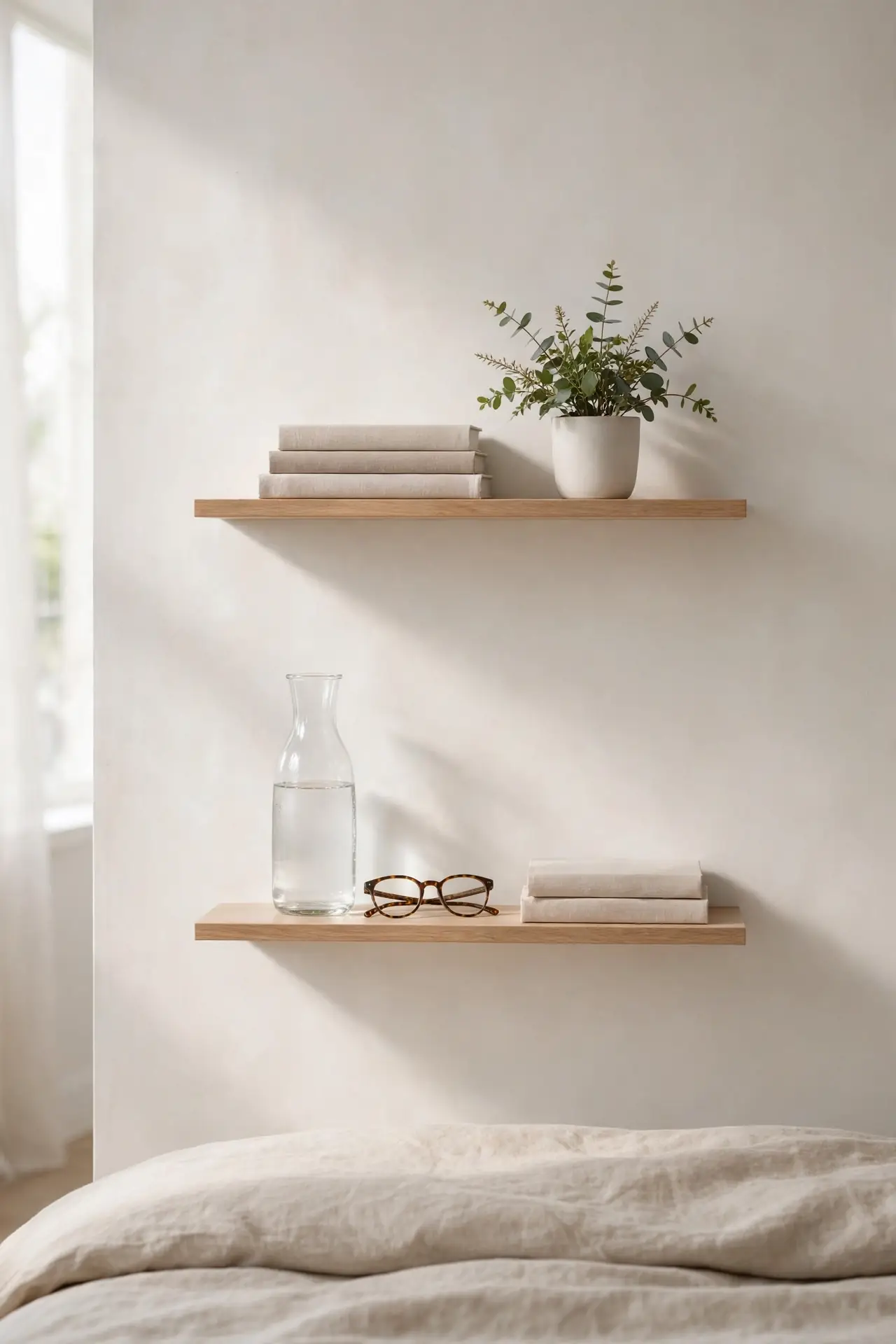
- Pick a wall near the bed that currently holds nothing.
- Mount two floating ledges with hidden brackets for a clean look.
- Style the top ledge with books and a small plant.
- Reserve the lower ledge for nightly essentials like glasses and water.
- Add small bookends so items never slide off the edge.
Floating ledges replace bulky nightstands in the tightest studios. They hold everything within arm’s reach while leaving the floor completely open. Dust them weekly since open shelves collect it fast. In my experience, two slim ledges provide all the bedside storage most people actually use. Choose ledges at least eight inches deep so books sit securely.
Storage Ottoman Seat
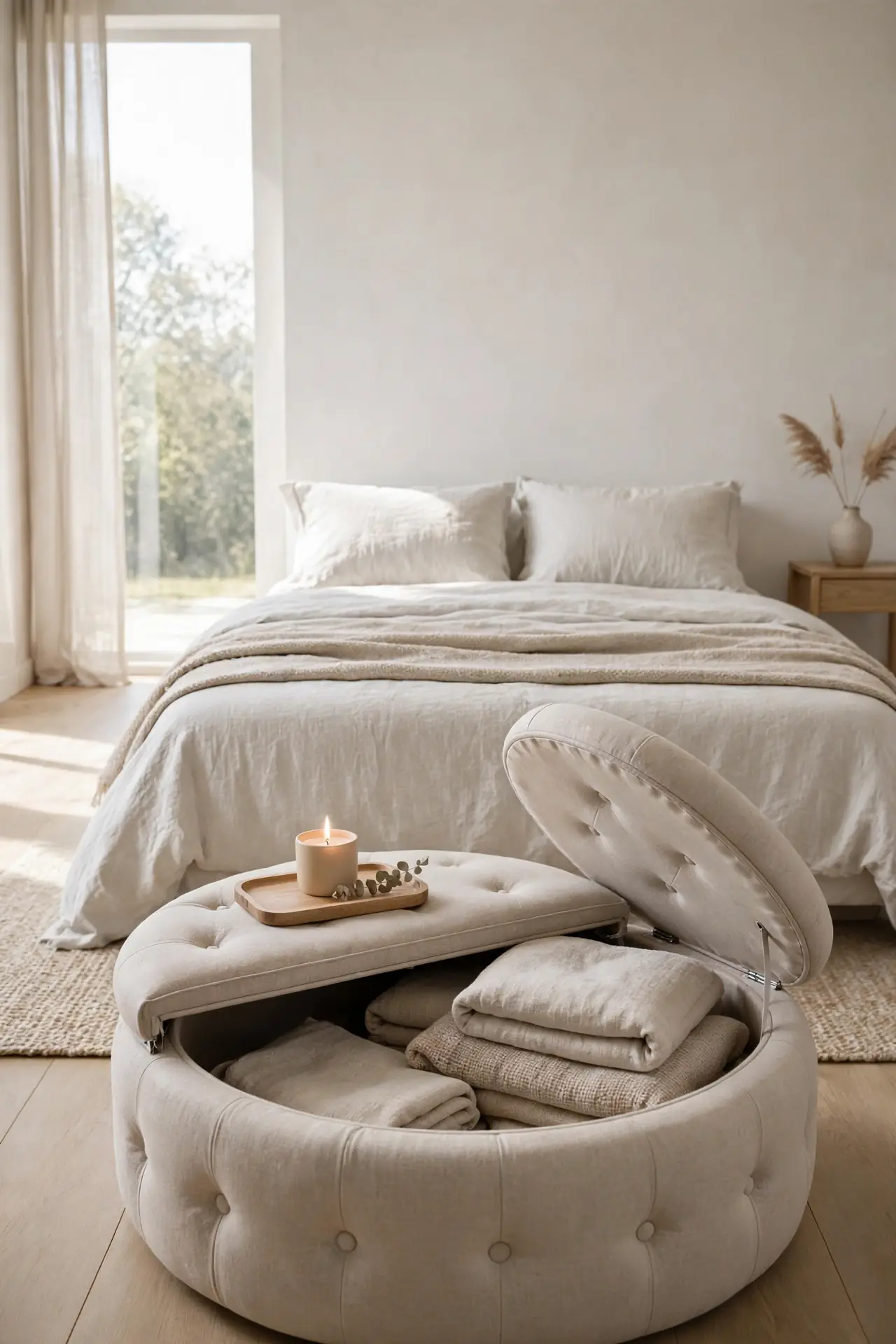
| Ottoman Type | Storage Fit | Style Note |
| Round tufted | Blankets, throws | Soft, classic look |
| Cube ottoman | Shoes, magazines | Modern, compact |
| Bench ottoman | Bedding sets | Doubles as seating |
| Storage pouf | Toys, remotes | Casual, flexible |
An ottoman earns its place by storing while seating. Tuck one at the foot of the bed or beside your reading chair. Choose a lidded style for hidden storage or an open cube for quick access. Match the fabric to your bedding so it looks deliberate rather than extra. Top it with a tray to create an instant side table for drinks. Guests will fight over who gets to put their feet up.
Linen Curtain Canopy
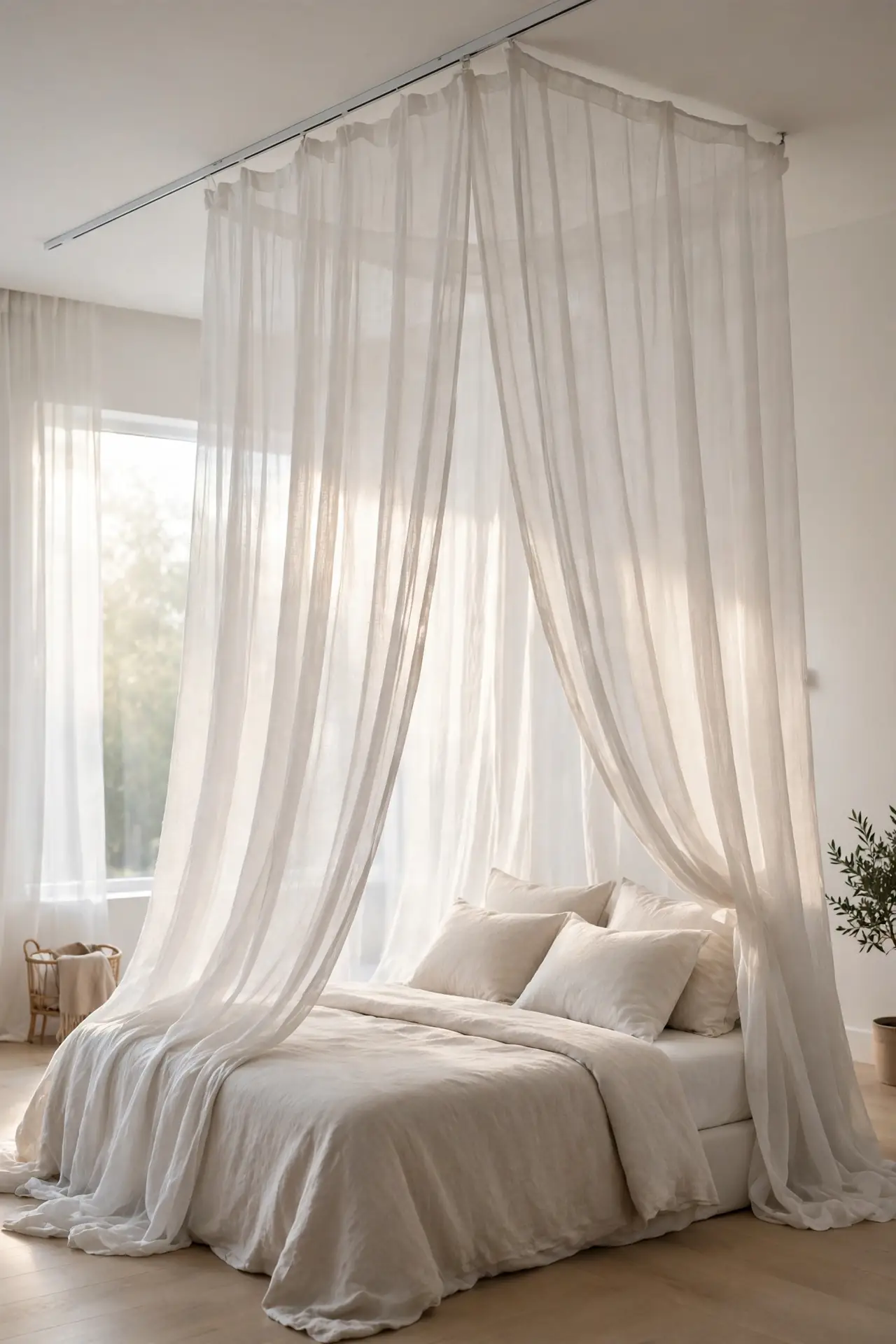
DO:
- Do hang ceiling mounted curtains around the bed for a dreamy canopy effect.
- Do choose lightweight linen that lets morning light filter through softly.
- Do leave one side open so the bed stays easy to access.
DON’T:
- Don’t use heavy blackout fabric unless you truly need total darkness.
- Don’t let curtains pool on the floor where they collect dust.
- Don’t forget to wash the panels every few months.
A canopy turns an ordinary bed into a private retreat inside your studio. The fabric softens the room visually while marking sleep as sacred. Tie panels back by day to reclaim openness instantly. This romantic trick costs little but delivers serious boutique hotel vibes every night.
Vertical Garden Wall
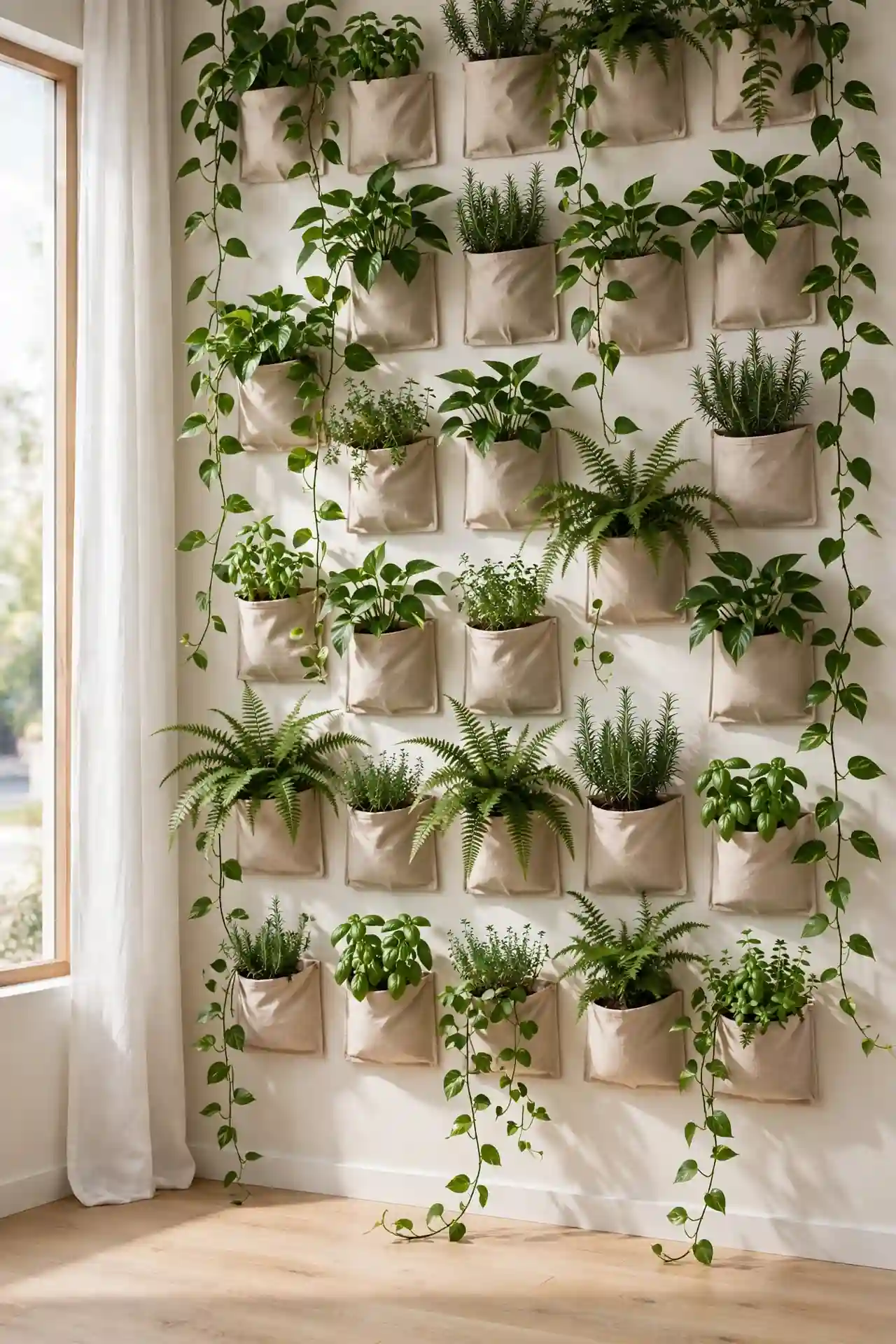
Cost: Low to medium, starting around forty dollars for basic planters. Time: One weekend to mount and plant everything. Skill Level: Beginner, if you pick easy care plants. Best For: Nature lovers craving green in small spaces.
A living wall brings the outdoors into your studio without sacrificing an inch of floor. Mount pocket planters on any empty wall and fill them with pothos, ferns, and herbs. The greenery purifies air and lifts mood on gray days. Water with a long spout can to reach the top rows easily. Start small with six planters and expand once the routine feels easy.
Conclusion
A single room can absolutely deliver the calm of a dedicated bedroom. These studio bedroom ideas prove that zoning, smart furniture, and thoughtful styling matter more than square footage. I’ve seen how small changes like these can completely shift the way a space feels each morning. Choose two or three ideas that solve your biggest frustration and try them this weekend. Start with the sleeping zone, since better rest improves everything else. Save this guide on Pinterest for your next refresh, and share it with a friend navigating studio life. Your chic, spacious feeling home is closer than you think.