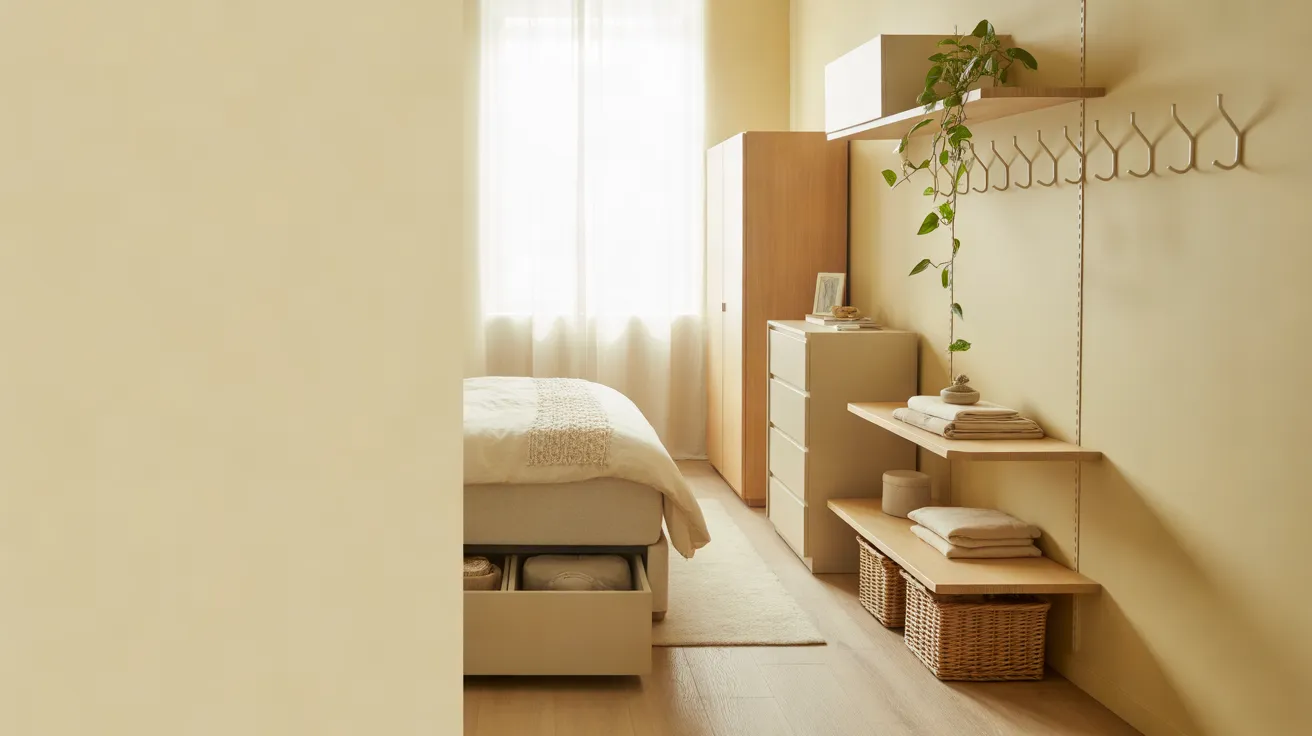
20 Apartment Bedroom Storage Ideas That Maximize Space
Small bedrooms can feel crowded fast, especially when closets are tight and every inch of floor space matters. The right apartment bedroom storage ideas can help you reclaim that space without making your room feel packed with furniture.
From underbed drawers and floating shelves to clever closet organizers and multifunctional pieces, these ideas focus on storage that works with the space you already have. You’ll find practical solutions for clothing, shoes, bedding, accessories, and everyday essentials, including options that suit renters and small budgets.
In my experience, the biggest improvement often comes from using overlooked areas rather than adding more bulky furniture. A narrow wall, empty closet door, or space beneath the bed can hold much more than you might expect. Use these ideas to create a bedroom that feels calmer, easier to maintain, and much more functional.
Underbed Storage Bins
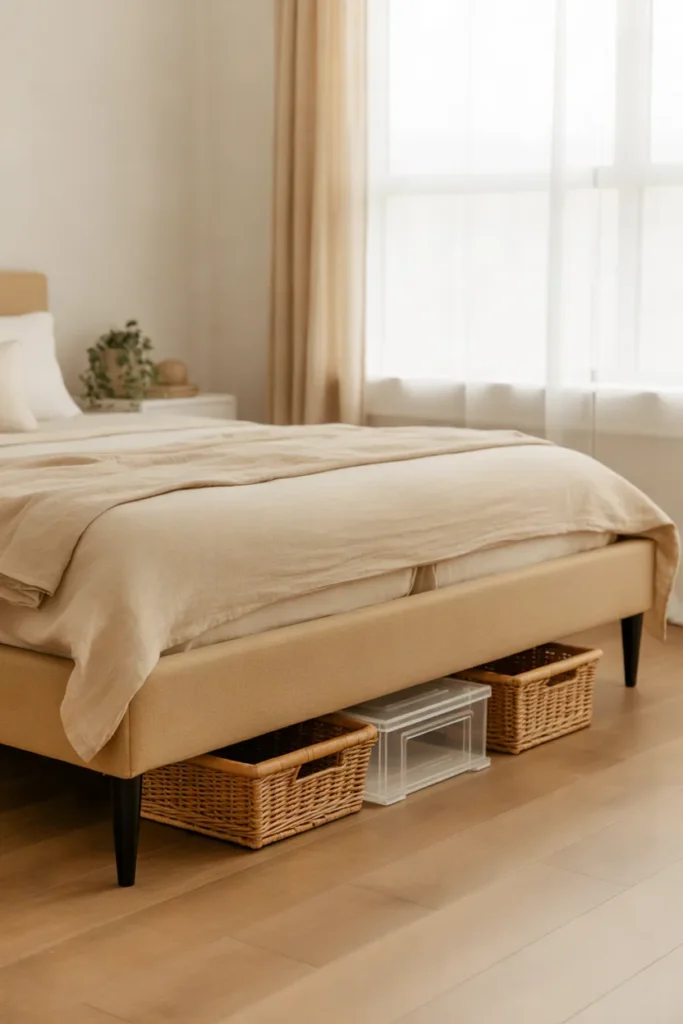
Clutter often gathers in the space beneath a bed, making it an easy storage zone to overlook. Low-profile bins can hold folded clothes, extra bedding, shoes, or seasonal items without taking up visible floor space. Choose containers with lids or handles so everything stays protected and easy to retrieve.
For the best fit, measure the clearance from the floor to the bed frame before buying containers. I’ve noticed shallow bins with wheels are especially convenient in small apartments because they slide out smoothly without requiring the bed to move. Label each bin by category to make finding stored items quick.
Floating Bedside Shelves
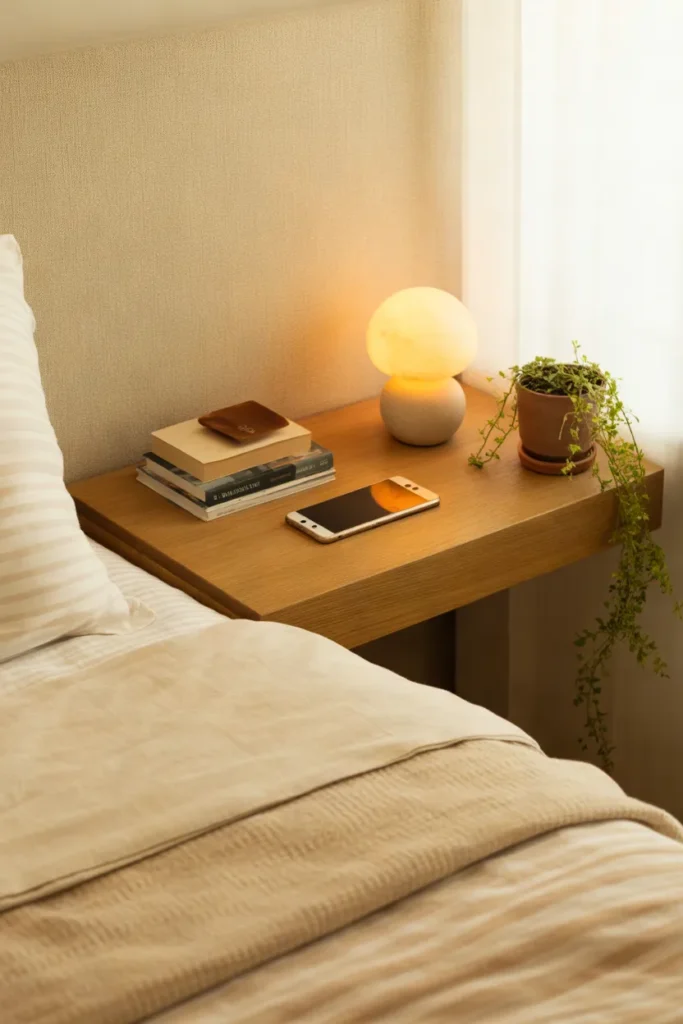
A bulky nightstand can consume valuable floor space, especially beside a narrow apartment bed. A floating shelf creates a useful landing spot for nighttime essentials while keeping the floor completely open underneath. Mount it at a comfortable height for reaching books, glasses, a lamp, or your phone.
- Choose a shelf deep enough for your essentials without crowding the bed.
- Keep the finish close to existing wood tones for a cohesive look.
- Add a small wall-mounted lamp to free up shelf space.
- Use a tray to keep tiny items contained.
- Check wall type and mounting hardware before installation.
This setup works particularly well in bedrooms where every inch matters. Keep the shelf visually light by limiting it to a few daily-use pieces rather than treating it like a display cabinet. A narrow shelf can provide the storage you need while preserving a wider walking path beside the bed.
Tall Dresser Storage
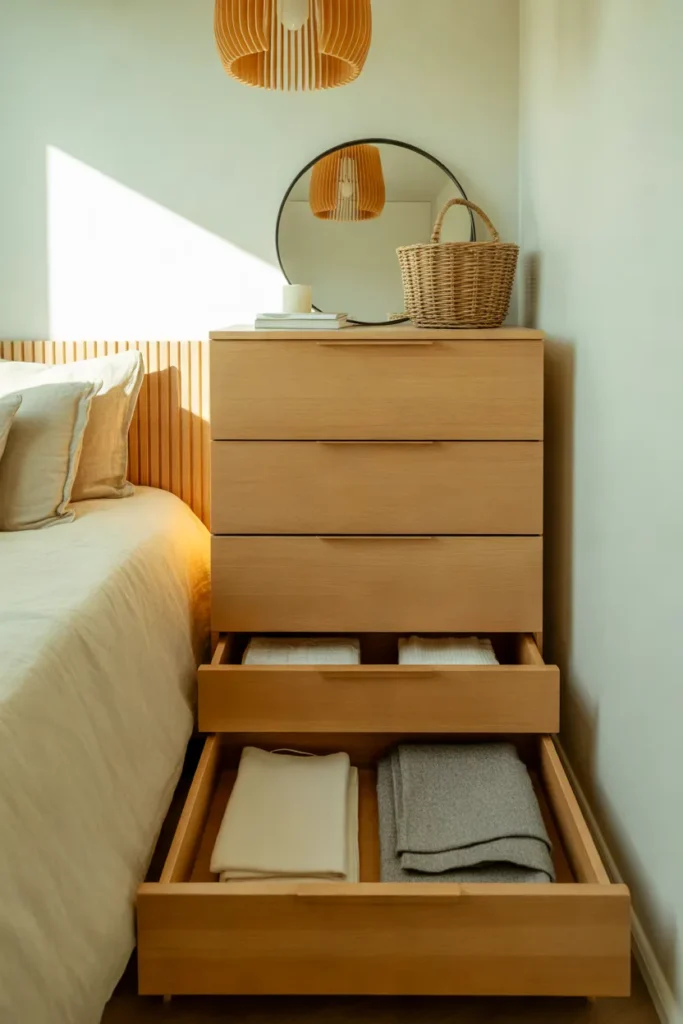
Floor area may be limited, but vertical space often remains available. A tall dresser takes advantage of that unused height while providing several drawers for clothing, accessories, and personal items. Look for a narrow design that leaves enough clearance for drawers to open fully without blocking the bed or doorway.
Quick Tip: Measure both the dresser footprint and the drawer-opening clearance before purchasing. Keep heavier clothing in lower drawers and frequently used items around waist level. This makes the furniture easier to use while keeping the top surface free for only a few practical pieces.
In my experience, vertical storage works best when each drawer has a defined purpose. Try separating sleepwear, everyday tops, accessories, and seasonal pieces instead of mixing everything together. That simple organization prevents drawers from becoming crowded and helps a compact bedroom feel more orderly. If you’re also looking for ways to add color and personality to your bedroom, these olive green bedroom ideas offer beautiful inspiration for styling the space around your storage pieces.
Slim Closet Shelving
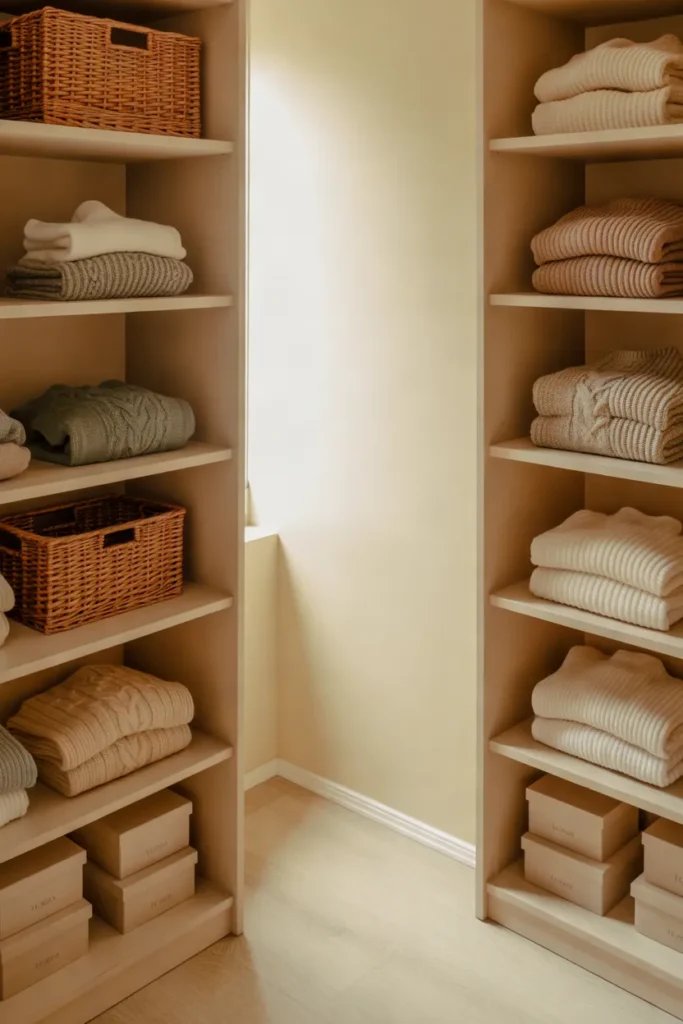
BEFORE: A small closet can quickly become difficult to use when folded clothes are stacked in unstable piles. Items at the bottom get forgotten, while empty vertical space above the hanging rail goes unused.
AFTER: Slim shelving creates dedicated levels for folded clothing, bags, and accessories. Clear spacing makes each category visible and reduces the need to dig through piles.
Keep shelf depths modest so clothing stays easy to reach. Adjustable shelves are especially useful because they can accommodate different items as your storage needs change. For renters, freestanding units can provide similar benefits without permanent installation, making them a practical choice for apartment bedrooms.
Bedside Drawer Unit
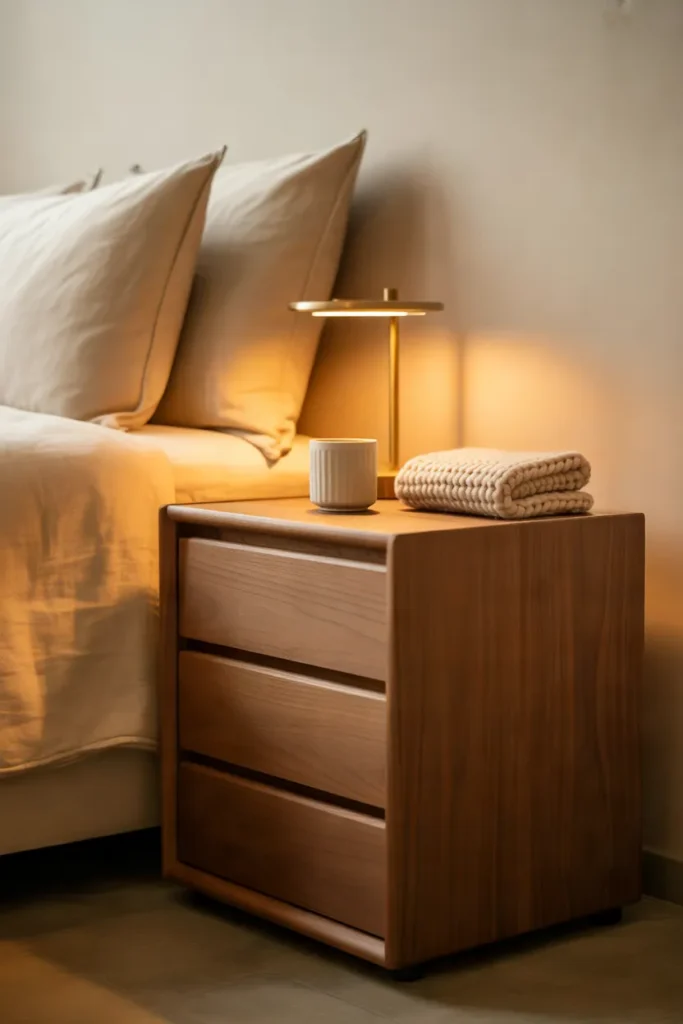
- Measure the gap: Check the space between the bed and wall before choosing a drawer unit.
- Choose compact depth: A narrow cabinet keeps the walkway open while still providing useful storage.
- Assign each drawer: Reserve separate spaces for books, electronics, accessories, or personal items.
- Keep the top clear: Use only one lamp and a small tray for everyday essentials.
A bedside drawer unit gives hidden storage to items that otherwise collect on the floor or mattress. Choose smooth-gliding drawers and a height close to your mattress for comfortable access. In a tight room, a three-drawer vertical design usually provides more useful capacity than a wide, low cabinet.
Open Clothing Rack
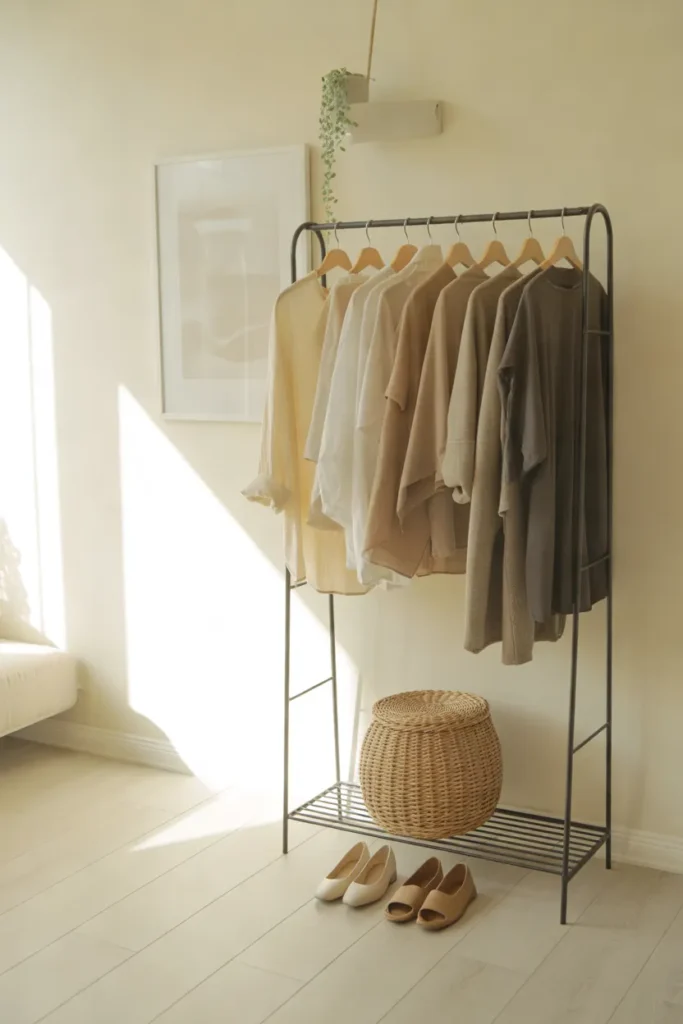
| Storage Point | Open Rack | Closed Wardrobe |
| Floor Space | Usually narrow | Often deeper |
| Visibility | Clothes stay visible | Contents stay hidden |
| Access | Quick and simple | Requires opening doors |
| Best Use | Frequently worn pieces | Larger clothing collections |
An open rack can make a small bedroom feel more accessible while giving clothing a dedicated home. Keep the selection limited to pieces you wear regularly, then store seasonal or less-used garments elsewhere. Matching hangers and one lower basket can make the arrangement look intentional instead of crowded.
Door-Mounted Organizers
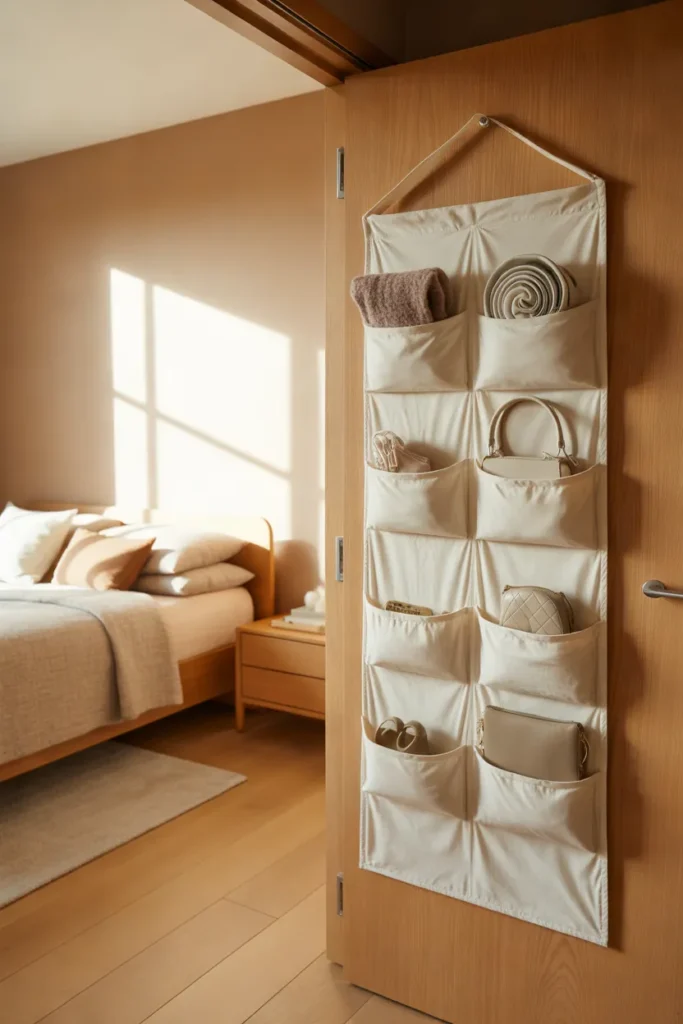
DO:
- Use the back of the bedroom door for lightweight items.
- Group accessories by type so everything stays easy to find.
- Choose fabric or mesh pockets for flexible storage.
- Keep frequently used items in the middle pockets.
DON’T:
- Overload the organizer with heavy objects.
- Block the door from opening fully.
- Store damp towels or clothing inside closed pockets.
- Let small items pile together without categories.
A door organizer turns an overlooked surface into practical storage without taking away floor space. It works especially well for accessories, hair tools, scarves, and small bags. I’ve seen this approach work well in compact rentals because it adds capacity without requiring another cabinet or shelf.
Storage Ottoman Bench
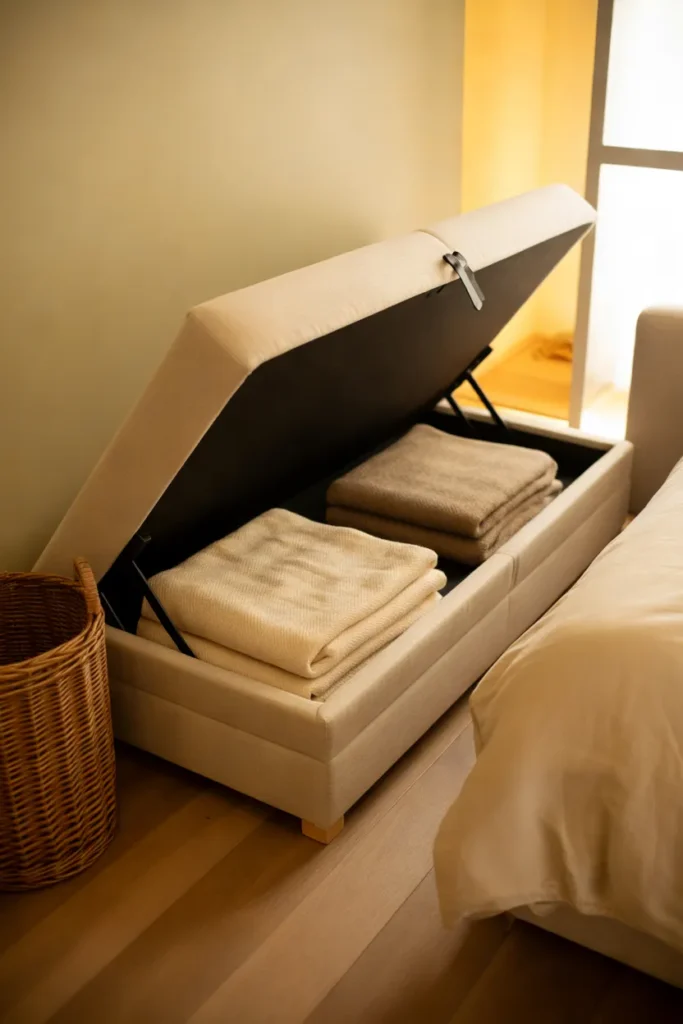
Cost: Moderate | Time: 30 minutes | Skill Level: Beginner
Best For: Blankets, pillows, shoes, seasonal items
Works In: Small bedrooms with open floor space
Result: Seating plus concealed storage
A storage ottoman earns its floor space by serving two purposes at once. The top provides a convenient place to sit while getting dressed, and the hidden compartment can hold bulky bedding that would otherwise fill a closet shelf. Choose a slim rectangular model so the walkway around the bed remains comfortable.
Wall-Mounted Clothing Hooks
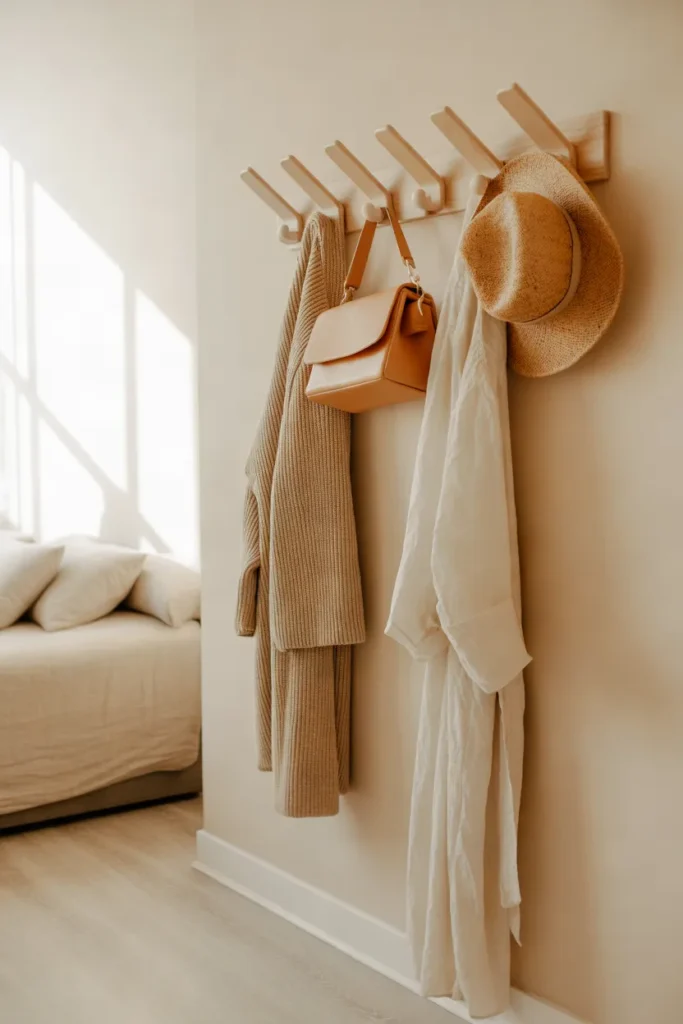
Short on closet space? A simple row of wall hooks can handle the clothing and accessories you reach for most often. Mount them at shoulder height along an unused wall section, behind the door, or beside the wardrobe. This keeps everyday pieces accessible without adding another bulky piece of furniture.
Use sturdy hooks for bags and jackets, while smaller hooks work well for scarves, belts, and hats. Leave enough space between each hook so items do not overlap into one large pile. For a rental, removable adhesive hooks can be useful for lighter belongings, provided the product is suitable for your wall surface.
Rolling Underbed Drawers
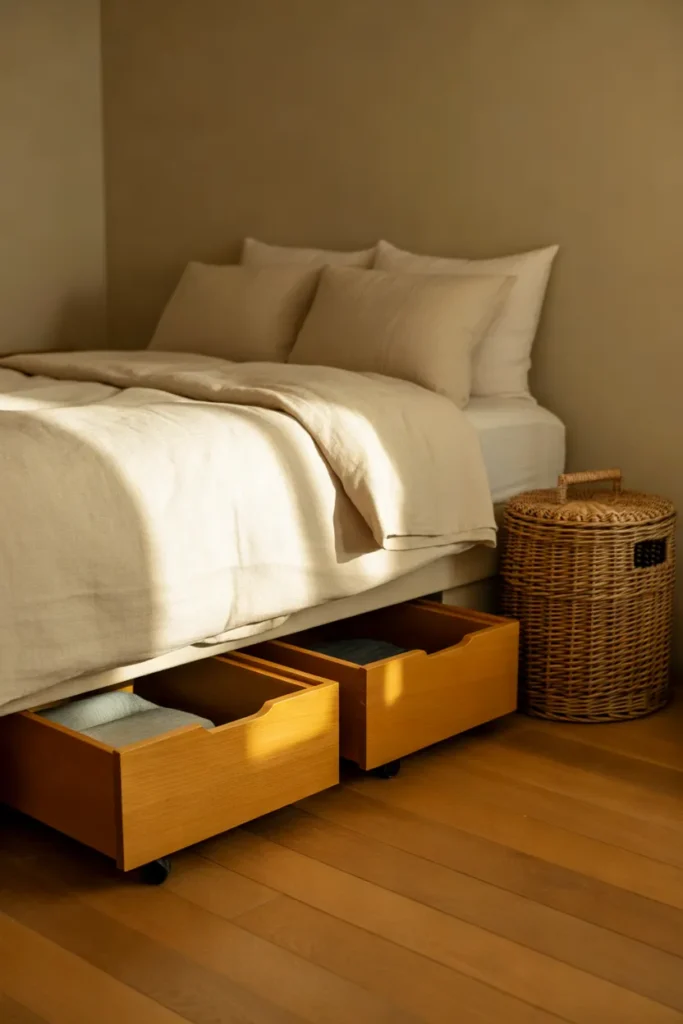
- Choose drawers with smooth casters for easy access.
- Measure the full underbed clearance before buying.
- Store heavier items in sturdy wooden or reinforced containers.
- Add simple labels so seasonal belongings stay organized.
- Keep a little empty space around each drawer for smooth movement.
Rolling drawers make deep underbed storage much easier to use because you can pull the entire container toward you. They work especially well for spare sheets, blankets, shoes, and off-season clothing. Unlike loose boxes, drawers also create a cleaner visual line beneath the bed and reduce the chance of forgotten items.
Overhead Closet Bins
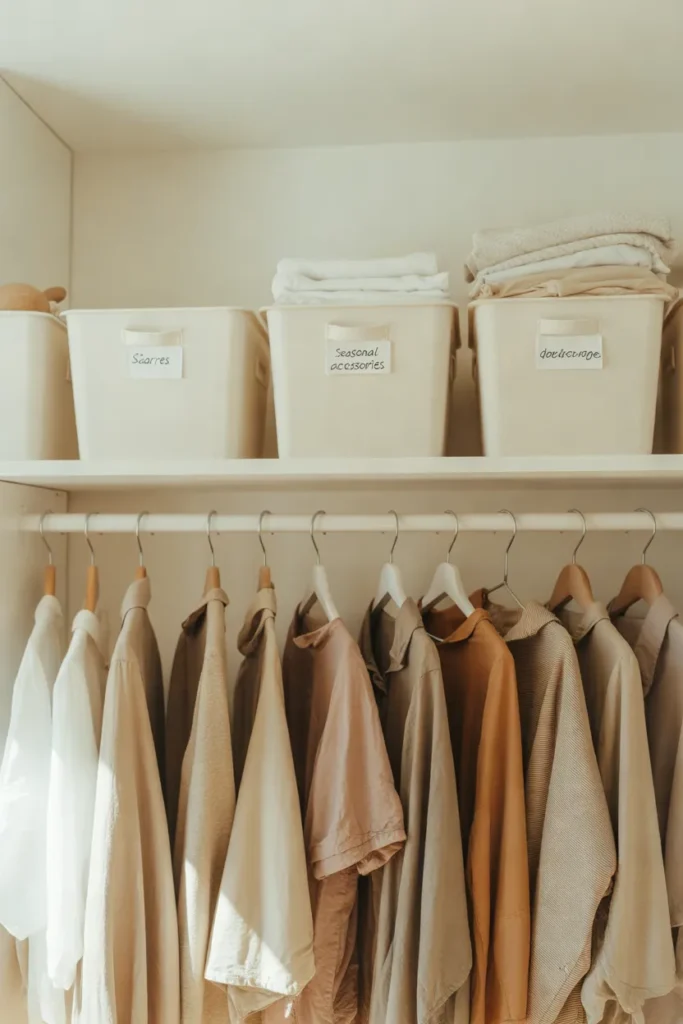
Cost: Low to moderate | Time: One hour | Skill Level: Beginner
Best For: Seasonal accessories and rarely used items
Works In: Closets with unused upper space
Difficulty: Easy
High closet shelves are valuable storage territory for belongings you rarely need during the week. Place labeled bins above your everyday clothing and reserve them for seasonal accessories, spare linens, travel bags, or special-occasion pieces. Choose lightweight containers that are easy to lift down safely.
Keep frequently used items at eye level and move occasional-use belongings upward. Clear or labeled bins prevent unnecessary searching when the season changes. For apartment bedroom storage ideas that do not require additional floor furniture, making better use of existing closet height is one of the simplest improvements.
Mirror Jewelry Cabinet
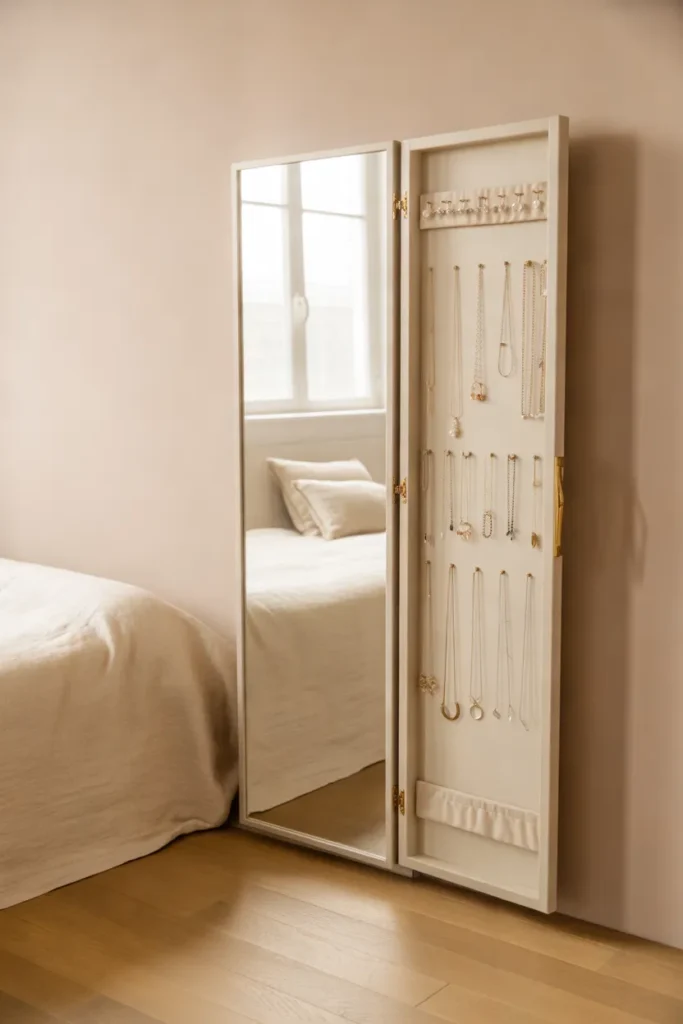
A full-length mirror can do more than reflect your outfit when its interior provides hidden organization. Choose a slim mirrored cabinet with hooks, shelves, and small compartments for jewelry, watches, hair accessories, or cosmetics. Mounting it vertically keeps the floor open while combining two useful bedroom functions.
Place the cabinet near your dressing area so daily accessories remain convenient to reach. Keep necklaces on individual hooks to reduce tangling, and use small compartments for rings and earrings. I’ve noticed that combining storage with a mirror works particularly well in apartments where adding separate furniture would make the room feel crowded.
Bedside Wall Cabinet
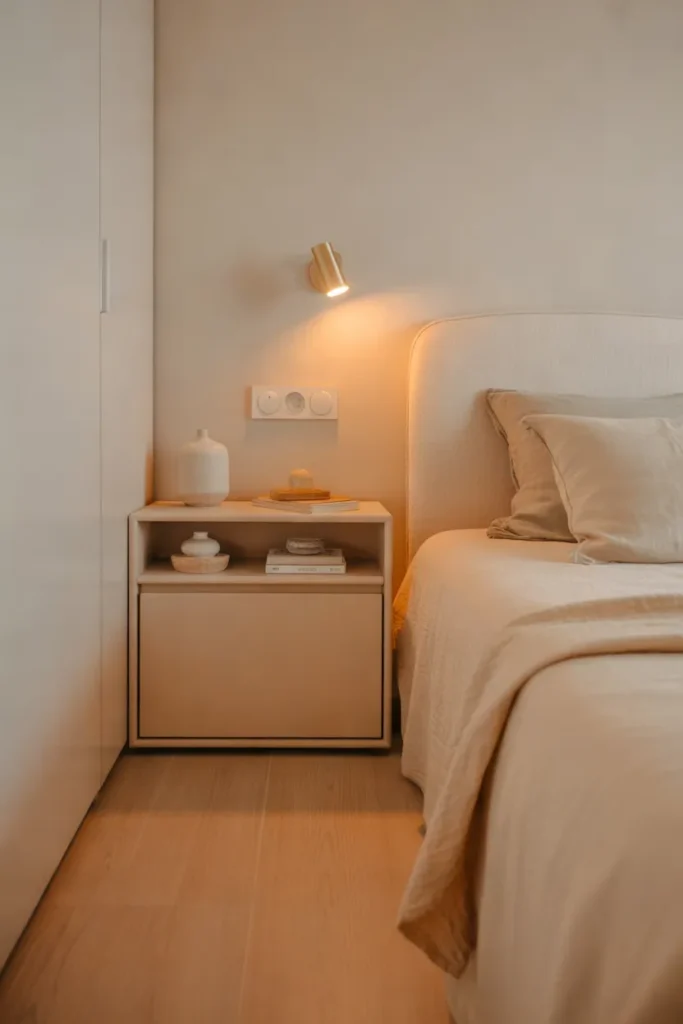
A bedside cabinet can provide valuable hidden storage without occupying the floor beneath it. Mount a compact cabinet beside the bed for books, medications, charging cables, glasses, and other nighttime essentials. Closed doors also keep small items out of sight, helping the room maintain a cleaner appearance.
Choose a cabinet with a shallow depth so it does not intrude into the sleeping area. Keep heavier objects on lower shelves and everyday items at the easiest height to reach. For renters, check whether your lease allows wall mounting, or consider a narrow freestanding cabinet with similar proportions.
Closet Floor Baskets
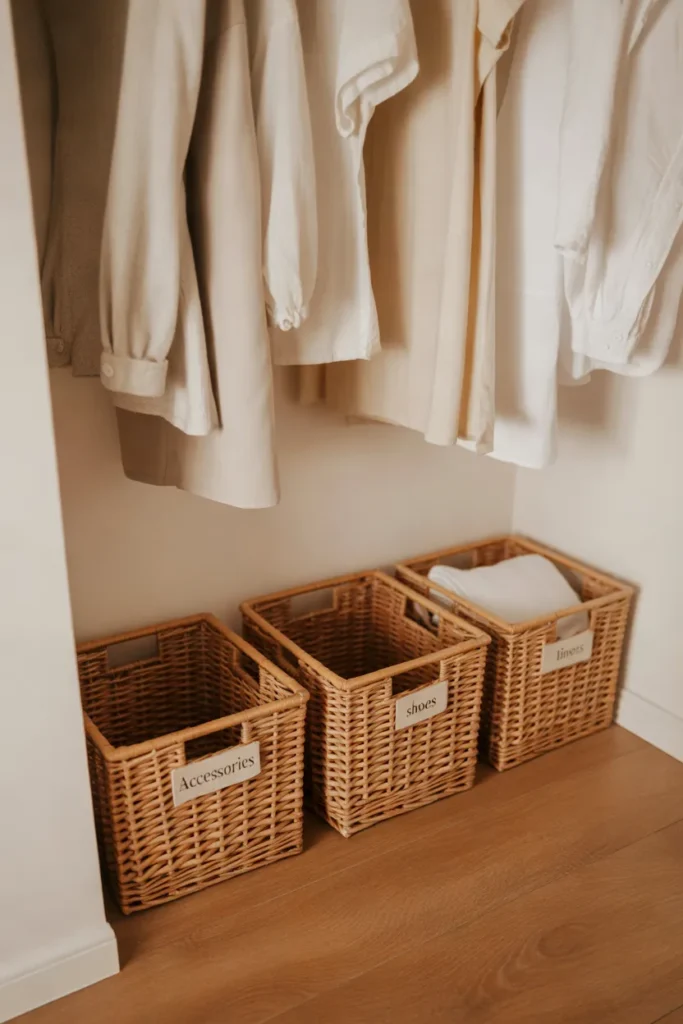
1. Clear the floor: Remove loose shoes, bags, and clothing before measuring the available space.
2. Measure carefully: Check the width and height beneath hanging garments so baskets fit comfortably.
3. Assign categories: Give each basket one purpose, such as shoes, accessories, or spare linens.
4. Add labels: Use simple tags to make the contents obvious at a glance.
Floor baskets turn awkward open space inside a closet into useful organization. Choose sturdy woven or fabric containers that slide easily beneath hanging clothes. Keeping categories separate prevents the floor from becoming a catch-all area, while matching baskets create a more cohesive appearance even when the closet door is open.
Fold-Down Desk
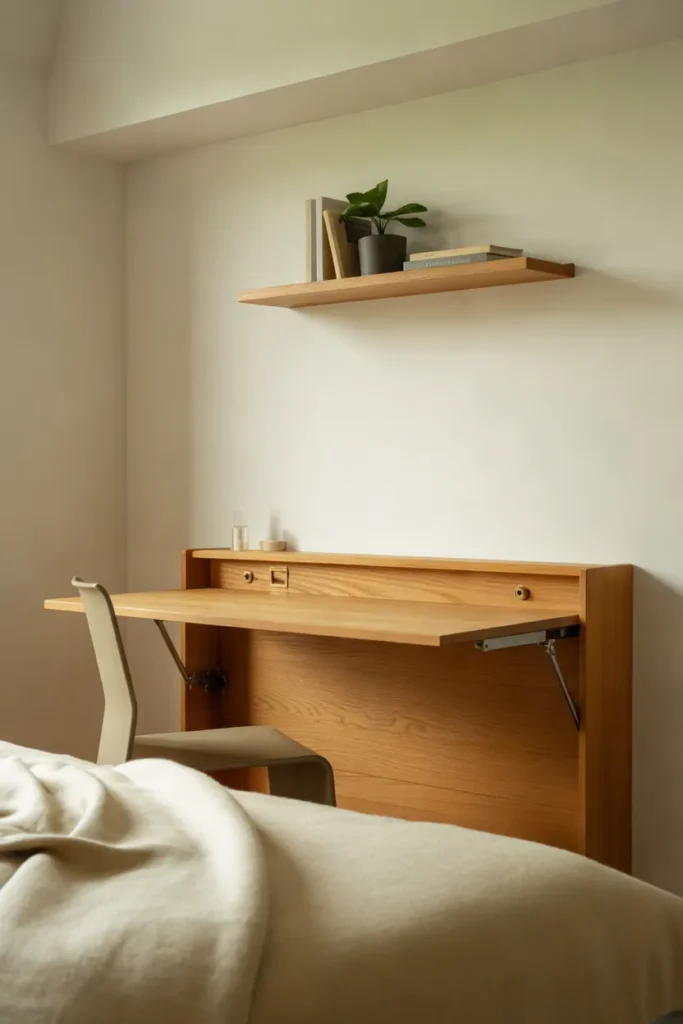
| Feature | Fixed Desk | Fold-Down Desk |
| Floor Space | Requires permanent footprint | Frees floor when closed |
| Storage | Usually larger | Best for essentials |
| Flexibility | Stays in place | Folds away after use |
| Small Rooms | Can feel bulky | Works well in tight areas |
A fold-down desk is useful when a bedroom needs to serve as both a sleeping area and workspace. Keep the surface limited to daily essentials, then fold it closed when work is finished. Choose a model with a shallow profile and built-in compartments if you need extra storage for stationery or electronics.
Hanging Closet Caddies
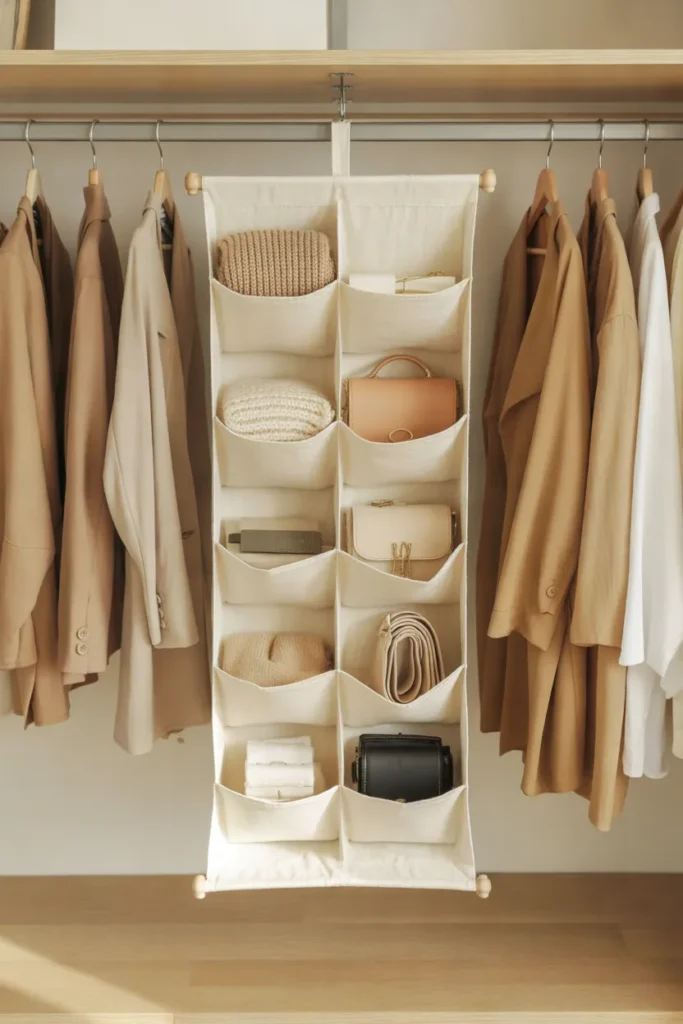
- Use vertical caddies for folded clothes that do not need drawers.
- Reserve separate compartments for accessories, bags, and lightweight garments.
- Choose reinforced fabric shelves that keep their shape under regular use.
- Place everyday items at reachable levels and seasonal pieces higher up.
- Avoid overfilling compartments so clothes remain easy to remove.
Hanging caddies make use of the vertical space between your closet rod and floor. They are especially useful when an apartment wardrobe has limited shelving. A narrow organizer can hold several categories without requiring another piece of furniture, helping keep folded items visible and reducing pressure on crowded dresser drawers.
Rolling Storage Cart
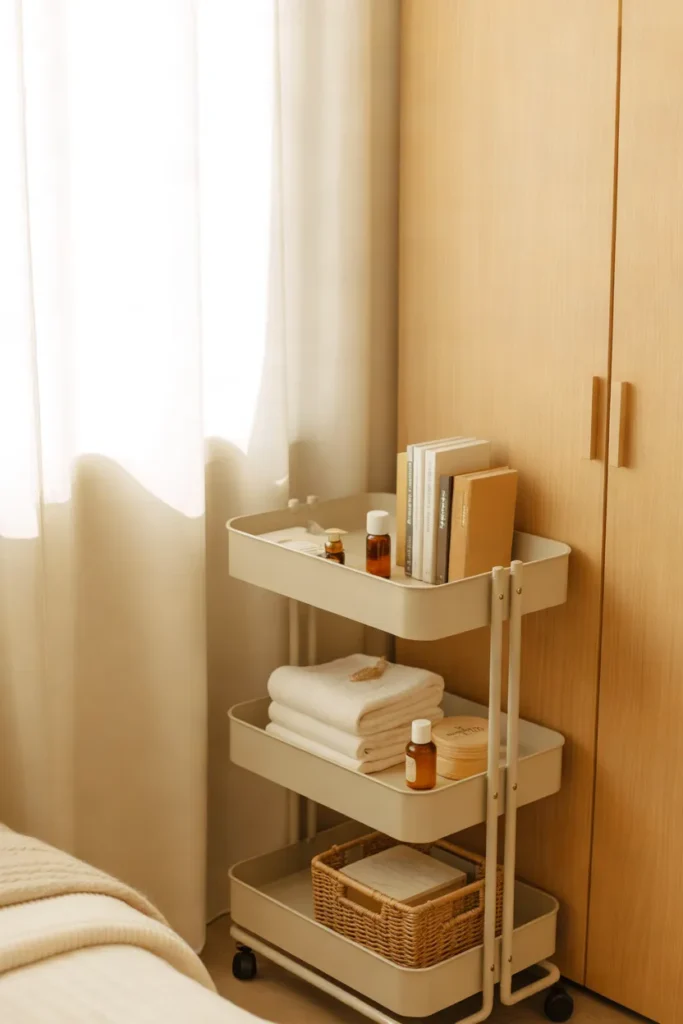
Quick Tip: Choose a cart narrow enough to slide beside your dresser, wardrobe, or bed. Keep each level dedicated to one category, such as accessories, beauty supplies, or folded basics. Lockable wheels are helpful when the cart needs to stay securely in place during daily use.
A rolling cart gives you flexible storage without committing valuable floor space to a large cabinet. It can move wherever you need it, which is useful in multipurpose bedrooms. Use small baskets on the shelves to prevent loose items from becoming cluttered, especially when the cart remains visible.
Pegboard Accessory Wall
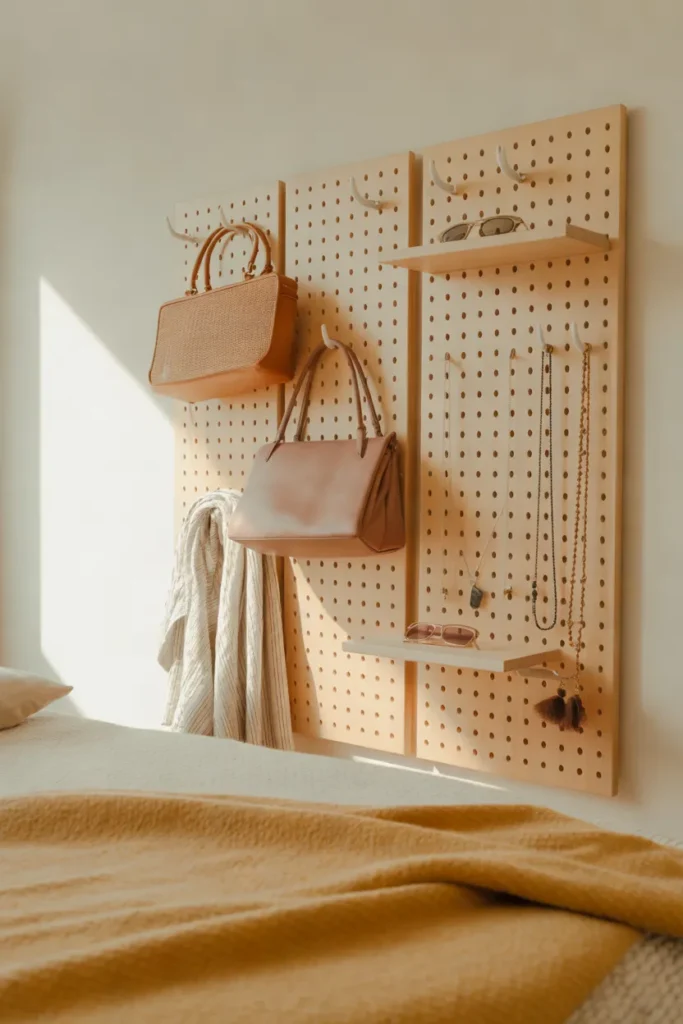
BEFORE: Small accessories often end up scattered across a dresser, nightstand, or closet shelf. Finding one specific item can mean moving several others first, while unused wall space remains empty.
AFTER: A pegboard gives each accessory a visible location. Hooks hold bags and scarves, while small shelves handle jewelry, sunglasses, and other lightweight pieces.
Arrange the most frequently used accessories at eye level and leave some open space between groups. The flexible layout also makes future changes simple because hooks and shelves can be repositioned. If you rent, look for a freestanding pegboard or use an approved mounting method suitable for your wall type.
Closet Door Shelves
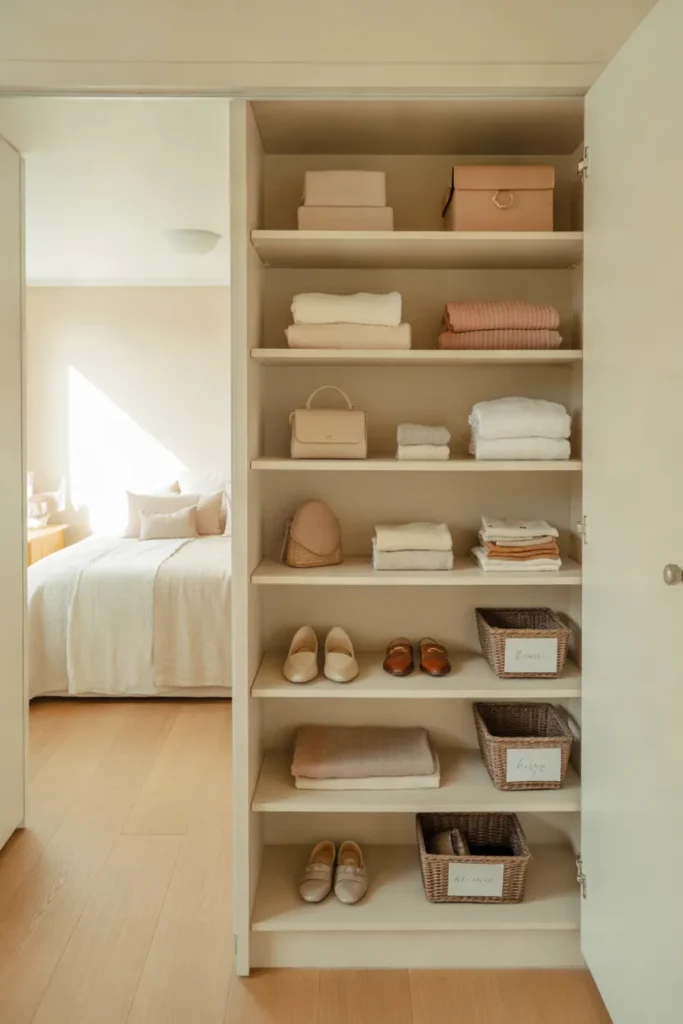
1. Measure the door: Check the available width, height, and hinge clearance before selecting shelves.
2. Choose a slim system: Shallow shelves keep stored items from interfering with the closet interior.
3. Group small items: Use baskets for accessories, belts, scarves, and other loose belongings.
4. Keep weight balanced: Place lighter items higher and avoid overloading the door.
The inside of a closet door offers storage potential without taking away bedroom floor area. Shallow shelving is especially useful for small accessories that tend to disappear inside deep drawers. Keep the arrangement tidy and avoid placing bulky objects near hinges or handles where they could interfere with normal door movement.
Headboard Storage Cubby
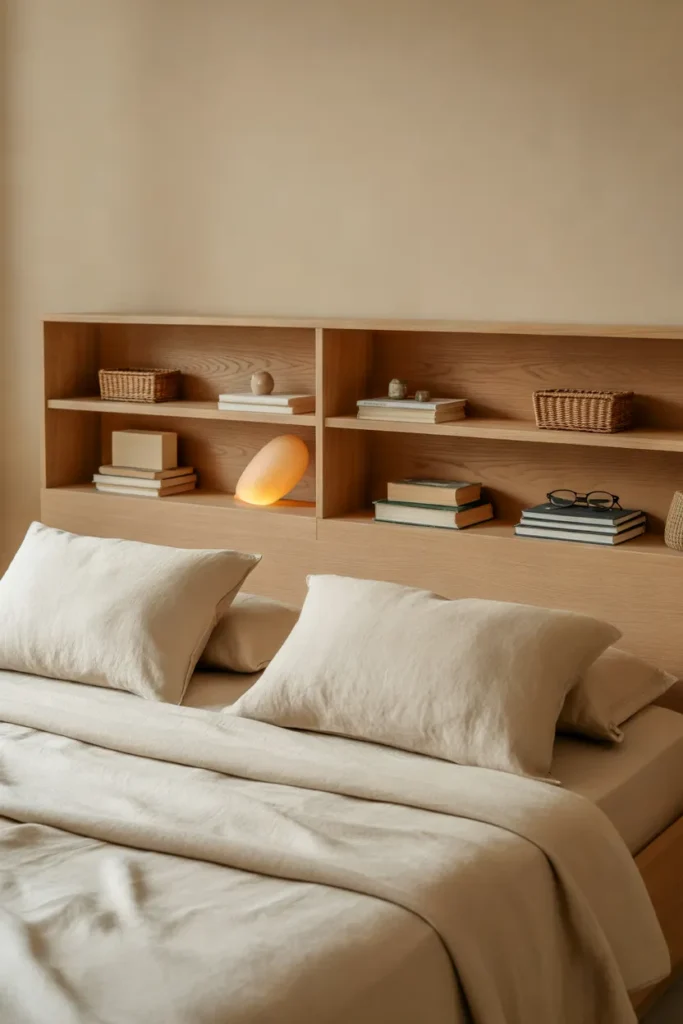
Cost: Moderate to high | Time: One afternoon | Skill Level: Beginner
Best For: Books, charging devices, small accessories
Works In: Bedrooms with limited bedside space
Result: Storage plus headboard function
A storage headboard can replace the need for bulky bedside furniture while keeping essentials close to the mattress. Look for cubbies or narrow compartments that fit books, charging cables, reading glasses, and small personal items. This approach keeps frequently used belongings contained instead of scattered across the bed.
For a cleaner look, place only everyday essentials in the open sections and use small baskets for loose pieces. If buying new furniture is outside your budget, a simple bookcase positioned behind the bed can provide a similar storage effect, provided it is safely secured.
CONCLUSION
A small apartment bedroom does not need more clutter to gain more storage. With smart use of vertical walls, hidden spaces, closet areas, and multifunctional furniture, you can create room for the things you actually use. These apartment bedroom storage ideas offer simple ways to make every inch work harder while keeping your bedroom comfortable and attractive.
I’ve seen how small storage changes can completely shift the way a space feels. Start with one idea that solves your biggest problem, then build from there. Save this post on Pinterest, try your favorite solutions, and share it with someone who could use a little more space.


One Comment