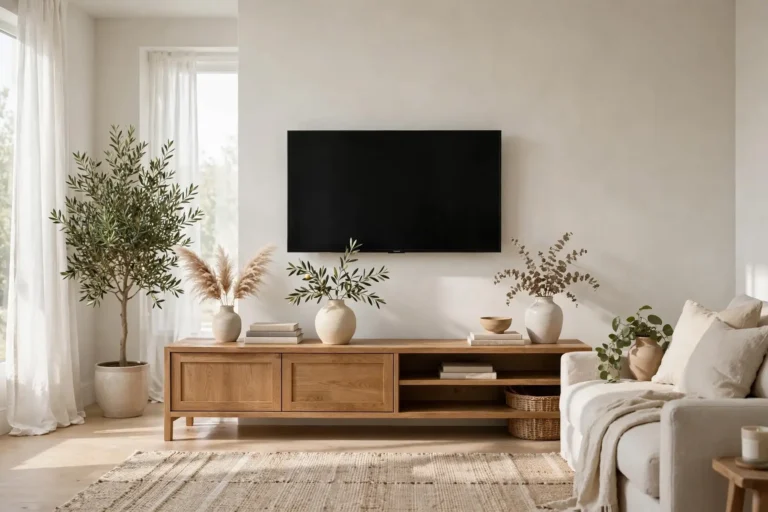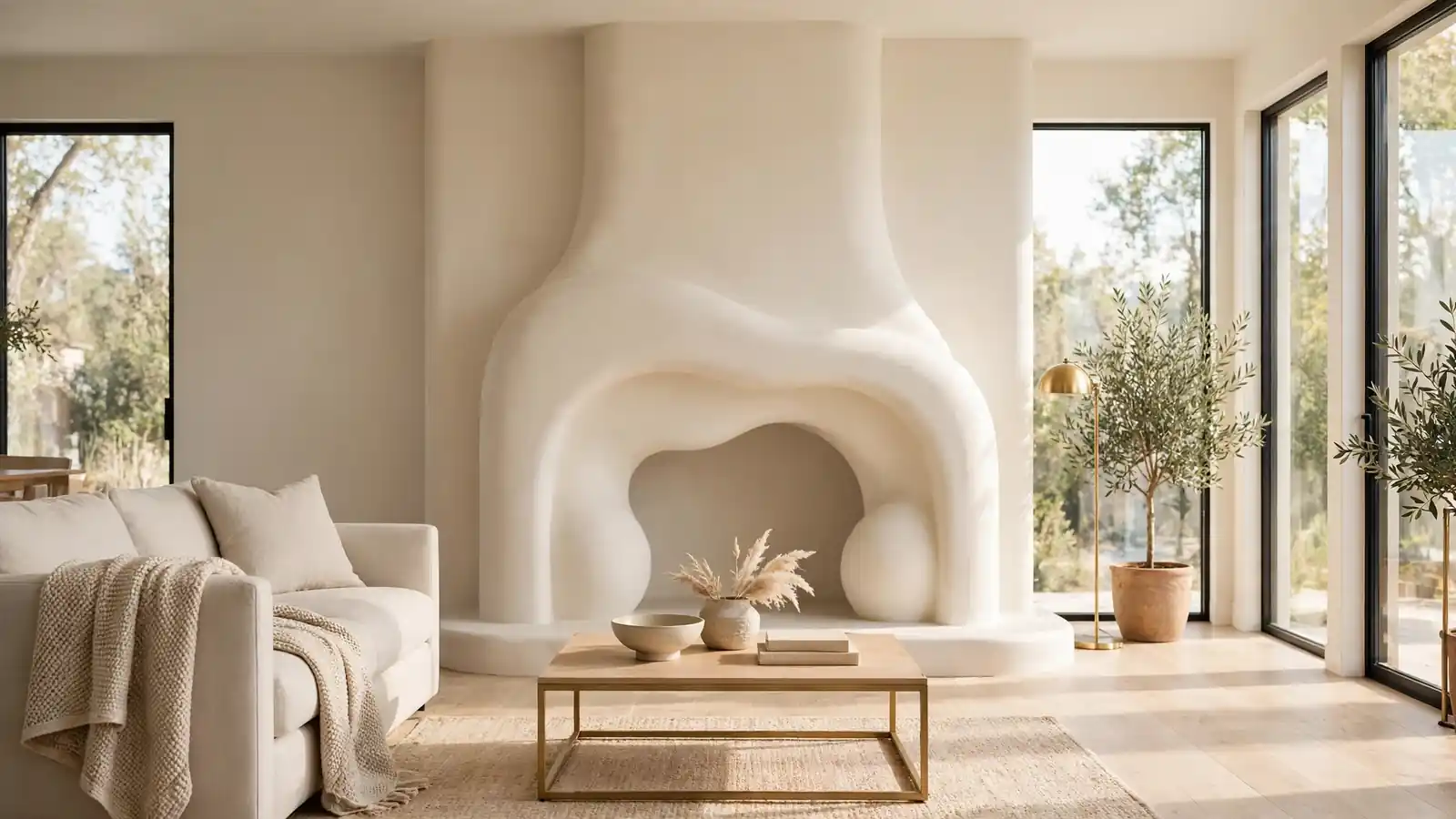
25 Plaster Fireplace Design Ideas for a Sculptural Focal Point
A fireplace should anchor a room the way a sculpture anchors a gallery, quietly and with total confidence. The strongest plaster fireplace design inspiration starts from that single idea: smooth creamy surfaces, softened edges, and a surround that looks carved from one warm piece of stone. In my experience, plaster suits real homes because it forgives uneven walls and ages gracefully.
Rooms built around texture and arches, like the ones in modern Moroccan living room decor, show how powerful a hand finished surface can be. Ahead you will find twenty five plaster fireplace ideas, from small budget refresh projects to full sculptural builds, each one planned for bright rooms, pale wood, and calm, uncluttered styling.
Smooth Minimalist Plaster Surround
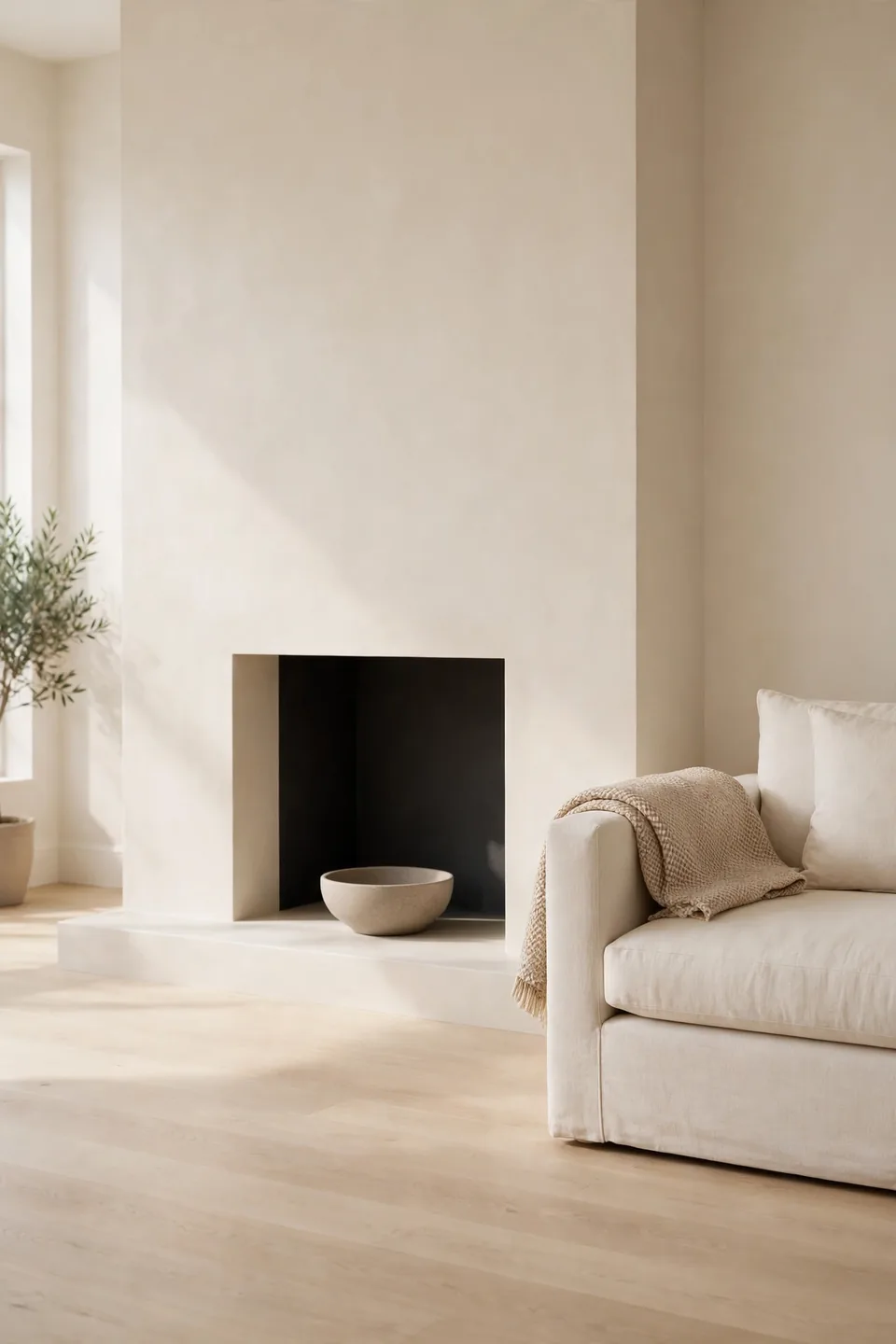
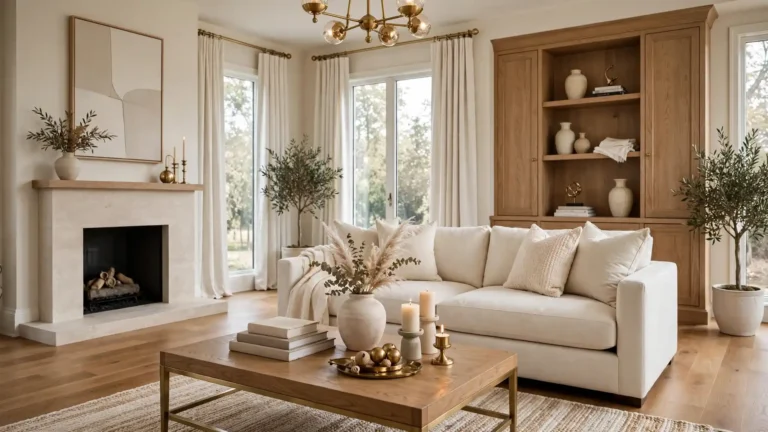
A smooth plaster surround strips the fireplace back to pure shape, and the room instantly feels calmer. No trim, no tile lines, no busy grout, just one soft surface that catches light in gentle gradients from morning to dusk. The firebox reads like a carved opening in a warm wall.
Keep the palette tight around it: a cream sofa, pale oak floors, one woven throw. In my experience, minimalist plaster looks best when nothing nearby shouts for attention. A single large cushion or a low ceramic bowl on the hearth adds shape without clutter, and the flat finish photographs beautifully from every angle in the room.
Softly Arched Firebox Opening
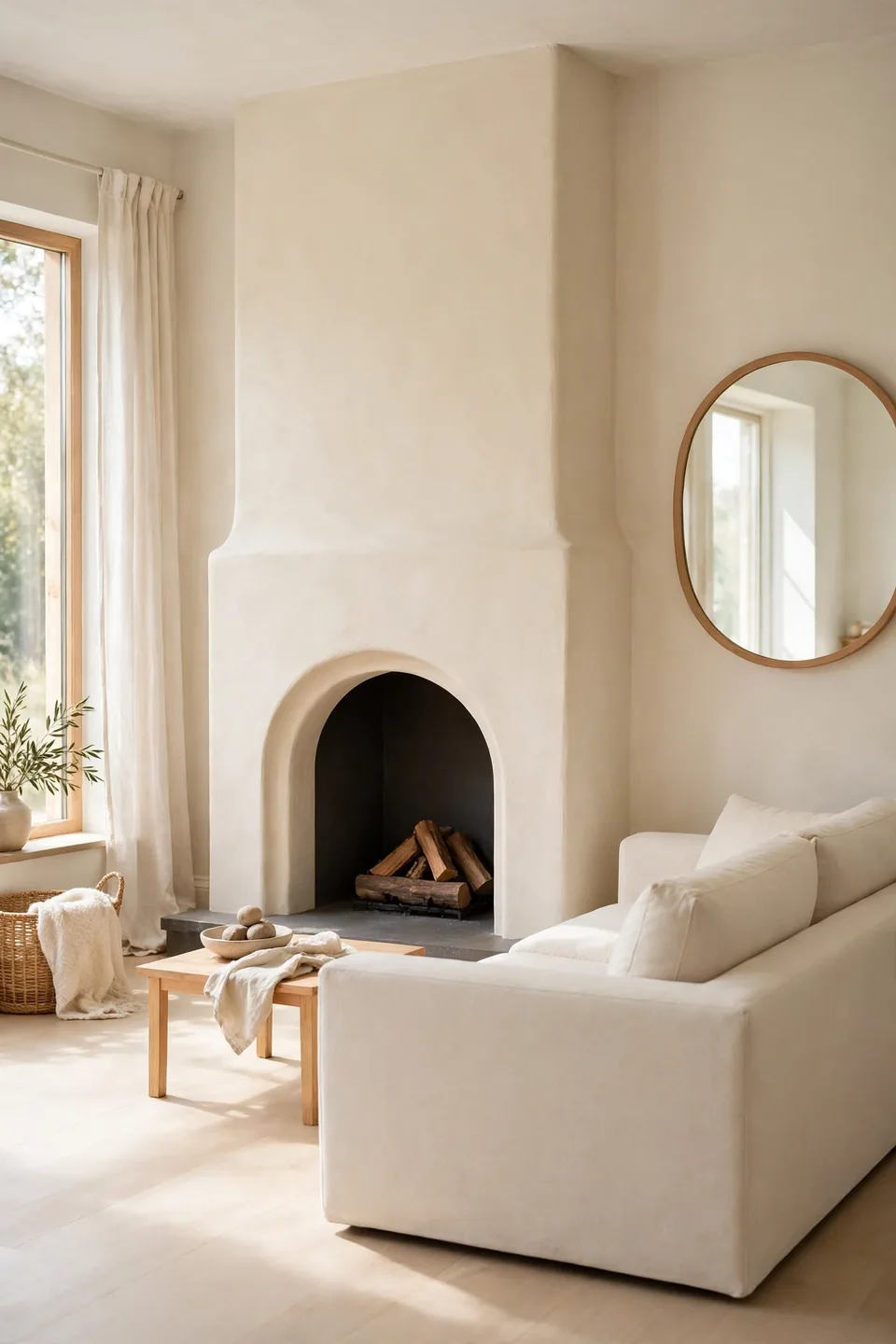
- Choose a gentle half round arch; sharp, tall arches can feel formal and date a room quickly.
- Let the arch echo somewhere else, a rounded mirror or an arched doorway, for quiet rhythm.
- Keep the firebox interior dark so the curve reads as depth, not decoration.
- Balance the soft shape with straight lines nearby: a boxy sofa, a square rug, clean shelves.
An arch softens everything around it, which is why this shape suits family rooms that need calm more than drama. The curve pulls the eye upward and makes low ceilings feel taller. Plaster takes the form beautifully because it is applied by hand, so small imperfections read as craft rather than flaws.
Floor to Ceiling Plaster Chimney
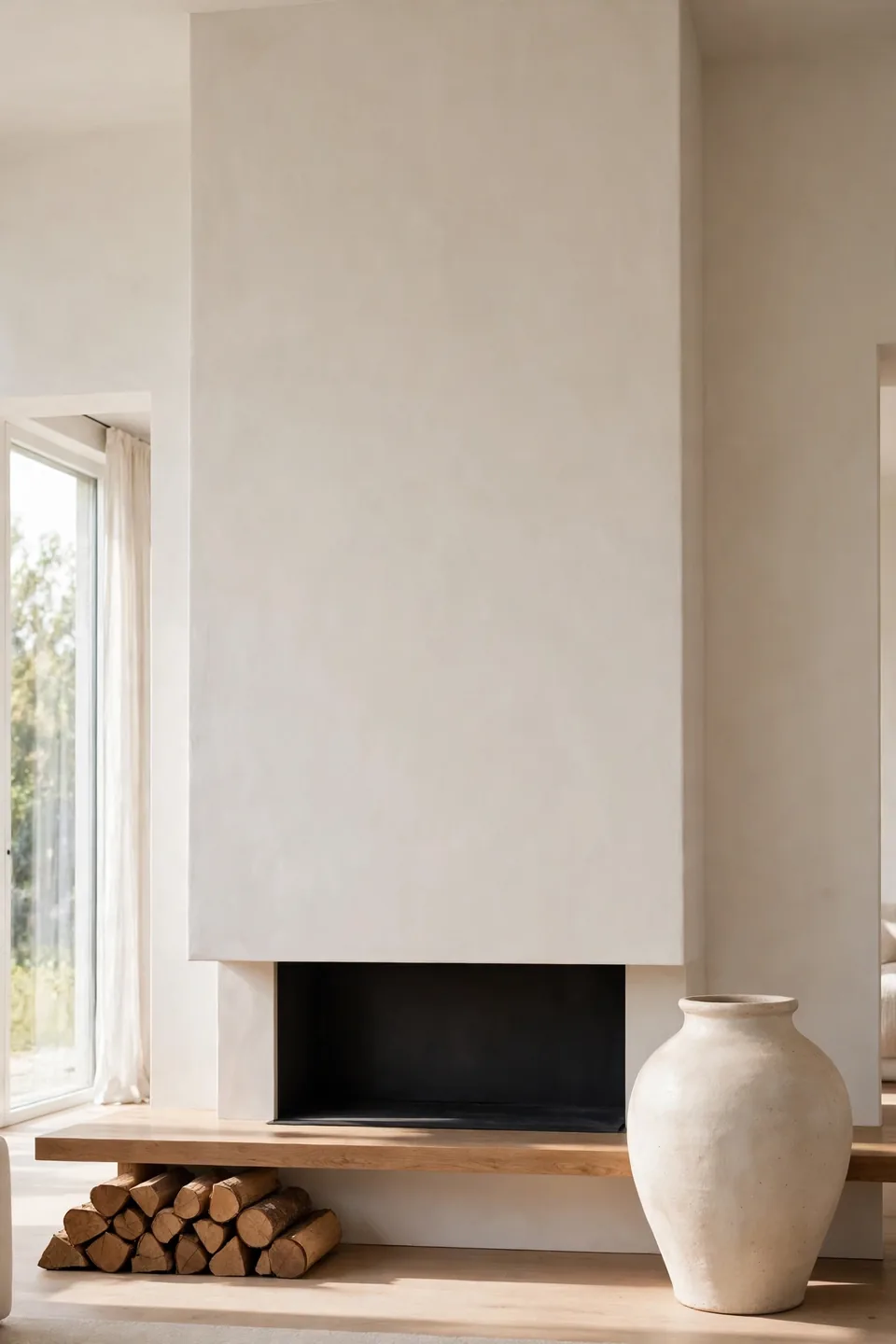
Quick Tip: Run the plaster from floor to ceiling in one unbroken sweep and skip the mantel shelf entirely. The tall, quiet column makes ceilings feel higher and gives artwork and mirrors a calm backdrop. Keep the firebox low and wide so the proportions stay grounded. A matte finish keeps the tall surface soft instead of stark.
Tall chimney breasts love simple styling at the base: a low bench, a stack of logs, one oversized vase. Anything fussy fights the scale of the column. I’ve seen this work well in many cases where a room has plain walls and needs one strong gesture, because the plaster column becomes architecture, art, and backdrop in a single move.
Brick to Plaster Makeover
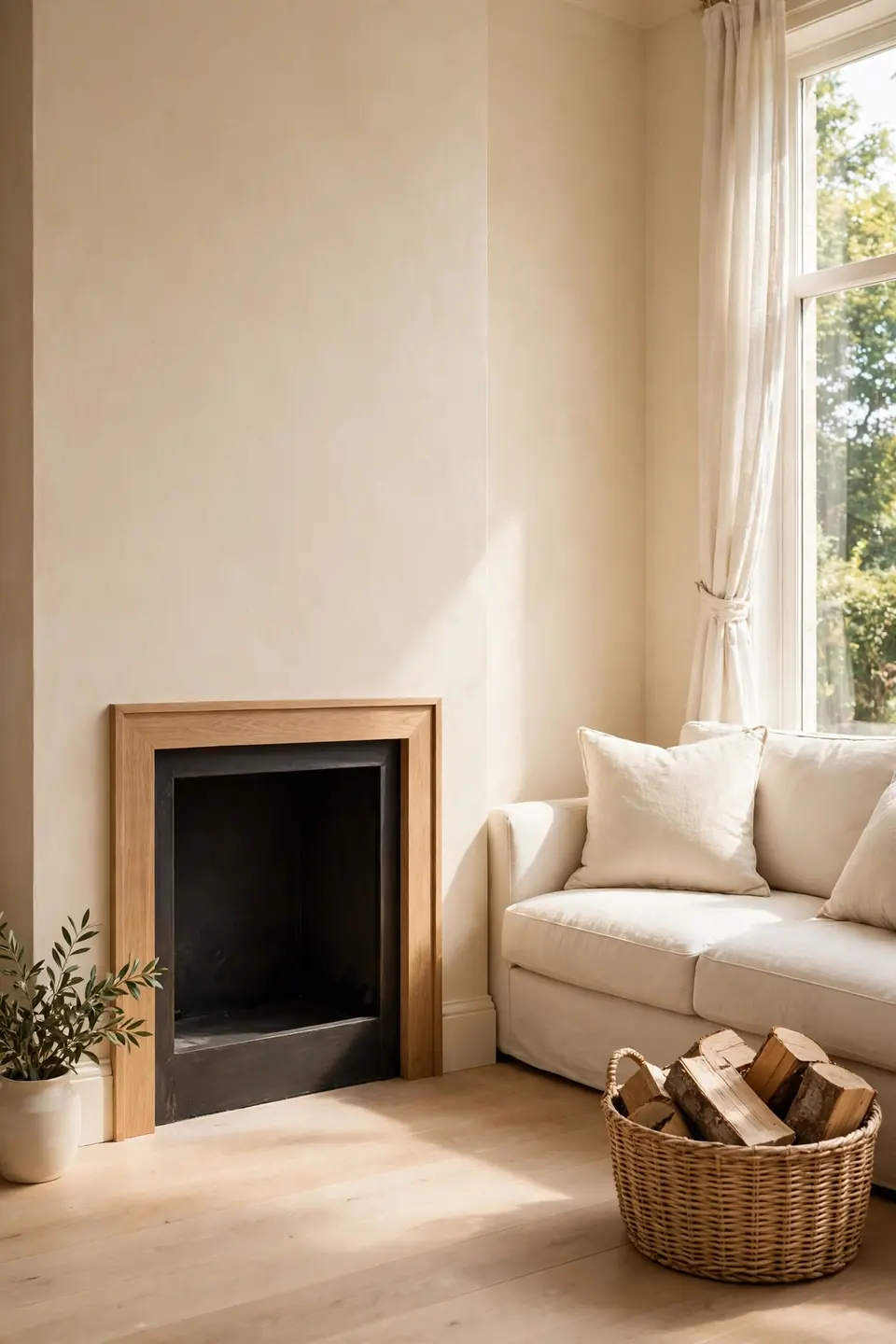
BEFORE: Dated red brick swallowed the wall, the mortar lines buzzed against every other pattern in the room, and the heavy dark surround made the whole corner feel stuck in another decade.
AFTER: Two coats of plaster skimmed over the brick left a smooth, warm cream surface. The firebox stayed, the shape stayed, but the room reads soft and current now, and daylight rolls across the wall without a single hard shadow line.
Skim coating brick is one of the most forgiving routes into plaster, since the old surround provides structure and the plaster only has to deliver the finish. Seal the brick first, work in thin coats, and let each layer dry fully. The result costs far less than a rebuild and keeps the room usable within days.
Weekend Plaster Refresh
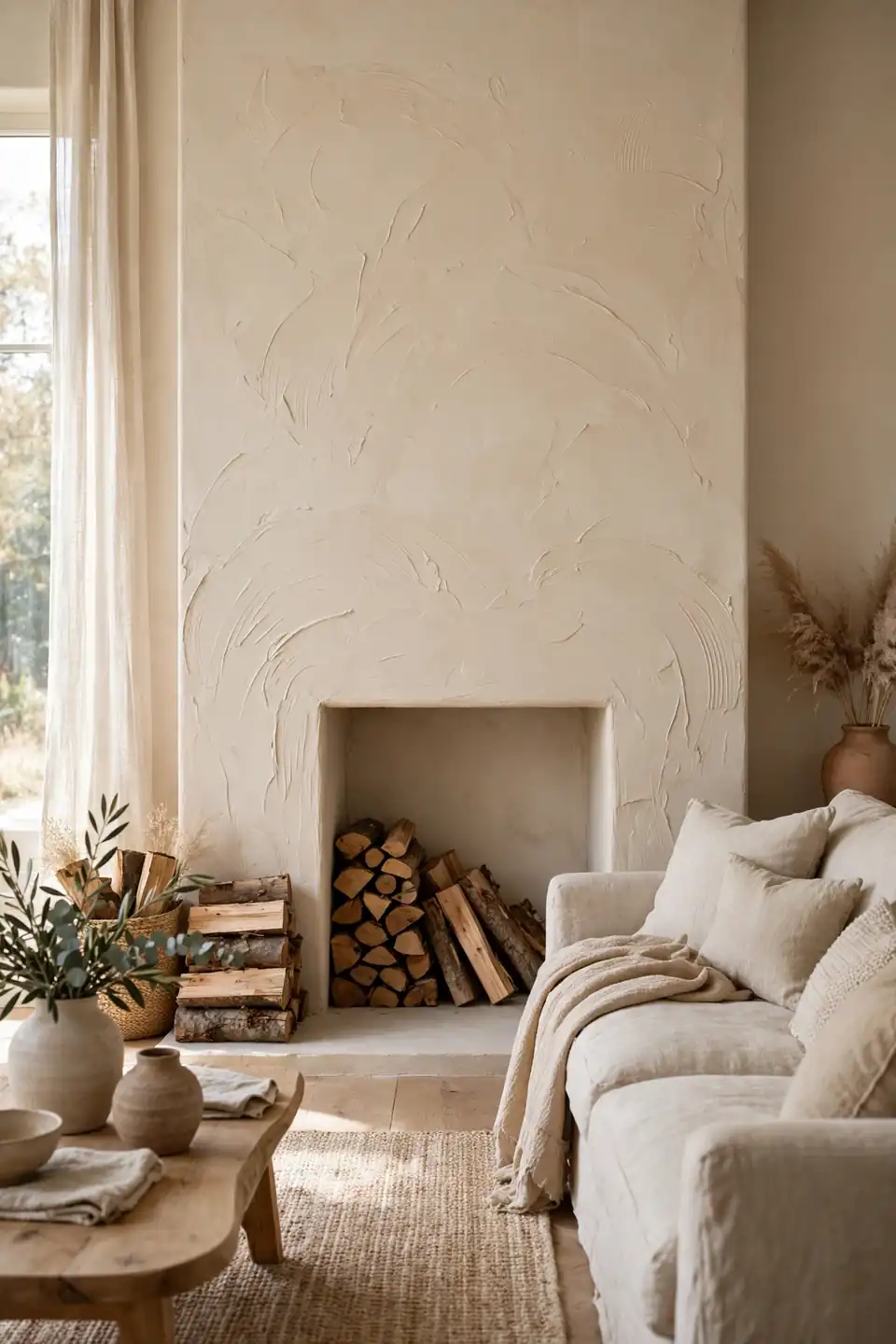
- Clear the area, mask the floor and firebox edges with tape and drop cloths.
- Sand glossy paint or seal raw brick so the first plaster coat grips well.
- Trowel on thin coats, keeping the surface slightly imperfect for a hand made feel.
- Smooth high spots while the final coat is damp, then let everything cure fully.
A refresh like this suits renters of time rather than skill: patience matters more than technique. Work in daylight so you can read the surface as you go, and stop while the finish still looks hand touched. Small trowel marks are part of the charm, not mistakes to chase away.
Matte or Limewash Finish
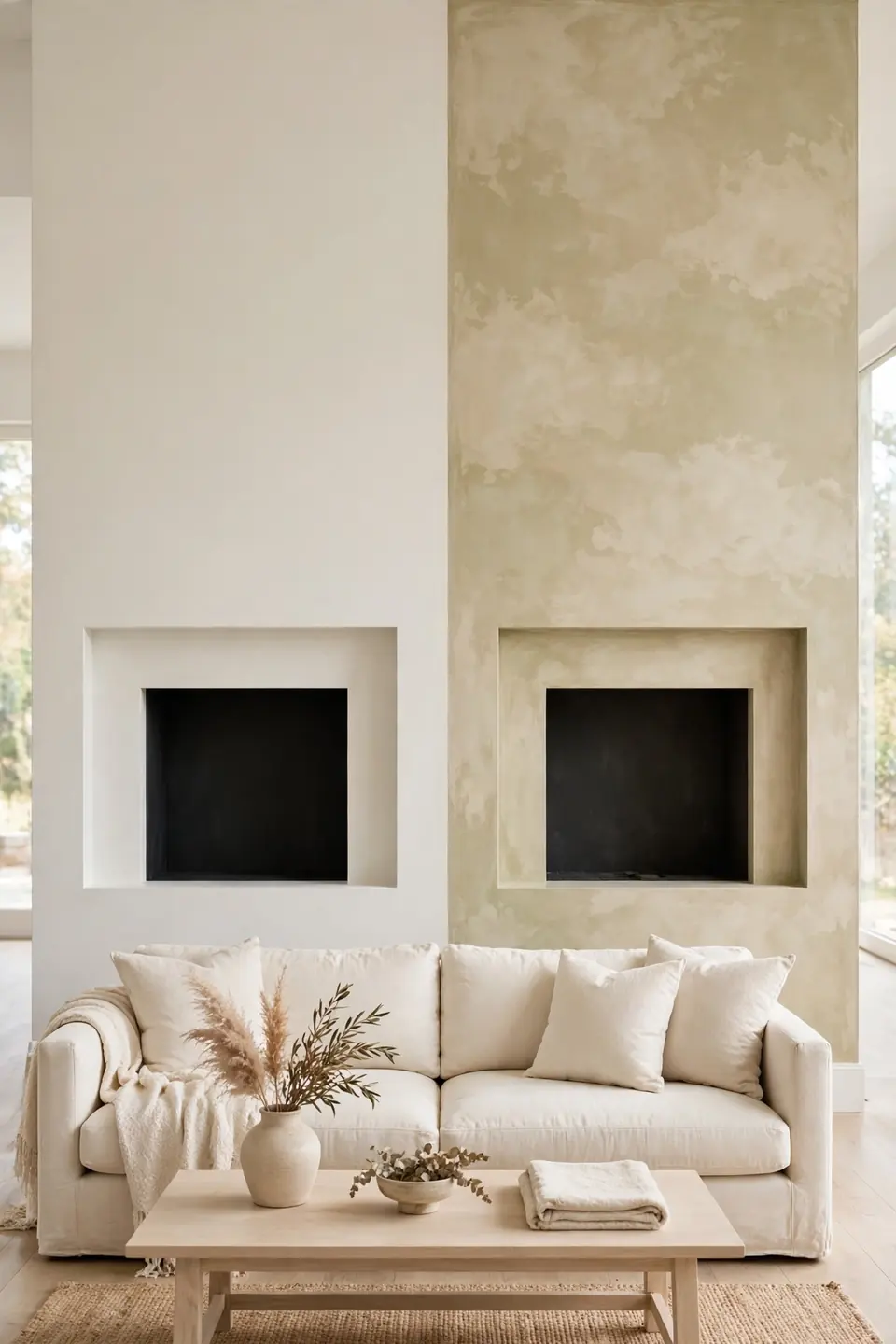
| Feature | Matte Plaster | Limewash Plaster |
|---|---|---|
| Look | Flat, even tone | Cloudy, layered depth |
| Light | Soft, no shine | Subtle glow, shifts daily |
| Upkeep | Wipes clean, easy | Recoat every few years |
| Best For | Modern, calm rooms | Rustic, textured walls |
Matte plaster reads modern and architectural, the finish most new builds choose when they want calm walls with a hand made soul. Limewash leans rustic, its cloudy movement hiding flaws and changing character as light crosses the room. Neither is wrong; the question is how much texture your furniture already brings. Busy rooms calm down with matte, while plain rooms often wake up under limewash.
Mantel Styling Ground Rules
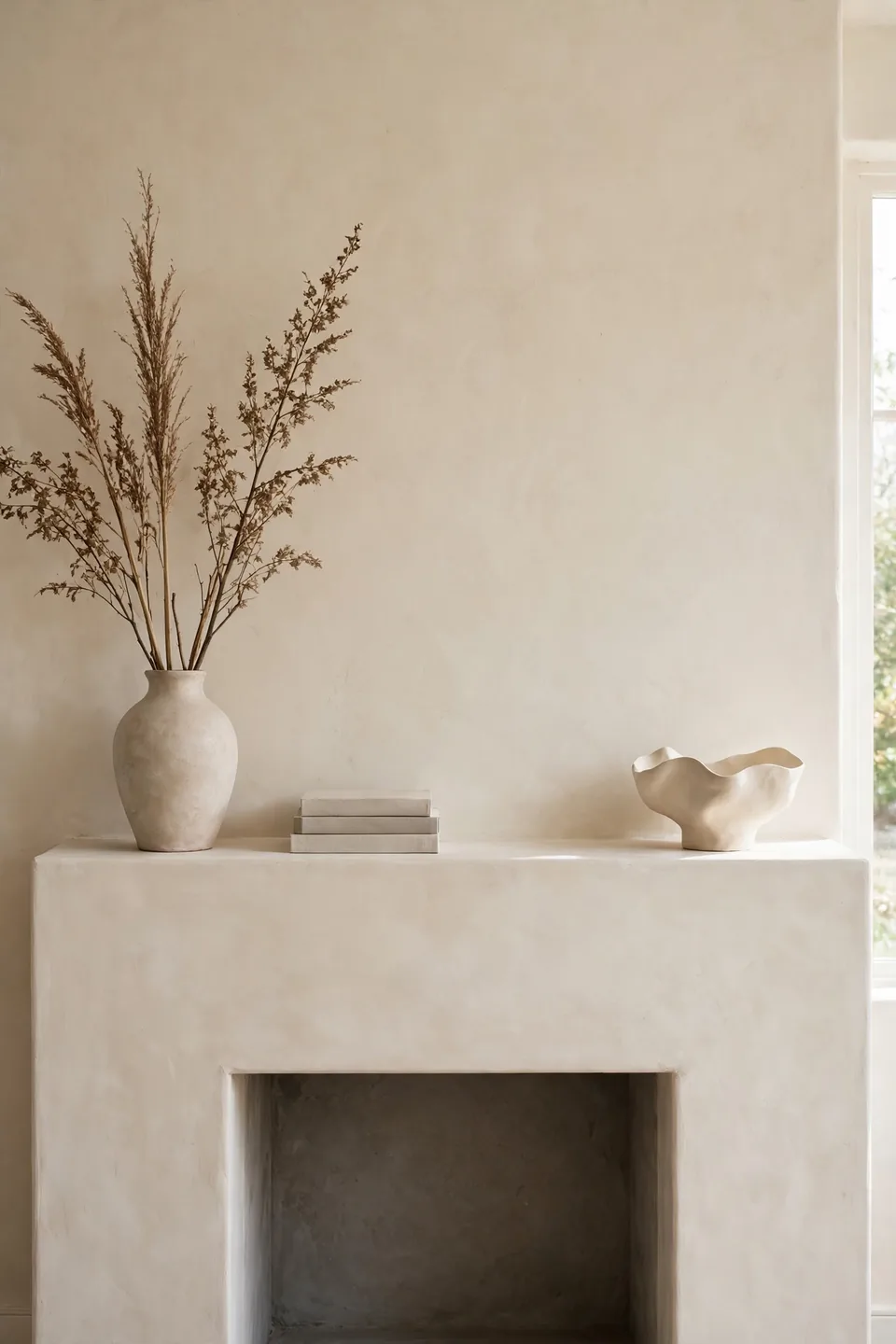
Do:
- Group objects in threes: a vase, a stack of books, one small sculptural piece.
- Mix heights so the eye travels: tall branches, mid size art, one low bowl.
- Leave breathing space between groups; empty plaster is part of the display.
Don’t:
- Line up identical candlesticks in a stiff row like a shop shelf.
- Hang art so high that it floats away from the fireplace below.
- Crowd every inch; clutter kills the calm plaster worked so hard to create.
Plaster mantels reward restraint because the surround itself is the decoration. One strong arrangement beats five small ones competing for attention. Change a single element with the seasons, a branch, a bowl of fruit, a different print, and the whole fireplace feels new without a shopping trip.
Curved Corner Fireplace
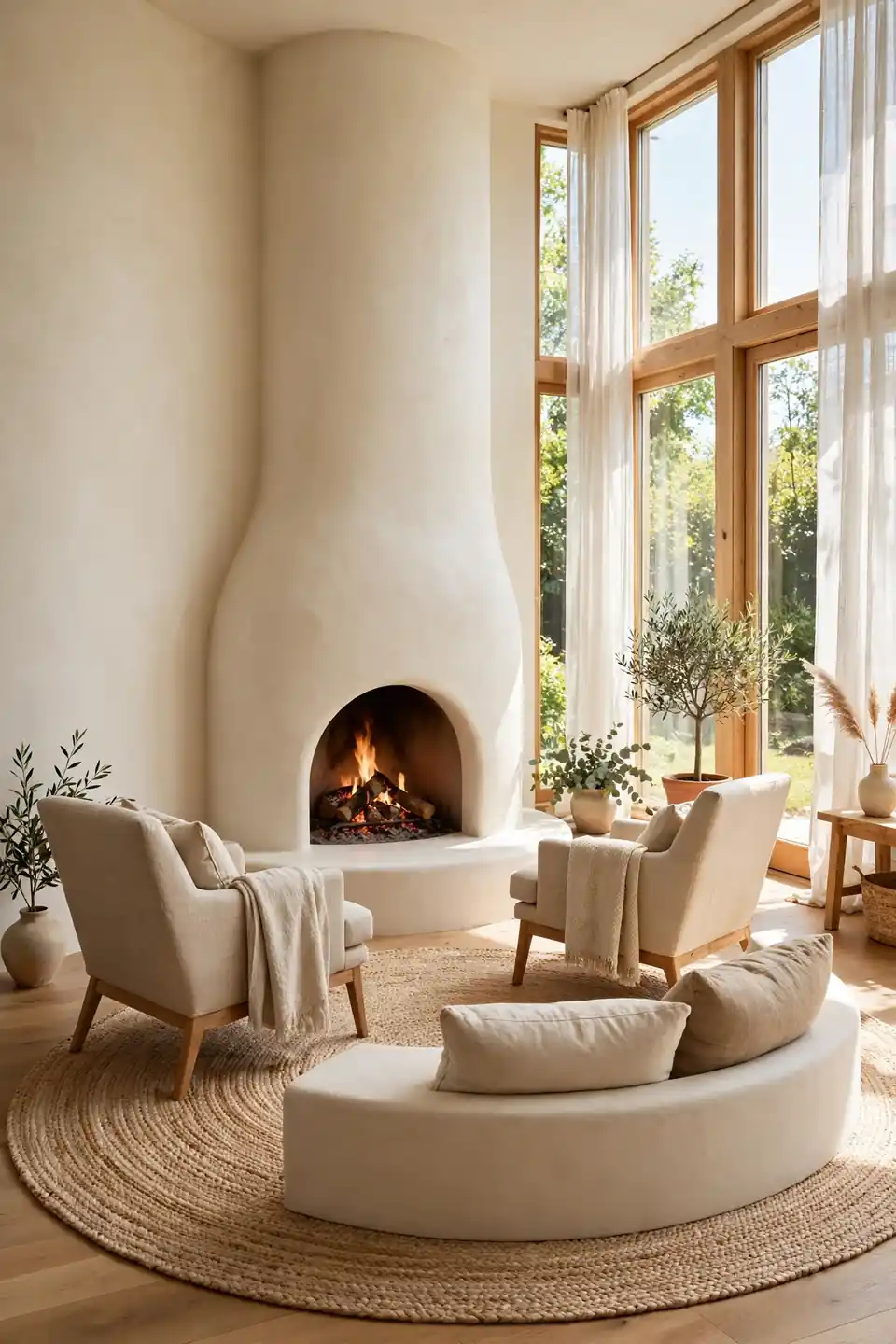
Cost: Mid to high | Time: One to two weeks | Skill Level: Professional job | Best For: Awkward corner layouts
Corners collect dead space in most living rooms, and a curved plaster fireplace turns that dead angle into the warmest seat in the house. The rounded form lets furniture angle toward the fire without hard edges breaking the flow, and the plaster wraps the curve in one unbroken skin. A corner build often needs no chimney breast at all with a ventless insert, which keeps the footprint small. Keep a curved bench or a round rug nearby to repeat the geometry, and the corner stops feeling like leftover space and starts feeling planned.
Tadelakt Style Plaster Fireplace
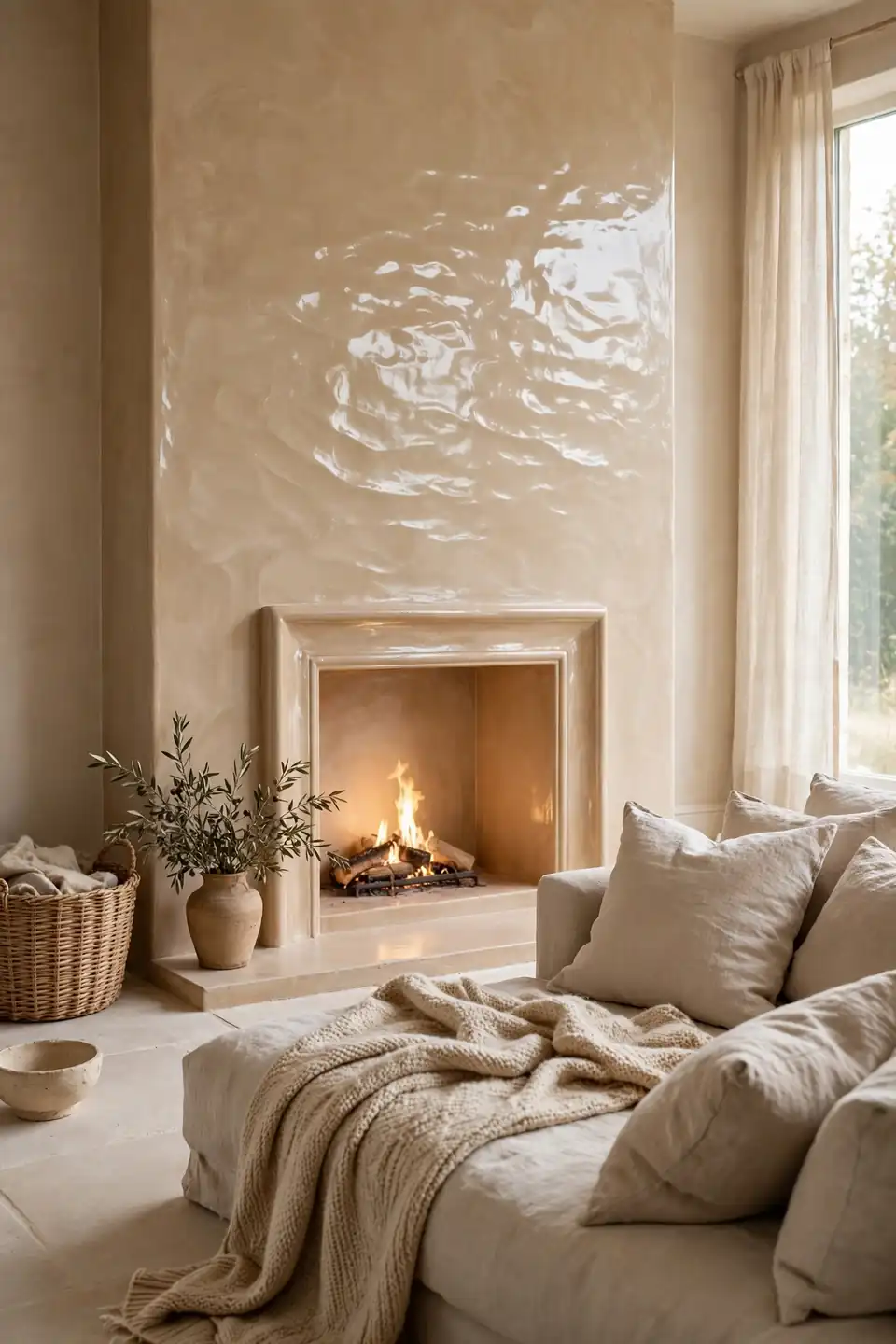
Tadelakt, the polished plaster of Moroccan bathhouses, brings a soft sheen and a slightly rippled surface that begs to be touched. Wrapped around a fireplace, it reads both ancient and modern, especially in warm sand and stone tones. Some of the most shared plaster fireplace design inspiration online starts with this single, tactile finish.
The finish is waterproof once sealed, which matters less at a fireplace than its glow: light slides across the polished surface like water. Keep nearby textiles matte and nubby, raw linen, woven wool, so the sheen stays special. A tadelakt surround pairs best with simple shapes, since the surface itself carries all the pattern.
Plaster With Oak Beam
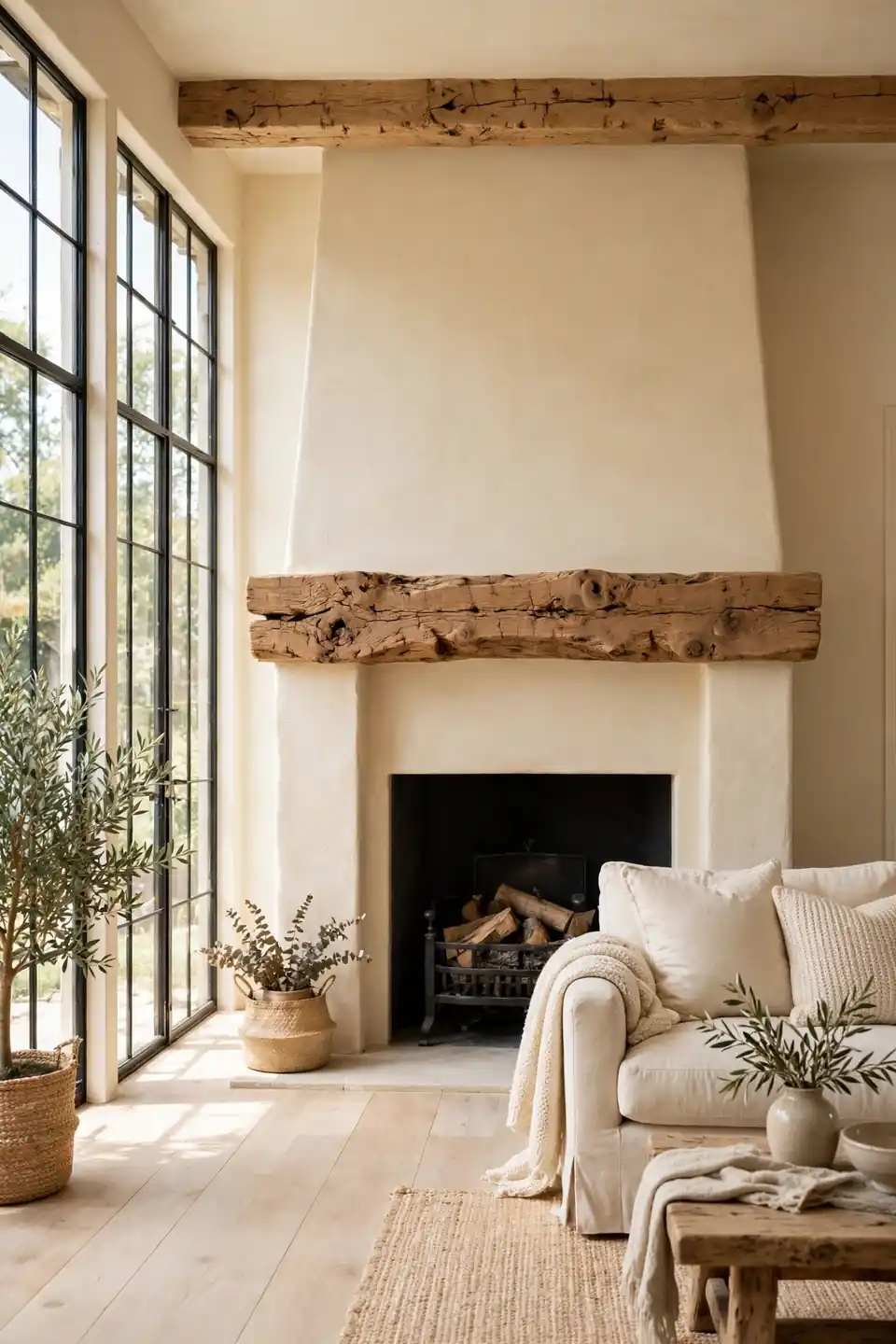
- Pick a beam with visible grain and a few knots; character beats perfection here.
- Keep the beam chunky enough to hold its own against the wide plaster face.
- Stain it warm mid brown so it bridges cream plaster and pale floors.
- Leave the beam unpainted forever; paint would erase the contrast that makes the pairing work.
Cream plaster and raw oak is the pairing behind half the country living rooms on Pinterest, and it works because each material flatters the other. The plaster keeps the beam from feeling heavy, and the beam stops the plaster from feeling stark. A few black accents, a fire basket, a simple grate, sharpen the softness.
Plaster and Stone Pairing
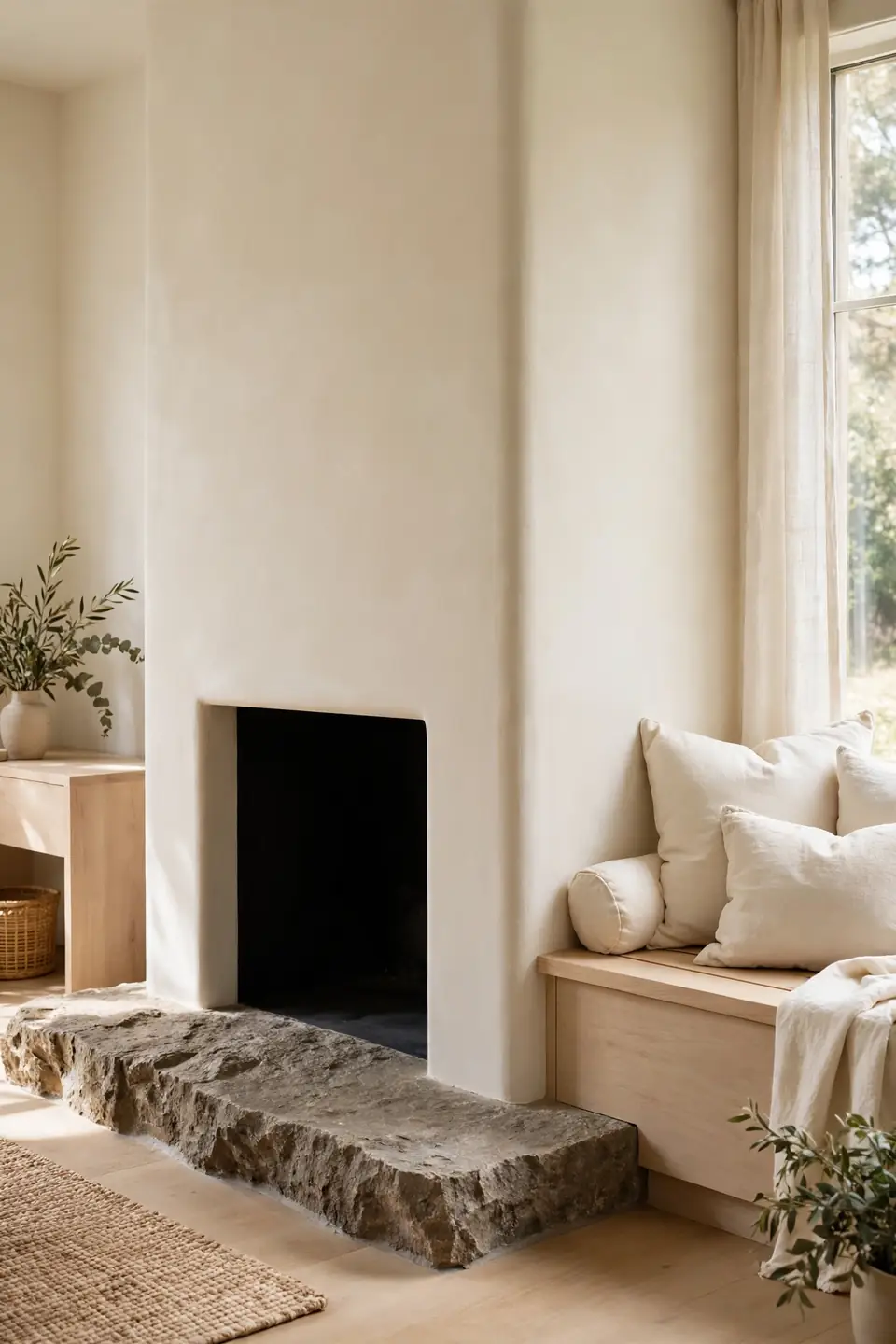
Quick Tip: Pair smooth plaster with one rough stone element, a hearth slab or a stone firebox lining, and keep every other surface quiet. The contrast between silky and rugged makes both materials look richer, while a limited palette of cream, sand, and grey keeps the mix calm. Test the pairing in daylight before committing.
Stone grounds the softness of plaster and gives the fireplace a sense of weight and age. A single slab is enough; wrapping the whole surround in stone tips the room toward rustic lodge. End the stone at the hearth line and let plaster take over above, where light can move across it freely.
Old Fireplace, New Plaster
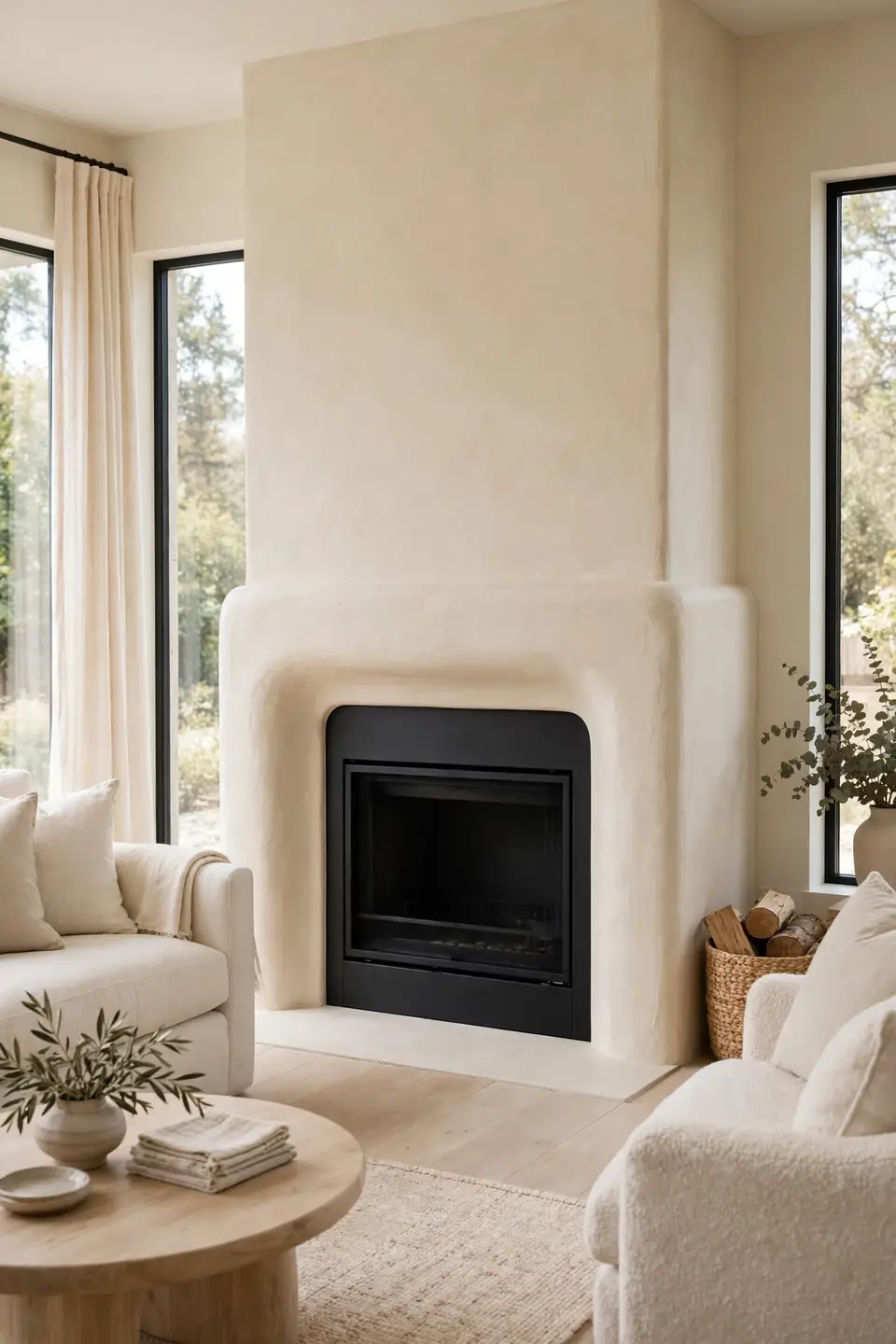
BEFORE: A 1990s surround in glossy black granite tiles and a brass trim insert dominated the room. Every cushion color clashed with it, and the fireplace felt like a relic the rest of the decor apologized for.
AFTER: The tiles came off, a simple box frame went up, and two plaster coats later the surround glowed warm cream. The brass insert was painted matte black, and suddenly the old fireplace looked hand built and calm.
Reworking an existing fireplace costs a fraction of demolition and keeps the room’s proportions intact. Fans of celestial bedroom decor ideas will recognize the same trick: a soft, pale surface that glows after dark. Work with the firebox you have, and let plaster do the persuading. Most surrounds finish in a single weekend.
Faux Plaster Fireplace Build
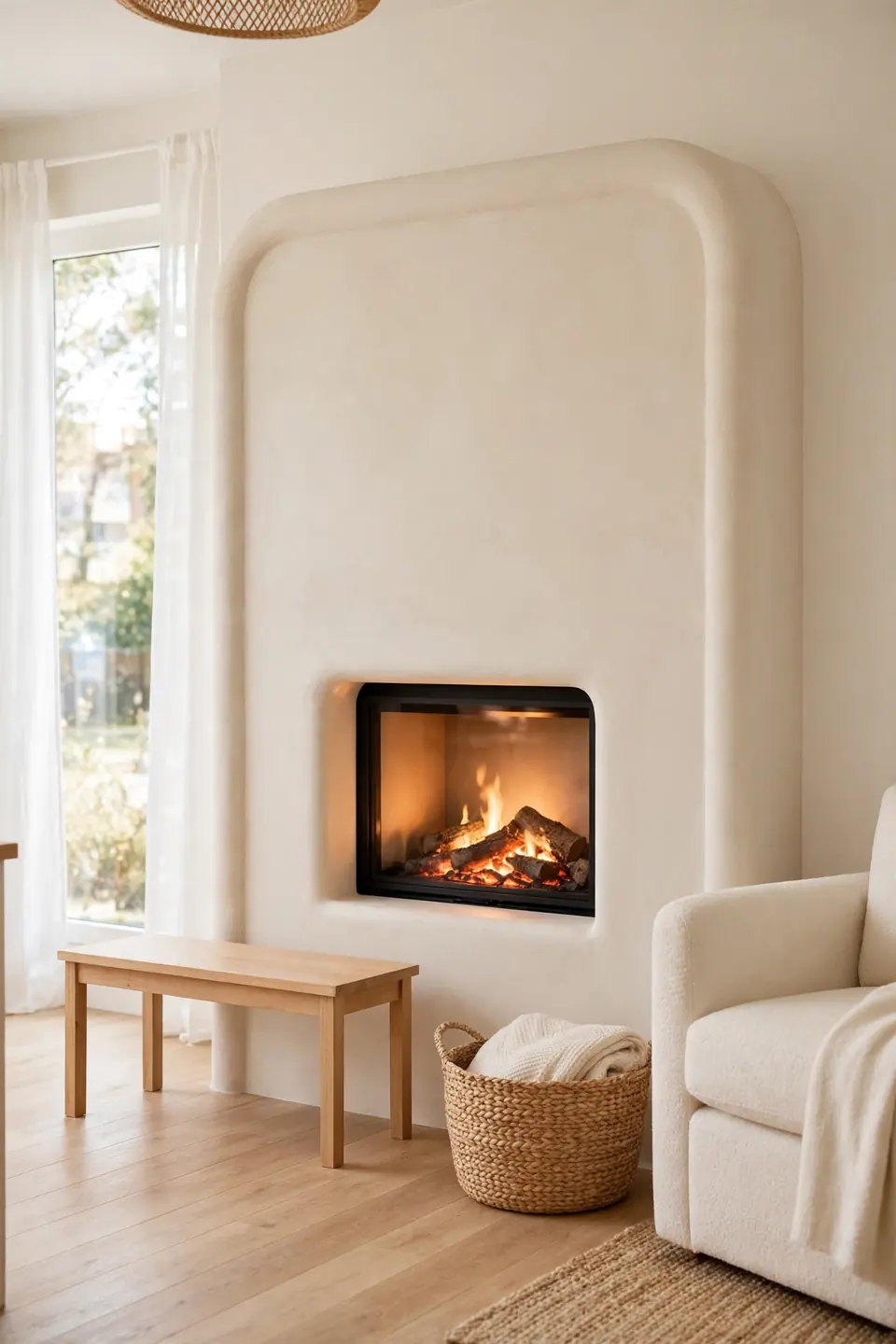
- Frame the surround with lumber and MDF panels, sized to your insert or firebox.
- Fill seams and screw holes, then sand everything smooth for a seamless skin.
- Roll on a bonding primer so plaster grips the panels evenly.
- Trowel two thin plaster coats, softening corners with a damp sponge as you go.
A faux build lets renters and new homeowners add a fireplace where no chimney exists, especially with an electric insert. The plaster skin sells the illusion, since real surrounds share the same soft corners and matte face. Keep the proportions believable: a modest surround always convinces more than a grand one.
Gas or Wood Burning
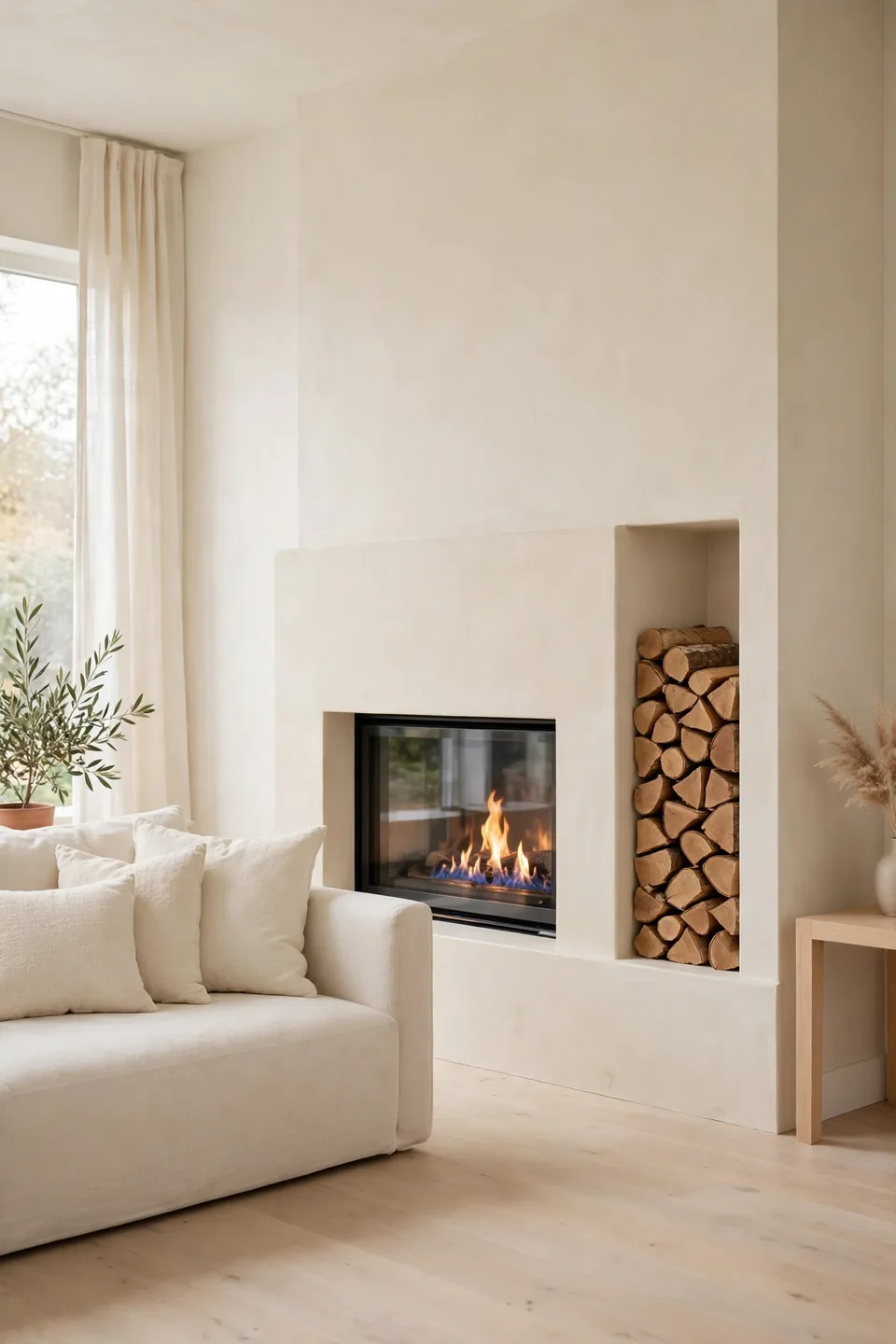
| Feature | Gas Insert | Wood Fire |
|---|---|---|
| Feel | Clean flame, instant on | Crackle, scent, ritual |
| Upkeep | Annual service check | Ash, chimney sweeping |
| Plaster Care | Low soot, gentle heat | Soot guards needed |
| Best For | Apartments, busy homes | Cabins, slow evenings |
Plaster suits both fires, but it asks for honesty about heat and soot. Gas inserts burn clean and keep the surround pale for years, while wood fires reward you with scent and sound at the cost of regular wiping near the opening. A simple glass screen or a deeper firebox recess protects the finish either way. Choose with your evenings in mind, not just the photograph.
Hearth Decor Ground Rules
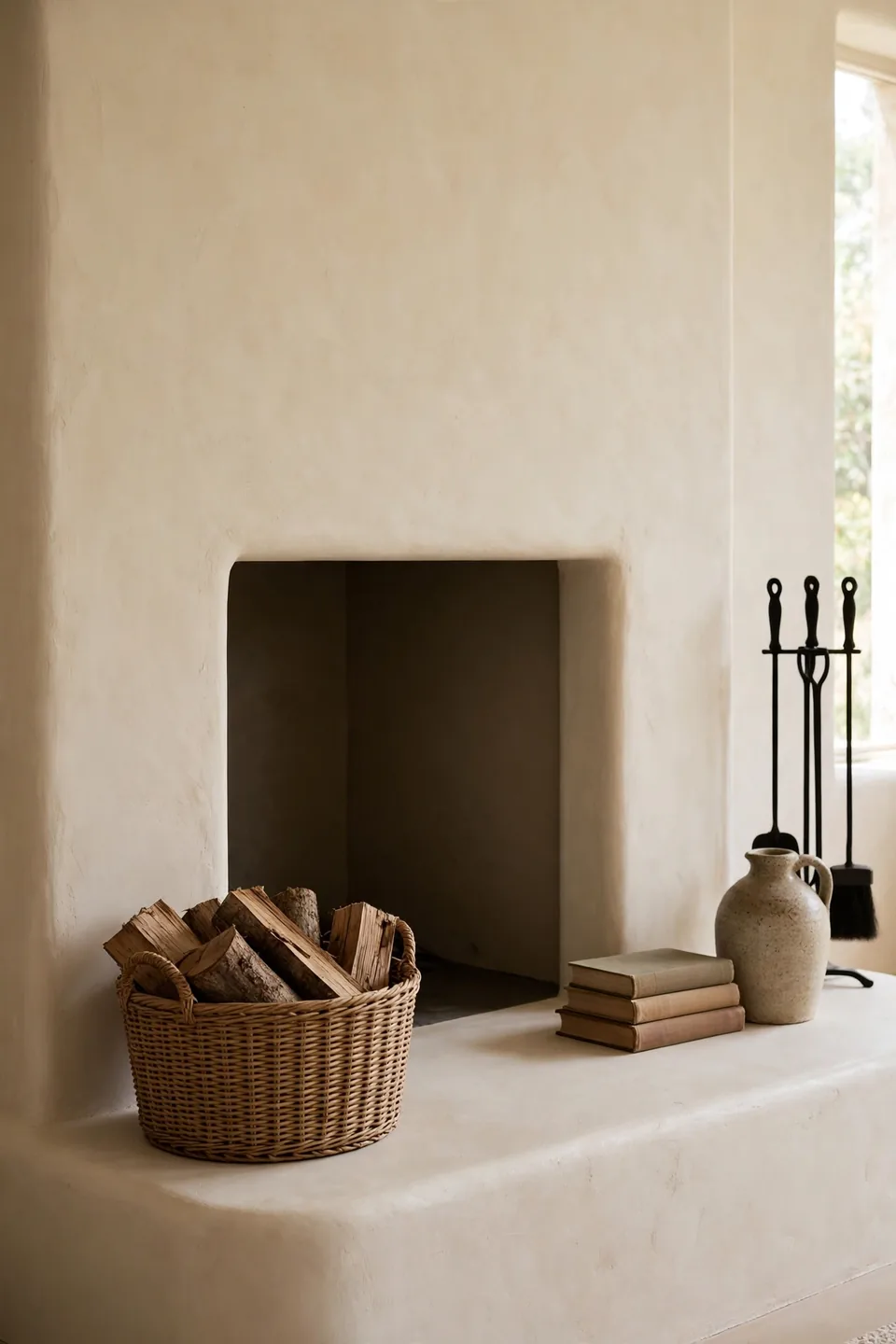
Do:
- Rest a woven log basket on one side of the hearth for warm texture.
- Ground the setup with a low stack of books or a stoneware jug.
- Keep tools black and simple so they read as silhouette, not clutter.
Don’t:
- Scatter tiny ornaments across the hearth; small pieces vanish against wide plaster.
- Block the firebox opening with decor when the fire is in regular use.
- Mix shiny chrome tools with matte plaster; the finishes fight each other.
The hearth is the fireplace’s front step, and it sets the tone before the fire is even lit. Treat it as a frame, not a shelf: two or three grounded pieces, plenty of empty plaster, and clear space for real fires. Everything stored there should earn its spot weekly.
Budget Plaster Facelift
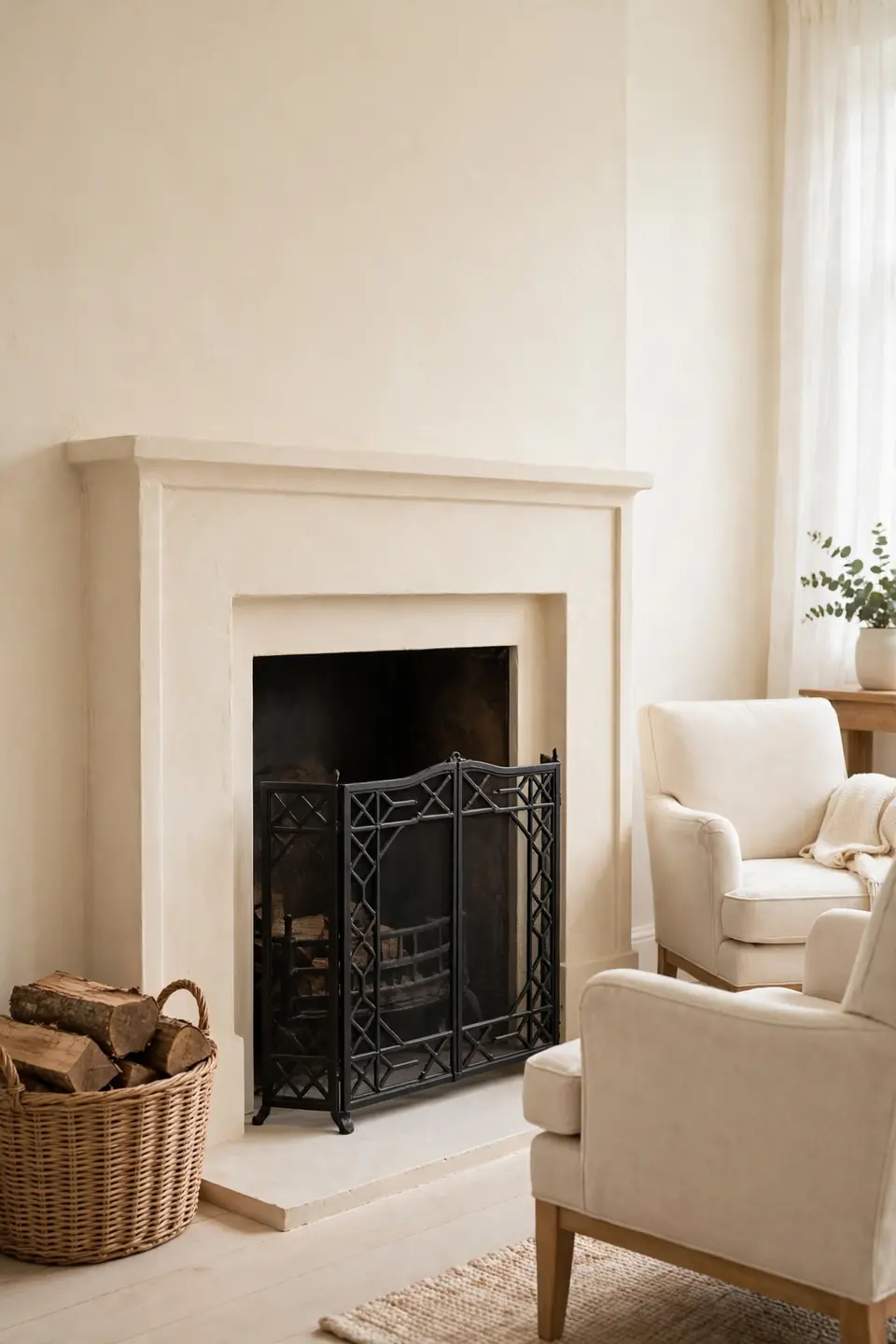
Cost: Low, mostly materials | Time: One weekend | Skill Level: Confident beginner | Best For: Sound but dated surrounds
A dated surround in good shape is the cheapest route to a plaster fireplace, because the structure is already paid for. A bonding primer, two bags of finish plaster, and a steel trowel can carry the whole project. The money saved belongs in the styling: one good log basket, a heavy fire screen, decent cushions for the nearby chairs. In my experience, guests never ask what the surround cost; they ask who made it, which is exactly the effect a hand finished surface gives a room.
Sculpted Wave Plaster Surround
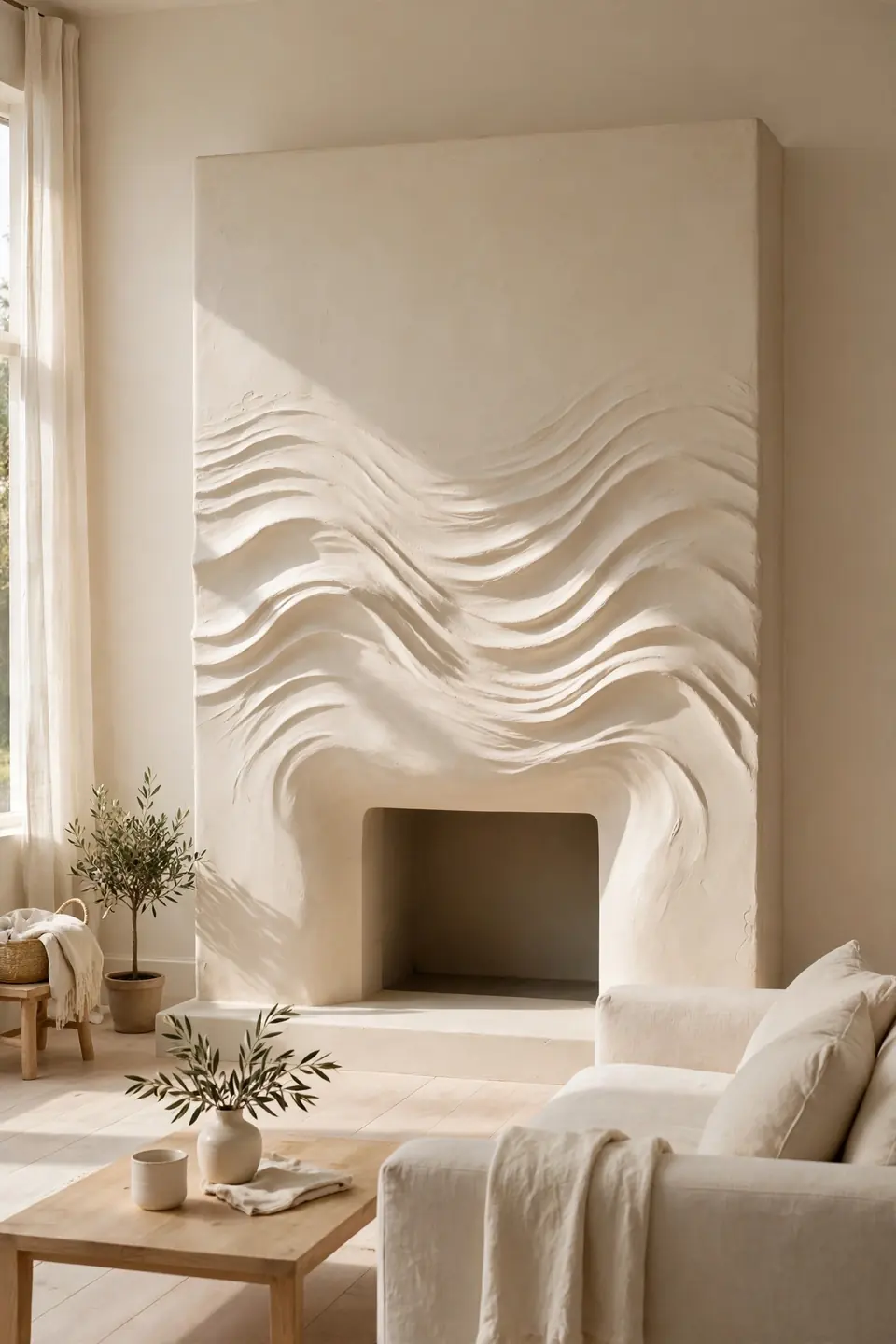
A gentle wave pressed into wet plaster turns a plain surround into quiet sculpture. The ridges catch raking light in the morning and soften again by evening, so the fireplace keeps changing its mood without a single accessory. One wave is enough; repetition would turn calm into costume. Work the pattern by hand for softness.
Keep furniture low and plain nearby so the sculpted face holds the spotlight. A wave surround suits modern rooms that feel too boxy and traditional rooms that feel too stiff, since the movement relaxes both. Choose a matte finish; gloss would sharpen every ridge and steal the softness. Let the wall color match the plaster exactly.
Small Room Plaster Fireplace
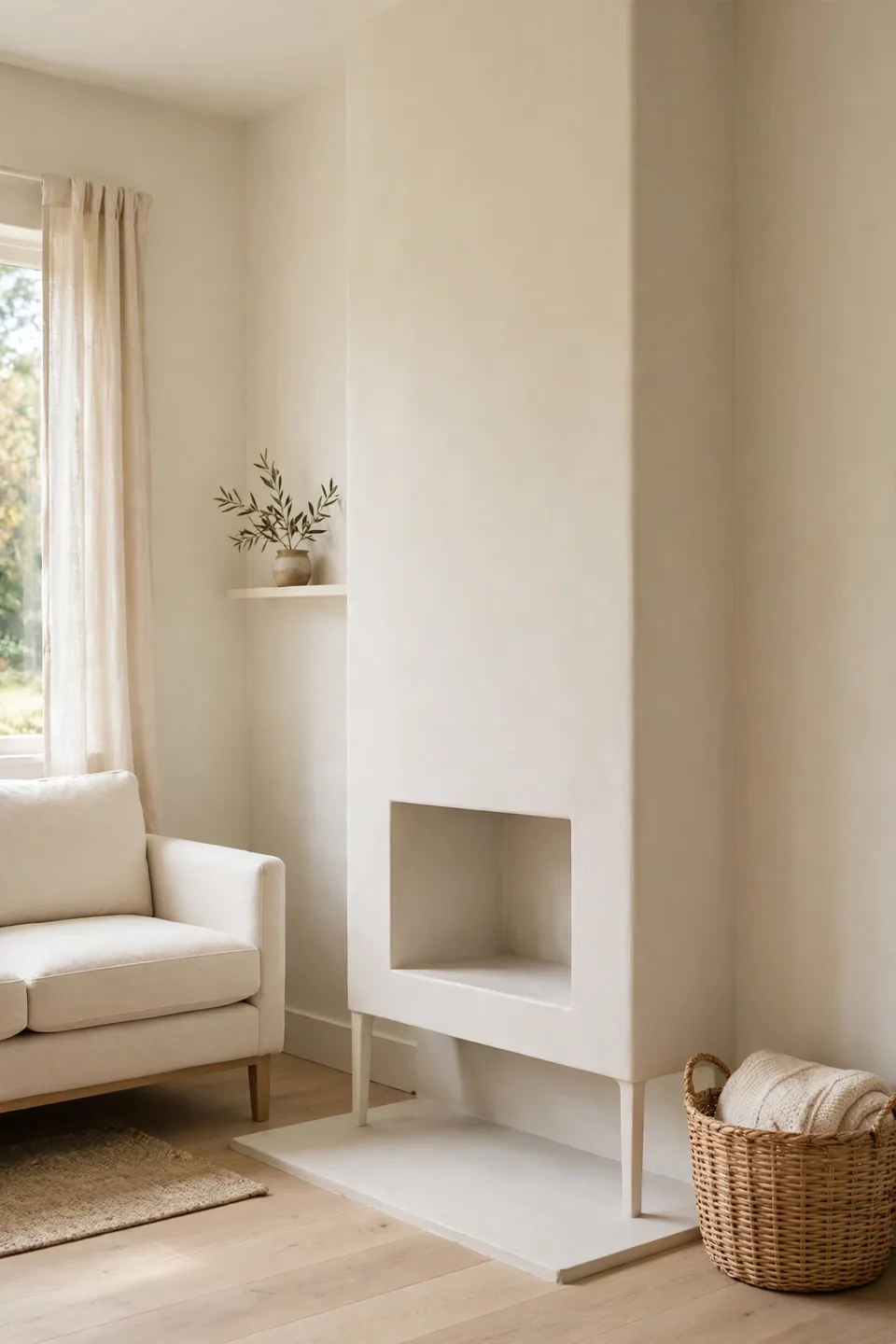
- Scale the surround slim: narrow legs, a shallow breast, nothing that juts into the room.
- Match the plaster color to the walls so the fireplace blends instead of bulging.
- Skip the mantel shelf; a clean face keeps small rooms feeling open.
- Choose a compact insert with a wide, low window for maximum glow per inch.
Small rooms gain the most from a fireplace, since one warm focal point replaces the need for lots of decor. A pale plaster surround adds that focus without visual weight, especially when the hearth sits flush with the floor. Keep the styling to a single basket and let the fire do the decorating.
Warm Beige Plaster Tones
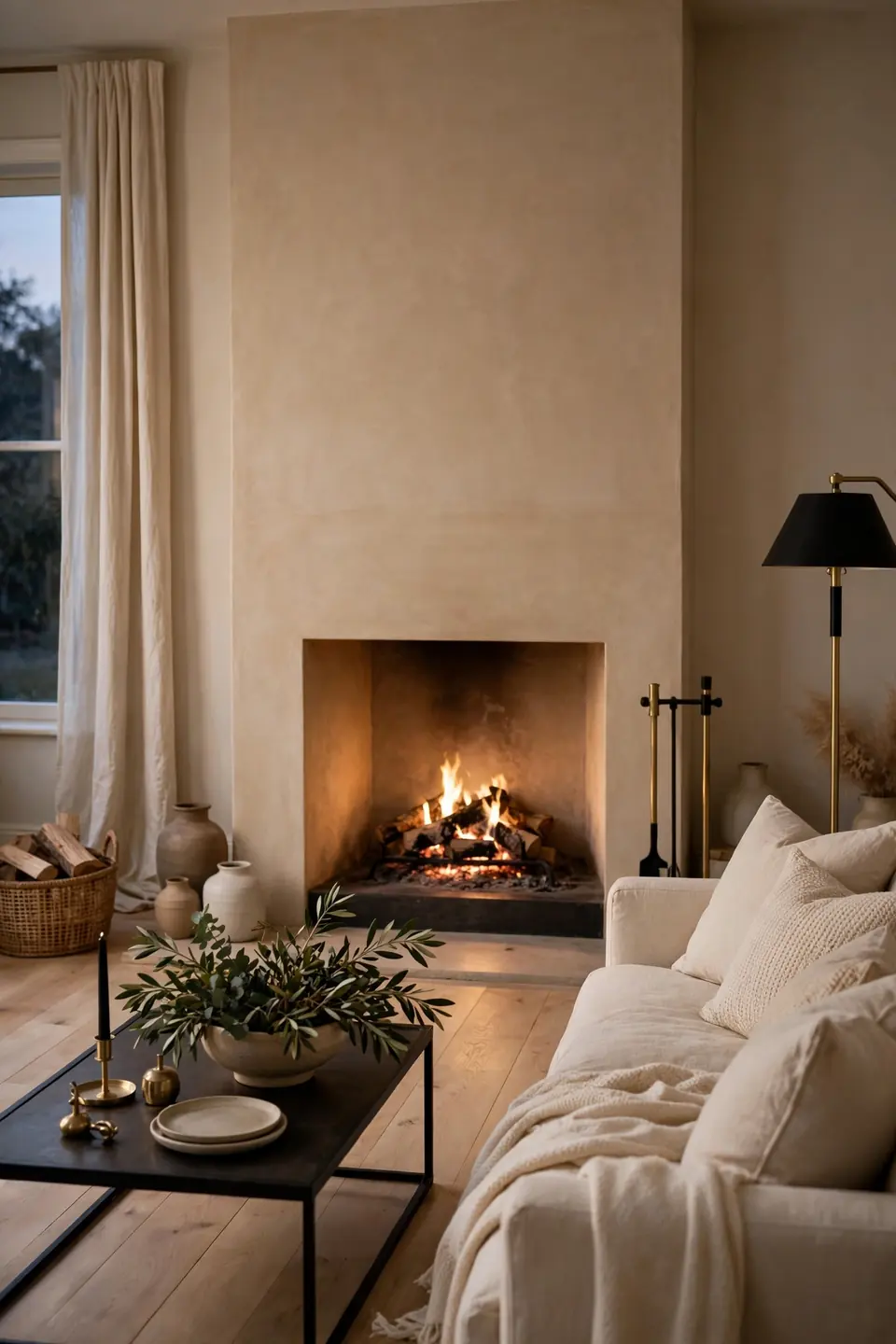
Quick Tip: Test beige plaster samples at three times of day before choosing. Beige shifts more than white: a sample that looks sandy at noon can turn pink at dusk under warm bulbs. Pick the tone that stays warm and neutral in evening light, since that is when the fireplace works hardest. Bring cushions to the test.
Warm beige is the friendliest plaster color for real homes because it hides ash dust, flatters wood floors, and pairs with both black and brass accents. It also forgives the slightly uneven tones that hand application leaves behind. Against beige, cream textiles glow and greenery looks deeper, which keeps the room feeling alive.
Moody to Light Makeover
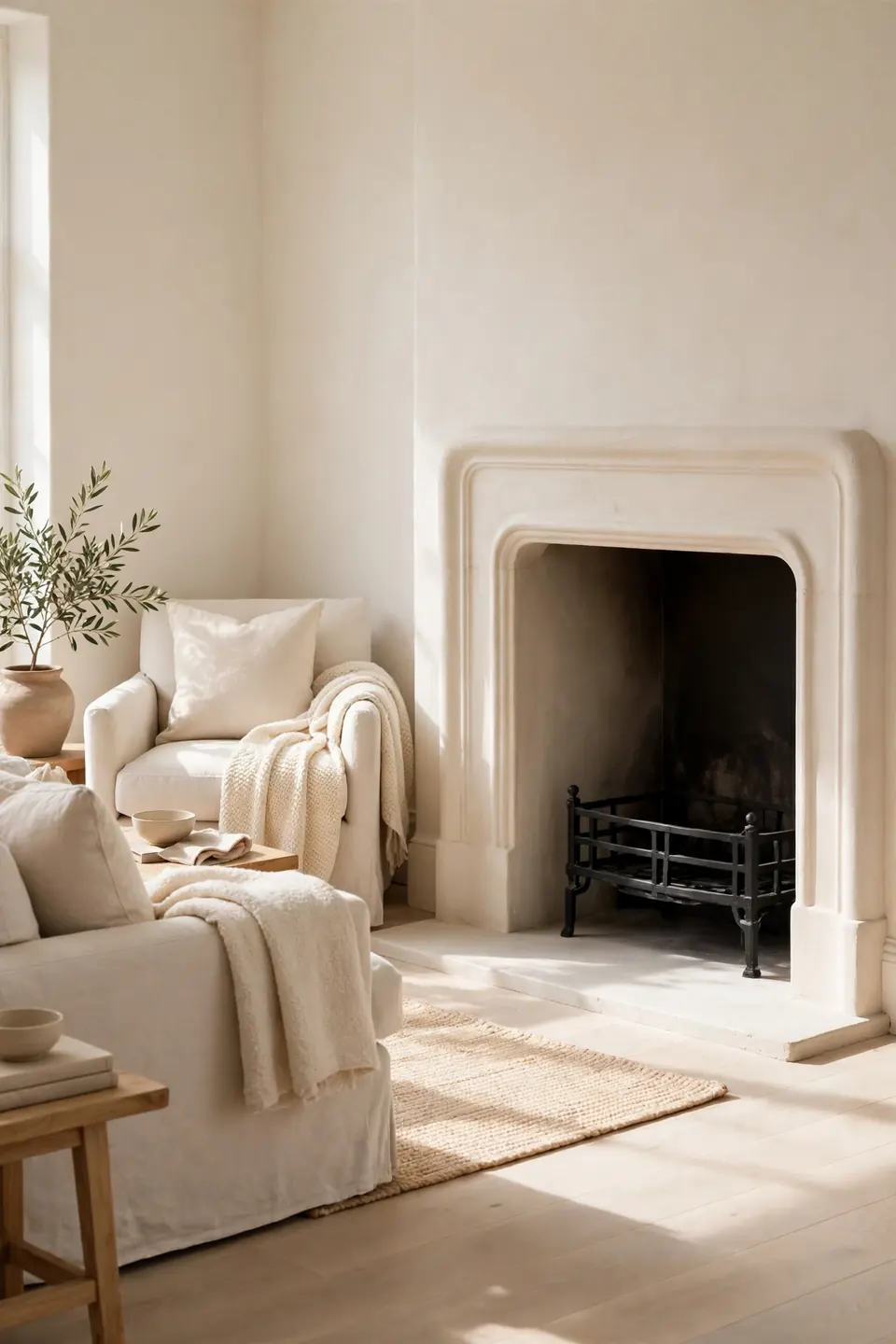
BEFORE: Charcoal paint covered the old surround and half the chimney breast, swallowing light and making the room feel like evening at noon. Guests drifted toward the windows, away from the dark corner.
AFTER: Warm white plaster over the same shape bounced daylight deep into the room. The firebox now reads as a soft shadowed niche, and the corner became the seat everyone chooses first.
Dark surrounds are not mistakes, but they demand a bright room to balance them. When a space faces north or sits under trees, pale plaster returns the light the room was missing. Keep one dark accent nearby, a black grate or a deep cushion, so the new lightness still feels grounded.
Floating Plaster Mantel Shelf
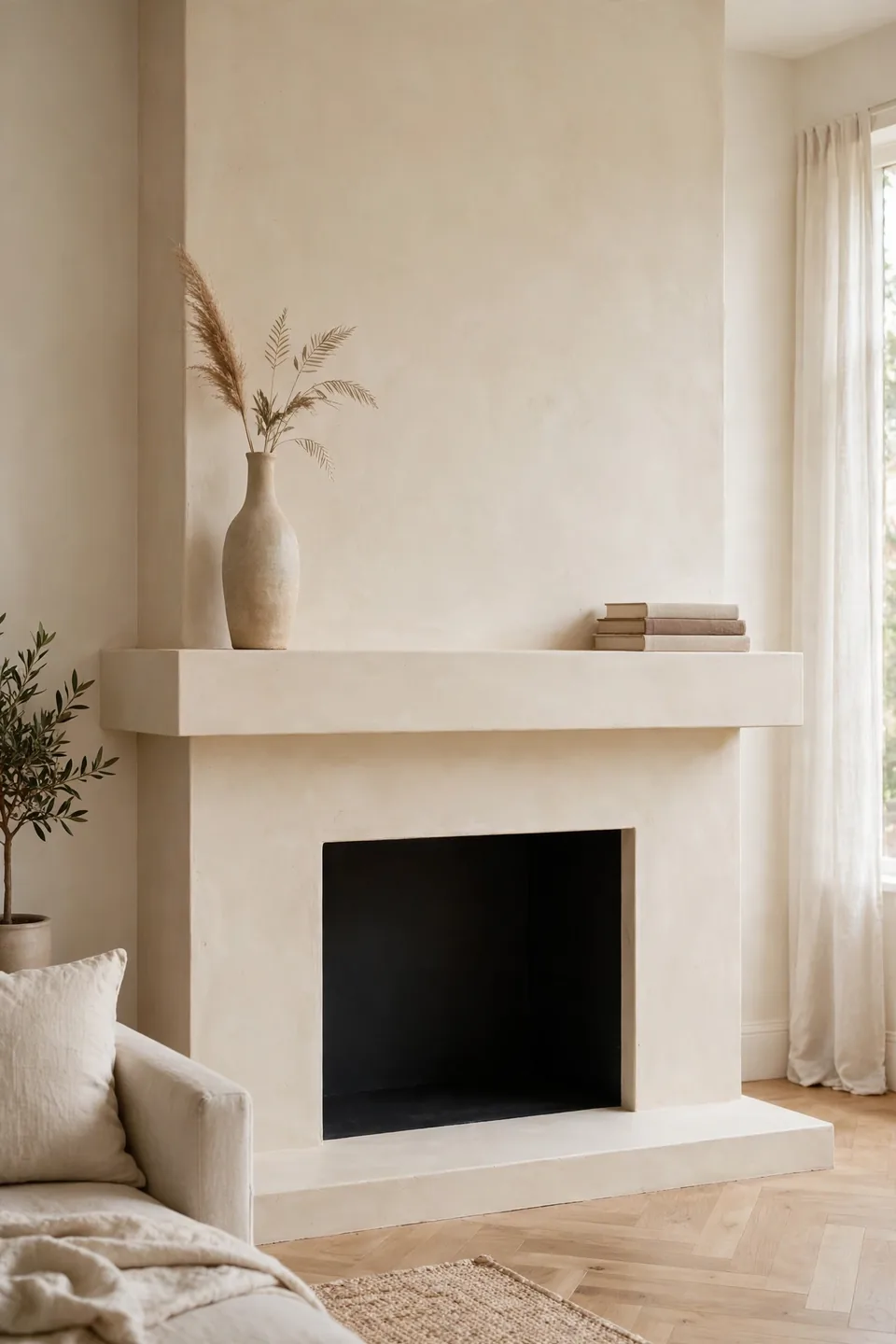
- Anchor a hidden steel or timber bracket into the studs behind the surround.
- Box the shelf with lightweight boards, keeping the front edge slightly rounded.
- Plaster the shelf in the same coats as the surround so it reads as one piece.
- Seal the top surface well; cups, candles, and vases will test it daily.
A floating shelf keeps the storage and display of a mantel without the visual bulk of corbels or legs. Because the plaster wraps it completely, the shelf looks grown from the wall rather than attached to it. Style it with one tall object and one low stack, then leave the middle empty.
Electric or Real Flame
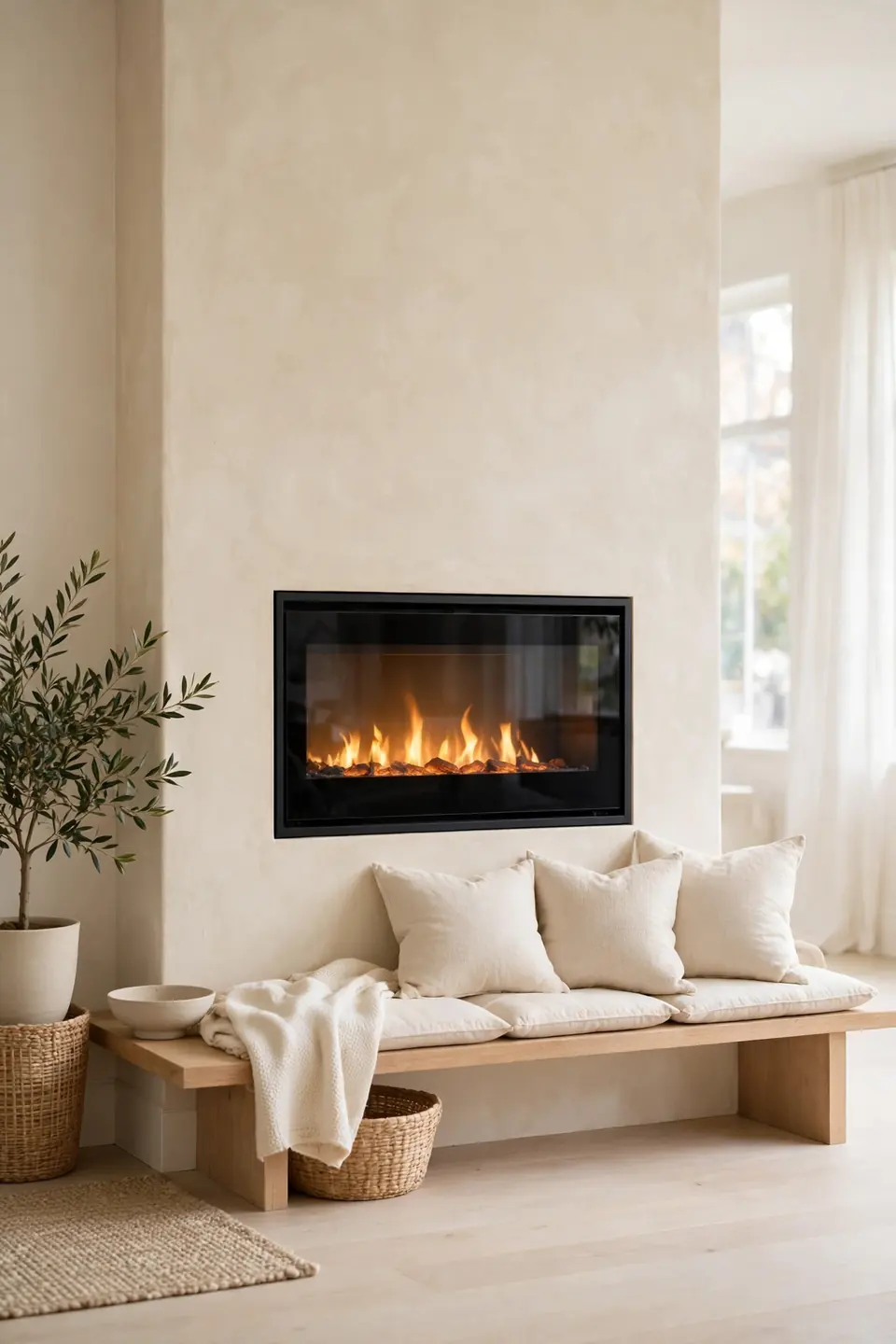
| Feature | Electric Insert | Real Flame |
|---|---|---|
| Glow | Adjustable, even light | Flicker, sparks, life |
| Install | Plug in, no flue | Chimney, permits, lining |
| Plaster Risk | Minimal heat stress | Heat cracks possible |
| Best For | Rentals, bedrooms, flats | Main hearths, purists |
Electric inserts have quietly become the plaster fireplace’s best friend, since gentle, even heat rarely stresses the finish. Real flames bring movement and scent that no screen fully copies, but they ask for clearance, care, and a deeper firebox. Choose the flame that matches your building first and your fantasy second, and the plaster will thank you for years. Both glow beautifully against a matte, hand finished surround.
Plaster Care Ground Rules
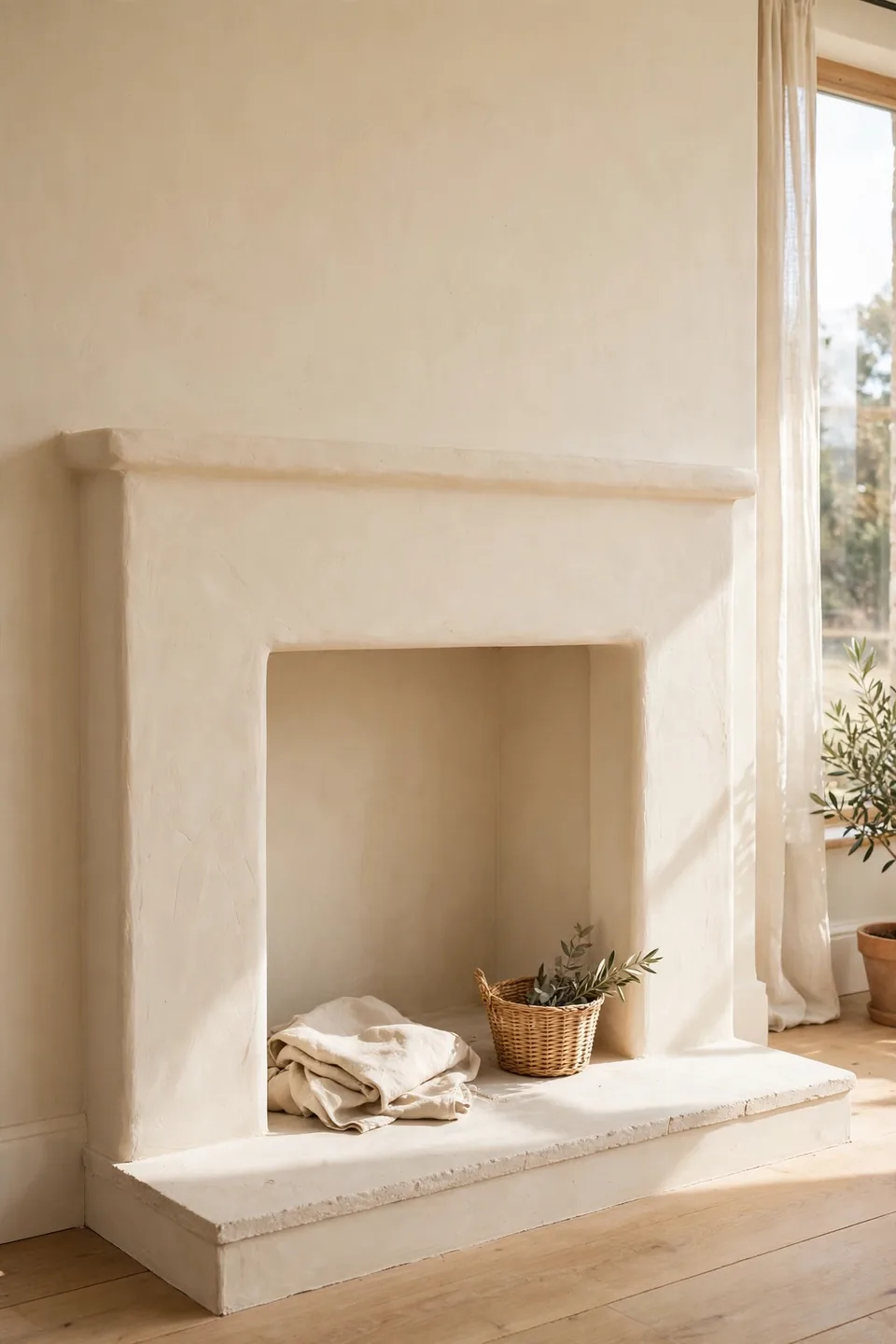
Do:
- Dust the surround weekly with a dry cloth; plaster pores hold grime if ignored.
- Wipe soot marks early with a barely damp sponge before they settle in.
- Recoat tired areas every few years; fresh plaster blends well over old.
Don’t:
- Scrub with harsh cleaners or stiff brushes; both scar the soft finish.
- Lean framed art directly on unsealed plaster; moisture can mark the surface.
- Ignore hairline cracks; a smear of fresh plaster fixes them in minutes.
Plaster asks for gentle habits rather than special products. Most marks lift with water and patience, and small repairs disappear because new plaster bonds happily to old. Keep a small tub of matching finish in the cupboard, and the surround will look hand made and cared for, year after year.
Mediterranean Plaster Fireplace Nook
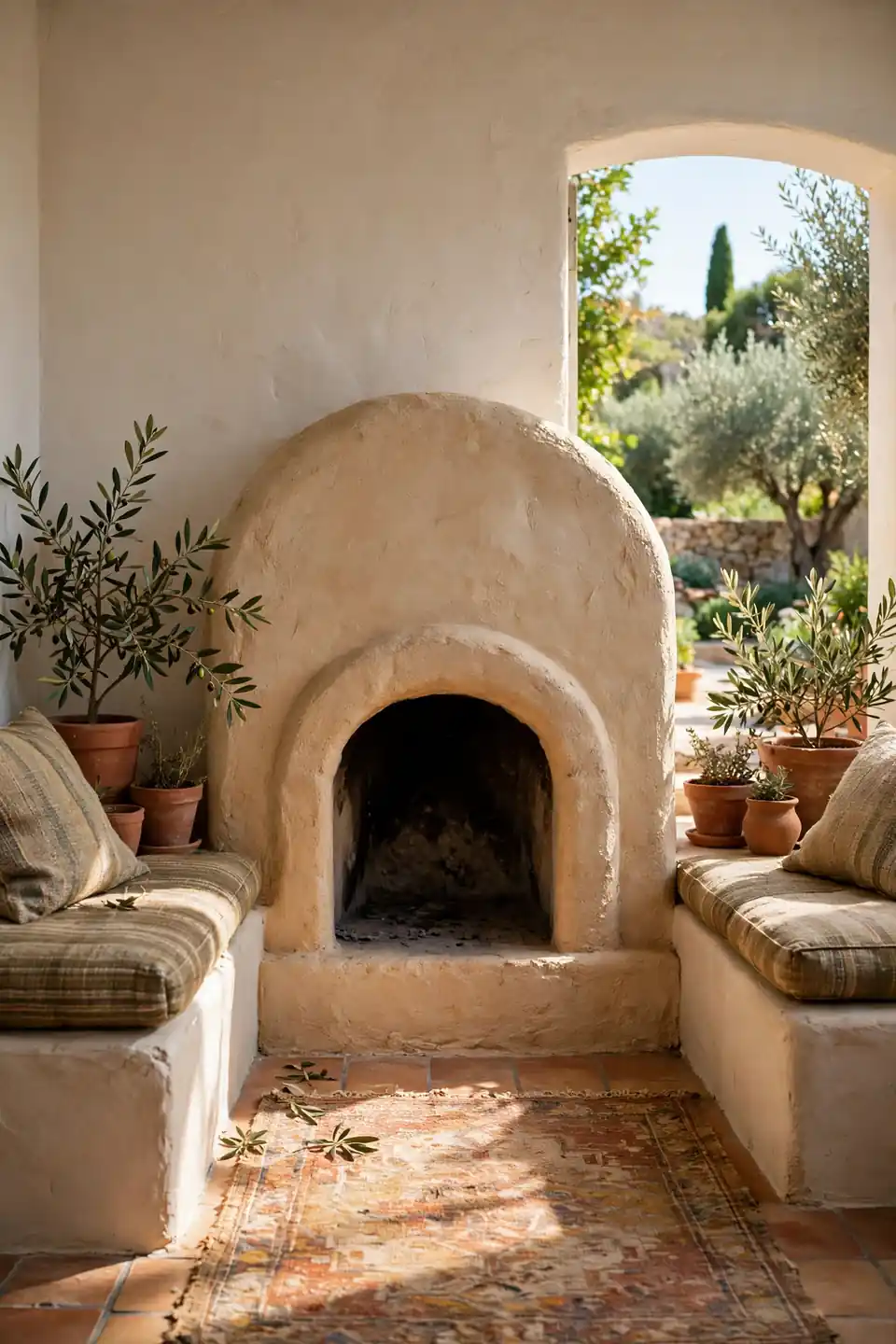
Cost: Mid | Time: Long weekend plus drying | Skill Level: Intermediate | Best For: Sunny rooms with garden views
Mediterranean fireplaces pair thick plaster walls with small, deep fireboxes built for short, bright fires. Recreate the feel with a chunky surround, a rounded top edge, and a tiny tiled or stone detail hidden inside the firebox as a private surprise. Built in benches on either side, also plastered, extend the nook into seating. Terracotta pots, a worn rug, and olive branches finish the scene. The whole arrangement suits rooms that open to a garden, where the fireplace anchors winter while echoing summer walls.
All White Plaster Classic
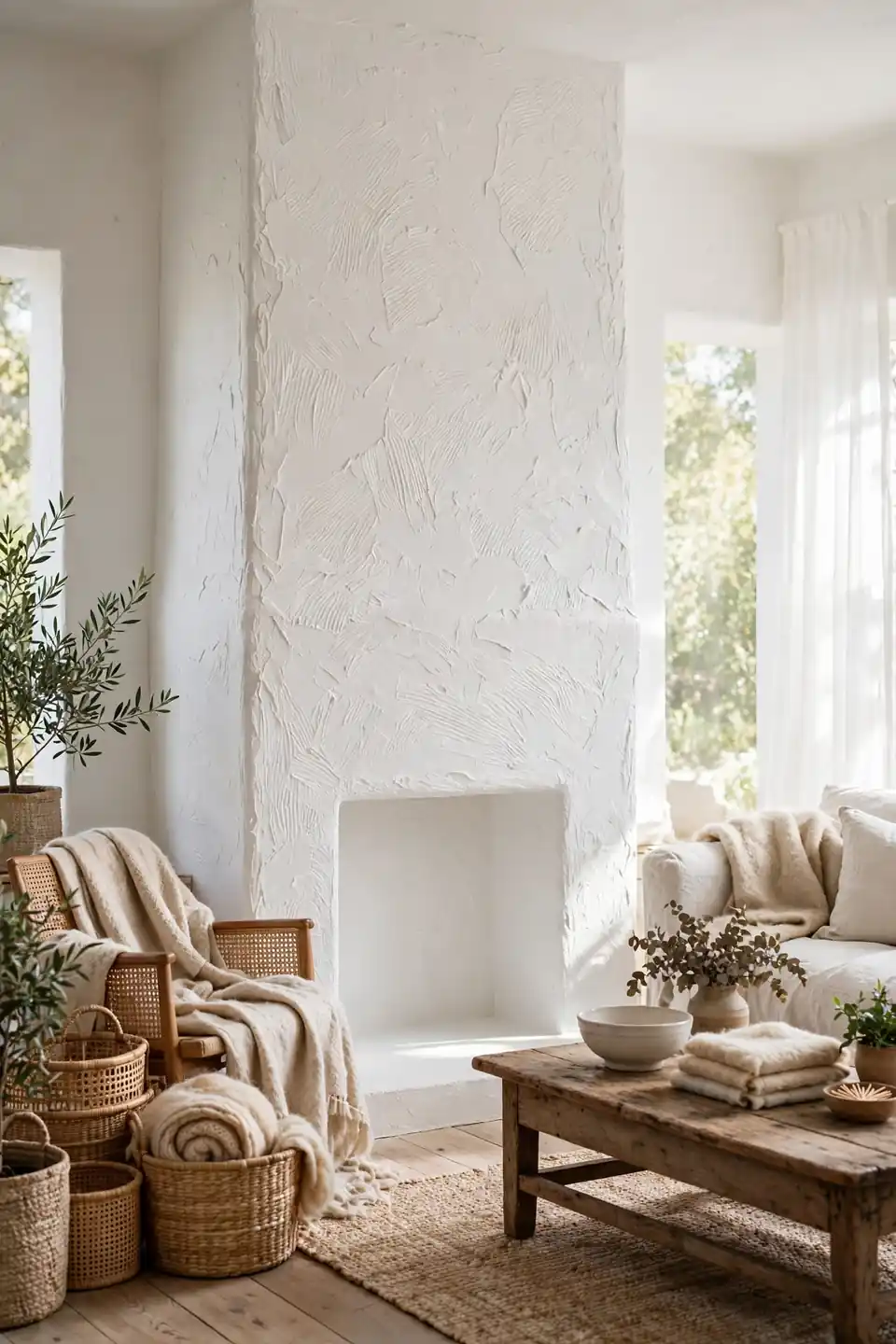
All white plaster is the original version of this look, and it still outperforms every trend cycle. The white is never stark: hand troweled plaster holds shadows in its tiny ridges, so the surround shifts from bright at noon to candlelit cream by night. Nothing dates, nothing clashes. It is the safest classic in the whole list.
White plaster also makes a small budget stretch, since one color covers surround, chimney breast, and even built in shelves in a single calm sweep. Add warmth through texture instead of color: wool throws, cane baskets, aged wood. The room stays bright on grey days, which is when a fireplace earns its keep.
Conclusion
A plaster fireplace does not need a grand budget or a period house to work. One smooth surround, one soft arch, or one honest weekend of skim coating can change how a whole room feels after dark. Start with the idea that fits your walls and your Saturdays, live with it, then style slowly around it. Save your favorite plaster fireplace design inspiration to a Pinterest board so the plan is ready when you are, and share it with a friend whose fireplace deserves better. Small, hand finished changes like these are the ones guests remember longest.