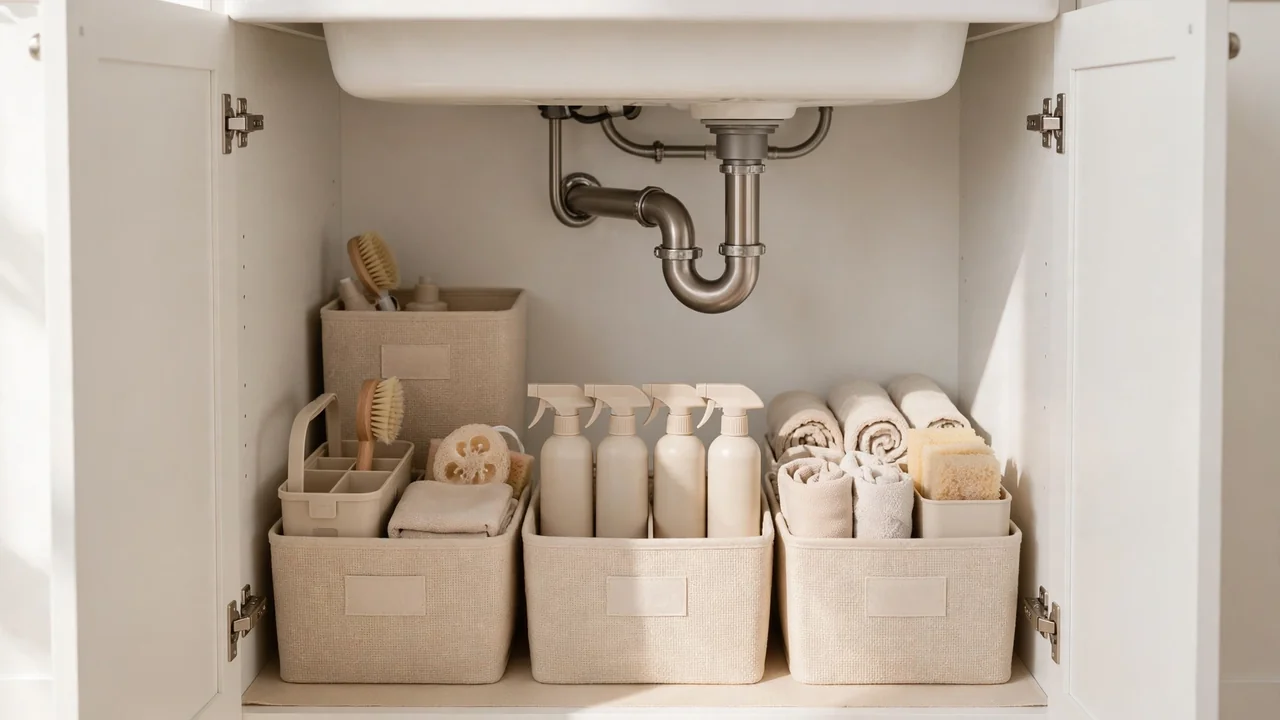
How to Organize Cleaning Supplies in a Small Home
Under the sink is a graveyard of half-used spray bottles, the bathroom cabinet overflows, and you can never find the glass cleaner when guests are coming. Learning how to organize cleaning supplies in a small home feels impossible when every cupboard is already full.
In my experience, small homes need a different kind of system, not a smaller version of a big-house one. If your bedroom corners are tricky too, these ideas on how to decorate a bedroom with a slanted wall pair well with the storage thinking below.
This guide walks you through ten practical steps, from gathering every bottle in one place to building a system that stays tidy long after the initial cleanup. Each step is beginner friendly and costs little or nothing to try.
Why Cleaning Supplies Pile Up
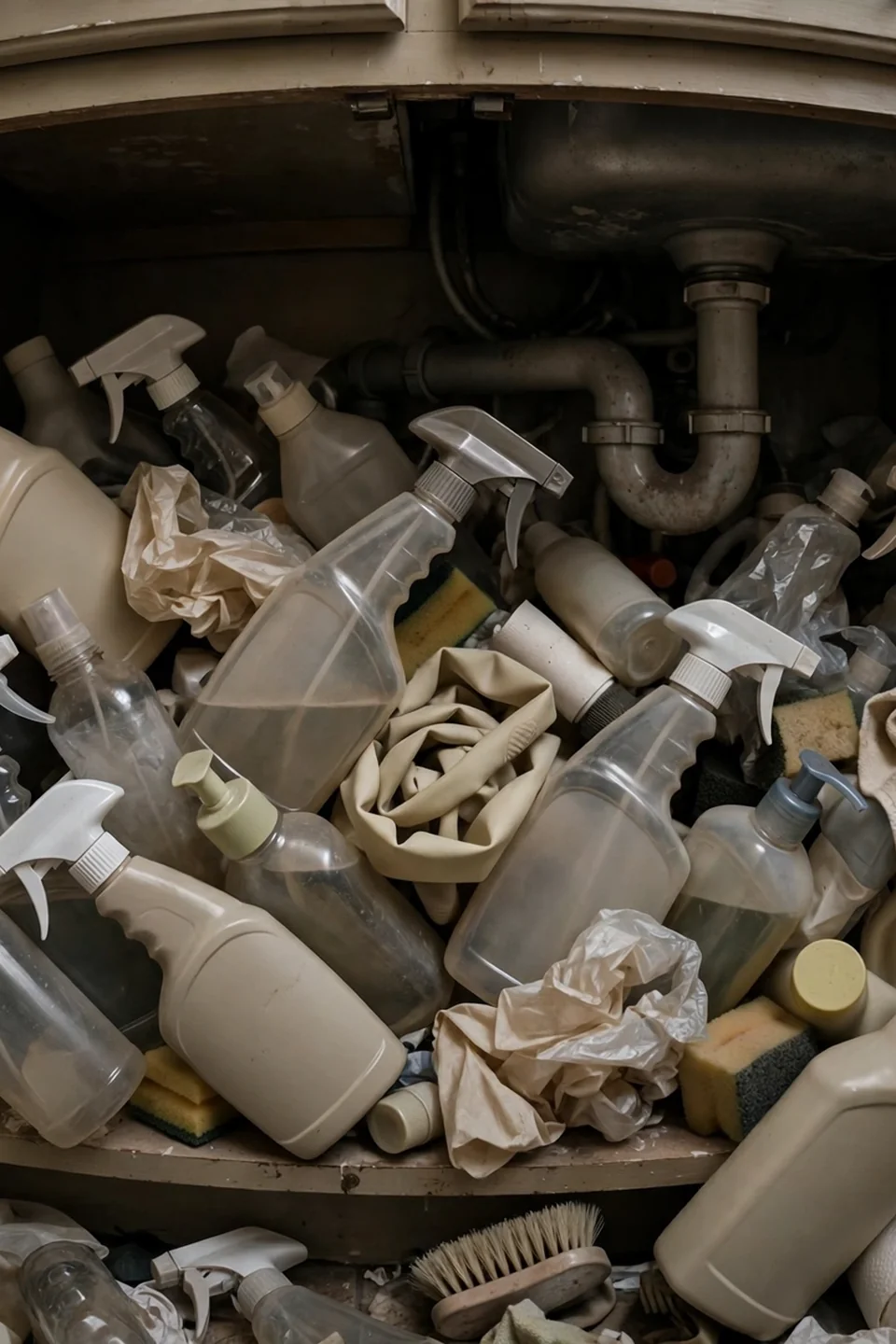
Cleaning supplies multiply silently. You buy a new spray because you cannot find the old one, someone gifts you a fancy all-purpose cleaner, and suddenly three half-empty bottles of glass cleaner sit side by side under the sink.
Small homes make this worse because there is no utility closet to absorb the overflow. Every bottle competes with dish soap, sponges, and trash bags for the same cramped square footage. The mess grows so gradually that you stop seeing it, until opening the cabinet feels like a small avalanche.
Gather Everything First
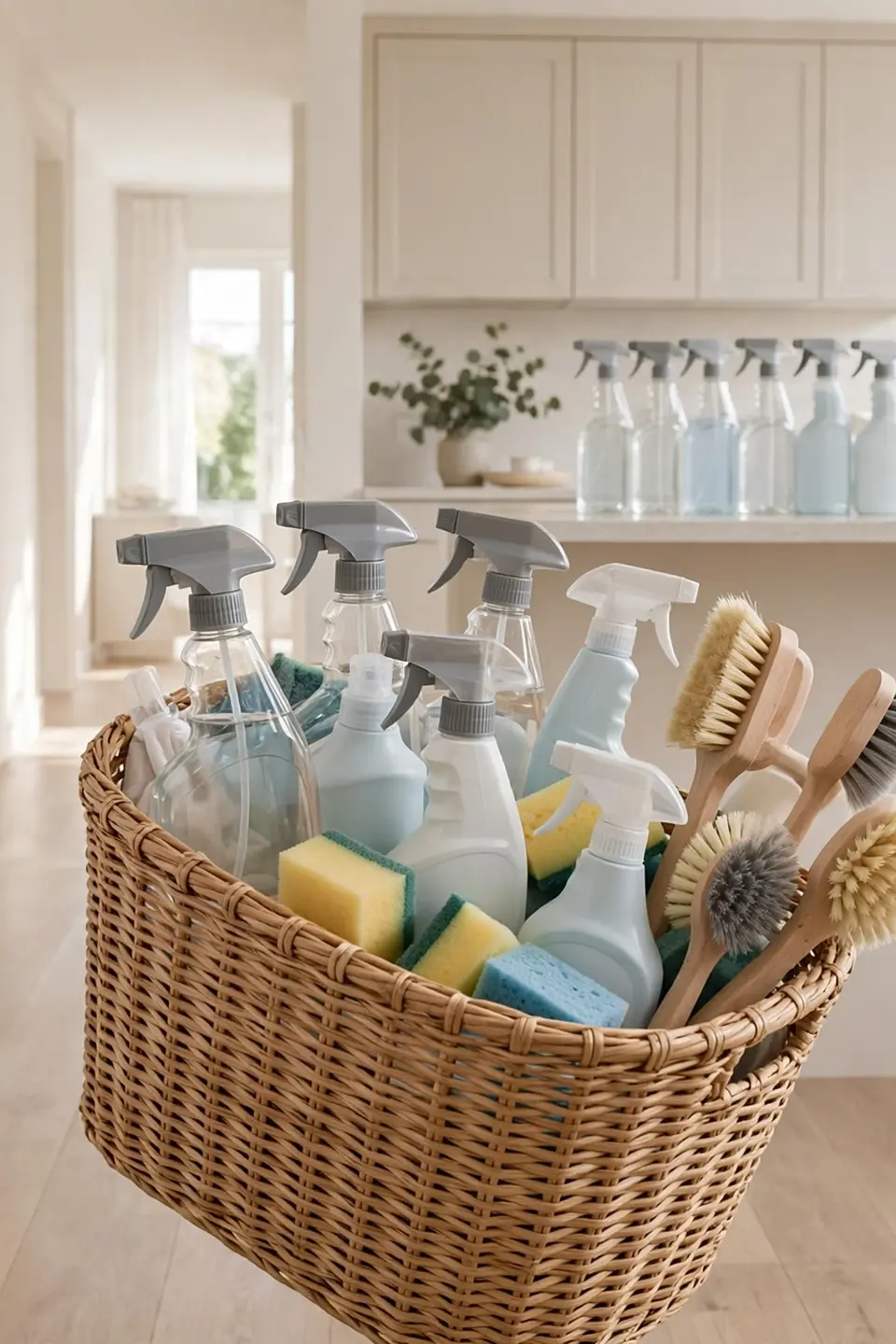
You cannot organize what you cannot see. Pulling every bottle, rag, and brush out of its hiding spot shows you the real inventory, which is almost always bigger than you guessed. This single sweep makes every later decision easier.
- Grab a laundry basket and walk through the whole home, collecting cleaning supplies from under sinks, closets, the laundry area, and the garage.
- Line everything up on the kitchen counter or floor so duplicates and near-empty bottles are easy to spot.
- Toss anything expired, dried out, or broken, and set aside products you never actually use.
- Wipe down the empty shelves and cabinets before anything goes back in.
Declutter Duplicates
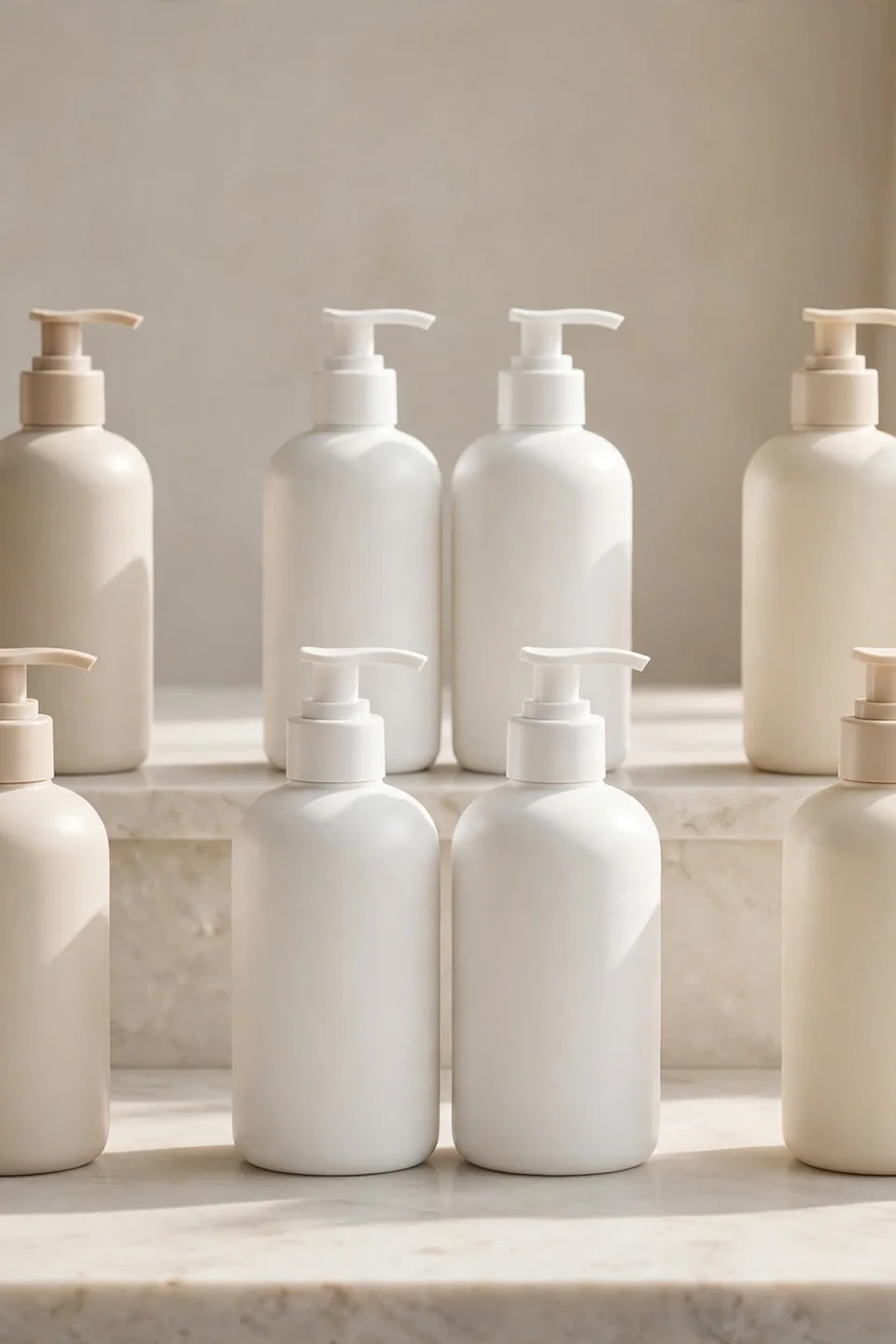
Quick Tip: Keep only one bottle per job. Most homes need just five basics: an all-purpose cleaner, a bathroom cleaner, glass cleaner, dish soap, and a disinfectant. Everything beyond that is a duplicate wearing a different label.
Specialty products promise miracles but mostly duplicate what the basics already do. That granite spray, tile foam, and stainless steel polish can usually be replaced by one good all-purpose cleaner. Fewer bottles mean less clutter, less money spent, and a cabinet you can actually close.
Use a Caddy
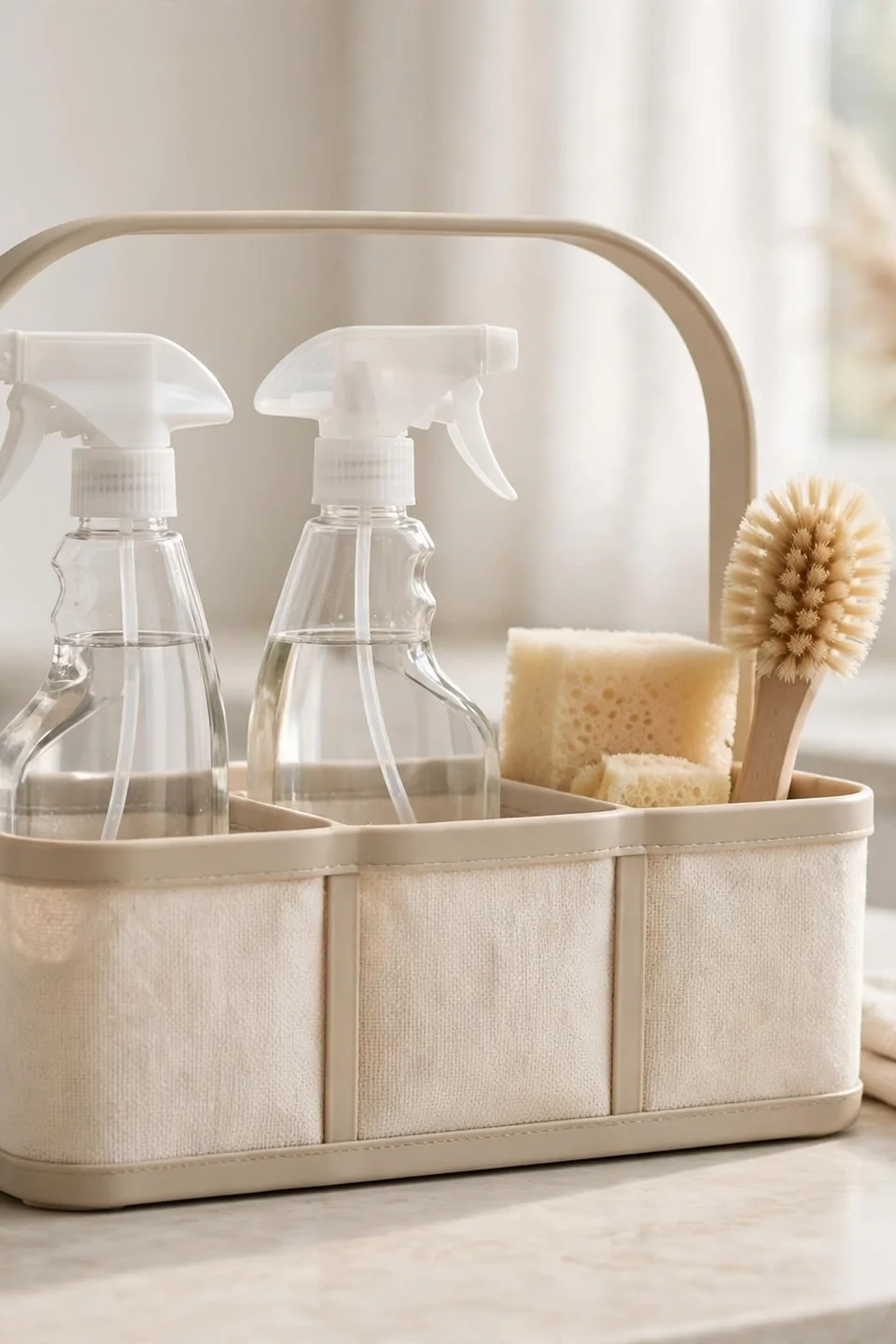
Common Mistake: Most people stash cleaning supplies wherever they fit: sprays under the kitchen sink, wipes in the bathroom, the vacuum in a bedroom corner. Nothing has a real home, so nothing ever gets put back.
The Fix: Choose one portable caddy as the main cleaning station. Load it with your daily essentials and carry it room to room, then return the whole caddy to its single spot when you finish.
A caddy with a handle turns scattered supplies into a mobile kit. Look for one with divided compartments so bottles stay upright and small tools have their own slots. In a small home, one caddy often replaces three cluttered cabinets.
Go Vertical
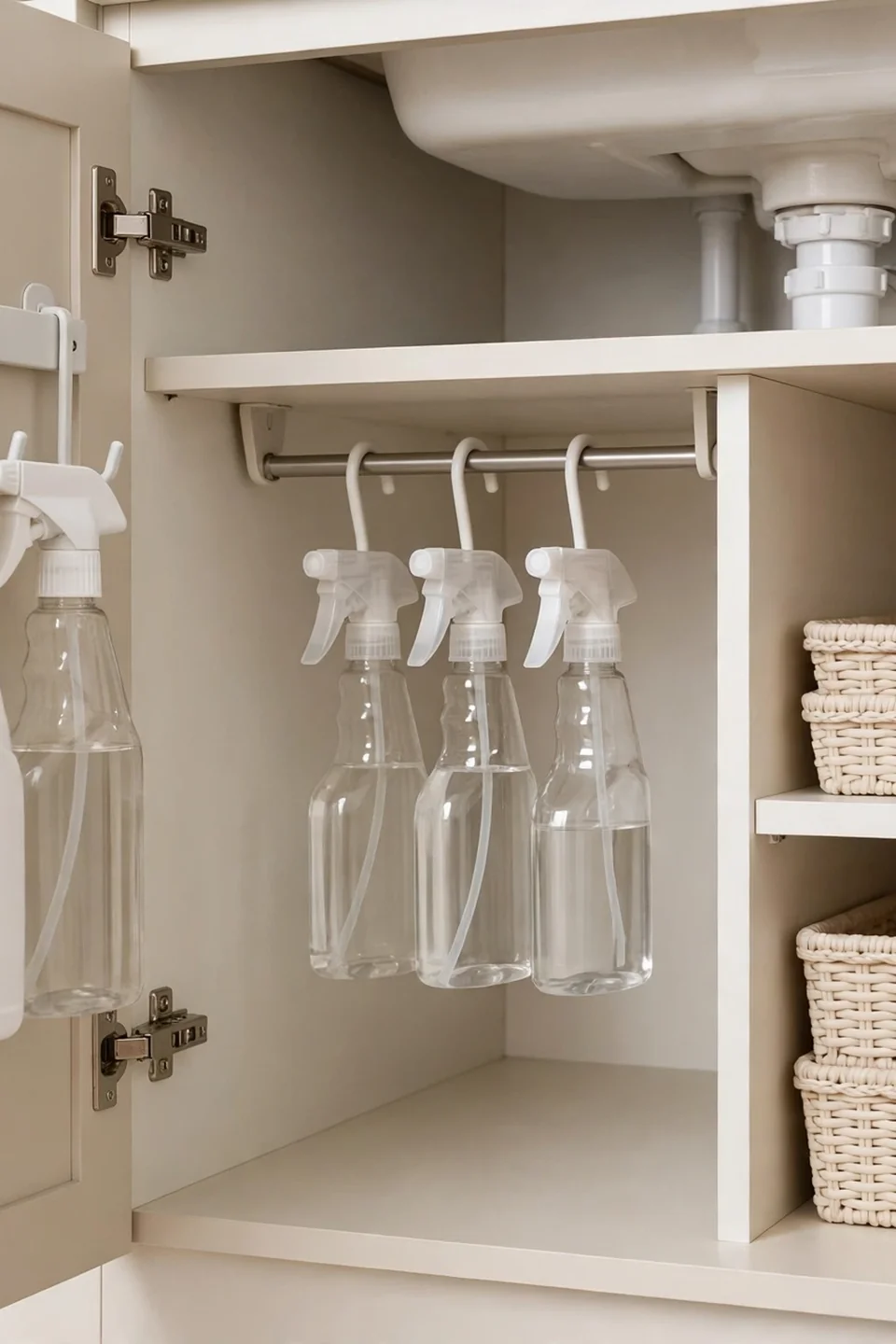
What You Need:
- Over-door hooks: hang spray bottles inside a cabinet door to free up shelf space.
- Tension rod: mount one under the sink to hang trigger sprays by their handles.
- Stackable bins: group products by room so you grab the right bin, not a random bottle.
- Small lazy Susan: spin to reach the back of deep cabinets without unpacking everything.
- Adhesive hooks: stick inside closet walls for brushes, dusters, and dustpans.
Walls and door backs are usually empty, and that is why people who master how to organize cleaning supplies in a small home always think vertically. A five-dollar hook can hold what a whole shelf used to. Look up before you give up on a cabinet.
Label Everything
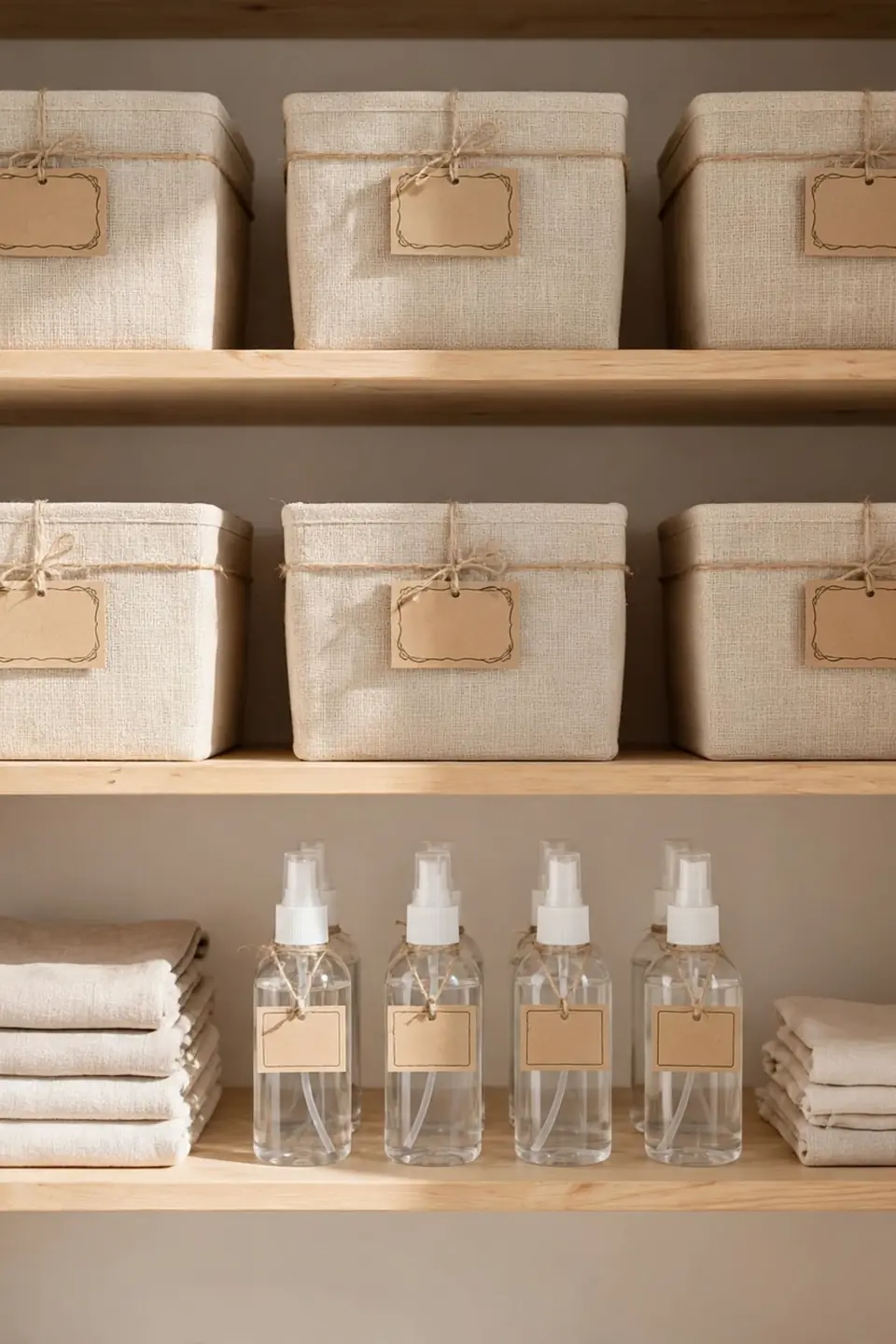
Before: Every spray bottle looks the same from the front, so you grab the oven cleaner when you wanted the counter spray. Family members put things back in random spots because nothing tells them where each item belongs.
After: Each bin and shelf carries a simple label, so the glass cleaner always lands in the glass-cleaner spot. Anyone in the house can find what they need and return it correctly without asking.
Labels remove the guesswork that creates clutter. A label maker works, but masking tape and a marker do the job for pennies. Label the bin, the shelf, and the inside of the cabinet door for a system that survives busy weeks.
Store by Zone
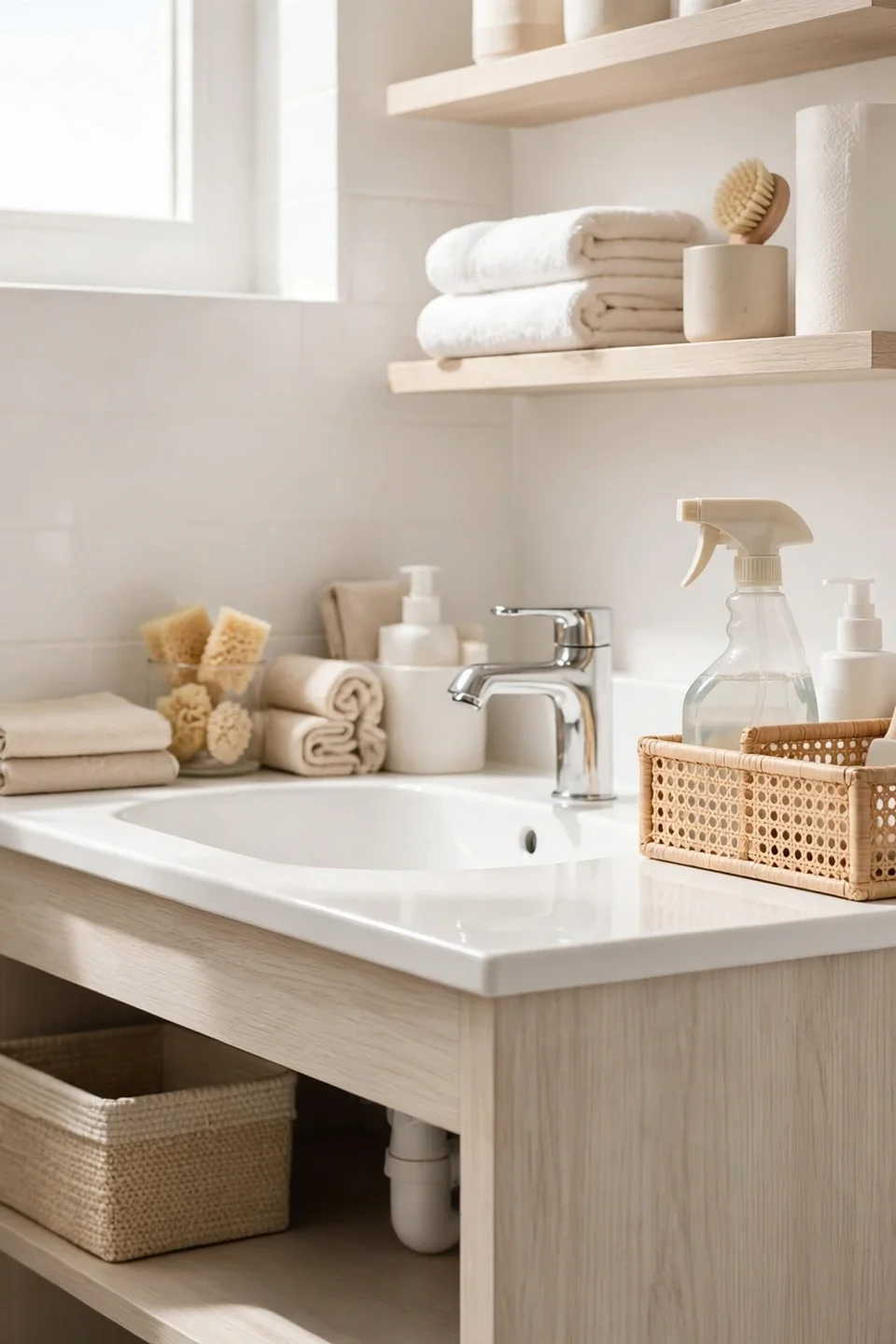
Do This:
- Store bathroom cleaners in the bathroom, where you actually use them.
- Keep a mini caddy on each floor if stairs separate your spaces.
- Refill small spray bottles from bulk containers stored elsewhere.
- Return the caddy to its home spot the moment you finish cleaning.
Avoid This:
- Do not keep every product under one sink; it becomes a black hole.
- Do not store chemicals above food or near heat sources.
- Do not buy in bulk unless you have a dedicated spot for the extras.
- Do not mix leftover products into one bottle to save space.
Zone storage cuts cleaning time because you stop ferrying bottles around the house. Each zone holds only what that area needs, so cabinets stay shallow and easy to scan. The result is less walking, less searching, and tidier shelves.
If storage is tight beyond the cleaning supplies, these ideas for how to add more storage to a small bedroom apply the same zone thinking to bedroom clutter.
Keep It Accessible
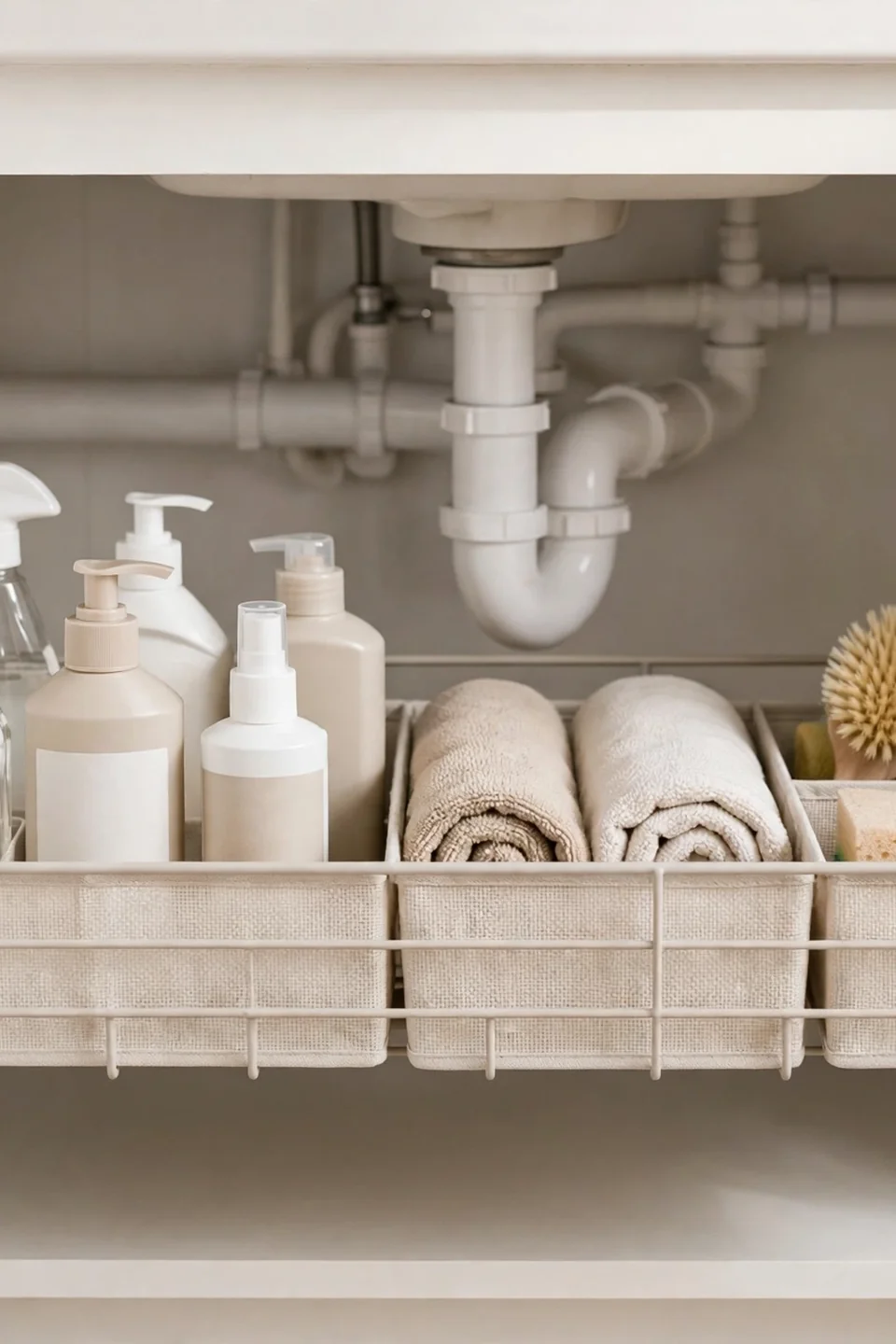
Time Needed: 2 hours for the first full sort | Difficulty: Easy, no tools required | Cost: Under $25 for bins, hooks, and labels | Best For: renters and homeowners with limited cabinet space
The supplies you reach for weekly deserve the easiest spots: front of the shelf, inside the cabinet door, or in the caddy. Seasonal or rarely used products can live higher up or in a harder-to-reach corner. When daily tools are effortless to grab, the system maintains itself.
Common Supply Mistakes
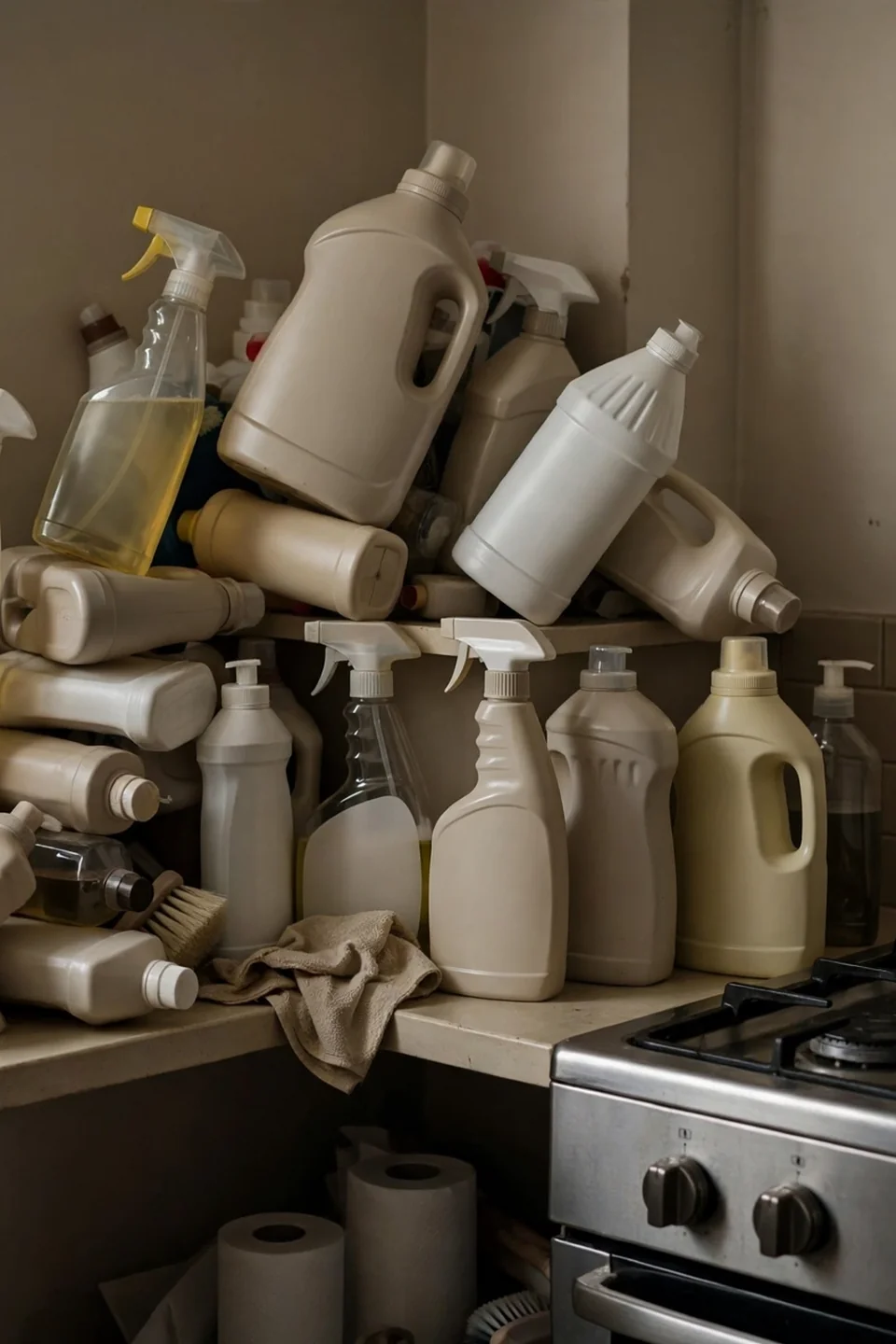
Storing chemicals above the stove or next to food is the mistake I see most often. Heat degrades cleaning products and a leak near groceries is a genuine hazard. Move anything with a warning label to a cool, separate spot, even if it means a less convenient shelf.
The other classic error is buying storage before decluttering. New bins filled with duplicates are just organized clutter. Sort, toss, and donate first, then buy only the containers that fit what actually remains, and your system will fit the first time.
Pro Tips for Tidy Supplies
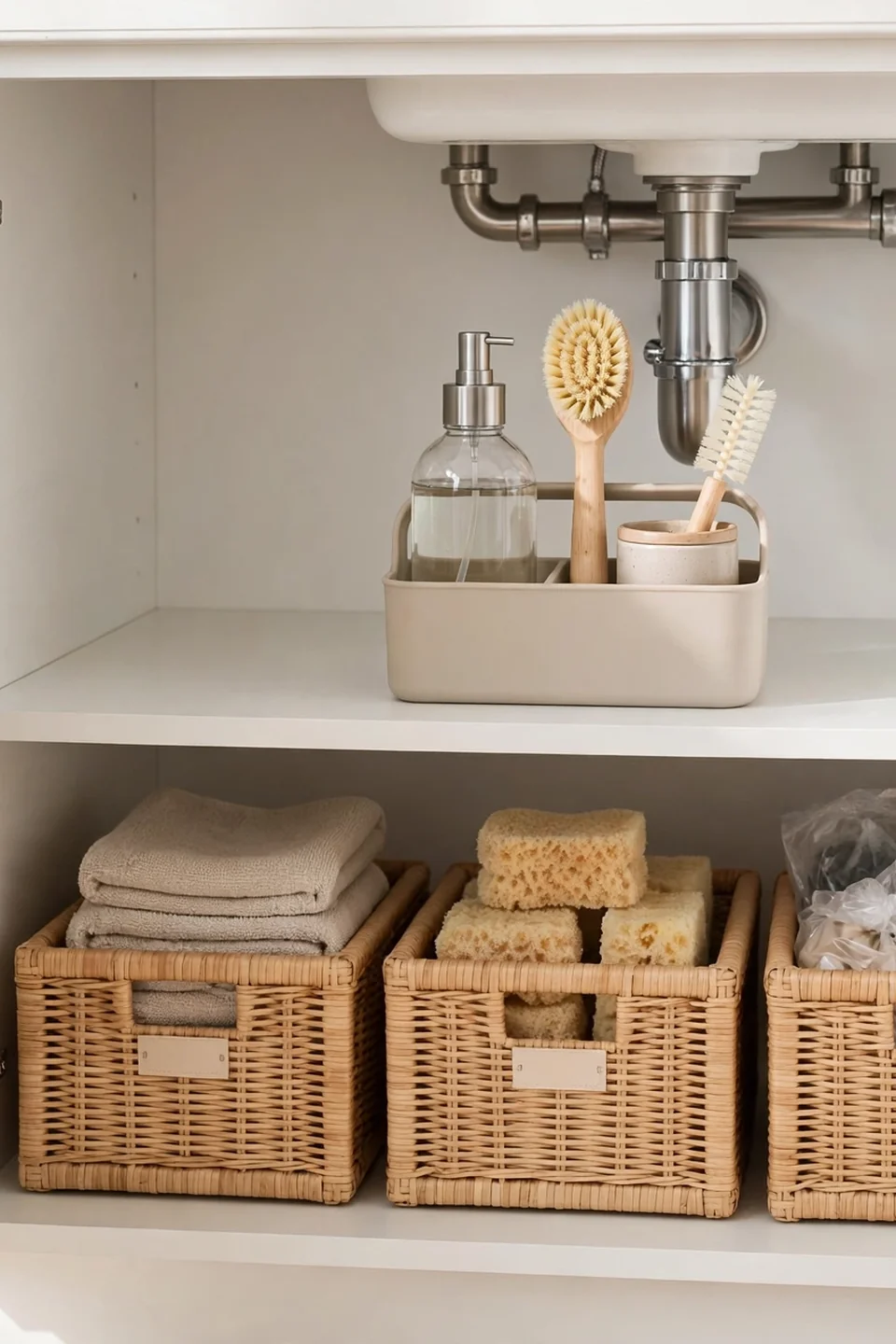
A tidy supply area stays tidy with tiny habits, not big overhauls. These small routines take only minutes and keep every bottle, brush, and bin exactly where it belongs, so the next cleanup starts calm instead of chaotic.
- Do a one-minute reset after each cleaning session: return the caddy, close the cabinet, toss any empty bottles.
- Check expiration dates every six months and recycle anything dried out or separated.
- Keep a running shopping list on the cabinet door so you replace only what runs out.
- Reassess each zone yearly; if a product sat unused for twelve months, let it go.
Conclusion
Once every bottle has a home, cleaning stops feeling like a treasure hunt. That calm, everything-in-its-place feeling is what learning how to organize cleaning supplies in a small home really gives you: less time searching, less money wasted on duplicates, and cabinets that close.
Save this guide to your home organization board on Pinterest so the steps are handy when you need them. Start with the gather-everything sweep this weekend. I have seen how one organized caddy can shift an entire home from chaotic to calm, and yours can be next.
One Comment