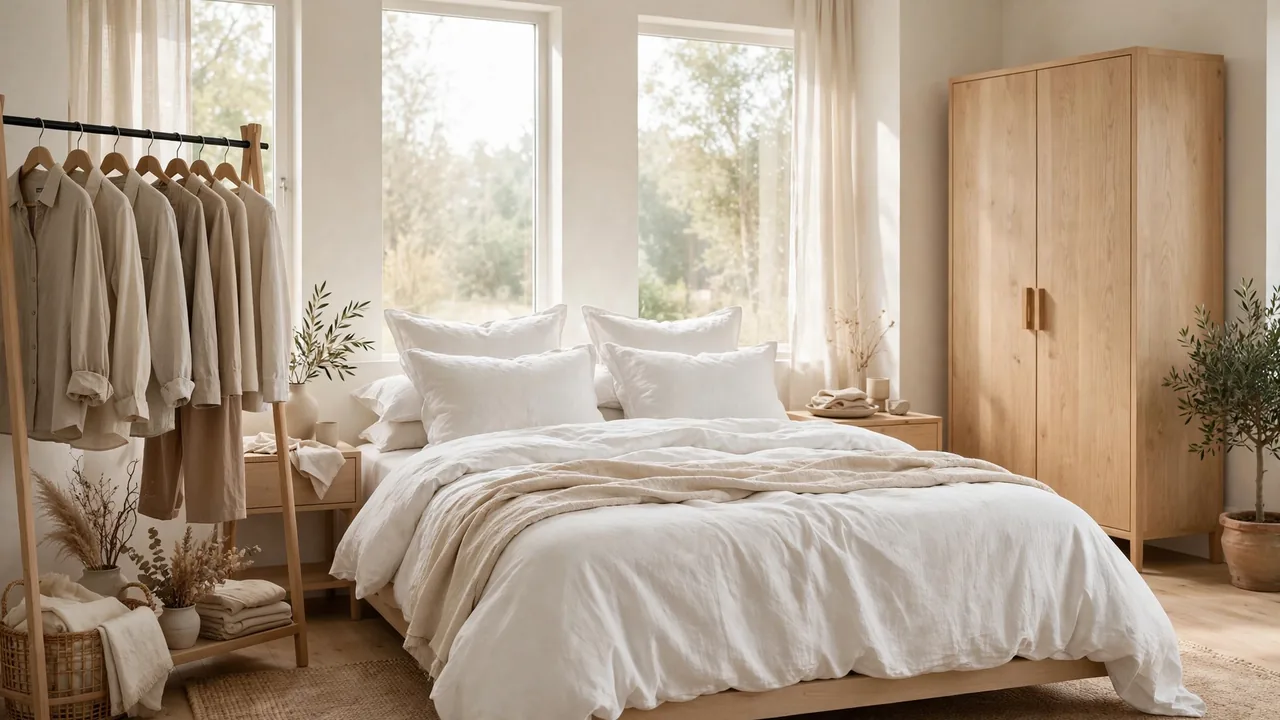
How to Organize a Bedroom Without a Closet
Living without a built-in closet can feel like a daily puzzle, but how to organize a bedroom without a closet is simpler than you think. With the right mix of freestanding storage and smart habits, even the smallest no-closet bedroom can feel calm, tidy, and completely functional.
In this guide, you will learn how to sort your belongings, choose the right freestanding pieces, and set up zones that keep everything easy to find. If cable clutter is another battle, our guide on how to hide cords in living rooms pairs well with this project.
In my experience, the biggest shift happens when every item gets a clear home. Once that clicks, keeping a no-closet bedroom tidy takes just a few minutes a day.
Why No-Closet Bedrooms Feel Chaotic
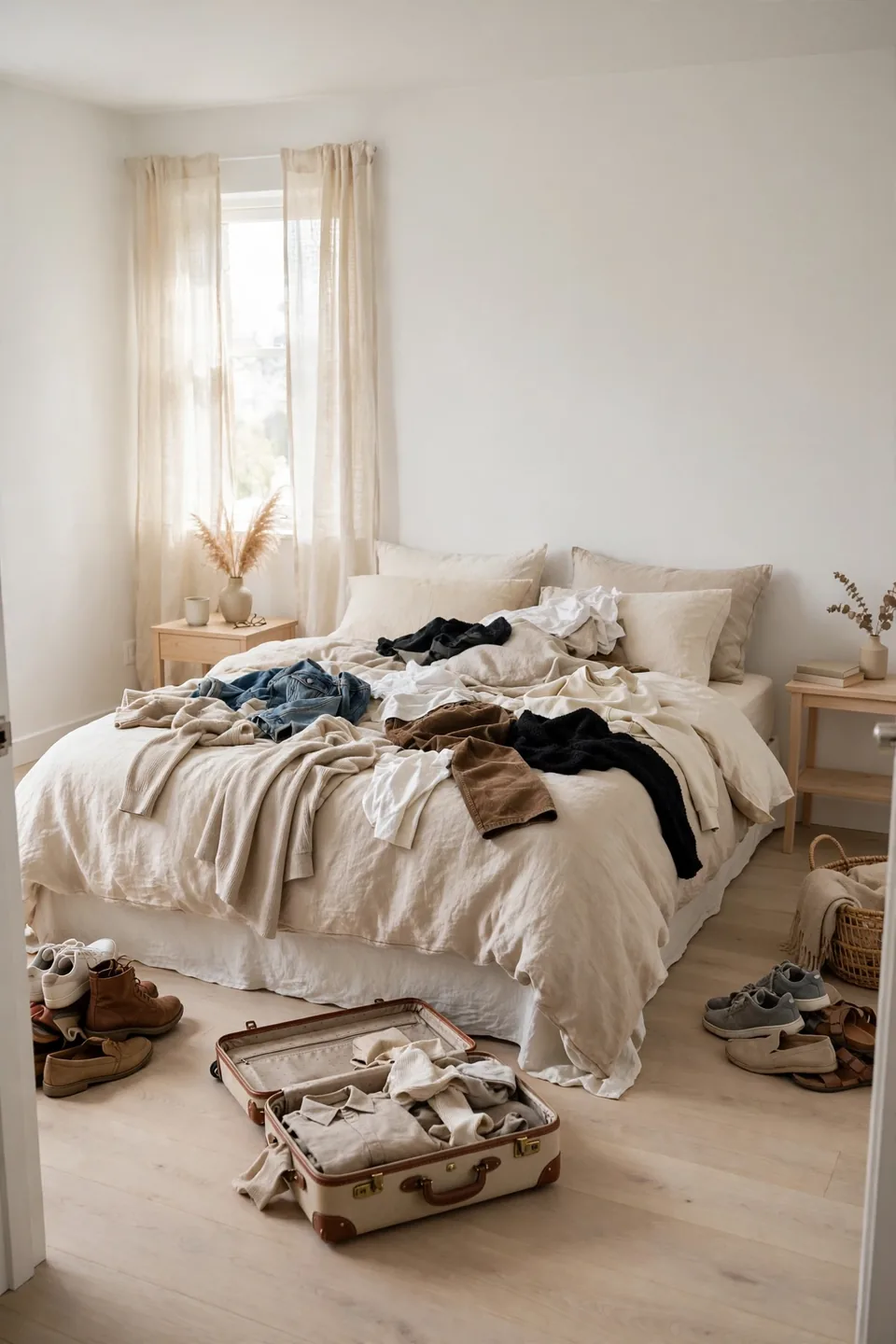
A bedroom without a closet lacks the one thing most storage plans rely on: a hidden zone where clutter disappears. Without those doors to close, every shirt, shoe, and bag stays in sight, and the room starts to feel busy even when it is fairly clean.
The fix is not more stuff, it is better zones. When clothes, shoes, and accessories each have a clear spot, your eye stops hunting for order. That sense of calm is exactly what we are building toward, one simple storage choice at a time.
Take Stock of What You Own
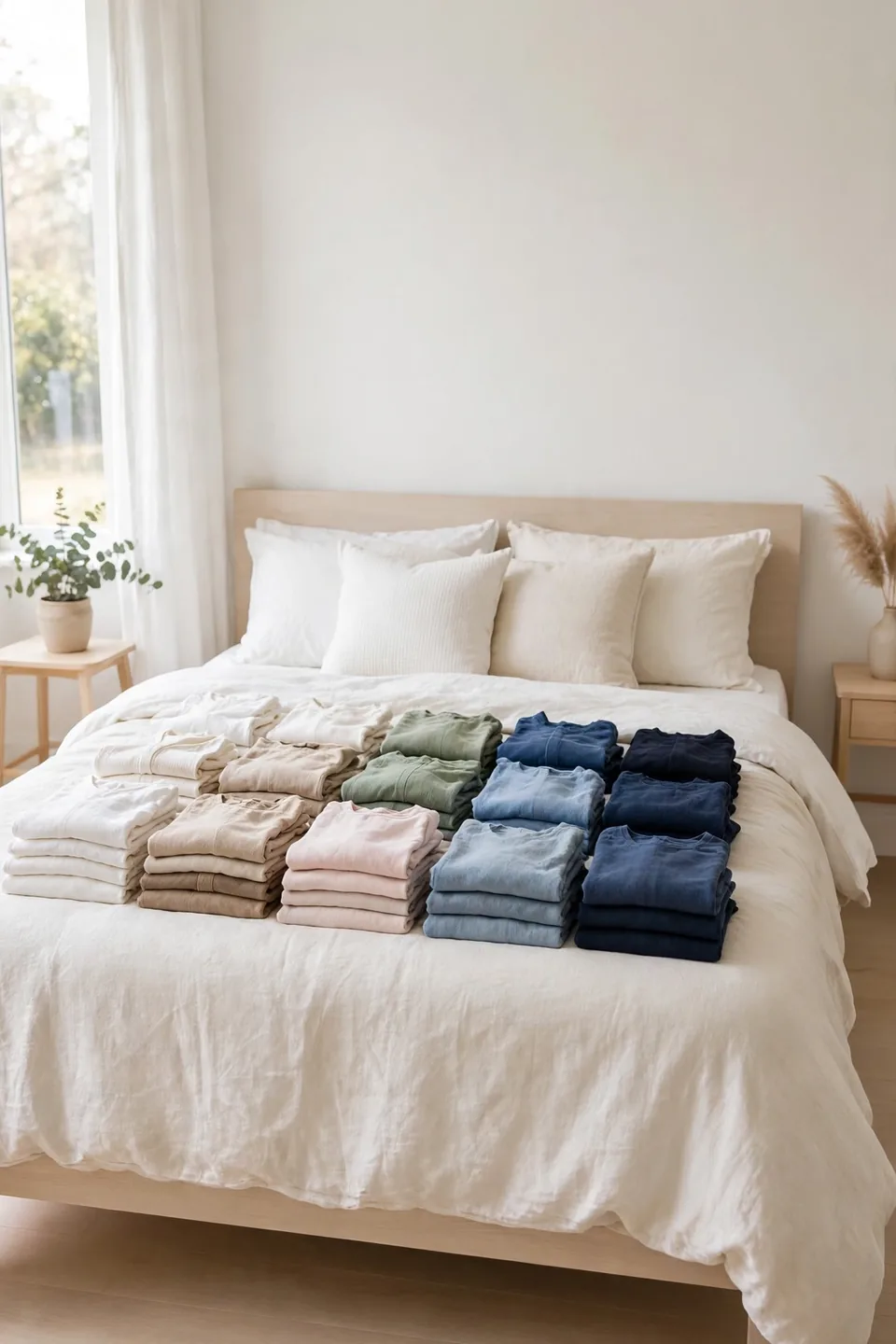
Before buying a single storage piece, you need an honest picture of what you actually own. Most no-closet bedrooms feel chaotic because the storage was planned for an imaginary wardrobe, not the real one. A quick audit fixes that today.
- Pull everything out onto the bed so you can see the full picture at once.
- Sort into four piles: keep, donate, toss, and relocate to another room.
- Count what remains by category so you know how much hanging, folding, and shoe space you truly need.
- Note the items you reach for weekly; these earn the most accessible spots.
Use a Freestanding Wardrobe
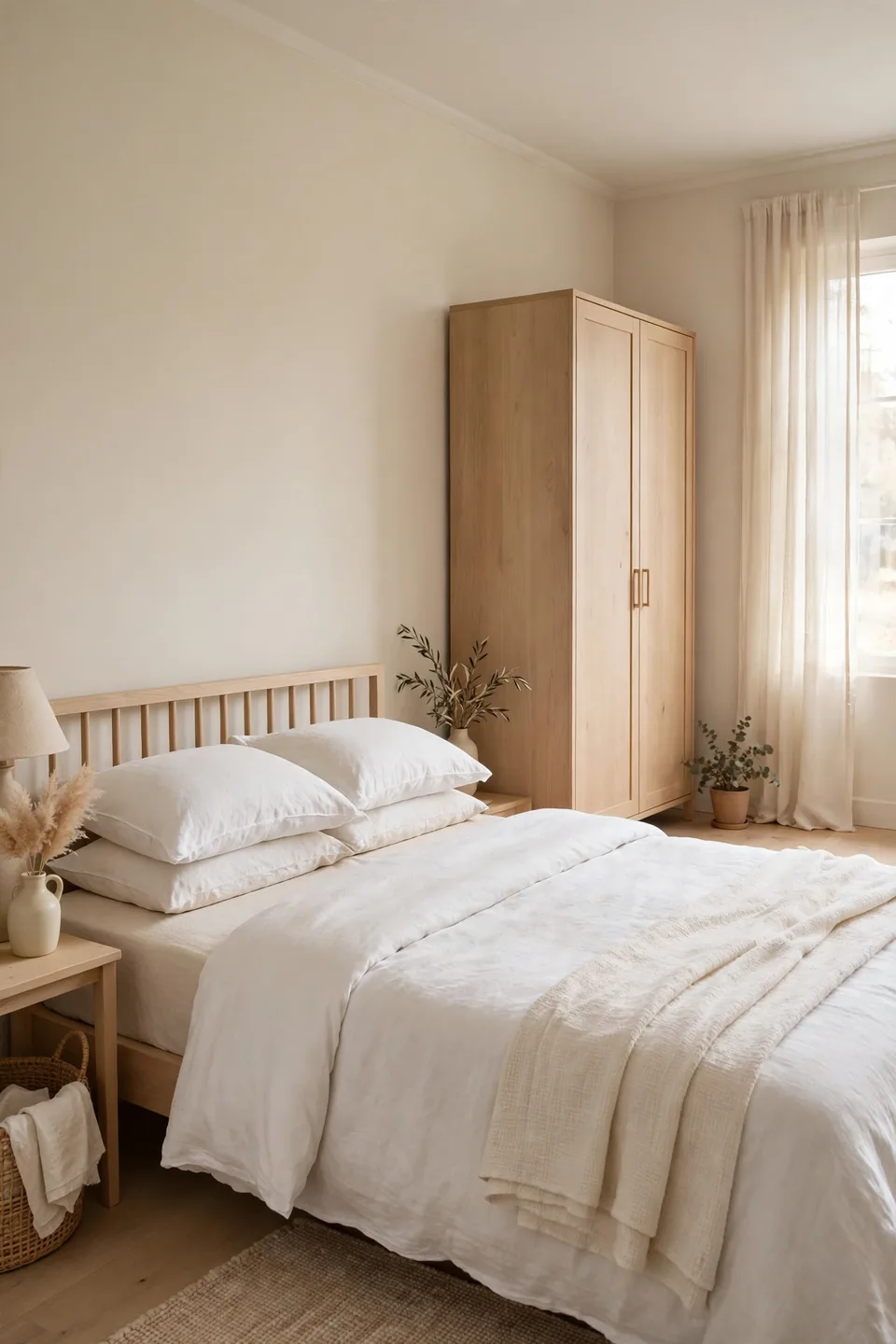
Quick Tip: Measure your ceiling height and the wardrobe footprint before you shop. A wardrobe that is too tall for low ceilings or too deep for a narrow wall will fight the room instead of helping it. In my experience, a 24-inch depth fits most bedrooms without crowding the walkway.
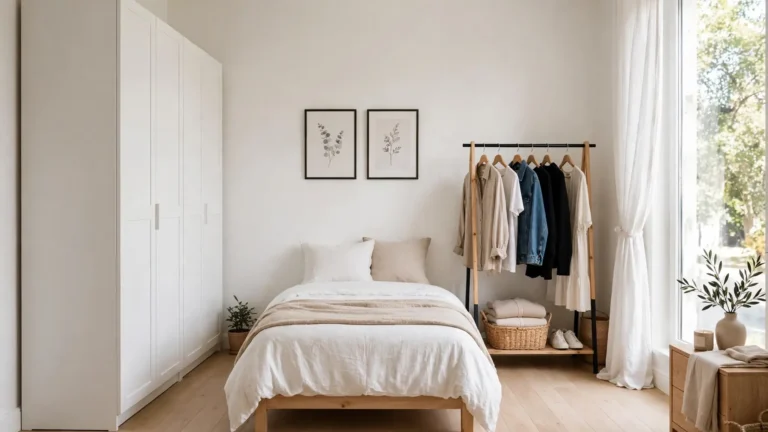
A freestanding wardrobe is the closest thing to a built-in closet you can buy. Look for one with a mix of hanging space, shelves, and drawers so it handles more than just shirts. Place it on the longest empty wall, and leave a few inches of breathing room on each side for a built-in feel.
Add an Open Clothing Rack
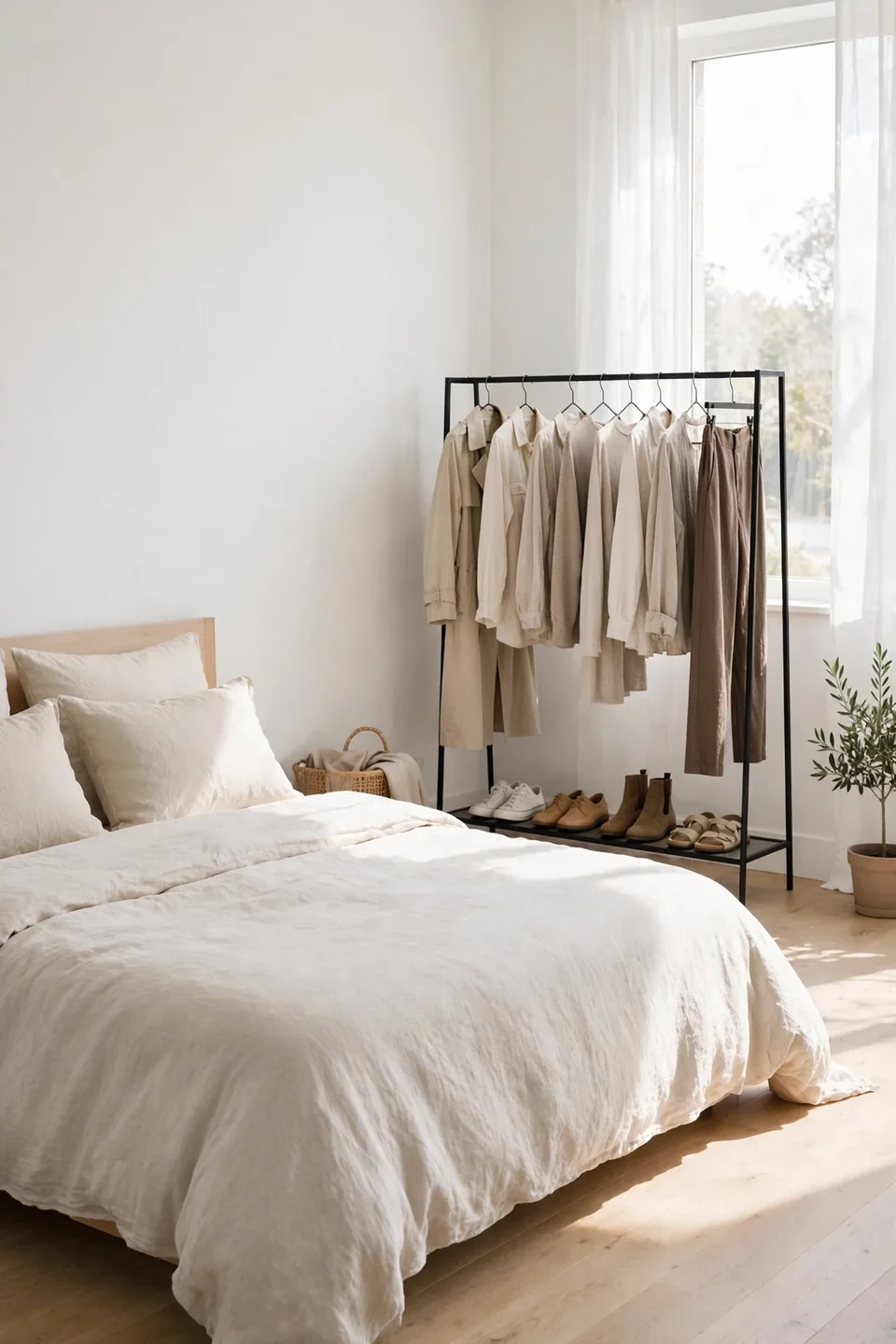
Common Mistake: Most people overload an open rack until it looks like a clothing store sale bin. Cramming every garment onto one rail makes the room feel messier than before. A packed rack also wrinkles clothes and hides what you actually own.
The Fix: Treat the rack like a styled display, not extra storage. Hang only your current-week outfits and prettiest pieces, about 15 to 20 items. Everything else belongs in closed storage where it stays dust-free.
Choose a sturdy metal rack with a lower shelf for shoes and a top shelf for bins. Position it near a window or mirror so getting dressed feels pleasant, not cramped. When the rack holds only favorites, it doubles as decor instead of daily clutter.
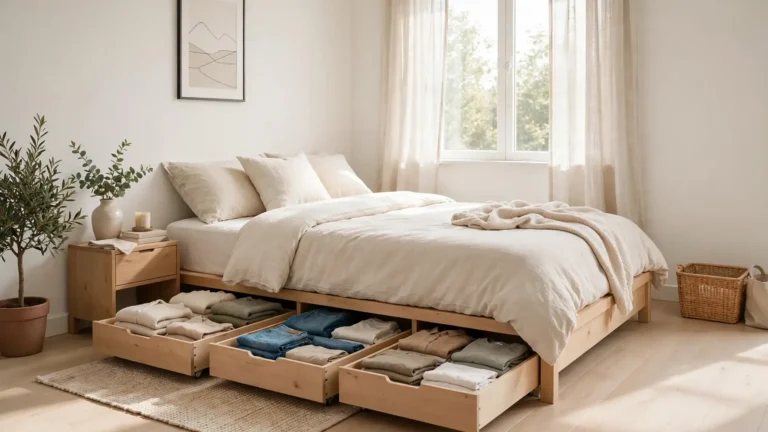
Maximize Under-Bed Storage
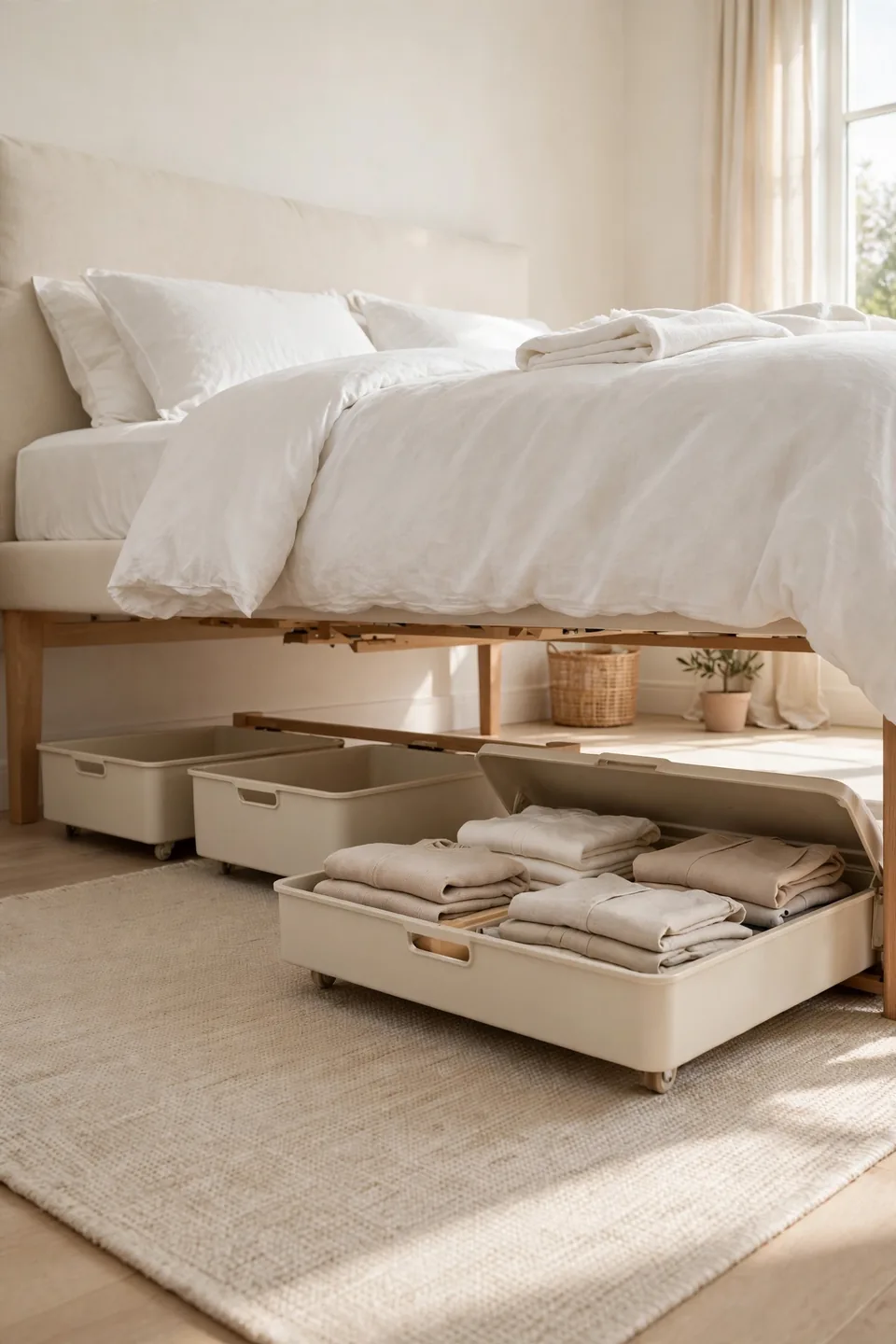
What You Need:
- Low-profile rolling bins: slide easily under most bed frames and keep folded clothes dust-free.
- Vacuum storage bags: shrink bulky bedding and off-season clothes to a fraction of their size.
- A bed riser set: adds 5 to 7 inches of clearance when your frame sits too low.
- Drawer dividers: stop smaller items from sliding into a jumbled mess inside deep bins.
- Fabric storage bags with windows: let you spot contents without pulling every bag out.
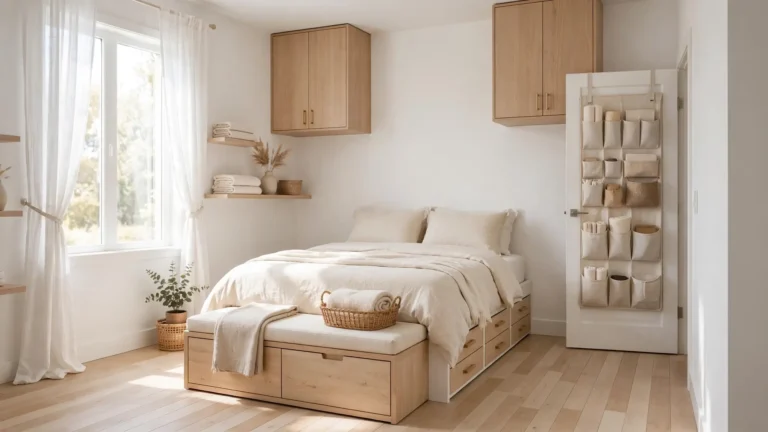
The space under your bed is often the largest unused storage zone in the room. Figuring out how to organize a bedroom without a closet gets much easier once this hidden square footage starts working for you. Keep a simple map on your phone of what lives in each bin so nothing gets forgotten.
Use Over-Door Organizers
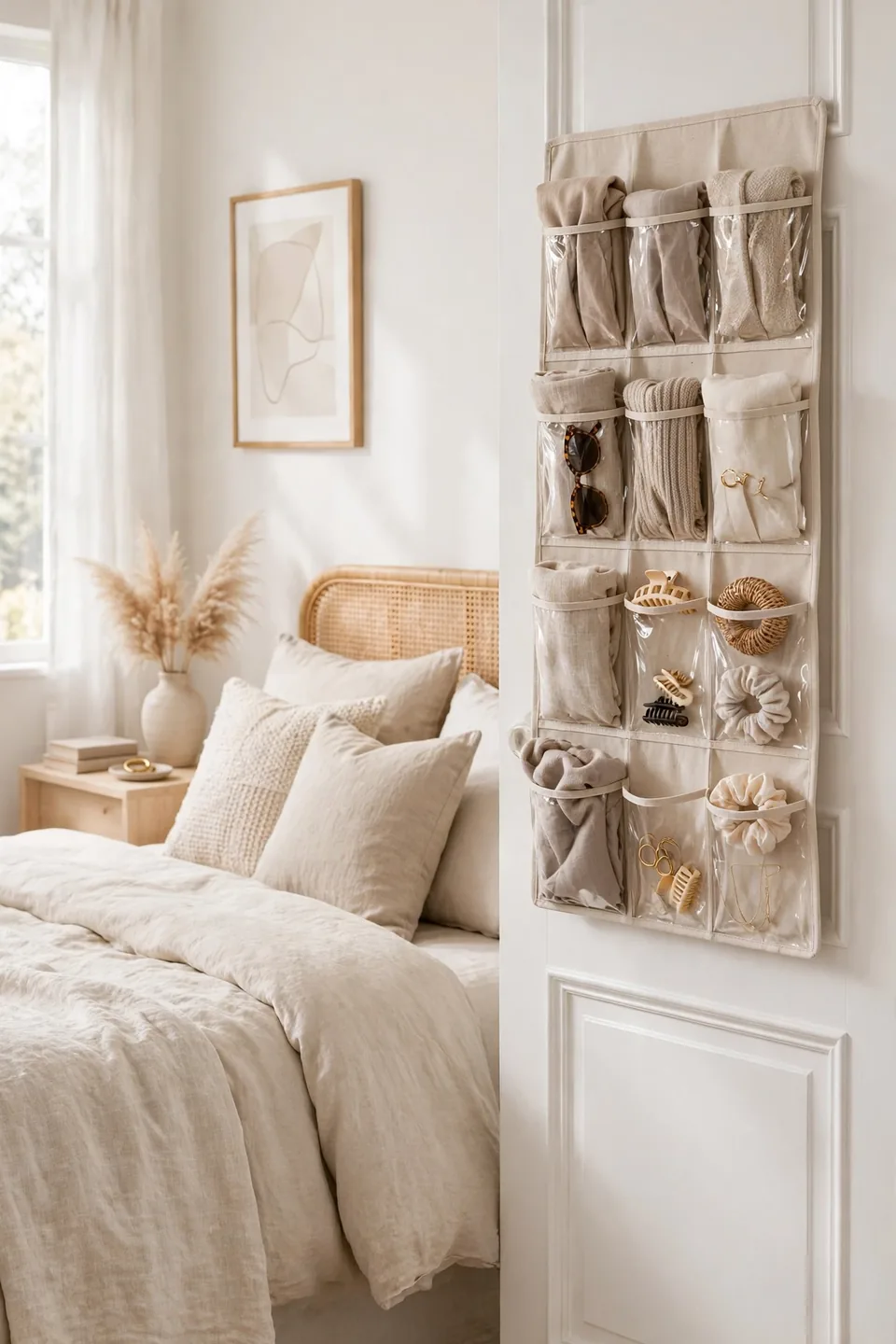
Before: The back of your bedroom door is dead space, and small items end up scattered across the dresser and nightstand. Scarves tangle in drawers, belts vanish, and accessories pile up where you can see them.
After: A slim over-door organizer turns that blank surface into a tidy vertical station. Every accessory has a pocket, the dresser top stays clear, and getting ready takes half the time.
Pick a fabric organizer with clear pockets so you can find things at a glance. Hang it on the inside of the door to keep the room looking calm from the bed. Reserve the top rows for daily items, and watch an entire dresser drawer free up.
Create a Dresser System
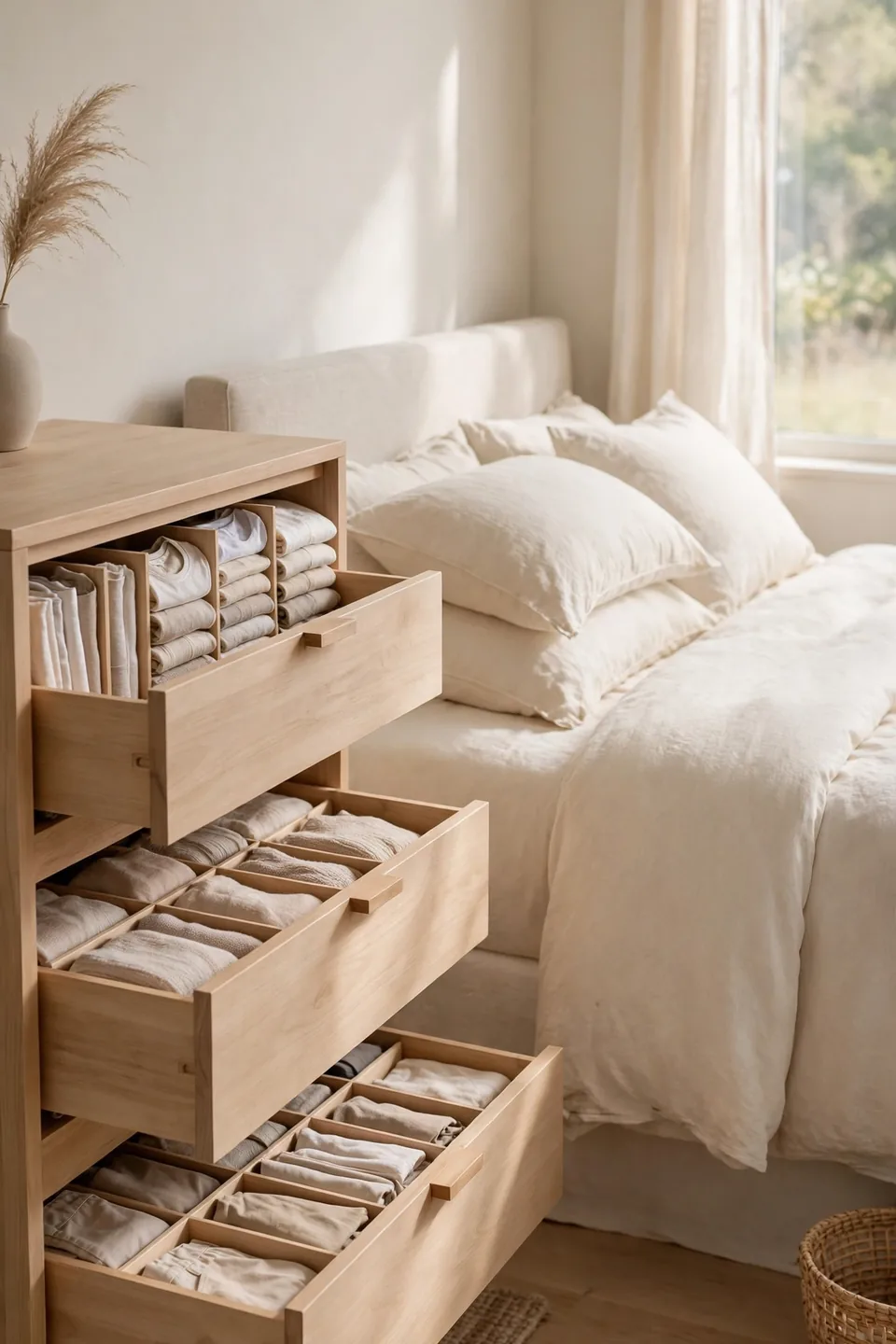
Do This:
- Assign each drawer a single category, like tops, bottoms, or undergarments.
- Fold clothes vertically so every item is visible when you open the drawer.
- Use small dividers or boxes to keep categories from sliding together.
Avoid This:
- Do not mix clean laundry with worn-once items that need airing out.
- Avoid stuffing drawers past the point where they close smoothly.
- Never let one junk drawer swallow batteries, cables, and random odds and ends.
A dresser works hardest when it behaves like a closet with drawers. Vertical folding plus one category per drawer means you can find anything in seconds. Keep the top surface clear except for a lamp and a small tray, and the whole piece feels intentional.
For renter-friendly ways to use your walls too, see our guide on how to decorate walls without drilling.
Store Off-Season Items Away
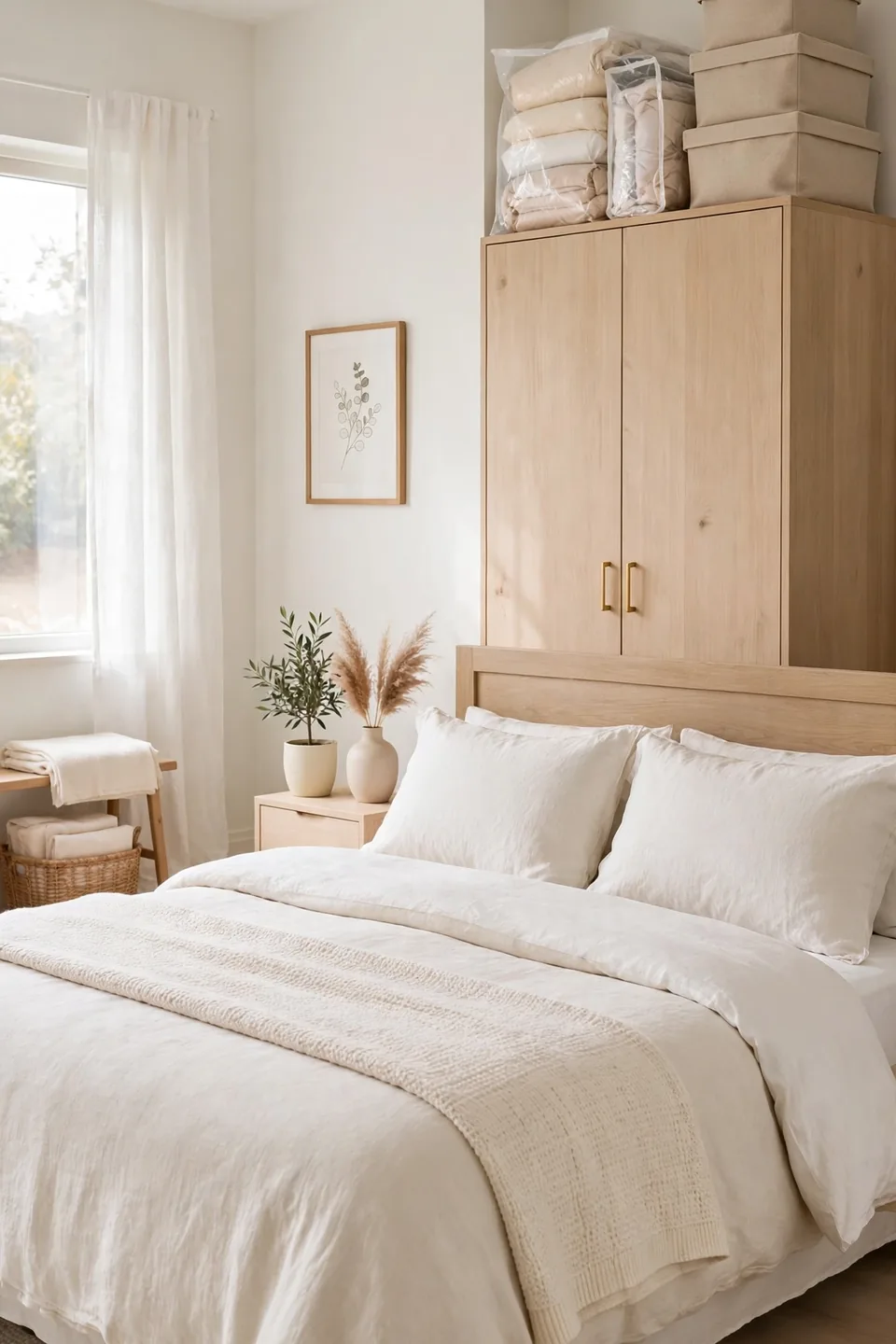
Time Needed: 1 hour, twice a year | Difficulty: Easy | Cost: Low
Best For: bulky coats, boots, and seasonal bedding
Pro Tip: label every box with its contents and season
Off-season clothes eat up prime real estate if you let them. Pack them into labeled bins and move them to the top of the wardrobe, under the bed, or a hallway closet. When the seasons change, swap the bins instead of reorganizing everything from scratch.
Common Organizing Mistakes
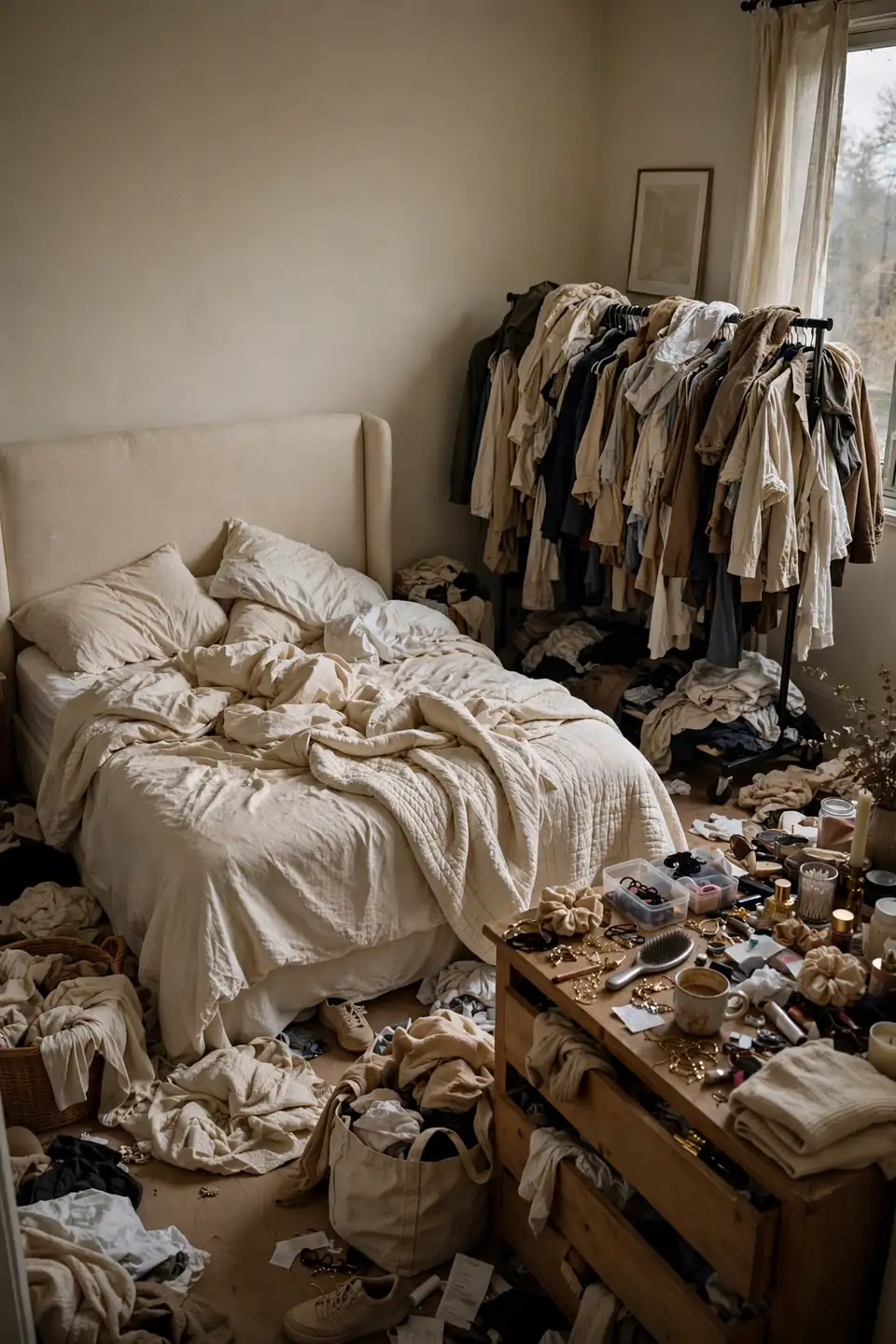
The most common mistake is buying storage before sorting, which just gives clutter nicer containers to hide in. Another trap is spreading clothes across too many small organizers, so nothing ever has a clear home. Both problems come from skipping the planning step, so always audit first and shop second.
I have seen this make a real difference: schedule a ten-minute reset each evening to return strays to their zones. Small daily touch-ups beat exhausting weekend overhauls every single time. A system you maintain in minutes is one you will actually keep.
Pro Tips for Staying Tidy
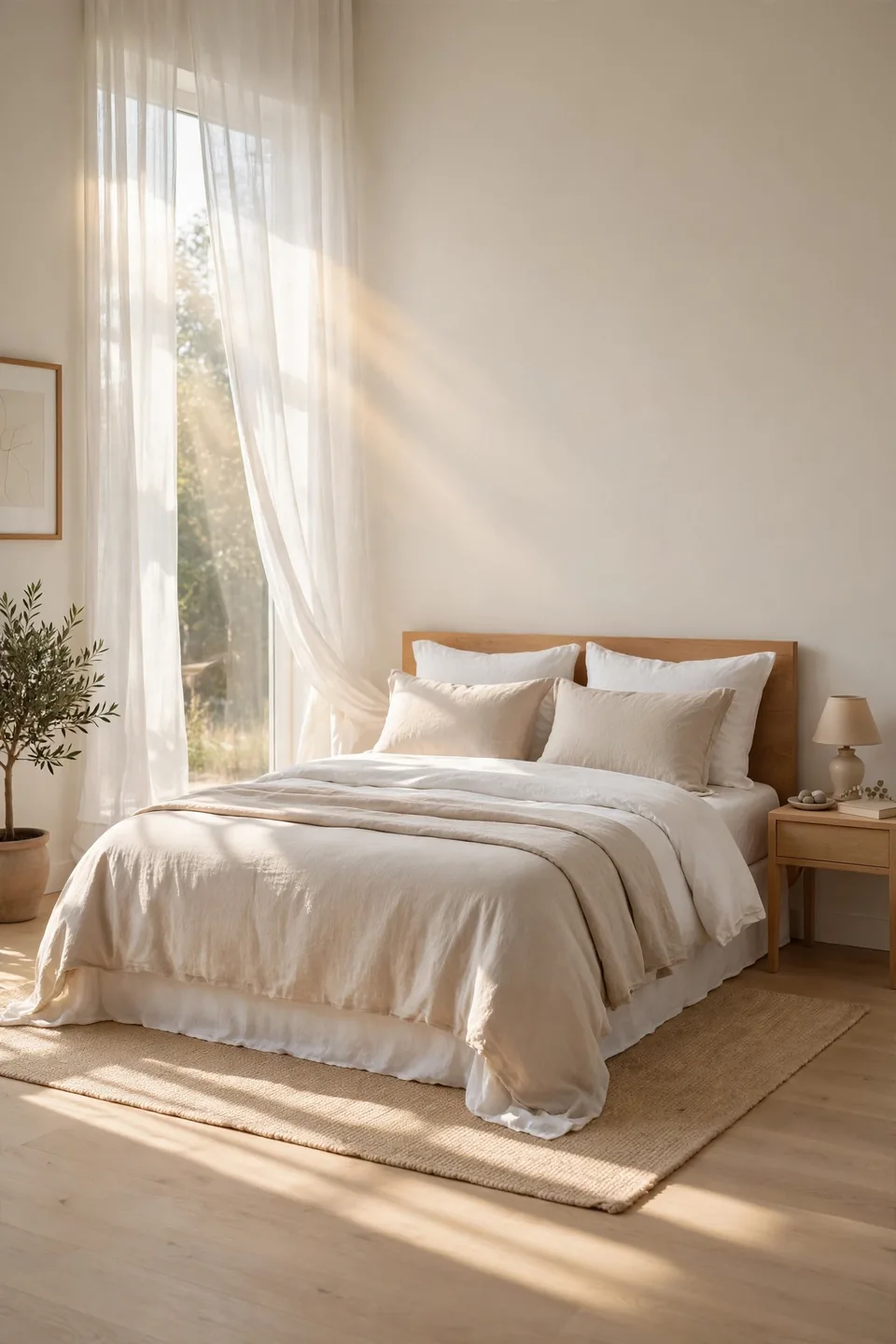
A no-closet bedroom stays tidy through small habits, not weekend heroics. These final pro tips lock in everything you have built across the earlier sections. Pick the two that fit your routine best and start using them tonight. Consistency matters more than perfection, so keep the bar low.
- Do a two-minute hang-up as soon as you get home, before clothes hit the chair.
- Keep a small donate bag in the wardrobe and drop in anything you no longer love.
- Rotate the open rack weekly so favorite outfits stay visible and the rest stay stored.
- Wipe down shelves and vacuum under the bed once a month to keep dust from building up.
Conclusion
You now have a complete playbook for a calm, functional bedroom with zero built-in storage. Learning how to organize a bedroom without a closet is really about giving everything a clear home and keeping up tiny daily habits. Start with one zone today, and build from there. Save this guide on Pinterest so you can revisit each step during your own reset, and share it with a friend who is fighting the same no-closet battle. I have seen how making this one change can completely shift the result from chaotic to calm.
2 Comments