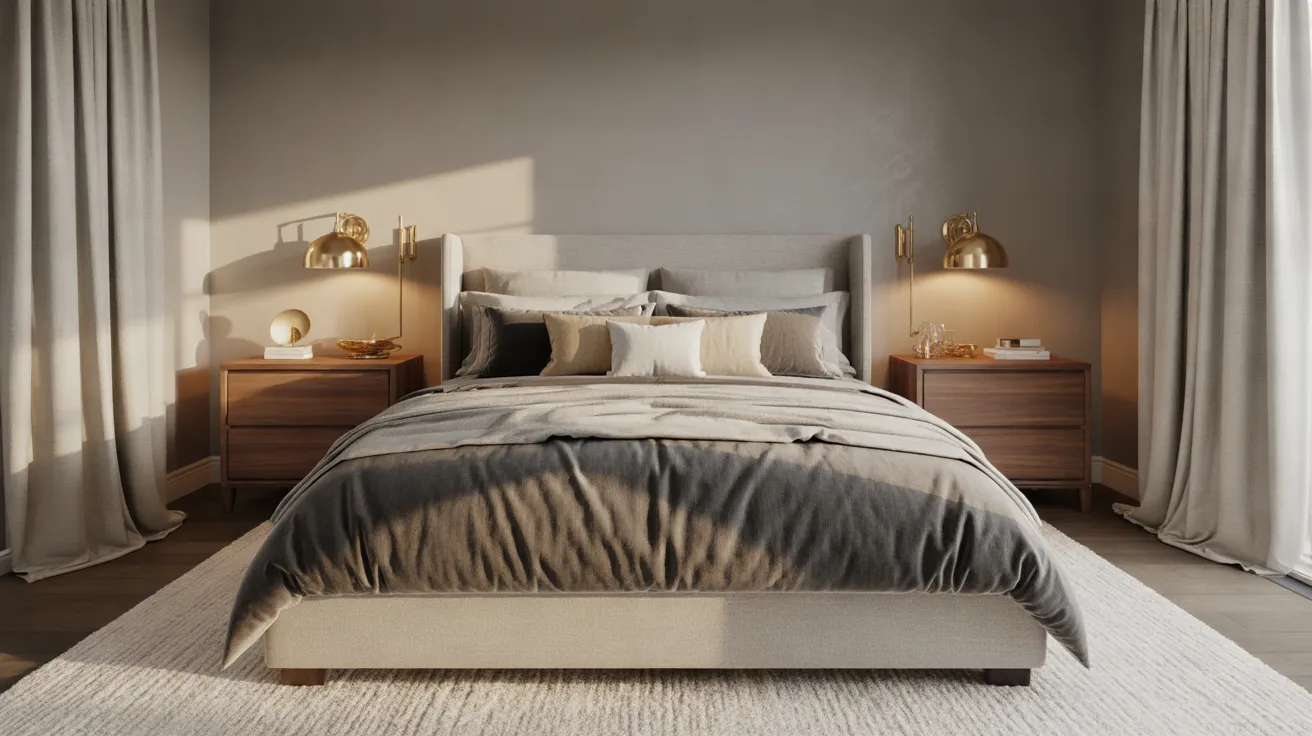
23 Grey Bedrooms With Sophisticated, Timeless Appeal
Grey bedrooms can feel calm, polished, and surprisingly warm when the right shades, textures, and accents work together. The secret is choosing details that add depth without making the room feel cold or flat.
This collection of 23 ideas explores practical ways to use gray through walls, bedding, furniture, lighting, storage, and decorative accents. Whether you’re refreshing a small bedroom, furnishing a new home, or simply looking for a more timeless color scheme, you’ll find ideas that are easy to adapt.
In my experience, the most inviting neutral bedrooms rarely rely on one shade alone. Mixing soft gray with cream, warm wood, brass, charcoal, or natural textures can create a room that feels finished while still being comfortable. Keep reading for simple combinations and styling ideas you can actually use.
Soft Gray Layering
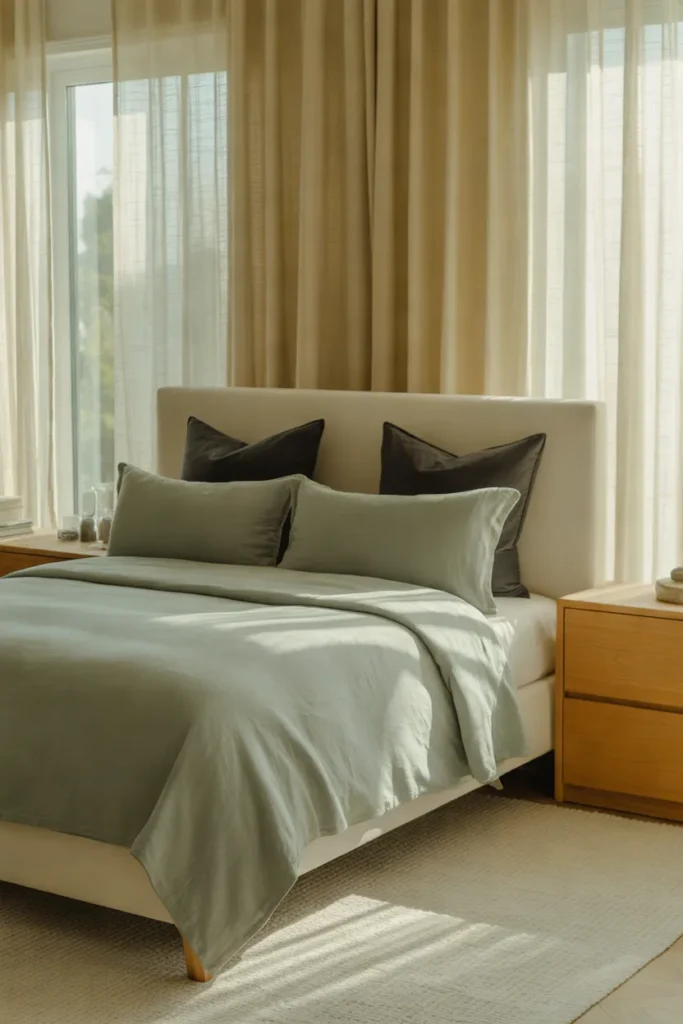
A layered gray palette keeps the room interesting without making it feel busy. Start with pale walls, then bring in medium gray bedding and deeper charcoal accents. Mix linen, boucle, cotton, and woven textures so each surface catches light differently.
I’ve noticed that bedrooms feel more polished when the shades are slightly varied rather than perfectly matched. A warm gray throw beside cooler gray pillows can add depth while keeping the overall scheme restful. Finish with natural wood or cream accessories to soften the darker tones.
Charcoal Accent Wall
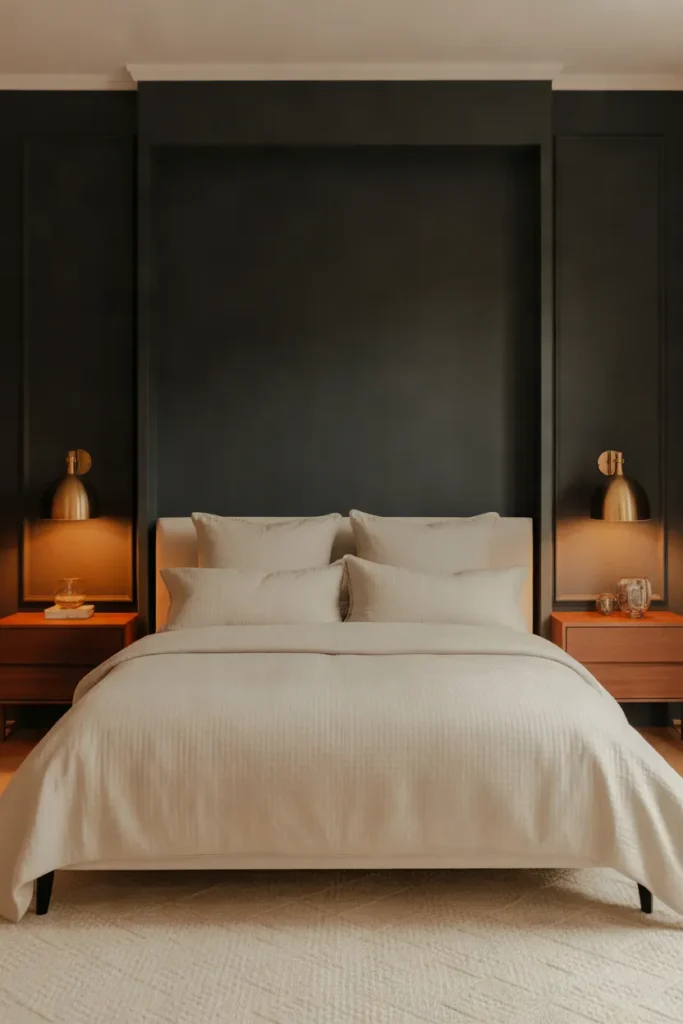
- Choose a charcoal shade with a slightly warm undertone for a softer appearance.
- Paint only the wall behind the bed to create a focused backdrop.
- Keep bedding lighter so the dark wall does not overpower the room.
- Add warm wood furniture to balance the cooler wall color.
- Use brass or aged gold lighting for a subtle contrast.
A dark feature wall works especially well behind a simple bed because it naturally draws attention toward the room’s focal point. Keep the surrounding surfaces quiet and bright. White bedding, pale curtains, and a cream rug help the charcoal finish feel intentional rather than heavy.
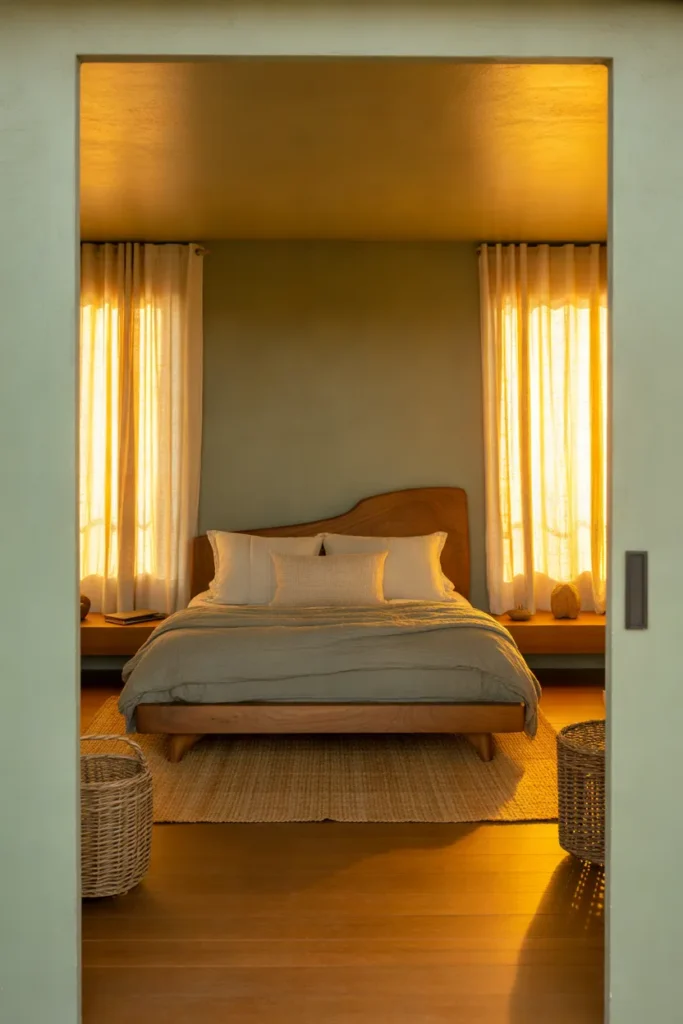
Gray and Warm Wood
Quick Tip:
Pair cool gray surfaces with warm wood instead of adding more gray furniture. The contrast keeps the room from feeling flat and introduces natural warmth without changing the sophisticated color scheme.
Warm wood brings out the softer side of gray. A walnut nightstand, oak bench, or wood-framed mirror can make the bedroom feel grounded and lived-in. I’ve seen this combination work particularly well in rooms with limited natural light because the wood adds visual warmth without requiring bold colors.
Gray Panel Headboard
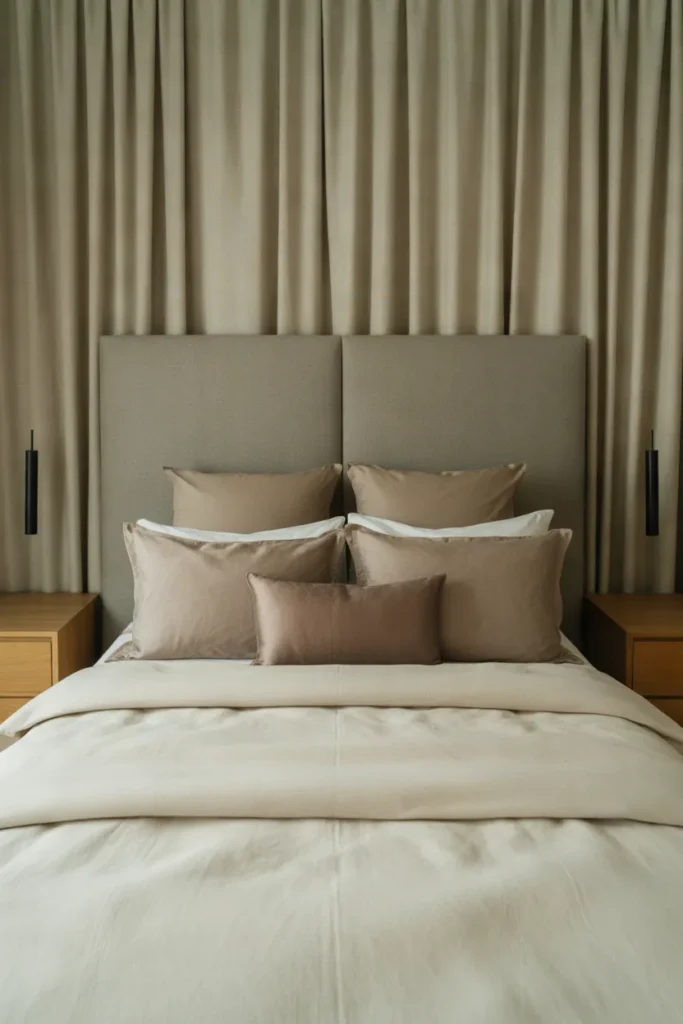
BEFORE: The bed wall feels unfinished, with plain paint and little visual structure. The sleeping area lacks a strong focal point, so the room can appear sparse even with attractive furniture.
AFTER: A tall upholstered panel headboard gives the bed an intentional backdrop and adds softness. The vertical lines also draw the eye upward, making the ceiling feel more prominent.
Choose a medium gray fabric with a subtle weave rather than a completely smooth finish. Keep nearby furniture simple so the headboard remains the main feature. For a rental, look for freestanding versions that lean against the wall without requiring permanent installation.
Layered Gray Bedding
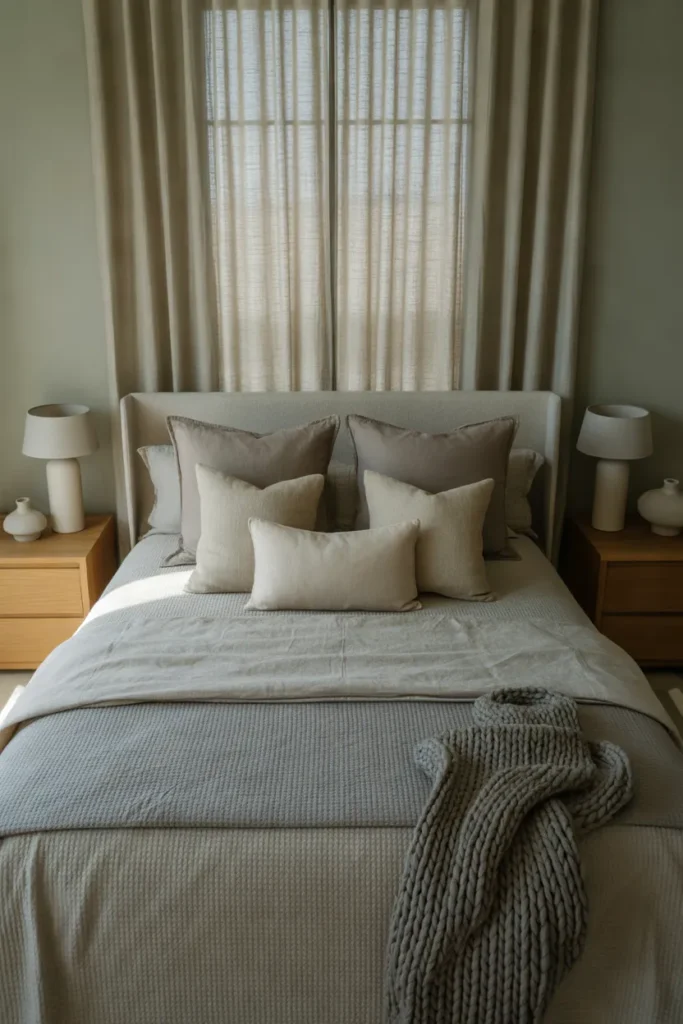
- Start with light gray sheets to create a soft base.
- Add a medium gray quilt or coverlet for visible layering.
- Place two charcoal pillows near the headboard for contrast.
- Finish with a textured throw folded across the lower third of the bed.
The secret to rich-looking bedding is contrast between textures, not simply adding more pillows. Linen, cotton, and knitted fabrics create small shifts in tone that keep the bed visually interesting. Keep the darkest shade toward the back or bottom so the arrangement feels balanced rather than overly heavy.
Cool Gray and Cream
| Element | Option A: Cool Gray | Option B: Warm Cream |
| Wall color | Pale blue-gray | Soft greige |
| Bedding | Silver gray | Ivory cream |
| Furniture | Black or walnut | Light oak |
| Lighting | Brushed nickel | Aged brass |
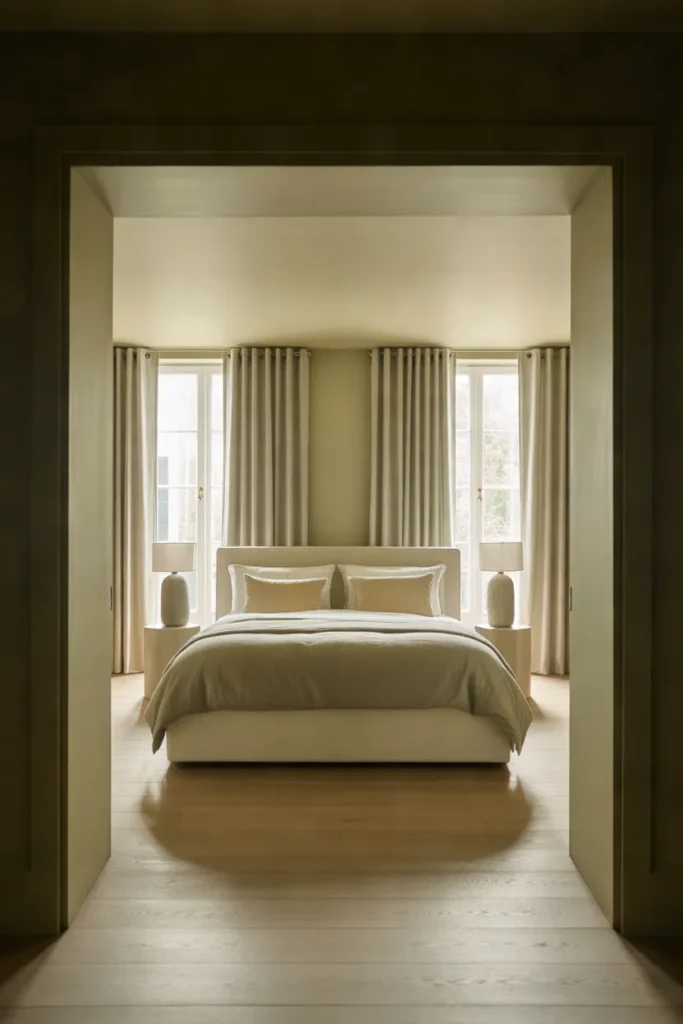
Cool gray gives the room a crisp, refined foundation, while cream prevents the palette from becoming too stark. Combining both creates a balanced bedroom that feels polished without looking overly formal. This approach suits classic, contemporary, and transitional interiors, especially where you want neutral colors with noticeable depth.
Gray Wainscoting
DO:
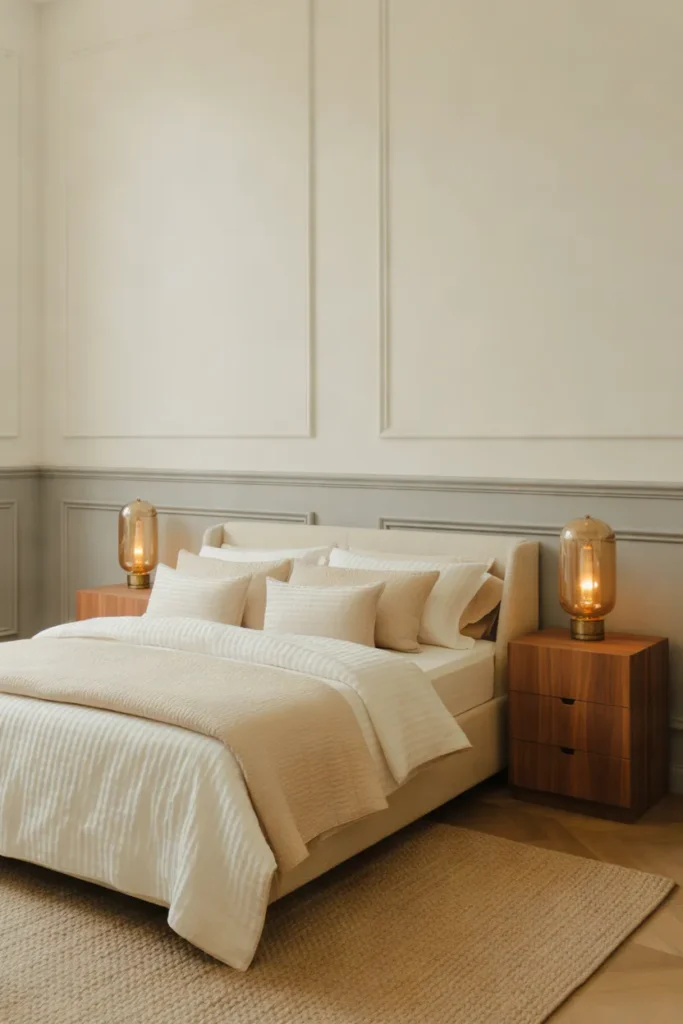
- Paint the lower panels a medium gray for clear definition.
- Keep the upper wall lighter to maintain visual height.
- Match the trim to the panel color for a built-in appearance.
- Add warm wood furniture to soften the contrast.
DON’T:
- Use several competing gray shades on the same wall.
- Pair dark panels with very heavy furniture.
- Cover every surface with strong patterns.
- Ignore the existing undertones in your flooring.
Gray wainscoting adds architectural detail without requiring bold decoration. I’ve noticed it works especially well in bedrooms with simple furniture because the wall treatment provides enough visual structure on its own. Pair it with soft bedding and understated lighting for a polished look that still feels comfortable.
Silver Gray Curtains
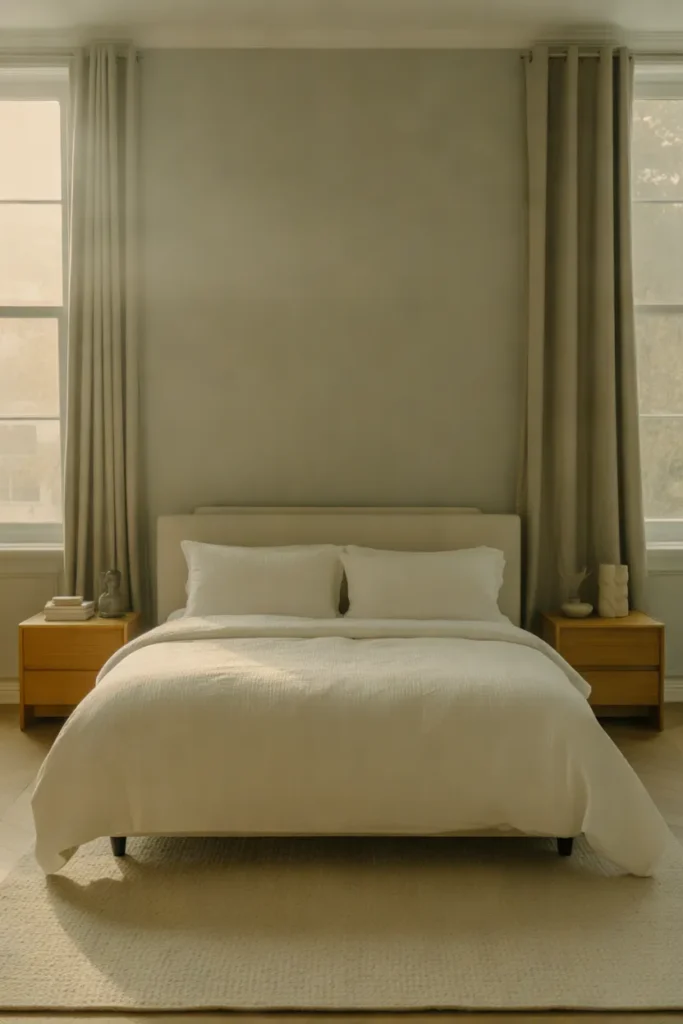
Cost: Moderate | Time: One afternoon | Skill Level: Beginner
Best For: Bright bedrooms | Result: Softer natural contrast
Long curtains in a silver-gray tone can make the entire room feel more finished. Hang the rod several inches above the window frame and extend it beyond both sides. This allows the fabric to frame the glass without blocking useful daylight.
For the most relaxed look, choose linen or linen-look panels with enough width to create natural folds. Avoid shiny synthetic fabric if you want a calm bedroom. A slightly textured weave catches daylight beautifully and connects the window treatment with upholstered furniture or bedding.
Soft Gray Wallpaper
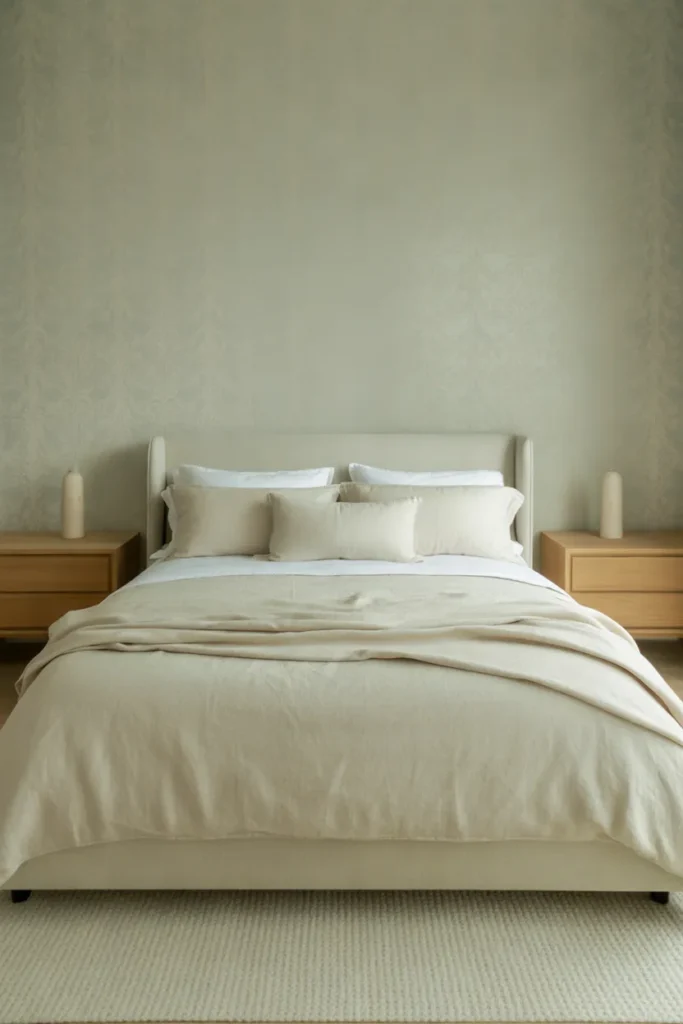
Soft patterned wallpaper can give the room more depth without introducing a strong color. Choose a tonal design where the pattern is only one or two shades away from the background. Small-scale botanical, geometric, or linen-inspired textures work especially well.
For a quieter result, install the wallpaper behind the bed and leave the remaining walls simple. Peel-and-stick versions can also be useful for renters or anyone testing a pattern before committing. Keep the bedding mostly solid so the wall remains the visual feature.
Gray Upholstered Bed
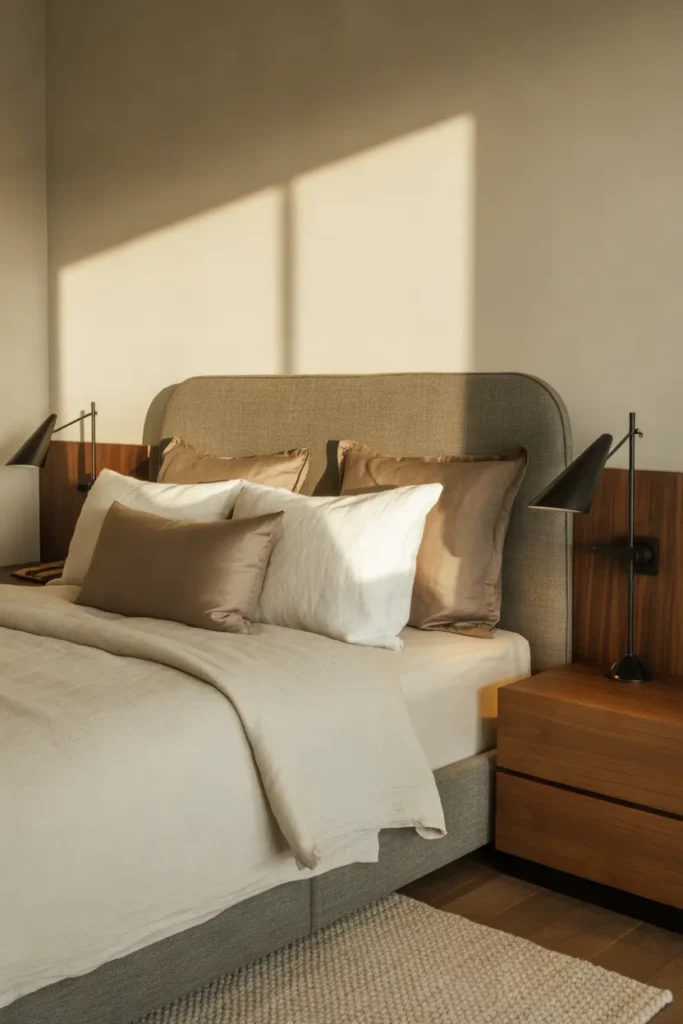
Cost: Moderate to high
Time: One afternoon
Skill Level: Beginner
Best For: Softening modern rooms
An upholstered bed introduces softness without adding another strong color. Medium gray is especially practical because it hides minor marks better than very pale fabrics while still keeping the room light. Choose a tightly woven fabric for everyday use, particularly if the bed will be used by children or pets.
Black and Gray Accents
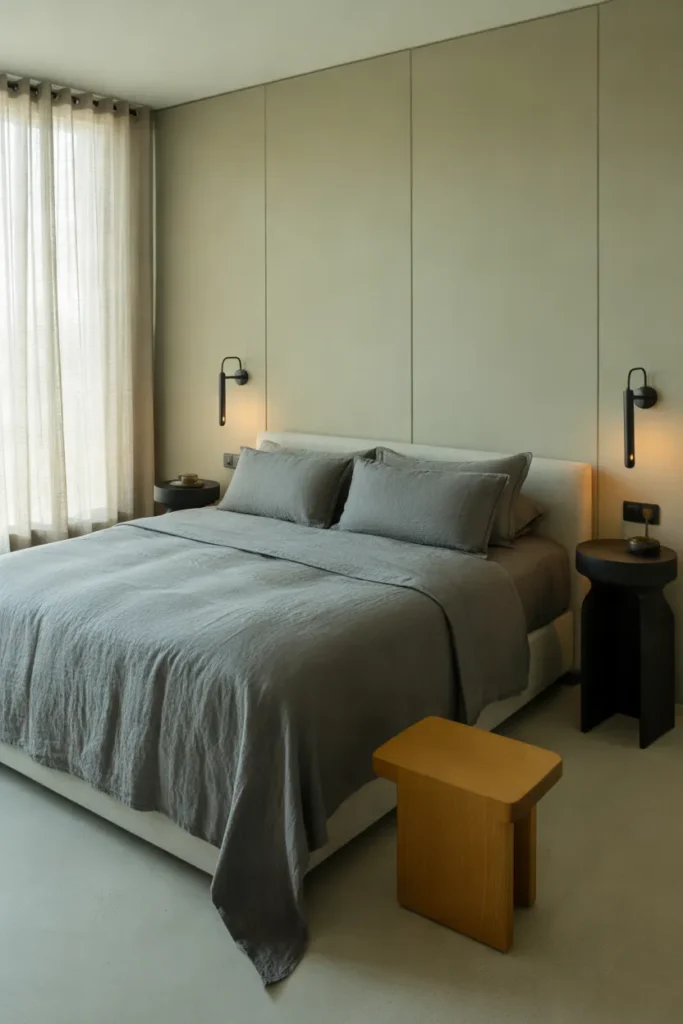
Black accents can give a gray bedroom sharper definition without requiring a dramatic makeover. Use them in small doses, such as picture frames, sconces, drawer pulls, or a slim bench frame. Keeping most larger surfaces light prevents the contrast from becoming too severe.
I’ve seen this pairing work particularly well in modern and transitional rooms because black creates clear visual boundaries. If the space already has dark flooring, repeat the black only two or three times and introduce warm wood to keep the palette comfortable.
Gray Bedroom Nook
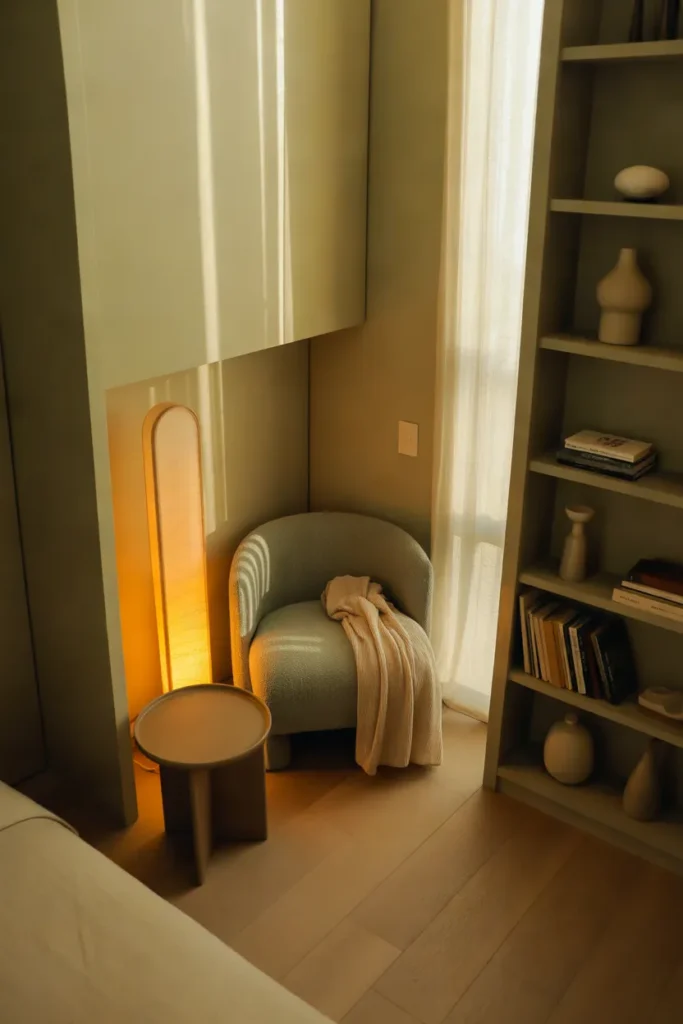
| Feature | Option A: Reading Nook | Option B: Dressing Nook |
| Main piece | Compact armchair | Slim vanity |
| Lighting | Floor lamp | Wall sconce |
| Storage | Small bookcase | Floating drawers |
| Best location | Near a window | Beside a wardrobe |
A small unused corner can become a useful extension of the bedroom rather than wasted floor space. Measure the area first, then choose furniture with enough clearance for comfortable movement. Keep the finishes connected to the main room so the nook feels intentional rather than visually separate.
Gray and Beige Layers
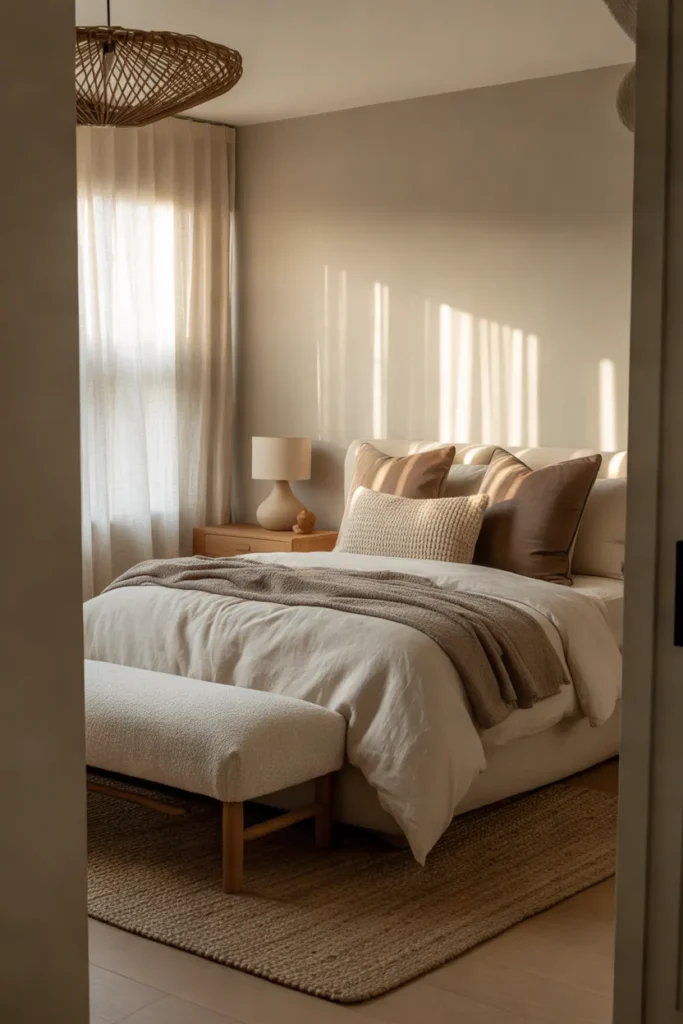
DO:
- Pair cool gray with warm beige textiles.
- Use taupe as a bridge between both tones.
- Add natural wood for warmth.
- Keep larger patterns subtle.
DON’T:
- Mix too many competing beige undertones.
- Use only flat, smooth fabrics.
- Add excessive dark accents.
- Match every neutral shade exactly.
Gray and beige create a softer alternative to an all-gray palette. The combination works because warm beige prevents cooler surfaces from feeling stark, while gray adds definition. I’ve noticed that textured fabrics make this pairing especially inviting, so consider linen curtains, woven baskets, or a chunky throw.
Gray Bedding Contrast
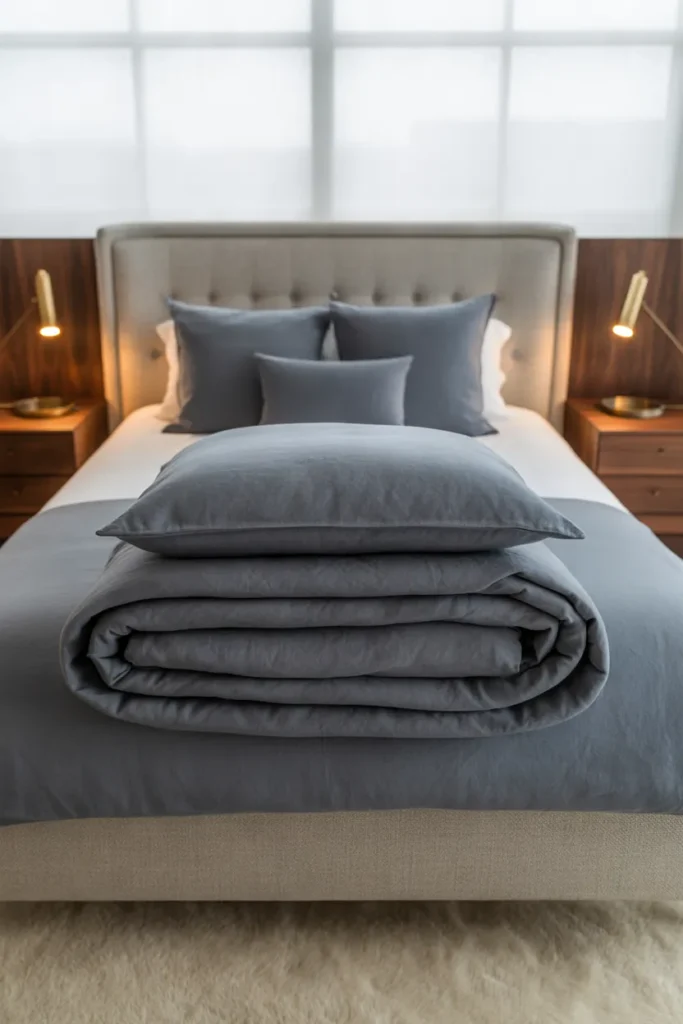
Cost: Low to moderate | Time: 30 minutes | Skill Level: Beginner
Best For: Quick refreshes | Works In: Small or large bedrooms
Result: Stronger bed definition
Contrast does not require bright colors. Layering three gray values across the bedding can create a surprisingly rich effect. Keep the sheets light, introduce a medium quilt, then place the darkest tone in a throw or lumbar pillow. This gives the bed a clear visual hierarchy without making the room feel dark.
Pale Gray Walls
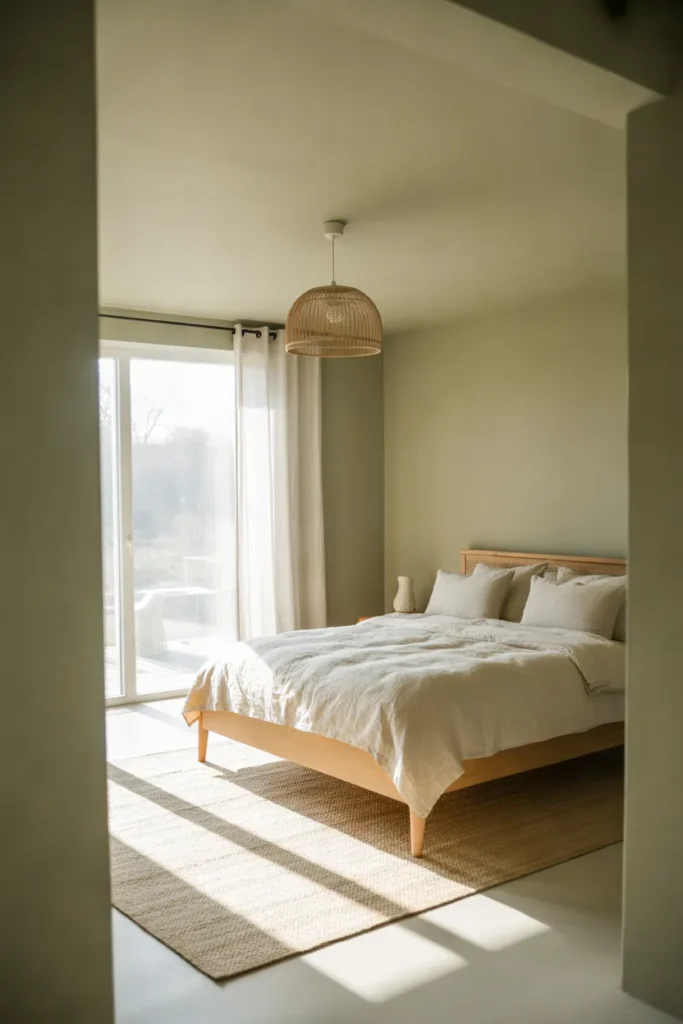
Soft wall color can make a bedroom feel calm while giving furniture more visual freedom. Pale gray works especially well when you want something more dimensional than white but still need plenty of brightness. Select a shade with the right undertone for your flooring and natural light.
For north-facing rooms, a warmer gray can prevent the walls from looking icy. In sunny rooms, a balanced or slightly cool gray often stays fresh throughout the day. Test paint samples on different walls before committing because daylight can change the appearance dramatically.
Gray Board and Batten
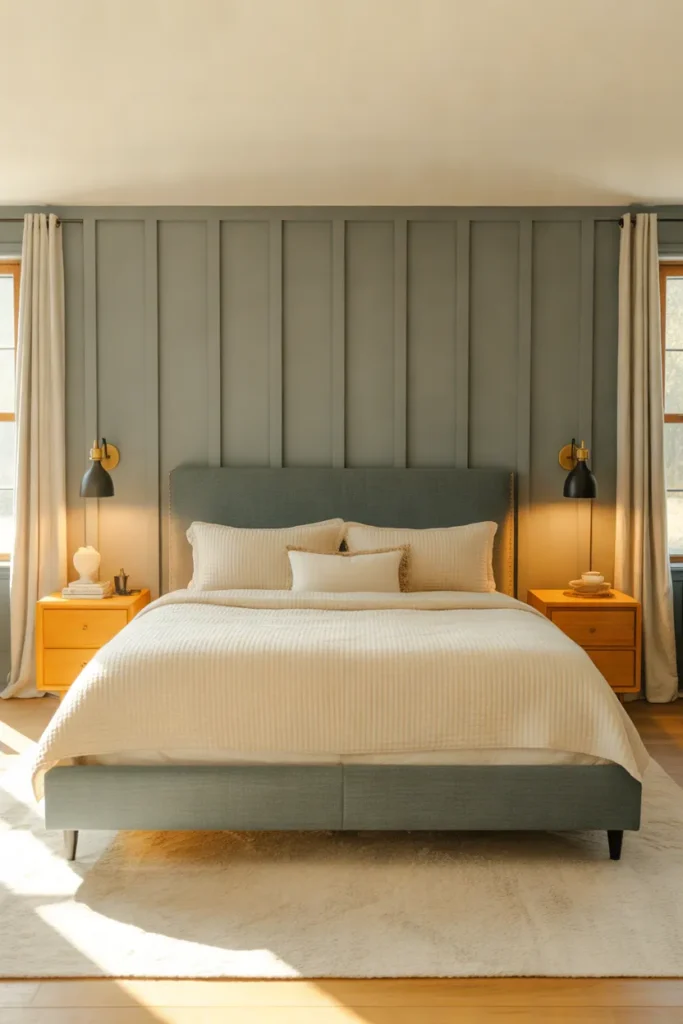
- Measure the wall and mark evenly spaced vertical battens.
- Paint the entire feature wall in one medium gray shade.
- Keep the bed and bedding simple so the wall remains the focal point.
- Add warm wood or woven accents to soften the structured lines.
Board and batten brings architectural character to a plain bedroom wall without relying on artwork or bold patterns. A medium gray finish makes the detailing noticeable while keeping the palette restrained. For a balanced result, repeat the wall color in small accessories rather than matching every piece of furniture.
Gray, White, and Walnut
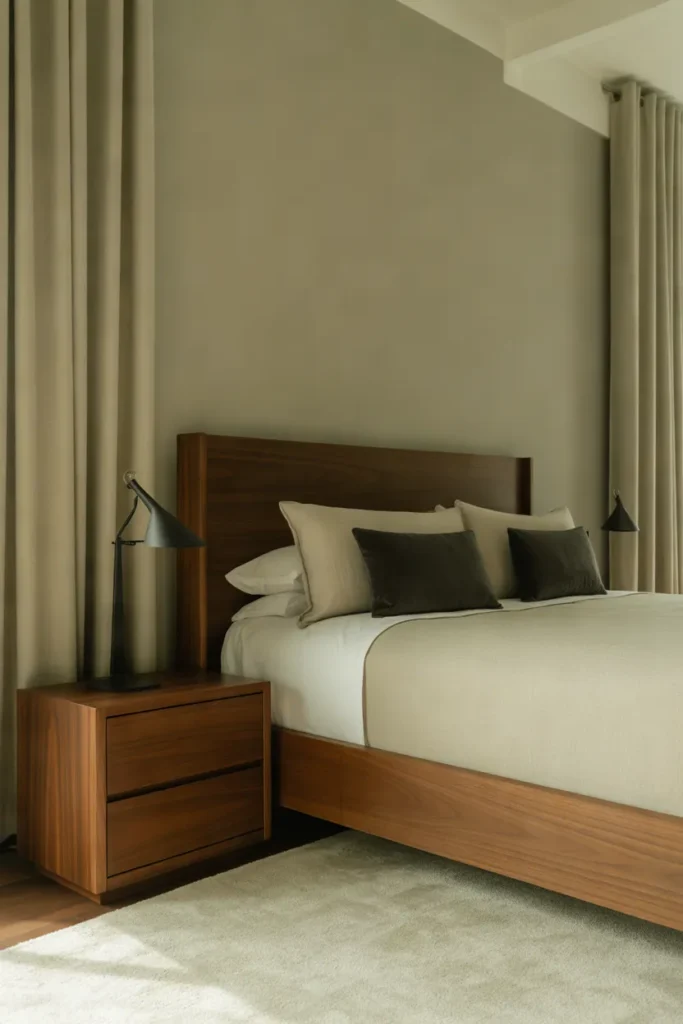
| Feature | Option A: Light Walnut | Option B: Dark Walnut |
| Overall feel | Airy and relaxed | Rich and dramatic |
| Best wall shade | Pale gray | Soft warm gray |
| Bedding | White and light gray | Ivory and charcoal |
| Ideal room | Bright bedroom | Larger bedroom |
Gray and walnut create a refined combination because the cool neutral balances the richness of natural wood. Keep the bedding mostly white or ivory to maintain brightness, then introduce charcoal through pillows, artwork, or a small bench. The result feels sophisticated without depending on trendy colors.
Gray Ceiling Accent
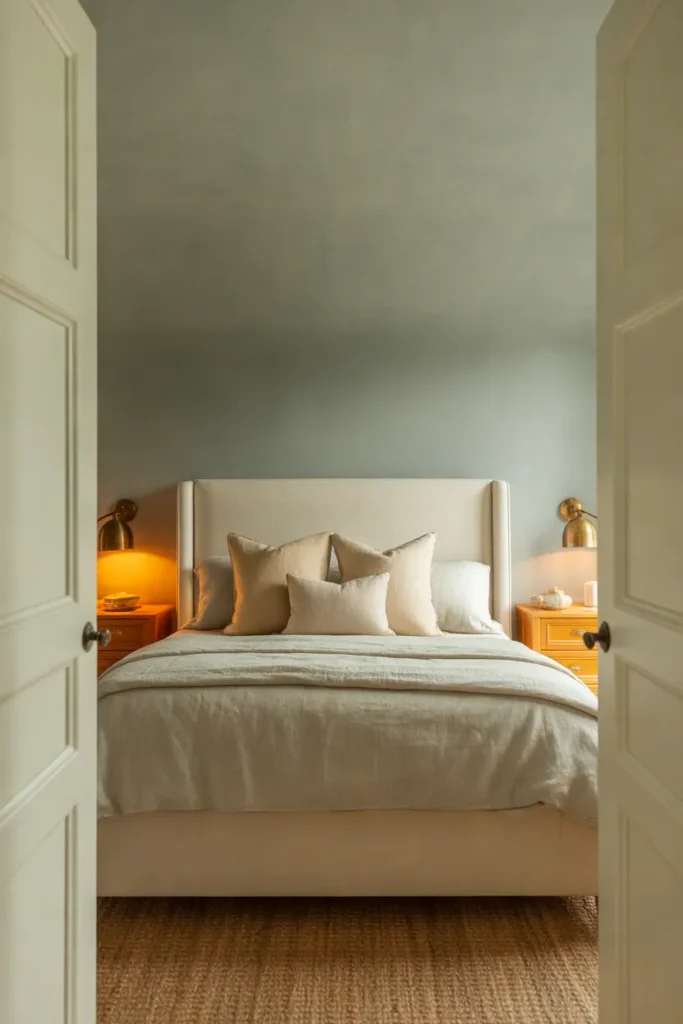
DO:
- Choose a lighter gray for a subtle ceiling effect.
- Keep the walls several shades lighter.
- Repeat a small amount of gray in bedding or artwork.
- Use warm lighting to soften the overhead color.
DON’T:
- Choose an extremely dark ceiling in a low room.
- Use several unrelated gray undertones.
- Fill the ceiling with competing patterns.
- Forget to test the paint under both daylight and evening lighting.
A gray ceiling can add depth without taking attention away from the bed or furniture. It works particularly well in bedrooms with tall ceilings or simple architecture. I’ve noticed that a muted ceiling shade feels more intentional when paired with warm bulbs and a few matching gray textiles below.
Gray Picture Frame Wall
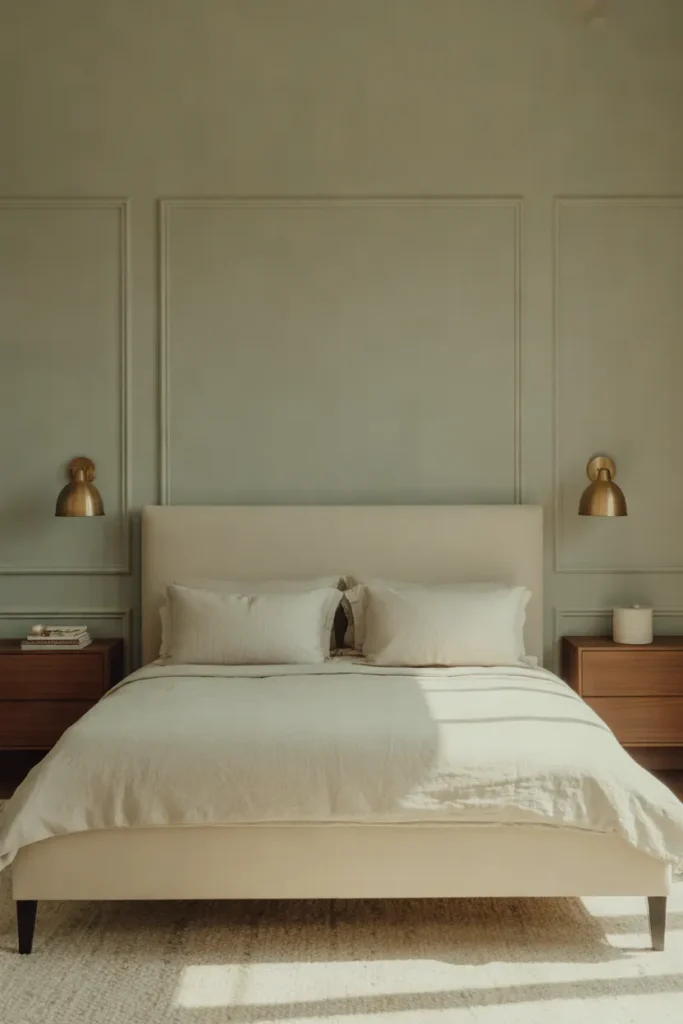
Cost: Moderate | Time: One to two days | Skill Level: Intermediate
Best For: Blank feature walls | Result: Architectural detail
Picture frame molding gives a plain wall a custom appearance while keeping the color scheme restrained. Paint the molding and wall the same gray for a sophisticated tone-on-tone effect. Keep each rectangle evenly spaced, especially around the bed, so the composition feels balanced.
Gray Linen Headboard
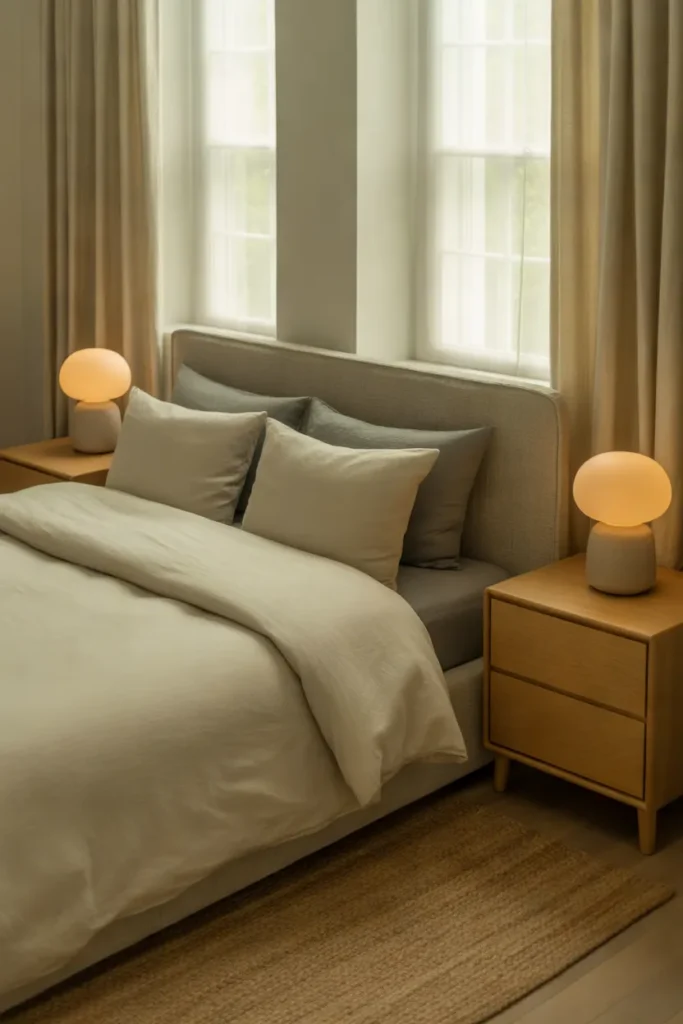
- Measure the mattress width and available wall space before choosing the headboard.
- Select medium gray linen with a visible weave for added texture.
- Keep bedding in ivory, white, or pale taupe.
- Add warm wood beside the bed to balance the cool fabric.
- Finish with one darker gray accent for definition.
Linen gives a gray headboard a relaxed texture that keeps the room from feeling overly formal. A tall design can also make the bed wall appear more substantial. Choose washable or tightly woven upholstery if the bedroom receives heavy daily use, and keep surrounding patterns quiet.
Gray Accent Furniture
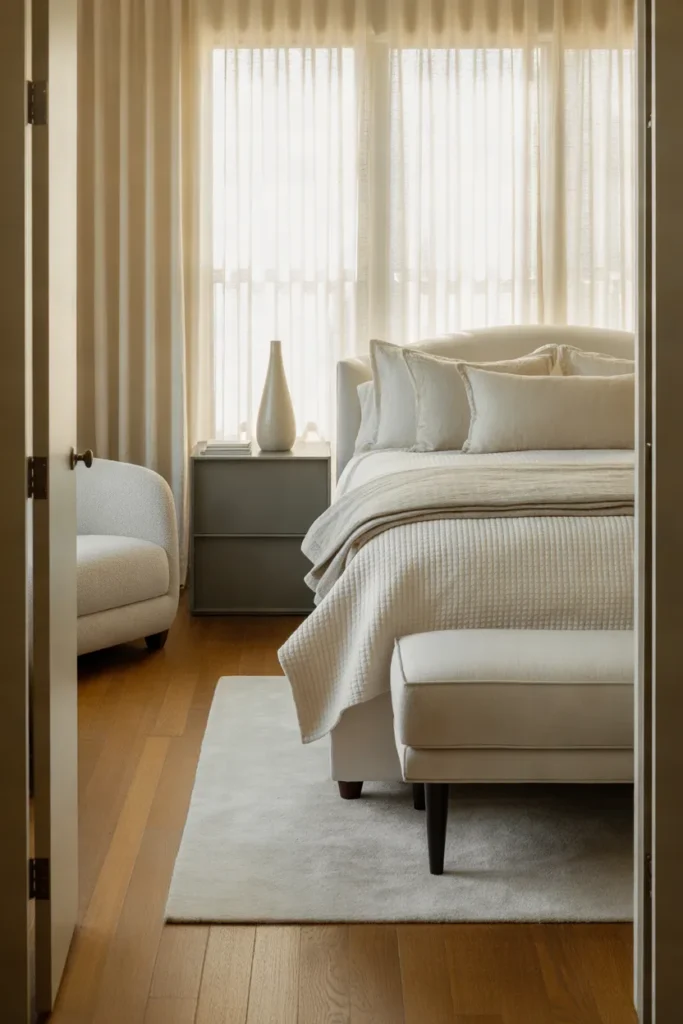
| Furniture Piece | Option A: Light Gray | Option B: Charcoal |
| Bench | Airy and subtle | Strong focal point |
| Nightstand | Soft contrast | Defined contrast |
| Chair | Calm reading corner | Dramatic accent |
| Best pairing | Darker bedding | Light bedding |
Gray accent furniture lets you introduce the color without repainting the room. A bench at the foot of the bed is an easy starting point because it adds function as well as visual interest. If the walls are already gray, choose furniture several shades lighter or darker for clear separation.
Gray Gallery Wall
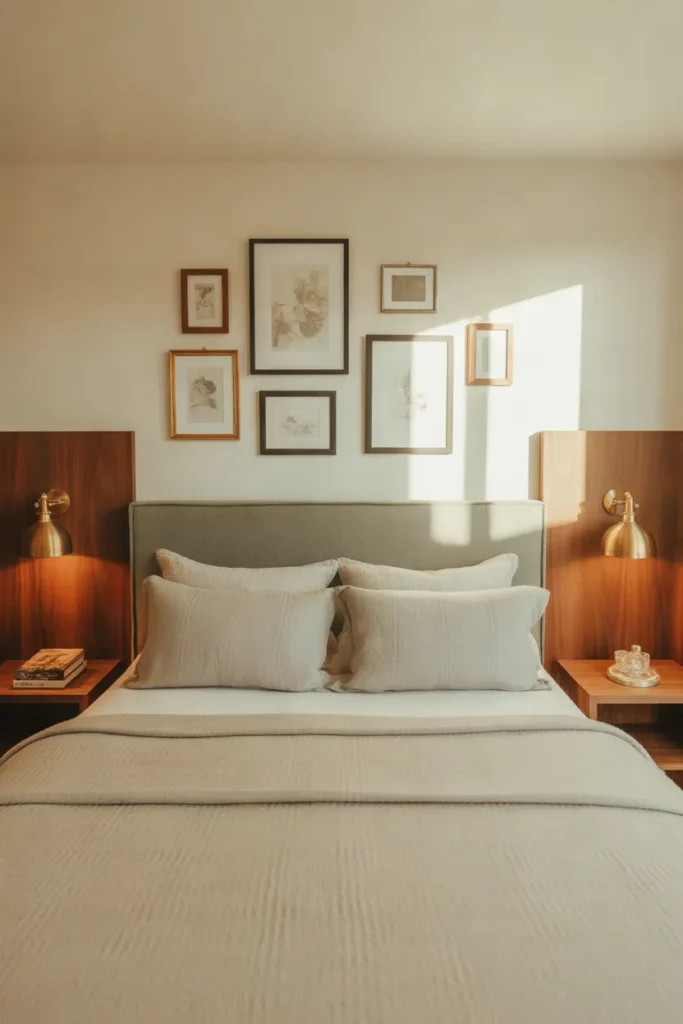
DO:
- Use artwork with gray, cream, black, and muted beige tones.
- Keep frame finishes limited to two complementary materials.
- Center the overall arrangement above the bed.
- Leave consistent spacing between each frame.
DON’T:
- Mix too many bright colors into the display.
- Hang every frame at a different height without a plan.
- Make the arrangement wider than the furniture below.
- Overfill the wall with tiny decorative pieces.
Artwork gives neutral bedrooms personality without changing the main color scheme. A gallery wall also provides an easy way to connect gray walls, bedding, and furniture through repeated tones. Lay the frames on the floor first, adjust the spacing, then transfer the arrangement to the wall.
Gray Reading Corner
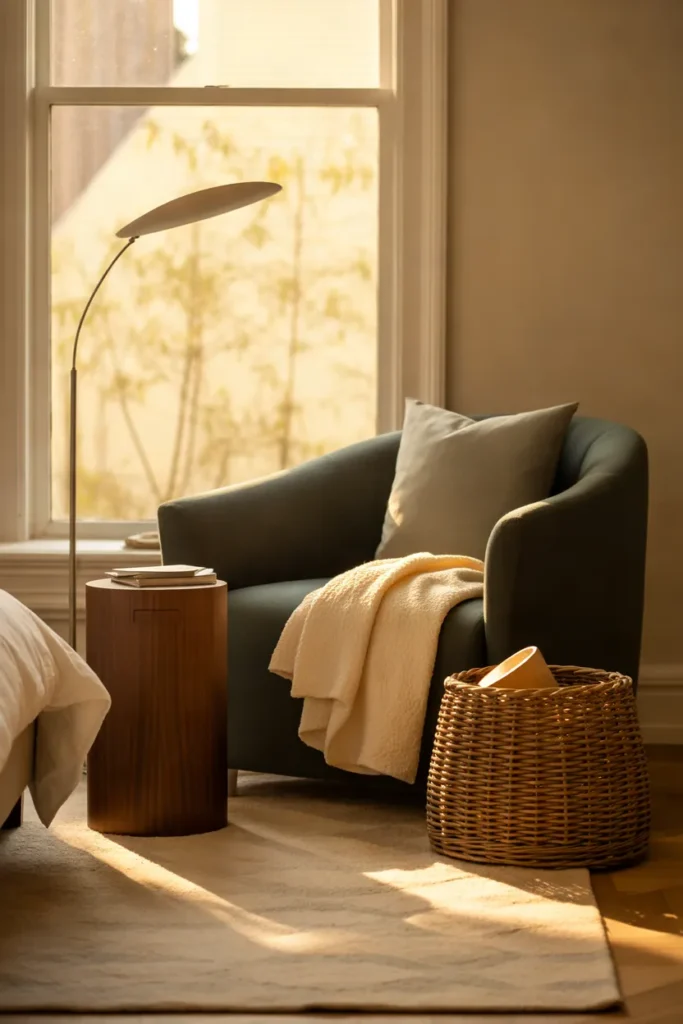
Cost: Moderate | Time: One afternoon | Skill Level: Beginner
Best For: Empty corners | Works In: Bedrooms of any size
Result: Functional cozy zone
A reading corner can make an unused bedroom area serve a real purpose. Choose a chair that leaves at least a little walking clearance around it, then add a small table for books or a drink. Warm lighting makes the spot useful after sunset without relying on the main ceiling fixture. If you’re decorating a child’s room, you can also explore these kids bedroom decor pieces for more playful ideas for creating cozy, functional spaces.
CONCLUSION
A sophisticated bedroom does not need dramatic colors or expensive changes. The right mix of gray shades, warm materials, soft textiles, and thoughtful details can create a space that feels restful and timeless. These grey bedrooms offer plenty of inspiration, whether you want a quick bedding refresh or a more complete room update.
I’ve seen how small changes, such as warmer lighting or layered textures, can completely shift the way a bedroom feels. Save this post on Pinterest for your next decorating project, try your favorite ideas, and share it with someone who could use fresh bedroom inspiration.

One Comment