25 Front Porch Decorating Ideas With Plants for Fresh Charm
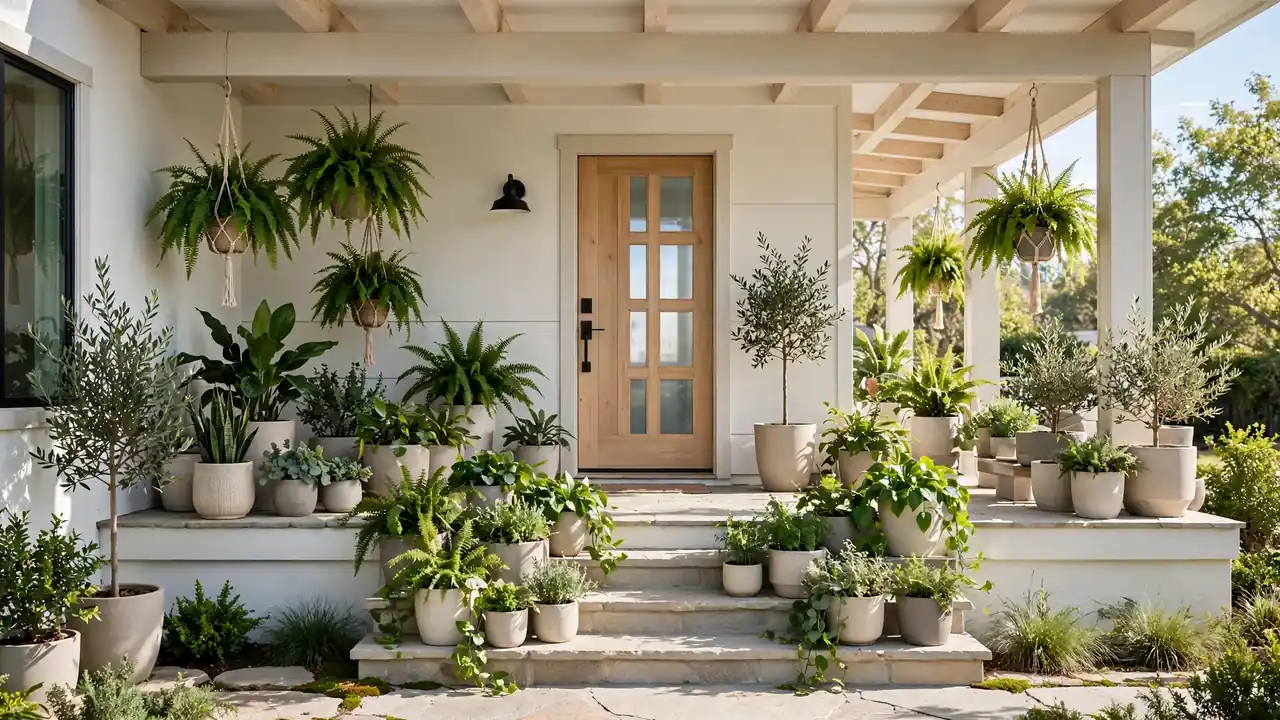
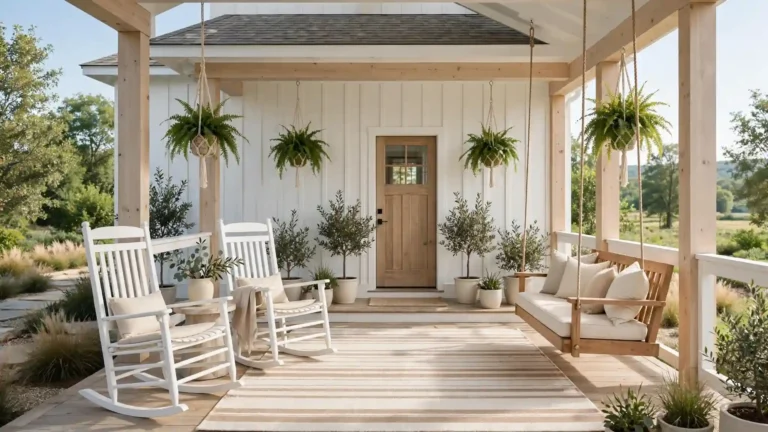
Your front porch sets the tone for your whole home, and front porch decorating ideas with plants bring that first impression to life with fresh, living color. I have always believed a few well-placed planters do more for curb appeal than any wreath or sign ever could. Green leaves soften hard edges, add movement, and make even the simplest entry feel cared for and welcoming.
In my experience, porches with plants feel alive in every season, and you do not need a big budget or a green thumb to pull it off. Start with one strong grouping by the door, then layer in height and texture as you go. If you love smart storage upgrades too, these small laundry room cabinet ideas show how small spaces can work harder. Below you will find 25 fresh ways to style your porch with plants, from simple fern corners to bold tropical mixes.
Fern-Filled Welcome Corners
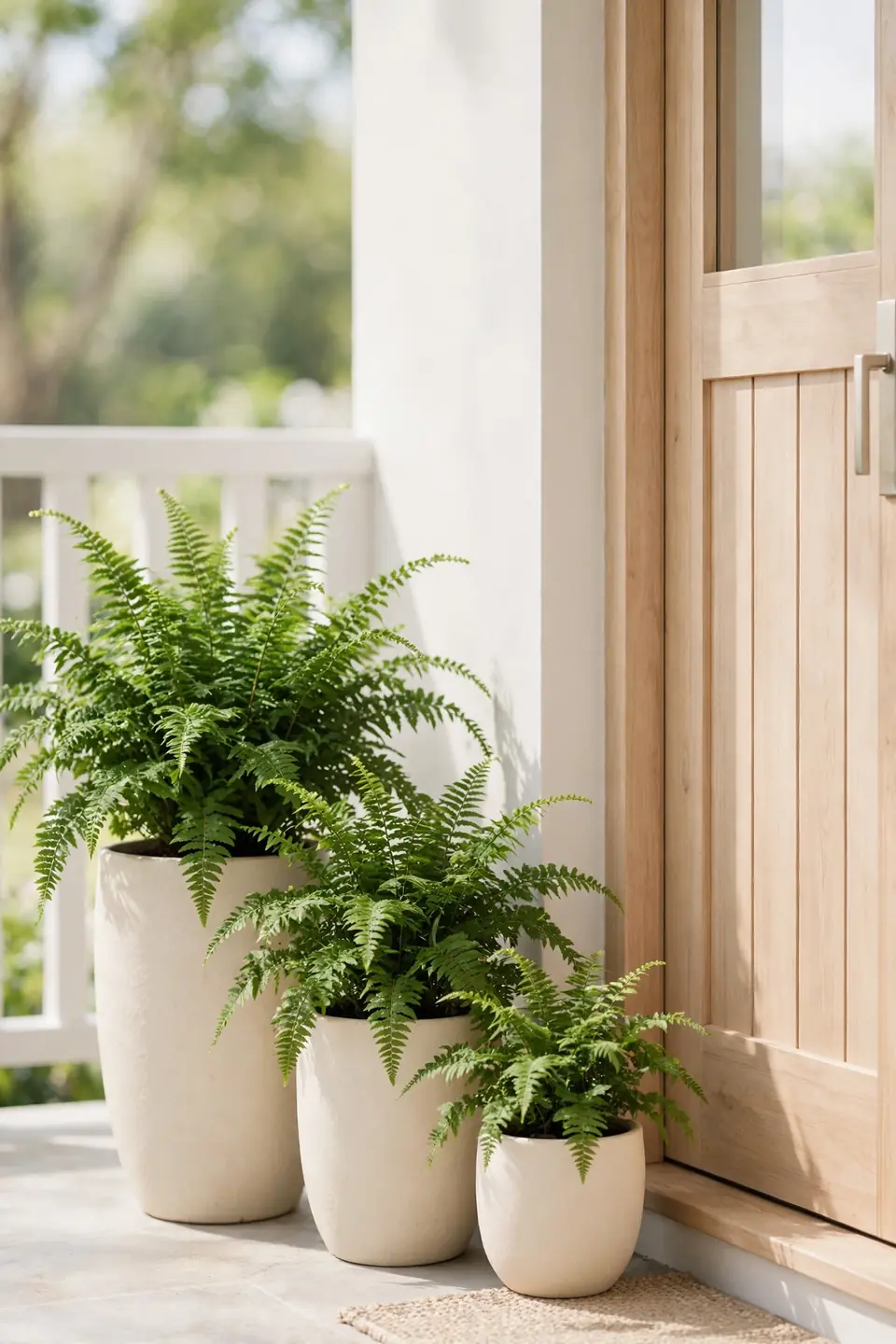
Ferns bring instant softness to a porch corner that feels empty or hard. Their arching fronds fill vertical space without blocking light, and the deep green reads fresh against white railings or brick. Boston and Kimberly Queen ferns both hold up well in bright shade, which most covered porches offer in abundance. Group three pots of different heights in one corner so the arrangement looks full from the street.
Water ferns when the top inch of soil feels dry, and mist the fronds on hot afternoons to keep the edges from browning. In my experience, a simple white or cream pot keeps the focus on the foliage instead of the container. Swap tired fronds out rather than nursing a struggling plant, since one fresh fern lifts the whole corner.
Trailing Pothos Baskets
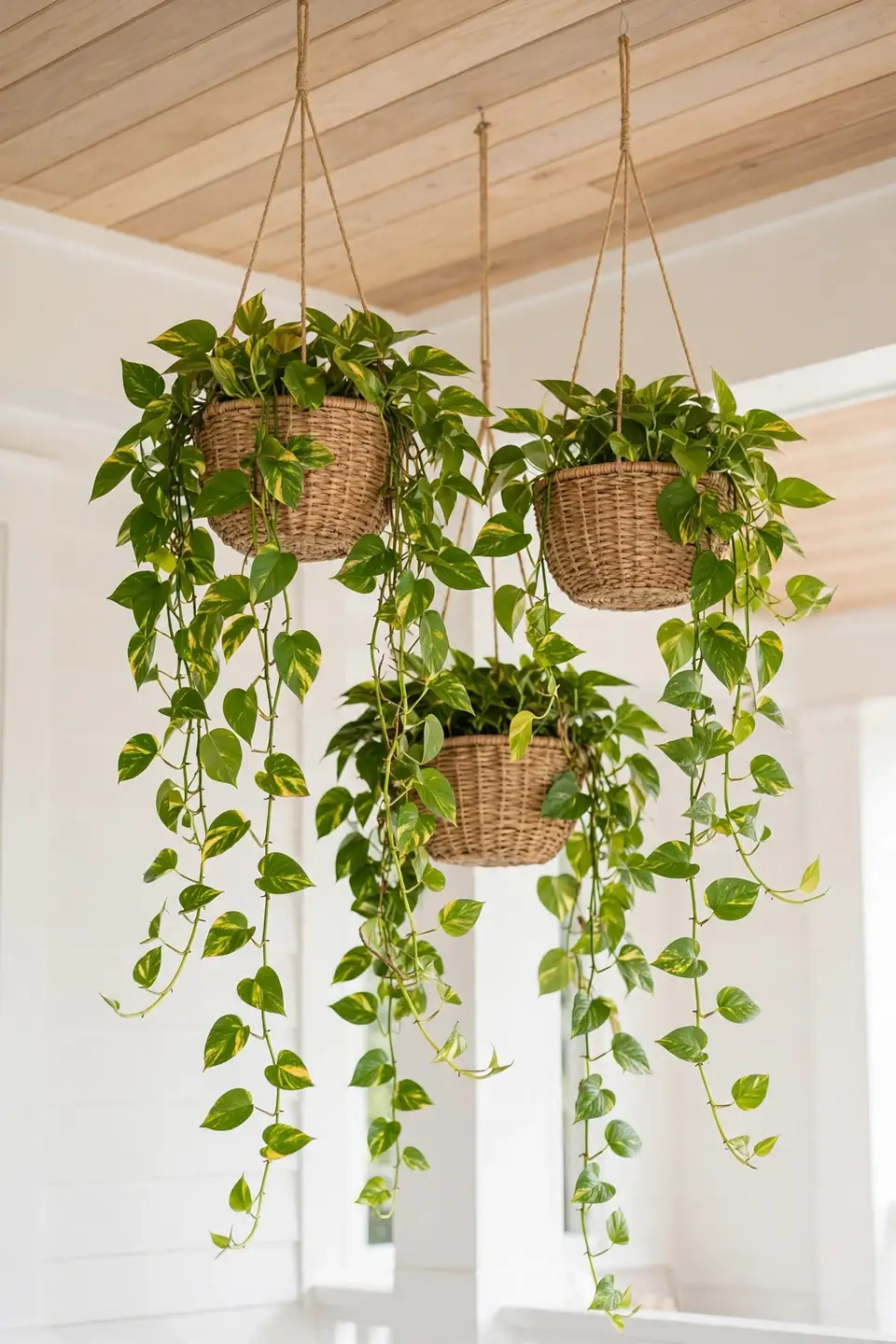
- Hang baskets at staggered heights so the vines layer instead of tangling into one clump.
- Golden pothos tolerates the bright shade of a covered porch and forgives missed waterings.
- Line wire baskets with coco fiber to hold soil while letting excess water drain freely.
- Trim vines back to a leaf node when they get leggy, and the plant bushes out fast.
Pothos vines add movement that stiff porch decor often lacks. I have noticed a pair of hanging baskets frames a doorway beautifully without taking any floor space. Feed lightly once a month in summer for best color and bring baskets inside before the first frost hits.
Terra Cotta Cluster Grouping
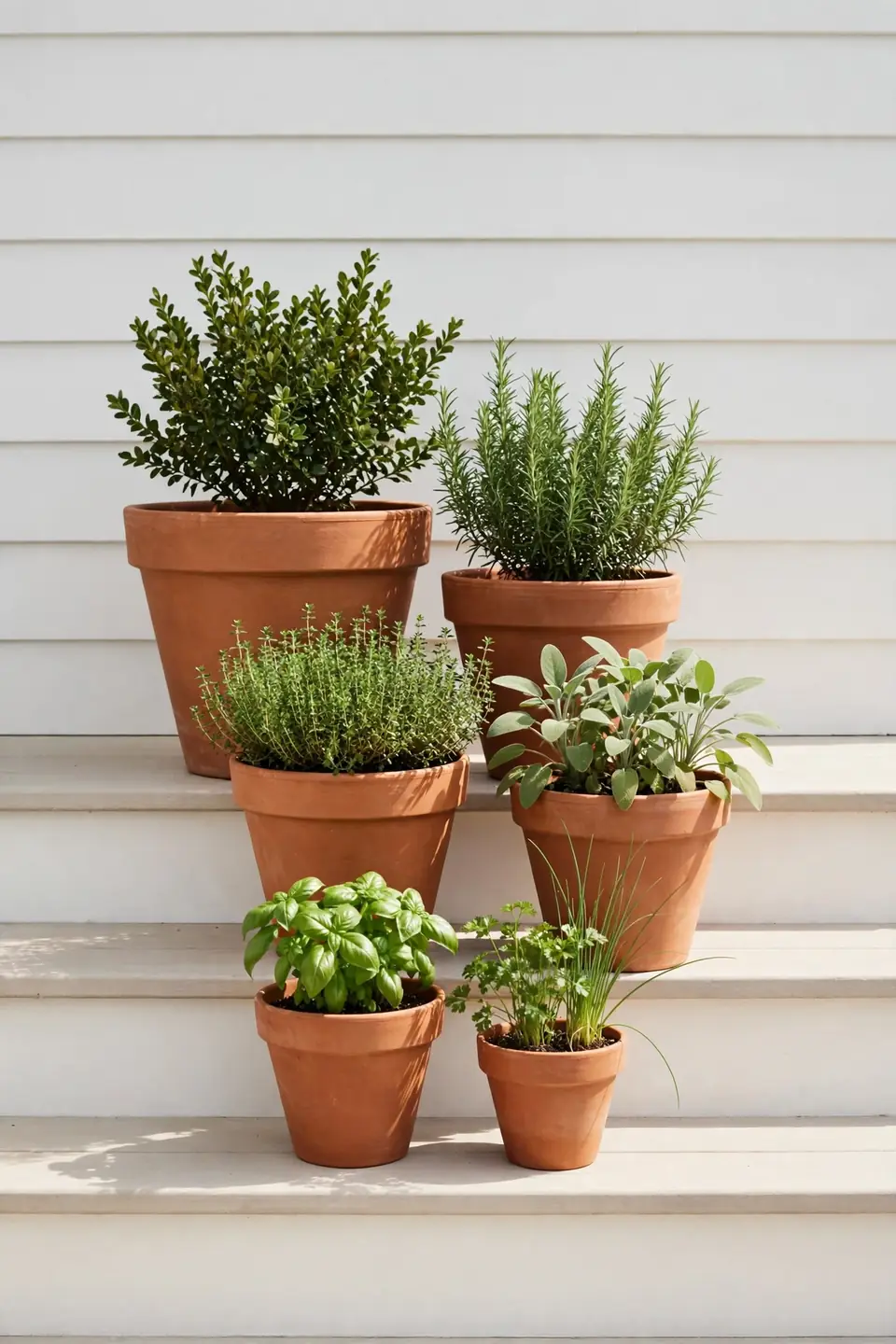
Quick Tip: Soak new terra cotta pots in water for 30 minutes before planting, since the porous clay drinks up moisture fast. Pre-soaking keeps the pot from stealing water from fresh roots during the first critical week. Group pots in odd numbers, because three or five always looks more natural than an even pair.
A cluster of terra cotta pots brings warm, earthy character to neutral porch palettes, and the material only gets better with age. I like mixing three sizes in a loose triangle, with the tallest pot holding a small shrub while the smaller ones carry herbs or trailing thyme. The soft orange tone deepens beautifully as the clay weathers, giving the whole grouping a collected, timeless feel by midsummer.
Evergreen Topiary Door Pair
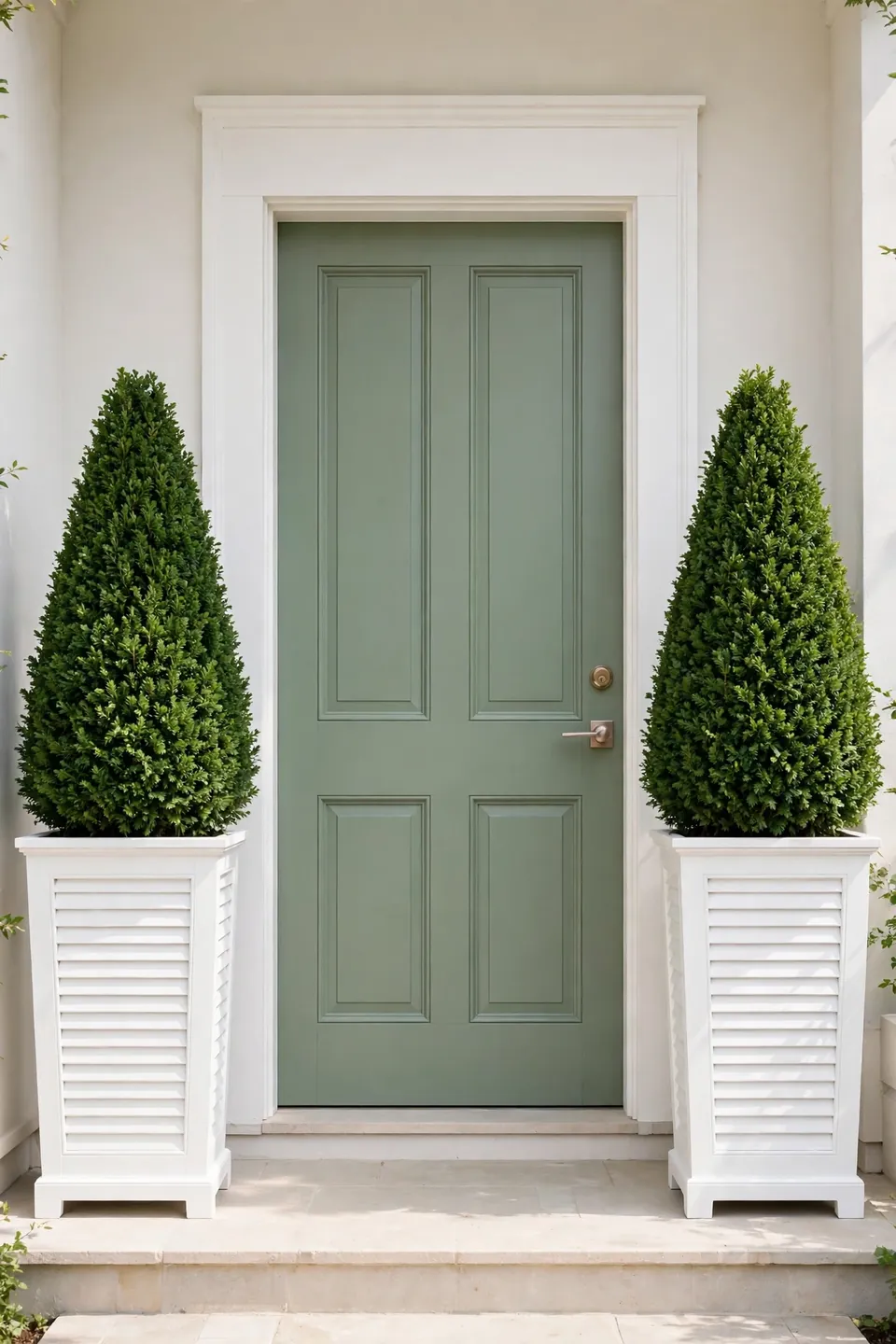
BEFORE: The entry felt flat and forgettable, with a bare door and two empty corners collecting dust and dead leaves. Guests walked past without a second glance, and the facade lacked any sense of intention or care.
AFTER: Two sculpted evergreen cones now stand like sentries on either side of the door, giving the entry structure and polish. The symmetry draws the eye to the entrance, and the deep green looks sharp in every season, even dusted with winter snow.
Boxwood and juniper topiaries both hold their shape with light shearing twice a year. I have seen this work well where homeowners want year-round impact without replanting each season. Water deeply but let the soil dry between drinks, since soggy roots kill more topiaries than neglect does.
Seasonal Planter Box Rows
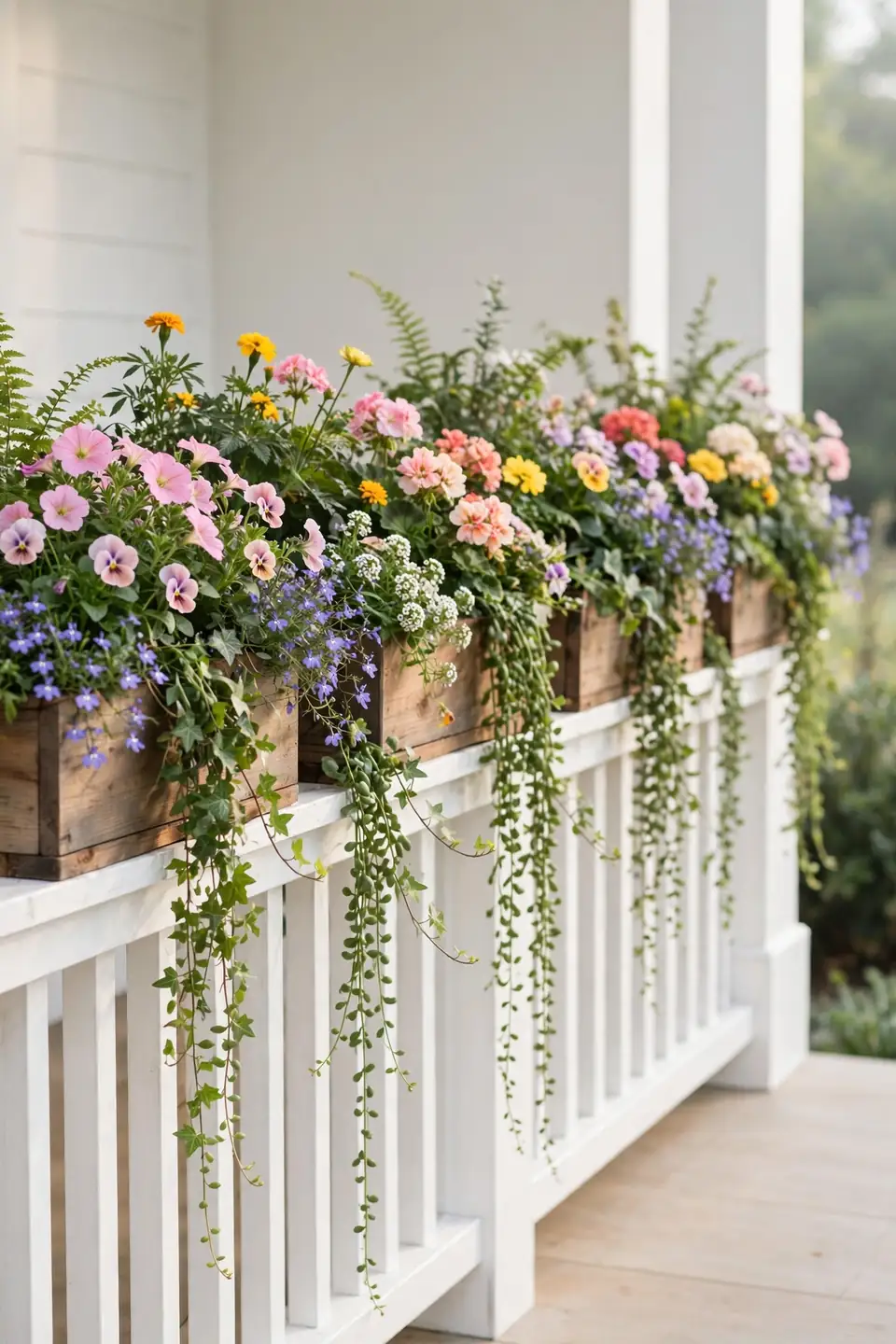
- Measure your railing sections and choose boxes that leave two inches of clearance on each side for airflow.
- Fill the bottom third with lightweight filler so the boxes stay easy to lift and drain well.
- Plant tall blooms in the center, medium fillers around them, and trailers along the front edge.
- Water every morning in summer heat, since shallow boxes dry out faster than ground beds.
Planter boxes turn a plain railing into a living border that changes with the seasons. Swap spring pansies for summer petunias, then finish with mums and ornamental kale in fall for nonstop color. That simple rotation keeps the porch looking intentional from March through November with very little extra effort.
Oversized Monstera Statement
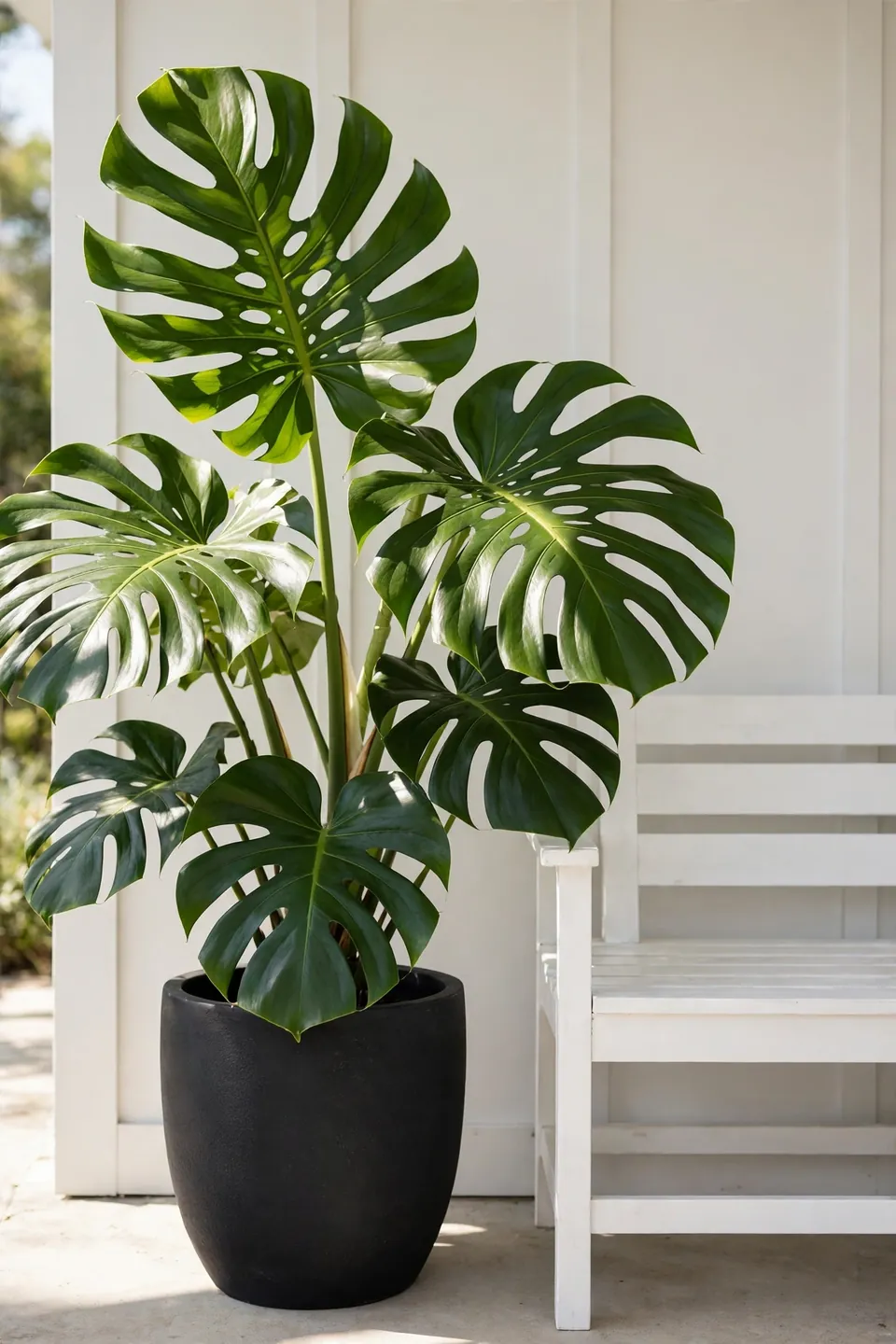
| Feature | Monstera Statement | Small Plant Grouping |
|---|---|---|
| Visual impact | Bold single focal point | Soft scattered interest |
| Floor space used | One pot footprint | Several pots spread out |
| Maintenance | One plant to water | Multiple watering schedules |
| Style vibe | Modern and dramatic | Cozy and layered |
One oversized monstera does the work of five smaller plants with a fraction of the fuss. The split leaves read as living sculpture, especially in a simple matte pot that lets the foliage star. Keep it in bright indirect light and wipe the leaves monthly so they stay glossy and photo-ready. Rotate the pot a quarter turn each month so the growth stays even on all sides.
Colorful Geranium Boxes
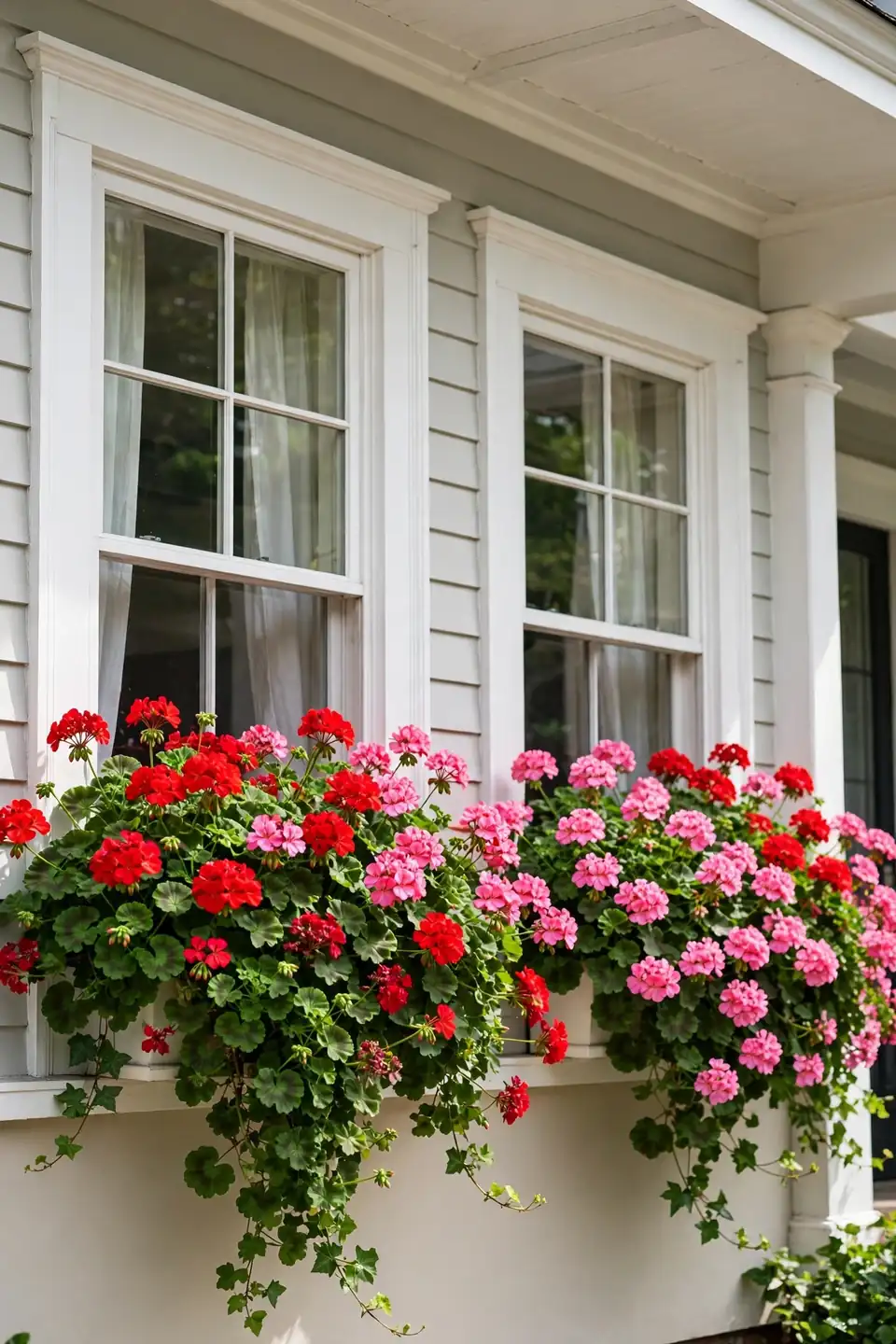
DO:
- Deadhead spent blooms weekly to keep new flowers coming all summer.
- Choose zonal geraniums for the biggest, longest-lasting flower heads.
- Feed every two weeks with a balanced liquid fertilizer for steady color.
DON’T:
- Let boxes sit in water, since soggy roots rot faster than drought harms them.
- Crowd plants so tightly that air cannot move between the leaves.
- Skip the fall cleanup, because old stems invite pests to overwinter.
Geraniums are the workhorses of porch color, blooming from late spring until frost with basic care. Their rounded flower heads look tidy in window boxes and pair well with trailing sweet potato vine for contrast. I have noticed red geraniums against white trim never fail to make a house look loved and lived in.
Potted Citrus Tree Accents
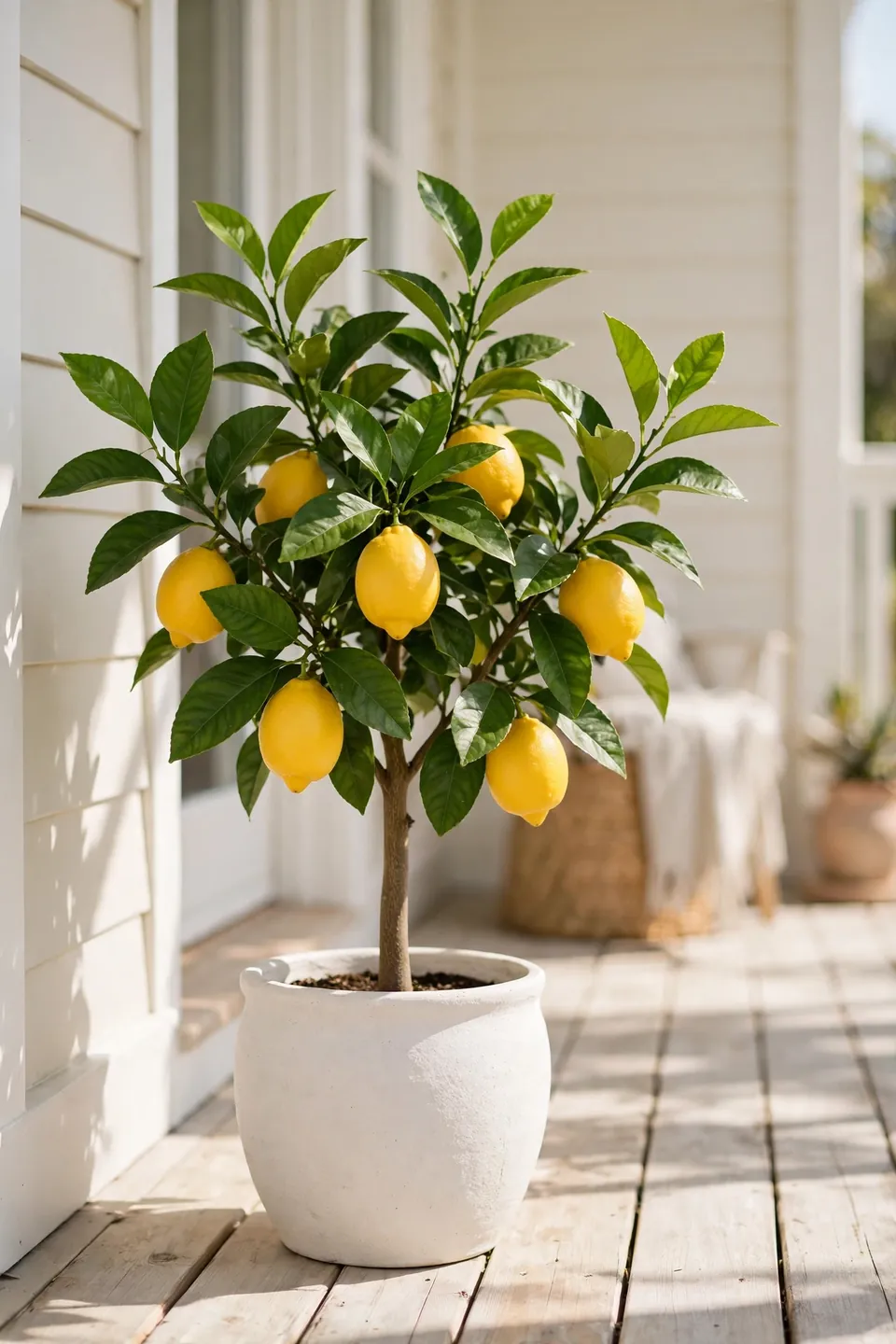
Cost: Medium | Time: One afternoon | Skill Level: Beginner | Best For: Sunny porches
A potted lemon or calamondin tree brings a sunny, Mediterranean feel that few other plants can match. The glossy leaves stay green year-round, fragrant white blossoms appear in spring, and the bright fruit doubles as living decor you can actually pick. Dwarf varieties stay under four feet, so they suit even compact porches without overwhelming the space.
Give citrus at least six hours of direct sun and bring the pot indoors before nighttime temperatures drop below 40 degrees. Water when the top two inches of soil dry out, and feed with a citrus-specific fertilizer through the growing season. That small routine rewards you with fruit, fragrance, and foliage in a single pot.
Layered Greenery Height Play
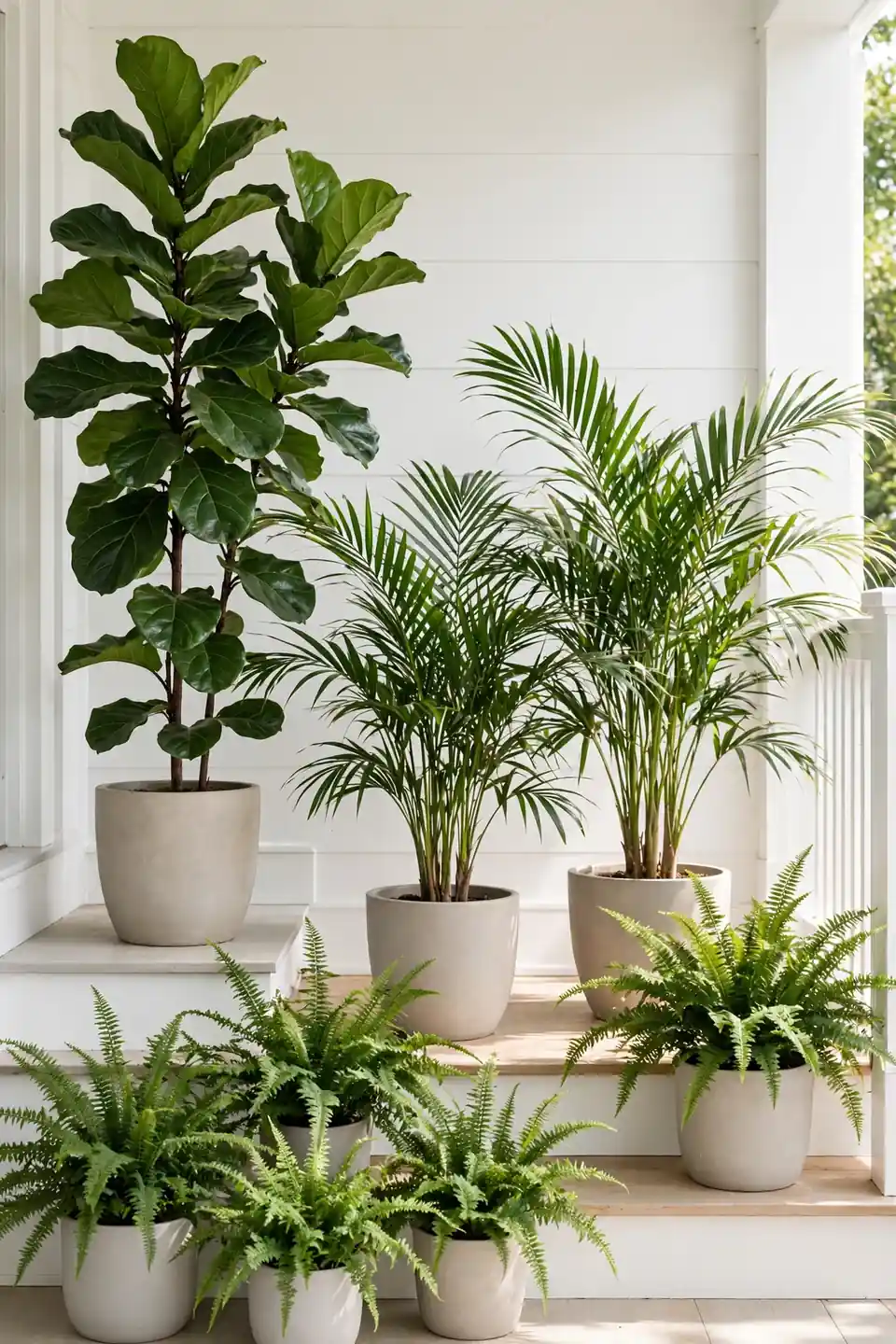
Flat arrangements read as an afterthought, but staggered heights create a scene with real depth. Anchor one corner with a tall plant like a fiddle leaf fig or bird of paradise, then step down through mid-size palms to low ferns or trailing pothos at the front. The eye travels through the layers instead of landing on a single lonely pot.
Stick to one pot color family so the height variation feels intentional rather than cluttered. In my experience, three distinct levels are the sweet spot, since two looks sparse and four starts to feel crowded. Leave breathing room between pots so each plant gets light and air, and the whole composition stays fresh instead of jungly.
Rustic Barrel Planter Mix
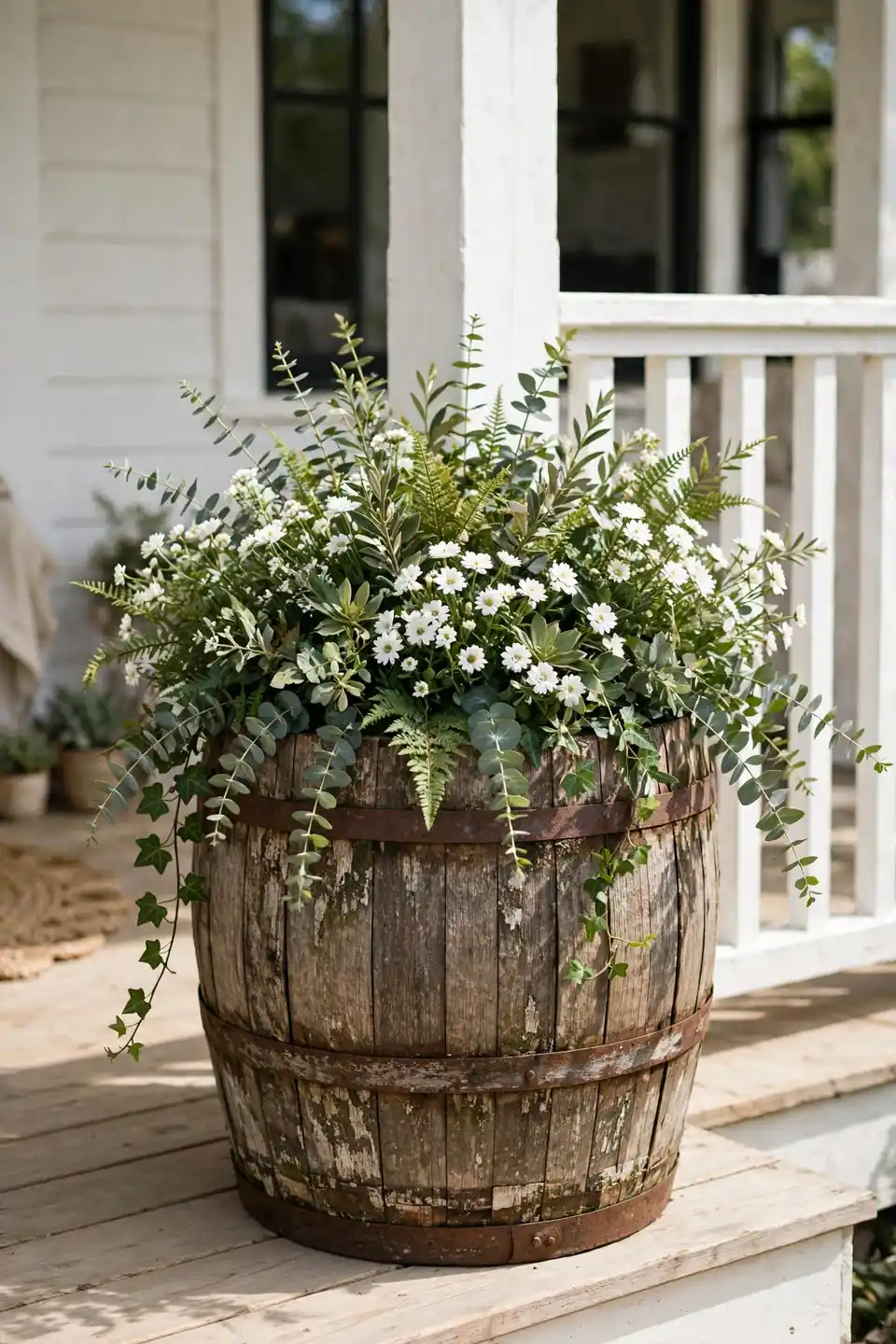
- Drill three half-inch drainage holes in the barrel base before adding any soil.
- Line the inside with landscape fabric to slow wood rot and keep soil from washing out.
- Plant a tall thriller in the center, fillers around it, and spillers over the rim.
- Set the barrel on pot feet so air circulates underneath and the wood lasts longer.
- Refresh the top two inches of soil each spring to feed hungry annuals.
Half-barrel planters bring farmhouse warmth that sleek pots cannot match. Their wide mouths hold generous mixed plantings, and the weathered wood softens modern siding beautifully. One well-planted barrel by the steps often becomes the detail neighbors ask about first.
Woven Basket Planter Style
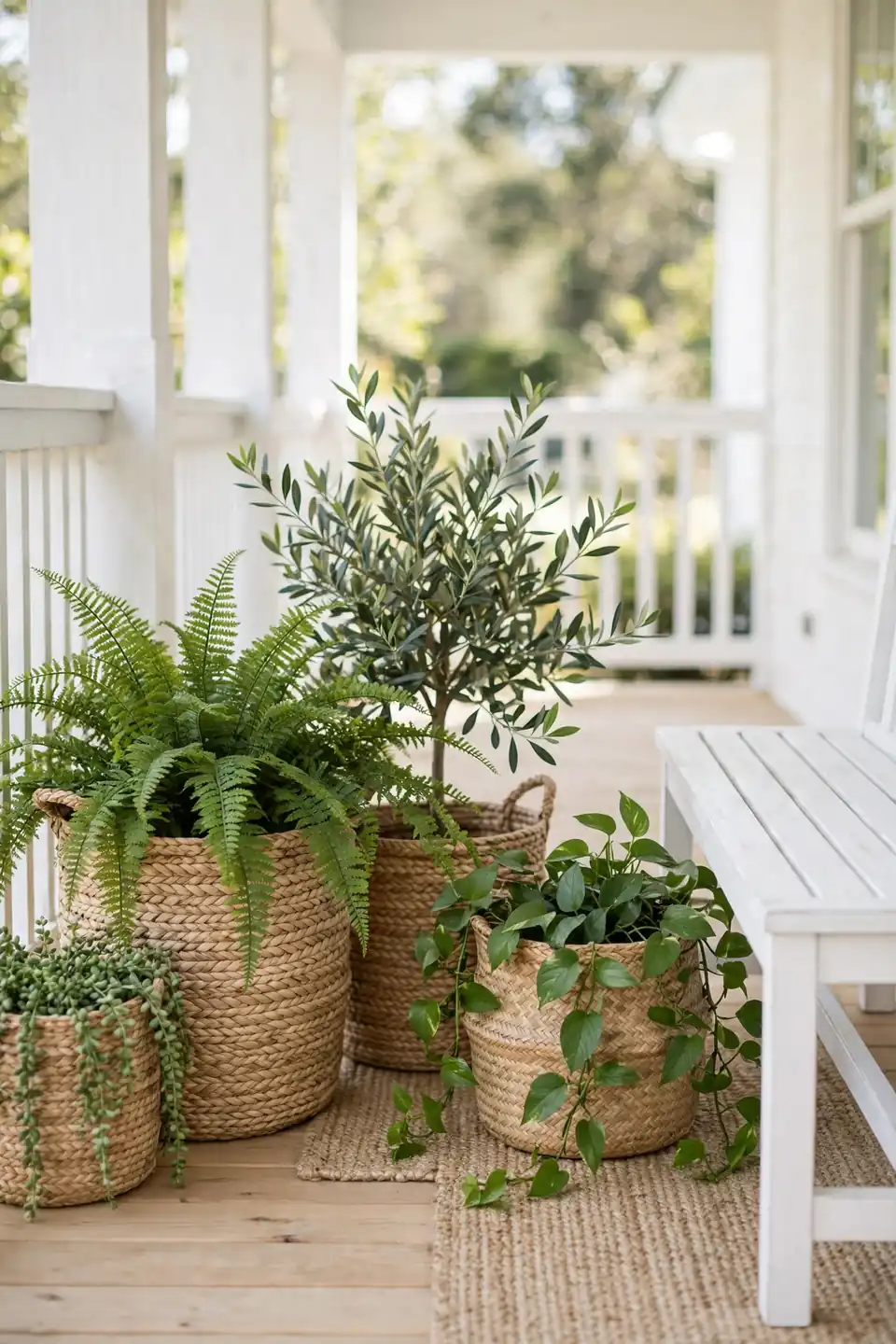
Quick Tip: Always slip a plastic nursery pot inside a woven basket rather than planting directly into it. The liner protects the fibers from constant moisture, which extends the basket’s life by years. Lift the inner pot out for watering, let it drain fully, then set it back so the basket stays dry and beautiful.
Woven baskets add texture that ceramic and terra cotta simply cannot offer, and they suit relaxed porch styles perfectly. The natural fibers warm up white railings and gray siding alike, while the casual shape keeps formal plantings from feeling stiff. I think front porch decorating ideas with plants work best when containers feel collected over time, and baskets nail that effortless layered look.
Herb Garden Porch Edge
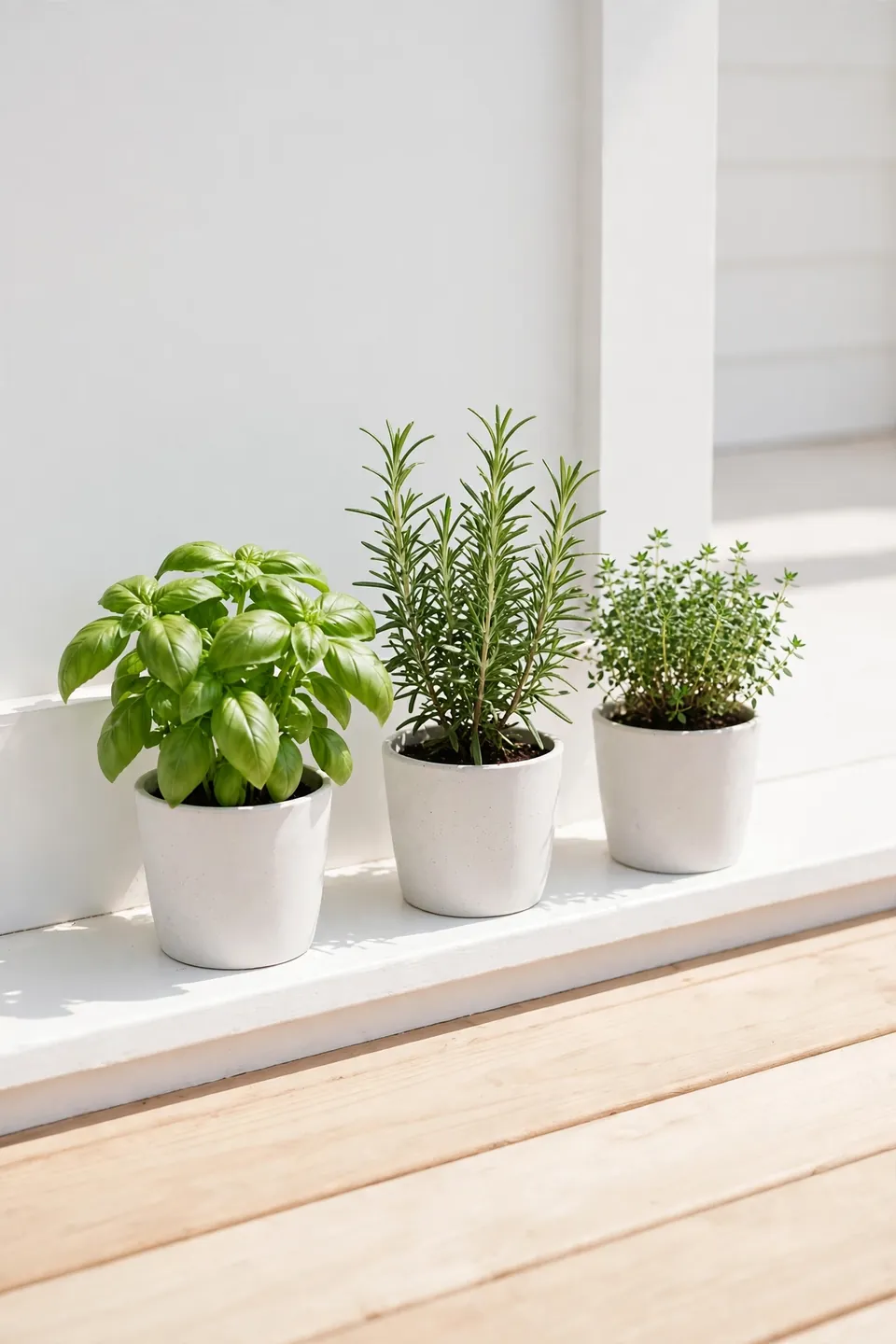
BEFORE: The porch edge was dead space, a bare strip of decking that served no purpose and collected blown leaves. It felt like a boundary between the house and the yard rather than part of the living space.
AFTER: A neat row of herb pots now lines that same edge, turning wasted space into a fragrant mini garden. Snipping fresh basil for dinner happens steps from the kitchen door, and the green row softens the hard line where the porch meets the yard.
Herbs ask for sun, sharp drainage, and regular snipping, which keeps them bushy instead of leggy. Basil, thyme, rosemary, and chives all thrive in small pots through summer. That daily harvest habit turns a simple row of pots into the hardest-working decor on the porch.
Climbing Vine Trellis Wall
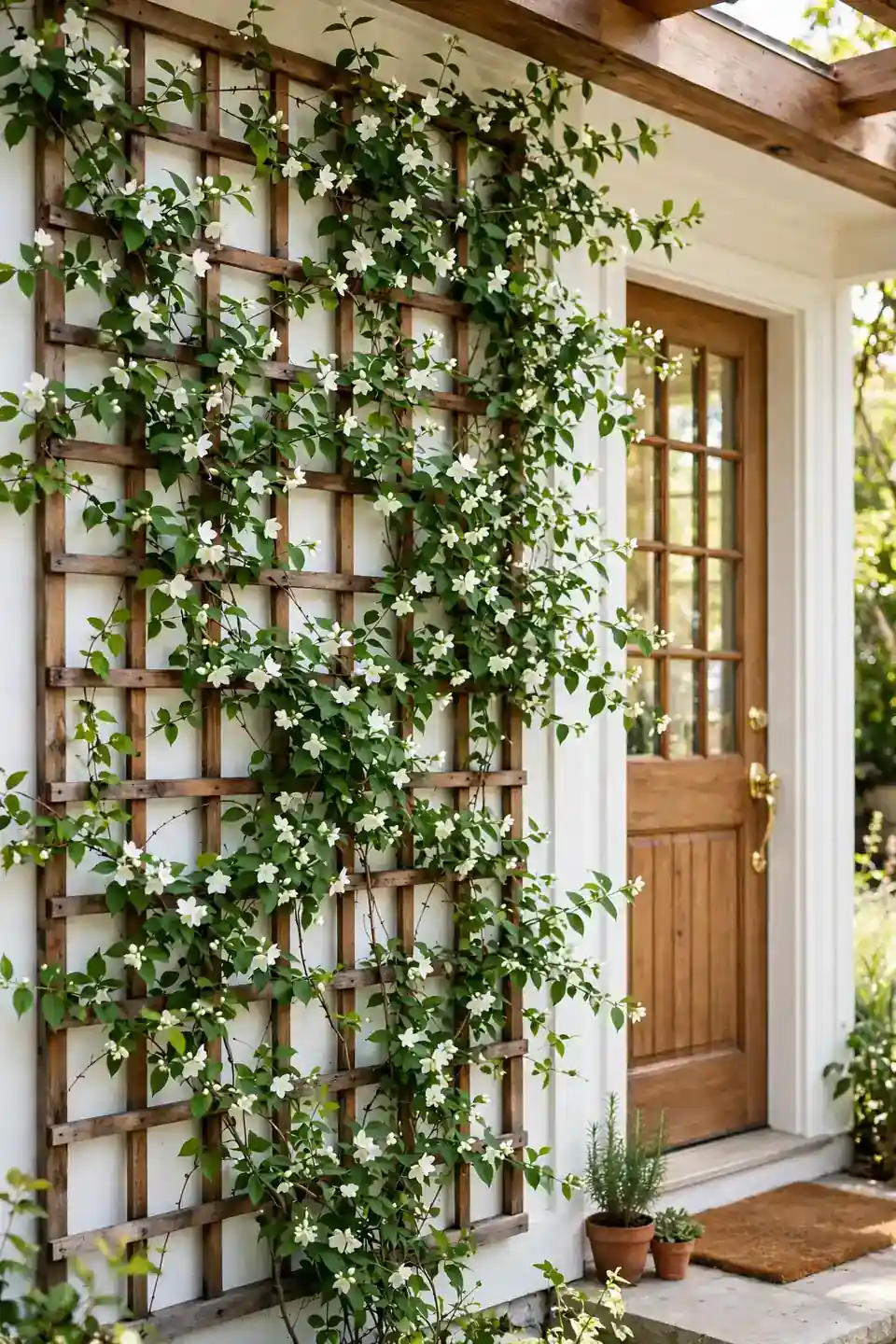
- Mount a cedar trellis six inches off the wall so air flows behind the vines.
- Plant jasmine or clematis at the base in rich, well-draining soil.
- Weave young stems through the slats loosely and tie with soft garden twine.
- Prune lightly after the first bloom to encourage a second flush of flowers.
- Feed monthly through summer for dense green foliage.
A living wall of vines turns a blank porch wall into the prettiest backdrop on the block. Jasmine adds evening fragrance while clematis brings big showy blooms, so pick what you will enjoy most. If you are refreshing other rooms too, these neutral bedroom decor with wood accents pair natural textures with calm, warm style. Give the trellis one season and patience pays off with a green curtain.
Mini Succulent Table Trays
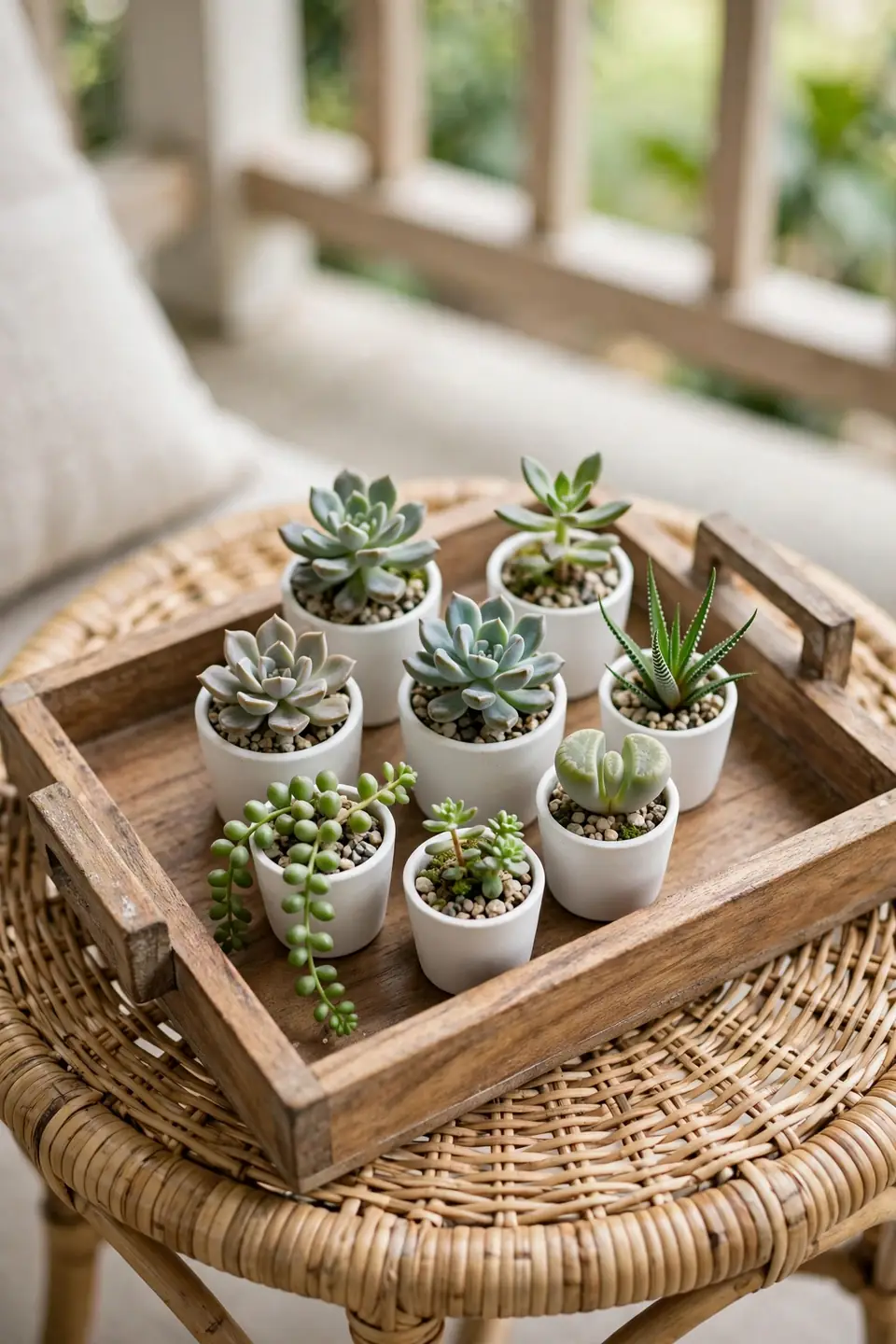
| Succulent | Light Needs | Water Needs |
|---|---|---|
| Echeveria | Bright indirect | Every 2 weeks |
| Haworthia | Low to medium | Every 3 weeks |
| Sedum | Full sun | Every 10 days |
| Jade plant | Bright direct | Every 2 weeks |
| String of pearls | Bright indirect | Every 2 weeks |
| Aloe vera | Bright direct | Every 3 weeks |
Succulent trays suit small porch tables that cannot hold big planters. Their sculptural rosettes and varied textures look artful in tiny white pots, and the whole tray moves indoors in minutes when storms roll through. Water sparingly and they practically take care of themselves. Group three to five varieties with different heights and leaf shapes for the prettiest mix, and top the soil with small pebbles for a finished look.
Tall Grass Privacy Screen
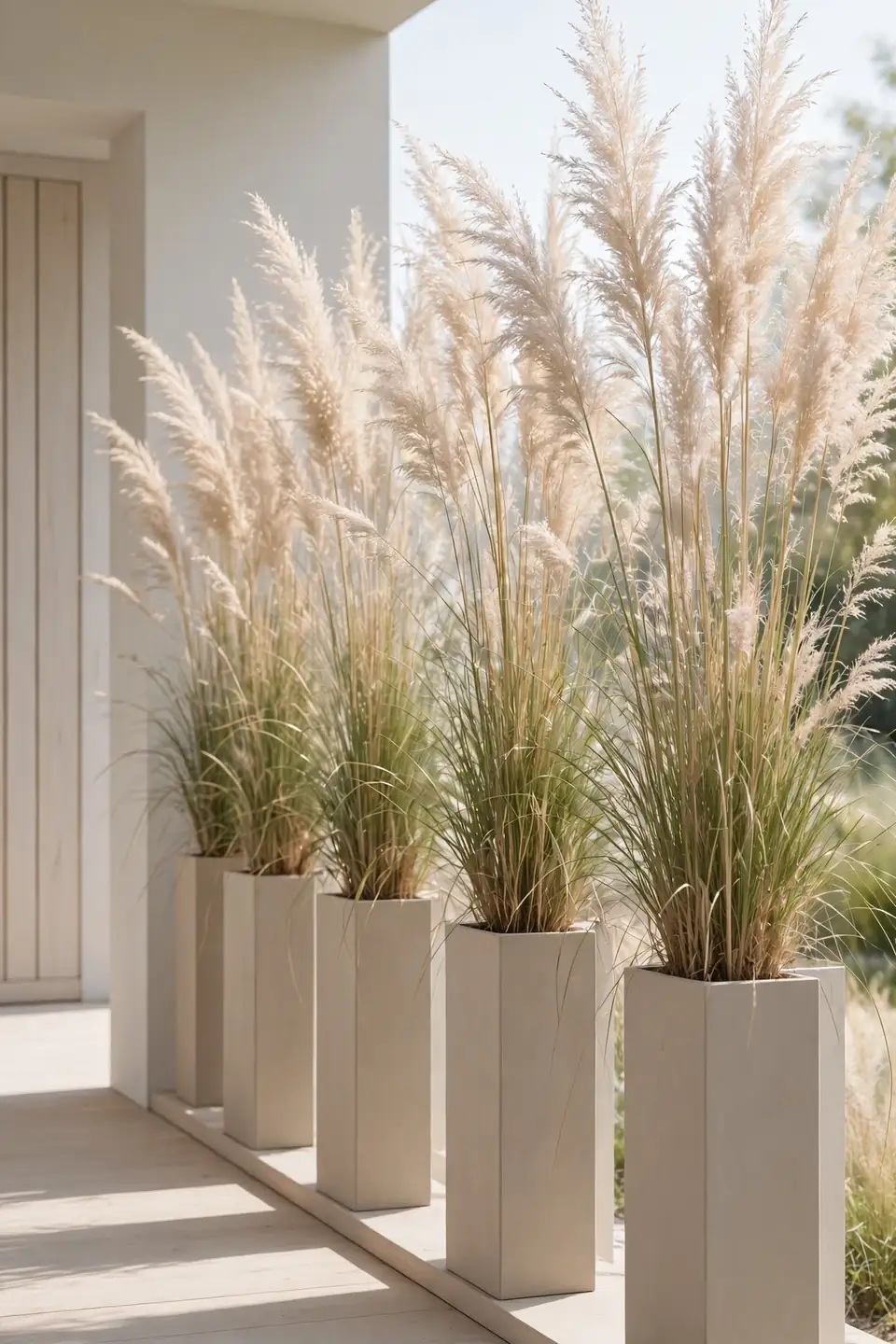
DO:
- Choose clumping grasses like fountain grass so they stay contained in pots.
- Space planters a foot apart so the plumes knit into a soft, full screen.
- Cut grasses back hard in late winter before new growth starts.
DON’T:
- Plant running bamboo in open soil, since it escapes and becomes a nightmare.
- Use top-heavy pots without weight, because wind will topple tall grasses.
- Forget winter interest, since dried plumes look gorgeous under frost.
Ornamental grasses give privacy without the heaviness of a fence or curtain. Their feathery plumes sway in the breeze and catch the light beautifully at golden hour. I have noticed porches with grass screens feel more secluded and calm, even on busy streets.
Flowering Shrub Foundation Beds
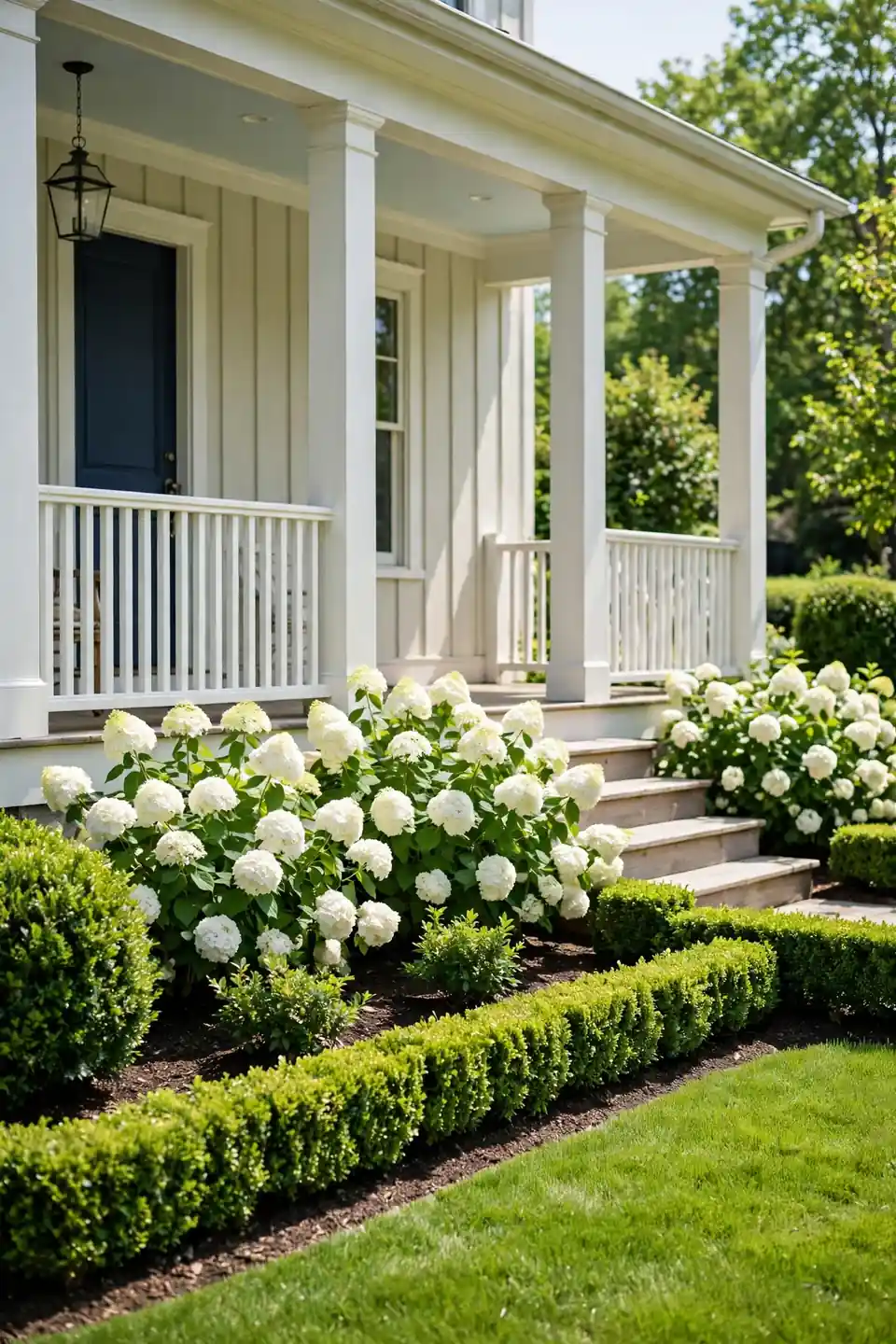
Cost: Low to medium | Time: One weekend | Skill Level: Beginner | Best For: Porch perimeters
Foundation beds anchor the porch to the landscape so the house looks settled instead of perched. White hydrangeas, dwarf boxwood, and soft lamb’s ear layer beautifully along the porch base for year-round structure and seasonal blooms. Mulch two inches deep to hold moisture, and edge beds cleanly so the planting reads as intentional rather than overgrown.
Plant shrubs two feet from the foundation so roots and siding stay healthy as they mature. In my experience, a repeating pattern of three shrubs beats a fussy mix, since repetition reads as design. Water new plantings deeply twice a week for the first season.
Hanging Fern Porch Rows
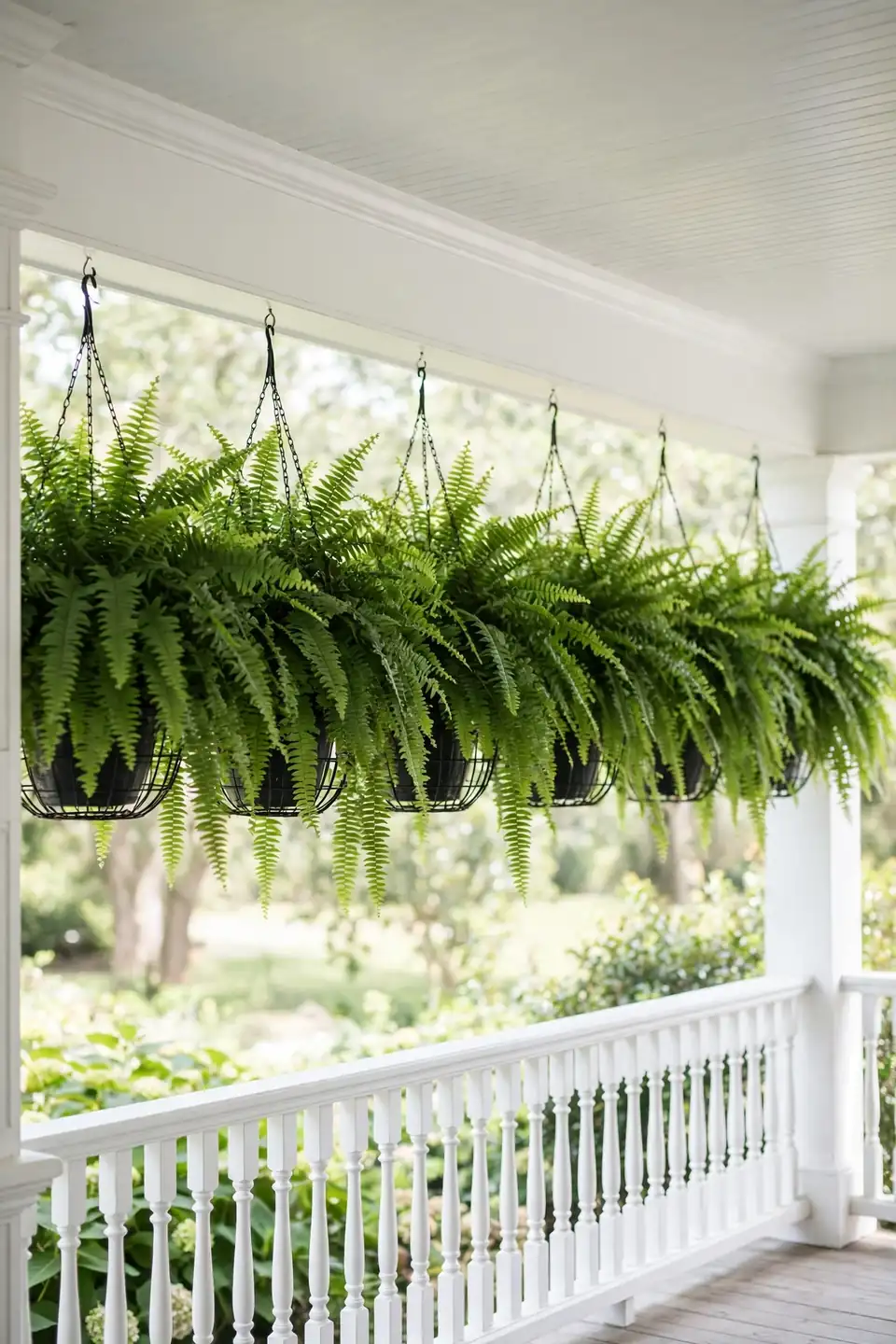
Nothing says classic porch like a row of Boston ferns swaying gently overhead. Their cascading fronds soften the hard line of the porch ceiling and create a green canopy that makes the whole space feel cooler and more private. Hang them at even intervals, about six feet apart, so the rhythm reads as intentional from the street.
Rotate each basket a quarter turn weekly so all sides get equal light and the shape stays full. Ferns drink heavily in summer heat, so check the soil daily and water until it runs from the drainage holes. In my experience, a consistent watering routine matters more than fertilizer for keeping hanging ferns lush through September.
Potted Boxwood Symmetry
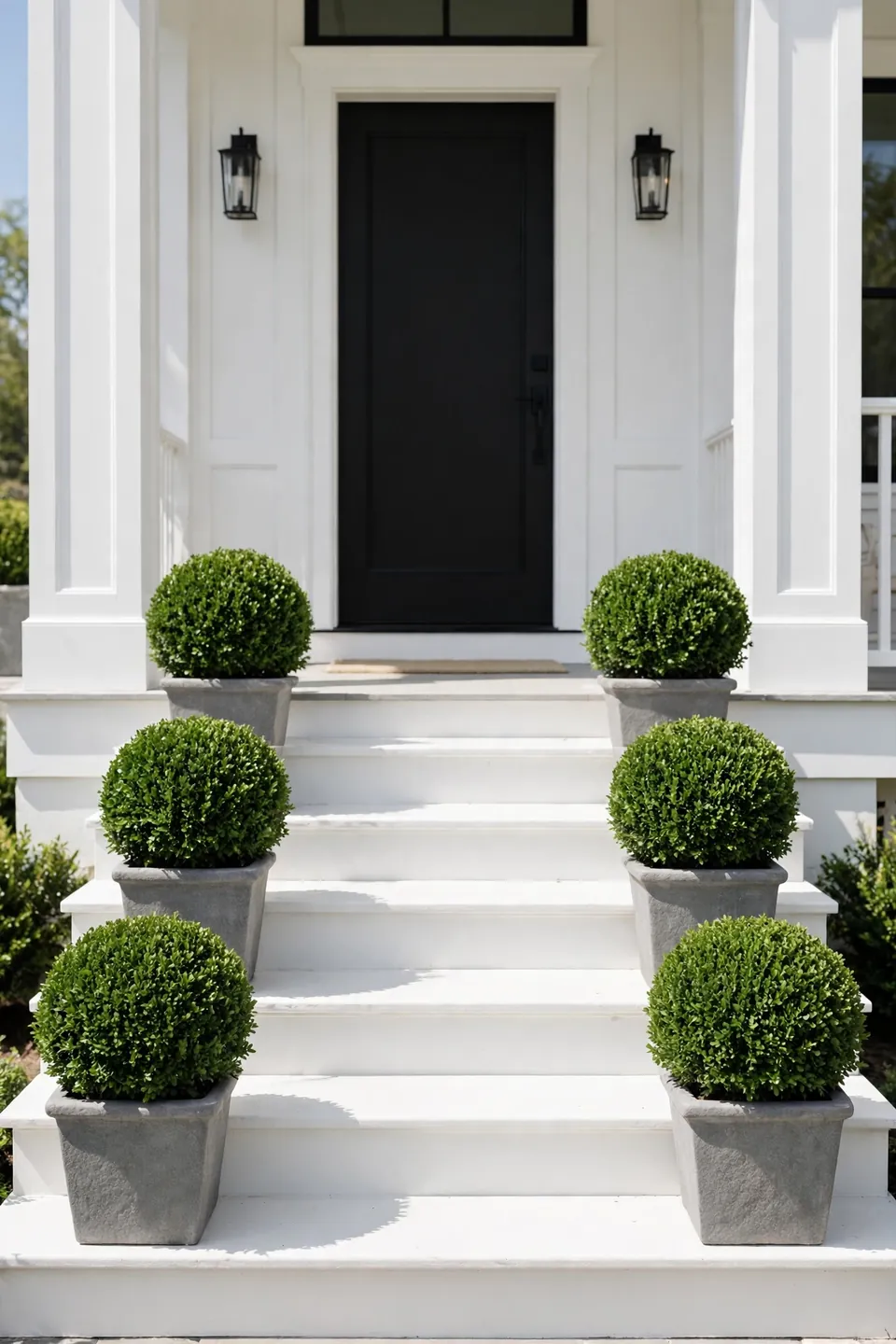
- Pick matching pots so the symmetry reads as deliberate from the curb.
- Shear boxwood lightly in late spring to keep the spheres crisp.
- Line steps with pairs, since even numbers suit formal styles best.
- Refresh mulch or moss on the soil surface each spring for a tidy finish.
- Water at the base in the morning so foliage dries fast and stays disease-free.
Symmetrical boxwood balls bring tailored elegance that casual plantings cannot match. The round green forms act like punctuation marks along steps and railings, guiding the eye toward the door. Boxwood holds its color through winter, so this arrangement earns its keep in every season.
Porch Railing Flower Cascades
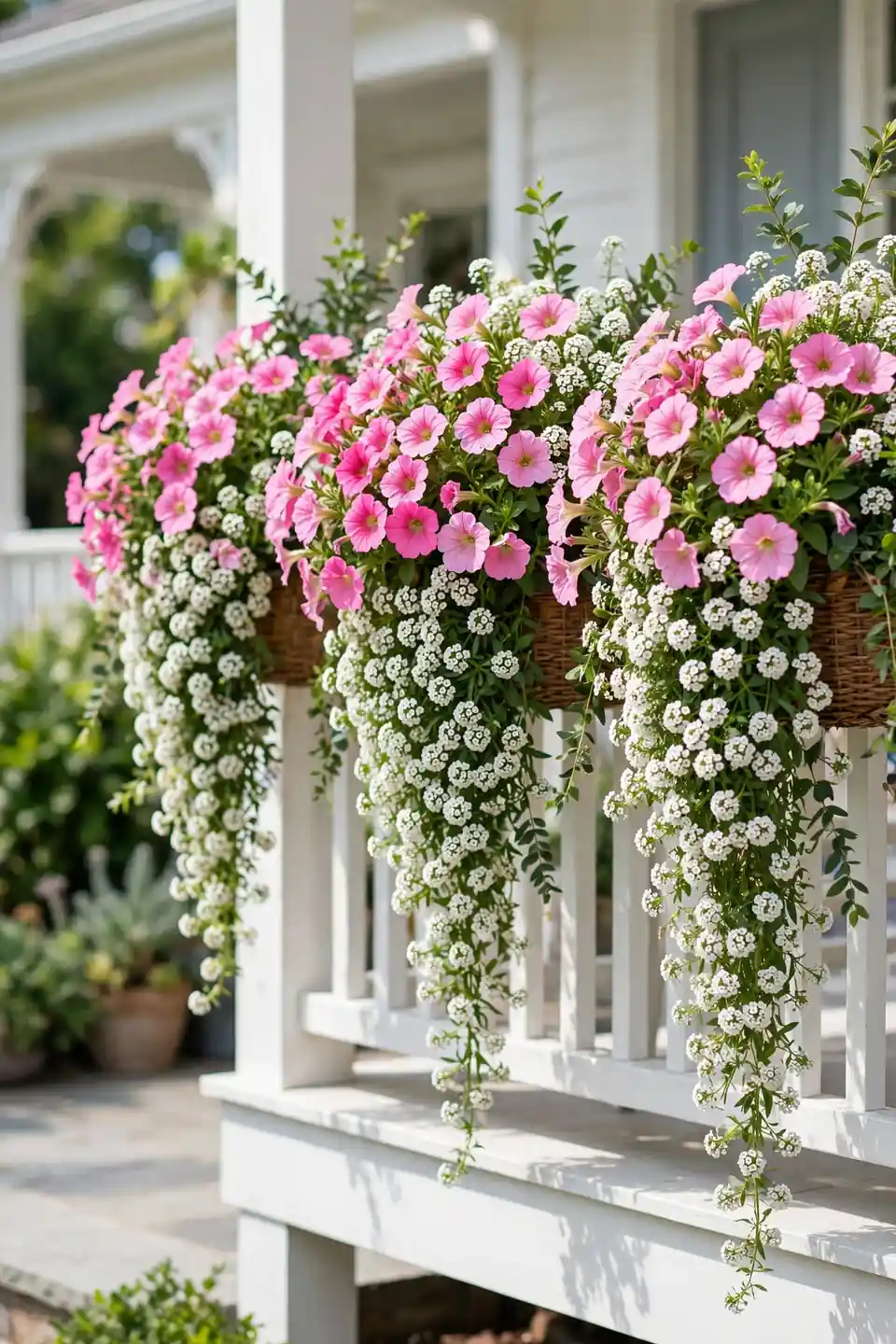
Quick Tip: Choose trailing varieties specifically bred for baskets, since upright types never spill properly over the edge. Wave petunias, calibrachoa, and bacopa all cascade a full two feet when they are happy. Pinch the growing tips once after planting to force branching, which doubles the flower count within a few weeks.
Cascading flower baskets turn a plain railing into a waterfall of color that stops passersby. The spill of blooms softens hard wood lines and adds a romantic, abundant feel that structured planters miss. Water daily in July heat and deadhead weekly, and the cascade keeps pouring color until the first hard frost.
Statement Urn Plant Pair
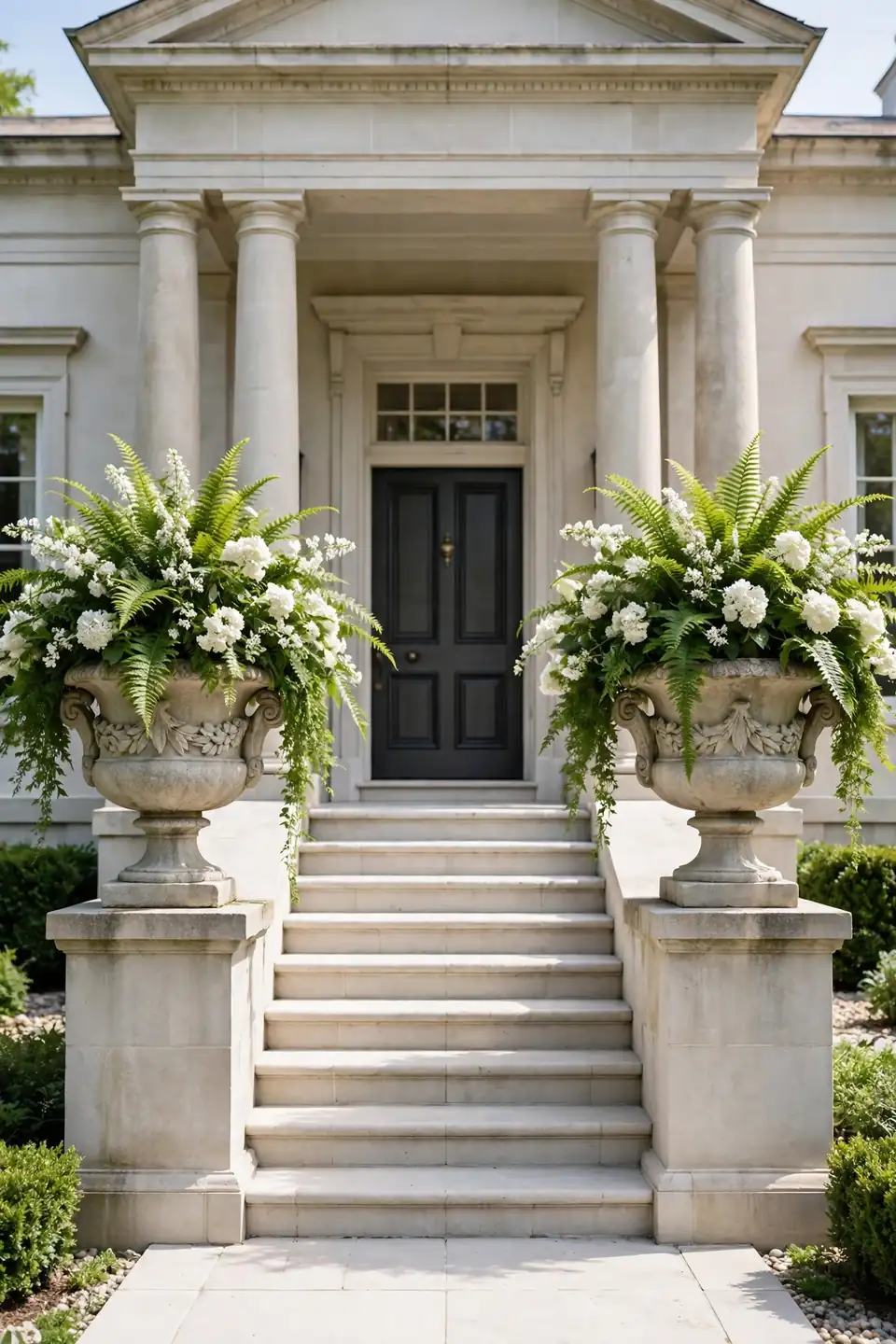
BEFORE: The wide steps looked plain and oversized, with nothing to break up the long stretch of concrete. The entrance felt more like a public building than a home, and visitors hesitated at the bottom instead of walking straight up.
AFTER: Two grand urns now anchor the top of the steps, their overflowing ferns and white blooms softening the hard edges. The scale finally matches the wide staircase, and the symmetrical pair gives guests a clear, welcoming path to the door.
Scale matters most with urns, so choose ones that look slightly too big in the store. Fill the rim with trailing plants that spill over the edge, since that overflow is what makes urns look generous. That one oversized gesture often transforms the whole entry.
Tropical Leaf Bold Mix
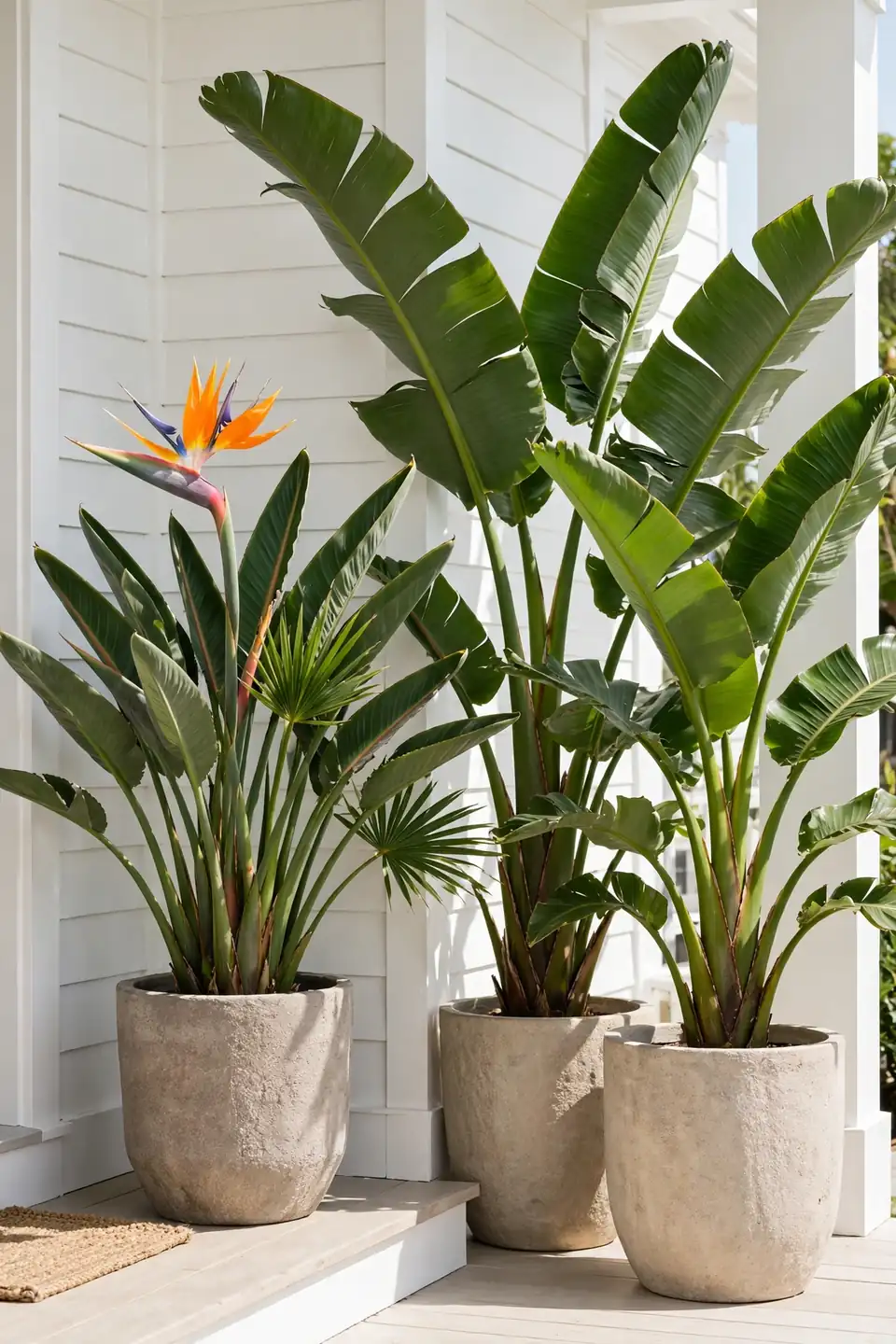
- Pick one hero plant with huge leaves, like bird of paradise or elephant ear.
- Add two medium plants with contrasting leaf shapes, such as croton or ti plant.
- Tuck small fillers like pothos at the base to hide bare soil.
- Keep every pot in the same neutral family so the bold leaves stay the stars.
Tropical foliage brings vacation energy that makes an ordinary porch feel like a getaway. The oversized leaves create drama no flower can match, and the deep greens pop against white siding. Most tropicals love summer heat, so they peak exactly when you use the porch most.
White Pot Monochrome Set
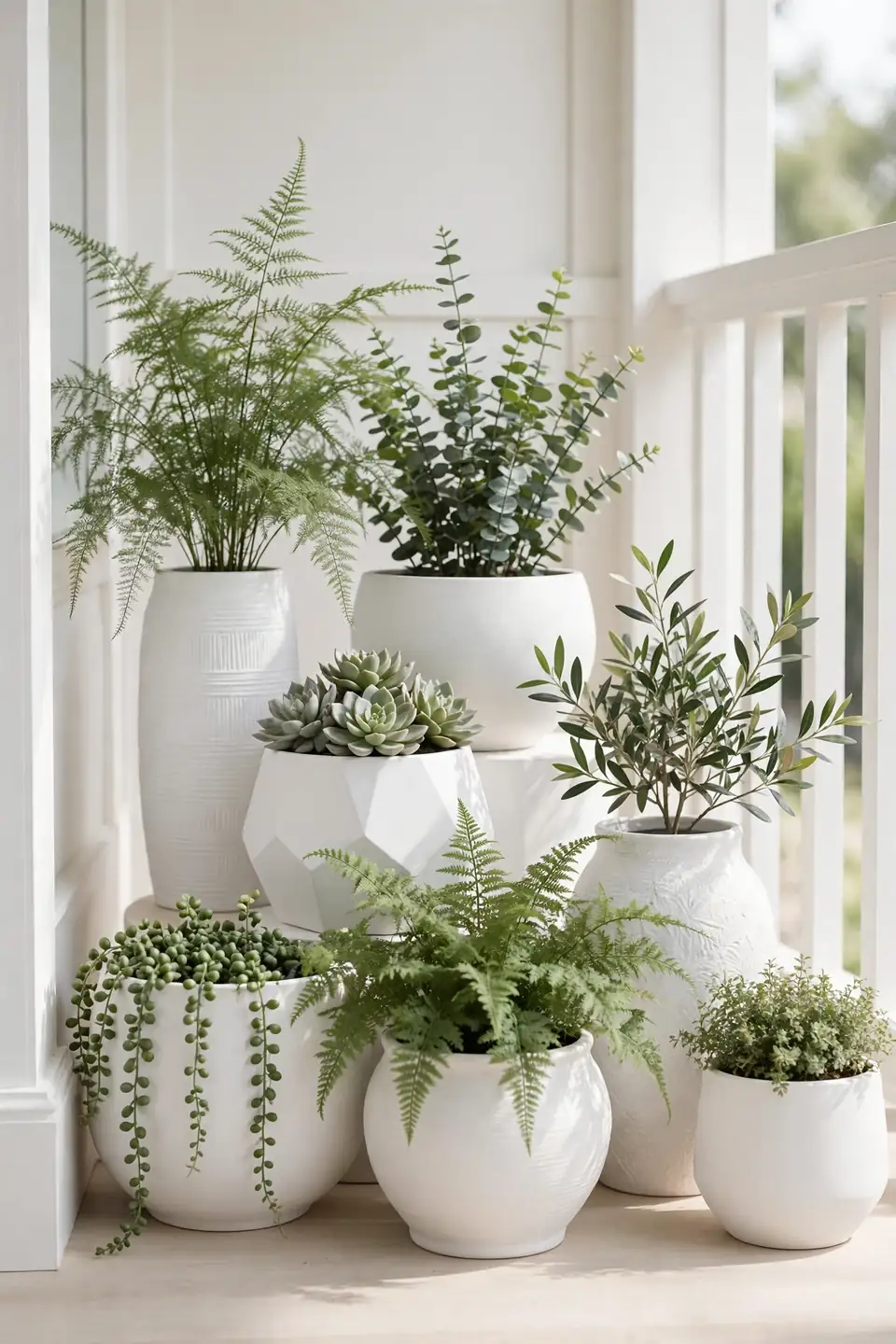
| Pot Style | Best Plant Match | Mood |
|---|---|---|
| Tall cylinder | Snake plant | Modern |
| Wide bowl | Fern cluster | Soft |
| Textured ribbed | Palm | Organic |
| Classic tapered | Topiary | Timeless |
A monochrome white pot collection lets plant textures do all the talking. Mixing shapes within one color keeps the look interesting without visual noise, and white reflects light that brightens shady corners. This approach suits modern homes best, where restraint reads as luxury. Vary the plant heights and leaf textures within the white palette, and the collection stays dynamic instead of flat through every season. I have seen this work well in many cases where a porch gets mixed sun, since white pots keep every corner feeling bright.
Wildflower Meadow Planters
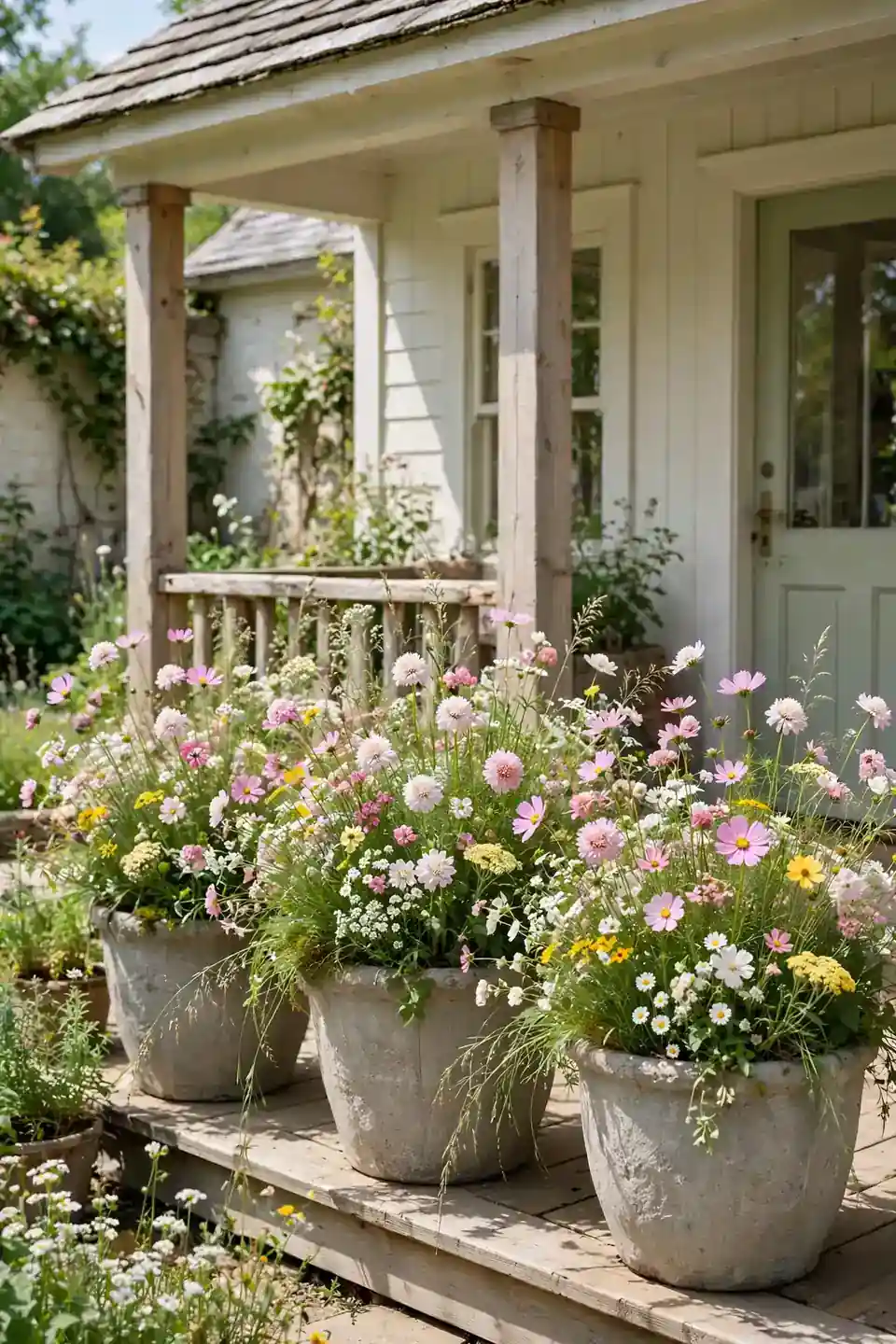
DO:
- Sow a regional wildflower mix so the blooms suit your climate naturally.
- Let the planting stay loose and airy instead of deadheading everything.
- Leave seed heads standing in fall for birds and winter texture.
DON’T:
- Use garden soil in pots, since it compacts and drowns wildflower roots.
- Over-fertilize, because rich soil grows leaves at the expense of flowers.
- Expect a tidy look, since meadow style celebrates happy chaos.
Wildflower planters bring cottage charm that feels gathered rather than arranged. Their loose, swaying stems attract butterflies and bees, adding life and movement to the porch. I have noticed guests always lean in for a closer look, since no two wildflower pots ever bloom exactly alike.
Lantern And Plant Pairing
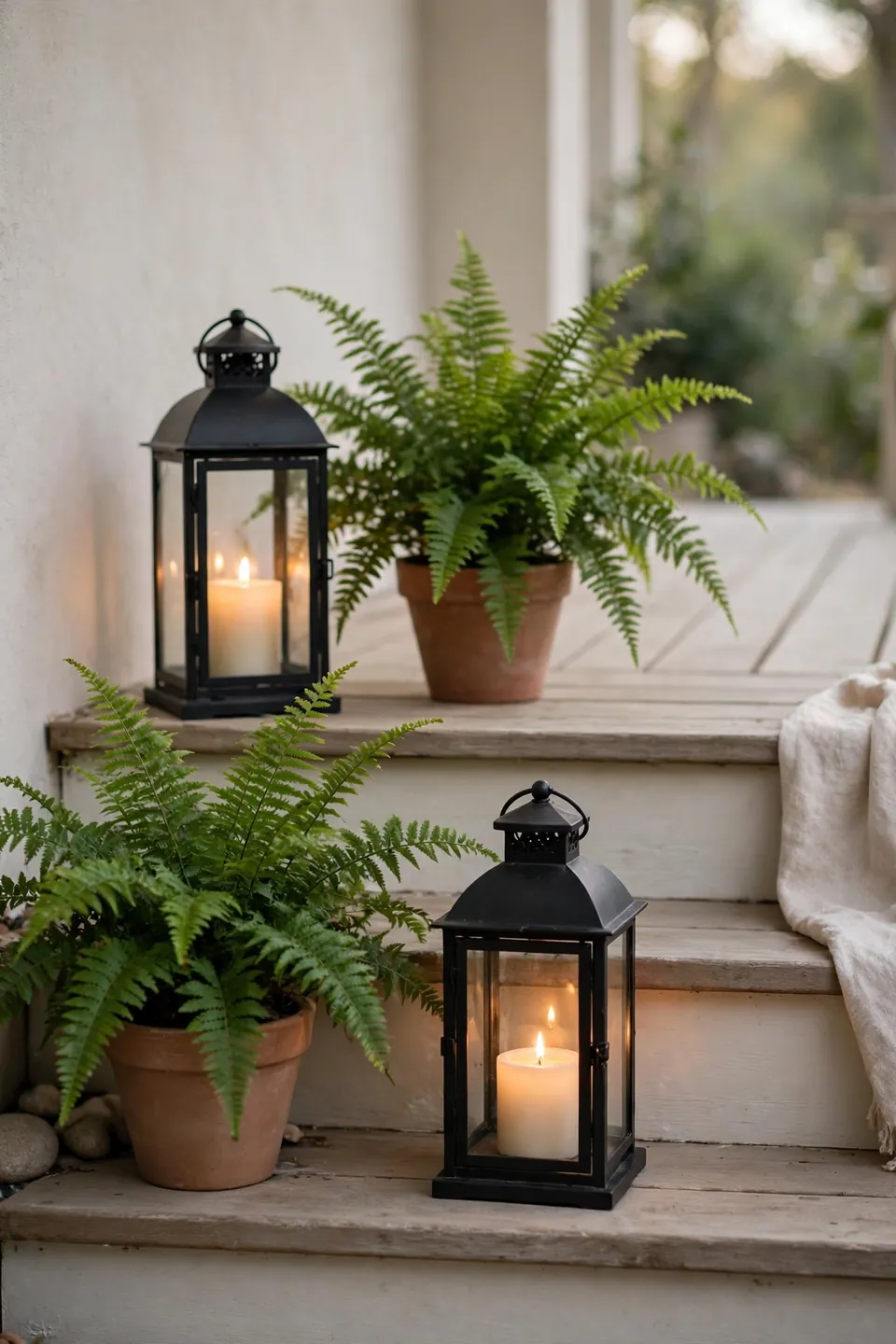
Cost: Low | Time: Under an hour | Skill Level: Beginner | Best For: Evening ambiance
Lanterns paired with plants carry the porch beautifully from day into night. By daylight the green foliage stars, and after sunset the warm candle glow takes over, doubling the hours your plant styling gets admired. Black metal lanterns suit any plant and any porch style, from farmhouse to modern.
Use flameless candles with timers so the glow appears every evening without a second thought. Cluster lanterns in odd numbers beside one strong planter rather than scattering them everywhere. That simple pairing makes the porch feel styled around the clock instead of only in daylight.
Cozy Reading Nook Greenery
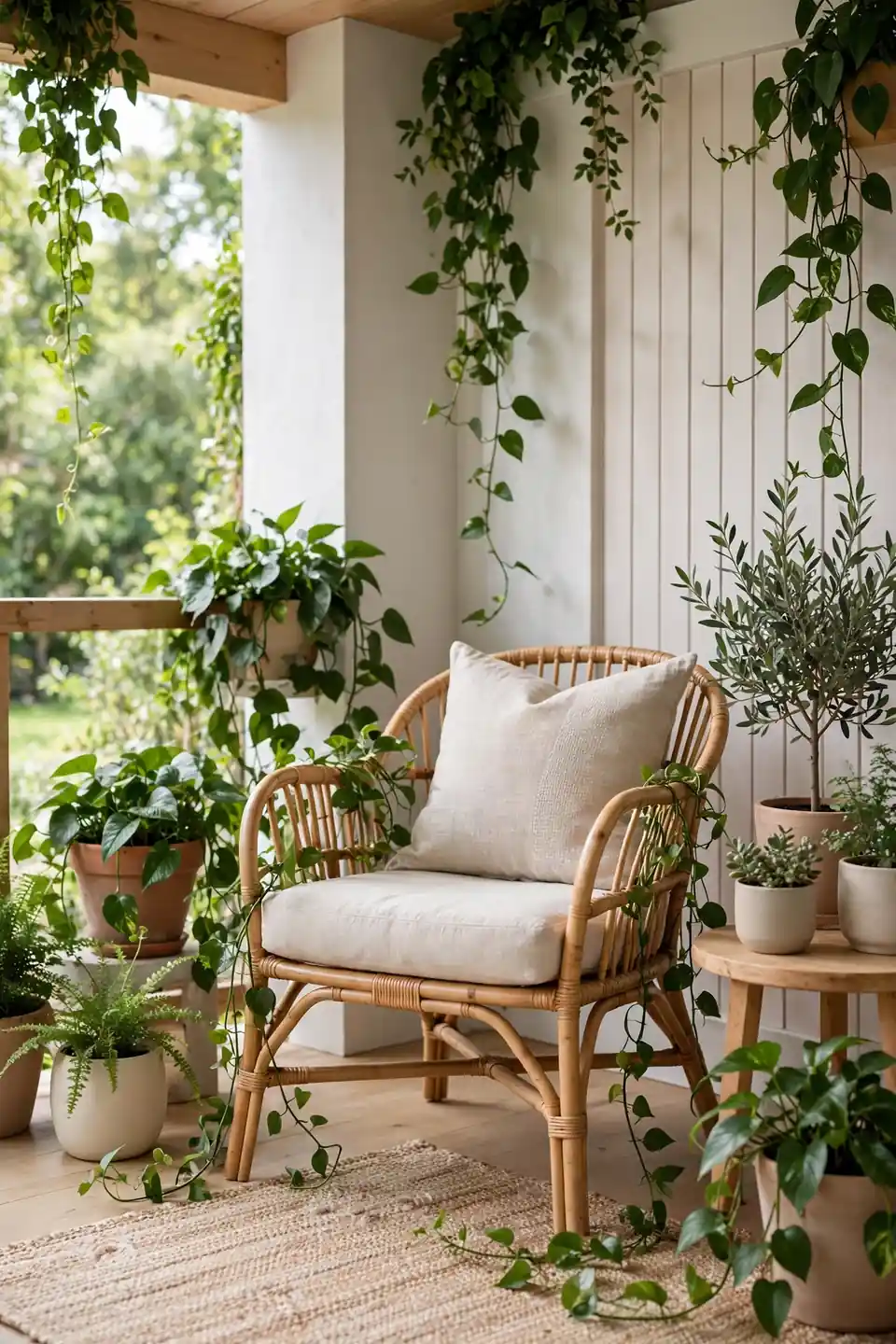
A plant-framed reading nook turns an unused porch corner into the most loved seat in the house. Tuck a comfortable chair where the light is kindest, then surround it with pots at different heights so the greenery wraps around like a hug. Trailing vines overhead complete the hideaway feeling.
Keep a small side table within reach for tea and a book, and choose plants that tolerate the same light the reader enjoys. In my experience, this corner gets used daily once it exists, while bare porch corners sit empty all season. Give yourself that green retreat and watch it become a ritual.
Conclusion
Fresh greenery has a way of making a home feel loved, and these front porch decorating ideas with plants prove you do not need much to make a big impression. Pick the two or three looks that fit your light and your lifestyle, then start small and build from there. I have seen how small changes like these can completely shift the way a space feels. Save your favorites on Pinterest, grab a few pots this weekend, and enjoy watching your porch turn into the welcoming entry you have always wanted. Your guests will notice the difference the moment they step up to your door.
One Comment