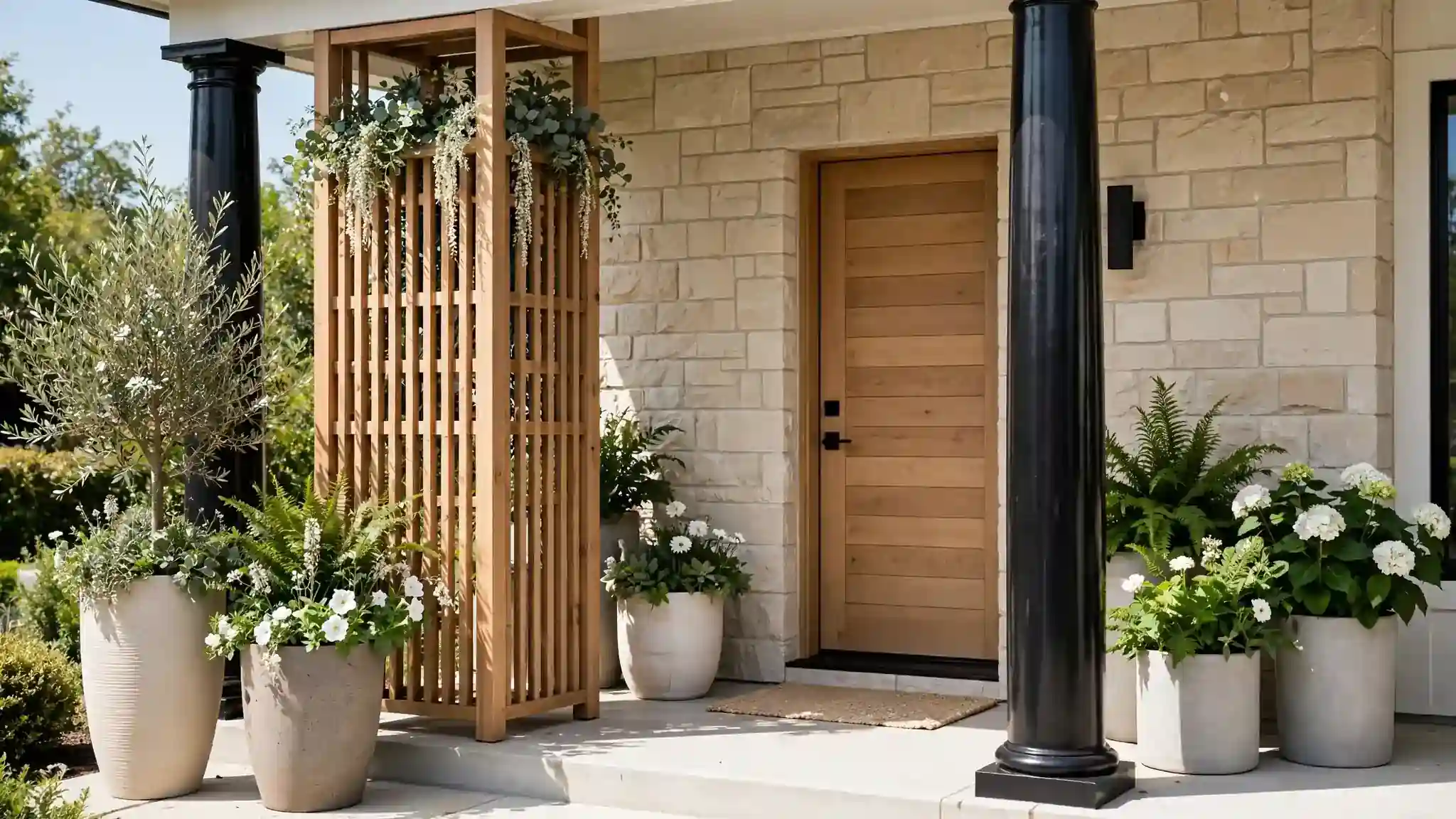
24 Tall Outdoor Planter Ideas for Stunning Curb Appeal
Few upgrades change a front porch as fast as tall outdoor planter ideas styled with real intention. Height draws the eye upward, makes small spaces feel grand, and gives even a plain entryway that layered, finished look. In my experience, swapping two squat pots for one tall planter instantly makes the whole space look more expensive. If your curb appeal feels flat or your patio corners look empty, vertical planters are the fix you have been waiting for.
Planters also anchor a party setup beautifully, and if you are styling for guests you will love these pool party decor ideas for tying tall planters into a festive layout. The trick is matching planter finishes to your outdoor furniture so everything reads as one plan. Below, you will find 24 tall planter styles, each with practical styling tips, cost notes, and plant pairings that actually work in real yards.
Black Ceramic Columns
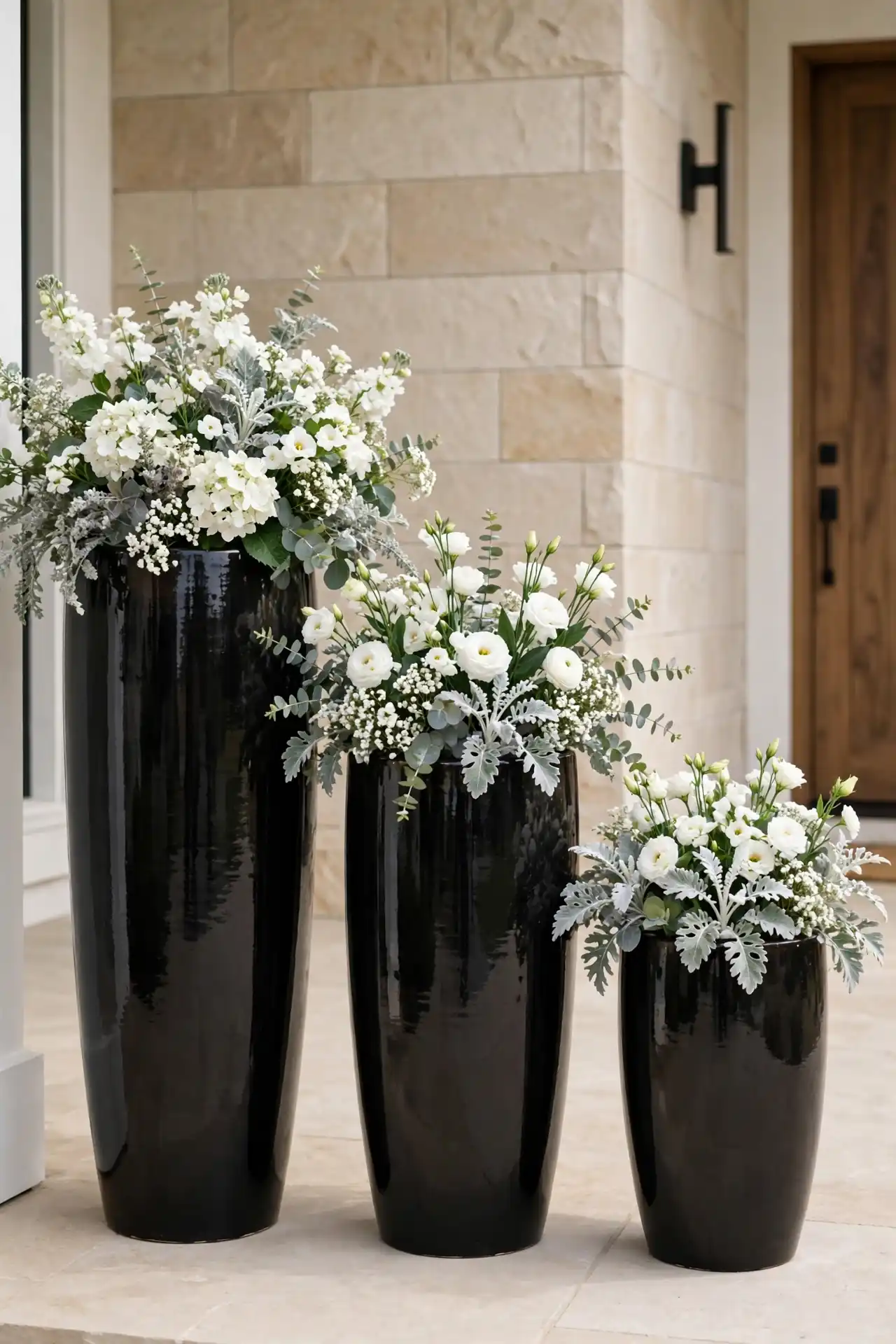
Glossy black ceramic columns deliver instant drama against light siding or pale stone. Their reflective surface catches sunlight beautifully during the day and glows under porch lights at night. Group three columns in descending heights for a staggered display that feels designed, not random. Fill them with white blooms or silver foliage to create sharp contrast that reads from the street.
Black ceramic chips if knocked over in wind, so add gravel to the base for ballast. A tall snake plant or fiddle leaf fig looks striking in these vessels indoors during winter. Keep one column empty except for fairy lights when plants rest between seasons, and the display still earns its keep.
Wooden Slat Towers
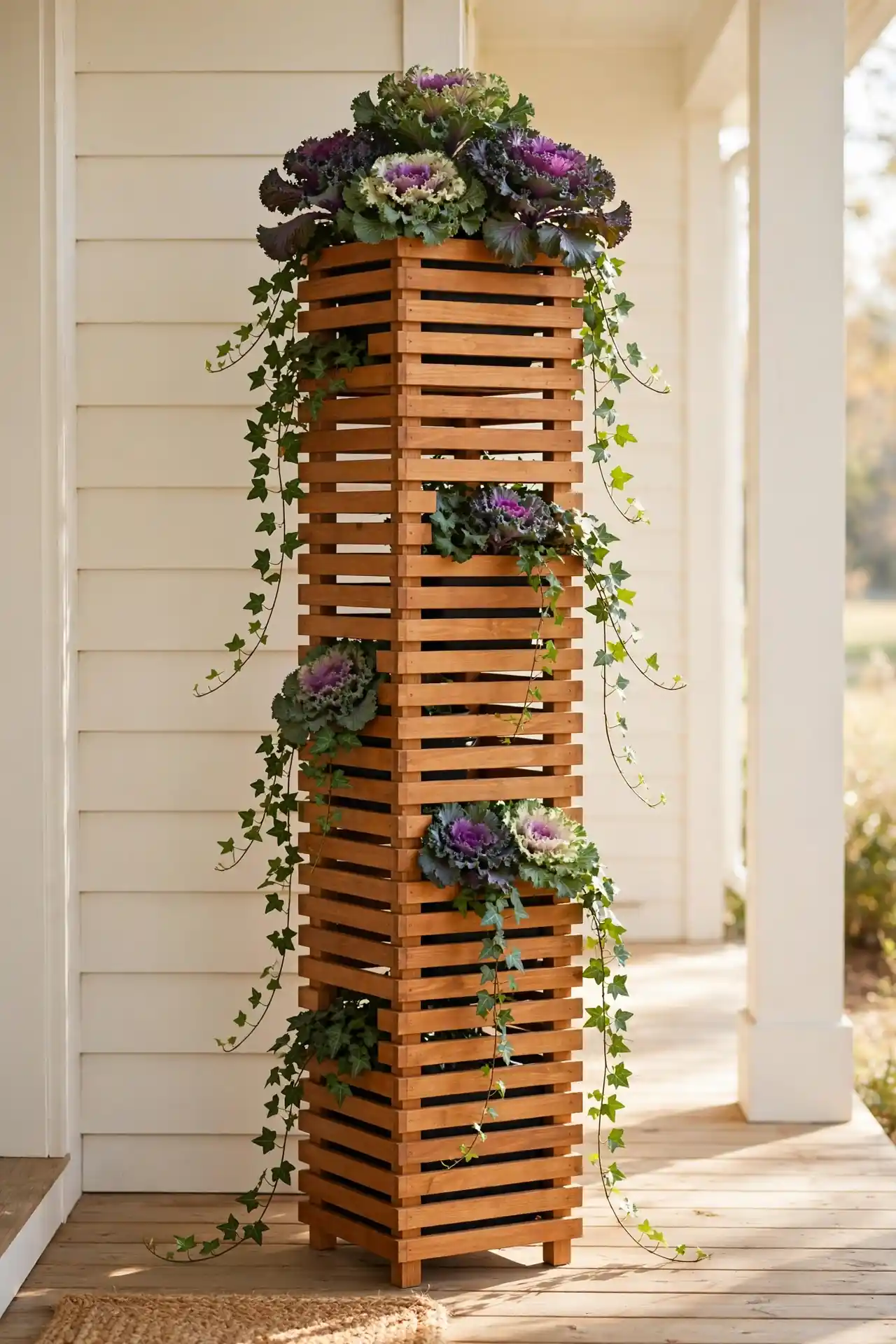
- Cut cedar slats to equal lengths and screw them to corner battens for a clean tower frame that drains well.
- Line the inside with landscape fabric so soil stays put while excess water escapes.
- Stain the wood a warm honey tone to keep the neutral look bright and natural.
- Drop in a nursery pot instead of planting directly so swaps take seconds.
- Top with ornamental kale or trailing ivy for texture that spills over the rim.
Wooden slat towers suit farmhouse and coastal porches because the grain adds warmth without heaviness. I have seen this work well in many cases where a bare corner needed softening. Sand and reseal once a year to keep the finish fresh through rain and sun.
Terracotta Stacks
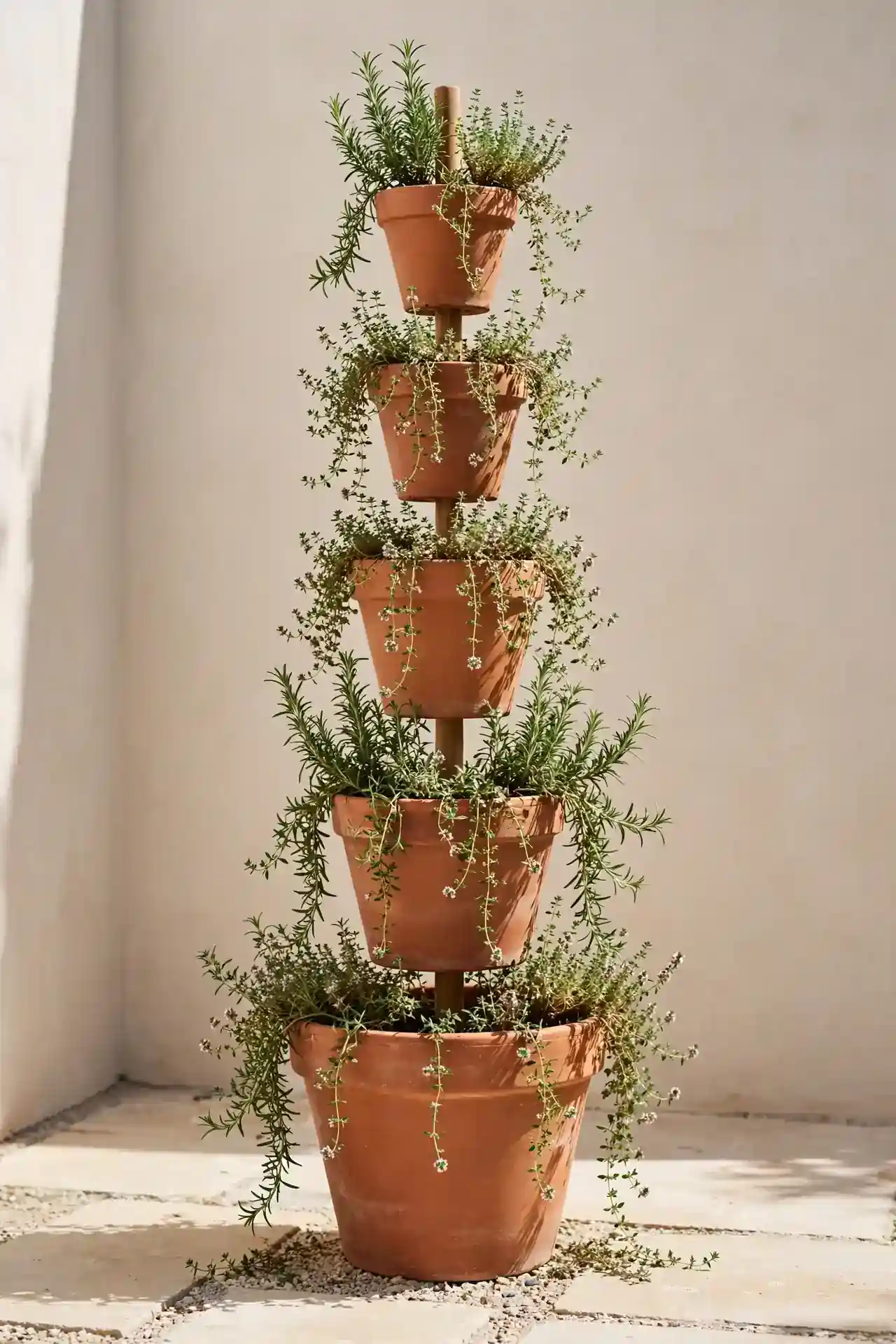
Quick Tip: Stack two or three graduated terracotta pots upside down over a wooden dowel driven into the ground for a rock-solid tower that survives storms. The dowel keeps every tier centered and stops the whole stack from tipping. Seal the inside with a waterproof liner so soil stays moist longer between waterings.
Terracotta ages gracefully, picking up moss and patina that new pots cannot fake. Plant each tier with something different, like trailing rosemary up top and thyme below, for a living sculpture. The porous clay wicks moisture, so water more often in summer heat. Move stacks against a warm wall in winter to protect roots from hard freezes.
Metal Cage Planters
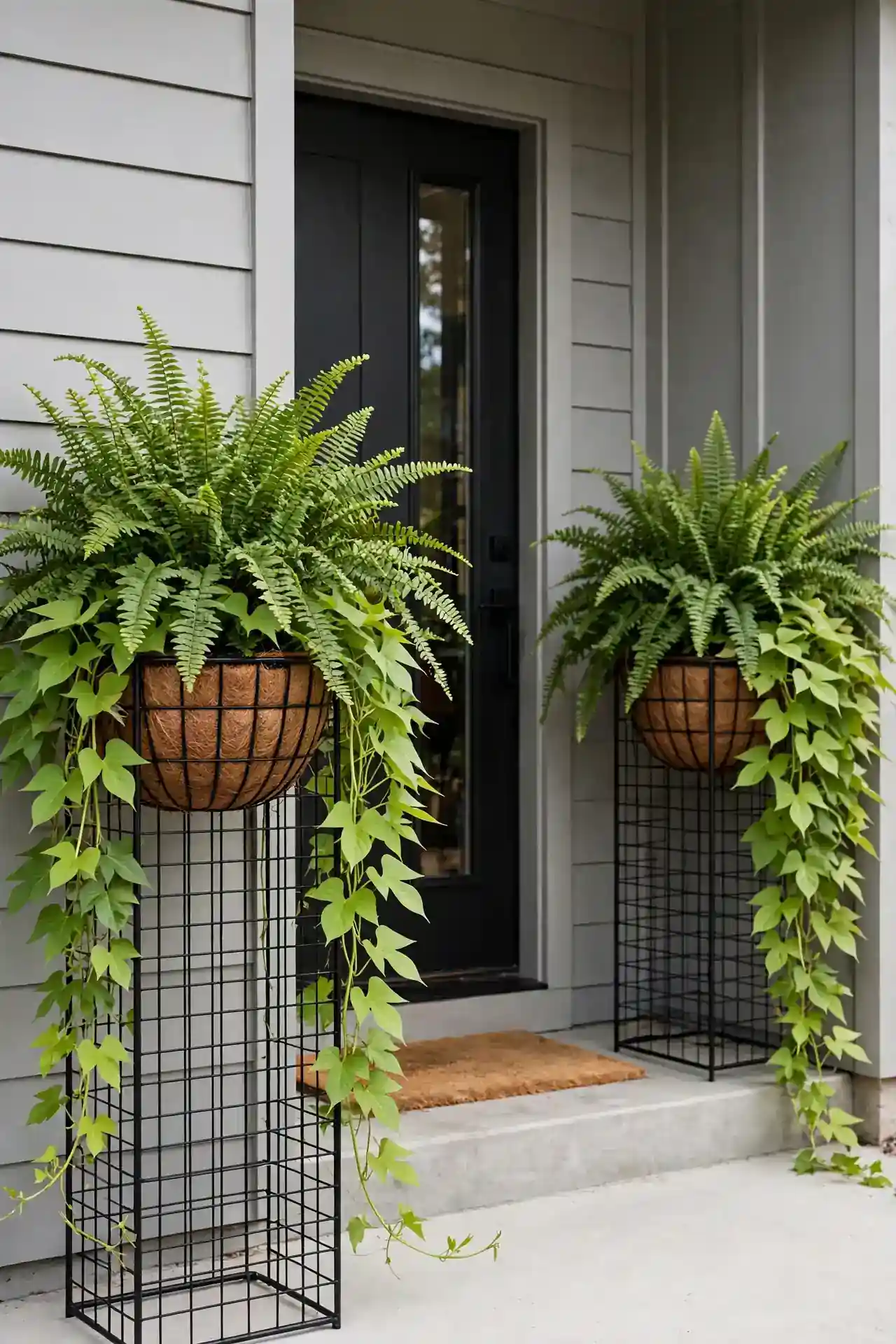
BEFORE: Your entry looked forgettable with two short plastic pots dwarfed by a tall door. The scale felt wrong and passersby walked straight past without a second glance.
AFTER: Two metal cage planters stuffed with coconut liner now frame the door like sentries. Ferns and trailing sweet potato vine spill over the edges, and suddenly the whole entry feels intentional and welcoming.
Metal cage planters cost little and suit industrial or cottage styles equally. Rust is the only real enemy, so choose powder-coated cages and check the coating yearly. In my experience, these look best overflowing, so plant generously from day one and let the greenery do the talking.
Concrete Cylinders
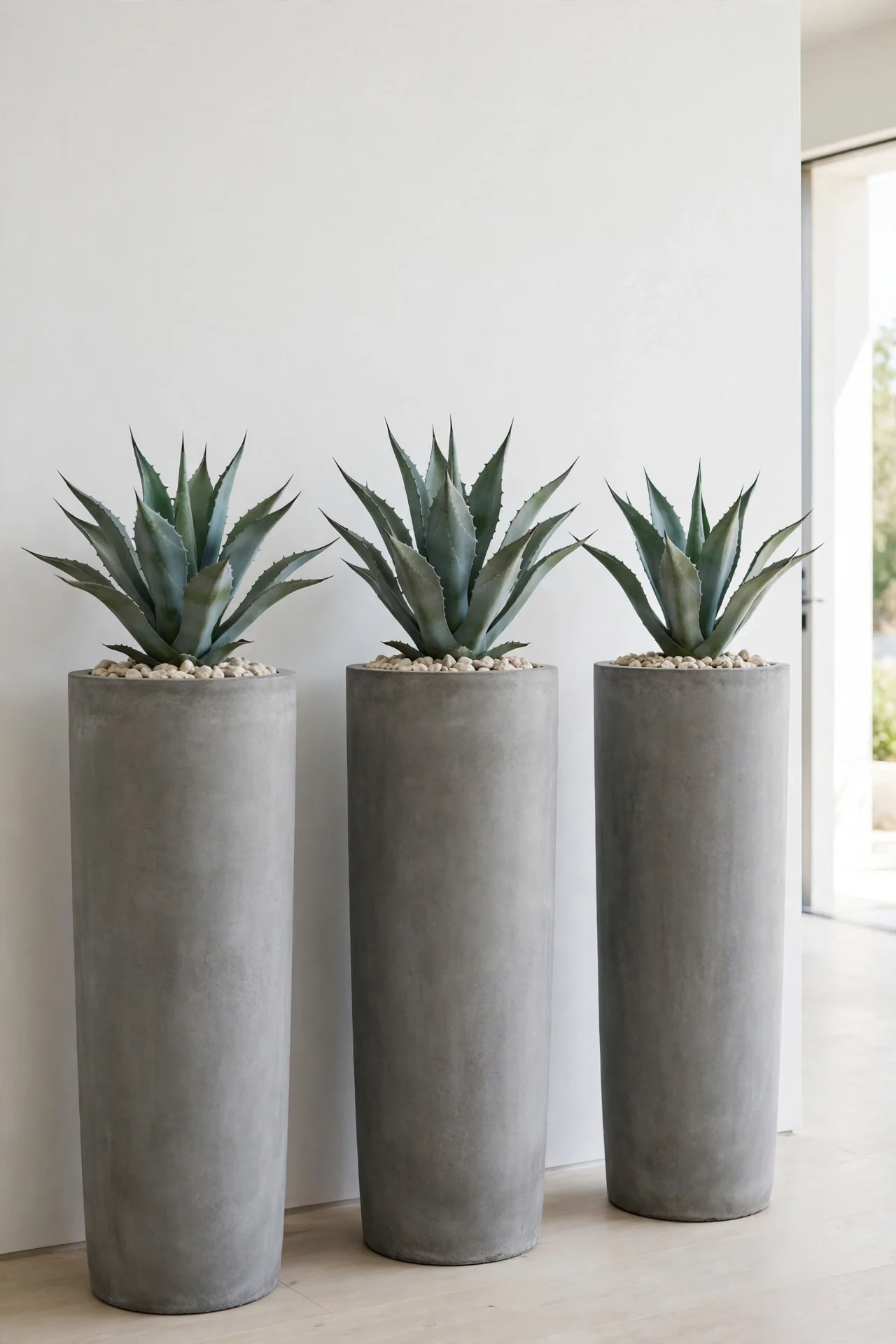
- Choose a concrete cylinder at least 24 inches tall so the scale reads from the curb.
- Drill drainage holes if the pot lacks them, then add a two-inch gravel layer.
- Fill with a sandy potting mix and plant a single architectural specimen like agave.
- Top-dress with light pebbles to keep soil in place and finish the look.
- Position the pair to frame a doorway, gate, or garden path for maximum symmetry.
Concrete cylinders bring a calm, sculptural weight that anchors modern entries. They are heavy enough to stay put in wind, which matters on open porches. Seal the concrete once a year to prevent staining and freeze damage.
Fiberglass Urns
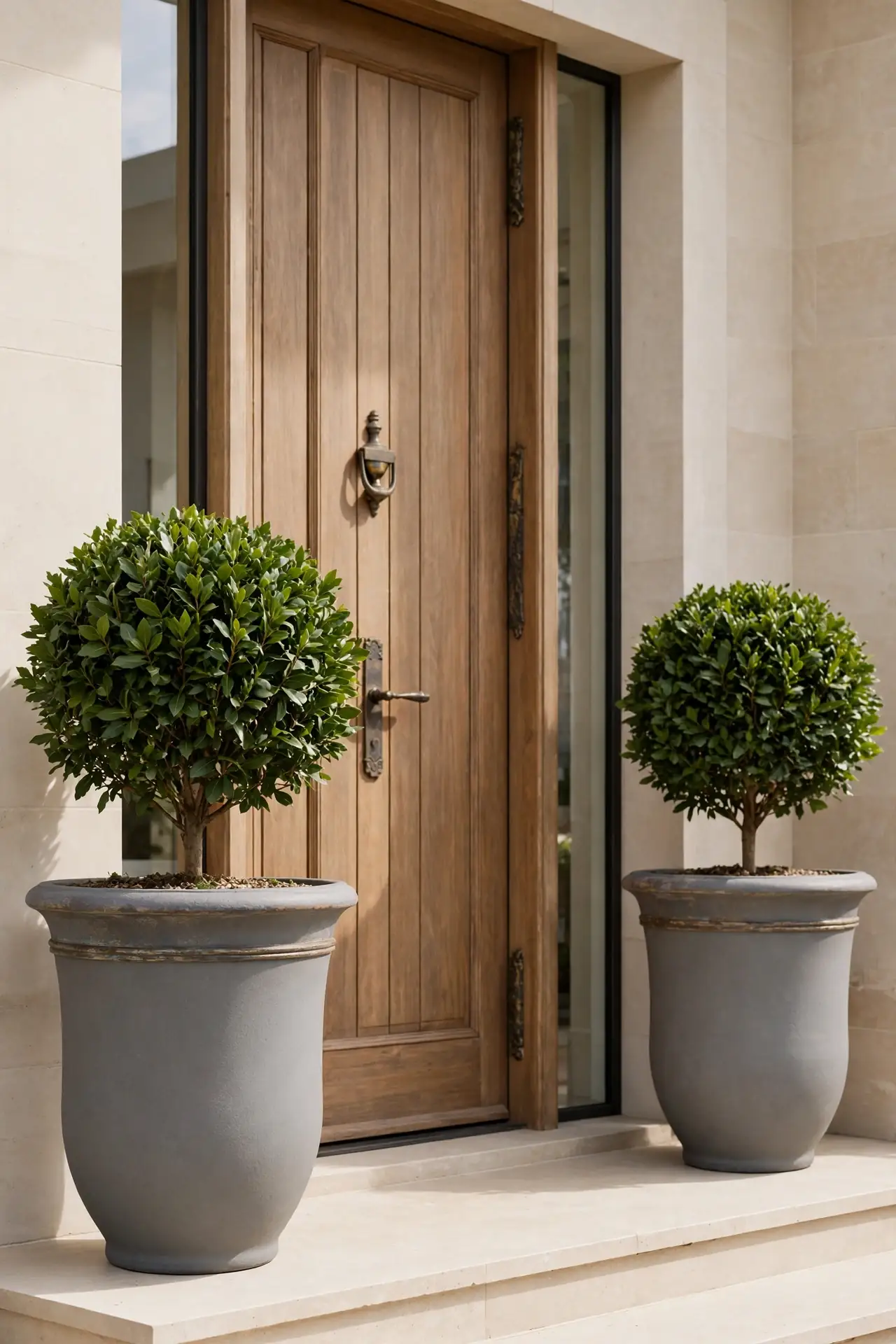
| Classic Urn Shape | Sleek Tapered Shape | |
|---|---|---|
| Cost | Mid range | Mid range |
| Weight | Light, easy to move | Light, easy to move |
| Style fit | Traditional entries | Modern entries |
| Care | Wipe clean monthly | Wipe clean monthly |
| Drainage | Drill holes easily | Drill holes easily |
Fiberglass urns mimic stone at a fraction of the weight and price. They hold tall plantings without wobbling and shrug off frost. Choose a matte finish in stone gray or aged bronze for the most convincing look. In windy spots, add a hidden brick inside the base for extra stability. Pair them with a clipped bay tree or spiral topiary for a formal welcome.
Rustic Stone Pillars
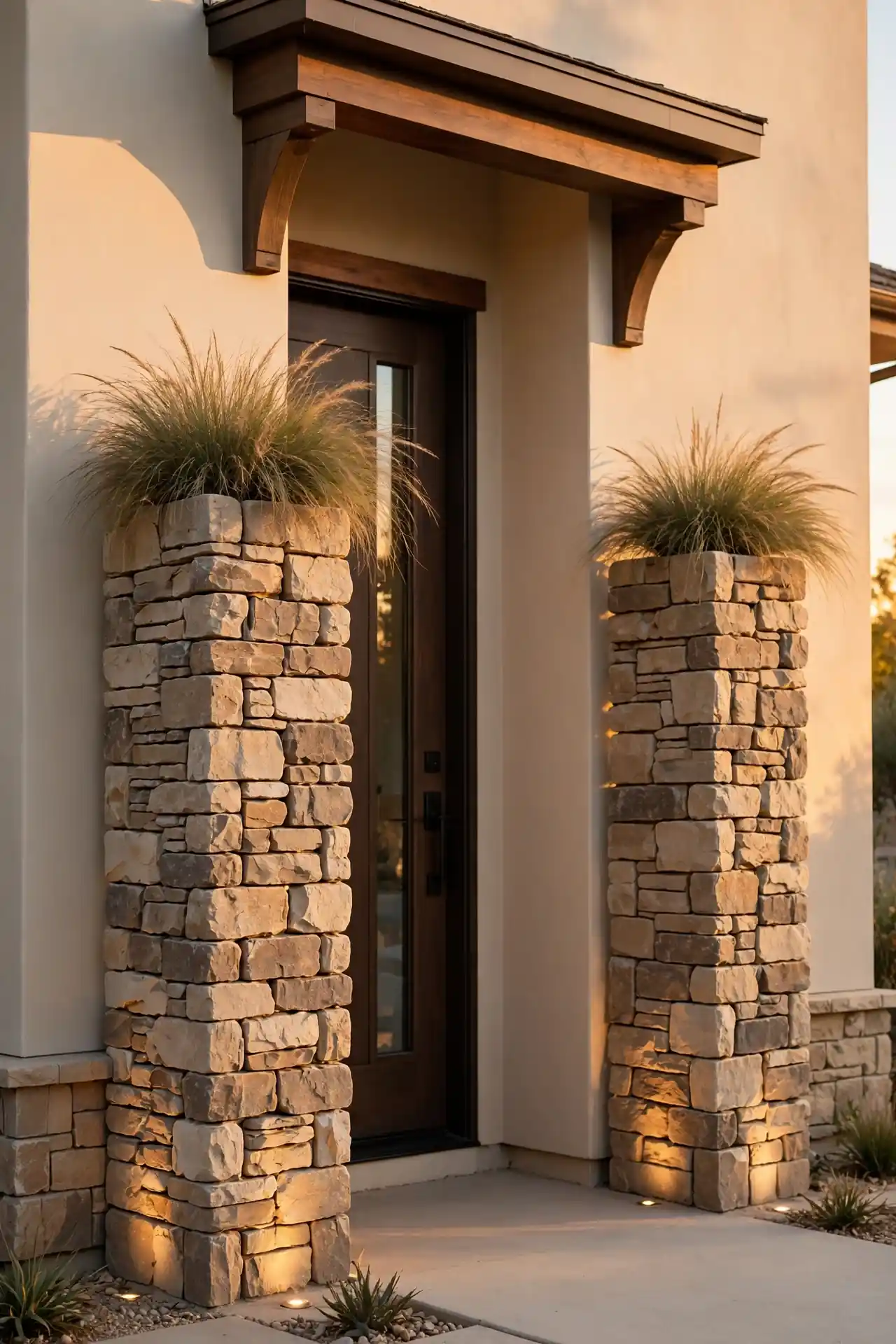
DO:
- Pick native stone pillars that echo your home’s foundation stone.
- Add one uplight per pillar to make the texture glow after dark.
- Plant low grasses around the base to soften the hard edges.
- Seal stone yearly in wet climates to stop moss from taking over.
DON’T:
- Don’t stack real stone without mortar on windy, exposed sites.
- Don’t forget drainage gaps or roots will rot behind the wall.
- Don’t mix three stone colors; two at most keeps it calm.
- Don’t place pillars where roof runoff pours directly on them.
Stone pillars feel permanent and grounded, which suits colonial and craftsman homes. They cost more upfront but outlive every other planter on this list. I’ve noticed they look best slightly imperfect, so skip the pressure washer and let character build.
Rattan Tall Baskets
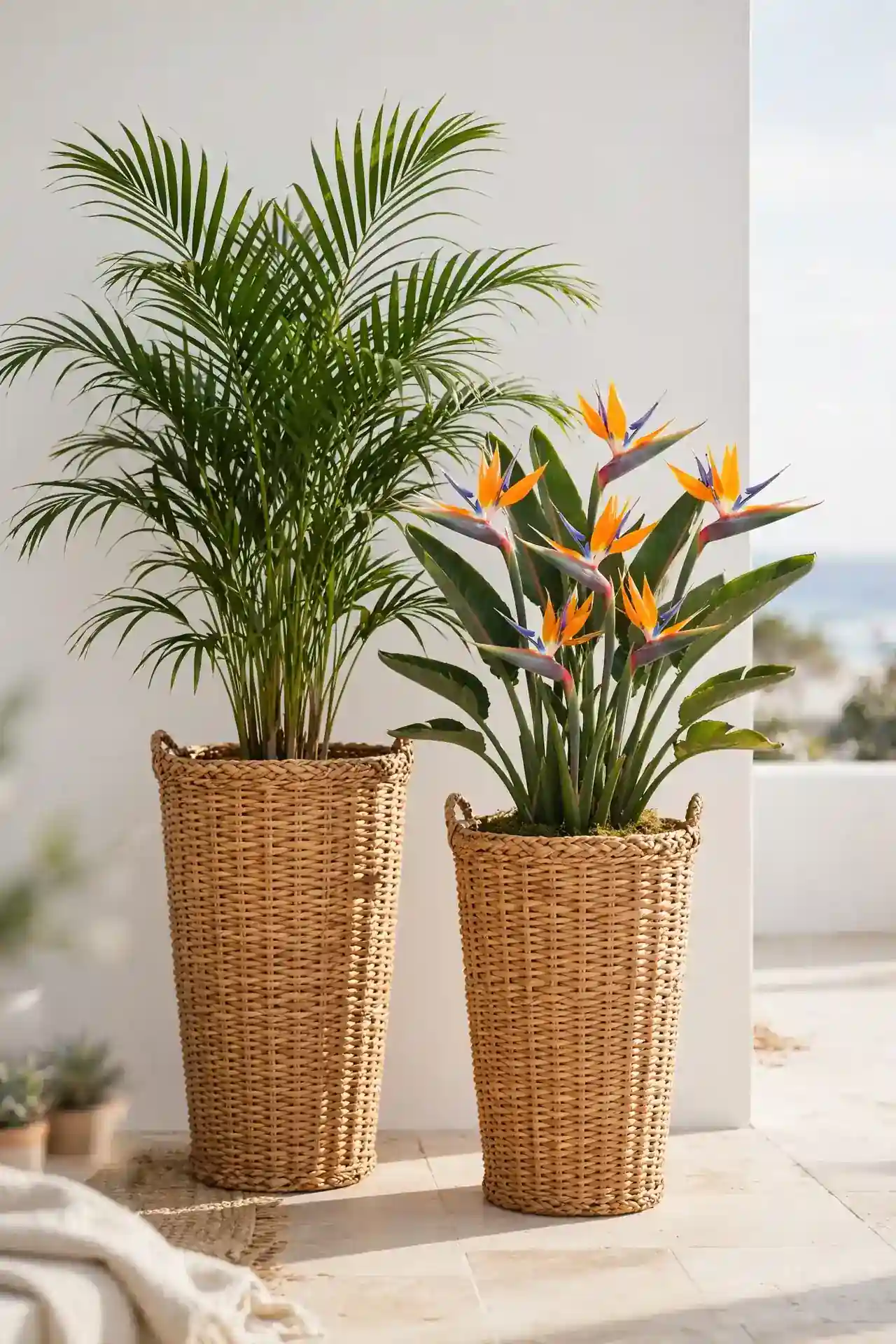
Cost: Low | Time: One afternoon | Skill Level: Beginner | Best For: Boho and coastal porches | Works In: Covered patios | Result: Instant texture | Difficulty: Easy
Rattan tall baskets warm up modern spaces with their woven texture and honey tones. Line them with a plastic inner pot to protect the weave from moisture. They are light enough to move for parties yet tall enough to make an impact. Pair with a palm or bird of paradise for a resort feel that never looks fussy. Refresh the weave with a yearly oil rub to keep it from drying out.
Boxwood Topiary Towers
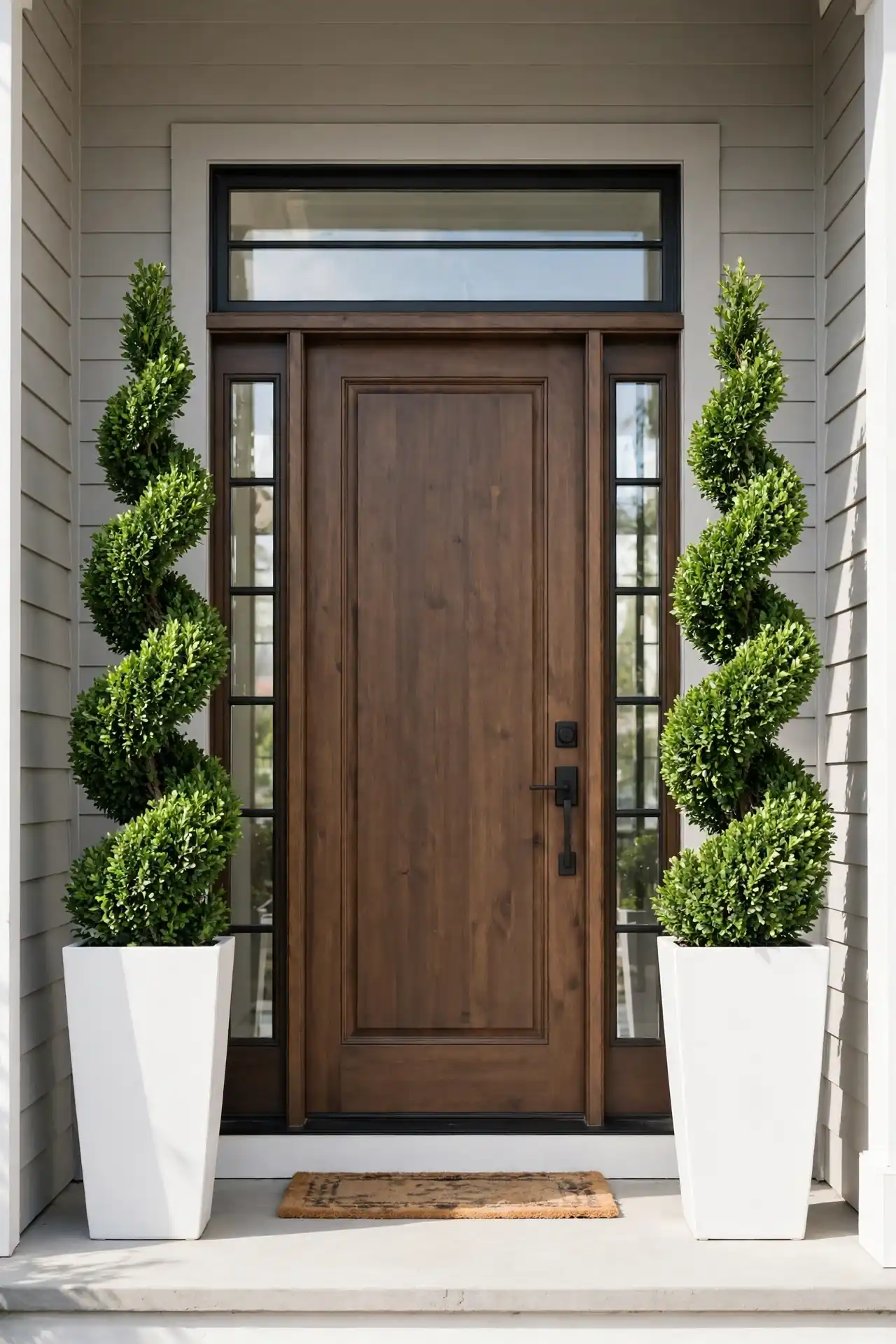
Boxwood topiary towers bring old-world formality to any doorstep without demanding constant attention. A spiral or cone shape clipped into a tall pot reads as luxury from fifty feet away. Buy pre-shaped specimens to skip years of training, then trim lightly each spring to hold the line. Two matching towers flanking a door create the kind of symmetry cameras love.
Water boxwood deeply but let the top inch dry between drinks to avoid root rot. A slow-release fertilizer in spring keeps the green dense and rich. That’s why many experts recommend morning watering, so foliage dries before nightfall and disease stays away.
Ornamental Grass Pillars
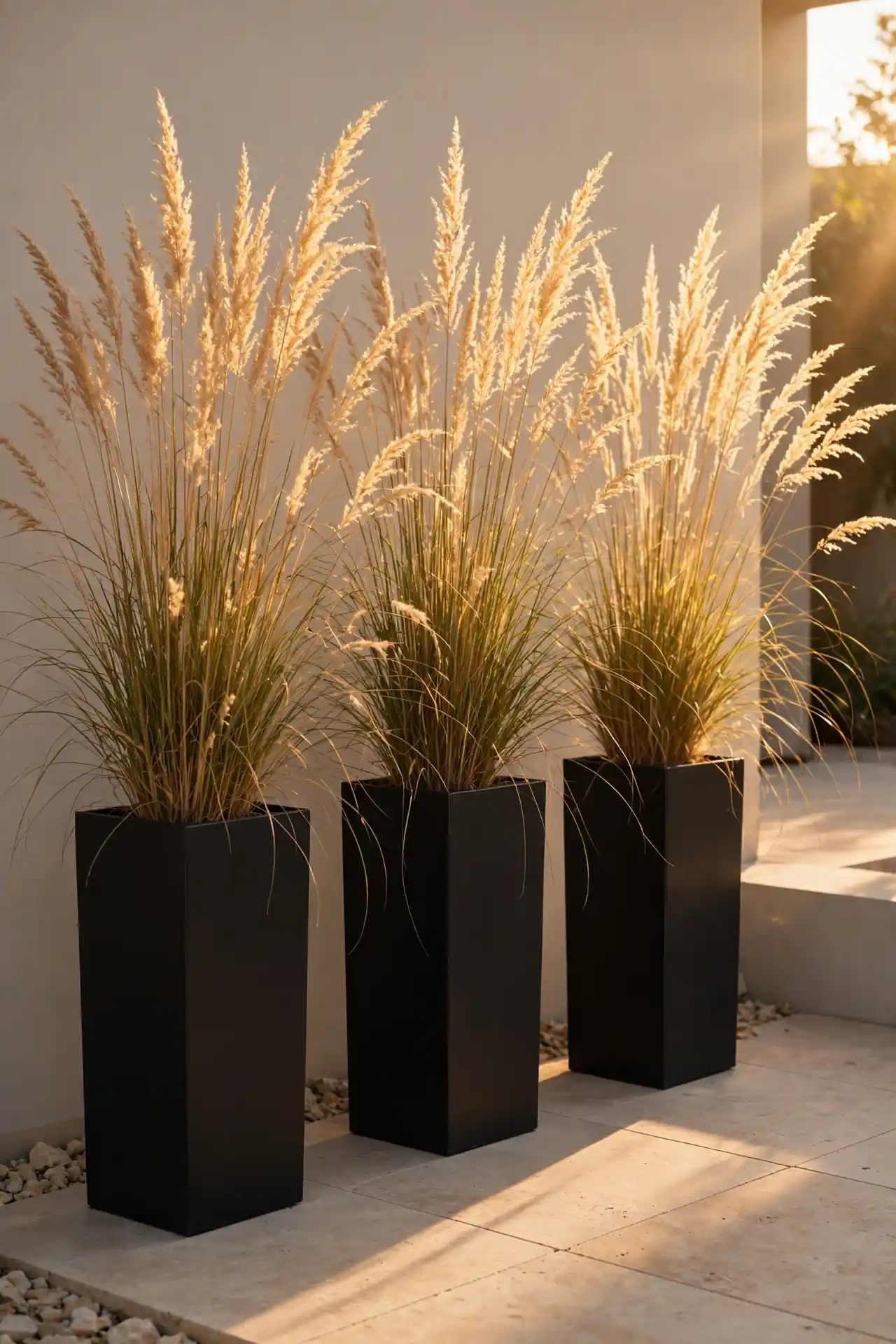
- Plant three feather reed grasses per tall pot for a full, upright screen.
- Choose sterile varieties so they never self-seed into your lawn.
- Cut the whole clump to six inches in late winter before new growth starts.
- Comb out dead blades in spring with a stiff rake for a tidy look.
- Mist foliage on hot evenings to keep tips from browning.
Ornamental grass pillars move with the breeze, adding life to still corners. They need almost no care once established, which suits busy households. In autumn the seed heads catch low sunlight beautifully. Leave them standing through winter for structure, then cut back hard in March.
Cascading Flower Spires
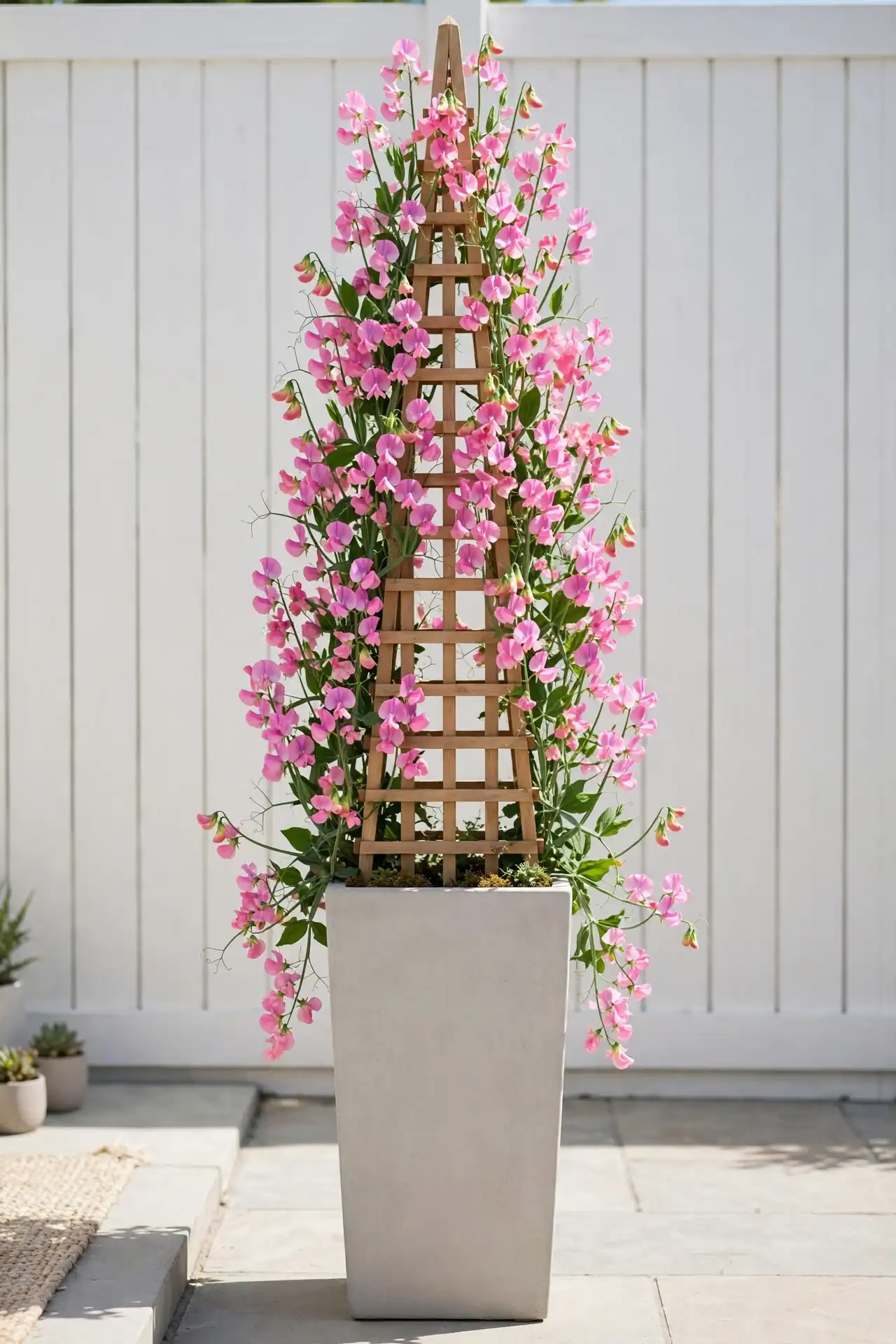
Quick Tip: Thread a tall obelisk trellis into the center of the planter before planting, then train sweet peas or morning glories up it. The blooms will climb the frame and cascade back down, creating a flower spire twice the height of the pot. Anchor the trellis deep so wind cannot topple the display.
Cascading flower spires deliver maximum color from a tiny footprint. Deadhead spent blooms weekly to keep the show running into fall. Feed with liquid fertilizer every two weeks because heavy bloomers eat a lot. Pick one color family per spire for a designer look that photographs well. In my experience, mixing heights inside the spire, tall center with low trailers, gives the fullest look.
Olive Tree Statements
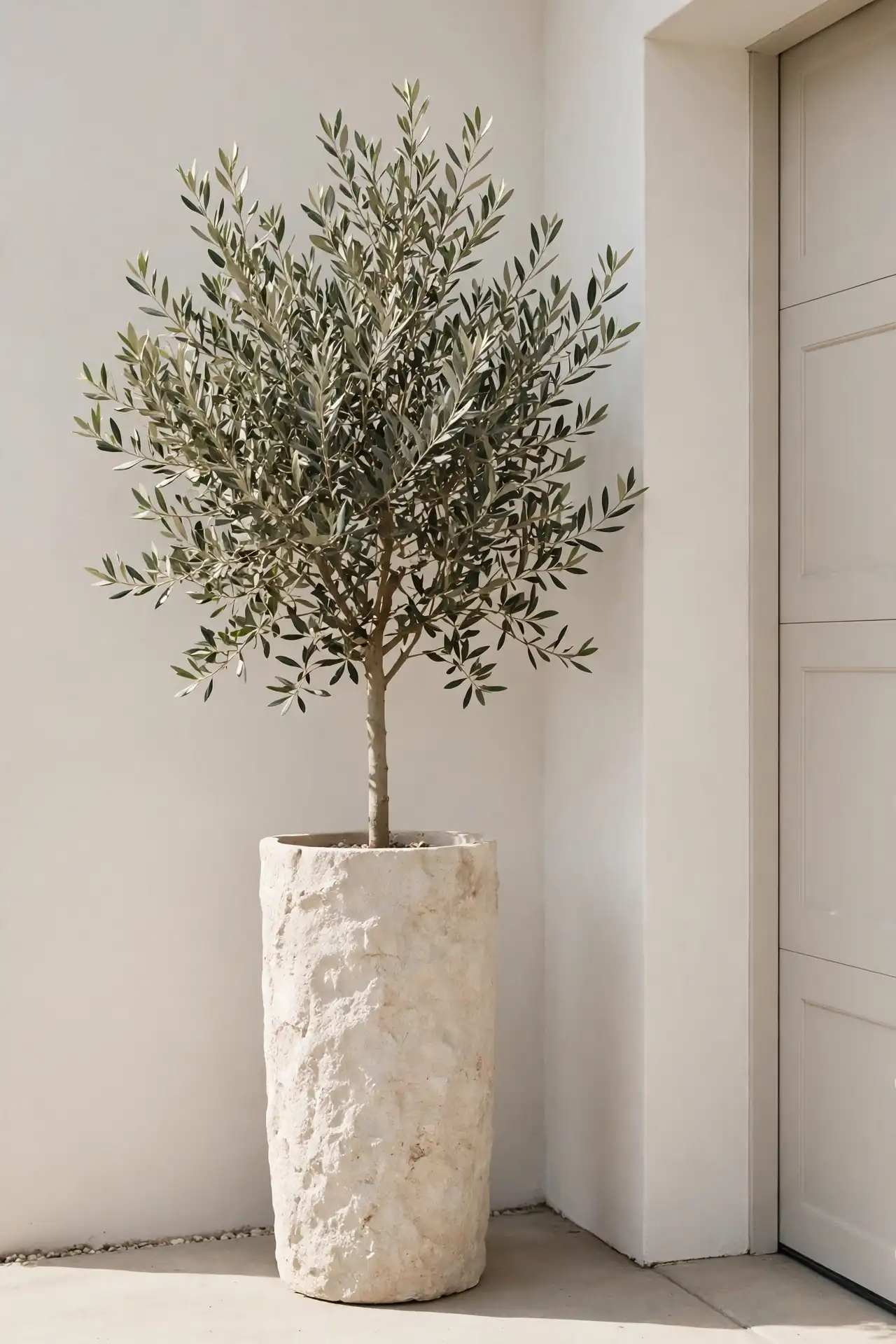
BEFORE: A bare corner by the garage sat empty for years, collecting leaves and looking neglected. The house felt smaller and darker without any living thing to greet visitors.
AFTER: A potted olive tree in a tall limestone-look planter now anchors that corner year-round. Its silvery leaves shimmer in the breeze and the trunk adds a sculptural, Mediterranean note that guests always compliment.
Olive trees bring a vacation feel to ordinary suburbs and thrive in large tall pots. Bring them indoors or wrap them when frost threatens. Prune lightly in spring to keep the canopy airy and the silhouette elegant. Feed monthly in summer for steady growth.
Evergreen Corner Pair
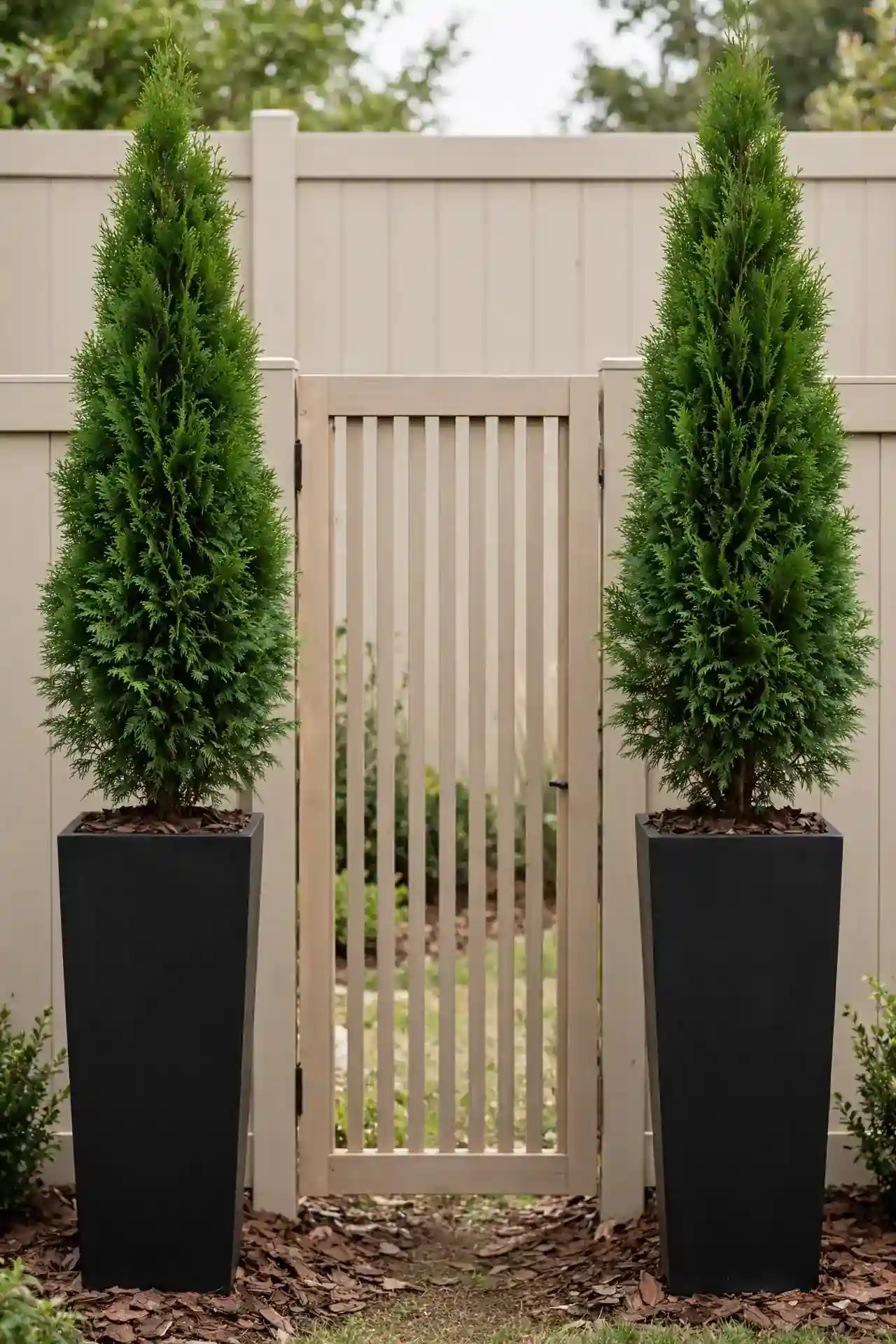
- Pick two identical tall planters so the pair reads as one deliberate gesture.
- Fill both with the same evergreen, like emerald arborvitae, for year-round structure.
- Set them wide enough that the doorway stays the star, not the pots.
- Mulch the tops with bark to lock in moisture and hide the soil.
- Spin each pot a quarter turn monthly so growth stays even on all sides.
An evergreen pair frames a corner or gate with quiet confidence. They look good in January and July, which few plantings can claim. Water deeply in the first year, then relax as roots establish. Shear lightly each spring to keep both sides mirror-matched.
Monochrome Planter Duos
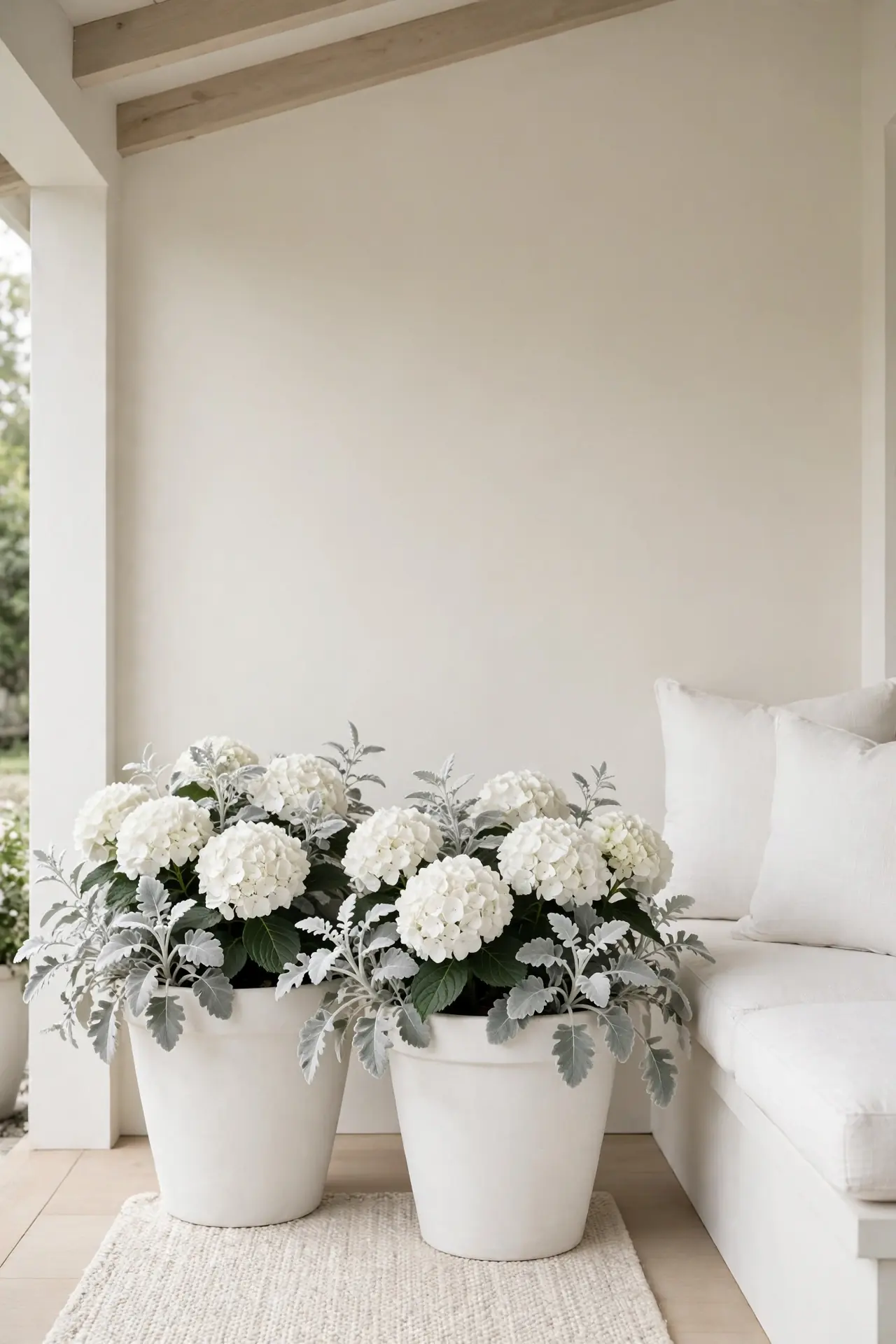
| All-White Duo | All-Black Duo | |
|---|---|---|
| Cost | Budget friendly | Budget friendly |
| Plant pick | White blooms plus silver foliage | Dark foliage plus black mondo grass |
| Best spot | Shady porches | Sunny entries |
| Mood | Crisp and calm | Bold and modern |
| Upkeep | Deadhead weekly | Trim monthly |
Monochrome duos prove that restraint photographs better than riot. Keeping both planters in one color family makes the planting look deliberate and high-end. This approach works beautifully alongside covered porch ideas where shade limits your plant palette. Repeat the accent color in a cushion or doormat to tie the whole entry together. I’ve seen this work well in many cases where colorful gardens nearby needed a calm anchor.
Tapered Modern Pots
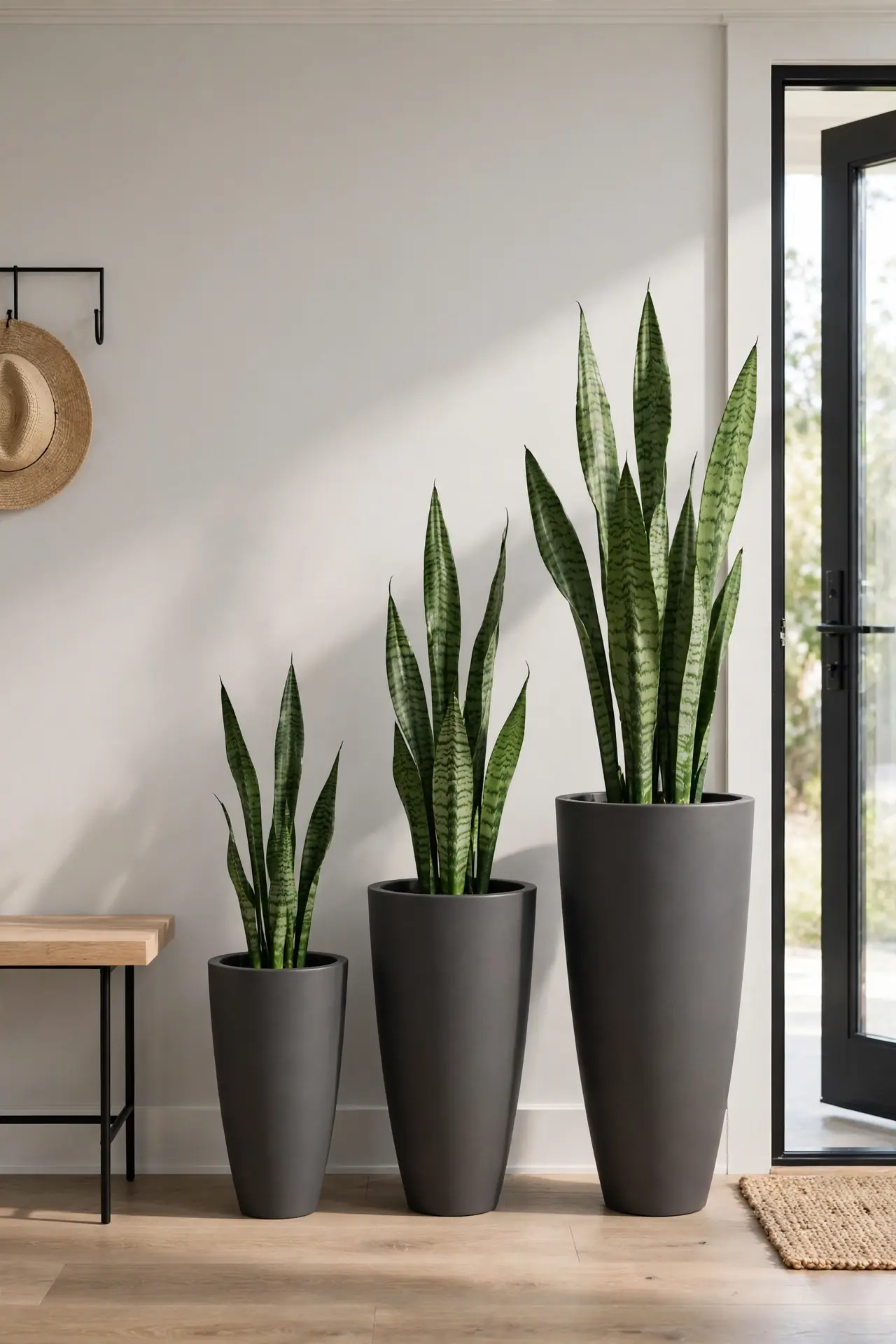
DO:
- Choose a tapered silhouette that narrows toward the base for a modern stance.
- Group odd numbers together; three pots beat two every time.
- Match the pot color to your trim for a built-in look.
- Fill the bottom third with foam peanuts to save on soil.
DON’T:
- Don’t pick glossy finishes in full sun; glare washes out the planting.
- Don’t skip the saucer on decks or tannins will stain the boards.
- Don’t plant mint directly; it escapes and bullies neighbors.
- Don’t forget winter drainage or freeze-thaw will crack the base.
Tapered pots lean contemporary without shouting about it. Their clean lines suit new builds and renovated entries alike. I recommend one hero plant per pot rather than a crowded mix. Give each specimen room and the geometry does the talking.
Bamboo Screen Planters
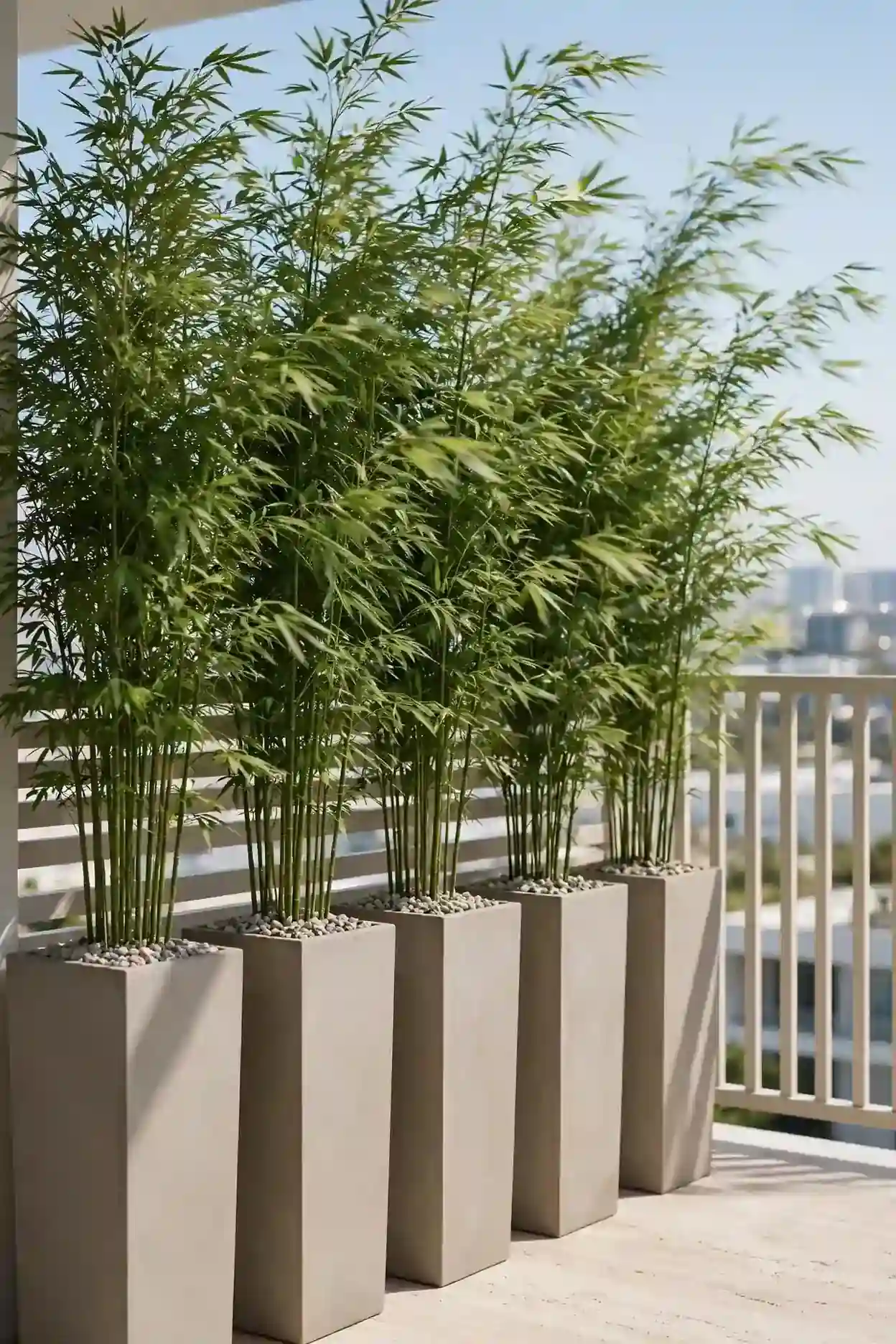
Cost: Medium | Time: One weekend | Skill Level: Intermediate | Best For: Privacy screens | Works In: Windy balconies | Result: Natural privacy | Difficulty: Moderate
Bamboo in tall planters grows into a living screen that blocks neighbors fast. Clumping varieties stay polite while running types need root barriers. Feed heavily in spring because bamboo is a hungry grower. Within two seasons you will have a green wall that rustles softly in the wind and hides everything behind it. Choose a wide pot so the root ball has room to spread. Top with pebble mulch to keep the tall stems from rocking in gusts.
Tiered Succulent Towers
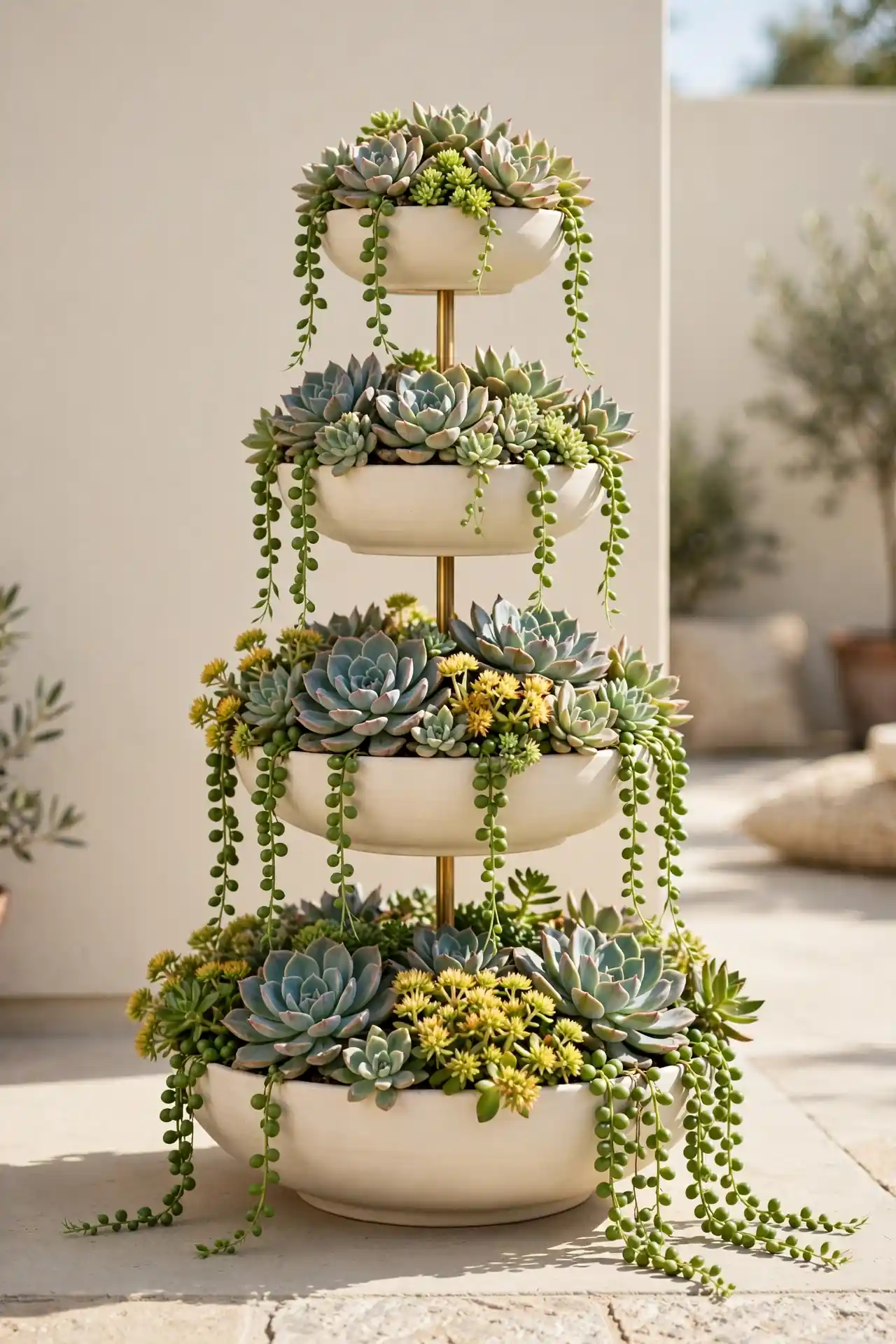
Stacked shallow bowls on a central rod create a succulent tower that thrives on neglect. Each tier gets full sun and perfect drainage, which is exactly what rosette succulents crave. Mix echeveria, sedum, and string-of-pearls for varied texture and trailing drama. The whole tower weighs little, so you can chase the sun across the patio.
Water only when the soil is bone dry, then soak thoroughly and walk away. A gritty cactus mix prevents the soggy roots succulents hate. Bring the tower under cover before the first frost. Come spring, pluck a few leaves to propagate and double your display for free.
Kitchen Herb Columns
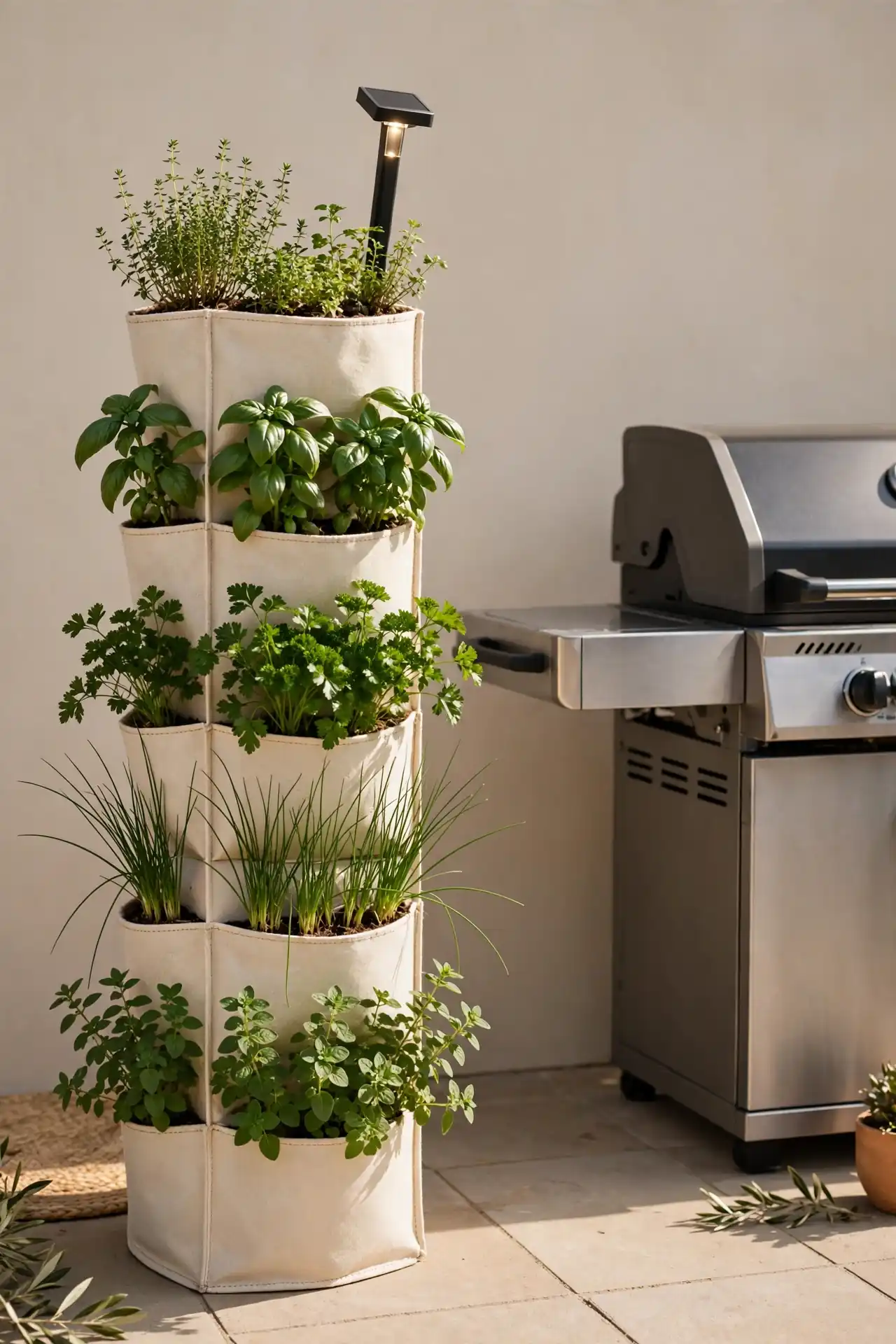
- Plant basil, parsley, and chives in the top tier where you will grab them daily.
- Tuck trailing thyme and oregano into lower pockets to use every inch.
- Add a small solar stake light so evening cooking stays easy.
- Rotate the tower weekly so no side gets leggy reaching for sun.
- Pinch flower buds off basil to keep the leaves sweet and tender.
A kitchen herb column puts fresh flavor steps from your grill. Tall towers keep herbs at picking height and away from hungry rabbits. Water daily in summer since stacked tiers dry fast. Snip often because regular harvesting is what keeps herbs bushy and productive.
Planter Lamp Combos
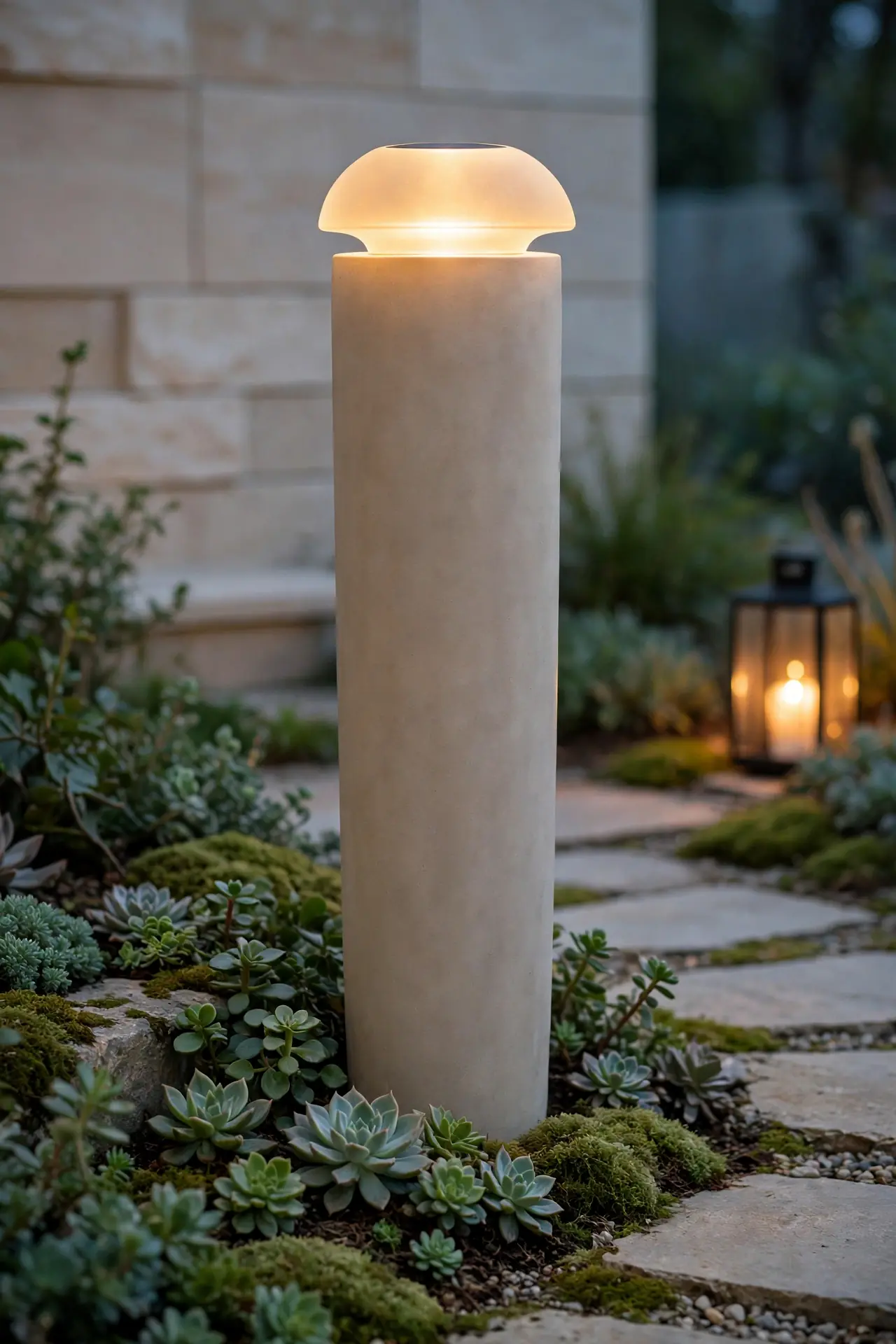
Quick Tip: Choose a planter with a hollow core made for a solar light cap, then fill around it with low succulents or moss. The light charges by day and glows softly at night, turning an ordinary pot into a lantern that marks your path. Stake the core firmly so wind cannot wobble the glow.
Planter lamp combos solve lighting and greenery in one purchase. They mark pathways, frame gates, and make evening patios feel magical. Look for warm white LEDs rather than harsh blue tones. Clean the solar panel monthly so charging stays strong through the seasons. In my experience, two flanking a walkway beat a whole row scattered around.
Trellis Climber Pots
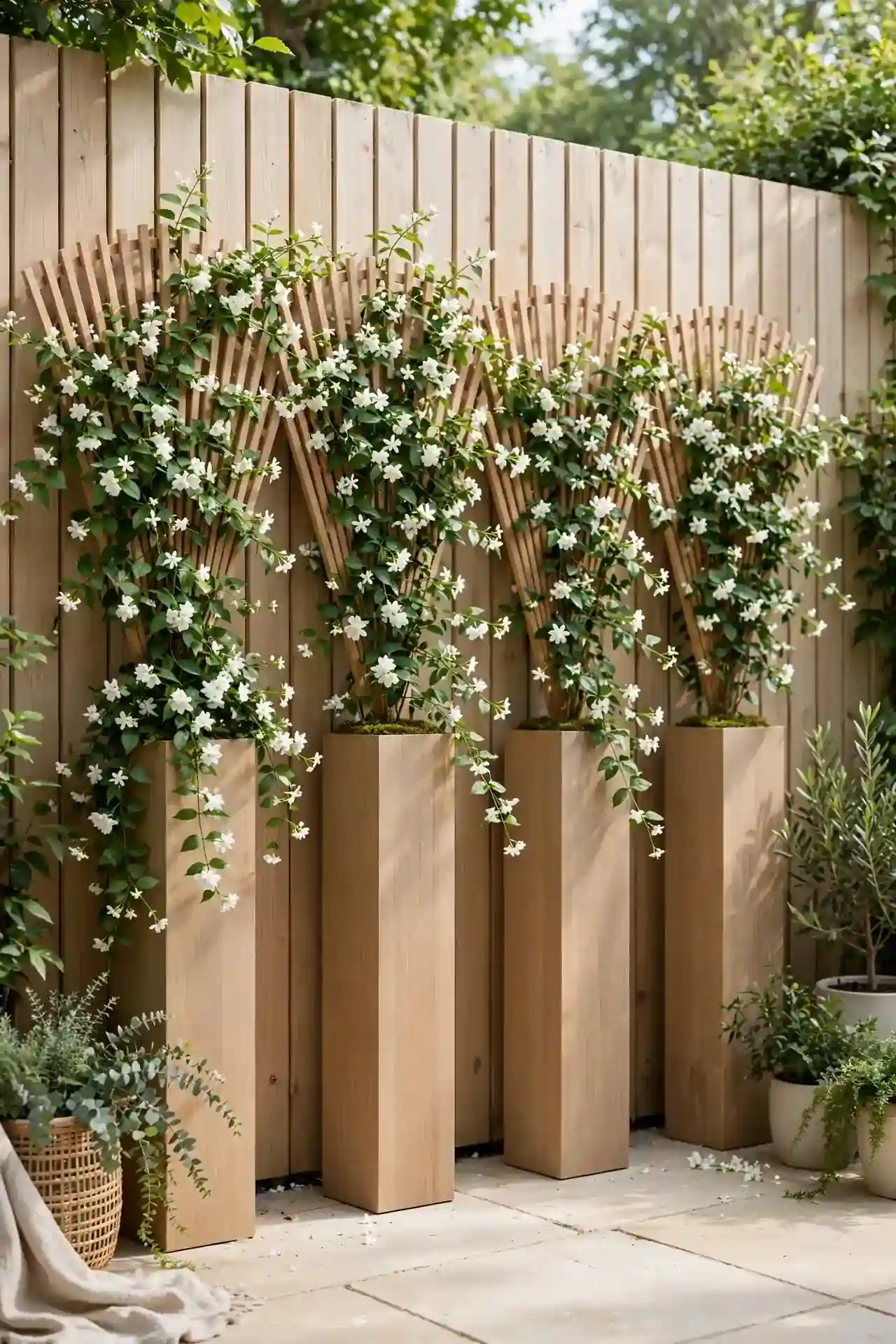
BEFORE: A plain fence line stretched dull and gray behind the patio furniture. It offered privacy but zero personality, and the seating area felt boxed in.
AFTER: Tall planters with fan trellises now march along the fence, each carrying jasmine or clematis. The vines are already weaving upward, and the patio feels like a garden room instead of a box.
Trellis climber pots add vertical gardens where ground space is tight. Secure the trellis to the pot so the whole unit moves as one. Prune climbers yearly to keep them from overwhelming the frame. Within one season, bare walls and fences disappear behind green.
Water Feature Planters
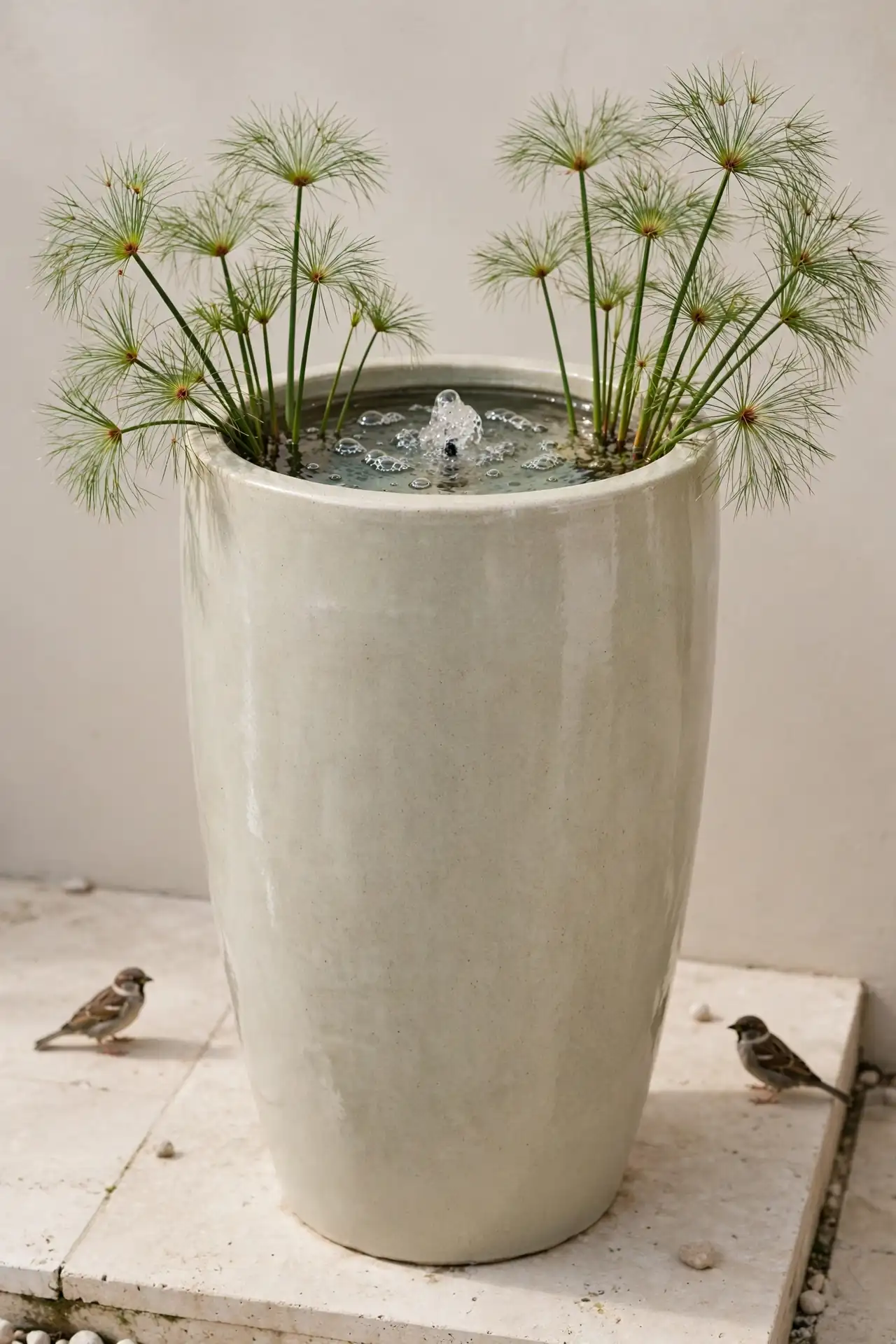
- Pick a tall glazed pot with a wide mouth to hold both plants and a small pump.
- Set a sealed submersible pump inside, running the cord out the drainage hole.
- Plant water-tolerant greenery like papyrus around the edges of the pot.
- Fill with water, switch on, and adjust the flow to a gentle trickle.
Water feature planters bring the calm sound of trickling water to small patios. The moving water also attracts birds, which adds life to quiet corners. Top up the water weekly since sun and wind steal it fast. In freezing weather, drain the pot and store the pump indoors.
Front Door Frames
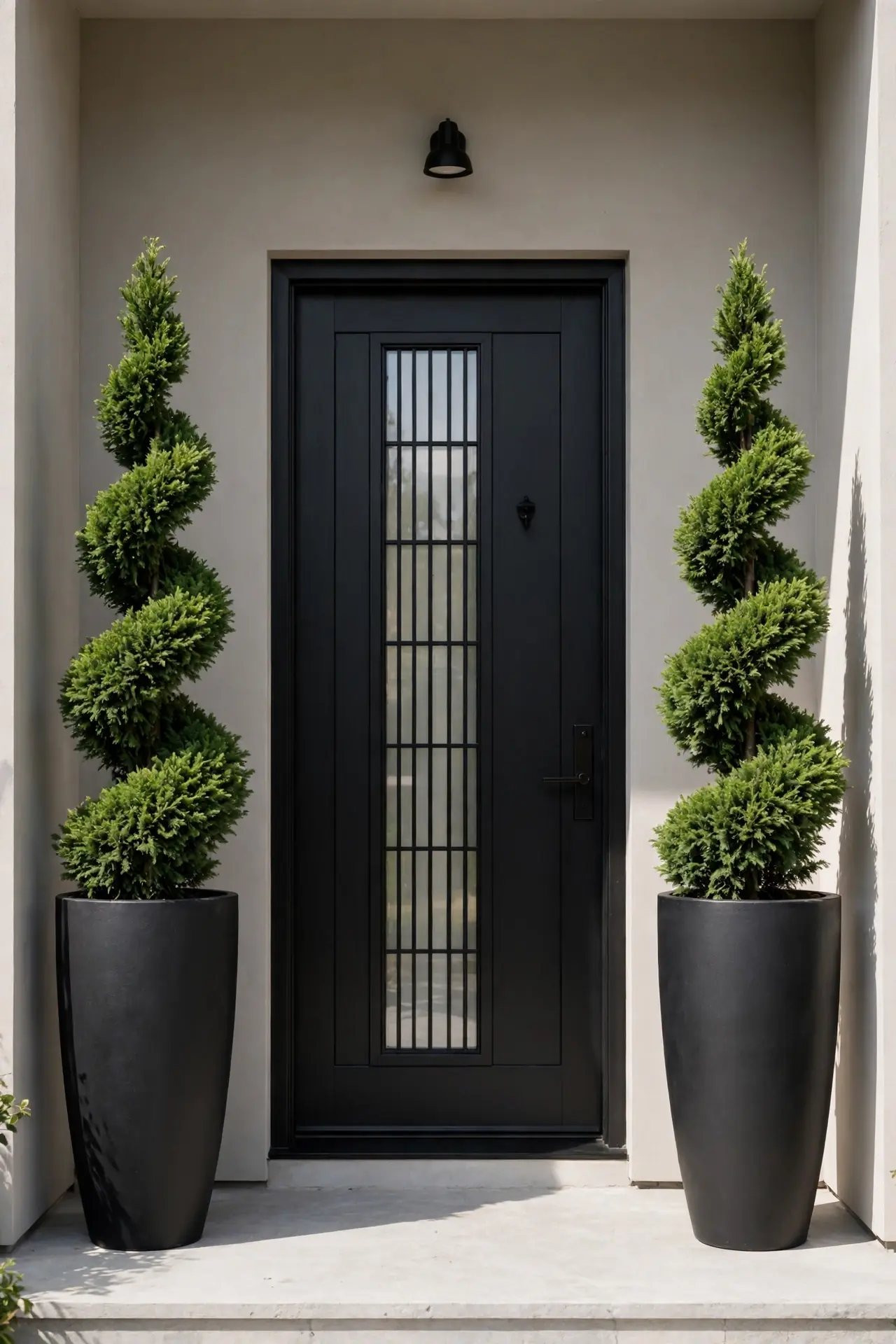
| Single Statement Pot | Paired Matching Pots | |
|---|---|---|
| Cost | One large pot | Two medium pots |
| Plant pick | One olive or bay tree | Twin boxwood cones |
| Best spot | Beside the door | Flanking the door |
| Upkeep | Water twice weekly | Water twice weekly |
| Winter look | Evergreen keeps shape | Evergreens keep shape |
Framing the front door with tall planters is the oldest curb appeal trick in the book. Symmetry tells visitors this home is cared for before they even knock. Keep both sides identical in pot, plant, and height for the strongest effect. Refresh the planting each season so the welcome never looks tired. That’s why many experts recommend evergreens here; they hold the frame all year.
Color Block Columns
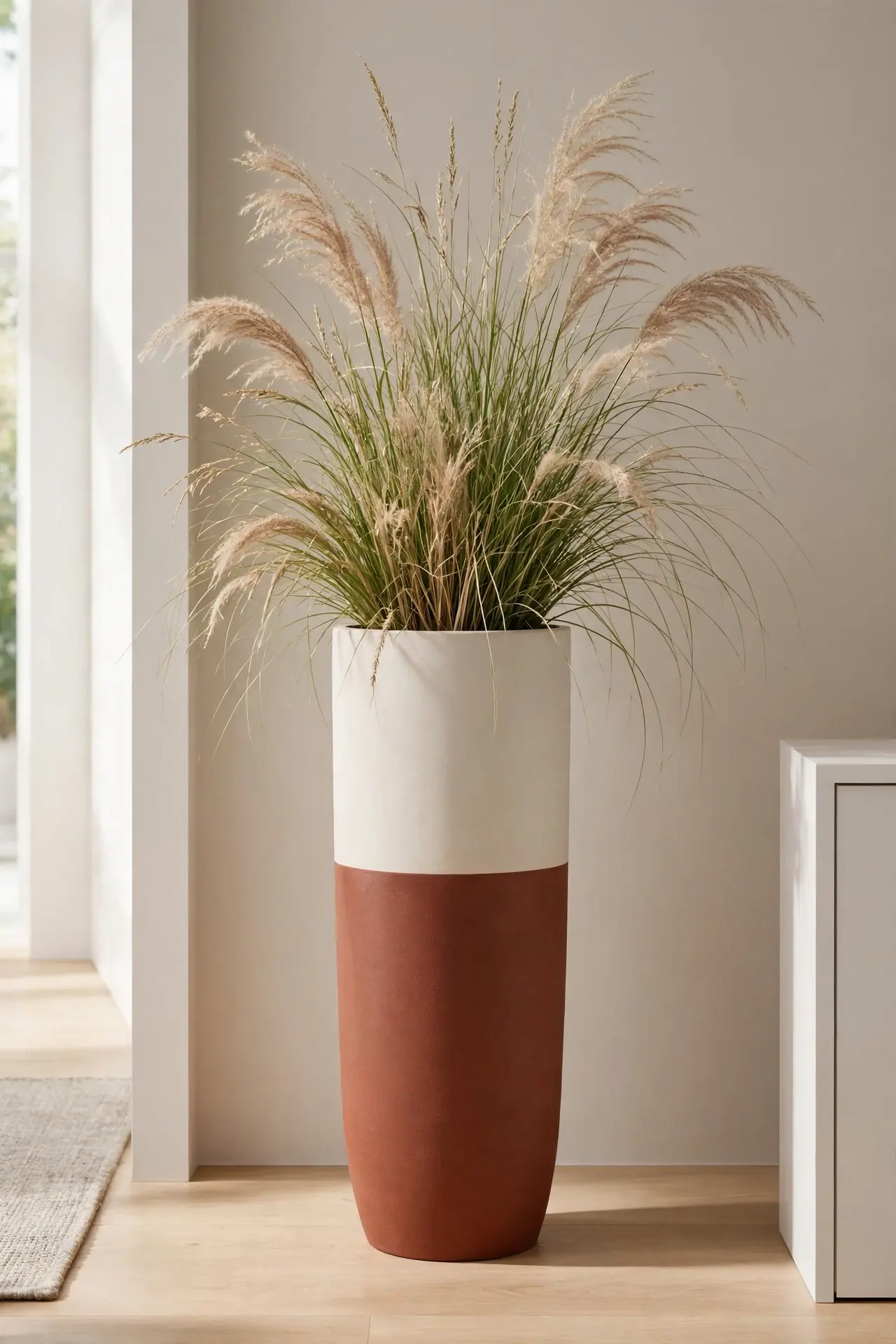
DO:
- Paint the lower half a deep tone and keep the top neutral for a modern split.
- Use exterior masonry paint so the color survives rain and sun.
- Repeat one block color in nearby cushions to tie the scheme together.
DON’T:
- Don’t use more than two colors or the calm neutral look shatters.
- Don’t paint inside the pot; chemicals can leach into the soil.
- Don’t skip primer on raw concrete or the paint will peel by spring.
Color block columns let renters and commitment-phobes play with bold style cheaply. A painted band at the base grounds the planter and hides scuffs. When trends change, a fresh coat resets the look in an afternoon. Stick to earthy tones if you want the color to age gracefully.
Seasonal Swap Toppers
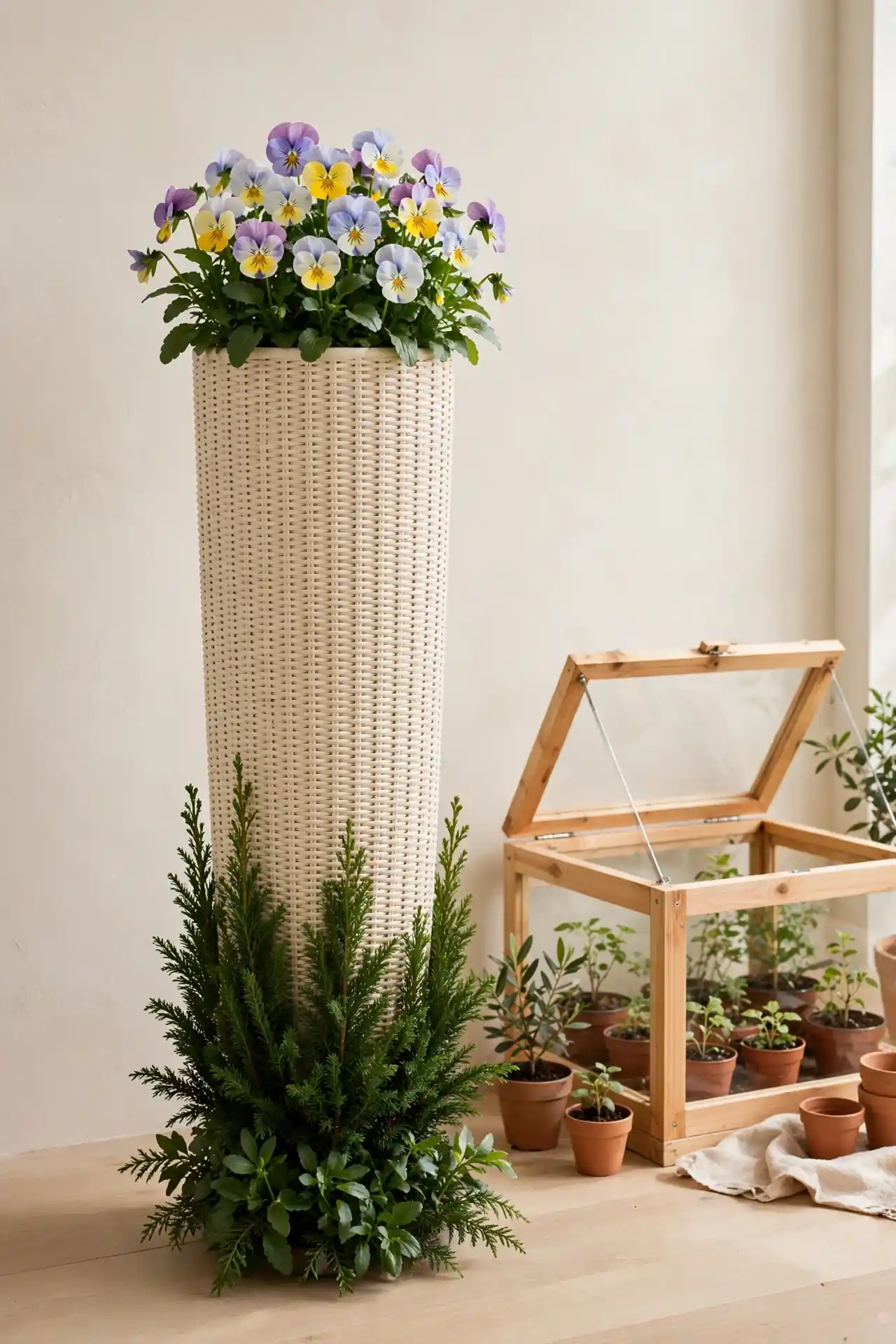
Cost: Low | Time: 30 minutes per pot | Skill Level: Beginner | Best For: Holiday refreshes | Works In: All climates | Result: Year-round freshness | Difficulty: Easy
Seasonal swap toppers are the secret to planters that never look dated. Keep the tall base planting permanent, then change only the top layer with the season. Spring pansies, summer petunias, fall mums, winter greens; each swap takes minutes. Store off-season toppers in a cold frame so they wait their turn cheaply. Photograph each arrangement so you can repeat your favorites next year. A small notebook of what worked saves guesswork every season.
Conclusion
Tall planters are the fastest way to give your outdoors a confident, finished feel. From sculptural olive trees to simple grass pillars, these tall outdoor planter ideas prove that height does the heavy lifting in any garden design. Pick the two or three styles that match your home, start with your entryway, and build from there. I’ve seen how small changes like these can completely shift the way a space feels. Save your favorites on Pinterest, try one this weekend, and share a photo of the result. Your curb appeal will thank you.
One Comment