
23 Cozy Bedroom Storage Ideas for Blissful Calm Today
Clutter can quietly make a cozy bedroom feel cramped, even when the room itself is beautifully decorated. Cozy bedroom storage ideas can help clear those crowded surfaces and unused corners while keeping the warmth that makes a bedroom inviting.
This collection focuses on practical ways to store blankets, clothing, accessories, books, and everyday essentials without making the room feel overloaded. You’ll find ideas for under the bed, beside the nightstand, inside the closet, along empty walls, and in overlooked corners.
In my experience, the most effective bedroom storage solutions are the ones that make everyday habits easier. A basket beside the bed, a divided drawer, or a slim cabinet can save minutes each day while keeping visual clutter under control. Whether your bedroom is small, rented, or simply short on storage, these ideas can help you create a space that feels calmer, cleaner, and easier to enjoy.
Woven Basket Bedside Storage
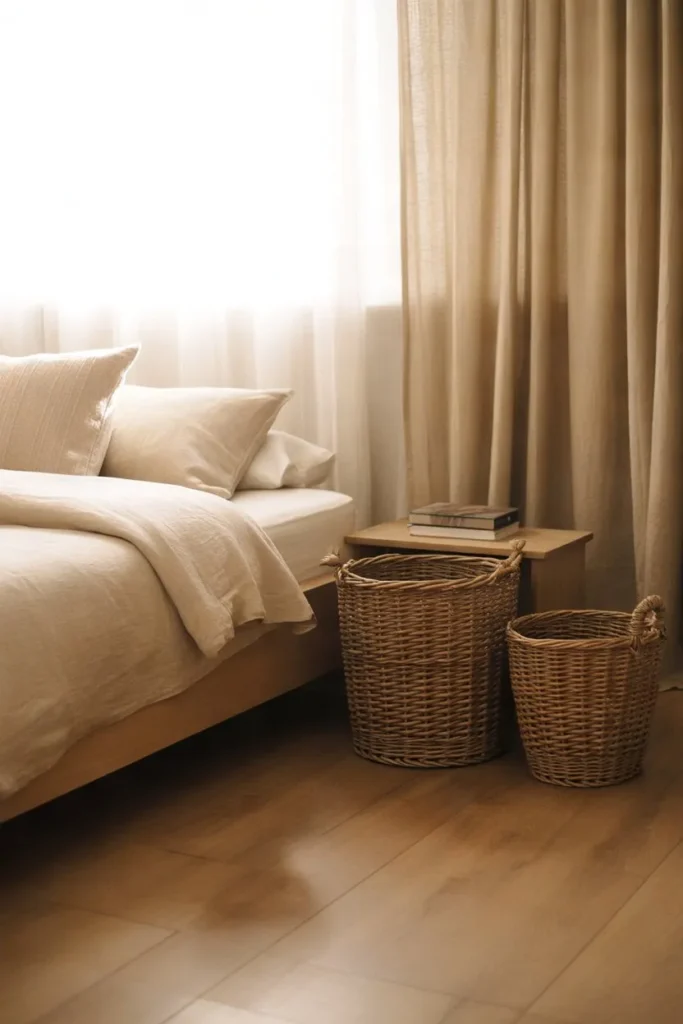
A bedside area can hold more than a lamp and book. Slide two woven baskets beneath a narrow nightstand to store extra blankets, slippers, reading materials, or small accessories. Choose baskets with sturdy handles so they can be pulled forward without disturbing nearby furniture.
Keep the basket colors close to your bedding and flooring for a quiet, coordinated look. In my experience, matching natural textures helps storage blend into the room instead of making it feel like another piece of furniture. A rechargeable lamp or slim plug-in fixture can also keep the bedside area practical without taking up much surface space. For more lighting inspiration that works well in rental bedrooms, explore these renter friendly lighting upgrades for simple ways to brighten the space. Label one basket for bedtime essentials and reserve the other for less frequently used items.
Built-In Underbed Drawers
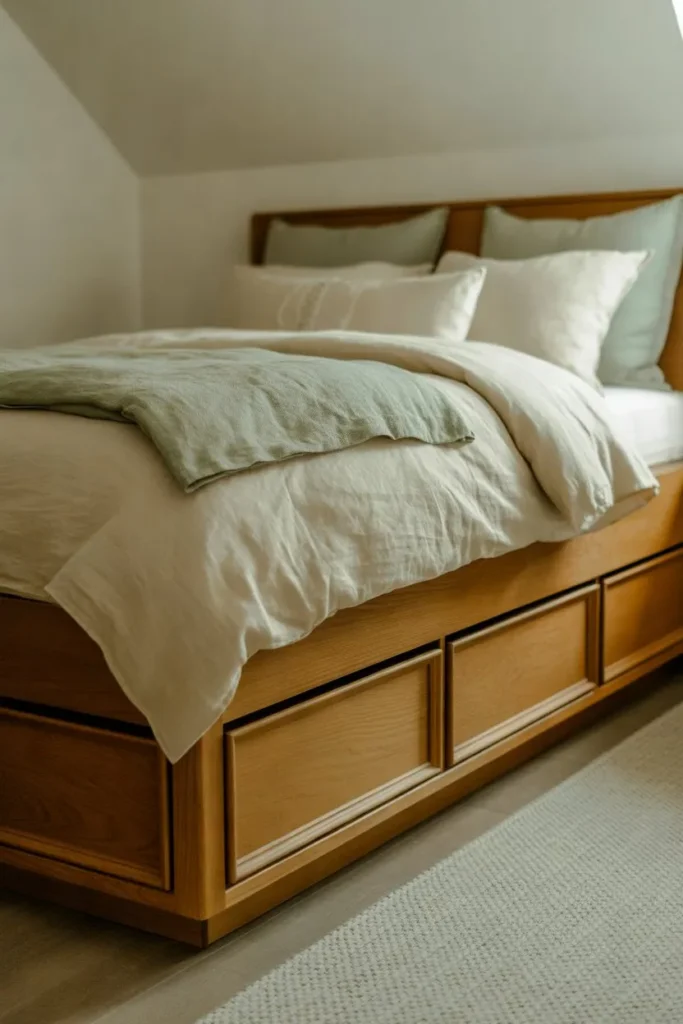
- Choose drawers that extend far enough to reach the back of the storage space.
- Store seasonal clothing, spare bedding, or rarely used accessories inside.
- Use shallow organizers to prevent smaller items from becoming mixed together.
- Keep everyday belongings in the easiest-to-reach drawers.
- Add drawer labels if several compartments hold different categories.
Underbed drawers work especially well in bedrooms where floor space is limited. They turn an often-unused area into organized storage without taking up additional walking space. Keep heavier items toward the center of the bed and lighter linens toward the edges. A quick monthly check also prevents forgotten belongings from piling up.
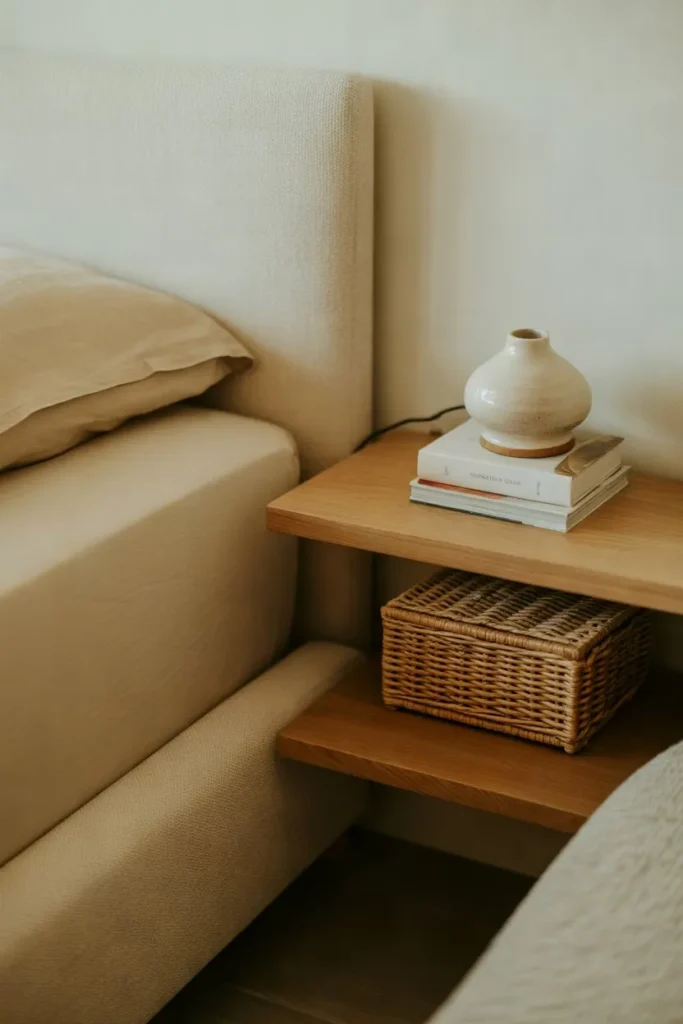
Floating Nightstand Shelves
Quick Tip:
Mount the shelf slightly above mattress height so it stays accessible without crowding the bed. Use one closed box for small personal items and leave the remaining surface open for only a lamp or one decorative piece.
A floating shelf keeps the floor clear while giving bedtime essentials a dedicated home. Choose a depth of about 8 to 12 inches so books, glasses, and small baskets fit comfortably without creating a bulky appearance. I’ve noticed this setup works particularly well beside compact beds where a traditional nightstand would restrict movement.
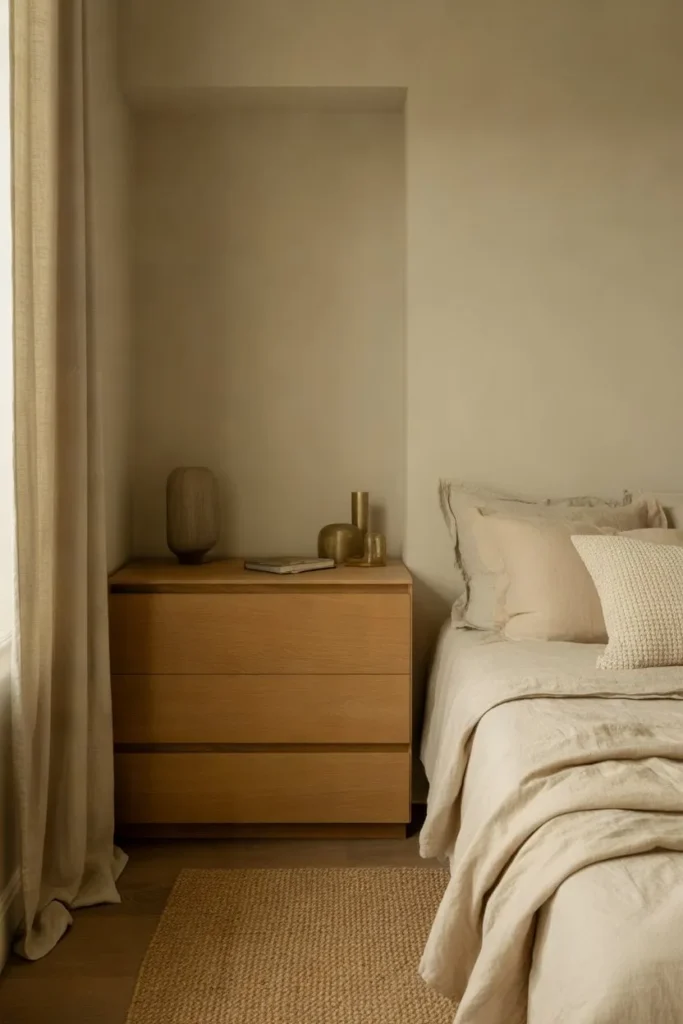
Slim Dresser Alcove
BEFORE:
A narrow wall area sits unused while clothing and accessories collect on chairs, the floor, or nearby surfaces. A bulky dresser would make the walkway feel cramped.
AFTER:
A slim dresser fills the alcove without blocking movement. Drawers keep folded clothes, accessories, and daily essentials contained while the top provides space for a small lamp or simple decor.
A shallow dresser is especially useful in bedrooms with awkward wall dimensions. Measure the available depth before buying, including clearance for drawers to open fully. Choose smooth-gliding drawers and divide them by category, such as sleepwear, accessories, and everyday basics. The result is storage that feels intentional rather than squeezed into the room.
Vertical Closet Organizers
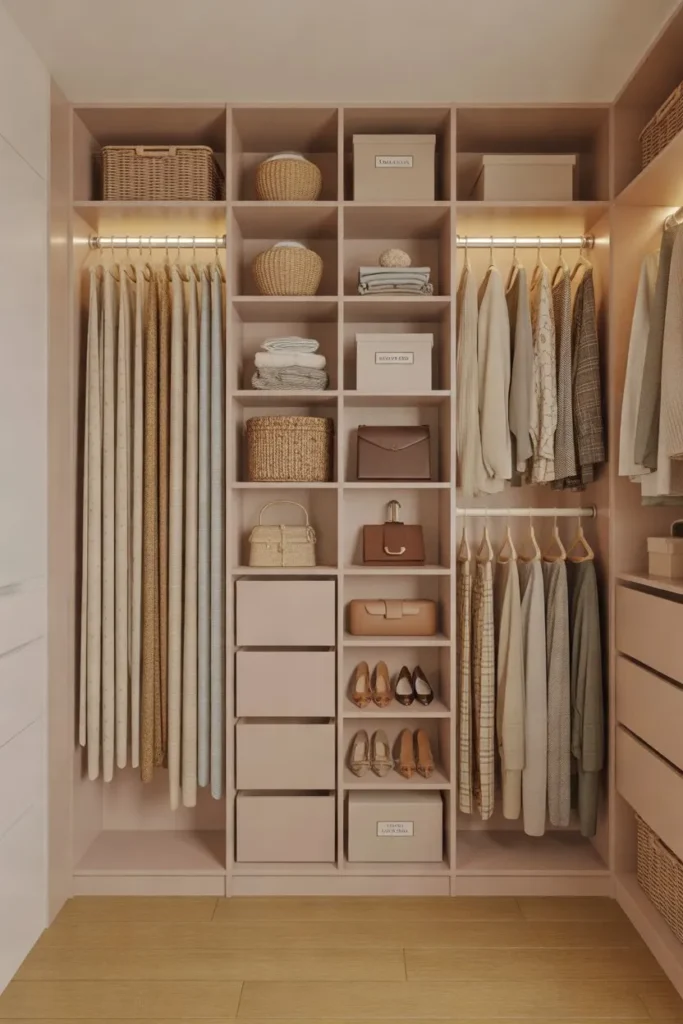
- Measure the height: Check the distance from the closet shelf to the floor before choosing an organizer.
- Assign categories: Give each compartment a specific purpose, such as sweaters, bags, scarves, or folded jeans.
- Use labels: Add simple labels to make frequently used items easier to find.
- Keep heavy items low: Store heavier clothing and bags in lower compartments for easier access.
Vertical organization makes better use of closet height without requiring additional floor space. Choose sturdy compartments that hold their shape instead of collapsing under clothing. Keep everyday pieces between waist and eye level, while seasonal items can occupy higher sections. This arrangement reduces digging through piles and keeps small bedrooms visually calmer.
Storage Bench At Footboard
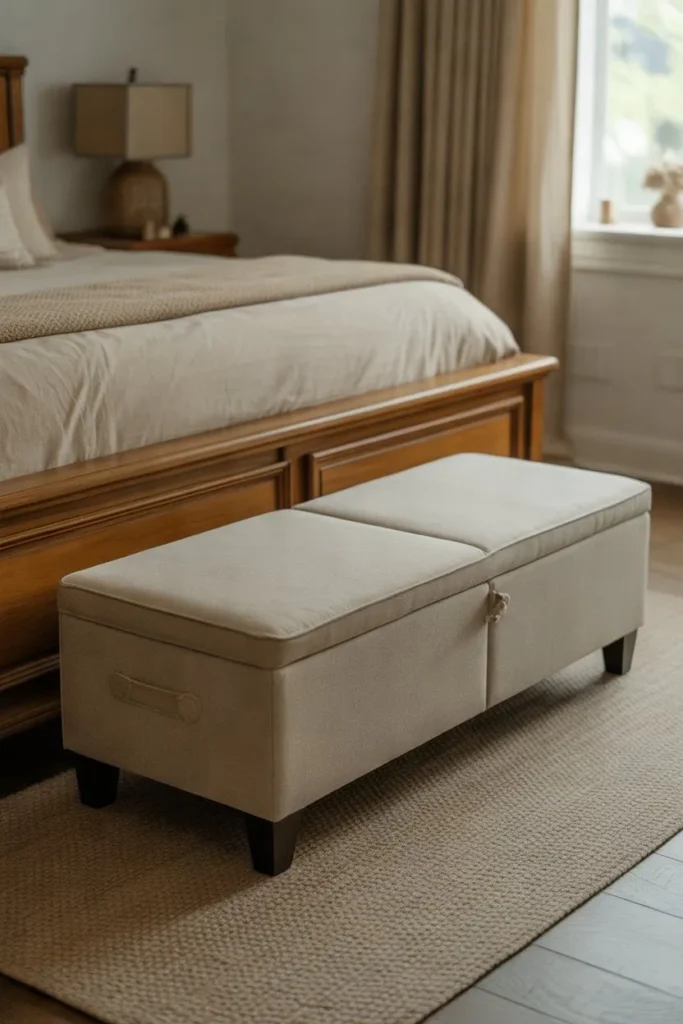
| Comparison Point | Option A: Open Bench | Option B: Storage Bench |
| Storage | Minimal | Hidden compartment |
| Best Use | Decorative seating | Blankets and accessories |
| Visual Effect | Light and airy | Neat and contained |
| Maintenance | Quick to access | Keeps items concealed |
A storage bench adds useful capacity without introducing another tall piece of furniture. Look for a model that leaves enough clearance around the footboard for comfortable walking. Keep bulky blankets or spare pillows inside, and use a small fabric divider if the compartment becomes difficult to organize. It works especially well in rooms that lack closet overflow space.
Overhead Bed Cabinets

DO:
- Choose cabinets with doors to keep visual clutter hidden.
- Leave comfortable clearance above the headboard.
- Store seasonal bedding and rarely used items inside.
- Match cabinet finishes with existing bedroom furniture.
DON’T:
- Install deep cabinets that make the bed area feel crowded.
- Overfill shelves behind cabinet doors.
- Store heavy objects where they are difficult to lift safely.
- Ignore ventilation or manufacturer mounting requirements.
Overhead cabinets turn unused wall height into valuable storage, especially in compact bedrooms. Keep the contents limited to items you do not need every day. I’ve noticed that closed cabinetry works particularly well for bedding because it protects fabrics from dust while keeping the room looking tidy between cleanups.
Drawer Dividers
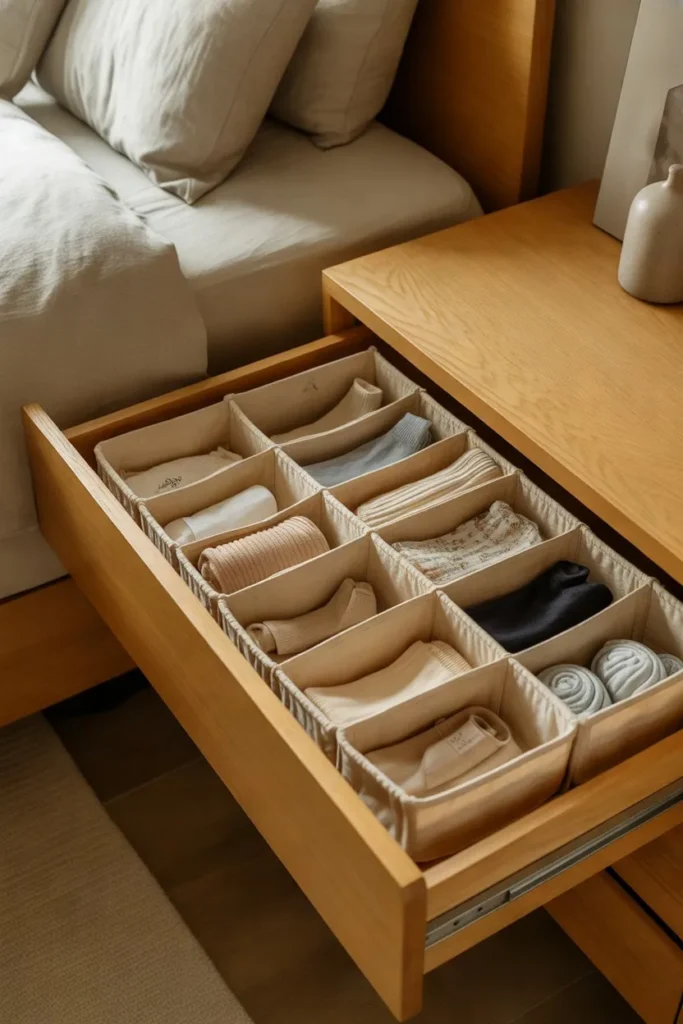
Cost: Low | Time: 20 to 30 minutes | Skill Level: Beginner
Best For: Clothing and accessories | Works In: Dressers and nightstands
Small compartments stop everyday items from sliding into messy piles. Adjustable dividers are useful because they can change as your storage needs change. Choose sections based on the actual size of your belongings rather than creating too many tiny spaces. Keeping similar items together also makes folding, finding, and putting things away much faster.
Corner Clothing Rack
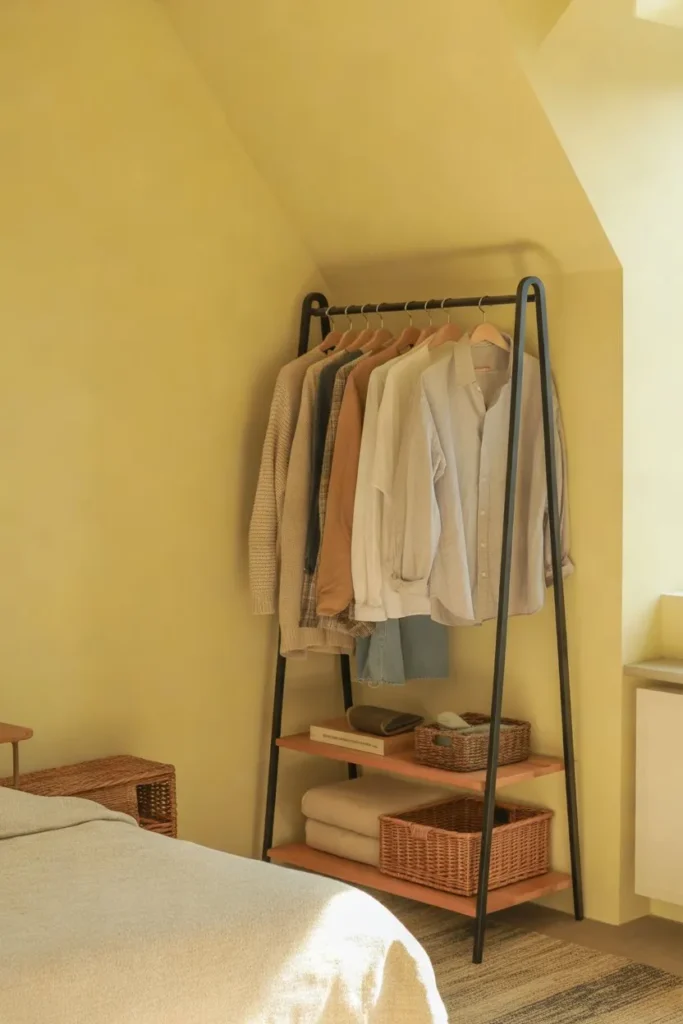
A forgotten corner can become useful storage with the right proportions. Pick a narrow rack that fits the wall without interfering with doors, drawers, or walking paths. Add two matching baskets underneath for shoes or accessories, then keep only frequently worn clothing on the rail. This prevents an open rack from becoming another clutter zone.
Bedside Storage Cubbies
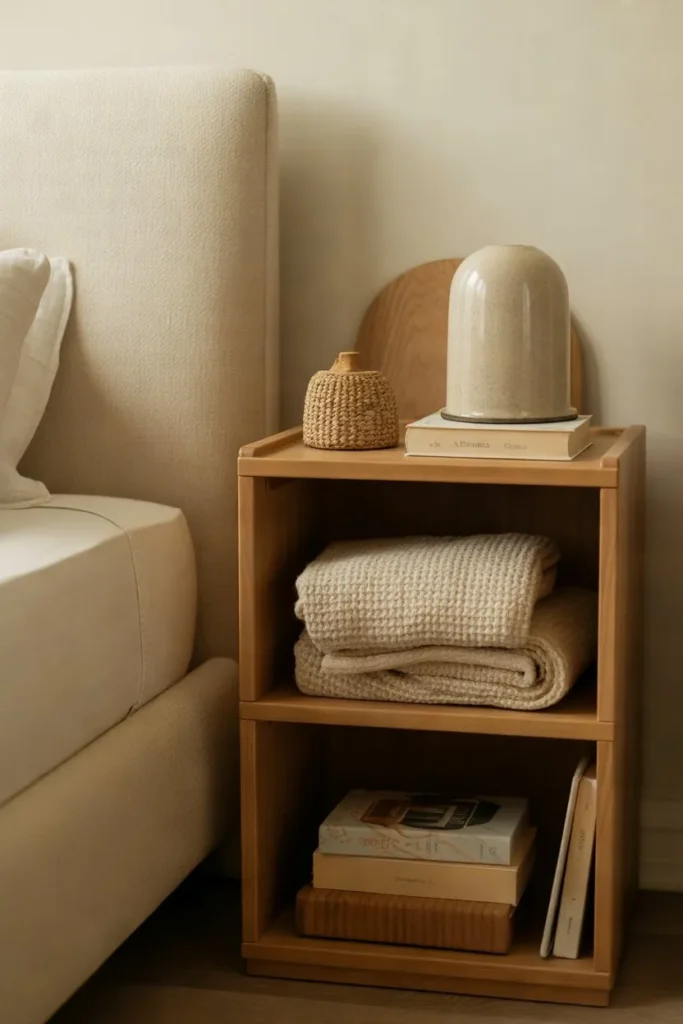
- Keep the top surface limited to a lamp, book, and one small decorative item.
- Reserve the upper cubby for things you reach for every night.
- Place baskets in lower compartments to hide smaller belongings.
- Group books together instead of scattering them around the room.
- Leave one cubby partly empty for changing storage needs.
Open cubbies make everyday bedroom storage easy to see and reach. They are particularly useful beside beds where closed drawers may feel too bulky. Choose a unit that matches the bed frame or flooring, then keep each compartment assigned to a simple category. A little empty space helps the whole setup stay visually balanced.
Closet Door Pockets
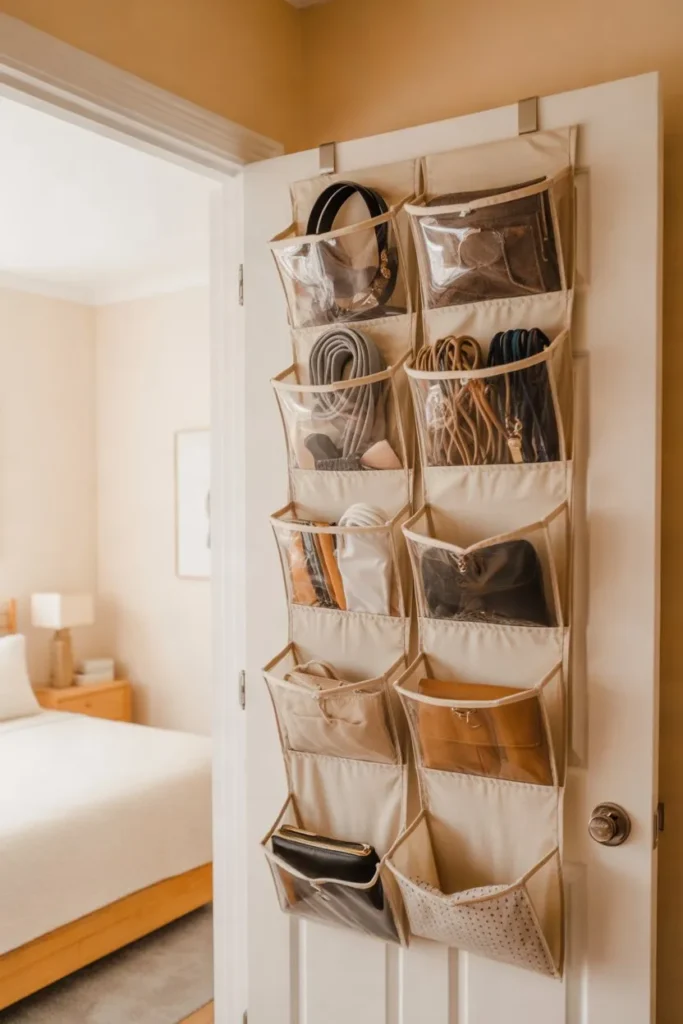
Quick Tip:
Use clear pockets for small items you reach for often, and fabric pockets for softer accessories. Before installing the organizer, check that the door can close fully without pressing against shelves or closet contents.
Door-mounted pockets create storage from a surface that usually sits unused. They are especially helpful for bedrooms with small closets and limited drawer space. Keep lightweight belongings inside, such as accessories, scarves, hair tools, or small bags. Grouping similar items into separate pockets makes quick retrieval easier and prevents loose pieces from spreading across furniture.
Bench With Baskets
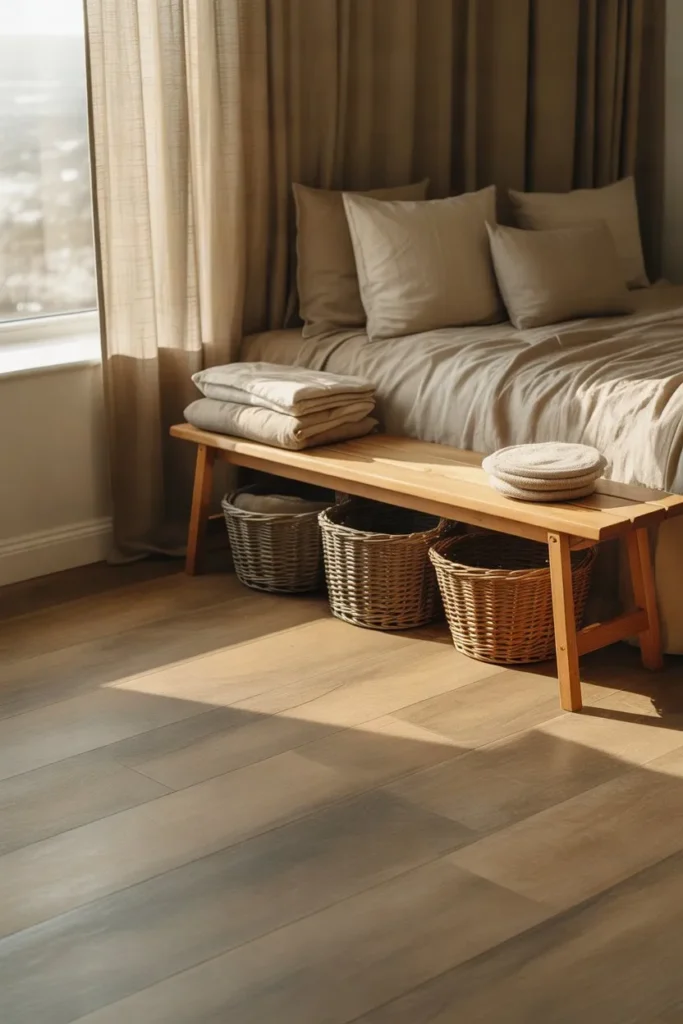
BEFORE:
Extra blankets and pillows collect on the bed or spill onto a nearby chair. The unused floor beneath the window offers no practical function.
AFTER:
A compact bench creates a useful resting spot while baskets underneath hold soft items out of sight. The area becomes both functional and visually organized.
Choose baskets that slide completely beneath the bench so the walkway stays clear. Reserve one for extra bedding, another for seasonal accessories, and a third for items that need to be returned elsewhere. I’ve seen this arrangement work well in bedrooms where a traditional cabinet would feel too heavy or take up valuable wall space.
Headboard With Shelving
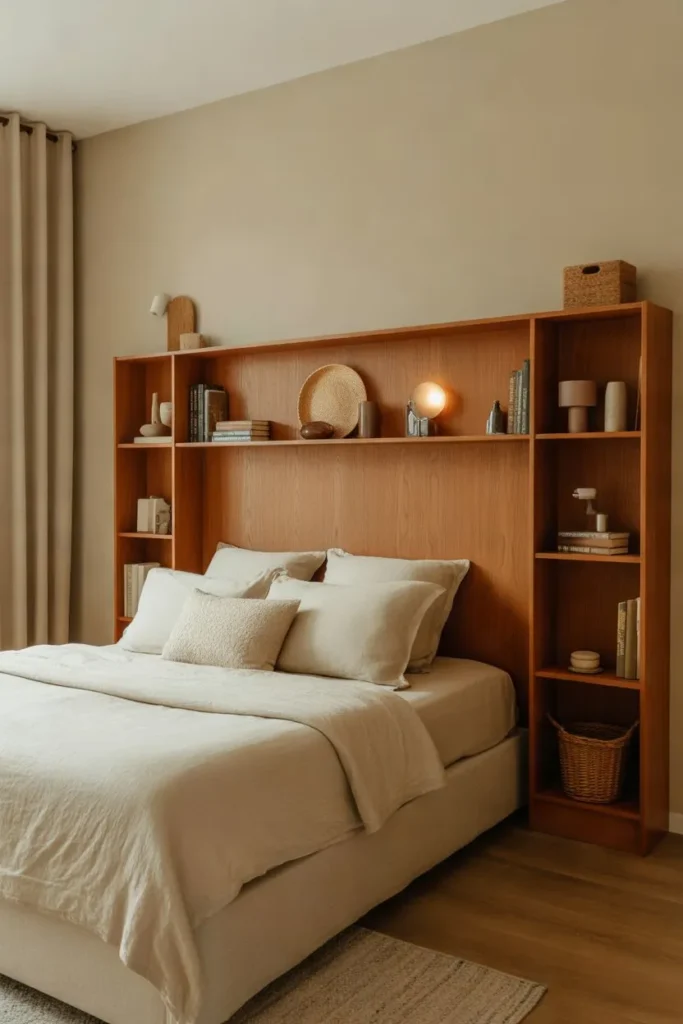
- Measure the wall: Confirm the headboard width leaves comfortable clearance around the bed.
- Assign shelf zones: Keep books and bedtime items on lower shelves and decorative pieces higher up.
- Add baskets: Use small woven baskets to contain glasses, chargers, accessories, or personal items.
- Keep wiring tidy: Route lamp and charging cables through discreet openings where possible.
A shelving headboard combines two pieces of bedroom furniture into one practical setup. It is especially useful beside beds where separate nightstands would leave little walking room. Keep frequently used items within easy reach and avoid filling every shelf. A few open spaces make the storage feel lighter and easier to maintain.
Under-Shelf Storage Bins
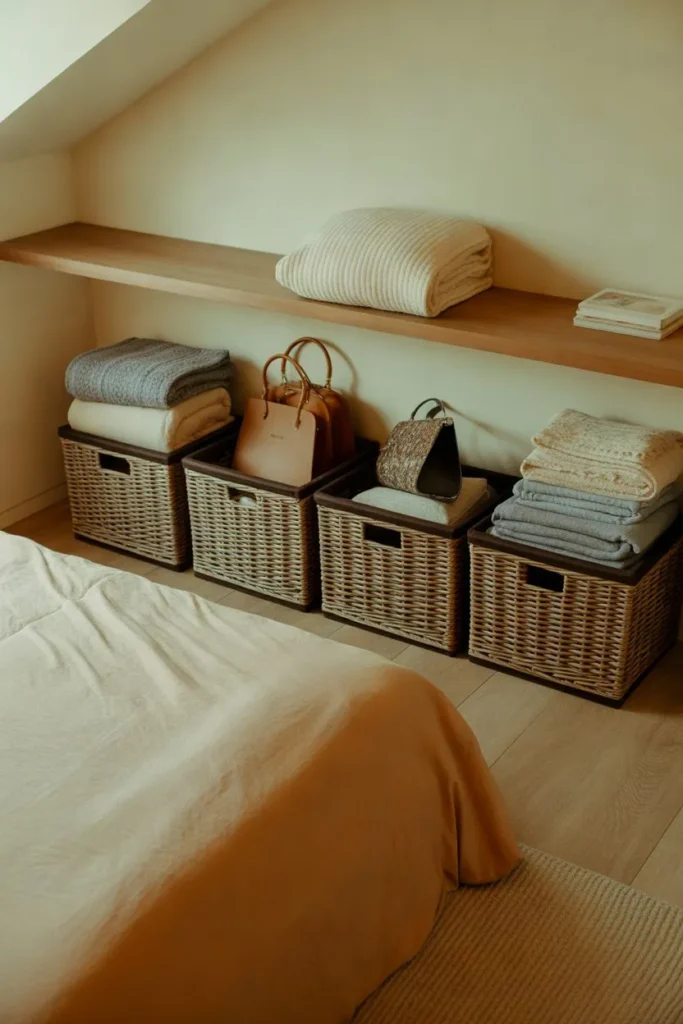
| Comparison Point | Option A: Open Baskets | Option B: Lidded Bins |
| Accessibility | Very quick | Slightly slower |
| Dust Protection | Limited | Better |
| Best For | Daily items | Seasonal belongings |
| Visual Effect | Soft and decorative | Clean and concealed |
Storage bins beneath a shelf make use of the space between furniture and the floor without adding another bulky cabinet. Choose containers that slide out easily and leave enough clearance for your hands. Lidded versions work best for seasonal pieces, while open baskets are more convenient for blankets or accessories used throughout the week.
Rolling Underbed Baskets
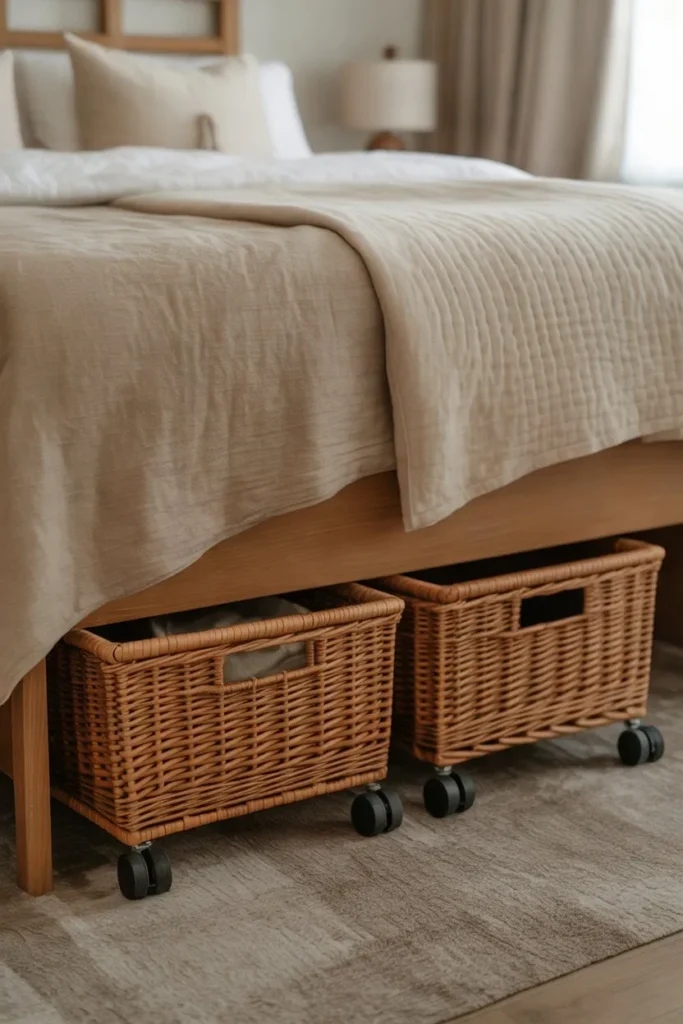
DO:
- Choose shallow baskets that slide completely beneath the bed.
- Add casters designed for your flooring type.
- Group similar items inside each basket.
- Keep heavier belongings toward the center of the bed.
DON’T:
- Use baskets so tall they scrape the bed frame.
- Overfill containers until they become difficult to pull.
- Store damp fabrics under the bed.
- Let loose items extend beyond the basket edges.
Rolling baskets make underbed storage easier to access than containers that must be dragged across the floor. They work particularly well for spare sheets, seasonal clothing, and extra blankets. Label each basket on the front so you can find what you need without pulling every container out. A little planning keeps hidden storage genuinely convenient.
Tall Linen Cabinet
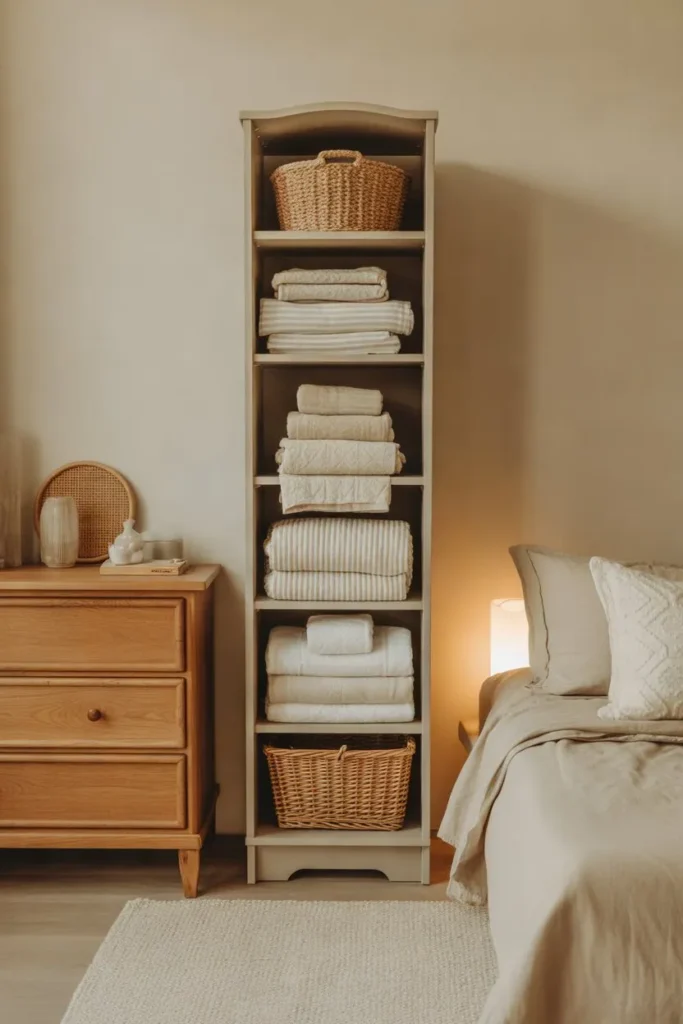
Cost: Medium | Time: One afternoon | Skill Level: Beginner
Best For: Bedding and linens | Works In: Empty wall corners | Result: More vertical storage
A tall linen cabinet uses wall height while keeping valuable floor space available. Choose a narrow model with adjustable shelves so bulky quilts and smaller pillowcases can share the same unit. I’ve noticed that storing complete bedding sets together makes laundry days much easier because the fitted sheet, flat sheet, and pillowcases stay in one place.
Nightstand Drawer Organizing
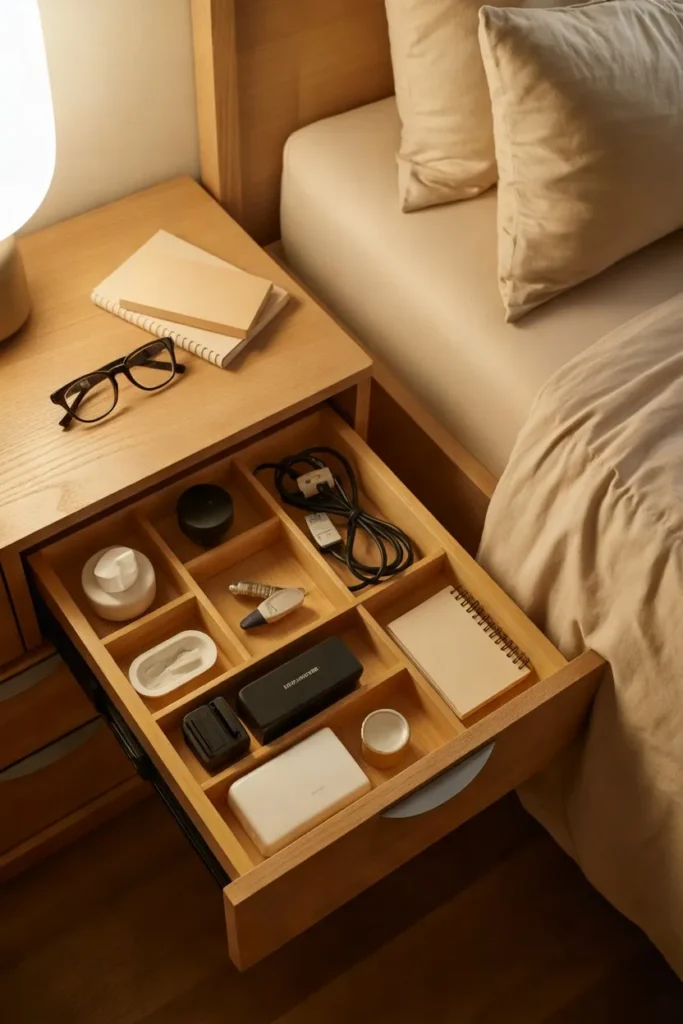
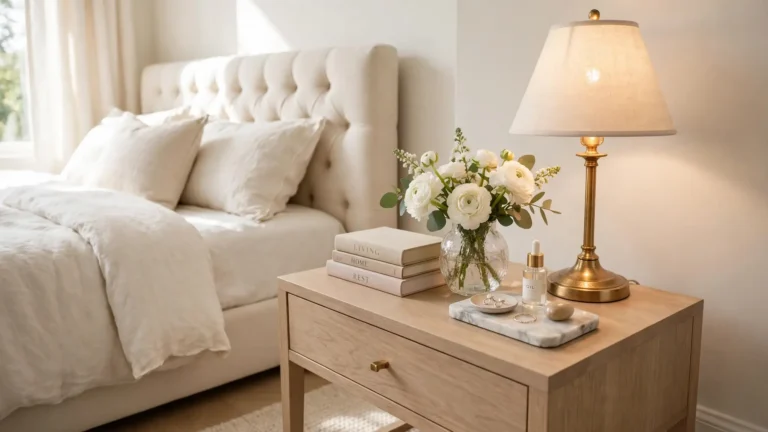
A messy nightstand drawer can hide useful storage in plain sight. Start by removing everything and grouping items by purpose. Keep chargers together, place personal care items in a small tray, and reserve another section for reading essentials. This simple reset keeps the surface above the drawer cleaner because fewer items need to stay visible.
Lidded Blanket Baskets
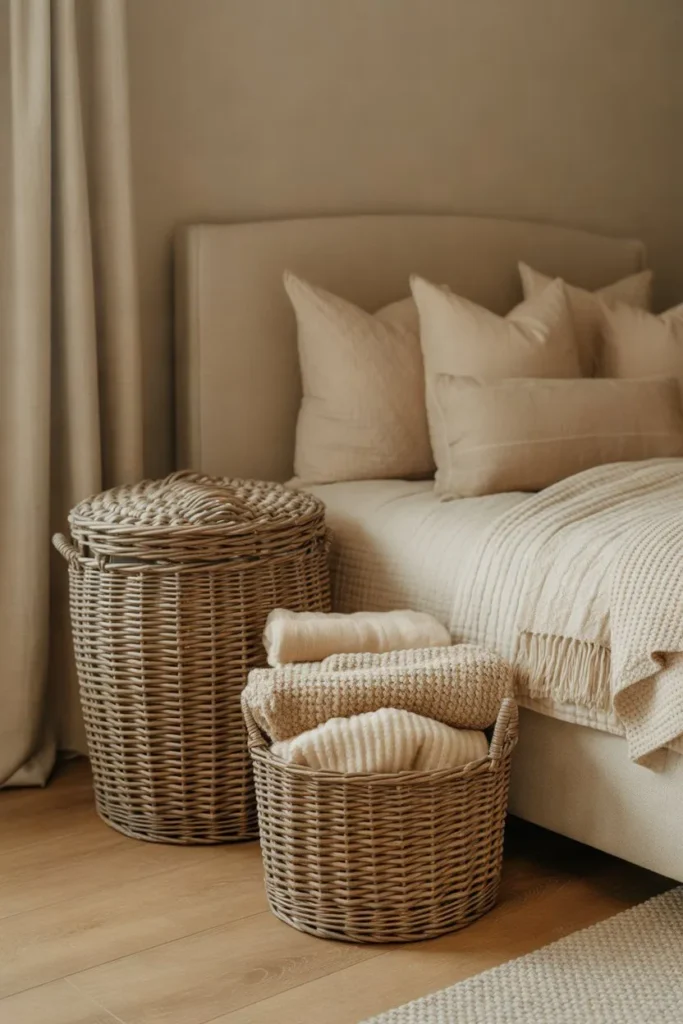
| Comparison Point | Option A: Open Basket | Option B: Lidded Basket |
| Access | Faster | Slightly slower |
| Dust Protection | Lower | Higher |
| Visual Clutter | More visible | Mostly concealed |
| Best Use | Daily blankets | Spare bedding |
Lidded baskets are useful when you want soft storage without displaying every blanket in the room. Choose a wide basket with a sturdy lid and enough depth for folded textiles. Keep the basket close to the bed if blankets are used nightly, or place it in a corner for occasional bedding. Avoid packing it so tightly that the lid becomes difficult to close.
Wardrobe Shelf Baskets
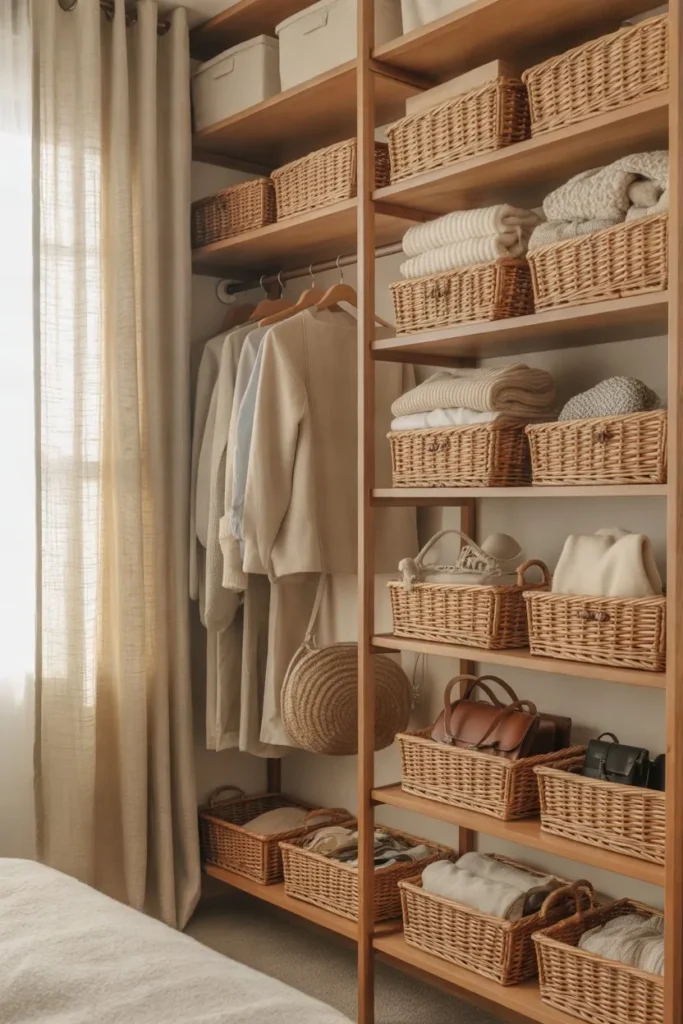
DO:
- Measure each shelf before buying baskets.
- Use matching sizes for a cleaner visual rhythm.
- Label baskets by clothing or accessory category.
- Keep frequently used baskets at waist or eye level.
DON’T:
- Push baskets so tightly that they become difficult to remove.
- Mix too many different basket styles in one wardrobe.
- Store damp or recently worn clothing inside closed baskets.
- Fill every basket to the top.
Shelf baskets make deep wardrobes easier to manage because each container acts like a removable drawer. Pull one basket forward instead of disturbing an entire shelf. Choose breathable materials for clothing and reserve closed containers for accessories or seasonal pieces. A consistent basket system also makes it easier to spot which category needs tidying.
Window Seat Drawers
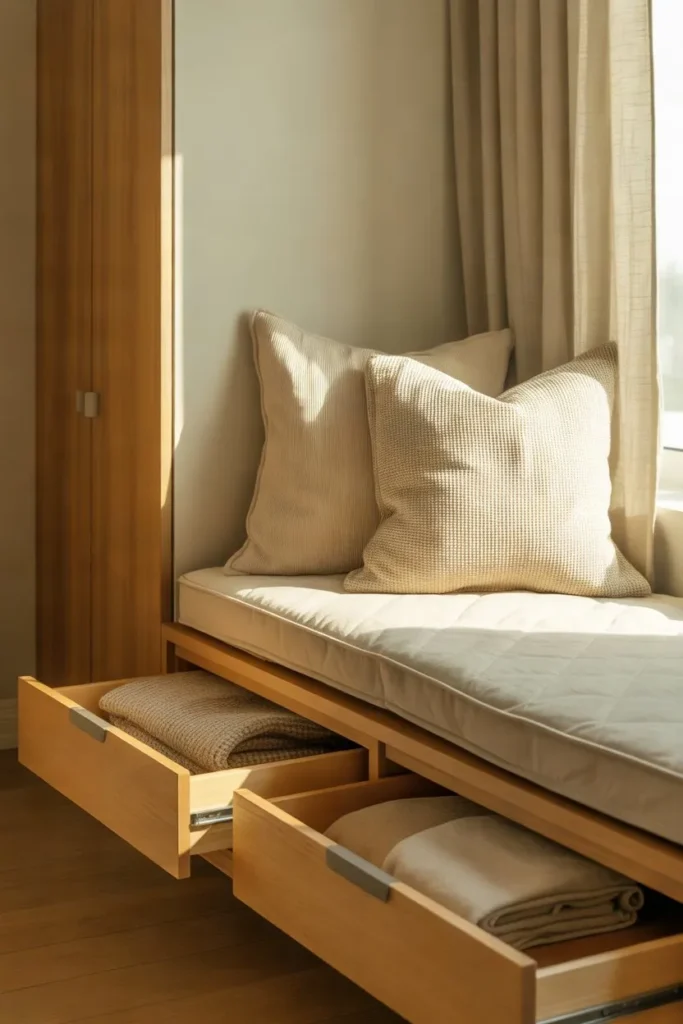
Cost: Medium to High | Time: One to several days | Skill Level: Intermediate
Best For: Blankets and seasonal items | Works In: Wide window areas | Result: Seating plus hidden storage
A window seat can provide valuable storage without taking another piece of furniture away from the room. Deep drawers are useful for quilts, pillows, and seasonal bedding, while shallow drawers suit books or accessories. Plan the drawer depth carefully so stored items remain reachable. The seating area can then become a comfortable reading spot without sacrificing organization.
Peg Rail Accessories
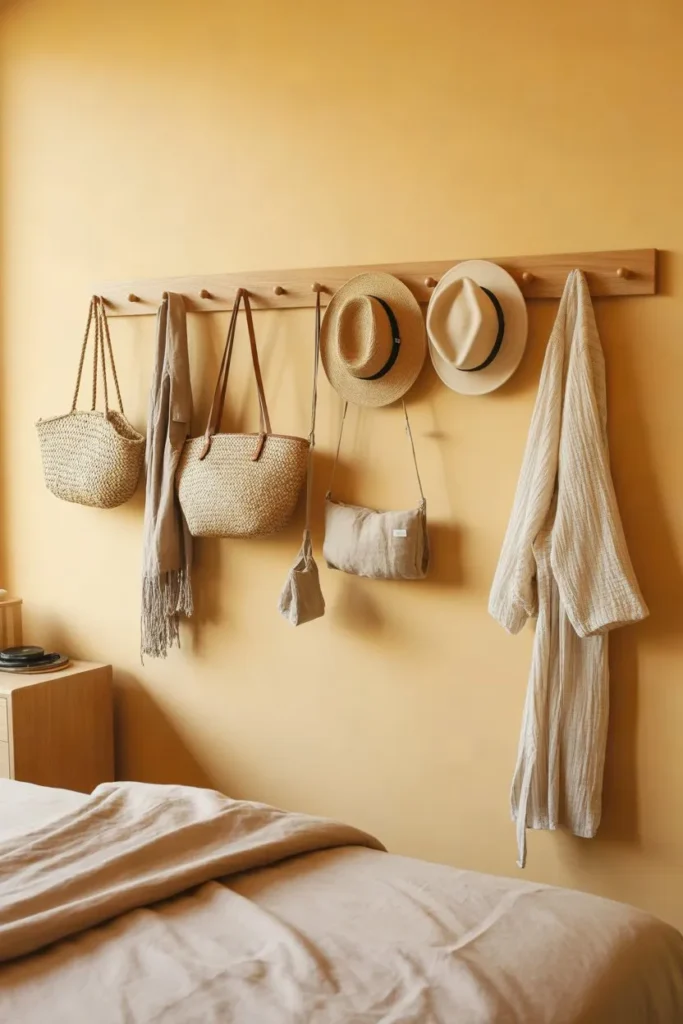
A simple peg rail can keep frequently used accessories off chairs and dressers. Install it where the wall is easy to reach, then assign each peg a specific category. Lightweight bags, scarves, robes, and hats work particularly well. I’ve noticed that open storage succeeds best when you limit what stays on display, so keep only items you use regularly.
Closet Shelf Risers
Quick Tip:
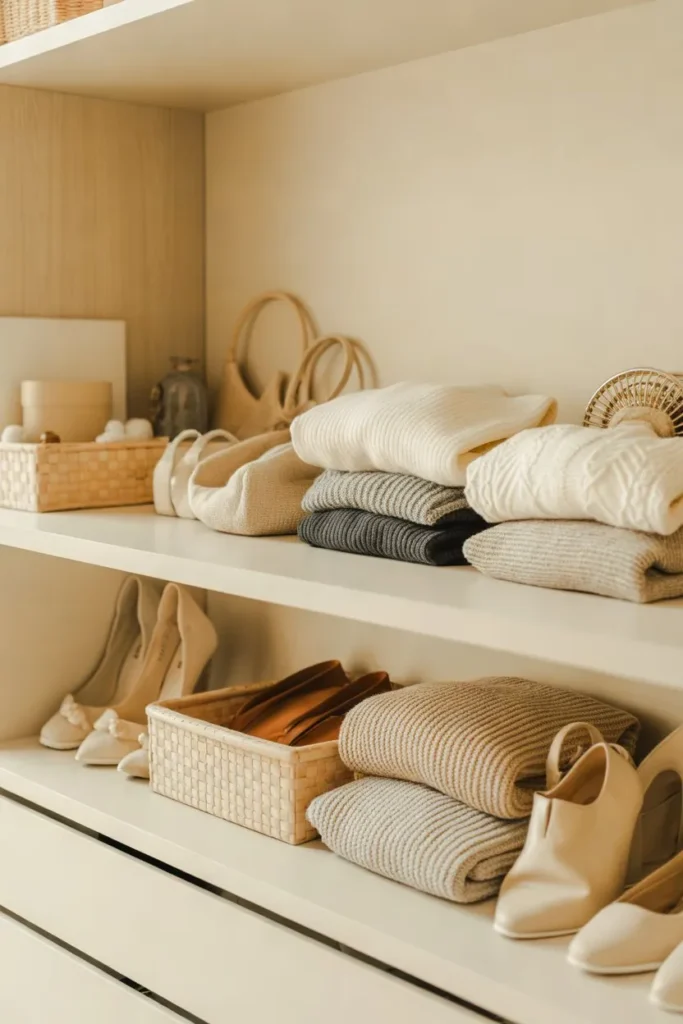
Use shelf risers to create a second storage level where vertical space is being wasted. Leave enough clearance above each stack to remove items without knocking nearby clothes over.
Shelf risers are inexpensive and especially helpful on wide closet shelves. Place shorter items underneath the riser and taller folded pieces on top, creating two easy-to-reach zones from one shelf. Measure the shelf depth first, then choose a riser that sits securely without reducing the usable space for larger clothing.
Dresser Top Trays
BEFORE:
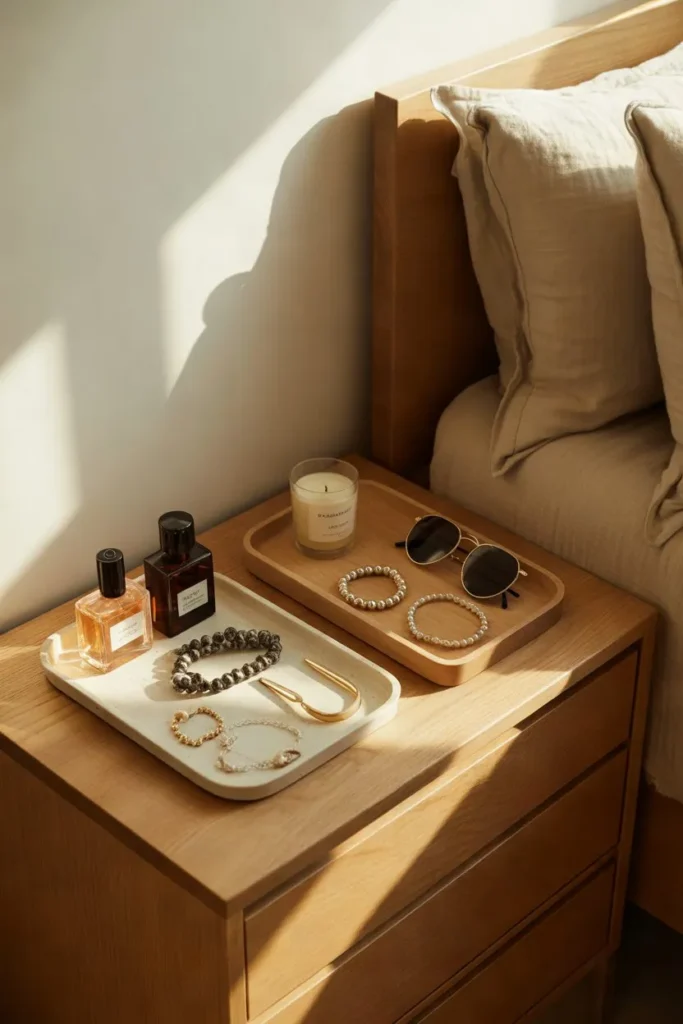
Perfume, jewelry, hair accessories, and small personal items spread across the dresser surface. The drawer may be organized, but the visible clutter makes the room feel unfinished.
AFTER:
Shallow trays create defined zones for everyday items while keeping the dresser surface easy to clean. Small pieces stay grouped instead of drifting into random corners.
Choose one tray for daily essentials and another for items you use less often. Avoid filling every inch of the tray because crowded containers become difficult to sort. A small ceramic dish can handle rings and hair ties, while a longer tray works well for perfume, watches, or sunglasses. The system takes seconds to reset each evening.
Conclusion
A calmer bedroom does not require a complete makeover. Small storage changes can create more breathing room, keep everyday essentials organized, and make the entire space feel more restful. The best cozy bedroom storage ideas are the ones that fit naturally into your routine and give frequently used items a clear home.
Start with one problem area, such as a crowded nightstand, overflowing closet, or blanket pile. Then choose one solution and build from there. I’ve seen how small changes like these can completely shift the way a space feels. Save this post on Pinterest, try your favorite ideas, and share it with someone who could use a calmer bedroom too.



6 Comments