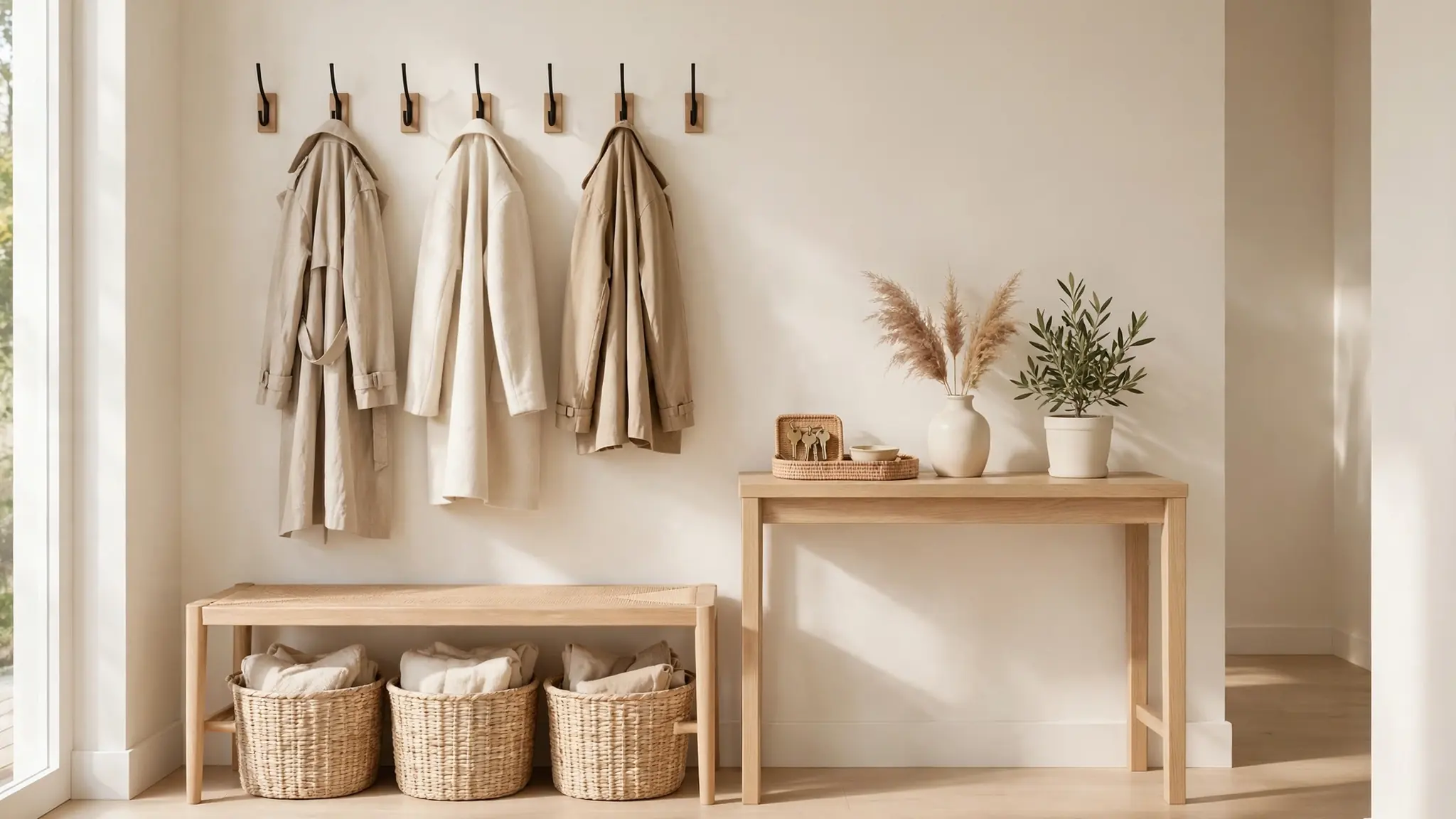
21 Drop Zone Ideas for a Clutter-Free Home
Your front door is the busiest spot in your home, yet it often ends up buried under keys, bags, and mail. These drop zone ideas will help you turn that chaotic corner into a calm, organized landing spot for everything you carry in and out. With a few smart storage pieces and simple habits, you can keep clutter off the floor and off your mind.
Every entryway is different, so mix and match these ideas to fit your space and daily routine. Even a single hook rail or a small basket can change how your mornings feel. If you love small-space organization, check out these dorm decorating ideas for guys for more clever setups. Start with the idea that solves your biggest mess first.
Wall-Mounted Entry Shelves
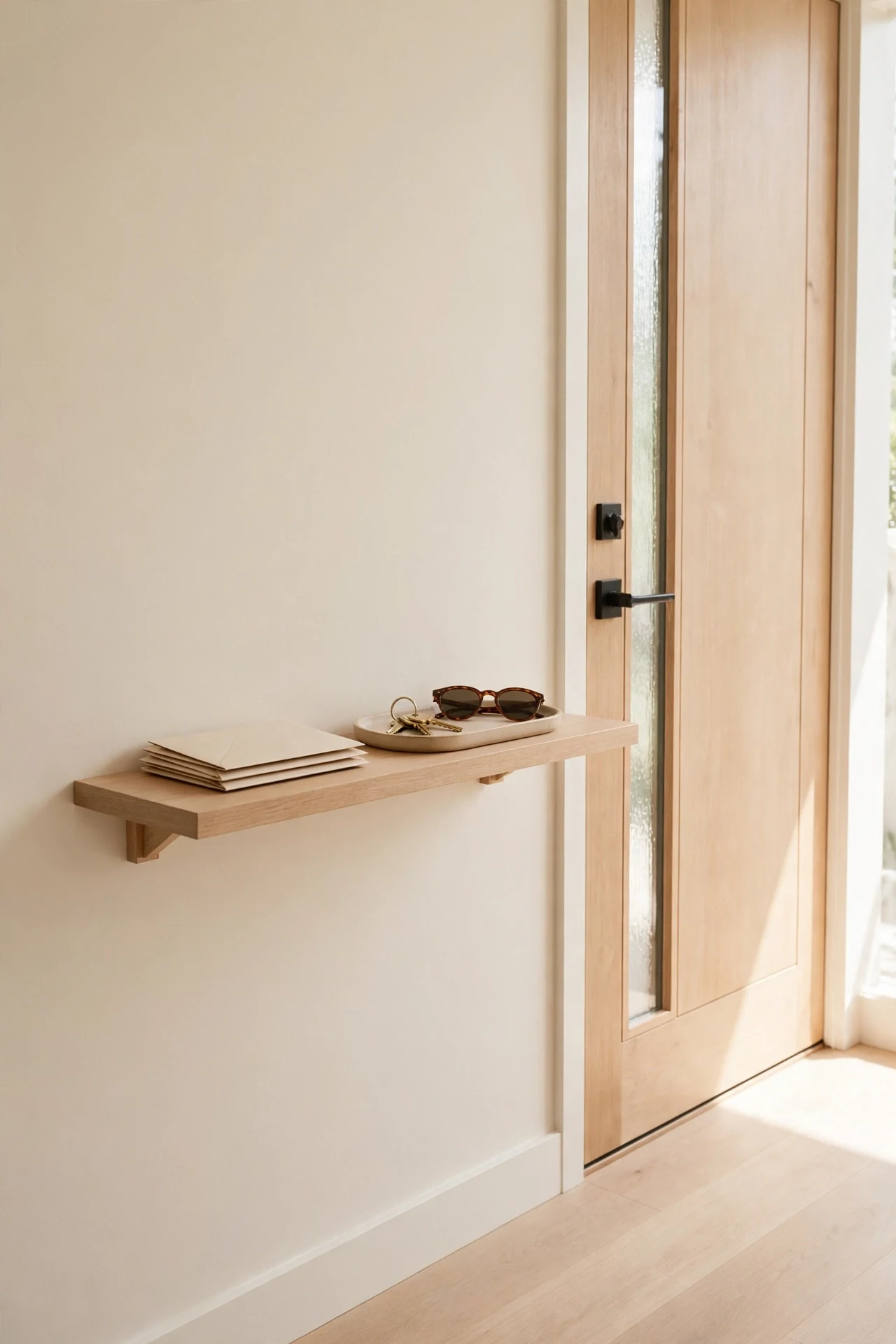
A floating shelf by the door gives you a landing spot without stealing floor space, which is gold in narrow hallways. Mount it at waist height so keys, sunglasses, and the day’s mail leave your hands the moment you walk in. Choose a shelf with a raised lip so small round items never roll off the edge.
Pair the shelf with a small tray or shallow bowl to keep loose items together instead of scattered. Stack two slim shelves if one fills up fast, keeping the top one for pretty items like a small plant. I have seen this work well in many rental entryways where furniture simply will not fit.
Slim Console Table Nook
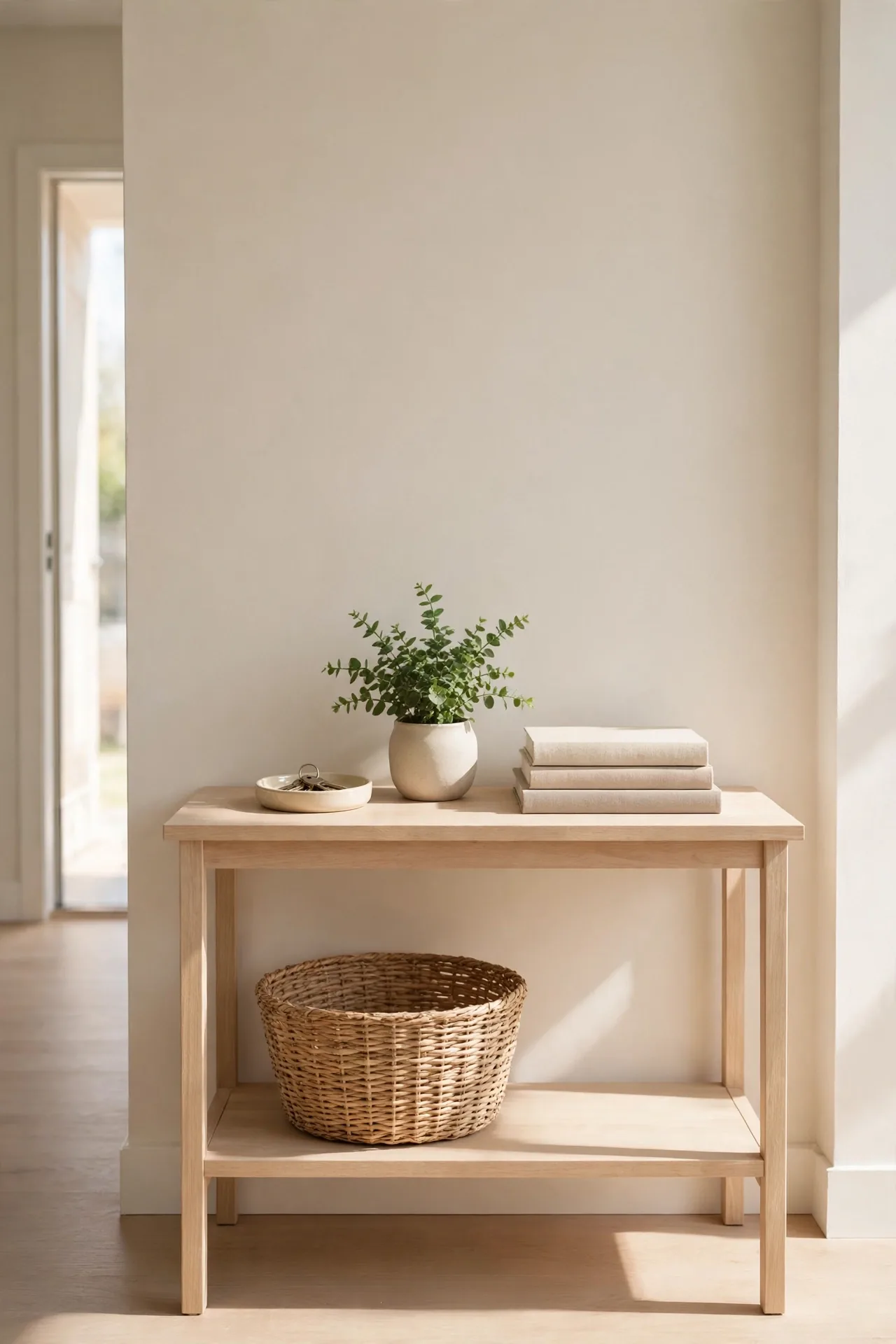
When you have six spare inches beside the door, a slim console table becomes the hardest-working piece in your home. Keep the styling ruthless or the table turns into another junk pile. Limit the top to three items max, because I have noticed clutter creeps back fast here. Choose light wood or white so the table visually disappears into the wall.
- Pick a table no deeper than 10 inches so it never blocks the walkway.
- Add a lower shelf for shoes or a woven basket that hides gloves and scarves.
- Top it with a small dish for keys, a bud vase, and nothing else.
- Slide a stool or ottoman underneath if the table height allows it.
Hidden Charging Drawer
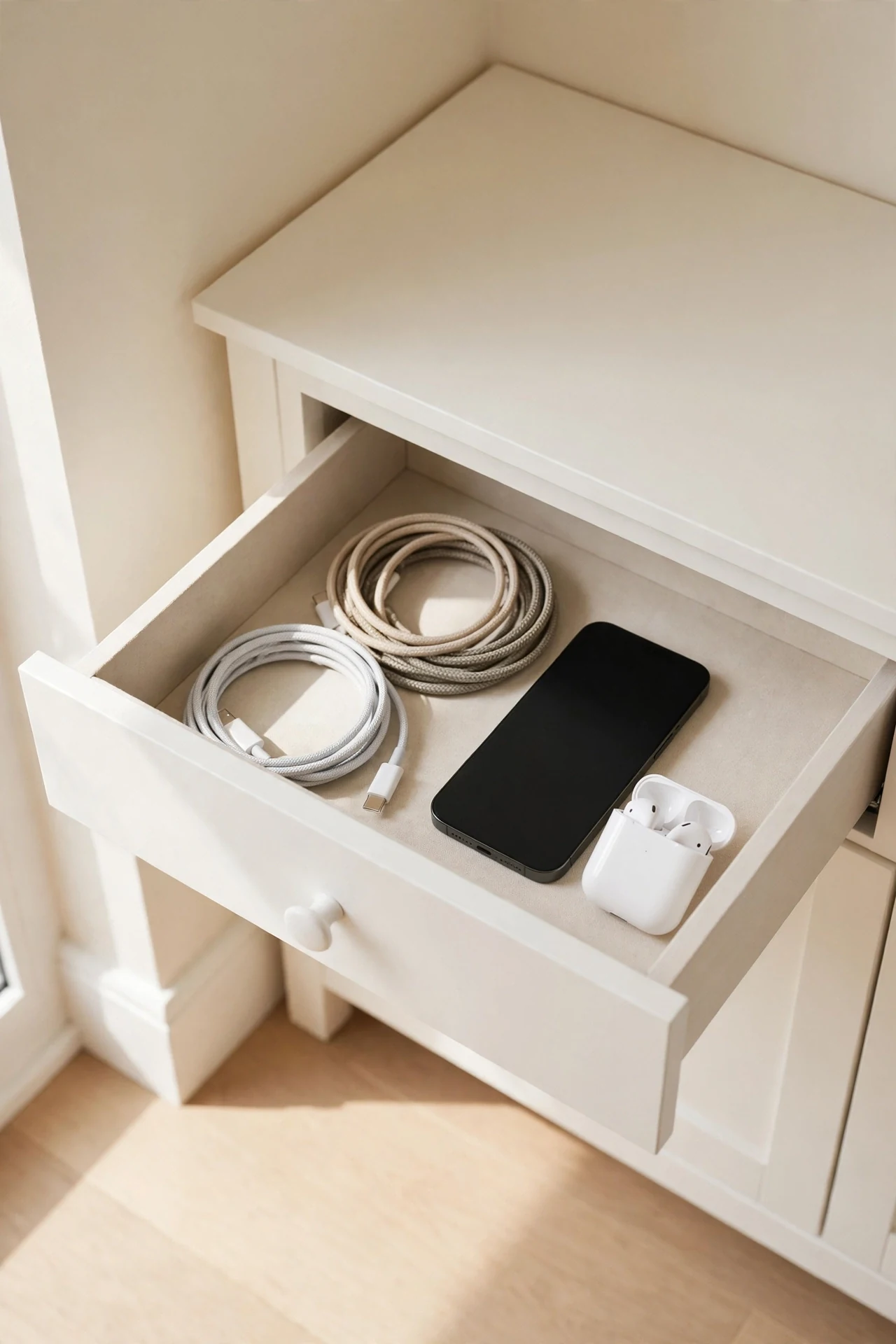
Quick Tip: Dedicate one shallow drawer near the door to charging only, and fit it with a multi-device charging dock and a short power strip. Phones, earbuds, and smartwatches live there overnight so cords never sprawl across your entry table. Label the drawer front or keep one cord visible so guests know where to plug in.
Cables are the silent clutter of every entryway, tangling around keys and making surfaces look messy. A charging drawer keeps every device out of sight while still powered up and ready. Drill a discreet hole in the back for the power strip cord, and the whole setup stays invisible.
Basket Under Bench
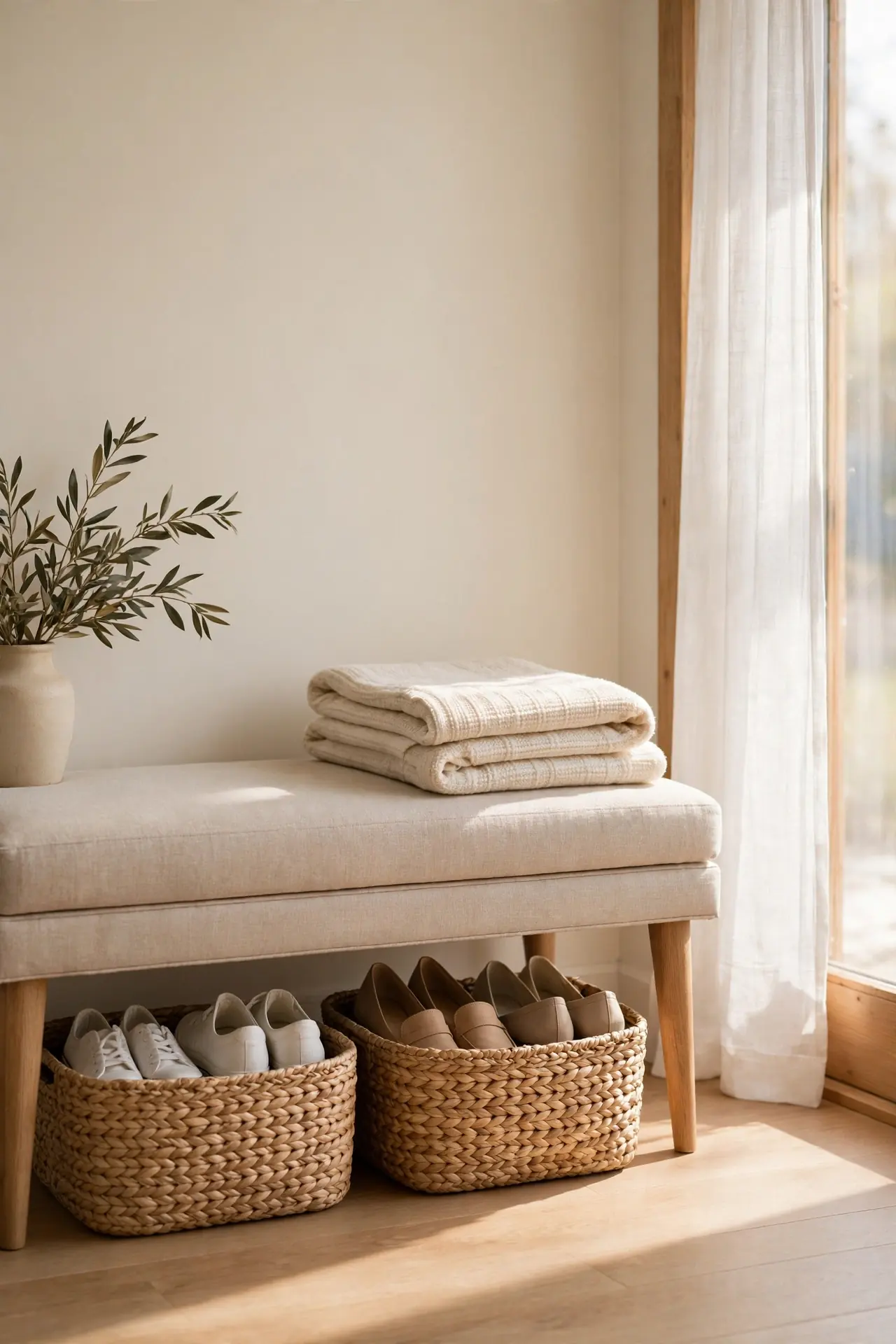
BEFORE: Shoes piled in a heap by the door, pairs separated, laces tangled, and guests stepping around your mess every time they visit. The floor collects dust and the pile keeps growing because nobody has a place to aim for.
AFTER: One woven basket slides under the bench and swallows the daily shoes in seconds. Each family member gets their own, so pairs stay together and the floor stays clear. The entryway suddenly looks calm, and cleaning takes half the time.
Choose baskets with handles so you can pull them out fast during a deep clean. Low, wide shapes fit under most benches without wasted height. I have noticed this one change makes the whole house feel tidier, since the entryway sets the tone.
Key Hook Rail
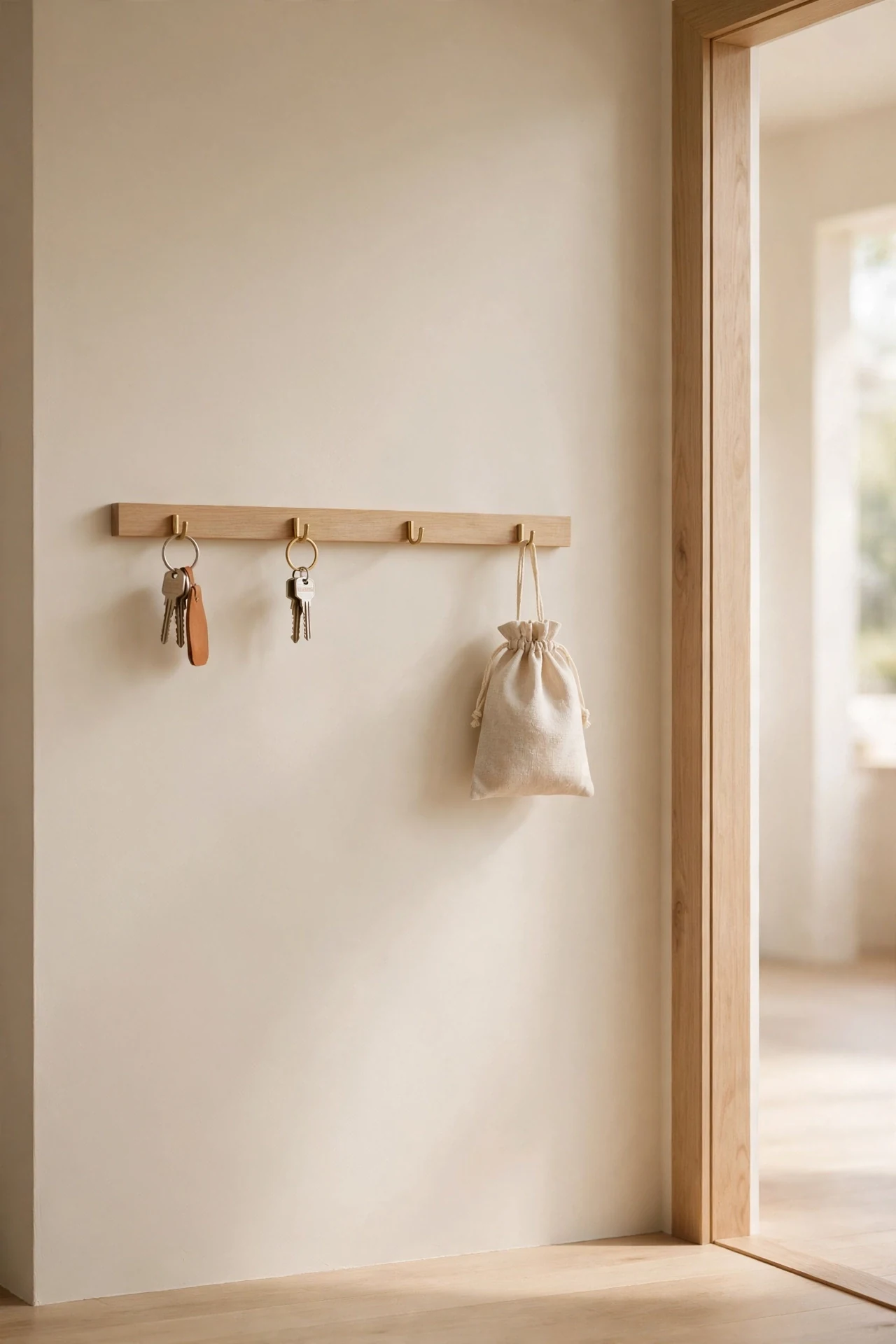
- Mount a slim rail with 4 to 6 hooks on the wall beside your door at shoulder height.
- Assign each household member one hook and label them with small wooden tags.
- Hang a tiny basket or magnetic strip nearby for spare keys and fobs.
- Do a one-week reset: anything unclaimed moves to a drawer, not back on the rail.
End the frantic morning key search for good: a rail gives every set exactly one home. Keep the rail small so it never becomes a dumping ground for jackets and bags. That one discipline is what separates a tidy entryway from a crowded one.
Corkboard Command Center
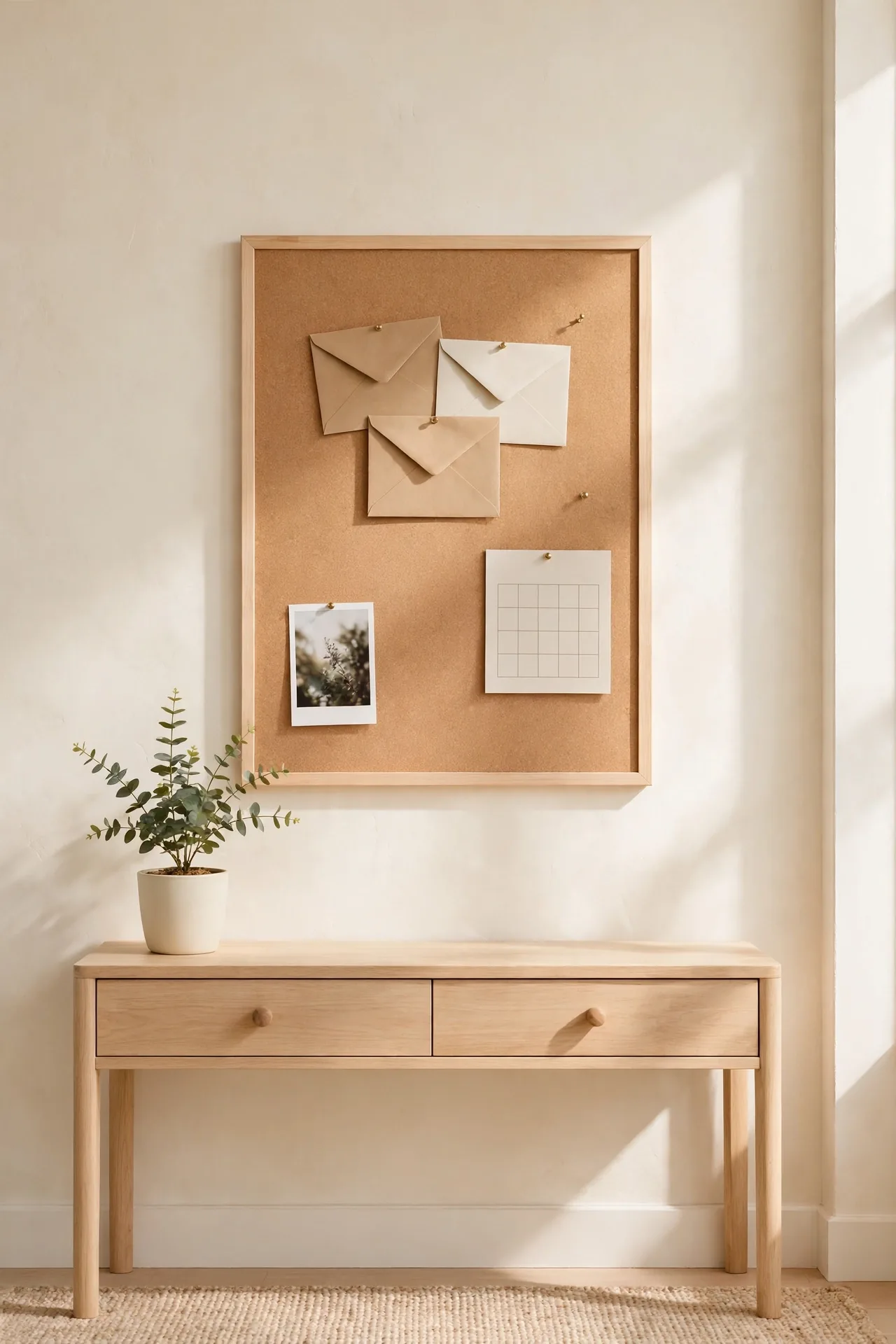
| Small Framed Board | Full Wall Panel | |
|---|---|---|
| Size | About 18 by 24 inches | Up to 4 by 3 feet |
| Cost | Under 25 dollars | 60 to 120 dollars |
| Best For | Renters and small entries | Busy family households |
| Upkeep | Weekly quick tidy | Daily pin check |
| Mounting | Hangs on one nail | Needs wall anchors |
| Look | Clean framed art-like | Busy but useful |
Mail, school forms, and reminder notes need one home or they migrate to every flat surface you own. Pin only what needs action this week and toss the rest on sight. A framed board doubles as decor, while a full panel suits families juggling packed schedules.
Tall Mirror Entry
DO:
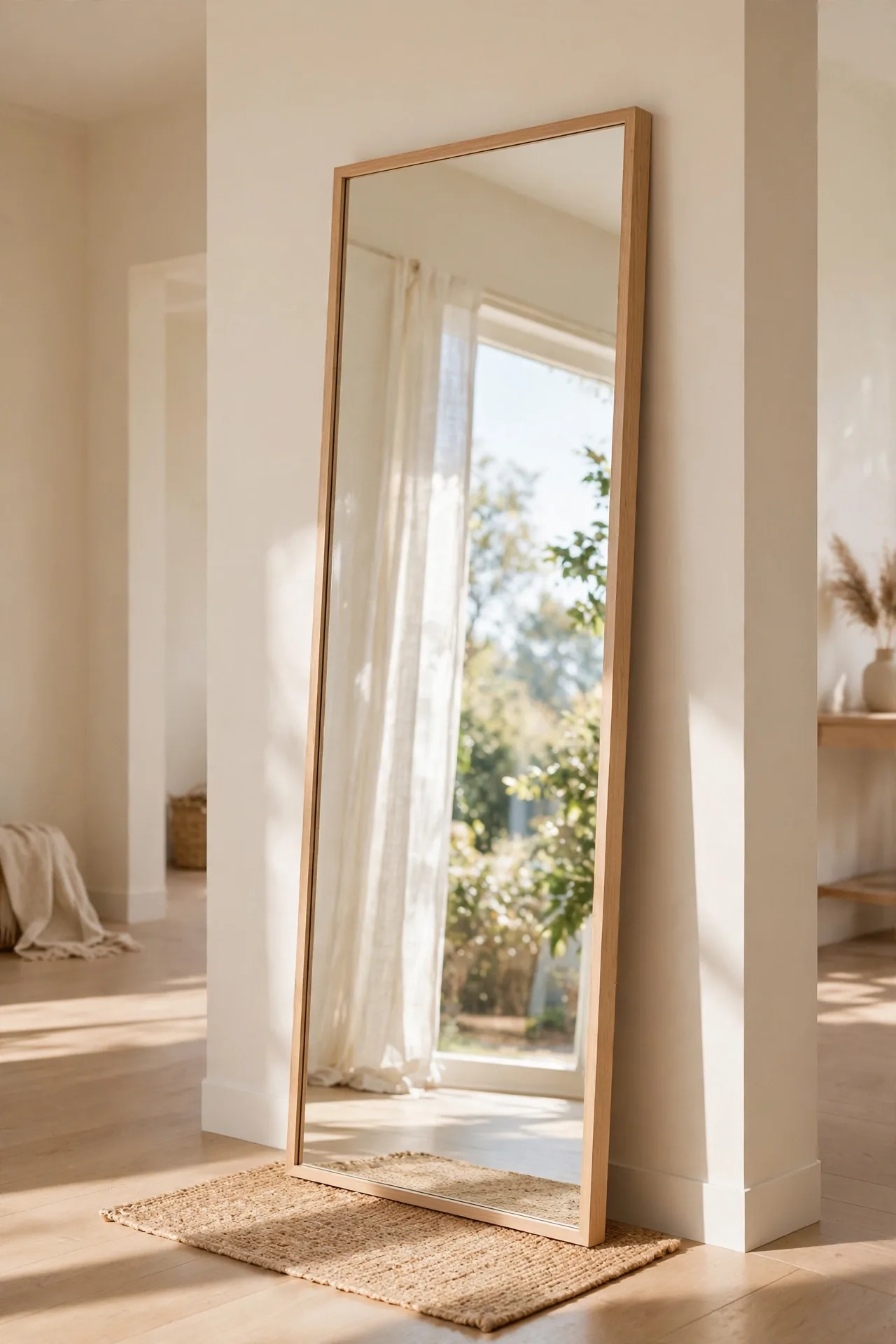
- Lean a full-length mirror against the wall to double the light in dark hallways.
- Choose a thin frame in light wood or brushed brass for a clean look.
- Angle it slightly so it reflects a window, not the front door.
DON’T:
- Do not mount it where it faces the toilet or a messy room.
- Never pick a heavy ornate frame that overwhelms a narrow entry.
- Do not let fingerprints build up; wipe the glass weekly.
Cramped entryways feel twice as wide with a tall mirror on the wall, and you get a last look before heading out. Keep the wall around it clear so the mirror stays the star. This works best in entries with at least one natural light source nearby.
Wicker Mail Sorter
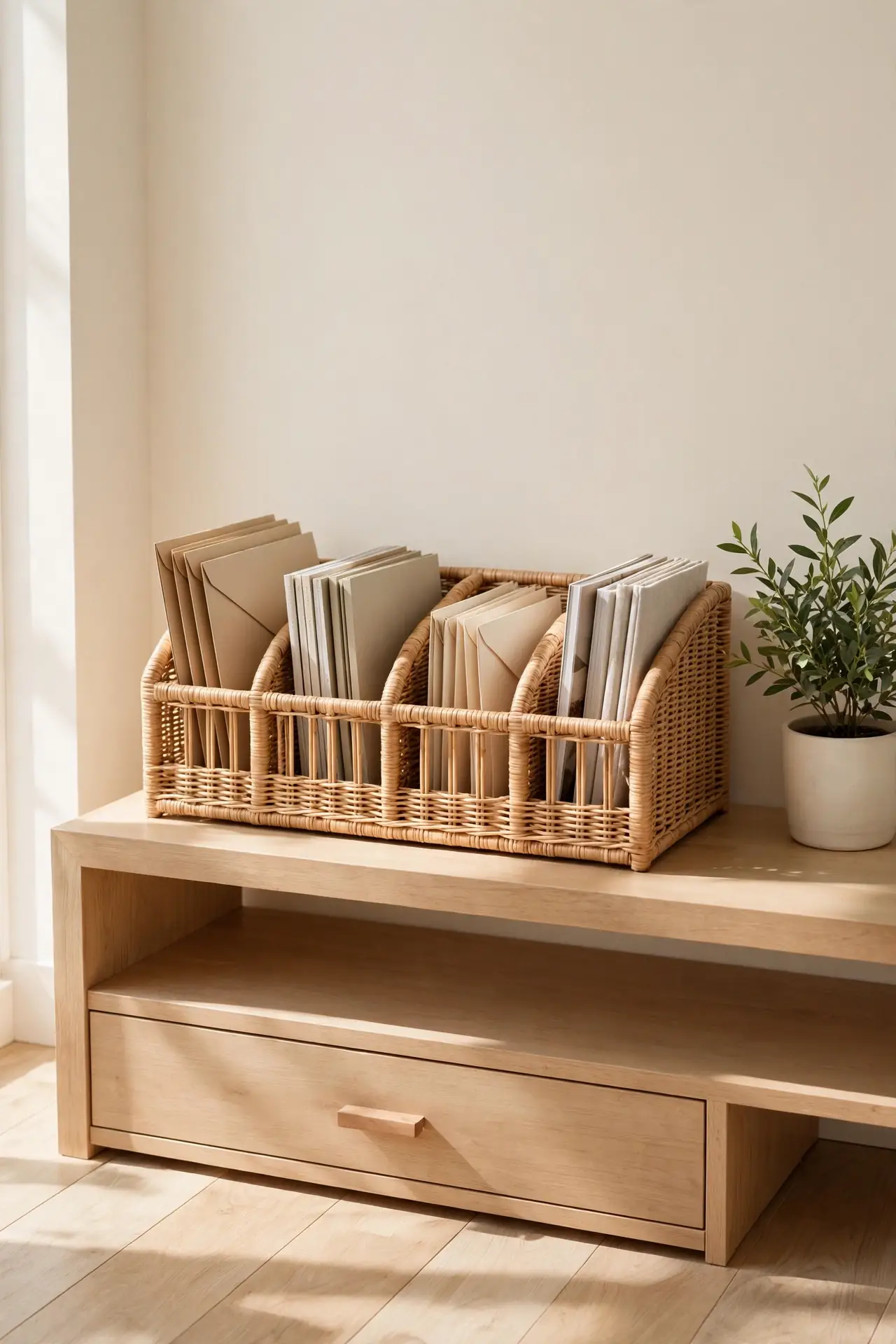
Cost: Low, about 15 to 30 dollars | Time: Ten minutes to set up | Skill Level: Beginner | Best For: Households drowning in paper mail
Paper mail is the fastest-growing clutter in any entryway because it arrives daily and nobody sorts it on the spot. A slotted wicker sorter gives every category its own lane: bills, school papers, and catalogs each get a section. Sort the mail the second you walk in, tossing junk straight into recycling. Once a week, empty the sorter completely so it never overflows. Label the slots with small tags so everyone in the house follows the same system. Choose natural wicker to keep the look warm instead of office-like.
Mudroom Cubby Divider
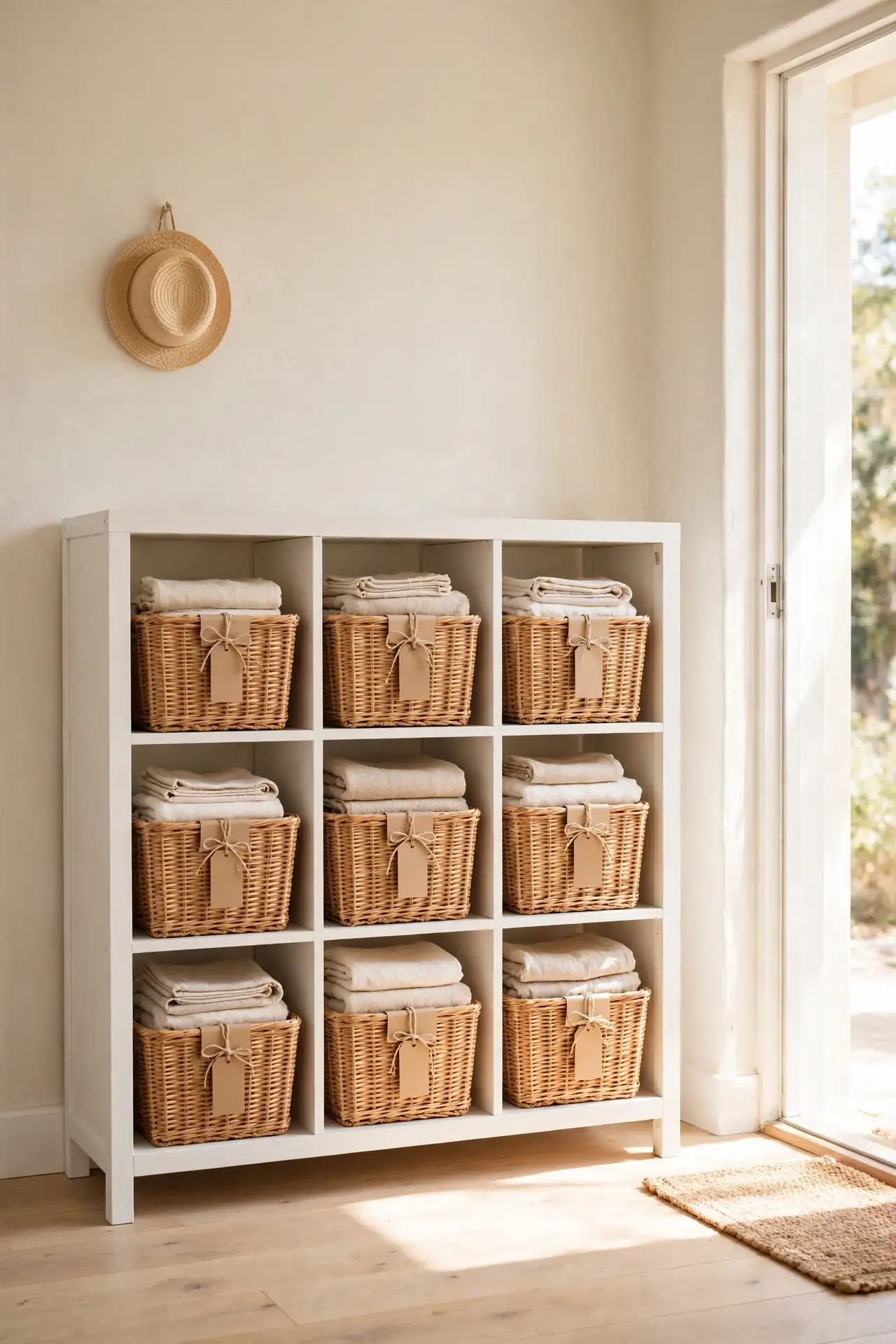
Open cubbies beat closed cabinets in a busy entryway because everything stays visible and reachable. Divide a tall bookcase into personal cubbies with simple plywood dividers, giving each family member their own vertical lane. Baskets inside each cubby hide the mess while keeping categories separate. Paint the dividers the same color as the shelf so the unit looks built-in rather than pieced together.
Label the front of every cubby with names or simple icons for kids who cannot read yet. Keep the top row for seasonal gear so daily items stay at arm level. I have seen this work well in many cases where four people share one narrow entry without daily arguments.
Floating Coat Pegs
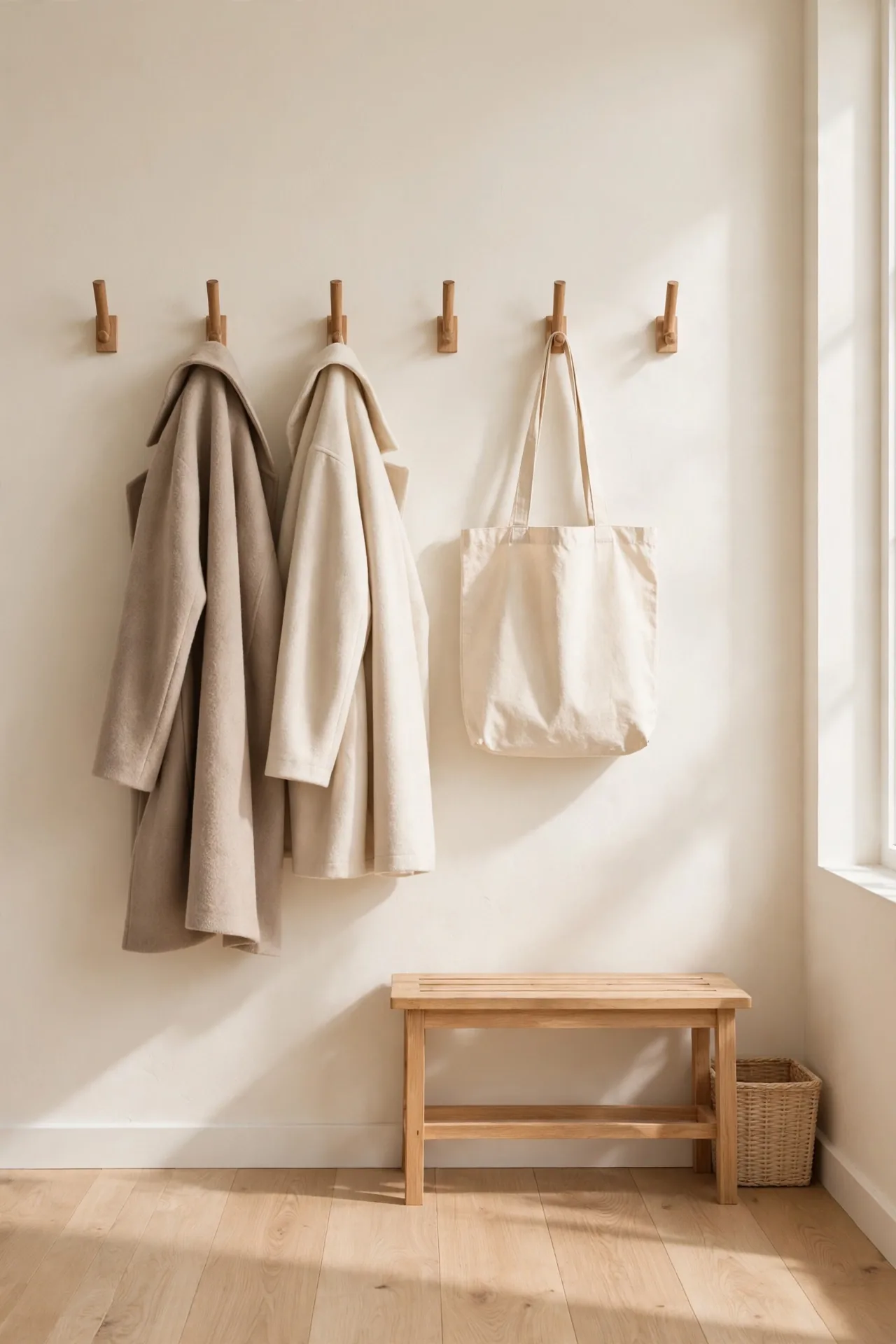
Coat hooks mounted straight into the wall skip the bulk of a freestanding rack, which matters when your entryway is barely wider than the door. Space the pegs about eight inches apart so jackets never overlap and drip onto each other. Wooden pegs with rounded ends protect delicate fabrics from snags.
- Mount the row at about 60 inches high for adults, lower for kids’ coats.
- Use sturdy screws with wall anchors so heavy winter coats never pull out.
- Leave one empty peg on purpose for guests and daily overflow.
- Add a drip tray or small rug below for wet rainy-day jackets.
Corner Umbrella Stand
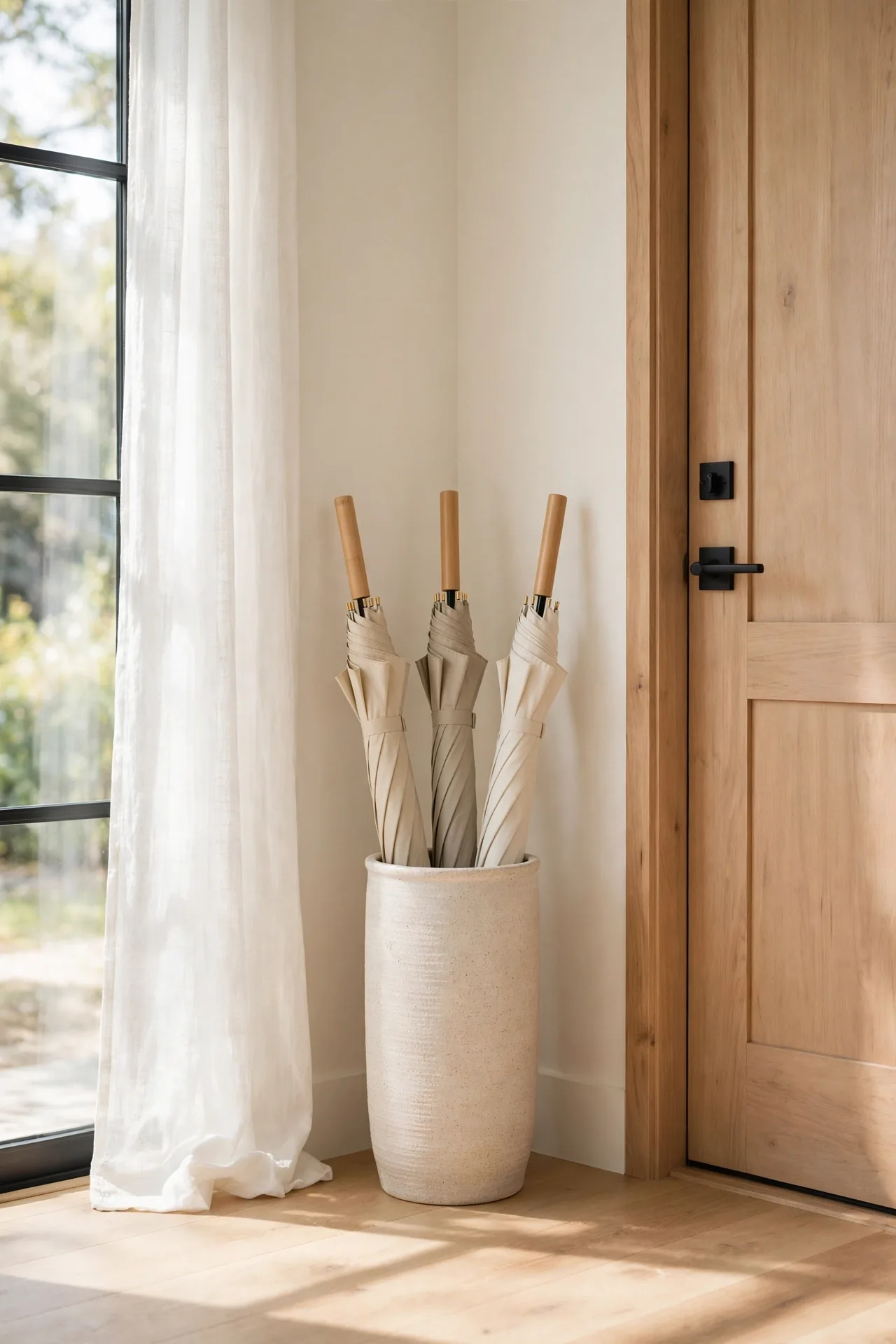
Umbrellas cause some of the worst entryway mess because they drip everywhere and have no natural home. A tall stand in the corner catches drips and keeps wet umbrellas off your floors. Pick one with a removable drip tray so emptying it takes seconds. Place it within arm’s reach of the door so grabbing one becomes automatic.
Quick Tip: Of all the drop zone ideas on this list, a dedicated umbrella stand delivers the fastest visible payoff for rainy climates. Choose a weighted base so the stand never tips when loaded with full-size umbrellas. Keep one compact travel umbrella inside for grab-and-go mornings.
Labelled Storage Bins
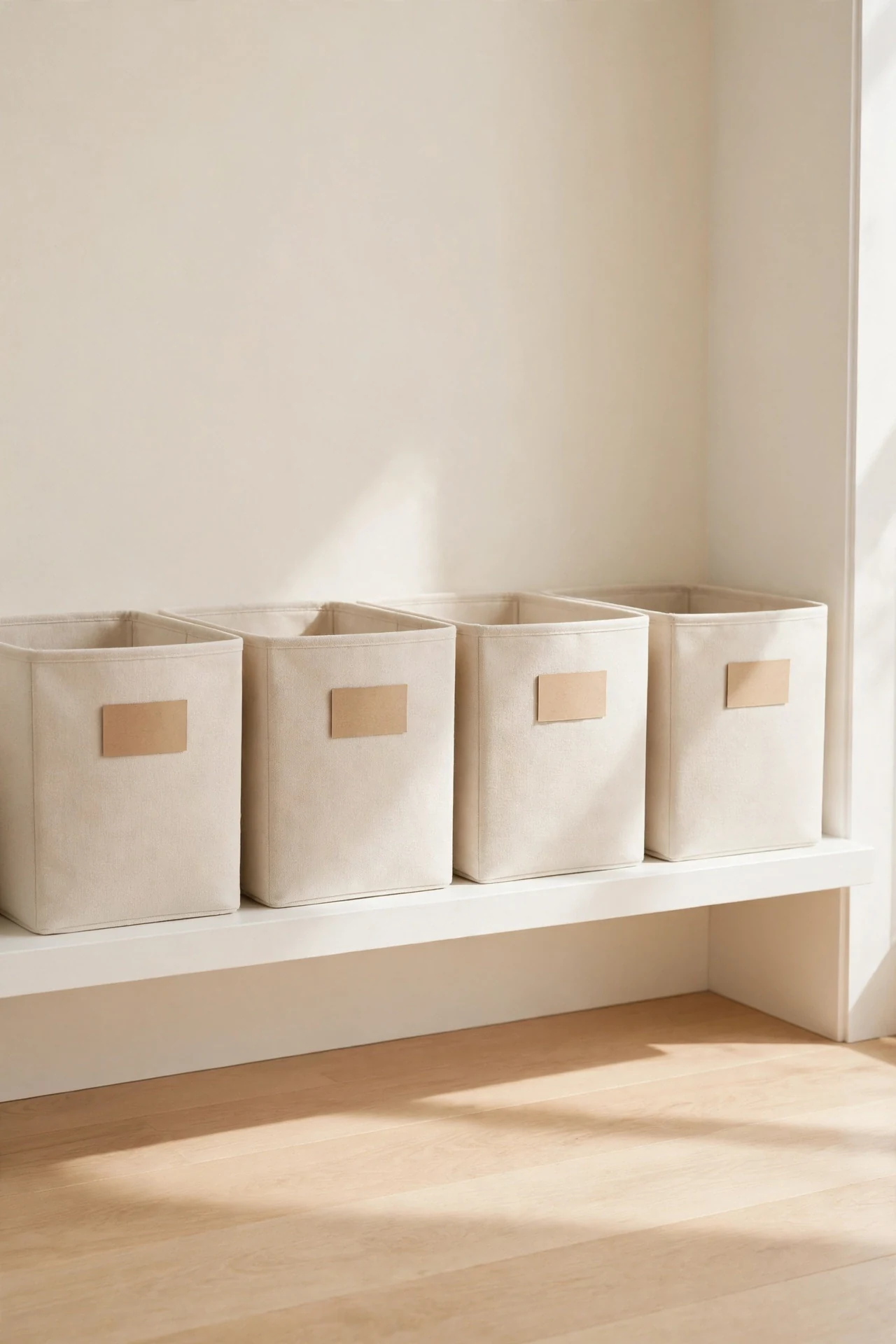
BEFORE: Gloves, scarves, dog leashes, and spare batteries all jumbled in one junk drawer that jams every time you open it. Finding anything takes digging, and half the items in there do not even belong in the entryway.
AFTER: Clearly labelled bins on a shelf, each with one job: winter gear, pet supplies, or batteries and tools. You reach for the right bin without thinking, and everyone puts things back because the label tells them where. The drawer finally closes smoothly.
Use a label maker or simple chalk tags so the system survives busy weeks. Keep bin colors matching and neutral for a calm shelf. For bigger challenges, these mudroom laundry room combo ideas take organization even further.
Wall File Organizer
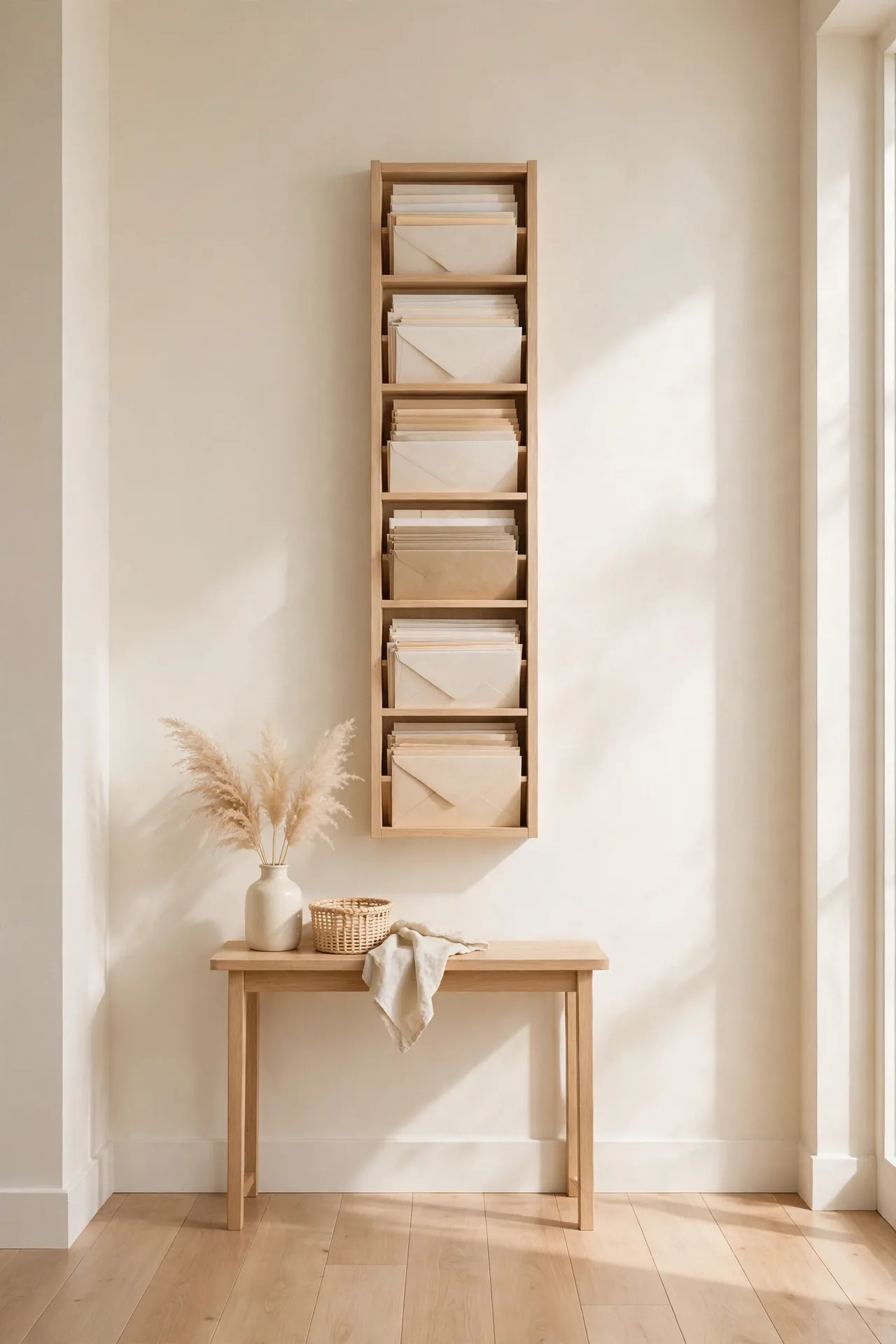
- Hang a vertical file organizer on the wall beside your entry table.
- Create one slot for each category: bills, school, receipts, and coupons.
- Date every incoming paper and file it the same day it arrives.
- Purge the slots every Sunday night so nothing sits longer than a week.
Vertical file slots stop paper from lying flat and multiplying across every surface. Keeping the organizer at eye level means you actually use it instead of ignoring it. Pair this with your weekly purge habit and paper clutter never gets a foothold. Choose slim metal or wood slots that match your decor so the organizer looks intentional, not office-like.
Fold-Down Desk Station
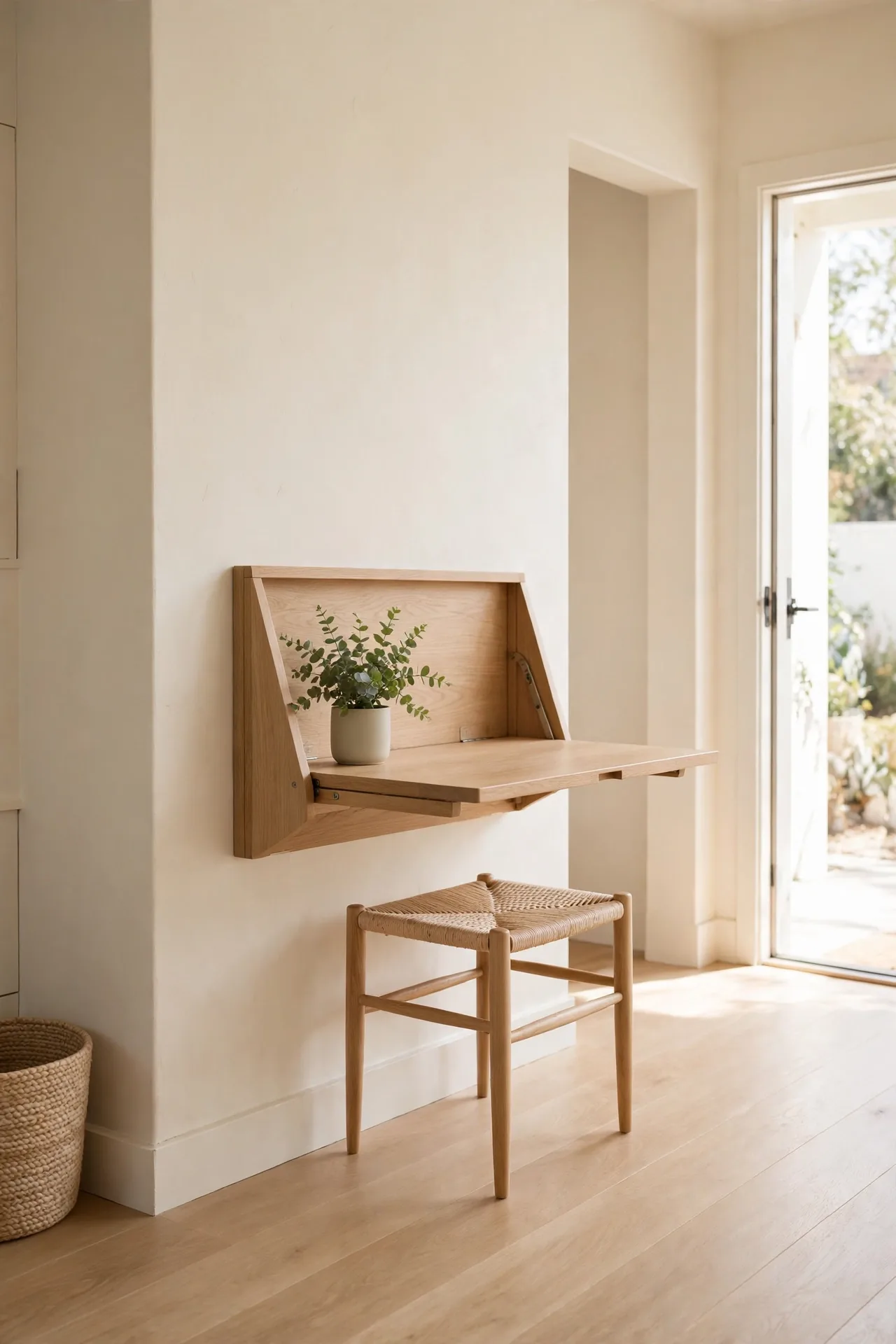
| Wall-Mounted Fold-Down | Convertible Cabinet Desk | |
|---|---|---|
| Footprint Open | 30 by 20 inches | 30 by 20 inches |
| Footprint Closed | 2 inches deep | 10 inches deep |
| Storage | No shelves | Built-in cubbies |
| Cost | 80 to 150 dollars | 200 to 400 dollars |
| Best For | Tiny entryways | Family command hubs |
| Install | One afternoon, basic tools | Weekend project, two people |
If your entryway doubles as a homework or bill-paying spot, a fold-down desk gives you a work surface that vanishes when you are done. Mount it at standard desk height and pair it with a slim stool that tucks underneath. Closed, it looks like a simple wall cabinet.
Rotating Shoe Carousel
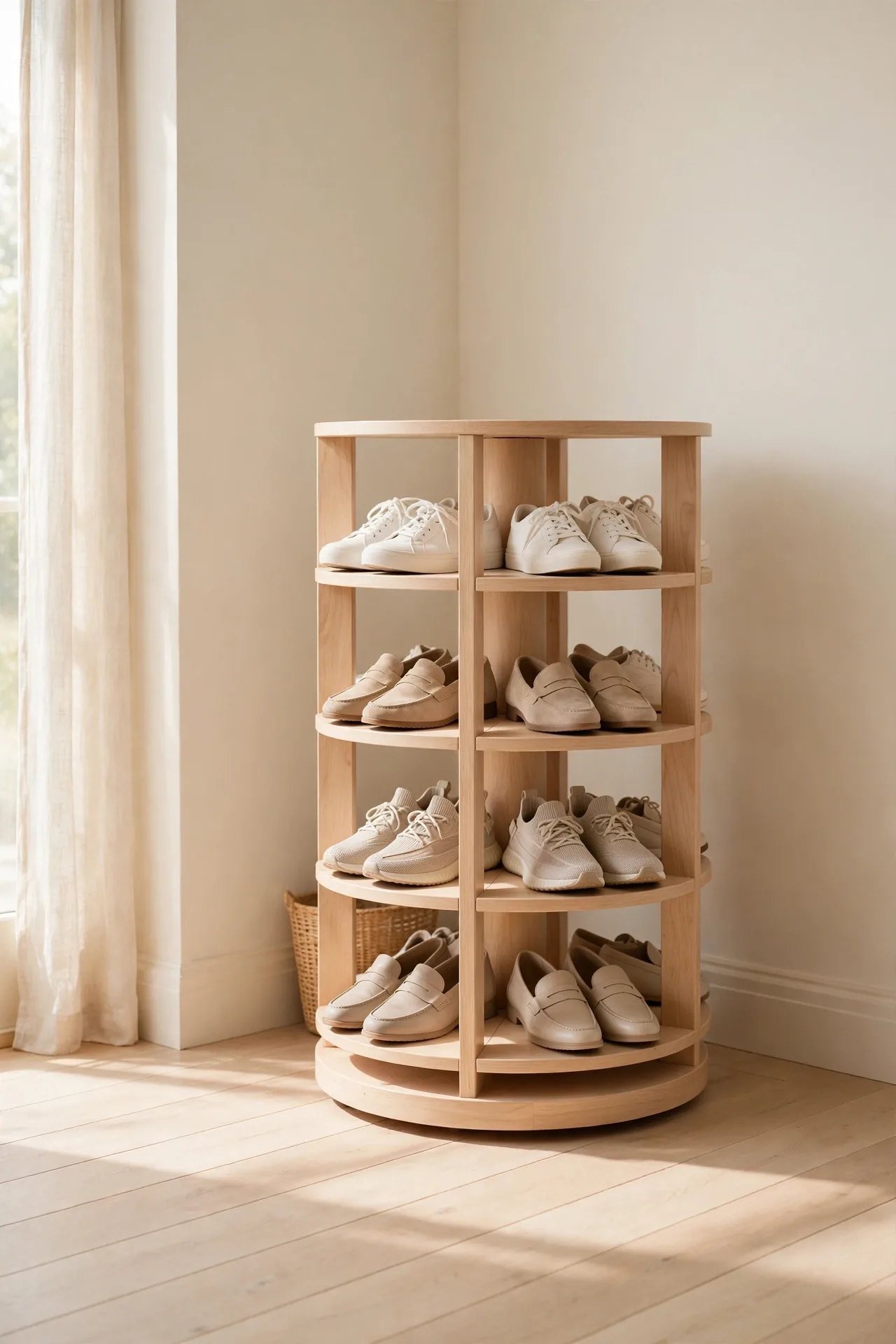
DO:
- Measure your corner first so the carousel’s swing radius fits with room to spare.
- Limit the tower to shoes you wear weekly to keep it from overflowing.
- Place boots on the bottom tier where they have the most vertical room.
DON’T:
- Do not force pairs in sideways; they jam the rotation and scuff leather.
- Never overload one side or the tower will lean and wobble.
- Do not skip the weekly wipe-down, since shoe dust collects fast.
Spin your whole shoe collection into one compact tower with a rotating carousel, which beats digging through a dark closet every morning. The lazy-susan design shows every pair at a glance so you actually wear what you own. It fits neatly into entryway corners that usually go unused.
Glass Catch-All Tray
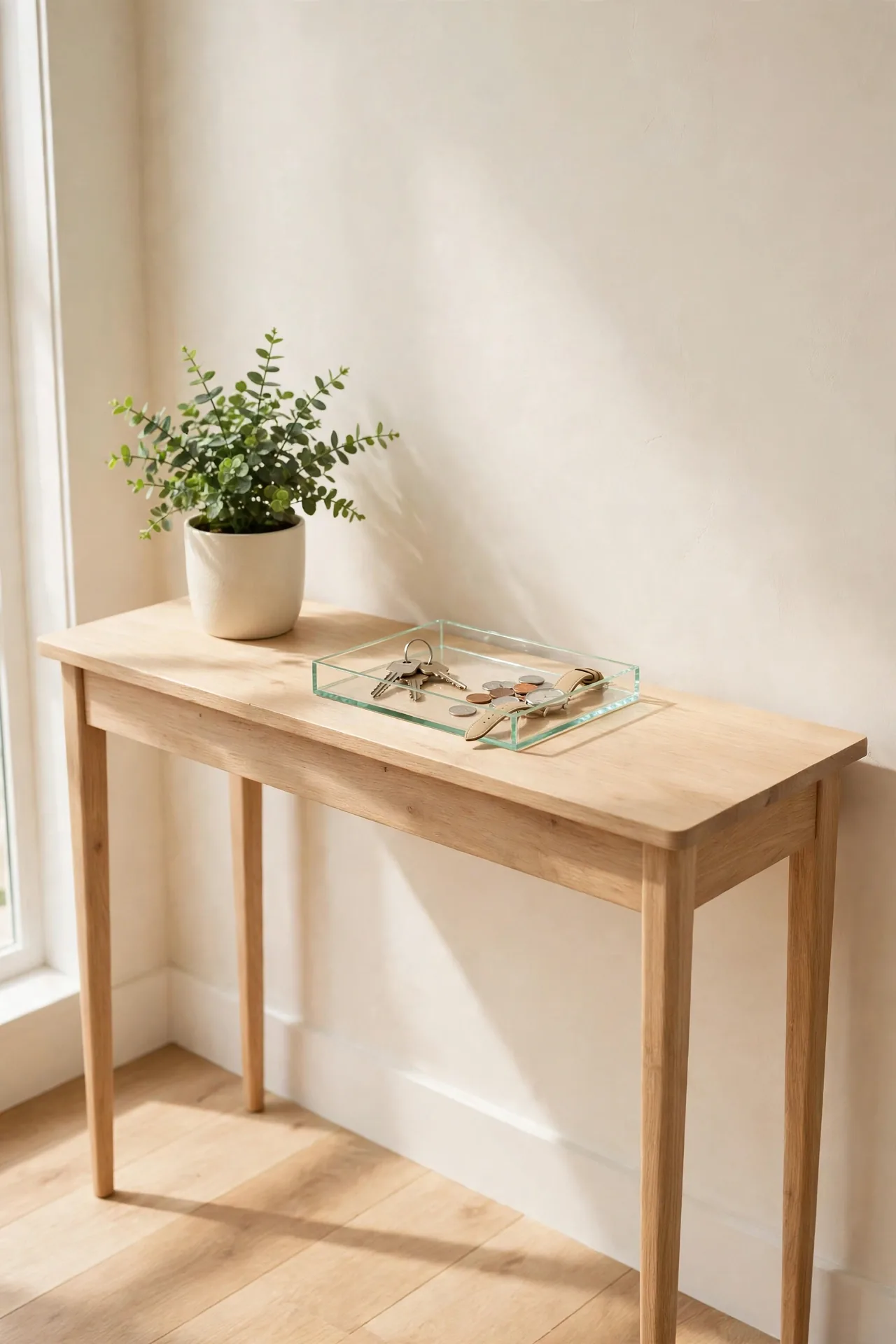
Cost: Low, about 10 to 20 dollars | Time: Five minutes | Skill Level: Beginner | Best For: Minimalists who hate visual clutter
Tiny scattered items cause the biggest mess because they belong nowhere and spread across every surface. A glass catch-all tray corrals coins, keys, and jewelry into one elegant boundary on your entry table. Everything lands in the tray or it does not come inside, which is the whole rule. Choose glass or ceramic with a raised edge so tiny items never slide off, even on a crowded table. In my experience, this single tray quietly organizes the most chaotic entryways.
Overhead Shelf Storage
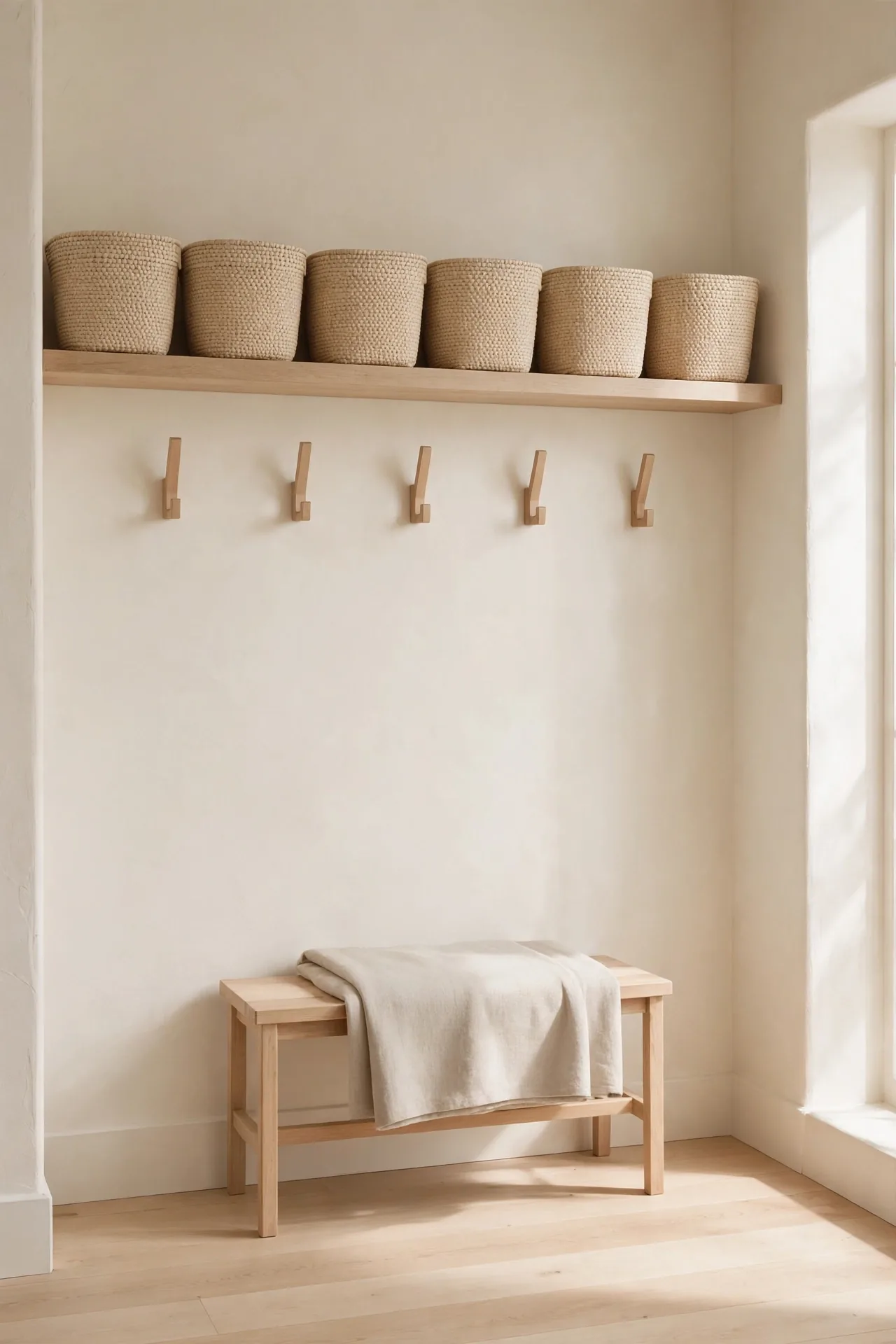
The wall space above your coat hooks is usually empty, yet it can hold an entire shelf of out-of-season gear. Mount a sturdy shelf about six feet high for items you grab only occasionally, like hats and guest slippers. Keep a small step stool nearby so the shelf stays useful instead of forgotten.
Use matching baskets up there so the high shelf looks intentional rather than like overflow. Label each basket clearly since you cannot see inside from the floor. Anchor the shelf into studs so it safely holds heavier winter coats and boots. This trick works best in entries with high ceilings where the space would otherwise collect dust.
Rolling Storage Cart
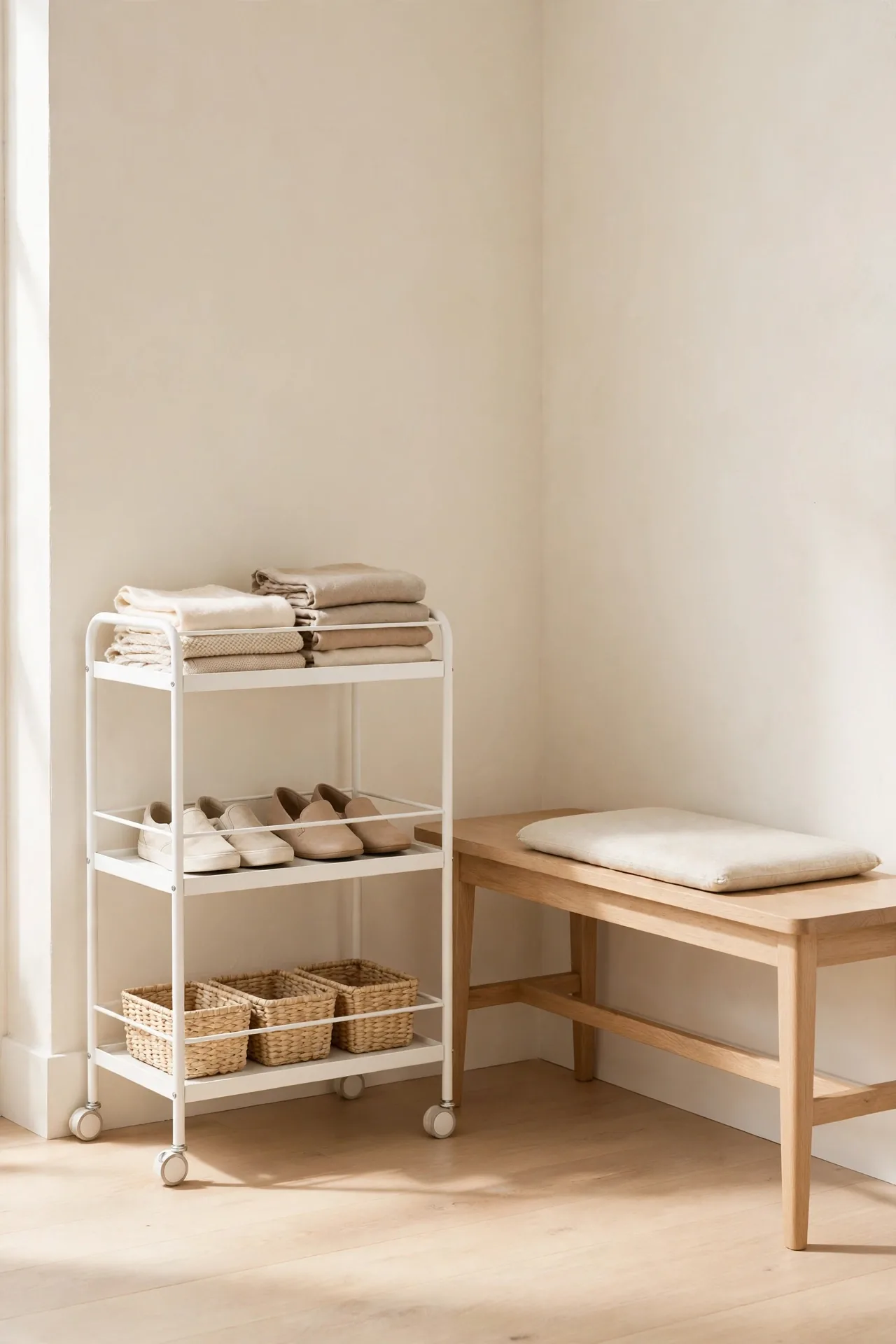
Bring flexible storage to entryways that change with the seasons using a slim rolling cart, which tucks away when guests arrive. Load the tiers with shoes, sunscreen, or winter accessories depending on the month. The wheels make cleaning underneath take seconds instead of a furniture-moving project. Pick a narrow model, no wider than 15 inches, so it slides beside benches or into closets.
- Choose a cart with at least three tiers so categories stay separated.
- Lock the wheels on uneven floors so the cart never drifts.
- Add small bins on each tier to stop items rolling off the edges.
- Keep the top tier clear for daily grab items like keys and mail.
Woven Wall Baskets
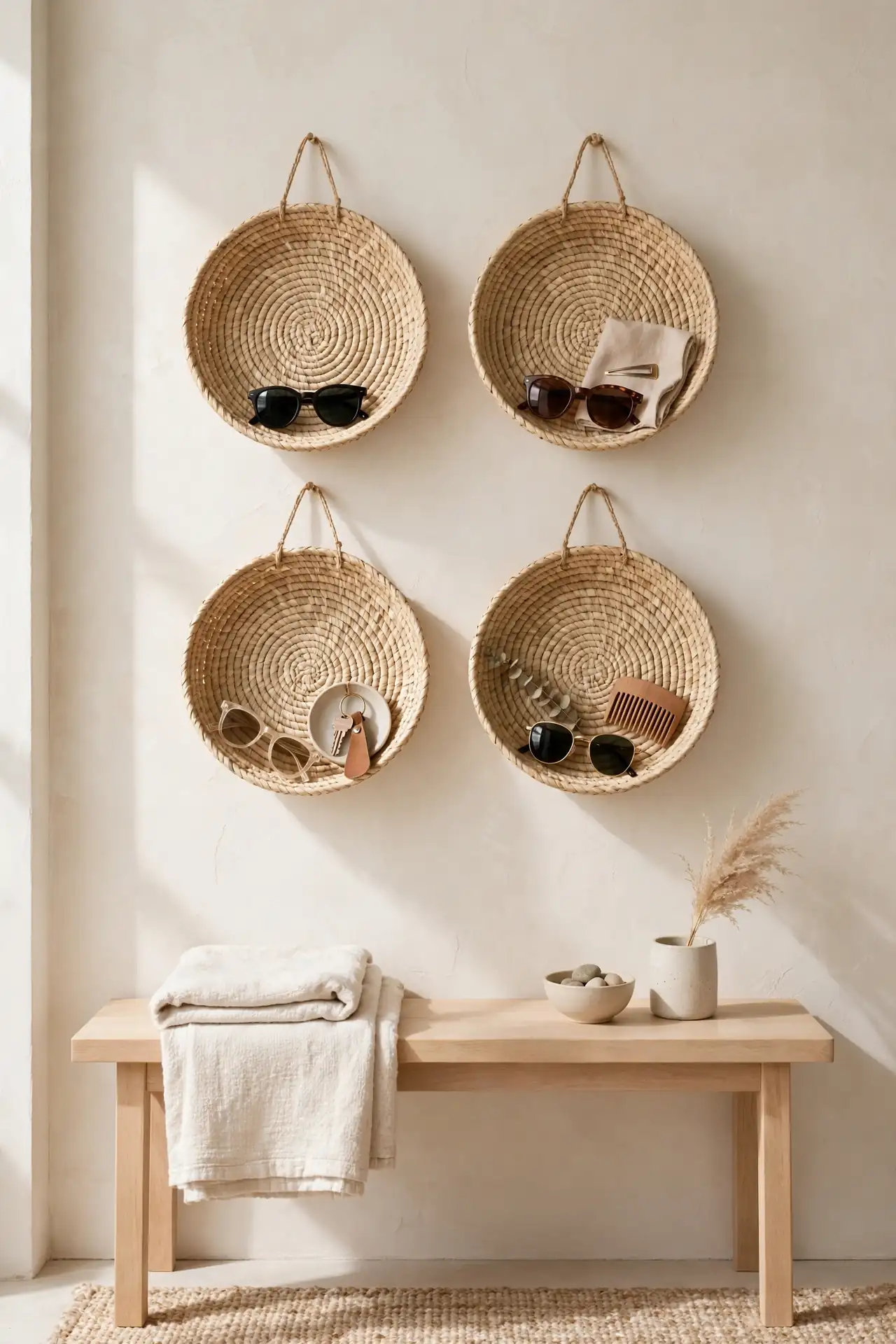
Quick Tip: Hang flat-backed woven baskets on the wall to catch sunglasses, dog treats, and other small daily items. They add warm texture while acting as open storage that never hides a mess. Mount them with sturdy hooks so they hold real weight without pulling free.
Wall baskets solve the problem of tiny items that vanish into drawers and never return. Keep one basket per category so sunglasses always live with sunglasses. The woven texture softens modern entryways that otherwise feel cold and bare. Hang them at different heights to create visual interest instead of a straight boring row. I have noticed guests use them too, which keeps clutter from migrating to the living room.
Pet Leash Station
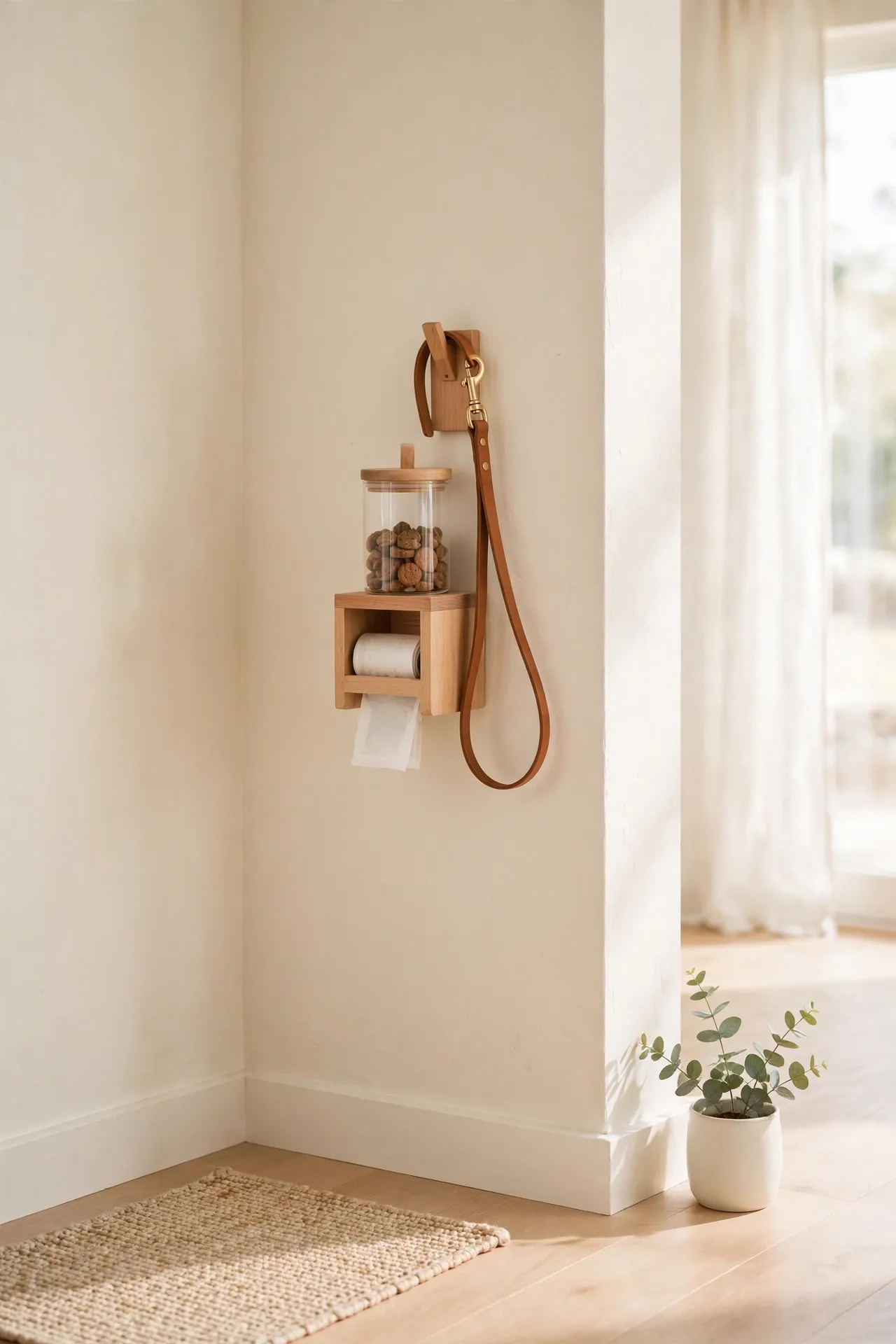
BEFORE: The leash tangled around a doorknob, treat bags on the floor, and poop bags stuffed in random pockets. Every walk starts with a five-minute hunt, and the entryway always looks like a pet store exploded.
AFTER: One wall station holds the leash on a hook, treats in a jar, and waste bags in a dispenser. Walks start in thirty seconds flat, and the entryway stays presentable even with a shedding dog. Everything has its spot, so nothing drifts.
Mount the station at your height so grabbing the leash never involves bending or hunting. Add a small bin for muddy paw towels underneath. Guests with dogs will thank you when visits stay clean and quick.
Mini Drawer Cabinet
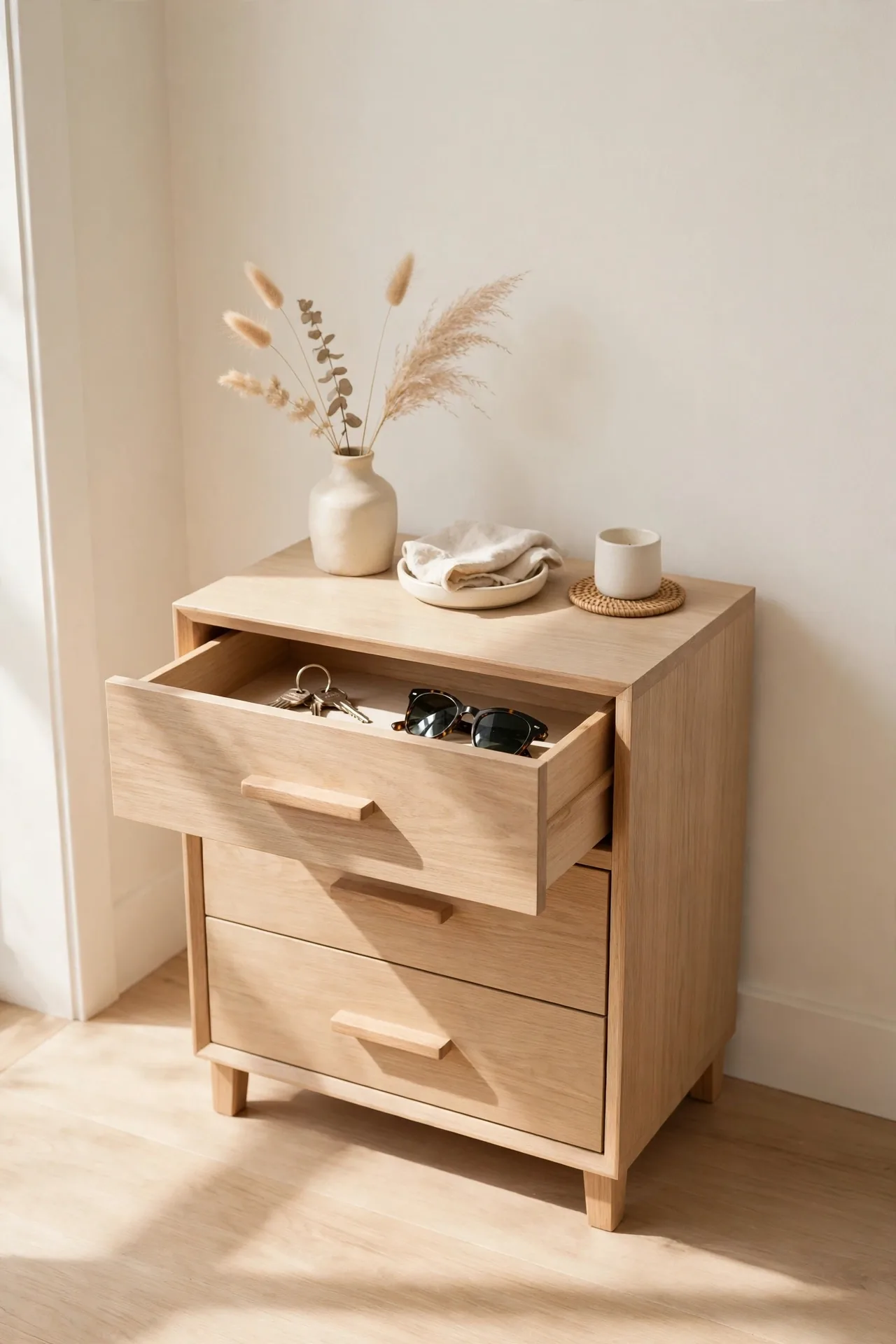
- Place a small 3-drawer cabinet on your entry table or a low shelf.
- Assign the top drawer to keys and wallets, the middle to sunglasses and accessories.
- Reserve the bottom drawer for batteries, stamps, and other small supplies.
- Empty and re-sort all three drawers on the first of every month.
Tiny drawers beat one deep drawer because small items stop disappearing into the dark corners. The cabinet keeps daily essentials sorted without taking over your table surface. Choose one with smooth glides so even a full drawer opens with one finger. A wooden cabinet in a light finish doubles as decor while hiding the mess inside.
Conclusion
A tidy entryway changes how your whole home feels the moment you walk through the door. These drop zone ideas prove that you do not need a big mudroom or an expensive renovation to stay organized. Start with one idea that targets your worst mess, then add another once the habit sticks. Pin your favorites on Pinterest so you can find them when you are ready to shop or build. Small changes here pay off every single morning, and your future self will thank you each time you leave on time with everything in hand. Try one this weekend and feel the difference every time you come home.
One Comment