25 Studio Bedroom Storage Ideas for Maximum Space
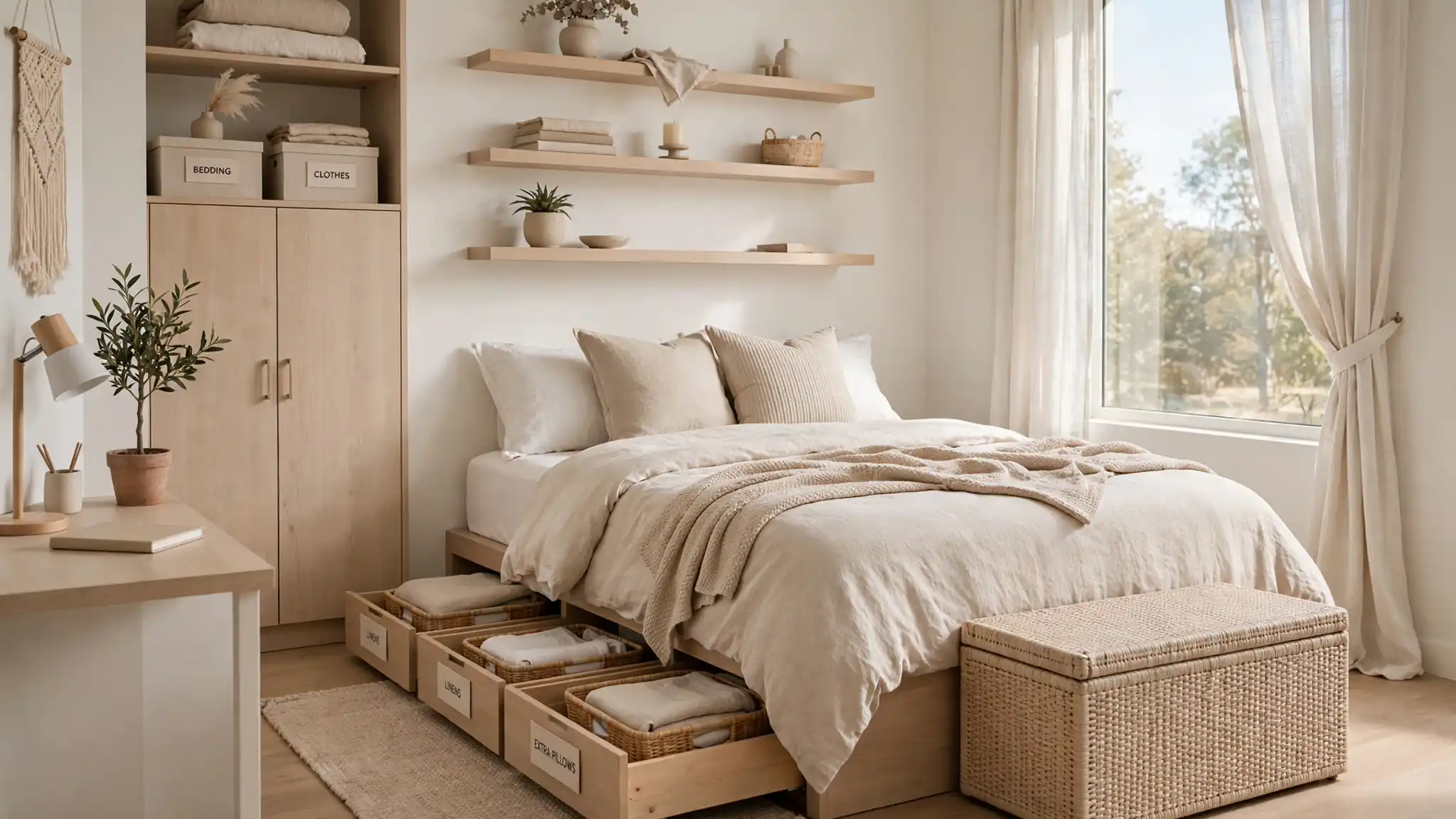
Living in a studio means your bedroom shares space with everything else, so smart storage becomes the difference between calm and chaos. These studio bedroom storage ideas show you how to tuck away clutter, double up furniture functions, and keep your sleeping corner feeling open. In my experience, the studios that feel biggest are the ones where every item has a hidden home. Whether you rent a tiny alcove or own a compact loft, the tricks below help you reclaim floor space without giving up comfort.
If your whole apartment needs the same treatment, these ideas pair beautifully with small apartment living room layouts that stretch every square foot. Start with the sleeping zone first, since restful nights make small-space living so much easier.
Under Bed Drawers
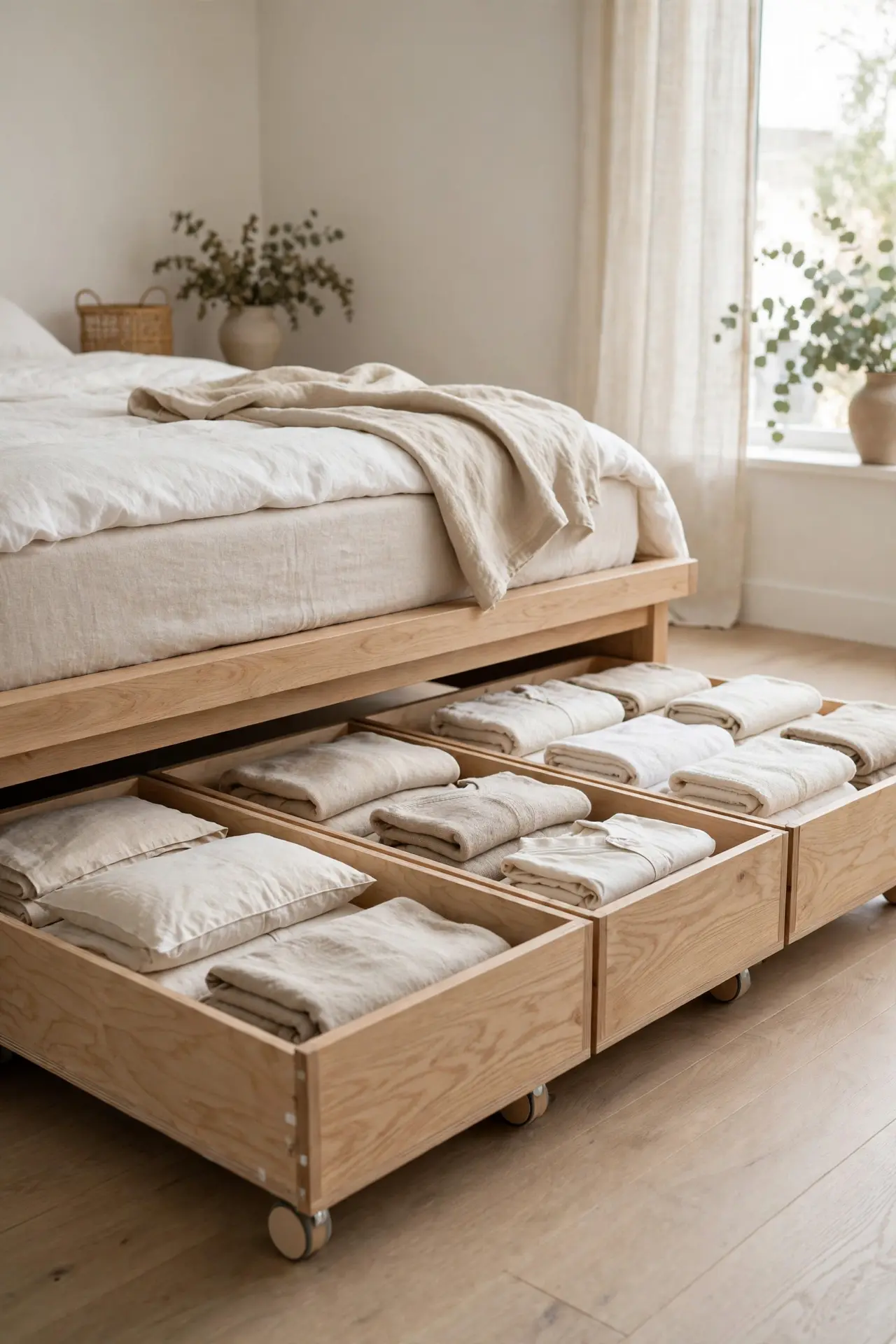
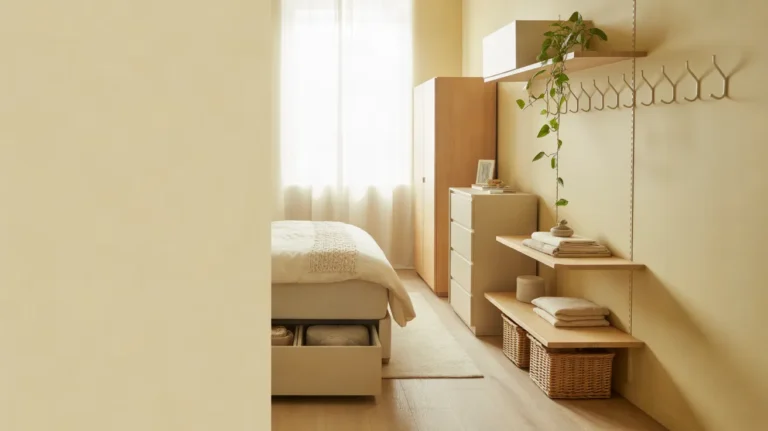
The space under your bed is prime real estate in a studio, and shallow drawers turn it into a dresser you never see. Choose rolling units with smooth casters so they glide out without scratching floors. I’ve noticed that dividing drawers into zones, one for pajamas, one for off-season tops, keeps mornings quick and calm.
Label the drawer fronts with small tags so you grab what you need without digging through stacks. Low-profile drawers fit under most frames, and fitted dust covers keep everything fresh between uses. This single change can free an entire dresser footprint for living space instead, which matters enormously when your bedroom is also your living room.
Lift Up Bed
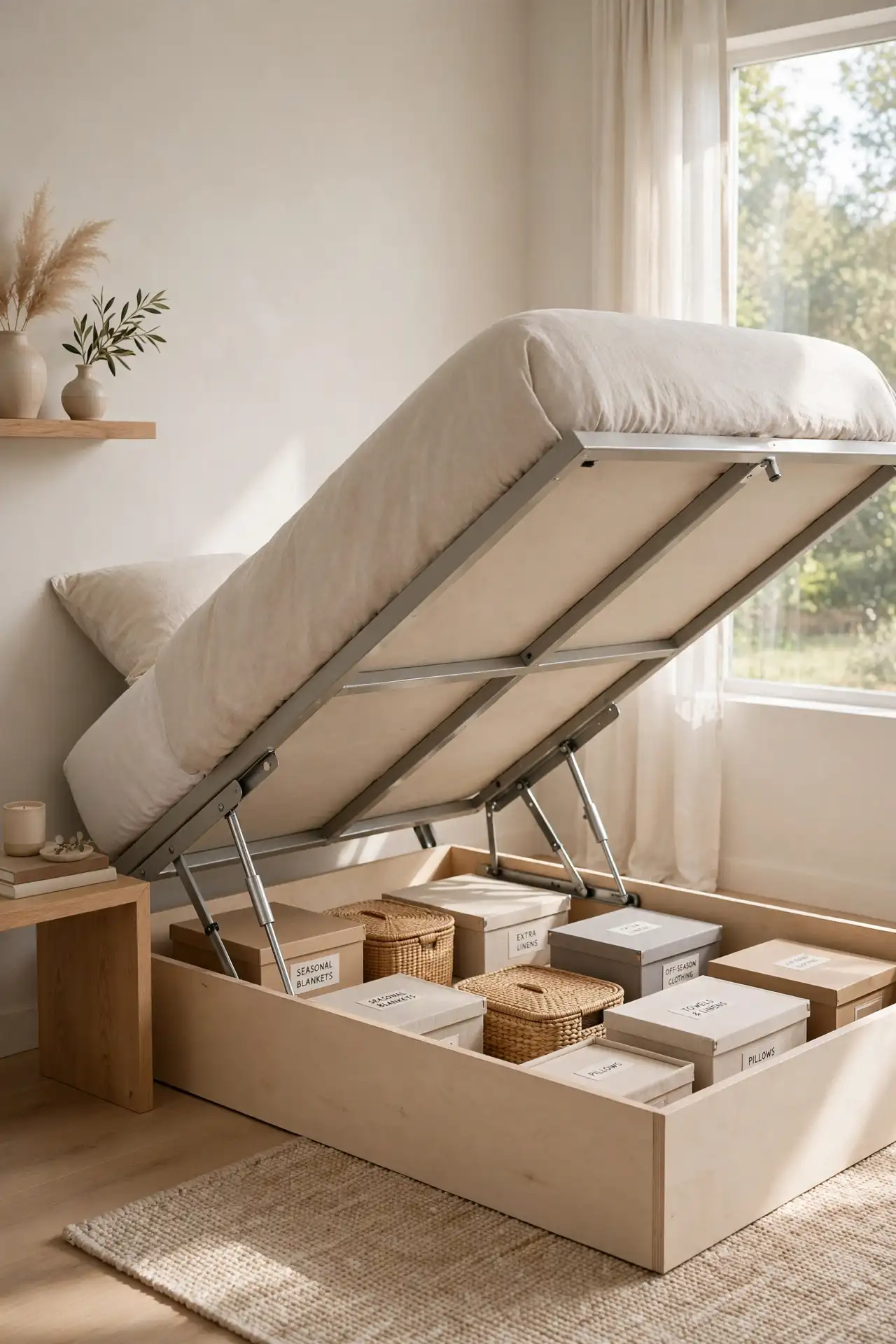
- The mattress platform lifts on gas struts, revealing the entire bed footprint as storage.
- Bulky items like suitcases, winter coats, and spare bedding disappear completely inside.
- Ventilation gaps prevent moisture buildup, so fabrics stay fresh year round.
- Locking struts hold the lid open safely while you load or unload items.
- Works with most standard mattresses, so you keep the comfort you already love.
A lift-up bed essentially gives you a hidden closet the size of your mattress. That’s why many experts recommend it as the highest-impact upgrade for studio sleepers. The lift mechanism does the heavy work, so daily access stays easy and safe.
Wall Mount Shelves
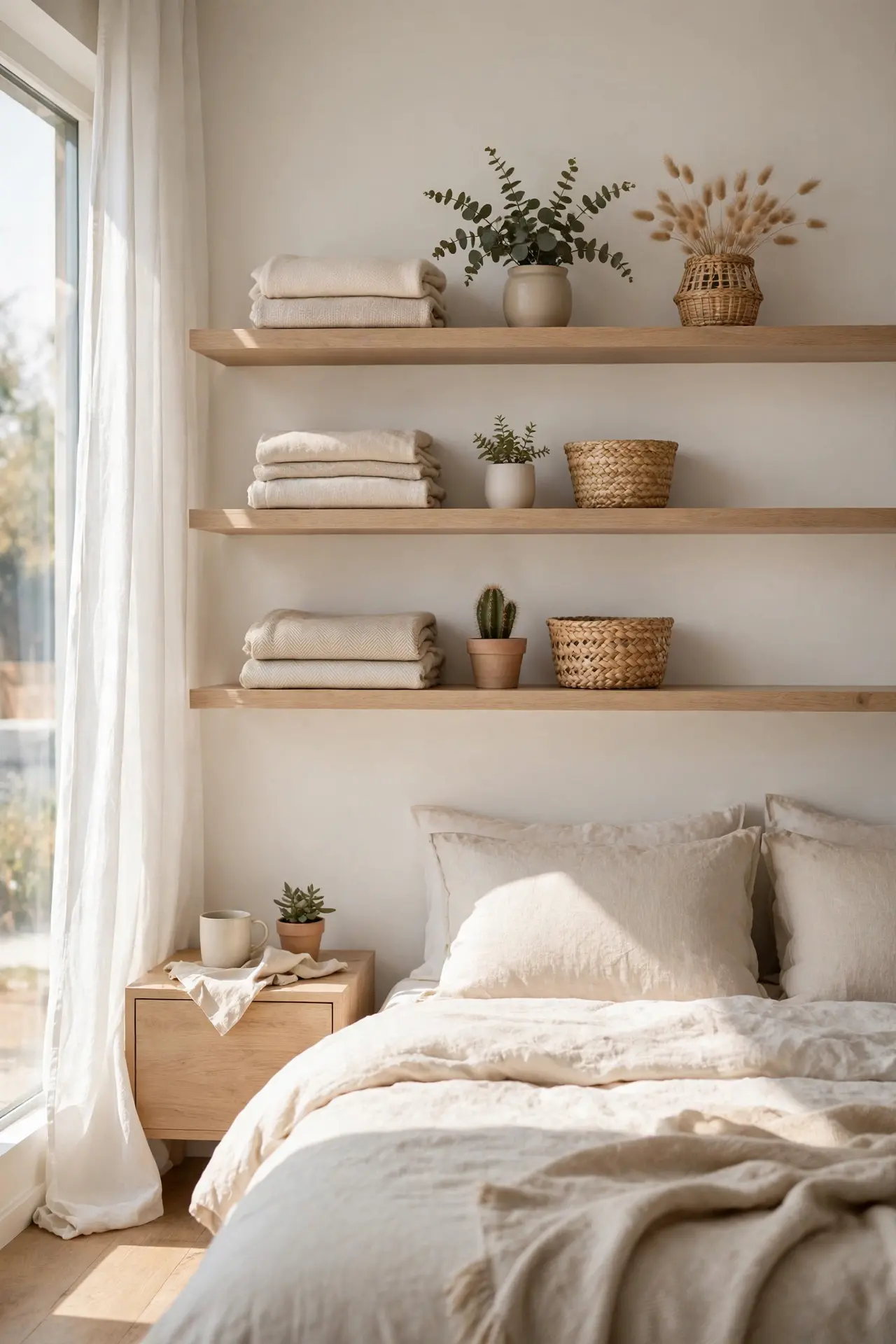
Quick Tip: Mount shelves at staggered heights to fit books, baskets, and decor in one vertical column. Use a stud finder and proper anchors so each shelf holds real weight. Keep the lowest shelf within easy reach for nightly essentials like water and reading glasses.
Wall shelves free your floor completely while putting vertical space to work around the clock. I’ve seen this work well in many cases where renters need storage without drilling into every wall or buying bulky furniture. A single column of three shelves can replace a bulky bookcase and still leave the room feeling airy and open. Style the top shelf with decor and keep daily items low for easy grabs.
Fold Down Desk
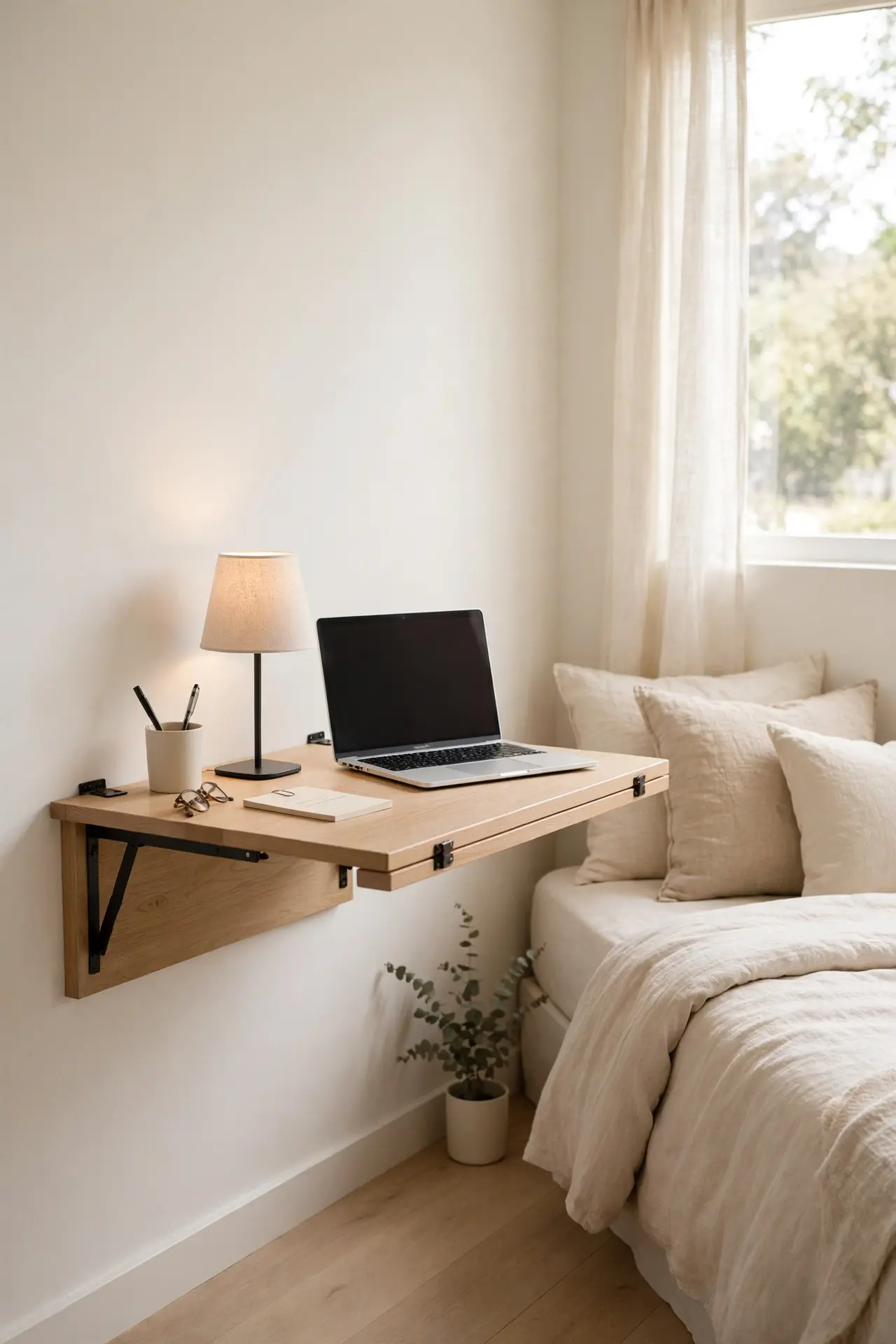
BEFORE: A full-size desk eats a permanent corner of your studio, collecting clutter even on days you never sit down. The chair blocks walkways and the surface becomes a drop zone for mail and laundry.
AFTER: A fold-down desk mounts flat to the wall and opens only when you need it. Closed, it reads as slim wall art or a shallow cabinet. Your floor stays clear for yoga, guests, or simply breathing room.
Look for models with interior shelving so supplies stay stored inside when folded. I’ve tried these in tight rentals and the reclaimed space feels remarkable. Pair it with a folding chair that hangs on a nearby hook.
Storage Ottoman Bench
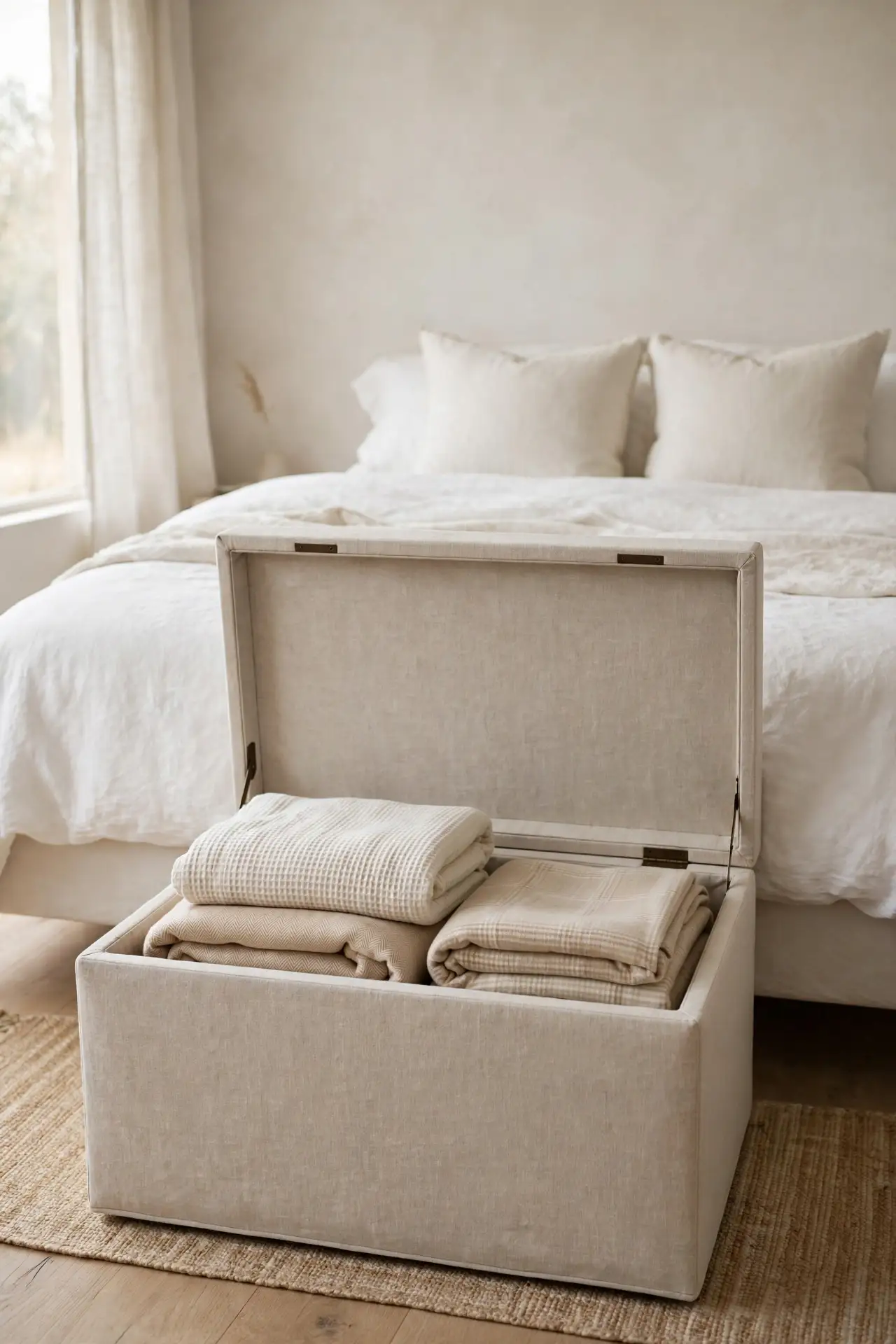
- Place the bench at the foot of your bed where it doubles as seating for dressing.
- Store extra throws, guest pillows, and out-of-season accessories inside the hollow base.
- Choose a bench with a hinged lid that stays open hands-free while you load it.
- Pick wipeable fabric so daily use never shows wear in a small, visible space.
This one piece handles seating, storage, and a visual anchor for the bed zone all at once. In a studio where every object is on display, a tidy ottoman keeps the sleeping area looking intentional rather than cluttered. Guests get a comfortable perch when they visit, and you get a hidden trunk for the things you use weekly but never want to see.
Behind Door Hooks
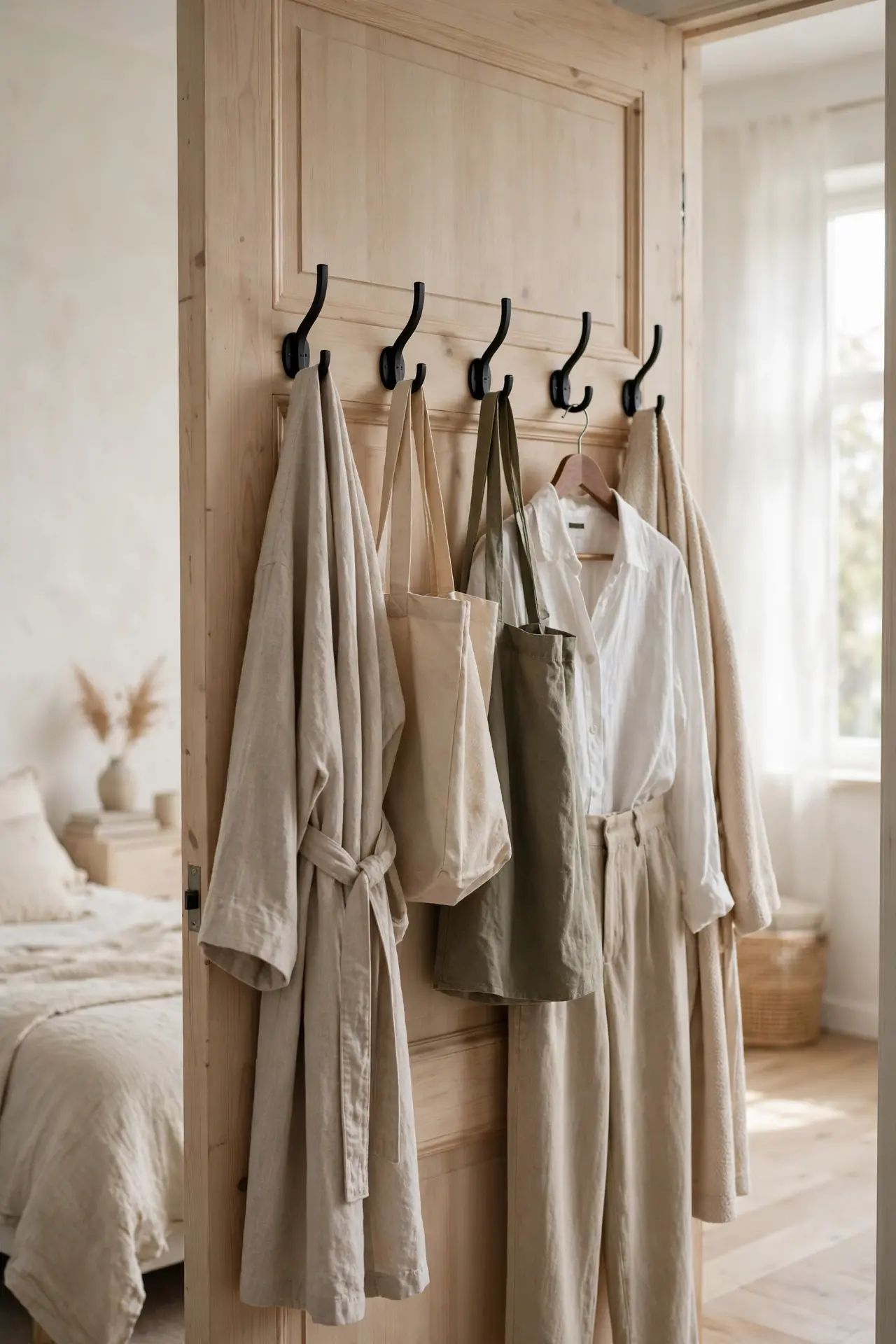
| Adhesive hooks | Best for renters; no holes, hold light robes and bags |
| Over-door rack | Best for heavy use; instant install, holds coats and totes |
| Screw-mounted row | Best for permanence; strongest hold for daily outfits |
The back of your door is free hanging space most studios waste completely, yet it takes minutes to claim. A simple row of hooks keeps tomorrow’s outfit, your robe, and a tote off the floor and off the bed where they usually pile up. This small habit delivers a big visual payoff every single day. Choose hooks that match your door hardware for a built-in look.
Floating Nightstand Ledge
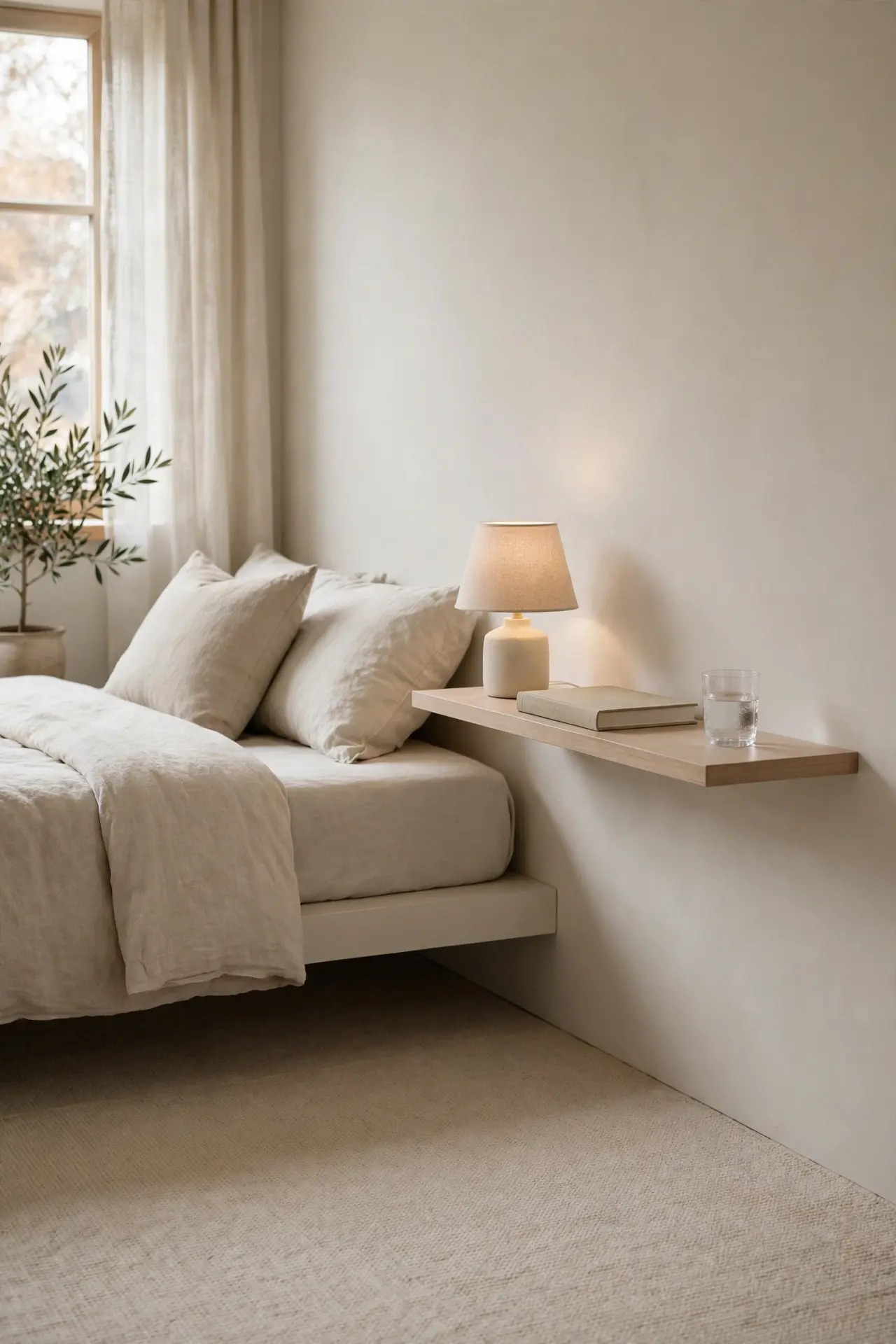
DO:
- Mount the ledge at mattress height so essentials sit within arm’s reach.
- Add a small drawer or lipped edge to stop phones sliding off at night.
- Run a cord channel underneath for a clean, trip-free charging setup.
DON’T:
- Don’t choose a deep shelf that juts into your walking path.
- Don’t skip wall anchors; a wobbly ledge spills water fast.
- Don’t pile decor here; keep it strictly functional in a studio.
A floating ledge gives you nightstand function with zero footprint. The open floor beneath makes the whole sleeping corner feel larger, and cleaning takes seconds. I’ve noticed this swap alone visually widens narrow studio bedrooms.
Corner Wardrobe Tower
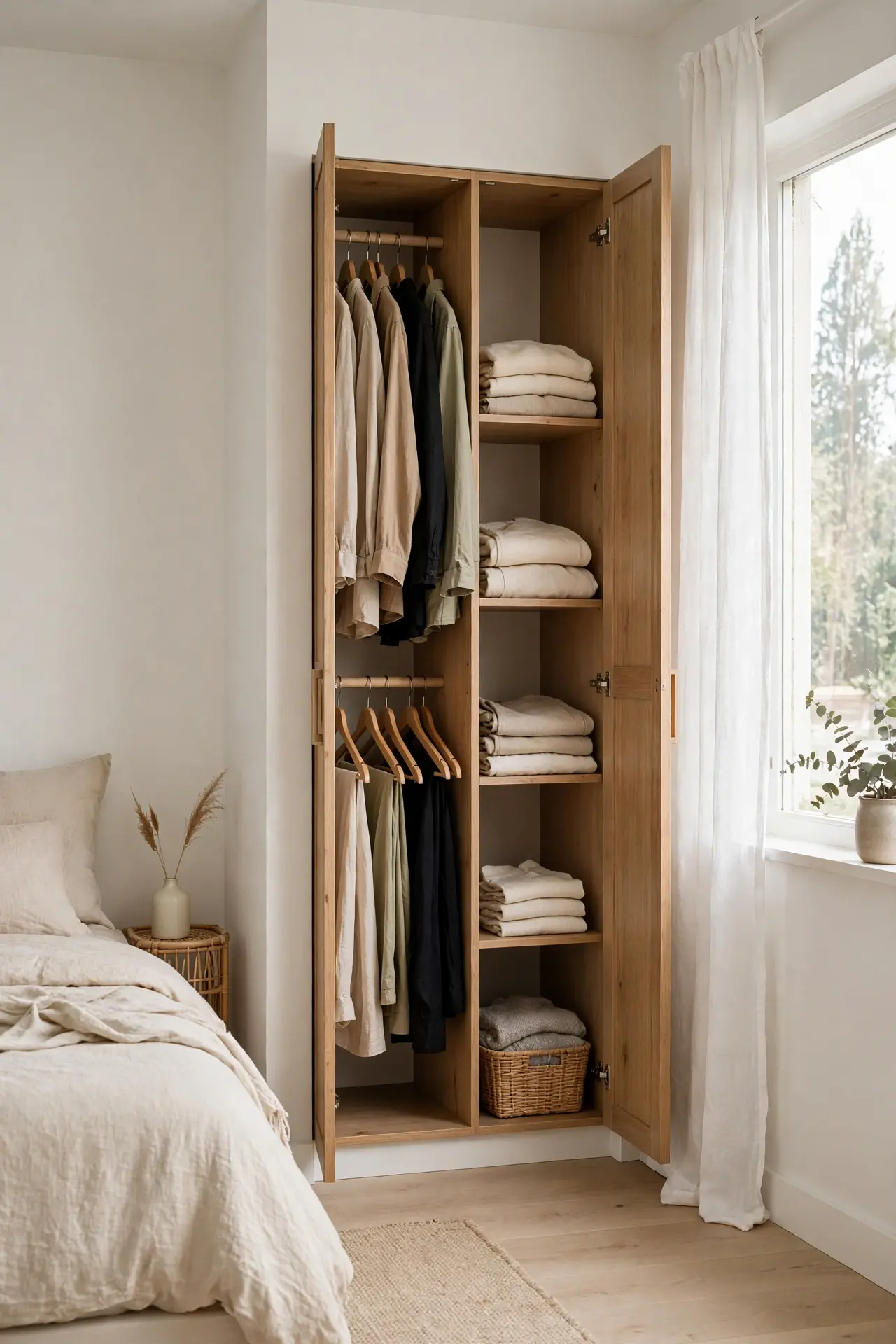
Cost: Medium | Time: One afternoon | Skill Level: Beginner | Best For: Renters without built-in closets
Corners are the most wasted square footage in studio bedrooms, and a slim tower wardrobe claims them beautifully without blocking walkways. Look for units under 24 inches deep so they never crowd the room or jut into your path. Mirrored doors bounce light around and double the sense of space while hiding your clothes completely. Inside, combine a short hanging rod with adjustable shelves so the tower handles both outfits and folded stacks. I’ve noticed corner units work best when styled to blend with the wall color.
Rolling Cart Station
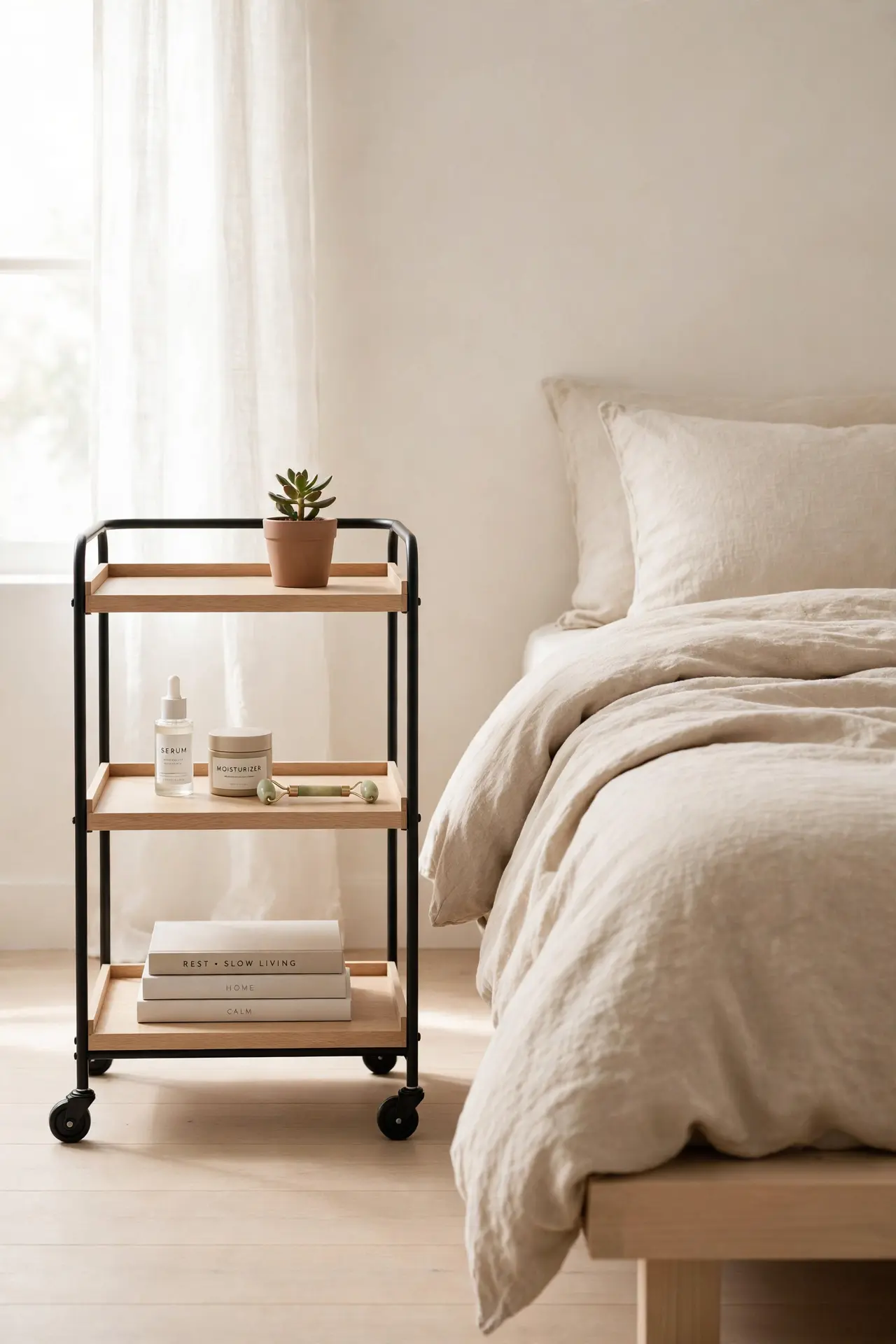
A slim rolling cart slides into gaps a nightstand never could, then rolls out when you need it elsewhere. Stock the top tier with nightly essentials and lower tiers with craft supplies or office extras. The mobility matters in a studio where zones shift by time of day.
Choose a cart with locking wheels so it stays put beside the bed overnight and never drifts. Metal frames wipe clean and look tidy even when fully loaded with daily supplies. When guests visit, roll the whole station into a closet and reclaim instant floor space for an air mattress or extra seating. The flexibility makes it ideal for studios that host often.
Over Bed Shelving
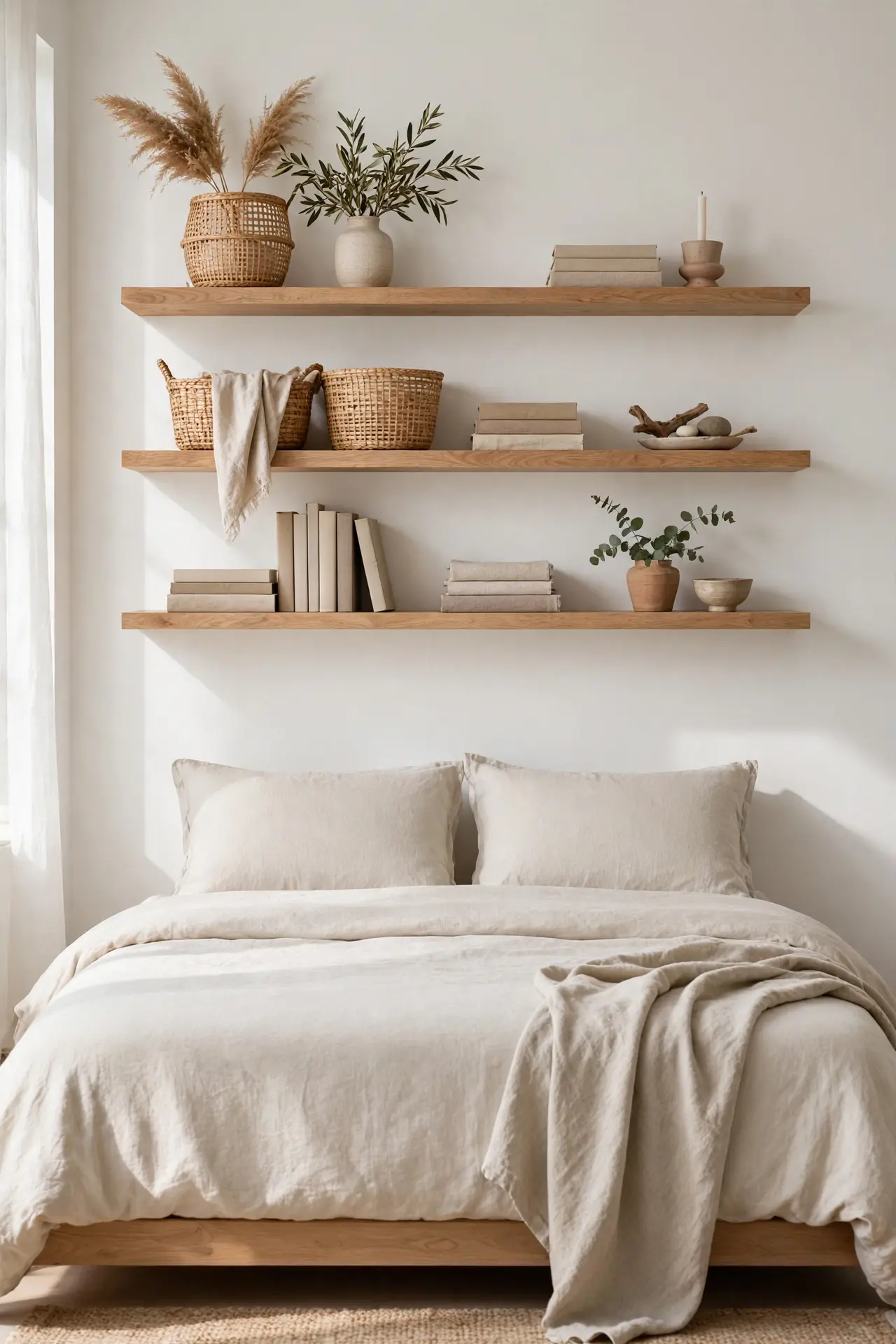
- The wall above your headboard is dead space; two long shelves turn it into a library.
- Use lidded baskets on high shelves so dust stays out and visuals stay calm.
- Keep heavy books on the lowest shelf to lower the center of gravity.
- Leave breathing room between objects so the display reads as decor, not clutter.
This vertical band of storage replaces a full bookcase without touching your floor plan at all. In my experience, styling it with a tight color palette keeps the display serene rather than busy, which matters when you stare at it from bed. Secure every bracket into studs for true peace of mind while you sleep below. Add small LED puck lights under the lowest shelf for a soft evening glow.
Mirror Cabinet Doors
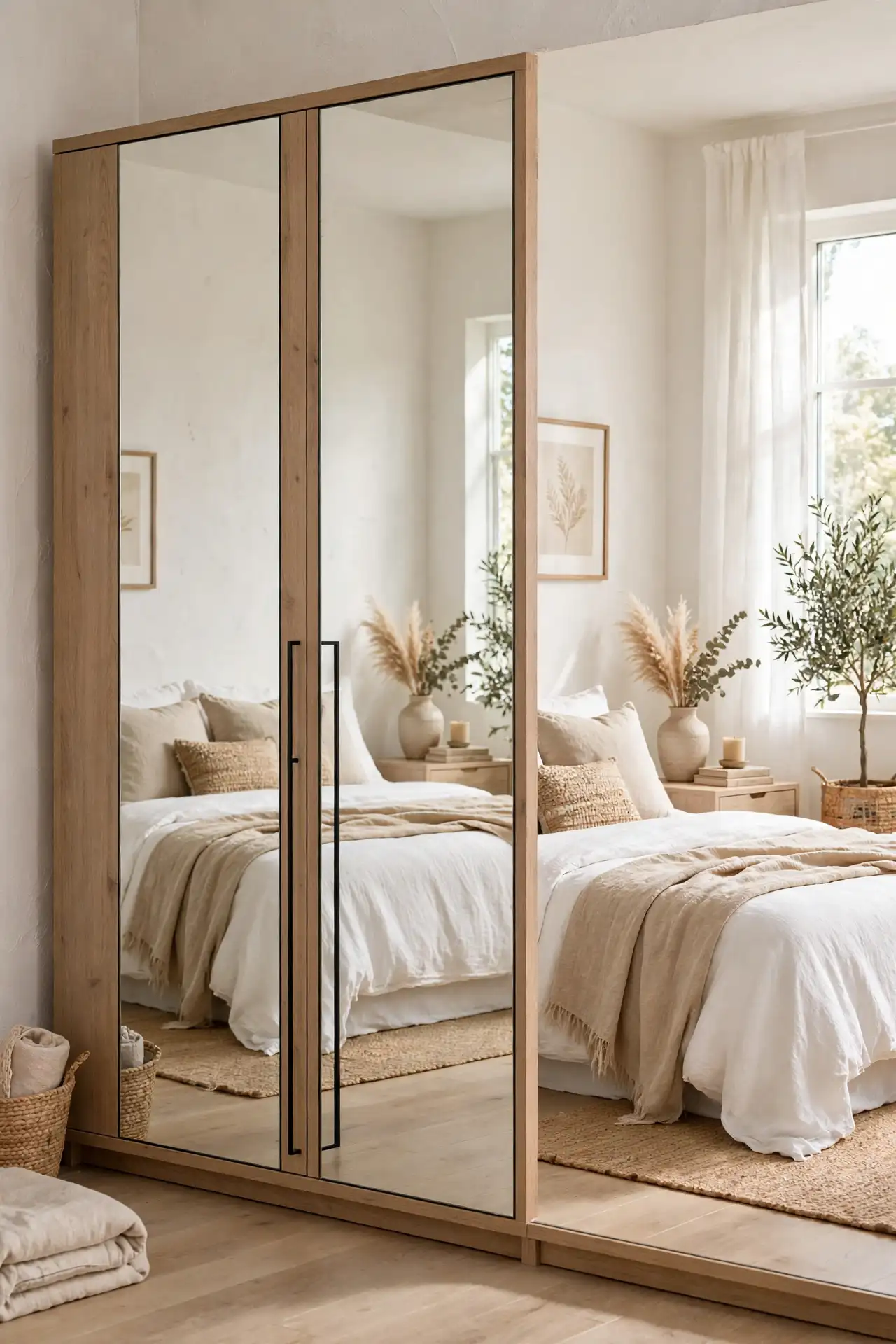
Quick Tip: Swap solid wardrobe doors for mirrored fronts to hide storage and amplify light in one move. Clean mirrors weekly since smudges show fast in small rooms. Position the unit opposite a window to double your daylight for free.
Mirrored cabinets erase visual bulk because your eye reads reflection instead of furniture mass. Behind the doors, add motion-sensor puck lights so every shelf glows the moment you open it, making early mornings easier. The combination of hidden storage and borrowed light is pure studio magic for windowless corners. Keep the mirror frames slim so the unit reads as architecture.
Slim Rolling Drawers
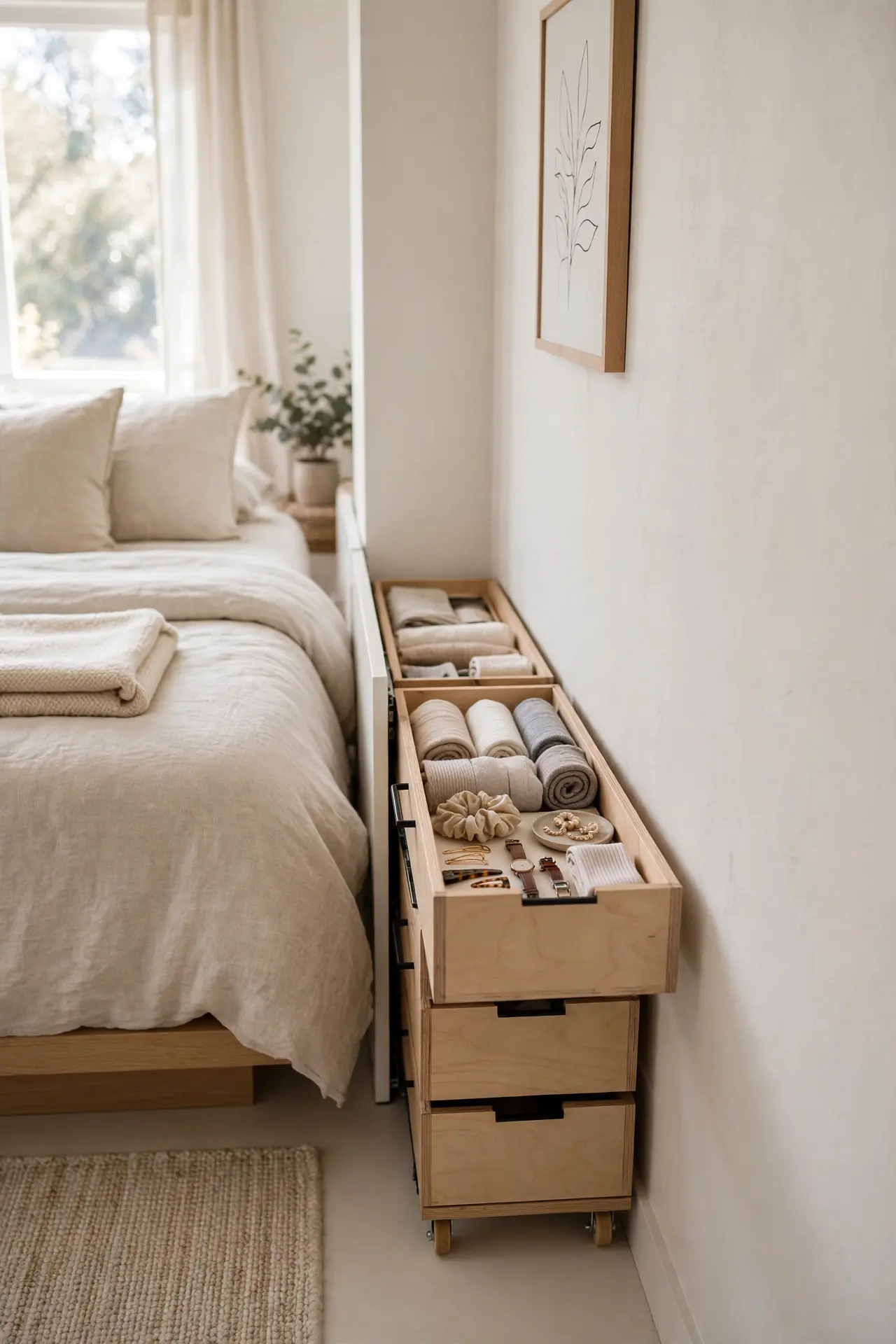
BEFORE: The six-inch gap between your bed and the wall collects dust bunnies and lost socks. That dead strip runs the full length of the bed, wasting cubic feet you desperately need.
AFTER: Slim rolling drawers, some as narrow as seven inches, glide into that exact gap. Socks, underwear, and accessories get a proper home. The room looks finished instead of forgotten along the edges.
Measure your gap before buying, since widths vary by bed frame. I’ve seen this work well in many cases where renters assume narrow gaps are unusable. Pull-out access beats crawling under the bed every single morning.
Hanging Closet Organizer
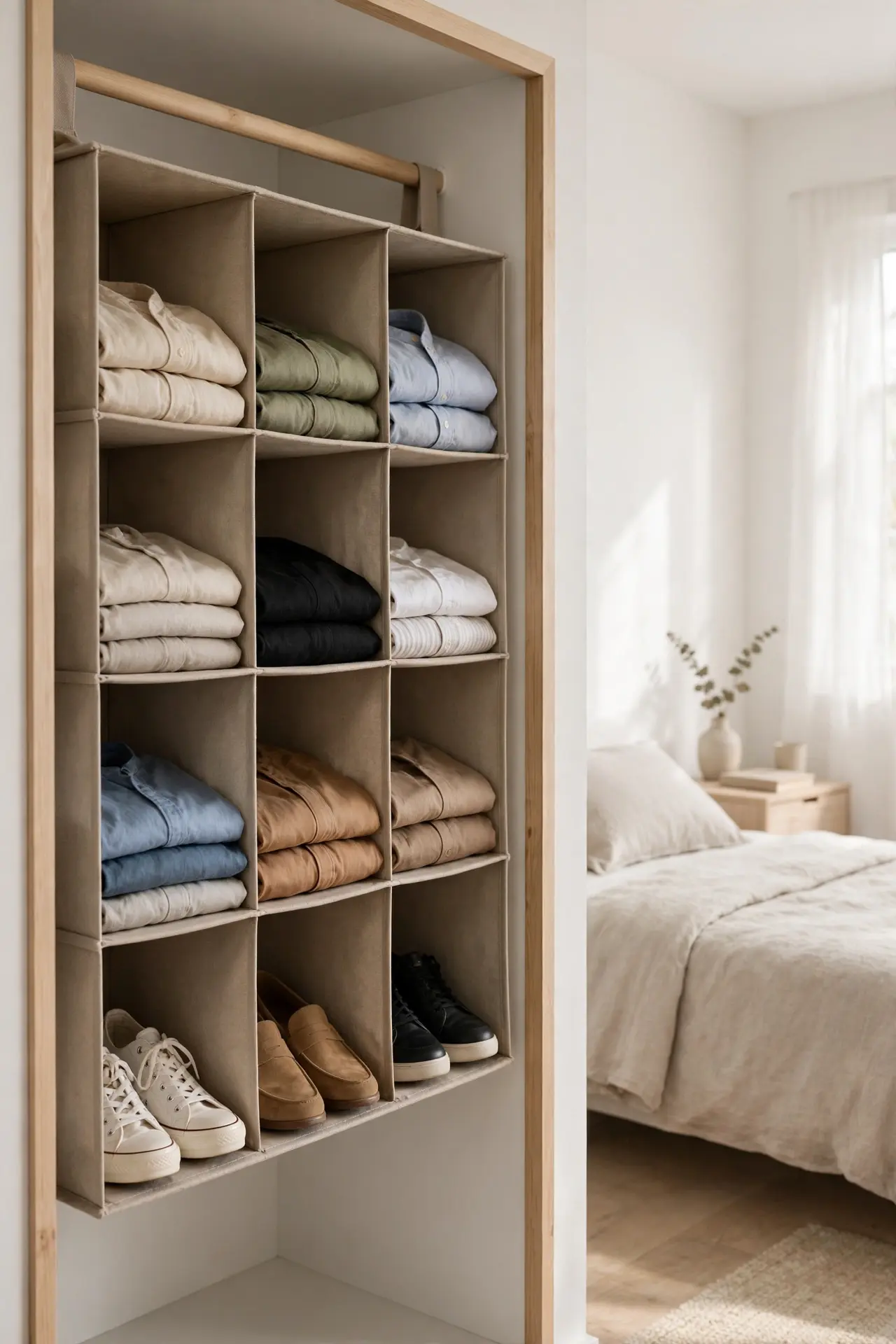
- Hang the organizer from the closet rod; no tools or installation needed.
- Assign each cubby a category: tees, workout gear, bags, or shoes.
- Roll clothes instead of folding to fit more per shelf and reduce wrinkles.
- Use the bottom cubbies for heavier items so the unit hangs straight.
- Label shelf edges if you share the closet with a partner.
A hanging organizer can double a small closet’s usable compartments overnight without a single tool. That’s why many experts recommend it as the fastest closet upgrade for studio renters on any budget. When you move, it folds flat into a suitcase and sets up again in minutes. Choose canvas over thin fabric so the cubbies hold their shape for years.
Storage Headboard Wall
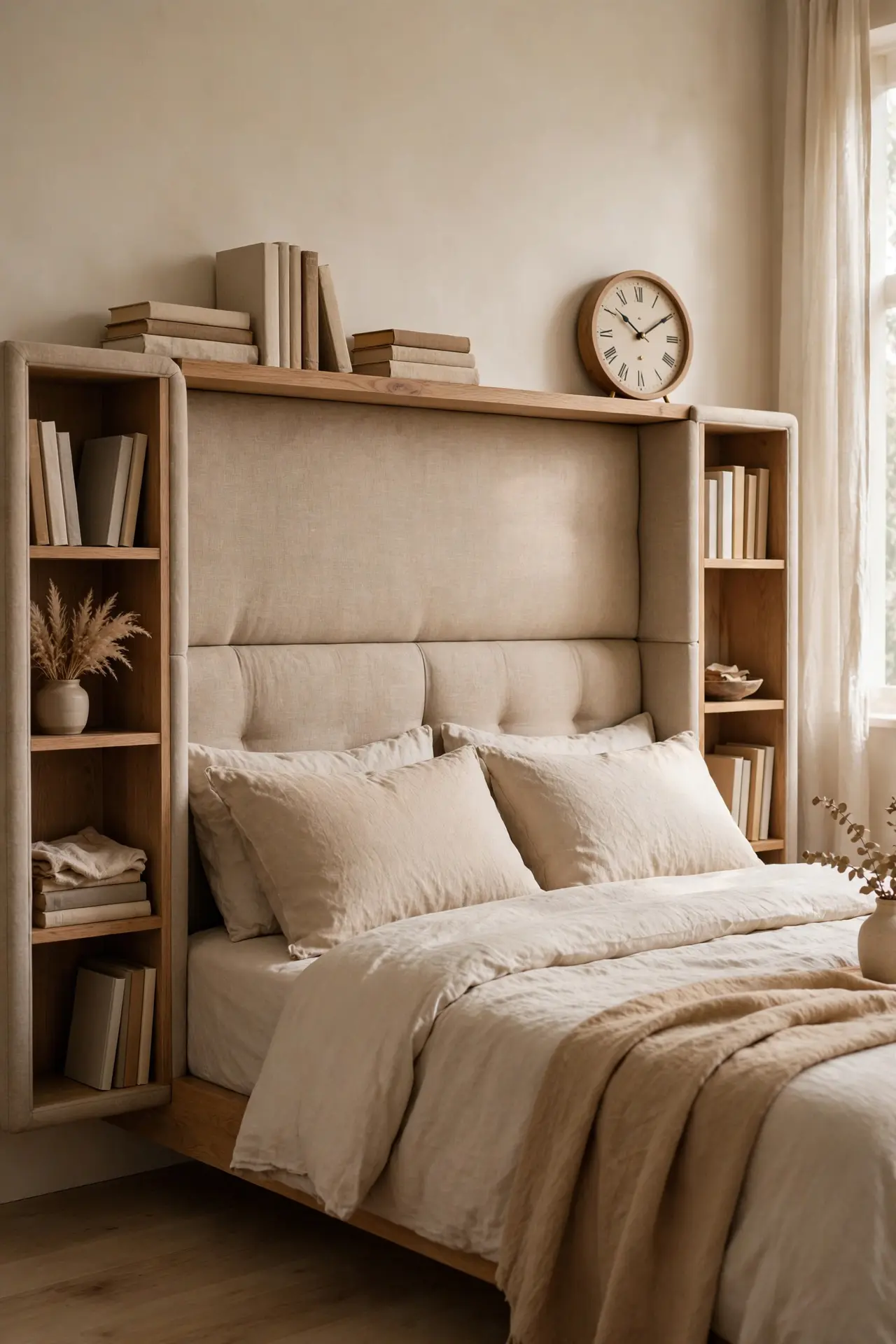
| Bookcase headboard | Best for readers; deep shelves hold books and lamps |
| Cubby headboard | Best for minimalists; small niches for phone and glasses |
| Full-wall unit | Best for max storage; spans the whole bed wall |
Your headboard wall can work as hard as any dresser while taking zero floor space. Built-in cubbies swallow the clutter that usually colonizes nightstands, and the bed itself becomes the storage hub of the room. Choose a style that reaches toward the ceiling to maximize every vertical inch of the wall. Paint it the same color as your walls so the storage disappears into the architecture and the room feels larger.
Stackable Cube Units
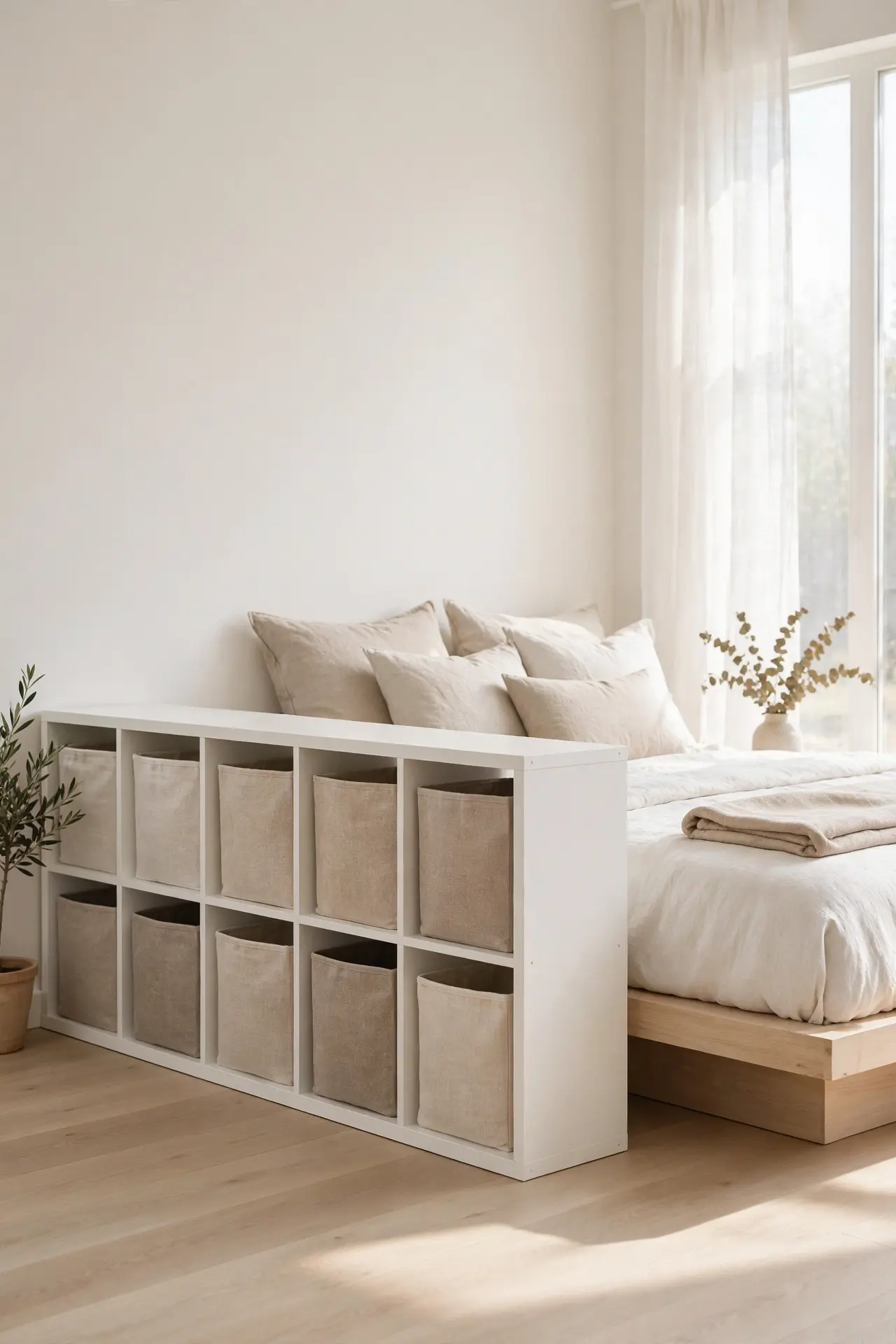
DO:
- Anchor tall stacks to the wall so they never tip in a tight space.
- Use matching fabric bins for a calm, uniform look that hides mess.
- Leave one cube open as a display niche for a plant or framed photo.
- Stack in an L-shape to define your sleeping zone from the living area.
DON’T:
- Don’t mix clashing bin colors; visual noise shrinks small rooms.
- Don’t stack higher than you can safely reach without a step stool.
- Don’t skip the backing panels if the unit divides two zones.
Cube units grow with your needs: start with four, add more as life expands. Their modular shape fits awkward studio corners beautifully. In my experience, uniform bins are the secret to making open storage look serene.
Under Window Bench
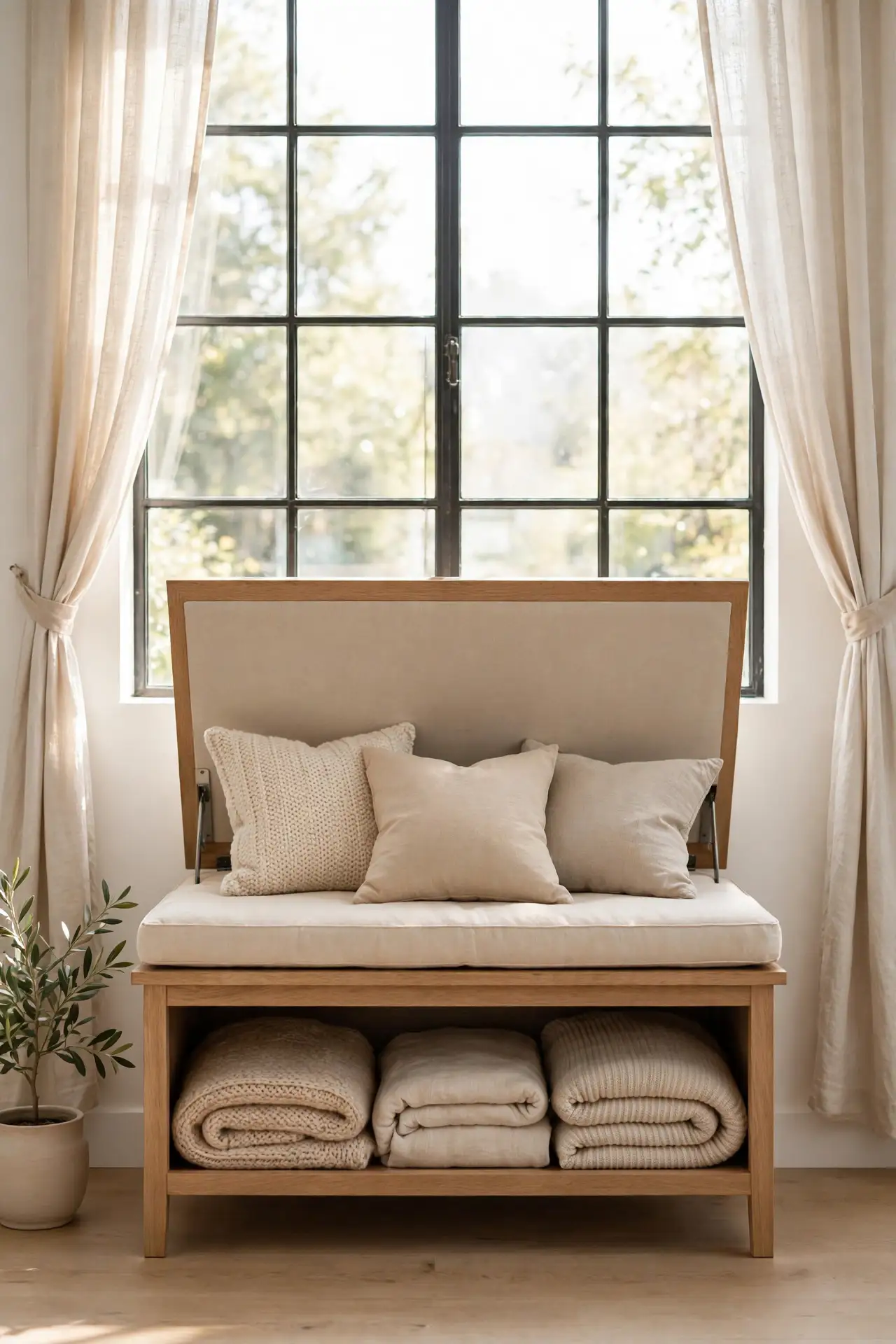
Cost: Low | Time: One hour | Skill Level: Beginner | Difficulty: Easy
The space below your window usually sits empty, yet it fits a storage bench perfectly in almost every studio layout. Lift the hinged seat to stash guest bedding, board games, or hobby supplies you reach for weekly. Top it with a thick cushion and a couple of throw pillows, and it becomes the sunniest reading spot in your entire home. Choose a bench with soft-close hinges so the lid never slams during quiet mornings. This one addition creates seating, storage, and a lovely view all at once.
Pegboard Command Center
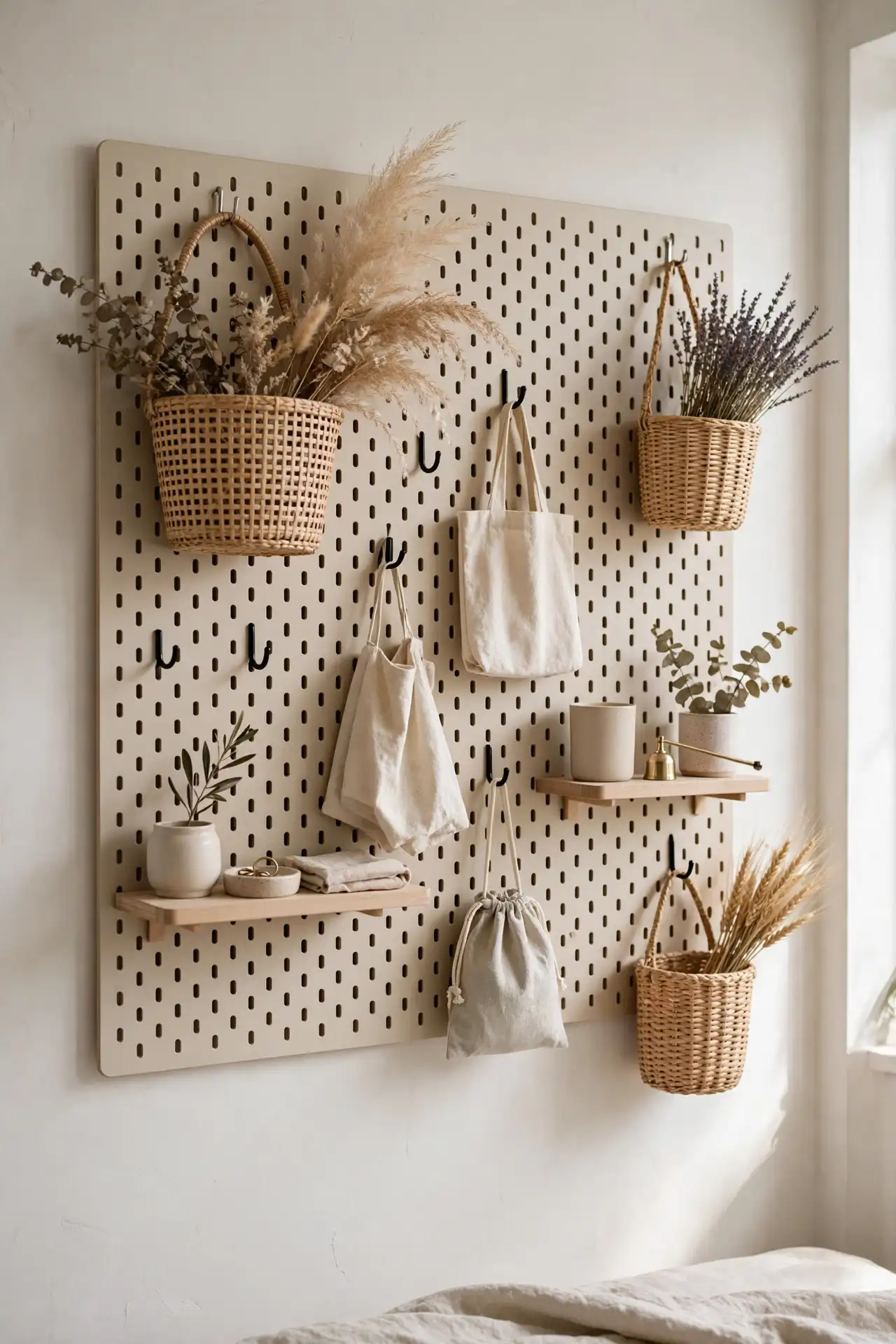
A pegboard turns one wall into endlessly rearrangeable storage without a single bulky cabinet. Hooks hold bags and hats, small shelves catch keys and sunglasses, and baskets corral chargers. Paint it the wall color so it reads as architecture, not clutter.
Rearrange the layout seasonally as your needs shift; that flexibility is gold in a studio where life changes fast. I’ve tried magnetic add-ons too, which grip notes, tiny tools, and even spice tins with ease. Keep the arrangement airy with breathing room between items so the board stays a feature wall, not a junk wall. A quick monthly reset keeps it working beautifully.
Lofted Sleeping Platform
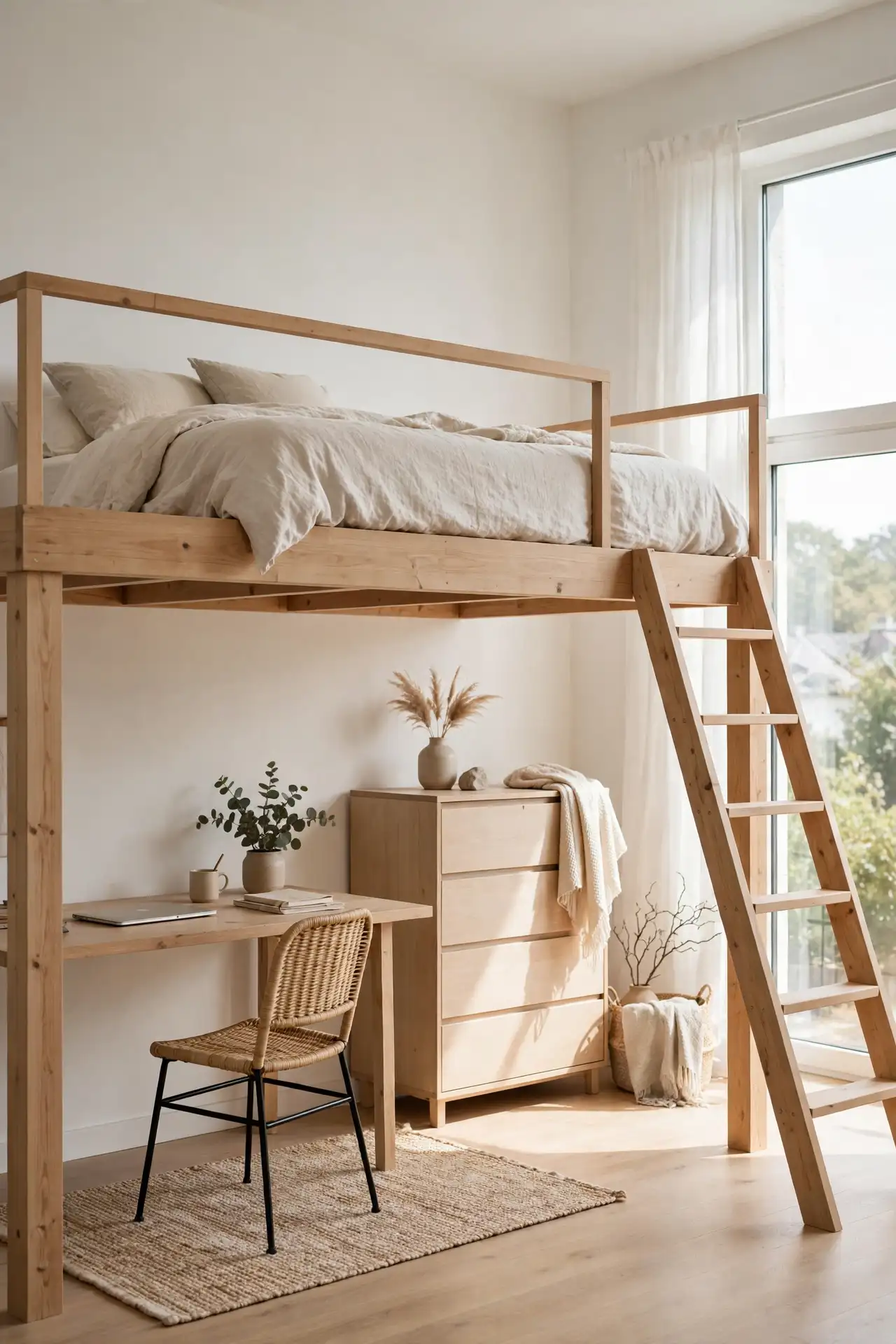
- Raising the bed frees the entire footprint below for a desk, dresser, or lounge chair.
- Sturdy loft frames support full-size mattresses with guard rails for safety.
- Curtains around the lower level create a private office nook in seconds.
- Built-in stairs with drawers add even more hidden storage to the structure.
Lofting is the boldest space multiplier a studio can get, effectively doubling your usable zones. Check your ceiling height first; you need comfortable sitting clearance both above the mattress and below the platform. When the numbers work, you essentially gain a whole extra room for work or lounging. Add a sturdy railing and good lighting up top so the sleeping loft feels safe and cozy every night.
Fold Away Table
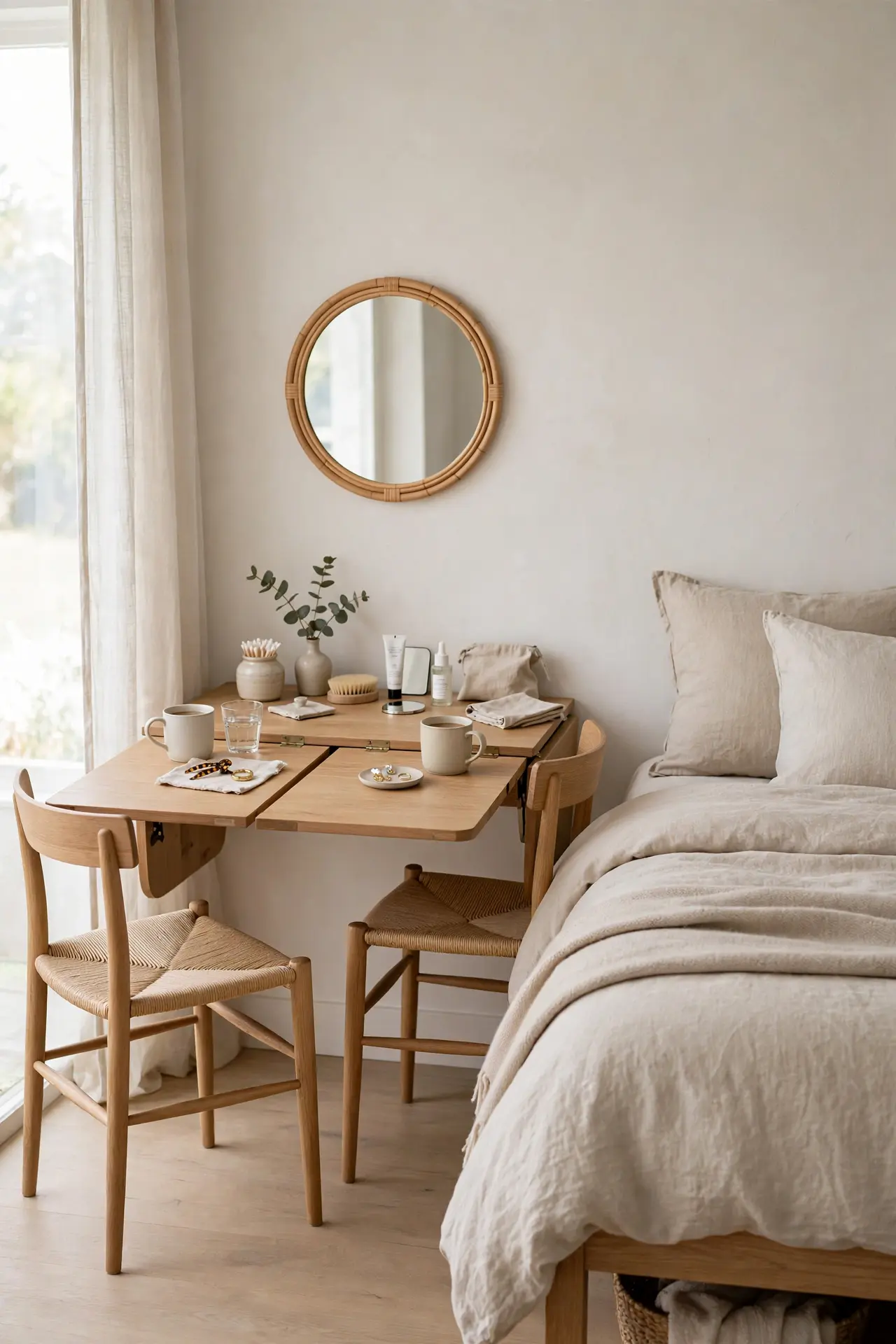
Quick Tip: Choose a drop-leaf table that folds to under six inches deep against the wall. Open one leaf for solo laptop sessions, both leaves when a friend visits. Store folding stools flat behind a door so seating never clutters the room.
This table moonlights as vanity, desk, and dining spot without claiming a single permanent square foot of floor. In a studio, furniture that shape-shifts is worth its weight in gold because your needs change by the hour. I’ve noticed drop-leaf designs outlast bulkier alternatives because they adapt to guests, projects, and quiet evenings alike. Wall-mount it at the right height for both dining and laptop work.
Vertical Shoe Tower
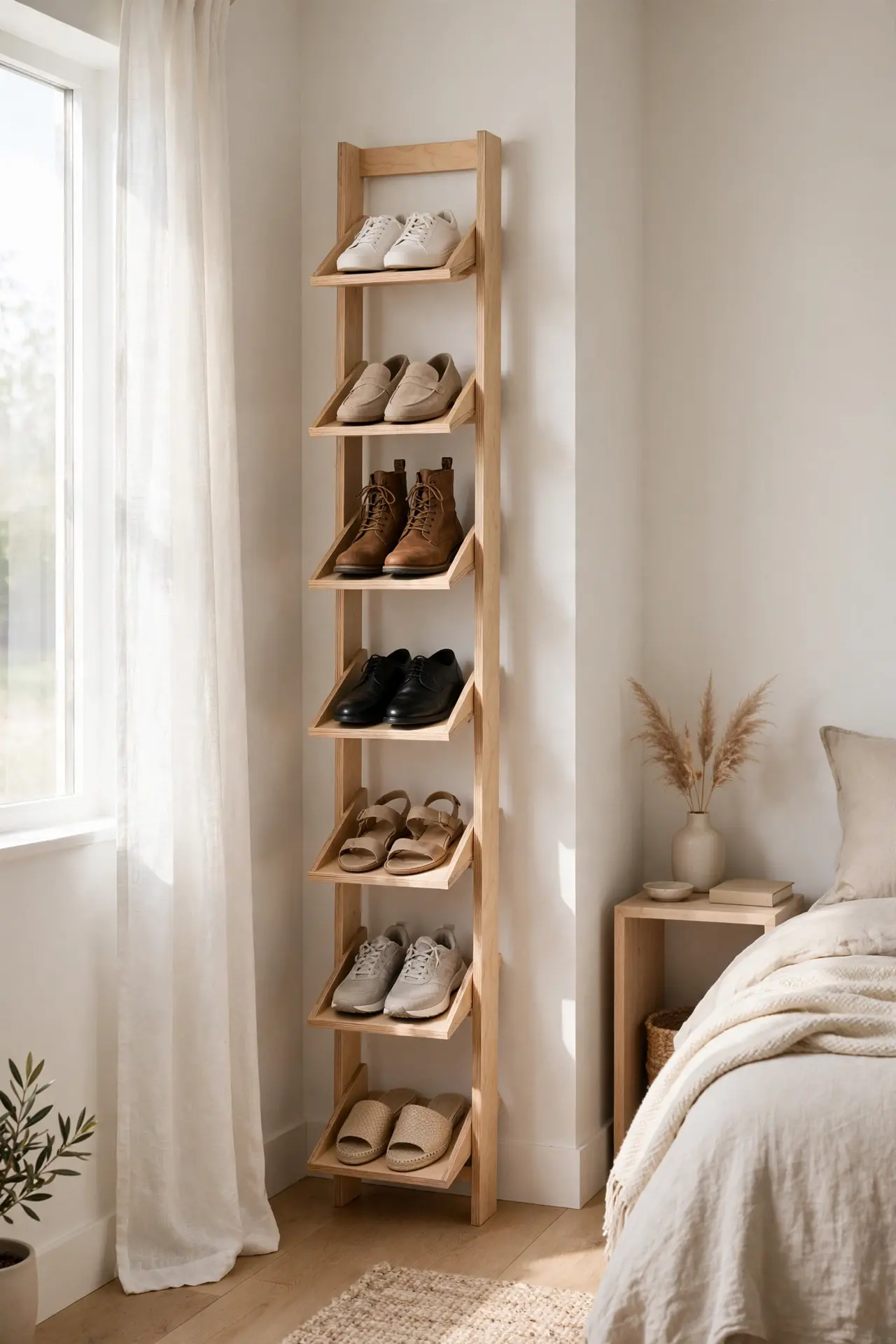
BEFORE: Shoes pile by the door and under the bed, forming tripping hazards that make your studio feel chaotic. Pairs separate, mornings turn frantic, and dust settles into every crevice.
AFTER: A vertical tower, barely a foot wide, lines up every pair in plain sight. Tilted shelves keep shoes visible and ventilated. The corner that held chaos now looks like a boutique display.
Cap your collection to what fits; the tower doubles as a natural limit that keeps shopping in check. That’s why many experts recommend visible shoe storage for small spaces where hidden piles grow silently. What you see is what you keep, and the rest can go to donation. Your mornings get faster when every pair is visible at a glance.
Curtain Closet Cover
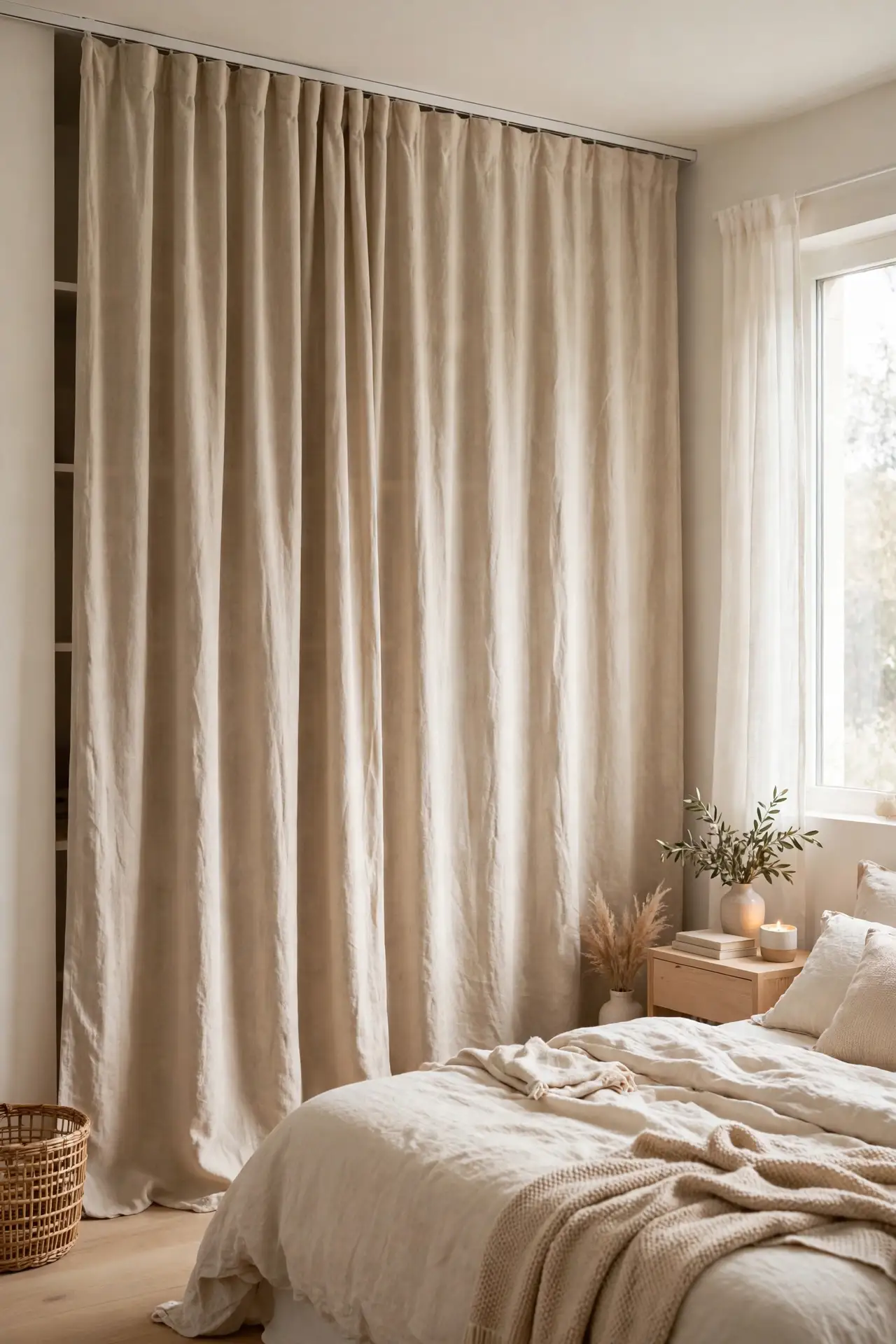
- Mount a ceiling track or tension rod across your open storage nook.
- Hang floor-length linen curtains that glide closed with one pull.
- Keep the shelving behind it organized, since quick peeks still happen.
- Choose machine-washable fabric so the cover stays fresh with use.
A curtain closet hides visual clutter instantly and softens the hard edges of open shelving. It costs far less than custom doors and installs in a single afternoon with basic tools. Pull it closed before guests arrive and your studio looks instantly tidy and intentional. Choose a fabric that complements your bedding so the whole sleeping zone feels designed.
Ladder Blanket Rack
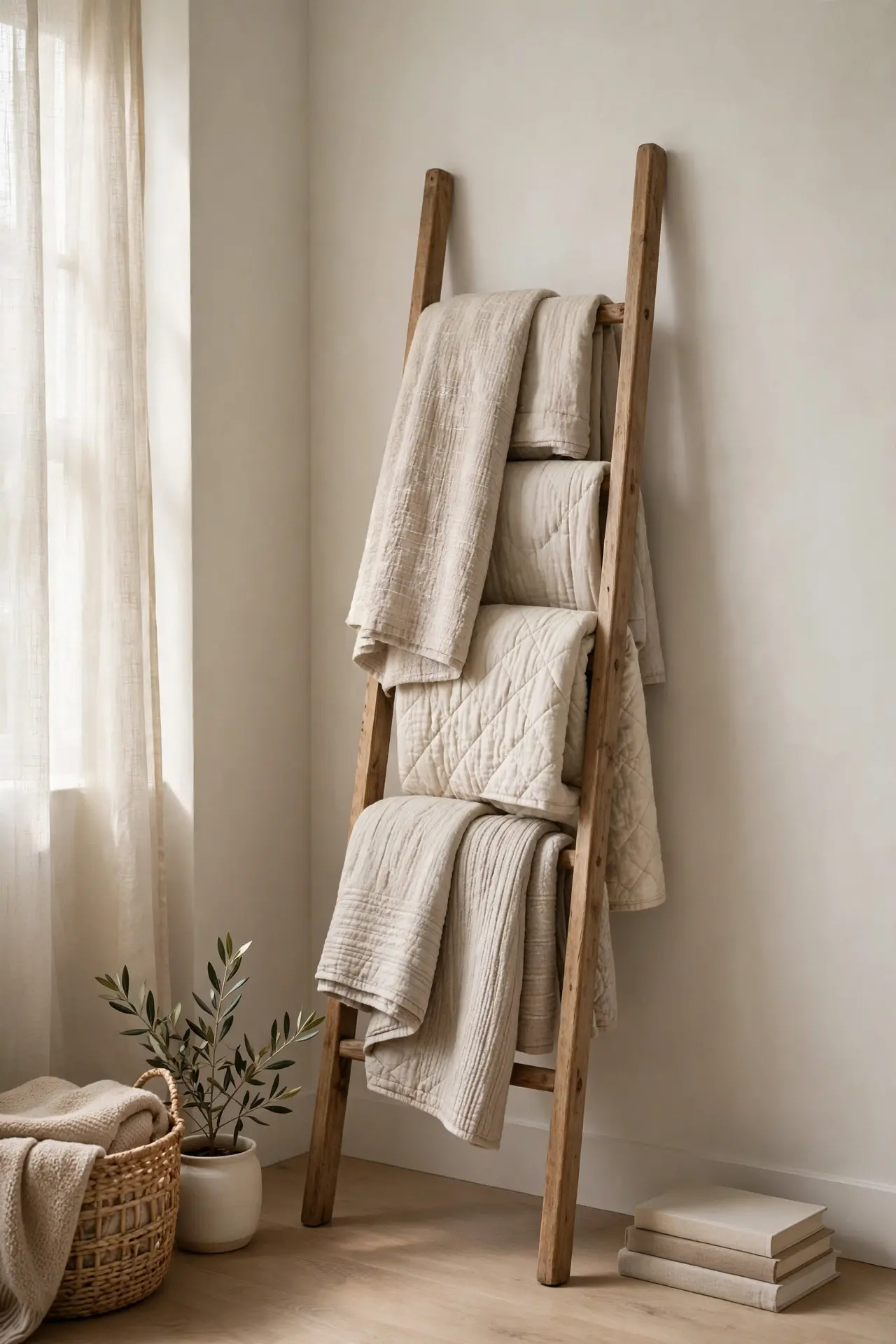
| Leaning ladder | Best for renters; zero installation, moves anywhere |
| Wall-mounted rack | Best for stability; holds heavier quilts securely |
| Over-door hooks | Best for tight spots; uses door backs for throws |
Blankets eat drawer space fast, but a ladder rack turns them into layered decor instead. Drape throws over the rungs and your textiles stay aired, visible, and grab-ready on chilly evenings. It leans into a corner that otherwise holds nothing at all, adding welcome height and cozy texture to the room. Rotate the display seasonally so the colors always feel fresh and wonderfully current with the changing time of each year.
Hidden Hamper Nook
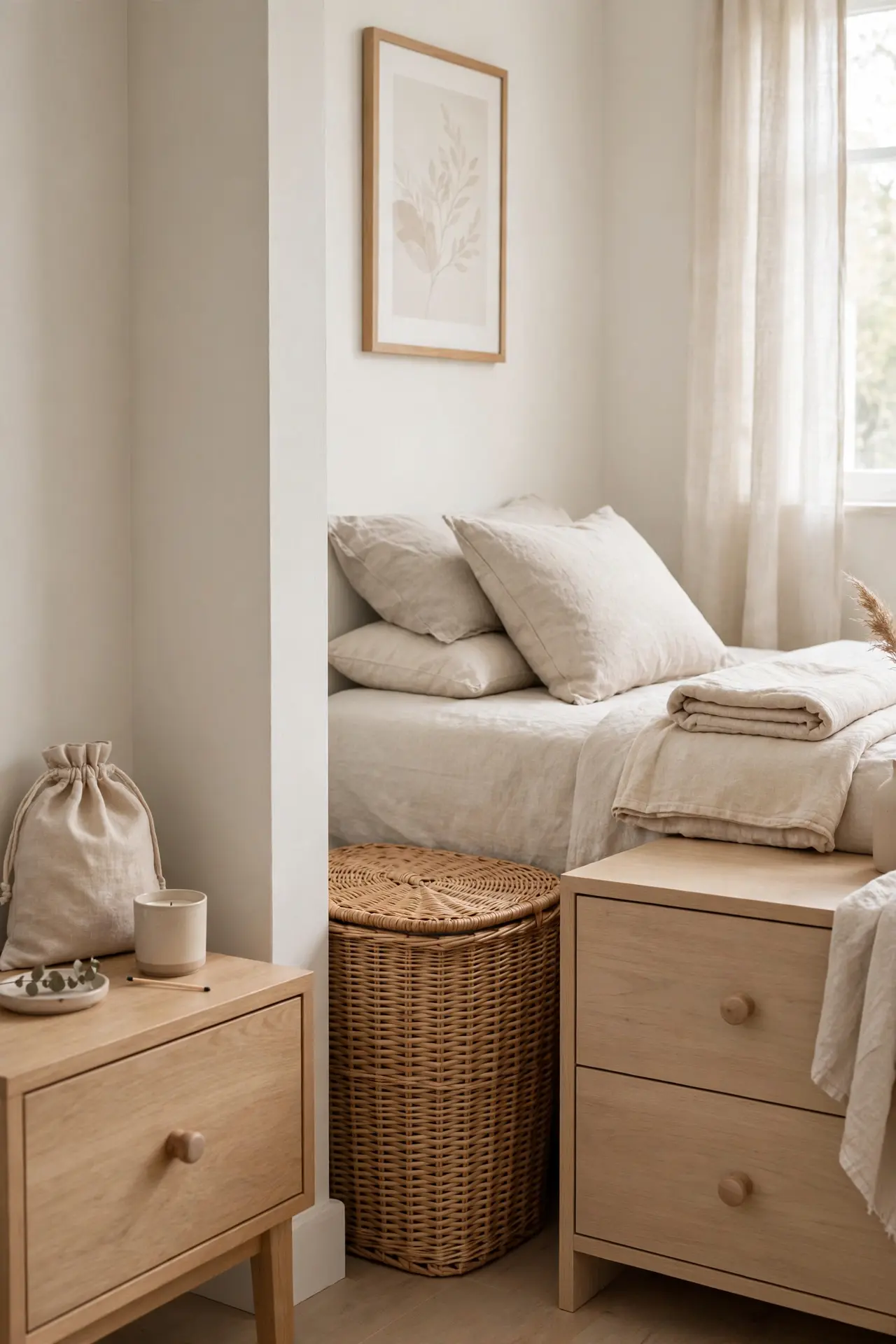
DO:
- Choose a lidded hamper so dirty laundry never becomes visual clutter.
- Pick a ventilated weave that lets air flow and prevents musty smells.
- Size it to your laundry rhythm so it fills exactly on wash day.
- Place it where undressing happens to make the habit stick.
DON’T:
- Don’t use an open bin; studios show everything to everyone.
- Don’t let it overflow; a second small bag beats a mountain.
- Don’t hide it so well you forget wash day exists.
A good hamper nook ends the dreaded floor-drobe in one move. In my experience, lidded designs keep studios smelling fresh and looking calm. Tuck it beside the wardrobe so the whole dressing zone stays contained.
Nesting Side Tables
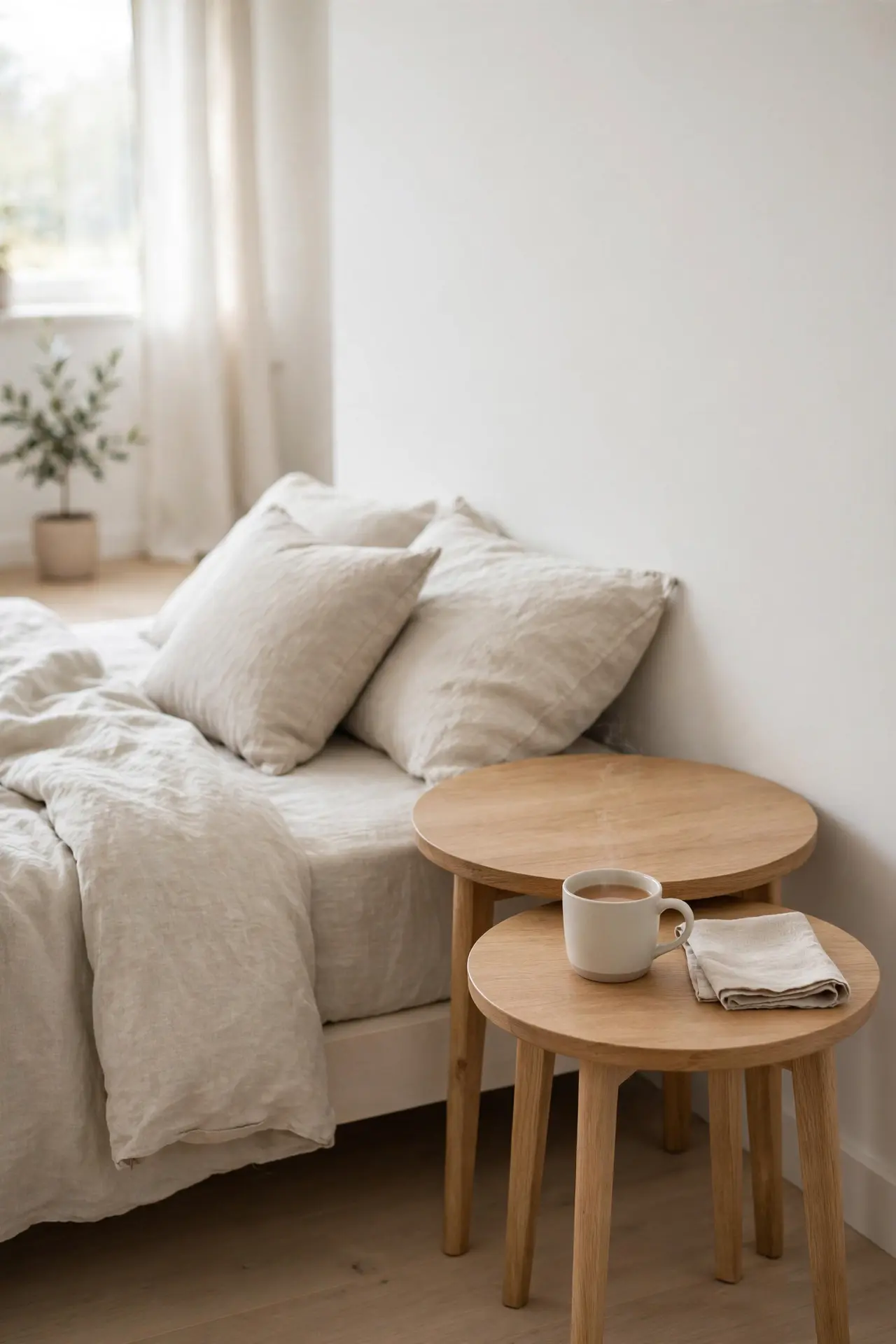
Cost: Low | Time: Minutes | Skill Level: Beginner | Best For: Flexible small spaces
Nesting tables give you two surfaces that store as one compact footprint beside the bed. Pull the smaller table out for breakfast in bed or an evening laptop session, then slide it back when done to restore open floor. Their round shapes keep tight walkways bump-free, which matters daily in a studio where you pass by constantly. Choose tables with a lower shelf for extra storage of books or a small charging station. This flexible pair adapts gracefully to whatever your busy day demands from it.
Seasonal Swap Bins
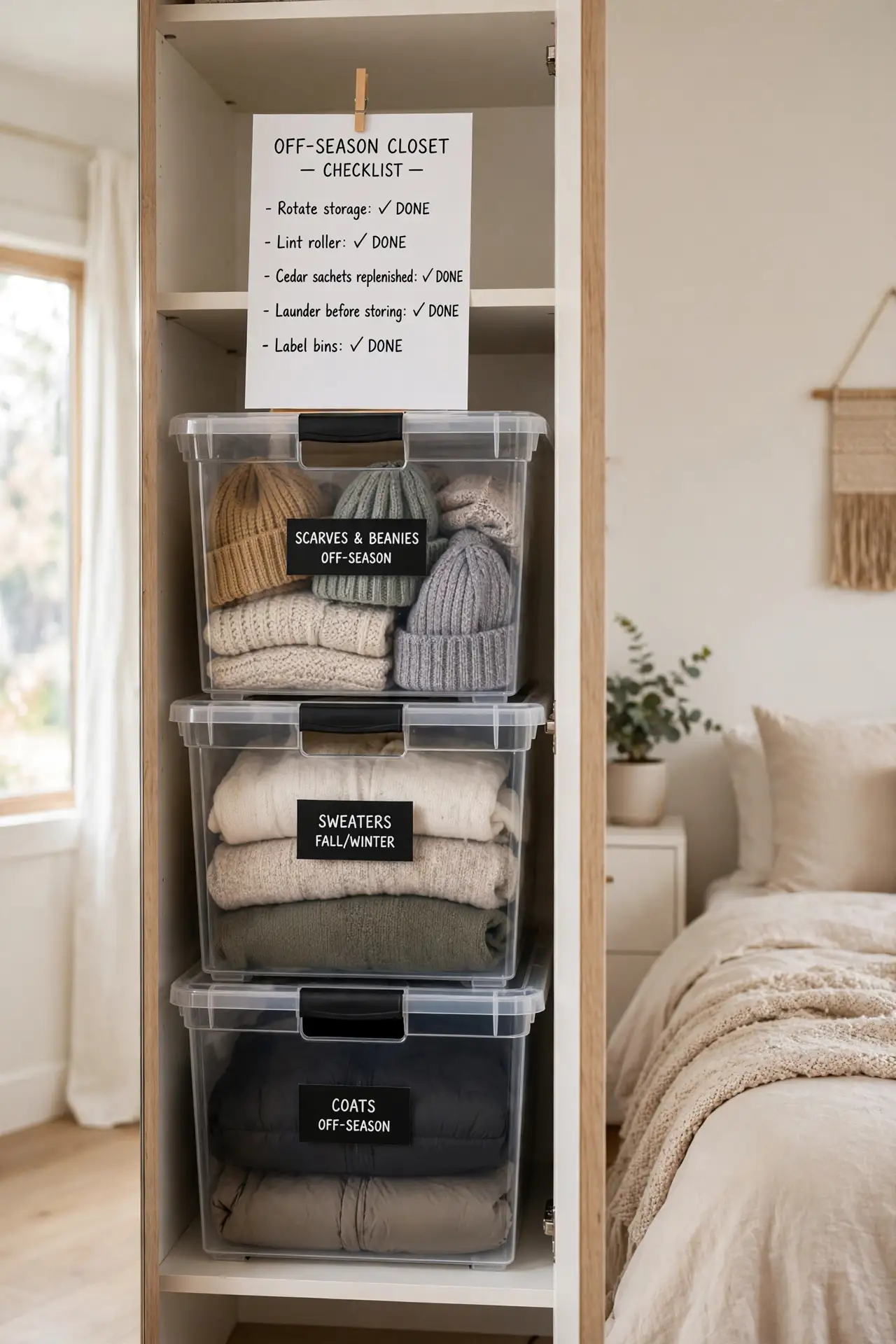
Studios cannot hold four seasons of clothes at once, so a swap system keeps only the current season within reach. Pack off-season items in labeled bins and store them high, under the bed, or with a friend. I’ve seen this work well in many cases where closets feel impossibly small.
Schedule swaps with the calendar change so the habit sticks reliably twice a year. Clear bins let you spot what you need without opening every lid and making a mess. Your daily wardrobe stays lean and intentional, and getting dressed gets noticeably faster each morning. Toss a cedar block in each bin to keep stored clothes smelling fresh for months.
Conclusion
Small studios reward clever thinking, and these studio bedroom storage ideas prove that square footage is only part of the story. Start with one change this weekend, like under-bed drawers or a pegboard wall, and feel the calm spread. I’ve seen how small changes like these can completely shift the way a space feels. Save your favorites on Pinterest, share this guide with a fellow studio dweller, and enjoy your newly spacious retreat.
For more inspiration on making compact homes work harder, explore small bedroom ideas next. Your studio is about to feel twice its size.