21 Awkward Bedroom Layouts for Smarter, Cozier Spaces
If your bedroom has a door that swings into the bed, a window in the wrong spot, or corners that refuse to fit furniture, these awkward bedroom layouts finally have real answers. Odd rooms frustrate everyone, because standard furniture arrangements assume perfect rectangles that few bedrooms actually have. The good news is that tricky floor plans respond beautifully to a few smart moves. In my experience, the oddest rooms often become the coziest once the layout clicks into place. Below you will find twenty one practical ideas that fix flow, carve out storage, and make every square foot earn its keep.
Before moving a single piece, sketch your room on paper and mark the doors, windows, and outlets. This five minute map reveals the real traffic path and shows exactly where furniture fights the flow. If storage is part of the struggle too, these awkward layout bedroom makeover ideas pair perfectly with the layout fixes below. Now let us walk through twenty one smarter, cozier arrangements that tame even the trickiest floor plans.
Corner Bed Angle
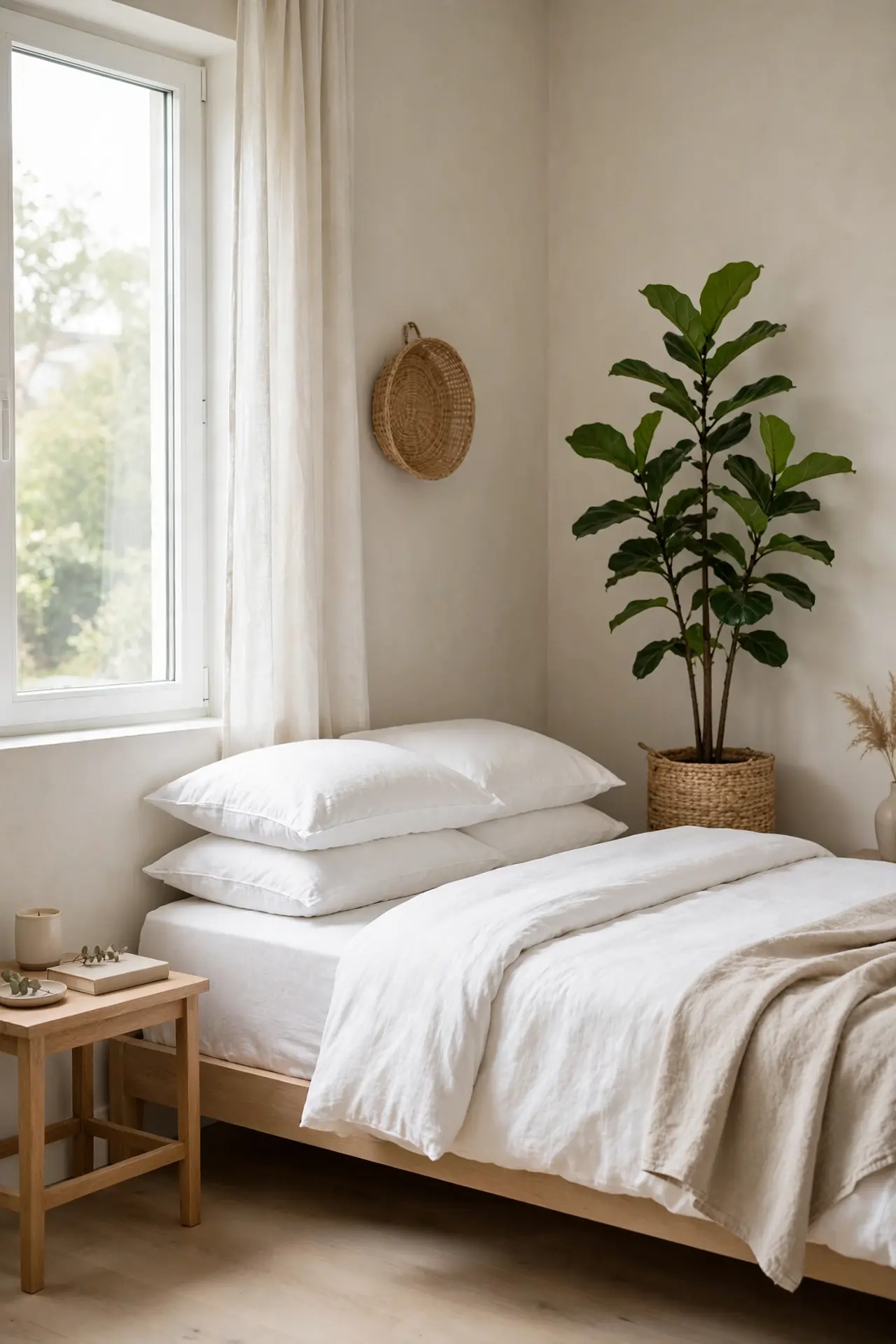
Push your bed into the corner at a gentle angle and watch an odd room suddenly make sense. Angling the headboard by just fifteen degrees opens clear walkways on both sides where a straight placement felt cramped. The corner becomes a natural anchor, and the room gains an obvious focal point that guides the eye.
Balance the angled bed with a tall plant or floor lamp on the opposite side of the room. I’ve noticed this one shift makes narrow rooms feel wider because the eye travels diagonally along the longest line. Keep bedding light so the arrangement feels intentional. One afternoon of moving furniture delivers a calmer, easier room.
Floating Nightstand Swap

- Replace a bulky nightstand with a wall mounted shelf beside the bed to free precious floor space.
- Mount the shelf at mattress height so your lamp and book sit within easy reach at night.
- Choose a shelf with a small raised lip to keep phones from sliding off while you sleep.
- Add a plug in wall sconce above the shelf and skip the table lamp entirely.
- Style the shelf with one small plant or framed photo.
Floating shelves rescue the inches that awkward rooms cannot spare. Without legs eating floor space, the area beside your bed stays open and easy to clean. I’ve seen this work well in many cases where a standard nightstand blocked a door swing. Paint the shelf to match the wall.
Split Zone Trick
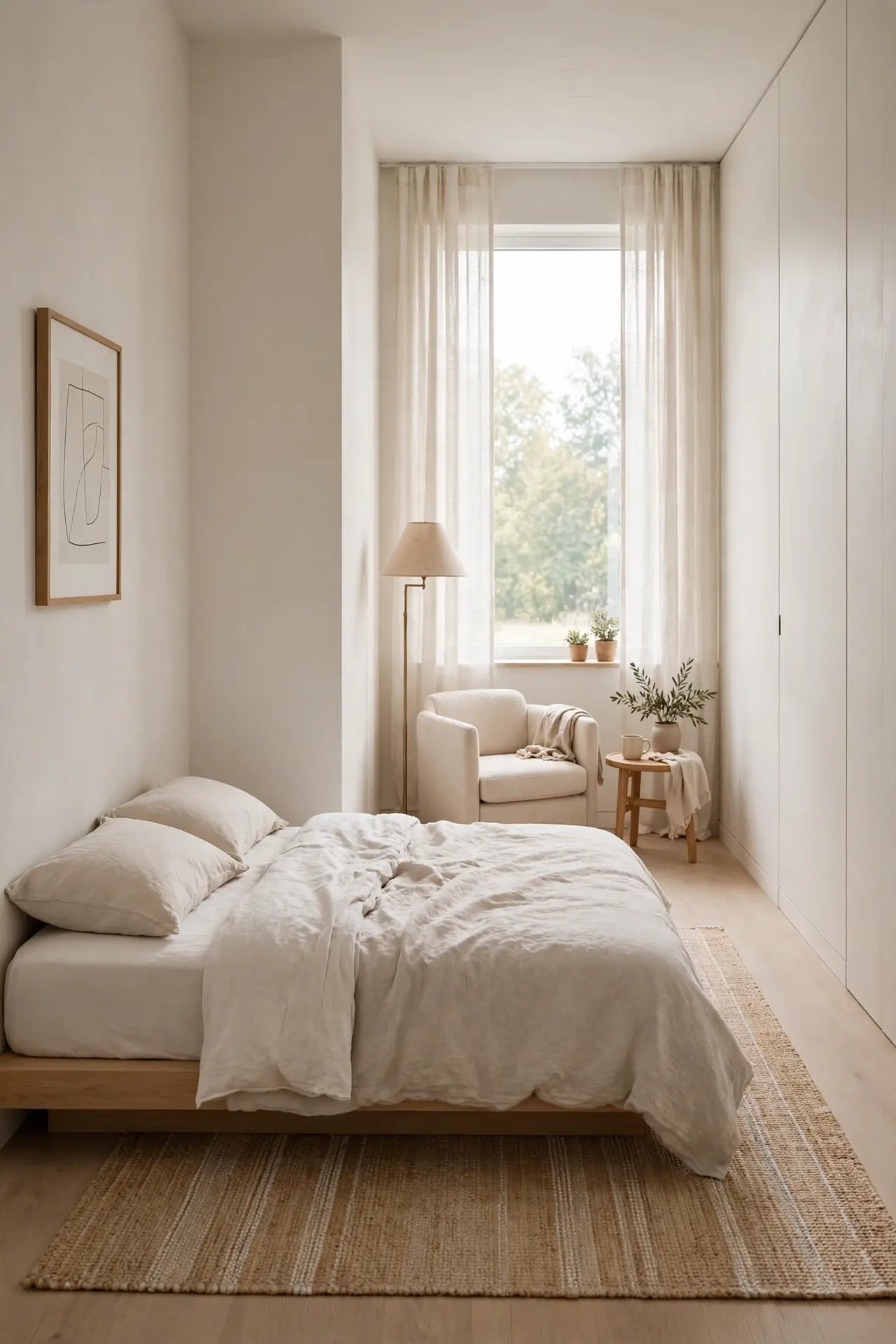
Quick Tip: Divide one odd room into two clear zones with a rug or a curtain. Sleep on one side, dress or work on the other. Give each zone its own light source so the halves feel like separate, purposeful spaces instead of one long hallway.
Long, skinny bedrooms beg for zoning. A rug under the bed defines the sleep area, while a second small rug near the window marks a dressing corner. That’s why many experts recommend treating each zone as its own mini room with matching textiles. The room stops feeling like a corridor and starts feeling like a suite.
Diagonal Bed Flow
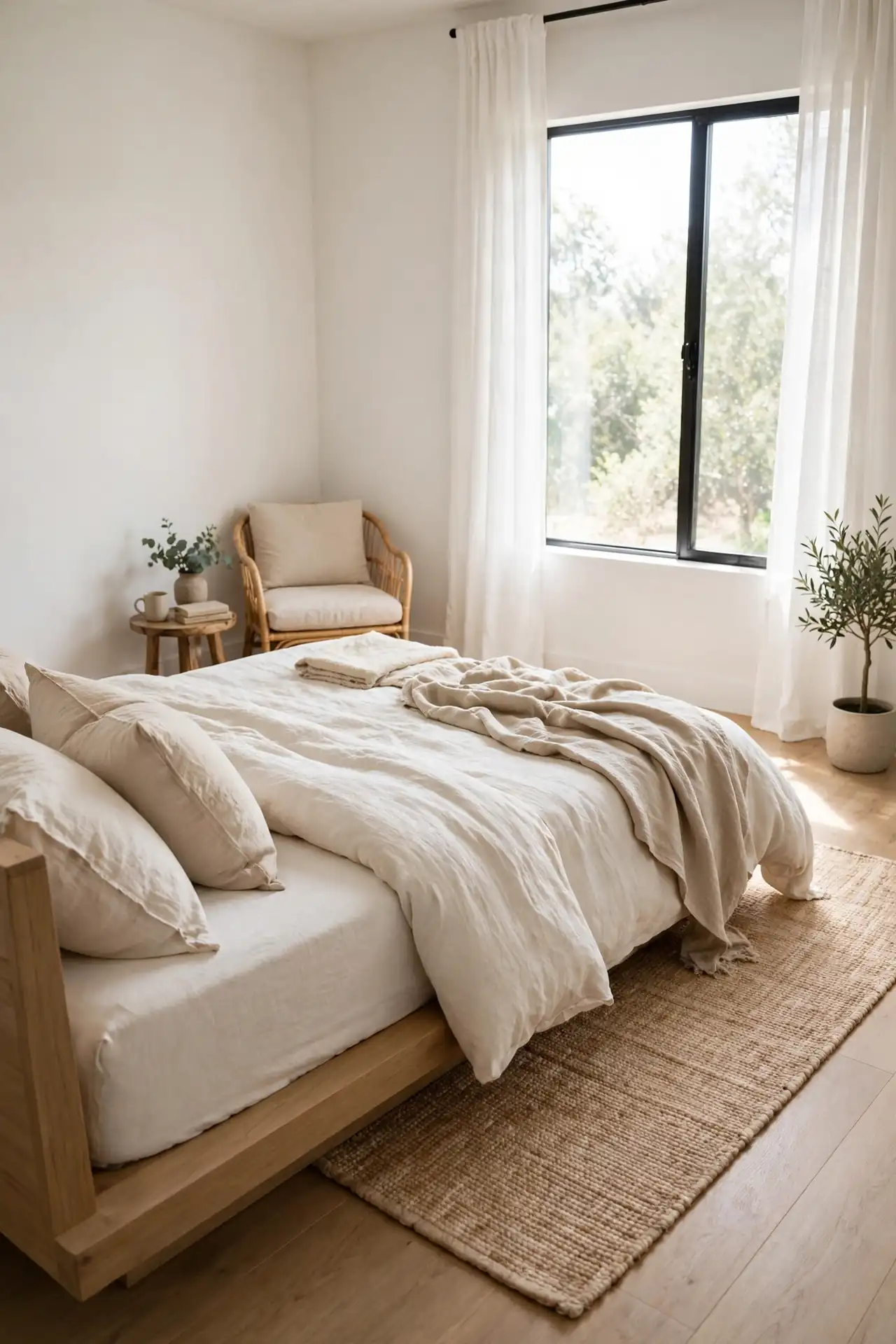
BEFORE: The bed sat flat against the longest wall, blocking the closet door and leaving a dead triangle of space in the corner. Every morning meant squeezing past the footboard to reach clothes.
AFTER: Pulled diagonally, the bed now faces the window, the closet opens fully, and the corner holds a small reading chair. The whole room breathes easier.
Diagonal placement suits square rooms with doors on two walls. The longest sight line runs corner to corner, so angling the bed along it makes the room read larger. Keep the headboard low so sight lines stay open. Measure first, because an angled king needs more clearance than you expect.
Low Profile Solutions
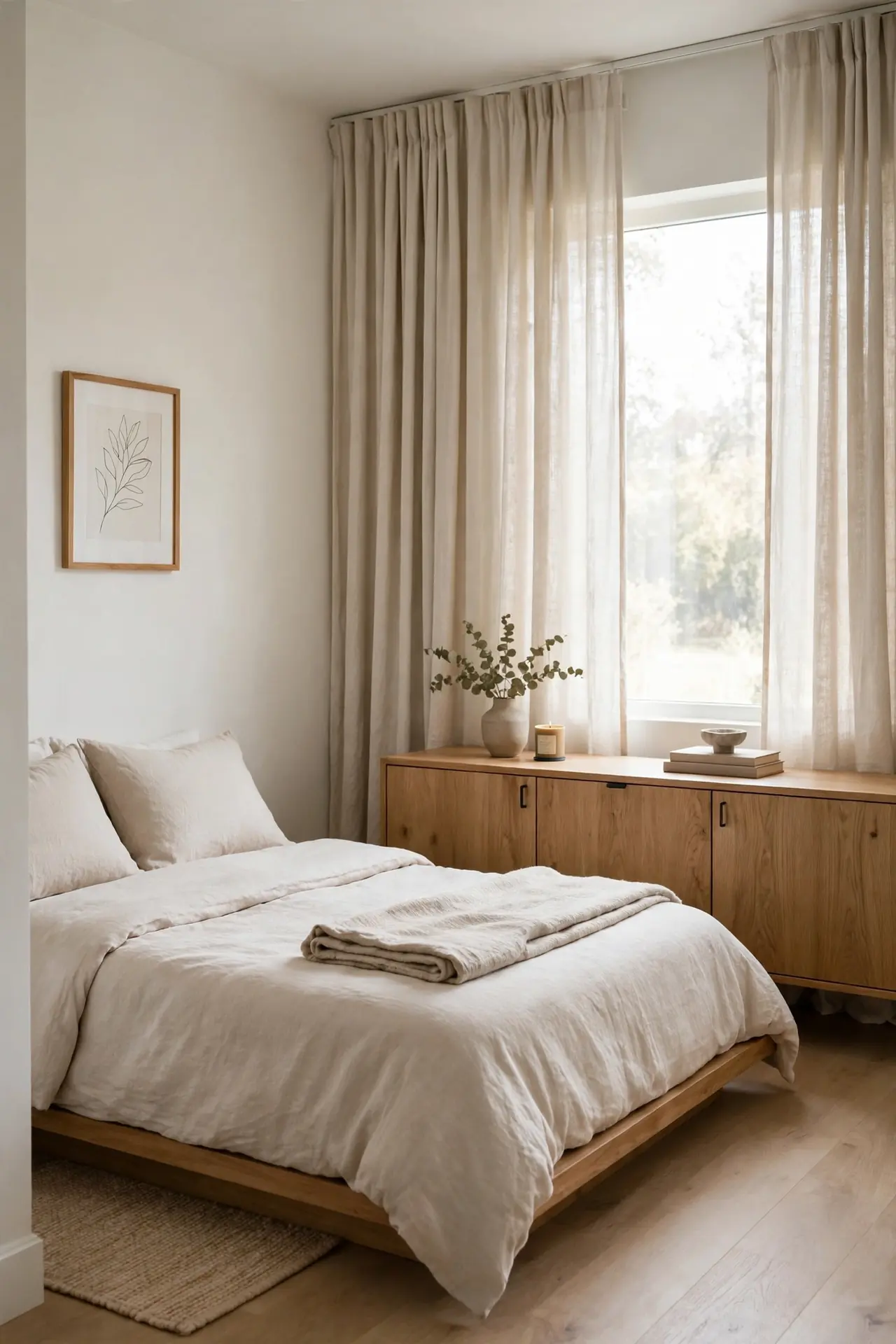
- Swap a tall headboard for a low upholstered one that stays below window height.
- Choose a platform bed frame to drop the mattress several inches lower to the floor.
- Trade a bulky dresser for a wide, low credenza that doubles as a bench.
- Hang curtains just below the ceiling to draw eyes up without tall furniture.
Low furniture keeps sight lines open, which is gold in a room with odd angles. When the eye travels unblocked across the space, ceilings feel higher and corners feel less cramped. In my experience, dropping the bed height alone makes a small room feel calmer overnight. Reserve tall pieces for one wall only.
Alcove Bed Nook
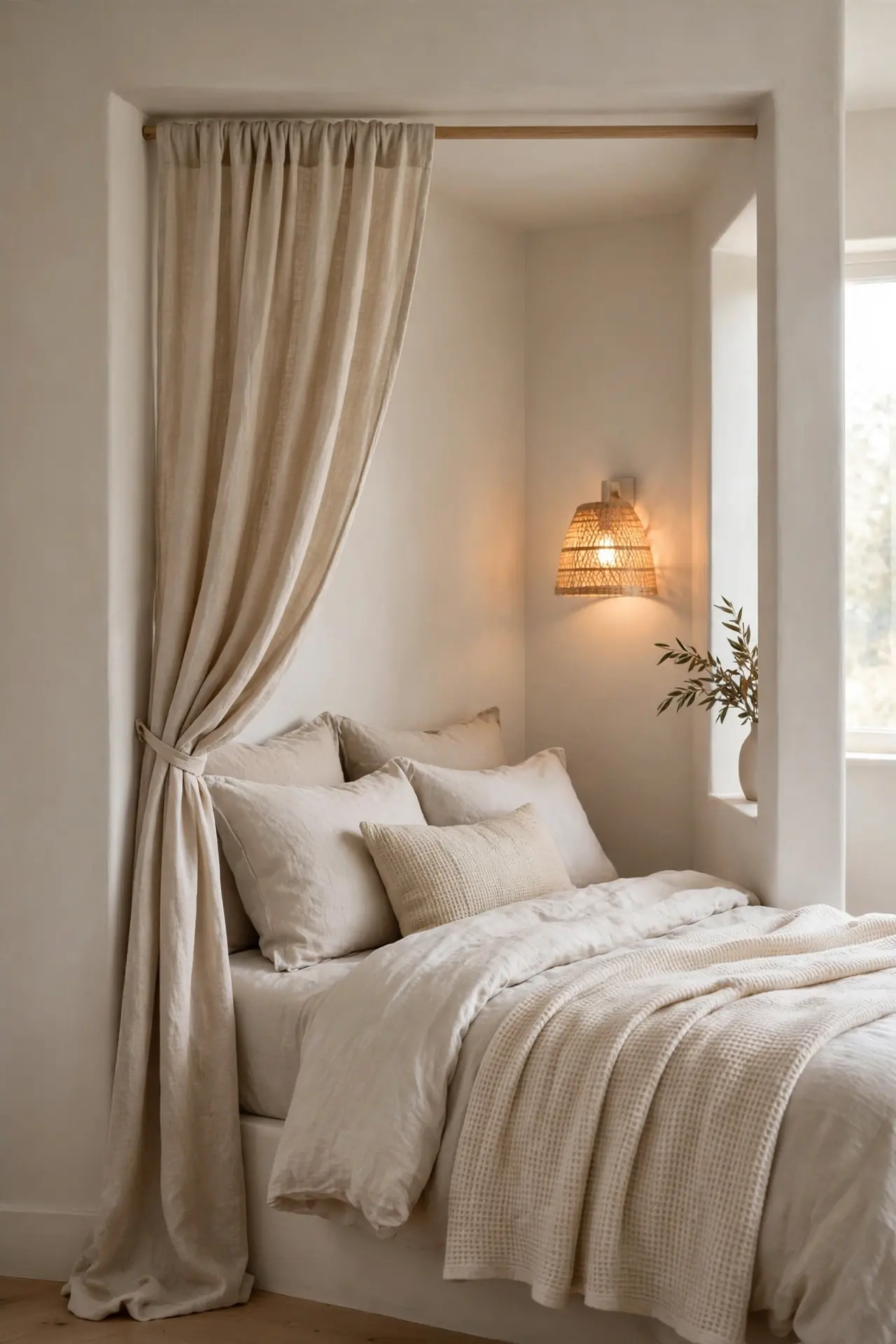
| Alcove Style | Best For | Why It Works |
| Bed in deep alcove | Deep wall recess | Turns dead space into a cozy nest |
| Daybed setup | Shallow nook | Doubles as a sofa by day |
| Curtain front | Open alcove | Adds privacy and softness |
Alcoves swallow beds whole in the best possible way. Tucking the mattress into a recess frees the main floor for everything else, and the walls around the bed feel like a built in hug. Add a curtain across the opening and the nook becomes a private retreat. Treat alcoves as rooms within rooms and watch odd floor plans become truly charming.
Rug Anchor Zones
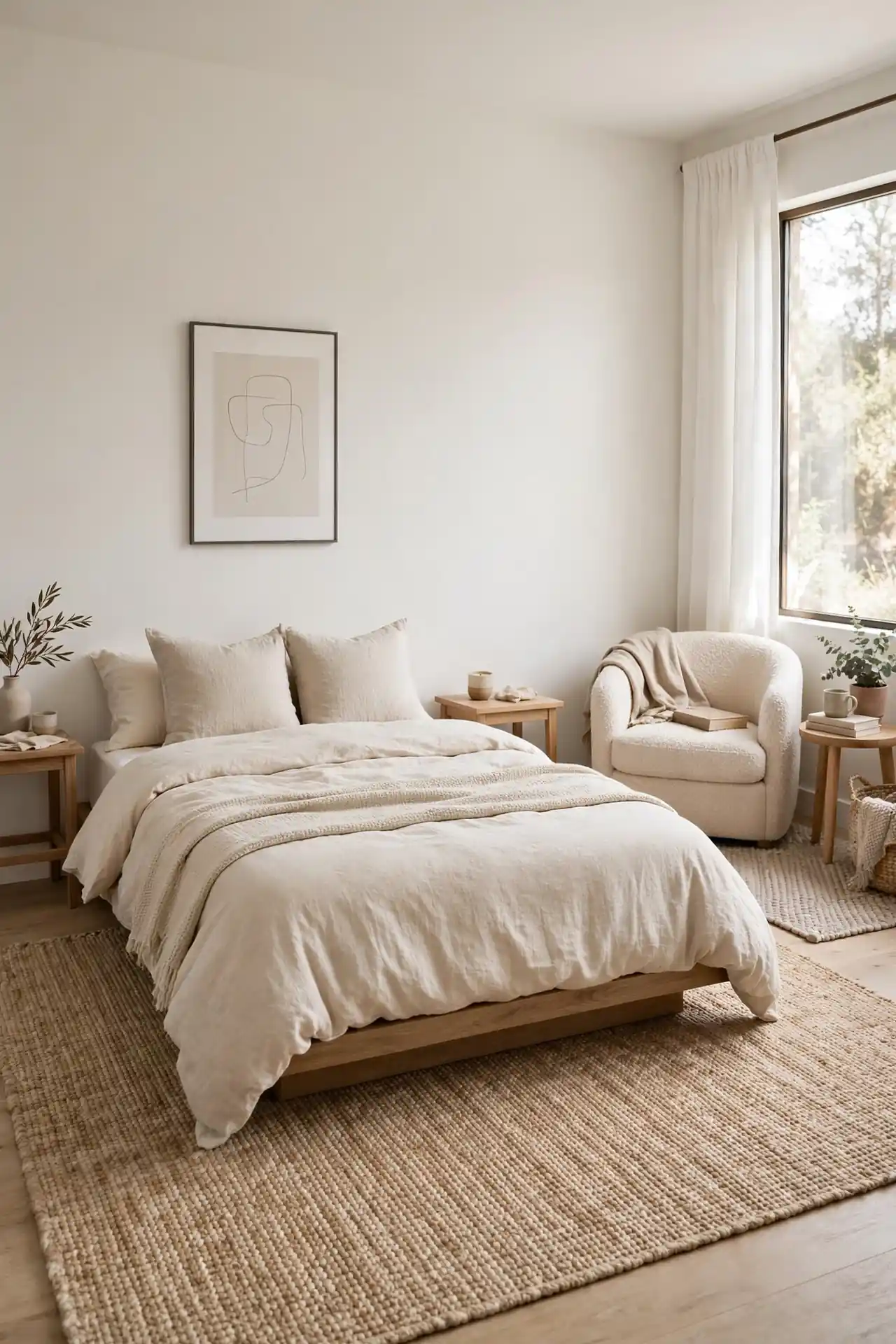
DO: Place one rug under the bed to ground the sleep zone clearly.
DO: Use a second smaller rug to mark a reading or dressing corner.
DO: Let at least two feet of rug extend past the bed sides.
DON’T: Float a tiny rug in the middle of the floor where it touches nothing.
DON’T: Match every rug exactly; varied textures feel more collected and warm.
DON’T: Cover walkways fully; leave hard floor where feet travel most.
Rugs are the cheapest way to impose order on a confusing floor plan. Each rug tells the eye where one zone ends and the next begins. I’ve noticed that two well placed rugs do more for flow than any furniture purchase. Keep colors in one family so the zones feel connected.
Light Layer Basics
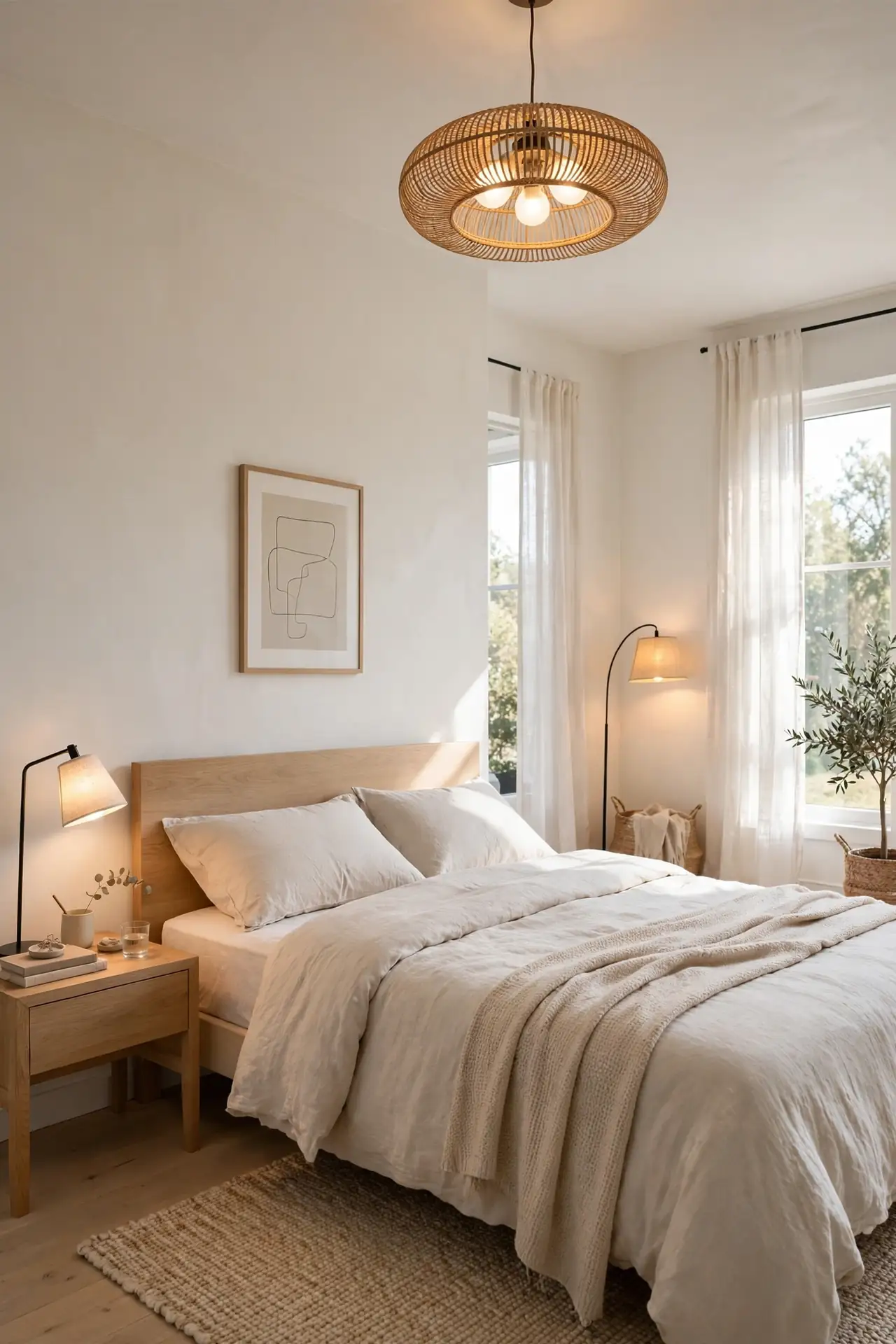
Cost: Low | Time: One afternoon | Skill Level: Beginner | Best For: Dark, oddly shaped rooms
Bad lighting makes awkward rooms feel worse than they are. Layer three sources: an overhead fixture for general light, a task lamp by the bed, and one warm accent like a floor lamp in the far corner. Light the darkest corner first and the room’s shape stops mattering. I’ve seen this work well in many cases where owners blamed the floor plan but really needed better light.
Start with the darkest corner and work outward from there. A five dollar bulb in the right socket beats a hundred dollar fixture in the wrong place. Test the light at night, because daylight lies about how a room feels after dark.
Slim Desk Tuck
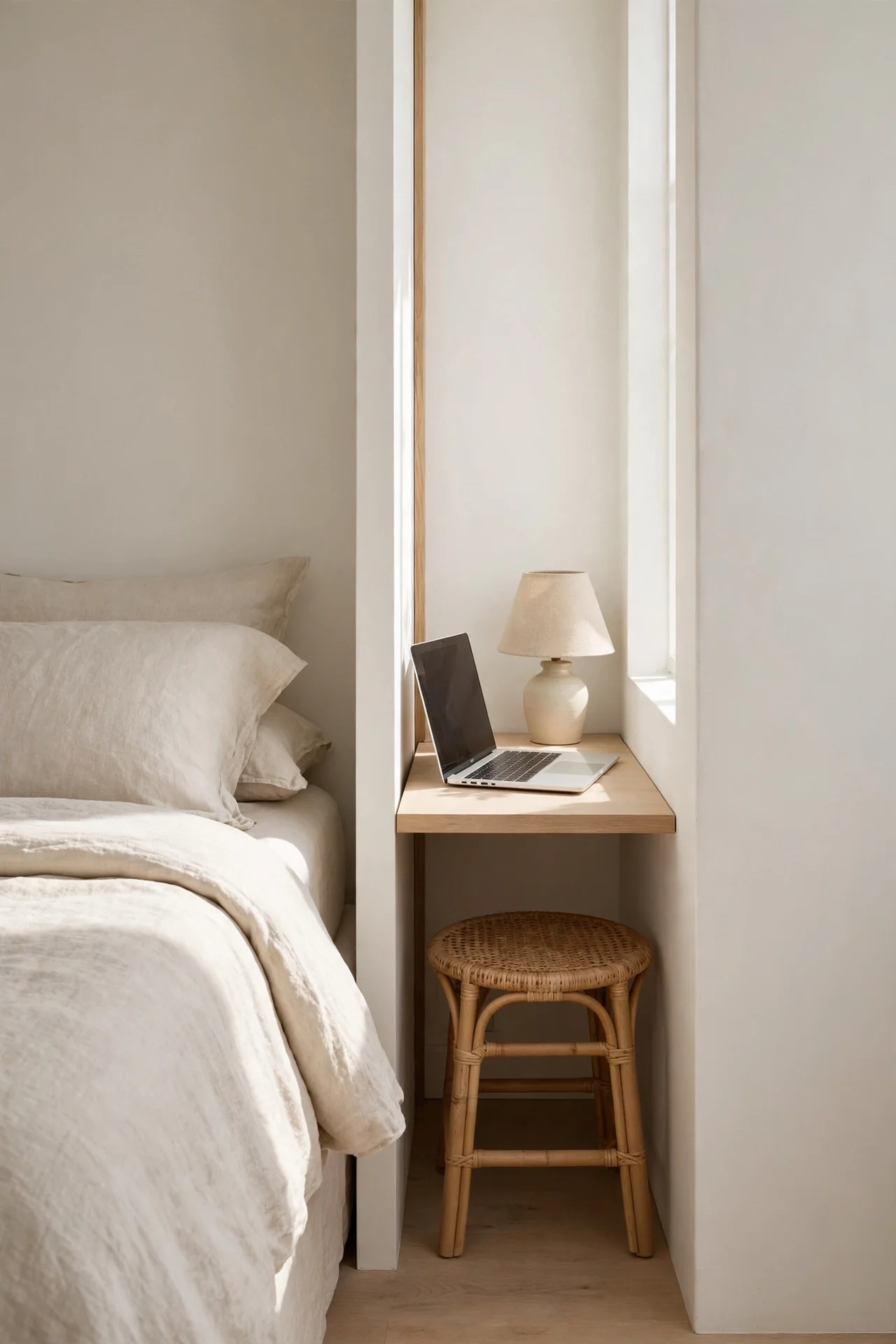
A slim console desk slides into the gap between the bed and the wall where nothing else fits. At just ten inches deep, it holds a laptop, a lamp, and a notebook without claiming floor space. Tuck a stool underneath and the workspace vanishes when the day ends.
Face the desk toward the room rather than the wall so the setup feels open, social, and inviting. That’s why many experts recommend pairing narrow desks with wall mounted shelves above for supplies. Choose a light finish so the piece recedes visually. Small footprint, real function, zero clutter added every single day.
Mirror Wall Magic
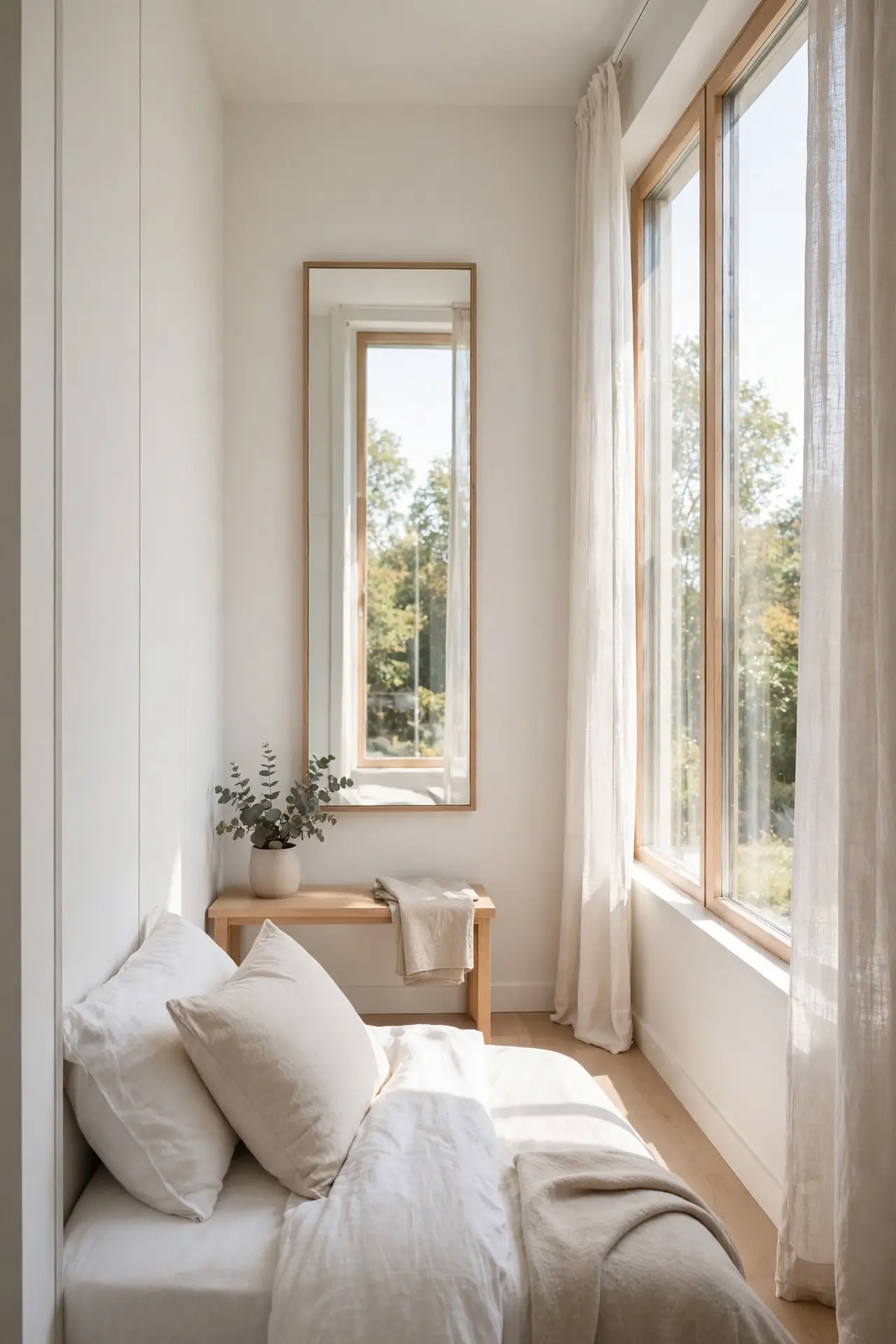
- Hang one large mirror opposite the window to double the daylight entering the room.
- Choose a leaner mirror for narrow walls where a wide one simply will not fit.
- Angle a standing mirror into a dark corner to bounce light outward into the space.
- Keep the mirror frame slim and light so it blends quietly with the wall.
Mirrors cheat the eye in rooms with strange proportions. One well placed mirror can make a narrow bedroom feel twice as wide by reflecting the longest wall. In my experience, renters love this trick because it needs only one hook. Skip mirrored furniture, which reads busy; one clean mirror does the job.
Curtain Divide Style
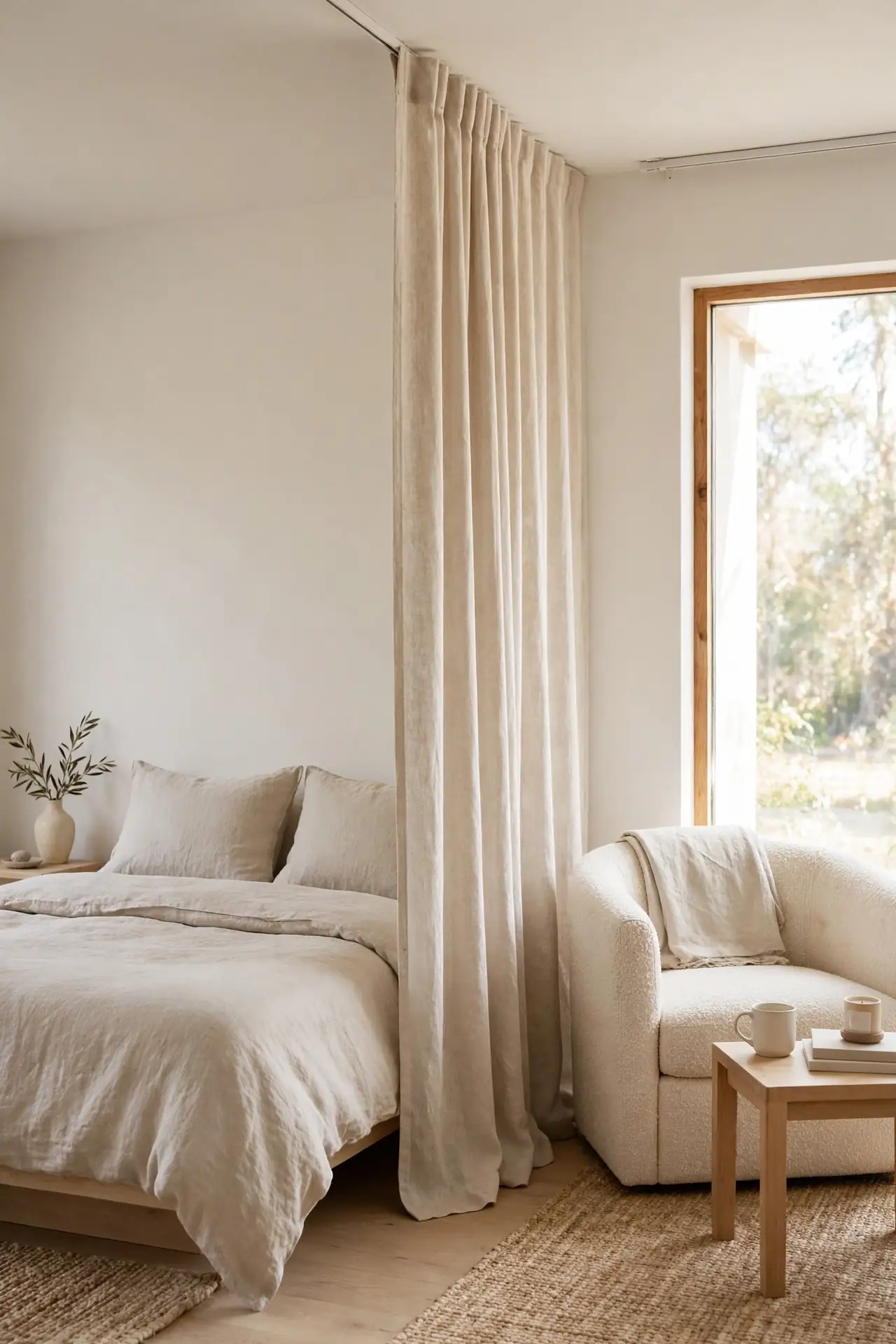
Quick Tip: Hang a ceiling mounted curtain to split a studio style bedroom from a living corner. Choose a linen fabric in a light neutral so the divider softens the room without darkening it. Pull it closed at night for privacy, open by day for light.
Open plan bedrooms gain instant structure from a fabric wall. The curtain costs little, installs with a simple ceiling track, and moves aside whenever you want the full space back. I’ve noticed that linen dividers make awkward open layouts feel intentional instead of unfinished. Hem the curtain to skim the floor for a tailored look.
Offset Window Fix
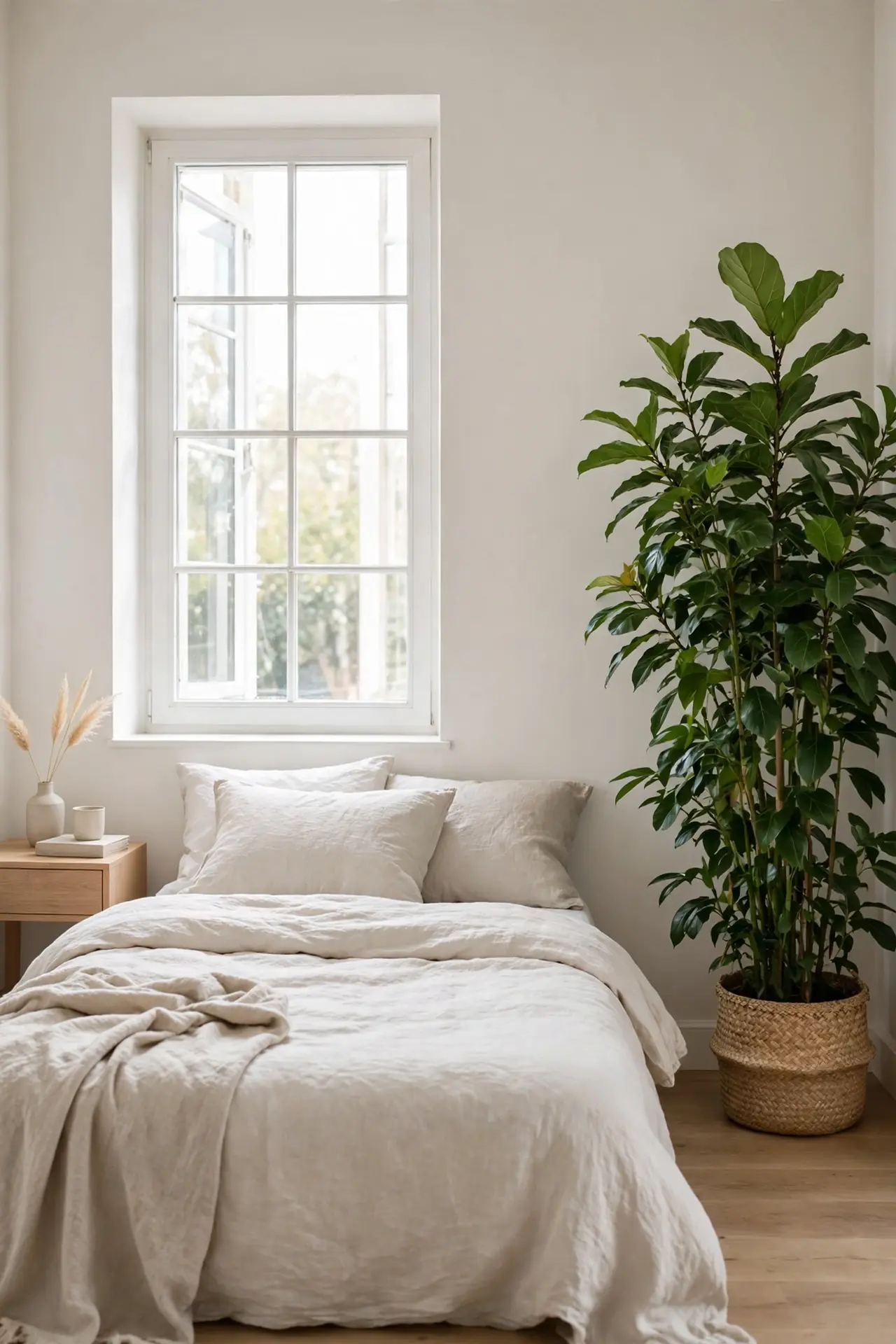
BEFORE: The bed centered under an off center window looked wrong no matter how the pillows were arranged. The room felt lopsided and the nightstands never matched up.
AFTER: The bed shifted to align with the window, one nightstand was swapped for a tall plant, and the asymmetry now looks like a design choice. Balance restored.
Windows rarely sit where floor plans promise. Instead of fighting the offset, align your bed to the window and let the other side go asymmetrical on purpose. A plant or floor lamp fills the wider gap beautifully. In my experience, embracing the quirk beats forcing symmetry every time.
Built In Bench
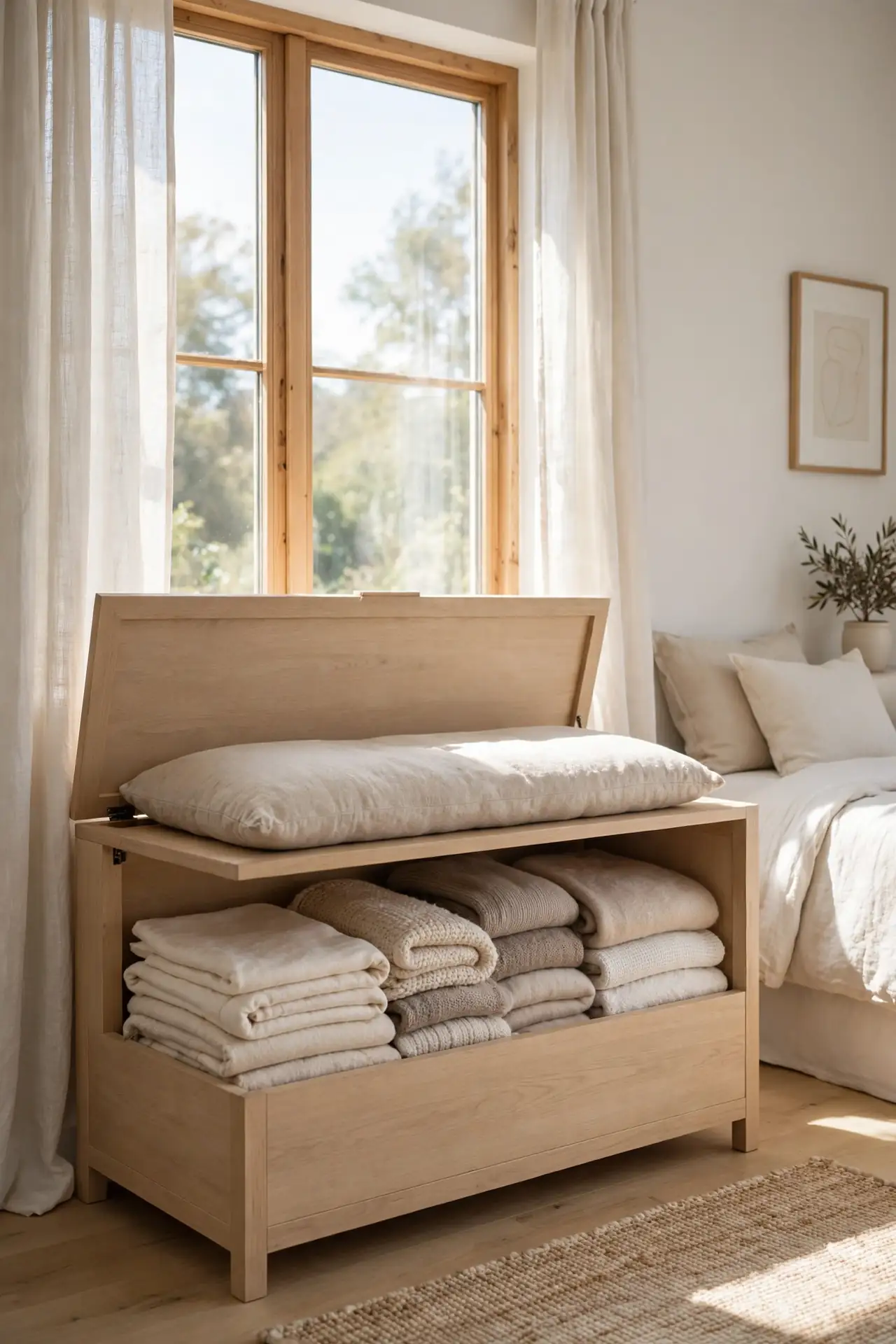
- Measure the awkward gap between furniture pieces or under a window ledge.
- Choose a storage bench that fits with one inch of clearance on each side.
- Top it with a cushion cut to size for instant comfortable seating.
- Fill the inside with off season bedding or spare blankets.
Dead gaps become useful the moment a bench moves in. Under window ledges, at the foot of short beds, or beside a wide swinging door, a bench turns wasted inches into seating and storage. That’s why many experts recommend measuring twice before buying. One bench can replace both a chair and a storage bin.
Round Rug Softens
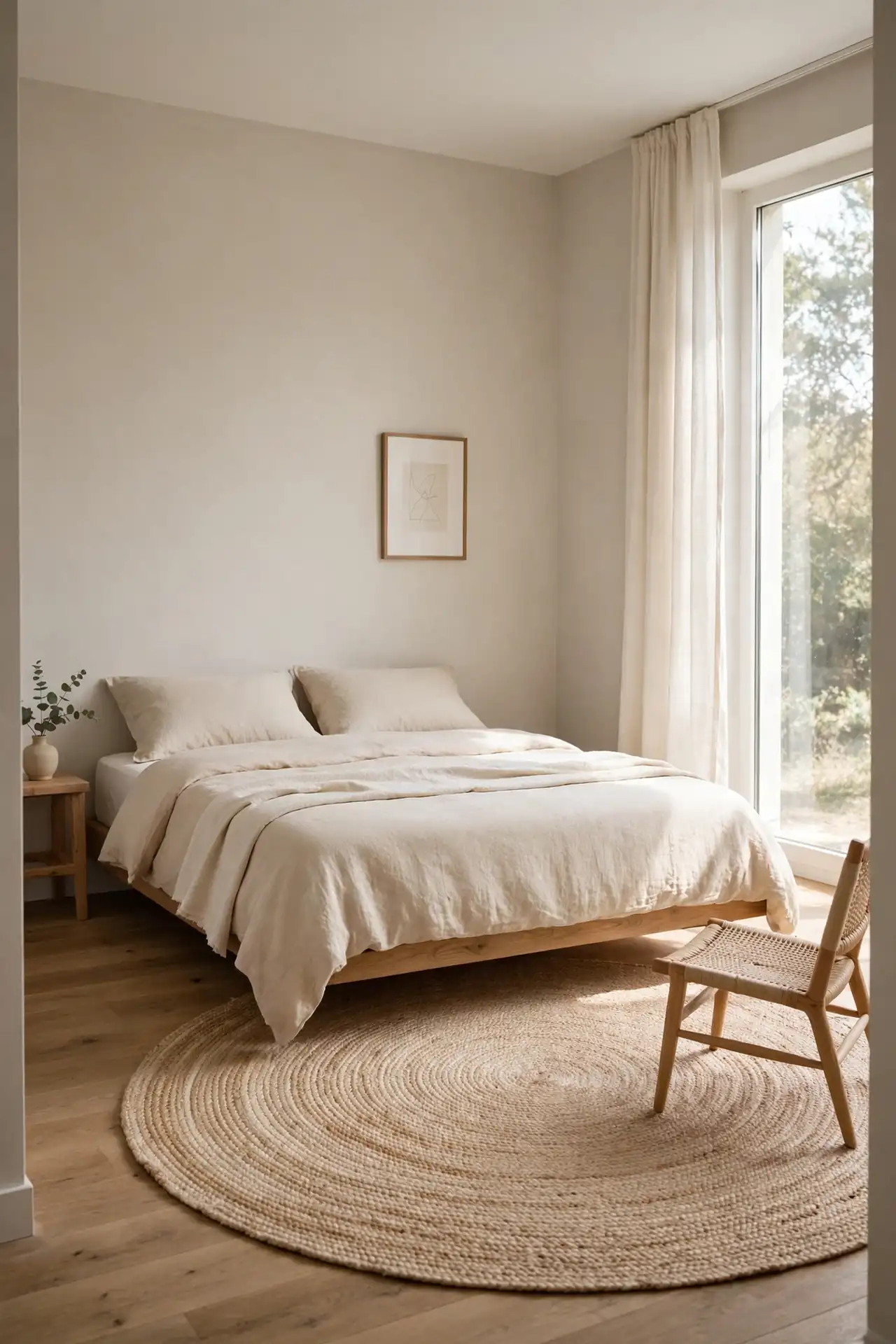
| Rug Shape | Best Room | Effect |
| Round rug | Square awkward room | Breaks up boxy lines |
| Runner | Long narrow room | Guides the eye lengthwise |
| Oval rug | L shaped room | Softens the corner turn |
Round shapes calm rooms full of harsh angles. A circular rug under a small seating group or beside the bed breaks the rectangle monotony that makes odd rooms feel stark and unwelcoming. I’ve seen this work well in many cases with L shaped bedrooms. Keep the rug large enough that front furniture legs rest on it comfortably. Choose a low pile weave so doors swing clear over the rug edge.
Door Swing Clear
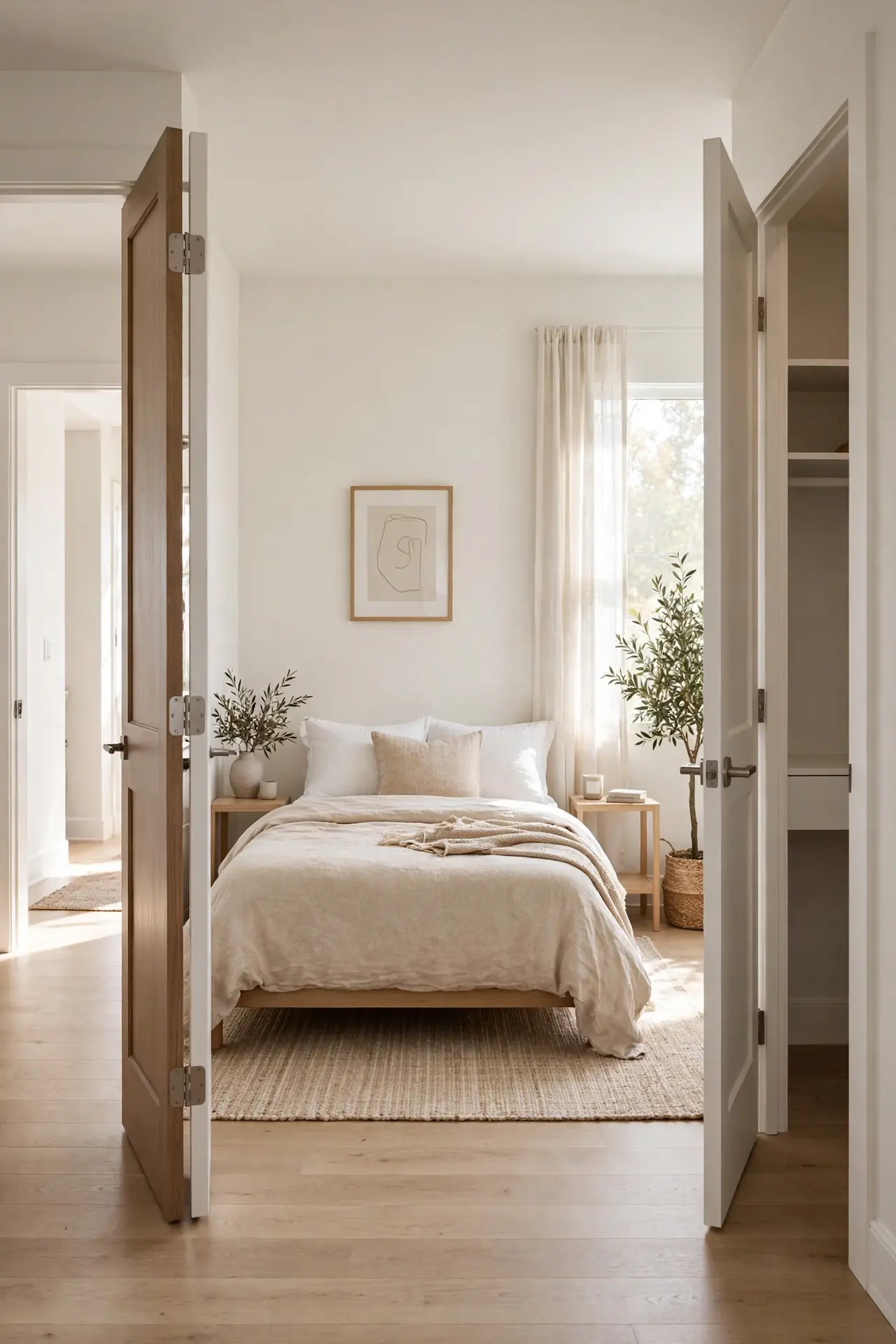
DO: Map every door swing with painter’s tape before placing a single piece of furniture.
DO: Leave a full three foot arc clear wherever a door opens and closes.
DO: Swap hinged doors for curtains or sliding panels where the layout allows it.
DON’T: Push the bed against a door wall and hope the door still opens.
DON’T: Place a dresser inside a closet door’s swing path.
DON’T: Ignore the bathroom door; it needs full clearance too.
Doors dictate more layout than walls ever do. In awkward bedrooms, the swing of each door carves invisible no go zones across the floor. Map them first and the furniture practically places itself. In my experience, one door swap solves more layout fights than any new furniture purchase.
Wall Bed Option
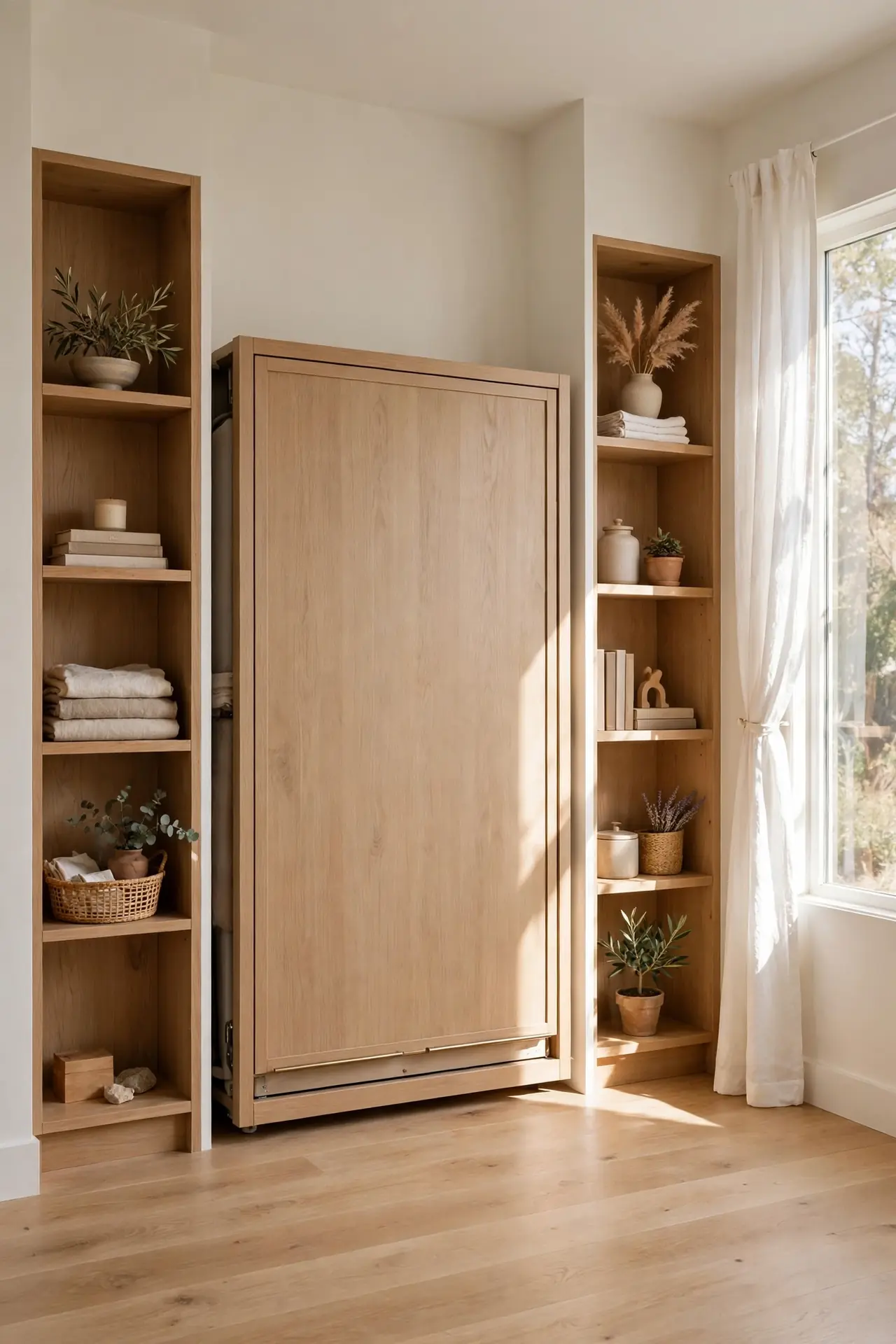
Cost: Medium | Time: One weekend | Skill Level: Intermediate | Best For: Tiny or multi use bedrooms
A wall bed folds the whole sleep zone away by day. In a truly awkward room, removing the bed from the floor plan for sixteen hours changes everything. Modern murphy beds include side shelving so the wall looks built in when closed. I’ve noticed guests never guess the trick. Anchor it to studs and the mechanism lasts for years.
Measure your ceiling height before ordering, since most mechanisms need at least seven feet. Clear the swing zone of rugs and small furniture so the bed folds down without a fight. Practice the motion a few times until it feels smooth and safe.
Narrow Path Plan
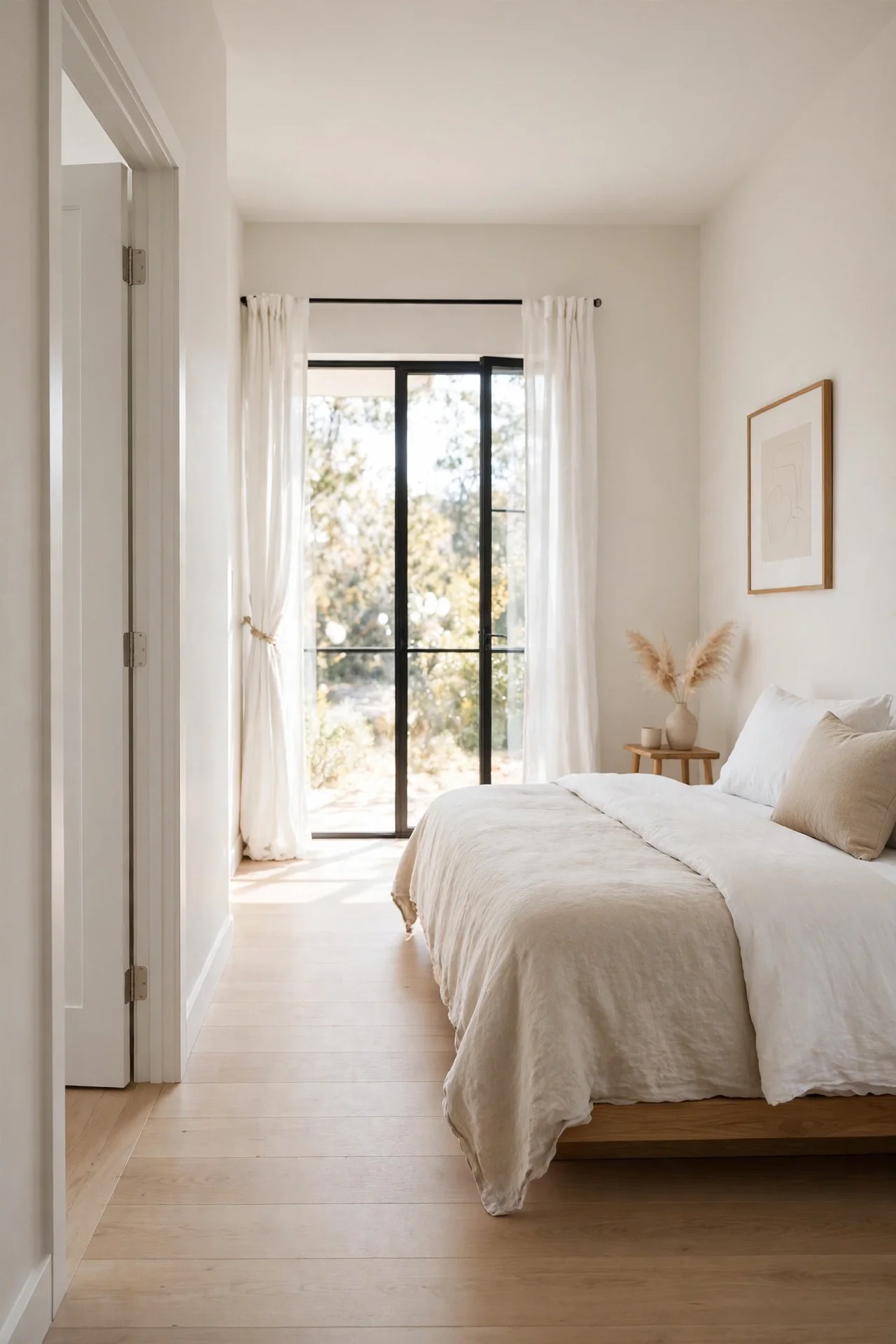
Draw the walking path first and let furniture fill whatever remains. In awkward rooms, the path from door to window to closet is sacred, and everything else arranges around it. Keep the main lane at least twenty eight inches wide so the room never feels pinched or crowded.
Place the largest piece, usually the bed, first along the longest uninterrupted wall available. Then slot smaller pieces into the leftover pockets around it. That’s why many experts recommend taping the layout on the floor before lifting anything heavy. A clear, generous path makes even the strangest room feel easy and calm.
Layered Textile Warmth
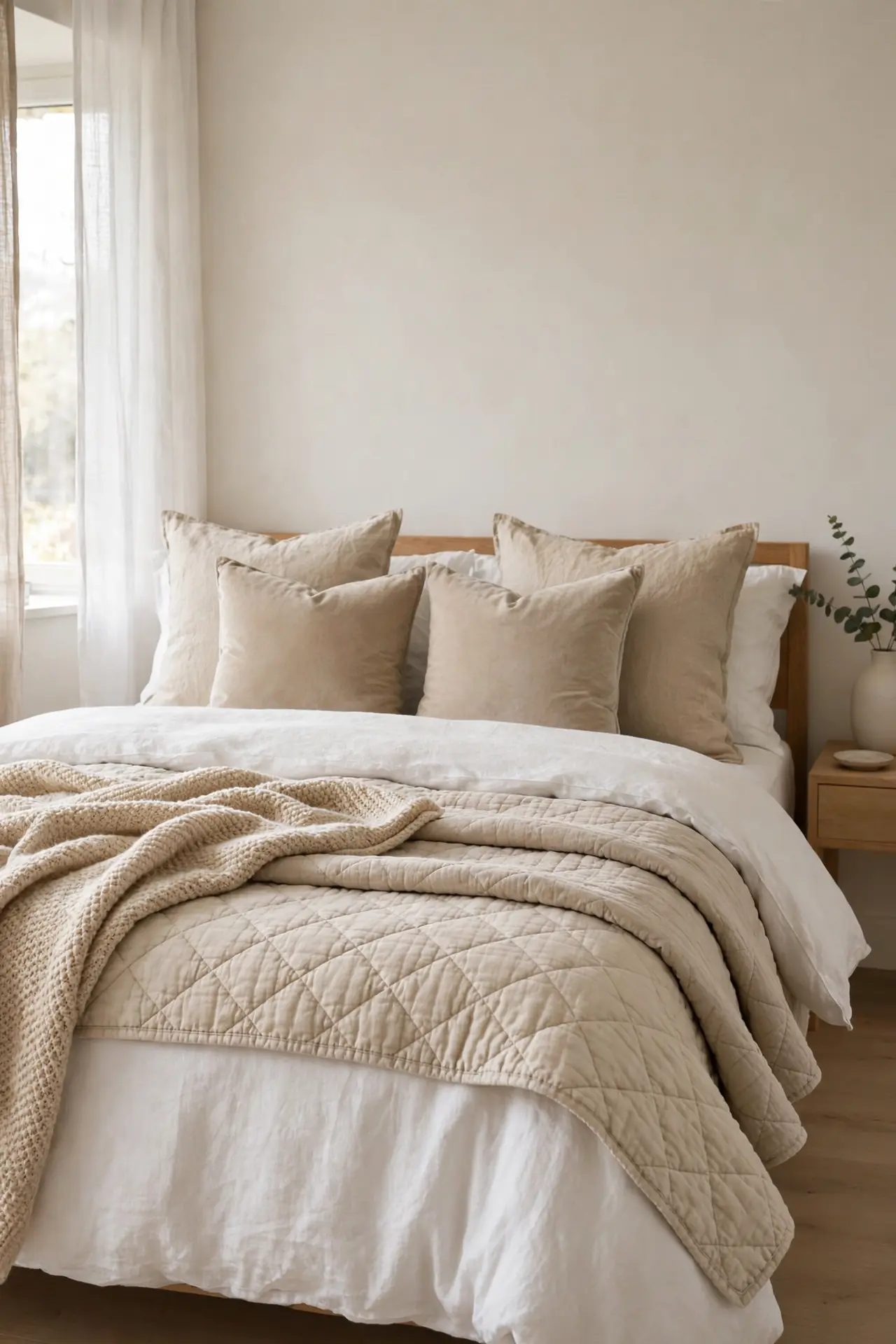
- Layer a quilt over the duvet to add depth without buying new furniture.
- Mix three pillow textures like linen, velvet, and knit for tactile interest.
- Drape a throw across the foot of the bed to pull colors together.
- Choose textiles in one palette so the room feels calm instead of busy.
Soft layers distract from hard angles. When a room’s shape feels wrong, generous textiles give the eye something pleasant to rest on instead. In my experience, bedding upgrades change a room’s mood faster than paint. Wash everything in the same load to keep tones consistent and fresh over time.
Vertical Shelf Rise
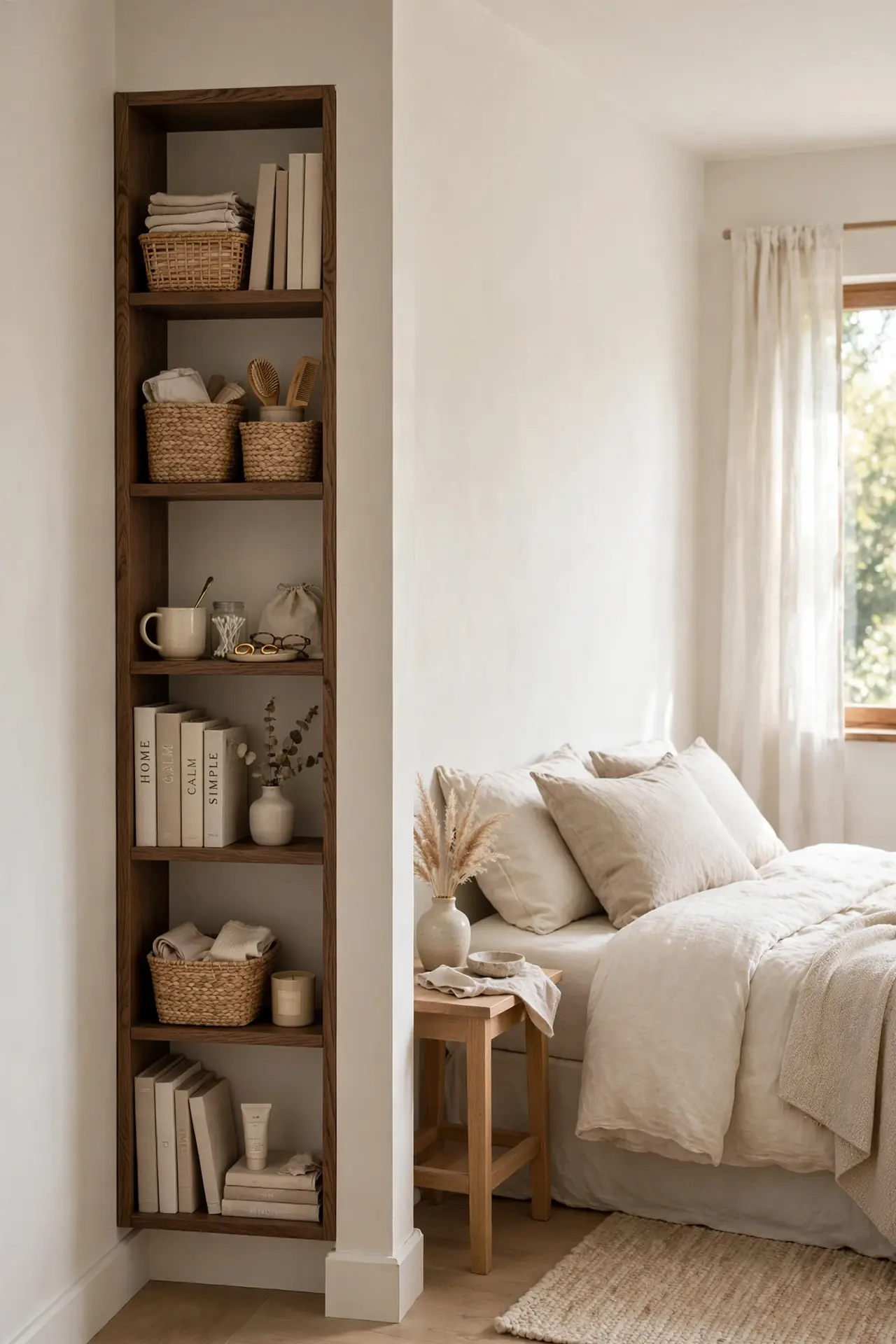
Quick Tip: When floor space runs odd, build upward instead. Install tall, narrow shelving on the shortest wall and store books, baskets, and decor vertically. Keep daily items between knee and eye level, and reserve the top shelves for things you rarely need.
Awkward rooms often waste their vertical inches. A single tall bookcase can hold what three short dressers would, while touching only two square feet of floor. I’ve seen this work well in many cases beside doors that swing wide. Anchor every tall piece to the wall for safety. Style the shelves with a mix of books and closed baskets to hide clutter.
Entry Buffer Zone
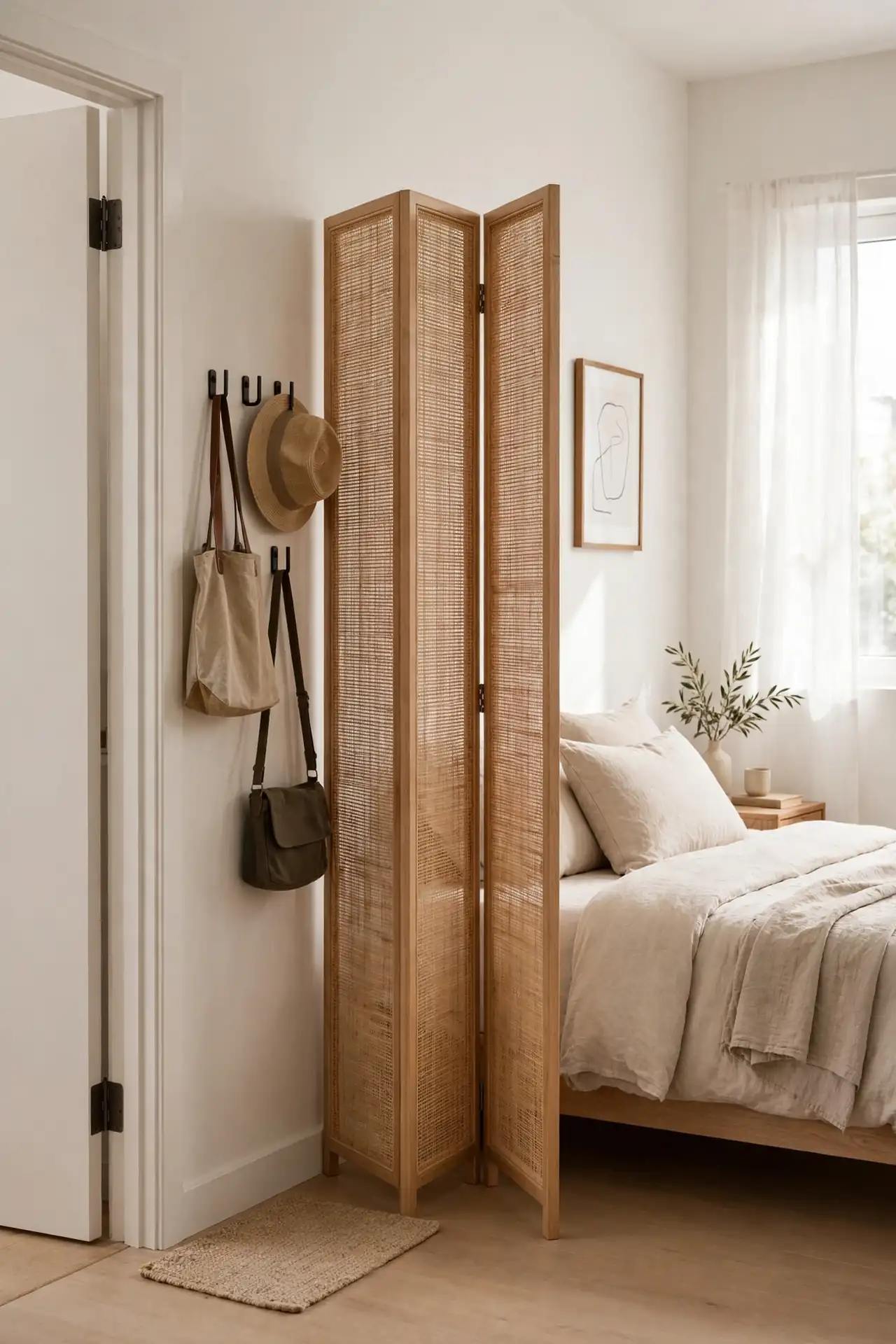
BEFORE: The bedroom door opened straight onto the bed, so the room never felt private. Clutter from the hallway drifted in and the first thing guests saw was unmade bedding.
AFTER: A slim screen now angles from the door, creating a tiny entry buffer with hooks for bags. The bed stays hidden from the doorway and the room finally feels like a retreat.
Doors that open directly onto the bed ruin the sense of sanctuary. A folding screen, tall bookcase, or even a curtain creates a micro foyer that shields the sleep zone. That’s why many experts recommend some kind of threshold, however small. The buffer also catches clutter before it reaches the bed.
Cozy Corner Reading
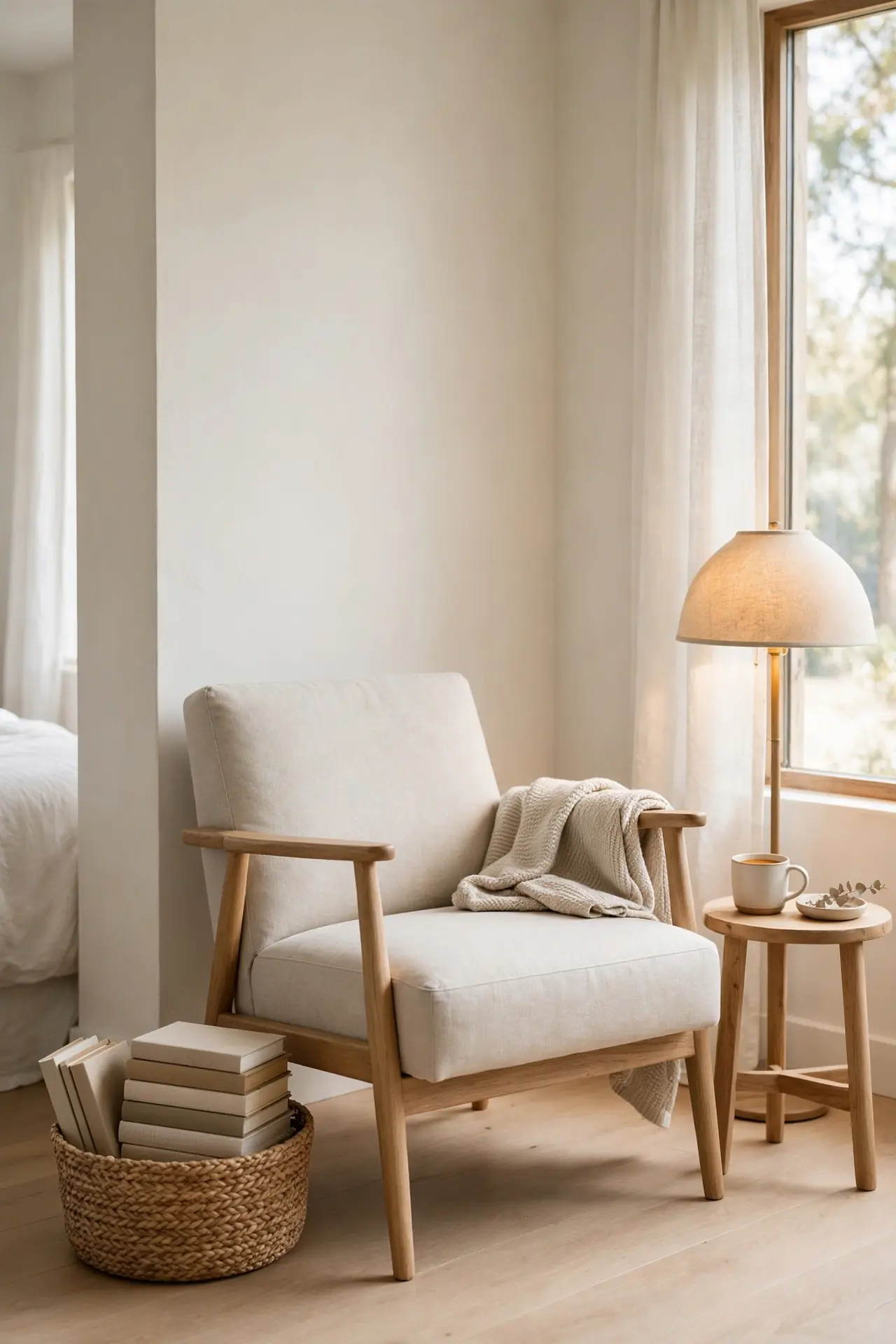
- Pick the room’s most awkward corner, the one nothing seems to fit in.
- Angle a comfortable chair to face the room’s best natural light.
- Add a small side table and a warm floor lamp beside the chair.
- Finish with a soft throw and a basket for your current books.
Every awkward room hides one perfect corner waiting to be claimed. Claiming it for reading turns the room’s biggest flaw into its favorite feature. If your corner sits in a truly tiny room, these small bedroom ideas stretch every inch further. Keep the setup simple so the corner invites you in daily.
Conclusion
Odd floor plans stop feeling like problems once the layout starts working with you. These awkward bedroom layouts show that smart angles, clear paths, and honest zoning beat square footage every time. I’ve seen how small changes like these can completely shift the way a space feels each morning. Start with the door swings and the walking path, then let each idea build on the last. Save this guide on Pinterest for your next rearrange, and share it with anyone wrestling a tricky room. Your cozier, smarter bedroom is one furniture shuffle away.