23 Dining Room Wall Decor Ideas for an Elegant, Personal Touch
Walls shape how a meal feels, and dining room wall decor ideas turn a bare dining room into a place where guests linger long after the plates clear. The right art, mirror, or paneling gives the table a backdrop that flatters food, faces, and conversation alike.
From gallery walls to quiet sconce light, this guide walks through 23 ways to dress dining walls with warmth and personality, and it pairs nicely with bedside table styling ideas for readers styling a whole home. Each idea keeps the table as the hero while the walls do the welcoming. Start with one idea, then layer more as confidence grows.
Gallery Wall Charm

Credit: Huỳnh Như Mavi
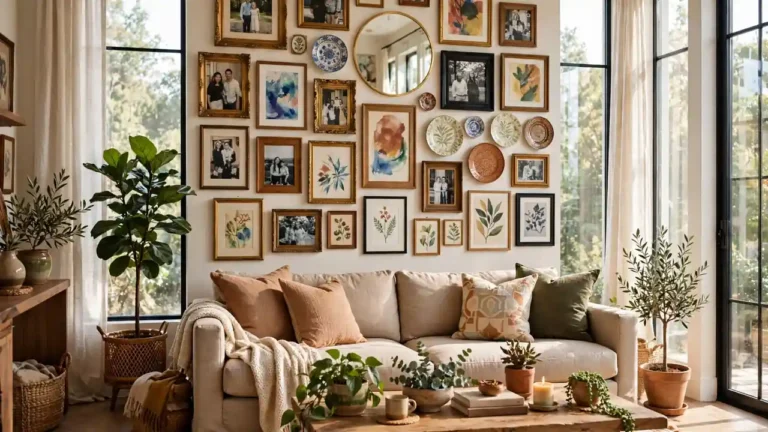
A blank wall above a sideboard can feel like an unfinished sentence, and a gallery wall gives it a voice that guests notice the moment they sit down. Mix frame sizes so the eye moves across the arrangement instead of stopping at one piece, and keep a consistent gap of two inches between frames for a calm, collected rhythm.
Start with the largest piece slightly off center, then build outward with smaller prints, mirrors, and family photos that share a warm color thread. Step back after every third frame to check balance, and leave breathing room near the ceiling so the display feels intentional without crowding the room.
Oversized Mirror Moments

Credit: Derwin Edwards
- Hang one large mirror across from a window so daylight bounces deep into the room.
- Choose a frame finish that echoes your table legs, chandelier, or chair backs.
- Keep the mirror center at eye level when seated, roughly 57 inches from the floor.
- Pair it with a slim console or sideboard so the reflection stays clean and calm.
- Wipe glass weekly, since smudges show fast in candlelight and evening sun.
A mirror does more than decorate, since it doubles light and makes a tight dining corner feel open. In my experience, rooms with a single strong mirror need fewer accessories on the wall, which keeps the table setting as the star of every meal.
Wainscoting Warmth

Credit: Curtis Adams
Quick Tip: Paint wainscoting the same white as your trim, then add a soft warm wall color above it so the lower panels read as architecture rather than decoration.
Paneled lower walls bring instant character to a plain dining room, and they protect plaster from chair backs at the same time. A chair rail at 32 to 36 inches suits most rooms, and simple rectangular panels cost far less than ornate millwork while still looking tailored. Keep the upper wall calm with one paint color, then let a mirror or a row of sconces finish the look without competing for attention.
Bare To Beautiful

Credit: hi room
BEFORE: The dining wall stood empty except for a small clock, and every meal felt a little flat because the eye had nowhere pleasant to rest.
AFTER: A wide framed print, two sconces, and a low sideboard vignette now anchor the wall, and the room feels finished from the first course to dessert.
The change took one weekend and cost less than a new table, yet guests comment on the wall before they mention anything else. Start with one anchor piece at eye level, add light on both sides, and stop before the wall feels busy, since restraint reads as confidence in a dining room.
Art Hanging Steps

Credit: Johnny Ng
- Measure the wall and mark the center point at seated eye level.
- Lay the arrangement on the floor and photograph it before lifting a hammer.
- Hang the largest piece first, then fill outward with smaller frames.
- Check spacing with a level and a tape, keeping gaps near two inches.
- Step back from the doorway after each piece to judge balance.
Hanging art in order keeps holes to a minimum and saves patching later, which matters on freshly painted walls. I’ve noticed that rooms feel calmer when frames share one metal finish, even when the art itself ranges from bold abstracts to quiet landscapes.
Plate Versus Canvas

Credit: wonje Choi
| Display | Best For | Upkeep |
|---|---|---|
| Plate wall | Cottage charm | Dust monthly |
| Canvas art | Modern drama | Wipe frame |
| Mixed plates | Collected look | Check hangers |
| Single canvas | Small rooms | Low effort |
Plates bring pattern and a collected feel that suits breakfast nooks and farmhouse tables, while a large canvas delivers one bold focal point with far less fuss. Plates need secure hangers and a steady hand during dusting, but they cost little when thrifted. Canvas suits renters too, since one nail holds the whole statement. Pick the option that matches your table style, then repeat its colors in napkins or a centerpiece so the wall and table talk to each other.
Dining Wall Rules

Credit: Beyzaa Yurtkuran
Do:
- Do hang art at seated eye level, not standing height.
- Do repeat one color from the table setting in the wall art.
- Do leave empty space around each piece so it can breathe.
Don’t:
- Don’t hang tiny frames on a wide wall without grouping them.
- Don’t mix more than two frame finishes in one arrangement.
- Don’t place art where chair backs will bump the glass.
Rules sound strict, yet they free the room from guesswork and keep the focus on good food and conversation. Break one rule only when the result still feels balanced from the doorway, which is the view guests see first.
Wallpaper Accent Facts

Credit: Mary Nikitina
Cost: A single accent wall often needs just two rolls.
Time: Most rooms finish in one relaxed weekend afternoon.
Skill Level: Beginner friendly with paste-the-wall paper.
Best For: Rooms that need pattern without full commitment.
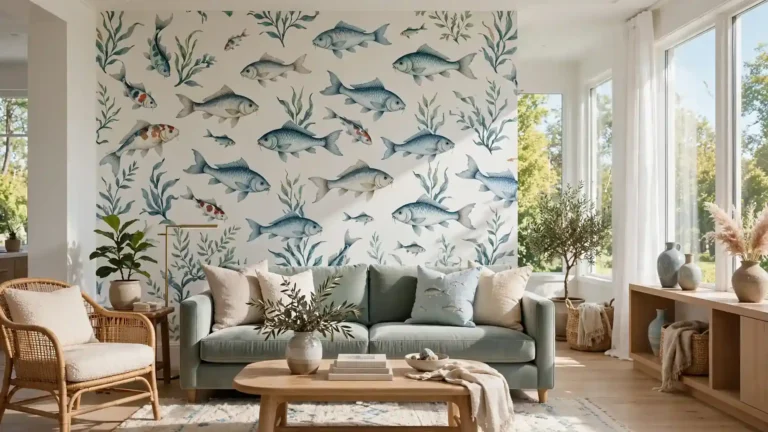
Wallpaper turns a plain dining wall into a backdrop that makes wood tones and white dishes glow, and removable papers let renters enjoy the same drama without risk. Pick a small repeat for tight rooms so the pattern stays calm, and save large bold motifs for wide walls with plenty of light. Match one wallpaper color to your rug or curtains, then keep the remaining walls quiet so the accent wall earns its moment.
Sconce Glow Layers

Credit: shaza jocarlos
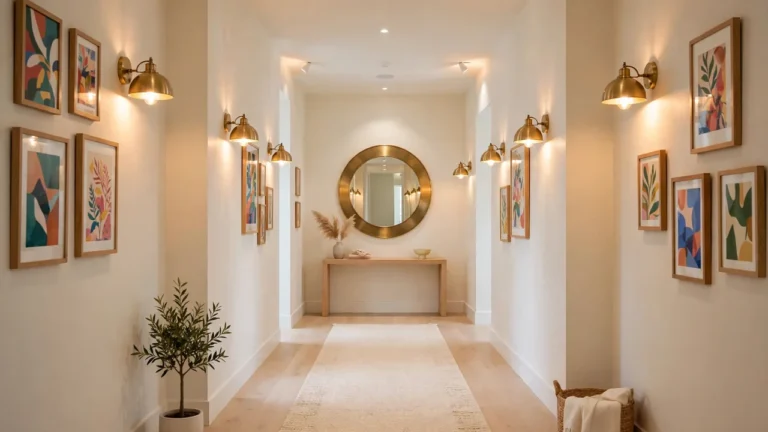
Candlelight flatters everyone at the table, and wall sconces bring that glow without stealing table space from plates and glasses. Mount a pair flanking a mirror or artwork, roughly 60 inches from the floor, so light washes the wall instead of glaring into eyes.
Choose warm bulbs near 2700 Kelvin for evening meals, and put sconces on a dimmer so the same wall shifts from bright family dinners to quiet date nights. Battery sconces suit renters, since they skip wiring yet still layer light exactly where the room needs it. In my experience, two lit sconces beat one overhead fixture for atmosphere, and guests linger longer when the light feels soft.
Family Photo Displays

Credit: Ruyat Supriazi
- Print photos in one size for a tidy grid that reads as art.
- Use black and white prints when color palettes clash across years.
- Add one small shelf so new favorites can rotate without new holes.
- Label the back of each frame with the year for future sorting.
- Keep glass glare low by skipping spots opposite bright windows.
Family walls turn dinner into storytelling, since every seat faces a memory worth mentioning. Keep the display to one wall so the room still feels grown up, and let kids pick one favorite each so everyone feels included at the table tonight.
Seasonal Swap Ideas

Credit: Anna Zanovelli Bacci
Quick Tip: Keep a small basket of seasonal prints near the sideboard, then swap just two frames each season so the wall feels fresh without a full redo.
A dining wall that changes with the seasons keeps the room lively all year, and small swaps cost little when frames stay the same. Hang autumn leaves in warm golds, then trade them for evergreen sprigs in winter and soft botanicals in spring. Summer calls for airy coastal prints that cool the room visually. Store off-season art flat between sheets of tissue, label each set by season, and the whole refresh takes under thirty minutes.
Cluttered To Calm
Credit: Max Vakhtbovych
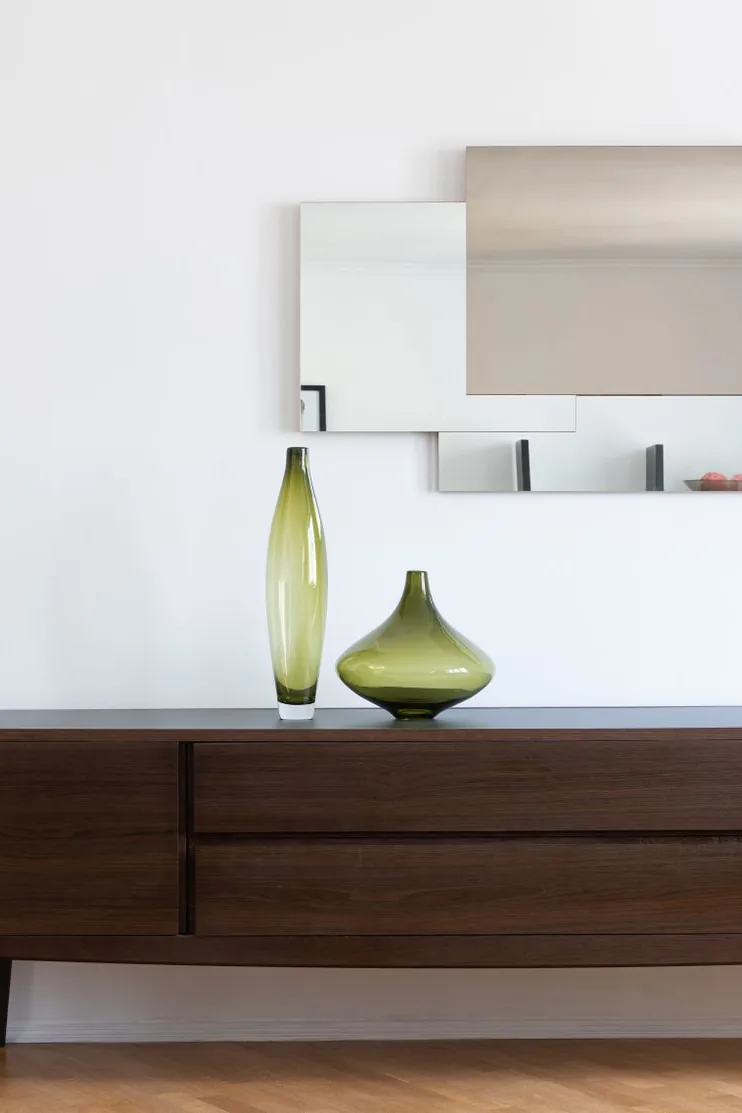
BEFORE: Every wall held a different frame, clock, and shelf, and the dining room felt noisy even when no one spoke at the table.
AFTER: Three matching frames and one mirror now share a single wall, and the room finally breathes between courses and conversation.
Editing hurts at first, since each piece holds a memory, yet the pieces that remain shine brighter with room around them. Box the extras for another room, live with the calmer wall for a week, and only bring back a piece that earns its spot. I’ve seen this work well in many cases, and guests usually notice the calm before they notice what left.
Style Matching Steps
Credit: Rachel Claire
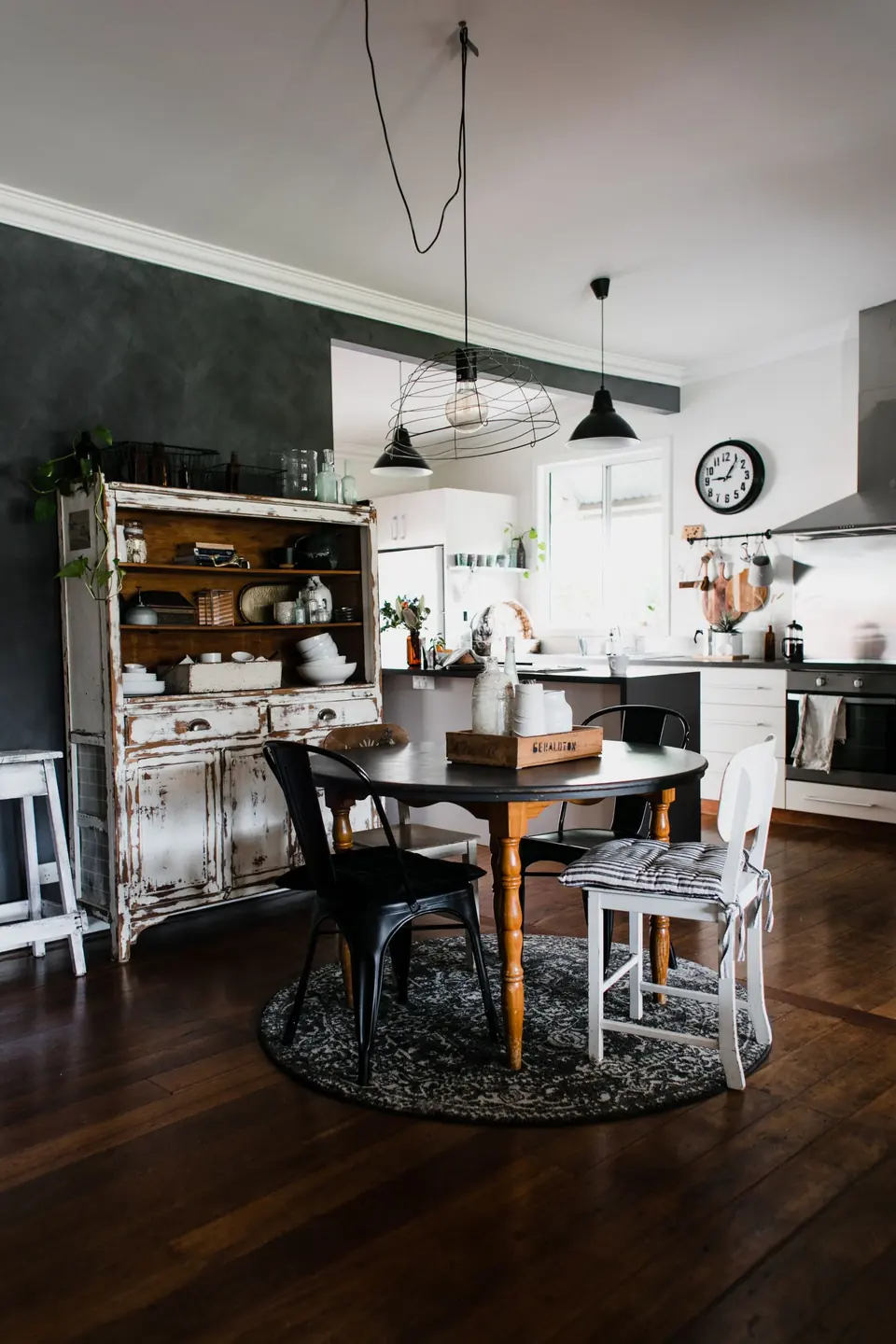
- Name your table style in two words, such as rustic wood or sleek marble.
- Pull one wall finish that echoes that style, like rattan, brass, or linen.
- Repeat the finish twice on the wall so it looks deliberate, not accidental.
- Check the whole room from the doorway before adding a third element.
Matching the wall to the table keeps the room coherent, and dining room wall decor ideas work best when they echo the table rather than fight it. A farmhouse table pairs with woven textures and warm wood frames, while a glass table suits slim metal frames and pale art. Let the table lead, and the wall will follow gracefully.
Wood Versus Metal
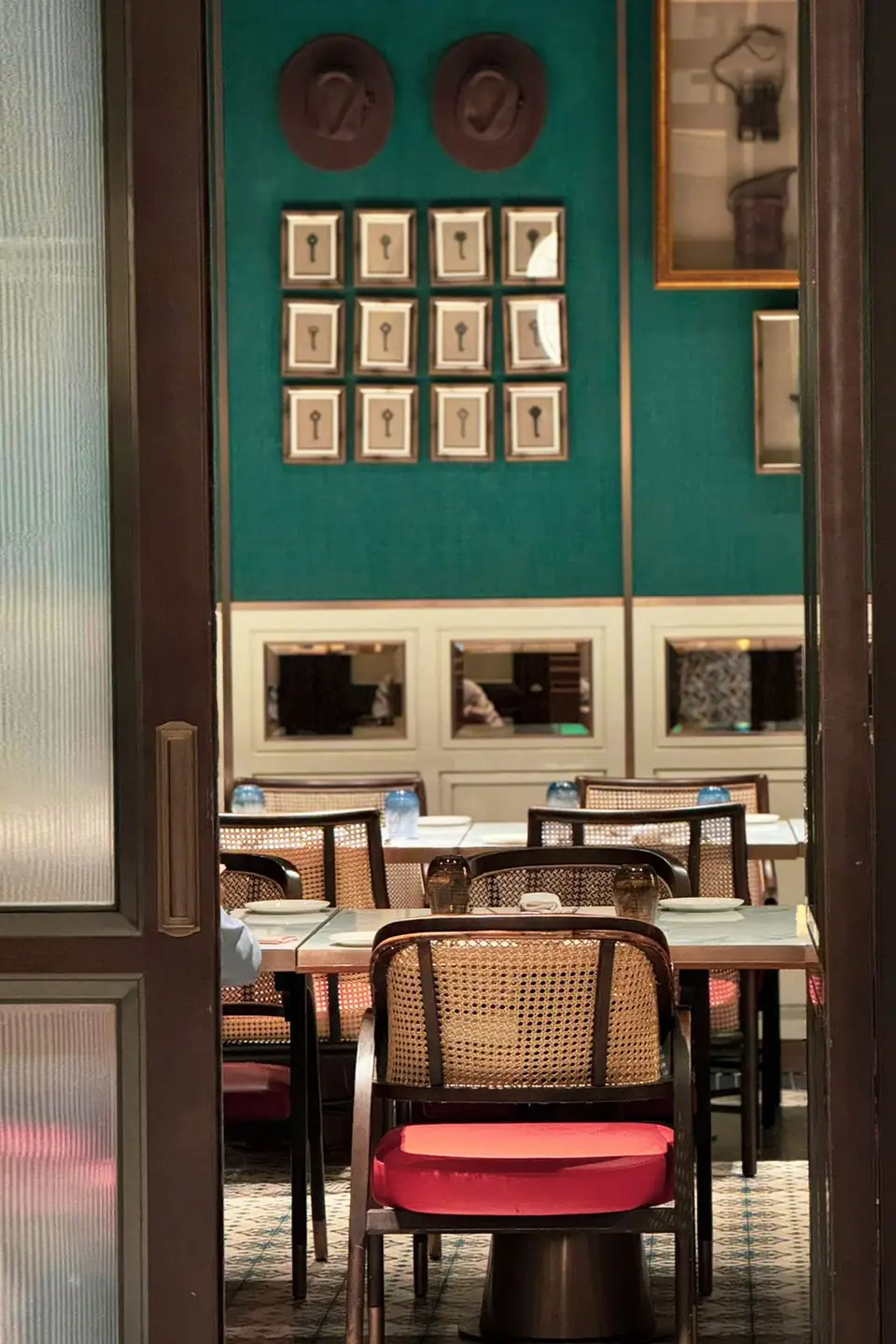
Credit: A Vasan
| Frame | Feel | Best With |
|---|---|---|
| Wood frames | Warm rustic | Farmhouse tables |
| Metal frames | Sleek modern | Glass tables |
| Mixed frames | Collected charm | Eclectic rooms |
| Black frames | Bold contrast | White walls |
Wood frames warm a dining room instantly, and they forgive scratches from busy family life far better than glossy finishes. Metal frames bring a crisp edge that suits modern tables and small rooms, since slim profiles take up less visual space. Mixing both works when one finish dominates and the other accents, so pick a lead finish and let the second appear only twice. Match frame metal to faucet or light fixtures for a subtle thread through the home.
Vintage Find Rules

Credit: Mister Mister
Do:
- Do check old frames for sturdy corners before hanging heavy glass.
- Do clean thrifted art gently with a dry microfiber cloth first.
- Do mix one vintage piece with newer frames for balance.
Don’t:
- Don’t hang damaged glass above a table where people eat.
- Don’t pay antique prices for mass produced prints without checking marks.
- Don’t crowd vintage finds together or they read as clutter.
Vintage walls carry stories that new art cannot fake, and a single flea market find often sparks the best dinner conversation. Hunt slowly, buy only pieces that move the room, and let patina stay, since wear tells the story.
Budget Wall Facts

Credit: Beyzaa Yurtkuran
Cost: Thrifted frames often cost under five dollars each.
Time: A gallery wall usually takes one Saturday morning.
Skill Level: Beginner friendly with basic hanging tools.
Best For: Renters and first homes on tight budgets.
Great dining walls need not cost a fortune, since paint, paper, and thrifted frames do most of the work for very little money. Print family photos at a drugstore, spray paint mismatched frames one color, and hang them in a grid for instant polish. A single can of paint behind the sideboard creates an accent wall for less than dinner out, and removable hooks protect deposits while still holding real weight.
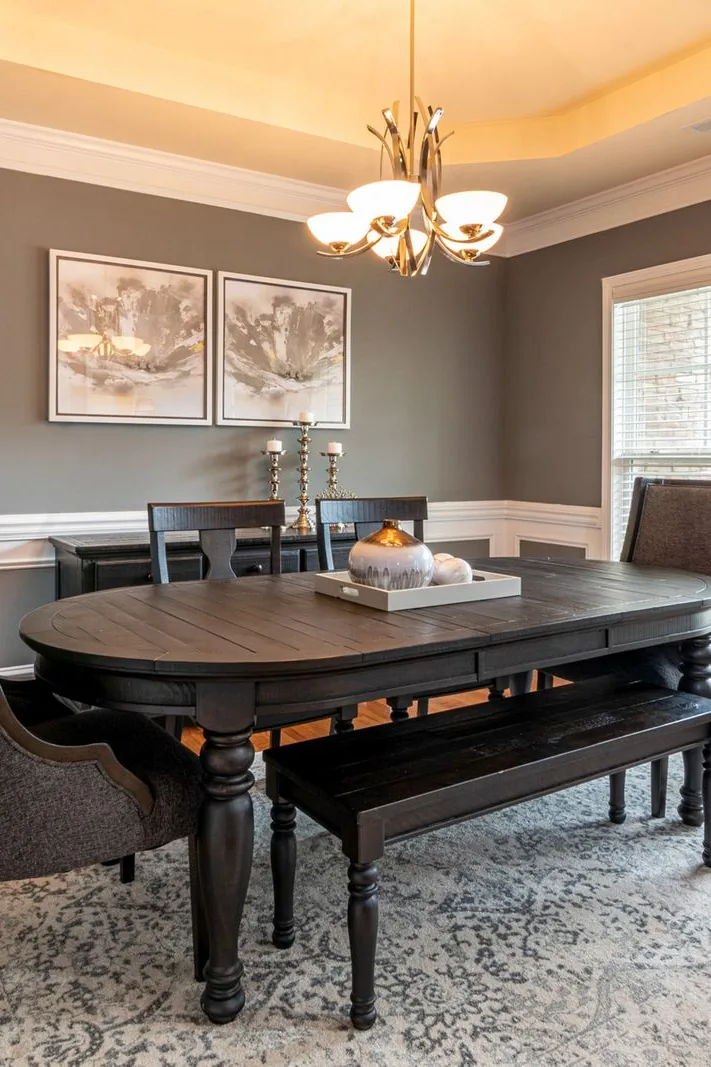
Statement Art Corners
Credit: Curtis Adams
One oversized piece in a quiet corner can anchor a whole dining room, and it needs no competing frames to make its point. Hang it low enough that seated guests see the center clearly, and keep nearby walls nearly bare so the art commands the corner.
Choose art with one color pulled from the rug or curtains, then echo that color in a vase or napkins on the table. In my experience, a single bold piece calms a room more than a busy wall, since the eye rests in one place before wandering to food and friends at every gathering.
Woven Wall Hangings

Credit: Vladimir Gladkov
- Hang macrame above the sideboard for soft texture without glare.
- Layer a woven piece beside framed art to break up flat walls.
- Choose natural fibers that echo wood tones in the table.
- Dust woven art gently with a low suction vacuum brush.
- Keep hangings away from candle flames and steamy kitchens.
Woven hangings soften hard dining rooms full of wood, glass, and metal, and they absorb a little echo too, which helps conversation. Pick one large piece rather than many small ones, and let its fringe hang free so the texture stays the star. That’s why many experts recommend texture on at least one dining wall.
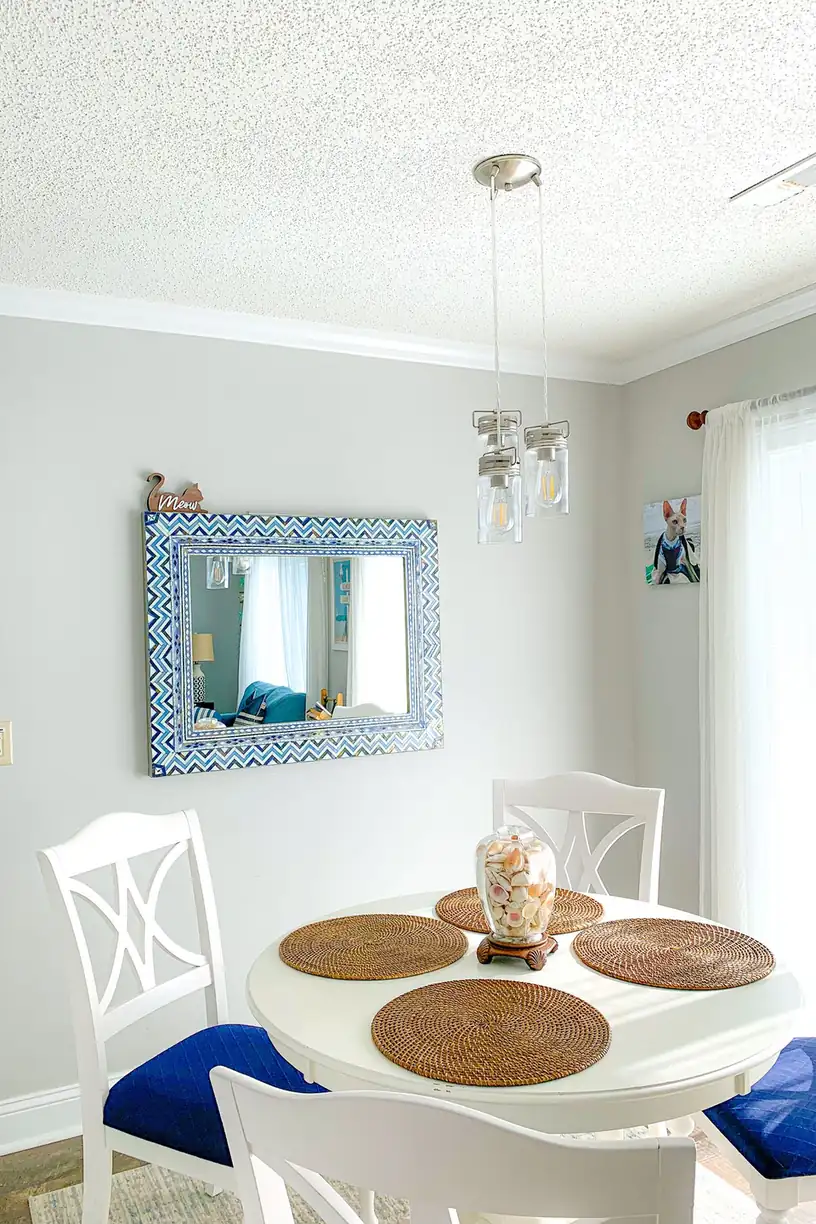
Small Room Tricks
Credit: KeM Gallery
Quick Tip: Hang a mirror on the narrowest wall, then keep art small and high so the room reads taller instead of tighter.
Small dining rooms punish oversized art, yet they reward clever placement more than large rooms do. A slim vertical print draws the eye upward, and a light frame color keeps the wall from closing in. Skip heavy shelves that jut into walkways, and hang one mirror to double the light. Keep the palette pale, repeat it in the table linen, and the whole room feels airy even when every chair is full. In my experience, small rooms shine when walls stay simple and the table does the talking. The same restraint suits a hallway console, and console table decorating ideas pair well with small dining walls.
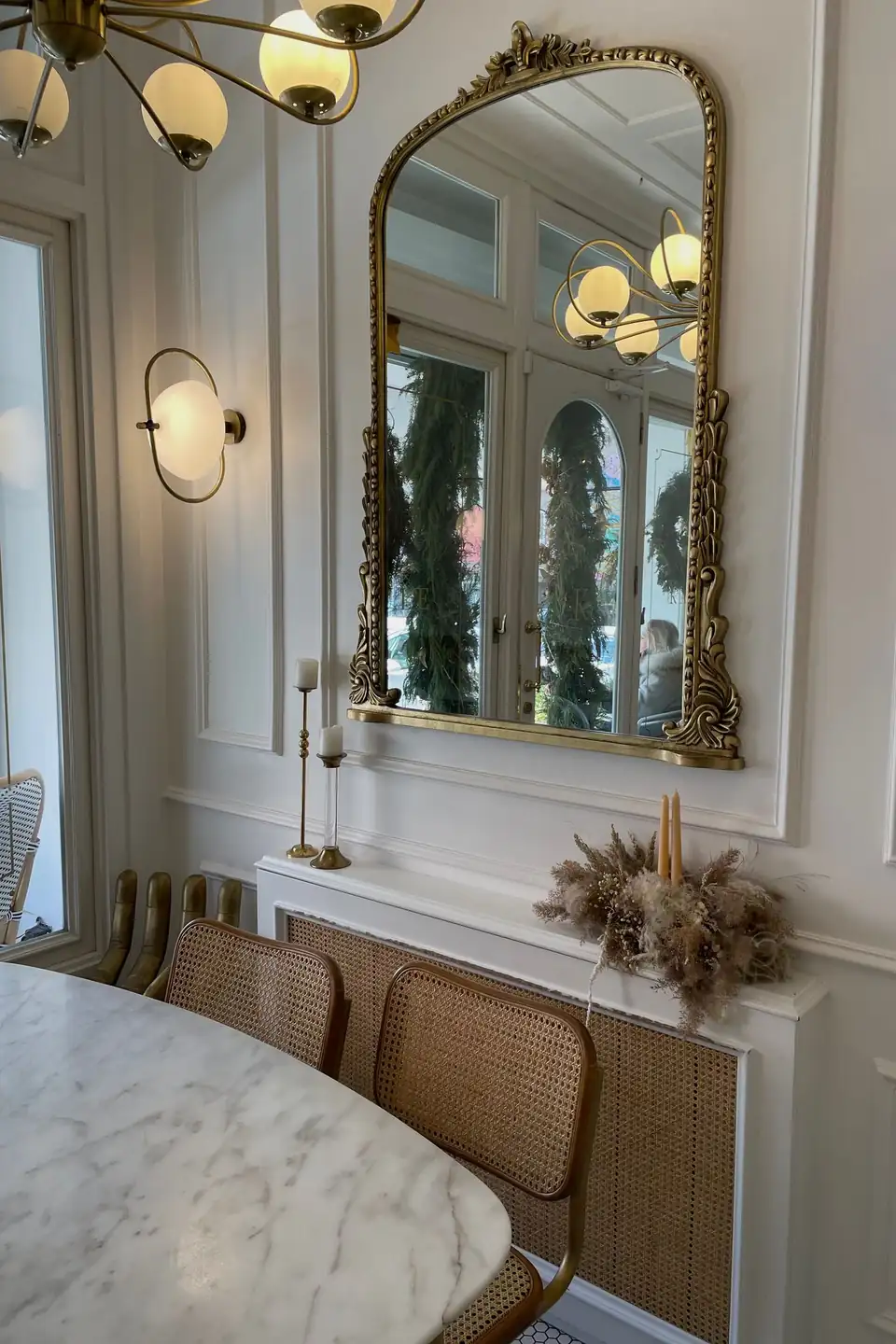
Dated To Dreamy
Credit: Esma Özer
BEFORE: Faded floral wallpaper and a crooked clock made the dining room feel stuck in another decade, and guests rarely lingered after dessert.
AFTER: Fresh paint, a round mirror, and two sconces now give the wall a modern pulse, and dinner stretches long past the last plate.
The update skipped a full remodel, since paint and light did the heavy lifting for a modest budget. Remove dated pieces first, patch holes cleanly, and hang the new arrangement at seated eye level. I’ve noticed that one modern mirror can drag a whole room forward, even when the table and chairs stay exactly the same.
Refresh Seasonally Steps

Credit: YEŞ
- Store seasonal prints flat in labeled folders by season.
- Swap only the sideboard wall art, leaving the main gallery untouched.
- Add a seasonal vase or candle to echo the new prints.
- Photograph each arrangement so next year starts from a proven look.
- Keep a small step stool near the sideboard for safe swaps.
Seasonal refreshes keep a dining room feeling alive without new furniture, and the wall does most of the work. Autumn brings warm leaves, winter brings evergreen and candlelight, spring brings botanicals, and summer brings coastal calm. Rotate on the first weekend of each season, and the room always feels current.
Matte Versus Gloss

Credit: Heloisa Vecchio
| Finish | Look | Care |
|---|---|---|
| Matte frames | Soft calm | Shows dust less |
| Gloss frames | Bright shine | Wipes clean fast |
| Satin frames | Gentle glow | Balanced upkeep |
| Natural wood | Warm texture | Oil yearly |
Matte frames calm a busy dining wall, since they absorb light instead of throwing glare across the table. Gloss frames pop against dark walls and wipe clean after sticky fingers, yet they mirror windows in daylight. Satin splits the difference with a gentle sheen that suits most rooms. Pick matte for sunny walls, gloss for moody corners, and keep the finish consistent across the arrangement for a tailored result that lasts for years.
Mixing Frame Rules

Credit: Maryam Kamavova
Do:
- Do pick one dominant frame finish for most pieces.
- Do repeat an accent finish exactly twice for balance.
- Do keep mat widths consistent across different frame styles.
Don’t:
- Don’t mix gold, silver, black, and wood all at once.
- Don’t hang ornate and ultra modern frames side by side.
- Don’t let frame colors fight the art inside them.
Mixed frames look collected rather than chaotic when one finish leads and the rest whisper. I’ve seen this work well in many cases, and the trick is restraint: two finishes maximum, one mat color, and gaps that stay even across the whole wall from end to end.
Conclusion
Good dining walls reward the people who gather beneath them, and dining room wall decor ideas prove that a few thoughtful pieces beat a crowded wall every time. Pick the idea that fits the table, hang it at seated eye level, and live with it through a few meals before adding more. Save this guide to Pinterest so the next refresh starts from inspiration rather than a blank wall, and share it with a friend who loves hosting. The best dining rooms feel personal, warm, and a little bit storied, and the walls deserve just as much care as the table itself.