20 Kitchen Backsplash Design Ideas for a Fresh, Modern Look
A plain wall above the counter wastes the best chance for style in a busy kitchen, and kitchen backsplash design ideas turn that blank stretch into a fresh focal point. The right tile, stone, or panel protects the wall from splashes while giving the whole room a finished look that feels planned rather than patched together.
Before the grout lines and color charts pull you in, start with the room you already have. Look at the cabinets, the counter, and the light at different hours, then borrow one calm idea from a recent bedroom accent wall ideas project if you need proof that a single feature wall can carry a whole room. A backsplash works the same way, just on a smaller, harder working surface.
Classic Subway Tile
Credit: Dean Fugate
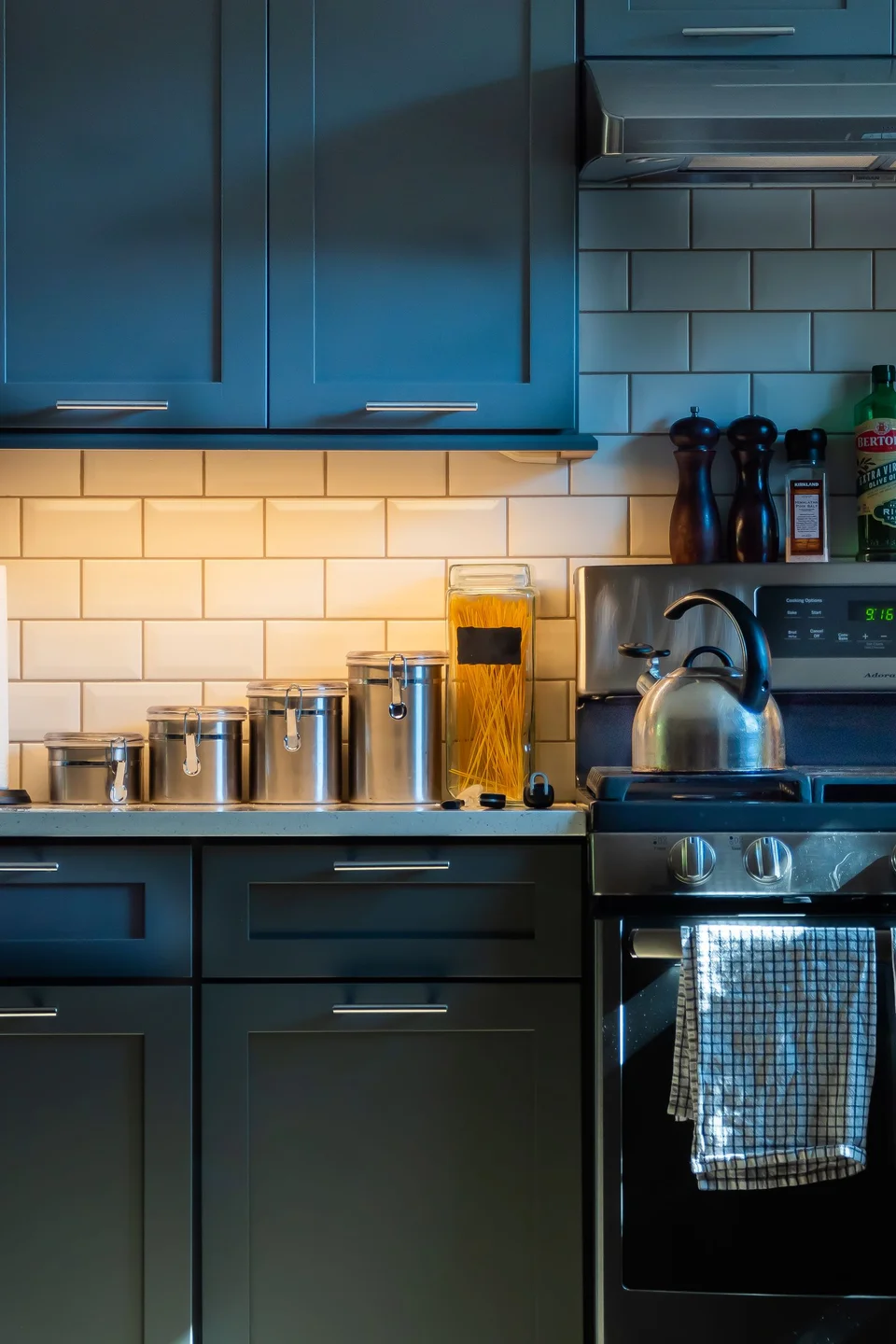
White subway tile earned its place for a reason that has nothing to do with trends. The small rectangular shape stacks into neat rows, catches light along the bevel, and sits calmly next to almost any cabinet color, from painted white to deep green.
Keep the grout close in tone to the tile when the goal is a quiet backdrop, or pick a soft gray grout when the brick pattern should read clearly across the wall. Either choice stays easy to wipe down, which matters more than any showroom photo once tomato sauce enters the picture. A simple running bond layout suits most kitchens without extra cuts or fuss.
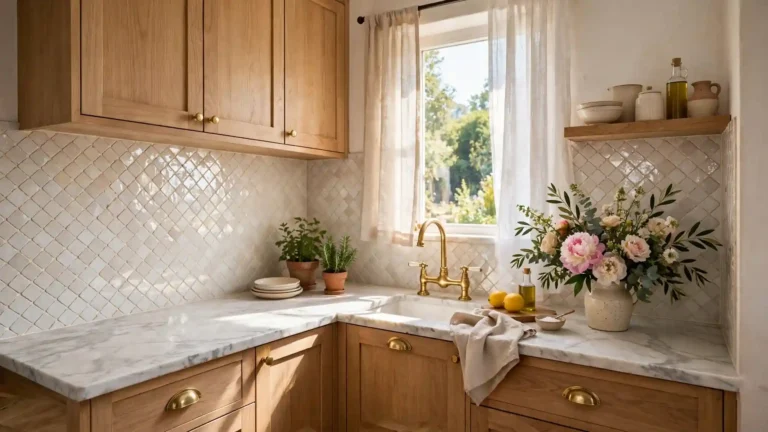
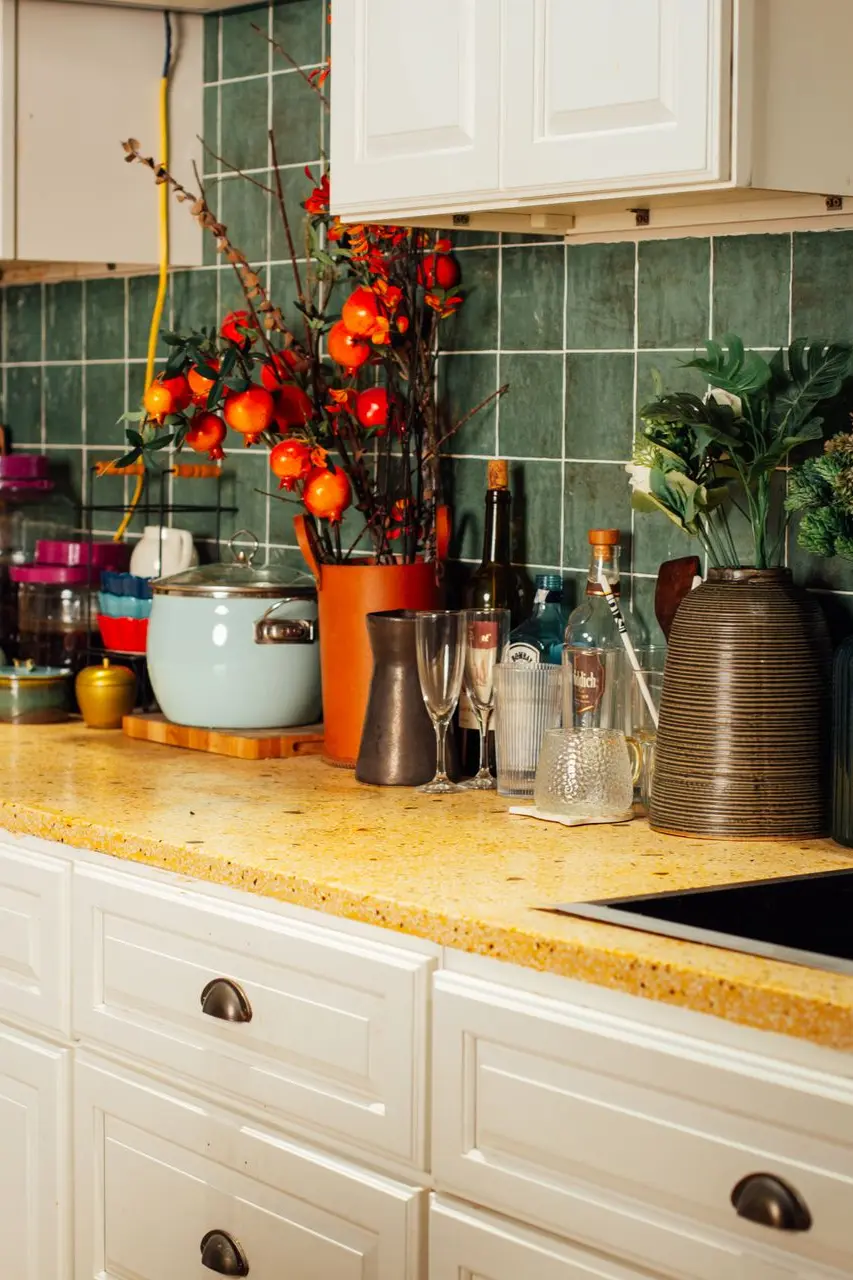
Glossy Zellige Charm
Credit: Một Chút Mơ Tiệm ảnh
- Handmade zellige tiles vary slightly in tone, so the wall gains depth without a busy pattern.
- A soft green or warm cream glaze pairs well with pale wood and brass taps.
- Stack the tiles vertically to stretch a low ceiling line upward.
- Seal the grout once a year to keep cooking stains from settling in.
- Order a sample box first, since glaze color shifts under kitchen lighting.
The handmade look suits kitchens that already lean warm and relaxed, and the slight uneven surface catches light in a way flat tile never does. Keep nearby surfaces plain so the glaze stays the star of the wall. A simple shelf or two above the counter keeps the focus where it belongs.
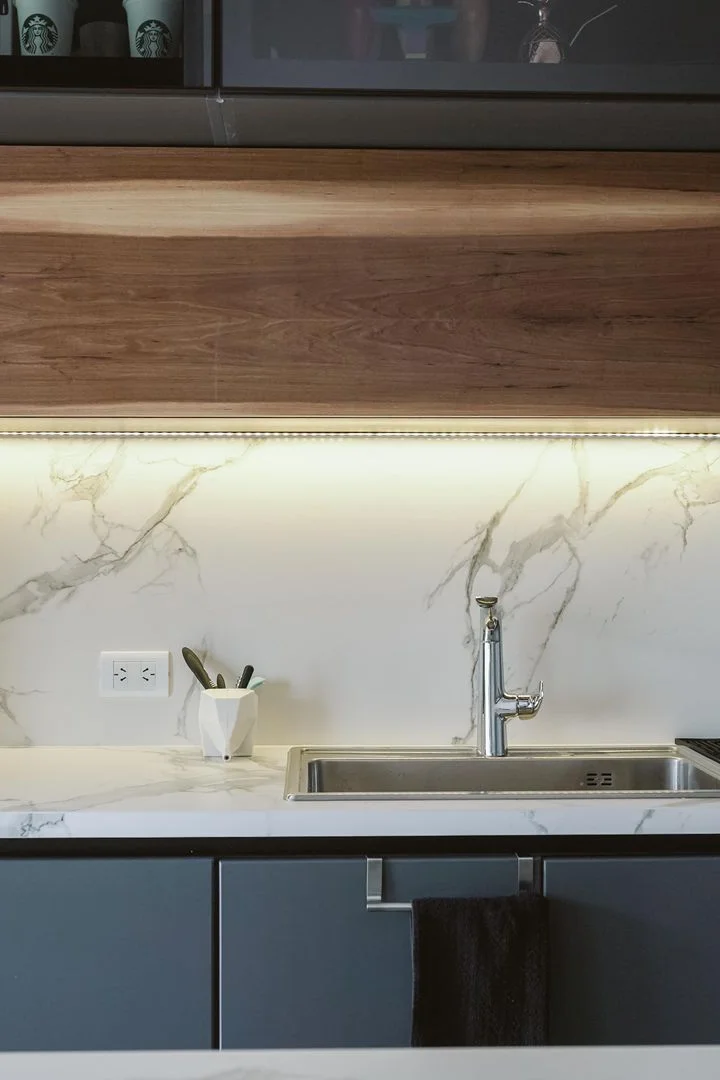
Marble Slab Drama
Credit: Anabella Castro
Quick Tip: Book match the veining at the seam so the two slabs mirror each other and the wall reads like one wide piece of stone.
A full marble slab removes grout lines completely, which means fewer joints to scrub and a calmer backdrop for open shelving or a bold range. The cost runs higher than tile, yet one slab covers the whole cooking wall in a single sheet. In my experience, lighter veining hides daily splashes better than dark dramatic veins, and a honed finish forgives fingerprints more than a polished shine. Pair the slab with simple hardware so the stone stays the clear focal point.
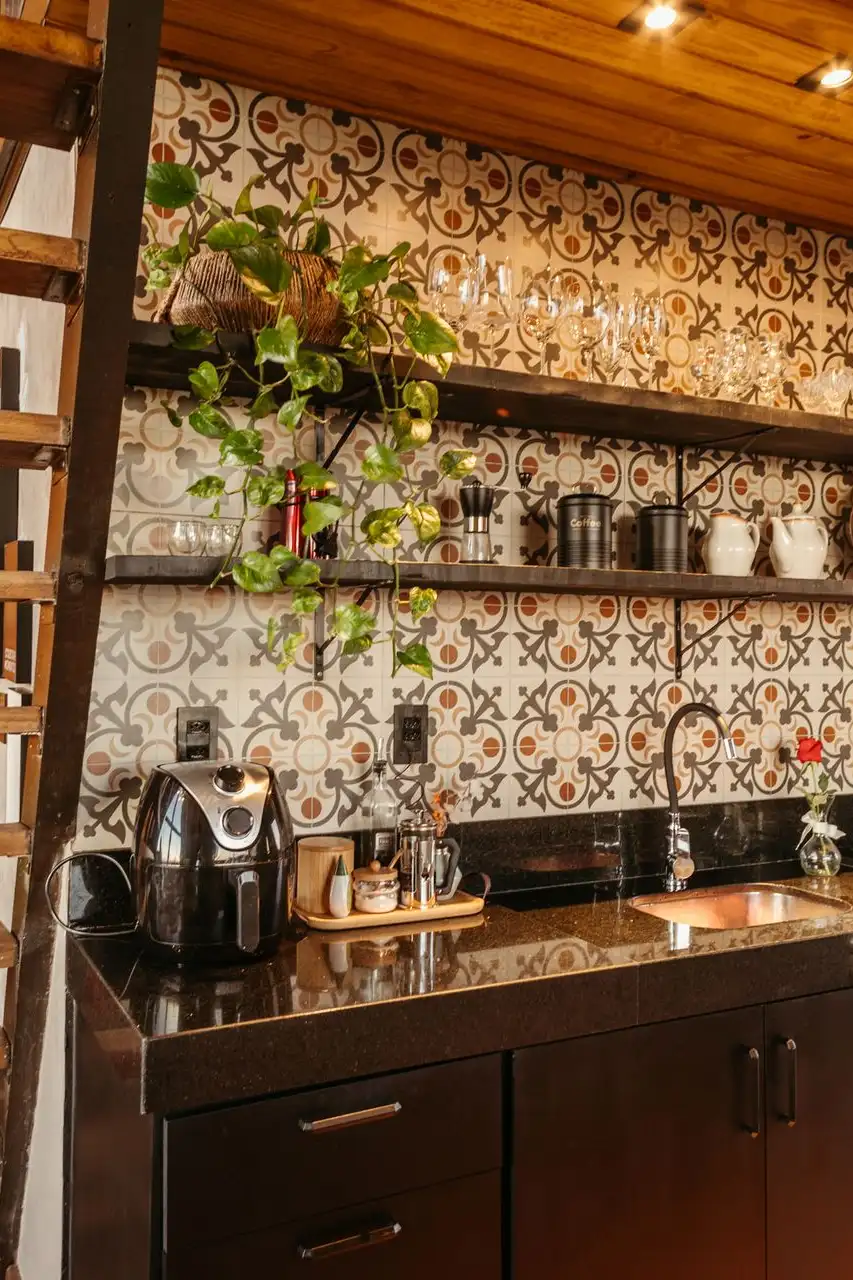
Plain Wall To Pattern
Credit: Jonathan Borba
BEFORE: Bare painted drywall behind the stove collected grease marks, and every wipe left a faint shine that never quite matched the rest of the wall.
AFTER: A patterned cement tile wall now handles splashes with one quick wipe, and the soft blue motif gives the plain white kitchen a reason to pause.
Pattern works best when the rest of the room stays quiet, so keep counters clear and cabinet fronts plain. Pick one repeat size that suits the wall height, then let the tile carry the whole decorative load. A small test patch taped to the wall for a week shows whether the motif tires you.
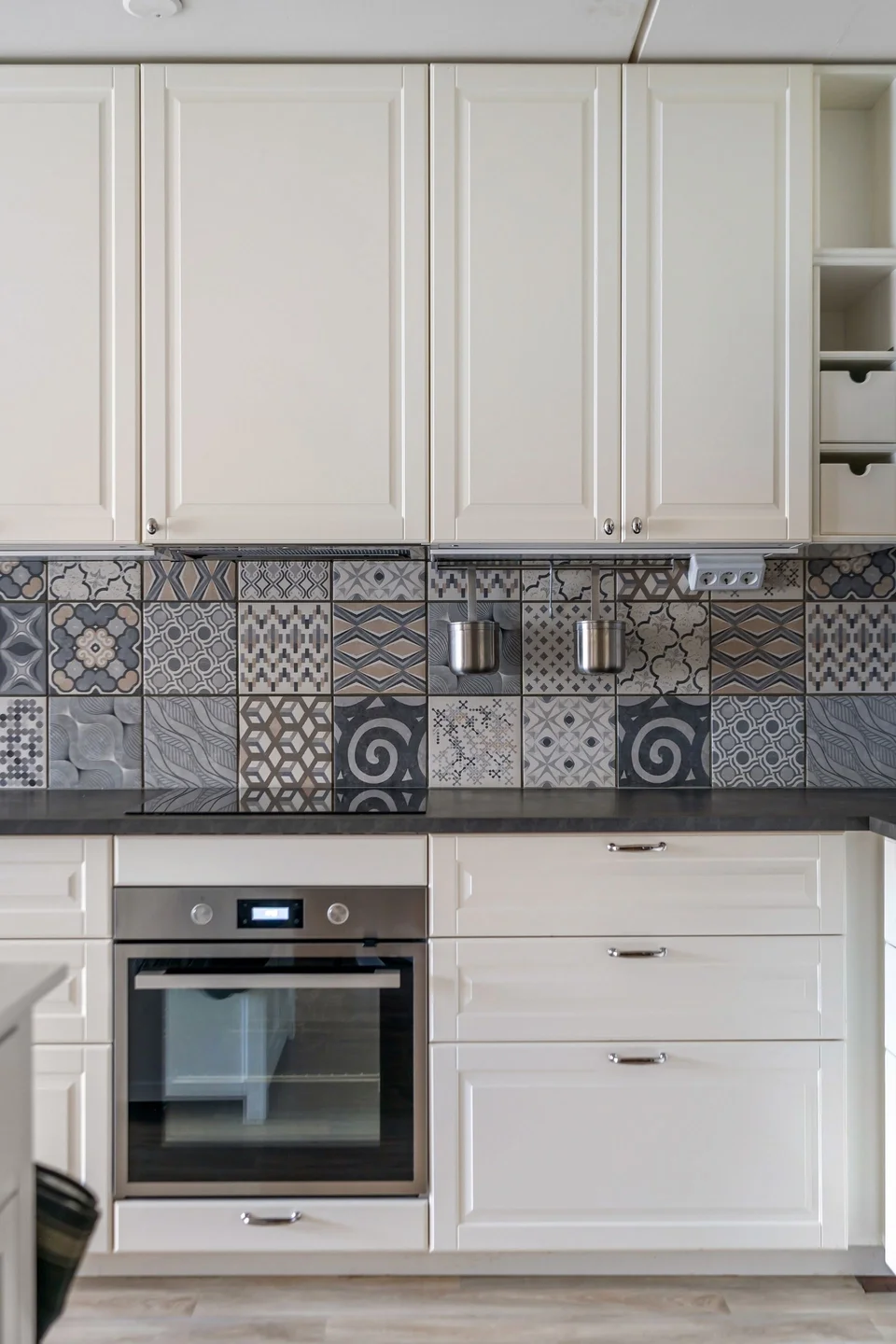
Mosaic Tile Steps
Credit: Alex Tyson
- Measure the wall and mark the center line so the pattern stays balanced.
- Dry lay one row on the counter to check color flow before mixing adhesive.
- Set mesh sheets from the center outward, pressing each sheet level.
- Grout in small sections and wipe haze before it dries hard.
Mosaic sheets speed up a fussy layout, yet the small tiles still demand patience at corners and outlets. Cut sheets with a sharp utility knife and save leftover pieces for repairs, since dye lots shift between batches. A narrow grout line keeps the pattern crisp and the wall easy to clean.
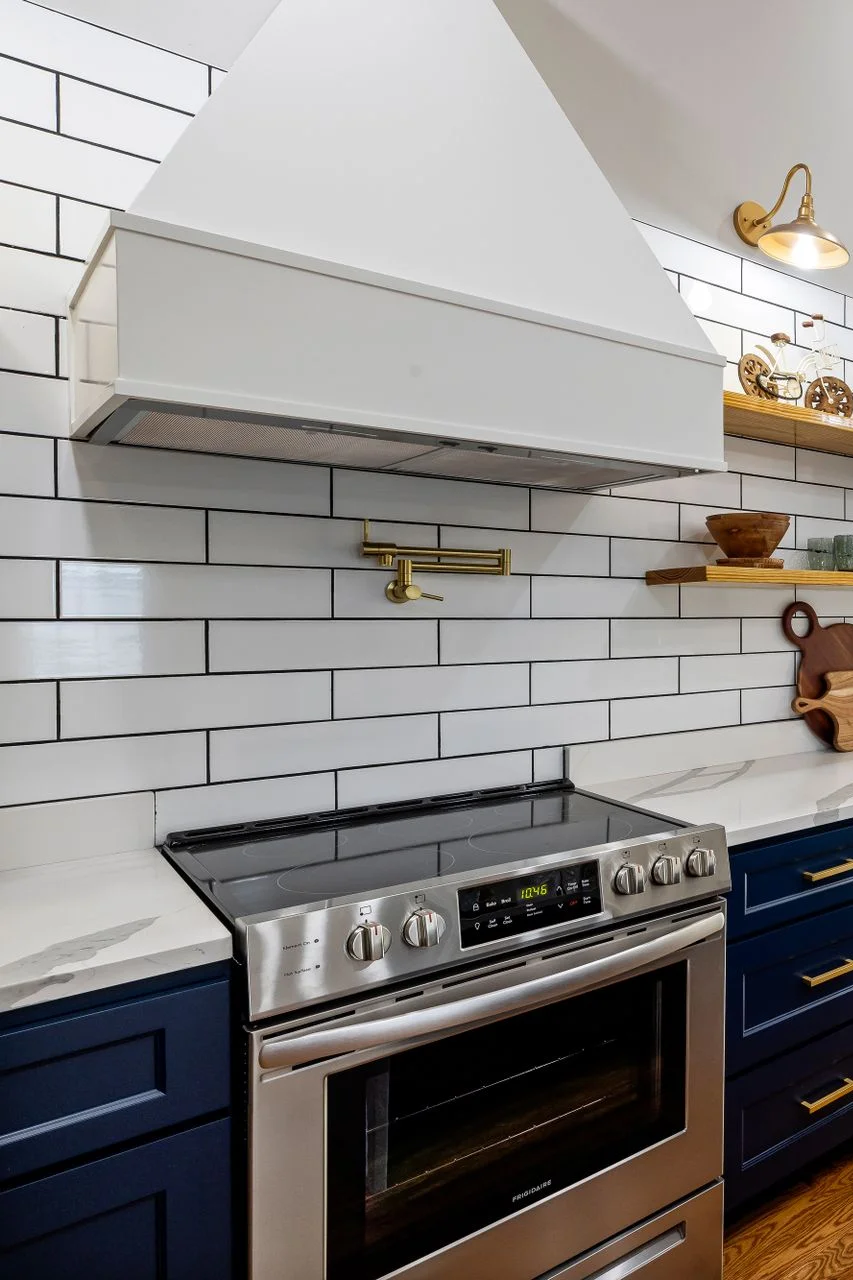
Subway Versus Zellige
Credit: Curtis Adams
| Tile Choice | Wall Feel | Weekly Care |
|---|---|---|
| Classic Subway | Clean, even rows with a calm rhythm | Quick wipe with soapy water |
| Handmade Zellige | Varied glaze tones with soft depth | Seal grout once a year |
| Budget Note | Subway costs less per square foot | Zellige needs extra boxes for cuts |
| Best Match | Subway suits crisp modern kitchens | Zellige suits warm relaxed rooms |
Neither tile wins on its own, since the room decides which texture belongs there. Subway keeps a tight budget and a tidy look, while zellige adds warmth that flat tile cannot fake. Check samples at home under evening light before ordering full boxes for the whole wall.
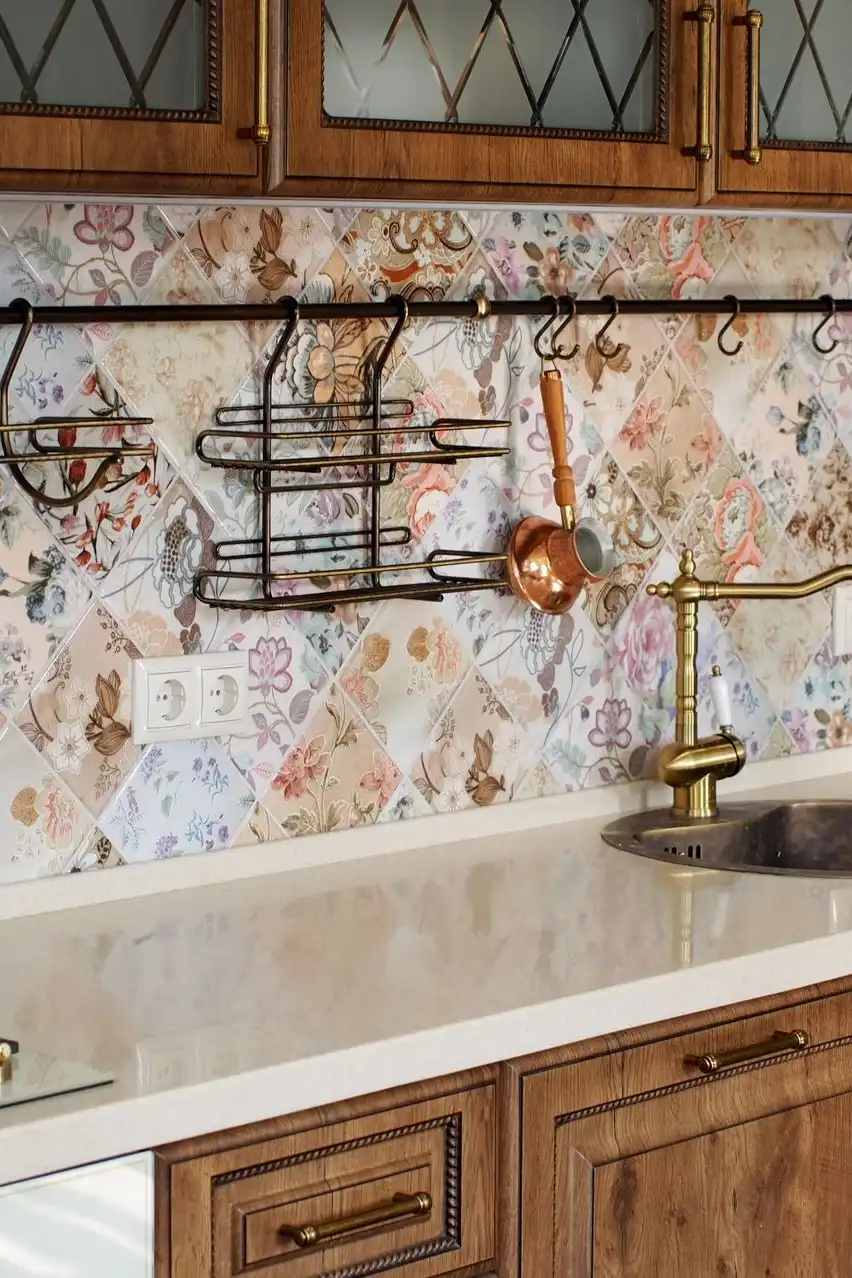
Pattern Mixing Rules
Credit: Natalia Goryaeva
Do:
- Do pair one bold tile with plain counters and quiet cabinet fronts.
- Do repeat the accent color in towels or a small vase.
- Do test large samples on the wall for a full week.
Don’t:
- Don’t mix two loud patterns on the same wall.
- Don’t choose grout darker than the tile without a sample.
- Don’t forget outlet covers when planning the layout.
Restraint keeps a mixed wall feeling styled rather than crowded, and one strong choice always reads clearer than three competing ones. When doubt creeps in, remove one element and live with the simpler version for a few days. The wall will tell you quickly whether it needs more or less.
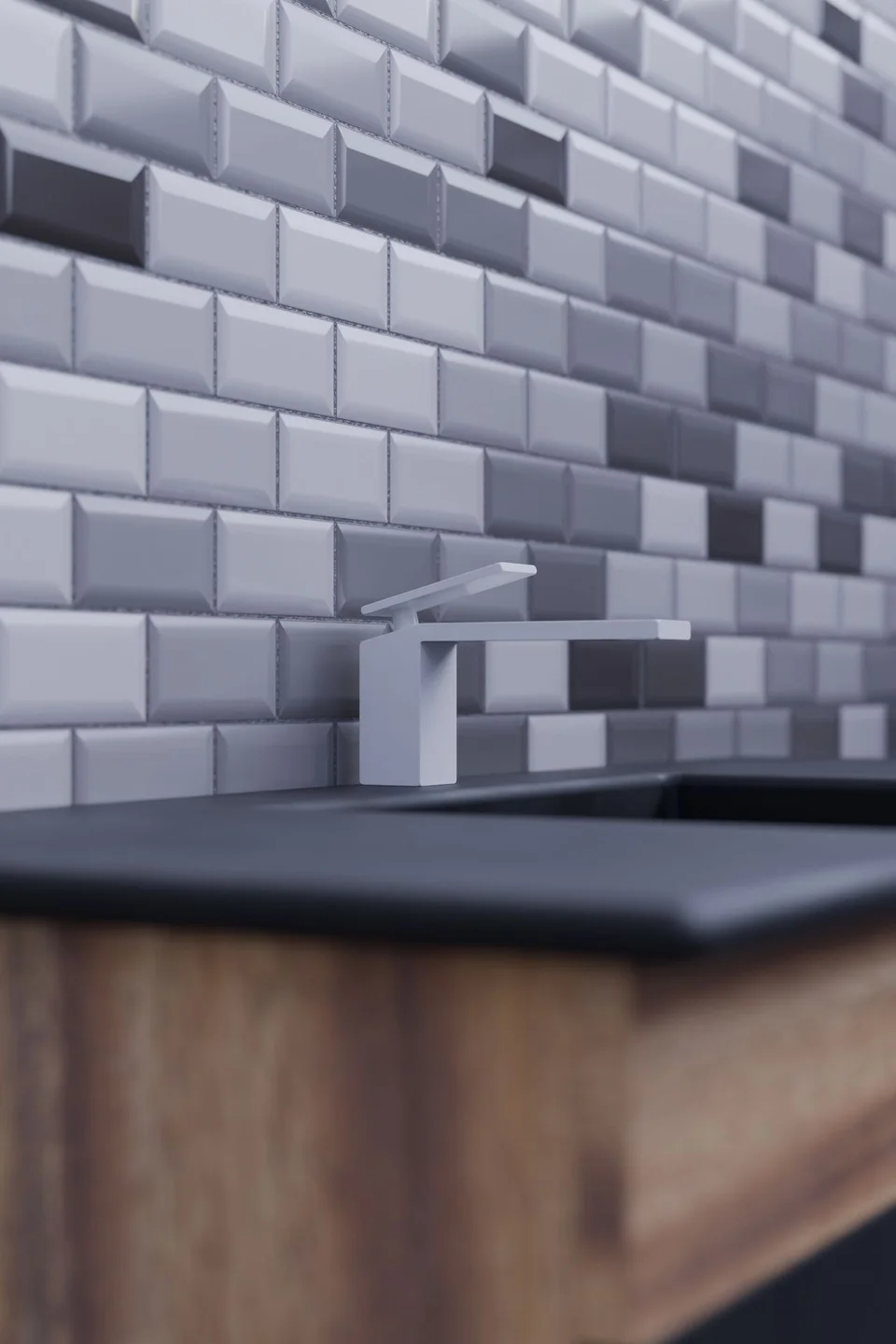
Backsplash Quick Facts
Credit: Pușcaș Adryan
Cost: Subway tile starts low, while handmade zellige and stone slabs run higher.
Time: Most straight walls take one weekend from prep to grout.
Skill Level: Simple layouts suit beginners, but stone slabs need a pro.
Best For: Cooks who want splash protection with a finished look.
Numbers vary by region and tile choice, yet the planning steps stay the same for every single wall. Measure twice, order ten percent extra for cuts, and keep the adhesive suited to the tile weight before any grouting begins. A calm pace beats a rushed weekend, and the wall shows every shortcut taken.
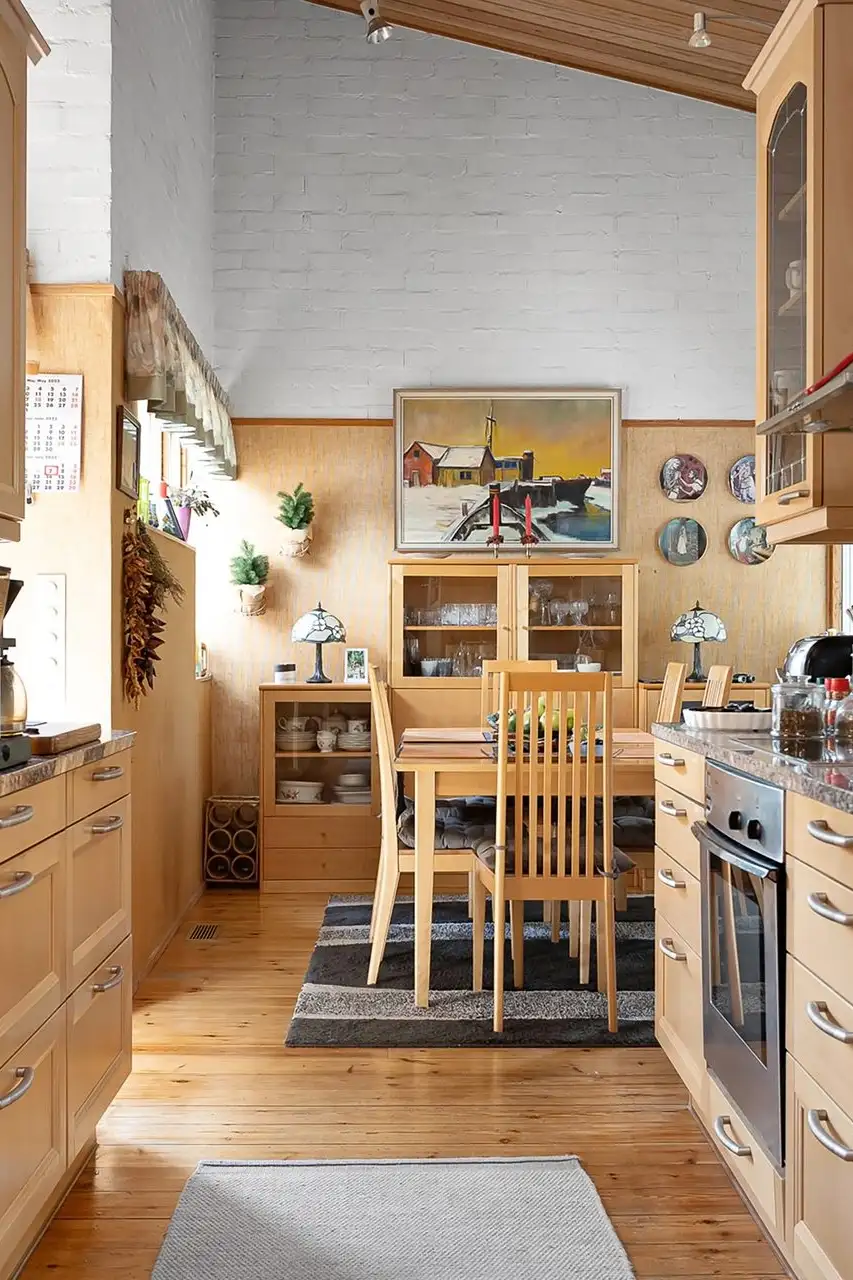
Wood Panel Warmth
Credit: Alex Tyson
Wood paneling warms a white kitchen faster than any paint color can, and the vertical boards add a quiet rhythm behind open shelves. Pale oak keeps the room bright, while walnut boards suit kitchens with darker counters and brass details.
Seal the boards well near the stove, since steam and grease find every open grain. A matte seal keeps the wood looking natural, and a quick wipe after cooking stops buildup before it dulls the finish. In my experience, a light oil coat once a year keeps the boards rich without a plastic shine. Pale boards suit white kitchens best, while darker stains ground rooms with heavy counters.
Bold Color Pop
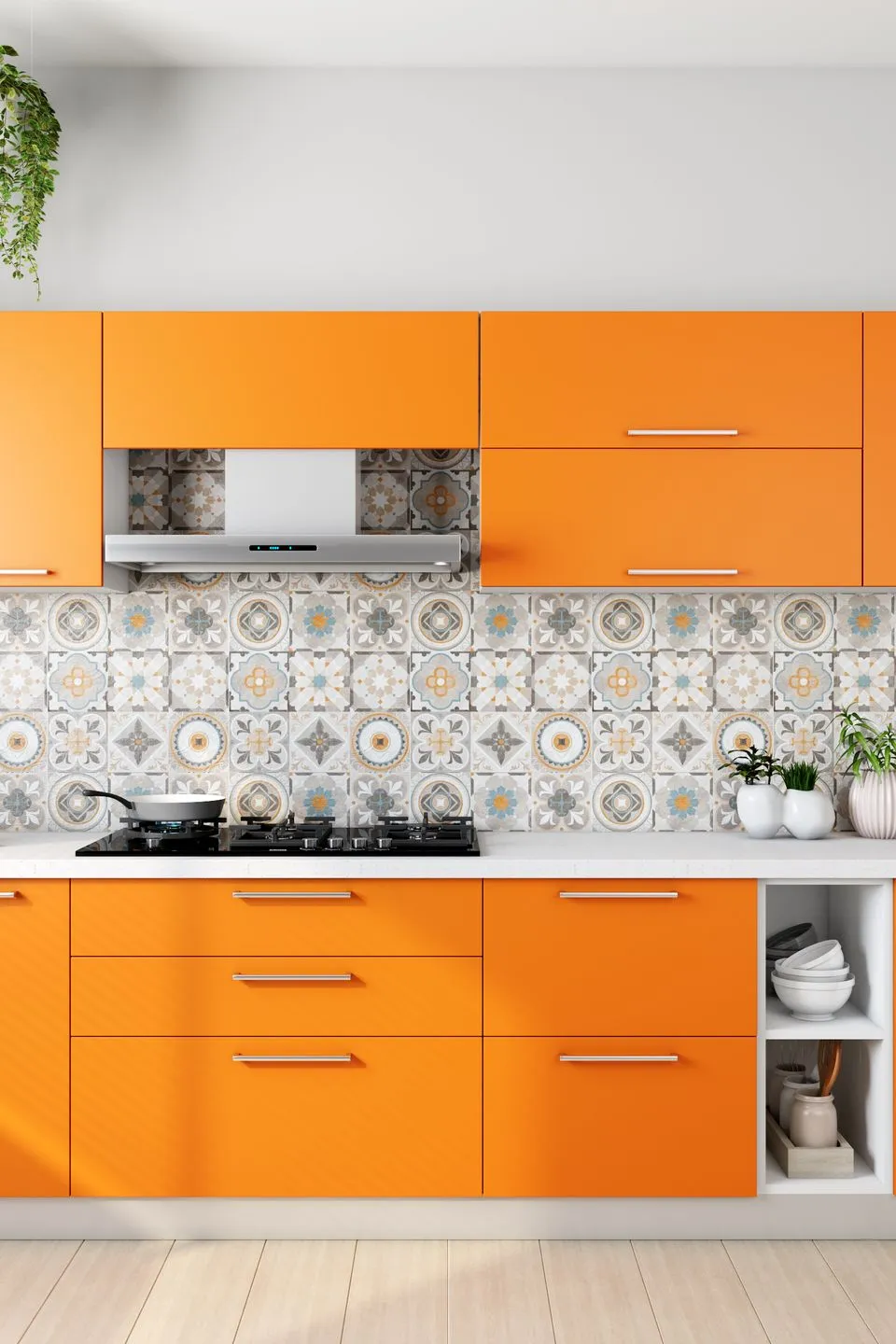
Credit: Houzlook .com
- Deep green tile pairs with cream cabinets and wood counters.
- Navy gloss tile reflects light and suits white stone counters.
- Terracotta tones warm pale rooms without shouting for attention.
- One bold wall beats small color accents scattered everywhere.
Color feels risky on a wall, yet a backsplash is the safest place to try it, since tile covers a small area and swaps out more easily than cabinets. Keep the rest of the palette calm so the bold choice reads as intent rather than accident. A single painted shelf or matching kettle ties the color together. A matching tea towel or fruit bowl echoes the tile without adding another color.
Grout Color Magic
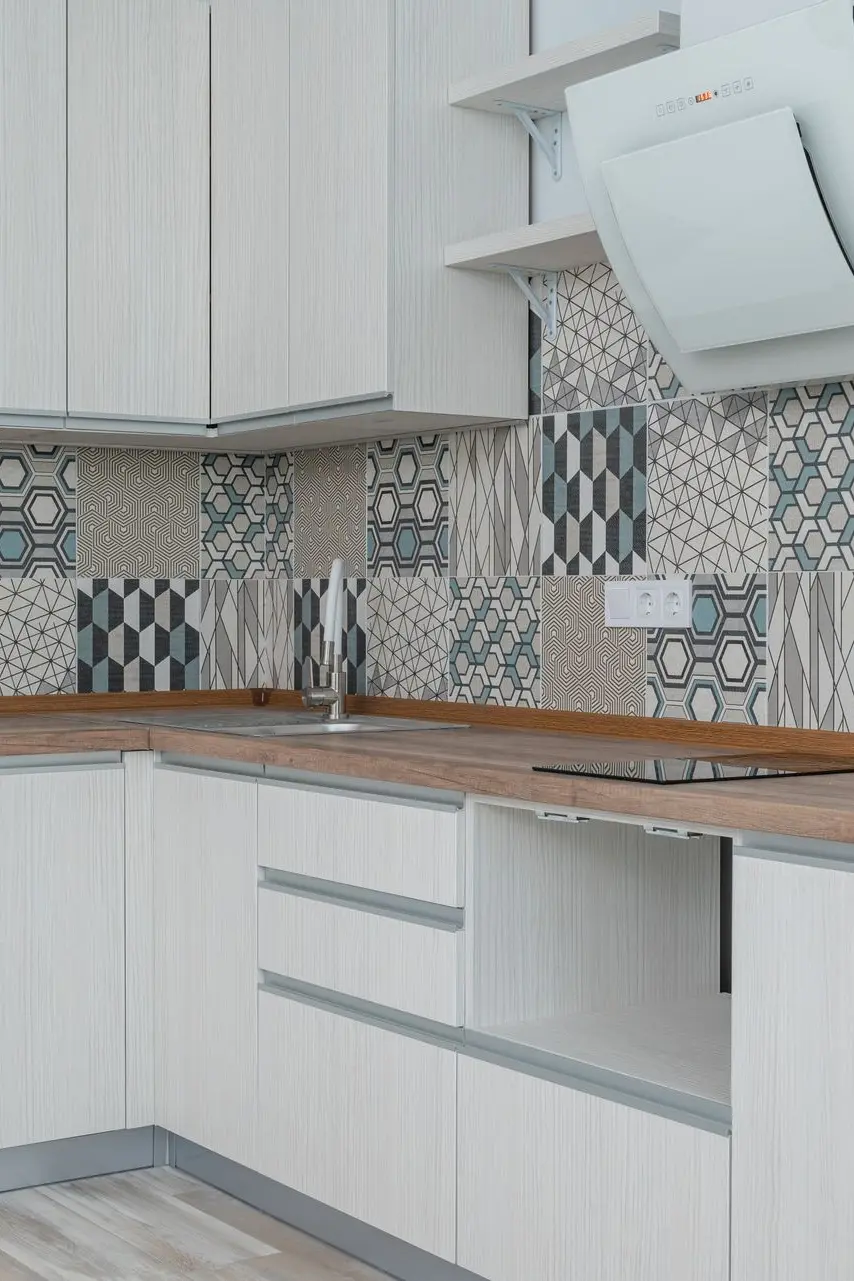
Credit: Max Vakhtbovych
Quick Tip: Match grout to the tile for a calm wall, or pick a contrasting grout when the tile shape should stand out clearly.
Grout color changes the whole wall more than most shoppers expect, and the choice deserves a sample board before the full order. Light grout keeps small rooms bright but shows stains sooner, while mid tone gray hides daily marks with little upkeep. Seal the lines after curing for an easier wipe down every week. Test grout on a spare tile first, since wet grout dries lighter than the sample stick suggests. Dark grout hides stains well but can overpower pale tile patterns.
Dated Tile Refresh
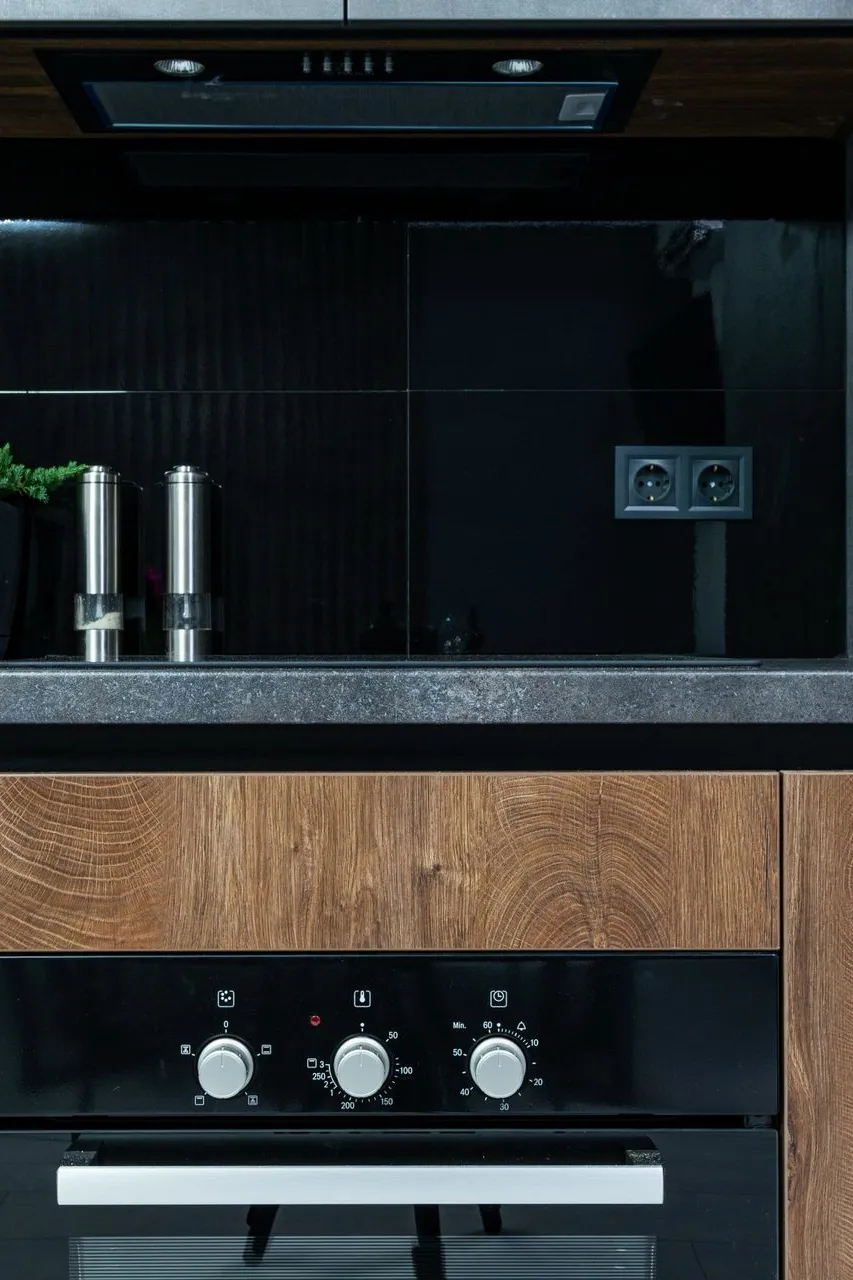
Credit: Max Vakhtbovych
BEFORE: Small brown tiles from another decade darkened the cooking wall, and cracked grout lines trapped grease no scrub could reach.
AFTER: Fresh white subway tile with soft gray grout now brightens the whole corner, and the stove area finally looks cared for rather than tired.
A refresh rarely needs new cabinets, since the backsplash alone shifts the room’s mood. Remove old tile carefully to protect the drywall, then patch, prime, and set the new layout from the center outward. Keep one old tile as a reminder of the change, and photograph the wall before demolition for a satisfying before and after comparison.
Open Shelf Pairing
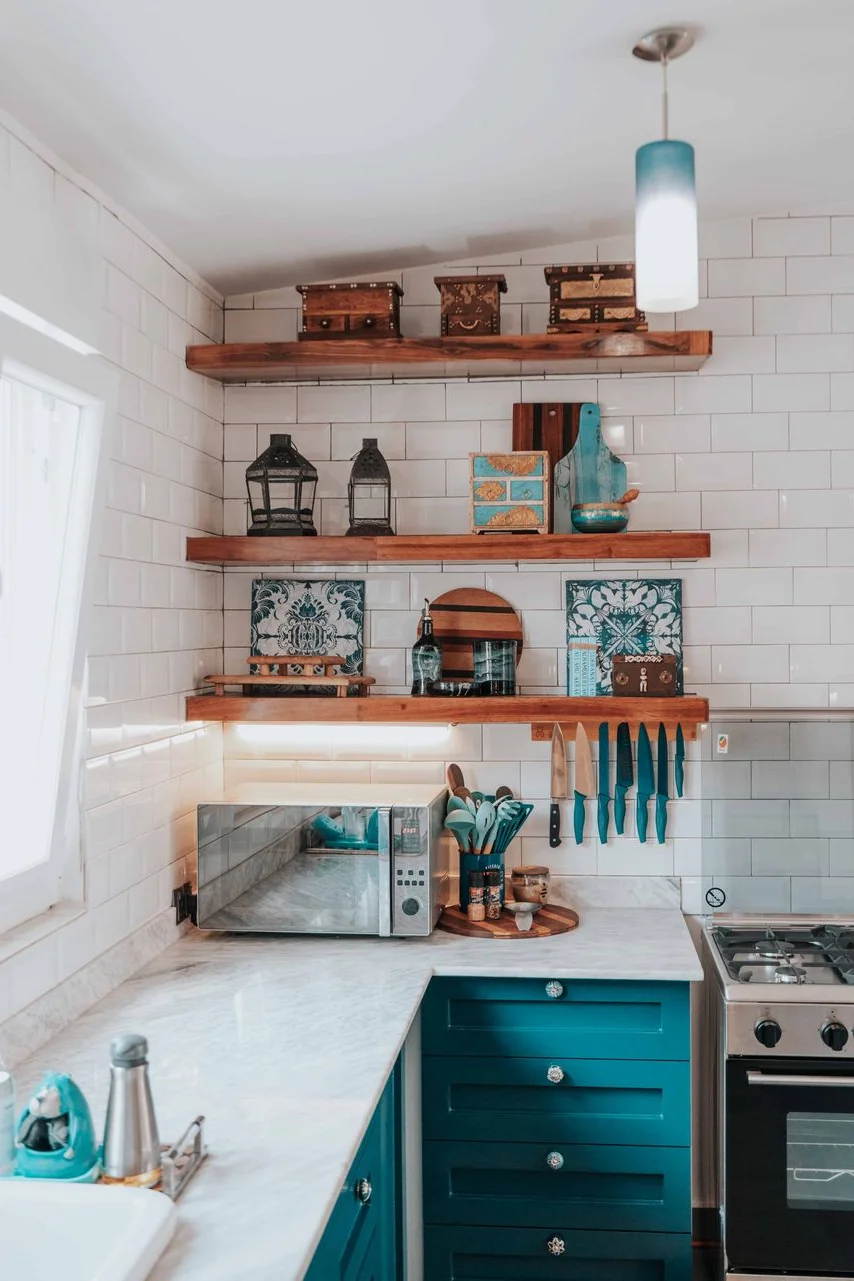
Credit: Keegan Checks
- Hang shelves after tiling so brackets sit on finished tile, not raw wall.
- Leave eighteen inches between counter and shelf for daily headroom.
- Style shelves with plain dishes and one plant for breathing room.
- Keep heavy stacks near studs so brackets hold their load safely.
Open shelves and backsplashes share one wall, so the two must agree on tone and texture. Plain tile lets styled shelves shine, while patterned tile calls for nearly empty boards. Leave one shelf mostly bare so the wall keeps a calm rhythm. Measure bracket spacing twice, since tile hides studs and anchors need solid backing. A level check after each bracket keeps shelves from drifting.
Stone Versus Tile
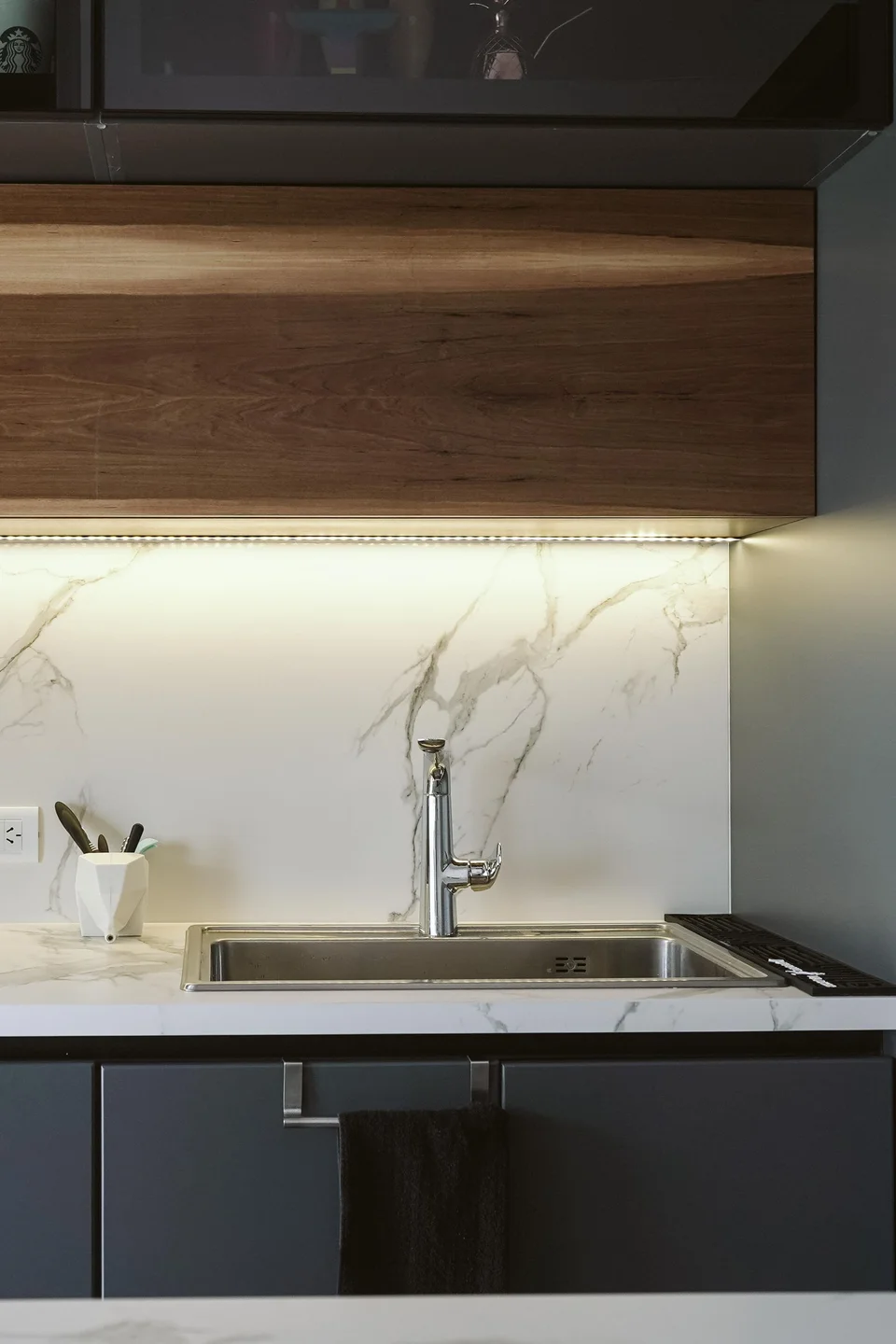
Credit: Anabella Castro
| Surface Choice | Wall Feel | Weekly Care |
|---|---|---|
| Marble Slab | Smooth, seamless stone with bold veins | Wipe and seal yearly |
| Ceramic Tile | Neat grout lines with endless colors | Scrub grout lines monthly |
| Quartz Slab | Even pattern with no sealing needed | Simple wipe after cooking |
| Budget Pick | Tile costs less and swaps easily | Replace single cracked tiles |
| Style Note | Slabs suit calm modern rooms | Tile suits layered classic kitchens |
For cooks weighing the choice, kitchen backsplash design ideas often come down to grout lines versus cost, since slabs erase joints while tile keeps budgets friendly. Match the surface to cooking habits first, then to color, since a beautiful wall still needs daily cleaning without fuss.
Small Kitchen Tricks
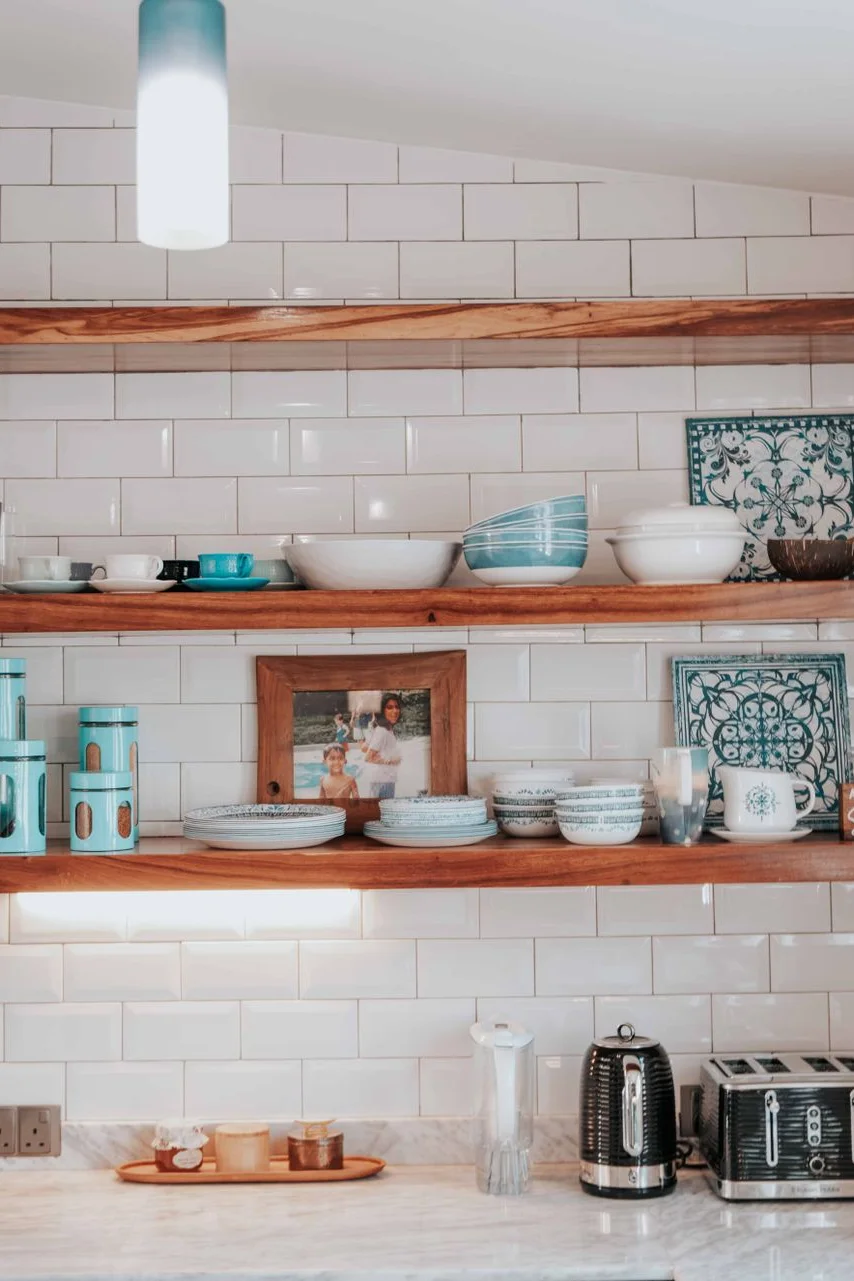
Credit: Keegan Checks
Do:
- Do run tile to the ceiling to stretch a small wall upward.
- Do pick glossy finishes that bounce light around the room.
- Do keep one continuous color from counter to upper cabinets.
Don’t:
- Don’t chop the wall with a short tile strip above the counter.
- Don’t mix busy patterns in a tight cooking corner.
- Don’t crowd the wall with rails, hooks, and magnets.
Small kitchens reward every inch of visual calm, and a tall, quiet backsplash gives the eye room to rest. Borrow the same calm from a recent living room fireplace decor ideas project, where one strong focal wall carries the whole room without clutter.
Cleaning And Care Facts
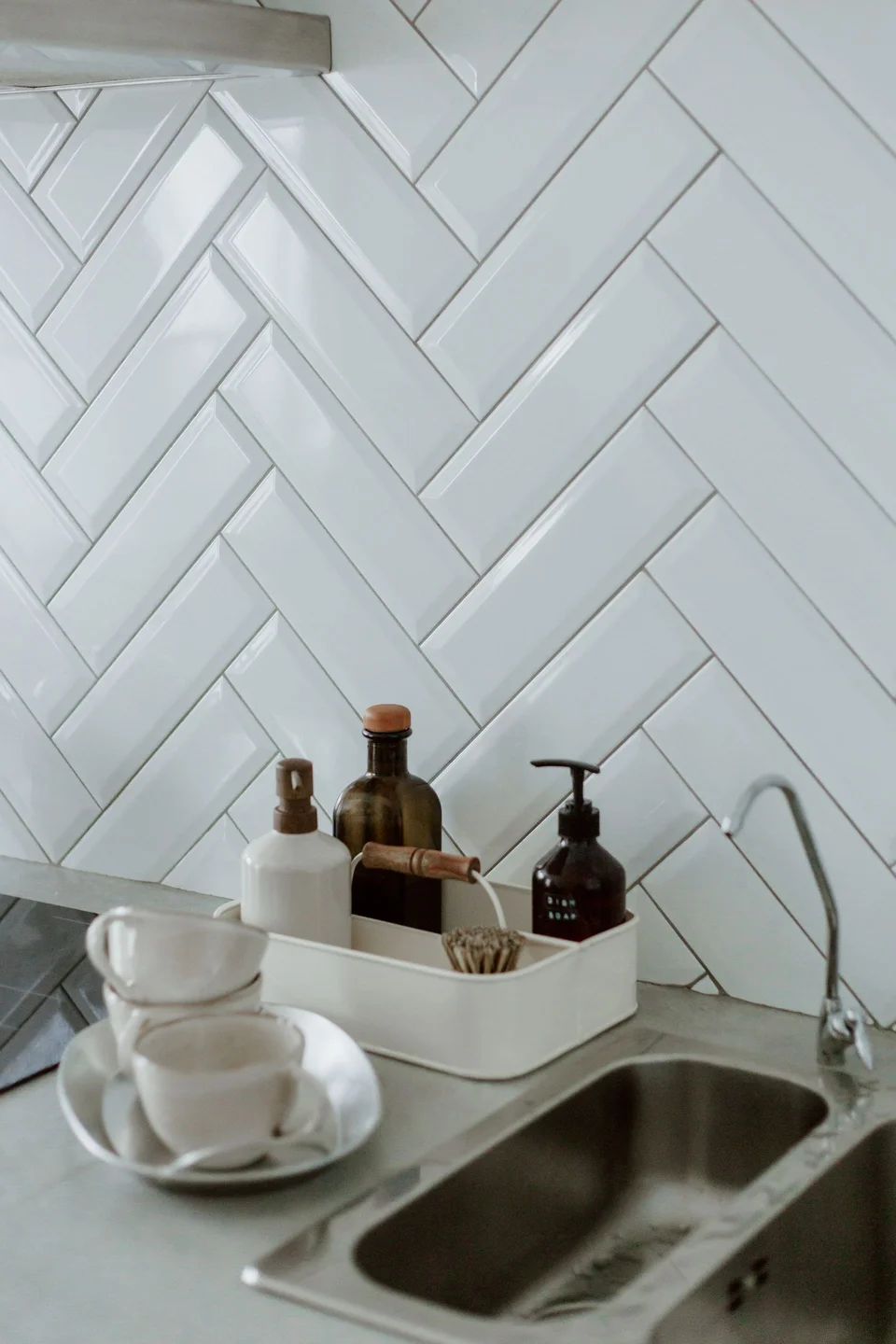
Credit: Ron Lach
Cost: Basic subway tile stays budget friendly, while stone slabs cost more.
Time: A small wall takes a weekend, while full height slabs need a pro day.
Skill Level: Straight tile suits beginners, but slabs need expert handling.
Best For: Busy cooks who wipe the wall after every meal.
Care starts with sealing grout lines once they cure, then wiping splashes before they set. Avoid harsh acids on stone, use soft cloths on gloss glaze, and keep a spare box of tile for future chips. A weekly wipe keeps the wall fresh with little effort. Vinegar suits ceramic tile but harms stone, so match the cleaner to the surface.
Metallic Tile Shine
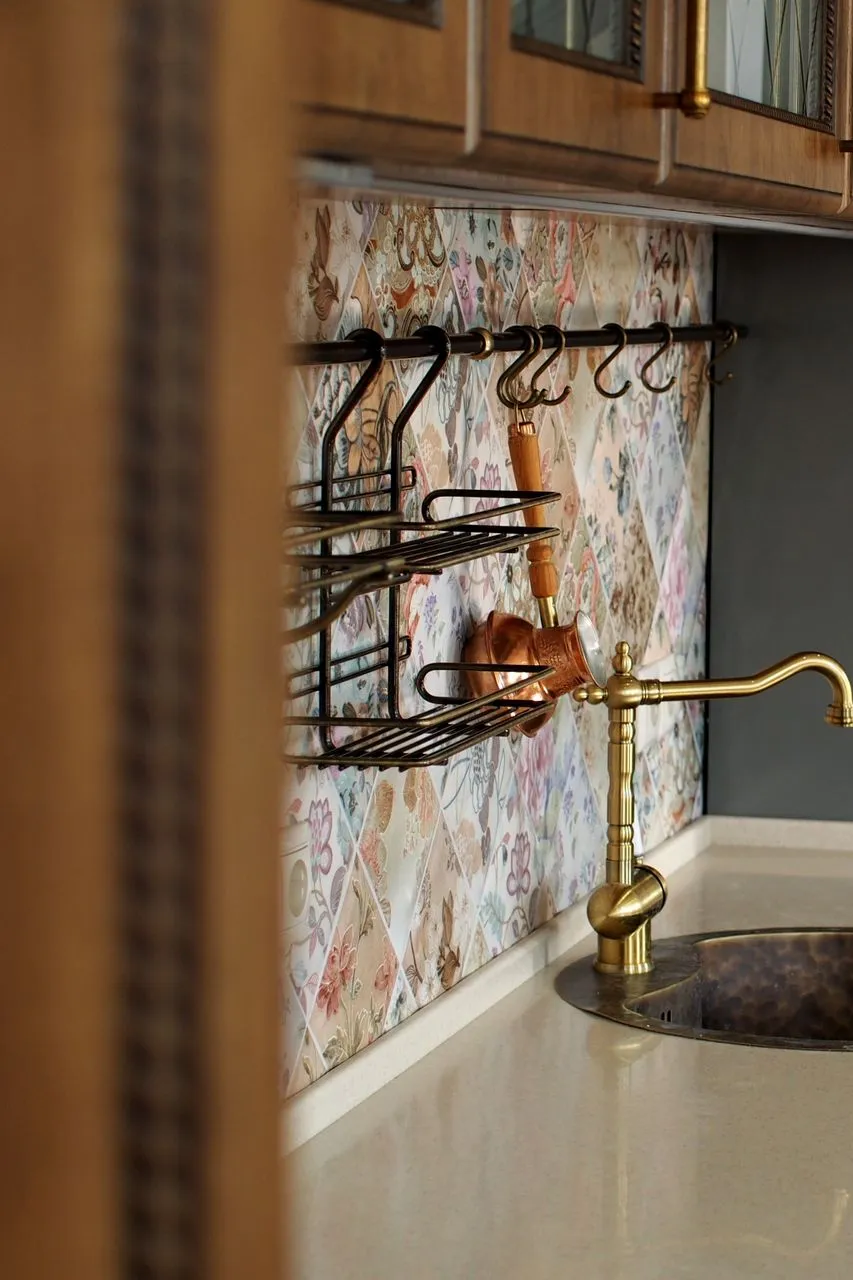
Credit: Natalia Goryaeva
Metallic tile catches light like jewelry on the wall, and a soft brass or copper tone warms kitchens that feel too cool. The shine works best in small doses, such as one strip behind the range or a narrow band above the counter.
Keep nearby metals in the same family so taps, handles, and tile read as one choice. A brushed finish hides water spots better than a mirror shine, which matters beside a busy sink. Pair the metal with plain counters so the glow stays elegant rather than loud. A small metallic band costs little yet lifts the whole cooking wall. Wipe the band after frying to stop grease dulling the shine.
Full Height Statement
Credit: Derwin Edwards
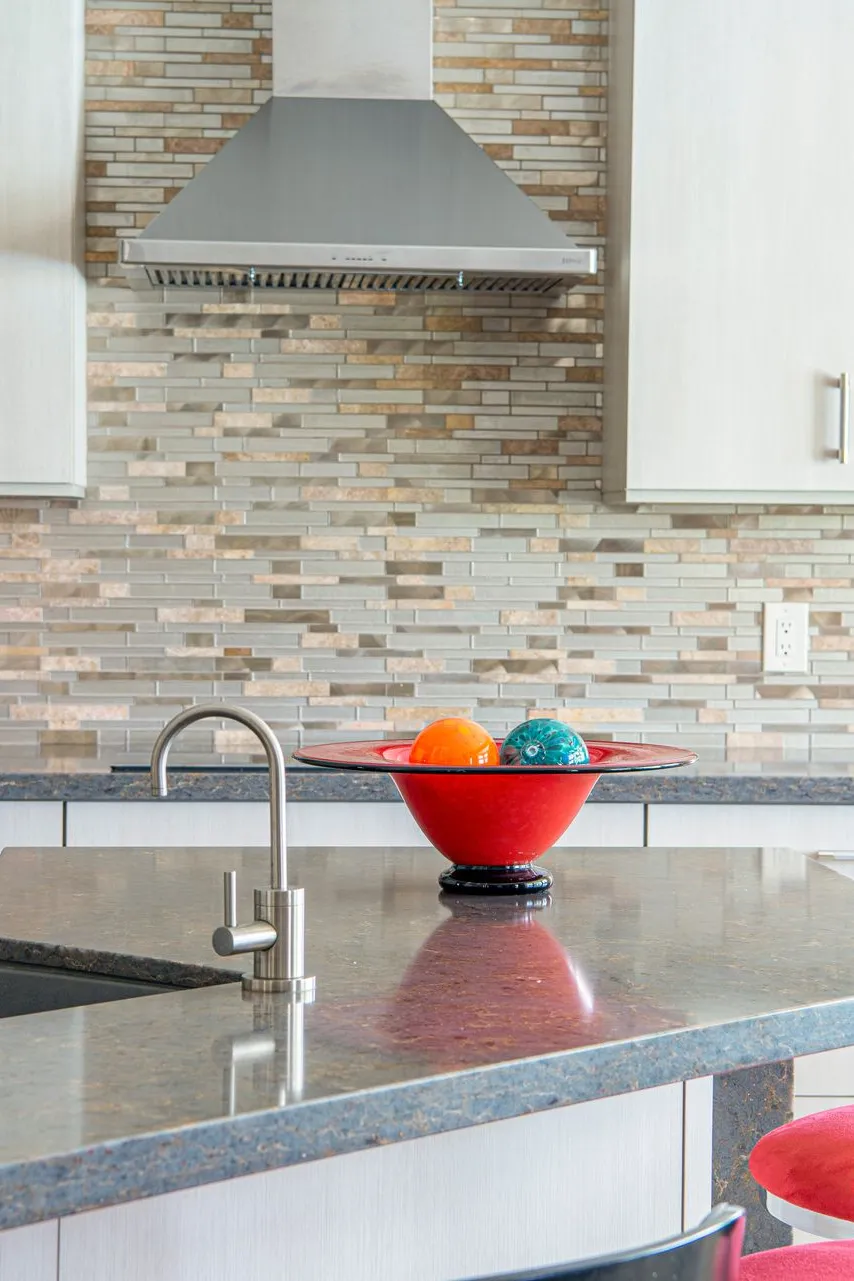
- Full height tile removes the awkward painted gap above short backsplashes.
- One material from counter to ceiling makes small kitchens feel taller.
- Slab or large format tile keeps grout lines rare on tall walls.
- Open shelving still works, since brackets mount through tile with care.
A full height wall makes a strong claim, yet the payoff shows every morning when light runs down one unbroken surface. Keep the material calm if the kitchen already holds bold cabinets or busy floors. One quiet material lets the tall wall feel grand rather than heavy. Large tiles cut grout work on tall walls, and a single slab removes joints entirely.
Budget Tile Tips
Credit: Clay Elliot
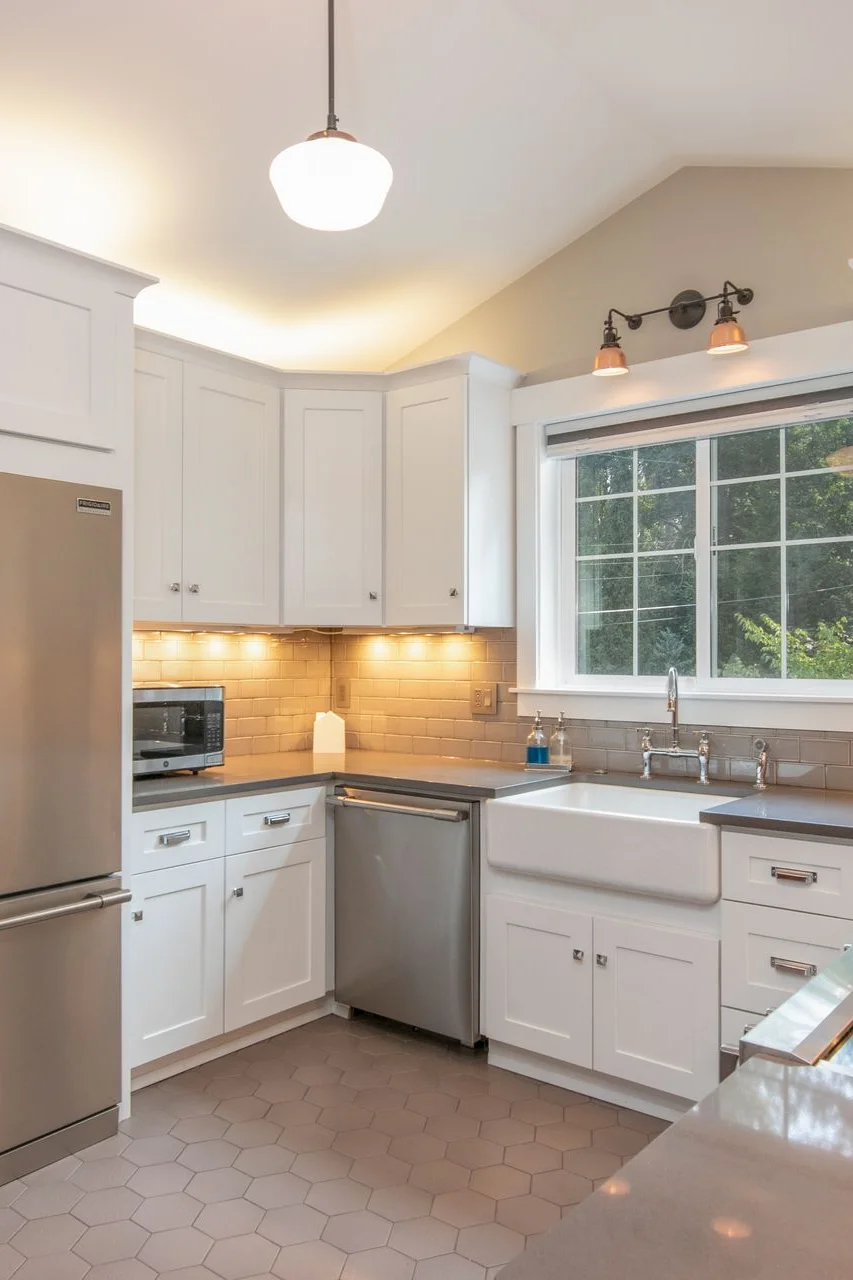
Quick Tip: Shop clearance lots and overstock boxes first, since one wall needs few tiles and dye lots matter less on a small surface.
A tight budget still buys a beautiful wall when the layout stays simple and the tile size stays standard. Peel and stick tiles suit renters, while basic ceramic subway tile gives owners a lasting finish for little money. Spend savings on good grout and sealer instead. Check discount bins for single boxes left from larger jobs, since one wall rarely needs more. Borrow a wet saw for straight cuts instead of buying one for a weekend. Ask the store about returned boxes at a lower price.
Timeless Neutral Finish
Credit: Bilguun Gantumur
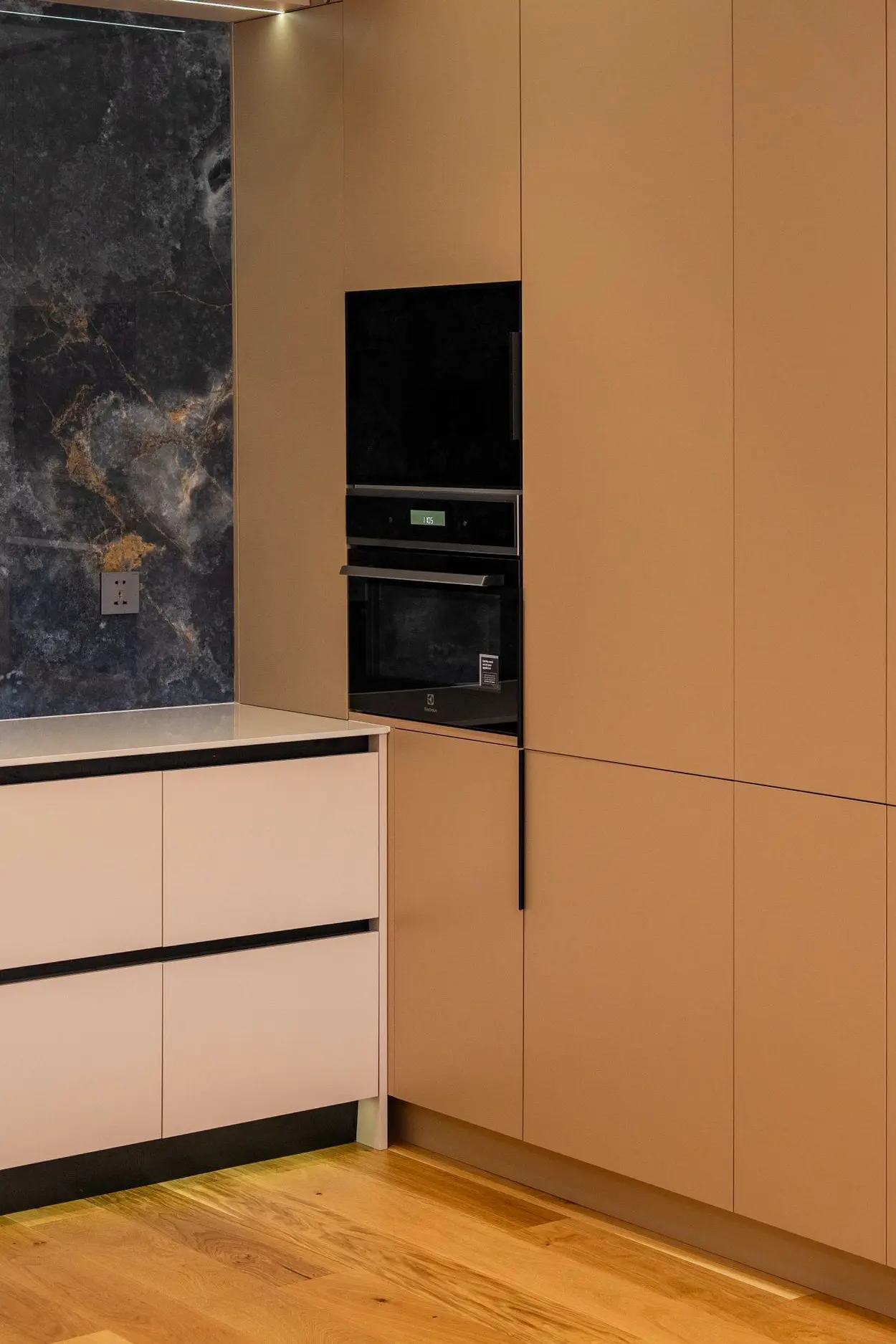
BEFORE: A loud patterned wall fought the wood cabinets and busy counters, and the kitchen felt smaller every time someone cooked.
AFTER: Warm white tile with soft beige grout now calms the whole room, and the wood tones finally read as warm rather than heavy.
Neutral walls age slowly, which matters in a room that costs so much to change. Pick warm whites over stark ones, let wood and brass add the color, and the kitchen will still feel current years from now. Warm grout softens the edges, and natural wood stools echo the calm palette. Avoid stark white grout, which can feel cold beside warm cabinets.
Conclusion
Your kitchen wall is ready for its close up, and kitchen backsplash design ideas give you plenty of ways to start small and still see a big change. Pick one tile you love, test it under your own lights, and save this guide to Pinterest so the plan stays handy when shopping day arrives. A calm, well tiled wall rewards every meal cooked beside it. Share the finished wall with friends who cook, and keep the leftover tiles boxed for quick repairs down the road. Small choices made with care tend to outlast big trends, and this wall proves it.