21 Rounded Kitchen Island Design Ideas for a Softer, Modern Look
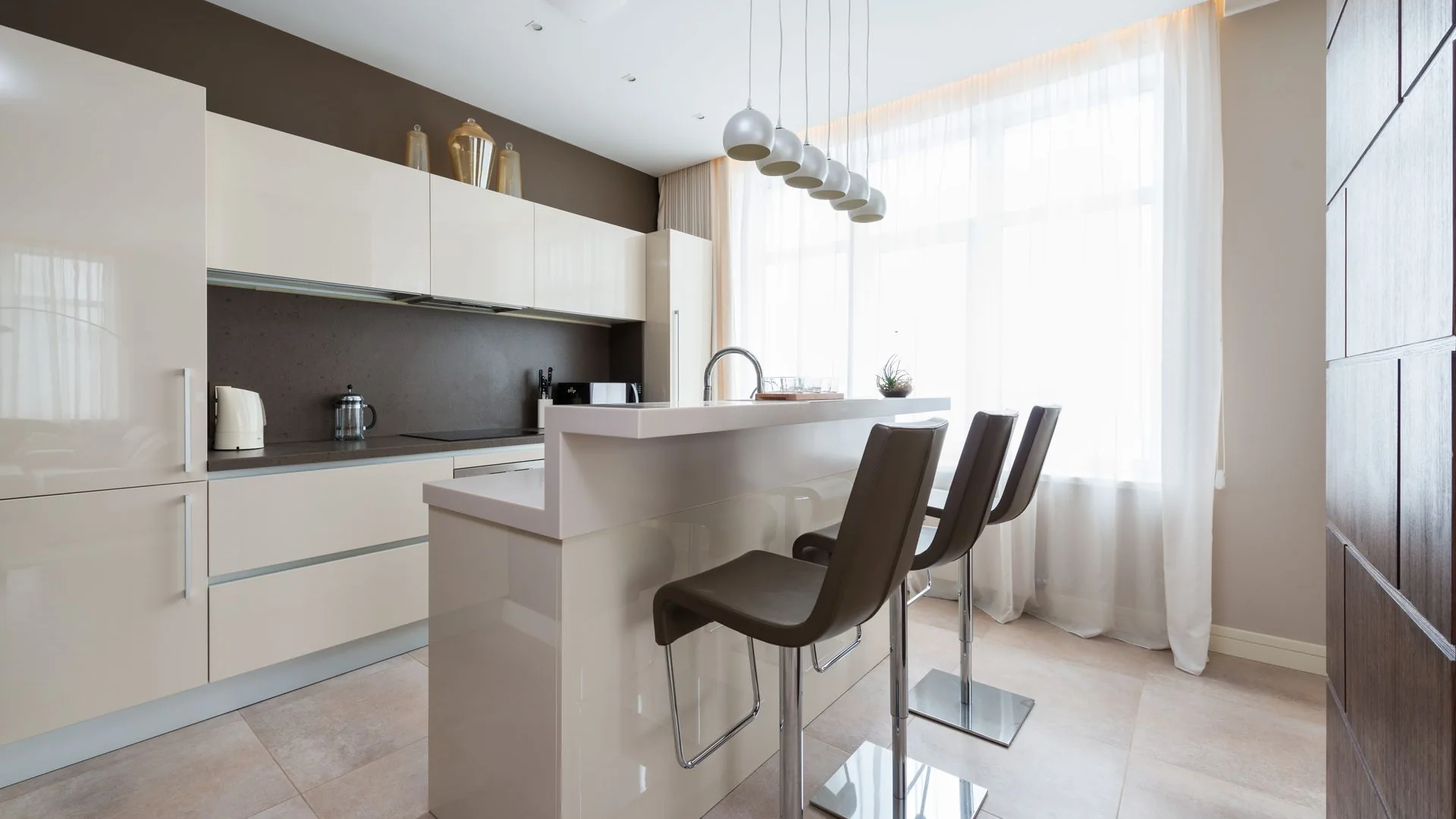
Sharp corners had their decade. Kitchens now lean toward softer lines, and the island leads the change: rounded kitchen island design ideas swap hard angles for curves that guide movement, calm the geometry of the room, and make busy cooking zones feel gentle. A curved island hides practical gifts too, from safer edges around small children to seating that wraps guests closer to the cook.
Start with the curve radius, then let materials, seating, and lighting follow its lead. Pair the soft silhouette with a statement door moment nearby, the way the arched kitchen pantry door ideas in the next room pull a whole scheme together. In my experience, one honest curve does more for the mood of a kitchen than a full cabinet refacing, and the twenty one ideas ahead prove it room by room.
Full Curve Statement Island
Credit : Curtis Adams
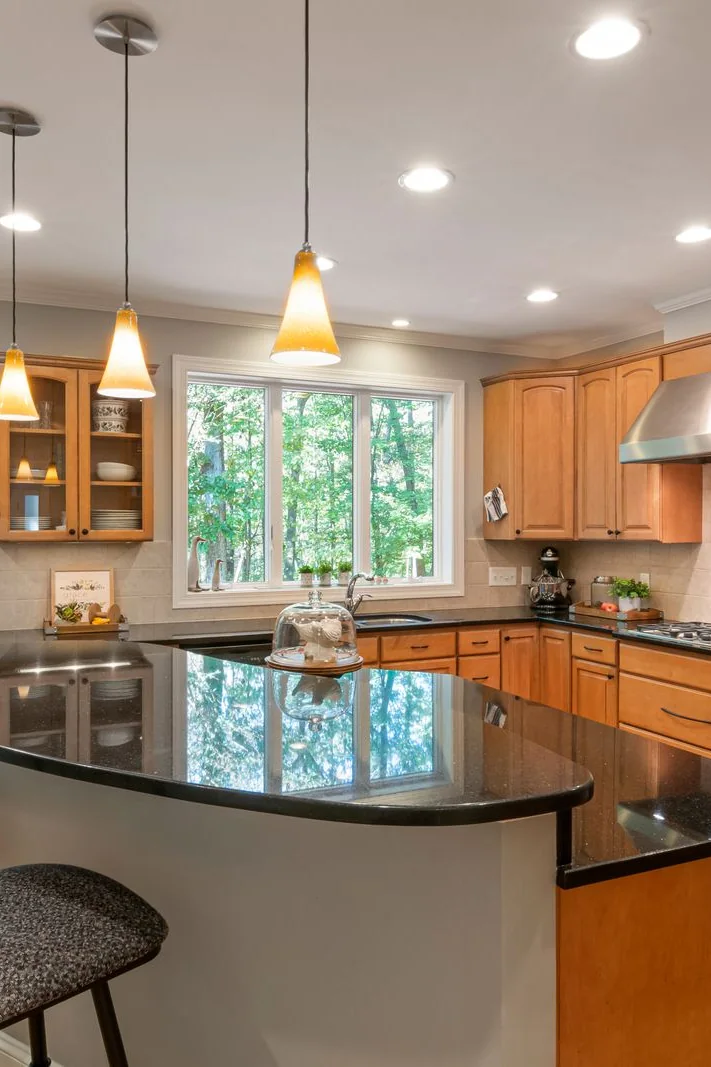
A full curve turns the island into the anchor of the room instead of a bulky obstacle. One continuous radius sweeps the seating side, pulls traffic into a gentle arc, and gives the cook a wide, forgiving worktop with no corner digging into a hip mid recipe. Stone or timber both hold the shape beautifully at this generous scale.
Scale carries the drama here, so keep the rest of the room quiet. Choose one curve, repeat it nowhere else, and let the cabinetry stay straight and simple beside it. Pendant lights should follow the arc or hang in one centered row, never zigzag across it. I have noticed guests drift toward the curve instinctively, drinks in hand, long before dinner is served.
Fluted Wood Curved Base
Credit : Max Vakhtbovych
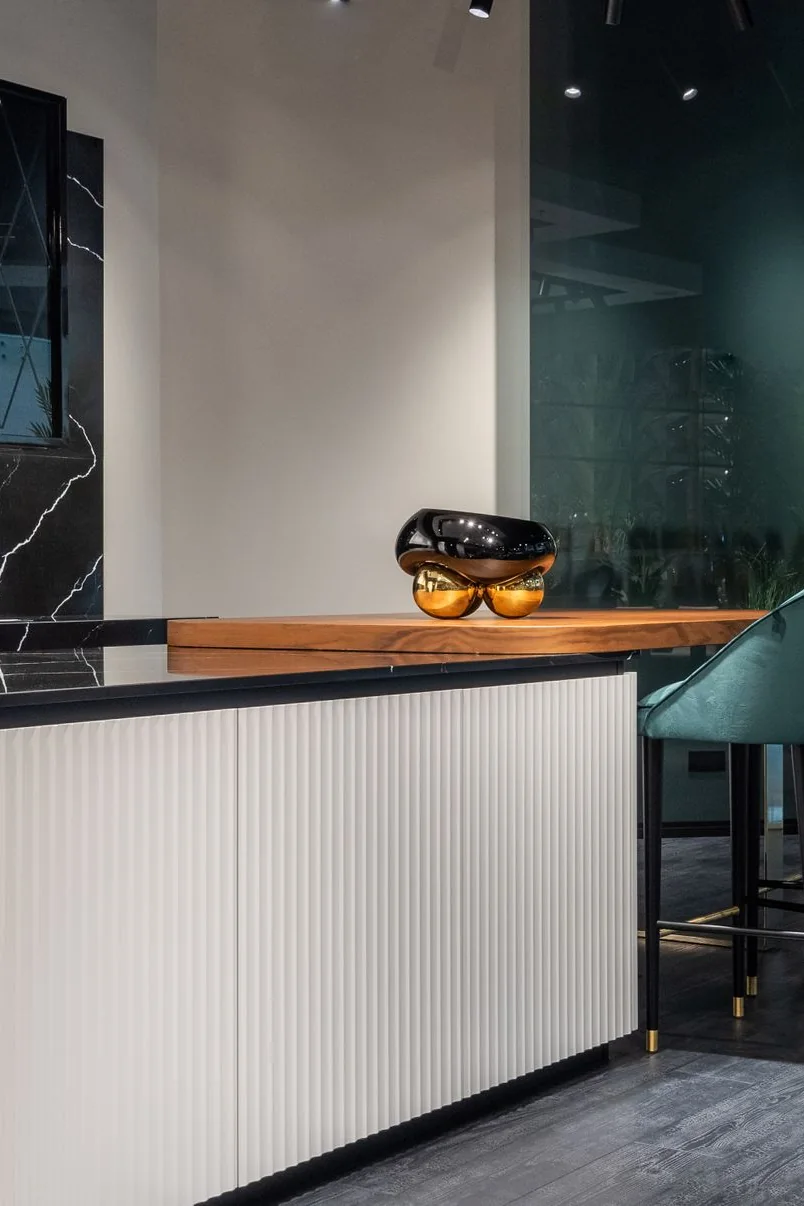
- Run fluting vertically so the reeds catch light and shadow along the bend.
- Match flute spacing to the cabinet door grooves for a built in rhythm.
- Seal end grain carefully; curved bases wick spills faster than flat panels do.
- Pair the texture with a plain stone top so the base keeps the spotlight.
- Book match veneer sheets where possible to keep the pattern running continuous.
Fluting solves the plain curve problem in one move. A smooth rounded base can read flat from across the room, while fine vertical reeds give the eye something to travel along. Timber flutes suit warm modern kitchens best, and painted flutes in sage or ink blue feel tailored rather than rustic beside pale stone.
Waterfall Edge Stone Wrap
Credit : Max Vakhtbovych
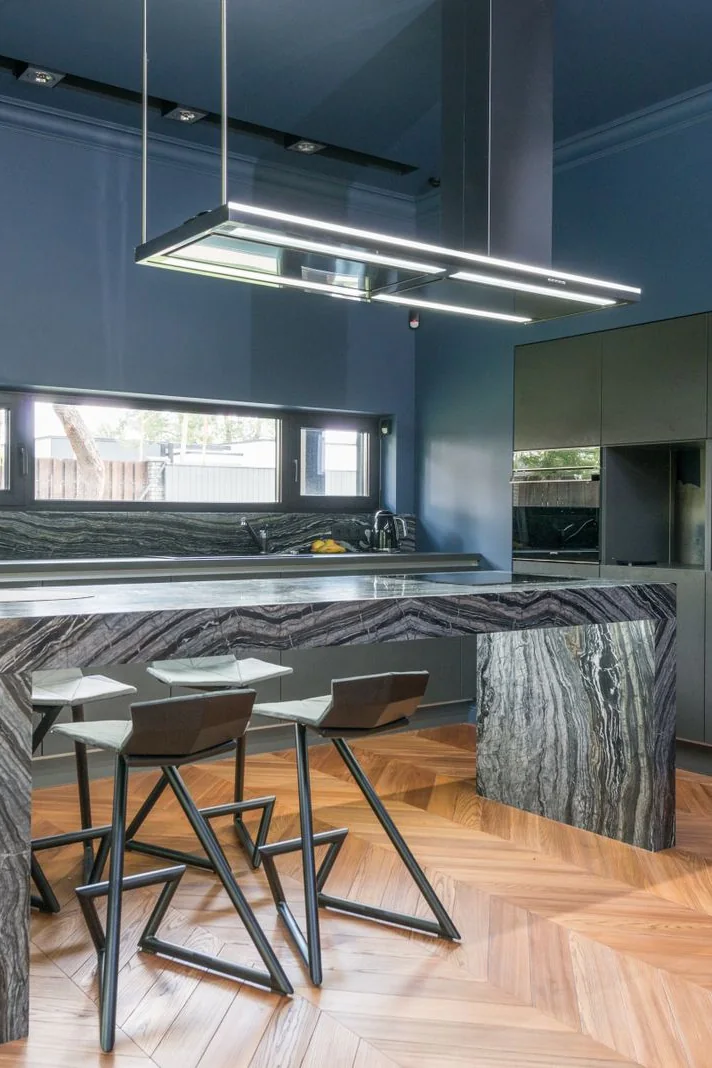
Quick Tip: Continue the countertop stone down the curved end in one matched slab. Vein flow across the bend is the detail that sells the whole waterfall, so approve the layout your fabricator draws on paper before anything gets cut, polished, or delivered to the site.
A waterfall end wraps the island in stone from top to floor, and on a curve it feels like frozen fabric. The wrap protects the base from kicks and chair scrapes, wipes clean in seconds, and photographs like a boutique hotel kitchen. Book matched slabs cost more, yet that seamless sweep is exactly what readers save.
Oval Island Dining Flow
Credit : Curtis Adams
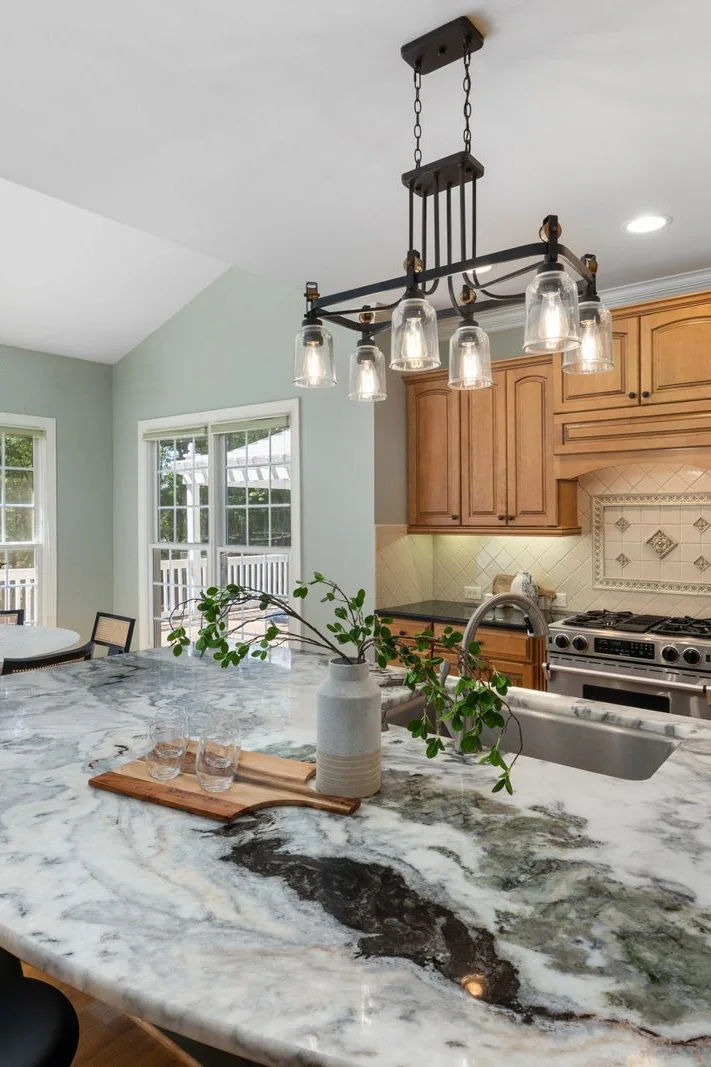
BEFORE: The rectangular island ate the walkway. Chairs scraped its corners, two people could not pass carrying a hot tray, and the dining end felt bolted on, with knees knocking the square edge at nearly every family meal.
AFTER: An oval top replaced the slab, its ends melting into easy curves. Four stools now tuck fully under the overhang, the cook circulates freely, and Sunday roasts land on a surface that feels made for passing dishes around.
Ovals shine in long, narrow kitchens where corners steal precious inches. The shape trades a little counter area for far better movement, and most families admit they never miss the lost inches once breakfasts stop feeling like traffic jams every morning.
Rounded Breakfast Bar End
Credit : Curtis Adams
- Mark the arc on the floor with painter tape and live with the outline for two full days.
- Order the top with a true radius end, not a clipped corner pretending to be a curve.
- Set stools so knees clear the bend by at least two inches at every single seat.
- Wire a pop up outlet into the end panel for laptops, chargers, and slow Sunday pancakes.
- Seal the stone edge well, then style the end with one low bowl, never clutter.
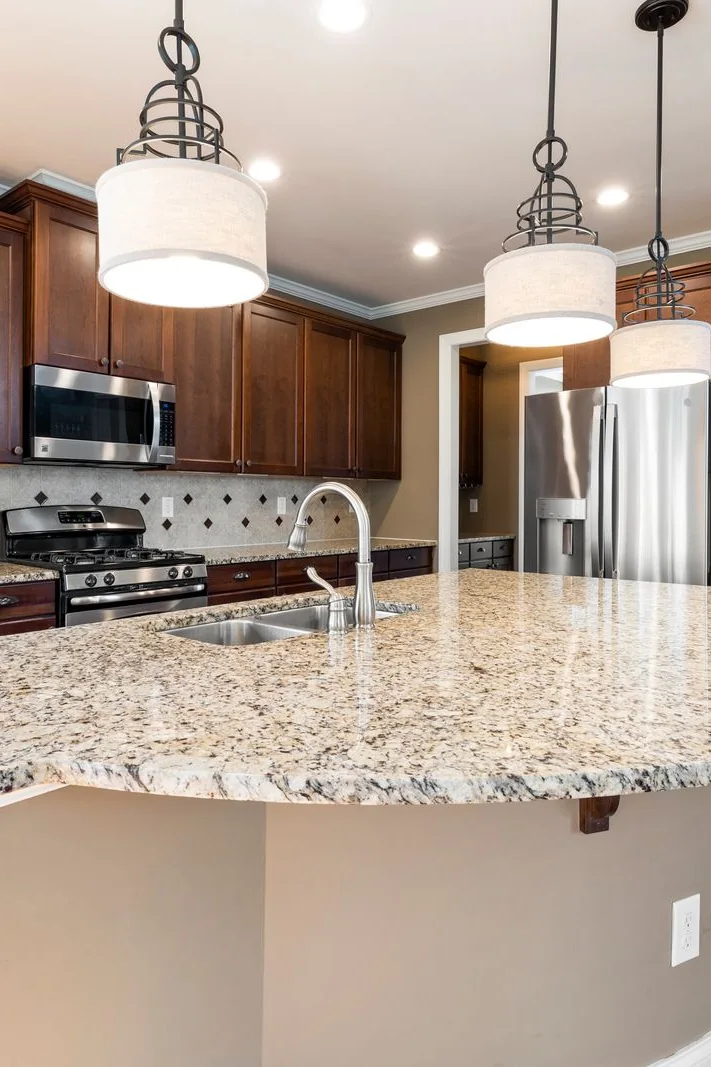
A rounded bar end earns its keep at breakfast. Backpacks swing past without catching, coffee mugs sit safely away from a soft edge, and the curve quietly signals where the working kitchen ends and the lingering begins each day.
Marble Versus Quartz Curves
Credit : Max Vakhtbovych
| Feature | Marble | Quartz |
|---|---|---|
| Bending Cost | High, curved cuts waste slab | Moderate, pricing stays consistent |
| Stain Resistance | Etches near citrus and wine | Shrugs off daily spills easily |
| Vein Matching | Natural drama, harder to align | Engineered veins align neatly |
| Heat Tolerance | Excellent straight off the stove | Use trivets under hot pans |
| Maintenance | Sealing twice a year | Soap and water daily |
| Best Suited | Formal open plan kitchens | Busy family cooking hubs |
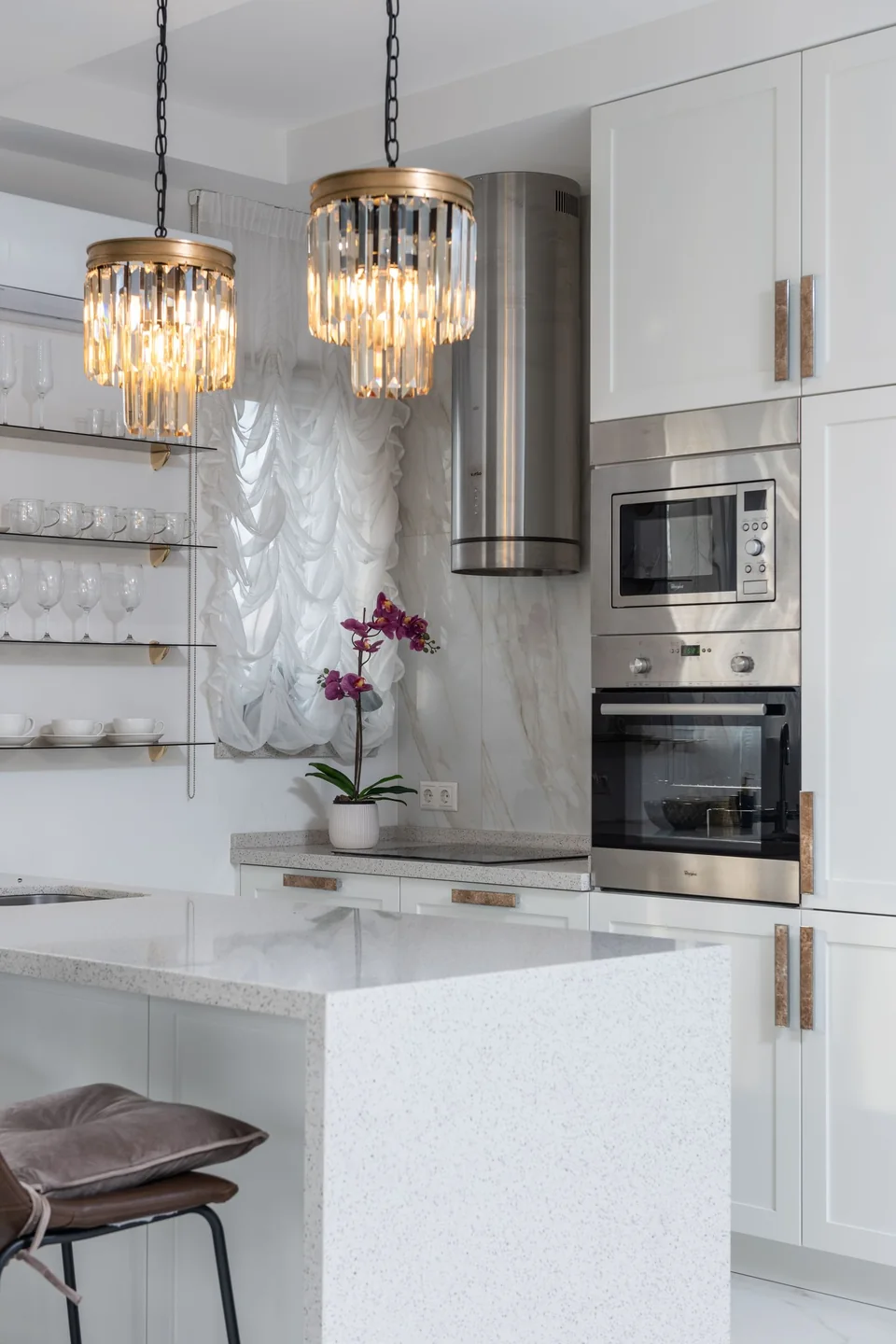
Both stones curve well in skilled hands, so choose by lifestyle first. Marble rewards careful cooks who love a living patina, while quartz suits families who cook hard and clean fast. Ask every fabricator for a curved offcut sample before signing anything at all.
Curved Seating Nook Rules
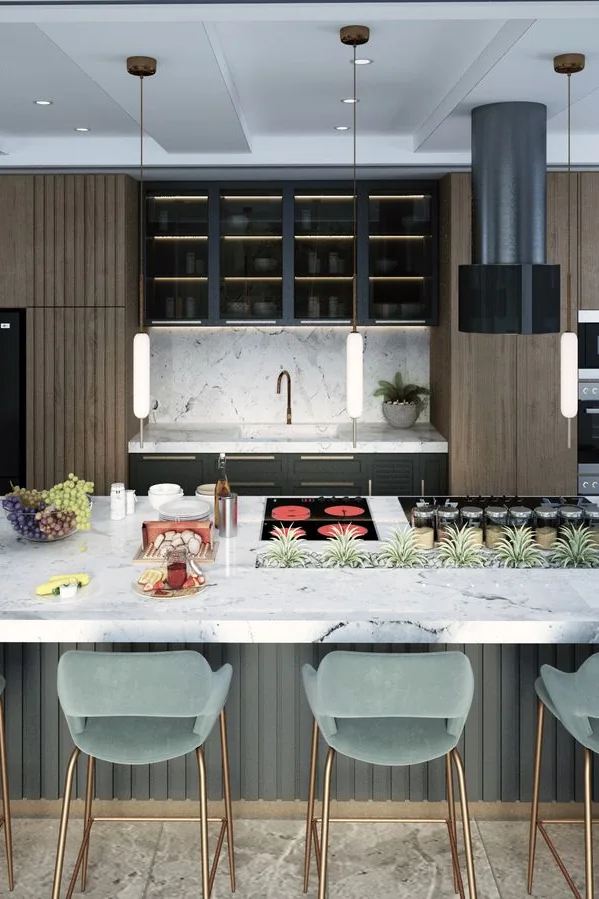
Credit : Hiba Q. Omar
Do:
- Leave twenty four inches of knee depth along the whole curved overhang.
- Pick stools with rounded backs that echo the arc of the island.
- Keep walkways behind seated guests at least thirty six inches wide.
- Repeat the curve in a banquette cushion for a settled, planned feel.
Don’t:
- Force square stools tight against the bend; the gaps look accidental.
- Hang pendants off the center line of the curve.
- Crowd the nook with a rug that fights the flow of the floor.
Seating sells the curve. When stools follow the arc, the nook becomes the favorite seat in the kitchen rather than a design gesture, and homework, coffee, and late night talks all migrate there within the very first week.
Soft Bullnose Edge Facts
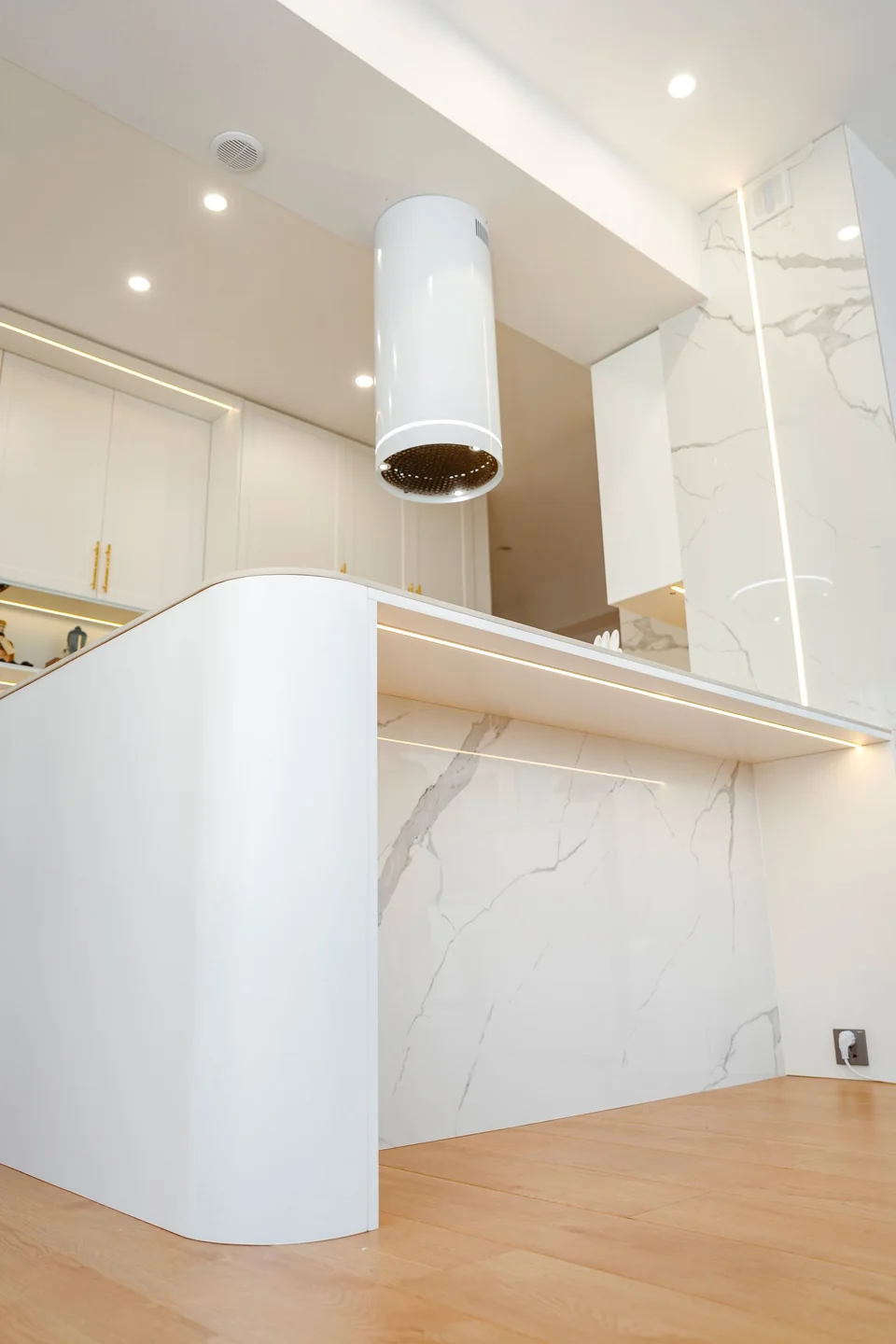
Credit : Bilguun Gantumur
Cost: Small premium over square edges | Time: Added at fabrication, no extra days | Skill Level: A fabricator task, not a DIY job | Best For: Homes with toddlers and tight walkways
A bullnose edge rounds the top and bottom of the counter, removing the sharp line that bruises hips and chips plates. On a curved island the profile doubles the softness, and the highlight running along the stone shows off the radius all day. Fabricators shape it with a profiling wheel, so the finish stays consistent from end to end, and minor seams hide better than they ever do on square work.
Two Tone Curved Island
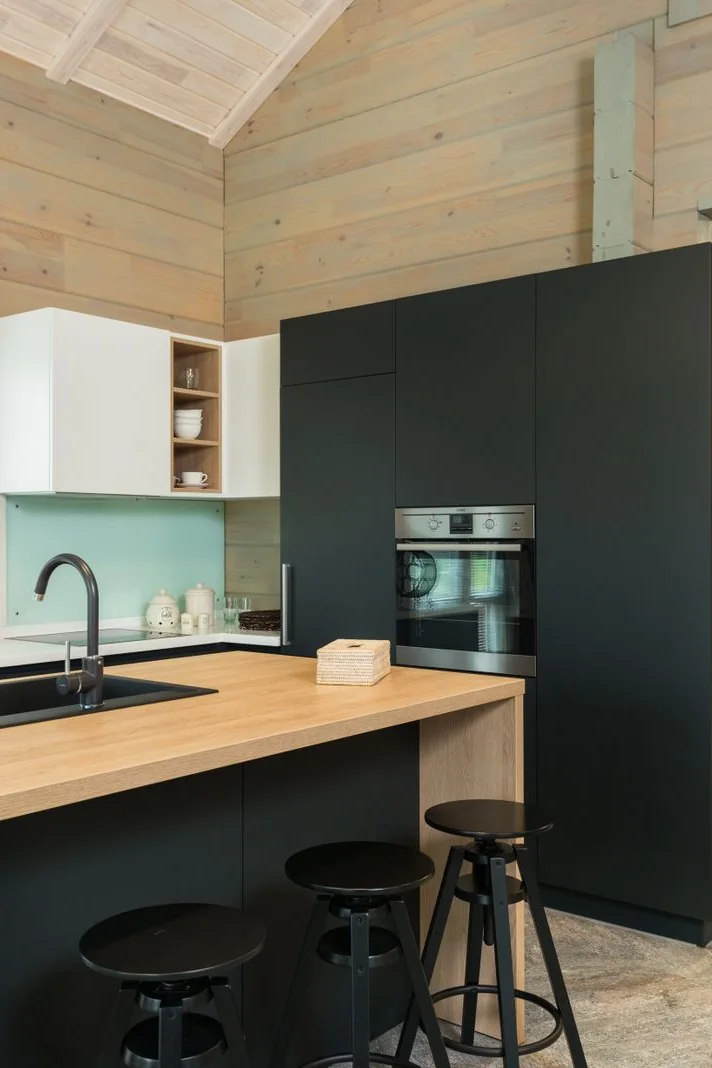
Credit : Max Vakhtbovych
Two tones give a curved island its tailored finish. Paint the base deep ink, forest, or espresso, then float a pale stone top over it, and the curve reads like fine furniture rather than a built in block. The contrast also draws a clean line between the work zone and the seating zone without any wall or rug.
Balance matters more than bravery here. Let the darker tone own the curve, keep uppers and walls light, and repeat the island color once more in a small way, perhaps stool leather or a single pendant shade. The room then feels layered instead of split, and the island stays the calm center of everything.
Curved Island Pendant Lighting
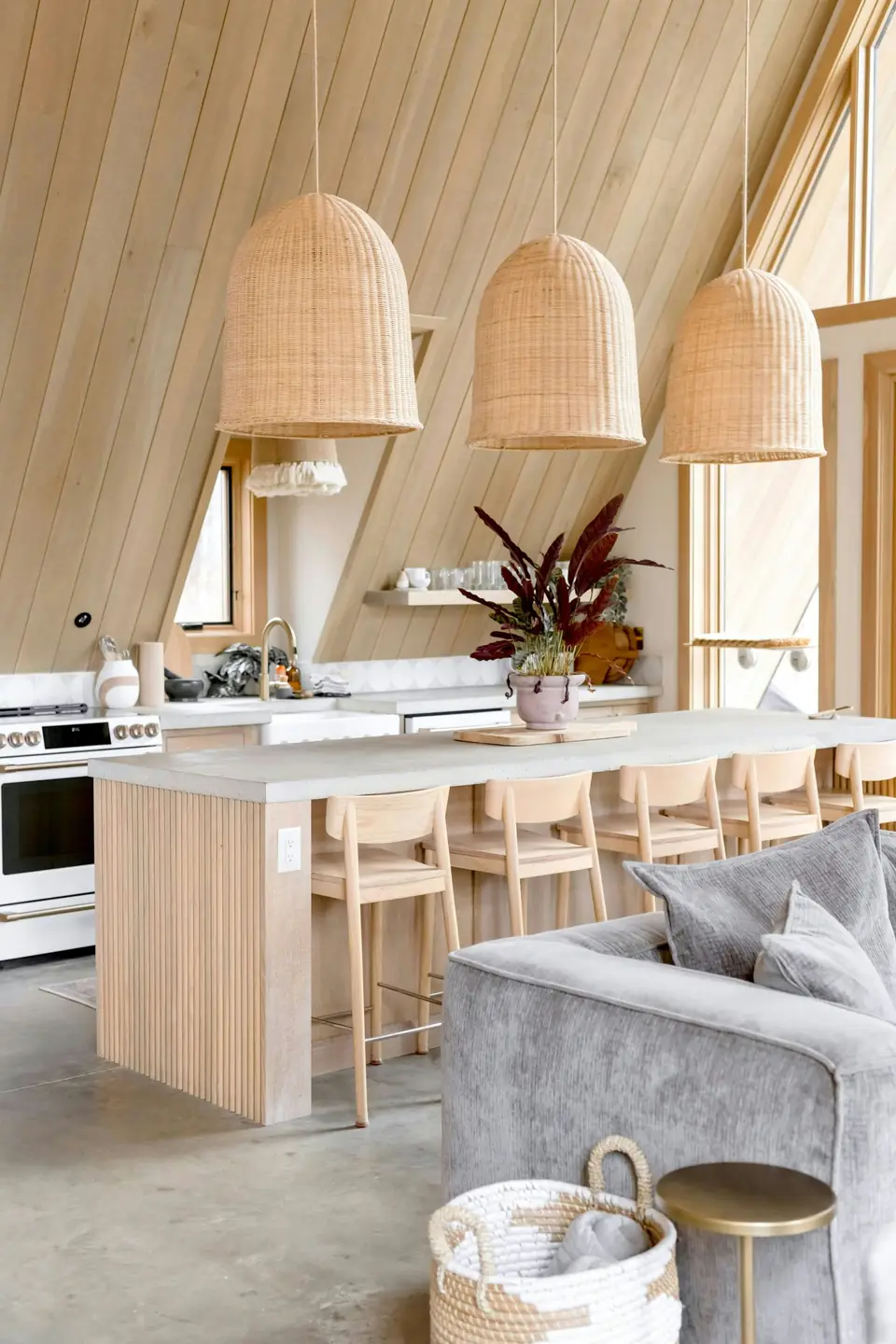
Credit : Andrea Davis
- Hang pendants along the arc of the curve, spaced evenly like beads on a string.
- Drop shades thirty to thirty six inches above the counter for glare free prep.
- Choose rounded glass or dome shades that echo the soft geometry of the island.
- Wire the pendants on a dimmer; curves look best under layered, adjustable light.
Light decides whether a curve looks sculpted or flat. The strongest rounded kitchen island design ideas treat pendants as part of the architecture, tracing the bend so shadows pool gently at the edges. Three domes in a simple arc photograph better than any statement chandelier here.
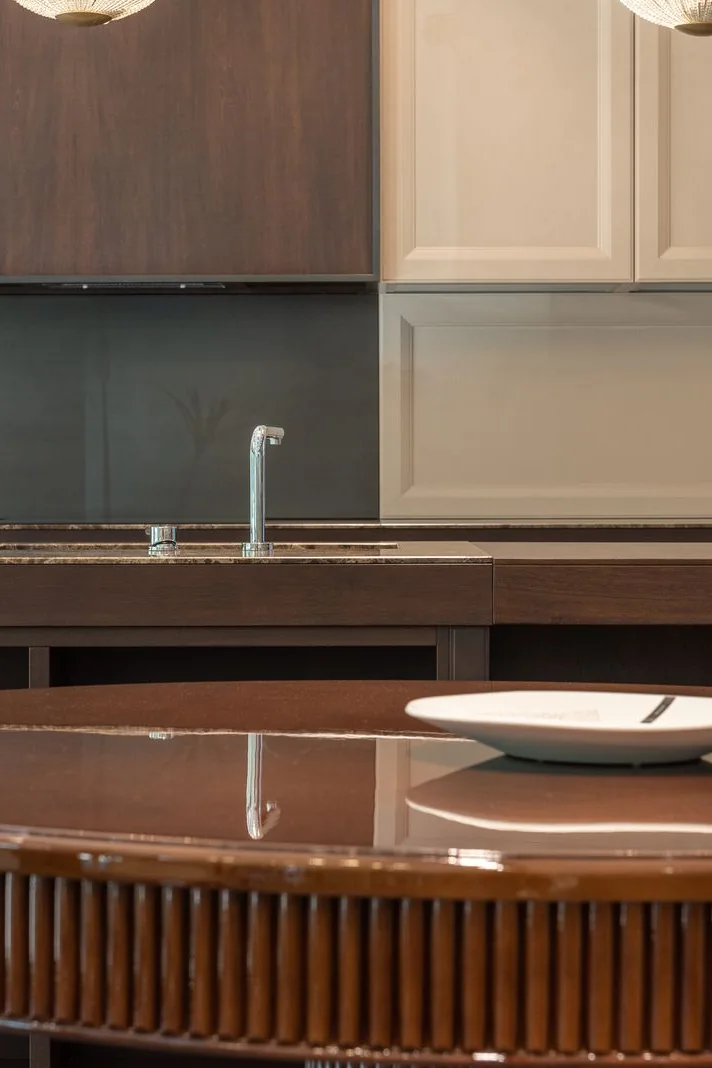
Micro Round Cafe Island
Credit : Max Vakhtbovych
Quick Tip: Steal the cafe trick: a round top on a single pedestal base. The pedestal frees every inch of knee room, two stools slide in anywhere, and the whole piece can rotate a few degrees when a gathering needs more passing space.
Small kitchens deserve an island too. A thirty six inch round on a pedestal seats two, holds a chopping board and a coffee press, and never blocks a drawer swing. Locking wheels add a movable option renters love, rolling to the wall when floor space matters more. Choose butcher block or honest stone with a softened, forgiving edge profile.
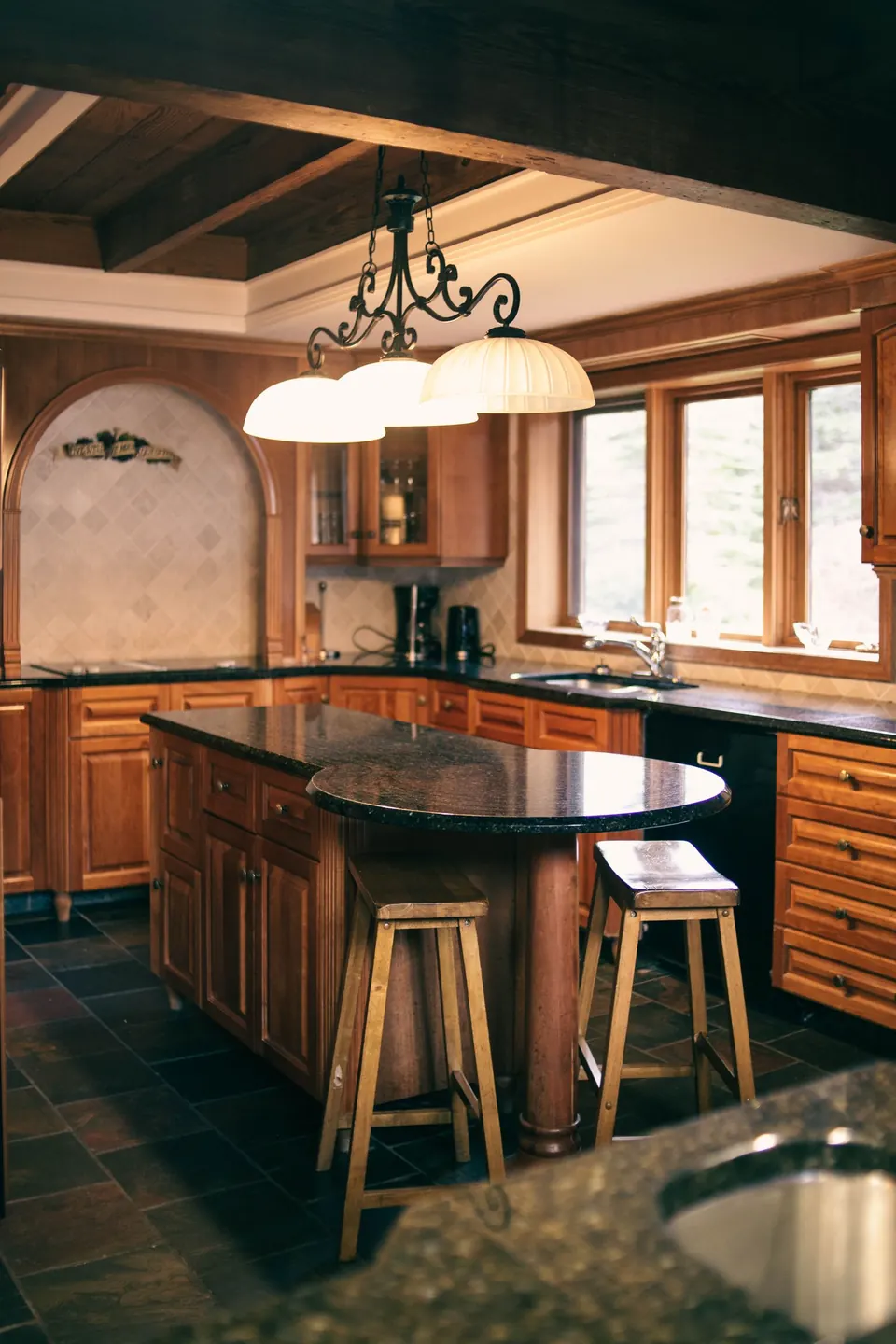
Corner Free Family Island
Credit : Erik Mclean
BEFORE: Sharp island corners owned the danger list of the kitchen. Toddlers met them at forehead height, hips collected bruises weekly, and everyone learned to sidestep the same two points with a laundry basket in hand.
AFTER: Rounded ends retired the hazard map for good. Kids now orbit the island on trikes without incident, carriers pass freely on both sides, and the cook pivots between sink and stove without the old defensive shuffle around corners.
Safety rarely looks this good. A generous radius removes the injury points while keeping nearly all the counter space, and the change reads as style first, childproofing second. Grandparents appreciate the softer edges just as much during long holiday cooking marathons together.
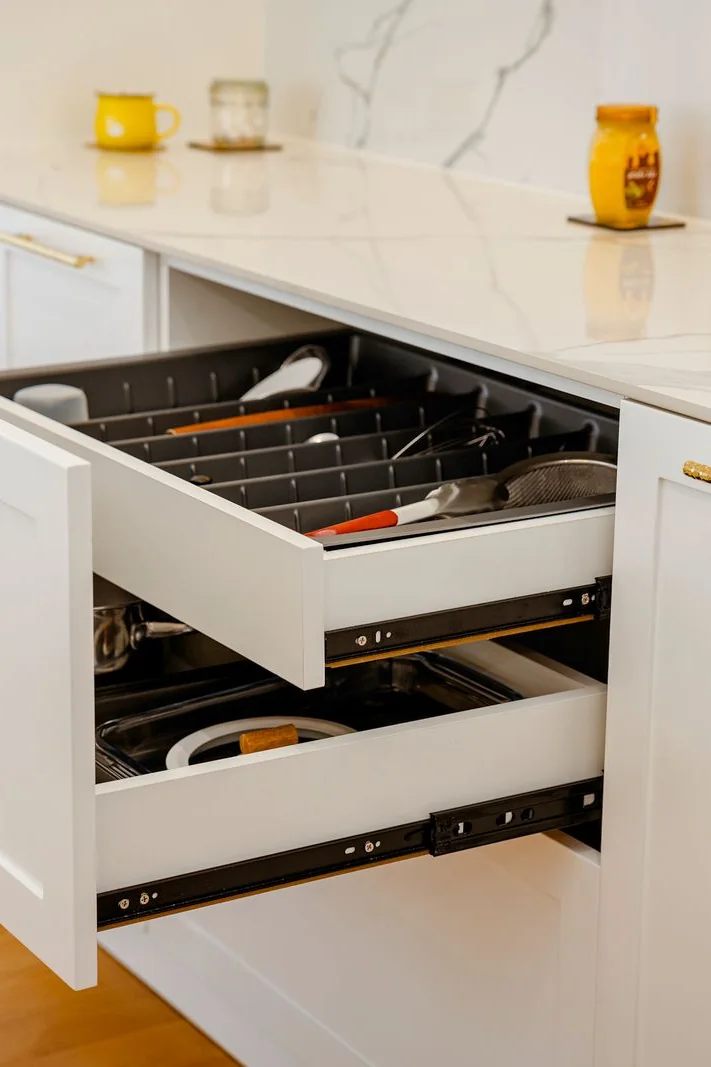
Curved Cabinet Storage Steps
Credit : Bilguun Gantumur
- Map the curve into zones: daily dishes near seating, heavy pots near the stove.
- Fit curved or angled pullouts; standard drawers waste the deep center of the bow.
- Order door fronts steam bent or kerfed to match the island radius exactly.
- Place one shallow drawer along the arc for cutlery, tools, and charging cables.
- Add toe kick lighting so the base shadow never hides crumbs or dropped lids.
Curved fronts hide serious storage when the interior gets the same care as the silhouette. Angled bins, lazy turntables, and deep drawers follow the bow, and nothing gets lost in the dead corners that plague square islands in most homes.
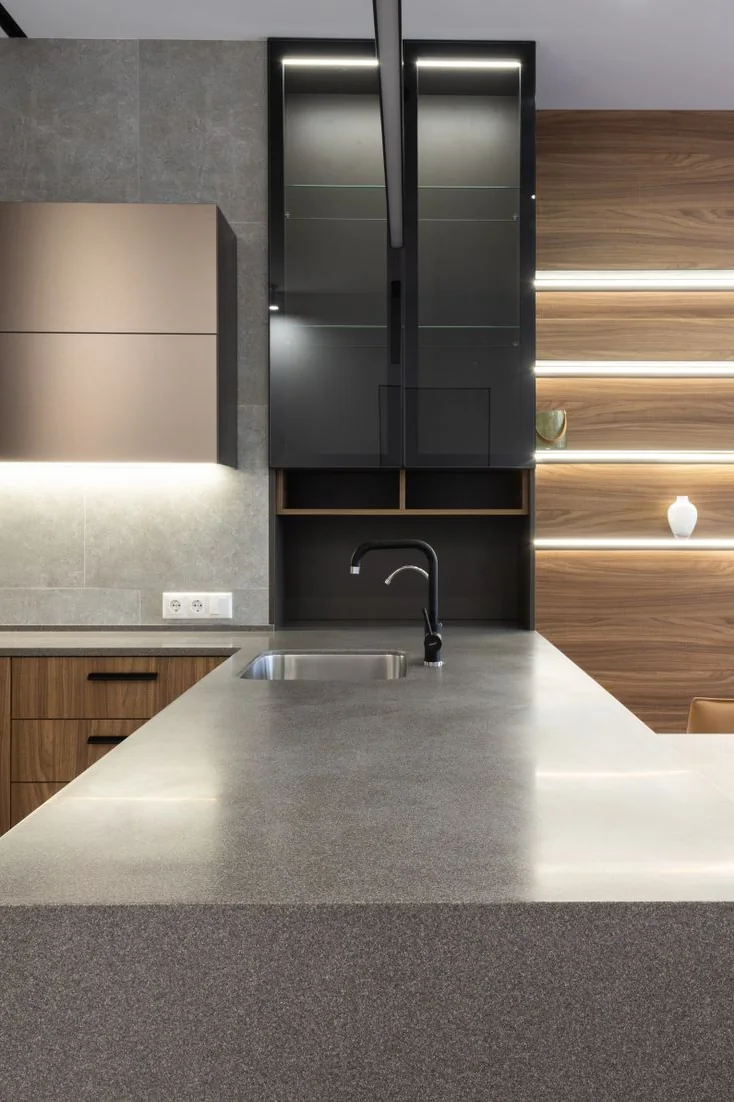
Concrete Versus Timber Curves
Credit : Max Vakhtbovych
| Feature | Polished Concrete | Bent Timber |
|---|---|---|
| Making The Curve | Poured into a shaped mold | Steam bent or laminated layers |
| Weight | Very heavy, check floor joists | Moderate, standard framing copes |
| Warmth | Cool, mineral, gallery calm | Warm grain, handmade feel |
| Repairs | Chips need specialist patching | Sanding and oil refresh marks |
| Cost | High for custom formwork | Mid to high by species |
| Patina | Darkens and tells stories | Mellows into a soft sheen |
Concrete curves feel permanent and sculptural, while bent timber keeps the island light, warm, and far easier to adapt later. Visit both in person if you can; photographs flatten the difference that fingertips notice instantly at the edge. Weight alone settles some homes, since older floors quietly vote for timber.
Rounded Island Color Pop
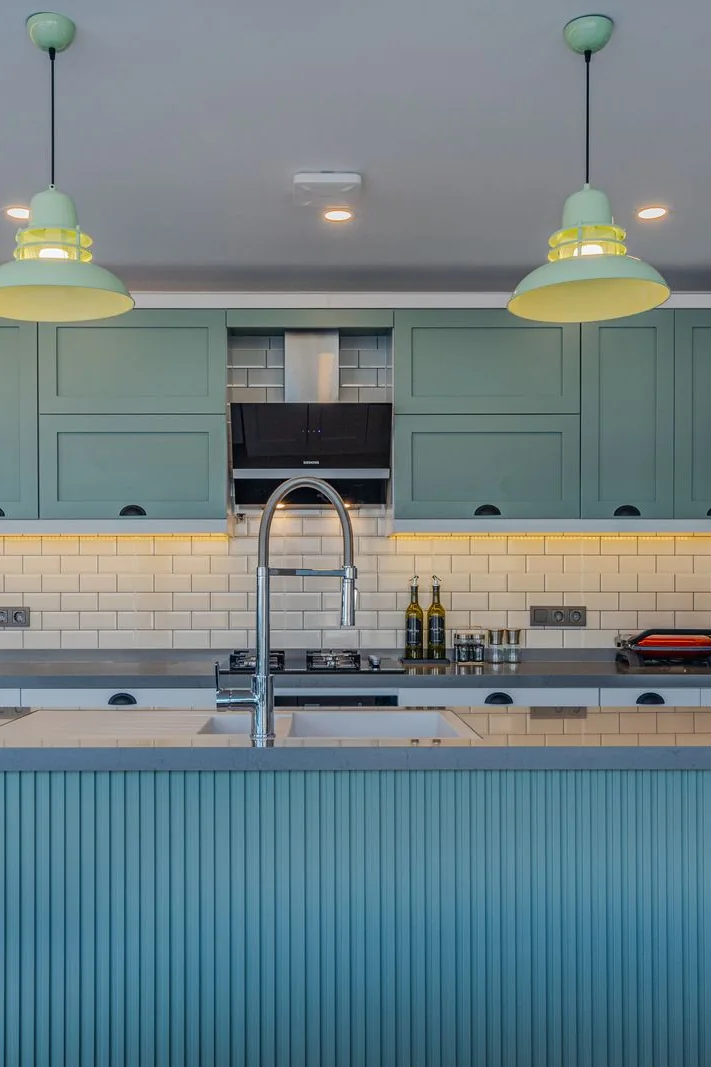
Credit : Ahmet ÇÖTÜR
Do:
- Saturate the curve in one confident color: teal, oxblood, or deep olive.
- Ground the pop with pale floors and a quiet, light countertop.
- Repeat the color in two small accents somewhere beyond the island.
- Test the shade on a curved offcut, since bends deepen any color.
Don’t:
- Split the curve between two colors; the arc needs one voice.
- Pair a bold island with busy patterned splashback tiles.
- Forget the seating side, which guests end up photographing most.
Color loves a curve. The arc catches light differently along its length, so one rich paint gains natural highlights and shadows without any extra styling at all. Choose the shade from something permanent in the room, a floor tone or a beloved rug.
Curved Island Budget Facts
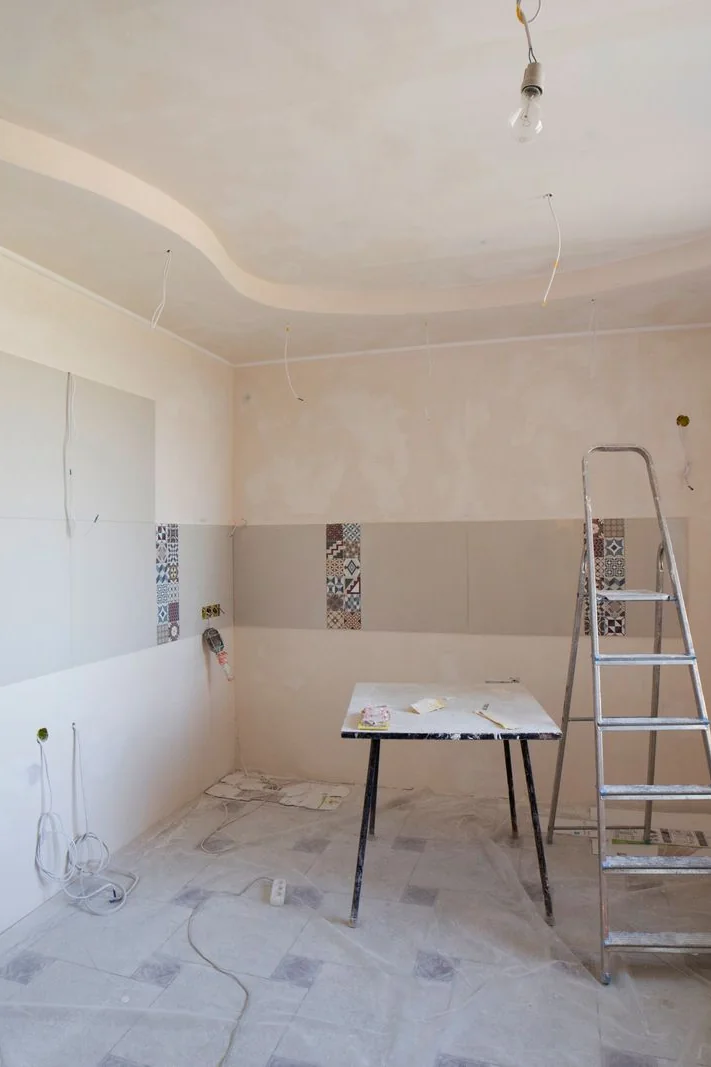
Credit : Valentin Ivantsov
Cost: Curved fronts add fifteen to thirty percent | Time: Two to four extra fabrication weeks | Skill Level: Professional templating strongly advised | Best For: Forever kitchens rather than quick flips
The curve premium buys craftsmanship: templated stone, bent doors, and longer fitting hours on site. Save by curving only the seating end while the work side stays straight, a hybrid many fabricators quietly recommend to careful budgets. The result keeps the softness guests see and touch daily, at a noticeably friendlier invoice. I have seen this work well in many cases, especially in galley kitchens where one rounded end fixes the traffic flow completely.
Open Shelf Curved End
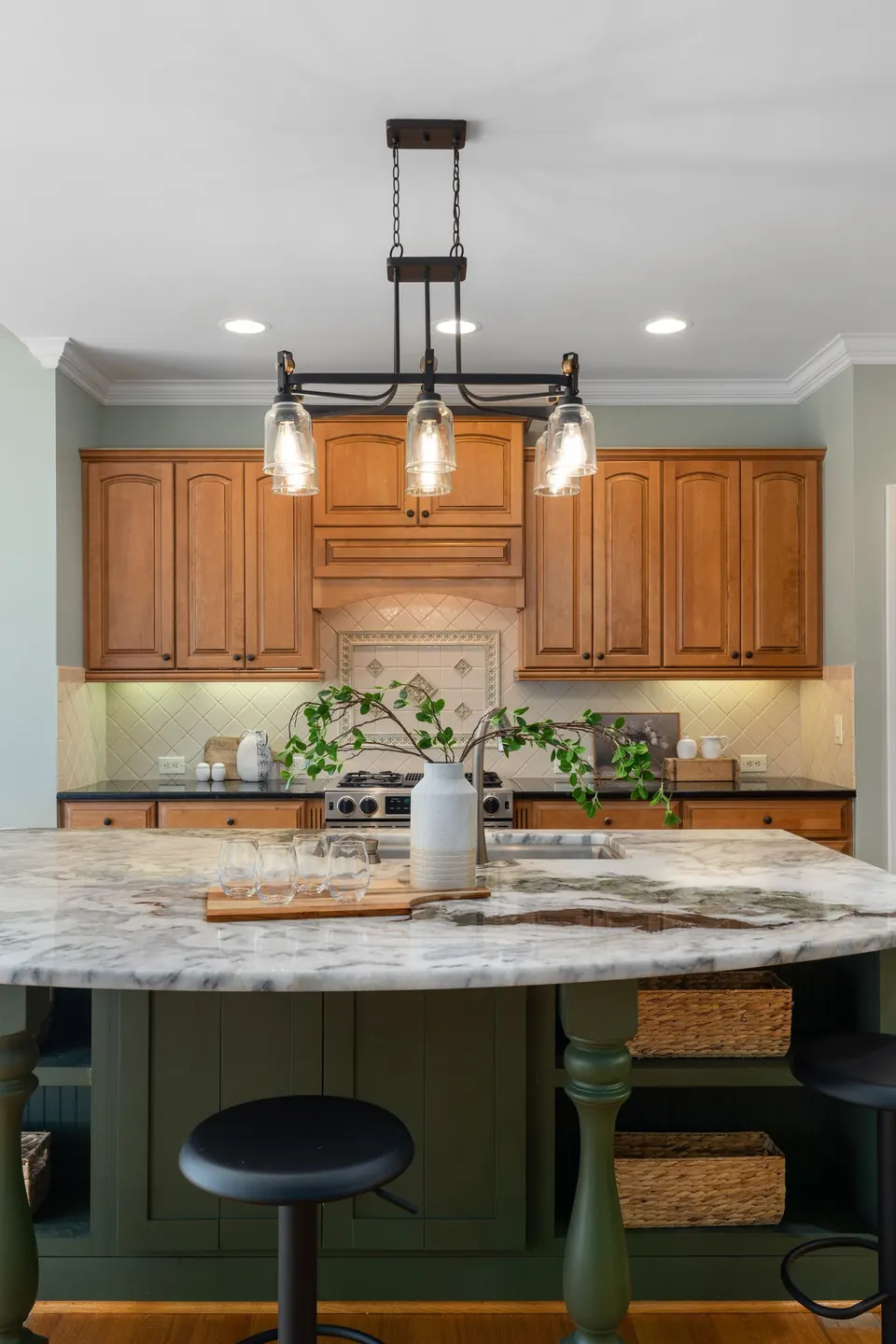
Credit : Curtis Adams
The far end of an island often dies as blank paneling. Open shelves built into the curve rescue that space, holding cookbooks, a plant, and the good olive oil within reach of the stove. A trailing plant nods to the biophilic interior design inspiration readers save for calm, leafy kitchens. Rounded shelf boards echo the line of the island, so the display feels carved from the same single piece of furniture.
Edit ruthlessly to keep it looking intentional. Three groupings per shelf, one tall item per level, and nothing that fears steam or splashes belongs here. A small lamp on the lowest shelf turns the end into a soft glow point in the evening, long after the cooking ends and the kitchen quiets down.
Rounded Island Cooktop Zone
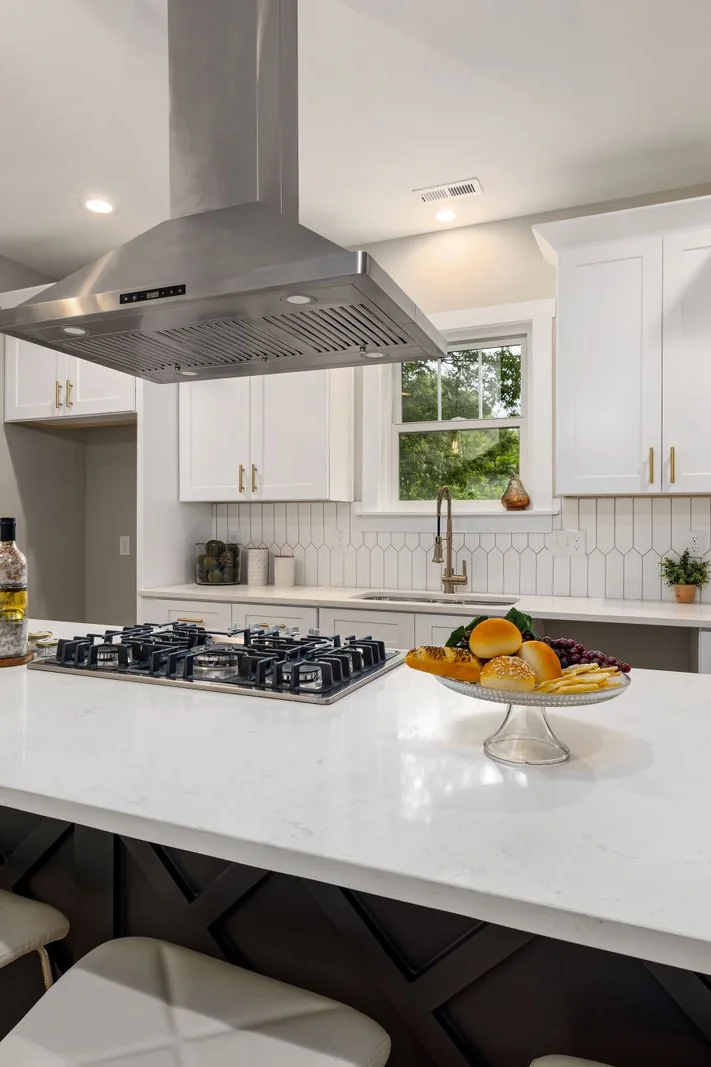
Credit : Curtis Adams
- Center the cooktop on the widest span of the curve for elbow room on both sides.
- Choose a downdraft vent so no hood interrupts the clean arc of the island.
- Keep twelve inches of landing space beside the burners, even along the bend.
- Select induction for a flush surface that follows the line of the stone.
- Face controls toward the cook, away from stools and small reaching hands.
Cooking on a curve changes the choreography for the better. Saucepans angle naturally toward the center, helpers gather without crowding the hot zone, and the audience on stools stays at a safe, comfortable distance from all the action.
Travertine Curve Texture Moment
Credit : Sellers Cab
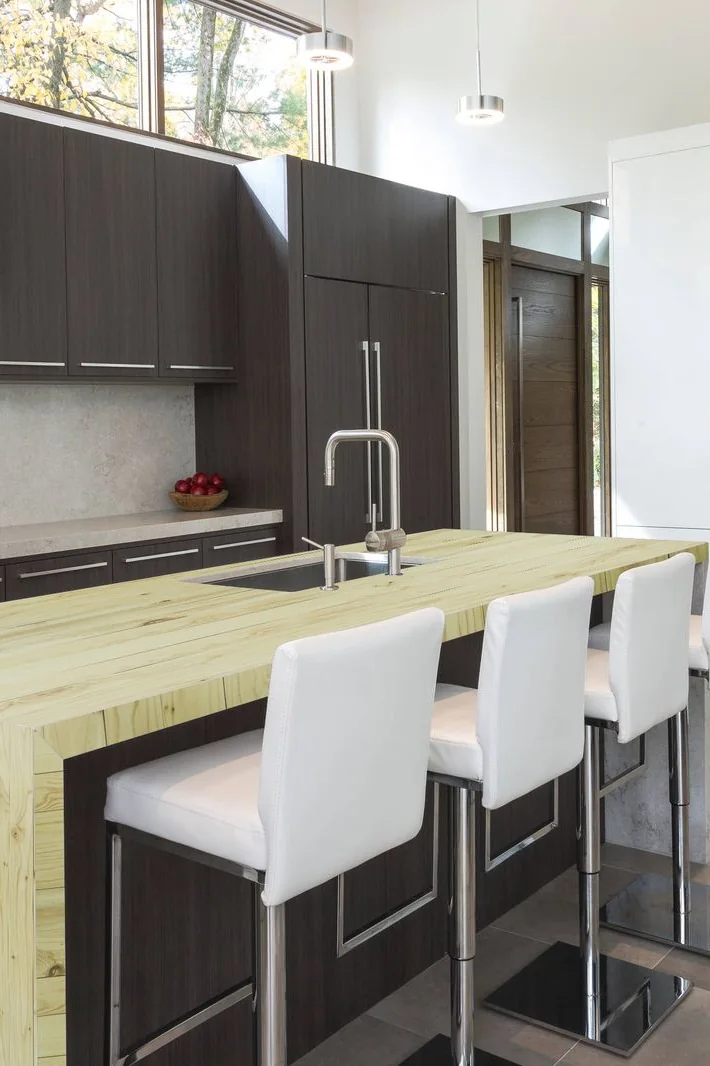
Quick Tip: Order travertine with its pits filled and the surface honed, never polished. The matte finish hides crumbs, keeps the cloudy movement of the stone visible along the bend, and stops the island reflecting ceiling lights like a mirror at dinner. See the full slab in daylight first.
Travertine brings a quiet texture that flat white stone cannot. Its soft veining bends gracefully, the surface feels warm rather than icy, and small marks blend into the natural pattern instead of announcing themselves. Roman kitchens have trusted this stone for centuries, and its calm pace suits the curve. Pair it with plain cabinetry and one dark accent for balance.
Island Curve Walkway Clearance

Credit : Ali Soheil
BEFORE: The island sat squared and close. Passing the fridge meant a sideways shuffle, the open dishwasher door clipped the corner every time, and two cooks working together negotiated each crossing like a narrow hallway.
AFTER: Rounding the traffic end returned six inches exactly where it mattered. Doors swing fully now, two people cross with arms full, and the rhythm of the whole kitchen loosened within a single weekend of work.
Clearance is the invisible luxury. A curve gives back inches at hip height, where bodies actually pass, while the countertop above keeps its full working depth. Measure the tightest crossing in your kitchen; that number, not a catalog photo, should set the radius.
Statement Curve Stool Styling
Credit : Curtis Adams
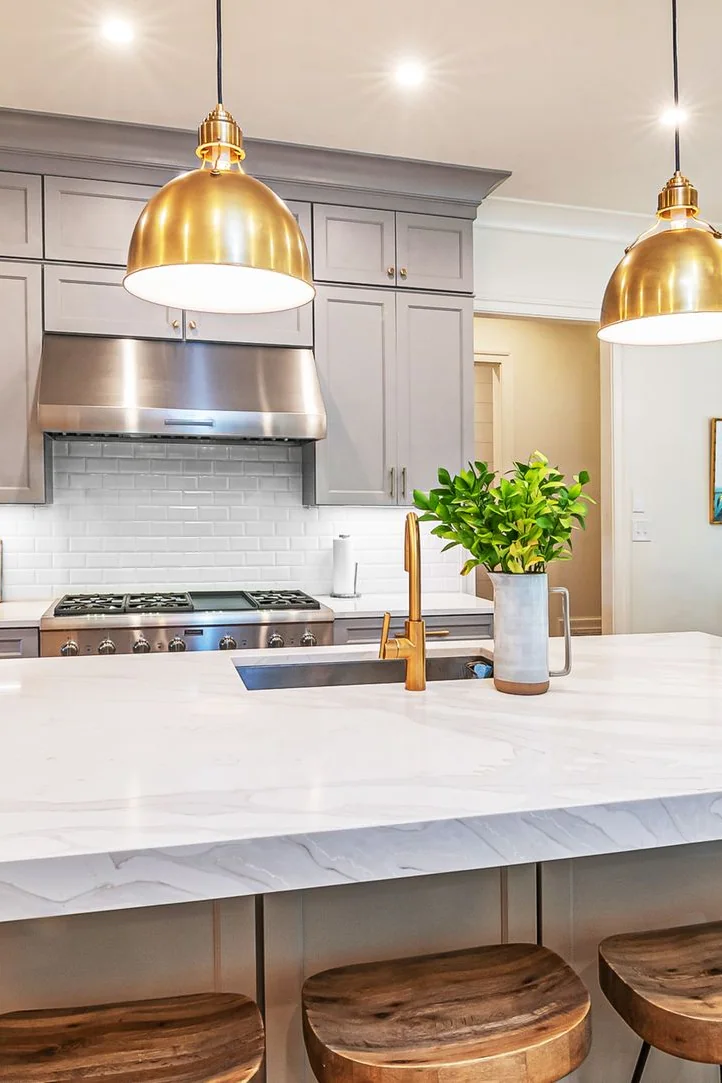
- Count seats honestly; a curve fits fewer stools than a straight run of the same length.
- Space stool centers twenty four to twenty six inches apart, measured along the arc.
- Pick rounded seat shapes, swivel bases, or woven backs that mirror the bend.
- Keep the twelve inch knee overhang clear of stored items, bins, and baskets.
- Finish with one cushion color repeated on every seat for a calm, unified row.
Stools finish the sentence the island starts. A disciplined row along the curve photographs beautifully, invites lingering, and keeps sightlines open across the room. Swap the cushions with the seasons and the whole kitchen feels refreshed without touching a single cabinet.
Conclusion
Curves ask for a little planning, yet they repay it every single day. Rounded ends ease traffic, soften sightlines, and turn the island into the natural gathering point of the home. Save these rounded kitchen island design ideas to your Pinterest boards, pick the one curve your kitchen keeps asking for, and start with a cardboard template before ordering any stone. Small changes like these shift how a space feels in ways measurements never capture. Try one idea this season, live with it, and let the room teach you what it wants next. The softest kitchens are built one honest curve at a time.