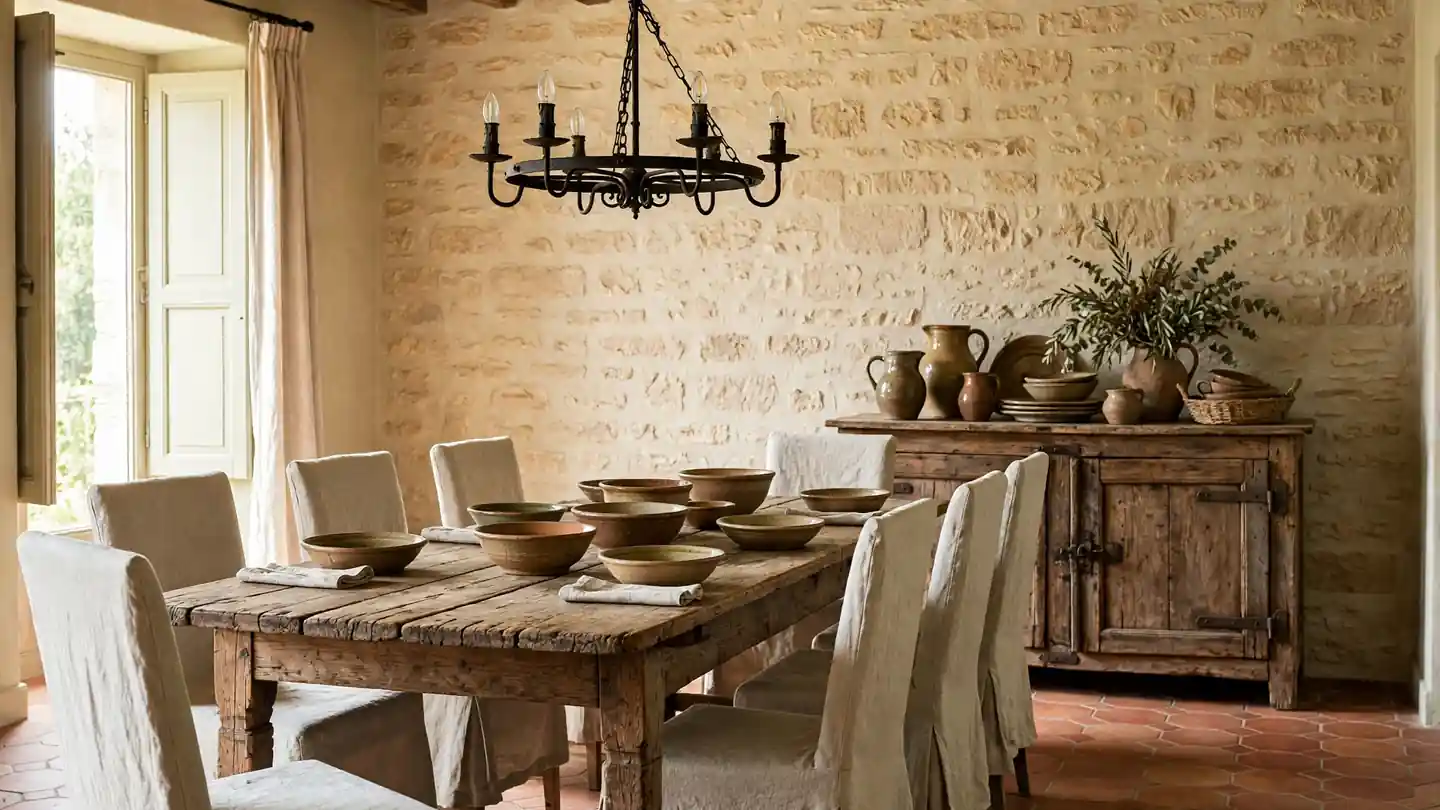
23 Rustic European Dining Room Decor Ideas for Cozy Sophistication
A long wooden table, soft linen, and light falling across a stone wall can make everyday dinners feel like a small celebration. That warm, gathered feeling sits at the heart of rustic European dining room decor, where honest materials and old pieces with real history do the decorating. Nothing feels rushed or overly matched, and that is exactly the charm.
Many dining rooms feel cold because everything arrived from the same store on the same day. This style fixes that by mixing weathered wood, woven textures, iron, and earthenware gathered over time. In my experience, even two or three of these changes can warm up a room fast. If you love a French kitchen mood, the blue toile kitchen decorating inspiration from my recent post pairs beautifully with the dining ideas below. Pick the ideas that fit your table, your light, and the way your family actually gathers.
Weathered Oak Farmhouse Table
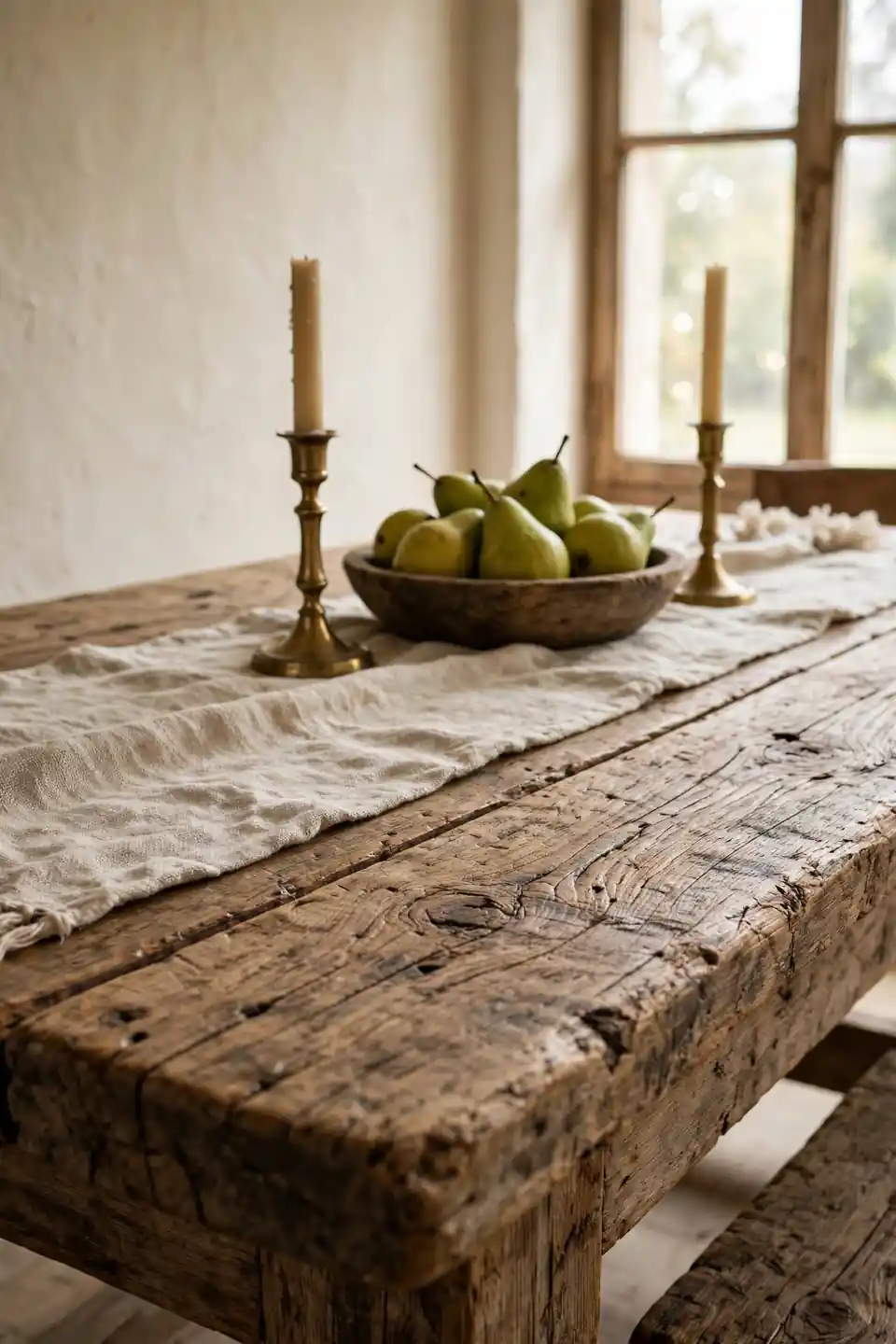
A scarred oak table tells stories before anyone even sits down. Look for thick planks, visible grain, and a matte finish that welcomes hot dishes and homework alike. Tables around six feet suit most rooms, seating six without crowding the walls or squeezing past chair backs.
Keep the styling honest and light. A simple linen runner down the middle, a bowl of pears or lemons, and two taper candles are plenty. Skip the fussy place settings on ordinary days. In my experience, a table that looks ready for real life gets used far more than one dressed like a showroom, and daily use is where the patina deepens beautifully.
Linen Slipcovered Dining Chairs

- Choose washable linen slipcovers in oatmeal or flax, so spills never spoil the mood.
- Pick a slightly loose, relaxed fit instead of tight upholstery for countryside softness.
- Mix two end chairs in a deeper stone shade to frame the table.
- Look for covers with ties or hidden zips to keep laundry day simple.
- Let gentle creases stay between washes, since linen wrinkles suit this style.
Slipcovers remove the biggest worry with pale dining chairs, which is everyday mess. A Sunday sauce spill once meant a professional cleaning bill at my house. Now the covers go straight into the wash and return softer each time. Linen also breathes through long summer dinners, keeping seats comfortable for hours.
Iron Chandelier Warm Glow
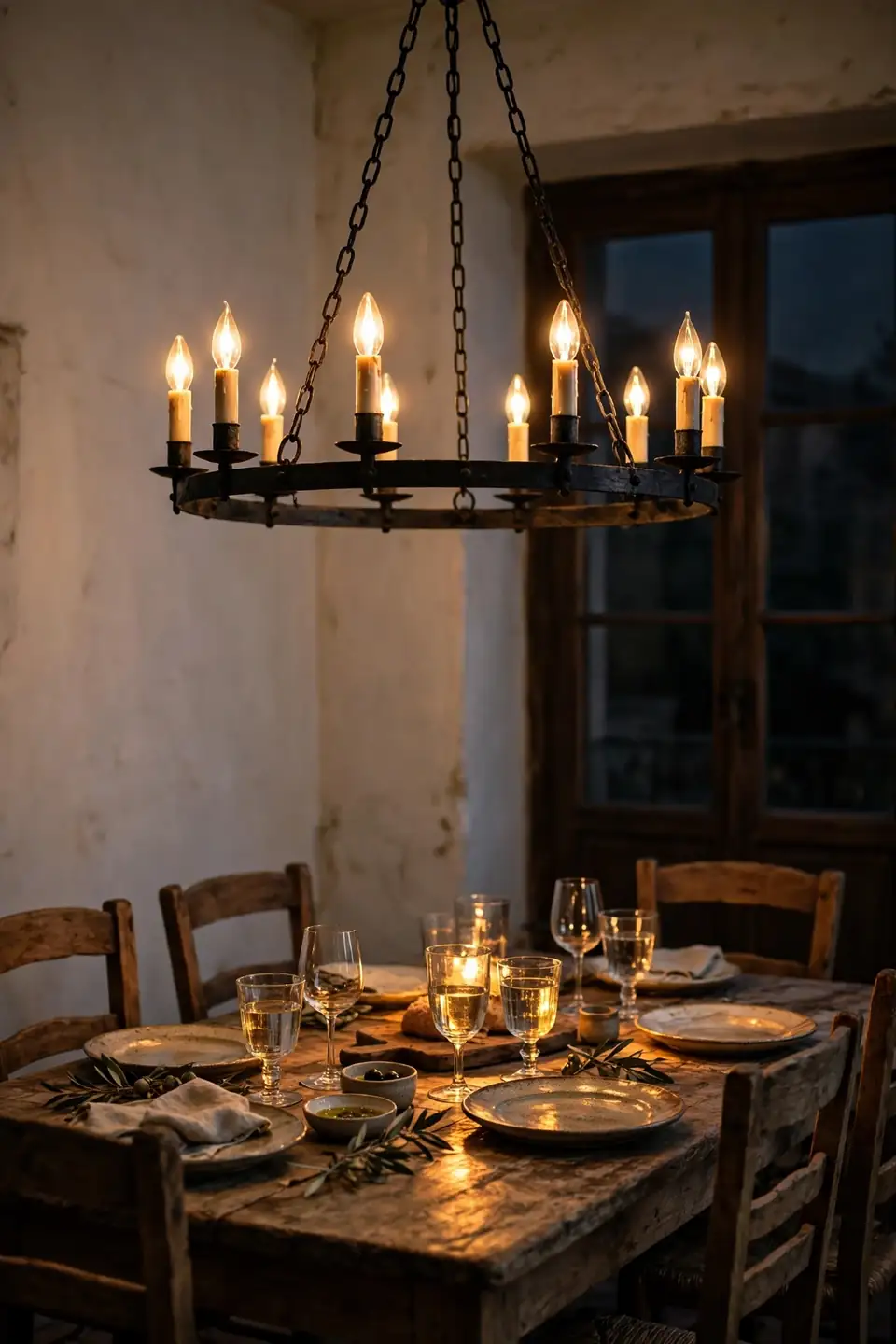
Quick Tip: Hang the chandelier so its lowest point sits about 30 inches above the tabletop. That height keeps faces lit warmly, blocks no views across the table, and lets tall centerpieces slide underneath without a fuss.
A blackened iron chandelier with candle style bulbs gives the whole room its evening rhythm. During the day it reads as sculpture against pale walls, and after dark it pools golden light right where plates and glasses gather. Choose a simple ring or branching shape with six to eight lights, then fit a dimmer so holiday dinners can glow low while homework nights stay bright and practical.
Stone Wall Backdrop
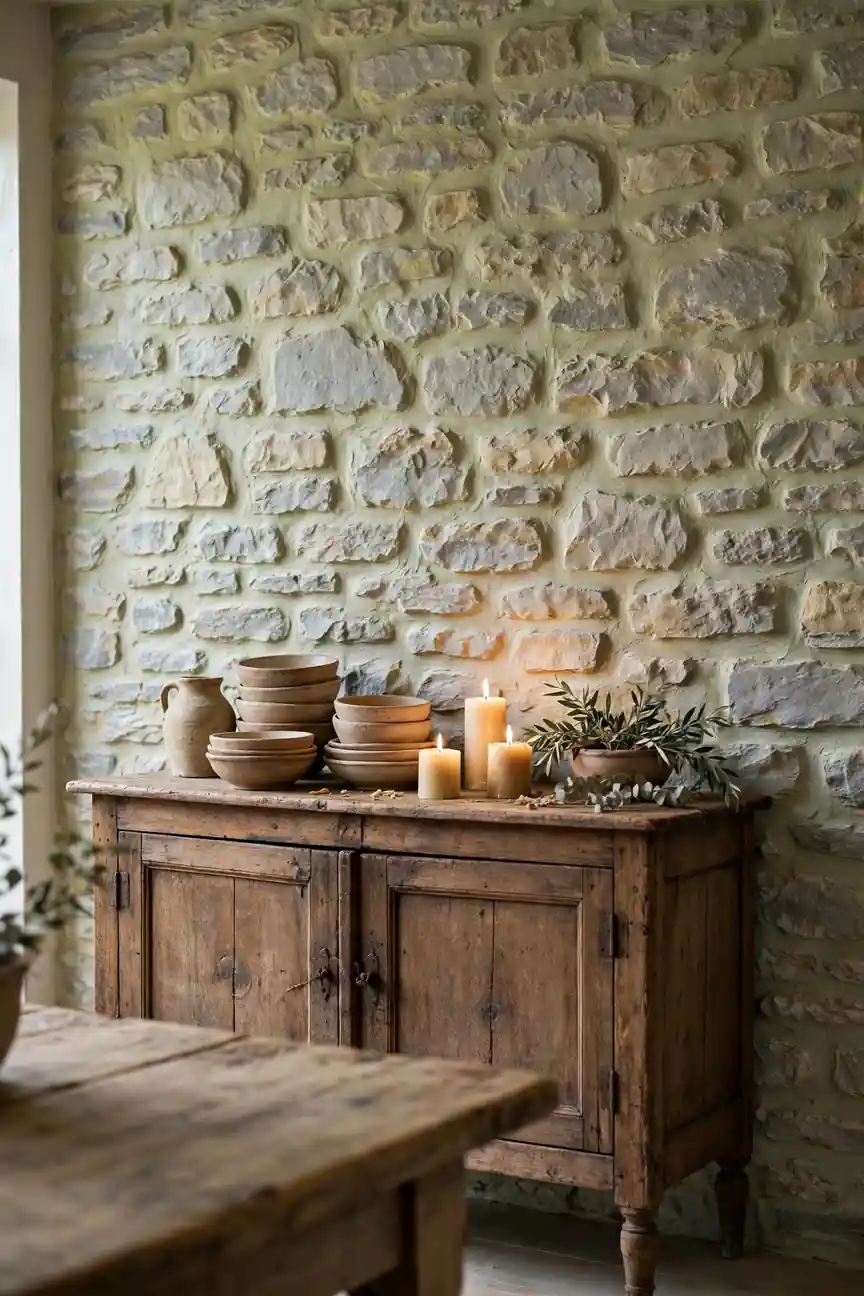
BEFORE: The dining wall was flat builder white, and every sound bounced around the room. Furniture looked temporary against it, like pieces waiting for a better home. Even a beautiful table felt unfinished and slightly cold.
AFTER: A limewashed stone veneer panel now runs behind the sideboard, full of soft shadows and warm gray tones. Candles flicker against the texture at night, and the whole end of the room feels grounded, old, and quietly dramatic.
Real stone suits large walls, while veneer panels and limewash paint give smaller rooms the same mood for less. Keep the treatment to one wall so the texture stays special. One honest warning: very rough stone behind open shelving makes dusting slower, so save the deepest texture for a clear stretch of wall.
Antique Sideboard Display
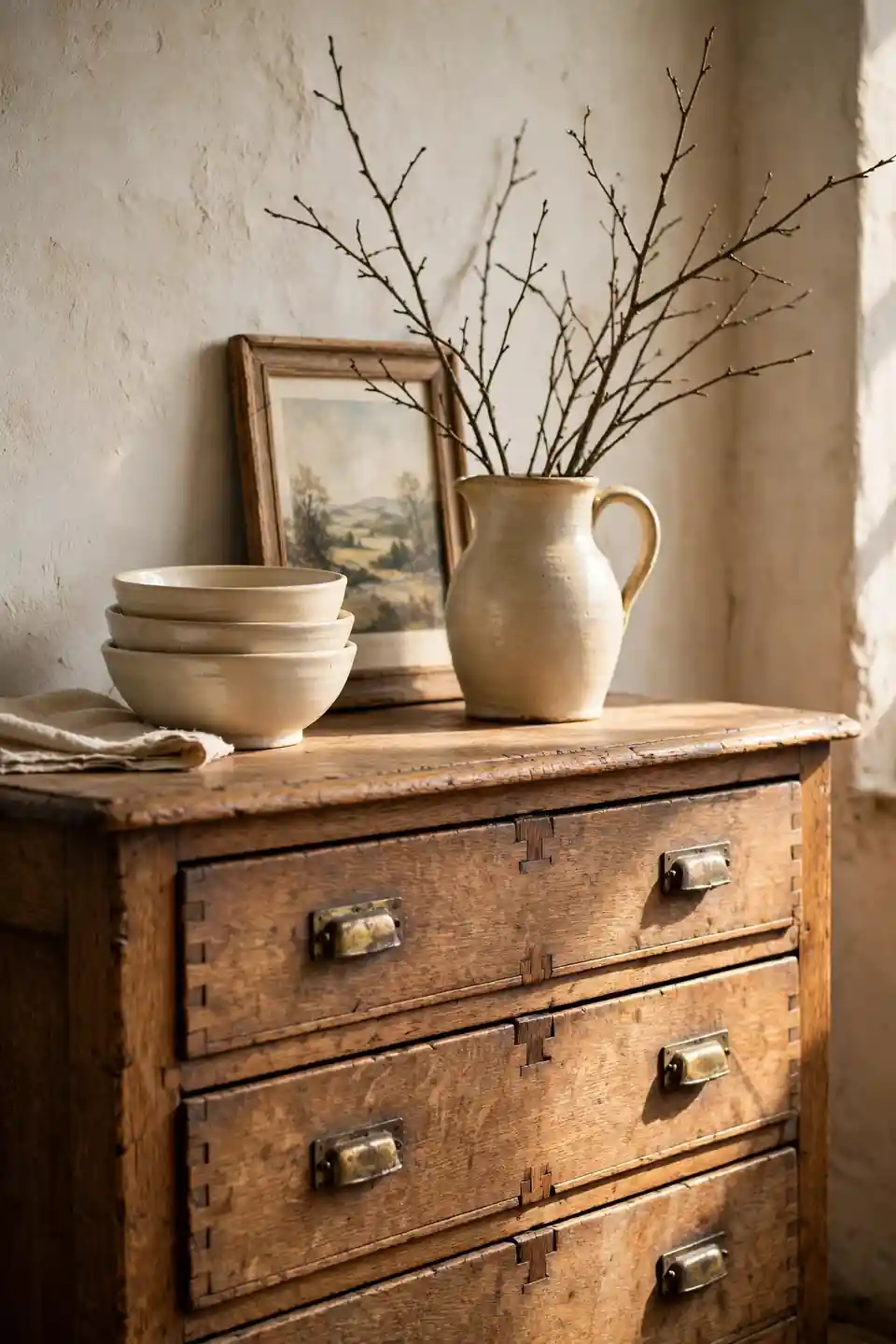
What You Need: A vintage sideboard, soft cloths, wood oil, a level, and one free afternoon.
- Measure your wall and pick a sideboard with at least two inches of breathing space on each side.
- Clean the wood gently, then feed dry patches with oil until the grain glows again.
- Style the top in threes: stacked bowls, a pitcher of branches, and one framed print.
- Store linens and serving pieces inside so beauty and storage share the same footprint.
Flea markets and estate sales hide the best sideboards, often for less than flat pack furniture. Solid old wood carries dovetail joints and hardware that new pieces rarely match. Give a found piece one patient afternoon, and it will anchor your dining room for decades.
Plaster Wall Finish
| Feature | Limewash Paint | Trowelled Plaster |
|---|---|---|
| Cost Per Wall | Low | High |
| Application Time | One weekend | Several days |
| Texture Depth | Soft and cloudy | Deep and stonelike |
| Best For | Beginners and renters | Forever homes |
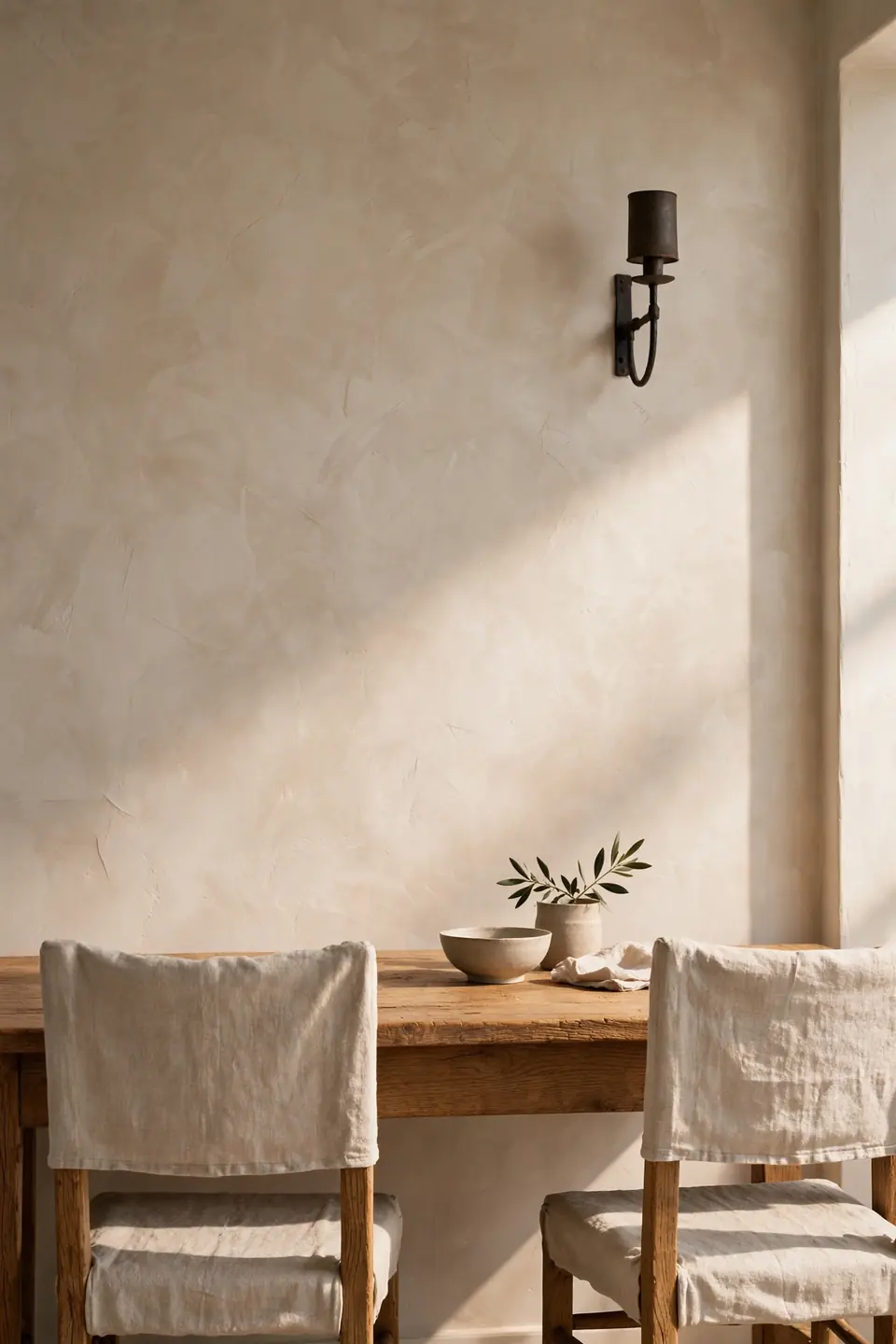
Both finishes soften a dining room far better than flat paint, because light moves across them all day. Limewash wins for beginners and renters, since mistakes brush out with another coat. Trowelled plaster rewards patience with real depth and a cool, stone like touch. Whichever route you choose, test a large sample board first and watch it through morning and evening light before covering the whole wall. Both finishes reward one slow, patient weekend of work.
Earthenware Table Settings
Do:
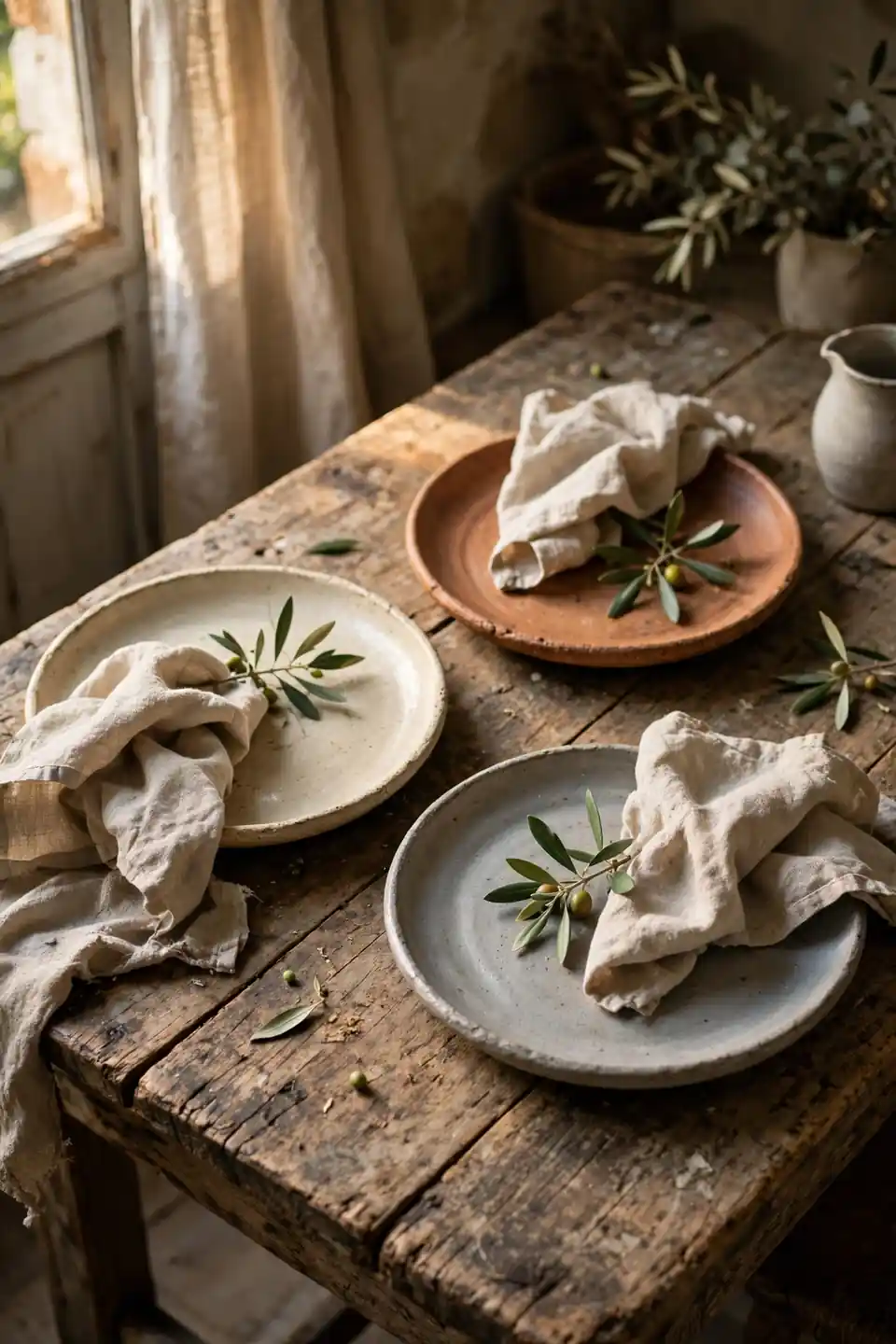
- Stack handmade stoneware plates with slightly uneven rims.
- Mix cream, clay, and gray glazes instead of matching sets.
- Set out linen napkins, loosely folded beside each plate.
- Add one small herb sprig or olive branch on top for a garden touch.
Don’t:
- Avoid glossy porcelain that fights the rustic mood.
- Skip plastic or melamine, which cheapens the whole table instantly.
- Never crowd settings with extra glasses nobody will actually use.
- Avoid scented centerpieces that compete with the food being served.
Earthenware carries a friendly weight that makes simple meals feel considered. Guests relax when nothing on the table feels too precious to touch. Start with eight dinner plates from a local potter or a thrift shelf, then build slowly as pieces appear.
Woven Rush Seat Chairs
Cost: Moderate for handmade, low for vintage finds
Time: One weekend to source and clean a set
Skill Level: Beginner, no tools needed beyond a soft brush
Best For: Farmhouse tables and sunlit rooms that need texture
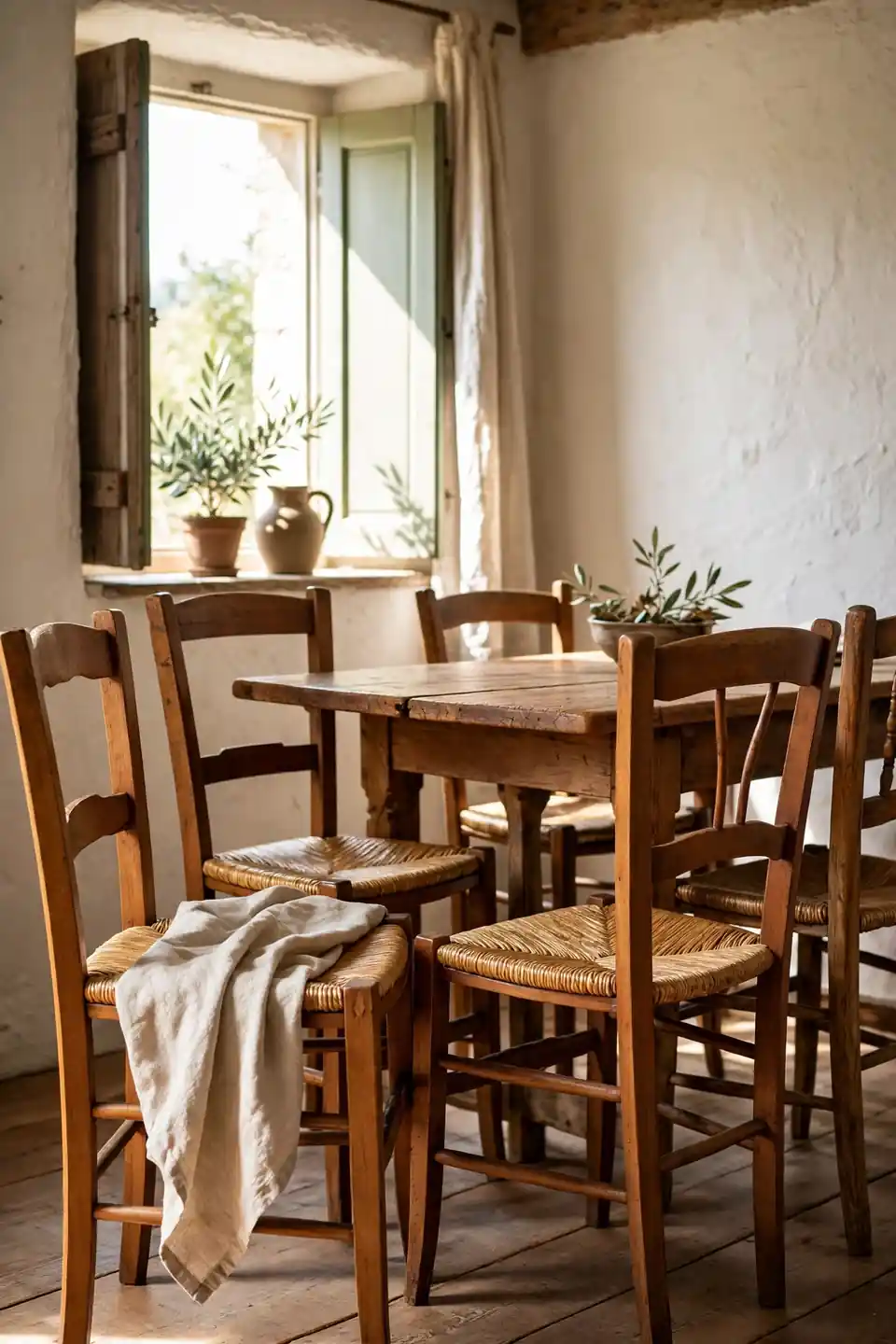
Rush seats bring the countryside indoors with their golden weave and gentle give. A set of mismatched rush chairs around one table looks collected rather than careless, especially when the wood tones stay close cousins. Check vintage seats for sagging, since reweaving costs more than the chairs themselves. A light brush and a day in fresh air revive most dusty finds, and the woven seats stay comfortable through the longest holiday lunches.
Exposed Wooden Ceiling Beams
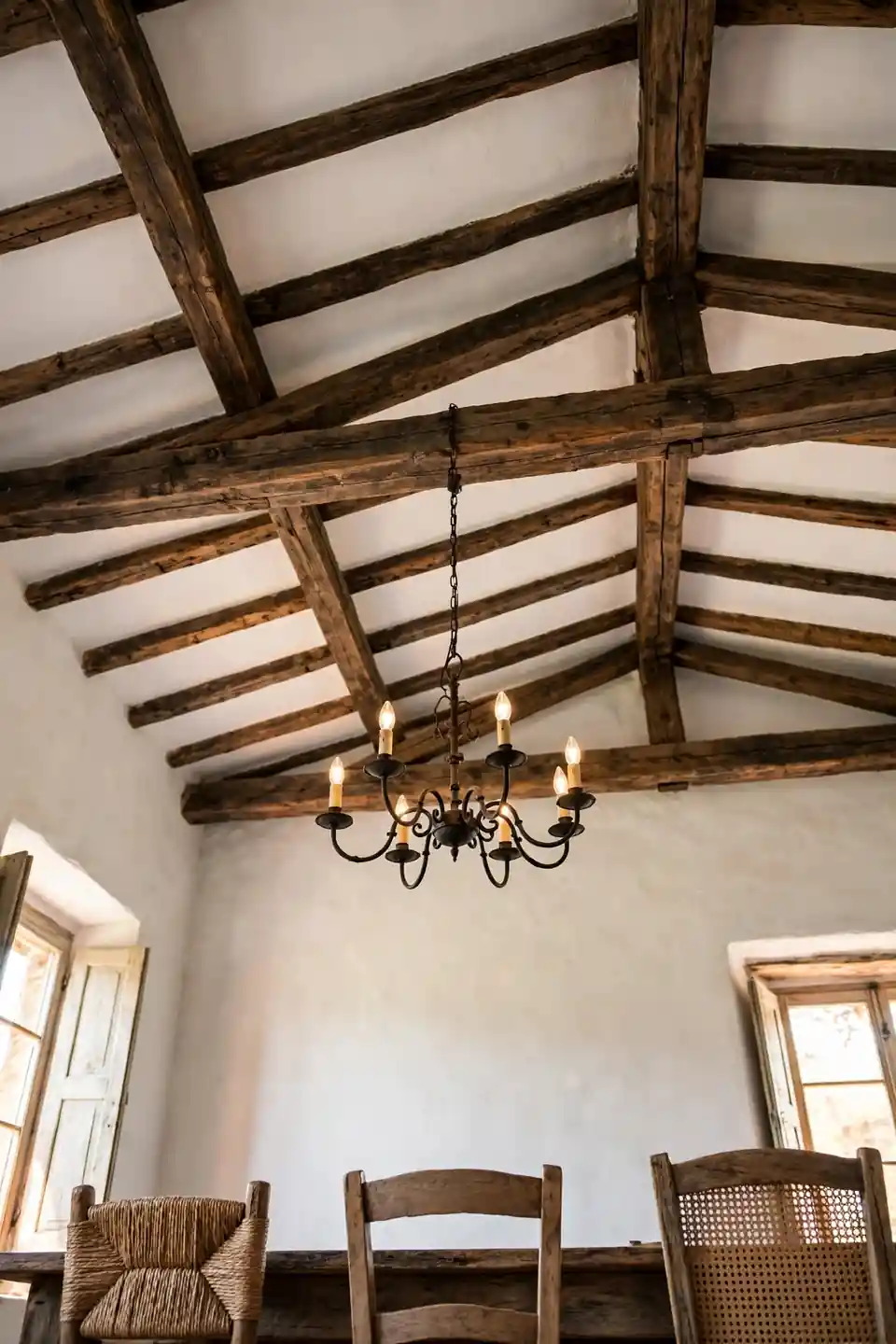
Nothing changes a plain dining room ceiling faster than honest wood overhead. Real reclaimed beams carry saw marks and nail holes that new lumber simply cannot fake. Even two beams across a modest room pull the eye up and make the space feel older, calmer, and somehow more welcoming at dinner time.
Faux beams built from stained pine boards offer the same silhouette at a kinder weight and price. Keep the finish matte and slightly grayed so the wood reads aged, not orange. Pair beams with simple iron lighting below them, and let the ceiling do the talking while walls stay quiet and pale.
Vintage Bread Board Collection
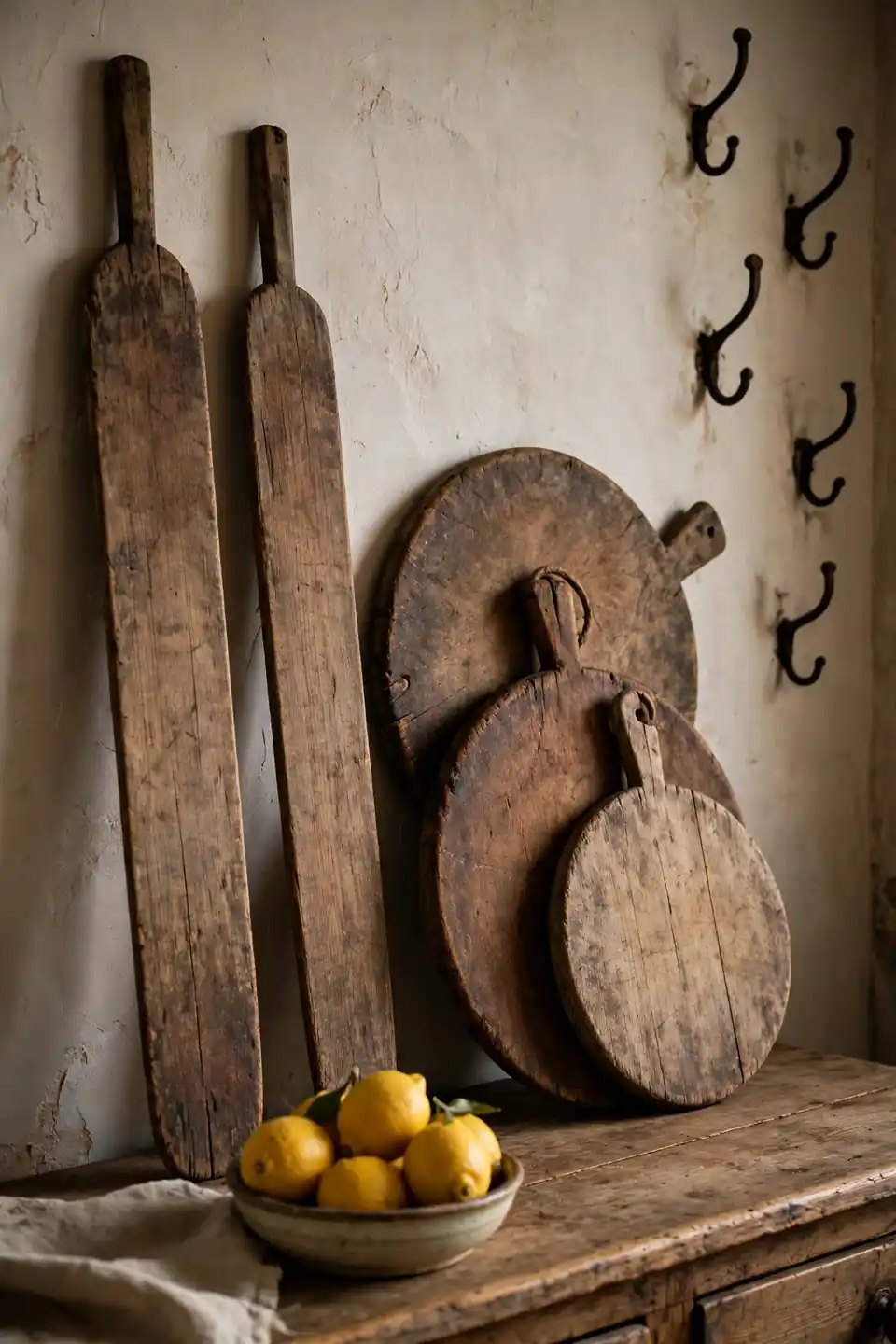
- Collect boards in varied shapes, from long baguette paddles to round serving rounds.
- Lean larger boards against the wall behind the sideboard as simple art.
- Hang a row of three on iron hooks where the light catches the grain.
- Serve cheese, bread, and fruit directly on the boards during gatherings.
- Oil dry boards monthly with food safe oil to keep the wood rich.
Bread boards earn their wall space because they work twice, as decor all week and as serving pieces on Saturday. Thrift stores price them low, and small cracks only add character. Group boards by tone rather than size, and the collection looks planned instead of piled. Guests always end up asking where each board came from.
Linen Table Runner Layers
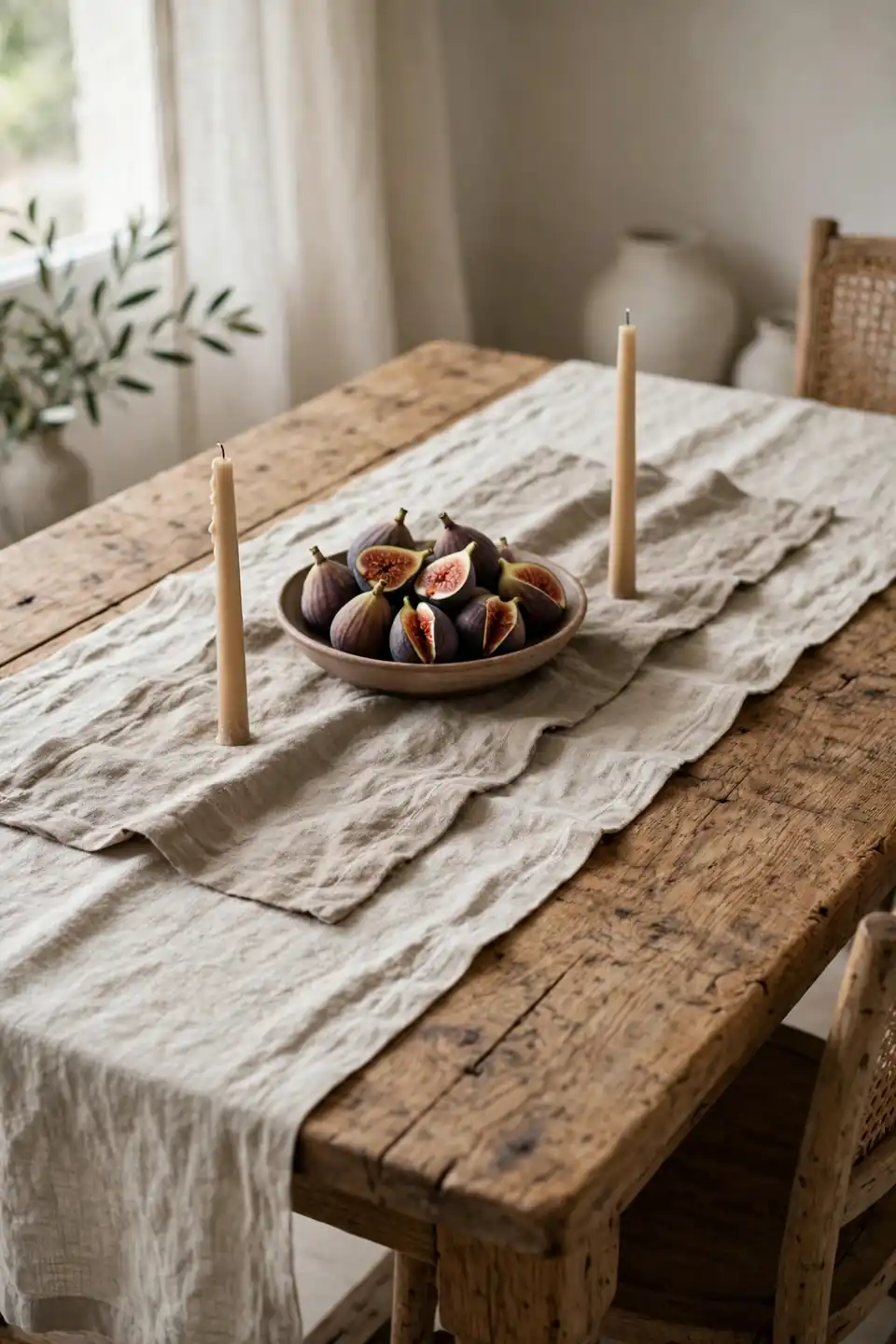
Quick Tip: Layer two runners in slightly different natural shades, one long and one short across the middle. The offset edges create depth, and crumbs shake out in seconds after dinner.
A bare wooden table can feel stark between meals, while a full tablecloth hides the grain you paid for. Runners split the difference beautifully. Natural linen softens the center line of the table, protects the finish from hot dishes, and gives candles and bowls a calm base. Choose washed linen with a relaxed fringe, and rotate shades with the seasons, flax in summer and a deeper mushroom tone when the evenings turn cold.
Arched Window Treatments
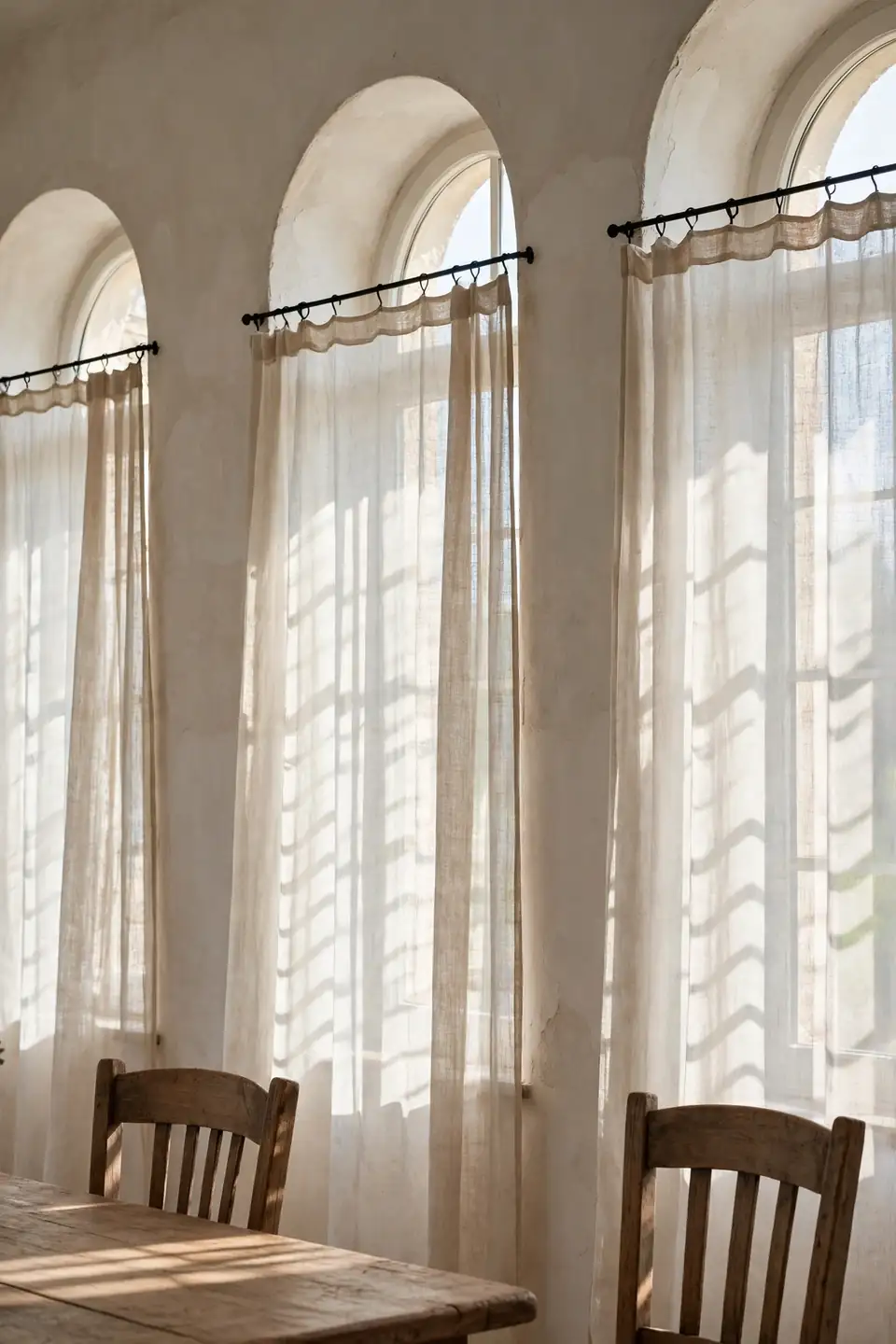
BEFORE: Heavy lined drapes swallowed the arched windows and ate half the daylight. The room felt formal in the wrong way, like a hotel function room nobody had booked.
AFTER: Sheer linen panels now hang from simple iron rings, pooling just at the sill. Light pours through in soft stripes, and the arch shape finally reads as architecture instead of a problem to hide.
Arched windows deserve fabric that follows their curve or stays politely below it. That soft filtered glow is the light rustic European dining room decor is famous for, flattering faces and food alike. Keep hardware black and simple so the linen and the window shape share the attention.
Rustic Bench Seating
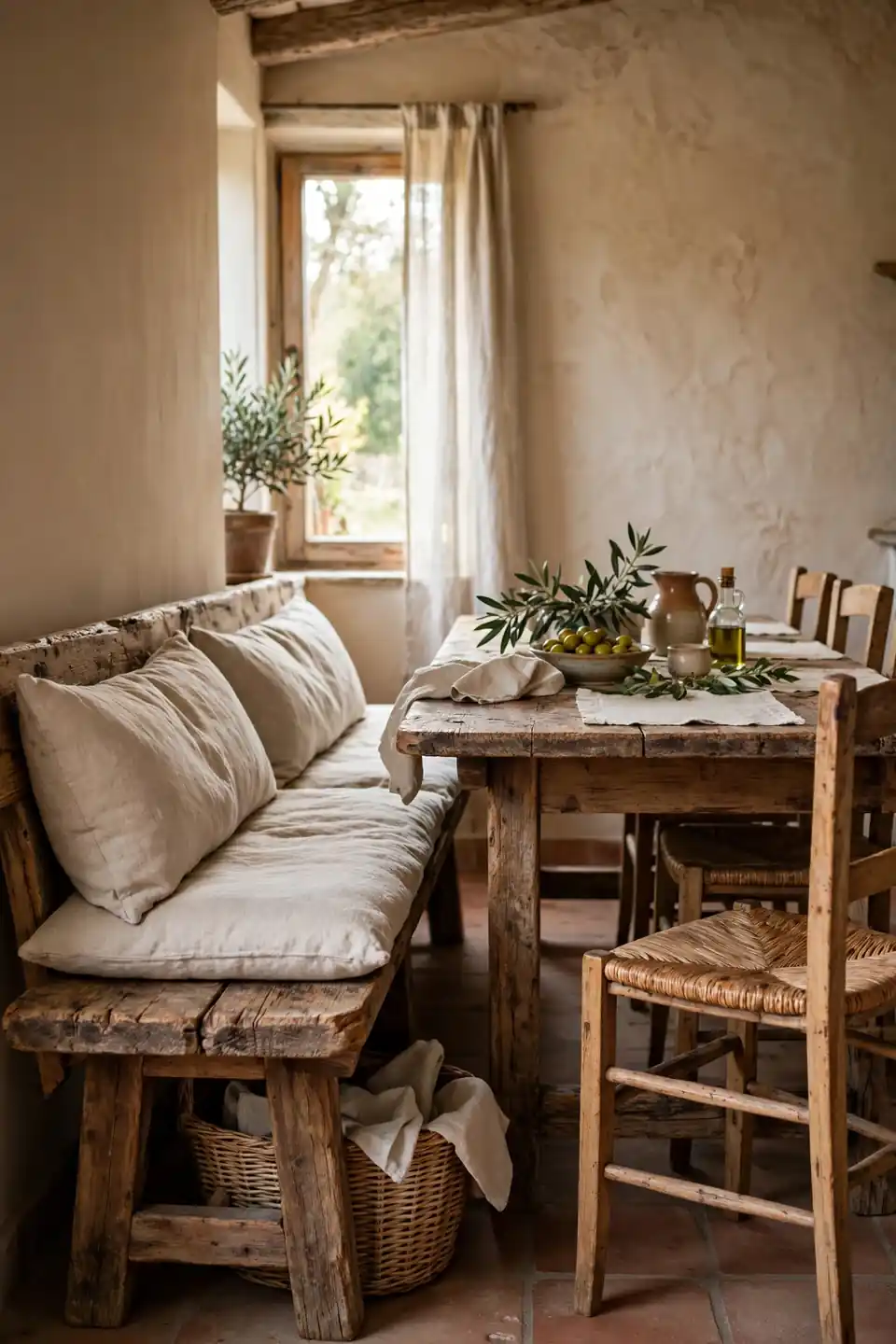
What You Need: A sturdy bench, two washable cushions, and a tape measure.
- Measure the table length and choose a bench at least ten inches shorter.
- Check the height against your chairs so everyone sits at one comfortable level.
- Add long linen cushions in a washable natural weave for softer, longer meals.
- Slide the bench fully under the table between meals to free up floor space.
A bench on one side of the table changes the whole social shape of dinner. Kids pile in happily, extra guests squeeze without a chair hunt, and the open side keeps the room feeling airy. Benches also suit narrow rooms where chair backs would crowd the walking path.
Aged Terracotta Floor Tiles

| Feature | Real Terracotta | Porcelain Lookalike |
|---|---|---|
| Cost | Moderate to high | Low to moderate |
| Feel Underfoot | Cool and earthy | Smooth and even |
| Aging | Deepens for decades | Stays unchanged |
| Best For | Forever homes | Busy households |
Terracotta floors ground a dining room like nothing else, their warm clay tones shifting from rose at noon to deep amber by candlelight. Real tiles need sealing and reward you with a surface that improves for decades. Porcelain copies ask almost nothing and still deliver the color story. Either way, choose large formats with soft, uneven edges so the floor reads handmade rather than machined. Guests notice that warmth before they notice anything else in the room.
Dried Herb Bundle Decor
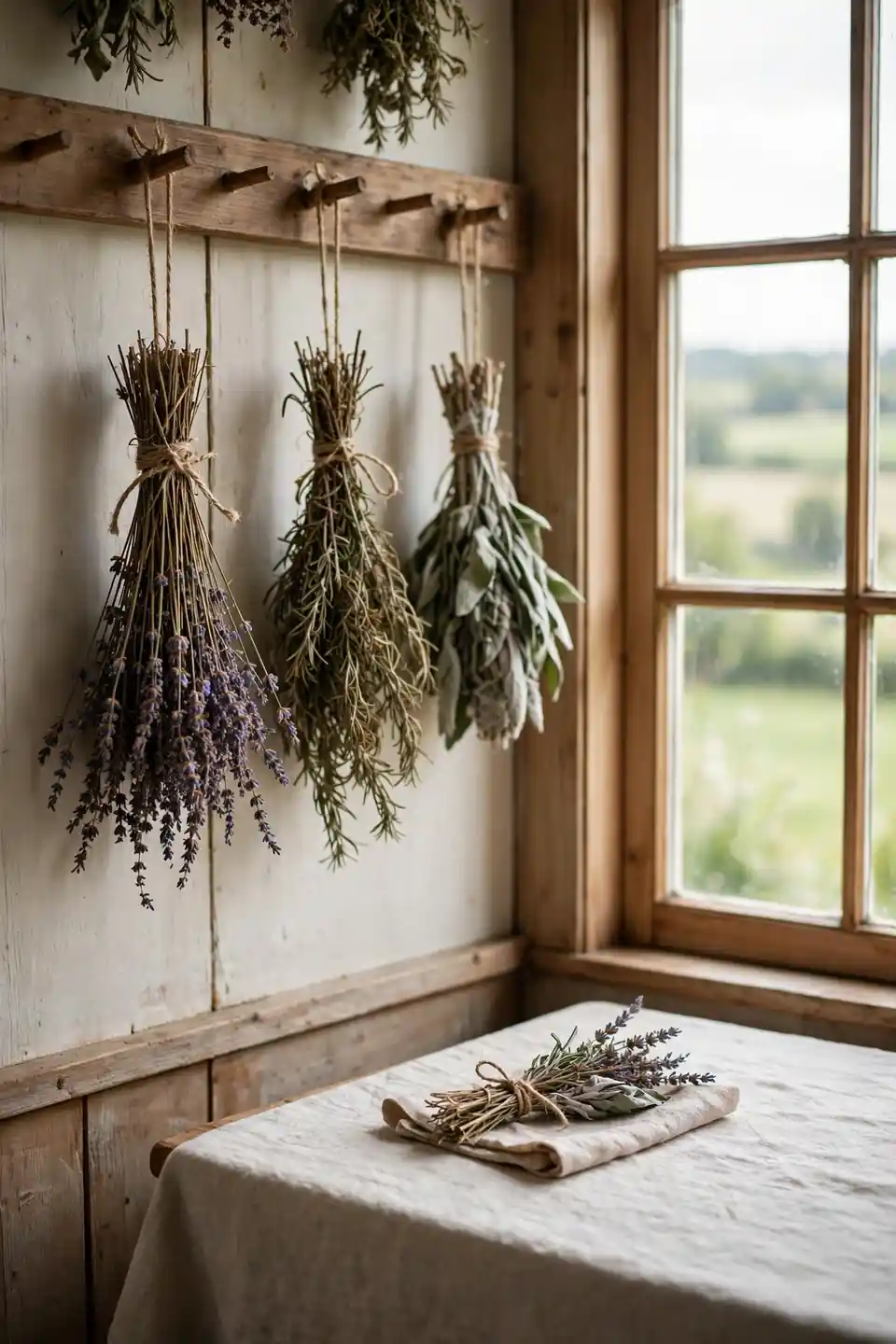
Do:
- Hang bundles of lavender, rosemary, and sage by the window.
- Tie stems with twine and let the ends stay uneven.
- Swap bundles each season so colors and scents follow the garden calendar.
- Rest one small bundle across each napkin.
Don’t:
- Avoid dusty bundles older than a year, since scent and color fade fast.
- Skip artificial herbs, which read as plastic the moment guests sit down.
- Never hang herbs where steam from hot dishes rises straight into them.
- Avoid overpowering scents at the table during meals with delicate flavors.
Herb bundles cost almost nothing and give the room a gentle, living scent that candles cannot match. Gardeners can dry their own surplus in late summer, hanging stems upside down in a dark cupboard for two weeks.
Candlelit Lantern Centerpieces

Cost: Low, thrifted lanterns and pillar candles
Time: Twenty minutes to arrange
Skill Level: Beginner, no tools required
Best For: Evening dinners and holiday tables
Glass and iron lanterns protect flames from breezes and curious little hands, so the table can glow safely through a whole evening. Group three lanterns of different heights down the table center, then fill the gaps with greenery cut from the garden. Candlelight flatters every face and every finish in the room, forgiving scratches on old wood and making simple food look generous. Keep spare pillars in the sideboard so a burnt down candle never ends the mood early.
Open Shelf Dish Display

Open shelves turn everyday dishes into the room’s artwork. Cream stoneware, stacked bowls, and a row of glasses catch light in a way closed cabinets never allow. Two chunky wood shelves above a sideboard give a dining room instant farmhouse character.
Edit ruthlessly or the shelves turn into clutter with good lighting. Keep only what you use weekly, group by color, and leave breathing gaps between stacks. Everyday pieces earn the front row, while the good platters rest higher up. Dusting takes five minutes with a long handled brush, a fair trade for a wall that works this hard. The display earns that small effort every single day.
Distressed Wood Hutch

- Hunt for a hutch with plate grooves already carved into the shelves.
- Keep original hardware whenever possible, since old iron carries real charm.
- Style the top shelves with cream pitchers, bowls, and stacked platters.
- Store table linens and candles in the closed cupboards below.
- Leave one shelf partly empty so the display can breathe.
A hutch gives a dining room the settled feeling of a house that has hosted a thousand meals. Painted versions in soft sage or cream lighten dark corners, while bare pine suits brighter rooms. Measure your ceiling height carefully before buying, because old hutches stand tall and proud.
Grain Sack Upholstery
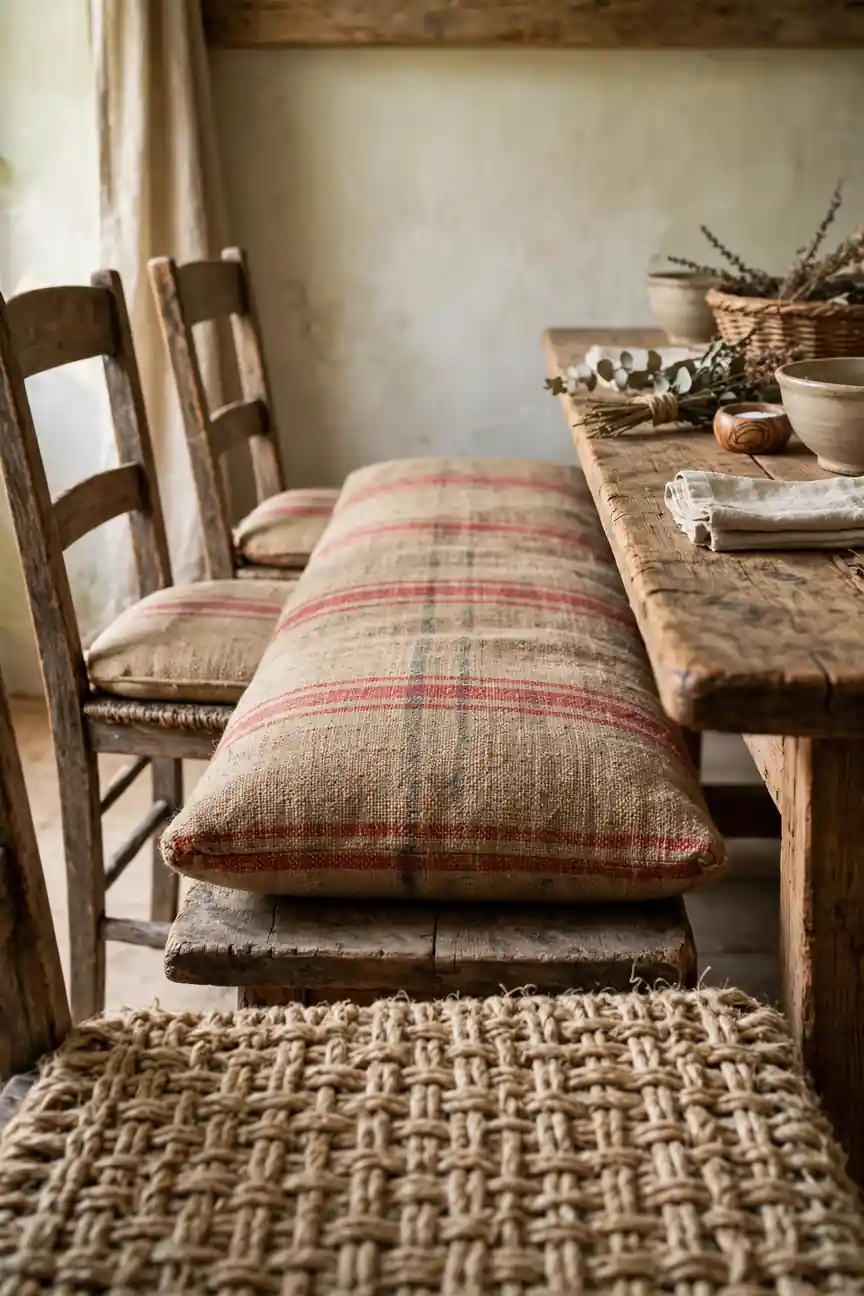
Quick Tip: Real vintage grain sacks carry stripes in faded red or blue, and no two match exactly. Embrace the mismatch across a bench or chair seats, because perfect uniformity would ruin the collected charm.
Grain sack fabric was woven to survive farm work, so it laughs at dining room wear. The nubby hemp and linen weave hides crumbs, shrugs off spills after a quick blot, and softens with every wash. Upholster chair seats or a long bench cushion in it, and the whole table gains texture without a single new color fighting for attention. It also pairs happily with everything already in the room.
Farmhouse Table Centerpiece

BEFORE: A tall floral arrangement blocked every conversation, and guests leaned sideways just to talk. Petals dropped into plates all evening long. The table felt dressed for a magazine instead of a meal.
AFTER: A long wooden dough bowl now holds moss, three pillar candles, and a scatter of walnuts. Faces stay visible, talk flows easily, and the centerpiece survives the whole season without one fresh flower run.
Low, long centerpieces suit the way people actually eat and talk. Build one base arrangement and refresh it monthly, pinecones in winter, lemons in spring, apples at harvest. The dough bowl itself can host bread on ordinary Tuesdays, which is exactly how farmhouse pieces should earn their place.
Wrought Iron Wall Sconces

What You Need: Two iron sconces, candle or LED inserts, a drill, and wall anchors.
- Mark sconce positions at eye level, roughly flanking the sideboard or a large mirror.
- Check the marks from the table seats, since seated sight lines matter most.
- Fit warm LED candles if real flames worry you near curtains or shelves.
- Wire or charge inserts on a timer so the glow arrives with dusk daily.
Sconces free the table from lamp clutter while washing the walls in soft light. The same thinking shapes the sculptural wall sconce living room ideas I shared recently, and the two rooms echo each other beautifully. Iron suits this style best, its dark lines rhyming with the chandelier overhead.
Mixed Wood Tones
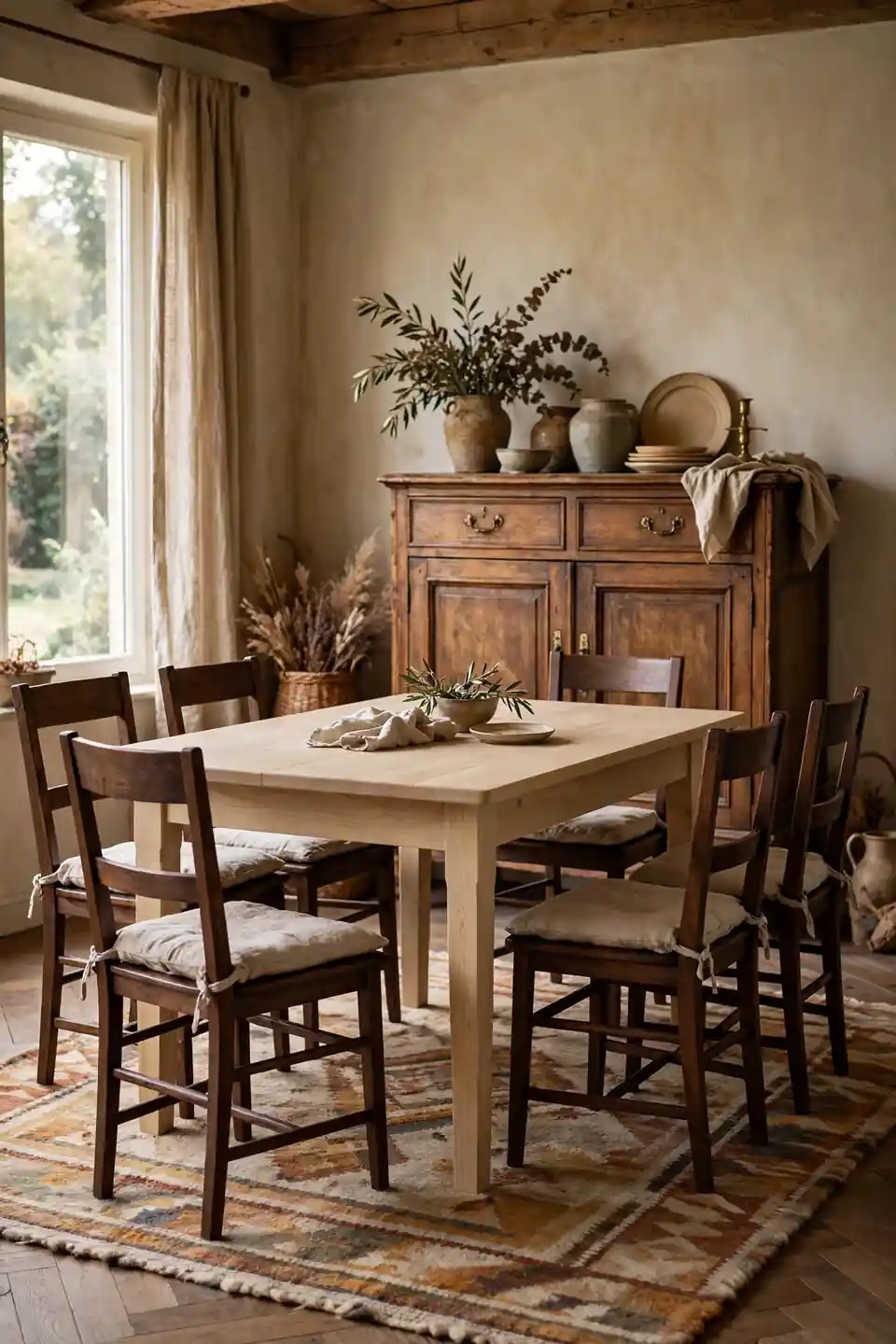
| Feature | One Wood Throughout | Mixed Wood Tones |
|---|---|---|
| Character | Flat and showroom new | Layered and collected |
| Shopping Ease | Hard to match exactly | Flexible and forgiving |
| Risk | Boring quickly | Clashing undertones |
| Best For | Minimal modern rooms | Rustic gathered rooms |
Matching every wood in a room sounds safe, yet the result often reads flat and showroom new. Mixing tones, pale oak beside dark walnut, gives each piece its own voice. Keep the undertones consistent, all warm or all cool, and repeat each tone at least twice so the mix looks deliberate. A light table with dark chairs and a mid tone sideboard is the classic rustic triangle.
Cozy Wool Rug Layer
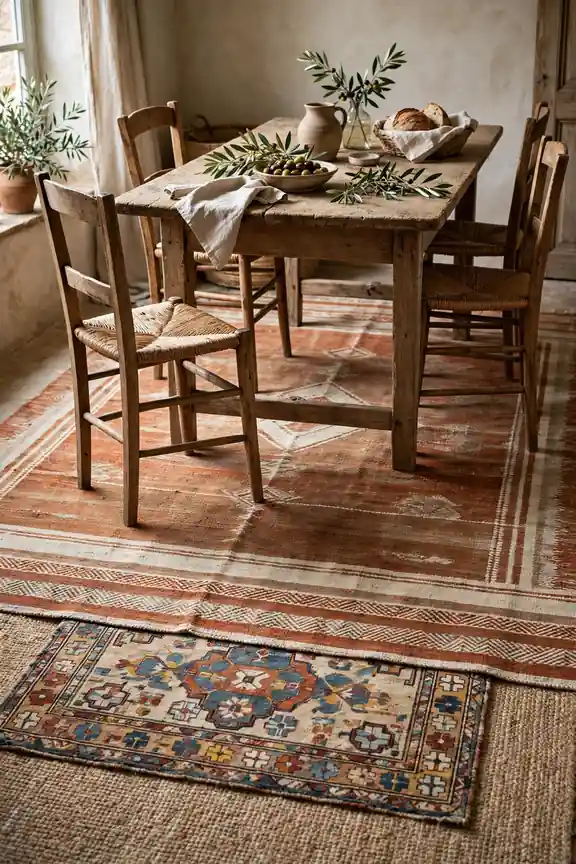
Do:
- Choose a flat weave wool rug large enough for chairs to stay on it.
- Pick warm, muddy tones that forgive crumbs and muddy paw prints gracefully.
- Layer a smaller vintage rug over a plain jute base for extra pattern.
- Vacuum with a suction only setting to protect the wool fibers.
Don’t:
- Avoid pure white rugs that record every spill like a diary.
- Skip thick shag piles that trap chairs and crumbs alike.
- Never place a small rug that leaves front chair legs stranded off the edge.
- Avoid synthetic rugs that shine under warm evening light.
A wool rug quiets a dining room in every sense, softening footsteps, chair scrapes, and echoing talk. The room instantly feels warmer in winter, and bare feet approve in summer too.
Conclusion
Start small and let the room grow the way real farmhouse rooms do, one honest piece at a time. A weathered table, a pair of linen chairs, and a bowl of garden herbs can already shift how dinner feels. That is the quiet strength of rustic European dining room decor: it welcomes people in and asks them to stay a little longer. I’ve seen how small changes like these can completely shift the way a space feels. Save this post on Pinterest for your next slow weekend project, try two or three ideas first, and share your finished table with someone who loves a long, cozy meal.