20 Decorative Ceiling Medallion Interior Ideas for Vintage Charm
Plain ceilings are the most ignored surface in most homes, yet one ornate rosette can change how a whole room feels. That is the quiet power of decorative ceiling medallion interior ideas: a ring of plaster detail that gives a light fixture a proper setting and gives the room a finished, collected look.
Start with one room, match the medallion to the scale of your light, and keep the palette soft. The same respect for older details behind European farmhouse bedroom inspiration shows up here too, just overhead instead of underfoot. I’ve seen this work well in many cases where a room felt polished at eye level but unfinished the moment anyone looked up.
Classic Rosette Chandelier Pairing

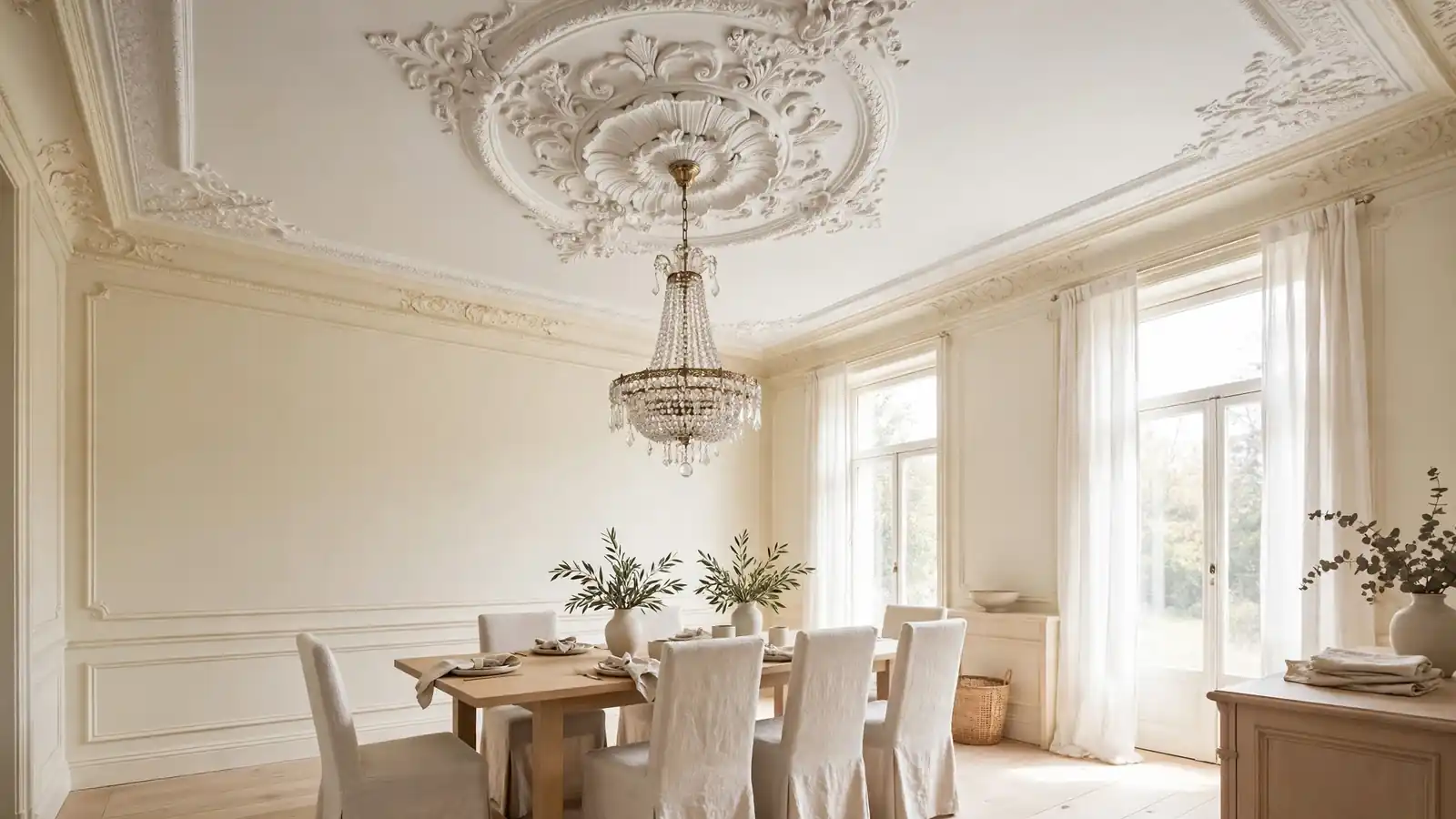
A crystal chandelier hanging from a bare ceiling plate always looks slightly unfinished, like a sentence missing its last word. A classic rosette medallion fixes that gap in one move, giving the fixture a carved frame that suits its sparkle. Choose a medallion wider than the chandelier’s widest ring of candles.
Size matters more than ornament here. A rosette roughly one and a half times the fixture diameter keeps the pairing balanced from every seat in the room. Paint it the same white as the ceiling for a quiet, tailored look, or match it to the trim if your walls carry color. In my experience, guests notice the pairing within minutes, even if they never name what changed.
Layered Double Medallion Look

- Stack a wide, shallow outer ring beneath a smaller, deeper inner rosette for instant architectural depth.
- Keep both pieces in the same finish so the layers read as one carved design.
- Center the pair on the room, not the furniture, so the ceiling composition stays balanced.
- Choose relief patterns that echo each other, like matching leaf garlands in two scales.
- Leave at least six inches of plain ceiling between the outer ring and crown molding.
Layering suits tall ceilings and formal rooms where a single medallion can look lost. Start with the outer ring in a simple profile, then let the inner rosette carry the detail. The shadow line between the two layers does most of the decorating, shifting softly as daylight moves across the room.
Oversized Statement Medallion
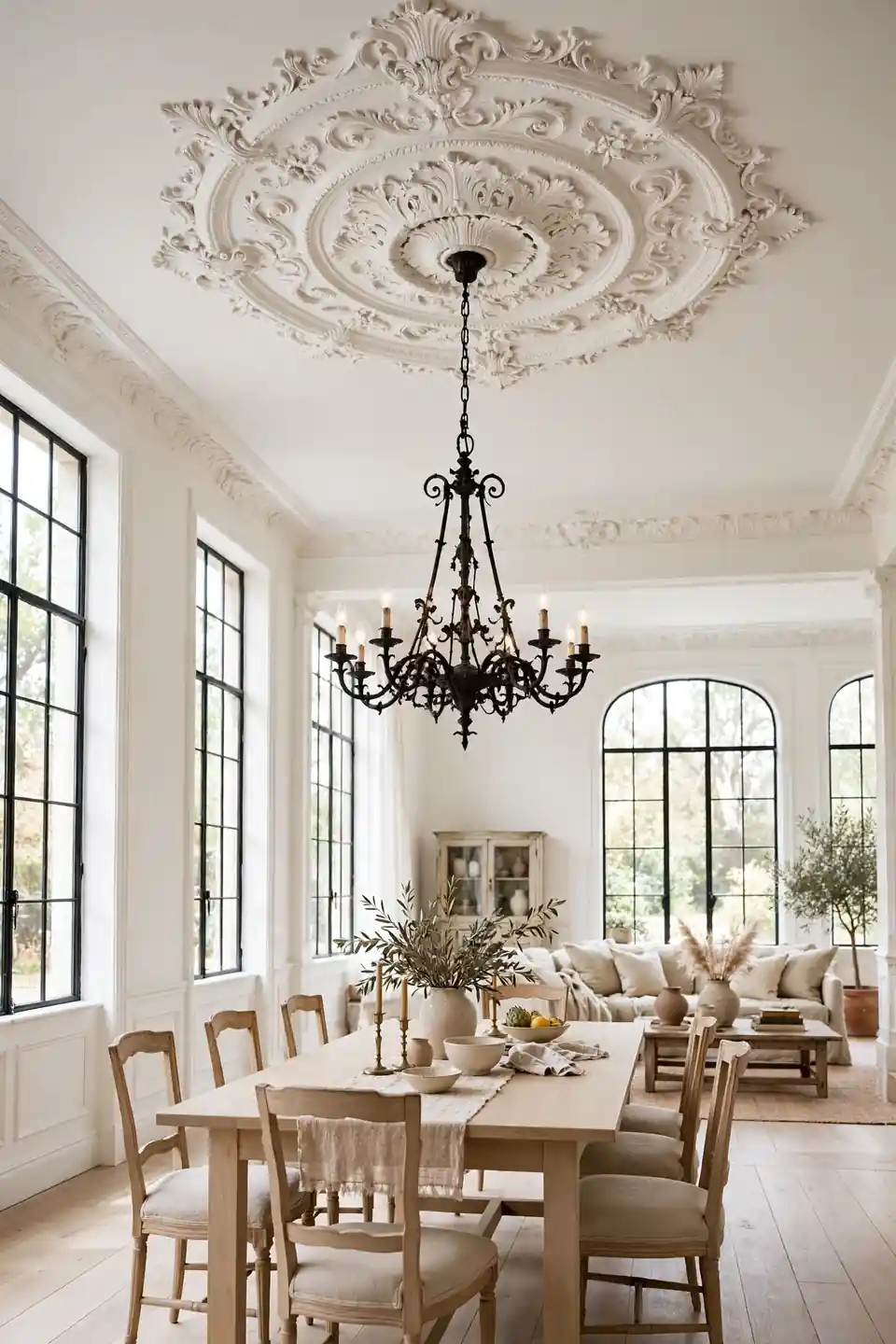
Quick Tip: Go bigger than feels safe. A medallion that spans at least half the width of the fixture below it reads as intentional architecture, while one that barely clears the canopy looks like an afterthought glued on later by a nervous decorator.
Oversized medallions earn their keep in open plan rooms, where the ceiling stretches wide and needs one strong anchor. Pair the scale with simple furniture and plain walls so the plasterwork stays the headline. I’ve noticed that a single bold medallion photographs beautifully, which explains its grip on vintage style boards. Measure twice before ordering, because returns on large plaster pieces are rarely simple.
Painted Gold Accent Medallion
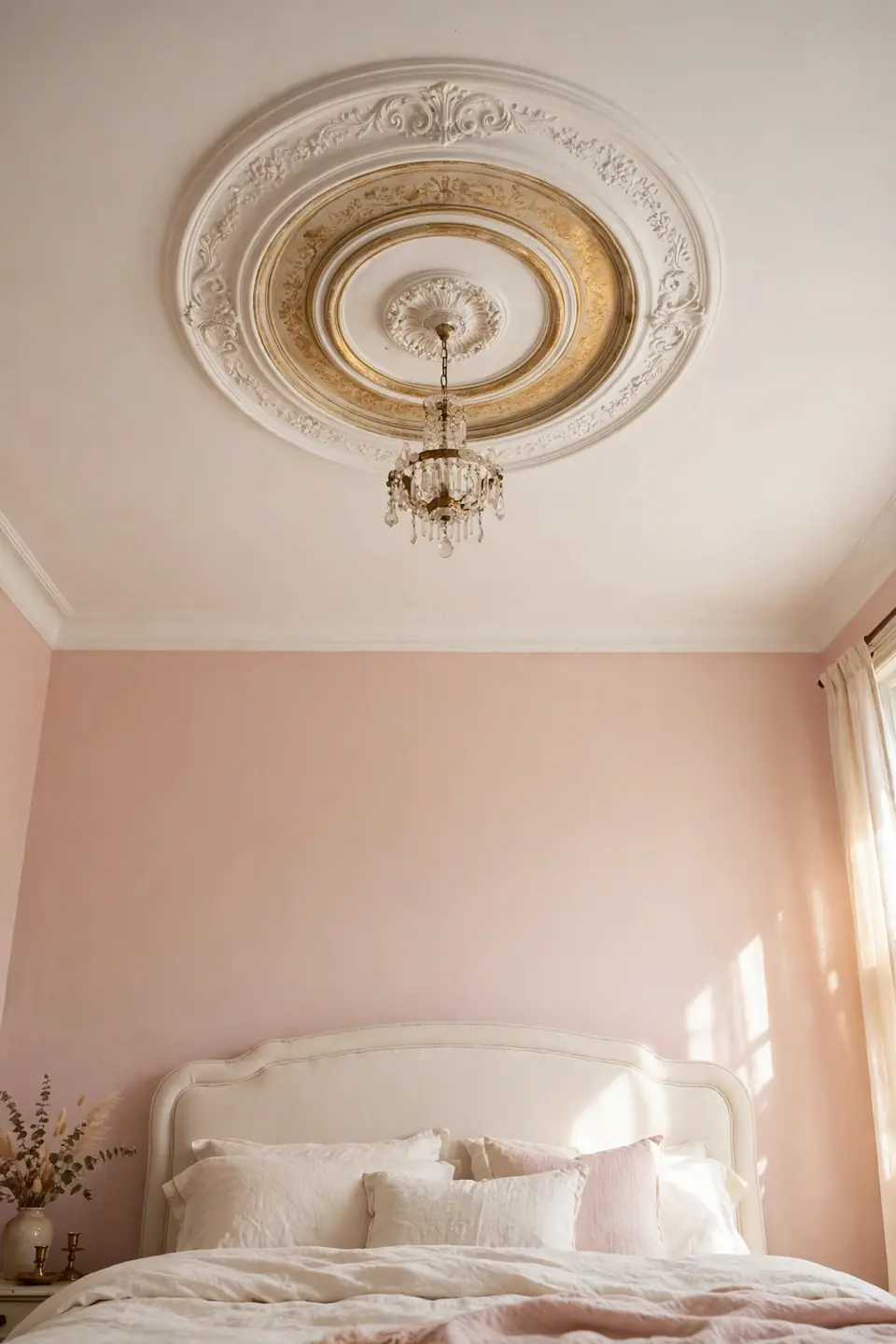
BEFORE: The bedroom ceiling was flat white from corner to corner, and the small crystal light floated on it without any frame. The room felt pretty at eye level yet somehow unfinished every time I looked up from the bed.
AFTER: A medallion with hand painted gold rings changed the mood entirely. Warm metal now catches the morning light, the fixture looks grounded, and the ceiling finally feels like part of the room instead of an afterthought above it.
Gold belongs in thin lines, not full coverage. Paint only the raised rings and leaf tips, leaving the recessed areas white so the detail reads as shadow and light. Antique gold, slightly muted, suits vintage rooms far better than bright yellow finishes.
Medallion Above Dining Table
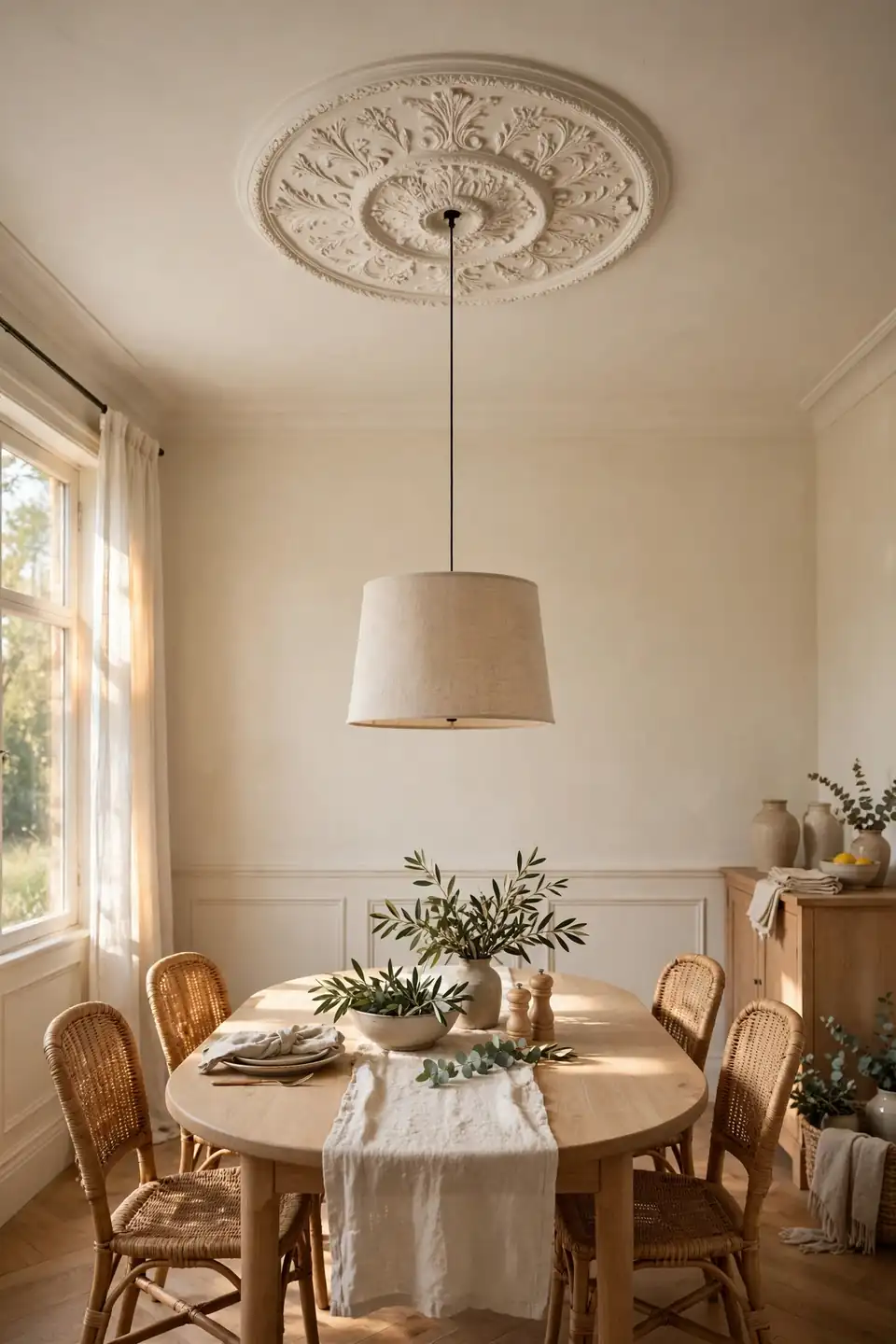
- Find the exact center of the table, then mark the ceiling point directly above it.
- Drop a plumb line or laser level from that mark before drilling anything.
- Dry fit the medallion around the electrical box and check the alignment from the doorway.
- Apply adhesive, press firmly, and support the piece with a padded pole overnight.
- Caulk the outer edge, touch up paint, and hang the pendant through the center.
Centering on the table rather than the room is the detail most people miss. Dining tables rarely sit at the room’s true center, and a medallion aligned to the ceiling grid instead of the table looks off in every photograph. Align to the table, and the whole setting composes itself.
Plaster Versus Polyurethane Medallions
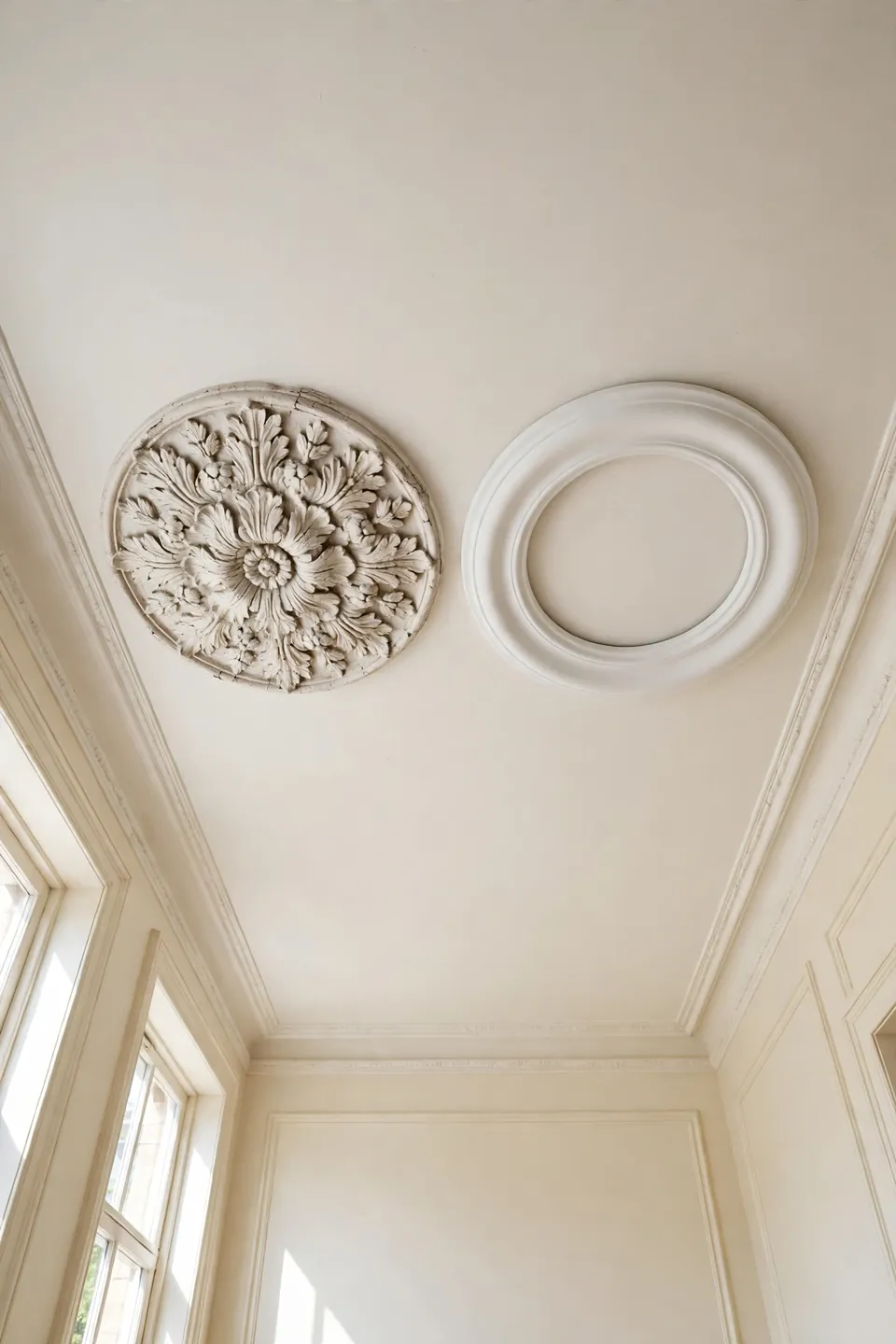
Both materials hang in beautiful rooms, but they age, cost, and feel very different overhead.
| Traditional Plaster | Polyurethane |
|---|---|
| Crisp, deep carved detail | Softer, molded detail |
| Heavy, needs secure fixing | Lightweight, adhesive friendly |
| Higher cost, artisan made | Lower cost, widely stocked |
| Lasts generations, repairable | Can dent, harder to repair |
Weight alone settles many arguments. Choose plaster for a forever home where the ceiling deserves real craft, and polyurethane for rentals or quick refreshes where weight matters. Painted well, both read as vintage from floor level, so the honest deciding factors are budget, ceiling condition, and how long the room will stay unchanged.
Medallion With Ceiling Beams
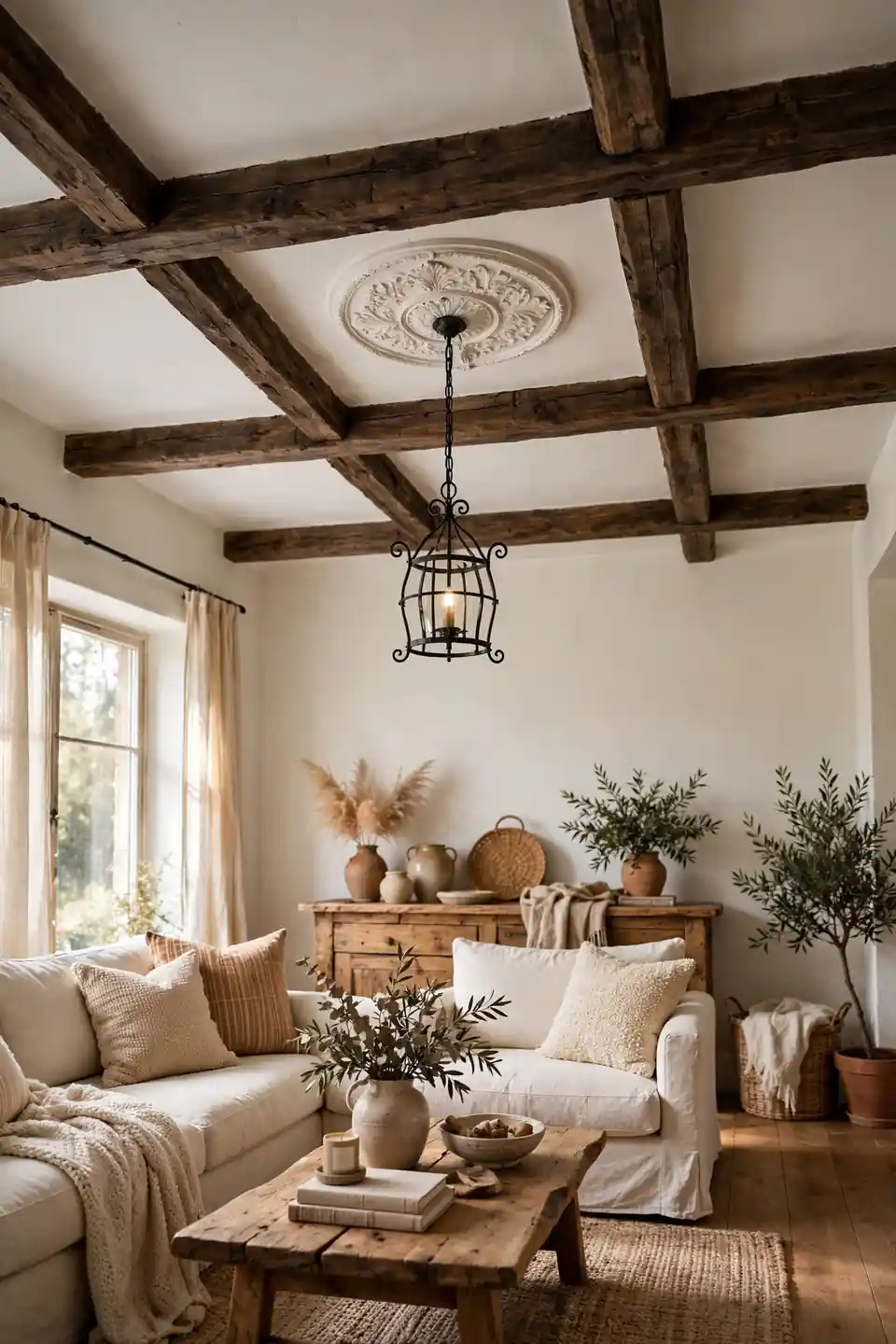
Do:
- Place the medallion in the center panel between beams so both elements share the ceiling calmly.
- Match medallion diameter to the beam spacing rather than the room size.
- Keep the medallion finish quieter than the beams so the wood stays the bold element.
Don’t:
- Do not let a medallion overlap a beam; the collision looks like a measuring mistake.
- Avoid busy relief patterns that compete with strong wood grain overhead.
- Skip glossy paint on the medallion, since shine fights the matte beams.
Beams and medallions both claim the ceiling, so one must lead and the other support. Dark beams almost always lead. A simple, smooth edged medallion in the same white as the ceiling panels supports them quietly, framing the pendant without starting an argument overhead.
Small Room Medallion Scale
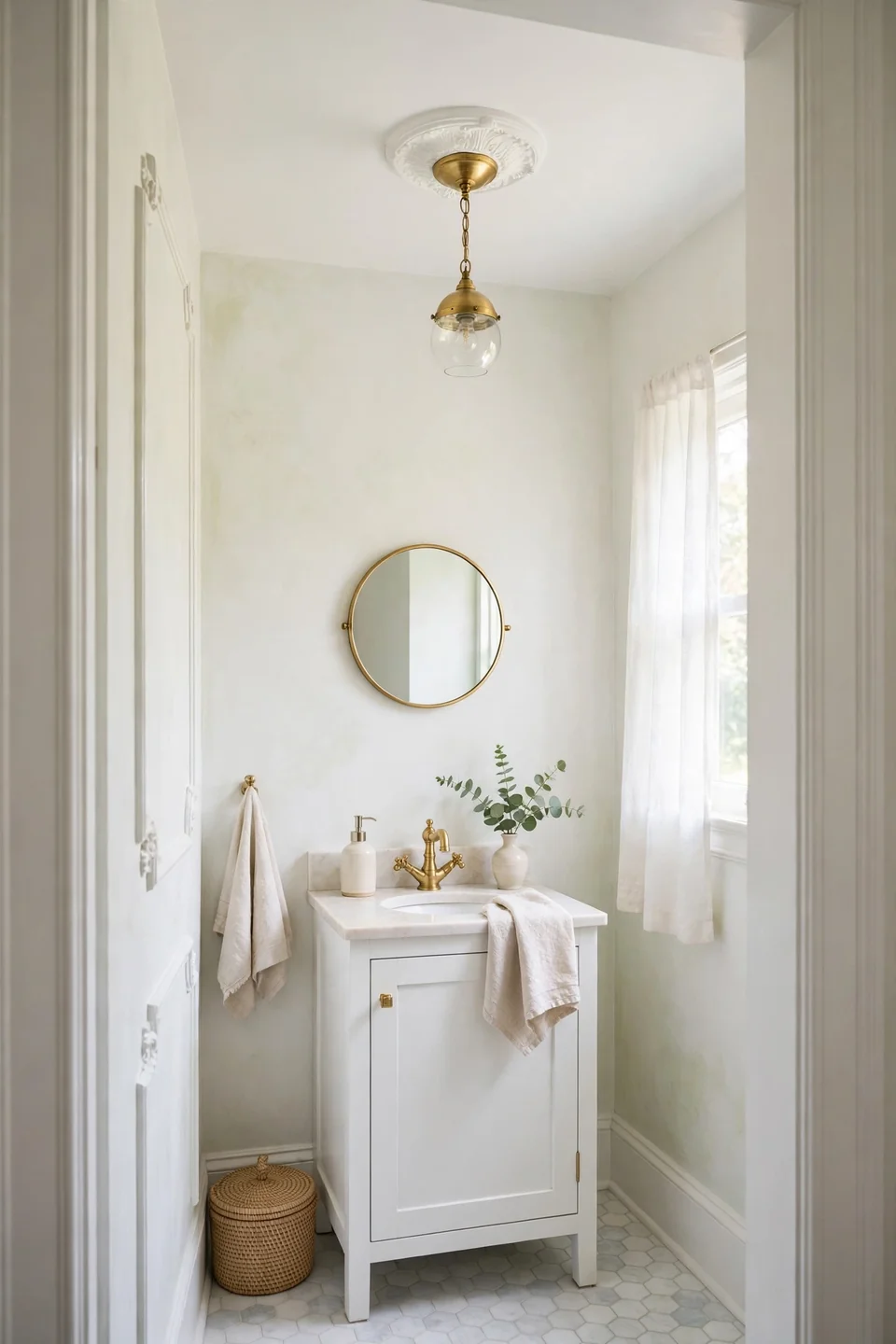
Cost: Low, small medallions are the cheapest in every range | Time: One afternoon including paint | Skill Level: Beginner with basic tools | Best For: Powder rooms, hallways, and compact bedrooms that need a finished ceiling
Small rooms punish oversized gestures, yet a modest medallion still earns its place. Keep the diameter close to the width of the fixture below, and choose shallow relief that will not press down on a low ceiling. The goal is a finished look, noticed on the second glance rather than the first. Painted ceiling white, a small medallion reads as part of the architecture, which is exactly why it works in tight spaces where every inch is already doing two jobs.
Vintage Floral Relief Medallion
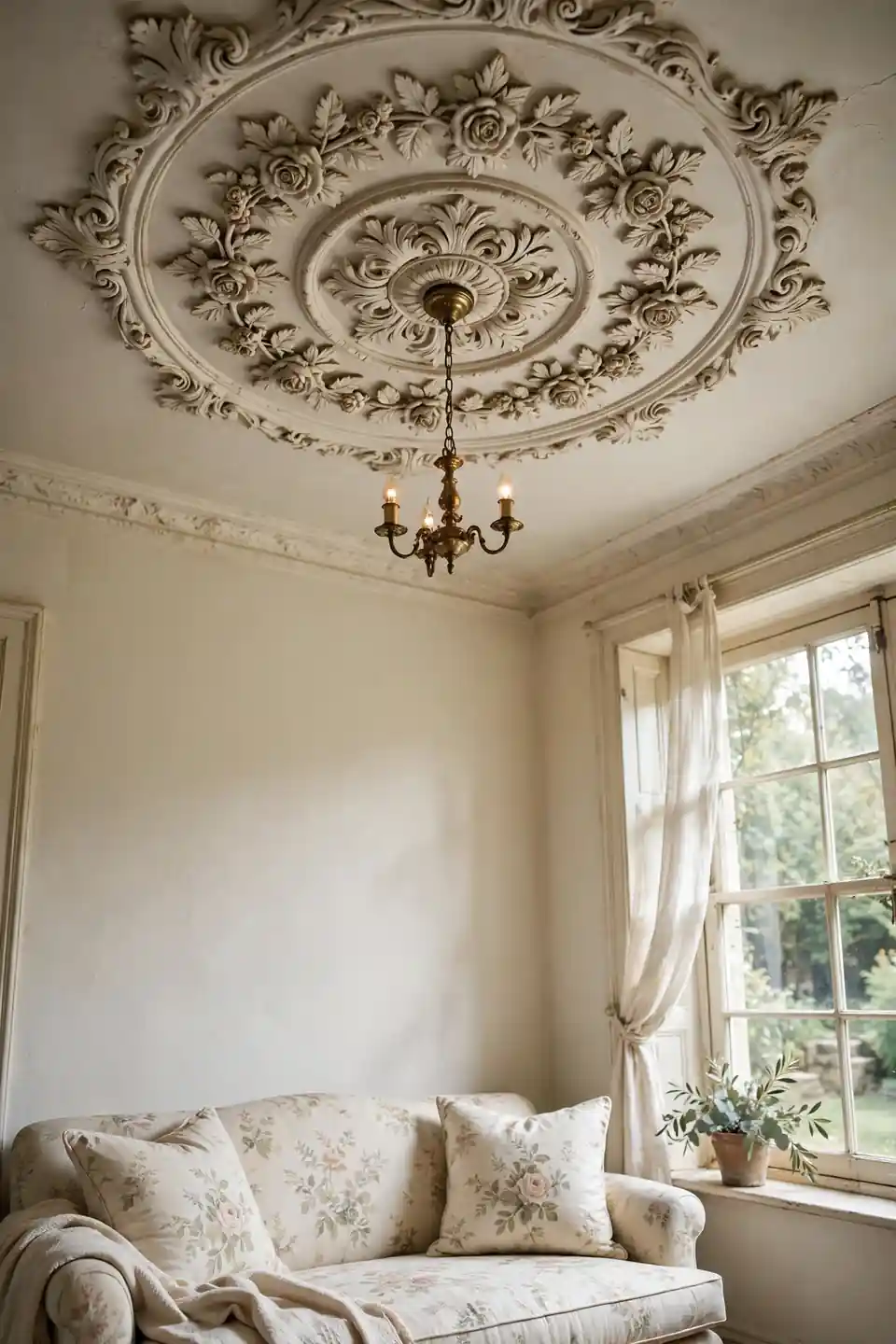
Floral relief is the oldest medallion language of all, borrowed from plaster ceilings in Georgian and Victorian parlors. Roses, acanthus leaves, and ribbon knots circle the light in a quiet garland, adding romance without a single bright color. Hung above a plain fixture, the carving does all the talking.
Buy the best relief your budget allows, because shallow floral molds look flat from below. Deep undercut petals catch real shadows, and those shadows are the whole effect. Keep the surrounding ceiling plain and the walls soft, and repeat one small floral note below, like a cushion print, to tie the room together.
Medallion Over Entryway Console

- Center the medallion on the pendant, and the pendant on the console below.
- Pick a diameter close to the console width so the two pieces read as a pair.
- Choose shallow relief in low entry ceilings to keep the passage feeling open.
- Repeat the medallion’s curve in a round mirror below for a calm echo.
- Keep the finish matte white in bright entries where glare shows every flaw.
Entryways set the tone for the whole house, and a medallion gives guests something graceful to notice in the first ten seconds. Scale can stay modest because sight lines are short here. The same soft texture first approach shapes cream boucle furniture living room decor deeper inside the home, where quiet detail does the work instead of loud statement pieces.
Tinted Medallion Color Wash

Quick Tip: Thin your paint with water, roughly one part paint to two parts water, and brush the wash over a white medallion. The color settles into the recesses and wipes off the raised detail, leaving soft depth instead of a flat coat.
A color wash suits rooms where an all white ceiling feels stark against colored walls. Sage, dusty blue, and pale clay all work, as long as the tint stays two shades lighter than the walls. Test the wash on the back of a spare medallion first; plaster drinks color faster than you expect, and a lighter hand can always be repeated the next day.
Medallion in Bedroom Retreat

BEFORE: The bedroom felt restful at pillow height and plain above it, with a flush mount light sitting on an empty ceiling. Nothing carried the eye upward, so the room read smaller and flatter than it really was.
AFTER: A wide, shallow medallion now frames a soft fabric shaded light above the bed. The ceiling feels finished, the light looks intentional, and the whole room gained the calm that good decorative ceiling medallion interior ideas bring to a sleeping space.
Bedrooms reward restraint more than any other room. Choose a medallion with softened, worn looking relief rather than crisp formal carving, and keep the fixture gentle. Harsh downlights fight the mood; a shaded light inside the medallion’s ring glows like a lantern and flatters everything below it.
Installing Medallion With Adhesive

- Switch off power at the breaker and remove the old fixture before anything else.
- Sand the ceiling patch lightly so adhesive grips a clean, dull surface.
- Run a steady bead of construction adhesive around the medallion’s back rim.
- Press the medallion up, twist slightly to spread the bond, and hold it firm.
- Add two fine screws into a joist for large pieces, then fill and paint.
Modern adhesives hold most lightweight medallions without a forest of screws, which keeps vintage ceilings intact. Support the piece with a padded pole for a full day rather than trusting the grab alone. Patience at this stage prevents the slow sag that ruins an otherwise clean installation by winter.
Medallion and Crown Molding Pairing
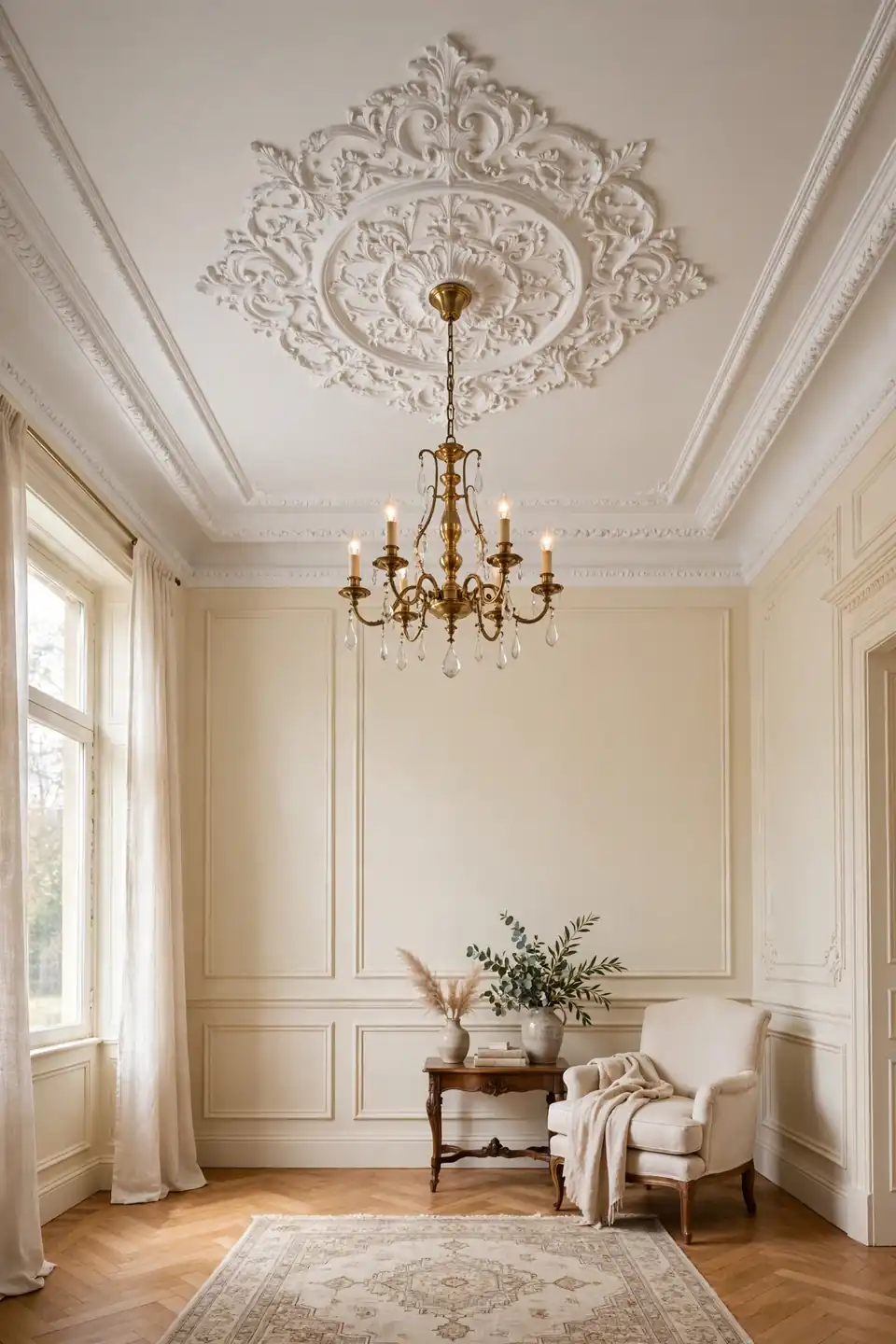
Medallions rarely work alone in formal rooms; crown molding is their usual partner, and the two should be planned together.
| Medallion With Molding | Medallion Alone |
|---|---|
| Ceiling reads as one design | Ceiling reads as one accent |
| Formal, architectural mood | Softer, simpler mood |
| Higher cost, two installs | Lower cost, one install |
| Best for tall ceilings | Best for low ceilings |
Match profiles by family, not by exact pattern; a leaf medallion beside plain stepped molding still reads as one design. Keep both pieces the same white so light treats them as a single frame. In smaller rooms, slim molding protects the pairing from feeling heavy or top loaded.
Rustic Wood Tone Medallion
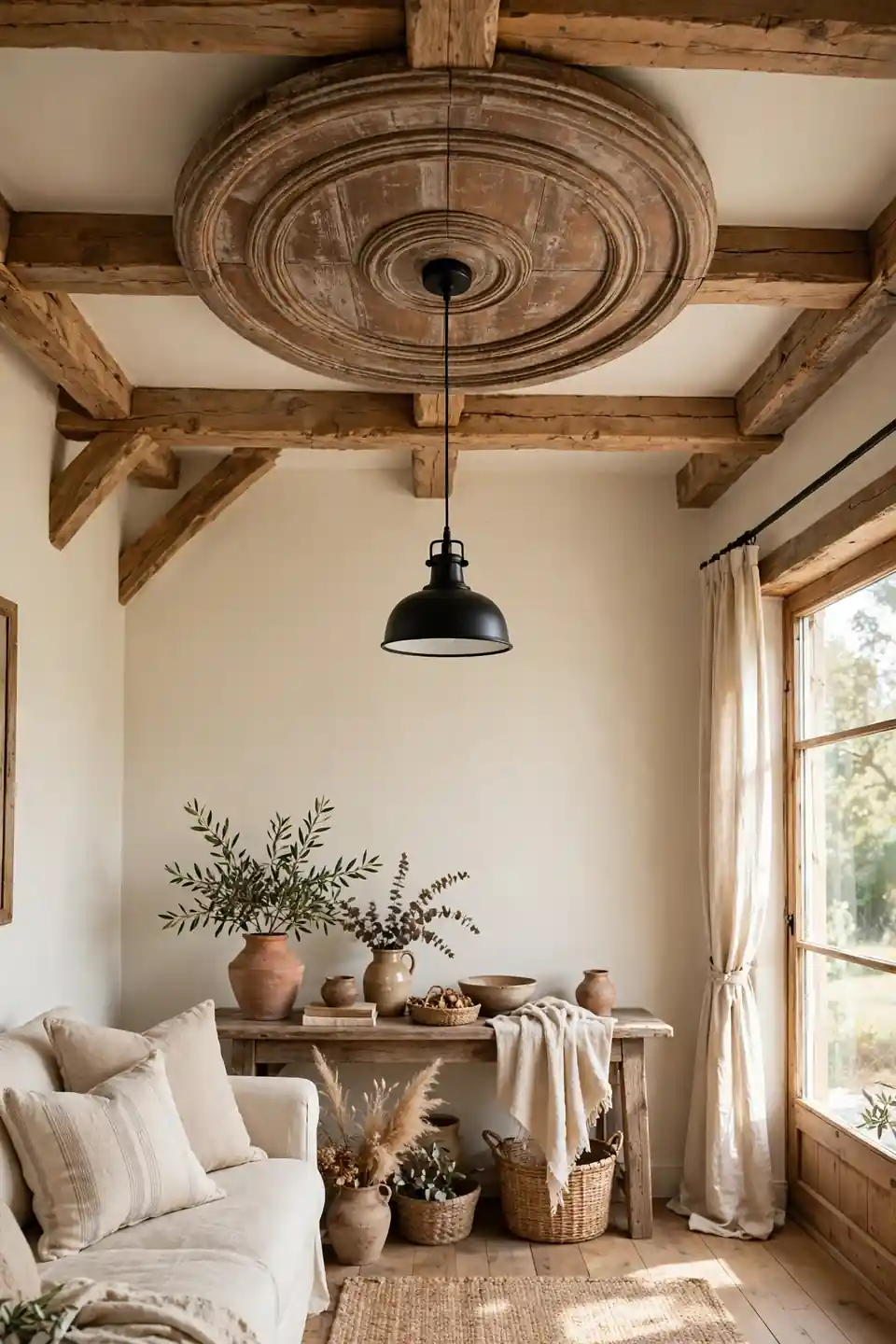
Do:
- Choose a wood tone that matches beams or flooring already in the room.
- Keep relief simple; heavy carving fights the honest country mood.
- Seal with matte wax so the finish reads as aged timber, not varnish.
Don’t:
- Do not mix three wood tones on one ceiling; two is plenty.
- Avoid dark stain in small rooms where it pulls the ceiling down.
- Skip plastic pieces printed with fake grain beside real wood beams.
A wood tone medallion warms rooms where white plaster would feel too formal. Real carved wood costs more, yet stained lightweight pieces fool most eyes once painted trim surrounds them. Test stain strength on the back first; ceilings receive light differently, and a tone that looks gentle on the floor can read heavy overhead.
Medallion for Low Ceilings
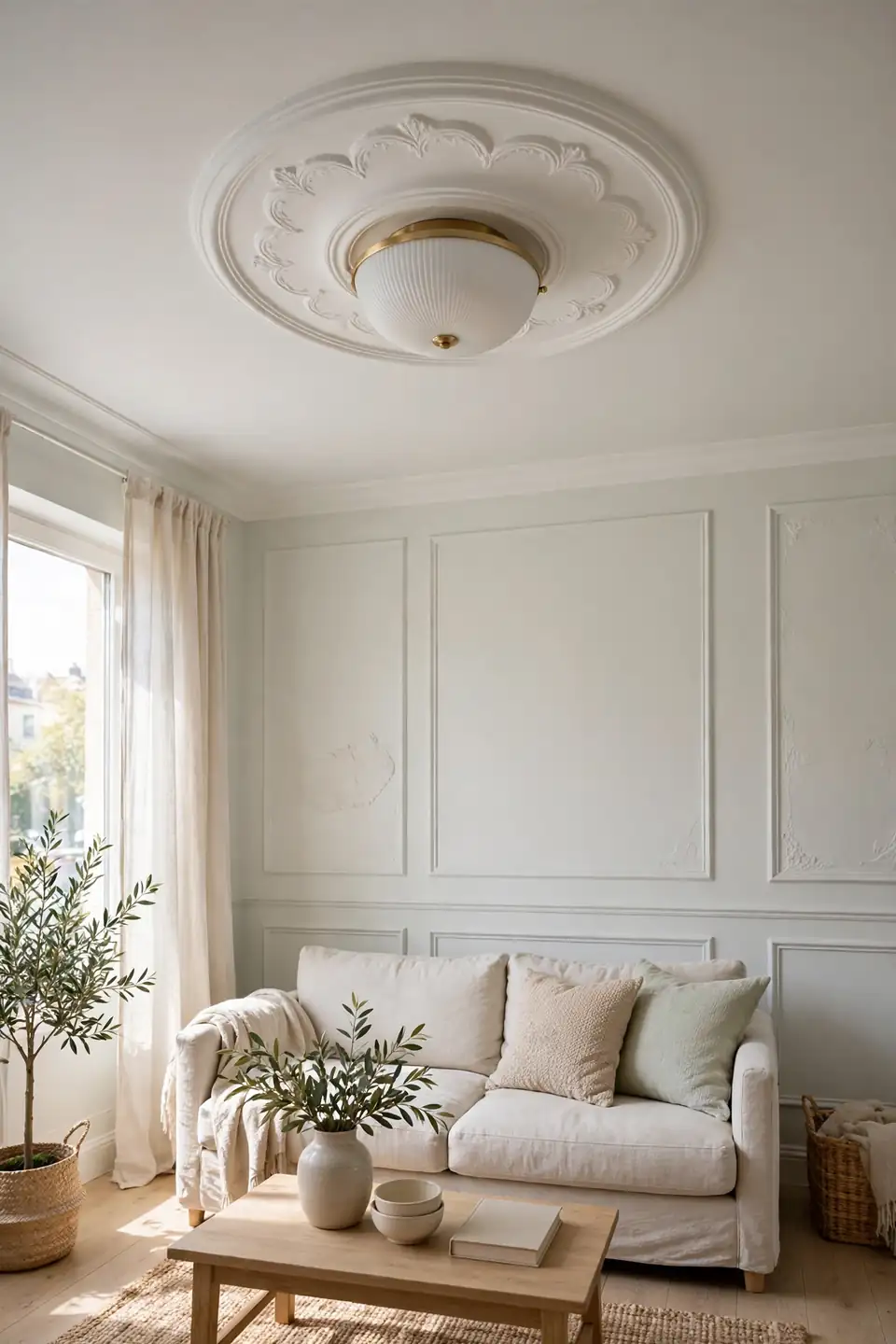
Cost: Low to medium, shallow profiles cost less to ship | Time: One afternoon with adhesive only | Skill Level: Beginner, no drilling for light pieces | Best For: Apartments and cottages with ceilings under eight feet
Low ceilings need width without depth. A wide, flat medallion spreads detail across the ceiling plane instead of dropping it toward your head, so the room keeps its headroom and gains a finished frame. Pair it with a semi flush light rather than a hanging pendant, and paint everything one soft white so the eye reads a single calm surface. Guests will sense the polish without spotting the trick, which is the highest compliment a small room can earn.
Medallion Around Pendant Lights
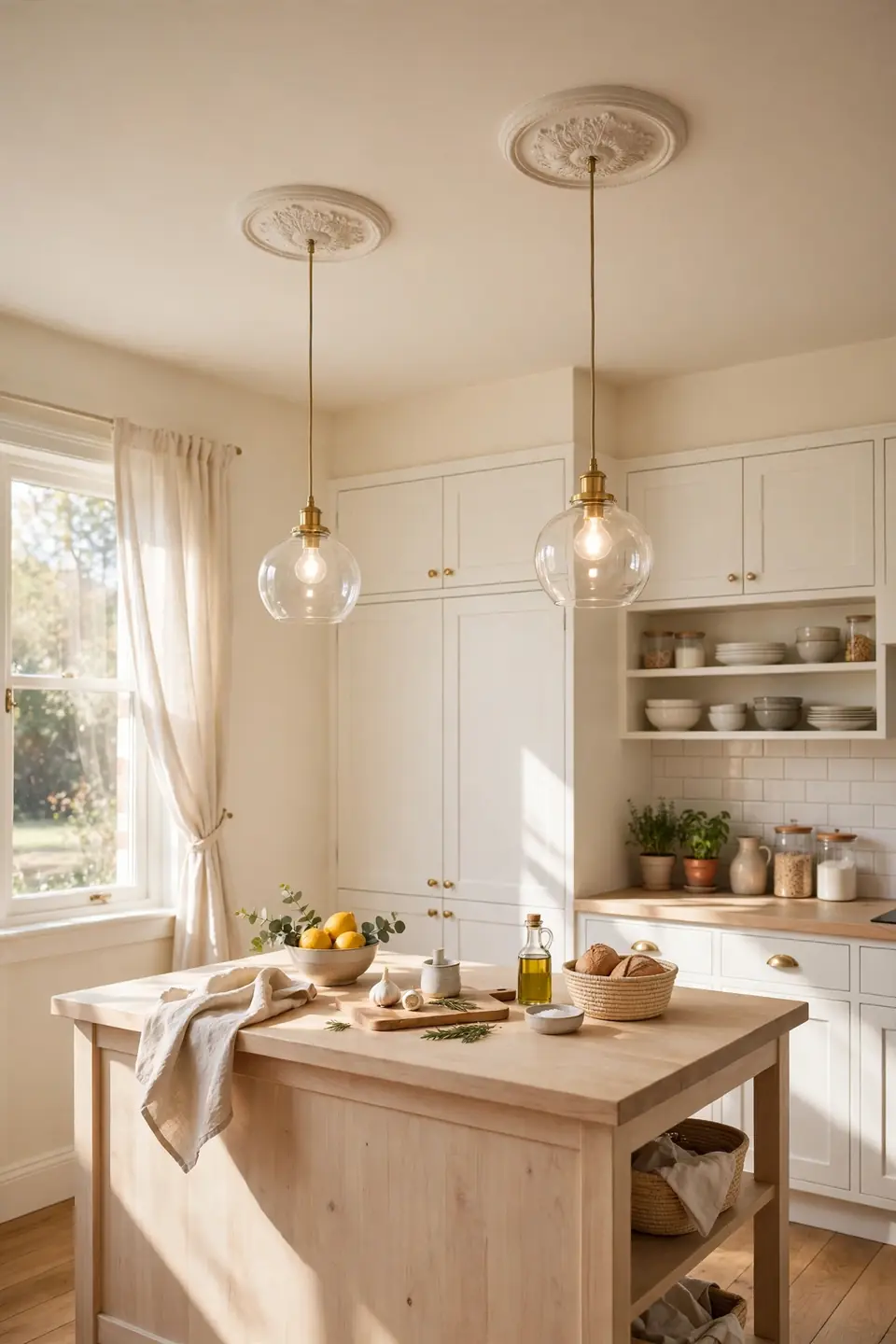
Pendant lights multiply fast in modern rooms, over islands, tables, and reading chairs, and each one deserves a small frame. A modest medallion behind every pendant turns a row of plain cords into a deliberate rhythm across the ceiling. The repetition reads as design, not decoration added later.
Keep the medallions identical and the spacing even; rhythm breaks the moment one ring changes size or drops lower than its neighbors. Small diameters suit pendants because the shades stay the stars of the scene. Paint the medallions ceiling white so the pattern stays subtle in daylight and only shows its relief when the pendants glow at night.
Antique Finish Medallion Styling
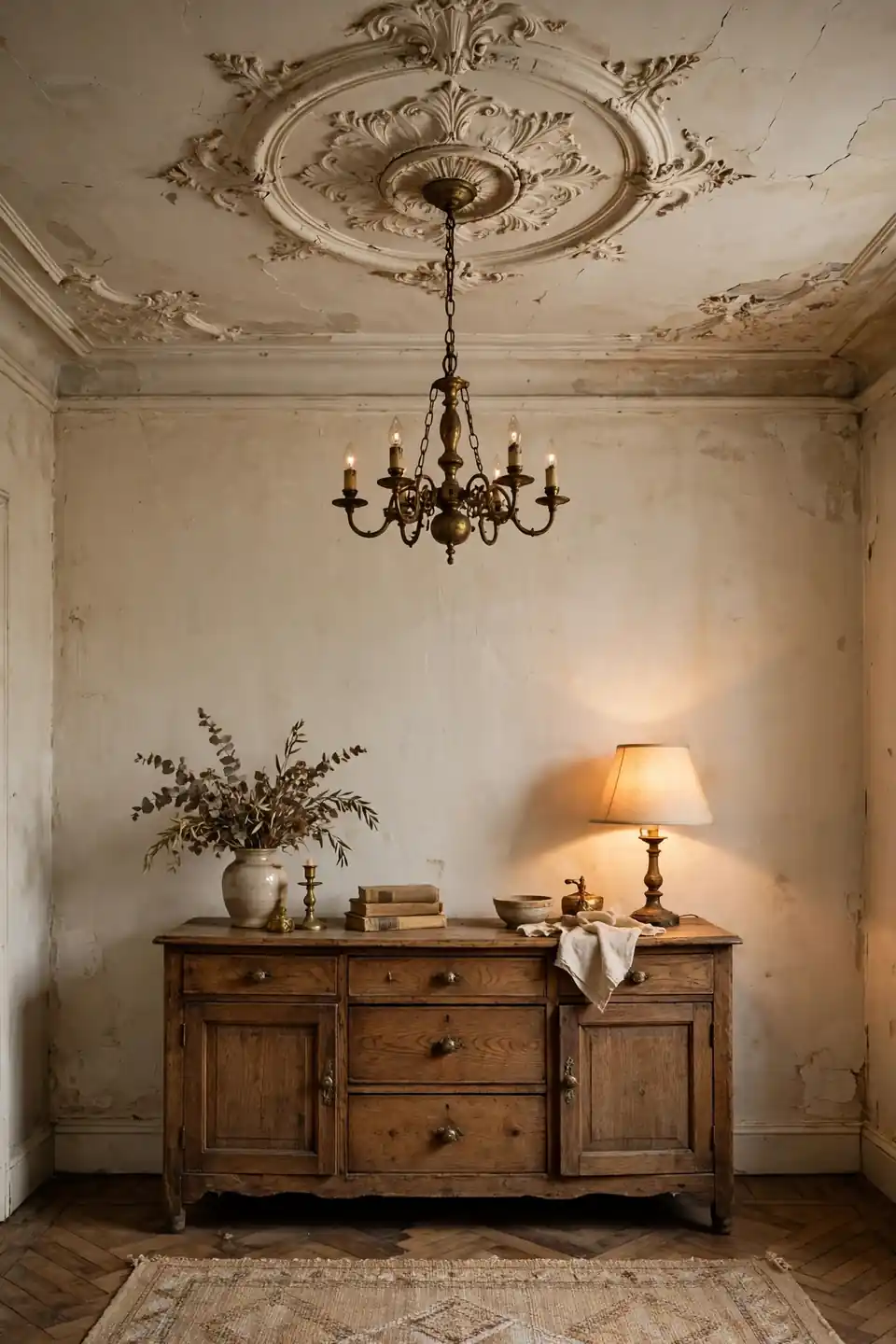
- Darken recesses with a thin umber glaze, then wipe the raised detail nearly clean.
- Leave small chips and worn edges visible; perfection ruins the antique story.
- Pair the finish with aged brass or blackened iron fixtures below.
- Keep walls in warm, slightly greyed whites that suit aged plaster.
- Glaze in daylight, since lamplight hides how dark the recesses really are.
Antique finishes forgive a lot, which makes them kind to first attempts. A medallion that looks slightly too aged at arm’s length usually reads perfectly from the floor. Stop one step earlier than feels finished; glaze darkens as it dries, and restraint keeps the piece believable instead of theatrical.
Medallion in Kitchen Ceiling
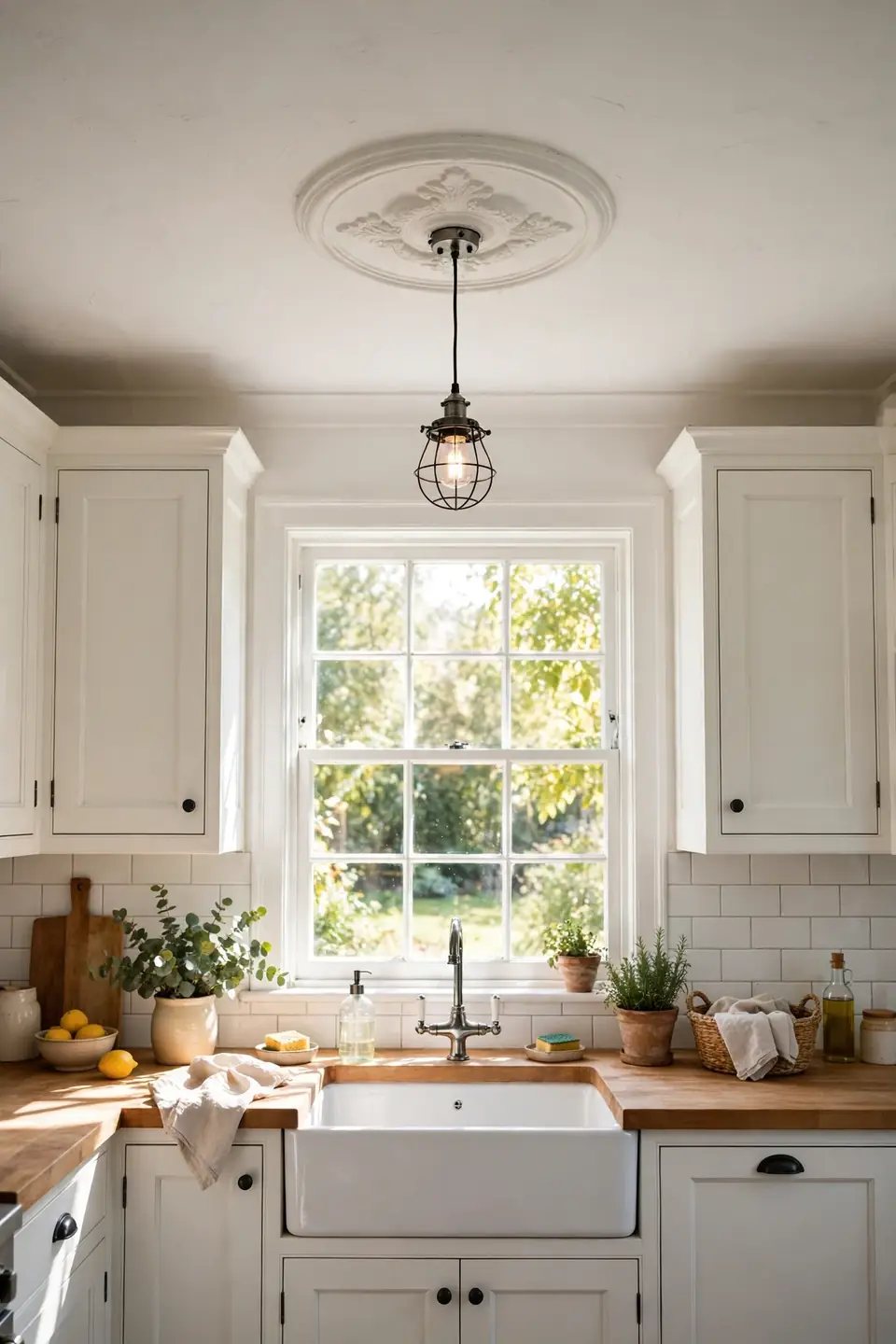
Quick Tip: Seal a kitchen medallion with two coats of wipeable satin paint before installation. Steam and cooking film settle on ceiling detail faster than anywhere else in the house, and a sealed surface wipes clean in seconds during a normal tidy.
Kitchens rarely get ceiling detail, which is exactly why a medallion lands so well there. Keep the profile simple and grease friendly, with smooth rings instead of deep floral carving that traps film. Center it over the sink or island light, and the hardest working room in the house gains a small moment of grace. Guests always look up and smile.
Mixing Medallion Styles Together
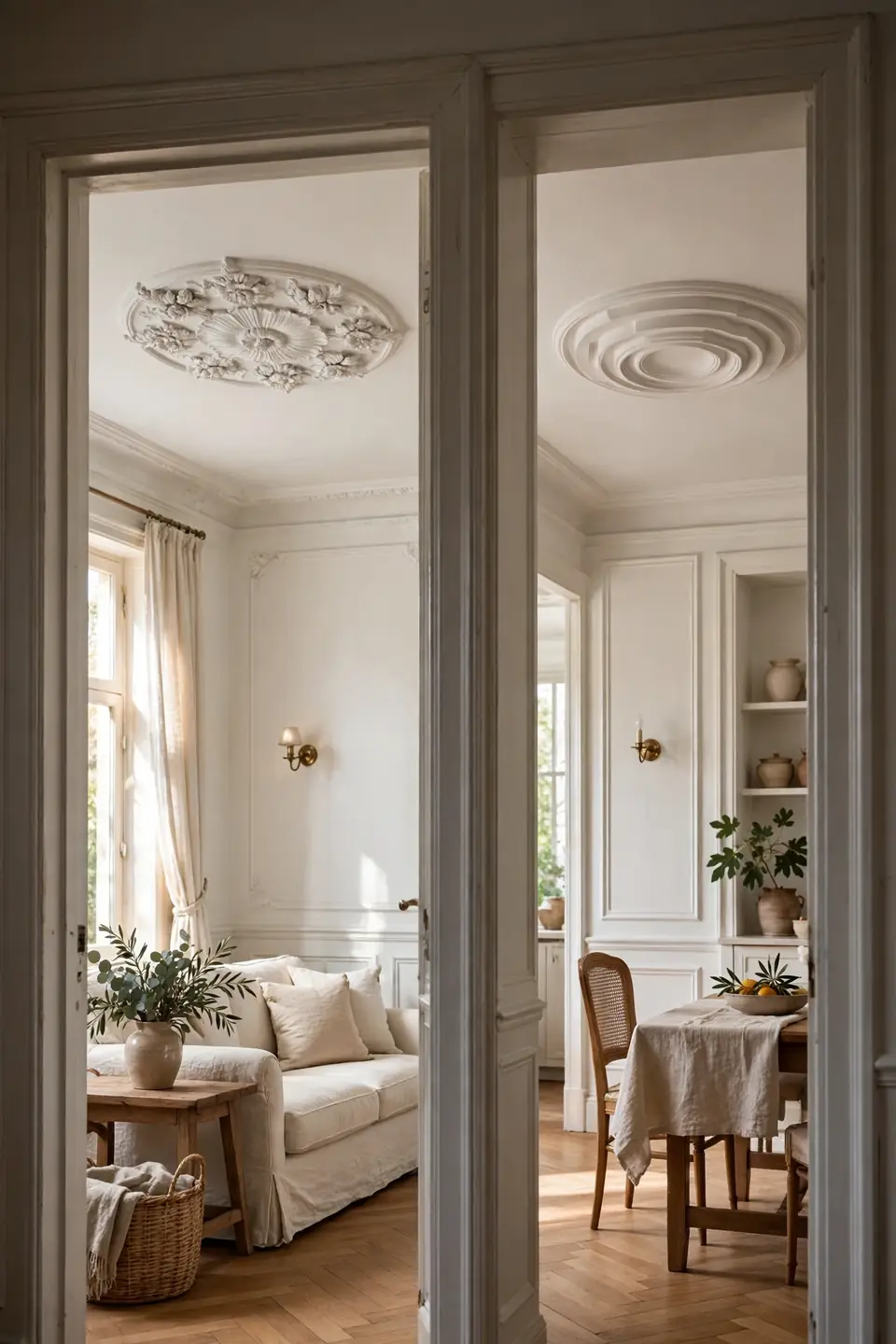
BEFORE: Every ceiling in the house carried the same medallion, copied from room to room like a stamp. The repetition felt safe at first, then flat, because a grand rosette looked wrong in the tiny hallway and plain in the parlor.
AFTER: Each room now keeps its own medallion style, sized and carved for its purpose, all painted one shared white. The house feels collected over decades instead of decorated in a single weekend, and every ceiling suits its room.
Mixing works when one element stays constant, and here that constant is color. Same white, different carving: the eye reads variety as history, not chaos. Vary scale by room size, keep profiles in the same family of curves, and the house tells one long, believable story overhead.
Conclusion
Beautiful ceilings start small, and that is good news for cautious beginners. Pick one room, measure honestly, and let a single medallion show you how much atmosphere was hiding overhead all along. These decorative ceiling medallion interior ideas reward patience and simple tools; most pieces install in an afternoon and pay you back every time the light switches on. I’ve seen plain rooms gain real character from this one detail alone. Save this list to Pinterest before your next paint project, try the smallest room first, and share your finished ceiling with someone who still thinks ceilings have to stay plain.