25 Natural Travertine Coffee Table Styling Ideas for Organic Luxury
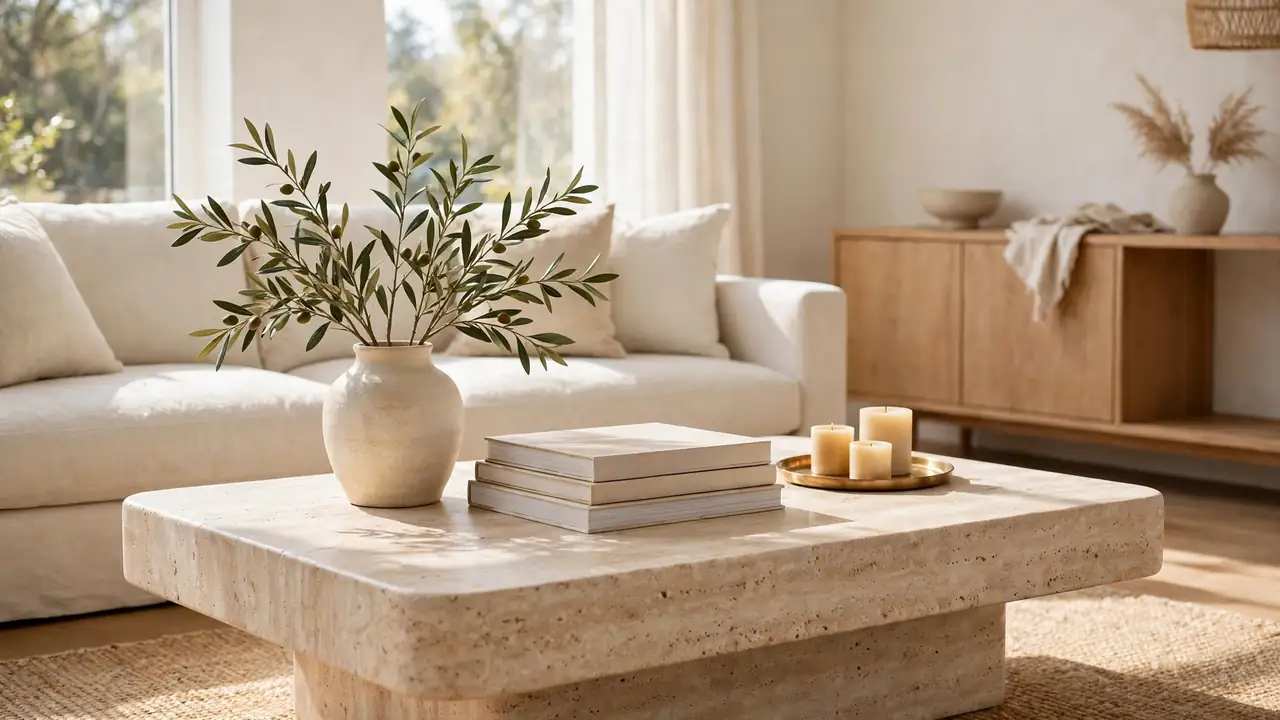
A travertine table never shouts, yet it quietly decides the mood of the whole room. Good natural travertine coffee table styling starts with the stone itself: warm color, soft pits, and cloudy veins that give cream sofas and pale rugs something honest to gather around. In my experience, the calmest living rooms treat the table as the main event and let every object on top earn its place beside it.
The same love of honest materials shapes sunlit rooms built on modern Mediterranean dining room inspiration, where plaster, wood, and stone share the work. Around a coffee table the formula is simpler still: one stack, one vessel, one soft texture, and room to breathe. The twenty five ideas ahead move from quick trays and candles to stone care and sizing, so the table you already own can carry the whole room.
Stacked Book Layers
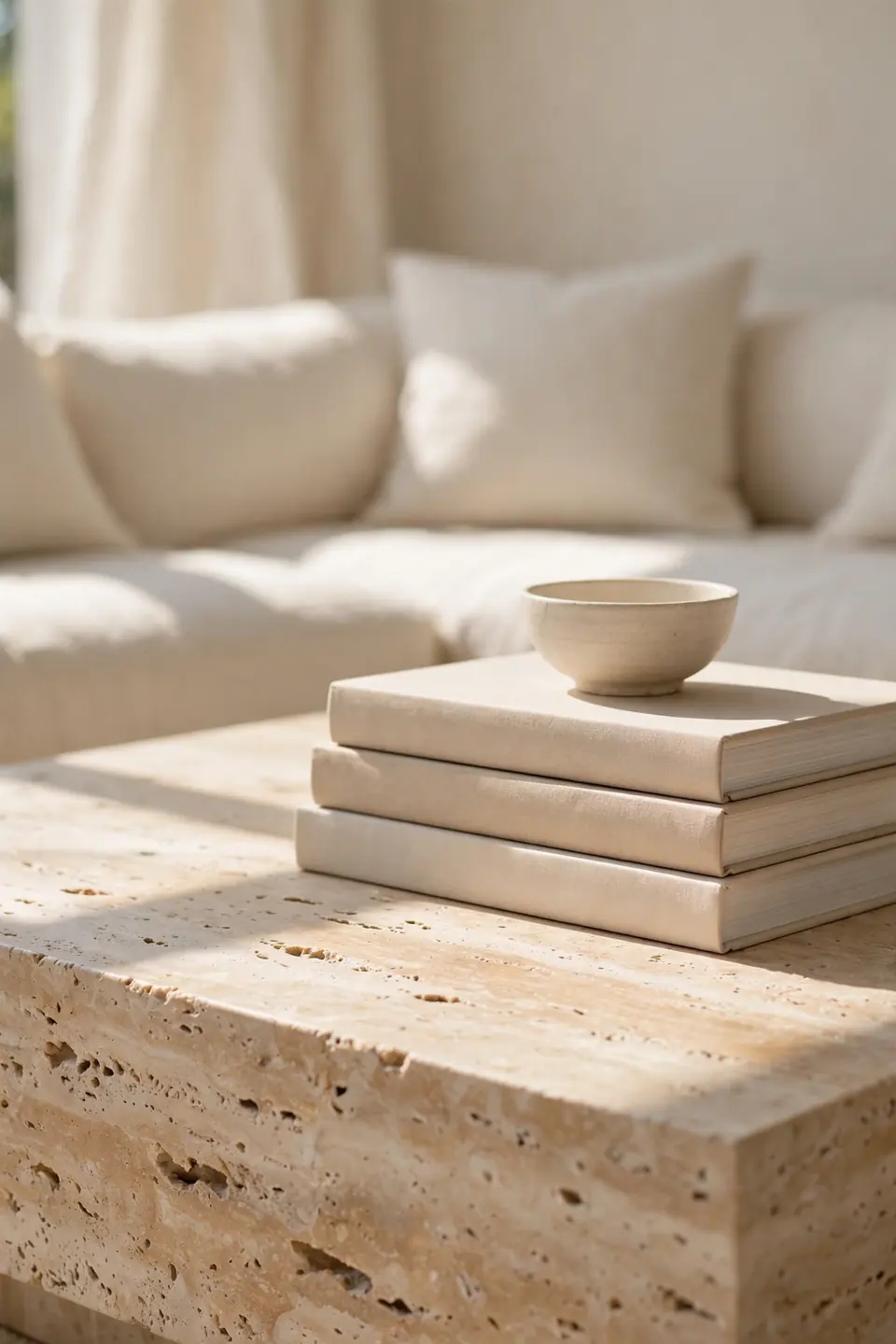
Three books, stacked slightly off center, can hold an entire table together. Choose large hardcovers in cream, sand, and pale gray so the stack reads as one calm block against the stone. Resting the pile a few inches from the table edge keeps the surface open and stops the arrangement from looking like a shelf that lost its wall.
Turn the top book a quarter turn for a small break in the lines, then set one object on top: a ceramic bowl, a brass candle, or a small stone sphere. In my experience, two or three books always look settled, while four or more start to feel like storage. Swap the top cover with the seasons and the stack stays fresh without buying anything new.
Ceramic Vase Trio
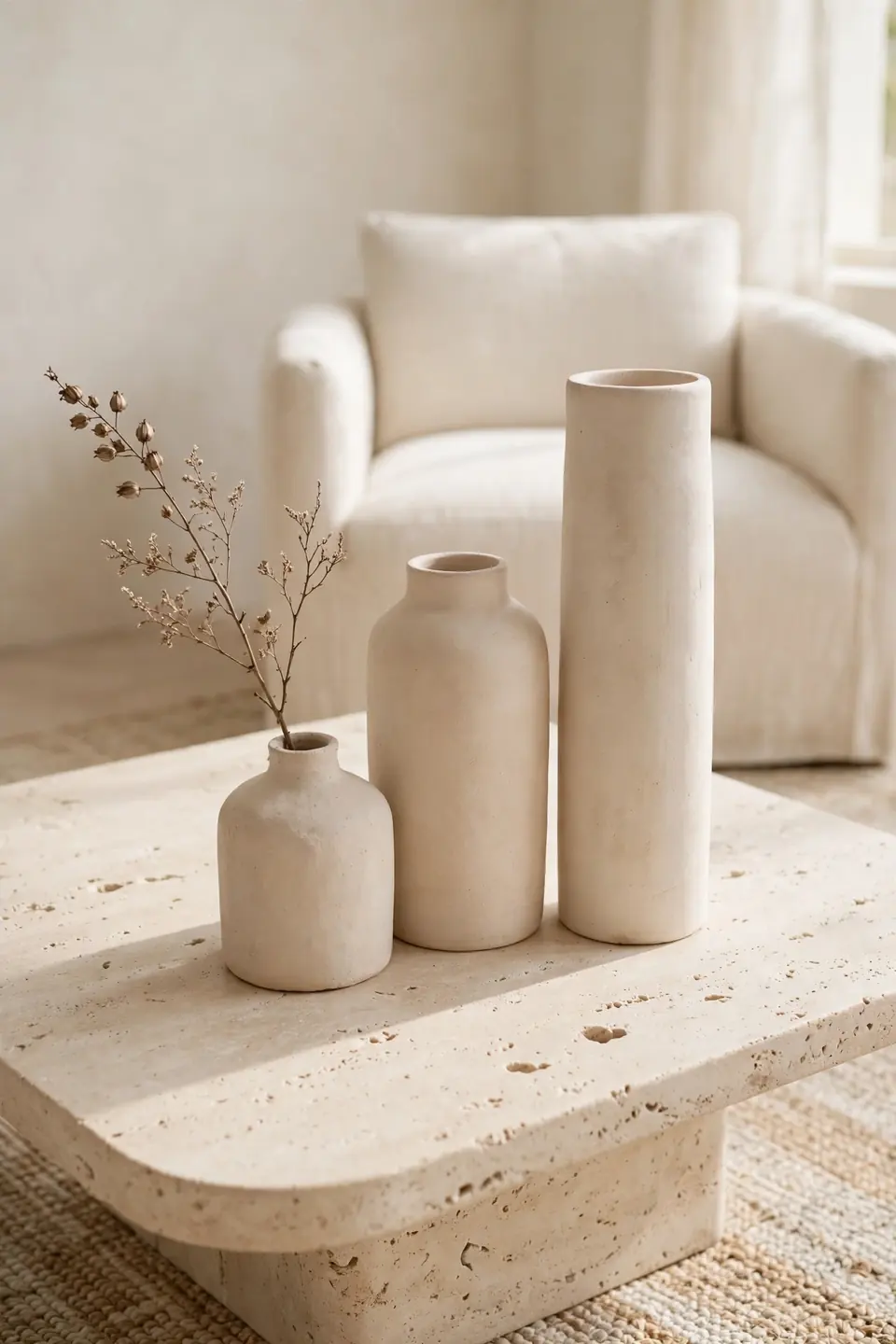
- Group three vases in low, medium, and tall heights so the eye climbs gently.
- Keep every piece in the same clay family, from pale cream to warm sand.
- Leave the tallest vase empty and give the smallest one a single stem.
- Set the trio on the table corner opposite the main seating view.
- Unglazed finishes echo the pits and pores in the stone surface below.
A trio works because odd numbers settle the eye without a formal plan. Clay also forgives fingerprints and dust better than glass, which matters on a table that gets used daily. Buy pieces one at a time from different makers; tiny differences in glaze keep the group handmade rather than matched.
Candle Cluster Glow
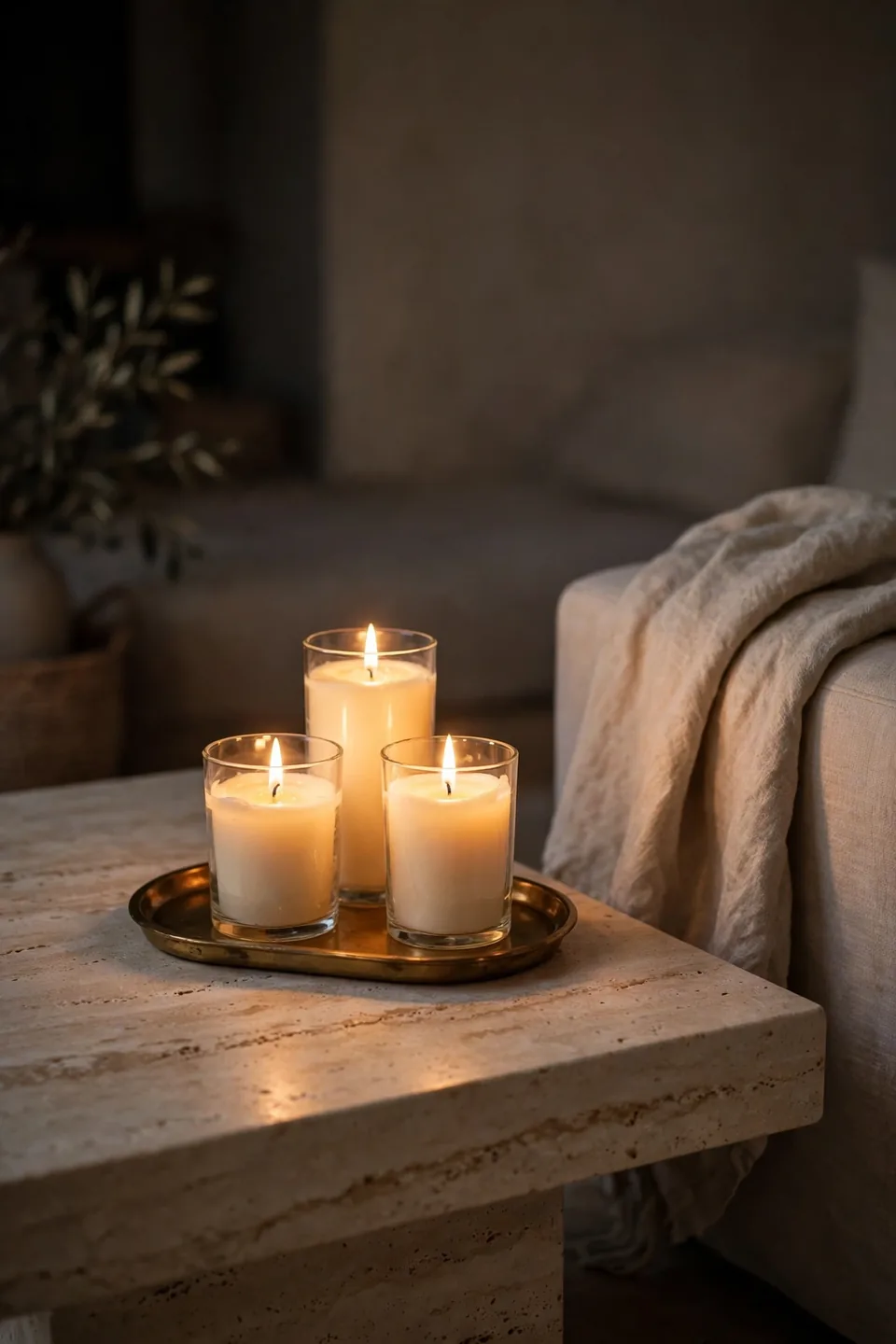
Quick Tip: Cluster three pillar candles on a small brass or stone tray and light them an hour before guests arrive. The wax softens at the edges, the flames settle low, and the whole cluster glows evenly instead of flickering like three separate candles fighting for attention. The tray also catches drips before they reach the porous surface.
Candlelight doubles the warmth of travertine because the stone holds amber tones in its veins. Keep heights uneven, tallest at the back, and leave clear space around the tray so sleeves and newspapers stay safe. Battery pillars give the same glow for homes with curious toddlers or cats on the furniture.
From Bare To Styled
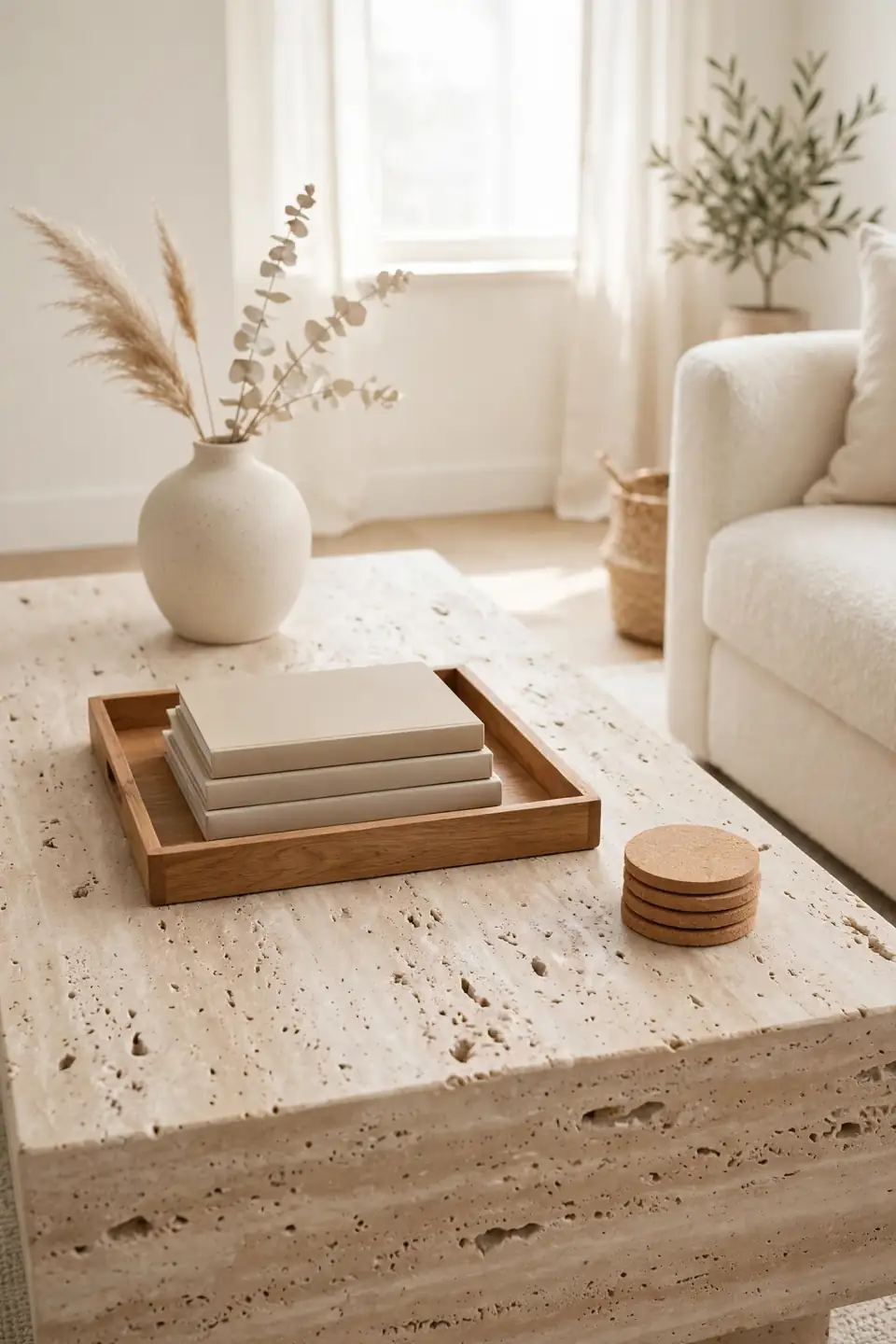
BEFORE: The table stood empty for months because every object placed on it looked random and slightly lost. Guests set mugs wherever they landed, remotes slid across the stone, and the largest surface in the room contributed nothing but a place to put things down.
AFTER: A low tray now holds the remotes and a small stack of books, one vase stands at the far corner, and coasters live in a neat pile by the sofa arm. The table reads finished, and guests reach for coasters without being asked.
The change cost one afternoon and almost no money, because everything came from other rooms. Start with a tray, add height in one corner, and leave the middle third bare. That middle emptiness separates a styled surface from a crowded one.
Tray First Styling
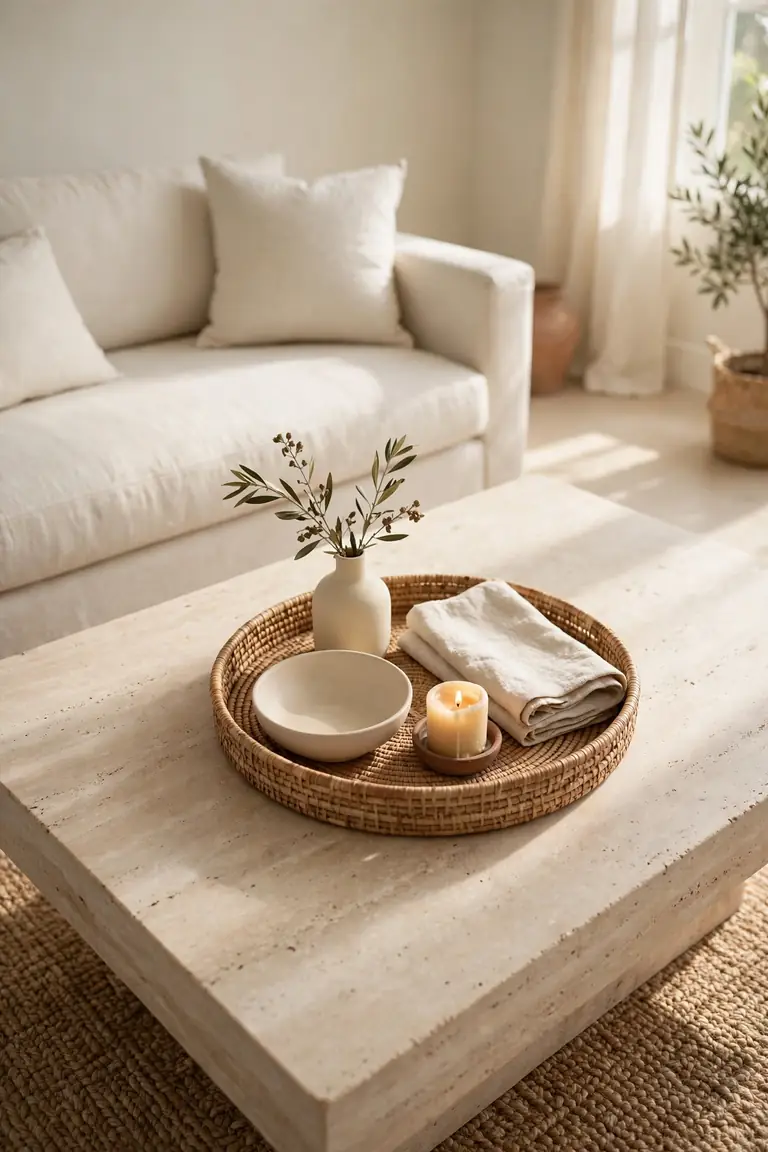
- Set a low tray slightly off center on the table, leaving one corner free.
- Place the tallest object inside it, usually a vase or a small stack of books.
- Add one soft item, such as a linen cloth folded beneath a candle.
- Finish with a small bowl or dish that catches keys and loose change.
A tray draws a border around the styling, so the rest of the table stays calm and easy to clean. Wood, brass, and woven trays all sit well on travertine; mirrored trays fight the stone’s matte character. Everything inside the tray can lift away in one motion on cleaning day.
Round Versus Rectangular Tables
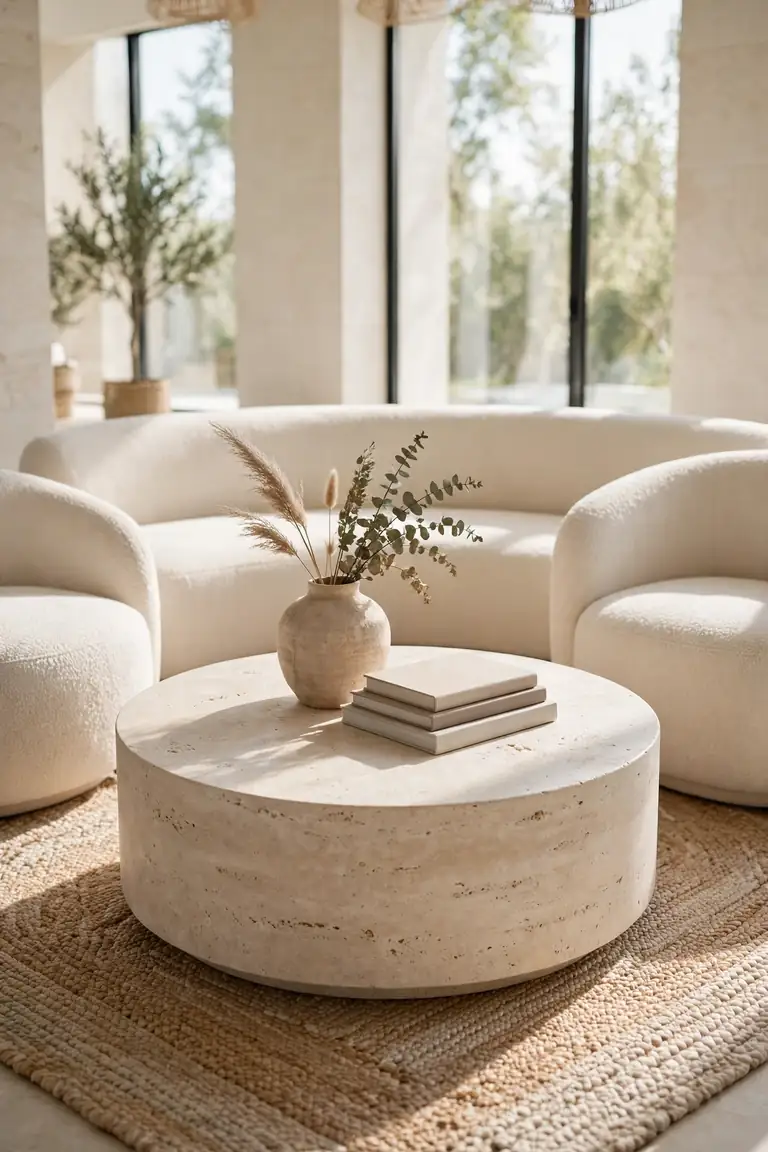
| Detail | Round | Rectangular |
|---|---|---|
| Footprint | Fits tight seating groups | Suits long sofas best |
| Edges | No corners near busy walkways | Clean lines along the rug |
| Styling | One central group works | Two end groups balance |
| Seating | Four chairs gather easily | Benches slide underneath neatly |
| Movement | Legs pass freely all around | Corners need clear walking space |
Round tables soften rooms built from straight sofa lines, while rectangular tops echo the rug and settle long spaces. Either shape styles the same way: one strong group, plenty of bare stone, and nothing tall enough to block the view across the room. Measure the seating group first and let the rug size cast the deciding vote.
Stone Care Habits
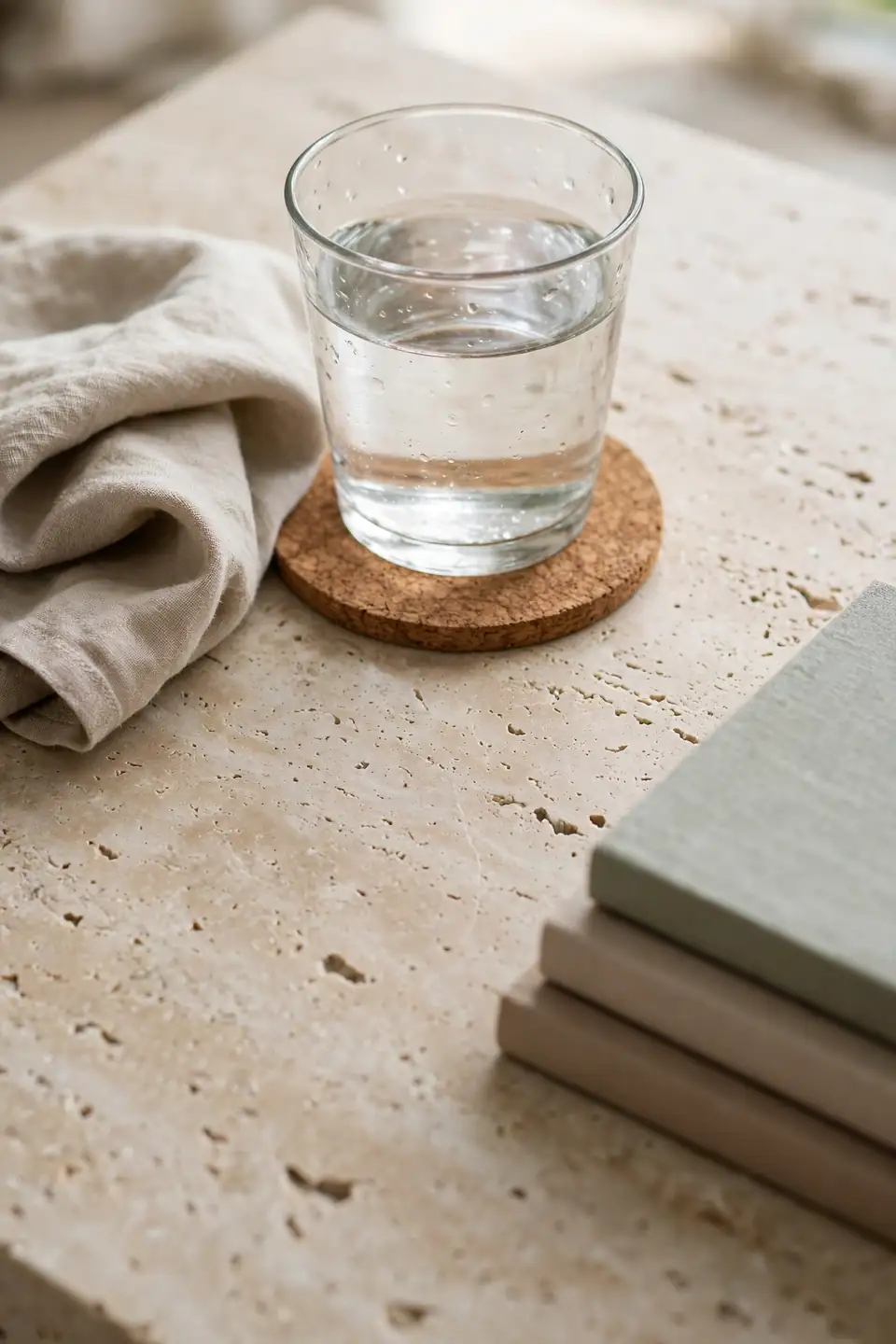
Do:
- Set every cup on a coaster, since travertine drinks in rings quickly.
- Wipe spills within minutes with a soft, damp cloth.
- Seal the surface twice a year with a stone safe sealer.
- Dust weekly so grit never grinds under books and trays.
Don’t:
- Skip lemon or vinegar cleaners, because acid etches the stone.
- Never drag heavy objects across the top; lift them instead.
- Avoid dyed candles resting directly on the bare surface.
- Let red wine glasses stand overnight on the stone.
Travertine is marble’s softer cousin, so it rewards gentle habits and punishes harsh ones. None of this takes effort once coasters live on the table full time. A sealed, wiped surface keeps its soft sheen for decades and honestly looks better with a little age.
Veins And Pits Charm
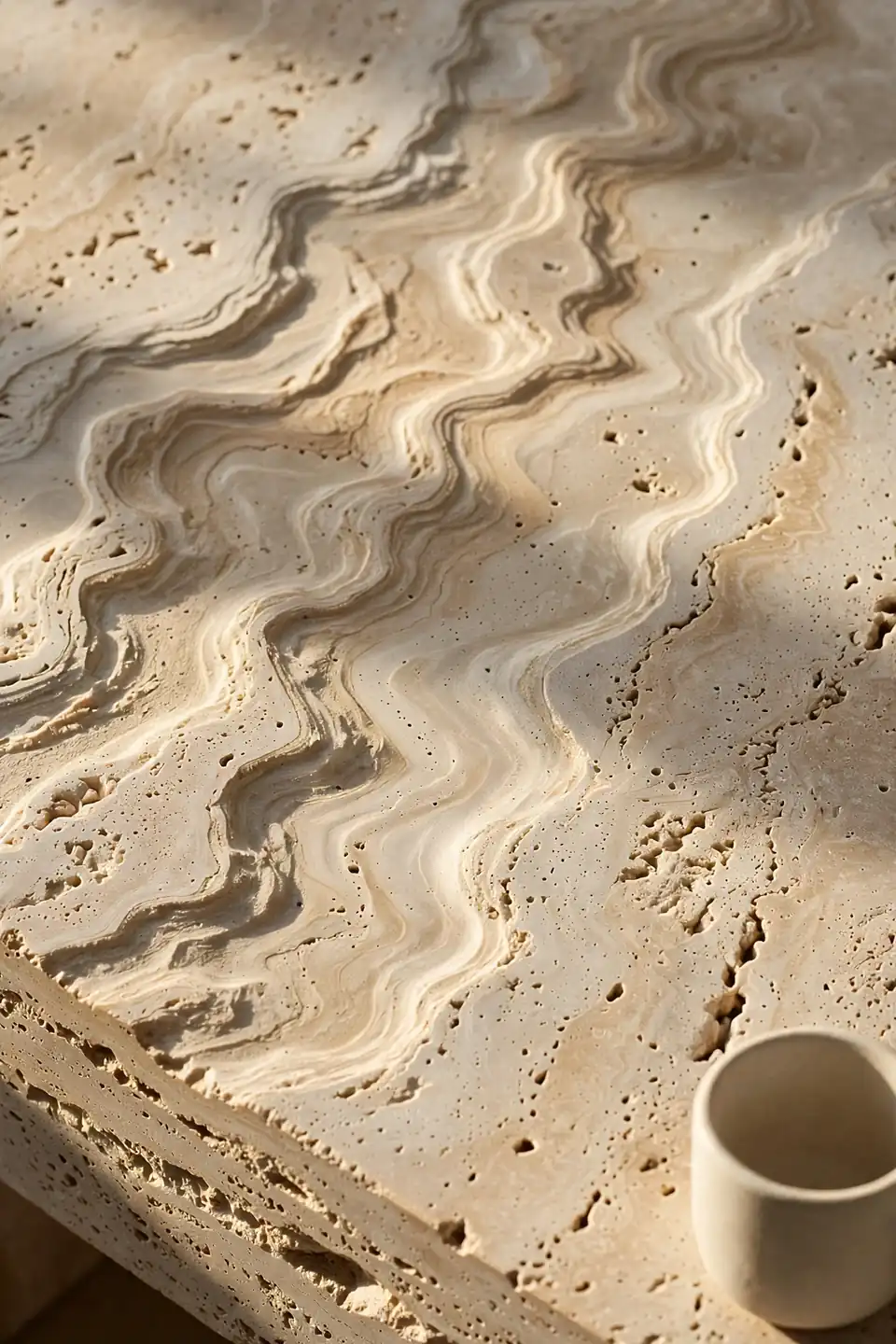
Cost: Built into the stone, since the texture comes free with every slab
Time: No work at all, just a choice at buying time
Skill Level: None, only an eye for pattern at the showroom
Best For: Homes that love honest materials over perfect polish
The pits in travertine are tiny pockets left by mineral springs, and the veins are the stone’s own handwriting. Filled and honed tops smooth most of that away, while unfilled pieces keep a rustic, open texture. Hold a sample to the light before buying; the pattern you see at noon is the one that lives with you.
Woven Basket Pairing
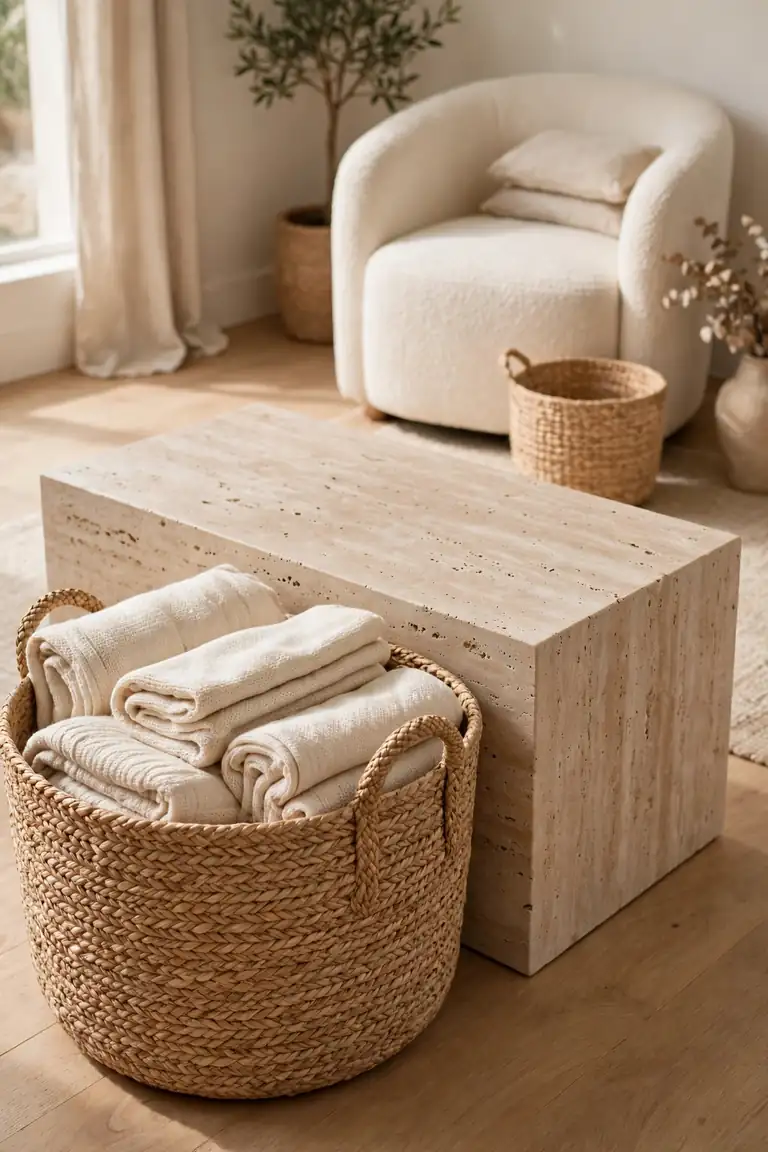
A woven basket beside the table gives the stone something soft to lean against. Seagrass, water hyacinth, and pale rattan all share the same sandy tones as travertine, so the pairing looks planned even when the basket only holds spare throws. Set it on the floor at the table’s short end, where hands reach it easily from the sofa.
Scale is the quiet rule here: the basket should sit lower than the tabletop objects so the eye still lands on the stone first. In my experience, natural travertine coffee table styling looks best when one organic texture repeats twice and everything else stays smooth. A second small basket on the lower shelf or beside the armchair completes the echo.
Greenery In Stone Pots
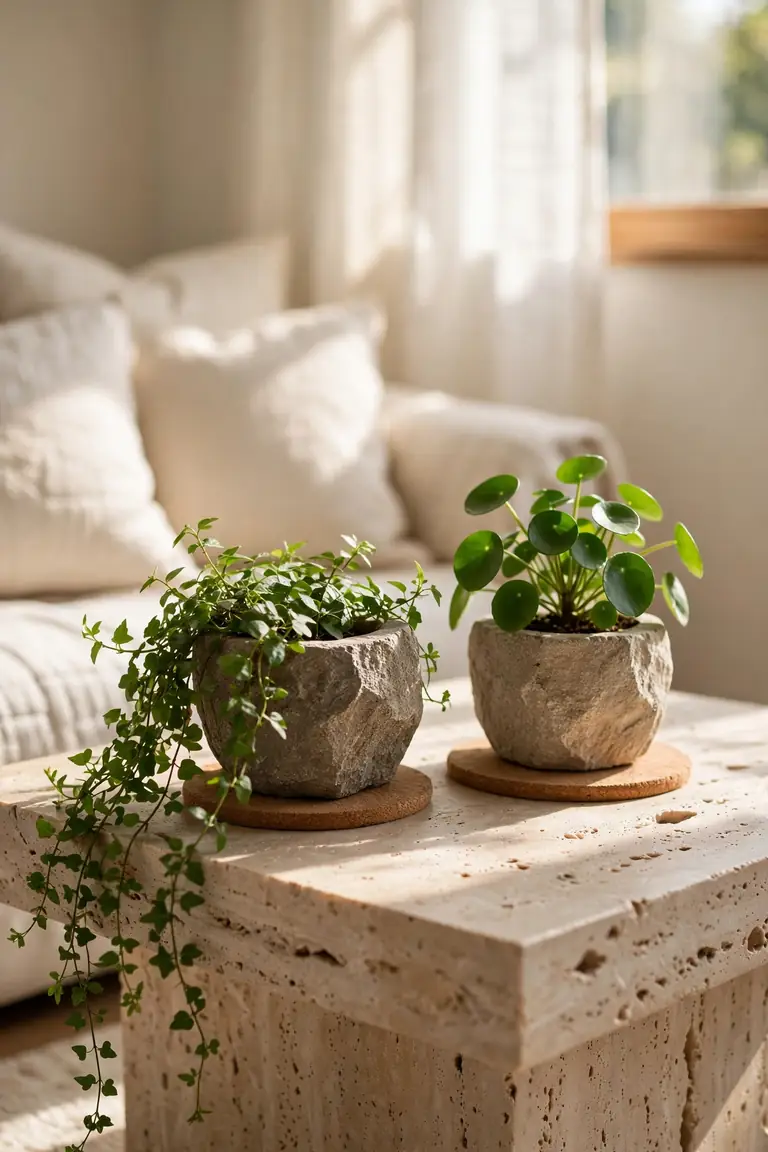
- Choose small plants with soft leaves, like a pilea or a trailing pothos.
- Pot them in rough stone or cement planters that echo the table.
- Keep the group to one or two pots so the surface stays open.
- Set pots on cork discs to guard the stone from water marks.
- Turn each pot weekly so growth leans evenly toward the light.
Green is the one color travertine always welcomes, because it echoes the gardens this stone has surrounded for centuries. Small pots beat one large plant here, since the table still needs room for cups and books. Water over the sink, never at the table, and the surface stays spotless.
Brass Accent Pieces
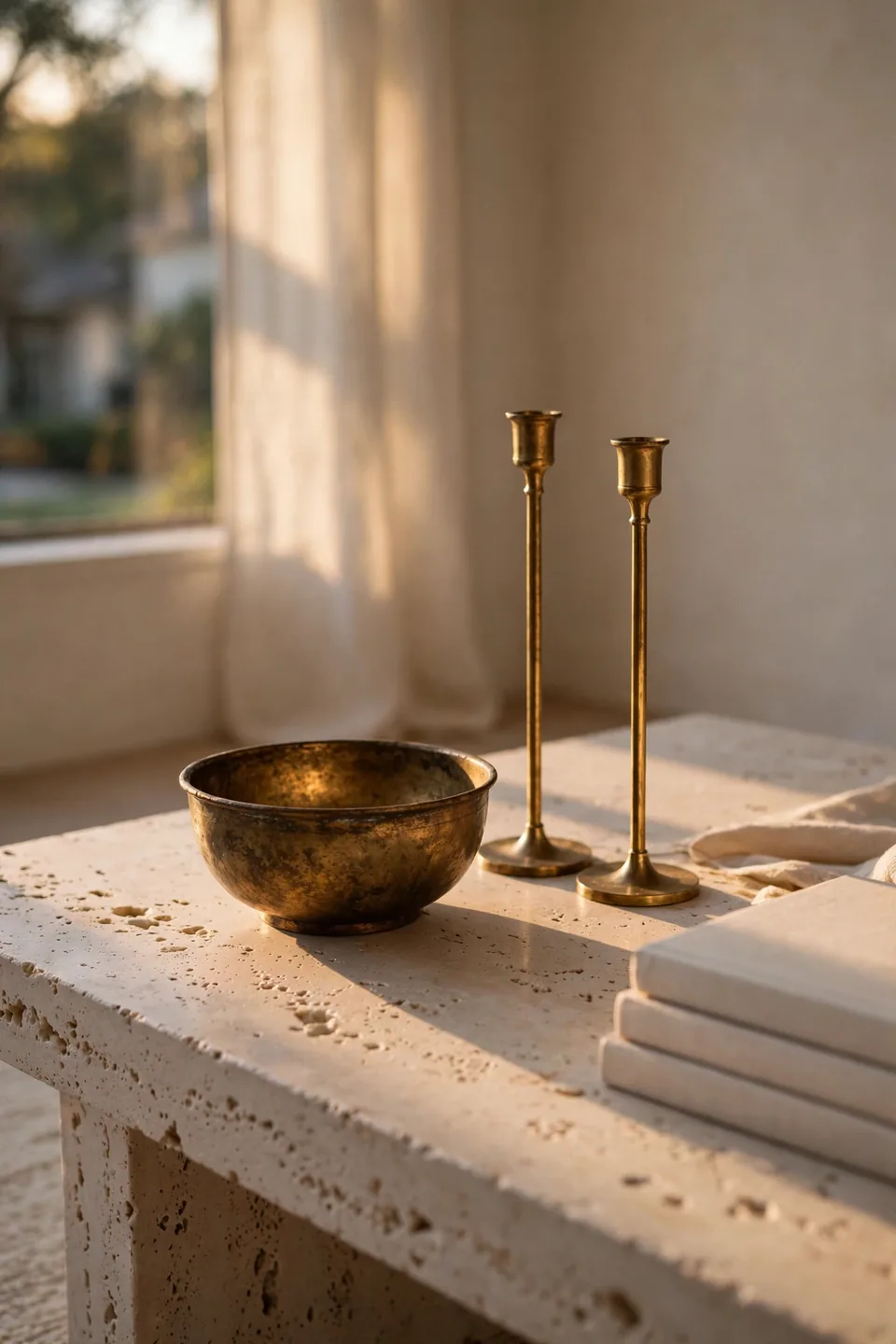
Quick Tip: Warm brass and cool stone balance each other beautifully, so add one brass piece at a time and live with it for a week. A small bowl, a pair of candlesticks, or a slim tray is usually enough; the metal should glint, not glitter, against the matte surface below.
Aged and brushed finishes sit better on travertine than mirror polished brass, which can look cold beside the stone’s soft pits. Keep brass to two pieces at most and repeat the tone once elsewhere in the room, in a lamp base or picture frame, so the pairing feels deliberate. Wipe fingerprints away with a dry cloth.
Cluttered To Calm Surface
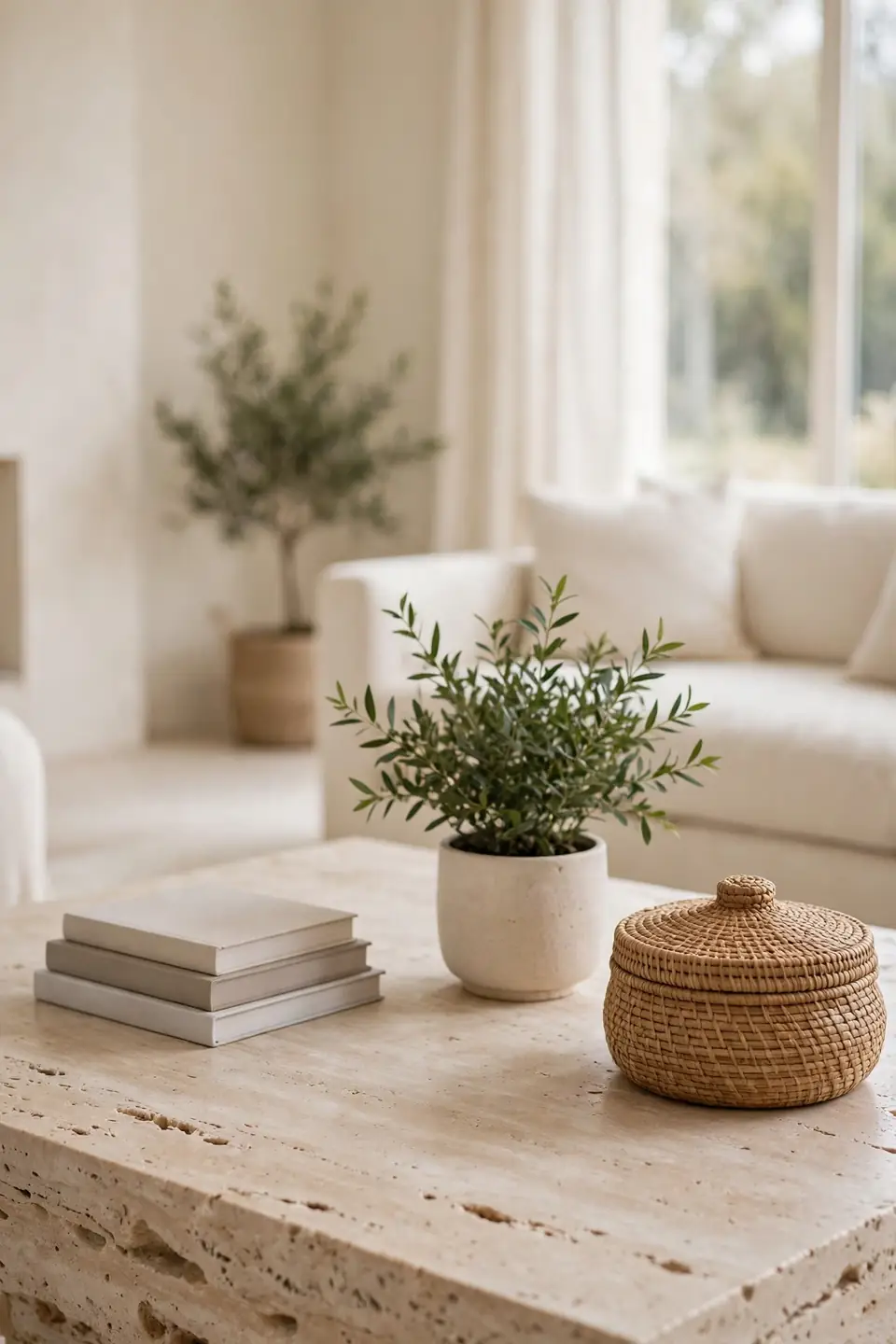
BEFORE: Mail, remotes, chargers, and three half finished drinks shared the table every evening. Nothing had a home, so everything landed on the stone, and the prettiest surface in the room spent its days hidden under daily clutter.
AFTER: A lidded basket now swallows the remotes and chargers, mail goes straight to a hall tray, and the table holds one book stack, one plant, and empty space. Evenings feel calmer because the eye finally has somewhere to rest.
The fix was not buying storage; it was giving each stray item a home somewhere else. Keep one catch all basket within reach and empty it every Sunday. A calm surface is mostly a habit, repeated in small moments all week.
Layered Rug Foundation
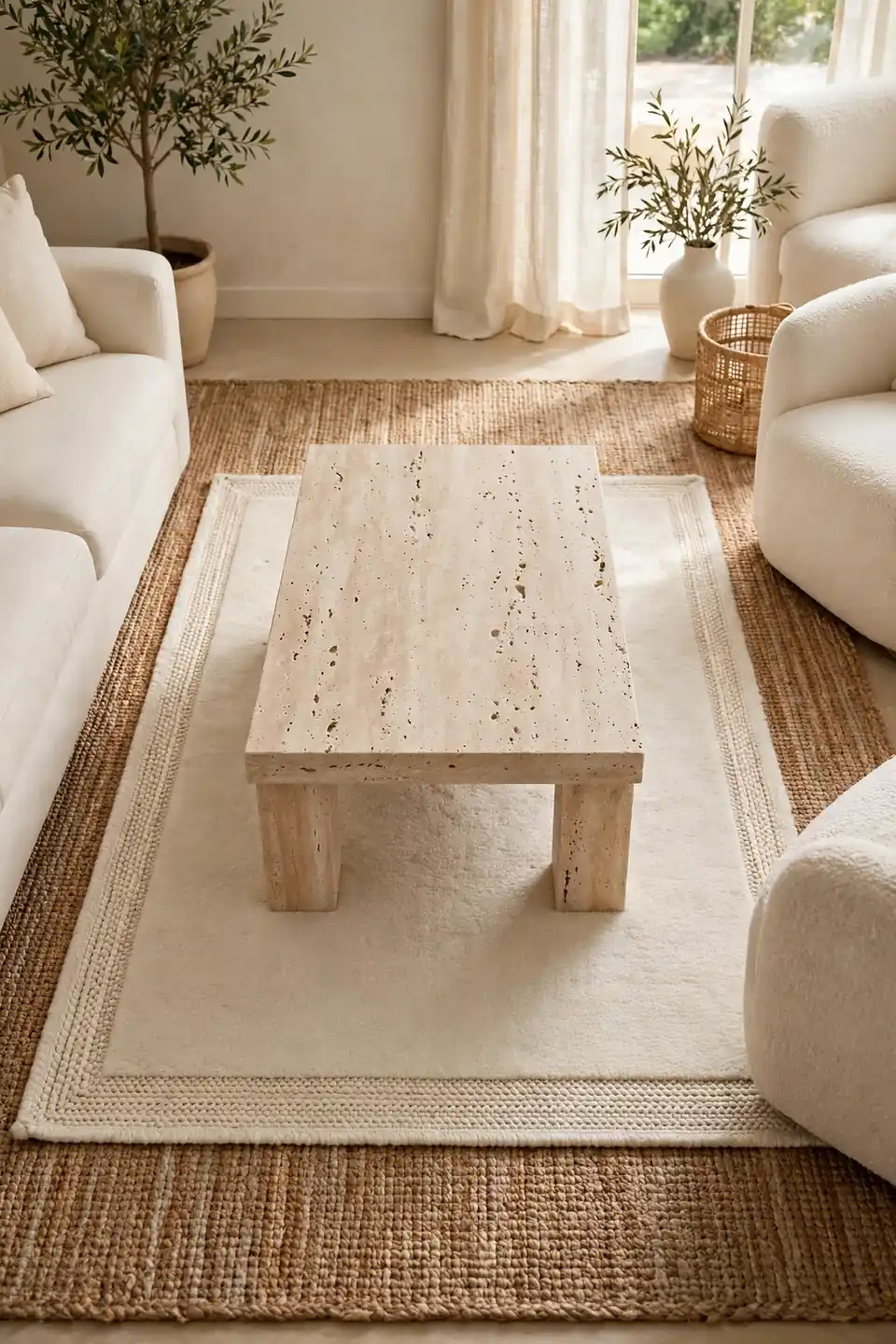
- Lay a large flat jute or sisal rug under the whole seating group.
- Center a smaller wool rug on top, leaving a border of jute showing.
- Set the table where both rug edges stay clear of its legs.
- Match the top rug’s tone to the stone; cream on cream works well.
Layering gives a heavy stone table a soft landing and quiets its formal side. The jute border adds texture at floor level, which balances the texture in the travertine above it. Keep pile low on the top rug so the table stands steady and cups never wobble during movie night.
Honed Versus Polished Finish
| Detail | Honed | Polished |
|---|---|---|
| Sheen | Soft matte glow | Bright mirror shine |
| Marks | Hides small scratches well | Shows every fingerprint |
| Feel | Warm and chalky | Cool and glassy |
| Rooms | Calm, casual spaces | Formal, dressy spaces |
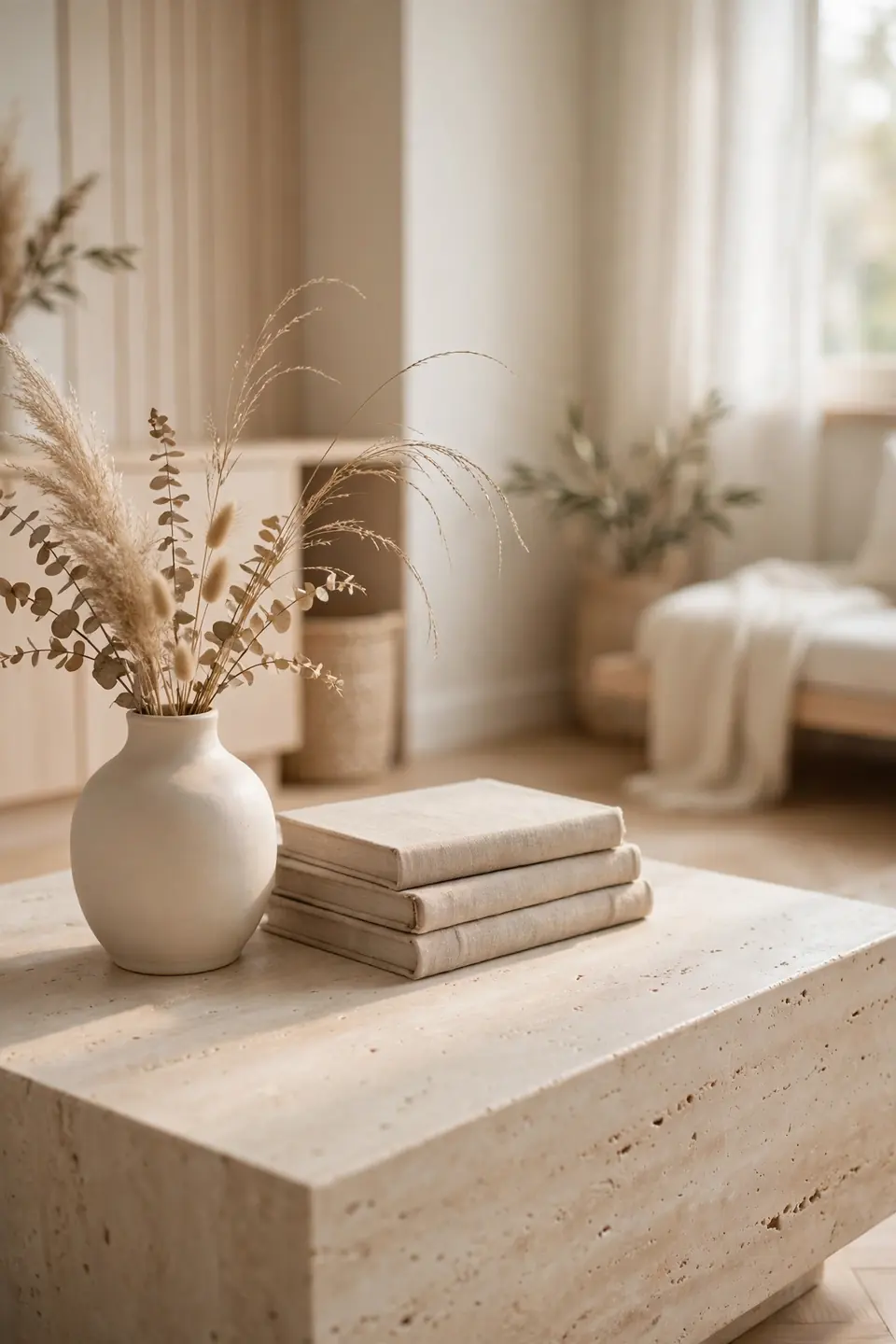
Most living rooms suit the honed finish, since daily life leaves marks that a matte surface forgives. Polished stone belongs in formal rooms that see careful use. Run a hand across both finishes at the store; your palm usually decides faster than your eyes do. It also photographs softer and feels warmer under a resting palm. Fingerprints vanish into the finish instead of announcing themselves under lamplight each evening.
Seasonal Table Swaps
Do:
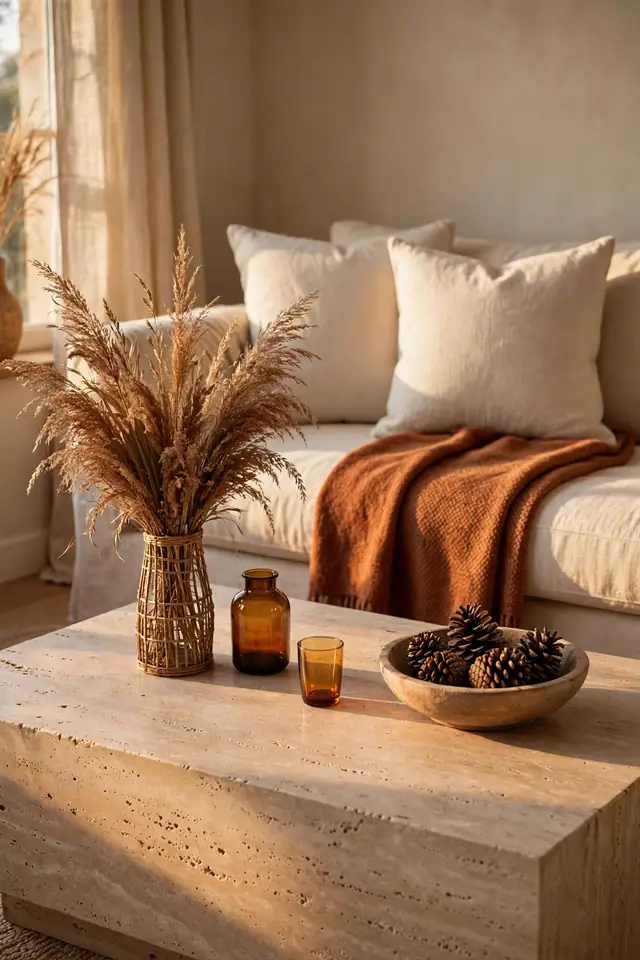
- Swap one object per season instead of restyling the whole table.
- Bring in dried grasses and amber glass when autumn arrives.
- Use pale shells or woven fans for a light summer note.
- Keep a storage box labeled by season so swaps take minutes.
Don’t:
- Cover the stone fully with themed cloths or runners.
- Crowd the surface with holiday pieces that block daily use.
- Store fragile seasonal decor where children grab for remotes.
- Buy single use pieces that match nothing else you own.
Small swaps keep a styled table feeling alive through the year without fresh spending each season. The stone stays the constant, and one changing object carries the mood. Guests notice the shift even when they cannot name what changed.
Right Size Proportions
Cost: Varies widely, though right sized beats oversized at any price
Time: Ten minutes of measuring before any shopping trip
Skill Level: Beginner, a tape measure is the only tool
Best For: Small rooms and long narrow seating layouts
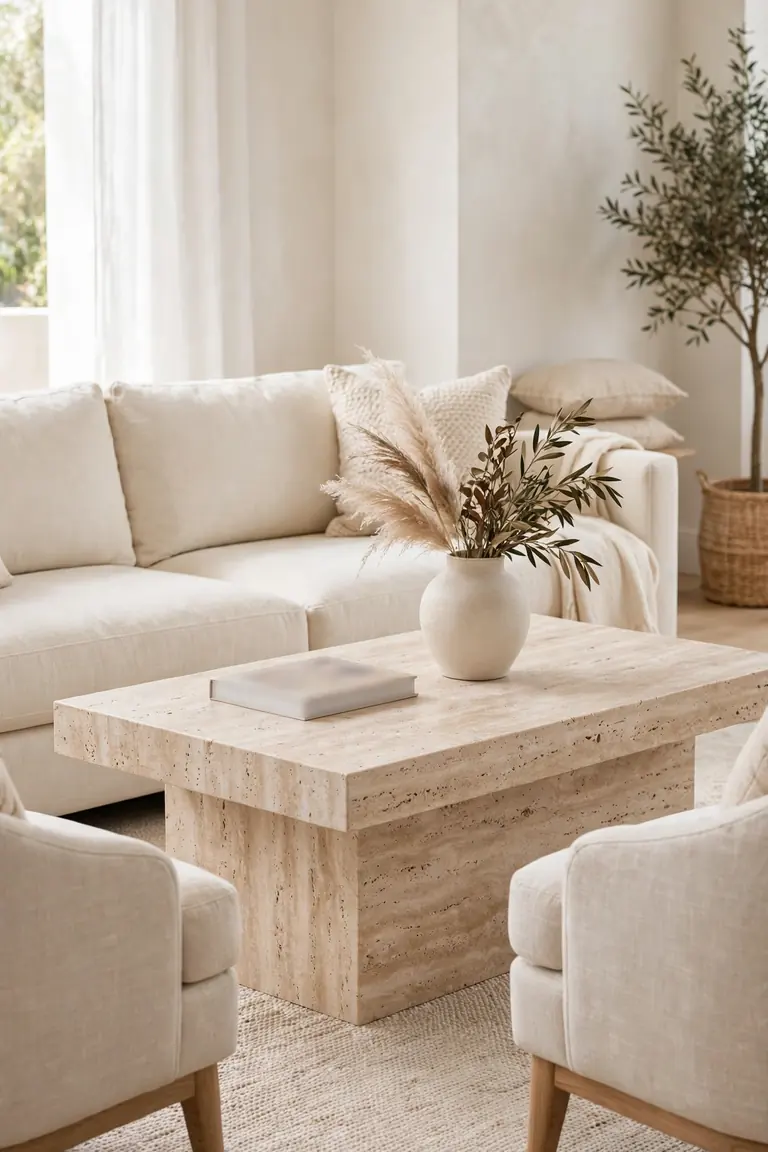
A coffee table should run about two thirds the length of the sofa it serves, with eighteen inches of leg room on every side. Height matters too: level with the seat cushions, or an inch lower, keeps cups easy to reach. Tape the outline on the rug before ordering and live with the shape for a day. Chairs need the same breathing room at both sides. Bedrooms follow the same math, and traditional red and blue bedroom decor shows how strong color stays balanced when furniture keeps its breathing room.
Linen And Stone Contrast
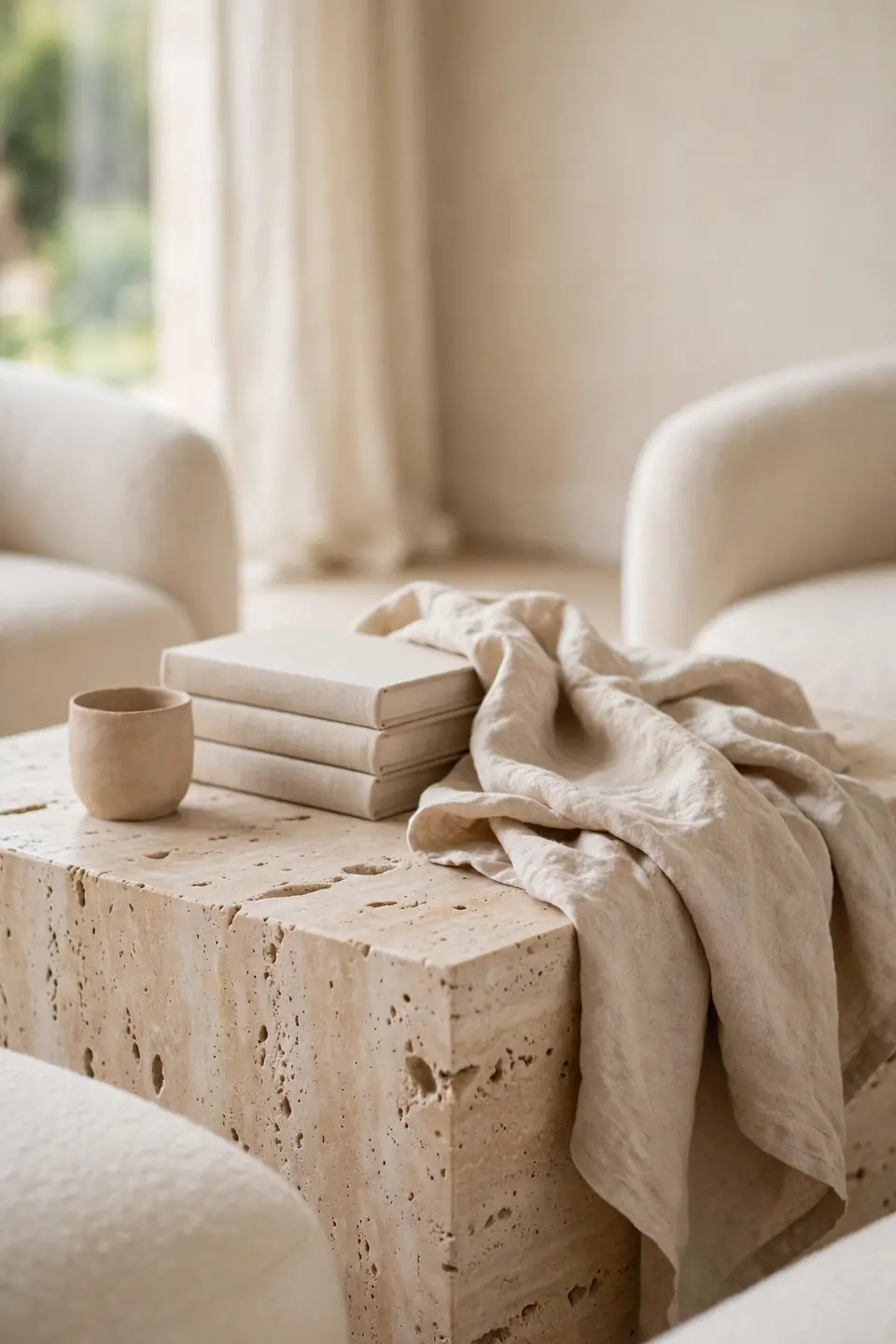
Stone feels cool and linen feels warm, and a table dressed with both keeps a room from sliding too formal. A casually folded linen throw across one corner, or linen bound books in the stack, adds the softness that hard surfaces always need. Natural flax and oatmeal tones sit closest to travertine’s own colors.
Keep the fabric rumpled rather than pressed; the contrast works because one material is crisp and ancient while the other is soft and loose. That’s why many experts recommend pairing every hard tabletop with one textile, since the mix reads welcoming from the doorway. Wash the linen often and let it fade gently with the stone.
Sculptural Object Displays
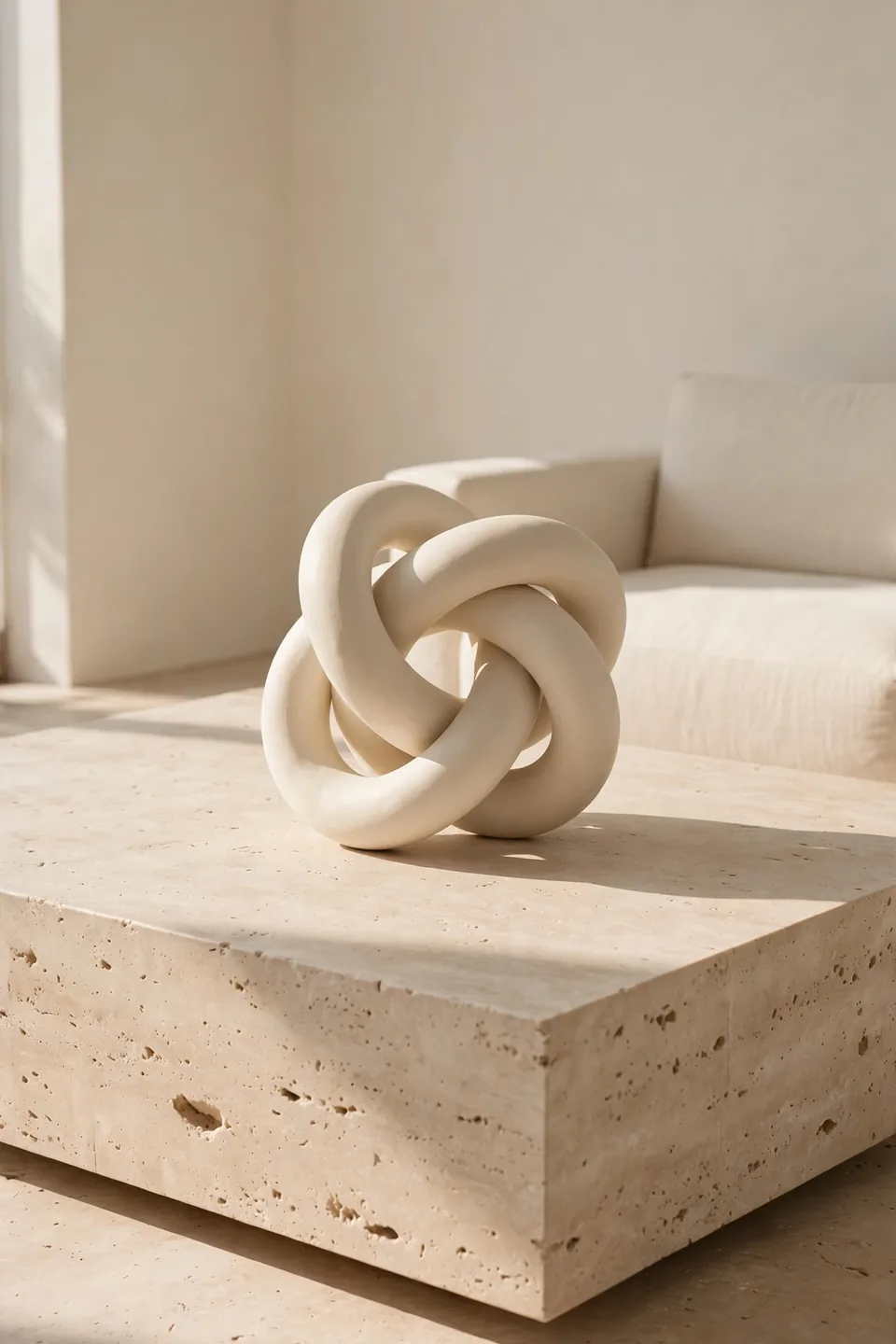
- Choose one sculptural piece with a strong silhouette, like a knot or arc.
- Give it empty stone on all sides so the shape reads clearly.
- Stone, clay, and matte ceramic objects match the table’s own mood.
- Keep the piece under twelve inches tall to protect sight lines.
- Rotate objects from other rooms monthly for a free refresh.
A single bold object turns a coffee table into a small gallery plinth, and travertine’s quiet surface never competes with the art. Avoid pairs of sculptures, which start to look like a shop display. One piece, well chosen, carries more presence than a crowd of small ornaments ever will.
Armchair Side Pairing
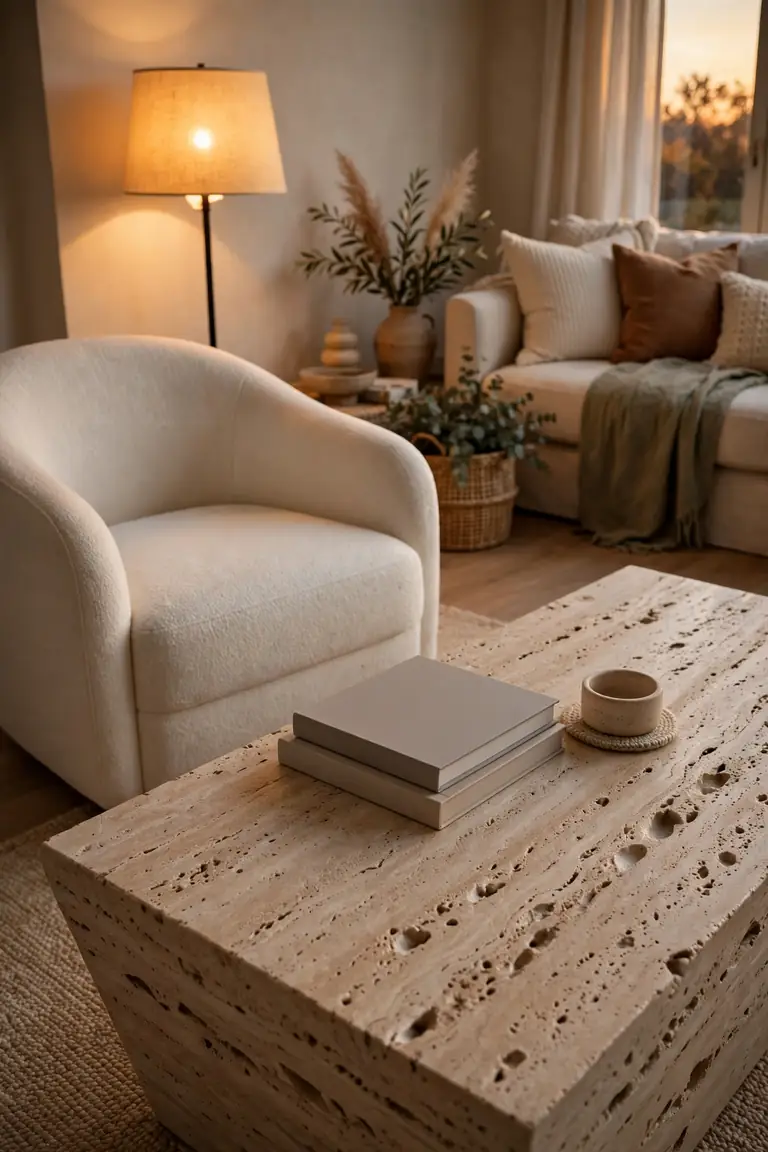
Quick Tip: Angle the armchair end of the table toward the reading chair and keep that corner nearly bare. A small stack of two books and a coaster wait there, ready for an evening reader, while the styled group holds the far end near the sofa. Small planning beats extra objects here.
Coffee tables serve two audiences: the sofa crowd facing the screen and the lone reader in the corner chair. Giving each end its own small purpose keeps the middle calm and the whole surface useful. A floor lamp behind the armchair completes the reading station without touching the table at all.
Family Proof Surfaces
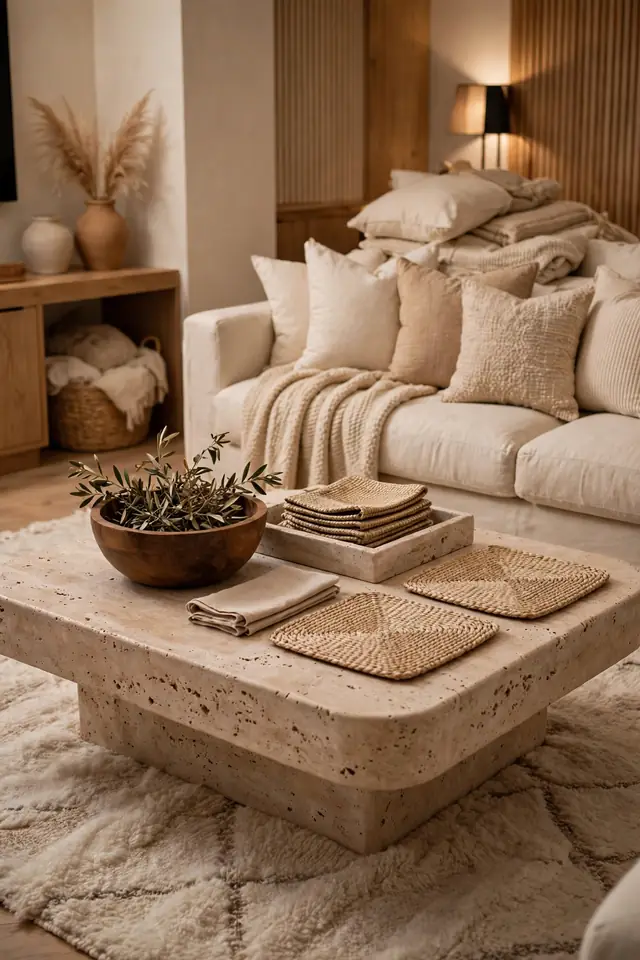
BEFORE: Delicate ceramics and a tall vase ruled the table, so every family evening started with moving breakables to a high shelf. The children got warnings, the dog got blamed, and the styling spent more time in storage than on display.
AFTER: Sturdy wooden bowls, a low stone tray, and unbreakable woven pieces now hold the surface. Movie night needs no clearing ritual, and the table looks just as considered with objects that can survive a tumble onto the rug.
Family proof never means style free; it means choosing weight over fragility. Heavy objects stay put, soft objects bounce, and nothing precious lives at toddler height. The room relaxes when the table stops being the one surface everyone fears touching.
Lower Shelf Layers
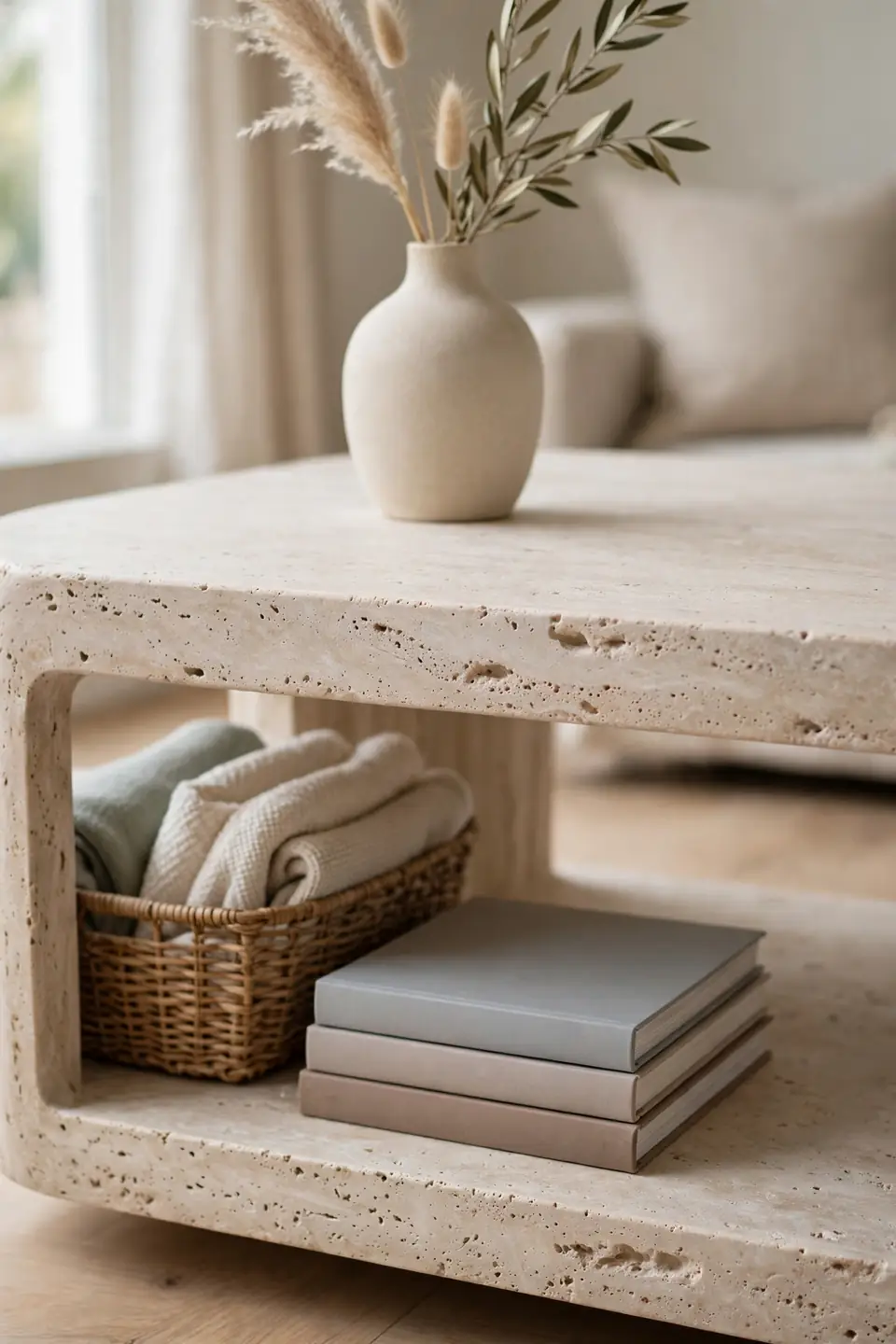
- Start with the largest items: a basket of throws or a stack of art books.
- Fill gaps with one or two storage boxes in linen or pale wood.
- Leave a third of the shelf empty so the layer reads calm.
- Keep everyday items at the front edge for easy reaching.
A lower shelf doubles the table’s storage while the top stays serene, which is the whole bargain of shelf styling. Keep colors down there quieter than the top display so the eye rests upstairs. Guests rarely notice the shelf, yet the room feels tidier because clutter has a low, hidden home.
Travertine Versus Marble
| Detail | Travertine | Marble |
|---|---|---|
| Pattern | Cloudy veins, soft pits | Sharp dramatic veining |
| Warmth | Warm beige base tones | Cool white base tones |
| Care | Seal twice a year | Seal once a year |
| Price | Usually the gentler cost | Usually the premium cost |
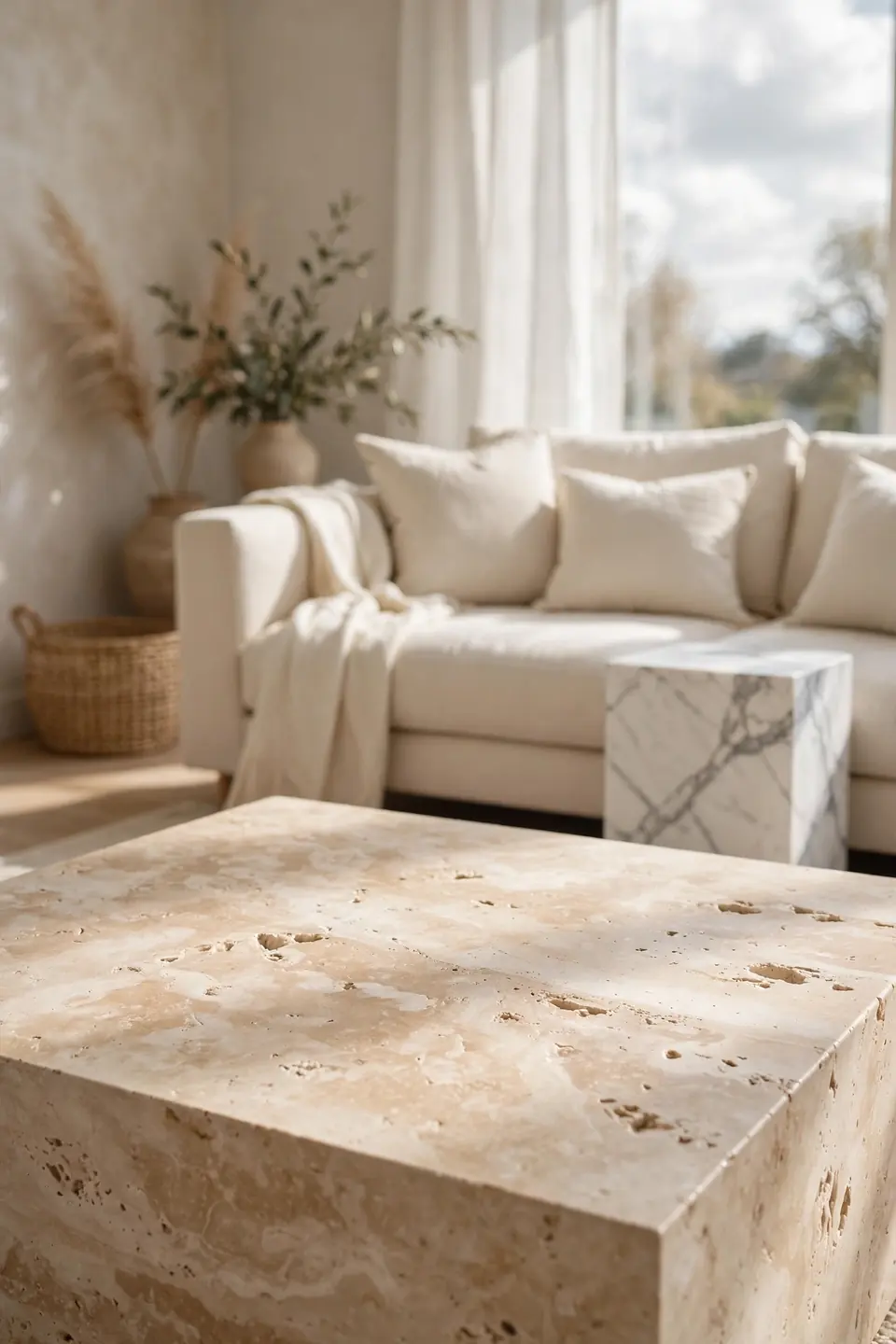
Veining in travertine drifts like clouds, so no two tabletops ever match exactly. Both stones also cool a room in summer. Travertine brings warmth and a forgiving surface to daily family life, while marble reads cooler and dressier. Both stones stain, so coasters matter either way. Choose the one whose base tone matches your largest pieces, because the table must live with the sofa long after trends move on.
Everyday Surface Rules
Do:
- Keep one clear landing zone for cups near the sofa edge.
- Return remotes and chargers to their basket every night.
- Leave at least half the surface visibly bare at all times.
- Refresh one small item weekly: a stem, a candle, a cover.
Don’t:
- Let mail pile on the stone for more than a day.
- Set hot pans or mugs down without a trivet or coaster.
- Stack objects so high that the television view suffers.
- Use the table as a desk for laptops and paperwork daily.
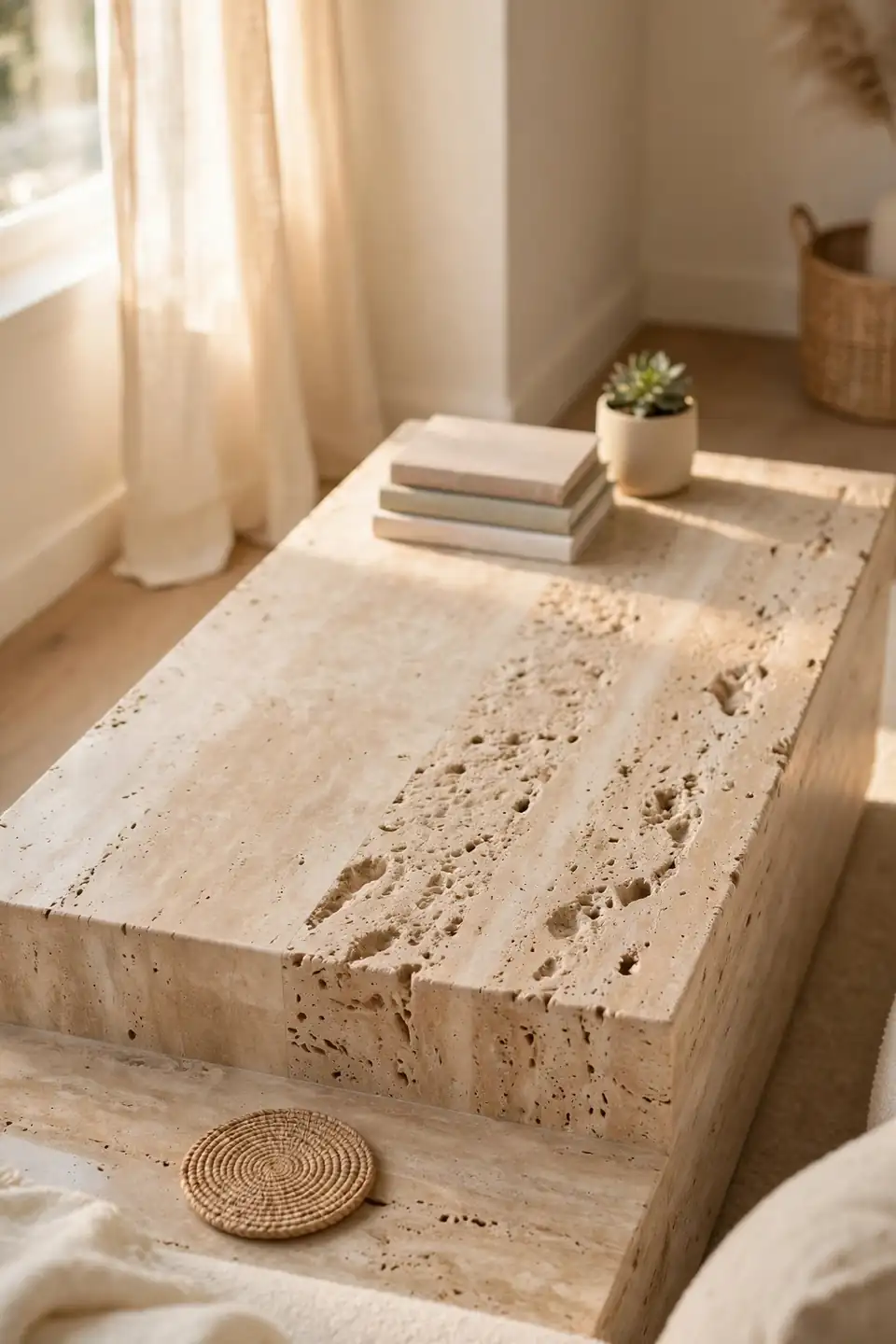
Rules sound strict, yet they are what keep a styled table styled between deep cleans. Each one takes seconds and protects the calm the arrangement was built for. Within a month the habits run themselves, and the surface stays guest ready by default.
Buying Quality Stone
Cost: Mid range for real stone, far below most marble tables
Time: One showroom visit, plus delivery in two to four weeks
Skill Level: Beginner, with a checklist and a tape measure
Best For: Buyers who want one table for the next twenty years
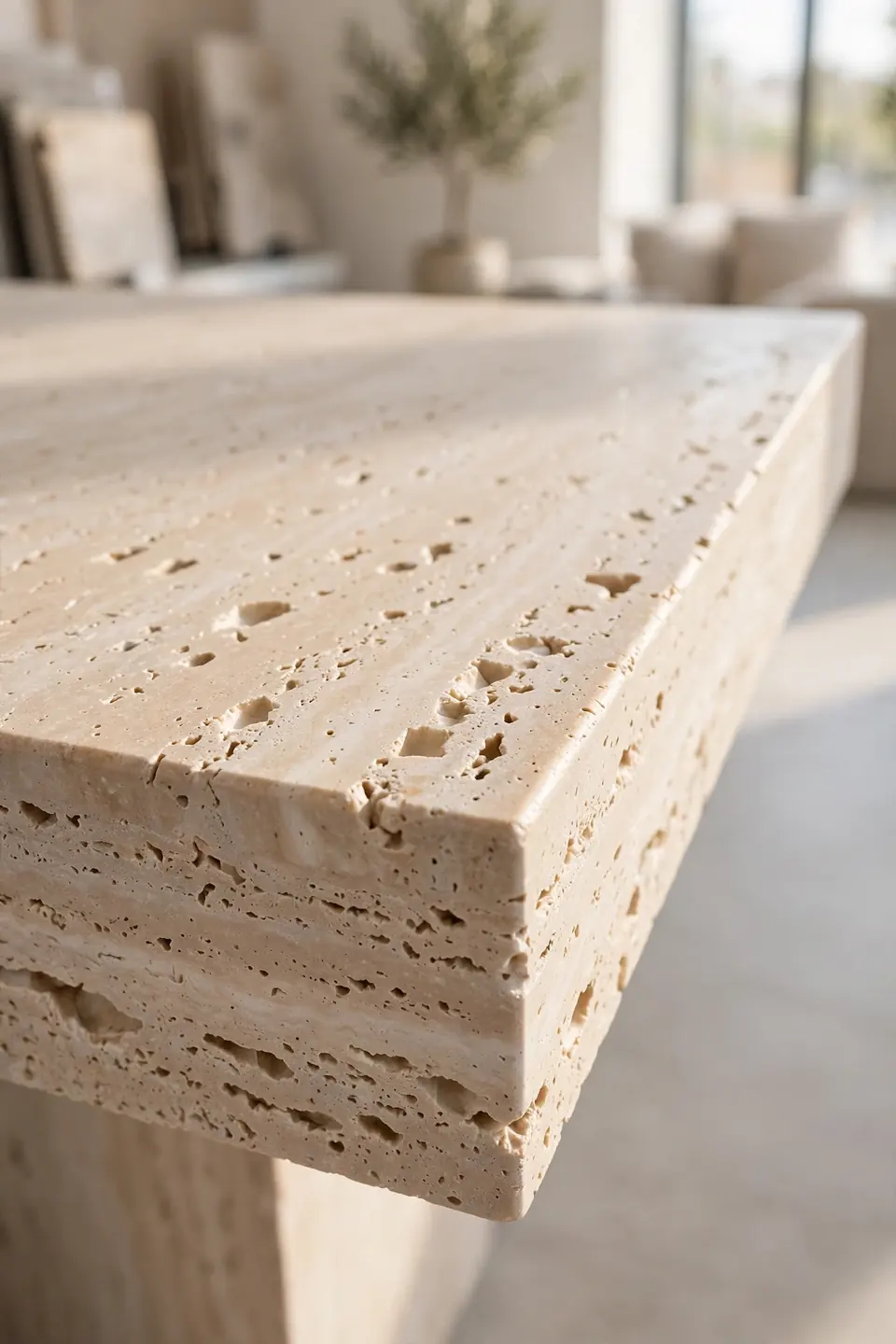
Check the slab edges for honest thickness and run a palm underneath for a smooth, finished base. Filled pits should sit level with the surface, and the color should stay even from corner to corner. A heavy table that barely moves when pushed is usually a well made one worth keeping. Bring photos of your sofa and rug so tones can be judged side by side.
Morning Light Moments
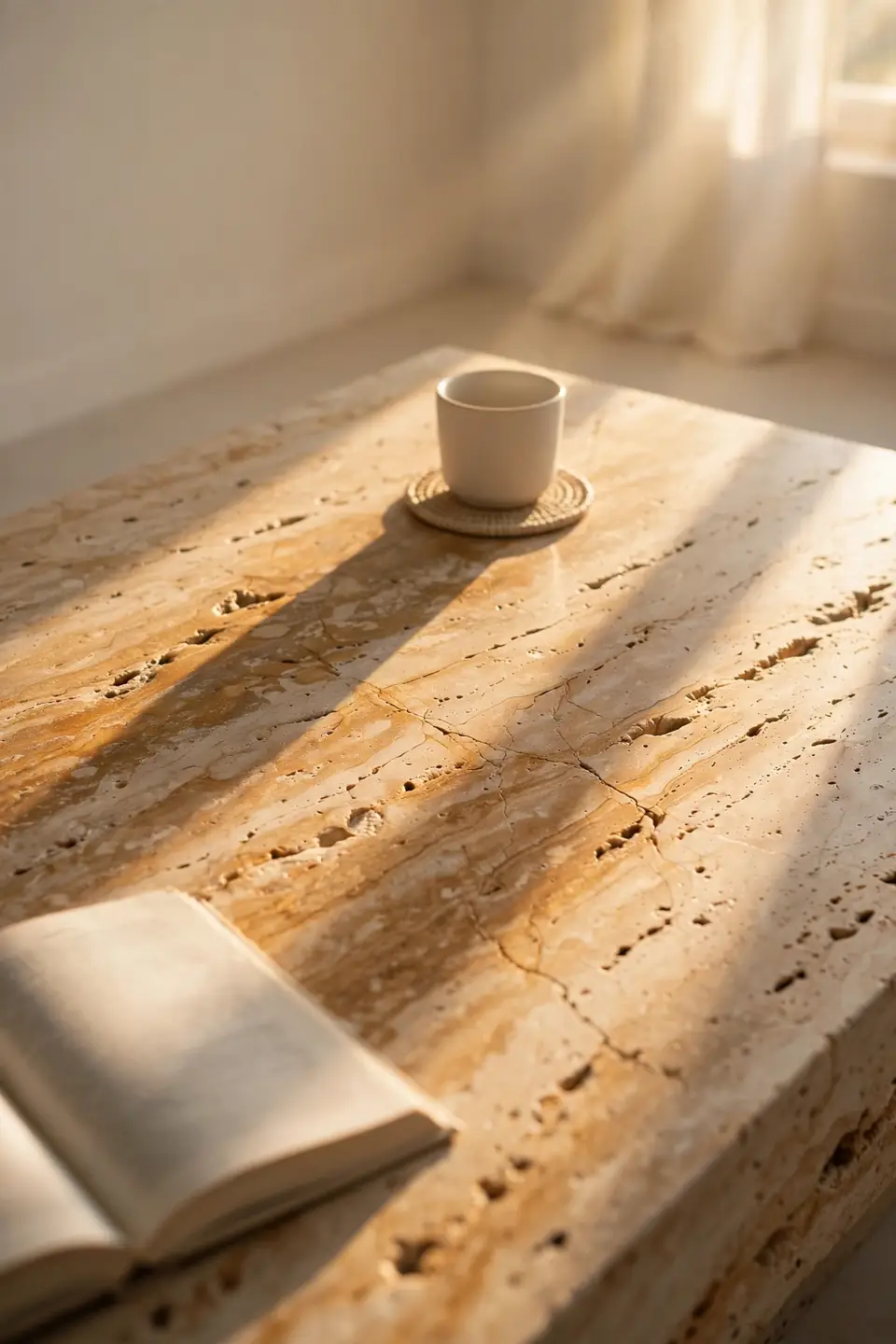
Early sun rakes across travertine and wakes every vein in the stone. A table placed where morning light lands needs almost no styling at all: one cup, one open book, and the surface does the rest. East facing windows give the strongest effect, though any bright room offers a smaller version of the same quiet show.
Keep the morning end of the table clear overnight so the ritual stays effortless at dawn. In my experience, rooms with one calm daily ritual, coffee at a clear table, tend to stay tidier everywhere else too. The habit is small, but it anchors the whole day in the room you styled with care.
Conclusion
Twenty five ideas later, the pattern is simple: stone first, few objects, soft textures, and space to breathe. Whether the table holds books, brass, or a single green stem, natural travertine coffee table styling rewards restraint more than shopping. Pick one idea from this list, clear the surface tonight, and build the arrangement slowly over the week. Save your favorites on Pinterest, try the tray or the trio first, and share the corner that changes how your room feels at the end of the day. Small changes on one honest surface have a way of lifting the whole room with them.