20 Sculptural Pendant Lighting Ideas for Elegant Dining Rooms
A dining room can have a beautiful table, comfortable chairs, and still feel unfinished every single evening. The missing piece usually hangs above the table. Thoughtful sculptural pendant lighting dining room choices turn one fixture into the room’s artwork, casting warm pools of light that make weeknight dinners feel like occasions. In my experience, the pendant is the fastest single change a dining room can get, because it works on the eye and the mood at the same time.
The twenty ideas ahead cover scale, height, materials, and dimming, each one sized for real dining rooms and real budgets. If you love calm layered neutrals, the palette thinking behind mushroom taupe bedroom decor ideas pairs beautifully with the cream walls and light wood used throughout these rooms. Start by measuring your table, then let shape and glow do the decorating.
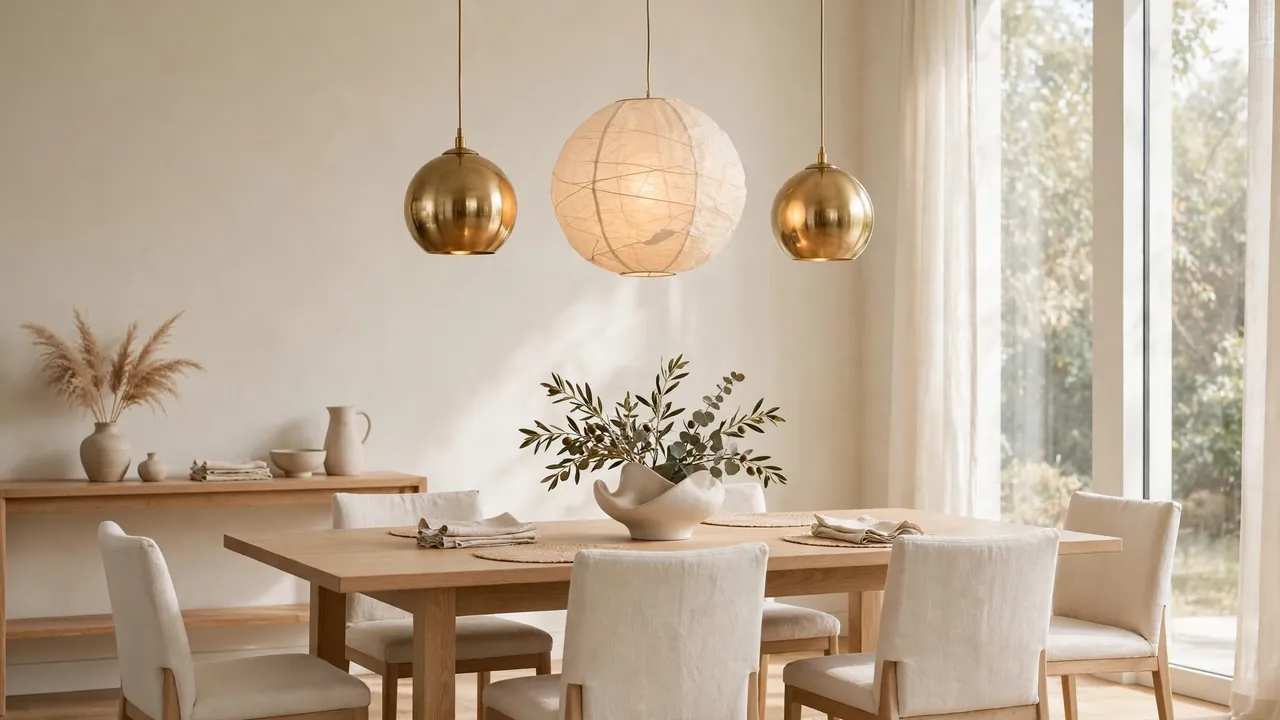
Oversized Paper Orb Pendant

One generous paper orb above the table reads like a soft moon, calm and confident. The scale surprises people: a shade nearly two thirds the table width looks intentional, while a small one looks apologetic. Paper diffuses bulb glare into an even glow, so faces around the table stay flattered and relaxed.
Hang the orb so its lowest point sits about 75 centimeters above the tabletop, then dim it warm for evening meals. I’ve noticed paper shades forgive imperfect ceilings, because the eye goes to the glow, not the mount. Keep the table styling quiet underneath: one ceramic bowl, linen napkins, nothing that competes with the sphere.
Clustered Brass Globe Pendants
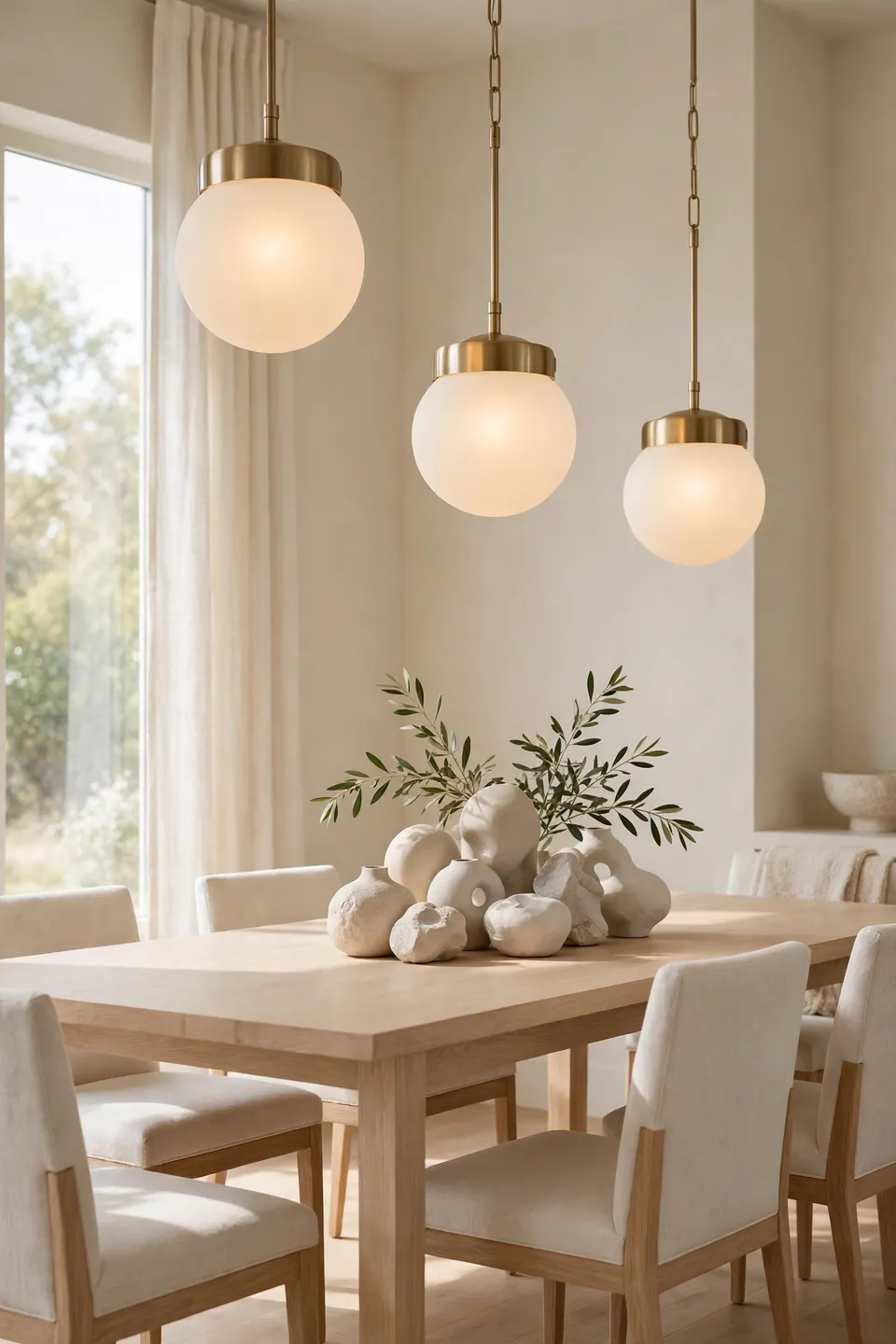
- Group three brass globes at staggered heights over a long table for a gentle rhythm.
- Keep globe diameters close, within five centimeters of each other, so the cluster reads as one family.
- Space the drops evenly along the table center line, never bunched at one end.
- Choose opal glass globes to soften the brass and hide the bulb completely.
- Wire the cluster to one dimmer so the whole group warms together.
Brass warms up fast under lamplight, which makes it kind to cream walls and pale oak. A cluster suits rectangular tables best, because the repeated globes echo the long shape below them. Leave generous clearance beneath the lowest globe at the table ends, where people stand, lean in, and carry serving dishes past.
Woven Rattan Dome Shade
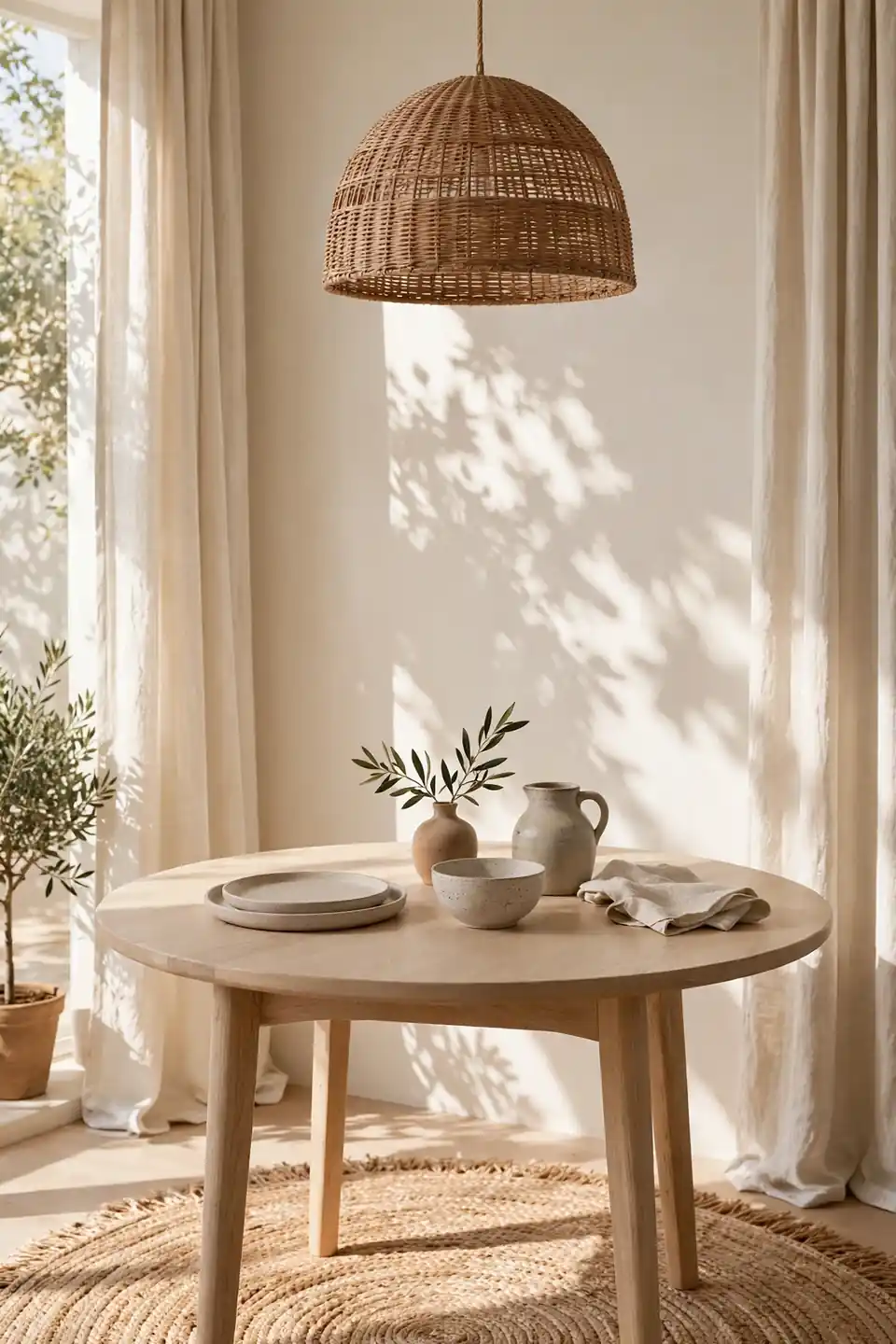
Quick Tip: Choose a rattan dome with an open weave at the bottom, not a fully closed shade. The open base throws a warm pool straight onto the table, while the weave still casts those soft patterned shadows across the ceiling at night.
Rattan brings the warmth of a holiday terrace into an everyday dining room. The natural fibers sit happily beside linen curtains, jute rugs, and light wood chairs. Dust the shade monthly with a soft brush attachment, because open weaves collect kitchen film faster than smooth glass does. One dome centered over a round table feels especially balanced, and a warm bulb keeps the fibers golden after dark.
Bare Bulb Dining Makeover

BEFORE: A single bare bulb hung from a short cord over the table, left over from the last renovation. Dinner felt harsh: sharp shadows on faces, glare bouncing off glasses, and a ceiling that looked forgotten above the one bright spot.
AFTER: A wide woven shade and a warm dimmable bulb replaced the bare fitting in under an hour. The light now lands on the food and the people, patterned shadows soften the ceiling, and the corner finally feels chosen.
Most makeovers at this scale cost less than a family takeaway night. The shade does the visual work while the bulb does the comfort work, so choose both on purpose. Warm white bulbs around 2700K keep skin tones and wood looking honest.
Hanging Height Made Simple
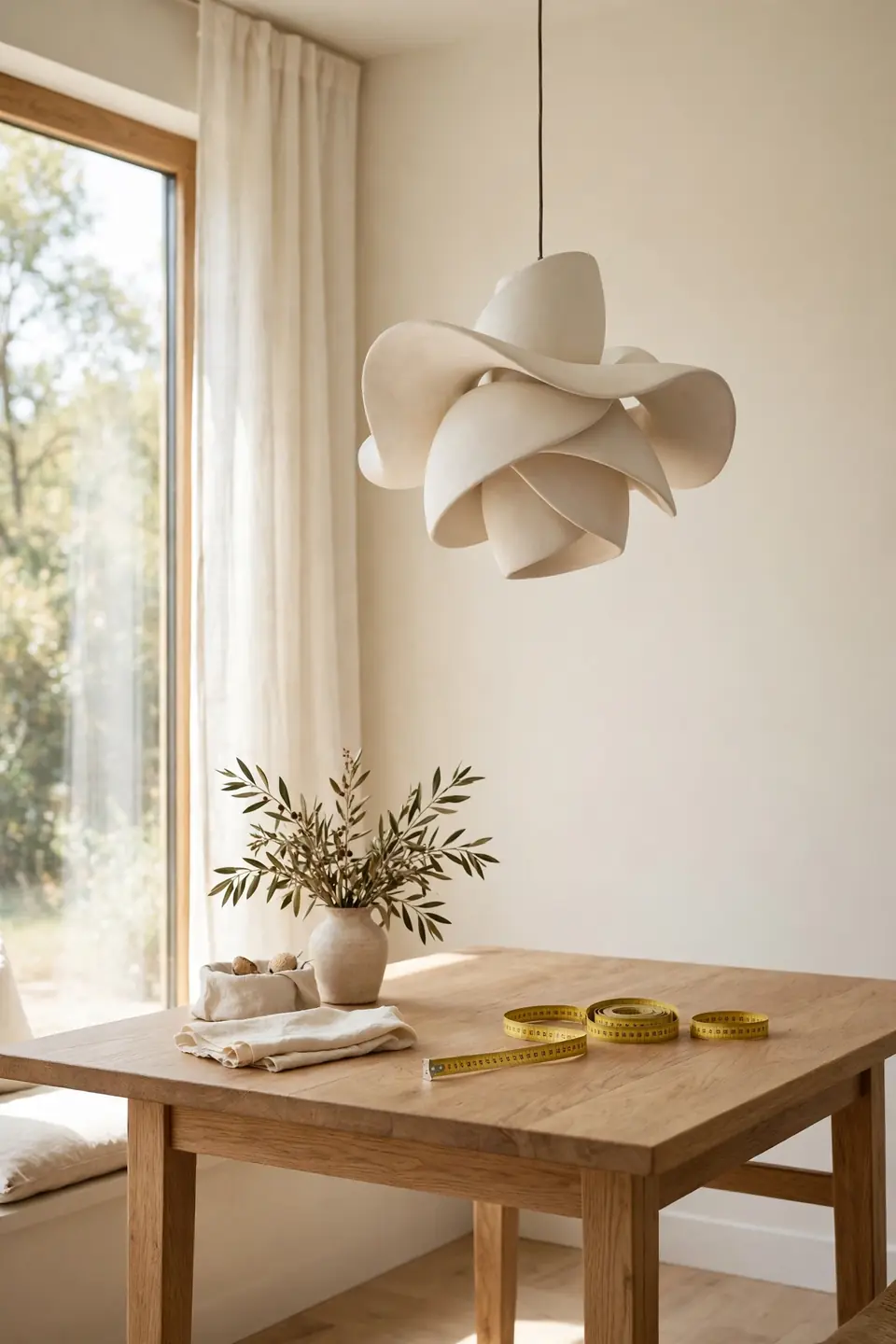
- Measure from the tabletop upward; the shade bottom should land 70 to 80 centimeters above the surface.
- Check sight lines by sitting at each seat and confirming the shade clears faces across the table.
- For ceilings above 2.7 meters, add five centimeters of drop for every extra 30 centimeters of height.
- Mark the canopy spot with painter’s tape and live with it for a day before drilling.
Height is the detail guests feel without naming it. Too high and the light detaches from the meal; too low and the shade becomes a hat. I’ve seen this work well in many cases: set the height once with care, and the room never needs fiddling again.
Glass Versus Metal Pendants

| Feature | Glass | Metal |
|---|---|---|
| Glow | Soft and widespread | Focused and dramatic |
| Mood | Airy and light | Grounded and bold |
| Care | Wipes clean in minutes | Dusts with a dry cloth |
| Best For | Small bright rooms | Large moody rooms |
Neither material wins outright; the room decides. Glass keeps a small dining room feeling open because you can see through the shade to the wall beyond it. Metal throws a defined pool of light that makes a big table feel intimate. Many homes mix one glass pendant over a sideboard with metal over the table, and the contrast reads deliberate rather than indecisive. Match the bulb temperature across both so the glow stays one family.
Pendant Styling Ground Rules
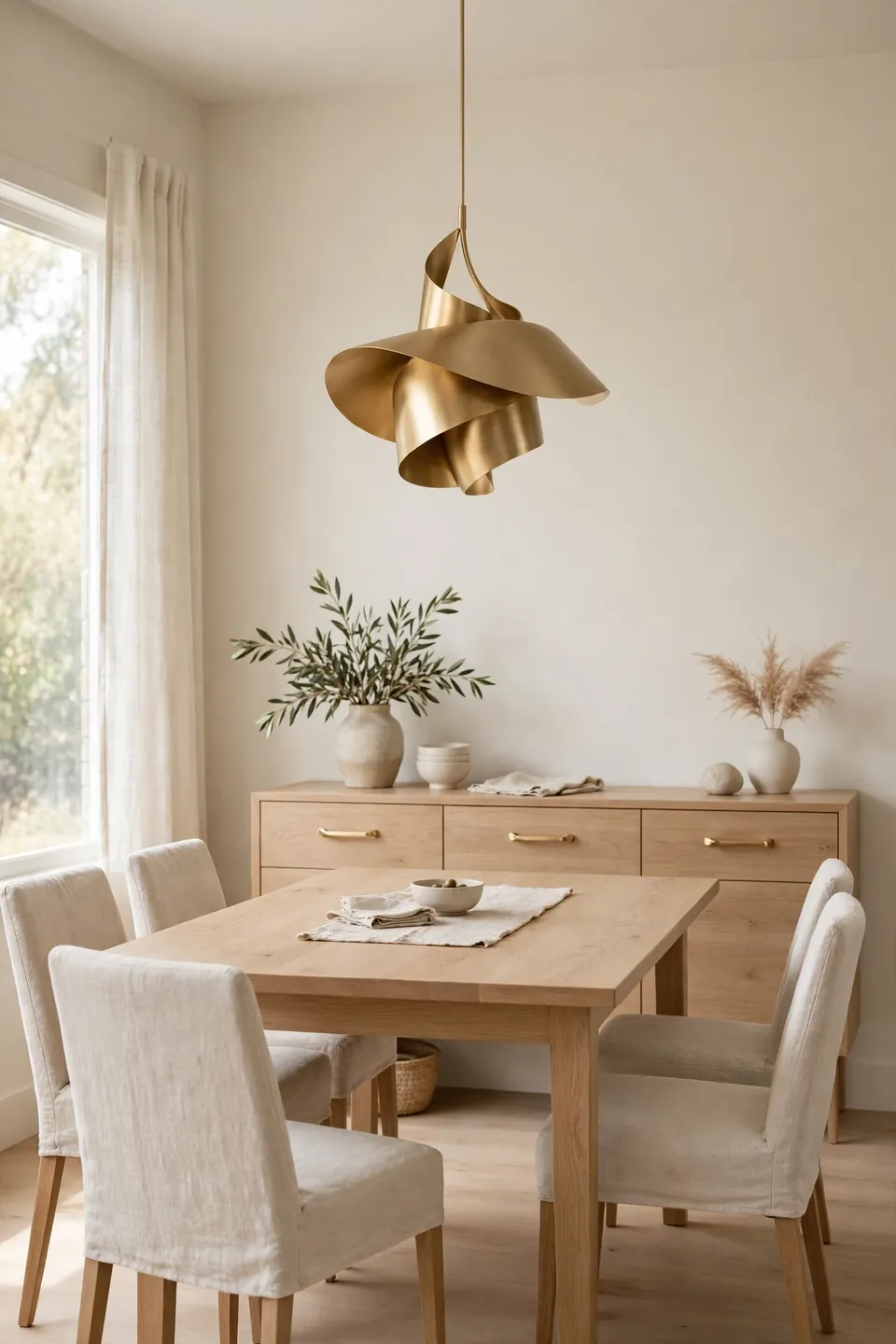
Do:
- Center the pendant over the table, not the room; shift the hook if needed.
- Match shade width to half to two thirds of the table width.
- Repeat the pendant metal once more in a handle or frame.
- Put every dining light on a dimmer with a warm evening level.
Don’t:
- Hang mixed pendants at random heights with no shared rhythm.
- Pick a shade so wide it swallows conversation below it.
- Pair a cool white bulb with warm wood and expect coziness.
- Leave a bright bare bulb visible inside an open shade.
These rules sound strict, yet they free you to be playful with shape. Once scale, height, and temperature behave, almost any silhouette reads as art. Start with the measurements, then choose the pendant your eye keeps returning to.
Sculptural Pendant Quick Facts
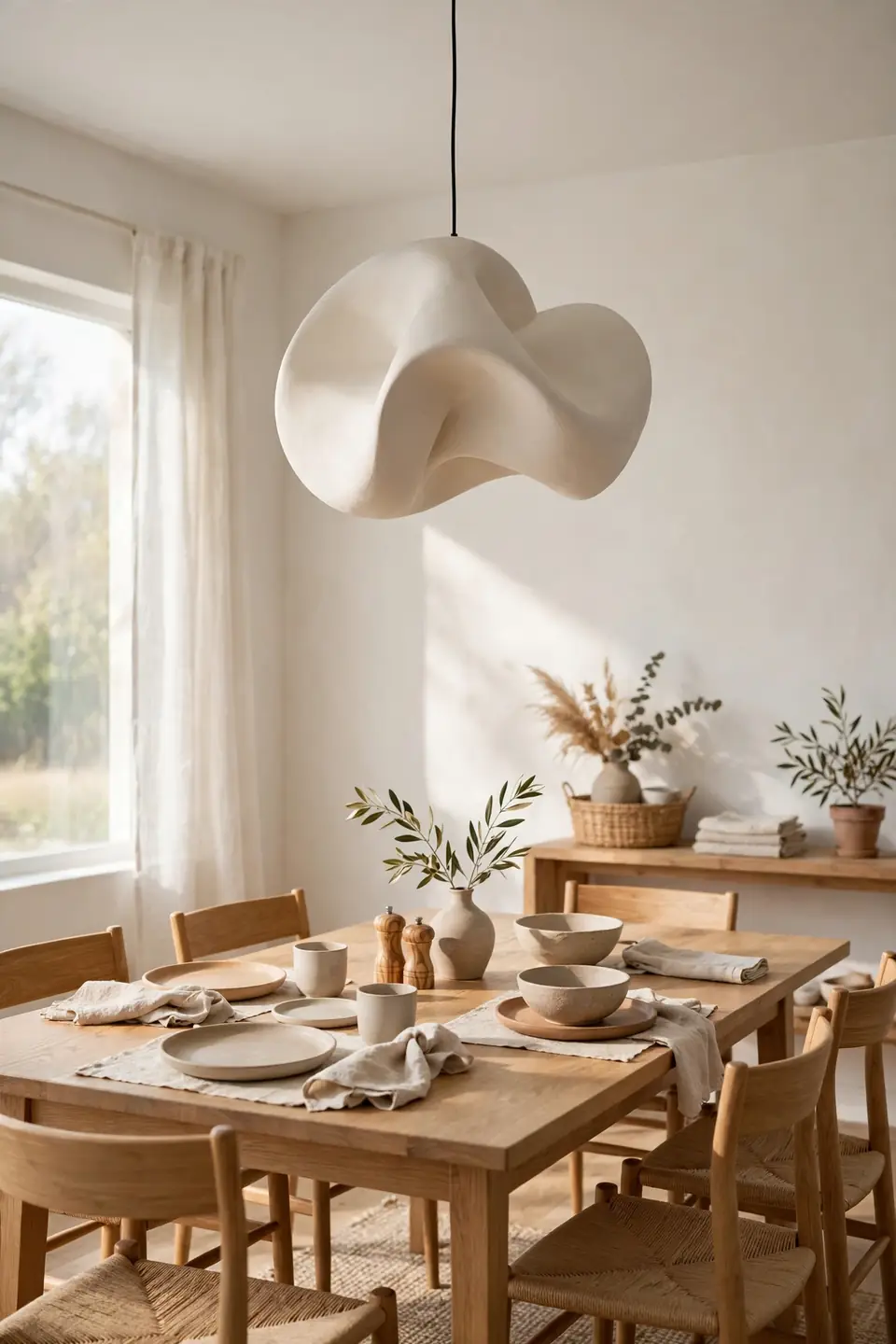
Cost: Low to high | Time: One afternoon | Skill Level: Beginner to intermediate | Best For: Renters and homeowners alike
Prices swing widely because materials do the talking: paper and rattan sit at the gentle end, while hand blown glass and solid brass sit at the top. Most swaps use the existing ceiling wiring, so an electrician visit is often the only professional cost, and renters can restore the old fitting in minutes when they leave. That’s why many experts recommend starting with light when a dining room feels flat: the change is fast, reversible, and visible from the doorway every single day of the week.
Fluted Plaster Pendant Pair
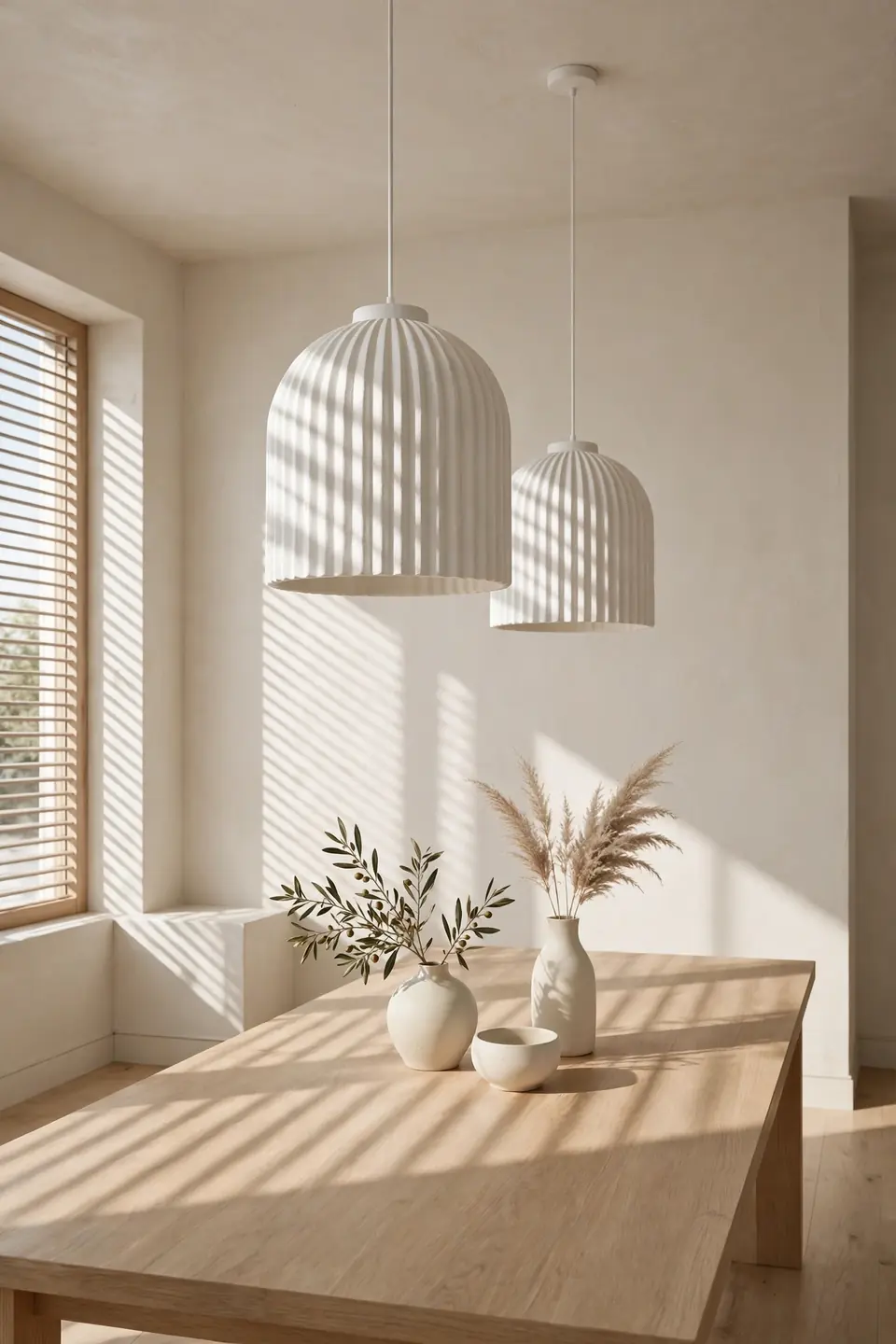
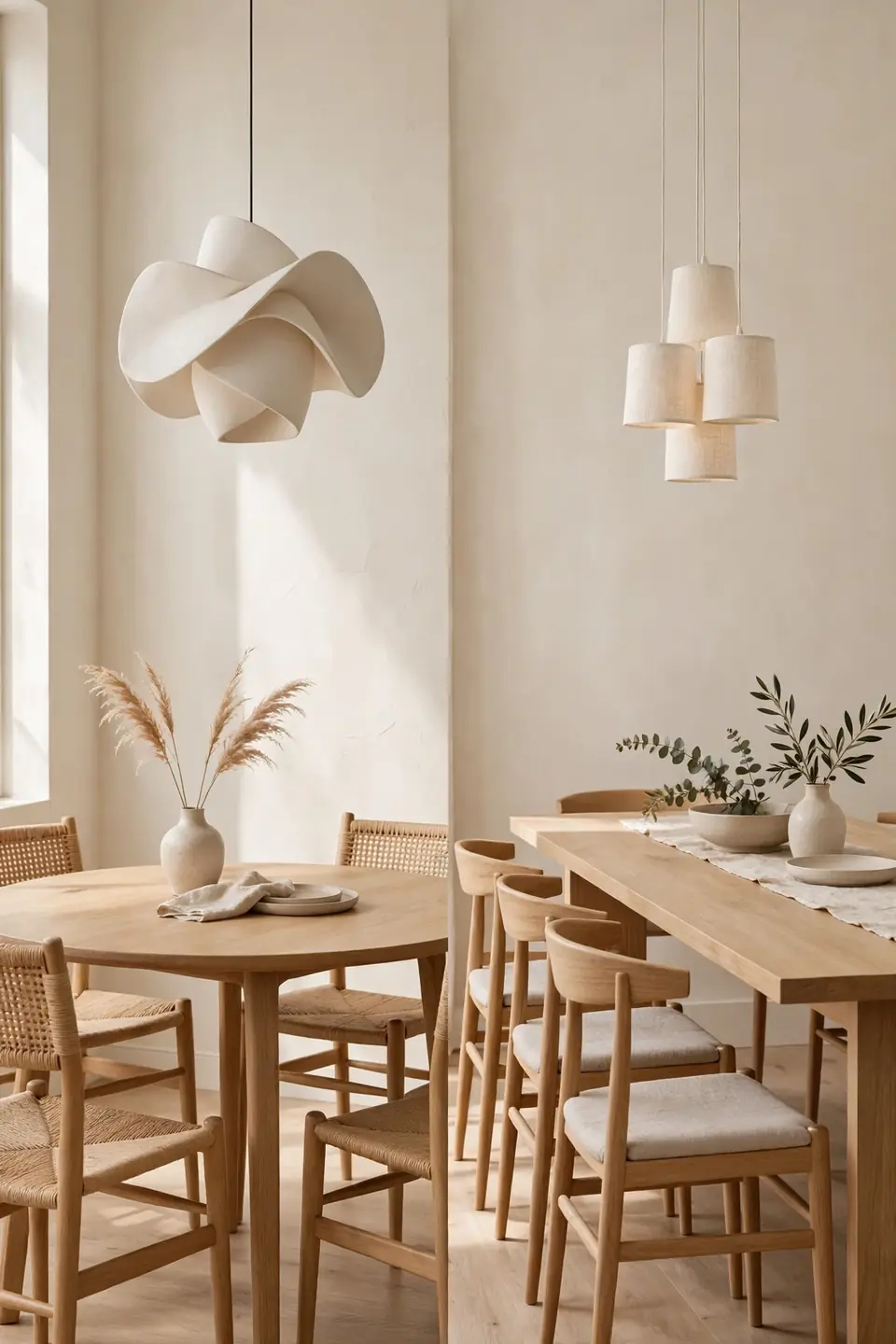
Two fluted plaster pendants in a row give a long table quiet architecture. The ridged surface catches light in soft stripes, so the shades look carved rather than cast. Plaster’s matte finish keeps the mood calm beside glossy ceramics, glassware, and polished cutlery on the table below.
Space the pair evenly, each one centered over a third of the table length. Keep the plaster unpainted in warm white, or tint it one shade deeper than the walls for a tonal effect that feels tailored. Wipe with a dry cloth only; water spots show quickly on raw plaster, and a feather duster handles weekly dust without any risk.
Organic Ceramic Pendant Trio

- Pick three handmade ceramic pendants in the same glaze family, each slightly different in shape.
- Hang them in a loose triangle over a round table or a gentle row over a rectangular one.
- Keep cords simple black or braided linen so the pottery holds the attention.
- Choose a matte glaze for calm rooms and a satin glaze where evenings need reflection.
Handmade shades carry tiny variations that machine made pieces iron out, and those small wobbles are the charm. The same love of hand touched texture shapes the shelves in modern library room interior inspiration, where pottery and wood share the styling work. Group ceramics in odd numbers; the eye reads trios as finished and calm.
Linen Drum Shade Glow
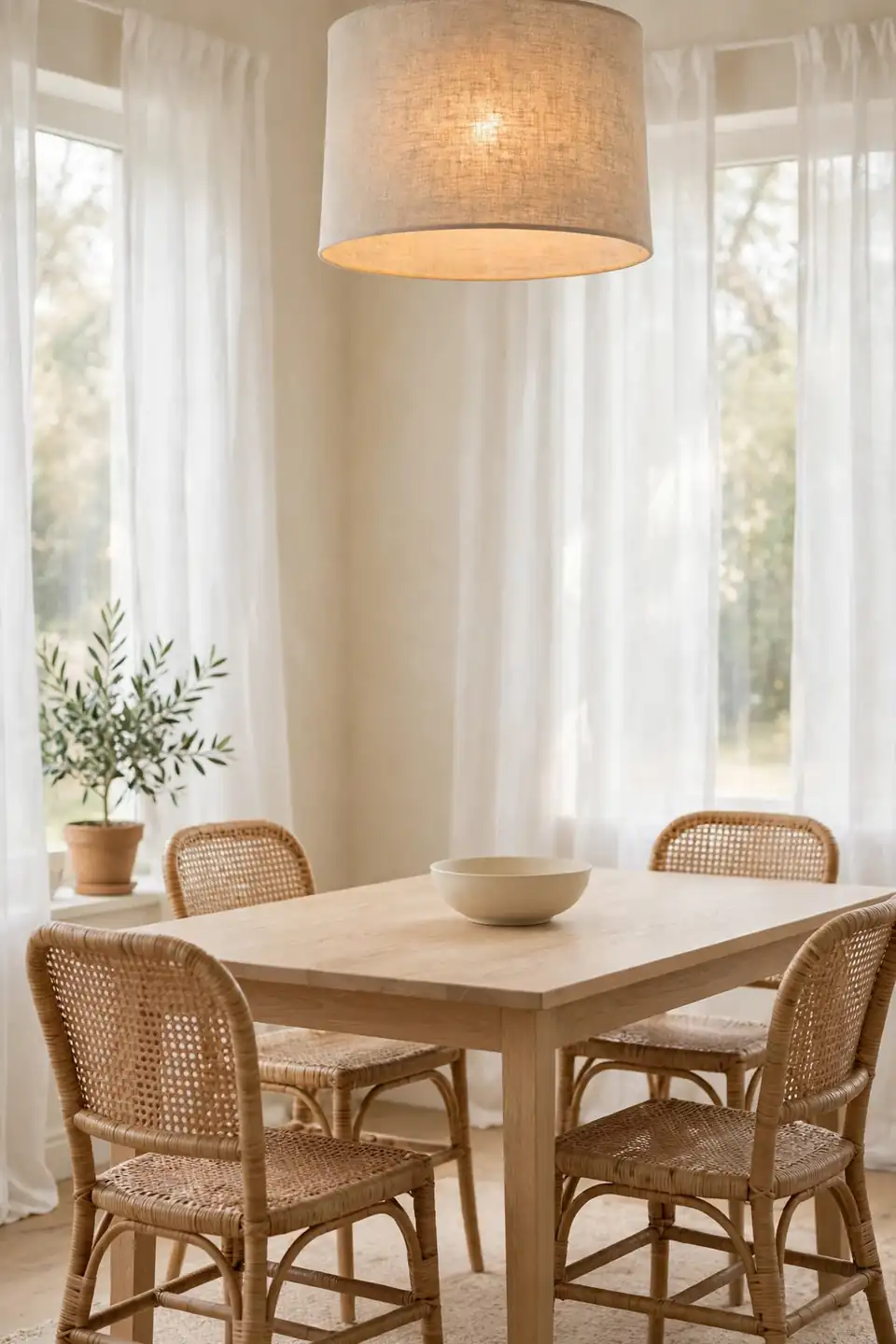
Quick Tip: Line the inside of a linen drum with a warm white inner shade if the bulb shows through the weave. The liner hides hot spots, keeps the glow even, and stops the fabric from looking thin and tired at full brightness.
A linen drum is the diplomat of pendants: it offends no style and flatters every table it hangs over. The fabric softens daylight coming through windows behind it, so the shade never becomes a dark silhouette at noon. Choose a drum diameter close to half the table width, and keep the drop shallow on low ceilings. Steam the fabric gently after installation to release the packing creases, and the shade will hang smooth and round.
Builder Grade Fixture Swap
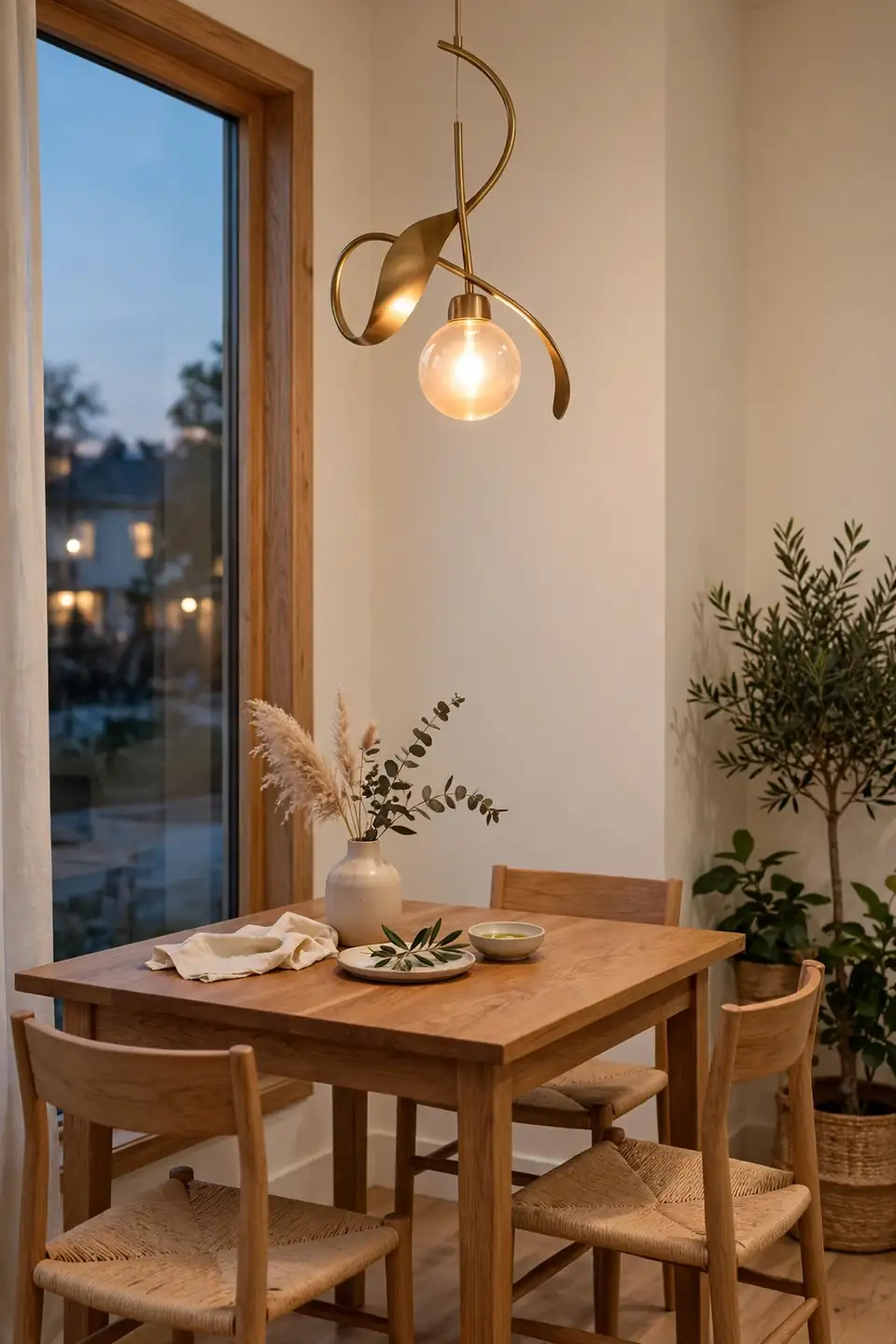
BEFORE: The dining room wore the standard builder dome, a frosted glass mushroom that flattened every color it touched. Meals looked grey, the table felt temporary, and nobody complimented the light in four years of dinners.
AFTER: One sculptural brass pendant with an opal globe took its place on the same wiring. The table now glows like a cafe corner, wood tones read richer, and guests ask where the fixture came from before sitting down.
Swaps like this rarely need new wiring, because the ceiling box and switch stay exactly where they are. Budget an hour, a helper for holding the shade, and a dimmer rated for your bulb type. The old dome stores flat in a labeled box, ready for move out day or a future utility room.
Choosing Pendant Size Steps

- Measure the table length and width in centimeters and write both numbers down.
- For one pendant, aim for a diameter between half and two thirds of the table width.
- For a cluster layout, keep the combined span shorter than the table by 30 centimeters.
- Tape the shade outline on the table surface and view it from the doorway before ordering.
Scale is where sculptural pendant lighting dining room plans usually succeed or fail. An undersized shade vanishes against a big table, while an oversized one crowds shoulders and sight lines. When torn between two sizes, I’ve noticed the larger one nearly always looks more deliberate once it hangs in real space.
Single Versus Cluster Layout
| Feature | Single Pendant | Cluster |
|---|---|---|
| Focus | One calm centerpiece | Rhythm along the table |
| Wiring | One ceiling point | One point, split drops |
| Best Table | Round or square | Long rectangular |
| Mood | Quiet and formal | Playful and layered |
Long tables forgive clusters because the repetition matches their length, while round tables usually want one strong shape. If your ceiling point sits off center, a swag hook can move a single pendant over the table without new wiring. Cluster fans should keep bulb types identical across every drop, or the group reads as spare parts. Both layouts benefit from a dimmer, which lets one fixture serve bright homework afternoons and slow candlelit dinners alike.
Dimmer And Bulb Rules

Do:
- Fit an LED rated dimmer so light lowers smoothly without flicker.
- Choose bulbs between 2200K and 2700K for warm evening skin tones.
- Match bulb shape to the shade; small globes suit small shades best.
- Keep one spare bulb from the same batch for even color later.
Don’t:
- Mix bulb temperatures across a cluster and expect a calm glow.
- Use bare filament bulbs at full brightness over glossy tables.
- Ignore the maximum wattage printed inside the fitting.
- Dim so low that food loses its color at dinner.
Light quality is invisible in photos yet obvious at the table. Warm, dimmable, matched bulbs make even a simple shade feel considered. Test the lowest setting during a real meal before calling the job finished, and adjust after a week of dinners.
Pendant Care Quick Facts

Cost: Very low | Time: Fifteen minutes monthly | Skill Level: Beginner | Works In: Every pendant material
Dust is the quiet enemy of beautiful light in any home. A monthly wipe with a dry microfiber cloth keeps glass bright and stops woven shades from slowly greying. Switch the power off and let bulbs cool fully before reaching inside any shade. Brass needs only a soft cloth; harsh polish strips its lacquer and invites fingerprints. Keep a small step stool near the dining room, and the whole job stays under fifteen minutes, which means it actually gets done month after month.
Curved Branch Pendant Light

A curved branch pendant stretches light along the table instead of pooling it in one spot. The arms arc like stems, carrying small globes over each place setting in turn. It flatters long tables where a single central shade leaves both ends sitting in shadow by dessert.
Keep branch finishes simple: aged brass, blackened steel, or matte white over pale wood. The silhouette is busy enough on its own, so let the table styling stay plain and low. Set every globe on the same dimmer and use identical bulbs, or the branch reads uneven at night. A plain linen runner underneath ties the whole length together.
Blackened Steel Sculptural Shade

- Choose a shade with a sculptural fold or cone that throws light down and slightly outward.
- Balance the dark metal with pale walls, a light table runner, and warm wood chairs.
- Use a warm bulb; steel shades cool the light if the bulb runs neutral.
- Repeat black once in chair legs or a picture frame so the pendant feels connected.
Blackened steel sounds stark, yet over a cream table it reads like punctuation. The dark shade also hides dust and cooking film longer between cleanings, a small mercy in busy homes. In small dining rooms, one steel pendant can anchor the whole scheme while every other piece stays light, simple, and easy to move.
Layered Light At Night

Quick Tip: Run the pendant at about half brightness during dinner and let candles or a side lamp supply the rest. Layered sources erase harsh shadows, and the lower pendant glow keeps the shade itself looking sculptural rather than glaring.
Single source lighting flattens a room after dark, no matter how lovely the fixture is. A small lamp on a sideboard or two candles on the table gives faces depth and the walls a gentle gradient. I’ve seen this work well in many cases: guests linger longer when the light feels like dusk instead of an office. Keep every source warm so the layers blend into one calm mood.
Dark Dining Room Refresh

BEFORE: The dining room faced north and caught almost no sun, with a low ceiling and a tiny flush mount that barely reached the corners. Dinners felt dim by October, and the table doubled as a gloomy desk.
AFTER: A wide sculptural pendant with an uplight rim now bounces glow off the ceiling while lighting the table. The room reads taller, the corners hold soft light, and dinner guests stopped noticing the missing window.
Uplight is the trick dark rooms forget. A shade that spills a little light upward doubles the perceived ceiling height and softens every shadow below it. Pair the pendant with pale walls and a light rug, and even a north facing room holds its warmth through the longest winter evenings.
Conclusion
Beautiful dining light is rarely about price; it is about scale, height, and warmth chosen on purpose. Let these sculptural pendant lighting dining room ideas guide one confident change above your table, whether that is a paper orb, a brass cluster, or a woven dome. Measure first, hang with care, and dim the result warm every evening. Save your favorite ideas to Pinterest before you shop, try one room at a time, and share the before and after with friends planning their own refresh. Small light, chosen well, changes every meal at home.