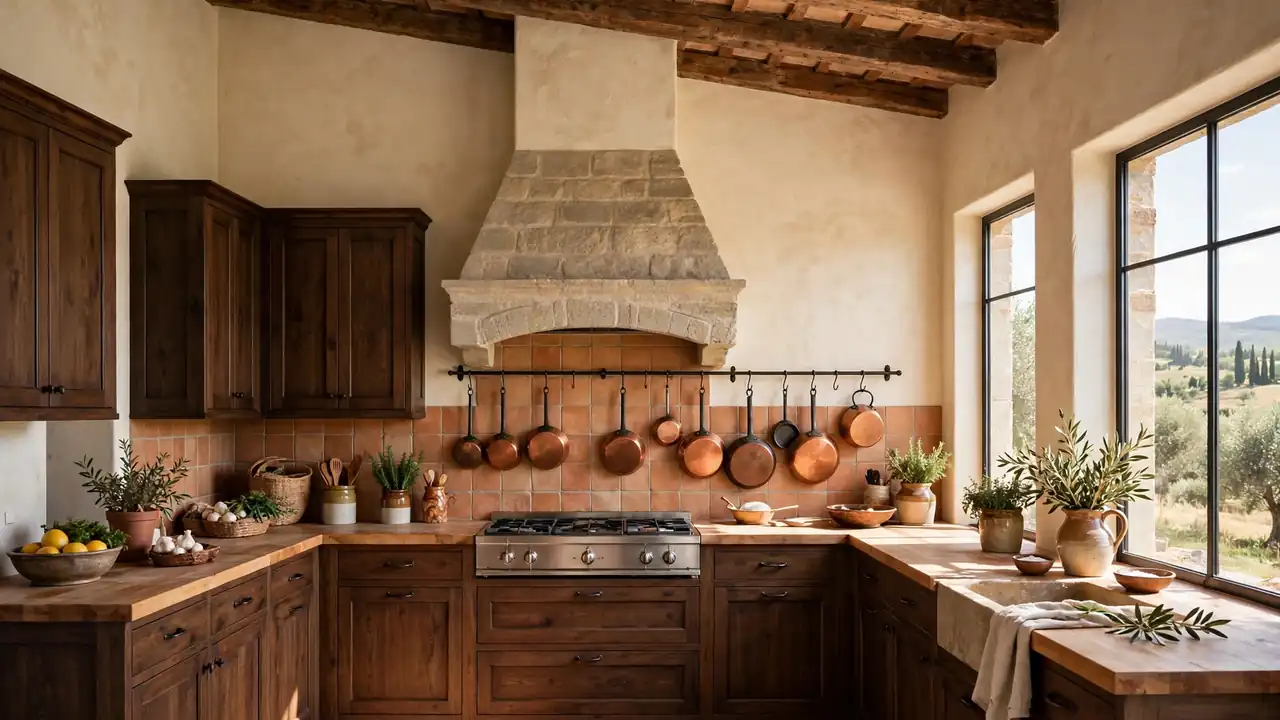
24 Tuscan Style Kitchen Decorating Ideas for Rustic Charm
Warm stone, worn wood, and sun baked color give old world kitchens their pull. The best Tuscan style kitchen decorating ideas borrow that recipe without turning a modern kitchen into a theme set: terracotta underfoot, cream on the walls, and honest materials doing the heavy lifting.
Start where your kitchen already leans warm. A room styled around lavender and sage bedroom decor elsewhere in the house usually shares the same love of dusty color and natural texture, so the two spaces end up speaking the same language. In my experience, Tuscan warmth falls flat when every surface turns orange or brown. Keep cream as the base, let terracotta and wood carry the heat, and repeat each accent at least twice so nothing looks accidental. The twenty four ideas below build the look layer by layer, from walls and floors to the small working corners.
Terracotta Tile Backsplash Warmth

Few materials warm a kitchen faster than clay fired tile. Terracotta squares behind the range bring an earthy blush that deepens under lamplight and softens white cabinets on contact. Choose handmade look tiles with slightly uneven edges, and the wall gains the gentle wobble of an old farmhouse kitchen.
Seal the tile well, since clay drinks up splashes and oil near the stove. A matte sealer keeps the dusty finish while blocking stains, and warm gray grout hides the daily evidence of cooking. In my experience, one terracotta wall is enough; repeat the color in a floor mat or a clay pot instead of tiling every surface in sight.
Rustic Wood Beam Ceilings
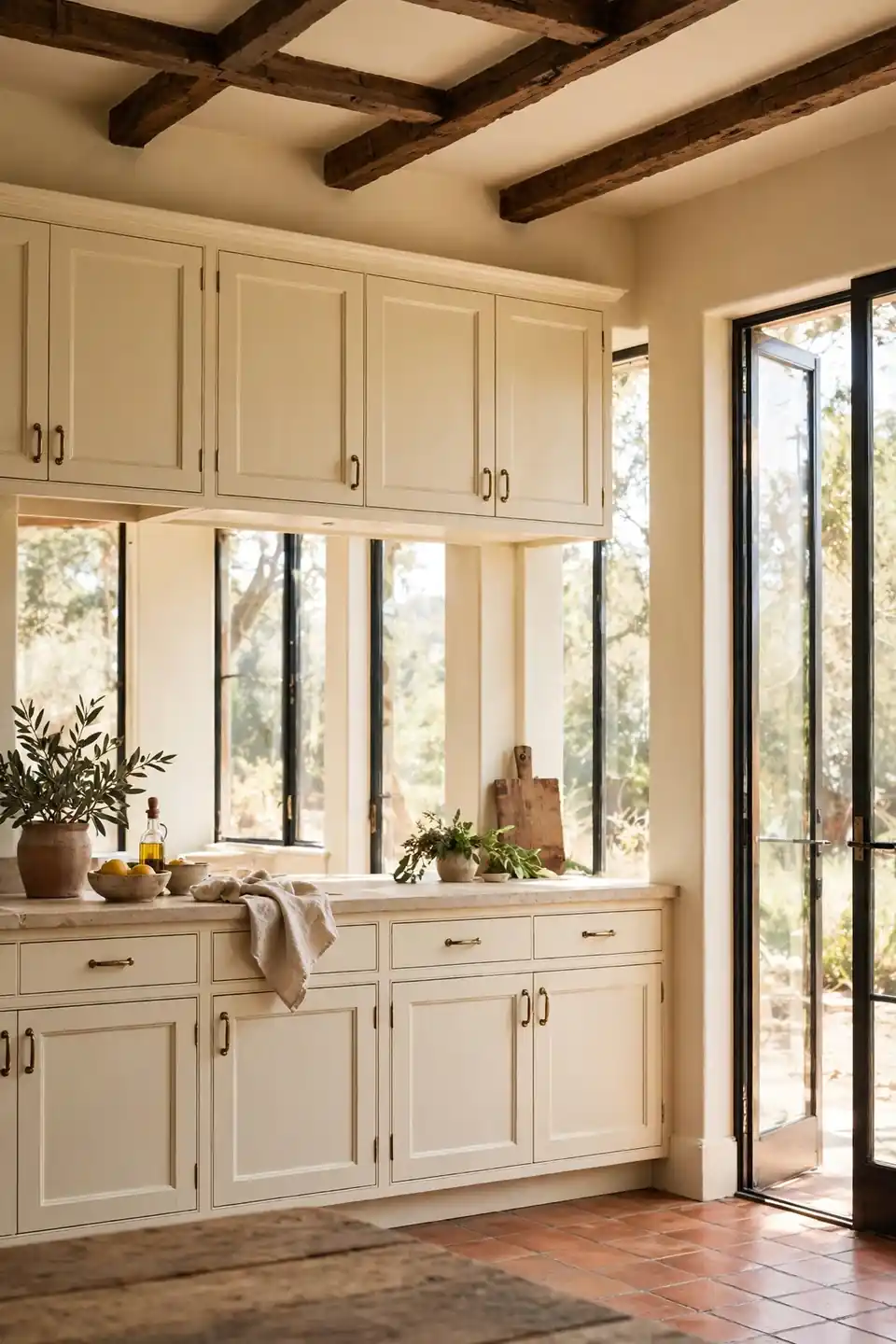
- Measure the ceiling and space beams every four to six feet
- Pick reclaimed look pine or oak with a matte, unsanded finish
- Stain beams two shades darker than the floor for contrast
- Run beams across the short side to widen a narrow room
- Keep the ceiling paint warm cream so wood stays the star
Beams change how a kitchen sounds as much as how it looks, soaking up echo and making the room feel settled. Faux hollow beams weigh little and hide wiring for pendant lights, a practical trick in older houses. Keep the rest of the ceiling plain; beams plus busy light fixtures quickly crowd a modest room.
Wrought Iron Pot Rack
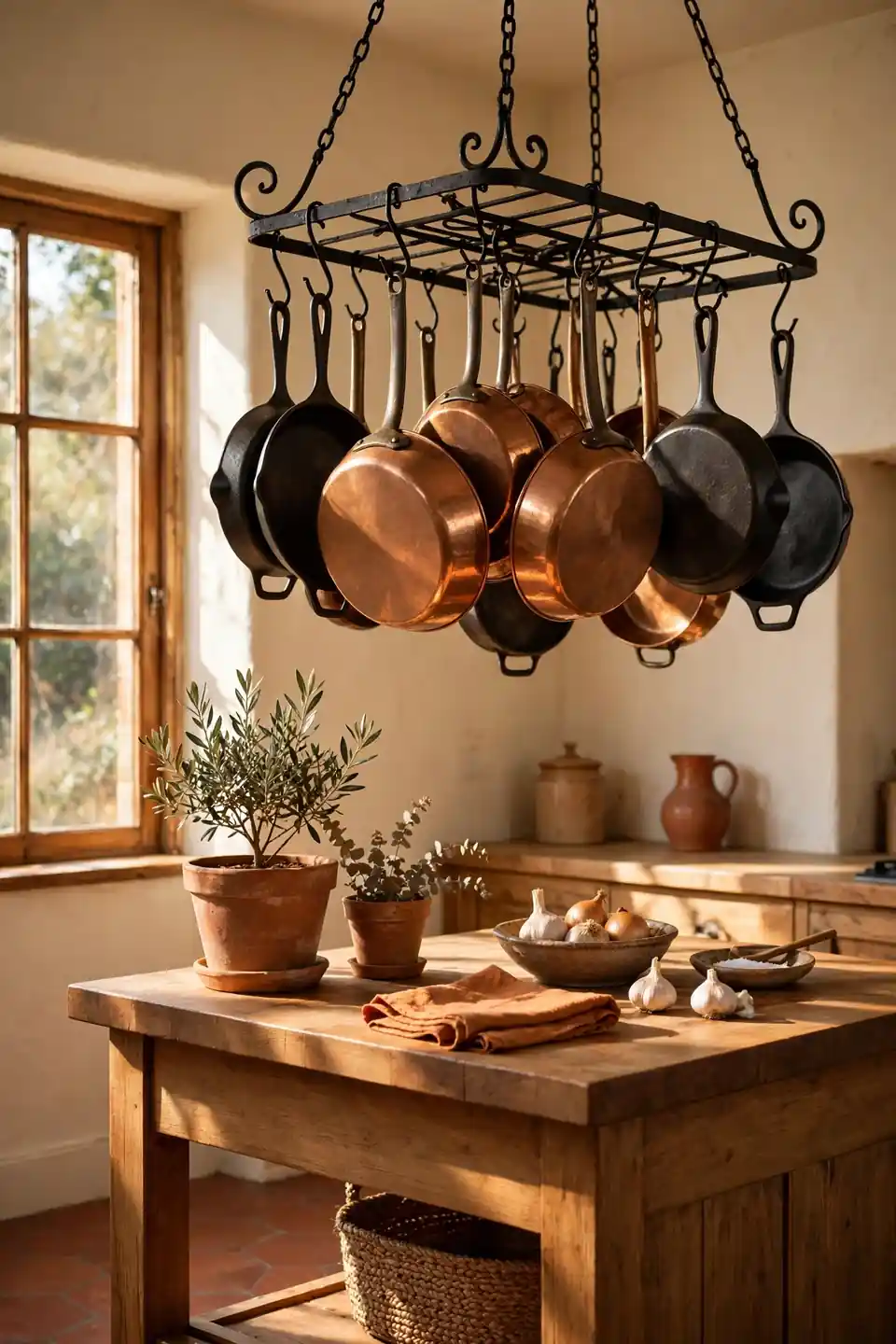
Quick Tip: Hang the rack so the lowest hook clears tall heads by a hand’s width, and park heavy Dutch ovens on the outer hooks where the frame flexes least. Painted black iron reads softer than chrome against warm wood and stone. Test the ceiling joists first; a loaded rack pulls real weight.
A ceiling pot rack frees a whole cabinet and turns everyday pans into the room’s working display. Copper and cast iron glow against cream walls, and everything lands within reach of the stove. Keep daily pans low and the rarely used roasting tin up high, washed and ready for holidays.
Stone Range Hood Statement
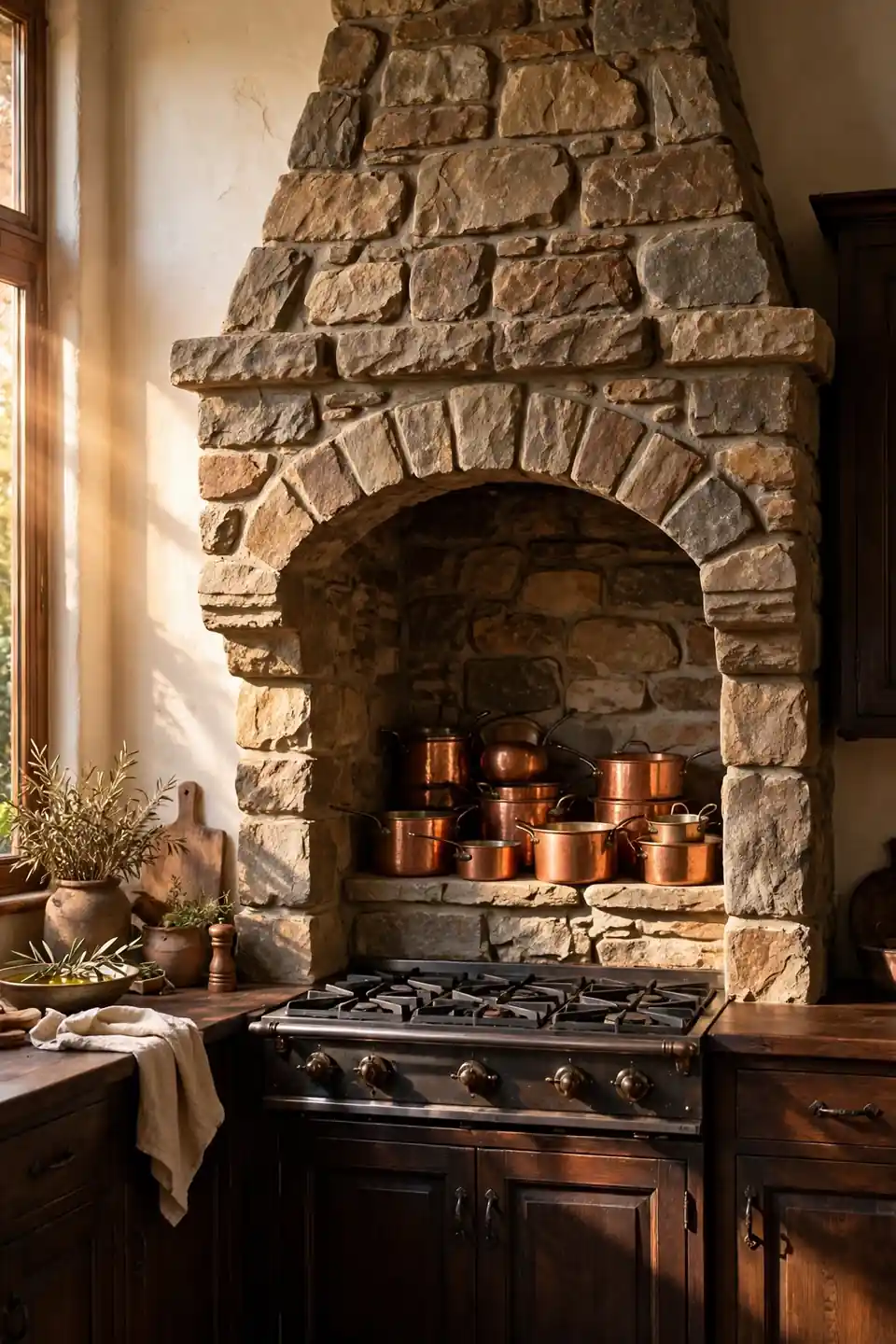
BEFORE: The old range hood was a thin stainless box that buzzed at dinner and vanished against the wall. It gave the stove no presence, and the whole cooking wall read as an afterthought in an otherwise warm room.
AFTER: A plastered stone hood with a wide arched opening changed the wall completely. Pots now sit inside a shallow hearth like alcove, the flue hides behind rough stone texture, and the range finally anchors the kitchen the way a fireplace anchors a sitting room.
Real stone veneer over a framed hood keeps the weight manageable on standard walls. Keep the finish rough and the mortar warm gray, and skip any glossy sealer that would make the stone look wet or plastic.
Olive Oil Bottle Display
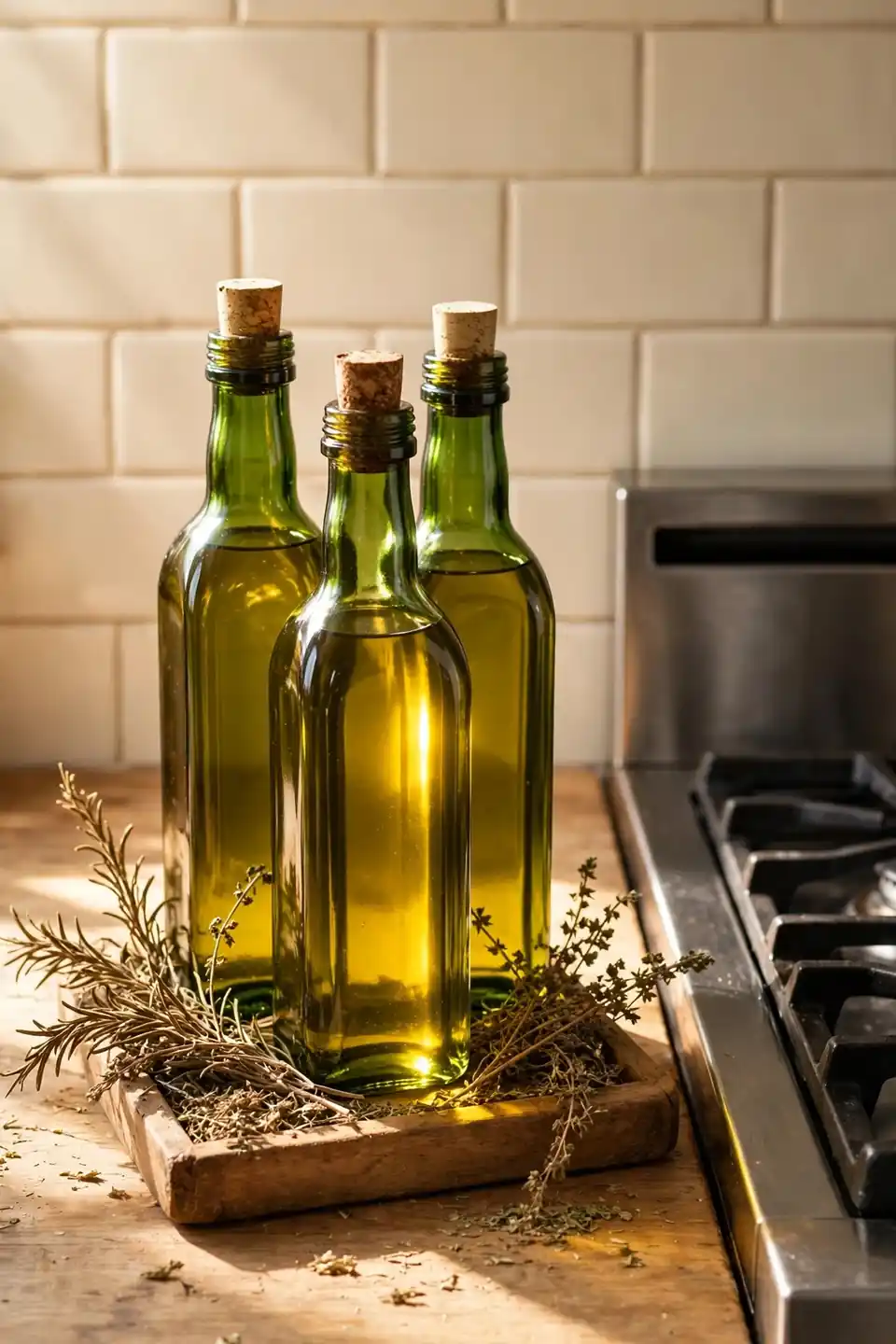
- Group three to five green glass bottles on a small wooden tray
- Set the tray beside the range where oil lands in the pan fast
- Add one tall bottle of golden oil as the group’s height
- Rest a small bunch of dried herbs across the tray edge
- Refill from bulk tins kept in a dark cupboard below
Green glass and golden oil catch window light like stained glass in miniature, which is why market stalls across Italy style their counters this way. Keep only oil you actually cook with on display; rancid bottles in sunlight help no one. Wipe the tray weekly, since drips announce themselves fast on pale wood.
Farmhouse Sink Apron Front
| Apron Front Sink | Standard Drop In |
|---|---|
| Deep basin swallows roasting pans whole | Shallow bowl crowds large cookware |
| Exposed front adds farmhouse character daily | Rim hides under the counter edge |
| Needs a reinforced cabinet base below | Drops into most existing cabinets |
| Fireclay front wipes clean in seconds | Steel rims collect grime and water |
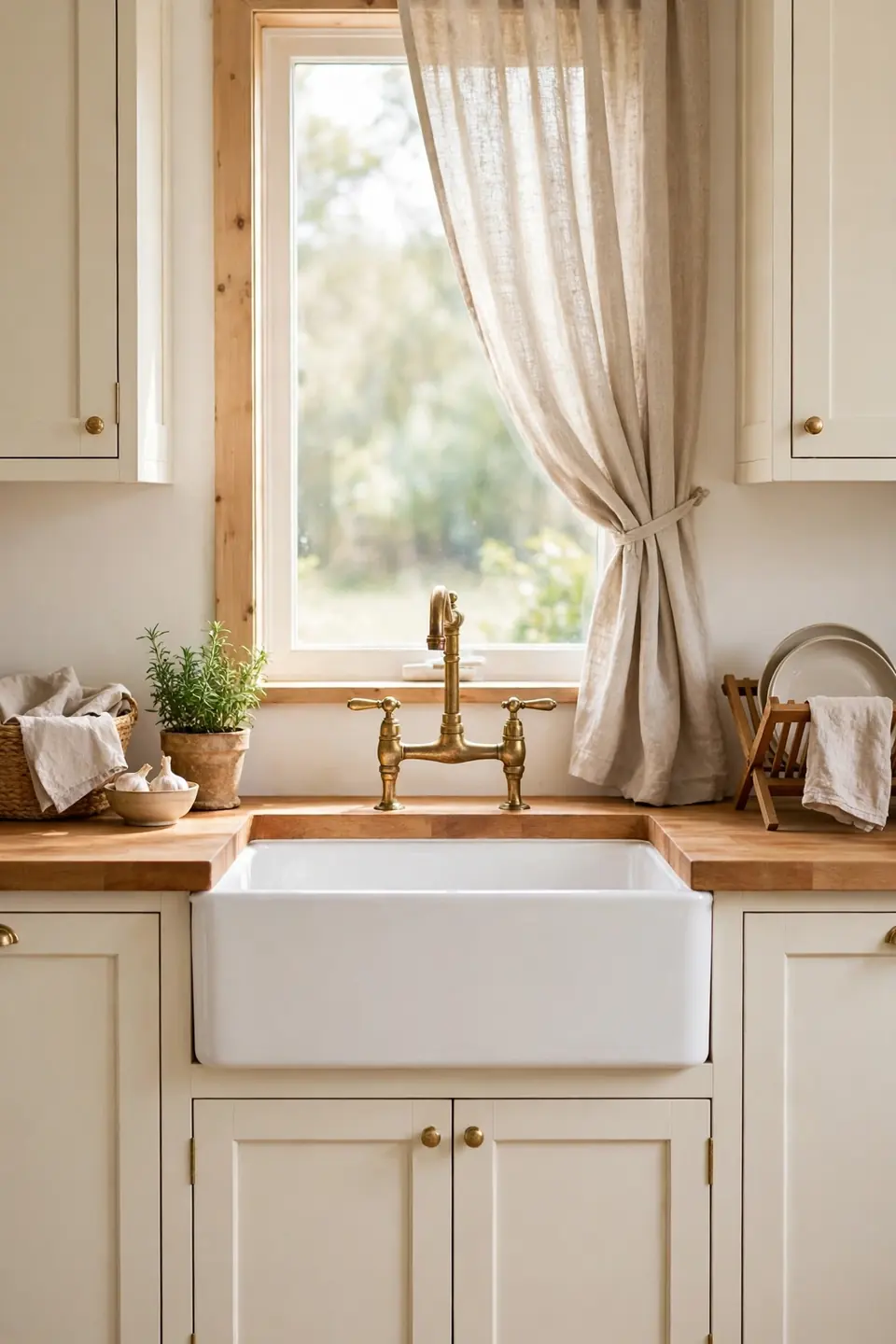
A deep apron sink in white fireclay suits the Tuscan habit of cooking big and washing up once. The exposed front catches light like a piece of furniture, and a bridge faucet in aged brass finishes the picture. Pair it with a simple linen skirt under the counter if cabinet doors feel too modern beside it.
Warm Cream Plaster Walls
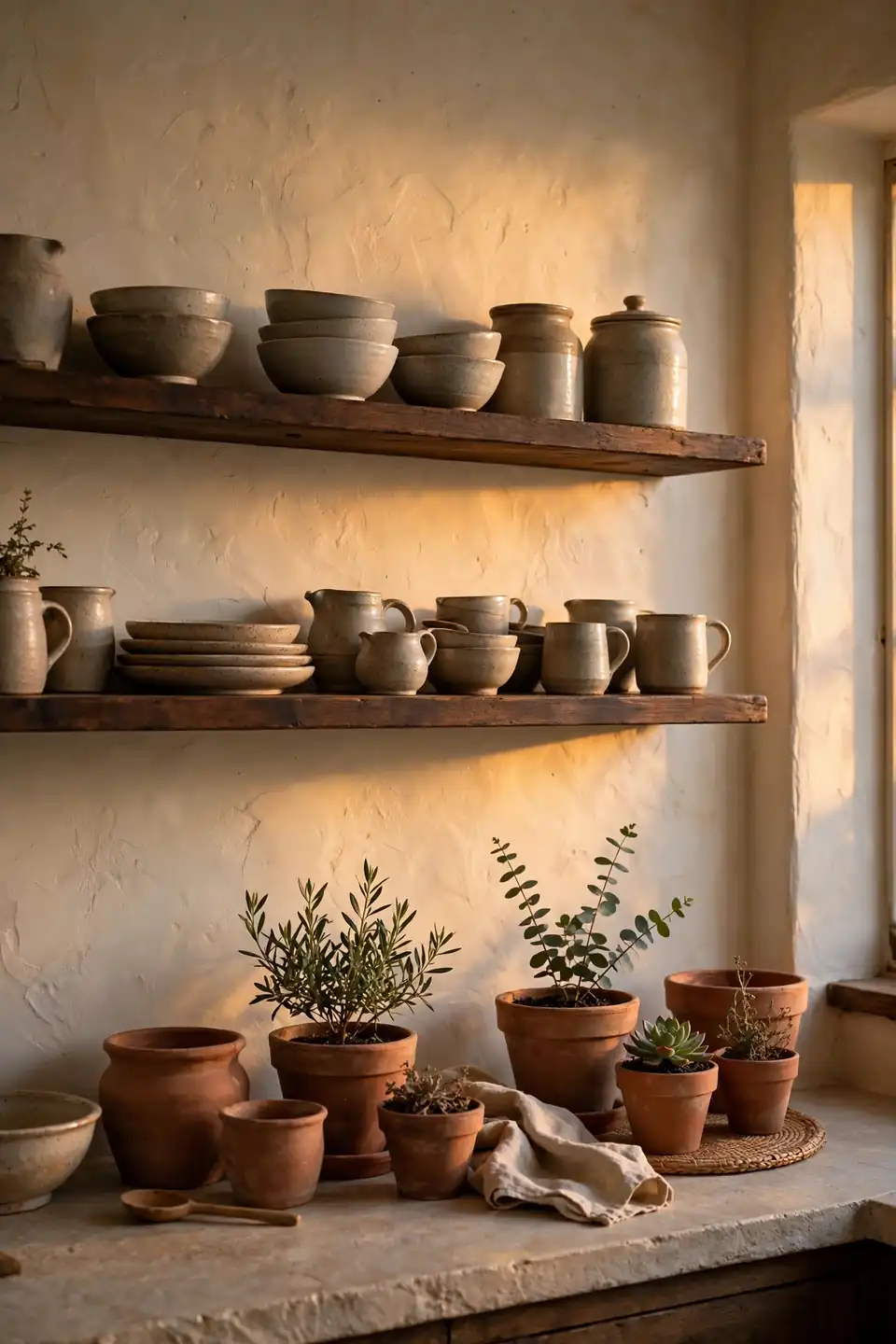
Do:
- Choose cream with a golden base, never blue white
- Leave a slightly uneven trowel finish for soft shadows
- Carry the same cream onto the ceiling for a cocoon feel
- Wax high splash zones behind the range for protection
Don’t:
- Paint every wall deep gold and shrink the room
- Use flat paint where steam and grease land daily
- Pair warm cream with cold gray flooring or steel
- Skip test patches in both daylight and lamplight
Cream plaster is the quiet base that lets terracotta, wood, and iron speak at full volume. The color reads white in morning sun and honey colored by evening, a shift that keeps the room alive across the day. Rough texture matters as much as the shade itself here.
Copper Cookware Hanging Rail
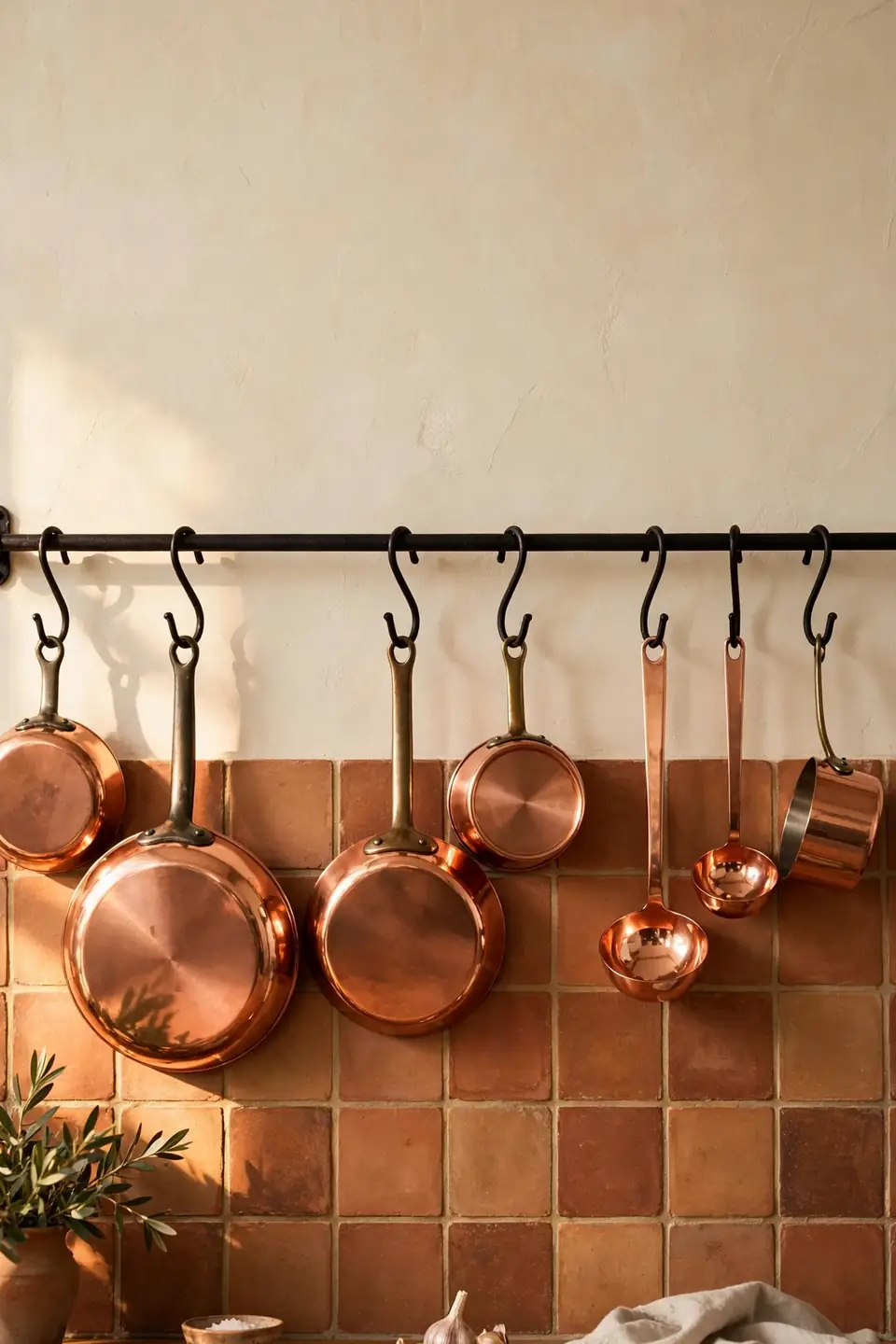
Cost: Moderate, since two pans and a rail cost less than new cabinets
Time: One afternoon to fit the rail and level the hooks
Skill Level: Beginner with a drill, a level, and wall anchors
Best For: Small kitchens short on cabinet space near the busy range
Copper warms up the longer it hangs in a working kitchen, its pink gold shine echoing terracotta tile across the room. Polish one hero pan bright and let the rest mellow to a soft antique glow. In my experience, mixed finishes look collected rather than matched, which suits old world rooms perfectly. Hang the rail where the cook actually turns, not where it merely photographs well.
Dark Walnut Stained Cabinets
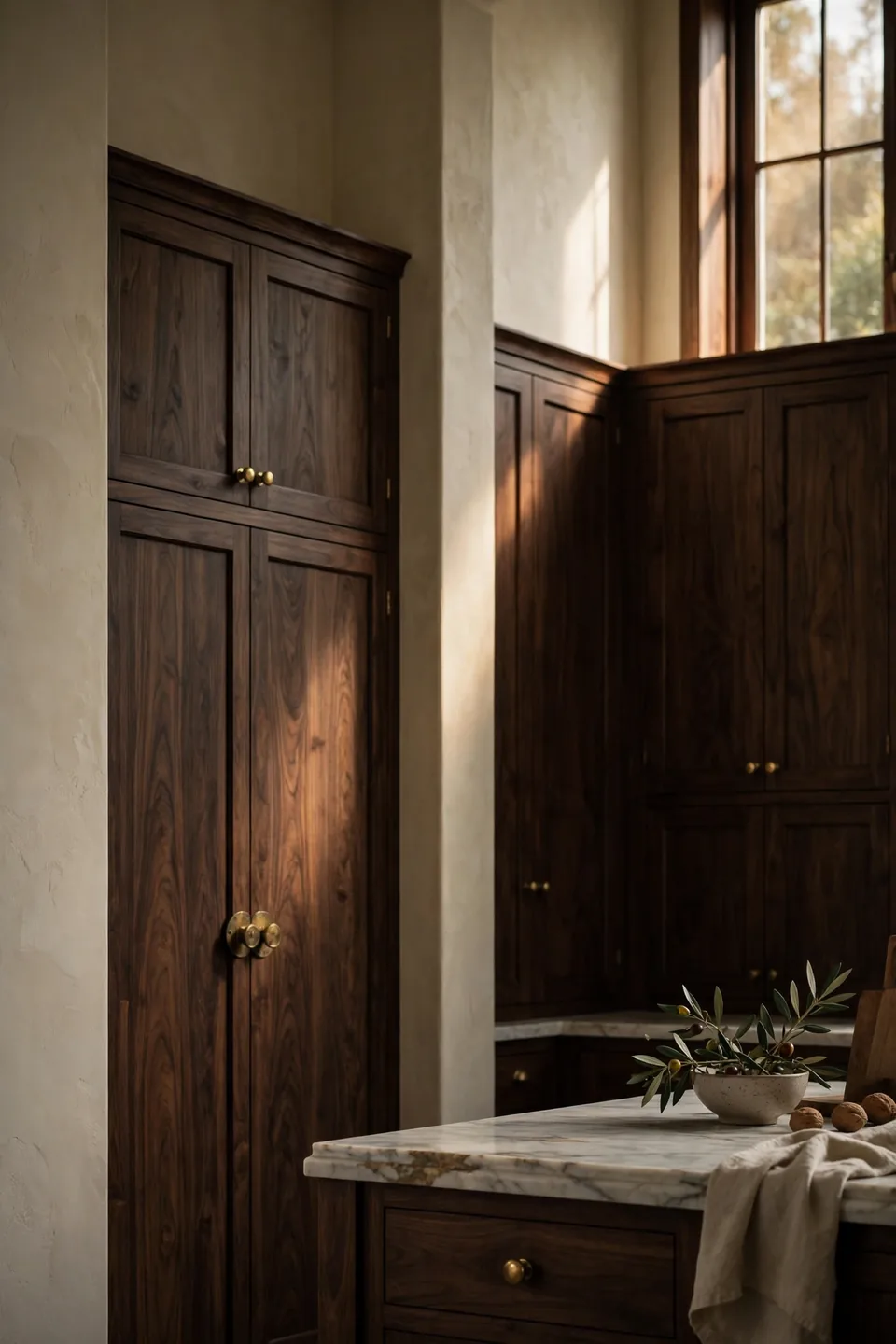
Deep walnut stain gives flat modern cabinets an old soul in a single weekend. The grain still shows through a dark water based stain, so doors keep their texture while the color drops two full shades toward espresso. Against cream plaster, the contrast reads rich rather than heavy.
Work in thin coats and wipe each one back before it dries tacky. Two coats suit most kitchens; a third turns the wood nearly black and hides the grain you wanted to show. Finish with matte varnish, since shine belongs on the copper and the tile in this palette, not on the cabinet fronts.
Herb Garden Windowsill Pots

- Line the sill with three clay pots in graduated sizes
- Plant basil, rosemary, and thyme where sun lands longest
- Set pots on a narrow wooden tray to catch drips
- Rotate each pot a quarter turn every Sunday morning
- Snip from the top so plants bush out instead of legging
Fresh herbs on the sill do double duty in kitchens built around Tuscan style kitchen decorating ideas, flavoring dinner while perfuming the room each time the window opens. Clay pots breathe with the plants, and their orange rims repeat the tile and floor tones across the room. Keep a small watering can on the counter so the habit sticks.
Arched Doorway Soft Entry

Quick Tip: A shallow arch cut into drywall needs no structural work when it stays inside the existing opening. Plaster the curve by hand and leave it slightly imperfect; machine perfect arches read modern and cold against rustic wood. Round the corners of a square doorway with stacked plaster for the same effect.
Arches are the Tuscan signature that costs mostly patience. An arched opening between kitchen and dining room softens every sight line, frames the table beyond like a painting, and makes even a rented flat feel built rather than assembled. Paint the inside of the arch the same cream as the walls.
Open Shelving Stoneware Stacks
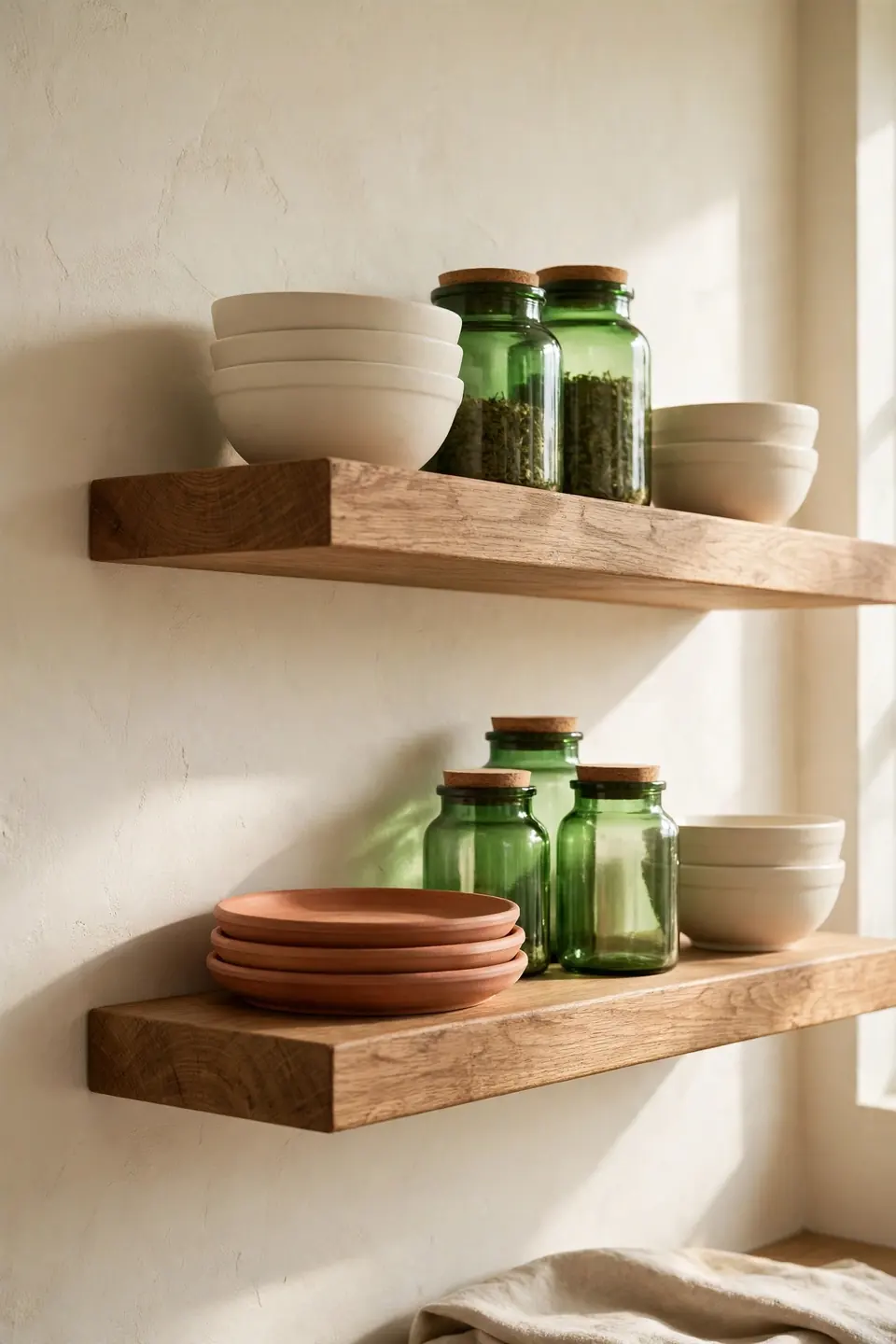
BEFORE: Upper cabinets crowded the worktop and hid every plate behind closed doors. Bowls lived three deep, the good stoneware gathered dust at the back, and cooking meant digging before it meant seasoning.
AFTER: Two thick oak shelves now carry daily stoneware in open stacks sorted by size. Cream bowls, terracotta plates, and green glass sit in plain sight, and the wall feels wider because the eye travels through the shelves instead of stopping at doors.
Open shelves forgive small kitchens their size but punish clutter without mercy. Keep only daily pieces on display, store the rest, and dust the shelves during the weekly wipe down. That’s why many experts recommend editing the stacks every season.
Patterned Encaustic Floor Tiles

- Choose cement look tiles in terracotta, cream, and faded black
- Lay the boldest pattern under the island or range run
- Keep border tiles plain so the pattern stays the star
- Seal grout lines twice yearly where cooking splashes land
- Echo one pattern color in a rug or seat cushion
Pattern underfoot grounds the whole palette and hides the daily crumbs of a working kitchen between sweeps. Rooms that borrow the honest joinery of modern craftsman living room decor ideas pair patterned floors with plain wood elsewhere, and the same restraint serves Tuscan kitchens well. Keep walls and counters quiet so the floor can sing.
Butcher Block Counter Surfaces
| Butcher Block Counter | Stone Counter |
|---|---|
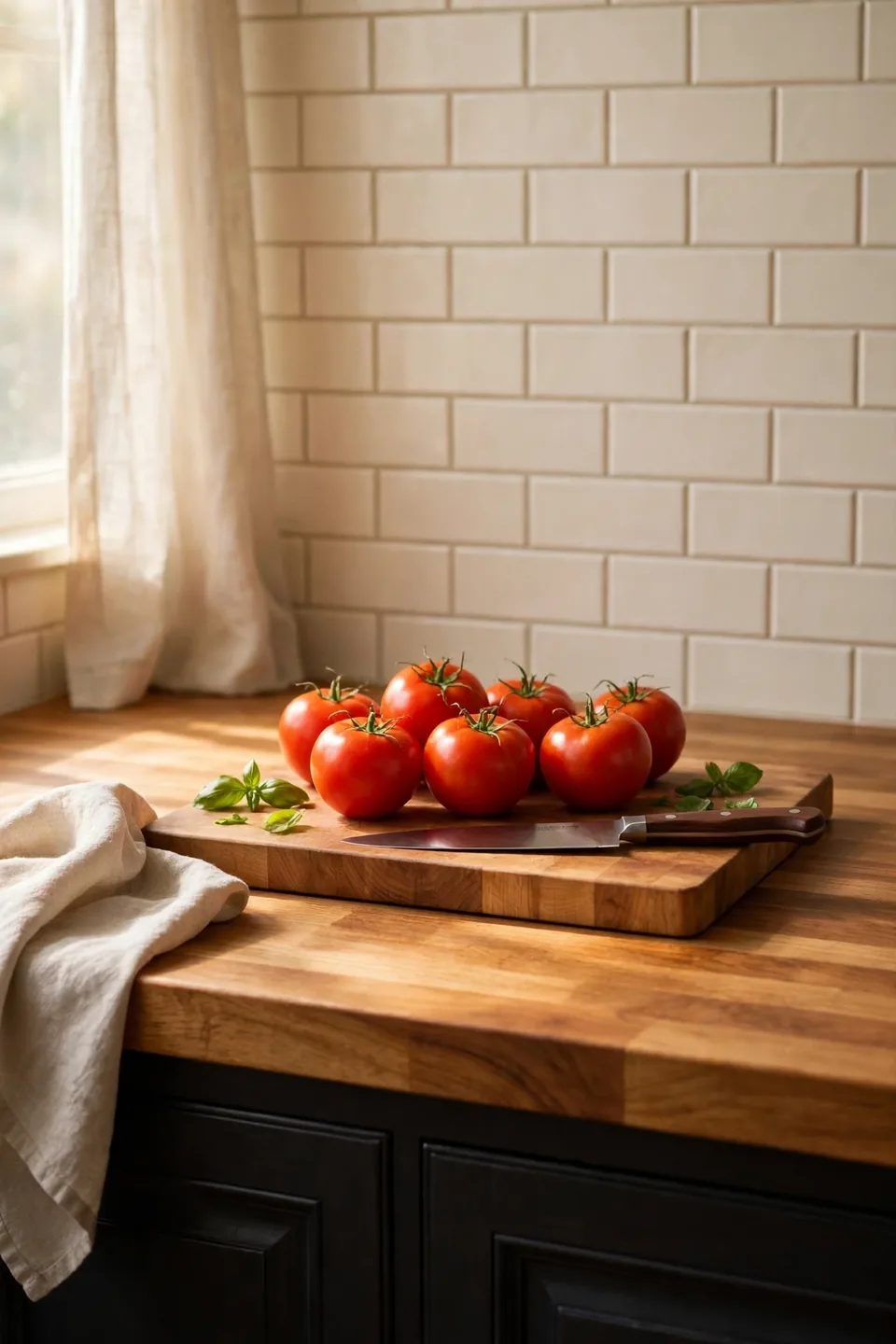
| Warm wood tones echo beams and shelves | Cool surface chills the warm palette |
| Knife nicks sand out in an hour | Chips need a specialist to repair |
| Costs a fraction of marble or granite | Premium slabs strain most budgets hard |
| Needs oil every few months to seal | Sealed once, then mostly forgotten |
Butcher block in warm oak or walnut brings the Tuscan worktable into a modern kitchen, scarred kindly by years of bread and tomatoes. Oil it rather than varnishing, so knife marks blend into the grain instead of cracking a hard finish. A thick end grain board beside the range doubles as the daily chopping station.
Linen Cafe Curtain Panels
Do:
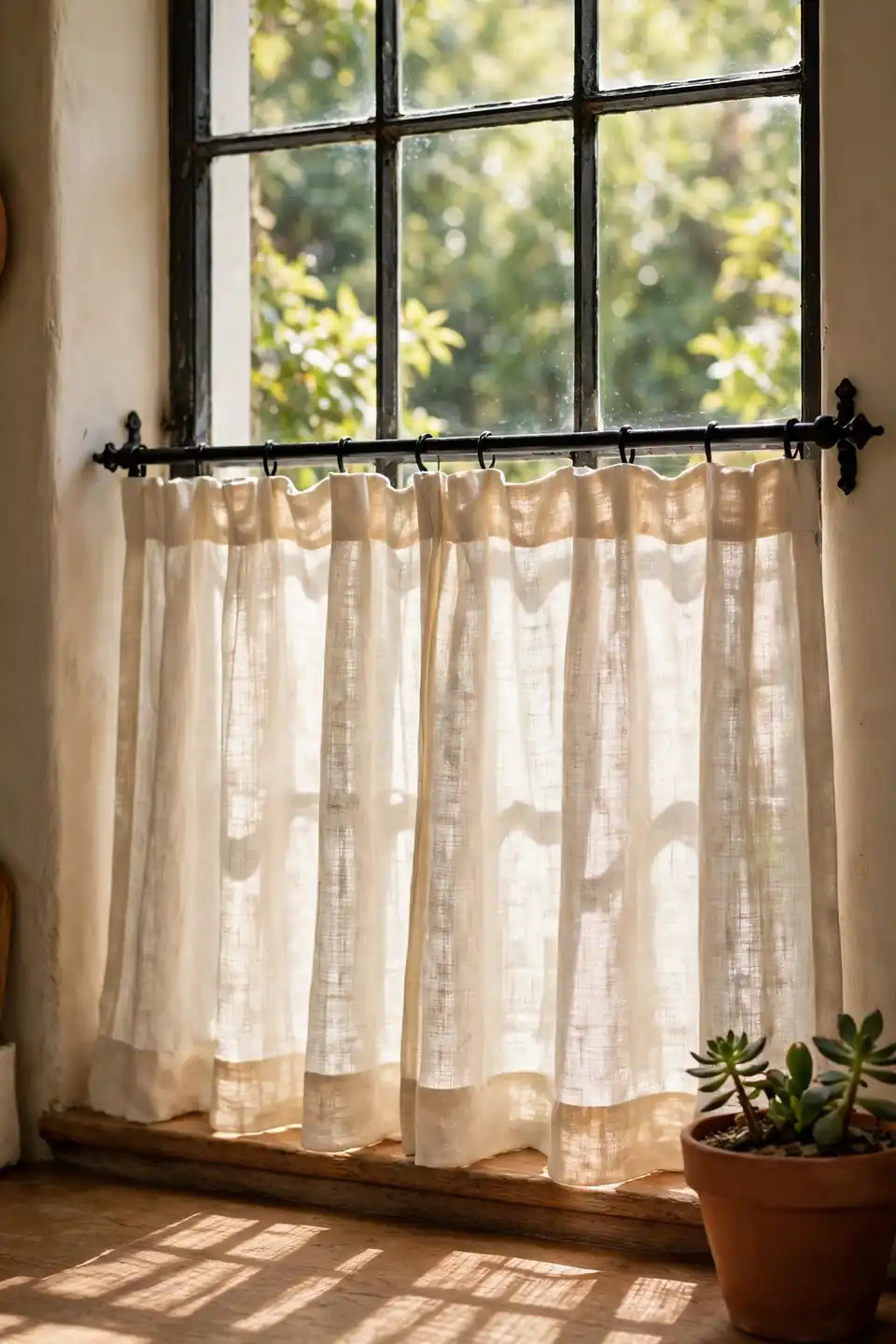
- Hang panels at mid window to keep light and privacy
- Pick natural linen in cream or faded stripe weaves
- Use black iron clip rings on a slim iron rod
- Let hems kiss the sill rather than puddle below it
Don’t:
- Block the whole window and darken the worktop all day
- Choose shiny polyester that glows orange in sunlight
- Match curtain stripes exactly to the floor pattern
- Hang panels so high they expose the frame tops
Cafe curtains filter the low western sun that blinds cooks at dinner time while leaving the top glass open to the sky. Linen moves a little in the breeze from an open window, and that small motion keeps a rustic room from feeling staged or frozen.
Iron Lantern Pendant Lights

Cost: Moderate, since forged look lanterns sell at most lighting stores
Time: One morning to swap pendants and set the dimmer
Skill Level: Beginner, with an electrician booked for the wiring
Best For: Islands and farmhouse tables needing warm pools of evening light
Lantern pendants drop warm pools of light exactly where chopping and serving happen, leaving the room’s edges in restful shadow. Black iron ties the lights to the pot rack and curtain rods across the room. Fit warm bulbs and a dimmer; lantern glass shows every harsh filament, so soft light matters here. Three small lanterns beat one large one over most islands.
Aged Brass Faucet Fixtures
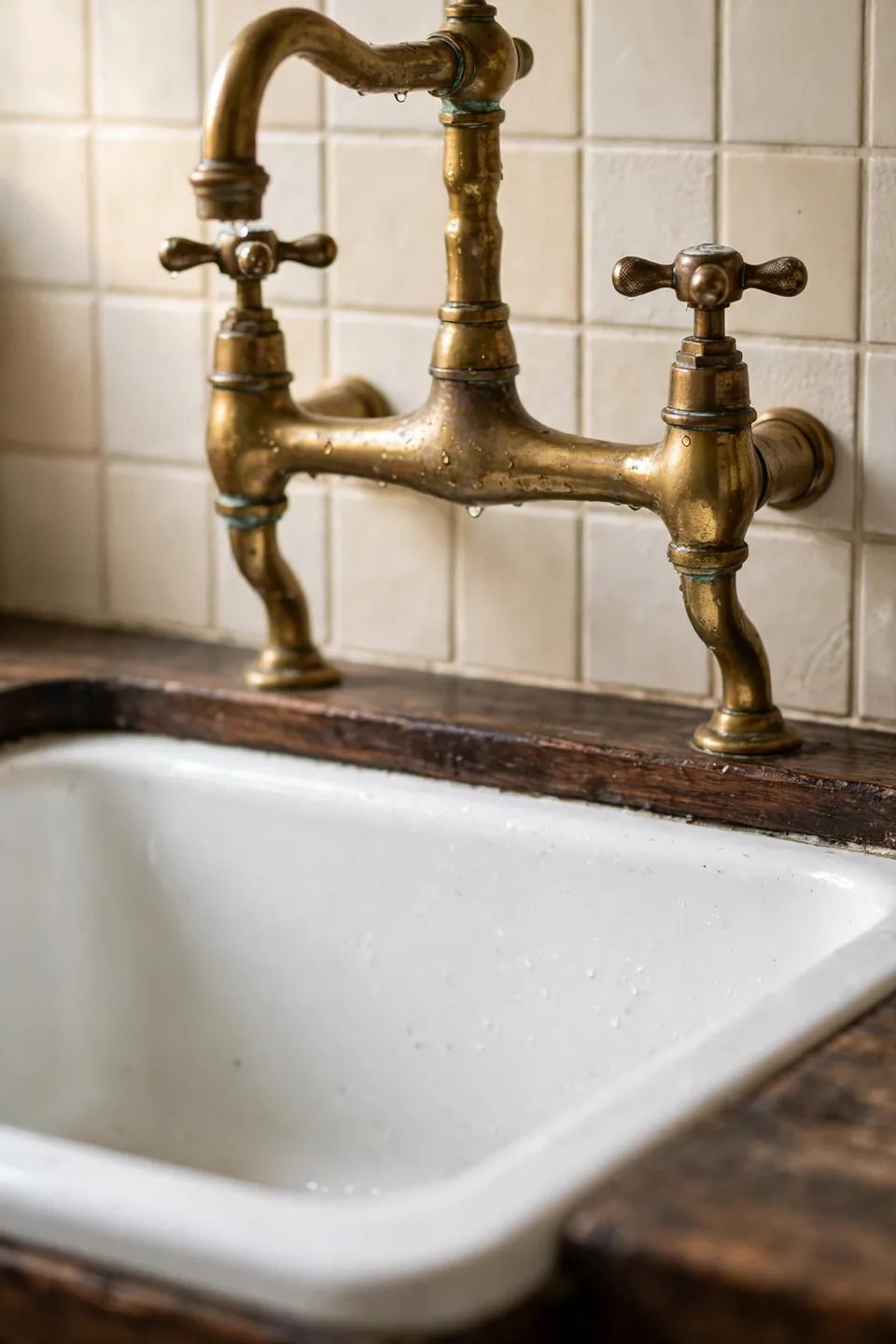
Aged brass carries a lived in glow that chrome never earns. A bridge faucet with cross handles and a soft brown gold finish warms the sink wall instantly, pairing with cream tile and dark wood the way old farmhouse taps always have. The patina deepens kindly with daily use.
Choose unlacquered brass if you enjoy watching metal age, or a sealed aged finish if you want the color frozen as installed. Either way, wipe with water and a soft cloth only; harsh polishers strip the warmth in one afternoon and leave the metal raw and patchy for months afterward. Match cabinet knobs loosely rather than exactly.
Wooden Bread Board Collection
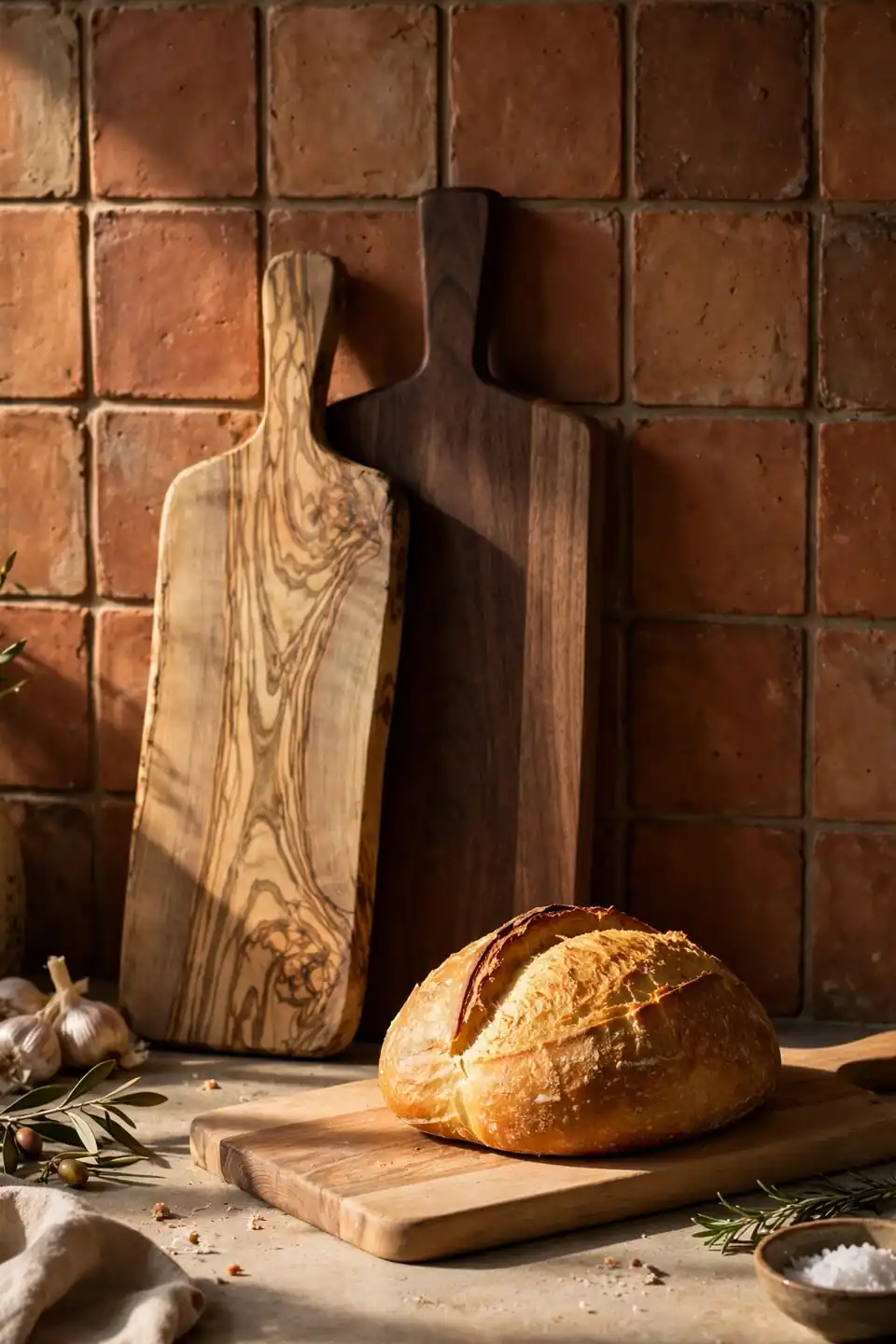
- Gather boards in olive wood, walnut, and pale beech tones
- Lean the largest board against the backsplash as backdrop
- Stack two smaller boards flat beside the range for daily use
- Oil every board monthly so edges never crack or split
- Retire one board to serving cheese and fruit at table
Bread boards earn wall space in rustic kitchens because they work daily and decorate hourly. Their worn centers record years of loaves, and the mixed wood tones bridge cabinets and counters that never quite matched. Hang one on a brass hook near the oven so serving bread stays a one hand job.
Wine Rack Tuscan Niche
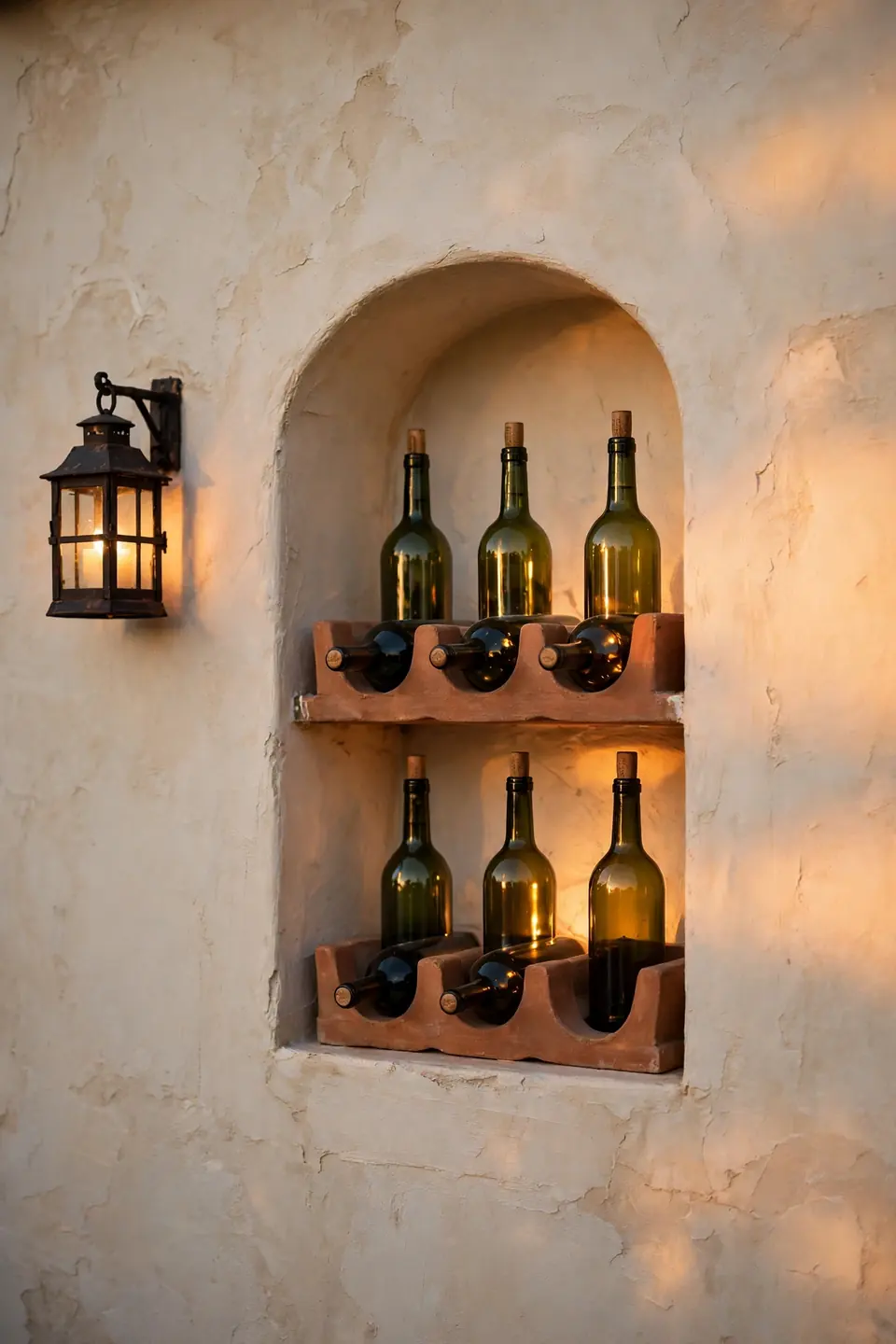
Quick Tip: Keep the niche away from the oven wall and out of direct sun, since heat and light age wine faster than time does. A north facing stretch of counter wall usually stays coolest through summer afternoons.
A shallow arched niche racked for bottles turns a dead stretch of wall into the room’s most Italian gesture. Six to twelve bottles lie in terracotta or wood racks, labels out, ready for the dinners this kitchen clearly hosts. Add a small iron lantern beside it for evening glow. Keep everyday bottles low and the good vintages up high, away from small hands and daily bumps.
Marble Pastry Slab Corner
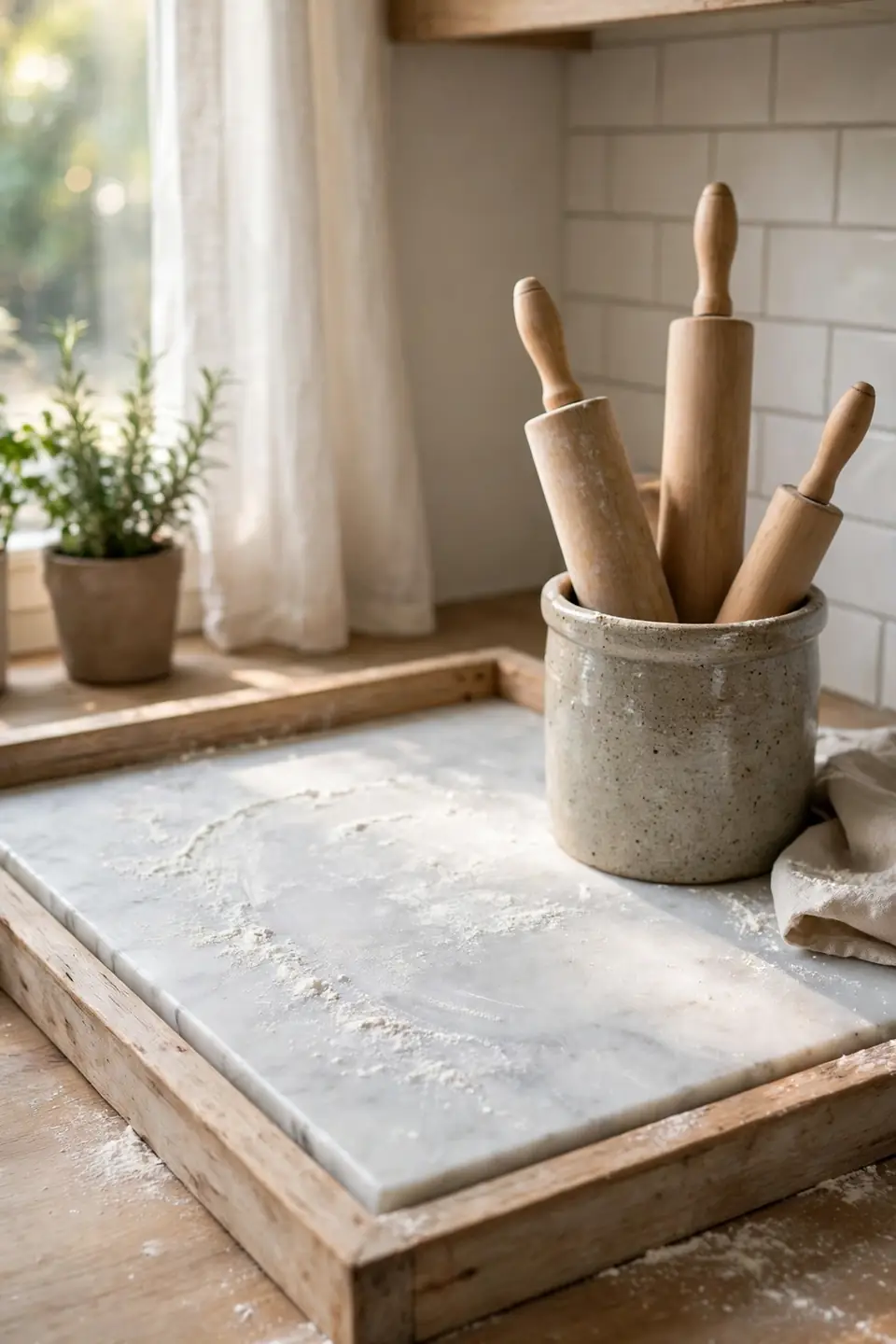
BEFORE: The corner counter collected mail, keys, and a tangle of charger cords. Dough days meant clearing a battlefield before flour could even come out of the cupboard, and summer butter melted on warm laminate before the rolling started.
AFTER: A cool marble slab now owns the corner, framed by a low wood rail that keeps flour in bounds. Rolling pins rest in a crock beside it, and pastry work starts the moment the butter leaves the fridge.
Marble stays degrees cooler than the room, which keeps pastry layers distinct and chocolate glossy. One slab is plenty; the rest of the counters can stay warm wood. Choose honed marble with soft gray veining so flour dust and etching blend in.
Ceramic Canister Counter Row
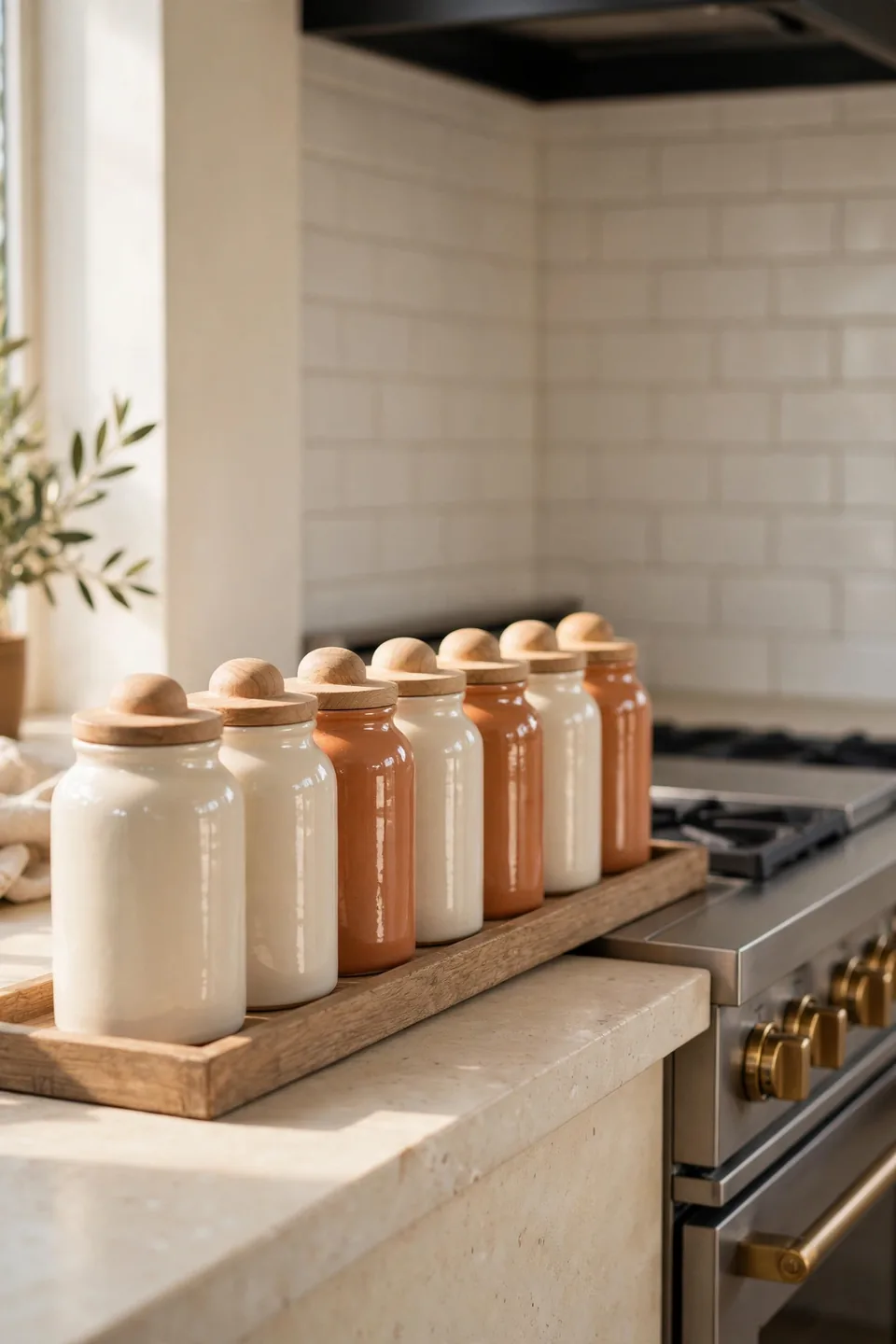
- Line up flour, sugar, and salt in glazed ceramic canisters
- Choose cream and terracotta glazes with slightly uneven rims
- Fit wooden lids that seal tight and warm the row
- Set the row on a shallow tray for fast wipe downs
- Label nothing; learn the shapes by touch and enjoy the quiet
A canister row turns daily staples into quiet decor, the glazed curves catching light beside the stove. Handmade look pottery suits this palette far better than matching plastic sets, since small glaze differences read as character here. Keep the row to three or four pieces so the counter still works.
Brick Oven Hearth Look

| Brick Hearth Surround | Tile Surround |
|---|---|
| Thin brick warms the range wall fast | Glossy tile reads cooler and sleeker |
| Rough texture hides splashes between cleans | Smooth faces show every grease spot |
| Fits farmhouse and rustic rooms naturally | Suits modern rooms more than rustic |
| Seal yearly to keep mortar pale | Grout needs scrubbing to stay light |
A thin brick surround behind the range borrows the old pizza oven’s authority without rebuilding the wall. Real brick veneer runs only inches deep, and its rough face forgives the splashes of tomato season. Keep mortar warm and joints slightly proud for the hand built look.
Sage Green Cabinet Refresh
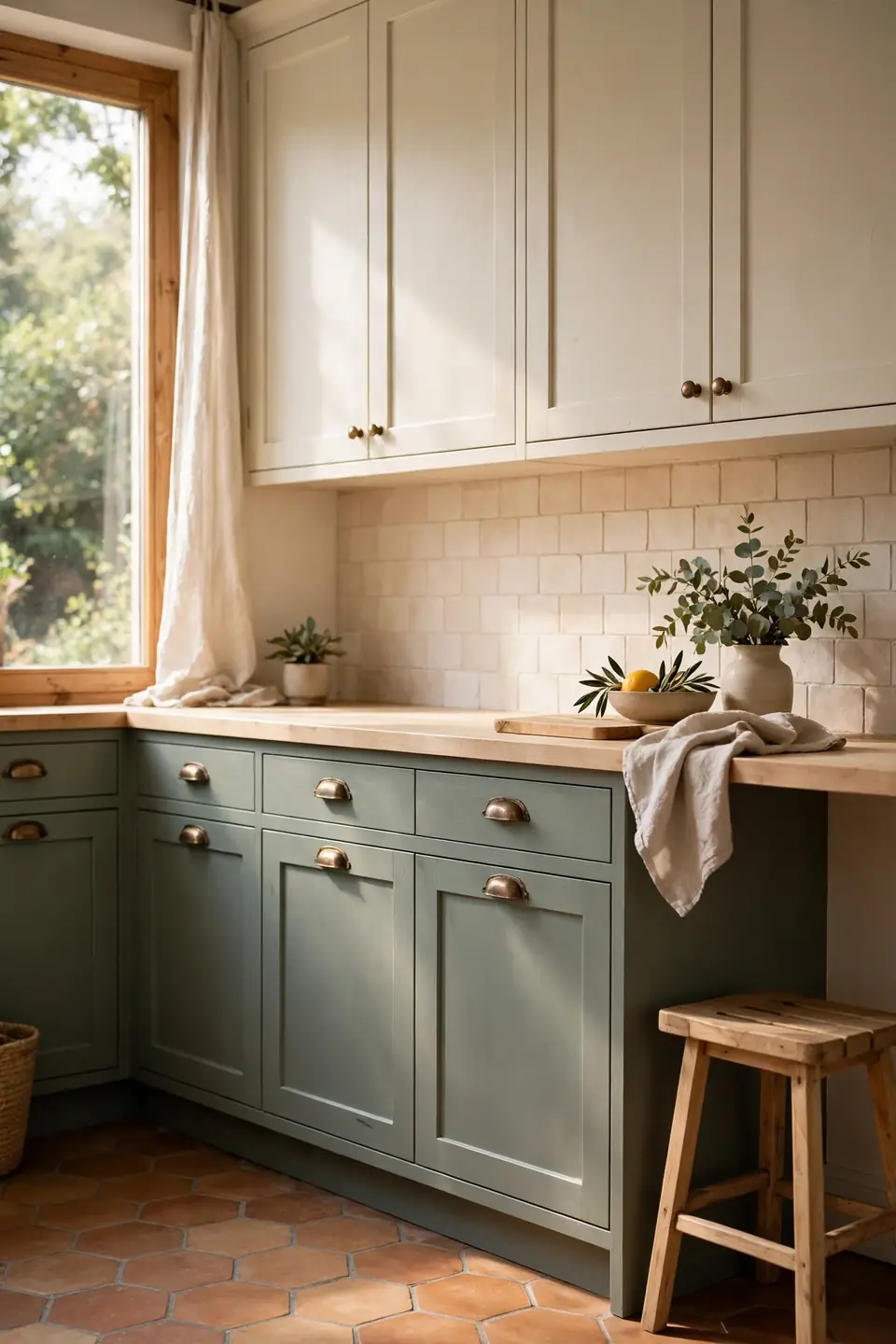
Do:
- Paint lower cabinets a dusty sage with gray undertones
- Leave upper cabinets cream to keep the room airy
- Swap knobs for aged brass or black iron pulls
- Carry sage onto one stool or a window frame
Don’t:
- Paint every cabinet green and lose the contrast
- Choose bright mint that fights terracotta and wood
- Use glossy paint that shows every brush stroke
- Forget primer on previously varnished cabinet doors
Sage is the cool note this warm palette needs, a breath of garden green between terracotta and cream. On lower cabinets it grounds the room while uppers stay light, and brass hardware warms the green at every handle. I’ve noticed sage reads almost neutral once the wood tones surround it.
Dried Herb Bundle Decor
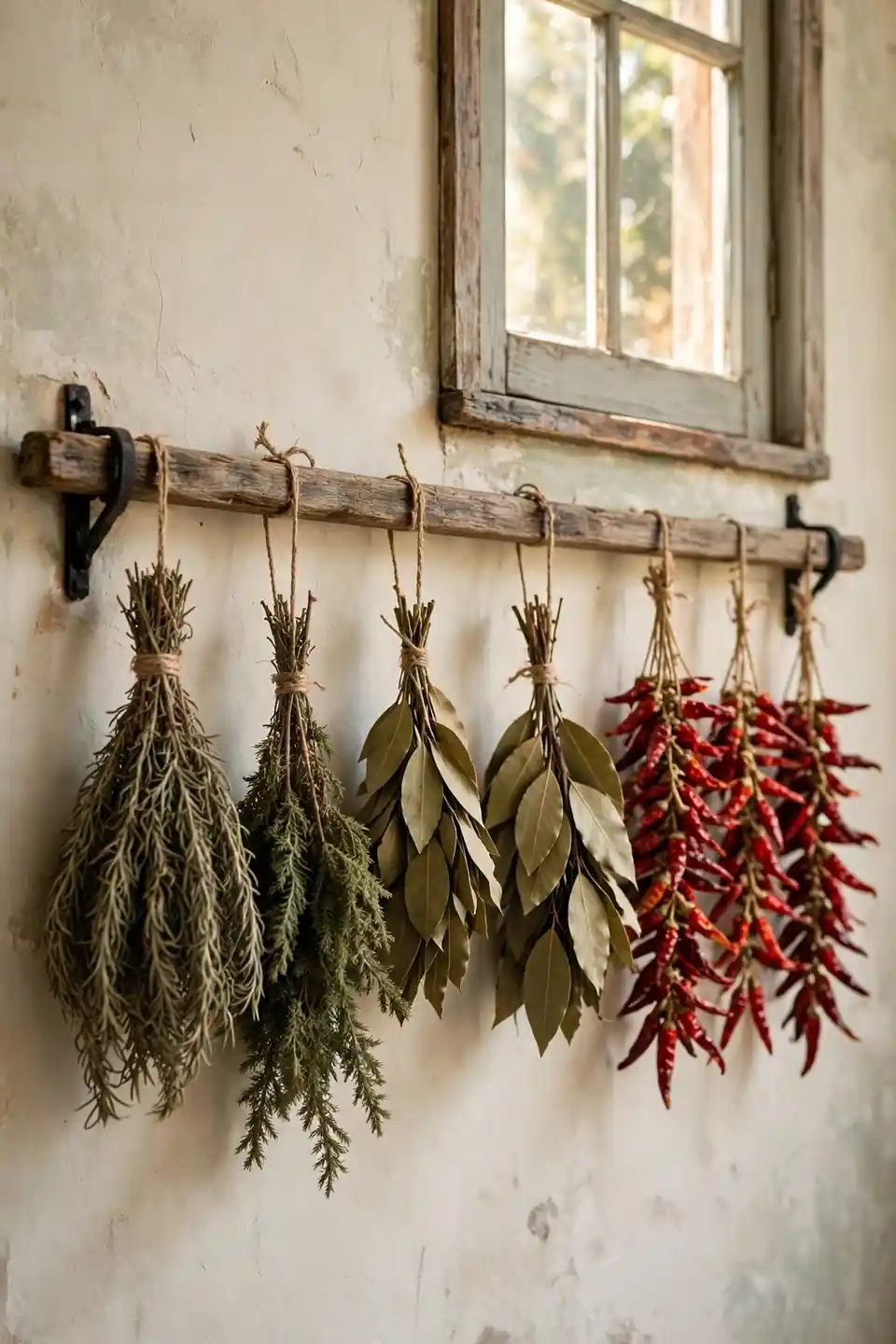
Cost: Low, since garden herbs and twine cost almost nothing
Time: One hour to bundle, tie, and hang the bunches
Skill Level: Beginner, needing only scissors, twine, and hooks
Best For: Bare walls near windows, doors, and the range hood sides
Bundles of rosemary, bay, and dried chilies hang from a wood rail and perfume the room each time the door swings. Their faded greens and reds repeat the palette in its softest register, and every bundle stays useful for the pot. Replace bundles each season so the colors stay lively rather than dusty. Hang them high enough to clear steam from the pasta pot.
Conclusion
Rustic charm holds up best when it grows one honest layer at a time. Start with warm walls or a single terracotta accent, live with it, then let your own Tuscan style kitchen decorating ideas keep unfolding as you find the right wood, iron, and stone pieces. Save the ideas that fit your kitchen on Pinterest, try one small change this weekend, and notice how the room starts to glow at dinner time. I’ve seen how a single clay pot or a worn bread board can shift the whole mood of a cooking space by Sunday.